
Edmund Husserl: Phenomenology of Embodiment
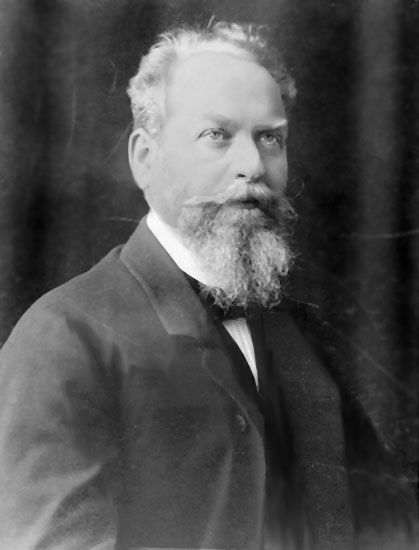
HusserlFor Husserl, the body is not an extended physical substance in contrast to a non-extended mind, but a lived “here” from which all “there’s” are “there”; a locus of distinctive sorts of sensations that can only be felt firsthand by the embodied experiencer concerned; and a coherent system of movement possibilities allowing us to experience every moment of our situated, practical-perceptual life as pointing to “more” than our current perspective affords. To identify such experiential structures of embodiment, however, Husserl must clarify and set aside not only the ways in which the natural sciences approach the body, but also the ways in which we have tacitly taken over natural-scientific assumptions into our everyday understanding of embodiment. Husserl’s phenomenological investigations eventually lead to the notion of kinaesthetic consciousness, which is not a consciousness “of” movement, but a consciousness or subjectivity that is itself characterized in terms of motility, that is, the very ability to move freely and responsively. In Husserl’s phenomenology of embodiment, then, the lived body is a lived center of experience, and both its movement capabilities and its distinctive register of sensations play a key role in his account of how we encounter other embodied agents in the shared space of a coherent and ever-explorable world. Many of Husserl’s findings were taken up by such later figures in the phenomenological tradition as Heidegger and Merleau-Ponty, who gave these findings an ontological interpretation. However, Husserl’s main focus is epistemological, and for him, lived embodiment is not only a means of practical action, but an essential part of the deep structure of all knowing.

Table of Contents

  1. Introduction
    1. Sources and Themes
    2. Terms and Concepts
  2. Naturalistic Presuppositions about the Body
  3. Embodied Personhood
  4. The Structure of Embodied Experience
    1. The Body as a Center of Orientation
    2. Distinctive Bodily Sensations
    3. Movement and the “I Can”
  5. Kinaesthetic Consciousness
    1. Systems of Kinaesthetic Capabilities
    2. Kinaesthetic Capabilities and Perceptual Appearances
    3. Kinaesthetic Experience and the Experience of Others
    4. Further Philosophical Issues
  6. Conclusion
  7. References and Further Reading
    1. Primary Sources
    2. Secondary Sources

1. Introduction

a. Sources and Themes

Edmund Husserl (1859–1938), the founder of phenomenology, addressed the body throughout his philosophical life, with much of the relevant material to be found in lecture courses, research manuscripts, and book-length texts not published during his lifetime. One of the most important texts—the second volume of his Ideas Pertaining to a Pure Phenomenology and to a Phenomenological Philosophy, subtitled Studies in the Phenomenology of Constitution and usually referred to as Ideas 2—was particularly influential. Heidegger, for example, had access to it in manuscript before writing his own major work, Being and Time (1927), and Merleau-Ponty consulted it while working on his Phenomenology of Perception (1945); indeed, Ideas 2 first became generally known on the basis of Merleau-Ponty’s references to it in Phenomenology of Perception. It has long been known that the text posthumously published in 1952 as Ideas 2 had been shaped by not one, but two editors, Edith Stein and Ludwig Landgrebe (each of whom worked on the text while serving as Husserl’s assistant). But more recent scholarship by Sawicki (1997) suggests that Edith Stein (1891–1942) should be seen as the guiding architect of the work, which she attempted to recast in terms of her own philosophical commitments so as to “correct” what she saw as problems and shortcomings in Husserl’s original 1912 draft. This may be why the text as we currently have it is marked by certain gaps and tensions. In fact, no faithful account of this seminal work will be possible until a new edition is published, fully disentangling Husserl’s own train of thought from Stein’s argument. The present article is therefore based on texts from all periods, and the copious amount of relevant material has been organized in terms of four main tasks of a Husserlian phenomenology of embodiment: bringing naturalistic presuppositions about the body to light; setting aside the naturalized body in favor of embodied personhood; offering phenomenological descriptions of the structure of embodied experience; and demonstrating that transcendental (inter)subjectivity itself must be thought as kinaesthetic consciousness. Before turning to these themes, however, let us pause for a brief overview of some of the key Husserlian terms and concepts used in this article.

b. Terms and Concepts

Husserlian phenomenology stands in opposition to naturalism, for which material nature is simply a given and conscious life itself is part of nature, to be approached with natural-scientific methods oriented toward empirical facts and causal explanations. In contrast, phenomenology turns directly to the evidence of lived experience—of first-person subjective life—in order to provide descriptions of experiencing and of objects as experienced, rather than causal explanations. For Husserl, these descriptions are to be eidetic (or “essential”) insofar as what is being described is not a specific set of empirical facts considered for their own sake, but invariants governing a certain range of facts—for instance, structural patterns that must obtain for something to be an object of a certain type at all, or eidetically necessary laws such as “any conceivable color has some extension.” Husserl’s investigations of essential structures of conscious life and experience further focus on consciousness as transcendental rather than mundane, which means that consciousness is taken not as a part of the world, but as the constitutive presupposition for experiencing any world whatsoever.

Husserl’s technical term constitution takes on many nuances as his work develops. But all constitutive phenomenology is concerned with the correlation between “experiencing” and “that which is experienced”—for example, between perceiving and the perceived, remembering and the remembered, and so on. This “universal a priori of correlation” (Husserliana 6, §46) encompasses not only conscious performances actively carried out by the I (for instance, a judging whose correlate is the corresponding judgment), but also deeper strata of subjective experience that often remain unnoticed in everyday life. They can, however, be brought to light by reflecting on the structure of the type of experience concerned. For example, that only one side of the perceptual object actually appears to me at any given moment has its subjective correlate in the situatedness of embodied experience, so that any spatial thing is always seen from a particular standpoint; at the same time, that I am currently seeing “this side” of the object has its subjective correlate in my capability for movement, since I am able in principle to move in such a way as to bring “other sides” into view. In short, Husserl does not presuppose a subject-object split, but operates with a subject-object correlation—a correlation he works out in detail for almost every sphere and stratum of experience.

Moreover, as the examples indicate, a Husserlian approach to consciousness or subjectivity is not restricted to the realm of the mental as traditionally understood; instead, the phenomenological notion of embodied experience offers an alternative to mind-body dualism. And Husserl’s investigations ultimately embrace not only the achievements and correlates of constituting subjectivity, but also those of intersubjectivity, that is, of the “we” rather than solely the “I.”

Finally, a general feature of Husserl’s terminology must also be mentioned: he frequently takes over words used differently in other contexts and expects the reader to understand these words not in terms of linguistic definitions set forth in advance, but in light of their referents—the experiential features or nuances that he is describing. Thus the Husserlian tradition is not merely a tradition of texts to comment upon or argue against, but a permanent possibility of checking descriptive claims against the touchstone of the appropriate experiential evidence so as to confirm or correct such claims. Bearing this in mind, let us now return to the four main moves accomplished by a Husserlian phenomenology of embodiment: criticizing naturalistic presuppositions about the body; thematizing embodied personhood; describing the structure of embodied experience; and investigating kinaesthetic consciousness.

2. Naturalistic Presuppositions about the Body

Summary: Husserl criticizes the assumption that the body is a psychophysical entity, in order to make “the body as directly experienced by the embodied experiencer concerned” a theme for phenomenological investigation.

Let us begin by sketching Husserl’s response to the philosophical and scientific tradition in which he found himself—and in particular to the naturalism of the positivistic natural sciences, which he addresses through a critique of its presuppositions. He is specifically concerned to demonstrate how a natural-scientific tradition that has inherited a Cartesian dualism of substances (res extensa/res cogitans), and is committed to mathematization as the measure of truth, deals with the “mental” by approaching the “psyche” in terms of the “psychophysical”: it is only by taking intangible minds as localizable in tangible living bodies that natural science can bring the “mental” side of the inherited dualism into the realm of real-spatial causality, and thus into the domain of calculability, prediction, and control. Rather than automatically accepting these assumptions, Husserl brings them to light; traces their historical development; establishes the limits of their legitimacy; and offers an alternative account of “consciousness” or “subjectivity,” an account that relies on rigorous philosophical methods and on a radical turn to the evidence of lived experience, rather than on the assumptions and methods of natural-scientific cognition.

But in the course of carrying out these larger tasks, Husserl highlights a major presupposition concerning embodiment. The received tradition, with its tendency to think in terms of the “psychophysical” (even when one is not actively carrying out psychophysical investigations or making specifically psychophysical claims), not only attempts to tie the “mind” to a material “body,” but is already operating under a more basic assumption—namely, that this body can itself be taken as a physical body (Körper) like any other spatial thing, albeit a thing with certain distinctive sorts of characteristics. For even if “organisms” are the province of special natural sciences (for example, anatomy and physiology) having to do with living rather than non-living things, it is still taken for granted that like “inanimate” objects, the “animate” ones too belong to the realm of real, spatially extended entities to be explained in terms of causal laws. Yet such a presupposition completely ignores what is essential to the body as a lived body (Leib)—as my body, someone’s body, experienced in a unique way by the embodied experiencer concerned. In other words, what is missing in naturalism is the body of embodiment, which must not be taken physically, but as directly experienced from within.

Here Husserl is not challenging the right of scientific practice to approach living bodies in causal terms; in Ideas 3 (originally written in 1912, but not published until 1952), he even proposes a new science—somatology—that would incorporate both physiological investigation of the material properties of the body as a living organism and experiential investigation of firsthand, first-person somatic perception (for example, of sensing tactile contact). But he does indeed insist on clarifying the presuppositions governing natural-scientific cognition, recognizing them for what they are and acknowledging their limits, so that, as he puts it in 1936 in §9h of The Crisis of European Sciences and Transcendental Phenomenology, we do not “take for true being what is actually a method.” Thus the historical fact that living bodies can be, and have been, approached with natural-scientific methods does not automatically allow us to relegate the body of embodiment to the res extensa side of Cartesian dualism. Instead, appropriate modes of inquiry must be developed to do justice to the body of direct experience.

Accordingly, Husserl not only provides a critique of the presupposition of the “psychophysical” (and of the lived body as a physical body), but opens up several further ways in which a phenomenology of embodiment can be pursued. In Ideas 1 (first published in 1913), he sets the body aside in order to reach the realm of “pure consciousness.” Commentators sometimes mistake this strategic move for Husserl’s “position,” and accuse him of postulating a disembodied, desituated consciousness. But the body that is set out of play here is merely the body that is assumed to be the “physical” half of the inherited dualism. Moreover, this is only the first step in the critique: Husserl is effectively suspending the tacit hegemony of the prevailing presupposition whereby it is automatically accepted, as a matter of course, that the body is a physical reality that is a part of nature—and setting this assumption out of play frees us to address the body and embodiment phenomenologically rather than naturalistically. After suspending the unquestioned validity of naturalistic presuppositions concerning the body, then, the next step is to retrieve the body of experience, and Husserl employs various pivotal distinctions in order to open up the experience of embodiment for phenomenological investigation.

3. Embodied Personhood

Summary: Husserl shows that embodied experience is geared into the world as a communal nexus of meaningful situations, expressive gestures, and practical activities.

One key distinction emphasized in Ideas 2 contrasts the “naturalistic” attitude, as the theoretical attitude within which natural science is practiced, with the “personalistic” attitude that characterizes personal and social experience in the world of everyday life—the “lifeworld” (Lebenswelt), the cultural world that is the province of the cultural or human sciences. Within the personalistic attitude, our intersubjective encounters are always experienced as embodied encounters, and our ongoing practical life is already an embodied one. Thus, for example, we greet one another with culturally specific gestures such as shaking hands; we communicate with others, responding to their facial expressions, gestures, and tones of voice; we use tools in practical, goal-directed actions; we rely on bodily capabilities and develop new skills that improve with practice or grow rusty with disuse; and so on. In other words, what we come upon are others embodying themselves in particular ways (serenely or impatiently, adroitly or clumsily, buoyantly or dragged down by pain or fatigue, and so forth): we immediately see embodied persons, not material objects animated by immaterial minds, and the immediacy of this carnal intersubjectivity is the foundation of community and sociality (with culturally specific “normal” embodiment playing a privileged role as the measure from which the “anomalous” and the “abnormal” diverge). Similarly, we make immediate use of the bodily possibilities at our disposal, which serve as the “means whereby” we carry out our everyday activities, without having to appeal to psychophysical explanations: I simply reach for my cup, pick it up, and drink from it, without ever giving a thought to the neurophysiological processes that allow me to keep my balance as I reach, move the cup without spilling the liquid, and swallow without choking. And even if my abilities are compromised by illness or injury, the lived experience of “I can no longer do it” is qualitatively different from the physician’s causal explanations for my condition.

For the most part, Husserl himself provides passing examples, rather than extended analyses, of embodied experience in the personalistic attitude. Yet if we recall that his aim is not to carry out concrete cultural-scientific investigations but to clarify the philosophical bases of the cultural or human sciences, we can see that his critique of naturalistic presuppositions about the body both secures a theoretical foundation for work in such areas as nonverbal communication (as well as other sorts of studies of embodiment carried out within phenomenological psychology, phenomenological sociology, and so on), and anticipates more recent concerns with socially shaped patterns of embodiment (including, for example, issues of gendered embodiment, as contrasted with the biological “sex” of an individual—although even the medical assignment of sex at birth may display, in certain problematic cases, social/cultural assumptions and priorities).

Husserl’s discussions of the “personalistic” attitude in Ideas 2 are echoed in his extensive discussions of the lifeworld in the Crisis, and several further points concerning embodiment can be made in this connection. First of all, for Husserl, the “prescientific” world of experience is more basic than the “objective” world constituted as a correlate to scientific practice in the naturalistic attitude; for example, natural-scientific investigation of the body as an object presupposes a functioning bodily subjectivity on the part of each of the scientists concerned, for whom their own lived bodies tacitly serve as organs of perception, communication, and action, even while they are engaged in carrying out detailed research into, say, the neurophysiology of motor behavior. At the same time, however, scientific assumptions and constructs “flow back into” everyday lifeworldly language and experience, so that, for instance, I may refer to my own body in anatomical terms as a matter of course, or offer causal explanations (rather than experiential descriptions) of my own bodily condition, even in a casual conversation with a friend. Thus although there is a functional priority of the personalistic over the naturalistic attitude, the former is ongoingly shaped and reshaped by the historical acquisitions of the latter—as well as by its unnoticed philosophical presuppositions and its habitual abstractions. Moreover, despite their important differences, both the naturalistic attitude and the personalistic attitude fall within a more general attitude that Husserl terms the “natural attitude.” In the natural attitude, not only are we typically straightforwardly directed toward objects rather than reflecting on the structures of our own subjective experience, but entities such as “bodies” (whether these are taken as “psychophysical realities” or “embodied persons”) are given as ready-made realities within a pregiven world; even the experiencer for whom such entities are given is him/herself taken as one entity among others in the world. And the natural attitude is both all-pervasive and anonymous—it is so taken for granted that we are not even cognizant of it as an “attitude” at all. But when we do become aware of it, still further insights into embodied experience become possible.

4. The Structure of Embodied Experience

Summary: Husserl’s phenomenological investigations emphasize that the lived body functions as the central “here” from which spatial directions and distances are gauged; that it is the locus of distinctive sorts of directly felt sensations such as the experience of tactile contact; and that it is capable of self-movement, opening a rich range of practical possibilities.

Husserl’s approach to disclosing the natural attitude for what it is and suspending its wholesale, automatic efficacy is termed the phenomenological reduction, which leads us from the natural attitude of everyday life to the phenomenological attitude. Within the phenomenological attitude, we set aside questions framed in terms of an ultimate “being” or “reality” existing utterly in itself; instead, we make experiencing—and correlatively, phenomena, which means whatever is experienced, exactly as experienced—the focus of our investigations. For a phenomenology of embodiment, this means turning to the body of direct experience in a way that is even more radical than acknowledging everyday encounters with embodied persons in the personalistic attitude. Why is it more radical? It is because in everyday practical life, we are typically occupied with things and tasks, and ignore the bodily “means whereby” we perceive things and carry out our activities. Although the “anonymity” of this tacitly functioning, everyday body becomes a key theme in existential phenomenology of the body, Husserl too was well aware of it, and it was his groundbreaking research that initially retrieved this lived body and bodily experience from its anonymity.

a. The Body as a Center of Orientation

One mode of inquiry that Husserl uses in his descriptive investigations of the body of lived experience is eidetic phenomenology. The eidetic reduction—which is the shift whereby we enter the eidetic attitude—takes whatever it is that we are experiencing as but one “example of” a particular structure or possibility. (Although Husserl speaks of “essences” in this connection, his use of the term must be distinguished both from Platonic essences and from more recent concerns with “essentialism.”) Thus, for example, as I write these words, the carrots growing in my garden are to my left; later in the day, when I have moved to a different spot in the sun, the carrots will be to my right. But in each case, what I experience is not an empty, homogeneous, mathematical space; instead, I experience lived space as an oriented space whose directional axes—left/right, above/below, in front/behind—are gauged from my own lived body as the central “here” from which all there’s are “there” and from which things are relatively “near” or “far” (right now, the lettuce is “closer to me” than the carrots). One way to refer to this invariant structural feature of embodied experiencing (of which my current relation to the plants in my garden is but one of innumerable possible variations—each of us could contribute a different example, but they would all be examples “of” the same experiential structure) is to speak of the lived body as the “nullpoint of orientation.” But Husserl’s account is more nuanced than this. Although visual experience does indeed seem to proceed from a “point” somewhere in the head, behind the eyes (so that, for example, what you can see of your nose is “in front,” what you can see of your lower lid is “below,” and so on), Husserl also refers to the bodily “here” as a whole with such expressions as “null-position” and “null-posture,” so that the structure of the experiential “center” need not be point-like. And in exploring, say, the underside of my own chin and jaw with my hand, I may find that I am living in the touching hand as the functional center of orientation and experiencing what I am touching as being “above” this hand. Like all descriptive phenomenological claims, the latter claim—namely, that the functional center of orientation can vary from the central “point” from which vision proceeds—is an invitation to consult the relevant experiential evidence for yourself; is the example I have mentioned a possibility that you can actualize? Can you “find” it, experientially, immediately … or does this structure of experience only emerge after a while, or in a different way? Spiegelberg (1966/1986/2004), for example, explores further experiential variations concerning the lived location of the embodied “center” of experiencing, and more descriptive work on this theme (especially work carried out by phenomenologists of diverse cultural backgrounds) would be welcome.

b. Distinctive Bodily Sensations

However, the lived body is more than a tacit “zero,” an abiding “here” from which spatial dimensions of perception and action unfold; it is not an abstract or empty center, but a filled one, with its own familiar feel, for to be embodied is to experience certain sorts of sensations as “mine” in a unique way. In some passages, Husserl replaces the usual German term for sensations—Empfindungen—with a new term, “Empfindnisse” (translated as “feelings” or “sensings”). Such distinctive sensitivities may be collectively referred to as the “somaesthetic” dimension of experience, including, for example, sensations felt in our bodily depths as well as on our bodily surfaces, and encompassing many nuances beyond “pleasure” and “pain.” But one of Husserl’s most important examples is tactile contact: when you touch my body, you are touching me, and I feel it. Sometimes one and the same episode of touching can be experienced in a double way: I might, for example, be exploring a small sculpture with my fingers, intent on its contours, textures, variations in temperature, and so on, or I can continue to palpate the object, but shift to an experiential attitude focused on sensing myself in contact with it precisely here, in exactly this way—retrieving the “bodily” side of my embodied commerce with the thing. Or I myself can furnish both sides of the example, touching one hand with the other (an example of Husserl’s to which Merleau-Ponty accords great importance). Here it becomes clear not only that my own body can be given to me both as the organ and as the object of touch—both as the means whereby the activity of touching is carried out, and as the phenomenon I experience through this activity (for example, the contours and textures I can feel on the surface of my touched hand)—but also that the same touched hand that is the object explored by the touching hand is itself alive to this contact, feeling it subjectively, so that I am living in this hand too as “mine.” In this connection the term “lived” body may connote a certain “undergoing,” emphasizing “affectivity” (being affected) rather than “activity” (although both are important for Husserl, who routinely mentions them together in his later research manuscripts).

c. Movement and the “I Can”

Nevertheless, actions too are “mine” (albeit in a qualitatively different way than the immediate bodily feelings of contact, pleasure, pain, warmth, cold, and so forth, are). And along with the body’s role as the center of orientation and its unique somaesthetic sensations, Husserl also emphasizes bodily motility—the capability for self-movement per se—as an essential feature of embodiment. “Being able to move” is the foundation for any specific bodily “I do” and for what he typically terms the bodily “I can” (which can be experienced as such even without actually performing the movement concerned—for instance, one can find the lived consciousness, “I can nod my head,” without actually doing it, experiencing it instead as a practical possibility given in the sheer “I could”). The range of the “I can” is enriched when I cultivate my capabilities or learn new skills, although as I have already indicated, it may also be temporarily eroded or permanently truncated in cases of illness or injury, so that the “I can” becomes an “I cannot.” For Husserl, however, the lived experience of embodied motility goes far beyond movement that is actively initiated by the I: there are also movements such as breathing, which normally goes on without my active intervention, yet can indeed be deliberately altered to some extent. Husserl therefore speaks of all such bodily movement as pertaining to the I in a broad sense that encompasses, but also includes more than, the active, awake I. For example, habitual movement patterns such as playing a familiar piece on the piano can indeed proceed without my explicit, moment by moment direction, yet are still lived as “mine,” and although they may often remain marginal, they can also be informed with awareness—or with a kind of “active allowing,” as when I lend them my “fiat” and am consciously letting the movement unfold. Thus here motility is a broader concept than agency in the strict sense whereby an “agent” would be actively, explicitly involved in initiating and directing the action throughout.

5. Kinaesthetic Consciousness


Summary: Husserl describes the articulation of kinaesthetic capabilities into coordinated systems of specific movement possibilities; outlines the “if-then” structure through which actualizing certain kinaesthetic possibilities brings coherent fields of appearances to givenness; suggests how a different “if-then” structure—one linking the deployment of my own kinaesthetic capability with the bodily feel of the movement concerned—is implicated in coming to experience other moving bodies as other sentient beings “like me”; and addresses the tension between “embodiment” as an ongoing dynamic, subjective process and the “body” as one object among others in the world.

Husserl devotes considerable attention to the theme of motility, and sketching out some of this work in more detail will allow us to see how his descriptive phenomenological work on embodiment fits into the larger philosophical context of his constitutive phenomenology (recalling that here “constitution” ultimately refers to the correlations between that which is experienced and the relevant performances and achievements of “consciousness” or “subjectivity”). Here a distinction given terminological form by one of Husserl’s assistants, Ludwig Landgrebe (1902–1991), is particularly helpful: that between the body-as-constituted and the body-as-constituting. The body-as-constituted is the body as experienced, that is, it is “that which” is experienced in the experience; the body-as-constituting is the experiencing body “by means of which” something is experienced. And for Husserl, this embodied, experiencing subjectivity (the body-as-constituting) is above all a kinaesthetic consciousness (Claesges 1964)—not as a consciousness “of” movement, but as a consciousness or subjectivity capable of movement.

a. Systems of Kinaesthetic Capabilities

Thus Husserl’s recourse to “kinaestheses” does not refer to “sense data” (for example, sensations pertaining to muscles or joints) postulated as “ingredients” of perceptual experience (for instance, of my own limbs given to me as material objects moving in space), but to the sheer experience of the subjective capability for movement per se (including the “I could” already mentioned) and to its organization into kinaesthetic systems, each with its own (multidimensional) leeway of movement possibilities. For example, in visual perception, the movement of the eyes alone forms one system; head movement affords a second system; the possibilities of rotating one’s entire body on the spot counts as a third system; and locomotor movement (for instance, walking) adds yet another system. When I turn to the left to look for the bird in the birdbath, my eye, head, and torso movements are typically vectorially combined into one integrated gesture. Turning my head allows me to see farther to my left than if eye movements alone were involved, and turning my torso expands my view beyond what eye and head movements can offer together—but whatever combination of eye, head, and torso movements is swung into play when I hear the splash in the birdbath, “turning to the left” will eventually allow me to bring what initially appeared only at (or beyond) the left-hand periphery of the visual field into the center of the field. Kinaesthetic systems can also stand in for one another—if my arms are full, I may hold the door open with my hip or acknowledge a friend’s wave with a gesture of my head rather than my hand. In this way the interarticulated kinaesthetic systems work together as one total kinaesthetic system whose multifarious possibilities of coordination typically take on the more circumscribed form of a habitual repertoire of familiar movement possibilities and customary ways to move.

Even within this more limited leeway, however, motility is characterized by a certain essential freedom that can be contrasted with the physical motion of spatial objects. This by no means implies complete freedom in every case—once I jump off the diving board, it is too late to change my mind, and I am headed for the water, since—unlike a bird—I have no way to fly back up into the sky. But the lived motility in which kinaesthetic consciousness holds sway is more typically experienced as reversible: having turned my head to the left, I can turn it back to the right; having extended my hand, I can withdraw it; having gone in one direction, I can retrace my steps. Moreover, the lived movement can be not only reversed, but repeated, interrupted, and inhibited; for Husserl, even “holding still” is a dynamic event, since it involves ongoingly maintaining a certain kinaesthetic “constellation” or “situation.”

b. Kinaesthetic Capabilities and Perceptual Appearances

Such descriptions retrieve kinaesthetic functioning from its anonymity, but remain abstract as long as its constitutive role is not specified more precisely. For example, enacting certain kinaesthetic possibilities brings certain correlative perceptual appearances to givenness in a concordant, regulated, non-arbitrary manner. “From here” I can see “this side” of the house, but this side already promises more, a situation for which Husserl uses the technical terms “inner horizon” and “outer horizon.” The current appearance of this side points to an inner horizon of possible future perceptions in which this very same side would itself be more fully given—for instance, if I were to move closer, then it could be touched as well as seen, or what is currently seen indistinctly could be seen in more detail, and so on. But “this” side of the building also points to an outer horizon of possible future perceptions of other “sides,” as well as further features of the surroundings, including currently unseen sides of other objects in the background, and so on.

Here what is important is not merely that Husserl’s account of perception emphasizes a correlation between, on the one hand, an embodied perceiver functioning as a center of orientation and, on the other hand, the perspectivity that is the invariable mode of givenness of perceived things in space; rather, what is at stake is a coherent, explorable, transcendent, open world. In other words, it is not merely that I see things from my own standpoint: it is that my own motility is the subjective correlate both of the world’s open explorability—its transcendence “beyond” the aspect of it given at any moment—and of its concordant coherence, since if I enact the appropriate kinaesthetic sequences, then what is currently “emptily” predelineated can be “fulfilled” in itself-givenness of the anticipated side or feature concerned (or can be “disappointed” and corrected instead). For example, I see a “corner” of the house; inseparable from the experience of this as a “corner” is that there is “more” to the house to be seen “around the corner” (even if this “more” is as yet indeterminate), and “if” I move there, “then” I will see precisely this “more,” determine its features in more detail, and so forth (or perhaps discover that all that is left of the building is a facade). However, the “if-then” relation that is at stake here is not a causal one, since the correlations in question pertain to the ordered structure of experience purely as experienced, not to real relations between physical entities considered in the naturalistic attitude (an attitude that we are, of course, free to take up if we wish).

Within the phenomenological attitude, in other words, the point is not to establish causal relations between “turning my head to the left” and “seeing a birdbath”; instead, the horizon of freedom pertaining to kinaesthetic consciousness opens ordered fields of display that can be seamlessly expanded as I move, so that turning my head to the left allows the corresponding further stretch of the visible world to come into view, whatever there may in fact be for me to see in any given situation or on any given occasion. And the same fundamental correlation between kinaesthetic capabilities and coherent fields of spatial display holds good for movement in any direction, as well as for the intersensorial world. Thus the description identifies an essential structure of experience per se, rather than offering a causal explanation of a particular empirical/factual event. Moreover, it turns out that Husserl’s analyses are not confined to the kinaesthetic circumstances swung into play in experiencing individual transcendent things “in” space, but demonstrate that kinaesthetic consciousness is itself space-constituting. (Early extensive analyses are found in the 1907 lectures published in Thing and Space, but Husserl refined his account throughout his life.) This, then, is another example of a Husserlian critique of presuppositions: he does not naively assume “space” as a pregiven framework for embodied perception and action (for example, as some kind of ready-made “container”), but devotes many pages to the experiential evidence that is at stake in the givenness of various types or levels of “space,” including not only the most immediate, “preobjective” space, but the infinite and homogeneous space of the natural sciences.

c. Kinaesthetic Experience and the Experience of Others

At this point, a second set of analyses come into play, for it is a feature of lived embodiment that I cannot jump out of my own skin and walk around myself in order to survey myself from all sides: the seeing consciousness is always at the center of orientation, and although I may be able to see parts of myself from various angles, I cannot see myself as a whole, as a figure on a ground or as an object “over there” from which I could definitively move away. Instead, I function as the uncancellably abiding “here” from which space-perception invariably proceeds. This means, however, that my “solo” experience of situated motility leaves me with a “hole” in space wherever I go—a mobile but non-surveyable center around which the rest of the panorama unfolds. The constitution of a genuinely homogeneous, objective, three-dimensional space requires the contribution of others, for whom I myself am indeed “over there,” inhabiting one among many possible “there’s.”  Thus space-constitution is tied up with the Husserlian theme of intersubjectivity, which is also a key motif in his phenomenology of embodiment. Although Husserl gives various accounts of intersubjectivity, the present article pulls together some pieces of the puzzle that depend directly on his work with kinaesthetic consciousness. Note, however, that this account is not a linear account of discrete “steps” to be carried out, as though we began our existence utterly alone and only gradually discovered fellow living beings; rather, the explication furnishes a kind of “exploded diagram” of certain structural moments involved in the lived experience of recognizing embodied others—here construed broadly enough to encompass non-human as well as human cases. (Thus in the technical language of phenomenology, the “exploded diagram” account is “static,” rather than providing a “genetic” description of the origin and development of a certain type of experience as an abiding acquisition.)

For Husserl, a double dimension of “localization” of kinaestheses comes into play in this regard (always recalling that here the term “kinaesthetic” refers to motility per se, to the sheer “I can”/“I could” rather than to specific sorts of “sense data”). First of all, it is possible for at least some enactments of my own directly experienced motility to be co-given to me in the form of something perceivable in the same way as things of the world are. Thus, for example, not only can I move my own limbs, but—within limits—I can see them as moving objects in the same field of vision where other spatial things are given: subjective motility is “localized” in objectively appearing movements displaying certain distinctive styles of movement and modes of relating to the surrounding world (think, for example, of my own active/responsive hands being visible to me as I reach for an object and grasp it). Similarly, the kinaesthetic experience of speaking, singing, or crying out is paired with sounds appearing in the same audial field in which other sounds are given. (Although what I am providing here is, as I have indicated, a structural explication of intersubjectivity rather than a genetic-developmental account, it should be pointed out that in one brief passage on the mother-child relationship, Husserl emphasizes the child linking his/her own kinaesthetic capability for vocalization with certain heard sounds in the audial sphere in general—and then hearing sounds resembling these in certain respects, but without simultaneously experiencing the relevant kinaestheses, so that this contrast mediates the emerging own/other distinction.) But at the same time, enacting this or that kinaesthetic possibility (or constellation of possibilities) from the total kinaesthetic horizon yields yet another “if-then” order, above and beyond the coherent correlations discussed above whereby kinaesthetic circumstances motivate corresponding perceptual appearances. For “if” I move in a certain way, “then” even without touching myself, I can experience correlative somaesthetic sensations or sensings (Empfindnisse): kinaesthetic enactments are “localized” in corresponding patterns of felt embodiment (for instance, experiences of straining or releasing) through which my own lived body is concretely, sensuously present for me (whether marginally, as when I am immersed in something I am reading, or thematically—think, for example, of how it feels to stretch luxuriously).

To put it another way, the “mineness” of my own act of moving is linked with the “mineness” of the accompanying somaesthetic sensations, as well as with recognizable styles of externally perceivable movement. When I perceive movement in such a style, then, but without the correlative kinaesthetic consciousness (the tacit or explicit “I move”) and its accompanying patterns of felt somaesthetic localization, I experience (via what Husserl terms “passive syntheses of association”—which, however, must not be confused with “associationistic” psychological theories) another subjectivity who, like me, is a subject of both action and affection, both agency and ownership, both doing and undergoing. Thus it is not necessary to see another body that looks the same as mine in the sense of being roughly the same size, shape, and color in order to motivate the experience of recognizing the other’s subjectivity—in fact, the view of myself “from the outside” that this would require is precisely something that I can never fully have: it is a possibility that is itself motivated from the experience of the other as having his/her own point of view on me, and thus cannot serve to motivate my recognition of the other as another subjectivity in the first place. Instead, what I experience when I see the other stands at a higher degree of universality: I see a style of movement associated with certain eidetic features proper to sentient/sensitive motility per se, namely, kinaesthetic capability and somaesthetic sensibility. But exactly because these invariants are open to exemplification in so many ways, they provide the foundation for the lived experience of difference-from-the-other as well as that of similarity-with-the-other, since they are the very identity that permits the experience of “difference” here at all.

I do not, in other words, recognize others because I see them as reiterations of myself in my concrete embodiment; the I-other pairing does not consist of a model and a replica, but of two mutually contrasting variations of “embodiment per se,” only one of which I have genuinely original access to (when I pick up the heavy stone, I experience both my own effort and the stone’s resistance firsthand; seeing the other struggle with the stone, I may understand the degree of effort involved and realize that I am the stronger of the two of us, but I do not experience the other’s effort in the same direct way I experience my own, nor do I directly experience the other’s pain if the stone slips and lands on the other’s toe). Thus the other active, sentient, sensitive, relational body is not some sort of duplicate of my own body, but precisely “a” lived body lived from an experiential standpoint I myself can never inhabit, a “here” that is truly transcendent to my own precisely because I inevitably experience it as a “there” in paired contrast to my own “here.”

d. Further Philosophical Issues

So far, I have sketched out how embodiment understood as kinaesthetic consciousness functions in Husserl’s philosophical accounts of the transcendent spatial world and transcendent fellow subjectivities. Here it is not possible to flesh out these accounts in any more detail, although it can be said that for Husserl, our very openness to the world essentially involves a kinaesthetic engagement with what is most immediately, sensuously given in such a way that the genetic origins of transcendental logic itself can be traced back to these kinaesthetic capabilities and performances and their correlative sensuous “givens” (see Husserliana 11), matters he thematizes under the title of “transcendental aesthetics” (although he takes this term in a different sense than Kant’s). However, a further step must at least be touched on, one that draws upon yet another important distinction—that between the transcendental and the mundane. Husserl’s analyses of kinaesthetic consciousness assume a transcendental attitude, yet in the natural attitude, the body is—as we have seen—“obviously” a mundane reality, a part of the world. Although his earlier efforts were geared toward clarifying the philosophical foundations of the sciences that study such a reality, some of his later writings (see, for example, Husserliana 15, 282–328, 648–57) are framed as an inquiry into the experiential achievements whereby transcendental consciousness “mundanizes” itself in the first place (that is, takes itself as part of the world), even prior to “naturalizing” itself in psychophysical terms. Without going into detail about his approach to the problem (which is also known as the paradox of subjectivity—how can the very consciousness that constitutes the world simultaneously be a part of this world?), it should be emphasized that for Husserl, what is at stake is ultimately not at all how a “disembodied” consciousness could somehow acquire a “body.” Instead, after demonstrating that kinaesthetic capability is an essential structural moment of transcendental subjectivity itself, he asks how kinaesthetic consciousness as an ongoing flow of purely experiential potentialities (the possibilities of primal motility per se), and of ever-changing actualizations of these possibilities, can come to count as a mundane entity apprehended as one thing among others in the world (and here Husserl’s descriptions of the lived experience of “resistance” offer important clues). In any case, however, the Husserlian critique of presuppositions concerning the body leads to something like the possibility of transcendental corporeality—a notion that places many aspects of the Western philosophical tradition itself into question.

6. Conclusion

Recognizing the tension between the transcendental experience of embodiment as kinaesthetic consciousness (or indeed, of “consciousness” or “subjectivity” as kinaesthetic) on the one hand and the mundane experience of the body as a material, psychophysical reality on the other can now allow us to summarize two of Husserl’s most important contributions to a phenomenology of embodiment (above and beyond his pioneering descriptions of essential features of bodily subjectivity). First, taken transcendentally, embodiment is not something accomplished once and for all, but is—to borrow a telling phrase from Zaner’s The Problem of Embodiment (1964)—“a continuously on-going act”: at every moment (even during periods of relative quiescence), I am involved in a dynamic process of “embodying” that is carried out through the current actualization of my own kinaesthetic capabilities, with certain possibilities rather than others being actualized in this or that way. This is the case whether the particular kinaestheses swung into play at any given moment arise from instinctual strivings, involuntary adjustments, acquired habits, or volitionally directed free movement, and whether these patterns of kinaesthetic actualization are going completely unnoticed; are marginally present for me; are experientially prominent due to difficulty or discomfort; or are consciously appreciated in lucid awareness “from within” (note that these two sets of possibilities—one having to do with volition, the other with awareness—can intersect in a number of ways). Second, that I can apprehend myself as a “psychophysical unity” is not simply something to be naively accepted, but something to be clarified as a historical achievement whereby embodied experience is localized in a mundane object, “the body,” as one item among others in a world of material, natural realities. Thus within the natural attitude, “embodiment” winds up signifying the external expression of the inwardness always already essentially pertaining to “bodies” insofar as they are lived bodies (as opposed to mere physical things). And indeed, experiential evidence for the latter sense of “embodiment” is readily available in everyday life in our times—we immediately encounter one another as embodied persons, not as machines that we suspect or conclude must harbor minds. However, experiencing myself as an ongoing realization of my own kinaesthetic capabilities taken not “psychophysically,” but sheerly experientially (which deactivates, rather than presupposing, mind-body dualism) requires shifting from the mundane to the transcendental attitude (in Husserl’s sense of the term “transcendental”), although once this insight has been historically achieved, it too, like the achievements of naturalism, can “flow back into” everyday experience.

In the end, then, whether he is providing a phenomenological genealogy of the “psychophysical” or offering an alternative account of embodiment in terms of “kinaesthetic consciousness,” Husserl provides a powerful critique of Cartesian dualism. Nevertheless, his own interests are basically epistemological in character: the accent lies not on claims about what the body really “is,” but on the epistemic contribution of embodiment itself to our knowledge of the world in the first place (as well as on the legitimacy of the foundations of our knowledge of such matters). And as in all of his phenomenological work, Husserl does not merely “hold a position” and offer arguments to support it, but consistently and rigorously takes the ultimate court of appeal to be the experiential evidence pertaining to the phenomena themselves—evidence that continually outruns our inherited terms and concepts and requires us to place them in question.

7. References and Further Reading

a. Primary Sources

  • Husserl, Edmund. Ding und Raum. Vorlesungen 1907. Ed. Ulrich Claesges. Husserliana 16. Den Haag: Martinus Nijhoff, 1973; Thing and Space: Lectures of 1907. Trans. Richard Rojcewicz. Dordrecht: Kluwer Academic Publishers, 1997, Sections IV–VI (129–245).
  • Husserl, Edmund. Ideen zu einer reinen Phänomenologie und phänomenologischen Philosophie. Zweites Buch. Phänomenologische Untersuchungen zur Konstitution [1912]. Ed. Marly Biemel. Husserliana 4. Den Haag: Martinus Nijhoff, 1952; Ideas Pertaining to a Pure Phenomenology and to a Phenomenological Philosophy. Second Book. Studies in the Phenomenology of Constitution. Trans. Richard Rojcewicz and André Schuwer. Dordrecht: Kluwer Academic Publishers, 1989, especially §§18a–b (60–70), §§36–42 (152–69), §§59–60a (266–77), et passim.
  • Husserl, Edmund. Ideen zu einer reinen Phänomenologie und phänomenologischen Philosophie. Drittes Buch. Die Phänomenologie und die Fundamente der Wissenschaften [1912]. Ed. Marly Biemel. Husserliana 5. Den Haag: Martinus Nijhoff, 1952; Ideas Pertaining to a Pure Phenomenology and to a Phenomenological Philosophy. Third Book. Phenomenology and the Foundations of the Sciences. Trans. Ted E. Klein and William E. Pohl. The Hague: Martinus Nijhoff, 1980, §2 (4–9); Supplement I, §4 (103–12).
  • Husserl, Edmund. Analysen zur passiven Synthesis. Aus Vorlesungs- und Forschungsmanuskripten 1918–1926. Ed. Margot Fleischer. Husserliana 11. Den Haag: Martinus Nijhoff, 1966; Analyses Concerning Passive and Active Synthesis: Lectures on Transcendental Logic. Trans. Anthony J. Steinbock. Dordrecht: Kluwer Academic Publishers, 2001, §3 (47–53); “Perception and its Process of Self-Giving,” §2 (581–88); Appendix 25 (534–36).
  • Husserl, Edmund. Phänomenologische Psychologie. Vorlesungen Sommersemester 1925. Ed. Walter Biemel. Husserliana 9. Den Haag: Martinus Nijhoff, 1962, Beilage VIII (“Die somatologische Struktur der objektiven Welt,” 390–95, not translated);Phenomenological Psychology: Lectures, Summer Semester, 1925. Trans. John Scanlon. The Hague: Martinus Nijhoff, 1977, §15 (79–83), §21 (99–101), §39 (150–53).
  • Husserl, Edmund. Cartesianische Meditationen [1931] und Pariser Vorträge. Ed. Stephan Strasser. Husserliana 1. Den Haag: Martinus Nijhoff, 1950; Cartesian Meditations: An Introduction to Phenomenology. Trans. Dorion Cairns. The Hague: Martinus Nijhoff, 1960, Fifth Meditation, especially §44 (92–99), §§51–56 (112–31).
  • Husserl, Edmund. Die Krisis der europäischen Wissenschaften und die transzendentale Phänomenologie. Eine Einleitung in die phänomenologische Philosophie [1936]. Ed. Walter Biemel. Husserliana 6. Den Haag: Martinus Nijhoff, 1954; The Crisis of European Sciences and Transcendental Phenomenology: An Introduction to Phenomenological Philosophy. Trans. David Carr. Evanston, IL: Northwestern University Press, 1970, §28 (103–11), §47 (161–64), §62 (215–19).
  • Husserl, Edmund. Zur Phänomenologie der Intersubjektivität. Texte aus dem Nachlass. Erster Teil: 1905–1920; Zweiter Teil: 1921–1928; Dritter Teil: 1929–1935. Ed. Iso Kern. Husserliana 13, 14, 15. Den Haag: Martinus Nijhoff, 1973, passim.
  • Husserl, Edmund. Transzendentaler Idealismus. Texte aus dem Nachlass (1908–1921). Ed. Robin D. Rollinger with Rochus Sowa. Husserliana 36. Dordrecht: Kluwer Academic Publishers, 2003, Text Nr. 7 (132–45), Text Nr. 9 (151–66).
  • Husserl, Edmund. Die Lebenswelt. Auslegungen der vorgegebenen Welt und ihrer Konstitution. Texte aus dem Nachlass (1916–1937). Ed. Rochus Sowa. Husserliana 39. Dordrecht: Springer, 2008, especially Part IX (603–672).

b. Secondary Sources

  • Behnke, Elizabeth A. “Edmund Husserl’s Contribution to Phenomenology of the Body in Ideas II” [1989]. Rpt. in Issues in Husserl’s “Ideas II.” Ed. Thomas Nenon and Lester Embree. Dordrecht: Kluwer Academic Publishers, 1996, 135–60; rev. in Phenomenology: Critical Concepts in Philosophy. Ed. Dermot Moran and Lester E. Embree with Tanja Staehler and Elizabeth A. Behnke. Volume 2. Phenomenology: Themes and Issues. London: Routledge, 2004, 235–64 [includes further references to work in this area].
  • Bernet, Rudolf, Iso Kern, and Eduard Marbach. Edmund Husserl. Darstellung seines Denkens [1989]. 2nd rev. ed. Hamburg: Felix Meiner, 1996; An Introduction to Husserlian Phenomenology. Evanston, IL: Northwestern University Press, 1993, Chapter 4, §3 (“The Kinaesthetic Motivation in the Constitution of Thing and Space,” 130–40, 259–60); Chapter 5, §2 (“Our Experience of the Other,” 154–65, 261–62).
  • Claesges, Ulrich. Edmund Husserls Theorie der Raumkonstitution. Den Haag: Martinus Nijhoff, 1964, Parts II and III (55–144) [includes significant citations on lived body and kinaesthetic consciousness from Husserl’s D manuscripts].
  • Depraz, Natalie. Lucidité du corps. De l’empirisme transcendantal en phénoménologie. Dordrecht: Kluwer Academic Publishers, 2001.
  • Dodd, James. Idealism and Corporeity: An Essay on the Problem of the Body in Husserl’s Phenomenology. Dordrecht: Kluwer Academic Publishers, 1997.
  • Mohanty, J. N. “Intentionality and the Mind/Body Problem.” In Organism, Medicine, and Metaphysics: Essays in Honor of Hans Jonas. Ed. Stuart F. Spicker. Dordrecht: D. Reidel, 1978, 283–300; rpt. in his The Possibility of Transcendental Philosophy. Dordrecht: Martinus Nijhoff, 1985, 121–38; rpt. in Phenomenology: Critical Concepts in Philosophy. Ed. Dermot Moran and Lester E. Embree with Tanja Staehler and Elizabeth A. Behnke. Volume 2. Phenomenology: Themes and Issues. London: Routledge, 2004, 316–32.
  • Sawicki, Marianne. Body, Text, and Science: The Literacy of Investigative Practices and the Phenomenology of Edith Stein. Dordrecht: Kluwer Academic Publishers, 1997, Chapter 2, D (“Nature and Intellect in Ideen II,” 73–89); Chapter 4, B, 1 (“Stein’s work for Husserl,” 153–65).
  • Seebohm, Thomas M. Hermeneutics: Method and Methodology. Dordrecht: Kluwer Academic Publishers, 2004, §12 (“The givenness of the other living body and animal understanding,” 98–105).
  • Spiegelberg, Herbert. “On the Motility of the Ego.” In Conditio Humana: Erwin W. Straus on his 75th birthday. Ed. Walter von Baeyer and Richard M. Griffith. Berlin: Springer-Verlag, 1966, 289–306; rpt., with Postscript 1978, in Spiegelberg, Steppingstones toward an Ethics for Fellow Existers: Essays 1944–1983. Dordrecht: Martinus Nijhoff, 1986, 65–86; rpt. in Phenomenology: Critical Concepts in Philosophy. Ed. Dermot Moran and Lester E. Embree with Tanja Staehler and Elizabeth A. Behnke. Volume 2. Phenomenology: Themes and Issues. London: Routledge, 2004, 217–34.
  • Ströker, Elisabeth. Philosophische Untersuchungen zum Raum. Frankfurt am Main: Vittorio Klostermann, 1965; Investigations in Philosophy of Space. Trans. Algis Mickunas. Athens, OH: Ohio University Press, 1987, Part One (“Lived Space,” 13–172).
  • Zahavi, Dan. “Husserl’s Phenomenology of the Body.” Études Phénoménologiques No. 19 (1994), 63–84.
  • Zaner, Richard M. The Problem of Embodiment: Some Contributions to a Phenomenology of the Body. The Hague: Martinus Nijhoff, 1964, 249–61, 287–89.


Author Information

Elizabeth A. Behnke
Email: sppb@openaccess.org
U. S. A.
American Transcendentalism

American transcendentalism is essentially a kind of practice by which the world of facts and the categories of common sense are temporarily exchanged for the world of ideas and the categories of imagination. The point of this exchange is to make life better by lifting us above the conflicts and struggles that weigh on our souls. As these chains fall away, our souls rise to heightened experiences of freedom and union with the good. Emerson and Thoreau are the two most significant nineteenth century proponents of American transcendentalism.

Looking at the world through common sense categories, such as time, space, and causation, yields hard and fast limits that can hurt us. Causation seems to make certain outcomes unavoidable whether we like them or not. Space separates us from the ones we love and the places we would rather be. Not to be outdone, time brings all good things to an end and converts the living into the dead. The categories of imagination free us from these detestable limits. We can imagine a world in which physical space is no more than an idea, enabling us to move from place to place at the speed of our thoughts. Emanation and fulguration make congenial substitutes for causation, because they generate only what is true, beautiful, and good. Not even time presents a problem for imagination, since we can readily view all things from the standpoint of eternity.

Most philosophers start with theories, searching for ways in which to practice what they preach only if they are serious about their philosophies. The transcendentalists reversed this procedure. They began with practices and then attempted to establish them on solid theoretical foundations. Yet these practices all involved spurning certain facts in favor of ideas, leading them invariably to theories that are inconsistent and vague. Their honesty would not allow them to spurn all facts, so they were ever at work reshaping intractable facts to fit their theories or stretching the fabric of their views to cover uncooperative facts. Unwitting victims of their own scruples, they found themselves hating facts that did not fit the mold and being frustrated with theories they knew failed to capture all the facts.

The final victim was transcendentalism itself. Critics, eager to wield the sword of criticism, overlooked the life-enhancing practices at the core of transcendentalism, concentrating their efforts on the many chinks and thin plates in its theoretical armor. Their blades penetrated easily, and they quickly pronounced their victim hopelessly baffling. Even friendly critics felt obliged to begin their articles with the proviso that transcendentalism is not easily articulated.

The transcendentalists were suspended between imagination and common sense. If they had been consistent empiricists or materialists, their theories might have been securely founded on facts. Had they been fully fledged idealists or rationalists, their theories might have been firmly fixed on logical relations. In reality, they were neither consistent nor fully fledged theorists. Emerson complained of a see-saw in his voice. Yet what is most valuable in the legacy of transcendentalism is not theoretical and is not in need of theoretical backing. It is the practices by which the transcendentalists managed, at least occasionally, to re-make the world in the image of what they loved.

Table of Contents

  1. Emerson and His Practices
  2. German Influence
  3. British Influence
  4. Idealism
  5. Morality
  6. Beauty
  7. Contemporary Relevance
  8. References and Further Reading

1. Emerson and His Practices

Although he denied he was a transcendentalist, Ralph Waldo Emerson (1803-1882) was rightly viewed by his peers and is rightly viewed by contemporary scholars as the primary philosophical exponent of American transcendentalism, followed by Henry David Thoreau (1817-1862). Emerson distinguished at least three practices by which facts may be exchanged for ideas. The first enacts a form of idealism. Instead of seeing the world as an independent power that may lay waste to our purposes and plans, we can view it as a display of images or pictures created by us, rendering it harmless and even benevolent. Secondly, we can focus on moral actions and rejoice in their goodness. The third practice distinguished by Emerson is perhaps the one for which transcendentalism is best known. It is that of contemplating beauty.

These practices come naturally to many of us. We many not connect them to Emerson, his contemporaries, or the period in American intellectual history─roughly between the publication of Emerson’s “Nature” in 1836 and Thoreau’s death in 1862─when transcendentalism flourished as a movement; but inasmuch as we seek to improve our lives by turning away from facts and embracing ideas, we are transcendentalists.

2. German Influence

Word of Kant’s transcendental idealism may have reached Emerson through Frederick Henry Hedge (1805-1890), a Unitarian minister who had studied in Germany and knew German philosophy in its native tongue. In 1836, Hedge, Emerson, and George Ripley (1802-1880) founded an informal group they called Hedge’s Club for the purpose of stimulating discussion of current topics in philosophy and theology. The group convened irregularly for about seven years and grew to include at least a dozen members. It became known as the Transcendental Club. These meetings provided ample opportunity for Hedge to share his knowledge of Kant’s transcendental philosophy with Emerson.

The heart of Kant’s Critique of Pure Reason is the distinction he draws between the transcendental and the transcendent. The transcendental refers to the necessary conditions of the possibility of experience. Input from perception is grasped through twelve categories, space, time, and what he calls the transcendental unity of apperception. These are structures of mind, so without them experience would be impossible. In contrast, the transcendent is that which lies beyond the scope of experience and is therefore inaccessible to conceptual knowledge. In his Critique of Pure Reason, Kant rejects the classic arguments for the existence of God on the grounds that knowledge of the transcendent is impossible. Ironically, the transcendental structure of mind is necessarily incapable of providing knowledge of the transcendent.

But Kant followed the Critique of Pure Reason with the Critique of Practical Reason, in which he adds an important qualification to his original view that God is unknowable. The transcendent, he argues, is the very foundation of morality. If not for God, the wicked might go unpunished and the righteous unrewarded. We may not be able to have conceptual knowledge of the transcendent, but we are morally obligated to act as the transcendent in the form of the free and rational moral will.

Kant’s view of our relation to the transcendent underwent a second transformation in his third major work, the Critique of Judgment. There he reconsiders some of the classic arguments for God’s existence and opts for the teleological. Organic beings are purposive, he tells us, though we cannot glean what their purposes are. Their purposiveness consists in the fact that they and their parts are mutually supporting. The parts are means to the wholes, and the wholes are means to the parts. Two important conclusions fall out of this analysis. The first is that everything can be seen as beautiful, because all objects have form, which hints at a kind of purposiveness based on the internal complexity of objects. This purposiveness of form creates a universal disinterested satisfaction that is experienced as beauty. The second conclusion is that conceptual understanding of beauty is impossible for human beings.

Although they are very different philosophies, the influence of Kant’s transcendental idealism on American transcendentalism is easy to see. The philosophies are markedly different because the Americans did not preserve Kant’s distinction between the transcendent and the transcendental. This distinction provides the framework for Kant’s entire system as presented in the Critique of Pure Reason, but the transcendentalists were not interested in systems or the frameworks of systems. What attracted them to Kant’s philosophy was the sentiment behind his words. One look at the prevailing sentiment of American transcendentalism and Kant’s influence is unmistakable. The Americans eagerly joined him in celebrating the rightness of moral action, the beauty of the world, and the majesty of God. Kant’s influence also shows itself in the view of the nature of beauty embraced by the transcendentalists, namely that it surpasses all understanding.

3. British Influence

The word “transcendental” brings to mind Kant and the German philosophers he influenced, but German thinkers were not the only ones to leave their mark on American transcendentalism. Emerson was a great admirer of William Wordsworth and Samuel Taylor Coleridge, both of whom he met when he traveled to Europe in 1832. Their romanticism was intoxicating to him, and he seems to have passed some of that intoxication to his friend Thoreau. The British romantics shared the same love of beauty, morality, and God that animated both Kant and the American transcendentalists, but the romantics had developed a unique perspective on our relation to those realities. This perspective provided one of the central features of American transcendentalism.

The British romantics saw tremendous beauty and goodness in the world. At the same time, they saw that all of that goodness and beauty is flawed. Human beings often embody great virtues, but this is not always so. Sometimes their behavior is monstrous in its selfishness and cruelty. The sky, the meadow, and the rose are breathtakingly beautiful, but as time passes their beauty fades. This double vision of the romantics, although it did not betray any facts, nevertheless placed them in the uncomfortable position of both hating and loving the world.

To get out of their predicament, the romantics made a bold move. They set their sights on the perfect, which for them could exist only beyond the awful limits of the world. Yet they could not forget that they were, as flesh and blood, inextricably tied to those very limits. Nor could they forget that it was those very limits that provided the precious glimpses of beauty and goodness, however degraded, that they cherished. This was a great tragedy, they decided, and it was made even greater by the fact that it was inevitable. If you live in this world and you have enough humanity to love the good and the beautiful, you will be constantly assailed by the pain of falling short of those ideals. Yet, they suggested, the more the tragedy of life appeared to us in all of its inevitability and pain, the more beautiful life would be in our eyes.

Had they embraced this perspective at face value, the transcendentalists might have been cheered. As a sequence of random events, some good and others bad, life is arguably meaningless and not worth living. But view it as a tragedy and life takes on a marvelous aesthetic unity. Anguish and tears become literary realities, beautiful in their significance and in the timeless moral lessons they convey. But the transcendentalists were too pragmatic to embrace such an intellectual view of life. The world was too much with them, and although they never tired of translating facts into ideas, they could not shake the sense that facts were somehow more real. Instead of cheering them up, their contact with romanticism ultimately saddened them. They fell in love with the perfect like good romantics, but they could find little beauty in the countless misfortunes that befell them. They felt betrayed by life. In Emerson, this feeling expressed itself in the form of sheer disbelief at the terrible things that happened to him. In Thoreau, it created a thin layer of bitterness and resentment that never dissipated.

The influence of the British romantics shaped American transcendentalism at least as much and probably more than that of Kant’s transcendental philosophy. Their influence contributed a longing for the perfect, one of the central features of transcendentalism in America. The other side of this contribution, equally central, was a treacherous undercurrent of disappointment and sadness.

4. Idealism

The idealism of the American transcendentalists, like their morality and their love of beauty, took the form of practices before it became, as an afterthought, a sort of theory. Emerson stood with his head between his legs and took note of the fact that this opened a very different reality. His long country rambles produced in him a profound feeling of the lawfulness and rationality of nature. The passions that stirred in his breast often burst forth in the form of an essay or a poem. Looking at the world from different angles, delighting in the patterns nature manifests, and writing poetry or prose are idealistic practices in the sense that they give consciousness a kind of priority. In creating new experiences or ideas, we seem to create new worlds, and mind takes on a status close to that of a divinity. The old familiar facts, when filtered through the categories of imagination, are given an almost miraculous appearance. We are free from their tedious and often sorrowful limits to roam at liberty in thought.

For the transcendentalists, this freedom was almost always short-lived. This is because they felt they should ground their idealistic practices in a consistent theory. The freedom and satisfaction their practices provided, they reasoned, would be more secure if given an adequate theoretical backing. Their reasoning may have been sound, but their attempt to ground their practices in an adequate theory had the opposite effect. They became tangled in theoretical problems that proved intractable, and this made engaging with ideas for the sake of the activity itself more difficult. An ulterior motive for this engagement was always pressing on them. The ideas could not be fully trusted unless somehow it could be shown that they captured the inner nature of things.

But the main idea implied by the transcendentalists’ practices, that all existence must conform to consciousness, was verified by their experience only occasionally. There were flashes of verification, as when Emerson dreamed he ate the world, but all too often it was consciousness that had to give way to the cold facts of existence. The loss of his beloved wife Ellen Tucker, his cherished son Waldo, and his dear friend Thoreau signaled to Emerson that something alien to mind was at work in the world.

What this alien something might be, the transcendentalists had no clear idea. Their idealism gave consciousness, rational principles, and human values the status of omnipotent governing powers. Evil was that for which there would be compensation, or it was an instrument necessary for the creation of a good far greater than any that would have been possible without its use. It was, in short, thoroughly intelligible, just, and even benevolent: a low mood or a contradictory thought passing through the Oversoul for the sake of its ultimate enrichment. Evil is good, or rather it has to be good if one takes the idealism of the transcendentalists at face value. Not even they were capable of doing this all the time, yet they had no means of understanding evil except through the lens of their idealism, nor would they have been comfortable viewing it through a different lens as a brute fact or an irrational power.

The only option for the transcendentalists was to live with one more evil, namely the fact that evil positively confounded their attempts to explain it. This made the evils they suffered that much worse, adding avoidable surprise and puzzlement to unavoidable pain. Had they been content to practice their idealism without attempting to expound it, they might have saved themselves considerable grief. Their idealistic practices alone do not give mind the kind of priority proper to a power, but they do give it a sort of valuational priority. In lavishly applying the categories of imagination to the world and marveling at the results, we affirm the priority of consciousness and its products in the sense of loving them the most. As long as this does not lead us to the tenuous theory that all existence must submit to mind, we are free to understand evil through the categories of common sense, as a rogue power that goes against our purposes and often overwhelms them. This does not translate evil into good, but it at least removes the sting of surprise and confusion when evil strikes.

5. Morality

Emerson was often accused of being a reluctant reformer, and behind those accusations there was a kernel of truth. His contemporaries in the United States and Europe were hungry for moral progress, and they wasted no time putting shoulder to wheel for their favorite causes. Emerson was different in that his temperament inclined him to be first a scholar. The purpose of scholars, he said, is to nurture the good in others; but what makes a scholar is the ability to see the larger picture of things, and for this a certain distance from the heat of action is required. Emerson was by nature a visionary and a poet, not a man of action. No matter how much he sympathized with the ideals to which reformers aspired, he could not engage in actual reform without some initial discomfort. It was not what he was born to do.

Yet Emerson’s accusers failed to see the full reality of the accused. He may have hesitated before throwing his weight behind a cause for fear of losing the reflective distance he naturally valued; but if the cause was just he almost always ended up fighting for it. When the government of the United States announced plans to force Cherokees from their native lands, Emerson wrote President Van Buren in protest. The reflective but deeply moral Emerson opposed slavery openly both in writing and in public lectures. Inspired by his friend Margaret Fuller, Emerson supported the burgeoning women’s rights movement, becoming Vice President of the New England Women’s Suffrage Association in 1869. It is ironic that for all the accusations of reluctance made against him by his peers, today’s scholars tend to view Emerson as one of the nineteenth century’s most important reformers.

Emerson’s reflective temperament made him skeptical of reform movements, which seemed to him to be driven by narrow and hasty views. At the same time, he was convinced that it is not the group but the individual that is the ultimate agent of moral progress. He admired and celebrated the moral actions of principled individuals and was often spurred by them to act in spite of his temperament. This is transcendentalism at its moral best. Moral action is not governed or called forth by a theory; it is a spontaneous response to the feeling of one’s individual potentiality combined with one’s natural love of the good. Assuming the good is not conceived narrowly, as it almost never was by Emerson, this kind of morality is less problematic than many others. Emerson was lead by it to some of his most important contributions to the reform movements of his day.

Again, the problem came when the transcendentalists attempted to ground their spontaneous practices in a theory that lodged their values in the nature of things. Emerson said many times that nature itself is the supreme model and ultimate ground of morality, since it is a manifestation of timeless moral laws. All evil is a form of instruction, pointing the way to better lives and a better world. No doubt Emerson embraced this view wholeheartedly, but its implications for specific evils that visited him created turmoil in his soul. He could not hide from himself the fact that some evils seemed to lack pedagogical value. It was hardly possible for him to view the death of his five year old son as instruction for the improvement of life. Nor was he easily able to see the fire that consumed his home as a lesson in how to make the world a better place. Their view of the world as inherently moral, like the idealism they attempted to develop, created for the transcendentalists a painful rift between the theory they thought they should live by and the actual events, actions, and emotions that filled their lives.

This was less so, at least as regards morality, for Thoreau. Emerson’s greatest student was less committed than his mentor to the view that nature is intrinsically moral. Thoreau, moreover, was more practical than Emerson in moral matters. He perceived with greater clarity the fact that institutions exist because of the free actions of individuals. If individual slaveholders decided to stop holding slaves, slavery would gradually be destroyed. Nor did Thoreau confuse this practical insight with Emerson’s more theoretical position that individuals are the ultimate moral agents because they have access, through reason and contemplation, to the moral laws inherent in nature.

While Emerson’s love of reflection often slowed his response time, Thoreau tended to react to moral problems quickly and decisively. He immediately urged those around him to examine their consciences and change their behaviors accordingly. Thoreau’s letter in support of John Brown, a controversial abolitionist convicted of treason, captures this pragmatic approach to morality. The letter is full of motivational rhetoric. Advancing the cause of abolition, Thoreau seems to have reasoned, was simply a matter of convincing enough individuals to oppose Brown’s conviction.

In their morality, the transcendentalists did not abandon their practice of exchanging facts and the categories of common sense for ideas and the categories of imagination. Nor did they lose all awareness of common sense or all contact with facts. This combination of circumstances might have propelled them to dizzying heights of theorizing in an attempt to reconcile the two poles of their vision, as it often did in relation to their idealism. But on the whole, not counting the theoretical flights in which Emerson argued for a moral structure of the world, the transcendentalists were more down to earth about morality than they were about metaphysics. Not only did they tend to avoid too much theorizing, they took their practice a step further. Having seen and appreciated a vision of how things ought to be, they went to work to improve the relevant facts in light of their ideas. In a word, the transcendentalists were meliorists.

6. Beauty

If there is a single practice with which American transcendentalism can be identified, it is contemplation of beauty. Emerson responded to Plato’s theory that beauty, truth, and goodness are one by saying that even so beauty is the best of the three. Children seem to see it radiating from the most ordinary objects to their exquisite delight. Adults sometimes find themselves feeling like children again in its presence. The transcendentalists thought of beauty as eternal, because a mere glimpse of it was enough to make them drop everything and simply take in what they heard or saw with neither motive nor intention. This activity satisfied them so deeply that while they were thus engaged it was as if time stood still.

Perhaps the most famous experience of beauty described by Emerson is the one in which he became a “transparent eyeball.”  Alone in the woods, “head bathed by the blithe air, and uplifted into infinite space”, he found that he had vanished from his own experience. It was as if he consisted of nothing but impersonal vision, the object of which was “unconstrained and immortal beauty.”  Thoreau was equally susceptible to such enthralling experiences of beauty.  Snow drifts, the shapes and colors of leaves, and the way light falls revealed to him so much beauty that he thought of them as imprints of the divine.

Of the three practices distinguished by Emerson, contemplation of beauty is perhaps the one that came most naturally to the transcendentalists. They were ready, like Socrates, for beauty to give them wings on which they could ascend to heaven and see reality from the standpoint of the gods. Facts, with all of their hard edges, quickly melted into images or ideas under beauty’s divine influence. The contemplative absorptions this created were immensely satisfying, but they were also deceptive. Had the facts actually melted or did it merely seem as if they had?

Motivated by the tremendous appeal of the former hypothesis, Emerson attempted to extend the influence of beauty far beyond momentary absorptions. He reached the conclusion that everything is beautiful by arguing that beauty derives from purposiveness. Emerson thought of nature as a single, all-embracing system governed by immutable moral laws. In such a system, everything has a purpose in relation to the whole and is rendered beautiful by that relation. Marcus Aurelius proposed something similar in his Meditations. He said that even the foam at the mouths of ravening beasts takes on a certain beauty once its purpose is known.

The argument that purposiveness confers beauty is plausible when purposes are present and when they are at least arguably benevolent. A towering concrete dam may spoil the beauty of a river, until we understand that it was built to provide water to surrounding communities. Yet even though we see a benevolent purpose behind it, the ugliness of the dam may not be diminished. The argument is much weaker when applied to objects or events the purposes of which are evil, and it fails altogether in the case of realities that are non-purposive. Weapons of mass destruction are not rendered beautiful in light of their purpose. Earthquakes that strike major cities may occur for the sake of maintaining the structural equilibrium of the planet, but this adds little beauty to them. Moreover, nothing prevents us from understanding natural disasters as mechanical rather than purposive processes.

The transcendentalists were eminently capable of stretching their imaginations. When they exercised this capacity to the fullest, they saw around them an abstract world of interrelated ideas. The beauty of that world was so captivating that it tended to blind them to all external realities. Emerson went as far as to say there is a certain beauty in a corpse. We can hardly fault the transcendentalists for wishing to live always in the presence of the beautiful; yet the feats of imagination by which they conjured an ideal world could not be sustained forever. The transcendentalists were drawn to the beauty of ideas, but they knew they had to make their way in a world that also included stubborn facts. Once more we can see that it was not their practices, but their efforts to ground them in theories that created problems for the transcendentalists. Emerson’s attempt to demonstrate that all things are beautiful made ugliness a little uglier and a little sadder. Even worse, it made it confounding. When a homely or a grotesque fact intruded into the beautiful world of his ideas, he loathed it all the more because he could not make sense of the intrusion.

7. Contemporary Relevance

Theories that attempt to establish the inner nature of the world will always be interesting and instructive. They capture the imagination and, if we care to see, show us the limits of what we know. The transcendentalists never produced a complete theory. Producing one that placed their values at the core of reality would have required them to set aside their interest in action and their instinctive loyalty to facts. Instead, they theorized spontaneously in an attempt to shore up the practices that brought them closer to the good. The bits and pieces of theory they devised are of continuing relevance not because they capture corresponding portions of ultimate reality but because they show us the extent to which human beings are capable of loving all that is good in the world.

Although the transcendentalists did not succeed in grounding their practices in a fully developed theory of absolute reality, they did not need to succeed in this. Appreciating the marvelous creativity of consciousness, affirming moral action, and contemplating beauty are self-standing practices. One might explain them and the values they uphold equally well through a variety of theories, and many philosophers have developed complete systems that assign to beauty, morality, or consciousness the status of the real. The transcendentalists sought to secure their practices to theoretical foundations, but their practices are independent of all attempts to develop a satisfactory account of them. They do not need the support of theories as an airplane does not need wires to hold it in the air. Not only that, but the effort to ground practices in theories is fraught with frustration, since there are many plausible theories, and those that one dislikes must constantly be defended against. The life-long devotion of the transcendentalists to their practices, even as their theories changed and vexed them anew, suggests they sensed their practices would and perhaps should stand on their own.

It is hard to overstate the value of the practices that form the heart of transcendentalism. We tend to lose sight of the sheer improbability of awareness and the wonder of its products. The rightness of moral action does not always impress us, and we often fail to see beauty in ordinary objects and events. The focus on improvement instilled in many of us from childhood bogs us down in facts that demand accounting and predicting. We grow increasingly blind to the realm of imagination and possibilities. Consider what the world would be like if we practiced transcendentalism all the time. We would view consciousness as a wonder that is without equal in the universe. A single moral action either performed or witnessed would be cause for feeling good. Perhaps best of all, we would not miss even the smallest particle of beauty. A pattern, a color, a sparkle seen out of the corner of the eye would lift us above all dreary facts to the heights of contemplative joy. None of this would establish the good or the beautiful or even the true in the inner sanctum of reality, but it would enrich the reality that is our experience, and that is what the transcendentalists sought above all.

8. References and Further Reading

  • Emerson, R. W. Emerson’s Complete Works. 12 Vols. Boston: Houghton, Mifflin, and Company, 1883-93.
  • Emerson, R. W. Emerson in His Journals. Joel Porte, Ed. Cambridge, MA: Harvard University Press, 1982.
  • Gougeon, L. Virtue’s Hero: Emerson, Antislavery, and Reform. Athens, GA: University of Georgia Press, 1990.
  • Gray, H. D. Emerson: A Statement of New England Transcendentalism as Expressed in the Philosophy of its Chief Exponent. New York: Frederick Ungar, 1970.
  • McAleer, J. J. Ralph Waldo Emerson: Days of Encounter. Boston: Little, Brown, and Company, 1984.
  • Packer, B. L. The Transcendentalists. Athens, GA: University of Georgia Press, 2007.
  • Richardson, R. D. Henry Thoreau: A Life of the Mind. Berkeley: University of California Press, 1986.
  • Thoreau, H. D. The Best of Thoreau’s Journals. Carl Bode, Ed. Carbondale, IL: Southern Illinois University Press, 1971.
  • Thoreau, H. D. Walden. Michael Meyer, Ed. London: Macmillan, 1995.
  • Thoreau, H. D. A Week on the Concord and Merrimack Rivers. Carl Hovde, Ed. Princeton, NJ: Princeton University Press, 1980.
  • Myerson, Joel, Ed. Transcendentalism: A Reader. New York: Oxford University Press, 2000.


Author Information

Michael Brodrick
Email: michael.brodrick@gmail.com
Indiana University Purdue University Indianapolis
U. S. A.

Edmund Husserl (1859—1938)

HusserlAlthough not the first to coin the term, it is uncontroversial to suggest that the German philosopher, Edmund Husserl (1859-1938), is the “father” of the philosophical movement known as phenomenology.  Phenomenology can be roughly described as the sustained attempt to describe experiences (and the “things themselves”) without metaphysical and theoretical speculations. Husserl suggested that only by suspending or bracketing away the “natural attitude” could philosophy becomes its own distinctive and rigorous science, and he insisted that phenomenology is a science of consciousness rather than of empirical things. Indeed, in Husserl’s hands phenomenology began as a critique of both psychologism and naturalism.  Naturalism is the thesis that everything belongs to the world of nature and can be studied by the methods appropriate to studying that world (that is, the methods of the hard sciences). Husserl argued that the study of consciousness must actually be very different from the study of nature. For him, phenomenology does not proceed from the collection of large amounts of data and to a general theory beyond the data itself, as in the scientific method of induction. Rather, it aims to look at particular examples without theoretical presuppositions (such as the phenomena of intentionality, of love, of two hands touching each other, and so forth), before then discerning what is essential and necessary to these experiences. Although all of the key, subsequent phenomenologists (Heidegger, Sartre, Merleau-Ponty, Gadamer, Levinas, Derrida) have contested aspects of Husserl’s characterization of phenomenology, they have nonetheless been heavily indebted to him. As such, he is arguably one of the most important and influential philosophers of the twentieth century. The key features of his work, and his understanding of the phenomenological method, are considered in what follows.

Table of Contents

  1. Biography
  2. How to Interpret Husserl’s Texts
  3. On the Concept of Number (Übert den Begriff der Zahl, 1887)
  4. Logical Investigations (Logische Untersuchungen, 1900-01)
  5. Ideas I (Ideen I, 1913)
  6. Ideas II (Ideen II)
  7. References and Further Reading

1. Biography

Edmund Husserl was born April 8, 1859, into a Jewish family in the town of Prossnitz in Moravia, then a part of the Austrian Empire. Although there was a Jewish technical school in the town, Edmund’s father, a clothing merchant, had the means and the inclination to send the boy away to Vienna at the age of 10 to begin his German classical education in the Realgymnasium of the capital. A year later, in 1870, Edmund transferred to the Staatsgymnasium in Olmütz, closer to home. He was remembered there as a mediocre student who nevertheless loved mathematics and science, “of blond and pale complexion, but of good appetite.” He graduated in 1876 and went to Leipzig for university studies.

At Leipzig Husserl studied mathematics, physics, and philosophy, and he was particularly intrigued with astronomy and optics. After two years he went to Berlin in 1878 for further studies in mathematics. He completed that work in Vienna, 1881-83, and received the doctorate with a dissertation on the theory of the calculus of variations. He was 24. Husserl briefly held an academic post in Berlin, then returned again to Vienna in 1884 and was able to attend Franz Brentano’s lectures in philosophy.

In 1886 he went to Halle, where he studied psychology and wrote his Habilitationsschrift on the concept of number. He also was baptized. The next year he became Privatdozent at Halle and married a woman from the Prossnitz Jewish community, Malvine Charlotte Steinschneider, who was baptized before the wedding. The couple had three children. They remained at Halle until 1901, and Husserl wrote his important early books there. The Habilitationsschrift was reworked into the first part of Philosophie der Arithmetik, published in 1891. The two volumes of Logische Untersuchungen came out in 1900 and 1901.

In 1901 Husserl joined the faculty at Göttingen, where he taught for 16 years and where he worked out the definitive formulations of his phenomenology that are presented in Ideen zu einer reinen Ph‰nomenologie und phänomenologischen Philosophie (Ideas Pertaining to a Pure Phenomenology and to a Phenomenological Philosophy). The first volume of Ideen appeared in the first volume of Husserl’s Jahrbuch für Philosophie und phänomenologische Forschung in 1913. Then the world war disrupted the circle of Husserl’s younger colleagues, and Wolfgang Husserl, his son, died at Verdun. Husserl observed a year of mourning and kept silence professionally during that time.

However Husserl accepted appointment in 1916 to a professorship at Freiburg im Breisgau, a position from which he would retire in 1928. At Freiburg Husserl continued to work on manuscripts that would be published after his death as volumes two and three of the Ideen, as well as on many other projects. His retirement from teaching in 1928 did not slow the pace of his phenomenological research. But his last years were saddened by the escalation of National Socialism’s racist policies against Jews. He died of pleurisy in 1938, on Good Friday, reportedly as a Christian.

Most commentators, therefore, recognize three periods in Husserl’s career: the work at Halle, Göttingen, and Freiburg, respectively. Some argue that one or another of these periods ought to be taken as definitive and used as the interpretive key to unlock the others. But such an approach highlights disjunctions in Husserl’s thought while neglecting the significant continuities. Important strands of Husserl’s philosophy have their beginning long before his academic career commenced.

The community into which Husserl was born, Prossnitz, was a center of talmudic learning whose yeshiva had produced or welcomed a number of famous rabbis during the two centuries before Husserl’s birth. This scholarly activity was supported by the industries of textile and clothing manufacture, through which Prossnitz’s Jews had enhanced the prosperity of the region. Jews and Germans were minorities in the town and appear to have comprised its middle class. Their interests were naturally allied against those of the Slavic majority. (For example, the census of 1900 counted 1,680 Jews among the town’s 24,000 inhabitants, according to The Jewish Encyclopedia.) In the ethnically diverse town, several dialects were spoken, and the language of the Husserl home probably was Yiddish.

The Jewish community of Prossnitz had established a technical school in 1843, and it became a public school for all the town’s children in 1869–one year before young Edmund Husserl was sent off to Vienna’s Realgymnasium. 1868 was also a year when civic authorities called for reform of Jewish education at all levels throughout Moravia. These developments reflect a movement toward modernization and integration after centuries of enforced segregation and legal restriction of Jewish life.

Prossnitz was the second-largest Jewish community in Moravia, with 328 families. Exactly 328 families; it could have no more, because of the quota established by the Bohemian Familianten Gesetz in 1787. The Jewish population was controlled through marriage licenses. Civil law set specific economic, age, and educational requirements; but in addition, the license could be granted only after a death freed up one of the allotted 328 slots. In effect, only first sons could hope to marry. Others had to emigrate if they wanted to have families of their own. This population-control policy was enforced until 1849, ten years before Edmund Husserl’s birth. The requirement that Jews obtain special marriage licenses remained in effect until late in 1859, some months after Edmund’s birth.

But Edmund Husserl’s childhood was spent during an era of liberalization for Prossnitz’s Jews. He received an elite secular education and probably made his father quite proud. At that period, gymnasia provided separate religious instruction for Christian boys and Jewish boys. Edmund’s Jewish education would have continued in that context and in the language of secular culture, High German. He could hear and read the Bible in that modern language as well, for in the nineteenth century a wave of new translations into the language of German culture was spawned by Moses Mendelssohn’s groundbreaking work. (Mendelssohn’s 1783 translation into High German was printed in Hebrew characters, phonetically, to make it easy to read.) Some of these editions were lavishly illustrated for display in bourgeois homes like Edmund’s, and most took into account the findings of recent historical and philological science. But during Edmund’s childhood, translating the Hebrew Bible was still a controversial issue. Some educational leaders in the Jewish community warned that it would undermine Hebrew learning among the young. Hebrew learning was evidently not prized by a father who would send his son to the capital to study Greek and Latin at the age when boys traditionally were sent down the street to learn Hebrew and Torah. To complicate the picture, in 1870 when Edmund was eleven, a new rabbi came to serve the Prossnitz community.

One may surmise, then, that Edmund Husserl came by his knowledge of the Bible through his classical secular education, not his religious tradition. It was of a piece with the German cultural heritage for him. It was a source of literary allusions, and in later life he could compare himself to Moses and to Sisyphus with equal ease.

Literary allusions, along with fragments of correspondence, are all that remain to us for the reconstruction of what Husserl may have felt about himself and his work. There is no autobiography per se. But there are retrospective texts. One of the most illuminating is the brief introduction that Husserl prepared for the 1931 publication in English of the first book of Ideen, originally brought out in 1913.

Now in his seventies, Husserl complains that most readers have misunderstood his life’s work. When he undertakes to reformulate what phenomenology is and what he has accomplished, however, he writes from a vantage point that he did not have some two decades earlier. Husserl becomes, in effect, a critic and interpreter of his own work, which he describes with a sustained metaphor. He portrays himself as an explorer who has opened the way into new territory so that others may conquer, map, and farm it. Of himself, Husserl writes:

“(H)e who for decades did not speculate about a new Atlantis but instead actually journeyed in the trackless wilderness of a new continent and undertook the virgin cultivation of some of its areas will not allow himself to be deterred in any way by the rejection of geographers who judge his reports according to their habitual ways of experiencing and thinking and thereby excuse themselves from the pain of undertaking travels in the new land” (422)

Here is another example of this characterization:

I can see spread out before me the endlessly open plains of true philosophy, the ‘promised land’, though its thorough cultivation will come after me” (429)

By means of this spatial, geographical metaphor of crossing over into the “new land,” Husserl conveys something of the adventure and pioneer courage that should accompany phenomenological work. This science is related to “a new field of experience, exclusively its own, the field of ‘transcendental subjectivity’,” and it offers “a method of access to the transcendental-phenomenological sphere” (408). Husserl is the “first explorer” (419) of this marvelous place.

2. How to Interpret Husserl’s Texts

Husserl had already employed the spatial metaphor in the 1913 text, although without explicit reference to himself as explorer. In chapter I-1 of Ideen I he had distinguished states of affairs (Sachverhaltnis) from essences (Wesen) by assigning them to two “spheres”: the factual or material, and the formal or eidetic, respectively. These spheres are connected only by the mind’s ability to pass between them as easily as moving around within either of them; they do not connect on their own, as it were. That is, no causality obtains between them. “Movement between” and “movement within” are of course further elaborations upon the spatial metaphor, and serve to designate the ability of consciousness to flow along, concentrate itself, linger, combine, focus, or disperse as it will. Such acts of consciousness belong to these spheres. They are worldly. They are “psychological.”

Husserl’s task is to get from those spheres into another “field” that is quite unlike them. It will be the sphere of absolute consciousness, consciousness when it isn’t going anywhere. As the title of chapter II-3 puts it, this will be “The Region of Pure Consciousness.” You can’t “go there” with consciousness; instead you have to let the worldly go away and then inhabit what’s left. This is the import of the infamous fantasy that opens paragraph 33: “(W)as kann als Sein noch setzbar sein, wenn das Weltall, das All der Realit‰t eingeklammert bleibt?” (In Kersten’s paraphrase: “What can remain, if the whole world, including ourselves with all our cogitare, is excluded?” [63])

Now, it’s quite curious that Husserl should choose the spatial metaphor to introduce and induce his phenomenological reduction. This metaphor invites confusion for anyone familiar with Descartes– who after all named spatial extension as the substantial attribute of material being. None of Husserl’s “spheres” is literally extended, in the Cartesian sense; yet all are coextensive (coincident) with material being–inasmuch as there’s literally nowhere else besides the material universe where they could be. Why then should Husserl choose such an incongruous and counterproductive metaphor? A different metaphor (such as “fabric” or “organism,” for example) could have conveyed the notions of coherence, separation, and access that Husserl intended. What is distinctive about the spatial metaphor, however, is that it connotes exploration and conquest. If transcendental consciousness is a promised land, then you need a Moses to lead you toward it. You need Husserl. When Husserl remarks, in the 1931 Introduction, that he can look down across that land that he has discovered, but that others will enter, this is a literary allusion to the figure of Moses, who led his people to Canaan, “the promised land,” but did not lead them into it (Deuteronomy 34).

If these allusions from 1931 can be taken as a thumbnail self- portrait, still one must remember that it was sketched during Husserl’s retirement. But Husserl’s thought grew and changed throughout his long career. In his maturity, the philosopher joined his readers in producing commentary upon his youthful work. The three phases of Husserl’s career–Halle, Göttingen, and Freiburg–invite facile divisions, and decisive turning points have been suggested within each of those periods. (The survival of nearly 45,000 pages of stenographic notes from Husserl’s teaching and his private researches has fueled disputes about when he might have had the first glimmer of a thought that led to a lecture comment that led to a paragraph that found its way into a book published long after the man’s papers and ashes were shelved in Louvain!)

Husserl himself insisted that the threads of continuity throughout the evolution of his thought were more significant than any false starts that later had to be repudiated. It seems well to grant him this point. Yet on two issues one must take seriously the critical discussion arising from disjunctions in Husserl’s thought: (a) the question whether to characterize Husserl as realist or idealist, and (b) the question of which stage of Husserl’s evolution–if any–should be taken as the definitive version through which all other versions are to be read. Husserl himself, writing as his own critic later in life, took a position on each of those issues. On (a), he insisted that he was and always had meant to be a transcendental idealist. On (b), he claimed competence to correct the insights of 1887, 1900, and 1913 with the insights of the 1920’s and 1930’s. Thus the mature Husserl would wish to erase the impression that his early work resolved the realism-idealism conundrum in favor of realism, and that it did so in fidelity to an insight already expressed in his earliest work on number.

Various punctuations of Husserl’s career by time, place, and predominant question have been suggested by commentators (for example, Kockelmans 1967: 17-23; Ricoeur 1967: 3-12; Biemel 1970; and Bell 1990). Husserl’s phenomenology developed gradually, but there were several relatively sudden turns and several stalls. Two examples suffice to illustrate. While at Halle shortly after the publication of Philosophie der Arithmetik, Husserl distanced himself from his recent efforts to establish mathematical and logical principles upon the psychological operations of the mind—a project that he later termed “psychologism.” Many commentators have characterized this as an abrupt turn made in response to Frege’s effective criticism of Philosophie der Arithmetik. However Mohanty (1982: 13), who examines the Frege-Husserl correspondence along with other documentary evidence, concludes to the contrary, that:

the seeds of development of Husserl’s philosophy from the Philosophie der Arithmetik to the Prolegomena [i.e., the first volume of the Logische Untersuchungen, 1900] were immanent to his own thinking, so that the hypothesis of a traumatic effect of Frege’s 1894 review of his book and a consequent reversal of his mode of thinking is not only uncalled for but also unsubstantiated by the available evidence.

Mohanty, then, provides ample warrant for a reading of Husserl that pursues threads of continuity between his early mathematical work and the breakthrough to phenomenology while at Halle.

In a second example of a supposed disjuncture in Husserl’s development, there has been discussion of whether he changed his stance from realism to idealism between Göttingen and Freiburg. On the one hand, Eugen Fink (1933) and many others see a consistent evolution of transcendental idealism from the work published in Ideen I onward. They tend either to dismiss the earlier works as if they were merely youthful failures, or forcibly to harmonize the realist passages with Husserl’s later positions. Husserl himself endorsed such a reading. On the other hand, those who studied with Husserl at Göttingen insist that his work at that time had validity and integrity in its own right. His former student Edith Stein (1932: 44-45) remarks that Husserl’s disciples were surprised at the idealistic passages in Ideen, and she calls Fink a latecomer to Husserl’s phenomenology. One of Stein’s contemporaries among Husserl students, Roman Ingarden (1962: 159), says that:

the idealistic tendencies apparent in volume I of the Ideen had been opposed by his disciples when the work was being studied during the seminars at Göttingen and . . . his disciples pointed out many passages in the Ideen which seemed to contain direct arguments against his idealism.

Subsequently Ingarden presented arguments, based on both the text of Logische Untersuchungen and his conversations with Husserl, in support of the view that Husserl originally espoused a realist standpoint but later abandoned it (Ingarden 1975: 4-8). Further discussion of the issue is to be found in Kockelmans (1967: 418-449) and in Van de Pitte (1981: 36-42)–who suggests that the discrepancy will vanish if one reads Husserl’s idealism as an epistemological or methodological approach to a metaphysically real world.

For his own part, Husserl (1931: 418-9) claimed that his transcendental idealism had advanced altogether beyond ordinary idealism, beyond realism, and beyond the very distinction between them. He denied that he ever had held a realist position:

. . . I still consider, as I did before, every form of the usual philosophical realism nonsensical in principle, no less so than that idealism which it sets itself up against in its arguments and which it “refutes.” [Phenomenological reduction] is a piece of pure self- reflection, exhibiting the most original evident facts; moreover, if it brings into view in them the outlines of idealism . .. it is still anything but a party to the usual debates bewteen idealism and realism. . . .

Husserl argued that transcendental-phenomenological idealism did not deny the actual existence of the real world, but sought instead to clarify the sense of this world (which everyone accepts) as actually existing.

Thus Husserl joins the company of those who read his work “backwards,” from the standpoint of Freiburg, interpreting the earliest work in light of the transcendental idealism of the latest. This reading grants no validity to the earlier work in its own right. It sets Husserl against Kant, and phenomenology’s thoroughgoing idealism against Kantian critical idealism. Fink, in his detailed response to neo- Kantians’ readings of Husserl’s phenomenology (1932), scolds them for even addressing arguments made in Husserl’s 1900-1 and 1913 publications–for Fink contends that those positions now must be assimilated to Husserl’s later formulations. The extreme hermeneutical implications of this stance come clear in Fink’s delineation of the threefold paradox entailed in reading Husserl’s phenomenology: (1) It is inevitably misunderstood if the reader has not first cultivated the transcendental attitude; yet that attitude arises from the reading. (2) The words necessarily miss their meaning, and fail to refer effectively to the pre-worldly realm of transcendental subjectivity, since all available words are worldly. (3) Phenomenology goes to a realm beyond logic, individuation, and determination, which ordinarily structure understanding. In this extreme form, then, the Freiburg reading of Husserl’s work is a locked door for the newcomer who is trying to get acquainted with Husserl’s phenomenology.

Fortunately, there are other hermeneutical options. A second group of commentators read Husserl “forward” from his intellectual beginnings at Vienna and Halle. The early work in mathematics and logic continues to attract the interest of Analytic philosophers. They are among those who argue that Husserl’s concern with numbers and logical reasoning, stimulated by the Kantian challenge, fructified in the prescription of eidetic and, eventually, phenomenological reductions.

Besides reading Husserl from Halle “forward” or from Freiburg “backward,” there is yet a third option. One may base one’s reading upon the Göttingen period and upon questions involving the genesis of the Ideen, as the keystone in the arch of Husserl’s development. This is the stance suggested by Ingarden, who considered Husserl’s later transcendentalism a big mistake, and by Stein, whose own subsequent works unfold the implications of the realism and personalism embraced by Husserl at that period. On this view the world, lost by Kant, is won back for science.

The problems of oneness and unity occupied Husserl throughout all the phases of his philosophical development: his earliest work on number and logic, his pre-war realist descriptive phenomenology, and his idealist transcendental phenomenology. His philosophy in some respects parallels the emergence of modern psychology, with whose tenets it should not be confused. The following are his major works.

3. On the Concept of Number (Übert den Begriff der Zahl, 1887)

Husserl’s Habilitationsschrift is subtitled “psychological analyses,” and it addresses the question how we recognize manyness within a group. Husserl remarks that the common definition of number–that number is a multiplicity of units–leaves two key questions unanswered: “What is ‘multiplicity’? And what is ‘unity’?” It is the former question, multiplicity, that occupies his attention throughout the essay. However the latter question, unity, haunts the discussion and refuses to be ignored.

Husserl locates the origin of multiplicity in the activity of combining, which he takes to be a psychological process. After much consideration he identifies this activity as synthesis, or the gathering of items into a set. He notices then that synthetic unities are of two kinds. Either the relationship through which the multiple items belong to the one set is a content of the mental representation of those items (right in there alongside them as another item that can be attended to and counted), or it is not there. In the former case, the unity is physical. Otherwise it is psychical, stemming from the unifying mental act that sets the contents into the relationship.

Having made that distinction between natural or physical unity, and arbitrary or imposed unity, Husserl then goes on to contrast these varieties of synthetic oneness with something else entirely: unsynthesized unity. His example is a rose, whose so-called parts are continuous and come apart only for the examining mind.

“In order to note the uniting relations in such a whole, analysis is necessary. If, for example, we are dealing with the representational whole which we call ‘a rose,’ we get at its various parts successively, by means of analysis: the leaves, the stem…. Each part is thrown into relief by a distinct act of noticing, and is steadily held together with those parts already segregated” (114).

Ironically, Husserl has struck gold while mining coal, and doesn’t quite recognize what he’s got hold of. His description of nonsynthesized unity comes almost as a byproduct of his attempt to differentiate physical or real collective combination from psychic combination. He writes:

“… these combining relations present themselves as, so to speak, a certain ‘more,’ in contrast to the mere totality, which appears merely to seize upon its parts, but not really to unite them [because they’re already united, independently of the mind!]…. In the totality there is a lack of any intuitive unification, as that sort of unification so clearly manifests itself in the metaphysical or continuous whole” (114).

Husserl has succeeded in distinguishing between natural and artificially synthesized wholes, on the one hand, and, on the other hand, those totalities that are known as having been accomplished neither by natural aggregation nor by mental combination. The unity of such wholes is known to be real, even though it admits of subsequent mental analysis or physical dissection.

Again ironically, in his concluding discussion of “number” Husserl neglects to notice the number one even as he employs it to illustrate how combination works. Substituting the term “and” for the term “collective combination,” Husserl remarks:

“(T)otality or multiplicity in abstracto is nothing other than ‘something or other’, and ‘something or other’, and ‘something or other’, etc.; or, more briefly, one thing, and one thing, and one thing, etc. Thus we see that the concept of the multiplicity contains, besides the concept of collective combination, only the concept something. Now this most general of all concepts is, as to its origin and content, easily analyzed” (116).

Husserl terms the concept something the most general concept. It stands for any object–real or unreal, physical or psychical–upon which we reflect. Thus he says that multiplicity as a concept arises out of the indetermination of the et-cetera that allows the series of “one and one and one and …” to go however far you like.

Yet an objection must be registered concerning what Husserl has found but not noticed. Multiplicity is but relatively undetermined; ultimately, multiplicity is in fact determined, or reined in, by one itself. This happens at three points. (a) One is the starting point of the counting series. Every number except the first number is a multiplicity; therefore the set of natural numbers is greater (by one!) than the set of multiplicities. (b) One determines the unit of counting. Only one something at a time gets counted. The and‘s must be put in between one‘s. (c) Although the series can stop anywhere, nevertheless it has to stop at one single place, not at several places. Every number is one distinct number.

Husserl, however, tries to produce the concept number by suppressing what he has taken to be the absolute indetermination of the something-series. This is how he gets determinate multiplicity, which he equates with number. In other words, the and‘s are the main ingredient for making numbers Husserl-style. This is incorrect, of course, but it is incorrect in an interesting way. For example, to make the number five, you would need four and‘s. To come up with those four and‘s, you would have to count them out; but before you could count to four, you would need three and‘s with which to make that four. But… there’s a regression back to one. The number five is four and’s, and five one’s.

The maddening difficulty of focusing upon combination eventually will have a happy outcome, which Husserl did not see in 1887. The truly interesting problem is one, the prime ingredient in numbers and the determiner whose own determination was to become Husserl’s guiding quest.

4. Logical Investigations (Logische Untersuchungen, 1900-01)

With the turn of the century, Husserl’s attention turned from and to one; that is, away from the mental activity of combining, and toward that which is reliably there to be combined. He wanted to show that mental activity is not the source of the latter. Chapter 8 of LU I exposes and refutes the three premises or “prejudices” of psychologism. In short, “psychologism” for Husserl is the error of collapsing the normative or regulative discipline of logic down onto the merely descriptive discipline of psychology. It would make mental operations (such as combination) the source of their own regulation. The “should” of logic, that utter necessity inhering in logical inference, would become no more than the “is” or facticity of our customary thinking processes, empirically described.

Husserl’s formulation and refutation of the three psychologistic premises is wickedly clever, but cannot be treated in detail here. (See # 43-49 of LU I.) One example must suffice. Psychologism, Husserl charges, would place logical inferences on the same plane with mental operations (# 44), and this would make even mathematics into a branch of psychology (# 45). Indeed, math and logic do have structures that are isomorphic to those of mental operations, such as combination and distinction. But given that similarity, how then would one distinguish the regulation of any of these processes from the description of it? Under psychologism, there’s no way. But Husserl makes the distinction in a way that also shows how regulation (that is, the laws of logic) comes from elsewhere than the plane of mental activity.

And he does this by virtue of one. In # 46 Husserl agrees with his opponents that arithmetical operations occur in patterns that refer back to mental acts for their origin and also for their meaning. However, there’s a difference between them as well. Mental acts transpire in time: they begin and end, and they can be repeated and individually counted. Numbers, in contrast, are timeless. While they can be represented in mental acts, this representation is not a fresh production of the number but rather an instantiation of its form. There is only one five. Any time we count five things, it isn’t a production of a new five but merely a deja vu for the same old five, eternal five. We can’t count numbers themselves, for there’s only one of each. (A similar argument is made in #22 of Ideas I.)

The same goes for logic, Husserl says. Concepts comprising the laws of pure logic can have no empirical range. Their range or sphere is ideal singulars, not mental generalizations from multiple instantiations. The operators of logic are other than those mental acts that happen to share the same names: “and,” “not,” “is,” “or,” “implies,” “may,” “must,” “should.” Psychologically, there can be many factual acts of combining, negating, etc. Logically, there is only one “and,” one “not,” etc. Husserl concedes here, as he did for arithmetic, that the logical operators take their origin and meaning from the mental acts. This accounts for the equivocal character of logical terms, which refer both to ideal singulars, and to mental states and acts. But if you fail to notice this equivocation, you become ensnared in psychologism, losing the possibility of pure logic and unified science.

The danger of equivocation extends over judgments as well. On the one hand, we can count multiple apperceptive events of affirmation, occurring psychologically, which proceed in time, begin and end, and recur as often as we like, in happenings that can be distinguished one from another. On the other hand, the judgment thus reached remains the same throughout each act accessing it. It seems to persist and to be called back for encore appearances; it seems even to have pre-existed its first appearance to me (# 47). In this latter sense, the judgment is not the same as the mental act that reaches it. Moreover, the truth of the judgment is neither equivalent to nor dependent upon the psychological experience of clear evidence that accompanies the mental act embracing it. Husserl easily shows this by recalling that in both logic and arithmetic, there are truths that have never been entertained in any human consciousness, and indeed could never be humanly conceived (# 50). (Cases of truth without the possibility of psychological evidence would include the computation of very large numbers, and decisions about membership in sets that are uncountably large. The arithmetical and logical operations connected with such determinations could never be “done” by a human mind or a computer. Their truth cannot be “factual.”)

The number one, then, has become Husserl’s touchstone for discriminating between psychological processes and logical laws. It is his reality detector. What is psychological (or empirical) comes on in discrete individual instances–ones–and you can examine their edges. What is logical (or ideal) comes on as a seamless oceanic unity without temporal edges, reliably persisting even when not attended to. Husserl’s sensitivity to the modes of unity, first expressed in the Habilitationsschrift and developed in LU, provides the launching pad for transcendental phenomenology.

5. Ideas I (Ideen I, 1913)

What launches transcendental phenomenology is the recognition that those modes of unity correlate with each other and with a third mode of unity, in ways that are tantalizingly asymmetrical. These three onenesses are: the factual unity of things and states of affairs, the eidetic unity of essences, and the living unity of consciousness as it flows along in a stream of experiences. Each has, and exhibits, its own distinctive kind of identity and persistence. Factual and essential unities give objects to the straightforward regard of consciousness, entering it as items of experience, each in its distinctive way; but consciousness can also deflect its regard back onto these enterings and discover its own unity, which is unlike either of theirs.

The possibility of this complex correlation is provided by the “principle of principles”: that intuitions come on to us with distinctive boundary-conditions that we can accept as sources insuring the correctness of our knowledge of them. Or in Husserl’s formulation:

“… that every originary presentive intuition is a legitimizing source of cognition, that everything originarily (so to speak, in its “personal” actuality) offered to us in ‘intuition’ is to be accepted simply as what it is presented as being, but also only within the limits in which it is presented there” (44).

The different kinds of unities have different kinds of edges, and these give away what kind of a unity each of them is going to be. But it’s easy to miss the differences. That happens in the natural attitude, Husserl says, when all the objects of consciousness are taken as if they were factual items. Husserl complains that even his Logische Untersuchungen have been misunderstood as advocating just this error of “Platonic realism,” by those who read into his use of the term “object” the implication that, through a perverse hypostatization, every thought turns into a thing (# 22). On the contrary, he says, the eidetic reduction, operative already in LU, empowers him to differentiate between how essences appear, and how cases appear.

Now with Ideen I, this distinction is sketched in beautiful detail. You can tell when the object occupying your consciousness is a physical thing, because things don’t give themselves to you all at once. What you get instead is a perspective inviting you to move around to the other side to perceive some more of the thing. All the while the thing keeps its unity to itself, as the reference point of all the angles it gives to you, and out of which you must reproduce or copy or simulate the unified thing as you conceive it. But in conceiving, you don’t have to put an “and” between two separate perceptions, the north face of a building and the south face, in order to yield the perception of the building as if it were a sum. These different views are given to you as continuous, as views of one thing.

Husserl terms this “shading off” or adumbration. (The notion of off-shading is reminiscent of a multiple-exposure photograph that captures successive phases of a movement in a single frame. Such photos were being seen for the first time at the turn of the century. Husserl also mentions new media such as the stereoscope and the cinema.) In contrast, essences give themselves to you all at once. Their boundaries are not sides, but rather laws entailing the characteristic necessities and possibilities of kinds of things (more about which below). The unity of any particular essence coheres within that determinate outermost boundary which free imaginative variations of possible cases must not exceed if they are to remain cases of this particular kind. Essential unity is centripetal, so to speak.

Then are those other unities–the ones presenting themselves as extended or factual–to be termed centrifugal, inasmuch as each spins off appearances in all directions from an inaccessible center? No, for their off-shading appears contextualized, as a foreground; and even as we focus upon the foreground it pulls its background into readiness for perception as soon as attention may shift to it. Every one is surrounded by a halo of and‘s, and beyond that are other somethings, seemingly without end. Whatever is extended is inexorably connected to whatever else is extended. (This last formulation, by the way, is an instance of an eidetic law. But the shift of attention that brings this essential rule into view is an eidetic reduction, and it wrenches us away from our naive attention to instances of things naturally appearing, under consideration here.) Every perception “motivates” another, stretching on toward expanding horizons.

The shift to the transcendental attitude–that is, the phenomenological or transcendental reduction–brings to Husserl’s notice a third kind of unity, which discloses the off-shading of things in a startling new way. We notice now that what is adumbrated is spatial, but the adumbration itself is not spatial. It arises in consciousness. “Abschattung ist Erlebnis” (95), while what is adumbrated, das Abgeschattete, has to be something spatial. The off-shading of things is at the same time the streaming of conscious life. Peculiarly, the giving off of partial perceptibilities (by the thing) coincides with the taking up of partial perceptions (by streaming consciousness). Which one is doing the shading? Agency cannot be imputed absolutely to either side.

But on the “side” of consciousness, as it were, we now recognize that we are dealing with more than a progression of life-bites strung together in series with and‘s. The stream of conscious life is not a sum or aggregate; nor is it a generalization. That is, it exhibits a unity unlike either the sachverhaltig unity of a factual case or the eidetisch unity of an essence. Husserl must account for that unity, which he calls an ego, Ich.

Moreover, and of paramount significance, with the benefit of the transcendental reduction it can now be told that these three kinds of unities themselves are not connected merely in series, with and‘s combining them, as if they were three discrete somethings. Their relationship is vastly more subtle. In order to understand it, through reduction we try to isolate unity from what accounts for unity. (We are not looking for something “prior to” unity — such as some “cause” of unity –, because we can’t have priority without having the number one, and oneness is just what is in question.)

Isolating oneness from the live experience-stream means removing the individual subject (you or me or Napoleon or whomever) from consideration. What is left, says Husserl, is transcendental subjectivity, “the pure act-process with its own essence” (“das reine Akterlebnis mit seinem eigenen Wesen“). (Paradoxically, we can see, right here in this formulation, that the reduction has not at all done away with essence, with states of affairs, or even with identity. We still have Eigenheit and Wesen, set in relation within a sentence. But these are now supposedly purified.) Husserl likens this de-individualized ego to a ray (# 92) or glance (# 101). Characteristically (or essentially) it has two poles or directions: the noematic and the noetic (from Greek terms noema and noesis, indicating what is thought and the act of thinking, respectively).

Husserl’s discussion of “noetic-noematic structures” fails in its attempt to show how the ego reaches and secures both the unity of the known object, and the unity of the knowing subject. But it fails in a spectacular starburst of insight. Husserl notices that the mental stream has its own distinctive kind of adumbrations or continuities, which are more complex than those discussed above, the relatively simple off-shaded appearings of spatial objects in perception. Beyond that simple sort of off-shading, consciousness can also turn back on itself and reflect upon its own intending acts, or on any component thereof. The stream meanders among spatial objects, but can also at whim objectify aspects of its own acts of intending, and consider them. This yields a thick layering of possible objects (# 97). For example, here are some noemata that might enter the live experience stream: pencils … writing … German verbs … the frustration of strong verbs … Ulrike … memories in general … the unreliability of memory … components of perceptions … the advisability of analyzing perceptions into their components … the smell of popcorn wafting into the study … the effort to resist distractions … and so forth.

Some of these arise directly from things, while others arise as objectifications of what was inherent a moment ago in the very act of knowing, the noesis. How can we tell the difference? Husserl answers that you can tell when the ego-beam has penetrated through to the bottom of the stack of noemata, so to speak, and has gotten ahold of a thing itself, because at that point, all the aspects of the thing are known immanently–really–in the act of perceiving as being contained in the sense of the thing (# 98). For example, you know popcorn itself when you are perceiving the taste of butter and salt. (You do not know popcorn when you read this sentence; instead, you are reflecting on what it is to know popcorn, and popcorn’s qualities are not given immanently within your object. But then while tasting popcorn, saltiness was given immanently but not objectified.)

Husserl rightly points out that we are able to slide up and down the pole of the ego-beam at will, moving now toward the thing, now away from it to consider the act of knowing and its modalities. For example, noematically I can consider a certain cat who probably exists, but then I can turn back noetically to assess the degree of certitude that characterizes my consideration of that selfsame cat as existing (# 105). Now if we were to slide down to the point where all modalities are behind us on the noetic side of the pole, and if there we were to face the object, we would get the pure sense of the object in which its unity is given.

In # 102 Husserl claims that this can happen, and that we can indeed slide far enough toward the object that the unity of the noema will be known as not having been imposed by the act of knowing. At that point, all of its qualities supposedly will be given immanently, really, contained in the perception rather than in the secondary conscious act that may grasp it a split-second later. Its sense will have been captured as something known with certainty to comprise its qualities, without the interference of a synthetic conscious act. (If this worked, it would effectively ensure the objectivity of knowledge, and would win the day for realism against idealism.) Husserl writes:

“The noematic objects … are unities transcendent to, but evidentially intended to in, the mental process. But if that is the case, then characteristics, which arise in [those unities] for consciousness and which are seized upon as their properties in focusing the regard on them, cannot possibly be regarded as really inherent moments of the mental process” (248-249).

Rather, they inhere in the object’s sense, and subsequently are lifted out for analysis in the mental process.

The ambitiousness of this claim is matched by that of another, which has to do with the opposite end of the ego-pole. In # 108 Husserl says that we can also shinny far enough up the ego-pole that we can capture the affirming noesis in its purity. All the modalities will have been loaded over onto the side of the noema, and the no_sis will be a believing affirmation, pure and simple: an unqualified yes. Thus Husserl insists that there is a crucial difference between (a) being validly negated and (b) not-being. For example, he would distinguish (a) denying correctly that my spayed cat has a kitten, from (b) affirming that the kitten of my spayed cat is a non-entity. With (a), the negativity inheres in the noesis, which has not yet been purified of all modality; but with (b), the noesis would be pure affirmation (# 104).

How correct is Husserl’s argument? We must grant that whatever makes this particular kitten impossible inheres elsewhere than in my knowing about it, for my denying something can’t make it go away. Furthermore, there’s nothing to prevent my forcing myself to think positively the thought of the kitten that my cat never had. Such a noetic posture is at least conceivable. However, its mere possibility is not enough to accomplish Husserl’s purpose. Husserl needs to show that this pure affirming belief really is done, somewhere somehow, in the toughest case, the case of an intrinsically impossible entity such as the kitten of a spayed cat. (That is, has anyone succeeded in recapturing that magic moment of purely affirming noesis with regard to an intrinsically impossible object? And if so, how would one go about certifying the accomplishment?)

Unfortunately, neither end of the ego-ray connects as Husserl had hoped. At the noetic pole, the purely affirming ego eludes the grasp of consciousness; so does the pure sense of the thing itself, at the noematic pole. These terms may remain as ideal asymptotes toward which the ego-ray continually points while continually falling short. The successful recovery of the connection between knowing and reality awaits another strategy, to be mounted by Husserl in the posthumously published second volume of Ideen.

6. Ideas II (Ideen II)

The second volume of Husserl’s Ideen (publication withheld until 1952) is the work of many hands. Husserl was dissatisfied with it and did not publish it. The first draft was written very rapidly in 1912, immediately after the manuscript of the first volume was completed. Husserl added material in 1915, and turned it over for editing to his assistant Edith Stein, who had come with him to Freiburg from Gottingen. Stein transcribed the work from Husserl’s shorthand in 1916. He gave her further material, and in 1918 she produced a collation arranged and titled as at present: the constitution of material nature, of animal nature, and of the cultural world. But Husserl’s phenomenology was evolving, and the manuscript did not suit him. Another assistant, Ludwig Landgrebe, worked on it 1923-25, and Husserl himself edited it in again 1928. It finally came out posthumously.

If the pursuit of unity had guided Husserl like a north star from his earliest writing on through the discovery and first articulation of phenomenology, then in Ideen II that star becomes obscured by “light pollution” from numerous more recent and competing insights. Without access to the manuscripts, it is impossible to know with precision how that came about. In portions of the text as we have it, the concern with unity remains a significant factor.

However, other portions seem to go against the grain of key insights from the first volume and the earlier works. For example, in LU and Ideen I, the material sphere had comprised states of affairs; that is, facts or cases such as could be expressed in logical propositions. There were indeed “things” in there, such as roses, yet the emphasis was upon the factual scenarios into which these things figured. By contrast, in Ideen II “material nature” is populated with substantial items, and the fact they are embedded in circumstances has to be additionally stipulated, almost as an afterthought (# 15c). By the same token, in the earlier work the eidetic sphere had comprised the forms of logical propositions and the rules of inference. While there were indeed “essences” entailed there, nevertheless the emphasis fell upon the lawful patterns of thinking about being. By contrast, in Ideen II “animal nature” is populated by psychic items whose unity is analogous to that of physical things yet whose active engagement with the latter can hardly be explained.

This shift matters, because judgments and perceptions reach unity in quite different ways. To certify that one selfsame proposition (e.g., that the cat is on the mat) returns to our consciousness on several occasions is quite a different task than to certify that one selfsame substantial entity (e.g., this mat-loving cat) returns to our sight every afternoon. Husserl’s early discoveries about unity had to do with judgment, and they were based upon the lived difference between synthetic judgments and analytic judgments. His ambitions then were not primarily metaphysical or epistemological. Moreover, it is relatively easy to “feel” the difference among three sorts of judgment: (a) a synthetic judgment that arbitrarily groups several items together, (b) a synthetic judgment that groups things in recognition of some characteristic that all share independently of the judgment, and (c) a judgment that the unity imputed to a thing is not owing to judgment at all. The distinction among these judgment-forms was already established in the Habilitationsschrift. However the task undertaken in Ideen II is forcibly to transpose that distinction onto perception, and so to come up with a general test for certifying when knowledge is genuinely in touch with reality.

This project is set in motion in # 9, where new terminology is introduced for the threefold distinction first made in “Begriff der Zahl.” (However, now that the transcendental reduction is presupposed, the arrow of causality should be removed. There can be only correlation or its absence.) BZ’s “psychic relation” now becomes “categorial synthesis,” in which perception serendipitously collects disparate items into one group, for no special reason intrinsic to the items. BZ’s “content relation” (or “physical relation”) becomes “aesthetic synthesis” (or “sensuous synthesis”), in which perception recognizes some intrinsic reason for grouping these items and finds itself constrained to do so by something other than mere whim. And BZ’s uncomposed unity (e.g., “that rose there”) becomes the “pure sense-object.”

In BZ, “synthesis” meant a combining judgment: a judgment that erected a set of things with many members. A set with one member–that is, a unified thing–obviously needed no synthesizing judgment to set it up. In Ideen II, however, “synthesis” means a perception that, while receiving multiple impressions (the off-shadings or Abschattungen), composes an object out of them. But this object is a unity, not a group; in fact, it is what Husserl would earlier have called an uncomposed unity. In other words aesthetic synthesis–operating now over partial views, not discrete items–finds that it has a reason for referring those multiple impressions to one object, even though the unity of the thing never gives itself directly to consciousness. What is that reason? This question is enticing, because Husserl is tantalizingly close here to describing a way in which the real unity of things is available for knowledge.

Husserl works on this question in # 15b, where “the spatial body is a synthetic unity of a manifold of strata of ‘sensuous appearances’ of different senses” (42-43). The spatially extended thing is a unity drawing together all the experiences we have had of it, and summoning us toward further experiences of it through sight and touch and our other senses. It achieves its unity as a spatial location, which seems not to depend upon whether or not it is actually perceived.

However, Husserl cautions, this unity alone is insufficient to validate itself. He writes:

“(W)e have first taken the body as independent of all causal conditioning, i.e., merely as a unity which presents itself visually or tactually, through multiplicities of sensations, as endowed with an inner content of characteristic features…. But in what we have said, it is also implied that under the presupposition referred to (namely, that we take the thing outside of the nexuses in which it is a thing) we do not find, as we carry out experiences, any possibility for deciding, in a way that exhibits, whether the experienced material thing is actual or whether we are subject to mere illusion and are experiencing a mere phantom” (43).

Thus, reality is not guaranteed for an isolated item, even when it seems to be giving us a reason to take it as the unified core attracting its manifold appearings to one hub of reference. The central location of the thing is dependent upon its real circumstances, as Husserl goes on to say in # 15c. The reality of “one” depends on “others”; i.e., on thing-connection. The thing is what it is in relation to its surroundings. This becomes apparent when things move and change, for their changes must correlate coherently with reciprocal changes in the things next to them.

Such co-variance is what certifies reality–or materiality, which Husserl seems to equate with it. In # 15c, reality means substantial causality. Within the webwork of material things, everything affects everything else. The real is the causal. Co-variance across the material realm, then, is what certifies the oneness and reality of that realm (# 15e).

Animated bodies also connect in the webwork of material things (# 13). Each of them is a center of appearings, a one, just as every other thing is. However, unlike soulless bodies, each animal is also a zero. It lives at a point of origination. The animal body bears the zero-point of orientation for the pure ego (61), as its absolute “here” (135, 166). Arithmetically, this is a stunning contrast. Every “something” whatsoever is either a one or a one-and-one-and-etc. But the animated body, in addition to being just one of those somethings, is also the one who is zero: the one from whom the counting starts, the one who chooses whether and where it is appropriate to insert the and‘s.

But any series that is initiated by/at/in the living body is counted off nonarbitrarily. Such series go in order; they are “motivated.” This is owing to the movement of the body itself within the material web. The body’s own kinesthetic sense will coordinate with the corresponding changes in sensory perceptions as it navigates among things. Thus, the zero shifts position in relation to the other unified centers to which perceptions accrue; but as it does so, the series of their appearings change in a regular way (63).

What about counting zero’s? Are they multiple; are there many human bodies? Husserl declines to pursue this avenue of approach into the problem of other minds and human community. Intersubjectivity will treated instead as an implication of the reality of the material world, not a precondition for it. The multiplicity of bodies is taken up only on page 83, where it is admitted that the foregoing analysis has been framed on the assumption that there would be only one, “solipsistic,” point-zero in reality. Belatedly, other bodies now are brought into the picture–but not because they are necessary for its unity, or because they have been apprehended among the realities presenting to consciousness. The others are brought in because they are required for the full unification of the thing in reality, whether that thing is one of the physical bodies or my very own live body. To be is to be describable (87). Reality for the thing entails a possibility of appearing to anyone at all. Being counted from one zero-point is not enough for the real thing. To count, it needs the possibility of being counted from multiple directions.

The thing is a rule of appearances. That means that the thing is a reality as a unity of a manifold of appearances connected according to rules. Moreover, this unity is an intersubjective one…. The physicalistic thing is intersubjectively common in that it has validity for all individuals who stand in possible communion with us (91-92).

To be real, the thing must count as a place or location, a center, independently of any particular point of origin. Yet what grants reality to the thing is not some consensus reached by observers. Indeed, the thing may look entirely different to different observers; however, its reality constrains all to agree that, at least, “it is there.” Oddly, then, the real thing is another kind of zero, for its barest reality consists in its being an empty place-holder (91-93).

Finally, Husserl makes unity a synonym for the philosophical term “substance” as traditionally meant. For example, he says that both the soul and the body are unities, so that an analogy obtains between psychic unity and material unity (129, 131). Oneness becomes the ontological form that determines substantial reality (133). The pure ego is one with respect to an individual stream of consciousness, that is, before the transcendental reduction has de-individuated the latter (117); however the pure ego is insubstantial and not one whenever the reduction is in effect (128).

And so Husserl’s quest for unity splinters and spends itself out by diverting into many contradictory projects pursued by the many unharmonized voices of Ideen II. Although the manuscript remained unpublished, it was made available for consultation by a number of Husserl’s younger colleagues. Among the last publication of Husserl’s lifetime was the Cartesian Meditations of 1931, in which he addressed the apparent solipsism of his transcendental phenomenology. That work itself was undergoing a comprehensive reworking in partnership with Husserl’s assistant Eugen Fink during the years before Husserl’s death in 1938.

7. References and Further Reading

Husserl’s publications and his extensive Nachlass are being brought out in a multi-volume critical edition entitled Husserliana – Edmund Husserl, Gesammelte Werke, from Nijhoff in The Hague. The major works published during Husserl’s lifetime are the following:

  • Über den Begriff der Zahl. Psychologische Analysen, 1887.
  • Philosophie der Arithmetik. Psychologische und logische Untersuchungen, 1891.
  • Logische Untersuchungen. Erste Teil: Prolegomena zur reinen Logik, 1900; reprinted 1913.
  • Logische Untersuchungen. Zweite Teil: Untersuchungen zur Phänomenologie und Theorie der Erkenntnis, 1901; second edition 1913 (for part one); second edition 1921 (for part two).
  • “Philosophie als strenge Wissenschaft,” Logos 1 (1911) 289-341.
  • Ideen zu einer reinen Ph‰nomenologie und phänomenologischen Philosophie. Erstes Buch: Allgemeine Einführung in die reine Phänomenologie, 1913.
  • “Vorlesungen zur Phänomenologie des inneren Zeitbewusstseins,” Jahrbuch für Philosophie und phänomenologische Forschung 9 (1928), 367-498.
  • “Formale und transzendentale Logik. Versuch einer Kritik der logischen Vernunft,” Jahrbuch für Philosophie und phänomenologische Forschung 10 (1929) 1-298.
  • Mèditations cartèsiennes, 1931.
  • “Die Krisis der europäischen Wissenschaften und die transzentale Phänomenologie: Eine Einleitung in die phänomenologische Philosophie,” Philosophia 1 (1936) 77-176.

Works translated into English by Husserl (In chronological order.  Publication dates of the German originals are in brackets.)

  • “Philosophy as Rigorous Science,” trans. in Q. Lauer (ed.), Phenomenology and the Crisis of Philosophy, New York: Harper [1910], 1965.
  • Formal and Transcendental Logic, trans. D. Cairns. The Hague: Nijhoff [1929], 1969.
  • The Crisis of European Sciences and Transcendental Philosophy, trans. D. Carr. Evanston: Northwestern University Press
    [1936/54], 1970.
  • Logical Investigations, trans. J. N. Findlay, London: Routledge [1900/01; 2nd, revised edition 1913], 1973.
  • Experience and Judgement, trans. J. S. Churchill and K. Ameriks, London: Routledge [1939], 1973.
  • Ideas Pertaining to a Pure Phenomenology and to a Phenomenological Philosophy – Third Book: Phenomenology and the Foundations of the Sciences, trans. T. E. Klein and W. E. Pohl, Dordrecht: Kluwer, 1980.
  • Ideas Pertaining to a Pure Phenomenology and to a Phenomenological Philosophy — First Book: General Introduction to a Pure Phenomenology, trans. F. Kersten. The Hague: Nijhoff (= Ideas) [1913], 1982.
  • Cartesian Meditations, trans. D. Cairns, Dordrecht: Kluwer [1931], 1988.
  • Ideas Pertaining to a Pure Phenomenology and to a Phenomenological Philosophy – Second Book: Studies in the Phenomenology of Constitution, trans. R. Rojcewicz and A. Schuwer, Dordrecht: Kluwer, 1989.
  • On the Phenomenology of the Consciousness of Internal Time (1893-1917), trans. J. B. Brough, Dordrecht: Kluwer [1928], 1990.
  • Early Writings in the Philosophy of Logic and Mathematics, trans. D. Willard, Dordrecht: Kluwer, 1994.
  • The Essential Husserl, ed. D. Welton, Bloomington: Indiana University Press, 1999.

Further Reading:

  • Bell, David (1990) Husserl, London: Routledge.
  • Bernet, Rudolf and Kern, Iso and Marbach, Eduard (1993) An Introduction to Husserlian Phenomenology, Evanston: Northwestern University Press.
  • Carr, David (1987) Interpreting Husserl, Dordrecht: Nijhoff.
  • Derrida, Jacques (1978) Edmund Husserl’s ‘Origin of Geometry’, trans. J.P. Leavy, New York: Harvester Press, 1978.
  • Dreyfus, Hubert (ed.) (1982) Husserl, Intentionality, and Cognitive Science, Cambridge/Mass.: MIT Press.
  • Drummond, John (1990) Husserlian Intentionality and Non-Foundational Realism, Dordrecht: Kluwer.
  • Levinas, E., (1973) The Theory of Intuition in Husserl’s Phenomenology, Evanston: Northwestern University Press.
  • Mohanty, J. N. and McKenna, William (eds.) (1989) Husserl’s Phenomenology: A Textbook, Lanham: University Press of America.
  • Smith, Barry and Smith, David Woodruff (eds.) (1995) The Cambridge Companion to Husserl, Cambridge: Cambridge University Press.
  • Sokolowski, Robert (ed.) (1988) Edmund Husserl and the Phenomenological Tradition, Washington: Catholic University of America Press.
  • Zahavi, Dan (2003) Husserl’s Phenomenology, Stanford: Stanford University Press.


Author Information

Marianne Sawicki
Email: law.sawicki@gmail.com
Huntingdon, Pennsylvania
U. S. A.

Hedonism

The term “hedonism,” from the Greek word ἡδονή (hēdonē) for pleasure, refers to several related theories about what is good for us, how we should behave, and what motivates us to behave in the way that we do. All hedonistic theories identify pleasure and pain as the only important elements of whatever phenomena they are designed to describe.  If hedonistic theories identified pleasure and pain as merely two important elements, instead of the only important elements of what they are describing, then they would not be nearly as unpopular as they all are. However, the claim that pleasure and pain are the only things of ultimate importance is what makes hedonism distinctive and philosophically interesting.

Philosophical hedonists tend to focus on hedonistic theories of value, and especially of well-being (the good life for the one living it). As a theory of value, hedonism states that all and only pleasure is intrinsically valuable and all and only pain is intrinsically not valuable. Hedonists usually define pleasure and pain broadly, such that both physical and mental phenomena are included. Thus, a gentle massage and recalling a fond memory are both considered to cause pleasure and stubbing a toe and hearing about the death of a loved one are both considered to cause pain. With pleasure and pain so defined, hedonism as a theory about what is valuable for us is intuitively appealing. Indeed, its appeal is evidenced by the fact that nearly all historical and contemporary treatments of well-being allocate at least some space for discussion of hedonism.  Unfortunately for hedonism, the discussions rarely endorse it and some even deplore its focus on pleasure.

This article begins by clarifying the different types of hedonistic theories and the labels they are often given. Then, hedonism’s ancient origins and its subsequent development are reviewed. The majority of this article is concerned with describing the important theoretical divisions within Prudential Hedonism and discussing the major criticisms of these approaches.

Table of Contents

  1. Types of Hedonism
    1. Folk Hedonism
    2. Value Hedonism and Prudential Hedonism
    3. Motivational Hedonism
    4. Normative Hedonism
    5. Hedonistic Egoism
    6. Hedonistic Utilitarianism
  2. The Origins of Hedonism
    1. Cārvāka
    2. Aritippus and the Cyrenaics
    3. Epicurus
    4. The Oyster Example
  3. The Development of Hedonism
    1. Bentham
    2. Mill
    3. Moore
  4. Contemporary Varieties of Hedonism
    1. The Main Divisions
    2. Pleasure as Sensation
    3. Pleasure as Intrinsically Valuable Experience
    4. Pleasure as Pro-Attitude
  5. Contemporary Objections
    1. Pleasure is Not the Only Source of Intrinsic Value
    2. Some Pleasure is Not Valuable
    3. There is No Coherent and Unifying Definition of Pleasure
  6. The Future of Hedonism
  7. References and Further Reading
    1. Primary Sources
    2. Secondary and Mixed Sources

1. Types of Hedonism

a. Folk Hedonism

When the term “hedonism” is used in modern literature, or by non-philosophers in their everyday talk, its meaning is quite different from the meaning it takes when used in the discussions of philosophers. Non-philosophers tend to think of a hedonist as a person who seeks out pleasure for themselves without any particular regard for their own future well-being or for the well-being of others. According to non-philosophers, then, a stereotypical hedonist is someone who never misses an opportunity to indulge of the pleasures of sex, drugs, and rock ‘n’ roll, even if the indulgences are likely to lead to relationship problems, health problems, regrets, or sadness for themselves or others. Philosophers commonly refer to this everyday understanding of hedonism as “Folk Hedonism.” Folk Hedonism is a rough combination of Motivational Hedonism, Hedonistic Egoism, and a reckless lack of foresight.

b. Value Hedonism and Prudential Hedonism

When philosophers discuss hedonism, they are most likely to be referring to hedonism about value, and especially the slightly more specific theory, hedonism about well-being. Hedonism as a theory about value (best referred to as Value Hedonism) holds that all and only pleasure is intrinsically valuable and all and only pain is intrinsically disvaluable. The term “intrinsically” is an important part of the definition and is best understood in contrast to the term “instrumentally.” Something is intrinsically valuable if it is valuable for its own sake. Pleasure is thought to be intrinsically valuable because, even if it did not lead to any other benefit, it would still be good to experience. Money is an example of an instrumental good; its value for us comes from what we can do with it (what we can buy with it). The fact that a copious amount of money has no value if no one ever sells anything reveals that money lacks intrinsic value. Value Hedonism reduces everything of value to pleasure. For example, a Value Hedonist would explain the instrumental value of money by describing how the things we can buy with money, such as food, shelter, and status-signifying goods, bring us pleasure or help us to avoid pain.

Hedonism as a theory about well-being (best referred to as Prudential Hedonism) is more specific than Value Hedonism because it stipulates what the value is for. Prudential Hedonism holds that all and only pleasure intrinsically makes people’s lives go better for them and all and only pain intrinsically makes their lives go worse for them. Some philosophers replace “people” with “animals” or “sentient creatures,” so as to apply Prudential Hedonism more widely. A good example of this comes from Peter Singer’s work on animals and ethics. Singer questions why some humans can see the intrinsic disvalue in human pain, but do not also accept that it is bad for sentient non-human animals to experience pain.

When Prudential Hedonists claim that happiness is what they value most, they intend happiness to be understood as a preponderance of pleasure over pain. An important distinction between Prudential Hedonism and Folk Hedonism is that Prudential Hedonists usually understand that pursuing pleasure and avoiding pain in the very short-term is not always the best strategy for achieving the best long-term balance of pleasure over pain.

Prudential Hedonism is an integral part of several derivative types of hedonistic theory, all of which have featured prominently in philosophical debates of the past. Since Prudential Hedonism plays this important role, the majority of this article is dedicated to Prudential Hedonism. First, however, the main derivative types of hedonism are briefly discussed.

c. Motivational Hedonism

Motivational Hedonism (more commonly referred to by the less descriptive label, “Psychological Hedonism“) is the theory that the desires to encounter pleasure and to avoid pain guide all of our behavior. Most accounts of Motivational Hedonism include both conscious and unconscious desires for pleasure, but emphasize the latter. Epicurus, William James, Sigmund Freud, Jeremy Bentham, John Stuart Mill, and (on one interpretation) even Charles Darwin have all argued for varieties of Motivational Hedonism. Bentham used the idea to support his theory of Hedonistic Utilitarianism (discussed below). Weak versions of Motivational Hedonism hold that the desires to seek pleasure and avoid pain often or always have some influence on our behavior. Weak versions are generally considered to be uncontroversially true and not especially useful for philosophy.

Philosophers have been more interested in strong accounts of Motivational Hedonism, which hold that all behavior is governed by the desires to encounter pleasure and to avoid pain (and only those desires). Strong accounts of Motivational Hedonism have been used to support some of the normative types of hedonism and to argue against non-hedonistic normative theories. One of the most notable mentions of Motivational Hedonism is Plato’s Ring of Gyges example in The Republic. Plato’s Socrates is discussing with Glaucon how men would react if they were to possess a ring that gives its wearer immense powers, including invisibility. Glaucon believes that a strong version of Motivational Hedonism is true, but Socrates does not. Glaucon asserts that, emboldened with the power provided by the Ring of Gyges, everyone would succumb to the inherent and ubiquitous desire to pursue their own ends at the expense of others. Socrates disagrees, arguing that good people would be able to overcome this desire because of their strong love of justice, fostered through philosophising.

Strong accounts of Motivational Hedonism currently garner very little support for similar reasons. Many examples of seemingly-pain-seeking acts performed out of a sense of duty are well-known – from the soldier who jumps on a grenade to save his comrades to that time you rescued a trapped dog only to be (predictably) bitten in the process. Introspective evidence also weighs against strong accounts of Motivational Hedonism; many of the decisions we make seem to be based on motives other than seeking pleasure and avoiding pain. Given these reasons, the burden of proof is considered to be squarely on the shoulders of anyone wishing to argue for a strong account of Motivational Hedonism.

d. Normative Hedonism

Value Hedonism, occasionally with assistance from Motivational Hedonism, has been used to argue for specific theories of right action (theories that explain which actions are morally permissible or impermissible and why). The theory that happiness should be pursued (that pleasure should be pursued and pain should be avoided) is referred to as Normative Hedonism and sometimes Ethical Hedonism.  There are two major types of Normative Hedonism, Hedonistic Egoism and Hedonistic Utilitarianism. Both types commonly use happiness (defined as pleasure minus pain) as the sole criterion for determining the moral rightness or wrongness of an action. Important variations within each of these two main types specify either the actual resulting happiness (after the act) or the predicted resulting happiness (before the act) as the moral criterion. Although both major types of Normative Hedonism have been accused of being repugnant, Hedonistic Egoism is considered the most offensive.

e. Hedonistic Egoism

Hedonistic Egoism is a hedonistic version of egoism, the theory that we should, morally speaking, do whatever is most in our own interests. Hedonistic Egoism is the theory that we ought, morally speaking, to do whatever makes us happiest – that is whatever provides us with the most net pleasure after pain is subtracted. The most repugnant feature of this theory is that one never has to ascribe any value whatsoever to the consequences for anyone other than oneself. For example, a Hedonistic Egoist who did not feel saddened by theft would be morally required to steal, even from needy orphans (if he thought he could get away with it). Would-be defenders of Hedonistic Egoism often point out that performing acts of theft, murder, treachery and the like would not make them happier overall because of the guilt, the fear of being caught, and the chance of being caught and punished. The would-be defenders tend to surrender, however, when it is pointed out that a Hedonistic Egoist is morally obliged by their own theory to pursue an unusual kind of practical education; a brief and possibly painful training period that reduces their moral emotions of sympathy and guilt. Such an education might be achieved by desensitising over-exposure to, and performance of, torture on innocents. If Hedonistic Egoists underwent such an education, their reduced capacity for sympathy and guilt would allow them to take advantage of any opportunities to perform pleasurable, but normally-guilt-inducing, actions, such as stealing from the poor.

Hedonistic Egoism is very unpopular amongst philosophers, not just for this reason, but also because it suffers from all of the objections that apply to Prudential Hedonism.

f. Hedonistic Utilitarianism

Hedonistic Utilitarianism is the theory that the right action is the one that produces (or is most likely to produce) the greatest net happiness for all concerned. Hedonistic Utilitarianism is often considered fairer than Hedonistic Egoism because the happiness of everyone involved (everyone who is affected or likely to be affected) is taken into account and given equal weight. Hedonistic Utilitarians, then, tend to advocate not stealing from needy orphans because to do so would usually leave the orphan far less happy and the (probably better-off) thief only slightly happier (assuming he felt no guilt). Despite treating all individuals equally, Hedonistic Utilitarianism is still seen as objectionable by some because it assigns no intrinsic moral value to justice, friendship, truth, or any of the many other goods that are thought by some to be irreducibly valuable. For example, a Hedonistic Utilitarian would be morally obliged to publicly execute an innocent friend of theirs if doing so was the only way to promote the greatest happiness overall. Although unlikely, such a situation might arise if a child was murdered in a small town and the lack of suspects was causing large-scale inter-ethnic violence. Some philosophers argue that executing an innocent friend is immoral precisely because it ignores the intrinsic values of justice, friendship, and possibly truth.

Hedonistic Utilitarianism is rarely endorsed by philosophers, but mainly because of its reliance on Prudential Hedonism as opposed to its utilitarian element. Non-hedonistic versions of utilitarianism are about as popular as the other leading theories of right action, especially when it is the actions of institutions that are being considered.

2. The Origins of Hedonism

a. Cārvāka

Perhaps the earliest written record of hedonism comes from the Cārvāka, an Indian philosophical tradition based on the Barhaspatya sutras. The Cārvāka persisted for two thousand years (from about 600 B.C.E.). Most notably, the Cārvāka advocated scepticism and Hedonistic Egoism – that the right action is the one that brings the actor the most net pleasure. The Cārvāka acknowledged that some pain often accompanied, or was later caused by, sensual pleasure, but that pleasure was worth it.

b. Aritippus and the Cyrenaics

The Cyrenaics, founded by Aristippus (c. 435-356 B.C.E.), were also sceptics and Hedonistic Egoists. Although the paucity of original texts makes it difficult to confidently state all of the justifications for the Cyrenaics’ positions, their overall stance is clear enough. The Cyrenaics believed pleasure was the ultimate good and everyone should pursue all immediate pleasures for themselves. They considered bodily pleasures better than mental pleasures, presumably because they were more vivid or trustworthy. The Cyrenaics also recommended pursuing immediate pleasures and avoiding immediate pains with scant or no regard for future consequences. Their reasoning for this is even less clear, but is most plausibly linked to their sceptical views – perhaps that what we can be most sure of in this uncertain existence is our current bodily pleasures.

c. Epicurus

Epicurus (c. 341-271 B.C.E.), founder of Epicureanism, developed a Normative Hedonism in stark contrast to that of Aristippus. The Epicureanism of Epicurus is also quite the opposite to the common usage of Epicureanism; while we might like to go on a luxurious “Epicurean” holiday packed with fine dining and moderately excessive wining, Epicurus would warn us that we are only setting ourselves up for future pain. For Epicurus, happiness was the complete absence of bodily and especially mental pains, including fear of the Gods and desires for anything other than the bare necessities of life. Even with only the limited excesses of ancient Greece on offer, Epicurus advised his followers to avoid towns, and especially marketplaces, in order to limit the resulting desires for unnecessary things. Once we experience unnecessary pleasures, such as those from sex and rich food, we will then suffer from painful and hard to satisfy desires for more and better of the same. No matter how wealthy we might be, Epicurus would argue, our desires will eventually outstrip our means and interfere with our ability to live tranquil, happy lives. Epicureanism is generally egoistic, in that it encourages everyone to pursue happiness for themselves. However, Epicureans would be unlikely to commit any of the selfish acts we might expect from other egoists because Epicureans train themselves to desire only the very basics, which gives them very little reason to do anything to interfere with the affairs of others.

d. The Oyster Example

With the exception of a brief period discussed below, Hedonism has been generally unpopular ever since its ancient beginnings. Although criticisms of the ancient forms of hedonism were many and varied, one in particular was heavily cited. In Philebus, Plato’s Socrates and one of his many foils, Protarchus in this instance, are discussing the role of pleasure in the good life. Socrates asks Protarchus to imagine a life without much pleasure but full of the higher cognitive processes, such as knowledge, forethought and consciousness and to compare it with a life that is the opposite. Socrates describes this opposite life as having perfect pleasure but the mental life of an oyster, pointing out that the subject of such a life would not be able to appreciate any of the pleasure within it. The harrowing thought of living the pleasurable but unthinking life of an oyster causes Protarchus to abandon his hedonistic argument. The oyster example is now easily avoided by clarifying that pleasure is best understood as being a conscious experience, so any sensation that we are not consciously aware of cannot be pleasure.

3. The Development of Hedonism

a. Bentham

Normative and Motivational Hedonism were both at their most popular during the heyday of Empiricism in the 18th and 19th Centuries. Indeed, this is the only period during which any kind of hedonism could be considered popular at all. During this period, two Hedonistic Utilitarians, Jeremy Bentham (1748-1832) and his protégé John Stuart Mill (1806-1873), were particularly influential. Their theories are similar in many ways, but are notably distinct on the nature of pleasure.

Bentham argued for several types of hedonism, including those now referred to as Prudential Hedonism, Hedonistic Utilitarianism, and Motivational Hedonism (although his commitment to strong Motivational Hedonism eventually began to wane). Bentham argued that happiness was the ultimate good and that happiness was pleasure and the absence of pain. He acknowledged the egoistic and hedonistic nature of peoples’ motivation, but argued that the maximization of collective happiness was the correct criterion for moral behavior. Bentham’s greatest happiness principle states that actions are immoral if they are not the action that appears to maximise the happiness of all the people likely to be affected; only the action that appears to maximise the happiness of all the people likely to be affected is the morally right action.

Bentham devised the greatest happiness principle to justify the legal reforms he also argued for. He understood that he could not conclusively prove that the principle was the correct criterion for morally right action, but also thought that it should be accepted because it was fair and better than existing criteria for evaluating actions and legislation. Bentham thought that his Hedonic Calculus could be applied to situations to see what should, morally speaking, be done in a situation. The Hedonic Calculus is a method of counting the amount of pleasure and pain that would likely be caused by different actions. The Hedonic Calculus required a methodology for measuring pleasure, which in turn required an understanding of the nature of pleasure and specifically what aspects of pleasure were valuable for us.

Bentham’s Hedonic Calculus identifies several aspects of pleasure that contribute to its value, including certainty, propinquity, extent, intensity, and duration. The Hedonic Calculus also makes use of two future-pleasure-or-pain-related aspects of actions – fecundity and purity. Certainty refers to the likelihood that the pleasure or pain will occur. Propinquity refers to how long away (in terms of time) the pleasure or pain is. Fecundity refers to the likelihood of the pleasure or pain leading to more of the same sensation. Purity refers to the likelihood of the pleasure or pain leading to some of the opposite sensation. Extent refers to the number of people the pleasure or pain is likely to affect. Intensity refers to the felt strength of the pleasure or pain. Duration refers to how long the pleasure or pain are felt for. It should be noted that only intensity and duration have intrinsic value for an individual. Certainty, propinquity, fecundity, and purity are all instrumentally valuable for an individual because they affect the likelihood of an individual feeling future pleasure and pain. Extent is not directly valuable for an individual’s well-being because it refers to the likelihood of other people experiencing pleasure or pain.

Bentham’s inclusion of certainty, propinquity, fecundity, and purity in the Hedonic Calculus helps to differentiate his hedonism from Folk Hedonism. Folk Hedonists rarely consider how likely their actions are to lead to future pleasure or pain, focussing instead on the pursuit of immediate pleasure and the avoidance of immediate pain. So while Folk Hedonists would be unlikely to study for an exam, anyone using Bentham’s Hedonic Calculus would consider the future happiness benefits to themselves (and possibly others) of passing the exam and then promptly begin studying.

Most importantly for Bentham’s Hedonic Calculus, the pleasure from different sources is always measured against these criteria in the same way, that is to say that no additional value is afforded to pleasures from particularly moral, clean, or culturally-sophisticated sources. For example, Bentham held that pleasure from the parlor game push-pin was just as valuable for us as pleasure from music and poetry. Since Bentham’s theory of Prudential Hedonism focuses on the quantity of the pleasure, rather than the source-derived quality of it, it is best described as a type of Quantitative Hedonism.

b. Mill

Bentham’s indifferent stance on the source of pleasures led to others disparaging his hedonism as the philosophy of swine. Even his student, John Stuart Mill, questioned whether we should believe that a satisfied pig leads a better life than a dissatisfied human or that a satisfied fool leads a better life than a dissatisfied Socrates – results that Bentham’s Quantitative Hedonism seems to endorse.

Like Bentham, Mill endorsed the varieties of hedonism now referred to as Prudential Hedonism, Hedonistic Utilitarianism, and Motivational Hedonism. Mill also thought happiness, defined as pleasure and the avoidance of pain, was the highest good. Where Mill’s hedonism differs from Bentham’s is in his understanding of the nature of pleasure. Mill argued that pleasures could vary in quality, being either higher or lower pleasures. Mill employed the distinction between higher and lower pleasures in an attempt to avoid the criticism that his hedonism was just another philosophy of swine. Lower pleasures are those associated with the body, which we share with other animals, such as pleasure from quenching thirst or having sex. Higher pleasures are those associated with the mind, which were thought to be unique to humans, such as pleasure from listening to opera, acting virtuously, and philosophising. Mill justified this distinction by arguing that those who have experienced both types of pleasure realise that higher pleasures are much more valuable. He dismissed challenges to this claim by asserting that those who disagreed lacked either the experience of higher pleasures or the capacity for such experiences. For Mill, higher pleasures were not different from lower pleasures by mere degree; they were different in kind. Since Mill’s theory of Prudential Hedonism focuses on the quality of the pleasure, rather than the amount of it, it is best described as a type of Qualitative Hedonism.

c. Moore

George Edward Moore (1873-1958) was instrumental in bringing hedonism’s brief heyday to an end. Moore’s criticisms of hedonism in general, and Mill’s hedonism in particular, were frequently cited as good reasons to reject hedonism even decades after his death. Indeed, since G. E. Moore, hedonism has been viewed by most philosophers as being an initially intuitive and interesting family of theories, but also one that is flawed on closer inspection. Moore was a pluralist about value and argued persuasively against the Value Hedonists’ central claim – that all and only pleasure is the bearer of intrinsic value. Moore’s most damaging objection against Hedonism was his heap of filth example. Moore himself thought the heap of filth example thoroughly refuted what he saw as the only potentially viable form of Prudential Hedonism – that conscious pleasure is the only thing that positively contributes to well-being. Moore used the heap of filth example to argue that Prudential Hedonism is false because pleasure is not the only thing of value.

In the heap of filth example, Moore asks the reader to imagine two worlds, one of which is exceedingly beautiful and the other a disgusting heap of filth. Moore then instructs the reader to imagine that no one would ever experience either world and asks if it is better for the beautiful world to exist than the filthy one. As Moore expected, his contemporaries tended to agree that it would be better if the beautiful world existed.  Relying on this agreement, Moore infers that the beautiful world is more valuable than the heap of filth and, therefore, that beauty must be valuable. Moore then concluded that all of the potentially viable theories of Prudential Hedonism (those that value only conscious pleasures) must be false because something, namely beauty, is valuable even when no conscious pleasure can be derived from it.

Moore’s heap of filth example has rarely been used to object to Prudential Hedonism since the 1970’s because it is not directly relevant to Prudential Hedonism (it evaluates worlds and not lives). Moore’s other objections to Prudential Hedonism also went out of favor around the same time. The demise of these arguments was partly due to mounting objections against them, but mainly because arguments more suited to the task of refuting Prudential Hedonism were developed. These arguments are discussed after the contemporary varieties of hedonism are introduced below.

4. Contemporary Varieties of Hedonism

a. The Main Divisions

Several contemporary varieties of hedonism have been defended, although usually by just a handful of philosophers or less at any one time. Other varieties of hedonism are also theoretically available but have received little or no discussion. Contemporary varieties of Prudential Hedonism can be grouped based on how they define pleasure and pain, as is done below. In addition to providing different notions of what pleasure and pain are, contemporary varieties of Prudential Hedonism also disagree about what aspect or aspects of pleasure are valuable for well-being (and the opposite for pain).

The most well-known disagreement about what aspects of pleasure are valuable occurs between Quantitative and Qualitative Hedonists. Quantitative Hedonists argue that how valuable pleasure is for well-being depends on only the amount of pleasure, and so they are only concerned with dimensions of pleasure such as duration and intensity. Quantitative Hedonism is often accused of over-valuing animalistic, simple, and debauched pleasures.

Qualitative Hedonists argue that, in addition to the dimensions related to the amount of pleasure, one or more dimensions of quality can have an impact on how pleasure affects well-being. The quality dimensions might be based on how cognitive or bodily the pleasure is (as it was for Mill), the moral status of the source of the pleasure, or some other non-amount-related dimension. Qualitative Hedonism is criticised by some for smuggling values other than pleasure into well-being by misleadingly labelling them as dimensions of pleasure. How these qualities are chosen for inclusion is also criticised for being arbitrary or ad hoc by some because inclusion of these dimensions of pleasure is often in direct response to objections that Quantitative Hedonism cannot easily deal with. That is to say, the inclusion of these dimensions is often accused of being an exercise in plastering over holes, rather than deducing corollary conclusions from existing theoretical premises. Others have argued that any dimensions of quality can be better explained in terms of dimensions of quantity. For example, they might claim that moral pleasures are no higher in quality than immoral pleasures, but that moral pleasures are instrumentally more valuable because they are likely to lead to more moments of pleasure or less moments of pain in the future.

Hedonists also have differing views about how the value of pleasure compares with the value of pain. This is not a practical disagreement about how best to measure pleasure and pain, but rather a theoretical disagreement about comparative value, such as whether pain is worse for us than an equivalent amount of pleasure is good for us. The default position is that one unit of pleasure (sometimes referred to as a Hedon) is equivalent but opposite in value to one unit of pain (sometimes referred to as a Dolor). Several Hedonistic Utilitarians have argued that reduction of pain should be seen as more important than increasing pleasure, sometimes for the Epicurean reason that pain seems worse for us than an equivalent amount of pleasure is good for us. Imagine that a magical genie offered for you to play a game with him. The game consists of you flipping a fair coin. If the coin lands on heads, then you immediately feel a burst of very intense pleasure and if it lands on tails, then you immediately feel a burst of very intense pain. Is it in your best interests to play the game?

Another area of disagreement between some Hedonists is whether pleasure is entirely internal to a person or if it includes external elements. Internalism about pleasure is the thesis that, whatever pleasure is, it is always and only inside a person. Externalism about pleasure, on the other hand, is the thesis that, pleasure is more than just a state of an individual (that is, that a necessary component of pleasure lies outside of the individual). Externalists about pleasure might, for example, describe pleasure as a function that mediates between our minds and the environment, such that every instance of pleasure has one or more integral environmental components. The vast majority of historic and contemporary versions of Prudential Hedonism consider pleasure to be an internal mental state.

Perhaps the least known disagreement about what aspects of pleasure make it valuable is the debate about whether we have to be conscious of pleasure for it to be valuable. The standard position is that pleasure is a conscious mental state, or at least that any pleasure a person is not conscious of does not intrinsically improve their well-being.

b. Pleasure as Sensation

The most common definition of pleasure is that it is a sensation, something that we identify through our senses or that we feel. Psychologists claim that we have at least ten senses, including the familiar, sight, hearing, smell, taste, and touch, but also, movement, balance, and several sub-senses of touch, including heat, cold, pressure, and pain. New senses get added to the list when it is understood that some independent physical process underpins their functioning. The most widely-used examples of pleasurable sensations are the pleasures of eating, drinking, listening to music, and having sex. Use of these examples has done little to help Hedonism avoid its debauched reputation.

It is also commonly recognised that our senses are physical processes that usually involve a mental component, such as the tickling feeling when someone blows gently on the back of your neck. If a sensation is something we identify through our sense organs, however, it is not entirely clear how to account for abstract pleasures. This is because abstract pleasures, such as a feeling of accomplishment for a job well done, do not seem to be experienced through any of the senses in the standard lists. Some Hedonists have attempted to resolve this problem by arguing for the existence of an independent pleasure sense and by defining sensation as something that we feel (regardless of whether it has been mediated by sense organs).

Most Hedonists who describe pleasure as a sensation will be Quantitative Hedonists and will argue that the pleasure from the different senses is the same. Qualitative Hedonists, in comparison, can use the framework of the senses to help differentiate between qualities of pleasure. For example, a Qualitative Hedonist might argue that pleasurable sensations from touch and movement are always lower quality than the others.

c. Pleasure as Intrinsically Valuable Experience

Hedonists have also defined pleasure as intrinsically valuable experience, that is to say any experiences that we find intrinsically valuable either are, or include, instances of pleasure. According to this definition, the reason that listening to music and eating a fine meal are both intrinsically pleasurable is because those experiences include an element of pleasure (along with the other elements specific to each activity, such as the experience of the texture of the food and the melody of the music). By itself, this definition enables Hedonists to make an argument that is close to perfectly circular. Defining pleasure as intrinsically valuable experience and well-being as all and only experiences that are intrinsically valuable allows a Hedonist to all but stipulate that Prudential Hedonism is the correct theory of well-being. Where defining pleasure as intrinsically valuable experience is not circular is in its stipulation that only experiences matter for well-being. Some well-known objections to this idea are discussed below.

Another problem with defining pleasure as intrinsically valuable experience is that the definition does not tell us very much about what pleasure is or how it can be identified. For example, knowing that pleasure is intrinsically valuable experience would not help someone to work out if a particular experience was intrinsically or just instrumentally valuable. Hedonists have attempted to respond to this problem by explaining how to find out whether an experience is intrinsically valuable.

One method is to ask yourself if you would like the experience to continue for its own sake (rather than because of what it might lead to). Wanting an experience to continue for its own sake reveals that you find it to be intrinsically valuable. While still making a coherent theory of well-being, defining intrinsically valuable experiences as those you want to perpetuate makes the theory much less hedonistic. The fact that what a person wants is the main criterion for something having intrinsic value, makes this kind of theory more in line with preference satisfaction theories of well-being. The central claim of preference satisfaction theories of well-being is that some variant of getting what one wants, or should want, under certain conditions is the only thing that intrinsically improves one’s well-being.

Another method of fleshing out the definition of pleasure as intrinsically valuable experience is to describe how intrinsically valuable experiences feel. This method remains a hedonistic one, but seems to fall back into defining pleasure as a sensation.

It has also been argued that what makes an experience intrinsically valuable is that you like or enjoy it for its own sake. Hedonists arguing for this definition of pleasure usually take pains to position their definition in between the realms of sensation and preference satisfaction. They argue that since we can like or enjoy some experiences without concurrently wanting them or feeling any particular sensation, then liking is distinct from both sensation and preference satisfaction. Liking and enjoyment are also difficult terms to define in more detail, but they are certainly easier to recognise than the rather opaque “intrinsically valuable experience.”

Merely defining pleasure as intrinsically valuable experience and intrinsically valuable experiences as those that we like or enjoy still lacks enough detail to be very useful for contemplating well-being. A potential method for making this theory more useful would be to draw on the cognitive sciences to investigate if there is a specific neurological function for liking or enjoying. Cognitive science has not reached the point where anything definitive can be said about this, but a few neuroscientists have experimental evidence that liking and wanting (at least in regards to food) are neurologically distinct processes in rats and have argued that it should be the same for humans. The same scientists have wondered if the same processes govern all of our liking and wanting, but this question remains unresolved.

Most Hedonists who describe pleasure as intrinsically valuable experience believe that pleasure is internal and conscious. Hedonists who define pleasure in this way may be either Quantitative or Qualitative Hedonists, depending on whether they think that quality is a relevant dimension of how intrinsically valuable we find certain experiences.

d. Pleasure as Pro-Attitude

One of the most recent developments in modern hedonism is the rise of defining pleasure as a pro-attitude – a positive psychological stance toward some object. Any account of Prudential Hedonism that defines pleasure as a pro-attitude is referred to as Attitudinal Hedonism because it is a person’s attitude that dictates whether anything has intrinsic value. Positive psychological stances include approving of something, thinking it is good, and being pleased about it. The object of the positive psychological stance could be a physical object, such as a painting one is observing, but it could also be a thought, such as “my country is not at war,” or even a sensation. An example of a pro-attitude towards a sensation could be being pleased about the fact that an ice cream tastes so delicious.

Fred Feldman, the leading proponent of Attitudinal Hedonism, argues that the sensation of pleasure only has instrumental value – it only brings about value if you also have a positive psychological stance toward that sensation. In addition to his basic Intrinsic Attitudinal Hedonism, which is a form of Quantitative Hedonism, Feldman has also developed many variants that are types of Qualitative Hedonism. For example, Desert-Adjusted Intrinsic Attitudinal Hedonism, which reduces the intrinsic value a pro-attitude has for our well-being based on the quality of deservedness (that is, on the extent to which the particular object deserves a pro-attitude or not). For example, Desert-Adjusted Intrinsic Attitudinal Hedonism might stipulate that sensations of pleasure arising from adulterous behavior do not deserve approval, and so assign them no value.

Defining pleasure as a pro-attitude, while maintaining that all sensations of pleasure have no intrinsic value, makes Attitudinal Hedonism less obviously hedonistic as the versions that define pleasure as a sensation. Indeed, defining pleasure as a pro-attitude runs the risk of creating a preference satisfaction account of well-being because being pleased about something without feeling any pleasure seems hard to distinguish from having a preference for that thing.

5. Contemporary Objections

a. Pleasure is Not the Only Source of Intrinsic Value

The most common argument against Prudential Hedonism is that pleasure is not the only thing that intrinsically contributes to well-being. Living in reality, finding meaning in life, producing noteworthy achievements, building and maintaining friendships, achieving perfection in certain domains, and living in accordance with religious or moral laws are just some of the other things thought to intrinsically add value to our lives. When presented with these apparently valuable aspects of life, Hedonists usually attempt to explain their apparent value in terms of pleasure. A Hedonist would argue, for example, that friendship is not valuable in and of itself, rather it is valuable to the extent that it brings us pleasure. Furthermore, to answer why we might help a friend even when it harms us, a Hedonist will argue that the prospect of future pleasure from receiving reciprocal favors from our friend, rather than the value of friendship itself, should motivate us to help in this way.

Those who object to Prudential Hedonism on the grounds that pleasure is not the only source of intrinsic value use two main strategies. In the first strategy, objectors make arguments that some specific value cannot be reduced to pleasure. In the second strategy, objectors cite very long lists of apparently intrinsically valuable aspects of life and then challenge hedonists with the prolonged and arduous task of trying to explain how the value of all of them can be explained solely by reference to pleasure and the avoidance of pain. This second strategy gives good reason to be a pluralist about value because the odds seem to be against any monistic theory of value, such as Prudential Hedonism. The first strategy, however, has the ability to show that Prudential Hedonism is false, rather than being just unlikely to be the best theory of well-being.

The most widely cited argument for pleasure not being the only source of intrinsic value is based on Robert Nozick’s experience machine thought-experiment. Nozick’s experience machine thought-experiment was designed to show that more than just our experiences matter to us because living in reality also matters to us. This argument has proven to be so convincing that nearly every single book on ethics that discusses hedonism rejects it using only this argument or this one and one other.

In the thought experiment, Nozick asks us to imagine that we have the choice of plugging in to a fantastic machine that flawlessly provides an amazing mix of experiences. Importantly, this machine can provide these experiences in a way that, once plugged in to the machine, no one can tell that their experiences are not real. Disregarding considerations about responsibilities to others and the problems that would arise if everyone plugged in, would you plug in to the machine for life? The vast majority of people reject the choice to live a much more pleasurable life in the machine, mostly because they agree with Nozick that living in reality seems to be important for our well-being. Opinions differ on what exactly about living in reality is so much better for us than the additional pleasure of living in the experience machine, but the most common response is that a life that is not lived in reality is pointless or meaningless.

Since this argument has been used so extensively (from the mid 1970’s onwards) to dismiss Prudential Hedonism, several attempts have been made to refute it. Most commonly, Hedonists argue that living an experience machine life would be better than living a real life and that most people are simply mistaken to not want to plug in. Some go further and try to explain why so many people choose not to plug in. Such explanations often point out that the most obvious reasons for not wanting to plug in can be explained in terms of expected pleasure and avoidance of pain. For example, it might be argued that we expect to get pleasure from spending time with our real friends and family, but we do not expect to get as much pleasure from the fake friends or family we might have in the experience machine. These kinds of attempts to refute the experience machine objection do little to persuade non-Hedonists that they have made the wrong choice.

A more promising line of defence for the Prudential Hedonists is to provide evidence that there is a particular psychological bias that affects most people’s choice in the experience machine thought experiment. A reversal of Nozick’s thought experiment has been argued to reveal just such a bias. Imagine that a credible source tells you that you are actually in an experience machine right now. You have no idea what reality would be like. Given the choice between having your memory of this conversation wiped and going to reality, what would be best for you to choose? Empirical evidence on this choice shows that most people would choose to stay in the experience machine. Comparing this result with how people respond to Nozick’s experience machine thought experiment reveals the following: In Nozick’s experience machine thought experiment people tend to choose a real and familiar life over a more pleasurable life and in the reversed experience machine thought experiment people tend to choose a familiar life over a real life. Familiarity seems to matter more than reality, undermining the strength of Nozick’s original argument. The bias thought to be responsible for this difference is the status quo bias – an irrational preference for the familiar or for things to stay as they are.

Regardless of whether Nozick’s experience machine thought experiment is as decisive a refutation of Prudential Hedonism as it is often thought to be, the wider argument (that living in reality is valuable for our well-being) is still a problem for Prudential Hedonists. That our actions have real consequences, that our friends are real, and that our experiences are genuine seem to matter for most of us regardless of considerations of pleasure. Unfortunately, we lack a trusted methodology for discerning if these things should matter to us. Perhaps the best method for identifying intrinsically valuable aspects of lives is to compare lives that are equal in pleasure and all other important ways, except that one aspect of one of the lives is increased. Using this methodology, however, seems certain to lead to an artificial pluralist conclusion about what has value. This is because any increase in a potentially valuable aspect of our lives will be viewed as a free bonus. And, most people will choose the life with the free bonus just in case it has intrinsic value, not necessarily because they think it does have intrinsic value.

b. Some Pleasure is Not Valuable

The main traditional line of criticism against Prudential Hedonism is that not all pleasure is valuable for well-being, or at least that some pleasures are less valuable than others because of non-amount-related factors. Some versions of this criticism are much easier for Prudential Hedonists to deal with than others depending on where the allegedly disvaluable aspect of the pleasure resides. If the disvaluable aspect is experienced with the pleasure itself, then both Qualitative and Quantitative varieties of Prudential Hedonism have sufficient answers to these problems. If, however, the disvaluable aspect of the pleasure is never experienced, then all types of Prudential Hedonism struggle to explain why the allegedly disvaluable aspect is irrelevant.

Examples of the easier criticisms to deal with are that Prudential Hedonism values, or at least overvalues, perverse and base pleasures. These kinds of criticisms tend to have had more sway in the past and doubtless encouraged Mill to develop his Qualitative Hedonism. In response to the charge that Prudential Hedonism mistakenly values pleasure from sadistic torture, sating hunger, copulating, listening to opera, and philosophising all equally, Qualitative Hedonists can simply deny that it does. Since pleasure from sadistic torture will normally be experienced as containing the quality of sadism (just as the pleasure from listening to good opera is experienced as containing the quality of acoustic excellence), the Qualitative Hedonist can plausibly claim to be aware of the difference in quality and allocate less value to perverse or base pleasures accordingly.

Prudential Hedonists need not relinquish the Quantitative aspect of their theory in order to deal with these criticisms, however. Quantitative Hedonists, can simply point out that moral or cultural values are not necessarily relevant to well-being because the investigation of well-being aims to understand what the good life for the one living it is and what intrinsically makes their life go better for them. A Quantitative Hedonist can simply respond that a sadist that gets sadistic pleasure from torturing someone does improve their own well-being (assuming that the sadist never feels any negative emotions or gets into any other trouble as a result). Similarly, a Quantitative Hedonist can argue that if someone genuinely gets a lot of pleasure from porcine company and wallowing in the mud, but finds opera thoroughly dull, then we have good reason to think that having to live in a pig sty would be better for her well-being than forcing her to listen to opera.

Much more problematic for both Quantitative and Qualitative Hedonists, however, are the more modern versions of the criticism that not all pleasure is valuable. The modern versions of this criticism tend to use examples in which the disvaluable aspect of the pleasure is never experienced by the person whose well-being is being evaluated. The best example of these modern criticisms is a thought experiment devised by Shelly Kagan. Kagan’s deceived businessman thought experiment is widely thought to show that pleasures of a certain kind, namely false pleasures, are worth much less than true pleasures.

Kagan asks us to imagine the life of a very successful businessman who takes great pleasure in being respected by his colleagues, well-liked by his friends, and loved by his wife and children until the day he died. Then Kagan asks us to compare this life with one of equal length and the same amount of pleasure (experienced as coming from exactly the same sources), except that in each case the businessman is mistaken about how those around him really feel. This second (deceived) businessman experiences just as much pleasure from the respect of his colleagues and the love of his family as the first businessman. The only difference is that the second businessman has many false beliefs. Specifically, the deceived businessman’s colleagues actually think he is useless, his wife doesn’t really love him, and his children are only nice to him so that he will keep giving them money. Given that the deceived businessman never knew of any of these deceptions and his experiences were never negatively impacted by the deceptions indirectly, which life do you think is better?

Nearly everyone thinks that the deceived businessman has a worse life. This is a problem for Prudential Hedonists because the pleasure is quantitatively equal in each life, so they should be equally good for the one living it. Qualitative Hedonism does not seem to be able to avoid this criticism either because the falsity of the pleasures experienced by the deceived businessman is a dimension of the pleasure that he never becomes aware of. Theoretically, an externalist and qualitative version of Attitudinal Hedonism could include the falsity dimension of an instance of pleasure even if the falsity dimension never impacts the consciousness of the person. However, the resulting definition of pleasure bears little resemblance to what we commonly understand pleasure to be and also seems to be ad hoc in its inclusion of the truth dimension but not others. A dedicated Prudential Hedonist of any variety can always stubbornly stick to the claim that the lives of the two businessmen are of equal value, but that will do little to convince the vast majority to take Prudential Hedonism more seriously.

c. There is No Coherent and Unifying Definition of Pleasure

Another major line of criticism used against Prudential Hedonists is that they have yet to come up with a meaningful definition of pleasure that unifies the seemingly disparate array of pleasures while remaining recognisable as pleasure. Some definitions lack sufficient detail to be informative about what pleasure actually is, or why it is valuable, and those that do offer enough detail to be meaningful are faced with two difficult tasks.

The first obstacle for a useful definition of pleasure for hedonism is to unify all of the diverse pleasures in a reasonable way. Phenomenologically, the pleasure from reading a good book is very different to the pleasure from bungee jumping, and both of these pleasures are very different to the pleasure of having sex. This obstacle is unsurpassable for most versions of Quantitative Hedonism because it makes the value gained from different pleasures impossible to compare. Not being able to compare different types of pleasure results in being unable to say if a life is better than another in most even vaguely realistic cases. Furthermore, not being able to compare lives means that Quantitative Hedonism could not be usefully used to guide behavior since it cannot instruct us on which life to aim for.

Attempts to resolve the problem of unifying the different pleasures while remaining within a framework of Quantitative Hedonism, usually involve pointing out something that is constant in all of the disparate pleasures and defining that particular thing as pleasure. When pleasure is defined as a strict sensation, this strategy fails because introspection reveals that no such sensation exists. Pleasure defined as the experience of liking or as a pro-attitude does much better at unifying all of the diverse pleasures. However, defining pleasure in these ways makes the task of filling in the details of the theory a fine balancing act. Liking or pro-attitudes must be described in such a way that they are not solely a sensation or best described as a preference satisfaction theory. And they must perform this balancing act while still describing a scientifically plausible and conceptually coherent account of pleasure. Most attempts to define pleasure as liking or pro-attitudes seem to disagree with either the folk conception of what pleasure is or any of the plausible scientific conceptions of how pleasure functions.

Most varieties of Qualitative Hedonism do better at dealing with the problem of diverse pleasures because they can evaluate different pleasures according to their distinct qualities. Qualitative Hedonists still need a coherent method for comparing the different pleasures with each other in order to be more than just an abstract theory of well-being, however. And, it is difficult to construct such a methodology in a way that avoids counter examples, while still describing a scientifically plausible and conceptually coherent account of pleasure.

The second obstacle is creating a definition of pleasure that retains at least some of the core properties of the common understanding of the term ‘pleasure’. As mentioned, many of the potential adjustments to the main definitions of pleasure are useful for avoiding one or more of the many objections against Prudential Hedonism. The problem with this strategy is that the more adjustments that are made, the more apparent it becomes that the definition of pleasure is not recognisable as the pleasure that gave Hedonism its distinctive intuitive plausibility in the first place. When an instance of pleasure is defined simply as when someone feels good, its intrinsic value for well-being is intuitively obvious. However, when the definition of pleasure is stretched, so as to more effectively argue that all valuable experiences are pleasurable, it becomes much less recognisable as the concept of pleasure we use in day-to-day life and its intrinsic value becomes much less intuitive.

6. The Future of Hedonism

The future of hedonism seems bleak. The considerable number and strength of the arguments against Prudential Hedonism’s central principle (that pleasure and only pleasure intrinsically contributes positively to well-being and the opposite for pain) seem insurmountable. Hedonists have been creative in their definitions of pleasure so as to avoid these objections, but more often than not find themselves defending a theory that is not particularly hedonistic, realistic or both.

Perhaps the only hope that Hedonists of all types can have for the future is that advances in cognitive science will lead to a better understanding of how pleasure works in the brain and how biases affect our judgements about thought experiments. If our improved understanding in these areas confirms a particular theory about what pleasure is and also provides reasons to doubt some of the widespread judgements about the thought experiments that make the vast majority of philosophers reject hedonism, then hedonism might experience at least a partial revival. The good news for Hedonists is that at least some emerging theories and results from cognitive science do appear to support some aspects of hedonism.

7. References and Further Reading

a. Primary Sources

  • Bentham, Jeremy (1789). An Introduction to the Principles of Morals and Legislation, First printed in 1780 and first published in 1789. A corrected edition with extra footnotes and paragraphs at the end was published in 1823. Recent edition: Adamant Media Corporation, 2005.
    • Bentham’s main discussion of his Quantitative Hedonistic Utilitarianism.
  • Blake, R. M. (1926). Why Not Hedonism? A Protest, International Journal of Ethics, 37(1): 1-18.
    • An excellent refutation of G. E. Moore’s main arguments against hedonism.
  • Crisp, Roger (2006). Reasons and the Good, Oxford: Clarendon Press.
    • Discusses the importance of ultimate reasons and argues that the best of these do not use moral concepts. The volume also defends Prudential Hedonism, especially Chapter 4.
  • Crisp, R. (2006). Hedonism Reconsidered, Philosophy and Phenomenological Research, LXXIII(3): 619-645.
    • Essentially the same as Chapter 4 from his Reasons and the Good.
  • De Brigard, F. (2010). If You Like it, Does it Matter if it’s Real?, Philosophical Psychology, 23(1): 43-57.
    • Presents empirical evidence that the experience machine thought experiment is heavily affected by a psychological bias.
  • Feldman, Fred (1997). Utilitarianism, Hedonism, and Desert: Essays in Moral Philosophy, Cambridge: Cambridge University Press.
    • Contains a mixture of topics relevant to hedonism, including modern and ancient theories and objections. There is a detailed section on adjusting pleasure to take deservedness into account (Part III).
  • Feldman, Fred (2004). Pleasure and the Good Life, Oxford: Clarendon Press.
    • The best and most detailed account of Attitudinal Hedonism. This volume also includes a very detailed account of how Prudential Hedonism should be defined.
  • Kagan, Shelly (1998). Chapter 2: The Good, in his Normative Ethics, Oxford: Westview Press, pp. 25-69.
    • See especially pp. 34-36 for the first discussion of the Deceived Businessman thought experiment.
  • Kawall, J. (1999). The Experience Machine and Mental State Theories of Well-being, The Journal of Value Inquiry, 33: 381-387.
    • An excellent article about the strengths and weaknesses of the experience machine thought experiment as it is used against hedonism.
  • Kringelbach, Morten L. & Berridge, Kent B. (eds.) (2010). Pleasures of the Brain, Oxford University Press.
    • This edited volume collects papers from the leading experts on pleasure from the disciplines of psychology and neuroscience. Perhaps of most value is a chapter at the front of the book in which the experts all answer a standard set of questions posed by the editors. The questions include: “Is pleasure necessarily a conscious feeling?”, “Is pleasure simply a sensation, like sweetness?”, and “Is there a common currency for all sensory pleasures… [o]r are different sensory pleasures mediated by different neural circuits?” The experts answers to these questions is the perfect starting point for a philosopher looking to find out more about pleasure from cognitive science.
  • Mill, John Stuart (1861). Utilitarianism, Indianapolis: Bobbs-Merrill, 1957.
    • Mill’s main discussion of his Qualitative Hedonistic Utilitarianism.
  • Moore, George E. (1903). Principia Ethica, Cambridge: Cambridge University Press.
    • See especially Chapter 3 on hedonism, which contains Moore’s influential arguments against hedonism.
  • Nozick, R. (1974). Anarchy, State, and Utopia, Oxford: Blackwell, 1991.
    • See especially pp. 42-45 for the first discussion of the experience machine thought experiment.
  • Plato (1937). Philebus, in The Dialogues of Plato, trans. by B. Jowett, New York: Random House.
    • See especially Part ii, p. 353 for the oyster example.
  • Plato (1974). Book II: Preliminaries, in The Republic, trans. by Desmond Lee, second edition (revised), Penguin Books, 1983.
    • Original discussion of the Ring of Gyges example.
  • Sobel, D. (1999). Pleasure as a Mental State, Utilitas, 11(2): 230-234.
    • Argues against the viability of defining pleasure as intrinsically valuable experience.
  • Sobel, D. (2002). Varieties of Hedonism, Journal of Social Philosophy, 33(2): 240-256.
    • Describes some of the main types of Prudential Hedonism and the problems with them.
  • Tännsjö, T. (1998). Hedonistic Utilitarianism, Edinburgh University Press.
    • Tännsjö endorses unconscious pleasures as being valuable, an unusual contemporary position. This book can be difficult to acquire.
  • Tännsjö, T. (2007). Narrow Hedonism, Journal of Happiness Studies, 8:79-98.
    • Worth a look if you do not have access to his Hedonistic Utilitarianism.
  • Weijers, D. (2011). Intuitive Biases in Judgements about Thought Experiments: The Experience Machine Revisited, Philosophical Writings, 50 & 51.
    • An explanation of how psychological biases can affect our judgements about thought experiments using the experience machine thought experiment as an example.

b. Secondary and Mixed Sources

  • Gunaratna. Tarkarahasyadīpika. Cārvāka/Lokāyata: an Anthology of Source Materials and Some Recent Studies. Ed. Debiprasad Chattopadhyaya. New Delhi: Indian Council of Philosophical Research in association with Rddhi-India Calcutta, 1990.
    • An anthology of primary source materials on the Cārvāka with some more recent analysis.
  • Inwood, B., & Gerson, L. P. (eds.) (1994). The Epicurus Reader: Selected Writings and Testimonia. Indianapolis, Hackett Publishing.
    • An inexpensive collection that has most of the major extant writings of Epicurus, in addition to other ancient sources such as Cicero and Plutarch who wrote about Epicureanism. However, there is little commentary or explication of the material, and some of the primary sources are fairly opaque. Unusually, the writing of Lucretius does not feature much in this collection.
  • Laertius, Diogenes (1925) Aristippus, in Volume I, Book II of his Lives of the Philosophers, trans. by R. D. Hicks, The Loeb Classical Library, Harvard University Press.
  • Laertius, Diogenes (1925) Epicurus, in Volume II, Book X of Lives of Eminent Philosophers, trans. by R. D. Hicks, The Loeb Classical Library, Harvard University Press.
  • Mitsis, Phillip (1988). Epicurus’ Ethical Theory: The Pleasures of Invulnerability, Ithaca: Cornell University Press.
    • Covers all of the major areas of Epicurean ethics, from pleasure, to friendship, justice, and human freedom. Mitsis is especially good at showing how Epicurus’ conception of pleasure differs from that of the more modern Utilitarians.
  • O’Keefe, Tim (2002). The Cyrenaics on Pleasure, Happiness, and Future-Concern, Phronesis, 47(4), pp. 395-416.
    • Explores the question of why the Cyrenaics, alone among ancient Greek ethical theorists, claim that happiness is not the highest good, but particular pleasures are instead, and that one should not worry about the long-term consequences of one’s actions but instead concentrate on obtaining pleasures that are near at hand.
  • Smith, James and Sosa, Ernest (eds.) (1969). Mill’s Utilitarianism: Text and Criticism, Belmont CA: Wadsworth.
    • A great collection of Mill’s writing and commentaries on it by Mill scholars. The volume also includes an extensive section on suggested further reading. The Further reading section is helpfully broken down by which of Mill’s essays they are most relevant to.
  • West, Henry R. (ed.) (2006). The Blackwell Guide to Mill’s Utilitarianism, Oxford: Blackwell.
    • A collection of essays on different aspects of Mill’s Hedonistic Utilitarianism and the relevant original passages from Mill. See especially Chapter 4, Wendy Donner’s article, Mill’s Theory of Value.


Author Information

Dan Weijers
Email: danweijers@gmail.com
Victoria University of Wellington
New Zealand

The Safety Condition for Knowledge

A number of epistemologists have defended a necessary condition for knowledge that has come to be labeled as the “safety” condition. Timothy Williamson, Duncan Pritchard, and Ernest Sosa are the foremost defenders of safety. According to these authors an agent S knows a true proposition P only if S could not easily have falsely believed P. Disagreement arises, however, with respect to how they capture the notion of a safe belief.

Unlike Pritchard and Sosa, who have gone on to incorporate the safety condition into a virtue account of knowledge, Williamson distances himself from the project of offering reductive analyses of knowledge. Williamson’s project can best be thought of as an illumination of the structural features of knowledge by way of safety. The maneuvers of Pritchard and Sosa into the domain of virtue epistemology are not discussed here.

This article is a treatment of the different presentations and defenses of the safety condition for knowledge. Special attention is first paid to an elucidation of the various aspects or features of the safety condition. Following a short demonstration, of the manner in which the safety condition handles some rather tough Gettier-like cases in the literature, some problems facing safety conclude this article.

Table of Contents

  1. Historical Background
  2. The Safety Condition as a Necessary Condition for Knowledge
    1. Timothy Williamson
    2. Duncan Pritchard
    3. Ernest Sosa
  3. Elucidating the Safety Condition
    1. What Counts as a Close World?
      1. The Time Factor
      2. What Type of Reliability does Safety Require?
      3. Methods
      4. Skepticism
    2. How do the Safety and Sensitivity Conditions Differ?
    3. The Semantics of Safety
  4. Safety in Action
    1. Gettier and Chisholm
    2. Fake Barns
    3. Matches
  5. Problems for Safety
    1. Knowledge of Necessarily True Propositions
    2. Knowledge of the Future
      1. Williamson’s Response
      2. Pritchard’s Response
    3. Safety and Determinism
  6. References and Further Reading

1. Historical Background

Knowledge is incompatible with accidentally true belief. That is to say, if an agent S is lucky that her belief P is true, S does not know P. This feature of knowledge was made explicit by Bertrand Russell (1948: 170) and, more famously, by Edmund Gettier (1963) who demonstrated that a justified true belief (JTB) is insufficient for knowledge. Gettier provided us with cases in which there is strong intuitive pull towards the judgment that S can have a justified true belief P yet not know P because S is lucky that S’s belief P is true. To use Russell’s case, suppose S truly believes it’s noon as a result of looking at a clock that correctly reads noon. However, unbeknownst to S this clock broke exactly twelve hours prior. Even though S has good reasons to believe it’s noon and S’s belief is true, S does not know it’s noon since S is lucky that her belief is true.

Several notable attempts were made to improve the JTB analysis of knowledge; in particular, some were attracted to the idea that a stronger justification condition would resolve Gettier problems (Shope 1983: 45-108). Thus began the vast literature on the nature of epistemic justification. Others, though disagreeing among themselves about the place of justification in an account of knowledge, sought a solution to the Gettier problem in a new anti-luck condition for knowledge. (The majority of these accounts dropped the justification requirement.) One of these attempts is particularly relevant here. Fred Dretske (1970) and Robert Nozick (1981) proposed accounts of knowledge central to which were a  counterfactual condition, Nozick’s being the more popular of the two. Nozick proposed the following counterfactual as a necessary condition for knowledge (1981: 179): S knows P via a method M only if, were P false, S would not believe P via MP ☐→ ¬B(P)]. This came to be termed the sensitivity condition for knowledge. To satisfy this condition it must be the case that in the closest world in which P is false S does not believe P. That is, S must track the truth of P to know P (where possible worlds are ordered as per their similarity to the actual world).

Nozick’s account enjoyed widespread popularity because of its anti-skeptical capabilities. Following Nozick, I count as knowing that there is tree in my garden since I would not believe that if none were planted there, that is, in the closest world in which there is no tree in my garden (for example, when none is planted there), I do not believe that there is a tree in my garden. Worlds where radically skeptical scenarios are true count as further off since those worlds are more dissimilar to the actual world than the world in which no tree is planted in my garden. That I would believe falsely in those worlds is thus irrelevant. In other words, that I would falsely believe in such a far off world is inconsequential to whether I believe truly in the actual world.

Nozick’s account came with two significant costs, however. Firstly, it cannot accommodate the very intuitive principle that knowledge is closed under known entailment. Roughly, this principle states that if S knows P and S knows that P entails Q then S knows Q. It follows, then, that if I know that I have hands, and I know that if I have hands entails that I am not a handless brain in the vat, then I know that I am not a handless brain in the vat. However, I fail to know that I am not a handless brain in the vat since I would falsely believe I was not a handless brain in the vat in the closest world in which the proposition “I am not a handless brain in the vat” is false (that is, the world in which I am a handless brain in the vat). In other words, the sensitivity condition for knowledge cannot be satisfied when it comes to the denial of radically skeptical hypotheses. Seeing no way to redeem his account from this problem, Nozick (1981: 198ff) was forced into the rather unorthodox position of having to deny the universal applicability of closure as a feature of knowledge.

Secondly, Nozick admits that the sensitivity condition cannot feature as a condition for knowledge of necessarily true propositions as there is no world in which such propositions are false since, by definition, necessarily true propositions are true in every possible world. The scope of the sensitivity condition is thus limited to knowledge of contingently true propositions. That the sensitivity condition cannot, for example, illuminate the nature of our mathematical or logical knowledge makes it less preferable, ceteris paribus, than a condition that can.

At the end of the twentieth century and the beginning of the twenty-first, several authors proposed a novel and relatively similar condition for knowledge that has come to be known as the safety condition, the elucidation of which being the objective here. As the relevant features of the safety condition are presented and explained, the following salient points will emerge. The safety condition is similar to the sensitivity condition in that it too is a modal condition for knowledge. That’s where any significant similarity ends. As shall be demonstrated at length, safety differs from sensitivity in the following ways. Firstly, and most importantly, safety permits knowing the denial of a radically skeptical hypothesis in a manner that maintains the closure principle. This advantage by itself acts as a strong point in favor of the safety condition. Secondly, most formulations of the safety condition are not in the form of a counterfactual. Thirdly, the safety condition is more expansive than the sensitivity condition in that its scope includes knowledge of both necessarily true and contingently true propositions. Lastly, epistemologists since then generally believe the safety condition opens the way to a more enlightened response to skepticism.

2. The Safety Condition as a Necessary Condition for Knowledge

The literature on the safety condition is challenging for even the seasoned philosopher. Seeing that Williamson, Pritchard, and Sosa have developed their thoughts over a lengthy period of time and in a large number of publications, it has become quite a task to keep track of the epicycles in the conceptual development and defense of the safety condition. Additionally, each of its advocates is motivated to formulate the safety condition in a distinct way, where even slight differences in formulation make for significant conceptual divergence. In light of these considerations, it is best to begin with a separate treatment of each author’s presentation of the safety condition before proceeding to an overall elucidation of the safety condition.

a. Timothy Williamson

Williamson (2000) is involved in the project of illuminating several structural features of knowledge. His safety condition is both the result of this project and an integral part of it.

Williamson, in stark opposition to the standard practice in the post-Gettier period, resists being drawn into offering a conceptual analysis of knowledge in terms of non-trivial and non-circular necessary and jointly sufficient conditions for knowledge, a project he thinks is futile given its history of repetitive failures. Knowledge, for Williamson, requires avoidance of error in similar cases. This is to be taken as a schema by which to elucidate the structural features of knowledge. The basic idea, then, is that S knows P only if S is safe from error; that is, there must be no risk or danger that S believes falsely in a similar case. The relevant modal notions of safety, risk, and danger are cashed out in terms of possible worlds such that there is no close world surrounding the actual world in which S falls into error: “safety is a sort of local necessity” (Williamson 2009d: 14). These possible worlds in which S truly believes P act as a kind of “buffer zone” from error and thereby prevent the type of epistemic luck that characterize Gettier cases. In Russell’s case, for example, S does not know that it’s noon since there is a close world in which S falsely believes that it’s noon, for instance, one in which S looks at the clock slightly before or after noon.

Despite Williamson’s opposition to the project of analyzing knowledge into non-trivial necessary and sufficient conditions, it seems clear enough that Williamson should be read as putting forward safety as a necessary condition for knowledge given that he presents the safety condition as a conditional using the appropriate locution only if. And this is how his critics typically interpret him. As Williamson formulates the safety condition in a number of different ways on different occasions, it is impossible to pin down one formulation as representing Williamson’s view. Here is one formulation that will suffice for the time being:

(SF)     If one knows, one could not easily have been wrong in a similar case (2000: 147)

Nevertheless, the manner in which Williamson expresses the safety condition still separates him from those who offer necessary conditions for knowledge. As Williamson emphasizes time and again, the safety condition, as he states it, is to be taken as a circular necessary condition in that whether or not a case β counts as a relevantly similar case to α is in part determined by whether we are inclined to attribute knowledge to the agent in α; safety (reliability in similar enough cases) cannot be defined without reference to knowledge, and knowledge without reference to safety (2000: 100; 2009d: 9-10). Safety, by Williamson’s lights is thus not to be taken as a recipe by which to determine whether or not the agent is to be attributed knowledge in each and every case. Rather, it is a model by which to illuminate the structural features of knowledge and by which we can begin talking about knowledge in individual cases. As Williamson observes, “the point of the safety conception of knowing is not to enable one to determine whether a knowledge attribution is true in a given case by applying one’s general understanding of safety, without reference to knowing itself. If one tried to do that, one would very likely get it wrong” (2009d: ibid.).

b. Duncan Pritchard

Pritchard is attracted to the idea that a conceptual analysis of our concept “luck” will yield sufficient insight from which to build a satisfactory anti-luck condition for knowledge. In other words, with a conceptual mastery of the nature of luck in hand, the problem of epistemic luck can, in theory, be overcome. Pritchard’s safety condition is thus formulated in a manner which reflects his work on the conceptual analysis of luck.

For Pritchard (2005: 128) an event E counts as lucky for an agent S if and only if E is significant to S and E obtains in the actual world but does not obtain in a wide class of nearby possible worlds in which the relevant initial conditions for that event are the same as in the actual world. For example, one is lucky not to be killed by a sniper’s bullet since in the actual world the bullet misses but it does not miss in the close worlds. Importantly, luck comes in degrees. One naturally counts as lucky if the sniper missed by a meter. But one counts as luckier if the sniper missed by a centimeter. The agent counts as luckier in the latter case, claims Pritchard (2009b: 39), because the world in which one is killed in that case is much closer to the actual world than the world in which one is killed in the former case (since the second sniper is better). Close worlds, then, can be roughly divided into two classes—near and non-near, and are to be weighted accordingly—the near close worlds count for more than the non-near close worlds.

The foregoing analysis of luck motivates the following analysis of epistemic luck: S is very lucky that her belief P is true in the actual world if P is false in at least one of the near close worlds. And S is lucky, but not as lucky, that her belief P is true if P is true in the actual world but false in at least one of the non-near close worlds. Stated otherwise, false belief in a very close world is incompatible with knowledge while false belief in a non-near close world is compatible with knowledge. Here is a formulation of the safety condition by Pritchard (2007, 2008, 2009a) as a non-circular necessary condition in a standard account of knowledge:

(SF*)     S’s belief is safe if and only if in most nearby possible worlds in which S continues to form her belief about the target proposition in the same way as in the actual world, and in all very close nearby possible worlds in which S continues to form her belief about the target proposition in the same way as in the actual world, the belief continues to be true.

That is to say, as long as S truly believes P using the same method in all of the very close worlds and in nearly all of the non-near close worlds, S’s belief P is safe. Accordingly, the agent in Russell’s case fails to know that it’s noon since there is a very close world in which she falsely believes that it’s noon, for example, the very close world in which that clock stops slightly before or after noon.

Pritchard’s focus is knowledge of contingently true propositions. However, Pritchard (2009a: 34) claims that to extend the safety condition to handle knowledge of a necessarily true proposition P, which is true in all possible worlds, his safety condition can easily be augmented in such a way as to require that S not falsely believe a different proposition Q in a very close world and nearly all non-near close worlds using the same method that S used in the actual world.

Of the many ways in which Pritchard’s condition differs from Williamson’s, it is evident that they differ in one very important respect: Pritchard’s condition permits relatively few cases of falsely believing P in non-near close worlds. Pritchard is motivated to make this concession since his safety condition is informed by his account of luck, which counts S lucky vis-à-vis an event E even though E occurs in some non-near close worlds. Williamson’s condition, by contrast, has a zero tolerance policy for false belief in any close world.

c. Ernest Sosa

Sosa arrives at his formulation of the safety condition as a necessary condition for knowledge by way of working through some of the fundamental shortcomings he identifies in Goldman’s relevant alternatives condition and Nozick’s sensitivity condition. As Sosa puts it, both Goldman and Nozick failed to adequately capture the way in which the proposition believed must be modally related to the truth of that proposition. For Sosa, an agent S counts as knowing P only if S believes P by way of a safe method or, in Sosa’s words, a safe “indication” or “deliverance.”

Sosa’s formulation of the safety condition differs from both Williamson’s and Pritchard’s in that it is stipulated in the form of the following counterfactual (1999a: 146):

(SF**)       If S were to believe P, P would be true [B(P) ☐→ P]

The following short note on counterfactuals helps explain the logic of (SF**). Firstly, according to Lewis’s semantics for counterfactuals (1973), a counterfactual of the form P ☐→ Q is true at a world W only if some world in which P and Q are true is closer to W than any world in which P is true but Q false. Since Lewis thinks that the closest world to W is W itself, the counterfactual PQ is trivially true at W if P and Q are both true at W. Accordingly, when the antecedent of a counterfactual is true, it follows that P & Q entails P ☐→ Q. Nozick (1981: 176, 680 n.8) finds this result untenable and rejects Lewisian semantics for counterfactuals with true antecedents. Sosa concurs with Nozick. On their semantics for counterfactuals with true antecedents, the counterfactual B(P) ☐→ P is true at a world W if and only if S truly believes P by method M in W and in all close worlds in which S believes P by method M, P is true. It follows, then, that like (SF) and unlike (SF*), Sosa’s condition entails zero tolerance for false belief in any close world.

Secondly, though remarkably similar to the sensitivity condition, (SF**) is not logically equivalent to the sensitivity condition [¬P ☐→ ¬B(P)] since contraposition is invalid for counterfactuals. The following example, from Lewis (1973: 35) demonstrates that contraposition (A→B) ↔ (¬B → ¬ A) is invalid for counterfactuals. Consider the following counterfactual: (A) If Boris had gone to the party, then Olga would still have gone. It should be clear that (A) is not equivalent to its contraposition (B) If Olga had not gone to the party then Boris would still not have gone, because althoughwhile (A) is true (B) is false since Boris would have gone had Olga been absent from the party.

In light of these considerations about counterfactuals, Sosa’s formulation of safety explains why the agent in Russell’s case lacks knowledge. Since there is a close world in which he uses the same method as he does in the actual world at a slightly earlier or later time, namely consulting a broken clock, and thereby comes to falsely believe it to be noon, his belief in the actual world is not safe.

Sosa has since moved on from defending a “brute” safety condition as a necessary condition for knowledge. Sosa (2007, 2009) argues that an agent’s belief must be apt and adroit to count as knowledge, where such virtues differ from safety considerations.

3. Elucidating the Safety Condition

The presentation of the safety condition thus far has been intentionally bare-boned for introductory purposes. This section is devoted to spelling out the finer details or characteristics of the condition, which is a rather challenging task given the presence of some vague patches in the safety literature.

It goes without saying that for epistemic purposes possible worlds W1, …, WN count as relevantly closer to or further from the world W in which S believes P at time T on a case by case basis relative to most or all of the following factors: the belief P, time T, the agent S, and the method M by which S formed the belief P at T in W. In other words, the conditions of belief formation, represented by the set {S, P, T, M}, play a constitutive, though not exclusive, role in a determination of closeness. (With respect to safety, one can either think of these possible worlds as branching possibilities à la Hawthorne and Lasonen-Aarnio (2009) or as concentric circles surrounding a subject-centered world, as Lewis (1973: 149) does in his semantics for counterfactuals.) It follows, then, that the adequacy of the safety condition will turn on, among other things, how close worlds are to be specified, the time of the belief formation, what type of reliability is at play, and how safety theorists understand methods. A foray into these important questions follows.

a. What Counts as a Close World?

Before attempting to answer this important question, four points must be made. Firstly, to satisfy the safety condition it is not the case that in every close world the agent must truly believe the relevant proposition; that is to say, S can safely believe P in W even though there are close worlds in which the agent does not form the belief P, for example, where S does not believe the target proposition in several of the close worlds because S is distracted or preoccupied. For instance, in world W S comes to believe that a car is approaching when S sees a car coming down the road. There may very well be a close world in which S is standing in exactly that same position at that very time but does not form the belief that a car is approaching because S turns her head in the opposite direction to look at a squirrel in a tree. The lack of belief about the approaching car in these close worlds does not prevent S from safely believing in W that a car is approaching. In light of such considerations, it is useful to consider close worlds as divided into two broad categories—relevant and irrelevant—a distinction which will prove important in the discussion on skepticism. below.

Secondly, as Williamson points out (2000: 100), the safety condition is notoriously vague owing to knowledge and reliability being vague concepts. As such it is unlikely that we will arrive at a very determinate answer as to exactly which worlds count as close; our expectations must be lowered. The problems this vagueness generates will become evident in section 4.

Thirdly, as Hawthorne (2004: 56) notes, closeness, as it pertains to safety, cannot be cashed out in terms of the notion of similarity found in counterfactuals. A counterfactual of the form P ☐→ Q is non-vacuously true at a world W only if some world in which P and Q are true is closer to W than any world in which P is true but Q false. When determining the truth conditions for counterfactuals, the history of both the actual world and the close world in which the antecedent is true are held fixed. When it comes to safety, possible worlds with a different history to W can nevertheless count as close, as will become evident below. Additionally, unlike the similarity of two worlds for epistemic purposes, the similarity of worlds for the purposes of counterfactuals need not be agent-relative.

Lastly, it is unclear whether believing a truthvalueless proposition (for example, one that fails to refer) in a close world should count as a knowledge-denying error possibility. Hawthorne (2004: 56) thinks it should since these count as “failed attempts at a true belief.” None of the safety theorists discuss this type of case.

Now on to the four main determinants of closeness:

i. The Time Factor

As far as safety goes, two worlds W and W* may count as similar at a time T with respect to the set {S, P, M} yet count as distant from each another, with respect to that same set, at a time prior to or following T. Consequently, if S falsely believes P in W* at T, then S’s belief P in W at T is unsafe. The following two cases illustrate that for the purposes of safe belief closeness must be understood as indexed to a point in time.

Cases concerning knowledge of the future demonstrate that similarity between two worlds at the time of belief formation trumps dissimilarity at a later time. Suppose, for the sake of illustration, that in a world W at time T (sometime in May 2009) an agent S truly believes that London will host the 2012 Olympics as a result of reading so in a local newspaper. In many possible worlds S similarly believes as much from reading the paper.  Yet in some of these worlds things in 2012 may be radically different from the way things will be in W in 2012 when the Olympics indeed take place in London. For example, in one of these worlds W* the British economy collapses and no Olympics take place in London in 2012. In W* S’s belief at T is thus false. Nonetheless, W and W* may count as close at T despite these significant differences between these two worlds in 2012 given how similar these two worlds are with respect to the set {S, M, P, T} i.e. the details of S’s belief episode at T in which she comes to believe that London will host the 2012 Olympics as a result of reading so in the newspaper.

It is not the case, however, that for a world W* to be close to world W at T it must share a complete history with W up to and including time T. The following case elucidates this point. It is taken for granted that if in W Sally walks into a showroom displaying red shoes under red overhead lights she does not know that there are red shoes on display if there is a close world W* in which there are white shoes on display but which look red under red lights. Notice that W* counts as close to W at T even though they do not share an identical history: at T-N, where N is some duration, the factory owner in W* is placing white shoes on the display shelves and turning red lights on.

Additionally, insisting on shared histories would make safety trivially true in some cases where the target proposition believed is true and concerns the present or the past; namely, were close worlds only those worlds which share complete histories with the actual world until the moment at which the belief is formed, then it would follow that in some cases the proposition believed would be trivially safe, which is an unacceptable consequence. Accordingly, if I recall going to the gym yesterday then I know I went to the gym yesterday only if there is no close world which differs from the actual world with respect to my going to the gym yesterday and in which I falsely believe I went to the gym yesterday.

There is room to think that the conceptual content of “could easily have falsely believed” permits playing around with the time of the belief formation itself. It stands to reason, then, cases of belief formation in a possible world W* which occur shortly before or after the belief formation in W should be factored into knowledge determinations as well. If S forms a false belief in those cases then S’s belief in W is unsafe. The motivation for permitting this flexibility with the time factor is that it allows safety to handle a wide variety of cases in which time is part of the content of the proposition believed, as exemplified by the Russell case. For example, S looks at two people kissing at a new year’s party and forms the true belief that it’s the new year. S does not count as knowing that it’s the new year if there is a close world in which just prior to midnight these two people begin kissing slightly before midnight, as a result of which S falsely believes it’s the new year.

ii. What Type of Reliability does Safety Require?

Reliability, as a property of a belief-forming method, comes in different kinds, two of which are important for the purpose at hand—local and global. The latter refers to a method M’s reliability in producing a range of token output beliefs in different propositions P, Q, R, …, and so forth. A method M is globally reliable if and only if it produces sufficiently more true beliefs than false beliefs in a range of different propositions. For example, M could be the visual process and P the proposition that there is a pencil on the desk, Q the proposition that there are clouds in the sky, and R the proposition that the bin is black. If a sufficiently high number of P, Q, R, … are true then method M is globally reliable. A method M is locally reliable with respect to an individual target belief P if and only if M produces a sufficient ratio of more true beliefs than false beliefs in that very proposition P.

Accounts of knowledge in the post-Gettier period differ with regards to which type of reliability is necessary for knowledge. Nozick and Dretske think only local reliability is needed, McGinn (1999) requires global reliability to the exclusion of local reliability, and Goldman (1986: 47) requires both. Where do Williamson, Pritchard, and Sosa fall on this spectrum? With respect to (SF**), it is evident from the manner in which Sosa formulates his safety condition that he thinks that only local reliability is necessary for knowledge in so far as (SF**) concerns truly believing a specific proposition P; that is, no mention is made of not falsely believing a different proposition Q. Notice, however, that as far as safety goes, Sosa requires that the agent exhibit perfect local reliability; that is, there can be no close world in which S falsely believes P.

Unlike Sosa, Pritchard, in order to handle knowledge of necessarily true propositions, requires global reliability, but a nuanced version thereof. Recall that Pritchard permits some false beliefs in non-near close worlds but has a zero tolerance for false beliefs in the nearer close worlds. Therefore, Pritchard can be classified as requiring perfect global reliability in the near close worlds and regular global reliability in the non-near close worlds. Additionally, both Pritchard and Sosa permit falsely believing P in a close world via a different method than the one used in the actual world.

With regards to Williamson, it is much harder to pin down the type of reliability at work in (SF). As mentioned, Williamson formulates the safety condition in different ways in different places. Some of these formulations clearly advocate for local reliability only, while others incorporate global reliability. And, further still, others push for subtler versions of both. Starting with local reliability, consider this formulation:

(SF1)     “[I]n a case α one is safe from error in believing that [a condition] C obtains if and only if there is no case close to α in which one falsely believes that C obtains” (2000: 126-7).

A condition, for Williamson (ibid.: 52), is specified by a “that” clause relative to an agent and a time. Thus, “S believes that the tree is i inches tall” counts as S believing that a certain condition obtains. According to Williamson (ibid.: 114ff), a typical agent who looks at a tree and believes “that the tree is i inches tall” does not know “that the tree is i inches tall” because there is a close world in which the agent uses that same method and comes to falsely believe “that the tree is i inches tall” when in fact it is i+1 inches tall. Most people are unreliable about the height of trees to the nearest inch because our eyesight is not that powerful; we cannot tell the height of a tree to the nearest inch just by looking at it. This case demonstrates that Williamson requires local reliability since this is a case in which the agent lacks knowledge because there is a close world in which he falsely believes the same proposition using the same method as that used in the actual world. Given that for Williamson safe belief entails a zero tolerance for false belief in a close world, Williamson requires perfect local reliability.

Here is another formulation of the safety condition by Williamson (2000: 124):

(SF2)     “One avoids false belief reliably in α if and only if one avoids false belief in every  case similar enough to α.”

This formulation seems to rule out knowledge in the following case. Pat is pulling cards out of a hat on which sentences are written. Pat pulls the first out and upon reading it truly believes that oranges are fruits. Pat then pulls a second card out and upon reading the sentence written on it falsely believes that America is a province of Australia. Pat’s true belief that oranges are fruits is unsafe because Pat does not avoid false belief in a similar case; that is, Pat could easily have falsely believed a different proposition using the same method in a close world. Because Pat uses a globally unreliable method she lacks knowledge. Given that for Williamson, safe belief entails a zero tolerance for false belief in a close world, Williamson therefore also requires perfect global reliability.

Yet further formulations of safety by Williamson advocate for subtler versions of local and global reliability. Recall that as Pritchard and Sosa present the safety condition, knowing P is compatible with falsely believing P via a different method in a close world. Williamson agrees, but with a caveat:

(SF3)    “P is required to be true only in similar cases in which it is believed on a similar basis” (2009: 364-5).

So for S to safely believe P via M not only must S not falsely believe P in any close world via M, S must also not falsely believe P using a relevantly similar method to M. Williamson extends this principle in a way that results in a non-standard version of global reliability:

(SF4)   If in a case α one knows P on a basis B, then in any case close to α in which one believes a proposition P* close to P on a basis [B*] close to B, then P* is true (2009: 325).

In other words, to safely believe P via M in α it must also be the case that one does not falsely believe P* via M* in a close case. For ease of reference, here is a gloss in the vicinity of Williamson’s conception of a safe belief:

(SF!)  S safely believes P via a method M in world W if and only if there is no close world to W in which:

(i)    S falsely believes P via M or a relevantly similar method M*; or

(ii)   S falsely believes any proposition via M; or

(iii)  S falsely believes a relevantly similar proposition P* using a relevantly similar method M*.

Williamson is thus committed to S knowing P in W at T only if S (SF!)-safely believes P. Since Williamson’s picture of “could easily have falsely believed” is richer than Pritchard’s or Sosa’s, more is needed to be safe from error for Williamson than for the latter two.

There are reasons independent of any of these three authors that suggest that knowledge should require both global and a local reliability. Firstly, the problem of vagueness supports a global reliability formulation of safety as follows. Some vague concepts may have different meanings in different worlds. It follows, then, that sentences with the same words can express different propositions in different worlds even when these worlds are very close (Williamson 1994: 230-4). For example, the property expressed by bald in the actual world might be having less than twenty hairs on one’s head while the property expressed by bald in a close world W might be having less than eighteen hairs on one’s head. If this is the case, then the sentence Pollock is bald expresses different propositions in these two worlds. Hence if Jackson, in the actual world, believes of Pollock that he is bald (Pollock having nineteen hairs on his head) then his belief will turn out to be unsafe as there is a close world, namely W, in which Jackson falsely believes of Pollock that he is bald. In cases such as these, for an agent to know P via M it must be the case that the agent could not easily have falsely believed P* via M (where P* counts as a different proposition in that close world).

Knowledge of propositions with singular content requires safety to be formulated in a globally reliable way. Consider the case in which Jones, looking at a real barn surrounded by fake barns, forms the true belief that “that is a barn.” The intuition is to deny Jones knowledge despite the fact that there is no close world in which that very barn is not a barn (assuming that a barn is essentially a barn). Since Jones could easily have falsely believed of a fake barn that “that is a barn,” which expresses a different and false proposition, Jones is denied knowledge.

iii. Methods

Methods can be individuated in a variety of ways: internally or externally, and in a coarse-grained or fine-grained way.

A way of individuating methods is internal if it respects the constraint that agents who form a belief P and who are internal duplicates share the same method; and external if it does not respect that constraint. Alternatively, if method individuation supervenes solely on brain states, then methods are internally individuated; if two agents can be in the same brain state yet be using different methods, then methods are individuated externally.

A way of individuating methods is coarse-grained if methods are described broadly or generally for example, the visual method. On the other hand, a way of individuating methods is fine-grained if methods are described in detail for example, the visual method for large objects at close range under favorable lighting conditions. As the degree of detail to which a method can be described is a parameter along a continuous spectrum, fine-grained and coarse-grained individuation permit of a wide range of generality or detail. Specifying the relevant detail for each method is known as the generality problem for reliabilism. Given that reliably believing is part of safety, safety faces the generality problem, something Williamson acknowledges (2009: 308).

Nozick (1981: 233) argues for an accessibility constraint on method individuation; that is, regardless of how methods are individuated, a difference in methods must always be accessible to the agent. It is evident, then, that an accessibility constraint is in tension with both external and fine-grained individuation since, ex hypothesi, neither the difference between seeing and hallucinating nor the difference between two finely-grained methods would be detectable by the typical agent.

Williamson and Pritchard deny such an accessibility constraint, thereby opening the way for external, fine-grained individuation of methods. For Williamson the accessibility constraint assumes that methods are a luminous condition, where a luminous condition is defined as a condition such that whenever it obtains the agent is in a position to know that it obtains (Williamson 2000: 95). But, as Williamson (ibid.: 96-8) argues, no non-trivial condition is luminous. Therefore the accessibility condition should be disregarded.

Pritchard (2005: 153) argues that safety will get the wrong result in some cases unless the accessibility condition is dropped because agents are fallible when it comes to determining which methods they use. For example, S might incorrectly think that she believes P via method M when in fact she believes it via M*. In some cases M delivers safe belief while M* doesn’t. Were the relevant method for a determination of safety the method the agent considers to be the one by which she believes, safety would get the wrong result in such cases.

One further argument against the accessibility condition is that it generates an infinite regress: S must be aware of which method she uses to believe P, the method she used to determine that, the method she used to determine that, and so on. Although these three arguments do not entail that internal and coarse-grained individuation are unsustainable, they do show that one reason in favor of such positions is unpromising.

We typically talk about methods or bases of belief in a coarse-grained way.  Williamson, however, adopts a fine-grained, external individuation of bases. For example, Williamson (2009b: 307, 325 n.13) thinks that, other things being equal, seeing a daschund and seeing a wolf count as different bases; believing that one is drinking pure, unadulterated water on the basis of drinking pure, unadulterated water from a glass is not the same basis as believing as much when drinking water from a glass that has been doctored with undetectable toxins by conniving agents; believing that one was shown x number of flashes after drinking regular orange juice does not count as the same basis as believing that one was shown x number of flashes after drinking a glass of orange juice with a tasteless mind-altering drug; and, finally, believing that S1 is married by looking at S1’s wedding ring and believing that S2 is married by looking at S2’s wedding ring count as different methods if S1 reliably wears her ring and S2 does not.

Williamson is inclined towards external, (super) fine-grained individuation of methods owing to his position vis-à-vis luminosity and skepticism. Regarding the former, in some cases the circumstances of a case can change in very gradual ways that the agent fails to detect such that at the start of the case the basis of belief is reliable while unreliable at the end of the case. Consider, for example, a case in which I see a pencil on a desk in front of me under favorable conditions. Assumedly I know that there is a pencil on the desk. I then begin to gradually walk backwards from the desk all the while keeping my eyes on the pencil until I reach a point at which it appears as a mere blur in the distance. At that point beliefs I form based on vision are no more than guesses. At each point in my growing distance from the desk my visual abilities start deteriorating slowly such that at some indiscernible point my eyesight no longer counts as reliable with respect to the pencil. Were bases of belief individuated in an internal, coarse-grained manner such that my looking at the pencil close-up and my looking at the pencil at a distance count as the same method, then I would fail to know that there is a pencil on the desk when close to the table since there is a close world in which I look at it from a distance and form a false belief that there is pen on the desk, which is intuitively the incorrect result. Consequently, minimal changes in the external environment result in a difference in the basis of belief formation.

iv. Skepticism

One of the selling points of safety is that it, unlike the relevant alternatives and sensitivity conditions, permits one to know the denial of skeptical hypotheses, thereby maintaining closure. Here is the skeptical argument from closure:

(1)   I know I have hands.

(2)   If I know I have hands then I know I am not a brain in the vat.

(3)   I don’t know that I am not a brain in the vat.

This triad is inconsistent because, claims the skeptic, one cannot know the denials of skeptical hypotheses; that is, one cannot know that one is not in the bad case (the denial of (3)). In other words, if I know I have hands, then by closure I should know I am not a handless brain in the vat. But, claims the skeptic, one is never in a position to know that one is not a handless brain in the vat. It follows, then, that I do not know that I have hands.

Pritchard (2005: 159) claims that if one is in the good case then one sees that one has hands based on perception. In the bad case one does not see that one has hands; rather, one is fed images of hands. As a result of this difference in method, the bad case automatically counts as irrelevant since only those cases in which one forms beliefs based on veridical perception count as relevant: “only those nearby possible worlds in which the agent formed her belief in the same way as in the actual world are at issue” (ibid. 161). Since, by definition of the cases, the brain in the vat is not using the same method as the agent in the good case, one can consequently know the denial of the skeptical hypothesis entailed by one’s knowledge of everyday propositions since there is no close world to the good case in which one falsely believes the denial of the skeptical hypothesis.

Williamson resists skepticism by exposing and undermining those claims that tempt us towards (3); namely the idea that a brain in the vat and the agent in the good case have exactly the same evidence. According to Williamson (2000: 9) “one’s total evidence is simply one’s total knowledge.” Since the agent in the good case has good evidence and the brain the vat has bad evidence, this constitutes a sufficient dissimilarity between the cases. Therefore, the false belief in the bad case counts as irrelevant to true belief in the good case. Alternatively, Williamson can be read as saying that individuating methods externally and in a fine-grained manner leads to the conclusion that believing truly on the basis of good evidence is sufficiently dissimilar to believing falsely on the basis of bad evidence (ibid.: 169). The epistemic impoverishment of the brain in the vat is thus irrelevant. Williamson (2009d: 21) has made the following further claim:

The idea is that when one knows p “on basis b,” worlds in which one does not believe p “on basis b” do not count as close; but knowing “on basis b” requires p to be true in all close worlds in which one believes p “on basis b;” thus p is true in all close worlds. In this sense, the danger from which one is safe is p’s being false, not only one’s believing p when it is false.

Thus the bad case counts as far off because in the bad case P is false. This difference between the good and bad cases constitutes a sufficient dissimilarity to permit one to know in the good case.

Since Sosa is not as explicit about how he builds methods into his safety condition, all three strategies are compatible with what he says. For example, he sometimes talks as if the bad case is far off (1999a: 147; 2000: 15), while at other times (1999b: 379) he can be read as thinking that even if it were close it would be irrelevant because the agent is using a different method in that case.

There are thus three different strategies a safety theorist can employ to oppose skepticism:

(i)  Since the agent in the bad case uses a different method from the agent in the good case, the bad case is sufficiently dissimilar from the good case and thus does not count as close;

(ii) The bad case counts as close to the good case yet is irrelevant given that the agent in the bad case uses a different method from the agent in the good case;

(iii) While the agents in the good and bad cases use the same method, the bad case counts as far off given the overall dissimilarities between it and the good case;

The safety condition is therefore a powerful tool against skepticism. For skepticism to be an appealing theory the skeptic would have to provide some reason for thinking that in  every case α involving an agent S, method M, time T, and proposition P, there is a close  and relevant case β in which a skeptical hypothesis is true such that S could easily have failed to be locally or globally reliable in α with respect to P at T (where the definitions of local and global reliability differ depending on which safety theorist is in question).

b. How do the Safety and Sensitivity Conditions Differ?

Given that the sensitivity condition for knowledge enjoyed such prominence, it is important to determine how the safety condition differs from it. Such a comparison will shed light on some virtues of the safety condition relative to the sensitivity condition.

In some cases sensitivity is the more stringent condition, while in others safety is. The following two points of logic elicit the difference between the safety and sensitivity conditions. When it comes to cases concerning knowledge of the denial of skeptical hypotheses, the safety principle is less demanding than the sensitivity principle. The latter principle requires that the agent not believe P in the nearest possible world in which P is false. As such no agent can know the denial of skeptical hypotheses by the simple sensitivity test, for example, I am not a brain in the vat, because in the nearest possible world in which the agent is a brain in the vat the agent continues to believe (falsely) that he is not a brain in the vat. So while agents typically satisfy the sensitivity condition with respect to everyday propositions and thus count as knowing many everyday propositions, they cannot satisfy the sensitivity condition with respect to the denial of skeptical hypothesis. Hence the incompatibility of the sensitivity condition and single-premise closure, for knowledge of everyday propositions entails knowledge of the denial of skeptical hypotheses incompatible with those propositions.

The safety principle, however, is compatible with single-premise closure for it permits knowing the denial of skeptical hypotheses. By the safety principle I count as knowing the everyday proposition P “that I have hands” by method M only if I safely believe P. It follows, then, that if I safely believe P then there is no close world in which I am a brain in the vat and am led to falsely believe that I have hands by M (as explained in the previous section). Consequently, if I know that I have hands and I know that that entails that I am not a brain in the vat, then I know that I am not a brain in the vat.

On the other hand, cases can be constructed in which safety is more demanding than sensitivity. Consider the following case: S truly believes P via M in the actual world but (i) in the closest world in which P is false S does not believe P, and (ii) there is a close world in which S falsely believes P via M. In this case S satisfies the sensitivity condition but fails to satisfy the safety condition. A case by Goldman (1986: 45) can be used to illustrate this point. Mary has an unreliable thermometer in her medicine cabinet which she uses to measure her temperature. It just so happens to correctly read her temperature of 38°C in this case. However, in the nearest world in which her temperature is not 38°C and she uses this thermometer to take her temperature, she is distracted by her son and she doesn’t form any belief about her temperature. She accordingly satisfies the sensitivity condition for knowledge since she does not believe P in the nearest world in which P is false. However, there is some other close world in which she uses this thermometer to take her temperature and forms a false belief thereby. Mary thus fails to satisfy the safety condition. It follows, then, that the following pair of conditionals are false:

If S safely believes P then S sensitively believes P.

If S sensitively believes P then S safely believes P.

The logic of these conditionals makes explicit the respects in which safety is similar to and different from the sensitivity condition.

c. The Semantics of Safety

In a non-epistemic context it is easy to see that “safe” can function as a gradable adjective. For instance, if S has three paths to choose from to get to her destination, it is perfectly acceptable to say that although path X is safe, Y is safer, and that path Z the safest of the three paths. “Similarity” also comes in degrees: London is more similar to Manchester than to Kabul. Possible worlds can thus be closer to or further from the actual world on a sliding scale of similarity. S’s belief P, therefore, can be safer than S’s belief Q. Although “safe” is a gradable adjective, the safety condition is not presented within the framework of a contextualist semantics for “knowledge,” where, roughly speaking, contextualism about ”knowledge” is the claim that the truth conditions of the proposition “S knows P” depend on the context of the attributer. In other words, “knowledge” picks out different relations in the different contexts of attribution where said contexts are a function of the varying interests of the attributer, not the possessor, of knowledge. Contextualism has gained its popularity through, among other things, its proposed solution to the skeptical challenge from closure. Sosa, Williamson, and Pritchard are all standard invariantists about the semantics of knowledge, invariantism being the denial of contextualism. (See Williamson (2009d: 18) for two different ways in which the gradability of safety can be accommodated without adopting a contextualist semantics for “know.”) If one’s main concern is skepticism, then the safety theorist has no need for a contextualist semantics for “knowledge” given the three strategies available to them for opposing skepticism (listed above). Nonetheless, it is easy enough to see how one could model the safety condition along contextualist lines if one had independent reasons for adopting a contextualist semantics for “knowledge”—those factors that weigh in on the similarity measure of close worlds will be those salient to the attributer, not the agent.

4. Safety in Action

To get a better feel for how the safety condition works, it proves beneficial to undertake an exercise in seeing how safety handles some of the troubling cases in the literature. Obviously each case can be modified in such a way as to make things harder or easier for the safety theorist. For present purposes such cases will be ignored.

a. Gettier and Chisholm

Jones is told by his boss that Smith will get the promotion. Jones then sees Smith putting ten  coins in his pocket. Jones accordingly infers that the man who will get the promotion has ten coins in his pocket. However, Jones (not Smith) gets the job and Jones just so happens to have ten coins in his pocket. According to Gettier (1963) Jones’s belief does not amount to knowledge. How does the safety condition handle this case? Jones’s belief is unsafe because there are close worlds in which (a) in which Carter gets the job but has no coins in his pocket, or (b) in which Jones get the job but has nine coins in his pocket.

The same reasoning applies to Chisholm’s (1977) case in which Jones believes that there is a sheep in the field upon seeing a fluffy white animal in the distance. However, while what Jones sees is a white dog there is indeed a sheep in the field lying behind a rock hidden from Jones’s sight. According to Chisholm, Jones doesn’t count as knowing that there is a sheep in the field. The safety condition captures this intuition. Jones’s belief is unsafe because there is a close world in which there is no sheep behind the rock and Jones falsely believes that there is a sheep in the field; that is, the method of inferring the presence of sheep by seeing dogs is unreliable.

b. Fake Barns

Jones is in an area with many fake barns. Jones sees a real barn in the field and forms the belief that there is a barn in the field. Does Jones know that there is a barn in the field? Prima facie, Jones’s belief counts as unsafe as there is a close world in which he looks at a fake barn and falsely believes that it is a (real) barn.

However, this case turns out to be a little harder to explain because the details of the case can be manipulated into yielding bizarre intuitions in similarly structured cases (Hawthorne and Gendler 2005). What if, for example, Jones would not have come across such a fake barn because he wasn’t in walking distance of it? The permutations of the standard setup of this case abound (see for example, Peacocke (1999: 324), Neta and Rohrbaugh (2004: 399), Comesaña (2005: 396), and Lackey (2006)). Similar permutations can be made for the Gettier and Chisholm cases, for example, where circumstances are such that the person who gets the job in all close worlds has ten coins in his or her pocket or that in all close worlds there is a sheep behind the rock.

This is one of those cases that manifests the vagueness present in the safety condition. As Williamson (2000: 100; 2009b: 305) indicates, there will be cases in which whether or not one thinks that there is a close world in which the agent falsely believes depends on whether or not one is inclined to attribute knowledge to that agent in that case; the vagueness in “relevantly similar,” “reliable,” and “knowledge” knowledge determinations in some cases notoriously difficult. Accordingly, the direction of one’s intuitions about whether or not Jones knows in each permutation of these cases will influence whether or not one thinks Jones has a false belief in a close world, and vice versa.

There is one significant permutation of this case that requires attention. Suppose the details of the case remain identical except that instead of forming the belief P that there is a barn in the field, Jones forms the belief Q that that is a barn (Hawthorne 2004: 56). Recall that Q is a singular proposition but P is not, where, roughly, a singular proposition is one that is constitutively about some particular. Sosa would have to find other reasons to deny Jones knowledge in this case, if he thinks he lacks it, given that his safety condition requires local reliability and true singular propositions are true in all close worlds. According to Williamson and Pritchard, Jones lacks knowledge in this case because there is a close world in which Jones looks at a fake barn and his belief that that is a barn expresses a different and false proposition.

c. Matches

Jones is about to light a match and forms the belief that the match will light once struck since all dry matches of this brand that he has struck have lit after being struck. However, the match doesn’t light because it was struck but rather does so because of some rare burst of radiation (adapted from Skyrms 1967: 383). Stipulate further that in all close worlds the match lights by friction. Is Jones’s belief safe?

The safety theorist seems drawn into denying knowledge in this case because there is a sense in which Jones is still lucky, in an epistemically malignant way, that his belief is true. When described in this way, this case is a stronger version of many of the Gettier cases mentioned so far because Jones’s belief is true by luck in the actual world but not so in any close world. Such cases would demonstrate that safety is not necessary for knowledge.

One way around this difficulty would be via Williamson’s claim that worlds which differ as far as trends go count as far off (see below B(i)). Hence, only worlds in which the match lights by a freak burst of radiation count as close. If worlds are ordered in this way, the example is presented in a flawed way that incorrectly indicates a problem for safety. Since the match lights in all those close worlds via radiation, Jones knows that his match will light.

5. Problems for Safety

As epistemologists ponder the details of the safety condition, it is to be expected that some will identify what they perceive to be its weaknesses or its failures. This section is devoted to three problem areas for safety.

a. Knowledge of Necessarily True Propositions

A necessarily true proposition is one which is true in all possible worlds. One might think, therefore, that knowledge of such propositions presents a problem for safety since there can be no close world in which S falsely believes such propositions. It should be clear at this point that this is a problem primarily for Sosa since his condition requires local reliability only; that is, not falsely believing P in close worlds. In other words, the counterfactual B(P) ☐→ P will be trivially true for any proposition P which is necessarily true. So knowledge of necessarily true propositions is going to be a problem for any account of knowledge that requires local reliability only.

Williamson and Pritchard have no such problems with knowledge of necessary truths since both require global reliability. There are cases that demonstrate that the method used to believe a necessarily true proposition can be globally unreliable. For example, suppose I use a coin to decide whether to believe 42 x 17 = 714 or to believe 32 ÷ 0.67 = 40, where I have no idea which is true without the use of a calculator. If the coin lands in such a way indicating that I should believe the first, which is necessarily true, then I am lucky to believe the necessary truth and not the necessary falsehood. I consequently do not know that 42 x 17 = 714 as I could just have easily have falsely believed the different proposition expressed by  32 ÷ 0.67 = 40.

b. Knowledge of the Future

The following lottery puzzle is particularly troublesome for safety. On the assumption that a proposition about a future state of affairs is either true or false, we take ourselves to know many things about the future, for example, that the Lakers game is next Tuesday, or that the elections will be held next month. This being the case, intuitively at least, Suzy knows that she won’t be able to afford to buy a new house this year. On the other hand, we deny that Suzy knows that her lottery ticket will lose (even if the draw has already taken place and Suzy has not yet learnt of the draw result). This state of affairs, however, presents the following puzzle: assuming single-premise closure true, if Suzy knows that she won’t be able to afford to buy a new house this year, and knows that this entails that her ticket is a loser, then Suzy should be in a position to know that her ticket will lose (by deduction). But it is commonly held that agents do not know that their lottery tickets will lose. (The aptness of this intuition is often demonstrated by the impropriety of flatly asserting that one knows that one’s ticket will lose, or selling one’s ticket for a penny before learning of the draw results.) The intuitive pull of single-premise closure is in tension with intuitions about what can be known about the future and about lottery tickets.

Problems involving lotteries generalize (Hawthorne 2004: 3). For instance, we are willing to say that Peter knows that (P) he will be living in Sydney this coming year. Yet we are hesitant to say that Peter knows that (Q) he won’t be one of those unfortunate few to be involved in a fatal car accident in the coming months. Assuming single premise closure true, if we are willing to attribute to Peter knowledge of P, and Peter knows that P entails Q, we should then be willing to attribute Peter knowledge of Q.

One way of explaining why agents do not know that their lottery tickets will lose or that they won’t die in unexpected accidents is that both events have a non-zero objective probability of occurring. That is, events with a non-zero probability of occurring can occur in close worlds. Naturally, then, one might think that the world in which one’s lottery ticket wins or in which one dies from an unexpected motor accident is close and that therefore one’s beliefs that one will lose the lottery or not die in an accident are unsafe.

This line of thinking is devastating for safety, however, as it would effectively rule out knowledge of any propositions the content of which regards the future since, assuming indeterminism true, there is a non-zero probability that any proposition about the future will be false; that is, for any true proposition P about the future there will be a close world in which P is false and one believes P. If safety leads directly to skepticism about knowledge of the future this would be a good reason to give up safety.

One line of thought for a safety theorist to pursue in response to this problem is to support the following high-chance-close-world principle (HCCW): if there is a high objective chance at T1 that the proposition P believed by S at T1 will be false at T2 given the state of the world at T1 and the laws of nature, then S does not know P at T1 as P is unsafe (even if P is true). The thinking behind this response is that if there is a high chance of some event occurring then that event could easily have occurred, which indicates that there is a natural connection between high chance and danger. For instance, if there is a high objective chance that the tornado will move in the direction of Kentucky, then it seems natural to say that Kentucky’s inhabitants are in danger.

Hawthorne and Lasonen-Aarnio (2009) demonstrate that HCCW presents some rather unwelcomed problems for the safety theorist. Firstly, HCCW is in tension with knowledge by multi-premise closure. Suppose, by way of example, that at T1 a subject S knows a range of chancy propositions P, Q, R, … about the future; that is, there is no close world in which any of those propositions are false. That said, while there may be a low probability for each proposition in that set that it will be false, for a sufficiently high number of propositions the probability at T1 that the conjunction of {P, Q, R, …} will be true at T2 will be very low . Accordingly, the probability of the negation of {P, Q, R, …} is very high at T1. By the lights of HCCW there will then be a close world in which that conjunction is false. Therefore, while an agent may know each conjunct in a set of chancy propositions about the future, the safety theorist who is committed to HCCW must deny that the agent knows the conjunction of those propositions. HCCW is therefore incompatible with multi-premise closure.

HCCW also creates problems for single-premise closure. Consider Plumpton who is about to begin a significantly long series of deductions from a true premise P1 towards a true conclusion PN. Suppose that at every step there is a significantly low objective probability that Plumpton’s deductive faculty will misfire leading him towards a false belief. If the chain is sufficiently long then there will be a high enough probability that the belief at the end of Plumpton’s deductive chain will be false, in which case, by HCCW, such a possibility counts as close. If closeness of worlds is cashed out in terms of HCCW, then Plumpton does not know PN if he deduced it from PN-1, which is effectively the denial of single-premise closure for whenever the chance that the next step will be false is high enough (for example, the step leading from PN-1 to PN in Plumpton’s case) the deduction from that previous step will be ruled out as unsafe. The same problem arises for knowing a proposition at the end of a very long testimony or memory chain when there is a non-zero objective probability that the process will go astray at any given link of the chain.

Moreover, HCCW also struggles to explain the inconsistency of why, in some cases, we do attribute knowledge to agents concerning events with substantially low probabilities of occurring while in some case we do not. For instance, we are happy to say, following Greco (2007) and Vogel (1999), that a veteran cop knows that his rookie partner will fail to disarm the mugger by shooting a bullet down the barrel of the mugger’s gun, or that not all sixty golfers will score a hole-in-one on the par three hole, or that this monkey will not type out a copy of War and Peace if placed in front of a computer. Yet it is common to deny knowledge in the lottery case where the chances are substantially lower.

The safety theorist, therefore, owes us some story about how close worlds calibrate in cases involving objective chance.

i. Williamson’s Response

Williamson denies that there is a straightforward correlation between safety and objective probability. When it comes to knowledge there are two conceptions of safety that one can have—a no risk conception or a small risk conception. Williamson (2009d) rejects the latter owing to the way we use the concepts of safety and danger in ordinary, non-epistemic contexts. By way of argument, Williamson (ibid.: 11) asks us to consider the following two valid arguments that involve the use of our ordinary, non-epistemic concept “safe,” where the context is held fixed between premises and conclusion:

Argument Asafety S was shot
───────────────────────
S was not safe from being shot


Argument Bsafety S was safe from being shot by X
S was safe from being shot by Y
S was safe from being shot by Z
S was safe from being shot other than by X, Y, or Z
───────────────────────────
S was safe from being shot

Williamson then asks us to consider which of the two competing conception of safety (the “small risk” or “no risk”) secures the validity of these arguments by plugging in these conceptions in the relevant premises and conclusions:

Argument Asmall risk S was shot
─────────────────────────
S’s risk of being shot was not small  


Argument Bsmall risk S’s risk of being shot by X was small
S’s risk of being shot by Y was small
S’s risk of being shot by Z was small
S’s risk of being shot other than by X, Y, or Z was small
───────────────────────────────────────
S’s risk of being shot was small


Argument Ano risk S was shot
───────────────────────────
S was at some risk of being shot


Argument Bno risk S was at no risk of being shot by X
S was at no risk of being shot by Y
S was at no risk of being shot by Z
S was at no risk of being shot by other than X, Y, or Z
──────────────────────────────────────
S was at no risk of being shot

With regards to the “small risk” conception of safety, the argument A small risk is invalid since even events with a small risk of occurring in a world W do occur in W, for example, lottery wins. Argument B small risk is invalid because small risks add up to large ones. On the other hand, the “no risk” conception of safety fairs much better for these reasons. Since S was shot in some world close to W, and W being the closest world to itself, S was at some risk of being shot, which demonstrates the validity of Argument A no risk. This explains why S is not safe from being shot in W at a time T. Similarly, Argument B no risk is valid since if S was not shot by X in any close world to W at T, and so on with respect to Y, or Z or anyone else, then there is no close world in which S was shot. This exercise with the ordinary conception of safety demonstrates that the ordinary conception thereof is not in terms of small risk or probability. (Peacocke (1999: 310-11) likewise understands the concept of safety in this way: “The relevant kind of possibility is one under which something’s not being possible means that in a certain way one can rely on its not obtaining” (original emphasis).) Therefore, argues Williamson, the notion of a safe belief is not one correlated with probability.

In light of this divergence between safety and probability, one counts as safely believing a conjunction, by Williamson’s lights,  if and only if one safely believes the conjunction on a basis that includes safely believing each conjunct. Similarly, if one safely believes P and safely believes PQ, then one safely believes Q if and only if the basis on which one believes Q includes the basis on which one believes P and PQ, for in that case there will be no close world in which one believes Q and Q is false. It stands to reason then, that there will be cases in which S safely believes P and safely believes PQ, yet does not safely believe Q since the basis on which S believes the latter does not include the basis of the former two beliefs. One must safely derive that which is entailed by what one already safely believes before one counts as safely believing the entailment: “We might say that safe derivation means that one makes a ‘knowledgeable’ connection from premises to conclusion, rather than that one knows the connection” (Williamson 2009d: 27).

Given these arguments, Williamson (ibid.: 19), demonstrates that in some cases knowing and objective probability dramatically diverge. For example, suppose I designate the winning lottery ticket “Lucky” and then believe that Lucky will win the lottery (where “Lucky” is a rigid designator). Nonetheless, I count as knowing in advance that Lucky will win despite each ticket having the very same low probability of winning.

For these reasons the cases involving knowledge of risky propositions do not bother a no risk conception of safety so long as one safely believes the conjunction on a basis that includes the bases on which one safely believes each conjunct. The same applies to very lengthy derivations. It stands to reason, then, that Plumpton knows PN despite there being a very high objective probability that PN is false. And so long as there is no close world in which one falsely believes a proposition P about the future, then one safely believes P despite there being a non-zero-probability that P is false, for example, that no monkey will type out War and Peace, that not all sixty golfers will score a hole-in-one, or that the rookie will not disarm the mugger. With respect to knowledge of the future, Williamson (2009c: 327) writes that “the occurrence of an event in β that bucks a relevant trend in α may be a relevant lack of closeness between α and β, even though the trend falls well short of a being a strict law.” Trends are further indicators of closeness between cases. So in a case α an agent S can be in a position to know a proposition P about the future even though there is a non-zero probability that P will be false since the case β in which it is false is sufficiently distant from α owing to P’s being false in β bucking a trend in α.

Matters involving lottery puzzles remain troublesome for Williamson, however. In the cases where the known proposition entails a risky proposition about the future for example, that one will be healthy for the rest of the year, Williamson is happy to admit that one does safely believe that risky proposition given the divergence between safety and small risk (as explained above). However, this seems to indicate that Williamson is happy to permit that one can safely infer that one’s lottery ticket will lose, which is problematic since it contradicts a widely-held intuition and goes against Williamson’s prior commitment in print that one does not know that one’s ticket will lose (2000: 117, 247). In conversation Williamson has made two salient remarks in response to these points. First, he still maintains that one does not know one’s ticket will lose when this belief is formed on the basis of reflecting on the low odds of it winning. He is open to one’s knowing that one’s ticket will lose by other bases of belief, for example, safe derivation from known propositions about the future. So in some lottery puzzles Williamson will concede that one can know that one’s ticket will lose. Second, Williamson has emphasized that lottery puzzles are unstable since one readily attributes knowledge about the future only to retract it when the lottery entailment becomes salient. Since Williamson’s concerns are the structural features of knowledge, he is not overly perturbed by problems generated by specific cases which rest on very unstable intuitions.

ii. Pritchard’s Response

Pritchard (2008: 41; 2009: 29), like Williamson, argues that the relationship between objective probability and safety is not one of direct correlation but motivates his claim using intuitions from a different lottery case. We say that S does not know by reflecting on the extremely long odds of winning a lottery that her ticket will lose (even if the draw has already occurred and S is unaware of the results) but that S does know that it lost from reading the result in the newspaper. This is a somewhat surprising result given that the objective probability of being wrong in the former case is lower than in the latter case since newspapers do sometimes print errors. Were closeness determined according to the HCCW principle, the the intuitions should be the converse. Safety, argues Pritchard, captures the intuitions in this case since the world in which one wins a lottery is very much like the actual world since all that differentiates the two worlds in this context is a bunch of balls falling differently. That is why one cannot know that one’s ticket will lose. However, given the copious editing processes at newspapers, quite a bit would have to go wrong for there to be a printing error.

Using this understanding of closeness Pritchard believes he can answer the lottery puzzles Hawthorne raises. Pritchard contends that we are mistaken in thinking that these are puzzles because our intuitions are being misled by a lack of detail in the presentation of the cases (ibid. 43-8). If S has a lottery ticket in his pocket for a draw taking place tomorrow, Pritchard claims that we ought to resist attributing knowledge to S that he won’t have enough money to go on a safari this year since the world in which he wins a major prize in the forthcoming lottery is close. In such a case, argues Pritchard, the agent also does not know that his ticket will lose. Conversely, if S does not have a lottery ticket in hand, then S knows he won’t go on safari and knows that he won’t win the lottery. Either way closure is preserved.

In a similar fashion Pritchard argues away some of the other lottery-like puzzles. If we are told that S is a healthy person then we are prone to affirm that S knows that S will be living in Wyoming this coming year and that S knows that S won’t have a heart attack since the world in which S, a healthy person drops dead from a totally unexpected heart attack, is far off. Likewise, if we are told that S has very high cholesterol, then we will deny that S knows that S will be living in Wyoming this year and that S won’t have a heart attack. Closure is maintained in both cases.

Some might have reservations about the adequacy of Pritchard’s response, however. It is a matter of differing intuitions whether or not there is a relevant difference between the actual world and worlds in which perfectly healthy people die from a sudden and unexpected heart attack or are involved in a fatal car accident. If such worlds are relevantly similar to the actual world, then such worlds should accordingly count as close on Pritchard’s line of thought. Therefore, contrary to Pritchard, such agents should be denied knowledge of their future whereabouts. The same line of reasoning can be applied to the lottery and newspaper case; the world in which the type setting machine prints an error owing to a technical glitch is much closer to the actual world than the world in which the seven balls corresponding to the numbers on one’s lottery ticket fall into the dedicated slots because much less has to change in the former case than in the latter case. If closeness of worlds is determined by how much the two worlds actually differ on the details of the case, then one ought to be unable to know stuff by reading the newspaper, which is an untenable result. Finally, it is also unclear how Pritchard’ strategy can handle the troublesome cases involving multi-premise closure that Hawthorne and Lasonen-Aarnio describe. The world in which Plumpton makes a mistake in the very long deductive chain he is about to embark upon seems very similar to the actual world. A natural reading of “at each step the chance that he will make a mistake is exceedingly low but that he will make a mistake overall exceedingly high” is that the two worlds are very similar; not much change is required for Plumpton to make a mistake somewhere along the way.

Despite these concerns, the disparity between closeness and objective probability that Pritchard is urging does seem to handle the Vogel and Greco cases quite well. Events in the actual would have to change significantly for sixty golfers all to score holes-in-one, or for the rookie to disarm the mugger, or for the monkey to type War and Peace.  The angles of the club face, timing, ball spin, wind speeds, strength of swing, and so forth. would all have to somehow fall together in such a way on sixty different occasions for all sixty golfers to succeed in scoring holes-in-one. Similar thoughts apply to the rookie and monkey cases.

c. Safety and Determinism

The safety theorist argues that if S knows P then S could not have easily been wrong. Suppose, for the sake of argument, that our world is a deterministic world  in the sense that the state of the world at TN is determined by the state of the world at TN—1 plus the laws of nature.. In what sense, then, could S have easily gone wrong since, if determinism is true, S could not but have believed P truly? Williamson (2000: 124, 2009: 325) argues that “determinism does not trivialize safety.” Williamson demonstrates this point by way of an example of a ball balanced on the tip of a cone. Such a ball, even in a deterministic world, is not safe from falling because, argues Williamson, the initial conditions could easily have been different such that the ball falls. By the “initial conditions” he means “the time of the case, not to the beginning of the universe” (2000: 124).

The suggestion, then, seems to be that in a case α in a deterministic world W, S safely believes P if and only if had the initial conditions of the case been slightly different S would still have truly believed P. What remains unclear, however, is why Williamson says that only the initial conditions of the case need to be changed and not the initial conditions of the universe, for, after all, altering the initial conditions of the case in a deterministic world can only be achieved if one alters the initial conditions of the universe itself. So altering the initial conditions of the case necessitates altering the initial conditions of the universe. In addition, on some conceptions of determinism, small scale changes at the beginning of the universe generate large-scale changes further down the chain of events. Consequently, it is unclear whether altering the initial conditions of the universe will generate sufficiently similar cases in which S falsely believes P. Finally, it seems somewhat odd to say that even if the actual world is a deterministic world, then even though I am currently typing in Oxford I could just have easily been hunting bears in Mongolia since a slight alteration in the initial conditions of the universe would have resulted in my being a bear hunter.

One maneuver a safety theorist can make in response to the foregoing difficulties is to adopt a move Lewis makes in his work on the semantics of counterfactuals. Suppose a world W is a deterministic world and in a case α in W S truly believes P at T. The safety theorist could argue that S safely believes P at T in W if and only if had there been a small miracle at T or some time shortly before T such that different conditions prevailed in a case β very similar to α, S truly believes P. (Williamson has raised such an option in conversation.)

Some might be wary of such a metaphysics since they would assume that miracles are not the kind of things we want in our ontology or epistemology. So it appears that unless the safety theorist wishes to adopt a somewhat unorthodox metaphysics, safety, despite Williamson’s insistence to the contrary, is hostage to determinism. But in the safety theorist’s defense, our best physics seems to provide a better case for indeterminism than determinism. It remains the case, nevertheless, that the safety theorist needs be more forthcoming about the relationship between the physical conditions of the world and the modality of the safety condition.

6. References and Further Reading

  • Armstrong, D. 1973. Belief, Truth, and Knowledge. Cambridge: Cambridge University Press.
    • An important early contribution to the study of knowledge in the post-Gettier period, particularly the idea that knowledge requires reliability.
  • Chisholm, R. 1977. Theory of Knowledge. 2nd ed. NJ: Prentice Hall.
    • One of the notable works in the early period of contemporary analytic epistemology.
  • Comesaña, J. 2005. “Unsafe Knowledge.” Synthese 146: 395-404.
    • This author argues that safe belief is not necessary for knowledge.
  • Dretske, F. 1971. “Conclusive Reasons.” Australasian Journal of Philosophy 49: 1-22.
    • In this paper Dretske argues for a sensitivity condition for knowledge.
  • Gettier, E. 1963. “Is Justified True Belief Knowledge?” Analysis 23: 121-3.
    • Here the famous counterexamples to the justified true belief account of knowledge are presented.
  • Goldman, A. 1967. “A Causal Theory of Knowing.” The Journal of Philosophy, 64 (12): 357-372.
    • Goldman presents a causal account of knowledge, which was an early attempt at solving the Gettier problem. Goldman later abounded this account in favor of his relevant alternatives account, a position he still maintains today.
  • Goldman, A.  1976. “Discrimination and Perceptual Knowledge.” The Journal of Philosophy, 73: 771-91.
    • The relevant alternatives condition for knowledge is explicated and defended.
  • Goldman, A. 1986. Epistemology and Cognition. USA: Harvard University Press.
    • A contemporary classic that presents Goldman’s epistemics—his multidisciplinary project of bringing the developments in cognitive psychology to bear on questions in individual and social epistemology.
  • Goldman, A. 2007. “Philosophical Intuitions: Their Target, Their Source, and Their Epistemic Status.”  Grazer Philosophische Studien 74: 1-26.
    • In this paper Goldman discusses the place of intuition in philosophy and the epistemic status of such intuitions, which is currently a hot topic in epistemology.
  • Greco, J. 2007. “Worries about Pritchard’s Safety.” Synthese 158: 299-302.
    • Problems for Pritchard’s safety condition are raised.
  • Hawthorne, J. 2004. Knowledge and Lotteries. Oxford: Oxford University Press.
    • This is a masterful treatment of the lottery problem and includes a helpful comparative assessment of the various semantic solutions proposed to this problem.
  • Hawthorne, J. & Gendler, T. 2005. “The Real Guide to Fake Barns.” Philosophical Studies 124: 331-352.
    • A humorous and pointed display of how some Gettier cases can be manipulated into yield even tougher cases for accounts of knowledge to handle.
  • Hawthorne, J. & Lasonen-Aarnio, M. 2009. “Knowledge and Objective Chance”. In: Greenough, P. & Pritchard, D. (eds.). Williamson on Knowledge. Oxford: Oxford University Press, pp. 92-108.
    • In this piece the problematic relationship between safety and probability is identified.
  • Lackey, J. 2006. “Pritchard’s Epistemic Luck.” Philosophical Quarterly 56: 284-9.
    • This author argues for inadequacies in Pritchard’s work on safety.
  • Lewis, D. 1973. Counterfactuals. Oxford: Blackwell.
    • Here Lewis presents his modal semantics for counterfactuals.
  • McGinn, C. 1999. “The Concept of Knowledge.” In: McGinn, C. Knowledge and Reality: Selected Essays. Oxford: Oxford University Press, pp. 7-35.
    • In this collection of his essays, McGinn defends his favored account of knowledge.
  • Neta, R. & Rohrbaugh, G. “Luminosity and the Safety of Knowledge.” Pacific Philosophical Quarterly 85 (2004) 396–406.
    • Arguments against safety are presented.
  • Nozick, R. 1981. Philosophical Explanations. Oxford: Oxford University Press.
    • Chapter 3 contains Nozick’s defense of his sensitivity condition for knowledge.
  • Peacocke, C. 1999. Being Known. Oxford: Oxford University Press.
    • In §7.5 Peacocke presents a useful elaboration of the notion of “could easily have.”
  • Pritchard, D. 2005. Epistemic Luck. Oxford: Oxford University Press.
    • A masterful exposition of the place luck plays in epistemology.
  • Pritchard, D. 2007. “Anti-Luck Epistemology.” Synthese 158: 277-98.
    • An argument for a refined safety condition for knowledge.
  • Pritchard, D. 2008. “Knowledge, Luck, and Lotteries.” In: Hendricks, V. & Pritchard, D. (eds.). New Waves in Epistemology. London: Palgrave Macmillan, pp. 28-51.
    • Here Pritchard discusses the lottery problem for safety at length.
  • Pritchard, D. 2009a. “Safety-Based Epistemology: Whither Now?” Journal of Philosophical Research 34: 33-45.
    • Further refinements of the safety condition.
  • Pritchard, D. 2009b. Knowledge. London: Palgrave Macmillan
    • A general and accessible introduction to knowledge.
  • Russell, B. 1948. Human Knowledge: Its Scope and its Limits. London: Allen & Unwin.
    • Here Russell lays out a general treatment of human knowledge part of which discusses his famous clock case.
  • Sainsbury, R.M. 1997. “Easy Possibilities.” Philosophy and Phenomenological Research 57(4): 907-919.
    • A discussion of easy possibility with respect to S not easily falsely believing P.
  • Shope, R. 1983. An Analysis of Knowing: A Decade of Research. Princeton: Princeton University Press.
    • A helpful overview of the early post-Gettier literature.
  • Skyrms, F.B. 1967. “The Explication of ‘X knows that P’.” Journal of Philosophy 64: 373-89.
    • An early work in epistemology in the post-Gettier period.
  • Sosa, E. 1999a. “How to Defeat Opposition to Moore.” Philosophical Perspectives 13: 141-54.
    • A discussion of safety in the context of skepticism.
  • Sosa, E. 1999b. “How must knowledge be modally related to what is known?” Philosophical Topics 26 (1&2): 373-384.
    • Sosa argues that a contraposition of Nozick’s sensitivity condition of knowledge is a superior condition for knowledge.
  • Sosa, E. 2007. A Virtue Epistemology: Apt Belief and Reflective Knowledge Volume I. Oxford: Oxford University Press.
  • Sosa, E. 2009. Reflective Knowledge: Apt Belief and Reflective Knowledge Volume II. Oxford: Oxford University Press.
    • In these two publications Sosa develops and refines his work on safety into a virtue account of knowledge that does not lean so heavily on a “brute” safety condition for knowledge. As a result, Sosa (and Pritchard) can no longer be strictly labeled as a safety theorist. Indeed, Sosa is open to there being cases of lucky knowledge.
  • Vogel, J. 1999. “The New Relative Alternative Theory”. Philosophical Perspectives 13: 155-80.
    • Here one finds, among other things, some interesting cases involving luck.
  • Williamson, T. 1994. Vagueness. London: Routledge.
    • Here Williamson presents a  case for his epistemic conception of vagueness.
  • Williamson, T. 2000. Knowledge and its Limits. Oxford: Oxford University Press.
    • A contemporary classic in epistemology in which Williamson argues for some rather iconoclastic positions about knowledge and evidence, among other important questions.
  • Williamson, T. 2009a. “Reply to Cassam.” In: Greenough, P. & Pritchard, D. (eds.). Williamson on Knowledge. Oxford: Oxford University Press, pp. 285-292.
    • This is a collection of concerns several authors raise about various aspects of Williamson’s work in epistemology. The book concludes with Williamson’s replies.
  • Williamson, T. 2009b. “Reply to Goldman.” In: Greenough, P. & Pritchard, D. (eds.). Williamson on Knowledge. Oxford: Oxford University Press, pp. 305-312.
  • Williamson, T. 2009c. “Reply to John Hawthorne and Maria Lasonen-Aarnio.” In: Greenough, P. & Pritchard, D. (eds.). Williamson on Knowledge. Oxford: Oxford University Press, pp. 313-29.
  • Williamson, T. 2009d. “Probability and Danger.” The Amherst Lecture in Philosophy.
    • A clarification of the relationship between safe belief and probability.


Author Information

Dani Rabinowitz
Email: dani.rabinowitz@philosophy.ox.ac.uk
Oxford University
United Kingdom

Surveillance Ethics

Surveillance involves paying close and sustained attention to another person. It is distinct from casual yet focused people-watching, such as might occur at a pavement cafe, to the extent that it is sustained over time. Furthermore the design is not to pay attention to just anyone, but to pay attention to some entity (a person or group) in particular and for a particular reason. Nor does surveillance have to involve watching. It may also involve listening, as when a telephone conversation is bugged, or even smelling, as in the case of dogs trained to discover drugs, or hardware which is able to discover explosives at a distance.

The ethics of surveillance considers the moral aspects of how surveillance is employed. Is it a value-neutral activity which may be used for good or ill, or is it always problematic and if so why? What are the benefits and harms of surveillance? Who is entitled to carry out surveillance, when and under what circumstances? Are there any circumstances under which someone should never be under surveillance?

This article provides a brief overview of the history of surveillance ethics, beginning with Jeremy Bentham and George Orwell. It then looks at the development of surveillance studies in the light of Michel Foucault and the challenges posed by new techniques of surveillance which allow unprecedented collection and retention of information. The bulk of this article focuses on considering the ethical challenges posed by surveillance. These include why surveillance is undertaken and by whom, as well as when and how it may be employed. This is followed by an examination of a number of concerns regarding the impact of surveillance such as social sorting, distance and chilling effects.

Table of Contents

  1. Origins
  2. Recent History
  3. Privacy
  4. Trust and Autonomy
  5. Cause
  6. Authority
  7. Necessity
  8. Means
  9. Social Sorting
  10. Function Creep
  11. Distance
  12. Chilling Effects
  13. Power
  14. References and Further Reading

1. Origins

Jeremy Bentham’s idea of the Panopticon is arguably the first significant reference to surveillance ethics in the modern period (Bentham 1995). The Panopticon was to be a prison, comprising a circular building with the cells adjacent to the outside walls. In the centre was a tower in which the prison supervisor would live and monitor the inmates. Large external windows and smaller internal windows in each cell would allow the supervisor to monitor the activities of the inmates, while a system of louvres in the central tower would prevent the inmates from seeing the supervisor. A rudimentary form of directed loudspeaker would enable the supervisor to communicate with the prisoners. Through not knowing when they were under surveillance, Bentham argued, the inmates would come to assume that they were always under surveillance. This would encourage them to be self-disciplined and well-behaved during their incarceration. The prospect of living in this way would also deter those who visited the prison from wanting to commit crimes. Hence the Panopticon would serve as a deterrent to the inmates from misbehaving or committing future crimes and to general society from committing crimes and finding themselves so incarcerated.

George Orwell’s 1984 extended the Panopticon to encompass the whole of society, or at least the middle classes (Orwell 2004). In this novel the Panopticon became electrical with the invention of the telescreen, a two-way television which allowed the state almost total visual and auditory access to the homes, streets and workplaces of the citizens. As the inmates of the Panopticon were reminded of the supervisor’s presence by the loudspeaker, so citizens in Orwell’s vision were told repeatedly that “Big Brother is watching you”. Orwell used the novel to discuss, among other things, both the reasons of the state for wanting ubiquitous surveillance and the impact that this has on the individual and the nature of a society under ubiquitous surveillance.

The theme of the Panopticon was revisited by Michel Foucault in Discipline and Punish, an overview of the history of prisons and the value they serve (Foucault 1991). Foucault’s particular concern was with the use of power and its increasing bureaucratization in the modern period. His study began with torture and the emphasis on the sovereignty and power of the king. With the Enlightenment the prison was introduced as a more efficient means of punishment, supported by society’s increasing acceptance of the value of discipline beyond merely the military or religious arenas. Oversight became a fundamental tool in enforcing discipline, and so the Panopticon served as both a means of punishment and a form of discipline of the inmates, owing to the seemingly persistent gaze of the supervisor. With time, Foucault argued, the prison was combined with the workhouse and the hospital to simultaneously deprive inmates of their freedom whilst attempting to discipline and reform them.

Aside from Foucault’s comments on the nature of prisons and their value in society, his reference to the Panopticon introduced the concept to a new generation of scholars unfamiliar with Bentham’s penal theories. As such it is the Panopticon read through the lens of Foucault, along with Orwell’s dystopian vision, that came to dominate early discussions of surveillance and its impact on society and the individual.

2. Recent History

While Bentham/Foucault and Orwell successfully raised questions about the value and harms of surveillance, these had limited impact in many philosophy departments. As such there is little written on the ethics of surveillance from a strictly philosophical perspective. However, the interest sparked by Foucault, coupled with recent advances in technology, has led to a questioning of the role surveillance plays in contemporary society. This questioning has been increasingly reflected in academia with the creation of the inter-disciplinary field of Surveillance Studies, bringing together sociologists, jurists, political scientists, geographers, and increasingly philosophers, to consider issues connected with and arising from surveillance.

Although there may be a degree of continuity with earlier forms of surveillance, the “new surveillance” (Marx 1998) introduced by technological advances adds degrees of complexity and mobility with which society has not been faced before. Closed Circuit Television (CCTV) cameras offer a potentially ubiquitous gaze and a hidden, anonymous watcher akin to the Panopticon on a hitherto unimaginable scale. Wireless networks transmit vast quantities of information on systems vulnerable to intercept. The Internet has seen the creation of virtual identities, “data doubles” – reflections of the “real” person in cyberspace – which are vulnerable to abuse and theft; online storing of medical, banking and other personal data which may be hacked or simply lost by the institution responsible; and the increased commodification of personal information by web sites which sell that data to advertising companies or governments. In each of these cases not only are the technology and services offered new but the nature of the technology means that almost limitless information can be collected, stored indefinitely and returned to or searched at will.

Taken together these issues have moved on the discussion from analogies drawn with the Panopticon or 1984. While each maintains rhetorical force, the computerization of society has rendered them limited in their ability to capture the complexities of contemporary surveillance, still less the benefits and harms that it can bring. Furthermore, both the Panopticon and Big Brother are authoritarian and negative images which lend weight to the suggestion that surveillance is always unethical or problematic. However, this is not the case. There are instances in which surveillance can be not only justified but even embraced by the surveilled. Surveillance is itself an ethically neutral concept. What determines the ethical nature of a particular instance of surveillance will be the considerations which follow, such as justified cause, the means employed, and questions of proportionality. Before turning to these, however, we will discuss the areas of life most impacted by surveillance: Privacy, trust and autonomy.

3. Privacy

One of the core arguments against surveillance is that it poses a threat to privacy, which is of value to the individual and to society. This raises a number of questions about privacy, what it is and to what extent and why it is valuable.

Much of the early work on privacy was carried out in the legal realm, particularly in the United States. Warren and Brandeis’ The Right to Privacy (Warren and Brandeis 1890) is generally taken as the first attempt to define the concept of privacy. Here the authors claim that the right to privacy is an instance of the “right to be let alone” and establish limits to that right, arguing that it is not absolute. Developments in technology then gave rise to defining legal cases, such as Katz v. United States (1967) which related privacy and surveillance to the Fourth Amendment of the US Constitution (forbidding unreasonable search and seizure by the state). Eisenstadt v. Baird (1972) then established that the right to privacy involved the right to make important choices without government intervention, drawing a connection between privacy and autonomy. This was drawn upon in Roe vs. Wade (1972) to argue for a woman’s rights in abortion.

In the aftermath of these legal decisions the concept of privacy was increasingly debated by philosophers. Judith Jarvis Thomson (Thomson 1975) argued that the right to privacy consists of a cluster of rights which overlap with both property rights and rights of the person. She held that there are no privacy rights which do not overlap with clusters of other rights, and so there is no distinct right to privacy. A violation of someone’s right to privacy only occurs when one of these other rights has also been violated in a relevant manner. Hence the illicit viewing of another’s diary involves a breach of his right to dispose of his property as he sees fit; extracting information through torture involves a violation of someone’s right not to be injured. In both cases there is a violation of a person’s privacy, but this is only because other, more fundamental rights have been violated.

Thomas Scanlon (Scanlon 1975) responded by arguing that Thomson’s analysis was convoluted and counter-intuitive. Instead he proposed that we have socially-defined zones of privacy which enable us to act with the assumption that we are not being monitored. These zones are motivated by our interest in not having to be alert to specific observation at all times. James Rachels (Rachels 1975), responding to both Thomson and Scanlon, argued that privacy was rather a matter of relationships. In defining our relationships with others, we use varying degrees of privacy to establish intimacy. With a stranger we uphold a high degree of privacy, whilst with a close family member we may have and expect much less privacy. Indeed, he argued, what it means to be a friend is for the relationship to involve less privacy than would otherwise be the case.

More recently W.A. Parent (Parent 1983) argued that privacy involved the control of undocumented information about oneself. This has been contested by Jeffrey Reimann (Reiman 2004) and Tony Doyle (Doyle 2009), who hold that privacy is not restricted to information. A porn star whose body is freely available for all to see may still have his or her privacy violated if spied upon in his or her own home. Daniel Nathan (Nathan 1990) and Danah Boyd (Boyd 2010) agree with Parent that control is an important issue, while Herman Tavani and James Moor (Tavani and Moor 2001) hold that privacy relates more accurately to the access another has to me than to who controls the information about me.

Despite the disagreements, most would agree that on an individual level, privacy affords us the space to be ourselves and to define ourselves through giving us a degree of autonomy and protecting our dignity. In our interactions with others we may define the intimacy of our relationships with them through the amount of privacy we relinquish in that relationship. As we engage with society at large we gain confidence and security from our privacy, safe that those we do not know do not in turn know all about us. We fear the stranger and what they might do if they knew our vulnerabilities. Through keeping those vulnerabilities private, we maintain a level of personal safety.

Privacy is also of value to society at large. As noted, we may appear in public safe in the knowledge that our weaknesses are not on display for all to see, allowing for confident personal interaction. When we vote we do so in the belief that no-one can see our decision and treat us well or poorly in the light of how we voted. Privacy is thus important in the social context of democracy. In many cases we do not want to know everything about everyone around us and so privacy can protect the rest of us from being exposed to too much information. Thanks to a level of anonymity I may also feel emboldened to speak out publicly against corruption or injustice, or simply to be more creative in self-expression. Many of these benefits can be seen through the contrast with states employing high levels of surveillance, such as the former German Democratic Republic. Here the surveillance carried out by the Ministerium für Staatssicherheit (Stasi) was instrumental in quashing open dissent and enforcing the behavioural uniformity foreseen by Orwell (Funder 2004).

There is also of a tension between the safety of the individual as granted by his or her privacy, and the safety of the community which comes from denying the individual his or her privacy. On the most basic level, I feel safest if you know nothing about me but I know everything about you. This is reversed from your perspective, leading to the tension of balancing privacy against security. This balance suggests that it may be morally justifiable to deny one person’s privacy in the interests of the security of the community, although it is by no means always clear when these situations might arise.

4. Trust and Autonomy

Linked closely to the issue of privacy is that of trust. As highlighted by Rachels (Rachels 1975), privacy is often held in an inverse relationship to trust such that the more trust exists between two people, the less need there is for privacy. This is not universally true as intimate partners may still lock the bathroom door. Nonetheless committed relationships are often marked by a higher degree of trust and a reduced level of privacy. When one of those elements is breached, either through intruding on (limited) privacy or through a breaking of trust, the relationship is damaged. One reflection of diminished trust in a relationship is increased surveillance, as when suspicious partners hire private investigators to determine an infidelity. Conversely, the discovery of increased surveillance, especially when the surveilled party is innocent, may also lead to decreased levels of trust. At a personal level trust is often reciprocal: Why should I trust you if you don’t trust me? The discovery of surveillance could well therefore damage personal relationships.

Surveillance also limits the opportunity to present oneself in the manner of one’s own choosing. It is hence limiting on the individual’s autonomy, impacting how that individual interacts with the world. While Bentham believed the Panopticon would encourage inmates to self-discipline, this would only occur through fear of repercussions. The inmates would be denied the opportunity to demonstrate willingness to reform without the surveillance. There would therefore be no opportunities for the supervisor of the prison to place his trust in the prisoner, nor for that prisoner to demonstrate his trustworthiness other than in the presence of surveillance. Any traits displayed would then arguably not be genuine reflections of the character of the inmate. The same is true of surveillance in the workplace, schools and society at large. If the surveilled is suspicious of or conscious of the surveillance then they might conform to the expected norm, but this will not necessarily reflect their character.

Surveillance therefore diminishes the need to trust the surveilled person. Its presence will pressure that person to conform and so render his actions more predictable. Furthermore, as in the Panopticon, if he does not conform there is the chance he will be subject to sanctions. Surveilled people therefore can become more predictable if they fear reprisals for acting in ways that merit the disapproval of the surveillant. In that sense they are therefore more trustworthy (an authority can trust that they will act in such a manner). If the purpose of surveillance is to control or deter people, then surveillance of which the subject is aware could be effective. If, on the other hand, the purpose is to assess the character of people as that character is expressed in integrity, then surveillance of which the subject is aware will be of little help.

We have seen the impacts of surveillance on privacy, trust and autonomy. We are now in a position to consider when surveillance may be justified in spite of (or because of) those impacts.

5. Cause

The purpose of surveillance, or one particular instantiation of surveillance, is probably the most fundamental ethical question that can be asked on this subject. We may think of security as an obvious response, especially as it concerns state surveillance in the form of espionage, or in the form of security cameras surrounding particular buildings. In a sense this throws the question back one degree to ask whether security, or this degree of security, is justified under the circumstances. This will then hinge in part on who it is that is carrying out the surveillance and in part on whom they are monitoring. Is state surveillance of political dissidents, for instance, really necessary for state security?

Security isn’t the only use of surveillance, however. Many retail establishments use surveillance for the mutual benefit of themselves and their customers. Loyalty cards in supermarkets enable the stores to see who is buying which goods and build up detailed pictures of their customer base. Customers participate in this surveillance in return for exclusive deals. Frequent users receive special offers either to widen their shopping experience or to encourage loyalty to the particular store.

Efficiency savings such as these are not limited to retail. They also apply on public and private transport when smart cards enable a person to use the subway or a toll road without using cash. They can aid the rapid transfer of information regarding a person’s health if they fall ill or have an accident when away from home. Security and customer benefit may also come together as, for example, when credit cards are suspended following atypical spending habits of the user. This might also be the case if law enforcement agencies find that they need to establish an alibi or build a profile of a suspect.

Finally there is the possibility of using surveillance for personal gain. This might be financial or emotional, but can extend to other reasons. An unethical computer hacker might break into a website to steal credit card numbers which she can then use for her own ends. Alternatively a Peeping Tom might steal up to someone’s window with voyeuristic intent, or an ex-spouse might seek to gain incriminating information in order to secure custody of their child (Allen 2008).

While issues of simple personal gain which involve violating the privacy of another seem to be unacceptable, although there might be exceptions, questions of security and efficiency are less clear-cut. Many choose to opt-in to supermarket or transport surveillance precisely for the benefits that these systems offer, despite the intensely personal knowledge of the customer that the store can gain from these interactions. In the case of state security the questions often fall along the lines of how far should the privacy of the few be sacrificed for the security of the many. As shall be seen when we come to consider social sorting, however, questions of distribution also arise: Who stands to gain and who to lose from a particular instance of surveillance?

Consent is a major consideration in the justification of surveillance, and particularly the cause of surveillance. If I invite you into my home I am consenting for you to see me in a context which would hitherto have been private and secluded from you. In the popular game show Big Brother contestants consented to being monitored round the clock for up to three months. This does not appear to be problematic from the perspective of the surveillance. As noted above, we do not feel an imposition has occurred if we choose to take up a supermarket’s offer of a loyalty card and the convenience that it brings. We might, however, object strongly if it transpires that the store has been monitoring the spending of individuals without such cards by recording their credit card usage and correlating this with itemised receipts.

While consent can justify surveillance, however, the lack of consent does not automatically thereby invalidate it. Law enforcement does not need to seek the consent of the criminals it wishes to monitor to accumulate evidence against them, nor does the state need to gain consent of those who are genuine threats to its security. As such, we must look to justifiable causes for non-consensual surveillance.

One justification often given for large-scale surveillance is the consequentialist appeal to the greater good. This might apply when the security of the community is best served by monitoring some or all in that community. If the community in question is a state then the numbers involved will be too great to realistically gain complete acceptance of the surveillance by every citizen. As such the state may then appeal to the benefits that will come to more people as a result of the surveillance to justify the imposition.

Deontologists are likely to resist this justification as it implies that the rights of the few may be overridden by the interests of the many. A deontological justification will look rather to the entity to be surveilled and ask what it is about that entity that means it deserves or is in some way liable to be monitored in this way. Given the aforementioned harms of surveillance, there must be a good reason as to why this person or group should be exposed to those harms.

In practice, justifications for surveillance often include both consequentialist and deontological considerations. Hence state security is justified in both protecting the majority and focusing its attention on particular wrongdoers who pose a threat to that majority. Similarly, CCTV in the public square is justified in providing peace of mind to the general public by monitoring all, but targeting only particular individuals or groups who are believed to pose a threat.

The type of surveillance might also have a bearing on whether a consequentialist or  deontological justification is sought. CCTV, which is indiscriminate in whom it monitors, lends itself to a consequentialist perspective. In shopping malls the majority of people surveilled by CCTV have done nothing wrong and have no intention of wrongdoing. Nonetheless, the benefits which CCTV brings in detecting the minority of wrongdoers and punishing them may be taken to justify the surveillance of all. By contrast, a more discriminating form of surveillance, such as tapping a suspect’s telephone, lends itself more to a deontological approach. If a person has given an authority such as the police reasonable suspicion to believe he has committed a crime, so he has rendered himself liable to be monitored in this way.

Finally, differences between deontologists and consequentialists emerge in opposition to surveillance. Deontologists will typically find surveillance less acceptable when it violates certain rights of individuals such as the right to privacy. By contrast, consequentialists will tend to be more sanguine about concerns with individual rights in favour of overall costs and benefits to society. If a particular instance of surveillance can be shown to improve the wellbeing of society, albeit at the cost of the privacy of a few individuals, then consequentialists are less likely to see this as problematic than deontologists.

6. Authority

Much of the justification of surveillance, and particularly the cause of that surveillance, will depend on who it is that is carrying out the surveillance. State security can and should be carried out by state intelligence agencies. By contrast it should not be carried out by journalists or foreign aid workers, who need to maintain a level of neutrality in order to carry out their work effectively. If this is the role of state intelligence agencies then those agencies would not be justified in the surveillance of domestic employers to ensure that they are not abusing their workforce. This should rather be the domain of domestic law enforcement.

State surveillance of genuine enemies of the state is one of the less controversial elements of surveillance. Even here, though, it is important to be clear as to precisely whose security is being guarded: That of the state or of those currently empowered to run the state? When the protests occurred in Tiananmen Square in 1989, were the protestors challenging 1) the security of China, 2) the security of the Communist Party running China or 3) the security of those individuals leading the Communist Part of China? To what extent was China the Communist Party and how much of the identity of the state is tied up with those who run the state?

The decision to employ surveillance does not lie entirely with the state, although the state may chose to regulate the use of surveillance. Employers sometimes monitor their employees, either to prevent theft or whistle-blowing or to ensure that they are working to their maximum ability. Retailers, as noted above, monitor customer spending habits to improve efficiency and sales. Parents monitor sleeping infants so as to respond should the child wake in the night. Private investigators might engage in surveillance to establish infidelity, while Peeping Toms might do so for kicks. While it might be felt that the investigator is justified and the Peeping Tom is not, what of the case when the private investigator is attempting to establish infidelity and simultaneously enjoying his work a little too much?

In each case the ethical authority to carry out surveillance is intimately linked to the justifying cause of that surveillance. Hence an individual is justified in carrying out surveillance of his property if it is to secure the property from theft, but not if it is to spy on his tenants. Parents are justified (indeed, often expected) to monitor their infant children as they sleep, but whether they are also justified in monitoring the babysitter watching over their children is far more controversial. Groups of people are justified in watching their street, particularly if it has been subject to a recent spate of theft, through Neighbourhood Watch schemes, but not in intimidating an unpopular neighbour through persistent overt surveillance. This is not to suggest that intention alone can justify surveillance. A landlord might wish to secure his property by placing a camera in the bathroom (lest a burglar enter through the window). While his intention might not be to spy on his tenants the effect will be precisely that. Similarly, baby monitors left in areas where they are likely to record intimate phone conversations of a babysitter are still an invasion of the babysitter’s privacy, irrespective of the parents’ intentions.

7. Necessity

Necessity is often cited as an important condition for justified surveillance. Article 8 of the European Union Convention on Human Rights, for example, states that “there shall be no interference by a public authority with the exercise of this right [to privacy] except such as is in accordance with the law and is necessary in a democratic society in the interests of national security, public safety or the economic well-being of the country, for the prevention of disorder or crime, for the protection of health or morals, or for the protection of the rights and freedoms of others” (Council of Europe 1950). We shall discuss proportionality and discrimination below. Here we shall focus on what is meant by necessity in the context of surveillance.

When is surveillance necessary, though? Should surveillance, like war, be a matter of last resort? If so, when is that moment of last resort reached?

The concept of necessity can limit surveillance from being undertaken arbitrarily or prematurely. An authority may not monitor anyone at any time. Surveillance must rather be required by the circumstances of the case. However, this is simply to replace “necessary” with “required” and so does not help. We are still left with the question as to when surveillance is required by the circumstances of the case.

John Lango (Lango 2006) has suggested two criteria for necessity: The feasibility standard and the awfulness standard. The first occurs when there is sufficient evidence to suggest that there is no feasible alternative, the second when the alternatives are worse than the proposed course of action. When one of these criteria is met the action may be deemed necessary. Given the harms of surveillance, it should therefore be avoided if there are less harmful alternatives. However, surveillance becomes necessary when either there is no alternative, or when the alternatives such as physical intrusion or arrest are more harmful than the surveillance itself.

8. Means

How surveillance is carried out is a further consideration which should be taken into account. Is the surveillance proportionate to its aim and is it discriminate in whom it targets? Proportionality of action is a familiar concept in legal and military ethics, but it has application to surveillance as well. We might return to the images of Big Brother or the Panopticon to picture scenarios in which surveillance is total and unending, and the horror which this often arouses in our minds. In these cases it is hard to imagine the occasioning justification which would see such surveillance as a proportionate response. Even major wars do not justify the perpetual monitoring of all citizens around the clock.

More recent, non-fictional cases exist in the surveillance of school children through using fingerprinting technology either to grant entrance and egress from the school, or to pay for school lunches. While the former case might be seen as providing protection to the children from those who should not be in the school, the latter seems highly invasive and an extreme manner to respond to playground bullies stealing lunch money or parents’ desire to know what food their children are eating. Similar questions have been raised about the full-body screening of airline passengers which was introduced in 2009 in the US and the UK, leading to monochrome “nude” images of all those who went through the scanners. Irrespective of health concerns associated with the scanners, they were seen by many to be extremely invasive of privacy without offering a concomitant level of security to those flying on the airline.

If proportionality questions the depth, or intrusiveness of surveillance, discrimination considers its breadth. It asks how many people are likely to be monitored as a result of the particular form of surveillance. Some aspects of surveillance, such as wire tapping, are highly discriminating and target only those using the particular phone under observation. Others, such as CCTV in public places, are broadly indiscriminate and collect information about a great number of people, only some of which will be of interest to the surveillant. We may ask if there is an onus on the surveillant to be as discriminating as possible and only collect information or invade the privacy of as few people as absolutely necessary, given the confines of what is reasonably possible.

A related question is whether any form of surveillance should be absolutely prohibited. Possible candidates for impermissible surveillance would be that of public toilets or private bedrooms. However even here it would appear as if there are cases when these might become of critical importance to justifying causes, such as state security. This might occur if a civil servant with access to state secrets is believed to be involved in a sexual liaison with a member of a foreign intelligence agency. Less exotically, an organised crime syndicate might use a public toilet as a dead letter drop for passing drugs, guns or money. In each of these cases it might be felt that the perhaps obvious places for banning surveillance could in fact become legitimate contexts. In these cases, however, it would be important to protect the innocent as much as possible by limiting the intrusion. Film which is not useful as evidence should be promptly deleted; the monitoring of toilets should be carried out by a member of the same sex; and if possible software should be used which grants anonymity to all captured on film by default and can only reveal individual details upon request.

9. Social Sorting

Much of the discussion surrounding the ethics of surveillance concerns threats to individual or group privacy, and the balance of power between the individual and the state or the individual’s employers. There is a further potential harm of surveillance in the form of social sorting (Lyon 2002). The purpose of surveillance, it is argued, is to sort people into categories for ends which are either good or ill. The danger, however, is that social stereotypes are carried over into these categories and may even be enshrined and institutionalized in them. As a result particular forms of surveillance might serve to have real impact on people’s life chances owing to such institutionalized prejudice. For example, a recent study found that CCTV operators were disproportionately monitoring the young, the male and ethnic minorities “for no obvious reason” (Norris & Armstrong 1999). That is, in the absence of suspicious behaviour they were choosing to focus their attention on these categories of people. The result is that anyone falling into these categories is more likely to be caught if doing something wrong than someone else, thus perpetuating the stereotype. Furthermore, as these groups were being watched more frequently than others, they were more likely to be seen as doing something suspicious. This in turn could lead to disproportionate response rates by security forces on the ground, contributing to a sense of alienation and rejection by society.

10. Function Creep

Function creep (Winner 1977) involves extending the use of a technology from the cause for which it was initially intended to a different cause. This is readily seen in the use of identity cards in the UK, introduced in the 1939 National Registration Act for the purposes of security, national service and rationing. By 1950 the same cards were being used by 39 government agencies for reasons as diverse as collecting parcels from the post office to routine police enquiries. While any or even all of these were arguably justified, few could be justified under the terms of the initial Act. It was a combination of protest and the eventual recognition of this extension of use which led to the abolition of the Act that same year.

It is not just an extension of surveillance technology which can count as function creep but also an extension of the information retrieved by that technology. CCTV may be installed in a public transport hub in order to better ease traffic flows and predict suicides in order to facilitate timely intervention. In the event of a terrorist atrocity occurring in that hub, though, the same images can be used to identify the terrorist and the means of carrying out the atrocity. In this way function creep can be seen to be complex in its application: Its new use might be fully justifiable. What is problematic is the application of the technology in a new area in one instance leading to its regular and repeated use in that area, especially when this extension has not been subject to ethical scrutiny.

11. Distance

Surveillance typically puts a distance between the surveillant and the person or group surveilled. This can be of benefit to both as it removes the surveillant from the immediacy of the situation and may provide her with time and space to deliberate before reacting to a situation. It might also mean that she does not feel personally threatened in a situation and so react more calmly than would otherwise be the case. However it also simplifies everyday levels of human interaction such as negotiation, discretion, and the use of subtlety: From the surveillant’s perspective someone is either a target or not, and the surveilled subject is not given a platform to respond. This is a concern which is exacerbated by the automation of surveillance and threat detection as the software operating the surveillance can only see people in these terms. There is a further concern that the distance between operator and subject means that the two might never meet. Yet without personal confrontation an operator with social prejudices may never be challenged in her views. She might never meet a person from an ethnic minority (or not one from the minority of which she is suspicious) and so fail to be challenged in her view that all members of that social group are, by virtue of their membership, inherently worthy of suspicion.

12. Chilling Effects

International law states that people have certain human rights, such as the right to free speech, the right to association and the right to protest (United Nations 1948). Suspicion as to a state’s motives, however, may lead to cynicism as to how the state will employ its surveillance technology in self-protection. Even if there is no evidence of wrong-doing the state may nonetheless choose to keep records on those who publicly confess to a certain belief, or who choose to associate with those whom the state believes pose a threat. These records may then be used against citizens at a later date by the state, or by a future iteration of the state if the individuals running the executive change. The knowledge of the accumulation and possession of these records by the state may disincline some citizens from engaging in these legitimate activities, preferring to keep their heads down and avoid notice by the state. These so-called “chilling effects” are at odds with human rights and democratic practice and can lead to behavioural uniformity and a stifling of creativity. In certain dictatorial regimes this may be seen as advantageous. Again one can return to Orwell’s 1984 for a dystopian vision of chilling effects (see also Funder 2004).

13. Power

Throughout this article there has been a recurring theme of power. Through the act of surveillance the surveillant gains power over the surveilled, either through the gathering of information regarding that person which they would rather keep secret (or, at least, keep control over its distribution), or through distancing the person and treating them as acceptable or unacceptable for whatever is the purpose of that surveillance. The balance of power between individuals, or between individuals and groups such as employers or the state, is therefore an important consideration in assessing what it is that is wrong or dangerous about many forms of surveillance.

If we return to the parental monitoring of infants, the context is one of the empowered over the powerless and the cause of the monitoring is paternal care. As noted, this is often seen as a duty of the parent and so one which is justified. As children grow and become more independent, however, they require less care and gain an increasingly strong claim to their own privacy. This is true of surveillance in general as it transfers power from the surveilled to the surveillant. When consent is given then this is more, although possibly not always, justifiable. In the absence of consent, however, this disempowerment of the individual is highly problematic, threatening their dignity and ultimately their responsibility for their own lives.

14. References and Further Reading

  • Allen, A.L. (2008). “The Virtuous Spy: Privacy as an Ethical Limit”, The Monist 91.1: 3-22.
  • Bentham, J. (1995). The Panopticon Writings. Verso Books.
  • Boyd, D. (2010). “Making Sense of Privacy and Publicity”. SXSW. Austin, Texas, March 13.
  • Council of Europe (1950). Convention for the Protection of Human Rights and Fundamental Freedoms as amended by Protocols No. 11 and No. 14.
  • Doyle, T. (2009). “Privacy and Perfect Voyeurism”. Ethics and Information Technology 11: 181-189.
  • Foucault, M. (1991). Discipline and Punish: The Birth of the Prison new edn., Penguin.
  • Funder, A. (2004). Stasiland: Stories from Behind the Berlin Wall new edn., Granta Books.
  • Lango, J. (2006). “Last Resort and Coercive Threats: Relating a Just War Principle to a Military Practice”. Joint Services Conference on Professional Ethics.
  • Lyon, D. (2002). Surveillance as Social Sorting: Privacy, Risk and Automated Discrimination, Routledge.
  • Marx, G.T. (1998). “Ethics for the New Surveillance”. The Information Society 14: 171-185.
  • Nathan, D. (1990). “Just Looking: Voyeurism and the Grounds of Privacy”. Public Affairs Quarterly 4.4: 365-386.
  • Norris, C. and Armstrong, G. (1999). “CCTV and the Social Structuring of Surveillance”. In K. Painter and N. Tilley, eds. Surveillance of Public Space: CCTV, Street Lighting and Crime Prevention, Crime Prevention Studies, Monsey, New York, Criminal Justice Press: 157-78.
  • Orwell, G. (2004). 1984 Nineteen Eighty-Four new edn., Penguin Classics.
  • Parent, W.A. (1983). “Privacy, Morality and the Law”. Philosophy and Public Affairs 12.4: 269-288.
  • Rachels, J. (1975). “Why Privacy is Important”. Philosophy and Public Affairs 4.4: 323-333.
  • Reiman, J. (2004). “Driving to the Panopticon: A Philosophical Exploration of the Risks to Privacy Posted by the Information Technology of the Future”. In Privacies: Philosophical Evaluations, Stanford, Stanford University Press.
  • Scanlon, T. (1975). “Thomson on Privacy”. Philosophy and Public Affairs 4.4: 315-322.
  • Tavani, H.T. and Moor, J.H. (2001). “Privacy Protection, Control of Information, and Privacy-Enhancing Technologies”. Computers and Society 31.1: 6-11.
  • Thomson, J.J. (1975). “The Right to Privacy”. Philosophy and Public Affairs 4.4: 295-314.
  • United Nations (1948). “The Universal Declaration of Human Rights”.
  • Warren, S.D. and Brandeis, L.D. (1890). “The Right to Privacy”. Harvard Law Review: 1-19.
  • Winner, L. (1977). Autonomous Technology: Technics-out-of-control as a Theme for Political Thought, The MIT Press.


Author Information

Kevin Macnish
Email: Kevin.Macnish@gmail.com
University of Leeds
United Kingdom

Thrasymachus (fl. 427 B.C.E.)

Thrasymachus of ChalcedonThrasymachus of Chalcedon is one of several “older sophists” (including Antiphon, Critias, Hippias, Gorgias, and Protagoras) who became famous in Athens during the fifth century B.C.E. We know that Thrasymachus was born in Chalcedon, a colony of Megara in Bithynia, and that he had distinguished himself as a teacher of rhetoric and speechwriter in Athens by the year 427. Beyond this, relatively little is known about his life and works. Thrasymachus’ lasting importance is due to his memorable place in the first book of Plato‘s Republic. Although it is not quite clear whether the views Plato attributes to Thrasymachus are indeed the views the historical person held, Thrasymachus’ critique of justice has been of considerable importance, and seems to represent moral and political views that are representative of the Sophistic Enlightenment in late fifth century Athens.

In ethics, Thrasymachus’ ideas have often been seen as the first fundamental critique of moral values. Thrasymachus’ insistence that justice is nothing but the advantage of the stronger seems to support the view that moral values are socially constructed and are nothing but the reflection of the interests of particular political communities. Thrasymachus can thus be read as a foreshadowing of Nietzsche, who argues as well that moral values need to be understood as socially constructed entities. In political theory, Thrasymachus has often been seen as a spokesperson for a cynical realism that contends that might makes right.

Table of Contents

  1. Life and Sources
  2. Doctrines
  3. Influence
  4. References and Further Reading
    1. Primary Sources
    2. Secondary Sources

1. Life and Sources

The precise years of Thrasymachus’ birth and death are hard to determine. According to Dionysius, he is younger than Lysias, who Dionysius falsely believed to be born in 459 B.C.E. Aristotle places him between Tisias and Theodorus, but he does not list any precise dates. Cicero mentions Thrasymachus several times in connection with Gorgias and seems to imply that Gorgias and Thrasymachus were contemporaries. A precise reference date for Thrasymachus’ life is provided by Aristophanes, who makes fun of him in his first play Banqueters. That play was performed in 427, and we can conclude therefore that he must have been teaching in Athens for several years before that. One of the surviving fragments of Thrasymachus’ writing (Diels-Kranz Numbering System 85b2) contains a reference to Archelaos, who was King of Macedonia from 413-399 B.C.E. We thus can conclude that Thrasymachus was most active during the last three decades of the fifth century.

2. Doctrines

The remaining fragments of Thrasymachus’ writings provide few clues about his philosophical ideas. They either deal with rhetorical issues or they are excerpts from speeches (DK 85b1 and b2) that were (probably) written for others and thus can hardly be seen as the expression of Thrasymachus’ own thoughts. The most interesting fragment is DK 85b8. It contains the claim that the gods do not care about human affairs since they do not seem to enforce justice. Scholars have, however, been divided whether this claim is compatible with the position Plato attributes to Thrasymachus in the first book of the Republic. Plato’s account there is by far the most detailed, though perhaps historically suspect, evidence for Thrasymachus’ philosophical ideas.

In the first book of the Republic, Thrasymachus attacks Socrates’ position that justice is an important good. He claims that ‘injustice, if it is on a large enough scale, is stronger, freer, and more masterly than justice’ (344c). In the course of arguing for this conclusion, Thrasymachus makes three central claims about justice.

  1. Justice is nothing but the advantage of the stronger (338c)
  2. Justice is obedience to laws (339b)
  3. Justice is nothing but the advantage of another (343c).

There is an obvious tension among these three claims. It is far from clear why somebody who follows legal regulations must always do what is in the interest of the (politically) stronger, or why these actions must serve the interests of others. Scholars have tried to resolve these tensions by emphasizing one of the three claims at the expense of the other two.

First, there are those scholars (Wilamowitz 1920, Zeller 1889, and Strauss 1952) who take (1) as the central element of Thrasymachus’ thinking about justice. According to this view, Thrasymachus is an advocate of natural right who claims that it is just (by nature) that the strong rule over the weak. This interpretation stresses the similarities between Thrasymachus’ arguments and the position Plato attributes to Callicles in the Gorgias.

A second group of scholars (Hourani 1962, and Grote 1850) emphasizes the importance of (2) and contends that Thrasymachus advocates a form of legalism. According to this interpretation, Thrasymachus is a relativist who denies that justice is anything beyond obedience to existing laws.

A third group (Kerferd 1947, Nicholson 1972) argues that (3) is the central element in Thrasymachus’ thinking about justice. Thrasymachus therefore turns out to be an ethical egoist who stresses that justice is the good of another and thus incompatible with the pursuit of one’s self-interest. Scholars in this group view Thrasymachus primarily as an ethical thinker and not as a political theorist.

In addition, there is a group of scholars (A.E. Taylor 1960, and Burnet 1964) who read Thrasymachus as an ethical nihilist. According to this view, Thrasymachus’ project is to show that justice does not exist. Burnet writes in this context: ‘[Thrasymachus] is the real ethical counterpart to the cosmological nihilism of Gorgias.’

Others (Barney 2004 and Johnson 2005) have stressed that Thrasymachus should not be read as a philosopher who offers precise definitions of justice, but rather as a sociologist or political scientist who offers empirical observations that amount to a cynical commentary on those who follow a traditional, Hesiodic conception of justice.

Finally, there are a number of scholars who claim that Thrasymachus is a confused thinker. Cross and Woozley (1964) contend, for example, that Thrasymachus advances different criteria for justice ‘without appreciating that they do not necessarily coincide.’ This claim has been renewed by Everson (1998). J.P. Maguire (1971) argues that only some of the arguments in book I of the Republic are Thrasymachus’ own, while other ideas are falsely attributed to Thrasymachus by Plato in order to prepare the ground for his own arguments.

3. Influence

In spite of the disagreement about how to interpret Thrasymachus’ arguments in book I of the Republic, his ideas have been influential in ethical and political theory. In ethics, Thrasymachus’ ideas have often been seen as the first fundamental critique of moral values. Thrasymachus’ insistence that justice is nothing but the advantage of the stronger seems to support the view that moral values are socially constructed and are nothing but the reflection of the interests of particular political communities. Thrasymachus can thus be read as a foreshadowing of Nietzsche, who argues as well that moral values need to be understood as socially constructed entities. In political theory, Thrasymachus has often been seen as a spokesperson for a cynical realism that contends that might makes right. This view frequently associates Thrasymachus with the arguments Thucydides attributes to the Athenians in their negotiations with the island of Melos (History of the Peloponnesian War, Chapter XVII). Thrasymachus is therefore frequently portrayed as an early version of Machiavelli who argues in The Prince that the true statesman does not recognize any moral constrains in his pursuit of power. In the scholarship on Socrates, Thrasymachus is sometimes seen as an interlocutor who shows the limits of the Socratic elenchus. C.D.C. Reeve (1988) argues, for instance, that the conversation between Socrates and Thrasymachus illustrates that Socratic questioning cannot benefit a person like Thrasymachus, who categorically denies that justice is a virtue. Reeve contends that this limit of the elenctic method provided the impetus why Plato proceeded to modify Socrates’ ethical principles in the remaining books of the Republic.

4. References and Further Reading

a. Primary Sources

  • Diels, Hermann. Die Fragmente der Vorsokratiker. Rev. Walther Kranz. Berlin: Weidmann, 1972-1973.
  • Plato. Republic. Trans. G.M.A. Grube (rev. C.D.C. Reeve). Indianapolis: Hackett, 1992.
  • Sprague, Rosamund Kent, ed. The Older Sophists: A Complete Translation by Several Hands. Columbia SC: University of South Carolina Press, 1972.

b. Secondary Sources

  • Adkins, A.W.H.Merit and Responsibility: A Study in Greek Values Oxford: Clarendon Press, 1960.
  • Balot, R.K.Greed and Injustice in Classical Athens Princeton: Princeton University Press, 2001.
  • Barney, R.”Callicles and Thrasymachus”Stanford Encyclopedia of Philosophy
  • Burnet, J. Greek Philosophy. London: Macmillian, 1964.
  • Chapell,T.D.J. “The Virtues of Thrasymachus” Phronesis 38 (1993): 1-17
  • Chapell,T.D.J. “Thrasymachus and Definition” Oxford Studies in Ancient Philosophy 18 (2000): 101-107
  • Everson, S. “The Incoherence of Thrasymachus” Oxford Studies in Ancient Philosophy 16 (1998): 99-131.
  • Cross, R.C. and Woozley, A.D. Plato’s Republic. A Philosophical Commentary. London: Macmillian, 1964.
  • Grote, G. A History of Greece. London: J. Murnay, 1888.
  • Hourani, C.F. “Thrasymachus’ Definition of Justice in Plato’s RepublicPhronesis 7 (1962): 110-120.
  • Johnson, C.Socrates and the Immoralists Lanham: Lexington Books, 2005
  • Kerferd, G.B. “The doctrine of Thrasymachus in Plato’s RepublicDurham Univ. Journal 40 (1947): 19-27.
  • Kerferd, G. B. The Sophistic Movement. Cambridge: Cambridge University Press, 1981.
  • Maguire, J.P. “Thrasymachus…or Plato?” Phronesis 16 (1971):142-163.
  • Nicholson, P.P. “Unravelling Thrasymachus’ Argument in the RepublicPhronesis 19 (1974): 210-232.
  • O’Neill, B. “The Struggle for the Soul of Thrasymachus”Ancient Philosophy 8 (1988):167-85.
  • Reeve, C.D.C. “Socrates meets Thrasymachus” Archiv für Geschichte der Philosophie 67 (1985): 246-265.
  • Reeve, C.D.C. Philosopher-Kings. Princeton: Princeton University Press, 1988.
  • Strauss, L. Natural Right and History. Chicago: University of Chicago Press, 1952.
  • Taylor, A.E. Plato, the Man and his Work. London: Methenn, 1960.
  • White, S.A.”Thrasymachus the Diplomat”Classical Philology 90 (1995): 307-27.
  • Willamowitz-Moellendorff, U.v. Platon I. Berlin: Weidmann, 1920.
  • Zeller, E. Outlines of the History of Greek Philosophy. New York: H.Holt, 1889.

Author Information

Nils Rauhut
Email: nrauhut@coastal.edu
Coastal Carolina University
U. S. A.

Johann Wolfgang von Goethe (1749—1832)

GoetheGoethe defies most labels, and in the case of the label ‘philosopher’ he did so intentionally. “The scholastic philosophy,” in his opinion, “had, by the frequent darkness and apparent uselessness of its subject- matter, by its unseasonable application of a method in itself respectable, and by its too great extension over so many subjects, made itself foreign to the mass, unpalatable, and at last superfluous” (Goethe 1902, 1: 294). But it is nothing exceptional for a philosopher to disdain the character of what is passed along under the name philosophy by professional academics. If Diogenes, Montaigne, Nietzsche, Wittgenstein, Sartre, or Rorty, can be considered philosophers, then it may even be a rule that to reject the appellation is a condition of having earned it. That said, Goethe is certainly not a philosopher in the sense made popular in his day: a builder of self-grounding systems of thought. Neither is he a philosopher by today’s most common definitions: either a professional analyzer of arguments or a critic of contemporary cultural practices. The paradigm under which Goethe might be classified a philosopher is much older, recalling the ancient and then renaissance conception of the polymath, the man of great learning and wisdom, whose active life serves as the outward expression of his thinking.

In terms of influence, Goethe’s upon Germany is second only to Martin Luther’s. The periods of his dramatic and poetic writing –Sturm und Drang, romanticism, and classicism— simply are the history of the high-culture in Germany from the late eighteenth to the early nineteenth century. Philosophically, his influence is indelible, though not as wide-reaching. His formulation of an organic ontology left its mark on thinkers from Hegel to Wittgenstein; his theory of colors challenged the reigning paradigm of Newton’s optics; and his theory of morphology, that of Linnaeus’ biology.

Table of Contents

  1. Life and Works
  2. Philosophical Background
  3. Scientific Background and Influence
  4. Morphology, Compensation, and Polarity
  5. Theory of Colors
  6. Philosophical Influence
  7. References and Further Reading
    1. Primary Sources
      1. German Editions of Goethe’s Works
      2. Letters and Conversations
      3. English Translations of Goethe’s Works
    2. Selected Secondary Scholarship
      1. Historical and Philosophical Context
      2. Science and Methodology
      3. Aesthetics, Politics, and Theology

1. Life and Works

Historical studies should generally avoid the error of thinking that the circumstances of a philosopher’s life necessitate their theoretical conclusions. With Goethe, however, his poetry, scientific investigations, and philosophical worldview are manifestly informed by his life, and are indeed intimately connected with his lived experiences. In the words of Georg Simmel, “…Goethe’s individual works gradually appear to take on less significance than his life as a whole. His life does not acquire the sense of a biography that strings together external phenomena, but is rather like the portrait of a singular vastness, depth and dynamism of existence, the pure expression of an internal vigor in its relation to the world, the spiritualization of an extraordinary sphere of reality,” (Simmel 2007, 85f).

Johann Wolfgang von Goethe was born August 28, 1749 in Frankfurt, Germany. His father was the Imperial Councillor Johann Kaspar Goethe (1710-1782) and his mother Katharina Elisabeth (Textor) Goethe (1731-1808). Goethe had four siblings, only one of whom, Cornelia, survived early childhood.

Goethe’s early education was inconsistently directed by his father and sporadic tutors. He did, however, learn Greek, Latin, French, and Italian relatively well by the age of eight. In part to satisfy his father’s hope for material success, Goethe enrolled in law at Leipzig in 1765. There he gained a reputation within theatrical circles while attending the courses of C.F. Gellert. And there he gained notoriety for his extracurricular activities at what would become Faust’s haunt, Auerbach’s Keller. In 1766 he fell in love with Anne Catharina Schoenkopf (1746-1810) and wrote his joyfully exuberant collection of nineteen anonymous poems, dedicated to her simply with the title Annette.

After a case of tuberculosis and two years convalescence, Goethe moved to Strassburg in 1770 to finish his legal degree. There he met Johann Gottfried Herder (1744-1803), unofficial leader of the Sturm und Drang movement. Herder encouraged Goethe to read Homer, Ossian, and Shakespeare, whom the poet credits above all with his first literary awakening. Inspired by a new flame, this time Friederike Brion, he published the Neue Lieder (1770) and his Sesenheimer Lieder (1770-1771). Though set firmly on the path to poetry, he was promoted Licentitatus Juris in 1771 and returned to Frankfurt where with mixed success he opened a small law practice. Seeking greener pastures, he soon after moved to the more liberal city of Darmstadt. Along the road, so the story goes, Goethe obtained a copy of the biography of a noble highwayman from the German Peasants’ War. Within the astounding span of six weeks, he had reworked it into the popular anti-establishment protest, Götz von Berlichingen (1773).

His next composition, Die Leiden des jungen Werther (1774), brought Goethe nearly instant worldwide acclaim. The plot of the book is mostly a synthesis of his friendships with Charlotte Buff (1753-1828) and her fiancé Johann Christian Kestner (1741-1800), and the suicide of Goethe’s friend Karl Wilhelm Jerusalem (1747-1772). It remains the archetype of the Sturm und Drang’s elevation of emotion over reason, disdain for social proprieties, and exhortation for action in place of reflection. Besides Werther, Goethe composed Die Hymnen (among them Ganymed, Prometheus and Mahomets Gesang), and several shorter dramas, among them Götter, Helden und Wieland (1774), and Clavigo (1774).

On the strength of his reputation, Goethe was invited in 1775 to the court of then eighteen-year-old Duke Carl August (1757-1828), who would later become Grand Duke of Saxe-Weimar-Eisenach. Although Weimar was then a village of only six thousand residents, it was in the process of a cultural revolution thanks to the foresight and aesthetic vision of Duchess Anna Amalia (1739-1807), mother of the Duke and matron of the “Court of the Muses.” Goethe became enveloped in court life, where he could turn his limitless curiosity to an astonishing range of civic activities. As court-advisor and special counsel to the Duke, he took directorship of the mining concern, the finance ministry, the war  and roads commission, the local theater, not to mention construction of the beautiful Park-am-Ilm. He was eventually granted nobility by Emperor Joseph II, and became Geheimrat of Weimar in 1782.

From 1786 to 1788 Goethe took his Italienische Reise, in part out of his growing enthusiasm for the Winckelmannian rebirth of classicism. There he met the artists Kaufmann and Tischbein, and also Christiane Vulpius (1765–1816), with whom he held a rather scandalous love affair until their eventual marriage in 1806.

Although Goethe had first met Friedrich Schiller (1759-1805) in 1779, when the latter was a medical student in Karlsruhe, there was hardly an immediate friendship between them. When Schiller came to Weimar in 1787, Goethe dismissively considered Schiller an impetuous though undeniably talented upstart. As Goethe wrote to his friend Körner in 1788, “His entire being is just set up differently than mine; our intellectual capacities appear essentially at odds.” After some years of maturation on Schiller’s part and of mellowing on Goethe’s, the two found their creative spirits in harmony. In 1794, the pair became intimate friends and collaborators, and began nothing less than the most extraordinary period of literary production in German history. Working alongside Schiller, Goethe finally completed his Bildungsroman, the great Wilhelm Meisters Lehrjahre (1795-6), as well as his epic Hermann und Dorothea (1796-7) and several balladic pieces. Schiller, for his part, completed the Wallenstein trilogy (1799), Maria Stuart (1800), Die Jungfrau von Orleans (1801), Die Braut von Messina (1803) and Wilhelm Tell (1804). To Goethe’s great sorrow and regret, Schiller died at the height of his powers on April 29, 1805. Of their collaboration’s historical importance, Alfred Bates commemorates, “Schiller and Goethe have ever been inseparable in the minds of their countrymen, and have reigned as twin stars in the literary firmament. If Schiller does not hold the first place he is more beloved, though Goethe is more admired,” (Bates 1906, 11: 75).

Johann Wolfgang von Goethe died on March 22, 1832 in Weimar, having finally finished Faust the previous year. His famous last words were a request that his servant let in “more light.” The prince of poets, Goethe was laid to rest in the Fürstengruft of the Historischer Friedhof in Weimar, side by side with his friend Schiller.

2. Philosophical Background

The Kultfigur of Goethe as the unspoiled and uninfluenced genius is doubtless over-romanticized. Goethe himself gave rise to this myth, both in his conversations with others and in his own quasi-biographical work, Dichtung und Wahrheit (1811-1833). About his study of the history of philosophy, he writes, “one doctrine or opinion seemed to me as good as another, so far, at least, as I was capable of penetrating into it,” (Goethe 1902, 182). Albert Schweitzer, usually even-handed in his attributions, writes, “Goethe borrows nothing from any of the philosophies with which he is in contact. Thanks, however, to his conscientious study of the thought of others, he attains an ever clearer grasp of his own ideas,” (Schweitzer 1949, 70).

Goethe’s way of reading was neither that of the scholar seeking out arguments to analyze nor that of the historian curious about the ideas of the great minds. No disciple of any particular philosopher or system, he instead borrows in a syncretic way from a number of different and even opposing thought systems in the construction of his Weltanschauung. And whenever particular subjects could not be put to practical use, Goethe’s attention quickly moved on. In a rather telling recollection, Goethe characterizes his philosophy lectures thusly, “At first I attended my lectures assiduously and faithfully, but the philosophy would not enlighten me at all. In logic it seemed strange to me that I had so to tear asunder, isolate, and, as it were, destroy, those operations of the mind which I had performed with the greatest ease from my youth upwards, and this in order to see into the right use of them. Of the thing itself, of the world, and of God, I thought I knew about as much as the professor himself; and, in more places than one, the affair seemed to me to come into a tremendous strait. Yet all went on in tolerable order till towards Shrovetide, when, in the neighborhood of Professor Winkler’s house on the Thomas Place, the most delicious fritters came hot out of the pan just at the hour of lecture,” (Goethe 1902, 205). Philosophy apparently held just slightly less interest than good pastry. Notwithstanding this estimation, indelible philosophical influences are nevertheless discernible.

For many intellectuals in Goethe’s generation, Rousseau (1712-78) represented the struggle against the Cartesian mechanistic world view. Rousseau’s elevation of the emotional and instinctual aspects of human subjectivity galvanized the traditional German Wanderlust into a far reaching cry to ‘return to nature’ in terms of a longing for pre-civilized society and pre-Enlightenment efforts to harmonize with rather than conquer nature. Goethe felt this unity with nature keenly in his Sturm und Drang period, something equally evident in Werther’s desire for aesthetic wholeness and in his emotional outbursts. From 1784 to 1804, there is a notable decline in enthusiasm for Rousseau’s privileging emotion over reason, though never an explicit rejection. Some scholars attribute this to Goethe’s participation in the sorts of civic bureaucracies that Rousseau so lamented in modern life. But it is clear that there are philosophical reasons besides these practical ones. Goethe’s classical turn in these years is marked by his view that the fullest life was one that balanced passion and duty, creativity and regulation. Only through the interplay of these oppositions, which Rousseau never came to recognize, could one attain classical perfection.

Although educated in a basically Leibnizian-Wolffian worldview, it was Spinoza (1632-77) from whom Goethe adopted the view that God is both immanent with the world and identical with it. While there is little to suggest direct influence on other aspects of his thought, there are certain curious similarities. Both think that ethics should consist in advice for influencing our characters and eventually to making us more perfect individuals. And both hold that happiness means an inner, almost stoically tranquil superiority over the ephemeral troubles of the world.

Kant (1724-1804) was doubtless the most famous living philosopher of Goethe’s youth. Yet Goethe only came to read him seriously in the late 1780s, and even then only with the help of Karl Reinhold (1757-1823). While he shared with Kant the rejection of externally imposed norms of ethical behavior, his reception was highly ambivalent. In a commemoration for Wieland (1773-1813) he asserts that the Kritik der reinen Vernunft (1781/7) is “a dungeon which restrains our free and joyous excursions into the field of experience.” Like Aristotle before him, Goethe felt the only proper starting point for philosophy was the direct experience of natural objects. Kant’s foray into the transcendental conditions of the possibility of such an experience seemed to him an unnecessary circumvention of precisely that which we are by nature equipped to undertake. The critique of reason was like a literary critique: both could only pale in value to the original creative activity. Concerning Kant’s Kritik der praktischen Vernunft (1788), Goethe was convinced that dicta of pure practical reason, no matter how convincing theoretically, had little power to transform character. Perhaps with Kant’s ethics in mind, he wrote, “Knowing is not enough; we must apply. Willing is not enough; we must do” On the other hand, a letter to Eckermann of April 11, 1827, indicates that he considers Kant to be the most eminent of modern philosophers. And he certainly appreciated Kant’s Kritik der Urteilskraft (1790) for having shown that nature and art each have their ends within themselves purposively rather than as final causes imposed from without.

Influenced in part by Herder’s conception of Einfühlen, Goethe formulated his own morphological method (see below). More the Kantian than Goethe, Herder’s belief in Über den Ursprung der Sprache (1772) that language could be explained naturalistically as a creative impulse within human development rather than a divine gift influenced Goethe’s theoretical work on poetry. And the trace of Herder’s claims about the equal worth of historical epochs and cultures can still be seen in the eclectic art collection in Goethe’s house on Weimar’s Frauenplan.

3. Scientific Background and Influence


Goethe considered his scientific contributions as important as his literary achievements. While few scholars since have shared that contention, there is no doubting the sheer range of Goethe’s scientific curiosity. In his youth, Goethe’s poetry and dramatic works featured the romantic belief in the ‘creative energy of nature’ and evidenced a certain fascination with alchemy. But court life in Weimar brought Goethe for the first time in contact with experts outside his literary comfort zone. His directorship of the silver-mine at nearby Ilmenau introduced him to a group of mineralogists from the Freiburg Mining Academy, led by Johann Carl Voigt (1752-1821). His 1784 discovery of the intermaxillary bone was a result of his study with Jena anatomist Justus Christian Loder (1753-1832). Increasingly fascinated by botany, he studied the pharmacological uses of plants under August Karl Batsch (1761-1802) at the University of Jena, and began an extensive collection of his own. He grew dissatisfied with the system of Linnaeus as an artificial taxonomy of plants, considering it “a shade of a great harmony, which one must study as a whole, otherwise each individual is a dead letter,” (Letter to Knebel, 17 November, 1784).

There is a passionate ambivalence about Goethe’s scientific reputation. He has alternately been received as a universal man of learning whose methods and intuitions have contributed positively to many aspects of scientific discourse, or else denounced as a dilettante incapable of understanding the figures— Linnaeus and Isaac Newton—against whom his work is a feeble attempt to revolt. Goethe’s scientific treatises were neglected by many in the nineteenth century as the amateurish efforts of an otherwise great poet, one who should have stayed within the arena that best suited him. Positivists of the early twentieth century virtually ignored him. Erich Heller claims Goethe “made no contribution to scientific progress or technique,” (Heller 1952, 7). On the other hand, some of the great scientific minds have expressed enthusiastic respect and even approval of Goethe’s contributions, among them Helmholtz, Einstein, and Planck (Cf. Stephenson 1995).

4. Morphology, Compensation, and Polarity

In Goethe’s day, the reigning systematic botanical theory in Europe was that of Carl Linnaeus (1707-1778). Plants were classified according to their relation to each other into species, genera, and kingdom. As an empirical method, Linnaeus’s taxonomy ordered external characteristics — size, number, and location of individual organs — as generic traits. The problem for Goethe was two-fold. Although effective as an organizational schema, it failed to distinguish organic from inorganic natural objects. And by concentrating only on the external characteristics of the plant, it ignored the inner development and transformation characteristic of living things generally. Goethe felt that the exposition of living objects required the same account of inner nature as it did for the account of the inner unity of a person.

Goethe believed that all living organisms bore an inner physiognomic ‘drive to formation’ or Bildungstrieb. In his “First Sketch of a General Introduction into Comparative Anatomy, Starting from Osteology” (1795), Goethe discussed a law binding the action of the Bildungstrieb, that “nothing can be added to one part without subtracting from another, and conversely,” (Goethe 1961-3, 17: 237). This notion of ‘compensation’ bears a likeness to the laws of vital force put forward by Johann Friedrich Blumenbach (1752-1840) and Carl Friedrich Kielmeyer (1765-1844) in the early 1790s. But whereas their versions dealt with the generation and corruption of living beings, Goethe sought the common limitations imposed on organic beings by external nature.


Whereas his earlier romanticism considered nature the raw material on which human emotions could be imparted, Goethe’s studies in botany, mineralogy, and anatomy revealed to him certain common patterns in the development and modifications of natural forms. The name he gave to this new manner of inquiry was ‘morphology’. No static concept, morphology underwent its own metamorphosis throughout Goethe’s career. Morphology is first named as such in Goethe’s notes of 1796. But he only fully lays out the position as an account of the form and transformation of organisms in the 1817 Zur Morphologie. He continued to publish articles in his journal “On Science in General, On Morphology in Particular” from 1817 to 1824. Goethe’s key contention here is that every living being undergoes change according to a compensatory dynamic between the successive stages of its development. In the plant, for example, this determination of each individual member by the whole arises insofar as every organ is built according to the same basic form. As he wrote to Herder on May 17, 1787:

It has become apparent to me that within the organ that we usually address as ‘leaf’ there lies hidden the true Proteus that can conceal and manifest itself in every shape. Any way you look at it, the plant is always only leaf, so inseparably joined with the future germ that one cannot think the one without the other. […]With this model and the key to it, one can then go on inventing plants forever that must follow lawfully; which, even if they don’t exist, still could exist…

Goethe’s morphology, in opposition to the static taxonomy of Linnaeus, studied these perceptible limitations not merely in order to classify plants in a tidy fashion, but as instances of natural generation for the sake of intuiting the inner working of nature itself, whole and entire. Since all organisms undergo a common succession of internal forms, we can intuitively uncover within these changes an imminent ideal of development, which Goethe names the ‘originary phenomenon’ or Urphänomen. These pure exemplars of the object in question are not some abstracted Platonic Idea of the timeless and unchanging essence of the thing, but “the final precipitate of all experiences and experiments, from which it can ever be isolated. Rather it reveals itself in a constant succession of manifestations,” (Goethe 1981, 13: 25). The Urphänomen thus offer a sort of “guiding thread through the labyrinth of diverse living forms,” (Goethe 1961-3, 17: 58), which thereby reveals the true unity of the forms of nature in contrast to the artificially static and lifeless images of Linneaus’ system. Through the careful study of natural objects in terms of their development, and in fact only in virtue of it, we are able to intuit morphologically the underlying pattern of what the organic object is and must become. “When, having something before me that has grown, I inquire after its genesis and measure the process as far back as I can, I become aware of a series of stages, which, though I cannot actually see them in succession, I can present to myself in memory as a kind of ideal whole,” (Goethe 1947ff, I/10: 131).

The morphological method is thus a combination of careful empirical observation and a deeper intuition into the idea that guides the pattern of changes over time as an organism interacts with its environment. Natural observation is the necessary first step of science; but because the senses can only attend to outer forms, a full account of the object also requires an intuition that apprehends an object with the ‘eyes of the mind’. Morphology reveals, “the laws of transformation according to which nature produces one part through another and achieves the most diversified forms through the modification of a single organ,” (Goethe 1961-3, 17: 22). While the visible transformations are apparent naturalistically, the inner laws by which they are necessary are not. They are, in Goethe’s word, dämonisch, apparent intuitively but unable to be explicated more concretely by means of the understanding.

Whereas Linneaus’ taxonomy only considered the sensible qualities of the object, Goethe believed a sufficient explanation must address that object in terms of organic wholeness and development. To do that, the scientist needs to describe the progressive modification of a single part of an object as its modification over time relates to the whole of which it is the part. Considering the leaf as an example of this Urphänomen, Goethe traced its metamorphosis from a seed into the stem, then leaves, then flowers, and finally its stamen or pistil. This continuous development was described by Goethe as an ‘intensification’ or Steigerung of the original form.

The oppositional tension between the creative force and the compensatory limitations within all living things exemplifies the notion of ‘polarity’ or Polarität. In his 1790 essay, “The Metamorphosis of Plants,” Goethe represented the intensification of a plant as the result of the interaction between the nutritive forces of the plant and the organic form of the primal leaf. Polarity between a freely creative impulse and an objectively structuring law is what allows the productive restraint of pure creativity and at the same time the playfulness and innovation of formal rules. Polarity also plays a marked role in Goethe’s Farbenlehre (see below), as the principle of interplay between light and darkness out of which the Urphänomen of color is exhibited. “With light poise and counterpoise, nature oscillates within her prescribed limits, yet thus arise all the varieties and conditions of the phenomena which are presented to us in space and time,” (Goethe 1970, xxxix).

Goethe’s theories of morphology, polarity, and compensation each have their roots in his dramatic and poetic writings. But rather than a fanciful application of an aesthetic doctrine to the nature, Goethe believed that the creativity great artists, insofar as they are great, was a reflection of the purposiveness of nature. After all, “masterpieces were produced by man in accordance with the same true and natural laws as the masterpieces of nature,” (Goethe 1961-3, 11: 435–6). Goethe’s classicism features a similarly polarized intertwining of the unbridled creativity of the artistic drives and the formal rules of technique. As with a plant, the creative forces of life must be guided, trained, and restricted, so that in place of something wild and ungainly can stand a balanced structure which achieves, in both organic nature and in the work of art, its full intensification in beauty. As the work of the botanist is to trace the morphology of an individual according to an ideal Urphänomen, so does it fall to the classical author to intensify his characters within the contextualized polarity of the plot in a way simultaneously unique and yet typical. The early drafts of Torquato Tasso (begun in the 1780s), for example, reveal its protagonist as a veritable force of nature, pouring out torrential feelings upon a conservative and repressed external world. By the time of the published version in 1790, the Sturm und Drang character of Tasso is polarized against the aristocratically reposed and reasonable character of Antonio. Only in conjunction with Antonio can Tasso come into classical fullness and perfection. As the interplay of polarities in nature is the principle of natural wholeness, so is it the principle of equipoise in the classical drama. Polarities are also visible in Wilhelm Meister’s Lehrjahr (1795-6). Again in marked contrast to an earlier version of the text, in the final version Wilhelm’s romantic love of art and theatre is now just one piece of his coming-into-himself, which requires its polar opposite: the restraint inculcated within a conservatively aristocratic society. Only from the polarized tension does his drive to self-formation achieve intensification and eventually classical perfection.

5. Theory of Colors

“As to what I have done as a poet… I take no pride in it… but that in my century I am the only person who knows the truth in the difficult science of colors – of that, I say, I am not a little proud, and here I have a consciousness of a superiority to many,” (Goethe 1930, 302). Coming from the preeminent literary figure of his age, Goethe’s remarkable statement reveals to what extent he considered the Farbenlehre (1810) his life’s true work. At the same time, it was the source of perhaps his greatest disappointment. Like his work on morphology, his theory of colors fell on mostly deaf ears.

As his morphology targeted the system of Linnaeus, Goethe’s Farbenlehre challenged what was then and among the general public still remains the leading view of optics, that of Isaac Newton (1642-1727). However, most of Goethe’s vitriol was not directed at Newton himself, but the dismissive attitudes of his adherents, who would not so much as entertain the possibility that their conceptual framework was inadequate. He compares Newton’s optics, “to an old castle, which was at first constructed by its architect with youthful precipitation […] The same system was pursued by his successors and heirs: their increased wants within, and harassing vigilance of their opponents without, and various accidents compelled them in some place to build nearby, in others in connection with the fabric, and thus to extend the original plan,” (Goethe 1970, xlii). Thus, while Goethe esteems Newton as a redoubtable genius, his issue is with those half-witted apologists who effectively corrupted that very same edifice they fought to defend. His aim is accordingly to, “dismantle it from gable and roof downwards; so that the sun may at last shine into the old nest of rats and owls…” (Goethe 1970, xliii).

As was the case with Linnaeus, Goethe’s guiding criticism of Newton concerned his ostensibly artificial method. Through Newton’s famous experiments with prismatic phenomenon, he discovered that pure light already contained within itself all the colors available to the human visual spectrum. The refraction of pure white light projected at a prism produces the seven individual colors. Pragmatically, this allowed Newton to quantify the angular bending of light beams and to predict which colors would be produced at a given frequency. That frequency could be calculated simply by accounting for the distance between the light source and the prism and again the distance from the prism to the surface upon which the color was projected.

But by reducing the thing itself to its perceptible qualities, the Newtonians had made a grave methodological mistake. The derivative colors produced by the prismatic experiments are identified with the spectrum that appears in the natural world. But since the light has been artificially manipulated to fit the constraints of the experiment, there is no prima facie reason to think that natural light would feature the same qualities. Sending a beam of light through a turbid prismatic medium ─ one among a nearly infinite variety of media ─ produced a reliably quantifiable set of results, but by no means either the only or even an obviously preferable set. In Goethe’s words, “[Newton] commits the error of taking as his premise a single phenomenon, artificial at that, building a hypothesis on it, and attempting to explain with it the most numerous and unlimited phenomena,” (Goethe 1981, 13: 50).

Goethe’s alternative relies upon his ideas of morphology and polarity. Just as the study of a plant had to proceed from the empirical observation of a great variety of particulars in order to intuit the Urphänomen that was common to all of them, so too should a Farbenlehre proceed from as great a variety of natural observations as possible. Whereas Newton universalizes from a controlled and artificial experiment, Goethe thinks “[i]t is useless to attempt to express the nature of a thing abstractedly. Effects we can perceive, and a complete history of those effects would, in fact, sufficiently define the nature of the thing itself. We should try in vain to describe a man’s character, but let his acts be collected and an idea of the character will be presented to us. The colors are acts of lights; its active and passive modifications: thus considered we may expect from them some explanation respecting life itself,” (Goethe 1970, xxxvii). These ‘acts’ of light reveal the same coordinate tension found in the rest of polarized nature. A light beam is no static thing with a substantial ontological status, but an oppositional tension that we perceive only relationally. Through careful observation of their interplay alone do we apprehend color. As defined by Goethe, “color is an elementary phenomenon in nature adapted to the sense of vision; a phenomenon which, like all others, exhibits itself by separation and contrast, by commixture and union, by augmentation and neutralization, by communication and dissolution: under these general terms its nature may be best comprehended,” (Goethe 1970, liv). Color arises from the polarity of light and darkness. Darkness is not the absence of light, as both Newton and most contemporary theorists believe, but its essential antipode, and thereby an integral part of color.

Through a series of experiments on his thesis that color is really the interplay of light and dark, Goethe discovered a peculiarity that seemed to confute the Newtonian system. If Newton is right that color is the result of dividing pure light, then there should be only one possible order to the spectrum, according to the frequency of the divided light. But there are clearly two ways to produce a color spectrum: with a light beam projected in a dark room, and with a shadow projected within a lighted room. Something bright, seen through something turbid, appears yellow. If the turbidity of the medium gradually increases, then what had appeared as yellow passes over into yellowish-red and eventually into bright-red as its frequency proportionally decreases. Something dark, seen through something turbid, appears blue; with a decreasing turbity, it appears violet. The color produced also depends upon the color of the material on which the light or shadow is cast. If a white light is projected above a dark boundary, the light extends a blue-violet edge into the dark area. A shadow projected above a light boundary, on the other hand, yields a red-yellow edge. When the distances between the projection and the surface are increased, the boundaries will eventually overlap. Done in a lighted room, the result of the overlap is green. The same procedure conducted in a dark room, however, produces magenta. If Newton was correct that only the bending of the light beam affects the given color, then neither the relative brightness of the room, the color of the background, nor the introduction of shadow should have altered the resultant color.

Reversing the artificial conditions of Newton’s original experiment, Goethe reformulated the problem of color to account for the role of both the observer and his or her context. Alongside the physical issues involved with optics, Goethe thus also realized the aesthetic conditions in the human experience of color. The perceptual capacities of the brain and eye, and their situatedness in a real world of real experience must be considered essential conditions of how colors could be seen. But while his observations of the double color-spectrum are intriguing, Goethe’s physiognomic speculations as to how the subject renders perceptual experience are, even by his contemporary standards, quite amateur. His reification of darkness, moreover, remains difficult to conceptualize coherently, much less to accept.

Although almost entirely ignored in his own time, and even undermined by his once and former collaborator, Schopenhauer, Goethe’s theory did win some later acclaim. His call to recognize the role of the subject in the perception of color does have positive echoes in the neo-Kantian theories of perception of Lange, Helmholtz, and Boscovich. Traces can also be found in twentieth century thinkers as divergent as Wittgenstein and Merleau-Ponty. Despite the fact that almost no serious thinker has ever counted themselves a strict adherent of Goethe’s Farbenlehre, the theory has had a remarkable persistence. Part of the explanation for this may be the obvious superiority of Goethe’s prose; his text is one of very few scientific treatises that can be read by amateurs with pleasure. Part is also due to decline of Newtonian physics generally.

6. Philosophical Influence


Goethe’s general influence on European culture is gargantuan. In 19th century Germany alone, authors like Heine, Novalis, Jean Paul, Tieck, Hoffman, and Eichendorff all owe tremendous debts to Götz and Werther. Thomas Carlyle, Ralph Waldo Emerson, Mark Twain, Kurt Tucholsky, Thomas Mann, James Joyce and too many others to name have since paid tribute to the master from Weimar. Composers like Mozart, Liszt, and Mahler dedicated works to Goethe’s drama, while Beethoven himself mused that the greatest musical accomplishment possible would be a perfect musical expression Faust. Goethe’s ideas have truly launched a thousand ships upon their cultural and intellectual expeditions. Philosophically, the lineage is comparatively more defined.

In his mature years, Goethe was to witness the philosophical focus in Germany shift from Kant to the Idealists. But by the early 1800s, Goethe was too convinced of the worth of his own ideas to be much influenced by what he considered philosophical fashions. Despite his proximity to and considerable influence at the University of Jena, Goethe had little positive contact with Fichte (1762-1814), who arrived there in 1794. Neither Fichte’s Pecksniffian sermonizing nor nearly illegible compositional style would have endeared him personally to the poet. Goethe’s more ambivalent attitude toward Schelling (1775-1854) vacillated between an approval of his appreciation for the deep mysteriousness of nature and an aversion to his futile attempt to solve it by means of an abstracted and artificial system. Schelling’s Naturphilosophie, like Goethe’s morphology, views nature as a constant organic development. But where Goethe saw polarity as an essential part of growth, Schelling understood dualities generally as something to be overcome in the intuition of the ‘absolute’.

Goethe’s relationship with Hegel (1770-1831) was both more direct and more influential. Most overtly, Hegel’s logic draws upon Goethe’s conception of metamorphosis. A letter from Hegel to Goethe on February 20, 1821 reads:

The simple and abstract, what you quite aptly call the archetypal phenomenon, this you put first, and then show the concrete phenomena as arising through the participation of still other influences and circumstances, and you direct the whole process in such a way that the sequence proceeds from the simple determining factors to the composite ones, and, thus arranged, something complex appears in all its clarity through this decomposition. To seek out the archetypal phenomenon, to free it from other extraneous chance surroundings — to grasp it abstractly, as we call it — this I consider to be a task for a great spiritual sense for nature, just as I consider that procedure altogether to be what is truly scientific in gaining knowledge in this field.

For Hegel, famously, a natural object has achieved its greatest perfection when it brings forth its full implicit content in explicit conceptual representation. Because the intellectual world ranks higher than the material, a phenomenology of the whole must observe the gradual unfolding of all possible logical forms from mere sense certainty through the self-recognition of consciousness to absolute knowing. To no small degree, Hegel’s criticism of Kant’s lifeless schematism of the understanding was foreshadowed by Goethe, who wrote, “Reason has to do with becoming, understanding with what has become. The former does not bother with the question, ‘what use?’; the latter does not ask ‘whence?’. Reason takes pleasure in development; understanding wishes to hold everything fixed so that it can exploit it,” (Goethe 1907, 555). Hegel’s formulation of Begriff, which designates the inner plan of the development of an object, was not wholly unlike Goethe’s Urphänomen (see below). The Hegelian dialectic, as an unveiling the movement of the concept would then correspond to the morphology. The problem, for Goethe, was that Hegel’s attempt to articulate wholeness began by the analysis of the logical concept of Being in the Logik and by the sublimation of the sense-certain observation of natural objects in the Phänomenologie, which for Goethe unjustifiably overlooks precisely that which it was the task of science to understand: the development of the natural forms of life, of which the mind is certainly a central one, but indeed only one example. As Goethe writes in a letter to Soret on February 13, 1829, “Nature is always true, always serious, always severe; it is always right, and mistakes and errors are always the work of men.” Similar to his critique of Kant, then, Goethe accused Hegel of creating a grand and abstract system to explain a phenomenon which in both ordinary life and in scientific observation could simply be assumed. Nature presents itself to the epistemologically reflective and to the naïve equally and without preference.

Arthur Schopenhauer’s (1788-1860) mother Johanna became fast friends with Goethe and his lover Christiane Vulpius when she moved to Weimra in 1804. His sister Adele was the lifelong confident of Ottile Pogwisch, who married Goethe’s and Christiane’s son Auguste. But for the young Arthur, due in part to an unavoidable clash of personalities, the established Goethe had little patience. Goethe recognized his intelligence early on, but declined to provide him a letter of recommendation to the university at Göttingen and offered him only a tepid letter of introduction to the classicist Friedrich August Wolf in Berlin. Schopenhauer’s dissertation, however, interested Goethe very much. In the winter of 1813-4, Goethe and Schopenhauer were engaged in extensive philosophical conversation concerning the former’s anti-Newtonian Farbenlehre (see below), out of which grew the latter’s Über das Sehen und die Farben in 1815. When Schopenhauer sent him the manuscript in the hopes of a recommendation, he grew impatient with the elder’s reticence to take his efforts sufficiently seriously. In truth, Schopenhauer’s work largely revealed Goethe’s as a failed attempt to overcome Newtonian visual theory, a fact which wounded Goethe deeply. Goethe followed Schopenhauer’s career with interest, however, and generally praised Die Welt als Wille und Vorstellung. It remains a question, though, whether Goethe ever read the book carefully since scant reference to its ideas can be found.

Like that of his Erzieher Schopenhauer, Nietzsche’s (1844-1900) relationship with Goethe’s thought was deeply ambivalent. Nietzsche often admired Goethe as emblematic of a healthy, fully-formed individual. Goethe is said to be “the last German for whom I feel reverence,” (Nietzsche, Twilight of the Idols, “Skirmishes of an Untimely Man,” section 51). Nietzsche’s early contention that the tragic age of culture began only with the fortuitous interaction of the Apollonian and Dionysian drives bears a similarity to Goethe’s classical understanding of art as a tensional polarity between the blindly creative will and the constraint of formal rules. Yet Nietzsche takes Goethe to task for having invested too much in Winckelmann’s attribution of ‘Heiterkeit’ to classical antiquity and thereby for having ignored its deeply irrational underside. Moreover, Nietzsche’s ontology, if indeed he had one, is like Goethe’s in its rejection of static atomic substances and in its attempt to conceive an intrinsically agonistic process of becoming as the true character of the world. Similar, too, to Goethe’s ‘intensification’ principle, Nietzsche’s notoriously ambiguous ‘Will to Power’ characterizes the dynamic process by which entities ‘become what they are’ by struggling against oppositional limitations that are at the same time the necessary condition for growth. Due to this shared ontological outlook, Goethe and Nietzsche both thought contemporary science was constricted by an outdated conception of substance and, as a result, mechanistic modes of explanation should be reformulated to account for the dynamic character of nature. Despite these commonalities, Nietzsche jettisoned Goethe’s Bildungstrieb for an overarching drive–not to expression or growth within formal constraint—but for overcoming, for power.


Finally, Wittgenstein’s (1889-1951) claim that things which cannot be put into propositional form might nevertheless be shown bears a family resemblance to Goethe’s formulation of the daimonisch. But where Wittgenstein removes the proverbial ladder on which he ascends to his intuitions about the relation between logic and the world, thereby reducing what cannot be bound by the rules of logic as nonsensical, Goethe believed he could communicate what were admittedly ineffable Urphänomene in a non-propositional way, through the feelings evoked by drama. There is, moreover, a distinct similarity in Goethe’s and Wittgenstein’s views on the proper task of philosophy. Its aim, for both, can never be accomplished, once and for all, by means of ‘the right argument’. Argumentation, explanation, and demonstration only go so far in their attempt to unravel the mysteries of the world. “Philosophy simply puts everything before us; it fails to deduce anything,” (Wittgenstein, Philosophical Investigations, 126).

Philosophy’s role in our life should guide us to be reflective people, ever ready to critique inherited dogmas, and always ready to revise our hypotheses in light of new observations. Goethe, through his ceaseless energy, limitless fascination with the world as it was presented to him, and his perpetual willingness to test his convictions against new evidence, carries a timeless appeal to philosophers, not because he demonstrated or explained what it meant to live philosophically, but because, through the example of the course of his life, he showed it.

7. References and Further Reading

a. Primary Sources

i. German Editions of Goethe’s Works

  • Akademie-Ausgabe: Werke, edited under the Institut für Deutsche Sprache und Literatur der Deutschen Akademie der Wissenschaften zu Berlin (Berlin: Akademie-Verlag, 1952ff).
  • Berliner Ausgabe: Poetische Werke. Kunsttheoretische Schriften und Übersetzungen, edited by the Bearbeiter-Kollektiv unter Leitung von Siegfried Seidel et al., 22 Volumes (Berlin/Weimar: Aufbau-Verlag, 1965-78).
  • Die Schriften zur Naturwissenschaft, edited by Kuhn et al. (Weimar: Deutschen Akademie der Naturforscher, 1947ff).
  • DTV-Gesamtausgabe: Sämtliche Werke: Nach den Texten der Gedenkausgabe des Artemis-Verlages, edited by Peter Boerner, 45 Volumes (München: Deutscher Taschenbuch Verlag, 1961-63).
  • Frankfurter Ausgabe: Sämtliche Werke. Briefe, Tagebücher und Gespräche, edited by Dieter Borchmeyer et al., 40 volumes in 2 divisions (Frankfurt a. M.: Deutscher Klassiker Verlag, 1985ff.).
  • Hamburger Ausgabe: Werke Hamburger Ausgabe in 14 Bänden, edited by Erich Trunz (Hamburg: Chr. Wegner, 1948-60; Reprinted, C. H. Beck, 1981).
  • Maximen und Reflexionen, edited by Max Hecker (Weimar: Schriften der Goethe Gesellschaft, 1907).
  • Münchner Ausgabe: Sämtliche Werke nach Epochen seines Schaffens, edited by Karl Richter et al., 20 volumes (München: C. Hanser, 1985-1998).
  • Weimarer Ausgabe (Sophienausgabe): Goethes Werke, edited under the sponsorship of Großherzogin Sophie von Sachsen, 143 Volumes in 4 divisions (Weimar: H. Böhlau, 1887-1919; Reprinted München: Deutscher Taschenbuch Verlag, 1987).
  • ii. Letters and Conversations

ii. Letters and Conversations

  • Eckermann, J.P., Gespräche mit Goethe in den letzten Jahren seines Lebens: 1823-1832, 3 Volumes (Leipzig: Geiger, 1836-1848).
  • Goethes Briefe: Hamburger Ausgabe, edited by Karl Robert Mandelkow, 4 Volumes (Hamburg, 1962-67 [Post-1972 Publication Site: München: Beck, 1972ff.).
  • Goethe: Begegnungen und Gespräche, edited by Ernst und Renate Grumach, 14 Volumes (Berlin: De Gruyter, 1965-2011).

iii. English Translations of Goethe’s Works

  • Conversations of Goethe with Johann Peter Eckermann, translated by John Oxenford (London: J.M. Dent & Sons, 1930).
  • Theory of Colors, translated by C.L. Eastlake (Boston: MIT Press, 1970).
  • Truth and Fiction Relating to my Life, translated by John Oxenford (Boston: Simonds & Co., 1902).

b. Selected Secondary Scholarship

i. Historical and Philosophical Context

  • Bates, A. (ed.), The Drama: Its History, Literature and Influence on Civilization, 20 vols. (London: Historical Publishing Company, 1906).
  • Borchmeyer, D., Goethe: Der Zeitbürger (München/Wien: Hanser, 1999).
  • Boyle, N., Goethe: The Poet and the Age (Oxford: Oxford University Press, 1991).
  • Breithaupt, F., Jenseits der Bilder: Goethes Politik der Wahrnehmung (Freiburg im Breisgau: Rombach, 2000).
  • Breithaupt, F., et al. (eds.), Goethe and Wittgenstein: Seeing the World’s Unity in its Variety (Frankfurt a.M.: Peter Lang, 2003).
  • Bruford, W.H., Culture and Society in Classical Weimar: 1775-1806 (Cambridge: Cambridge University Press, 1962).
  • Cassirer, E., Goethe und die geschichtliche Welt (Repr. Hamburg: Meiner, 1932).
  • Hildebrandt, G., Goethes Naturerkenntnis (Hamburg: Stromverlag, 1949).
  • Heller, E., The Disinherited Mind: Essays in Modern German Literature and Thought (Harmondsworth: Penguin Books, 1952).
  • Hinderer, W., Goethe und das Zeitalter der Romantik (Würzburg: Königshausen & Neumann, 2002).
  • Hofman, P., Goethes Theologie (Paderborn: Schöningh, 2001).
  • Lauxtermann, P., Schopenhauer’s Broken World-View: Colours and Ethics between Kant and Goethe (Dordrecht: Kluwer, 2000).
  • Möckel, C., Anschaulichkeit des Wissens und kulturelle Sinnstiftung: Beiträge aus Lebensphilosophie, Phänomenologie und symbolischem Idealismus zu einer Goetheschen Fragestellung (Berlin: Logos, 2003).
  • Nicholls, A.J., Goethe’s Concept of the Daemonic: After the Ancients (Rochester, NY: Camden House, 2006).
  • Reed, T.J., Goethe (Oxford: Oxford University Press, 1984).
  • Richards, R.J., The Romantic Conception of Life: Science and Philosophy in the Age of Goethe (Chicago: University of Chicago Press, 2002).
  • Schweitzer, A., Goethe: Four Studies, edited and translated by Charles R. Joy (Boston: Beacon Press, 1949).
  • Simmel, G., “Goethe und die Jugend,” in Der Tag 395 [6] (August, 1914), translated by Ulrich Teucher and Thomas M. Kemple in Theory, Culture, Society 24 (2007): 85-90.
  • Stephenson, R.H., Studies in Weimar Classicism: Writing as Symbolic Form (Oxford: Peter Lang, 2010).
  • Tantillo, A.O., The Will to Create: Goethe’s Philosophy of Nature (Pittsburgh: University of Pittsburgh Press, 2002).
  • Weier, W., Idee und Wirklichkeit: Philosophie deutscher Dichtung (Paderborn: Schöningh, 2005).

ii. Science and Methodology

  • Breidbach, O., Goethes Metamorphosenlehre (München: Fink, 2006).
  • Burwick, F., The Damnation of Newton: Goethe’s Color Theory and Romantic Perception (Berlin, Walter de Gruyter, 1986).
  • Ciamarra, L.P., Goethe e la storia: studi sulla “Geschichte der Farbenlehre” (Napoli: Liguori, 2001).
  • Holland, J., German Romanticism and Science: The Procreative Poetics of Goethe, Novalis, and Ritter (New York: Routledge, 2009).
  • Jardine, N., Scenes of Inquiry: On the Reality of Questions in the Sciences (Oxford: Clarendon Press, 2000).
  • Jürgen, T., Hoffnung und Gefahr (Frankfurt a.M.: Suhrkamp, 2001).
  • Krätz, O., Goethe und die Naturwissenschaften (München: Callwey, 1992).
  • Moiso, F., Goethe: La Natura e le sue Forme (Milano: Mimesis, 2002).
  • Nisbet, H.B., Goethe and the Scientific Tradition (London: Institute of Germanic Studies, 1972).
  • Nussbaumer, I., Zur Farbenlehre: Entdeckung der unordentlichen Spektren (Wien: Ed. Splitter, 2008).
  • Richards, R.J., The Tragic Sense of Life: Ernst Haeckel and the Struggle over Evolutionary Thought (Chicago: University of Chicago Press, 2008).
  • Seamon, D., & Zajonic, A., Goethe’s Way of Science (Albany: SUNY Press, 1998).
  • Sepper, D.L., Goethe contra Newton: Polemics and the Project for a New Science of Color (Cambridge: Cambridge University Press, 2007).
  • Sherrington, C., Goethe on Nature and Science (Cambridge: Cambridge University Press, 1942).
  • Steigerwald, J., “Goethe’s Morphology: Ürphänomene and Aesthetic Appraisal,” Journal of the History of Biology 35 (2002): 291-328.
  • Stephenson, R.H., Goethe’s Conception of Knowledge and Science (Edinburgh: Edinburgh University Press, 1995).
  • Wells, G.A., Goethe and the Development of Science: 1750-1900 (Alphen aan den Rijn: Sijthoff & Noordhoff, 1978).

iii. Aesthetics, Politics, and Theology

  • Bell, M., The German Tradition of Psychology in Literature and Thought, 1700-1840 (Cambridge: Cambridge University Press, 2009).
  • Dönike, M., Pathos, Ausdruck und Bewegung: zur Ästhetik des Weimarer Klassizismus 1796 – 1806 (Berlin: Walter de Gruyter, 2005).
  • Fröschle, H., Goethes Verhältnis zur Romantik (Würzburg: Königshausen & Neumann, 2002).
  • Hibbitt, R., Dilettantism and its Values: from Weimar Classicism to the fin de siècle
  • (London: Legenda, 2006).
  • Kuhn, B.H., Autobiography and Natural Science in the Age of Romanticism: Rousseau, Goethe, Thoreau (Farnham/Surrey: Ashgate, 2009).
  • Oergel, M., Culture and Identity: Historicity in German Literature and Thought 1770 – 1815 (Berlin: Walter de Gruyter, 2006).


Author Information

Anthony K. Jensen
Email: anthony.jensen@lehman.cuny.edu
City University of New York / Lehman College
U. S. A.