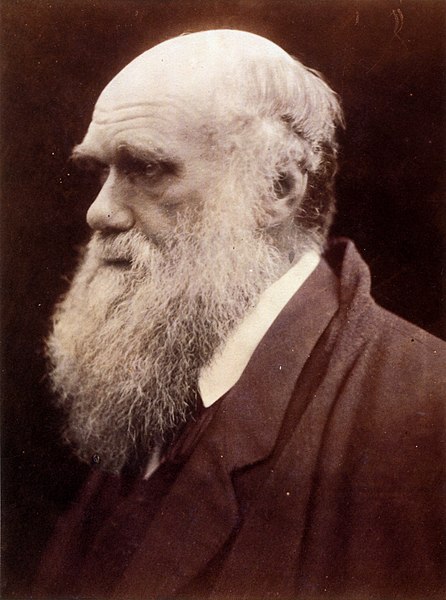
Charles Darwin (1809–1882)

Charles Darwin is primarily known as the architect of the theory of evolution by natural selection. With the publication of On the Origin of Species in 1859, he advanced a view of the development of life on earth that profoundly shaped nearly all biological and much philosophical thought which followed. A number of prior authors had proposed that species were not static and were capable of change over time, but Darwin was the first to argue that a wide variety of features of the biological world could be simultaneously explained if all organisms were descended from a single common ancestor and modified by a process of adaptation to environmental conditions that Darwin christened “natural selection.”

Although it would not be accurate to call Darwin himself a philosopher, as his training, his professional community, and his primary audience place him firmly in the fold of nineteenth-century naturalists, Darwin was deeply interested and well versed in philosophical works, which shaped his thought in a variety of ways. This foundation included (among others) the robust tradition of philosophy of science in Britain in the 1800s (including, for instance, J. S. Mill, William Whewell, and John F. W. Herschel), and German Romanticism (filtered importantly through Alexander von Humboldt). From these influences, Darwin would fashion a view of the living world focused on the continuity found between species in nature and a naturalistic explanation for the appearance of design and the adaptation of organismic characters to the world around them.

It is tempting to look for antecedents to nearly every topic present in contemporary philosophy of biology in the work of Darwin, and the extent to which Darwin anticipates a large number of issues that remain pertinent today is certainly remarkable. This article, however, focuses on Darwin’s historical context and the questions to which his writings were primarily dedicated.

Table of Contents

  1. Biography
  2. Darwin’s Philosophical Influences
    1. British Philosophy of Science
    2. German Romanticism
    3. Ethical and Moral Theory
  3. The Argument for Natural Selection
    1. Darwin’s Theory
    2. The Origin of Species
  4. Evolution, Humans, and Morality
    1. The Question of Human Evolution
    2. The Descent of Man
    3. Sexual Selection
  5. Design, Teleology, and Progress
    1. Design: The Darwin-Gray Correspondence
    2. Was Darwin a Teleologist?
    3. Is Natural Selection Progressive?
  6. The Reception of Darwin’s Work
    1. Scientific Reception
    2. Social and Religious Reception
    3. Darwin and Philosophy
  7. References and Further Reading
    1. Primary Sources
    2. Secondary Sources

1. Biography

Charles Robert Darwin was born in Shropshire, England, on February 12, 1809. He came from a relatively illustrious and well-to-do background: his father, Robert Darwin (1766–1848), was a wealthy and successful surgeon, and his uncle Josiah Wedgwood (1730–1795) was the son of the founder of the pottery and china works that still bear the family name. His grandfather was Erasmus Darwin (1731–1802), a co-founder of the Lunar Society, a group that brought together elite natural philosophers from across the English Midlands, including the chemist Joseph Priestley and the engineers James Watt and Matthew Boulton. Erasmus Darwin’s natural-philosophical poetry was widely known, especially Zoonomia (or “Laws of Life”), published between 1794 and 1796, and containing what we might today call some “proto-evolutionary” thought (Browne 1989).

Darwin had been expected to follow in his father’s footsteps and set out for the University of Edinburgh at the age of sixteen to study medicine. He was, anecdotally, so distressed by surgical demonstrations (in the years prior to anesthesia) that he quickly renounced any thoughts of becoming a doctor and turned his focus instead to the zoological lessons (and collecting exhibitions) of Robert Edmond Grant, who would soon become his first real mentor. Darwin’s father, “very properly vehement against my turning into an idle sporting man, which then seemed my probable destination” (Autobiography, p. 56), sent him in 1828 to Cambridge, with the goal of becoming an Anglican parson. Cambridge, however, would put him in contact with John Stevens Henslow, an influential botanist who encouraged Darwin to begin studying geology.

His friendship with Henslow would trigger one of the pivotal experiences of Darwin’s life. The professor was offered a position as “ship’s naturalist” for the second voyage of the HMS Beagle, a vessel tasked with sailing around the world and preparing accurate charts of the coast of South America. Henslow, dissuaded by his wife from taking the position himself, offered it to Darwin. After convincing his father that there could, indeed, be a career waiting for him at the end of the trip, Darwin departed on December 27, 1831.

Darwin left England a barely credentialed, if promising, twenty-two-year-old student of zoology, botany, and geology. By the time the ship returned in 1836, Darwin had already become a well-known figure among British naturalists. This recognition occurred for several reasons. First, it was a voyage of intellectual transformation. One of Darwin’s most significant scientific influences was Charles Lyell, whose three-volume Principles of Geology arrived by post over the course of the voyage, in the process dramatically reshaping the way in which Darwin would view the geological, fossil, zoological, and botanical data that he collected on the trip. Second, Darwin spent the entire voyage – much of that time in inland South America, while the ship made circuits surveying the coastline – collecting a wide variety of extremely interesting specimens and sending them back to London. Those collections, along with Darwin’s letters describing his geological observations, made him a popular man upon his return, and a number of fellow scientists (including the geologist and fossil expert Richard Owen, later to be a staunch critic of Darwin’s, and the ornithologist John Gould) prepared, cataloged, and displayed these specimens, many of which were extensively discussed in Darwin’s absence.

It was also on this trip that Darwin made his famed visit to the islands of the Galapagos. It is certain that the classic presentation of the Galapagos trip as a sort of “eureka moment” for Darwin, in which he both originated and became convinced of the theory of natural selection in a single stroke by analyzing the beaks of the various species of finch found across several of the islands, is incorrect. (Notably, Darwin had mislabeled several of his collected finch and mockingbird specimens, and it was only after they were analyzed by the ornithologist Gould on his return and supplemented by several other samples collected by the ship’s captain FitzRoy, that he saw the connections between beak and mode of life that we now understand to be so crucial.) But the visit was nonetheless extremely important. For one thing, Darwin was struck by the fact that the organisms found in the Galapagos did not look like inhabitants of other tropical islands, but rather seemed most similar to those found in coastal regions of South America. Why, Darwin began to wonder, would a divine intelligence not create species better tailored to their island environment, rather than borrowing forms derived from the nearby continent? This argument from biogeography (inspired in part by Alexander von Humboldt, about whom more in the next section) was one Darwin always found persuasive, and it would later be included in the Origin.

Beginning with his return in late 1836, and commencing with a flurry of publications on the results of the Beagle voyage that would culminate with the appearance of the book that we now call Voyage of the Beagle (1839, then titled Journal of Researches into the Geology and Natural History of the Various Countries Visited by H.M.S. Beagle), Darwin would spend six fast-paced years moving through London’s scientific circles. This was a period of frantic over-work and rapidly progressing illness (the subject of extreme speculation in the centuries since, with the latest hypothesis being an undiagnosed lactose intolerance). Darwin married his first cousin (a fact that caused him constant worry over the health of his children), Emma Wedgwood, in early 1839, and the family escaped the pressures of London to settle at a country manor in Down, Kent, in 1842 (now renovated as a very attractive museum). Darwin would largely be a homebody from this point on; his poor health and deep attachment to his ten children kept him hearthside for much of the remainder of his career. The death of two of his children in infancy, and especially a third, Annie, at the age of ten, were tragedies that weighed heavily upon him.

Before we turn to Darwin’s major scientific works, it is worth pausing to briefly discuss the extensive evidence revealing the development of Darwin’s thought. Luckily for those of us interested in studying the history of biology, he was a pack-rat. Darwin saved nearly every single letter he received and made pressed copies of those he wrote. He studiously preserved every notebook, piece of copy paper, or field note; we even have lists of the books that he read and when he read them, and some of his children’s drawings, if he later wrote down a brief jot of something on the back of them. As a result, we are able to chronicle the evolution (if you will) of his thinking nearly down to the day.

Thus, we know that over the London period – and particularly during two crucial years, 1837 and 1838 – Darwin would quickly become convinced that his accumulated zoological data offered unequivocal support for what he would call transformism: the idea that the species that exist today are modified descendants of species that once existed in the past but are now extinct. Across the top of his B notebook (started around July 1837), he wrote the word ZOONOMIA, in homage to his grandfather’s own transformist thought. The first “evolutionary tree” would soon follow. Around this time, he came to an understanding of natural selection as a mechanism for transformism, in essentially its modern form – since no organism is exempt from the struggle to survive and reproduce, any advantage, however slight, over its competitors will lead to more offspring in the long run, and hence the accumulation of advantageous change. With enough time, differences large enough to create the gulfs between species would arise.

In 1842, Darwin drafted a short version of this theory (now known as the Sketch) and expanded it to a much longer draft in 1844 (now known as the Essay), which he gave to his wife with instructions and an envelope of money to ensure that it would be published if Darwin died as a result of his persistent health problems. Somewhat inexplicably, he then set this work aside for around a decade, publishing a magisterial three-volume work on the classification of the barnacles. (So all-consuming was the pursuit that one of the Darwin children asked a friend where their father “did his barnacles.”) Hypotheses for the delay abound: aversion to conflict; fear of the religious implications of evolution; the impact of the wide ridicule of the rather slapdash anonymous “evolutionary” volume Vestiges of the Natural History of Creation, published in 1844; or simply a desire to immerse himself fully in the details of a taxonomic project prior to developing his own theoretical perspective.

In any event, he slowly began working on evolutionary ideas again over the mid-1850s (starting to draft a massive tome, likely in the end to have been multi-volume, now known as the Big Book or Natural Selection), until, on June 18, 1858, he received a draft of an article from fellow naturalist Alfred Russel Wallace. Darwin believed – whether or not this is true is another matter – that he had been entirely scooped on natural selection. Without his involvement, Lyell and the botanist Joseph Dalton Hooker arranged a meeting of the Linnean Society at which some of Darwin’s Sketch and Wallace’s paper would be read, allowing Darwin to secure priority in the discovery of natural selection. Meanwhile, Darwin turned to the preparation of an “abstract” of the larger book, much lighter on citations and biological detail than he would have liked, and he rushed it into print. On November 24, 1859, On the Origin of Species by Means of Natural Selection, or the Preservation of Favoured Races in the Struggle for Life was published. Its initial print run immediately sold out.

The book became a massive success, powered in no small part by the ability of natural selection to parsimoniously explain a staggering array of otherwise disunified biological facts (see section 6). He was promoted by a variety of eloquent and influential defenders (such as Thomas Henry Huxley), and even a number of fellow naturalists who were otherwise skeptical (particularly about the theory’s relationship to religious belief) offered him public support.

Despite Darwin’s best efforts (see section 4) to exclude discussion of humans and human evolution from the Origin, both the scientific community and the general public were quick to see the striking impact that Darwin’s work would have on our conception of human origins. After publishing books on the fertilization of orchids, the morphology of climbing plants, and the variation of domesticated plants and animals, Darwin finally turned directly to the question of humans, publishing The Descent of Man in 1871. His efforts there to connect the mental capacities of animals with those of humans would be extended by The Expression of the Emotions in Man and Animals, published the following year, one of the first books to be illustrated with photographic plates. Further books on fertilization, flowers, movement in plants, and a final book on earthworms were Darwin’s remaining major scientific publications – all directed at offering small but important demonstrations of the power of natural selection in action, and the ability of gradual, continuous change to accumulate in significant ways.

Darwin died in April 1882, and is buried in Westminster Abbey, next to John Herschel and just across from Isaac Newton. As such an illustrious burial attests, his legacy as one of the leading scientists of the nineteenth century was immediately cemented, even if the theory of natural selection itself took several decades to meet with universal acceptance (see section 6). By the 1950s, biological theory as a whole had been remade in a largely Darwinian image, and in 1964, Theodosius Dobzhansky would famously write that “nothing makes sense in biology except in the light of evolution.” Darwin was even featured on one side of the British £10 note from 2000 to 2018.

2. Darwin’s Philosophical Influences

For all that Darwin was assuredly not a professional philosopher – as indicated above, his relatively scattered educational trajectory was not one that would have had him reading large numbers of philosophical texts – he was still quite well-read, and concepts from both British and broader European traditions can undeniably be detected in his work. Much debate surrounds the ways in which we should understand those influences, and how they might (or might not) have shaped the content of his later scientific works.

We can be certain that while Darwin studied at Cambridge, he would have received the standard sort of training for a young man interested in becoming a naturalist and an Anglican minister (see Sloan, in Hodge and Radick 2009). He would have studied the Bible, as well as some important works of philosophy (such as John Locke’s Essay). He wrote later in his autobiography about the extent to which reading the natural theology of William Paley had been formative for him—the young Darwin was a genuine admirer of Paley’s approach, and hints of Paley’s perspective on design in nature can be found in the respect with which Darwin would treat arguments concerning the difficulty of accounting for “perfectly” adapted characters like the eye of an eagle.

Darwin also began to engage with the two philosophical traditions that would, as many commentators have noted (see especially Richards and Ruse 2016), largely structure his perspective on the world: one British, consisting of the writings on science by authors like John Herschel, William Whewell, and John Stuart Mill, and one German, which, especially for the young Darwin, would focus on the Romanticism of Alexander von Humboldt.

a. British Philosophy of Science

The British tradition was born out of the professionalization and standardization of scientific practice. Whewell would coin the very term ‘scientist’ around this period, and he and others were engaged in an explicit attempt to clarify the nature of scientific theorizing and inference. Works doing exactly this were published in rapid succession just as Darwin was negotiating the demands of becoming a professional naturalist and fashioning his work for public consumption. Herschel’s Preliminary Discourse on the Study of Natural Philosophy was published in 1830 (Darwin read it the same year), Whewell’s massive History of the Inductive Sciences and Philosophy of the Inductive Sciences appeared in 1837 and 1840, respectively, and Mill’s System of Logic dates from 1843. The very concept of science itself, the ways in which scientific evidence ought to be collected and inferences drawn, and the kinds of character traits that should be possessed by the ideal scientist were all the object of extensive philosophical discourse.

For his part, Darwin certainly was aware of the works of these three authors, even those that he had not read, and was further exposed to them all through their presence in a variety of contemporary scientific texts. Works like Charles Lyell’s Principles of Geology (1830–1833) were self-consciously structured to fulfill all the canons of quality science that had been laid down by the philosophers of the day, and so served as practical exemplars for the kind of theorizing that Darwin would later attempt to offer.

Without going too far afield into the incredibly rich subject of nineteenth-century British philosophy of science, a brief sketch of these views is nonetheless illuminating. In the early years of the 1800s, British science had been left with an uneasy mix of two competing philosophies of science. On the one hand, we find a strict kind of inductivism, often attributed to Francis Bacon, as hardened and codified by Isaac Newton. Scientists are to disinterestedly pursue the collection of the largest possible basis of empirical data and generalize from them only when a theoretical claim has received sufficient evidential support. Such was, the story went, the way in which Newton himself had induced the theory of universal gravitation on the basis of celestial and terrestrial motions, and such was the intent behind his famous injunction, “hypotheses non fingo” – I frame no hypotheses.

Such a philosophy of science, however, ran afoul of perhaps the most significant theoretical development of the early nineteenth century: the construction of the wave theory of light, along with Thomas Young and Augustin Fresnel’s impressive experimental confirmations of the various phenomena of interference. This posed a straightforward set of challenges for British philosophers of science to solve. Other than the famous “crucial experiments” in interference, there was little inductive evidence for the wave theory. What was the medium that transmitted light waves? It seemed to escape any efforts at empirical detection. More generally, was not the wave theory of light exactly the sort of hypothesis that Newton was warning us against? And if so, how could we account for its substantial success? How should the Baconian inductive method be related to a more speculative, deductive one?

Herschel, Whewell, and Mill differ in their approaches to this cluster of questions: Herschel’s emphasis on the role of the senses, Whewell’s invocation of Kantianism, and Mill’s use of more formal tools stand out as particularly notable. But at the most general level, all were trying, among numerous other goals, to find ways in which more expansive conceptions of scientific inference and argument could make room for a “legitimate” way to propose and then evaluate more speculative or theoretical claims in the sciences.

Of course, any theory addressing changes in species over geologic time will confront many of the same sorts of epistemic problems that the wave theory of light had. Darwin’s introduction of natural selection, as we will see below, both profited and suffered from this active discussion around questions of scientific methodology. On the one hand, the room that had been explicitly made for the proposition of more speculative theories allowed for the kind of argument that Darwin wanted to offer. But on the other hand, because so much focus had been aimed at these kinds of questions in recent years, Darwin’s theory was, in a sense, walking into a philosophical trap, with interlocutors primed to point out just how different his work was from the inductivist tradition. To take just one example, Darwin would complain in a letter to a friend that he thought that his critics were asking him for a standard of proof that they did not demand in the case of the wave theory. This conflict will be made explicit in the context of the Origin in the next section.

b. German Romanticism

The other philosophical tradition which substantially shaped Darwin’s thought was a German Romantic one, largely present in the figure of the naturalist, explorer, and philosopher Alexander von Humboldt (1769–1859). Darwin seems to have first read Humboldt in the years between the completion of his bachelor’s degree and his departure on the Beagle. Throughout his life, he often described his interactions with the natural world in deeply aesthetic, if not spiritual, terms, frequently linking such reflections back to Humboldt’s influence. A whole host of Darwin’s writings on the environments and landscapes he saw during his voyage, from the geology of St. Jago (now Santiago) Island in Cape Verde to the rainforests of Brazil, are couched in deeply Humboldtian language.

But this influence was not only a matter of honing Darwin’s aesthetic perception of the world, though this was surely part of Humboldt’s impact. Humboldt described the world in relational terms, focusing in particular on the reciprocal connections between botany, geology, and geography, a perspective that would be central in Darwin’s own work. Humboldt also had expounded a nearly universally “gradualist” picture of life – emphasizing the continuity between animals and humans, plants and animals, and even animate and inanimate objects. As we will see below, this kind of continuity was essential to Darwin’s picture of human beings’ place in the world.

In addition to the widely recognized influence of Humboldt, Darwin knew the works of Carl Gustav Carus, a painter and physiologist who had proposed theories of the unity of type (the sharing of an “archetype” among all organisms of a particular kind, reminiscent as well of the botanical work of Goethe). That archetype theory, in turn, was influentially elaborated by Richard Owen, with whom Darwin would work extensively on the evaluation and classification of some of his fossil specimens after his return on the Beagle. As noted above, Darwin was quite familiar with the work of Whewell, who integrated a very particular sort of neo-Kantianism into the context of an otherwise very British philosophy of science (on this point, see particularly Richards’s contribution to Richards and Ruse 2016).

Controversy exists in the literature over the relative importance of the British and German traditions to Darwin’s thought. The debate in the early twenty-first century is somewhat personified in the figures of Michael Ruse and Robert J. Richards, partisans of the British and German influences on Darwin’s work, respectively. On Ruse’s picture, the British philosophy-of-science context, supplemented by the two equally British cultural forces of horticulture and animal breeding (hallmarks of the agrarian, land-owner class) and the division of labor and a harsh struggle for existence (features of nineteenth-century British entrepreneurial capitalism), offers us the best explanation for Darwin’s intellectual foundations. Richards, of course, does not want to deny the obvious presence of these influences in Darwin’s thought. For him, what marks Darwin’s approach out as distinctive is his knowledge of and facility with German Romantic influences. In particular, Richards argues, they let us understand Darwin’s perennial fascination with anatomy and embryology, aspects that are key in this German tradition and the inclusion of which in Darwin’s work might otherwise remain confusing.

c. Ethical and Moral Theory

Darwin recognized throughout his career that his approach to the natural world would have an impact on our understanding of humans. His later works on the evolution of our emotional, social, and moral capacities, then, require us to consider his knowledge of and relation to the traditions of nineteenth-century ethics.

In 1839, Darwin read the work of Adam Smith, in particular his Theory of Moral Sentiments, which he had already known through Dugald Stewart’s biography of Smith. (It is less likely that he was familiar first-hand with any of Smith’s economic work; see Priest 2017.) Smith’s approach to the moral sentiments – that is, his grounding of our moral conduct in our sympathy and social feelings toward one another – would be reinforced by a work that was meaningful for Darwin’s theorizing but is little studied today: James Mackintosh’s Dissertation on Progress of Ethical Philosophy, published in 1836. For Smith and Mackintosh both, while rational reflection could aid us in better judging a decision, what really inspires moral behavior or right action is the feeling of sympathy for others, itself a fundamental feature of human nature. From his very first reading of Smith, Darwin would begin to write in his notebooks that such an approach to morality would enable us to ground ethical behavior in an emotional capacity that could be compared with those of the animals – and which could have been the target of natural selection.

Finally, we have the influence of Thomas Malthus. Darwin reads Malthus’s Essay on the Principle of Population (1798) on September 28, 1838, just as he is formulating the theory of natural selection for the first time. Exactly what Darwin took from Malthus, and, therefore, the extent to which the reading of Malthus should be seen as a pivotal moment in the development of Darwin’s thought, is a matter of extensive debate. We may be certain that Darwin took from the first chapter of Malthus’s work a straightforward yet important mathematical insight. Left entirely to its own devices, Malthus notes, the growth of population is an exponential phenomenon. On the contrary, even with optimistic assumptions about the ability of humans to increase efficiency and yield in our production of food, it seems impossible that growth in the capacity to supply resources for a given population could proceed faster than a linear increase.

This insight became, as Darwin endeavored to produce a more general theory of change in species, crucial to the conviction that competition in nature – what he would call the struggle for existence – is omnipresent. Every organism is locked in a constant battle to survive and reproduce, whether with other members of its species, other species, or even its environmental conditions (of drought or temperature, for instance). This struggle can help us to understand both what would cause a species to go extinct, and to see why even the slightest heritable advantage could tilt the balance in favor of a newly arrived form.

Of course, Malthus’s book does not end after its first chapter. The reason that this inevitable overpopulation and hardship seems to be absent from much of the human condition, Malthus argues, is because (at least some) humans have been prudent enough to adopt other kinds of behaviors (like religious or social checks on marriage and reproduction) that prevent our population growth from proceeding at its unfettered, exponential pace. We must ensure, he argues, that efforts to improve the lives of the poor in fact actually do so, rather than producing the conditions for problematic overpopulation. A number of commentators, perhaps most famously Friedrich Engels, have seen in this broader “Malthusianism” the moral imprint of upper-class British society. Others, by contrast, have argued that Darwin’s context is more complex than this, and requires us to carefully unpack his relationship to the multi-faceted social and cultural landscape of nineteenth-century Britain as a whole (see Hodge 2009 and Radick, in Hodge and Radick 2009).

3. The Argument for Natural Selection

Famously, Darwin described the Origin as consisting of “one long argument” for his theory of evolution by natural selection. From the earliest days of its publication, commentators were quick to recognize that while this was assuredly true, it was not the kind of argument that was familiar in the scientific method of the day.

a. Darwin’s Theory

The first question to pose, then, concerns just what Darwin is arguing for in the Origin. Strikingly, he does not use any form of the term “evolution” until the very last word of the book; he instead has a penchant for calling his position “my view” or “my theory.” Contemporary scholars tend to reconstruct this theory in two parts. First, there is the idea of descent with modification. It was common knowledge (more than a century after the taxonomic work of Linnaeus, for example) that the species that exist today seem to show us a complex network of similarities, forming a tree, composed of groups within groups. Darwin’s proposal, then, is that this structure of similarity is evidence of a structure of ancestry – species appear similar to one another precisely because they share common ancestors, with more similar species having, in general, shared an ancestor more recently. Carrying this reasoning to its logical conclusion, then, leads Darwin to propose that life itself was “originally breathed into a few forms or into one” (Origin, p. 490).

The second argumentative goal of the Origin is to describe a mechanism for the production of the changes which have differentiated species from one another over the history of life: natural selection. As organisms constantly vary, and those variations are occasionally more or less advantageous in the struggle for existence, the possessors of advantageous variations will find themselves able to leave more offspring, producing lasting changes in their lineage, and leading in the long run to the adaptation and diversification of life.

Before turning to the argument itself, it is worth offering some context: what were the understandings of the distribution and diversity of life that were current in the scientific community of the day? Two issues here are particularly representative. First, the question of ‘species.’ What exactly was the concept of species to which Darwin was responding? As John Wilkins (2009) has argued, perhaps the most common anecdotal view – that prior to Darwin, everyone believed that species were immutable categories handed down by God – is simply not supported by the historical evidence. A variety of complex notions of species were in play in Darwin’s day, and the difficulty of interpretation here is compounded by the fact that Darwin’s own notion of species is far from clear in his works (there is debate, for example, concerning whether Darwin believed species categories were merely an epistemic convenience or an objective fact about the natural world). In short, Darwin was not as radical on this score as he is sometimes made out to be, in part because there was less theoretical consensus around the question of species than we often believe.

Second, there is the question of ‘gradualism.’ As we have seen, Darwin was heavily influenced by the geologist Charles Lyell, whose Principles of Geology argued for a gradualist picture of geological change (see Herbert 2005 on Darwin’s connections and contributions to geology). Rather than a history of “catastrophes” (Rudwick 1997), where major upheavals are taken to have shaped the geological features we see around us, Lyell argued for the contrary, “uniformitarian” view, on which the same geological causes that we see in action today (like erosion, earthquakes, tidal forces, and volcanic activity), extended over a much longer history of the Earth, could produce all of today’s observed phenomena. Lyell, however, had no interest in evolution. For him, species needed a different causal story: “centers of creation,” where the divine creative power was in the process of building new species, would counterbalance extinctions caused by steady change in the distribution of environmental and climatic conditions across the globe. It is easy to see, however, how Darwin’s own view of evolution by the gradual accumulation of favorable variations could fit naturally into a Lyellian picture of geological and environmental change. Darwin is, in many ways, a product of his time.

b. The Origin of Species

The Origin begins, then, with an analogy between artificial selection – as practiced by agricultural breeders, horticulturalists, or, Darwin’s favorite example, keepers of “fancy” pigeons – and natural selection. Consider for a moment how exactly artificial selection produces new varieties. We have an idea in mind for a new variation that would be aesthetically pleasing or practically useful. Well-trained observers watch for offspring that are born with characteristics that tend in this direction, and those organisms are then bred or crossed. The process repeats and – especially in the nineteenth century, when much work was ongoing to standardize or regularize commercially viable agricultural stocks – modifications can be realized in short order. Of course, this kind of breeding requires the active intervention of an intellect to select the organisms involved, and to plan for the “target” in mind. But this need not be the case. The goal could easily be removed; Darwin has us imagine cases where a simple inclination to keep one’s “best” animals safe during storms or other periods of danger could similarly create selective breeding of this sort, though now with an “unconscious” goal. Furthermore, Darwin will argue, the “selector” can also be done away with.

The next step in the analogy, then, is to demonstrate how such selection could be happening in the natural world. Organisms in nature do seem to vary just as our domestic plants and animals do, he argues – appearances to the contrary are likely just consequences of the fact that the kind of extreme attention to variation in characteristics that an animal breeder gives to their products is absent for wild populations. In just the same way that a breeder will ruthlessly cull any organisms that do not present desirable characters, organisms in the natural world are locked in a brutal struggle for existence. Far more organisms are born than can possibly survive, leading to a kind of Malthusian competition among conspecific organisms, and, in a variety of situations, struggles against the environment itself (heat, cold, drought, and so on) are also severe. Thus, all of the ingredients are there for the analogy to go through: the generation of variation, the relevance of that variation for survival, and the possibility for this process of selection to create adaptation and diversification.

Natural selection, then, because it can work not only on the kinds of visible characters that are of concern to the horticulturalist or animal breeder, but also on the internal construction of organisms, and because it selects for general criteria of success, not limited human goals, will be able to produce adaptations entirely beyond the reach of artificial selection. The result, Darwin writes, “is as immeasurably superior to man’s feeble efforts, as the works of Nature are to those of Art” (Origin, p. 61).

How exactly should we understand this analogy? What kind of evidential or logical support does Darwin think it brings to the process of natural selection? Analogical arguments were increasingly popular throughout the nineteenth century. In part, this may be traced back to Aristotelian and other Greek uses of analogy, which would have been familiar to Darwin and his peers. The role of analogy in the formulation of causal explanations in science had also been emphasized by authors like Herschel and Mill, who argued that one step in proposing a novel causal explanation was the demonstration of an analogy between its mode of action and other kinds of causes we already know to be present in nature.

Darwin then turns to a discussion of an array of objections that he knew would have already occurred to his contemporary readers. For instance: If species arose through gradual transitions, why are they now sharply distinguished from one another? Specialization and division of labor would produce increased opportunities for success and would thus tend to drive intermediate forms to extinction. How could natural selection possibly have created organs like the eyes of an eagle, whose extreme level of perfection had indicated to authors like Paley the signature of design? With enough time, if the intervening steps along the way were still useful to the organisms that possessed them, even such organs could be produced by a gradual process of selection. Darwin also considers the appearance of instincts, with the aim of demonstrating that natural selection could influence mental processes, and the supposed infertility of hybrids, which could be seen as a problem for the accumulation of variation by crossing.

Next comes a discussion of the imperfection of the geological record. The relative rarity, Darwin argues, of the conditions required for fossilization, along with our incomplete knowledge of the fossils that are present even in well explored regions like Europe and North America, explains our ignorance of the complete set of transitional forms connecting ancestral species with the organisms alive today. This, then, serves as a segue to a collection of diverse, positive arguments for evolution by natural selection at the end of the volume, often likened to a Whewell-inspired “consilience of inductions” (a demonstration that a number of independent phenomena, not considered when the theory was first proposed, all serve as evidence for it). A number of facts about the distribution of fossils makes more sense on an evolutionary picture, Darwin argues. Extinction is given a natural explanation as an outcome of competition, and the relations between extinct groups seem to follow the same kinds of patterns that natural selection successfully predicts to exist among living species.

This final “consilience” portion of the book continues by discussing geographical distribution. Rather than appearing as though they were specifically created for their environments, Darwin notes, the flora and fauna of tropical islands are closely affiliated with the species living on the nearest major continent. This indicates that normal means of dispersal (floating, being carried by birds, and so on), along with steady evolution by natural selection, offers a solid explanation for these distributional facts. Similarly, the Linnaean, tree-like structure of larger groups containing smaller groups which relates all extant species can be explained by common ancestry followed by selective divergence, rather than simply being taken to be a brute fact about the natural world. Brief discussions of morphology, embryology, and rudimentary organs close this section, followed by a summary conclusion.

Darwin’s argument for evolution by natural selection is thus a unique one. It combines a number of relatively different ingredients: an analogy with artificial selection, several direct rebuttals of potential counterarguments, and novel evolutionary explanations for a variety of phenomena that are taken to be improvements on the consensus at that time. The ways in which these arguments relate to one another and to the evidential base for natural selection are sometimes made explicit, but sometimes left as exercises for the reader. Darwin’s critics saw in this unorthodox structure an avenue for attack (about which more in section 6).

The character of Darwin’s argument has thus remained an interpretive challenge for philosophers of science. One can recognize in the elements from which the argument is constructed the influence of particular approaches to scientific reasoning – for instance, Herschel’s understanding of the vera causa tradition, Comte’s positivism, or Whewell’s development of the consilience of inductions. These clues can help us to construct an understanding of Darwin’s strategy as being in dialogue with the contemporary philosophy of his day. How to spell this out in the details, however, is relatively challenging, especially because Darwin was himself no philosopher, and it can thus be difficult to determine to what extent he was really engaging with the details of any one philosopher’s work.

In a different vein, we can also use the Origin as a test case for a variety of contemporary pictures of scientific theory change. To take just one example, Darwin seems at times to offer an explicit argument in support of the epistemic virtues embodied by his theory. In particular, he directly considers the likely fertility of an evolutionary approach, arguing that future biological research in an evolutionary vein will be able to tackle a whole host of new problems that are inaccessible on a picture of special creation.

Similarly, evolutionary theory can serve as a test case for our understanding of scientific explanation in the context of historical sciences. Darwin’s argument relies crucially upon the ability to generalize from a local, short-term explanation (of, for instance, the creation of a new kind of pigeon by the accumulation of variations in a particular direction) to a long-term explanation of a broad trend in the history of life (like the evolution of flight). Darwin’s twin reliance on both this sense of “deep time” and on explanations that often involve not the description of a specific causal pathway (one that Darwin could not have possibly known in the mid-nineteenth century) but of a narrative establishing the plausibility of an evolutionary account for a phenomenon have since been recognized to be at the heart of a variety of scientific fields (Currie 2018).

4. Evolution, Humans, and Morality

Throughout the Origin, Darwin assiduously avoids discussion of the impact of evolutionary theory on humans. In a brief aside near the end of the conclusion, he writes only that “light will be thrown on the origin of man and his history” (Origin, p. 488). Of course, no reader could fail to notice that an evolutionary account of all other organisms, along with a unified mechanism for evolution across the tree of life, implies a new account of human origins as well. Caricatures of Darwin depicted as a monkey greeted the theory immediately upon its publication, and Darwin – whose notebooks and correspondence show us that he had always believed that human evolution was one of the most pressing questions for his theory to consider, even if it was absent from the Origin – finally tackled the question head-on when he published the two-volume Descent of Man, and Selection in Relation to Sex in 1871.

a. The Question of Human Evolution

It is important to see what Darwin’s explanatory goals were in writing the Descent. In the intervening years since publishing the Origin (which was, at this point, already in its fifth edition, and had been substantially revised as he engaged with various critics), Darwin had remained convinced that his account of evolution and selection was largely correct. He had published further volumes on variation in domesticated products and the fertilization of orchids, which he took to secure even further his case for the presence of sufficient variation in nature for natural selection to produce adaptations. What, then, was left to describe with respect to human beings? What made human beings special?

It should be emphasized that humans did not merit an exception to Darwin’s gradualist, continuous picture of life on earth. There is no drastic difference in kind – even with respect to emotions, communication, intellect, or morality – that he thinks separates human beings from the other animals. The Descent is not, therefore, in the business of advancing an argument for some special distinguishing feature in human nature.

On the contrary, it is this very gradualism that Darwin believes requires a defense. Opposition to his argument for continuity between humans and the other animals came from at least two directions. On the one hand, religious objections were relatively strong. Any picture of continuity between humans and animals would, for many theologians, have to take the human soul into account. Constructing an account of this supposedly distinctive feature of human beings which could be incorporated into a narrative of human evolution was certainly possible – many authors did precisely this (see Livingstone 2014) – but would require significant work (see more on religious responses to Darwin in section 6.b).

On the other hand, and more problematic from Darwin’s perspective, was scientific opposition, perhaps best represented by Alfred Russel Wallace, who argued that the development of human mental capacity had given us the ability to exempt ourselves from natural selection’s impact on our anatomy entirely (on the Darwin-Wallace connection, see Costa 2014). This special place for human reason did not sit well with Darwin, who thought that natural selection would act no differently in the human case. (Wallace would go on to become a spiritualist, a bridge too far for Darwin; the men rarely communicated afterward.)

Further, as has been extensively, if provocatively, maintained by Desmond and Moore (2009), Darwin recognized the moral stakes of the question. The debate over the origins of human races was raging during this period, dividing those who believed that all human beings were members of a single species (monogenists) and those who argued that human races were in fact different species (polygenists). Darwin came from an abolitionist, anti-slavery family (his wife’s grandfather, the founder of the Wedgwood pottery works, famously produced a series of “Am I Not a Man and a Brother?” cameos, which became an icon of the British and American anti-slavery movements). He had seen first-hand the impact of slavery in South America during the Beagle voyage and was horrified. Desmond and Moore’s broader argument, that Darwin’s entire approach to evolution (in particular, his emphasis on common ancestry) was molded by these experiences, has received harsh criticism. But the more limited claim that Darwin was motivated at least to some extent by the ethical significance of an evolutionary account of human beings is inarguable.

b. The Descent of Man

The Descent therefore begins with a demonstration of the similarity between the physical and mental characteristics of humans and other animals. Darwin notes the many physical homologies (that is, parts that derive from the same part in a common ancestor) between humans and animals – including a number of features of adults, our processes of embryological development, and the presence of rudimentary organs that seem to be useful for other, non-human modes of life. When Darwin turns to the intellect, he notes that, of course, even when we compare “one of the lowest savages” to “one of the higher apes,” there is an “enormous” difference in mental capacity (Descent, p. 1:34). Nonetheless, he contends once again that there is no difference in kind between humans and animals. Whatever mental capabilities we consider (such as instincts, emotions, learning, tool use, or aesthetics), we are able to find some sort of analogy in animals. The mixture of love, fear, and reverence that a dog shows for his master, Darwin speculates, might be analogous with humans’ belief in God (Descent, p. 1:68). As regards the emotions in particular, Darwin would return to this subject a year later in his work The Expression of the Emotions in Man and Animals, a full treatise concerning emotional displays in animals and their similarities with those in humans.

Of course, demonstrating that it is possible for these faculties to be connected by analogy with those in animals is not the same thing as demonstrating how such faculties might have evolved for the first time in human ancestors who lacked them. That is Darwin’s next goal, and it merits consideration in some detail.

For Darwin, the evolution of higher intellectual capacities is intimately connected with the evolution of social life and the moral sense (Descent, pp. 1:70–74). We begin with the “social instincts,” which primarily consist of sympathy and reciprocal altruism (providing aid to fellow organisms in the hope of receiving the same in the future). These would do a tolerably good job of knitting together a sort of pre-society, though obviously they would extend only to the members of one’s own “tribe” or “group.” Social instincts, in turn, would give rise to a feeling of self-satisfaction or dissatisfaction with one’s behavior, insofar as it aligned or failed to align with those feelings of sympathy. The addition of communication or language to the mix allows for social consensus to develop, along with the clear expression of public opinion. All these influences, then, could be intensified as they became habits, giving our ancestors an increasingly intuitive feeling for the conformity of their behavior with these emerging social norms.

In short, what we have just described is the evolution of a moral sense. From a basic kind of instinctive sympathy, we move all the way to a habitual, linguistically encoded sense of praise or blame, an instinctive sentiment that one’s actions should or should not have been done, a feeling for right and wrong. Darwin hastens to add that this evolutionary story does not prescribe the content of any such morality. That content will emerge from the conditions of life of the group or tribe in which this process unfolds, in response to whatever encourages or discourages the survival and success of that group. Carried to the extreme, Darwin writes that if people “were reared under precisely the same conditions as hive-bees, there can hardly be a doubt that our unmarried females would, like the worker-bees, think it a sacred duty to kill their brothers, and mothers would strive to kill their fertile daughters; and no one would think of interfering” (Descent, p. 1:73).

There is thus no derivation here of any particular principle of normative ethics – rather, Darwin wants to tell us a story on which it is possible, consistent with evolution, for human beings to have cobbled together a moral sense out of the kinds of ingredients which natural selection can easily afford us. He does argue, however, that there is no reason for us not to steadily expand the scope of our moral reasoning. As early civilizations are built, tribes become cities, which in turn become nations, and with them an incentive to extend our moral sympathy to people whom we do not know and have not met. “This point being once reached,” Darwin writes, “there is only an artificial barrier to prevent his sympathies extending to the men of all nations and races” (Descent, pp. 1:100–101).

We still, however, have not considered the precise evolutionary mechanism which could drive the development of such a moral sense. Humans are, Darwin argues, assuredly subject to natural selection. We know that humans vary, sometimes quite significantly, and experience in many cases (especially in the history of our evolution, as we are relatively frail and defenseless) the same kinds of struggles for existence that other animals do. There can be little doubt, then, that some of our features have been formed by natural selection. But the case is less obvious when we turn to mental capacities and the moral sense. In some situations, there will be clear advantages to survival and reproduction acquired by the advancement of some particular mental capacity – for instance, the ability to produce a device for obtaining food or performing well in battle.

The moral sense, however, offers a more complicated case. Darwin recognizes what is sometimes called the problem of biological altruism – that is, it seems likely that selfish individuals who freeload on the courage, bravery, and sacrifice of others will be more successful and leave behind more offspring than those with a more highly developed moral sense. If this is true, how can natural selection have favored the development of altruistic behavior? The correct interpretation of Darwin’s thinking here is the matter of a fierce debate in the literature. Darwin’s explanation seems to invoke natural selection operating at the level of groups or tribes. “When two tribes of primeval man, living in the same country, came into competition,” he writes, “if the one tribe included (other circumstances being equal) a greater number of courageous, sympathetic, and faithful members, who were always ready to warn each other of danger, to aid and defend each other, this tribe would without doubt succeed best and conquer the other” (Descent, p. 1:162). This appears to refer to natural selection not in terms of individual organisms competing to leave more offspring, but of groups competing to produce more future groups, a process known as group selection. On the group-selection reading, then, what matters is that the moral sense emerges in a social context. While individually, a selfish member of a group might profit, a selfish tribe will be defeated in the long-run by a selfless one, and thus tribes with moral senses will tend to proliferate.

Michael Ruse has, however, argued extensively for a tempering of this intuitive reading. Given that in nearly every other context in which Darwin discusses selection, he focuses on the individual level (even in cases like social insects or packs of wolves, where a group-level reading might be attractive), we should be cautious in ascribing a purely group-level explanation here. Among other considerations, the humans (or hominids) who formed such tribes would likely be related to one another, and hence a sort of “kin selection” (the process by which an organism promotes an “extended” version of its own success by helping out organisms that are related to it, and hence an individual-level explanation for apparent group-level phenomena) could be at play.

c. Sexual Selection

Notably, the material described so far has covered only around half of the first volume of the Descent. At this point, Darwin embarks on an examination of sexual selection – across the tree of life, from insects, to birds, to other mammals – that takes up the remaining volume and a half. He does so in order to respond to a unique problem that human beings pose. There is wide diversity in human morphology; different human races and populations look quite different. That said, this diversity seems not to arise as a result of the direct impact of the environment (as similar-looking humans have lived for long periods in radically different environments). It also seems not to be the sort of thing that can be explained by natural selection: there is nothing apparently adaptive about the different appearances of different human groups. How, then, could these differences have evolved?

Darwin answers this question by appealing to sexual selection (see Richards 2017). In just the same way that organisms must compete with others for survival, they must also compete when attracting and retaining mates. If the “standards of beauty” of a given species were to favor some particular characteristic for mating, this could produce change that was non-selective, or which even ran counter to natural selection. The classic example here is the tail of the peacock: even if the tail imposes a penalty in terms of the peacock’s ability to escape from predators, if having an elaborate tail is the only way in which to attract mates and hence to have offspring, the “selection” performed by peahens will become a vital part of their evolutionary story. A variety of non-selective differences in humans, then, could be described in terms of socially developed aesthetic preferences.

This explanation, too, has been the target of extensive debate. It is unclear whether or not sexual selection is a process that is genuinely distinct from natural selection – after all, if natural selection is intended to include aptitude for survival and reproduction, then it seems as though sexual selection is only a subset of natural selection. Further, the vast majority of Darwin’s examples of sexual selection in action involve traditional, nineteenth-century gender roles, with an emphasis on violent, aggressive males who compete for coy, choosy females. Can the theory be freed of these now outmoded assumptions, or should explanations that invoke sexual selection instead be discarded in favor of novel approaches that take more seriously the insights of contemporary theories of gender and sexuality (see, for instance, Roughgarden 2004)?

5. Design, Teleology, and Progress

Pre-Darwinian concepts of the character of life on earth shared a number of what we might call broad-scale or structural commitments. Features like the design of organismic traits, the use of teleological explanations, or an overarching sense of progress stood out as needing explanation in any biological theory. Many of these would be challenged by an evolutionary view. Darwin was aware of such implications of his work, though they are often addressed only partially or haphazardly in his most widely read books.

a. Design: The Darwin-Gray Correspondence

One aspect of selective explanations has posed a challenge for generations of students of evolutionary theory. The production of variations, as Darwin himself emphasized, is a random process. While he held out hope that we would someday come to understand some of the causal sequences in greater detail (as we indeed now do), in the aggregate it is “mere chance” that “might cause one variety to differ in some character from its parents” (Origin, p. 111). On the other hand, natural selection is a highly non-random process, which generates features that seem to us to be highly refined products of design.

Darwin, of course, recognized this tension, and discussed it at some length – only he did not do so, in general, in the context of his published works. It is his correspondence with the American botanist Asa Gray which casts the most light on Darwin’s thought on the matter (for an insightful recounting of the details, see Lennox 2010). Gray was what we might today call a committed “theistic evolutionist” – he believed that Darwin’s theory might be largely right in the details but hoped to preserve a role for a master plan, a divinely inspired design lying behind the agency of natural selection (which would on this view have been instituted by God as a secondary cause). Just as, many theists since Newton had argued, God might have instituted the law of gravity as a way to govern a harmonious balance in the cosmos, Gray wondered if Darwin might have discovered the way in which the pre-ordained, harmonious balance in the living world was governed.

However, this would require a place for the “guidance” of design to enter, and Gray thought that variation was where it might happen. If, rather than being purely random, variations were guided, directed toward certain future benefits or a grand design, we might be able to preserve divine influence over the evolutionary process. Such a view is entirely consistent with what Darwin had written in the Origin. He often spoke of natural selection in precisely the “secondary cause” sense noted above (and selected two quotes for the Origin’s frontispiece that supported precisely this interpretation), and he stated clearly that what he really meant in calling variation “random” was that we were entirely ignorant of its causes. Could not this open a space for divinely directed evolution?

Darwin was not sure. His primary response to Gray’s questioning was confusion. He wrote to Gray that “in truth I am myself quite conscious that my mind is in a simple muddle about ‘designed laws’ & ‘undesigned consequences.’ — Does not Kant say that there are several subjects on which directly opposite conclusions can be proved true?!” (Darwin to Gray, July 1860, in Lennox 2010, p. 464). Darwin’s natural-historical observations seem to show him that nature is a disorderly, violent, dangerous place, not exactly one compatible with the kind of design that his British Anglican upbringing had led him to expect.

Another source is worthy of note. In his 1868 Variation in Plants and Animals Under Domestication, Darwin asks us to consider the example of a pile of stones that has accumulated at the base of a cliff. Even though we might call them “accidental,” the precise shapes of the stones in the pile are the result of a series of geological facts and physical laws. Now imagine that someone builds a building from the stones in the pile, without reshaping them further. Should we infer that the stones were there for the sake of the building thus erected? Darwin thinks not. “An omniscient Creator,” he writes, “must have foreseen every consequence which results from the laws imposed by Him. But can it be reasonably maintained that the Creator intentionally ordered, if we use the words in any ordinary sense, that certain fragments of rock should assume certain shapes so that the builder might erect his edifice?” (Variation, p. 2:431). Variation, Darwin claims, should be understood in much the same way. There is no sense, divine or otherwise, in which the laws generating variation are put in place for the sake of some single character in some particular organism. In this sense, evolution is a chancy (and hence undesigned) process for Darwin.

b. Was Darwin a Teleologist?

A related question concerns the role of teleological explanation in a Darwinian world. Darwin is often given credit (for example, by Engels) for having eliminated the last vestiges of teleology from nature. A teleological account of hearts, for instance, takes as a given that hearts are there in order to pump blood, and derives from this fact explanations of their features, their function and dysfunction, and so on. (See the discussion of final causes in the entry on Aristotle’s biology.) From the perspective of nineteenth-century, post-Newtonian science, however, such a teleological explanation seems to run contrary to the direction of causation. How could the fact that a heart would go on to pump blood in the future explain facts about its development now or its evolution in the past? Any such explanation would have to appeal either to a divine design (which Darwin doubted), or to some kind of vitalist force or idealist structure preexisting in the world.

A truly “Darwinian” replacement for such teleology, it is argued, reduces any apparent appeals to “ends” or “final causes” to structures of efficient causation, phrased perhaps in terms of the selective advantage that would be conferred by the feature at issue, or a physical or chemical process that might maintain the given feature over time. The presence of these structures of efficient causation could then be explained by describing their evolutionary histories. In this way, situations that might have seemed to call for teleological explanation are made intelligible without any appeal to final causes.

This does seem to be the position on teleology that was staked out by Darwin’s intellectual descendants in mid-twentieth century biology (such as Ernst Mayr). But is this Darwin’s view? It is not clear. A compelling line of argumentation (pursued by philosophers like James Lennox and David Depew) notes the presence of a suspiciously teleological sort of explanation that runs throughout Darwin’s work. For Darwin, natural selection causes adaptations. But the fact that an adaptation is adaptive also often forms part of an explanation for its eventual spread in the population. There is thus a sense in which adaptations come to exist precisely because they have the effect of improving the survival and reproduction of the organisms that bear them. There is no mistaking this as a teleological explanation – just as we explained hearts by their effect of pumping blood, here we are explaining adaptations by the effects they have on future survival and reproduction.

There are thus two questions to be disentangled here, neither of which have consensus responses in the contemporary literature. First, did Darwin actually advocate for this kind of explanation, or are these merely turns of phrase that he had inherited from his teachers in natural history and to which we should give little actual weight? Put differently, did Darwin banish teleology from biology or demonstrate once and for all the way in which teleology could be made compatible with an otherwise mechanistic understanding of the living world? Second, does contemporary biology give us reasons to reject these kinds of explanations today, or should we rehabilitate a revised notion of teleology in the evolutionary context (for the latter perspective, see, for instance, Walsh 2016)?

c. Is Natural Selection Progressive?

The observation of “progress” across the history of life is a reasonably intuitive one: by comparison to life’s first billion years, which exclusively featured single-celled, water-dwelling organisms, we are now surrounded by a bewildering diversity of living forms. This assessment is echoed in the history of philosophy by way of the scala naturae, the “great chain of being” containing all living things, ordered by complexity (with humans, or perhaps angels, at the top of the scale).

This view is difficult to reconcile with an evolutionary perspective. In short, the problem is that evolution does not proceed in a single direction. The bacteria of today have been evolving to solve certain kinds of environmental problems for just as long, and with just as much success, as human beings and our ancestors have been evolving to solve a very different set of environmental challenges. Any “progress” in evolution will thus be progress in a certain, unusual sense of “complexity.” In the context of contemporary biology, however, it is widely recognized that any one such ordering for all of life is extremely difficult to support. A number of different general definitions of “complexity” have been proposed, and none meets with universal acceptance.

Darwin acknowledged this problem himself. Sometimes he rejected the idea of progress in general. “It is absurd,” he wrote in a notebook in 1837 (B 74), “to talk of one animal being higher than another.” “Never speak of higher and lower,” he wrote as a marginal note in his copy of Robert Chambers’s extremely progressivist Vestiges of the Natural History of Creation. Other times, he was more nuanced. As he had written at the beginning of notebook B, among his earliest evolutionary thoughts: “Each species changes. [D]oes it progress? […] [T]he simplest cannot help – becoming more complicated; & if we look to first origin there must be progress.” When life first begins, there is an essentially necessary increase in complexity (a point emphasized in the contemporary context by authors like Stephen Jay Gould and Daniel McShea), as no organism can be “less complex” than some minimal threshold required to sustain life. Is this “progress?” Perhaps, but only of a very limited sort.

These quotes paint a picture of Darwin as a fairly revolutionary thinker about progress. Progress in general cannot be interpreted in an evolutionary frame; we must restrict ourselves to thinking about evolutionary complexity; this complexity would have been essentially guaranteed to increase in the early years of life on earth. Adaptation refines organismic characteristics within particular environments, but not with respect to any kind of objective, global, or transcendental standard. If this were all Darwin had said, he could be interpreted essentially as consistent with today’s philosophical reflections on the question of progress.

But this is clearly not the whole story. Darwin also seemed to think that this restricted notion of progress as increase in complexity and relative adaptation was related to, if not even equivalent to, progress in the classical sense – and that such progress was in fact guaranteed by natural selection. “And as natural selection works solely by and for the good of each being,” he wrote near the end of the Origin, “all corporeal and mental endowments will tend to progress toward perfection” (Origin, p. 489). The best way to interpret this trend within Darwin’s writing is also the matter of some debate. We might think that Darwin is here doing his best to extract from natural selection some semblance (even if relativized to the local contexts of adaptation to a given environment) of the notion of progress that was so culturally important in Victorian Britain. Or, we might argue, with Robert Richards, that natural selection has thus retained a sort of moral, progressive force for Darwin, a force that might have been borrowed from the ideas of progress present within the German Romantic tradition.

6. The Reception of Darwin’s Work

Darwin’s work was almost immediately recognized as heralding a massive shift in the biological sciences. He quickly developed a group of colleagues who worked to elaborate and defend his theory in the British and American scientific establishment of the day. He also, perhaps unsurprisingly, developed a host of critics. First, let us consider Darwin’s scientific detractors.

a. Scientific Reception

Two facts about the Origin were frequent targets of early scientific critique. First, despite being a work on the origin of species, Darwin never clearly defines what he means by ‘species.’ Second, and more problematically, Darwin attempts to treat the generation and distribution of variations as a black box. One of the goals of the analogy between artificial and natural selection (and Darwin’s later writing of the Variation) is to argue that variation is simply a brute fact about the natural world: whenever a potential adaptation could allow an organism to advantageously respond to a given selective pressure or environmental change, Darwin is confident that the relevant variations could at least potentially arise within the population at issue.

However, as a number of his critics noted (including, for instance, J. S. Mill), it seems to be this process of the generation of variation that is really responsible for the origin of species. If the variation needed for selection to respond is not available, then evolutionary change simply will not occur. It is thus impossible, these critics argued, to have an account of evolution without a corresponding explanation of the generation of variations – or, at the very least, any such account would be incapable of demonstrating that any particular adaptation could actually have been produced by natural selection.

Another vein of scientific criticism concerned Darwin’s evidence base. The classic inductivism that was part and parcel of much of nineteenth-century British philosophy of science (see section 2.a) seems not to be satisfied by Darwin’s arguments. Darwin could not point to specific examples of evolution in the wild. He could not describe a detailed historical sequence of transitional forms connecting an ancestral species with a living species. He believed that he could tell portions of those stories, which he took to be sufficient, but this did not satisfy some critics. And he could not describe the discrete series of environmental changes or selection pressures that led to some particular evolutionary trajectory. Of course, these sorts of evidence are available to us today in a variety of cases, but that was of no help in 1859. Darwin was thus accused (for instance, in a scathing review of the Origin by the geologist Adam Sedgwick) of having inverted the proper order of explanation and having therefore proposed a theory without sufficient empirical evidence.

These scientific appraisals led to a period that has been called (not uncontroversially) the “eclipse of Darwinism” (a term coined by Julian Huxley in the mid-twentieth century; see Bowler 1992). It is notable that almost all of them are related to natural selection, not to the question of common ancestry. The vast majority of the scientific establishment quickly came to recognize that Darwin’s arguments for common ancestry and homology were extremely strong. There was thus a span of several decades during which Darwin’s “tree of life” was widely accepted, while his mechanism for that tree’s generation and diversification was not, even by scientific authorities as prestigious as Darwin’s famed defender Thomas Henry Huxley or the early geneticist T. H. Morgan. A host of alternative mechanisms were proposed, from neo-Lamarckian proposals of an inherent drive to improvement, to saltationist theories that proposed that variation proceeded not by gradual steps, but by large jumps between different forms. It was only with the integration of Mendelian genetics and the theory of evolution in the “Modern Synthesis” (developed in the 1920s and 1930s) that this controversy was finally laid to rest (see, for instance, Provine 1971).

b. Social and Religious Reception

The religious response to Darwin’s work is a complex subject, and was shaped by theological disputes of the day, local traditions of interaction (or lack thereof) with science, and questions of personal character and persuasion (see Livingstone 2014). Some religious authors were readily able to develop a version of natural selection that integrated human evolution into their picture of the world, making space for enough divine influence to allow for the special creation of humans, or at least for human souls. Others raised precisely the same kinds of objections to Darwin’s philosophy of science that we saw above, as they, too, had learned a sort of Baconian image of scientific methodology which they believed Darwin violated. But acceptance or rejection of Darwin’s theory was by no means entirely determined by religious affiliation. A number of figures in the Church of England at the time (an institution that was in the middle of its own crisis of modernization and liberalization) were themselves already quite willing to consider Darwin’s theory, or were even supporters, while a number of Darwin’s harshest critics were no friends to religion (Livingstone 2009).

Simplistic stories about the relationship between evolution and religious belief are thus very likely to be incorrect. The same is true for another classic presentation of religious opposition to Darwin, which is often used to reduce the entire spectrum of nuanced discussion to two interlocutors at a single event: the debate between Bishop Samuel (“Soapy Sam”) Wilberforce and Thomas Henry Huxley, held at the Oxford University Museum on the 30th of June, 1860. Wilberforce famously asked Huxley whether it was through his grandfather’s or grandmother’s side that he had descended from monkeys. As the classic story goes, Huxley calmly laid out the tenets of Darwin’s theory in response, clearly demonstrated the misunderstandings upon which Wilberforce’s question rested, and replied that while he was not ashamed to have descended from monkeys, he would be “ashamed to be connected with a man [Wilberforce] who used his great gifts to obscure the truth.” Huxley retired to thunderous applause, having carried the day.

The only trouble with this account is that it is almost certainly false. There are very few first-hand accounts of what actually took place that day, and many that exist are likely biased toward one side or the other. Huxley’s reputation had much to gain from his position as a staunch defender of science against the Church, and thus a sort of mythologized version of events was spread in the decades that followed the exchange. A number of attendees, however, noted rather blandly that, other than the monkey retort (which he did almost certainly say), Huxley’s remarks were unconvincing and likely interested only those already committed Darwinians (Livingstone 2009).

The Scopes Trial, another oft-cited “watershed” moment in the relationship between evolutionary theory and the general public, is also more complex than it might first appear. As Adam Shapiro (2013) has persuasively argued, the Scopes Trial was about far more than simple religious opposition to evolutionary theory (though this was certainly an ingredient). Biology had become part of a larger discussion of educational reform and the textbook system, making any hasty conclusions about the relationship between science and religion in this case difficult to support.

In summary, then, caution should be the order of the day whenever we attempt to analyze the relationship between religion and evolutionary theory. Religious institutions, from Darwin’s day to our own, are subject to a wide array of internal and external pressures, and their responses to science are not often made on the basis of a single, clear decision about the theological or scientific merits of some particular theory. This is especially true in Darwin’s case. Darwin’s theory quickly became part of larger social and cultural debates, whether these were about science and education (as in the United States), or, as was true globally, about broader ideological issues such as secularism, scientific or methodological naturalism, and the nature of the power and authority that scientists should wield in contemporary society.

There are few studies concerning the reception of Darwin by the public at large. Perhaps the most incisive remains that by the linguist Alvar Ellegård (1958), though his work only concerns the popular press in Britain for the first thirteen years after the publication of the Origin. This reaction is largely what one might have expected: the work itself was largely ignored until its implications for human evolution and theology were more widely known. At that point, natural selection remained largely either neglected or rejected, and public reactions were, in general, shaped by preexisting social structures and intellectual or cultural affiliations.

c. Darwin and Philosophy

Philosophers were quick to realize that Darwin’s work could have impacts upon a whole host of philosophical concerns. Particularly quick to respond were Friedrich Nietzsche and William James, both of whom were incorporating evolutionary insights or critiques into their works very shortly after 1859. The number of philosophical questions potentially impacted by an evolutionary approach is far too large to describe here and would quickly become an inventory of contemporary philosophy. A few notable examples will have to suffice (for more, see Smith 2017).

Biological species had, since Aristotle, been regularly taken to be paradigmatic exemplars of essences or natural kinds. Darwin’s demonstration that their properties have been in constant flux throughout the history of life thus serves as an occasion to reexamine our very notions of natural kind and essence, a task that has been taken up by a number of metaphysicians and philosophers of biology. When applied to human beings, this mistrust of essentialism poses questions for the concept of human nature. The same is true for final causes and teleological explanations (see section 5.b), where evolutionarily inspired accounts of function have been used to rethink teleological explanations across philosophy and science.

More broadly, the recognition that human beings are themselves evolved creatures can be interpreted as a call to take much more seriously the biological bases of human cognition and experience in the world. Whether this takes the form of a fully-fledged “neurophilosophy” (to borrow the coinage of Patricia Churchland) or simply the acknowledgement that theories of perception, cognition, rationality, epistemology, ethics, and beyond must be consistent with our evolved origins, it is perhaps here that Darwin’s impact on philosophy could be the most significant.

7. References and Further Reading

a. Primary Sources

  • Nearly all of Darwin’s works, including his published books, articles, and notebooks, are freely available at Darwin Online: <http://darwin-online.org.uk>
  • Darwin’s correspondence is edited, published, and also digitized and made freely available by a project at the University of Cambridge: <https://www.darwinproject.ac.uk/>
  • Darwin, Charles. 1859. On the Origin of Species by Means of Natural Selection, or the Preservation of Favoured Races in the Struggle for Life. 1st ed. London: John Murray.
    • The first edition of Darwin’s Origin is now that most commonly read by scholars, as it presents Darwin’s argument most clearly, without his extensive responses to later critics.
  • Darwin, Charles. 1862. On the Various Contrivances by Which British and Foreign Orchids Are Fertilised by Insects. London: John Murray.
    • The work on orchids offers insight into Darwin’s thought on coadaptation and the role of chance in evolution.
  • Darwin, Charles. 1868. The Variation of Animals and Plants Under Domestication. 1st ed. London: John Murray.
    • A two-volume work concerning the appearance and distribution of variations in domestic products.
  • Darwin, Charles. 1871. The Descent of Man, and Selection in Relation to Sex. 1st ed. London: John Murray.
    • Two-volume treatise on the evolution of humans, intelligence, morality, and sexual selection.
  • Darwin, Charles. 1872. The Expression of the Emotions in Man and Animals. London: John Murray.
    • An argument for continuity in emotional capacity between humans and the higher animals.
  • Barlow, Nora, ed. 1958. The Autobiography of Charles Darwin, 1809–1882. London: Collins.
    • Darwin’s autobiography, while occasionally of dubious historical merit, remains an important source for our understanding of his personal life.

b. Secondary Sources

  • Bowler, Peter J. 1992. The Eclipse of Darwinism: Anti-Darwinian Evolution Theories in the Decades around 1900. Baltimore, MD: Johns Hopkins University Press.
    • Explores the various debates surrounding natural selection and variation in the period from around Darwin’s death until the development of the early Modern Synthesis in the 1920s.
  • Browne, Janet. 1995. Charles Darwin: Voyaging, vol. 1. New York: Alfred A. Knopf.
  • Browne, Janet. 2002. Charles Darwin: The Power of Place, vol. 2. New York: Alfred A. Knopf.
    • The most detailed and highest quality general biography of Darwin, across two volumes loaded with references to published and archival materials.
  • Browne, Janet. 1989. “Botany for Gentlemen: Erasmus Darwin and ‘The Loves of the Plants.’” Isis 80: 593–621.
    • A presentation of the literary and social context of Darwin’s grandfather Erasmus’s poetic work on taxonomy and botany.
  • Costa, James T. 2014. Wallace, Darwin, and the Origin of Species. Cambridge, MA: Harvard University Press.
    • A careful discussion of the long relationship between Wallace and Darwin, ranging from the early proposal of natural selection to Wallace’s later defenses of natural and sexual selection, and forays into spiritualism.
  • Currie, Adrian. 2018. Rock, Bone, and Ruin: An Optimist’s Guide to the Historical Sciences. Cambridge, MA: The MIT Press.
    • An exploration of the conceptual issues posed by scientific explanation in the “historical sciences” (such as evolution, geology, and archaeology), from a contemporary perspective.
  • Desmond, Adrian, and James Moore. 2009. Darwin’s Sacred Cause: How a Hatred of Slavery Shaped Darwin’s Views on Human Evolution. Houghton Mifflin Harcourt.
    • Provocative biography of Darwin arguing that his development of evolution (in particular, his reliance on common ancestry) was motivated by his anti-slavery attitude and his exposure to the slave trade during the Beagle voyage.
  • Ellegård, Alvar. 1958. Darwin and the General Reader: The Reception of Darwin’s Theory of Evolution in the British Periodical Press, 1859–1872. Chicago: University of Chicago Press.
    • A wide-ranging study of the impact of Darwin’s works in the popular press of his day.
  • Herbert, Sandra. 2005. Charles Darwin, Geologist. Ithaca, NY: Cornell University Press.
    • Thorough presentation of Darwin’s work as a geologist, extremely important to his early career and to his development of the theory of natural selection.
  • Hodge, M. J. S. 2009. “Capitalist Contexts for Darwinian Theory: Land, Finance, Industry and Empire.” Journal of the History of Biology 42 (3): 399–416. https://doi.org/10.1007/s10739-009-9187-y.
    • An incisive discussion of the relationship between Darwin’s thought and the varying economic and social paradigms of nineteenth-century Britain.
  • Hodge, M. J. S., and Gregory Radick, eds. 2009. The Cambridge Companion to Darwin. 2nd ed. Cambridge: Cambridge University Press.
    • A broad, well written, and accessible collection of articles exploring Darwin’s impact across philosophy and science.
  • Lennox, James G. 2010. “The Darwin/Gray Correspondence 1857–1869: An Intelligent Discussion about Chance and Design.” Perspectives on Science 18 (4): 456–79.
    • Masterful survey of the correspondence between Charles Darwin and Asa Gray, a key source for Darwin’s thoughts about the relationship between evolution and design.
  • Livingstone, David N. 2014. Dealing with Darwin: Place, Politics, and Rhetoric in Religious Engagements with Evolution. Baltimore, MD: Johns Hopkins University Press.
    • A discussion of the wide diversity of ways in which Darwin’s religious and theological contemporaries responded to his work, with a focus on the importance of place and local tradition to those responses.
  • Livingstone, David N. 2009. “Myth 17: That Huxley Defeated Wilberforce in Their Debate over Evolution and Religion.” In Numbers, Ronald L., ed., Galileo Goes to Jail: And Other Myths about Science and Religion, pp. 152–160. Cambridge, MA: Harvard University Press.
    • A brief and extremely clear reconstruction of our best historical knowledge surrounding the Huxley/Wilberforce “debate.”
  • Manier, Edward. 1978. The Young Darwin and His Cultural Circle. Dordrecht: D. Riedel Publishing Company.
    • While somewhat dated now, this book still remains a rich resource for the context surrounding Darwin’s intellectual development.
  • Priest, Greg. 2017. “Charles Darwin’s Theory of Moral Sentiments: What Darwin’s Ethics Really Owes to Adam Smith.” Journal of the History of Ideas 78 (4): 571–93.
    • Explores the relationship between Adam Smith’s ethics and Darwin’s, arguing that Darwin did not derive any significant insights from Smith’s economic work.
  • Provine, William B. 1971. The Origins of Theoretical Population Genetics. Princeton, NJ: Princeton University Press.
    • Classic recounting of the historical and philosophical moves in the development of the Modern Synthesis, ranging from Darwin to the works of R. A. Fisher and Sewall Wright.
  • Richards, Evelleen. 2017. Darwin and the Making of Sexual Selection. Chicago: University of Chicago Press.
    • A carefully constructed history of Darwin’s development of sexual selection as it was presented in The Descent of Man, presented with careful and detailed reference to the theory’s social and cultural context.
  • Richards, Robert J., and Michael Ruse. 2016. Debating Darwin. Chicago: University of Chicago Press.
    • A volume constructed as a debate between Richards and Ruse, both excellent scholars of Darwin’s work and diametrically opposed on a variety of topics, from his intellectual influences to the nature of natural selection.
  • Roughgarden, Joan. 2004. Evolution’s Rainbow: Diversity, Gender, and Sexuality in Nature and People. Berkeley, CA: University of California Press.
    • A rethinking of Darwin’s theory of sexual selection for the contemporary context, with an emphasis on the reconstruction of biological explanations in the light of contemporary discussions of gender and sexuality.
  • Rudwick, M. J. S. 1997. Georges Cuvier, Fossil Bones, and Geological Catastrophes. Chicago: University of Chicago Press.
    • Describes the conflict between “uniformitarian” and “catastrophist” positions concerning the geological record in the years just prior to Darwin.
  • Ruse, Michael, and Robert J. Richards, eds. 2009. The Cambridge Companion to the “Origin of Species.” Cambridge: Cambridge University Press.
    • An excellent entry point into some of the more detailed questions surrounding the structure and content of Darwin’s Origin.
  • Shapiro, Adam R. 2013. Trying Biology: The Scopes Trial, Textbooks, and the Antievolution Movement in American Schools. Chicago: University of Chicago Press.
    • Insightful retelling of the place of the Scopes Trial in the American response to evolutionary theory, emphasizing a host of other, non-scientific drivers of anti-evolutionary sentiment.
  • Smith, David Livingstone, ed. 2017. How Biology Shapes Philosophy: New Foundations for Naturalism. Cambridge: Cambridge University Press.
    • This edited volume brings together a variety of perspectives on the ways in which biological insight has influenced and might continue to shape contemporary philosophical discussions.
  • Walsh, Denis M. 2016. Organisms, Agency, and Evolution. Cambridge: Cambridge University Press.
    • Develops a non-standard view of evolution on which teleology and organismic agency are given prominence over neo-Darwinian natural selection and population genetics.
  • Wilkins, John S. 2009. Species: A History of the Idea. Berkeley: University of California Press.
    • A discussion of the history of the concept of species, useful for understanding Darwin’s place with respect to other theorists of his day.


Author Information

Charles H. Pence
Email: charles@charlespence.net
Université Catholique de Louvain
Belgium
Kripke’s Wittgenstein


Kripke photo
credit: Jean-Yves Beziau

Saul Kripke, in his celebrated book Wittgenstein on Rules and Private Language (1982), offers a novel reading of Ludwig Wittgenstein’s main remarks in his later works, especially in Philosophical Investigations (1953) and, to some extent, in Remarks on the Foundations of Mathematics (1956). Kripke presents Wittgenstein as proposing a skeptical argument against a certain conception of meaning and linguistic understanding, as well as a skeptical solution to such a problem. Many philosophers have called this interpretation of Wittgenstein Kripke’s Wittgenstein or Kripkenstein because, as Kripke himself emphasizes, it is “Wittgenstein’s argument as it struck Kripke, as it presented a problem for him” (Kripke 1982, 5) and “probably many of my formulations and re-castings of the argument are done in a way Wittgenstein would not himself approve” (Kripke 1982, 5). Such an interpretation has been the subject of tremendous discussions since its publication, and this has formed a huge literature on the topic of meaning skepticism in general and Wittgenstein’s later view in particular.

According to the skeptical argument that Kripke extracts from Wittgenstein’s later remarks on meaning and rule-following, there is no fact about a speaker’s behavioral, mental or social life that can metaphysically determine, or constitute, what she means by her words and also fix a determinate connection between those meanings and the correctness of her use of these words. Such a skeptical conclusion has a disastrous consequence for the classical realist view of meaning: if we insist on the idea that meaning is essentially a factual matter, we face the bizarre conclusion that there is thereby “no such thing as meaning anything by any word” (Kripke 1982, 55).

According to the skeptical solution that Kripke attributes to Wittgenstein, such a radical conclusion is intolerable because we certainly do very often mean certain things by our words. The skeptical solution begins by rejecting the view that results in such a paradoxical conclusion, that is, the classical realist conception of meaning. The skeptical solution offers then a new picture of the practice of meaning-attribution, according to which we can legitimately assert that a speaker means something specific by her words if we, as members of a speech-community, can observe, in enough cases, that her use agrees with ours. We can judge, for instance, that she means by “green” what we mean by this word, namely, green, if we observe that her use of “green” agrees with our way of using it. Attributing meanings to others’ words, therefore, brings in the notion of a speech-community, whose members are uniform in their responses. As a result, there can be no private language.

This article begins by introducing Kripke’s Wittgenstein’s skeptical problem presented in Chapter 2 of Kripke’s book. It then explicates Kripke’s Wittgenstein’s skeptical solution to the skeptical problem, which is offered in Chapter 3 of the book. The article ends by reviewing some of the most important responses to the skeptical problem and the skeptical solution.

Table of Contents

  1. Kripke’s Wittgenstein: The Skeptical Challenge
    1. Meaning and Rule-Following
    2. The Skeptical Challenge: The Constitution Demand
    3. The Skeptical Challenge: The Normativity Demand
  2. Kripke’s Wittgenstein: The Skeptical Argument
    1. The Skeptic’s Strategy
    2. Reductionist Facts: The Dispositional View
      1. The Finitude Problem
      2. Systematic Errors
      3. The Normative Feature of Meaning
    3. Non-Reductionist Facts: Meaning as a Primitive State
    4. The Skeptical Conclusions and Classical Realism
  3. Kripke’s Wittgenstein: The Skeptical Solution
    1. Truth-Conditions vs. Assertibility Conditions
    2. The Private Language Argument
  4. Responses and Criticisms
  5. References and Further Reading
    1. References
    2. Further Reading

1. Kripke’s Wittgenstein: The Skeptical Challenge

Wittgenstein famously introduces a paradox in section 201 of the Philosophical Investigations, a paradox that Kripke takes to be the central problem of Wittgenstein’s book:

This was our paradox: no course of action could be determined by a rule, because every course of action can be made out to accord with the rule. The answer was: if everything can be made out to accord with the rule, then it can also be made out to conflict with it. And so there would be neither accord nor conflict here. (Wittgenstein 1953, §201)

Kripke’s book is formed around this paradox, investigating how Wittgenstein arrives at it and how he attempts to defuse it.

The main figure in Chapter 2 of Kripke’s book is a skeptic, Kripke’s Wittgenstein’s skeptic, who offers, on behalf of Wittgenstein, a skeptical argument against a certain sort of explanation of our commonsense notion of meaning. The argument is designed to ultimately lead to the Wittgensteinian paradox. According to this commonsense conception of meaning, we do not just randomly use words; rather, we are almost always confident that we meant something specific by them in the past and that it is because of that meaning that our current and future uses of them are regarded as correct. The sort of explanation of this commonsense conception that the skeptic aims to undermine is called “classical realism” (Kripke 1982, 73) or the “realistic or representational picture of language” (Kripke 1982, 85). According to this explanation, there are facts as to what a speaker meant by her words in the past that determine the correct way of using them in the future. The skeptical argument aims to subvert this explanation by revealing that it leads to the Wittgensteinian paradox. In the next section, this commonsense notion of meaning is outlined.

a. Meaning and Rule-Following

In Chapter 2, Kripke draws our attention to the ordinary way in which we talk about the notion of meaning something by an expression. Since this commonsense notion of meaning appeals to the notion of rule-following, Kripke initially describes the matter by using an arithmetic example, in which the notion of a rule has its clearest appearance, though the problem can be put in terms of the notion of meaning too (as well as that of intention and concept) and potentially applied to all sorts of linguistic expressions.

The commonsense notion of meaning points to a simple insight: in our everyday life, we “do not simply make an unjustified leap in the dark” (Kripke 1982, 10). Rather, we use our words in a certain way unhesitatingly and almost automatically and the reason why we do so seems to have its roots in the following two important aspects of the practice of meaning something by a word: (1) we meant something specific by our words in the past and (2) those past meanings determine the correct way of using these words now and in the future. Putting the matter in terms of rules, the point is that, for every word that we use, we grasped, and have been following, a specific rule governing the use of this word and such a rule determines how the word ought to be applied in the future. Consider the word “plus” or the plus sign “+”.  According to the commonsense notion of meaning, our use of this word is determined by a rule, the addition rule, that we have learnt and that tells us how to add two numbers. The addition rule is general in that it indicates how to add and produce the sum of any two numbers, no matter how large they are. The correct answer to any addition problem is already determined by that specific rule.

Since we have learnt or grasped the addition rule in the past and have been following it since then, we are now confident that we ought to respond with “22” to the arithmetic query “12 + 10 =?” and that this answer is the only correct answer to this question. Moreover, although we have applied the addition rule only to a limited number of cases in the past, we are prepared to give the correct answer to any addition query we may be asked in the future. This is, as the skeptic emphasizes, the “whole point of the notion that in learning to add I grasp a rule” (Kripke 1982, 8). This conception of rules can be extended to other expressions of our language. For instance, we can say that there is a rule governing the use of the word “green”: it tells us that “green” applies to certain (that is, green) things only. If we are following this rule, applying “green” to a blue object is incorrect. Again, we have used “green” only in a limited number of cases in the past, but the rule determines how to apply this word on all future occasions.

Having presented such a general picture of meaning and rule-following, the skeptic raises two fundamental questions: (1) what makes it the case that we really meant this rather than that by a word in the past or that we have been following this rather than that rule all along? (2) how can such past meanings and rules be said to determine the correct use of words in all future cases? Each question makes a demand. We can call the first the Constitution Demand and the second the Normativity Demand. Each demand is introduced below, and it is shown how they cooperate to establish a deep skepticism about meaning and rule-following.

b. The Skeptical Challenge: The Constitution Demand

Kripke’s Wittgenstein’s skeptic makes a simple claim by asking the following questions: What if by our words we actually meant something different from what we think we did in the past? What if we have really been following a rule different from what we think we did or never really followed the same rule at all? After all, we have applied the addition rule only to a limited number of cases in the past. Imagine, for example, that the largest number we have ever encountered in an addition is 57. As we are certain that we have always been following the addition rule, or meant plus by “plus”, we are confident that “125” is the correct answer to the new addition query “68 + 57 =?”. If the skeptic insists that this answer is wrong, all we can do is to check our answer all over again, and the correct answer seems to be nothing but “125”.

The skeptic, however, makes a bizarre claim: the correct answer is “5” not “125”, and this is so not because 125 is not the sum of 57 and 68, but because we have not been following the addition rule at all. At first sight, such a claim seems unacceptable, but the skeptic invites us to assume the following possible scenario. Suppose that there is another rule called quaddition: the quaddition function is symbolized by “⊕” and the rule is defined as follows:

x ⊕ y = x + y, if x, y < 57
           = 5 otherwise. (Kripke 1982, 9)

Perhaps, just imagine, we have been following this rule rather than the addition rule and taken “+” to denote the quaddition rather than the addition function. Maybe, as the scenario goes, we have meant quus rather than plus when using “plus” in the past.

According to the skeptic, the answers we have given so far have all been the quum rather than the sum of numbers. When we were asked to add 57 to 68, we got confused and thought the correct answer is “125”, probably because the sum and the quum of the numbers smaller than 57 are all the same. The correct answer, however, is “5”; we mistakenly thought that we had been following the addition rule, while the rule we actually follow is quaddition. The skeptic’s fundamental question is: “Who is to say that this is not the function I previously meant by ‘+’?” (Kripke 1982, 9).

The skeptic agrees that his claim is radical, “wild it indubitably is, no doubt it is false”, but  observes “if it is false, there must be some fact about my past usage that can be cited to refute it” (Kripke 1982, 9). What is required are some facts about ourselves, about what we did in the past, what has gone on in our minds, and similar that can do two things: (1) satisfy the Constitution Demand, that is, constitute the fact that in the past we meant plus by “plus”, and not anything else like quus, and (2) meet the Normativity Demand, that is, determine the correct way of using the word “plus” now and in the future (see Kripke 1982, 11).

The Constitution Demand reveals the metaphysical nature of the skeptic’s skeptical challenge. First, the answer “125” to “68 + 57 =?” is correct in two senses: in the arithmetical sense and in the meta-linguistic sense. It is correct in the arithmetical sense because 125 is the sum, and not, for instance, the product of 68 and 57: 125 is the result that we get after following the procedure of adding 68 to 57. Our answer is also correct in the meta-linguistic sense because, given that we mean plus by “plus” or intend “+” to denote the addition function, “125” is the only correct answer to “68 + 57 =?”. Of course, if we intend “+” to denote the quaddition function, “125” would be wrong. These two senses of correctness are distinct, for the addition function, independently of what we think of it, uniquely determines the sum of any two numbers. However, what function we intend “+” to denote is a meta-linguistic matter, that is, a matter of what we mean by our words and symbols.

The above distinction clarifies why the skeptic’s worry is not whether our computation of the sum of 68 and 57 is accurate or whether our memory works properly. Nor is his concern whether, in the case of using “green”, the objects we describe as being green are indeed green. He does not aim to raise an epistemological problem about how we know, or can be sure, that “125” is the correct answer to “57 + 68 =?”. His worry is metaphysical: is there any fact as to what we really meant by “plus”, “+”, “green”, “table” and so forth, in the past? If the skeptic successfully shows that there is no such fact, the question as to whether we accurately remember that meaning or rule would be beside the point: there is simply nothing determinate to remember. The skeptic’s claim is not that because we may forget what “plus” means or because we may make mistakes in calculating the sum of some two big numbers, we can never be sure that our answer is correct. Of course, we make mistakes: we may neglect things; we may unintentionally apply “green” to a blue object, and so forth. From the fact that we make occasional mistakes it does not follow that there is thereby no fact as to what we mean by our words. On the contrary, it seems that it is because of the fact that we mean plus by “plus” that answering with “5” to “57 + 68 =?” is considered to be wrong. The same considerations apply to the case of memory failures: we may, for example, forget to carry a digit when calculating the sum of two large numbers. Memory failures and failures of attention do not cast doubt on the fact that we mean addition by “+”. The skeptic takes it for granted that we fully recall what we did in the past, that our memory works perfectly fine, that our eyes function normally and that we can accurately compute the sum of numbers. None of these matters because he has no objection to the fact that if we can show that plus is what we meant by “plus” in the past, “125” is the correct answer to “57 + 68 =?”. In the same vein, however, if he can show that quus is what we meant by “plus”, “5” is the correct answer.

The skeptic’s Constitution Demand asks us to cite some fact about ourselves that can constitute the fact that by “plus” we meant plus rather than quus in the past. He does not care about what such a fact is: “there are no limitations, in particular, no behaviorist limitations, on the facts that may be cited to answer the sceptic” (Kripke 1982, 14). Moreover, if the skeptic succeeds in arguing that there is no fact as to what we meant by our words in the past, he has at the same time shown that there is no fact determining what we mean by our words now or in the future. As he puts it, “if there can be no fact about which particular function I meant in the past, there can be none in the present either” (Kripke 1982, 13). However, he cannot make such a claim in the beginning: if the skeptic undermines the certainty in what the words mean in the present, it seems that he could not even start conversing with anyone, nor formulate his skeptical claims in some language.

c. The Skeptical Challenge: The Normativity Demand

The second aspect of the skeptical challenge is that any fact that we may cite to defuse it must also “show how I am justified in giving the answer ‘125’ to ‘68 + 57’” (Kripke 1982, 11). The Constitution and Normativity Demands are put by the skeptic as two separate but related requirements. The second presupposes the first: if we fail to show that the speaker has meant something specific by her words, it would be absurd to say that those meanings determined how she ought to use the words in the future. It is better to see these two demands as two aspects of the skeptical problem. The connection between them is so deep that it would be hard to sharply distinguish between them as two entirely different demands: if there is no normative constraint on our use of words, we would not be able to justifiably talk about them having any specific meaning at all. If there is no such thing as correct vs. incorrect application of a word, the notion of a word meaning something specific would just vanish. The skeptic’s main point in distinguishing between these demands is to emphasize that telling a story about how meanings are constituted may still fail to offer a convincing story about the normative aspect of meaning. That is, even if we can introduce a fact that is somehow capable of explaining what the speaker meant by her word in the past, this by itself would not suffice to rule out the skeptical problem because any such fact must also justify the fact that the speaker uses her words in the way she does. In other words, it must be explained that our confidence in thinking that “125” is the correct answer to “68 + 57 =?” is based exactly on that fact, and not on anything else. (For a different reading of such a relation between meaning and correct use, see Ginsborg (2011; 2021). See also Miller (2019) for further discussion.)

Moreover, the skeptic uses each demand to offer a different argument against the different sorts of facts that may be introduced to resist the skeptical problem. As regards the Normativity Demand, the argument is based on the requirement that such facts must determine the correctness conditions for the application of words, and that they must do so for a potentially indefinite number of cases in which the words may have an application. This requirement is spelled out by the skeptic’s famous claim that any candidate for a fact that is supposed to constitute what we meant by our words in the past must be normative, not descriptive: it must tell us how we ought to or should use the words, not simply describe how we did, do or will use them. This is also known as the Normativity of Meaning Thesis. The normativity of meaning (and content) is now a self-standing topic. (For some of the main works on this thesis, see Boghossian (1989; 2003; 2008), Coates (1986), Gibbard (1994; 2013), Ginsborg (2018; 2021), Glock (2019), Gluer and Wikforss (2009), Hattiangadi (2006; 2007; 2010), Horwich (1995), Kusch (2006), McGinn (1984), Railton (2006), Whiting (2007; 2013), Wright (1984), and Zalabardo (1997).)

One of the clearest characterizations of the Normativity Demand has been given by Paul Boghossian:

Suppose the expression ‘green’ means green. It follows immediately that the expression ‘green’ applies correctly only to these things (the green ones) and not to those (the non-greens). … My use of it is correct in application to certain objects and not in application to others. (Boghossian 1989, 513)

This definition is neutral to the transtemporal aspect of the relation between meaning and use, contrary to McGinn’s reading of this relation. For McGinn, an account of the normativity of meaning requires an explanation of two things: “(a) an account of what it is to mean something at a given time and (b) an account of what it is to mean the same thing at two different times – since (Kripkean) normativeness is a matter of meaning now what one meant earlier” (McGinn 1984, 174). Kripke’s Wittgenstein’s skeptic, however, seems to view the notion of normativity as a transtemporal notion of a different sort: the normativity of meaning concerns the relation between past meanings and future uses. In this sense, what we meant by our words in the past already determined how we ought to use them in the future.

Yet the matter is more complicated than that. As we saw, the skeptic did not start by questioning the correctness of our current use of words. He asked whether some current use of a word accords with what we think we meant by it in the past: if it does, it is correct. This, however, seems merely a tactical move: the skeptic’s ultimate goal is to undermine the claim that we mean anything by our words now, in the past, or in the future and thus to rule out the idea that our past, current, or future uses of words can be regarded as correct (or incorrect) at all. If so, it is better to think of the skeptic’s conception of the normativity relation as not necessarily temporal. For him, the claim is simply that meaning determines the conditions of correct use. Nonetheless, for the reasons mentioned above, the skeptic often prefers to put the matter in a temporal way: “The relation of meaning and intention to future action is normative, not descriptive” (Kripke 1982, 37). The question then is whether our current use of a word accords with what we meant by it in the past. That a word ought to be applied in a specific way now in order to be applied in accordance with what we meant by it in the past is said to be the normative consequence of the fact that we meant a specific thing by it in the past.

All this, however, is a familiar thesis: what we decided to do in the past often has consequences for what we ought to do in the future. For instance, if you believe or accept the claim that telling lies is wrong, it has consequences for how you ought to act in the future: you should not lie. The skeptic has a similar claim in mind with regard to the notion of meaning: we cannot attach a clear meaning to “table” as used by a speaker if she uses it without any constraint whatsoever, that is, if she applies it to tables now, to chairs a minute later, and then to apples, lions, the sky, and so forth, without there being any regularity and coherence in her use of it. In such cases, it is not clear that we can justifiably say that she means this rather than that by “table” at all. The skeptic’s real question is whether there is any fact about the speaker that constitutes the fact that the speaker means table by “table” in such a way as to determine the correct use of the word in the future. If we are to be able to tell that she means table by “table”, we should also be able to say that her use of “table” is correct now and that it is so because of her meaning table by “table”, and not anything else. The reason is that the relation between meaning and use is prescriptive, not descriptive: if you mean plus rather than quus by “plus”, you ought to answer “68 + 57 =?” with “125”. The normative feature of meaning was already present in the skeptic’s characterization of the commonsense notion of meaning: with each new case of using a word, we are confident as to how we should use it because we are confident as to what we meant by it in the past.

The last step that the skeptic must take in order to complete his argument is to argue that no fact about the speaker can satisfy the two aspects of the notion of meaning, that is, the Constitution Demand and the Normativity Demand. It is not possible to introduce his arguments against each candidate fact in detail here, since in chapter 2 of Kripke’s book, the skeptic examines at least ten candidates for such a fact and argues against each in detail. In what follows, the skeptic’s general strategy in rejecting them is described by focusing on two examples.

2. Kripke’s Wittgenstein: The Skeptical Argument

The skeptic considers a variety of suggestions for facts that someone might cite to meet the skeptic’s challenge, that is, to show that we really mean plus, and not quus or anything else, by “plus”. In particular, the skeptic discusses ten candidate sorts of facts, including: (1) facts about previous external behavior of the speaker; (2) facts concerning the instructions the speaker may have in mind when, for instance, she adds two numbers; (3) some mathematical laws that seemingly work only if “+” denotes the addition rule; (4) the speaker’s possession of a certain mental image in mind when, for instance, she applies “green” to a new object; (5) facts about the speaker’s dispositions to respond in certain ways on specific occasions; (6) facts about the functioning of some machines, such as calculators, as embodying our intentions to add numbers; (7) facts about words having Fregean, objective senses; (8) the fact that meaning plus by “plus” is the simplest hypothesis about what we mean by “plus” and is thus capable of constituting the fact that “plus” means plus; (9) the fact that meaning plus is an irreducible mental state of the speaker with its own unique quale or phenomenal character; and (10) the view that meaning facts are primitive, sui generis.

In order to see how the skeptic argues against each such fact, it is helpful to classify them as falling under two general categories: reductionist facts and non-reductionist facts. The skeptic’s claim will be that neither the reductionist nor the non-reductionist facts can constitute the fact that the speaker means one thing rather than another by her words. The first eight candidate facts mentioned above belong to the reductionist camp: they are facts about different aspects of the speaker’s life, mental and physical. Here, the opponent’s claim is that such facts are capable of successfully constituting the fact that the speaker means plus by “plus”. The two last suggestions are from the non-reductionist camp, attempting to view the fact that the speaker means one thing rather than another by a word as a self-standing fact, not reducible to any other fact about the speaker’s behavioral or mental life. The skeptic’s strategy is to argue that both reductionist and non-reductionist facts fail to meet the Constitution and the Normativity Demands.

a. The Skeptic’s Strategy

In the case of the reductionist facts, the skeptic’s strategy is to show that any aspect of the speaker’s physical or mental life that may be claimed to be capable of constituting a determinate meaning fact or rule can be interpreted in a non-standard way, that is, in such a way that it can equally well be treated as constituting a different possible meaning fact or rule. Any attempts to dodge such deviant interpretations, however, face a highly problematic dilemma: either we have to appeal to some other aspect of the speaker’s life in order to eliminate the possibility of deviant interpretations and thereby fix the desired meaning or rule, in which case we will be trapped in a vicious regress, or we have to stop at some point and claim that this aspect, whatever it is, cannot be interpreted non-standardly anymore and is somehow immune to the regress problem, in which case meaning would become entirely indeterminate or totally mysterious. For the skeptic’s question is now “why is it that such a fact or rule cannot be interpreted in a different way?” and since the whole point of the skeptical argument is to show there is no answer to this question, it seems that we cannot really answer it, except if we already have a solution to the skeptical problem. If we do not, the only options available seem to be the following: (1) either we concede that there is no answer to this question, but then the indeterminacy of meaning and the Wittgensteinian paradox are waiting for us because we have embraced the claim that there is nothing on the basis of which we can determine whether our use of a word accords, or not, with a rule; our use is then both correct and incorrect at the same time; (2) or we decide to ignore this question, but we have then made the ordinary notion of meaning and rules entirely mysterious: we have appealed to a “superlative” fact or rule, which is allegedly capable of constituting the fact that the speaker means plus by “plus” but which is, in a mysterious way, immune to the skeptical problem.

In the case of the non-reductionist responses, the skeptic’s strategy is a bit different: his focus is on showing that we cannot make the nature of such primitive meaning facts intelligible, so that not only would they become mysterious, but we also have to deal with very serious epistemological problems about our first-personal epistemic access to their general content.

The next section further explains these problems by considering some examples.

b. Reductionist Facts: The Dispositional View

The most serious reductionist responses to Kripke’s Wittgenstein’s skeptic are the following: (1) the claim that facts about what the speaker meant by her words in the past are constituted by the speaker’s dispositions to respond in a certain way on specific occasions—this is the response from the dispositional view or dispositionalism; (2) the suggestion that there are some instructions in the mind of the speaker, some mental images, samples, ideas, and the like and that facts about having them constitute the fact that the speaker means, for instance, green by “green”.

According to the dispositional view, what a speaker means by her word can be extracted or read off from the responses she is disposed to produce. As the skeptic characterizes it:

To mean addition by ‘+’ is to be disposed, when asked for any sum ‘x + y’, to give the sum of x and y as the answer (in particular, to say ‘125’ when queried about ‘68 + 57’); to mean quus is to be disposed when queried about any arguments, to respond with their quum (in particular to answer ‘5’ when queried about ‘68 + 57’). (Kripke 1982, 22-23)

What dispositions are and what characteristics they have is a self-standing topic. It is helpful, however, to consider a typical example. A glass is said to have the property of being fragile: it shatters if struck by a rock. A glass, in order words, is disposed to shatter when hit by a rock or dropped. However, it is one thing to possess a disposition, another to manifest it. For instance, although a glass is disposed to shatter, and that glasses shatter very often around us, one particular glass may never actually shatter or may decay before finding any chance to manifest this disposition. Since the objects that are said to have such-and-such dispositions may never manifest them, we usually characterize their dispositional properties, or ascribe such dispositions to them, in a counterfactual way:

Glasses are disposed to shatter under certain conditions if and only if glasses would shatter if those conditions held.

These certain, normal, optimal, ideal, or standard conditions, as they are sometimes called, are supposed to exclude the conditions under which glasses may fail to manifest their disposition to shatter. There are various problems with how such conditions can be properly specified, which are not our concern here. (On dispositions, see Armstrong (1997), Bird (1998), Carnap (1928), Goodman (1973), Lewis (1997), Mellor (2000), Mumford (1998), Prior (1985), and Sellars (1958).)

Humans too can be said to possess different dispositions, which manifest themselves under certain circumstances. For instance, a child observes her parents pointing to a certain thing and saying “table”; they encourage the child to mouth “table” in the presence of that thing; the child tries to do so and when she is successful, she is rewarded; if she says “table” in the presence of a chair, she is corrected; and the process continues. The child is gradually conditioned to say “table” in the presence of the table. She then generalizes it: in the presence of a new table, she utters “table”. She is now said to be disposed to respond with “table” in the presence of tables, with “green” in the presence of green things, with the sum of two numbers when asked “x + y =?”, and so forth. Call these the “dispositional facts”. According to the dispositional view, such facts are capable of constituting what the speaker means by her words, or as the skeptic prefers to put it, from these dispositions we are supposed to “read off” what the speaker means by her words. For instance, if the speaker is disposed to apply “green” to green objects only, we can read off from such responses that she means green by “green”. Similarly, if she is disposed to apply “green” to green objects until a certain time t (for example, until the year 2100) and to blue objects after time t, we must conclude that she means something else, for instance, grue by “green” (Goodman 1973). Now, as the speaker is disposed to respond with “125” to “68 + 57 =?”, the dispositionalists’ claim is that the speaker means plus by “plus”.

The skeptic makes three objections. The first is that facts about dispositions cannot determine what the speaker means by “plus”; this is to say that the dispositional view fails to meet the Constitution Demand. The problem that the skeptic puts forward in this case is sometimes called the “Finitude Problem” or “Finiteness Problem” (Blackburn (1984a), Boghossian (1989), Ginsborg (2011), Horwich (1990), Soames (1997), and Wright (1984)). The other two objections concern the dispositional view’s success in accommodating the normative aspect of meaning: the dispositional view cannot account for systematic errors as “errors” and  dispositional facts are descriptive in nature, while meaning facts are supposed to be normative. These different problems are however related, as the next three sections make clear.

i. The Finitude Problem

According to the skeptic, facts about the speaker’s dispositions to respond in specific ways on certain occasions fail to constitute the fact that the speaker means plus by “plus” because “not only my actual performance, but also the totality of m­y dispositions, is finite” (Kripke 1982, 26). During our lifetime, we can produce only a limited number of responses. The skeptic now introduces a brand-new skeptical hypothesis: perhaps, the plus sign “+” stands for a function that we can call skaddition. It can be symbolized by “*” and defined as follows (see Kripke 1982, 30):

x * y = x + y, if x and y are small enough for us to have any disposition to add them in our lifetime;

x * y = 5, otherwise.

There are at least two possible meaning facts now, or two different rules, which are compatible with the totality of the responses a speaker can produce in her life: one possible fact is that she means addition by “+” and the other is that she means skaddition by “+”. The skeptic’s claim is that even if the speaker actually responds with the sum of all the numbers that she is asked to add in her lifetime, we still cannot read off from such responses that she really means plus by “plus”, for even the totality of her dispositions to respond to “x + y =?” is compatible with both “+” meaning addition and “+” meaning skaddition. The dispositional view fails to show that the fact that the speaker means addition, and not skaddition, by “+” can be constituted by facts about the speaker’s dispositions to respond with the sum of numbers. Therefore, the general strategy of the skeptic in this case is to uncover that no matter how the speaker actually responds, such responses can be interpreted differently, that is, in such a way that they remain compatible with different possible meaning facts or rules.

The skeptic anticipates an obvious objection from the dispositionalists, according to which the way the skeptic has characterized the dispositional view is too naive. A more sophisticated version of this view could avoid the finitude problem by including provisos like “under optimal conditions”. Their claim is that, under such conditions, “I surely will respond with the sum of any two numbers when queried” (Kripke 1982, 27). The main difficulty, however, is to specify these ideal, optimal or standard conditions in a non-question-begging way. For the skeptic, there are two general ways in which these conditions can be specified: (1) by using non-semantical and non-intentional terms, that is, in a purely naturalistic way, and (2) by using semantical and intentional terms. Both fail to bypass the skeptical problem, as the skeptic argues.

According to the skeptic, attempts for the first option lead to entirely indeterminate conjectures because we need to include conditions like “if my brain had been stuffed with sufficient extra matter”, “if it were given enough capacity to perform very large additions”, “if my life (in a healthy state) were prolonged enough”, and the like (see Kripke 1982, 27). Under such conditions, the dispositionalist may claim, I would respond by the sum of two numbers, no matter how large they are. According to the skeptic, however, “we have no idea what the results of such experiments would be. They might lead me to go insane, even to behave according to a quus-like rule. The outcome really is obviously indeterminate” (Kripke 1982, 27). It is completely unknown to us how such a person would be disposed to respond in a possible world in which she possesses such peculiar, beyond-imagination abilities.

In order to avoid such a problem, the dispositionalists may go for the second option and claim:

If I somehow were to be given the means to carry out my intentions with respect to numbers that presently are too long for me to add (or to grasp), and if I were to carry out these intentions, then if queried about ‘m + n’ for some big m and n, I would respond with their sum (and not with their quum). (Kripke 1982, 28)

The skeptic’s objection, however, is that this characterization of the optimal conditions is hopeless because it begs the question against the skeptic’s main challenge: what determines the intention of the speaker to use “+” in one way rather than another? The dispositional view presupposes, in its optimal conditions, that the speaker has a determinate intention toward what she wants to do with the numbers. Obviously, if I mean plus by “plus” or intend “+” to denote the addition function, I will be disposed to give their sum. But the problem is to determine what I mean by “plus” or what intention I have with regard to the use of “+”. This means that the dispositional view fails to meet the Constitution Demand.

ii. Systematic Errors

The dispositional account fails to accommodate the simple fact that we might be disposed to make systematic mistakes. Suppose that the speaker, for any reason, is disposed to respond slightly differently to certain arithmetic queries: she responds to “6 + 5 =?” with “10”, to “6 + 6 =?” with “11”, to “6 + 7 =?” with “12”, and so on. According to the skeptic, the dispositionalists cannot claim that the speaker means plus by “+” but simply makes mistakes, unless they beg the question against the skeptic. For, on their view, “the function someone means is to be read off from his dispositions” (Kripke 1982, 29). The dispositional account aims to show that because the speaker is disposed to respond with the sum of numbers, we can conclude that she follows the addition rule. But, in the above example, the speaker’s responses do not accord with the addition function; therefore, we cannot read off from these responses that she means plus by “plus”. Dispositionalists cannot claim that the speaker intends to give the sum of numbers but makes mistakes. Rather, all that they can say is that the speaker does not mean plus by “plus”. Otherwise, they beg the question against the skeptic by presupposing what the speaker means by “plus” in advance. This is related to the third problem with the dispositional view.

iii. The Normative Feature of Meaning

According to the skeptic, not only does the dispositional view fail to meet the Constitution Demand, but it also fails to meet the Normativity Demand. As shown in the previous section, the dispositional view fails to accommodate the fact that a speaker might make systematic mistakes. The skeptic’s more general claim is that even if the dispositional view can somehow find a way to dodge the finitude problem, it still fails to accommodate the normative feature of meaning because the dispositional facts are descriptive in nature, not normative or prescriptive. As the skeptic puts it:

A dispositional account misconceives the sceptic’s problem – to find a past fact that justifies my present response. As a candidate for a ‘fact’ t­­hat determines what I mean, it fails to satisfy the basic condition on such a candidate, […], that it should tell me what I ought to do in each new instance” (Kripke 1982, 24).

When queried about “68 + 57 =?”, we are confident that the correct answer to this query is “125” because we are confident that we mean plus‌ by “plus”. Meaning facts are normative, in that what we meant by “plus” in the past already determined how we ought to respond in the future. Nonetheless, facts about the speaker’s dispositions are descriptive: they do not say that because the speaker has been disposed to respond in this way, she should or ought to respond in that way in the future. They just describe how the speaker has used, uses or will use the word. Therefore, “this is not the proper account of the relation, which is normative, not descriptive” (Kripke 1982, 37): if you meant green by “green” in the past, you ought to apply it to this green object now. The dispositionalist cannot make such a claim, but must rather wait to see whether the speaker is or would be disposed to apply “green” to this green object.

The skeptic’s main objection against the dispositional view is that the speaker’s consistent responses cannot be counted as correct or as the responses the speaker ought to produce. If the responses that the speaker is disposed to produce cannot be viewed as correct, we cannot talk about their being in accordance with a determinate rule or a specific meaning: with no normative constraint on use, there can be no talk of meaning. According to Kripke, this is the skeptic’s chief objection to the dispositional view: “Ultimately, almost all objections to the dispositional account boil down to this one” (Kripke 1982, 24). (For defenses of the dispositional view against the skeptic see, for instance, Coates (1986), Blackburn (1984a), Horwich (1990; 1995; 2012; 2019), Ginsborg (2011; 2021), and Warren (2018).)

The skeptic’s strategy to reject the reductionist responses, such as the dispositional view, can thus be generally stated as follows: it does not matter how the speaker responds because, in whatever way she responds, it can be made compatible with her following different rules. Her answering with “125” to “68 + 57 =?” can be interpreted in such a way as to remain compatible with her following the skaddition rule. We then face a very problematic dilemma.

Suppose that one offers the following solution: each time that the speaker applies the addition rule, she has some other instruction or rule in mind, such as the “counting rule”; by appealing to this latter rule, we can then respond to the skeptic by claiming that “suppose we wish to add x and y. Take a huge bunch of marbles. First count out x marbles in one heap. Then count out y marbles in another. Put the two heaps together and count out the number of marbles in the union thus formed. The result is x + y” (Kripke 1982, 15). The skeptic’s response is obvious and based on the fact that a rule (the addition rule) is determined in terms of another rule (the counting rule). The skeptic can claim that, perhaps, by “count” the speaker always meant quount, not count; he then goes on to offer his non-standard, compatible-with-the-quus-scenario interpretation of “count” (see Kripke 1982, 16). The vicious regress of interpretations reappears, that of rules interpreting rules. At some point, we must stop and say that this rule cannot be interpreted in any other, non-standard way. The skeptic then asks: what is it about this special, “superlative” rule that prevents it from being interpreted in different ways? The skeptical challenge can be applied to this rule, unless we answer the skeptic’s question. But answering that very question is the whole point of the skeptical problem. Any attempt to escape the regress without answering the skeptic’s question, on the other hand, only makes such an alleged superlative rule mysterious.

c. Non-Reductionist Facts: Meaning as a Primitive State

The skeptic rejects a specific version of non-reductionism, according to which the fact that the speaker means plus by “plus” is primitive, irreducible to any other fact about the speaker’s behavioral or mental life. Whenever I use a word, I just directly know what I mean by it; nothing else about me is supposed to constitute this fact. The skeptic himself thinks that “such a move may in a sense be irrefutable” (Kripke 1982, 51). Nevertheless, he describes this suggestion as “despera­te” (Kripke 1982, 51) and makes two objections to it: (1) it leaves the nature of such a primitive state completely mysterious, since this state supposedly possesses a general content that is present in an indefinite number of cases in which we may use the word, but our minds or brains do not have the capacity to consider each such case of use explicitly in advance; (2) it has to propose that we somehow have a direct, first-personal epistemic access to the general content of such a state, which is not known via introspection, but which seems to be, in a queer way, always available to us. The skeptic’s objections have also been called the “argument from queerness” (see Boghossian (1989; 1990) and Wright (1984)).

According to the skeptic, the non-reductionist response “leaves the nature of this postulated primitive state – the primitive state of ‘meaning addition by “plus”’ – c­ompletely mysterious” (Kripke 1982, 51). It is mysterious because it is supposed to be a finite state, embedded in the speaker’s finite mind or brain, whose capacity is limited, but it is also supposed to possess a general content that covers a potentially infinite number of cases in which the word may be used and that is always available to the speaker and tells her what the correct way of using the word is in every possible case:

Such a state does not consist in my explicitly thinking of each case of the addition table, nor even of my encoding each separate case in the brain: we lack the capacity for that. Yet (as Wittgenstein states in the Philosophical Investigations, §195) ‘in a queer way’ each such case already is ‘in some sense present’. (Kripke 1982, 52).

It is very hard, according to the skeptic, to make sense of the nature of such states that are finite but have such a general content.

Moreover, it is not clear how to explain our direct and non-inferential epistemic access to the content of these states. The primitive state of meaning plus by “plus” determines the correct use of the word in indefinitely (or even infinitely) many cases. Yet, as the skeptic says, “we supposedly are aware of it with some fair degree of certainty whenever it occurs” (Kripke 1982, 51). We directly and non-inferentially know how to use “plus” in each possible case of using it. As Wright characterizes the argument from queerness, “how can there be a state which each of us knows about, in his own case at least, non-inferentially and yet which is infinitely fecund, possessing specific directive content for no end of distinct situations?” (Wright 1984, 775). The skeptic’s claim is that there is no plausible answer to this question.

The skeptic’s skeptical argument is now complete: any reductionist or non-reductionist response to his skeptical problem is shown to be a failure. Granted that, it remains to see to what conclusions the skeptic has been leading us all along.

d. The Skeptical Conclusions and Classical Realism

George Wilson (1994; 1998) has usefully distinguished between two different conclusions that the skeptical argument establishes: (1) the Basic Skeptical Conclusion and (2) the Radical Skeptical Conclusion. The Basic Skeptical Conclusion is the outcome of the skeptic’s detailed arguments against the aforementioned candidate facts. After arguing that all of them fail to determine what the speaker means by her words, the skeptic claims that “there can be no fact as to what I mean by ‘plus’, or any other word at any time” (Kripke 1982, 21). In order to see why the argument has a further radical conclusion, we must consider why the skeptic thinks that his argument’s target is “classical realism” (Kripke 1982, 73, 85).

According to the broad realist treatment of meaning, there are facts as to what a (declarative) sentence means or what a speaker means by it. For Kripke, the early Wittgenstein in the Tractatus (1922) supports a similar view of meaning, according to which:

 A declarative sentence gets its meaning by virtue of its truth conditions, by virtue of its correspondence to facts that must obtain if it is true. For example, ‘the cat is on the mat’ is understood by those speakers who realize that it is true if and only if a certain cat is on a certain mat; it is false otherwise (Kripke 1982, 72).

We can tell the same story about the sentences by which we ascribe meaning to our and others’ utterances, such as “Jones means plus by “plus””. According to the realist, this sentence has a truth-condition: it is true if and only if Jones really means plus by “plus”, or if the fact that Jones means plus by “plus” obtains. It is a fact that Jones means plus, and not anything else, by “plus” and depending on the sort of realist view that one holds (such as naturalist reductionist, non-naturalist, non-reductionist, and so forth), such meaning facts are either primitive or, in one way or another, constituted by some other fact about the speaker. Such a realist conception of meaning provides an explanation of why we mean what we do by our words. The skeptical argument rejects the existence of any such fact, as it appears in its Basic Skeptical Conclusion.

If we support such a realist view of meaning, the skeptical argument has a very radical outcome because the combination of the Basic Skeptical Conclusion and the classical realist conception of meaning amounts to the Radical Skeptical Conclusion, according to which “there can be no such thing as meaning anything by any word” (Kripke 1982, 21). For Kripke, this conclusion captures the paradox that Wittgenstein presents in section 201 of the Philosophical Investigations. Any use you make of a word is both correct and incorrect at the same time because it is compatible with different meanings and there is no fact determining what meaning the speaker has in mind. The notion of meaning simply vanishes, together with that of correctness of use. The classical realist explanation of meaning, therefore, leads to the Wittgensteinian paradox. Kripke, however, believes that his Wittgenstein has a “solution” to this problem, though its aim is not to rescue classical realism.

3. Kripke’s Wittgenstein: The Skeptical Solution

The Radical Skeptical Conclusion seems to be obviously wrong at least for two reasons. For one thing, we do very often mean specific things by our words. For another, the Radical Skeptical Conclusion is “incredible and self-defeating” (Kripke 1982, 71) because if it is true, the skeptical conclusions themselves would not have any meaning. According to Kripke, his Wittgenstein does not “wish to leave us with his problem, but to solve it: the sceptical conclusion is insane and intolerable” (Kripke 1982, 60). Kripke’s Wittgenstein agrees with his skeptic that there is no fact about what we mean by our words and thus accepts the Basic Skeptical Conclusion: he thinks that the classical realist explanation of meaning is deeply problematic. Nonetheless, he rejects the Radical Skeptical Conclusion as unacceptable. Although there is no fact as to what someone means by her words, we do not need to accept the conclusion that there is thereby no such thing as meaning and understanding at all. What we need to do is instead to throw away the view that resulted in such a paradox, that is, the classical realist conception of meaning. Such a view was a misunderstanding of our ordinary notion of meaning.

Kripke distinguishes between two general sorts of solutions to the skeptical problem: straight solutions and skeptical solutions. A straight solution aims to show that the skeptic is wrong or unjustified in his claims (see Kripke 1982, 66). The suggested facts previously mentioned can be seen as various attempts to offer a straight solution. The skeptic argues that they are all hopeless as they lead to the paradox. A skeptical solution, however, starts by accepting the negative point of the skeptic’s argument, that is, that there is no fact as to what someone means by her words. The skeptical solution is built on the idea that “our ordinary practice or belief is justified because – contrary appearances notwithstanding—it need not require the justification the sceptic has shown to be untenable” (Kripke 1982, 67).

a. Truth-Conditions vs. Assertibility Conditions

Consider the sentences by which we attribute meaning to others and ourselves, that is, meaning-ascribing sentences, such as “Jones means plus by “plus”” or “I mean plus by “plus””. The classical realist conception of the meaning of such sentences is truth-conditional: the sentence “Jones means plus by “plus”” is true if and only if Jones means plus by “plus” (that is, if and only if the fact that Jones means plus by “plus” obtains) and thus its meaning is that Jones means plus by “plus”. Similarly, the sentence “I mean plus by “plus”” is true if and only if I do mean plus by “plus” (that is, if and only if the fact that I mean plus by “plus” obtains) and thus means that I do mean plus by “plus”. (My concentration will be on the third-personal attributions of meaning such as “Jones means plus by “plus””, while similar considerations apply to the case of self-attributions). The skeptic argues that there is no such fact obtaining which makes these sentences true. The skeptical solution abandons the classical realist truth-conditional treatment of meaning. (See Boghossian (1989), Horwich (1990), McDowell (1992), Peacocke (1984), Soames (1998), and Wilson (1994; 1998) for the claim that Wittgenstein’s aim has not been to rule out the notion of truth-conditions, but the classical realist conception of it.)

Alternatively, as Kripke puts it:

[His] Wittgenstein replaces the question “What must be the case for [a] sentence to be true?” by two other : first, “Under what conditions may this form of words be appropriately asserted (or denied)?”; second, given an answer to the first question, “What is the role, and the utility, in our lives of our practice of asserting (or denying) the form of words under these conditions?” (Kripke 1982, 73)

 Once we give up on the classical realist view of meaning, all we need to do is to take a careful look at our ordinary practice of asserting meaning-ascribing sentences under certain conditions. Kripke’s Wittgenstein calls these conditions Assertibility Conditions or Justification Conditions (Kripke 1984, 74). In its most general sense, the assertibility conditions tell us under what conditions we are justified to assert something specific by using a sentence. When our concern is to attribute meaning to ourselves and others, these conditions tell us when we can justifiably assert that Jones means plus by “plus” or that I follow the addition rule. We already know that we cannot say that we are justified in asserting that Jones means plus by “plus” because the fact that he means plus obtained. Nor can we do the same in our own case: there is no fact about any of us constituting the fact that we mean this rather than that by our words.

Having agreed with the skeptic that there is no fact about meaning, it seems to Kripke’s Wittgenstein that all that we are left with is our feeling of confidence, blind inclinations, mere dispositions or natural propensities to respond or to use words in one way rather than another: it seems that “I apply the rule blindly” (Kripke 1982, 17). The assertibility conditions specify the conditions under which the subject is inclined, or feels confident, to apply her words in such and such a way: “the ‘assertibility conditions’ that license an individual to say that, on a given occasion, he ought to follow his rule this way rather than that, are, ultimately, that he does what he is inclined to do” (Kripke 1982, 88). This, however, does not imply that there is thereby no such thing as meaning one thing rather than another by some words. The evidence justifying us to assert or judge that Jones means green by “green” is our observation of Jones’s linguistic behavior, that is, his use of the word under certain publicly observable circumstances. We can justifiably assert that Jones means green by “green” if we can observe, in enough cases, that he uses this word as we do or would do, or more generally, as others in his speech-community are inclined to do. This is the only justification there is, and the only justification we need, to assert that he means green by “green”. We can also tell a story about why such a practice has the shape it has and why we are participating in it at all, without appealing to any classical realist or otherwise explanation of such practices: participating in them has endless benefits for us. Consider an example from Kripke:

Suppose I go to the grocer with a slip marked ‘five red apples’, and he hands over apples, reciting by heart the numerals up to five and handing over an apple as each numeral is intoned. It is under circumstances such as these that we are licensed to make utterances using numerals. (Kripke 1982, 75-76)

We can assert that the grocer and the customer both mean five by “five”, red by “red”, and apple by “apple” if they agree in the way they are inclined to apply these terms. Our lives depend on our participation and success in such practices. If the customer responds with some bizarre answers, others including the grocer start losing their justification to assert that he really means plus‌ by “plus”: the only justification there is for making such assertions starts vanishing.

Note again that such agreed-on dispositions, blind inclinations or natural propensities to respond in certain ways, contrary to the dispositional account of meaning, are not supposed to form a fact that can constitute some meaning fact, such as the fact that the grocer means apple, and not anything else, by “apple”. The sort of responses we naturally agree to produce and the impact they have on our lives give rise to our “form of life”. The members of our speech-community agree to use “plus” and other words in specific ways: they are uniform in their responses. We live a plus-like form of life (see Kripke 1982, 96). However, there is and can be no (realist or otherwise) explanation of why we agree to respond as we do. Any attempt to cite some fact constituting such agreements leads to the emergence of the Wittgensteinian paradox. For this reason, it would be nothing but a brute empirical fact, a primitive aspect of our form of life, that we all agree as we do (see Kripke 1982, 91).

b. The Private Language Argument

Once we accept such an alternative picture of meaning, we realize that one of its consequences is the impossibility of a private language. Kripke’s Wittgenstein emphasizes that “if one person is considered in isolation, the notion of a rule as guiding the person who adopts it can have no substantive content” (Kripke 1982, 89). The skeptical solution cannot admit the possibility of a private language, that is, a language that someone invents and only she can understand, independently of the shared practices of a speech-community. This comes from the nature of the assertibility conditions: “It turns out that […] these conditions […] involve reference to a community. They are inapplicable to a single person considered in isolation. Thus, as we have said, Wittgenstein rejects ‘private language’” (Kripke 1982, 79).

Consider the case of a Robinson Crusoe who has been in isolation since birth on an island. Crusoe is inclined to apply his words in certain ways. He is confident, for instance, that when he applies “green” to an object, his use is correct, that he means green or in any case something determinate by this word. Facing a new object, he thinks he ought to apply “green” to this object too. As there is no one else with whose use or responses he can contrast his, all there is to assure him that his use is correct is himself and his confidence. To Crusoe, thus, whatever seems right is right, in which case no genuine notion of error, mistake, or disagreement can emerge: if he feels confident that “green” applies to a blue object, this is correct. The assertibility conditions in this case would be along these lines:

“Green” applies to this object if and only if Crusoe thinks or feels confident that “green” applies to the object.

This is the reason why Wittgenstein famously stated that “in the present case I have no criterion of correctness. One would like to say: whatever is going to seem right to me is right. And that only means that here we can’t talk about ‘right’” (Wittgenstein 1953, §258). In order for certain applications of “green” to be incorrect, there are to be certain correct ways of applying it. For a solitary person, however, “there are no circumstances under which we can say that, even if he inclines to say ‘125’, he should have said ‘5’, or vice versa” (Kripke 1982, 88). The correct answer is simply “the answer that strikes him as natural and inevitable” (Kripke 1982, 88). Crusoe’s use is wrong only when he feels it is wrong.

Nonetheless, if Crusoe is a member of a speech-community, a new element enters the picture: although Crusoe may simply feel confident that applying “green” to this (blue) object is correct, others in his speech-community disagree. The assertibility conditions for how “green” applies turn into the following condition:

“Green” applies to this object if and only if others are inclined to apply “green” to that object, or if others feel confident that “green” applies to it.

As Kripke’s Wittgenstein puts it, “others will then have justification conditions for attributing correct or incorrect rule-following to the subject, and these will not be simply that the subject’s own authority is unconditionally to be accepted” (Kripke 1982, 89). This is the reason why Kripke thinks that Wittgenstein’s argument against the possibility of private language (known as the private language argument) is not an independent argument. Nor is it the main concern of Wittgenstein in the Investigations. Rather, it is the consequence of Wittgenstein’s new way of looking at our linguistic practices, according to which speaking and understanding a language is a sort of activity. As Wittgenstein famously puts it, “to understand a sentence means to understand a language. To understand a language means to be master of a technique” (Wittgenstein 1953, §199). If so, then “to obey a rule, to make a report, to give an order, to play a game of chess, are customs (uses, institutions)” (Wittgenstein 1953, §199). There is an extensive literature on the implications of the private language argument as well as Kripke’s reading of it (see for instance, Baker and Hacker (1984), Bar-On (1992), Blackburn (1984a), Davies (1988), Hanfling (1984), Hoffman (1985), Kusch (2006), Malcolm (1986), McDowell (1984; 1989), McGinn (1984), Williams (1991), and Wright (1984; 1991)).

4. Responses and Criticisms

Since the publication of Kripke’s book, almost every aspect of his interpretation of Wittgenstein has been carefully examined. The responses can be put in three main categories: those focusing on the correctness of Kripke’s interpretation of Wittgenstein, those discussing the plausibility of the skeptical argument and solution, and those attempting to offer an alternative solution to the skeptical problem. Many interesting and significant issues, which were first highlighted by Kripke in his book, have since turned into self-standing topics, such as that of the normativity of meaning, the dispositional view of meaning, and the community conception of language. In what follows, it will only be possible to glance upon some of the most famous responses to Kripke’s Wittgenstein. They mainly debate the issues over the individualist vs. communitarian readings of Wittgenstein and the reductionist factualist vs. non-reductionist factualist interpretations of his remarks.

In their 1984 book, Scepticism, Rules and Language, Baker and Hacker defend an individualistic reading of Wittgenstein’s view of the notion of a practice and thereby reject Kripke’s suggested communitarian interpretation. For them, not only does Kripke misrepresent Wittgenstein, but the skeptical argument and the skeptical solution are both wrong. They believe that Wittgenstein never aimed to reject a philosophical view and defend another. Thus, they find it entirely unacceptable to agree with Kripke that Wittgenstein “who throughout his life found philosophical scepticism nonsensical […] should actually make a sceptical problem the pivotal point of his work. It would be even more surprising to find him accepting the sceptic’s premises […] rather than showing that they are ‘rubbish’” (Backer and Hacker 1984, 5). According to Baker and Hacker, the skeptical argument cannot even be treated as a plausible sort of skepticism; it rather leads to pure nihilism: “Why his argument is wrong may be worth investigating (as with any paradox), but that it is wrong is indubitable. It is not a sceptical problem but an absurdity” (Backer and Hacker 1984, 5). For, as they see it, a legitimate skepticism about a subject matter involves only epistemological rather than metaphysical doubts. An epistemological skeptic would claim that we do mean specific things by our words (as we normally do) but, for some reason, we can never be certain what that meaning is. For Kripke’s Wittgenstein’s skeptic, however, there is no fact about meaning at all and this leads to a paradox, which results in the conclusion that there is no such thing as meaning anything by any word. But “this is not scepticism at all, it is conceptual nihilism, and, unlike classical scepticism, it is manifestly self-refuting” (Backer and Hacker 1984, 5).

According to the way Baker and Hacker read Wittgenstein, the paradox mentioned in section 201 of the Investigations is intended by Wittgenstein to reveal a misunderstanding, not something that we should live with, and “this is shown by the fact that no interpretation, i.e. no rule for the application of a rule, can satisfy us, can definitively fix, by itself, what counts as accord. For each interpretation generates the same problem” (Backer and Hacker 1984, 13). Our understanding of words has nothing to do with the task of fixing a mediating interpretation because the result of such an attempt is a regress of interpretations. For Wittgenstein, understanding is nothing but that which manifests itself in our use of words, in our actions, in the technique of using language. Thus, Wittgenstein cannot be taken to be offering a skeptical solution either.

Moreover, for Baker and Hacker, the community view that Kripke attributes to Wittgenstein, as Wittgenstein’s alternative view, must be thrown away. For if it is the notion of a practice that Wittgenstein thinks of as fundamental, we can find no compelling reason to conclude that Crusoe cannot come up with a practice, in the sense of acquiring a technique to use his words and symbols. After all, it is enough that such an understanding manifests itself in Crusoe’s practices. According to Baker and Hacker, to participate in a practice is not just to act but to repeat an action over time with regularity. If so, then “nothing in this discussion involves any commitment to a multiplicity of agents. All the emphasis is on the regularity, the multiple occasions, of action” (Backer and Hacker 1984, 20).

Blackburn also defends an individualistic reading of Wittgenstein. For him, there is no metaphysical difference between the case of Crusoe and the case of a community. For whatever is available to Kripke’s Wittgenstein to avoid the skeptical problem in the case of a community of speakers is equally available to an anti-communitarianist defending the case of Crusoe as a case of genuine rule-following. For instance, consider the problem with the finiteness of dispositions. If the objection is that the totality of the dispositions of an individual, because of being finite, fails to determine what the individual means by her words, the totality of the dispositions of a community too is finite and thus fails to determine what they mean by their words. This means that the community can also be seen as following the skaddition rule: the agreement in their similar responses would remain compatible with both scenarios, that is, their following the addition rule and their following the skaddition rule.

On the other hand, according to Blackburn, if the claim is merely that it is only within a community of speakers that a practice can emerge, we are misreading Wittgenstein. The claim that a practice emerges only within a community may mean different things. It might for instance mean that to Crusoe, whatever seems right is right, so that a community is inevitably required to draw a distinction between what is right and what only seems right. As Blackburn points out, however, the case of an individual and that of a community does not differ metaphysically with respect to this issue because the same problem arises in the case of a community: whatever seems right to the community is right. Alternatively, the claim may mean that it is only because of the interactions between the members of a community that the notion of a practice can be given a legitimate meaning. Blackburn’s objection is that we have no argument against the possibility that Crusoe can interact with himself and thus form a practice: we can imagine that Crusoe interacts with his past self, with the symbols, signs and the like that he used in the past. There is no reason to assume that because his responses are not like ours, Crusoe’s practice is not a practice. The point is that if he is part of no community, there simply is no requirement that he responds as any others do. Consequently, it is implausible to claim that, within a speech-community, “we see ourselves as rule-followers because why is it that Crusoe cannot see himself as a rule-follower?”

For Blackburn, the negative point that Wittgenstein makes is that we must not think of the connection between use of words and understanding them as mediated by something, such as some interpretation, mental image, idea, and so forth, because doing so leads to the regress of interpretations: the search for some other medium making the previous one fixed would go on forever. This is a misunderstanding of our practices. Wittgenstein’s positive insight is that “our rules are anchored in practice […] That is, dignifying each other as rule-following is essentially connected with seeing each other as successfully using techniques or practices” (Wittgenstein 1984a, 296). But such a notion of a practice is not necessarily hinged on a community: “we must not fall into the common trap of simply equating practice with public practice, if the notion is to give us the heartland of meaning” (Wittgenstein 1984b, 85). Blackburn, thus, defends an individualist view of rule-following against the communitarian view that Kripke’s Wittgenstein offers in his skeptical solution.

Colin McGinn, in his well-known book Wittgenstein on Meaning (1984), also defends an individualist reading of Wittgenstein. Some of his objections are similar to those made by Blackburn and by Baker and Hacker: Kripke neglects Wittgenstein’s positive remark, offered in the second part of section 201 of the Investigations, that the paradox is the result of a misunderstanding that must be removed. For McGinn, this forms a reductio for the conception of meaning that treats the notion of interpretation as essential to the possibility of understanding a language (McGinn 1984, 68). Wittgenstein’s aim has been to remove a misconception of this notion, according to which understanding is a kind of mental process, such as that of translating or interpreting words. Kripke is thus unjustified in his claim that Wittgenstein offers a skeptical problem and then a skeptical solution to such a problem. For McGinn, Wittgenstein has never been hostile to notions like “facts” and “truth-conditions” as they are ordinarily used; his target has rather been to unveil a misunderstanding of them, one that builds on the notion of interpretation. This means that McGinn supports a factualist reading of Wittgenstein against the non-factualist view that Kripke seems to attribute to him. This factualist view takes the notion of a practice, or the ability to use words in certain ways, to form a fact as to what someone means by her words: “At any rate, if we want to talk in terms of facts it seems that Wittgenstein does suggest that understanding consists in a fact, the fact of having an ability to use signs” (McGinn 1984, 71). (For some of the well-known factualist readings of Wittgenstein, and the skeptical solution, see, for instance, Byrne (1996), Davies (1998), Soames (1997; 1998), Stroud (1996), and Wilson (1994; 1998). See also Boghossian (1989; 1990), Kusch (2006) and Miller (2010) for further discussions.)

Moreover, for McGinn, the notion of a practice or a custom does not involve the notion of a community. Thus, he agrees with Blackburn and with Baker and Hacker on this point. It is true that Wittgenstein embraces the idea of multiplicity, but this has nothing to do with the multiplicity of subjects, but rather with a multiplicity of instances of rule-following: a word cannot be said to have a meaning if it is used just once; meaning emerges as the result of using words repeatedly over time in a certain way. He also sees the skeptic’s objections to non-reductionism as misplaced. For him, if we treat meaning as an irreducible state of the speaker, we may have a difficult time coming up with a theory that can explain how we directly know the general content of such states. But “lack of a theory of a phenomenon is not in itself a good reason to doubt the existence of it” (McGinn 1984, 161). (For a well-known criticism of McGinn’s view, see Wright (1989).)

On the other hand, McDowell and Peacocke have defended a communitarian reading of Wittgenstein. According to Peacocke, Wittgenstein’s considerations on rule-following reveal that following a rule is a practice, which is essentially communal: “what it is for a person to be following a rule, even individually, cannot ultimately be explained without reference to some community” (Peacocke 1981, 72). We need some public criteria in order to be able to draw the distinction between what seems right to the individual and what is right independently of what merely seems to her to be so, and to assess whether she follows a rule correctly; these criteria would emerge only if the individual can be considered as a member of a speech-community. For Peacocke, Wittgenstein has shown that the individualistic accounts of rule-following are based on a misunderstanding of what is fundamental to the existence of our ordinary linguistic practices.

According to McDowell, Kripke has misinterpreted Wittgenstein’s central point in his remarks on the paradox presented especially in section 201 of the Investigations. His chief remark is offered in the second part of the same paragraph, where Wittgenstein says: “It can be seen that there is a misunderstanding here […] What this shews is that there is a way of grasping a rule which is not an interpretation, but which is exhibited in what we call ‘obeying the rule’ and ‘going against it’ in actual cases” (Wittgenstein 1953, §201). If Wittgenstein views the paradox as the result of a misunderstanding, we cannot claim that he is sympathetic to any skeptic. According to McDowell, for Wittgenstein, the paradox comes not from adopting a realist picture of meaning but from a misconception of our linguistic practices, according to which meaning and understanding are mediated by some interpretation. When we face the question as to what constitutes such an understanding, “we tend to be enticed into looking for a fact that would constitute my having put an appropriate interpretation on what I was told and shown when I was instructed in [for instance] arithmetic” (McDowell 1984, 331). Such a conception of a fact determining an intermediate interpretation is a misunderstanding. For, as Wittgenstein famously said, “any interpretation still hangs in the air along with what it interprets, and cannot give it any support” (Wittgenstein 1953, §198).

For McDowell, if we miss this fundamental point, we then face a devastating dilemma: (1) we try to find facts that fix an interpretation, which obviously leads to the regress of interpretations; but then, (2) in order to escape such a regress, we may be tempted to read Wittgenstein as claiming that to understand is to possess an interpretation but “an interpretation that cannot be interpreted” (McDowell 1984, 332). The latter attempt, however, dramatically fails to dodge the regress of interpretations: it rather pushes us toward an even worse difficulty, that is, that there is a superlative rule which is, in a mysterious way, not susceptible to the problem of the regress of interpretations. For McDowell, “one of Wittgenstein’s main concerns is clearly to cast doubt on this mythology” (McDowell 1984, 332). Understanding has nothing to do with mediating interpretations at all.

McDowell is also against the skeptical solution, which begins by accepting the (basic) skeptical conclusion of the skeptical argument: the whole point of Wittgenstein’s discussion of the paradox in the second part of section 201 has been to warn us against the paradox, that the dilemma in question is not compulsory. The paradox emerges as the result of a misunderstood treatment of meaning and understanding, according to which understanding involves interpretation. If so, there is then no need for a skeptical solution at all. For McDowell, once we fully appreciate Wittgenstein’s point about the paradox, we can see that there really is nothing wrong with our ordinary talk of communal facts, that is, facts as to what we mean by our words in a speech-community: “I simply act as I have been trained to. […] The training in question is initiation into a custom. If it were not that […] our picture would not contain the materials to entitle us to speak of following (going by) a sign-post” (McDowell 1984, 339). To understand a language is to master the technique of using this language, that is, to acquire a practical ability. This, however, does not imply admitting a purely behaviorist view of language and thereby emptying the notion of meaning from its normative feature. McDowell’s Wittgenstein treats acting in a certain way in a community “as acting within a communal custom” (McDowell 1984, 352), which is a rule-governed activity.

As we saw, Blackburn, McGinn, and Baker and Hacker defend an individualist reading of Wittgenstein’s remarks on rule-following, while Peacocke and McDowell support a communitarian one. Boghossian (1989) and Goldfarb (1985) also raise serious doubts about whether the skeptical solution can successfully make the notion of a community central to the existence of the practice of meaning something by a word. For them, the assertibility conditions are either essentially descriptive, rather than normative (Goldfarb 1985, 482-485), or they are capable of being characterized in an individualistic way, in which no mention of others’ shared practices is made at all (Boghossian 1989, 521-522). Nonetheless, defending an individualist view of meaning is one thing, advocating a factualist view of it is another: there are individualist factualist views (such as McGinn’s), as well as communitarian factualist views (such as McDowell’s). Moreover, the factualist views may themselves be reductionist (such as Horwich’s) or non-reductionist (such as Wright’s).

For instance, although Wright has offered various criticisms of Kripke’s Wittgenstein’s view, he thinks that the proper solution to the skeptical problem is a particular version of non-reductionist factualism. Like McGinn, Wright finds the skeptic’s argument from queerness against non-reductionism unconvincing (Wright 1984, 775ff.). Nonetheless, contrary to McGinn, he believes that we need to solve the epistemological problems that come with such a view. According to Wright, the generality of the content of our semantical and intentional states or, as he calls it, their “indefinite fecundity”, is not mysterious at all: it is simply part of the ordinary notion of meaning and intention that these states possess such a general content. Wright gives an example to clarify his point: “suppose I intend, for example, to prosecute at the earliest possible date anyone who trespasses on my land” (Wright 1984, 776). The content of such an intention is general: it does not constrain my action to a specific time, occasion, or person, so that “there can indeed be no end of distinct responses, in distinct situations, which I must make if I remember this intention, continue to wish to fulfil it, and correctly apprehend the prevailing circumstances” (Wright 1984, 776). If so, the main problem with non-reductionism is to account for the problem of self-knowledge, that is, to offer an account of why and how it is that we, as first-persons, non-inferentially and directly know the general content of our meaning states on each occasion of use. For one thing, it is part of our ordinary notion of meaning and intention that “a subject has, in general, authoritative and non-inferential access to the content of his own intentions, and that this content may be open-ended and general, may relate to all situations of a certain kind” (Wright 1984, 776). For another, however, Wright believes that we must, and can, account for such a phenomenon. He attempts to put forward an account of how we know what we mean and intend, differently from the way others, third-persons, know such meanings and intentions. His account is called the “Judgement-Dependent” account of meaning and intention, which Wright develops in several of his writings. Unpacking this account involves much technicality that goes beyond the scope of this article. (See especially Wright (1992; 2001) for his account. For a different response-dependent response to Kripke’s Wittgenstein, which also defends non-reductionism, see Pettit (1990).) Wright’s main point is that the fact that the non-reductionist response must deal with the problem of self-knowledge forms no decisive argument against its plausibility. On this point, Boghossian is on board with Wright: in order to reject the non-reductionist response what the skeptic needs to do is to provide “a proof that no satisfactory epistemology was ultimately to be had” (Boghossian 1989, 542). The skeptic, however, has no such argument to offer. For Wright, this means that if we explain these features of meaning, non-reductionism “is available to confront Kripke’s sceptic, and that, so far as I can see, the Sceptical Argument is powerless against it” (Wright 1984, 776). (For more on Wright’s criticisms of Kripke, see Wright (1986; 1992, appendix to chapter 3; 2001, part II). For the main defenses of non-reductionism against Kripke’s Wittgenstein, see also Hanfling (1985), Pettit (1990), and Stroud (1996).)

Paul Horwich, on the contrary, defends a communitarian version of reductionist factualism, or more accurately a communitarian version of the dispositional view against the skeptic. His main attempt is to show that “Wittgenstein’s equation of meaning with ‘use’ (construed non-semantically) is the taken-to-be-obvious centrepiece of his view of the matter, […] [contrary] to Kripke’s interpretation [that] the centrepiece is his criticism of that equation!” (Horwich 2012, 146). For Horwich, facts about the speaker’s environment, or more particularly facts about his linguistic community, are important and must be carefully taken care of in our account of meaning. His community-based dispositional view goes against the individualistic theory, according to which “what a person means is determined solely by the dispositions of that person” (Horwich 1990, 111). The community-based version of this view aims to show that “individuals are said to mean by a word whatever that word means in the linguistic community they belong to”. Horwich calls this view the Community-Use Theory. According to Horwich, there are (naturalistic) facts with normative consequences, that is, facts about how a speaker is naturally disposed to respond as a member of a speech-community. If we accept what Horwich calls uncontroversial universal principles, that is, the principles of the form “Human beings should be treated with respect”, “one should believe the truth”, and the like, we can then see that such principles are capable of entailing the sort of conditionals that have certain factual claims as their antecedents and certain normative claims as their consequents. Such conditionals would have the following form: “If Jones is a human being, then he ought to be treated with respect” or “If it is true that 68 + 57 = 125, then one ought to believe it” (see Horwich 1990, 112). All we need is then certain agreed-on principles that can tell us what the normative outcomes of non-normative situations are. Since we can have non-semantical, dispositional facts as the antecedents of these conditionals, it would be a mistake to think that factual claims, such as those made by the naturalistic dispositional view of meaning, cannot have normative consequences. For Horwich, therefore, the communal version of the dispositional view can accommodate the normative feature of meaning: factual claims about what a speaker means, whose truth depends on the obtaining of certain facts about the speaker’s dispositions being in agreement with those of the members of the speech-community, can have normative outcomes. Horwich engages in detailed discussions of Wittgenstein’s view of the deflationary theory of truth, different aspects of the normativity of meaning thesis, and the notion of communal dispositions. (For a different sort of reductionist dispositional view, which treats the dispositional facts as irreducibly normative, see Ginsborg (2011; 2018; 2021). See also Maddy (2014) and Marie McGinn (2010) for certain naturalist responses to Kripke’s Wittgenstein.)

Further salient reactions to Kripke’s Wittgenstein, such as those made by Chomsky (1986), Goldfarb (1985), Kusch (2006), Pettit (1992), and Soames (1997), are too technical to be properly unpacked in this article. Reference to some further key works on the topic can be found in the Further Reading section.

5. References and Further Reading

a. References

  • Baker, Gordon P. and Hacker, P. M. S. 1984. Scepticism, Rules and Language. Oxford: Basil Blackwell.
  • Armstrong, David. 1997. A World of States of Affairs. Cambridge: Cambridge University Press.
  • Bar-On, Dorit. 1992. “On the Possibility of a Solitary Language”. Nous 26(1): 27–45.
  • Bird, Alexander. 1998. “Dispositions and Antidotes”. The Philosophical Quarterly 48: 227–234.
  • Blackburn, Simon. 1984a. “The Individual Strikes Back.” Synthese 58: 281–302.
  • Blackburn, Simon. 1984b. Spreading the Word. Oxford: Oxford University Press.
  • Boghossian, Paul. 1989. “The Rule-Following Considerations”. Mind 98: 507–549.
  • Boghossian, Paul. 1990. “The Status of Content”. The Philosophical Review 99(2): 157–184.
  • Boghossian, Paul. 2003. “The Normativity of Content”. Philosophical Issues 13: 31–45.
  • Boghossian, Paul. 2008. “Epistemic Rules”. The Journal of Philosophy 105(9): 472–500.
  • Byrne, Alex. 1996. “On Misinterpreting Kripke’s Wittgenstein”. Philosophy and Phenomenological Research 56(2): 339-343.
  • Carnap, Rudolf. 1928. The Logical Structure of the World. Berkeley: University of California Press.
  • Chomsky, Noam. 1986. Knowledge of Language: Its Nature, Origin and Use. New York: Praeger.
  • Coates, Paul. 1986. “Kripke’s Sceptical Paradox: Normativeness and Meaning”. Mind 95(377): 77–80.
  • Davies, David. 1998. “How Sceptical is Kripke’s ‘Sceptical Solution’?”. Philosophia 26: 119–40.
  • Davies. Stephen. 1988. “Kripke, Crusoe and Wittgenstein”. Australasian Journal of Philosophy 66(1): 52–66.
  • Gibbard, Allan. 1994. “Meaning and Normativity”. Philosophical Issues 5: 95–115.
  • Gibbard, Allan. 2013. Meaning and Normativity. Oxford: Oxford University Press.
  • Ginsborg, Hannah. 2011. “Primitive Normativity and Scepticism about Rules”. The Journal of Philosophy 108(5): 227–254.
  • Ginsborg, Hannah. 2018. “Normativity and Concepts”. In The Oxford Handbook of Reasons and Normativity, edited by Daniel Star, 989–1014. Oxford: Oxford University Press.
  • Ginsborg, Hannah. 2021. “Going On as One Ought: Kripke and Wittgenstein on the Normativity of Meaning”. Mind & Language: 1–17.
  • Glock, Hans-Johann. 2019. “The Normativity of Meaning Revisited”. In The Normative Animal?, edited by Neil Roughley and Kurt Bayertz, 295–318. Oxford: Oxford University Press.
  • Gluer, Kathrin and Wikforss, Asa. 2009. “Against Content Normativity”. Mind 118(469): 31–70.
  • Goldfarb, Warren. 1985. “Kripke on Wittgenstein on Rules”. The Journal of Philosophy 82(9): 471–488.
  • Goodman, Nelson. 1973. Fact, Fiction and Forecast. Indianapolis: Bobbs-Merill.
  • Hanfling, Oswald. 1984. “What Does the Private Language Argument Prove?”. The Philosophical Quarterly 34(137): 468–481.
  • Hattiangadi, Anandi. 2006. “Is Meaning Normative?”. Mind and Language 21(2): 220 –240
  • Hattiangadi, Anandi. 2007. Oughts and Thoughts: Rule-Following and the Normativity of Content. Oxford: Oxford University Press.
  • Hattiangadi, Anandi. 2010. “Semantic Normativity in Context”. In New Waves in Philosophy of Language, edited by Sarah Sawyer, 87–107. London: Palgrave Macmillan.
  • Hoffman, Paul. 1985. “Kripke on Private Language”. Philosophical Studies 47: 23–28.
  • Horwich, Paul. 1990. “Wittgenstein and Kripke on the Nature of Meaning”. Mind and Language 5(2): 105–121.
  • Horwich, Paul. 1995. “Meaning, Use and Truth”. Mind 104(414): 355–368.
  • Horwich, Paul. 2012. Wittgenstein’s Metaphilosophy. Oxford: Oxford University Press.
  • Horwich, Paul. 2019. “Wittgenstein (and his Followers) on Meaning and Normativity”. Disputatio 8(9): 1–25.
  • Kripke, Saul. 1982. Wittgenstein on Rules and Private Language. Cambridge, MA.: Harvard University Press.
  • Kusch, Martin. 2006. A Sceptical Guide to Meaning and Rules: Defending Kripke’s Wittgenstein. Chesham: Acumen.
  • Lewis, David. 1997. “Finkish Dispositions”. The Philosophical Quarterly 47: 143–158.
  • Maddy, Penelope. 2014. The Logical Must: Wittgenstein on Logic. Oxford: Oxford University Press.
  • Malcolm, Norman. 1986. Nothing is Hidden. Oxford: Basil Blackwell.
  • McDowell, John. 1984. “Wittgenstein on Following a Rule”. Synthese 58: 325–363.
  • McDowell. John. 1989. “One Strand in the Private Language Argument”. Grazer Philosophische Studien 33(1): 285–303.
  • McDowell, John. 1991. “Intentionality and Inferiority in Wittgenstein”. In Meaning Scepticism, edited by Klaus Puhl, 148–169. Berlin: De Gruyter.
  • McDowell, John. 1992. “Meaning and Intentionality in Wittgenstein’s Later Philosophy”. Midwest Studies in Philosophy 17(1): 40–52.
  • McGinn, Colin. 1984. Wittgenstein on Meaning. Oxford: Basil Blackwell.
  • McGinn, Marie. 2010. “Wittgenstein and Naturalism”. In Naturalism and Normativity, edited by Mario De Caro and David Macarthur, 322–351. New York: Columbia University Press.
  • Mellor, David Hugh. 2000. “The Semantics and Ontology of Dispositions”. Mind 109: 757–780.
  • Miller, Alexander. 2010. “Kripke’s Wittgenstein, Factualism and Meaning”. In The Later Wittgenstein on Language, edited by Daniel Whiting, 213–230. Basingstoke: Palgrave Macmillan.
  • Miller. Alexander. 2019. “Rule-Following, Meaning, and Primitive Normativity”. Mind 128(511): 735–760.
  • Mumford, Stephen. 1998. Dispositions. Oxford: Oxford University Press.
  • Peacocke, Christopher. 1981. “Rule-Following: The Nature of Wittgenstein’s Arguments”. In Wittgenstein: To Follow a Rule, edited by Steven Holtzman and Christopher Leich, 72–95. NY: Routledge.
  • Peacocke, Christopher. 1984. “Review of Wittgenstein on Rules and Private Language by Saul A. Kripke”. The Philosophical Review 93(2): 263–271.
  • Pettit, Philip. 1990. “The Reality of Rule-Following”. Mind 99(393):1-21.
  • Prior, Elizabeth. 1985. Dispositions. Aberdeen: Aberdeen University Press.
  • Railton, Peter. 2006. “Normative Guidance”. In Oxford Studies in Metaethics: Volume 1, edited by Russ Shafer-Landau, 3–34. Oxford: Clarendon Press.
  • Sellars, Wilfrid. 1958. “Counterfactuals, Dispositions and the Causal Modalities”. Minnesota Studies in the Philosophy of Science 2: 225–308.
  • Soames, Scott. 1997. “Scepticism about Meaning, Indeterminacy, Normativity, and the Rule-Following Paradox”. Canadian Journal of Philosophy 27: 211–249.
  • Soames, Scott. 1998. “Facts, Truth Conditions, and the Skeptical Solution to the Rule-Following Paradox”. Nous 32(12): 313–348.
  • Stroud, Barry. 1996. “Mind, Meaning, and Practice”. In The Cambridge Companion to Wittgenstein, edited by Hans Sluga and David G. Stern, 296–319. Cambridge: Cambridge University Press.
  • Warren, Jared. 2020. “Killing Kripkenstein’s Monster”. Nous 54(2): 257–289.
  • Wedgwood, Ralph. 2006. “The Meaning of ‘Ought’”. In Oxford Studies in Metaethics: Volume 1, edited by Russ Shafer-Landau, 127–160. Oxford: Clarendon Press
  • Wedgwood, Ralph. 2007. The Nature of Normativity. Oxford: Oxford University Press.
  • Whiting, Daniel. 2007. “The Normativity of Meaning Defended”. Analysis 67(294): 133–140.
  • Whiting, Daniel. 2013. “What Is the Normativity of Meaning?”. Inquiry 59(3): 219–238.
  • Williams, Meredith. 1991. “Blind Obedience: Rules, Community and the Individual”. In Meaning Scepticism, edited by Klaus Puhl, 93–125. Berlin: De Gruyter.
  • Wilson, George. 1994. “Kripke on Wittgenstein and Normativity”. Midwest Studies in Philosophy 19(1): 366–390.
  • Wilson, George. 1998. “Semantic Realism and Kripke’s Wittgenstein”. Philosophy and Phenomenological Research 58(1): 99–122.
  • Wittgenstein, Ludwig. 1922. Tractatus Logico-Philosophicus. Translated by C. K Ogden. London: Kegan Paul.
  • Wittgenstein, Ludwig. 1953. Philosophical Investigations. Translated by G. E. M. Anscombe. Oxford: Basil Blackwell.
  • Wittgenstein, Ludwig. 1956. Remarks on the Foundations of Mathematics. Translated by G. E. M. Anscombe. Edited by G. H. von Wright, R. Rhees, and G. E. M. Anscombe. Oxford: Basil Blackwell.
  • Wright, Crispin. 1984. “Kripke’s Account of the Argument Against Private Language”. The Journal of Philosophy 81(12): 759–778.
  • Wright, Crispin. 1986. “Rule-Following, Meaning and Constructivism”. In Meaning and Interpretation, edited by Charles Travis, 271–297. Oxford: Blackwell.
  • Wright, Crispin. 1989. “Critical Study of Colin McGinn’s Wittgenstein on Meaning”. Mind 98(390): 289–305.
  • Wright, Crispin. 1991. “Wittgenstein’s Later Philosophy of Mind: Sensation, Privacy and Intention”. In Meaning Scepticism, edited by Klaus Puhl, 126–147. Berlin: De Gruyter.
  • Wright, Crispin. 1992. Truth and Objectivity. Cambridge, MA: Harvard University Press.
  • Wright, Crispin. 2001. Rails to Infinity: Essays on Themes from Wittgenstein’s Philosophical Investigations. Cambridge, MA: Harvard University Press.
  • Zalabardo, Jose. 1997. “Kripke’s Normativity Argument”. Canadian Journal of Philosophy 27(4): 467–488.

b. Further Reading

  • Bloor, David. 1997. Wittgenstein, Rules and Institutions. New York: Routledge.
  • Cavell, Stanley. 1990. Conditions Handsome and Unhandsome. Chicago: University of Chicago Press.
  • Cavell, Stanley. 2005. Philosophy the Day After Tomorrow. Cambridge, MA: Belknap Press of Harvard University Press.
  • Cavell, Stanley. 2006. “The Wittgensteinian Event”. In Reading Cavell, edited by Alice Crary and Sanford Shieh, 8–25. NY: Routledge.
  • Coates, Paul. 1997. “Meaning, Mistake, and Miscalculation”. Minds and Machines 7(2):171–97.
  • Davidson, Donald. 1992. “The Second Person”. Midwest Studies in Philosophy 17: 255–267.
  • Davidson, Donald. 1994. “The Social Aspect of Language”. In The Philosophy of Michael Dummett, edited by B. McGuinness, 1–16. Dordrecht: Kluwer.
  • Diamond, Cora. 1989. “Rules: Looking in the Right Place”. In Wittgenstein: Attention to Particulars, edited by D. Z. Phillips and Peter Winch, 12–34. Hampshire: Basingstoke.
  • Ebbs, Gary. 1997. Rule-Following and Realism. Cambridge, MA: Harvard University Press.
  • Forbes, Graeme R. 1984. “Scepticism and Semantic Knowledge”. Proceedings of the Aristotelian Society 84:223-37.
  • Hacking, Ian. 1993. “On Kripke’s and Goodman’s Uses of ‘Grue’”. Philosophy 68(265): 269–295.
  • Hanfling, Oswald. 1985. “Was Wittgenstein a Skeptic?”. Philosophical Investigations 8: 1–16.
  • Katz, Jerrold J. 1990. The Metaphysics of Meaning. Cambridge, MA: MIT Press.
  • Maddy, Penelope. 1986. “Mathematical Alchemy”. The British Journal for the Philosophy of Science 37(3):279–314.
  • McGinn, Marie. 1997. The Routledge Guidebook to Wittgenstein’s Philosophical Investigations. New York: Routledge.
  • Miller, Alexander. 2020. “What Is the Sceptical Solution?”. Journal for the History of Analytical Philosophy 8 (2): 1–22.
  • Millikan, Ruth Garrett. 1990. “Truth Rules, Hoverflies, and the Kripke-Wittgenstein Paradox”. The Philosophical Review 99(3): 323–353.
  • Peacocke, Christopher. 1992. A Study of Concepts. Cambridge, MA: MIT Press.
  • Searle, John R. 2002. Consciousness and Language. Cambridge: Cambridge University Press.
  • Smart, J. J. C. 1992. “Wittgenstein, Following a Rule, and Scientific Psychology”. In The Scientific Enterprise, edited by Edna Ullmann-Margalit, 123–138. Berlin: Springer.
  • Stern, David. 1995. Wittgenstein on Mind and Language. Oxford: Oxford University Press.
  • Stern, David. 2004. Wittgenstein’s Philosophical Investigations: An Introduction. Cambridge: Cambridge University Press.
  • Tait, William W. 1986. “Wittgenstein and the ‘Skeptical Paradoxes’”. Journal of Philosophy 83(9): 475–488.
  • Wilson, George. 2006. “Rule-Following, Meaning and Normativity”. In The Oxford Handbook of Philosophy of Language, edited by Ernest Lepore and Barry C. Smith, 1–18. Oxford: Oxford University Press.
  • Wilson, George. 2011. “On the Skepticism about Rule-Following in Kripke’s Version of Wittgenstein”. In Saul Kripke, edited by Alan Berger, 253–289. Cambridge: Cambridge University Press.


Author Information

Ali Hossein Khani
Email: hosseinkhani@irip.ac.ir
Iranian Institute of Philosophy (IRIP)
Iran

Mathematical Nominalism

Mathematical nominalism can be described as the view that mathematical entities—entities such as numbers, sets, functions, and groups—do not exist. However, stating the view requires some care. Though the opposing view (that mathematical objects do exist) may seem like a somewhat exotic metaphysical claim, it is usually motivated by the thought that mathematical objects are required to exist in order for mathematical claims to be true. If, for instance, it is true that there are infinitely many prime numbers, then prime numbers prima facie exist. Much contemporary work in mathematical nominalism divides into efforts to argue either that mathematical truths do not in fact require the existence of mathematical objects, or that we are entitled to regard mathematical claims, such as the one above, as false.

This article surveys contemporary attempts to defend mathematical nominalism. Firstly, it considers how to formulate mathematical nominalism, surveys the origins of the contemporary debate, and explains epistemic motivations for nominalism. Secondly, it examines a particularly prominent family of objections to mathematical nominalism, issuing from the applicability of mathematics. Thirdly, it looks at three kinds of response to that family of objections: reconstructive nominalism (aiming to show that, in principle, one can recreate the applications of mathematics without making mathematical claims), deflationary nominalism (aiming to show that the truth of mathematical claims does not require the existence of mathematical objects), and instrumentalist nominalism (aiming to show that one can make sense of standard mathematical practices without incurring a commitment to the truth of mathematical claims). Finally, it surveys the claims of some leading thinkers about the relationship between mathematical nominalism and naturalism.

Table of Contents

  1. Formulating Mathematical Nominalism
  2. The Origins of the Contemporary Debate
  3. Motivations for Nominalism
  4. Nominalism and the Application of Mathematics
    1. The Indispensability Argument
  5. Reconstructive Nominalism
    1. Chihara
      1. Constructibility theory
      2. Constructibility Theory and Standard Type Theory
      3. The Role of Possible World Semantics
    2. Field
      1. Field’s Program
      2. Representation Theorems
      3. Conservativeness
      4. The Prospects of Field’s Project
      5. Conservativeness Again
      6. The Best Theory?
  6. Deflationary Nominalism
    1. Azzouni
      1. Quantifier Commitments and Ontological Commitments
      2. The Coherence of Denying Quine’s Criterion
      3. Excuse Clauses
  7. Instrumentalism
    1. Leng
      1. Mathematics and Make-Believe
      2. Explaining the success of mathematics
      3. Mathematical Explanations
      4. Nominalistic Content
  8. Mathematical Nominalism and Naturalism
    1. Quine’s Naturalism
    2. Maddy’s Naturalism
    3. Burgess and Rosen’s Naturalism
  9. References and Further Reading

1. Formulating Mathematical Nominalism

At a first pass, one can describe mathematical nominalism as the view that mathematical entities do not exist. Some clarifications and caveats, however, should be kept in mind. Firstly, some theorists have held that mathematical entities are, in some sense, mental objects. (The Dutch mathematician and philosopher L.E.J. Brouwer is sometimes interpreted as having endorsed this view.) Nominalists, however, deny the existence of mathematical objects understood as abstract objects whose existence does not depend on any mental or linguistic activity. To understand this claim, one must appreciate the thought that all that there is, or that there might be, can be divided into two exclusive and exhaustive categories: the concrete and the abstract. Nominalists hold that abstract objects do not exist. Examples of concrete objects are tables, chairs, stars, human beings, molecules, microbes, as well as more exotic theoretical entities such as electrons, bosons, dark matter and so on. Paradigmatically, concrete objects are spatiotemporal, contingent, have causal powers and can themselves be affected, participate in events, and can be interacted with, even if only indirectly. There are two different senses in which entities can be abstract. On one sense, to be abstract means to be non-particular. It is in this sense that universals are said to be abstract. Universals are properties which can be instantiated by particular objects. The property of being negatively charged would be instantiated by particular electrons, for example. Some theorists have understood mathematical objects as universals (Bigelow 1988, Shapiro 1997). However, mathematical objects are typically conceived as being abstract in a different way: they are particular, but non-concrete. Paradigmatically, objects that are abstract in this sense are particular, but non-spatial, necessary, unchanging, acausal, and cannot be interacted with, even indirectly. (The distinction between concrete and abstract entities is, however, difficult to analyze. Rosen (2020) provides a detailed discussion. See also Lewis (1986, 81–86) and Fitzgerald (2003).) Mathematical nominalism then can be more specifically described as the view that abstract mathematical entities do not exist, in either sense of “abstract”.

Secondly, some theorists hold that the term “exist” and its cognates are not univocal (see, for instance, Russell 1903; Brandom 1994; Miller 2002; Vallicella 2002; Putnam 2004; Hirsch 2011; Hofweber 2016; McDaniel 2017; Kimhi 2018). For example, the meaning of “exist(s)” in “Electrons exist” may not be the same as in “Giants exist in both Mesopotamian and Shinto mythology” or “A special bond exists between all philosophers of mathematics”. Further, some theorists hold that some usages of “exist(s)” are not ontologically committing—that is, one can talk of some things existing without thereby committing to those things being part of the furniture of reality—and, additionally, that this is true of existence claims about mathematical objects (Azzouni 2010b, 2017). On this view, mathematical objects can be said to exist in a way that is not ontologically significant, such that the existence of mathematical objects makes no demand on the world. Put differently, mathematical objects could be said to exist regardless of what the world is like. Mathematical nominalism, then, can be more specifically described as the view that abstract mathematical entities do not exist independently of mental or linguistic activity and in an ontologically significant sense of “exist”. However, to avoid being unnecessarily involute, going forward, these caveats will mostly be left implicit.

The terminology used is not uniform across the literature. Those who hold that abstract mathematical objects exist independently of mental or linguistic activity, in an ontologically significant sense, are usually called mathematical platonists. However, small-“p” platonists in this sense are not necessarily followers of Plato, and some reserve the term “Platonist” for views that have more in common with Plato’s own platonism, distinguishing platonism from the more generic object realism (Linnebo 2017) or the apophatic anti-nominalism (Burgess and Rosen 1997). At least one theorist, Rayo (2016), refers to the view that mathematical objects exist in an ontologically insignificant sense of “exist” as trivialist platonism or subtle platonism.

2. The Origins of the Contemporary Debate

Understanding contemporary defenses of nominalism requires understanding the motivations underlying anti-nominalism. Perhaps primary among these is a broadly representationalist view of language, according to which declarative claims (at the very least, simple declarative claims of subject-predicate form) purport to represent or describe the world as being a certain way. Declarative claims (again, at the very least, simple declarative claims of subject-predicate form) are true just in those cases where the world is the way they represent it as being, and to take a claim of this sort to be true is to take the world to be the way the claim represents it as being. For example, “The Forth Rail Bridge is red” says of the Forth Rail Bridge (the subject) that it is red (the predicate). So, a claim of this sort purports to denote something (the Forth Rail Bridge) and attributes a property to that thing (redness). The claim is true just in case the thing it purports to denote exists and has the property it ascribes to it. If the Forth Rail Bridge was turquoise, or did not exist, the claim would not be an accurate representation or description.

Mathematics similarly contains simple declarative claims of subject-predicate form, such as “Seven is prime”. This says of the number seven that it is prime. So, according to this broadly representationalist view, the claim purports to denote something (the number seven) and attributes a property to that thing (primeness). Since simple declarative claims are true just in those cases in which they accurately describe that of which they speak, “Seven is prime” is true just in case the thing it purports to denote exists and has the property it ascribes to it. If seven was not prime, or did not exist, the claim would not be an accurate representation or description.

A major influence here is Gottlob Frege’s pathbreaking work in the foundations of mathematics. In his Grundlagen der Arithmetik (1884), Frege defended the view that numerical expressions function as singular terms, and that singular terms are the parts of language which purport to pick out or refer to exactly one object. For Frege, singular terms are those that can correctly flank an identity sign “=”, or “is” when used to express identity, for instance: “The shortest serving prime minister of the twentieth century is Bonar Law” or “The smallest number expressible as the sum of two cubes in two different ways = 1729”. The terms “The shortest serving prime minister of the twentieth century”, “Bonar Law”, “the smallest number expressible as the sum of two cubes in two different ways”, and “1729” all purport to refer to exactly one object. For Frege, the truth of claims such as these not only requires that they purport to refer to exactly one object, but also that they succeed in doing so; that is, there must be such an object. The claim “The smallest number expressible as the sum of two cubes in two different ways is 1729” is true because there is a number, 1729, that is the smallest number expressible as the sum of two cubes. On the other hand, no claim about the largest prime number can be true, because there is no largest prime. These semantic considerations lay the groundwork for a simple but influential argument for mathematical platonism: some mathematical claims are true; therefore, there are mathematical objects. Since, it is widely supposed, these claims are true regardless of what anyone thinks or says, the existence of mathematical objects is mind- and language-independent.

The Polish logician Alfred Tarski’s (also pathbreaking) work on truth helped to ensconce this broadly representationalist picture. Tarski’s own interests were not in defending a philosophical account of language, but in showing how to define a notion true-in-L for some formal language L in a way that avoids the Liar Paradox (Tarski 1935, 1944). What emerged is known as a semantic theory of truth, so-called not because it has to do with meaning per se, but because, in line with contemporaneous usage of the word “semantic”, it has to do with relations between words and things. Tarski’s approach depends in part on stipulating what each singular term in L denotes, and which things or sequences of things “satisfy” the predicates of L. For example: “x is red” is satisfied by the Forth Rail Bridge if and only if the Forth Rail Bridge is red, and “x admires y” is satisfied by the ordered pair <Thom, Jonny> if and only if Thom admires Jonny.

Tarski’s work formed the basis of a new branch of mathematics, model theory, and, subsequently, of the model-theoretic accounts of language, which became mainstream in formal semantics by the end of the twentieth century. This is the approach to semantics familiar from logic textbooks. There, an interpretation of a language is understood as a function from the set of elements of the language itself—variables, constants, predicates, sentences—to the domain of that language—the set of things that language is about (given the interpretation).

Like Frege’s analysis of singular terms, the formal semantics that stems from Tarski’s semantic account of truth appears to entail platonism, so long as one holds that there are true mathematical sentences. This point was made by Paul Benacerraf in a canonical and widely cited 1973 paper “Mathematical Truth”. Benacerraf holds that Tarski’s is “the only viable systematic general account we have of truth” (Benacerraf 1973, 670) and that a uniform semantics or theory of truth should be given to both non-mathematical parts of natural language (for example, “There are at least three large cities older than New York”) and to mathematese (for example, “There are at least three perfect numbers greater than 17”). One reason is that:

The semantical apparatus of mathematics [should] be seen as part and parcel of that of the natural language in which it is done, and thus that whatever semantical account we are inclined to give of names or, more generally, of singular terms, predicates, and quantifiers in the mother tongue include those parts of the mother tongue which we classify as mathematese. (Benacerraf 1973, 666)

A distinct, but closely related, reason is that logical consequence is standardly defined in terms of truth (Tarski 1936). Roughly speaking: a set of sentences Σ logically entails a sentence ϕ just in case there is no interpretation function according to which Σ is true but ϕ is false. If mathematical truth is not understood along Tarskian (and therefore apparently platonist) lines, we would require a new account not just of mathematical truth but also of logical consequence, but no such accounts are forthcoming (Benacerraf 1973, 670).

Similarly influential was the Harvard logician W.V.O. Quine. Quine’s (also canonical and widely cited) 1948 paper “On What There Is” did much to establish as orthodox the view that the existential quantifier is ontologically committing. In Quine’s own words:

The variables of quantification, ‘something’, ‘nothing’, ‘everything’, range over our whole ontology, whatever it may be; and we are convicted of a particular ontological presupposition if, and only if, the alleged presuppositum has to be reckoned among the entities over which our variables range in order to render one of our affirmations true. (Quine 1948, 32)

Despite the paper’s influence, what the argument for that conclusion is, or whether it offers an argument at all, is disputed. Elsewhere, however, Quine defends the claim that the existential quantifier expresses existence on the grounds that its meaning is given by the English phrase “there is an object x such that…” and that this expresses existence (Quine 1986, 89).

3. Motivations for Nominalism

Although mathematical nominalism is the metaphysical claim that no mathematical objects exist, the chief argument for nominalism centers around the epistemological concern that we cannot have knowledge of mind-independent and language-independent mathematical objects even if they do exist, or, more weakly, that it is a mystery how we could have knowledge of mathematical objects so conceived. (See the article on The Benacerraf Problem of Mathematical Truth and Knowledge.) The upshot of these arguments is not the de facto claim that mathematical objects do not exist, but the de jure claim that we ought not to believe in mathematical objects. The epistemological problem with mathematical objects arises from the difficulty in squaring what abstract objects are like, if they exist, with what we know about ourselves as enquirers with particular capacities, abilities, and faculties for gaining knowledge of what the world is like. Mathematical objects as abstract objects are not only the sort of things that cannot be touched or seen, but they also cannot be interacted with or manipulated in any way. They have no effects, nor do they participate in events that could, even in principle, impinge on one’s experience. Facts about abstract objects, as the platonist understands them, cannot make a difference to any data one might have or come to acquire, or to any beliefs one might come to hold.

The canonical articulation of the epistemological problem is due to Benacerraf (in the same paper in which he advocates a Tarskian account of mathematical truth). Our account of mathematical knowledge, Benacerraf claimed, “must fit into an over-all account of knowledge in a way that makes it intelligible how we have the mathematical knowledge that we have” (Benacerraf 1973, 667), in particular:

A causal account of knowledge on which for [some person] X to know that [some sentence] S is true requires some causal relation to obtain between X and the referents of the names, predicates, and quantifiers of S. (Benacerraf 1973, 671)

A causal criterion for knowledge immediately rules out knowledge of abstract objects since they are acausal.

As the causal theory of knowledge waned in popularity so did Benacerraf’s particular formulation of the epistemological problem. However, it is too quick to conclude from the failure of causal analyses of knowledge that there is no sound causal-epistemological argument against the possibility of knowledge of abstract objects. This depends on whether the analysis fails because an appropriate causal connection between an agent and the object of belief is not sufficient for knowledge, or because such a connection is not necessary for knowledge. If it is the latter, then showing that there are no causal connections between an agent who holds mathematical beliefs and mathematical objects would not show that something required for knowledge is lacking. On the other hand, if appropriate causal connections are insufficient but necessary for knowledge, then the causal objection would go through. The most influential objections to causal theories are of the former sort: appropriate causal connections, it is argued, are necessary but not sufficient for knowledge, as an appropriate causal connection can exist between a person’s belief and the object of this belief, while the belief is true only by luck, and hence not known (Goldman 1976). Others however have claimed that causal connections cannot be necessary for knowledge, as this would rule out knowledge of the future (Burgess and Rosen 1997; Potter 2007).

Some have argued for more modest, restricted versions of a causal criterion, which are not committed to the claim that all knowledge requires an appropriate causal connection between the knower and the object of her knowledge. Colin Cheyne (1998, 2001) claims that the causal criterion applies to existential knowledge, arguing that this is supported by examples from empirical science. However, subsequently Nutting (2016) has argued that a Benacerraf-like argument can be made that does not rely on a general causal criterion, but on the more defensible claim that direct knowledge (that is, knowledge of a claim that is not gained via an inference from another claim) requires some kind of appropriate causal connection. This, along with the premise that the objects of mathematical knowledge are acausal mathematical objects, and the premise that if we have any mathematical knowledge, some of it must be direct, entails that mathematical knowledge is impossible.

Others have characterized the epistemological objection in different terms. W.D. Hart claims that the epistemological problem does not concern causal theories of knowledge in particular, but empiricism more generally. Empiricism, as Hart understands it, is “the doctrine that all knowledge is a posteriori” (Hart 1977, 125). A posteriori knowledge is “justified ultimately by experience” (ibid.). Experience, in turn, “requires causal interaction with the objects experienced” (ibid.). Yet, causal interaction with mathematical objects is impossible. Though there is not a strict incompatibility between these tenets—unless one reads them as making the more specific claim that, for all x, knowledge of x requires experience of x—it is enough to set up a prima facie tension between empiricism and platonism.

Hartry Field (1989) reformulated the epistemic problem as a challenge to explain how our beliefs about abstract, mathematical objects could be reliable. Realists about mathematical objects think that their beliefs about mathematical objects are largely true. If so, those beliefs are highly correlated with the mathematical facts. The platonist, however, “must not only accept the reliability, but must commit himself or herself to the possibility of explaining it” (Field 1989, 26). However, there appears to be serious difficulties in doing so. On the one hand, the platonist conception of mathematical objects as acausal and mind-independent:

means that we cannot explain the mathematicians’ beliefs and utterances on the basis of those mathematical facts being causally involved in the production of those beliefs and utterances; or on the basis of the beliefs and utterances causally producing the mathematical facts; or on the basis of some common cause producing both. (Field 1989, 231)

On the other hand, “it is very hard to see what [a] supposed non-causal explanation could be” (Field 1989, 231). If the reliability of mathematical beliefs—as understood by the Platonist, that is, as beliefs about mind-independent abstract objects—appears impossible to explain, this would “undermine the belief in mathematical entities, despite whatever reason we might have for believing in them” (Field 1989, 26).

A prominent attempt to explain the reliability of mathematical beliefs, given platonism, is due to Balaguer (1998). Balaguer responds to Field’s challenge by invoking a “full-blooded platonist” view (often referred to as “set-theoretic pluralism” or as a “set-theoretic multiverse” view) according to which, roughly, every coherently describable universe of mathematical objects exists. So long, then, as our mathematical belief-forming methods result in consistent mathematical beliefs, they will accurately describe some mathematical objects. This, Balaguer argues, offers a platonistic explanation of the reliability of mathematical beliefs.

Two issues should be noted. Firstly, for the explanation to succeed, there must be something about our linguistic practices that makes it the case that our mathematical claims are always about the mathematical objects of which they would be true (Clarke-Doane 2020). For example, Zermelo-Fraenkel set theory with the axiom of choice (ZFC) is consistent both with the hypothesis CH that there is no set with cardinality larger than the integers but smaller than the real numbers, and with the negation of CH. On a universe view, there is one set-theoretic universe (characterizable, say, by ZFC), and it is the case that CH either accurately or inaccurately characterizes that universe. On a multiverse view, there is a plurality of set-theoretic universes characterizable by ZFC (as well as yet further universes characterizable by different consistent sets of axioms), some of which are accurately characterizable by CH (ZFC + CH universes) and other are accurately characterizable by the negation of CH (ZFC + ¬CH universes). To secure reliability, it must be the case that when one makes claims that are true of for instance ZFC + CH universes, one is in fact talking about ZFC + CH universes and not, rather, making false claims about ZFC + ¬CH universes. There are some difficulties in pinning down what it is about our language that would make this the case. (See Putnam (1980). Button (2013) gives a book-length treatment and Button and Walsh (2018, chapter 2) provides an introduction to these issues concerning reference.)

Secondly, meeting Field’s challenge removes one epistemological objection to platonism, but does not show that knowledge of mathematical objects, as understood by the platonist, is possible. This is because reliability is a necessary, but not a sufficient, condition for knowledge. It is possible for a belief-forming process to be serendipitously reliable in a way that is not sufficient for knowledge. For instance if someone has a brain lesion that causes them to believe that they have a brain lesion (Plantinga 1993), that person’s belief-forming process reliably leads, in the case of this belief (that they have a brain lesion), to a true belief, but still involves a kind of epistemic luck that is antithetical to knowledge. Standard accounts of epistemic luck appeal to safety or sensitivity conditions to secure knowledge, which in turn are analyzed in terms of what the agent would have believed in metaphysically possible worlds suitably related to the actual world. For this reason, they are often taken to be inapplicable to mathematical platonism. If platonism is true, it is true in all metaphysically possible worlds. The upshot is that standard safety and sensitivity conditions are trivially met in cases of necessary truths, so that every belief whose object is a necessary truth would count as knowledge even if it is gained by luck. Collin (2018) argues that it is possible to formulate an epistemological argument against platonism in terms of epistemic luck: by analyzing safety and sensitivity conditions in terms of epistemically possible scenarios, rather than metaphysically possible worlds, one can apply safety and sensitivity conditions to necessary truths.

No formulation of the epistemological objection is uncontroversial, but a felt sense that something is epistemically worrying about abstract objects is common in the philosophical literature. Pinning down exactly what the epistemological problem with mathematical objects is remains an open task for nominalists.

4. Nominalism and the Application of Mathematics

The semantic argument for mathematical platonism presented above suggests two genera of nominalist responses. The first is to deny the mainstream semantic assumptions that undergird the inference from the truth of simple declarative mathematical claims to the existence of mathematical objects. In broad terms, this could mean either dropping representationalism—and holding that simple declarative mathematical claims do not purport to represent a domain of mathematical objects in any substantive sense of “represent”—or retaining representationalism but holding that the mathematical objects being represented are non-existent objects. The second is to accept mainstream semantic assumptions, but to hold that simple declarative mathematical claims are false because there are no mathematical objects. On this second kind of view, the standards of correctness or incorrectness for mathematical claims are not, strictly speaking, standards of truth and falsehood.

Both sorts of response are complicated by the applicability of mathematics. There exists a large literature on the applicability of mathematics (see, for example, Frege 1884; Suppes 1960; Carnap 1967; Putnam 1971; Krantz and others 1971; Field 1980; Resnik 1997; Shapiro 1997; Steiner 1998; Azzouni 2004; Chang 2004; Chihara 2004; van Fraassen 2008; Bueno and Colyvan 2011; Bangu 2012; Pincock 2012; Weisberg 2013; Morrison 2015; Bueno and French 2018; Ketland 2021; Leng 2021; the article on The Applicability of Mathematics). However, a brief overview is enough to reveal its relevance to mathematical nominalism. At a high level of generality, mathematics is applied within the sciences in the following way. Scientists devise equations which can be used to model or represent concrete systems. Measurement procedures are used to assign mathematical values to aspects of the target concrete system and these values are “plugged in” to the equations. When mathematics is not merely a predictive tool, different values within the equations correspond to different magnitudes of properties of the concrete system. By manipulating the equations, one can then make predictions about the concrete system. These predictions are (directly or indirectly) testable when the mathematical results are (directly or indirectly) associated with measurement procedures.

Consider, for example, a closed vessel of volume V (in m3) containing a gas. The pressure P (in Pascals) of the gas can be measured using a manometer, and the temperature T (in Kelvin) can be measured using a thermometer. Letting n be the number of moles of gas (where 1 mole =  6.02 x 10²³ molecules), and R be the ideal gas constant (~ 8.314), the ideal gas law (in molar form) tells us:

PVnRT

Though only approximately accurate, the ideal gas law allows one to calculate physical quantities and make predictions about the behavior of gasses in a range of circumstances. It not only tells us, for instance, that increasing the temperature of the gas while holding fixed the volume of the vessel will increase the pressure but allows us to calculate precisely (idealization notwithstanding) to what extent this is the case. It also allows us, for instance, to calculate the number of moles of gas, so long as we are able to measure the pressure, volume, and temperature of the system, by rearranging the equation:

= PV/RT

In other cases, the mathematics and the measurement procedures are far more complex. There are also enduring questions in areas such as the philosophy of quantum mechanics about what physical quantities mathematical objects such as wavefunctions correspond to, or whether they are merely predictive tools. However, the general contours of the picture remain the same: representing properties of physical systems using numbers allows algebraic reasoning to be used to describe, make predictions about, and explain features of the concrete world.

One, then, can think of the language of mathematical science as being two-sorted, that is, ranging over two kinds of thing:

    • concrete entities, using primary variables: x1x2,…,xn.
    • abstract entities, using secondary variables: y1y2,…,yn.

and, therefore, containing three kinds of predicate:

    • concrete predicates, expressing relations between concreta: C1C2,…
    • abstract predicates, expressing relations between abstracta: A1A2,…
    • mixed predicates, expressing relations between concrete and abstract objects: M1M2,…

Measurement is one clear example of (iii). Measurements describe physical quantities by associating them with numerical magnitudes. Take the claim “The mass of d1 is 5 kilogrammes”, where d1 is a concrete object, or “The temperature of d2 is 30 Kelvin”, where d2 is a concrete system. The first is expressed more formally as “Mkg(d1) = 5”—which describes a function from a concrete object, d1, to an abstract object, the number 5—and the second as “Tk(d2) = 30”—which describes a function from a concrete system, d2, to an abstract object, the number 30. Although these are, in one sense, about the concrete world, they refer to both physical objects and abstract mathematical objects. Scientific theories, then, when regimented, involve a combination of claims about concrete entities, claims about mathematical entities, and claims about both concrete and mathematical entities.

a. The Indispensability Argument

This puts pressure on the two genera of nominalist views mentioned above. Regarding the first, if nominalists deny that mathematical sentences have the same semantics as sentences about concrete objects, then a puzzle arises about mixed sentences, roughly: what is the semantics for mathematical sentences and how does it combine with ordinary semantics to produce meaningful mixed sentences? Regarding the second, if nominalists deny that mathematical sentences are (strictly speaking) true, then they must also deny that many of the best scientific theories are true, for the best scientific theories are replete with mathematical claims. Moreover, we appear to have at least some justification for believing that the best scientific theories are true, as they receive empirical confirmation as a result of making testable predictions.

Considerations like these have brought about a very important and influential challenge to nominalism: the indispensability argument. In fact, to talk of the indispensability argument is misleading since there are a number of distinct arguments that fall under that rubric (see, for instance, Quine 1948, 1951, 1976, 1981; Putnam 1971; Maddy 1992; Resnik 1995; Colyvan 2001; Leng 2010; the article on the Indispensability Argument). Something like a core indispensability argument can however be isolated, and, because many forms that nominalism might take have come about largely in response to the premises of this core argument, describing it allows us to produce a useful taxonomy of nominalisms. At its heart, the indispensability argument is designed to show that nominalism is incompatible with the claims of science. Science—or at least the science of the twentieth and beginning of the twenty-first centuries—asserts the existence of abstract objects, so if its claims are true, nominalism is false; if we are justified in believing its claims, we are not justified in believing nominalism. This core indispensability argument has three premises:

(Realism) The best current scientific theories are true (or at least approximately true).

(Indispensability) The best current scientific theories indispensably quantify over abstract objects.

(Quine’s Criterion) The existential quantifier ∃x expresses existence.

Something should be said about each of the premises. (Realism) is not as straightforward as it looks, since the denial of realism, instrumentalism, can be characterized in a number of different ways. The anti-nominalists John Burgess and Gideon Rosen have characterized a rejection of (Realism) as amounting to the claim that “standard science and mathematics are no reliable guides to what there is” (Burgess and Rosen 1997, 60–61). However, the most fully developed instrumentalist nominalism, that of Mary Leng, seeks to provide an account of how a denial of realism is compatible with substantive scientific knowledge of the concrete world. (Quine’s Criterion) is motivated by broadly the sort of semantic considerations discussed earlier. Finally, (Indispensability) is also not wholly straightforward. For one thing, technical results show that, strictly speaking, (Indispensability) is false. The method of Craigian elimination can transform a two-sorted theory Γ, quantifying over two kinds of things, into a theory Γ° with infinitely many primitives and axioms that quantifies over only one of those kinds of things. So, there is a known mechanism by which quantification over mathematical entities can be dispensed with. Recommending Craigian elimination as a response to (Indispensability) appears however not to be sufficient for the nominalist, partly because the process is not thought to explain the success of mathematical theories (see Burgess and Rosen 1997, I.B.4.b for details). For another thing, the indispensability of quantification over mathematical objects may appear idle with respect to the argument. If the best scientific theories are true and assert the existence of mathematical objects, then nominalism is false regardless of whether it is possible to formulate other theories that dispense with quantification over mathematical objects. However, as it is expounded below, some have taken programs of dispensing with quantification over mathematical objects in physical theories as a means of explaining the predictive success of theories that do quantify over mathematical objects, without assuming the truth of what they say about mathematical objects, thereby undercutting the main motivation for (Realism). Alternatively, or in addition, nominalists who take it to be possible to dispense with quantification over mathematical objects may argue that the resulting theories are superior, perhaps on the grounds of ontological parsimony, or on the grounds that they avoid the epistemological problems associated with abstract objects, or on the grounds that they provide more perspicuous intrinsic descriptions and explanations of physical systems and their behavior—descriptions and explanations that appeal to intrinsic facts about those systems rather than their relations to mathematical objects. In that case, the best scientific theories will not quantify over mathematical objects.

A fourth premise, confirmation holism, is also often thought to be crucial to the indispensability argument, both by those who defend and those who resist the argument (see, for instance, Colyvan 2001; Maddy 1997; Sober 1993; Leng 2010; Resnik 1997). Confirmation holism is the claim that confirmation accrues to theories as a whole rather than accruing only to proper parts of those theories. (Realism), (Indispensability) and (Quine’s Criterion) mutually entail the falsity of nominalism, so confirmation holism is not required to make the argument logically valid. However, confirmation holism is sometimes taken to support (Realism). If empirical confirmation could accrue only to proper parts of theories, nominalists might be able to argue that it only accrues to those claims that quantified only over concrete objects. If confirmation holism is true, however, then the empirical confirmation the best scientific theories enjoy also applies to the claims they make about mathematical objects.

The three premises of the core indispensability argument are reflected in a trifurcation of approaches to nominalism. Some nominalists reject (Indispensability) and attempt to show that we can (in certain important contexts) get by without talking about abstract objects. This is reconstructive nominalism. Others reject (Quine’s criterion): one can make true claims “about” abstract objects without abstract objects existing. “There are infinitely many primes” really can be true without any primes existing (in an ontologically significant sense). This is hermeneutic or deflationary nominalism. Still others reject (Realism). They take mathematical claims, even those that appear in the best scientific theories, to be strictly false, and do not attempt to show that we can get by without them but offer an account of why we speak this way and why it is useful to do so that is not committed to the existence of mathematical objects. This is instrumentalist nominalism.

5. Reconstructive Nominalism

The first of the premises to be concertedly challenged by nominalists was (Indispensability), and there have been many attempts to discharge or partially discharge this aim (a useful overview can be found in Burgess and Rosen 1997, III.B.I.a). Hartry Field’s efforts, and responses to them, have been dominant in the philosophical literature on indispensability, to the extent that some discussion of indispensability carries on as though the failure of Field’s project would amount to the failure of reconstructive nominalism. Here we examine two important and representative strategies of dispensing with reference to and quantification over mathematical objects in some detail: Charles Chihara’s modal strategy, and Field’s geometrical strategy.

a. Chihara

Originally, Chihara responded to (Indispensability) by developing a predicative system of mathematics which avoided quantification over mathematical objects by using constructibility quantifiers instead of the standard quantifiers (Chihara 1973). Concerned that not all of the mathematics needed for contemporary science could be reconstructed in a predicative system, he has since retained the use of constructibility quantifiers but developed a different system without these restrictions (Chihara 1990, 2004, 2005). It is Chihara’s developed view that is discussed here.

In standard mathematics, the “official claims”, as it were, come in an apparently existential form: they appear to be claims about what mathematical objects exist and what relations they bear to each other. Things were not always so. In Euclid’s Elements we find the following axioms of geometry:

A straight line can be drawn joining any two points;

Any finite straight line can be extended continuously in a straight line;

For any line a circle can be drawn with the line as radius and an endpoint of the line as center.

These axioms concern not what exists or is “out there”, but what it is possible to construct. The claims of Euclidean geometry are modal rather than existential and, as a result, do not have any obvious ontological commitments to abstract (or, for that matter, concrete) objects. Geometry was principally carried out in this modal language for thousands of years, though by the twentieth century it had become common to make geometrical claims in existential language. Hilbert in his 1899 Grundlagen der Geometrie (Foundations of Geometry) gives the following as his first three axioms of geometry:

For every two points A, B there exists a line L that contains each of the points A, B;

For every two points A, B there exists no more than one line that contains each of the points A, B;

There exist at least two points on a line. There exist at least three points that do not lie on a line.

Hibert’s axioms, in contrast to Euclid’s, appear existential, describing which points and lines exist. For the nominalist, this may be philosophically significant. It shows that it is possible to practice mathematics—at least one part of mathematics—without making any claims about the existence of abstract mathematical objects. Chihara’s nominalism takes its cue from Euclid’s modal geometry; it aims to do all mathematics—or all the mathematics we need—in the modal, rather than the existential, mode. His goal is to:

Develop a mathematical system in which the existential theorems of traditional mathematics have been replaced by constructibility theorems: where, in traditional mathematics, it is asserted that such and such exists, in this system it will be asserted that such and such can be constructed. (Chihara 1990, 25)

Although Chihara works out this project in a good deal of technical detail, the fundamental idea behind it is straightforward enough. Where Field, as it is explained below, attempts to replace mathematized physics with nominalistic physics, Chihara attempts to replace standard pure mathematics with a system of mathematics that makes no claims about the existence of mathematical objects. This nominalistic surrogate for standard mathematics, then, could be true without mathematical objects existing.

i. Constructibility theory

Chihara works out a modal version of simple type theory (henceforth STT) called “constructibility theory” (henceforth Ct). The language of STT contains the standard quantifiers “∃x” (meaning “there is an object x such that…”) and “∀x” (meaning “every object  is such that…”) and the set-theoretic membership relation “∈” which is used to express which entities are in a set. “Thom ∈ {Thom, Jonny, Phil, Colin, Ed}” means that Thom is in the set containing Thom, Jonny, Phil, Colin and Ed, “√2∈ℝ” means that the number √2 is in the set of real numbers, and so on. As the language of STT contains “∃x”, “∀x” and “∈”, STT is used (at least apparently) to make assertions about which sets exist. Sets can contain ordinary objects, both concrete and abstract, and they can also contain other sets. The claims that can be made in STT about which sets exist are not wholly unrestricted; if they were, one could claim that there is a set which contains all and only those sets that do not contain themselves: ∃xy(yxyy). Consider the set just described: does it contain itself? If it does not contain itself, then it follows that it does contain itself, as it is the set that contains all sets that do not contain themselves. On the other hand, if it does contain itself, then it follows that it does not contain itself because it is the set that contains only those sets that do not contain themselves. This is Russell’s paradox. To avoid this incoherence, sets in STT are on levels: a set can only contain objects or sets on a lower level than itself. On level-0 there are ordinary objects; on level-1, sets containing ordinary objects; on level-2, sets containing sets that contain ordinary objects; and so on.

In Chihara’s system, the existential quantifier “∃x” and universal quantifier “∀x” are supplemented with modal constructibility quantifiers “Cx” and “Ax”, which, instead of making assertions about what exists, make assertions about which sentences are constructible. Corresponding to the existential quantifier “∃x” is “Cx”. Claims of the form “(Cϕ)ψϕ” mean:

It is possible to construct an open sentence ϕ such that ϕ satisfies ψ

Corresponding to the universal quantifier “∀x” is “Ax”. Claims of the form “(Aϕ)ψϕ” mean:

Every open sentence ϕ that it is possible to construct is such that ϕ satisfies ψ

To understand the constructibility quantifiers “Cx” and “Ax”, one must understand what it is for an open sentence to be satisfied or to satisfy other open sentences. Take the open sentence “x is the writer of Gormenghast”. This sentence is satisfied by Mervyn Peake—that is, the person who wrote Gormenghast. So, open sentences can be satisfied by ordinary objects. But they can also be satisfied by other open sentences. Consider the sentence “There is at least one object that satisfies F”. This is satisfied by the open sentence “x is the writer of Gormenghast”. Open sentences, like the sets of STT, are on levels: at level-0, there are ordinary objects; at level-1, open sentences that are satisfied by ordinary objects; at level-2, open sentences that are satisfied by open sentences that are satisfied by ordinary objects, and so on.

For a sentence to be constructible is just for it to be possible to construct. The sort of possibility at play here is not practical possibility; no particular person need be capable of constructing the relevant sentences. What Chihara has in mind is metaphysical possibility, which is sometimes (somewhat misleadingly) called “broadly logical possibility”. This is absolute possibility concerning how the world could have been. (Chihara sometimes also talks in terms of “conceptual possibility”, although conceptual and metaphysical possibility are not generally thought by philosophers to be equivalent.) Notice that the constructibility quantifiers are not epistemic in any way. That an open sentence ϕ is constructible does not mean that we know how to construct it, or even that it is possible in principle to know how it can be constructed. Similarly, it need not be the case that it is in principle knowable which objects or open sentences would satisfy ϕ.

After this sketch of STT and Ct, it is quite easy to see, in a general way, how Chihara’s strategy works. For every claim in STT about the existence of particular sets there corresponds a claim in Ct about the satisfiability of open sentences. Where STT says, for example, “There is a level-1 set x such that no level-0 object is in x”, Ct can say “It is possible to construct a level-1 open sentence x such that no level-0 object would satisfy x”. The set-theoretic inclusion relation “∈” is replaced by the satisfaction relation between objects and open sentences (or open sentences and other open sentences), and assertions about sets are replaced by assertions about the constructibility of open sentences. In this way, Chihara creates a branch of mathematics that does not require reference to or quantification over abstract objects. Everything one can do with STT one can do with Ct. STT is a foundational branch of mathematics, which is to say that other branches of mathematics can be reconstructed in it. Plausibly, then, STT is sufficient for any applications of mathematics that might arise in the sciences. Since Ct is a modalized version of STT, Ct, plausibly, is itself sufficient for any application of mathematics that might arise in the sciences. According to Chihara, (Indispensability) is therefore false.

ii. Constructibility Theory and Standard Type Theory

Chihara thinks of Ct as a modal version of STT, but Stewart Shapiro (1993, 1997) has claimed that Ct is in fact equivalent to STT and so could have no epistemological (or other) advantage over STT. In defense of this, Shapiro provides a recipe for transforming sentences of Ct into sentences of STT: first, replace all the variables of Ct that range over level-n open sentences with variables of STT that range over level-n sets; second, replace the symbol for satisfaction with the “∈” symbol for set membership; third, replace the constructibility quantifiers “Cx” and “Ax” with the quantifiers of predicate logic “∃x” and “∀x”. Call a sentence of STT “ϕ” and its Ct counterpart “tr(ϕ)”. Shapiro shows that ϕ is a theorem of, that is provable in, STT if and only if tr(ϕ) is a theorem of Ct, and that ϕ is true according to STT if and only if tr(ϕ)  is true according to Ct. That sentences of Ct can be transformed this way into sentences of STT and that these transformations preserve theoremhood and truth show, Shapiro claims, that the two systems are definitionally equivalent—that Ct is a mere “notational variant” of STT.

Chihara (2004) responds by noting that the ability to translate sentences of STT into Ct does not show that they are equivalent in a way that undermines his project. Though the ability to translate between the two theories would show that the sentences of STT and Ct share certain mathematically significant relationships, it would not show that these sentences have the same meaning, are true under the same circumstances, or are knowable or justifiably believed under the same circumstances. Sentences of STT entail the existence of sets and are true only if sets exist, whereas sentences of Ct do not and are not. Additionally, the two theories are confirmed in different ways. The Ct sentence “It is possible to construct an open sentence of level-1 that is not satisfied by any object” is supported by laws of modal logic, considerations about what is possible, coherent, and so on. The STT counterpart sentence “There exists a set of level-1 of which nothing is a member” is not supported by those considerations.

iii. The Role of Possible World Semantics

Another objection arises from the fact that Chihara (1990) uses possible world semantics to spell out, in a precise way, the logic of Cx” and Ax”. Possible world semantics is an extension of the model-theoretic semantics sketched earlier. Roughly speaking, instead of a single domain containing objects and sets of objects, possible world semantics makes use of possible worlds each with their own domain (at least in variable domain semantics). The basic, extensional model-theoretic semantics sketched before has an interpretation function mapping non-logical terms of the language to their extension: names are mapped to individuals of the (single) domain and predicates to sets of individuals in the (single) domain. Possible world semantics has an interpretation function mapping names and predicates to intensions. For names, intensions are functions mapping worlds to individuals in that world’s domain. For predicates, intensions are functions mapping worlds to sets in that world’s domain. Intuitively, an intension tells us what individual (if any) a name picks out at any given possible world, and what set of objects a predicate applies to at any given possible world. For example, the intension associated with “… is red” would map each world to the (possibly empty) set of red things in that world’s domain. Part of the philosophical interest of possible world semantics is that it allows one to characterize a logic (in fact a range of logics) for possibility and necessity operators. Intuitively, for some claim “ϕ”, the claim “Possibly ϕ” is true if and only if “ϕ” is true in at least one possible world, and the claim “Necessarily ϕ” is true if and only if “ϕ” is true in all possible worlds.

Possible world semantics itself, then, is a mathematical theory, quantifying over sets and functions. (Instead of modelling physical systems, it models meanings.) It might therefore be asked whether it is legitimate to engage in such possible worlds talk without believing in the mathematical objects it quantifies over, or whether this would be an instance of intellectual doublethink. Shapiro (1997) claims that possible world semantics is not available to the nominalist since it not only quantifies over abstract objects but is used in explanations. If possible world semantics is just a myth, then its falsehood precludes it from explaining anything, just as a story about Zeus (assuming his non-existence) cannot explain facts about the weather. Chihara (2004) responds by drawing a distinction between scientific explanations of natural phenomena and explications of ideas and concepts. The role of possible world semantics in Ct is not akin to a scientific explanation of an event, but to an explication of a concept. Possible world semantics is used to spell out how to make inferences using constructibility quantifiers. Put more picturesquely, it shows one how to reason with the constructibility quantifiers in broadly the same way that an allegorical tale, such as Animal Farm, shows one how to reason about totalitarian government (though the latter does so in a less rigorous but more open-ended way than the former). Just as a novel is capable of doing this without the things depicted in it really existing, so, too, possible world semantics is capable of doing this without possible worlds really existing.

None of the prominent objections to Chihara’s brand of reconstructive nominalism are decisive. Although the view has received comparatively little attention in the literature, it remains a live option for the nominalist who denies indispensability.

b. Field

Field’s reconstructive project has been utterly dominant in the literature on reconstructive nominalism since the publication of Field’s short but remarkable monograph Science Without Numbers in 1980, even if Field himself has said little about his project in print since the early nineteen nineties. Field takes there to be no mathematical objects, but also holds that the truth of mathematical sentences requires the existence of mathematical objects. As such, for Field, standard mathematical theories are (strictly speaking) false (see the introduction to Field (1989)). Mathematized science, however, uses mathematical models, equations, and so on to represent concrete systems. As a reconstructive nominalist, Field aims to show firstly that the best scientific theories can be restated in a way that avoids using mathematics. Here is a point of contrast with Chihara. Whereas Chihara claims not that mathematics per se is dispensable to science, but only the sort of mathematics that quantifies over abstract objects, Field’s project is to formulate scientific theories that do not make use of mathematics of any sort. Field also wants to establish that mathematical language is dispensable in principle: there is no context in which science would require mathematics to do something which it could not do without mathematics. To this end, the second goal of his project is to show that adding mathematical claims to claims about the concrete world does not allow us to infer anything about the concrete world that claims about the concrete world would not allow us to infer on their own.

i. Field’s Program

Field calls the process of removing reference to and quantification over mathematical objects “nominalization”. Field does not nominalize all of contemporary science—the task would be colossal—but one important theory: Newtonian Gravitational Theory (NGT). His hope is that, in doing so, he would show that a complete nominalization of science is, at least in principle, accomplishable.

Some mixed claims, expressing relationships between concrete and abstract objects, are easy to reformulate in a purely nominalistic way. “There are exactly two remaining Beatles” can be parsed:

xy(BxByxy)∧∀xyz(BxByBzx=yy=zx=z)

Where “Bx” means “x is a remaining Beatle”. The best scientific theories, however, go far beyond claims about how many of a particular kind of object there are, so the means of nominalizing these theories will be more complex. As a result, the details of Field’s project are highly technical. A non-technical overview of its general contours, however, can be given.

NGT describes the world by numerically assigning properties such as mass, distance, and so on, to points in space-time. Space-time itself is represented with a mathematical coordinate system, and quantity claims such as “The mass of b is 5kg” are understood as meaning that there exists a mass-in-kilograms function f from a domain of concrete objects C to the real numbers ℝ such that f(b)=5. Instead of describing the concrete world by assigning it numerical values, Field’s theory (henceforth FGT) describes the concrete domain directly, using comparative language. In particular, distance claims are made using a betweenness relationy Bet xz”, a simultaneity relationx Simul y”, and a congruence relationxy Cong zw”. These are primitives of the theory, but intuitively “y Bet xz” means that y is between x and z, “x Simul y” that x and y are simultaneous, and “xy Cong zw” that the distance from x to y is the same as the distance from z to w. In the same way, mass claims are expressed using mass-betweenness and mass-congruence relations. From these building blocks, Field develops a scientific theory capable of describing space-time and many of its properties without quantifying over mathematical objects.

ii. Representation Theorems

The next step is to show that FGT really is a (nominalistic) counterpart to NGT. To this end, Field proves a representation theorem. Intuitively, what Field’s representation theorem shows is that the domain of concrete things represented by FGT using comparative predicates (a space-time with mass-density and gravitational properties) has the same structural features as the abstract mathematical model of space-time with mass-density and gravitational properties given by NGT. NGT is a mathematical mirror image of FGT. In more detail, Field proves that:

there is a structure-preserving mapping ϕ from the sort of space described by FGT onto ordered quadruples of real numbers;

there is a structure-preserving mapping ρ from the mass-density properties that FGT ascribes to space-time onto an interval of non-negative real numbers;

there is a structure-preserving mapping from ψ from the gravitational properties that FGT ascribes to space-time onto an interval of real numbers.

Where ϕ is unique up to a generalized Galilean transformation, ρ is unique up to a positive multiplicative transformation, and ψ is unique up to a positive linear transformation. (What this means, in essence, is that choice of measurement scales is conventional. Different measurement scales can be used, so long as they preserve the structural features of the measurement scales they replace. Saying that something is 95.6 kilograms or saying that it is 15.2 stones are two different ways of representing the same concrete fact about mass; no unique significance attaches to the numbers 95.6 or 15.2.)

The representation theorem explains the utility of false mathematical theories: if the abstract mathematical model they describe has the same structure as the concrete world (described by true nominalistic theories), then reasoning about the abstract mathematical model will not lead us astray when making inferences about the concrete world. The following picture of nominalistic physics and its relation to scientific practice emerges: Nominalistic claims N1 … Nn have abstract counterparts N*1 … N*n which use mathematical methods to describe the same physical world described by N1 … Nn. One can ascend from N1 … Nn to N*1 … N*n, carry out derivations within the mathematical theory to arrive at some mathematized conclusion A*, and then descend to its nominalistic counterpart A. Mathematics facilitates inferences about the physical world, but these inferences could, according to Field, be made without mathematics, albeit more laboriously.

iii. Conservativeness

Having developed a nominalistic physics and proved a representation theorem, Field also needs to show that mathematics is truly dispensable to physics, at least in principle. This involves showing that there are not claims about the physical world that follow from nominalistic theories plus mathematics but that would not follow from nominalistic theories alone. In the jargon, that mathematics is conservative over purely nominalistic theories. Conservativeness is important to Field’s kind of reconstructive nominalism. Firstly, because if the mathematics we apply is not conservative, then there are things that can be said about the physical world with mathematics that could not be said without mathematics, showing that it is not dispensable after all. Secondly, because it provides part of the explanation of why we manage to use (false) platonistic theories so successfully: they have the same consequences about the concrete world as the true, nominalistic theories underlying them. Field informally describes conservativeness in the following way:

A mathematical theory S is conservative [if and only if] for any nominalistic assertion A, and any body N of such assertions, A isn’t a consequence of N + S unless A is a consequence of N alone. (Field 2016, 16)

Some clarifications are in order. The first is that Field does not have in mind pure mathematical theories, that is, mathematical theories whose vocabulary only ranges over mathematical objects. These theories are more or less trivially conservative: as they do not say anything about the physical world, they do not entail anything about the physical world (unless they are inconsistent, since, in classical logic, a contradiction entails all sentences). The second is that Field does not have in mind physical theories that use mathematics. These are more or less trivially nonconservative: it is their job to say substantive things about the physical world. If for instance N is some meagre body of nominalistic assertions, and S is Newtonian physics, then N + S will clearly enough have consequences that N does not. Instead, Field has in mind impure mathematical theories. Impure set theory, for instance, posits the existence not only of sets, but also conditionally posits the existence of sets of physical objects. Roughly speaking, for any physical object or objects, there exists a set containing that object or objects. More specifically, consider ZFC (Zermelo-Fraenkel set theory with the axiom of choice)—a theory of pure mathematics within which all core mathematics can be modelled. ZFC can be made into an applied, impure theory by adding supplementary axioms. In particular:

  1. a comprehension scheme, allowing definable kinds of concrete objects to form sets;
  2. a replacement scheme, saying that if a function from a set of concrete objects to other objects can be defined, then those latter objects also form a set. (Note that this allows one to formulate the kinds of quantity claims mentioned earlier.)

Call the theory obtained from ZFC by adding these supplementary axioms ZFCV(N). Field argues that good mathematics should be conservative; mathematics, on its own, ought not to impose constraints on the way the concrete world is. Were it to be discovered that it did, that would be a reason to consider it in need of revision:

[I]f it were to be discovered that standard mathematics implied that there are at least 106 non-mathematical objects in the universe, or that the Paris Commune was defeated […] all but the most unregenerate rationalists would take this as showing that standard mathematics needed revision. Good mathematics is conservative; a discovery that accepted mathematics isn’t conservative would be a discovery that it isn’t good. (Field 1980, 13)

In addition to this, Field proves an important conservativeness result. An equivalent way of describing conservativeness is to say that a mathematical theory S is conservative if and only if for any consistent body N of nominalistic assertions, N + S is also consistent (Field 2016, 17). Field’s proof, in essence, gives a procedure that, beginning with a nominalistic theory N assumed to be consistent (that is, satisfied by a domain D of non-sets), shows one how to construct a domain that satisfies both N and ZFCV(N) (that is, shows that N and ZFCV(N) are jointly consistent). If one is able to construct a nominalistic counterpart theory such as FGT, conservativeness ensures that adding ZFCV(N) to that nominalistic theory will not entail any purely nominalistic claims that are not entailed by the nominalistic theory alone.

iv. The Prospects of Field’s Project

Field provides a nominalistic reconstruction of one important theory of physics, but some philosophers have questioned whether his project could be devloped with nominalistic reconstructions of other theories such as General Relativity and quantum mechanics (QM). NGT uses mathematics to represent facts about concrete objects which FGT represents more directly. QM works differently. The mathematical formalism of QM is sometimes used to represent probabilities of measurement events, and a probability is not a concrete object. Even if QM could be reformulated to avoid reference to mathematical objects, it would remain a theory about probabilities, which is to say, a theory that talks about entities the nominalist does not take to exist. Balaguer (1996, 1998) has suggested that the Fieldian nominalist could take these probabilities to represent the propensities of the concrete systems they model. However, Balaguer admits that even if the details of any such nominalization were worked out, this would not provide a means of nominalizing phase space theories. Phase space theories use vectors to represent possible states of a concrete system. A Fieldian reconstruction of a phase space theory which avoids quantification over vectors would still quantify over possible states of concrete systems (Malament 1982), and these abstract objects could not be taken to represent propensities of concrete systems in the way that, plausibly, probabilities do.

A number of commentators have taken these considerations to license pessimism about the prospects of nominalizing the best contemporary scientific theories, but the Fieldian nominalist could contest this conclusion. In the first place, one can question the inference from the fact that mathematical language has not, at some point in time, yet been dispensed from the best scientific theories to the modal conclusion that mathematical language is indispensable from the best scientific theories. One would not similarly conclude that because Goldbach’s conjecture has not, at some point in time, yet been proven, it is unprovable. In the second place, progress has been made since Science Without Numbers was first published in 1980. For instance, Arntzenius and Dorr (2012) take on the task of nominalizing general relativity, which uses differential equations to describe the behavior of fields and particles in curved space-time and vector bundles. They express confidence that, given an interpretation of what concrete facts the mathematical formalism of QM represents, nominalizing strategies could be extended to apply in these cases.

v. Conservativeness Again

Field’s conservativeness claim has been criticized on a number of grounds. One is that semantic accounts of logical consequence quantify over sets. According to these, a theory is logically possible just in case it has a model in the set-theoretic sense sketched above. A claim ϕ is a consequence of a theory Γ if and only if there is no model of Γ & ¬ϕ. Logical consequence, it is sometimes argued, can only be understood if one posits the existence of sets. Field (1989, chapter 3; 1991) has a response: he takes logical possibility to be a primitive notion, not ultimately to be explained in terms of the existence of certain sets. There are considerations in favor of this. Explaining modal facts in terms of set-theoretic ones may get things backwards. As Leng (2007) argues, one ought to explain the fact that there exists no set of all sets on the grounds that there could not exist a set of all sets, rather than to explain why there could not exist a set of all sets on the grounds that there is no set of all sets.

Another objection concerns the scope of Field’s conservativeness proof. Jospeh Melia (2006) points out that although Field provides a proof of the conservativeness of ZFCV(N), he does not provide an argument that all useful applied mathematics can be carried out in ZFCV(N). Unless the Fieldian nominalist provides reasons to believe that this is the case, it is hard to assess the significance of Field’s proof, as it is hard to assess whether future applications of mathematics will be carried out in ZFCV(N).

vi. The Best Theory?

Mark Colyvan argues that talking of mathematical objects is not dispensable to the best scientific theories because nominalistic versions of those theories will be worse than their mathematical counterparts. Good theories must be both internally consistent and consistent with observations, but there are additional theoretical virtues that must be taken into consideration. Colyvan (2001) lists the following:

  • Simplicity / Parsimony: Given two theories with the same empirical consequences, we should prefer the theory that is simpler to state, and which has simpler ontological commitments;
  • Unificatory / Explanatory Power: We should prefer theories that predict the maximum number of observable consequences with the minimum number of theoretical devises;
  • Boldness / Fruitfulness: We should prefer theories that make bold predictions of novel phenomena over those that only account for familiar phenomena;
  • Formal Elegance: We should prefer theories that are, in a hard-to-define way, more beautiful than other theories.

Colyvan contends that mathematical theories are often more virtuous than nominalistic ones. (See the section Unification, Explanation and Confirmation in the article on The Applicability of Mathematics and the section The Explanatory Indispensability Argument in the article on The Indispensability Argument for examples of the unificatory and explanatory power of mathematics.)

Field, however, takes nominalistic theories to have greater explanatory power in some respects. They provide intrinsic explanations of physical phenomena, rather than appealing to extrinsic mathematical facts, and they eliminate the arbitrariness in the choice of units of measurement that accompany mathematical theories (Field 1980, 1989 chapter 6). It is open to the Fieldian nominalist to argue that her theoretical virtues are somehow better or more fundamental than those enjoyed by mathematical theories. Since there is no agreed-upon metric for measuring theoretical virtues, nor agreement over their epistemic significance (are they really indicators of truth or mere pragmatic expediencies?), reaching a resolution in this area might not be easy.

6. Deflationary Nominalism

At the beginning of the twentieth century, attempts at reconstructive nominalism ebbed and many nominalists came to accept (Indispensability) or to see it as somehow orthogonal to ontological questions. As the indispensability argument is valid, this requires rejecting either (Realism) or (Quine’s Criterion). This section explores the latter option.

A number of philosophers have questioned the semantic assumptions driving (Quine’s Criterion). Many natural language sentences employ apparent reference or quantification even when commitment to the existence of the things apparently referred to or quantified over would be, for various reasons, implausible:

  • There is a better way than this.
  • His lack of insight was astounding.
  • There are many similarities between Sellars and Brandom.
  • There is a chance we will make it in time.
  • I have a beef with the current administration.
  • The view from my office is wonderful.
  • She did it for your sake.

If one takes the semantic argument discussed earlier seriously, then, in holding these sentences to be true, one would be committed to the existence of ways, lacks, similarities, chances, beefs, views and sakes. Many, however, take it that positing the existence of objects such as these is bizarre, since they do not seem to be part of the “furniture of the universe”. One response, then, is to deny that “there is” always expresses existence, in an ontologically significant sense.

a. Azzouni

Jody Azzouni has been the most prominent defender of this approach to nominalism. Azzouni’s view (2004, 2007, 2010a, 2010b, 2017) is that both quantifiers and the term “exists” are neutral between ontologically committing and non-ontologically committing uses. Context decides whether they are being used in ontological or non-ontological ways. “God exists” uttered in a discussion between an atheist and a theist would (usually) express ontological commitment, but “Important similarities between Sellars and Brandom really do exist” would not (usually) be intended to express ontological commitment to similarities.

i. Quantifier Commitments and Ontological Commitments

Azzouni, then, draws a distinction between mere quantifier commitments and existential commitments (here understood in an ontologically significant sense); not all quantifier commitments are existential commitments. He replaces Quine’s semantic criterion for what a discourse is committed to with a metaphysical criterion for what exists. Something exists, according to Azzouni, if and only if it is mind- and language-independent. This requires both rejecting the Quinian criterion and motivating the metaphysical one. With respect to the latter, Azzouni does not give a metaphysical argument for the criterion but appeals instead to the de facto practices of people in general. One should adopt mind- and language-independence as a criterion for what exists because of the sociological fact that the community of speakers takes ontologically dependent items not to exist.

Given this criterion for existence, the heart of Azzouni’s account consists in spelling out the implications of mind- and language-independence for our knowledge-gathering behavior. For instance, language- and mind-independent objects cannot be stipulated into existence. Inventing a fictional character on the other hand involves nothing more than thinking of her. Fictional entities are paradigmatically mind-dependent and hence non-existent. This is to be contrasted with the way we form beliefs about mind-independent objects. In particular, our epistemic access to mind-independent posits possesses the following salient features: robustness, refinement, monitoring and grounding:

  • Robustness: Epistemic access to a posit is robust if results about that posit are independent of our expectations about it. For example, Newtonian mechanics (in conjunction with some auxiliary assumptions) predicted that the planet Uranus would have a particular perihelion which observation revealed it not to have.
  • Refinement: Epistemic access to a posit exhibits refinement when there are means by which to adjust or refine access to that posit. For example, more powerful telescopes allow improved access to distant parts of the observable universe.
  • Monitoring: Epistemic access to a posit involves monitoring when what the posit does through time can be tracked or when different aspects of the posit can be explored. For example, C.T.R. Wilson’s experiments appeared to reveal the trajectory of atoms by their observable effects on water vapor.
  • Grounding: Epistemic access to a posit exhibits grounding when properties of the posit itself explain why we can discover what properties the posit has. That stars emit light explains why they are visible to the naked eye at night.

If the way in which we establish truths about a posit does not fit with the way we establish truths about mind- and language-independent posits, then we are treating, in practice, this posit as mind- and language-dependent. Given Azzouni’s criterion for existence, this amounts to treating this posit as non-existent. The leading idea here is that an examination of scientific practice shows that we treat concrete posits—observables, but also theoretical posits such as subatomic particles—as mind- and language-independent but treat mathematical objects as mind- and language-dependent.

When robustness, refinement, monitoring, and grounding are active in deciding whether a posit exists and what features it has, one has what Azzouni calls “thick epistemic access” to it. Not all scientific posits which Azzouni takes to exist enjoy thick epistemic access, however. To take an example: because the expansion of the universe is accelerating, there are parts of the universe which are sufficiently distant from the Earth so that no information from them will ever reach observers on Earth—these regions are outside our past light cone. Accepted cosmology posits the existence of galaxies, stars, nebulae, and suchlike outside our past light cone, yet concrete entities in these regions of the universe clearly fail to exhibit, at the very least, monitoring and grounding. Azzouni calls the sort of access we have to entities such as these “thin epistemic access”. In Azzouni’s developed view, thin posits are “the items we commit ourselves to on the basis of our theories about what the things we thickly access are like” (Azzouni 2012, 963). Moreover, thin posits require “excuse clauses”: explanations, stemming from the scientific theories that describe them, of why we fail to have thick access to them. In the case of galaxies outside our past light cone, we have thick access to things inside our past light cone; widely accepted cosmological theories about the features of the posits in the early universe which, in conjunction with natural laws, entail the existence of galaxies outside our light cone. Hence, theories about the things we thickly access commit us to the existence of galaxies which we cannot thickly access. They also provide the needed excuse clause: special relativity does not allow entities to travel through space faster than the speed of light.

ii. The Coherence of Denying Quine’s Criterion

Some have objected that denying Quine’s criterion is incoherent: how can sense be made of the view that it is both true that there are infinitely many primes and that no primes exist (see, for instance, Burgess, 2004) ? However, it is open to the deflationary nominalist to claim that “There are infinitely many primes” and “Primes do not exist” can both be true, so long as the quantifier “there are” does not express existence. Further, it is open to the deflationary nominalist to claim that “There are primes” and “There are no primes” can both be true, so long as the first occurrence of “there are” is not being used in a sense that expresses ontological commitment and the second occurrence of “there are” is being used in a sense that expresses ontological commitment. Azzouni (2004, 2007, 2010, 2017) argues that both “there is” and “there exists” are ontologically neutral, on the basis of examples such as those listed above. According to Azzouni, it is implausible to suppose that one expresses ontological commitment to, for instance, ways, on the basis of uttering phrases such as “There is more than one way to skin a cat”. One quantifies over all sorts of things but undertakes ontological commitments only to those things one treats as mind- and language-independent.

There are other ways to motivate similar claims. Hofweber (2016) defends a view according to which some singular terms function syntactically like names but do not purport to refer to objects. Drawing on work in linguistics and developmental psychology, Hofweber argues that arithmetical singular terms are of this kind, and so do not come with ontological commitments. This is expanded to cover a similarly non-representational account of quantification in arithmetic. This view, Hofweber argues further, solves a number of puzzles in the philosophy of arithmetic.

Others have drawn a distinction between quantifier commitments and ontological commitments by defending versions of Meinongianism—named after Alexius Meinong, an Austrian philosopher whose interest in our ability to think about that which does not exist led him to theorize about nonexistent objects. Parsons (1980), Routley (1980), and Zalta (1988) have all defended views according to which some objects are non-existent. More recently, Priest (2016) develops a possible world semantics according to which all worlds share a domain of objects, though different objects exist at different worlds. Here the “particular quantifier”—Priest avoids using the term “existential quantifier”, which he takes to bias the issue—ranges over all objects in the domain (existent and non-existent), and an existence predicate is used to make claims about what exists at a given world. According to Priest, only concrete objects exist at possible worlds, so mathematical objects do not exist at any possible world. On Priest’s view, then, mathematical objects do not exist, but (nonexistent) mathematical objects are included in the domain of discourse. When one talks about mathematical objects, what one says is true or false depending on how things stand with those non-existent objects.

Rayo (2013) rejects what he calls “metaphysicalism”: the view that there is a metaphysically privileged way of carving reality into its fundamental constituents, and that for a simple sentence of subject-predicate form to be true, there must be a correspondence between the logical form of the sentence and the metaphysical structure of reality. Once one has dropped the requirement that the structure of a true sentence must be mirrored in the metaphysical structure of the world, one is free to specify truth conditions for sentences according to which this is not the case. In particular, one can give truth conditions for mathematical sentences that are trivialist, that is, that make no requirements on the world (Rayo 2013, 2015, 2016). Claims such as “Infinitely many prime numbers exist” are, on this view, both true and ontologically insignificant. (Rayo, it should be noted, refers to the view as an ontologically weightless “trivialist subtle Platonism”, and presents it as a rival to nominalism.) A number of positions, then, provide frameworks within which it is prima facie coherent to deny Quine’s criterion.

iii. Excuse Clauses

Mark Colyvan has taken issue with Azzouni’s account of excuse clauses. On Azzouni’s view, posits can fail to exhibit robustness, refinement, monitoring, and grounding but still be included in our ontology so long as there is an excuse clause explaining why they fail to exhibit these features. Colyvan (2010) objects that abstract objects do have an excuse clause: namely they are acausal. Azzouni (2012) responds by noting that Colyvan’s excuse is a philosophical gloss, rather than stemming from actual scientific and mathematical practices. The force of this objection, and of the response, will depend on criteria for what counts as a legitimate excuse clause.

Bangu (2012, 28–30) has objected to Azzouni’s claim that the community of speakers treats ontological independence as the criterion for existence. Bangu points out that this is an empirical, statistical claim, but that Azzouni presents no empirical, statistical evidence for it. Were a study to be carried out, it may turn out that opinion on the matter is not uniform (and this much seems true in the philosophical community at least).

7. Instrumentalism

Until the beginning of the twenty-first century, instrumentalism—the rejection of (Realism)—was not a popular nominalist response to indispensability arguments. This may have been motivated by the thought that a rejection of (Realism) constituted a rejection of the ability of science to informatively represent the world. Indeed Burgess (1983, 93) characterizes instrumentalism as the view that “science is just a useful mythology, and no sort of approximation to or idealization of the truth”. However, some instrumentalist nominalist views that aim to avoid this result whilst maintaining that the theories of mathematical science are not strictly true have been proposed.

a. Leng

A detailed and sophisticated view of this sort is developed by Mary Leng (2002, 2007, 2010, 2005). Leng draws on earlier work by Mark Balaguer and Steven Yablo—both of whom, ultimately, defend the view that there is no fact of the matter over whether mathematical objects exist (see Balaguer 1998; Yablo 2009)—to defend a distinctive instrumentalist nominalism.

Instrumentalist nominalism stands apart from all other forms of nominalism by rejecting the claim that the best scientific theories are, strictly speaking, true or approximately true. One does not need to find replacement theories that do not quantify over abstract objects, nor to show that the theories that do quantify over abstract objects are in fact true, in order to vindicate nominalism. Leng aims to explain the usefulness of mathematics directly by studying mathematical practices and seeing if those practices can be understood without assuming the existence of mathematical objects. If one can make sense of mathematical-scientific practices—how they are used to describe, make predictions about, and explain features of the concrete domain—without positing mathematical objects, then positing the existence of mathematical objects is unnecessary. (An important and closely related program, though one that does not reject (Realism), is developed by Otávio Bueno (2005, 2009, 2012, 2016). Like Leng, Bueno looks to account for mathematical practices in a way that does not presuppose the existence of mathematical objects, but without challenging (Indispensability). Bueno’s program, however, is agnostic about the existence of mathematical objects.)

i. Mathematics and Make-Believe

Leng’s account is fictionalist. Mathematical objects can rationally be treated as fictional; doing so does not jar with mathematical practices. Leng adopts the account of fiction as make-believe developed by the aesthetician Kendal Walton’s (1990, 1993) to spell out the details. According to this account, in articulating a fiction, one generates a prescription to imagine that things are thus and so. When Dorothy Sayers writes that Lord Peter Wimsey earned a first at Oxford, we are invited to imagine that there is a person, Wimsey, who has this particular property. This prescription to imagine and the subsequent imagining do not require the existence of Wimsey. A text is a kind of “prop” which, in conjunction with the usual conventions and practices involving fiction, generates the content of the fiction. Other principles are involved in what one is prescribed to imagine: logical consequences, facts about the (real) world, the laws of nature, and so on also come into play. This is what prevents us from imagining, or being prescribed to imagine, that Wimsey both gained a first and did not gain a first at Oxford, or that he can fly by flapping his arms.

According to Walton’s account of fictionality, a claim S is fictional if we are prescribed to imagine S  is true. While sentences such as “Lord Peter Wimsey plays cricket” are strictly false (since no such person exists), there is something correct about it. This is what Walton’s notion of fictionality is supposed to capture. The sentence’s correctness is due to its fictionality—that is, to the fact that we are prescribed to imagine it as true; the writings of Sayers, along with our conventions regarding what we do with fictions—that is, how we use fictions in practice—prescribe us to imagine that Lord Peter Wimsey plays cricket.

Just as there can be mixed mathematical-concrete sentences, such as measurement claims, that describe relations between concrete and abstract entities, so, too, there can be mixed fictional-real sentences describing relations between fictions and the real world (Walton 1990, 410):

  • Oscar Wilde killed off Dorian Gray by putting a knife through his heart.
  • Most children like E.T. better than Mickey Mouse.
  • Sherlock Holmes is more famous than any other detective.
  • Vanquished by reality, by Spain, Don Quixote died in his native village in the year 1614. He was survived for a short time by Miguel de Cervantes.

Again, Walton rejects the strict truth of these sentences, but grants that their correctness is related to their fictionality, although not in as straightforward a sense as for the pure sentences of fiction. These sentences are not fictional within their respective fictions. The novel The Picture of Dorian Gray does not depict Oscar Wilde committing an act of murder and Mickey Mouse is not in E.T. (and vice versa). Instead, in making utterances like these we are engaged in “unofficial” games of fiction-making. In these contexts, we are invited to imagine that there are worlds created by their authors, allowing us to imagine relations between those worlds and between them and the real world. The correctness or incorrectness of these claims depends on their being partly fictional: they are correct if they are in accordance with what we are prescribed to imagine. Here, however, the fictionality of the sentences does not only depend on what the author’s writings prescribe one to imagine, they also depend on how things stand with the real world. The fictionality of “Sherlock Holmes is more intelligent than any detective I’ve met” depends both on real world “props” (in this case, the detectives that the utterer has met) and what the prop of Doyle’s writings prescribes one to image of Holmes.

One value of this intermingling of fiction and reality—what Walton calls “prop-oriented make-believe”—is that it allows one to represent the real world indirectly. Saying “Sherlock Holmes is more intelligent than any detective I’ve met” allows one to indirectly express something about the intelligence of real detectives that might not otherwise be easy to express. Talk of fictional objects can be used to place restrictions on real objects. That sentences describing things that do not exist are strictly false does not disqualify them from being used to express or grasp facts about the real world.

Leng appropriates Walton’s account of prop-oriented make-believe to make sense of mathematized science. Mathematical make-believe can be used to place restrictions on non-mathematical objects, and hence to describe, indirectly, the concrete world. If one imagines that the set of real numbers, ℝ exists, one can imagine that there are functions that map concreta onto different real numbers depending on their properties, and which would allow one to represent those properties quantitatively. Imagining that there is a mass function, one could say of a concrete object, d1, that Mass kg(d1)=5, and in doing so place restrictions on d1 thus representing it indirectly. When this goes right, the measurement ascription will be fictionally or nominalistically adequate: that is, correct with respect to the facts about the concrete world. (Rosen (2001) calls a theory Γ nominalistically adequate so long as the “concrete core” or largest wholly concrete part of a world W at which Γ is true is an exact intrinsic duplicate of the concrete core of the actual world.)

The falsity of “Sherlock Holmes is more intelligent than any detective I’ve met” does not prevent it from being capable of accurately representing the real world. According to Leng, in grasping sentences like these we grasp their nominalistic content: what they “say” about the real world. In an analogous way, when we grasp mixed mathematical-physical claims, we grasp their nominalistic content. Scientific instrumentalism, on this account, does not debar science from being an accurate guide to what the world is like. Treating mathematics as a form of make-believe is consistent with treating scientific theories as having the power to accurately represent the world.

ii. Explaining the success of mathematics

This however is not the end of the story. One reason many philosophers accept (Realism) is that they take it to be the only way to explain the predictive success of science. If mathematized scientific theories are false, it would then be a hugely improbable coincidence that the very precise predictions they make are correct. J.J.C. Smart (1963, 36) gave a well-known formulation of this thought:

Is it not off that the phenomena of the world should be such as to make a purely instrumental theory true? On the other hand, if we interpret a theory in a realist way, then we have no need of such a cosmic coincidence: it is not surprising that galvanometers and cloud chambers behave in the sort of way they do, for if there really are electrons, etc., this is just what we should expect. A lot of surprising facts no longer seem surprising.

Smart had in mind instrumentalism regarding (concrete) theoretical entities such as subatomic particles, but many have endorsed the idea that the same problem carries over to instrumentalism about mathematical entities (Putnam 1971). Leng claims that the success of mathematized scientific theories is best explained in terms of their nominalistic adequacy, as opposed to their truth. Mathematized scientific theories describe non-causal relations between mathematical and concrete objects, but the behavior of concrete systems—the behavior that results in the observable events the theory predicts—cannot be in virtue of these relationships, since mathematical objects are abstract and cannot affect the behavior of concrete systems in any way. The explanation for the predictive success of mathematized theories must be that they respect the underlying concrete facts: the fundamental regularities that hold between concrete objects. Predictive success, in other words, is explained by nominalistic adequacy. Similar reasoning leads Leng to claim that what is tested empirically is the nominalistic adequacy of scientific theories, as opposed to their truth. This undercuts both (Realism) and confirmation holism. Regarding (Realism), what gets confirmed empirically is not the truth of these scientific theories, but their nominalistic adequacy. Regarding confirmation holism, the truth of the wholly nominalistic parts of these scientific theories does enjoy empirical confirmation—since truth and nominalistic adequacy are equivalent for wholly nominalistic claims—but the truth of the mathematical and mixed mathematical-concrete parts of them is not empirically confirmed. Leng notes that this line of reasoning applies to the platonist as well as the nominalist; even platonists should deny that the concrete objects described by scientific theories are the way they are because of abstract mathematical objects.

While it follows from the truth of a theory that it will be predictively successful, the explanation for why it is successful must be in terms of its nominalistic adequacy. Recall that Field explained the success of a (false) mathematized theory M by showing that it respects the non-mathematical relations that hold between concreta. He does this by creating a nominalistic theory N which describes the concrete world directly and proving a representation theorem which shows that N and M both place the same sorts of restrictions on the concrete world. If Leng’s reasoning is correct, Field’s project is superfluous, at least with regards to defending nominalism. One does not have to go to the trouble of spelling out a nominalistic counterpart theory, since it is the nominalistic adequacy of mathematized theories which explains their success regardless of whether a nominalistic counterpart theory is available.

iii. Mathematical Explanations

Some have argued that the ability to provide mathematical explanations of physical phenomena provides a reason to believe in the existence of mathematical objects over and above the reason provided by traditional indispensability arguments (see, for example, Bangu 2008, 2013; Baker 2005, 2009, 2012, 2017; Colyvan 2002; Lyon and Colyvan 2008; Lyon 2012). So, in addition to addressing the predictive success of mathematical science, Leng looks to account for the explanatory success of mathematical science. For many mathematical explanations, this is straightforward: mathematical models can be explanatory as a result of their representational role. The nominalistic adequacy of a theory explains why the concrete phenomenon in need of explanation occurs. Sometimes, though, the explanatory work done by mathematics is not exhausted by the nominalistic content of those theories, as there are cases in which, if one were able to represent the nominalistic content directly, explanatory power would actually be lost. Here is an example: the Honeycomb Conjecture—the claim that a hexagonal grid divides a surface into regions of equal area in a way that minimizes the total perimeter of cells—was proven in 1999 by Thomas Hales (this example is discussed in Lyon and Colyvan 2008 and Colyvan 2012). This proof, in conjunction with the premise that bees have evolved to minimize the amount of wax they must use while maximizing the amount of honey they can store, can be used to explain why bees build hexagonal honeycombs. It is not clear that any nominalistic explanation could do the same explanatory work as this abstract one. An explanation which quantified over particular concrete honeycombs would lack the scope of the abstract explanation, which allows us to see that any hives that respond to these evolutionary pressures will have a hexagonal structure.

Leng (2012, 2021) claims that structural explanations of this sort can also be accommodated by her form of nominalism. Structural explanations explain phenomena by showing that they will result if certain structural features are in place. The Honeycomb Conjecture is about abstract structures, but theories about abstract hexagonal structures can be (re)interpreted as being about concrete approximately hexagonal objects. Roughly speaking, what goes for ideal abstract hexagonal structures goes approximately for imperfect, concrete hexagonal structures. Axioms Γ characterizing abstract hexagonal structures will be approximately true of imperfect concrete hexagonal structures. If some claim ϕ (such as that hexagonal grids minimise the total perimeter of cells) is entailed by Γ, then ϕ will also hold in concrete systems approximately characterizable by Γ. More generally, a model of a theory Γ is a domain of objects that satisfies the axioms of Γ. If Γ entails some claim ϕ, then any model of Γ must also be a model of ϕ. Γ characterizes an abstract structure, which means that mathematical methods can be used to determine whether any model of Γ is a model of ϕ. However, the axioms of Γ can also be interpreted as being about a concrete system (the terms of Γ will be taken to denote concrete objects), in which case Γ will characterize the structural features of that concrete system. A mathematical proof that any model of Γ is a model of ϕ will, then, explain why any concrete system characterizable by Γ will exhibit ϕ (with ϕ  now also interpreted as being about a concrete system).

According to Leng, then, using mathematical explanations does not commit one to the existence of mathematical objects, but only to the fact that the concrete system being modelled has the structural features which mathematical methods allow one to describe. The applicability of the explanation is accounted for not in terms of the existence of mathematical objects, but in terms of our ability to interpret the axioms of Γ as being approximately true of concrete systems. Again, Leng’s take on nominalism is not to rid ourselves of abstract talk, or to show how abstract talk could be true without abstract objects, but to explain why engaging in abstract talk can achieve certain ends despite its literal falsehood.

iv. Nominalistic Content

Leng claims that although the best scientific theories are not true, they allow us to grasp what the physical world is like. The best scientific theories are nominalistically adequate: they, in some sense, express a true nominalistic content given by what those theories require of the concrete domain. There are difficulties in explicating what this amounts to. One way to give the nominalistic content of a mixed mathematical-concrete sentence ϕ is to provide a nominalistic paraphrase ϕN of ϕ in the manner of Field’s reconstructive project. ϕ would describe the way the physical world would have to be for ϕ to be true. However, if one renounces the project of providing Field-style nominalizations, it is not clear how to articulate the nominalistic content of mathematical descriptions of the physical world (Field 1989, chapter 7).

Melia (2000) suggests that it is possible for the nominalist to “communicate or express his picture of what the world is really like” by asserting a mixed mathematical-concrete sentence ϕ and then denying some of its consequences. One might say for example “Everyone who Fs also Gs. Except Harry—he’s the one exception”. In doing so, it is possible to successfully communicate a picture of what the world is like. Similarly, one might say “ϕ—but there are no mathematical objects”. Colyvan (2010) objects to strategies of this kind on the grounds that what is communicated or expressed is ill-defined. Colyvan compares the strategy to Tolkien retracting the (fictional) existence of hobbits late on the Lord of the Rings. We have no real grip on what is left of the story once hobbits have been extracted.

A number of theorists, however, have given accounts of nominalistic content—or the closely related notion of nominalistic adequacy—that may allow nominalistic content to be more clearly picked out without providing Field-style nominalistic paraphrases of mixed mathematical-physical sentences. Rosen (2001), Dorr (2007), and Yablo (2012) explore ways of cashing out nominalistic adequacy and nominalistic content by appealing to physically indiscernible worlds. Ketland (2011) defines nominalistic adequacy model-theoretically. Rayo (2015) defends a way of specifying nominalistic contents by “outscoping” mathematical vocabulary. Roughly speaking, instead of characterizing a world w as containing both mathematical and concrete objects and describing the relations that obtain between them, one characterizes w as containing only concrete objects and uses mathematical language to characterize the concrete objects at w. Since doing this still involves making mathematical assertions, there are interesting questions about whether the strategy is available to instrumentalist nominalists.

8. Mathematical Nominalism and Naturalism

Though the term “naturalism” is used in many different, sometimes conflicting ways, there are broadly two kinds of naturalism: metaphysical naturalism and methodological naturalism. Metaphysical naturalism is the claim that only natural things exist—there are no supernatural beings that, in some way, transcend the natural order. In many reasonable senses of “transcend the natural order”, platonism apparently violates metaphysical naturalism: mathematical objects are nonmaterial, eternal, immutable, acausal, not in space-time or subject to natural laws. For instance, Weir (2005, 473) says that “the ontological naturalist holds that we have a reasonably determinate conception of what it is to be physical and avers that everything is physical”. Mathematical objects would not usually be regarded as physical objects, even by those who regard them as postulates of physics.

Methodological naturalism involves a deferential attitude towards scientific practice. This cannot be quite as strong as the claim that one can only come to know (or be justified in believing) any given claim by scientific means, since the claim that one can only come to know (or be justified in believing) any given claim by scientific means is not something that one can come to know (or be justified in believing) by scientific means. It is not, after all, part of any empirically testable scientific hypothesis: no researcher could devise an experimental setup to empirically confirm this claim. That version of naturalism is not thereby shown to be strictly inconsistent, but it would entail its own unknowability (or inability to be justified under any circumstances). Instead, methodological naturalism can be parsed as something like the following: in scientific domains of inquiry, we should defer to the epistemic standards employed by working scientists, since there is no higher or better perspective from which to inquire into the nature of the world or from which to assess the claims of science (see, for instance, Quine 1975). If, for example, working scientists take themselves to be justified in holding that the universe is approximately 13 billion years old, we should not take ourselves to be in possession of philosophical reasons to reject this claim.

a. Quine’s Naturalism

Quine is probably the most famous advocate of methodological naturalism, particularly as it pertains to nominalism. According to Quine, natural science is:

An inquiry into reality, fallible and corrigible but not answerable to any supra-scientific tribunal, and not in need of any justification beyond observation and the hypothetico-deductive method. (Quine 1981, 72)

As such, ontology should be decided by looking to the content of the best contemporary scientific theories. If the overall body of scientific theory, suitably regimented into the language of first-order logic, states that something exists—which, for Quine, is equivalent to quantifying over that thing—then we are sufficiently justified in taking that thing to exist. (See the article on the Indispensability Argument for details of how this goes.) Quine takes empirical science to be the arbiter of what exists. Although he understands science broadly, including disciplines like psychology, economics, sociology and history, pure mathematics does not fall under this rubric. For Quine, we ought to believe the claims of mathematics, but only because they find application in empirical science. Quine changes his mind over what to make of mathematics that is not applied; at one point he claims the higher reaches of set theory are on a par with uninterpreted languages (Quine 1984), but later that we regard them as meaningful because they are “couched in the same grammar and vocabulary” as mathematics, which does get applied (Quine 1990, 94).

b. Maddy’s Naturalism

Penelope Maddy (1997) claims that the Quinian ignores some nuances of scientific practice that have a bearing on what the naturalist should take to be the real scientific standards of evidence. Maddy points out that a historical study of scientific practice reveals that, though atomic theory was entrenched to the point that quantification over atoms was indispensable to the best science by 1860, scientists did not believe in the existence of atoms until atoms themselves were detected directly by Jean Baptiste Perrin, who was able to experimentally verify the predictions made by Einstein’s 1905 account of Brownian motion in terms of atoms. Similarly, general relativity treats space-time as dense—for any two space-time points, there exists another point between them, meaning space-time is “smooth” rather than quantized—but scientists who model space-time this way do not assume that space-time itself really has this property. The choice of model is based on pragmatic factors such as convenience, effectiveness, and computational tractability. There are, then, things that the best scientific theories indispensably quantify over but which working scientists do not take themselves to be justified in believing in. As such, scientific practice appears at odds with confirmation holism: there are things affirmed by the best scientific theories that scientists do not treat as being empirically confirmed. With regards to nominalism, Maddy notes that, since mathematical objects could not be directly detectable in the manner of theoretical posits like atoms, the evidence for the existence of mathematical objects cannot be of the same sort as the evidence for the existence of some other theoretical posits. As with some concrete posits of theories, scientists include the mathematical posits they do because of pragmatic factors like convenience, effectiveness, and computational tractability. Maddy takes this to undermine the claim that the mere presence of reference to or quantification over mathematical objects in the best scientific theories provides justification for taking those objects to exist.

c. Burgess and Rosen’s Naturalism

John Burgess and Gideon Rosen (1997, 2005) have given an influential naturalistic argument against nominalism and in response to epistemological objections to belief in mathematical objects. The Burgess-Rosen-style naturalist makes no attempt to reconcile the picture of ourselves—given to us by biology, neuroscience, empirical psychology and so on—as embodied creatures availed of particular information-gathering abilities, with the claim that we have knowledge of a domain of abstract objects. Instead, he appeals to mathematical practices and the manner in which mathematicians come to accept mathematical claims. If one asks a working scientist why she believes in protons, she will cite the usual scientific evidence for the existence of protons. For the naturalist, this standard of evidence should be sufficient for belief in protons. In the same way, argue Burgess and Rosen, one should look to the usual means by which mathematicians provide evidence for mathematical claims—for the naturalist, the usual mathematical standards of evidence should be enough for us to accept the mathematical claims they aim to establish. Burgess and Rosen argue that nominalism requires rejecting the standards of justification at play in the mathematical community. They look to the circumstances under which mathematicians come to accept mathematical claims. Consider the claim:

There are numbers greater than 101010 that are prime.

Mathematicians accept this claim on the basis of mathematical proofs. There are many such proofs, but we can consider just one to form a sense of what is involved in mathematical standards of justification:

Assume that there are finitely many primes. These can be represented in a list: p1, p2, p3, p4, …, pn. Consider the number N = p1 x p2 x p3 x p4 x …  pn + 1. Either N is a prime number, or it is not. If N is prime, this contradicts the assumption that the list p1, p2, p3, p4, …, pn includes all the primes, so N cannot be prime. If N is not prime, then it must have prime divisors (all natural numbers are either prime or are the products of primes). But this divisor cannot be on the list p1, p2, p3, p4, …, pn since dividing N by numbers on the list would leave a remainder of 1. This also contradicts the assumption that the list includes all the primes, so N cannot not be prime. The assumption that there are finitely many primes entails that N cannot be prime and cannot be not prime, which is absurd. So, there are infinitely many primes. QED

That there are infinitely many prime numbers entails that there are numbers and, so, is incompatible with nominalism (given the kind of mainstream semantic presuppositions discussed earlier). Moreover, it is a claim that mathematicians take to be established by the reasoning above. If nominalists reject that claim, they must be using standards of justification different than the standards of mathematicians. Philosophers though have no higher or better vantage point from which to assess mathematical claims than mathematicians, so one should defer to the justificatory standards of mathematicians and accept that there is (decisive) justification for believing in abstract objects. Burgess and Rosen (2005) parse the argument the following way:

  1. The claims of standard mathematics appear to assert the existence of mathematical objects;
  2. Experts—mathematicians and scientists—accept these claims, using them in practical and theoretical reasoning;
  3. These claims are acceptable by mathematical standards. The claims that are not taken as axioms are supplied with proofs;
  4. The claims of standard mathematics not only appear to assert the existence of mathematical objects, they do assert the existence of mathematical objects;
  5. Accepting a claim—assenting to it verbally without reservations, using it in practical and theoretical reasoning and so on—just is believing the claim to be true;
  6. The claims of standard mathematics are not only acceptable by mathematical standards but are acceptable by scientific standards: empirical scientists defer to mathematicians on mathematical matters and there are no empirical scientific arguments against the claims of standard mathematics;
  7. There are no philosophical considerations that can override mathematical and scientific standards of acceptability;
  8. From (1), (2), (4) and (5): competent mathematicians and scientists believe in the existence of mathematical objects;
  9. From (3), (6), (7), (8): we are justified in believing in mathematical objects.

An interesting feature of the argument is that, if successful, it shows that nominalism is implausible whether or not mathematics is, in principle, dispensable to science: the de facto endorsement of mathematical claims by mathematicians is enough to undermine nominalism. Parts of the argument, however, can be contested by nominalists. For example, it might be answered that the seemingly formidable mathematicians who have denied the existence of mathematical objects—such as Alfred Tarski (see Frost-Arnold 2008), Timothy Gowers (2011), Solomon Feferman (1998), Abraham Robinson (1979), and so on—are not incompetent, contrary to what premise 8 would entail.

There have been different responses from nominalists to the considerations that motivate the argument. Leng’s pragmatic nominalism aims at showing why strictly false mathematical claims can reasonably be asserted and relied on in practical and theoretical reasoning. If her project is successful, then (5) is undercut, since accepting a claim, in the relevant sense of being nominalistically adequate, is very different from believing it to be true. Chihara (2006) has questioned (4). The claims of standard mathematics may not be genuine claims about the world, but they may, for instance, express what would be true in a structure, or may be only partially meaningful and lack complete truth conditions. Azzouni could also be understood as rejecting (1) and (4).

9. References and Further Reading

  • Arntzenius, Frank, and Cian Dorr. 2012. “Calculus as Geometry”. In Arntzenius, Frank, Space, Time, and Stuff. Oxford University Press.
  • Azzouni, Jody. 2004. “Theory, Observation and Scientific Realism”. Philosophy of Science 55: 371–92.
  • Azzouni, Jody. 2007. “A Cause for Concern: Standard Abstracta and Causation”. Philosophia Mathematica 16(3): 397–401.
  • Azzouni, Jody. 2010a. Talking about Nothing: Numbers, Hallucinations, and Fictions. Oxford University Press.
  • Azzouni, Jody 2010b. “Ontology and the Word ‘Exist’: Uneasy Relations”. Philosophia Mathematica 18(1): 74–101.
  • Azzouni, Jody. 2012. “Taking the Easy Road Out of Dodge”. Mind 121(484): 951–65.
  • Azzouni, Jody 2017. Ontology Without Borders. Oxford University Press.
  • Baker, Alan. 2005. “Are There Genuine Mathematical Explanations of Physical Phenomena?” Mind 114(454): 223–38.
  • Baker, Alan. 2009. “Mathematical Accidents and the End of Explanation”. In New Waves in Philosophy of Mathematics, edited by Otávio Bueno and Øysten Linnebo. Palgrave Macmillan: 137-159.
  • Baker, Alan. 2012. “Science-Driven Mathematical Explanation”. Mind 121(482): 243–67.
  • Baker, Alan. 2017. “Mathematical Spandrels”. Australasian Journal of Philosophy 95(4): 243–67.
  • Balaguer, Mark. 1996. “A Fictionalist Account of the Indispensable Applications of Mathematics”. Philosophical Studies 83(3): 291–314.
  • Balaguer, Mark. 1998. Platonism and Anti-Platonism in Mathematics. Oxford University Press.
  • Bangu, Sorin. 2008. “Inference to the Best Explanation and Mathematical Realism”. Synthese 160(1): 13–20.
  • Bangu, Sorin. 2012. The Applicability of Mathematics in Science: Indispensability and Ontology. Palgrave Macmillan.
  • Bangu, Sorin. 2013. “Indispensability and Explanation”. British Journal for the Philosophy of Science 64(2): 225–77.
  • Benacerraf, Paul. 1973. “Mathematical Truth”. The Journal of Philosophy 70(19): 661–79.
  • Bigelow, John. 1988. The Reality of Numbers: A Physicalist’s Philosophy of Mathematics. Clarendon Press.
  • Brandom, Robert. 1994. Making It Explicit: Reasoning, Representing, and Discursive Commitment. Harvard University Press.
  • Bueno, Otávio. 2005. “Dirac and the Dispensability of Mathematics”. Studies in History and Philosophy of Modern Physics 36: 465–90.
  • Bueno, Otávio. 2009. “Mathematical Fictionalism”. In New Waves in Philosophy of Mathematics, edited by Otávio Bueno and Øysten Linnebo. Palgrave Macmillan: 59-79.
  • Bueno, Otávio. 2012. “An Easy Road to Nominalism”. Mind 121(484): 967–82.
  • Bueno, Otávio. 2016. “An Anti-Realist Account of the Application of Mathematics”. Philosophical Studies 173: 2591–2604.
  • Bueno, Otávio, and Mark Colyvan. 2011. “An Inferential Conception of the Application of Mathematics”. Noûs 45(2): 345–74.
  • Bueno, Otávio, and Steven French. 2018. Applying Mathematics: Immersion, Inference, Interpretation. Oxford University Press.
  • Burgess, John. 1983. “Why I Am Not a Nominalist”. Notre Dame Journal of Formal Logic 24(1): 93–105.
  • Burgess, John. 2004. “Review of Deflating Existential Consequence: A Case for Nominalism”. The Bulletin of Symbolic Logic 10: 573–77.
  • Burgess, John, and Gideon Rosen. 1997. A Subject with No Object: Strategies for Nominalistic Interpretation of Mathematics. Oxford University Press.
  • Button, Tim. 2013. The Limits of Realism. Oxford University Press.
  • Button, Tim, and Sean Walsh. 2018. Philosophy and Model Theory. Oxford University Press.
  • Carnap, Rudolf. 1967. The Logical Structure of the World. University of California Press.
  • Chang, Hasok. 2004. Inventing Temperature: Measurement and Scientific Progress. Oxford University Press.
  • Cheyne, Colin. 1998. “Existence Claims and Causality”. Australasian Journal of Philosophy 76(1): 34–47.
  • Cheyne, Colin. 2001. Knowledge, Cause, and Abstract Objects: Causal Objections to Platonism. Kluwer Academic Publishers.
  • Chihara, Charles. 1973. Ontology and the Vicious Circle Principle. Cornell University Press.
  • Chihara, Charles. 1990. Constructibility and Mathematical Existence. Clarendon Press.
  • Chihara, Charles. 2004. A Structural Account of Mathematics. Oxford University Press.
  • Chihara, Charles. 2005. “Nominalism”. In The Oxford Handbook of Philosophy of Mathematics and Logic, edited by Stewart Shapiro. Oxford University Press: 483–514.
  • Chihara, Charles. 2006. “Burgess’s ‘Scientific’ Arguments for the Existence of Mathematical Objects”. Philosophia Mathematica 14: 318–37.
  • Clarke-Doane, Justin. 2020. Morality and Mathematics. Oxford University Press.
  • Collin, James Henry. 2018. “Towards an Account of Epistemic Luck for Necessary Truths”. Acta Analytica 33: 483–504.
  • Colyvan, Mark. 2001. The Indispensability of Mathematics. Oxford University Press.
  • Colyvan, Mark. 2002. “Mathematics and Aesthetic Considerations in Science”. Mind 111(411): 69–74.
  • Colyvan, Mark. 2010. “There Is No Easy Road to Nominalism”. Mind 119(474): 285–306.
  • Colyvan, Mark. 2012. An Introduction to the Philosophy of Mathematics. Cambridge University Press.
  • Dorr, Cian. 2008. “There Are No Abstract Objects”. In Contemporary Debates in Metaphysics, edited by John Hawthorne, Theodore Sider, and Dean Zimmerman. Blackwell: 32-63.
  • Feferman, Solomon. 1998. In the Light of Logic. New York: Oxford University Press.
  • Field, Hartry. 1980. Science Without Numbers. Princeton University Press.
  • Field, Hartry. 1989. “Realism and Anti-Realism about Mathematics”. In Hartry, Field, Realism, Mathematics and Modality. Blackwell: 53-78
  • Field, Hartry. 1991. “Metalogic and Modality”. Philosophical Studies 62(1): 1–22.
  • Field, Hartry. 2016. Science Without Numbers. 2nd ed. Oxford University Press.
  • Fitzgerald, Henry. 2003. “Nominalist Things”. Analysis 63(2): 170–71.
  • Frege, Gottlob. 1884. Die Grundlagen Der Arithmetik: Eine Logisch-Mathematische Untersuchung Über Den Begriff Der Zahl. Breslau: Verlage Wilhelm Koebner.
  • Frost-Arnold, Greg. 2008. “Tarski’s Nominalism”. In New Essays on Tarski and Philosophy, edited by Douglas Patterson. Oxford University Press: 225-246.
  • Goldman, Alvin. 1976. “Discrimination and Perceptual Knowledge”. The Journal of Philosophy 73 (20): 771–91.
  • Gowers, Timothy. 2011. “Comment on Gideon Rosen’s ‘The Reality of Mathematical Objects’”. In Meaning in Mathematics, edited by John Polkinghorne. Oxford University Press: 132-133.
  • Hart, W.D. 1977. “Review of Steiner, Mathematical Knowledge”. Journal of Philosophy 74: 118–29.
  • Hirsch, Eli. 2011. Quantifier Variance and Realism: Essays in Metaontology. Oxford University Press.
  • Hofweber, Thomas. 2016. Ontology and the Ambitions of Metaphysics. Oxford University Press.
  • Ketland, Jeffrey. 2011. “Nominalistic Adequacy”. Proceedings of the Aristotelian Society 111(2): 201–17.
  • Ketland, Jeffrey. 2021. “Foundations of Applied Mathematics I”. Synthese 199(1-2): 4151-4193.
  • Kimhi, Irad. 2018. Thinking and Being. Harvard University Press.
  • Krantz, David, R., Duncan Luce, Patrick Suppes, and Amos Tversky. 1971. Foundations of Measurement. Vol. 1. Academic Press.
  • Leng, M. 2005. “Revolutionary Fictionalism: A Call to Arms”. Philosophia Mathematica 13(3): 277–93.
  • Leng, Mary. 2002. “What’s Wrong with Indispensability? (Or, the Case for Recreational Mathematics)”. Synthese 131(03): 395–417.
  • Leng, Mary. 2007. “What’s There to Know? A Fictionalist Account of Mathematical Knowledge”. In Mathematical Knowledge, edited by Alexander Paseau, Mary Leng and Michael Potter. Oxford University Press: 84-108.
  • Leng, Mary. 2010. Mathematics and Reality. Oxford University Press.
  • Leng, Mary. 2012. “Taking It Easy: A Response to Colyvan”. Mind 121(484): 983–95.
  • Leng, Mary. 2021. “Models, Structures, and the Explanatory Role of Mathematics in Empirical Science”. Synthese 199(3): 10415–40.
  • Lewis, David. 1986. On the Plurality of Worlds. John Wiley & Sons.
  • Linnebo, Øysten. 2017. Philosophy of Mathematics. Princeton University Press.
  • Lyon, Aidan. 2012. “Mathematical Explanations of Empirical Facts, and Mathematical Realism”. Australasian Journal of Philosophy 90(3): 559–78.
  • Lyon, Aidan, and Mark Colyvan. 2008. “The Explanatory Power of Phase Spaces”. Philosophia Mathematica 16(2): 227–43.
  • Maddy, Penelope. 1992. “Indispensability and Practice”. Journal of Philosophy 89(6): 275–89.
  • Maddy, Penelope. 1997. Naturalism in Mathematics. Oxford University Press.
  • Malament, David. 1982. “Review of Field’s Science Without Numbers”. Journal of Philosophy 79: 523–34.
  • McDaniel, Kris. 2017. The Fragmentation of Being. Oxford University Press.
  • Melia, Joseph. 2000. “Weaseling Away the Indispensability Argument”. Mind 109(435): 455–79.
  • Melia, Joseph. 2006. “The Conservativeness of Mathematics”. Analysis 66 (291): 202–8.
  • Miller, Barry. 2002. The Fullness of Being: A New Paradigm for Existence. University of Notre Dame Press.
  • Morrison, Margaret. 2015. Reconstructing Reality: Models, Mathematics, and Simulations. Oxford University Press.
  • Nutting, Eileen S. 2016. “To Bridge Gödel’s Gap”. Philosophical Studies 173: 2133–50.
  • Parsons, Terence. 1980. Nonexistent Objects. Yale University Press.
  • Pincock, Christopher. 2012. Mathematics and Scientific Representation. Oxford University Press.
  • Plantinga, Alvin. 1993. Warrant: The Current Debate. Oxford University Press.
  • Potter, Michael. 2007. “What Is the Problem of Mathematical Knowledge?”. In Mathematical Knowledge, edited by Mary Leng, Alexander Paseau, and Michael Potter. Oxford University Press: 16-32.
  • Priest, Graham. 2016. Towards Non-Being: The Logic and Metaphysics of Intentionality. 2nd ed. Oxford University Press.
  • Putnam, Hilary. 1971. Philosophy of Logic. Harper & Row.
  • Putnam, Hilary. 1980. “Models and Reality”. The Journal of Symbolic Logic 45(3): 464–82.
  • Putnam, Hilary. 2004. Ethics Without Ontology. Harvard University Press.
  • Quine, W.V.O.. 1948. “On What There Is”. Review of Metaphysics 2(5): 21–36.
  • Quine, W.V.O.. 1951. “Two Dogmas of Empiricism”. The Philosophical Review 60(1): 20–43.
  • Quine, W.V.O.. 1975. “Five Milestones of Empiricism”. Reprinted in Theories and Things. Harvard University Press: 67-72.
  • Quine, W.V.O.. 1976. “Whither Physical Objects?”. Studies in the Philosophy of Science 39: 303–10.
  • Quine, W.V.O.. 1981. Theories and Things. Harvard University Press.
  • Quine, W.V.O.. 1984. “Review of Charles Parsons’ Mathematics in Philosophy”. Journal of Philosophy.
  • Quine, W.V.O.. 1986. Philosophy of Logic. 2nd ed. Harvard University Press.
  • Quine, W.V.O.. 1990. Pursuit of Truth. Harvard University Press.
  • Rayo, Agustín . 2013. The Construction of Logical Space. Oxford University Press.
  • Rayo, Agustín . 2015. “Nominalism, Trivialism, Logicism”. Philosophia Mathematica 23(1): 65–86.
  • Rayo, Agustín . 2016. “Neo-Fregeanism Reconsidered”. In Abstractionism: Essays in Philosophy of Mathematics, edited by Philip Ebert and Marcus Rossberg. Oxford University Press: 203-221.
  • Resnik, Michael. 1995. “Scientific vs. Mathematical Realism: The Indispensability Argument”. Philosophia Mathematica 3(2): 166–74.
  • Resnik, Michael. 1997. Mathematics as a Science of Patterns. Clarendon Press.
  • Robinson, Abraham. 1979. “Formalism”. In Selected Papers of Abraham Robinson, edited by W.A.J. Luxemburg and S. Körner. North-Holland Publishing Company.
  • Rosen, Gideon. 2001. “Nominalism, Naturalism, Epistemic Relativism”. Philosophical Perspectives 15: 69–91.
  • Rosen, Gideon. 2020. “Abstract Objects.” In The Stanford Encyclopedia of Philosophy, edited by Edward N. Zalta.
  • Rosen, Gideon, and John Burgess. 2005. “Nominalism Reconsidered”. In The Oxford Handbook of Philosophy of Mathematics and Logic, edited by Stewart Shapiro. Oxford University Press: 515-535.
  • Routley, Richard. 1980. Exploring Meinong’s Jungle and Beyond. Canberra: Philosophy Department, Research School of the Social Sciences.
  • Russell, Bertrand. 1903. Principles of Mathematics. Cambridge University Press.
  • Shapiro, Stewart. 1993. “Modality and Ontology”. Mind 102(407): 455–81.
  • Shapiro, Stewart . 1997. Philosophy of Mathematics: Structure and Ontology. Oxford University Press.
  • Sober, Eliot. 1993. “Mathematics and Indispensability”. The Philosophical Review 102 (1): 35–57.
  • Steiner, Mark. 1998. The Applicability of Mathematics as a Philosophical Problem. Harvard University Press.
  • Suppes, Patrick. 1960. “A Comparison of the Meaning and Use of Models in Mathematics and the Empirical Sciences”. Synthese 12(2-3): 287–301.
  • Tarski, Alfred. 1935. “Der Wahrheitsbegriff in der formalisierten Sprachen”. Studia Philosophica 1: 261–405.
  • Tarski, Alfred . 1936. “Über den Begriff der logischen Folgerung”. Actes du Congrès international de philosophie scientifique: Logique, Volume 7: 1–11.
  • Tarski, Alfred . 1944. “The Semantic Conception of Truth”. Philosophy and Phenomenological Research 3: 341–76.
  • Vallicella, William F. 2002. A Paradigm Theory of Existence: Onto-Theology Vindicated. Kluwer Academic Publishers.
  • van Fraassen, Bas. 2008. Scientific Representation: Paradoxes of Perspective. Oxford University Press.
  • Walton, Kendall. 1990. Mimesis as Make-Believe. Harvard University Press.
  • Walton, Kendall. 1993. “Metaphor and Prop Oriented Make-Believe”. European Journal of Philosophy 1: 39-57.
  • Weir, Alan. 2005. “Naturalism Reconsidered”. In The Oxford Handbook of Philosophy of Mathematics and Logic, edited by Stewart Shapiro. Oxford University Press: 460–82
  • Weisberg, Michael. 2013. Simulation and Similarity: Using Models to Understand the World. Oxford University Press.
  • Yablo, Stephen. 2009. “Must Existence-Questions Have Answers?”. In Metametaphysics: New Essays on the Foundations of Ontology, edited by David Manley, David Chalmers and Ryan Wasserman. Oxford University Press: 507-525.
  • Yablo, Stephen. 2012. “Explanation, Extrapolation, and Existence”. Mind 121: 1007–29.
  • Zalta, Edward N. 1988. Intensional Logic and the Metaphysics of Intensionality. MIT Press.


Author Information

James Henry Collin
Email: James.Collin@glasgow.ac.uk
University of Glasgow
Scotland

Epistemic Conditions of Moral Responsibility

What conditions on a person’s knowledge must be satisfied in order for them to be morally responsible for something they have done? The first two decades of the twenty-first century saw a surge of interest in this question. Must an agent, for example, be aware that their conduct is all-things-considered wrong to be blameworthy for it? Or could something weaker than this epistemic state suffice, such as having a mere belief in the act’s wrong-making features, or having the mere capacity for awareness of these features? Notice that these questions are not reducible to the question of whether moral responsibility for something requires free will or control over it. Initially, then, it is worth treating the epistemic condition (otherwise known as the “cognitive” or “knowledge” condition) on moral responsibility as distinct from the control condition. As we shall see, however, some make it part of the control condition.

This article introduces the epistemic conditions of moral responsibility. It starts by clarifying the parameters of the topic and then the two most significant debates in the epistemic condition literature: (1) the debate on whether blameworthiness for wrongdoing requires awareness of wrongdoing, and (2) the debate on whether responsibility for the consequences of our behaviour requires foreseeing those consequences. The bulk of the rest of the article is devoted to an overview of each debate, and it closes with a consideration of future directions for research on the epistemic condition—especially concerning moral praiseworthiness, collective responsibility, and criminal liability.

Table of Contents

  1. The Epistemic Conditions: The Topic
  2. The Epistemic Conditions of Culpable Misconduct
    1. Basic & Control-Based Views
      1. Strong Internalism (aka “Volitionism”)
      2. Weak Internalism
      3. Basic and Control Based Externalism
    2. Capacitarian Views
      1. Capacitarian Externalism
      2. Capacitarian Internalism?
    3. Quality-of-Will Views
      1. Moral Quality-of-Will Theories
      2. Epistemic Vice Theories
    4. Hybrid and Pluralist Views
  3. The Epistemic Conditions of Derivative Responsibility
    1. Foresight and Foreseeability Views
    2. No-Foreseeability Views
  4. Future Areas for Research
  5. References and Further Reading

1. The Epistemic Conditions: The Topic

The epistemic conditions of moral responsibility specify an epistemic property (or set of properties) of the agent that the agent must possess in order to be morally responsible for an act, attitude, trait, or event. “Epistemic” is understood loosely to mean “cognitive” or “intellectual.” The sense of “responsibility” here is, of course, to be distinguished from the sense of responsibility as a baseline moral capacity (being a “morally responsible agent”), as a virtue (“she is very responsible child”), or as a role or obligation (having “the responsibility” to do something). The relevant sense of responsibility is the one involved in being held responsible for something, implying accountability, or eligibility for praise or blame for that thing. Moreover, nearly every theorist of the epistemic condition takes the “backward-looking” perspective on accountability that praise or blame is fitting only in response to something that is about them or what they have done in the past, rather than fitting for the purposes of bringing about good consequences (as on “forward-looking” views).

The topic of the epistemic condition actually has a rather large scope. For anything X that we can be held responsible for—whether X is an act, omission, mental state, character trait, event, or state of affairs—we might be concerned with the epistemic conditions of responsibility in general, for X, or the epistemic conditions of praiseworthiness or blameworthiness in particular, for X. Moreover, we might be concerned with different degrees of responsibility (blameworthiness, etc.) and different modes of responsibility for X. For modes of responsibility, direct/original/non-derivative responsibility for X is obtained when all the conditions on responsibility are fulfilled at the time of X, whereas derivative/indirect responsibility for X is obtained when one or more conditions are not fulfilled at the time of X but are fulfilled at some suitable prior time. When responsibility is derivative, we talk of “tracing” responsibility back to that prior time. Finally, we might even be interested in more than one concept of responsibility for X (Watson 1996).

Concerning the epistemic condition itself, relevant epistemic states in the agent could include beliefs, credences, or capacities to have those beliefs or credences. With respect to X, the content of these epistemic states could include:

  • that one is doing or causing or possesses (etc.) X;
  • that X has a certain moral significance (for example, “is wrong”) or has features that make it morally significant (for example, harms others);
  • that X has an alternative Y;
  • that X could cause some consequence Y;
  • that W is how to perform X; and
  • any combinations of the above.

There is also an important distinction between occurrent and dispositional beliefs/credences. Occurrent beliefs are consciously thought, considered, or felt, whereas dispositional beliefs are not occurrent but are disposed to be occurrent under certain conditions. Finally, often the concepts of knowledge, awareness, foresight, and ignorance are used in the literature to refer to relevant epistemic states. While the traditional view is that ignorance is the lack of knowledge and that awareness is knowledge (or justified true belief), recent theorists of the epistemic condition take true belief to be necessary and sufficient for awareness, and they identify ignorance as the lack of true belief, the opposite of awareness (Peels 2010; Rosen 2008; Rudy-Hiller 2017). Partly for this reason, and for the reason that there is a plausible argument for thinking that the lack of knowledge (even justified true belief) that an act is wrong is no excuse for performing wrongdoing if one still believes that it is wrong (Rosen 2008), positions in the literature tend not to be couched in terms of knowledge. Like awareness, foresight (of consequences) tends to be analysed in terms of true belief as well (Zimmerman 1986).

It is clear, then, how wide the topic of the epistemic condition could be. But given the typical focus in responsibility studies on blame, rather than praise, and on actions/omissions and their consequences, it is unsurprising that the current focus of the debate has been on blameworthiness for actions/omissions and their consequences. Moreover, given the conceptual links between culpable conduct (that is, conduct for which one is blameworthy) and wrongful conduct, or conduct that is bad in some other way (for example, the “suberogatory”; McKenna 2012, 182-3), the focus has largely been on whether awareness of our conduct’s wrongfulness (or badness) is required to be blameworthy for performing it (Section 2). Partly because some views in this debate invoke the notion of blameworthiness for consequences of our conduct, too, there is also an interrelated literature on whether, and if so, what kind of epistemic condition must be satisfied to be culpable for the bad consequences of our conduct (Section 3).

The focus on whether awareness of wrongdoing is necessary for blameworthiness has also been spurred on by interest in the revisionary implications of a view known as “volitionism” or “strong internalism” (see Strong Internalism (aka Volitionism) below). The revisionary implications in question are that we should revise most of our ordinary judgments and practices of blame. There are also views on the epistemic condition for derivative responsibility (in particular, Foresight and Foreseeability Views) that have similar sorts of revisionary implications that have been brought to the attention of philosophers in the debate on derivative responsibility (cf. Vargas 2005). Not surprisingly, many of the positions in these debates have been offered as attempts to avoid these revisionary implications and vindicate our ordinary judgments and practices of blame. In recent times, though, discussion of the relative merits of these non- or semi-revisionary views has come to take centre stage, and the literature will undoubtedly continue to move away from the question of how to respond to revisionism (see Section 4 Future Areas for Research).

2. The Epistemic Conditions of Culpable Misconduct

What are the epistemic conditions on blameworthiness for wrongful (or bad) conduct? A useful initial way to carve up the literature on this question is to divide views into culpability internalist and culpability externalist kinds. This is, of course, to use terminology familiar to theorists of rationality, motivation, knowledge, and epistemic justification. But internalist/externalist terminology is not without some precedent in the literature on the epistemic condition (Husak 2016; Wieland 2017; Cloos 2018), even though the distinction is not often clearly defined. Let us define culpability internalism as follows:

Culpability internalism

An agent is non-derivatively (directly, or originally) blameworthy for some conduct X only if, at the time of X, the agent possesses a belief/credence concerning X’s badness or X’s bad-making features (or a higher-order belief/credence about the need to have the capacity to form such a belief/credence).

(The qualification in parentheses becomes relevant when we discuss Capacitarian Views below.) Culpability externalism is then the denial of culpability internalism. To use George Sher’s (2009) pithy phrase, Culpability externalism affirms the possibility of “responsibility without awareness.” The difference between culpability internalist and externalist views is best not defined in terms of awareness, though, since there are intuitively internalist views which regard acting contrary to one’s mistaken belief in wrongdoing to be blameworthy (Haji 1997). Thus, if a position demands belief in wrongdoing for the wrongdoing to be non-derivatively culpable, then the position is a form of culpability internalism. If, by contrast, a position demands only the capacity to believe that one’s conduct is wrong for it to be non-derivatively culpable, then the position counts as externalist.

The distinction between internalist and externalist theories of the epistemic condition, while useful, is very broad-brush. Fortunately, we can group views more informatively along the lines of what they take to support an internalist or externalist condition, for there are at least four different types of views about the underlying grounds for an epistemic condition: (1) basic views, (2) control-based views, (3) capacitarian views, and (4) quality-of-will views of the epistemic condition for culpable misconduct. Basic views holds that an epistemic condition is basic—that is, not based on any other condition for blameworthiness. Control-based views hold that an epistemic condition is based (partly) on the control or freedom condition for blameworthiness. Capacitarian views hold that an epistemic condition is based (partly) on a capacity-for-awareness condition of blameworthiness. And quality-of-will views hold that an epistemic condition is based (partly) on a quality-of-will condition for blameworthiness. This more informative taxonomy will be used to structure the overview of the debate on the epistemic condition for culpable misconduct.

a. Basic & Control-Based Views

Basic and control-based views tend to be treated as one family in the literature, as distinguished from the rest, and so the two will be treated together in the following sub-section.

According to basic views, an epistemic condition is a basic condition of culpability for misconduct. That is, it is not based even partly on any other condition for blameworthiness. There may be a control or quality-of-will condition for culpable misconduct, but such a condition is entirely independent of the epistemic condition; or there may be no other condition for culpable misconduct than an epistemic condition. Michael Zimmerman (1997), for example, identifies awareness as a “root requirement” of responsibility. And according to Alexander Guerrero (2007), a meat-eater is blameworthy simply if they eat meat while knowing that they don’t know whether the source of meat has “significant moral status.” Nothing else is required. Usually, the support for basic views is a mere appeal to intuition, however Guerrero (2007) appeals to how his principle is supported by theories of right and wrong.

According to control-based views, an internalist/externalist epistemic condition is based (partly) upon the control condition for blameworthiness (“partly,” in order to accommodate views on which the epistemic condition is not entirely a subset of the control condition.) Typically, the epistemic condition is internalist. The idea may be that a belief in the moral significance of the act is part of having the right sort of control at the time of the act—for example, “enhanced control” (Zimmerman 1986), the ability to do the right thing for the right reasons (Husak 2016; Nelkin and Rickless 2017), or the rational capacity to meet a reasonable expectation to act differently (Levy 2009; Robichaud 2014; cf. Rosen 2003).

Basic and control-based theorists are almost always internalists, and a distinction is usually drawn within basic and control-based internalism between a strong internalist view known as “volitionism” and weaker forms of basic or control-based internalism. Plausibly, though, there are basic and control-based theorists who are externalists about the epistemic condition—even though theorists of this kind tend not to be actively involved in the debate on the epistemic condition. This section will discuss, in turn, strong internalism, weak internalism, and then the possibility of basic and control-based externalism.

i. Strong Internalism (aka “Volitionism”)

Several philosophers (Levy 2009, 2011; Rosen 2003, 2004, 2007; Zimmerman 1997) defend the “strong internalist” (Cloos 2018) thesis—which also goes by the name of “volitionism” (Robichaud 2014)—that blameworthiness for misconduct is, or is traceable to blameworthiness for, an act done in the occurrent belief that the act is (all-things-considered) wrong. That the belief must be true, and so the act objectively wrong, is debated. Since akrasia is (often) defined as acting contrary to such an overall moral or all-things-considered judgment, strong internalism is often described as requiring “akrasia” for blameworthiness (Rosen 2004; Levy 2009). And it is often described as requiring “clear-eyed” akrasia in particular (FitzPatrick 2008), because it requires that one acts contrary to this belief when occurrent.

Why accept strong internalism? The key reasons are that (a) someone is blameworthy for an act only if it is either an instance of clear-eyed akrasia, or done in or from culpable ignorance; and (b) ignorance is culpable only if culpability for the ignorance is itself traceable to an instance of clear-eyed akrasia. “Ignorance” here means the lack of an occurrent true belief in the wrongfulness of the act.

In support of (a), everyone in the debate agrees that clear-eyed akratic wrongdoing is blameworthy (perhaps even the paradigm case of blameworthiness). Deliberately cheating on your partner while consciously knowing that it is wrong to do so is obviously blameworthy, provided that the non-epistemic conditions on blameworthiness are met. But when the agent acts in or from ignorance of wrongdoing (when the wrongdoing is “unwitting”; Smith 1983), strong internalists appeal to the intuition that they can still be blameworthy for wrongdoing but only through blameworthiness for their ignorance. Thus, the pilot who does not know that she is wrongfully initiating take-off without disengaging the gust lock is still blameworthy if she is blameworthy for failing to know that the gust lock is still engaged. This is a case of “factual ignorance,” where the agent’s ignorance of wrongdoing is owing exclusively to ignorance of some non-normative fact. But strong internalists argue, more controversially, that the same principle applies “by parity” (Rosen 2003) to “moral ignorance,” where one’s ignorance of wrongdoing is owing to ignorance of moral truth. (Indeed, some strong internalists [Rosen 2003] argue that the principle applies even to all-things-considered normative ignorance or ignorance of the way that morality trumps self-interest under the circumstances). Thus, the Battalion 101 policemen who executed Jewish women and children in the horrific Józefów Massacre (1942) would still have been blameworthy for the massacre if they did not know that they were doing wrong but were blameworthy for being ignorant of their wrongdoing. However, strong internalists appeal to more than a mere intuition to bolster the claim that when the act is unwitting, it is culpable only if it is done in or from culpable factual or moral ignorance. They cite considerations of control in support of (a). When the agent is ignorant, the agent no longer has the relevant abilities (for example, Levy’s [2009] “rational capacity”) to avoid wrongdoing or to act deliberately (Zimmerman 1997, 421-22); it would no longer be reasonable to expect them to act differently (Rosen 2003; Levy 2009), and it would be inappropriate to react with the blaming emotions to the wrongdoer. But if the ignorance is culpable in the first place (as we shall see, due to the presence of these abilities at an earlier time), then lacking these abilities is no legitimate block for blame.

Intuitions of blameworthiness and control-based considerations are also adduced in support of the claim (b), that ignorance is culpable only if culpability for the ignorance is itself traceable to an instance of clear-eyed akrasia. But a couple of further points are needed in support of (b). The first is that ignorance cannot be directly blameworthy (like akratic conduct), because the thesis of doxastic voluntarism is false: we do not have direct voluntary control over our belief-states. Thus, at best, ignorance can only be indirectly culpable through indirect control over it, which involves having direct control over prior acts that can (foreseeably) cause the formation or retention of such a state. (Strong internalists take a foresight or foreseeability view of responsibility for consequences; see 3. The Epistemic Condition for Derivative Responsibility.) Ignorance-causing/-sustaining acts are, of course, known as “benighting acts,” after Holly Smith (1983). And everyone agrees with Smith that benighting acts must be culpable for the ignorance to be culpable. So strong internalists argue that ignorance is culpable only if culpability for ignorance is traceable to culpability for a benighting act. Not just any benighting act will do, however: the distinctive of strong internalism (and what goes beyond Smith’s work) is that culpable benighting acts must themselves either be occurrently akratic or culpably unwitting. Why not, after all, think that the principles already on the table regarding culpability for wrongdoing apply equally well to culpability for benighting acts (Rosen 2004, 303)? Furthermore, since unwitting acts are never directly culpable, strong internalists therefore envision the possibility of yet further tracing when the benighting acts are unwitting, through an indefinitely long “regress” or “chain of culpability” (Zimmerman 2017), whose origin must lie in a case of clear-eyed akrasia. The result is the strong internalist’s “regress argument” (Wieland 2017).

Herein lies strong internalist’s much discussed revisionism to blameworthiness ascriptions.  The strong internalist regress must end only with a case of clear-eyed akrasia, but how easy is that to find? Zimmerman and Levy argue that clear-eyed akratic benighting acts are extremely rare or at least rarer than many think (Levy 2011, 110-32; Zimmerman 1997, 425-6). How often are we in a position to take a precaution against ignorance but decide contrary to our all-things-considered moral judgment to forgo that precaution (and thereby commit a culpable benighting act)? The answer appears to be “not often.” Levy (2011, 121-2) appeals to compelling empirical work which supports this answer. In contrast to Zimmerman and Levy, Gideon Rosen (2004) argues less that the regress makes culpability rare than that the regress recommends skepticism about moral responsibility. Any instance of akrasia, he argues, is extremely difficult to ascertain, and so blameworthiness is difficult to ascertain. Why is akrasia difficult to ascertain? Rosen cites “the opacity of the mind—of other minds and even of one’s own mind” (2004, 208). Indeed, clear-eyed akrasia may be hard to notice even when we can see into someone’s mind because:

it is not readily distinguishable from an impostor: ordinary weakness of will. The akratic agent judges that A is the thing to do, and then does something else, retaining his original judgment undiminished. The ordinary moral weakling, by contrast, may initially judge that A is the thing to do, but when the time comes to act, loses confidence in this judgment and ultimately persuades himself (or finds himself persuaded) that the preferred alternative is at least as reasonable. (2004, 309)

This problem is then compounded when we have to look into the past to determine an episode of clear-eyed akrasia; and it is probably harder to find such an episode when it is a case of benighting akrasia. Strong internalists therefore argue that we should revise most of our ordinary practices and judgments of blame.

ii. Weak Internalism

One reaction to strong internalism and its culpability revisionism is to argue that the same—basic, and control-based—grounds to which strong internalists appeal to support their view support an easier-to-satisfy form of culpable internalism. Call this form “weak internalism,” for the fact that its epistemic requirements are weaker than strong internalist requirements. A number of different views fall under weak internalism.

One is the dispositional belief-in-wrongdoing view according to which wrongdoing in a non-occurrent belief in wrongdoing can still be originally blameworthy (Haji 1997; Peels 2011; cf. Husak 2016, ch. 4). In support of this view, Haji appeals to the intuition that:

Tara may be blameworthy for quaffing her third gin-and-tonic even though, at the time, she does not have the occurrent belief that getting inebriated is wrong [but has a dispositional belief that getting inebriated is wrong]. (1997, 531)

Indeed, it is perfectly consistent for the dispositional belief theorist to assert nonetheless that she knows full well that she shouldn’t, even if the circumstances prevent her from having this thought explicitly. But there may be good theoretical reasons to require occurrent belief.

On the widely accepted principle that one is non-derivatively blameworthy for an action only if it would have been reasonable to expect the agent to avoid the action, Levy argues that

we can only reasonably be expected to do what we can do by an explicit reasoning procedure, a procedure we choose to engage in, and when we engage in explicit reasoning we cannot deliberately guide our behavior by reasons of which we are unaware, precisely because we are unaware of them. (2009, 736, n. 16)

If Tara does not have the occurrent thought that it is wrong to have another gin, then how can she engage in an explicit reasoning procedure with the upshot of avoiding wrongdoing? But this, Levy would argue, is required for her to be subject to a reasonable expectation to avoid having another gin and hence to be blameworthy for having it. Dispositional belief theorists might, however, try to resist Levy’s argument here on the grounds that Tara is subject to a reasonable expectation to avoid wrongdoing, despite her dispositional belief in wrongdoing. Perhaps the fact that her belief in wrongdoing would ordinarily be occurrent under the circumstances is sufficient to ground a reasonable expectation to avoid wrongdoing (but see Capacitarian Internalism? below). Or perhaps she has some other kind of occurrent awareness which grounds the reasonable expectation to act differently (cf. “the phenomenology of deliberative alertness”; Yates 2021, 189-90). In the end, though, the dispositional belief theorist could dig their heels in with the reply that accepting Levy’s argument requires far too drastic a revision to our commonsense ascriptions and practices of blame for his conclusion to be acceptable (Robichaud 2014, 149-151). (It is worth noting that Zimmerman himself seems to allow for an exception to his general requirement of occurrent belief in cases of “deliberate wrongdoing in a routine or habitual… manner” [1997, 422; cf. Zimmerman 2017].)

Another set of weak internalist responses challenge the strong internalist’s requirement of belief in wrongdoing, where the content of the belief is in question. Focusing especially on direct culpability for benighting conduct (see also Nelkin and Rickless 2017), Philip Robichaud (2014) has argued that a wrongdoer can be blameworthy even though they have only “sufficient, non-decisive motivating reasons” to act differently. Robichaud defines these reasons as “strong enough” as to make it (internally) rational to avoid wrongdoing, but not strong enough as to decisively support the avoidance of wrongdoing (2014, 142). To take his example, although we do not believe that we have an obligation (or that we morally ought) to check the functionality of our brake lights every time we go to drive, we may believe that “it would be good” (2014, 143) to check them. “It would be good” or alternatively “it would be safe,” or “I haven’t checked them in a while” (not his examples), would then function as non-decisive motivating reasons to check them and not to ignore them, in contrast to the strong internalist decisive reasons of “it would be wrong not to,” “I overall ought to,” or “I have an obligation to” check them. Suppose, then, that your brake lights were to fail, causing a fatal accident. Robichaud argues that you could be originally blameworthy for the accident, even though you only had these non-decisive reasons. In support of his account, Robichaud appeals to the aforementioned reasonable expectations condition of blameworthiness, and argues, against Levy (2009) that it would be reasonable to expect you to check the brake lights despite having only non-decisive reasons to do so. This is because, he contends, you would still have the rational capacity to check your brake lights under these conditions.

Levy (2016) has responded that acting for non-decisive reasons is too “chancy” to count as making the act one that it would be reasonable to expect you to perform; that is, decisive reasons are required. The reason is that:

when it is genuinely the case that an agent has sufficient but not decisive reasons to choose from two or more conflicting options, chancy factors [such as ‘trivial aspects of the environment or of the agent herself’] will play a decisive role in how she chooses. (2016, 5)

But it is not clear that this should move Robichaud. On some accounts—for example, on leeway incompatibilist accounts (see Free Will)— of control, cases in which one is torn between conflicting motivating reasons to do different things are often regarded as paradigm cases of responsibility-relevant control. Such a conflicted state might provide room for the exercise of agent-causal power on agent-causal accounts such as Roderick Chisholm’s (1976), and so it would not follow from a conflict between non-decisive reasons that “chancy factors” cause the choice. But does it follow that Robichaud needs to help himself to a controversial libertarian account of control to defend his appeal to non-decisive motivating reasons?

Another form of weak internalism that challenges the content of the strong internalist akrasia requirement is Alexander Guerrero’s (2007) moral risk view (cf. also Husak 2016, ch. 3). Guerrero responds to Gideon Rosen’s strong internalism by defending the principle, “Don’t Know Don’t Kill” (DKDK):

[if] someone knows that she doesn’t know whether a living organism has significant moral status or not, it is morally blameworthy for her to kill that organism or to have it killed, unless she believes that there is something of substantial moral significance compelling her to do so. (2007, 78-9)

Thus, DKDK entails that the Battalion 101 shooters would still have been blameworthy if they were merely uncertain whether Jewish women and children have “significant moral status,” and they lacked the belief that something compelled them to perform the executions. Guerrero argues then that a kind of moral recklessness can be grounds for original blameworthiness, alongside cases of clear-eyed akrasia. Indeed, Guerrero believes that forms of moral recklessness other than violating DKDK can be grounds for original blameworthiness too (cf. “Don’t Know Don’t Invade”; 2007, 94), however he confines his attention to the defense of DKDK. Still, one might be tempted to generalise (and simplify) the view to the following: someone is directly blameworthy for an act only if they believe that the act is wrong or that the act risks wrongdoing (Husak 2016, ch. 3).

Guerrero has already been identified as a basic internalist, and that is because he does not appeal to considerations of control to support DKDK. Rather, he appeals directly to intuitions of culpability, especially in cases of meat-eating under moral uncertainty, but also to theories of right action which would look favourably upon DKDK. Notably, he takes DKDK to be supported by recent theories of what to do under moral uncertainty which (rationally or morally) prescribe taking the least morally risky option. Nevertheless, one could certainly cite control-based considerations to support a moral risk view—for instance, the consideration that moral uncertainty provides a non-decisive motivating reason to avoid wrongdoing.

More critically, if the moral risk view does appeal to a non-decisive motivating reason to avoid wrongdoing, its defender would of course have to deal with Levy’s (aforementioned) luck-based objection to Robichaud’s view. There may also be the problem, from Robichaud’s perspective, of the view being still too restrictive in its appeal to only akrasia or moral recklessness as bases for blameworthiness: for Robichaud, believing that checking the brake lights “would be good” can be epistemically sufficient for blameworthiness. On the other side, the strong internalist could object that there are no cases of moral recklessness without akrasia.

One final version of weak internalism can be found in the work of Carolina Sartorio (2017). According to Sartorio, non-derivative blameworthiness requires awareness of the moral significance of one’s behaviour. Moreover,

being aware of the moral significance of our behavior—could be satisfied in different ways in different circumstances. In circumstances where we act wrongly, it could be satisfied by the awareness that we were acting wrongly, or by the awareness that one ought to have behaved differently. In circumstances where we don’t act wrongly, and perhaps are aware that we don’t act wrongly, it could be satisfied simply by virtue of recognizing that we are acting from morally reproachable reasons. (2017, 20)

The way that Sartorio spells out awareness of moral significance here and throughout the paper seems to indicate that Sartorio is thinking of the requirement that there is awareness of moral significance conceived as such for blameworthiness. To use language from the literature, she appears to demand “de dicto” awareness of moral significance (a term derived from “de dicto concern” about morality; Arpaly 2002). An alternative—weaker—view would have it that mere de re awareness of moral significance could be epistemically sufficient for blameworthiness, where de re awareness of moral significance would simply be awareness of features of the act that, as a matter of fact, make the act have its moral significance, whether or not there is awareness of its moral significance as such.

But now internalists might wonder whether de dicto awareness of moral significance is really required for blameworthiness. Quality-of-will internalists deny this requirement (see below). But recall Robichaud’s view that non-decisive motivating reasons suffice, where such a reason could be “I haven’t checked the brake lights in a while” (not his example). This would be a mere de re moral belief. But now suppose that you had this belief while lacking the morally de dicto belief that “therefore, checking the brake lights is now morally right, obligatory, or good.” Even so, it seems that having this de dicto belief could be sufficient epistemic grounds for you to be blameworthy for causing an accident.

Whether or not Sartorio has a successful response to this objection, however, it is worth noting that she tries to account for an intuition of blameworthiness in a certain range of cases that have not been given enough attention in the epistemic condition literature. These are so called “Nelkin-variants” of Frankfurt-style (1969) cases. Suppose that Jones shoots Smith even though he could not have done otherwise; a mad neuroscientist would have intervened if Jones faltered. According to Frankfurt and many of his followers (including Sartorio), Jones can still be blameworthy if he chooses to shoot Smith for reasons of his own. Now a “Nelkin-variant” of this Frankfurt-style case (named after cases raised by Dana Nelkin’s earlier work—cited in Sartorio 2017) would be one in which Jones becomes aware of the fact that a mad neuroscientist will intervene if Jones falters in his attempt to shoot Smith, and thereby comes to believe that he has no alternative to shooting Smith. Jones becomes aware of the neuroscientist’s intentions “at some point during the process” (m 2017, 8) resulting in the shot but in a way that (allegedly) leaves Jones unaffected, preserving his acting on the basis of his own reasons. On Sartorio’s view, Jones may still be blameworthy for shooting Smith if he “makes the choice completely on his own, on the basis of his own reasons (morally reproachable reasons, such as a desire for revenge), in exactly the same way he would have made it if he hadn’t been aware of the neuroscientist’s presence” (2017, 19). He would only need awareness of acting on those morally reproachable reasons. The upshot, for Sartorio, is that belief in alternatives is not an epistemic requirement on culpable conduct.

Plausibly, however, most of the views that we have discussed so far (especially due to Levy, Rosen, Robichaud, and Guerrero) assume such a requirement, and so we might wonder whether they are open to a plausible defense of this requirement. Perhaps they could question whether it is really possible (as Sartorio contends) for Jones to become aware of the neuroscientist’s presence and not let that affect his own assessment of his reasons to shoot Smith or of his alternatives. Perhaps he still has the (micro) alternative of shooting Smith not from his own reasons but by giving into the neuroscientist’s manipulation. Thus, maybe awareness of this alternative is needed for Jones to be blameworthy.

We have canvassed a range of different weak basic and control-based internalist responses to strong internalism, but it is of course possible to combine elements of each. Robichaud (2014), for example, couples his appeal to non-decisive motivating reasons with an appeal to mere dispositional belief. This would further enable such views to account for the commonness of culpability. More recently, Thomas Yates (2021) has provided a sustained defense of weak control-based internalism which incorporates distinctive elements of each of the above views with his requirement, on direct culpability, that the wrongdoer has outweighing motivating reasons to avoid wrongdoing that are based upon the normative reasons to avoid wrongdoing.

iii. Basic and Control Based Externalism

It would be premature to shift away from basic and control-based views without briefly discussing a sub-variety of these views that appears in ethics and the philosophy of action but that does not feature actively in the literature on the epistemic condition. This would be the subvariety of basic and control-based views that are externalist about culpability, on which culpability internalism is false but on basic or control-based grounds. Consider, for example, a view on which freedom or control over wrongdoing is necessary and sufficient for it to be culpable, but where the relevant control does not include a belief/credence according to which one’s conduct is bad. (Such a view might still, of course, involve awareness of what one is doing, and of alternatives, but it would not count as internalist, unless this awareness entailed having a belief/credence in the badness or bad-making features of one’s conduct.) Those who tend to run together “free action” and “action for which one is morally responsible” might endorse such a view. Roderick Chisholm, for instance, states that a “responsible act is an act such that, at the time at which the agent undertook to perform it, he had it within his power not to perform the act” (1976, 86). Michael Boylan (2021) also ties responsibility and freedom tightly and he contends that the judgments of right or wrong “assign praise or blame” (2021, 4-5). Indeed, ethics concerns only those actions that originate from “the free choice to do otherwise”—the same freedom that grounds moral responsibility for one’s actions. Later in the book, Boylan argues that cases of factually ignorant wrongdoing involve breaches of a prior duty (of “authenticity”) to “engage in all reasonable steps to properly justify a belief” (2021, 33)—no doubt, to justify it with respect to the “common body of knowledge” (2021, 34). Thus, as long as Boylan thinks that freely breaching a duty is culpable and need not involve awareness of that duty (or of the reasons for its application in the circumstances), such a view would then count as externalist. As on weak internalist tracing views such as Robichaud’s (2014), culpability for unwitting wrongdoing would not need to be traced back to culpability for clear-eyed akrasia. Nevertheless, culpability for the benighting act would be even easier to satisfy than on weak internalist views. (See Epistemic Vice Theories for a similar form of culpability externalism.)

While basic and control-based externalists may have the advantage of explaining more of our commonsense intuitions of blameworthiness than internalist views, many internalists would argue that basic and control-based externalists give us far too many false positive verdicts of blameworthiness. Consider, for example, that such views, if wedded to a simple conception of the ability to do otherwise, could easily pronounce youth, the elderly, the mentally impaired, the morally incompetent, and the morally ignorant (for example, cult members), blameworthy for their conduct, even though we might find it natural to excuse these wrongdoers. Proponents of such views must also find a way to successfully rebut internalist arguments to the effect that control-based considerations justify internalist requirements on culpable misconduct (see the debate between Levy and Robichaud above). Indeed, most control-based theorists of the epistemic condition think that there is more to culpability than wrongdoing or wrongdoing plus the ability to do otherwise.

b. Capacitarian Views

Another broad family of views on the epistemic condition for culpable misconduct go by the name of “capacitarian” views (Clarke 2014, 2017; Murray 2017; Rudy-Hiller 2017 [who coined the term]; and Sher 2009). Their basic idea is that having the unexercised capacity for awareness without actual awareness of the act’s bad-making features can be grounds for direct blameworthiness. Thus, if a pilot initiates take-off despite failing to notice the engaged gust lock, the idea is that the pilot could still be directly blameworthy for doing so (and for thereby risking the lives of all the passengers on board) if the pilot could have been aware—that is, had the unexercised capacity to be aware—of the engaged gust lock. More conditions are added, but that is the core idea.

Some capacitarians are interested in giving a capacitarian account of control (Clarke 2017; Murray 2017; Rudy-Hiller 2017), and so it could be argued that they advocate a type of control-based account. However, some capacitarians (for example, Sher 2009, 94) deny that they are giving an account in terms of control. Moreover, the control-based views above tend to have the distinctive features that (i) culpable conduct is due to the volitional exercise of one’s capacities, in contrast to the capacitarian’s unanimous appeal to unexercised capacities (but see Nelkin & Rickless 2017); and (ii) the capacities that are emphasised as needed are capacities to act or omit rather than capacities for awareness.

Capacitarian views are externalist—or at least capacitarianism “proper” is externalist. But there seems to be the possibility of “a capacitarian” (Rudy-Hiller 2019, 726) view which nevertheless requires a certain kind of awareness of moral significance, albeit not a first-order awareness of the bad-making features of one’s conduct. Capacitarianism proper will first be discussed before the possibility of “capacitarian internalism.”

i. Capacitarian Externalism

Capacitarianism proper is externalist: it holds that original blameworthiness for misconduct requires either awareness or the capacity for awareness of that conduct’s bad-making features. (The capacity for awareness of these features also does not depend on possessing actual beliefs or credences in one’s conduct’s bad-making features.) The view is disjunctive, because capacitarians allow blameworthiness in cases of acting in awareness of the bad-making features as well. Capacitarians demand the satisfaction of other conditions related to the exercise of the capacity, too. Fernando Rudy-Hiller (2017, 405-6) describes his capacitarian view as that when the agent is ignorant of some (non-moral) fact, they are blameworthy for their unwitting conduct (and their ignorance) only if they should and could be aware of that fact, where being able to be aware of this fact involves not only capacities to be aware of it but the (fair) opportunity to exercise those capacities. And Rudy-Hiller’s view is representative. The three essential elements to a capacitarian view are, to illustrate, (a) that the pilot must have the unexercised capacity to notice the engaged gust lock, (b) that the pilot must have the (fair) opportunity to (exercise the capacity to) notice the engaged gust lock, and (c) that the pilot should notice the engaged gust lock.

One significant advantage of capacitarianism is that it can accommodate folk intuitions of blameworthiness for so-called “unwitting omissions” (Clarke 2014)—cases of failing to do something you ought to do while lacking awareness of that failure. The case of the pilot failing to disengage the gust lock before taking-off is one such example. (Indeed, the unwitting omissions that capacitarians typically have in mind are factually unwitting, although there may be reason for capacitarians to extend their accounts to cover cases of morally unwitting omissions too). But another intuition that capacitarians account for is the intuition that culpability for unwitting omissions (or a subset of them) does not trace back to culpability for a benighting act. Now a tracing strategy could probably be employed to explain the pilot’s culpability in the airplane crash case (grounding culpability in the earlier failure to run through the pre-flight checklist); and indeed, tracing critics of capacitarianism have argued that many of the proposed “non-tracing” cases can be given a plausible tracing analysis (see Nelkin & Rickless’ [2017] discussion of cases given by Sher and Clarke). But let us try to consider an uncontroversial non-tracing case. Suppose that “a house burns down because someone forgot to turn off a stove” (Clarke 2017, 63), but where the culprit—call him Frank—has never forgotten to turn it off, and where it never occurred to him this time, or ever, to be more vigilant about turning it off after using it. Even still, many of us report intuitions of blameworthiness. It might, after all, seem fair for the landlord or family member to blame Frank (morally) for the house fire, especially after learning that he forgot to turn off the stove. And yet Frank was not aware of leaving the stove on at all, let alone aware of its being wrong to do so. Thus, it looks like internalist views are in trouble. But capacitarians can account for the intuition of culpability by appealing to Frank’s capacity to notice the stove, opportunity to exercise this capacity, and obligation to notice the stove.

While all capacitarians endorse this thesis about direct blameworthiness, some—for example, Rudy-Hiller (2017, 417)—also require that the ignorance is culpable for the unwitting conduct to be culpable, but others deny this. Clarke (2014, 173-4) argues that the ignorance need only be faulty for the unwitting conduct to be directly culpable, while tracing would be required to explain culpability for the ignorance. But Rudy-Hiller does not think that a culpable ignorance requirement entails that culpability for unwitting conduct is derivative of culpability for the ignorance. Rather, he thinks that both the ignorance and the unwitting conduct are under “direct” capacitarian control (apparently accepting a kind of doxastic voluntarism).

Capacitarians generally agree on which kinds of cognitive processes or faculties constitute cognitive capacities, however they disagree on how exactly to characterise them. Some also try to unify them under one “mother” capacity—for instance, vigilance (Murray 2017). On which kinds of faculties constitute cognitive capacities, Clarke has a useful passage cataloguing the relevant capacities:

Some are capacities to do things that are in a plain sense active: to turn one’s attention to, or maintain attention on, some matter; to raise a question in one’s mind or pursue such a question; to make a decision about whether to do this or that. These are, in fact, abilities to act. Others, though capacities to do things, aren’t capacities whose exercise consists in intentional action. These include capacities to remember, to think of relevant considerations, to notice features of one’s situation and appreciate their normative significance, to think at appropriate times to do things that need doing. (2017, 68)

Most capacitarians allow both kinds of capacities, however some do not allow the first class of capacities that consist in abilities to act. For example, Sher argues that “if we did construe the cognitive capacities as ones that their possessors can choose to exercise, then we would have ushered [an internalist control-based view] out the front door only to see it reenter through the back” (2009, 114). It is not clear, however, that allowing these capacities to act would involve smuggling such a view back in, for capacitarians need not hold that as soon as we enter any domain of agency or choice, let alone the domain of exercising cognitive capacities, internalist conditions need to be met.

Capacitarians face the challenge of answering what it takes to have a relevant capacity for awareness. Clarke and Rudy-Hiller take a view on which the agent has the relevant capacity if on similar occasions in the past, they have become aware of the relevant bad-making features. By contrast, Sher adopts a counterfactual analysis of capacities, according to which someone has the relevant capacity if she would have been aware of the relevant facts in a range of other similar circumstances (2009, 114). Whichever way we might spell out the relevant capacity there are some unique challenges that need to be met. For both the past-occurrences and counterfactual views, we might ask what (past or counterfactual) circumstances count as “sufficiently similar.” And concerning the past-occurrences view, we might be concerned with cases in which the agent has lost their capacity for awareness ever since they were last relevantly aware (Sher 2009, 109).

For capacitarians, having the capacity for awareness means nothing without a (fair) opportunity for it to manifest. Rudy-Hiller, for instance, requires that there are no “situational factors that decisively interfere with the deployment of the relevant abilities” (2017, 408). Frank would be excused for failing to turn off the stove if Frank collapsed with a heart attack during his cooking (although it is dubious that failing to turn off the stove would still count as wrong in this case). Clarke says something similar, although he argues that it is enough that they “sometimes mask… the manifestation of psychological capacities without diminishing or eliminating them” (Clarke 2017, 68). Imagine, instead, that Frank merely fell ill for the next couple of hours and had to lie down. In these cases, Clarke argues that it would “not be reasonable to expect [him] to remember or think to do certain things that [he] has a capacity to remember or think to do” (2017, 68).

The last key requirement, according to the capacitarian, is that the agent should have been aware of the relevant considerations at the time of their action or omission. Why is such a condition indispensable? Well, just as internalist tracers argue that blameworthiness for an unwitting act requires performing a benighting act that falls below a standard that would have been reasonably expected of them, so capacitarians contend that blameworthiness requires that the agent’s awareness fell below a certain “cognitive standard” (Clarke 2014) that would have been reasonably expected of them. If, for example, Frank fell ill while cooking, it seems false that Frank ought to have remembered that the stove was on, for such a standard seems too harsh or demanding. Capacitarians disagree, however, on whether this standard is set by an obligation (Rudy-Hiller 2017, 415; Murray 2017, 513) or merely a norm (Clarke 2014, 167) of awareness.

A number of objections to capacitarianism, in addition to the problems for giving an adequate account of capacity for awareness, have been raised in the literature. One objection is that the appeal to capacities fails to capture anything that is morally relevant for attributions of moral responsibility. Sher (2009), for instance, argues that the fact that wrongdoing originated from the wrongdoer is sufficient for the wrongdoer’s culpability, never mind whether they had control, freedom, or ill will (see Quality-of-Will Views below). Sher’s story is complicated, and appeals to the way that we react, as blamers, to the whole person when we blame them, to all their psychological capacities, and not only to their vices. But A. Smith (2010) has argued that attributability via origination threatens to collapse attributions of moral responsibility into attributions of causal responsibility. Indeed, the problem seems particularly poignant for accounts such as Sher’s which deny the control condition of blameworthiness, since those who appeal to control at least try to appeal to a widely accepted basis for responsibility attributions. Thus, a good deal seems to ride on a successful defense of the notion of capacitarian control.

A second objection is the reasonable expectations objection raised by Levy (2017) (cf. also Rudy-Hiller 2019). As we have seen, capacitarians appeal to the way that their conditions ground a reasonable expectation to avoid unwitting misconduct. Levy, however, argues that capacitarian conditions fail to ground such a reasonable expectation, because expecting someone to avoid wrongdoing through the exercise or activation of a capacity for awareness is expecting someone to avoid wrongdoing “by chance or by some kind of glitch in their agency” (2017, 255). The problem is especially pressing when one considers those capacities that are not, as Clarke describes them, “capacities to act,” and so it might be in the capacitarian’s interests to restrict the relevant capacities to those that require “effort to appropriately exercise” (Murray 2017, 516). Past-occurrent capacitarians could also reply (as they have done) that:

if an agent has demonstrated in the past that she has a certain capacity and there is no obvious impediment to its manifestation in the present circumstances, then it is reasonable to expect her to exercise it here and now. (Rudy-Hiller 2019, 734)

Even so, Levy’s point is that they would need awareness of the fact that, for example, their mind is wandering for them to have the right sort of control over their capacities, but (1) this is not required by capacitarians (at least of the externalist variety; see below) and (2) this awareness itself is not under the agent’s voluntary control (2017, 255). Rudy-Hiller (2019; see Capacitarian Internalism?) has also argued that there are cases in which the present circumstances are sufficiently different from previous circumstances (in which you demonstrated the relevant capacity for awareness), such that the agent in the present circumstances lacks awareness of the risk of not being aware of the relevant facts, and therefore lacks awareness of the need to “exert more vigilance in the particular circumstances she [is] in” (2019, 735). In these cases, he argues, it is not reasonable to expect the agent to avoid wrongdoing.

Of course, the capacitarian could deny the widely accepted reasonable expectations conditions of blameworthiness. But this would seem to come at the high price of exacerbating the first problem (above) of how to avoid collapsing moral responsibility into causal responsibility. William FitzPatrick (2017, 33) also argues that rejecting this condition fails to account for the way that reasonable expectations are grounded in moral desert, an indispensable aspect of blameworthiness on his view.

ii. Capacitarian Internalism?

But another response to the reasonable expectations objection to capacitarianism proper is to amend capacitarianism so as to include an awareness condition after all. This is Rudy-Hiller’s revised (2019) view. According to this view, the core elements of capacitarianism are left intact and constitute part of what he calls “cognitive control,” but the other part involves an awareness-of-risk condition, that is, awareness of the risk of “cognitive failure” (for example, awareness of the risk of not noticing that the stove is still on), and a know-how condition, involving awareness of how to avoid that cognitive failure in the circumstances. Rudy-Hiller argues that these conditions need to be added, because without having been in similar circumstances in the past, agents are “in the dark regarding the risks associated with allocating cognitive resources in certain ways and therefore… in the dark regarding the need to exercise that capacity” (2019: 731). Indeed, Rudy-Hiller would argue that these agents are “entitled to rely on the good functioning of [their] cognitive capacities without having to put in special effort to shore them up” (emphasis added, 2019: 732). Thus, it turns out that many unwitting wrongdoers are blameless in the end, because they fail to satisfy the awareness-of-risk and know-how conditions. Imagine that Frank’s partner announces halfway through his meal preparation that her friends are coming over, and that they are gluten-free, and so he must now change his cooking plans to accommodate them. He has never had to do this. Suppose then that they arrive and he keeps himself occupied by being a good host. Unfortunately, this means that he is no longer mentally present enough to remember to turn the stove off and it causes a kitchen fire partway through the evening. In this case, Rudy-Hiller would say that Frank is blameless, because he is not especially aware of the risk of failing to notice that the stove is still on.

Such a view seems to count as an internalist view, not only in the spirit of its appeal to awareness, but in the contents of the awareness itself. While it does not involve awareness of the badness or bad-making features of the wrongful omission, it does involve a kind of higher-order awareness of the need to have the capacity for awareness of those features (whatever they may be). (This then explains the parenthetical disjunct in the definition of culpability internalism above.) That being said, one could argue that failing to exercise enough vigilance is itself a wrongful mental omission which explains the subsequent omission to turn the stove off. If so, then awareness of the risk of failing to exercise enough vigilance in the circumstances satisfies the ordinary internalist requirement of possessing a “belief/credence in the bad-making features of one’s conduct.”

Rudy-Hiller’s capacitarian internalist view has certainly much to be said for it, and it is yet to receive significant criticism. However, it is unlikely to move those who wish to accommodate a strong intuition of culpability even in these special cases of “slips.” Rudy-Hiller sacrifices this advantage for the benefit of preserving the reasonable expectations and control conditions on responsibility. We might also wonder to what extent Rudy-Hiller’s capacitarian internalism is not a closet tracing view (a variation on the control-based internalist views from the last section) if it can intelligibly be argued that the omission to exert enough vigilance in the circumstances is a separate “benighting” mental omission that gives rise to the subsequent “unwitting” omission. These would, after all, be cases in which “the temporal gap between it and the unwitting [omission] is infinitesimal” (Smith 1983, 547).

c. Quality-of-Will Views

Another set of views on the epistemic condition for culpable misconduct approaches the topic from an entirely different perspective. According to these so-called “quality-of-will” views (which are also known as “attributionist” views, even though this term has been used for some capacitarians), blameworthiness for misconduct requires that a bad quality of will was on display in that misconduct, or in prior (benighting) misconduct. Moreover, the question of the epistemic condition for blameworthiness is to be answered by inquiring into the epistemic condition for the display of ill will. Thus, what licenses culpability ascriptions is not primarily control, as on control-based views, nor capacities, as on capacitarianism, but a bad will.

The basic idea of quality-of-will theories is simple and intuitive: the Battalion 101 shooters are blameworthy for their participation in the Józefów Massacre because they displayed an egregious disregard for the lives of Jewish women and children. The pilot who takes off without disengaging the gust lock acts carelessly and recklessly.

The main varieties of quality-of-will views are moral quality-of-will views and epistemic vice theories. Moral quality-of-will views appeal to morally reproachable qualities of the will (such as disregard for what’s morally significant). Epistemic vice theories are regarded in this article as quality-of-will views because they ground culpability for unwitting wrongdoing ultimately in the expression of a bad epistemic quality of will—for example, the epistemically vicious traits or attitudes of carelessness, inattentiveness, or arrogance. As we will see, moral quality-of-will views fall on either side of the culpability internalism/externalism debate, but epistemic vice theories are externalist.

i. Moral Quality-of-Will Theories

Moral quality-of-will theories appeal to morally reproachable qualities of the will. Accordingly, the “display of ill will” has been analysed in terms of the act’s expressing or being caused by an inadequate care for what’s morally significant (Arpaly 2002; Harman 2011), indifference towards others’ needs or interests (Talbert 2013, 2017; McKenna 2012), objectionable evaluative attitudes (A. Smith 2005), and reprehensible desires (H. Smith 1983, 2011).

These theorists are united in their view that one can be directly blameworthy for wrongdoing, even if it is done in the absence of a belief in wrongdoing or a de dicto belief in the moral significance of the act (against, for example, Sartorio). Even if the Battalion 101 shooters did not know that it was wrong to murder Jewish women and children, they are directly blameworthy for doing so, because they displayed an objectionable disregard for the moral status (humanity, etc.) of their victims. For some quality of will theorists (Talbert 2013, 234), this holds even if the shooters’ moral ignorance was blameless (or epistemically justified), given widespread cultural acceptance of the inferior status of Jews in Nazi Germany. However, others (Harman 2011, 461-2) would still require that their moral ignorance was blameworthy, even if culpability for their ignorance did not explain culpability for their unwitting wrongdoing. Nevertheless, quality-of-will theorists tend to make it easier than control-based theories for attitudes or states such as ignorance to be culpable, for these states tend to be regarded as directly, rather than indirectly, culpable, and under the same conditions as actions are culpable—namely, when they display ill will (consider, for example, prejudiced or misogynistic beliefs about women; Arpaly 2002, 104). Indeed, these theorists typically do not promote tracing explanations, because, like their “real self” forebears (Waston 1996), they hold that the relevant responsibility relation between agent and object (act, belief, etc.) is an atemporal or structural relation between the agent’s quality-of-will and the object of responsibility assessment. Not surprisingly, then, moral quality of will theorists tend not to focus on benighting conduct. But they could easily extend their views to cover benighting conduct in the way that epistemic vice theorists do below, or by appealing to the notion of motivated ignorance.

Moral quality-of-will theorists are divided on the culpability internalism/externalism debate. Matthew Talbert (2013) and Elizabeth Harman (2011, 460) are internalist, because they argue that caring inadequately for what is morally significant requires awareness of what is morally significant. Hence, they require only de re moral awareness, or awareness of the bad-making features of their conduct. Talbert has probably produced the most sustained defense of this idea. Suppose that walking on plants turns out to be wrong because it causes them to suffer, and you are ignorant of plant suffering (Levy’s [2005] example). Talbert argues that ignorance of plant suffering would excuse you from blame because doing so would not express “a judgment with which we disagree about the significance of the needs and interests of those [plants] affected by the action” (2013, 244). However, if you were to become aware that plants suffer, then you would no longer be excused for walking on plants, even if you believed that it was permissible to continue walking on them. This is because you now express a judgment concerning plant suffering that we disagree with, the judgment that plant suffering does not matter, or should not be regarded like the suffering of other living things.

Some moral quality-of-will theorists by contrast do not require awareness of misconduct’s bad-making features for it to be culpable. Most prominently, Angela Smith (2005) has argued that, among other things, unwitting omissions—such as her case of omitting to send your friend a card on her birthday because you have forgotten it is her birthday—are directly culpable because these omissions and their accompanying ignorance express objectionable evaluative attitudes (for example, the judgment that a friend’s birthday is unimportant). Critical to her argument for the culpability of unwitting omissions is her appeal to the concept of responsibility as answerability—as, being open to “demands for reasons or justifications” (2005, 259)—a property which seems applicable to you in the case of forgetting your friend’s birthday. Since these kinds of cases involve the lack of any belief or credence in the bad-making features of one’s omissions (for example, the features that today is your friend’s birthday and that it would be inconsiderate not to give her a call), the view counts as externalist.

Quality-of-will externalists like Smith and capacitarians therefore have the similarities that both are concerned with unwitting omissions, and both argue against tracing strategies for explaining culpability for unwitting misconduct. Nevertheless, an important difference between these views is that quality-of-will externalists require displays of ill will for blameworthiness. To the extent that in the above house fire case, Frank has never in his cooking shown an objectionable orientation towards his home and his family (nor the house’s owner), we might think that on this occasion, when he forgets to turn it off, Frank does not display any ill will. If so, then even quality-of-will externalists would excuse him for not turning off the stove. We have seen, though, that Frank could easily fulfil the capacitarian’s conditions, and so this is a type of case in which the verdicts of quality-of-will theorists and capacitarians could easily diverge. Admittedly, Smith seems to take it that normal cases of unwitting omissions count as cases involving objectionable attitudes, and so there may not be much of a difference in practice between the verdicts of Smith and capacitarians. But certainly, the contrast between capacitarian views and quality-of-will internalist views is significant. While Talbert (2017) appears to concede to Smith that some cases of factually unwitting omissions are culpable, Talbert argues that “garden-variety” cases of unwitting omissions—including the one about forgetting your friend’s birthday—are not obvious cases of culpability because “quite often, we probably shouldn’t have much confidence that another person’s forgetfulness or his failure to notice something conveys much morally relevant information about what he values” (2017, 30). Capacitarians and quality-of-will externalists have intuitions of culpability Talbert thinks (2017, 31ff.), because humans have a bad tendency (according to studies in psychology) to attribute ill will to other humans (even non-humans) when ill will is absent, especially when we see the harmful results of their behaviour.

Three important objections have been raised against moral quality-of-will theories in the literature. The first objection is one that we have already seen raised against capacitarians: quality-of-will theorists cannot account for the reasonable expectations conditions of blameworthiness (FitzPatrick 2017, 33-4). Consider, for example, that it might not have been reasonable to expect the Battalion 101 shooters to avoid participating in the massacre of Jewish women and children if they were entirely oblivious to the fact that it was wrong, but a quality-of-will theorist has the verdict that they are blameworthy. But this kind of case might reveal that there is a problem with the reasonable expectations conditions of blameworthiness, and this is how Talbert (2013) defends his quality-of-will theory.

A second objection to quality-of-will theories is that they collapse the “bad” and the “blameworthy” (Levy 2005)—once again, a similar objection to one raised against capacitarianism. Smith, after all, identifies the “precondition for legitimate moral assessment” (Smith 2005, 240) with the precondition for legitimate responsibility assessment—that is, she identifies “moral criticism” with moral blame. But mere negative moral assessments of a person given their behaviour—that is, judgments of their being vicious, having an objectionable attitude, or lacking sufficient care for others—seem to be crucially different from, and need not imply, judgments of moral responsibility or blameworthiness for the behaviour in question. Perhaps we think that people need the right kind of control over whether they display their ill will in order to be morally responsible for their behaviour (Levy 2005). Not according to A. Smith (2005): she is happy to accept the consequence that she collapses the bad and the blameworthy. But another quality-of-will response is to accept that this is a problem and try to explain the difference.

According to Holly Smith, we can “appropriately think worse of a person” who expresses a single or “isolated” quality of will that is objectionable, but we cannot blame her, unless she reveals “enough of her moral personality” (2011, 144). Consider her key example (2011, 133-4). Clara strongly dislikes Bonnie but has always managed to reign in “nasty” comments about her hair in order to keep a good reputation (among other reasons). One day, however, “Clara’s psychology teacher hypnotises Clara,” the outcome of which is that Clara no longer cares about her reputation (etc.). In consequence, Clara launches a “cutting attack on Bonnie’s appearance.” Now, what is important is that the attack manifests ill will (her desire to “wound” Bonnie). But H. Smith’s intuition is that she is not blameworthy. After all, the desires for maintaining her good reputation (etc.) that would normally inhibit her are not operative. Thus (apart from akrasia [H. Smith 2011, 145]), blameworthiness requires the display of a sufficient portion of the agent’s will, not just one part of it (for example, a single bad desire). Whether this distinguishes eligibility for moral criticism from eligibility for moral blame sufficiently is not clear, however. There are also concerns in the literature about the ability for quality-of-will theorists to account for intuitions of blamelessness arising from other “manipulation” cases.

A third objection to moral quality-of-will theories is simply that ill will is not necessary for blameworthiness, and the aforementioned capacitarian non-tracing cases are usually trotted out in this context. So a great deal hinges on what we are to make of that debate.

ii. Epistemic Vice Theories

Another subvariety of quality-of-will theories are James Montmarquet’s (1999) and William FitzPatrick’s (2008, 2017) epistemic vice theories. Interestingly, both theorists agree with those control-based internalists who argue that moral and factual ignorance excuses wrongdoing, but they contend that culpability for that wrongdoing traces back to culpability for the ignorance, which, they argue, is grounded in exercises of epistemic vice. The epistemic vices are apparently possessed as character traits on FitzPatrick’s (2008) view, but Montmarquet (1999) seems only to envision a momentary vicious attitude or motive (viz., insufficient “care” in belief-formation).

Consider Zimmerman’s case of Perry who, upon arriving at the scene of a car crash involving a trapped individual, Doris, and a burning car, “rushes in and quickly drags Doris free from the wreck, thinking that at any moment both he and she might get caught in the explosion” (1997, 410). Alas, Perry paralyses Doris in the act of dragging her free. In defense of the appeal to epistemic vices, Montmarquet (1999, 842) attaches significance to Zimmerman’s admission that the natural thing to say about this case is that Perry is culpable for unwittingly paralysing Doris and that this is due to Perry’s “carelessness,” “inconsiderateness,” or “inattentiveness” in failing to “entertain the possibility of doing more harm than good by means of a precipitate rescue” (Zimmerman 1997, 416). For Montmarquet, this is indeed what we should say. In fact, Montmarquet would argue that in this moment, Perry has “direct (albeit incomplete)” control (1999, 844) over his beliefs, and that the way he exercises that control is epistemically vicious, for it fails to exhibit enough “care” in belief-formation. (It is not, however, essential for epistemic vice theories to appeal to direct control over one’s beliefs. FitzPatrick (2008) denies doxastic voluntarism.) At any rate, grounding Perry’s culpability in his lack of care in belief-formation is externalist, because contrary to Zimmerman and other control-based internalists, Montmarquet and FitzPatrick would not require for Perry’s culpable ignorance that Perry was aware of his failure to be open-minded to “the possibility of doing more harm than good.”

The root idea… is that a certain quality of openness to truth- and value-related considerations is expected of persons and that this expectation is fundamental, at least in the following regard. The expectation is not derivative of or dependent upon one’s (at the moment in question) judging such openness as appropriate (good, required, etc.)—just the opposite: it would include a requirement that one be open to the need to be open, and if one is not open to this, one may be blameworthy precisely for that failure. (Montmarquet 1999, 845)

It is clear in this passage that Montmarquet employs the reasonable expectations conditions of blameworthiness (well before it became a key focus of the debate in the late 2000s) and he evidently tries to account for how it is met by his epistemic vice theory. FitzPatrick (2008, 2017) also takes up this project, but he argues in response to Levy’s (2009) strong internalist requirement for reasonable expectations that if it is not reasonable to expect someone to avoid acting from their epistemic vices, then culpability traces even further back to culpability for those vices and for those vicious character-forming acts that it would have been reasonable to expect the agent to avoid in the first place (FitzPatrick 2017). It is not clear that this solves the issue from the strong internalist’s perspective, however, for the internalist would still require that the character-forming choices were themselves seen as wrong. It seems, then, that it is in the best interests of the epistemic vice theorist to resort to Montmarquet’s appeal to the fundamentality of exercises of epistemic vice with or without awareness of doing so (and with or without Montmarquet’s appeal to direct doxastic control).

The debate between epistemic vice theorists and other defenders of the reasonable expectations condition then becomes whether the epistemic vice theorist can ground a reasonable expectation without an internalist requirement. But clearly, it is open to these theorists to dispense with this requirement—as their cousins in the moral quality-of-will camp have done (see above).

But epistemic vice theorists have their own challenges, too. Why, for example, should benighting conduct be treated any differently from ordinary (non-benighting) conduct, as far as culpability ascriptions are concerned? It is difficult to see what it is about being the kind of act or omission that causes ignorance that makes it eligible for a different culpability assessment than any other kind of act or omission. Perhaps an epistemic vice theory is best employed in conjunction with a moral quality-of-will theory of culpability for non-benighting conduct, which does away with tracing.

d. Hybrid and Pluralist Views

We have nearly canvassed the full range of positions that are currently defended on the epistemic condition for culpable misconduct. What we have left are those positions that mix some of the above views in different ways. There are two ways that this can be done: (1) defend a hybrid theory, which combines one or more of the above views in a single theory of blameworthiness; or (2) defend pluralism, which divides blameworthiness into different kinds, and then assigns different epistemic conditions to each.

For examples of a hybrid theory, FitzPatrick (2008) combines his epistemic vice theory with a kind of capacitarian requirement. The agent must have the capacity and the social opportunity to become aware of and avoid acting from epistemic vice. More recently, Christopher Cloos (2018, 211-2) argues that culpability for wrongdoing is secured either directly, under quality-of-will internalist conditions, or indirectly (when there is culpable factual ignorance) under weak internalist or epistemic vice theoretic conditions. Taking an all-inclusive approach like Cloos’s clearly gives you the advantage of accounting for as many of our ordinary intuitions of blameworthiness as possible, however it also inherits some of the distinctive problems of the views it combines. It must also face the charge of ad-hocness: is there some motivation for a hybrid theory other than its ability to account for intuitions about individual cases relevant to the epistemic condition? Is there, for instance, a plausible background theory about responsibility or blame that gives rise to such a hybrid?

By contrast, Elinor Mason (2019) and Michael Zimmerman (2017) offer pluralist accounts of the epistemic condition. Mason holds that there are three “ways to be blameworthy.” One form requires the satisfaction of strong internalist conditions; another demands only the satisfaction of quality-of-will conditions; and then the third is generated voluntarily by taking responsibility for one’s conduct (bringing along epistemic conditions of a different kind). Zimmerman (2017) defends a similar sort of pluralism, submitting that in his earlier (1997) work, he was only intending to give a strong internalist account of one form of blameworthiness, the one that is supposedly the basis for punishment. As for hybrid views, pluralist views inherit some of the problems of the monist views discussed above, but they also face the challenge of accounting for why different forms of blameworthiness are needed to account for the relevant considerations. Given that simplicity should be preferred over complexity, it seems that the debate would need to be intractable enough to warrant splitting blameworthiness into multiple forms, but it is not clear that this is so. How, for instance, should Mason and Zimmerman reply to the control-based criticism of quality-of-will views that they do not specify sufficient conditions for blameworthiness but only for some form of closely related negative attributability which is often confused for blameworthiness (Levy 2005)? Another challenge for pluralist views is justifying the exclusion of those monist analyses above (that is, capacitarianism, for Mason and Zimmerman) that do not constitute an analysis of one of the ways to be blameworthy.

3. The Epistemic Conditions of Derivative Responsibility

Alongside the debate on the epistemic condition for culpable misconduct, an interrelated debate has taken place on the epistemic condition for derivative responsibility—that is, responsibility (especially blameworthiness) for the consequences of our conduct. Why the debate on the epistemic condition for derivative responsibility is interrelated with the debate on the epistemic condition for culpable misconduct should now be clear: in the latter debate, culpability for unwitting omissions is often traced back to culpability for prior conduct, and these tracing strategies nearly always make essential reference to culpability for ignorance as itself a consequence of prior (benighting) conduct. But we have also seen how derivative responsibility for character (epistemic vices) might be part of the story. Thus, many of the philosophers whose views have already been discussed address the question of the epistemic condition for derivative responsibility in the context of the above debate (see below). But as we shall see, a number of philosophers are interested in the question of the epistemic condition for derivative responsibility as a question worth thinking about in its own right, or else they address the question in the context of another debate in responsibility studies (for example, on doxastic responsibility: Nottelmann 2007; Peels 2017). There are also many views which affirm the idea of derivative responsibility but which leave out a discussion of its epistemic condition, and so it is not clear what they have to say on the epistemic condition.

a. Foresight and Foreseeability Views

Views on the epistemic condition for derivative responsibility divide into those we might call foresight views, foreseeability views, and no-foreseeability views. Foresight views have the strongest epistemic condition in their claim that foreseen consequences are the only consequences of our conduct for which we are responsible (see, for example, Boylan 2021, 5; H. Smith 1983; Nelkin and Rickless 2017; Zimmerman 1986, 1997). By contrast, foreseeability views claim that unforeseen but (reasonably) foreseeable consequences can also be consequences for which we are responsible (Fischer and Tognazzini 2009; Murray 2017; Rosen 2004, 2008; Rudy-Hiller 2017; Sartorio 2017; Vargas 2005). Before we discuss the debate between these views, it would be worth introducing various disagreements about the nature and content of the foresight that one must have or be able to have.

On both foresight and foreseeability views, the foresight is nearly always analysed in terms of belief concerning the relevant consequence of one’s conduct (see especially, Zimmerman 1986, 206; cf. Nottelmann’s [2007, 190-3] criticism). Sometimes there is also an appeal to reasonable foresight (see, for example, Nelkin and Rickless 2017; cf. “reasonable foreseeability,” Vargas 2005) Moreover, some theorists analyse foresight in terms of occurrent belief (Zimmerman 1986), while others argue that dispositional belief suffices (for example, Fischer and Tognazzini 2009). Intuitively, if the pilot decided to skip running through every item on the pre-flight checklist but did not consciously foresee that doing so could lead to a catastrophic airplane crash, she could still be blameworthy for these consequences even if she merely dispositionally believed that these were the risks of rushing the pre-flight check (that is, if she would have cited these as reasons not to rush the check if asked). But plausibly this debate hangs on whether a successful defence of the requirement of occurrent belief can be found for directly culpable misconduct (see above).

There are also a number of disagreements surrounding the content of the relevant foresight. One disagreement concerns whether an increased likelihood of the consequence of one’s conduct must be foreseen/foreseeable. Zimmerman (1986, 206) includes no such condition, citing merely belief that there is at least “some probability” that the consequence will occur. But it is much more common to require foresight/foreseeability of an increased risk or likelihood of the consequence (Nottelmann 2007, 191ff.; Nelkin and Rickless 2017, 120; Peels 2017, 177). Intuitively, foreseeing some probability but no increase in the risk of a bad consequence would not give one a reason to take a precaution against it.

Another issue is subject to greater debate: must the specific consequence be foreseen/foreseeable, or does it suffice that the general type of consequence (“consequence type”) is foreseen/foreseeable? Some (Zimmerman 1986; Vargas 2005) think that there must be foreseeability of the specific/token consequence. In contrast, others (Fischer and Tognazzini 2009; King 2017; Nelkin and Rickless 2017; Nottelmann 2007), think that there can be foreseeability of the consequence type. The latter view is perhaps more intuitive. Suppose that a teacher comes up with the wrong answer to a highly important question raised by a student after failing to prepare for class despite recognizing the need to be well-prepared. To be responsible for giving the wrong answer, it seems that the teacher need not have foreseen the specific question to which she gave the wrong answer, nor even foreseen responding wrongly to a students question. She need only have foreseen the risk of misguiding the students or asserting falsehoods in class as a consequence of not preparing. A consequence-type view would also more easily accommodate intuitions of derivative culpability for morally unwitting wrongdoing: if the Battalion 101 shooters had the opportunity to question Nazi ideology at some point in their life prior to the massacre while believing that failing to question this ideology could lead to harming the Jews, then they could well have been indirectly blameworthy for their participation in the massacre. How, then, can defenders of the requirement of foreseen/foreseeable token consequences respond to the intuitive sufficiency of consequence-type foresight/foreseeability? Perhaps there are problems with specifying how broad a “type” the token consequence can fall under. Would foresight of a consequence as general as “causing something bad” suffice?

The final disagreement concerning the content of the required foresight/foreseeability is disagreement about how the foresight/foreseeability of the consequence’s moral significance or morally significant features is to be spelled out. After all, foresight of the consequence’s morally significant status or features is surely required (cf. Vargas 2005; Fischer and Tognazzini 2009; even though it is sometimes left out of analyses—see, for example, Nelkin and Rickless 2017). Suppose, for example, that the pilot foresaw the risk of an airplane crash from failing to run through the pre-flight checklist but did not believe that this was wrong or bad, nor even that it risked being bad. Or suppose that the pilot was crucially factually ignorant, believing mistakenly but fully that she had been told to intentionally crash the plane for a film stunt. Employing various of the intuitions generated in reflection on the epistemic condition for culpable misconduct (above), she is surely blameless for the crash under one or more of these conditions, unless she was blameworthy for her ignorance, or she displayed ill will despite her factual ignorance, or she had the capacity to be aware that she was not in a film set.

What moral significance or morally significant features, in particular, must be foreseen/foreseeable? Plausibly the answer should be informed by one’s account of the epistemic condition for directly culpable misconduct. Thus, strong internalists and others (for example, Sartorio) who require de dicto awareness of moral significance might be tempted to require, for culpability, that the consequence is believed to be morally bad or wrong. Weak internalists such as Robichaud might only require foresight/foreseeability of reasons against the consequence. And quality-of-will theorists and capacitarians might only require foresight/foreseeability of the consequence’s bad-making features.

At last, we come to the debate between foresight and foreseeability views. Why demand a more restrictive foresight condition for derivative responsibility? Intuitively it seems that (reasonable) foreseeability could suffice. Suppose that the teacher failed to even foresee misleading her students as a consequence of not preparing for her class, but that this consequence was (at least reasonably) foreseeable for her. Even so, it seems that she could be blameworthy for misleading her students. At the very least, that is the type of view that quality-of-will externalists and capacitarians would be drawn to (cf. Rudy-Hiller 2017). Consider, after all, that she seems to meet capacitarian conditions with respect to the consequence of misleading her students: she seems to have the capacity and the opportunity to foresee, and failing to foresee falls short of a cognitive standard that applies to her (no doubt qua teacher). In fact, capacitarian conditions seem to provide a plausible analysis of the nature of foreseeability (compare Zimmerman’s [1986] discussion of an alternative analysis in terms of what the “reasonable person” would foresee, as used in the legal definition of negligence). Quality-of-will externalists might also appeal to the way that her failure to foresee misleading her students, despite its being reasonably foreseeable for her, reveals an objectionable indifference to their success.

But the fact that a foreseeability view is at home with externalism about directly culpable misconduct might give us a clue as to how the foresight view could plausibly be defended against it, despite being more restrictive and maybe less intuitive: we seem to get the best justification for the foresight view from internalism about directly culpable misconduct. Interestingly, however, some internalists (Rosen 2008; Fischer and Tognazzini 2009), who argue that blameless ignorance excuses wrongdoing from it, defend a foreseeability view. But they do not tend to give an argument for this combination of internalism about direct culpability with a foreseeability view about indirect culpability. And, in fact, Daniel Miller (2017) has recently produced an ingenious argument for the inconsistency of this combination of commitments:

The argument begins from the premise that it is possible for an agent to be blameless for failing to foresee what was foreseeable for him. The second premise is the principle that an agent is blameworthy for acting from ignorance only if he is blameworthy for that ignorance. If blameless ignorance excuses agents for actions, though, then it also excuses agents for action consequences (the third premise). But, given the first premise, foreseeability versions of the tracing strategy contradict this: they imply that an agent can be blameworthy for some consequence even if he was blamelessly ignorant of it. (Miller 2017, 1567)

So it looks like Rosen and Fischer and Tognazzini owe Miller a reply. Perhaps they might do best to question premise one. If they cannot respond to this charge of inconsistency, however, they must revise one of their commitments.

b. No-Foreseeability Views

Foresight and foreseeability views are not the only views on the epistemic condition for derivative responsibility. No-foreseeability views (we might call them) hold that we can be responsible for the consequences of our conduct even if they are entirely (or at least reasonably) unforeseeable at the time of that conduct, but when the consequences are appropriately (for example, “non-deviantly”) caused by it, or reflect the agent’s ill will, or what have you. Basic and control-based externalists and quality-of-will externalists could therefore be attracted to such a view. In fact, Rik Peels (2017), appears to defend a kind of no-foreseeability view of derivative responsibility for beliefs. On his view, we are responsible for those beliefs that we have merely influenced through our actions, where influence of a belief that p consists simply in the “ability to believe otherwise”—or there being some “action or series of actions A that [the agent] S could have performed such that if S had performed A, S would not have believed that p” (2017, 143). But this view seems to propose far too weak a condition of derivative responsibility for beliefs. A corresponding account of derivative responsibility for events would entail that, for example, if the pilot’s airplane crash could have been prevented had the pilot ran through the pre-flight checklist but the crash caused the airplane company to go into liquidation, then the pilot would be responsible for this consequence, even if the pilot had no way of foreseeing it (especially given her justified belief that the company was on firm financial footing). And it does not seem that beliefs as action consequences are relevantly different from events. From another point of view, quality-of-will externalists might try to justify a no-foreseeability view by arguing that there are cases in which the consequences of one’s conduct reflect ill will even though those consequences weren’t (reasonably) foreseeable. But even if the pilot displayed recklessness towards other people’s lives by rushing through the pre-flight checklist (in the case where the pilot does not believe she is doing a film stunt), it does not seem that she is morally responsible for throwing the company into liquidation, for this consequence does not seem to reflect ill will. But perhaps the quality-of-will externalist could try to argue that there are some unforeseeable consequences of the airplane crash that do reflect the pilot’s recklessness.

These are the challenges facing a no-foreseeability view of derivative responsibility. But a reason to take the view seriously is found in Manuel Vargas’ (2005) well-discussed dilemma for foresight and (reasonable) foreseeability views (which in many ways parallels the revisionist dilemma posed by strong internalists about culpable misconduct). According to Vargas’ dilemma, there are many cases in which the consequences of our behavior (for example, as youth) on our character and later choices are not foreseeable at the time of that behavior, and yet we are intuitively to blame for those consequences. Commonly discussed is his case of “Jeff the Jerk” in which Jeff, a high-school school kid, endeavors to become more like the “jerks” who have “success” with their female classmates. He successfully becomes a jerk, but this means that later in life he is “rude and inconsiderate about the feelings of others” as he lays off his employees (2005, 271). Vargas argues that it is natural and common to think that we are culpable for these sorts of consequences of our earlier behavior, even though they are not reasonably foreseeable. But foresight and reasonable foreseeability views must regard these character traits and choices as something for which we lack responsibility. Thus, we have a dilemma: either we accept a reasonable foreseeability or foresight view and its culpability revisionist implications or we reject those views in order to vindicate our ordinary pre-theoretical intuitions.

But are foreseeability and foresight views stuck on the horns of this dilemma? In favour of a reasonable foreseeability view, Fischer and Tognazzini (2009) reply that Vargas’ cases are either cases in which the consequences in question are intuitively non-culpable, or they are culpable but there is a way for reasonable foreseeability views to account for their culpability. Concerning Jeff the Jerk, for instance, Fischer and Tognazzini argue that he is blameworthy for the way that he lays off his employees, since a relevant consequence type was foreseeable for Jeff: the consequence that he would “[treat] some people poorly at some point in the future as a result of his jerky character” (2009, 537). So it is not clear that Vargas’ dilemma for foresight and foreseeability views can successfully be used to defend no-foreseeability views, or at least used against consequence-type reasonable foreseeability views.

4. Future Areas for Research

The epistemic conditions of moral responsibility is thus a ripe field of philosophical research. While there is much more room for future contributions to the epistemic condition for culpable misconduct and for derivative responsibility, there are at least three other areas for future research on the epistemic conditions on which comparatively less has been written.

One of these areas is the epistemic condition for moral praiseworthiness, to which there are only a few extant contributions. Nomy Arpaly (2002) defends the view that cases of “inverse akrasia” or of doing something right while believing that it is wrong can in fact be morally praiseworthy, given appropriate care about the act’s right-making features. Paulina Sliwa (2017) disagrees, holding that there must be awareness of the rightness of the act to be praiseworthy for it. But even if we grant with Sliwa that a belief in wrongdoing undermines praiseworthiness, must there be awareness of the act’s rightness? What about a view modeled on a kind of weak internalism about culpability? But maybe there are reasons to embrace an asymmetry between the epistemic condition for praiseworthiness and the epistemic condition for blameworthiness?

Another area for future research is the epistemic condition for collective responsibility. As yet, there is not much work on this subject, but there are interesting questions to be asked on what the satisfaction of the above epistemic conditions on individual responsibility would look like at the collective level (supposing that such epistemic conditions ought to be satisfied for collective responsibility), and whether any unique epistemic conditions must be satisfied. If we took a “collectivist” approach to collective responsibility, according to which groups or corporations themselves can be morally responsible for collective actions and their consequences (whatever we say about the responsibility of individual members), we might wonder whether and under what conditions groups can themselves know or believe things, or whether this is even required for them to be morally responsible. Alternatively, if we took a more “individualistic” approach to collective responsibility, according to which only individual members of groups can be held responsible for collective actions and their consequences, it would seem that ordinary epistemic conditions apply concerning responsibility for their direct contribution to the collective action, but that further epistemic conditions need to be satisfied for them to be held responsible for collective actions and their consequences. On Seumas Miller’s (2006, 177) individualist approach, for instance, individual members are morally responsible for a collective action and any consequences of it only if they have a true belief that by acting in a certain way, “they will jointly realize an end which each of them has.”

A final area for future research is on the significance of the epistemic condition for criminal liability. In one of the first book-length studies of this kind, Douglas Husak (2016), a weak control-based internalist, argues that ignorance that an act is, or might be, morally wrong should ideally excuse offenders from criminal punishment. Such a view, if implemented, would force significant revisions to current (Anglo-American/common law) legal systems. Of course, it is already true in such systems that to determine whether a criminal offence has actually taken place—that is, to determine whether the accused performed the actus reus (that is, act) with the mens rea (that is, mental state) of criminal intent, knowledge, recklessness, or negligence—the satisfaction of certain epistemic conditions concerning awareness/ignorance of (non-moral/non-legal) facts must be proven beyond reasonable doubt. These conditions are part of the mens rea components of offenses. If your unattended child is harmed and you are ignorant of the risk of harm, but a “reasonable person” would have recognized that risk, then you are criminally negligent (for example, guilty of negligent homicide or endangerment). You are criminally reckless, by contrast, if you cause harm while recognizing the risk of harm; and you have criminal intent or knowledge if you cause harm knowing that the act would cause harm. Your sentence would likely also be heftier having been found guilty of one of these forms of liability than if you were found guilty of mere negligence (matching the common but not uncontroversial assumption that akratic wrongdoing is more culpable than unwitting wrongdoing.) Some existing offenses do also include awareness of the act’s illegality or wrongfulness in their mens rea components. (And one might think of the existing “insanity defense” in this context, for how it allows offenders to avoid conviction on the grounds that they cannot “distinguish right from wrong.” But in responsibility terms, this would be to appeal to a lack of a baseline moral capacity of responsibility, rather than to appeal directly to ignorance of the act’s wrongfulness). However, in Husak’s mind, we need to look beyond the way that actual jurisdictions impose criminal liability. If, guided by the “presumptive conformity” of law to morality, we were to consistently apply the correct—in Husak’s view, weak internalist—epistemic conditions of moral blameworthiness to criminal liability in the ideally just legal system (that is, without consideration of real-world problems concerning its applicability), then not only might we have to remove negligence as a form of criminal liability (for it is after all a form of ignorance of fact), but, argues Husak, we would have to “treat mistakes of fact and law [or morality] symmetrically by replicating the same normative structure in each context” (2016, 161). That is to say, the just legal system would impose criminal liability and punishment only on those offenders who are intentional, knowledgeable, reckless, and probably not negligent with respect to the underlying morality of the offence—in particular, with respect to whether it is “contrary to the balance of moral reasons and is wrong” (2016, 161). In practice, the just legal system would then either explicitly or implicitly build a requirement of awareness of (the risk of) wrongdoing into the mens rea element of the definition of the offense (for example, “murder” would be “knowingly killing someone while knowing the wrongfulness of doing so”), or (less symmetrically) such a system would leave the definitions of offences untouched and provide a unique “mistake of law/morality” defense (alongside other defenses, such as the insanity defense) for a not-guilty plea (see Husak’s discussion in: 2016, 262ff).

Husak’s revisionary application of the epistemic condition to criminal liability raises a number of questions. One issue that many will have with his straightforward application of culpability internalism to criminal liability is that the ideally just legal system would not punish “zealous terrorists who are unaware of wrongdoing” (2016, 265)—a rather counterintuitive consequence of the view! In this connection, we might ask whether it is true that a just legal system would make criminal liability depend on (at least one form of) moral blameworthiness, and thus on the satisfaction of its epistemic condition. Suppose that it wouldn’t. Would criminal liability still be structurally analogous to moral blameworthiness (cf. Rosen 2003 80-81), such that a parallel epistemic condition applies? If it were to make criminal liability depend on moral blameworthiness or a structural analogue, would the just legal system make criminal liability depend on the most plausible view of the epistemic condition (for example, in Husak’s view, a weak control-based internalism), or rather would it make criminal liability depend on the most accepted view of moral blameworthiness, or maybe whatever view accords most with common-sense intuitions of blameworthiness? Or should criminal liability have nothing to do with moral blameworthiness (but be concerned exclusively with, say, mere wrongdoing, deterrence, or rehabilitation). These are all important questions for future inquiries into the epistemic condition.

5. References and Further Reading

  • Arpaly, Nomy. Unprincipled Virtue. Oxford: Oxford University Press, 2002.
  • Boylan, Michael. Basic Ethics, 3rd ed. New York: Routledge, 2021.
  • Chisholm, Roderick. Person and Object: A Metaphysical Study. George Allen & Unwin Ud, 1976.
  • Clarke, Randolph. “Blameworthiness and Unwitting Omissions.” In The Ethics and Law of Omissions, edited by Dana Kay Nelkin and Samuel C. Rickless. Oxford: Oxford University Press, 2017.
  • Clarke, Randolph. “Negligent Action and Unwitting Omission.” In Omissions: Agency, Metaphysics, and Responsibility. Oxford: Oxford University Press, 2014.
  • Cloos, Christopher Michael. Responsibility Beyond Belief: The Epistemic Condition on Moral Responsibility: a doctoral dissertation accepted by the University of California, Santa Barbara, September, 2018. Available at: https://escholarship.org/uc/item/1hr314cs.
  • Fischer, John Martin, and Neal A. Tognazzini. “The Truth about Tracing.” Noûs 43, no. 3 (2009): 531-556.
  • FitzPatrick, William. “Moral Responsibility and Normative Ignorance: Answering a New Skeptical Challenge.” Ethics 118, no. 4 (2008): 589–613.
  • FitzPatrick, William. “Unwitting Wrongdoing, Reasonable Expectations, and Blameworthiness.” In Responsibility: The Epistemic Condition, edited by Philip Robichaud and Jan Willem Wieland, 29–46. Oxford: Oxford University Press, 2017.
  • Frankfurt, Harry G. “Alternate Possibilities and Moral Responsibility.” The Journal of Philosophy 66, no. 23 (1969): 829–39.
  • Guerrero, Alexander. “Don’t Know, Don’t Kill: Moral Ignorance, Culpability, and Caution.” Philosophical Studies 136, no. 1 (2007): 59–97.
  • Haji, Ishtiyaque. “An Epistemic Dimension of Blameworthiness.” Philosophy and Phenomenological Research 57, no. 3 (1997): 523–44.
  • Harman, Elizabeth. “Does Moral Ignorance Exculpate?” Ratio 24, no. 4 (2011): 443–68.
  • Husak Douglas. Ignorance of Law: A Philosophical Inquiry. Oxford: Oxford University Press, 2016.
  • Levy, Neil. “Culpable Ignorance and Moral Responsibility: A Reply to FitzPatrick.” Ethics 119, no. 4 (2009): 729–41.
  • Levy, Neil. “Culpable Ignorance: A Reply a Robichaud.” Journal of Philosophical Research 41 (2016): 263–71.
  • Levy, Neil. “The Good, the Bad and the Blameworthy.” Journal of Ethics and Social Philosophy 1, no. 2 (2005): 1–16.
  • Levy, Neil. Hard Luck: How Luck Undermines Free Will and Moral Responsibility. Oxford: Oxford University Press, 2011.
  • Levy, Neil. “Methodological Conservatism and the Epistemic Condition.” In Responsibility: The Epistemic Condition, edited by Philip Robichaud and Jan Willem Wieland, 252–65. Oxford: Oxford University Press, 2017.
  • Mason, Elinor. Ways to Be Blameworthy: Rightness, Wrongness, and Responsibility. Oxford: Oxford University Press, 2019.
  • McKenna, Michael. Conversation and Responsibility. Oxford: Oxford University Press, 2012
  • Miller, Daniel. “Reasonable Foreseeability and Blameless Ignorance.” Philosophical Studies 174, no. 6 (2017): 1561-1581.
  • Miller, Seumas. “Collective Moral Responsibility: An Individualist Account.” Midwest Studies in Philosophy 15 (2006): 176-193.
  • Montmarquet, James. “Zimmerman on Culpable Ignorance.” Ethics 109, no. 4 (1999): 842–45.
  • Murray, Samuel. “Responsibility and Vigilance.” Philosophical Studies 174, no. 2 (2017): 507–27.
  • Nelkin, Dana Kay, and Samuel C. Rickless. “Moral Responsibility for Unwitting Omissions.” In The Ethics and Law of Omissions, edited by Dana Kay Nelkin, and Samuel C. Rickless, 106-130. New York: Oxford University Press, 2017.
  • Nottelmann, Nikolaj. Blameworthy Belief: A Study in Epistemic Deontologism. Dordrecht: Springer Netherlands, 2007.
  • Peels, Rik. Responsible Belief: A Theory in Ethics and Epistemology. Oxford: Oxford University Press, 2017.
  • Peels, Rik. “Tracing Culpable Ignorance.” Logos & Episteme 2, no. 4 (2011): 575–82.
  • Robichaud, Philip. “On Culpable Ignorance and Akrasia.” Ethics 125, no. 1 (2014): 137–51.
  • Rosen, Gideon. “Culpability and Ignorance.” Proceedings of the Aristotelian Society 103 (2003): 61–84.
  • Rosen, Gideon. “Kleinbart the Oblivious and Other Tales of Ignorance and Responsibility.” The Journal of Philosophy 105, no. 10 (2008): 591–610.
  • Rosen, Gideon. “Skepticism about Moral Responsibility.” Philosophical Perspectives 18 (2004): 295–313.
  • Rudy-Hiller, Fernando. “A Capacitarian Account of Culpable Ignorance.” Pacific Philosophical Quarterly 98 (2017): 398–426.
  • Rudy-Hiller, Fernando. “Give People a Break: Slips and Moral Responsibility.” Philosophical Quarterly 69, no. 277 (2019): 721-740.
  • Sartorio, Carolina. “Ignorance, Alternative Possibilities, and the Epistemic Conditions for Responsibility.” In Perspectives on Ignorance from Moral and Social Philosophy, edited by Rik Peels, 15–29. New York: Routledge, 2017.
  • Sher, George. Who Knew?: Responsibility Without Awareness. Oxford: Oxford University Press, 2009.
  • Sliwa, Paulina. “On Knowing What’s Right and Being Responsible For It.” In Responsibility: The Epistemic Condition, edited by Philip Robichaud and Jan Willem Wieland, 127-145. Oxford: Oxford University Press, 2017
  • Smith, Angela. “Responsibility for Attitudes: Activity and Passivity in Mental Life.” Ethics 115, no. 2 (2005): 236–71.
  • Smith, Angela. “Review of George Sher’s Who Knew? Responsibility without Awareness”, Social Theory and Practice 36, no. 3 (2010): 515–524.
  • Smith, Holly. “Culpable Ignorance.” The Philosophical Review 92, no. 4 (1983): 543–71.
  • Smith, Holly. “Non-Tracing Cases of Culpable Ignorance.” Criminal Law and Philosophy 5, no. 2 (2011): 115–46.
  • Talbert, Matthew. “Omission and Attribution Error.” In The Ethics and Law of Omissions, edited by Dana Nelkin and Samuel C. Rickless, 17–35. Oxford: Oxford University Press, 2017
  • Talbert, Matthew. “Unwitting Wrongdoers and the Role of Moral Disagreement in Blame.” In Oxford Studies in Agency and Responsibility Volume 1, edited by David Shoemaker. Oxford: Oxford University Press, 2013
  • Vargas, Manuel. “The Trouble with Tracing.” Midwest Studies in Philosophy 29 (2005): 269–91.
  • Watson, Gary. “Two Faces of Responsibility.” Philosophical Topics 24, no. 2 (1996): 227–48.
  • Wieland, Jan W. “Introduction: The Epistemic Condition.” In Responsibility: The Epistemic Condition, edited by Philip Robichaud and Jan Willem Wieland, 1–45. Oxford: Oxford University Press, 2017.
  • Yates, Thomas A. Moral Responsibility and Motivating Reasons: On the Epistemic Condition for Moral Blameworthiness: a doctoral dissertation accepted by the University of Auckland, February 5, 2021. Available at: https://researchspace.auckland.ac.nz/handle/2292/54410.
  • Zimmerman, Michael J. “Ignorance as a Moral Excuse.” In Perspectives on Ignorance from Moral and Social Philosophy, edited by Rik Peels, 77-94. New York, US: Routledge, 2017.
  • Zimmerman, Michael J. “Moral Responsibility and Ignorance.” Ethics 107 (1997): 410–26.
  • Zimmerman, Michael J. “Negligence and Moral Responsibility.” Nous 20, no. 2 (1986): 199–218.


Author Information

Tom Yates
Email: tyatesnz@gmail.com
Massey University
New Zealand

Deductive and Inductive Arguments

In philosophy, an argument consists of a set of statements called premises that serve as grounds for affirming another statement called the conclusion. Philosophers typically distinguish arguments in natural languages (such as English) into two fundamentally different types: deductive and inductive. Each type of argument is said to have characteristics that categorically distinguish it from the other type. The two types of argument are also said to be subject to differing evaluative standards. Pointing to paradigmatic examples of each type of argument helps to clarify their key differences. The distinction between the two types of argument may hardly seem worthy of philosophical reflection, as evidenced by the fact that their differences are usually presented as straightforward, such as in many introductory philosophy textbooks. Nonetheless, the question of how best to distinguish deductive from inductive arguments, and indeed whether there is a coherent categorical distinction between them at all, turns out to be considerably more problematic than commonly recognized. This article identifies and discusses a range of different proposals for marking categorical differences between deductive and inductive arguments while highlighting the problems and limitations attending each. Consideration is also given to the ways in which one might do without a distinction between two types of argument by focusing instead solely on the application of evaluative standards to arguments.

Table of Contents

  1. Introduction
  2. Psychological Approaches
  3. Behavioral Approaches
  4. Arguments that “Purport”
  5. Evidential Completeness
  6. Logical Necessity vs. Probability
  7. The Question of Validity
  8. Formalization and Logical Rules to the Rescue?
  9. Other Even Less Promising Proposals
  10. An Evaluative Approach
  11. References and Further Reading

1. Introduction

In philosophy, an argument consists of a set of statements called premises that serve as grounds for affirming another statement called the conclusion. Philosophers typically distinguish arguments in natural languages (such as English) into two fundamentally different kinds: deductive and inductive. (Matters become more complicated when considering arguments in formal systems of logic as well as in the many forms of non-classical logic. Readers are invited to consult the articles on Logic in this encyclopedia to explore some of these more advanced topics.) In the philosophical literature, each type of argument is said to have characteristics that categorically distinguish it from the other type.

Deductive arguments are sometimes illustrated by providing an example in which an argument’s premises logically entail its conclusion. For example:

Socrates is a man.
All men are mortal.
Therefore, Socrates is mortal.

Assuming the truth of the two premises, it seems that it simply must be the case that Socrates is mortal. According to this view, then, this would be a deductive argument.

By contrast, inductive arguments are said to be those that make their conclusions merely probable. They might be illustrated by an example like the following:

Most Greeks eat olives.
Socrates is a Greek.
Therefore, Socrates eats olives.

Assuming the truth of those premises, it is likely that Socrates eats olives, but that is not guaranteed. According to this view, this argument is inductive.

This way of viewing arguments has a long history in philosophy. An explicit distinction between two fundamentally distinct argument types goes back to Aristotle (384-322 B.C.E.) who, in his works on logic (later dubbed “The Organon”, meaning “the instrument”) distinguished syllogistic reasoning (sullogismos) from “reasoning from particulars to universals” (epagôgê). Centuries later, induction was famously advertised by Francis Bacon (1561-1626) in his New Organon (1620) as the royal road to knowledge, while Rationalist mathematician-philosophers, such as René Descartes (1596-1650) in his Discourse on the Method (1637), favored deductive methods of inquiry. Albert Einstein (1879-1955) discussed the distinction in the context of science in his essay, “Induction and Deduction in Physics” (1919). Much contemporary professional philosophy, especially in the Analytic tradition, focuses on presenting and critiquing deductive and inductive arguments while considering objections and responses to them. It is therefore safe to say that a distinction between deductive and inductive arguments is fundamental to argument analysis in philosophy.

Although a distinction between deductive and inductive arguments is deeply woven into philosophy, and indeed into everyday life, many people probably first encounter an explicit distinction between these two kinds of argument in a pedagogical context. For example, students taking an elementary logic, critical thinking, or introductory philosophy course might be introduced to the distinction between each type of argument and be taught that each have their own standards of evaluation. Deductive arguments may be said to be valid or invalid, and sound or unsound. A valid deductive argument is one whose logical structure or form is such that if the premises are true, the conclusion must be true. A sound argument is a valid argument with true premises. Inductive arguments, by contrast, are said to be strong or weak, and, although terminology varies, they may also be considered cogent or not cogent. A strong inductive argument is said to be one whose premises render the conclusion likely. A cogent argument is a strong argument with true premises. All arguments are made better by having true premises, of course, but the differences between deductive and inductive arguments concern structure, independent of whether the premises of an argument are true, which concerns semantics.

The distinction between deductive and inductive arguments is considered important because, among other things, it is crucial during argument analysis to apply the right evaluative standards to any argument one is considering. Indeed, it is not uncommon to be told that in order to assess any argument, three steps are necessary. First, one is to determine whether the argument being considered is a deductive argument or an inductive one. Second, one is to then determine whether the argument is valid or invalid. Finally, one is to determine whether the argument is sound or unsound (Teays 1996).

All of this would seem to be amongst the least controversial topics in philosophy. Controversies abound in metaphysics, epistemology, and ethics (such as those exhibited in the contexts of Ancient and Environmental Ethics, just to name a couple). By contrast, the basic distinctions between deductive and inductive arguments seem more solid, more secure; in short, more settled than those other topics. Accordingly, one might expect an encyclopedic article on deductive and inductive arguments to simply report the consensus view and to clearly explain and illustrate the distinction for readers not already familiar with it. However, the situation is made more difficult by three facts.

First, there appear to be other forms of argument that do not fit neatly into the classification of deductive or inductive arguments. Govier (1987) calls the view that there are only two kinds of argument (that is, deductive and inductive) “the positivist theory of argument”. She believes that it naturally fits into, and finds justification within, a positivist epistemology, according to which knowledge must be either a priori (stemming from logic or mathematics, deploying deductive arguments) or a posteriori (stemming from the empirical sciences, using inductive arguments). She points out that arguments as most people actually encounter them assume such a wide variety of forms that the “positivist theory of argument” fails to account for a great many of them.

Second, it can be difficult to distinguish arguments in ordinary, everyday discourse as clearly either deductive or inductive. The supposedly sharp distinction tends to blur in many cases, calling into question whether the binary nature of the deductive-inductive distinction is correct.

Third (this point being the main focus of this article), a perusal of elementary logic and critical thinking texts, as well as other presentations aimed at non-specialist readers, demonstrates that there is in fact no consensus about how to draw the supposedly straightforward deductive-inductive argument distinction, as least within the context of introducing the distinction to newcomers. Indeed, proposals vary from locating the distinction within subjective, psychological states of arguers to objective features of the arguments themselves, with other proposals landing somewhere in-between.

Remarkably, not only do proposals vary greatly, but the fact that they do so at all, and that they generate different and indeed incompatible conceptions of the deductive-inductive argument distinction, also seems to go largely unremarked upon by those advancing such proposals. Many authors confidently explain the distinction between deductive and inductive arguments without the slightest indication that there are other apparently incompatible ways of making such a distinction. Moreover, there appears to be little scholarly discussion concerning whether the alleged distinction even makes sense in the first place. That there is a coherent, unproblematic distinction between deductive and inductive arguments, and that the distinction neatly assigns arguments to one or the other of the two non-overlapping kinds, is an assumption that usually goes unnoticed and unchallenged. Even a text with the title Philosophy of Logics (Haack 1978) makes no mention of this fundamental philosophical problem.

A notable exception has already been mentioned in Govier (1987), who explicitly critiques what she calls “the hallowed old distinction between inductive and deductive arguments.” However, her insightful discussion turns out to be the exception that proves the rule. Her critique appears not to have awoken philosophers from their dogmatic slumbers concerning the aforementioned issues of the deductive-inductive argument classification. Moreover, her discussion, while perceptive, does not engage the issue with the level of sustained attention that it deserves, presumably because her primary concerns lay elsewhere. In short, the problem of distinguishing between deductive and inductive arguments seems not to have registered strongly amongst philosophers. A consequence is that the distinction is often presented as if it were entirely unproblematic. Whereas any number of other issues are subjected to penetrating philosophical analysis, this fundamental issue typically traipses past unnoticed.

Accordingly, this article surveys, discusses, and assesses a range of common (and other not-so-common) proposals for distinguishing between deductive and inductive arguments, ranging from psychological approaches that locate the distinction within the subjective mental states of arguers, to approaches that locate the distinction within objective features of arguments themselves. It aims first to provide a sense of the remarkable diversity of views on this topic, and hence of the significant, albeit typically unrecognized, disagreements concerning this issue. Along the way, it is pointed out that none of the proposed distinctions populating the relevant literature are entirely without problems. This is especially the case when related to other philosophical views which many philosophers would be inclined to accept, although some of the problems that many of the proposed distinctions face may be judged to be more serious than others.

In light of these difficulties, a fundamentally different approach is then sketched: rather than treating a categorical deductive-inductive argument distinction as entirely unproblematic (as a great many authors do), these problems are made explicit so that emphasis can be placed on the need to develop evaluative procedures for assessing arguments without identifying them as strictly “deductive” or “inductive.” This evaluative approach to argument analysis respects the fundamental rationale for distinguishing deductive from inductive arguments in the first place, namely as a tool for helping one to decide whether the conclusion of any argument deserves assent. Such an approach bypasses the problems associated with categorical approaches that attempt to draw a sharp distinction between deductive and inductive arguments. Ultimately, the deductive-inductive argument distinction should be dispensed with entirely, a move which is no doubt a counterintuitive conclusion for some that nonetheless can be made plausible by attending to the arguments that follow.

First, a word on strategy. Each of the proposals considered below will be presented from the outset in its most plausible form in order to see why it might seem attractive, at least initially so. The consequences of accepting each proposal are then delineated, consequences that might well give one pause in thinking that the deductive-inductive argument distinction in question is satisfactory.

2. Psychological Approaches

Perhaps the most popular approach to distinguish between deductive and inductive arguments is to take a subjective psychological state of the agent advancing a given argument to be the crucial factor. For example, one might be informed that whereas a deductive argument is intended to provide logically conclusive support for its conclusion, an inductive argument is intended to provide only probable, but not conclusive, support (Barry 1992; Vaughn 2010; Harrell 2016; and many others). Some accounts of this sort could hardly be more explicit that such psychological factors alone are the key factor. From this perspective, then, it may be said that the difference between deductive and inductive arguments does not lie in the words used within the arguments, but rather in the intentions of the arguer. That is to say, the difference between each type of argument comes from the relationship the arguer takes there to be between the premises and the conclusion. If the arguer believes that the truth of the premises definitely establishes the truth of the conclusion, then the argument is deductive. If the arguer believes that the truth of the premises provides only good reasons to believe the conclusion is probably true, then the argument is inductive. According to this psychological account, the distinction between deductive and inductive arguments is determined exclusively by the intentions and/or beliefs of the person advancing an argument.

This psychological approach entails some interesting, albeit often unacknowledged, consequences. Because the difference between deductive and inductive arguments is said to be determined entirely by what an arguer intends or believes about any given argument, it follows that what is ostensibly the very same argument may be equally both deductive and inductive.

An example may help to illustrate this point. If person A believes that the premise in the argument “Dom Pérignon is a champagne; so, it is made in France” definitely establishes its conclusion (perhaps on the grounds that “champagne” is a type of sparkling wine produced only in the Champagne wine region of France), then according to the psychological approach being considered, this would be a deductive argument. However, if person B believes that the premise of the foregoing argument provides only good reasons to believe that the conclusion is true (perhaps because they think of “champagne” as merely any sort of fizzy wine), then the argument in question is also an inductive argument. Therefore, it is entirely possible on this psychological view for the same argument to be both a deductive and an inductive argument. It is a deductive argument because of what person A believes. It is also an inductive argument because of what person B believes. Indeed, this consequence need not involve different individuals at all. This result follows even if the same individual maintains different beliefs and/or intentions with respect to the argument’s strength at different times.

The belief-relativity inherent in this psychological approach is not by itself an objection, much less a decisive one. Olson (1975) explicitly advances such an account, and frankly embraces its intention- or belief-relative consequences. Perhaps the fundamental nature of arguments is relative to individuals’ intentions or beliefs, and thus the same argument can be both deductive and inductive. However, this psychological approach does place logical constraints on what else one can coherently claim. For example, one cannot coherently maintain that, given the way the terms ‘deductive argument’ and ‘inductive argument’ are categorized here, an argument is always one or the other and never both. If this psychological account of the deductive-inductive argument distinction is accepted, then the latter claim is necessarily false.

Of course, there is a way to reconcile the psychological approach considered here with the claim that an argument is either deductive or inductive, but never both. One could opt to individuate arguments on the basis of individuals’ specific intentions or beliefs about them. In this more sophisticated approach, what counts as a specific argument would depend on the intentions or beliefs regarding it. So, for example, if person A believes that “Dom Pérignon is a champagne; so, it is made in France” definitely establishes the truth of its conclusion, while person B believes that “Dom Pérignon is a champagne; so, it is made in France” provides only good reasons for thinking that its conclusion is true, then there isn’t just one argument here after all. Rather, according to this more sophisticated account, there are two distinct arguments here that just happen to be formulated using precisely the same words. According to this view, the belief that there is just one argument here would be naïve. Hence, it could still be the case that any argument is deductive or inductive, but never both. Arguments just need to be multiplied as needed.

However, this more sophisticated strategy engenders some interesting consequences of its own. Since intentions and beliefs can vary in clarity, intensity, and certainty, any ostensible singular argument may turn out to represent as many distinct arguments as there are persons considering a given inference. So, for example, what might initially have seemed like a single argument (say, St. Anselm of Canterbury‘s famous ontological argument for the existence of God) might turn out in this view to be any number of different arguments because different thinkers may harbor different degrees of intention or belief about how well the argument’s premises support its conclusion.

On a similar note, the same ostensible single argument may turn out to be any number of arguments if the same individual entertains different intentions or beliefs (or different degrees of intention or belief) at different times concerning how well its premises support its conclusion, as when one reflects upon an argument for some time. Again, this is not necessarily an objection to this psychological approach, much less a decisive one. A proponent of this psychological approach could simply bite the bullet and concede that what at first appeared to be a single argument may in fact be many.

Be that as it may, there are yet other logical consequences of adopting such a psychological account of the deductive-inductive argument distinction that, taken together with the foregoing considerations, may raise doubts about whether such an account could be the best way to capture the relevant distinction. Because intentions and beliefs are not publicly accessible, and indeed may not always be perfectly transparent even to oneself, confident differentiation of deductive and inductive arguments may be hard or even impossible in many, or even in all, cases. For example, in cases where one does not or cannot know what the arguer’s intentions or beliefs are (or were), it is necessarily impossible to identify which type of argument it is, assuming, again, that it must be either one type or the other. If the first step in evaluating an argument is determining which type of argument it is, one cannot even begin.

In response, it might be advised to look for the use of indicator words or phrases as clues to discerning an arguer’s intentions or beliefs. The use of words like “necessarily,” or “it follows that,” or “therefore it must be the case that” could be taken to indicate that the arguer intends the argument to definitely establish its conclusion, and therefore, according to the psychological proposal being considered, one might judge it to be a deductive argument. Alternatively, the use of words like “probably,” “it is reasonable to conclude,” or “it is likely” could be interpreted to indicate that the arguer intends only to make the argument’s conclusion probable. One might judge it to be an inductive argument on that basis.

However, while indicator words or phrases may suggest specific interpretations, they need to be viewed in context, and are far from infallible guides. At best, they are indirect clues as to what any arguer might believe or intend. Someone may say one thing, but intend or believe something else. This need not involve intentional lying. Intentions and beliefs are often opaque, even to the person whose intentions and beliefs they are. Moreover, they are of limited help in providing an unambiguous solution in many cases. Consider the following example:

Most Major League Baseball outfielders consistently have batting averages over .250. Since Ken Singleton played centerfield for the Orioles for three consecutive years, he must have been batting over .250 when he was traded.

If one takes seriously the “must have” clause in the last sentence, it might be concluded that the proponent of this argument intended to provide a deductive argument and thus, according to the psychological approach, it is a deductive argument. If one is not willing to ascribe that intention to the argument’s author, it might be concluded that he meant to advance an inductive argument. In some cases, it simply cannot be known. To offer another example, consider this argument:

It has rained every day so far this month.
If it has rained every day so far this month, then probably it will rain today.
Therefore, probably it will rain today.

The word “probably” appears twice, suggesting that this may be an inductive argument. Yet, many would agree that the argument’s conclusion is “definitely established” by its premises. Consequently, while being on the lookout for the appearance of certain indicator words is a commendable policy for dealing fairly with the arguments one encounters, it does not provide a perfectly reliable criterion for categorically distinguishing deductive and inductive arguments.

This consequence might be viewed as merely an inconvenient limitation on human knowledge, lamentably another instance of which there already are a great many. However, there is a deeper worry associated with a psychological approach than has been considered thus far. Recall that a common psychological approach distinguishes deductive and inductive arguments in terms of the intentions or beliefs of the arguer with respect to any given argument being considered. If the arguer intends or believes the argument to be one that definitely establishes its conclusion, then it is a deductive argument. If the arguer intends or believes the argument to be one that merely makes its conclusion probable, then it is an inductive argument. But what if the person putting forth the argument intends or believes neither of those things?

Philosophy instructors routinely share arguments with their students without any firm beliefs regarding whether they definitely establish their conclusions or whether they instead merely make their conclusions probable. Likewise, they may not have any intentions with respect to the arguments in question other than merely the intention to share them with their students. For example, if an argument is put forth merely as an illustration, or rhetorically to show how someone might argue for an interesting thesis, with the person sharing the argument not embracing any intentions or beliefs about what it does show, then on the psychological approach, the argument is neither a deductive nor an inductive argument. This runs counter to the view that every argument must be one or the other.

Nor can it be said that such an argument must be deductive or inductive for someone else, due to the fact that there is no guarantee that anyone has any beliefs or intentions regarding the argument. In this case, then, if the set of sentences in question still qualifies as an argument, what sort of argument is it? It would seem to exist in a kind of logical limbo or no man’s land. It would be neither deductive nor inductive. Furthermore, there is no reason to suppose that it is some other type, unless it isn’t really an argument at all, since no one intends or believes anything about how well it establishes its conclusion. In that case, one is faced with the peculiar situation in which someone believes that a set of sentences is an argument, and yet it cannot be an argument because, according to the psychological view, no one has any intentions for the argument to establish its conclusion, nor any beliefs about how well it does so. However, it could still become a deductive or inductive argument should someone come to embrace it with greater, or with lesser, conviction, respectively. With this view, arguments could continually flicker into and out of existence.

These considerations do not show that a purely psychological criterion for distinguishing deductive and inductive arguments must be wrong, as that would require adopting some other presumably more correct standard for making the deductive-inductive argument distinction, which would then beg the question against any psychological approach. Logically speaking, nothing prevents one from accepting all the foregoing consequences, no matter how strange and inelegant they may be. However, there are other troubling consequences of adopting a psychological approach to consider.

Suppose that it is said that an argument is deductive if the person advancing it believes that it definitely establishes its conclusion. According to this account, if the person advancing an argument believes that it definitely establishes its conclusion, then it is definitively deductive. If, however, everyone else who considers the argument thinks that it makes its conclusion merely probable at best, then the person advancing the argument is completely right and everyone else is necessarily wrong.

For example, consider the following argument: “It has rained nearly every day so far this month. So, it will for sure rain tomorrow as well.” If the person advancing this argument believes that the premise definitely establishes its conclusion, then according to such a psychological view, it is necessarily a deductive argument, despite the fact that it would appear to most others to at best make its conclusion merely probable. Or, to take an even more striking example, consider Dr. Samuel Johnson’s famous attempted refutation of Bishop George Berkeley‘s immaterialism (roughly, the view that there are no material things, but only ideas and minds) by forcefully kicking a stone and proclaiming “I refute it thus!” If Dr. Johnson sincerely believed that by his action he had logically refuted Berkeley’s immaterialism, then his stone-kicking declaration would be a deductive argument.

Likewise, some arguments that look like an example of a deductive argument will have to be re-classified on this view as inductive arguments if the authors of such arguments believe that the premises provide merely good reasons to accept the conclusions as true. For example, someone might give the following argument:

All men are mortal.
Socrates is a man.
Therefore, Socrates is mortal.

This is the classic example of a deductive argument included in many logic texts. However, if someone advancing this argument believes that the conclusion is merely probable given the premises, then it would, according to this psychological proposal, necessarily be an inductive argument, and not just merely be believed to be so, given that it meets a sufficient condition for being inductive.

A variation on this psychological approach focuses not on intentions and beliefs, but rather on doubts. According to this alternative view, a deductive argument is one such that, if one accepts the truth of the premises, one cannot doubt the truth of the conclusion. By contrast, an inductive argument is one such that, if one accepts the truth of the premises, one can doubt the truth of the conclusion. This view is sometimes expressed by saying that deductive arguments establish their conclusions “beyond a reasonable doubt” (Teays 1996). Deductive arguments, in this view, may be said to be psychologically compelling in a way that inductive arguments are not. Good deductive arguments compel assent, but even quite good inductive arguments do not.

However, a moment’s reflection demonstrates that this approach entails many of the same awkward consequences as do the other psychological criteria previously discussed. What people are capable of doubting is as variable as what they might intend or believe, making this doubt-centered view subject to the same sorts of agent-relative implications facing any intention-or-belief approach.

One might try to circumvent these difficulties by saying that a deductive argument should be understood as one that establishes its conclusion beyond a reasonable doubt. In other words, given the truth of the premises, one should not doubt the truth of the conclusion. Likewise, one might say that an inductive argument is one such that, given the truth of the premises, one should be permitted to doubt the truth of the conclusion. However, this tactic would be to change the subject from the question of what categorically distinguishes deductive and inductive arguments to that of the grounds for deciding whether an argument is a good one – a worthwhile question to ask, to be sure, but a different question than the one being considered here.

Again, in the absence of some independently established distinction between deductive and inductive arguments, these consequences alone cannot refute any psychological account. Collectively, however, they raise questions about whether this way of distinguishing deductive and inductive arguments should be accepted, given that such consequences are hard to reconcile with other common beliefs about arguments, say, about how individuals can be mistaken about what sort of argument they are advancing. Luckily, there are other approaches. However, upon closer analysis these other approaches fare no better than the various psychological approaches thus far considered.

3. Behavioral Approaches

Psychological approaches are, broadly speaking, cognitive. They concern individuals’ mental states, specifically their intentions, beliefs, and/or doubts. Given the necessarily private character of mental states (assuming that brain scans, so far at least, provide only indirect evidence of individuals’ mental states), it may be impossible to know what an individual’s intentions or beliefs really are, or what they are or are not capable of doubting. Hence, it may be impossible given any one psychological approach to know whether any given argument one is considering is a deductive or an inductive one. That and other consequences of that approach seem less than ideal. Can such consequences be avoided?

The problem of knowing others’ minds is not new. A movement in psychology that flourished in the mid-20th century, some of whose tenets are still evident within 21st century psychological science, was intended to circumvent problems associated with the essentially private nature of mental states in order to put psychology on a properly scientific footing. According to Behaviorism, one can set aside speculations about individuals’ inaccessible mental states to focus instead on individuals’ publicly observable behaviors. According to certain behaviorists, any purported psychological state can be re-described as a set of behaviors. For example, a belief such as “It will rain today” might be cashed out along the lines of an individual’s behavior of putting on wet-weather gear or carrying an umbrella, behaviors that are empirically accessible insofar as they are available for objective observation. In this way, it was hoped, one can bypass unknowable mental states entirely.

Setting aside the question of whether Behaviorism is viable as a general approach to the mind, a focus on behavior rather than on subjective psychological states in order to distinguish deductive and inductive arguments promises to circumvent the epistemic problems facing a cognitive approach. According to one such proposal, a deductive argument is one whose premises are claimed to support the conclusion such that it would be impossible for the premises to be true and for the conclusion to be false. An inductive argument is one whose premises are claimed to provide only some less-than-conclusive grounds for accepting the conclusion (Copi 1978; Hurley and Watson 2018). A variation on this approach says that deductive arguments are ones in which the conclusion is presented as following from the premises with necessity, whereas inductive arguments are ones in which the conclusion is presented as following from the premises only with some probability (Engel 1994). Notice that, unlike intending or believing, “claiming” and “presenting” are expressible as observable behaviors.

This behavioral approach thus promises to circumvent the epistemic problems facing psychological approaches. What someone explicitly claims an argument shows can usually, or at least often, be determined rather unproblematically. For example, if someone declares “The following argument is a deductive argument, that is, an argument whose premises definitely establish its conclusion,” then, according to the behavioral approach being considered here, it would be a sufficient condition to judge the argument in question to be a deductive argument. Likewise, if someone insists “The following argument is an inductive argument, that is, an argument such that if its premises are true, the conclusion is, at best, probably true as well,” this would be a sufficient condition to conclude that such an argument is inductive. Consequently, some of the problems associated with psychological proposals fall by the wayside. Initially, therefore, this approach looks promising.

The most obvious problem with this approach is that few arguments come equipped with a statement explicitly declaring what sort of argument it is thought to be. As Govier (1987) sardonically notes, “Few arguers are so considerate as to give us a clear indication as to whether they are claiming absolute conclusiveness in the technical sense in which logicians understand it.” This leaves plenty of room for interpretation and speculation concerning the vast majority of arguments, thereby negating the chief hoped for advantage of focusing on behaviors rather than on psychological states.

Alas, other problems loom as well. Having already considered some of the troubling agent-relative consequences of adopting a purely psychological account, it will be easy to anticipate that behavioral approaches, while avoiding some of the psychological approach’s epistemic problems, nonetheless will inherit many of the latter’s agent-relativistic problems in virtually identical form.

First, what is ostensibly the very same argument (that is, consisting of the same sequence of words) in this view may be both a deductive and an inductive argument when advanced by individuals making different claims about what the argument purports to show, regardless of how unreasonable those claims appear to be on other grounds. For example, the following argument (a paradigmatic instance of the modus ponens argument form) would be a deductive argument if person A claims that, or otherwise behaves as if, the premises definitely establish the conclusion:

If P, then Q.
P.
Therefore, Q.

(The capital letters exhibited in this argument are to be understood as variables that can be replaced with declarative sentences, statements, or propositions, namely, items that are true or false. The investigation of logical forms that involve whole sentences is called Propositional Logic.)

However, by the same token, the foregoing argument equally would be an inductive argument if person B claims (even insincerely so, since psychological factors are by definition irrelevant under this view) that its premises provide only less than conclusive support for its conclusion.

Likewise, the following argument would be an inductive argument if person A claims that its premise provides less than conclusive support for its conclusion:

A random sample of voters in Los Angeles County supports a new leash law for pet turtles; so, the law will probably pass by a very wide margin.

However, it would also be a deductive argument if person B claims that its premises definitely establish the truth of its conclusion. On a behavioral approach, then, recall that whether an argument is deductive or inductive is entirely relative to individuals’ claims about it, or to some other behavior. Indeed, this need not involve different individuals at all. An argument would be both a deductive and an inductive argument if the same individual makes contrary claims about it, say, at different times.

If one finds these consequences irksome, one could opt to individuate arguments on the basis of claims about them. So, two individuals might each claim that “Dom Pérignon is a champagne; so, it is made in France.” But if person A claims that the premise of this argument definitely establishes its conclusion, whereas person B claims that the premise merely makes its conclusion probable, there isn’t just one argument about Dom Pérignon being considered, but two: one deductive, the other inductive, each one corresponding to one of the two different claims. There is no need to rehearse the by-now familiar worries concerning these issues, given that these issues are nearly identical to the various ones discussed with regard to the aforementioned psychological approaches.

A proponent of any sort of behavioral approach might bite the bullet and accept all of the foregoing consequences. Since no alternative unproblematic account of the deduction-induction distinction has been presented thus far, such consequences cannot show that a behavioral approach is simply wrong. Likewise, the relativism inherent in this approach is not by itself an objection. Perhaps the distinction between deductive and inductive arguments is relative to the claims made about them. However, this approach is incompatible with the common belief that an argument is either deductive or inductive, but never both. This latter belief would have to be jettisoned if a behavioral view were to be adopted.

4. Arguments that “Purport”

Both the psychological and behavioral approaches take some aspect of an agent (various mental states or behaviors, respectively) to be the decisive factor distinguishing deductive from inductive arguments. An alternative to these approaches, on the other hand, would be to take some feature of the arguments themselves to be the crucial consideration instead. One such proposal of this type states that if an argument purports to definitely establish its conclusion, it is a deductive argument, whereas if an argument purports only to provide good reasons in support of its conclusion, it is an inductive argument (Black 1967). Another way to express this view involves saying that an argument that aims at being logically valid is deductive, whereas an argument that aims merely at making its conclusion probable is an inductive argument (White 1989; Perry and Bratman 1999; Harrell 2016). The primary attraction of these “purporting” or “aiming” approaches is that they promise to sidestep the thorny problems with the psychological and behavioral approaches detailed above by focusing on a feature of arguments themselves rather than on the persons advancing them. However, they generate some puzzles of their own that are worth considering.

The puzzles at issue all concern the notion of an argument “purporting” (or “aiming”) to do something. One might argue that “purporting” is something that only intentional agents can do, either directly or indirectly. Skyrms (1975) makes this criticism with regard to arguments that are said to intend a conclusion with a certain degree of support. Someone, being the intentional agent they are, may purport to be telling the truth, or rather may purport to have more formal authority than they really possess, just to give a couple examples. The products of such intentional agents (sentences, behaviors, and the like) may be said to purport to do something, but they still in turn depend on what some intentional agent purports. Consequently, then, this “purporting” approach may collapse into a psychological or behavioral approach.

Suppose, however, that one takes arguments themselves to be the sorts of things that can purport to support their conclusions either conclusively or with strong probability. How does one distinguish the former type of argument from the latter, especially in cases in which it is not clear what the argument itself purports to show? Recall the example used previously: “Dom Pérignon is a champagne; so, it is made in France.” How strongly does this argument purport to support its conclusion? As already seen, this argument could be interpreted as purporting to show that the conclusion is logically entailed by the premise, since, by definition, “champagne” is a type of sparkling wine produced only in France. On the other hand, the argument could also be interpreted as purporting to show only that Dom Pérignon is probably made in France, since so much wine is produced in France. How does one know what an argument really purports?

One might attempt to answer this question by inferring that the argument’s purport is conveyed by certain indicator words. Words like “necessarily” may purport that the conclusion logically follows from the premises, whereas words like “probably” may purport that the conclusion is merely made probable by the premises. However, consider the following argument: “The economy will probably improve this year; so, necessarily, the economy will improve this year.” The word “probably” could be taken to indicate that this purports to be an inductive argument. The word “necessarily” could be taken to signal that this argument purports to be a deductive argument. So, which is it? One cannot strictly tell from these indicator words alone. Granted, this is indeed a very strange argument, but that is the point. What does the argument in question really purport, then? Certainly, despite issues of the argument’s validity or soundness, highlighting indicator words does not make it clear what it precisely purports. So, highlighting indicator words may not always be a helpful strategy, but to make matters more complicated, specifying that an argument purports to show something already from the beginning introduces an element of interpretation that is at odds with what was supposed to be the main selling point of this approach in the first place – that distinguishing deductive and inductive arguments depends solely on objective features of arguments themselves, rather than on agents’ intentions or interpretations.

5. Evidential Completeness

Another proposal for distinguishing deductive from inductive arguments with reference to features of arguments themselves focuses on evidential completeness. One might be told, for example, that an inductive argument is one that can be affected by acquiring new premises (evidence), but a deductive argument cannot be.” Or, one might be told that whereas the premises in a deductive argument “stand alone” to sufficiently support its conclusion, all inductive arguments have “missing pieces of evidence” (Teays 1996). This evidential completeness approach is distinct from the psychological approaches considered above, given that an argument could be affected (that is, it could be strengthened or weakened) by acquiring new premises regardless of anyone’s intentions or beliefs about the argument under consideration. It is also distinct from the behavioral views discussed above as well, given that an argument could be affected by acquiring new premises without anyone claiming or presenting anything about it. Finally, it is distinct from the “purporting” view, too, since whether an argument can be affected by acquiring additional premises has no evident connection with what an argument purports to show.

How well does such an evidential completeness approach work to categorically distinguish deductive and inductive arguments? Once again, examination of an example may help to shed light on some of the implications of this approach. Consider the following argument:

All men are mortal.
Therefore, Socrates is mortal.

On the evidential completeness approach, this cannot be a deductive argument because it can be affected by adding a new premise, namely “Socrates is a man.” The addition of this premise makes the argument valid, a characteristic of which only deductive arguments can boast. On the other hand, were one to acquire the premise “Socrates is a god,” this also would greatly affect the argument, specifically by weakening it. At least in this case, adding a premise makes a difference. Without the inclusion of the “Socrates is a man” premise, it would be considered an inductive argument. With the “Socrates is a man” premise, the argument is deductive. As such, then, the evidential completeness approach looks promising.

However, it is worth noticing that to say that a deductive argument is one that cannot be affected (that is, it cannot be strengthened or weakened) by acquiring additional evidence or premises, whereas an inductive argument is one that can be affected by additional evidence or premises, is to already begin with an evaluation of the argument in question, only then to proceed to categorize it as deductive or inductive. “Strengthening” and “weakening” are evaluative assessments. This is to say that, with the evidential completeness approach being considered here, the categorization follows rather than precedes argument analysis and evaluation. This is precisely the opposite of the traditional claim that categorizing an argument as deductive or inductive must precede its analysis and evaluation. If categorization follows rather than precedes evaluation, one might wonder what actual work the categorization is doing. Be that as it may, perhaps in addition to such concerns, there is something to be said with regard to the idea that deductive and inductive arguments may differ in the way that their premises relate to their conclusions. That is an idea that deserves to be examined more closely.

6. Logical Necessity vs. Probability

Govier (1987) observes that “Most logic texts state that deductive arguments are those that ‘involve the claim’ that the truth of the premises renders the falsity of the conclusion impossible, whereas inductive arguments ‘involve’ the lesser claim that the truth of the premises renders the falsity of the conclusion unlikely, or improbable.” Setting aside the “involve the claim” clause (which Govier rightly puts in scare quotes), what is significant about this observation is how deductive and inductive arguments are said to differ in the way in which their premises are related to their conclusions.

Anyone acquainted with introductory logic texts will find quite familiar many of the following characterizations, one of them being the idea of “necessity.” For example, McInerny (2012) states that “a deductive argument is one whose conclusion always follows necessarily from the premises.” An inductive argument, by contrast, is one whose conclusion is merely made probable by the premises. Stated differently, “A deductive argument is one that would be justified by claiming that if the premises are true, they necessarily establish the truth of the conclusion” (Churchill 1987). Similarly, “deductive arguments … are arguments whose premises, if true, guarantee the truth of the conclusion” (Bowell and Kemp 2015). Or, one may be informed that in a valid deductive argument, anyone who accepts the premises is logically bound to accept the conclusion, whereas inductive arguments are never such that one is logically bound to accept the conclusion, even if one entirely accepts the premises (Solomon 1993). Furthermore, one might be told that a valid deductive argument is one in which it is impossible for the conclusion to be false given its true premises, whereas that is possible for an inductive argument.

Neidorf (1967) says that in a valid deductive argument, the conclusion certainly follows from the premises, whereas in an inductive argument, it probably does. Likewise, Salmon (1963) explains that in a deductive argument, if all the premises are true, the conclusion must be true, whereas in an inductive argument, if all the premises are true, the conclusion is only probably true. In a later edition of the same work, he says that “We may summarize by saying that the inductive argument expands upon the content of the premises by sacrificing necessity, whereas the deductive argument achieves necessity by sacrificing any expansion of content” (Salmon 1984).

Another popular approach along the same lines is to say that “the conclusion of a deductively valid argument is already ‘contained’ in the premises,” whereas inductive arguments have conclusions that “go beyond what is contained in their premises” (Hausman, Boardman, and Howard 2021). Likewise, one might be informed that “In a deductive argument, the … conclusion makes explicit a bit of information already implicit in the premises … Deductive inference involves the rearranging of information.” By contrast, “The conclusion of an inductive argument ‘goes beyond’ the premises” (Churchill 1986). A similar idea is expressed by saying that whereas deductive arguments are “demonstrative,” inductive arguments “outrun” their premises (Rescher 1976). The image one is left with in such presentations is that in deductive arguments, the conclusion is “hidden in” the premises, waiting there to be “squeezed” out of them, whereas the conclusion of an inductive argument has to be supplied from some other source. In other words, deductive arguments, in this view, are explicative, whereas inductive arguments are ampliative. These are all interesting suggestions, but their import may not yet be clear. Such import must now be made explicit.

7. The Question of Validity

Readers may have noticed in the foregoing discussion of such “necessitarian” characterizations of deductive and inductive arguments that whereas some authors identify deductive arguments as those whose premises necessitate their conclusions, others are careful to limit that characterization to valid deductive arguments. After all, it is only in valid deductive arguments that the conclusion follows with logical necessity from the premises. A different way to put it is that only in valid deductive arguments is the truth of the conclusion guaranteed by the truth of the premises; or, to use yet another characterization, only in valid deductive arguments do those who accept the premises find themselves logically bound to accept the conclusion. One could say that it is impossible for the conclusion to be false given that the premises are true, or that the conclusion is already contained in the premises (that is, the premises are necessarily truth-preserving). Thus, strictly speaking, these various necessitarian proposals apply only to a distinction between valid deductive arguments and inductive arguments.

Some authors appear to embrace such a conclusion. McIntyre (2019) writes the following:

Deductive arguments are and always will be valid because the truth of the premises is sufficient to guarantee the truth of the conclusion; if the premises are true, the conclusion will be also. This is to say that the truth of the conclusion cannot contain any information that is not already contained in the premises.

By contrast, he mentions that “With inductive arguments, the conclusion contains information that goes beyond what is contained in the premises.” Such a stance might well be thought to be no problem at all. After all, if an argument is valid, it is necessarily deductive; if it isn’t valid, then it is necessarily inductive. The notion of validity, therefore, appears to neatly sort arguments into either of the two categorically different argument types – deductive or inductive. Validity, then, may be the answer to the problems thus far mentioned.

There is, however, a cost to this tidy solution. Many philosophers want to say not only that all valid arguments are deductive, but also that not all deductive arguments are valid, and that whether a deductive argument is valid or invalid depends on its logical form. In other words, they want to leave open the possibility of there being invalid deductive arguments. The psychological approaches already considered do leave open this possibility, since they distinguish deductive and inductive arguments in relation to an arguer’s intentions and beliefs, rather than in relation to features of arguments themselves. Notice, however, that on the necessitarian proposals now being considered, there can be no invalid deductive arguments. “Deduction,” in this account, turns out to be a success term. There are no bad deductive arguments, at least so far as logical form is concerned (soundness being an entirely different matter). Consequently, if one adopts one of these necessitarian accounts, claims like the following must be judged to be simply incoherent: “A bad, or invalid, deductive argument is one whose form or structure is such that instances of it do, on occasion, proceed from true premises to a false conclusion” (Bergmann, Moor, and Nelson 1998). If deductive arguments are identical with valid arguments, then an “invalid deductive argument” is simply impossible: there cannot be any such type of argument. Salmon (1984) makes this point explicit, and even embraces it. Remarkably, he also extends automatic success to all bona fide inductive arguments, telling readers that “strictly speaking, there are no incorrect deductive or inductive arguments; there are valid deductions, correct inductions, and assorted fallacious arguments.” Essentially, therefore, one has a taxonomy of good and bad arguments.

Pointing out these consequences does not show that the necessitarian approach is wrong, however. One might simply accept that all deductive arguments are valid, and that all inductive arguments are strong, because “to be valid” and “to be strong” are just what it means to be a deductive or an inductive argument, respectively. One must then classify bad arguments as neither deductive nor inductive. An even more radical alternative would be to deny that bad “arguments” are arguments at all.

Still, to see why one might find these consequences problematic, consider the following argument:

If P, then Q.
Q.
Therefore, P.

This argument form is known as “affirming the consequent.” It is identified in introductory logic texts as a logical fallacy. In colloquial terms, someone may refer to a widely-accepted but false belief as a “fallacy.” In logic, however, a fallacy is not a mistaken belief. Rather, it is a mistaken form of inference. Arguments can fail as such in at least two distinct ways: their premises can be false (or unclear, incoherent, and so on), and the connection between the premises and conclusion can be defective. In logic, a fallacy is a failure of the latter sort. Introductory logic texts usually classify fallacies as either “formal” or “informal.” An ad hominem (Latin for “against the person”) attack is a classic informal fallacy. By contrast, “affirming the consequent,” such as the example above, is classified as a formal fallacy.

How are these considerations relevant to the deductive-inductive argument distinction under consideration? On the proposal being considered, the argument above in which “affirming the consequent” is exhibited cannot be a deductive argument, indeed not even a bad one, since it is manifestly invalid, given that all deductive arguments are necessarily valid. Rather, since the premises do not necessitate the conclusion, it must be an inductive argument. This is the case unless one follows Salmon (1984) in saying that it is neither deductive nor inductive but, being an instance of affirming the consequent, it is simply fallacious.

Perhaps it is easy to accept such a consequence. Necessitarian proposals are not out of consideration yet, however. Part of the appeal of such proposals is that they seem to provide philosophers with an understanding of how premises and conclusions are related to one another in valid deductive arguments. Is this a useful proposal after all?

Consider the idea that in a valid deductive argument, the conclusion is already contained in the premises. What might this mean? Certainly, all the words that appear in the conclusion of a valid argument need not appear in its premises. Rather, what is supposed to be contained in the premises of a valid argument is the claim expressed in its conclusion. This is the case given that in a valid argument the premises logically entail the conclusion. So, it can certainly be said that the claim expressed in the conclusion of a valid argument is already contained in the premises of the argument, since the premises entail the conclusion. Has there thus been any progress made in understanding validity?

To answer that question, consider the following six arguments, all of which are logically valid:

P. P. P and not P.
Therefore, P. Therefore, either Q or not Q. Therefore, Q.
P. P. P.
Therefore, P or Q. Therefore, if Q then Q. Therefore, if not P, then Q.

In any of these cases (except the first), is it at all obvious how the conclusion is contained in the premise? Insofar as the locution “contained in” is supposed to convey an understanding of validity, such accounts fall short of such an explicative ambition. This calls into question the aptness of the “contained in” metaphor for explaining the relationship between premises and conclusions regarding valid arguments.

8. Formalization and Logical Rules to the Rescue?

In the previous section, it was assumed that some arguments can be determined to be logically valid simply in virtue of their abstract form. After all, the “P”s and “Q”s in the foregoing arguments are just variables or placeholders. It is the logical form of those arguments that determines whether they are valid or invalid. Rendering arguments in symbolic form helps to reveal their logical structure. Might not this insight provide a clue as to how one might categorically distinguish deductive and inductive arguments? Perhaps it is an argument’s capacity or incapacity for being rendered in symbolic form that distinguishes an argument as deductive or inductive, respectively.

To assess this idea, consider the following argument:

If today is Tuesday, we’ll be having tacos for lunch.
Today is Tuesday.
So, we’ll be having tacos for lunch.

This argument is an instance of the valid argument form modus ponens, which can be expressed symbolically as:

P → Q.
P.
∴ Q.

Any argument having this formal structure is a valid deductive argument and automatically can be seen as such. Significantly, according to the proposal that deductive but not inductive arguments can be rendered in symbolic form, a deductive argument need not instantiate a valid argument form. Recall the fallacious argument form known as “affirming the consequent”:

If P, then Q.
Q.
Therefore, P.

It, too, can be rendered in purely symbolic notation:

P → Q.
Q.
∴ P.

Consequently, this approach would permit one to say that deductive arguments may be valid or invalid, just as some philosophers would wish. It might be thought, on the other hand, that inductive arguments do not lend themselves to this sort of formalization. They are just too polymorphic to be represented in purely formal notation.

Note, however, that the success of this proposal depends on all inductive arguments being incapable of being represented formally. Unfortunately for this proposal, however, all arguments, both deductive and inductive, are capable of being rendered in formal notation. For example, consider the following argument:

We usually have tacos for lunch on Tuesdays.
Today is Tuesday.
So, we’re probably having tacos for lunch.

In other words, given that today is Tuesday, there is a better than even chance that tacos will be had for lunch. This might be rendered formally as:

P(A/B) > 0.5

It must be emphasized that the point here is not that this is the only or even the best way to render the argument in question in symbolic form. Rather, the point is that inductive arguments, no less than deductive arguments, can be rendered symbolically, or, at the very least, the burden of proof rests on deniers of this claim. But, if so, then it seems that the capacity for symbolic formalization cannot categorically distinguish deductive from inductive arguments.

Another approach would be to say that whereas deductive arguments involve reasoning from one statement to another by means of logical rules, inductive arguments defy such rigid characterization (Solomon 1993). In this view, identifying a logical rule governing an argument would be sufficient to show that the argument is deductive. Failure to identify such a rule governing an argument, however, would not be sufficient to demonstrate that the argument is not deductive, since logical rules may nonetheless be operative but remain unrecognized.

The “reasoning” clause in this proposal is also worth reflecting upon. Reasoning is something that some rational agents do on some occasions. Strictly speaking, arguments, consisting of sentences lacking cognition, do not reason (recall that earlier a similar point was considered regarding the idea of arguments purporting something). Consequently, the “reasoning” clause is ambiguous, since it may mean either that: (a) there is a logical rule that governs (that is, justifies, warrants, or the like) the inference from the premise to the conclusion; or (b) some cognitional agent either explicitly or implicitly uses a logical rule to reason from one statement (or a set of statements) to another.

If the former, more generous interpretation is assumed, it is easy to see how this suggestion might work with respect to deductive arguments. Consider the following argument:

If today is Tuesday, then the taco truck is here.
The taco truck is not here.
Therefore, today is not Tuesday.

This argument instantiates the logical rule modus tollens:

If P, then Q. P → Q
Not Q. ~ Q
Therefore, not P. ∴ ~ P

Perhaps all deductive arguments explicitly or implicitly rely upon logical rules. However, for this proposal to categorically distinguish deductive from inductive arguments, it must be the case both that all deductive arguments embody logical rules, and that no inductive arguments do.

Is this true? It is not entirely clear. A good case can be made that all valid deductive arguments embody logical rules (such as modus ponens or modus tollens). However, if one wants to include some invalid arguments within the set of all deductive arguments, then it is hard to see what logical rules could underwrite invalid argument types such as affirming the consequent or denying the antecedent. It would seem bizarre to say that in inferring “P” from “If P, then Q” and “Q” that one relied upon the logical rule “affirming the consequent.” That is not a logical rule. It is a classic logical fallacy.

Likewise, consider the following argument that many would consider to be an inductive argument:

Nearly all individuals polled in a random sample of registered voters contacted one week before the upcoming election indicated that they would vote to re-elect Senator Blowhard. Therefore, Senator Blowhard will be re-elected.

There may be any number of rules implicit in the foregoing inference. For example, the rule implicit in this argument might be something like this:

Random sampling of a relevant population’s voting preferences one week before an election provides good grounds for predicting that election’s results.

This is no doubt some sort of rule, even if it does not explicitly follow the more clear-cut logical rules thus far mentioned. Is the above the right sort of rule, however? Perhaps deductive arguments are those that involve reasoning from one statement to another by means of deductive rules. One could then stipulate what those deductive logical rules are, such that they exclude rules like the one implicit in the ostensibly inductive argument above. This would resolve the problem of distinguishing between deductive and inductive arguments, but at the cost of circularity (that is, by committing a logical fallacy).

If one objected that the inductive rule suggested above is a formal rule, then a formal version of the rule could be devised. However, if that is right, then the current proposal stating that deductive arguments, but not inductive ones, involve reasoning from one statement to another by means of logical rules is false. Inductive arguments rely, or at least can rely, upon logical rules as well.

9. Other Even Less Promising Proposals

A perusal of introductory logic texts turns up a hodgepodge of other proposals for categorically distinguishing deductive and inductive arguments that, upon closer inspection, seem even less promising than the proposals surveyed thus far. One example will have to suffice.

Kreeft (2005) says that whereas deductive arguments begin with a “general” or “universal” premise and move to a less general conclusion, inductive arguments begin with “particular”, “specific”, or “individual” premises and move to a more general conclusion.

In light of this proposal, consider again the following argument:

All men are mortal.
Socrates is a man.
Therefore, Socrates is mortal.

As mentioned already, this argument is the classic example used in introductory logic texts to illustrate a deductive argument. It moves from a general (or universal) premise (exhibited by the phrase “all men”) to a specific (or particular) conclusion (exhibited by referring to “Socrates”). By contrast, consider the following argument:

Each spider so far examined has had eight legs.
Therefore, all spiders have eight legs.

This argument moves from specific instances (demarcated by the phrase “each spider so far examined”) to a general conclusion (as seen by the phrase “all spiders”). Therefore, on this proposal, this argument would be inductive.

So far, so good. However, this approach seems much too crude for drawing a categorical distinction between the deductive and inductive arguments. Consider the following argument:

All As are Bs.
All Bs are Cs.
Therefore, all As are Cs.

On this account, this would be neither deductive nor inductive, since it involves only universal statements. Likewise, consider the following as well:

 Each spider so far examined has had eight legs.
Therefore, likewise, the next spider examined will have eight legs.

According to Kreeft’s proposal, this would be neither a deductive nor an inductive argument, since it moves from a number of particulars to yet another particular. What kind of argument, then, may this be considered as? Despite the ancient pedigree of Kreeft’s proposal (since he ultimately draws upon both Platonic and Aristotelian texts), and the fact that one still finds it in some introductory logic texts, it faces such prima facie plausible exceptions that it is hard to see how it could be an acceptable, much less the best, view for categorically distinguishing between deductive and inductive arguments.

10. An Evaluative Approach

There have been many attempts to distinguish deductive from inductive arguments. Some approaches focus on the psychological states (such as the intentions, beliefs, or doubts) of those advancing an argument. Others focus on the objective behaviors of arguers by focusing on what individuals claim about or how they present an argument. Still others focus on features of arguments themselves, such as what an argument purports, its evidential completeness, its capacity for formalization, or the nature of the logical bond between its premises and conclusion. All of these proposals entail problems of one sort or another. The fact that there are so many radically different views about what distinguishes deductive from inductive arguments is itself noteworthy, too. This fact might not be evident from examining the account given in any specific text, but it emerges clearly when examining a range of different proposals and approaches, as has been done in this article. The diversity of views on this issue has so far garnered remarkably little attention. Some authors (such as Moore and Parker 2004) acknowledge that the best way of distinguishing deductive from inductive arguments is “controversial.” Yet, there seems to be remarkably little actual controversy about it. Instead, matters persist in a state of largely unacknowledged chaos.

Rather than leave matters in this state of confusion, one final approach must be considered. Instead of proposing yet another account of how deductive and inductive arguments differ, this proposal seeks to dispense entirely with the entire categorical approach of the proposals canvassed above.

Without necessarily acknowledging the difficulties explored above or citing them as a rationale for taking a fundamentally different approach, some authors nonetheless decline to define “deductive” and “inductive” (or more generally “non-deductive”) arguments at all, and instead adopt an evaluative approach that focuses on deductive and inductive standards for evaluating arguments (see Skyrms 1975; Bergmann, Moor, and Nelson 1998). When presented with any argument, one can ask: “Does the argument prove its conclusion, or does it only render it probable, or does it do neither?” One can then proceed to evaluate the argument by first asking whether the argument is valid, that is, whether the truth of the conclusion is entailed by the truth of the premises. If the answer to this initial question is affirmative, one can then proceed to determine whether the argument is sound by assessing the actual truth of the premises. If the argument is determined to be sound, then its conclusion is ceteris paribus worth believing. If the argument is determined to be invalid, one can then proceed to ask whether the truth of the premises would make the conclusion probable. If it would, one can judge the argument to be strong. If one then determines or judges that the argument’s premises are probably true, the argument can be declared cogent. Otherwise, it ought to be declared not-cogent (or the like). In this latter case, one ought not to believe the argument’s conclusion on the strength of its premises.

What is noteworthy about this procedure is that at no time was it required to determine whether any argument is “deductive,” “inductive,” or more generally “non-deductive.” Such classificatory concepts played no role in executing the steps in the process of argument evaluation. Yet, the whole point of examining an argument in first place is nevertheless achieved with this approach. That is, the effort to determine whether an argument provides satisfactory grounds for accepting its conclusion is carried out successfully. In order to discover what one can learn from an argument, the argument must be treated as charitably as possible. By first evaluating an argument in terms of validity and soundness, and, if necessary, then in terms of strength and cogency, one gives each argument its best shot at establishing its conclusion, either with a very high degree of certainty or at least with a degree of probability. One will then be in a better position to determine whether the argument’s conclusion should be believed on the basis of its premises.

This is of course not meant to minimize the difficulties associated with evaluating arguments. Evaluating arguments can be quite difficult. However, insisting that one first determine whether an argument is “deductive” or “inductive” before proceeding to evaluate it seems to insert a completely unnecessary step in the process of evaluation that does no useful work on its own. Moreover, a focus on argument evaluation rather than on argument classification promises to avoid the various problems associated with the categorical approaches discussed in this article. There is no need to speculate about the possibly unknowable intentions, beliefs, and/or doubts of someone advancing an argument. There is no need to guess at what an argument purports to show, or to ponder whether it can be formalized or represented by logical rules in order to determine whether one ought to believe the argument’s conclusion on the basis of its premises. In short, one does not need a categorical distinction between deductive and inductive arguments at all in order to successfully carry out argument evaluation..

This article is an attempt to practice what it preaches. Although there is much discussion in this article about deductive and inductive arguments, and a great deal of argumentation, there was no need to set out a categorical distinction between deductive and inductive arguments in order to critically evaluate a range of claims, positions, and arguments about the purported distinction between each type of argument. Hence, although such a distinction is central to the way in which argumentation is often presented, it is unclear what actual work it is doing for argument evaluation, and thus whether it must be retained. Perhaps it is time to give the deductive-inductive argument distinction its walking papers.

11. References and Further Reading

  • Aristotle. The Basic Works of Aristotle. New York: Random House, 1941.
  • Bacon, Francis. Francis Bacon: The Major Works. Oxford: Oxford University Press, 2002.
  • Barry, Vincent E. The Critical Edge: Critical Thinking for Reading and Writing. Orlando, FL: Holt, Rinehart and Winston, Inc., 1992.
  • Bergmann, Merrie, James Moor and Jack Nelson. The Logic Book. 3rd ed. New York: McGraw-Hill, 1998.
  • Black, Max. “Induction.” The Encyclopedia of Philosophy. Ed. Paul Edwards. Vol. 4. New York: Macmillan Publishing Co., Inc. & The Free Press, 1967. 169-181.
  • Bowell, Tracy and Gary Kemp. Critical Thinking: A Concise Guide. 4th ed. London: Routledge, 2015.
  • Churchill, Robert Paul. Becoming Logical: An Introduction to Logic. New York: St. Martin’s Press, 1986.
  • Copi, Irving. Introduction to Logic. 5th ed. New York: Macmillan, 1978.
  • Descartes, René. A Discourse on the Method. Oxford: Oxford University Press, 2006.
  • Einstein, Albert. “Induction and Deduction in Physics.” Einstein, Albert. The Collected Papers of Albert Einstein: The Berlin Years: Writings, 1918-1921. Trans. Alfred Engel. Vol. 7. Princeton: Princeton University Press, 2002. 108-109. <https://einsteinpapers.press.princeton.edu/vol7-trans/124>.
  • Engel, S. Morris. With Good Reason: An Introduction to Informal Fallacies. 5th ed. New York: St. Martin’s Press, 1994.
  • Govier, Trudy. Problems in Argument Analysis and Evaluation. Updated Edition. Windsor: Windsor Studies in Argumentation, 1987.
  • Haack, Susan. Philosophy of Logics. Cambridge: Cambridge University Press, 1978.
  • Harrell, Maralee. What is the Argument? An Introduction to Philosophical Argument and Analysis. Cambridge: The MIT Press, 2016.
  • Hausman, Alan, Frank Boardman and Kahane Howard. Logic and Philosophy: A Modern Introduction. 13th ed. Indianapolis: Hackett Publishing, 2021.
  • Hurley, Patrick J. and Lori Watson. A Concise Introduction to Logic. 13th ed. Belmont: Cengage Learning, 2018.
  • Kreeft, Peter. Socratic Logic: A Logic Text Using Socratic Method, Platonic Questions, and Aristotelian Principles. 2nd ed. South Bend: St. Augustine’s Press, 2005.
  • McInerny, D. Q. An Introduction to Foundational Logic. Elmhurst Township: The Priestly Fraternity of St. Peter, 2012.
  • McIntyre, Lee. The Scientific Attitude: Defending Science from Denial, Fraud, and Pseudoscience. Cambridge: The MIT Press, 2019.
  • Moore, Brooke Noel and Richard Parker. Critical Thinking. 7th ed. New York:: McGraw Hill, 2004.
  • Neidorf, Robert. Deductive Forms: An Elementary Logic. New York: Harper and Row, 1967.
  • Olson, Robert G. Meaning and Argument. New York: Harcourt, Brace, and World, 1975.
  • Perry, John and Michael Bratman. Introduction to Philosophy: Classical and Contemporary Readings. 3rd ed. New York: Oxford University Press, 1999.
  • Rescher, Nicholas. Plausible Reasoning. Assen: Van Gorcum, 1976.
  • Salmon, Wesley. Logic. Englewood Cliffs: Prentice Hall, 1963.
  • Salmon, Wesley. Logic. 3rd ed. Englewood Cliffs: Prentice Hall, 1984.
  • Skyrms, Brian. Choice and Chance. 2nd ed. Encino: Dikenson, 1975.
  • Solomon, Robert C. Introducing Philosophy: A Text with Integrated Readings. 5th ed. Fort Worth: Harcourt Brace Jovanovich, 1993.
  • Teays, Wanda. Second Thoughts: Critical Thinking from a Multicultural Perspective. Mountain View: Mayfield Publishing Company, 1996.
  • Vaughn, Lewis. The Power of Critical Thinking: Effective Reasoning about Ordinary and Extraordinary Claims. 3rd ed. New York: Oxford University Press, 2010.
  • White, James E. Introduction to Philosophy. St. Paul: West Publishing Company, 1989.

Author Information:
Timothy Shanahan
Email: timothy.shanahan@lmu.edu
Loyola Marymount University
U. S. A.

Virtue Epistemology

Virtue epistemology is a collection of recent approaches to epistemology that give epistemic or intellectual virtue concepts an important and fundamental role. Virtue epistemologists can be divided into two groups, each accepting a different conception of what an intellectual virtue is.

Virtue reliabilists conceive of intellectual virtues as stable, reliable and truth-conducive cognitive faculties or powers and cite vision, introspection, memory, and the like as paradigm cases of intellectual virtue. These virtue epistemologists tend to focus on formulating virtue-based accounts of knowledge or justification. Virtue reliabilist accounts of knowledge and justification are versions of epistemological externalism. Consequently, whatever their strengths as versions of externalism, virtue reliabilist views are likely to prove unsatisfying to anyone with considerable internalist sympathies.

Virtue responsibilists conceive of intellectual virtues as good intellectual character traits, like attentiveness, fair-mindedness, open-mindedness, intellectual tenacity, and courage, traits that might be viewed as the traits of a responsible knower or inquirer. While some virtue responsibilists have also attempted to give virtue-based accounts of knowledge or justification, others have pursued less traditional projects, focusing on such issues as the nature and value of virtuous intellectual character as such, the relation between intellectual virtue and epistemic responsibility, and the relevance of intellectual virtue to the social and cross-temporal aspects of the intellectual life.

There is however a sense in which the very distinction between virtue reliabilism and virtue responsibilism is sketchier than it initially appears. Indeed, the most plausible version of virtue reliabilism will incorporate many of the character traits of interest to virtue responsibilists into its repertoire of virtues and in doing so will go significant lengths toward bridging the gap between virtue reliabilism and virtue responsibilism.

Table of Contents

  1. Introduction to Virtue Epistemology
  2. Virtue Reliabilism
    1. Key Figures
    2. Prospects for Virtue Reliabilism
  3. Virtue Responsibilism
    1. Key Figures
    2. Prospects for Virtue Responsibilism
  4. The Reliabilist/Responsibilist Divide
  5. References and Further Reading

1. Introduction to Virtue Epistemology

Virtue epistemology is a collection of recent approaches to epistemology that give epistemic or intellectual virtue concepts an important and fundamental role.

The advent of virtue epistemology was at least partly inspired by a fairly recent renewal of interest in virtue concepts among moral philosophers (see, for example, Crisp and Slote 1997). Noting this influence from ethics, Ernest Sosa introduced the notion of an intellectual virtue into contemporary epistemological discussion in a 1980 paper, “The Raft and the Pyramid.” Sosa argued in this paper that an appeal to intellectual virtue could resolve the conflict between foundationalists and coherentists over the structure of epistemic justification. Since the publication of Sosa’s paper, several epistemologists have turned to intellectual virtue concepts to address a wide range of issues, from the Gettier problem to the internalism/externalism debate to skepticism.

There are substantial and complicated differences between the various virtue epistemological views; as a result, relatively little can be said by way of generalization about the central tenets of virtue epistemology. These differences are attributable mainly to two competing conceptions of the nature of an intellectual virtue. Sosa and certain other virtue epistemologists tend to define an intellectual virtue as roughly any stable and reliable or truth-conducive property of a person. They cite as paradigm instances of intellectual virtue certain cognitive faculties or powers like vision, memory, and introspection, since such faculties ordinarily are especially helpful for getting to the truth. Epistemologists with this conception of intellectual virtue have mainly been concerned with constructing virtue-based analyses of knowledge and/or justification. Several have argued, for instance, that knowledge should be understood roughly as true belief arising from an exercise of intellectual virtue. Because of their close resemblance to standard reliabilist epistemologies, these views are referred to as instances of “virtue reliabilism.”

A second group of virtue epistemologists conceives of intellectual virtues, not as cognitive faculties or abilities like memory and vision, but rather as good intellectual character traits, traits like inquisitiveness, fair-mindedness, open-mindedness, intellectual carefulness, thoroughness, and tenacity. These character-based versions of virtue epistemology are referred to as instances of “virtue responsibilism,” since the traits they regard as intellectual virtues might also be viewed as the traits of a responsible knower or inquirer. Some virtue responsibilists have adopted an approach similar to that of virtue reliabilists by giving virtue concepts a crucial role in an analysis of knowledge or justification. Linda Zagzebski, for instance, claims that knowledge is belief arising from what she calls “acts of intellectual virtue” (1996). Other virtue responsibilists like Lorraine Code (1987) have eschewed more traditional epistemological problems. Code argues that epistemology should be oriented on the notion of epistemic responsibility and that epistemic responsibility is the chief intellectual virtue; however, she makes no attempt to offer a definition of knowledge or justification based on these concepts. Her view instead gives priority to topics like the value of virtuous cognitive character as such, the social and moral dimensions of the intellectual life, and the role of agency in inquiry.

Virtue reliabilists and virtue responsibilists alike have claimed to have the more accurate view of intellectual virtue and hence of the general form that a virtue-based epistemology should take. And both have appealed to Aristotle, one of the first philosophers to employ the notion of an intellectual virtue, in support of their claims. Some virtue responsibilists (for example, Zagzebski 1996) have argued that the character traits of interest to them are the intellectual counterpart to what Aristotle and other moral philosophers have regarded as the moral virtues and that these traits are therefore properly regarded as intellectual virtues. In response, virtue reliabilists have pointed out that, whatever his conception of moral virtue, Aristotle apparently conceived of intellectual virtues more as truth-conducive cognitive powers or faculties than as good intellectual character traits. They have claimed furthermore that these powers, but not the responsibilist’s character traits, have an important role to play in an analysis of knowledge, and that consequently, the former are more reasonably regarded as intellectual virtues (Greco 2000).

It would be a mistake, however, to view either group of virtue epistemologists as necessarily having a weightier claim than the other to the concept of an intellectual virtue, for both are concerned with traits that are genuine and important intellectual excellences and therefore can reasonably be regarded as intellectual virtues. Virtue reliabilists are interested in cognitive qualities that are an effective means to epistemic values like truth and understanding. The traits of interest to virtue responsibilists are also a means to these values, since a person who is, say, reflective, fair-minded, perseverant, intellectually careful, and thorough ordinarily is more likely than one who lacks these qualities to believe what is true, to achieve an understanding of complex phenomena, and so forth. Moreover, these qualities are “personal excellences” in the sense that one is also a better person (albeit in a distinctively intellectual rather than straightforwardly moral way) as a result of possessing them, that is, as a result of being reflective, fair-minded, intellectually courageous, tenacious, and so forth. The latter is not true of cognitive faculties or abilities like vision or memory. These traits, while contributing importantly to one’s overall intellectual well-being, do not make their possessor a better person in any relevant sense. This is entirely consistent, however, with the more general point that virtue responsibilists and virtue reliabilists alike are concerned with genuine and important intellectual excellences both sets of which can reasonably be regarded as intellectual virtues. Virtue reliabilists are concerned with traits that are a critical means to intellectual well-being or “flourishing” and virtue responsibilists with traits that are both a means to and are partly constitutive of intellectual flourishing.

A firmer grasp of the field of virtue epistemology can be achieved by considering, for each branch of virtue epistemology, how some of its main proponents have conceived of the nature of an intellectual virtue and how they have employed virtue concepts in their theories. It will also be helpful to consider the apparent prospects of each kind of virtue epistemology.

2. Virtue Reliabilism

a. Key Figures

Since introducing the notion of an intellectual virtue to contemporary epistemology, Sosa has had more to say than any other virtue epistemologist about the intellectual virtues conceived as reliable cognitive faculties or abilities. Sosa characterizes an intellectual virtue, very generally, as “a quality bound to help maximize one’s surplus of truth over error” (1991: 225). Recognizing that any given quality is likely to be helpful for reaching the truth only with respect to a limited field of propositions and only when operating in a certain environment and under certain conditions, Sosa also offers the following more refined characterization: “One has an intellectual virtue or faculty relative to an environment E if and only if one has an inner nature I in virtue of which one would mostly attain the truth and avoid error in a certain field of propositions F, when in certain conditions C” (284). Sosa identifies reason, perception, introspection, and memory as among the qualities that most obviously satisfy these conditions.

Sosa’s initial appeal to intellectual virtue in “The Raft and the Pyramid” is aimed specifically at resolving the foundationalist/coherentist dispute over the structure of epistemic justification. (Sosa has since attempted to show that virtue concepts are useful for addressing other epistemological problems as well; the focus here, however, will be limited to his seminal discussion in the “The Raft and the Pyramid.”) According to Sosa, traditional formulations of both foundationalism and coherentism have fatal defects. The main problem with coherentism, he argues, is that it fails to give adequate epistemic weight to experience. The coherentist claims roughly that a belief is justified just in case it coheres with the rest of what one believes. But it is possible for a belief to satisfy this condition and yet be disconnected from or even to conflict with one’s experience. In such cases, the belief in question intuitively is unjustified, thereby indicating the inadequacy of the coherentist’s criterion for justification (1991: 184-85). Sosa also sees standard foundationalist accounts of justification as seriously flawed. The foundationalist holds that the justification of non-basic beliefs derives from that of basic or foundational beliefs and that the latter are justified on the basis of things like sensory experience, memory, and rational insight. According to Sosa, an adequate version of foundationalism must explain the apparent unity of the various foundationalist principles that connect the ultimate sources of justification with the beliefs they justify. But traditional versions of foundationalism, Sosa claims, seem utterly incapable of providing such an explanation, especially when the possibility of creatures with radically different perceptual or cognitive mechanisms than our own (and hence of radically different epistemic principles) is taken into account (187-89).

Sosa briefly sketches a model of epistemic justification that he says would provide the required kind of explanation. This model depicts justification as “stratified”: it attaches primary justification to intellectual virtues like sensory experience and memory and secondary justification to beliefs produced by these virtues. A belief is justified, according to the model, just in case it is has its source in an intellectual virtue (189). Sosa’s proposed view of justification is, in effect, an externalist version of foundationalism, since a belief can have its source in an intellectual virtue and hence be justified without this fact’s being internally or subjectively accessible to the person who holds it. This model provides an explanation of the unity of foundationalist epistemic principles by incorporating the foundationalist sources of epistemic justification under the concept of an intellectual virtue and offering a unified account of why beliefs grounded in intellectual virtue are justified (namely, because they are likely to be true). If Sosa’s criticisms of traditional coherentist and foundationalist views together with his own positive proposal are plausible, virtue reliabilism apparently has the resources to deal effectively with one of the more challenging and longstanding problems in contemporary epistemology.

John Greco also gives the intellectual virtues conceived as reliable cognitive faculties or abilities a central epistemological role. Greco characterizes intellectual virtues generally as “broad cognitive abilities or powers” that are helpful for reaching the truth. He claims, more specifically, that intellectual virtues are “innate faculties or acquired habits that enable a person to arrive at truth and avoid error in some relevant field.” These include things like “perception, reliable memory, and various kinds of good reasoning” (2002: 287).

Greco offers an account of knowledge according to which one knows a given proposition just in case one believes the truth regarding that proposition because one believes out of an intellectual virtue (311). This definition is broken down by Greco as follows. It requires, first, that one be subjectively justified in believing the relevant claim. According to Greco, one is subjectively justified in believing a given proposition just in case this belief is produced by dispositions that one manifests when one is motivated to believe what it is true. Greco stipulates that an exercise of intellectual virtue entails the manifestation of such dispositions. Second, Greco’s definition of knowledge requires that one’s belief be objectively justified. This means that one’s belief must be produced by one or more of one’s intellectual virtues. Third, Greco’s definition requires that one believe the truth regarding the claim in question because one believes the claim out of one or more of one’s intellectual virtues. In other words, one’s being objectively justified must be a necessary and salient part of the explanation for why one believes the truth.

Greco discusses several alleged virtues of his account of knowledge. One of these is the reply it offers to the skeptic. According to one variety of skepticism, we do not and cannot have any non-question-begging reasons for thinking that any of our beliefs about the external world are true, for any such reasons inevitably depend for their force on some of the very beliefs in question (305-06). Greco replies by claiming that the skeptic’s reasoning presupposes a mistaken view of the relation between knowledge and epistemic grounds or reasons. The skeptic assumes that to know a given claim, one must be in possession of grounds or reasons which, via some inductive, deductive, or other logical or quasi-logical principle, provide one with a cogent reason for thinking that the claim is true or likely to be true. If Greco’s account of knowledge is correct, this mischaracterizes the conditions for knowledge. Greco’s account requires merely that an agent’s grounds be reliable, or rather, that an agent herself be reliable on account of a disposition to believe on reliable grounds. It follows that as long as a disposition to form beliefs about the external world on the basis of sensory experience of that world is reliable, knowledge of the external world is possible for a person who possesses this disposition. But since an agent can be so disposed and yet lack grounds for her belief that satisfy the skeptic’s more stringent demands, Greco can conclude that knowledge does not require the satisfaction of these demands (307).

b. Prospects for Virtue Reliabilism

The foregoing indicates some of the ways that virtue reliabilist accounts of knowledge and justification may, if headed in the right general direction, provide helpful ways of addressing some of the more challenging problems in epistemology. It remains, however, that one is likely to find these views plausible only to the extent that one is already convinced of a certain, not wholly uncontroversial position that undergirds and partly motivates them.

Virtue reliabilist accounts of knowledge and justification are versions of epistemological externalism: they deny that the factors grounding one’s justification must be cognitively accessible from one’s first-person or internal perspective. Consequently, whatever their strengths as versions of externalism, virtue reliabilist views are likely to prove unsatisfying to anyone with considerable internalist sympathies. Consider, for example, a version of internalism according to which one is justified in believing a given claim just in case one has an adequate reason for thinking that the claim is true. It is not difficult to see why, if this account of justification were correct, the virtue reliabilist views considered above would be less promising than they might initially appear.

Sosa, for instance, attempts to resolve the conflict between foundationalism and coherentism by offering an externalist version of foundationalism. But traditionally, the coherentist/foundationalist debate has been an in-house debate among internalists. Coherentists and foundationalists alike have generally agreed that to be justified in believing a given claim is to have a good reason for thinking that the claim is true. The disagreement has been over the logical structure of such a reason, with coherentists claiming that the structure should be characterized in terms of doxastic coherence relations and foundationalists that it should be characterized mainly in terms of relations between foundational beliefs and the beliefs they support. Sosa rejects this shared assumption. He claims that justification consists in a belief’s having its source in an intellectual virtue. But a belief can have its source in an intellectual virtue without one’s being aware of it and hence without one’s having any reason at all for thinking that the belief is true. Therefore, Sosa’s response to the coherentism/foundationalism debate is likely to strike traditional coherentists and foundationalists as seriously problematic.

(It is worth noting in passing that in later work [for example, 1991], Sosa claims that the kind of justification just described is sufficient, when combined with the other elements of knowledge, merely for “animal knowledge” and not for “reflective” or “human knowledge.” The latter requires the possession of an “epistemic perspective” on any known proposition. While Sosa is not entirely clear on the matter, this apparently requires the satisfaction of something like either traditional coherentist or traditional foundationalist conditions for justification [see, for example, BonJour 1995].)

An internalist is likely to have a similar reaction to Greco’s response to the skeptic. Greco argues against skepticism about the external world by claiming that if a disposition to reason from the appearance of an external world to the existence of that world is in fact reliable then knowledge of the external world is possible for a person who possesses such a disposition. But this view allows for knowledge of the external world in certain cases where a person lacks any cogent or even merely non-question-begging reasons for thinking that the external world exists. As a result, Greco’s more lenient requirements for knowledge are likely to seem to internalists more like a capitulation to rather than a victory over skepticism.

Of course, these considerations do not by themselves show virtue reliabilism to be implausible, as the internalist viewpoint in question is itself a matter of some controversy. Indeed, Sosa and Greco alike have argued vigorously against internalism and have lobbied for externalism as the only way out of the skeptical bog. But the debate between internalists and externalists remains a live one and the foregoing indicates that the promise of virtue reliabilism hangs in a deep and important way on the outcome of this debate.

3. Virtue Responsibilism

a. Key Figures

Virtue responsibilism contrasts with virtue reliabilism in at least two important ways. First, virtue responsibilists think of intellectual virtues, not as cognitive faculties like introspection and memory, but rather as traits of character like attentiveness, intellectual courage, carefulness, and thoroughness. Second, while virtue reliabilists tend to focus on the task of providing a virtue-based account of knowledge or justification, several virtue responsibilists have seen fit to pursue different and fairly untraditional epistemological projects.

One of the first contemporary philosophers to discuss the epistemological role of the intellectual virtues conceived as character traits is Lorraine Code (1987). Code claims that epistemologists should pay considerably more attention to the personal, active, and social dimensions of the cognitive life and she attempts to motivate and outline an approach to epistemology that does just this. The central focus of her approach is the notion of epistemic responsibility, as an epistemically responsible person is especially likely to succeed in the areas of the cognitive life that Code says deserve priority. Epistemic responsibility, she claims, is the chief intellectual virtue and the virtue “from which other virtues radiate” (44). Some of these other virtues are open-mindedness, intellectual openness, honesty, and integrity. Since Code maintains that epistemic responsibility should be the focus of epistemology and thinks of epistemic responsibility in terms of virtuous intellectual character, she views the intellectual virtues as deserving an important and fundamental role in epistemology.

Code claims that intellectual virtue is fundamentally “a matter of orientation toward the world, toward one’s knowledge-seeking self, and toward other such selves as part of the world” (20). This orientation is partly constituted by what she calls “normative realism”: “[I]t is helpful to think of intellectual goodness as having a realist orientation. It is only those who, in their knowing, strive to do justice to the object – to the world they want to know as well as possible – who can aspire to intellectual virtue … Intellectually virtuous persons value knowing and understanding how things really are” (59). To be intellectually virtuous on Code’s view is thus to regard reality as genuinely intellectually penetrable; it is to regard ourselves and others as having the ability to know and understand the world as it really is. It is also to view such knowledge as an important good, as worth having and pursuing.

Code also claims that the structure of the intellectual virtues and their role in the intellectual life are such that an adequate conception of these things is unlikely to be achieved via the standard methodologies of contemporary epistemology. She claims that an accurate and illuminating account of the intellectual virtues and their cognitive significance must draw on the resources of fiction (201) and often must be content with accurate generalizations rather than airtight technical definitions (254).

Because of its uniqueness on points of both content and method, Code’s suggested approach to epistemology is relatively unconcerned with traditional epistemological problems. But she sees this as an advantage. She believes that the scope of traditional epistemology is too narrow and that it overemphasizes the importance of analyzing abstract doxastic properties (for example, knowledge and justification) (253-54). Her view focuses alternatively on cognitive character in its own right, the role of choice in intellectual flourishing, the relation between moral and epistemic normativity, and the social and communal dimensions of the intellectual life. The result, she claims, is a richer and more “human” approach to epistemology.

A second contemporary philosopher to give considerable attention to the intellectual virtues understood as character traits is James Montmarquet. Montmarquet’s interest in these traits arises from a prior concern with moral responsibility (1993). He thinks that to make sense of certain instances moral responsibility, an appeal must be made to a virtue-based conception of doxastic responsibility.

According to Montmarquet, the chief intellectual virtue is epistemic conscientiousness, which he characterizes as a desire to achieve the proper ends of the intellectual life, especially the desire for truth and the avoidance of error (21). Montmarquet’s “epistemic conscientiousness” bears a close resemblance to Code’s “epistemic responsibility.” But Montmarquet is quick to point out that a desire for truth is not sufficient for being fully intellectually virtuous and indeed is compatible with the possession of vices like intellectual dogmatism or fanaticism. He therefore supplements his account with three additional kinds of virtues that regulate this desire. The first are virtues of impartiality, which include “an openness to the ideas of others, the willingness to exchange ideas with and learn from them, the lack of jealousy and personal bias directed at their ideas, and the lively sense of one’s own fallibility” (23). A second set of virtues are those of intellectual sobriety: “These are the virtues of the sober-minded inquirer, as opposed to the ‘enthusiast’ who is disposed, out of sheer love of truth, discovery, and the excitement of new and unfamiliar ideas, to embrace what is not really warranted, even relative to the limits of his own evidence.” Finally, there are virtues of intellectual courage, which include “the willingness to conceive and examine alternatives to popularly held beliefs, perseverance in the face of opposition from others (until one is convinced that one is mistaken), and the determination required to see such a project through to completion” (23).

Montmarquet argues that the status of these traits as virtues cannot adequately be explained on account of their actual reliability or truth-conduciveness. He claims, first, that if we were to learn that, say, owing to the work of a Cartesian demon, the traits we presently regard as intellectual virtues actually lead us away from the truth and the traits we regard as intellectual vices lead us to the truth, we would not immediately revise our judgments about the worth or virtue of those epistemic agents we have known to possess the traits in question (for example, we would not then regard someone like Galileo as intellectually vicious) (20). Second, he points out that many of those we would regard as more or less equally intellectually virtuous (for example, Aristotle, Ptolemy, Galileo, Newton, and Einstein) were not equally successful at reaching the truth (21).

Montmarquet goes on to argue that the traits we presently regard as intellectual virtues merit this status because they are qualities that a truth-desiring person would want to have (30). The desire for truth therefore plays an important and basic normative role in Montmarquet’s account of intellectual virtue. The value or worth of this desire explains why the traits that emerge from it should be regarded as intellectual virtues.

Unlike Code, Montmarquet does not call for a reorientation of epistemology on the intellectual virtues. His concern is considerably narrower. He is interested mainly in cases in which an agent performs a morally wrong action which from her own point of view is morally justified. In some such cases, the person in question intuitively is morally responsible for her action. But this is possible, Montmarquet argues, only if we can hold the person responsible for the beliefs that permitted the action. He concludes that moral responsibility is sometimes grounded in doxastic responsibility.

Montmarquet appeals to the concept of an intellectual virtue when further clarifying the relevant sense of doxastic responsibility. He claims that in cases of the sort in question, a person can escape moral blame only if the beliefs that license her action are attributable to an exercise of intellectual virtue. Beliefs that satisfy this condition count as epistemically justified in a certain subjective sense (99). Thus, on Montmarquet’s view, the intellectual virtues are central to an account of doxastic responsibility which in turn is importantly related to the notion of moral responsibility.

Linda Zagzebski’s treatment of the intellectual virtues in her book Virtues of the Mind (1996) is one of the most thoroughly and systematically developed in the literature. Zagzebski is unquestionably a virtue responsibilist, as she clearly thinks of intellectual virtues as traits of character. That said, her view bears a notable resemblance to several virtue reliabilist views because its main component is a virtue-based account of knowledge.

Zagzebski begins this account with a detailed and systematic treatment of the structure of a virtue. She says that a virtue, whether moral or intellectual, is “a deep and enduring acquired excellence of a person” (137). She also claims that all virtues have two main components: a motivation component and a success component. Accordingly, to possess an intellectual virtue, a person must be motivated by and reliably successful at achieving certain intellectual ends. These ends are of two sorts (1999: 106). The first are ultimate or final intellectual ends like truth and understanding. Zagzebski’s account thus resembles both Code’s and Montmarquet’s, since she also views the intellectual virtues as arising fundamentally from a motivation or desire to achieve certain intellectual goods. The second set of ends consists of proximate or immediate ends that differ from virtue to virtue. The immediate end of intellectual courage, for instance, is to persist in a belief or inquiry in the face of pressure to give it up, while the immediate end of open-mindedness is to genuinely consider the merits of others’ views, even when they conflict with one’s own. Thus, on Zagzebski’s view, an intellectually courageous person, for instance, is motivated to persist in certain beliefs or inquiries out of a desire for truth and is reliably successful at doing so.

Zagzebski claims that knowledge is belief arising from “acts of intellectual virtue.” An “act of intellectual virtue” is an act that “gets everything right”: it involves having an intellectually virtuous motive, doing what an intellectually virtuous person would do in the situation, and reaching the truth as a result (1996: 270-71). One performs an act of fair-mindedness, for example, just in case one exhibits the motivational state characteristic of this virtue, does what a fair-minded person would do in the situation, and reaches the truth as a result. Knowledge is acquired when one forms a belief out of one or more acts of this sort.

As this characterization indicates, the justification or warrant condition on Zagzebski’s analysis of knowledge entails the truth condition, since part of what it is to perform an act of intellectual virtue is to reach the truth or to form a true belief, and to do so through certain virtuous motives and acts. This explains why Zagzebski characterizes knowledge simply as belief – rather than true belief – arising from acts of intellectual virtue.

Zagzebski claims that this tight connection between the warrant and truth conditions for knowledge makes her analysis immune to Gettier counterexamples (1996: 296-98). She characterizes Gettier cases as situations in which the connection between the warrant condition and truth condition for knowledge is severed by a stroke of bad luck and subsequently restored by a stroke of good luck. Suppose that during the middle of the day I look at the highly reliable clock in my office and find that it reads five minutes past 12. I form the belief that it is five past 12, and this belief is true. Unknown to me, however, the clock unexpectedly stopped exactly 12 hours prior, at 12:05 AM. My belief in this case is true, but only as a result of good luck. And this stroke of good luck cancels out an antecedent stroke of bad luck consisting in the fact that my ordinarily reliable clock has malfunctioned without my knowing it. While my belief is apparently both true and justified, it is not an instance of knowledge.

Zagzebski’s account of knowledge generates the intuitively correct conclusion in this and similar cases. My belief about the time, for instance, fails to satisfy her conditions for knowledge because what explains my reaching the truth is not any virtuous motive or activity on my part, but rather a stroke of good luck. Thus, by making it a necessary condition for knowledge that a person reach the truth through or because of virtuous motives and actions, Zagzebski apparently is able to rule out cases in which a person gets to the truth in the fortuitous manner characteristic of Gettier cases.

b. Prospects for Virtue Responsibilism

Virtue responsibilist views clearly are a diverse lot. This complicates any account of the apparent prospects of virtue responsibilism, since these prospects are likely to vary from one virtue responsibilist view to another. It does seem fairly clear, however, that as analyses of knowledge or justification, virtue responsibilism faces a formidable difficulty. Any such analysis presumably will make something like an exercise of intellectual virtue a necessary condition either for knowledge or for justification. The problem with such a requirement is that knowledge and justification often are acquired in a more or less passive way, that is, in a way that makes few if any demands on the character of the cognitive agent in question. Suppose, for example, that I am working in my study late at night and the electricity suddenly shuts off, causing all the lights in the room to go out. I will immediately know that the lighting in the room has changed. Yet in acquiring this knowledge, it is extremely unlikely that I exercise any virtuous intellectual character traits; rather, my belief is likely to be produced primarily, if not entirely, by the routine operation of my faculty of vision. Given this and related possibilities, an exercise of intellectual virtue cannot be a necessary condition for knowledge or justification.

This point has obvious implications for a view like Zagzebski’s. In the case just noted, I do not exhibit any virtuous intellectual motives. Moreover, while I may not act differently than an intellectually virtuous person would in the circumstances, neither can I be said to act in a way that is characteristic of intellectual virtue. Finally, I get to the truth in this case, not as a result of virtuous motives or actions, but rather as a result of the more or less automatic operation of one of my cognitive faculties. Thus, on several points, my belief fails to satisfy Zagzebski’s requirements for knowledge.

This suggests that any remaining hope for virtue responsibilism must lie with views that do not attempt to offer a virtue-based analysis of knowledge or justification. But such views, which include the views of Code and Montmarquet, also face a serious and rather general challenge. Virtue epistemologists claim that virtue concepts deserve an important and fundamental role in epistemology. But once it is acknowledged that these concepts should not play a central role in an analysis of knowledge or justification, it becomes difficult to see how the virtue responsibilist’s claim about the epistemological importance of the intellectual virtues can be defended, for it is at best unclear whether there are any other traditional epistemological issues or questions that a consideration of intellectual virtue is likely to shed much light on. It is unclear, for instance, how reflection on the intellectual virtues as understood by virtue responsibilists could shed any significant light on questions about the possible limits or sources of knowledge.

Any viable version of virtue responsibilism must, then, do two things. First, it must show that there is a unified set of substantive philosophical issues and questions to be pursued in connection with the intellectual virtues and their role in the intellectual life. In the absence of such issues and questions, the philosophical significance of the intellectual virtues and the overall plausibility of virtue responsibilism itself remain questionable. Second, if these issues and questions are to form the basis of an alternative approach to epistemology, they must be the proper subject matter of epistemology itself, rather than of ethics or some other related discipline.

The views of Code and Montmarquet appear to falter with respect to either one or the other of these two conditions. Code, for instance, provides a convincing case for the claim that the possession of virtuous intellectual character is crucial to intellectual flourishing, especially when the more personal and social dimensions of intellectual flourishing are taken into account. But she fails to identify anything like a unified set of substantive philosophical issues and questions that might be pursued in connection with these traits. Nor is it obvious from her discussion what such questions and issues might be. This leaves the impression that while Code has identified an important insight about the value of the intellectual virtues, this insight does not have significant theoretical implications and therefore cannot successfully motivate anything like an alternative approach to epistemology.

Montmarquet, on the other hand, does identify several interesting philosophical questions related to intellectual virtue, for example, questions about the connection between moral and doxastic responsibility, the role of intellectual character in the kind of doxastic responsibility relevant to moral responsibility, and doxastic voluntarism as it relates to issues of moral and doxastic responsibility. The problem with Montmarquet’s view as a version of virtue responsibilism, however, is that the questions he identifies seem like the proper subject matter of ethics rather than epistemology. While he does offer a virtue-based conception of epistemic justification, he is quick to point out that this conception is not of the sort that typically interests epistemologists, but rather is aimed at illuminating one aspect of moral responsibility (1993: 104). Indeed, taken as an account of epistemic justification in any of the usual senses, Montmarquet’s view is obviously problematic, since it is possible to be justified in any of these senses without satisfying Montmarquet’s conditions, that is, without exercising any virtuous intellectual character traits. (This again is due to the fact that knowledge and justification are sometimes acquired in a more or less passive way.) Montmarquet’s view therefore apparently fails to satisfy the second of the two conditions noted above.

Jonathan Kvanvig (1992) offers a treatment of the intellectual virtues and their role in the intellectual life that comes closer than that of either Code or Montmarquet to showing that there are substantive questions concerning these traits that might reasonably be pursued by an epistemologist. Kvanvig maintains that the intellectual virtues should be the focus of epistemological inquiry but that this is impossible given the Cartesian structure and orientation of traditional epistemology. He therefore commends a radically different epistemological perspective, one that places fundamental importance on the social and cross-temporal dimensions of the cognitive life and gives a backseat to questions about the nature and limits of knowledge and justification.

While the majority of Kvanvig’s discussion is devoted to showing that the traditional framework of epistemology leaves little room for considerations of intellectual virtue (and hence that this framework should be abandoned), he does go some way toward sketching a theoretical program motivated by his proposed alternative perspective that allegedly would give the intellectual virtues a central role. One of the main themes of this program concerns how, over the course of a life, “one progresses down the path toward cognitive ideality.” Understanding this progression, Kvanvig claims, would require addressing issues related to “social patterns of mimicry and imitation,” cognitive exemplars, and “the importance of training and practice in learning how to search for the truth” (172). Another crucial issue on Kvanvig’s view concerns “accounting for the superiority from an epistemological point of view of certain communities and the bodies of knowledge they generate.” This might involve asking, for instance, “what makes physics better off than, say, astrology; or what makes scientific books, articles, addresses, or lectures somehow more respectable from an epistemological point of view than books, articles, addresses or lectures regarding astrology” (176). Kvanvig maintains that answers to these and related questions will give a crucial role to the intellectual virtues, as he, like Code, thinks that the success of a cognitive agent in the more social and diachronic dimensions of the cognitive life depends crucially on the extent to which the agent embodies these virtues (183).

Kvanvig’s discussion along these lines is suggestive and may indeed point in the direction of a plausible and innovative version of virtue responsibilism. But without seeing the issues and questions he touches on developed and addressed in considerably more detail, it is difficult to tell whether they really could support a genuine alternative approach to epistemology and whether the intellectual virtues would really be the main focus of such an approach. It follows that the viability of virtue responsibilism remains at least to some extent an open question. But if virtue responsibilism is viable, this apparently must be on account of approaches that are in the same general vein as Kvanvig’s, that is, approaches that attempt to stake out an area of inquiry regarding the nature and cognitive significance of the intellectual virtues that is at once philosophically substantial as well as the proper subject matter of epistemology.

4. The Reliabilist/Responsibilist Divide

Virtue reliabilists and virtue responsibilists appear to be advocating two fundamentally different and perhaps opposing kinds of epistemology. The former view certain cognitive faculties or powers as central to epistemology and the latter certain traits of intellectual character. The two approaches also sometimes differ about the proper aims or goals of epistemology: virtue reliabilists tend to uphold the importance of traditional epistemological projects like the analysis of knowledge, while some virtue responsibilists give priority to new and different epistemological concerns. The impression of a deep difference between virtue reliabilism and virtue responsibilism is reinforced by at least two additional considerations. First, by defining the notion of intellectual virtue in terms of intellectual character, virtue responsibilists seem to rule out ex hypothesi any significant role in their theories for the cognitive abilities that interest the virtue reliabilist. Second, some supporters of virtue reliabilism have claimed outright that the character traits of interest to the virtue responsibilist have little bearing on the questions that are most central to a virtue reliabilist epistemology (Goldman 1992: 162).

But the divide between virtue reliabilism and virtue responsibilism is not entirely what it seems. Minimally, the two approaches are not always incompatible. A virtue reliabilist, for instance, can hold that relative to questions concerning the nature of knowledge and justification, a faculty-based approach is most promising, while still maintaining that there are interesting and substantive epistemological questions (even if not of the traditional variety) to be pursued in connection with the character traits that interest the virtue responsibilist (see, for example, Greco 2002).

More importantly, there is a sense in which the very distinction between virtue reliabilism and virtue responsibilism is considerably sketchier than it initially appears. Virtue reliabilists conceive of intellectual virtues, broadly, as stable and reliable cognitive qualities. In developing their views, they go on to focus more or less exclusively on cognitive faculties or powers like introspection, vision, reason, and the like. To a certain extent, this approach is quite reasonable. After all, the virtue reliabilist is fundamentally concerned with those traits that explain one’s ability to get to the truth in a reliable way, and in many cases, all that is required for reaching the truth is the proper functioning of one’s cognitive faculties. For example, to reach the truth about the appearance of one’s immediate surroundings, one need only have good vision. Or to reach the truth about whether one is in pain, one need only be able to introspect. Therefore, as long as virtue reliabilists limit their attention to instances of knowledge like these, a more or less exclusive focus on cognitive faculties and related abilities seems warranted.

But reaching the truth often requires much more than the proper operation of one’s cognitive faculties. Indeed, reaching the truth about things that matter most to human beings—for example, matters of history, science, philosophy, religion, and morality—would seem frequently to depend more, or at least more saliently, on rather different qualities, many of which are excellences of intellectual character. An important scientific discovery, for example, is rarely explainable primarily in terms of a scientist’s good memory, excellent eyesight, or proficiency at drawing valid logical inferences. While these things may play a role in such an explanation, this role is likely to be secondary to the role played by other qualities, for instance, the scientist’s creativity, ingenuity, intellectual adaptability, thoroughness, persistence, courage, and so forth. And many of these are the very traits of interest to the virtue responsibilist.

It appears that since virtue reliabilists are principally interested in those traits that play a critical or salient role in helping a person reach the truth, they cannot reasonably neglect matters of intellectual character. They too should be concerned with better understanding the nature and intellectual significance of the character traits that interest the virtue responsibilist. Indeed, the most plausible version of virtue reliabilism will incorporate many of these traits into its repertoire of virtues and in doing so will go significant lengths toward bridging the gap between virtue reliabilism and virtue responsibilism.

5. References and Further Reading

  • Aristotle. 1985. Nicomachean Ethics, trans. Terence Irwin (Indianapolis: Hackett).
  • Axtell, Guy. 1997. “Recent Work in Virtue Epistemology,” American Philosophical Quarterly 34: 1-27.
  • Axtell, Guy, ed. 2000. Knowledge, Belief, and Character (Lanham, MD: Rowman & Littlefield).
  • BonJour, Laurence. 1995. “Sosa on Knowledge, Justification, and ‘Aptness’,” Philosophical Studies 78: 207-220. Reprinted in Axtell (2000).
  • Code, Lorraine. 1987. Epistemic Responsibility (Hanover, NH: University Press of New England).
  • Crisp, Roger and Michael Slote, eds. 1997. Virtue Ethics (Oxford: Oxford UP).
  • DePaul, Michael and Linda Zagzebski. 2003. Intellectual Virtue: Perspectives from Ethics and Epistemology (Oxford: Oxford UP).
  • Fairweather, Abrol and Linda Zagzebski. 2001. Virtue Epistemology: Essays on Epistemic Virtue and Responsibility (New York: Oxford UP).
  • Goldman, Alvin. 1992. “Epistemic Folkways and Scientific Epistemology,” Liaisons: Philosophy Meets the Cognitive and Social Sciences (Cambridge, MA: MIT Press).
  • Greco, John. 1992. “Virtue Epistemology,” A Companion to Epistemology, eds. Jonathan Dancy and Ernest Sosa (Oxford: Blackwell).
  • Greco, John. 1993. “Virtues and Vices of Virtue Epistemology,” Canadian Journal of Philosophy 23: 413-32.
  • Greco, John. 1999. “Agent Reliabilism,” Philosophical Perspectives 13, Epistemology, ed. James Tomberlin (Atascadero, CA: Ridgeview).
  • Greco, John. 2000. “Two Kinds of Intellectual Virtue,” Philosophy and Phenomenological Research 60: 179-84.
  • Greco, John. 2002. “Virtues in Epistemology,” Oxford Handbook of Epistemology, ed. Paul Moser (New York: Oxford UP).
  • Hookway, Christopher. 1994. “Cognitive Virtues and Epistemic Evaluations,” International Journal of Philosophical Studies 2: 211-27.
  • Kvanvig, Jonathan. 1992. The Intellectual Virtues and the Life of the Mind (Savage, MD: Rowman & Littlefield).
  • Montmarquet, James. 1992. “Epistemic Virtue,” A Companion to Epistemology, eds. Jonathan Dancy and Ernest Sosa (Oxford: Blackwell).
  • Montmarquet, James. 1993. Epistemic Virtue and Doxastic Responsibility (Lanham, MD: Rowman & Littlefield).
  • Plantinga, Alvin. 1993. Warrant and Proper Function (New York: Oxford UP).
  • Sosa, Ernest. 1980. “The Raft and the Pyramid: Coherence versus Foundations in the Theory of Knowledge,” Midwest Studies in Philosophy V: 3-25. Reprinted in Sosa (1991).
  • Sosa, Ernest. 1991. Knowledge in Perspective (Cambridge: Cambridge UP).
  • Steup, Matthias. 2001. Knowledge, Truth, and Duty (Oxford: Oxford UP).
  • Zagzebski, Linda. 1996. Virtues of the Mind (Cambridge: Cambridge UP).
  • Zagzebski, Linda. 1998. “Virtue Epistemology,” Encyclopedia of Philosophy, ed. Edward Craig (London: Routledge).
  • Zagzebski, Linda. 1999. “What Is Knowledge?” The Blackwell Guide to Epistemology, eds. John Greco and Ernest Sosa (Oxford: Blackwell).
  • Zagzebski, Linda. 2000. “From Reliabilism to Virtue Epistemology,” Axtell (2000).


Author Information

Jason S. Baehr
Email: Jbaehr@lmu.edu
Loyola Marymount University
U. S. A.

Paradox of Hedonism

Varieties of hedonism have been criticized from ancient to modern times. Along the way, philosophers have also considered the paradox of hedonism. The paradox is a common objection to hedonism, even if they often do not give that specific name to the objection. According to the paradox of hedonism, the pursuit of pleasure is self-defeating. This article examines this objection. There are several ambiguities that surround the use of this paradox, so first, a condensed conceptual history of the paradox of hedonism is presented. Second, it is explained that prudential hedonism is the best target of the paradox, and this is made clear by considering different hedonistic theories and meanings of the word hedonism. Third, it is claimed that the overly conscious pursuit of pleasure, instead of other definitions that emerge from the literature, best captures the kind of pursuit that might generate paradoxical effects. Fourth, there is a discussion on the implications of prudential hedonism. Fifth, different explanations of the paradox that can be traced in the literature are analysed, and the incompetence account is identified as the most plausible. Sixth, the implications of prudential hedonism are discussed. Finally, it is concluded that no version of the paradox provides a convincing objection against prudential hedonism.

Table of Contents

  1. Condensed Conceptual History
  2. Paradoxes of Hedonism
  3. Isolating the Paradox of Hedonism
  4. Defining the Paradox
    1. Definition: Conscious Pursuit of Pleasure
    2. Self-Defeatingness Objection: Conscious Pursuit of Pleasure
  5. Explanations of the Paradox
    1. Logical Paradoxes
    2. Incompetence Account
    3. Self-Defeatingness Objection: Incompetence
  6. Concluding Remarks
  7. References and Further Reading

1. Condensed Conceptual History

“I can’t get no satisfaction. ‘Cause I try, and I try, and I try, and I try.” (The Rolling Stones)

These lyrics evoke the so-called paradox of hedonism that it leads to reduced pleasure. The worry the paradox generates for hedonistic theories is that they appear to be self-defeating. That is, if we pursue the goal of this theory, we are less likely to achieve it. For example, Crisp states, “one will gain more enjoyment by trying to do something other than to enjoy oneself.” Veenhoven attests that this paradox strikes at the heart of hedonism. He argues that if hedonism does not bring pleasure in the end, the true hedonist should repudiate the theory. Eggleston adds that the paradox of hedonism seems to be an issue for hedonistic ethical theories, such as utilitarianism (for objections, see experience machine).

“The paradox of hedonism,” “the paradox of happiness,” “the pleasure paradox,” the “the hedonistic paradox,” and so forth are a family of names given to the same paradox and are usually used interchangeably. Hereon, I refer to the paradox of hedonism only, and I understand happiness as hedonists do—interchangeable with pleasure.

Non-hedonistic accounts of happiness do not consider it a state of mind. Aristotle, for example, considers eudaimonia, sometimes translated as happiness, as an activity in accordance with virtue exercised over a lifetime and in the presence of sufficient external goods.

The word “hedonism” descends from the Ancient Greek for “pleasure.” Psychological hedonism holds pleasure or pain to be the only good that motivates us. In other words, we are motivated only by conscious or unconscious desires to experience pleasure or avoid pain. Ethical hedonism holds that only pleasure has value and only pain has disvalue.

The relation between the philosophical and non-philosophical uses of the word hedonism needs to be explained. The word hedonism is used differently in ordinary language from its use among philosophers. For a non-philosopher, a stereotypical hedonist is epitomized by the slogan “sex, drugs, and rock ‘n’ roll.” To “the folk,” a hedonist is a person that pursues pleasure shortsightedly, selfishly, or indecently—without regard for her long-term pleasure, the pleasure of others, and the socially-appropriate conduct. Also, psychologists sometimes use the word hedonism in the sense of folk hedonism.

That said, even within philosophy, the word hedonism can cause confusion. For instance, some consider hedonistic utilitarianism egoistic; some identify pleasure as necessarily non-social and purely physical. However, hedonism corresponds to a set of theories attributing pleasure the primary role. Ethical hedonism is the theory that identifies pleasure as the only ultimate value, not as an instrumental value or an ultimate value among several. The attainment of good through the so-called “base or disgusting pleasures” such as sex, drugs, and sadism; the indifference to long-term consequences such as rejecting delayed gratification; and the disregard for others’ pleasure, such as taking pleasure at another’s expense are features attached to folk hedonism but are not necessarily part of philosophical hedonism.

Prudential hedonism—the theory identified as the target of the paradox—is a kind of ethical hedonism concerning well-being. It is the claim that pleasure is the only ultimate good for an individual’s life and pain is the opposite. That is, the best life is the one with the most net pleasure, and the worst is the one with the most net pain. Net-pleasure (or “pleasure minus pain”) hedonism means the result of a calculation where dolors (units of pain) are subtracted from hedons (units of pleasure). Like ethical hedonism, prudential hedonism does not claim how pleasure should be pursued. In prudential hedonism, pleasure can be pursued in disparate ways, such as sensory gratification and ascetic spiritual practice; all strategies are good as long as they are successful. Prudential hedonism is also silent about the time span (immediate vs. future pleasure). Nor does prudential hedonism advise that pleasure should be pursued anti-socially. In short, prudential hedonism is not committed to any claims concerning pleasures’ source, temporal location, or whether pleasure can be generated by social behaviors.

According to Herman, the paradox of hedonism can be found in Aristotle. Aristotle claimed that pleasure represents the outcome of an activity by asking and answering the following question: why is it the case that no one is never-endingly pleased? Aristotle replied that human beings are unable to perpetually perform an activity. Therefore, pleasure cannot be perpetual because it derives from activity. So, on closer inspection, Aristotle’s argument does not seem to be the forerunner of the paradox. This argument does not tackle the issue of whether the pursuit of pleasure is self-defeating. Rather, Aristotle’s reflection concerns what causes pleasure/activity and the impossibility of perpetual pleasure.

Later, Butler elaborates an argument against psychological egoism, especially its hedonistic version, which can be considered the harbinger to the paradox, if not its first complete instantiation. Butler’s argument, called “Butler’s stone,” has been interpreted widely as refuting psychological hedonism. The claim is that the experience of pleasure upon the satisfaction of a desire presupposes a desire for something that is not pleasure itself. That is, it presupposes that people sometimes experience pleasure that can generate only from the satisfaction of a non-hedonistic desire. Therefore, psychological hedonism is false—the view that all desires are hedonistic.

Austin attributes the first formulation of the paradox to J. S. Mill. After experiencing major depression in his early twenties, Mill states that happiness is not attainable directly and that happy people have their attention directed at something different than happiness. Later, Sidgwick coined the phrase “paradox of hedonism” while discussing egoistic hedonism. This form of ethical hedonism equates the moral good with the pleasure of the individual, so for Sidgwick, the overly conscious pursuit of pleasure is self-defeating because it promotes pleasure-seeking in a way that results in diminished pleasure.

2. Paradoxes of Hedonism

However, it is questionable to consider the paradox of folk hedonism a paradox, even in the sense of empirical irony. To be empirically ironic, the paradox should involve the psychological truth of a seemingly absurd claim. Common sense holds that certain ways to pursue pleasure, such as committing crimes to finance heroin addiction, are ineffective. Since common sense holds that folk hedonism does not lead to happiness, this “paradox” lacks the counter-intuitiveness required to be labeled as such. Furthermore, if we consider that the focus of folk hedonism is short-term gains, it is not paradoxical. For example, suppose Suzy consumes cocaine during a party; this means she reached her aim. Suzy may encounter future displeasure, perhaps from addiction, but as a folk hedonist, Suzy does not have to care about her future self. So, neither common folk nor folk hedonists should be surprised that folk hedonism is a bad strategy for maximizing pleasure over a lifetime.

Psychological hedonism is the view that conscious or unconscious intrinsic desires are exclusively oriented towards pleasure. Individuals hold a particular desire because they believe that satisfying it will bring them pleasure. For example, Jane desires to do gardening because she believes that gardening will increase her pleasure. The paradox of psychological hedonism consists in the claim that the way our motivational system functions, we get less pleasure than we would have if our motivational system worked differently, specifically if it allowed the non-pleasures to motivate us. On the one hand, if psychological hedonism is a true description of our motivational system, it would have no prescriptive value because it advises us to do something impossible, at least until it becomes possible to alter our motivational system. The paradox of psychological hedonism can be seen as a device to stop being human. On the other hand, if psychological hedonism is not a true description of our motivational system, then we do not need to worry about the paradox at all. Considering this, it appears that this version of the paradox of hedonism is not particularly useful.

It seems that the above-explained ways of understanding the paradox do not capture the core idea. The paradox of folk hedonism is not counter-intuitive enough to be a paradox. For short-term gains, folk hedonism does not seem to backfire. However, any wisdom that resides in the paradox of folk hedonism collapses into the incompetence account analyzed below. Furthermore, the paradox of psychological hedonism is a descriptive claim that does not generate any useful advice.

The paradox of prudential hedonism best captures the heart of the expression: the paradox of hedonism. (1) It is prescriptive. That is, if you do x, the result will be y—which is bad. (2) It is counter-intuitive. That is, if you try to maximize your life’s net pleasure, you end up with less. The apparent absurdity in this claim is a necessary condition for a paradox. For instance, imagine telling a musician that if you aim to produce beautiful music, you will end up producing unpleasant noises. Or consider advising a student not to study hard because aiming for good grades will be counter-productive. These ways of talking are nonsensical. Common sense tells us that if you aim at something, you will be more likely to get it.

(1) and (2) also apply to the paradox of egoistic hedonism. Consider the similarities and differences between these theories. Both egoistic hedonism and prudential hedonism are normative theories that one should pursue pleasure. Yet, prudential hedonism is a theory of well-being or self-interest rationality, while egoistic hedonism is a theory of morality. According to prudential hedonism, it is rational in terms of self-interest to pursue pleasure. In contrast, according to egoistic hedonism, it is a moral obligation to pursue pleasure. Given that, it becomes apparent why prudential hedonism is the best candidate for the most refined version of the paradox of hedonism. The paradox, in fact, questions whether hedonism is rational, not whether it is moral. In other words, the claim of the paradox concerns the idiocy of pursuing pleasure, not its moral blameworthiness. For these reasons, this article focuses on the paradox of prudential hedonism.

3. Isolating the Paradox of Hedonism

This article is restricted to the common understanding of the paradox which refers to the pursuit of pleasure and does not cast light on avoiding displeasure. The points being made may not apply to both. Further research is required to understand that to what extent, if any, these processes overlap. For example, it might be claimed that happiness is a mirage. Such a claim would not imply that minimizing suffering is unrealizable too. For example, a pessimist such as Schopenhauer advised avoiding suffering instead of pursuing happiness. According to him, if you keep your expectations low, you will have the most bearable life. Therefore, further research is needed to understand that to what extent the reflection on the paradox of hedonism applies to the paradox of negative hedonism—the claim that the avoidance of displeasure is self-defeating. This distinction might have an important implication for prudential hedonism. If the pursuit of pleasure is paradoxical but the avoidance of displeasure is not, prudential hedonism is safe from the objection of self-defeatingness. Prudential hedonists would have to pursue the good life by minimizing displeasure rather than by maximizing pleasure.

Since affects can alter decision-making, we should exclude this from the most refined version of the paradox of hedonism. The opposite is the relevant mechanism: decision altering affects. The paradox is usually thought to be concerned with the relationship between pursuing pleasure and getting it, not with the relation between being pleased and its continuation. A related popular belief consists in the claim that happiness necessarily collapses into boredom. However, this cultural belief seems questionable. Certainly, some pleasures can lead to temporary satiation and loss of interest, but to not practice these pleasures in the rotation is a case of incompetence in the pursuit of pleasure. This phenomenon does not imply that pleasant states necessarily impair themselves. Relatedly, Timmermann’s “new paradox of hedonism” is based on the claim that “there can be cases in which we reject pleasure because there is too much of it.” Timmermann denies that his paradox descends from temporary satiation. However, Feldman shows that Timmermann’s new paradox of hedonism is nothing new and is based on a conflation of ethical hedonism with psychological hedonism. The psychological mechanism according to which we reject pleasure may threaten the claim that our motivation is only directed at pleasure but does not affect the claim that pleasure is good. Timmermann’s new paradox of hedonism is not a problem for prudential hedonism.

Another clarification describes the paradox of hedonism as the only mechanism that concerns decision-making and expected pleasure. In other words, the possible cases where prudential hedonism defeats itself momentarily are not included in the most refined understanding of the paradox. According to the paradox of hedonism, the agent’s decision to maximize pleasure does not optimize it in the long-term. A different mechanism involves decision-making and immediately experienced pleasure or pain. Since empirical evidence supports the view that decision-making involves immediate pleasure and pain, we should consider the paradox to refer only to the paradoxical effects concerning expected utility.

Following Moore, the paradox of hedonism is distinct from the weakness of will—hen a subject acts freely and intentionally but contrary to their better judgment. Consider the following example: Imagine that after years of studying philosophy, Bill concludes that prudential hedonism is true. Meanwhile, he cannot implement any change directed at his neurotic personality. Bill is an unhappy prudential hedonist, exhibiting the weakness of will. Indeed, empirical evidence suggests that when we imagine what will make us happier, we fail to be consistent with the plans that rationally follow from it. For example, people knowing that flow activities facilitate happiness end up over-practicing passive leisure and underutilizing active-leisure activities that could elicit periods of flow. Nevertheless, considering that the paradox of hedonism is the pursuit of pleasure resulting in less pleasure, cases of the weakness of will are not included in the refined version of the paradox because the pursuit of pleasure is missing. Cases of the weakness of will do not represent prudential hedonism’s paradoxical effects unless the belief about the truth of prudential hedonism somehow disposes of people the weakness of will more than other beliefs. Thus, the refined version of the paradox of hedonism excludes: the paradox of negative hedonism, pleasure impairing its continuation, momentary self-defeatingness, and the weakness of will.

4. Defining the Paradox

The direct pursuit of pleasure is frequently used to express the paradox of hedonism, but how is it different from the indirect pursuit of pleasure. Imagine taking an opioid. The opiates travel through the bloodstream into the brain and attach to particular proteins, the mu-opioid receptors located on the surfaces of opiate-sensitive neurons. The union of these chemicals and the mu-opioid receptors starts the biochemical brain processes that make subjects experience feelings of pleasure. Taking an opioid seems to be the most direct way to pursue pleasure, but notice that several steps are still required, for instance, owning enough money and acquiring and taking the drug. Consequently, our pursuit of pleasure is always indirect in the sense that various actions mediate it. Thus, it seems that we cannot substantially regulate our hedonic experience at will.

However, even if the direct pursuit of pleasure is impossible, it is still possible for the pursuit of pleasure to be more or less direct. Imagine the directness of the pursuit as a spectrum where the action of consuming a psychoactive substance stands on the far right and the less controversial activities such as going to a party on the left. These activities on the left also include a wide range of more or less direct paths to the goal of pleasure. For example, diving into a pool on a hot day seems to be a shortcut to pleasure compared to the challenges of studying hard and eventually securing a fulfilling job. The issues seem to lie in how long one has to wait for pleasure. Incorporating this more plausible spectrum of directness into the paradox, we get that the direct pursuit of pleasure results in less pleasure. However, this formulation seems empirically questionable. Unless endorsing some forms of asceticism, it does not seem that pleasure simply depends on always choosing the long and hard route. Sometimes, like for pool-owners on a very hot day, the highly direct pursuit seems to produce more net pleasure in addition to immediate pleasure. So, it seems that not all forms of the direct pursuit of pleasure uniformly generate paradoxical effects.

The formulation of the paradox as a consequence of holding pleasure as the only intrinsically valuable end seems poorly descriptive. This expression corresponds to broader definitions of prudential hedonism. By definition, every prudential hedonist considers pleasure as the ultimate goal, the intrinsic good, the sole ultimately valuable end, etc. According to this interpretation, the belief in the truth of prudential hedonism is itself the mental state that generates paradoxical effects. However, it seems more useful to identify the mental state that descends from the belief in the truth of prudential hedonism (for example, the conscious pursuit of pleasure) determines the paradox. In other words, the expressions at stake do not seem descriptive because it seems that the paradoxical mental state is not a philosophical belief but another mental state or behavior that the philosophical belief might be determining.

As recognized by Dietz, the definition of the paradox that emerges from holding pleasure as the only intrinsic desire configures the paradox of hedonism as a symptom of a paradox of desire-satisfaction. If we only desire desire-satisfaction, we are stuck. In Dietz’s view, this paradox threatens all theories of well-being that value satisfaction of a subject’s desires, primarily desire-satisfactionism, which is one of the main rivals of hedonism as a theory of prudence. That said, this article is silent about the plausibility of the paradox of desire-satisfaction. Nevertheless, the paradox of desire-satisfaction needs a further step to affect prudential hedonism, which is rational desire—the view that there is a rational connection between our evaluative beliefs and desires. Contrary to rational desire, Blake writes that being a hedonist does not commit one to consider pleasure as the only desire. Even if the rational desire is true, this mechanism concerns ideal agents. We seem to consider things good without desiring them or desire things without considering them good.

What of the intentional pursuit of pleasure? Kant’s use of the adverb “purposely” seems to be a synonym of “intentionally.” Notice that philosophers distinguish between prior intention and intention in action, corresponding to action-initiation and action-control. Given that, the conscious pursuit of pleasure, analyzed below, appears more precise by pointing only to the paradoxical mechanism of action control.

a. Definition: Conscious Pursuit of Pleasure

All things considered, the conscious pursuit of pleasure seems to be the most appropriate definition. The conscious pursuit of pleasure can be understood as the pursuit that holds pleasure in the mind’s eye. Pleasure is kept in mind by the agent as her regulative objective. This is a case t“indirect self-defeatingness” when the counter-productive effects of a theory are caused by conscious efforts to comply with it. Among different passages, Sidgwick advances this interpretation when he writes: “Happiness is likely to be better attained if the extent to which we set ourselves consciously to aim at it be carefully restricted.” Which share of our conscious awareness should the pursuit of pleasure occupy? Or how often should we perform a conscious recollection of the goal of pleasure? Perhaps, the wisdom underlying the paradox of hedonism can be found in answers to these questions: the paradox should be regarded as advice against focusing too much on hedonic maximization.

The strategy of never being conscious of the goal of pleasure also seems irrational, especially when considering normative theories of instrumental rationality. The calculation of the best means to any given end is assumed to be more effective than a chance to secure the end. It does not seem wise to never think of the outcome we aim for. Sometimes, we need to remember why we are acting, even in the broad sense of directing or sustaining our attention. To never aim at happiness and yet still achieve it is a case of serendipity. In fact, it is possible to find x when looking for y, such as finding pleasure while pursuing a life of moral or intellectual perfection. Still, if you enter a supermarket to buy peanuts, looking for toothpaste does not seem to be the most rational strategy; however, if you are taking a walk, you might find peanuts.

Mill goes further by trying to identify why pursuing pleasure too consciously may be ineffective. He claims that allowing pleasure to occupy our internal discourse brings about an excessive critical scrutiny of pleasures. Similarly, Sidgwick seems to have identified one paradoxical mechanism of a too conscious pursuit of pleasure when warning about the risks of pleasure’s meta-awareness. In the first two decades of the 21st century, the empirical literature on the paradoxical effects of pursuing pleasure claim that much research supports the idea that monitoring one’s hedonic experience can negatively interfere with one’s hedonic state (Zerwas and Ford).

Concerning empirical evidence on the conscious pursuit of pleasure, Schooler and colleagues instructed participants to up-regulate pleasure while listening to a hedonically ambiguous melody, while the control group was only required to listen to the melody. Subsequent experimental studies by Mauss and colleagues employed a similar methodology by making participants watch a happy film clip. This research has investigated the effects of attempting to up-regulate pleasure during a neutral or pleasant experience consciously. Importantly, these studies support the paradoxical over-conscious pursuit of pleasure. In fact, the inductions of the experiments—subjects were asked to up-regulate their hedonic experience—caused the participants to pursue pleasure and fail consciously. Given the points above, it seems that the most sensible definition of the paradox of hedonism consists of the claim that the overly conscious pursuit of pleasure is self-defeating. According to Wild, it seems that hedonism’s paradox constitutes advice to maximize pleasure by temporarily forgetting about it. It is self-defeating to fix attention on pleasure too often.

Concerning the paradoxical conscious pursuit of pleasure, it does not seem that the strategy reported by Arnold, aiming at devising it as a logical argument, is successful. The argument is supposed to work this way: the pleasure kept in view (so that it can be sought) must be an idea. An idea is no longer a feeling, and the intellectual nature of ideas prevents them from being pleasurable. However, as claimed by Arnold, one of the fallacies of this argument lies in a false conception of the function of logical constructions: a hedonist aims at pleasant states, not at the idea of such states. The idea of pleasure is just a signpost, a concept that is supposed to lead to pleasure-producing choices. If keeping in mind pleasure the signpost impairs one’s ability to experience pleasure, this seems to be an empirical claim rather than a logical necessity. Therefore, the excessively conscious pursuit seems best understood as an empirical rather than a logical paradox because the attempt to make it a logical paradox fails. Following Singer, the paradox of hedonism does not seem like a paradox in the sense of a logical contradiction; instead, it seems to represent a psychological incongruity or empirical irony about the process of pleasure-seeking.

b. Self-Defeatingness Objection: Conscious Pursuit of Pleasure

The version of the paradox identified gives no reason to think that prudential hedonism is theoretically weakened by it. As Eggleston claims, the paradox of hedonism might result in being an interesting psychological mechanism with no philosophical implications. Mill seems to support this conclusion when he starts his exposition of the paradox by saying that he is not questioning the prudential primacy of pleasure.

In fact, a theory that (1) considers pleasure to be the only intrinsic prudential good is not necessarily doomed to be internally inconsistent just because it (2) acknowledges that we should forget about pleasure at some points. (1) is a claim of theoretical reason, the kind of reason concerned with the truth of propositions; (2) is a claim of practical reason, it concerns the value of actions. The former addresses beliefs, and the latter addresses intentions. Since prudential hedonism advises the maximization of pleasure, it also advises that the agent instrumentally shapes the pursuit in whatever way it is most effective. As Sidgwick claims, the paradox of hedonism does not seem to cause any practical problem once the possibility of it has been acknowledged. As advanced by Sheldon, pleasure can be a by-product of states that require us not to pursue pleasure overly consciously. So, pleasure may be the reason to sometime forget about pleasure. These recommendations on how to avoid the paradox determine this version of the paradox of hedonism as a contingent practical problem for prudential hedonism but can be avoided. To sum up, considering the best definition of the paradox, the argument based on the paradox does not constitute a valid objection to prudential hedonism.

5. Explanations of the Paradox

Based on Butler’s reflections, Dietz discusses an older explanation of the paradox of hedonism that considers the paradox to generate from pleasure itself and its relation to the satisfaction of desire. This explanation, with Dietz’s spin on it, explains that the evidentialist account is supposed to represent logical paradoxes. The evidentialist account relies on a desire-belief condition for pleasure and evidentialism. The desire-belief condition claims that pleasure requires the subject to believe she is getting what she wants. This account is based on Heathwood’s view that pleasure consists in having an intrinsic desire for some state of affairs and believing that this state of affairs is the case. Evidentialism is an epistemological theory in which a rational agent will hold beliefs only if justified by the evidence. This theory is supposed to dictate the rules for the formation of the belief about whether the desire is satisfied.

According to this account, prudential hedonism is self-defeating if the subject is epistemically rational and not deceived. Opposite to the incompetence account that arises from our irrationality and lack of self-knowledge, the evidentialist account arises for ideal agents. According to Dietz, if we suppose that I will experience pleasure only if I believe in my own pleasure and that I am going to be rational and well-informed, there will be no option for me to find independent support for this belief; thus, I will not be able to form such a belief, and I will never experience pleasure. In other words, as an evidentialist, I will only believe what I have good evidence to believe. To be pleased, I have to believe I am pleased. But, to believe I am pleased, I need good evidence that I am pleased. Unfortunately, the only evidence of my pleasure is the belief that I am pleased. So, no pleasure beliefs ever get off the ground because the evidence is tightly circular, therefore, not compelling. The underlying reasoning of the evidentialist account has the same structure as Cave’s placebo paradox. Cave imagines a sick person that receives a placebo. This person will regain his health only if he believes that he will regain his health. Similarly, a hedonist, following this account, will be pleased only if he believes that he is or will be pleased. But if the sick person is rational, he will only have the belief that he will regain his health if he has solid evidence that this is the case. Likewise, if a hedonist holds that his pleasure itself is a unique thing in which he will take pleasure, the belief that he will experience pleasure is not independently true, and if he is rational, he cannot form this belief.

a. Logical Paradoxes

Butler’s account is based on the view that pleasure consists in the satisfaction of non-hedonistic desires—desires for anything but pleasure—is implausible. For instance, we can take delight in pleasure itself and not only by gratifying non-hedonistic desires. The concepts of meta-emotions (emotions about emotions) and meta-moods (moods about moods) have been adopted and explored by researchers within both philosophy and psychology. It is possible to feel, for example, content about being relaxed, hopeful about being relieved, and grateful about being euphoric (positive-positive secondary emotions). These are counter-examples to Butler’s account because they involve feeling good about feeling good, precisely what is supposed to be impossible in Butler’s view. Thus, Butler’s theory of pleasure seems implausible.

Concerning Dietz’s evidentialist account, it is weakened by concerning ideal agents: given that human beings are not, as this account presupposes, it has scant practical utility. The evidentialist account assumes a questionable theory of pleasure (see Katz for problems in desire-based theories of pleasure). For example, pleasant surprises constitute prima facie counter-examples to hold desire-satisfaction necessary for pleasure. Also, solid neuroscientific evidence confutes the reduction of pleasure to desire.

To summarize, Butler’s and the evidentialist’s accounts do not seem reliable explanations of the paradox of hedonism because they are built on implausible theories of pleasure.

b. Incompetence Account

A closer inspection reveals that the special goods account collapses into the incompetence account, the belief that by atomistically pursuing our pleasure, we will maximize it. The special goods account collapses into the incompetence account because pursuing pleasure atomistically seems a fallacious strategy in terms of self-interest. Accordingly, if only individuals were well-informed about what leads to pleasure, they would cultivate special goods as means to pleasure.

Having rejected Butler’s and the evidentialist’s accounts and reduced the special goods account to the incompetence account, we are left with the “overly conscious” definition versions of the paradox. The incompetence account claims that we are so prone to making mistakes in pursuing pleasure, that by not aiming at it we are more successful in securing it. Following Haybron, much empirical evidence has been amassed on the ways in which humans are likely to make errors in pursuing their interests, including happiness. We possess compelling empirical evidence confirming that individuals are systematically unskillful at forecasting what will bring them pleasure. Individuals seem to suffer from several cognitive biases that undermine their capacity to elaborate accurate predictions about what will please them. This inability to make accurate predictions about the affective impact of future events might be problematic for prudential hedonism, especially what Sidgwick calls the “empirical-reflective method.” The empirical-reflective method consists of: (1) forecasting the affects resulting from different lines of conduct; (2) evaluating, considering probabilities, which affects are preferable; (3) undertaking the matching line of conduct. As Sidgwick already recognized, to imagine future pleasures and pains, sub (1), is an unreliable operation, so our confidence in the empirical-reflective method should be restricted.

Kant seems to have explained the paradox of hedonism similarly. Incidentally, for him, morality must always be given normative priority over happiness. The moral person acts to obey the moral law irrespectively of what might be prudentially good. He claims we do not have an accurate idea of what will make us happy. According to him, pursuing wealth can generate troubles and anxiety, pursuing knowledge can determine a sense of tragedy, pursuing health can highlight the pains of ill health in advanced age, and so forth.

Kant’s understanding of the paradox seems to rely on the incompetence account and especially on the failures of affective forecasting. Many life-defining choices are based on affective forecasts. Should you get married? Have children? Pursue a career as an academic or as a financer? These important decisions are heavily influenced by forecasts about how the different scenarios will make you feel.

Consequently, the aforementioned line of empirical research shows that, in pursuing pleasure, we are not rational agents: we make mistakes, and we can fail miserably. Perhaps this is not surprising. Who has not at some time chosen a job, holiday, partner, etc., only to find out that the choice did not bring nearly as much pleasure as we had expected?

To summarize, in this section, we explored affective forecasting failures as examples of our ineptitude in pursuing pleasure. Given this evidence of human incompetence in the pursuit of pleasure, it seems we lack the skills and knowledge required to effectively grasp and sustain this elusive feeling. This weakness in our psychology seems a plausible cause of the paradox¾a case Parfit labels as “direct self-defeatingness” when the counter-productive effects of a theory are caused by compliance to it. Pity that we are so inept in our pursuit of pleasure that pursuing it destines us to fail, and perhaps fail so catastrophically that we might find ourselves less pleased than when we started.

c. Self-Defeatingness Objection: Incompetence

Having identified a plausible causal relation underpinning the paradox above, whether the incompetence account represents a theoretical issue for prudential hedonism is explored here. Recall that according to the argument based on the paradox of hedonism, prudential hedonism is a self-defeating theory.

Parfit elaborates on self-interest theory (the name under which he includes several theories of well-being) and the problem of self-defeatingness. For Parfit, a self-defeating theory “fails even in its own terms. And thus condemns itself.” Furthermore, the incompetence account corresponds to a peculiar category of self-defeatingness, a category that Parfit considers very unproblematic. In fact, in setting the boundaries of his study, he excludes cases where the paradoxical effects are mistakenly caused by what the agent does. For Parfit, incompetence is not a legitimate objection to a theory because the fault is not in the theory but in the agent.

Once again, as in the “overly conscious” definition of the paradox, the incompetence account can be seen as a practical problem that does not affect prudential hedonism as a theory. The possible practical self-defeatingness of prudential hedonism does not disprove any of prudential hedonism’s claims. Our incompetence in pursuing pleasure does not affect the validity of a theory that holds pleasure as the ultimate prudential good. If the paradox of hedonism emerges merely because of some contingent mechanisms in our psychology, prudential hedonists have no reason to reject the theory.

6. Concluding Remarks

This article analyzed the paradox of hedonism, which is the objection that prudential hedonism is self-defeating. First, the most plausible definition of the paradox was pointed out. The overly conscious pursuit of pleasure was identified as the behavior that might determine paradoxical effects in a hedonistic prudential agent. This constitutes a plausible case of prudential hedonism’s indirect self-defeatingness when the conscious effort to comply with the theory defeats its aims. Secondly, the explanations of different versions of the paradox identifiable in the literature were assessed. The incompetence account emerged as a plausible causal mechanism behind the paradox of hedonism. This is a case of prudential hedonism’s direct self-defeatingness when acting in accordance with the theory defeats its aims. However, both versions of the paradox end up being contingent on psychological mechanisms. The possible practical problems that were identified, overly conscious and incompetent pursuits of pleasure, do not theoretically affect the plausibility of prudential hedonism that concerns prudential value and not practical rationality. Nevertheless, both seem avoidable. In practice, prudential hedonism does not seem to imply a necessarily self-defeating pursuit.

7. References and Further Reading

  • Aristotle. (1975). Nicomachean ethics, In H. Rackham (Transl.), Aristotle in 23 Volumes, Vol 19. Harvard University Press.
  • Arnold, F. (1906). The so-called hedonist paradox. International Journal of Ethics, 16(2), 228–234.
  • Austin, L. (2009). John Stuart Mill, the Autobiography, and the paradox of happiness. World Picture, 3, http://www.worldpicturejournal.com/WP_3/Austin.html
  • Besser, L. L. (2021). The philosophy of happiness: An interdisciplinary introduction. Routledge.
  • Blackburn, S. (2016). Hedonism, paradox of. In The Oxford dictionary of philosophy. Oxford University Press.
  • Blake, R. M. (1926). Why not hedonism? A protest. The International Journal of Ethics, 37(1), 1–18.
  • Butler, J. (1991). Fifteen sermons preached at the Rolls Chapel. In D. D. Raphael (Ed.), British Moralists, 1650 –1800, 374–435. Hackett.
  • Cave, P. (2001). Too self-fulfilling. Analysis, 61(270), 141–146.
  • Crisp, R. (2001). Well-being. In E. N. Zalta (Ed.), The Stanford Encyclopedia of Philosophy.
  • Crisp, R. (2006). Hedonism reconsidered. Philosophy and Phenomenological Research, 73(3), 619–645.
  • Dietz, A. (2019). Explaining the paradox of hedonism. Australasian Journal of Philosophy, 97(3), 497–510.
  • Dietz, A. (2021). How to use the paradox of hedonism. Journal of Moral Philosophy, 18(4), 387–411.
  • Eggleston, B. (2013). Paradox of happiness. International Encyclopedia of Ethics, 3794–3799. Wiley-Blackwell.
  • Feldman, F. (2006). Timmermann’s new paradox of hedonism: Neither new nor paradoxical. Analysis, 66(1), 76–82.
  • Haybron, D. M. (2011). Happiness. In E. N. Zalta (Ed.), The Stanford Encyclopedia of Philosophy.
  • Heathwood, C. (2006). Desire satisfactionism and hedonism. Philosophical Studies, 128(3), 539–63.
  • Herman, A. L. (1980). Ah, but there is a paradox of desire in Buddhism—A reply to Wayne Alt. Philosophy East and West, 30(4), 529–532.
  • Hewitt, S. (2010). What do our intuitions about the experience machine really tell us about hedonism? Philosophical Studies, 151(3), 331–349.
  • Kant, I. (1996). Practical Philosophy. M. J. Gregor (Ed.), Cambridge University Press.
  • Martin, M. W. (2008). Paradoxes of happiness. Journal of Happiness Studies, 9(2), 171–184.
  • Mauss, I. B., et al. (2011). Can seeking happiness make people unhappy? Paradoxical effects of valuing happiness. Emotion, 11(4), 807–815.
  • Mill, J. S. (1924). Autobiography. Columbia University Press.
  • Moore, A. (2004). Hedonism. In E. N. Zalta (Ed.), The Stanford Encyclopedia of Philosophy.
  • Parfit, D. (1986). Reasons and Persons. Oxford University Press.
  • Schooler, J. W., et al. (2003). The pursuit and assessment of happiness can be self-defeating. In J. C. I. Brocas (Ed.), The Psychology of Economic Decisions, 41–70. Oxford University Press.
  • Sheldon, W. H. (1950). The absolute truth of hedonism. The Journal of Philosophy, 47(10), 285–304.
  • Sidgwick, H. (1907). The methods of ethics. Macmillan & Co. https://www.gutenberg.org/files/46743/46743-h/46743-h.htm
  • Silverstein, M. (2000). In defense of happiness. Social Theory and Practice, 26(2), 279–300.
  • Singer, P. (2011). Practical Ethics. Cambridge University Press.
  • Stocker, M. (1976). The schizophrenia of modern ethical theories. The Journal of Philosophy, 73(14), 453–466.
  • Timmermann, J. (2005). Too much of a good thing? Another paradox of hedonism. Analysis, 65(2), 144–146.
  • Veenhoven, R. (2003). Hedonism and happiness. Journal of Happiness Studies, 4(4), 437–457.
  • Wild, J. (1927). The resurrection of hedonism. International Journal of Ethics, 38(1), 11–26.
  • Zerwas, F. K. and Ford, B. Q. (2021). The paradox of pursuing happiness. Current Opinion in Behavioral Sciences, 39, 106–112.


Author Information

Lorenzo Buscicchi
Email: lorenzobuscicchi@hotmail.it
The University of Waikato
New Zealand

Certainty

The following article provides an overview of the philosophical debate surrounding certainty. It does so in light of distinctions that can be drawn between objective, psychological, and epistemic certainty. Certainty consists of a valuable cognitive standing, which is often seen as an ideal. It is indeed natural to evaluate lesser cognitive standings, in particular beliefs and opinions, in light of one’s intuitions regarding what is certain. Providing an account of what certainty is has however proven extremely difficult; in one part because certainty comes in varieties that may easily be conflated, and in another part because of looming skeptical challenges.

Is certainty possible in the domain of the contingent? Or is it restricted, as Plato and Aristotle thought, to the realm of essential truths? The answer to this question depends heavily on whether or not a distinction can be drawn between the notion of objective certainty and the notion of epistemic certainty. How are we to characterize the epistemic position of a subject for whom a particular proposition is certain? Intuitively, if a proposition is epistemically certain for a subject, that subject is entitled to be psychologically certain of that proposition. Yet, as outlined by philosophers such as Unger, depending on how psychological certainty is conceived of, skeptical implications are looming. Depending on how psychological certainty is conceived of, it is not clear that a subject can be entitled in being psychological certain of a proposition. Generally, it has proven challenging to articulate a notion of epistemic certainty that preserves core intuitions regarding what one is entitled to think and regarding what characterizes, psychologically, the attitude of certainty.

Table of Contents

  1. Varieties of Certainty
    1. Objective, Epistemic and Psychological Certainty
    2. Certainty and Knowledge
  2. Psychological Certainty
    1. Certainty and Belief
    2. A Feeling of Conviction
    3. The Operational Model
  3. Epistemic Certainty
    1. The Problem of Epistemic Certainty
    2. Skeptical Theories of Epistemic Certainty
      1. Radical Infallibilism
      2. Invariantist Maximalism
      3. Classical Infallibilism
      4. A Worry for Skeptical Theories of Certainty
    3. Moderate Theories of Epistemic Certainty
      1. Moderate Infallibilism
      2. Fallibilism
      3. Epistemic Immunity and Incorrigibility
    4. Weak Theories of Epistemic Certainty
      1. The Relativity of Certainty
      2. Contextualism
      3. Pragmatic Encroachment
  4. Connections to Other Topics in Epistemology
  5. References and Further Readings

1. Varieties of Certainty

a. Objective, Epistemic and Psychological Certainty

As a property, certainty can be attributed to a proposition or a subject. When attributed to a proposition, certainty can be understood metaphysically (objectively) or relative to a subject’s epistemic position (Moore 1959, DeRose 1998). Objective certainties consist of propositions that are necessarily true. The relevant types of necessities are logical, metaphysical and physical. For instance, the proposition “It rains in Paris”, even if true, cannot be regarded as objectively certain. This is because it is possible that it does not rain in Paris. On the other hand, the proposition “All bachelors are unmarried” can be regarded as objectively certain, for it is logically impossible that this proposition be false.

Epistemic certainties are propositions that are certain relative to the epistemic position of a subject and the notion of epistemic certainty ought to be distinguished from that of psychological certainty, which denotes a property attributed to a subject relative to a given proposition (Moore 1959, Unger 1975: 62sq, Klein 1981: 177sq, 1998, Audi 2003: 224 sq, Stanley 2008, DeRose 2009, Littlejohn 2011, Reed 2008, Petersen 2019, Beddor 2020a, 2020b, Vollet 2020). Consider the statement “It is certain for Peter that John is not sick”. Note that this statement is ambiguous, as, “for Peter” could refer to Peter’s epistemic position, for example, the evidence Peter possesses. If Peter states “It is certain that John is not sick, because the doctor told me so”, he can be understood as stating that “John is not sick” is certain given his epistemic position which comprises what the doctor told him. But “for Peter” can also denote an attitude adopted by Peter toward the proposition “John is not sick”. The attitude at issue is the type of attitude that falls under the concept of psychological certainty.

Epistemic certainty or epistemic uncertainty are often expressed by the use of modals such as “may” or “impossible” which are understood in an epistemic sense (see Moore 1959, DeRose 1998: 69, Littlejohn 2011, Petersen 2019, Beddor 2020b: sect. 5). To express epistemic certainty one can say, for instance, “It is impossible that John is sick, because the doctor said he wasn’t”. Likewise, to express epistemic uncertainty, one can say “John may be sick, as his temperature is high”. Used in such a way, these modals describe the epistemic position of a subject relative to a proposition toward which she may or may not adopt an attitude of certainty.

Even if it is intuitively correct that the epistemic position of a subject for whom some proposition is certain consists of a favorable epistemic position, it is an open question if a proposition being epistemically certain for a subject entails that that proposition is true. Depending on how the epistemic position relative to which a proposition that is epistemically certain for a subject is conceived of, epistemic certainty may not turn out to be factive (DeRose 1998 Hawthorne 2004: 28, Huemer 2007, von Fintel et Gillies 2007, Littlejohn 2011, Petersen 2019, Beddor 2020b, Vollet 2020).

Psychological certainty, for its part, is generally regarded as a being non-factive. For example, John can be psychologically certain that it is raining in Paris even if it is not raining in Paris. In addition, psychological certainty does not require that a subject be in a favorable epistemic position. It is possible for John to have no reason to believe that it is raining in Paris, and yet, be psychologically certain that it is raining in Paris.

Despite being conceptually distinct, the notions of objective, epistemic and psychological certainty are significantly related. From Antiquity to the end of the Middle Ages, the idea that true science (epistémè) – that is, epistemic certainty – could only pertain to necessary truths  whose object was either intelligible forms or essences seemed to be widely accepted. In The Republic books V, VI and VII, Plato endorses the view that sensible reality is merely an imperfect and mutable copy of an ideal, perfect and immutable realm of existence. As a result, sensible reality can only be the object of uncertain opinions (doxa). For his part, Aristotle defines epistemic certainty, or “scientific knowledge,” as the syllogistic demonstration of essential truths. It is through such syllogisms that one can comprehend what belongs essentially to objects of knowledge (Aristotle Organon IV. Posterior Analytics, I, 2, Metaphysics VII.2, 1027a20). It is during the Scientific Revolution that emerges the idea of a science of the contingent and of the possibility of distinguishing epistemic certainty from objective certainty.

In addition, epistemic certainty has an important normative relationship to psychological certainty (Klein 1998). For instance, Descartes states that one should not adopt an attitude of certainty toward propositions that are not entirely certain and indubitable (Descartes Meditations on First Philosophy § 2). Similarly, Locke’s evidentialist principle prescribes that a subject should proportionate her opinion to the evidence she possesses (Locke Essay, IV, 15 §5). Indeed, it seems that if a proposition is not epistemically certain for a subject, that subject is not justified in being certain that that proposition is true (Ayer 1956: 40, Unger 1975).

b. Certainty and Knowledge

According to several philosophers, the notions of psychological and epistemic certainty are closely connected to the notion of knowledge. One could regard the propositional attitude involved in knowing something to be the case as consisting of the attitude of psychological certainty and therefore take epistemic certainty to be a condition on knowledge. (Ayer 1956, Moore 1959, Unger 1975, Klein 1981). Such a view would explain why concessive knowledge attributions such as, “I know that I have hands, but I might be a handless brain in a vat” appear to be inconsistent (Lewis 1996).

However, there are reasons to draw a more substantial distinction between certainty and knowledge. First, as epistemic certainty is intuitively very demanding, taking it as a condition on knowledge could easily lead to the conclusion that ordinary knowledge is beyond one’s reach (Unger 1975). Second, there seem to be cases where some knowledge is attributed to a particular subject without that subject being described as psychologically certain (Stanley 2008, McGlynn 2014, Petersen 2019, Beddor 2020b, Vollet 2020). For instance, consider the statements, “I know that p for certain” or, “I know that p with certainty”. These statements are not redundant, and express something stronger than “I know that p” (Malcolm 1952, Beddor 2020b, Vollet 2020, Descartes distinguishes, for his part, cognitio and scientia: see Pasnau 2013).

In addition, concessive knowledge attributions can be explained by other means. According to some philosophers, a pragmatic implicature in tension with the attribution of knowledge is communicated whenever an epistemic possibility is explicitly considered during  a conversation. For instance, that this possibility is relevant when it comes to determining whether the subject knows that p (Rysiew 2001, Fantl and MacGrath 2009, Dougherty and Rysiew 2009, 2011, for difficulties raised by this type of explanation see Dodd 2010). Other philosophers explain the apparent inconsistency of concessive knowledge attributions by claiming that epistemic certainty is the norm of assertion (Stanley 2008, Pertersen 2019, Beddor 2020b, Vollet 2020).

Whether or not knowledge can be conceived of in terms certainty, because of the close connection between these notions and the centrality of questions pertaining to knowledge in epistemology, the philosophical discussion has been primarily focused on the notions of psychological and epistemic certainty. Therefore, the primary aim of this entry is to present the different ways in which these notions have been understood by philosophers. Note that the question of the relationship between epistemic and objective certainty will nevertheless be addressed in relation to infaillibilist conceptions of epistemic certainty.

2. Psychological Certainty

a. Certainty and Belief

There is an intuitive connection between psychological certainty and belief. Whenever a subject is certain of p, she takes p to be true which is characteristic of the attitude of belief. Yet, one can believe that p without being certain of p. One can reasonably state, “I believe that it will rain tomorrow, but I am not certain that it will” (Hawthorne, Rothschild and Spectre 2016, Rothshild 2020). Thus, being certain of p does not (merely) amount to believing that p (for versions of the claim that believing that p involves being certain that p, see Finetti 1990, Roorda 1995, Wedgwood 2012, Clarke 2013, Greco 2015, Dodd 2017 and Kauss 2020).

One way to conceive of the relationship between psychological certainty and belief is to introduce a “graded” notion of belief. Traditionally, philosophical discussion has relied on a binary notion of belief: either a subject believes a proposition, or she does not. But a subject can also be said to have a certain degree of belief in a proposition and given a graded notion of belief, psychological certainty can plausibly be conceived as the maximum degree of belief one could have in a proposition. For its part, the attitude of belief or outright belief is conceivable as a high, yet non-maximal degree of belief in a proposition (Foley 1992, Ganson 2008, Weatherson 2005, Sturgeon 2008: 154–160 and Leitgeb 2013, 2014, 2017).

Such a conception of psychological certainty raises, however, three important questions. First, what does it mean for a subject to have a particular degree of belief in a proposition? Second, how should degrees of belief be quantified? Third, what does it take for a subject to have the maximum degree of belief in a proposition?

b. A Feeling of Conviction


A first possibility is to consider that a subject’s degree of belief in p consists of an internally discernable feeling of conviction toward p’s truth (for a discussion of certainty as a metacognitive or epistemic feeling, see Dokic 2012, 2014; Vazard 2019; Vollet 2022). For example, consider the propositions “2+2=4” and “It will rain tomorrow.” Presumably, there is a discernable difference in one’s feeling of conviction toward the truth of each proposition. One’s conviction toward the truth of “2+2=4” is stronger than one’s conviction toward “It will rain tomorrow” and, given the view under examination, one’s degree of belief in “2+2=4” is thereby higher than one’s degree of belief in “it will rain tomorrow”. This is the case even if one believes that both “2+2=4” and “It will rain tomorrow” are true. Such a conception seems to prevail among philosophers such as Descartes and If a subject’s degree of belief in p consists of a certain feeling of conviction toward p’s truth, then psychological certainty is naturally conceived of a maximally strong feeling of conviction toward the truth of a proposition (see also Locke Essay, and Hume Enquiry).

Such a conception of psychological certainty is problemmatic however. First, many propositions which a particular subject is certain of at a given time may not be associated with a discernable feeling of conviction. One might be absolutely certain that 2+2=4 at t without having any particular feeling toward that proposition, for example, if one is not entertaining the thought that 2+2=4 at t. Second, it is not clear that the type of feeling that is supposed to illuminate the notion of psychological certainty has the required structure. In particular, it is not clear that such a feeling has upper and lower bounds. In light of these complications, it might be preferable, in order to explicate the notion of psychological certainty, to exploit the intuitive connection there is between that notion and the notion of doubt.

It is intuitively correct that if a subject is absolutely convinced that a proposition is true, her attitude toward that proposition leaves no room for doubt. The proposition, for that subject, is indubitable. For instance, one may have that degree of conviction toward the proposition, “I think, therefore I am ” because one finds it difficult—perhaps even impossible—to doubt it (see Ayer 1956: 44-45 for discussion). Note, however, that this characterization of psychological certainty remains ambiguous. It can be understood either synchronically or diachronically (Reed 2008); assuming that one distinguishes the degree of belief a subject can have in a proposition from the stability of this degree of belief (see Levi 1983: 165; Gärdenfors et Makinson 1988: 87, Skyrms 1980: 11f., Leitgeb 2013: 1348, 1359, Moon 2017 and Kauss 2020). From a synchronic perspective, it follows from this characterization that if a subject is certain that p at t, that subject has absolutely no doubt regarding p’s truth at t. However, it does not follow that the subject who is certain that p at t could not doubt that p at a later time t’. In contrast, from a diachronic perspective, it follows from this characterization of psychological certainty that if a subject is certain that p at t, then p is indubitable in the sense that any doubt concerning p’s truth is excluded for that subject, both at t, and at a later time t’.

Understood diachronically, this characterization of psychological certainty under examination is thus stronger and possibly better suited to explicate this type of attitude.  As a matter of fact, according to the synchronic reading, a belief very easily revisable could qualify as a psychological certainty. Yet, it seems that psychological certainty consists of something stronger than this. If a subject is absolutely convinced that p is true, one expects her attitude toward p to be stable.

Several ways of understanding what it takes for a proposition to be indubitable for a subject have been put forward. According to Peirce, the notion of doubt is not related to the mere contemplation of the possibility of a proposition being false (Peirce 1877 and 2011). Instead, doubt is characterized as a “mental irritation” resulting from the acquisition of unforeseen information which provides motivation to investigate a proposition’s truth further. According to this pragmatic conception of doubt, the exclusion of doubt regarding p’s truth is the result of a rational inquiry into the question of p’s truth and does not simply consist of a psychological impossibility to contemplate the possibility of p being false (Vazard 2019) .

In contrast, Malcolm and Unger adopt a Cartesian conception of doubt (Malcolm 1963 67-68, Unger 1975  30-31, 105 sq). For them, doubt regarding p’s truth is excluded for a subject at a time t whenever her attitude toward p at t is such that no information or experiences will lead her to change her mind regarding p. When a subject is certain that p and doubt regarding p’s truth is excluded for her, her attitude toward p is such that, for her, any consideration in favor of the conclusion that p is false is misleading. This means, for instance, that if a subject is certain that there is an ink bottle in front of her at t, her attitude toward the proposition “There is an ink bottle in front of me” is such that, at t, if she felt or had a visual experience as of her hand passing through that ink-bottle, this would not provide reason for her to think that there is not an ink bottle in front of her. Rather, it would provide reason for the subject to think that such sensory experiences are illusory.

For other philosophers, if a subject is certain that p, no data or experience could lead her to doubt that p is true without putting the totality of her beliefs into question, including beliefs concerning the data or experience prompting her to doubt that p is true in the first place (Miller 1978). That is, if a subject is certain that p, then any reason to doubt that p is true would constitute, for her, a reason to doubt absolutely anything, including the very existence of that reason.

This characterization of psychological certainty manages to capture the idea that this attitude differs from the attitude of belief in that it is not revisable. Note, however, that this characterization does not entail that no psychological event could alter one’s attitude of certainty. Even if any doubt regarding p’s truth is excluded for a subject at t, circumstances could lead her to doubt p’s truth. In addition, this characterization does not exclude the possibility of the subject acquiring, at a later time t’, evidence supporting the conclusion that p is false, and of losing, as a result, her conviction regarding p’s truth.

Additionally, the exclusion of doubt regarding p’s truth is not only related to the attitude adopted by a subject who is certain of p toward what counts as a reason to think that p is false. As noted by Unger, a subject’s absolute conviction that p is true manifests itself in the subject’s readiness to use p as a premise of practical or theoretical reasoning without hesitation (Unger 1975: 116). Of course, this aspect of psychological certainty is not in conflict with the characterization of this attitude outlined above. As a matter of fact, if any doubt regarding p’s truth is excluded for a subject, it is plausible that she is ready to use p as a premise of reasoning without hesitation.

While the characterization of psychological certainty just outlined capture central features of this attitude, it also faces certain difficulties. Given such a characterization of psychological certainty, one could be led to think, following Unger, that psychological certainty is a fundamentally dogmatic attitude which should not be adopted (Unger 1975). Yet, philosophers such as Dicker, Carrier, Douven and Olders reject the idea that psychological certainty consists of a dogmatic attitude (Dicker 1974: 166, 168, Carrier 1983, Douven and Olders 2008: 248) and philosophers such as Miller argue that psychological certainty is in fact compatible with a feeling of doubt (Miller 1978: 48, 53-54).

c. The Operational Model

As noted in the previous section, explicating the notion of psychological certainty in terms of an internally discernable feeling of conviction raises serious problems. This has led several philosophers to favor an operationalist or functionalist approach of psychological certainty. According to De Finetti, an operational definition of a subject’s degree of belief can be given in terms of her betting behavior (De Finetti 1937 and 1990). More precisely, a subject’s degree of belief in p can be conceived of as the odd that a subject regards as fair for a bet on p’s truth that would be rewarded with one monetary unit if p was true. For instance, suppose one is offered a bet on whether or not the proposition “Berlin is the capital of the Federal Republic of Germany” is true. Suppose, in addition, that if one were to be right concerning that proposition, one would be rewarded $1. If one is ready to pay $.80 to bet on the truth of that proposition, then, given De Finetti’s model, one’s degree of belief in the proposition “Berlin is the capital of the Federal Republic of Germany” can be represented as a function which assigns the value .8 to that proposition.

Ramsey generalizes the relationship between a subject’s expectations—her degree of belief regarding the truth of a set of propositions—and her behavior to any type of preferences (Ramsey 1929). According to him, whenever a subject determines whether she prefers to do A or B, she relies on her degree of belief in the propositions representing the states of affairs which the possible results of each option depends on. Thus, a subject’s expectations allow her to determine the value she can expect from each option and to rationally determine whether or not she prefers to do A or B.

Several representation theorems have been formulated to show that if a subject’s preferences satisfy a set of intuitively acceptable constraints, they can be represented by a probability function corresponding to both the subject’s expectations and a utility function which, in conjunction, maximize the expected utility of each possible option (Ramsey 1926, Savage 1954, Jeffrey 1965, Joyce 1999). This formalization of the relationship between rational expectations and rational preferences is central to both Bayesian Epistemology and Bayesian Decision Theory as it lays the groundwork for an analysis of epistemic rationality in light of the assumption that rational expectations can be represented as a probability distribution over a given set of propositions.

The connection between a subject’s degree of belief and her preferences suggests that psychological certainty can be conceived of as a subject’s propensity to act in a certain way. If one relies on betting behavior to explicate degree of belief, psychological certainty could be conceived of as a subject’s readiness to accept any bet concerning p’s truth as long as the bet at issue can result in potential gains. Such a conception would be similar to the one presented in the previous section; viewing psychological certainty as an attitude toward p characterized by the exclusion of doubt regarding p’s truth. If doubt regarding p’s truth is excluded for a subject, what reason could that subject have to refuse a bet on p’s truth that could result in potential gains? If any doubt regarding p’s truth is excluded for her, then nothing could lead her to doubt that p is true; not even the stakes involved in a particular bet concerning p’s truth.

But, of course, we are not certain of many propositions in that sense. If the stakes related to a bet that is offered to us concerning the truth of a proposition we regard as being certain are high, we hesitate. Additionally, it seems that we are right not to be certain of many propositions in that sense, for the evidence we normally have access to does not warrant adopting such an attitude. This is not perceived, however, as being fundamentally problemmatic by the proponents of Bayesian conceptions of epistemic and practical rationality as such conceptions purport to model epistemic and practical rationality in a context of generalized uncertainty. If such conceptions fundamentally aim at showing how it can be reasonable for a subject to think or act in certain way in a context of generalized uncertainty, the fact that given these conceptions there is almost nothing which we are certain and can reasonably be certain of can hardly count as a drawback. This is true as long as one is ready to concede that this construal of psychological certainty is not necessarily equivalent to our ordinary concept of psychological certainty (Jeffrey 1970: 161).

3. Epistemic Certainty

a. The Problem of Epistemic Certainty

According to the Lockean principle, which requires that one proportions one’s degree of belief to the evidence, a subject is justified in being psychologically certain of a proposition if, and only if, this proposition is epistemically certain. This principle is widely accepted as it explains why statements such as “It is certain that p, but I’m not certain that p” sound incoherent (Stanley 2008, Beddor 2020b, Vollet 2020). The main question being: are there epistemically certain propositions, and if so, what grounds their epistemic certainty?

To tackle this question, let us consider the following propositions:

(1)   It will rain in Paris in exactly one month at 5 p.m.

(2)   The lottery ticket I’ve just bought is a losing ticket (Context: It only has a chance of one in a million to win).

(3)   My car is currently parked in the parking lot (Context: I parked my car in the parking lot five minutes ago.)

(4)   The world was not created five minutes ago.

(5)   It hurts. (Context: I just dropped a hammer on my foot)

(6)   All bachelors are unmarried men.

As previously mentioned, epistemic certainty is relative to the epistemic position of a particular subject. Considering the six propositions above, the question at hand is therefore whether or not a subject’s epistemic position can be such that these propositions are certain for her. One can reasonably doubt that a subject can be in an epistemic position such that (1) is certain for her. Considering the evidence a subject normally has access to, it seems that (1) can be, at best, highly probable, but not certain. Likewise, (2) appears to constitute a typical example of uncertain propositions; the sort that tends to illustrate the difference between certainty and high probability.

On the other hand, it is intuitive to think that propositions such as (3), (4), (5) or (6) can be epistemically certain. In a typical situation, if a subject comes to doubt that her car is still parked in the spot she left it five minutes ago, that the world was not created five minutes ago, that it hurts when she drops a hammer on her foot, or that all bachelors are unmarried, one would presumably consider this doubt as ill-founded and absurd. Yet, one might think it is possible that one’s car was stolen two minutes ago, or that the world was created five minutes ago. In fact, it is unclear if the evidence one possesses allows dismissing such scenarios. What about propositions such as (5) and (6)? Some philosophers suggest that it is reasonable to doubt the truth of such propositions in cases where one is offered a bet with extremely high stakes, for example a bet in which, if the proposition is false, one’s family is tortured to death. In such cases, it seems reasonable to decline the bet. Now, given the Lockean principle mentioned above, this may be interpreted as providing good evidence to think that even these kinds of propositions are not actually certain.

These considerations show how problemmatic the notion of epistemic certainty can be. We easily admit that, given the evidence normally available to a subject, propositions such as (1) and (2) are uncertain. In contrast, we are inclined to think that propositions such as (3), (4), (5) and (6) are, or can be, epistemically certain. Yet, minimal reflection suffices to put this inclination into question. This has been highlighted by Hume; when one does not pay specific enough attention, one considers many propositions to be certain (Hume Treatise III, 1. 1. 1.). However, minimal philosophical reflection suffices to shake this conviction which reappears as soon as one comes back to one’s daily life. The question of the nature, possibility and extension of epistemic certainty is in fact nothing other than the problem of skepticism, which rests at the heart of important debates in epistemology (Firth 1967).

The challenge, then, consists in articulating and defending a criterion for epistemic certainty, while also explaining the problemmatic cases which arise from this criterion. If we consider the propositions (1)-(6), three families of theories of epistemic certainty can be distinguished.

In the following list, the term “skeptical” is used with respect to epistemic certainty, rather than knowledge:

  Skeptical:

o        Radically skeptical: none of the considered propositions are, or can be, certain.

o        Strongly skeptical: only propositions such as (6) are, or can be, certain.

o        Moderately skeptical: only propositions such as (5) or (6) are, or can be, certain.

Moderate:

o        Strong moderate: only propositions such as (4), (5) and (6) are, or can be, certain.

o        Weak moderate: only propositions such as (3), (4), (5) and (6) are, or can be, certain.

Weak:

o        Propositions such as  (2), (3), (4), (5) and (6) are, or can be, certain.

In the remaining sections, the focus is on the theories listed above, with radically skeptical theories considered as opponents that these theories are designed to respond to.

b. Skeptical Theories of Epistemic Certainty

i. Radical Infallibilism

One way of explaining epistemic certainty appeals to infallibility. In general, one is infallible with regard to p if and only if it is impossible for one to be mistaken about p’s truth (Audi 2003: 301 sq):

Certainty-RI: p is certain for S if, and only if, S can believe that p, and it is absolutely impossible for S to believe that p and to be mistaken about p’s truth.

According to this definition, at least two kinds of propositions can be certain. First, there are necessarily true propositions such as (6). Indeed, if a proposition is necessarily true, it is impossible for a subject to believe that this proposition is true and, at the same time, to be mistaken about that proposition’s truth. Second, there are propositions that are true in virtue of being believed to be so by a subject. For example, a subject cannot believe the propositions, “I have a belief” or, “I think, therefore I am” to be true and, at the same time, be mistaken concerning their truth. This is because, these propositions are true in virtue of being believed to be so by the subject.

As it should be clear, this conception of epistemic certainty excludes propositions such as (1), (2), (3), (4) and (5). Indeed, these propositions are contingent, and their truth is independent of whether or not they are believed to be true by a subject (Ayer 1956: 19). Certainty-RI is therefore a strongly skeptical conception of epistemic certainty. Given that conception, very few informative propositions can be certain or even known if one maintains that knowledge requires epistemic certainty.

A major difficulty raised by this conception of epistemic certainty is, however, that it entails that any logically or metaphysically necessary proposition is epistemically certain. For instance, a mathematical conjecture such as Goldbach’s, if it is true, is necessarily true. As a result, according to this conception of epistemic certainty, any mathematical conjecture, if it is true, is epistemically certain. Yet, it seems clear that one can have reasons to doubt the truth of a mathematical conjecture (Plantinga 1993: ch. 8).For example, a recognized expert might wrongly assert that a given conjecture is false. A related worry is the well-known problem of logical omniscience: since we are not logically omniscient, it is implausible to consider that every logical or metaphysical truth is certain for us (Hintikka 1962, Stalnaker 1991). In order for a logical or metaphysical necessity to be epistemically certain for a subject, it seems that the subject should at least grasp the nature of that necessity.

One crucial aspect that this conception of epistemic certainty fails to capture is related to the absence of good reasons to doubt. Intuitively, what makes a logical or metaphysical truth epistemically certain is not the fact that it is necessarily true, but that we have very strong reasons to regard it as necessarily true.

ii. Invariantist Maximalism

The above considerations suggest that epistemic certainty should rather be explicated in terms of the absence of good reasons to doubt:

Certainty-IND: p is certain for S if and only if p is epistemically indubitable for S. That is, if and only if it is impossible for S to have a good reason to doubt that p.

According to a first version of Certainty-IND, epistemic certainty depends on a subject having the highest possible degree of justification for believing a proposition (Russell 1948, Firth 1967: 8-12). If a subject’s justification is absolutely maximal with respect to p, no proposition q can be more justified than p. It follows that if p is certain, no proposition can provide a good reason to doubt that p, as any consideration q speaking against the truth of p would have a lower degree of justification. Let us label this conception “Invariantist Maximalism.”

Certainty-IM: p is epistemically certain for S if and only if there is no proposition q which can be more justified, for S, than p.

Invariantist Maximalism relies on the thought that the term “certain” is an absolute term which applies in light of an invariant and maximal criterion: if p is certain for S, nothing can be more certain than p, no matter the context of epistemic appraisal (Unger 1975. For criticisms, see Barnes 1973, Cargile 1972, Klein 1981, Stanley 2008, and Vollet 2020). An advantage of this view is that it does not entail that all necessary truths are epistemically certain. Even if one assumes that if a proposition is maximally justified for a subject, the subject is then infallible with respect to it, infallibility, on its own, is not sufficient for epistemic certainty. (Fantl and McGrath 2009: ch. 1, Firth 1967: 9). For example, someone cannot incorrectly believe that water is H2O, though one’s justification for believing that water is H2O need not be maximal.

Nonetheless, Invariantist Maximalism easily leads to radical skepticism. A first reason for this is that one might think it is impossible to identify a maximal threshold of justification. Indeed, it always seems possible to raise the degree of justification one has for believing that a given proposition is true, either by acquiring new evidence from a different source, or by acquiring higher-order justification (Brown 2011; 2018, Fantl 2003). Taking this into account, the invariantist Maximalist conception of epistemic certainty predicts that no proposition is epistemically certain.

Furthermore, this approach leads one to classify as epistemically uncertain any proposition less justified than those such as, “I exist.” This is the case even with propositions that can be logically deduced from such propositions. For, it is plausible that the degree of justification one has for believing logically stronger propositions than “I exist” is slightly lower than the degree of justification one has for believing the proposition “I exist”.

One way of avoiding these skeptical consequences is to restrict the set of propositions that constitute the comparison class. That is, the set of propositions which p is compared to in determining its epistemic certainty (see Firth 1967: 12 for a presentation of various possibilities). However, the difficulty is to propose a criterion for restricting this set that is neither too strong nor too weak. For instance, Chisholm proposes to restrict the comparison class to the propositions that a subject, at a given time t, can reasonably believe (Chisolm 1976: 27):

Certainty-Chisholm 1: p is certain for S at t if and only if

(i) Accepting p is more reasonable for S at t than withholding p, and

(ii) there is no q such that accepting q is more reasonable for S at t than accepting q.

Yet, this criterion seems too weak. If no proposition is justified to a high degree, some propositions with a very low degree of justification could be said to be epistemically certain given Certainty-Chisholm 1 (Reed 2008).

Consequently, consider the criterion proposed by Chisholm (1989: 12):

Certainty-Chisholm 2: p is epistemically certain for S if and only if, for any proposition q:

(i) believing p is more justified for S than withholding judgement concerning q, and

(ii) believing p is at least as justified for S as is believing q.

Even if this criterion is stronger, the problem is that there are many propositions which one has absolutely no evidence for, and, accordingly, concerning which one is absolutely justified to suspend judgement. For instance, it does not seem more reasonable to believe the proposition, “I think, therefore I am” than it is to withhold judgement concerning the proposition, “There are an even number of planets.” As a result, according to Certainty-Chisholm 2, “I think, therefore I am” is not epistemically certain (Reed 2008).

iii. Classical Infallibilism

According to another version of Certainty-IND, epistemic certainty does not require having a maximal justification for believing a proposition (in contrast to Certainty-IM) or being infallible regarding a proposition’s truth in the sense of Certainty-RI. Instead, epistemic certainty requires that one’s justification be infallible. To say that the justification S has for p is infallible is to say that it is impossible, logically or metaphysically, for S to have this justification and that p is false. In addition, this requirement is traditionally understood along internalist lines in such a way that whenever a subject possesses an infallible justification for p she is in a position, because of the access she has to the justifiers, to rule out, herself, the possibility of p being false. Thus, consider the following formulation of the classical infallibilist conception of epistemic certainty:

Certainty-CI: p is certain for S if and only if S has (internal) access to a justification for p which implies p.

According to this conception, epistemic certainty requires an infallible guarantee that is (reflexively) accessible to the subject (Dutant 2015). For instance, Descartes maintains that clear and distinct ideas are guaranteed to be true, and they are therefore epistemically indubitable (Meditations II). Russell states that through introspection, one can directly access one’s sense data, and that thereby, one’s introspective beliefs are guaranteed to be true (Russell 1912).

This kind of approach can avoid the problem of propositions that are necessarily true, but epistemically uncertain. This is the case if one maintains that one consideration can justify another only if what makes the first consideration true also (in part) makes the other consideration true (Fumerton 2005: sec. 2.2). Alternatively, one can think of an infallible guarantee as a ground or method of belief formation which cannot produce false beliefs (Dutant 2016). Note that this conception can allow propositions of type (5) to be certain if it is assumed, for example, that what justifies my belief that “My foot hurts” is the fact that my foot itself hurts, which is accessible via introspection.

The Bayesian approach, on a standard interpretation, can be considered as a formalized version of such a conception. One of its main tenets is that a subject’s expectations regarding a set of propositions can be, if rational, represented as a probability distribution over this set. In other words, a subject’s expectations relative to the truth of a set of propositions can be, if rational, represented as a function assigning to each of these propositions a numerical value which satisfies the definition of a probability function given by Kolmogorov (Kolmogorov 1956). If a subject’s rational expectations regarding a set of propositions are represented as such, the expectations a subject should have, given the evidence she possesses, can be represented in terms of conditional probability, whose definition is provided by Bayes’ theorem. Epistemic certainty is thus conceived of as the maximal probability (probability 1) that a proposition can have, given the available evidence:

Certainty-Prob: p is epistemically certain for S if and only if Pr(p|E) = 1

This conception of certainty can be viewed as a version of classical infallibilism if it is assumed that no false proposition can be evidence, that evidence is always accessible as such to the subject, and that whatever constitutes the evidence possessed by a subject is itself epistemically certain. This is a strongly skeptical conception if, following orthodox Bayesians like Jeffrey, one thinks that only logically necessary propositions should receive maximal probability (Jeffrey 2004). If, on the other hand, some contingent propositions, in particular about our own mental states, can be considered as evidence in this sense, then this conception can be regarded as moderately skeptical. The main advantage of this kind of approach is that it offers a way of accounting for practical and epistemic rationality in absence of epistemic certainty (and knowledge) of a great number of propositions.

Still, we may think we can have reasons to doubt the evidence we have and what our evidence does or does not entail (Lasonen-Aanio 2020). For example, one may have reason to doubt the infallible character of clear and distinct perceptions, or doubt what qualifies as clear and distinct (Descartes Meditations I, Ayer 1956: 42-44). Furthermore, the standard Bayesian conception has it that it is rational to take a bet on any logical truth, no matter the stakes or the odds. According to this framework, it would be irrational (probabilistically incoherent) to assign a non-maximal probability to a logical truth. Yet, it seems that it is sometimes irrational to take such a bet (Fantl and McGrath 2009: ch. 1, Hawthorne 2004). As previously demonstrated, it is plausible to think that some logical truths can be epistemically uncertain.

iv. A Worry for Skeptical Theories of Certainty

Whether or not a satisfactory skeptical account of certainty can be offered, it is in tension with our intuitive judgements and the ordinary way in which we use the word ‘certainty’ and epistemic modals (Huemer 2007, Beddor 2020b, Vollet 2020). Suppose that it is epistemically certain that p if and only if it is epistemically impossible that not-p (DeRose 1998). According to Invariantist Maximalism, for example, if I lost my wallet this morning and my wife tells me, “It might be in the restaurant” and I answer “No, that’s impossible, I didn’t go to the restaurant.” then, my wife says something which is, strictly speaking, true, and I say something which is, strictly speaking, false. Indeed, I do not satisfy the absolutely maximal criteria of justification with respect to the proposition, “My wallet is not in the restaurant.” Similarly, if my evidence does not logically exclude this possibility, then the probability of that proposition on my evidence is lower than 1. Even more surprisingly, we should admit that my wife would, strictly speaking, say something true were she to say “Your wallet might be on the Moon.” (Huemer 2007).

A pragmatic explanation of the (in)appropriateness of these utterances might be advanced. One might say that, in the above context, it is (practically) appropriate to ignore the epistemic possibilities in question (see the treatment of concessive knowledge attributions above). Still, explaining the intuitive (in)appropriateness of an utterance does not amount to accounting for its intuitive truth value. Another option is to rely on the distinction between epistemic and moral or practical certainty (Descartes Principles of philosophy, IV, § 205, Wedgwood 2012, Locke 2015). The latter can be understood as a degree of epistemic justification sufficiently high to treat the proposition as certain in one’s actions and practical decisions. One may suggest that the ordinary way in which people use ‘certain’ and the associated epistemic modals, as well as our intuitions, primarily tracks certainty as understood in the latter sense (Kattsoff 1965: 264).

The Bayesian approach has the advantage of providing a general framework in which practical and epistemic rationality in a context of generalized uncertainty can be modeled in a precise way. The claim that the subject’s expectations, if rational, can be represented as a probabilistic distribution allows formulating conditionalization rules describing exactly how a subject should adapt her expectations to the evidence in the absence of certainties. That said, either the concept of certainty that this approach uses is a technical one, in that it does not correspond to our ordinary concept of certainty, or this approach must provide an explanation of the way in which we ordinarily use this concept and the associated epistemic modals.

c. Moderate Theories of Epistemic Certainty

i. Moderate Infallibilism

It is often thought that requiring an infallible justification leads to skepticism about certainty (and knowledge). However, a non-skeptical and infallibilist account can be offered if one rejects the (internalist) accessibility requirement of Certainty-CI (Dutant 2016). For example, one could say that infallibility should not be cashed out in terms of the evidence possessed by a subject but instead in terms of a modal relation between the belief and the truth of its propositional content, such as the sensitivity of a belief or its safety (Dretske 1971, Nozick 1981, Williamson 2000). A reliabilist could also maintain that epistemic certainty requires that the belief-forming processes be maximally reliable (in the circumstances in which the belief is formed). Such approaches are infallibilist in the sense that they state it is impossible for a belief to be false if the guarantee (sensitivity, safety or maximal reliability) required for a proposition to be certain holds.

Another option consists in maintaining that infallibility depends on the subject’s evidence, while also opting for a more generous view of evidence. One may hold that propositions such as (4) can be certain if one thinks that the set of evidence a subject possesses can include any propositions about the external world (see Brown 2018 ch. 3 for further discussion). This option will typically exclude propositions such as (2), whose epistemic probability, although high, is not maximal. It can be declined in a stronger or weaker version, depending on whether propositions such as (3) can receive a maximal probability on the evidence.

Williamson defends a weak version of moderate infallibilism about knowledge, according to which one can know a proposition such as (3) (Williamson 2000). In addition to a safety condition allowing for a margin of error — in which a subject knows that p only if p is true in relevantly close situations — Williamson proposes that the evidence of a subject is only constituted by what she knows (see also McDowell 1982). If epistemic certainty is evidential probability 1, it follows that:

Certainty-Prob/K: p is epistemically certain for S if and only if Pr(p|K) = 1, where K stands for the set of propositions known by S.

This view is part of a broader “knowledge-first” research program in which Williamson assumes that (the concept of) knowledge is primitive. If this approach is correct, it can provide a reductive analysis of epistemic certainty in terms of knowledge by considering that all and only known propositions (or all and only propositions one is in a position to know) are epistemic certainties. This fits well with the traditional view of epistemic modals, according to which “It is impossible that p” (and, therefore, “It is certain that not-p”) is true if and only if p is incompatible with what the subject (or a potentially contextually determined relevant group of subjects) knows, or is in a position to know (DeRose 1991).

However, one can subscribe to a moderately infallibilist view of certainty without subscribing to the claim that knowledge entails certainty. As a matter of fact, the very idea that knowledge is moderately infallible is controversial. According to a widespread view, often called “logical fallibilism about knowledge,” S can know that p even if S’ evidence does not entail that p, or even if prob(p|E) is less than one (Cohen 1988, Rysiew 2001, Reed 2002, Brown 2011, 2018, Fantl and McGrath 2009: chap. 1). In some versions, this kind of fallibilism concedes that knowing that p requires having entailing evidence for p, but rejects that all evidence must be maximally probable (Dougherty 2011: 140). According to this fallibilist view of knowledge, propositions such as (2) can typically be known. However, proponents of this view generally deny that propositions such as (2), — and, even, propositions such as (3), (4), (5) or (6) — can be certain. Therefore, logical fallibilism about knowledge is compatible with a moderately infallibilist conception of epistemic certainty, in which epistemic certainty requires that a subject’s evidence entails that p, or that p’s epistemic probability be maximal (Reed 2008, Dougherty 2011). In brief, logical fallibilism about knowledge states that p can be known even if p is not epistemically certain, even in the sense of the moderate infallibilist view of certainty.

Regardless of if one endorses logical fallibilism about knowledge, a moderate infallibilist view of certainty which relies on a generous account of evidence accepts that p is epistemically certain for S if and only if S’ evidence rules out all the possibilities in which p is false, where a possibility is “ruled out” by evidence when it is logically incompatible with it (or with the fact that S has this evidence: Lewis 1996). According to this approach, the certainty conferring evidence must have probability 1 and be true, otherwise, the entailed proposition could be false and receive a probability lower than 1 (Brown 2018: 28). If one endorses logical fallibilism about knowledge, then epistemic certainties are a subset of what the subject knows, or is in a position to know (Littlejohn 2011, Petersen 2019, Beddor 2020b, Vollet 2020).

A general concern for this type of approach is that it can seem circular or insufficient. Indeed, the propositions (evidence) that grant epistemic certainty must themselves be epistemically certain. If not, what can be deduced from them will not be certain. Therefore, according to such approaches, one must assume that there are primitive epistemic certainties, that is, propositions whose prior probability is 1 (Russell 1948, Van Cleve 1977). However, the question remains: in virtue of what do these propositions have such a high probability? In addition, as logical truths are logically entailed by any set of evidence, this approach fails to account for the fact that logical truths can be epistemically uncertain.

ii. Fallibilism

According to other philosophers, while epistemic certainty depends on the evidence a subject has, that evidence does not need to entail that p in order for p to be certain. To express that claim in terms of epistemic probability: the probability of p being true conditional on the evidence possessed by a subject does not need to be maximal for p to be epistemically certain for that subject (see Reed 2002: 145-146 for further discussion).

According to Moore, if S knows that p, then it is epistemically impossible for S that p is false (Moore 1959). In other words, p is epistemically certain for S. However, in Moore’s view, one can know that p based on evidence that does not entail p’s truth. For instance, a subject can know that she has hands based on a visual experience of her hands so that it is epistemically impossible for her, given that experience, that she does not have hands. Yet, it is logically possible for the subject to undergo that visual experience without having hands. The logical possibility of undergoing that experience without having hands is simply conceived of by Moore as being compatible with the epistemic certainty regarding the fact that she has hands (see also DeRose 1991, Stanley 2005b). Thus, Moore offers a fallibilist conception of certainty based on a fallibilist conception of knowledge.

According to Moore’s conception of epistemic certainty, propositions such as (3) or (4) can be certain provided that their negation is incompatible with what a subject knows and propositions such as (5) can be uncertain if their negation is compatible with what a subject knows. In addition, this framework opens up the possibility of a weak conception of epistemic certainty, according to which propositions such as (2) can be epistemically certain.

In Moore’s approach, epistemic certainty is identified with knowledge. Nevertheless, Moore himself acknowledges that one may want to draw a distinction between knowledge and certainty (see also Firth 1967: 10, Miller 1978: 46n3, Lehrer, 1974, Stanley 2008). As previously noted, it is common to draw such a distinction by endorsing a logical fallibilist conception of knowledge, while also maintaining an infallibilist (either moderate or skeptical) conception of certainty. But is it possible to endorse, with Moore, a fallibilist conception of epistemic certainty and still draw a distinction between knowledge and epistemic certainty?

That is possible if one endorses another version of fallibilism with respect to knowledge, which is known as epistemic fallibilism. According to epistemic fallibilism, S can know that p even if S cannot rule out every possibility of p being false, where a possibility of p being false is “ruled out” whenever it is logically incompatible with what S knows to be true (Dretske 1981: 371). Endorsing such a conception of knowledge involves rejecting epistemic closure in that it involves accepting that S can know that p, and that p entails q, without thereby knowing (or being in a position to know) whether q is true. It involves accepting that S can know that she has hands, and that her having hands entails that she is not a handless brain in a vat, without thereby being in a position to know whether she is a handless brain in a vat (Nozick 1981, Dretske 1970).

Thus, even if one endorses a logical fallibilist conception of epistemic certainty, one can maintain that, in contrast to knowledge, certainty requires epistemic infallibility in this sense. That is, epistemic certainty requires having a justification for p such that every possibility of p being false is ruled out. This can be seen by the fallibilist conception of epistemic certainty in terms of immunity, as presented below. Given this approach, it is possible to claim that propositions such as (2) can be known, while also claiming that they cannot be epistemically certain. Though a subject can know that her lottery ticket is a losing one, it is not certain to her that it is a losing ticket. Indeed, the justification that the subject has for her belief does not rule out any possibility that her ticket is a winning one.

Another way to draw a distinction between knowledge and epistemic certainty which is compatible with a fallibilist conception of epistemic certainty is to argue that certainty involves, in addition to knowing a particular proposition to be true, having a specific epistemic perspective on that knowledge. For instance, Descartes acknowledges the fact that an atheist mathematician can possess a cognitio of mathematical truths but claims that she could not possess a scientia of that domain (Descartes Meditations on First Philosophy, second answer to objections). As such, an atheist mathematician does not recognize the divine guarantee that anything which is conceived of clearly and distinctly is thereby true. Thus, whenever she conceives mathematical truths clearly and distinctly, she cannot know that she knows. Accordingly, her knowledge of mathematical truths remains uncertain (Carrier 1993). Likewise, Williamson endorses the idea that a form of epistemic uncertainty can result from a lack of second-order knowledge (Williamson 2005; 2009, Rysiew 2007: 636-37, 657–58, n. 13, Turri 2010).

iii. Epistemic Immunity and Incorrigibility

According to moderate conceptions of epistemic certainty, propositions such as (3) or (4) can be certain for a subject. This is because either these propositions can be deduced from other propositions which are themselves certain, or the justification one has for these propositions is, although fallible, sufficient for certainty. Yet, if certainty depends on neither complete infallibility, nor on maximal justification, what does it depend on, precisely? What makes propositions such as (3) and (4), or the propositions from which they can be deduced from, certain for a subject?

The plausibility of strong conceptions of epistemic certainty results, at least partly, from the fact that they attribute a type of epistemic immunity to propositions which are certain. As previously noted, if a proposition p is maximally justified for a subject, then that proposition is immune to refutation. This is because there is no proposition q, such that q is incompatible with p, which can defeat or diminish p’s justification. A proposition also seems to be immune to refutation so long as the evidence one has for that proposition is itself infallible. One aim of moderate conceptions of epistemic certainty is therefore to offer a conception of epistemic certainty that attributes a form of epistemic immunity to propositions which are considered certain, without making this immunity dependent on complete infallibility or maximal justification.

Incorrigibility consists of a type of epistemic immunity that depends neither on complete infallibility, nor on maximal justification. The justification one has for p is considered incorrigible if it constitutes an ultimate authority on the question as to whether p and it cannot be defeated (Ayer 1963: 70-73, Firth 1967: 21, Alston 1992, Reed 2002: 144). Propositions concerning one’s mental states– such as one’s intentions, feelings, thoughts and immediate experiences– are typical examples of propositions for which one can have an incorrigible justification (Malcolm 1963: 77-86; Ayer 1963: 68-73, Firth 1967: 21). For instance, if a subject sincerely asserts that she undergoes an experience of something as of being red, this assertion seems to provide an incorrigible justification for the proposition “That subject undergoes an experience of something being red” (see Armstrong 1963 for a critical discussion).

However, that the justification one has for such a proposition is incorrigible does not entail that the proposition which is thus justified is true (Ayer 1963: 71-73). For, incorrigibility does not require infallibility (Firth 1967: 25). Some philosophers suggest that with respect to our own mental states, the incorrigibility of the justification we have for a proposition such as ‘I am in pain’ depends on the fact that we are infallible regarding our mental states (Malcolm 1963: 85). On the contrary, one can suppose that incorrigibility results from enjoying a privileged, yet fallible access to our mental states. For example, if I consider two lines of similar length, I can wonder which line appears to be the longest. If I can doubt this particular appearance, then I can consider being wrong about it. I can also falsely believe that the second line appears to be longer than the first one (Ayer 1956: 65). Additionally, incorrigible justification does not require maximal justification. In a world where no one can be wrong about their mental states, propositions concerning one’s mental states would be better justified if asserted sincerely. This suggests that, in the actual world, the incorrigible justification one has for such propositions is not maximal.

According to this approach, propositions about the external world such as (4) are considered epistemically certain. This is because it seems unreasonable to question the truth of propositions such as ”The world was not created five minutes ago”, “The external world exists” or “I have hands.” According to hinge theorists following Wittgenstein, the position of such propositions within one’s conceptual scheme is what makes them immune or incorrigible, and thereby certain (Wittgenstein 1969, Coliva 2015, Pritchard 2016). The truth of these propositions must be assumed in order to be able to operate with the notions of doubt and justification. Outside of very specific contexts, such as those involving someone who lost her hands in an accident, attempting to justify or doubt the truth of having hands is simply nonsensical. In Wittgenstein’s view, this incorrigibility is what distinguishes knowable propositions from certain propositions; the former can be the object of doubt and justification, while the latter cannot.

Another approach proposes that propositions about the external world can be certain even if all their logical consequences have not been verified, so long as their justification is sufficiently immune (contra C. I. Lewis 1946: 80, 180). A specification of sufficient immunity relies on the concept of ideal irrefutability. A proposition p is ideally irrefutable at a time t for a subject S if and only if there is no conceivable event such that if at t S is justified in believing that this event will occur, S is also justified in believing that p is false at t (Firth 1967: 16). In other words, a proposition p is certain if and only if one is justified in believing that p and, for all future tests which one is justified in believing that they will happen (or that one could imagine), they are such that they would not provide a justification for believing that p is false (Malcolm 1963: 68).

For example, suppose I see that there is an ink bottle here. This is compatible with the possibility of me having the future sensation of my hand passing through the ink bottle. I may even be justified in believing I will undergo such a sensation (suppose, for example, that a reliable prediction has been made). Yet, there is a way in which the present sensation of there being an ink bottle here justifies treating, at the moment of my seeing, any future sensation indicating that there is not an ink bottle here as misleading. After all, for any future such sensation, there exists a possible explanation that is compatible with the claim ”There is an ink bottle here.” For example, a future sensation of my hand passing through the ink bottle might be explained as a hallucination. If I am, at the moment of my seeing, justified in believing that there is actually an ink bottle here, it seems that, at that very moment, I am also justified in believing that any future sensation is explainable in a way that is compatible with the claim ”There is an ink-bottle here”. If so, at the moment of my seeing, the proposition that there is an ink-bottle here can be said to be ideally irrefutable and, according to the view of epistemic certainty under examination, epistemically certain for me.

Note that this does not mean the propositions that are epistemically certain for S in the present will remain epistemically certain for S in the future. If, in the future, S has the sensation that her hand passes through the ink bottle and her vision of the ink bottle is different, the proposition “There is, or was, an ink-bottle here” can become epistemically uncertain for S (Klein 1981: 91). What matters here is that, at the moment of S’s seeing that there is an ink bottle, S is justified in believing any future sensation can be explained as compatible  with the claim ”There is an ink bottle here.”

In comparison, Miller defends a weaker account of immunity and certainty. According to him, the justification possessed by S makes p certain only if there can be no other proposition q which is justified enough to show that S should not believe p, in spite of S’ current reasons to believe p (Miller 1978). In other words, p is certain for S if it is always permissible for S to believe p in light of S’s current and future evidence. According to this view, it does not matter if the new evidence will make the belief that not-p permissible, or if the hypothesis that not-p will constitute the best available explanation for the new set of evidence. For example, suppose that a scientist and everyone around me say that there have never been cars, and that I’m just waking from a dream caused by drugs. If I add this experience to my memories of cars, it still seems permissible for me to believe that there are cars, and to doubt the testimony of the people telling me the contrary– even if I can find no good explanation for my new experience.

According to a stronger characterization of immunity, certainty requires the proposition p be ideally immune to any decrease in justification. In this sense, it is not clear that the proposition “There is an ink bottle here” is certain. For, it seems that if I was justified in believing that my hand will pass over the supposed ink bottle, my justification for believing that there is an ink bottle would diminish (Firth 1967: 17, Miller 1978, contra Malcolm 1963: 93).

A slightly different approach proposed by Klein also requires immunity against a decrease in justification (Klein 1981; 1992). According to him, p is absolutely certain for S if and only if (a) p is warranted for S, (b) S is warranted in denying every proposition q such that if q was added to S‘s beliefs, the warrant for p would be reduced (subjective immunity) and (c) there is no true proposition d, such that if d was added to S‘s true beliefs the warrant for p would be reduced (objective immunity).The satisfaction of condition (a) does not entail that p is true, for the set of justified beliefs can include false beliefs, but condition (c) can be satisfied only if p is true.

This approach proposes that epistemic certainty requires immunity against all attacks in the actual world, but not immunity against all attacks in all possible worlds (in particular, in the worlds in which the considered proposition is false). The fact that it is not certain (for S) that a proposition is certain, or the fact that this proposition is not certain in all possible worlds, does not make this proposition uncertain in the actual world (Klein 1981: 181-189).

One can apprehend the distinction between certainty in the actual world and certainty in all possible worlds with the notion of relative certainty. When speaking of relative certainty, one may want to characterize a degree of justification more or less close to absolute certainty in the actual world, which implies some uncertainty for the proposition in the actual world. But one may also want to designate a degree of justification more or less close to absolute certainty in all possible worlds. If, in this second sense, relative certainty implies uncertainty for the proposition in some possible worlds, it does not imply uncertainty for the proposition in the actual world (Klein 1981: 189).

Most theories of certainty based on the notion of epistemic immunity are strong moderate theories. They take p to be epistemically certain for S only if, for any contrary proposition q (which implies not-p or decreases the justification for p), S is permitted to deny q. Hence, these theories exclude that propositions such as (3) are certain, for it is not difficult to imagine a situation in which the police call you to say that your car was stolen. In such a situation, it does not seem that you are allowed to deny that your car has been stolen.

However, a question remains regarding the kind of certainty this approach assigns to propositions such as (4). In virtue of what would S be allowed to deny a contrary proposition q, for example, the proposition that the world was created five minutes ago and we were born two minutes ago with false memories? If it is in virtue of the fact that p is certain, it appears that immunity is a logical consequence of epistemic certainty, rather than its grounds (Klein 1981: 30, Reed 2008). If it is in virtue of the fact that p occupies a specific place in our conceptual or linguistic scheme (Wittgenstein 1969), or that one cannot imagine or conceive of a possible refutation or invalidation for p, it is not clear that the certainty attached to propositions such as (4) is epistemic, rather than merely psychological.

d. Weak Theories of Epistemic Certainty

i. The Relativity of Certainty

According to weak theories of certainty, propositions such as (2) can be certain. As outlined in the previous section, one may understand the notion of certainty in relation to a class of propositions justified or true in the actual world or in relation to a class of propositions justified or true in all possible worlds. Yet, there are many other ways of relativising the notion of certainty (Firth 1967: 10-12). For example, there are Chisholm’s views previously mentioned (Chisholm 1976, 1989). Malcolm suggests that there are various kinds of justification associated with different kinds of propositions, which can give rise to various criteria for certainty (Malcolm 1963). For instance, to see in full light that a given object is a plate seems to provide one with a maximally strong justification for believing that the object is a plate. That is because, according to Malcolm, no one “has any conception of what would be a better proof that it is a plate”  (Malcolm 1963: 92). Still, as Firth (1967: 19-20) notes, that depends on the criterion used to define “better.” (Firth 1967: 19-20) According to a Cartesian criterion, we would have a better justification in a world in which vision is infallible and our senses are never misleading. Although it is possible to defend a weak invariantist account of epistemic certainty, the fact that various criteria of epistemic certainty can be conceived of may suggest that these criteria are, in fact, shifty.

ii. Contextualism

A first way of elaborating the thought that the standards of certainty are shifty consists in suggesting that ascriptions of certainty are, with respect to their truth-conditions, context-sensitive (Lewis 1976: 353-354, Stanley 2008, Petersen 2019, Beddor 2020a, b, Vollet 2020). A theory of this kind has notably been defended regarding ascriptions of knowledge. On this view, the epistemic standards that a subject S must satisfy with respect to a proposition p for a statement such as “S knows that p” to be true, depends on the conversational context (Cohen 1988, Lewis 1996, DeRose 2009). Some relevant features of the context are the salience of various error possibilities, as well as possibilities that one must take into account given the stakes related to being wrong about p. In the same way as the question of whether S is tall cannot be answered without (implicitly) invoking a reference class, relative to which a standard is fixed (for instance, tall “for a basketball player” or “for a child”), the question of whether or not a proposition is certain might not be answerable independently of the context in which the word ‘certain’ is used. There could be contexts in which the statement, “It is certain that my lottery ticket is a losing ticket” is true, for example a context in which we are discussing the opportunity of making an important financial investment – and contexts where that statement is false, even if the evidential situation remains the same – for example a context where we are discussing the fact that at least one lottery ticket will be the winning one.

However, adopting a contextualist view of certainty does not suffice to vindicate a weak theory of certainty. For example, Beddor proposes that the ascription “It is (epistemically) certain for S that p” is true if and only if p is true in all the contextually relevant worlds compatible with S’s epistemic situation, where the space of contextually relevant worlds includes all worlds nearby the actual world. Under the assumption that there is always a nearby world where one’s ticket wins, (2) cannot, given such a view, qualify as certain (see also Lewis’ rule of resemblance, 1996: 557).

iii. Pragmatic Encroachment

Some authors claim that the epistemic standards a subject must satisfy to know a proposition are partially determined by the question as to whether it is rational for this subject to act on the proposition’s truth given her overall practical situation (Stanley 2005a, Hawthorne 2004, Fantl and McGrath 2009). One may suggest that this “pragmatic encroachment” concerns also, or rather, epistemic certainty. For example, Stanley argues for the existence of a pragmatic encroachment on knowledge and maintains that knowledge determines epistemic certainties, that is, the epistemic possibilities relative to which a proposition can be considered to be epistemically certain (Stanley 2005a). Fantl and McGrath, for their part, defend the existence of a pragmatic encroachment on knowledge-level justification but reject the claim that knowledge-level justification determines epistemic certainties (Fantl and McGrath 2009). A third option would be to reject pragmatic encroachment on knowledge as well as the idea that knowledge determines epistemic certainties, while allowing pragmatic encroachment on epistemic certainties.

The conceptions according to which the criteria of epistemic certainty shifts with the conversational context or the practical cost of error, are compatible with a weak conception of epistemic certainty. Indeed, they can easily grant that there are contexts in which one says something true when one says of a proposition like (2) that it is certain for S.

4. Connections to Other Topics in Epistemology

The notion of certainty is connected to various epistemological debates. In particular, it is connected to philosophical issues concerning norms of assertions, actions, beliefs and credences. It also concerns central questions regarding the nature of evidence, evidential probability, and the current debate regarding epistemic modals (Beddor 2020b).

For example, some philosophers distinguish knowledge and certainty and propose to deal with concessive knowledge attributions by embracing the view that certainty is the epistemic norm of assertion (Stanley 2008, Pertersen 2019, Beddor 2020b, Vollet 2020). A prominent argument for such a certainty norm of assertion comes from the infelicity of Moorean assertions involving certainty, such as, “p, but it’s not / I’m not certain that p.” In a similar vein, some philosophers defend a certainty norm of action and practical reasoning (Beddor 2020a, Vollet 2020). This is in part because such a norm can easily handle some of the counterexamples raised against competing knowledge norms (for such counterexamples, see Brown 2008, Reed 2010 and Roebert 2018; for an overview on knowledge norms, see Benton 2014).

For instance, Beddor argues that, with respect to the nature of evidence and evidential probability, we should analyze evidence in terms of epistemic certainty (Beddor 2020b). Such a view is supported by the oddity of the utterance, “It is certain that smoking causes cancer, but the evidence leaves open the possibility that smoking does not cause cancer.” This suggests that if p is epistemically certain, then p is entailed by the available evidence. In addition, the oddity of the utterance, “The medical evidence entails that smoking causes cancer, but it isn’t certain that smoking causes cancer” suggests that p is entailed by the available evidence only if p is epistemically certain.

Thus, given the relations it bears to other important philosophical notions, it is clear that certainty is central to epistemological theorizing. The difficulty of providing a fully satisfactory analysis of this notion might then suggest that certainty should, in fact, be treated as primitive.

5. References and Further Readings

  • Alston, W. (1992). Incorrigibility. In Dancy, Jonathan & Sosa, Ernest (Eds.), A Companion to Epistemology. Wiley-Blackwell.
  • Aristotle (1984). The Complete Works of Aristotle, Volumes I and II, ed. and tr. J. Barnes, Princeton: Princeton University Press..
  • Armstrong, D. M. (1963). Is Introspective Knowledge Incorrigible? Philosophical Review 72 (4): 417.
  • Armstrong, D. M. (1981). The Nature of Mind and Other Essays. Ithaca: Cornell University Press.
  • Audi, R. (2003). Epistemology: A Contemporary Introduction to the Theory of Knowledge. Routledge.
  • Ayer, A.J. (1956). The Problem of Knowledge. London: Penguin.
  • Ayer, A. J. (1963). The Concept of a Person and Other Essays. New York: St. Martin’s Press.
  • Barnes, G. W. (1973). Unger’s Defense of Skepticism. Philosophical Studies 24 (2): 119-124.
  • Beddor, B. (2020a). Certainty in Action. Philosophical Quarterly 70 (281): 711-737.
  • Beddor, B. (2020b). New Work for Certainty. Philosophers’ Imprint 20 (8).
  • Benton, M. A. (2014). Knowledge Norms. Internet Encyclopedia of Philosophy
  • Brown, J. (2008). Subject‐Sensitive Invariantism and the Knowledge Norm for Practical Reasoning. Noûs 42 (2):167-189.
  • Brown, J. (2011). Fallibilism and the Knowledge Norm for Assertion and Practical Reasoning. In Brown, J. & Cappelen, H. (Eds.), Assertion: New Philosophical Essays. Oxford University Press.
  • Brown, J. (2018). Fallibilism: Evidence and Knowledge. Oxford University Press.
  • Cargile, J. (1972). In Reply to A Defense of Skepticism. Philosophical Review 81 (2): 229-236.
  • Carnap, R. (1947). Meaning and Necessity. University of Chicago Press.
  • Carrier, L. S. (1983). Skepticism Disarmed. Canadian Journal of Philosophy. 13 (1): 107-114.
  • Carrier, L. S. (1993). How to Define a Nonskeptical Fallibilism. Philosophia 22 (3-4): 361-372.
  • Chisholm, R. (1976). Person and Object. La Salle, IL: Open Court.
  • Chisholm, R. (1989). Theory of Knowledge. 3rd. ed. Englewood Cliffs. NJ: Prentice-Hall.
  • Clarke, R. (2013). Belief Is Credence One (in Context). Philosophers’ Imprint 13:1-18.
  • Cohen, S. (1988). How to Be a Fallibilist. Philosophical Perspectives 2: 91-123
  • Coliva, A. (2015). Extended Rationality: A Hinge Epistemology. Palgrave-Macmillan.
  • DeRose, K. (1991). Epistemic Possibilities. Philosophical Review 100 (4): 581-605.
  • DeRose, K. (1998). Simple ‘might’s, indicative possibilities and the open future. Philosophical Quarterly 48 (190): 67-82.
  • DeRose, K. (2009). The Case for Contextualism: Knowledge, Skepticism, and Context, Vol. 1. Oxford University Press.
  • Descartes, R. (1999). Rules for the Direction of the Natural Intelligence: A Bilingual Edition of the Cartesian Treatise on Method, ed. and tr. George Heffernan. Amsterdam: Editions Rodopi.
  • Descartes, R. (2008). Meditations on First Philosophy: With Selections from the Objections and Replies, trans. Michael Moriarty. Oxford: Oxford University Press
  • Dicker, G. (1974). Certainty without Dogmatism: a Reply to Unger’s ‘An Argument for Skepticism’. Philosophic Exchange 5 (1): 161-170.
  • Dodd, D. (2010). Confusion about concessive knowledge attributions. Synthese 172 (3): 381 – 396.
  • Dodd, D. (2017). Belief and certainty. Synthese 194 (11): 4597-4621.
  • Dokic, J. (2012). Seeds of self-knowledge: noetic feelings and metacognition. Foundations of metacognition 6: 302–321.
  • Dokic, J. (2014). Feelings of (un)certainty and margins for error. Philosophical Inquiries 2(1): 123–144.
  • Dokic, J. et Engel, P. (2001). Frank Ramsey: Truth and Success. London: Routledge.
  • Dougherty, T. & Rysiew, P. (2009). Fallibilism, Epistemic Possibility, and Concessive Knowledge Attributions. Philosophy and Phenomenological Research 78 (1):123-132.
  • Dougherty, T. & Rysiew, P. (2011). Clarity about concessive knowledge attributions: reply to Dodd. Synthese 181 (3): 395-403.
  • Dougherty, T. (2011). Fallibilism. In Duncan Pritchard & Sven Bernecker (eds.), The Routledge Companion to Epistemology. Routledge.
  • Douven, I. & Olders, D. (2008). Unger’s Argument for Skepticism Revisited. Theoria 74 (3): 239-250.
  • Dretske, F. (1970). Epistemic Operators. Journal of Philosophy 67: 1007-1023.
  • Dretske, F. (1971). Conclusive reasons. Australasian Journal of Philosophy 49 (1):1-22.
  • Dretske, F. (1981). The Pragmatic Dimension of Knowledge. Philosophical Studies 40: 363-378
  • Dutant, J. (2015). The legend of the justified true belief analysis. Philosophical Perspectives 29 (1): 95-145.
  • Dutant, J. (2016). How to be an Infallibilist. Philosophical Issues 26 (1): 148-171.
  • Fantl, J. (2003). Modest Infinitism. Canadian Journal of Philosophy 33 (4): 537- 562.
  • Fantl, J. & McGrath, M. (2009). Knowledge in an Uncertain World. Oxford University Press.
  • de Finetti, B. (1937). La Prévision: Ses Lois Logiques, Ses Sources Subjectives. Annales de l’Institut Henri Poincaré 7: 1–68.
  • de Finetti, B. (1990). Theory of Probability (Volume I). New York: John Wiley.
  • Firth, R. (1967). The Anatomy of Certainty. Philosophical Review 76: 3-27.
  • Foley, R. (1992). Working Without a Net: A Study of Egocentric Epistemology. New York: Oxford University Press.
  • Fumerton, R. (2005). Theories of justification. In Paul K. Moser (Ed.), The Oxford Handbook of Epistemology. Oxford University Press: 204–233.
  • Ganson, D. (2008). Evidentialism and pragmatic constraints on outright belief. Philosophical Studies 139 (3): 441- 458.
  • Gärdenfors, P. and D. Makinson (1988). Revisions of Knowledge Systems Using Epistemic Entrenchment. In Theoretical Aspects of Reasoning About Knowledge, Moshe Verde (Ed.) (Morgan Kaufmann): 83–95.
  • Greco, D. (2015). How I learned to stop worrying and love probability 1. Philosophical Perspectives 29 (1): 179-201.
  • Hawthorne, J. (2004). Knowledge and Lotteries. Oxford University Press.
  • Hawthorne, J., Rothschild, D. & Spectre, L. (2016). Belief is weak. Philosophical Studies 173 (5): 1393-1404.
  • Hintikka, J. (1962). Knowledge and Belief: An Introduction to the Logic of the Two Notions. V. Hendriks and J. Symons (Eds.). London: College Publications.
  • Huemer, M. (2007). Epistemic Possibility. Synthese 156 (1): 119-142.
  • Hume, D. (1975). A Treatise of Human Nature. ed. by L. A. Selby-Bigge, 2nd ed. rev. by P. H. Nidditch. Oxford: Clarendon Press.
  • Hume, D. (1993). An Enquiry Concerning Human Understanding. ed. Eric Steinberg. Indianapolis: Hackett Publishing Co.
  • Jeffrey, R. (1965). The Logic of Decision. New York: McGraw-Hill.
  • Jeffrey, R. (1970). Dracula meets Wolfman: Acceptance vs. Partial Belief’. In Induction, Acceptance, and Rational Belief. Marshall Swain (Ed.) Dordrecht: D. Reidel Publishing Company: 157-85.
  • Jeffrey, R. (2004). Subjective Probability. The Real Thing. Cambridge: Cambridge University Press.
  • Joyce, J. M. (1999). The Foundations of Causal Decision Theory. New York: Cambridge University Press
  • Kattsoff, L. O. (1965). Malcolm on knowledge and certainty. Philosophy and Phenomenological Research 26 (2): 263-267.
  • Kauss, D. (2020). Credence as doxastic tendency. Synthese 197 (10): 4495-4518.
  • Klein, P. (1981). Certainty: A Refutation of Scepticism. Minneapolis: University of Minnesota Press.
  • Klein, P. (1992). Certainty. In J. Dancy and E. Sosa (Eds.), A Companion to Epistemology. Oxford: Blackwell: 61-4.
  • Kolmogorov, A. N. (1956). Foundations of the Theory of Probability. New York: Chelsea Publishing Company.
  • Lasonen-Aarnio, M. (2020). Enkrasia or evidentialism? Learning to love mismatch. Philosophical Studies 177 (3): 597-632.
  • Lehrer, K. (1974). Knowledge. Oxford: Clarendon Press.
  • Leitgeb, H. (2013). Reducing belief simpliciter to degrees of belief. Annals of Pure and Applied Logic 164 (12): 1338-1389.
  • Leitgeb, H. (2014). The Stability Theory of Belief. Philosophical Review 123 (2): 131-171.
  • Leitgeb, H. (2017). The Stability of Belief: How Rational Belief Coheres with Probability. Oxford University Press
  • Levi, I. (1983). Truth, fallibility and the growth of knowledge. In R. S. Cohen & M. W. Wartofsky (Eds.), Boston studies in the philosophy of science (Vol. 31, pp. 153–174). Dordrecht: Springer
  • Lewis, C.I. (1929). Mind and the World Order. New York: Dover.
  • Lewis, C. I. (1946). An Analysis of Knowledge and Valuation. Open Court.
  • Lewis, D. (1979). Scorekeeping in a Language Game. Journal of Philosophical Logic 8 (1): 339-359.
  • Lewis, D. (1996). Elusive Knowledge. Australasian Journal of Philosophy 74 (4: 549—567.
  • Littlejohn, C. (2011). Concessive Knowledge Attributions and Fallibilism. Philosophy and Phenomenological Research 83 (3): 603-619.
  • Locke, D. (2015). Practical Certainty. Philosophy and Phenomenological Research 90 (1): 72-95.
  • Locke, J. (1975). An Essay Concerning Human Understanding, Peter H. Nidditch (Ed.), Oxford: Clarendon Press.
  • Malcolm, N. (1952). Knowledge and belief. Mind 61 (242): 178-189.
  • Malcolm, N. (1963). Knowledge and Certainty. Englewood Cliffs, NJ: Prentice-Hall.
  • McDowell, J. H. (1982). Criteria, Defeasibility, and Knowledge. Proceedings of the British Academy, 68: 455–479.
  • Miller, R. W. (1978). Absolute certainty. Mind 87 (345): 46-65.
  • Moore G.E. (1959). Certainty. In Philosophical Papers. London: George Allen & Unwin, 227-251.
  • Nozick, R. (1981). Philosophical Explanations. Cambridge: Cambridge University Press.
  • Pasnau, R. (2013). Epistemology Idealized. Mind 122 (488): 987-1021.
  • Peirce, C. (1877/2011). The Fixation of Belief. In R. Talisse & S. Aikin (Eds.). The Pragmatism Reader: From Peirce Through the Present. Princeton University Press: 37-49.
  • Petersen, E. (2019). A case for a certainty norm of assertion. Synthese 196 (11): 4691-4710.
  • Plantinga, A. (1993). Warrant and Proper Function. Oxford University Press.
  • Plato (1997). Republic. In J. M. Cooper (Ed.). Plato: Complete Works. Indianapolis: Hackett.
  • Pritchard, D. (2008). Certainty and Scepticism. Philosophical Issues 18 (1): 58-67.
  • Pritchard, D. (2016). Epistemic Angst. Radical Scepticism and the Groundlessness of Our Believing, Princeton University Press.
  • Ramsey, F. P. (1926). Truth and Probability. In R. B. Braithwaite (Ed.). Foundations of Mathematics and Other Logical Essays. London: Kegan, Paul, Trench, Trubner & Co., New York: Harcourt, Brace and Company: 156–198.
  • Reed, B. (2002). How to Think about Fallibilism. Philosophical Studies 107: 143-57.
  • Reed, B. (2008). Certainty. Stanford Encyclopedia of Philosophy.
  • Reed, B. (2010). A defense of stable invariantism. Noûs 44 (2): 224-244.
  • Roeber, B. (2018). The Pragmatic Encroachment Debate. Noûs 52 (1): 171-195.
  • Roorda, J. (1997). Fallibilism, Ambivalence, and Belief. Journal of Philosophy 94 (3): 126.
  • Rothschild, D. (2020). What it takes to believe. Philosophical Studies 177 (5): 1345-1362.
  • Russell, B. (1912). The Problems of Philosophy, Londres, Williams & Norgate
  • Russell, B. (1948). Human Knowledge: Its Scope and Limits. New York: Simon and Schuster.
  • Rysiew, P. (2001). The Context-sensitivity of Knowledge Attributions. Noûs 35 (4): 477–514.
  • Rysiew, P. (2007). Speaking of Knowledge. Noûs 41: 627–62.
  • Savage, L. J. (1954). The Foundations of Statistics. New York: John Wiley.
  • Skyrms, B. (1980). Causal Necessity: A Pragmatic Investigation of the Necessity of Laws. Yale University Press.
  • Stalnaker, R. (1991). The problem of logical omniscience, I. Synthese 89 (3): 425–440.
  • Stanley, J. (2005a). Knowledge and Practical Interests. Oxford University Press.
  • Stanley, J. (2005b). Fallibilism and concessive knowledge attributions. Analysis 65 (2): 126-131.
  • Stanley, J. (2008). Knowledge and Certainty. Philosophical Issues 18 (1): 35-57.
  • Sturgeon, S. (2008). Reason and the grain of belief. Noûs 42 (1): 139–165.
  • Turri, J. (2010). Prompting Challenges. Analysis 70 (3): 456-462.
  • Unger, P. (1975). Ignorance: A Case for Scepticism. Oxford: Clarendon Press.
  • Van Cleve, J. (1977). Probability and Certainty: A Reexamination of the Lewis-Reichenbach Debate. Philosophical Studies 32: 323-34.
  • Vazard, J. (2019). Reasonable doubt as affective experience: Obsessive–compulsive disorder, epistemic anxiety and the feeling of uncertainty. Synthese https://doi.org/10.1007/s11229-019-02497-y
  • Vollet, J.-H. (2020). Certainty and Assertion. Dialectica, 74 (3).
  • Vollet, J.-H. (2022). Epistemic Excuses and the Feeling of Certainty, Analysis.
  • von Fintel, K. and A. Gillies (2007). An Opinionated Guide to Epistemic Modality. In T. Gendler and J. Hawthorne (ed.), Oxford Studies in Epistemology, Volume 2. New York: Oxford University Press.
  • Weatherson, B. (2005). Can we do without pragmatic encroachment. Philosophical Perspectives 19 (1): 417–443.
  • Wedgwood, R. (2012). Outright Belief. Dialectica 66 (3): 309–329.
  • Williamson, T. (2000). Knowledge and Its Limits. Oxford University Press.
  • Williamson, T. (2009). Reply to Mark Kaplan. In Pritchard, D. and Greenough, P. (ed.) Williamson on Knowledge. Oxford: Oxford University Press .
  • Wittgenstein, L. (1969). On Certainty. G.E.M. Anscombe & G.H. von Wright (Eds.). New York: Harper & Row.


Author Information

Miloud Belkoniene
Email: miloud@belkoniene.org
University of Glasgow
United Kingdom

and

Jacques-Henri Vollet
Email: jacquesvollet@yahoo.fr
University Paris-Est Créteil
France

Bodily Awareness

Most of us agree that we are conscious, and we can be consciously aware of public things such as mountains, tables, foods, and so forth; we can also be consciously aware of our own psychological states and episodes such as emotions, thoughts, perceptions, and so forth. Each of us can be aware of our body via vision, sound, smell, and so on. We also can be aware of our own body “from the inside,” via proprioception, kinaesthesis, the sense of balance, and interoception. When you are reading this article, in addition to your visual experiences of many words, you might feel that your legs are crossed, that one of your hands is moving toward a coffee mug, and that you are a bit hungry, without ever seeing or hearing your limbs and your stomach. We all have these experiences. The situation can get peculiar, intriguing, and surprising if we reflect upon it a bit more: the body and its parts are objective, public things, and that is why in principle everyone else can perceive our bodies. But the body and its parts also have a subjective dimension. This is why many believe that in principle only one’s own self can be aware of one’s own body “from the inside.” Consciousness of, or awareness of, one’s own body, then, can generate many interesting and substantive philosophical and empirical questions due to the objective-subjective dual aspects, as is seen below. The beginning of section 1 introduces the structure of this article and presents some caveats. Having these early on can be daunting, but they occur there because this is a complicated area of study.

Table of Contents

  1. Varieties of Bodily Awareness
    1. Touch
    2. Proprioception, Kinaesthesis, and the Vestibular Sense
    3. Thermal Sensation, Pain, and Interoception
    4. Bodily Feelings
    5. Bodily Representations: Body Image, Body Schema, and Peripersonal Space
  2. Contemporary Issues
    1. Is There a Tactile Field?
    2. Does Bodily Immunity to Error Through Misidentification Hold?
    3. How Do Body Ownership and Mental Ownership Relate?
    4. Must Bodily Awareness Be Bodily Self-Awareness?
    5. What Does Body Blindness, Actual or Imagined, Show?
  3. Phenomenological Insights: The Body as a Subjective Object and an Objective Subject
    1. Two Notions of the Body
    2. Non-Perceptual Bodily Awareness
  4. Conclusion
  5. References and Further Reading

1. Varieties of Bodily Awareness

Bodily awareness, or bodily consciousness, covers a wide range of experiences. It is closely related to, though crucially different from, bodily representation (1.e) and bodily self-awareness (2.d). Another related notion is bodily self-knowledge, which includes immunity to error through misidentification (2.b). What follows is some broad territory, and it is unrealistic to claim comprehensiveness. It is divided in the following way: section 1 discusses varieties of bodily awareness, without committing the view that this represents the classification of bodily awareness (Armstrong, 1962): different researchers would carve things up in slightly different ways, but the most important elements are covered here. Section 2 surveys several contemporary issues in Anglo-Saxon philosophy and cognitive sciences. Note that the divide between sections 1 and 2 is somewhat artificial: in introducing varieties of bodily awareness, we will of course discuss theoretical issues and questions in those areas, otherwise, it would become a pure reportage. However, this divide between sections 1 and 2 is not entirely arbitrary, since while section 1 will be primarily on different varieties of bodily awareness, section 2 will be explicitly question-oriented. They will be mutually complementary and not repetitive. Section 3 discusses some insights from the phenomenological tradition with a specific focus on the lived body as a subjective object and an objective subject. The divide between sections 2 and 3 can also be seen as somewhat artificial: it is perfectly sensible to spread those or even more phenomenological insights along the way in sections 1 and 2. This will not be the strategy because in practice, these traditions work in parallel most of the time, and seek to communicate when there are opportunities. It will be conceptually cleaner if we proceed in a way that separates them first. Also, the phenomenological insights covered below seem especially suitable for the larger issues in section 3, so we will save them mostly for that section, with the proviso that many ideas in section 3 will rely on various elements in the previous sections, and that considerations from the analytic tradition will creep back toward the end. Note that the discussions of section 3 are highly selective; after all, this article is mostly written from the analytical point of view. Many phenomenologists have studied the body and bodily awareness intensively, but for the flow of the narrative and the scope of the article, they are not included below. Notable names that we will not discuss include Aron Gurwitsch (1964), Michel Henry (1965), Dorothée Legrand (2007a, 2007b), and Dan Zahavi (2021). Section 4 concludes and summarises.

a. Touch

What is touch? This question is surprisingly difficult to answer if what we are looking for is a precise definition. Examples are easy to give: we (and other animals) touch things with our hands, feet, and/or other parts of the body when we make contact with those things with body parts. Things quickly become murkier when we consider specific conditions; for example, is skin necessary for touch? Many animals do not have skin, at least under common understandings of what skins are, but they can touch things and have tactile experiences, at least according to most. Even humans seem to be able to touch things with lips, tongues, and eyes, thereby having tactile experiences, but they are not covered by skin. Some would even claim that when one’s stomach is in contact with foods, one can sometimes feel tactile sensations, though see discussions of interoception below (1.c). So even if we only focus on examples, it is difficult to differentiate touch from non-touch. Moreover, many touches or tactile experiences seem to involve indirect contacts: for example, your hands can touch your shoulders even when wearing clothes or gloves; one’s hands can have tactile feedbacks by using crutches to walk. Exactly how to conceive the relation between touch and contact can seem controversial.

What about definitions then? This often appears under the heading of “individuating the senses” (for example, Macpherson, 2011): what are the individuation conditions of, say, vision, audition, olfaction, gustation, touch, and perhaps other senses? Aristotle in De Anima proposed the “proper object account”: colours are only for vision, sounds are only for audition, smells are only for olfaction, tastes are only for gustation, and so on. But what about touch? There does not seem to be any proper object for it. With touch we can take in information about objects’ sizes and shapes, but they can also be taken in by sight, or perhaps even by audition: we seem to be able to hear (to some extent) whether the rolling rocks are huge or small, or what the shape of a room roughly is, for example (for example, Plumbley, 2013). Some have argued that pressure is the proper objects of touch (Vignemont and Massin, 2015), though controversies have not been settled. Researchers have proposed many other candidate criteria, including the representational criterion, the phenomenal character criterion, the proximal stimulus criterion, the sense-organ criterion, and so on. Each has its strengths and weaknesses. Still, there are difficult questions to answer such as: are ventral and dorsal visions separate senses? How about orthonasal and retronasal olfaction (Wilson, 2021)? Does neutral touch, thermoception, and nociception form a unitary sense (Fulkerson, 2013)? To acknowledge touch as one element of bodily awareness, though, one does not need to resolve these difficult questions first.

Setting aside the above controversies, a basic distinction within touch is between haptic/active and passive touch. While in daily life, creatures often actively explore objects in the environment, they also experience passive touch all the time; consider the contacts between your body and the chair you sit on, or the clothing that covers different parts of your body. This distinction is closely related to, though not perfectly mapped onto, the distinction between kinaesthesis and proprioception (see the next subsection). In experimental works, laboratories tend to specialise on either haptic or passive touch, focusing on their temporal or/and spatial profiles. For example, in the famous cutaneous rabbit illusion (a.k.a. cutaneous saltation), where participants feel a tactile illusion induced by tapping multiple separate regions of the skin (often on a forearm) in rapid succession (Geldard and Sherrick, 1972), participants are asked not to move their body; same is true of the perhaps even more famous rubber hand illusion, in which the feeling that a rubber hand belongs to one’s body is generated by stroking a visible rubber hand synchronously to the participant’s own hidden hand (Ehrsson, Spence, and Passingham, 2004; also see a related four-hand illusion in Chen, Huang, Lee, and Liang, 2018, where each participant has the illusory experience of owning four hands). Varieties of tactile and body illusions are important entry points for researchers to probe the distinctive properties of touch. Vignemont (2018) offers an excellent list of bodily illusions with informative descriptions (p. 207-211).

An important approach to studying touch is to look into cases in which the subjects have no sight, both congenitally and otherwise (Morash, Pensky, Alfaro, and McKerracher, 2012). This also includes experimental conditions where participants are blindfolded or situated in a dark room. This is a useful method because crossmodal or multisensory interactions can greatly influence tactile experiences; therefore, blocking the influence from vision (and other senses) can make sure what is being studied is touch itself. This is one reason why Molyneux’s question is so theoretically relevant and intriguing (Locke 1693/1979; Cheng, 2020; Ferretti and Glenney, 2020). Molyneux’s question hypothesizes that it is possible to restore the vision of those who are born completely blind. It then asks whether the subjects who obtain this new visual capability can immediately tell which shapes are which, solely by vision. The question depends on how we think of the structural similarities between sight and touch, how amodal spatial representation works in transforming spatial representations in different modalities, and so on. The same consideration about blocking crossmodal effects applies to audition: in experiments on touch, participants are often asked to put on earplugs or headphones with white noises. The relations between sight, touch, and multimodality have been important in the literature, but this goes beyond the scope of this article.

Touch is a form of perception, and in many philosophical and empirical studies of touch, researchers focus primarily on the “cold” aspect of it; that is, sometimes people talk as if touch is primarily about gathering information about the immediate environment and one’s own body. But touch also has the “hot” aspect, which is often called “affective touch.” This cold/hot distinction is also applicable to other sense modalities, and even to cognition. While “cold” perceptions or cognitions are often said to be receptive and descriptive, “hot” perceptions and cognitions are by contrast evaluative and motivational. Affective perceptions involve conscious experiences, emotions, and evaluative judgments. Another way to pick out this “hot” aspect is to label these perceptions as “valenced.” Focusing on touch, it is notable that tactile experiences often if not always have felt pleasant or unpleasant phenomenal characters. Phenomenologically speaking, these valences might feel as if they are integral to tactile experiences themselves, though physiologically, specialised afferent nerve channels “CT-Afferents” might be distinctively responsible for pleasantness (McGlone, Wessberg, and Olausson, 2014). Affective perceptions, touch included, seem to be essential to varieties of social relations and aesthetic experiences, and this makes them a much wider topic of study in philosophy, psychology, and beyond (Nanay, 2016; Korsmeyer, 2020).

Touch carries information both about the external world and about the body itself (Katz, 1925/1989). It is related to other forms of bodily awareness, such as proprioception and kinaesthesis, thermal sensation and pain, interoception, and so on. These will be discussed in some detail in the following subsections. For other philosophical discussions concerning touch, for example, varieties of tangible qualities, the nature of pleasant touch, and the relation between touch and action, see for example Fulkerson (2015/2020).

b. Proprioception, Kinaesthesis, and the Vestibular Sense

The term “proprioception” can be at least traced back to Sherrington (1906): “In muscular receptivity, we see the body itself acting as a stimulus to its own receptors – the proprioceptors.” This definition has been refined many times in the past century, and the term has at least a broad and a narrow meaning. Broadly construed, this term is interchangeable with “kinaesthesis,” and they jointly refer to the sense through which the subjects can perceive or sense the position and movement of our body (Tuthill and Azim, 2018). Narrowly construed, although “proprioception” refers to the perception or at least sensing of the positions of our body parts, “kinaesthesis” refers to the perception or at least sensing of the movement of our body parts. The reservation here concerning perception is that some would think perception is necessarily exteroceptive and can be about multiple objects, while some might regard proprioception and kinaesthesis as interoceptive and can only be about one specific object (note that Sherrington himself clearly distinguishes proprioception from interoception; for more on interoception and related issues, see also 1.c and 3.b). With this narrower usage, one can see that proprioception and kinaesthesis can sometimes be dissociated, but they often occur together: when we sit or stand without any obvious movement, we still feel where our limbs are and how they stretch, and so forth, so this can be a case of having proprioception without kinaesthesis. In other cases, where someone moves around or uses their hands to grab things, they at the same time feel the positions and movements of our body parts.

Proprioception and kinaesthesis raise some distinctive philosophical issues (for example, Fridland, 2011); specifically, some have argued that surprisingly, one can proprioceive someone else’s movements in some sense (Montero, 2006); it is also explored as an aesthetic sense (Schrenk, 2014) and an affective sense (Cole and Montero, 2007). In considering deafferented subjects, who lack proprioceptive awareness of much of their bodies (or “body blind”; see 2.e), some have considered the role of proprioceptive awareness in our self-conscious unity as practical subjects (Howe, 2018). Relatedly, it has been argued that the possibility of bodily action is provided by multimodal body representations for action (Wong, 2017a). Also based on deafferented patients, some have argued that proprioception is necessary for body schema plasticity (Cardinali, Brozzoli, Luauté, Roy, and Farnè, 2016). Moreover, some have argued that proprioception is our direct, immediate knowledge of the body (Hamilton, 2005). It has also been identified as a crucial element in many other senses (O’Dea, 2011). And there is much more. To put it bluntly, proprioception is almost everywhere in our conscious life, though this might not be obvious before being pointed out. It is worth noting that the above contributions are from both philosophers and empirical researchers, and sometimes it is hard to figure out whether a specific work is by philosophers or scientists.

The vestibular sense or system in the inner ear is often introduced with proprioception and kinaesthesis as bodily senses; it is our sense of balance, including sensations of body rotation, gravitation, acceleration, and movement. The system includes two structures of the bony labyrinth of the inner ear – the vestibule and the semicircular canals. When it goes wrong, we feel dizziness or vertigo. The basic functions of the vestibular system include stabilising postures and gazes and providing the gravitational or geocentric frame of reference (Berthoz, 1991). It is multisensory in the sense that it is often or even always implicated in other sense perceptions. Whether it has “proprietary phenomenology,” that is, phenomenology specific to it, is a matter of dispute (Wong, 2017b). It is less seen in philosophical contexts, but in recent years it also figures in the purview of philosophy. What are the distinctive features of the vestibular sense or system? Here are some potential candidates: vestibular afferents are constantly active even when we are motionless; it has “no overt, readily recognizable, localizable, conscious sensation from [the vestibular] organs” (Day and Fitzpatrick, 2005, p.R583); it enables an absolute frame of reference for self-motion, particularly absolute head motion in a head-centered frame of reference; and vestibular information and processing in the central nervous system is highly multisensory (Wong, 2017b). It can be argued that, however, some of these characteristics are shared with other senses. For example, the first point might be applicable to proprioception, and the fourth point might be applicable to some cases of touch. Still, even if these four points are not exclusive for the vestibular sense, they are at least important characteristics of it. One major philosophical import of the vestibular sense is the ways in which it relates self, body, and world. More specifically, the vestibular system plays crucial roles “in agentive self-location…, in anchoring the self to its body…, and in orienting the subject to the world… balance is being-in-my-body-in-the-world” (ibid., p. 319-320; 328). Note that self-location is often but not always bounded with body-location: in the case of out-of-body experience (Lenggenhager, Tadi, Metzinger, and Blanke, 2007), for example, the two are dissociated. It has also been proposed that there should be a three-way distinction here: in addition to self-location and body-location, there is also “1PP-location”: “the sense of where my first-person perspective is located in space” (Huang, Lee, Chen, and Liang, 2017).

c. Thermal Sensation, Pain, and Interoception

Another crucial factor in bodily awareness is thermal sensation or thermoception, which is necessarily implicated in every tactile experience: people often do not notice the thermal aspect of touch, but they can become salient when, for example, the coffee is too hot, or the bathing water is too cold. They also exist in cases without touch: People feel environmental temperatures without touch (exteroceptive), and they feel body temperature in body parts that have no contact with things (interoceptive; for more on the exteroceptive and the interoceptive characters of thermal perception, see Cheng, 2020). Thermal illusions are also ways of probing the nature of bodily awareness (for example, thermal referral, Cataldo, Ferrè, di Pellegrino, and Haggard, 2016; thermal grill, Fardo, Finnerup, and Haggard, 2018). Connecting back to the individuation of the senses discussion, there is a question concerning how many senses there are within the somatosensory system. More specifically, are touch, thermal sensation, and nociception (see below) different senses? Or should they be grouped as one sense modality? Or perhaps this question has no proper theoretical answer (Ratcliffe, 2012)? Besides, there are questions specific to thermal perception. For example, what do experiences of heat and cold represent, if they represent anything at all? Do they represent states or processes of things? Gray (2013) argues that experiences of heat and cold do not represent states of things; they represent processes instead. More specifically, he develops the “heat exchange model of heat perception,” according to which “the opposite processes of thermal energy being transmitted to and from the body, respectively” (p. 131). Relating this back to general considerations in philosophy of mind and metaphysics should help us understand what is at stake: some have argued that the senses do not have intentional content, that is, they do not represent (Travis, 2014). Many philosophers demur and hold the “content view” of experience instead (Siegel, 2010), but within the content view the major variant is that sensory experiences represent objects such as tables, chairs, mountains, and rivers; they also represent states of things, such as how crowded the room is, or the temperatures of things people are in contact. Gray’s view is that experiences of heat and cold do represent, but what they represent are not states but a certain kind of processes (for more on the ontological differences between events, processes, and states, see Steward, 1997). This view is controversial, to be sure, but it opens up a new theoretical possibility that should be considered seriously. Philosophical discussions of thermal perception or the thermal sense have been quite limited so far, and there might be some more potential in this area.

Pain is often regarded as having similar status as thermal perception, that is, subjective and (at least often) interoceptive, though pain seems to have drawn more attention at least in philosophy (for example, the toy example with pain and C-fibre firing). In the empirical literature, “pain” tends to occur with another term “nociception,” but they are strictly speaking different: “Pain is a product of higher brain center processing, whereas nociception can occur in the absence of pain” (National Research Council, 2009). This is not to deny they have large physiological overlaps, but since we do not aim to cover physiology, readers are encouraged to look for relevant resources elsewhere. Pain sometimes appears in the context of touch, for example, under specific circumstances where touch is multisensory (Fulkerson, 2015/2020); it also occurs in the context of thermal pain. But pain also has its own distinctive philosophical issues: do pains represent at all? Are painful qualities exhausted by representational properties (for example, Lycan, 1987)? Do pains have physical locations (for example, Bain, 2007)? How should we explain clinical cases such as pain asymbolia, that is, the syndrome with which subjects can feel pain but do not care to remove them (Berthier, Starkstein, and Leiguarda, 1988)? Is pain a natural kind (Corns, 2020)? Amongst these significant questions, arguably the most central question concerning the nature of pain is epitomised by the so-called “paradox of pain,” that is, according to the folk conception of pain, it is both mental and bodily (Hill, 2005, 2017; Aydede, 2013; Reuter, Phillips, and Sytsma, 2014; Reuter, 2017; Borg, Harrison, Stazicker, & Salomons, 2020). On the one hand, pains seem to allow privileged access for the subject in question and admits no appearance/reality distinction (Kripke, 1980; Searle, 1992), while on the other hand, pains seem to be bodily states, processes, or activities, just like bodily damages are. In addition to these two opposing views, there is also the “polyeidic view,” according to which our concept of pain is polyeidic or multi-dimensional, “containing a number of different strands or elements (with the bodily/mental dimension being just one strand among others” (Borg, Harrison, Stazicker, & Salomons, 2020, p. 30-31). Moreover, there is also the “polysemy view,” according to which pain terms are polysemous, referring to both mental and bodily states (Liu, 2021). Without going into the details, three observations are on offer: firstly, some have argued that the above discussions tend to be conducted in English, but other languages might reflect different conceptions of pain (Liu and Klein, 2020). Secondly, sometimes we can easily run two debates together, one about the nature or metaphysics of pain, and the other about folk notions or concepts of pain. And thirdly, sometimes it can seem that the above debate is at least partially about consciousness in general, not about pain. For example, when disagreeing about whether one can draw the distinction between appearance and reality for pain, it seems that the disagreement is actually about consciousness, whether it is painful experience or otherwise.

Apart from the above controversies, there is a relatively new category that has not been recognised widely by the literature as an independent sense, but the experience itself is familiar enough: as Lin, Hung, Han, Chen, Lee, Sun, and Chen (2018) point out, “acid or soreness sensation is a characteristic sensory phenotype of various acute and chronic pain syndromes” (p. 1). The question is whether they should be classified under nociception, or they should be singled out as a distinct sense. What is sngception exactly? In a certain variant of Chinese, acid pain is called “sng” (「痠」), “meaning a combination of soreness and pain, and is much more commonly reported than ‘pain’ among patients with chronic pain, especially for those with musculoskeletal pain” (ibid., 2018, p. 5). The authors introduced this term “specifically to describe the response of the somatosensory nervous system to sense tissue acidosis or the activation of acid-sensitive afferent neurons” (ibid., p. 6). The authors’ reason for distinguishing it from other elements of bodily awareness is primarily physiological, and as indicated above we will not go into those biological details. As far as individuating the senses is concerned, physiology is an important consideration, but it is far from decisive (Macpherson, 2011). Whether sng-ception should really be distinguished from pain and nociception is an open empirical question.

Interoception is to be contrasted with exteroception: whether the senses in question are directed toward the outside or inside, to put it crudely. One major difficulty is how to draw the inner/outer boundary, since not every part of our body is covered by skin, but there seems to be an intuitive sense in which we want to classify specific senses as exteroceptive or interoceptive. For example, the classical five senses – vision, audition, olfaction, gustation, and touch – are exteroceptive, while proprioception, kinaesthesis, feelings of heart beats and gut, and so forth, are interoceptive. A more technical definition is this: “Interoception is the body-to-brain axis of signals originating from the internal body and visceral organs (such as gastrointestinal, respiratory, hormonal, and circulatory systems)” (Tsakiris, and de Preester, 2019, p. v; some use “visceroception” to refer to the sensings of visceral organs). But in the very same piece, actually the next two sentences, the authors say that it “refers to the sensing of the state of the inner body and its homeostatic needs, to the ever-fluctuating state of the body beneath its sensory (exteroceptive) and musculoskeletal sheath” (ibid., p. v). These two definitions or characterisations are already not identical, and this shows that interoception is a rich territory that covers lots of grounds. More classically, and also from Sherrington (1906), interoception “is based on cardiovascular, respiratory, gastrointestinal, and urogenital systems, [which] provides information about the physiological condition of the body in order to maintain optimal homeostasis” (Vignemont, 2020, p. 83). Defining interoception has proven to be extremely difficult: in the literature, there have been the sole-object definition (“interoception consists of information that is exclusively about one’s body”), the insider definition (“interoception consists of information about what is internal to the body and not about what is at its surface”), and the regulator definition (“interoception consists of information that plays a role in internal regulation and monitoring”). Each of them exists due to certain initial plausibility, but they all face some difficult challenges and potential counterexamples (Vignemont, 2018a).

Interoception provides many good samples of philosophical relevance of bodily awareness: can interoception provide priors for the Bayesian predictive model? How does interoception shape the perception of time? In what way and to what extent is the brain-gut axis mental? What is the relation between interoception and emotion? And there are many more, especially if we consider how interoception interacts with other elements of bodily awareness, and with exteroceptions such as vision, audition, and olfaction (Tsakiris, and de Preester, 2019). In the past two decades, interoception has been thought to be connected with (bodily or otherwise) self-awareness, as in the proto-self (Damasio, 1999), the sentient self (Craig, 2003), the embodied self (Seth, 2013), and the material me (Tsakiris, 2017). However, Vignemont (2018a) argues that interoceptive feelings by itself cannot distinguish self and non-self, but it provides an affective background for bodily sensations (more on “feelings” in the next subsection).

d. Bodily Feelings

It is quite important to note that there is a group of bodily experiences that is recognisably different from all of the above. According to Vignemont (2020), they are different specifically in that these feelings are relatively permanent features of bodily awareness. In the literature, the following three are the most prominent:

The feeling of bodily presence: The body in the world.

The feeling of bodily capacities: The body in action.

The feeling of bodily ownership: The body and the self.

The notion of “presence” here is derived from the sensorimotor approach, and primarily in the case of vision (for example, Noë, 2004): when one sees a tree in front of her, for example, her sensorimotor skills or knowledge enable her to have a sense of the visual presence of the sides and the back of the tree. Quite independent of the plausibility of the sensorimotor approach itself, that understanding of presence can be appropriated to characterise bodily experiences. For example, when one feels a tickle in her left wrist, she feels not only that specific spot, but also the nearby areas of skin, muscles, and joints. There is a sense in which the body is there (presence, rather than absence), though not all parts of them are in the foreground of our awareness. This feeling of presence can sometimes be replaced by the feeling of absence, for example, in the case of depersonalisation (more on this in 3.d) and is sometimes classified as a sensory problem.

Bodily capacities include feelings of being able and unable to do with one’s own body. In the literature sometimes it is called the “sense of agency,” but that normally refers to “the awareness of oneself as the cause of a particular action” (Vignemont, 2020, p. 85; emphasis added). By “bodily capacities,” here we mean something more permanent, that is, long-term capacities to do various things with one’s body. Where do these capacities come from? They might be from monitoring our past capacities of doing stuff, and hence involve certain metacognitive abilities, which need to be studied themselves. This sense of bodily capacities can sometimes be replaced by the feeling of bodily incapacities, for example, in the case of hysterical conversion (roughly: wrongly assume that parts of one’s body is paralysed).

Bodily or body ownership is probably the most discussed phenomenon in this area, so will be also covered in 2.b and 2.c below. In most cases, “one does not normally experience a body that immediately responds to one’s intentions; one normally experiences one’s own body” (Vignemont, 2020, p. 86). Bermúdez (2011/2018) argues that this kind of body ownership involves only judgments, not feelings, but this remains to be controversial. This sense of ownership can sometimes be replaced by the feeling of bodily disownership, for example, in the case of somatoparaphrenia (more on this in 3.b). It has been argued that bodily ownership crucially involves affective consciousness (Vignemont, 2018b).

In a slightly different context, Matthew Ratcliffe (2005, 2008, 2016) has developed a sophisticated theory of existential feelings, which is both bodily and affective. This kind of feelings shapes human’s space of possible actions. They are pre-structuring backgrounds of all human experiences, and they are themselves parts of experiences as well. Ratcliffe argues that these kinds of bodily existential feelings are different from emotions and moods; they are sui generis. How this kind of feeling relates to other mental phenomena, such as thoughts and self-consciousness, remains to be seen (Kreuch, 2019). For our purposes, the most relevant question might be: in what way and to what extent do these existential feelings overlap with the three kinds of bodily feelings Vignemont identifies?

e. Bodily Representations: Body Image, Body Schema, and Peripersonal Space

Bodily awareness is closely related to bodily representations, just as in general awareness or consciousness is closely related to representations. The three notions introduced in this subsection are often understood in terms of mental representations, though they do not have to be (for anti-representational alternatives specific to some of these notions, see for example Gallagher, 2008). No matter how they are understood, it is a consensus that they play some significant roles in understanding bodily awareness. Let’s begin with body image, which refers to the subject’s mental representation of one’s own body configurations, very generally speaking. In philosophy, Brian O’Shaughnessy’s works (1980, 1995) have brought it into focus. He posits a long-term body image that sustains the spatial structure of our bodily awareness. This is a rather static notion, as the spatial structure can be quite relevant to possible actions, but it does not mention actions explicitly. Body schema, by contrast, is defined as consisting in sensory-motor capacities and actions. It is worth noting that the discussions we are familiar with today are already quite different from the original discussions in the early 20th century, notably from Head and Holmes (1911). For example, they did not mention action at all, and they distinguished two types of body schema, one that keeps track of postural changes and the other that represents the surface of the body. Also note that in other disciplines sometimes a broader notion of body image is invoked to refer to one’s thoughts and feelings about the attractiveness of one’s own body, but in philosophy we tend to stick to its narrower meanings. Note also that there is a group of questions concerning whether bodily awareness requires action (Briscoe, 2014; see also 3.b) and whether action requires bodily awareness (O’Shaughnessy, 2000; Wong, 2015), which we do not review here.

This pair of notions can seem to be intuitively clear, but when researchers make claims about them, things can get complicated and controversial. For example, O’Shaughnessy (1989) holds that our body image consists in a collection of information from our bodily senses, such as proprioception, but this seems to miss the important fact that blind subjects tend to have less accurate representations of the sizes of their own bodies (Kinsbourne and Lempert, 1980), which shows that sight also plays a crucial role in our body image. Gallagher (1986) once states that “[t]he body image is a conscious image or representation, owned, but abstract and disintegrated, and appears to be something in-itself, differentiated from its environment” (p. 541). This obviously goes beyond what many would want to mean by “body image.” The same goes for body schema. For example, Gallagher (2008) holds that body schema is in effect a sensorimotor function, which is not itself a mental representation. Moreover, both Head and Holmes (1911) and Gallagher (1986) regard body schema as unconscious, but it can be argued that under certain circumstances it can be brought into consciousness, at least in principle. To trace the history of how these terms have been used in the past century is itself an interesting and useful project (Ataria, Tanaka, and Gallagher, 2021), but since this article is not primarily a historical one, we will stick to the key idea that while body image is one’s own mental representation about the spatial structure of one’s own body, body schema is a corresponding representation that explicitly incorporate elements in relations to the possibility of actions. For potential double dissociations, see Paillard (1999). There is a long history of using the two terms interchangeably, but nowadays it is advised not to do so. Vignemont (2011/2020) offers a very useful list of potential differences that researchers have invoked to distinguish between body schema and body image, and she also points out that different taxonomies even “sometimes lead to opposite interpretations of the very same bodily disorders” (section 3.2). The situation is thorny and disappointing, and there seems to be no easy way out. To give one example, Bermúdez (1995) critically evaluates O’Shaughnessy’s views and arguments (1980, 1989, 1995) for the view that “it is a necessary condition of being capable of intentional action that one should have an immediate sensation-based awareness of one’s body” (Bermúdez, 1995, p. 382). Here he follows O’Shaughnessy’s conception of body image, but since it is about intentional action, considerations about (some notions of) body schema might be relevant; exactly how the discussion would go remains unclear. A related distinction between A-location and B-location is proposed by Bermúdez (2011/2018): while “[t]he A-location of a bodily event is fixed relative to an abstract map of the body,” “the B-location of a bodily event does take into account how the body is disposed” (p. 177-178). In introducing this pair of distinctions, the author does not mention body image or body schema.

What about peripersonal space (PPS)? This notion was invented only in the early 1980s (Rizzolatti, Scandolara, Matelli, and Gentilucci, 1981). It has also gone through many conceptual refinements and empirical investigations. A recent definition goes like this: it is “the space surrounding the body where we can reach or be reached by external entities, including objects or other individuals” (Rabellino, Frewen, McKinnon, and Lanius, 2020). Note that this kind of definition would not be accepted by those who clearly differentiate peripersonal space from reaching space; for example, “Human-environment interactions normally occur in the physical milieu and thus by medium of the body and within the space immediately adjacent to and surrounding the body, the peripersonal space (PPS)” (Serino, et al., 2018). Peripersonal space has been regarded as an index of multisensory body-environment interactions in real, virtual, and mixed realities. Some recent studies have supported the idea that PPS should be understood as a set of different graded fields that are affected by many factors other than stimulus proximity (Bufacchi and Iannetti, 2018). A basic distinction between appetitive and defensive PPS has been made (Vignemont and Iannetti, 2015), but further experimental and conceptual works are called for to substantiate this and other potential distinctions. A further question is in what ways body image, body schema, and peripersonal space relate to one another (for example, Merleau-Ponty on projection and intentional arc, 1945/2013).

It has been argued that awareness of peripersonal space facilitates a sense of being here (Vignemont, 2021). This is different from bodily presence discussed in 2.d, as the presence in question now is hereness, that is, self-location, which is different from bodily location (1.b). One implication of this view is that “depersonalized patients fail to process their environment as being peripersonal” (ibid., p. 192). Peripersonal awareness gives a specific sense of presence, which is not given by other awareness such as interoception and proprioception. This also relates bodily awareness to traditional philosophical discussions of indexicals (Perry, 1990, 2001).

Similar complications concerning representation can be found in this area too. For example, in their introductory piece, Vignemont, Serino, Wong, and Farnè have “a special way of representing space” as their subtitle, but in what sense and whether PPS is indeed representational can be debatable. Another critical point concerns in what way and to what extent issues surrounding PPS are philosophically significant, given that so many works in this area are empirical or experimental. This is indeed a difficult question, and similar worries can be raised for other interdisciplinary discussions in philosophy and cognitive sciences. Without going into the theoretical disagreements concerning a priori/armchair/a posteriori, here is a selective list of the relevant issues: What are the relations between egocentric space, allocentric space, and peripersonal space? How does it help us understand self-location, body ownership, and bodily self-awareness? How does attention affect our experiences of peripersonal space? Is peripersonal space a set of contact-related action fields? How does peripersonal space contribute to our sense of bodily presence (see various chapters in Vignemont, Serino, Wong, and Farnè, 2021)? No matter what the verdict is, it is hard to deny the relevance of peripersonal space for philosophical issues concerning bodily awareness in general, which will hopefully be clearer in the following sections.

Now, is bodily awareness a unified sense modality? Given how diverse its elements are, the answer is probably going to be negative; though as Vignemont (2018) points out, what these diverse elements “have in common is that they seem to all guarantee that bodily judgments are immune to error through misidentification relative to the first-person” (see 2.b). She then goes on to elaborate on several puzzles about body ownership, exploring varieties of bodily experiences and body representations and proposing a positive solution to those puzzles: the “bodyguard hypothesis,” which has it that “only the protective body map can ground the sense of bodily ownership” (Vignemont, 2018b, p. 167). However, “bodily awareness” can also be construed narrowly: for example, when Martin (1992) and others argue that spatial touch depends on bodily awareness (see 2.a below), they intend a narrower meaning of the term, including proprioception and kinaesthesis only. So, one can still sensibly ask: is proprioception a sense modality on its own? Is the vestibular sense a sense modality on its own? These are all open questions for future research. The next section is about some contemporary issues concerning aspects of bodily awareness. Some might hold that before asking whether bodily awareness is a unified sense modality, we should decide first whether these various experiences described above are perceptual or not. Others might hold that this is not the case, as the senses do not have to be exteroceptive, and therefore perceptual. More positively, one can ask whether proprioception itself is a natural kind, without committing that it is perceptual.

2. Contemporary Issues

In section 1, it was shown that bodily awareness has many varieties. In considering them, one has also seen that many questions arise along the way, for example, how to individuate the senses within bodily awareness, how to draw the distinction between interoception and exteroception, and so forth. However, many philosophical questions deserve further consideration given the complexities involved; in this section is a discussion of some of these questions.

a. Is There a Tactile Field?

This question would not make sense unless it is situated within a wider context. Consider visual field: in daily life, we know that when we close one eye, our visual fields are roughly cut half. In clinical contexts, we are sometimes told that due to strokes or other conditions, our visual fields shrink and as a result we bump into things more often and will need to readjust. When we say blindsight patients have a “blind field,” we are already presupposing the existence of visual fields. In psychology, we can measure the boundaries of our visual fields, and there are of course individual differences. Different philosophical theories of perception might attach different metaphysical natures of visual fields. For example, an often-quoted passage states that a visual field is the “spatial array of visual sensations available to observation in introspectionist psychological experiments” (Smythies, 1996, p. 369). This obviously commits to something – visual sensations – that are not acknowledged by many researchers in this area, though it can be regarded as the standard understanding of the sensationalist tradition (for example, Peacocke, 1983). A naïve realist might prefer characterising visual fields as constituted by external objects and phenomena themselves (Martin, 1992). A representationalist would presumably invoke mental representations to characterise visual fields. On this occasion we do not need to deal with the metaphysics of visual fields; suffice to say that visual fields seem to be indispensable, or at least quite important, for spatial vision. So, our question is: what about other spatial senses? Do they also rely on the relevant sensory fields? Specifically, for spatial touch, do they rely on a tactile field or tactile fields?

Questions concerning tactile fields arise explicitly in the context of P. F. Strawson’s essay on descriptive metaphysics:

Evidently the visual field is necessarily extended at any moment… The case of touch is less obvious: it is not, for example, clear what one would mean by a “tactual field” (Strawson, 1959, p. 65, emphasis added)

Strawson’s challenge here is moderate in the sense that he only invites those who believe in tactile fields to say more about what they mean by it. More challenging moves can be found in Brian O’Shaughnessy, M. G. F. Martin, and Matthew Soteriou. O’Shaughnessy writes, “There is in touch no analogue of the visual field of visual sensations” (1989 p. 38, emphasis added). This is more challenging because, unlike Strawson, O’Shaughnessy here asserts that there is no analogue. Notice that when he writes this, he has a rather specific view on vision, which involves visual sensations or visual sense-data. Soteriou makes a more specific claim that “The structural feature of normal visual experience that accounts for the existence of its spatial sensory field is lacking in the form of bodily awareness involved when one feels a located bodily sensation” (2013, p. 120, emphasis added).

Countering the above line of thought, Patrick Haggard and colleagues (2008, 2011) have attempted to empirically test the hypothesis that tactile fields exist, and they sustain tactile pattern perceptions. Following earlier works, Fardo, Beck, Cheng, and Haggard (2018) argue that “integration of continuous sensory inputs across several tactile RFs [receptive fields] provides an intrinsic mechanism for spatial perception” (p. 236). For a more detailed summary of this series of works, see Cheng (2019), where it is also noted that in the case of thermal perception and nociception, there seems to be no such field (Mancini, Stainitz, Steckelmacher, Iannetti, and Haggard, 2015). Further characteristics of tactile fields include, for example, we can perceive space between multiple stimuli (Mac Cumhaill 2017; also compare Evans 1980 on the simultaneous spatial concept). For touch, the sensory array has a distinctive spatial organisation due to the arrangement of receptive fields on the receptor surface on the skin.

Recently, discussions on tactile fields have gone beyond the above contexts. For example, in comparing shape representations in sight and touch, E. J. Green (2020) discusses various responses to Molyneux’s question and classifies (and argues against) the tactile field proposal into what he calls the “structural correspondence view” (also see Cheng, 2020). In investigating the spatial content of painful sensations, Błażej Skrzypulec (2021) argues that cutaneous pains “do not have field-like content, as they do not present distance relations between painful sensations” (p. 1). In what sense there are tactile fields seems to be a theoretically fruitful question, and further studies need to be done to explore ramifications in this area. Similar works have been done for other sensory modalities, such as olfaction (Aasen, 2019) and audition.

b. Does Bodily Immunity to Error Through Misidentification Hold?

“Immunity to error through misidentification relative to the first-person” (IEM) is a putative phenomenon identified by Sydney Shoemaker (1968), who also attributes it to Wittgenstein (1958) (Also see Salje, 2017). “Error through misidentification” is a specific kind of error; let’s illustrate IEM via an example. When I say “I see a canary,” if I am sincere, I can still be wrong about what I see, or even about whether I really have visual experiences at that time. But it seems that I cannot be wrong about the first-person: it is me who thinks and judges I see a canary, and there is no doubt about it (beyond reasonable doubt). Shoemaker regards this as a logical truth, though a further complication here is that Shoemaker himself draws a distinction between de facto IEM and logical IEM, which is about the scope of the IEM claim. If we regard IEM as a logical thesis, then we are after the broader, logical thesis.

Now, setting aside whether in general IEM is true, it is about self-ascription of mental states. Independently, one might reasonably wonder whether IEM is applicable to the self-ascription of bodily states (that is, physical bodily properties, including body size, weight, and posture, and so forth). Again, let’s illustrate this with an example. Suppose I come up with the judgement that I am doing a power pose. If I formed this judgement via my vision, it is possible (though unlikely) for me to get it wrong who is doing this pose, as I might confuse someone else’s arms with my own. By contrast, if I form this judgement by proprioception, I might be wrong about the pose itself, but I cannot be wrong about who is doing the power pose, or so it is sometimes argued (Evans, 1982). But things are not so simple; Vignemont (2018) usefully distinguishes between bodily immunity from the inside and from the outside. In what follows we briefly discuss their contents and potential problems respectively.

Bodily immunity from the inside is in a way more standard: bodily senses seem to guarantee IEM in this sense because they provide privileged informational access to one’s own body. This is not to say that bodily senses do not provide information about other things – touch of course brings in information about other objects – but in retrieving information about those other things, the privileged bodily information is always implicated. As Vignemont states, “Proprioceptive experiences suffice to justify bodily self-ascriptions such that no intermediary process of self-identification is required” (2018, p. 51). Details aside, this thesis faces at least two kinds of putative counterexamples: in false negative errors, “one does not self-ascribe properties that are instantiated by one’s own body” (ibid., p. 51, emphasis added), while in false positive errors, “one self-ascribes properties that are instantiated by another’s body” (ibid., p. 51, emphasis added).

For false negative errors, the clinical case somatoparaphrenia is a salient example (Bottini, Bisiach, Sterzi, and Vallar, 2002). A famous case patient FB can feel tactile experiences when her hand is touched, but she would judge that it is her niece’s hand that is touched. That is to say, she has troubles with body ownership with respect to her left hand. She does not self-ascribe properties, in this case being touched, that are instantiated by her own left hand. Whether this kind of case really constitutes counterexamples of bodily IEM is a matter of dispute. For example, Vignemont (2018) has argued that somatoparaphrenia is actually irrelevant to bodily IEM, because “The bodily IEM thesis claims that if the judgement derives from the right ground, then it is immune to error” (p. 52-3, emphasis added). However, one might worry that this move makes bodily IEM too weak. After all, philosophical theses like this tend to lose their significance when they are not universal claims. To this Vignemont might reply that “immunity to error” is a quite strong claim, so even if it needs to be qualified like above, it is still a significant thesis. For comparison, consider this parallel claim that if the perception derives from the right ground, then it is immune to error. This seems to be false because even when perceptions have right or good grounds, they can still be subject to errors.

For false positive errors, an obvious candidate is rubber hand illusion. In such a case, participants (to some extent) identify rubber hands as their hands. That is to say, they self-ascribe properties, in this case being their hands, that are not instantiated by their bodies. There are, to be sure, lots of controversies concerning the interpretation of this illusion, and whether it really constitutes a counterexample here. As Vignemont points out, “it is questionable whether participants actually self-attribute the rubber hand… they feel as if the rubber hand were part of their own body, but they do not believe it” (2018, p. 53, emphasis added). Arguably, those subjects do not make mistakes here; they rightly believe that those rubber hands are not their own hands. Another potential false positive case is embodied hand illusion, which is sometimes also derived from somatoparaphrenia. Some though not all somatoparaphrenia patients would also self-attribute another person’s hand, either spontaneously or induced via the RHI paradigm (Bolognini, Ronchi, Casati, Fortis, and Vallar, 2014; note that a similar condition can be found in those who do not have somatoparaphrenia). Basically, when the embodied hand moves, if the subjects see it, they might report feeling their hands moving. These are all tricky examples, and many individual differences are involved. What is crucial, methodologically, is to recognise that these are actual world clinical or experimental examples, rather than thought experiments. With these actual examples, we need to look into details in different cases, and be really careful in making sweeping claims about them.

What about bodily immunity from the outside? This putative phenomenon is less well known, but the cases for them might be familiar. It is less well known because we tend to think that information from outside (of the body) is fallible so cannot be immune to error. But consider this passage from J. J. Gibson:

[A]ll the perceptual systems are propriosensitive as well as exterosensitive, for they all provide information in their various ways about the observer’s activities… Information that is specific to the self is picked up as such, no matter what sensory nerve is delivering impulses to the brain. (1979, p. 115, emphasis added)

By “propriosensitive” Gibson means “information about one’s body.” This part of Gibson’s idea – self-specifying information – is less known than affordance, but is actually integral to his view, under the label of “visual kinesthesis”: due “to self-specific invariants in the optic flow of visual information (for example, rapid expansion of the entire optic array), we can see whether we are moving, even though we do not directly see our body moving” (Vignemont, 2018, p. 58). Relatedly, Evans (1982) and Cassam (1995) have argued that self-locating judgements enjoy the same status if they represent the immediate environment within an egocentric frame of reference, because this frame carries self-specifying information concerning the location of the perceiver. As Evans puts it, when I am standing in front of a tree, I cannot sincerely entertain this doubt: “someone is standing in front of a tree, but is it I?” (1982, p. 222). Again, these ideas have clear route from Wittgenstein. What is introduced above is visual experiences of the environment grounding bodily IEM; Vignemont (2018) also discusses the possibility that visual experiences of the body grounding bodily IEM (p. 58-61). Note that self-specificity is weaker than self-reference, as the former does not imply that awareness of one’s body as one’s own (Vignemont, 2018a).

Relatively independent of IEM, philosophers also disagree about how to model body ownership. The questions include: it seems to make an experiential difference whether one is aware of one’s body as one’s own or not, but how to account for this difference in consciousness or phenomenology? What are the grounds of the sense of body ownership? Is there a distinct feeling of myness (Bermúdez, 2011/2018; Alsmith, 2015; Guillot, 2017; Chadha, 2018)? Different answers have been proposed, including the deflationary account, the cognitive account, the agentive account, and the affective account. The deflationary account has it that the sense of body ownership can be reduced to the spatiality of bodily sensations and judgements of ownership about one’s own body (Martin, 1992, 1995; Bermúdez, 2011). One potential problem is that one seems to be able to become aware of the boundaries of own’s own body without being aware of the boundaries of one’s own body qua one’s own (Dokic, 2003; Serrahima, forthcoming). Another potential problem is that bodily sensations might be able to be dissociated from the sense of body ownership: patients with disownership syndromes remain to be able to experience at least some bodily experiences; whether this decisively refutes the deflationary account remains to be determined (Moro, Massimiliano, and Salvatore, 2004; Bradley, 2021). The cognitive account has it that “one experiences something as one’s own only if one thinks of something as one’s own” (Alsmith, 2015, p. 881). Whether this account is successful depends on how we account for the apparent cognitive impenetrability of the sense of body ownership: if there are cases of body ownership or disownership that cannot be altered by thinking or other propositional attitudes, it will be difficult for this account to explain what is really going on. The agentive account has it that body ownership has certain constitutive connection between body schema (Vignemont, 2007), agentive feelings (Baier and Karnath, 2008), or agentive abilities (Peacocke, 2017). One major potential problem with this is that, for example, participants with the rubber hand illusion might feel that the rubber hand is her or his own, without feeling that they can act with that very rubber hand. Finally, the affective account has it that there is a specific affective phenomenological quality that is over and above sensory phenomenological qualities of bodily awareness (Vignemont, 2018b). As we mentioned in discussing affective touch, this kind of quality is valenced or valued, and in this specific case the quality signifies the unique value of the body for the self. This kind of affective quality is key to survival. One concern is that it might be unclear whether it is affective phenomenology that explains body ownership, or the other way around. Another concern is that evolutionary explanations always risk being just-so stories. These are all very substantive issues that we do not go into, but the general shape of this rich terrain should be clear enough.

c. How Do Body Ownership and Mental Ownership Relate?

Above we have seen that somatoparaphrenia and other conditions have been regarded as test cases for body ownership. Relatedly, they might cause a parallel problem for mental or experiential ownership (Lane, 2012). Let’s recall the patient FB case: when she judges that her left hand belongs to her niece, she was confused about body ownership, as left hand is a body part. By contrast, when she judges that the relevant tactile sensations belong to her niece as well, she was confused about mental ownership, as tactile sensation is a mental state or episode. This corresponds to Evans’ distinction between mental self-ascription and bodily self-ascription (1982, p. 220-235), which also brings us back to the original formulation of IEM in Shoemaker.

How does somatoparaphrenia, cases like patient FB, threaten IEM with regard to mental ownership? Since FB gets the who wrong in mental self-ascription, it does look like a counterexample of IEM. Consider some original formulations:

(1) To ask “are you sure it’s you who have pains?” would be nonsensical. (Wittgenstein, 1958, p. 67)

(2) [T]here is no room for the thought “Someone is hungry all right, but is it me?” (Shoemaker, 1996, p. 211)

“Nonsensical” in (1) and “no room” in (2) both refer to the “immunity” part of IEM. “Are you sure it’s you who have pains?” in (1) and “Someone is hungry all right, but is it me?” in (2) refer to the “error through misidentification” part. For Wittgenstein, the question in (1) looks like a query in response to the subject’s spontaneous report of his sensational state, saying, “it is me who is in pain.” Here Wittgenstein argues that when a subject sincerely reports that she is in pain, it is nonsensical to question whether the subject is wrong about who is the subject. In the case of FB, she did not spontaneously report that she was experiencing a certain sensation; moreover, she reported that the sensation belongs to someone else. This makes no contact with what Wittgenstein has in mind. However, this is not true in Shoemaker’s case. The question “Someone is hungry all right, but is it me?” allows two kinds of cases. First, the subject is not hungry, but she suspects she is the subject of that experience. Second, the subject is truly hungry, but she suspects she is not the subject of that experience. FB fits the second case, so proponents of IEM will have a hard time reconciling this second case with the case of FB. How about the first case? Since by hypothesis the subject is not hungry in the first place, FB’s case would be irrelevant. So, if we read Shoemaker’s question in the first sense, it would be easier for proponents of IEM to face empirical cases like FB.

How, then, do body ownership and mental ownership relate? There seems to be no straightforward answer. Consider bodily IEM and the original IEM: as discussed above, Vignemont argues that the bodily IEM thesis claims that if the judgement derives from the right ground, then it is immune to error; presumably this strategy, if acceptable, can apply in the original IEM. Indeed, Shoemaker once states that “if I have my usual access to my hunger, there is no room for the thought ‘Someone is hungry alright, but is it me?’” (Shoemaker, 1996, p. 210, emphasis added). So, in this sense, Bodily IEM and the original IEM can be coped with in the same way. This does not show, to be sure, there are no crucial differences between them. What about mental ownership and body ownership in general, independent of IEM, bodily or not? They seem to go together very often: on the one hand, in normal cases one would correctly recognise one’s own limbs as one’s own, and would correctly recognise one’s own sensations as one’s own; on the other hand, in the case of FB and some other somatoparaphrenia patients, they wrongly recognise one’s own limbs as others’, and would also wrongly recognise one’s own sensations as others’ (this is debatable, to be sure). Is it possible to double dissociate them? For correct body ownership and wrong mental ownership, the claim “I feel your pain” might be a possible case, since in this case one gets the body right but the sensation wrong when it comes to the who question: when you sympathise with someone’s else’s pain so that you feel pain too, it is your pain then. What about wrong body ownership and correct mental ownership? These are all open empirical questions that need to be further explored.

d. Must Bodily Awareness Be Bodily Self-Awareness?

On the face of it, this question might make no good sense: “of course it must; bodily awareness is through proprioception, kinaesthesis, and pain and so forth, to become aware of one’s own body; one is aware of one’s own body from the inside, as it were” (see O’Shaughnessy, 1980; “highly unusual relation”). How can it fail to be bodily self-awareness?” Indeed, in the empirical literature, researchers do not normally distinguish between them (for example, Blanke, 2012). In philosophy, sometimes “bodily self-awareness” refers to something more specific, for example, aware of this body as mine, aware of this bodily self qua subject (Cassam, 1997; also see Salje, 2019; Longuenesse, 2006, 2021), or perhaps aware of oneself as a bodily presence in the world (McDowell, 1996; or “existential feelings,” various writings by Ratcliffe, and Vignemont, 2020, p. 83, as discussed in 1.d). This is not to accuse scientists of committing a conceptual confusion; it is just that philosophers are sometimes concerned with questions that have no clear empirical bearing, at least for the time being. Below we briefly review this stricter usage of “bodily self-awareness,” and philosophical implications around this corner.

In Self and World (1997), Cassam seeks to identify necessary conditions for self-consciousness. One line he takes is called the “objectivity argument,” which has it that objective experience requires “awareness of oneself, qua subject of experience, as a physical object” (p. 28; “the materialist conception”; also see his 2019). For our current purpose, that is, distinguishing bodily awareness and bodily self-awareness, we only need to get clear about what “qua subject” means. One can be aware of oneself, or one’s own body, not qua subject, but just qua (say) an animal, or even a thing. To illustrate this, consider the case in which you see yourself in a mirror from a rather strange angle (“from the outside”), and without realising that it is you. In that case, there is no self-awareness under this stricter meaning. To apply this to the body case, proprioception might automatically tell the subject the locations of the limbs, but without a proper sense of mineness, to put it vaguely, it does not automatically follow that those bodily awarenesses are also cases of bodily self-awareness. Note that Cassam sometimes defends different though related theses on different occasions; for example, he also defends the “bodily awareness thesis” that “awareness of one’s own body is a necessary condition for the acquisition and possession of concepts of primary qualities such as force and shape” (2002, p. 315).

This point can be further illustrated by the “Missing Self” problem, explained below. Here is how Joel Smith formulates the target:

[I]n bodily awareness, one is not simply aware of one’s body as one’s body, but one is aware of one’s body as oneself. That is, when I attend to the object of bodily awareness I am presented not just with my body, but with my “bodily self.” [the bodily-self thesis] (2006, p. 49)

Smith’s argument against this view is based on two claims about imagination, which he defends in turn. To retain our focus, here we will assume that those two claims are cogent. They are as follows:

(1) “[T]o imagine sensorily a ψ is to imagine experiencing a ψ” (Martin, 2002, p. 404; the “dependency thesis”).

(2) “When we engage in imagining being someone else, we do not imagine anything about ourselves” (Smith, 2006, p. 56).

With these two claims about imagination, Smith launches his argument as follows:

The argument…begins with the observation that I can imagine being Napoleon feeling a bodily sensation such as a pain in the left foot. According to [1], when I imagine a pain I imagine experiencing a pain. It follows from this that the content of perceptual awareness will be “mirrored” by the content of sensory imagination…Now, [given 2], then imagining being Napoleon having a pain in the left foot will not contain me as an object. The only person in the content of this imagining is Napoleon…Thus, when I simply imagine a pain, but without specifying whose pain, the imagined experience is not first personal. (2006, p. 57, emphasis added)

What should we say about this argument? For Smith, the bodily-self thesis requires getting the who right. Therefore, imagining being other people is relevant. But it is unclear whether getting the who right is crucial for Cassam (1997), for example. Suppose that I am engaging the kind of imagination Smith has in mind. In that scenario, according to his view, I am not part of the imagination. Napoleon is. Smith believes that this is sufficient for rejecting the bodily-self thesis, but this hardly places any pressure on Cassam’s view. All we need here is that in having a certain kind of bodily awareness, this awareness is not only about the body, but also about the mind that is associated with that body. Whether the mind is Tony or Napoleon is out of the question here. Perhaps I get the subject wrong. Perhaps, as Smith has it, in the imagination the subject is Napoleon, not Tony. Still, all we need is that bodily awareness is not only about the body, but the minded body. If so, even if Smith’s argument is sound, the Cassam picture is not one of his targets, since for him it is not needed to get it right about who the subject is.

Another way to see the current point is to consider an analogous point concerning the first-person pronoun: the reference of “I” is token reflexive in Reichenbach’s sense (1947): any token of “I” refers to whoever produces that expression. When I produce a sentence containing “I”, it refers to me. Whether I correctly identify myself as Tony Cheng or misidentify myself as Napoleon is irrelevant. Likewise, in the case of bodily awareness, the subject is aware of him- or herself as the person who is experiencing the bodily experience in question. Whether the subject can correctly identify who he or she is – Napoleon or not – is irrelevant. The reason might be that what is unique about the first person is the token reflexivity. The identity of the subject, though important, is always an additional question. It is interesting to compare Bernard Williams’ thought experiments concerning torturing and personal identity (1970; see also Williams 2006): when I am tortured and want to escape from the situation, what is crucial is that I am being tortured and I want to escape. Whether I am Tony Cheng or Napoleon is a further, and less important, question. One outcome of this view is that one then has no absolute authority about what one’s is imagining. This might not be a theoretical cost, as the general trend in contemporary epistemology has it that all sorts of first-person authority are less robust than philosophers have thought in the past.

The moral is that no matter who I am, who I will be, what I will remember, or what I can imagine, as long as what is going to be tortured is me, then I have every reason to fear. In his later writings, Smith is more sympathetic to the bodily-self thesis. For example, he writes: “if bodily sensations are given as located properties of one’s lived body and, further, bodily sensations are presented as properties of oneself, then bodily awareness is an awareness of one’s body as oneself” (Smith 2016, p. 157). So, must bodily awareness be bodily self-awareness? Philosophers seem to still disagree, and it is to date unclear how this can be resolved with the helps with empirical works directly.

e. What Does Body Blindness, Actual or Imagined, Show?

Partial body/proprio- blind cases have been found in the actual world, whereby the subject has no touch or proprioception below the neck but is still able to see the world roughly in the way we do, and can experience temperatures, pain, and muscle fatigue (Cole, 1991). For this kind of rare subjects, they need to make use of information from other modalities, mostly vision, to coordinate actions. What this shows is that proprioception and touch play extremely important roles in our daily lives. Although it is still possible to maintain minimal functions, it is extremely laborious to conduct bodily actions without appropriate bodily awareness.

What about the imagined case? Consider this thought experiment: “[E]ven someone who lacks the form of bodily awareness required for tactile perception can still see the surrounding world as a world of physical objects (Aquila 1979, p. 277). This is a suggestion of disembodiment: most people agree that having bodily awareness is very important for navigating the world, but in this imagined case, call it “total body blindness,” the subject seems to be able to have basic cognition without any bodily awareness. This seems to contradict Cassam’s claim that objective experiences require bodily self-awareness (1997). More specifically, Aquila argues that given that if I am body blind, “I experience no bodily sensations, or at least none which I am able to identify in connection with some particular body I perceive, and I perceive no body at all which I would identify as my own” (Aquila, 1979, p. 277). If this thought experiment is coherent, it suggests a limitation of the importance of bodily awareness: true, bodily awareness is so crucial for cognition and action, but it is not a necessary condition.

It is worth considering a real-life example that might pose a similar threat. Depersonalisation Disorder, or DPD, denotes a specific feeling of being unreal. In the newest edition of the DSM (Diagnostic and Statistical Manual of Mental Disorders, fifth edition), it has been renamed as Depersonalisation/Derealisation Disorder, or DDD. In what follows we use “depersonalisation” for this syndrome not only because it is handier, but also because depersonalisation and derealisation are closely connected but different phenomena: while depersonalisation is directed toward oneself or at least one’s own body, derealisation is directed toward the outside world. Here we will only discuss depersonalisation.

The first reported case of depersonalisation was presented by an otolaryngologist M. Krishaber under the label “cerebro-cardial neuropathy” in 1873. The term “depersonalisation” was coined later in 1880 by the Swiss researcher Henri Amiel in response to his own experiences. Like all the other mental disorders or illnesses, the evaluation and diagnosis of depersonalisation have a long and convoluted history, and the exact causes have not been entirely disentangled. What is crucial for our current purposes is the feeling involved in the phenomenon: patients with this disorder might feel themselves to be “a floating mind in space with blunted, blurry thoughts” (Bradshaw 2016). To be sure, there are individual differences amongst patients, just as there are individual differences amongst so-called “healthy subjects.” Still, this description seems to fit many such patients, and more importantly, even if it does not fit many, the very fact that some patients feel like this is sufficient to generate worries here. Here is why: presumably most, if not all, of these patients retain the capacity for object cognition and perception. They still (perceptually) understand that objects are solid, shaped, and sized, and that things can persist even when occluded, for example. But they seem to lack the kind of bodily awareness in question: the very description of a “floating mind in space” signifies this feeling of disembodiment. If this is right, these patients are real-life counterexamples to the Cassamian thesis: they have the capacity for basic perception/cognition, while lacking awareness of oneself as a physical object.

So, what does body blindness, actual or imagined, show? In the actual case, one sees in detail how a lack of robust bodily awareness can put daily life into troubles; in the imagined case, where the subject in question does not even have bodily awareness above the neck, the subject seems to be still able to have basic awareness of the world. There can be worries here, to be sure. For example, if someone has zero bodily awareness, she or he would have no muscle feedback around the eyes, which will impair the visual capacities to a substantive extent. Still, it would presumably not render the subject blind, so again, bodily awareness is so very important, but perhaps not strictly speaking necessary for basic cognition or objective experience. For more on embodiment, the self, and self-awareness, see Cassam (2011).

3. Phenomenological Insights: The Body as a Subjective Object and an Objective Subject

From the above discussions, we have seen that that the body seems to be both subjective and objective, in some sense. What should we make of this? Or more fundamentally, how is that even possible? Let’s consider the possibility that with bodily awareness one can be aware of one’s body as a subjective object and an objective subject: the bodily self can be aware of itself as an object, but it is not just another object in the world. It is a subjective object (Husserl, 1989), that is, the object that sustains one’s subjective states and episodes. It is also an objective subject, that is, the subject that is situated in an objective world. There seems to be no inherent incompatibility within this distinction between object and subject; they are not mutually exclusive. To channel Joel Smith, “in bodily awareness my body is given as lived – as embodied subjectivity – but it is also co-presented as a thing – as the one thing I constantly see” (2016, p. 159). By contrast, this line is at odds with Sartre’s idea that one’s body is either “a thing among other things, or it is that by which things are revealed to me. But it cannot be both at the same time” (1943/2003, p. 304).

a. Two Notions of the Body

If bodily self-awareness can be about subjective object and objective subject, this comes close to Merleau-Ponty’s notion of subject-object (Merleau-Ponty, 1945/2013). However, in both his and Husserl’s works, and in the phenomenological tradition more broadly, the general consensus is that we are never aware of ourselves as physical objects. In order to incorporate their insights without committing to this latter point, we need to look into some of the details of their views. For Husserl, the Body (Leib) is the “animated flesh of an animal or human being,” that is, a bodily self, while a mere body (Körper) is simply “inanimate physical matter” (1913/1998, p. xiv). The Body presents itself as “a bearer of sensations” (ibid., p. 168). A similar distinction emerges in Merleau-Ponty’s work between the phenomenal/lived body and the objective body that is made of muscles, bones, and nerves (1945/2013). There is a debate over whether the distinction should be interpreted as between different entities or different perspectives of the same entity (Baldwin, 1988). As in the case of Kant’s transcendental idealism, the two-world/entity view is in general more difficult to defend, so for our purposes we will assume the less contentious two-perspective view. The idea, then, is that the human body can be viewed in at least two ways: as phenomenal, and as objective. From the first-person point of view, the body presents to us only as phenomenal, not objective. For a detailed comparison of Husserl and Merleau-Ponty in this regard, see Carman (1999).

For Merleau-Ponty, “[t]he body is not one more among external objects” (1945/2013, p. 92). One can only be aware of oneself as the phenomenal self in one’s pre-reflective awareness. As Vignemont explains,

[T]he lived body is not an object that can be perceived from various perspectives, left aside or localized in objective space. More fundamentally, the lived body cannot be an object at all because it is what makes our awareness of objects possible…The objectified body could then no longer anchor the way we perceive the world…The lived body is understood in terms of its practical engagement with the world…[Merleau-Ponty] illustrates his view with a series of dissociations between the lived body and the objective body. For instance, the patient Schneider was unable to scratch his leg where he was stung. (2011/2020, pp. 17-18, emphasis added)

Another gloss is that the lived body is “the location of bodily sensation” (Smith 2016, p. 148, original emphasis; Merleau-Ponty, “sensible sentient,” 1968, p. 137). Compare Cassam’s characterisation of the physical or material body as the “bearer of primary qualities” (2002, p. 331). Now, for pathological cases like that of Schneider, who exemplified a “dissociation of the act of pointing from reactions of taking or grasping” (Merleau-Ponty, 1945/2013, p. 103-4), it shows only that the phenomenal/lived body is not the same as the objective body. It does not show that one cannot be aware of oneself as an objective body. For Merleau-Ponty, one’s body is “a being of two leaves, from one side a thing among things and otherwise what sees and touches them” (Merleau-Ponty, 1968, p. 137). The human body has a “double belongingness to the order of the ‘object’ and to the order of the ‘subject’” (ibid., p. 137). Our notion of the subjective object and objective subject, then, is intended to capture, or at least echo, Merleau-Ponty’s “Subject-Object,” and Husserl’s intriguing idea that the human body is “simultaneously a spatial externality and a subjective internality” (1913/1998).

This phenomenological approach has an analytic ally called “sensorimotor approach” (for example, see Noë, 2004; for details, see Vignemont, 2011/2020). Its major rival is the “representational approach,” which has it that “in order to account for bodily awareness one needs to appeal to mental representations of the body” (ibid., p. 12). To rehearse, reasons for postulating these representations include: 1) explaining the disturbances of bodily awareness such as phantom limbs; 2) accounting for the spatial organisation of bodily awareness (O’Shaughnessy 1980, 1995); and 3) understanding the ability to move one’s own body. Even if one agrees with the representational approach, it has proven to be extremely difficult to decide how many and what kinds of body representations we should postulate since the classic work by Head and Holmes (1911) (1.e). The reason for discussing the representational approach here is that while crucially different from the sensorimotor approach, the representational approach can raise a similar objection with its own terms: what one is aware of is one’s body schema or body image, but not one’s objective body. Under the phenomenological tradition, there is a branch called “neurophenomenology,” which “aimed at bridging the explanatory gap between first-person subjective experience and neurophysiological third-person data, through an embodied and enactive approach to the biology of consciousness” (Khachouf, Poletti, and Pagnoni, 2013). What these neurophenomenologists would say about the current case is not immediately clear.

This formulation of the problem might have some initial plausibility. Consider the case of phantom limb, in which the patient feels pain in a limb that has been amputated. The representational explanation says that the patient represents the pain in his body schema/image, which still retains the amputated limb. This shows, so the thought goes, that one is aware of only one’s own body schema/image. A similar line of thought can be found in Thomas Reid’s work, for instance when he argues that bodily awareness, such as sensations, is the result of purely subjective states or episodes (1863/1983, Ch. 5; see Martin, 1993 for discussion). If this is correct, then that kind of awareness can only be about something subjective, for example, the represented body, as opposed to the objective or physical body.

This inference might be too hasty. Assuming representationalism in this domain, it is sensible to hold the kind of explanation of phantom limb described above. However, the right thing to say might be that one is aware of one’s objective body through one’s body schema/image. They function as modes of presentation of the body. Why is this the right thing to say? One reason is that one can be aware of one’s own body objectively. If the representational approach needs to fit in, the only sensible place is in the modes of presentation.

In sum, the force behind the phenomenological or representational considerations should be fully acknowledged, but the right thing to say seems to be this: what one is aware of is the physical body, but one is not aware of it simply as a mere body or just yet another physical object. Rather, as explained above, one’s own body is aware of it as a subjective object, for example, the object that sustains one’s subjective states and episodes. The bodily self is aware of itself as a subjective object, and as an object in the weighty sense, that is, something can persist without being perceived (Strawson, 1959). Here we can echo Martin’s view of sensation: “Sensations are not… purely subjective events internal to the mind; they are experiences of one’s body, itself a part of the objective world” (1993, p. 209).

b. Non-Perceptual Bodily Awareness

These discussions from the phenomenological perspective also interact with the analytic tradition concerning the topic whether awareness of one’s own body is perceptual (Mandrigin and Thompson, 2015). According to Vignemont (2018b), “bodily presence” refers to the idea that “one’s body is perceived as being one object among others” (Vignemont, 2018b, p. 44). There is, to be sure, a matter of controversy given different criteria or conceptions of perception. McGinn (1996) holds that “bodily sensations do not have an intentional object in the way perceptual experiences do” (p. 8), and one potential reason can be found in the above Merleau-Ponty view, namely that “the body is not one more among external objects” (1945/2013, p. 92), and being an external object seems to be a necessary condition for perception. This seems also to echo Wittgenstein’s distinction between self as a subject and as an object, and the former cannot be an object of perception by oneself. However, this might not preclude the latter use of the self as an object, which can be an object of perception by oneself (Dokic, 2003). Another potential reason comes from the analytic tradition; Shoemaker (1996) has argued that one necessary condition of perception is that its way of gaining information needs to make room for identification and reidentification of the perceived objects, but bodily awareness seems to gain information from only one object, for example that is, one’s own body. Martin (1995) has argued that this sole-object view does not preclude bodily awareness being perceptual; Schwenkler (2013) instead argues that bodily awareness conveys information about multiple objects, since those pieces of information are about different parts of one’s own body.

This is a huge topic that deserve further investigations; as Vignemont (2011/2020) points out, the perceptual model of bodily awareness has faced challenges from many directions. In addition to the above considerations, some have argued that the distinctive spatiality of bodily awareness precludes it from being perceptual: its spatiality violates basic spatial rules in the so-called “external world” (for example, O’Shaughnessy, 1980); some go further to argue that bodily awareness itself is not intrinsically spatial (Noordhof, 2002). As the once famous local sign theory has it (Lotze, 1888), “each sensible nerve gives rise to its own characteristic sensation that is specific to the body part that is stimulated but spatial ascription does not derive from the spatial content of bodily sensations themselves” (Vignemont, 2011/2020). This goes against the tactile field view introduced in 2.a, as it argues that some intrinsic spatiality of touch is held by tactile fields as sustained by skin-space, that is, a flattened receptor surface or sheet (derma-topic, Cheng, 2019). Skin-space is to be contrasted with body-space, understood as torsos, limbs, joints, and their connections (somato-topic), and external-space, including peripersonal space, understood as coordinates in an egocentric representation that will update when the body parts move (spatio-topic). Relatedly, A. D. Smith (2002) has argued that bodily sensations are mere sensations and therefore non-perceptual, on the ground they do not meet his criteria of being objective. Other challenges toward the perceptual model of bodily awareness include the so-called “knowledge without observation” (Anscombe, 1962), the enactivists perspectives (Noë, 2004), and other action-based theories of perception (for example, Evans, 1982; Briscoe, 2014).

Now we are in a much better position to see why bodily awareness is philosophically important and intriguing: there can be many answers to this as we have seen throughout, but one major reason is that philosophy seeks to understand the convoluted relations between the subjective and the objective, and the body is one’s medium through which the objective can be reached by the subjective; this can be said to be a bodily quest for objectivity: the body as the seat of the subjective is also objective itself, and is one’s way towards the rest of the objective world; it is worth emphasising that the body is itself also part of the so-called “external world”; it is itself a denizen of the objective, that is, mind-independent. One might think that the body is external to the mind, though this spatial metaphor is not uncontroversial: others might think that the body is internal to the mind in the sense that the body is represented by the mind. Above we have touched on many aspects of the body and bodily awareness, and thereby seen how we can make progress in thinking about difficult philosophical issues in this area.

4. Conclusion

Bodily awareness is an extremely rich area of research that defies comprehensive introductions. Even if we double the word count here, there will still be territories that are not covered. Above we have surveyed varieties of bodily awareness, including touch, proprioception, kinaesthesis, the vestibular sense, thermal sensation, pain, interoception, a relatively new category called “sngception,” and bodily feelings. We have also discussed some contemporary issues that involve tactile fields, bodily IEM and IEM in general, mental ownership, bodily self-awareness, and body blindness. Finally, going beyond the Anglo-Saxon tradition, we have also selectively discussed insights from the phenomenological tradition, notably on the possibility of being aware of one’s bodily self as a subjective object and an objective subject, and whether bodily awareness is perceptual. Together they cover a huge ground under the general heading of “bodily awareness.” It would be an exaggeration to say that bodily awareness has become a heated area in the early twenty-first century, but it should be safe and accurate to state that it has been undergoing a resurgence or revival in the first quarter of the twenty-first century, as this article shows. This impressive lineup should guarantee the continuing importance of topics in this area, and there is much to follow up on in this rich area of research.

5. References and Further Reading

  • Aasen, S. (2019). Spatial aspects of olfactory experience. Canadian Journal of Philosophy, 49(8), 1041-1061.
  • Alsmith, A. J. T. (2015). Mental activity and the sense of ownership. Review of Philosophy and Psychology, 6(4), 881-896.
  • Alsmith, A. J. T. (forthcoming). Bodily self-consciousness. London: Routledge.
  • Anscombe, G. E. M. (1962). On sensation of position. Analysis, 22(3), 55-58.
  • Aquila, R. (1979). Personal identity and Kant’s “refutation of idealism.” Kant Studien, 70, 257-278.
  • Aristotle (1987). De Anima (On the soul). London: Penguin Classics.
  • Armstrong, D. M. (1962). Bodily sensations. London: Routledge.
  • Ataria, Y., Tanaka, S., & Gallagher, S. (2021). (Ed.) Body schema and body image: New irections. Oxford: Oxford University Press.
  • Aydede, M. (2013). Pain. In E. N. Zalta (Ed.), The Stanford Encyclopedia of Philosophy.
  • Baier, B., & Karnath, H-O. (2008). Tight link between our sense of limb ownership and self-awareness of actions. Stroke, 39(2), 486-488.
  • Bain, D. (2007). The location of pains. Philosophical Papers, 36(2), 171-205.
  • Baldwin, T. (1988). Phenomenology, solipsism, and egocentric thought. Aristotelian Society Supplementary Volume, 62(1), 27-60.
  • Bermúdez, J. L. (1995). Transcendental arguments and psychology: The example of O’Shaughnessy on intentional action. Metaphilosophy, 26(4), 379-401.
  • Bermúdez, J. L. (2011/2018). Bodily awareness and self-consciousness. In The bodily self: Selected essays. Cambridge, MA: MIT Press.
  • Berthier, M., Starkstein, S., & Leiguarda, R. (1988). Asymbolia for pain: A sensory-limbic disconnection syndrome. Annals of Neurology, 24(1), 41-49.
  • Berthoz, A. (1991). Reference frames for the perception and control of movement. In J. Paillard (Ed.), Brain and space. Oxford: Oxford University Press.
  • Blanke, O. (2012). Multisensory brain mechanisms of bodily self-consciousness. Nature Review Neuroscience, 13, 556-571.
  • Bolognini, N., Ronchi, R., Casati, C., Fortis, P., & Vallar., G. (2014). Multisensory remission of somatoparaphrenic delusion: My hand is back! Neurology: Clinical Practice, 4(3), 216-225.
  • Borg, E., Harrison, R., Stazicker, J., & Salomons, T. (2020). Is the folk concept of pain polyeidic? Mind and Language, 35, 29-47.
  • Bottini, G., Bisiach, E., Sterzi, R., & Vallar, G. (2002). Feeling touches in someone else’s hand. Neuroreport, 13(2), 249-252.
  • Bradley, A. (2021). The feeling of bodily ownership. Philosophy and Phenomenological Research, 102(2), 359-379.
  • Bradshaw, M. (2016). A return to self: Depersonalization and how to overcome it. Seattle, WA: Amazon Services International.
  • Briscoe, R. (2014). Spatial content and motoric significance. AVANT: The Journal of the Philosophical-Interdisciplinary Vanguard, 5(2), 199-217.
  • Bufacchi, R. J. & Iannetti, G. D. (2018). An action field theory of peripersonal space. Trends in Cognitive Neurosciences, 22(12), 1076-1090.
  • Cardinali, L., Brozzoli, C., Luauté, J., Roy, A. C., & Farnè, A. (2016). Proprioception is necessary for body schema plasticity: Evidence from a deafferented patient. Frontiers in Human Neuroscience, 10, 272.
  • Carman, T. (1999). The body in Husserl and Merleau-Ponty. Philosophical Topics, 27(2), 205-226.
  • Cassam, Q. (1995). Introspection and bodily self-ascription. In J. L. Bermúdez, A. J. Marcel, and N. M. Eilan (Eds.), The body and the self. Cambridge, MA: MIT Press.
  • Cassam, Q. (1997). Self and world. Oxford: Oxford University Press.
  • Cassam, Q. (2002). Representing bodies. Ratio, 15(4), 315-334.
  • Cassam, Q. (2011). The embodied self. In S. Gallagher (Ed.), The Oxford handbook of the self. Oxford: Oxford University Press.
  • Cassam, Q. (2019). Consciousness of oneself as subject. Philosophy and Phenomenological Research, 98(3), 736-741.
  • Cataldo, A., Ferrè, E. R., di Pellegrino, G., & Haggard, P. (2016). Thermal referral: Evidence for a thermoceptive uniformity illusion without touch. Scientific Reports, 6, 35286.
  • Chadha, M. (2018). No-self and the phenomenology of ownership. Australasian Journal of Philosophy, 96(1), 114-27.
  • Chen, W. Y., Huang, H. C., Lee, Y. T., & Liang, C. (2018). Body ownership and four-hand illusion. Scientific Reports, 8, 2153.
  • Cheng, T. (2019). On the very idea of a tactile field. In Cheng, T., Deroy, O., and Spence, C. (Eds.), Spatial senses: Philosophy of perception in an age of science. London: Routledge.
  • Cheng, T. (2020). Molyneux’s question and somatosensory spaces. In Ferretti, G., and Glenney, B. (Eds.), Molyneux’s question and the history of philosophy. London: Routledge.
  • Cheng, T., & Cataldo, A. (2022). Touch and other somatosensory senses. In Brigard, F. D. and Sinnott-Armstrong, W. (Eds.), Neuroscience and philosophy. Cambridge, MA: MIT Press.
  • Cole, J. (1991). Pride and a daily marathon. Cambridge, MA: MIT Press.
  • Cole, J., & Montero, B. (2007). Affective proprioception. Jenus Head, 9(2), 299-317.
  • Corns, J. (2020). The complex reality of pain. New York: Routledge.
  • Craig, A. D. (2003). Interoception: The sense of the physiological condition of the body. Current Opinion in Neurobiology, 13(4), 500-505.
  • Damasio, A. (1999). The feeling of what happens: Body and emotion in the making of consciousness. London: William Heinemann.
  • Day, B. L., & Fitzpatrick, R. C. (2005). Virtual head rotation reveals a process of route reconstruction from human vestibular signals. Journal of Physiology, 567(Pt 2), 591-597.
  • Dokic, J. (2003). The sense of ownership: An analogy between sensation and action. In J. Roessler and N. Eilan (Eds.), Agency and self-awareness: Issues in philosophy and psychology. Oxford: Oxford University Press.
  • Ehrsson, H. H., Spence, C., & Passingham, R. E. (2004). That’s my hand! Activity in premotor cortex reflects feeling of ownership of a limb. Science, 305(5685), 875-877.
  • Evans, G. (1980). Things without the mind. In Z. V. Straaten (Ed.), Philosophical subjects. Oxford: Oxford University Press.
  • Evans, G. (1982). The varieties of reference. Oxford: Oxford University Press.
  • Fardo, F., Beck, B., Cheng, T., & Haggard, P. (2018). A mechanism for spatial perception on human skin. Cognition, 178, 236-243.
  • Fardo, F., Finnerup, N. B., & Haggard, P. (2018). Organization of the thermal grill illusion by spinal segments, Annals of Neurology, 84(3), 463-472.
  • Ferretti, G., & Glenney, B. (Eds.), Molyneux’s question and the history of philosophy. London: Routledge.
  • Fridland, E. (2011). The case for proprioception. Phenomenology and Cognitive Sciences, 10(4), 521-540.
  • Fulkerson, M. (2013). The first sense: A philosophical study of human touch. Cambridge, MA: MIT Press.
  • Fulkerson, M. (2015/2020). Touch. In E. N. Zalta (Ed.), The Stanford Encyclopedia of Philosophy.
  • Gallagher, S. (1986). Body image and body schema: A conceptual clarification. Journal of Mind and Behavior, 7(4), 541-554.
  • Gallagher, S. (2008). Are minimal representations still representations? International Journal of Philosophical Studies, 16(3), 351-369.
  • Geldard, F. A., & Sherrick, C. E. (1972). The cutaneous “rabbit”: A perceptual illusion. Science, 178(4057), 178-179.
  • Gibson, J. J. (1979). The ecological approach to visual perception. Boston: Houghton Mifflin.
  • Gray, R. (2013). What do our experiences of heat and cold represent? Philosophical Studies, 166(S1), 131-151.
  • Green, E. J. (2020). Representing shape in sight and touch. Mind and Language, online first.
  • Guillot, M. (2017). I, me, mine: On a confusion concerning the subjective character of experience. Review of Philosophy and Psychology, 8(1), 23-53.
  • Gurwitsch, A. (1964). The field of consciousness. Pittsburgh, PA: Duquesne University Press.
  • Haggard, P., & Giovagnoli, G. (2011). Spatial patterns in tactile perception: Is there a tactile field? Acta Psychologica, 137(1), 65-75.
  • Hamilton, A. (2005). Proprioception as basic knowledge of the body. In van Woudenberg, R., Roeser, S., Rood, R. (2005). Basic belief and basic knowledge. Ontos-Verlag.
  • Head, H., & Holmes, G. (1911). Sensory disturbances from cerebral lesions. Brain, 34(2-3), 102-254.
  • Henry, M. (1965/1975). Philosophy and phenomenology of the body. (G. Etzkorn, trans.). The Hague: Nijhoff.
  • Hill, C. (2005). Ow! The paradox of pain. In M. Aydede (Ed.), Pain: New essays on the nature of pain and the methodology of its study. Cambridge, MA: MIT Press.
  • Hill, C. (2017). Fault lines in familiar concepts of pain. In J. Corns (Ed.), The Routledge handbook of philosophy of pain. New York: Routledge.
  • Howe, K. A. (2018). Proprioceptive awareness and practical unity. Theorema: International Journal of Philosophy, 37(3), 65-81.
  • Huang, H. C., Lee, Y. T., Chen, W. Y., & Liang, C. (2017). The sense of 1PP-location contributes to shaping the perceived self-location together with the sense of body-location. Frontiers in Psychology, 8, 370.
  • Husserl, E. (1913/1998). Ideas pertaining to a pure phenomenology and to a phenomenological philosophy – first book: general introduction to a pure phenomenology. (F. Kersten, trans.). Dordrecht: Kluwer Academic Publishers.
  • Husserl, E. (1989). Ideas pertaining to a pure phenomenology and to a phenomenological philosophy – Second book: studies in the phenomenology of constitution. (R. Rojcewicz and A. Schuwer, trans.). Dordrecht: Kluwer Academic Publishers.
  • Katz, D. (1925/1989). The world of touch. Krueger, L. E. (trans.) Hillsdale, NJ: Erlbaum.
  • Khachouf, O. T., Poletti, S., & Pagnoni, G. (2013). The embodied transcendental: A Kantian perspective on neurophenomenology. Frontiers in Human Neuroscience, 7, 611.
  • Kinsbourne, M., & Lempert, H. (1980). Human figure representation by blind children. The Journal of General Psychology, 102(1), 33-37.
  • Korsmeyer, C. (2020). Things: In touch with the past. New York: Oxford University Press.
  • Kreuch, G. (2019). Self-feeling: Can self-consciousness be understood as a feeling? Springer.
  • Kripke, S. (1980). Naming and necessity. Cambridge, MA: Harvard University Press.
  • Lane, T. (2012). Toward an explanatory framework for mental ownership. Phenomenology and Cognitive Sciences, 11(2), 251-286.
  • Legrand, D. (2007a). Pre-reflective self-consciousness: On being bodily in the world. Janus Head, 9(2), 493-519.
  • Legrand, D. (2007b). Subjectivity and the body: Introducing basic forms of self-consciousness. Consciousness and Cognition, 16(3), 577-582.
  • Lenggenhager, B., Tadi, T., Metzinger, T., & Blanke, O. (2007). Video ergo sum: Manipulating bodily self-consciousness. Science, 317(5841), 1096-1099.
  • Lin, J. H., Hung, C. H., Han, D. S., Chen, S. T., Lee, C. H., Sun, W. Z., & Chen, C. C. (2018). Sensing acidosis: Nociception or sngception? Journal of Biomedical Science, 25, 85.
  • Liu, M. (2021). The polysemy view of pain. Mind and Language, Online first.
  • Liu, M., & Klein, C. (2020). Analysis, 80(2), 262-272.
  • Locke, J. (1693/1979). Letter to William Molynoux, 28 March. In de Beer, E. S. (Ed.), The correspondence of John Locke (vol. 9). Oxford: Clarendon Press.
  • Longuenesse, B. (2006). Self-consciousness and consciousness of one’s own body: Variations on a Kantian theme. Philosophical Topics, 34(1/2), 283-309.
  • Longuenesse, B. (2021). Revisiting Quassim Cassam’s Self and world. Analytic Philosophy, 62(1), 70-83.
  • Lotze, H. (1888). Logic, in three books: Of thought, of investigation, and of knowledge. Oxford: Clarendon Press.
  • Lycan, W. G. (1987). Consciousness. Cambridge, MA: MIT Press.
  • Mac Cumhaill, C. (2017). The tactile ground, immersion, and the “space between.” Southern Journal of Philosophy, 55(1), 5-31.
  • Macpherson, F. (2011). (Ed.) The senses: Classical and contemporary philosophical perspectives. Oxford: Oxford University Press.
  • Mancini, F., Stainitz, H., Steckelmacher, J., Iannetti,G. D., & Haggard, P. (2015). Poor judgment of distance between nociceptive stimuli. Cognition, 143, 41-47.
  • Mandrigin, A., & Thompson, E. (2015). Own-body perception. In M Matthen (Ed.), Oxford handbook of the philosophy of perception. Oxford: Oxford University Press.
  • Martin, M. G. F. (1992). Sight and touch. In Crane, T. (Ed.). The contents of experience: Essays on perception. New York: Cambridge University Press.
  • Martin, M. G. F. (1993). Sensory modalities and spatial properties. In N. Eilan, R. McCarty, and B. Brewer (Eds.), Spatial representation: Problems in philosophy and psychology. Oxford: Basil Blackwell.
  • Martin, M. G. F. (1995). Bodily awareness: A sense of ownership. In J. L. Bermúdez, A. Marcel, and N. Eilan (Eds.), The body and the self. Cambridge, MA: MIT Press.
  • Martin, M. G. F. (2002). The transparency of experience. Mind and Language, 17(4), 376-425.
  • McDowell, J. (1996). Mind and world. Cambridge, MA: Harvard University Press.
  • McGinn, C. (1996). The character of mind: An introduction to the philosophy of mind. Oxford: Oxford University Press.
  • McGlone, F., Wessberg, J., & Olausson, H. (2014). Discriminative and affective touch: Sensing and feeling. Neuron, 82(4), 737-755.
  • Merleau-Ponty, M. (1945/2013). Phenomenology of perception. (D. A. Landes, trans.) London: Routledge.
  • Merleau-Ponty, M. (1968). The visible and the invisible. (A. Lingis, trans.). Evanston: Northwestern University Press.
  • Montero, B. (2006). Proprioceiving someone else’s movement. Philosophical Explorations: An International Journal for the Philosophy of Mind and Action, 9(2), 149-161.
  • Morash, V., Pensky, A. E. C., Alfaro, A. U., & McKerracher, A. (2012). A review of haptic spatial abilities in the blind. Spatial Cognition and Computation, 12(2-3), 83-95.
  • Moro, V., Massimiliano, Z., & Salvatore, M. A. (2004). Changes in spatial position of hands modify tactile extinction but not disownership of contralesional hand in two right brain-damaged patients. Neurocase, 10(6), 437-443.
  • Nanay, B. (2016). Aesthetics as philosophy of perception. Oxford: Oxford University Press.
  • National Research Council (US) Committee on Recognition and Alleviation of Pain in Laboratory Animals. (2009). Recognition and alleviation of pain in laboratory animals. Washington, DC: National Academies Press.
  • Noë, A. (2004). Action in perception. Cambridge, MA: MIT Press.
  • Noordhof, P. (2002). In pain. Analysis, 61(2), 95-97.
  • O’Dea, J. (2011). A proprioceptive account of the sense modalities. In Macpherson, F. (Ed.), The senses: Classic and contemporary philosophical perspectives. Oxford: Oxford University Press.
  • O’Shaughnessy, B. (1980). The will, vol. 1. Cambridge: Cambridge University Press.
  • O’Shaughnessy, B. (1989). The sense of touch. Australasian Journal of Philosophy, 67(1), 37-58.
  • O’Shaughnessy, B. (1995). Proprioception and the body image. In Bermúdez, B., Marcel, A., & Eilan, N. (Eds.), The body and the self. Cambridge, MA: MIT Press.
  • O’Shaughnessy, B. (2000). Consciousness and the world. Oxford: Oxford University Press.
  • Paillard, J. (1999). Body schema and body image: A double dissociation in deafferented patients. In Gantchev, G. N., Mori, S., and Massion, J. (Eds.), Motor control today and tomorrow. Sofia: Professor Marius Drinov Academic Publishing House.
  • Peacocke, C. (1983). Sense and content: Experience, thought, and their relations. Oxford: Oxford University Press.
  • Peacocke, C. (2017). Philosophical reflections on the first person, the body, and agency. The subject’s matter: Self-consciousness and the body. Cambridge, MA: MIT Press.
  • Penfield, W., & Rasmussen, T. (1950). The cerebral cortex of man: A clinical study of localization of function. New York: Macmillan.
  • Perry, J. (1990). Self-location. Logos, 11, 17-31.
  • Perry, J. (2001). Reference and reflexivity. Stanford: CSLI Publications.
  • Plumbley, M. D. (2013). Hearing the shape of a room. Proceedings of the National Academy of Sciences of the United States of America, 201309932.
  • Rabellino, D., Frewen, P. A., McKinnon, M. C., & Lanius, R. A. (2020). Peripersonal space and bodily self-consciousness: Implications for psychological trauma-related disorders. Frontiers in Neuroscience, 14, 586605.
  • Ratcliffe, M. (2005). The feeling of being. Journal of Consciousness Studies, 12(8-10), 43-60.
  • Ratcliffe, M. (2008). Feelings of being: Phenomenology, psychiatry and the sense of reality. Oxford: Oxford University Press.
  • Ratcliffe, M. (2012). What is touch? Australasian Journal of Philosophy, 90(3), 413-432.
  • Ratcliffe, M. (2016). Existential feeling and narrative. In Muller, O. and Breyer, T. (Eds.), Funktionen des Lebendigen. Berlin: De Gruyter.
  • Reichenbach, H. (1947). Elements of symbolic logic. New York: Free Press.
  • Reid, T. (1863/1983). Inquiry and essays. Indiana: Hackett Publishing Company.
  • Reuter, K. (2017). The developmental challenge of the paradox of pain. Erkenntnis, 82, 265-283.
  • Reuter, K., Phillips, D., & Sytsma, J. (2014). In J. Sytsma (Ed.), Advances in experimental philosophy of mind. London: Bloomsbury Academic.
  • Richardson, L. (2010). Seeing empty space. European Journal of Philosophy, 18(2), 227-243.
  • Rizzolatti, G., Scandolara, C., Matelli, M., & Gentilucci, M. (1981). Afferent properties of periarcuate neurons in macaque monkeys. I. Somatosensory responses. Behavioural Brain Research, 2, 125-146.
  • Rosenthal, D. M. (2010). Consciousness, the self and bodily location. Analysis, 70(2), 270-276.
  • Salje, L. (2017). Crossed wires about crossed wires: Somatosensation and immunity to error through misidentification. Dialectica, 71(1), 35-56.
  • Salje, L. (2019). The inside-out binding problem. In Cheng, T., Deroy, O., and Spence, C. (Eds.), Spatial senses: Philosophy of perception in an age of science. London: Routledge.
  • Sartre, J-P. (1943/2003). Being and nothingness: An essay on phenomenological ontology. (H. E. Barnes, trans). Oxford: Routledge.
  • Searle, J. (1992). The rediscovery of the mind. Cambridge, MA: MIT Press.
  • Seth, A. (2013). Interoceptive inference, emotion, and the embodied self. Trends in Cognitive Sciences, 17(11), 565-573.
  • Schrenk, M. (2014). Is proprioceptive art possible? In Priest, G. and Young, D. (Eds.), Philosophy and the Martial Arts. New York: Routledge.
  • Schwenkler, J. (2013). The objects of bodily awareness. Philosophical Studies, 162(2), 465-472.
  • Serino, A., Giovagnoli, G., Vignemont, de. V., & Haggard, P. (2008). Acta Psychologica,
  • Serino, A., Noel, J-P., Mange, R., Canzoneri, E., Pellencin, E., Ruiz, J. B., Bernasconi, F., Blanke, O., & Herbelin, B. (2018). Peripersonal space: An index of multisensory body-environment interactions in real, virtual, and mixed realities. Frontiers in ICT, 4, 31.
  • Serrahima, C. (forthcoming). The bounded body: On the sense of bodily ownership and the experience of space. In Garcia-Carpintero, M. and Guillot, M. (Eds)., The sense of mineness. Oxford: Oxford University Press.
  • Shoemaker, S. (1968). Self-reference and self-awareness. The journal of Philosophy, 65(19), 555-567.
  • Shoemaker, S. (1996). The first-person perspective and other essays. Cambridge: Cambridge University Press.
  • Sherrington, C. S. (1906). (Ed.) The integrative action of the nervous system. Cambridge: Cambridge University Press.
  • Siegel, S. (2010). The contents of visual experience. Oxford: Oxford University Press.
  • Skrzypulec, B. (2021). Spatial content of painful sensations. Mind and Language, online first.
  • Smith, A. D. (2002). The problem of perception. Cambridge, MA: Harvard University Press.
  • Smith, J. (2006). Bodily awareness, imagination and the self. European Journal of Philosophy, 14(1), 49-68.
  • Smith, J. (2016). Experiencing phenomenology: An introduction. New York: Routledge.
  • Smythies, J. (1996). A note on the concept of the visual field in neurology, psychology, and visual neuroscience. Perception, 25(3), 369-371.
  • Soteriou, M. (2013). The mind’s construction: The ontology of mind and mental action. Oxford: Oxford University Press.
  • Steward, H. (1997). The ontology of mind: Events, processes, and states. Oxford: Clarendon Press.
  • Strawson, P. F. (1959). Individuals: An essay in descriptive metaphysics. London: Routledge.
  • Travis, C. (2004). The silence of the senses. Mind, 113(449), 57-94.
  • Tsakiris, M. (2017). The material me: Unifying the exteroceptive and interoceptive sides of the bodily self. In F. D. Vignemont and A. J. T. Alsmith (Eds.), The subject’s matter: Self-consciousness and the body. Cambridge, MA: MIT Press.
  • Tsakiris, M., & de Preester, H. (2019). The interoceptive mind: From homeostasis to awareness. Oxford: Oxford University Press.
  • Tuthill, J. C., & Azim, E. (2018). Proprioception. Current Biology, 28(5), R194-R203.
  • Vignemont, F. (2007). Habeas Corpus: The sense of ownership of one’s own body. Mind and Language, 22(4), 427-449.
  • Vignemont, F. (2011/2020). Bodily awareness. In E. N. Zalta (Ed.), The Stanford Encyclopedia of Philosophy.
  • Vignemont, F. (2018a). Was Descartes right after all? An affective background for bodily awareness. In M. Tsakiris and H. de Preester (Eds.), The interoceptive mind: From homeostasis to awareness. Oxford: Oxford University Press.
  • Vignemont, F. (2018b). Mind the body: An exploration of bodily self-awareness. Oxford: Oxford University Press.
  • Vignemont, F. (2020). Bodily feelings: Presence, agency, and ownership. In U. Kriegel (Ed.), The Oxford handbook of the philosophy of consciousness. Oxford: Oxford University Press.
  • Vignemont, F. (2021). Feeling the world as being here. In F. de Vignemont, A. Serino, H. Y. Wong, and A. Farnè (Eds.), The world at our fingertips: A multidisciplinary exploration of peripersonal space. Oxford: Oxford University Press.
  • Vignemont, F. (forthcoming). Bodily awareness. Cambridge: Cambridge University Press.
  • Vignemont, F., & Alsmith, A. (2017) (Ed.) The subject’s matter: Self-consciousness and the body. Cambridge, MA: MIT Press.
  • Vignemont, F., & Iannetti, G. D. (2015). How many peripersonal spaces? Neuropsychologia, 70, 327-334.
  • Vignemont, F., & Massin, O. (2015). Touch. In Matthen, M. (Ed.) The Oxford Handbook of Philosophy of Perception. Oxford: Oxford University Press.
  • Vignemont, F., Serino, A., Wong, H. Y., & Farnè, A. (2021). (Eds.) The world at our fingertips: A multidisciplinary exploration of peripersonal space. Oxford: Oxford University Press.
  • Williams, B. (1970). The self and the future. The Philosophical Review, 79(2), 161-187.
  • Williams, B. (2006). Ethics and the limits of philosophy. London: Routledge.
  • Wilson, K. (2021). Individuating the senses of “smell”: Orthonasal versus retronasal olfaction. Synthese, 199, 4217-4242.
  • Wittgenstein, L. (1958). The blue and brown books. Oxford: Blackwell.
  • Wong, H. Y. (2015). On the significance of bodily awareness for bodily action. The Philosophical Quarterly, 65(261), 790-812.
  • Wong, H. Y. (2017a). On proprioception in action: Multimodality versus deafferentation. Mind and Language, 32(3), 259-282.
  • Wong, H. Y. (2017b). In and out of balance. In de Vignemont, F. and Alsmith, A. (Eds.), The subject’s matter: Self-consciousness and the body. Cambridge, MA: MIT Press.
  • Zahavi, D. (2021). Embodied subjectivity and objectifying self-consciousness: Cassam and phenomenology. Analytic Philosophy, 62, 97-105.


Author Information

Tony Cheng
Email: h.cheng.12@alumni.ucl.ac.uk
National Chengchi University
Taiwan

George Orwell (1903—1950)

Eric Arthur Blair, better known by his pen name George Orwell, was a British essayist, journalist, and novelist. Orwell is most famous for his dystopian works of fiction, Animal Farm and Nineteen Eighty-Four, but many of his essays and other books have remained popular as well. His body of work provides one of the twentieth century’s most trenchant and widely recognized critiques of totalitarianism.

Orwell did not receive academic training in philosophy, but his writing repeatedly focuses on philosophical topics and questions in political philosophy, epistemology, philosophy of language, ethics, and aesthetics. Some of Orwell’s most notable philosophical contributions include his discussions of nationalism, totalitarianism, socialism, propaganda, language, class status, work, poverty, imperialism, truth, history, and literature.

Orwell’s writings map onto his intellectual journey. His earlier writings focus on poverty, work, and money, among other themes. Orwell examines poverty and work not only from an economic perspective, but also socially, politically, and existentially, and he rejects moralistic and individualistic accounts of poverty in favor of systemic explanations. In so doing, he provides the groundwork for his later championing of socialism.

Orwell’s experiences in the 1930s, including reporting on the living conditions of the poor and working class in Northern England as well as fighting as a volunteer soldier in the Spanish Civil War, further crystalized Orwell’s political and philosophical outlook. This led him to write in 1946 that, “Every line of serious work I have written since 1936 has been, directly or indirectly, against totalitarianism and for democratic Socialism” (“Why I Write”).

For Orwell, totalitarianism is a political order focused on power and control. Much of Orwell’s effectiveness in writing against totalitarianism stems from his recognition of the epistemic and linguistic dimensions of totalitarianism. This is exemplified by Winston Smith’s claim as the protagonist in Nineteen Eighty-Four: “Freedom is the freedom to say that two plus two makes four. If that is granted, all else follows.” Here Orwell uses, as he often does, a particular claim to convey a broader message. Freedom (a political state) rests on the ability to retain the true belief that two plus two makes four (an epistemic state) and the ability to communicate that truth to others (via a linguistic act).

Orwell also argues that political power is dependent upon thought and language. This is why the totalitarian, who seeks complete power, requires control over thought and language. In this way, Orwell’s writing can be viewed as philosophically ahead of its time for the way it brings together political philosophy, epistemology, and philosophy of language.

Table of Contents

  1. Biography
  2. Political Philosophy
    1. Poverty, Money, and Work
    2. Imperialism and Oppression
    3. Socialism
    4. Totalitarianism
    5. Nationalism
  3. Epistemology and Philosophy of Mind
    1. Truth, Belief, Evidence, and Reliability
    2. Ignorance and Experience
    3. Embodied Cognition
    4. Memory and History
  4. Philosophy of Language
    1. Language and Thought
    2. Propaganda
  5. Philosophy of Art and Literature
    1. Value of Art and Literature
    2. Literature and Politics
  6. Orwell’s Relationship to Academic Philosophy
  7. References and Further Reading
    1. Primary Sources
    2. Secondary Sources

1. Biography

Eric Arthur Blair was born on June 25, 1903 in India. His English father worked as a member of the British specialized services in colonial India, where he oversaw local opium production for export to China. When Blair was less than a year old, his mother, of English and French descent, returned to England with him and his older sister. He saw relatively little of his father until he was eight years old.

Blair described his family as part of England’s “lower-upper-middle class.” Blair had a high degree of class consciousness, which became a common theme in his work and a central concern in his autobiographical essay, “Such, Such Were the Joys” (facetiously titled) about his time at the English preparatory school St. Cyprian’s, which he attended from ages eight to thirteen on a merit-based scholarship. After graduating from St. Cyprian’s, from ages thirteen to eighteen Orwell attended the prestigious English public school, Eton, also on a merit-based scholarship.

After graduating from Eton, where he had not been a particularly successful student, Blair decided to follow in his father’s footsteps and join the specialized services of the British Empire rather than pursue higher education. Blair was stationed in Burma (now Myanmar) where his mother had been raised. He spent five unhappy years with the Imperial Police in Burma (1922-1927) before leaving the position to return to England in hopes of becoming a writer.

Partly out of need and partly out of desire, Blair spent several years living in or near poverty both in Paris and London. His experiences formed the basis for his first book, Down and Out in Paris and London, which was published in 1933. Blair published the book under the pen name George Orwell, which became the moniker he would use for his published writings for the rest of his life.

Orwell’s writing was often inspired by personal experience. He used his experiences working for imperial Britain in Burma as the foundation for his second book, Burmese Days, first published in 1934, and his frequently anthologized essays, “A Hanging” and “Shooting an Elephant,” first published in 1931 and 1936 respectively.

He drew on his experiences as a hop picker and schoolteacher in his third novel, A Clergyman’s Daughter, first published in 1935. His next novel, Keep the Aspidistra Flying, published in 1936, featured a leading character who had given up a middle-class job for the subsistence pay of a book seller and the chance to try to make it as a writer. At the end of the novel, the protagonist gets married and returns to his old middle-class job. Orwell wrote this book while he himself was working as a book seller who would soon be married.

The years 1936-1937 included several major events for Orwell, which would influence his writing for the rest of his life. Orwell’s publisher, the socialist Victor Gollancz, suggested that Orwell spend time in the industrial north of England in order to gather experience about the conditions there for journalistic writing. Orwell did so during the winter of 1936. Those experiences formed the foundation for his 1937 book, The Road to Wigan Pier. The first half of Wigan Pier reported on the poor working conditions and poverty that Orwell witnessed. The second half focused on the need for socialism and the reasons why Orwell thought the British left intelligentsia had failed in convincing the poor and working class of the need for socialism. Gollancz published Wigan Pier as part of his Left Book Club, which provided Wigan Pier with a larger platform and better sales than any of his previous books.

In June 1936, Orwell married Eileen O’Shaughnessy, an Oxford graduate with a degree in English who had worked various jobs including those of teacher and secretary. Shortly thereafter, Orwell became a volunteer soldier fighting on behalf of the left-leaning Spanish Republicans against Francisco Franco and the Nationalist right in the Spanish Civil War. His wife joined him in Spain later. Orwell’s experiences in Spain further entrenched his shift towards overtly political writing. He experienced first-hand the infighting between various factions opposed to Franco on the political left. He also witnessed the control that the Soviet Communists sought to exercise over both the war, and perhaps more importantly, the narratives told about the war.

Orwell fought with the POUM (Partido Obrero de Unificación Marxista) militia that was later maligned by Soviet propaganda. The Soviets leveled a range of accusations against the militia, including that its members were Trotskyists and spies for the other side. As a result, Spain became an unsafe place for him and Eileen. They escaped Spain by train to France in the summer of 1937. Orwell later wrote about his experiences in the Spanish Civil War in Homage to Catalonia, published in 1938.

While Wigan Pier had signaled the shift to an abiding focus on politics and political ideas in Orwell’s writing, similarly, Homage to Catalonia signaled the shift to an abiding focus on epistemology and language in his work. Orwell’s time in Spain helped him understand how language shapes beliefs and how beliefs, in turn, shape the contours of power. Thus, Homage to Catalonia does not mark a mere epistemic and linguistic turn in Orwell’s thinking. It also marks a significant development in Orwell’s views about the complex relationship between language, thought, and power.

Orwell’s experiences in Spain also further cemented his anti-Communism and his role as a critic of the left operating within the left. After a period of ill health upon returning from Spain due to his weak lungs from having been shot in his throat during battle, Orwell took on a grueling pace of literary production, publishing Coming Up for Air in 1939, Inside the Whale and Other Essays in 1940, and his lengthy essay on British Socialism, “The Lion and the Unicorn: Socialism and the English Genius” in 1941, as well as many other essays and reviews.

Orwell would have liked to have served in the military during the Second World War, but his ill health prevented him from doing so. Instead, between 1941-1943 he worked for the British Broadcasting Company (BBC). His job was meant, in theory, to aid Britain’s war efforts. Orwell was tasked with creating and delivering radio content to listeners on the Indian subcontinent in hopes of creating support for Britain and the Allied Powers. There were, however, relatively few listeners, and Orwell came to consider the job a waste of his time. Nevertheless, his experiences of bureaucracy and censorship at the BBC would later serve as one of the inspirations for the “Ministry of Truth,” which played a prominent role in the plot of Nineteen Eighty-Four (Sheldon 1991, 380-381).

Orwell’s final years were a series of highs and lows. After leaving the BBC, Orwell was hired as the literary editor at the democratic socialist magazine, the Tribune. As part of his duties, he wrote a regular column titled “As I Please.” He and Eileen, who herself was working for the BBC, adopted a baby boy named Richard in 1944. Shortly before they adopted Richard, Orwell had finished work on what was to be his breakthrough work, Animal Farm. Orwell originally had trouble finding someone to publish Animal Farm due to its anti-Communist message and publishers’ desires not to undermine Britain’s war effort, given that the United Kingdom was allied with the USSR against Nazi Germany at the time. The book was eventually published in August 1945, a few months after Eileen had died unexpectedly during an operation at age thirty-nine.

Animal Farm was a commercial success in both the United States and the United Kingdom. This gave Orwell both wealth and literary fame. Orwell moved with his sister Avril and Richard to the Scottish island of Jura, where Orwell hoped to be able to write with less interruption and to provide a good environment in which to raise Richard. During this time, living without electricity on the North Atlantic coast, Orwell’s health continued to decline. He was eventually diagnosed with tuberculosis.

Orwell pressed ahead on completing what was to be his last book, Nineteen Eighty-Four. In the words of one of Orwell’s biographers, Michael Sheldon, Nineteen Eighty-Four is a book in which “Almost every aspect of Orwell’s life is in some way represented.” Published in 1949, Nineteen Eighty-Four was in many ways the culmination of Orwell’s life work: it dealt with all the major themes from his writing—poverty, social class, war, totalitarianism, nationalism, censorship, truth, history, propaganda, language, and literature, among others.

Orwell died less than a year after the publication of Nineteen Eighty-Four. Shortly before his death, he had married Sonia Brownell, who had worked for the literary magazine Horizons. Brownell, who later went by Sonia Brownell Orwell, became one of Orwell’s literary executors. Her efforts to promote her late husband’s work included establishing the George Orwell Archive at University College London and co-editing with Ian Angus a four-volume collection of Orwell’s essays, journalism, and letters, first published in 1968. The publication of this collection further increased interest in Orwell and his work, which has yet to abate in the over seventy years since his death.

2. Political Philosophy

Orwell’s claim that “Every line of serious work I have written since 1936 has been, directly or indirectly, against totalitarianism and for democratic Socialism,” divides Orwell’s work into two parts: pre-1936 and 1936-and-after.

Orwell’s second period (1936-and-after) is characterized by his strong views on politics and his focus on the interconnections between language, thought, and power. Orwell’s first period (pre-1936) focuses on two sets of interrelated themes: (1) poverty, money, work, and social status, and (2) imperialism and its ethical costs.

a. Poverty, Money, and Work

Orwell frequently wrote about poverty. It is a central topic in his books Down and Out and Wigan Pier and many of his essays, including “The Spike” and “How the Poor Die.” In writing about poverty, Orwell does not adopt an objective “view from nowhere”: rather, he writes as a member of the middle class to readers in the upper and middle classes. In doing so, he seeks to correct common misconceptions about poverty held by those in the upper and middle classes. These correctives deal with both the phenomenology of poverty and its causes.

His overall picture of poverty is less dramatic but more benumbing than his audience might initially imagine: one’s spirit is not crushed by poverty but rather withers away underneath it.

Orwell’s phenomenology of poverty is exemplified in the following passage from Down and Out:

It is altogether curious, your first contact with poverty. You have thought so much about poverty it is the thing you have feared all your life, the thing you knew would happen to you sooner or later; and it, is all so utterly and prosaically different. You thought it would be quite simple; it is extraordinarily complicated. You thought it would be terrible; it is merely squalid and boring. It is the peculiar lowness of poverty that you discover first; the shifts that it puts you to, the complicated meanness, the crust-wiping (Down and Out, 16-17).

This account tracks Orwell’s own experiences by assuming the perspective of one who encounters poverty later in life, rather than the perspective of someone born into poverty. At least for those who “come down” into poverty, Orwell identifies a silver lining in poverty: that the fear of poverty in a hierarchical capitalist society is perhaps worse than poverty itself. Once you realize that you can survive poverty (which is something Orwell seemed to think most middle-class people in England who later become impoverished could), there is “a feeling of relief, almost of pleasure, at knowing yourself at last genuinely down and out” (Down and Out, 20-21). This silver lining, however, seems to be limited to those who enter poverty after having received an education. Orwell concludes that those who have always been down and out are the ones who deserve pity because such a person “faces poverty with a blank, resourceless mind” (Down and Out, 180). This latter statement invokes controversial assumptions in the philosophy of mind and is indicative of the ways in which Orwell was never able to overcome certain class biases from his own education. Orwell’s views on the working class and the poor have been critiqued by some scholars, including Raymond Williams (1971) and Beatrix Campbell (1984).

Much of Orwell’s discussion about poverty is aimed at humanizing poor people and at rooting out misconceptions about poor people. Orwell saw no inherent difference of character between rich and poor. It was their circumstances that differed, not their moral goodness. He identifies the English as having a “a strong sense of the sinfulness of poverty” (Down and Out, 202). Through personal narratives, Orwell seeks to undermine this sense, concluding instead that “The mass of the rich and the poor are differentiated by their incomes and nothing else, and the average millionaire is only the average dishwasher dressed in a new suit” (Down and Out, 120). Orwell blames poverty instead on systemic factors, which the rich have the ability to change. Thus, if Orwell were to pass blame for the existence of poverty, it is not the poor on whom he would pass blame.

If poverty is erroneously associated with vice, Orwell notes that money is also erroneously associated with virtue. This theme is taken up most directly in his 1936 novel, Keep the Aspidistra Flying, which highlights the central role that money plays in English life through the failures of the novel’s protagonist to live a fulfilling life that does not revolve around money. Orwell is careful to note that the significance of money is not merely economic, but also social. In Wigan Pier, Orwell notes that English class stratification is a “money-stratification” but that it is also a “shadowy caste-system” that “is not entirely explicable in terms of money” (122). Thus, both money and culture seem to play a role in Orwell’s account of class stratification in England.

Orwell’s view on the social significance of money helped shape his views about socialism. For example, in “The Lion and the Unicorn,” Orwell argued in favor of a socialist society in which income disparities were limited on the grounds that a “man with £3 a week and a man with £1500 a year can feel themselves fellow creatures, which the Duke of Westminster and the sleepers on the Embankment benches cannot.”

Orwell was attuned to various ways in which money impacts work and vice versa. For example, in Keep the Aspidistra Flying, the protagonist, Gordon Comstock, leaves his job in order to have time to write, only to discover that the discomforts of living on very little money have drained him of the motivation and ability to write. This is in keeping with Orwell’s view that creative work, such as making art or writing stories, requires a certain level of financial comfort. Orwell expresses this view in Wigan Pier, writing that, “You can’t command the spirit of hope in which anything has got to be created, with that dull evil cloud of unemployment hanging over you” (82).

Orwell sees this inability to do creative or other meaningful work as itself one of the harmful consequences of poverty. This is because Orwell views engaging in satisfying work as a meaningful part of human experience. He argues that human beings need work and seek it out (Wigan Pier, 197) and even goes so far as to claim that being cut off from the chance to work is being cut off from the chance of living (Wigan Pier, 198). But this is because Orwell sees work as a way in which we can meaningfully engage both our bodies and our minds. For Orwell, work is valuable when it contributes to human flourishing.

But this does not mean that Orwell thinks all work has such value. Orwell is often critical of various social circumstances that require people to engage in work that they find degrading, menial, or boring. He shows particular distaste for working conditions that combine undesirability with inefficiency or exploitation, such as the conditions of low-level staff in Paris restaurants and coal miners in Northern England. Orwell recognizes that workers tolerate such conditions out of necessity and desperation, even though such working conditions often rob the workers of many aspects of a flourishing human life.

b. Imperialism and Oppression

By the time he left Burma at age 24, Orwell had come to strongly oppose imperialism. His anti-imperialist works include his novel Burmese Days, his essays “Shooting an Elephant” and “A Hanging,” and chapter 9 of Wigan Pier, in which he wrote that by the time he left his position with the Imperial Police in Burma that “I hated the imperialism I was serving with a bitterness which I probably cannot make clear” (Wigan Pier, 143).

In keeping with Orwell’s tendency to write from experience, Orwell focused mostly on the damage that he saw imperialism causing the imperialist oppressor rather than the oppressed. One might critique Orwell for failing to better account for the damage imperialism causes the oppressed, but one might also credit Orwell for discussing the evils of imperialism in a manner that might make its costs seem real to his audience, which, at least initially, consisted mostly of beneficiaries of British imperialism.

In writing about the experience of imperialist oppression from the perspective of the oppressor, Orwell often returns to several themes.

The first is the role of experience. Orwell argues that one can only really come to hate imperialism by being a part of imperialism (Wigan Pier, 144). One can doubt this is true, while still granting Orwell the emotional force of the point that experiencing imperialism firsthand can give one a particularly vivid understanding of imperialism’s “tyrannical injustice,” because one is, as Orwell put it, “part of the actual machinery of despotism” (Wigan Pier, 145).

Playing such a role in the machinery of despotism connects to a second theme in Orwell’s writing on imperialism: the guilt and moral damage caused by being an imperialist oppressor. In Wigan Pier, for example, Orwell writes the following about his state of mind after working for five years for the British Imperial Police in Burma:

I was conscious of an immense weight of guilt that I had got to expiate. I suppose that sounds exaggerated; but if you do for five years a job that you thoroughly disapprove of, you will probably feel the same. I had reduced everything to a simple theory that the oppressed are always right and the oppressors always wrong: a mistaken theory, but the natural result of being one of the oppressors yourself (Wigan Pier, 148).

A third theme in Orwell’s writing about imperialism is about ways in which imperialist oppressors—despite having economic and political power over the oppressed—themselves become controlled, in some sense, by those whom they oppress. For example, in “Shooting an Elephant” Orwell presents himself as having shot an elephant that got loose in a Burmese village merely in order to satisfy the local people’s expectations, even though he doubted shooting the elephant was necessary. Orwell writes of the experience that “I perceived in this moment that when the white man turns tyrant it is his own freedom that he destroys…For it is the condition of his rule that he shall spend his life trying to impress the ‘natives’ and so in every crisis he has got to do what the ‘natives’ expect of him.”

Thus, on Orwell’s account, no one is free under conditions of imperialist oppression—neither the oppressors nor the oppressed. The oppressed experience what Orwell calls in Wigan Pier “double oppression” because imperialist power not only leads to substantive injustice being committed against oppressed people, but to injustices committed by unwanted foreign invaders (Wigan Pier, 147). Oppressors, on the other hand, feel the need to conform to their role as oppressors despite their guilt, shame, and a desire to do otherwise (which Orwell seemed to think were near universal feelings among the British imperialists of his day).

Notably, some of Orwell’s earliest articulations of how pressures to socially conform can lead to suppression of freedom of speech occur in the context of his discussions of the lack of freedom experienced by imperialist oppressors. For example, in “Shooting an Elephant,” Orwell wrote that he “had to think out [his] problems in the utter silence that is imposed on every Englishman in the East.” And in Wigan Pier, he wrote that for British imperialists in India there was “no freedom of speech” and that “merely to be overheard making a seditious remark may damage [one’s] career” (144).

c. Socialism

From the mid-1930s until the end of his life, Orwell advocated for socialism. In doing so, he sought to defend socialism against mischaracterization. Thus, to understand Orwell’s views on socialism, one must understand both what Orwell thought socialism was and what he thought it was not.

Orwell offers his most succinct definition of socialism in Wigan Pier as meaning “justice and liberty.” The sense of justice he had in mind included not only economic justice, but also social and political justice. Inclusion of the word “liberty” in his definition of socialism helps explain why elsewhere Orwell specifies that he is a democratic socialist. For Orwell, democratic socialism is a political order that provides social and economic equality while also preserving robust personal freedom. Orwell was particularly concerned to preserve what we might call the intellectual freedoms: freedom of thought, freedom of expression, and freedom of the press.

Orwell’s most detailed account of socialism, at least as he envisioned it for Great Britain, is included in his essay “The Lion and the Unicorn.” Orwell notes that socialism is usually defined as “common ownership of the means of production” (Part II, Section I), but he takes this definition to be insufficient. For Orwell, socialism also requires political democracy, the removal of hereditary privilege in the United Kingdom’s House of Lords, and limits on income inequality (Part II, Section I).

For Orwell, one of the great benefits of socialism seems to be the removal of class-based prejudice. Orwell saw this as necessary for the creation of fellow feeling between people within a society. Given his experiences within socially stratified early twentieth century English culture, Orwell saw the importance of removing both economic and social inequality in achieving a just and free society.

This is reflected in specific proposals that Orwell suggested England adopt going into World War II. (In “The Lion and the Unicorn,” Orwell typically refers to England or Britain, rather than the United Kingdom as a whole. This is true of much of Orwell’s work.) These proposals included:

I. Nationalization of land, mines, railways, banks and major industries.
II. Limitation of incomes, on such a scale that the highest tax-free income in Britain does not exceed the lowest by more than ten to one.
III. Reform of the educational system along democratic lines.
IV. Immediate Dominion status for India, with power to secede when the war is over.
V. Formation of an Imperial General Council, in which the colored peoples are to be represented.
VI. Declaration of formal alliance with China, Abyssinia and all other victims of the Fascist powers. (Part III, Section II)

Orwell viewed these as steps that would turn England into a “socialist democracy.”

In the latter half of Wigan Pier, Orwell argues that many people are turned off by socialism because they associate it with things that are not inherent to socialism. Orwell contends that socialism does not require the promotion of mechanical progress, nor does it require a disinterest in parochialism or patriotism. Orwell also views socialism as distinct from both Marxism and Communism, viewing the latter as a form of totalitarianism that at best puts on a socialist façade.

Orwell contrasts socialism with capitalism, which he defines in “The Lion and the Unicorn” as “an economic system in which land, factories, mines and transport are owned privately and operated solely for profit.” Orwell’s primary reason for opposing capitalism is his contention that capitalism “does not work” (Part II, Section I). Orwell offers some theoretical reasons to think capitalism does not work (for example, “It is a system in which all the forces are pulling in opposite directions and the interests of the individual are as often as not totally opposed to those of the State” (Part II, Section I). But the core of Orwell’s argument against capitalism is grounded in claims about experience. In particular, he argues that capitalism left Britain ill-prepared for World War II and led to unjust social inequality.

d. Totalitarianism

Orwell conceives of totalitarianism as a political order focused on absolute power and control. The totalitarian attitude is exemplified by the antagonist, O’Brien, in Nineteen Eighty-Four. The fictional O’Brien is a powerful government official who uses torture and manipulation to gain power over the thoughts and actions of the protagonist, Winston Smith, a low-ranking official working in the propaganda-producing “Ministry of Truth.” Significantly, O’Brien treats his desire for power as an end in itself. O’Brien represents power for power’s sake.

Orwell recognized that because totalitarianism seeks complete power and total control, it is incompatible with the rule of law—that is, that totalitarianism is incompatible with stable laws that apply to everyone, including political leaders themselves. In “The Lion and the Unicorn,” Orwell writes of “[t]he totalitarian idea that there is no such thing as law, there is only power.” While law limits a ruler’s power, totalitarianism seeks to obliterate the limits of law through the uninhibited exercise of power. Thus, the fair and consistent application of law is incompatible with the kind of complete centralized power and control that is the final aim of totalitarianism.

Orwell sees totalitarianism as a distinctly modern phenomenon. For Orwell, Soviet Communism, Italian Fascism, and German Nazism were the first political orders seeking to be truly totalitarian. In “Literature and Totalitarianism,” Orwell describes the way in which totalitarianism differs from previous forms of tyranny and orthodoxy as follows:

The peculiarity of the totalitarian state is that though it controls thought, it doesn’t fix it. It sets up unquestionable dogmas, and it alters them from day to day. It needs the dogmas, because it needs absolute obedience from its subjects, but it can’t avoid the changes, which are dictated by the needs of power politics (“Literature and Totalitarianism”).

In pursuing complete power, totalitarianism seeks to bend reality to its will. This requires treating political power as prior to objective truth.

But Orwell denies that truth and reality can bend in the ways that the totalitarian wants them to. Objective truth itself cannot be obliterated by the totalitarian (although perhaps the belief in objective truth can be). It is for this reason that Orwell writes in “Looking Back on the Spanish War” that “However much you deny the truth, the truth goes on existing, as it were, behind your back, and you consequently can’t violate it in ways that impair military efficiency.” Orwell considers this to be one of the two “safeguards” against totalitarianism. The other safeguard is “the liberal tradition,” by which Orwell means something like classical liberalism and its protection of individual liberty.

Orwell understood that totalitarianism could be found on the political right and left. For Orwell, both Nazism and Communism were totalitarian (see, for example, “Raffles and Miss Blandish”). What united both the Soviet Communist and the German Nazi under the banner of totalitarianism was a pursuit of complete power and the ideological conformity that such power requires. Orwell recognized that such power required extensive capacity for surveillance, which explains why means of surveillance such as the “telescreen” and the “Thought Police” play a large role in the plot of Nineteen Eighty-Four. (For a discussion of Orwell as an early figure in the ethics of surveillance, see the article on surveillance ethics.)

e. Nationalism

One of Orwell’s more often cited contributions to political thought is his development of the concept of nationalism. In “Notes on Nationalism,” Orwell describes nationalism as “the habit of identifying oneself with a single nation or other unit, placing it beyond good and evil and recognizing no other duty than that of advancing its interests.” In “The Sporting Spirit,” Orwell adds that nationalism is “the lunatic modern habit of identifying oneself with large power units and seeing everything in terms of competitive prestige.”

In both these descriptions Orwell describes nationalism as a “habit.” Elsewhere, he refers to nationalism more specifically as a “habit of mind.” This habit of mind has at least two core features for Orwell—namely, (1) rooting one’s identity in group membership rather than in individuality, and (2) prioritizing advancement of the group one identifies with above all other goals. It is worth examining each of these features in more detail.

For Orwell, nationalism requires subordination of individual identity to group identity, where the group one identifies with is a “large power unit.” Importantly, for Orwell this large power unit need not be a nation. Orwell considered nationalism to be prevalent in movements as varied as “Communism, political Catholicism, Zionism, Antisemitism, Trotskyism and Pacifism” (“Notes on Nationalism”). What is required is that the large power unit be something that individuals can adopt as the center of their identity. This can happen both via a positive attachment (that is, by identifying with a group), but it can also happen via negative rejection (that is, by identifying as against a group). This is how, for example, Orwell’s list of movements with nationalistic tendencies could include both Zionism and Antisemitism.

But making group membership the center of one’s identity is not on its own sufficient for nationalism as Orwell understood it. Nationalists make advancement of their group their top priority. For this reason, Orwell states that nationalism “is inseparable from the desire for power” (“Notes on Nationalism”). The nationalist stance is aggressive. It seeks to overtake all else. Orwell contrasts the aggressive posture taken by nationalism with a merely defensive posture that he refers to as patriotism. For Orwell, patriotism is “devotion to a particular place and a particular way of life, which one believes to be the best in the world but has no wish to force on other people” (“Notes on Nationalism”). He sees patriotism as laudable but sees nationalism as dangerous and harmful.

In “Notes on Nationalism,” Orwell writes that the “nationalist is one who thinks solely, or mainly, in terms of competitive prestige.” As a result, the nationalist “may use his mental energy either in boosting or in denigrating—but at any rate his thoughts always turn on victories, defeats, triumphs and humiliations.” In this way, Orwell’s analysis of nationalism can be seen as a forerunner for much of the contemporary discussion about political tribalism and negative partisanship, which occurs when one’s partisan identity is primarily driven by dislike of one’s outgroup rather than support for one’s ingroup (Abramowitz and Webster).

It is worth noting that Orwell takes his own definition of nationalism to be somewhat stipulative. Orwell started with a concept that he felt needed to be discussed and decided that nationalism was the best name for this concept. Thus, his discussions of nationalism (and patriotism) should not be considered conceptual analysis: rather, these discussions are more akin to what is now often called conceptual ethics or conceptual engineering.

3. Epistemology and Philosophy of Mind

Just as 1936-37 marked a shift toward the overtly political in Orwell’s writing, so too those years marked a shift toward the overtly epistemic. Orwell was acutely aware of how powerful entities, such as governments and the wealthy, were able to influence people’s beliefs. Witnessing both the dishonesty and success of propaganda about the Spanish Civil War, Orwell worried that these entities had become so successful at controlling others’ beliefs that “The very concept of objective truth [was] fading out of the world” (“Looking Back at the Spanish War”). Orwell’s desire to defend truth, alongside his worries that truth could not be successfully defended in a completely totalitarian society, culminate in the frequent epistemological ruminations of Winston Smith, the fictional protagonist in Nineteen Eighty-Four.

a. Truth, Belief, Evidence, and Reliability

Orwell’s writing routinely employs many common epistemic terms from philosophy, including “truth,” “belief,” “knowledge,” “facts,” “evidence,” “testimony,” “reliability,” and “fallibility,” among others, yet he also seems to have taken for granted that his audience would understand these terms without defining them. Thus, one must look at how Orwell uses these terms in context in order to figure out what he meant by them.

To start with the basics, Orwell distinguishes between belief and truth and rejects the view that group consensus makes something true. For example, in his essay on Rudyard Kipling, Orwell writes “I am not saying that that is a true belief, merely that it is a belief which all modern men do actually hold.” Such a statement assumes that truth is a property that can be applied to beliefs, that truth is not grounded on acceptance by a group, and that just because someone believes something does not make it true.

On the contrary, Orwell seems to think that truth is, in an important way, mind-independent. For example, he writes that, “However much you deny the truth, the truth goes on existing, as it were, behind your back, and you consequently can’t violate it in ways that impair military efficiency” (“Looking Back on the Spanish War”). For Orwell, truth is derived from the way the world is. Because the world is a certain way, when our beliefs fail to accord with reality, our actions fail to align with the way the world is. This is why rejecting objective truth wholesale would, for instance, “impair military efficiency.” You can claim there are enough rations and munitions for your soldiers, but if, in fact, there are not enough rations and munitions for your soldiers, you will suffer military setbacks. Orwell recognizes this as a pragmatic reason to pursue objective truth.

Orwell does not talk about justification for beliefs as academic philosophers might. However, he frequently appeals to quintessential sources of epistemic justification—such as evidence and reliability—as indicators of a belief’s worthiness of acceptance and its likelihood of being true. For example, Orwell suggests that if one wonders whether one harbors antisemitic attitudes that one should “start his investigation in the one place where he could get hold of some reliable evidence—that is, in his own mind” (“Antisemitism”). Regardless of what one thinks of Orwell’s strategy for detecting antisemitism, this passage shows Orwell’s assumption that, at least some of the time, we can obtain reliable evidence via introspection.

Orwell’s writings on the Spanish Civil War provide a particularly rich set of texts from which to learn about the conditions under which Orwell thinks we can obtain reliable evidence. This is because Orwell was seeking to help readers (and perhaps also himself) separate truth from lies about what happened during that war. In so doing, Orwell offers an epistemology of testimony. For example, he writes:

Nor is there much doubt about the long tale of Fascist outrages during the last ten years in Europe. The volume of testimony is enormous, and a respectable proportion of it comes from the German press and radio. These things really happened, that is the thing to keep one’s eye on (“Looking Back on the Spanish War”).

Here, Orwell appeals to both the volume and the source of testimony as reason to have little doubt that fascist outrages had been occurring in Europe. Orwell also sometimes combines talk of evidence via testimony with other sources of evidence—like first-hand experience—writing, for example, “I have had accounts of the Spanish jails from a number of separate sources, and they agree with one another too well to be disbelieved; besides I had a few glimpses into one Spanish jail myself” (Homage to Catalonia, 179).

While recognizing the epistemic challenges posed by propaganda and self-interest, Orwell was no skeptic about knowledge. He was comfortable attributing knowledge to agents and referring to states of affairs as facts, writing, for example: “These facts, known to many journalists on the spot, went almost unmentioned to the British press” (“The Prevention of Literature”). Orwell was less sanguine about our ability to know with certainty, writing, for example, “[It] is difficult to be certain about anything except what you have seen with your own eyes, and consciously or unconsciously everyone writes as a partisan” (Homage to Catalonia, 195). This provides reason to think that Orwell was a fallibilist about knowledge—that is, someone who thinks you can know a proposition even while lacking certainty about the truth of that proposition. (For example, a fallibilist might claim to know she has hands but still deny that she is certain that she has hands.)

Orwell saw democratic socialism as responsive to political and economic facts, whereas he saw totalitarianism as seeking to bend the facts to its will. Thus, Orwell’s promotion of objective truth is closely tied to his promotion of socialism over totalitarianism. This led Orwell to confess that he was frightened by “the feeling that the very concept of objective truth is fading out of the world.” For Orwell, acknowledging objective truth requires acknowledging reality and the limitations reality places on us. Reality says that 2 + 2 = 4 and not that 2 + 2 = 5.

In this way, Orwell uses the protagonist of Nineteen Eighty-Four, Winston Smith, to express his views on the relationship between truth and freedom. An essential part of freedom for Orwell is the ability to think and to speak the truth. Orwell was especially prescient in identifying hindrances to the recognition of truth and the freedom that comes with it. These threats include nationalism, propaganda, and technology that can be used for constant surveillance.

b. Ignorance and Experience

Writing was a tool Orwell used to try to dispel his readers’ ignorance. He was a prolific writer who wrote many books, book reviews, newspaper editorials, magazine articles, radio broadcasts, and letters during a relatively short career. In his writing, he sought to disabuse the rich of ignorant notions about the poor; he sought to correct mistaken beliefs about the Spanish Civil War that had been fueled by fascist propaganda; and he sought to counteract inaccurate portrayals of democratic socialism and its relationship to Soviet Communism.

Orwell’s own initial ignorance on these matters had been dispelled by life experience. As a result, he viewed experience as capable of overcoming ignorance. He seemed to believe that testimony about experience also had the power to help those who received testimony to overcome their ignorance. Thus, Orwell sought to testify to his experiences in a way that might help counteract the inaccurate perceptions of those who lacked experience about matters to which he testified in his writing.

As discussed earlier, Orwell believed that middle- and upper-class people in Britain were largely ignorant about the character and circumstances of those living in poverty, and that what such people imagined poverty to be like was often inaccurate. Concerning his claim that the rich and poor do not have different natures or different moral character, Orwell writes that “Everyone who has mixed on equal terms with the poor knows this quite well. But the trouble is that intelligent, cultivated people, the very people who might be expected to have liberal opinions, never do mix with the poor” (Down and Out, 120).

Orwell made similar points about many other people and circumstances. He argued that the job of low-level kitchen staff in French restaurants that appeared easy from the outside was actually “astonishingly hard” (Down and Out, 62), that actually watching coal miners work could cause a member of the English to doubt their status as “a superior person” (Wigan Pier, 35), and that working in a bookshop was a good way to disabuse oneself of the fantasy that working in a bookshop was a paradise (see “Bookshop Memories”).

There is an important metacommentary that is hard to overlook concerning Orwell’s realization that experience is often necessary to correct ignorance. During his lifetime, Orwell amassed an eclectic set of experiences that helped him to understand better the perspective of those in a variety of professions and social classes. This allowed him to empathize with the plight of a wide variety of white men. However, try as he might, Orwell could not ever experience what it was like to be a woman, person of color, or queer-identified person in any of these circumstances.  Feminist critics have rightfully called attention to the misogyny and racism that is common in Orwell’s work (see, for example, Beddoe 1984, Campbell 1984, and Patai 1984). Orwell’s writings were also often homophobic (see, for example, Keep the Aspidistra Flying, chapter 1; Taylor 2003, 245). In addition, critics have pointed to antisemitism and anti-Catholicism in his writing (see, for example, Brennan 2017). Thus, Orwell’s insights about the epistemic power of experience also help explain significant flaws in his corpus, due to the limits of his own experience and imagination, or perhaps more simply due to his own prejudices.

c. Embodied Cognition

Orwell’s writing is highly consonant with philosophical work emphasizing that human cognition is embodied. For Orwell, unlike Descartes, we are not first and foremost a thinking thing. Rather, Orwell writes that “A human being is primarily a bag for putting food into; the other functions and faculties may be more godlike, but in point of time they come afterwards” (Wigan Pier, 91-92).

The influence of external circumstances and physical conditions on human cognition plays a significant role in all of Orwell’s nonfiction books as well as in Animal Farm and Nineteen Eighty-Four. In Homage to Catalonia, Orwell relays how, due to insufficient sleep as a soldier in the Spanish Republican Army, “One grew very stupid” (43). In Down and Out, Orwell emphasized how the physical conditions of a poor diet make it so that you can “interest yourself in nothing” so that you become “only a belly with a few accessory organs” (18-19). And in Wigan Pier, Orwell argues that even the “best intellect” cannot stand up against the “debilitating effect of unemployment” (81). This, he suggests, is why it is hard for the unemployed to do things like write books. They have the time, but according to Orwell, writing books requires peace of mind in addition to time. And Orwell believed that the living conditions for most unemployed people in early twentieth century England did not afford such peace of mind.

Orwell’s emphasis on embodied cognition is another way in which he recognizes the tight connection between the political and the epistemic. In Animal Farm, for example, the animals are initially pushed toward their rebellion against the farmer after they are left unfed, and their hunger drives them to action. And Napoleon, the aptly named pig who eventually gains dictatorial control over the farm, keeps the other animals overworked and underfed as a way of making them more pliable and controllable. Similarly, in Nineteen Eighty-Four, while food is rationed, gin is in abundance for party members. And the physical conditions of deprivation and torture are used to break the protagonist Winston Smith’s will to the point that his thoughts become completely malleable. Epistemic control over citizens’ minds gives the Party power over the physical conditions of the citizenry, with control over the physical conditions of the citizenry in turn helping cement the Party’s epistemic control over citizens.

d. Memory and History

Orwell treats memory as a deeply flawed yet invaluable faculty, because it is often the best or only way to obtain many truths about the past. The following passage is paradigmatic of his position: “Treacherous though memory is, it seems to me the chief means we have of discovering how a child’s mind works. Only by resurrecting our own memories can we realize how incredibly distorted is the child’s vision of the world” (“Such, Such Were the Joys”).

In his essay “My Country Right or Left,” Orwell expresses wariness about the unreliability of memories, yet he also seems optimistic about our ability to separate genuine memories form false interpolations with concentration and reflection. Orwell argued that over time British recollection of World War I had become distorted by nostalgia and post hoc narratives. He encouraged his readers to “Disentangle your real memories from later accretions,” which suggests he thinks such disentangling is at least possible. This is reinforced by his later claim that he was able to “honestly sort out my memories and disregard what I have learned since” about World War I (“My Country Right or Left”).

As these passages foreshadow, Orwell sees both the power and limitation of memory as politically significant. Accurate memories can refute falsehoods and lies, including falsehoods and lies about history. But memories are also susceptible to corruption, and cognitive biases may allow our memories to be corrupted in predictable and useful ways by those with political power. Orwell worried that totalitarian governments were pushing a thoroughgoing skepticism about the ability to write “true history.” At the same time, Orwell also noted that these same totalitarian governments used propaganda to try to promote their own accounts of history—accounts which often were wildly discordant with the facts (see, for example, “Looking Back at the Spanish War,” Section IV).

The complex relationship between truth, memory, and history in a totalitarian regime is a central theme in Nineteen Eighty-Four. One of the protagonist’s primary ways of resisting the patent lies told by the Party was clinging to memories that contradicted the Party’s false claims about the past. The primary antagonist, O’Brien, sought to eliminate Winston’s trust in his own memories by convincing him to give up on the notion of objective truth completely. Like many of the key themes in Nineteen Eighty-Four, Orwell discussed the relationship between truth, memory, and history under totalitarianism elsewhere. Notable examples include his essays “Looking Back on the Spanish War,” “Notes on Nationalism,” and “The Prevention of Literature.”

4. Philosophy of Language

Orwell had wide-ranging interests in language. These interests spanned the simple “joy of mere words” to the political desire to use language “to push the world in a certain direction” (“Why I Write”). Orwell studied how language could both obscure and clarify, and he sought to identify the political significance language had as a result.

a. Language and Thought

For Orwell, language and thought significantly influence one another. Our thought is a product of our language, which in turn is a product of our thought.

“Politics and the English Language” contains Orwell’s most explicit writing about this relationship. In the essay, Orwell focuses primarily on language’s detrimental effects on thought and vice versa, writing, for example, that the English language “becomes ugly and inaccurate because our thoughts are foolish, but the slovenliness of our language makes it easier for us to have foolish thoughts” and that “If thought corrupts language, language can also corrupt thought.” But despite this focus on detrimental effects, Orwell’s purpose in “Politics and the English Language” is ultimately positive. His “point is that the process [of corruption] is reversible.” Orwell believed the bad habits of thought and writing he observed could “be avoided if one is willing to take the necessary trouble.” Thus, the essay functions, in part, as a guide for doing just that.

This relationship between thought and language is part of a larger three-part relationship Orwell identified between language, thought, and politics (thus why the article is entitled “Politics and the English Language”). Just as thought and language mutually influence one another, so too do thought and politics. Thus, through the medium of thought, politics and language influence one another too. Orwell argues that if one writes well, “One can think more clearly,” and in turn that “To think clearly is a necessary first step toward political regeneration.” This makes good writing a political task. Therefore, Orwell concludes that for those in English-speaking political communities, “The fight against bad English is not frivolous and is not the exclusive concern of professional writers.” An analogous principle holds for those living in political communities that use other languages. For example, based on his theory about the bi-directional influence that language, thought, and politics have upon one another, Orwell wrote that he expected “that the German, Russian and Italian languages have all deteriorated in the last ten or fifteen years, as a result of dictatorship.” (“Politics and the English Language” was published shortly after the end of World War II.)

Orwell’s desire to avoid bad writing is not the desire to defend “standard English” or rigid rules of grammar. Rather, Orwell’s chief goal is for language users to aspire “to let the meaning choose the word, and not the other way about.” Communicating clearly and precisely requires conscious thought and intention. Writing in a way that preserves one’s meaning takes work. Simply selecting the words, metaphors, and phrases that come most easily to mind can obscure our meaning from others and from ourselves. Orwell describes a speaker who is taken over so completely by stock phrases, stale metaphors, and an orthodox party line as someone who:

Has gone some distance toward turning himself into a machine. The appropriate noises are coming out of his larynx, but his brain is not involved, as it would be if he were choosing his words for himself. If the speech he is making is one that he is accustomed to make over and over again, he may be almost unconscious of what he is saying.

Orwell explores this idea in Nineteen Eighty-Four with the concept of “duckspeak,” which is defined as a speaker who merely quacks like a duck when repeating orthodox platitudes.

b. Propaganda

Like many terms that were important to him, Orwell never defines what he means by “propaganda,” and it is not clear that he always used the term consistently. Still, Orwell was an insightful commentator on how propaganda functioned and why understanding it mattered.

Orwell often used the term “propaganda” pejoratively. But this does not mean that Orwell thought propaganda was always negative. Orwell wrote that “All art is propaganda,” while denying that all propaganda was art (“Charles Dickens”). He held that the primary aim of propaganda is “to influence contemporary opinion” (“Notes on Nationalism”). Thus, Orwell’s sparsest conception of propaganda seems to be messaging aimed at influencing opinion. Such messages need not be communicated only with words. For example, Orwell frequently pointed out the propagandistic properties of posters, which likely inspired his prose about the posters of Big Brother in Nineteen Eighty-Four. This sparse conception of propaganda does not include conditions that other accounts may include, such as that the messaging must be in some sense misleading or that the attempt to influence must be in some sense manipulative (compare with Stanley 2016).

Orwell found much of the propaganda of his age troubling because of the deleterious effects he believed propaganda was having on individuals and society. Propaganda functions to control narratives and, more broadly, thought. Orwell observed that sometimes this was done by manipulating the effect language was apt to have on audiences.

He noted that dictators like Hitler and Stalin committed callous murders, but never referred to them as such, preferring instead to use terms like “liquidation,” “elimination,” or “some other soothing phrase” (“Inside the Whale”). But at other times, he noted that propaganda consisted of outright lies. In lines reminiscent of the world he would create in Nineteen Eighty-Four, Orwell described the situation he observed as follows: “Much of the propagandist writing of our time amounts to plain forgery. Material facts are suppressed, dates altered, quotations removed from their context and doctored so as to change their meaning” (“Notes on Nationalism”). Orwell also noted that poorly done propaganda could not only fail but could also backfire and repel the intended audience. He was often particularly hard on his allies on the political left for propaganda that he thought most working-class people found off-putting.

5. Philosophy of Art and Literature

Orwell viewed aesthetic value as distinct from other forms of value, such as moral and economic. He most often discussed aesthetic value while discussing literature, which he considered a category of art. Importantly, Orwell did not think that the only way to assess literature was on its aesthetic merits. He thought literature (along with other kinds of art and writing) could be assessed morally and politically as well. This is perhaps unsurprising given his desire “to make political writing into an art” (“Why I Write”).

a. Value of Art and Literature

That Orwell views aesthetic value as distinct from moral value is clear. Orwell wrote in an essay on Salvador Dali that one “ought to be able to hold in one’s head simultaneously the two facts that Dali is a good draughtsman and a disgusting human being” (“Benefit of Clergy”). What is less clear is what Orwell considers the grounds for aesthetic value. Orwell appears to have been of two minds about this. At times, Orwell seemed to view aesthetic values as objective but ineffable. At other times, he seemed to view aesthetic value as grounded subjectively on the taste of individuals.

For example, Orwell writes that his own age was one “in which the average human being in the highly civilized countries is aesthetically inferior to the lowest savage” (“Poetry and the Microphone”). This suggests some culturally neutral perspective from which aesthetic refinement can be assessed. In fact, Orwell seems to think that one’s cultural milieu can enhance or corrupt one’s aesthetic sensitivity, writing that the “ugliness” of his society had “spiritual and economic causes,” and that “Aesthetic judgements, especially literary judgements, are often corrupted in the same way as political ones” (“Poetry and the Microphone”; “Notes on Nationalism”). Orwell even held that some people “have no aesthetic feelings whatever,” a condition to which he thought the English were particularly susceptible (“The Lion and the Unicorn”). On the other hand, Orwell also wrote that “Ultimately there is no test of literary merit except survival, which is itself an index to majority opinion” (“Lear, Tolstoy, and the Fool”). This suggests that perhaps aesthetic value bottoms out in intersubjectivity.

There are ways of softening this tension, however, by noting the different ways in which Orwell thinks literary merit can be assessed. For example, Orwell writes the following:

Supposing that there is such a thing as good or bad art, then the goodness or badness must reside in the work of art itself—not independently of the observer, indeed, but independently of the mood of the observer. In one sense, therefore, it cannot be true that a poem is good on Monday and bad on Tuesday. But if one judges the poem by the appreciation it arouses, then it can certainly be true, because appreciation, or enjoyment, is a subjective condition which cannot be commanded (“Politics vs. Literature”).

This suggests literary merit can be assessed either in terms of artistic merit or in terms of subjective appreciation and that these two forms of assessment need not generate matching results.

This solution, however, still leaves the question of what justifies artistic merit unanswered. Perhaps the best answer available comes in Orwell’s essay on Charles Dickens. There, Orwell concluded that “As a rule, an aesthetic preference is either something inexplicable or it is so corrupted by non-aesthetic motives as to make one wonder whether the whole of literary criticism is not a huge network of humbug.” Here, Orwell posits two potential sources of aesthetic preference: one of which is humbug and one of which is inexplicable. This suggests that Orwell may favor a view of aesthetic value that is ultimately ineffable. But even if the grounding of aesthetic merit is inexplicable, Orwell seems to think we can still judge art on aesthetic, as well as moral and political, grounds.

b. Literature and Politics

Orwell believed that there was “no such thing as genuinely non-political literature” (“The Prevention of Literature”). This is because Orwell thought that all literature sent a political message, even if the message was as simple as reinforcing the status quo. This is part of what Orwell means when he says that all art is propaganda. For Orwell, all literature—like all art—seeks to influence contemporary opinion. For this reason, all literature is political.

Because all literature is political, Orwell thought that a work of literature’s political perspective often influenced the level of merit a reader assigned to it. More specifically, people tend to think well of literature that agrees with their political outlook and think poorly of literature that disagrees with it. Orwell defended this position by pointing out “the extreme difficulty of seeing any literary merit in a book that seriously damages your deepest beliefs” (“Inside the Whale”).

But just as literature could influence politics through its message, so too politics could and did influence literature. Orwell argued that all fiction is “censored in the interests of the ruling class” (“Boys’ Weeklies”). For Orwell, this was troubling under any circumstances, but was particularly troublesome when the state exhibited totalitarian tendencies. Orwell thought that the writing of literature became impossible in a state that was genuinely authoritarian. This was because in a totalitarian regime there is no intellectual freedom and there is no stable set of shared facts. As a result, Orwell held that “The destruction of intellectual liberty cripples the journalist, the sociological writer, the historian, the novelist, the critic, and the poet, in that order” (“The Prevention of Literature”).

Thus, Orwell’s views on the mutual connections between politics, thought, and language extend to art—especially written art. These things affect literature so thoroughly that certain political orders make writing literature impossible. But literature, in turn, has the power to affect these core aspects of human life.

6. Orwell’s Relationship to Academic Philosophy

Orwell’s relationship to academic philosophy has never been a simple matter. Orwell admired Bertrand Russell, yet he wrote in response to a difficulty he encountered reading one of Russell’s books that it was “the sort of thing that makes me feel that philosophy should be forbidden by law” (Barry 2021). Orwell considered A. J. Ayer a “great friend,” yet Ayer said that Orwell “wasn’t interested in academic philosophy in the very least” and believed that Orwell thought academic philosophy was “rather a waste of time” (Barry 2022; Wadhams 2017, 205). And Orwell referred to Jean Paul Sartre as “a bag of wind” to whom he was going to give “a good [metaphorical] boot” (Tyrrell 1996).

Some have concluded that Orwell was uninterested in or incapable of doing rigorous philosophical work. Bernard Crick, one of Orwell’s biographers who was himself a philosopher and political theorist, concluded that Orwell would “have been incapable of writing a contemporary philosophical monograph, scarcely of understanding one,” observing that “Orwell chose to write in the form of a novel, not in the form of a philosophical tractatus” (Crick 1980, xxvii). This is probably all true. But this does not mean that Orwell’s work was not influenced by academic philosophy. It was. This also does not mean that Orwell’s work is not valuable for academic philosophers. It is.

Aside from critical comments about Marx, Orwell tended not to reference philosophers by name in his work (compare with Tyrrell 1996). As such, it can be hard to determine the extent to which he was familiar with or was influenced by such thinkers. Crick concludes that Orwell was “innocent of reading either J.S. Mill or Karl Popper,” yet seemed independently to reach some similar conclusions (Crick 1980, 351). But while there is little evidence of Orwell’s knowledge of the history of philosophy, there is plenty of evidence of his familiarity with at least some philosophical work written during his own lifetime. Orwell reviewed books by both Sartre and Russell (Tyrrell 1996, Barry 2021), and Orwell’s library at the time of his death included several of Russell’s books (Barry 2021). By examining Orwell’s knowledge of, interactions with, and writing about Russell, Peter Brian Barry has offered compelling arguments that Russell influenced Orwell’s views on moral psychology, metaethics, and metaphysics (Barry 2021; Barry 2022). And as others have noted, there is a clear sense in which Orwell’s writing deals with philosophical themes and seeks to work through philosophical ideas (Tyrrell 1996; Dwan 2010, 2018; Quintana 2018, 2020; Satta 2021a, 2021c).

These claims can be made consistent by distinguishing being an academic philosopher and being a philosophical thinker in some other sense. Barry puts the point well, noting that Orwell’s lack of interest in “academic philosophy” is “consistent with Orwell being greatly interested in normative public philosophy, including social and political philosophy.” David Dwan makes a similar point, preferring to call Orwell a “political thinker” rather than a “political philosopher” and arguing that we “can map the challenges he [Orwell] presents for political philosophy without ascribing to him a rigour to which he never aspired” (Dwan 2018, 4).

Philosophers working in political philosophy, philosophy of language, epistemology, ethics, and metaphysics, among other fields, have used and discussed Orwell’s writing. Richard Rorty, for example, devoted a chapter to Orwell in his 1989 book Contingency, Irony, and Solidarity, where he claimed that Orwell’s “description of our political situation—of the dangers and options at hand—remains as useful as any we possess” (Rorty 1989, 170). For Rorty, part of Orwell’s value was that he “sensitized his [readers] to a set of excuses for cruelty,” which helped reshape our political understanding (Rorty 1989, 171). Rorty also saw Orwell’s work as helping show readers that totalitarian figures like 1984’s O’Brien were possible (Rorty 1989, 175-176).

But perhaps the chief value Rorty saw in Orwell’s work was the way in which it showed the deep human value in having the ability to say what you believe and the “ability to talk to other people about what seems true to you” (Rorty 1989, 176). That is to say, Rorty recognized the value that Orwell placed on intellectual freedom. That said, Rorty here seeks to morph Orwell into his own image by suggesting that Orwell cares merely about intellectual freedom and not about truth. Rorty argues that, for Orwell, “It does not matter whether ‘two plus two is four’ is true” and that Orwell’s “question about ‘the possibility of truth’ is a red herring” (Rorty 1989, 176, 182). Rorty’s claims that Orwell was not interested in truth have not been widely adopted. In fact, his position has prompted philosophical defense of the much more plausible view that Orwell cared about truth and considered truth to be, in some sense, real and objective (see, for example, van Inwagen 2008; Dwan 2018, 160-163; confer Conant 2020).

In philosophy of language, Derek Ball has identified Orwell as someone who recognized that “A particular metasemantic fact might have certain social and political consequences” (Ball 2021, 45). Ball also notes that on one plausible reading, Orwell seems to accept both linguistic determinism—“the claim that one’s language influences or determines what one believes, in such a way that speakers of different languages will tend to possess different (and potentially incompatible) beliefs precisely because they speak different languages”—and linguistic relativism—”the claim that one’s language influences or determines what concepts one possesses, and hence what thoughts one is capable of entertaining, in such a way that speakers of different languages frequently possess entirely different conceptual repertoires precisely because they speak different languages” (Ball 2021, 47).

Ball’s points are useful ways to frame some of Orwell’s key philosophical commitments about the interrelationship between language, thought, and politics. Ball’s observations accord with Judith Shklar’s claim that the plot of 1984 “is not really just about totalitarianism but rather about the practical implications of the notion that language structures all our knowledge of the phenomenal world” (Shklar 1984). Similarly, in his work on manipulative speech, Justin D’Ambrosio has noted the significance of Orwell’s writing for politically relevant philosophy of language (D’Ambrosio unpublished manuscript). These kinds of observations about Orwell’s views may become increasingly significant in academic philosophy, given the current development of political philosophy of language as an area of study (see, for example, Khoo and Sterken 2021).

Philosophers have also noted the value of Orwell’s work for epistemology. Martin Tyrrell argues that much of Orwell’s “later and better writing amounts to an attempt at working out the political consequences of what are essentially philosophical questions,” citing specifically epistemological questions like “When and what should we doubt?” and “When and what should we believe?” (Tyrrell 1996). Simon Blackburn has noted the significance of Orwell’s worries about truth for political epistemology, concluding that “The answer to Orwell’s worry [about the possibility of truth] is not to give up inquiry, but to conduct it with even more care, diligence, and imagination” (Blackburn 2021, 70). Mark Satta has documented Orwell’s recognition of the epistemic point that our physical circumstances as embodied beings influence our thoughts and beliefs (Satta 2021a).

As noted earlier, Orwell treats moral value as a domain distinct from other types of value, such as the aesthetic. Academic philosophers have studied and productively used Orwell’s views in the field of ethics. Barry argues that Orwell’s moral views are a form of threshold deontology, on which certain moral norms (such as telling the truth) must be followed, except on occasions where not following such norms is necessary to prevent horrendous results. Barry also argues that Orwell’s moral norms come from Orwell’s humanist account of moral goodness, which grounds moral goodness in what is good for human beings. This account of Orwell’s ethical commitments accords with Dwan’s view that, while Orwell engaged in broad criticism of moral consequentialism, there were limits to Orwell’s rejection of consequentialism, such as Orwell’s acceptance that some killing is necessary in war (Dwan 2018, 17-19).

Philosophers have also employed Orwell’s writing at the intersection of ethics and political philosophy. For example, Martha Nussbaum identifies the ethical and political importance given to emotions in 1984. She examines how Winston Smith looks back longingly at a world which contained free expression of emotions like love, compassion, pity, and fellow feeling, while O’Brien seeks to establish a world in which the dominant (perhaps only) emotions are fear, rage, triumph, and self-abasement (Nussbaum 2005). Oriol Quintana has identified the importance of human recognition in Orwell’s corpus and has used this in an account of the ethics of solidarity (Quintana 2018). Quintana has also argued that there are parallels between the work of George Orwell and the French philosopher Simone Weil, especially the importance they both attached to “rootedness”—that is, “a feeling of belonging in the world,” in contrast to asceticism or detachment (Quintana 2020, 105). Felicia Nimue Ackerman has emphasized the ways in which 1984 is a novel about a love affair, which addresses questions about the nature of human agency and human relationships under extreme political circumstances (Ackerman 2019). David Dwan examines Orwell’s understanding of and frequent appeals to several important moral and political terms including “equality,” “liberty,” and “justice” (Dwan 2012, 2018). Dwan holds that Orwell is “a great political educator, but less for the solutions he proffered than for the problems he embodied and the questions he allows us to ask” (Dwan 2018, 2).

Thus, although he was never a professional philosopher or member of the academy, Orwell has much to offer those interested in philosophy. An increasing number of philosophers seem to have recognized this in recent years. Although limited by his time and his prejudices, Orwell was an insightful critic of totalitarianism and many other ways in which political power can be abused. Part of his insight was the interrelationship between our political lives and other aspects of our individual and collective experiences, such as what we believe, how we communicate, and what we value. Both Orwell’s fiction and his essays provide much that is worthy of reflection for those interested in such aspects of human experience and political life.

7. References and Further Reading

a. Primary Sources

  • Down and Out in Paris and London. New York: Harcourt Publishing Company, 1933/1961.
  • Burmese Days. Boston: Mariner Books, 1934/1974.
  • “Shooting an Elephant.” New Writing, 1936 https://www.orwellfoundation.com/the-orwell-foundation/orwell/essays-and-other-works/shooting-an-elephant/).
  • Keep the Aspidistra Flying. New York: Harcourt Publishing Company, 1936/1956.
  • The Road to Wigan Pier. New York: Harcourt Publishing Company, 1937/1958.
  • Homage to Catalonia. Boston: Mariner Books, 1938/1952.
  • “My Country Right or Left.” Folios of New Writing, 1940 https://www.orwellfoundation.com/the-orwell-foundation/orwell/essays-and-other-works/my-country-right-or-left/).
  • “Inside the Whale.” Published in Inside the Whale and Other Essays. London: Victor Gollancz Ltd., 1940 https://www.orwellfoundation.com/the-orwell-foundation/orwell/essays-and-other-works/inside-the-whale/).
  • “Boys’ Weeklies.” Published in Inside the Whale and Other Essays. London: Victor Gollancz Ltd., 1940 https://www.orwellfoundation.com/the-orwell-foundation/orwell/essays-and-other-works/boys-weeklies/).
  • “Charles Dickens.” Published in Inside the Whale and Other Essays. London: Victor Gollancz Ltd., 1940 https://www.orwellfoundation.com/the-orwell-foundation/orwell/essays-and-other-works/charles-dickens/).
  • “Rudyard Kipling.” Horizon, 1941 https://www.orwellfoundation.com/the-orwell-foundation/orwell/essays-and-other-works/rudyard-kipling/).
  • “The Lion and the Unicorn: Socialism and the English Genius.” Searchlight Books, 1941 https://www.orwellfoundation.com/the-orwell-foundation/orwell/essays-and-other-works/the-lion-and-the-unicorn-socialism-and-the-english-genius/.
  • “Literature and Totalitarianism.” Listener (originally broadcast on the BBC Overseas Service). June 19, 1941. (Reprinted in The Collected Essays, Journalism and Letters of George Orwell, Vol 2. Massachusetts: Nonpareil Books, 2007.)
  • “Looking Back on the Spanish War.” New Road, 1943 https://www.orwellfoundation.com/the-orwell-foundation/orwell/essays-and-other-works/looking-back-on-the-spanish-war/.
  • “Benefit of Clergy: Some Notes on Salvador Dali.” 1944. https://www.orwellfoundation.com/the-orwell-foundation/orwell/essays-and-other-works/benefit-of-clergy-some-notes-on-salvador-dali/.
  • “Antisemitism in Britain.” Contemporary Jewish Record, 1945 https://www.orwellfoundation.com/the-orwell-foundation/orwell/essays-and-other-works/antisemitism-in-britain/.
  • “Notes on Nationalism.” Polemic, 1945 https://www.orwellfoundation.com/the-orwell-foundation/orwell/essays-and-other-works/notes-on-nationalism/.
  • “The Sporting Spirit.” Tribune, 1945 https://www.orwellfoundation.com/the-orwell-foundation/orwell/essays-and-other-works/the-sporting-spirit/.
  • “Poetry and the Microphone.” The New Saxon Pamphlet, 1945 https://www.orwellfoundation.com/the-orwell-foundation/orwell/essays-and-other-works/poetry-and-the-microphone/.
  • “The Prevention of Literature.” Polemic, 1946 https://www.orwellfoundation.com/the-orwell-foundation/orwell/essays-and-other-works/the-prevention-of-literature/.
  • “Why I Write.” Gangrel, 1946 https://www.orwellfoundation.com/the-orwell-foundation/orwell/essays-and-other-works/why-i-write/.
  • “Politics and the English Language.” Horizon, 1946 https://www.orwellfoundation.com/the-orwell-foundation/orwell/essays-and-other-works/politics-and-the-english-language/.
  • “Politics vs. Literature: An Examination of Gulliver’s Travels.” Polemic, 1946 https://www.orwellfoundation.com/the-orwell-foundation/orwell/essays-and-other-works/politics-vs-literature-an-examination-of-gullivers-travels/.
  • “Lear, Tolstoy, and the Fool.” Polemic, 1947 (Reprinted in The Collected Essays, Journalism and Letters of George Orwell, Vol 4. Massachusetts: Nonpareil Books, 2002.)
  • Animal Farm. New York: Signet Classics, 1945/1956.
  • 1984. New York: Signet Classics, 1949/1950.
  • “Such, Such Were the Joys.” Posthumously published in Partisan Review, 1952.

b. Secondary Sources

  • Abramowitz, Alan I. and Steven W. Webster. (2018). “Negative Partisanship: Why Americans Dislike Parties but Behave Like Rabid Partisans.” Advances in Political Psychology 39 (1): 119-135.
  • Ackerman, Felicia Nimue. (2019). “The Twentieth Century’s Most Underrated Novel.” George Orwell: His Enduring Legacy. University of New Mexico Honors College / University of New Mexico Libraries: 46-52.
  • Ball, Derek. (2021). “An Invitation to Social and Political Metasemantics.” The Routledge Handbook of Social and Political Philosophy of Language, Justin and Rachel Katharine Sterken). New York and Abingdon: Routledge.
  • Barry, Peter Brian. (2021). “Bertrand Russell and the Forgotten Fallacy in Nineteen Eighty-Four.” George Orwell Studies 6 (1): 121-129.
  • Barry, Peter Brian. (2022). “Orwell and Bertrand Russell.” In Oxford Handbook of George Orwell, Nathan Waddell (ed.). Oxford: Oxford University Press.
  • Beddoe, Deirdre. (1984). “Hindrances and Help-Meets: Women and the Writings of George Orwell.” In Inside the Myth, Orwell: Views from the Left, Christopher Norris (ed.). London: Lawrence and Wishart: 139-154.
  • Blackburn, Simon. (2021). “Politics, Truth, Post-Truth, and Post-Modernism.” In The Routledge Handbook of Political Epistemology, Michael Hannon and Jeroen de Ridder (eds.). Abingdon and New York: Routledge: 65-73.
  • Bowker, Gordon. (2003). George Orwell. Time Warner Books UK.
  • Brennan, Michael G. (2017). George Orwell and Religion. London: Bloomsbury Academic.
  • Campbell, Beatrix. (1984). “Orwell – Paterfamilias or Big Brother?” In Inside the Myth, Orwell: Views from the Left, Christopher Norris (ed.). London: Lawrence and Wishart: 126-138.
  • Conant, James. (2000). “Freedom, Cruelty, and Truth: Rorty versus Orwell.” In Rorty and His Critics, Robert Brandom (ed.). Oxford: Blackwell: 268-342.
  • Crick, Bernard. (1987). George Orwell: A Life. Sutherland House.
  • D’Ambrosio, Justin. (unpublished manuscript). “A Theory of Manipulative Speech.”
  • Dwan, David. (2010). “Truth and Freedom in Orwell’s Nineteen Eighty-Four.” Philosophy and Literature 34 (2): 381-393.
  • Dwan, David. (2012). “Orwell’s Paradox: Equality in ‘Animal Farm’.” ELH 79 (3): 655-683.
  • Dwan, David. (2018). Liberty, Equality & Humbug: Orwell’s Political Ideals. Oxford: Oxford University Press.
  • Ingle, Stephen. (2008). The Social and Political Thought of George Orwell. Routledge.
  • Khoo, Justin and Rachel Katharine Sterken (eds.). (2021). The Routledge Handbook of Social and Political Philosophy of Language. New York and Abingdon: Routledge.
  • Nussbaum, Martha. (2005). “The Death of Pity: Orwell and American Political Life.” In On Nineteen Eighty-Four: Orwell and Our Future, Abbott Gleason, Jack Goldsmith, and Martha Nussbaum (eds.). Princeton NJ: Princeton University Press: 279-299.
  • Patai, Daphne. (1984). The Orwell Mystique: A Study in Male Ideology. Amherst: University of Massachusetts Press.
  • Quintana, Oriol. (2018). “What Makes Help Helpful? Some Thoughts on Ethics of Solidarity Through George Orwell’s Writings.” Ramon Llull Journal of Applied Ethics 9: 137-153.
  • Quintana, Oriol. (2020). “The Politics of Rootedness: On Simone Weil and George Orwell.” In Simone Weil, Beyond Ideology? Sophie Bourgault and Julie Daigle (eds.). Switzerland: Palgrave Macmillan: 103-121.
  • Rodden, John (ed.). (2007). Cambridge Companion to George Orwell. Cambridge: Cambridge University Press.
  • Satta, Mark. (2021a). “George Orwell on the Relationship Between Food and Thought.” George Orwell Studies 5 (2): 76-89.
  • Satta, Mark. (2021b). “Orwell’s ideas remain relevant 75 years after ‘Animal Farm’ was published.” The Conversation US, https://theconversation.com/orwells-ideas-remain-relevant-75-years-after-animal-farm-was-published-165431.
  • Satta, Mark. (2021c). “George Orwell’s Philosophical Views.” 1000-Word Philosophy, https://1000wordphilosophy.com/2021/12/17/george-orwell/.
  • Scrivener, Michael and Louis Finkelman, (1994). “The Politics of Obscurity: The Plain Style and Its Detractors.” Philosophy and Literature 18 (1): 18-37.
  • Sheldon, Michael. (1991). George Orwell: The Authorized Biography. HarperCollins.
  • Shklar, Judith N. (1985). “Nineteen Eighty-Four: Should Political Theory Care?” Political Theory 13 (1): 5-18.
  • Taylor, D.J. (2003). Orwell: The Life. New York: Vintage Books.
  • Tyrrell, Martin. (1996). “Orwell and Philosophy.” Philosophy Now 16.
  • Waddell, Nathan (ed.). (2020). The Cambridge Companion to Nineteen Eighty-Four. Cambridge: Cambridge University Press.
  • Wadhams, Stephen. (2017). The Orwell Tapes. Vancouver, Canada: Locarno Press.
  • Williams, Raymond. (1971). Orwell. London: Fontana Paperbacks.
  • Woloch, Alex. (2016). Or Orwell: Writings and Democratic Socialism. Harvard University Press.


Author Information

Mark Satta
Email: mark.satta@wayne.edu
Wayne State University
U. S. A.

Epistemic Value

Epistemic value is a kind of value which attaches to cognitive successes such as true beliefs, justified beliefs, knowledge, and understanding. These kinds of cognitive success do often have practical value: true beliefs about local geography help us get to work on time; knowledge of mechanics allows us to build vehicles; understanding of general annual weather patterns helps us to plant our fields at the right time of year to ensure a good harvest. By contrast, false beliefs can and do lead us astray both in trivial and in colossally important ways.

It is fairly uncontroversial that we tend to care about having various cognitive or epistemic goods, at least for their practical value, and perhaps also for their own sakes as cognitive successes. But this uncontroversial point raises a number of important questions. For example, it is natural to wonder whether there really are all these different kinds of things (true beliefs, knowledge, and so on) which have distinct value from an epistemic point of view, or whether the value of some of them is reducible to, or depends on, the value of others.

It is also natural to think that knowledge is more valuable than mere true belief, but it has proven to be a challenge explaining where the extra value of knowledge comes from. Similarly, it is natural to think that understanding is more valuable than any other epistemic state which falls short of understanding, such as true belief or knowledge. But there is disagreement about what makes understanding the highest epistemic value, or what makes it distinctly valuable, or even whether it is distinctly valuable.

Indeed, it is no easy task saying just what makes something an epistemic value in the first place. Perhaps epistemic values just exist on their own, independent of other kinds of value? Or perhaps cognitive goods are valuable because we care about having them for their own sakes? Or perhaps they are valuable because they help us to achieve other things which we care about for their own sakes?

Furthermore, if we accept that there are things that are epistemically valuable, then we might be tempted to accept a kind of instrumental (or consequentialist, or teleological) conception of epistemic rationality or justification, according to which a belief is epistemically rational just in case it appropriately promotes the achievement of an epistemic goal, or it complies with rules which tend to produce overall epistemically valuable belief-systems. If this idea is correct, then we need to know which epistemic values to include in the formulation of the epistemic goal, where the epistemic goal is an epistemically valuable goal in light of which we evaluate beliefs as epistemically rational or irrational.

Table of Contents

  1. Claims about Value
    1. Instrumental and Final Value
    2. Subjective and Objective Value
    3. Pro Tanto and All-Things-Considered Value
  2. The Value Problem
    1. The Primary Value Problem
      1. Knowledge as Mere True Belief
      2. Stability
      3. Virtues
      4. Reliabilism
      5. Contingent Features of Knowledge
      6. Derivative Non-Instrumental Value
    2. The Secondary Value Problem
      1. No Extra Value
      2. Virtues
      3. Knowledge and Factive Mental States
      4. Internalism and the Basing Relation
    3. The Tertiary Value Problem
  3. Truth and other Epistemic Values
    1. Truth Gets Us What We Want
    2. What People Ought to Care About
    3. Proper Functions
    4. Assuming an Epistemic Value/Critical Domains of Evaluation
    5. Anti-Realism
    6. Why the Focus on Truth?
  4. Understanding
    1. Understanding: Propositions and Domains; Subjective and Objective
    2. The Location of the Special Value of Understanding
    3. The Value of Understanding
    4. Alternatives to the Natural Picture of the Value of Understanding
  5. Instrumentalism and Epistemic Goals
    1. The Epistemic Goal as a Subset of the Epistemic Values
    2. Common Formulations of the Epistemic Goal
    3. Differences between the Goals: Interest and Importance
    4. Differences between the Goals: Synchronic and Diachronic Formulations
  6. Conclusion
  7. References and Further Reading

1. Claims about Value

Philosophers working on questions of value typically draw a number of distinctions which are good to keep in mind when we’re thinking about particular kinds of value claims. We’ll look at three particularly useful distinctions here before getting into the debates about epistemic value.

a. Instrumental and Final Value

The first important distinction to keep in mind is between instrumental and final value. An object (or state, property, and so forth) is instrumentally valuable if and only if it brings about something else that is valuable. An object is finally valuable if and only if it’s valuable for its own sake.

For example, it’s valuable to have a hidden pile of cash in your mattress: when you have a pile of cash readily accessible, you have the means to acquire things which are valuable, such as clothing, food, and so on. And, depending on the kind of person you are, it might give you peace of mind to sleep on a pile of cash. But piles of cash are not valuable for their own sake—money is obviously only good for what it can get you. So money is only instrumentally valuable.

By contrast, being healthy is something we typically think of as finally valuable. Although being healthy is instrumentally good because it enables us to do other valuable things, we also care about being healthy just because it’s good to be healthy, whether or not our state of health allows us to achieve other goods.

The existence of instrumental value depends on and derives from the existence of final value. But it’s possible for final value to exist without any instrumental value. There are possible worlds where there simply are no causal relations at all, for example. In some worlds like that, there could exist some final value (for instance, there could be sentient beings who feel great pleasure), but nothing would ever count as a means for bringing about anything else, and there would be no instrumental value. In the actual world, though, it’s pretty clear that there is both instrumental and final value.

b. Subjective and Objective Value

The second distinction is between subjective and objective value. Subjective value is a matter of the satisfaction of people’s desires (or the fulfillment of their plans, intentions, and so forth). Objective value is a kind of value which doesn’t depend on what people desire, care about, plan to do, and so forth. (To say that an object or event O is subjectively valuable for a subject S is not to say anything about why S thinks that O is valuable; O can be subjectively valuable in virtue of S’s desiring to bring O about, even if the reason S desires to bring O about is precisely because S thinks that O is objectively valuable. In a case like that, if O really is objectively valuable, then it is both objectively and subjectively valuable; but if S is mistaken, and O is not objectively valuable, then O is only subjectively valuable.)

Some philosophers think that there is really only subjective value (and correspondingly, subjective reasons, obligations, and so on); others think that there is only objective value, and that there is value in achieving one’s actual desires only when the desires are themselves objectively good. Still other philosophers allow both kinds of value. Many of the views which we’ll see below can be articulated in terms of either subjective or objective value, and when a view is committed to allowing only one type of value, the context will generally make it clear whether it’s subjective or objective. So, to keep things simple, claims about value will not be qualified as subjective or objective in what follows.

c. Pro Tanto and All-Things-Considered Value

Suppose that God declares that it is maximally valuable, always and everywhere, to feed the hungry. Assuming that God is omniscient and doesn’t lie, it necessarily follows that it’s true that it’s maximally valuable, always and everywhere, to feed the hungry. So there’s nothing that could ever outweigh the value of feeding the hungry. This would be an indefeasible kind of value: it is a kind of value that cannot be defeated by any contrary values or considerations.

Most value, however, is defeasible: it can be defeated, either by being overridden by contrary value-considerations, or else by being undermined. For an example of undermining: it’s instrumentally valuable to have a policy of getting an annual physical exam done, because that’s the kind of thing that normally helps catch medical issues before they become serious. But suppose that Sylvia becomes invulnerable to medically diagnosable illnesses. . In this case, nothing medically valuable comes about as a result of Sylvia’s policy of getting her physical done. The instrumental medical value which that policy would have enjoyed is undermined by the fact that annual physicals no longer contribute to keeping Sylvia in good health.

By contrast, imagine that Roger goes to the emergency room for a dislocated shoulder. The doctors fix his shoulder, but while sitting in the waiting room, Roger inhales droplets from another patient’s sneeze, and he contracts meningitis as a result, which ends up causing him brain damage. In this case, there is some medical value which resulted from Roger’s visit to the emergency room: his shoulder was fixed. But because brain damage is more disvaluable than a fixed shoulder is valuable, the value of having a fixed should is outweighed, or overridden, by the disvalue of having brain damage. So all things considered, Roger’s visit to the emergency room is disvaluable. But at least there is still something positive to be said for it.

In cases where some value V1 of an object O (or action, event, and so forth) is overridden by some contrary value V2, but where V1 still at least counts in favour of O’s being valuable, we can say that V1 is a pro tanto kind of value (that is, value “so far as it goes” or “to that extent”). So the value of Roger’s fixed shoulder is pro tanto: it counts in favour of the value of his visit to the emergency room, even though it is outweighed by the disvalue of his resulting brain damage. The disvalue of getting brain damage is also pro tanto: there can be contrary values which would outweigh it, though in Roger’s case, the disvalue of the brain damage is the stronger of the competing value-considerations. So we can say that, all things considered, Roger’s visit to the emergency room is disvaluable.

2. The Value Problem

a. The Primary Value Problem

Knowledge and true belief both tend to be things we want to have, but all else being equal, we tend to prefer to have knowledge over mere true belief. The “Primary Value Problem” is the problem of explaining why that should be the case. Many epistemologists think that we should take it as a criterion of adequacy for theories of knowledge that they be able to explain the fact that we prefer knowledge to mere true belief, or at least that they be consistent with a good explanation of why that should be the case.

To illustrate: suppose that Steve believes that the Yankees are a good baseball team, because he thinks that their pinstriped uniforms are so sharp-looking. Steve’s belief is true – the Yankees always field a good team – but he holds his belief for such a terrible reason that we are very reluctant to think of it as an item of knowledge.

Cases like that one motivate the view that knowledge consists of more than just true belief. In order to count as knowledge, a belief has to be well justified in some suitable sense, and it should also meet a suitable Gettier-avoidance condition (see the article on Gettier Problems). But not only do beliefs like Steve’s motivate the view that knowledge consists of more than mere true belief: they also motivate the view that knowledge is better to have than true belief. For suppose that Yolanda knows the Yankees’ stats, and on that basis she believes that the Yankees are a good team. It seems that Yolanda’s belief counts as an item of knowledge. And if we compare Steve and Yolanda, it seems that Yolanda is doing better than Steve; we’d prefer to be in Yolanda’s epistemic position rather than in Steve’s. This seems to indicate that we prefer knowledge over mere true belief.

The challenge of the Primary Value Problem is to explain why that should be the case. Why should we care about whether we have knowledge instead of mere true belief? After all, as is often pointed out, true beliefs seem to bring us the very same practical benefits as knowledge. (Steve would do just as well as Yolanda betting on the Yankees, for example.) Socrates makes this point in the Meno, arguing that if someone wants to get to Larisa, and he has a true belief but not knowledge about which road to take, then he will get to Larisa just as surely as if he had knowledge of which road to take. In response to Socrates’s argument, Meno is moved to wonder why anyone should care about having knowledge instead of mere true belief. (Hence, the Primary Value Problem is sometimes called the Meno Problem.)

So in short, the problem is that mere true beliefs seem to be just as likely as knowledge to guide us well in our actions. But we still seem to have the persistent intuition that there is something better about any given item of knowledge than the corresponding item of mere true belief. The challenge is to explain this intuition. Strategies for addressing this problem can either try to show that knowledge really is always more valuable than corresponding items of mere true belief, or else they can allow that knowledge is sometimes (or even always) no more valuable than mere true belief. If we adopt the latter kind of response to the problem, it is incumbent on us to explain why we should have the intuition that knowledge is more valuable than mere true belief, in cases where it turns out that knowledge isn’t in fact more valuable. Following Pritchard (2008; 2009), we can call strategies of the first kind vindicating, and we can call strategies of the second kind revisionary.

There isn’t a received view among epistemologists about how we ought to respond to the Primary Value Problem. What follows is an explanation of some important proposals from the literature, and a discussion of their challenges and prospects.

i. Knowledge as Mere True Belief

A very straightforward way to respond to the problem is to deny one of the intuitions on which the problem depends, the intuition that knowledge is distinct from true belief.  Meno toys with this idea in the Meno, though Socrates disabuses him of the idea. (Somewhat more recently, Sartwell (1991; 1992) has defended this approach to knowledge.) If knowledge is identical with true belief, then we can simply reject the value problem as resting on a mistaken view of knowledge. If knowledge is true belief, then there’s no discrepancy in value to explain.

The view that knowledge is just true belief is almost universally rejected, however. Cases where subjects have true beliefs but lack knowledge are so easy to construct and so intuitively obvious that identifying knowledge with true belief represents an extreme departure from what most epistemologists and laypeople think of knowledge. Consider once again Steve’s belief that the Yankees are a good baseball team, which he holds because he thinks their pinstriped uniforms are so sharp. It seems like an abuse of language to call Steve’s belief an item of knowledge. At the very least, we should be hesitant to accept such an extreme view until we’ve exhausted all other theoretical options.

It could still be the case that knowledge is no more valuable than mere true belief, even though knowledge is not identical with true belief. But, as we’ve seen, there is a widespread and resilient intuition that knowledge is more valuable than mere true belief (recall, for instance, that we tend to think that Yolanda’s epistemic state is better than Steve’s). If knowledge were identical with true belief, then we would have to take that intuition to be mistaken; but, since we can see that knowledge is more than mere true belief, we can continue looking for an acceptable account which would explain why knowledge is more valuable than mere true belief.

ii. Stability

Most attempts to explain why knowledge is more valuable than mere true belief proceed by identifying some condition which must be added to true belief in order to yield knowledge, and then explaining why that further condition is valuable. Socrates’s own view, at least as presented in the Meno, is that knowledge is true opinion plus an account of why the opinion is true (where the account of why it is true is itself already present in the soul, and it must only be recalled from memory). So, Socrates proposes, a known true belief will be more stable than a mere true belief, because having an account of why a belief is true helps to keep us from losing it. If you don’t have an account of why a proposition is true, you might easily forget it, or abandon your belief in it when you come across some reason for doubting it. But if you do have an account of why a proposition is true, you likely have a greater chance of remembering it, and if you come across some reason for doubting it, you’ll have a reason available to you for continuing to believe it.

A worry for this solution is that it seems to be entirely possible for a subject S to have some entirely unsupported beliefs, which do not count as knowledge, but where S clings to these beliefs dogmatically, even in the face of good counterevidence. S’s belief in a case like this can be just as stable as many items of knowledge – indeed, dogmatically held beliefs can even be more stable than knowledge. For if you know that p, then presumably your belief is a response to some sort of good reason for believing that p. But if your belief is a response to good reasons, then you’d likely be inclined to revise your belief that p, if you were to come across some good evidence for thinking that p is false, or for thinking that you didn’t have any good reason for believing that p in the first place. On the other hand, if p is something you cling to dogmatically (contrary evidence be damned), then you’ll likely retain p even when you get good reason for doubting it. So, even though having stable true beliefs is no doubt a good thing, knowledge isn’t always more stable than mere true belief, and an appeal to stability does not seem to give us an adequate explanation of the extra value of knowledge over mere true belief.

One way to defend the stability response to the value problem is to hold that knowledge is more stable than mere true beliefs, but only for people whose cognitive faculties are in good working order, and to deny that the cognitive faculties of people who cling dogmatically to evidentially unsupported beliefs are in good working order (Williamson 2000). This solution invites the objection, however, that our cognitive faculties are not all geared to the production of true beliefs. Some cognitive faculties are geared towards ensuring our survival, and the outputs of these latter faculties might be held very firmly even if they are not well supported by evidence. For example, there could be subjects with cognitive mechanisms which take as input sudden sounds and generate as output the belief that there’s a predator nearby. Mechanisms like these might very well generate a strong conviction that there’s a predator nearby. Such mechanisms would likely yield many more false positive predator-identifications than they would yield correct identifications, but their poor true-to-false output-ratio doesn’t prevent mechanisms of this kind from having a very high survival value, as long as they do correctly identify predators when they are present. So it’s not really clear that knowledge is more stable than mere true beliefs, even for mere true beliefs which have been produced by cognitive systems which are in good working order, because it’s possible for beliefs to be evidentially unsupported, and very stable, and produced by properly functioning cognitive faculties, all at the same time. (See Kvanvig 2003, ch1. for a critical discussion of Williamson’s appeal to stability.)

iii. Virtues

Virtue epistemologists are, roughly, those who think that knowledge is true belief which is the product of intellectual virtues. (See the article on Virtue Epistemology.) Virtue Epistemology seems to provide a plausible solution to the Primary (and, as we’ll see, to the Secondary) Value Problem.

According to a prominent strand of virtue epistemology, knowledge is true belief for which we give the subject credit (Greco 2003), or true belief which is a cognitive success because of the subject’s exercise of her relevant cognitive ability (Greco 2008; Sosa 2007). For example (to adapt Sosa’s analogy): an archer, in firing at a target, might shoot well or poorly. If she shoots poorly but hits the target anyway (say, she takes aim very poorly but sneezes at the moment of firing, and luckily happens to hit the target), her shot doesn’t display skill, and her hitting the target doesn’t reflect well on her. If she shoots well, on the other hand, then she might hit the target or miss the target. If she shoots well and misses the target, we will still credit her with having made a good shot, because her shot manifests skill. If she shoots well and hits the target, then we will credit her success to her having made a good shot – unless there were intervening factors which made it the case that the shot hit the mark just as a matter of luck. For example: if a trickster moves the target while the arrow is in mid-flight, but a sudden gust of wind moves the arrow to the target’s new location, then in spite of the fact that the archer makes a good shot, and she hits the target, she doesn’t hit the target because she made a good shot. She was just lucky, even though she was skillful. But when strange factors don’t intervene, and the archer hits the target because she made a good shot, we give her credit for having hit the target, since we think that performances which succeed because they are competent are the best kind of performances. And, similarly, when it comes to belief-formation, we give people credit for getting things right as a result of the exercise of their intellectual virtues: we think it’s an achievement to get things right as the result of one’s cognitive competence, and so we tend to think that there’s a sense in which people who get things right because of their intellectual competence deserve credit for getting things right.

According to another strand of virtue epistemology (Zagzebski 2003), we don’t think of knowledge as true belief which meets some further condition. Rather, we should think of knowledge as a state which a subject can be in, which involves having the propositional attitude of belief, but which also includes the motivations for which the subject has the belief. Virtuous motivations might include things like diligence, integrity, and a love of truth. And, just as we think that, in ethics, virtuous motives make actions better (saving a drowning child because you don’t want children to suffer and die is better than saving a drowning child because you don’t want to have to give testimony to the police, for example), we should also think that the state of believing because of a virtuous motive is better than believing for some other reason.

Some concerns have been raised for both strands of virtue epistemology, however. Briefly, a worry for the Sosa/Greco type of virtue epistemology is that (as we’ll see in section 3) knowledge might not after all in general be an achievement – it might be something we can come by in a relatively easy or even lazy fashion. A worry for Zagzebski’s type of virtue epistemology is that there seem to be possible cases where subjects can acquire knowledge even though they lack virtuous intellectual motives. Indeed, it seems possible to acquire knowledge even if one has only the darkest of motives: if a torturer is motivated by the desire to waterboard people until they go insane, for example, he can thereby gain knowledge of how long it takes to break a person by waterboarding.

iv. Reliabilism

The Primary Value Problem is sometimes thought to be especially bad for reliabilists about knowledge. Reliabilism in its simplest form is the view that beliefs are justified if and only if they’re produced by reliable processes, and they count as knowledge if and only if they’re true, and produced by reliable processes, and they’re not Gettiered. (See, for example, Goldman and Olsson (2009, p. 22), as well as the article on Reliabilism.) The apparent trouble for reliabilism is that reliability only seems to be valuable as a means to truth – so, in any given case where we have a true belief, it’s not clear that the reliability of the process which produced the belief is able to add anything to the value that the belief already has in virtue of being true. The value which true beliefs have in virtue of being true completely “swamps” the value of the reliability of their source, if reliability is only valuable as a means to truth. (Hence the Primary Value Problem for reliabilism has often been called the “swamping problem.”)

To illustrate (Zagzebski 2003): the value of a cup of coffee seems to be a matter of how good the coffee tastes. And we value reliable coffeemakers because we value good cups of coffee. But when it comes to the value of any particular cup of coffee, its value is just a matter of how good it tastes; whether the coffee was produced by a reliable coffeemaker doesn’t add to or detract from the value of the cup of coffee. Similarly, we value true beliefs, and we value reliable belief-forming processes because we care about getting true beliefs. So we have reason to prefer reliable processes over unreliable ones. But whether a particular belief was reliably or unreliably produced doesn’t seem to add to or detract from the value of the belief itself.

Responses have been offered on behalf of reliabilism. Brogaard (2006) points out that critics of reliabilism seem to have been presupposing a Moorean conception of value, according to which the value of an object (or state, condition, and so forth) is entirely a function of the internal properties of the object. (The value of the cup of coffee is determined entirely by its internal properties, not by the reliability of its production, or by the fineness of a particular morning when you enjoy your coffee.) But this seems to be a mistaken view about value in general. External features can add value to objects. We value a genuine Picasso painting more than a flawless counterfeit, for example. If that’s correct, then extra value can be conferred on an object, if it has a valuable source, and perhaps the value of reliable processes can transfer to the beliefs which they produce. Goldman and Olsson (2009) offer two further responses on behalf of reliabilism. Their first response is that we can hold that true belief is always valuable, and that reliability is only valuable as a means to true belief, but that it is still more valuable to have knowledge (understood as reliabilists understand knowledge, that is, as reliably-produced and unGettiered true belief) than a mere true belief. For if S knows that p in circumstances C, then S has formed the belief that p through some reliable process in C. So S has some reliable process available to her, and it generated a belief in C. This makes it more likely that S will have a reliable process available to her in future similar circumstances, than it would be if S had an unreliably produced true belief in C. So, when we’re thinking about how valuable it is to be in circumstances C, it seems to be better for S to be in C if S has knowledge in C than if she has mere true belief in C, because having knowledge in C makes it likelier that she’ll get more true beliefs in future similar circumstances.

This response, Goldman and Olsson think, accounts for the extra value which knowledge has in many cases. But there will still be cases where S’s having knowledge in C doesn’t make it likelier that she’ll get more true beliefs in the future. For example, C might be a unique set of circumstances which is unlikely to come up again. Or S might be employing a reliable process which is available to her in C, but which is likely to become unavailable to her very soon. Or S might be on her deathbed. So this response isn’t a completely validating solution to the value problem, and it’s incumbent on Goldman and Olsson to explain why we should tend to think that knowledge is more valuable than mere true belief in those cases when it’s not.

So Goldman and Olsson offer a second response to the Primary Value Problem: when it comes to our intuitions about the value of knowledge, they argue, it’s plausible that these intuitions began long ago with the recognition that true belief is always valuable in some sense to have, and that knowledge is usually valuable because it involves both true belief and the probability of getting more true beliefs; and then, over time, we have come to simply think that knowledge is valuable, even in cases when having knowledge doesn’t make it more probable that the subject will get more true beliefs in the future. (For some critical discussions and defenses of Goldan and Olsson’s treatment of the value problem, see Horvath (2009); Kvanvig (2010); and Olsson (2009; 2011)).

v. Contingent Features of Knowledge

An approach similar to Goldman and Olsson’s is to consider the values of contingent features of knowledge, rather than the value of its necessary and/or sufficient conditions. Although we might think that the natural way to account for the value of some state or condition S1, which is composed of other states or conditions S2-Sn, is in terms of the values of S2-Sn, perhaps S1 can be valuable in virtue of some other conditions which typically (but not always) accompany S1, or in terms of some valuable result which S1 is typically (but not always) able to get us. For example: it’s normal to think that air travel is valuable, because it typically enables people to cover great distances safely and quickly. Sometimes airplanes are diverted, and slow travellers down, and sometimes airplanes crash. But even so, we might continue to think, air travel is typically a valuable thing, because in ordinary cases, it gets us something good.

Similarly, we might think that knowledge is valuable because we need to rely on the information which people give us in order to accomplish just about anything in this life, and being able to identify people as having knowledge means being able to rely on them as informants. And we also might think that there’s value in being able to track whether our own beliefs are held on the basis of good reasons, and we typically have good reasons available to us for believing p when we know that p. We are not always in a position to identify when other people have knowledge, and if externalists about knowledge are right, then we don’t always have good reasons available to us when we have knowledge ourselves. Nevertheless, we can typically identify people as knowers, and we can typically identify good reasons for the things we know. These things are valuable, so they make typical cases of knowledge valuable, too. (See Craig (1990) for an account of the value of knowledge in terms of the characteristic function of knowledge-attribution. Jones (1997) further develops the view.)

Like Goldman and Olsson’s responses, this strategy for responding to the value problem doesn’t give us an account of why knowledge is always more valuable than mere true belief. For those who think that knowledge is always preferable to mere true belief, and who therefore seek a validating solution to the Primary Value Problem, this strategy will not be satisfactory. But for those who are willing to accept a somewhat revisionist response, according to which knowledge is only usually or characteristically preferable to mere true belief, this strategy seems promising.

vi. Derivative Non-Instrumental Value

Sylvan (2018) proposes the following principle as a way to explain the extra value that justification adds to true belief:

(The Extended Hurka Principle) When V is a non-instrumental value from the point of view of domain D, fitting ways of valuing V in D and their manifestations have some derivative non-instrumental value in D.

For instance, in the aesthetic domain, beauty is fundamentally valuable; but it’s also derivatively good to value or respect beauty, and it’s bad to disvalue or disrespect beauty. In the moral domain, beneficence is good; and it’s derivatively good to value or respect beneficence, and it’s bad to value or respect maleficence. And in the epistemic domain, true belief is good; but it’s also derivatively good to value or respect truth (by having justified beliefs), and it’s bad to disvalue or disrespect truth (by having unjustified beliefs).

In these domains, the derivatively valuable properties are not valuable because they promote or generate more of what is fundamentally valuable; rather, they are valuable because it’s just a good thing to manifest respect for what is fundamentally valuable. Still, Sylvan argues that the value of justification in the epistemic domain depends on and derives from the epistemic value of truth, because if truth were not epistemically valuable, then neither would respecting the truth be epistemically valuable.

A possible worry for this approach is that although respecting a fundamentally valuable thing might be good, it’s not clear that it adds domain-relative value to the thing itself (Bondy 2022). For instance, an artist passionately manifesting her love of beauty as she creates a sculpture does not necessarily make the sculpture itself better. The same might go for belief: perhaps the fact that a believer manifests respect for the truth in holding a belief does not necessarily make the belief itself any better.

b. The Secondary Value Problem

Suppose you’ve applied for a new position in your company, but your boss tells you that your co-worker Jones is going to get the job. Frustrated, you glance over at Jones, and see that he has ten coins on his desk, and you then watch him put the coins in his pocket. So you form the belief that the person who will get the job has at least ten coins in his or her pocket (call this belief “B”). But it turns out that your boss was just toying with you; he just wanted to see how you would react to bad news. He’s going to give you the job. And it turns out that you also have at least ten coins in your pocket.

So, you have a justified true belief, B, which has been Gettiered. In cases like this, once you’ve found out that you were Gettiered, it’s natural to react with annoyance or intellectual embarrassment: even though you got things right (about the coins, though not about who would get the job), and even though you had good reason to think you had things right, you were just lucky in getting things right.

If this is correct – if we do tend to prefer to have knowledge over Gettiered justified true beliefs – then this suggests that there’s a second value problem to be addressed. We seem to prefer having knowledge over having any proper subset of the parts of knowledge. But why should that be the case? What value is added to justified true beliefs, when they meet a suitable anti-Gettier condition?

i. No Extra Value

An initial response is to deny that knowledge is more valuable than mere justified true belief. If we’ve got true beliefs, and good reasons for them, we might be Gettiered, if for some reason it turns out that we’re just lucky in having true beliefs. When we inquire into whether p, we want to get to the truth regarding p, and we want to do so in a rationally defensible way. If it turns out that we get to the truth in a rationally defensible way, but strange factors of the case undermine our claim to knowing the truth about p, perhaps it just doesn’t matter that we don’t have knowledge.

Few epistemologists have defended this view, however (though Kaplan (1985) is an exception). We do after all find it irritating when we find out that we’ve been Gettiered; and when we are considering corresponding cases of knowledge and of Gettiered justified true belief, we tend to think that the subject who has knowledge is better off than the subject who is Gettiered. We might be mistaken; there might be nothing better in knowledge than in mere justified true belief. But the presumption seems to be that knowledge is more valuable, and we should try to explain why that is so. Skepticism about the extra value of knowledge over mere justified true belief might be acceptable if we fail to find an adequate explanation, but we shouldn’t accept skepticism before searching for a good explanation.

ii. Virtues

We saw above that some virtue epistemologists think of knowledge in terms of the achievement of true beliefs as a result of the exercise of cognitive skills or virtues. And we do generally seem to value success that results from our efforts and skills (that is, we value success that’s been achieved rather than stumbled into (for example Sosa (2003; 2007) and Pritchard (2009)). So, because we have a cognitive aim of getting to the truth, and we can achieve that aim either as a result of luck or as a result of our skillful cognitive performance, it seems that the value of achieving our aims as a result of a skillful performance can help explain why knowledge is more valuable than mere true belief.

That line of thought works just as well as a response to the Secondary Value Problem as to the Primary Value Problem. For in a Gettier case, the subject has a justified true belief, but it’s just as a result of luck that she arrived at a true belief rather than a false one. By contrast, when a subject arrives at a true belief because she has exercised a cognitive virtue, it’s plausible to think that it’s not just lucky that she’s arrived at a true belief; she gets credit for succeeding in the aim of getting to the truth as a result of her skillful performance. So cases of knowledge do, but Gettier cases do not, exemplify the value of succeeding in achieving our aims as a result of a skillful performance.

iii. Knowledge and Factive Mental States

”Knowledge-first epistemology” (beginning with Williamson 2000) is the approach to epistemology that does not attempt to analyze knowledge in terms of other more basic concepts; rather, it takes knowledge to be fundamental, and it analyzes other concepts in terms of knowledge. Knowledge-first epistemologists still want to say informative things about what knowledge is, but they don’t accept the traditional idea that knowledge can be analyzed in terms of informative necessary and sufficient conditions.

Williamson argues that knowledge is the most general factive mental state. At least some mental states have propositional contents (the belief that p has the content p; the desire that p has the content p; and so on). Factive mental states are mental states which you can only be in when their contents are true. Belief isn’t a factive mental state, because you can believe p even if p is false. By contrast, knowledge is a factive mental state, because you can only know that p if p is true. Other factive mental states include seeing that (for example you can only see that the sun is up, if the sun really is up) and remembering that. Knowledge is the most general factive mental state, for Williamson, because any time you are in a factive mental state with the content that p, you must know that p. If you see that it’s raining outside, then you know that it’s raining outside. Otherwise – say, if you have a mere true belief that it’s raining, or if your true belief that it’s raining is justified but Gettiered – you only seem to see that it’s raining outside.

If Williamson is right, and knowledge really is the most general factive mental state, then it is easy enough to explain the value of knowledge over mere justified true belief. We care, for one thing, about having true beliefs, and we dislike being duped. We would especially dislike it if we found out that we were victims of widespread deception. (Imagine your outrage and intellectual embarrassment, for example, if you were to discover that you were living in your own version of The Truman Show!) But not only that: we also care about being in the mental states we think we’re in (we care about really remembering what we think we remember, for example), and we would certainly dislike being duped about our own mental states, including when we take ourselves to be in factive mental states. So if having a justified true belief that p which is Gettiered prevents us from being in the factive mental states we think we’re in, but having knowledge enables us to be in these factive mental states, then it seems that we should care about having knowledge.

iv. Internalism and the Basing Relation

Finally, internalists about knowledge have an interesting response to offer to the Secondary Value Problem. Internalism about knowledge is the view that a necessary condition on S’s knowing that p is that S must have good reasons available for believing that p (where this is usually taken to mean that S must be able to become aware of those reasons, just by reflecting on what reasons she has). Internalists will normally hold that you have to have good reasons available to you, and you have to hold your belief on the basis of those reasons, in order to have knowledge.

Brogaard (2006) argues that the fact that beliefs must be held on the basis of good reasons gives the internalist her answer to the Secondary Value Problem. Roughly, the idea is that, if you hold the belief that p on the basis of a reason q, then you must believe (at least dispositionally) that in your current circumstances, q is a reliable indicator of p’s truth. So you have a first-order belief, p, and you have a reason for believing p, which is q, and you have a second-order belief, r, to the effect that q is a reliable indicator of p’s truth. And when your belief that p counts as knowledge, your reason q must in fact be a reliable indicator of p’s truth in your current circumstances – which means that your second-order belief r is true. So, assuming that the extra-belief requirement for basing beliefs on reasons is correct, it follows that when you have knowledge, you also have a correct picture of how things stand more broadly speaking.

When you are in a Gettier situation, by contrast, there is some feature of the situation which makes it the case that your belief that q is not a reliable indicator of the truth of p. That means that your second-order belief r is false. So, even though you’ve got a true first-order belief, you have an incorrect picture of how things stand more broadly speaking. Assuming that it’s better to have a correct picture of how things stand, including a correct picture of what reasons are reliable indicators of the truth of our beliefs, knowledge understood in an internalist sense is more valuable than Gettiered justified true belief.

c. The Tertiary Value Problem

Pritchard (2007; 2010) suggests that there’s a third value problem to address (cf. also Zagzebski 2003). We often think of knowledge as distinctively valuable – that it’s a valuable kind of thing to have, and that its value isn’t the same kind of value as (for example) the value of true belief. If that’s correct, then simply identifying a kind of value which true beliefs have, and showing that knowledge has that same kind of value but to a greater degree, does not yield a satisfactory solution to this value problem.

By analogy, think of two distinct kinds of value: moral and financial. Suppose that both murders and mediocre investments are typically financially disvaluable, and suppose that murders are typically more financially disvaluable than mediocre investments. Even if we understand the greater financial disvalue of murders over the financial disvalue of mediocre investments, if we do not also understand that murders are disvaluable in a distinctively moral sense, then we will fail to grasp something fundamental about the disvalue of murder.

If knowledge is valuable in a way that is distinct from the way that true beliefs are valuable, then the kind of solution to the Primary Value Problem offered by Goldman and Olsson which we saw above isn’t satisfactory, because the extra value they identify is just the extra value of having more true beliefs. By contrast, as Pritchard suggests, if knowledge represents a cognitive achievement, in the way that virtue theorists often suggest, then because we do seem to think of achievements as being valuable just insofar as they are achievements (we value the overcoming of obstacles, and we value success which is attributable to a subject’s exercise of her skills or abilities), it follows that thinking of knowledge as an achievement provides a way to solve the Tertiary Value Problem. (Though, as we’ll see in section 3, Pritchard doesn’t think that knowledge in general represents an achievement.)

However, it’s not entirely clear that the Tertiary Value Problem is a real problem which needs to be addressed. (Haddock (2010) explicitly denies it, and Carter, Jarvis, and Rubin (2013) also register a certain skepticism before going on to argue that if there is a Tertiary Value Problem, it’s easy to solve.) Certainly most epistemologists who have attempted to solve the value problem have not worried about whether the extra value they were identifying in knowledge was different in kind from the value of mere true belief, or of mere justified true belief. Perhaps it is fair to say that it would be an interesting result if knowledge turned out to have a distinctive kind of value; maybe that would even be a mark in favour of an epistemological theory which had that result. But the consensus seems to be that, if we can identify extra value in knowledge, then that is enough to solve the value problem, even if the extra value is just a greater degree of the same kind of value which we find in the proper parts of knowledge such as true belief.

3. Truth and other Epistemic Values

We have been considering ways to try to explain why knowledge is more valuable than its proper parts. More generally, though, we might wonder what sorts of things are epistemically valuable, and just what makes something an epistemic value in the first place.

A natural way to proceed is simply to identify some state which epistemologists have traditionally been interested in, or which seems like it could or should be important for a flourishing cognitive life – such as the states of having knowledge, true belief, justification, wisdom, empirically adequate theories, and so on – and try to give some reason for thinking that it’s valuable to be in such a state.

Epistemologists who work on epistemic value usually want to explain either why true beliefs are valuable, or why knowledge is valuable, or both. Some also seek to explain the value of other states, such as understanding, and some seek to show that true beliefs and knowledge are not always as valuable as we might think.

Sustained arguments for the value of knowledge are easy to come by; the foregoing discussion of the Value Problem was a short survey of such arguments. Sustained arguments for the value of true belief, on the other hand, are not quite so plentiful. But it is especially important that we be able to show that true belief is valuable, if we are going to allow true belief to play a central role in epistemological theories. It is, after all, very easy to come up with apparently trivial true propositions, which no one is or ever will be interested in. Truths about how many grains of sand there are on some random beach, for example, seem to be entirely uninteresting. Piller suggests that “the string of letters we get, when we combine the third letters of the first ten passenger’s family names who fly on FR2462 to Bydgoszcz no more than seventeen weeks after their birthday with untied shoe laces” is an uninteresting truth, which no one would care about (2009, p.415). (Though see Treanor (2014) for an objection to arguments that proceed by comparing what appear to be more and less interesting truths.)  What is perhaps even worse, it is easy to construct cases where having a true belief is positively disvaluable. For example, if someone tells you how a movie will end before you see it, you will probably not enjoy the movie very much when you do get around to seeing it (Kelly 2003). Now, maybe these apparently trivial or disvaluable truths are after all at least a little bit valuable, in an epistemic sense – but on the face of them, these truths don’t seem valuable, so the claim that they are valuable needs to be argued for. We’ll see some such arguments shortly.

Keep in mind that although epistemologists often talk about the value of having true beliefs, this is usually taken to be short for the value of having true beliefs and avoiding false beliefs (though see Pritchard 2014 and Hutchinson 2021, who think that truth itself is what is valuable). These two aspects of what is usually referred to as a truth-goal are clearly related, but they are distinct, and sometimes they can pull in opposite directions. An extreme desire to avoid false beliefs can lead us to adopt some form of skepticism, for example, where we abandon all or nearly all of our beliefs, if we’re not careful. But in giving up all of our beliefs, we do not only avoid having false beliefs; we also lose all of the true beliefs we would have had. When the goals of truth-achievement and error-avoidance pull in opposite directions, we need to weigh the importance of getting true beliefs against the importance of avoiding false ones, and decide how much epistemic risk we’re willing to take on in our body of beliefs (cf. James 1949, Riggs 2003).

Still, because the twin goals of achieving true beliefs and avoiding errors are so closely related, and because they are so often counted as a single truth-goal, we can continue to refer to them collectively as a truth-goal. We just need to be careful to keep the twin aspects of the goal in mind.

a. Truth Gets Us What We Want

One argument for thinking that true beliefs are valuable is that without true beliefs, we cannot succeed in any of our projects. Since even the most unambitious of us care about succeeding in a great many things (even making breakfast is a kind of success, which requires a great many true beliefs), we should all think that it’s important to have true beliefs, at least when it comes to subjects that we care about.

An objection to this argument for the value of true beliefs is that, as we’ve already seen, there are many true propositions which seem not to be worth caring about, and some which can be positively harmful. So although true beliefs are good when they can get us things we want, that is not always the case. So this argument doesn’t establish that we should always care about the truth.

A response to this worry is that we will all be faced with new situations in the future, and we will need to have a broad range of true beliefs, and as few false beliefs mixed in with the true ones as we can, in order to have a greater chance of succeeding when such situations come up (Foley 1993, ch.1). So it’s a good idea to try to get as many true beliefs as we can. This line of argument gives us a reason to think that it’s always at least pro tanto valuable to have true beliefs (that is, there’s always something positive to be said for true beliefs, even if that pro tanto value can sometimes be overridden by other considerations).

This is a naturalistically acceptable kind of value for true beliefs to enjoy. Although it doesn’t ground the value of true beliefs in the fact that people always desire to have true beliefs, it does ground their value in their instrumental usefulness for getting us other things which we do in fact desire. The main drawback for this approach, however, is that when someone positively desires not to have a given true belief – say, because it will cause him pain, or prevent him from having an enjoyable experience at the movies – it doesn’t seem like his desires can make it at all valuable for him to have the true belief in question. The idea here was to try to ground the value of truths in their instrumental usefulness, in the way that they are good for getting us what we want. But if there are true beliefs which we know will not be useful in that way (indeed, if there are true beliefs which we know will be harmful to us), then those beliefs don’t seem to have anything to be said in favour of them – which is to say that they aren’t even pro tanto valuable.

Whether we think that this is a serious problem will depend on whether we think that the claim that true beliefs are valuable entails that true beliefs must always have at least pro tanto value. Sometimes epistemologists (for example White 2007) explicitly claim that true beliefs are not always valuable in any real sense, since we just don’t always care about having them; but, just as money is valuable even though it isn’t something that we always care about having, so too, true beliefs are still valuable, in a hypothetical sense: when we do want to have true beliefs, or when true beliefs are necessary for getting us what we want, they are valuable. So we can always say that they have value; it’s just that the kind of value in question is only hypothetical in nature. (One might worry, however, that “hypothetical” seems to be only a fancy way to say “not real.”)

b. What People Ought to Care About

A similar way to motivate the claim that true beliefs are valuable is to say that there are some things that we morally ought to care about, and we need to have true beliefs in order to achieve those things (Zagzebski 2003; 2009). For example, I ought to care about whether my choices as a consumer contribute to painful and degrading living and working conditions for people who produce what I am consuming. (I do care about that, but even if I did not, surely, I ought to care about it.) But in order to buy responsibly, and avoid supporting corporations that abuse their workers, I need to have true beliefs about the practices of various corporations.

So, since there are things we should care about, and since we need true beliefs to successfully deal with things which we should care about, it follows that we should care about having true beliefs.

This line of argument is unavailable to anyone who wants to avoid positing the existence of objective values which exist independently of what people actually desire or care about, and it doesn’t generate any value for true beliefs which aren’t relevant to things we ought to care about. But if there are things which we ought to care about, then it seems correct to say that at least in many cases, true beliefs are valuable, or worth caring about.

Lynch (2004) gives a related argument for the objective value of truth. Although he doesn’t ground the value of true beliefs in things that we morally ought to care about, his central argument is that it’s important to care about the truth for its own sake, because caring for the truth for its own sake is part of what it is to have intellectual integrity, and intellectual integrity is an essential part of a healthy, flourishing life. (He also argues that a concern for the truth for its own sake is essential for a healthy democracy.)

c. Proper Functions

Some epistemologists (for example Plantinga 1993; Bergmann 2006; Graham 2011) invoke the proper functions of our cognitive systems in order to argue for (or to explain) the value of truth, and to explain the connection between truth and justification or warrant. Proper functions are usually given a selected-effects gloss, following Millikan (1984). The basic idea is that an organ or a trait (T), which produces an effect (E), has the production of effects of type E as its proper function just in case the ancestors of T also produced effects of type E, and the fact that they produced effects of type E is part of a correct explanation of why the Ts (or the organisms which have Ts) survived and exist today. For example, hearts have the proper function of pumping blood because hearts were selected for their ability to pump blood – the fact that our ancestors had hearts that pumped blood is part of a correct explanation of why they survived, reproduced, and why we exist today and have hearts that pump blood.

Similarly, the idea goes, we have cognitive systems which have been selected for producing true beliefs. And if that’s right, then our cognitive systems have the proper function of producing true beliefs, which seems to mean that there is always at least some value in having true beliefs.

It’s not clear whether selected-effect functions are in fact normative, however (in the sense of being able by themselves to generate reasons or value). Millikan, at least, thought that proper functions are normative. Others have disagreed (for example Godfrey-Smith 1998). Whether we can accept this line of argument for the value of true beliefs will depend on whether we think that selected-effects functions are capable of generating value by themselves, or whether they only generate value when taken in a broader context which includes reference to the desires and the wellbeing of agents.

A further potential worry with the proper-function explanation of the value of true beliefs is that there seem to be cognitive mechanisms which have been selected for, and which systematically produce, false beliefs. (See Hazlett (2013), for example, who considers cognitive biases such as the self-enhancement bias at considerable length.) Plantinga (1993) suggests that we should distinguish truth-directed cognitive mechanisms from others, and say that it’s only the proper functioning of well-designed, truth-conducive mechanisms that yield warranted beliefs. But if this response works, it’s only because there’s some way to explain why truth is valuable, other than saying that our cognitive mechanisms have been selected for producing true beliefs; otherwise there would be no reason to suggest that it’s only the truth-directed mechanisms that are relevant to warranted and epistemically valuable beliefs.

d. Assuming an Epistemic Value/Critical Domains of Evaluation

Many epistemologists don’t think that we need to argue that truth is a valuable thing to have (for example BonJour 1985, Alston 1985; 2005, Sosa 2007). All we need to do is to assume that there is a standpoint which we take when we are doing epistemology, or when we’re thinking about our cognitive lives, and stipulate that the goal of achieving true beliefs and avoiding errors is definitive of that standpoint. We can simply assume that truth is a real and fundamental epistemic value, and proceed from there.

Proponents of this approach still sometimes argue for the claim that achieving the truth and avoiding error is the fundamental epistemic value. But when they do, their strategy is to assume that there must be some distinctively epistemic value which is fundamental (that is, which orients our theories of justification and knowledge, and which explains why we value other things from an epistemic standpoint), and then to argue that achieving true beliefs does a better job as a fundamental epistemic value than other candidate values do.

The strategy here isn’t to argue that true beliefs are always valuable, all things considered. The strategy is to argue only that true belief is of fundamental value insofar as we are concerned with evaluating beliefs (or belief-forming processes, practices, institutions, and so forth) from an epistemic point of view. True beliefs are indeed sometimes bad to have, all things considered (as when you know how a movie will end), and not everyone always cares about having true beliefs. But enough of us care about having true beliefs in a broad enough range of cases that a critical domain of evaluation has arisen, which takes true belief as its fundamental value.

In support of this picture of epistemology and epistemic value, Sosa (2007) compares epistemology to the critical domain of evaluation which centers on good coffee. That domain takes the production and consumption of good cups of coffee as its fundamental value, and it has a set of evaluative practices in light of that goal. Many people take that goal seriously, and we have enormous institutional structures in place which exist entirely for the purpose of achieving the goal of producing good cups of coffee. But there are people who detest coffee, and perhaps coffee isn’t really valuable at all. (Perhaps…) But even so, enough people take the goal of producing good coffee to be valuable that we have generated a critical domain of evaluation centering on the value of producing good coffee, and even people who don’t care about coffee can still recognize good coffee, and they can engage in the practices which go with taking good coffee as a fundamental value of a critical domain. And for Sosa, the value of true belief is to epistemology as the value of good cups of coffee is to the domain of coffee production and evaluation.

One might worry, however, that this sort of move cannot accommodate the apparently non-optional nature of epistemic evaluation. It’s possible to opt out of the practice of making evaluations of products and processes in terms of the way that they promote the goal of producing tasty cups of coffee, but our epistemic practices don’t seem to be optional in that way. Even if I were to foreswear any kind of commitment to the importance of having epistemically justified beliefs, for example, you could appropriately level criticism at me if my beliefs were to go out of sync with my evidence.

e. Anti-Realism

An important minority approach to epistemic value and epistemic normativity is a kind of anti-realism, or conventionalism. The idea is that there is no sense in which true beliefs are really valuable, nor is there a sense in which we ought to try to have true beliefs, except insofar as we (as individuals, or as a community) desire to have true beliefs, or we are willing to endorse the value of having true beliefs.

One reason for being anti-realist about epistemic value is that you might be dissatisfied with all of the available attempts to come up with a convincing argument for thinking that truth (or anything else) is something which we ought to value. Hazlett (2013) argues against the “eudaimonic ideal” of true belief, which is the idea that even though true beliefs can be bad for us in exceptional circumstances, still, as a rule, true beliefs systematically promote human flourishing better than false beliefs do. One of Hazlett’s main objections to this idea is that there are types of cases where true beliefs are systematically worse for us than false beliefs. For example, people who have an accurate sense of what other people think of them tend to be more depressed than people who have an inflated sense of what others think of them. When it comes to beliefs about what others think about us, then, true beliefs are systematically worse for our wellbeing than corresponding false beliefs would be.

Because Hazlett thinks that the problems facing a realist account of epistemic value and epistemic norms are too serious, he adopts a form of conventionalism, according to which epistemic norms are like club rules. Just as a club might adopt the rule that they will not eat peas with spoons, so too, we humans have adopted epistemic rules such as the rule that we should believe only what the evidence supports. The justification for this rule isn’t that it’s valuable in any real sense to believe what the evidence supports; rather, the justification is just that the rule of believing in accord with the evidence is in fact a rule that we have adopted. (A worry for this approach, however, is that epistemic rules seem to be non-optional in a way that club rules are not. Clubs can change their rules by taking a vote, for example, whereas it doesn’t seem as though epistemic agents can do any such thing.)

f. Why the Focus on Truth?

We’ve been looking at some of the main approaches to the question of whether and why true beliefs are epistemically valuable. For a wide range of epistemologists, true beliefs play a fundamental role in their theories, so it’s important to try to see why we should think that truth is valuable. But, given that we tend to value knowledge more than we value true belief, one might wonder why true belief is so often taken to be a fundamental value in the epistemic domain. Indeed, not only do many of us think that knowledge is more valuable than mere true belief; we also think that there are a number of other things which should also count as valuable from the epistemic point of view: understanding, justification, simplicity, empirical adequacy of theories, and many other things too, seem to be important kinds of cognitive successes. These seem like prime candidates for counting as epistemically valuable – so why do they so often play such a smaller role in epistemological theories than true belief plays?

There are three main reasons why truth is often invoked as a fundamental epistemic value, and why these other things are often relegated to secondary roles. The first reason is that, as we saw in section 2(a), true beliefs do at least often seem to enable us to accomplish our goals and achieve what we want. And they typically enable us to do so whether or not they count as knowledge, or even whether or not they’re justified, or whether they represent relatively simple hypotheses. This seems like a reason to care about having true beliefs, which doesn’t depend on taking any other epistemic states to be valuable.

The second reason is that, if we take true belief to be the fundamental epistemic value, we will still be able to explain why we should think of many other things aside from true beliefs as epistemically valuable. If justified beliefs tend to be true, for example, and having true beliefs is the fundamental epistemic value, then justification will surely also be valuable, as a means to getting true beliefs (this is suggested in a widely-cited and passage in (BonJour 1985, pp.7-8)). Similarly, we might be able to explain the epistemic value of simplicity in terms of the value of truth, because the relative simplicity of a hypothesis can be evidence that the hypothesis is more likely than other competing hypotheses to be true. On one common way of thinking about simplicity, a hypothesis H1 is simpler than another hypothesis H2 if H1 posits fewer theoretical entities. Understanding simplicity in that way, it’s plausible to think that simpler hypotheses are likelier to be true, because there are fewer ways for them to go wrong (there are fewer entities for them to be mistaken about).

By contrast, it is not so straightforward to try to explain the value of truth in terms of other candidate epistemic values, such as simplicity or knowledge. If knowledge were the fundamental (as opposed to the highest, or one of the highest) epistemic value, so that the value of true beliefs would have to be dependent on the value of knowledge, then it seems that it would be difficult to explain why unjustified true beliefs should be more valuable than unjustified false beliefs, which they seem to be.

And the third reason why other candidate epistemic values are not often invoked in setting out epistemic theories is that, even if there are epistemically valuable things which do not get all of their epistemic value from their connection with true belief, there is a particular theoretical role which many epistemologists want the central epistemic goal or value to play, and it can only play that role if it’s understood in terms of achieving true beliefs and avoiding false ones (David 2001; cf. Goldman 1979). Briefly, the role in question is that of providing a way to explain our epistemic notions, including especially the notions of knowledge and epistemic rationality, in non-epistemic terms. Since truth is not itself an epistemic term, it can play this role. But other things which seem to be epistemically valuable, like knowledge and rationality, cannot play this role, because they are themselves epistemic terms. We will come back to the relation between the analysis of epistemic rationality and the formulation of the epistemic goal in the final section of this article.

Still, “veritism,” or “truth-value-monism”—the view that truth, or true belief, is the sole or the fundamental epistemic value—has come in for heavy criticism in recent years. Pluralists argue that there are multiple states or properties that have independent epistemic value (for example, DePaul 2001; Kvanvig 2005; Brogaard 2009; Madison 2017); some argue that truth is not particularly valuable, or not particularly epistemically valuable (for example Feldman 2000; Wrenn 2017); and as we saw above, some epistemologists argue that knowledge is what is primarily valuable, and that the attempt to explain the value of knowledge in terms of the value of truth is misguided (for example, Littlejohn 2018; Aschliman 2020) For defenses of veritism from some of its challenges, see (Ahlstrom-Vij 2013; Pritchard 2014; 2021).

4. Understanding

There is growing support among epistemologists for the idea that understanding is the highest epistemic value, more valuable even than knowledge. There are various ways of fleshing out this view, depending on what kind of understanding we have in mind, and depending on whether we want to remain truth-monists about what’s fundamentally epistemically valuable or not.

a. Understanding: Propositions and Domains; Subjective and Objective

If you are a trained mechanic, then you understand how automobiles work. This is an understanding of a domain, or of a kind of object. To have an understanding of a domain, you need to have a significant body of beliefs about that domain, which fits together in a coherent way, and which involves beliefs about what would explain why things happen as they do in that domain. When you have such a body of beliefs, we can say that you have a subjective understanding of the domain (Grimm 2012). When, in addition, your beliefs about the domain are mostly correct, we can say that you have an objective understanding of the domain.

In addition to understanding a domain, you might also understand that p – you might understand that some proposition is true. There are several varieties of propositional understanding: there is simply understanding that p; there is understanding why p, which involves understanding that p because q; there is understanding when p, which involves understanding that p happens at time t, and understanding why p happens at time t; and so on, for other wh- terms, such as who and where. In what follows, we’ll talk in general in terms of propositional understanding, or understanding that p, to cover all these cases.

Understanding that p entails having at least some understanding of a domain. To borrow an example of Pritchard’s (2009): imagine that you come home to find your house burnt to the ground. You ask the fire chief what caused the fire, and he tells you that it was faulty wiring. Now you know why your house burnt to the ground (you know that it burnt down because of the faulty wiring), and you also understand why your house burnt to the ground (you know that the house burnt down because of faulty wiring, and you have some understanding of the kinds of things that tend to start fires, such as sparks, or overheating, both of which can be caused by faulty wiring.) You understand why the house burnt down, in other words, only because you have some understanding of how fires are caused.

As Kvanvig (2003) notes, it’s plausible that you only genuinely understand that p if you have a mostly correct (that is, an objective) understanding of the relevant domain. For suppose that you have a broad and coherent body of beliefs about celestial motion, but which centrally involves the belief that the earth is at the center of the universe. Because your body of beliefs involves mistaken elements at its core, we would normally say that you misunderstand celestial motions, and you misunderstand why (for example) we can observe the sun rising every day. In a case like this, where you misunderstand why p (for example why the sun comes up), we can say that you have a subjective propositional understanding: your belief that the sun comes up every day because the earth is at the center of the Universe, and the celestial bodies all rotate around it, can be coherent with a broader body of justified beliefs, and it can provide explanations of celestial motions. But because your understanding of the domain of celestial motion involves false beliefs at its core, you have an incorrect understanding of the domain, and your explanatory propositional understanding, as a result, is also a misunderstanding.

By contrast, when your body of beliefs about a domain is largely correct, and your understanding of the domain leads you to believe that p is true because q is true, we can say that you have an objective understanding of why p is true. In what follows, except where otherwise specified, “understanding” refers to objective propositional understanding.

b. The Location of the Special Value of Understanding

It seems natural to think that understanding that p involves knowing that p, plus something extra, where the extra bit is something like having a roughly correct understanding of some relevant domain to do with p: you understand that p when (and only when) you know that p, and your belief that p fits into a broader, coherent, explanatory body of beliefs, where this body of beliefs is largely correct. So the natural place to look for the special epistemic value of understanding is in the value of this broader body of beliefs.

Some authors (Kvanvig 2003; Hills 2009; Pritchard 2009) have argued that propositional understanding does not require the corresponding propositional knowledge: S can understand that p, they argue, even if S doesn’t know that p. The main reason for this view is that understanding seems to be compatible with a certain kind of luck, environmental luck, which is incompatible with knowledge. For example, think again of the case where you ask the fire chief the cause of the fire, but now imagine that there are many pretend fire chiefs all walking around the area in uniform, and it’s just a matter of luck that you asked the real fire chief. In this case, it seems fairly clear that you lack knowledge of the cause of the fire, since you could so easily have asked a fake fire chief, and formed a false belief as a result. But, the argument goes, you do gain understanding of the cause of the fire from the fire chief. After all, you have gained a true belief about what caused the fire, and your belief is justified, and it fits in with your broader understanding of the domain of fire-causing. What we have here is a case of a justified true belief, where that belief fits in with your understanding of the relevant domain, but where you have been Gettiered, so you lack knowledge.

So, it’s controversial whether understanding that p really presupposes knowing that p. But when it comes to the value of understanding, we can set this question aside. For even if there are cases of propositional understanding without the corresponding propositional knowledge, still, most cases of propositional understanding involve the corresponding propositional knowledge, and in those cases, the special value of understanding will lie in what is added to the propositional knowledge to yield understanding. In cases where there is Gettierizing environmental luck, so that S has a Gettierized justified true belief which fits in with her understanding of the relevant domain, the special value of understanding will lie in what is added to justified true belief. In other words, whether or not propositional understanding presupposes the corresponding propositional knowledge, the special value of propositional understanding will be located in the subject’s understanding of the relevant domain.

c. The Value of Understanding

There are a few plausible accounts of why understanding should be thought of as distinctively epistemically valuable, and perhaps even as the highest epistemic value. One suggestion, which would be friendly to truth-monists about epistemic value, is that we can consistently hold both that truth is the fundamental epistemic value and that understanding is the highest epistemic value. Because understanding that p typically involves both knowing that p and having a broader body of beliefs, where this body of beliefs is coherent and largely correct, it follows from the fundamental value of true beliefs that in any case where S understands that p, S’s cognitive state involves greater epistemic value than if S were merely to truly believe that p, because S has many other true beliefs too. On this picture, understanding doesn’t have a distinctive kind of value, but it does have a greater quantity of value than true belief, or even than knowledge. But, for a truth-monist about epistemic value, this is just the result that should be desired – otherwise, the view would no longer be monistic.

An alternative suggestion, which does not rely on truth-monism about epistemic value, is that the value of having a broad body of beliefs which provide an explanation for phenomena is to be explained by the fact that whether you have such a body of beliefs is transparent to you: you can always tell whether you have understanding (Zagzebski 2001). And surely, if it’s always transparent to you whether you understanding something, that is a source of extra epistemic value for understanding on top of the value of having true belief or even knowledge, since we can’t in general tell whether we are in those states.

The problem with this suggestion, though, as Grimm (2006; 2012) points out, is that we cannot always tell whether we have understanding. It often happens that we think we understand something, when in fact we gravely misunderstand it. It might be the case that we can always tell whether we have a subjective understanding – we might always be able to tell whether we have a coherent, explanatory body of beliefs – but we are not in general in a position to be able to tell whether our beliefs are largely correct. The subjective kind of understanding doesn’t entail the objective kind. Still, it is worth noting that there seems to be a kind of value in being aware of the coherence and explanatory power of one’s beliefs on a given topic, even if it’s never transparent whether one’s beliefs are largely correct. (See Kvanvig 2003 for more on the value of internal awareness and of having coherent bodies of beliefs.)

A third suggestion about the value of understanding, which is also not committed to truth-monism, is that having understanding can plausibly be thought of as a kind of success which is properly attributable to one’s exercise of a relevant ability, or in other words, an achievement. As we saw above, a number of virtue epistemologists think that we can explain the distinctive value of knowledge by reference to the fact that knowledge is a cognitive achievement. But others (notably, Lackey 2006 and 2009) have denied that subjects in general deserve credit for their true belief in cases of knowledge. Cases of testimonial knowledge are popular counterexamples to the view that knowledge is in general an achievement: when S learns some fact about local geography from a random bystander, for example, S can gain knowledge, but if anyone deserves credit for S’s true belief, it seems to be the bystander. So, if that’s right, then it’s not after all always much of an achievement to gain knowledge.

Pritchard (2009) also argues that knowledge is not in general an achievement, but he claims that understanding is. For when S gains an understanding that p, it seems that S must bring to bear significant cognitive resources, unlike when S only gains knowledge that p. Suppose, for example, that S asks bystander B where the nearest tourist information booth is, and B tells him. Now let’s compare S’s and B’s cognitive states. S has gained knowledge of how to get to the nearest information booth, but S doesn’t have an understanding of the location of the nearest information booth, since S lacks knowledge of the relevant domain (that is, local geography). B, on the other hand, both knows and understands the location of the nearest booth. And B’s understanding of the local geography, and her consequent understanding of the location of the nearest booth, involves an allocation of significant cognitive resources. (Anyone who has had to quickly memorize the local geography of a new city will appreciate how much cognitive work goes into having a satisfactory understanding of this kind of domain.)

d. Alternatives to the Natural Picture of the Value of Understanding

If understanding that p requires both knowing that p (or having a justified true belief that p) and having a broader body of beliefs which is coherent, explanatory, and largely correct, then it’s plausible to think that the special value of understanding is in the value of having such a body of beliefs. But it’s possible to resist this view of the value of understanding in a number of ways. One way to resist it would be to deny that understanding is ever any different from knowing. Reductivists about understanding think that it’s not possible to have knowledge without having understanding, or understanding without knowledge.  Sliwa (2015) argues, for example, that when S knows that p, S must understand that p at least to some extent. S has a better understanding that p when S has a better understanding of the relevant domain, in the form of knowledge of more related propositions, but S knows that p if and only if S has some understanding that p.

For reductivists about understanding, there can obviously be no value in understanding beyond the value of having knowledge. There are better and worse understandings, but any genuine (objective) understanding involves at least some knowledge, and better understanding just involves more knowledge. If that’s right, then we don’t need to say that understanding has more value than knowledge.

A second way to resist the approach to the value of understanding presented in the previous section is to resist the claim that understanding requires that one’s beliefs about a domain must be mostly correct. Elgin (2007; 2009), for example, points out that in the historical progression of science, there have been stages at which scientific understanding, while useful and epistemically good, centrally involved false beliefs about the relevant domains. Perhaps even more importantly, scientists regularly employ abstract or idealized models, which are known to be strictly false – but they use these models to gain a good understanding of the domain or phenomenon in question. And the resulting understanding is better, rather than worse, because of the use of these models, which are strictly speaking false. So the elimination of all falsehoods from our theories is not even desirable, on Elgin’s view. (In the language of subjective and objective understanding, we might say that Elgin thinks that subjective understanding can be every bit as good to have as objective understanding. We need to keep in mind, though, that Elgin would reject the view that subjective understandings which centrally involve false beliefs are necessarily misunderstandings.)

5. Instrumentalism and Epistemic Goals

The final topic we need to look at now is the relation between epistemic values and the concept of epistemic rationality or justification. According to one prominent way of analyzing epistemic rationality, the instrumental conception of epistemic rationality, beliefs are epistemically rational when and just to the extent that they appropriately promote the achievement of a distinctively epistemic goal. This approach can measure the epistemic rationality of individual beliefs by how well they themselves do with respect to the epistemic goal (for example, Foley 1987); or it can measure the rationality of whole belief-systems by how accurate they are, according to some appropriate formal rule that scores bodies of beliefs in light of the epistemic goal (for example, Joyce 1998).

The instrumental conception has been endorsed by many epistemologists over the past several decades (for example BonJour 1985; Alston 1985, 2005; Foley 1987, 1993, 2008), though a number of important criticisms of it have emerged in recent years (for example Kelly 2003; Littlejohn 2012; Hazlett 2013). For instrumentalists, getting the right accounts of epistemic goals and epistemic rationality are projects which constrain each other. Whether or not we want to accept instrumentalism in the end, it’s important to see the way that instrumentalists think of the relation of epistemic goals and epistemic rationality.

a. The Epistemic Goal as a Subset of the Epistemic Values

The first thing to note about the instrumentalist’s notion of an epistemic goal is that it has to do with what is valuable from an epistemic or cognitive point of view. But instrumentalists typically are not concerned to identify a set of goals which is exhaustive of what is epistemically valuable. Rather, they are concerned with identifying an epistemically valuable goal which is capable of generating a plausible, informative, and non-circular account of epistemic rationality in instrumental terms, and it’s clear that not all things that seem to be epistemically valuable can be included in an epistemic goal which is going to play that role. David (2001) points out that if we take knowledge or rationality (or, we might also add here, understanding) to be part of the epistemic goal, then the instrumental account of epistemic rationality becomes circular. This is most obvious with rationality: rationality is no doubt something we think is epistemically valuable, but if we include rationality in the formulation of the epistemic goal, and we analyze epistemic rationality in terms of achieving the epistemic goal, then we’ve analyzed epistemic rationality as the appropriate promotion of the goal of getting epistemically rational beliefs – an unhelpfully circular analysis, at best. And, if knowledge and understanding presuppose rationality, we also cannot include knowledge or understanding in the formulation of the epistemic goal.

This is one important reason why many epistemologists have taken the epistemic goal to be about achieving true beliefs and avoiding false ones. That seems to be a goal which is valuable from an epistemic point of view, and it stands a good chance at grounding a non-circular analysis of epistemic rationality.

David in fact goes a step further, and claims that because true belief is the only thing that is epistemically valuable that is capable of grounding an informative and non-circular analysis of epistemic rationality, truth is the only thing that’s really valuable from an epistemic point of view; knowledge, he thinks, is an extra-epistemic value. But it’s possible for pluralists about epistemic value to appreciate David’s point that only some things that are epistemically valuable (such as having true beliefs) are suitable for being taken up in the instrumentalist’s formulation of the epistemic goal. In other words, pluralism about epistemic values is consistent with monism about the epistemic goal.

b. Common Formulations of the Epistemic Goal

Now, there are two further important constraints on how to formulate the epistemic goal. First, it must be plausible to take as a goal – that is, as something we do in fact care about, or at least something that seems to be worth caring about even if people don’t in fact care about it. We might express this constraint by saying that the epistemic goal must be at least pro tanto valuable in either a subjective or an objective sense. And second, the goal should enable us to categorize clear cases of epistemically rational and irrational beliefs correctly. We can close this discussion of epistemic values and goals by considering three oft-invoked formulations of the epistemic goal, and noting the important differences between them. According to these formulations, the epistemic goal is:

(1) “to amass a large body of beliefs with a favorable truth-falsity ratio” (Alston 1985, p.59);

(2) “maximizing true beliefs and minimizing false beliefs about matters of interest and importance” (Alston 2005, p.32); and

(3) “now to believe those propositions that are true and now not to believe those propositions that are false” (Foley 1987, p.8).

Each of these formulations of the epistemic goal emphasizes the achievement of true beliefs and the avoidance of false ones. But there are two important dimensions along which they diverge.

c. Differences between the Goals: Interest and Importance

The first difference is with respect to whether the epistemic goal includes all propositions (or, perhaps, all propositions which a person could conceivably grasp), or whether it includes only propositions about matters of interest or importance. Formulation (2) includes an “interest and importance” clause, whereas (1) and (3) do not. The reason for including a reference to interest and importance is that it makes the epistemic goal much more plausible to take as a goal which is pro tanto valuable. For, as we have seen, there are countless examples of apparently utterly trivial or even harmful true propositions, which one might think are not worth caring about having. This seems like a reason to restrict the epistemic goal to having true beliefs and avoiding false ones about matters of interest and importance: we want to have true beliefs, but only when it is interesting or important to us to have them.

The drawback of an interest and importance clause in the epistemic goal is that it seems to prevent the instrumental approach from providing a fully general account of epistemic rationality. For it seems possible to have epistemically rational or irrational beliefs about utterly trivial or even harmful propositions. Suppose I were to come across excellent evidence about the number times the letter “y” appears in the seventeenth space on all lines in the first three and the last three sections of this article. Even though that strikes me as an utterly trivial truth, which I don’t care about believing, I might still come to believe what my evidence supports regarding it. And if I do, then it’s plausible to think that my belief will count as epistemically rational, because it’s based on good evidence. If it is not part of the epistemic goal that we should achieve true beliefs about even trivial or harmful matters, then it doesn’t seem like instrumentalists have the tools to account for our judgments of epistemic rationality or irrationality in such cases. This seems to give us a reason to make the epistemic goal include all true propositions, or at least all true propositions which people can conceivably grasp. (Such a view might be supported by appeal to the arguments for the general value of truth which we saw above, in section 2.)

d. Differences between the Goals: Synchronic and Diachronic Formulations

The second difference between the three formulations of the epistemic goal is regarding whether the goal is synchronic or diachronic. Formulation (3) is synchronic: it is about now having true beliefs and avoiding false ones. (Or, if we are considering a subject S’s beliefs at a time t other than the present, the goal is to believe true propositions and not believe false ones, at t.) Formulations (1) and (2) are neutral on that question.

A reason for accepting a diachronic formulation of the epistemic goal is that it is, after all, plausible to think that we do care about having true beliefs and avoiding false beliefs over the long run. Having true beliefs now is a fine thing, but having true beliefs now and still having them ten minutes from now is surely better. A second reason for adopting a diachronic formulation of the goal, offered by Vahid (2003), is to block Maitzen’s (1995) argument that instrumentalists who think that the epistemic goal is about having true beliefs cannot say that there are justified false beliefs, or unjustified true beliefs. Briefly, Maitzen argues that false beliefs can never, and true beliefs can never fail to, promote the achievement of the goal of getting true beliefs and avoiding false ones. Vahid replies that if the epistemic goal is about having true beliefs over the long run, then false beliefs can count as justified, in virtue of their truth-conducive causal histories.

The reason why instrumentalists like Foley formulate the epistemic goal instead in synchronic terms is to avoid the counterintuitive result that the epistemic status of a subject’s beliefs at t can depend on what happens after t. For example: imagine that you have very strong evidence at time t for thinking that you are a terrible student, but you are extremely confident in yourself anyway, and you hold the belief at t that you are a good student. At t+1, you consider whether to continue your studies or to drop out of school. Because of your belief about your abilities as a student, you decide to continue with your studies. And in continuing your studies, you go on to become a better student, and you learn all sorts of new things.

In this case, your belief at t that you are a good student does promote the achievement of a large body of beliefs with a favorable truth-falsity ratio over the long run. But by hypothesis, your belief is held contrary to very strong evidence at time t. The intuitive verdict in such cases seems to be that your belief at t that you are a good student is epistemically irrational. So, since the belief promotes the achievement of a diachronic epistemic goal, but not a synchronic one, we should make the epistemic goal synchronic. Or, if we want to maintain that the epistemic goal is diachronic, we can do so, as long as we are willing to accept the cost of adopting a partly revisionary view about what’s epistemically rational to believe in some cases where beliefs are held contrary to good available evidence.

6. Conclusion

We’ve gone through some of the central problems to do with epistemic value here. We’ve looked at attempts to explain why and in what sense knowledge is more valuable than any of its proper parts, and we’ve seen attempts to explain the special epistemic value of understanding. We’ve also looked at some attempts to argue for the fundamental epistemic value of true belief, and the role that the goal of achieving true beliefs and avoiding false ones plays when epistemologists give instrumentalist accounts of the nature of epistemic justification or rationality. Many of these are fundamental and important topics for epistemologists to address, both because they are intrinsically interesting, and also because of the implications that our accounts of knowledge and justification have for philosophy and inquiry more generally (for example, implications for norms of assertion, for norms of practical deliberation, and for our conception of ourselves as inquirers, to name just a few).

7. References and Further Reading

  • Ahlstrom-Vij, Kristoffer (2013). In Defense of Veritistic Value Monism. Pacific Philosophical Quarterly. 94: 1, 19-40.
  • Ahlstrom-Vij, Kristoffer, and Jeffrey Dunn (2018). Epistemic Consequentialism. Oxford: Oxford University Press.
    • This useful volume contains essays that develop, criticize, and defend consequentialist (instrumentalist) accounts of epistemic norms. Much of the volume concerns formal approaches to scoring beliefs and belief-systems in light of the epistemic goal of achieving true beliefs and avoiding false beliefs.
  • Alston, William (1985). Concepts of Epistemic Justification. The Monist. 68. Reprinted in his Epistemic Justification: Essays in the Theory of Knowledge. Ithaca, NY: Cornell University Press, 1989.
    • Discusses concepts of epistemic justification. Espouses an instrumentalist account of epistemic evaluation.
  • Alston, William (2005). Beyond Justification: Dimensions of Epistemic Evaluation. Ithaca, NY: Cornell University Press.
    • Abandons the concept of epistemic justification as too simplistic; embraces the pluralist idea that there are many valuable ways to evaluate beliefs. Continues to endorse the instrumentalist approach to epistemic evaluations.
  • Aschliman, Lance (2020). Is True Belief Really a Fundamental Value? Episteme. 17: 1, 88-104.
  • Bergmann, Michael (2006). Justification without Awareness. Oxford: Oxford University Press.
  • Bondy, Patrick (2018). Epistemic Rationality and Epistemic Normativity. Routledge.
    • Considers three strategies for explaining the normativity of epistemic reasons; criticizes instrumentalism about the nature of epistemic reasons and rationality; defends instrumentalism about the normativity of epistemic reasons.
  • Bondy, Patrick (2022). Avoiding Epistemology’s Swamping Problem: Instrumental Normativity without Instrumental Value. Southwest Philosophy Review.
    • Argues that the normativity of epistemic reasons is instrumental. Also raises worries for Sylvan’s (2018) derivative but non-instrumental approach to the epistemic value of justification and knowledge.
  • BonJour, Laurence (1985). The Structure of Empirical Knowledge. Cambridge, Mass: Harvard University Press.
    • Develops a coherentist internalist account of justification and knowledge. Gives a widely-cited explanation of the connection between epistemic justification and the epistemic goal.
  • Brogaard, Berit (2006). Can Virtue Reliabilism Explain the Value of Knowledge? Canadian Journal of Philosophy. 36: 3, 335-354.
    • Defends generic reliabilism from the Primary Value Problem; proposes an internalist response to the Secondary Value Problem.
  • Brogaard, Berit (2008). The Trivial Argument for Epistemic Value Pluralism, or, How I Learned to Stop Caring About Truth. In: Adrian Haddock, Alan Millar, and Duncan Pritchard, eds. Epistemic Value. Oxford: Oxford University Press. 284-308.
  • Carter, J. Adam, Benjamin Jarvis, and Katherine Rubin (2013). Knowledge: Value on the Cheap. Australasian Journal of Philosophy. 91: 2, 249-263.
    • Presents the promising proposal that because knowledge is a continuing state rather than something that is achieved and then set aside, there are easy solutions to the Primary, Secondary, and even Tertiary Value Problems for knowledge.
  • Craig, Edward (1990). Knowledge and the State of Nature. Oxford: Oxford University Press.
  • David, Marian (2001). Truth as the Epistemic Goal. In Matthias Steup, ed., Knowledge, Truth, and Duty: Essays on Epistemic Justification, Responsibility, and Virtue. New York and Oxford: Oxford University Press. 151-169.
    • A thorough discussion of how instrumentalists about epistemic rationality or justification ought to formulate the epistemic goal.
  • David, Marian (2005). Truth as the Primary Epistemic Goal: A Working Hypothesis. In Matthias Steup and Ernest Sosa, eds. Contemporary Debates in Epistemology. Malden, MA: Blackwell. 296-312.
  • DePaul, Michael (2001). Value Monism in Epistemology. In: Mathhias Steup, ed. Knowledge, Truth, and Duty: Essays on Epistemic Justification, Responsibility, and Virtue. Oxford: Oxford University Press. pp.170-183.
  • Dogramaci, Sinan (2012). Reverse Engineering Epistemic Evaluations. Philosophy and Phenomenological Research. 84: 3, 513-530.
    • Accepts the widely-endorsed thought that justification or rationality are only instrumentally valuable for getting us true beliefs. The paper inquires into what function our epistemic practices could serve, in cases where what’s rational to believe is false, or what’s irrational to believe is true.
  • Elgin, Catherine (2007). Understanding and the Facts. Philosophical Studies. 132, 33-42.
  • Elgin, Catherine (2009). Is Understanding Factive? In A. Haddock, A. Millar, and D. Pritchard, eds. Epistemic Value. Oxford: Oxford University Press. 322-330.
  • Feldman, Richard (2000). The Ethics of Belief. Philosophy and Phenomenological Research. 60: 3, 667-695.
  • Field, Hartry (2001). Truth and the Absence of Fact. Oxford: Oxford University Press.
    • Among other things, argues that there are no objectively correct epistemic goals which can ground objective judgments of epistemic reasonableness.
  • Foley, Richard (1987). The Theory of Epistemic Rationality. Cambridge, Mass: Harvard University Press.
    • A very thorough development of an instrumentalist and egocentric account of epistemic rationality.
  • Foley, Richard (1993). Working Without a Net: A Study of Egocentric Rationality. New York and Oxford: Oxford University Press.
    • Develops and defends the instrumental approach to rationality generally and to epistemic rationality in particular.
  • Foley, Richard (2008). An Epistemology that Matters. In P. Weithman, ed. Liberal Faith: Essays in Honor of Philip Quinn. Notre Dame, Indiana: University of Notre Dame Press. 43-55.
    • Clear and succinct statement of Foley’s instrumentalism.
  • Godfrey-Smith, Peter (1998). Complexity and the Function of Mind in Nature. Cambridge; Cambridge University Press.
  • Goldman, Alvin (1979). What Is Justification? In George Pappas, ed. Justification and Knowledge. Dordrecht: D. Reidel Publishing Company, 1-23.
  • Goldman, Alvin (1999). Knowledge in a Social World.
    • Adopts a veritist approach to epistemic value; describes and evaluates a number of key social institutions and practices in light of the truth-goal.
  • Goldman, Alvin and Olsson, Erik (2009). Reliabilism and the Value of Knowledge. In A. Haddock, A. Millar, and D. Pritchard, eds. Epistemic Value. Oxford: Oxford University Press. 19-41.
    • Presents two reliabilist responses to the Primary Value Problem.
  • Graham, Peter (2011). Epistemic Entitlement. Noûs. 46: 3, 449-482.
  • Greco, John (2003). Knowledge as Credit for True Belief. In Michael DePaul and Linda Zagzebski, eds. Intellectual Virtue: Perspectives from Ethics and Epistemology. Oxford: Oxford University Press. 111-134.
    • Sets out the view that attributions of knowledge are attributions of praiseworthiness, when a subject gets credit for getting to the truth as a result of the exercise of intellectual virtues. Discusses praise, blame, and the pragmatics of causal explanations.
  • Greco, John (2008). Knowledge and Success from Ability. Philosophical Studies. 142, 17-26.
    • Elaboration of ideas in Greco (2003).
  • Grimm, Stephen (2006). Is Understanding a Species of Knowledge? British Journal for the Philosophy of Science. 57, 515–35.
  • Grimm, Stephen (2012). The Value of Understanding. Philosophy Compass. 7: 2, 1-3-117.
    • Good survey article of work on the value of understanding up to 2012.
  • Haddock, Adrian (2010). Part III: Knowledge and Action. In Duncan Pritchard, Allan Millar, and Adrian Haddock, The Nature and Value of Knowledge: Three Investigations. Oxford: Oxford University Press.
  • Hazlett, Allan (2013). A Luxury of the Understanding: On the Value of True Belief. Oxford: Oxford University Press.
    • An extended discussion of whether true belief is valuable. Presents a conventionalist account of epistemic normativity.
  • Hills, Alison (2009). Moral Testimony and Moral Epistemology. Ethics. 120: 1, 94-127.
  • Horvath, Joachim (2009). Why the Conditional Probability Solution to the Swamping Problem Fails. Grazer Philosophische Studien. 79: 1, 115-120.
  • Hutchinson, Jim (2021). Why Can’t What Is True Be Valuable? Synthese. 198, 6935-6954.
  • Hyman, John (2010). The Road to Larissa. Ratio. 23: 4, 393-414.
    • Contains detailed explanatory and critical discussion of the Primary and Secondary Value Problems, and Plato’s and Williamson’s stability solutions. Proposes that knowledge is the ability to be guided by the facts; and that knowledge is expressed when we guide ourselves by the facts—when we “do things for reasons that are facts” (p.411); and mere true belief is insufficient for this kind of guidance.
  • James, William (1949). The Will to Believe. In his Essays in Pragmatism. New York: Hafner. pp. 88-109. Originally published in 1896.
  • Jones, Ward (1997). Why Do We Value Knowledge? American Philosophical Quarterly. 34: 4, 423-439.
    • Argues that reliabilists and other instrumentalists cannot handle the Primary Value Problem. Proposes that we solve the problem by appealing to the value of contingent features of knowledge.
  • Joyce, James (1998). A Nonpragmatic Vindication of Probabilism. Philosophy of Science. 65: 4, 575-603.
    • Assumes an epistemic goal of truth or accuracy; shows that credal systems that conform to the axioms of probability do better than systems that violate those axioms.
  • Kaplan, Mark (1985). It’s Not What You Know that Counts. The Journal of Philosophy. 82: 7, 350-363.
    • Denies that knowledge is any more important than justified true belief.
  • Kelly, Thomas (2003). Epistemic Rationality as Instrumental Rationality: A Critique. Philosophy and Phenomenological Research. 66: 3, 612-640.
    • Criticizes the instrumental conception of epistemic rationality, largely on the grounds that beliefs can be epistemically rational or irrational in cases where there is no epistemic goal which the subject desires to achieve.
  • Kornblith, Hilary (2002). Knowledge and its Place in Nature. Oxford: Clarendon Press of Oxford University Press.
    • Develops the idea that knowledge is a natural kind which ought to be studied empirically rather than through conceptual analysis. Grounds epistemic norms, including the truth-goal, in the fact that we desire anything at all.
  • Kvanvig, Jonathan (2003). The Value of Knowledge and the Pursuit of Understanding. Cambridge: Cambridge University Press.
    • Considers and rejects various arguments for the value of knowledge. Argues that understanding rather than knowledge is the primary epistemic value.
  • Kvanvig, Jonathan (2005). Truth is Not the Primary Epistemic Goal. In Matthias Steup and Ernest Sosa, eds. Contemporary Debates in Epistemology. Malden, MA: Blackwell. 285-296.
    • Criticizes epistemic value monism.
  • Kvanvig, Jonathan (2010). The Swamping Problem Redux: Pith and Gist. In Adrian Haddock, Alan Millar, and Duncan Pritchard, eds. Social Epistemology. 89-112.
  • Lackey, Jennifer (2007). Why We Don’t Deserve Credit for Everything We Know. Synthese. 158: 3, 345-361.
  • Lackey, Jennifer (2009). Knowledge and Credit. Philosophical Studies. 142: 1, 27-42.
  • Lackey argues against the virtue-theoretic idea that when S knows that p, S’s getting a true belief is always creditable to S.
  • Littlejohn, Clayton (2012). Justification and the Truth-Connection. Cambridge: Cambridge University Press.
    • Contains an extended discussion of internalism and externalism, and argues against the instrumental conception of epistemic justification. Also argues that there are no false justified beliefs.
  • Littlejohn, Clayton (2018). The Right in the Good: A Defense of Teleological Non-Consequentialism. In: Kristoffer Ahlstrom-Vij and Jeffrey Dunn, eds. Epistemic Consequentialism. Oxford: Oxford University Press. 23-47.
  • Lynch, Michael (2004). True to Life: Why truth Matters. Cambridge, Mass: MIT Press.
    • Argues for the objective value of true beliefs.
  • Lynch, Michael (2009). Truth, Value and Epistemic Expressivism. Philosophy and Phenomenological Research. 79: 1, 76-97.
    • Argues against expressivism and anti-realism about the value of true beliefs.
  • Madison, B.J.C. (2017). Epistemic Value and the New Evil Demon. Pacific Philosophical Quarterly. 98: 1, 89-107.
    • Argues that justification is valuable for its own sake, not just as a means to truth.
  • Maitzen, Stephen (1995). Our Errant Epistemic Aim. Philosophy and Phenomenological Research. 55: 4, 869-876.
    • Argues that if we take the epistemic goal to be achieving true beliefs and avoiding false ones, then all and only true beliefs will count as justified. Suggests that we need to adopt a different formulation of the goal.
  • Millikan, Ruth (1984). Language, Thought, and other Biological Categories. Cambridge, Mass.: MIT Press.
    • Develops and applies the selected-effect view of the proper functions of organs and traits.
  • Olsson, Erik (2009). In Defense of the Conditional Reliability Solution to the Swamping Problem. Grazer Philosophische Studien. 79: 1, 93-114.
  • Olsson, Erik (2011). Reply to Kvanvig on the Swamping Problem. Social Epistemology. 25: 2, 173-182.
  • Piller, Christian (2009). Valuing Knowledge: A Deontological Approach. Ethical Theory and Moral Practice. 12, 413-428.
  • Plantinga, Alvin (1993). Warrant and Proper Function. New York: Oxford University Press.
    • Develops a proper function analysis of knowledge.
  • Plato. Meno. Trans. G. M. A. Grube. In Plato, Complete Works. J. M. Cooper and D. S. Hutcheson, eds. Indianapolis and Cambridge: Hackett, 1997. 870-897.
  • Pritchard, Duncan. (2007). Recent Work on Epistemic Value. American Philosophical Quarterly. 44: 2, 85-110.
    • Survey article on problems of epistemic value. Distinguishes Primary, Secondary, and Tertiary value problems.
  • Pritchard, Duncan. (2008). Knowing the Answer, Understanding, and Epistemic Value. Grazer Philosophische Studien. 77, 325–39.
  • Pritchard, Duncan. (2009). Knowledge, Understanding, and Epistemic Value. Epistemology (Royal Institute of Philosophy Lectures). Ed. Anthony O’Hear. New York: Cambridge University Press. 19–43.
  • Pritchard, Duncan. (2010) Part I: Knowledge and Understanding. In Duncan Pritchard, Allan Millar, and Adrian Haddock, The Nature and Value of Knowledge: Three Investigations. Oxford: Oxford University Press.
  • Pritchard, Duncan. (2014). Truth as the Fundamental Epistemic Good. In: Jonathan Matheson and Rico Vitz, eds. The Ethics of Belief: Individual and Social. Oxford:Oxford University Press. 112-129.
  • Pritchard, Duncan. (2021). Intellectual Virtues and the Epistemic Value of Truth. Synthese. 198, 5515- 5528.
  • Riggs, Wayne (2002). Reliability and the Value of Knowledge. Philosophy and Phenomenological Research. 64, 79-96.
  • Riggs, Wayne (2003). Understanding Virtue and the Virtue of Understanding. In Michael DePaul & Linda Zagzebski, eds. Intellectual Virtue: Perspectives from Ethics and Epistemology. Oxford University Press.
  • Riggs, Wayne (2008). Epistemic Risk and Relativism. Acta Analytica. vol. 23, no. 1, pp. 1-8.
  • Sartwell, Crispin (1991). Knowledge is Merely True Belief. American Philosophical Quarterly. 28: 2, 157-165.
  • Sartwell, Crispin  (1992). Why Knowledge is Merely True Belief. The Journal of Philosophy. 89: 4, 167-180.
    • These two articles by Sartwell are the only places in contemporary epistemology where the view that knowledge is just true belief is seriously defended.
  • Sliwa, Paulina (2015). Understanding and Knowing. Proceedings of the Aristotelian Society. 115, part 1, pp.57-74.
    • Defends the reductivist thesis that the various types of understanding (understanding a domain, understanding that p, understanding a person, and so on) are no different from the corresponding types of knowing.
  • Sosa, Ernest (2003). The Place of Truth in Epistemology. In Michael DePaul and Linda Zagzebski, eds. Intellectual Virtue: Perspectives from Ethics and Epistemology. Oxford: Clarendon Press; New York: Oxford University Press.
  • Sosa, Ernest (2007). A Virtue Epistemology: Apt Belief and Reflective Knowledge, Volume 1. Oxford: Clarendon Press; New York: Oxford University Press.
    • Sets out a virtue-theoretic analysis of knowledge. Distinguishes animal knowledge from reflective knowledge. Responds to dream-skepticism. Argues that true belief is the fundamental epistemic value.
  • Sylvan, Kurt (2018). Veritism Unswamped. Mind. 127: 506, 381-435.
    • Proposes that justification is non-instrumentally, but still derivatively, valuable.
  • Treanor, Nick (2014). Trivial Truths and the Aim of Inquiry. Philosophy and Phenomenological Research. 89: 3, pp.552-559.
    • Argues against an argument for the popular claim that some truths are more interesting than others. Points out that the standard comparisons between what are apparently more and less interesting true sentences are unfair, because the sentences might not involve or express the same number of true propositions.
  • Vahid, Hamid (2003). Truth and the Aim of Epistemic Justification. Teorema. 22: 3, 83-91.
    • Discusses justification and the epistemic goal. Proposes that accepting a diachronic formulation of the epistemic goal solves the problem raised by Stephen Maitzen (1995).
  • Weiner, Matthew (2009). Practical Reasoning and the Concept of Knowledge. In A. Haddock, A. Millar, and D. Pritchard, eds. Epistemic Value. Oxford: Oxford University Press. 163-182.
    • Argues that knowledge is valuable in the same way as a Swiss Army Knife is valuable. A Swiss Army Knife contains many different blades which are useful in different situations; they’re not always all valuable to have, but it’s valuable to have them all collected in one easy-to-carry package. Similarly, the concept of knowledge has a number of parts which are useful in different situations; they’re not always all valuable in all cases, but it’s useful to have them collected together in one easy-to-use concept.
  • Williamson, Timothy (2000). Knowledge and its Limits. Oxford: Oxford University Press.
    • Among many other things, Williamson sets out and defends knowledge-first epistemology, adopts a stability-based solution to the Primary Value Problem, and suggests that his view of knowledge as the most general factive mental state solves the Secondary Value Problem.
  • White, R. (2007). Epistemic Subjectivism. Episteme: A Journal of Social Epistemology. 4: 1, 115-129.
  • Whiting, Daniel (2012). Epistemic Value and Achievement. Ratio. 25, 216-230.
    • Argues against the view that the value of epistemic states in general should be thought of in terms of achievement (or success because of ability). Also argues against Pritchard’s achievement-account of the value of understanding in particular.
  • Wrenn, Chase (2017). True Belief Is Not (Very) Intrinsically Valuable. Pacific Philosophical Quarterly. 98, 108-128.
  • Zagzebski, Linda (2001). Recovering Understanding. In Knowledge, Truth, and Duty: Essays on Epistemic Justification, Responsibility, and Virtue. Ed. Matthias Steup. New York: Oxford University Press, 2001. 235–56.
  • Zagzebski, Linda (2003). The Search for the Source of Epistemic Good. Metaphilosophy. 34, 12-28.
    • Gives a virtue-theoretic explanation of knowledge and the value of knowledge. Claims that it is morally important to have true beliefs, when we are performing morally important actions. Claims that knowledge is motivated by a love of the truth, and explains the value of knowledge in terms of that love and the value of that love.
  • Zagzebski, Linda (2009). On Epistemology. Belmont, CA: Wadsworth.
    • Accessible introduction to contemporary epistemology and to Zagzebski’s preferred views in epistemology. Useful for students and professional philosophers.


Author Information

Patrick Bondy
Email: patrbondy@gmail.com
Cornell University
U. S. A.

The Problem of Induction

This article discusses the problem of induction, including its conceptual and historical perspectives from Hume to Reichenbach. Given the prominence of induction in everyday life as well as in science, we should be able to tell whether inductive inference amounts to sound reasoning or not, or at least we should be able to identify the circumstances under which it ought to be trusted. In other words, we should be able to say what, if anything, justifies induction: are beliefs based on induction trustworthy? The problem(s) of induction, in their most general setting, reflect our difficulty in providing the required justifications.

Philosophical folklore has it that David Hume identified a severe problem with induction, namely, that its justification is either circular or question-begging. As C. D. Broad put it, Hume found a “skeleton” in the cupboard of inductive logic. What is interesting is that (a) induction and its problems were thoroughly debated before Hume; (b) Hume rarely spoke of induction; and (c) before the twentieth century, almost no one took it that Hume had a “problem” with induction, a.k.a. inductive scepticism.

This article tells the story of the problem(s) of induction, focusing on the conceptual connections and differences among the accounts offered by Hume and all the major philosophers that dealt with induction until Hans Reichenbach. Hence, after Hume, there is a discussion of what Kant thought Hume’s problem was. It moves on to the empiricist-vs-rationalist controversy over induction as it was instantiated by the views of J. S. Mill and W. Whewell in the nineteenth century.  It then casts light on important aspects of the probabilistic approaches to induction, which have their roots in Pierre Laplace’s work on probability and which dominated most of the twentieth century. Finally, there is an examination of important non-probabilistic treatments of the problem of induction, such as Peter Strawson’s view that the “problem” rests on a conceptual misunderstanding, Max Black’s self-supporting justification of induction, Karl Popper’s “anathema” of induction, and Nelson Goodman’s new riddle of induction.

Table of Contents

  1. Reasoning
    1. Τwo Kinds of Reasoning
      1. Deductive Reasoning
      2. Inductive Reasoning
    2. The Skeleton in the Cupboard of Induction
    3. Two Problems?
  2. What was Hume’s Problem?
    1. “Rules by which to judge causes and effects”
    2. The Status of the Principle of Uniformity of Nature
    3. Taking a Closer Look at Causal Inference
    4. Causal Inference is Non-Demonstrative
    5. Against Natural Necessity
      1. Malebranche on Necessity
      2. Leibniz on Induction
    6. Can Powers Help?
    7. Where Does the Idea of Necessity Come From?
  3. Kant on Hume’s Problem
    1. Hume’s Problem for Kant
    2. Kant on Induction
  4. Empiricist vs Rationalist Conceptions of Induction (After Hume and Kant)
    1. Empiricist Approaches
      1. John Stuart Mill: “The Problem of Induction”
      2. Mill on Enumerative Induction
      3. Mill’s Methods
      4. Alexander Bain: The “Sole Guarantee” of the Inference from a Fact Known to a Fact Unknown
    2. Rationalist Approaches
      1. William Whewell on “Collecting General Truths from Particular Observed Facts”
        1. A Short Digression: Francis Bacon
        2. Back to Whewell
      2. Induction as Conception
    3. The Whewell-Mill Controversy
      1. On Kepler’s Laws
      2. On the Role of Mind in Inductive Inferences
    4. Early Appeals to Probability: From Laplace to Russell via Venn
      1. Venn: Induction vs Probability
      2. Laplace: A Probabilistic Rule of Induction
      3. Russell’s Principle of Induction
  5. Non-Probabilistic Approaches
    1. Induction and the Meaning of Rationality
    2. Can Induction Support Itself?
      1. Premise-Circularity vs Rule-Circularity
      2. Counter-Induction?
    3. Popper Against Induction
    4. Goodman and the New Riddle of Induction
  6. Reichenbach on Induction
    1. Statistical Frequencies and the Rule of Induction
    2. The Pragmatic Justification
    3. Reichenbach’s Views Criticized
  7. Appendix
  8. References and Further Reading

1. Reasoning

a. Τwo Kinds of Reasoning

Reasoning in general is the process by which one draws conclusions from a set of premises. Reasoning is guided by rules of inference, that is, rules which entitle the reasoner to draw the conclusion, given the premises. There are, broadly speaking, two kinds of rules of inference and hence two kinds of reasoning: Deductive or (demonstrative) and Inductive (or non-demonstrative).

i. Deductive Reasoning

Deductive inference is such that the rule used is logically valid. A logically valid argument is such that the premises are inconsistent with the negation of the conclusion. That is, a deductively valid argument is such that if the premises are true, the conclusion has to be true. Deductive arguments can be valid without being sound. A sound argument is a deductively valid argument with true premises. A valid argument is sound if its premises are actually true. For example, the valid argument {All human beings are mortal; Madonna is a human being; therefore, Madonna is mortal} is valid, but whether or not it is sound depends on whether or not its premises are true. If at least one of them fails to be true, the argument is unsound. So, soundness implies validity, whereas validity does not imply soundness. Logically valid rules of inference are, for instance, modus ponens and modus tollens, the hypothetical and the disjunctive syllogism and categorical syllogisms.

The essential property of valid deductive argument is known as truth-transmission. This simply is meant to capture the fact that in a valid argument the truth of the premises is “transferred” to the conclusion: if the premises are true, the conclusion has to be true. Yet this feature comes at a price: deductive arguments are not content-increasing. The information contained in the conclusion is already present—albeit in an implicit form—in the premises. Thus, deductive reasoning is non-ampliative, or explicative, as the American philosopher Charles Peirce put it. The non-ampliative character of deductive reasoning has an important consequence regarding its function in language and thought: deductive reasoning unpacks the information content of the premises. In mathematics, for instance, the axioms of a theory contain all information that is unraveled by proofs into the theorems.

ii. Inductive Reasoning

Not all reasoning is deductive, however, for the simple reason that the truth of the premises of a deductive argument cannot, as a rule, be established deductively. As John Stuart Mill put it, the “Truth can only be successfully pursued by drawing inferences from experience,” and these are non-deductive. Following Mill, let us call Induction (with capital I) the mode of reasoning which moves from “particulars to generals,” or equivalently, the rule of inference in which “The conclusion is more general than the largest of the premises.” A typical example is enumerative Induction: if one has observed n As being B and no As being not-B, and if the evidence is enough and variable, then one should infer that “All As are B.”

Inductive arguments are logically invalid: the truth of the premises is consistent with the falsity of the conclusion. Thus, the rules of inductive inference are not truth-preserving precisely because they are ampliative: the content of the conclusion of the argument exceeds (and hence amplifies) the content of its premises. A typical case of it is:

All observed individuals who have the property A also have the property B;

therefore, All individuals who have the property A also have the property B.

It is perfectly consistent with the fact that All observed individuals who have the property A also have the property B, that there are some As which are not B (among the unobserved individuals).

And yet, the logical invalidity of Induction is not, per se, reason for indictment. The conclusion of an ampliative argument is adopted on the basis that the premises offer some reason to accept it as true. The idea here is that the premises inductively support the conclusion, even if they do not prove it to be true. This is the outcome of the fact that Induction by enumeration is ampliative. It is exactly this feature of inductive inference that makes it useful for empirical sciences, where next-instance predictions or general laws are inferred on the basis of a finite number of observational or experimental facts.

b. The Skeleton in the Cupboard of Induction

Induction has a problem associated with it. In a nutshell, it is motivated by the following question: on what grounds is one justified to believe that the conclusion of an inductive inference is true, given the truth of its premises? The skeptical challenge to Induction is that any attempt to justify Induction, either by the lights of reason only or with reason aided by (past) experience, will be circular and question begging.

In fact, the problem concerns ampliative reasoning in general. Since the conclusion Q of an ampliative argument can be false, even though all of its premises are true, the following question arises: what makes it the case that the ampliative reasoning conveys whatever epistemic warrant the premises might have to the intended conclusion Q, rather than to its negation not-Q? The defender of ampliative reasoning will typically reply that Induction relies on some substantive and contingent assumptions (for example, that the world has a natural-kind structure, that the world is governed by universal regularities, or that the course of nature will remain uniform, etc.); hence some argue that these assumptions back up Induction in all cases. But the sceptic will retort that these very assumptions can only be established as true by means of ampliative reasoning. Arguing in a circle, the sceptic notes, is inevitable and this simply means, she concludes, that the alleged defense carries no rational compulsion with it.

It is typically, but not quite rightly, accepted that the Problem of Induction was noted for the first time by David Hume in his A Treatise of Human Nature (1739). (For an account of Induction and its problem(s) before Hume, see Psillos 2015.)  In section 2, this article discusses Hume’s version of the Problem of Induction (and his solution to this problem) in detail. For the time being, it is important to note that Hume’s Problem of Induction as it appears in standard textbooks, and in particular the thought that Induction needs a special justification, is formed distinctly as a philosophical problem only in the twentieth century. It has been expressed by C. D. Broad in an address delivered in 1926 at Cambridge on the occasion of Francis Bacon’s tercentenary. There, Broad raised the following question: “Did Bacon provide any logical justification for the principles and methods which he elicited and which scientists assume and use?” His reply is illuminating: “He did not, and he never saw that it was necessary to do so. There is a skeleton in the cupboard of Inductive Logic, which Bacon never suspected and Hume first exposed to view.” (1952: 142-3) This skeleton is the Problem of Induction. Another Cambridge philosopher, J. M. Keynes explains in his A Treatise of Probability why Hume’s criticism of Induction never became prominent in the eighteenth and the nineteenth century:

Between Bacon and Mill came Hume (…) Hume showed, not that inductive methods were false, but that their validity had never been established and that all possible lines of proof seemed equally unpromising. The full force of Hume’s attack and the nature of the difficulties which it brought to light were never appreciated by Mill, and he makes no adequate attempt to deal with them. Hume’s statement of the case against induction has never been improved upon; and the successive attempts of philosophers, led by Kant, to discover a transcendental solution have prevented them from meeting the hostile arguments on their own ground and from finding a solution along lines which might, conceivably, have satisfied Hume himself (1921: 312-313).

c. Two Problems?

Indeed, hardly ever does anyone mention Hume’s name in relation to the Problem of Induction before the Cambridge Apostles, with the exception of John Venn (see section 4.4). Bertrand Russell, in his famous book The Problems of Philosophy in 1912, devoted a whole chapter on Induction (interestingly, without making any reference to Hume). There, he took it that there should be a distinction between two different issues, and hence two different types of justification that one may provide to Induction, a distinction “without which we should soon become involved in hopeless confusions” (1912: 34). The first issue is a fact about human and animal lives, namely, that expectations about the future course of events or about hitherto unobserved objects are formed on the basis on (and are caused by) past uniformities. In this case, “The frequent repetition of some uniform succession or coexistence has been a cause of our expecting the same succession or coexistence on the next occasion” (ibid.). Thus, the justification (better put, exculpation) would be of the following sort: since, as a matter of fact, the mind works in such and such a way, we expect the conclusion of induction to be true. The second issue is about the justification of the inferences that lie at the basis of the transition from the past regularities (or the hitherto observed pattern among objects) to a generalization (that is, to their extension to the future or to the hitherto unobserved). This second issue, Russell thought, revolves around the problem of whether there is “any reasonable ground for giving weight” to such expectations of uniformity after “the question of their validity has been raised.” (1912: 35) Hence, the Problem of Induction is a problem that arises upon reflection on a practice, namely, the practice to form expectations about the future on the basis of whatever has happened in the past; or, in other words, the practice of learning from experience.

Later on, Karl Popper distinguished between the psychological problem of Induction, which can be formulated in terms of the following question: How is it that nevertheless all reasonable people expect and believe that instances of which they have had no experience will conform to those of which they have had experience?” (Popper 1974: 1018) The logical problem of Induction which is expressed in the question: “Are we rationally justified in reasoning from repeated instances of which we have had experience to instances of which we have had no experience?” (ibid.)

To show the difference between the two types of problems, Popper (1974: 1019) referred to an example from Russell (1948): consider a person who, out of mental habit, does not follow the rules of inductive inference. If the only justification of the rule is based on how the mind works, we cannot explain why that person’s way of thinking is irrational. The only thing we can tell is that the person does not follow the way that most people think. Can we do better than that? Can we solve the logical problem of induction? And, more importantly, is there a logical problem to solve?

A fairly recent, but very typical, formulation of it from Gerhard Schurz clarifies the logical problem of Induction. The Problem of Induction is that:

There is no epistemic justification [of induction], meaning a system of arguments showing that inductive methods are useful or the right means for the purpose of acquiring true and avoiding false beliefs. […] Hume did not only say that we cannot prove that induction is successful or reliable; he argued that induction is not capable of any rational justification whatsoever (2019: 7).

2. What was Hume’s Problem?

a. “Rules by which to judge causes and effects”

Suppose that you started to read Hume’s A Treatise of Human Nature from section XV, of part III of book I, titled Rules by which to judge causes and effects. You read:

[…] There are no objects, which by the mere survey, without consulting experience, we can determine to be the causes of any other; and no objects, which we can certainly determine in the same manner not to be the causes. Any thing may produce any thing. Where objects are not contrary, nothing hinders them from having that constant conjunction, on which the relation of cause and effect totally depends (1739: 173).

Fair enough, you may think. Hume claims that only experience can teach us what causes what, and without any reference to (prior) experience anything can be said to cause anything else to happen—meaning, no causal connections can be found with the lights of reason only. Reason imposes no constraints on what constant conjunctions among non-contrary (mutually exclusive) objects or properties there are in nature. Then, you read on: “Since therefore ’tis possible for all objects to become causes or effects to each other, it may be proper to fix some general rules, by which we may know when they really are so.”

Fair enough again, you may think. If only experience can teach us what constant conjunctions of objects there are in the world, then we had better have some ways to find out which among the possible constant conjunctions (possible if only Reason were in operation) are actual. And Hume does indeed go ahead to give 8 rules, the first six of which are:

    1. The cause and effect must be contiguous in space and time;
    2. The cause must be prior to the effect;
    3. There must be a constant union between the cause and effect;
    4. The same cause always produces the same effect, and the same effect never arises but from the same cause;
    5. When several different objects produce the same effect, it must be by means of some quality, which is common amongst them;
    6. If two resembling objects produce different effects, then the difference in the effects must proceed from something in which the causes differ.

It is not the aim of this article to discuss these rules. Suffice it to say that they are hardly controversial. Rules 1 and 2 state that causes are spatio-temporally contiguous with and temporally prior to their effects. Rule 3 states that cause and effect form a regular succession. Rule 4, perhaps the most controversial, states a fundamental principle about causation (which encapsulates the principle of uniformity of nature) which Mill defended too. Rules 5 and 6 are early versions of the methods of agreement and difference, which became central features of Mill’s epistemology of causation. Hume readily acknowledges that the application of these rules is not easy, since most natural phenomena are complex and complicated. But all this is very natural and is nowhere related with any Problem of Induction, apart from the issue of how to distinguish between good and bad inductive inferences.

There is something even more surprising in Hume’s Treatise. He notes:

’Tis certain, that not only in philosophy, but even in common life, we may attain the knowledge of a particular cause merely by one experiment, provided it be made with judgement, and after a careful removal of all foreign and superfluous circumstances. Now as after one experiment of this kind, the mind, upon the appearance of the cause or the effect, can draw an inference concerning the existence of its correlative; and as a habit can never be acquir’d merely by one instance; it may be thought that belief cannot in this case be esteem’d the effect of custom (1739: 104-5).

Hume certainly allows that a single experiment may be enough for causal knowledge (which is always general), provided, as he says, the experiment is “made with judgement, and after a careful removal of all foreign and superfluous circumstances.” Now, strictly speaking, it makes no sense to say that in a single experiment “all foreign and superfluous circumstances” can be removed. A single experiment is a one-off act: it includes all the factors it actually does. To remove or change some factors (circumstances) is to change the experiment, or to perform a different, but related, one. So, what Hume has in mind when he says that we can draw causal conclusions from single experiments is that we have to perform a certain type of experiment a few times, each time removing or changing a certain factor, in order to see whether the effect is present (or absent) under the changed circumstances. In the end, it will be a single experiment that will reveal the cause. But this revelation will depend on having performed the type of experiment a few times, each under changed circumstances. Indeed, this thought is captured by Hume’s Rule 5 above. This rule urges the experimenter to remove the “foreign and superfluous circumstances” in a certain type of experiment by removing a factor each time it is performed until the common factor in all of them is revealed.

But Hume’s main concern in the quotation above is to resist the claim that generalizing on the basis of a single experiment is a special non-inductive procedure. He goes on to explain that even though in a certain case we may have to rely on a single experiment to form a general belief, we in fact rely on a principle for which we have “millions” of experiments in support: “That like objects, plac’d in like circumstance, will always produce like effects.” (1739: 105) So, when general causal conclusions are drawn from single experiments, this activity is “comprehended under [this higher-order] principle,” which is clearly a version of the Principle of Uniformity of Nature. This higher-order principle “bestows an evidence and firmness on any opinion, to which it can be apply’d.” (1739: 105)

Note that section XV, of part III of book I reveals hardly any sign of inductive skepticism from Hume. Instead, it offers methods for judging the circumstances under which Induction is legitimate.

b. The Status of the Principle of Uniformity of Nature

So, what is the issue of Hume’s skepticism about Induction? Note, for a start, what he adds to what he has already said. This higher-order principle (the principle of uniformity of nature) is “habitual”; that is, it is the product of habit or custom and not of Reason. The status of this principle is then the real issue that Hume is concerned with.

Hume rarely uses the term “induction,” but when he does use it, it is quite clear that he has in mind something like generalization on the basis of observing cases or instances. But on one occasion, in his Enquiry Concerning the Principles of Morals, he says something more:

There has been a controversy started of late, much better worth examination, concerning the general foundation of MORALS; whether they be derived from REASON, or from SENTIMENT; whether we attain the knowledge of them by a chain of argument and induction, or by an immediate feeling and finer internal sense (1751: 170).

It seems that Hume contrasts “induction” to argument (demonstration); hence he seems to take it to be an inferential process based on experience.

With this in mind, let us discuss Hume’s “problem of induction.” In the Treatise, Hume aims to discover the locus of the idea of necessary connection, which is taken to be part of the idea of causation. One of the central questions he raises is this: “Why we conclude, that such particular causes must necessarily have such particular effects; and what is the nature of that inference we draw from the one to the other, and of the belief we repose in it?” (1739: 78).

When it comes to the inference from cause to effect, Hume’s approach is captivatingly simple. We have memory of past co-occurrences of types of events C and E, where Cs and Es have been directly perceived, or remembered to have been perceived. This co-occurrence is “a regular order of contiguity and succession” among tokens of C and tokens of E. (1739: 87) So, when in a fresh instance we perceive or remember a C, we “infer the existence” of an E. Although in all past instances of co-occurrence, both Cs and Es “have been perceiv’d by the senses and are remember’d,” in the fresh instance, E is not yet perceived, but its idea is nonetheless “supply’d in conformity to our past experience” (ibid.). He then adds: “Without any further ceremony, we call the one [C] cause and the other [E] effect, and infer the existence of the one from that of the other” (ibid.). What is important in this process of causal inference is that it reveals “a new relation betwixt cause and effect,” a relation that is different from contiguity, succession and necessary connection, namely, constant conjunction. It is this “CONSTANT CONJUNCTION” (1739: 87) that is involved in our “pronouncing” a sequence of events to be causal. Hume says that contiguity and succession “are not sufficient to make us pronounce any two objects to be cause and effect, unless we perceive, that these two relations are preserv’d in several instances” (ibid.). The “new relation” (constant conjunction) is a relation among sequences of events. Its content is captured by the claim: “Like objects have always been plac’d in like relations of contiguity and succession” (1739: 88).

Does that mean that Hume identifies the sought-after necessary connection with the constant conjunction? By no means! The observation of a constant conjunction generates no new impression in the objects perceived. Hume points out that the mere multiplication of sequences of tokens of C being followed by tokens of E adds no new impressions to those we have had from observing a single sequence. Observing, for instance, a single collision of two billiard balls, we have impressions of the two balls, of their collision, and of their flying apart. These are exactly the impressions we have no matter how many times we repeat the collision of the balls. The impressions we had from the single sequence did not include any impression that would correspond to the idea of necessary connection. But since the observation of the multiple instances generates no new impressions in the objects perceived, it cannot possibly add a new impression which might correspond to the idea of necessary connection. As Hume puts it:

From the mere repetition of any past impression, even to infinity, there never will arise any new original idea, such as that of necessary connexion; and the number of impressions has in this case no more effect than if we confin’d ourselves to one only (1739: 88).

The reason why constant conjunction is important (even though it cannot directly account for the idea of necessary connection by means of an impression) is that it is the source of the inference we make from causes to effects. Looking more carefully at this inference might cast some new light on what exactly is involved when we call a sequence of events causal. As he put it: “Perhaps ‘twill appear in the end, that the necessary connexion depends on the inference, instead of the inference’s depending on the necessary connexion” (1739: 88).

c. Taking a Closer Look at Causal Inference

The inference of which Hume wants to unravel the “nature” is this: “After the discovery of the constant conjunction of any objects, we always draw an inference from one object to another.” (1739: 88) This, it should be noted, is what might be called an inductive inference. To paraphrase what Hume says, its form is:

(I)

(CC): A has been constantly conjoined with B (that is, all As so far have been followed by Bs)

(FI): a is A (a fresh instance of A)

Therefore, a is B (the fresh instance of A will be followed by a fresh instance of B).

Hume’s target is all those philosophers who think that this kind of inference is (or should be) demonstrative. In particular, his target is all those who think that the fresh instance of A must necessarily be followed by a fresh instance of B. Recall his question cited above: “Why we conclude, that such particular causes must necessarily have such particular effects.”

What, he asks, determines us to draw inference (I)? If it were Reason that determined us, then this would have to be a demonstrative inference: the conclusion would have to follow necessarily from the premises. But then an extra premise would be necessary, namely, “Instances, of which we have had no experience, must resemble those, of which we have had experience, and that the course of nature continues always uniformly the same” (ibid.).

Let us call this the Principle of Uniformity of Nature (PUN). If indeed this principle were added as an extra premise to (I), then the new inference:

(PUN-I)

(CC): A has been constantly conjoined with be (i.e., all As so far have been followed by Bs)

(FI): a is A (a fresh instance of A)

(PUN): The course of nature continues always uniformly the same.

Therefore, a is B (the fresh instance of A will be followed by a fresh instance of B).

would be demonstrative and the conclusion would necessarily follow from the premises. Arguably then, the logical necessity by means of which the conclusion follows from the premises would mirror the natural necessity by means of which causes bring about the effects (a thought already prevalent in Aristotle). But Hume’s point is that for (PUN-I) to be a sound argument, PUN need to be provably true. There are two options here.

The first is that PUN is proved itself by a demonstrative argument. But this, Hume notes, is impossible since “We can at least conceive a change in the course of nature; which sufficiently proves that such a change is not absolutely impossible.” (1739: 89) Here what does the work is Hume’s separability principle, namely, that if we can conceive A without conceiving B, then A and B are distinct and separate entities and one cannot be inferred from the other. Hence, since one can conceive the idea of past constant conjunction without having to conceive the idea of the past constant conjunction being extended in the future, these two ideas are distinct from each other. So, PUN cannot be demonstrated a priori by pure Reason. It is not a conceptual truth, nor a principle of Reason.

The other option is that PUN is proved by recourse to experience. But, Hume notes, any attempt to base the Principle of Uniformity of Nature on experience would be circular. From the observation of past uniformities in nature, it cannot be inferred that nature is uniform, unless it is assumed what was supposed to be proved, namely, that nature is uniform,  that there is “a resemblance betwixt those objects, of which we have had experience [i.e. past uniformities in nature] and those, of which we have had none [i.e. future uniformities in nature].” (1739: 90) In his first Enquiry, Hume is even more straightforward: “To endeavour, therefore the proof of this last supposition [that the future will be conformable to the past] by probable arguments, or arguments regarding existence, must evidently be going in a circle, and taking that for granted, which is the very point in question.” (1748: 35-6) As he explains in his Treatise, “The same principle cannot be both the cause and effect of another.” (1739: 89-90) PUN would be the “cause” (read: “premise”) for the “presumption of resemblance” between the past and the future, but it would also be the “effect” (read: “conclusion”) of the “presumption of resemblance” between the past and the future.

d. Causal Inference is Non-Demonstrative

What then is Hume’s claim? It is that (PUN-I) cannot be a demonstrative argument. Neither Reason alone, nor Reason “aided by experience” can justify PUN, which is necessary for (PUN-I) being demonstrative. Hence, causal inference—that is (I) above—is genuinely non-demonstrative.

Hume summed up this point as follows:

Thus not only our reason fails us in the discovery of the ultimate connexion of causes and effects, but even after experience has inform’d us of their constant conjunction, ‘tis impossible for us to satisfy ourselves by our reason, why we shou’d extend that experience beyond those particular instances, which have fallen under our observation. We suppose, but are never able to prove, that there must be a resemblance betwixt those objects, of which we have had experience, and those which lie beyond the reach of our discovery (1739: 91-92).

Note well Hume’s point: “We suppose but we are never able to prove” the uniformity of nature. Indeed, Hume goes on to add that there is causal inference in the form of (I), but it is not (cannot be) governed by Reason, but “by certain principles, which associate together the ideas of these objects, and unite them in the imagination” (1739: 92). These principles are general psychological principles of resemblance, contiguity and causation by means of which the mind works. Hume is adamant that the “supposition” of PUN “is deriv’d entirely from habit, by which we are determin’d to expect for the future the same train of objects, to which we have been accustom’d” (1739: 134).

Hume showed that (I) is genuinely non-demonstrative. In summing up his view, he says:

According to the hypothesis above explain’d [his own theory] all kinds of reasoning from causes or effects are founded on two particulars, viz. the constant conjunction of any two objects in all past experience, and the resemblance of a present object to any one of them (1739: 142).

In effect, Hume says that (I) supposes (but does not explicitly use) a principle of resemblance (PUN).

It is a nice question to wonder in what sense Hume’s approach is skeptical. For Hume does not deny that the mind is engaged in inductive inferences, he denies that these inferences are governed by Reason. To see the sense in which this is a skeptical position, let us think of someone who would reply to Hume by saying that there is more to Reason’s performances than demonstrative arguments. The thought could be that there is a sense in which Reason governs non-demonstrative inference according to which the premises of a non-demonstrative argument give us good reasons to rationally accept the conclusion. Argument (I) above is indeed genuinely non-demonstrative, but there is still a way to show that it offers reasons to accept the conclusion. Suppose, for instance, that one argued as follows:

(R-I)

(CC): A has been constantly conjoined with be (that is, all As so far have been followed by Bs)

(FI): a is A (a fresh instance of A)

(R): CC and FI are reasons to believe that a is B

Therefore, (probably) a is B (the fresh instance of A will be followed by a fresh instance of B).

Following Stroud (1977: 59-65), it can be argued that Hume’s reaction to this would be that principle (R) cannot be a good reason for the conclusion. Not because (R) is not a deductively sufficient reason, but because any defense of (R) would be question-begging in the sense noted above. To say, as (R) in effect does, that a past constant conjunction between As and Bs is reason enough to make the belief in their future constant conjunction reasonable is just to assume what needs to be defended by further reason and argument.

Be that as it may, Hume’s so-called inductive skepticism is a corollary of his attempt to show that the idea of necessary connection cannot stem from the supposed necessity that governs causal inference. For, whichever way you look at it, talk of necessity in causal inference is unfounded.

e. Against Natural Necessity

In the Abstract, Hume considers a billiard-ball collision which is “as perfect an instance of the relation of cause and effect as any which we know, either by sensation or reflection” (1740: 649) and suggests we examine it. He concludes that experience dictates three features of cause-effect relation: contiguity in time and place; priority of the cause in time; constant conjunction of the cause and the effect; and nothing further. However, as we have already seen, Hume did admit that, over and above these three features, causation involves necessary connection of the cause and the effect.

The view that causation implies necessary connections between distinct existences had been the dominant one ever since Aristotle put it forward. It was tied to the idea that things possess causal powers, where power is “a principle of change in something else or in itself qua something else.” Principles are causes, hence powers are causes. Powers are posited for explanatory reasons—they are meant to explain activity in nature: change and motion. Action requires agency. For X to act on Y, X must have the (active) power to bring a change to Y, and Y must have the (passive) power to be changed (in the appropriate way) by X. Powers have modal force: they ground facts about necessity and possibility. Powers necessitate their effects: when a (natural) power acts (at some time and in the required way), and if there is “contact” with the relative passive power, the effect necessarily (that is, inevitably) follows. Here is Aristotle’s example: “And that that which can be hot must be made hot, provided the heating agent is there, i.e. comes near” (324b8) (1985: 530).

i. Malebranche on Necessity

Before Hume, Father Nicolás Malebranche had emphatically rejected as “pure chimera” the idea that things have natural powers in virtue of which they necessarily behave the way they do. When someone says that, for instance, the fire burns by its nature, they do not know what they mean. For him, the very notion of such a “force,” “power,” or “efficacy,” was completely inconceivable: “Whatever effort I make in order to understand it, I cannot find in me any idea representing to me what might be the force or the power they attribute to creatures.” (1674-5: 658) Moreover, he challenged the view that there are necessary connections between worldly existences (either finite minds or bodies) based on the claim that the human mind can only perceive the existence of a necessary connection between God’s Will and his willed actions. In a famous passage in his La Recherche de la Vérité, he noted:

A true cause as I understand it is one such that the mind perceives a necessary connection between its and its effect. Now the mind perceives a necessary connection between the will of an infinite being and its effect. Therefore, it is only God who is the true cause and who truly has the power to move bodies (1674-5: 450).

Drawing a distinction between real causes and natural causes (or occasions), he claimed that natural causes are merely the occasions on which God causes something to happen, typically by general volitions which are the laws of nature. Malebranche and, following him, a bunch of radical thinkers argued that a coherent Cartesianism should adopt occasionalism, namely, the view that a) bodies lack motor force and b) God acts on nature via general laws. Since, according to Cartesianism, a body’s nature is exhausted by its extension, Malebranche argued, bodies cannot have the power to move anything, and hence to cause anything to happen. He added, however, that precisely because causality involves a necessary connection between the cause and the effect, and since no such necessary connection is perceived in cases of alleged worldly causality (where, for instance, it is said that a billiard ball causes another one to move), there is no worldly causality: all there is in the world is regular sequences of events, which, strictly speaking, are not causal. Hume, as is well known, was very much influenced by Malebranche, to such an extent that Hume’s own approach can be described as Occasionalism minus God.

ii. Leibniz on Induction

But by the time of Hume’s Treatise, causal powers and necessary connections had been resuscitated by Leibniz. He distinguished between two kinds of necessity. Some principles are necessary because opposing them implies a contradiction. This is what he called “logical, metaphysical or geometrical” necessity. In Theodicy he associated this kind of necessity with the “‘Eternal Verities’, which are altogether necessary, so that the opposite implies contradiction.” But both in Theodicy and the New Essays on Human Understanding (which were composed roughly the same time), he spoke of truths which are “only necessary by a physical necessity.” (1896: 588) These are not absolutely necessary in that they can be denied without contradiction. And yet they are necessary because, ultimately, they are based on the wisdom of God. In Theodicy Leibniz says that we learn these principles either a posteriori based on experience or “by reason and a priori, that is, by considerations of the fitness of things which have caused their choice” (1710: 74). In the New Essays he states that these principles are known by Induction, and hence that physical necessity is “founded upon induction from that which is customary in nature, or upon natural laws which, so to speak, are of divine institution” (1896: 588). Physical necessity constitutes the “order in Nature” and “lies in the rules of motion and in some other general laws which it pleased God to lay down for things when he gave them being” (1710: 74). So, denying these principles entails that nature is disorderly (and hence unknowable).

Leibniz does discuss Induction in various places in his corpus. In his letter to Queen Sophie Charlotte of Prussia, On what is Independent of Sense and Matter in 1702, he talks of “simple induction,” and claims that it can never assure us of the “perfect generality” of truth arrived at by it. He notes: “Geometers have always held that what is proved by induction or by example in geometry or in arithmetic is never perfectly proved” (1989: 190). To be sure, in this particular context, he wants to make the point that mathematical truths are truths of reason, known either a priori or by means of demonstration. But his point about induction is perfectly general. The “senses and induction” as he says, “can never teach us truths that are fully universal, nor what is absolutely necessary, but only what is, and what is found in particular examples” (1989: 191).  Since, however, Leibniz does not doubt that “We know universal and necessary truth in the sciences,” there must be a way of knowing them which is non-empirical. They are known by “an inborn light within us;” we have “derived these truths, in part, from what is within us” (ibid.).

In his New Essays, he allows that “Propositions of fact can also become general,” by means of “induction or observation.” For instance, he says, we can find out by Induction that “All mercury is evaporated by the action of fire.” But Induction, he thought, can never deliver more than “a multitude of similar facts.” In the mercury case, the generality achieved is never perfect, the reason being that “We can’t see its necessity.”  For Leibniz, only Reason can come to know that a truth is necessary: “Whatever number of particular experiences we may have of a universal truth, we could not be assured of it forever by induction without knowing its necessity through the reason” (1896: 81).

For Leibniz, Induction, therefore, suffers from an endemic “imperfection.” But what exactly is the problem? Ιn an early unpublished piece, (Preface to an Edition of Nizolius 1670), Leibniz offers perhaps his most systematic treatment of the problem of the imperfection of Induction.

The problem: Induction is essentially incomplete.

(1) Perfectly universal propositions can never be established on this basis [through collecting individuals or by induction] because “You are never certain in induction that all individuals have been considered” (1989a: 129).

(2) Since, then, “No true universality is possible, it will always remain possible that countless other cases which you have not examined are different” (ibid.).

Ηowever, the following objection may be put forward: from the fact that entity A with nature N has regularly caused B in the past, we infer (with moral certainty) that universally entity A with nature N causes B. As Leibniz put it:

“Do we not say universally that fire, that is, a certain luminous, fluid, subtle body, usually flares up and burns when wood is kindled, even if no one has examined all such fires, because we have found it to be so in those cases we have examined?” (op.cit.).

“We infer from them, and believe with moral certainty, that all fires of this kind burn and will burn you if you put your hand to them” (op.cit.).

Leibniz endorses this objection, and hence he does not aim to discredit Induction. Rather, he aims to ground it properly by asking what is the basis for true universality? What is the basis for blocking the possibility of exceptions?

Leibniz’s reply is that the grounds for true universality are the (truly universal) principle that nature is uniform. But the (truly universal) principle that nature is uniform cannot depend on Induction because this would lead to a(n) (infinite) regress, and moral certainty would not be possible.

Induction yields at best moral (and not perfect) certainty. But this moral certainty:

Is not based on induction alone and cannot be wrested from it by main force but only by the addition or support of the following universal propositions, which do not depend on induction but on a universal idea or definition of terms:

(1) if the cause is the same or similar in all cases, the effect will be the same or similar in all;

(2) the existence of a thing which is not sensed is not assumed; and, finally,

(3) whatever is not assumed, is to be disregarded in practice until it is proved.

From these principles arises the practical or moral certainty of the proposition that all such fire burns…. (op.cit.).

So here is how we would reason “inductively” according to Leibniz.

(L)

Fires have so far burned.

Hence, (with moral certainty) “All fire burns.”

This inference rests on “the addition or support” of the universal proposition (1): “If the cause is the same or similar in all cases, the effect will be the same or similar in all.” In making this inference, we do not assume anything about fires we have not yet seen or touched (hence, we do not beg the question concerning unseen fires); instead, we prove something about unseen fires, namely, that they too burn.

Note Leibniz’s reference to the “addition or support” of proposition (1), which amounts to a Uniformity Principle. We may think of (L) as an elliptical demonstrative argument which requires the addition of (1), or we can think of it as a genuine inductive argument, “supported” by a Uniformity principle. In either case, the resulting generalization is naturally necessary, and hence truly universal, though the supporting uniformity principle is not metaphysically necessary. The resulting generalization (“All fire burns”) is known by “practical or moral certainty,” which rests on the three principles supplied by Reason.

It is noteworthy that Leibniz is probably the first to note explicitly that any attempt to justify the required principles by means of Induction would lead to an infinite regress, since if these principles were to be arrived at by Induction, further principles would be required for their derivation, “and so on to infinity, and moral certainty would never be attained” (1989a: 130). So, these principles are regress-stoppers, and for them to play this role they cannot be inductively justified.

Let us be clear on Leibniz’s “problem of induction”: Induction is required for learning from experience, but experience cannot establish the universal necessity of a principle, which requires the uniform course of nature. If Induction is to be possible, it must be based on principles which are not founded on experience. It is Reason that supplies the missing rationale for Induction by providing the principles that are required for the “connection of the phenomena” (1896: 422). Natural necessity is precisely this “connection of the phenomena” that Reason supplies and makes Induction possible.

Though Induction (suitably aided by principles of reason) can and does lead to moral certainty about matters of fact, only demonstrative knowledge is knowledge proper. And this, Leibniz concludes, can only be based on reason and the Principle of Non-Contradiction. But this is precisely the problem. For if this is the standard of knowledge, then even the basic principles by means of which induction can yield moral certainty cannot be licensed by the Principle of Non-Contradiction. So, the space is open for an argument to the effect that they are not, properly speaking, principles of reason.

f. Can Powers Help?

It is no accident, then, that Hume takes pains to show that the Principle of Uniformity of Nature is not a principle of Reason. What is even more interesting is that Hume makes an extra effort to block an attempt to offer a certain metaphysical foundation to the Principle of Uniformity of Nature based on the claim that so-called physically necessary truths are made true by the causal powers of things. Here is how this metaphysical grounding would go: a certain object A has the power to produce an object B. If this were the case, then the necessity of causal claims would be a consequence of a power-based ontology, according to which “The power necessarily implies the effect” (1739: 90). Hume even allowed that positing of powers might be based on experience in the following sense: after having seen A and B being constantly conjoined, we conclude that A has the power to produce B. Either way, the relevant inference would become thus:

(P-I)

(CC): A has been constantly conjoined with B (that is, all As so far have been followed by Bs)

(P):  A has the power to produce B

(FI): a is A (a fresh instance of A)

Therefore, a is B (the fresh instance of A will be followed by a fresh instance of B).

Here is how Hume put it: “The past production implies a power: The power implies a new production: And the new production is what we infer from the power and the past production.” (1739: 90) If this argument were to work, PUN would be grounded in the metaphysical structure of the world, and, more particularly, in powers and their productive relations with their effects. Hume’s strategy against this argument is that even if powers were allowed (a thing with which Hume disagrees), (P-I) would be impotent as a demonstrative argument since it would require proving that powers are future-oriented (namely, that a power which has been manifested in a certain manner in the past will continue to manifest itself in the same way in the future), and this is a claim that neither reason alone nor reason aided with experience can prove.

g. Where Does the Idea of Necessity Come From?

Hume then denies necessity in the workings of nature. He criticizes Induction insofar as it is taken to be related to PUN, that is, insofar as it was meant to yield (naturally) necessary truths, based on Reason and past experiences. Here is how he summed it up:

That it is not reasoning which engages us to suppose the past resembling the future, and to expect similar effects from causes, which are, to appearance, similar. This is the proposition which I intended to enforce in the present section (1748: 39).

Instead of being products of Reason, “All inferences from experience, therefore, are effects of custom” (1748: 43).

For Hume, causality, as it is in the world, is regular succession of event-types: one thing invariably following another. His famous first definition of causality runs as follows:

We may define a CAUSE to be “An object precedent and contiguous to another, and where all the objects resembling the former are plac’d in like relations of precedency and contiguity to those objects, that resemble the latter (1739: 170).

And yet, Hume agrees that not only do we have the idea of necessary connection, but also that it is part of the concept of causation. As noted already, it would be wrong to think that Hume identified the necessary connection with the constant conjunction. After all, the observation of a constant conjunction generates no new impression in the objects perceived. What it does do, however, is cause a certain feeling of determination in the mind. After a point, the mind does not treat the repeated and sequence-resembling phenomenon of tokens of C being followed by tokens of E as independent anymore—the more it perceives, the more determined it is to expect that they will occur again in the future. This determination of the mind is the source of the idea of necessity and power: “The necessity of the power lies in the determination of the mind…” Hence, the alleged natural necessity is something that exists only in the mind, not in nature! Instead of ascribing the idea of necessity to a feature of the natural world, Hume took it to arise from within the human mind when it is conditioned by the observation of a regularity in nature to form an expectation of the effect when the cause is present. Indeed, Hume offered a second definition of causality: “A CAUSE is an object precedent and contiguous to another, and so united with it, that the idea of the one determines the mind to form the idea of the other, and the impression of the one to form a more lively idea of the other” (1739: 170). Hume thought that he had unpacked the “essence of necessity”: it “is something that exists in the mind, not in the objects” (1739: 165). He claimed that the supposed objective necessity in nature is spread by the mind onto the world. Hume can be seen as offering an objective theory of causality in the world (since causation amounts to regular succession), which was however accompanied by a mind-dependent view of necessity.

3. Kant on Hume’s Problem

Kant, rather bravely, acknowledged in the Prolegomena that “The remembrance of David Hume was the very thing that many years ago first interrupted my dogmatic slumber and gave a completely different direction to my researches in the field of speculative philosophy” (1783: 10). In fact, his magnum opus, the Critique of Pure Reason, was “the elaboration of the Humean problem in its greatest possible amplification.”

a. Hume’s Problem for Kant

But what was Hume’s problem for Kant? It was not inductive skepticism and the like. Rather, it was the origin and justification of necessary connections among distinct and separate existences. Hume, Kant noted, “indisputably proved” that Reason cannot be the foundation of the judgment that “Because something is, something else necessarily must be” (B 288). But that is exactly what the concept of causation says. Hence, the very idea of causal connections, far from being introduced a priori, is the “bastard” of imagination and experience which, ultimately, disguises mere associations and habits as objective necessities.

Kant took it upon himself to show that the idea of necessary connections is a synthetic a priori principle and hence that it has “an inner truth independent of all experience.” Synthetic a priori truths are not conceptual truths of reason; rather, they are substantive claims which are necessary and are presupposed for the very possibility of experience. Kant tried to demonstrate that the principle of causality, namely, “Everything that happens, that is, begins to be, presupposes something upon which it follows by rule” (A 189), is a precondition for the very possibility of objective experience.

He took the principle of causality to be a requirement for the mind to make sense of the temporal irreversibility in certain sequences of impressions. So, whereas we can have the sequence of impressions that correspond to the sides of a house in any order we please, the sequence of impressions that correspond to a ship going downstream cannot be reversed: it exhibits a certain temporal order (or direction). This temporal order by which certain impressions appear can be taken to constitute an objective happening only if the later event is taken to be necessarily determined by the earlier one (that is, to follow by rule from its cause). For Kant, objective events are not “given”: they are constituted by the organizing activity of the mind and, in particular, by the imposition of the principle of causality on the phenomena. Consequently, the principle of causality is, for Kant, a synthetic a priori principle.

b. Kant on Induction

What about Induction then? Kant distinguished between two kinds of universality when it comes to judgements (propositions): strict and comparative. Comparative universal propositions are those that derive from experience and are made general by Induction. An inductively arrived at proposition is liable to exceptions; it comes with the proviso, as Kant put it: “As far as we have yet perceived, there is no exception to this or that rule.” (B 4) Strictly universal propositions are thought of without being liable to any exceptions. Hence, they are not derived from experience or by induction. Rather, as Kant put it, they are “valid absolutely a priori.” That is an objective distinction, Kant thought, which we discover rather than invent. Strictly universal propositions are essentially so. For Kant, strict universality and necessity go together, since experience can teach us how things are but not that they could not be otherwise. Hence, strictly universal propositions are necessary propositions, while comparatively universal propositions are contingent. Necessity and strict universality are then the marks of a priority, whereas comparative universality and contingency are the marks of empirical-inductive knowledge. Naturally, Kant is not a sceptic about inductive knowledge; yet he wants to demarcate it properly from a priori knowledge: “[Rules] cannot acquire anything more through induction than comparative universality, i.e., widespread usefulness.” (A92/B124) It follows that the concept of cause “must be grounded completely a priori in the understanding,” precisely because experience can only show a regular succession of events A and B, and never that event B must follow from A. As Kant put it: “To the synthesis of cause and effect there [the rule] attaches a dignity that can never be expressed empirically, namely, that the effect does not merely come along with the cause, but is posited through it and follows from it” (A91/B124).

Not only is there not a Problem of Induction in Kant, but he discussed Induction in his various lectures on Logic. In the so-called Blomberg Logic (dating back to the early 1770s) he noted of Induction that it is indispensable (“We cannot do without it”) and that it yields knowledge (were we to abolish it, “Along with it most of our cognitions would have to be abolished at the same time”), despite the fact that it is non-demonstrative. Induction is a kind of inference where “We infer from the particular to the universal” (1992: 232).It is based on the following rule: “What belongs to as many things as I have ever cognized must also belong to all things that are of this species and genus.” Natural kinds have properties shared by all of their members; hence if a property P has been found to be shared by all examined members of kind K, then the property P belongs to all members of K.

Now, a principle like this is fallible, as Kant knew very well. Not all properties of an individual are shared by all of its fellow kind members; only those that are constitutive of the kind. But what are they? It was partly to highlight this problem that Kant drew the distinction between “empirical universality” (what in the Critique he called “comparative universality”) and “rational” or “strict” universality, in which a property is attributed to all things of a kind without the possibility of exception. For instance, the judgment “All matter is extended” is rationally universal whereas the judgement “All matter has weights” is empirically universal. All and only empirically universal propositions are formed by Induction; hence they are uncertain. And yet, as already noted, Induction is indispensable, since “Without universal rules we cannot draw a universal inference” (1992: 409). In other words, if our empirical knowledge is to be extended beyond the past and the seen, we must rely on Induction (and analogy). They are “inseparable from our cognitions, and yet errors for the most part arise from them.” Induction is a fallible “crutch” to human understanding.

Later on, this “crutch” was elevated to the “reflective power of judgement.” In his third Critique (Critique of Judgement) Kant focused on the power of judgement, where judgement is a cognitive faculty, namely, that of subsuming the particular under the universal. The power of judgement is reflective, as opposed to determining, when the particular is known and the universal (the rule, the law, the principle) is sought. Hence, the reflective power of judgement denotes the inductive use of judgement, that is, looking for laws or general principles under which the particulars can be subsumed. These laws will never be known with certainty; they are empirical laws. But, as Kant admits, they can be tolerated in empirical natural science. Uncertainty in pure natural science, as well as in metaphysics, of course cannot be tolerated. Hence, knowledge proper must be grounded in the apodictic certainty of synthetic a priori principles, such as the causal maxim. Induction can only be a crutch for human reason and understanding, but, given that we (are bound to) learn from experience, it is an indispensable crutch.

4. Empiricist vs Rationalist Conceptions of Induction (After Hume and Kant)

a. Empiricist Approaches

i. John Stuart Mill: “The Problem of Induction”

It might be ironic that John Stuart Mill was the first who spoke of “the problem of Induction” (1879: 228). But by this he meant the problem of distinguishing between good and bad inductions. In particular, he thought that there are cases in which a single instance might be enough for “a complete induction,” whereas in other cases, “Myriads of concurring instances, without a single exception known or presumed, go such a very little way towards establishing an universal proposition.” Solving this problem, Mill suggested, amounts to solving the Problem of Induction.

Mill took Induction to be both a method of generating generalizations and a method of proving they are true. In his System of Logic, first published in 1848, he defined Induction as “The operation of discovering and proving general propositions” (1879: 208). As a nominalist, he thought that “generals”—what many of his predecessors had thought of as universals—are collections of particulars “definite in kind but indefinite in number.” So, Induction is the operation of discovering and proving relations among (members of) kinds—where kinds are taken to be characterized by relations of resemblance “in certain assignable respects” among its members. The basic form of Induction, then, is by enumeration: “This and that A are B, therefore every A is B.” The key point behind enumerative Induction is that it cannot be paraphrased as a conjunction of instances. It yields “really general propositions,” namely, a proposition such that the predicate is affirmed or denied of “an unlimited number of individuals.” Mill was ready to add that this unlimited number of individuals include actual and possible instances of a generalization, “existing or capable of existing.” This suggests that inductive generalizations have modal or counterfactual force: If All As are B, then if a were an A it would be a B.

It is then important for Mill to show how Induction acquires this modal force. His answer is tied to his attempt to distinguish between good and bad inductions and connects good inductions with establishing (and latching onto) laws of nature. But there is a prior question to be dealt with, namely, what is the “warrant” for Induction? (1879: 223). Mill makes no reference to Hume when he raises this issue. But he does take it that the root of the problem of the warrant for Induction is the status of the Principle of Uniformity of Nature. This is a principle according to which “The universe, so far as known to us, is so constituted, that whatever is true in any one case, is true in all cases of a certain description; the only difficulty is, to find what description.” (1879: 223)

This, he claims, is “a fundamental principle, or general axiom, of Induction” (1879: 224) and yet, it is itself an empirical principle (a generalization itself based on Induction): “This great generalization is itself founded on prior generalizations.” If this principle were established and true, it could appear as a major premise in all inductions; hence all inductions would turn into deductions. But how can it be established? For Mill there is no other route to it than experience: “I regard it as itself [the Principle of Uniformity of Nature] a generalization from experience” (1879: 225). Mill claims that the Principle of Uniformity of Nature emerges as a second-order induction over successful first-order inductions, the successes of which support each other and the general principles.

There may be different ways to unpack this claim, but it seems that the most congenial to Mill’s own overall strategy is to note that past successes of inductions offer compelling reasons to believe that there is uniformity in nature. In a lengthy footnote (1879: 407) in which he aimed to tackle the standard objection attributed to Reid and Stewart that experience gives us knowledge only of the past and the present but never of the future, he stressed: “Though we have had no experience of what is future, we have had abundant experience of what was future.” Differently put, there is accumulated future-oriented evidence for uniformity in nature. Induction is not a “leap in the dark.”

In another lengthy footnote, this time in his An Examination of Sir William Hamilton’s Philosophy (1865: 537) he favored a kind of reflective equilibrium justification of PUN. After expressing his dismay of the constant reminder that “The uniformity of the course of nature cannot be itself an induction, since every inductive reasoning assumes it, and the premise must have been known before the conclusion,” he stressed that those who are moved by this argument have missed the point of the continuous “giving and taking, in respect of certainty” between PUN and “all the narrower truths of experience”—that is, of all first-order inductions. This “reciprocity” mutually enhances the certainty of the PUN and the certainty of first-order inductions. In other words, first-order inductions support PUN, but having been supported by them, PUN, in its turn, “raises the proof of them to a higher level.”

ii. Mill on Enumerative Induction

Recall that in formulating the Principle of Uniformity of Nature, Mill takes it to be a principle about the “constitution” of the universe, being such that it contains regularities: “Whatever is true in any one case, is true in all cases of a certain description.” But he meaningfully adds: “The only difficulty is, to find what description,” which should be taken to imply that the task of inductive logic is to find the regularities there are in the universe and that this task is not as obvious as it many sound, since finding the kinds (that is, the description of collections of individuals) that fall under certain regularities is far from trivial and may require extra methods. Indeed, though Mill thinks that enumerative induction is indispensable as a form of reasoning (since true universality in space and time can be had only through it, if one starts from experience, as Mill recommends), he also thinks that various observed patterns in nature may not be as uniform as a simple operation of enumerative induction would imply.

To Europeans, not many years ago, the proposition, All swans are white, appeared an equally unequivocal instance of uniformity in the course of nature. Further experience has proved (…) that they were mistaken; but they had to wait fifty centuries for this experience. During that long time, mankind believed in a uniformity of the course of nature where no such uniformity really existed (1879: 226).

 The “true theory of induction” should aim to find the laws of nature. As Mill says:

Every well-grounded inductive generalization is either a law of nature, or a result of laws of nature, capable, if those laws are known, of being predicted from them. And the problem of Inductive Logic may be summed up in two questions: how to ascertain the laws of nature; and how, after having ascertained them, to follow them into their results (1879: 231).

The first question—much more significant in itself—requires the introduction of new methods of Induction, namely, methods of elimination. Here is the rationale behind these methods:

Before we can be at liberty to conclude that something is universally true because we have never known an instance to the contrary, we must have reason to believe that if there were in nature any instances to the contrary, we should have known of them (1879: 227).

Note the counterfactual claim behind Mill’s assertion: enumerative Induction on its own (though ultimately indispensable) cannot yield the modal force required for empirical generalizations that can be deemed laws of nature. What is required are methods which would show how, were there exceptions, they could be (or would have been) found. Given these methods, Induction acquires modal force: in a good induction—that is, in an induction such that if there were negative instances, they would have been found—the conclusion is not just “All As are B”; implicit in it is the further claim: if there were an extra A, it would be B.

iii. Mill’s Methods

These methods are Mill’s famous methods of agreement and difference, which Mill presents as methods of Induction (1879: 284).

Suppose that we know of a factor C, and we want to find out its effect. We vary the factors we conjoin with C and examine what the effects are in each case. Suppose that, in a certain experiment, we conjoin C with A and B, and what follows is abe. Then, in a new experiment, we conjoin C, not with A and B, but with D and F, and what follows is dfe. Both experiments agree only on the factor C and on the effect e. Hence, the factor C is the cause of the effect e. AB is not the cause of e since the effect was present even when AB was absent. Nor is DF the cause of e since e was present when DF was absent. This is then the Method of Agreement. The cause is the common factor in a number of otherwise different cases in which the effect occurs. As Mill put it: “If two or more instances of the phenomenon under investigation have only one circumstance in common, the circumstance in which alone all the instances agree is the cause (or effect) of the given phenomenon” (1879: 280). The Method of Difference proceeds in an analogous fashion. Suppose that we run an experiment, and we find that an antecedent ABC has the effect abe. Suppose also that we run the experiment once more, this time with AB only as the antecedent factors. So, factor C is absent. If, this time, we only find the part ab of the effect, that is, if e is absent, we conclude that C was the cause of e. In the Method of Difference, then, the cause is the factor that is different in two cases, which are similar except that in the one the effect occurs, while in the other it does not. In Mill’s words:

If an instance in which the phenomenon under investigation occurs, and an instance in which it does not occur, have every circumstance in common save one, that one occurring only in the former; the circumstance in which alone the two instances differ is the effect, or the cause, or an indispensable part of the cause, of the phenomenon (1879: 280).

It is not difficult to see that what Mill has described are cases of controlled experiments. In such cases, we find causes (or effects) by creating circumstances in which the presence (or the absence) of a factor makes the only difference to the production (or the absence) of an effect. The effect is present (or absent) if and only if a certain causal factor is present (or absent). Mill is adamant that his methods work only if certain metaphysical assumptions are already in place. First, it must be the case that events have causes. Second, it must be the case that events have a limited number of possible causes. In order for the eliminative methods he suggested to work, it must be the case that the number of causal hypotheses considered is relatively small. Third, it must be the case that same causes have same effects, and conversely. Fourth, it must be the case that the presence or absence of causes makes a difference to the presence or absence of their effects. Indeed, Mill (1879: 279) made explicit reference to two “axioms” on which his two Methods depend. The axiom for the Method of Agreement is this:

Whatever circumstances can be excluded, without prejudice to the phenomenon, or can be absent without its presence, is not connected with it in the way of causation. The casual circumstance being thus eliminated, if only one remains, that one is the cause we are in search of: if more than one, they either are, or contain among them, the cause…. (ibid.)

The axiom for the Method of Difference is:

Whatever antecedent cannot be excluded without preventing the phenomenon, is the cause or a condition of that phenomenon: Whatever consequent can be excluded, with no other difference in the antecedent than the absence of the particular one, is the effect of that one (1879: 280).

What is important to stress is that although only a pair of (or even just a single) carefully controlled experiment(s) might get us at the causes of certain effects, what, for Mill, makes this inference possible is that causal connections and laws of nature are embodied in regularities—and these, ultimately, rely on enumerative induction.

iv. Alexander Bain: The “Sole Guarantee” of the Inference from a Fact Known to a Fact Unknown

The Millian Alexander Bain (1818-1903), Professor of Logic in the University of Aberdeen, in his Logic: Deductive and Inductive (1887), undertook the task of explaining the role of the Principle of Uniformity of Nature in Inductive Logic. He took this principle to be the “sole guarantee” of the inference from a fact known to a fact unknown. He claimed that when it comes to uniformities of succession, the Law of Cause and Effect, or Causation, is a version of the PUN: “Every event is uniformly preceded by some other event. To every event there is some antecedent, which happening, it will happen.” (1887: 20) He actually took it that this particular formulation of PUN has an advantage over more controversial modal formulations of the Principle, such as “every effect must have a cause.” The advantage is precisely that this is a non-modal formulation of the Principle in that it states a meta-regularity.

Bain’s treatment of Induction is interesting, because he takes it that induction proper should be incomplete—that is, it should not enumerate all relevant instances or facts, because then it would yield a summation and not a proper generalization. For Bain, Induction essentially involves the move from some instances to a generalization because only this move constitutes an “advance beyond” the particulars that probed the Induction. In fact, the scope of an inductive generalization is sweeping. It involves:

The extension of the concurrence from the observed to the unobserved cases—to the future which has not yet come within observation, to the past before observation began, to the remote where there has been no access to observe (1887: 232).

And precisely because of this sweeping scope, Induction involves a “leap” which is necessary to complete the process. This leap is “the hazard of Induction,” which is, however, inevitable as “an instrument for multiplying and extending knowledge.” So, Induction has to be completed in the end, in that the generalization it delivers expresses “what is conjoined everywhere, and at all times, superseding for ever the labour of fresh observation.” But it is not completed through enumeration of particulars; rather, the completion is achieved by PUN.

Bain then discusses briefly “a more ambitious form of the Inductive Syllogism” offered by Henry Aldrich and Richard Whately in the Elements of Logic (1860). According to this, a proper Induction has the following form:

The magnets that I have observed, together with those that I have not observed, attract iron.

These magnets are all magnets.

All magnets attract iron.

Bain says that this kind of inference begs the question, since it assumes what needs to be proved, namely, that the unobserved magnets attract iron. As he says: “No formal logician is entitled to lay down a premise of this nature” (1887: 234).

Does, however, the very same problem not arise for Bain’s PUN? Before we attempt to answer this, let us address a prior question: how many instances are required for a legitimate generalization? Here Bain states what he calls the principle of Universal Agreement, which he takes to be the sole evidence for inductive truth. According to this principle, “We must go through the labour of a full examination of instances, until we feel assured that our search is complete, that if contrary cases existed, they must have been met with.” (1887: 276) Note that the application of this principle does not require exhaustive enumeration—rather, it requires careful search for negative instances. Once this search has been conducted thoroughly, Bain claims that the generalization can be accepted as true (until exceptions are discovered) based on the further claim that “What has never been contradicted (after sufficient search) is to be received as true.” (1887: 237) This kind of justification is not obvious. But it does point to the view that beliefs are epistemically innocent until proven guilty. It is a reflexive principle in that it urges for the active search of counter-instances.

Bain accepts the Millian idea that PUN is “the ultimate major premise of every inductive inference.” (1887: 238) The thought here is that an argument of the following form would be a valid syllogism:

All As observed so far have been B

What has been in the past will continue

Therefore, the unobserved As are B.

What then is the status of PUN itself? Bain takes it to be a Universal Postulate. Following Spencer, he does not take it that a Universal Postulate has to be a logical or conceptual truth. That is, a Universal Postulate does not have to be such that it cannot be denied without contradiction. Rather, he takes it that a Universal Postulate is an ultimate principle on a which all reasoning of a sort should be based. As such, it is a Principle such that some might say it begs the question, while others might say that it has to be granted for reasoning to be possible. But this dual stance is exactly what is expected when it comes to ultimate principles. And that is why he thinks that, unlike Aldrich and Whately’s case above, his own reliance on PUN is not necessarily question begging.

Besides, unlike Aldrich and Whately, Bain never asserts indiscriminately that whatever holds of the observed As also holds of the unobserved As. (Recall Aldrich and Whately’s premise above: The magnets that I have observed, together with those that I have not observed, attract iron. Bain, taking a more cautious stance towards PUN, talks about uniformities as opposed to Uniformity. We have evidence for uniformities in nature, and these are the laws of nature, according to Bain. More importantly, however, we have evidence for exceptions in natural uniformities. This “destructive evidence,” Bain says, entitles us to accept the uniformities for which there has not been found destructive evidence, despite our best efforts to find it. As he put it:

We go forward in blind faith, until we receive a check; our confidence grows with experience; yet experience has only a negative force, it shows us what has never been contradicted; and on that we run the risk of going forward in the same course (1887: 672).

So PUN—in the form “What has never been contradicted in any known instance (there being ample means and opportunities of search) will always be true”—is an Ultimate Postulate, which, however, is not arbitrary in that there is ample evidence for and lack of destructive evidence against uniformities in nature.

In fact, Bain takes PUN to be an Ultimate Postulate, alongside the Principle of Non-Contradiction. Here is how he puts it:

The fact, generally expressed as Nature’s Uniformity, is the guarantee, the ultimate major premise, of all Induction. ‘What has been, will be’, justifies the inference that water will assuage thirst in after times. We can give no reason, or evidence, for this uniformity; and, therefore, the course seems to be to adopt this as the finishing postulate. And, undoubtedly, there is no other issue possible. We have a choice of modes of expressing the assumption, but whatever be the expression, the substance is what is conveyed by the fact of Uniformity (1887: 671).

Does that mean that Bain takes it that PUN is justified as a premise to all inductive inference? Strikingly, he takes the issue to be practical as opposed to theoretical. He admits that it can be seen as question begging from the outset but claims that it is a folly to try to avoid this charge by proposing reasons for its justification. For,

If there be a reason, it is not theoretical, but practical. Without the assumption, we could not take the smallest steps in practical matters; we could not pursue any object or end in life. Unless the future is to reproduce the past, it is an enigma, a labyrinth. Our natural prompting is to assume such identity, to believe it first, and prove it afterwards (1887: 672).

Bain then presages the trend to offer practical or pragmatic “justifications” of Induction.

b. Rationalist Approaches

i. William Whewell on “Collecting General Truths from Particular Observed Facts”

William Whewell (1794-1866) was perhaps the most systematic writer on Induction after Francis Bacon.

1. A Short Digression: Francis Bacon

 In his Novum Organum in 1620 Bacon spoke of “inductio legitima et vera” in order to characterize his own method. The problem, Bacon thought, lied with the way Induction was supposed to proceed, namely, via simple enumeration without taking “account of the exceptions and distinctions that nature is entitled to.” Having the Aristotelians in mind, he called enumerative Induction “a childish thing” in that it “jumps to conclusions, is exposed to the danger of instant contradiction, observes only familiar things and reaches no result.” (2000: 17).. His new form of Induction differed from Aristotle’s (and Bacon’s predecessors in general) in the following: it is a general method for arriving at all kinds of general truths (not just the first principles, but also at the “lesser middle axioms” as he put it); it surveys not only affirmative or positive instances, but also negative ones. It therefore “separate(s) out a nature through appropriate rejections and exclusions” (2000: 84).

As is well-known, Bacon’s key innovation was that he divided his true and legitimate Induction into three stages, only the third of which was Induction. Stage I is experimental and natural history: a complete inventory of all instances of natural things and their effects. Here, observation and experiment rule. Then at Stage II, tables of presences, absences and degrees of comparison are constructed. Finally, Stage III is Induction. Whatever is present when the nature under investigation is present or absent when this nature is absent or decreases when this nature decreases and conversely, is the form of this nature.

What is really noteworthy is that in denying that all instances have to be surveyed, Bacon reconceptualised how particulars give rise to the universal. By taking a richer view about experience, he did not have to give to the mind a special role in bridging the gap between the particulars and the general.

2. Back to Whewell

Whewell was a central figure of Victorian science. He was among the founders of the British Association for the Advancement of Science, a fellow of the Royal Society, president of the Geological Society, and Master of Trinity College, Cambridge. He was elected Professor of Mineralogy in 1828, and of Moral theology in 1837. Whewell coined the word “scientist” in 1833.

In The Philosophy of the Inductive Sciences, Founded Upon Their History (1840), he took Induction to be the “common process of collecting general truths from particular observed facts,” (1840 v.1: 2) which is such that, as long as it is “duly and legitimately performed,” it yields real substantial truth. Inductive truths are not demonstrative truths. They are “proved, like the guess which answers a riddle, by [their] agreeing with the facts described;” (1840 v.1: 23) they capture relations among existing things and not relations among ideas. They are contingent and not necessary truths (1840 v.1: 57).

Whewell insisted that experience can never deliver (and justify) necessary truths. Knowledge derived from experience “can only be true as far as experience goes, and can never contain in itself any evidence whatever of its necessity.” (1840 v.1: 166) What is the status of a principle such that “Every event must have a cause”? Of this principle, Whewell argues that it is “rigorously necessary and universal.” Hence, it cannot be based on experience. This kind of principle, which Whewell re-describes as a principle of invariable succession of the form “Every event must have a certain other event invariably preceding it,” is required for inductive extrapolation. Given that we have seen a case of a stone ascending after it was thrown upwards, we have no hesitation to conclude that another stone that will be thrown upwards will ascend. Whewell argues that for this kind of judgement to be possible, the mind should take it that there is a connection between the invariably related events and not a mere succession. And then he concludes that “The cause is more than the prelude, the effect is more than the sequel, of the fact. The cause is conceived not as a mere occasion; it is a power, an efficacy, which has a real operation” (1840 v.1: 169).

This is a striking observation because it introduces a notion of natural necessity between the cause, qua power, and the effect. But this only accentuates the problem of the status of the principle “Every event must have a cause.” For the latter is supposed to be universal and necessary—logically necessary, that is. The logical necessity which underwrites this principle is supposed to give rise to the natural necessity by means of which the effect follows from the cause. In the end, logical and natural necessity become one. And if necessary truths such as the above cannot be known from experience, how are they known?

In briefly recounting the history of this problem, Whewell noted that it was conceived as the co-existence of two “irreconcilable doctrines”: the one was “the indispensable necessity of a cause of every event,” and the other was “the impossibility of our knowing such a necessity.” (1840 v.1: 172) He paid special attention to the thought of Scottish epistemologists, such as Thomas Brown and Dugald Stewart, that a principle of the form “Every event must have a cause” is an “instinctive law of belief, or a fundamental principle of the human mind.” He was critical of this approach precisely because it failed to explain the necessity of this principle. He contrasted this approach to Kant’s, according to which a principle such as the above is a condition for the possibility of experience, being a prerequisite for our understanding of events as objective events. Whewell’s Kantian sympathies were no secret. As he put it: “The Scotch metaphysicians only assert the universality of the relation; the German attempts further to explain its necessity” (1840 v.1: 174). But in the end, he chose an even stronger line of response. He took it that the Causal Maxim is such that “We cannot even imagine the contrary”—hence it is a truth of reason, which is grounded in the Principle of Non-Contradiction.

Whewell offered no further explanation of this commitment. In the next paragraph, he assumes a softer line by noting that there are necessary truths concerning causes and that “We find such truths universally established and assented to among the cultivators of science, and among speculative men in general.” (1840 v.1: 180) This is a far cry from the claim that their negation is inconceivable. In fact, Mill was quick to point out that this kind of point amounts to claiming that some habitual associations, after having been entrenched, are given the “appearance of necessary ones.” And that is not something that Mill would object to, provided it was not taken to imply that these principles are not absolutely necessary. It is fair to say that, though Whewell was struggling with this point, he wanted to argue that some principles are constitutive of scientific inquiry and that the evidence for it is their universal acceptance. But Mill’s persistent (and correct) point was that if the inconceivability criterion is taken as a strict logical criterion, then the negation of the principles Whewell appeals to is not inconceivable; hence they cannot be absolutely necessary, and that is the end of it.

It was the search for the ground of universal and necessary principles that led Whewell to accept that there are Fundamental Ideas (like the one of cause noted above) which yield universality and necessity. Whewell never doubted that universal and necessary principles are known and that they cannot be known from experience. But Induction proceeds on the basis of experience. Hence, it cannot, on its own, yield universal and necessary truths. The thought, however, is that Induction does play a significant role in generating truths which can then be the premises of demonstrative arguments. According to Whewell, each science grows through three stages. It begins with a “prelude” in which a mass of unconnected facts is collected. It then enters an “inductive epoch” in which useful theories put order to these facts through the creative role of the scientists—an act of “colligation.” Finally, a “sequel” follows where the successful theory is extended, refined, and applied.

ii. Induction as Conception

The key element of Induction, for Whewell, is that it is not a mere generalization of singular facts. The general proposition is not the result of “a mere juxtaposition of the cases” or of a mere conjunction and extension of them. (1840 v.2: 47) The proper Induction introduces a new element—what Whewell calls “conception”— which is actively introduced by the mind and was not there in the observed facts. This conceptual novelty is supposed to exhibit the common property—the universal—under which all the singular facts fall. It is supposed to provide a “Principle of Connexion” of the facts that probed it but did not dictate it. Whewell’s typical example of a Conception is Kepler’s notion of an ellipse. Observing the motion of Mars and trying to understand it, Kepler did not merely juxtapose the known positions. He introduced the notion of an ellipse, namely, that the motion of Mars is an ellipse. This move, Whewell suggested, was inductive but not enumerative. So, the mind plays an active role in Induction—it does not merely observe and generalize, it introduces conceptual novelties which act as principles of connection. In this sense, the mind does not have to survey all instances. Insofar as it invents the conception that connects them, it is entitled to the generalization. Whewell says:

In each inference made by Induction, there is introduced some General Conception, which is given, not by the phenomena, but by the mind. The conclusion is not contained in the premises, but includes them by the introduction of a New Generality. In order to obtain our inference, we travel beyond the cases which we have before us; we consider them as mere exemplifications of some Ideal Case in which the relations are complete and intelligible. We take a Standard, and measure the facts by it; and this Standard is constructed by us, not offered by Nature (1840 v.2: 49).

Induction is then genuinely ampliative—not only does it go beyond the observed instances, but it introduces new conceptual content as well, which is not directly suggested by the observed instances. Whewell calls this type of ampliation “superimposition,” because “There is some Conception superinduced upon the Facts” and takes it that this is the proper understanding of Induction. So, proper Induction requires, as he put it, “an idea from within, facts from without, and a coincidence of the two” (1840 v.2: 619).

c. The Whewell-Mill Controversy

Whewell takes it that this dual aspect is his own important contribution to the Logic of Induction. His account of Induction landed him in a controversy with Mill. Whewell summarized his views and criticized Mill in a little book titled Of Induction, with a Special Reference to John Stuart Mill’s System of Logic, which appeared in 1849. In this, he first stressed the basic elements of his own views. More specifically: Reason plays an ineliminable role in Induction, since Induction requires the Mind’s conscious understanding of the general form under which the individual instances are subsumed. Hence, Whewell insists, Induction cannot be based on instinct, since the latter operates “blindly and unconsciously in particular cases.” The role of Mind is indispensable, he thought, in inventing the right “conception.” Once this is hit upon by the mind, the facts “are seen in a new point of view.” This point of view puts the facts (the inductive basis) in a certain unity and order. Before the conception, “The facts are seen as detached, separate, lawless; afterwards, they are seen as connected, simple, regular; as parts of one general fact, and thereby possessing innumerable new relations before unseen.” (1849: 29) The point here is that the conception is supposed to bridge the gap between the various instances and the generalization; it provides the universal under which all particular instances, seen and unseen, are subsumed.

Mill objected to this view that what Whewell took to be a proper Induction was a mere description of the facts. The debate was focused on Kepler’s first law, namely, that all planets move in ellipses—or, for that matter, that Mars describes an ellipse. We have already seen Whewell arguing that the notion of “ellipse” is not to be found in the facts of Mars’s motion around the sun. Rather, it is a new point of view, a new conception introduced by the mind, and it is such that it provided a “principle of connexion” among the individual facts—that is, the various positions of Mars in the firmament. This “ellipsis,” Whewell said, is superinduced on the fact, and this superinduction is an essential element of Induction.

i. On Kepler’s Laws

For Mill, when Kepler introduced the concept of “ellipse” he described the motion of Mars (and of the rest of the planets). Whewell had used the term “colligation” to capture the idea that the various facts are connected under a new conception. For Mill, colligation is just description and not Induction. More specifically, Kepler collected various observations about the positions occupied by Mars, and then he inquired about what sort of curve these points would make. He did end up with an ellipse. But for Mill, this was a description of the trajectory of the planet. There is no doubt that this operation was not easy, but it was not an induction. It is no more an induction than drawing the shape of an island on a map based on observations of successive points of the coast.

What, then, is Induction? As we have already seen, Mill took Induction to involve a transition from the particular to the general. As such, it involves a generalization to the unobserved and a claim that whatever holds for the observed holds for the unobserved too. Then, the inductive move in Kepler’s first law is not the idea of an ellipse, but rather the commitment to the view that when Mars is not observed its positions lie on the ellipse; that is, the inductive claim is that Mars has described and will keep describing an ellipse. Here is how Mill put it:

The only real induction concerned in the case, consisted in inferring that because the observed places of Mars were correctly represented by points in an imaginary ellipse, therefore Mars would continue to revolve in that same ellipse; and in concluding (before the gap had been filled up by further observations) that the positions of the planet during the time which intervened between two observations, must have coincided with the intermediate points of the curve.

In fact, Kepler did not even make the induction, according to Mill, because it was known that the planets periodically return to their positions. Hence, “Knowing already that the planets continued to move in the same paths; when [Kepler] found that an ellipse correctly represented the past path, he knew that it would represent the future path.”

Part of the problem with Whewell’s approach, Mill thought, was that it was verging on idealism. He took Whewell to imply that the mind imposes the conception on the facts. For Mill, the mind simply discovers it (and hence, it describes it). Famously, Mill said that if “the planet left behind it in space a visible track,” it could be seen that it is an ellipse. So, for Mill, Whewell was introducing hypotheses by means of his idea of conception and was not describing Induction. Colligation is the method of hypothesis, he thought, and not of Induction.

Whewell replied that Kepler’s laws are based on Induction in the sense that “The separate facts of any planet (Mars, for instance) being in certain places at certain times, are all included in the general proposition which Kepler discovered, that Mars describes an ellipse of a certain form and position” (1840: 18).

What can we make of this exchange? Mill and Whewell do agree on some basic facts about Induction. They both agree that Induction is a process that moves from particulars to the universal, from observed instances to a generalization. Mill says, “Induction may be defined the operation of discovering and forming general propositions,” and Whewell agrees with this and emphasizes that generality is essential for Induction, since only this can make Induction create excess content.

Generality is conceived of as true universality. As Mill makes clear (and he credits this thought to all those who have discussed induction in the past), Induction:

  • involves “inferences from known cases to unknown”;
  • affirms “of a class, a predicate which has been found true of some cases belonging to the class”;
  • concludes that “Because some things have a certain property, that other things which resemble them have the same property”;
  • concludes that “Because a thing has manifested a property at a certain time, that it has and will have that property at other times.”

So, inductive generalizations are spatio-temporal universalities. They extend a property possessed by some observed members of a kind to all other (unobserved or unobservable) members of the kind (in different times and different spaces); they extend a property being currently possessed by an individual to its being possessed at all times. There is no doubt that Whewell shares this view too. So where is the difference?

ii. On the Role of Mind in Inductive Inferences

The difference is in the role of the principles of connection in Induction and, concomitantly, on the role of mind in inductive inferences—and this difference is reflected in how exactly Induction is described. Whewell takes it that the only way in which the inductively arrived proposition is truly universal is when the Intellect provides the principle of connection (that is, the conception) of the observed instances. In other words, the principles of connection are necessary for Induction, and, since they cannot be found in experience, the Mind has to provide them. If a principle of connection is provided, and if it is the correct one, then the resulting proposition captures within itself, as it were, its true universality (aka its future extendibility). In the case of Mars, the principle of connection is that Mars describes an ellipse—that is, that an ellipse binds together “particular observations of separate places of Mars.” If Mars does describe an ellipse, or if all planets do describe ellipses, then there is no (need for) further assurance that this claim is truly universal. Its universality follows from its capturing a principle of connection between the various instances (past, present and future).

In this sense, Whewell sees Induction as a one-stage process. The observation of particulars leads the mind to search for a principle of connection (the “conception” that binds them together into a general claim about all particulars of this kind). This is where Induction ends. But Inquiry does not end there for Whewell—for further testing is necessary for finding out whether the introduced principle of connection is the correct one. Recall his point: Induction requires “an idea from within, facts from without, and a coincidence of the two.” The coincidence of the two is precisely a matter of further testing. The well-known consilience of inductions is precisely how the further testing works and secures, if successfully performed, that the principle of connection was the correct one. Consilience, Whewell argued, “is another kind of evidence of theories, very closely approaching to the verification of untried predictions.” (1849: 61) It occurs when “Inductions from classes of facts altogether different have thus jumped together,” (1840 v.2: 65) that is, when a theory is supported by facts that it was not intended to explain. His example is the theory of universal gravitation, which, though obtained by Induction from the motions of the planets, “was found to explain also that peculiar motion of the spheroidal earth which produces the Precession of the Equinoxes.” Whewell thought that the consilience of inductions is a criterion of truth, a “stamp of truth,” or, as he put it, “the point where truth resides.”
Mill objected that no predictions could prove the truth of a theory. But the important point here is that Whewell took it that the principles of connection that the Mind supplies in Induction require further proof to be accepted as true.

For Mill, there are no such principles of connection—just universal and invariant successions—and the mind has no power, not inclination, to find them. Actually, there are no such connections. So, Induction is, in essence, described as a two-stage process. In the first stage, there is description of a regularity; in the second stage, there is a proper universalization, so to speak, of this regularity. The genuinely inductive “Mars’ trajectory is an  an ellipse asserts a regularity. But this regularity is truly universal only if it asserts that it holds for all past, present, and future trajectories of Mars. In criticizing Whewell, Mill agreed that the assertion “The successive places of Mars are points in an ellipse” is “not the sum of the observations merely,” since the idea of an ellipse is involved in it. Still, he thought, “It was not the sum of more than the observations, as a real induction is.” That is, it rested only on the actual observations and did not extend it to the unobserved positions of Mars. “It took in no cases but those which had been actually observed…There was not that transition from known cases to unknown, which constitutes Induction in the original and acknowledged meaning of the term” (1879: 221). Differently put, the description of the regularity, according to Mill, should be something like: Mars has described an ellipse. The Inductive move should be “Mars describes an ellipse.”

What was at stake, in the end, were two rival metaphysical conceptions of the world. Not only did Whewell take it that “Metaphysics is a necessary part of the inductive movement, (1858, vii)  but he also thought the inductive movement is grounded on the existence of principles of connection in nature, which the mind (and human reason) succeeds in discovering. Mill, on the other hand, warned us against “the notion of causation:” The notion of causation is deemed, by the schools of metaphysics most in vogue at the present moment,

to imply a mysterious and most powerful tie, such as cannot, or at least does not, exist between any physical fact and that other physical fact on which it is invariably consequent, and which is popularly termed its cause: and thence is deduced the supposed necessity of ascending higher, into the essences and inherent constitution of things, to find the true cause, the cause which is not only followed by, but actually produces, the effect.

Mill was adamant that “No such necessity exists for the purposes of the present inquiry…. The only notion of a cause, which the theory of induction requires, is such a notion as can be gained from experience” (1879: 377).

d. Early Appeals to Probability: From Laplace to Russell via Venn

i. Venn: Induction vs Probability

Induction, for John Venn (1834–1923), “involves a passage from what has been observed to what has not been observed.” (1889: 47) But the very possibility of such a move requires that Nature is such that it enables knowing the unobserved. Hence, Venn asks the key question: “What characteristics then ought we to demand in Nature in order to enable us to effect this step?” Answering this question requires a principle which is both universal (that is, it has universal applicability) and objective (that is, it must express some regularity in the world itself and not something about our beliefs.)

Interestingly, Venn took this principle to be the Principle of Uniformity of Nature. But Venn was perhaps the first to associate Hume’s critique of causation with a critique of Induction and, in particular, with a critique of the status of PUN. To be sure, Venn credited Hume with a major shift in the “signification of Cause and Effect” from the once dominant account of causation as efficiency to the new account of causation as regularity. (1889:49) But this shift brought with it the question: what is the foundation of our belief in the regularity? To which Hume answered, according to Venn, by showing that the foundation of this belief is Induction based on past experience. In this setting, Venn took it that the problem of induction is the problem of establishing the foundation of the belief in the uniformity of nature.

Hence, for Venn, Hume moved smoothly from causation, to regularity, to Induction. Moreover, he took the observed Uniformity of Nature as “the ultimate logical ground of our induction” (1889: 128). And yet, the belief in the Uniformity of Nature is the result of Induction. Hume had shown that the process for extending to the future a past association of two events cannot possibly be based on reasoning, but it is instead a matter of custom or habit. (op.cit. 131)

Venn emphatically claims there is no logical solution to the problem of uniformity. And yet, this is no cause for despair. For inductive reasoning requires taking the Uniformity of Nature as a postulate: “It must be assumed as a postulate, so far as logic is concerned, that the belief in the Uniformity of Nature exists.” (op.cit. 132) This postulate of Uniformity (same antecedents are followed by the same consequents) finds its natural expression in the Law of Causation (same cause, same effect). The Law of Causation captures “a certain permanence in the order of nature.” This permanence is “clearly essential” if we are to generalize from the observed to the unobserved. Hence, “The truth of the law [of causation] is clearly necessary to enable us to obtain our generalisations: in other words, it is necessary for the Inductive part of the process” (1888: 212).

These inductively-established generalizations are deemed the laws of nature. The laws are regularities; they suggest that some events are “connected together in a regular way.” Induction enables the mind to move from the known to the unknown and hence to acquire knowledge of new facts. As Venn put it:

[The] mind […] dart[s] with its inferences from a few facts completely through a whole class of objects, and thus [it] acquire[s] results the successive individual attainment of which would have involved long and wearisome investigation, and would indeed in multitudes of instances have been out of the question (1888: 206).

The intended contrast here is between inductive generalizations and next-instance inductions. There are obviously two routes to the conclusion that the next raven will be black, given that all observed ravens have been black. The first is to start with the observed ravens being black and, passing through the generalization that All ravens are black, to conclude that the next raven will be black. The other route is to start with the observed ravens being black and to conclude directly that the next raven will be black. Hence, we can always avoid the generalization and “make our inference from the data afforded by experience directly to the conclusion,” namely, to the next instance. And though Venn adds that “It is a mere arrangement of convenience” (1888: 207) to pass through the generalization, the convenience is so extreme that generalization is forced upon us when we infer from past experience. The inductive generalizations are not established with “with absolute certainty, but with a degree of conviction that is of the utmost practical use” (1888: 207). Nor is the existence of laws of nature “a matter of a priori necessity” (op.cit.).

Now, following Laplace, Venn thought there is a link between induction and probability, though he did think that “Induction is quite distinct from Probability”, the latter being, by and large, a mathematical theory. Yet, “[Induction] co-operates [with probability] in almost all its inferences.”

To see the distinction Venn has in mind, we first have to take into account the difference between establishing a generalization and drawing conclusions from it. Following Mill, Venn argued that the first task requires Induction, while the second requires logic. Now suppose the generalization is universal: all As are B. We can use logic to determine what follows from it, for instance, that the next A will be B. But not all generalizations are universal. There are generalizations which assert that a “certain proportion” prevails “among the events in the long run” (1888: 18). These are what are today called statistical generalizations. Venn thinks of them as expressing “proportional propositions” and claims that probability is needed to “determine what inferences can be made from and by them” (1888: 207). The key point, then, is this: no matter whether a generalization is universal or statistical, it has to rely on the Principle of Uniformity of Nature. For only the latter can render valid the claim that either the regular succession found so far among factors A and B or the statistical correlation found so far among A and B is stable and can be extended to the unobserved As and Bs.

That is a critical point. Take the very sad fact that Venn refers to, namely, that three out of ten infants die in their first four years. It is a matter for Induction, Venn says, to examine whether the available evidence justifies the generalization that All infants die in that proportion, and not of Probability.

Venn distanced himself from those, like Laplace, who thought of a tight link between probability and Induction. He took issue with Laplace’s attempt to forge this tight link by devising a probabilistic rule of Induction, namely, what Venn dubbed the “Rule of Succession.” He could not be more upfront: “The opinion therefore according to which certain Inductive formulae are regarded as composing a portion of Probability, and which finds utterance in the Rule of Succession (…) cannot, I think, be maintained.” (1888: 208)

ii. Laplace: A Probabilistic Rule of Induction

Now, the mighty Pierre Simon, Marquis De Laplace (1749-1827) published in 1814 a book titled A Philosophical Essay on Probabilities, in which he developed a formal mathematical theory of probability based, roughly put, on the idea that, given a partition of a space of events, equiprobability is equipossibility. This account, which defined probability as the degree of ignorance in the occurrence of the event, became known as the classical interpretation of probability. (For a presentation of this interpretation and its main problems, see the IEP article Probability and Induction.) For the time being, it is worth stressing that part of the motivation of developing the probability calculus was to show that Induction, “the principal means for ascertaining truth,” is based on probability  (1814: 1).

In his attempt to put probability into Induction, Laplace put forward an inductive-probabilistic rule, which Venn called the “Rule of Succession.” It was a rule for the estimation of the probability of an event, given a past record of failures and successes in the occurrence of that event-type:

An event having occurred successively any number of times, the probability that it will happen again the next time is equal to this number increased by unity divided by the same number, increased by two units (1814: 19).

The rule tells us how to calculate the conditional probability (see section 6.1) of an event  to occur, given evidence  that the same event (type) has occurred  times in a row in the past. This probability is:

(N+1)/(N+2).

In the more general case where an event has occurred  times and failed to occur  times in the past, the probability of a subsequent occurrence is:

(N+1)/(N+M+2).

(See, Keynes 1921: 423.)

The derivation of the rule in mathematical probability theory is based on two assumptions. The first one is that the only information available is that related to the number of successes and failures of the event examined. And the second one is what Venn called the “physical assumption that the universe may be likened to…a bag” of black and white balls from which we draw independently (1888: 197), that is, the success or failure in the occurrence of an event has no effect on subsequent tests of the same event.

Famously, Laplace applied the rule to calculate the probability of the sun rising tomorrow, given the history of observed sunrises, and concluded that it is extremely likely that the sun will rise tomorrow:

Placing the most ancient epoch of history at five thousand years ago, or at 182623 days, and the sun having risen constantly in the interval at each revolution of twenty-four hours, it is a bet of 1826214 to one that it will rise again tomorrow (1814: 19).

Venn claimed that “It is hard to take such a rule as this seriously.” (1888: 197) The basis of his criticism is that we cannot have a good estimate of the probability of a future recurrence of an event if the event has happened just a few times, so much less if it has happened just once. However, the rule of succession suggests that on the first occasion the odds are 2 to 1 in favor of the event’s recurrence. Commenting on an example suggested by Jevons, Venn claimed that more information should be taken into account to say something about the event’s recurrence, which is not available just by observing its first occurrence:

For instance, Jevons (Principles of Science p. 258) says “Thus on the first occasion on which a person sees a shark, and notices that it is accompanied by a little pilot fish, the odds are 2 to 1 that the next shark will be so accompanied.” To say nothing of the fact that recognizing and naming the fish implies that they have often been seen before, how many of the observed characteristics of that single ‘event’ are to be considered essential? Must the pilot precede; and at the same distance? Must we consider the latitude, the ocean, the season, the species of shark, as matter also of repetition on the next occasion? and so on (1888: 198 n.1).

Thus, he concluded that “I cannot see how the Inductive problem can be even intelligibly stated, for quantitative purposes, on the first occurrence of any event” (1888: 198, n.1).

In a similar vein, Keynes pointed out “the absurdity of supposing that the odds are 2 to 1 in favor of a generalization based on a single instance—a conclusion which this formula would seem to justify.” (1921: 29 n.1) However, his criticism, as we shall see, goes well beyond noticing the problem of the single case.

iii. Russell’s Principle of Induction

Could Induction not be defended on synthetic a priori grounds? This was attempted by Russell (1912) in his famous The Problems of Philosophy. He took the Principle of Induction to assert the following: (1) the greater the number of cases in which A has been found associated with B, the more probable it is that A is always associated with B (if no instance is known of A not associated with B); (2) a sufficient number of cases of association between A and B will make it nearly certain that A is always associated with B.

Clearly, thus stated, the Principle of Induction cannot be refuted by experience, even if an A is actually found not to be followed by B. But neither can it be proved on the basis of experience. Russell’s claim was that without a principle like this, science is impossible and that this principle should be accepted on the ground of its intrinsic evidence. Russell, of course, said this in a period in which the synthetic a priori could still have a go for it. But, as Keynes observed, Russell’s Principle of Induction requires that the Principle of Limited Variety holds. Though synthetic, this last principle is hardly a priori.

5. Non-Probabilistic Approaches

a. Induction and the Meaning of Rationality

P. F. Strawson discussed the Problem of Induction in the final section of his Introduction to Logical Theory (1952), entitled “The ‘Justification’ of Induction.” After arguing that any attempt to justify Induction in terms of deductive standards is not viable, he went on to argue that the inductive method is the standard of rationality when we reason from experience.

Strawson invited us to consider “the demand that induction shall be shown to be really a kind of deduction.” (1952: 251) This demand stems from considering the ideal of rationality in terms of deductive standards as realized in formal logic. Thus, to justify Induction, one should show its compliance with these standards. He examined two attempts along this line of thought which are both found problematic. The first consists in finding “the supreme premise of inductions” that would turn an inductive argument into a deductive one. What would be the logical status of such a premise, he wondered? If the premise were a non-necessary proposition, then the problem of justification would reappear in a different guise. If it were a necessary truth that, along with the evidence, would yield the conclusion, then there is no need for it since the evidence would entail the conclusion by itself without the need of the extra premise and the problem would disappear. A second (more sophisticated) attempt to justify Induction on deductive grounds rests on probability theory. In this case, the justification takes the form a mathematical theorem. However, Strawson points out that mathematical modelling of an inductive process requires assumptions that are not of mathematical nature, and they need, in turn, to be justified. Hence, the problem of justification is simply moved instead of being solved. As Strawson commented, “This theory represents our inductions as the vague sublunary shadows of deductive calculations we cannot make” (1952: 256).

Strawson’s major contribution to the problem is related to the conceptual clarification of the meaning of rationality: what do we mean by being rational when we argue about matters of fact? If we answer that question we can (dis-)solve the problem of the rational justification of Induction, since the rationality of Induction is not a “fact about the constitution of the world. It is a matter of what we mean by the word ‘rational’….” (1952: 261) We suggest the following reconstruction of Strawson’s argument (1952: 256-257):

(1) If someone is rational, then they “have a degree of belief in a statement which is proportional to the strength of the evidence in its favour.”

(2) If someone has “a degree of belief in a statement which is proportional to the strength of the evidence in its favour,” then they have a degree of belief in a generalization as high as “the number of favourable instances, and the variety of circumstances in which they have been found, is great.”

(3) If someone has a degree of belief in a generalization as high as “the number of favourable instances, and the variety of circumstances in which they have been found, is great,” then they apply inductive methodology.

Therefore,

(C) If someone is rational, then they apply inductive methodology.

According to Strawson, all three premises in the above reconstruction are analytic propositions stemming from the definition of rationality, its application to the case of a generalization, and, finally, our understanding of Induction. Hence, that Induction exemplifies rationality when arguing about facts of matter is an inevitable conclusion. Of course, this does not mean that Induction is always successful, that is, the evidence may not be sufficient to assign a high degree of belief to the generalization.

When it comes to the success of Induction, Strawson claimed that to deem successful a method of prediction about the unobserved, Induction is required, since the success of any method is justified in terms of a past record of successful predictions. Thus, the proposition “any successful method of finding about the unobserved is justified by induction” is an analytic proposition, and “Having, or acquiring, inductive support is a necessary condition of the success of a method. (1952: 259).

However, those who discuss the success of induction have in mind something quite different. To consider Induction a successful method of inference, the premises of an inductive argument should confer a high degree of belief on its conclusion. But this is not something that should be taken for granted. In a highly disordered, chancy world, the favorable cases for a generalization may be comparable with the unfavorable. Thus, there would be no strong evidence for the conclusion of an inductive argument. (1952: 262) Hence, assumptions that guarantee the success of Induction need to be imposed if Induction is to be considered a successful method. Such conditions, Strawson claimed, are factual, not necessary, truths about the universe. Given a past record of successful predictions about the unobserved, such factual claims are taken to have a good inductive support and speak for the following claim: “[The universe is such that] induction will continue to be successful.” (1952: 261)

Nevertheless, Strawson insisted that we should not confuse the success of Induction with its being rational; hence, it would be utterly senseless and absurd to attempt to justify the rationality of Induction in terms of its being successful. To Strawson, Induction is rational, and this is an analytic truth that is known a priori and independently of our ability to predict successfully unobserved facts, whereas making successful predictions about unobserved rests on contingent facts about the world which can be inductively supported but cannot fortify or impair the rationality of Induction. Thus, Strawson concludes, questions of the following sort: “Is the universe such that inductive procedures are rational?” or “what must the universe be like in order for inductive procedures to be rational?”, are confused and senseless on a par with statements like “The uniformity of nature is a presupposition of the validity of induction.” (1952: 262) In this way, Strawson explains the emergence of the Problem of Induction as a result of a conceptual misunderstanding.

b. Can Induction Support Itself?

Can there be an inductive justification of Induction? For many philosophers the answer is a resounding NO! The key argument for this builds on the well-known sceptical challenge: subject S asserts that she knows that p, where p is some proposition. The sceptic asks her: how do you know that p? S replies: because I have used criterion c (or method m, or whatever). The sceptic then asks: how do you know that criterion c (or whatever) is sufficient for knowledge? It is obvious that this strategy leads to a trilemma: either infinite regress (S replies: because I have used another criterion c’), or circularity (S replies: because I have used criterion c itself) or dogmatism (S replies: because criterion c is sufficient for knowledge). So, the idea is that if Induction is used to vindicate Induction, this move would be infinitely regressive, viciously circular, or merely dogmatic.

What would such a vindication be like? It would rest on what Max Black has called self-supporting inductive arguments (1958). Roughly put, the argument would be: Induction has led to true beliefs in the past (or so far); therefore Induction is reliable, where reliability, in the technical epistemic conception, is a property of a rule of inference such that if it is fed with true premises, it tends to generate true conclusions. So:

Induction has yielded true conclusions in the past; therefore, Induction is likely to work in the future—and hence to be reliable.

A more exact formulation of this argument would use as premises lots of successful individual instances of Induction and would conclude (by a meta-induction or a second-order Induction) the reliability of Induction simpliciter. Or, as Black put it, about a rule of Induction R:

In most instances of the use of R in arguments with true premises examined in a wide variety of conditions, R has been successful. Hence (probably): In the next instance to be encountered of the use of R in an argument with a true premise, R will be successful. The rule of inductive inference R is the following: “Most instances of A’s examined in a wide variety of conditions have been B; hence (probably) The next A to be encountered will be B” (1958: 719-20).

Arguments such as these have been employed by many philosophers, such as Braithwaite (1953), van Cleve (1984), Papineau (1992), Psillos (1999), and others. What is wrong with them? There is an air of circularity in them, since the rule R is employed in an argument which concludes that R is trustworthy or reliable.

i. Premise-Circularity vs Rule-Circularity

In his path-breaking work, Richard Braithwaite (1953) distinguished between two kinds of circularity: premise-circularity and rule-circularity.

“Premise-circular” describes an argument such that its conclusion is explicitly one of its premises. Suppose you want to prove P, and you deploy an argument with P among its premises. This would be a viciously circular argument. The charge of vicious circularity is an epistemic charge—a viciously circular argument has no epistemic force: It cannot offer reasons to believe its conclusion, since it presupposes it; hence, it cannot be persuasive. Premise-circularity is vicious! But (I) above (even in the rough formulation offered) is not premise-circular.

There is, however, another kind of circularity. This, as Braithwaite put it, “is the circularity involved in the use of a principle of inference being justified by the truth of a proposition which can only be established by the use of the same principle of inference” (1953: 276). It can be called rule-circularity. In general, an argument has a number of premises, P1,…,Pn. Qua argument, it rests on (employs/uses) a rule of inference R, by virtue of which a certain conclusion Q follows. It may be that Q has a certain content: it asserts or implies something about the rule of inference R used in the argument, in particular, that R is reliable. So, rule-circular arguments are such that the argument itself is an instance, or involves essentially an application, of the rule of inference whose reliability is asserted in the conclusion.

If anything, (I) is rule-circular. Is rule-circularity vicious? Obviously, rule circularity is not premise-circularity. But, one may wonder, is it still vicious in not having any epistemic force? This issue arises already when it comes to the justification of deductive logic. In the case of the justification of modus ponens (or any other genuinely fundamental rule of logic), if logical scepticism is to be forfeited, there is only rule-circular justification. Indeed, any attempt to justify modus ponens by means of an argument has to employ modus ponens itself (see Dummett 1974).

ii. Counter-Induction?

But, one may wonder, could any mode of reasoning (no matter how crazy or invalid) not be justified by rule-circular arguments? A standard worry is that a rule-circular argument could be offered in defense of “counter-induction.” This moves from the premise that “Most observed As are B” to the conclusion “The next A will be not-B.” A “counter-inductivist” might support this rule by the following rule-circular argument: since most counter-inductions so far have failed, conclude, by counter-induction, that the next counter-induction will succeed.

The right reply here is that the employment of rule-circular arguments rests on or requires the absence of specific reasons to doubt the reliability of a rule of inference. We can call this, the Fair-Treatment Principle: a doxastic/inferential practice is innocent until proven guilty. This puts the onus on those who want to show guilt. The rationale for this principle is that justification has to start from somewhere and there is no other point to start apart from where we currently are, that is, from our current beliefs and inferential practices. Accordingly, unless there are specific reasons to doubt the reliability of induction, there is no reason to forego its uses in justificatory arguments. Nor is there reason to search for an active justification of it. Things are obviously different with counter-induction, since there are plenty of reasons to doubt its reliability, the chief being that typically counter-induction have led to false conclusions.

It may be objected that we have no reasons to rely on certain inferential rules. But this is not quite so. Our basic inferential rules (including Induction, of course) are rules we value. And we value them because they are our rules, that is, rules we employ and reply upon to form beliefs. Part of the reason why we value these rules is that they have tended to generate true beliefs—hence, we have some reason to think they are reliable, or at least more reliable than competing rules (say counter-induction).

Rule-circularity is endemic in any kind of attempt to justify basic method of inference and basic cognitive processes, such as perception and memory. In fact, as Frank Ramsey noted, it is only via memory that we can examine the reliability of memory (1926). Even if we were to carry out experiments to examine it, we would still have to rely on memory: we would have to remember their outcomes. But there is nothing vicious in using memory to determine and enhance the degree of accuracy of memory, for there is no reason to doubt its general reliability and have some reasons to trust it.

If epistemology is not to be paralysed, if inferential scepticism is not to be taken as the default reasonable position, we have to rely on rule-circular arguments for the justification of basic methods and cognitive processes.

c. Popper Against Induction

In the first chapter of the book Objective Knowledge: An evolutionary approach, Popper presented his solution of the Problem of Induction. His reading of Hume distinguished between the logical Problem of Induction (1972: 4),

HL: Are we justified in reasoning from [repeated] instances of which we have experience to other instances [conclusion] of which we have no experience?

and the psychological Problem of Induction,

HPs: Why, nevertheless, do all reasonable people expect, and believe, that instances of which we have no experience will conform to those they have experience? That is, Why do we have expectations in which we have great confidence?

Hume, Popper claimed, answered the logical problem in the negative—no number of observed instances can justify unobserved ones—while he answered the psychological problem positively—custom and habit are responsible for the formation of our expectations. In this way, Popper observes, a huge gap is opened up between rationality and belief formation and, thus, “Hume (…) was turned into a sceptic and, at the same time, into a believer: a believer in an irrationalist epistemology” (ibid.).

In his own attempt to solve the logical Problem of Induction, Popper suggested the following three reformulations of it (1972: 7-8):

L1: Can the claim that an explanatory universal theory is true be justified by “empirical reasons’”; that is by assuming the truth of certain test statements or observation statements (which it may be said, are “based on experience”)?

L2: Can the claim that an explanatory universal theory is true or that it is false be justified by “empirical reasons”; that is can the assumption of the truth of test statements justify either the claim that a universal theory is true or the claim that it is false?

L3: Can a preference, with respect to truth or falsity, for some competing universal theories over others ever be justified by such “empirical reasons”?

Popper considers L2 to be a generalization of L1 and L3 an equivalent formulation of L2. In addition, Popper’s formulation(s) of the logical problem L1 differs from his original formulation of the Humean problem, HL, since, in L1 L3, the conclusion is an empirical generalization and the premises are “observation; or ‘test’ statements, as opposed to instances of experience” (1972: 12). In deductive logic, the truth of a universal statement cannot be established by any finite number of true observation or test statements. However, Popper, in L2, added an extra disjunct so as to treat the falsity of universal statements on empirical grounds. He can then point out that a universal statement can always be falsified by a test statement (1972: 7). Hence, by the very (re)formulation of the logical Problem of Induction, as in L2, in such a way as to include both the (impossible) verification of a universal statement as well as its (possible) falsification, Popper thinks he has “solved” the logical Problem of Induction. The “solution” is merely stating the “asymmetry between verification and falsification by experience” from the point of view of deductive logic.

After having “solved” the logical Problem of Induction, Popper applies a heuristic conjecture, called the principle of transference, to transfer the logical solution of the Problem of Induction to the realm of psychology and to remove the clash between the answers provided by Hume to the two aspects of the Problem of Induction. This principle states roughly that “What is true in logic is true in psychology” (1972: 6). Firstly, Popper noticed that “Induction—the formation of a belief by repetition—is a myth”: people have an inborn, instinctual inclination to impose regularities upon their environment and to make the world conform with their expectation in the absence of or prior to any repetitions of phenomena. As a consequence, Hume’s answer to HPs that bases belief formation on custom and habit is considered inadequate. Having disarmed Hume’s answer to the psychological Problem of Induction, Popper applies the principle of transference to align logic and psychology in terms of the following problem and answer:

Ps1: If we look at a theory critically, from the point of view of view of sufficient evidence rather than from any pragmatic point of view, do we always have the feeling of complete assurance or certainty of its truth, even with respect to the best-tested theories, such as that the sun rises every day? (1972: 26).

Popper’s answer to Ps1 is negative: the feeling of certainty we may experience is not based on evidence; it has its source in pragmatic considerations connected with our instincts and with the assurance of an expectation that one needs to engage in goal-oriented action. The critical examination of a universal statement shows that such a certainty is not justified, although, for pragmatic reasons related to action, we may not take seriously possibilities that are against our expectations. In this way, Popper aligns his answer to the logical Problem of Induction with his treatment of its psychological counterpart.

d. Goodman and the New Riddle of Induction

In Fact, Fiction and Forecast (1955: 61ff), Goodman argued that the “old,” as he called it, Problem of Induction is a pseudo-problem based on a presumed peculiarity of Induction which, nevertheless, does not exist. Both in deduction and in Induction, an inference is correct if it conforms with accepted rules, and rules are accepted if they codify our inferential practices. Hence, we should not seek after a reason that would justify Induction in a non-circular way any more than we do so for deduction, and the noted circularity is, as Goodman says, a “virtuous” one. The task of the philosopher is to find those rules that best codify our inferential practices in order to provide a systematic description of what a valid inference is. As a result, the only problem about Induction that remains is that, contrary to deductive inference, such rules have not been consolidated. The search for such rules is what Goodman called “the constructive task of confirmation theory.”

The new riddle of Induction appeared in the attempt to explicate the relation of confirmation of a general hypothesis by a particular instance of it. It reflects the realization that the confirmation relation is not purely syntactic: while a positive instance of a generalization may confirm it, if it is a lawlike generalization, it does not bear upon its truth if it is an accidental generalization. To illustrate this fact, Goodman used the following examples: firstly, consider the statement, “This piece of copper conducts electricity” that confirms the lawlike generalization, “All pieces of copper conduct electricity.” Secondly, consider the statement, “The man in the room is a third son” that does not confirm the accidental generalization, “All men in the room are third sons.” Obviously, the difference in these examples is not couched in terms of syntax since in both cases the observation statements and the generalizations have the same syntactic form. The new riddle of Induction shows the difficulty of making the required distinction between lawlike and accidental generalizations.

Consider two hypotheses H1 and H2, that have the form of a universal generalization: “All S is P.” Let H1 be “All emeralds are green” and H2  be “All emeralds are grue,” where “grue” is a one-place predicate defined as follows:

At time T1, both H1 and H2 are equally well confirmed by reports of observations of green emeralds made before time T. The two hypotheses differ with respect to the predictions they make about the color of the observed emeralds after time : the predictions, “The next emerald to observe after time T  is green” and “The next emerald to observe after time T is grue” are inconsistent. In addition, it may occur that the same prediction made at a time T is equally well-supported by diverse collections of evidence collected before T, as long as these collections of evidence are reflected on the different hypotheses formulated in terms of appropriately formed predicate constructs. However, Goodman claims that “…only the predictions subsumed under law-like hypotheses are genuinely confirmed.” (1955: 74-75) Thus, to distinguish between the predictions that are genuinely confirmed from the ones that are not is to distinguish between lawlike generalizations and accidental ones.

The most popular suggestion is to demand that lawlike generalizations should not contain any reference particular individuals or involve any spatial or temporal restrictions (Goodman 1955: 77). In the new riddle, the predicate ‘grue’ used in  violates this criterion, since it references a particular time ; it is a positional predicate. Hence, one may claim that  does not qualify as a lawlike generalization. However, this analysis can be challenged as follows. Specify a grue-like predicate, bleen, as follows:

Now notice, we can define green (and blue) in terms of grue and bleen as follows:

“Thus qualitativeness is an entirely relative matter,” concludes Goodman, “[t]his relativity seems to be completely overlooked by those who contend that the qualitative character of a predicate is a criterion for its good behavior (1955: 80).

Goodman solves the problem in terms of the entrenchment of a predicate. Entrenchment measures the size of the past record of hypotheses formulated using a predicate that they have been actually projected—that is, they have been adopted after their examined instances have been found true. Hence, the predicate “grue” is less entrenched than the predicate “green,” since it has not been used to construct hypotheses licensing predictions about as yet unexamined objects as many times as “green.” Roughly, Goodman’s idea is that lawful or projectible hypotheses use only well-entrenched predicates. On this account, only hypothesis H1 is lawful or projectible and not H2, and only H1 can be confirmed in the light of evidence.

Goodman’s account of lawlikeness is pragmatic, since it rests on the use of the predicates in language, and so it is the suggested solution for his new riddle and is restricted to universal hypotheses. Entrenchment has been criticized as imprecise concept, “a crude measure” says Teller (1969), which has not been properly defined. Anyone who attempts to measure entrenchment faces the problem of dealing with two predicates having the same extension and different past records of actual projections. Although their meaning is the same, their extension is different. Finally, entrenchment seems to suggest an excessively conservative policy for scientific practice that undermines the possibility of progress, since no new predicate would be well-entrenched on the basis of past projections, and “Science could never confirm anything new” (ibid).

6. Reichenbach on Induction

a. Statistical Frequencies and the Rule of Induction

Hans Reichenbach distinguished between classical and statistical Induction, with the first being a special case of the latter. Classical Induction is what is ordinarily called Induction by enumeration, where an initial section of a given sequence of objects or events is found to possess a given attribute, and it is assumed that the attribute persists in the entire sequence. On the other hand, statistical Induction does not presuppose the uniform appearance of an attribute in any section of the sequence. In statistical Induction it is assumed that in an initial section of a sequence, an attribute is manifested with relative frequency f, and we infer that “The relative frequency observed will persist approximately for the rest of the sequence; or, in other words, that the observed value represents, within certain limits of exactness, the value of the limit for the whole sequence.” (1934: 351) Classical Induction as a special case of statistical induction results for f = 1.

Consider a sequence of events or objects and an attribute , which is exhibited by some events of the sequence.  Suppose that you flip a coin several times forming a sequence of “Heads” (H) and “Tails” (T), and you focus your attention on the outcome H.

H H T T H T T T H …

By examining the first six elements of the sequence you can calculate the relative frequency of exhibiting H in the six flips by dividing the number of H, that is, three, by the total number of trials, that is, six: hence,

Generally, by inspecting the first  elements of the sequence, we may calculate the relative frequency,

In this way, we may define a mathematical sequence, {fn}n∈ℕ, with elements fn representing the relative frequency of appearance of the attribute A in the first n elements of the sequence of events. In the coin-flipping example we have:

n 1 2 3 4 5 6 7 8 9
Outcome H H T T H T T T H
fn 1 1 2/3 2/4 3/5 3/6 3/7 3/8 4/8


According to Reichenbach (1934: 445), the rule or principle of Induction makes the following posit (for the concept of posit, see below):

For any given δ > 0, no matter how small we choose it

for all n > n0.

To apply the rule of Induction to the coin-flipping example we need to fix a δ, say δ = 0.05, and to conjecture at each trial n0, the relative frequency of H for the flips > n0 to a δ–degree of approximation.

n 1 2 3 4 5 6 7 8 9
Outcome H H T T H T T T H
fn 1 1 2/3 2/4 3/5 3/6 3/7 3/8 4/8
Conjectured fn 1 ± 0.05 1/2 ± 0.05 2/3 ± 0.05 2/4 ± 0.05 3/5 ± 0.05 3/6 ± 0.05 3/7 ± 0.05 3/8 ± 0.05 4/8 ± 0.05

The sequence of relative frequencies, {fn}n∈ℕ, may converge to a limiting relative frequency p or not. This limiting relative frequency, if it exists, expresses the probability of occurrence of attribute  in this sequence of events, according to the frequency interpretation of probability. For a fair coin in the coin-flipping experiment, the sequence of relative frequencies converges to = ½ Generally, however, we do not know whether such a limit exists, and it is non-trivial to assume its existence.  Reichenbach formulated the rule of induction in terms of such a limiting frequency (For further discussion consult the Appendix):

Rule of Induction. If an initial section of n elements of a sequence xi  is given, resulting in the frequency n, and if, furthermore, nothing is known about the probability of the second level for the occurrence of a certain limit p, we posit that the frequency f i (i > n) will approach a limit  p within f n ± δ when the sequence is continued (1934: 446).

Two remarks are in order here: the first is about Reichenbach’s reference to “probability of the second level.”  He examined higher-level probabilities in Ch. 8 of his book on probability theory. If the first-level probabilities are limits of relative frequencies in a given sequence of events expressing the probability of an attribute to be manifested in this sequence, second-level probabilities refer to different sequences of events, and they express the probability of a sequence of events to exhibit a particular limiting relative frequency for that attribute. By means of second-level probabilities, Reichenbach discussed probability implications that have, as a consequent, a probability implication. In the example of coin flips, this would amount to having an infinite pool of coins that are not all of them fair. The probability of picking out a coin with a limiting relative frequency of ½ to bring “Heads” is a second-order probability. In the Rule of Induction, it is assumed that we have no information about “the probability of the second level for the occurrence of a certain limit ” and the posit we make is a blind one (1936: 446); namely, we have no evidence to know how good it is.

Secondly, it is worthwhile to highlight the analogy with classical Induction. An enumerative inductive argument either predicts what will happen in the next occurrence of a similar event or yields a universal statement that claims what happens in all cases. Similarly, statistical Induction either predicts something about the behavior of the relative frequencies that follow the ones already observed, or it yields what corresponds to the universal claim, namely, that the sequence of frequencies as a whole converges to a limiting value that lies within certain bounds of exactness from an already calculated relative frequency.

b. The Pragmatic Justification

Reichenbach claims that the problem of justification of Induction is a problem of justification of a rule of inference. A rule does not state a matter of fact, so it cannot be proved to be true or false; a rule is a directive that tells us what is permissible to do, and it requires justification. But what did Reichenbach mean by justification?

He writes, “It must be shown that the directive serves the purpose for which it is established, that it is a means to a specific end” (1934: 24), and “The recognition of all rules as directives makes it evident that a justification of the rules is indispensable and that justifying a rule means demonstrating a means-end relation.” (1934: 25)

Feigl called this kind of justification that is based on showing that the use of a rule is appropriate for the attainment of a goal vindication to distinguish it from validation, a different kind of justification that is based on deriving a rule from a more fundamental principle (Feigl, 1950).

In the case of deductive inferences, a rule is vindicated if it can be proven that its application serves the purpose of truth-preservation, that is, if the rule of inference is applied to true statements, it provides a true statement. This proof is a proof of a meta-theorem. Consider, for instance, modus ponens; by applying this rule to the well-formed formulas φ, φψ  we get ψ. It is easy to verify that φ, φψ cannot have the value “True” while ψ has the value “False.” Reichenbach might have had this kind of justification in mind for deductive rules of inference.

What is the end that would justify the rule of induction as a means to it? The end is to determine within a desired approximation the limiting relative frequency of an attribute in a given sequence, if that limiting relative frequency exists: “The aim is predicting the future—to formulate it as finding the limit of a frequency is but another version of the same aim.” (1951: 246)

And, as we have seen, the rule of induction is the most effective means for accomplishing this goal: “If a limit of the frequency exists, positing the persistence of the frequency is justified because this method, applied repeatedly, must finally lead to true statements;” (1934: 472) “So if you want to find a limit of the frequency, use the inductive inference – it is the best instrument you have, because, if your aim can be reached, you will reach it that way.” (1951: 244)

Does this sort of justification presuppose that the limit of the sequence of relative frequency exists in a given sequence of events? Reichenbach says “No!”: “If [your aim] it cannot be reached, your attempt was in vain; but any other attempt must also break down” (1951: 244).

In the last two passages quoted from The Rise of Scientific Philosophy, we find Reichenbach’s argument for the justification of Induction:

  1. Either the limit of the relative frequency exists, or it does not exist.
  2. If it does exist, then, by applying the rule of induction, we can find it.
  3. If it does not exist, then no method can find it.
  4. Therefore, either we find the limit of the frequency by induction or by no method at all.

The failure of any method in premise #3 follows from the consideration that if there were a successful alternative method, then the limit of the frequency would exist, and the rule of induction would be successful too. Reichenbach does not deny in principle that methods other than induction may succeed in accomplishing the aim set in certain circumstances; what he claims is that induction is maximally successful in accomplishing this aim.

The statement that there is a limit of a frequency is synthetic, since it says something non-trivial about the world and, Reichenbach claims, “that sequences of events converge toward a limit of the frequency, may be regarded as another and perhaps more precise version of the uniformity postulate” (1934: 473). In regards to its truth, the principle is commonly taken either as postulated and self-warranted or as inferred from other premises. If postulated, then, Reichenbach says, we are introducing in epistemology a form of synthetic a priori principles. Russell is criticized for having introduced synthetic a priori principles in his theory of probability of Induction and is called to “revise his views” (1951: 247). On the other hand, if inferred, we are attempting to justify the principle by proving it from other statements, which may lead to circularity or infinite regress.

Reichenbach did not undertake the job of proving that inductive inference concludes true or even probable beliefs from any more fundamental principle. He was convinced that this cannot be done. (1951: 94) Instead, he claimed that knowledge consists of assertions for which we have no proof of their truth, although we treat them as true, as posits. As he put it:

The word “posit” is used here in the same sense as the word “wager” or “bet” in games of chance. When we bet on a horse we do not want to say by such a wager that it is true that the horse will win; but we behave as though it were true by staking money on it. A posit is a statement with which we deal as true, although the truth value is unknown” (1934: 373).

And elsewhere he stressed, “All knowledge is probable knowledge and can be asserted only in the sense of posits.” (1951: 246) Thus, as a posit, a predictive statement does not require a proof of its truth. And the classical problem of induction is not a problem for knowledge anymore: we do not need to prove from ‘higher’ principles that induction yields true conclusions. Since, for a posit, “All that can be asked for is a proof that it is a good posit, or even the best posit available” (1951: 242).

Induction is justified as the instrument for making good posits:

Thesis θ. The rule of induction is justified as an instrument of positing because it is a method of which we know that if it is possible to make statements about the future we shall find them by means of this method (1934: 475).

c. Reichenbach’s Views Criticized

One objection to Reichenbach’s vindication of Induction questions the epistemic end of finding the limit of the frequency asymptotically, since, as Keynes’s famous slogan put it, “In the long run we are all dead.” (1923: 80) What we should care about, say the critics, is to justify Induction as a means to the end of finding truth, or the correct limiting frequency, in a finite number of steps, in the short run. This is the only legitimate epistemic end, and in this respect Reichenbach’s convergence to truth has not much to say.

Everyone agrees that reaching a goal set, in a finite number of steps, would be a desideratum for any methodology. However, we should notice that any method that can be successful in the short run, will be successful in the long run as well. Or, by contraposition, if a method does not guarantee success in the long run, then it will not be successful in the short run as well. Hence, although success in the long run is not the optimum one could request from a method, it is still a desirable epistemic end. And Induction is the best candidate for being successful in the short run, since it is maximally successful in the long run. (Glymour 2015: 249) To stress this point, Huber made an analogy with deductive logic. As eternal life is impossible, it is impossible to live in any logically possible world other than the actual one. Yet, this does not prevent us from requiring our belief system to be logically consistent, that is, to have an epistemic virtue that is defined in every logically possible world, as a minimum requirement of having true beliefs about the actual world (Huber 2019: 211).

A second objection rests on the fact that Reichenbach’s rule of Induction is not the only rule that converges to the limit of relative frequency if the limit exists. Thus, there are many rules, actually an infinite number of rules, that are vindicated. Any rule that would posit that the limit of the relative frequency p  is found within a δ-interval around cno + fno

for any given δ > 0 and cno → 0 when n0 → ∞ would yield a successful prediction if the limiting frequency  existed.

For instance, let

Then in the coin-flipping example, we obtain the following different conjectures according to Reichenbach’s rule and the cno-rule:

n 1 2 3 4 5 6 7 8 9
Outcome H H T T H T T T H
Conjectured fn 1 ± 0.05 1 ± 0.05 2/3 ± 0.05 2/4 ± 0.05 3/5 ± 0.05 3/6 ± 0.05 3/7 ± 0.05 3/8 ± 0.05 4/8 ± 0.05
cn0–Conjectured fn 0 ± 0.05 1/2 ± 0.05 5/9 ± 0.05 2/4 ± 0.05 14/25 ± 0.05 3/6 ± 0.05 22/49 ± 0.05 13/32 ± 0.05 4/8 ± 0.05

Despite the differences in the short run, the two rules converge to the same relative frequency asymptotically; hence, both rules are vindicated. Why, then, should one choose Reichenbach’s rule (cno = 0) rather than the cno-rule to make predictions?

Reichenbach was aware of the problem, and he employed descriptive simplicity to select among the rival rules. (1934: 447) According to Reichenbach, descriptive simplicity is a characteristic of a description of the available data that has no bearing on its truth. Using this criterion, we may choose among different hypotheses, not on the basis of their predictions, but on the basis of their convenience or easiness to handle: “…The inductive posit is simpler to handle” (ibid.).

Thus, since all rules converge in the limit of empirical investigation, when all available evidence have been taken into consideration, the more convenient choice is the rule of Induction with cno = 0 for all n0 ∈ ℕ.

Huber claims that all the different rules that converge to the same limiting frequency and are associated with the same sequence of events are functionally equivalent since they serve the same end, that of finding the limit of the relative frequency. So, an epistemic agent can pick out any of these methods to attain this goal, but only one at a time. Yet, he argues, this is not a peculiar feature of Induction; the situation in deductive logic is similar. There are different systems of rules of inference in classical logic, and all of them justify the same particular inferences. Every time one uses a language, they are committed to a system of rules of inference. If one does not demand a justification of the system of rules in deductive logic, why should they require such a justification of the inductive rule (Huber 2019: 212).

7. Appendix

This appendix shows the asymptotic and self-corrective nature of the inductive method that establishes its success and the truth of the posit made in Reichenbach’s rule of Induction for a convergent sequence of relative frequencies.

Firstly, assume that the sequence of relative frequencies {fn}n∈ℕ is convergent to a value p.  Then {fn}n∈ℕ is a Cauchy sequence,

ε > 0,∃N(ε)∈ℕ such that ∀n∈ℕ,n> N ⟹ |f– fno| < ε.

Setting ε = δ, where δ is the desired accuracy of our predictions, we conclude that there is always a number of trials, N(δ), after which our conjectured relative frequency fno for n0 > N(δ) approximates the frequencies that will be observed, fn, n > n> N(δ), to a δ degree of error.

Of course, this mathematical fact does not entail that the inductive posit is necessarily true. It will be true only if the number of items,  inspected is sufficient (that is, ) to establish deductively the truth of

|f– fno| < δ for nn0.

In the example of the coin-flipping, as we see in the relevant table, for δ, the conjectured relative frequency of H at the 3rd trial is between 185/300 and 215/300 for every > 3. However, at the fourth trial the conjecture is proved false since the relative frequency is 150/300.

Now, if the posit is false, we may inspect more elements of the sequence and correct our posit. Hence, for nn0 our posit may become

for all n > n1. Again, if the new posit is false we may correct it anew and so on. However, since {fn}n∈ℕ is convergent, after a finite number of (+ 1) steps, for some nk, our posit,

for all > n> N(δ) ,will become true.

This is what Reichenbach meant when he called inductive method, self-corrective, or asymptotic:

The inductive procedure, therefore, has the character of a method of trial and error so devised that, for sequences having a limit of the frequency, it will automatically lead to success in a finite number of steps. It may be called a self-corrective method, or an asymptotic method (1934: 446).

Secondly, we show that for a sequence of relative frequencies {fn}n∈ℕ that converges to a number p the posit that Reichenbach makes in his rule of induction is true. Namely, we will show that for every desirable degree of accuracy δ > 0, there is a N(δ)∈ℕ such that for every > n> N, fapproaches to p that is within fn ± δ, i.e. |fn| and |p – fno| < δ.

We start from the inequality,

From the convergence of {fn}n∈ℕ it holds that

∃ N∈ ℕ such that ∀∈ ℕ,> N1 ⟹ |fn| < δ/2

and

∃ N∈ ℕ such that ∀∈ ℕ,> N0 > N⟹ |fn fno| < δ/2.

Let = max{N1, N2}, then for every n n> N,

|p – fno| < δ and |p – fn| < δ/2.

8. References and Further Reading

  • Aristotle, (1985). “On Generation and Corruption,” H. H. Joachim (trans.). In Barnes, J. (ed.). Complete Works of Aristotle v. 1: 512-555. Princeton: Princeton University Press.
  • Bacon, F., (2000). The New Organon. Cambridge: Cambridge University Press.
  • Bain, A., (1887). Logic: Deductive and Inductive. New York: D. Appleton and Company.
  • Black, M., (1958). “Self-Supporting Inductive Arguments.” The Journal of Philosophy 55(17): 718-725.
  • Braithwaite, R. B., (1953). Scientific Explanation: A Study of the Function of Theory, Probability and Law in Science. Cambridge: Cambridge University Press.
  • Broad, C. D., (1952). Ethics and The History of Philosophy: Selected essays. London: Routledge.
  • Dummett, M., (1974). “The Justification of Deduction.” In Dummett, M. (ed.). Truth and Other Enigmas. Oxford: Oxford University Press.
  • Feigl, H., (1950 [1981]). “De Principiis Non Disputandum…? On the Meaning and the Limits of Justification.” In Cohen, R.S. (ed.). Herbert Feigl Inquiries and Provocations: Selected Writings 1929-1974. 237-268. Dordrecht: D. Reidel Publishing Company.
  • Glymour, C., (2015). Thinking Things Through: An Introduction to Philosophical Issues and Achievements. Cambridge, MA: The MIT Press.
  • Goodman, N., (1955 [1981]). Fact, Fiction and Forecast. Cambridge, MA: Harvard University Press.
  • Huber, F., (2019). A Logical Introduction to Probability and Induction. Oxford: Oxford University Press.
  • Hume, D., (1739 [1978]). A Treatise of Human Nature. Selby-Bigge, L. A. & Nidditch, P. H. (eds). Oxford: Clarendon Press.
  • Hume, D., (1740 [1978]). “An Abstract of A Treatise of Human Nature.” In Selby-Bigge, L. A. & Nidditch, P. H., (eds). A Treatise of Human Nature. Oxford: Clarendon Press.
  • Hume, D., (1748 [1975]). “An Enquiry concerning Human Understanding.” In Selby-Bigge, L. A. & Nidditch, P. H., (eds). Enquiries concerning Human Understanding and concerning the Principle of Morals. Oxford: Clarendon Press.
  • Hume, D., (1751 [1975]). “An Enquiry concerning the Principles of Morals.” In Selby-Bigge, L. A. & Nidditch, P. H., (eds). Enquiries concerning Human Understanding and concerning the Principle of Morals. Oxford: Clarendon Press.
  • Jeffrey, R., (1992). Probability and the Art of Judgement. Cambridge: Cambridge University Press.
  • Kant, I., (1783 [2004]). Prolegomena to any Future Metaphysics That Will Be Able to Come Forward as Science. Revised edition.G. Hatfield (trans. and ed). Cambridge: Cambridge University Press.
  • Kant, I., (1781-1787 [1998]). Critique of Pure Reason. Guyer, P. and Wood, A. W. (trans and eds). Cambridge: Cambridge University Press.
  • Kant, I., (1992). Lectures on Logic. Young, J. M (trans. and ed.). Cambridge: Cambridge University Press.
  • Keynes, J. M., (1921). A Treatise on Probability. London: Macmillan and Company.
  • Keynes, J. M., (1923). A Tract on Monetary Reform. London: Macmillan and Company.
  • Laplace, P. S., (1814 [1951]). A Philosophical Essay on Probabilities. New York: Dover Publications, Inc.
  • Leibniz, G. W. (1989). Philosophical Essays. Ariew, R. and Garber, D. (trans.). Indianapolis & Cambridge: Hackett P.C.
  • Leibniz, G. W. (1989a). Philosophical Papers and Letters. Loemker, L. (trans.), Dordrecht: Kluwer.
  • Leibniz, G. W. (1896). New Essays on Human Understanding. New York: The Macmillan Company.
  • Leibniz, G. W. (1710 [1985]). Theodicy: Essays on the Goodness of God, the Freedom of Man and the Origin of Evil. La Salle, IL: Open Court.
  • Malebranche, N. (1674-5 [1997]). The Search after Truth and Elucidations of the Search after Truth. Lennon, T. M. and Olscamp, P. J. (eds). Cambridge: Cambridge University Press.
  • Mill, J. S. (1865). An Examination of Sir William Hmailton’s Philosophy. London: Longman, Roberts and Green.
  • Mill, J. S. (1879). A System of Logic, Ratiocinative and Inductive: Being a Connected View of The Principles of Evidence and the Methods of Scientific Investigation. New York: Harper & Brothers, Publishers.
  • Papineau, D., (1992). “Reliabilism, Induction and Scepticism.” The Philosophical Quarterly 42(66): 1-20.
  • Popper, K., (1972). Objective Knowledge: An evolutionary approach. Oxford: Oxford University Press.
  • Popper, K., (1974). “Replies to My Critics.” In Schilpp, P. A., (ed.). The Philosophy of Karl Popper. 961-1174. Library of Living Philosophers, Volume XIV Book II. La Salle, IL: Open Court Publishing Company.
  • Psillos, S. (1999). Scientific Realism: How Science Tracks Truth. London: Routledge.
  • Psillos, S. (2015). “Induction and Natural Necessity in the Middle Ages.” Philosophical Inquiry 39(1): 92-134.
  • Ramsey, F., (1926). “Truth and Probability.” In Braithwaite, R. B. (ed.). The Foundations of Mathematics and other essays. London: Routledge.
  • Reichenbach, H., (1934 [1949]). The Theory of Probability: An Inquiry into the Logical and Mathematical Foundations of the Calculus of Probability. Berkeley and Los Angeles: University of California Press.
  • Reichenbach, H., (1951). The Rise of Scientific Philosophy. Berkeley and Los Angeles: University of California Press.
  • Russell, B., (1912). The Problems of Philosophy. London: Williams and Norgate; New York: Henry Holt and Company.
  • Russell, B., (1948 [1992]). Human Knowledge—Its Scope and Limits. London: Routledge.
  • Schurz, G., (2019). Hume’s Problem Solved. The Optimality of Meta-Induction. Cambridge, MA: The MIT Press.
  • Strawson, P. F., (1952 [2011]). Introduction to Logical Theory. London: Routledge.
  • Teller, P., (1969). “Goodman’s Theory of Projection.” The British Journal for the Philosophy of Science, 20(3): 219-238.
  • van Cleve, J., (1984). “Reliability, Justification, and the Problem of Induction.” Midwest Studies in Philosophy 9(1): 555-567.
  • Venn, J., (1888). The Logic of Chance. London: Macmillan and Company.
  • Venn, J., (1889). The Principles of Empirical or Inductive Logic. London: Macmillan and Company
  • Whewell, W., (1840). The Philosophy of the Inductive Sciences, Founded Upon Their History, vol. I, II. London: John W. Parker, West Strand.
  • Whewell, W., (1858). Novum Organum Renovatum. London: John W. Parker, West Strand.
  • Whewell, W., (1849). Of Induction with especial reference to John Stuart Mill’s System of Logic. London: John W. Parker, West Strand.


Author Information

Stathis Psillos
Email: psillos@phs.uoa.gr
University of Athens
Greece

and

Chrysovalantis Stergiou
Email: cstergiou@acg.edu
The American College of Greece
Greece

The Benacerraf Problem of Mathematical Truth and Knowledge

Before philosophical theorizing, people tend to believe that most of the claims generally accepted in mathematics—claims like “2+3=5” and “there are infinitely many prime numbers”—are true, and that people know many of them.  Even after philosophical theorizing, most people remain committed to mathematical truth and mathematical knowledge.

These commitments come as a package.  Those committed to mathematical knowledge are committed to mathematical truth because knowledge is factive.  One can only know claims that are true.  And those committed to mathematical truth turn out to be committed to mathematical knowledge as well.  The reasons for this are less transparent.  But regardless of what those reasons are, commitments to mathematical truth and to mathematical knowledge always seem to stand and fall together.

There is a serious problem facing the standard view that we know most of the mathematical claims we think we know, and that these claims are true.  The problem, first presented by Paul Benacerraf (1973), is that plausible accounts of mathematical truth and plausible accounts of mathematical knowledge appear to be incompatible with each other.  It has received a great deal of attention in the philosophy of mathematics throughout the late 20th and early 21st centuries.

This article focuses on illuminating Benacerraf’s mathematical truth-mathematical knowledge problem.  Section 1 outlines how two plausible constraints on accounts of mathematical truth, the semantic constraint and the epistemological constraint, give rise to challenges for those committed to mathematical truth and mathematical knowledge.  The details of these challenges are developed in sections 2–5.  Sections 2 and 3 focus on platonistic accounts of mathematical truth; semantic arguments that support mathematical platonism are addressed in section 2, and epistemological arguments against mathematical platonism are addressed in section 3.  Section 4 expands the epistemological arguments beyond the platonistic context and sketches a range of responses to the epistemological concerns. Section 5 focuses on a category of accounts of mathematical truth that Benacerraf calls combinatorial.  Such accounts appear to make sense of mathematical epistemology but seem semantically implausible.  Taken together, these arguments suggest a serious problem for those committed to both mathematical truth and mathematical knowledge: it is unclear how an account of mathematical truth can fare well both semantically, as an account of truth, and also epistemologically, so that we can make sense of our possession of mathematical knowledge.

This article is about the mathematical truth-mathematical knowledge problem stemming from Benacerraf 1973.  It does not address a different issue also sometimes called “the Benacerraf problem”, stemming from Benacerraf 1968, which centers on the existence of multiple candidates for set-theoretic reductions of the natural numbers.

Table of Contents

  1. Introducing the Problem
    1. Two Constraints
    2. Overview of the Problem
    3. A Terminological Note: “Benacerraf’s Dilemma”
  2. The Semantic Constraint and Mathematical Platonism
    1. The Fregean Semantic Argument for Mathematical Platonism
    2. The Quinean Semantic Argument for Mathematical Platonism
    3. The Semantic Constraint and Benacerraf’s Argument
  3. Epistemological Problems for Platonism
    1. Benacerraf’s Epistemological Argument
    2. Objections to and Reformulations of Benacerraf’s Epistemological Argument
    3. Field’s Epistemological Argument
  4. Related Epistemological Challenges and Responses
    1. Further Challenges and Generalizations
    2. Addressing the Epistemological Challenges
  5. Epistemologically Plausible Accounts of Mathematical Truth
    1. Combinatorial Accounts
    2. Combinatorial Accounts and the Epistemological Constraint
    3. The Problem with Combinatorial Accounts
  6. Conclusion
  7. References and Further Reading

1. Introducing the Problem

a. Two Constraints

Most discussion of the mathematical truth-mathematical knowledge problem traces back to Benacerraf’s 1973 paper “Mathematical Truth.”  In that paper, Benacerraf identifies two constraints on accounts of mathematical truth.  These constraints are:

Semantic Constraint: The account of mathematical truth must cohere with a “homogeneous semantical theory in which semantics for the propositions of mathematics parallel the semantics for the rest of the language” (p. 661).

Epistemological Constraint: “The account of mathematical truth [must] mesh with a reasonable epistemology,” that is, with a plausible general epistemological theory (p. 661).

Why should anyone accept the semantic constraint? Accounts of truth are intimately connected to accounts of what sentences mean, that is, to accounts of the semantics of language.  If the semantics of mathematical language were to differ substantially from the semantics of the rest of language, then mathematical truth would correspondingly differ, again substantially, from truth in other domains.  As Benacerraf puts it,

A theory of truth for the language we speak, argue in, theorize in, mathematize in, etc., should… provide similar truth conditions for similar sentences.  The truth conditions assigned to two sentences containing quantifiers should reflect in relevantly similar ways the contribution made by the quantifiers. (p. 662)

A divide between semantics and truth in mathematics and semantics and truth in other domains would render mathematical truth unrecognizable as truth, rather than some other property.  (The discussion of what Benacerraf calls “combinatorial” accounts of mathematical truth in section 5 illustrates this point more clearly.)  Part of the motivation for the semantic constraint is the idea that an account of mathematical truth should fall under an account of truth quite generally, and that, for this to happen, mathematical language needs the same kind of semantics as the rest of language.

Why should anyone accept the epistemological constraint? First, mathematical knowledge is intertwined with knowledge of other domains.  A lot of science, for example, involves mathematics.  If our ability to possess mathematical knowledge is unintelligible, that unintelligibility is liable to infect the intelligibility of the rest of our knowledge as well.  And second, as discussed in the introduction to this article, commitments to mathematical truth stand and fall with commitments to mathematical knowledge.  On a plausible account of mathematical truth, many mathematical truths are known.  In short, one cannot maintain commitments to both mathematical truth and mathematical knowledge if one’s account of mathematical truth renders mathematical knowledge unintelligible.  For both of these reasons, it is important to ensure that people can have mathematical knowledge.  And to do that, a plausible account of mathematical truth should cohere with a plausible general account of knowledge.

b. Overview of the Problem

As Benacerraf first presented the mathematical truth-mathematical knowledge problem, the issue is that the semantic constraint and the epistemological constraint appear to be in tension with each other.  He put it like this:

It will be my general thesis that almost all accounts of the concept of mathematical truth can be identified with serving one or another of these masters [the semantic and epistemological constraints] at the expense of the other.  Since I believe further that both concerns must be met by any adequate account, I find myself deeply dissatisfied with any package of semantics and epistemology that purport to account for truth and knowledge both within and outside of mathematics.  (Benacerraf 1973: 661-2).

Although Benacerraf presents this tension as a problem, it is worth noting that he does not appear to abandon his commitments to mathematical truth and mathematical knowledge in light of his concerns.  Instead, he takes it to be reason for dissatisfaction with existing accounts of mathematical truth and mathematical knowledge.  The ultimate intent is to challenge philosophers to develop a better account of mathematical truth and mathematical knowledge—an account that satisfies both constraints.  Indeed, Benacerraf writes, “I hope that it is possible ultimately to produce such an account” (p. 663).

There are two distinct problems that arise from the tension between the semantic and epistemological constraints.  One is a problem for accounts of mathematical truth in general.  The other is a targeted problem that specifically engages with platonistic accounts of mathematical truth.

Benacerraf presents the general problem in the form of a dilemma.  One horn, which is addressed in section 2c and 3a, is concerned with accounts of mathematical truth that appear to satisfy the semantic constraint. Though there are such accounts, Benacerraf argues that they do not satisfy the epistemological constraint: “accounts of truth that treat mathematical and nonmathematical discourse in relevantly similar ways do so at the cost of leaving it unintelligible how we can have any mathematical knowledge whatsoever.” (p. 662)

The other horn, which is addressed in section 5, is concerned with accounts that appear to satisfy the epistemological constraint.  Though there are accounts of this sort as well, Benacerraf argues that they are inadequate as accounts of truth: “whereas those [accounts] which attribute to mathematical propositions the kinds of truth conditions we can clearly know to obtain, do so at the expense of failing to connect these conditions with any analysis of the sentences which shows how the assigned conditions are conditions of their truth.” (p. 662)

The reasons that such accounts appear to fall short of explaining truth are entwined with reasons for thinking that they rely on semantics that seem quite different from the semantics of the rest of language.   In short, the general problem for accounts of mathematical truth is that, while accounts of mathematical truth can satisfy the semantic constraint or the epistemological constraint, an account that satisfies one constraint appears to be doomed to violate the other.

The targeted problem is effectively one horn of the general dilemma, specifically, the horn engaging with accounts that satisfy the semantic constraint.  The targeted problem involves two separate arguments, which together suggest an incompatibility of the semantic and epistemological constraints.

The first argument in the targeted problem aims to establish that the semantic constraint requires the existence of mathematical objects—objects that presumably are abstract and independent of human minds and language.  Mathematical platonism is the view on which mathematical objects exist, are abstract, and are independent of human minds and language, so the upshot of this argument is that platonistic accounts are the only accounts of mathematical truth that satisfy the semantic constraint.  Section 2c addresses Benacerraf’s semantic argument to this effect.  Frege and Quine also gave semantic arguments for the existence of mathematical objects; their arguments are discussed in sections 2a and 2b, respectively.

The second argument in the targeted problem aims to establish that mathematical truths are not knowable if platonistic accounts are correct, because causal interaction with objects is required for knowledge of those objects. Benacerraf’s argument to this effect is discussed in section 3a, and further epistemological arguments are discussed in sections 3c and 4a. Putting the semantic argument for mathematical platonism together with the epistemological argument against mathematical platonism, the targeted problem is that the specific kind of account of mathematical truth that seems to be required to satisfy the semantic constraint—namely, mathematical platonism—is precluded by the epistemological constraint.

There are several ways of responding to Benacerraf’s mathematical truth-knowledge problem and the apparent incompatibility of the semantic and epistemological constraints.  Some proponents of mathematical truth and knowledge have focused on undermining the arguments that purport to establish the apparent incompatibility (see section 3b).  Other proponents of mathematical truth have focused on developing positive accounts of mathematical truth and mathematical knowledge that are compatible with one another (see section 4b).  And some philosophers have taken the apparent incompatibility as an argument against mathematical truth.

c. A Terminological Note: “Benacerraf’s Dilemma”

Somewhat confusingly, the term “Benacerraf’s dilemma” has been used for two distinct problems in the literature emerging from Benacerraf 1973. In the years before 1990, the term did not get much use, and when it was used, it sometimes denoted as “the general problem” (see Bonevac 1983: 98, Weinstein 1983: 266-267, and Papineau 1988: 15) and sometimes denoted as “the targeted problem” (see Parsons 1979: 161 n.12, Kitcher & Aspray 1987: 14).  Uses of the term were about evenly split between these two problems.  In at least one paper, both problems were described as dilemmas raised by Benacerraf (see Creath 1980: 335, 336).

Starting with three papers in 1991 (Maddy 1991: 155, Hart 1991a, 1991b: 61), usage of the term “Benacerraf’s dilemma” shifted almost exclusively to “the targeted problem”.  (There are some rare exceptions, for example, Halimi 2016: 45.)  And starting in the early 2000s, the term “Benacerraf’s dilemma” came to be used much more often.  This article adopts the usage that has been standard since about 1991.  That is, it uses the term “Benacerraf’s dilemma” as a name for the targeted problem that focuses on platonistic accounts of mathematical truth.

2. The Semantic Constraint and Mathematical Platonism

Benacerraf’s dilemma, which comprises one horn of the general dilemma, focuses on platonistic accounts of mathematical truth.  The first half of Benacerraf’s dilemma consists of semantic arguments in favor of mathematical platonism.  This section covers three such semantic arguments, each of which starts by presupposing the truth of certain mathematical or number-involving claims, specifically claims that involve no quantification or start with existential quantifiers.  In accord with the semantic constraint, each semantic argument then draws on some general semantical theory thought to cover all of language (and not just mathematics). The arguments differ in the semantical theories they presuppose, but each uses semantic and grammatical features of specific mathematical sentences—ones that are assumed to be true—in conjunction with those general semantical theories to argue for the existence of mathematical objects.  Mathematical platonism will follow from this conclusion if one assumes, as many but not all do, that these mathematical objects must be outside of space, time, and the causal realm, and independent of human minds and language.

The second half of Benacerraf’s dilemma focuses on epistemological problems for mathematical platonism; those are the topic of section 3.

a. The Fregean Semantic Argument for Mathematical Platonism

One prominent semantic argument for mathematical platonism is Frege’s.  Frege’s primary reasons for believing that numbers are objects came from observations about the way numerical expressions are used in language. In The Foundations of Arithmetic, he gives two reasons for endorsing the view that numbers are objects.  The first is that we apply the definite article to numerical expressions. In his words: “[W]e speak of ‘the number 1’, where the definite article serves to class it as an object” (1884: §57).

Furthermore, assuming the truth of basic arithmetic, such definite descriptions appear in true sentences, for example, ‘the number 1 is less than the number 4’.  This ensures that “the number 1” denotes successfully.  (In ordinary, straightforward contexts, definite descriptions that do not denote, for example, “the king of France”, do not appear in true sentences.)  The use of the definite description indicates that “the number 1” plays the grammatical role of denoting an object (as opposed to, say, a concept), and its use in true sentences indicates that it does so successfully.

Frege’s second reason for believing that numbers are objects is that numerical expressions are used in (true) identity statements, where identity is presumed to be a relation between an object and itself. (Frege rejects the idea that there can be identities between, say, concepts.) He appeals to two kinds of numerical statements to establish that numerical expressions are used in this way. First, he claims that statements of the following form are identity statements:

(a) The number of Jupiter’s moons is four.

(Jupiter has dozens of moons, but only its Galilean moons—Io, Europa, Ganymede, and Callisto—were known in 1884.  What follows pretends that (a) is true.)  In treating statements like (a) as identity statements, Frege denies that statements of number are predicative statements akin to ‘The surface of Earth’s moon is rocky’. As he explains it: “Here ‘is’ has the sense of ‘is identical with’ or ‘is the same as.’ So that what we have is an identity, stating that the expression ‘the number of Jupiter’s moons’ signifies the same object as the word ‘four’” (§57).

Second, Frege claims that arithmetical equalities (for example, “1 + 1 = 2”) are numerical identity statements too. With such equalities in mind, he asserts that, “identities are, of all forms of proposition, the most typical of arithmetic” (§57).

If Frege is right, numerical identity statements are overwhelmingly common, and many of them are true.  If he is also right that identity statements are true precisely when one and the same object is signified by the expressions on either side of the identity sign, then it follows that numbers are objects.

A third reason that some neo-Fregeans (but not Frege himself) have offered for thinking that numbers are objects, rather than (Fregean) concepts, is the so-called “Aristotelian test”.  The basic idea, in Bob Hale’s words, is this:

[W]hereas for any given predicate there is always a contradictory predicate, applying to any given object if and only if the original predicate fails to apply, there is not, for singular terms, anything parallel to this—we do not have, for a given singular term, another ‘contradictory’ singular term such that a statement incorporating the one is true if and only if the corresponding statement incorporating the other is not true. (Hale 2001: 40)

Numerical expressions are singular terms—they have the grammatical role of referring to objects—because they do not have contradictories in the sense Hale describes.  Consider, for example, the statement “The number of Jupiter’s moons is greater than the square root of four”.  If (a) is true, then this statement is true too.  But there is no contradictory of the word “four”, for example, “non-four”, that will make both these statements false.  Perhaps, grammatical awkwardness aside, “The number of Jupiter’s moons is non-four” would be false.  But there is no straightforward way to evaluate the truth-value of “The number of Jupiter’s moons is greater than the square root of non-four”.  That is because “four” functions grammatically as a singular term, and not as a predicate.

Fregean arguments for the claim that numbers are objects, then, start with the assumption that a range of mathematical claims are true, and then appeal to grammatical considerations to argue that the truth of those claims requires the existence of mathematical objects like numbers.

There is an obvious objection to these semantic considerations in favor of taking numbers to be objects: not all numerical language seems to fit this pattern.  Numerical expressions are often used as nouns; following Geach (1962) and Dummett (1973), call such uses substantival.  The concern is that not all uses of numerical expressions are substantival.  Frege offers the following example in the Grundlagen:

(b) Jupiter has four moons.

Again, following Geach and Dummett, call such uses of numerical expressions adjectival.  Adjectival uses of numerical expressions do not seem to support the claim that numbers are objects.

Frege does not think that adjectival uses undermine the claim that numbers are objects.  Rather, he thinks that such uses are secondary to substantival uses.  Because of the centrality of identity statements (that is, equations) in arithmetic, substantival uses are more useful for developing “a concept of number usable for the purposes of science” (§57).  Furthermore, he suggests that adjectival uses of numerical expressions are eliminable. Adjectival uses appear in sentences that have the same content as substantival uses.  For example, sentences like (b) and (a) express the same proposition.  Expressing that proposition in the form of (a) instead of (b) eliminates the adjectival use of ‘four’ in (b) in favor of the substantival use in (a).  But the converse does not hold.  Substantival uses cannot always be eliminated in favor of adjectival uses because identity claims like “1+1=2” cannot be transformed into sentences with adjectival uses of numerical expressions without changing propositional content.  So, since substantival uses of numerical expressions are the central uses, and adjectival uses are eliminable, the subjectival uses are the ones that reveal the ontology.

Although Frege does not appeal to adjectival uses of numerical expressions in his arguments for the existence of numbers as objects, his treatment of adjectival uses would seem to combine well with the Quinean semantic arguments for mathematical platonism discussed in section 2b.  As Frege describes it, adjectival uses attribute properties to concepts.  For example, (b) attributes a property to the concept “moon of Jupiter”.  He writes: “This is perhaps clearest with the number 0.  If I say ‘Venus has 0 moons’… what happens is that a property is assigned to the concept ‘moon of Venus’, namely that of including nothing under it” (1884: §46).

More specifically, the properties that Frege takes adjectival uses of numerical expressions to attribute to concepts are properties concerning how many things instantiate the concept in question. For example, to say that there are zero Fs, where F designates a concept, is to say that nothing falls under the concept F, that is, F is not instantiated, that is, there do not exist any Fs.  Or, equivalently, to say that Fs do exist is to say that there are not zero Fs.  In Frege’s words, “affirmation of existence is in fact nothing but denial of the number nought” (§53).

This idea extends to adjectival uses of other numerical expressions.  To say that there is one F is to say that there is something that falls under F, and that anything that falls under F is identical with that thing.  To say that there are two Fs is to say that there exist things a and b that fall under F, that a and b are non-identical, and that anything that falls under F is either a or b.  And so on.  In practice, this means that sentence (b) can be understood as equivalent to the more explicitly quantificational statement “There are four moons of Jupiter”.

On Frege’s view, then, adjectival uses of numerical expressions have something akin to quantificational significance.  And that leads us to the Quinean semantic argument.

b. The Quinean Semantic Argument for Mathematical Platonism

Quinean semantic arguments for mathematical platonism appeal to uses of quantification in mathematics to establish that true mathematical sentences commit us to the existence of (presumably platonistic) mathematical objects.  Quine (1948: 28), for example, starts with this sentence:

(c) There is a prime number between 1000 and 1010.

Sentence (c) appears to quantify over prime numbers between 1000 and 1010.

To get from the truth of sentences like (c) to the existence of mathematical objects, proponents of Quinean arguments appeal to Quine’s criterion of ontological commitment: “[A] theory is committed to those and only those entities to which the bound variables of the theory must be capable of referring in order that the affirmations made in the theory be true” (1948: 33).

The Quinean semantic argument depends on a general claim about the connection between true sentences and ontology: we must take the quantificational claims of our accepted theories (including arithmetic) at face value. If theories that we accept include sentences that purport to quantify over mathematical objects, then we are committed to accepting those objects into our ontology. Since we accept arithmetic, and since standard arithmetic entails (c), that sentence commits us to the existence of an object that witnesses its existential claim—the prime number 1009.

The Quinean approach differs from the Fregean approach in that the two arguments rely on different grammatical features to generate the commitment to mathematical objects.  The Fregean argument appeals to singular terms, and the Quinean argument appeals to quantification.  But either kind of semantic argument can be used to support the claim that there are mathematical objects—and also to support mathematical platonism, if such objects are assumed to be abstract and independent of human minds and language.  Vestiges of both kinds of arguments seem to appear in Benacerraf’s argument that accounts of mathematical truth that satisfy the semantic constraint are inevitably platonistic.

c. The Semantic Constraint and Benacerraf’s Argument

The semantic constraint on accounts of mathematical truth requires that an account of mathematical truth cohere with a “homogeneous semantical theory in which semantics for the propositions of mathematics parallel the semantics for the rest of the language” (Benacerraf 1973: 661).  An account on which names, descriptions, or predicates function differently in mathematics than they do in the rest of language, for example, will not satisfy the semantic constraint.  Neither will an account on which quantifiers function differently in mathematics than they do in non-mathematical language.

Benacerraf appeals to David Hilbert’s finitist account of mathematical truth in “On the Infinite” (1925) to illustrate how an account of mathematical truth can violate the semantic constraint. The semantic problem with Hilbert’s account arises in his treatment of quantified arithmetical statements.  Consider two different statements about how, given some prime number p, there is a greater prime number:

(d) ∃n (n>p and n is prime)

(e) ∃n (p!+1≥n>p and n is prime)

(Note: “p!” is the product of all the natural numbers up to and including p, that is, “1×2×3×…×(p-1)×p”.)  As Hilbert sees it, both (1) and (2) abbreviate non-quantified statements:

(d’) (n=p+1 and n is prime) or (n=p+2 and n is prime) or (n=p+3 and n is prime) or …

(e’) (n=p+1 and n is prime) or (n=p+2 and n is prime) or … or (n=p!+1 and n is prime)

Statement (e) abbreviates a finitary statement, (e’), because it sets an upper limit of p!+1 on the candidate numbers that might be primes greater than p.  But statement (d) does not; it sets no upper limit and does not abbreviate a finitary statement. Hilbert contends that only finitary statements are meaningful.  So, while statements like (d) are theoretically useful, they are ‘ideal statements’ and strictly speaking “signify nothing”.

[W]e conceive mathematics to be a stock of two kinds of formula: first, those to which meaningful communications of finitary statements correspond; and, secondly, other formulas which signify nothing and which are the ideal structures of our theory. (Hilbert 1925: 146)

One might have a uniform semantics, across language, on which quantifiers represent universal disjunctions or universal conjunctions.  But in claiming that quantified statements like (d) “signify nothing”, Hilbert treats arithmetical quantifiers in a heterogenous fashion, with no apparent parallel in non-mathematical discourse.  Accordingly, Hilbert’s finitist account does not satisfy the semantic constraint.

This offers a sense of what sort of account fails to satisfy the semantic constraint.  But what, precisely, is required for an account to satisfy that constraint?  In addition to providing a homogenous semantics, such an account should apply the same general semantic account to mathematical and non-mathematical language.  This was done by both Frege and Quine; both gave arguments for the existence of mathematical objects that depended on the idea that semantic features of language incur the same ontological commitments regardless of whether or not that language is mathematical.

Benacerraf’s key take-away from the semantic constraint is that, if non-mathematical and mathematical sentences are similar in superficial sentential form, they should have parallel semantics.  With that in mind, he focuses his argument for mathematical platonism on two sentences that are both standardly accepted as true:

(1) There are at least three large cities older than New York.

(2) There are at least three perfect numbers greater than 17.

Assuming a compositional semantics, (1) seems to be an instance of a fairly simple “logico-grammatical” form involving straightforward uses of quantification, predicates, and singular terms:

(3) There are at least three FGs that bear R to a.

(In keeping with standard interpretation, the form of (3) is preserved when the English phrase ‘There are at least three’ is replaced with more transparently quantificational notation.)  Furthermore, since (1) and (2) are similar in superficial sentential form, an account that satisfies the semantic constraint ought to attribute the same form to (2).  That is, the reasoning goes, if (1) exhibits the form of (3), then (2) ought to exhibit the form of (3) as well.  (For discussion of Benacerraf’s assimilation of (1) and (2) to (3), see Katz 1995: 497 and Nutting 2018.)

At this point in the argument, Benacerraf wants to place an account of mathematical truth that satisfies the semantic constraint within the context of a general account of truth.  He only sees one plausible general account of truth on offer: “I take it that we have only one such account: Tarski’s, and that its essential feature is to define truth in terms of reference (or satisfaction) on the basis of a particular kind of syntactico-semantical analysis of the language” (1973: 667).

The “particular kind of syntactico-semantical analysis of the language” of a Tarskian account is one that will treat both (1) and (2) as having the ‘logico-grammatical’ form of (3).

A “Tarskian” account of truth goes beyond the T-Convention. (For more on the T-Convention, see the IEP article on Truth.)  As Benacerraf sees it, Tarskian accounts are correspondence-style accounts of truth; they “define truth in terms of reference (or satisfaction).”  Because he takes the only plausible accounts of truth to be Tarskian in this sense, and hence referential in nature, Benacerraf takes there to be ontological import to analyzing (2) as exhibiting the form of (3).  The truth of (2) requires both that its singular term (“17”) refer to a mathematical object and that its quantifiers range over mathematical objects such as 28 (a perfect number).  Just as the truth of (1) requires the existence of cities, the truth of (2) requires the existence of numbers.

Furthermore, if there are such mathematical objects, Benacerraf assumes that they are platonistic.  That is, mathematical objects are abstract objects, outside of space, time, and the causal realm, as well as independent of human minds and language.  So, the argument goes, an account of mathematical truth that satisfies the semantic constraint will be an account on which the singular terms of true mathematical sentences refer to platonistic mathematical objects, and the quantifiers of such sentences quantify over the same.  This view is mathematical platonism.  (See the IEP article on mathematical platonism.) So, on the picture presented in Benacerraf’s argument, accounts that satisfy the semantic constraint appear to be versions of mathematical platonism.  (Not all philosophers have accepted that mathematical objects must be platonistic.  For example, Maddy (1990) offers an account on which some mathematical objects, namely impure sets, can be perceived, and hence are causally efficacious.  Alternatively, Kit Fine (2006) and Audrey Yap (2009) both offer views on which mathematical objects depend for their existence on human minds. All of these views are briefly sketched in section 4b.)

Some philosophers (for example, Creath 1980, Tait 1986) have objected to Benacerraf’s characterization of Tarskian accounts of truth, claiming that Tarski’s account is not referential and that it does not have the ontological implications that Benacerraf claims.  But, assuming that statements (1) and (2) both have the form of (3), Benacerraf only needs one of two key claims from his Tarskian assumption to get a semantic argument for mathematical platonism off the ground.  The first, which also is used in Fregean arguments (see section 2a), is that singular terms in true sentences refer to objects.  This claim allows one to argue that, since the term “17” in (2) plays the same role as “New York” in (1), it refers to some specific mathematical object.  The second, which also is used in Quinean arguments (see section 2b), is that quantifiers quantify over objects; that is, true existential claims must be witnessed by objects.  This claim allows one to argue that, given the quantification in (2), the truth of (2) commits us to the existence of perfect numbers greater than 17—and hence, numbers. For the purposes of Benacerraf’s semantic argument, it does not matter whether either of these claims is genuinely Tarskian.  It only matters that any plausible general semantics will uphold at least one of them, and that either claim entails that the truth of (2) requires the existence of mathematical objects.

3. Epistemological Problems for Platonism

Mathematical platonists claim that mathematical sentences involve reference to, and quantification over, abstract mathematical objects like numbers and sets.  Such accounts of mathematical truth appear to fare well with respect to the semantic constraint. But because of the abstract nature of the mathematical objects that such accounts posit, they do not appear to fare as well with respect to the epistemological constraint.  This section addresses the two most central epistemological arguments against mathematical platonism in the literature: Benacerraf’s (1973) and Hartry Field’s (1989).

Benacerraf’s and Field’s arguments have given rise to a range of further epistemological arguments and challenges that bear something of a family resemblance to one another, and that target a broader range of accounts of mathematical truth (and not just mathematical platonism).  More of these epistemological arguments and challenges are addressed in section 4a.

a. Benacerraf’s Epistemological Argument

In “Mathematical Truth,” Benacerraf presents a tentative argument against mathematical platonism.  The argument depends on a causal constraint on accounts of mathematical knowledge: “for X to know that S is true requires some causal relation to obtain between X and the referents of the names, predicates, and quantifiers of S” (Benacerraf 1973: 671).

This suggested causal constraint on knowledge poses a problem for mathematical platonism.  As described above, mathematical platonism entails the view that the terms (including names) in mathematical sentences refer to abstract mathematical objects, which are outside space, time, and the causal realm.  According to platonistic views, the quantifiers of such sentences (“there are…”, “every…”) range over those same abstract mathematical objects.  But causal relations cannot obtain between people and the referents of names, predicates, and quantifiers of mathematical sentences if those referents are abstract, acausal mathematical objects.  As a result, Benacerraf’s causal constraint renders mathematical knowledge impossible if mathematical platonism is true.

The thrust of this argument is that it appears to be impossible for mathematical platonists to explain mathematical knowledge in a way that coheres with a plausible general epistemological theory.  At least, that is the case if Benacerraf’s causal constraint is a consequence of any plausible general epistemological theory.  But why should someone endorse the causal constraint?

Benacerraf suggests two different reasons for endorsing the causal constraint.  First, he thinks it is a consequence of a causal account of knowledge.  And second, he thinks it is a consequence of a causal theory of reference.

The causal account of knowledge that Benacerraf cites is not precisely specified.  But it seems to be motivated, in part, by the idea that there are limits to what kinds of justification, warrant, or evidence can support knowledge of a claim.  As Benacerraf sees it, “it must be possible to establish an appropriate sort of connection between the truth conditions of p… and the grounds on which p is said to be known” (Benacerraf 1973: 672).

Benacerraf seems to think that, if one is to know a claim, one’s evidence for that claim must trace back to the constraints that the truth of the claim imposes upon the world.  More specifically, Benacerraf thinks one’s evidence must trace back to those constraints—those truth-conditions—in a causal way.  In his words, a person must “make necessary (causal) contact with the grounds of the truth of the proposition… to be in a position of evidence adequate to support the inference (if an inference was relevant)” (1973: 671–672).

Benacerraf’s causal epistemological picture appears to require that instances of knowledge depend on some kind of causal interaction with the facts known.

The causal theories of knowledge that Benacerraf cites are found in the work of Alvin Goldman (1967), Brian Skyrms (1967), and Gilbert Harman (1973).  All three of them propose that causal interaction with at least some facts is a necessary condition for knowledge of those facts.  (None of them, however, actually accepts such a necessary condition for all knowledge.)  But without any sense of what is required to causally interact with a fact, this necessary condition does not yet entail the causal constraint on knowledge set out at the beginning of this section—that knowing a sentence to be true requires causal interactions with the referents of the names, and so forth, that appear in that sentence.

To support the causal constraint on knowledge, Benacerraf also seems to rely on something like Paul Grice’s (1961) causal theory of perception to get that causal interaction with a fact necessarily includes causal interaction with the objects involved in that fact, that is, the referents of the names and quantifiers in sentences that state the fact.  To use an example of Benacerraf’s (1973: 671), Hermione knows that she holds a black truffle because she visually perceives that fact.  The view seems to be that, as part of perceiving that fact, she perceives the truffle itself.  So, not only do instances of knowledge depend on some kind of causal interaction with the facts known, but causal interaction with the facts known seems to require causal interaction with the objects involved in those facts.  Together, these two claims support the causal constraint on knowledge.

The second reason that Benacerraf gives for endorsing the causal constraint is that he explicitly endorses a causal theory of reference.  Maddy offers a standard description of such a theory, focusing on predicates and reference to natural kinds.

According to the causal theory, successful reference to a natural kind is accomplished by means of a chain of communication from the referrer back to an initial baptism. (Of course, the baptist refers without such a chain, but most of us are rarely in that role.) One member of this chain acquires the word by means of a causal interaction with the previous link; that is, I learn a word, in part, by hearing it, reading it, or some such sensory experience, caused, in part, by my predecessor in the chain. (Maddy 1980: 166)

In cases of reference to individual objects through names, the same general picture of baptism and transmission is thought to hold.  Benacerraf takes a causal theory of reference to entail that reference to an object (or kind) through a name (or predicate) requires a causal connection—perhaps a complex one—with the object (or an instance of the kind) so named.

If that is correct, then the successful use of language depends on appropriate causal connections with the referents of the relevant names and predicates.  A person cannot even entertain a proposition expressed by a sentence that includes names, predicates, or quantification without causal connections with the referents of those linguistic elements.  And a person cannot know the truth of a sentence if she cannot entertain the proposition it expresses. Thus, the argument goes, a causal theory of reference also entails Benacerraf’s causal constraint on knowledge.

Benacerraf is not fully committed to his epistemological argument against platonism. Ultimately, his aim is to show that there is a need for a better unified account of mathematical truth and mathematical knowledge.  But regardless of his own attitude towards the argument, the success or failure of the argument ultimately rides on the plausibility of the causal constraint on knowledge.

b. Objections to and Reformulations of Benacerraf’s Epistemological Argument

The standard objection to Benacerraf’s epistemological argument against mathematical platonism is that one ought not to presuppose a causal theory of knowledge.  At least two different sorts of reason are given for this argument.  First, causal theories of knowledge had a short-lived prominence in epistemology.  As David Liggins puts it, “These days, Benacerraf’s argument has little force, since causal theories of knowledge are not taken very seriously” (2006: 137).

Second, causal constraints seem to be designed for empirical knowledge, and not for knowledge in general.  Some philosophers have even proposed the very case at issue, namely mathematics, as a counterexample to fully general causal constraints.  W.D. Hart objects to a general causal constraint on reference: “since I believe that some people and some singular terms refer to causally inert numbers, I am therefore forced to conclude that such causal theories of reference are false of numbers” (Hart 1979: 164).  David Lewis says something similar about knowledge: “Causal accounts of knowledge are all very well in their place, but if they are put forward as general theories, then mathematics refutes them” (Lewis 1986: 109).

But counterexamples are not the only objections that have been raised to the general causal constraint.  Some have objected that the general causal constraint leads to implausible results in domains other than mathematics.  John Burgess and Gideon Rosen (1996: 40), for example, argue that causal theories of knowledge implausibly preclude knowledge of future contingents.  Others have objected that the causal constraint involves an unwarranted assumption of empiricism, or an unwarranted assimilation of all knowledge to empirical knowledge (for example, Katz 1995: 493, Linnebo 2006: 546).  And, in a similar vein, Lewis (1986: 111) has argued that causal interaction is only required for knowledge of contingent truths, not for knowledge of necessary truths (like mathematical truths).  On his view, the role of causal requirements is to ensure that our beliefs are counterfactually dependent on the world around us; had the world been different, a causal requirement can ensure that our beliefs would likewise have been different.  But no causal interaction is required to ensure such counterfactual dependence in the case of necessary truths.  Those facts could not have been different, and so it is vacuously true that if the facts had been different our beliefs would likewise have been different.

A third sort of objection focuses on the resources Benacerraf uses to support the causal constraint.  While Benacerraf cites both a causal theory of reference and a causal theory of knowledge as supporting his causal constraint on knowledge, it is not clear that either kind of causal theory actually entails his causal constraint on knowledge.  Proponents of causal theories of knowledge (for example, Goldman 1967, Skyrms 1967) typically restrict their accounts to empirical or a posteriori knowledge, and do not apply causal constraints to domains like logic and mathematics that are standardly taken to be a priori.  And causal theories of reference are typically accounts of the transmission of a name or predicate from one person to another; they are not accounts of how objects get baptized with names in the first place.  Such theories of reference transmission leave open the possibility that names might be originally assigned without causal interactions with the things named (see Burgess and Rosen 1996: 50).  Causal theories in epistemology and in the philosophy of language do not entail Benacerraf’s causal constraint.

After these objections are raised, Benacerraf’s argument against platonism is left in an unsettled dialectical position.  Proponents and opponents of the argument agree that, if the causal constraint holds, then knowledge of platonistic mathematical truths is impossible.  They simply disagree about the plausibility of the causal constraint.  Proponents of the argument take the causal constraint on knowledge to be secure enough to pose a serious problem to platonistic theories of mathematical truth.  (Recall that commitments to mathematical truth and commitments to mathematical knowledge stand and fall together.)  Opponents of the argument take the causal constraint to be insufficiently secure to do such work.  Opponents like Burgess and Rosen (1996) argue that the burden of proof is on the argument’s proponents to establish its premises.  Burgess and Rosen (1996, 2005) also contend that proponents of the epistemological argument against mathematical platonism unreasonably expect mathematical platonists to develop accounts of knowledge and reference in the mathematical domain that far exceed what is expected of such accounts in, for example, the perceptual domain; for example, one ought not to demand a more detailed account of how the referent of ‘4’ is fixed than for how the referent of “the Rock of Gibraltar” is fixed.

In light of the problems with Benacerraf’s appeal to a causal constraint, or a causal theory of knowledge, Benacerraf’s epistemological argument against mathematical platonism has been recast in several ways.  First, the epistemological argument is often understood instead as a challenge that mathematical platonists must overcome; platonists seem to bear the burden of setting out a plausible epistemological picture on which knowledge of platonistically construed mathematical truths is feasible.  This, in fact, seems to be Benacerraf’s own attitude, given his overall conclusion that a better theory of mathematical truth (and knowledge) is required.

Second, on some interpretations, Benacerraf’s use of the causal constraint on knowledge reduces to a weaker casual constraint.  Some (Maddy 1984: 51, Hart 1991a: 95, Nutting 2016 and 2020) suggest that a weaker causal constraint still applies to direct, immediate, or non-inferential knowledge, something akin to Grice’s (1961) causal theory of perception.  While this interpretation weakens the objectionable causal constraint, it appears to build in the assumption that platonists are committed to positing some perception-like cognition of mathematical abstracta into Benacerraf’s epistemological argument.  Colin Cheyne (1998: 35) suggests that a weaker causal constraint applies specifically to knowledge of existence claims, and that it can be used successfully in an argument to the effect that we cannot know that abstract mathematical objects exist.

Third, some philosophers have suggested replacing Benacerraf’s causal constraint, or his appeal to a causal theory of knowledge, with other conditions on knowledge or justification in the epistemology literature.  Penelope Maddy (1984) suggests that the causal constraint might be swapped out for a reliability constraint on justification (and hence knowledge, assuming knowledge entails justification).  While the resulting argument has a more plausible epistemological constraint, she suggests that it is consistent with a platonistic account of mathematical truth.  Against this suggestion, Albert Casullo (1992) argues that reliabilism does not help platonism cohere with a plausible general epistemology.  In a different vein, Joshua Thurow (2013) offers a reformulation of Benacerraf’s argument which sets a ‘no-defeater’ condition on knowledge, instead of a causal one.  Thurow then suggests that the lack of causal interaction with mathematical entities makes it unlikely that beliefs about them are true, and this fact serves as a defeater for mathematical knowledge.  This reformulation avoids an appeal to the causal theory of knowledge, but still entails a kind of causal constraint on knowledge.

Benacerraf’s original epistemological argument does not appear to be easily revised into a plausible, convincing argument against mathematical platonism.  But it does at least pose a serious challenge for platonists.  The proponent of Benacerraf’s epistemological argument may well bear the burden of defending the causal constraint on knowledge, or of showing how some more plausible alternative constraint can be used to argue against mathematical platonism.  But the mathematical platonist still seems to bear the burden of setting out a plausible epistemological picture on which knowledge of platonistically construed mathematical truths is feasible.  Benacerraf’s epistemological challenge exposes that it is unclear how a platonist can make mathematical reference and mathematical knowledge consistent with a plausible general theory of reference or a plausible general epistemological picture.

c. Field’s Epistemological Argument

Unlike Benacerraf, Hartry Field (1989) appears to endorse an epistemological argument against mathematical platonism.  (Though some think he treats it as a forceful challenge; see Liggins 2010.)  Field employs his version of such an argument in support of mathematical fictionalism.  (See the IEP article on mathematical fictionalism.)  His view is that there are no mathematical objects, and so mathematical claims that don’t begin with universal quantifiers are literally false. On this view, mathematical claims that begin with universal quantifiers are vacuously true, because they have empty domains of quantification.

Field’s epistemological argument against mathematical platonism is the most influential reformulation of Benacerraf’s in the literature. It avoids the most common objections to Benacerraf’s version by avoiding any appeal to constraints on knowledge whatsoever.  Largely because of this, Field’s version is widely taken to be a refinement of, or improvement on, Benacerraf’s version (see, for example, Burgess and Rosen 1997: 41, Liggins 2010: 71, Clarke-Doane 2014: 246).  (But this perspective is not universal; see Kasa 2010 and Nutting 2020.)

Field avoids appealing to constraints on knowledge in his argument by avoiding any mention of knowledge. Instead, he focuses on an epistemological phenomenon that seems to be entailed by knowledge: believing, or accepting, claims.  Specifically, Field (1989: 230) argues that mathematical platonists are obligated to explain why the following holds for the overwhelming majority of mathematical sentences:

(1) If most mathematicians accept “p”, then p.

In short, platonists think that mathematicians are remarkably reliable about the mathematical realm.  The kind of reliability that platonists posit is both overwhelming and surely not coincidental.  It calls out for explanation.

Field grants that a partial explanation of this reliability is possible.  In particular, the platonist can appeal to the fact that most mathematical claims are accepted on the basis of proof from axioms.  If so, Field writes in (Field 1989: 231), “what needs explanation is only the fact that the following holds for all (or most) sentences ‘p’”:

(2) If most mathematicians accept “p” as an axiom, then p.

But this partial explanation merely reduces the challenge of explaining mathematicians’ remarkable reliability to the challenge of explaining why mathematicians reliably accept true axioms.  Field argues that the platonist cannot explain this:

The claims that the platonist makes about mathematical objects appear to rule out any reasonable strategy for explaining the systematic correlation in question.… [I]t is impossible in principle to give a satisfactory explanation of the general fact (2). (Field 1989: 230-231)

The reason that it appears to be impossible to satisfactorily explain this reliability fact is that the way abstract mathematical objects are described appears to leave people without any way to access facts about the mathematical realm.  If mathematicians lack any interaction whatsoever with mathematical objects, then the idea that they would be reliably right about the facts involving those objects seems to be inexplicable.

Field does think that it is possible to explain why the axioms that mathematicians accept are mutually consistent.  Over time, mathematicians discover when combinations of potential axioms lead to contradictions.  Such discoveries lead them to reject or revise axiom candidates in the interest of setting out consistent systems of axioms.  Field thinks that this gradual process explains why we accept consistent systems of axioms (though Leng 2007 registers doubts).  But the mere fact that certain sentences are mutually consistent does not generally entail that they are all true.  Unless one develops an account on which mutually consistent mathematical claims must be true (as in Balaguer 1998), appealing to aspects of mathematical practice that promote consistency will not thereby serve to explain why mathematicians tend to accept axioms that are true.

These concerns about the putative reliability of mathematicians give rise to Field’s epistemological argument against mathematical platonism.  According to mathematical platonism, mathematical facts are facts about abstract mathematical objects, and mathematicians are remarkably reliable in accepting those facts.  But there must be an explanation of such a remarkable correlation between the claims mathematicians accept and the mathematical facts.  And there is not one.  The abstract nature of mathematical objects renders it impossible, in principle, to explain the correlation.  Without the possibility for an explanation, Field concludes, the posited correlation must not hold—or, at the very least, we are not justified in believing that it holds.  So, the argument goes, mathematical platonism is wrong—or, at the very least, unjustified.  Ultimately, Field infers, we ought not to believe mathematical statements unless they are vacuously true (that is, begin with universal quantifiers).

Some philosophers find Field’s argument compelling, if not knock-down (see Liggins 2006, 2010: 74).  Others have raised objections to it.  First, Burgess and Rosen (1996: 41-45) object that the remarkable reliability that Field thinks demands explanation reduces to a much less remarkable correlation between (or, more accurately, conjunction of) exactly two facts:

(i) It is true that the full cumulative hierarchy of sets exists.

(ii) It is believed that the full cumulative hierarchy of sets exists.

They also contend that demanding an explanation of this true belief amounts to demanding a heavy-duty sort of justification of the standards of a science, and this is potentially objectionable.

Second, objections have been raised to Field’s apparent assumption that the correlation between mathematical facts and mathematical beliefs requires a causal explanation.  Ivan Kasa (2010) and Eileen Nutting (2020) argue that Field’s assumption that the explanation must be causal is effectively a minor modification of Benacerraf’s causal constraint on knowledge; this leaves Field’s causal assumption open to some of the same sorts of criticisms as Benacerraf’s.  Øystein Linnebo (2006: 553) points out that some correlations have good non-causal explanations, such as the correlation between the consistency of a first-order theory and the existence of a model for that theory. Linnebo suggests that a dubious analogy between the discipline of mathematics and the discipline of physics motivates Field’s assumption that the correlation at issue in his argument (between mathematical facts and mathematical beliefs) requires a causal explanation.

4. Related Epistemological Challenges and Responses

Section 3 focused specifically on the epistemological arguments against mathematical platonism raised by Benacerraf and Field. Section 4a addresses further epistemological challenges and arguments, most of which are taken to apply equally well to other accounts of mathematical truth, and hence to generalize the epistemological problems raised by Benacerraf and Field. (Many of these challenges also are taken to apply to other domains as well, such as morality, modality, and logic. Those other domains are not addressed in this article.)  Section 4b addresses some proposed solutions to Benacerraf’s dilemma, which involve presenting an account of mathematical knowledge, and, in many cases, also involve shifting to a non-platonistic account of mathematical truth.

a. Further Challenges and Generalizations

Both Benacerraf’s and Field’s epistemological arguments have been generalized or modified in ways that appear to raise epistemological challenges for views beyond mathematical platonism.

Recall that Benacerraf’s argument against platonism is rooted in the problem of combining a causal constraint on knowledge, as well as a causal constraint on reference, with a platonistic account on which mathematical objects are abstract and acausal.  This problem can be generalized in two ways.  First, there are other accounts of mathematical truth on which mathematical claims are true in virtue of some mathematical subject matter with which we do not causally interact.  The causal constraint on knowledge might appear to equally pose a problem for, for example, accounts of mathematical truth on which mathematical claims are true in virtue of transcendent mathematical properties (as in, for example, Yi 1998), or in virtue of mathematical structures that have dual object/universal natures (as in, for example, Shapiro 1997), or in virtue of systems of concrete possibilia (as in, for example, Hellman 1989).  Strictly speaking, these views (with the possible exception of Shapiro’s) are not platonistic; they do not appeal to abstract mathematical objects.

The second generalization emerges from the fact that concerns have been raised about causal constraints on knowledge and reference.  Even so, Benacerraf’s problem can be posed as the challenge of providing an epistemological account that explains knowledge of the entities in question.  The more general challenge, then, is to combine an account of mathematical truth with an account of the way in which we know those truths.  While this challenge may seem particularly pressing for accounts of mathematical truth on which some causal form of knowledge is impossible, it will arise for any correspondence-style account on which mathematical claims are true in virtue of some kind of subject matter, be that mathematical objects, mathematical properties, mathematical structures, or anything else.  The general strategies to approaching this subject-matter-oriented challenge seem to require either providing an account of knowledge of certain specific kinds of causally inaccessible entities or positing some causally efficacious mathematical subject matter (see Nutting 2016).  (Approaches of both kinds are sketched in section 4b.)

Recall that Field’s epistemological argument against mathematical platonism focuses on the problem of explaining the correlation between mathematicians’ beliefs and mathematical facts, which are assumed to be about acausal mathematical entities. Field’s is the first in a family of epistemological challenges that focus on the reliability of mathematicians.  Some of these are presented as attempts to make Field’s argument more precise; others are presented as new epistemological challenges, distinct from Field’s.

Most of the ensuing reliability challenges generalize the problem as presented by Field to apply equally to a range of non-platonistic accounts.  These challenges take the problem of explaining mathematicians’ reliability to apply to any account of mathematical truth, platonistic or otherwise, that assumes that mathematicians are, in fact, remarkably reliable when it comes to some mind-independent mathematical facts.  Given the kinds of claims and logic that mathematicians usually accept, views on which mathematicians are remarkably reliable typically are ones that entail what is sometimes called semantic realism or truth-value realism, that is, that all (mathematical) claims are either true or false.  However, these challenges may still apply to accounts that allow for some indeterminate claims, for example, in set theory—though the challenges are perhaps less likely to apply to accounts that admit indeterminate claims in, for example, arithmetic.

Some of the reliability challenges rooted in Field’s work arise from attempts to make something in Field’s argument precise.  Field claims that the correlation between mathematical facts and mathematicians’ beliefs is so remarkable as to demand an explanation.  He further suggests that such an explanation is impossible if mathematical objects are abstract and acausal.  But, setting aside Field’s focus on abstract objects, what kind of explanation is required for such a correlation?  One seemingly unsatisfactory explanation is what Linnebo (2006: 554) calls ‘the Boring Explanation’: mathematicians are taught true mathematical claims (especially axioms) as part of their training, and then go on to prove things that logically follow from those true claims, and hence are also true.  Given that the Boring Explanation is unsatisfactory, what conditions must a satisfactory explanation satisfy?

One possibility is that explaining mathematicians’ reliability requires showing that the correlation between facts and beliefs has counterfactual force, where that is usually interpreted as showing that mathematicians’ beliefs are sensitive to the mathematical facts.  For any claim p, a person’s belief that p is sensitive if and only if, had p been false, the person would not have believed p. But intuitively, it seems that demonstrating that mathematicians’ beliefs are sensitive to the mathematical facts will not suffice to explain the reliability in question.  That is because mathematical truths are usually taken to be necessary; they could not have been false.  If so, the antecedent of the sensitivity counterfactual is always false.  That guarantees that mathematical beliefs are sensitive (Lewis 1986: 111, Linnebo 2006: 550-51, Clarke-Doane 2017: 26).  But this seems inadequate; the necessity of mathematical truths does not seem to explain mathematicians’ reliability at all.

Another possibility is that the epistemological challenge to platonists is to explain why it is—that is, what makes it the case—that mathematicians’ beliefs are reliable.  Linnebo takes such an approach, and he argues that platonists must provide an ‘external explanation’ to show that mathematicians’ methods are “conducive to finding out whether these claims are true” (Linnebo 2006: 563).  But Linnebo takes the sensitivity of mathematical beliefs to be an indication that these methods are, in fact, conducive to determining whether mathematical claims are true.  He tries to revive sensitivity from the vacuity problem by appealing to meta-semantic facts about what propositions are picked out by sentences.  Mathematical propositions might be necessary, but there is a sense in which mathematical sentences could have been false; they could have expressed different propositions (or no propositions at all).  And, Linnebo contends, there is a sensible question about whether mathematicians would have still accepted those sentences in those meta-semantically different situations.

A slightly different way of casting the epistemological challenge is as an evolutionary debunking argument.  (See Korman 2020 on debunking arguments in general.)  Like standard moral evolutionary debunking arguments, such as those of Street (2006) and Joyce (2006), a mathematical evolutionary debunking argument appeals to the role of evolutionary pressures in guiding many of our most fundamental mathematical beliefs.  These evolutionary pressures provide an explanation of our mathematical beliefs that, according to the argument, are independent of the mathematical facts.  This gives reason to doubt the reliability of the beliefs formed on that evolutionary basis, and even to doubt that there are any mathematical facts at all.

But, as Justin Clarke-Doane (2012, 2014) cashes out the evolutionary debunking argument, the claim that evolutionary pressures are independent of the mathematical facts amounts to a sensitivity claim: had the mathematical facts not been facts, the beliefs resulting from evolutionary pressures would have remained the same.  Like Linnebo, Clarke-Doane tries to make sense of this counterfactual by identifying a sense in which mathematical claims are not necessary.  His suggestion is that, while mathematical truths might be metaphysically necessary, we might appeal to conceptual possibility instead.  On this approach, conceptual possibility does not entail metaphysical possibility, and it is conceptually possible (that is, intelligible to imagine) that mathematical claims could have been different (Clarke-Doane 2012: 321, 2014: 249-50).  A third approach to reviving a sensitivity interpretation of the reliability challenge might also be available if one were to deny the vacuous truth of counterfactual claims with necessary antecedents.  This third approach would involve accepting an account of counterfactuals that depends on counterpossibles.  (See Nolan 1997, Williamson 2017, and Berto and others 2018.)

b. Addressing the Epistemological Challenges

A wide range of new accounts of mathematical knowledge have been developed in attempts to overcome these epistemological challenges.  This section provides an incomplete survey of some of those attempts.

With the notable exception of minimalist responses (vi), the accounts below are primarily targeted at addressing epistemological challenges in the mold of Benacerraf’s, rather than those in the mold of Field’s.  That is, they are primarily concerned with explaining knowledge of some mathematical subject matter, rather than with explaining the reliability of mathematicians.  Many of the accounts described seem to be less well-suited to addressing Fieldian reliability challenges, because they appeal to considerations that likely would not have influenced most mathematicians.   Even when it comes to addressing Benacerrafian concerns, some of the accounts below appear to have trouble explaining all mathematical knowledge.  They might, for example, fail to explain knowledge of those parts of set theory that are, for example, not involved in scientific theorizing or that lack clearly observable instances or applications.

In addition to potential failures to fully address the epistemological challenges, it is worth noting that substantive objections have been raised to each of the accounts below, though this article does not engage with those objections.

i. Mathematics’ role in empirical science.

Some philosophers have appealed to the important role of mathematics in empirical science to explain how the epistemological challenges might be avoided, or why mathematical beliefs are justified.  For example, Mark Steiner (1973: 61) suggests that, although people do not causally interact with mathematical objects, mathematical truths play a role in causal explanations of mathematical beliefs.  A thorough causal explanation of a person’s mathematical beliefs inevitably will involve a scientific theory that presupposes mathematics, and so the mathematical claims will play a role in those causal explanations.  If this is correct, then mathematical claims do play a causal role of some sort in mathematical beliefs.

A different science-oriented approach is to appeal to some of the reasoning in so-called indispensability arguments (see for example, Resnik 1995, Colyvan 2001, Baker 2005).  According to these arguments, mathematics and quantification over mathematical objects are indispensable to the best scientific theories, or to our best scientific explanations, and so mathematical theories are supported by the same body of evidence that supports those empirical theories or explanations.  Typically, indispensability arguments are used to establish the existence of mathematical objects.  But similar reasoning supports a more epistemological claim: mathematical claims, and the positing of mathematical objects, are justified by empirical science (see for example, Colyvan 2007).  If that is the case, then mathematical knowledge does not appear to depend on causal interaction with mathematical objects.  (See the IEP article on indispensability arguments article.)

ii. Perceiving sets.

Maddy (1980: 178-84, 1990: 58-63) offers a view on which we do causally interact with some mathematical objects.  Specifically, on this view people routinely perceive sets.  For example, a person might perceive a set of three eggs in the refrigerator.  In the exact same location, that person might also perceive two disjoint sets: a set of two eggs, and a singleton set of one egg.  On this view, we are causally related to the sets we perceive, and we can have non-inferential perceptual knowledge involving those sets.  That non-inferential perceptual knowledge can be numerical, for example, that the set of eggs is three-membered.  The causal constraint, it seems, would not undermine mathematical knowledge if people routinely perceived impure sets and their numerical properties.

iii. Pattern-recognition and abstraction.

On certain versions of mathematical structuralism, mathematical objects are abstract mathematical structures and the positions in those structures.  Michael Resnik (1982), Charles Parsons (2008), and Stewart Shapiro (1997) all offer accounts on which mathematical structures, and the positions in those structures, can be epistemically accessed by pattern recognition and/or abstraction that starts from concrete objects.  (Parsons differs from Resnik and Shapiro in talking of ‘intuition’ of what are effectively the types of which concreta are tokens.)  Consider, for example, the following sequence of strokes written (let us suppose) on a piece of paper:

| , || , |||

At each additional step in the sequence, an additional stroke is added.  The pattern here, of course, is the beginning of the sequence of natural numbers.  On Shapiro’s (1997: 115-116) view, for example, the sequence above is a physical instantiation of the 3-ordinal pattern, that is, a system of 3 objects taken in a particular order.  “A, B, C” is another physical instantiation of that same pattern.  People can abstract the ordinal number 3 from sequences such as these by using the ordinary human capacity of pattern recognition.  This is the same capacity that allows us to recognize, for example, the pattern of player positions on a baseball diamond.  Shapiro’s view adds an additional step for access to the natural number 3, which is a position in the structure of the natural numbers, and hence distinct from the 3-ordinal pattern.  Once a person has cognition of various ordinal patterns, the structure of the natural numbers can be abstracted from thinking about the natural ordering of all those ordinals.  This further step, too, can be done using ordinary human capacities of abstraction.  On this sort of account, causal interaction with mathematical objects is not required for cognitive access to those objects; people can access abstract mathematical objects through an ordinary process of abstraction that starts with the recognition of patterns in concrete, perceived things.  (See the structuralism article.)

iv. Abstraction Principles.

Neo-Fregeans like Bob Hale, Crispin Wright, and Linnebo turn to a somewhat different form of abstraction, one that relies on abstraction principles to address epistemological challenges (see, for example, Hale and Wright 2002, Linnebo 2018).  The most-discussed abstraction principle is Hume’s Principle:

FG (#F=#G ↔ the Fs are in 1-1 correspondence with the Gs).

That is, for any concepts F and G (for example “finger on my left hand”, “U.S. president in the 21st century”), the number of Fs is identical with the number of Gs if and only if there is a relation that pairs each F with exactly one G, and vice versa.  On this view, it is not just a lucky happenstance that concepts have the same number precisely when they are in one-to-one correspondence with each other.  Rather, according to Hale and Wright, that is just how numbers work; the claim about number identity on the left side of the biconditional has the same content as the claim about one-to-one correspondence on the right side of the biconditional, but expresses that content in a different way.  Hume’s Principle is analytic, that is, true in virtue of meaning; it implicitly defines what the term ‘number’ means.  On this view, if we understand one-to-one correspondences between concepts (for example, we understand what it is to be able to pair up the fingers on my left hand with the fingers on my right hand in a tidy way), we can use the implicit definition of number given in Hume’s Principle to come to know things about numbers—even though numbers are abstract objects with which we do not causally interact.  Other abstraction principles can be used in similar ways to provide epistemological access to other kinds of mathematical objects.  Linnebo (2018) even appeals to a different abstraction principle to define the natural numbers as ordinals (positions in orderings), though he still accepts Hume’s Principle as an account of the cardinal numbers (how many). (For more on abstractionism, see the IEP article on abstractionism.)

v. Logical Knowledge and Knowledge through Descriptions.

Philosophers with very different accounts of mathematical objects have offered epistemological accounts on which mathematical knowledge is acquired through definitions.  The neo-Fregeans described above, who take abstraction principles like Hume’s Principle to be implicit definitions, are one example.

Other approaches in this general category shift away from the traditional conception of mathematical objects as abstract and mind-independent.  Audrey Yap (2009), for example, follows Richard Dedekind (1888) in taking mathematical objects to be “free creations of the human mind.”  On Yap’s version of the account, because the second-order Peano Axioms (which govern arithmetic) are both consistent and categorical (that is, all models of them are isomorphic/structurally identical), stipulating those axioms effectively serves to create the subject matter of arithmetic—the natural numbers.  People who engage in such generative stipulations are in a position to know what they have stipulated—and so, to know mathematical truths.  In a similar vein, Kit Fine (2006) has a view on which all mathematical knowledge is derived from what he calls ‘procedural postulations’, which serve to generate mathematical objects.  Again, on his picture, mathematical knowledge is possible because our postulations create the subject matter of mathematics.

A rather different account of mathematical knowledge through description is found in Mark Balaguer’s (1998) plenitudinous platonism.  According to plenitudinous platonism, all logically possible mathematical objects exist in some mathematical universe.  There are, for example, many set theoretic universes, and the Continuum Hypothesis is true in some and false in others.  Balaguer thinks that any consistent mathematical theory truly describes some part of the mathematical universe.  And, Balaguer suggests, all that is required for mathematical knowledge is knowledge that a mathematical theory is consistent.  On Balaguer’s account, then, all that is required for mathematical knowledge is the description of a consistent theory and the knowledge that it is consistent.  Similarly, Sharon Berry argues that any coherent mathematical theory could have expressed a truth, and that “the mathematical realist only needs to explain how we came to accept some logically coherent characterization of ‘the numbers’ and derive our beliefs from that characterization” (2018: 2293).

vi. Minimalist Responses.

Some accounts of mathematical knowledge are in the spirit of what Korman (2019) and Korman and Locke (2020) call minimalist responses.  These accounts involve an explanation of why no interaction with abstract mathematical objects is required for mathematical knowledge.  But they do not provide much in the way of accounts of how mathematical knowledge is acquired; they claim that little is required on this front.  One such account is Lewis’s (1986) (see section 3b).  Lewis claims that only contingent facts require causal explanation, and we have mathematical knowledge because mathematical claims are necessary, and so our beliefs about them are inevitably sensitive (in the sense discussed in section 4a).  Clarke-Doane (2017) spins an idea similar to Lewis’s into a rejection of Field’s challenge.  According to Clarke-Doane, requiring an explanation of the reliability of mathematicians would require explaining the counterfactual dependence of mathematicians’ beliefs on the mathematical facts.  But, as Lewis points out, sensitivity is trivial due to the necessity of mathematical truth.  And, Clarke-Doane argues, the counterfactual notion of safety—that a belief could not easily have been false—does not pose much of a problem either.

vii. Mathematical fictionalism.

Some philosophers have been convinced that mathematical truth does require a platonistic account, and that the epistemological arguments are compelling enough to reject such an account.  For example, Field (1989) and Mary Leng (2007, 2010) both conclude, on the basis of these arguments, that there are no mathematical objects.  Hence, they conclude that mathematical sentences that purport to refer to or quantify over such objects must be false.  Note that universally quantified sentences are vacuously true on such fictionalist accounts; if there are no numbers, then it is vacuously true that every number has a successor.

There are a number of related epistemological arguments against mathematical platonism, and a wide range of attempts to address them.  But if the semantic constraint really does require an account of mathematical truth that involves reference to or quantification over mathematical objects, as the arguments in section 2 suggest, and especially if it requires reference to platonistic mathematical objects, then there are real epistemological challenges for those who accept mathematical truth.

5. Epistemologically Plausible Accounts of Mathematical Truth

This section examines the second horn of the general dilemma, which finds a problem for accounts of mathematical truth that appear to satisfy the epistemological constraint.

Benacerraf uses the description “‘combinatorial’ views of the determinants of mathematical truth’’ for those accounts that he takes to fare well with respect to the epistemological constraint (Benacerraf 1973: 665).  He also treats such accounts as largely motivated by epistemological concerns.  But what are combinatorial accounts?  Why are they supposed to fare well epistemologically?  And why think they fail to satisfy the semantic constraint?

a. Combinatorial Accounts

Benacerraf’s ‘combinatorial’ classification encompasses views from multiple distinct traditions in the philosophy of mathematics.  He specifically discusses two different kinds of accounts of mathematical truth that qualify as combinatorial:

(a) accounts on which mathematical truth is a matter of formal derivability from axioms; and

(b) conventionalist accounts on which “the truths of logic and mathematics are true (or can be made true) in virtue of explicit conventions where the conventions in question are usually postulates of the theory” (p. 676).

Benacerraf also mentions “certain views of truth in arithmetic on which the Peano axioms are claimed to be “analytic” of the concept of number” (p. 665).  Benacerraf does not develop such accounts any further; neither does this article`.

Paradigmatically, accounts of the first type (a) are formalist accounts.  Benacerraf specifically identifies David Hilbert (1925) as a formalist of this stripe; Haskell B. Curry and Johann von Neumann seem to be too.  (Note that formalist accounts of this sort need not adopt Hilbert’s heterogeneous semantics, discussed in section 2c.) On such formalist accounts, formalized axioms are stipulated and taken to give rise to a mathematical system.  Here is how Benacerraf describes it:

The leading idea of combinatorial views is that of assigning truth values to arithmetic sentences on the basis of certain (usually proof-theoretic) syntactic facts about them.  Often, truth is defined as (formal) derivability from certain axioms. (Frequently a more modest claim is made—the claim to truth-in-S, where S is the particular system in question.) (Benacerraf 1973: 665)

A formalist of this stripe might, for example, set out the axioms of Zermelo Fraenkel set theory (ZFC) as sentences in a symbolic language, and then stipulate ZFC to be a set-theoretic system.  The axioms of ZFC would be taken to be “true by definition” (Curry 1964: 153.)  The remaining set-theoretic truths—or the claims that are true-in-ZFC—would be syntactically derivable from the axioms of ZFC using the symbolic manipulations licensed by the inference rules of the specified logical system.  The same formalist might equally accept ZF (ZFC minus the axiom of choice) to be a set-theoretic system, giving rise via derivations to sentences that are true-in-ZF.  The formalist can accept multiple systems at once.

Some formalist accounts characterize mathematics as something of a game of symbol-manipulation.  That is how von Neumann describes Hilbert’s view:

We must regard classical mathematics as a combinatorial game played with the primitive symbols, and we must determine in a finitary combinatorial way to which combinations of primitive symbols the construction methods or “proofs” lead. (von Neumann 1964: 51)

Typically, combinatorial accounts of this formalist stripe do not take the “primitive symbols” of mathematics—for example, “0” or “∈”—to be meaningful outside the mathematical game.  Rather, the meanings of these symbols are implicitly defined by the axioms (and perhaps logical rules) of the system adopted.  As a consequence, such accounts do not take the claims of mathematics to have meanings or truth-values outside of the specified system of axioms.  This, together with a syntactic understanding of logic in terms of derivation rules, motivates the idea that mathematical truth is a matter of derivability from the axioms of the system.

Conventionalist accounts of type (b) were common in the mid-twentieth century, especially among logical positivists and Wittgensteinians.  According to such views, mathematical sentences are true in virtue of linguistic convention.  The main idea has much in common with formalist views of type (a).  Certain basic sentences are set out as true by fiat, as “stipulated truths” or “truths by convention”, and the rest of the truths of the relevant branch of mathematics are taken to follow logically from them.  Often, the sentences initially set out are axioms for some branch of mathematics, for example, the Peano Axioms for arithmetic or the axioms of ZFC for set theory.  These axioms, which conventionalists often called ‘postulates’, are taken to serve as implicit definitions of the non-logical terms in the theory.  On both formalism and conventionalism, the primitive terms or symbols in the relevant branch of mathematics are not meaningful until the axioms are set out to define them.

For example, according to a conventionalist, a convention can be formed to take the Peano Axioms as true.  Those axioms are then true by convention, and they implicitly define arithmetical terms like “number” and “zero”.  The Peano Axioms would then also be true in virtue of the meaning of the relevant arithmetical terms, because the convention that established the truth of those axioms also set out the conventional meanings of those terms.  Alfred Jules Ayer captures this idea when he says about analytic sentences, among which he specifically includes mathematical truths, “they [analytic sentences] simply record our determination to use words in a certain fashion.  We cannot deny them without infringing the conventions which are presupposed by our very denial, and so falling into self-contradiction” (1964: 299).

For the conventionalist about mathematical truth, denying, for example, one of the Peano Axioms would involve rejecting part of the conventional meaning of some of the relevant arithmetical terms, while also presupposing that same conventional meaning in order to make a meaningful statement using those terms.

There are some differences between these conventionalist and formalist accounts.  One is that, while formalists of the early and mid-20th century were open to different stipulated axiomatic systems, they traditionally defended classical logic against the likes of intuitionists (who deny, for example, the law of excluded middle).  But conventionalists thought of logic, like mathematics, as true by convention.  Accordingly, conventionalists were not wedded to classical logic.  They were free to adopt whatever logic they chose, provided that the relevant conditions for making something a convention were met—whatever those conditions might be.

The most significant difference between formalism and conventionalism is that formalist accounts are primarily concerned with symbols and their manipulations, while conventionalist accounts are primarily concerned with the linguistic meanings of terms.  This difference matters because mathematical language can be used outside the context of pure mathematics.  The conventionalist, but not the formalist, will typically think that mathematical terms should be used with the same conventional meaning in mathematics as in relevant scientific or other applied contexts; changing the mathematical conventions would require changing the use of those mathematical terms in such applications.  This idea can be seen in Hector-Neri Casteñeda’s characterization of conventionalist Douglas Gasking’s (1964) view: “Professor Gasking has argued most persuasively for the view that mathematical propositions are like conventions or rules as to how we should describe what happens in the world” (1964: 405).

While the formalist need not ignore applications entirely, the basic formalist project does not require any coordination between mathematical systems and the world.  Indeed, the formalist can equally accept multiple competing mathematical systems governed by different axioms, regardless of how well those systems serve in applications.  The conventionalist typically is constrained to one system (though not always—Carnap (1947) might allow for different logical systems for different linguistic frameworks), and applications serve as pragmatic considerations in deciding which system that will be.

It is worth noting that the conventionalist thinks that these applications neither can confirm/disconfirm mathematical claims, nor provide any grounds for their truth.  Again, mathematical sentences are true by convention.  As Gasking put it, “I… say that 3×4=12 depends upon no fact about the world, other than some facts about usage of symbols” (1964: 400).  But the conventionalist does think that other conventions are entirely possible.  Again quoting Gasking, “we could use any mathematical rules we liked, and still get on perfectly well in the business of life” (1964: 397).  Indeed, Gasking thinks that “we need never alter our mathematics,” because we can always modify our discussion of the world to fit our existing mathematics.  But he also suggests that there are possible circumstances in which we might want to; there could be pragmatic reasons to change existing mathematical conventions, for example, to simplify particularly cumbersome applications in physics (Gasking 1964: 402-3).  This is a typical conventionalist approach, on which we can form conventions to use whatever mathematics we like, but there may well be practical reasons to choose conventions that are convenient for everyday and scientific applications.  This idea that we can choose which conventions (or frameworks) to adopt on the basis of pragmatic considerations is especially prominent in the conventionalist work of Rudolf Carnap (1946).

Together, these formalist and conventionalist accounts comprise a class of “combinatorial” views on which a mathematical claim is true in virtue of following logically (typically via syntactic derivation rules) from sentences that are stipulated or postulated as starting points or axioms.

b. Combinatorial Accounts and the Epistemological Constraint

Combinatorial views are well-placed to satisfy the epistemological constraint.  In fact, Benacerraf repeatedly cites them as having “epistemological roots” or being “motivated by epistemological concerns” (1973: 668, 675).  Such views appear to start with the idea that mathematical knowledge is acquired via proof, and then work backwards to an account of mathematical truth as the sort of thing that can be known in that way.

Combinatorial accounts appear to fare well epistemologically for two reasons.  First, our knowledge of sentences that are stipulated or postulated is almost trivial.  We know foundational mathematical truths independently of our knowledge or examination of any independent subject matter because we ourselves set them out as truths to define certain terms or symbols.  They are human constructions.  Second, if truth is identified with formal derivability, then in Benacerraf’s words, “We need only account for our ability to produce and survey formal proofs” to explain knowledge of non-foundational truths (Benacerraf 1973: 668). Even if mathematical truth is identified with the results of less formal logical derivation, explaining our knowledge of those truths simply becomes a matter of accounting for our ability to reason deductively.  Mathematical truths are knowable on combinatorial accounts because mathematical truths just are the results of logical derivation from the stipulated or postulated starting points.

All this makes combinatorial accounts likely to mesh with a reasonable epistemology.  That is, they are likely to satisfy the epistemological constraint.  It seems plausible that any plausible epistemological account that accommodates our ability to know stipulated or postulated truths, and that accommodates our ability to reason deductively, will accommodate mathematical knowledge as well.

Despite all this, some objections have been raised to the epistemological adequacy of combinatorial accounts.  Nutting (2013) argues that, for reasons having to do with nonstandard models, combinatorial accounts cannot explain our understanding of the structure of the natural numbers.  Clarke-Doane (2022: 19, 34) claims both that proofs are themselves abstracta and hence no more epistemologically accessible than numbers, and also that combinatorial accounts cannot explain why mathematicians typically accept CON(ZF)—the sentence in Gödel coding that is often translated as “ZF is consistent”.

c. The Problem with Combinatorial Accounts

Although combinatorial accounts appear to satisfy the epistemological constraint, they also appear to fare poorly as accounts of mathematical truth. This will seem obvious if one is convinced by Benacerraf’s semantic arguments described in section 2c, and the idea that an account of mathematical truth must invoke reference, denotation, and satisfaction in order to parallel the semantics of the rest of language.  Combinatorial accounts explain mathematical truth in terms of logical consequences from stipulated or postulated sentences; on such accounts, “truth is conspicuously not explained in terms of reference, denotation, or satisfaction” (Benacerraf 1973: 665).  If Benacerraf is right that a Tarskian account of truth is required to satisfy the semantic constraint, then combinatorial accounts seem not to satisfy it.

But appeals to the semantic arguments provided in section 2 are not the only concerns that have been raised about the adequacy of combinatorial accounts as accounts of mathematical truth.  Perhaps the most prominent concern about such views is specifically targeted at accounts, most notably formalist accounts, on which mathematical truth is a matter of syntactic derivability from stipulated axioms.  This concern starts from the observation that, if the initial mathematical truths of such accounts are to be stipulated, they must be enumerable.  But Gödel’s First Incompleteness Theorem shows that, if it is possible to enumerate the axioms of a formal system, then either (a) the formal system is not strong enough to characterize the basic arithmetic of the natural numbers, (b) there are statements in the language of the formal system that can neither be proved nor disproved in the system itself, or (c) it is possible to prove a contradiction in the system.  Accordingly, formalist accounts, and other accounts on which mathematical truths follow from stipulated or postulated truths by syntactic derivation rules, inevitably suffer from at least one of three major problems: (a) they do not include the Peano Axioms governing arithmetic; (b) they leave some arithmetical claims indeterminate in truth-value because neither they nor their negations are syntactically derivable from the initially stipulated/postulated truths; or (c) they are inconsistent.  Accordingly, Gödel’s result suggests that formalist and other combinatorial accounts that rely on syntactic derivation do not capture all the truths of arithmetic.  And this problem is not restricted to arithmetic; similar concerns also arise for set theory.

Attempts have been made to circumvent the incompleteness problem.  Carnap’s conventionalist account in The Logical Syntax of Language (1937) explains mathematical truth in terms of syntactic derivability from initial sentences that are postulated to be true by convention, and so seems like it might succumb to this Gödelian concern.  But Gödel’s incompleteness theorems do not directly apply to Carnap’s view because Carnap expands the standard syntactic derivation rules of classical logic to include an omega rule:

A(0), A(1), A(2) … A(i), A(i+1), …
ꓯnA(n)

Gödel’s Incompleteness Theorems do not apply to systems that include the omega rule.  However, a few problems remain for accounts that, like Carnap’s, include an omega rule.  First, the omega rule cannot be stated without presupposing the structure of the natural numbers; the numbers need to be presupposed in order to be included among the premises.  Second, because the omega rule requires infinitely many premises, it cannot be used in a finite proof.  And third, incompleteness results akin to Gödel’s can be secured for systems, like Carnap’s, that include an omega rule (see Rosser 1937).

Regardless of whether derivability accounts could be extensionally adequate, Benacerraf argues that they are inadequate as accounts of truth.  He argues that derivability, or “theoremhood” in a formal system, is at best a condition that guarantees truth; it is not an account of truth itself.  To put it another way, there is a difference between derivability (which is akin to verification) and truth (or even satisfaction).  A sentence is derivable in a system if it has a proof in that system; in contrast, a sentence is valid in the system if it is satisfied (or true) in all models of the system.  The fact that derivability coincides with validity in many logical systems is a substantive result—we prove that these two distinct features coincide by proving soundness and completeness theorems for the relevant systems.  But to prove that derivability and validity coincide, we need an account of the semantics of the system; we need an account of what makes it the case that a sentence is satisfied (or true) in a model of the system.  The same is required if derivability is to coincide with truth; a substantive account of truth will also be required.  In Benacerraf’s words, “any theory that proffers theoremhood as a condition of truth [must] also explain the connection between truth and theoremhood” (1973: 666).  Combinatorial accounts that identify mathematical truth with derivability fail to explain this connection, and hence are inadequate as accounts of mathematical truth.

Certain stripes of conventionalists might avoid both the Gödelian Incompleteness problem and Benacerraf’s derivability-truth problem by taking a different approach to how additional true sentences logically follow from the initial postulates.  A conventionalist need only claim that mathematical truth is to be explained in terms of being a logical consequence of the initial sentences that are postulated to be true by convention, where logical consequence is a semantic notion cashed out in terms of satisfaction in all models.  A later iteration of Carnap, in Meaning and Necessity (1947), takes such an approach (though Carnap strictly speaks of holding in all state descriptions, rather than satisfaction in all models).

Benacerraf argues that such conventionalists encounter a different problem, albeit one that will also be a problem for formalists.  The problem is that merely setting a convention does not guarantee truth; the fact that certain mathematical claims are true cannot simply consist in the fact that there is a convention of taking them as true.  Here is how Benacerraf describes the problem:

[O]nce the logic is fixed, it becomes possible that the conventions thus stipulated turn out to be inconsistent.  Hence it cannot be maintained that setting down conventions guarantees truth.  But if it does not guarantee truth, what distinguishes those cases in which it provides for it from those in which it does not? Consistency cannot be the answer.  To urge it as such is to misconstrue the significance of the fact that inconsistency is proof that truth has not been attained. (Benacerraf 1973: 678-9)

This problem mirrors the formalist’s problem.  Proof and inconsistency are methods of demonstrating that mathematical claims are true, or that systems of postulates cannot be jointly true, respectively.  In either case, the epistemological explanation of how we know or demonstrate that a sentence is true, or how we know or demonstrate that a collection of sentences cannot be jointly true, is not itself an explanation of the concept of truth that is to be explained.  They confuse methods of discovery with the nature of what is discovered. The problem for both the formalist and the conventionalist is that their explanations of what makes mathematical claims true show no clear connections with any property that might be recognizable as truth.

So, there are accounts of mathematical truth that appear to fare well with respect to the epistemological constraint; they are combinatorial accounts.  The concern about such accounts is that they tie mathematical truth too closely to mathematical proof.  In tending too closely to the methods of demonstration or verification, such accounts lose track of the target phenomenon of truth that they are supposed to explain.

6. Conclusion

The mathematical truth-mathematical knowledge problem boils down to the fact that commitments to mathematical truth and commitments to mathematical knowledge stand and fall together, and that it is difficult to develop an account of mathematical truth that is amenable to both.  It seems that accounts of mathematical truth that satisfy the semantic constraint and fare well as accounts of truth (as opposed to some other property) are platonistic accounts that face substantial intuitive epistemological problems.  This is Benacerraf’s dilemma, the platonism-focused problem that has received most of the attention in the literature on the mathematical truth-mathematical knowledge problem.  But it is not the whole of the problem.  It also seems that accounts that are designed to fare well epistemologically are conventionalist or formalist accounts that rely on stipulation and derivation to undergird truth, and that these accounts intuitively fail to provide genuine accounts of truth.

Either way, proponents of mathematical truth face the challenge of developing an account of mathematical truth that satisfies both the semantic constraint and the epistemological constraint.  Some philosophers attempt to take on this challenge, and to develop accounts of mathematical truth and mathematical knowledge that are compatible with each other.  Others conclude that the challenge is so difficult as to be impossible.  Rejecting both mathematical truth and mathematical knowledge, these philosophers tend to adopt mathematical fictionalism instead.

7. References and Further Reading

  • Ayer, Alfred Jules (1958).  Language, Truth, and Logic.  New York: Dover.  Pages 71–87 reprinted in Benacerraf and Putnam (1964), 289–301.
  • Baker, Alan (2005).  “Are There Genuine Mathematical Explanations of Physical Phenomena?” Mind 114 (454): 223–238.
  • Balaguer, Mark (1998). Platonism and Anti-Platonism in Mathematics. Oxford: Oxford University Press.
  • Benacerraf, Paul (1968). “What Numbers Could Not Be.” Philosophical Review 74 (1): 47-73.
  • Benacerraf, Paul (1973). “Mathematical Truth.” The Journal of Philosophy 70 (8): 661-80.
  • Benacerraf, Paul and Putnam, Hilary (eds.) (1964). Philosophy of Mathematics: Selected Readings, 1st edition.  Eaglewood Cliffs, New Jersey: Prentice-Hall.
  • Berry, Sharon (2018). “(Probably) Not Companions in Guilt.” Philosophical Studies 175 (9): 2285-308.
  • Berto, Francesco, Rohan French, Graham Priest, and David Ripley (2018).  “Williamson on Counterpossibles.”  Journal of Philosophical Logic 47 (4): 693-713.
  • Bonevac, Daniel (1983). “Freedom and Truth in Mathematics.” Erkenntnis 20 (1): 93-102.
  • Burgess, John and Gideon Rosen (1997). A Subject with No Object. Oxford: Oxford University Press.
  • Burgess, John and Gideon Rosen (2005). “Nominalism reconsidered.” In Stewart Shapiro (ed.) The Oxford Handbook of Philosophy of Mathematics and Logic. New York: Oxford University Press.  515-35.
  • Carnap, Rudolf (1937).  The Logical Syntax of Language.  Trans. Amethe Smeaton.  London: Routledge.
  • Carnap, Rudolf (1947). Meaning and Necessity.  Chicago: The University of Chicago Press.  2nd edition: 1956.
  • Casteñeda, Hector-Neri (1959). “Arithmetic and Reality.” Australasian Journal of Philosophy 37 (2): 92-107. Reprinted in Benacerraf and Putnam (1964), 404-17.
  • Casullo, Albert (1992). “Causality, Reliabilism, and Mathematical Knowledge.” Philosophy and Phenomenological Research 52 (3): 557-84.
  • Cheyne, Colin (1998). “Existence Claims and Causality.”  Australasian Journal of Philosophy 76 (1): 34-47.
  • Clarke-Doane, Justin (2012).  “Morality and Mathematics: The Evolutionary Challenge.”  Ethics 122 (2): 313-40.
  • Clarke-Doane, Justin (2014). “Moral Epistemology: The Mathematics Analogy.” Noûs 48 (2): 238-55.
  • Clarke-Doane, Justin -(2017). “What is the Benacerraf Problem?” In Pataut (2017), 17-44.
  • Clarke-Doane, Justin (2022). Mathematics and Metaphilosophy. Cambridge: Cambridge University Press.
  • Creath, Richard (1980).  “Benacerraf and Mathematical Truth.” Philosophical Studies 37 (4): 335-40.
  • Colyvan, Mark (2001). The Indispensability of Mathematics. Oxford: Oxford University Press.
  • Colyvan, Mark (2007). “Mathematical Recreation vs Mathematical Knowledge.” In Leng, Paseau, and Potter (2007), 109-22.
  • Curry, Haskell B. (1954). “Remarks on the Definition and Nature of Mathematics.” Dialectica 48: 228-33.  Reprinted in Benacerraf and Putnam (1964), 152-56.
  • Dedekind, Richard (1888). “Was Sind und Was Sollen Die Zahlen,” tr. as “The Nature and Meaning of Numbers” in Essays on the Theory of Numbers (1924). Translation by W.W. Beman. Chicago: Open Court Publishing.
  • Dummett, Michael (1973). Frege: Philosophy of Language, London: Duckworth.
  • Field, Hartry (1988). “Realism, Mathematics, and Modality.” Philosophical Topics 16 (1): 57-107.
  • Fine, Kit (2006). “Our Knowledge of Mathematical Objects.” In Tamar Z. Gendler and John Hawthorn (eds.) Oxford Studies in Epistemology. Oxford: Clarendon Press. 89-109.
  • Frege, Gottlob (1884). Die Grundlagen der Arithmetik. English translation by J.L. Austin as The Foundations of Arithmetic. 2nd Revised Ed. Evanston, IL: Northwestern University Press, 1980.
  • Gasking, Douglas (1940). “Mathematics and the World.” Australasian Journal of Philosophy 18 (2): 97-116.  Reprinted in Benacerraf and Putnam (1964), 390-403.
  • Geach, Peter Thomas (1962). Reference and Generality: An Examination of some Medieval and Modern Theories. Ithaca: Cornell University Press.
  • Goldman, Alvin (1967). “A Causal Theory of Knowing.” Journal of Philosophy 64 (12): 357-72.
  • Grice, Paul (1961). “The Causal Theory of Perception.” Proceedings of the Aristotelian Society 35 (1): 121-52.
  • Hale, Bob (2001). “Singular Terms (1).” In Hale and Wright (2001), 31-47.
  • Hale, Bob and Wright, Crispin (2001). The Reason’s Proper Study: Essays Towards a Neo-Fregean Philosophy of Mathematics. Oxford: Clarendon Press.
  • Hale, Bob and Wright, Crispin -(2002). “Benacerraf’s Dilemma Revisited.” European Journal of Philosophy 10 (1): 101-29.
  • Halimi, Brice (2017). “Benacerraf’s Mathematical Antinomy.” In Pataut (2017), 45-62.
  • Harman, Gilbert H. (1973).  Thought. Princeton, NJ: Princeton University Press.
  • Hart, W.D. (1979). “The Epistemology of Abstract Objects II: Access and Inference.” Proceedings of the Aristotelian Society 53: 153-65.
  • Hart, W.D. -(1991a). “Benacerraf’s Dilemma.” Crítica, Revista Hispanoamerica de Filosophía 23 (68): 87-103.
  • Hart, W.D. -(1991b). “Natural Numbers.” Crítica, Revista Hispanoamerica de Filosophía 23 (69): 61-81.
  • Hilbert, David (1925).  “On the Infinite.” Trans. Erna Putnam and Gerald J. Massey. Mathematische Annalen 95: 161-90.  Reprinted in Benacerraf and Putnam (1964), 134-51.
  • Joyce, Richard (2006). The Evolution of Morality. Cambridge, Mass: MIT Press.
  • Kasa, Ivan (2010). “On Field’s Epistemological Argument against Platonism.” Studia Logica 96 (2): 141-47.
  • Katz, Jerrold J. (1995). “What Mathematical Knowledge Could Not Be.” Mind 104 (415). 491-522.
  • Kitcher, Philip and Asprey, William (1987).  History and Philosophy of Mathematics Vol. 11.  Minneapolis: University of Minnesota Press.
  • Korman, Daniel (2019). “Debunking Arguments.” Philosophy Compass 14 (12): 1-17.
  • Korman, Daniel and Locke, Dustin (2020). “Against Minimalist Responses to Moral Debunking Arguments.” Oxford Studies in Metaethics 15: 309-332.
  • Leng, Mary (2007). “What’s There to Know? A Fictionalist Account of Mathematical Knowledge.” In Leng, Paseau, and Potter (2007), 84-108.
  • Leng, Mary (2010). Mathematics and Reality. Oxford: Oxford University Press.
  • Leng, Mary; Paseau, Alexander; and Potter, Michael (eds.) (2007). Mathematical Knowledge. Oxford: Oxford University Press.
  • Lewis, David (1986). On the Plurality of Worlds. Malden: Blackwell.
  • Liggins, David (2006). “Is There a Good Epistemological Argument Against Platonism?” Analysis 66 (2): 135-41.
  • Liggins, David – (2010). “Epistemological Objections to Platonism.” Philosophy Compass 5 (1): 67-77.
  • Linnebo, Øystein (2006). “Epistemological Challenges to Mathematical Platonism.” Philosophical Studies 129 (3): 545-74.
  • Linnebo, Øystein (2018).  Thin Objects: An Abstractionist Account.  Oxford: Oxford University Press.
  • Maddy, Penelope (1980). “Perception and Mathematical Intuition.” The Philosophical Review 89 (2): 163-96.
  • Maddy, Penelope (1984). “Mathematical Epistemology: What is the Question?” The Monist 67 (1): 46-55.
  • Maddy, Penelope (1990). Realism in Mathematics. Oxford: Oxford University Press.
  • Maddy, Penelope (1991). “Philosophy of Mathematics: Prospects for the 1990s.”  Synthese 88 (2): 155-164.
  • Nolan, Daniel (1997). “Impossible Worlds: A Modest Approach.” Notre Dame Journal of Formal Logic 38 (4): 535-72.
  • Nutting, Eileen S. (2013). Understanding Arithmetic through Definitions. UCLA Dissertation. https://escholarship.org/uc/item/5xr5x4f1
  • Nutting, Eileen S. (2016). “To Bridge Gödel’s Gap.” Philosophical Studies. 173 (8): 2133-50.
  • Nutting, Eileen S. (2018). “Ontological Realism and Sentential Form.” Synthese 195 (11): 5021-5036.
  • Nutting, Eileen S. (2020). “Benacerraf, Field, and the Agreement of Mathematicians.” Synthese 197 (5): 2095-110.
  • Papineau, David (1988).  “Mathematical Fictionalism.”  International Studies in the Philosophy of Science 2 (2): 151-174.
  • Parsons, Charles (1979).  “Mathematical Intuition.” Proceedings of the Aristotelian Society 80: 145-168.
  • Parsons, Charles – (2008). Mathematical Thought and Its Objects. Cambridge: Cambridge University Press.
  • Pataut, Fabrice (ed.) (2017).  Truth, Objects, Infinity: New Perspectives on the Philosophy of Paul Benacerraf. (Volume 28: Logic, Epistemology, and Unity of Science).  Dordrecht: Springer.
  • Quine, W.V.O. (1936).  “Truth by Convention.” In Otis E. Lee, ed., Philosophical Essays for A.N. Whitehead. New York: Longmans, Green and Co.  Reprinted in Benacerraf and Putnam (1964), 322-45.
  • Quine, W.V.O. (1948). “On What There Is.” Review of Metaphysics 2 (5). 21-36.
  • Resnik, Michael (1982). “Mathematics as a Science of Patterns: Epistemology.” Noûs 16 (1): 95-105.
  • Resnik, Michael (1995). “Scientific vs. Mathematical Realism: The Indispensability Argument.” Philosophia Mathematica 3 (2): 166-174.
  • Rosser, Barkley (1937). “Gödel Theorems for Non-Constructive Logics.” The Journal of Symbolic Logic 2 (3): 129-137.
  • Shapiro, Stewart (1997). Philosophy of Mathematics: Structure and Ontology. Oxford: Oxford University Press.
  • Skyrms, Brian (1967). “The Explication of ‘X knows that p’.” Journal of Philosophy 64 (12): 373-89.
  • Steiner, Mark (1973). “Platonism and the Causal Theory of Knowledge.” The Journal of Philosophy 70 (3): 57-66.
  • Street, Sharon (2006). “A Darwinian Dilemma for Realist Theories of Value.” Philosophical Studies 127 (1): 109-66.
  • Tait, W.W. (1986). “Truth and Proof: The Platonism of Mathematics.” Synthese 69 (3): 341-70.
  • Thurow, Joshua C. “The Defeater Version of Benacerraf’s Problem for A Priori Knowledge.” Synthese 190 (9): 1587-603.
  • von Neumann (1964).  “The Formalist Foundations of Mathematics.” In Benacerraf and Putnam (1964), 50-54.
  • Weinstein, Scott (1983). “The Intended Interpretation of Intuitionistic Logic.”  Journal of Philosophical Logic 12 (2): 261-270.
  • Williamson, Timothy (2017).  “Counterpossibles in Semantics and Metaphysics.”  Argumenta 2 (2): 195-226.
  • Yap, Audrey (2009). “Logical Structuralism and Benacerraf’s Problem.” Synthese 171 (1): 157-73.


Author Information

Eileen S. Nutting
Email: nutting@ku.edu
The University of Kansas
U. S. A.

Michel de Montaigne (1533-1592)

MontaigneMichel de Montaigne, the sixteenth century French essayist, is one of the most renowned literary and philosophical figures of the late Renaissance.  The one book he wrote, Les Essais de Michel de Montaigne, is not a traditional work of philosophy.  Having begun work on it around 1572, he published the first edition in 1580.  He then went on to publish four more editions during the 1580s, adding new material each time, and was at work on a sixth edition—which would extend the length of the book by nearly a third—when he died in 1592. Over the course of 107 chapters he ranges over a great number of typical philosophical topics such as skepticism, education, virtue, friendship, politics, poetry, and death, as well as many less traditional topics such as drunkenness, horse riding techniques, smells, and his own dietary preferences.  There is even a chapter on thumbs.  Aiming both to address these topics and to make himself known to the reader, Montaigne relates stories from ancient and contemporary sources, recounts his own experiences, interjects quotations from ancient Greek and Roman texts, and offers his own personal judgments.  In the text, digressions, inconsistencies, and exaggerations abound; Montaigne himself described it as “a book with a wild and eccentric plan” and “a bundle of so many disparate pieces.”  His motto was “What do I know?”

To some of Montaigne’s sixteenth-century European contemporaries, the Essais seemed to mark the birth of French philosophy.  One dubbed him “The French Thales”; others called him “The French Socrates.”  While for most of the twentieth century philosophers’ interests in Montaigne were largely limited to his role in the history of skepticism, in the last forty years he has begun to receive more scholarly attention for his contributions to moral and political philosophy, as well as to the ways in which his work anticipates various subsequent philosophical and political movements, such as liberalism, pragmatism, and postmodernism.

Table of Contents

  1. Life
  2. The Philosophical Projects of the Essays
  3. Skepticism
  4. Moral Relativism
  5. Moral and Political Philosophy
  6. Philosophical Legacy
  7. References and Further Reading
    1. Selected Editions of Montaigne’s Essays in French and English
    2. Secondary Sources

1. Life

Michel Eyquem de Montaigne was born in the château Montaigne, thirty miles east of Bordeaux, on February 28, 1533.   His father, Pierre Eyquem, was the first in the family to lead the life of a minor nobleman, living entirely off of his assets and serving as a soldier in the armies of King Francis I before returning in 1528 to live on the estate that his grandfather, a wealthy herring merchant, had purchased in 1477.  Montaigne’s mother, Antoinette de Loupes de Villeneuve, came from a wealthy bourgeois family that had settled in Toulouse at the end of the 15th century.  Montaigne describes Eyquem as “the best father that ever was,” and mentions him often in the Essays.  Montaigne’s mother, on the other hand, is almost totally absent from her son’s book.  Amidst the turbulent religious atmosphere of sixteenth century France, Eyquem and his wife raised their children Catholic.  Michel, the eldest of eight children, remained loyal to the Catholic Church his entire life, while three of his siblings became Protestants.

Montaigne reports that as an infant he was sent to live with a poor family in a nearby village so as to cultivate in him a natural devotion to “that class of men that needs our help” (“Of experience”).  When Montaigne returned as a young child to live at the château, Eyquem arranged for Michel to be awakened each morning to music.  He then hired a German tutor to teach Michel Latin.  Members of the household were forbidden to speak to the young Michel in any other language; as a result, Montaigne reports that he was six years old before he learned any French.  It was at this time that Eyquem sent Montaigne to attend the prestigious Collège de Guyenne, where he studied under the Scottish humanist George Buchanan.

The details of Montaigne’s life between his departure from the Collège at age thirteen and his appointment as a Bordeaux magistrate in his early twenties are largely unknown.  He is thought to have studied the law, perhaps at Toulouse.  In any case, by 1557 he had begun his career as a magistrate, first in the Cour des Aides de Périgueux, a court with sovereign jurisdiction in the region over cases concerning taxation, and later in the Bordeaux Parlement, the highest court of appeals in Guyenne.  There he encountered Etienne La Boétie, with whom he formed an intense friendship that lasted until La Boétie’s sudden death in 1563.  Years later, the bond he shared with La Boétie would inspire one of Montaigne’s best-known essays, “Of Friendship.”  Two years after La Boétie’s death Montaigne married Françoise de la Chassaigne.  His relationship with his wife seems to have been amiable but cool; it lacked the spiritual and intellectual connection that Montaigne had shared with La Boétie.  Their marriage produced six children, but only one survived infancy: a daughter named Léonor.

Montaigne’s career in the Parlement was not a distinguished one, and he was passed over for higher offices.  Meanwhile, after years of simmering tensions between Catholics and Protestants in France, the French Wars of Religion had begun in 1562.  They would continue intermittently throughout the rest of Montaigne’s life, and thus provide the context for much of Montaigne’s social and political thought.  In 1570 Montaigne sold his office in the Parlement and retreated to his château, where in 1571 he built the tower that was to house the famous study where he had Greek, Roman, and Biblical epigrams painted onto the ceiling joists in Latin and Greek.   Less than a year later he began to write the first chapters of what would become his Essais.  Nevertheless, retirement from the Parlement did not mean the abandonment of political aspirations.  Montaigne courted the patronage of several regional nobles who seem to have helped to bring him to the attention of King Charles IX, who made him a Gentleman of the King’s Chamber and a Knight of the Order of Saint Michel in 1571.  He occasionally served as an envoy on behalf of members of the high nobility during the 1570s, and in 1577 Montaigne was made a Gentleman the King’s Chamber by Henri, King of Navarre, an independent kingdom just north of the Pyrenees in what is now southwest France.  Between diplomatic missions, he continued to write.

By 1580 he had completed his book.  It took the form of ninety-four chapters divided into two books bound in a single volume, and he gave it the title Essais de Messire Michel Seigneur de Montaigne, adding on the title page his honorific titles of “Knight of the Order of the King,” and “Ordinary Gentleman of His Chamber.”  He printed the book in Bordeaux, and then personally delivered a copy to Henri III at Saint-Maur-des-Fossés.  Shortly after his audience with the king, Montaigne embarked on a trip to Rome via Germany and Switzerland.  Montaigne recorded the trip in a journal that he apparently never intended to publish.  Lost after his death, it was rediscovered and published for the first time in the 18th century as the Journal de Voyage.  While Montaigne tells us in later editions of the Essais that the reasons for his trip were his hope of finding relief from his kidney stones in the mineral baths of Germany, his desire to see Rome, and his love of travel, it has recently been argued that the 1580 edition of the Essais was more a political project than a theoretical one, and that in writing his book, Montaigne intended to gain the attention of the king and demonstrate how well-suited he would be for a career as a high-level diplomat or counselor.  Thus, his primary motivation for the trip to Rome may have been his hope that Henri III would make him an interim ambassador there.  As it turned out, Montaigne was never offered the post, and in 1581, the king called him back to Bordeaux to serve as the city’s mayor.

Montaigne’s first two-year term as mayor was mostly uneventful.  His second term was much busier, as the death of the Duke of Anjou made Henri of Navarre, a Protestant, heir to the French throne.  This resulted in a three-way conflict between the reigning Catholic King Henri III of France, Henri de Guise, leader of the conservative Catholic League, and Henri of Navarre.  Bordeaux, which remained Catholic and loyal to Henri III, was situated in close proximity to Navarre’s Protestant forces in southwest France.  As a mayor loyal to the king and on friendly terms with Navarre, who visited Montaigne twice in the 1580s, Montaigne worked successfully to keep the peace, protecting the city from seizure by the League while also maintaining diplomatic relations with Navarre.  By the end of his second term, however, relations between Catholics and Protestants, and between Henri III and Navarre, had deteriorated.  Returning to his château in 1586, he began to write what would become the third part of his Essais.  Though relegated to the sidelines, his political career was not quite over.  Regarded by both kings as diplomatically capable and trustworthy, it seems that Navarre sent him on a secret mission to Henri III in Paris in February 1588.  Montaigne took the occasion of the trip to deliver the manuscript for the fifth edition of the Essais to his printer in Paris.  Apparently his mission was unsuccessful; no agreement was reached between Henri III and Navarre.  In May 1588, when Henri III was forced to flee Paris due to an uprising instigated by the Catholic League, Montaigne went with him.  When he returned to Paris in July, Montaigne was imprisoned in the Bastille on the orders of a duke loyal to the League, “by right of reprisal” against Henri III.  Released on the same day at the request of Catherine de Medici, the Queen mother, Montaigne collected his copies of the newly printed fifth edition of his book, and left Paris immediately.

He did not, however, go home to Montaigne.  Earlier that spring, he had made the acquaintance of Marie de Gournay, daughter of the king’s treasurer and, as a result of her having read the Essais years earlier, a great admirer of Montaigne’s.  So, instead of returning to Bordeaux, Montaigne travelled to Picardy, to pay a visit to Gournay and her mother.  He would return to their home perhaps three times that summer and fall, forming a friendship that would result in Gournay becoming Montaigne’s literary executrix.  Gournay turned out to be a notable philosopher in her own right, and went on to compose essays on a variety of topics, including equality between the sexes, in addition to faithfully bringing out new editions of the Essais throughout the rest of her life.  (See Gournay.)

When Navarre finally succeeded Henri III as king of France in 1589, he invited Montaigne to join him at court, but Montaigne was too ill to travel.  He spent the majority of the last three years of his life at the château, where he continued to make additions to the Essais by writing new material in the margins of a copy of the 1588 edition, thereby extending the length of his book by about one-third.  He died on September 13, 1592, never having published what he intended to be the sixth edition of his Essais.

Gournay learned of Montaigne’s death three months later from Justus Lipsius, and was given what is now known as the “Exemplar,” one of the two personal copies of the fifth edition of the Essais into the margins of which Montaigne had written corrections and additions for the purposes of publishing a sixth edition.  Gournay used this text to put together the first posthumous edition of the book, which she edited and published in 1595.  With the “Exemplar” having been destroyed during the printing process (as was customary at the time), Gournay’s edition of the Essais was the only version that would be read for the next two hundred years, until the other personal copy marked with Montaigne’s handwritten corrections and additions was discovered.  This text, known today as the “Bordeaux Copy,” contained roughly two hundred passages that differed in minor ways from the 1595 edition, and eventually achieved near-canonical status as the authoritative text of the Essais in the twentieth century.  Still, the scholarly debate over which version of Montaigne’s text should be considered authoritative continues today, as exemplified by the 2007 publication of a Pléiade edition of the Essais based on the 1595 text.

2. The Philosophical Projects of the Essays

Montaigne wrote different portions of his book at different times and in different personal and political contexts, and his fundamental interests in life were neither purely philosophical nor purely political.  Thus, it should come as no surprise that Montaigne writes in “Of friendship” that his book is monstrous, that is, “pieced together of diverse members, without definite shape.”  This is certainly the way the book initially presents itself to the reader, and consequently, piecing together Montaigne’s fundamental goals and purposes in writing his Essais is a contentious business.

Since Montaigne was the first author to call his writings “essays,” he is often described as the “inventor of the essay,” which is both apt and misleading at the same time.  It is misleading in that today we tend to think of an essay as a free-standing literary unit with its own title and subject, composed and published independently, and perhaps later collected into an anthology with previously published pieces of the same kind.  If this is what we mean by an “essay” today, then Montaigne could not be said to have invented the essay, for two reasons.  First, this genre dates back to the ancient world; Plutarch, for example, Montaigne’s favorite writer and philosopher, could be said to have written such “essays,” as could Seneca, another ancient author from whom Montaigne borrows liberally.  Second, Montaigne, who referred to the individual units of his book as “chapters,” never published any of those chapters independently.

When Montaigne gives the title Essais to his book, he does not intend to denote the literary genre of the works contained therein so much as to refer to the spirit in which they are written and the nature of the project out of which they emerge.  The title is taken from the French verb “essayer,” which  Montaigne employs in a variety of senses throughout his Essais, where it carries such meanings as “to attempt,” “to test,” “to exercise,” and “to experiment.”  Each of these expressions captures an aspect of Montaigne’s project in the Essais.  To translate the title of his book as “Attempts” would capture the epistemic modesty of Montaigne’s essays, while to translate it as “Tests” would reflect the fact that he takes himself to be testing his judgment.  “Exercises” would communicate the sense in which essaying is a way of working on oneself, while “Experiments” would convey the exploratory spirit of the book.

That he presented his philosophical reflections in a particular literary form is, of course, no accident.  And while it is somewhat misleading to understand the chapters of Montaigne’s book to be essays in our current sense of the term, they do certainly possess a number of features that remain associated with the essay as a literary form today.  For the most part, they are short, covering less than twenty pages, and to a certain extent they can be taken to constitute free-standing literary and philosophical units.  Stylistically, they are suitable for a general audience: informal and conversational in tone, they are free of philosophical jargon and formal argumentation.  In “The Essay as Form,” a reflection on the contemporary genre of the essay, Theodore Adorno contrasts the spirit in which essays are written with the four methodological principles that Descartes introduces in his Discourse on Method. Whereas Descartes vows to assent only to propositions that are clear and distinct; to analyze problems into their simple component parts; to proceed in an orderly fashion, starting with the simple and then moving to the most complex; and to ensure that matters are dealt with completely, the essay, according to Adorno, does the opposite, eschewing certainty, analysis into parts, logical order, and completeness.  The same can be said for the individual chapters of Montaigne’s book as well as for the book as a whole.  For the Essais appears to be a decidedly unsystematic work in almost every respect.  The sixth and final edition of the text is composed of 107 chapters on a wide range of topics, including—to name a few—knowledge, education, love, the body, death, politics, the nature and power of custom, and the colonization of the “New World.”  Chapter titles often seem only tangentially related to their contents, and there rarely seems to be any explicit connection between one chapter and the next.  The lack of logical progression from one chapter to the next creates a sense of disorder that is compounded by Montaigne’s style, which can be described as deliberately nonchalant.  Montaigne intersperses historical anecdotes, Latin quotations—often unattributed—from ancient authors, and autobiographical remarks throughout the book, and most essays include a number of digressions.  In some cases the digressions seem to be due to Montaigne’s almost stream-of-consciousness style,  while in others they are the result of his habit of inserting additions (sometimes just a sentence or two, other times a number of paragraphs) into essays years after they were first written.

Still, it should be noted that in “Of vanity,” Montaigne warns readers against mistaking the disorderly form of his text for a lack of coherence: “I go out of my way, but rather by license than carelessness.  My ideas follow one another, but sometimes it is from a distance, and look at each other, but with a sidelong glance . . . It is the inattentive reader who loses my subject, not I.  Some word about it will always be found off in a corner, which will not fail to be sufficient, though it takes little room.”  And indeed, in many cases, scholars have discovered connections that link one chapter to the next, and found both individual chapters and the book as a whole to be less disjointed than they initially appear to be.  Thus, while individual chapters can be read profitably on their own, a full appreciation of each chapter’s meaning and significance requires close attention to its relation to surrounding chapters and the Essais as a whole.  Moreover, it requires study of the literary elements of the Essais, such as the images, metaphors, and stories mentioned above.  These elements are not merely ornamental; Montaigne’s decision to deploy these literary elements derives from his anthropology, according to which we are better understood as imaginative creatures than rational animals.  For Montaigne, then, the form and the content of the Essais are internally related.

One example of this is the way that the nature of Montaigne’s project itself contributes to the disorderly style of his book.  Part of that project is to cultivate his own judgment.  For Montaigne, “judgment” refers to the sum total of our intellectual faculties; in effect, it denotes the interpretive lens through which we view the world.  One way in which he cultivates his judgment is simply by exercising it through simple practice.  As he writes in “Of Democritus and Heraclitus”:

Judgment is a tool to use on all subjects, and comes in everywhere. Therefore in the tests (essais) that I make of it here, I use every sort of occasion.  If it is a subject I do not understand at all, even on that I essay my judgment, sounding the ford from a good distance; and then, finding it too deep for my height, I stick to the bank.  And this acknowledgment that I cannot cross over is a token of its action, indeed one of those it is most proud of.  Sometimes in a vain and nonexistent subject I try (j’essaye) to see if [my judgment] will find the wherewithal to give it body, prop it up, and support it.  Sometimes I lead it to a noble and well-worn subject in which it has nothing original to discover, the road being so beaten that it can only walk in others’ footsteps.  There it plays its part by choosing the way that seems best to it, and of a thousand paths it says that this one or that was the most wisely chosen.

One look at the Essais’ table of contents will convince readers that he is true to his word when he writes of taking up what would seem like “vain and nonexistent” subjects.  Chapter titles include: “Of smells”; “Of thumbs”; “A trait of certain ambassadors”; and “Of the arms of the Parthians.”  Montaigne holds that in cultivating one’s judgment, “everything that comes to our eyes is book enough: a page’s prank, a servant’s blunder, a remark at table, are so many new materials” (Of the education of children”).  The goal of cultivating his judgment and the conviction that everything one encounters in the world can be useful for this purpose results in a book that contains topics that seem out of place in an ordinary philosophical treatise and thus give rise to the reader’s sense of the haphazard character of the book.

An additional way in which he aims to cultivate his judgment is through attempting to transform his customary or habitual judgments into reflective judgments that he can self-consciously appropriate as his own.  In a well-known passage from “Of custom, and not easily changing an accepted law,” Montaigne discusses how habit “puts to sleep the eye of our judgment.”  To “wake up” his judgment from its habitual slumber, Montaigne must call into question those beliefs, values, and judgments that ordinarily go unquestioned.  By doing so, he is able to see more clearly the extent to which they seem to be reasonable, and so decide whether to take full ownership of them or to abandon them.  In this sense we can talk of Montaigne essaying, or testing, his judgment.  We find clear examples of this in essays such as “Of drunkenness” and “Of the resemblance of children to their fathers,” where he tests his pre-reflective attitudes toward drunkenness and doctors, respectively.

Another part of Montaigne’s project that contributes to the form his book takes is to paint a vivid and accurate portrait of himself in words.  For Montaigne, this task is complicated by his conception of the self.  In “Of repentance,” for example, he announces that while others try to form man, he simply tells of a particular man, one who is constantly changing:

I cannot keep my subject still.  It goes along befuddled and staggering, with a natural drunkenness.  I take it in this condition, just as it is at the moment I give my attention to it.  I do not portray being: I portray passing….  I may presently change, not only by chance, but also by intention.  This is a record of various and changeable occurrences, and of irresolute and, when it so befalls, contradictory ideas: whether I am different myself, or whether I take hold of my subjects in different circumstances and aspects.  So, all in all, I may indeed contradict myself now and then; but truth, as Demades said, I do not contradict. (“Of repentance”)

Given Montaigne’s expression of this conception of the self as a fragmented and ever-changing entity, it should come as no surprise that we find contradictions throughout the Essays.  Indeed, one of the apparent contradictions in Montaigne’s thought concerns his view of the self.  While on the one hand he expresses the conception of the self outlined in the passage above, in the very same essay – as if to illustrate the principle articulated above – he asserts that his self is unified by his judgment, which has remained essentially the same his entire life, as well as by what he calls his “ruling pattern,” which he claims is resistant to education and reform.

In part, his self-portraiture is motivated by a desire for self-knowledge.  There are two components to Montaigne’s pursuit of self-knowledge.  The first is the attempt to understand the human condition in general.  This involves reflecting on the beliefs, values, and behavior of human beings as represented both in literary, historical, and philosophical texts, and in his own experience.  The second is to understand himself as a particular human being.  This involves recording and reflecting upon his own idiosyncratic tastes, habits, and dispositions.  Thus while the Essais is not an autobiography, it contains a great deal of autobiographical content, some of which may seem arbitrary and insignificant to readers.  Yet for Montaigne, there is no detail that is insignificant when it comes to understanding ourselves: “each particle, each occupation, of a man betrays and reveals him just as well as any other” (“Of Democritus and Heraclitus”).

Still another fundamental goal of essaying himself is to present his unorthodox ways of living and thinking to the reading public of 16th century France.  Living in a time of war and intolerance, in which men were concerned above all with honor and rank in a hierarchical French society, Montaigne presents his own way of life as an attractive alternative.  He presents to readers not the life of a great public figure, such as one would find in Plutarch’s Lives, but the merely passable and ordinary life of an individual who for the most part led a private life, neither distinguishing himself on the battlefield or in government.  Eschewing self-mastery and the pursuit of moral perfection that one finds among ancient Greek and Roman philosophers and Christian ascetics, he claims to be basically satisfied with himself (“Of repentance”), and in his one public role, as mayor of Bordeaux, he praises himself for not having made things worse (“Of husbanding your will”).  Montaigne’s character marries compassion, innocence, and self-acceptance to courage, prudence, and moderation, and in presenting such a figure to his audience, he thereby problematizes prevailing conceptions of the good life that emphasized Stoic self-discipline, heroic virtue, and religious zeal.

Similarly, he presents his ways of behaving in the intellectual sphere as alternatives to what he takes to be prevailing habits among Renaissance philosophers.  He claims not to have spent much time studying Aristotle, the “god of scholastic knowledge” (“Apology for Raymond Sebond”).  He eschews definition and deduction, instead opting for description of particulars, and he does not do natural philosophy or metaphysics, as traditionally conceived: “I study myself more than any other subject.  That is my metaphysics, that is my physics” (“Of repentance”).  While he discusses historical events and testimonies frequently, and eagerly reports what he has learned about the “New World,” he confesses that he cannot vouch for the truth of what he relays to his readers and admits that in the end, whether the accounts he relates are accurate or not is not so important as the fact that they represent “some human potentiality” (“Of the power of the imagination”).  Moreover, Montaigne rarely makes what philosophers would recognize as arguments. Rather than discursively justifying the value of his ways of being by appeal to general principles, Montaigne simply presents them to his readers: “These are my humors and my opinions; I offer them as what I believe, not what is to be believed.  I aim here only at revealing myself, who will perhaps be different tomorrow, if I learn something new which changes me.  I have no authority to be believed, nor do I want it, feeling myself too ill-instructed to instruct others” (“Of the education of children”).  Yet while he disavows his own authority, he admits that he presents this portrait of himself in the hopes that others may learn from it (“Of practice”).  In essaying himself, then, Montaigne’s ends are both private and public: on the one hand, he desires to cultivate his judgment and to develop his self-understanding; on the other hand, he seeks to offer examples of his own habits as salutary alternatives to those around him.

3. Skepticism

One topic on which Montaigne does offer readers traditional philosophical arguments is skepticism, a philosophical position of which he often speaks approvingly, especially in the longest chapter of the Essais, “Apology for Raymond Sebond.”  Just what exactly Montaigne’s own skepticism amounts to has been the subject of considerable scholarly debate.  Given the fact that he undoubtedly draws inspiration for his skeptical arguments from the ancient Greeks, the tendency has been for scholars to locate him in one of those skeptical traditions.  While some interpret him as a modern Pyrrhonist, others have emphasized what they take to be the influence of the Academics.  Still other scholars have argued that while there are clearly skeptical moments in his thought, characterizing Montaigne as a skeptic fails to capture the true nature of Montaigne’s philosophical orientation.  Each of these readings captures an aspect of Montaigne’s thought, and consideration of the virtues of each of them in turn provides us with a fairly comprehensive view of Montaigne’s relation to the various philosophical positions that we tend to identify as “skeptical.”

The Pyrrhonian skeptics, according to Sextus Empiricus’ Outlines of Pyrrhonism, use skeptical arguments to bring about what they call equipollence between opposing beliefs.  Once they recognize two mutually exclusive and equipollent arguments for and against a certain belief, they have no choice but to suspend judgment.  This suspension of judgment, they say, is followed by tranquility, or peace of mind, which is the goal of their philosophical inquiry.

In “Apology for Raymond Sebond,” Montaigne expresses great admiration for the Pyrrhonists and their ability to maintain the freedom of their judgment by avoiding commitment to any particular theoretical position.  We find him employing the skeptical tropes introduced by Sextus in order to arrive at equipollence and then the suspension of judgment concerning a number of theoretical issues, from the nature of the divine to the veracity of perception.  Elsewhere, such as in the very first essay of his book, ”By diverse means we arrive at the same end,” Montaigne employs skeptical arguments to bring about the suspension of judgment concerning practical matters, such as whether the best way to obtain mercy is by submission or defiance.  Introducing historical examples that speak for each of the two positions, he concludes that “truly man is a marvelously vain, diverse, and undulating object.  It is hard to found any constant and uniform judgment on him.”   It seems that we cannot, then, achieve certainty regarding practical matters any more than we can regarding theoretical matters.

If there are equipollent arguments for and against any practical course of action, however, we might wonder how Montaigne is to avoid the practical paralysis that would seem to follow from the suspension of judgment.  Here Sextus tells us that Pyrrhonists do not suffer from practical paralysis because they allow themselves to be guided by the way things seem to them, all the while withholding assent regarding the veracity of these appearances.  Thus Pyrrhonists are guided by passive acceptance of what Sextus calls the “fourfold observances”: guidance by nature, necessitation by feelings, the handing down of laws and customs, and the teaching of practical expertise.  The Pyrrhonist, then, having no reason to oppose what seems evident to her, will seek food when hungry, avoid pain, abide by local customs, and consult experts when necessary – all without holding any theoretical opinions or beliefs.

In certain cases, Montaigne seems to abide by the fourfold observances himself.  At one point in ”Apology for Raymond Sebond,” for instance, he seems to suggest that his allegiance to the Catholic Church is due to the fact that he was raised Catholic and Catholicism is the traditional religion of his country.  This has led some scholars to interpret him as a skeptical fideist who is arguing that because we have no reasons to abandon our customary beliefs and practices, we should remain loyal to them.  Indeed, some Catholics would employ this argument in the Counter-Reformation movement of the sixteenth and seventeenth centuries.  (Nonetheless, other readers have argued that Montaigne is actually an atheist, and in fact the Essais would be placed on the Catholic Church’s Index of Prohibited Books in the late seventeenth century, where it would remain for nearly two hundred years.)

Yet, for all the affinities between Montaigne and the Pyrrhonists, he does not always suspend judgment, and he does not seem to take tranquility to be the goal of his philosophical reflections.  Thus some scholars have argued that Montaigne has more in common with the Academic Skeptics than with the Pyrrhonists.  The Academics, at certain points in the history of their school, seem to have allowed for admitting that some judgments are more probable or justified than others, thereby permitting themselves to make judgments, albeit with a clear sense of their fallibility, and this is precisely the stance towards his judgments that Montaigne seems to take throughout the Essais.  Thus Montaigne’s remarks are almost always prefaced by acknowledgments of their fallibility: “I like these words, which soften and moderate the rashness of our propositions: ‘perhaps,’ ‘to some extent,’ ‘some,’ ‘they say,’ ‘I think,’ and the like” (“Of experience”).  Another hallmark of Academic Skepticism was the strategy of dialectically assuming the premises of interlocutors in order to show that they lead to conclusions at odds with the interlocutors’ beliefs.  Montaigne seems to employ this argumentative strategy in “Apology for Raymond Sebond.” There he dialectically accepts the premises of Sebond’s critics in order to reveal the presumption and confusion involved in their objections to Sebond’s project.  For example, Montaigne shows that according to the understanding of knowledge held by Sebond’s secular critics, there can be no knowledge.  This is not necessarily the dramatic and dogmatic conclusion that it has appeared to be to some scholars, since Montaigne’s conclusion may be founded upon a premise that he himself rejects.  If we understand knowledge as Sebond’s critics do, then there can be no knowledge.  But there is no reason why we must accept their notion of knowledge in the first place.  In this way, just as the Academic Skeptics argued that their Stoic opponents ought to suspend judgment, given the Stoic principles to which they subscribe, so Montaigne shows that Sebond’s secular critics must suspend judgment, given the epistemological principles that they claim to espouse.

Still other scholars have argued that while Montaigne certainly employs Pyrrhonian and Academic argumentative strategies in the Essais, in the final analysis it is misleading to characterize him as a skeptic.  While they acknowledge both that there is a skeptical moment in his thought and that he takes a fallibilistic stance toward his own judgments, such scholars point to the fact that Montaigne not only seems to hold some beliefs with a degree of conviction inappropriate for a traditional skeptic, but also argues for unconventional moral positions.  When we take a broader view of the Essays as a whole, they suggest, we find that Montaigne’s employment of skeptical tropes is fairly limited and that while he shares the ancient skeptics’ concern to undermine human presumption, that is not the only lesson that he sets out to teach his readers.

4. Moral Relativism

One of the primary targets of Montaigne’s attack on presumption is ethnocentrism, or the belief that one’s culture is superior to others and therefore is the standard against which all other cultures, and their moral beliefs and practices, should be measured.  This belief in the moral and cultural superiority of one’s own people, Montaigne finds, is widespread.  It seems to be the default belief of all human beings.  The first step he takes toward undermining this prejudice is to display the sheer multiplicity of human beliefs and practices.  Thus, in essays such as “Of some ancient customs,” “Of Custom, and not easily changing an accepted law,” and “Apology for Raymond Sebond” Montaigne catalogues the variety of behaviors to be found in the world in order to draw attention to the contingency of his own cultural norms.  By reporting so many practices that are at odds with contemporary European customs, he creates something like an inverted world for his readers, stunning their judgment by forcing them to question which way is up: here men urinate standing up and women do so sitting down; elsewhere it is the opposite.  Here we bury our dead; there they eat them.  Here we believe in the immortality of the soul; in other societies such a belief is nonsense, and so on.

Montaigne is not terribly optimistic about reforming the prejudices of his contemporaries, for simply reminding them of the apparent contingency of their own practices in most cases will not be enough.  The power of custom over our habits and beliefs, he argues, is stronger than we tend to recognize.  Indeed, Montaigne devotes almost as much time in the Essays to discussing the power of custom to shape the way we see the world as he does to revealing the various customs that he has come across in his reading and his travels.  Custom, whether personal or social, puts to sleep the eye of our judgment, thereby tightening its grip over us, since its effects can only be diminished through deliberate and self-conscious questioning.  It begins to seem as if it is impossible to escape custom’s power over our judgment: “Each man calls barbarism whatever is not his own practice; for indeed it seems we have no other test of truth and reason than the example and pattern of the opinions and customs of the country we live in” (“Of cannibals”).

Montaigne’s concern with custom and cultural diversity, combined with his rejection of ethnocentrism, has led many scholars to argue that Montaigne is a moral relativist, which is to say that he holds that there is no objective moral truth and that therefore moral values are simply expressions of conventions that enjoy widespread acceptance at a given time and place.  And there are passages that seem to support this interpretation: “The laws of conscience, which we say are born of nature, are born of custom.  Each man, holding in inward veneration the opinions and behavior approved and accepted around him, cannot break loose from them without remorse, or apply himself to them without self-satisfaction.”

Yet elsewhere in the Essais Montaigne says and does things that suggest a commitment to moral objectivism, or the theory that there is in fact objective moral truth.  First, Montaigne does not hesitate to criticize the customary values and practices.  For instance, in “Of cannibals,” after praising the virtues of the cannibals, he criticizes them for certain behaviors that he identifies as morally vicious, and then goes on to criticize his own culture.  For a relativist, such criticism would be unintelligible: if there is no objective moral truth, it makes little sense to criticize others for having failed to abide by it.  Rather, since there is no external standard by which to judge other cultures, the only logical course of action is to pass over them in silence. Then there are moments when Montaigne seems to refer to categorical duties, or moral obligations that are not contingent upon either our own preferences or cultural norms (see, for example, the conclusion of “Of cruelty”).  Finally, Montaigne sometimes seems to allude to the existence of objective moral truth, for instance in “Of some verses of Virgil” and “Of the useful and the honorable,” where he distinguishes between relative and absolute values.

Thus, Montaigne’s position regarding moral relativism remains the subject of scholarly dispute.  What is not a matter of dispute, however, is that Montaigne was keenly interested in undermining his readers’ thoughtless attitudes towards other cultures, as well as their naïve acceptance of the customs of their own.

5. Moral and Political Philosophy

Montaigne rarely makes explicitly prescriptive moral or political arguments.  Still, the Essais are the expression of a distinctive view of the good life, a view that is self-consciously at odds with views and attitudes that Montaigne takes to be both fairly widespread among his audience and in some sense derived from or connected to major currents in the history of Western philosophy and Christian theology.  And while he presents himself as telling readers about his way of life, rather than teaching them how they ought to live, he admits at one point in “Of giving the lie” that he does aim to edify his reader, albeit indirectly.  Rather than a systematically elaborated and discursively justified ethics, then, he offers readers a series of provocations built into a descriptive account of a particular vision of the good.  These provocations can take any number of forms, including bald assertions, juxtapositions of familiar figures from the ancient world, stories, appeals to the authority of poets and ancient philosophers, and anecdotes about himself.  Ultimately, each contributes to what scholars have variously referred to as Montaigne’s attempt to effect “a transvaluation of values” or “a reordering” of his contemporaries’ conceptions of virtue and vice.

An essential element of his “reordering” is his account of the human condition.  While Montaigne does not frame it this way himself, it might be helpful to readers to juxtapose Montaigne’s anthropology and ethics with those that Giovanni Pico della Mirandola propounds in his famous Oration on the Dignity of Man (published in 1496).  There human beings are celebrated for the freedom that they possess to transform themselves into angels by means of the use of reason.  Montaigne, on the other hand, moves readers in the opposite direction, drawing our attention to our animality, challenging the pretensions of reason, and emphasizing the ways in which our agency is always limited and often thwarted.

Thus, Montaigne repeatedly challenges dualistic conceptions of the human being.  “It is a wonder how physical [our] nature is” (“Of the art of discussion”), he writes, and to help remind readers this basic fact of our being that he fears we tend to forget, Montaigne spends a great deal of time in “Apology for Raymond Sebond” drawing readers’ attention to our own animality and the ways in which we resemble other animals, while chiding us for our presumptuous confusion, both about what we are and which goods are most deserving of our care and attention: “We attribute to ourselves imaginary and fanciful goods, goods future and absent, for which human capacity by itself cannot answer, or goods which we attribute to ourselves falsely through the license of our opinion, like reason, knowledge, and honor.  And to them for their share we leave essential, tangible, and palpable goods: peace, repose, security, innocence, and health—health, I say, the finest and richest present that nature can give us.”  Elsewhere he takes a different tack, reminding readers of the vulnerability of our bodies to injury, disease, and death, pointing out the way that experience teaches us that our capacity for philosophical reflection depends entirely upon our physical condition, and thus that philosophers ought to acknowledge more vocally and explicitly the great good that is health: “Health is a precious thing, and the only one, in truth, which deserves that we employ in its pursuit not only time, sweat, trouble, and worldly goods, but even life; inasmuch as without it life comes to be painful and oppressive to us.  Pleasure, wisdom, knowledge, and virtue, without it, grow tarnished and vanish away; and to the strongest and most rigorous arguments that philosophy would impress on us to the contrary, we have only to oppose the picture of Plato being struck with a fit of epilepsy or apoplexy; and on this supposition to defy him to call to his aid these noble and rich faculties of his soul” (“Of the resemblance of children to fathers”).

It is no accident that Montaigne here adds pleasure to wisdom, knowledge, and virtue on this list of the greatest goods for human beings.  While Montaigne consistently describes pleasure, whether intellectual or physical, as a good for human beings, he positively celebrates the place of earthly pleasures—enjoyed in moderation, of course—throughout Book Three, and he devotes the final eight or so pages of the Essais to what could be described as an apology for their rightful place in a life well-lived.  Philosophically, Montaigne argues, to disparage or try to set aside the body and its desires betrays a lack of self-knowledge, and can only have destructive consequences for most of us.  Theologically, he argues, we are wrong to refuse to love mere life itself and the pleasures that go with it, all of which are gifts from God.  While most scholars no longer accept Pierre Villey’s theory that Montaigne’s thought can be divided into three successive periods corresponding to his allegiance to Stoicism, Skepticism, and finally Epicureanism, there is little doubt that he, more than most philosophers in the Western tradition, constantly reminds us of our embodiment and revels in our “mixed constitution,” which he describes as “intellectually sensual, sensually intellectual” (“Of experience”).

However one understands Montaigne’s relation to skepticism, it is certainly clear that Montaigne consistently attempts to challenge the philosophical tendency to privilege and esteem reason as defining human nature and as making us worthy of special respect.  On the one hand, if we use the term to refer to our capacity to learn from experience and calculate costs and benefits, he introduces evidence that other animals possess this same capacity, even if not to the same degree.  On the other hand, if we take reason to be the capacity to grasp the theoretical truths of metaphysics, he has little confidence that it is a reliable guide: “I always call reason that semblance of intellect that each man fabricates in himself.  That reason, of which, by its condition, there can be a hundred different contradictory ones about one and the same subject, is an instrument of lead and of wax, stretchable, pliable, and adaptable to all biases and measures; all that is needed is the ability to mold it” (“Apology for Raymond Sebond”).  Experience, Montaigne holds, is often a more reliable guide than reason, and while he does not exactly enter the fray regarding whether human beings possess innate knowledge, he clearly takes the senses to be the source of virtually all our knowledge of the world.  Moreover, practically speaking, he takes the imagination to be our most important cognitive faculty.  On the one hand Montaigne explicitly says that it is responsible for our most grievous difficulties.  It contributes not only to human presumption, as discussed above, but also to problematic ways in which we relate to each other, one example of this being the tendency to fail to recognize that our “betters” are, ultimately, human beings just like us.  On the other hand, with the style in which he composes his Essais, Montaigne implicitly suggests that the imagination can be a useful tool for combatting its own misperceptions. Thus in the Essais he often evokes readers’ imaginations with remarks that challenge our imaginative preconceptions: “Kings and philosophers shit, and ladies do, too” (“Of experience”).

As this example suggests, there is an egalitarian thread that runs throughout the Essais.  Much of our sense of the superiority of some persons to others is a function of our imagination’s tendency to be moved too greatly by appearances, and by our judgement’s tendency to take accidents for essences, as he writes in “Of the inequality that is between us”: “If we consider a peasant and a king, a nobleman and a plebeian, a magistrate and a private citizen, a rich man and a pauper, there immediately appears to our eyes an extreme disparity between them, though they are different, so to speak, only in their breeches. . .  Yet these things are only coats of paint, which make no essential difference.  For like actors in a comedy . . . so the emperor, whose pomp dazzles you in public . . . see him behind the curtain: he is nothing but an ordinary man, and perhaps viler than the least of his subjects.” This is one way in which his ethics is at odds with that of Aristotle, to whom Montaigne refers as that “monarch of modern learning” (“Of the education of children).  For Aristotle’s ethics can be understood to be hierarchical in a rather categorical fashion.  While in one sense every member of the species possesses the form of that species, in another sense, the form, or nature of the species, which is defined by the perfect instance of that species, belongs to individuals to greater or lesser degrees.  Montaigne, on the other hand, insists that “You can tie up all moral philosophy with common and private life just as well as with a life of richer stuff.  Each man bears the entire form of l’humaine condition” (“Of repentance”).  Thus Montaigne both rejects Aristotle’s hierarchical conception of human nature and refocuses readers’ attention away from varying human capacities and onto the universally shared human condition.

Part of what belongs to that condition is to be profoundly shaped by custom and habit, and to be subjected to the vicissitudes of fortune, not only in the external circumstances of one’s life, but even in one’s very nature and thinking.  Indeed, Montaigne makes much of the way that fortune plays a role in making the great what they are, and in this way again he both challenges the notion that they are creatures of a different order than the common person and presents human beings as possessing much less agency than they are wont to attribute to themselves: “We do not go; we are carried away, like floating objects, now gently, now violently, according as the water is angry or calm…  We float between different states of mind; we wish nothing freely, nothing absolutely, nothing constantly” (“Of the inconsistency of our actions”).

Another thematic element in Montaigne’s account of the human condition is diversity.  In part due to custom and habit, and in part due to forces not entirely understood, human beings are remarkably diverse in their practices, priorities, values, and opinions.  Not only are we different from those whom we naturally take to be different from ourselves, but we are also quite different from our friends, a fact that Montaigne indirectly emphasizes in his famous essay, “Of friendship.”  Moreover, difference reigns within us as well as without, and in more ways than one.  For starters, Montaigne suggests that we are monstrous creatures, composed of incongruous parts, and thus often at odds with ourselves in various ways.  Then we also differ from ourselves temporally, in that we are inconstant creatures who think and behave differently over time.

Not only does Montaigne emphasize human diversity, but he also casts doubt on the idea that there is one way to achieve happiness that is the same for all human beings: “All the glory that I aspire to in my life is to have lived it tranquilly – tranquilly not according to Metrodorus or Arcesilaus or Aristippus, but according to me.  Since philosophy has not been able to find a way to tranquility that is suitable to all, let everyone seek it individually” (“Of glory”).  Combined with his insistence that every person bears the entire form of the human condition, this suggests that the good life is available to us all, regardless of our social, political, or economic standing, and that we must each find our own individual path to it.  For some, at least, that good will be found privately and idiosyncratically, rather than in the public realm or according to a common pattern.  Therefore, Montaigne consistently emphasizes the importance of the private realm.  One ought to maintain “a back shop” all one’s own, “entirely free, in which to establish our real liberty and our principal retreat and solitude” (“Of solitude”).  While we certainly have public obligations and duties to others, Montaigne is generally averse to sacrificing oneself for the sake of others and at one point remarks that “the greatest thing in the world is to know how to belong to oneself” (“Of solitude”).  One’s identity, then, is not exhausted by one’s status or role in the public realm, nor is one’s good to be found solely by means of the virtuous performance of that role.

Another important feature of the human condition, according to Montaigne, is imperfection.  He constantly emphasizes what he takes to be the inevitable limits and inadequacies of human beings, their cultures, and their institutions.  Whether this conviction derives from his study of Plutarch, the ancient philosopher whom he respects more than any other, or from his Christian faith and the doctrine of original sin is not clear.  What is clear is that Montaigne holds that it is vital for human beings to recognize and count on such imperfection.  In this way he seeks to lower readers’ expectations of themselves, other human beings, and human institutions, such as governments.

With so much diversity and imperfection, there is bound to be conflict, internal and external, and conflict is thus another feature of the human condition that Montaigne emphasizes, beginning with the first chapter of the Essais, “By diverse means we arrive at the same end.” Discussing whether standing one’s ground or submitting is the most efficacious way of engendering mercy in one’s conqueror, Montaigne introduces what he calls his “marvelous weakness in the direction of mercy and gentleness,” and points out that he is easily moved to pity, thereby setting up an explicit contrast between himself and the Stoics, and an implicit one between himself and Alexander, whose merciless and cruel treatment of the Thebans he describes at the end of the chapter.  Compassion, innocence, and flexible goodness, all united to courage, independence, and openness, become the hallmarks of the best life in the Essais.  Thus in “Of the most outstanding men,” Montaigne ranks the Theban general Epaminondas highest, above Alexander the Great and even Socrates, of whom Montaigne nearly always speaks highly.  Each of these men possess many virtues, according to Montaigne, but what sets Epaminondas apart is his character and conscience, as exemplified by his “exceeding goodness” and his unwillingness to do unnecessary harm to others, as well as by his reverence for his parents and his humane treatment of his enemies.  Montaigne shares these sociable virtues, and thus while he explicitly presents Epaminondas figures as a moral exemplar for the great and powerful, he implicitly presents himself as an exemplar for those leading ordinary private lives.

As scholars have pointed out, the virtues that Montaigne foregrounds in his portrayal of himself are those conducive to peaceful co-existence in a pluralistic society composed of diverse and imperfect individuals pursuing their own vision of the good.  Hence Montaigne’s well-known esteem for the virtue of tolerance.  Known in his lifetime as a politique who could get along with both Catholics and Huguenots in France, in the Essais Montaigne regularly models the ability to recognize the virtues in his enemies and the vices in his friends.  In “Of freedom of conscience,” for example, he begins with the theme of recognizing the faults of one’s own side and the commendable qualities in those whom one opposes, before going on to celebrate the Roman Emperor Julian, known to Christians as “The Apostate.”  After cataloguing Julian’s many political and philosophical virtues, he wryly remarks: “In the matter of religion he was bad throughout.”  Still, he notes that Julian was a harsh enemy to Christians, but not a cruel one, and it has been suggested that his positive portrait of Julian in the central chapter of Book Two was meant as a rebuke of the Christian kings of France, who granted freedom of conscience to their opponents only when they could not do otherwise.  Montaigne also recommends tolerance in private life in “Of friendship,” where he makes the striking remark that his doctor’s or lawyer’s religion means nothing to him because he concerns himself only with whether they are good at their respective professions.  Finally, it has recently been argued that one of the primary purposes of later editions of the Essais was to model for readers the basic capacities necessary for engaging with ideological opponents in a way that preserves the possibility of social cooperation, even where mutual respect seems to be lacking.

Montaigne’s re-ordering of the vices follows this same pattern.  He argues that drunkenness and lust, for example, are not so bad as even he himself had once taken them to be, insofar as he comes to recognize that they do not do as much damage to society as other vices such as lying, ambition, and vainglory, and, above all, physical cruelty, which Montaigne ranks as the most extreme of all vices.  Montaigne’s ethics has been called an ethics of moderation; indeed, about the only immoderate element in his ethics is his hatred of cruelty, which he himself describes as a cruel hatred.

It might be said, then, that Montaigne does for ethics what Socrates was said to have done for philosophy: he brings it back down from the heavens.  The conception of human perfection that he presents to readers aims at merely human goods, and does not involve the attempt to approximate the divine.  In other words, instead of valorizing the philosophical or theological pursuit of divine perfection on the one hand, or the glory that comes with political greatness on the other, Montaigne directs our attention to the social virtues and the humble goods of private life, goods accessible to all, such as friendship, conversation, food, drink, sex, and even sleep.  Even with respect to the great public figures of the classical world, Montaigne insists that their true greatness was to be measured by their ordinary conduct, private and hidden from public view as it was, rather than their military exploits, which depended a great deal on fortune.  Any life that seeks to transcend the human condition—in all its fleshy, vulnerable, limited animality—is met with mockery in the Essais: “Between ourselves, these are two things that I have always observed to be in singular accord: supercelestial thoughts and subterranean conduct” (“Of experience”).  The most “beautiful lives,” according to Montaigne, are those that are lived well both in public and in private, in a tranquil and orderly fashion, full-well enjoying the pleasures of both body and mind, compassionate and innocent of harm done to others, and possessed of what Montaigne calls a “gay and sociable wisdom.”  In this way Montaigne challenges some of the Platonic, Aristotelian, Stoic, Christian, and aristocratic elements of the 16th century French ethical imaginary.

This view of the good life has implications for the nature of politics.  Rather than being one of the two best and most human lives available, in Montaigne’s hands politics becomes the realm of necessity; it is a practice whose value is primarily instrumental.  Thus, it has been argued, Montaigne reverses the Aristotelian order, according to which the private is the realm of necessity and the public is the realm of excellence where human beings define themselves by their political actions.  In this way, Montaigne seems to be in accord with Machiavelli’s modern understanding of the political realm.  On the other hand, he parts ways with Machiavelli—at least as the latter is commonly understood—as well as his own countryman Jean Bodin, insofar as he rejects the notion that there can be a science of politics.  Human beings are too various, both inside and out, and too inconstant in order to develop a science of politics that could be of much use, practically speaking.  Machiavelli’s arguments, Montaigne says, can always be refuted with contrary examples, so diverse are human affairs (“Of presumption”).  Fortune reigns supreme, not only in the outcomes of our projects but also in our very act of reasoning about them (see 3.8.713).  This unpredictability of human belief and behavior, along with his fundamental conviction that human beings and institutions are necessarily and so inevitably imperfect and unstable, results in Montaigne’s impatience with theorizing the best regime for human beings per se.  Thus in “Of vanity,” where he suggests that in theory he favors republican regimes over monarchies, he criticizes those who attempt to describe utopian political regimes, arguing that we must take men as they are, and that in truth—as opposed to theory—the best government is the one under which a nation preserves its existence.  Politics, for Montaigne, is a prudential art that must always take into account historical and cultural context and aim low, so to speak, targeting achievable goals such as peace and order.  He rejects political justifications that appeal to “reasons of state” or even “the common good,” since such rhetoric can give a “pretext of reason” to “wicked, bloody, and treacherous natures” (“Of the useful and the honorable”).  Thus, he refuses to apologize for the fact that he did not accomplish more during his two terms as mayor of Bordeaux.  It was enough, he says, that he managed to keep the peace.  As scholars have pointed out, readers must keep in mind that he endorses these modest political goals in the context of civil war and religious hostility.  For this reason it is not clear that he deserves the conservative and quietist labels that some critics have been quick to pin on him.

In addition to addressing these relatively abstract questions of contemporary political theory, Montaigne also took up notable positions on specific matters such as the treatment of alleged witches, heretics, and the indigenous peoples of the Americas.  In each case, Montaigne urges moderation and argues against any form of the use of force or violence.  In “Of cripples,” he opposes the position staked out by Jean Bodin in On the Demon-Mania of Witches (1580), arguing—based on his understanding of human nature and his encounter with people accused of witchcraft—against imprisonment and capital punishment for alleged witches on the grounds that it is nearly always more likely that the judgment of the accusers is deranged or malevolent than that the accused actually performed the supernatural feats attributed to them.  As he famously says, “it is putting a very high price on one’s conjectures to have a man roasted alive because of them” (“Of cripples”).

Similarly, while Montaigne remained Catholic and made clear that he opposed the Protestant Reformation, at the same time he consistently argues, sometimes rather subtly, against the violent suppression of the Huguenots and other religious minorities.  These arguments for religious tolerance come in several forms.  There is the explicit rejection of the use of force against heretics and unbelievers (“Of the punishment of cowardice”).  There are less explicit condemnations of particular cases of religious intolerance (“That the taste of good and evil depends in large part on the opinion we have of them”).  Then there is the portrait that he paints of himself throughout the Essais, which is one of a man who is “without hate, without ambition, without avarice, and without violence” (“Of husbanding your will”), and who, far from being threatened by the variety of beliefs, values, and practices that obtain in the human world, takes active pleasure in contemplating them, and welcomes discussion with those whose words and deeds differ from his own (“Of the art of discussion”).

The pleasure that Montaigne takes in contemplating other ways of living is evident in the way he relates what he has learned about the indigenous peoples of the “New World.” In the “Of coaches,” he condemns the Europeans’ dishonest, cowardly, rapacious, and cruel treatment of indigenous peoples in the Americas, arguing that while the Europeans may have possessed superior technology and an element of surprise that allowed them to dominate their hosts, they in no way surpassed the Americans with respect to virtue.  In “Of cannibals” he makes use of what he knows of a certain Brazilian tribe to critique his own culture.  While not unequivocal in his praise of the Brazilians, he makes it clear that he judges them to be superior to the French in a variety of ways, not the least of which is their commitment to equality and, consequently, their shock at the tremendous gap between the rich and the poor that they find when they visit France.  Mocking the human tendency to fail to recognize oneself in the other as a result of being overwhelmed by superficial differences, Montaigne famously concludes the chapter with remarks about the Brazilians’ sound judgment before exclaiming: “All this is not too bad—but what’s the use?  They don’t wear breeches.”

6. Philosophical Legacy

The philosophical fortunes of the Essais have varied considerably over the last four hundred years.  In the early seventeenth century, Montaigne’s skepticism was quite influential among French philosophers and theologians.  After his death, his friend Pierre Charron, himself a prominent Catholic theologian, produced two works that drew heavily from the Essais: Les Trois Véritez (1594) and La Sagesse (1601).  The former was primarily a theological treatise that united Pyrrhonian skepticism and Christian negative theology in an attempt to undermine Protestant challenges to the authority of the Catholic Church.  The latter is considered by many to be little more than a systematized version of “Apology for Raymond Sebond.”  Nonetheless, it was immensely popular, and consequently it was the means by which Montaigne’s thought reached many readers in the first part of the seventeenth century.  Indeed, influence can express itself positively or negatively, and the skeptical “problems” that Montaigne brought to the fore in “Apology for Raymond Sebond” set the stage for the rationalist response from René Descartes.  Without citing him by name, Descartes borrowed from Montaigne liberally, particularly in the Discourse on Method (1637), even as he seemed to reach epistemological and metaphysical conclusions that were fundamentally at odds with the spirit, method, and conclusions of the Essays.  Blaise Pascal, unlike Descartes, agreed with Montaigne that reason cannot answer the most fundamental questions about ultimate reality, such as the theoretical question of the existence of God.  This led Pascal to inquire, famously, into the practical rationality of religious belief in his Pensées (1670).  All the same, while sharing Montaigne’s aversion to speculative theology, recognizing himself in much of Montaigne’s self-portrait, and drawing in many respects on Montaigne’s conception of the human condition, Pascal often sets himself up in opposition to the self-absorption and lack of concern with salvation that he found in Montaigne. Meanwhile, Pascal’s associates at the Abbey of Port-Royal, Antoine Arnauld and Pierre Nicole, troubled by what they took to be Montaigne’s Pyrrhonism, excessive self-love, and lack of religious feeling, rejected him as scandalous.  Their harsh criticisms in the Port-Royal Logic, published in 1662, combined with the Roman Catholic Church’s placement of the Essays on the Index of Prohibited Books in 1676, effectively reduced the scope of Montaigne’s influence in France for the next fifty years.

In England, Francis Bacon borrowed the title of Montaigne’s book when he published his own Essayes in 1597, and it has been suggested that his work on scientific methodology in The New Organon bears the marks of the influence of Montaigne’s meditations on the frailties of human judgment.  John Florio produced the first English translation of the Essais in 1603, under the title Essayes or Morall, Politike, and Millitarie Discourses; scholars have argued that Shakespeare read them around this time, and have found evidence for this in plays such as Hamlet, The Tempest, and King Lear.  Recently, scholars have also begun to draw attention to connections between Montaigne’s anthropological and political views and those of Hobbes.

In the eighteenth century, Montaigne once again found favor in France, and loomed large in the literary and philosophical imaginations of les philosophes, who, eager to distance themselves from Cartesian rationalism, eagerly embraced Montaigne’s skepticism, empiricism, and opposition to religious fanaticism.  Scholars point out that Jean-Jaques Rousseau and Denis Diderot in particular bear the signs of Montaigne’s influence.  The former borrowed a great deal from essays such as “Of cannibals” and “Of the education of children,” while the latter shares Montaigne’s skepticism, naturalism, and digressive literary style.  Meanwhile, David Hume, who himself spent many years in France, developed a form of mitigated skepticism that bears a clear resemblance to Montaigne’s own epistemic stance, and wrote his own Essays for the purpose of establishing discourse between the “learned” and the “conversable” worlds.

In the nineteenth century, Montaigne would become a favorite of both Ralph Waldo Emerson and Friedrich Nietzsche.  In Emerson’s essay “Montaigne; or, the Skeptic,” he extols the virtues of Montaigne’s brand of skepticism and celebrates Montaigne’s capacity to present himself in the fullness of his being on the written page: “The sincerity and marrow of the man reaches into his sentences.  I know not anywhere the book that seems less written.  Cut these words, and they would bleed; they are vascular and alive.”  Montaigne’s view of inquiry as a never-ending process constantly open to revision would shape, by means of Emerson, the American Pragmatic Tradition as found in the likes of William James, Charles Sanders Pierce, and John Dewey.   Nietzsche, for his part, admired what he took to be Montaigne’s clear-sighted honesty and his ability to both appreciate and communicate the joy of existence.  Moreover, Nietzsche’s aphorisms, insofar as they offer readers not a systematic account of reality but rather “point[s] of departure”—to borrow the expression that T.S. Eliot once used when describing Montaigne’s essays—could be read as a variation on the theme that is the Montaignian essay.

For most of the twentieth century, Montaigne was largely ignored by philosophers of all stripes, whether their interests were positivistic, analytic, existential, or phenomenological.  It was not until the end of the century that Montaigne began to attract more philosophical attention, and to be identified as a forerunner of various philosophical movements, such as liberalism and postmodernism.  Judith Shklar, in her book Ordinary Vices, identified Montaigne as the first modern liberal, by which she meant that Montaigne was the first to argue that physical cruelty is the most extreme of the vices and the one above all that we must guard against.  Meanwhile, Jean François Lyotard suggested that the Essays could be read as a postmodern text avant la lettre.  Michel Foucault, for his part, described his own work as a type of essaying, and identified the essay—understood in the Montaignian sense of the philosophical activity of testing or experimenting on one’s way of seeing things—as “the living substance of philosophy.” In Contingency, Irony, and Solidarity, Richard Rorty borrowed Shklar’s definition of a liberal to introduce the figure of the “liberal ironist.”  Rorty’s description of the liberal ironist as someone who is both a radical skeptic and a liberal in Shklar’s sense has led some to interpret Montaigne as having been a sort of liberal ironist himself.

As many scholars have noted, the style of the Essais makes them amenable to a wide range of interpretations, and in fact philosophers over the years have often seemed to be as much or more interested in what the Essais have to say to them and their own cultural milieu as they have been in the history of the Essais’ reception or the details of the historical context in which they were written.  This would likely please Montaigne, who himself celebrated the notion that sometimes a book can be better understood by its readers than its author (“Various outcomes of the same plan”), and who claimed to have been more interested in uncovering possibilities than determining historical facts (“Of the power of the imagination”).

7. References and Further Reading

a. Selected Editions of Montaigne’s Essays in French and English

  • Montaigne, Michel de.  Essais. 2nd Ed. Edited by Pierre Villey and V.-L. Saulnier. Paris: Presses Universitaires de France, 1992.
  • Montaigne, Michel de. Essais. Edited by André Tournon.  Paris: Imprimerie nationale, 1998.
  • Montaigne, Michel de. Essais. Edited by J. Balsamo, M. Magnien, and C. Magnien-Simonin. Paris: Gallimard, 2007.
  • Montaigne, Michel de. The Complete Essays of Montaigne. Translated by Donald M. Frame.  Stanford: Stanford University Press, 1943.
    • The translation used in the quotations above.
  • Montaigne, Michel de. The Complete Essays. Translated by M.A. Screech.  New York: Penguin, 1991.
  • Montaigne, Michel de. Michel de Montaigne: The Complete Works. Translated by Donald M. Frame. New York: Alfred A. Knopf, 2003.
    • Includes the “Travel Journal” from Montaigne’s trip to Rome as well as letters from his correspondence.

b. Secondary Sources

  • Adorno, T.W. “The Essay as Form.” New German Critique 32 (Spring 1984): 151-171.
    • Although not dealing with Montaigne specifically, Adorno’s meditation on the essay as literary-philosophical form shows how much that form owes to Montaigne.
  • Bakewell, Sarah. How to Live or A Life of Montaigne in One Question and Twenty Attempts at an Answer. New York: Other Press, 2011
    • A biography of Montaigne written for a general audience.
  • Brush, Craig B. Montaigne and Bayle:  Variations on the Theme of Skepticism.  The Hague: Martinus Nijhoff, 1966.
    • Includes a lengthy commentary on “Apology for Raymond Sebond.”
  • Cave, Terence. How to Read Montaigne. London: Granta Books, 2007.
    • An introduction to Montaigne’s thought.
  • Desan, Philippe. Montaigne: A Life. Trans. Steven Rendall and Lisa Neal.  Princeton: Princeton University Press, 2017.
    • Scholarly biography that argues for an evolutionary understanding of the development of the Essays grounded in Montaigne’s changing social and political ambitions and prospects.  Argues that Montaigne wrote the first edition of his book for the purpose of advancing his own political career.
  • Desan, Philippe, ed. The Oxford Handbook of Montaigne.  Oxford: Oxford University Press, 2016.
  • Fontana, Biancamaria.  Montaigne’s Politics: Authority and Governance in the Essais.  Princeton: Princeton University Press, 2008.
    • Study of Montaigne’s account of the relationships among private opinion, political authority, and the preservation of peace and freedom.  Characterizes Montaigne’s ethics as one of moderation and includes material on Montaigne’s treatments of freedom of conscience, toleration, and Julian the Apostate.
  • Frame, Donald M. Montaigne: A Biography. New York: Harcourt, Brace and World, 1965.
    • Biography suitable for students and scholars alike.
  • Friedrich, Hugo. Montaigne. Edited by Philippe Desan. Translated by Dawn Eng. Berkeley: University of California Press, 1991.
    • A landmark work in Montaigne studies; provides a thorough account of both the Essays themselves and the cultural context out of which they emerged.
  • Green, Felicity. “Reading Montaigne in the Twenty-First Century.”  The Historical Journal vol. 52, no. 4 (December 2009): 1085-1109.
    • A review article that gives an account of recent developments in Montaigne studies, especially those concerning the contested question of which text of the Essais—the 1595 edition or the “Bordeaux Copy”—should be taken as authoritative.
  • Hallie, Philip. The Scar of Montaigne: An Essay in Personal Philosophy. Middletown:  Wesleyan University Press, 1966.
    • An accessible account of Montaigne as a skeptic for whom the practice of philosophy is intimately tied to one’s way of life.
  • Hartle, Ann. Michel de Montaigne: Accidental Philosopher. Cambridge: Cambridge University Press, 2003.
    • Presents Montaigne as an original philosopher whose thought is best understood not as skeptical, but as dialectical.  Argues that Montaigne is undertaking to reorder the virtues.
  • Hartle, Ann. Montaigne and the Origins of Modern Philosophy. Evanston: Northwestern     University Press, 2013.
    • Elucidates modern features of Montaigne’s project, especially the ways in which it poses a challenge to the dominant Aristotelian paradigm of his time and develops a new standard of morality that is neither Aristotelian nor Christian.
  • La Charité, Raymond C. The Concept of Judgment in Montaigne. The Hague: Martinus Nijhoff, 1968.
    • Studies the role that judgment plays in Montaigne’s philosophical project.
  • Langer, Ullrich, ed. The Cambridge Companion to Montaigne. Cambridge: Cambridge University Press, 2005.
  • Levine, Alan. Sensual Philosophy: Toleration, Skepticism, and Montaigne’s Politics of the Self. Lanham: Lexington Books, 2001.
    • Interprets Montaigne as a champion of modern liberal values such as tolerance and the protection of a robust private sphere.
  • Nehamas, Alexander.  The Art of Living: Socratic Reflections from Plato to Foucault. Berkeley: University of California Press, 1998.
    • Includes a study of Montaigne’s relationship to Socrates, especially in connection with the essay “Of Physiognomy.”
  • Popkin, Richard. The History of Scepticism from Savonarola to Bayle. Oxford: Oxford University Press, 2003.
    • Interprets Montaigne as a skeptical fideist in the Pyrrhonian tradition.
  • Quint, David. Montaigne and the Quality of Mercy: Ethical and Political Themes in the Essais. Princeton: Princeton University Press, 1998.
    • Argues that Montaigne’s primary concern in the Essays is to replace the martial conception of virtue prevalent during his time with a new conception of virtue more conducive to the preservation of public peace.  Draws attention to Montaigne’s celebration of Epaminondas as a moral exemplar as well as the way that Montaigne presents himself as a private analogue to Epaminondas.
  • Regosin, Richard. The Matter of My Book: Montaigne’s Essays as the Book of the Self. Berkeley: University of California Press, 1977.
    • A literary study examining the relation between Montaigne’s text and his conception of the self.
  • Sayce, Richard. The Essays of Montaigne: A Critical Exploration. London: Weidenfeld and Nicolson, 1972.
    • A classic comprehensive study of the Essays.
  • Schaefer, David Lewis. The Political Philosophy of Montaigne. Ithaca: Cornell University Press, 1990.
    • Argues that the Essays are more systematic than they initially appear, and that Montaigne’s primary project in writing them was to initiate a transvaluation of values that would usher in a new moral and political order centered around the individualistic pursuit of the humble and earthly pleasures of private life.
  • Schachter, Marc. D. “That Friendship Which Possesses the Soul,” Journal of Homosexuality, 41:3-4, 5-21.
    • An analysis of Montaigne’s “Of friendship” and the nature of his friendship with La Boétie.
  • Schwartz, Jerome.  Diderot and Montaigne: The Essais and the Shaping of Diderot’s Humanism. Geneva: Librairie Droz, 1966.
    • A lucid account of Diderot’s literary and philosophical relationship with Montaigne’s Essais.
  • Shklar, Judith. Ordinary Vices. Cambridge: Harvard University Press, 1984.
    • Interprets Montaigne’s ranking of physical cruelty as the worst vice as both a radical rejection of the religious and political conventions of his time and a foundational moment in the history of liberalism.
  • Starobinski, Jean. Montaigne in Motion. Translated by Arthur Goldhammer. Chicago: University of Chicago Press, 1985.
    • Traces the dialectical movement of Montaigne’s engagement with the world in connection with major themes of the Essais such as the body, friendship, the public and the private, and death.
  • Thompson, Douglas I. Montaigne and the Tolerance of Politics. Oxford: Oxford University Press, 2018.
    • Argues that Montaigne seeks to teach readers tolerance as a political capacity necessary for living in a pluralistic age.
  • Taylor, Charles. Sources of the Self: The Making of the Modern Identity. Cambridge, MA:  Harvard University Press, 1989.
    • Situates Montaigne in the history of modern conceptions of the self.


Author Information

Christopher Edelman
Email: edelman@uiwtx.edu
University of the Incarnate Word
U. S. A.

Immanuel Kant: Transcendental Idealism

KantTranscendental idealism is one of the most important sets of claims defended by Immanuel Kant (1724–1804), in the Critique of Pure Reason. According to this famous doctrine, we must distinguish between appearances and things in themselves, that is, between that which is mind-dependent and that which is not. In Kant’s view, human cognition is limited to objects that somehow depend on our minds (namely, appearances), whereas the mind-independent world (things in themselves) lies beyond the limits of our experience and cognition. The doctrine of transcendental idealism is fundamental to Kant’s entire critical philosophy: its adoption marks the distinction that is typically drawn between Kant’s “pre-critical” phase (preceding the publication of the Critique of Pure Reason, that is, Kant’s first Critique) and his “critical” phase (typically taken to start—in its full-blown form—with the first Critique and to extend to all works produced thereafter). For this reason, the term ‘transcendental idealism’ is sometimes used in a (perhaps unduly) broad sense to refer to Kant’s critical philosophy in general. Kant himself uses the term in the more specific sense just outlined, which rests on the distinction between appearances and things in themselves. How and to what extent this distinction is linked to other major views and arguments in Kant’s critical philosophy is a question that has no easy or uncontroversial answer.

The focus of this article is Kant’s transcendental idealism (in the strict sense of the term) from the perspective of Kant’s theoretical philosophy and the first Critique in particular. Transcendental idealism is certainly one of the most vigorously discussed Kantian views, and there is a—sometimes astonishing—lack of consensus in these discussions. Substantial controversies concern interpretive questions (for example: What does the doctrine mean? What are the arguments that Kant formulates in its favor? How are we to understand these arguments exactly?) as well as philosophical questions (for example: How good are the arguments? Is the resulting view coherent?). To do justice to the deeply controversial nature of the issues discussed here, this article begins (Section 1) with an overview of key claims and arguments as presented by Kant in the first Critique to inform the reader about the key texts and considerations with respect to transcendental idealism, without straying into deeper issues of interpretation and evaluation. The remainder of the article introduces controversial interpretive and philosophical questions surrounding these texts, claims, and arguments. Section 2 discusses Kant’s argument(s) for transcendental idealism, as well as some relevant issues that have sparked heated debate. The following two sections focus on the doctrine itself—that is, the distinction between appearances and things in themselves—as opposed to the argument intended to establish its truth. Section 3 discusses questions and controversies related to the first part of the distinction, namely the status of Kantian appearances. Section 4 then focuses on the second part of this distinction, namely the status of Kantian things in themselves. The article concludes with some general remarks (Section 5) and references for further reading (Section 6).

Table of Contents

  1. Transcendental Idealism in the Critique of Pure Reason
    1. The World of Experience and Cognition as a World of Appearances, not Things in Themselves
    2. Transcendental Idealism as a Moderate Brand of Idealism
  2. The Argument(s) for Transcendental Idealism and Some Related Disputes
    1. The Ideality of Space and Time
      1. (Representations of) Space and Time as A Priori Intuitions
      2. The Ideality of Space and Time and the Neglected Alternative
      3. Antinomial Conflict and the Indirect Argument for Idealism
    2. Beyond Space and Time: Sensibility, Understanding, and the Case for Idealism
      1. Sensibility, Receptivity, and (Short) Arguments for Idealism
      2. Understanding and the Role of the Categories in Transcendental Idealism
  3. Controversies with Respect to the Status of Kantian Appearances
    1. The Radical Idealism Charge and the Affection Dilemma: The Problem of Appearances
    2. Rival Interpretations of the Mind-Dependence of Kantian Appearances
      1. One- vs. Two-World Interpretations of Transcendental Idealism
      2. Textual and Philosophical Motivation
  4. Controversies with Respect to the Status of Kantian Things in Themselves
    1. The Radical Idealism Charge and the Affection Dilemma: The Problem of Things in Themselves
    2. Commitment to Things in Themselves
      1. The Exegetical Question: Noumenon, Transcendental Object, and Thing in Itself
      2. The Philosophical Question: The Legitimacy of a Commitment to Things in Themselves
  5. Concluding Remarks
  6. References and Further Reading
    1. Primary Sources
    2. Secondary Sources

1. Transcendental Idealism in the Critique of Pure Reason

In the Critique of Pure Reason, Kant develops and advocates the doctrine of transcendental idealism: we can have cognition only within the realm of experience; objects in this realm, that is, empirical objects, are mind-dependent. Kant calls such objects ‘appearances’ (in German: Erscheinungen), which are to be contrasted with ‘things in themselves’ (Ding(e) an sich). In contrast to ‘appearances’, the terms ‘thing in itself’ and ‘things in themselves’ stand for the mind-independent world. According to Kant’s idealism, things in themselves—the mind-independent world—are beyond our epistemic reach and cannot be an object of cognition (or knowledge) for epistemic agents such as ourselves, that is, human beings (or perhaps finite cognizers more broadly). (Although the terms ‘cognition’ and ‘knowledge’ are used interchangeably in this article, the former is used more commonly. This is an issue to which we return in Section 4.)

a. The World of Experience and Cognition as a World of Appearances, not Things in Themselves

The first Critique is an inquiry into the possibility, scope, and limits of a priori cognition, that is, cognition that is pre-empirical and as such independent of experience—in a suitably qualifiable sense of ‘independence’. (Kant has no quarrel with the idea that “all our cognition commences with experience”; this, however, does not yet mean that all cognition “arises from experience” (B1).) (References to the Critique follow the standard A/B edition pagination. References to other Kantian works are cited by the volume and page number of the Academy edition: Immanuel Kant, Gesammelte Schriften, ed. by Preußische Akademie der Wissenschaften, Berlin 1900ff. For information on the translations used, see Section 6.) In the first Critique, Kant distinguishes three faculties of cognition (that is, cognitive powers of the mind)—sensibility, understanding, and reason—which are examined in turn with respect to their potential for a priori cognition. Transcendental idealism is developed within the course of this project, but most notably in the Transcendental Aesthetic, which is the part of the Critique in which Kant’s investigation into the possibility and limits of a priori cognition begins; the focus of this part is on sensibility. Kant’s account of sensibility is, in its entirety, of special relevance for his idealism.

Sensibility is the power of the mind to have intuitions, which are singular, immediate “representations” (that is, mental states) (A19/B33). (As you are reading this article, you are most probably perceiving the computer screen that is in front of you; in Kant’s parlance, you are having an intuition of your computer screen.) Kant asks whether intuitions and sensibility could be said to have a form that is characteristic of human perceiving subjects, allowing us to anticipate some features of objects, independently of our experience of them. He formulates his space and time arguments (A22–25/B37–B41, A30–32/B46–49) and concludes that this is indeed the case. In Kant’s view, space and time are “nothing other than merely forms”: they are somehow subjective, to be attributed to human minds and their workings (as opposed to the mind-independent world) (A26/B42, A32–33/B49–50). In a similar, albeit more negative sense, he speaks of the “transcendental ideality” of space and time: space and time are not entities or properties of the mind-independent world (A27–28/B43–44, A35–36/B52–53). It is thanks to this mind-dependent nature of space that the possibility of mathematical cognition, for example (which, in Kant’s view, is a species of a priori cognition), can be explained (4: 287–288). Kant thinks that his views on space and time have idealist implications for all objects encountered in sensible experience: these objects are spatiotemporal objects and, as such, merely appearances (A30). This claim regarding appearances is often framed as a claim about these objects being representations (of some sort) (ibid.); elsewhere, however, Kant suggests that appearances are the same things as the entities he calls ‘things in themselves’. In any case, a crucial claim of Kant’s idealism is that all our cognition of empirical, spatiotemporal objects amounts only to cognition of appearances, not things in themselves.

In the next major part of the Critique, the Transcendental Analytic, Kant further carries out his project with respect to the possibility and limits of a priori cognition, turning his attention to the second faculty of cognition, namely the understanding. The understanding is the power of the mind that allows us to have concepts, which, in contrast to intuitions, are general representations. (Think of the previous example: the intuition was described as a mental state that represents your very own computer screen; the concept <computer screen> is, by contrast, general: all computer screens, not just your screen, fall under the concept.) In examining the understanding and its concepts, Kant focuses on a priori, non-empirical concepts—that is, concepts that could not arise from mere experience. According to Kant, there are twelve such concepts. These concepts are the “categories”, paradigm cases of which are the concept of substance and the concept of cause and effect (A79–80/B105–106). Kant’s entire treatment of the understanding has implications for his idealism. The chapter on Phenomena and Noumena at the end of the Analytic explicitly takes up the question of what lessons follow for Kant’s idealism from his overall treatment of the understanding.

A prominent part of this overall treatment, forming the basis of these lessons, is the Transcendental Deduction, in which (A84–130/B116–169) Kant asks how we can legitimately apply non-empirical concepts (such as the concept of causality) to objects. Kant argues that this is possible because the categories function as “conditions of experience”. (‘Experience’ is a technical term in Kant and is synonymous with ‘empirical cognition’.) According to Kant, all objects that can be empirically cognized by finite/human cognizers are constituted in such a way that the categories are valid of them—we can legitimately apply our a priori concepts to them. The way Kant establishes the “objective validity” of the categories has an important implication, however: the objects to which we legitimately apply the categories can only be empirical objects—appearances, not things in themselves (see especially A129–130, B163–165). Again, Kant underlines the transcendental idealist implications of his account of the possibility of a priori cognition (this time in the course of an examination of the faculty of the understanding). It is in the context of this discussion (in the A-version of the Transcendental Deduction, as found in the first, 1781, edition of the Critique) that we encounter some influential Kantian formulations to the effect that the object of our cognition and thought is merely a transcendental object (A108–109).

In the chapter on Phenomena and Noumena (A235–260/B294–315), Kant discusses extensively the transcendental idealist implications of his account and (once again) draws attention to the fact that the domain of application of the categories is the domain of appearances, not things in themselves. Kant contrasts his own conception with earlier approaches (including his own, as it was presented in his Inaugural Dissertation – De mundi from 1770), which frame the distinction between appearances and things in themselves in more traditional terms, namely, as a division between a sensible and an intelligible world, or between phenomena and noumena. Things in themselves, by his account, are not noumena (at least not so far as a specific, “positive”, construal of the term is concerned—this is made clear in the second, 1787, edition of the Critique), and his own (critical) view does not amount to a division between an intelligible world and a sensible world (in the “positive” sense) (A255–256/B311–312).

The Transcendental Dialectic, which follows the Transcendental Analytic, contains the only two explicit definitions of ‘transcendental idealism’ in the entire Critique, and presents further notable considerations in favor of idealism. In this part of the work, Kant’s inquiry into the possibility and limits of a priori cognition concerns the third faculty of cognition, namely reason. Kant’s conception and characterization of reason is complex, but one important idea is that reason is a “faculty of drawing inferences” and a “faculty of principles” (A299/B355–356). (Reason is, among other things, the power of the mind to explore the relationships between propositions, drawing inferences from them: where propositions p and q, for instance, act as premises in a syllogism, proposition r, the conclusion, is drawn thanks to the faculty of reason. It is the task of reason to also move in the other direction: given a proposition p, we could seek further “cognitions”—expressed by further propositions (s, t)—that could serve as premises, such that p is a valid conclusion from them.)

Unlike the previous parts of the Critique, which established the possibility of a priori cognition with respect to the faculties of sensibility and of the understanding, a large part of the Dialectic answers the question of whether a priori cognition through reason is possible in the negative: metaphysica specialis in its traditional form—which had objects such as the soul, the world as a whole, and God—comes under attack. Of special relevance for idealism are the Antinomy chapter (A405–567/B432-595), and a particular section in the Paralogisms chapter (A366–380). (The latter played a historically important role in the reception and interpretation of Kant’s idealism.)

Kant thinks that reason inevitably leads to (a four-fold) antinomy. Some important metaphysical questions (for example, the question of whether the world has a beginning in time, or whether freedom could be compatible with natural necessity) are such that they (seem to) admit contradictory answers: that is, we can formulate good arguments for both a positive and a negative answer to such questions. According to Kant, we shall be confronted with this depressing situation of (equally) good arguments for opposing substantial metaphysical claims so long as we do not embrace transcendental idealism. Only if we accept transcendental idealism shall we have a way out of this situation and thus avoid the “contradiction of reason with itself” (A740/B768). Thus, Kant’s resolution of the antinomy functions as a further, indirect argument for transcendental idealism (A490–496/B518–525, A506–507/B534–535; for an important internal differentiation between the four antinomies that affects how the argument works, see Section 2.a.iii).

It is in this context that we find the second explicit definition of transcendental idealism in the entire Critique. (The first is mentioned shortly.) Kant writes:

We have sufficiently proved in the Transcendental Aesthetic that everything intuited in space or in time, hence all objects of an experience possible for us, are nothing but appearances, i.e., mere representations, which, as they are represented, as extended beings or series of alterations, have outside our thoughts no existence grounded in itself. This doctrine I call transcendental idealism. (A490–491/B518–519)

There is a further section in the Dialectic that is worth mentioning: a section that made its appearance in the A-edition and was so substantially revised in the B-edition that it was practically deleted. In the A-version of the Fourth Paralogism, Kant addresses questions of external world skepticism. Engaging with a “Cartesian” who calls our justification for the belief in an external world into question, Kant seeks to show that the skeptical worry is the product of fallacious reasoning, a “paralogism”. In response to such skeptical worry, Kant invokes transcendental idealism and gives us the first explicit definition of the doctrine in the Critique:

I understand by the transcendental idealism of all appearances the doctrine that they are all together to be regarded as mere representations and not as things in themselves, and accordingly that space and time are only sensible forms of our intuition, but not determinations given for themselves or conditions of objects as things in themselves. (A369)

Kant thinks that adopting this doctrine enables one to undercut the skeptical worry. Immunity to skeptical worries could thus be deemed a further consideration in favor of Kant’s idealism.

b. Transcendental Idealism as a Moderate Brand of Idealism

 This article has thus far looked at Kant’s way of proceeding, the main arguments, and the most relevant passages for establishing and defining transcendental idealism in the first Critique. Before going deeper into controversial questions of interpretation and philosophical assessment in the sections to follow, there is one further general feature of Kant’s transcendental idealism that is worth noting, given that Kant himself highlights it in different ways and in different places. On multiple occasions, Kant insists that transcendental idealism, despite being called ‘idealism’, is somehow less idealist than doctrines that normally fall under that label. When first arguing for his doctrine in the Transcendental Aesthetic—in the A-edition of the Critique—Kant makes it clear that he is defending both the transcendental ideality and the empirical reality of space and time (A27–28/B43–44, A35–36/B52–53). (See also Kant’s take on the relationship between transcendental idealism and empirical realism in A369–370.)

In the Prolegomena, which was published two years after the first edition of the Critique and was meant to summarize the main claims and arguments of the Critique in a more accessible form, Kant elaborates further on the non-idealist features of his position through remarks dedicated to the issue (4: 288–294) and the inclusion of a relevant Appendix (4: 371–383). In this work—in response to initial reactions to his doctrine, which had already seen the light of day—Kant even suggests dropping the term ‘transcendental idealism’ in favor of terms such as ‘critical’ (4: 293–294, 4: 375) and ‘formal idealism’ (4: 375), which he thought to be more accurate/less misleading formulations of his actual views. (See also B519 note.)

In the second, revised edition of the Critique, Kant seeks to clarify matters further and to highlight these non-idealist features by making changes and adding footnotes and remarks that directly concern his idealism. In this context, he emphasizes that his claims about spatiotemporal objects as appearances do not amount to the claim “that these objects would be a mere illusion” (B69–71). He even adds a section called “Refutation of Idealism” (B274–279), in which he opposes idealism by addressing questions of external world skepticism, to replace the Fourth Paralogism section of the A-edition (a section that had already acquired a questionable reputation).

Despite their differences, all of Kant’s attempts to qualify his idealism point in the same direction: Kantian idealism is—at least by intention—supposed to be a moderate brand of idealism, to be distinguished from more radical—and, in Kant’s view, untenable—versions thereof. The label ‘formal idealism’, which Kant presents as an alternative to ‘transcendental idealism’, is informative in this respect. Kant distinguishes between the matter and form of our experience. (This is a distinction made in the very first section of the Transcendental Aesthetic, where Kant begins by discussing sensibility and intuitions and making his case for the claim that time and space are their forms; A19–22/B33–36.) The Kantian claim that time and space are (transcendentally) ideal, and that empirical objects are mind-dependent appearances, is to be understood as a thesis about the form of our experience. Idealism, as a view about the mind-dependence of empirical objects, is not the whole story, however. With regard to the matter of experience, Kant’s view is not meant to be idealist. In a letter to Beck from 1792, Kant reacts to certain criticisms: “I speak of ideality in reference to the form of representation while they [Kant’s critics, Garve and Eberhard] construe it as ideality with respect to the matter, i.e., ideality of the object and its existence itself” (11: 395).

With this general overview of Kant’s idealism, we now are in a position to look more carefully at the main texts, claims, and arguments just presented, paying particular attention to controversial questions of interpretation and philosophical assessment. The next section looks more closely at the argument(s) for idealism, whereas the following two main sections discuss in more detail the doctrine itself.

2. The Argument(s) for Transcendental Idealism and Some Related Disputes

If there is one set of considerations that is indisputably central to Kant’s case for idealism, it is those relating to time and space that we find in the Aesthetic. A particular focus of this section is thus on the space and time arguments, the ideality of space and time, and related disputes. However, there are important (and controversial) questions to be raised with respect to other considerations (beyond those concerning time and space) that have a role in Kant’s overall case for idealism, which are therefore also addressed in this section.

a. The Ideality of Space and Time

As we have seen, Kant’s case for the ideality of space and time in the Aesthetic is of fundamental importance for establishing transcendental idealism. His arguments there have attracted considerable attention in the history of the reception of Kant as well as in Kant scholarship. The focus in this subsection is mostly on these arguments; towards the end of the subsection, Kant’s indirect argument for idealism in the Antinomy is also discussed.

i. (Representations of) Space and Time as A Priori Intuitions

Kant rests his case for the ideality of space and time in his so-called “space and time arguments” in the Aesthetic (A22–25/B37–41, A30–32/B46–49), which are intended to show that (representations of) space and time are a priori intuitions. It is worth noting here a subtlety that can have important consequences in our interpretation and that relates to the extent to which Kant’s space and time arguments (up to A25/B41 and A32/B49, respectively) concern merely our representations of space and time (that is, the nature and origin of the mental states of subjects that represent space and time) or, rather, space and time themselves (as the objects represented and as opposed to our representations of them). Although Kant’s own presentation is not always clear in this respect—some of his formulations would suggest that we are talking about space and time themselves—there are good reasons to think that Kant’s considered view is the former. The expression “(representation of) space and time” that is adopted in the following presentation of the space and time arguments is meant to call attention to this subtle and important issue—an issue to which we briefly return in the next subsection.

These arguments underwent some changes in the second edition of the Critique. In the B-edition, which is often thought to present a more helpful version of Kant’s arguments, and is thus the presentation referred to as standard, Kant splits his arguments into two broader categories: he distinguishes a “metaphysical” and a “transcendental exposition” of the concepts of space and time.

The arguments of the first group, the metaphysical exposition, proceed from certain reflections on some features of (our representations of) space and time to make claims about their a priori origin or intuitive nature. Kant thinks, for instance, that we need to presuppose the representation of space to be able to represent objects as “outside” us and “next to one another”. Based on such a consideration, he claims that the representation of space cannot be empirical and must be a priori (A23/B38, first space argument). (For a discussion of the first space argument, see Warren 1998.) Other arguments of this group seek to establish the claim that our representation of space and time is an intuition, as opposed to a concept. A key idea is that, in the case of (our representation of) space, “if one speaks of many spaces, one understands by that only parts of one and the same unique space” (A25/B39, third space argument). (For discussions of these types of arguments, see Allison 2004: 99–116, Falkenstein 1995: 159–252, Vaihinger 1892: 151–263.)

The “transcendental exposition” proceeds in a different way, and, in the case of both space and time, one specific argument is singled out. In the “argument from geometry” (which is the space version of the transcendental exposition, B40–41), the standard interpretation is that Kant is arguing that our representation of space must be an a priori intuition, which he demonstrates by invoking some features that he takes geometrical cognition to have. According to Kant, the sort of truths one establishes when engaging in geometry are necessary (as opposed to contingent) and synthetic (as opposed to analytic; that is, we cannot tell the truth value of geometrical propositions merely on the basis of their meaning). In the most widely accepted reading, Kant argues that our representation of space has to be an a priori intuition, if one wishes to account for these features of geometrical cognition. The argument can thus be described as a regressive transcendental argument that proceeds from certain assumptions (that we have synthetic a priori knowledge in the form of geometrical cognition) and leads to a conclusion (representation of space as an a priori intuition) that is a requirement, or an explanation, for the possibility of the assumed phenomenon. (For a reconstruction along such lines, see, for example, Strawson 1966: 277–278, Van Cleve 1999: 34–43.)

This argument has attracted considerable attention. One question concerns the argumentative weight of this type of (transcendental) consideration in Kant’s overall case for the transcendental ideality of space: it is sometimes thought that this is indeed Kant’s central argument (see, for example, Strawson 1966: 277), whereas some scholars assign more weight to the metaphysical expositions (see, for example, Allison 2004: 116–118). The latter stance can be motivated by the idea that the argument sketched above seems especially vulnerable, as it operates with substantive assumptions that many modern readers would want to reject. (For an alternative reading of the argument that resists reading it as a regressive transcendental argument, see Shabel 2004.)

ii. The Ideality of Space and Time and the Neglected Alternative

The space and time arguments aim to establish that (our representations of) space and time are a priori intuitions. Building on these conclusions, Kant proceeds to draw some further conclusions in the section that immediately follows, entitled “Conclusions from the above concepts” (A26–28/B42–44, A32–36/B49–53). It is claimed there that space and time are merely a subjective condition of our sensibility and as such transcendentally ideal. Kant argues that “space represents no property at all of any things in themselves nor any relation of them to each other” (A26/B42); similarly, “time is not something that would subsist for itself or attach to things as an objective determination” (A32/B49). Things in themselves—the mind-independent world—are not in space and time.

These additional—and decisive, since they play a key role in establishing transcendental idealism—conclusions have attracted much criticism and have led to a famous problem. It has been argued that one could accept the time and space arguments and the intermediate conclusion that they establish, and still resist the further conclusion. That is, we could accept that (our representations of) space and time are a priori intuitions (as established in the metaphysical and transcendental expositions) but deem the further conclusion(s) regarding the transcendental ideality of space and time as unwarranted. This sort of criticism is often referred to as the “neglected alternative” charge or the “Trendelenburg’s gap” problem. Kant’s argument for the transcendental ideality of space and time is thought to involve a gap between the conclusion with respect to a priori intuitions and the further conclusion with respect to ideality. Another way of framing the point is to say that Kant failed to acknowledge and argue against an alternative, realist, possibility, namely that, although our representation of space and time has a non-empirical and intuitive nature, the mind-independent world still is in space and time. (The previous subsection mentioned that there is a subtle interpretive issue concerning the question of whether Kant’s concern in the space and time arguments is with our representations of space and time or, rather, with space and time themselves. It can be seen that this subtlety is intimately connected to the neglected alternative problem: how one frames these arguments—as arguments about space and time or, rather, as arguments about our representations of them—has an influence on where exactly and in what precise form the potential gap arises.)

This sort of objection has been raised in different—and perhaps not equivalent—forms against Kant. A much discussed and influential version is to be found in Trendelenburg (1870: 156–168), but considerations along similar lines can be found in some of the earliest responses to the Critique (see, for example, Pistorius 1786 and Pistorius 1788 for a somewhat different version of the neglected alternative charge). Similarly, Kantian defenses against this type of charge can assume different forms. A particularly heated debate from Kantian and anti-Kantian perspectives was conducted in 19th-century Germany (and is described, going back to the very early reception of the Critique, in Vaihinger 1892: 134–151). Contemporary Kant scholarship sees Kant’s distinctive account of intuitions, and the way he understands the distinction between sensibility and understanding in general, as key to understanding (and justifying) the move from the intermediate conclusion about (our representations of) space and time as a priori intuitions to the further conclusion about the ideality of space and time. (For treatments of the neglected alternative charge that focus on the intuitive nature of our representation of space and time, and how Kant understands this as key, see Allais 2015: 145–204, Willaschek 1997. For further discussions of the neglected alternative, see Falkenstein 1995: 289–309 and Allison 2004: 128–132.)

As a concluding remark on the problem of the neglected alternative, it is worth reminding ourselves of a feature of Kant’s case for idealism in the Critique that was mentioned above: the Aesthetic presents us with the direct, and central, argument, but Kant also claims to have provided us with an indirect argument for idealism in the Antinomy chapter of the Dialectic. Thus, even if the direct argument were faced with (insurmountable) difficulties, one might think that the indirect argument might fare better. For this reason, we shall now briefly turn to this further, indirect argument in favor of idealism.

iii. Antinomial Conflict and the Indirect Argument for Idealism

Kant thinks that reason is faced with an antinomial conflict. The antinomial conflict arises with respect to the following questions: Does the world have a beginning in time and bounds in space (first antinomy, A426–433/B454/461)? Do composite substances consist of simple parts (second antinomy, A434–443/B462–471)? Could (or should) causality in accordance with the laws of nature be combined with a different kind of causality, namely causality through freedom (third antinomy, A444–451/B472–479)? Does a necessary being belong to the world (fourth antinomy, A452–461/B480–489)?

These questions (seem to) admit contradictory answers, supported by (equally) good arguments, and it is in this that the conflict resides. The “thesis” and the “antithesis”, as the two conflicting claims in response to the questions in each of the four cases, along with the arguments that are supposed to establish their truth, are the two sides of the antinomial conflict. Kant thinks that the conflict can be resolved (only) if we accept transcendental idealism; his resolution of the antinomy thus serves as an indirect argument for his idealism. This is the general picture—for a more specific sense of how the indirect argument works, it is helpful to take note of an important internal differentiation among the four questions/antinomies; namely, we ought to distinguish between the mathematical antinomies (first and second antinomies) and the dynamical antinomies (third and fourth antinomies).

Kant’s way of resolving the antinomial conflict is quite different with respect to each of these. In the case of mathematical antinomies, he argues that the thesis and the antithesis are merely contraries, not contradictories. (Contradictories always differ in truth value—if there is opposition in the sense of ‘contradiction’ between two claims, then it has to be the case that one of the opposing claims is true and the other one is false; by contrast, when the opposing claims are merely contraries, they both can be false, although they cannot both be true.) Kant takes the view that both the thesis as well as the antithesis are actually false, and that a third option emerges, once one accepts transcendental idealism. In the case of dynamical antinomies, the strategy differs. Kant argues that there is a sense in which both the thesis as well as the antithesis are true, and that the seemingly conflicting claims of each side of the conflict are in fact compatible (A528–532/B556–560). Because of these differences in strategy, there is a sense in which only the resolution of the mathematical antinomies could lay claim to being an “indirect proof” of transcendental idealism (A502–507/B530–535), given that it is supposed to be a reductio ad absurdum of the opposite of transcendental idealism (transcendental realism), elevating transcendental idealism to a necessary condition for avoiding the contradictory implications of the alternative. The dynamical antinomies are still supposed to play an invaluable role in Kant’s case for idealism, however, because the appeal to idealism is at least a sufficient condition for resolving the antinomial conflict that would otherwise arise in this case. (For an account of Kant’s resolution of the antinomy, which is followed closely in this presentation here, along with a discussion of some criticisms of Kant’s resolution, see Allison 2004: 384–395. See also Chiba 2012: 130–158 and 252–332.)

It is thus clear and indisputable that Kant’s considerations in the Antinomy play an important dialectical role, motivating the case for transcendental idealism. Kant himself takes special note of the dialectical role of the antinomy, when he writes, for instance (in a Letter to Garve from 1798), that the point from which he started was “the antinomy of pure reason” (as opposed to “the investigation of the existence of God, of immortality, and so on”); “that is what first aroused” him “from the dogmatic slumber” and drove him “to the critique of reason itself, in order to fix the scandal of ostensible contradiction of reason with itself” (12: 257–258). (Note that in a further famous remark in Prolegomena 4: 260, Kant says that it was David Hume that interrupted his dogmatic slumber. For a discussion of Hume’s role in the Kantian project, see Watkins 2005: 363–389.) In a so-called “Reflexion”, Kant speaks of the system of the Critique of Pure Reason as revolving “around 2 cardinal points: as system of nature and of freedom, each of which leads to the necessity of the other. – The ideality of space and time and the reality of the concept of freedom, from each of which one is unavoidably led to the other analytically” (Reflexion 6353, 18: 679). He goes on to establish some connections with his practical philosophy, but, in any case, the passage indirectly points to the crucial connection between the (third) antinomy and Kant’s idealism.

It is clear that the Antinomy is supposed to strengthen the case of transcendental idealism. How should we assess the arguments there from a philosophical perspective? We started the discussion about the Antinomy as a possible reaction to the problem of the neglected alternative with respect to the ideality of time and space presented above. Given that issues around space and time have a major role in the Antinomy, and that the Antinomy is supposed to furnish us with an indirect argument for idealism, the considerations there could be deemed directly relevant for this kind of problem. However, there might be some problems with invoking the Antinomy in response to this sort of problem. A case can be made for the view that the Antinomy does not concern the nature of time and space as such, but the relationship between the world, on the one hand, and space and time, on the other. (This is emphasized, for example, in Al-Azm 1972, throughout the analysis of the antinomies, which does not focus on the more specific issue of idealism; see especially p. 8.) In relation to this, the claim for which the Antinomy clearly functions as an indirect argument is not the transcendental ideality of time and space as such, but a more general core claim of transcendental idealism, namely that empirical objects (that is, the world we experience and cognize) are appearances, not things in themselves—the world of our experience and cognition is a mind-dependent world.

In any case, even if the Antinomy does not afford a solution to the neglected alternative problem, it is still a major indirect argument for idealism, understood more broadly as the idea that the empirical world is a world of appearances. It has traditionally been thought that the indirect case for idealism in the Antinomy is less likely to convince than the direct argument in the Aesthetic. Questions can be raised as to whether the resolution of the antinomy really depends on idealism or, rather, on key thoughts with respect to reason and sensibility that could be disentangled from it. (For a discussion of such questions see Wood et al. 2007. For the relevant exchange between Wood and Allison, see pp. 1–10 and 24–31, as well as Allison’s treatment of the Antinomy mentioned above. For an extensive treatment of the antinomy in its relationship to idealism, and in particular of how it lends support to a particular interpretation of Kant’s idealism, see Chiba’s discussion of the antinomy referred to above. For a critical analysis of the Second Antinomy that establishes some explicit connections with the role of idealism in the resolution of the antinomy, see Van Cleve 1999: 6–272. For a further treatment of the antinomy and its relationship to idealism, albeit embedded in a broader discussion of other issues, see Ameriks 1992.) A further source of worry concerns the antinomy itself (the conflict between the thesis and the antithesis) and whether it arises in the first place. The whole idea of the resolution of the antinomy is that we desperately need idealism to come to the rescue, but if the arguments of the thesis or the antithesis that are supposed to establish the conflicting claims are not sufficiently good, then no rescue would be needed at all. (For an overview of criticisms concerning the potential of these arguments to establish the claims they purport to establish and thus generate the antinomy in the first place—along with some responses from a Kantian perspective—see Allison 2004: 366–384. A notable type of criticism that has been voiced concerns the following problem: the arguments for the thesis or the antithesis, which should lead to a conflict to be resolved by appeal to transcendental idealism, could be taken to presuppose transcendental idealism themselves. If the very same claims that are supposed to be established in the course of the argument in the Antinomy were already presupposed by it, then such an argument in favor of idealism would of course be profoundly unsatisfactory. For versions of this type of criticism, see Kreimendahl 1998: 424–444.)

Against this background, a—not particularly ambitious—line of defense would be to assign to the indirect argument in the Antinomy a more heuristic, dialectical role in Kant’s case for idealism. One could view the considerations in the Antinomy as genetically important for motivating the case for idealism and historically alerting Kant to its potential merits; this would be compatible with letting the justificatory burden be carried by the direct argument in the Aesthetic. (Such an option is briefly discussed—without being adopted—in Jauernig 2021: 348–353, esp. 350–1.)

What is controversial about Kant’s case for idealism is not only how to assess and interpret his direct and indirect arguments for idealism, but also whether these two types of arguments are indeed the only considerations on which Kant rests his case, or rather, whether further considerations play an essential role. It is to such questions that we now turn.

b. Beyond Space and Time: Sensibility, Understanding, and the Case for Idealism

Transcendental idealism is the claim that all empirical objects, objects in space and time, are mind-dependent, and that we cannot cognize the mind-independent world. We have taken a look at arguments that put time and space center stage in order to establish this doctrine: the reason why we should think that the empirical, spatiotemporal world is a mind-dependent world is the fact that time and space are mind-dependent; this is the central idea in the Aesthetic. (In the case of the indirect argument in the Antinomy, things are somewhat trickier, as mentioned above.)

In any case, there are two notable sets of considerations in the Critique that clearly do not concern the status of space and time and are worth discussing here: one rests on Kant’s generic views on sensibility, quite independently of his specific views on time and space; the other rests on Kant’s account of the understanding and, in particular, the role that his views on a priori concepts and their objective validity play in his idealism.

i. Sensibility, Receptivity, and (Short) Arguments for Idealism

As we have seen, the Aesthetic discusses the faculty of cognition called ‘sensibility’. Kant asks whether intuitions and sensibility could be said to have a form that is characteristic of human perceiving subjects; space and time are then shown to be “nothing other than merely forms”, and it is on such grounds that transcendental idealism is established. But there is a different kind of key thought, operative at the level of sensibility but independent of considerations relating to space and time, which could be taken to lead to idealism. These key thoughts pertain to the “matter” (as opposed to the “form”) of experience. Sensibility is “the receptivity of our mind to receive representations insofar as it is affected in some way” (A51/B75). Kant begins his account of sensibility in the Aesthetic by noting that objects affect us, that is, have a (causal) impact on us, thereby supplying us with sensations. These sensations are “impressions” supplied by the senses; Kantian empirical intuitions have the form of space and time, and—as opposed to a priori intuitions—include the “material” component of sensations; through “affection” by objects we thus “receive” the “matter” of experience (A19–20/B33–34).

These thoughts on sensibility, affection, receptivity, and matter could be said to be intimately connected to idealism, quite independently of the views one holds with respect to space and time specifically. In fact, in his proto-critical Inaugural Dissertation, Kant explicitly states considerations with respect to affection and how the “representative state” of different subjects is “modified” differently by the presence of objects “according to the variations in the subjects”, as sufficient reason for the conclusion that, through the senses we represent only “things as they appear, while things which are intellectual are representations of things as they are” (2: 392). It is only a few sections later that Kant goes on to present considerations regarding time and space, which closely parallel his arguments with respect to space and time in the Aesthetic of the Critique (2: 398–406). (In the main body of the Critique, the claim that the sensible world is a world of appearances, not things in themselves, is introduced—at least explicitly/officially—as a conclusion that only follows from the specific considerations with respect to space and time in the Aesthetic.)

The idea that a generic feature of sensibility, as opposed to specific considerations with respect to space and time, leads to Kantian idealism is an influential but controversial reading. One could describe an argument for idealism that bypasses specific considerations with respect to space and time as a “short argument to idealism”. (This is an expression used in Ameriks 1990, where the early reception of Kant’s idealism by figures such as Reinhold and Fichte is described as resting on such an idea and is criticized on precisely such grounds; see also Ameriks 2003: 134–158. Some versions of “short” arguments rest the case for idealism on Kant’s account of the understanding and its concepts as opposed to Kant’s (specific) account of sensibility and its forms; see Ameriks 1992. For a prominent reading that interprets Kant’s idealism as turning on generic considerations with respect to sensibility, see Strawson 1966: 250.) Although readings that attribute to Kant a “short argument” have come under criticism as an interpretation of Kant, not everyone in contemporary Kant scholarship agrees that not focusing on space and time is a problem. In the influential interpretation of Kant’s idealism developed in Langton 1998, it is argued extensively, on exegetical and philosophical grounds, that Kant’s idealism follows from his distinctive views on sensibility, receptivity, and affection. (See esp. pp. 43–47 and 210–218.)

ii. Understanding and the Role of the Categories in Transcendental Idealism

Although transcendental idealism is already established in the Aesthetic, that is, the part of the Critique that concerns sensibility, Kant’s treatment of the understanding and its a priori concepts is of particular importance—and arguably presupposed and anticipated in the Aesthetic—for establishing idealism. As we saw in Section 1, the objects to which we legitimately apply the categories can only be empirical objects, appearances, not things in themselves. This is certainly crucial for establishing transcendental idealism; however, the exact relationship between Kant’s account of the understanding and his idealism raises difficult interpretive and philosophical questions. The presentation of Kant’s argument(s) for idealism and related disputes shall be concluded by taking note of two such central questions. (For a series of contributions on transcendental idealism, where the (contested) role of the categories and the understanding takes center stage, see Schulting and Verburgt 2011, in particular the contributions on “transcendental idealism and logic”.)

With regard to interpretation, it is clear that a specific Kantian view of the understanding is necessary to establish one of the key claims of transcendental idealism, namely the non-cognizability of things in themselves: Kantian idealism requires the view that the understanding and its concepts cannot supply us with cognition of things in themselves. The more optimistic view, according to which the understanding can supply us with such cognition, would be a view that Kant himself held in his Inaugural Dissertation and abandoned in the Critique. As previously mentioned, the Inaugural Dissertation contains considerations with respect to the ideality of space and time which closely parallel Kant’s arguments with respect to space and time in the Critique. In the Inaugural Dissertation, Kant already thought that sensibility presents us with appearances, not things in themselves. But he thought simultaneously that the understanding does allow us to cognize things in themselves; hence, although cognitive access to the mind-independent world was precluded with respect to sensibility, the understanding did provide a route to this mind-independent world. It is precisely this view of the understanding that marks this work as “pre-critical”, whereas Kant’s view of sensibility as developed there already broadly corresponds to the “critical” view of the Critique, thus leading to the distinctive “proto-critical” status of the work as a whole.

The indisputable fact that Kant changes his view in the Critique could be interpreted as a rather radical break: one possible (and influential) reading is to interpret Kant’s treatment of the understanding and his claims with respect to a priori concepts as essentially parallel to his treatment of sensibility and his claims with respect to a priori intuitions. In such an understanding, we would essentially have two Kantian arguments for idealism: one argument that establishes the mind-dependence of purely “sensible” properties (such as spatiotemporal properties) in the Aesthetic and another that establishes a similar result with respect to a different kind of property, those that are described by means of the a priori concepts of the understanding (the categories) and could thus be called ‘categorial’—for example being a cause or a substance—in the Analytic. Even if Kant had not written a word on sensibility and space and time, he would still be committed to the view that the objects we cognize are mind-dependent appearances, not things in themselves, on the grounds of his distinctive account of the understanding and categorial properties; he would be committed to a form of conceptual idealism. (For a description of this kind of view, see Allais 2015: 292–303. This is not a view endorsed by Allais.)

In contrast to this interpretation, an alternative—and more moderate—reading of the kind of rupture between the “pre-critical” and “critical” Kant could operate along the following lines: the mind-dependence of objects of cognition and their properties—including categorial properties—is not to be attributed to the contribution of the understanding per se; it is instead to be attributed to the Kantian view that cognition requires the contribution of both the understanding and sensibility (A51–52/B75–76), so that the understanding alone is not sufficient. We cannot cognize the mind-independent world because we can have no intuition of it as such. (For this kind interpretation, see Allais 2015: esp. 292–303. For a defense of the claim that the central arguments in the Analytic cannot establish the mind-dependence of categorial properties, see Watkins 2002. The critique of “short arguments” for idealism in Ameriks 1990, 1992 is of relevance here as well.)

Related questions also arise at a more philosophical level. Kant’s (otherwise) valuable project in the Analytic has often been thought to be too intimately connected to his idealism. This has led to the influential view that one should try, from a philosophical perspective and with all due respect to Kant himself, to disentangle two aspects of Kant’s treatment that seem closely linked to each other in the Critique: (i) Kant’s defense of some a priori, non-empirical elements in our cognition of objects of experience, and (ii) the additional, idealist claim that objects of experience thus have to be mind-dependent. (For this kind of approach see Strawson 1966: esp. 15–24, Guyer 1987, Westphal 2004: 68–126.) How one could react to this sort of criticism from a Kantian perspective depends partly on how one interprets the exact relationship between Kant’s account of the understanding and his idealism in the first place; there are connections between this philosophical criticism and the more exegetical point of controversy presented above.

Some prominent philosophical and interpretive issues that surround Kant’s argument(s) for transcendental idealism have now been considered. We shall now take a closer look at the doctrine itself.

3. Controversies with Respect to the Status of Kantian Appearances

Transcendental idealism is a set of claims about appearances and things in themselves. Even independently of how one argues for this doctrine, there are additional, and difficult, questions concerning the doctrine itself: what does the distinction between appearances and things in themselves amount to, exactly, and how are we to understand the claim about the non-cognizability of the latter? A host of controversies surrounds these questions, and the rest of this article is dedicated to some of them. To understand the distinction between appearances and things in themselves, one, naturally, has to get a grip on issues that pertain to appearances as well as issues pertaining to things in themselves; these issues are often interconnected. For the purposes of presentation, we shall try to focus on each of these two sets of issues in turn. In this section, the focus is on Kant’s doctrine of appearances—that is, the status of mind-dependent objects—whereas the next section focuses on the doctrine of things in themselves—that is, the status of the mind-independent world according to Kant.

In the course of this discussion of Kantian appearances, we look at (part of) an influential objection to transcendental idealism—namely that it is too radical—and are introduced to a famous controversy in Kant scholarship, the debate between “one-world” and “two-world” interpretations of Kant’s idealism.

a. The Radical Idealism Charge and the Affection Dilemma: The Problem of Appearances

According to Kant, the empirical, spatiotemporal world is a world of appearances, not things in themselves; appearances, as opposed to things in themselves, somehow depend on minds. That much is clear. The doctrine has traditionally raised some eyebrows. As shown above, Kant’s idealism is intended to be a moderate version of idealism, to be distinguished from more radical—and in Kant’s view highly unattractive—versions thereof. Readers of the Critique have often felt that this is not quite the case and that transcendental idealism is, at least by implication, more radical than advertised. (The very first readers focused on precisely this sort of problem and inaugurated a long tradition of such worries; see especially Feder and Garve 1782, Jacobi 2004 [1787]. For a collection of early critical responses to Kant, in English translation, see Sassen 2000.) The concern has also been voiced that Kant himself openly admits sometimes how radical his idealism is, for instance in the Fourth Paralogism in the A-edition of the Critique. It is there that we find the first official definition of transcendental idealism, which is enlisted as a solution to the problem of external world skepticism. Kant (in)famously says there that “external objects (bodies) are merely appearances, hence also nothing other than a species of my representations, whose objects are something only through these representations, but are nothing separated from them” (A 370). In the historically dominant reading, Kant pursues an anti-skeptical strategy of a Berkeleyan stripe, aiming to secure our belief in the existence of the external world by reducing this world to a mind-dependent, mental entity to which we have privileged access. This strategy is often thought to be too radical and unattractive. (For readings of Kant’s Fourth Paralogism along such lines see Jacobi 2004 [1787]: 103–106, Kemp Smith 1923: 304–305, Turbayne 1955: 228–239.)

The radical idealism charge is general and complex and has been framed in a number of ways—but there is a famous problem that has played a particularly important role in framing this sort of criticism, which merits special mention. Kant starts presenting his account of sensibility (in the Aesthetic) by speaking about objects that affect us, that is, that have a (causal) impact on us, thereby supplying us with sensations—in this sense they supply us with the “matter” of experience. The affecting object-talk soon raised the question: what object are we talking about here? Given Kant’s distinction between appearances and things in themselves, it is natural to think that there are two candidates: the objects that affect human minds are either appearances or things in themselves. The concern has been raised that both options are untenable, the principal worries being (i) that objects as appearances are simply not fit for purpose, and (ii) that embracing the claim that things in themselves are the affecting objects would lead to serious problems and inconsistencies in the Kantian system. (For a classical statement of the problem see Jacobi 2004 [1787]; see also Vaihinger 1892: 35–55.)

For the purposes of this section, we shall briefly look at the first option. The reason for appearances being considered unfit for purpose has to do with what it means for something to be an appearance. If we understand Kantian appearances as representations in human minds—as Kant himself sometimes says, and as some readers that point to this sort of problem do—then we would get the following picture: The “objects” that have a causal impact on minds (“affect” minds), thereby serving as sources of some mental states in these minds, namely their sensations, would themselves be mental states. This problem is intimately connected to the radical idealism charge and serves to illustrate it. From the point of view of commonsense realism, your mental state of perceiving a computer screen right now is (at least in part) the effect of there actually being an object out there, which is not itself a mental state in some human mind, but a “real” object, that is, an actual computer screen, or something close to it. In the kind of Kantian picture just sketched, however, there seem to be no such objects at all—and even if they exist, we are fundamentally cut off from them—and all we have are minds and their mental states.

b. Rival Interpretations of the Mind-Dependence of Kantian Appearances

In the kind of Kantian picture just presented, Kant’s talk of appearances as representations is taken at face value. Kantian appearances are mind-dependent, in the sense of being mind-immanent; they are taken to be mental states in our minds (or some construction out of such states). This reading was prevalent in the early reception of Kant, but subsequently it has been openly called into question by Kant scholars, leading to a debate that has shaped contemporary discussions of Kant’s idealism: the debate between so-called “one-world” and “two-world” interpretations of Kant’s idealism.

i. One- vs. Two-World Interpretations of Transcendental Idealism

The interpretation of the mind-dependence of appearances just described has been subsequently characterized as a two-world interpretation of Kant’s idealism: the main idea behind this characterization is that such entities, in being mental states (of some sort), are to be contrasted with mind-transcendent, external world objects that would somehow exist “behind” the veil of appearances. In this kind of picture, the distinction between appearances and things in themselves amounts to a distinction between numerically distinct entities that form two disjoint sets. It is in this sense that we end up with two “worlds”: the world of mental states (appearances) on the one hand, and the world of mind-transcendent objects (things in themselves) on the other. This sort of interpretation of the mind-dependence of appearances is also often called ‘phenomenalist’, as it somehow “mentalizes” Kantian appearances. (For some (older) interpretations of Kant’s idealism along such lines see, for example, Strawson 1966: 256–263, Vaihinger 1892: 51, as well as the interpretations by early readers of Kant mentioned above, such as Jacobi, Feder and Garve. There have also been some newer interpretations that fall under the category, which explicitly react to the alternative that is discussed shortly and which are mentioned again further below; see Guyer 1987: 333–344, Van Cleve 1999: esp. 8–12 and 143–150, Stang 2014, and Jauernig 2021.) In any analysis of phenomenalist interpretations of Kantian appearances, one should also take note of the fact that, strictly speaking, not all such interpretations subscribe to the claim that Kantian appearances are mental states; in some versions, appearances are some sort of intentional object of our representations. (This is the case with respect to Jauernig’s interpretation; Van Cleve’s view of appearances as “virtual objects” is also closer to this reading; see also Aquila 1979, Robinson 1994, Robinson 1996 and Sellars 1968: 31–53, where an intentional object view is upheld.) In any case, two-world interpreters agree that Kantian appearances are not—strictly speaking—mind-transcendent, external world objects. (It is on the basis of this criterion that some readings are classified here as two-world readings, despite the fact that their proponents stress their differences from (traditional/standard) two-world readings, or even want to resist such a classification altogether, as is the case with Guyer’s remarks in Wood et al. 2007: 12–13, for example.)

This sort of interpretation is highly controversial and has come under attack by readers who argue for a one-world interpretation of Kant’s idealism. In the alternative reading, Kant’s talk of appearances as representations is not to be taken at face value: appearances are not to be understood as (constructions out of) mental states, and the relevant sense of mind-dependence is not mind-immanence. In this contrasting view, Kantian appearances are not just “in our minds”. This view results in a one-world interpretation of transcendental idealism, which has also been dubbed a “double-aspect” view. The main idea is that appearances are external world objects that are numerically identical to things as they are in themselves. (For some related remarks on the endorsement of the numerical identity claim by one-world theorists, see Section 3.b.ii.) The distinction between appearances and things in themselves does not amount to a distinction between distinct entities; rather, it is a distinction between different “aspects” of one and the same object. Since the 1980s, one-world interpretations of transcendental idealism have become increasingly popular.

Talk of aspects can be metaphorical, and the way one construes it can make a big difference to our understanding. In some of the first (explicit) formulations of one-world interpretations, talk of aspects was understood as talk about different ways of considering things: the very same object is taken to be an appearance, when considered in its relation to epistemic subjects, and a thing in itself, when considered independently of such a relation. Interpretations that understand the distinction in this way are often called ‘methodological’ or ‘epistemic’. (Interpretations along such lines have been proposed in Bird 1962, Prauss 1974, Allison 1983 and 2004. It is common to characterize methodological readings in terms of abstraction: we distinguish between appearances and things in themselves, because we abstract from the objects as appearances and the conditions of knowing them; see, for example, Guyer’s characterization of Allison’s view in Wood et al. 2007: 11–18. For some thoughts that complicate this picture, however, see Allison’s reaction: ibid., 32–39.)

This way of understanding the distinction contrasts with a metaphysical reading of Kant’s idealism. In that reading, the distinction between appearances and things in themselves concerns how things are, not how we consider them. From the perspective of a metaphysical version of one-world interpretations of transcendental idealism, the distinction between “two aspects of one and the same object” is to be understood as a distinction between two different sets of properties. There are different ways of understanding the distinction between these two sets of properties: for instance, as a distinction between relational properties on the one hand and intrinsic properties on the other hand—or a related distinction between essentially manifest qualities and intrinsic natures of things. Another example is a distinction between dispositional properties, one the hand, and categorical ones, on the other. (For different metaphysical accounts of the distinctions that illustrate each of these options, see Langton 1998: esp. 15–40, Allais 2007, 2015: 116–144 and 230–258, and Rosefeldt 2007. For a helpful discussion of the distinction between appearances and things in themselves that broadly falls in the one-world camp, see Onof 2019. For one of the oldest interpretations that is often read as a one-world account avant la lettre, see Adickes 1924: esp. 20–27.) The main idea of the one-world reading, in its metaphysical construal, is that the bearer of mind-dependent properties (appearance) and the bearer of mind-independent properties (thing in itself) are the very same object.

One-world interpretations have not gone unchallenged; both methodological as well as metaphysical versions have received thoroughgoing criticism. (Objections against Allison’s influential methodological reading have been raised, for instance, by Guyer and Van Cleve, who think that the two-world interpretation is ultimately correct; see Guyer 1987: 336–342, Van Cleve 1999: 6–8. See also the recently mentioned exchange between Guyer and Allison in Wood et al. 2007. For a further critique of methodological readings, which is also sympathetic to two-world readings, see Chiba 2012: 72–88.) Metaphysical versions of one-world interpretations are themselves partly a reaction to the problems of methodological one-world readings, as methodological readings were the first full-blown versions of one-world interpretations. (For some criticism of methodological interpretations from the perspective of metaphysical one-world interpretations, see Allais 2015: 77–97, Langton 1998: 7–14; see also Westphal 2001.) A rejection of methodological readings in favor of a metaphysical interpretation—which is critical of prominent two-world readings, without committing to a double-aspect view—has been already suggested and defended in Ameriks 1982 and 1992. More objections have been raised against newer, metaphysical versions of one-world interpretations, and newer versions of two-world interpretations have been defended as an alternative. (See especially Jauernig 2021, Stang 2014.)

ii. Textual and Philosophical Motivation

The controversy just outlined turns on multiple interpretive and philosophical problems, which have received sustained attention and discussion. A first, major issue concerns direct textual evidence: what does Kant himself say about the status of appearances and the way we should understand the distinction between appearances and things in themselves? As we have already seen, there are plenty of passages in which Kant characterizes appearances as representations (in German: Vorstellungen; A30/B45, A104, A370, A375 note, A490–491/518–519, A494–495/B523, A563/B691). Such passages suggest a phenomenalist interpretation of appearances as mental states of some sort, supporting a two-world interpretation. On the other hand, proponents of one-world interpretations point to the many passages in the Critique that suggest that appearances and things in themselves are the same thing, and that Kant is thus committed to the numerical identity of an object as an appearance and as it is in itself (Bxx, Bxxv-xxviii, A27–28/B44, A38/B55, B69; B306). Taking a cue from this kind of passage, one could claim that Kant’s considered view cannot be that appearances are mental states of some sort, because in this case they would have to be numerically distinct from things in themselves (which would clearly be mind-independent and as such mind-transcendent entities, thus distinct from “representations”). Given this state of textual evidence, it is typical for Kant commentators to read one of these two categories of passages as some form of loose talk on Kant’s part, such that there is no contradiction with their overall interpretation.

A further prominent issue turns on philosophical considerations with respect to claims about numerical identity within the framework of transcendental idealism. A problem often pressed by two-world theorists against one-world interpretations concerns the coherence of a view that combines (i) the claim that appearances, but not things in themselves, are in space and time, with (ii) the claim about numerical identity between appearances and things in themselves. The worry is that one-world theorists, in claiming that appearances and things in themselves are numerically identical, are essentially claiming that one and the same object has contradictory properties—for example being spatial and not being spatial. (For such, or similar, philosophical objections with respect to numerical identity claims, see Van Cleve 1999: 146–150, Stang 2014. For a “one-world” perspective on such issues, see Allais 2015: 71–76. It is worth noting that one-world theorists tend to qualify and weaken the numerical identity claim that was—originally—characteristic of one-world interpretations, as part of their response to this kind of philosophical objection; for instance, the “one-world” terminology that was characteristic in Allais 2004 is dropped in Allais 2015: esp. 8–9 and 71–76. For an account that is favorable to the idea that questions of “one” vs. “two worlds” should not be at the heart of the debates on Kant’s idealism, see Walker 2010; see also Adams 1997: esp. 821–825.)

A third type of prominent philosophical and textual consideration in the debate revolves around Kant’s claim to have established a moderate brand of idealism that somehow incorporates realist features, being a version of merely formal and transcendental—rather than material or empirical—idealism. This is often taken to count against phenomenalist interpretations of Kantian appearances and to support one-world readings: in a one-world view, Kantian appearances are public, mind-transcendent objects of the external world; these objects are considered in their relation to epistemic subjects and our conditions of knowing such objects (methodological reading), or they are bearers of mind-dependent properties (metaphysical reading). This sort of view seems to accommodate Kant’s realism better than the view that Kantian appearances are somehow mental. (For a defense of this view, see, for instance, Allais 2015: 44–56. For a two-world perspective on such worries, see Jauernig 2021: esp. 114–129, 155–172.)

This final problem concerning the exact relationship between transcendental idealism and realism raises interesting questions as to whether one can confine oneself to an (alternative) interpretation of the status of appearances, or, rather, whether things in themselves have to be considered, to fully account for the non-idealist features of Kant’s doctrine. Historically, part of the motivation for one-world interpretations was the idea that if we have an understanding of appearances as sufficiently robust entities, then one can do justice to the realist features of Kant’s position, while in a sense dispensing with things in themselves. (In some of the first worked-out one-world readings, this idea was central to the discussion of the problem of affection introduced above. According to the interpretation developed in Bird 1962: 18–35 and Prauss 1974: 192–227, for instance, the role of affection is assigned to—robust, extramental—appearances; things in themselves are thought to be dispensable. See also Breitenbach 2004: 142–146.) Moreover, Kant himself, in (part of) his explicit reaction to one of the main charges pressed against him by his early readers, namely the complaint that transcendental idealism is not sufficiently realist, formulates some thoughts in his defense that make no appeal to things in themselves and merely turn on questions pertaining to the realm of appearances (4: 375).

That being said, there are some reasons—touched upon further below—to think that a solution to the radical idealism charge—and the problem of affection more specifically—that bypasses the problem of things in themselves might not be satisfactory. This also means that a discussion of the exact relationship between rival interpretations of transcendental idealism and realism can be inconclusive without an explicit discussion of the exact role that the mind-independent world—the things in themselves—play in the overall account, in each proposed view. It is to the role of things in themselves and their status in Kant’s idealism that we now turn.

4. Controversies with Respect to the Status of Kantian Things in Themselves

We have taken a closer look at Kant’s doctrine of transcendental idealism by focusing on philosophical and exegetical issues with respect to appearances—as contrasted with things in themselves—and by acquainting ourselves with notable related controversies. In this section, the focus is on the other point of the contrast, namely the status of things in themselves, which raises issues equally fraught with deep controversies.

Although both points of the contrast—appearances vs. things in themselves—are the subject of heated debate, there is a sense in which the main controversy is located elsewhere in each case. In the case of appearances, the main controversy mostly concerns how one should understand the concept of an appearance and how one should cash out the exact kind of mind-dependence implied by this concept. Some think, for instance, that it implies the mind-immanence of the object in question (two-world reading), whereas others disagree (one-world reading). Despite this lack of consensus as to how exactly we should understand the concept of appearances, there is agreement on the fact that the concept is, according to Kant, clearly instantiated: Kant is clearly committed to there being objects of some sort that he calls ‘appearances’—even if these objects are taken to be very “insubstantial”, “minimal” or “virtual”. In the case of things in themselves, and putting some subtle and complicated details aside, there is a sense in which we have some consensus as regards how one should understand the concept of things in themselves, namely as the concept of a mind-independent world. The substantial controversy arises from further questions with respect to the instantiation of the concept. In the history of the reception and interpretation of Kant’s idealism, not everyone has agreed that Kant is committed to the existence of things in themselves, and many have thought that it would be philosophically problematic for Kant to do so.

a. The Radical Idealism Charge and the Affection Dilemma: The Problem of Things in Themselves

Faced with the charge of offering too radical a version of idealism, Kant explicitly reacted by pursuing a two-pronged strategy. One part of the strategy, pursued in the Appendix in the Prolegomena (4: 375), was alluded to shortly before: it is a strategy that confines itself at the level of appearances and shows how Kant’s idealism has the resources to be distinguished from older—and untenable—versions of idealism; a key thought in this respect is the Kantian idea that experience has an a priori aspect. (For a defense of this sort of consideration, as well as related responses to the radical idealism charge, see Emundts 2008.) Kant’s strategy in the Prolegomena has a second part as well, however: in some remarks dedicated to the topic of idealism (esp. 4: 288–290; see also 4: 292–295), Kant invokes his commitment to there being a mind-independent world, things in themselves, as a feature of his overall view that distinguishes it from radical versions of idealism: the moderate, transcendental idealist thinks that the objects of experience are appearances; however, this does not mean that all that exists is an appearance—we have to add things in themselves into the mix.

The idea that things in themselves are an indispensable part of the mix has received special attention in the context of the—more specific—problem of affection. Recall the problem: Kant’s talk of affection by objects, which provides human minds with sensations, has raised the dilemma of whether these objects are appearances or things in themselves. In the view of Kant’s critics, both options are untenable. We saw above that the main worry with respect to the first option, appearances, was that such entities are not fit for purpose. Historically, this diagnosis was motivated by a two-world interpretation of Kantian appearances; it was also noted in passing that defending appearances in their role as affecting objects was part of the motivation for some of the first versions of one-world readings of appearances as robust, mind-transcendent entities. (See Bird 1962: 18–35, Prauss 1974: 192–227. For a further interpretation that wishes to resist attributing to Kant the idea that we are affected by things in themselves, see de Boer 2014.) Nonetheless, it has been argued—in some cases by proponents of one-world interpretations—that appearances cannot play the role of the affecting object, even if they are understood as mind-transcendental entities of the external world. (For such a view see, for example, Allison 2004: 64–68; for further critique of the idea that appearances could do the affection job, see Jauernig 2021: 310–312.)

Philosophical and exegetical considerations can thus be cited in support of the idea that things in themselves have to play a role in the overall picture—as part of a more plausible and coherent story about affection, but also to do justice to the moderate nature of Kant’s idealism more generally. This, however, leads us to the second horn of the affection dilemma: embracing the claim that things in themselves exist and affect human minds has been thought to lead to serious problems in the Kantian system. One difficulty is that this claim sounds like an unjustified assumption that begs the question against the external world skeptic. (For an old and influential criticism along such lines, see Schulze 1996 [1792]: esp. 183–192/[262–275].) Moreover, there is the further prominent concern that such an assumption would introduce a major inconsistency in the overall account, as it would be incompatible with Kantian epistemic strictures with respect to things in themselves. Two related problems stand out. First, according to transcendental idealism, we are supposed to have no knowledge or cognition of things in themselves—but if I claim that they exist and affect human minds, then I do seem to know a great deal about them. Second, a natural way of understanding Kant’s affection-talk is to refer to some sort of causal impact that external world objects have on human minds, thereby providing them with sensory input. According to Kant, however, the concept of cause and effect is supposed to be an a priori concept, a category, and as such to be valid only of appearances, not things in themselves. Assigning the role of affection to things in themselves seems thus to require an (illegitimate) application of the category of cause and effect to things in themselves, contrary to Kant’s own preaching. (For this type of criticism, see especially Schulze 1996 [1792]: 183–264/[263–389], Jacobi 2004 [1787].)

b. Commitment to Things in Themselves

Things in themselves have thus historically been thought to present us with fundamental problems. This raises both exegetical questions, as regards what sort of view Kant ultimately held, and philosophical questions, as regards how defensible Kant’s view on that matter actually is. This presentation of Kant’s idealism is completed by taking these two broad sets of questions in turn.

i. The Exegetical Question: Noumenon, Transcendental Object, and Thing in Itself

The claim that, as a matter of interpretation, Kant accepts the existence of things in themselves and assigns the role of affection to them has been traditionally a matter of (fierce) controversy. Although there are passages that clearly support attributing to Kant such a view, the overall picture is more complex. How one handles the relevant textual evidence depends on the stance one takes with respect to some complicated interpretive questions around terms such as ‘transcendental object’ and ‘noumenon’—terms that were briefly mentioned above but that now warrant further discussion.

With respect to direct evidence for Kant’s commitment to things in themselves, there are a number of relevant passages in the Critique and further critical works (8: 215, 4: 314–5, A251–252, A190/B235, 4: 451). In some of these passages, we have Kant speaking explicitly of things in themselves that affect perceiving subjects and provide them with the “matter” of empirical intuitions. Moreover, there are a number of passages in which Kant speaks clearly of an object that “grounds” appearances and constitutes their “intelligible cause” (A379–380, A393, A494/B522, A613–614/B641–642). (For a discussion of textual evidence for Kant’s commitment to things in themselves, see Adickes 1924: 4–37.) However, it is often noted that, as far as the latter category of passages is concerned, this object is not characterized as a ‘thing in itself’; the object is characterized instead as a ‘transcendental object’. This makes the interpretation of such passages contingent on our stance regarding the controversial question of how to best understand Kant’s references to such an object.

Kant’s discussion of a transcendental object has given rise to rather different interpretations. Some uphold the view that the expression does refer to things in themselves (see, for instance, Kemp Smith 1923: 212–219); others have denied that this is the case (see, for instance, Bird 1962: 68–69, 76–81); a weaker ambiguity thesis has also been advocated, according to which the expression refers to things in themselves only in some places, but not in some others (for this view, see Allison 1968). The main motivation for the view that ‘transcendental object’—at least in some places—does not refer to things in themselves has to do with certain passages in which Kant analyzes the concept of a transcendental object and in which he seems to be strongly suggesting that ‘transcendental object’, unlike ‘thing in itself’, does not stand for the mind-independent world, standing instead for a mind-immanent, merely intentional object. (This is often taken to be implied by Kant’s analysis of the concept of an object in the A-version of the Transcendental Deduction (A104–105, A108–109), in the course of his highly complex argument for the “objective validity” of the categories.) The main motivation for the opposing view, namely that ‘thing in itself’ and ‘transcendental object’ can be used somewhat interchangeably, is the fact that in many places Kant seems to be doing precisely that, without, for instance, feeling the need to explain the term ‘transcendental object’ when he first introduces it (A46/B63). (It is worth noting that part of the difficulty and controversy stems from the question of how we should best understand the term ‘transcendental’ more generally. Even the term ‘transcendental idealism’ is difficult to express in more standard philosophical vocabulary in an uncontroversial way for precisely this reason. For some standard definitions of ‘transcendental’ provided by Kant, see 4: 373 note, 4: 294, B25; for some considerations that challenge the idea that these definitions indeed capture Kant’s actual usage in some cases, see Vaihinger 1892: 35–355.)

A further complication when trying to evaluate the textual evidence for Kant’s commitment to things in themselves arises from Kant’s talk of noumena, certain views he holds with respect to those, and how all this connects to things in themselves. Although the predominant view in Kant scholarship is that there is evidence that Kant is committed to the existence of things in themselves and an affection by these, there are passages in the Critique that have often been thought to cast doubt on the firmness of Kant’s commitment. Some passages in the chapter on Phenomena and Noumena are particularly important in this respect, because they clearly—and intentionally—survived changes between the two editions and stem from a section in which Kant discusses his idealism in detail, thereby giving such passages particular weight. (For other passages in the Critique that have been cited as evidence against Kant’s commitment, see especially A288/B344–345, A368, A372, A375–376. For a discussion of a range of textual evidence, with the aim of showing that Kant is not committed to things in themselves, see Bird 1962: 18–35, Bird 2006: 40–44, 122–126, 553–585.)

In the chapter on Phenomena and Noumena, Kant expresses a clear agnosticism with respect to the existence of noumena (A-edition), or at least the existence of noumena in the positive sense of the term (B-edition). Kant tells us that “the concept of a noumenon” is “merely a boundary concept, in order to limit the pretension of sensibility” (A255/B311); although Kant’s stance towards this concept is not entirely dismissive, he notes that the concept has to be “taken merely problematically” (A256/B311), which, in Kant’s terminology, means that noumena, although conceptually possible, cannot be assumed to exist, because we do not know if their concept is instantiated. If ‘noumenon’ refers to things in themselves, we could infer from such passages that according to Kant we have to be non-committal with respect to the existence of a mind-independent world. (For readings along such lines, see, for instance, Bird 1962: 73–77, Cohen 1918: 658–662, Emundts 2008: 135–136, Senderowicz 2005: 162–168.)

However, the interpretation of Kant’s stance based on such passages is complicated and contentious, for a number of reasons. First, the changes Kant made in the B-edition, by introducing two senses of ‘noumenon’ (positive and negative), raise some questions of interpretation. Second, the idea that ‘noumenon’ (in the positive sense) and ‘thing in itself’ can be used interchangeably could be challenged. One line of thought that serves to challenge this idea turns on the debate between one- and two-world interpretations of transcendental idealism. Proponents of one-world interpretations have suggested that noumena, unlike things in themselves, are objects that are numerically distinct from appearances; in such an interpretation, when Kant expresses agnosticism with respect to noumena, he wants only to rule out two-world readings of transcendental idealism. (See, for instance, Allais 2010: 9–12 for this kind of strategy.) A different line of thought to the same effect would focus less on the metaphysical status of noumena—their numerical identity with, or distinctness from, things in themselves—and more on their epistemic status: noumena are objects of the (pure) understanding according to Kant and are as such fully cognizable by it; this is not the case with respect to things in themselves. Not affirming the possibility of an object of such demanding cognition would be compatible with a commitment to the mere existence of things in themselves; for some passages in support of this view, see A249, A252, A253, A249–250, A251, B306.

The exegetical and philosophical questions with respect to Kant’s commitment to things in themselves are deeply intertwined. Concerns about philosophical problems have often motivated certain interpretive stances, which aim to jettison the thing in itself. (Fichte, who opposed attributing to Kant such a commitment, is characteristic in this respect; see esp. Fichte 1970 [1797/1798]: 209–269.) Moreover, some approaches to the exegetical question already provide a hint of how a proponent of Kant’s commitment to things in themselves would deal with this from a philosophical perspective. This becomes obvious in the following subsection, which addresses the issue from a more philosophical perspective, and with which we conclude the presentation of Kant’s doctrine of appearances and things in themselves.

ii. The Philosophical Question: The Legitimacy of a Commitment to Things in Themselves

For those who ascribe to Kant a commitment to things in themselves, the question arises as to how one could defend Kant’s idealism against the worries raised above. As far as the concern that Kant’s commitment to things in themselves is an unjustified assumption (that begs the question against the external world skeptic) is concerned, different strategies have been suggested. One way of proceeding would be to argue that Kant has such an argument; of relevance are passages in Kant that sound like arguments for the view that the existence of appearances implies the existence of things in themselves (Bxxvi-xxvii, A251–252, 4: 314, 4: 451), as well as the argument in the Refutation of Idealism in the B-edition (more controversially so). (For some relevant thoughts—and problems—see Langton 1998: 21–22 and Guyer 1987: 290–329. For a further reconstruction of a Kantian argument that draws on less obvious resources—and is also relevant for further concerns with respect to Kant’s commitment—see Hogan 2009a and Hogan 2009b.) A different way of proceeding consists in not conceding that Kant has to argue for the existence of a mind-independent world: according to this line of defense, it is not essential to the Kantian project to refute external world skepticism and to give us an argument for the existence of things in themselves; rather, one could interpret the claim about the existence of a mind-independent world as a commonsense assumption that can be taken for granted. Since the Critique is an inquiry into the possibility and limits of a priori cognition, there is no question begging in accepting some commonsense assumptions (for instance about empirical knowledge or the existence of the external world) in this type of project. (For this type of reaction, see especially Ameriks 2003: 9–34.)

As far as the inconsistency worry (incompatibility with epistemic strictures and illegitimate application of the categories) is concerned, the following, to some extent interrelated, lines of defense stand out. It is often noted that, from a Kantian perspective, there is a distinction to be made between thinking and cognizing/knowing things in themselves through the categories; Kantian restrictions with respect to the application of the categories to things in themselves concern only the latter. (For more on this interpretation, see especially Adickes 1924: 49–74.) Moreover, it has been argued that we could interpret Kant’s epistemic strictures differently, so that no incompatibility arises between the non-cognizability of things in themselves and a commitment to them. Kant’s epistemic strictures are not a sweeping claim against all knowledge with respect to things in themselves; Kant merely prohibits determinate cognition of things in themselves (which would involve having intuition of the object as such and representing its properties). This is compatible with a more minimal commitment to the existence of the entity in question. Another (related) way of framing the point is to distinguish between knowing that an object has some mind-independent properties and knowing which properties these are. (For this type of reaction, see especially Langton 1998: 12–24, Chiba 2012: 360–368, Rosefeldt 2013: 248–256.)

These lines of defense can be connected with contemporary work on Kant’s concept of cognition (in German: Erkenntnis), which suggests that there is a distinction to be drawn between cognition and knowledge (in German: Wissen), and that Kant’s strictures are to be interpreted as non-cognizability, not as unknowability claims (which would preclude any form of knowledge about things in themselves). (For the distinction between cognition and knowledge, see Watkins/Willaschek 2017: esp. 85–89, 109 and Chignell 2014: 574–579.) The main idea in this distinction is that Kantian knowledge is closer to our contemporary notion of knowledge—which is generally analyzed as a form of justified true belief—whereas Kantian cognition is a kind of mental state that represents the object and involves concepts and intuitions. The upshot of these lines of defense is that the problem of things in themselves in Kant’s idealism might be more manageable than is often thought.

5. Concluding Remarks

As has become evident, Kant’s transcendental idealism is a highly controversial doctrine, both in terms of interpretation and in terms of philosophical evaluation. As soon as one tries to translate Kantian jargon into more standard contemporary philosophical vocabulary, one often has to take a stance with respect to notable controversies. The conflicting interpretations are often subtle and very well worked-out, and in many cases aim to present Kant’s transcendental idealism as a coherent position that does not rest on crude considerations and blatant mistakes; in some other cases, the aim is to salvage parts of Kant’s doctrine that are philosophically defensible, while explicitly letting go of certain aspects of the official overall view. In any case, Kant’s transcendental idealism has been the topic of intensive scholarly engagement and rather vigorous philosophical discussions, which have led to deep controversies that are yet to reach consensus but that have also greatly advanced our understanding of Kant’s philosophy as a whole.

One clearly discernible tendency in contemporary interpretations of Kant, which exemplifies the enduring lack of consensus but also shows how much the interpretation of Kant’s idealism has evolved, concerns the debate between one-world and two-world interpretations. In its initial formulation, the debate was between two clear-cut interpretations of transcendental idealism: the old, traditional, metaphysical two-world interpretation on the one hand, and a newer, more methodological, one-world interpretation on the other hand. Metaphysical interpretations of Kant’s idealism have been making a comeback, complicating the picture with respect to one-world interpretations, as metaphysical versions thereof have been proposed. Moreover, there is a sense in which even the distinction between one- and two-world interpretations is being eroded. Partly pressed by proponents of two-world interpretations—which are also making something of a comeback—views initially associated with (metaphysical) one-world readings are now no longer cashed out in terms of the “one-world” or “numerical identity” terminology; the resulting view is a weaker, qualified version of “double aspect” readings. (This was noted in passing in Section 3.) Notwithstanding these signs of convergence, there are substantial differences remaining between opposing readings of Kant’s idealism, but more clarity has been achieved as to what the points of contention ultimately are.

A further contemporary tendency with wide-ranging implications, which was indirectly noted at different junctures of this article, concerns an emerging, more sophisticated understanding of Kant’s account of cognition as well as the (distinctive) role that intuitions and concepts play there. Getting a better grasp of these features of Kant’s view is central for understanding Kant’s entire philosophy. But it is also becoming increasingly clear that this is key to understanding and evaluating Kant’s idealism; it affects where we locate the argument(s) for transcendental idealism, whether Kant’s conclusions follow from the premises from which they are supposed, and how coherent the overall resulting view is. Subtler accounts of these issues are important resources, with many suggesting that Kant’s idealism is more philosophically viable than was traditionally thought.

6. References and Further Reading

a. Primary Sources

  • Kant, Immanuel. Gesammelte Schriften. Ed. by Preußische Akademie der Wissenschaften. Berlin: Georg Reimer, 1900ff.
  • Translations used are from:
  • Kant, Immanuel. Correspondence. Transl. and ed. by Arnulf Zweig. Cambridge: Cambridge University Press, 1999.
  • Kant, Immanuel. Critique of Pure Reason. Transl. and ed. by Paul Guyer and Allen W. Wood. Cambridge: Cambridge University Press, 1998.
  • Kant, Immanuel. Notes and Fragments. Ed. by Paul Guyer, transl. by Curtis Bowman, Paul Guyer, and Frederick Rauscher. Cambridge: Cambridge University Press, 2005.
  • Kant, Immanuel. Theoretical Philosophy After 1781. Ed. by Henry Allison and Peter Health, transl. by Gary Hartfield, Michael Friedman, Henry Allison, and Peter Heath. Cambridge: Cambridge University Press, 2002.

b. Secondary Sources

  • Adams, Robert Merrihew (1997): “Things in Themselves”. Philosophy and Phenomenological Research 57:4, 801–25.
  • Adickes, Erich (1924): Kant und das Ding an sich. Berlin: Rolf Heise.
  • Al-Azm, Sadik J. (1972): The Origins of Kant’s Argument in the Antinomies. Oxford: Clarendon Press.
  • Allais, Lucy (2004): “Kant’s One World: Interpreting ‘transcendental idealism’”. British Journal for the History of Philosophy 12:4, 665–84.
  • Allais, Lucy (2007): “Kant’s Idealism and the Secondary Quality Analogy”. Journal of the History of Philosophy 45:3, 459–84.
  • Allais, Lucy (2010): “Transcendental idealism and metaphysics: Kant’s commitment to things as they are in themselves”. Kant Yearbook 2:1, 1–32.
  • Allais, Lucy (2015): Manifest Reality: Kant’s Idealism and His Realism. Oxford/New York: Oxford University Press.
  • Allison, Henry E. (1968): “Kant’s Concept of the Transcendental Object”. Kant-Studien 59:2, 165–86.
  • Allison, Henry E. (1983): Kant’s Transcendental Idealism: An Interpretation and Defense. New Haven/London: Yale University Press.
  • Allison, Henry E. (2004): Kant’s Transcendental Idealism: An Interpretation and Defense. Revised and enlarged edition. New Haven/London: Yale University Press.
  • Ameriks, Karl (1982): “Recent Work on Kant’s Theoretical Philosophy”. American Philosophical Quarterly 19:1, 1–24.
  • Ameriks, Karl (1990): “Kant, Fichte, and Short Arguments to Idealism”. Archiv für Geschichte der Philosophie 72:1, 63–85.
  • Ameriks, Karl (1992): “Kantian Idealism Today”. History of Philosophy Quarterly 9:3, 329–342.
  • Ameriks, Karl (2003): Interpreting Kant’s Critiques. Oxford/New York: Oxford University Press.
  • Aquila, Richard E. (1979): “Things in Themselves and Appearances: Intentionality and Reality in Kant”. Archiv für Geschichte der Philosophie 61:3, 293–307.
  • Bird, Graham (1962): Kant’s Theory of Knowledge: An Outline of One Central Argument in the Critique of Pure Reason. London: Routledge & Kegan Paul.
  • Bird, Graham (2006): The Revolutionary Kant: A Commentary on the Critique of Pure Reason. Chicago/La Salle: Open Court.
  • Breitenbach, Angela (2004): “Langton on things in themselves: a critique of Kantian Humility”. Studies in History and Philosophy of Science 35:1, 137–48.
  • Chiba, Kiyoshi (2012): Kants Ontologie der raumzeitlichen Wirklichkeit: Versuch einer anti-realistischen Interpretation. Berlin/Boston: De Gruyter.
  • Chignell, Andrew (2014): “Modal Motivations for Noumenal Ignorance: Knowledge, Cognition, and Coherence”. Kant-Studien 105:4, 573–597.
  • Cohen, Hermann (1918): Kants Theorie der Erfahrung. 3rd edition. Berlin: B. Cassirer.
  • de Boer, Karin (2014): “Kant’s Multi-Layered Conception of Things in Themselves, Transcendental Objects, and Monads”. Kant-Studien 105:2, 221–60.
  • Emundts, Dina (2008): “Kant’s Critique of Berkeley’s Concept of Objectivity”. Kant and the Early Moderns. Ed. by Béatrice Longuenesse and Daniel Garber. Princeton: Princeton University Press, 117–41.
  • Falkenstein, Lorne (1995): Kant’s Intuitionism: A Commentary on the Transcendental Aesthetic. Toronto: University of Toronto Press.
  • [Feder, Johann Georg Heinrich and Garve, Christian] (1782): “Critic der reinen Vernunft. Von Imman. Kant”. Zugabe zu den Göttingischen Anzeigen von gelehrten Sachen 3, 40–48.
  • Fichte, Johann Gottlieb (1970) [1797/1798]: Versuch einer neuen Darstellung der Wissenschaftslehre. In: J. G. Fichte, Gesamtausgabe der Bayerischen Akademie der Wissenschaften. Vol. I, 4. Ed. by. Reinhard Lauth and Hans Gliwitzky, Stuttgart-Bad Cannstatt: Frommann-Holzboog, 169–281.
  • Guyer, Paul (1987): Kant and the claims of knowledge. Cambridge/New York: Cambridge University Press.
  • Hogan, Desmond (2009a): “How to Know Unknowable Things in Themselves”. Noûs 43:1, 49–63.
  • Hogan, Desmond (2009b): “Noumenal Affection”. The Philosophical Review 118:4, 501–532.
  • Jacobi, Friedrich Heinrich (2004) [1787]: David Hume über den Glauben oder Idealismus und Realismus. Ein Gespräch. In: F. H. Jacobi, Werke – Gesamtausgabe. Vol. 2,1. Ed. by Walter Jaeschke and Irmgard-Maria Piske. Hamburg: Meiner/Frommann-Holzboog, 5–112.
  • Jauernig, Anja (2021): The World According to Kant. Appearances and Things in Themselves in Critical Idealism. Oxford/New York: Oxford University Press.
  • Kemp Smith, Norman (1923): A Commentary to Kant’s ‘Critique of Pure Reason’. 2nd edition, revised and enlarged. London, Basingstoke: Macmillan.
  • Kreimendahl, Lothar (1998): “Die Antinomie der reinen Vernunft, 1. und 2. Abschnitt”. Immanuel Kant: Kritik der reinen Vernunft. Ed. by Georg Mohr & Marcus Willaschek. Berlin: Akademie Verlag, 413–446.
  • Langton, Rae (1998): Kantian Humility: Our Ignorance of Things in Themselves. Oxford/New York: Oxford University Press.
  • Onof, Christian (2019): “Reality in-itself and the Ground of Causality”. Kantian Review 24:2, 197–222.
  • [Pistorius, Hermann Andreas] (1786): “Erläuterungen über des Herrn Professor Kant Critic der reinen Vernunft von Joh. Schultze, Königl. Preußischem Hofprediger. Königsberg 1984”. Allgemeine Deutsche Bibliothek 66:1, 92–123.
  • [Pistorius, Hermann Andreas] (1788): “Prüfung der Mendelssohnschen Morgenstunden, oder aller spekulativen Beweise für das Daseyn Gottes in Vorlesungen von Ludwig Heinrich Jakob, Doctor der Philosophie in Halle. Nebst einer Abhandlung vom Herrn Professor Kant. Leipzig 1786”. Allgemeine Deutsche Bibliothek 82:2 , 427–470.
  • Prauss, Gerold (1974): Kant und das Problem der Dinge an sich. Bonn: Bouvier.
  • Robinson, Hoke (1994): “Two perspectives on Kant’s appearances and things in themselves”. Journal of The History of Philosophy 32:3, 411–41.
  • Robinson, Hoke (1996): “Kantian appearances and intentional objects”. Kant-Studien 87:4, 448–54.
  • Rosefeldt, Tobias (2007): “Dinge an sich und sekundäre Qualitäten”. Kant in der Gegenwart. Ed. by Jürgen Stolzenberg. Berlin/New York: De Gruyter, 167–209.
  • Rosefeldt, Tobias (2013): “Dinge an sich und der Außenweltskeptizismus: Über ein Missverständnis der frühen Kant-Rezeption”. Self, World, and Art. Metaphysical Topics in Kant and Hegel. Ed. by Dina Emundts. Berlin/Boston: De Gruyter, 221–260.
  • Sassen, Brigitte (ed.) (2000): Kant’s Early Critics: The Empiricist Critique of the Theoretical Philosophy. Edited and translated by Brigitte Sassen. Cambridge: Cambridge University Press.
  • Schulting, Dennis and Verburgt, Jacco (eds.) (2011): Kant’s Idealism: New Interpretations of a Controversial Doctrine. Dordrecht: Springer.
  • [Schulze, Gottlob Ernst] (1996) [1792]: Aenesidemus oder über die Fundamente der von dem Herrn Professor Reinhold in Jena gelieferten Elementar-Philosophie. Nebst einer Verteidigung des Skeptizismus gegen die Anmaßungen der Vernuftkritik. Ed. by Manfred Frank. Hamburg: Meiner.
  • Sellars, Wilfrid (1968): Science and Metaphysics. Variations on Kantian Themes. London: Routledge & Kegan Paul.
  • Senderowicz, Yaron M. (2005): The coherence of Kant’s transcendental idealism. Dordrecht: Springer.
  • Shabel, Lisa (2004): “Kant’s Argument from Geometry”. Journal of the History of Philosophy 42:2, 195–215.
  • Stang, Nicholas F. (2014): “The Non-Identity of Appearances and Things in Themselves”. Noûs 48:1, 106–36.
  • Strawson, Peter F. (1966): The Bounds of Sense: An Essay on Kant’s Critique of Pure Reason. London: Methuen.
  • Trendelenburg, Adolf. (1870): Logische Untersuchungen. Vol. 1. 3rd, enlarged edition. Leipzig: S. Hirzel.
  • Turbayne, Colin M. (1955): “Kant’s Refutation of Dogmatic Idealism”. The Philosophical Quarterly 5, 225–44.
  • Vaihinger, Hans (1892): Commentar zu Kants Kritik der reinen Vernunft. Vol. 2. Stuttgart: Union Deutsche Verlagsgesellschaft.
  • Van Cleve, James (1999): Problems from Kant. Oxford/New York: Oxford University Press.
  • Walker, Ralph C. S. (2010): “Kant on the Number of Worlds”. British Journal for the History of Philosophy 18:5, 821–843.
  • Warren, Daniel (1998): “Kant and the Apriority of Space”. Philosophical Review 107:2, 179–224.
  • Watkins, Eric (2002): “Kant’s Transcendental Idealism and the Categories”. History of Philosophy Quarterly 19:2, 191–215.
  • Watkins, Eric (2005): Kant and the Metaphysics of Causality. Cambridge: Cambridge University Press.
  • Watkins, Eric and Willaschek, Marcus (2017): “Kant’s Account of Cognition”. Journal of the History of Philosophy 55:1, 83–112.
  • Westphal, Kenneth R. (2001): “Freedom and the Distinction Between Phenomena and Noumena: Is Allison’s View Methodological, Metaphysical, or Equivocal?”. Journal of Philosophical Research 26, 593–622.
  • Westphal, Kenneth R. (2004): Kant’s Transcendental Proof of Realism. Cambridge: Cambridge University Press.
  • Willaschek, Marcus (1997): “Der transzendentale Idealismus und die Idealität von Raum und Zeit. Eine ‘lückenlose’ Interpretation von Kants Beweis in der “Transzendentalen Ästhetik””. Zeitschrift für philosophische Forschung 51:4, 537–64.
  • Wood, Allen and Guyer, Paul, and Allison, Henry. E. (2007): “Debating Allison on Transcendental Idealism”. Kantian Review 12:2, 1–39.


Author Information

Marialena Karampatsou
Email: marialena.karampatsou.1@hu-berlin.de
Humboldt University of Berlin
Germany

Divine Hiddenness Argument against God’s Existence

The “Argument from Divine Hiddenness” or the “Hiddenness Argument” refers to a family of arguments for atheism. Broadly speaking, these arguments try to demonstrate that, if God existed, He would (or would likely) make the truth of His existence more obvious to everyone than it is. Since the truth of God’s existence is not as obvious to everyone as it should be if God existed, proponents of arguments from divine hiddenness conclude that God must not (or probably does not) exist. While there is disagreement about how obvious God would make His existence, all the most prominent arguments from divine hiddenness maintain that God would (or would likely) make Himself obvious enough to everyone that nonbelief (or particular kinds of nonbelief) in God’s existence would not occur (or would not be nearly as common).

While the “argument from divine hiddenness” refers to a family of arguments for atheism, that term is often used interchangeably with the term “problem of divine hiddenness”. But the “problem of divine hiddenness” may refer to a much broader range of concerns than arguments for atheism. For example, those who want to believe in God’s existence, but who find themselves unable to believe, may experience pain or anxiety because of their lack of belief. This pain or anxiety can be considered an experiential problem of divine hiddenness, even if these nonbelievers never consider their own nonbelief as a piece of evidence against God’s existence. While other problems of divine hiddenness are briefly addressed at the end of this article, the bulk of what follows discusses hiddenness in the context of arguments for atheism.

Table of Contents

  1. Arguments from Divine Hiddenness
    1. J.L. Schellenberg’s Argument from Divine Hiddenness
    2. Other Arguments from Divine Hiddenness
  2. Responses to the Arguments from Divine Hiddenness
    1. There is no Nonbelief (of the Wrong Kind)
    2. Personal Relationship with God does not Require Belief that God Exists
    3. Greater Goods and Other Reasons God Might Hide
    4. Other Responses
  3. Divine Hiddenness and Specific Faith Traditions
  4. Other Problems of Divine Hiddenness
  5. References and Further Reading

1. Arguments from Divine Hiddenness

As implied above, there is no single “argument from divine hiddenness”, but instead there are several arguments from divine hiddenness. Assuming that the primary concern of proponents of arguments for divine hiddenness involves nonbelief as it occurs in the actual world, the simplest version of a deductive argument from divine hiddenness might be formulated in the following way:

IP: If God exists, then nonbelief does not occur.

EP: Nonbelief occurs.

Therefore,

C: God does not exist.

While no one has proposed a version of the argument as simple as this, it demonstrates the basic structure that virtually all deductive arguments from hiddenness have at their core. First, they have an “incompatibility” premise (IP) which identifies two states of affairs that are supposed to be incompatible with each other: the existence of God (on some conception of “God”) and the occurrence of some kind of “nonbelief phenomenon”. A nonbelief phenomenon could include patterns of nonbelief, such as the geographic or temporal distribution of nonbelief, as well as different kinds of nonbelief, such as “nonresistant” or “reasonable” nonbelief. Second, deductive hiddenness arguments have an “existential” premise (EP) which states that the nonbelief phenomenon specified in the incompatibility premise occurs in the actual world. From this, all deductive arguments from hiddenness conclude that God (as understood by the conception of God specified by the incompatibility premise) does not exist.

Inductive arguments from hiddenness follow a similar pattern, but differ from the deductive pattern above in at least one of a couple of ways, as seen in the following simplified version of an inductive hiddenness argument:

IPP: If nonbelief exists then, probably, God does not.

PP: Nonbelief probably exists.

Therefore,

C: God probably does not exist.

Some inductive arguments from hiddenness, in place of an incompatibility premise, have an “improbability premise” (IPP). Improbability premises state that the existence of some nonbelief phenomenon makes some variety of theism less likely than we might have initially thought. Improbability premises may make even bolder claims than this, as seen in the sample improbability premise above (IPP), but they are at least this bold. Improbability premises might be spelled out in a few different ways. For example, some improbability premises might argue that nonbelief (of a certain kind) is more likely on atheism than on theism, all else being equal, and therefore counts as evidence of atheism, while other improbability premises may argue that the probability of God existing given the existence of nonbelief is less than the probability of God existing given no nonbelief. Arguments with an improbability premise can also be called evidential arguments, since they take the occurrence of the nonbelief phenomenon as evidence that God does not exist. Some inductive arguments from hiddenness, in place of an existential premise, may have a “probability premise” (PP), which states that the nonbelief phenomenon in question probably exists in the actual world. And so, there are at least three basic models for inductive arguments from hiddenness, since it is also possible to have an inductive argument from hiddenness with both an improbability premise and a probability premise (as seen above). Depending on which adjustments are made, the conclusion will have to be adjusted accordingly. For further discussion of inductive arguments from divine hiddenness—especially evidential arguments—see Anderson and Russell (2021).

Considering deductive and inductive arguments, there are already several different arguments from divine hiddenness one could make. The number of potential arguments from divine hiddenness increases considerably when we factor in the two variables in the basic structure of hiddenness arguments. Arguments from divine hiddenness can vary with regards to which conception of God is under consideration, and which nonbelief phenomenon is under consideration. Of course, most potential arguments from divine hiddenness have not been defended, but this framework allows us to recognize the common structure that virtually all arguments from divine hiddenness share.

There is one final and important way that we can draw distinctions between the various arguments from divine hiddenness: how they defend their core premises. Different arguments provide different reasons for thinking that God’s existence (under a certain conception) is incompatible with a particular nonbelief phenomenon. And different arguments will provide different reasons for thinking that the nonbelief phenomenon in question actually occurs.

a. J.L. Schellenberg’s Argument from Divine Hiddenness

The most commonly discussed argument from divine hiddenness was proposed and primarily defended by J.L. Schellenberg. While Schellenberg has gone through numerous formulations of his argument from divine hiddenness, the basic idea has remained the same. Schellenberg’s core argument is that, if God exists, then, necessarily, there will be no nonresistant nonbelief. But since nonresistant nonbelief exists, we must conclude that God does not.

Viewing this argument in light of the framework established above, we can identify the nonbelief phenomenon that Schellenberg is concerned with as nonresistant nonbelief. Initially, Schellenberg used the terms reasonable nonbelief and inculpable nonbelief (Schellenberg 1993). But later he clarified reasonable/inculpable nonbelief as one species of a broader kind of nonbelief which he labeled “nonresistant nonbelief” (Schellenberg 2007). It should be noted that the term “nonresistant nonbelief” is primarily employed by Schellenberg (and those defending or responding to his argument) for the sake of simplicity. “Nonresistant nonbeliever” is really a shorthand for someone who is (i) not resisting God and (ii) capable of a meaningful conscious relationship with God, and yet who does not (iii) believe that God exists (Schellenberg 2007).

On Schellenberg’s usage, “God” refers to the concept you end up with if you suppose that there is an “ultimate being” who is also a person. From this, it follows at least that God is a perfect person. That is, God is perfect in all the properties appropriate to persons, including (but not limited to) power, knowledge, creativity, and love. Schellenberg takes this concept of God to be the traditional concept of God as understood by major western monotheistic religions, but warns against taking too much from tradition. He argues that we should not include anything in our idea of God that conflicts with the central idea of God as the ultimate, perfect person.

So, the core of Schellenberg’s argument is that, necessarily, God (as the ultimate, perfect person) would ensure that there are no nonresistant nonbelievers, but since there actually are nonresistant nonbelievers, we must conclude that God does not exist.

One distinguishing feature of Schellenberg’s argument is the way he supports the claim that God would ensure that there are no nonresistant nonbelievers. He claims that this simply follows as a logically necessary entailment of his concept of God as the ultimate, perfect person. Since a perfect personal God would be perfect in love, any personal creatures God creates would, necessarily, be created as an expression of that love, and towards the end of loving and being loved by God. In other words, God would create persons for the purpose of engaging in positively meaningful conscious relationships with God. It follows, necessarily, according to Schellenberg, that such a God, would do everything He could to prevent any created persons from being deprived of the possibility of such relationship. Since a conscious relationship with God necessarily requires that one believes that God exists, God would do everything He could to prevent created persons from failing to believe that God exists. And since God’s perfections would also include perfect power and knowledge, it follows that only culpable resistance to belief on the part of an individual person could prevent God from ensuring that all persons believe in His existence. It should be noted that Schellenberg makes a concession here by assuming that God might allow culpably resistant belief, because he knows many will balk at the idea that God would either force belief in His existence on those who resist it or, alternatively, create humans without the free will to resist God in the first place. Schellenberg himself, however, doubts that God would create free will of the sort that would allow resistance to belief in God (Schellenberg 2004, 2007). Keeping that concession in mind, it follows that, if such a God exists, then, necessarily, the only kind of nonbelief that should exist is resistant nonbelief. In other words, there would be no nonresistant nonbelief.

The idea that God would ensure that no nonresistant nonbelief occurs because He would always make a relationship with Himself available to all created persons has become the focal point of much of the hiddenness literature, with much discussion focusing on defending or refuting this idea specifically. But it is important to note that the class of hiddenness arguments, in general, do not obviously stand or fall based solely on whether this idea turns out to be right.

A common formal statement of Schellenberg’s hiddenness argument is as follows:

Necessarily, if God exists, anyone who is (i) not resisting God and (ii) capable of meaningful conscious relationship with God is also (iii) in a position to participate in such relationship (able to do so just by trying). (PREMISE)

Necessarily, one is at a time in a position to participate in meaningful conscious relationship with God only if at that time one believes that God exists. (PREMISE)

Necessarily, if God exists, anyone who is (i) not resisting God and (ii) capable of meaningful conscious relationship with God also (iii) believes that God exists. (From 1 and 2)

There are (and often have been) people who are (i) not resisting God and (ii) capable of meaningful conscious relationship with God without also (iii) believing that God exists. (PREMISE)

God does not exist (Schellenberg 2007).

For an in-depth examination of Schellenberg’s hiddenness argument, how its fine details have developed over time, and much of the discussion it has prompted, see Veronika Weidner (2018).

b. Other Arguments from Divine Hiddenness

While most of the literature on the problem of divine hiddenness concerns itself with Schellenberg’s hiddenness argument, there are several other notable hiddenness arguments.

One of the earliest hiddenness arguments of note comes from Theodore Drange. Drange’s argument is inductive, rather than deductive, and it specifically targets God as conceived by evangelical Christianity. The nonbelief phenomenon he claims as evidence against the existence of such a God is the sheer amount of nonbelief in that God. The idea is that, on evangelical Christianity, it seems that God wants everyone to believe that He exists, and it seems very likely that God could do much more to ensure a much greater number of people believe that He exists. If those two propositions are true, then it’s very likely that if such a God did exist, then there would be far fewer people who lacked belief in the existence of the God. God would ensure that there were fewer nonbelievers. But since so many people do lack belief in God’s existence, Drange concludes that it’s very likely that God (as conceived of by evangelical Christians) does not exist (Drange 1993).

Drange offers several reasons for thinking that God (as conceived by Evangelical Christians) would want everyone to believe in His existence, but the one with perhaps the most intuitive force is that, according to the Bible, belief in God is necessary to achieve salvation. Since evangelical Christians also believe that God wants everyone to be saved, it follows that God would want to ensure that everyone believes in His existence. A somewhat similar argument is made by Greg Janzen (2011).

Stephen Maitzen proposes an evidential hiddenness argument in which he suggests that the uneven distribution of theism, both geographically and historically, is much more likely on naturalism than on theism. The sort of theism he takes as his target conceives of God as a personal creator who is unsurpassably loving. He argues that, on this sort of theism, it would be quite unlikely for it to be the case that, in some parts of the world, theism is exceptionally common, while in other parts of the world, theism is exceptionally uncommon. But he notes that this is exactly the kind of world in which we find ourselves. As an overwhelmingly Muslim nation, Saudi Arabia, for example, is around 95% theistic, while Thailand, an overwhelmingly Buddhist nation, has very few theists, at most comprising 5% of the population (Maitzen 2006). This disparity of theistic belief between different parts of the world seems surprising if God exists and loves everyone equally. But it is not at all surprising on naturalism, since, on naturalism, theism primarily spreads person-to-person and its spread is heavily influenced by history, culture, and geographic proximity between groups of people, and there is no force for spreading theism that can transcend those influences. Thus, the uneven distribution of theism provides some evidence for naturalism and some evidence against theism.

While Maitzen never criticizes other hiddenness arguments, he notes that one virtue of his argument is that it easily avoids most of the criticisms made against other arguments from divine hiddenness. For example, while certain responses to hiddenness arguments claim that nonbelief arises from one’s own culpability, Maitzen notes that we can’t extrapolate that to a global scale. It seems highly unlikely that one part of the world would have such a high concentration of culpable nonbelievers compared with another part of the world. And even if God has some good reason for allowing nonbelief (see below for more on these responses), it would still be surprising that God’s reasons allowed for so much nonbelief in one part of the world but allowed for very little nonbelief in another part of the world (Maitzen 2006).

Another notable hiddenness argument comes from Jason Marsh. He considers a nonbelief phenomenon he dubs “natural nonbelief”. Natural nonbelief is the belief-state pre-historic humans were in (with regards to God’s existence) prior to the emergence of anything even close to the relatively modern concept of monotheism. The idea here is that, for a large proportion of the history of human existence, humans lacked not only the concept of an ultimate creator God with unsurpassable power, intelligence, and love, they lacked even the concept of a “theistic-like” god: a “high” god with significant power, knowledge etc. (though not to the maximal degree), who may or may not exist alongside but above lower gods. And so, for much of human existence, all humans were nonbelievers in the existence of not just a monotheistic God, but also any sort of high god at all. To use Marsh’s term, they were natural nonbelievers. Marsh thinks that the existence of so many natural nonbelievers is highly unlikely if a God exists who is conceived of in the way that most modern monotheists conceive of Him, since natural nonbelief precludes the possibility of personal relationship with such a God (whereas believers in a “high god” of some kind, even though it would turn out they do not fully understand God, might still have the possibility for a relationship with God as conceived of by monotheists, if such a God existed).  By contrast, the occurrence of natural nonbelief is not at all unlikely if naturalism is true. Thus, the existence of so much natural nonbelief provides evidence against theism and for naturalism (Marsh 2013).

2. Responses to the Arguments from Divine Hiddenness

Given that, at their core, hiddenness arguments have two central premises, any response to an argument from divine hiddenness must deny one of its two central premises. Responses to deductive hiddenness arguments must deny either the claim that the existence of God is incompatible with the existence of some stated nonbelief phenomenon, or they must deny that the stated nonbelief phenomenon occurs. Responses to inductive arguments from divine hiddenness may involve several different strategies, depending on what sort of inductive argument is in question. For inductive arguments with one probabilistic premise and one non-probabilistic premise, responses may simply deny the non-probabilistic premise. For inductive arguments with an “improbability premise”, responses may argue that the existence of God is not rendered significantly less likely due to the occurrence of some nonbelief phenomenon. For inductive arguments with a “probability premise”, responses may argue that the probability that the nonbelief phenomenon in question really does occur in the actual world is lower than the probability premise in question claims. Since some inductive arguments may have one probabilistic premise and one non-probabilistic premise, responses to those sorts of evidential arguments may also deny the non-probabilistic premise. Those sorts of responses will resemble responses to deductive hiddenness arguments. In practice, many of the replies to hiddenness arguments are implied to be relevant to inductive or deductive hiddenness arguments, even though they often directly address a deductive hiddenness argument.

Although most prominent hiddenness arguments, such as those defended by Drange, Maitzen, and Marsh, have received some direct engagement in the literature, most responses to hiddenness arguments target Schellenberg’s hiddenness argument specifically, or some generalized hiddenness argument that strongly resembles Schellenberg’s hiddenness argument. This usually involves one of three strategies. First, some authors attempt to cast doubt on the claim that Schellenberg’s proposed nonbelief phenomenon actually occurs. Second, some authors argue that personal relationship with God (of a positively meaningful sort) is possible even without belief that God exists, and thus for that reason God does not need to eliminate nonresistant nonbelief, which would undercut Schellenberg’s support for his claim that if God exists then there is no nonresistant nonbelief. Third (and most commonly), many authors try to propose some reason God might have for withholding (at least temporarily) the possibility of a meaningfully positive conscious relationship with God. And if God has a reason for withholding such a relationship, that reason will also constitute a reason that God might sometimes withhold belief from people despite a lack of resistance on their part.

The following section discusses each of these kinds of responses in turn.

a. There is no Nonbelief (of the Wrong Kind)

Some authors have responded to Schellenberg by denying that there is reasonable nonbelief, inculpable nonbelief, or nonresistant nonbelief. Given that Schellenberg did not initially use the term “nonresistant nonbelief” (as defined above), some responses of this kind do not directly target nonresistant nonbelief, but nonbelief understood in light of previous terms used by Schellenberg, such as “reasonable nonbelief” or “inculpable nonbelief”. Schellenberg maintains that many such responses have misunderstood what sort of nonbelief phenomenon he had in mind, which motivated him to use the label “nonresistant nonbelief” and further clarify what exactly he means by that label (Schellenberg 2007). Due to this misunderstanding, responses targeting (for example) “reasonable nonbelief” might fail to address the concept Schellenberg actually has in mind (i.e. nonresistant nonbelief, as defined above).

Douglas Henry, for example, argues that reasonable nonbelief is not likely to exist. A reasonable nonbeliever who is aware of the question of God’s existence would recognize the importance of that question and take the time to adequately investigate whether God exists. This should involve not just armchair philosophy, but a more active search for evidence or arguments outside of what one is able to consider on one’s own. But Henry notes that, given the importance of the question of God’s existence, it is unlikely that many nonbelievers (if any) have conducted an adequate investigation into finding the answer. He concludes that it is not likely that a large number of reasonable nonbelievers exists, and adds that he suspects that there are no reasonable nonbelievers (Henry 2001).

But, as noted above, Schellenberg has clarified that the sort of nonbelief he is concerned with is nonresistant nonbelief more broadly, not just reasonable nonbelief. One might fail to adequately investigate the question of God’s existence, not due to any active resistance to God, but something else. For example, a failure to properly recognize the priority of the question compared with other pursuits in one’s life, or an inability to adequately investigate or even recognize whether one’s investigation is adequate. There are also geographically isolated nonbelievers who do not even know about the question of God’s existence, and so do not know there is anything to investigate (Schellenberg 2007). So, it seems that, even if there is a reason for thinking that reasonable nonbelief does not exist, it is still possible that nonresistant nonbelief exists, and Henry’s reply fails to demonstrate that Schellenberg’s hiddenness argument is unsound.

Ebrahim Azadegan provides an argument denying that inculpable nonbelief exists. His idea is that every case of nonbelief occurs due to sin. By acting wrongly, we develop wrong desires and a proneness to act in ways we know are wrong. Some of those desires conflict with what we know we ought to do if God exists (Azadegan 2013). How might this demonstrate that there is no inculpable nonbelief? It could be that desires that conflict with what we know we ought to do if God exists can blind us when assessing the evidence for God’s existence, leading us to favour nonbelief. If one’s sin in this way leads one to nonbelief, then that nonbelief is culpable, argues Azadegan. Thus, since plausibly everyone has done wrong, it might be that all nonbelief results from a bias towards nonbelief, due to a desire to act in ways that are wrong if God exists.

Tyler Taber and Tyler Dalton McNabb offer a somewhat similar response, arguing that divine hiddenness is not a problem for reformed epistemologists. They argue that divine hiddenness simply amounts to the problem of sin’s consequences (Taber and McNabb 2016). V. Martin Nemoianu also argues along similar lines that there are no nonresistant nonbelievers, defending Pascal’s view that God’s hiddenness from us is primarily due to our own choices (Nemoianu 2016).

While the above arguments were global in scale, in that they attempt to use premises that could apply to all apparent nonresistant nonbelievers, there is another style of argument that may cast doubt on claims that certain particular individuals are nonresistant nonbelievers, even when those individuals honestly self-identify as nonresistant nonbelievers. This sort of argument appeals to evidence from various sources which seems to show that people often need more evidence than expected in order to accept beliefs of certain kinds. Miles Andrews, for example, cites findings from psychology that show that we are bad at predicting how we will respond to being confronted with evidence. While we may think, “If I had evidence of type X, then I would believe,” we are often wrong about that, and may not believe even when confronted with evidence of type X (Andrews 2014). Another example of an argument like this comes from Jake O’Connell, who points to historical cases of people witnessing what they themselves believed to be miracles, and yet who did not come to believe that God exists. O’Connell argues that this provides some reason for thinking that an increase in miracles would not necessarily reduce the number of nonbelievers. And even those who claim that they would believe if they witnessed a miracle might be mistaken about that (O’Connell 2013). Ultimately, these “local” arguments seem unlikely on their own to demonstrate that the existence of nonresistant nonbelief does not obtain (or even that it is unlikely to obtain). But what they might demonstrate is that some self-professed nonresistant nonbelievers may require more than just additional evidence in order to come to a belief in God; one impediment could plausibly be unrecognized resistance to belief. If this is right, then there are plausibly fewer nonresistant nonbelievers than we might initially think.

An objection of this first sort has also been raised against Jason Marsh’s argument from “natural nonbelief”. Recall that Marsh claimed that prehistoric humans were “natural nonbelievers”, which means that they had no opportunity for a personal relationship with God because they lacked the very concept of not just monotheism, but also any “theistic-like” belief that posited a “high god”. Matthew Braddock questions Marsh’s claim that there really was overwhelming natural nonbelief amongst prehistoric human beings. As just one of several critiques of Marsh’s support for that claim, Braddock notes that the findings of cognitive science of religion suggest that humans are predisposed to several different supernatural beliefs which, taken together, could plausibly lead one to believe in a high god. So rather than providing evidence that prehistoric humans were natural nonbelievers, cognitive science of religion seems to provide evidence that many of them might not have been (Braddock, 2022).

b. Personal Relationship with God does not Require Belief that God Exists

Another relatively common type of response to Schellenberg-style hiddenness arguments involves the claim that one can enjoy a positively meaningful personal relationship with God even without the explicit belief that God exists. The idea here is to undercut Schellenberg’s reason for thinking that God would ensure that there are no nonresistant nonbelievers. Schellenberg’s stated reason is that God would do what He could to ensure that all capable persons can participate in a positively meaningful conscious relationship with God. Since Schellenberg claims that the belief that God exists is necessary for such a relationship, God would therefore do what He could to eliminate nonbelief in God. And this means that the only nonbelievers would be resistant. But, as some have objected, if belief in God is not necessary for such relationship, then God will not necessarily do what He can to eliminate all nonresistant nonbelief.

There’s an important distinction to make between conscious and nonconscious relationships. Conscious relationships involve an awareness of the relationship, while nonconscious relationships (if they are possible) involve no awareness of the relationship. Schellenberg’s focus is on conscious relationships specifically. He thinks that God would do what He could to ensure that all capable creatures can participate in a conscious relationship with God (that is positively meaningful). And so, because a conscious relationship with God involves an awareness of that relationship, Schellenberg thinks that it necessarily follows that such a relationship with God involves the belief that God exists (Schellenberg 2007).

We can therefore identify two kinds of responses that attempt to argue that personal relationships with God do not require the belief that God exists. One type of response focuses on conscious relationships, and the other type of response focuses on nonconscious relationships. These two types of responses will be discussed in that order.

The first type of response attempts to demonstrate that conscious personal relationships with God do not require the belief that God exists. This type directly denies Schellenberg’s premise that states that such relationships do require the belief that God exists, and so if such a response succeeds, it demonstrates that Schellenberg’s argument (as stated) is unsound. Call these “conscious” responses.

The second type of response attempts to demonstrate that a nonconscious personal relationship with God is possible and that it does not require the belief that God exists. This type does not directly contradict Schellenberg’s premise. Responses of this type, therefore, require an argument (or an assumption) that a nonconscious relationship with God is not relevantly different from a conscious relationship (or that, if there is a relevant difference, that difference can somehow be made up for), and so God would not necessarily ensure that a conscious relationship with Him is possible for every capable person. A nonconscious relationship will do fine. Call these responses “nonconscious” responses.

Some authors have proposed conscious responses. Andrew Cullison, for example, describes a hypothetical case in which two people—Bob and Julie—develop a romantic relationship online. They have long personal discussions, encourage and comfort each other, and generally engage in activities indicative of friendship and romantic relationships. But upon learning that sophisticated computer programs can simulate human conversation so well that humans cannot tell the difference between the program and a real person, Bob begins to doubt that Julie exists, and his doubt becomes strong enough that he no longer feels justified in the belief that she exists. Despite lacking belief, he holds out hope that she exists and decides to keep continuing his interactions with her. Ultimately it turns out that Julie does exist, and it seems that Bob and Julie were able to have a personal relationship with each other despite Bob failing to believe that she exists. Cullison further reasons that if this can be true of two humans, then it can also be true for divine-human relationships (Cullison 2010). Ted Poston and Trent Dougherty defend a similar argument. They maintain that even a person with low confidence (well below full belief) in the existence of another might have a meaningful, personal relationship with that other person. And this may be so even if one person has no idea who that other person might be—they can only identify them by their interactions. They provide an example of two prisoners tapping back and forth on a shared prison wall. For all the prisoners know, they might be hallucinating or mistakenly identifying random patterns as purposeful and caused by another person. So, neither prisoner is certain that the other person exists, or even who that person might be, and yet Poston and Dougherty suggest that they plausibly share in a personal relationship (Dougherty and Poston 2007).

In both Cullison’s example and Poston and Dougherty’s example, the person who lacks belief is at least aware that they might be personally relating to someone else. Thus, their arguments attempt to establish that conscious personal relationships with God are possible without (full) belief that God exists. Terence Cuneo, on the other hand, argues that a personal relationship with God might be possible even for those who are entirely unaware of that relationship. Thus, Cuneo’s argument is that nonconscious personal relationships with God are possible even without the belief that God exists. Cuneo argues that the vitally important elements of divine-human relationships don’t rely on the belief that God exists. His argument relies on understanding God as importantly different from created persons. So, for example, we can unknowingly experience God through our experience of the world, unlike with humans. And there are also actions we can do in the world towards other created persons which can count as being done towards God. For example, the Bible claims that doing good towards other created people can constitute doing good towards God (see Matthew 25:34-40). If we can experience God through the world, and if we can do good towards God by doing good to others, then there is a kind of reciprocal relationship that at least parallels positively meaningful personal relationships. Cuneo argues that one might relate to God in ways like this without any awareness of God, and without any awareness that one might be relating to God. And, if this is so, then one might have a nonconscious relationship with God without any belief that God exists (or even that God might exist) (Cuneo 2013).

c. Greater Goods and Other Reasons God Might Hide

The most common strategy for responding to arguments from divine hiddenness is to argue that there is some reason God allows nonresistant nonbelief (or whatever nonbelief phenomenon is in question). Usually, this involves identifying some good thing that God wants to bring about, but which He cannot bring about without also bringing about (or risking) an undesirable nonbelief phenomenon. But there are also responses that cite a negative state of affairs that God wants to prevent as God’s reason for allowing such nonbelief. These responses argue that such negative states of affairs cannot be prevented (or cannot be guaranteed to be prevented) without allowing some undesirable nonbelief phenomenon. There are also responses which cite neither a greater good nor a prevented evil as God’s reason for allowing an undesirable nonbelief phenomenon.

The first category of proposed reasons for God’s hiddenness is composed of “greater goods” responses. The first question one might ask regarding the notion of a greater goods response is, “greater than what?”. This isn’t always addressed each time an author proposes a greater goods response, but plausibly the good for the sake of which God might allow nonbelief of some kind should be greater than the total of the lost value and the negative value caused by the nonbelief phenomenon in question. The lost value might include the missed opportunity for a meaningfully positive conscious relationship with God during each nonbeliever’s period of nonbelief (at least for Schellenberg-style hiddenness arguments), and the negative value could include any psychological pain experienced by nonbelievers who want to believe.

Depending on one’s view of God’s foreknowledge, it may not be a simple case of weighing lost and negative value against the positive value of the greater good. If one is an open theist, for example, then one will instead have to determine the probability of the greater good occurring if God allows for its possibility, and weigh that against the risk of nonbelief that comes with God allowing for the possibility of that greater good, in order to determine the expected value of God trying to bring about the greater good. For simplicity, the following will discuss greater goods responses under the assumption that God has perfect foreknowledge.

But if the value of the good must outweigh the value of the sum of the lost value and negative value of the nonbelief phenomenon, there is a potential problem. One might wonder if there could even possibly be a greater good. This problem is particularly relevant to Schellenberg-style hiddenness arguments. Schellenberg argues that plausibly there could not be any greater goods. A positively meaningful conscious relationship with God would be the greatest good for created persons (Schellenberg 2007). And so, one might think that greater goods responses must fail in principle; one doesn’t have to analyze the details of a greater goods response to know whether it fails. It fails just by virtue of being a greater goods response. Luke Teeninga attempts to address this problem, arguing that a lesser good, even at the temporary expense of a greater good, may actually lead to more value overall (Teeninga 2020). Nevertheless, most authors do not address the question of whether there could even possibly be a good great enough to justify God in allowing nonresistant nonbelief, and instead just attempt to propose such a good (or at least a good that constitutes part of God’s reason).

Several goods have been proposed as the reason (or part of the reason) that God allows undesirable nonbelief phenomena. One such good is morally significant free will. The idea here is that the greater awareness one has of God, the greater the motivation one has to act rightly (due to a desire to please God, a fear of punishment for doing wrong, and so forth), and therefore if God were too obvious, we would have such a strong motivation to do good that it would cease to be a true choice. This has been defended by Richard Swinburne (1998). Helen De Cruz also addresses this question, examining it through the lens of cognitive science of religion. She suggests that there is some empirical evidence for the claim that a conscious awareness of God heightens one’s motivation to do good (De Cruz 2016).

A similar idea to Swinburne’s can be found in John Hick’s “soul-making theodicy”, which is primarily presented as a general response to the problem of evil. Hick argues that in order to experience the highest goods possible for created beings (including the deepest kind of personal relationship with God), humans must begin in an imperfect state and, through moral striving, develop virtuous characters. Hick’s idea connects to hiddenness because part of the imperfect state that Hick describes necessarily involves being at an “epistemic distance” from God because, as with Swinburne, Hick argues that such epistemic distance is necessary to allow for the capacity for genuine moral choice that is necessary for the development of virtue (Hick 1966).

Richard Swinburne proposes other goods, including the opportunity to find out for oneself whether there is a God and the opportunity for believers to help nonbelievers to come to believe in God (Swinburne 1998). In both cases, it seems there must be nonbelief of some kind to begin with in order for these goods to be possible. Travis Dumsday builds on the latter response (which has become known as the “responsibility” response) and suggests that a believer’s friendship with God is greatly benefited if they can together pursue joint aims. Bringing knowledge of God to others is one such aim (Dumsday 2010a). But of course, this joint aim is impossible if there are no nonbelievers. Dustin Crummett expands on the responsibility response further, noting that communities can be responsible for fostering an atmosphere where individuals within or near to that community are more likely to experience God’s presence (or, conversely, by neglecting our duties, we can create an atmosphere where individuals are less likely to experience God’s presence). These duties go beyond direct evangelization through natural theology or preaching the gospel, and include acts such as encouraging one another in prayer, joining together in collective worship, doing good deeds, and building one another up (Crummett 2015).

Another good often cited as a reason God might allow nonbelief is an increased longing for God (for example, Sarah Coakley 2016 and Robert Lehe 2004). Some authors suggest that spiritual maturity can sometimes require God to hide Himself. A temporary period of God’s hiddenness from us may increase the longing we have for God, which may ultimately be necessary to grow deeper in our relationship with Him.

Several other authors have proposed goods apart from those listed. Aaron Cobb suggests that God hides to increase the opportunity to practice the virtue of hope (Cobb 2017). Travis Dumsday suggests that salvation itself may require God to make Himself less obvious, if salvation requires faith, since plausibly faith requires at least enough doubt to make nonbelief warranted (Dumsday 2015). Andrew Cullison argues that the opportunity for acts of genuine self-sacrifice may naturally result in nonresistant nonbelief, since, in a world where everyone is psychologically certain that a perfectly just God exists, everyone would know that God would compensate us in the afterlife if we sacrificed our lives for the sake of others. Genuine self-sacrifice, Cullison argues, requires that the world contains enough room to doubt God’s existence so that there is enough room for one to think that one truly is accepting the end of one’s own consciousness for eternity when one dies to save another (Cullison 2010). Kirk Lougheed connects the hiddenness literature to the literature on the axiology of theism (the question of what value, lack of value, or negative value might exist due to God’s existence or nonexistence) by arguing that the experience of many of the goods that “antitheists” claim would come from the nonexistence of God (such as privacy, independence, and autonomy) can actually obtain if God exists but hides (Lougheed 2018).

Some authors also propose greater goods responses that specifically apply to hiddenness arguments apart from Schellenberg’s. Max Baker-Hytch, in response to Stephen Maitzen’s demographics of theism argument, suggests that one good thing God wants is for humans to be mutually epistemically dependent on one another. That is, God wants us to rely on each other for our knowledge. Baker-Hytch argues that if mutual epistemic dependence is a good God wants, then it would be no surprise that there is an uneven distribution of theism, both geographically and temporally. In a world where we rely on each other for knowledge, but people are separated from each other geographically and temporally, what one group tends to believe may very likely not reach another group (Baker-Hytch 2016). Kevin Vandergriff proposes a good as a response to Jason Marsh’s argument from natural nonbelief. He suggests that natural nonbelievers, who had no opportunity for belief in God, had instead an opportunity to enjoy particularly unique kinds of meaningfulness. For example, natural nonbelievers had the opportunity to be part of what enabled later humans to relate to God. The idea is that religious concepts developed over time to eventually give rise to theism as understood today, and that natural nonbelievers had the opportunity to contribute to that development, which is in itself a meaningful role to play in history (Vandergriff 2016).

After greater goods responses, the most common type of reason proposed for why God might allow undesirable nonbelief phenomena is that God does so in order to prevent some negative state of affairs. Strictly speaking, these can all be thought of as greater goods responses as well, because in each case God could prevent the evil in question by withholding some good or another (for example, free will) or, in the most extreme case, God could prevent the evil in question by creating nothing at all. Several reasons proposed of this sort suggest that God hides from some people to prevent those people from making morally sub-optimal responses of one sort or another upon learning that God exists.

There are several kinds of morally sub-optimal response God might want to prevent. To start off, despite their nonresistance while nonbelievers, some nonresistant nonbelievers may nevertheless reject God upon learning of His existence and grasping a full understanding of who He is and what acceptance of Him means for their lives (See Dumsday 2010b and Howard-Snyder 1996 and 2016). Others might accept God but for the wrong reasons—for their own benefit, for example, rather than for His own sake. And even those who accept God for the right reasons might not do so due to their own moral merit (Howard-Snyder 1996 and 2016). God might also want to prevent some people from resenting Him due to the evil they see or experience in the world (Dumsday 2012a). He might also be motivated to prevent people from using the experience of God merely as a drug, rather than attempting to foster a real loving relationship with God (Dumsday 2014b). God might also care about human beings fostering their personal relationships with other created persons, and thus in some cases He might hide to prevent some people from neglecting those relationships due to a sole focus on God (Dumsday 2018).

There are other proposed negative states of affairs God might want to prevent by hiding that do not fit neatly into the previous category. For example, Michael J. Murray suggests that God hides because, if His existence were too obvious, created persons would be coerced into following God, and God wants to prevent this (Murray 1993). Travis Dumsday argues that one who sins with knowledge of God’s existence is more culpable than one who sins without knowledge of God’s existence, and so God might hide to prevent certain people from gaining more moral culpability (Dumsday 2012b). Dumsday suggests that God might also hide for the benefit of resistant nonbelievers. If God made Himself known to all nonresistant nonbelievers, then that could constitute evidence for God’s existence to the resistant nonbelievers, who may respond by doubling-down in their resistance (or they may respond in other undesirable ways, such as acting in morally bad ways to spite God). God thus hides to prevent this negative state of affairs, and so that he can work in the hearts of the resistant until they are ready to accept His revelation of Himself.

It is important to note that most (if not all) of the negative states of affairs proposed as reasons God might hide could be prevented by God removing human free will. Schellenberg has argued elsewhere that God would not create human free will (of this kind) precisely because of all of the negative states of affairs that it makes possible (Schellenberg 2004). Nevertheless, it remains a standard practice in the literature on the problem of divine hiddenness to appeal to free will of the kind that risks such negative states of affairs.

In addition to greater goods God wants to bring about, and negative states of affairs God wants to prevent, there are other reasons proposed as the explanation (or part of the explanation) for why God allows undesirable nonbelief phenomena. Paul Moser suggests that propositional knowledge of God’s existence does no good in bringing created persons closer to a personal relationship with God. Thus, God instead works to ready a person’s will to accept a relationship with Him, rather than working with their minds to accept belief that He exists (Moser 2014). Ebrahim Azadegan appeals to a similar idea, arguing that, if God’s love includes eros (the kind of love typical of intimate relationships) then created persons must be more than merely nonresistant to engage in a personal relationship with God; they must also act (for example, repent, pray, reflect on revelation). And so, God must work on people’s hearts, not their minds (Azadegan 2014). In order for their arguments to succeed, Moser and Azadegan must both assume that all apparently nonresistant nonbelievers (even any who may also be actual nonresistant nonbelievers) would not accept a relationship with God upon learning of His existence and that their current lack of a personal relationship with God is, in fact, a heart issue (even though, in some cases, they would not be accurately described as “resistant” to a relationship with God), rather than an issue of propositional knowledge.

The final kind of reason to discuss that is cited as an explanation for why God might allow undesirable nonbelief phenomena is that some of God’s other attributes might explain God’s motivation for allowing those nonbelief phenomena. For example, Travis Dumsday suggests that God’s justice may be what explains divine hiddenness, rather than His love. According to Dumsday, we may not deserve knowledge of God’s existence, and so that is why God does not do more to reveal Himself to us. While Schellenberg thinks that, in this case, God’s love should bring Him to offer us more than what we deserve, Dumsday thinks that this prioritizes God’s love over His justice and that we can’t be so certain that love would always trump justice (Dumsday 2014).

Michael Rea also argues that God’s other attributes may explain why God does not make His existence more obvious to everyone. Rea appeals to God’s personality. It may be possible that God has a distinct personality, and furthermore it may be very good for God to act in alignment with that personality. Rea says that what we think of as divine hiddenness may actually be better characterized as divine silence. According to Rea, God may be justified in remaining “silent” if doing so is in accordance with his personality, so long as He provides other ways of experiencing God’s presence. Rea thinks God has done this by providing us with Liturgy (especially taking the eucharist) and with the biblical narrative (Rea 2009).

d. Other Responses

There are other kinds of responses to hiddenness arguments that do not fit neatly into the previous categories. The first of these, which was borrowed from the literature on the problem of evil, is “skeptical theism”. Like the previous category of responses, skeptical theism does suggest that God may have a reason (or reasons) for remaining hidden, but, unlike the previous category, skeptical theism does not claim to know what that reason (or those reasons) are (or even what they might be). Skeptical theists argue that no one is in a position to know whether God has or doesn’t have any reasons for allowing nonresistant nonbelief. And so long as, for all we know, God might have a reason, we cannot conclude that the existence of nonresistant nonbelief is strong evidence against God’s existence (McBrayer and Swenson 2012).

One final kind of response claims, contra Schellenberg, that divine love does not entail that God would be open to a personal relationship with all created persons at all times. These sorts of arguments attempt to respond specifically to Schellenberg-style hiddenness arguments. Michael Rea, for example, argues that Schellenberg’s understanding of divine love, which is heavily analogous to human parental love, is mistaken, and pays very little attention to the ways many theologians have understood divine love throughout history. God is, according to the tradition, completely transcendent, and beyond human comprehension. Divine love must be understood in this light, and thus Rea argues that human parent-child relationships are a bad analogy for the kind of relationship a created person might have with God. And so, he concludes that God would not always be open to a relationship with every created person, at all times, if “relationship” is understood how Schellenberg understands it (Rea 2016).

Ebrahim Azadegan also employs the idea that God’s love might not entail openness to a personal relationship for all created persons, at all times. He frames it in terms of a dilemma: either God’s love is pure “agape” (benevolent love) or it also includes “eros” (the kind of love typical in intimate relationships). As mentioned previously, Azadegan thinks that created persons must be much more than merely nonresistant in order to be ready for personal relationship with God if God’s love includes eros. But if God’s love is purely agape, then there is no room for personal relationship with God. God, in that case, would be a purely benevolent giver, with no need for reciprocal relationship (Azadegan 2014).

3. Divine Hiddenness and Specific Faith Traditions

While Schellenberg intends his argument to apply to any being who could rightly be called “God”, most of the literature regarding hiddenness arguments concerns itself with a more-or-less Christian understanding of God, whether implicitly or explicitly. But some authors have tried to address what other faith traditions might say when faced with hiddenness arguments.

Jerome Gellman argues that, in certain understandings of Judaism, God is explicitly understood as hidden by His very nature. He is utterly inaccessible to created persons, and all we can do is yearn for God. Thus, God’s hiddenness is built into the very concept of God (Gellman 2016).

Jon McGinnis looks at hiddenness from the perspective of medieval Muslim philosophers. He argues that Schellenberg’s arguments don’t apply to God as understood in the Islamic tradition. “Love” is not a perfection, according to Islam. And insofar as God might be loving, God is both lover and beloved. “Personal relationship” with created persons would not be sought by God, since there is no relevant sense in which God is a person, nor is there a relevant sense in which God can relate to created persons (McGinnis 2016).

Nick Trakakis addresses the hiddenness argument from the perspective of several eastern religions, including Eastern Orthodox Christianity, Islam, and Hinduism. He argues, like Michael Rea, that western philosophers anthropomorphize God, assuming His attributes are comparable to human attributes. But in eastern religion, God is incomprehensible. He is not merely one being amongst other beings; He is utterly different from created beings. One implication here is that, according to these religious traditions, we can’t understand “personal relationship” with God in the sense Schellenberg uses in his argument (Trakakis 2016).

4. Other Problems of Divine Hiddenness

While the “argument from divine hiddenness” refers to a family of arguments for atheism, that term is sometimes used interchangeably with the term “problem of divine hiddenness”. But the “problem of divine hiddenness” may refer to a much broader range of concerns than what has been covered above. Mirroring what is often said about the “problem of evil”, we might identify “theological” and “experiential” problems of divine hiddenness, in addition to the “philosophical” problem that has been the focus above.

“Theological” problems of divine hiddenness differ from philosophical problems in that they are not posed as arguments against God’s existence, but instead as puzzles that need to be solved, usually with the assumption that there is a theistic solution. Until the late 20th century, when philosophers such as Schellenberg and Drange started rigorously defending hiddenness as an argument for atheism, the historical approach to the topic of hiddenness had primarily been approached as a theological (or experiential) problem. St. Anselm of Canterbury expresses a theological problem when he writes, “But if you are everywhere, why do I not see you, since you are present?” (Anselm trans. 1995). While there is significant overlap between the theological and philosophical problems of divine hiddenness, one reason for considering them distinct problems is that theological problems would not necessarily be solved just by determining that atheistic hiddenness arguments fail to establish the truth of atheism. One who is concerned with the theological problem of divine hiddenness wants to know why God is (or at least seems to be) hidden from some people. And thus, for example, the skeptical theist response (that we are not in a position to know whether God has reason to remain hidden) is not satisfying to one who is interested in the theological problem of divine hiddenness. Even if it turns out that skeptical theism solves the philosophical problem of divine hiddenness, it plausibly cannot solve the theological problem of divine hiddenness. Nevertheless, many of the ideas considered regarding the philosophical problem are relevant to the theological problem. Consider, for example, responses that aim to propose a good for the sake of which God would be willing to hide. These would plausibly also be relevant to the theological problem.

Compared to theological problems, experiential problems of divine hiddenness almost certainly overlap much less with matters relevant to philosophical problems of divine hiddenness. An “experiential” problem is the lived experience of someone to whom God seems hidden. It includes the unmet desire, and any suffering, that results from failing to know or experience God or God’s presence. Although some of those who feel that God is hidden from them may find some degree of comfort in considering certain responses to the philosophical problem of divine hiddenness (if they judge that any responses are plausible), for the most part, such responses are irrelevant to help ease the difficulty of their experiences of hiddenness.

While some might think that philosophy is impotent to address experiential problems of divine hiddenness, some philosophers, including Yujin Nagasawa (2016) and Ian DeWeese-Boyd (2016), have nevertheless attempted to address experiential problems.

5. References and Further Reading

  • Anderson, Charity and Jeffrey Sanford Russel. “Divine Hiddenness and Other Evidence.” Oxford Studies in Philosophy of Religion 10 (2021),
    • Discusses evidential arguments from divine hiddenness, and responds to two kinds of objections to such arguments, suggesting that both objections fail to demonstrate that hiddenness has no evidential bearing on the existence of God.
  • Andrews, M. “Divine Hiddenness and Affective Forecasting.” Res Cogitans 5(1) (2014): 102-110.
    • Argues, by appealing to psychological data, that humans are bad at predicting how we would respond to confronting evidence of God’s existence.
  • Anselm. Proslogion. Translated by Thomas Williams. Hackett Publishing Company, 1995.
    • Features a historical example of a hiddenness sentiment being expressed.
  • Azadegan, Ebrahim. “Divine Hiddenness and Human Sin: The Noetic Effects of Sin,” Journal of Reformed Theology 7(1) (2013): 69-90.
    • Argues that there is no inculpable nonbelief, because Sin affects the cognitive faculty.
  • Azadegan, Ebrahim. “Divine Love and the Argument from Divine Hiddenness.” European Journal for the Philosophy of Religion 6(2) (2014): 101-116.
    • Argues that Divine Love does not entail that God would ensure there are no nonresistant nonbelievers.
  • Baker-Hytch, Max. “Mutual Epistemic Dependence and the Demographic Divine Hiddenness Problem.” Religious Studies 52(3) (2016): 375-394.
    • Responds to Stephen Maitzen’s “demographics of theism” argument, arguing that the actual distribution of theism is to be expected on theism if God wants humans to be mutually epistemically dependent on each other.
  • Braddock, Matthew. “Natural Nonbelief in God: Prehistoric Humans, Divine Hiddenness, and Debunking.” In Evolutionary Debunking Arguments: Ethics, Philosophy of Religion, Philosophy of Mathematics, Metaphysics, and Epistemology, edited by Diego Machuca. Routledge, 2022.
    • Responds to Jason Marsh’s “natural nonbelief” argument, undercutting Marsh’s support for the claim that prehistoric humans were natural nonbelievers.
  • Coakley, Sarah. “Divine Hiddenness or Dark Intimacy? How John of the Cross Dissolves a Contemporary Philosophical Dilemma.” In Hidden Divinity and Religious Belief: New Perspectives, edited by Adam Green and Eleonore Stump, 229-245. Cambridge University Press, 2016.
    • Argues that Divine Hiddenness is actually a unique way that God reveals Himself to us.
  • Cobb, Aaron. “The Silence of God and the Theological Virtue of Hope.” Res Philosophica 94(1) (2017): 23-41.
    • Argues that God may remain silent to make space for humans to cultivate the virtue of hope.
  • Crummett, Dustin. “’We Are Here to Help Each Other’: Religious Community, Divine Hiddenness, and the Responsibility Argument.” Faith and Philosophy 32(1) (2015): 45-62.
    • Builds on the “responsibility argument” developed by Richard Swinburne by noting additional responsibilities humans and faith communities have towards each other that influence individuals’ dispositions to believe in God.
  • Cullison, Andrew. “Two Solutions to the Problem of Divine Hiddenness.” American Philosophical Quarterly 47(2) (2010): 119-134.
    • Argues that personal relationship with God is possible even if one lacks belief that God exists, and proposes that one benefit of divine hiddenness is the possibility for genuine self-sacrifice.
  • Cuneo, Terence. “Another Look at Divine Hiddenness.” Religious Studies 49 (2013): 151-164.
    • Argues that the vitally important elements of divine-human relationships don’t rely on believing at all times that God exists.
  • De Cruz, Helen. “Divine Hiddenness and the Cognitive Science of Religion.” In Hidden Divinity and Religious Belief: New Perspectives, edited by Eleonore Stump and Adam Green, 53-68. Cambridge University Press, 2016.
    • Analyzes certain responses to hiddenness arguments through the lens of Cognitive Science of Religion.
  • DeWeese-Boyd, Ian. “Lyric Theodicy: Gerard Manley Hopkins and the Problem of Existential Hiddenness.” In Hidden Divinity and Religious Belief: New Perspectives, edited by Adam Green and Eleonore Stump, 260-277. Cambridge University Press, 2016.
    • Addresses the existential problem of divine hiddenness by looking at the poetry of G.M. Hopkins.
  • Dougherty, Trent, and Ted Poston. “Divine Hiddenness and the Nature of Belief.” Religious Studies 43 (2007): 183-196.
    • Argues that relationship with God might be possible (for a time) with merely partial, de re belief that God exists.
  • Drange, Theodore. “The Argument from Non-Belief.” Religious Studies 29 (1993): 417-432.
    • Argues that the God of evangelical Biblical Christianity is unlikely to exist given the prevalence of nonbelief.
  • Dumsday, Travis. “Divine Hiddenness and the Responsibility Argument: Assessing Schellenberg’s Argument against Theism.” Philosophia Christi 12(2) (2010a): 357-371.
    • Argues that God might hide in order to make deeper relationships possible with some created persons, by providing them the opportunity to work alongside God to share news of Him with other created persons.
  • Dumsday, Travis. “Divine Hiddenness, Free Will, and the Victims of Wrongdoing.” Faith and Philosophy 27(4) (2010b): 423-438.
    • Argues that God might hide to protect victims of suffering from reacting sub-optimally to knowledge of God’s existence.
  • Dumsday, Travis. “Divine Hiddenness and Creaturely Resentment.” International Journal for Philosophy of Religion 72 (2012a) 41-51.
    • Argues that God might hide to prevent some created persons from resenting God’s greatness.
  • Dumsday, Travis. “Divine Hiddenness as Divine Mercy.” Religious Studies 48(2) (2012b): 183-198.
    • Argues that God hides out of mercy, since we gain greater culpability if we sin with knowledge of God.
  • Dumsday, Travis. “Divine Hiddenness as Deserved.” Faith and Philosophy 31 (2014): 286-302.
    • Argues that God might hide as an expression of His perfect justice, given that we do not deserve knowledge of God’s existence.
  • Dumsday, Travis. “Divine Hiddenness and Special Revelation.” Religious Studies 51(2) (2015): 241-259.
    • Argues that God might hide to make possible salvation through faith.
  • Dumsday, Travis. “Divine Hiddenness and Alienation.” Heythrop Journal 59(3) (2018): 433-447.
    • Argues that God may hide so that we do not neglect our relationships with other humans.
  • Gellman, “The Hidden God of the Jews: Hegel, Reb Nachman, and the Aqedah.” In Hidden Divinity and Religious Belief: New Perspectives, edited by Eleonore Stump and Adam Green, 175-191. Cambridge University Press, 2016.
    • Approaches hiddenness from the perspective of Jewish authors, some of whom embrace God as essentially hidden.
  • Henry, Douglas. “Does Reasonable Nonbelief Exist?” Faith and Philosophy 18(1) (2001): 74-92.
    • Argues that reasonable nonbelief plausibly does not exist.
  • Hick, John. Evil and the God of Love. Macmillan, 1966.
    • As part of his general theodicy against evil, Hick argues that humans need to start out in a state that involves a certain epistemic distance from God.
  • Howard-Snyder, Daniel. “The Argument from Divine Hiddenness.” Canadian Journal of Philosophy 26(3) (1996): 433-453.
    • Argues that God hides to prevent created persons from reacting inappropriately in one way or another to knowledge of God’s existence.
  • Howard-Snyder, Daniel. “Divine Openness and Creaturely Non-Resistant Non-Belief.” In Hidden Divinity and Religious Belief: New Perspectives, edited by Eleonore Stump and Adam Green, 126-138. Cambridge University Press, 2016.
    • Continues to build on his 1996 argument and defend it against various criticisms.
  • Janzen, Greg. “Is God’s belief requirement Rational?” Religious studies 47 (2011) 465-478.
    • Argues that the existence of nonbelief is evidence against any kind of theism that requires belief in God for salvation.
  • Lehe, Robert. “A Response to the Argument from the Reasonableness of Nonbelief.” Faith and Philosophy 21(2) (2004) 159-174.
    • Argues that God might hide to intensify one’s longing for God, and thus make one more likely to embrace a personal relationship with God upon revelation of His existence.
  • Lougheed. Kirk. “The Axiological Solution to Divine Hiddenness.” Ratio 31(3) (2018): 331-341.
    • Argues that the experiences of several goods claimed by anti-theists to require atheism are possible even if God exists, so long as He hides.
  • Maitzen, Stephen. “Divine Hiddenness and the Demographics of Theism.” Religious 219 Studies 42 (2006): 177-191.
    • Argues that the actually temporal and geographic distribution of theism is more expected on naturalism than on theism, and so that distribution provides evidence for naturalism and against theism.
  • Marsh, Jason. “Darwin and the Problem of Natural Nonbelief.” The Monist 96 (2013): 349-376.
    • Argues that the existence of early human nonbelief, prior to the advent of monotheism, is more probable on atheism than theism, and so this kind of nonbelief provides evidence for atheism and against theism.
  • McBrayer, Justin P., and Philip Swenson, “Scepticism about the Argument from Divine Hiddenness.” Religious Studies 48(2) (2012): 129-150.
    • Argues that we are not in a position to know whether there is any good reason for the existence of nonresistant nonbelief, and so the existence of nonresistant nonbelief is not evidence against theism.
  • McGinnis, Jon. “The Hiddenness of ‘Divine Hiddenness’: Divine Love in Medieval Islamic Lands.” In Hidden Divinity and Religious Belief: New Perspectives, edited by Eleonore Stump and Adam Green, 157-174. Cambridge University Press, 2016.
    • Argues that the assumptions made by Schellenberg’s hiddenness argument do not apply to Islam.
  • Moser, Paul. “The Virtue of Friendship with God.” In Religious Faith and Intellectual Virtue, edited by L.F. Callahan and Timothy O’Connor, 140-156. New York: Oxford University Press, 2014.
    • Argues that faith, as friendship with God, has an irreducible volitional component, and thus God is not motivated to provide humans with mere propositional belief in God’s existence.
  • Murray, Michael J. “Coercion and the Hiddenness of God.” American Philosophical Quarterly 30(1) (1993): 27-38.
    • Argues that God hides because full revelation of God’s existence to created persons might constitute a kind of coercion.
  • Nagasawa, Yujin. “Silence, Evil, and Shusaku Endo.” In Hidden Divinity and Religious Belief: New Perspectives, edited by Eleonore Stump and Adam Green, 246-259. Cambridge University Press, 2016.
    • Suggests a kind of response to the experiential problem of hiddenness.
  • Nemoianu, V.M. “Pascal on Divine Hiddenness.” International Philosophical Quarterly 55(3) (2015): 325-343.
    • Discusses Divine Hiddenness through the lens of Blaise Pascal.
  • O’Connell, Jake. “Divine Hiddenness: Would More Miracles Solve the Problem?” Heythrop Journal 54 (2013) 261-267.
    • Argues that there’s a high probability that many people would not believe in God even if there were significantly more miracles.
  • Rea, Michael. “Narrative, Liturgy, and the Hiddenness of God.” In Metaphysics and God: Essays in Honor of Eleonore Stump, edited by Kevin Timpe and Eleonore Stump, 76-96. New York: Rutledge, 2009.
    • Argues that God would be justified in remaining silent so long as it is in accordance with His personality, and He provides a widely accessible way to experience His presence.
  • Rea, Michael. “Hiddenness and Transcendence.” In Hidden Divinity and Religious Belief: New Perspectives, edited by Eleonore Stump and Adam Green, 210-226. Cambridge University Press, 2016.
    • Argues that Schellenberg’s hiddenness argument relies on assumptions about Divine Love not shared by much of the tradition of Christian theology.
  • Schellenberg, J.L. Divine Hiddenness and Human Reason. Ithaca: Cornell University Press, 1993.
    • Argues that the existence of reasonable nonbelief is a reason for thinking that God does not exist.
  • Schellenberg, J.L. “The Atheist’s Free Will Offence.” International Journal for Philosophy of Religion 56 (2004): 1-15.
    • Argues that the existence of libertarian free will would provide evidence against God’s existence.
  • Schellenberg, J.L. The Wisdom to Doubt. Ithaca and London: Cornell University Press, 2007.
    • See especially chapters 9 and 10. Argues that, if God exists, then all nonbelievers must either be resistant or incapable of a positively meaningful conscious relationship with God
  • Swinburne, Richard. Providence and the Problem of Evil. Oxford University Press, 1998.
    • See especially chapter 10. Proposes several reasons God hides.
  • Taber, Tyler, and Tyler Dalton McNabb. “Is the Problem of Divine Hiddenness a Problem for the Reformed Epistemologist?” Heythrop Journal 57(6) (2016): 783-793.
    • Argues that divine hiddenness amounts to the problem of sin’s consequences.
  • Teeninga, Luke. “Divine Hiddenness and the Problem of No Greater Goods.” International Journal for Philosophy of Religion 89 (2020): 107-123.
    • Addresses the problem of whether there could possibly be a greater good than that of a conscious personal relationship with God, and thus whether all “greater goods” responses to the hiddenness argument must fail.
  • Trakakis, N.N. “The Hidden Divinity and What It Reveals.” In Hidden Divinity and Religious Belief: New Perspectives, edited by Eleonore Stump and Adam Green, 192-209. Cambridge University Press, 2016.
    • Looks at hiddenness from the perspective of eastern philosophies and religions including Eastern Orthodox Christianity, Islam, and Hinduism.
  • Vandergriff, Kevin. “Natural Nonbelief as a Necessary Means to a Life of Choiceworthy Meaning.” Open Theology 2(1) (2016): 34-52.
    • Responds to Jason Marsh’s problem of “natural nonbelief”, arguing that nonbelief allowed early humans to have a particular kind of meaningful life not available to modern humans.
  • Weidner, Veronika. Examining Schellenberg’s Hiddenness Argument. Springer Verlag, 2018.
    • Provides an in-depth examination of Schellenberg’s hiddenness argument, how its fine details have developed over time, and much of the discussion it has prompted. Weidner also provides an argument that explicit belief in God is not necessary for one to have a personal relationship with God.


Author Information

Luke Teeninga
Email: luketeeninga@gmail.com
Tyndale University
Canada

Renaissance Skepticism

The term “Renaissance skepticism” refers to a diverse range of approaches to the problem of knowledge that were inspired by the revitalization of Ancient Greek Skepticism in fifteenth through sixteenth century Europe. Much like its ancient counterpart, Renaissance skepticism refers to a wide array of epistemological positions rather than a single doctrine or unified school of thought. These various positions can be unified to the extent that they share an emphasis on the epistemic limitations of human beings and offer the suspension of judgment as a response to those limits.

The defining feature of Renaissance skepticism (as opposed to its ancient counterpart) is that many of its representative figures deployed skeptical strategies in response to religious questions, especially dilemmas concerning the criterion of religious truth. Whereas some Renaissance thinkers viewed skepticism as a threat to religious orthodoxy, others viewed skepticism as a powerful strategy to be adopted in Christian apologetics.

Philosophers who are typically associated with Renaissance skepticism include Gianfrancesco Pico della Mirandola, Michel de Montaigne, Pierre Charron, and Francisco Sanches. Beyond philosophy, the revitalization of skepticism in Renaissance Europe can also be seen through the writings of religious thinkers such as Martin Luther, Sebastian Castellio, and Desiderius Erasmus; pedagogical reformers such as Omer Talon and Petrus Ramus; and philologists such as Henri Estienne and Gentian Hervet. This article provides an overview of the revitalization of skepticism in Renaissance Philosophy through the principal figures and themes associated with this movement.

Table of Contents

  1. The Ancient Sources of Renaissance Skepticism
  2. The Transmission of Ancient Skepticism into the Renaissance
  3. Popkin’s Narrative of the History of Renaissance Skepticism
  4. Medieval Skepticism and Anti-Skepticism
  5. Renaissance Skepticism Pre-1562: Skepticism before the Publication of Sextus Empiricus
    1. Gianfrancesco Pico della Mirandola’s use of Pyrrhonism
    2. Skepticism and Anti-Skepticism in the Context of the Reformation
    3. Skepticism and Anti-Skepticism in Pedagogical Reforms
  6. Renaissance Skepticism Post-1562: The Publication of Sextus Empiricus
    1. Henri Estienne’s Preface to Sextus Empiricus’ Outlines of Skepticism
    2. Gentian Hervet’s Preface to Sextus Empiricus’ Adversus Mathematicos
  7. Late Renaissance Skepticism: Montaigne, Charron, and Sanches
    1. Michel de Montaigne
      1. Montaigne and Pyrrhonism
      2. Pyrrhonism in the “Apology for Raymond Sebond”
      3. Pyrrhonian Strategies Beyond the “Apology”
      4. Montaigne and Academic Skepticism
    2. Pierre Charron
    3. Francisco Sanches
  8. The Influence of Renaissance Skepticism
  9. References and Further Reading
    1. Primary Sources
    2. Additional Primary Sources
    3. Secondary Sources

1. The Ancient Sources of Renaissance Skepticism

Ancient Greek skepticism is traditionally divided into two distinct strains: “Academic skepticism” and “Pyrrhonian skepticism.” Both types of skepticism had a considerable influence on Renaissance philosophy albeit at different times and places. The term “Academic skepticism” refers to the various positions adopted by different members of Plato’s Academy in its “middle” and “late” periods. Figures such as Arcesilaus (c. 318-243 B.C.E.), Carneades (c. 213-129 B.C.E.), Clitomachus (187-110 B.C.E.), Antiochus (c. 130-c. 68 B.C.E.), Philo of Larissa (c. 159/8 – c. 84/3 B.C.E.), and Cicero (106-43 B.C.E.) are associated with Academic skepticism. The term “Pyrrhonian skepticism” refers to an approach adopted by a later group of philosophers who sought to revive a more radical form of skepticism that they associated with Pyrrho (c. 365-270 B.C.E.). Figures associated with Pyrrhonian skepticism include Aenesidemus in the first century B.C.E., and Sextus Empiricus in the second century C.E.

Both strains of ancient skepticism share an emphasis on the epistemic limitations of human beings and recommend the suspension of assent in the absence of knowledge. Both varieties of skepticism advance their arguments in response to dogmatism, although they differ in their specific opponents. The Academic skeptics direct their arguments primarily in response to Stoic epistemology, particularly the theory of cognitive impressions. In contrast, the Pyrrhonian skeptics direct their arguments in response to Academic skepticism as well as other ancient schools of thought.

One key distinction between the two strains of ancient skepticism can be found in their differing stances on the nature and scope of the suspension of assent. Arcesilaus, for example, maintains the radical view that nothing can be known with certainty. In response to the absence of knowledge, he recommends the suspension of assent. In response to the Stoic objection that the suspension of judgment impedes all rational and moral activity, Arcesilaus offers a practical criterion, “the reasonable” (to eulogon), as a guide to conduct in the absence of knowledge. Arcesilaus’ student Carneades presents yet another kind of practical criterion, “the persuasive” (to pithanon), as a guide for life in the absence of knowledge. In response to the inactivity charge of the Stoics, he maintains that in the absence of knowledge, we can still be guided by convincing or plausible impressions.

Philo offers a “mitigated” interpretation of Academic skepticism. His mitigated skepticism consists in the view that an inquirer can offer tentative approval to “convincing” or “plausible” impressions that survive skeptical scrutiny. Cicero discusses Philo’s mitigated interpretation of Academic skepticism in his Academica, translating Carneades’ practical criterion as “probabile” and “veri simile.” Cicero gives this practical criterion a “constructive” interpretation. In other words, he proposes that probability and verisimilitude can bring the inquirer to ever closer approximations of the truth. Admittedly, the question of whether Academic skeptics such as Cicero, Carneades, and Arcesilaus are “fallibilists” who put forth minimally positive views, or “dialectical” skeptics who only advance their arguments to draw out the unacceptable positions of their opponents, is a subject of considerable scholarly debate. For further discussion of this issue, see Ancient Greek Skepticism.

The Pyrrhonian skeptics introduce a more radical approach to the suspension of assent in the absence of knowledge. They offer this approach in response to what they perceive to be dogmatic in the Academic position. Aenesidemus, for example, interprets the Academic view that “nothing can be known” as a form of “negative dogmatism.” That is, he views this position as a positive and therefore insufficiently skeptical claim about the impossibility of knowledge. As an alternative, Aenesidemus endeavors to “determine nothing.” In other words, he seeks to neither assert nor deny anything unconditionally. Sextus Empiricus, another representative figure of Pyrrhonian skepticism, offers another alternative to the allegedly incomplete skepticism of the Academics. In the absence of an adequate criterion of knowledge, Sextus practices the suspension of assent (epoché). Although the Academics also practice the suspension of assent, Sextus extends its scope. He recommends the suspension of assent not only regarding positive knowledge claims, but also regarding the skeptical thesis that nothing can be known.

2. The Transmission of Ancient Skepticism into the Renaissance

 In fourteenth to mid-sixteenth century Europe, the writings of Augustine, Cicero, Diogenes Laertius, Galen, and Plutarch served as the primary sources on Ancient skepticism. The writings of Sextus Empiricus were not widely available until 1562 when they were published in Latin by Henri Estienne. Due to the limited availability of Sextus Empiricus in the first half of the sixteenth century, philosophical discussions of skepticism were largely constrained to the Academic skeptical tradition, with very few exceptions. It was only in the latter half of the sixteenth century that Renaissance discussions of skepticism began to center around Pyrrhonism. For this reason, this article divides Renaissance skepticism into two distinct periods: pre-1562 and post-1562.

Throughout the Renaissance, the distinction between Academic and Pyrrhonian skepticism was neither clearly nor consistently delineated. Before the publication of Sextus Empiricus in the 1560s, many authors were unaware of Pyrrhonian skepticism, often treating “skepticism” and “Academic skepticism” as synonyms. Those who were aware of the difference did not always consistently distinguish between the two strains. Following the publication of Sextus Empiricus, many thinkers began to use the terms “Pyrrhonism” and “skepticism” interchangeably. For some, this was in apparent acceptance of Sextus’ view that the Academic skeptics are negative dogmatists rather than genuine skeptics. For others, this was due to a more syncretic interpretation of the skeptical tradition, according to which there is common ground between the various strains.

3. Popkin’s Narrative of the History of Renaissance Skepticism

Scholarly debate surrounding the revitalization of ancient skepticism in the Renaissance has been largely shaped by Richard Popkin’s History of Scepticism, first published in 1960, and expanded and revised in 1979 and 2003. This section presents Popkin’s influential account of the history of skepticism, addressing both its merits and limitations.

The central thesis of Popkin’s History of Scepticism is that the revitalization of Pyrrhonian skepticism in Renaissance Europe instigated a crisis of doubt concerning the human capacity for knowledge. According to Popkin, this skeptical crisis had a significant impact on the development of early modern philosophy. On Popkin’s account, the battles over theological authority in the wake of the Protestant Reformation set the initial scene for this skeptical crisis of doubt. This crisis of uncertainty was brought into full force following the popularization of Pyrrhonian skepticism among figures such as Michel de Montaigne.

While influential, Popkin’s narrative of the history of skepticism in early modernity has drawn criticism from many angles. One common charge is that Popkin exaggerated the impact of Pyrrhonian skepticism at the expense of Academic skepticism and other sources and testimonia such as Augustine, Plutarch, Plato, and Galen. Another common criticism is that he overstated the extent to which skepticism was forgotten throughout late Antiquity and the Middle Ages and only recovered in the Renaissance. This section provides an overview of these two main criticisms.

Charles Schmitt’s 1972 study of the reception of Cicero’s Academica in Renaissance Europe demonstrates that the impact of Academic skepticism on Renaissance thought was considerable. Schmitt argues that although the Academica was one of Cicero’s more obscure works throughout the Latin Middle Ages, it witnessed increased visibility and popularity throughout the fifteenth and sixteenth centuries. By the sixteenth century, Cicero’s Academica had become the topic of numerous commentaries, such as those by Johannes Rosa (1571) and Pedro de Valencia (1596) (for an analysis of these commentaries, see Schmitt 1972). Not only that, but the Academica became an object of critique among scholars such as Giulio Castellani (Schmitt 1972). Although Schmitt ultimately concedes that the impact of Academic skepticism on Renaissance thought was minimal in comparison to that of Pyrrhonism, nevertheless, he maintains that it was not as marginal as Popkin had initially suggested (Schmitt 1972; 1983). Over the past few decades, scholars such as José Raimundo Maia Neto have studied the impact of Academic skepticism further, arguing that its influence on early modern philosophy was substantial (Maia Neto, 1997; 2013; 2017; see also Smith and Charles eds. 2017 for further discussion of the impact of Academic skepticism on early modern philosophy).

Popkin’s “rediscovery” narrative has also been challenged, specifically the idea that Pyrrhonism was largely forgotten throughout Late Antiquity and the Middle Ages only to be rediscovered in the Renaissance. One notable example is Luciano Floridi’s study on the transmission of Sextus Empiricus, which documents the availability of manuscripts throughout late antiquity and the Middle Ages. Floridi shows that although Sextus was admittedly obscure throughout Late Antiquity and the Middle Ages, he was not quite as unknown as Popkin had initially supposed (Floridi 2002).

Increased scholarly attention to medieval discussions of skepticism has shown further limitations to Popkin’s rediscovery narrative (Perler 2006; Lagerlund ed. 2010; Lagerlund 2020). Although neither strain of ancient Greek skepticism was particularly influential in the Latin Middle Ages, discussions of skeptical challenges and rehearsals of skeptical arguments occurred in entirely new contexts such as debates regarding God’s power, the contingency of creation, and the limits of human knowledge in relation to the divine (Funkenstein 1987). Although most medieval discussions of skepticism were critical, such as that of Henry of Ghent, who drew on Augustine’s Contra Academicos in his attack on skeptical epistemology, some were sympathetic, such as that of John of Salisbury, who discussed the New Academy in a favorable light, and adopted elements of Cicero’s and Philo of Larissa’s probabilism in his own epistemology (Schmitt 1972; see also Grellard 2013 for a discussion of John of Salisbury’s probabilism). The following section provides an overview of medieval treatments of skepticism.

4. Medieval Skepticism and Anti-Skepticism

 Philosophers typically associated with medieval skepticism and anti-skepticism include John of Salisbury, Henry of Ghent, John Duns Scotus, Nicolas of Autrecourt, and John Buridan, among others. Although not all of these thinkers engaged directly with ancient Greek skepticism, they still responded to epistemological challenges that can be called “skeptical” in a broader sense.

John of Salisbury (1115-1180) was one of the first philosophers of the Latin Middle Ages to discuss Academic skepticism in any significant detail and to openly embrace certain views associated with the New Academy. In the Prologue to the Metalogicon, for example, John associates his own methodology with Academic probabilism. He writes, “[b]eing an Academician in matters that are doubtful to a wise man, I cannot swear to the truth of what I say. Whether such propositions be true or false, I am content with probable certitude” (ML 6). Similarly, in the Prologue to the Policraticus, John writes that “[i]n philosophy, I am a devotee of Academic dispute, which measures by reason that which presents itself as more probable. I am not ashamed of the declarations of the Academics, so that I do not recede from their footprints in matters about which wise men have doubts” (PC 7). John associates Academic methodology with epistemic modesty toward claims that have not been conclusively demonstrated and combines this humility with an openness toward the possibility of truth.

Although John associates his own methodology with Academic probabilism, he stipulates very clear limits to his skepticism. He restricts his skeptical doubt to the inferences derived from ordinary experience, maintaining that these inferences should be affirmed as probable rather than necessary. Although John believes that it is reasonable to doubt the inferences derived from ordinary experience, he maintains that we can still affirm the truth of what can be known rationally. He argues, for example, that we cannot doubt the certainty of God’s existence, the principle of non-contradiction, or the certainty of mathematical and logical inferences (PC 153-156).

In the thirteenth century, both Henry of Ghent (c. 1217-1293) and John Duns Scotus (1265/1266-1308) were concerned with establishing the possibility of knowledge in opposition to skeptical challenges (for a discussion of their positions in relation to skepticism, see Lagerlund 2020). Henry’s Summa begins by posing the question of whether we can know anything at all. Henry attempts to guarantee the possibility of knowledge through a theory of divine illumination he attributes to Augustine. John Duns Scotus discusses and rejects Henry’s divine illumination theory of knowledge, arguing that the natural intellect is indeed capable of achieving certainty through its own powers. Like Henry, Scotus develops his theory of knowledge in response to a skeptical challenge to the possibility of knowledge (Lagerlund 2020). In contrast to Henry, Scotus maintains that the natural intellect can achieve certitude regarding certain kinds of knowledge, such as analytic truths and conclusions derived from them, thus requiring no assistance through divine illumination.

In early fourteenth century Latin philosophy, a new type of skeptical argument, namely the “divine deception” argument, began to emerge (Lagerlund 2020). The divine deception argument, made famous much later by Descartes, explores the possibility that God is deceiving us, thus threatening the very possibility of knowledge. Philosophers such as Nicholas of Autrecourt and John Buridan developed epistemologies that could respond to the threat to the possibility of knowledge posed by this type of skeptical argument (Lagerlund 2020). Nicholas offers an infallibilist and foundationalist epistemology whereas Buridan offers a fallibilist one (Lagerlund 2020).

Nicholas of Autrecourt (c. 1300-c. 1350) entertains and engages with skeptical challenges in his Letters to Bernard of Arezzo. In these letters, Nicholas draws out what he takes to be unacceptable implications of Bernard’s epistemology. Nicolas takes Bernard’s position to entail an extreme and untenable form of skepticism about the external world and even of one’s own mental acts (Lagerlund 2020). In response to this hyperbolic skepticism, Nicholas develops a positive account of knowledge, offering what Lagerlund calls a “defense of infallible knowledge” (Lagerlund 2020). Nicholas’ epistemology is “infallibilist” insofar as he maintains that the principle of noncontradiction and everything that can be resolved into this principle is immune to skeptical doubt. This infallibilist epistemology is tailored to respond to the skeptical challenge of divine deception.

Nicholas’s approach to skepticism sets a very high bar for the possibility of knowledge. This exceedingly high standard of knowledge is challenged by John Buridan (c. 1295-1361). Like Nicholas, Buridan also develops an epistemology that can withstand the skeptical challenge of divine deception. Unlike Nicholas, the epistemology he develops is a “fallibilist” one (Lagerlund 2020). As Jack Zupko argues, Buridan’s strategy against the skeptical challenges entertained by Nicholas is to show that it is unreasonable to accept the excessively high criterion of knowledge presupposed by the hypothesis of divine deception (Zupko 1993). As Zupko shows, Buridan’s response to the divine deception argument entertained by Nicholas is to “acknowledge it, and then to ignore it” (Zukpo 1993). Instead, Buridan develops a fallibilist epistemology in which knowledge admits of degrees which correspond to three distinct levels of “evidentness” (Lagerlund 2020).

Throughout the Latin Middle Ages skepticism did not disappear to the extent that Popkin suggests. Nevertheless, although many medieval philosophers deal with skeptical challenges to the possibility of knowledge, and develop epistemologies tailored to withstand skeptical attack, their approaches to these issues are not always shaped by Ancient Greek skepticism. In the Renaissance, this began to change due to the increasing availability of classical texts. The next section discusses Renaissance treatments of skepticism both before and after the publication of Sextus Empiricus.

5. Renaissance Skepticism Pre-1562: Skepticism before the Publication of Sextus Empiricus   

In Renaissance Europe, philosophical treatments of skepticism began to change as Cicero’s Academica witnessed increased popularity and Sextus Empiricus’ works were translated into Latin. This section discusses how Renaissance thinkers approached the issue of skepticism (both directly and indirectly) from the early sixteenth century up until the 1562 publication of Sextus Empiricus by Henri Estienne. Due to the limited availability of Sextus Empiricus in Renaissance Europe, most discussions of skepticism prior to 1562 draw primarily on the Academic skeptical tradition. One notable exception is Gianfrancesco Pico della Mirandola.

a. Gianfrancesco Pico della Mirandola’s use of Pyrrhonism

Gianfrancesco Pico della Mirandola (1469-1533) is the earliest Renaissance thinker associated with Pyrrhonian skepticism. His Examination of the Vanity of the Doctrines of the Gentiles and of the Truth of the Christian Teaching (1520) is often acknowledged as the first use of Pyrrhonism in Christian apologetics (Popkin 2003). Although Sextus Empiricus was not widely available in Pico’s time, he had access to a manuscript that was housed in Florence (Popkin 2003).

In the Examination of the Vanity of the Doctrines of the Gentiles and of the Truth of the Christian Teaching, Pico deploys skeptical strategies toward both positive and negative ends. His negative aim is to undermine the authority of Aristotle among Christian theologians and to discredit the syncretic appropriation of ancient pagan authors among humanists such as his uncle, Giovanni Pico della Mirandola. Pico’s more positive aim is to support the doctrines of Christianity by demonstrating that revelation is the only genuine source of certitude (Schmitt 1967; Popkin 2003). Pico subjects the various schools of ancient philosophy to skeptical scrutiny in order to demonstrate their fundamental incertitude (Schmitt 1967; Popkin 2003). In so doing, he seeks to reveal the special character of divinely revealed knowledge.

Although Pico uses skeptical strategies to attack the knowledge claims advanced by ancient pagan philosophers, he maintains that the truths revealed in Scripture are immune to skeptical attack. One reason for this is that he understands the principles of faith to be drawn directly from God rather than through any natural capacity such as reason or the senses. Since Pyrrhonian arguments target reason and the senses as criteria of knowledge, they do not apply to the truths revealed in Scripture. Not only does Pico maintain that Pyrrhonian arguments are incapable of threatening the certainty of revelation, he also suggests that this Pyrrhonian attack on natural knowledge has the positive potential to assist Christian faith.

Pico’s use of Pyrrhonism presents a case of what would later become common throughout the Reformation and Counter-Reformation, namely the deployment of Pyrrhonian skeptical strategies towards non-skeptical Christian ends. Pico did not subject the doctrines of Christianity to skeptical attack. Instead, he deployed Pyrrhonism in a highly circumscribed context, namely as an instrument for detaching Christianity from ancient pagan philosophy and defending the certitude of Christian Revelation (see Copenhaver 1992 for a discussion of Pico’s detachment of Christianity from ancient philosophy).

b. Skepticism and Anti-Skepticism in the Context of the Reformation

As Popkin argues, skeptical dilemmas such as the Problem of the Criterion appear both directly and indirectly in Reformation-era debates concerning the standard of religious truth. The “problem of the criterion” is the issue of how to justify a standard of truth and settle disputes over this standard without engaging in circular reasoning. According to Popkin, this skeptical problem of the criterion entered into religious debates when Reformers challenged the authority of the Pope on matters of religious truth and endeavored to replace this criterion with individual conscience and personal interpretation of Scripture (Popkin 2003).

Popkin draws on the controversy between Martin Luther (1483-1546) and Desiderius Erasmus (1466-1536) on the freedom of the will as one example of how the skeptical problem of the criterion figured indirectly into debates concerning the criterion of religious truth (Popkin 2003). In On Free Will (1524), Erasmus attacks Luther’s treatment of free will and predestination on the grounds that it treats obscure questions that exceed the scope of human understanding (Popkin 2003; Maia Neto 2017). Erasmus offers a loosely skeptical response, proposing that we accept our epistemic limitations and rely on the authority of the Catholic Church to settle questions such as those posed by Luther (Popkin 2003; Maia Neto 2017). Luther’s response to Erasmus, entitled The Bondage of the Will (1525), argues against Erasmus’ skeptical emphasis on the epistemic limitations of human beings and acquiescence to tradition in response to those limits. Luther argues instead that a true Christian must have inner certainty regarding religious knowledge (Popkin 2003).

Sebastian Castellio (1515/29-1563), another reformer, takes a more moderate approach to the compatibility between faith and epistemic modesty in his On the Art of Doubting and Concerning Heretics (1554). In Castellio’s stance, Popkin identifies yet another approach to the skeptical problem of the criterion (Popkin 2003). Like Erasmus, Castellio emphasizes the epistemic limitations of human beings and the resultant difficulty of settling obscure theological disputes. In contrast to Erasmus, Castellio does not take these epistemic limitations to require submission to the authority of the Catholic Church. In contrast to Luther, Castellio does not stipulate inner certainty as a requirement for genuine Christian faith. Instead, Castellio argues that human beings can still draw “reasonable” conclusions based on judgment and experience rather than either the authority of tradition or the authority of inner certitude (Popkin 2003; Maia Neto 2017).

c. Skepticism and Anti-Skepticism in Pedagogical Reforms

Academic skepticism had a major impact in mid-sixteenth century France through the pedagogical reforms proposed by Petrus Ramus (1515-1572) and his student Omer Talon (c. 1510-1562) (Schmitt 1972). Ramus developed a Ciceronian and anti-Scholastic model of education that sought to bring together dialectic with rhetoric. Although Ramus expressed enthusiastic admiration for Cicero, he never explicitly identified his pedagogical reforms with Academic skepticism and his association with it was always indirect.

Omer Talon had a direct and explicit connection to Academic skepticism, publishing an edition of the Academica Posteriora in 1547, and an expanded and revised version which included the Lucullus in 1550. Talon included a detailed introductory essay and commentary that Schmitt has called the “first serious study of the Academica to appear in print” (Schmitt 1972). Talon’s introductory essay explicitly aligns Ramus’ pedagogical reforms with the philosophical methodology of Academic skepticism. He presents Academic methodology as an alternative to Scholastic models of education, defending its potential to cultivate intellectual freedom.

Talon adopts the Academic method of argument in utramque partem, or the examination of both sides of the issue, as his preferred pedagogical model. Cicero also claims this as his preferred method, maintaining that it is the best way to establish probable views in the absence of certain knowledge through necessary causes (Tusculan Disputations II.9). Although this method is typically associated with Cicero and Academic skepticism, Talon attributes it to Aristotle as well, who discusses this method in Topics I-II, 100a-101b (Maia Neto 2017). Despite the Aristotelian origins of the method of argument in utramque partem, it was not popular among the Scholastic philosophers of Talon’s time (Maia Neto 2017).

Talon’s use of skepticism is constructive rather than dialectical, insofar as he interprets the Academic model of argument in utramque partem as a positive tool for the pursuit of probable beliefs, rather than as a negative strategy for the elimination of beliefs. Specifically, he presents it as a method for the acquisition of probable knowledge in the absence of certain cognition through necessary causes. Following Cicero, Talon maintains that in a scenario where such knowledge is impossible, the inquirer can still establish the most probable view and attain by degrees a closer and closer approximation of the truth.

Talon’s main defense of Academic skepticism hinges on the idea of intellectual freedom (Schmitt 1972). He follows Cicero’s view that the Academic skeptics are “freer and less hampered” than the other ancient schools of thought because they explore all views without offering unqualified assent to any one of them (see Cicero’s Acad. II.3, 8). Like Cicero, Talon maintains that probable views can be found in all philosophical positions, including Platonism, Aristotelianism, Stoicism, and Epicureanism. To establish the most probable view, the inquirer should freely examine all positions without offering unqualified assent to any one of them.

Talon’s syncretism is another distinctive feature of his appropriation of Ciceronian skepticism. His syncretism consists in his presentation of Academic skepticism as harmonious with Socratic, Platonic, and even at times, Aristotelian philosophy. Throughout his introductory essay, Talon makes a point of demonstrating that Academic skepticism has an ancient precedent with Socrates, Plato, Aristotle, and even some earlier Pre-Socratic philosophers. He takes great care to clear Academic skepticism of common charges such as negative dogmatism, presenting it in a more positive light that emphasizes its common ground with other philosophical schools. Talon places particular emphasis on Socratic learned ignorance and commitment to inquiry as central to skeptical inquiry.

The impact of Academic skepticism in mid-sixteenth-century France can also be seen through the emergence of several anti-skeptical works. Ramus’ and Talon’s proposed pedagogical reforms were controversial for many reasons, one of which was the problem of skepticism. Pierre Galland (1510-1559), one of Ramus’ colleagues at the Collège de France, launched a fierce attack on the role of skepticism in these proposed reforms (for a detailed discussion of Galland’s critique, see Schmitt 1972). Galland’s main concern was that Ramus’ and Talon’s pedagogical reforms threatened to undermine philosophy and Christianity alike (Schmitt 1972). He argues that a skeptical attack on the authority of reason would eventually lead to an attack on all authority, including theological authority (Schmitt 1972).

Another example of anti-skepticism can be seen in a work by Guy de Brués entitled Dialogues contre les nouveaux académiciens (1557) (for a discussion of de Brués, see Schmitt 1972; see also Morphos’ commentary to his 1953 translation). In this work, Brués advances an extended attack on Academic skepticism through a dialogue between four figures associated with the Pléiade circle: Pierre de Ronsard, Jean-Antoine de Baïf, Guillaume Aubert, and Jean Nicot. In his dedicatory epistle to the Cardinal of Lorraine, Brués states that the goal of his anti-skeptical dialogue is to prevent the youth from being corrupted by the idea that “all things are a matter of opinion,” an idea he attributes to the New Academy. He argues that skepticism will lead the youth to distain the authority of religion, God, their superiors, justice, and the sciences. Much like that of Galland, Brués’ critique of skepticism centers on the threat of relativism and the rejection of universal standards (Schmitt 1972).

6. Renaissance Skepticism Post-1562: The Publication of Sextus Empiricus

In 1562, the Calvinist printer and classical philologist Henri Estienne (Henricus Stephanus) (c. 1528-1598) published the first Latin translation and commentary on Sextus Empiricus’ Outlines of Skepticism. This publication of Sextus’ works into Latin reshaped Renaissance discussions of skepticism. In 1569, Estienne printed an expanded edition of Sextus’ works that included a translation and introductory essay on Adversus Mathematicos by the Catholic counter-reformer, Gentian Hervet (1499-1584). This edition also included a translation of Diogenes Laertius’ Life of Pyrrho, and a translation of Galen’s anti-skeptical work, The Best Method of Teaching, by Erasmus. In contrast to the numerous editions and commentaries on the Academica that were available throughout the sixteenth century, Estienne’s editions were the only editions of Sextus’ works that were widely available in the sixteenth century. A Greek edition was not printed until 1621.

Estienne and Hervet both include substantial prefaces with their translations (for a discussion of these prefaces, see Popkin 2003; for a translation and discussion of Estienne’s preface, see Naya 2001). In each preface, the translator comments on the philosophical value of Sextus and states his goals in making Pyrrhonism available to a wider audience. Both prefaces treat the question of whether and how Pyrrhonism can be used in Christian apologetics, and both respond to the common objection that Pyrrhonism poses a threat to Christianity. Although Estienne was a Calvinist, and Hervet was an ardent Counter-Reformer, both offer a similar position on the compatibility of Christianity with Pyrrhonism. Both agree that Pyrrhonism is a powerful resource for undermining confidence in natural reason and affirming the special character of revelation. Although Estienne and Hervet were not philosophers, their framing of skepticism and its significance for religious debates had an impact on how philosophers took up these issues, especially given that these were the only editions of Sextus that were widely available in the sixteenth century.

a. Henri Estienne’s Preface to Sextus Empiricus’ Outlines of Skepticism

 Henri Estienne’s preface to Sextus’ Outlines combines the loosely skeptical “praise of folly” genre popularized by Erasmus with a fideistic agenda resembling that of Gianfrancesco Pico della Mirandola. Estienne begins with a series of jokes, playfully presenting the Outlines as a kind of joke book. It begins as a dialogue between the translator and his friend, Henri Mesmes, in which the one Henri inquires upon the nature and value of skepticism, and the other Henri offers responses that parody the traditional Pyrrhonian formulae.

When asked about the nature and value of skepticism, Estienne recounts the “tragicomic” story of his own “divine and miraculous metamorphosis” into a skeptic. Drawing on conventional Renaissance representations of melancholy, Estienne recounts a time when he suffered from quartan fever, a disease associated with an excess of black bile. This melancholy prevented him from pursuing his translation work. One day, Estienne wandered into his library with his eyes closed out of fear that the mere sight of books would sicken him, and fortuitously came across his old notes for a translation of Sextus Empiricus. While reading the Outlines, Estienne began to laugh at Sextus’ skeptical attack on the pretensions of reason. Estienne’s laughter counterbalanced his melancholy, allowing him to return to his translation work afresh.

Estienne discusses the “sympathy” between his illness and its skeptical cure, describing an “antiperistasis” in which his excess of learning was counterbalanced by its opposite (namely skepticism). Much to his surprise, this skeptical cure had the fortuitous result of reconciling him with his scholarly work, albeit on new terms. Estienne’s encounter with skepticism allowed him to return to the study of classical texts by reframing his understanding of the proper relationship between philosophy and religion.

In the second half of his preface, Estienne turns to the question of whether skepticism poses a threat to Christianity. Anticipating the common objection that skepticism leads to impiety and atheism, he replies that it is the dogmatist rather than the skeptic who poses a genuine threat to Christianity and is at greater risk of falling into atheism. Whereas skeptics are content to follow local customs and tradition, dogmatists endeavor to measure the world according to their reason and natural faculties.

In the final paragraphs of the preface, Estienne addresses his reasons for publishing the first Latin translation of Sextus Empiricus. Returning to the themes of illness discussed at the beginning of the preface, he remarks that his goal is a therapeutic one. That is, his aim is to cure the learned of the “impiety they have contracted by contact with ancient dogmatic philosophers” and to relieve those with an excessive reverence for philosophy. Here, Estienne presents skepticism as a cure for the pride of the learned, playing on the ancient medical idea that health is a humoral balance that can be restored by counterbalancing one excess with another.

Finally, Estienne responds to the common objection that skepticism is an anti-philosophical method that will destroy the possibility of establishing any kind of truth. Estienne argues that this skeptical critique does not pertain to religious truths revealed in Scripture. He suggests instead that a skeptical attack on natural knowledge will only serve to reaffirm the prerogative of faith. Much like his predecessor, Gianfrancesco Pico della Mirandola, Estienne envisions Pyrrhonism as a tool to be used toward non-skeptical religious ends. He presents Pyrrhonian skepticism both as a therapy to disabuse the learned of their overconfidence in natural reason, and as a tool for affirming the special character of the truths revealed in Scripture.

b. Gentian Hervet’s Preface to Sextus Empiricus’ Adversus Mathematicos

 Gentian Hervet’s 1569 preface to Sextus’ Adversus Mathematicos is more somber in tone than Estienne’s and places a more transparent emphasis on the use of Sextus in Christian apologetics. Hervet frames his interest in skepticism in terms of his desire to uphold the doctrines of Christianity, voicing explicit approval for the project of Gianfrancesco Pico della Mirandola. Hervet adds a new dimension to his appropriation of Pyrrhonism, presenting it as a tool for combatting the Reformation, and not only as a means of loosening the grip of ancient philosophy on Christianity.

Much like Estienne’s preface, Hervet’s preface begins with a brief history of his encounter with Sextus. He reports that he fortuitously stumbled across the manuscript in the Cardinal of Lorraine’s library when in need of a diversion. He recounts the great pleasure he took in reading Adversus Mathematicos, noting its particular success at demonstrating that no human knowledge is immune to attack. Like Estienne, Hervet argues that a skeptical critique of natural reason can help reinforce the special character of the truths revealed in Scripture. In contrast to Estienne, Hervet emphasizes the potential of Pyrrhonian arguments for undermining the Reformation.

Within his preface, Hervet discusses the value of Pyrrhonism for resolving religious controversies concerning the rule of faith. He raises the problem of the criterion in the context of religious authority, condemning the Reformers for taking their natural faculties as the criterion of religious truth, and for rejecting the authority of tradition (that is, the Catholic Church). He suggests that there is a fundamental incommensurability between our natural faculties and the nature of the divine, and thus that the effort to measure the divine based on one’s own natural faculties is fundamentally misguided. Hervet expresses hope that Pyrrhonism might persuade the Reformers to return to Catholicism, presumably due to the Pyrrhonian emphasis on acquiescence to tradition in the absence of certainty.

Hervet’s preface also discusses the potential utility of Pyrrhonism in Christian pedagogy. Anticipating the common objection that skepticism will corrupt the morals of the youth and lead them to challenge the authority of Christianity, Hervet argues instead that the skeptical method of argument in utramque partem—a method he mistakenly attributes to the Pyrrhonians rather than to the Academics—will eventually lead an inquirer closer and closer to the truth of Christianity. Far from undercutting faith, Hervet proposes that skeptical inquiry will ultimately support it. Specifically, he argues that the method of argument in utramque partem can help the student distinguish the ‘verisimile,’ or the truth-like from the truth itself.

Hervet borrows this vocabulary of verisimilitude from Cicero, who translates Carneades’ practical criterion, to pithanon, as veri simile and probabile. Although within this context, Hervet is ostensibly discussing the merits of Pyrrhonian methodology and not Academic methodology, his description of the goals of argument in utramque partem conflate Pyrrhonism with Academic Skepticism. Whereas the Academic practice of arguing both sides of every issue aims at the discovery of the most probable view, at least in certain cases and on certain interpretations, the Pyrrhonian practice of pitting opposing arguments against each other aims at equipollence.

7. Late Renaissance Skepticism: Montaigne, Charron, and Sanches

The most influential philosophers associated with Renaissance skepticism are Michel de Montaigne, Pierre Charron, and Francisco Sanches. Unlike their predecessors whose appropriations of ancient skepticism were largely subordinated to religious ends, these thinkers drew on skeptical strategies to address a wider range of philosophical questions and themes in areas ranging from epistemology to practical philosophy.

a. Michel de Montaigne

The most famous thinker associated with Renaissance skepticism is the French essayist and philosopher Michel de Montaigne (1533-1592). His Essays, first published in 1580, and expanded and revised up until his death, draw extensively on both Academic and Pyrrhonian skepticism among many other ancient and medieval sources. Throughout the Essays, Montaigne treats a great number of skeptical themes including the diversity of human custom and opinion, the inconsistency of human actions and judgment, the relativity of sense-perception to the perceiver, and the problem of the criterion.

The precise nature and scope of Montaigne’s skepticism is a topic of considerable scholarly debate. Some have located Montaigne’s inspiration in the Pyrrhonian skeptical tradition (Popkin 2003; Brahami 1997). Others have noted how Cicero’s Academica serves as one of Montaigne’s most frequently cited skeptical sources (Limbrick 1977; Eva 2013; Prat 2017). Still others have maintained that the philosophical character of Montaigne’s thought is not reducible to skepticism (Hartle 2003; 2005; Sève 2007). The following sections present a range of different views on the sources, nature, and scope of Montaigne’s skepticism, considering the merits and limitations of each.

i. Montaigne and Pyrrhonism

 Among commentators, Montaigne is primarily associated with Pyrrhonian skepticism. In large part, this is due to Richard Popkin’s influential account of the central role that Montaigne played in the transmission of Pyrrhonian skepticism into early modernity. On Popkin’s account, Montaigne played a pivotal role in the revitalization of skepticism by applying Pyrrhonian strategies in a broader epistemological context than the one envisioned by his predecessors and contemporaries (Popkin 2003). Whereas earlier Renaissance thinkers used Pyrrhonian arguments to debate questions concerning the criterion of religious truth, Montaigne applies Pyrrhonian arguments to all domains of human understanding, thus launching what Popkin has termed the “Pyrrhonian crisis” of Early Modern Europe (Popkin 2003).

Popkin’s concept of the “Pyrrhonian crisis” is deeply indebted to Pierre Villey’s influential account of a personal “Pyrrhonian crisis” that Montaigne allegedly underwent while reading Sextus Empiricus. According to Villey, Montaigne’s intellectual development maps onto roughly three stages corresponding to the three books of the Essays: the earlier chapters exhibit an austere Stoicism, the middle chapters exhibit a Pyrrhonian crisis of uncertainty, and the final chapters exhibit an embrace of Epicurean naturalism (Villey 1908). Admittedly, most Montaigne scholars have rejected Villey’s three-stage developmental account for a variety of reasons. Some have rejected the idea that Montaigne’s skepticism was the result of a personal “Pyrrhonian crisis,” preferring to assess his skepticism on a more philosophical rather than psychological level. Others have questioned whether the Essays developed according to three clearly defined stages at all, pointing to evidence that Montaigne’s engagement with Skepticism, Stoicism, and Epicureanism extends beyond the confines of each book.

Scholars typically draw on Montaigne’s longest and most overtly philosophical chapter, the “Apology for Raymond Sebond,” as evidence for his Pyrrhonism. Here, Montaigne provides an explicit discussion of Pyrrhonian skepticism, voicing sympathetic approval for the Pyrrhonians’ intellectual freedom and commitment to inquiry in the absence of certitude. In a detailed description of ancient skepticism, Montaigne explicitly commends the Pyrrhonians in opposition to the Academic and dogmatic schools of ancient philosophy. Within this context, Montaigne voices approval for the Pyrrhonians, arguing that the Academics maintain the allegedly inconsistent view that knowledge is both unattainable and that some opinions are more probable than others. Within this description, Montaigne commends the Pyrrhonians both for remaining agnostic on whether knowledge is possible and for committing to inquiry in the absence of knowledge.

ii. Pyrrhonism in the “Apology for Raymond Sebond”

Since the “Apology” is the longest and most overtly philosophical chapter of the Essays, many scholars, such as Popkin, have treated the “Apology” as a summation of Montaigne’s thought. They have also treated Montaigne’s sympathetic exposition of Pyrrhonism as an expression of the author’s personal sympathies (Popkin 2003). Although scholars generally agree that “Apology” is heavily influenced by Pyrrhonism, its precise role is a matter of considerable debate. The main reasons have to do with the essay’s format and context.

As for the issue of context, the “Apology” was likely written at the request of the Catholic princess, Marguerite of Valois, to defend the Natural Theology of Raymond Sebond (1385-1436), a Catalan theologian whose work Montaigne translated in 1569. Montaigne’s defense of Sebond is (at least in part) intended to support Marguerite’s specific concerns in defending her Catholic faith against the Reformers (Maia Neto 2013; 2017).

As for the issue of format, the “Apology” is loosely structured as a disputed question rather than as a direct articulation of the author’s own position (Hartle 2003). In the manner of a disputed question, Montaigne defends Sebond’s Natural Theology against two principal objections, offering responses to each objection that are tailored to the views of each specific objector. For this reason, the statements that Montaigne makes within this essay cannot easily be removed from their context and taken to represent the author’s own voice in any unqualified sense (Hartle 2003; Maia Neto 2017).

Within the “Apology,” Montaigne ostensibly sets out to defend Sebond’s view that the articles of faith can be demonstrated through natural reason. The first objection he frames is that Christians should not support their faith with natural reason because faith has a supernatural origin in Divine grace (II: 12, F 321; VS 440). The second objection is that Sebond’s arguments fail to demonstrate the doctrines they allege to support (II: 12, F 327; VS 448). The first objection hinges on a dispute about the meaning of faith, and the second objection hinges on a dispute concerning the strength of Sebond’s arguments. Montaigne responds to both objections, conceding and rejecting aspects of each. In response to the first objection, Montaigne concedes that the foundation of faith is indeed Divine grace but denies the objector’s conclusion that faith has no need of rational support (II: 12, F 321; VS 441). In response to the second objection, Montaigne presents a Pyrrhonian critique of the power of reason to demonstrate anything conclusively—not only in domain of religious dogma, but in any domain of human understanding (II: 12, F 327-418; VS 448-557).

It is in the context of this second objection that Montaigne provides his detailed and sympathetic presentation of Pyrrhonism. Montaigne’s response to the second objection begins with a long critique of reason (II: 12, F 370-418; VS 500-557). Drawing on the first of Sextus’ modes, Montaigne presents an extended discussion of animal behavior to undermine human presumption about the power of reason. Following Sextus, Montaigne compares the different behaviors of animals to show that we have no suitable criterion for preferring our own impressions over those of the allegedly inferior animals. Drawing on the second mode, Montaigne points to the diversity of human opinion as a critique of the power of reason to arrive at universal truth. Montaigne places special emphasis on the diversity of opinion in the context of philosophy: despite centuries of philosophical inquiry, no theory has yielded universal assent. Finally, Montaigne attacks reason on the grounds of its utility, arguing that knowledge has failed to bring happiness and moral improvement to human beings.

Following this critique of reason, Montaigne turns to an explicit discussion of Pyrrhonian skepticism, paraphrasing the opening of Sextus’ Outlines (II: 12, F 371; VS 501). Identifying three possible approaches to philosophical inquiry, he writes that investigation will end in the discovery of truth, the denial that it can be found, or in the continuation of the search. Following Sextus, Montaigne frames these approaches as dogmatism, negative dogmatism, and Pyrrhonism. In contrast to the two alternative dogmatisms that assert either that they have attained the truth, or that it cannot be found, Montaigne commends the Pyrrhonists for committing to the search in the absence of knowledge.

Montaigne devotes the next few paragraphs to a detailed description of Pyrrhonian strategies (II:12 F 372; VS 502-3). He provides a sympathetic consideration of Pyrrhonian strategies in contrast to dogmatism and the New Academy (II: 12, F 374; VS 505). He concludes by commending Pyrrhonism for its utility in a religious context, writing that: “There is nothing in man’s invention that has so much verisimilitude and usefulness [as Pyrrhonism]. It presents man naked and empty, acknowledging his natural weakness, fit to receive from above some outside power; stripped of human knowledge in himself, annihilating his judgment to make room for faith” (II:12, F 375; VS 506). By undermining the pretenses of reason, Pyrrhonism prepares human beings for the dispensation of Divine grace.

This connection Montaigne draws between the Pyrrhonian critique of reason and the embrace of faith in the absence of any rational grounds for adjudicating religious disputes, has led to his related reputation as a “skeptical fideist” (for a discussion of Montaigne’s skeptical fideism, see Popkin 2003 and Brahami 1997. For the view that Montaigne is not a fideist, see Hartle 2003; 2013). Those who interpret Montaigne as a “skeptical fideist” often take his exposition of Pyrrhonism and its utility in a Christian context as an expression of Montaigne’s personal view on the limited role of reason in the context of faith (Popkin 2003).

Others, however, have argued that Montaigne’s endorsement of Pyrrhonism and its utility in a religious context cannot be taken as a simple expression of Montaigne’s own position (see, for example, Hartle 2003 and 2013. See also Maia Neto, 2017). In the context of the “Apology” as a whole, Montaigne’s endorsement of Pyrrhonism and its utility in a religious context is part of a response to the second objection to Sebond. In his response to the second objection, Montaigne is arguing on the basis of the assumptions of Sebond’s opponents. He counters the conclusion that Sebond’s arguments fail to adequately demonstrate religious dogma by showing that all rational demonstrations (and not just Sebond’s specific effort to demonstrate the Articles of Faith) are similarly doomed.

Further evidence that suggests that Montaigne’s endorsement of Pyrrhonism ought to be understood as a qualified one can be found in his address to the intended recipient of the essay. Following his detailed exposition of Pyrrhonism and its potential to assist a fideistic version of Catholicism, Montaigne addresses an unnamed person as the intended recipient of his defense of Sebond (II: 12 F 419; VS 558). This addressee is typically assumed to be Princess Marguerite of Valois (Maia Neto 2013; 2017). In Montaigne’s address to the princess, he qualifies his sympathetic presentation of Pyrrhonism in ambivalent terms, calling it a “final fencer’s trick” and a “desperate stroke” that should only be used “reservedly,” and even then, only as a last resort (II: 12, F 419; VS 558). Montaigne urges the Princess to avoid Pyrrhonist arguments and continue to rely on traditional arguments to defend Sebond’s natural theology against the Reformers. Montaigne warns the Princess of the consequences of undermining reason in defense of her Catholic faith (II: 12, F 420; VS 559).

Following this warning to the Princess, Montaigne returns to some further consequences of the Pyrrhonian critique of reason and the senses. He returns to Pyrrhonian themes, such as the relativity of sense-perception to the perceiver, challenging the idea that the senses can serve as an adequate criterion of knowledge. Borrowing from the third mode, Montaigne argues that 1.) if we were lacking in certain senses, we would have a different picture of the world, and 2.) we might perceive additional qualities to those that we perceive through our existing faculties. He raises further challenges to the senses using the first and second mode, pointing to 1.) the lack of perceptual agreement between humans and animals, and 2.) the lack of perceptual agreement between different human beings (II:12, F 443-54).

After Montaigne’s reformulation of the skeptical modes, he turns to a reformulation of the problem of the criterion: “To judge the appearances that we receive of objects, we would need a judicatory instrument; to verify this instrument, we need a demonstration; to verify the demonstration, an instrument: there we are in a circle” (II:12 F 454; VS 600-01).  If the senses cannot serve as a criterion of truth, Montaigne then asks whether reason can, but concludes that demonstration leads to an infinite regress (II: 12, F 454; VS 601).

The suspension of assent is the traditional skeptical response to the absence of an adequate criterion of knowledge. This can be done either in the manner of certain Academics by provisionally approving of likely appearances, or in the manner of the Pyrrhonians by suspending assent while permitting oneself to be non-dogmatically guided by appearances. Montaigne expresses reservations toward both solutions. In response to the Academic solution, he raises the Augustinian objection that we have no criterion for selecting certain appearances as likelier than others, a problem that introduces yet another infinite regress (II: 12, F 455; VS 601). In response to the Pyrrhonian solution, he expresses reservations about acquiescence to changeable custom. He concludes that “[t]hus nothing certain can be established about one thing by another, both the judging and the judged being in continual change and motion” (II: 12 F 455; VS 601).

This claim that “nothing certain can be established about one thing by another,” is the conclusion to Montaigne’s response to the second objection. To recall, the second objection was that Sebond’s arguments fail to prove what he set out to demonstrate, namely the Articles of Faith. The Pyrrhonian response to the second objection is that reason is incapable of establishing anything conclusive at all, not only in matters of religious truth but in any domain of human understanding. Montaigne concludes his response to the second objection with the idea that the only knowledge we can attain would have to be through the assistance of divine grace. This conclusion to the essay is often taken as additional evidence for Montaigne’s “skeptical fideism” (Popkin 2003).

Again, whether this conclusion should serve as evidence that Montaigne is personally committed to Pyrrhonism or to skeptical fideism depends on whether we interpret his response to the objections to Sebond as dialectical. That is, it depends on whether we view Montaigne’s arguments as responses he generates on the basis of the assumptions of his opponents—assumptions to which he is not personally committed—in order to generate a contradiction or some other conclusion deemed unacceptable by his opponents.

When taken as a dialectical strategy, however, Montaigne’s use of skepticism still shares much in common with Pyrrhonism understood as a “practice” and “way of life.” For this reason, one might still conclude that although Montaigne’s endorsements of Pyrrhonism within the “Apology” do not necessarily represent the author’s own voice, the methodology and argumentative strategies he adopts within the “Apology” do indeed share much in common with the practice of Pyrrhonism.

iii. Pyrrhonian Strategies Beyond the “Apology”

Although most discussions of Montaigne’s skepticism focus on the “Apology for Raymond Sebond,” this is hardly the sole example of his use of Pyrrhonian strategies. In chapters such as “Of cannibals” and “Of custom and not easily changing an accepted law,” Montaigne adopts the Pyrrhonian mode concerning the diversity of custom to challenge his culture’s unexamined claims to moral superiority. In chapters such as “We taste nothing pure,” he adopts the modes concerning the relativity of sense-perception to the perceiver to challenge the authority and objectivity of the senses. In chapters such as “That it is folly to measure the true and the false by our own capacity” and “Of cripples,” Montaigne adopts skeptical arguments to arrive at the suspension of judgment concerning matters such as knowledge of causes and the possibility of miracles and other supernatural events.

In the domain of practical philosophy, Montaigne borrows from the Pyrrhonian tradition yet again, often recommending behavior that resembles the Pyrrhonian skeptic’s fourfold observances. In the absence of an adequate criterion of knowledge, the Pyrrhonian skeptics live in accordance with four guidelines that they claim to follow “non-dogmatically” (PH 1.11). These observances include the guidance of nature; the necessity of feelings; local customs and law; and instruction in the arts (PH 1.11). Montaigne frequently recommends conformity to similar observances. In “Of custom and not easily changing an accepted law,” for example, he recommends obedience to custom, and criticizes the presumption of those who endeavor to change it. In many cases, Montaigne’s recommendation to obey custom in the absence of knowledge extends to matters of religion. This is yet another reason why Montaigne’s affinities with Pyrrhonian skepticism are often associated with “fideism.” On the “skeptical fideist” interpretation, Montaigne’s obedience to Catholicism is due to the skeptical acquiescence to custom (Popkin 2003; Brahami 1997). The question of Montaigne’s religious convictions as well as his alleged “fideism” is a matter of considerable debate (see, for example, Hartle 2003; 2013).

iv. Montaigne and Academic Skepticism

Although most commentators focus on the Pyrrhonian sources of Montaigne’s skepticism, some scholars have emphasized the influence of Academic skepticism on Montaigne’s thought (see, for example, Limbrick 1977; Eva 2013; Prat 2017; and Maia Neto 2017). One reason to emphasize this role is that Cicero’s Academica was Montaigne’s most frequently quoted skeptical source (Limbrick 1977). Another reason has to do with the philosophical form and content of the Essays, especially Montaigne’s emphasis on the formation of judgment (as opposed to the suspension of judgment and elimination of beliefs) and his emphasis on intellectual freedom from authority as the defining result of skeptical doubt.

We can find one example of Cicero’s influence on Montaigne’s skepticism in his detailed exposition of skepticism in the “Apology for Raymond Sebond.” Here Montaigne weighs the relative merits of the dogmatic and skeptical approaches to assent, embedding two direct quotations from Cicero’s Academica (II:12, F 373; VS 504). Following Cicero’s distinction characterized in Academica 2.8, Montaigne articulates the value of suspending judgment in terms of intellectual freedom (II:12, F 373; VS 504). Although within this context, Montaigne is admittedly discussing the value of Pyrrhonian skepticism, he borrows Cicero’s language and emphasis on intellectual freedom as the defining result of the epoché (for a discussion of Montaigne’s blending of Academic and Pyrrhonian references, see Limbrick 1977; Eva 2013; and Prat 2017).

Although these passages in the “Apology” provide evidence for the influence of Cicero’s Academica on Montaigne’s skepticism, they also admittedly provide evidence for a critical view of the New Academy. As discussed above, within this exposition of skepticism, Montaigne voices explicit approval for the Pyrrhonians over the Academics. Although his characterizations of skepticism borrow significantly from Cicero, he uses these descriptions to present the Pyrrhonians in a more favorable light. Whether these statements should be taken as representative of Montaigne’s own voice, or whether they are part of a dialectical strategy, is discussed above.

Beyond the “Apology for Sebond,” we can see further examples of Montaigne’s debt to Academic skepticism. In contrast to the Pyrrhonian emphasis on the elimination of beliefs, Montaigne adopts skeptical strategies in ways that appear to accommodate the limited possession of beliefs. In this respect, Montaigne’s skepticism resembles the “mitigated” skepticism attributed to Cicero, whose “probabilism” permits the acquisition of tentative beliefs on a provisional basis (see Academica 2.7-9).

One example of the influence of Cicero’s mitigated skepticism can be seen in Montaigne’s discussion of education in chapter I: 26, “Of the education of children.” Given the prominent role of Cicero’s Academica in pedagogical debates in sixteenth century France, this context is hardly surprising (see discussion of Omer Talon above). Throughout “Of the education of children,” Montaigne articulates the goal of education as the formation of individual judgment and the cultivation of intellectual freedom (I: 26, F 111; VS 151). Montaigne recommends a practice that closely resembles the Academic method of argument in utramque partem as a means of attaining intellectual freedom. He recommends that the student weigh the relative merits of all schools of thought, lending provisional assent to the conclusions that appear most probable. The student should be presented with as wide a range of views as possible in the effort to carefully examine the pros and cons of each (I: 26, F 111; VS 151). The student should resist unqualified assent to any doctrine before a thorough exploration of the variety of available positions.

Montaigne presents this exercise of exploring all available positions as a means to attaining a free judgment (I: 26, F 111; VS 151). Through this emphasis on the freedom of judgment, Montaigne’s discussion of the nature and goals of education has clear resonances with that of his contemporary, Omer Talon. Like Talon, Montaigne presents skeptical strategies as a positive tool for cultivating intellectual freedom from authority rather than as a negative strategy for undermining unqualified assent to dogmatic knowledge claims. This emphasis on intellectual freedom and the freedom of judgment resonates more clearly with Ciceronian skepticism than with Pyrrhonism.

Montaigne’s appropriation of Academic skeptical strategies extends beyond his discussions of pedagogy. Beyond the essay “Of the education of children,” Montaigne emphasizes the formation of judgment as a goal of his essay project, often referring to his Essays as the “essays of his judgment” (see II. 17, F 495; VS 653; II: 10, F 296; VS 407; and I: 50, F 219; VS 301-302.) In “Of Democritus and Heraclitus,” for example, Montaigne writes: “Judgement is a tool to use on all subjects and comes in everywhere. Therefore in the essays [essais] that I make of it here, I use every sort of occasion. If it is a subject I do not understand at all, even on that I essay [je l’essaye] my judgment” (I: 50, F 219; VS 301-302). Rather than containing a finished product, or set of conclusions, the Essays embody the very activity of testing or “essaying” judgment (see La Charité 1968 and Foglia 2011 for the role of judgment in Montaigne’s thought).

Throughout the Essays, Montaigne tests or “essays” his judgment on a wide range of topics, attempting to explore these topics from all possible directions. At times he entertains the evidence for and against any given position in a manner that resembles the Academic method of argument in utramque partem. At other times, his method resembles the Pyrrhonian practice of counterbalancing opposing arguments, appearances, and beliefs. Although the “method” of the Essays shares aspects of both skeptical traditions, where it appears closer to Ciceronian skepticism is in Montaigne’s apparent acceptance of certain positive beliefs. Like Cicero, Montaigne appears to hold some beliefs that he accepts on a tentative and provisional basis. In this respect, his skepticism is closer to Cicero’s “mitigated” skepticism than to Sextus’ more radical skepticism that aspires to a life without beliefs.

Although the precise character and extent of Montaigne’s skepticism remain a topic of considerable scholarly debate, most commentators would likely agree on at least some version of the following points: Montaigne was deeply influenced by ancient skepticism and incorporates elements of this tradition into his own thought. Whatever the precise nature of this influence, Montaigne appropriates aspects of ancient skepticism in an original way that goes beyond what was envisioned by its ancient proponents. Montaigne’s essay form, for example, is just one way that he appropriates skeptical strategies toward new ends.

b. Pierre Charron

After Montaigne, Pierre Charron (1541-1643) is one of the most influential figures of Renaissance skepticism. Charron was a close friend and follower of Montaigne. He draws heavily on Montaigne and the Academic skeptical tradition in his major work, Of Wisdom (1601, 1604). According to Maia Neto, Charron’s Of Wisdom was “the single most influential book in French philosophy during the first half of the seventeenth century” (Maia Neto 2017).

In Of Wisdom, Charron expounds what he takes to be the core of Montaigne’s thought. He does so through a method and model of knowledge adopted from Academic skepticism. Charron’s indebtedness to the Academic skeptical tradition can be seen in his emphasis on intellectual freedom from authority and his idea that wisdom consists in the avoidance of error. Following certain Academic skeptics, Charron maintains that truth is not fully accessible to human beings (Maia Neto 2017). Instead, he argues that the truth is only fully available to God. Despite the inaccessibility of truth to human beings, Charron proposes that through the proper use of reason, we can nonetheless avoid error. In Charron’s view, it is the avoidance of error rather than the establishment of a positive body of knowledge that constitutes genuine wisdom. In this respect, he develops what Maia Neto calls a “critical rationalism not unlike that held earlier by Omer Talon and by Karl Popper in the twentieth century” (Maia Neto 2017).

c. Francisco Sanches

 Along with Montaigne and Charron, the Iberian physician and philosopher Francisco Sanches (1551-1623) is one of the most notable thinkers associated with Renaissance skepticism. His skeptical treatise, That Nothing is Known (1581), sets out a detailed critique of Aristotelian epistemology drawing on familiar skeptical lines of attack. Sanches’ use of skepticism stands out from many of his predecessors and contemporaries insofar as he applies it to epistemological issues rather than strictly religious ones.

In That Nothing is Known, Sanches targets the Scholastic concept of scientia, or knowledge through necessary causes. Throughout this work, Sanches mobilizes skeptical arguments to attack several Aristotelian ideas, including the idea that particulars can be explained through universals (TNK 174-179) and the idea that the syllogism can generate new knowledge (TNK 181-182). Based on these critiques, Sanches concludes that the Aristotelian concept of scientia results in an infinite regress and is therefore impossible (TNK 195-196). We cannot have scientia of first principles or of any conclusions derived from first principles (TNK 199). It is in this sense that Sanches argues for the skeptical thesis suggested by his title.

Much like that of Montaigne, the precise character of Sanches’ skepticism is a topic of considerable debate. Some scholars maintain that Sanches’ skepticism was inspired by Pyrrhonism. This interpretation was first advanced by Pierre Bayle, who refers to Sanches as a “Pyrrhonian” skeptic in his 1697 Dictionary entry (Limbrick 1988; Popkin 2003). This interpretation finds support in Sanches’ use of skeptical arguments against sense perception as a criterion of knowledge, a strategy resembling the Pyrrhonian modes. One issue with this interpretation, however, is that many thinkers of Bayle’s time used the terms “Pyrrhonism” and “skepticism” interchangeably. Another issue with this interpretation is that there is no conclusive evidence that Sanches read Sextus Empiricus (Limbrick 1988).

For this reason, many scholars maintain that Sanches drew inspiration from Academic skepticism instead (Limbrick 1988; Popkin 2003). This interpretation finds support in the title of Sanches’ work—a clear reference to the skeptical thesis attributed to Arcesilaus. As further evidence of Sanches’ affinities with the New Academy, scholars often point to a letter to the mathematician Clavius (Limbrick 1988; Popkin 2003). In this letter, Sanches uses skeptical arguments to challenge the certainty of mathematical knowledge. He even signs his name as “Carneades philosophus,” explicitly associating himself with a famous representative of Academic skepticism.

Still others have argued that the Galenic medical tradition serves as another source of inspiration for Sanches’ skepticism. Elaine Limbrick, for example, shows that Sanches’ medical training was particularly influential for his skepticism and epistemology in general (Limbrick 1988). She argues that Galen’s emphasis on empirical observation and experiment was fundamental to Sanches’ rejection of Aristotelianism and his effort to develop a new scientific methodology (Limbrick 1988).

Although Sanches uses skeptical strategies in his attack on Aristotelian epistemology, he was not himself a thoroughgoing skeptic. Although Sanches concludes that the Aristotelian concept of scientia is impossible, he does not therefore conclude that all knowledge is impossible. One indication of this is that throughout That Nothing is Known, Sanches refers to other works, one of which deals with methodology, and another of which deals with the acquisition of positive knowledge of the natural world (TNK 290).  Sanches appears to have intended these works to explain what knowledge might look like—specifically knowledge of the natural world—in the absence of scientia. Unfortunately, the fate of Sanches’ additional works on the positive acquisition of knowledge remains unknown. They were either lost or never published.

Although we can conclude that Sanches never intended That Nothing is Known to serve as a final statement on his own epistemology, we can only speculate as to what his positive epistemology might have looked like. Since Sanches uses skeptical arguments to undermine the Aristotelian conception of knowledge and pave the way for a different approach to knowledge of the natural world, Popkin and many others have characterized his skepticism as “mitigated” and “constructive” (Popkin 2003). Popkin goes further to argue that Sanches’ theory of knowledge would have been “experimental” and “fallibilist” (Popkin 2003). In this view, although Sanches uses skeptical strategies to undermine the Aristotelian conception of scientia, his ultimate goal is not to undermine the possibility of knowledge as such, but to show that in the absence of scientia, a more modest kind of fallible knowledge is nonetheless possible.

8. The Influence of Renaissance Skepticism

Renaissance skepticism had a considerable impact on the development of seventeenth century European philosophy. Thinkers ranging from Descartes to Bacon developed their philosophical systems in response to the skeptical challenges (Popkin 2003). A close friend of Montaigne’s, Marie Le Jars de Gournay (1565-1645), for example, draws on skeptical arguments in her Equality of Men and Women (1641). In this work, Gournay deploys traditional skeptical strategies to draw out the logically unacceptable conclusions of arguments for gender inequality (O’Neill 2007). François La Mothe Le Vayer (1588-1672), often associated with the “free-thinking” movement in seventeenth century France, also deploys skeptical strategies in his attacks on superstition (Popkin 2003; Giocanti 2001). Pierre Gassendi (1592-1665), known for his revival of Epicureanism, adopts skeptical challenges to Aristotelianism in his Exercises Against the Aristotelians (1624) and draws on the probabilism of the New Academy in his experimental and fallibilist approach to science (Popkin 2003). René Descartes (1596-1650) takes a methodical and hyperbolic form of skeptical doubt as the starting point in his effort to establish knowledge on secure foundations. Although Descartes uses skeptical strategies, he only does so in an instrumental sense, that is, as a tool for establishing a model of scientific knowledge that can withstand skeptical attack. Much like Descartes, Blaise Pascal (1623-1662) was both influenced by skeptics such as Montaigne and deeply critical of them. Although he arguably embraced a version of fideism that shared much in common with thinkers such as Charron and Montaigne, he also attacks these thinkers for their skepticism.

Much like Renaissance skepticism, post-Renaissance treatments of skepticism represent a diverse set of philosophical preoccupations rather than a unified school of thought. To the extent that a central distinction between Renaissance and post-Renaissance skepticism can be identified, it could be said that most Renaissance skeptics place a greater emphasis on debates concerning the criterion of religious truth, whereas most post-Renaissance skeptics place a greater emphasis on the application of skeptical arguments to epistemological considerations. Moreover, most Renaissance skeptics, much like their ancient counterparts, are explicitly concerned with the practical implications of skepticism. In other words, many of the representative figures of Renaissance skepticism are concerned not only with identifying our epistemic limitations, but with living well in response to those limits.

9. References and Further Reading

a. Primary Sources

  • Brués, Guy de. Dialogues: Critical Edition with a Study in Renaissance Scepticism and Relativism. Translated and edited by Panos Paul Morphos. Johns Hopkins Studies in Romance Literatures and Languages; Baltimore: John Hopkins Press, 1953.
    • Translation and commentary on Guy de Brués’ Dialogues in English.
  • Castellio, Sebastien. Concerning Heretics. Trans. and ed. Roland H. Bainton. New York: Columbia University Press, 1935. English translation.
  • Castellio, Sebastien. De Arte Dubitandi et confidendi Ignorandi et Sciendi. Ed. Elisabeth Feist Hirsch. Leiden: E. J. Brill, 1981.
  • Charron, Pierre, De la Sagesse, Corpus des Oeuvres de Philosophie en Langue Français, revised by B. de Negroni, Paris: Fayard, 1986.
  • Cicero, Marcus Tullius. Academica and De Natura Deorum. Loeb Classical Library, trans. H.
  • Rackham, Cambridge: Harvard University Press, 1933.
  • Erasmus, Desiderius, and Martin Luther, translated by Ernst F. Winter. Discourse on Free Will. Milestones of Thought. New York: Continuum, 1997.
  • English translation of Erasmus’ Free Will and Luther’s Bondage of the Will.
  • Henry of Ghent, “Can a Human Being Know Anything?” and “Can a Human Being Know Anything Without Divine Illumination?” in The Cambridge Translations of Medieval Philosophical Texts, Volume 3: Mind and Knowledge. Edited and translated by R. Pasnau, Cambridge University Press, 2002, pp. 93-135.
  • John Buridan, “John Buridan on Scientific Knowledge,” in Medieval Philosophy: Essential Readings with Commentary, G. Klima (ed.), Blackwell, 2007, pp. 143-150.
  • John Duns Scotus, Philosophical Writings, ed. and trans. Allan B. Walter, Cambridge: Hackett Publishing Co., 1987.
  • John of Salisbury, The Metalogicon of John of Salisbury, trans. with an introduction by Daniel McGarry, Berkeley: University of California Press, 1955.
    • The translation used in the quotations above, parenthetically cited as “ML” followed by page number.
  • John of Salisbury, Policraticus: Of the Frivolities of Courtiers and the Footprints of Philosophers, ed. C.J. Nederman, Cambridge: Cambridge University Press, 1990.
    • The translation used in the quotations above, parenthetically cited as “PC” followed by page number.
  • Montaigne, Michel de. Les Essais. Ed. Pierre Villey and V.-L. Saulnier. 3 vols., 2nd ed. Paris : Presses Universitaires de France. 1992.
    • The French edition used in the quotations above, parenthetically cited as “VS” followed by page number.
  • Montaigne, Michel de. Œuvres complètes. Ed. Albert Thibaudet and Maurice Rat. Paris: Gallimard, Bibliothèque de la Pléiade, 1962.
  • Montaigne, Michel de. The Complete Essays of Montaigne. Translated by Donald M. Frame. Stanford: Stanford University Press, 1943.
    • The English translation used in the quotations above, parenthetically cited as “F” followed by page number.
  • Montaigne, Michel de. The Complete Works of Montaigne: Essays, Travel Journal, Letters. Trans. Donald Frame. Stanford, Calif.: Stanford University Press, 1967.
  • Naya, Emmanuel. “Traduire les Hypotyposes pyrrhoniennes : Henri Estienne entre la fièvre quarte et la folie chrétienne.” In Le Scepticisme Au XVIe Et Au XVIIe Siècle.  Ed.
  • Moreau, Pierre-François. Bibliothèque Albin Michel Des Idées. Paris: A. Michel, 2001.
    • Includes a French translation of Henri Estienne’s introductory essay to his translation of Sextus Empiricus’ Outlines of Skepticism.
  • Nicholas of Autrecourt, His Correspondence with Master Giles and Bernard of Arezzo: A Critical Edition and English Translation by L.M. de Rijk, Leiden: E.J. Brill, 1994.
  • Popkin, Richard H., and José Raimundo Maia Neto. Skepticism: An Anthology. Amherst, N.Y.: Prometheus Books, 2007.
  • Includes an English translation of Hervet’s introductory essay to his translation of Sextus’ Adversus Mathematicos, and excerpts from Gianfrancesco Pico della Mirandola’s Examination of the Vanity of the Doctrines of the Gentiles and of the Truth of the Christian Teaching (1520) among other sources.
  • Sanches, Francisco, That Nothing Is Known = (Quod Nihil Scitur), introduction, notes, and bibliography by Elaine Limbrick, and text established, annotated, and translated by D. F. S. Thomson. Cambridge; New York: Cambridge University Press, 1988.
    • Critical edition with an extensive introduction. Latin text and English translation. The English translation is parenthetically cited above as “TNK” followed by page number.
  • Sextus Empiricus, Outlines of Pyrrhonism, Loeb Classical Library, trans. R.G. Bury, Cambridge: Harvard University Press, 1933.
  • Sextus Empiricus, Adversus Mathematicos, Loeb Classical Library, trans. R.G. Bury, Cambridge: Harvard University Press, 1935.

b. Additional Primary Sources

c. Secondary Sources

  • Brahami, Frédéric. Le scepticisme de Montaigne. Paris : Presses Universitaires de France, 1997.
  • Brush, Craig B. Montaigne and Bayle:  Variations on the Theme of Skepticism. The Hague: Martinus Nijhoff, 1966.
  • Carraud, Vincent, and J.-L. Marion, eds. Montaigne: scepticisme, métaphysique, théologie. Paris : Presses Universitaires de France, 2004.
  • La Charité, Raymond C. The Concept of Judgment in Montaigne. The Hague: Martinus Nijhoff, 1968.
  • Copenhaver, B. P., & Schmitt, C. B., Renaissance Philosophy. Oxford: Oxford University Press, 1992.
  • Eva, Luiz, “Montaigne et les Academica de Cicéron,” Astérion, 11, 2013.
  • Floridi, Luciano. Sextus Empiricus: The Transmission and Recovery of Pyrrhonism. American Classical Studies. New York: Oxford University Press, 2002.
  • Foglia, Marc. Montaigne, pédagogue du jugement. Paris : Classiques Garnier, 2011.
  • Friedrich, Hugo. Montaigne. Edited by Philippe Desan. Translated by Dawn Eng. Berkeley: University of California Press, 1991.
  • Funkenstein, Amos. “Scholasticism, Scepticism, and Secular Theology,” in R. Popkin and C. Schmitt (eds.), Scepticism from the Renaissance to the Enlightenment, Wiesbaden: Harrassowitz. 1987 : 45-54.
  • Giocanti, Sylvia. Penser l’irrésolution : Montaigne, Pascal, La Mothe Le Vayer: Trois itinéraires sceptiques. Paris: Honoré Champion, 2001.
  • Grellard, Christophe. Jean de Salisbury et la renaissance médévale du scepticisme, Paris: Les Belles Lettres, 2013.
  • Hartle, Ann. Michel de Montaigne: Accidental Philosopher. Cambridge: Cambridge University Press, 2003.
  • Hartle, Ann.  “Montaigne and Skepticism” in The Cambridge Companion to Montaigne, ed. Langer, Ullrich. Cambridge: Cambridge University Press, 2005.
  • Hartle, Ann.  Montaigne and the Origins of Modern Philosophy. Evanston: Northwestern University Press, 2013.
  • Lagerlund, Henrik. Rethinking the History of Skepticism: The Missing Medieval Background. Studien Und Texte Zur Geistesgeschichte Des Mittelalters; Bd. 103. Leiden ; Boston: Brill, 2010.
  • Lagerlund, Henrik. Skepticism in Philosophy, a Comprehensive Historical Introduction. New York : Routledge, 2020.
  • Larmore, Charles. “Un scepticisme sans tranquillité: Montaigne et ses modèles antiques.” In Montaigne: scepticisme, métaphysique, théologie, edited by V. Carraud and J.- L. Marion, 15-31. Paris: Presses Universitaires de France, 2004.
  • Limbrick, Elaine, “Was Montaigne Really a Pyrrhonian?” Bibliothèque d’Humanisme et Renaissance 39, no. 1 (1977): 67-80.
  • Maia Neto, José Raimundo. “Academic Skepticism in Early Modern Philosophy.” Journal of the History of Ideas 58, no. 2 (1997): 199-220.
  • Maia Neto, José Raimundo & Richard H. Popkin (ed.), Skepticism in Renaissance and Post-Renaissance Thought: New Interpretations. Humanity Books, 2004.
  • Maia Neto, José Raimundo “Le probabilisme académicien dans le scepticisme français de Montaigne à Descartes” Revue Philosophique De La France Et De L’Étranger 203, no.4 (2013): 467-84.
  • Maia Neto, José Raimundo. “Scepticism” in Lagerlund, Henrik, and Benjamin Hill eds. Routledge Companion to Sixteenth Century Philosophy. New York: Routledge, 2017.
  • Naya, Emmanuel. “Renaissance Pyrrhonism, a Relative Phenomenon,” In Maia Neto J.R., Paganini G. (eds) Renaissance Scepticisms. International Archives of the History of Ideas, vol 199. Dordrecht: Springer, 2009.
  • O’Neill, Eileen. “Justifying the Inclusion of Women in Our Histories of Philosophy: The Case of Marie de Gournay.” In The Blackwell Guide to Feminist Philosophy (eds L.M. Alcoff and E.F. Kittay), 2007.
  • Paganini, G., & Maia Neto, J. R., eds., Renaissance Scepticisms. International Archives of the History of Ideas, vol 199. Dordrecht: Springer, 2009.
  • Paganinni, Gianni. Skepsis. Le débat des moderns sur le scepticisme. Montaigne – Le Vayer – Campanella – Hobbes – Descartes – Bayle. Paris: J. Vrin, 2008.
  • Perler, Dominik. Zweifel und Gewissheit: Skeptische Debatten im Mittelalter. Frankfurt am Main: Klosterman, 2006.
  • Popkin, R. H., The History of Scepticism from Savonarola to Bayle. Oxford: Oxford University Press, 2003.
  • Prat, Sebastien. “La réception des Académiques dans les Essais: une manière voisine et inavouée             de faire usage du doute sceptique” in Academic Scepticism in Early Modern Philosophy,       eds. Smith, Plínio J., and Sébastien Charles Archives Internationales D’histoire des Idées; 221. Cham, Switzerland: Springer, 2017: 25-43.
  • Schiffman, Zachary S. “Montaigne and the Rise of Skepticism in Early Modern Europe: A Reappraisal,” Journal of the History of Ideas, Vol. 45, No. 4 (Oct. – Dec. 1984).
  • Smith, Plínio J., and Sébastien Charles. Academic Scepticism in Early Modern Philosophy. Archives Internationales D’histoire des Idées; 221. Cham, Switzerland: Springer, 2017.
  • Schmitt, C. B., Gianfrancesco Pico Della Mirandola (1469–1533) and His Critique of Aristotle. The Hague: Nijhoff, 1967.
  • Schmitt, C. B., Cicero Scepticus: A Study of the Influence of the Academica in the Renaissance. The Hague: Nijhoff, 1972.
  • Schmitt, C.B., “The Rediscovery of Ancient Skepticism in Modern Times,” in Myles Burnyeat, ed., The Skeptical Tradition. Berkeley: University of California Press, 1983: 226-37.
  • Sève, Bernard. Montaigne: Des Règles Pour L’esprit. Philosophie D’aujourd’hui. Paris: PUF, 2007.
  • Villey, Pierre. Les Sources & L’évolution Des Essais De Montaigne. 1908. Reprint, Paris: Hachette & Cie, 1933.
  • Zupko, Jack “Buridan and Skepticism.” Journal of the History of Philosophy, 31 (2), (1993): 191-221.

Author Information

Margaret Matthews
Email: margaret.matthews@villanova.edu
Villanova University
U. S. A.

George Berkeley: Philosophy of Science

George Berkeley announces at the very outset of Three Dialogues Between Hylas and Philonous that the goals of his philosophical system are to demonstrate the reality of genuine knowledge, the incorporeal nature of the soul, and the ever-present guidance and care of God for us. He will do this in opposition to skeptics and atheists.

A proper understanding of science, as Berkeley sees it, will be compatible with his wider philosophy in achieving its goals. His project is not to rail against science or add to the scientific corpus. Quite to the contrary, he admires the great scientific achievements of his day. He has no quarrel with the predictive power and hence the usefulness of those theories.

His project is to understand the nature of science including its limits and what it commits us to. A proper understanding of science will show, for example, that it has no commitment to material objects and efficient causation. Understanding this and other philosophical prejudices will undercut many of the assumptions leading to skepticism and atheism.

In exploring the nature of science, Berkeley provides insights into several of the central topics of what is now called the philosophy of science. They include the nature of causation, the nature of scientific laws and explanation, the nature of space, time, and motion, and the ontological status of unobserved scientific entities. Berkeley concludes that causation is mere regularity; laws are descriptions of fundamental regularities; explanation consists in showing that phenomena are to be expected given the laws of nature; absolute space and time are inconceivable; and at least some of the unobserved entities in science do not exist, though they are useful to science. Each of these topics is explored in some detail in this article.

Table of Contents

  1. Background
  2. Causation
    1. Physical Causation
    2. Efficient Causation
  3. Laws of Nature
  4. Explanation
  5. Theories and Theoretical Entities
    1. Scientific Instrumentalism and Newtonian Forces
    2. Scientific Realism and Corpuscularianism
    3. Absolute Space and Motion
    4. General Anti-Realism Arguments
  6. References and Further Reading

1. Background

Philosophy of Science emerged as a specialized academic discipline in the mid-20th Century, but philosophers as early as Plato and Aristotle developed views about science that we recognize today as addressing central topics of the discipline. Philosophy of Science addresses the nature of science including its methods, goals, and institutions. Recent Philosophy of Science has drawn heavily from the history and sociology of science (Marcum). Typical topics are the structure of explanation, theories, confirmation, the objectivity of science, the role of values in science, and the difference between science and pseudoscience. It is especially important to reflect on science since it appears to give us our very best examples of knowledge and our best tools for understanding nature.

Periods of significant scientific change, such as the introduction of general relativity and quantum mechanics or Darwin’s theory of evolution, have and continue to provoke heightened philosophical reflection. George Berkeley had the good fortune of living during one of these periods. Through a critique of Scholasticism (an amalgam of Aristotelianism and Catholicism) what is now recognized as the beginning of modern science emerged. The period was roughly from 1550 to 1750. Its luminaries included Copernicus, Kepler, Galileo, Descartes, Boyle, Torricelli, and Newton. Berkeley had a broad understanding of the science of his day including what we now call the psychology of visual perception, medicine, biology, chemistry, and physics. He also had a keen grasp of current mathematics.

Building or elaborating scientific theories was not Berkeley’s goal. He had no quarrels with the empirical content of the best theories. He welcomed their usefulness in bettering our lives. His project was to critique mistaken philosophical interpretations and mistaken popularizations of some theories, especially those that led to skepticism and atheism. His philosophical system is largely a reaction to the materialistic mechanism as espoused by many scientists and philosophers, in particular, Descartes and Locke. Berkeley’s critique rejects a key provision of the theory: an ordinary object (apple or chair) is a material substance—an unthinking something that exists independently of minds. Berkeley’s ontology only includes spirits or minds and ideas. Our senses are to be trusted and all physical knowledge comes by way of experience (3Diii 238, DM ϸ21).

This is an oversimplification, but here is not the place to consider his arguments and qualifications for immaterialism (Flage).

In the course of his reaction to materialistic mechanism and other scientific theories, Berkeley made important and novel contributions to understanding concepts crucial to the nature of science. For example, causation, laws of nature, explanation, the cognitive status of theoretical entities, and space and time. His contribution to these topics is examined below. Berkeley’s reflection on science occurs throughout his many works, from Essay on Vision to Sirus (S), but the bulk of his thought is contained in The Principles of Human Knowledge (PHK), Three Dialogues Between Hylas and Philonous (3D), and De Motu (DM). His views, on the important topics mentioned, continued to evolve throughout his writings, becoming more sensitive to actual scientific practice.

2. Causation

a. Physical Causation

Causal claims occur throughout ordinary language and science. Overcooking caused the chicken to be tough. Salt caused the freezing point of the water to rise. Diabetes is caused by insulin insufficiency.  Causes as commonly understood, make their effects happen. Many verbs in English, such as the terms ‘produce’ or ‘bring about’, capture the “make happen” feature of causation.

Berkeley’s account of causation plays a central role in his philosophical system and his understanding of the methods, goals, and limits of science. Take the example of fire causing water to boil. When one examines the case, according to Berkeley, ideas of yellow, orange, and red in shimmering motion are followed by ideas of a translucent bubbly haze. In short, one set of ideas is accompanied by another set of ideas. The crucial point is that no “making happen” or “producing” is available to the senses.

All our ideas, sensations, or the things which we perceive, . . . are visibly inactive: there is nothing of power or agency included in them. So that one idea or object of thought cannot produce or make any alteration in another. To be satisfied of the truth of this, there is nothing else requisite but a bare observation of our ideas. (PHK ϸ25)

The basic argument is as follows:

    1. Efficient causes are active.
    2. Ideas are inert (inactive).
    3. Therefore, ideas are not efficient causes.

The justification for b is d.

    1. Ideas when observed are found to be inert.

Ideas do undergo changes and we do have ideas of motion, but none of this counts as activity for Berkeley. What constitutes activity in an idea? Could there not be some feature or aspect of ideas that are hidden from sense, some feature that is active?  Berkeley’s answer is no.

    1. Ideas exist only in the mind.
    2. Therefore, there is nothing in them but what is perceived.

Causation in the physical world amounts to one set of ideas regularly followed by another set of ideas.  Berkeley uses a variety of terms to mark the contrast with efficient causation: ‘natural causes,’  ‘second causes,’  ‘material causes,’ ‘instruments,’ ‘physical causes,’ and ‘occasional causes’ (S ϸ160, 245; PC Berkeley to Johnson ϸ2). There is no necessary connection between the relata in a causal relation. Berkeley suggests that a better way to conceive of the regularity among ideas in a “causal” relation is as of signs to things signified. Fire is a sign of boiling water. Additionally, signs do not make happen what they signify. The appropriateness of the sign/thing signified relation is further explored in a later section.

This account does not fit our common understanding of causation. Berkeley recognizes this and has no desire to propose that we speak differently in ordinary affairs. In fact, he often lapses into the vernacular. Our common speech presents no problems in ordinary practical affairs, but the philosopher, when being careful, knows that physical causes do not make their effects happen.

b. Efficient Causation

There is a domain where real or efficient causes occur as opposed to the mere physical regularities described above. When one intends to raise her arm and by force of will raises it, stands as an example of efficient causation. Real causation is carried out by an act of mind. Considering the example, Berkeley believes we know this is efficient causation containing the active requirement for causation, though he thinks we have no sensible idea of it.

Returning to the physical causation, the regularities among ideas are created and maintained by God’s will. Although we as creatures with minds have the ability to will certain ideas, many ideas are forced upon us, independently of our will. These are caused by God.

An important consequence of the distinction between physical and efficient causes is what natural philosophy should and should not study. Natural philosophy should focus on understanding the world in terms of physical causes. Efficient causation is the business of theology and metaphysics. Only these disciplines should consider explanations invoking efficient causation (DM ϸ41).

It is not known to what extent Berkeley influenced David Hume. Hume, the third member of the British Empiricists along with John Locke and Berkeley, developed a more detailed version of a regularity theory of causation. Though Berkeley denies any necessary connection between the causal relata in physical causation, he provides no account of our strong tendency to believe that the relation between the relata is more than constant conjunction. For Hume, the power or necessity in causation is produced from our experience; it is in us not in the objects themselves. He also speaks to the temporal and spatial requirements for the relation between cause and effect and considers what counts as an appropriate regularity (Lorkowski). Hume’s theory is importantly different from Berkeley’s in that he holds that all causation is mere regularity. Acts of the will are no exception. Using Berkeley’s terminology, on Hume’s account, all causes are physical causes.

3. Laws of Nature

The early account of laws of nature in The Principles of Human Knowledge treats them as the regularities discussed under causation:

The ideas of sense . . . have likewise a steadiness, order and coherence, and are not excited at random, . . . but in a regular train or series . . . Now the set rules, or established methods, wherein the Mind we depend on excites in us the ideas of Sense, are called the laws of nature; and these we learn by experience, which teaches us that such and such ideas are attended with such and such other ideas, in the ordinary course of things (PHK ϸ30).

The same account is repeated in the Three Dialogues. Laws are “no more than a correspondence in the order of Nature between two sets of ideas, or things immediately perceived” (3Diii 24).

Here laws of nature are low-level empirical generalizations that assert a regularity between phenomena or aspects of phenomena. They are learned by experience by both natural philosophers and ordinary people alike and are found useful in guiding their lives. Berkeley emphasizes that the relation between the relata in a law of nature is not a necessary relation. God has conjoined smoke with fire, but he could have conjoined fire with a high-frequency tone or anything else He pleased. Though Berkeley is not explicit on this matter, it does appear that laws of nature are not restricted to a universal logical form, that is, the form whenever phenomena of type A occur without exception, phenomena of type B occur. Statements expressing probabilities count as laws as well. So, both “breeding albatrosses lay one egg per year” and “most people with lung cancer are smokers” are laws. Berkeley persistently stresses that the important feature of laws is that they are useful. For Berkeley, this usefulness attests to the wisdom and benevolence of God, who has created and maintains them.

In addition to laws of modest scope whose terms refer to what is immediately perceived, “there are certain general laws that run through the whole chain of natural effects . . .” (PHK ϸ61).  An example is Galileo’s Law: Any body falling from rest freely to earth covers a distance proportional to the square of the time it has spent falling. These general laws and sets of general laws such as Newton’s Laws of Motion provide a “largeness of comprehension” that occupy the attention of the natural philosopher. They enable one to see the unity in apparently diverse phenomena. For example, the unity in falling bodies, tides, and planetary orbits. Some very general and fundamental laws allow for the explanation of other laws.

In mechanical philosophy those are to be called principles, in which the whole discipline is grounded and contained, these primary laws of motion which have been proved by experiments, elaborated by reason and rendered universal. These laws of motion are conveniently called principles, since from them are derived both general mechanical theorems and particular explanations of phenomena (DM ϸ36).

These more fundamental laws are no longer simple correlations or inductive generalizations perceived and learned by experience. Instead, they are laws of great generality containing theoretical terms (such as “force”) and proved by experiments.

4. Explanation

To explain phenomena, they must be “reduced to general rules” (PHK ϸ 105) or alternatively be shown to conform to the laws of nature (PHK ϸ61). This account is a very early version of what is now called the covering law account of explanation. The sentence describing the phenomenon or event to be accounted for is called the explanandum. The sentences describing the information that does the explaining is called the explanans. According to Berkeley’s account, the explanans must contain a law of nature (DM ϸ37). It will typically also contain sentences describing a number of facts. Consider a simple example that would have been quite familiar to Berkeley: Suppose a pendulum oscillates for a period of 6.28 seconds. The explanandum, a period of 6.28 seconds, must be shown to be in conformity with a law. The relevant law is T=2π√(L/g) where T is the period, L is the length of the pendulum, and g is the acceleration due to gravity (10 meters per second2). If L is 10 meters, the period will be 6.28 seconds. The explanandum follows deductively from the explanans. The length of the pendulum being 10 meters and the law cited, explain the period being 6.28 seconds.

Explanans (1) T = π√L/g
(2) L = 10 meters
———————-
Explanandum T = 6.28 seconds

There is nothing puzzling about the period once the law and pendulum length are known. The period was to be expected.

Figure 1. Diagram of simple pendulum.

An important difference between the contemporary covering law account of explanation and Berkeley’s version is that the contemporary account requires that the sentences making up the explanans, including the law(s), be true (Hempel 89-90). As discussed in the next section, Berkeley regards some laws of nature, most notably Newton’s laws of motion, as neither true nor false. They are not the sort of things that can be true or false. They are guides, calculating devices, and useful fictions. This is not to disparage them. Berkeley regards Newton’s laws as the greatest achievement in natural philosophy and a model for future science (PHK ϸ110, S ϸ243, 245). The role of laws is to enable us to expect what will happen. Newton’s laws are remarkably successful at this goal.

Berkley argues that the goal of science is not necessarily to uncover true laws, nor will true laws be better at helping us expect phenomena. The goal of mature science is to produce general laws. They are easy to use, few in number, and give predictive control of a wide range of phenomena. The virtue of laws and the explanations they enable is serving these practical goals. His insight is that true laws may be in tension with these practical virtues. True laws may be too complex, too cumbersome to apply, too numerous to serve the practical goal of simplicity, and so forth. The first objective of laws and explanations is usefulness.

The covering law account of explanation has received a range of criticisms. This is not the place to rehearse these criticisms and evaluate their force. But there is one prominent criticism that deserves consideration. Seeing how Berkeley would respond brings together his positions on causation, laws of nature, and explanation.

Consider the pendulum example again: Intuitively there is an asymmetry between explaining the period in terms of the length of the pendulum verses explaining the length in terms of the period. L explains T.  T does not explain L, but T can be calculated from L and L can be calculated from T. Using Berkeley’s position on how explanations make phenomena intelligible, given L, T is expected and given T, L is expected. So, it appears that the covering law view of explanation cannot account for the asymmetry.  The covering law view lets in too much. It sanctions T explains L, yet this conflicts with strong intuitions.     The problem is not merely an artifact of the pendulum case. It arises with many natural laws including Boyle’s Law, Ohm’s Law, and the laws of geometric optics, along with others.

In response to this, Berkeley would insist that there are no efficient causes in nature. The alleged asymmetry is a relic of the mistaken view that the length of the pendulum causes its period, but the period does not cause the length of the pendulum. Causal relations and laws of nature describe regularities, not what makes things happen:

. . . the connexion of ideas does not imply the relation of cause and effect, but only the mark of sign and thing signified.  The fire which I see is not the cause of the pain I suffer upon my approaching it. In like manner the noise that I hear is not the effect of that motion or collision . . . , but the sign thereof (PHK ϸ65).

In customary talk, there may be an asymmetry where causes can explain effects but not vice versa, but when efficient causation is replaced with regularities between sign and thing signified, the asymmetry disappears. “Causes” can be signs of “effects” and, as in the above quotation, “effects” can be signs of “causes”. Noise is the sign of a collision.

The Berkeleyan defense of the covering law account rests on the claim that the way in which explanations make phenomena intelligible is by giving one reason to expect them or to calculate their occurrence (PHK ϸ31, S ϸ234). This is undoubtedly Berkeley’s official position. Carl Hempel, the leading contemporary defender of the covering law account of explanation, would agree with Berkeley on the point of explanation and how to handle the asymmetries. The asymmetries according to Hempel are due to “preanalytic causal and teleological ideas” (Hempel 95). These ideas are hardly the basis for a systematic and precise analysis of explanation.

In De Motu Berkeley hints at a very different account of how explanations make phenomena intelligible:

For once the laws of nature have been found out, then it is the philosopher’s task to show that each phenomenon is in constant conformity with those laws, that is, necessarily follows from those principles. In that consist the explanation and solution of phenomena and assigning their cause, i. e. the reason why they take place (DM ϸ37).

There are two issues of concern here: 1) Berkeley asserts that the explanandum must follow necessarily from the explanans. This is inconsistent with allowing statistical laws in explanations. As has been suggested, there is no reason Berkeley cannot allow this. God created and maintains the laws of nature to help us know what to expect. Their practical nature is well served by statistical laws. 2) Much more importantly, he invokes a different rationale for how explanations make phenomena intelligible. There is a significant difference between providing grounds for expecting or calculating events and providing “the reason why they take place.” In the pendulum example, the period allows for the calculation of the length, but it does not provide the cause or reason why it is 10 meters. That rests with the designer of the pendulum or the manufacturing process.

Perhaps Berkeley has misspoken or is speaking not as a philosopher, or perhaps he is under the spell of the very view of causation he has rejected. If Berkeley wants to maintain the requirement that explanations tell us why events take place, he will need an account of the asymmetry discussed. Of course, he must do this without appeal to efficient causation. There are numerous ways to do this. For one, the length of the pendulum can be given a covering law explanation independently of the period, but an explanation of the period appears to require appeal to the length of the pendulum (Jobe). This suggestion and others, need careful development including an account of their relevance to the larger issue of explanation. The point here is that answers to the asymmetry problem might be available that do not invoke efficient causation.

5. Theories and Theoretical Entities

a. Scientific Instrumentalism and Newtonian Forces

Much of De Motu is an argument for how to understand the status of forces in Newton’s theories of motion and gravitation. In the first section Berkeley warns the reader of “. . . being misled by terms we do not rightly understand” (DM ϸ1). The suspect terms at issue occur in the science of motion. They fall into two groups: The first includes ‘urge,’ ‘conation,’ and ‘solicitation.’ These play no role in the best accounts of motion and have no legitimate role in physical science. They are “of somewhat abstract and obscure signification” (DM ϸ2) and on reflection clearly apply solely to animate beings (DM ϸ3). The second group includes ‘force,’ ‘gravitation,’ and allied terms. Berkeley’s attention is focused on this group. He expresses a worry about these terms by way of an example. When a body falls toward the center of the earth it accelerates. Some natural philosophers are not satisfied with simply describing what happens and formulating the appropriate regularity. In addition, a cause of the acceleration is assigned—gravity.

A major motivation for Berkeley writing De Motu was to resist treating forces and gravitation as efficient causes. Some of Newton’s followers and perhaps Newton himself held this view. Given the prestige of Newton’s physics, it was particularly important for Berkeley to respond. Treating forces as efficient causes would undermine Berkeley’s immaterialism, but Berkeley is not merely defending his own philosophical territory. Regardless of one’s commitment, or lack of it, to immaterialism, Berkeley raises significant issues about forces.

One could simply argue that there are no forces. So, force-talk should be abandoned. This would certainly rid the scene of forces as causes. Much the same has happened with caloric, phlogiston, ether, and witches. The terms have disappeared from highly confirmed theories along with any causal role assigned to the entities. Berkeley’s view is more subtle than this. His general thesis is that “force,” “gravity,” and allied terms lack the significance required to indicate the real nature of things. The terms are not meaningless, as they have a useful role to play in scientific theories, but they lack the sort of significance needed to support a realistic understanding of forces. They fail to indicate distinct entities or qualities.

Lisa Downing has detailed Berkeley’s argument for an anti-realistic understanding of forces (Downing 1996, 2005 238-249). The key premise is as follows:

P. Forces are unknown qualities of bodies, that is, unsensed.

From this he concludes:

C. Force terms (‘force,’ ‘gravity,’ ‘attraction’) fail to indicate (refer to) distinct qualities.

Though Berkeley takes P as obvious, he does have an argument for it. Forces as efficient causes are active qualities of bodies. They must be unsensed, for on careful examination all the sensed qualities of bodies are passive.

What licenses the move from P to C? Naming or referring to forces requires conceiving of forces. To conceive of physical entities requires a sense-based idea of them (Downing 2005 247).

Berkeley does not hold that all meaningful words stand for ideas. This view, often attributed to John Locke, is aggressively criticized by Berkeley (Pearce 194-196). Words need not bring a distinct idea to the speaker’s or hearer’s mind. In fact, force terms without standing for ideas are meaningful. Their significance comes from the usefulness they provide in Newtonian dynamics. A system of mathematical rules that employ force terms allow for precise predictions. This is accomplished lacking the kind of significance needed to secure reference. With ‘force’ failing to name anything, forces cannot be understood realistically.

Berkeley’s examination of forces is not only destructive. He had a great appreciation of the explanatory success of Newtonian dynamics. He saw that force terms play an important role in the theory. He interprets those terms instrumentally. They do not “indicate so many distinct qualities,” but they are useful in reasoning about motion:

Force, gravity, attraction and terms of this sort are useful for reasonings and reckonings about motion . . . As for attraction, it was certainly introduced by Newton, not as a true physical quantity, but only as a mathematical hypothesis (DM ϸ17).

Berkeley gives perspicuous illustrations of what he means by mathematical hypotheses and being useful in reasoning. The first occurring after the above quote concerns the parallelogram of forces. This mathematical technique allows for the computation of the resultant force. But this force is not proffered as a “true physical quantity” though it is very useful for predicting the motion of bodies (DM ϸ18). The second illustration reminds us of how considering a curve as an infinite number of straight lines (though it is not in reality) can be of great utility. For instance, it allows a geometrical proof of the common formula for the area of a circle—A = π r2, and in mechanics, it is also useful to think of circular motion as “arising from an infinite number of rectilinear directions” (DM ϸ61).

Figure 2

For numerous practical purposes a circle can be regarded as composed of many straight lines.

b. Scientific Realism and Corpuscularianism

Corpuscularianism was the dominant theoretical framework for the physical sciences in the 17th century.  The basic position is a form of atomism. Bodies are material objects existing independently of human minds and composed of minute particles (corpuscles) that are unobservable. Their properties are restricted to size, shape, position, and motion (the primary qualities). Corpuscles explain the properties of bodies including their color, smell, temperature, and sound (the secondary qualities).

Given the prominence of the corpuscularian theoretical framework and Berkeley’s intimate familiarity with the works of many of the theory’s proponents (notably Rene Descartes, Robert Boyle, and John Locke), it is appropriate to ask how he understood the status of the framework’s fundamental entities—corpuscles. The received view has been that Berkeley must hold instrumentalism for all theoretical entities (Popper; Warnock 202; Newton-Smith 152; Armstrong 32-34). This position is encouraged by at least two considerations: (1) When Berkeley explicitly addresses the cognitive status of theoretical entities it is always to argue against realism. He never offers arguments for a realistic understanding of some theoretical entities. (2) Berkeley’s immaterialism maxim, esse est percipi, (to be is to be perceived) was thought to be incompatible with realism for theoretical entities.

More recent scholarship attempts to show that a realistic understanding of corpuscles is compatible with Berkeley’s wider philosophical position, if not embraced by him (Downing 1995, 2005 230-235; Garber; Winkler 238-275). Berkeley’s immaterialist version of corpuscularianism must be qualified in several important ways: First, corpuscles are not bits of matter that are mind independent. They are sets of ideas just as ordinary objects are. Second, corpuscles do not cause anything, but they can be signs of things signified. Third, Berkeley does not endorse the primary/secondary quality distinction. The ideas that make up corpuscles have the same range of qualities as the ideas that make up ordinary objects. This does not prohibit him from recognizing that the primary qualities may be more useful in formulating laws with predictive power. Fourth, corpuscles are in principle sensible. This qualification was accepted by many practicing corpuscularian scientists. Sensing corpuscles is neither logically nor scientifically impossible. It allows a response to the charge that esse est percipi rules out a realistic account of corpuscles.

At the beginning of the Principles, Berkeley spells out his account of ordinary physical objects—apples, stones, books, and so forth. A group of ideas are ‘’observed to accompany each other”, given a name and regarded as one thing (P ϸ1). An apple has a certain odor, color, shape, and texture associated with it. Berkeley immediately recognizes a problem. If things are sets or bundles of ideas, what happens to the existence of things when not sensed? “The table I write on I say exists; that is, I see and feel it: and if I were out of my study I should say it existed; meaning thereby that if I was in my study I might perceive it . . .“(P ϸ3). The counterfactual account is not just needed to explain the continuity of physical objects when unsensed. Apples have a backside and a core. When held in one’s hand only a part of the apple is seen. But under certain conditions, according to Berkeley, one would see the backside and the core. Consider an apple that has fallen from a tree and rolled under leaves never to be sensed by anyone. Quite plausibly there are such apples. Again, Berkeley can use his counterfactual analysis to deal with their existence. If one were walking through the orchard and removed the leaves, she would perceive the apple. This account of the continuity of ordinary objects is clear, but unfortunately it appears to violate common sense—something Berkeley claims to champion. Berkeley’s table goes in and out of existence. To say he would see it when he enters his study is not to say it exists when he is absent from his study. Berkeley sees this as problematic and considers various approaches to continuity in his writings. There is disagreement among scholars on what Berkeley’s preferred position is and on what position fits best with the core principles of his immaterialism (Pitcher 163-179; Winkler 207-244).

In the Three Dialogues, Berkeley hints at a position that both elaborates the counterfactual account and speaks directly to what entities actually exist. Hylas, the spokesperson for materialism, claims that immaterialism is incompatible with the scriptural account of creation. Everything exists eternally in the mind of God; hence everything exists from eternity. So how can entities both exist from eternity and be created in time? Berkeley agrees with Hylas that nothing is new or begins in God’s mind. The creation story must be relativized to finite minds. What actually exists is what God has decreed to be perceptible in accord with the laws of nature. He has made his decrees in the order of the biblical account. If finite minds would have been present, they would have had the appropriate perceptions (3Diii 253).

Obviously, God has decreed that apples are perceivable by finite minds. Given the laws of nature, the core, the backside, and buried apples, would be perceived given one is in the right location. Once God has decreed that something is perceivable, the relevant counterfactuals are supported by the laws of nature, which God created and maintains.

Berkeley’s account is situational. It depends on the observer being in the right place at the right time with no barriers interfering with the light and the observer having well-working visual faculties. If corpuscles exist God has decreed that they are observable under certain conditions. Perhaps corpuscles are analogous to the apple under the leaves. Though neither has been observed they are both observable in principle. Observing the buried apple requires removing the leaves. Observing corpuscles requires being in the right place with a sufficiently powerful microscope. It is not required that the appropriate microscope ever be invented. Economic conditions, for example, may prevent its development. What is required is that the scope is scientifically possible.

The analogy is not perfect. First, in the 18th century, some apples had been observed; no corpuscles had been observed. Second, a special apparatus is not required to see apples. Seeing corpuscles requires a very powerful microscope.

The fact that apples have generic observability (some apples have been observed) whereas no corpuscles have been observed, will only be damning if this provides a reason for corpuscles being inconceivable. As is discussed, it does not. The need for a special apparatus in the case of corpuscles can be answered. Surely eyeglasses are a permissible apparatus. The principles by which light microscopes work are known. They work basically in the same way eyeglasses work. Microscopes do not enable one to merely detect some entity or see the effects of the entity; they, like eyeglasses, enable one to see the entity.

This raises the question of how can corpuscles be treated realistically when forces cannot? In both cases, they are unsensed. There are two important differences for Berkeley: (1) Forces are unperceivable in principle whereas corpuscles are not; (2) Corpuscles can be imagined, and forces cannot be. For Berkeley, imagining is a kind of inner perceiving. Images are constructed by us from ideas that are copies of ideas originally “imprinted on the senses” (PHK ϸ1). One can imagine elephants with train wheels for legs moving about on tracks. Similarly, scientists can imagine corpuscles as tiny objects with a certain shape, size, and texture. Berkeley does not think a construction of any sort is available for forces (DM ϸ6). So, though no corpuscles have been perceived, they are conceivable and the term ‘corpuscle’ is not without meaning.

The textual evidence for Berkeley endorsing corpuscularianism comes from Principles (ϸ60-66) where Berkeley answers a particular objection to his philosophy. What purpose do the detailed mechanisms of plants and animals serve when those mechanisms are ideas caused by God and of no causal power?  Similarly, why the inner wheels and springs of a watch? Why does not God simply have the hands turn appropriately without internal complexity?

Berkeley’s answer is that God could do without the inner mechanisms of watches and nature, but he chooses not to do so in order for their behavior to be consonant with the general laws that run throughout nature. These laws of manageable number have been created and maintained by God to enable us to explain and anticipate phenomena. A world without internal mechanisms would be a world where the laws of nature would be so numerous to be of little use.

Berkeley describes the mechanisms as “elegantly contrived and put together” and “wonderfully fine and subtle as scarce to be discerned by the best microscope” (P ϸ60). Admittedly he does not explicitly mention corpuscularian mechanisms, but Garber (182-184) gives several reasons why Berkeley included them. Nowhere does Berkeley deny the existence of the subtle mechanisms or suggest that they should be treated instrumentally. His descriptions of the mechanisms often mirror those of John Locke speaking of corpuscles. Perhaps most importantly, if the science of Berkeley’s day is to explain various phenomena including heat combustion and magnetism, it must refer to hidden mechanisms including corpuscles.

Siris is Berkeley’s last major work. It provides textual support for corpuscularian realism. Siris is a peculiar work. Much of it is devoted to praising the medicinal virtues of tar water (a mixture of pine tar and water), and explaining the scientific basis for its efficacy. The latter project explores parts of 18th century chemistry drawing on a number of corpuscularian hypotheses. The key point is that Berkeley never raises anti-realistic concerns about the relevant entities. He does this in the context of affirming his immaterialism and pointedly repeating his instrumental account of Newtonian forces found in De Motu (Downing 205).

Figure 3: Cartesian diagram showing how screw shaped particles accounted for magnetism.

Berkeley’s familiarity with the advances in microscopy provides further indirect support for immaterialistic corpuscularianism. Berkeley knew that there were many entities that were unobservable at one time and later became observable. There was no reason to believe that progress in microscope technology would not continue revealing further mechanisms. In fact, some of Locke’s contemporaries believed that microscopes would improve to a point where corpuscles could be seen.

The general point, one supporting realism, is that mere current unobservability does not speak against realism. To the contrary, the progressive unveiling of nature supports realism.

If Berkeley is a scientific realist about corpuscles, aether, and other entities, this might explain his lack of an argument for realism. He thought that all that was valuable in the best science was not incompatible with immaterialism. Immaterialism along with realism about entities is perhaps regarded as the norm. The outlier is Newtonian forces. They require special argument.

c. Absolute Space and Motion

Absolute motion and absolute space are not understood realistically or instrumentally by Berkeley. He recommends that natural philosophers dismiss the concepts. Relative space and motion will more than adequately serve the purposes of physics. The debate about absolute motion and space has a long and complex history. Berkeley’s critique is often regarded as an anticipation of that of Ernest Mach (Popper).

According to Newton, absolute space “. . . in its own nature and without regard to anything external, always remains similar and immovable.” Absolute space is not perceivable. It is known only by its effects. It is not a physical object or a relation between physical objects. It is a “container” in which motions occur. Absolute motion is the motion of a physical object with respect to absolute space. Relative space, as Berkeley understood it, is “. . . defined by bodies; and therefore, an object of sense” (DM ϸ52). Relative motion requires at least two bodies. One body changes its direction and distance relative to another body (DM ϸ58). If all bodies were annihilated but one, it could not be in motion.

Newton had many reasons, including theological, for endorsing absolute space. In Newtonian physics a special frame of reference must be stipulated in order to apply the laws of motion. There are many possible frames of reference⁠—­the earth, the sun, our galaxy, and so on. Are they all equally adequate? A falling object will have a different acceleration and trajectory depending on the chosen reference frame. The differences may be slight and of minimal practical importance, but present a significant theoretical problem. If Newton’s laws are to apply in every reference frame, various forces will need to be postulated from frame to frame. This appears ad hoc and leads to great complexity. To blunt the problem, Newton thought a privileged frame was needed—absolute space (Nagel 204 -205).

Berkeley argued against Newton’s position from his early writings in The Notebooks, The Principles of Human Knowledge, and De Motu. As with forces, he wanted to reject absolute space as an efficient cause, but he also had theological motivations. He found the view that absolute space necessarily exists, is uncreated, and cannot be annihilated, abhorrent. It put absolute space in some respects on the level of God. Nevertheless, Berkeley’s arguments against absolute space do not involve theological principles.  The focus here is on the critique in De Motu, Berkeley’s last and most thorough treatment of the topic.

Berkeley has two lines of criticism of absolute space and in turn absolute motion. The first is a general argument from his theory of language; the second responds to Newton’s demonstration of absolute space. On the first line of criticism, imagine all bodies in the universe being destroyed. Supposedly what remains is absolute space. All its qualities (infinite, immovable, indivisible, insensible and without relation and distinction) are negative qualities (DM ϸ53). There is one exception. Absolute space is extended, a positive quality. But Berkeley asks what kind of extension can neither be measured nor divided nor sensed nor even imagined? He concludes that absolute space is pure negation, a mere nothing. The term “absolute space” fails to refer to anything since it is neither sensible nor imaginable (DM ϸ53). This reasoning is similar to the argument against forces, though absolute space has no instrumental value in theorizing.

In the second line of criticism, two thought experiments of Newton designed to demonstrate the existence of absolute space and motion are examined. Though Newton admitted that absolute space was insensible, he thought it could be known through its effects. It was essential that Berkeley take up these experiments. Even though the first line of criticism showed, if cogent, that ‘absolute space’ fails to name anything in nature, further argument was required to show that it was not needed, even instrumentally, for an adequate physical account of motion.

The first thought experiment involves two globes attached by a cord spinning in circular motion. No other physical bodies exist. There is no relative motion of the globes but there is a tension in the cord.  Newton believes the tension is a centrifugal effect and is explained by the globes being in motion with respect to absolute space. Berkeley’s response is to deny the conceivability of the experiment. The circular motion of the globes “cannot be conceived by the imagination” (DM ϸ59). In other words, given Newton’s description of the experiment there can be no motion of the globes. Berkeley then supposes that the fixed stars are suddenly created. Now the motion of the globes can be conceived as they approach and move away from different heavenly bodies. As for the tension in the cord, Berkeley does not speak to it. Presumably, there is no tension or motion until the stars are created.

In the much-discussed second thought experiment, a bucket half-filled with water is suspended from a tightly twisted cord. In Phase 1 the bucket is allowed to start spinning. The surface remains a plane and the sides of the bucket accelerate relative to the water. In Phase 2 the water rotating catches up with the bucket sides and is at rest relative to them. Now the surface of the water is concave having climbed the sides of the bucket. In Phase 3 the bucket is stopped. The water remains concave and is accelerated relative to the sides of the bucket. In Phase 4 the water ceases to rotate and is at rest relative to the sides.

On Newton’s understanding, the shape of the water does not depend on the water’s motion relative to the sides of the bucket. It is a plane in Phase 1 and Phase 4 and concave in Phase 2 and Phase 3. However, the concave shape of the water demands explanation. A force must be responsible for it. According to his second law (the force acting on an object is equal to the mass of the object times its acceleration), a force indicates an acceleration. Since the acceleration is not relative to the bucket sides, it must be relative to absolute space (Nagel 207-209).

Figure 4: Relevant phases in bucket experiment.

Berkeley has a response. Given a body moving in a circular orbit, its motion at any instant is the result of two motions: One along the radius and one along the tangent of the orbit. The concave shape of the water in phase 2 is due to an increase of the tangential forces on the particles of water without a corresponding force along its radius. Though Berkeley’s account of the deformation of the water by factors internal to the bucket system is an appropriate strategy for undermining Newton (showing that absolute space is unnecessary), it fails because his alternative explanation does not in fact correctly explain the deformation (Suchting 194-195, Brook 167-168).

Following Berkeley’s “solution” to the bucket experiment, he points out that given relative space, a body may be in motion relative to one frame of reference and at rest with respect to another. To determine true motion or rest, remove ambiguity, and to serve the purposes of natural philosophers in achieving a widely applicable account of motion, the fixed stars regarded at rest will serve admirably. Absolute space will not be needed (DM ϸ64).

The fixed stars are not explicitly invoked to account for the centrifugal effect in the bucket experiment as they were in the two globes experiment. It is a promising solution available to Berkeley. Karl Popper and Warren Asher, among others, assume that Berkeley understands it as a cogent response to the bucket experiment (Popper 232, Asher 458).

d. General Anti-Realism Arguments

In two very brief passages, one in De Motu and one in Siris, Berkley appears to offer arguments that would undermine realism not only for corpuscles, but for all theoretical entities. These arguments are difficult to interpret given that they are not amplified in any other works. They are intriguing for they hint at widely discussed issues in contemporary philosophy of science.

Berkeley briefly examines a pattern of inference, the hypothetico-deductive method, commonly used to justify theoretical hypotheses. The pattern of inference, as he understands it, is to derive certain consequences, C, from a hypothesis, H. If the consequences are born out (observed to occur), then they are evidence for H. Berkeley expresses skepticism that the method allows for the discovery of “principles true in fact and nature” (S ϸ228). He defends his position by making a logical point and giving an example: If H implies C, and H is true, then one can infer C. But from H implies C and C, one cannot infer H. The Ptolemaic systems of epicycles has as a consequence the movements of the planets. This, however, does not establish the truth of the Ptolemaic system.

Berkeley’s description of the hypothetico-deductive method is overly simplified. In actual scientific practice many factors are considered in accepting a hypothesis, including the number of positive predictions, the existence of negative predictions, the riskiness of the predictions, plausibility of competing hypotheses, and the simplicity of the hypothesis. Nevertheless, the method in its most refined form does not guarantee the truth of the hypothesis under consideration. If this is Berkeley’s point, it is well taken. A certain caution is warranted. But if anti-realism is to follow from the lack of certainty that the hypothesis is true, additional argument is required, including how corpuscularianism escapes anti-realism.

The passage is important in another regard. It reinforces Berkeley’s pragmatic understanding of explanation. Though the Ptolemaic system is not “true in fact”, it “explained the motions and appearances of the planets” (S ϸ238). Whether true or not, it has significant predictive power. It helps us expect how the planets will move.

A fascinating and complex passage in De Motu (section 67) has been interpreted by at least one commentator as offering an argument for instrumentalism based on the underdetermination of theory by data (Newton-Smith). For any theory, T, there is another theory, T*. T and T* are both about the same subject manner, logically incompatible, and fit all possible evidence. This lands in skepticism.  Which theory is true is beyond our grasp. Berkeley cannot accept this result. A chief motivation for his philosophical system is to avoid skepticism. Skepticism, for Berkeley, is the thesis that our sense experience is not reliable. It is insufficient to determine the true nature of physical reality and often outright misleads us as to that reality. According to the underdetermination thesis, despite complete observational evidence (evidence provided by the senses) the correct theory can still not be sorted.

But given instrumentalism, the skeptical consequences of the underdetermination thesis can be avoided. Since theories are understood as calculating devices, not a set of propositions that are true or false, logical incompatibility can be avoided, and skepticism as well.

In an effort to strengthen his instrumental account of forces, Berkeley does appear to offer an underdetermination argument.  “…great men advance very different opinions, even contrary opinions…and yet in their results attain the truth” (DM ϸ67). He provides an illustration: When one body impresses a force on another, according to Newton, the impressed force is action alone and does not persist in the body acted upon. For Torricelli, the impressed force is received by the other body and remains there as impetus. Both theories fit the observational evidence.

A sketch of one example hardly establishes the underdetermination thesis; an argument for the underdetermination thesis is needed. Perhaps a crucial experiment will settle the Newton/Torricelli disagreement. Perhaps the two theories differ only verbally.

Berkeley was aware that at certain moments in the history of science two or more competing theories were consistent with the known evidence, but it is a much stronger thesis to claim that the theories are compatible with all possible evidence. Although there is no textual indication that Berkeley holds this strong thesis, without it, the argument from underdetermination for instrumentalism fails.

Margaret Atherton provides an alternative to Newton-Smith’s analysis (Atherton 248-250). She does not see Berkeley employing the underdetermination thesis. Rather he is explicating how natural philosophers use mathematical hypotheses. Newton and Torricelli “attain the truth” while supposing contrary theoretical positions on how motion is communicated.

Despite Newton and Torricelli sharing the same set of observations—the same sense-based descriptions of how bodies actually move, “They use different pictures to describe what links instances of this sort together….” (Atherton 249). The same regularities are discovered regardless of which picture is operative.

This raises questions about the cognitive status of the pictures. Do they differ only verbally? Are they shorthand descriptions for the movements of bodies? If they are genuinely different calculating devices what guarantees that they will continue to fit or predict the same future observations? How to understand De Motu ϸ67 as well as Siris ϸ228 remains contentious.

6. References and Further Reading

  • Armstrong, David. “Editor’s Introduction” in Berkeley’s Philosophical Writings, edited by David Armstrong, Collier Books, New York, 1965, pp 7-34.
    • Contains a very brief introduction to the whole of Berkeley’s philosophy including his philosophy of science.
  • Asher, Warren O. “Berkeley on Absolute Motion.” History of Philosophy Quarterly. 1987, pp 447-466.
    • Examines the differing accounts of absolute motion in the Principles and De Motu.
  • Atherton, Margaret. “Berkeley’s Philosophy of Science” in The Oxford Handbook of Berkeley, edited by Samuel C. Rickless, Oxford University Press, Oxford, 2022, pp 237-255.
  • Berkeley, George. Philosophical Works, Including the Works on Vision. Edited by Michael R. Ayers. Everyman edition. London: J.M. Dent, 1975.
    • This is a readily available edition of most of Berkeley’s important works. When a text is without section numbers the marginal page numbers refer to the corresponding page in The Works of George Berkeley.
  • Berkeley, George. The Works of George Berkeley, Bishop of Cloyne. Edited by A.A. Luce and T.E. Jessop. Nine volumes. London: Thomas Nelson and Sons, 1948-1957.
    • Standard edition of Berkeley’s works. All references are to this edition.
  • Brook, Richard. “DeMotu: Berkeley’s Philosophy of Science” in The Bloomsbury Companion to Berkeley, edited by Richard Brook and Bertil Belfrage, Bloomsbury, London, 2017, pp 158-173.
    • Brief survey of Berkeley’s philosophy of science. Includes references to important scholarly work on the topic.
  • Dear, Peter. Revolutionizing The Sciences. Second Edition. Princeton University Press, Princeton, 2009.
  • Downing, Lisa. “Berkeley’s Case Against Realism about Dynamics” in Berkeley’s Metaphysics: Structural, Interpretive, and Critical Essays, edited by Robert Muehlmann, Pennsylvania State University press, University Park, PA, 1996, pp 197-214.
    • Detailed treatment of Berkeley’s antirealism for Newtonian forces.
  • Downing, Lisa. “Berkeley’s Natural Philosophy and Philosophy of Science” In The Cambridge Companion to Berkeley, edited by Kenneth P. Winkler, Cambridge University Press, Cambridge, 2005, pp 230-265.
  • Downing, Lisa. “’Siris’ and the Scope of Berkeley’s Instrumentalism”. British Journal for the History of Philosophy, 1995, 3:2, pp 279-300.
    • Looks at the realism/antirealism issue in the context of Siris.  Argues that corpuscular theories are not subject to the anti-realism consequences of the hypothetico-deductive method.
  • Flage, Daniel E. “Berkeley” in Internet Encyclopedia of Philosophy.
    • Provides a broad discussion of Berkeley’s philosophy.
  • Garber, Dan. “Locke, Berkeley, and Corpuscular Scepticism” in Berkeley: Critical and Interpretative Essays, edited by Colin M. Turbayne, University of Minnesota Press, Minneapolis, 1982, pp 174-194.
    • Defense of realism for corpuscles in Berkeley.
  • Hempel, Carl. “Deductive-Nomological versus Statistical Explanation” in The Philosophy of Carl G. Hempel, edited by James H. Fetzer, Oxford University Press, New York, 2001, pp 87-145.
  • Jobe, Evan K. “A Puzzle Concerning D-N Explanation”. Philosophy of Science, 43:4, pp 542-547.
  • Lorkowski, C. M. “David Hume: Causation” in Internet Encyclopedia of Philosophy.
    • Thorough discussion of Hume’s account of causation.
  • Marcum, James A. “Thomas S. Kuhn” in Internet Encyclopedia of Philosophy.
    • Reviews the work of historian and philosopher of science Thomas Kuhn.  Kuhn was instrumental in initiating a historiographical turn for many philosophers of science.  His work challenged prevailing views on the nature of science, especially accounts of scientific change.
  • Nagel, Ernest. The Structure of Science. Harcourt, Brace and World, New York, 1961.
    • Classic introduction to the philosophy of science. Excellent on the cognitive status of theories of space and geometry.
  • Newton-Smith, W. H. “Berkeley’s Philosophy of Science” in Essays on Berkeley, edited by John Foster and Howard Robinson, Clarendon Press, Oxford, 1985, pp 149-161.
    • Argues that Berkeley gives an argument for instrumentalism from the underdetermination of theories.
  • Pearce, Kenneth L. “Berkeley’s Theory of Language” in The Oxford Handbook of Berkeley, edited by Samuel C. Rickless, Oxford University Press, Oxford, 2022, pp 194-218.
    • Discusses four accounts of Berkeley’s theory of language.  Defends the use theory.
  • Pitcher, George.  Berkeley. Routledge & Kegan Paul, London, 1977.
    • Account of Berkeley’s main philosophical positions.
  • Popper, Karl. “A Note on Berkeley as Precursor of Mach and Einstein” in Conjectures and Refutations, Routledge, London, 2002, pp 224-236.
    • Early explication of Berkeley’s instrumentalism by an influential philosopher of science.
  • Suchting, W. A. “Berkeley’s Criticism of Newton on Space and Motion”. Isis, 58:2, pp 186-197.
  • Warnock, G.J. Berkeley. Penguin Books, Baltimore, 1953.
    • Introduction to Berkeley’s thought.
  • Wilson, Margaret D. “Berkeley and the Essences of the Corpuscularians” in Essays on Berkeley, edited by John Foster and Howard Robinson, Clarendon Press, Oxford, 1985, pp 131-147.
    • Raises concerns about interpreting Berkeley as a scientific realist for corpuscles.
  • Winkler, Kenneth. Berkeley An Interpretation. Clarendon Press, Oxford, 1989.
    • Thorough discussions of both the continuity of physical objects and corpuscularianism.


Author Information

A. David Kline
Email: akline@unf.edu
University of North Florida
U. S. A.

The Experience Machine

The experience machine is a thought experiment first devised by Robert Nozick in the 1970s. In the last decades of the 20th century, an argument based on this thought experiment has been considered a knock-down objection to hedonism about well-being, the thesis that our well-being—that is, the goodness or badness of our lives for us—is entirely determined by our pains and pleasures. The consensus about the strength of this argument was so vigorous that, in manuals about ethics, it had become canonical to present hedonism as a surely false view because of the experience machine thought experiment. However, in the second decade of the 21st century, an experimental literature emerged that successfully questioned whether this thought experiment is compelling. This suggests that the experience machine thought experiment, in addition to being central to the debate on hedonism about well-being, touches other topical debates, such as the desirability of an experimental method in philosophy and the possibility of progress in this discipline. Moreover, since the experience machine thought experiment addresses the question of the value of virtual lives, it has become particularly relevant with the technological developments of virtual reality. In fact, the debate on the experience machine thought experiment or “intuition pump” also affects the debate on the value of virtual lives in relation to technological advances.

In this article, one of the original formulations of the experience machine thought experiment (EMTE) is first presented, together with the question that it is meant to isolate, its target theory, how to best understand the argument based on it, and the implications that have historically been attributed to it. Second, a revisionist trend in the scholarship that undermines traditional confidence in the argument based on the experience machine thought experiment is introduced. Third, some objections to this revisionist trend, especially the expertise objection, are considered. Finally, some further versions of the experience machine thought experiment are discussed that have been advanced in response to the “death” of the original one.

Table of Contents

  1. Nozick’s Thought Experiment
  2. Target Theory: Mental Statism
  3. Some Stipulations of the Experience Machine Thought Experiment
  4. The Argument Based on the Experience Machine Thought Experiment
  5. The Experience Machine Thought Experiment as an Intuition Pump
  6. Imaginative Failures
    1. Memory’s Erasure
    2. Moral Concerns
  7. The Status Quo Bias
  8. Methodological Challenges
  9. The Expertise Objection
  10. The Experience Pill
  11. A New Generation of Experience Machine Thought Experiments
  12. Concluding Remarks
  13. References and Further Reading

1. Nozick’s Thought Experiment

Nozick first introduced the experience machine thought experiment in 1974 in his book Anarchy, State, and Utopia. This section focuses, however, on the formulation found in Nozick’s book The Examined Life (1989), because this version is particularly effective in capturing the narrative of the thought experiment. After this presentation, the structure of the thought experiment and the implications that it has traditionally been thought to have are summarized..

In The Examined Life (1989), Nozick presented the EMTE as follows:

Imagine a machine that could give you any experience (or sequence of experiences) you might desire. When connected to this experience machine, you can have the experience of writing a great poem or bringing about world peace or loving someone and being loved in return. You can experience the felt pleasures of these things, how they feel “from the inside.” You can program your experiences for tomorrow, or this week, or this year, or even for the rest of your life. If your imagination is impoverished, you can use the library of suggestions extracted from biographies and enhanced by novelists and psychologists. You can live your fondest dreams “from the inside.” Would you choose to do this for the rest of your life? If not, why not? (Other people also have the same option of using these machines which, let us suppose, are provided by friendly and trustworthy beings from another galaxy, so you need not refuse connecting in order to help others.) The question is not whether to try the machine temporarily, but whether to enter it for the rest of your life. Upon entering, you will not remember having done this; so no pleasures will get ruined by realizing they are machine-produced. Uncertainty too might be programmed by using the machine’s optional random device (upon which various preselected alternatives can depend).

The most relevant difference between Nozick’s two versions of the thought experiment lies in the temporal description of plugging in. In the 1974’s EMTE the plugging in is for two years, while in the 1989’s EMTE the plugging in is for life. In his testing of the 1974’s EMTE, Weijers (2014) reported that 9% of the participants averse to plugging in justified it by saying something like “getting out every two years would be depressing”. On the one hand, this kind of reply is legitimate: well-being concerns lives and to maximize a life’s net pleasure, it is fully legitimate to consider the possible displeasure felt every two years when unplugging. Yet, on the other hand, this kind of reply seems to elude the question that the thought experiment is designed to isolate. Thus, the 1989’s EMTE is more effective in tracking the choice between two lives, one spent in touch with reality and one spent inside an experience machine (EM), that the thought experiment aims at isolating.

Several studies have suggested that the majority of readers of the EMTE are averse to plugging in. Weijers (2014) found that this judgement was shared by 84% of the participants asked to respond to Nozick’s 1974’s EMTE. Similarly, 71% of the subjects facing the succinct version of EMTE developed by Hindriks and Douven (2018) shared the pro-reality judgement, a percentage different from Weijers’ but still a considerable majority. Since spending one’s life, or at least a part of it, inside the EM should be favored according to mental state theories of well-being in general and prudential hedonism—that is, hedonism about well-being—in particular, these majority’s preferences might be taken as evidence against mental state theories of well-being and prudential hedonism. In fact, people’s judgements in favor of living in touch with reality have been thought to mean that reality must be intrinsically prudentially valuable. In this context, the term “prudential” is understood as referring to what is good for a person, which is often taken to correspond to well-being. If reality is intrinsically prudentially valuable, theories of well-being that hold that only how experiences feel “from the inside” directly contributes to well-being are false. With this argument based on the EMTE and on the response it elicits in the majority of subjects, this thought experiment has been widely considered as providing a knock-down argument against mental state theories of well-being and prudential hedonism. In other words, these theories have been traditionally quickly dismissed through appeal to the EMTE. Weijers (2014), for example, compiled a non-exhaustive list of twenty-eight scholars writing that the EMTE constitutes a successful refutation of prudential hedonism and mental state theories of well-being.

2. Target Theory: Mental Statism

This section identifies the target theory of the thought experiment. Traditionally, the experience machine has been mostly understood as a thought experiment directed against prudential hedonism. It should however be noted that the points being made against prudential hedonism by the EMTE equally apply to non-hedonistic mental state theories of well-being. Mental state theories of well-being value subjective mental states¾how our experiences feel to us from the inside¾and nothing else. Put simply, what does not affect our consciousness cannot be good or bad for us. Accordingly, for mental state theories, well-being is necessarily experiential. Notice that these theories do not dispute that states of affairs contribute to well-being. For example, they do not dispute that winning a Nobel Prize makes one’s life go better. Mental state theories dispute that states of affairs intrinsically affect well-being. According to these theories, winning a Nobel Prize makes one’s life go better only instrumentally because, for example, it causes pleasure.

Different mental states theories can point to different mental states as the ultimate prudential good. For example, according to subjective desire-satisfactionism, well-being is increased by believing that one is getting what one wants, rather than by states of affairs aligning with what one wants, as in the standard version of desire-satisfactionism. Standard desire-satisfactionism—a prominent alternative to hedonism in philosophy of well-being—is usually thought to be immune from objections based on the EMTE: since most of us want to live in touch with reality, plugging into the EM would frustrate this desire and make our lives go worse. However, the supposed insusceptibility of standard desire-satisfactionism to the EMTE is questionable. In fact, given that a minority of people want to plug into the EM, these people’s lives, according to standard desire-satisfactionism, would be better inside the EM. This implication conflicts with the majority’s judgement that a life inside the EM is not a good life. Note that if a person’s desires concern only mental states, standard desire-satisfactionism becomes undistinguishable from a mental state theory of well-being.

In any case, probably because prudential hedonism is the most famous mental state theory of well-being, the EMTE has traditionally been used against this particular theory. Thus, this article refers to prudential hedonism as the target theory of the EMTE, although the argument based on it is equally applicable to any other mental state theory of well-being.

3. Some Stipulations of the Experience Machine Thought Experiment

By Nozick’s stipulation, we should be able to disregard any metaphysical and epistemological concerns that the thought experiment might elicit. Since the EMTE is meant to evoke the intuition that physical reality, in contrast to the virtual reality of the EM, is intrinsically valuable, it might seem natural to ask “what is reality?” and “how can we know it?”. If there is no such thing as reality, reality cannot be intrinsically valuable. In other words, if there is no mind-independent reality, mental state theories of well-being cannot be objected to on the ground of not intrinsically valuing mind-independent reality (the metaphysical issue).

Similarly, someone might say that even if there is a mind-independent reality, we cannot know it. In this case, reality would collapse in a supposed intrinsic value with no use in evaluating lives¾if we cannot know what is real, we cannot judge whether a life has more or less of it. For example, if we do not have knowledge of reality, we cannot say whether a life in touch with the physical world or a life inside an EM is more real (the epistemological issue).

Nevertheless, the EMTE is designed to isolate a prudential concern and stipulates that we should ignore any metaphysical or epistemological concern elicited by the narrative of the thought experiment. Thus, below, Nozick’s stipulation of common-sense conceptions of reality and our access to it are adopted (for a thought experiment with an EMTE-like narrative directed against metaphysical realism, see The Brain in a Vat Argument).

Nozick also asks readers to ignore contextual factors. For example, he claims, we should not evaluate whether a life inside an EM is worse than a life of torture. In fact, it seems reasonable to prefer a life plugged into an EM to a life of intense suffering, but this preference does not respect the thought experiment’s stipulation. To isolate the relevant prudential question, we should think of a hedonically average life. Having said that, we might doubt that our trade-off between pleasure and reality can be insensitive to contextual factors. If we are among the hedonically less privileged people, for example someone being afflicted by chronic depression or pain, it seems reasonable to want to plug in.

4. The Argument Based on the Experience Machine Thought Experiment

The argument based on the EMTE has sometimes been interpreted as a deductive argument. According to this version of the argument, if the vast majority of reasonable people value reality in addition to pleasure, then reality has intrinsic prudential value; therefore, prudential hedonism is false. The main problem with this deductive argument consists in disregarding the is-ought dichotomy: knowing “what is” does not by itself entail knowing “what ought to be”. This argument jumps too boldly from a descriptive claim—the majority of people prefer reality—to a normative claim—reality is intrinsically valuable. The deductive argument is thus invalid because the fact that reality intrinsically matters to many of us does not necessarily imply that it should be intrinsically valued by all of us. For example, the majority of us, perhaps instrumentally, value wealth, but it does not necessarily follow that is wrong not to value wealth.

Instead, the most convincing argument based on the EMTE seems to be an appeal to the best explanation. According to this version of the argument, the best explanation for something intrinsically mattering to many people is something being intrinsically valuable. In the abductive argument, the passage from the descriptive level to the normative level, from “reality intrinsically matters to the majority of people” to “reality is intrinsically valuable”, is more plausibly understood as an inference to the best explanation.

5. The Experience Machine Thought Experiment as an Intuition Pump

As explained above, according to the abductive argument based on the EMTE intuition pump, reality being intrinsically prudentially valuable is the best explanation for reality intrinsically mattering to the majority of people. One can however wonder whether this is really the best explanation available. In the first two decades of the 21st century, a trend in the scholarship on the EMTE questioned this abduction by pointing to several biases that might determine, and thus explain, people’s apparent preference for reality. In this and the next two sections, phenomena advanced by this revisionist scholarship that seem to partially or significantly bias judgments about the EMTE are presented. These distorting factors are grouped under hedonistic bias, imaginative failures, and status quo bias.

The hedonistic bias is the most speculative of the proposed biases that have been thought to affect our responses to the EMTE. According to Silverstein (2000), who argued for the influence of such a hedonistic bias on our reactions to the EMTE, the preferences apparently conflicting with prudential hedonism are themselves hedonistically motivated, because, he claimed, the preference for not plugging in is motivated by a pleasure-maximizing concern. Silverstein’s argument is based on the thesis that the desire for pleasure is at the heart of our motivational system, in the sense that pleasure determines the formation of all desires.

The existence of a similar phenomenon affecting the formation of preferences has also been put forward by Hewitt (2009). Following Hewitt, reported judgements cannot be directly taken as evidence regarding intrinsic value. In fact, we usually devise thought experiments to investigate our pre-reflective preferences. The resulting judgements are therefore also pre-reflective, which means that their genesis is not transparent to us and that reflection on them does not guarantee their sources becoming transparent. Thus, our judgements elicited by the EMTE do not necessarily track intrinsic value.

Notice that Silverstein’s argument for the claim that pleasure-maximization alone explains the anti-hedonistic preferences depends on the truth of psychological hedonism—that is, the idea that our motivational system is exclusively directed at pleasure. However, the EMTE can be taken as constituting itself a counterexample to psychological hedonism. In fact, the majority of us, when facing the choice of plugging into an EM, have a preference for the pleasure-minimizing option. What the studies on our responses to the EMTE tell us is precisely that most people have preferences conflicting with psychological hedonism. The majority of people do not seem to have an exclusively pleasure-maximizing motivational system. The descriptive claim of psychological hedonism seems to struggle with a convincing counterexample. Psychological hedonists are thus forced to appeal to unproven unconscious desires¾conscious pleasure-minimizing preferences as a result of an unconscious desire for pleasure—to defend their theory.

Nevertheless, a week version of Silverstein’s hedonistic bias, according to which pleasure-maximization partly explains the anti-hedonistic judgements, seems plausible. In fact, empirical research has shown a partial role of immediate pleasure-maximization in decision-making. This conclusion points in the direction of a weak hedonistic bias—that is, the fact that apparently non-hedonistic judgements might be partly motivated by pleasure-maximization. For example, Nozick asks to disregard the distress that choosing to plug in might cause in the short-term. According to Nozick, we should eventually be rational and accept an immediate suffering for the sake of long-term pleasure. Still, as everyday experience shows us, we do not always have such a rational attitude toward immediate suffering for a long-term gain. Some people do not go to the dentist although it would benefit them, or do not overcome their fear of flying although they would love to visit a different continent. Again, it seems doubtful that the factor “distress about plugging in” is actually disregarded just because Nozick asks to do so. Our adverse judgement about plugging in might be hedonistically motivated by the avoidance of this displeasure, regardless of Nozick asking us to disregard it. However, the claim that pleasure-maximization plays a remarkable role in our anti-hedonistic responses to the EMTE is an empirically testable claim. As a result, even if the hedonistic bias seems to be a real phenomenon, it would be speculative to advance that it crucially affects our judgements about the EMTE without appealing to empirical evidence.

6. Imaginative Failures

Thought experiments are devices of the imagination. In this section, two confounding factors involving imagination are discussed: imaginative resistance and overactive imagination. Those phenomena are empirically shown to significantly distort our judgements about the EMTE. Imaginative resistance occurs when subjects reject some important stipulation of a thought experiment. Regarding the EMTE, examples include worrying about an EM’s malfunctioning or its inability to provide the promised bliss, although the scenario is explicit that the EM works perfectly and provides blissful feelings. According to Weijers’ study (2014), imaginative resistance affected 34% of the subjects that did not want to plug into the EM. In other words, one third of the participants that chose reality appeared to disregard some of the thought experiment’s stipulations. This is important because it shows, in general, that imagined scenarios are not fully reliable tools of investigation and, in particular, that a large portion of the pro-reality judgements are potentially untrustworthy because they do not comply with the EMTE’s stipulations.

Notice that philosophers can suffer from imaginative resistance too. Bramble (2016), while arguing that prudential hedonism might not entail the choice of plugging in, claims that the EM does not provide the pleasures of love and friendship. According to him, artificial intelligence is so primitive in regard to language, facial expressions, bodily gestures, and actions that it cannot deliver us the full extent of social pleasures. While his claim seems true of the technology of the mid-2010s, it clearly violates the thought experiment’s stipulations. In addition to being implied by the 1974’s version of EMTE, Nozick says explicitly in his 1989’s version that the machine has to be imagined as perfectly simulating the pleasure of loving and being loved.

Overactive imagination is another distorting phenomenon related to imagination. This phenomenon consists in subjects imagining non-intended features of the EMTE. In his test of Nozick’s 1974’s scenario, Weijers (2014) claimed to have found that 10% of the pro-reality responses displayed signs of overactive imagination. In other words, he claimed that a non-negligible proportion of participants unnecessarily exaggerated aspects of the thought experiment’s narrative. Notice that, here, Weijers’ claim seems problematic. Weijers reported that some subjects declared that they did not want to plug in because “the machine seems scary or unnatural” and he took these declarations as indicating cases of overactive imagination. Yet, the artificiality of the EM is one of the main reasons advanced by Nozick for not plugging in: ruling out such a response as biased seems therefore unfair. Nevertheless, putting aside this issue, the possibility of the EMTE eliciting judgements biased by technophobic concerns seems very plausible. This possibility has been made more likely by the popularity of the film The Matrix, in which a similar choice between reality and comfort is presented. Yet, this movie elicits a new set of intuitions that the EMTE is not supposed to elicit. For example, political freedom is severely hampered in The Matrix. The machines, after having defeated us in a war, enslaved us. Notice the difference with the 1989’s version of EMTE where “friendly and trustworthy beings from another galaxy” serve us. Thus, the narrative of The Matrix should not be used to understand the EMTE because it elicits a further layer of intuitions, such as, for example, the (intuitive) desire not to be exploited.

Considering overall imaginative failures (imaginative resistance and overactive imagination together), in Löhr’s study (2018) on the EMTE, it affected 46% of the pro-reality philosophers and 39% of the pro-reality laypeople. Thus, given the imaginative failures that affect the EMTE, it seems that this thought experiment may legitimately be accused of being far-fetched both in its narrative—at least in its first version, as the second version clarifies the benevolent intention of the EM providers—and in its stipulations. In fact, it might be that we lack the capacity to properly form judgements in outlandish cases, such as the one the EMTE asks us to imagine.

Nevertheless, concerning the role of technophobia and fantasy in imaginative failures, consider that the technological innovations of the beginning of the 21st century render virtual reality progressively less fantastic. This increasing concreteness of virtual reality technology, compared to the 1970s when the thought experiment was first devised, might lead to a progressive reduction of the influence of these factors on responses to the EMTE. Even more, it is not implausible that one day the pro-reality judgement will not anymore be shared by the majority of people. The evidential power of thought experiments is likely to be locally and historically restricted; therefore, we cannot exclude the fact that changes in technology and culture will determine different judgements in subjects presented with the EMTE.

a. Memory’s Erasure

Remember that the EMTE’s target theory is prudential hedonism, not hedonistic utilitarianism. The offer to plug in does not concern maximizing pleasure in general, but one’s own pleasure. Well-being concerns what is ultimately good for a person. Thus, in deliberating about what is in your best interest, you need to be certain about the persistence of the you in question. Given that, the thought experiment would be disrupted if the continuation of your personal identity were not guaranteed by the EM.

Bramble (2016) expressed precisely this worry. Remember that the EM is thought to provide a virtual reality that is experientially real; thus, the users need to be oblivious of the experiences and choices that led them to plug in. Following Nozick’s infelicitous mentioning of plugging in as a “kind of suicide”, Bramble held that the EM, in order to provide this kind of feeling of reality, might kill you in the sense that your consciousness will be replaced with a distinct one. Personal identity would therefore be threatened by the EM, and since we are trying to understand what is a good life for the person living it, it seems easy to see that ending this life would not be good. Following Bramble, it seems that we have a strong reason for not plugging in: it is bad for us to die. Similarly, Belshaw (2014) expressed concerns about the EMTE and personal identity. In particular, Belshaw claimed that to preserve a sense of reality inside an EM, the memory erasure operated by the machine should be invasive. Belshaw’s point seems stronger than Bramble’s because it does not concern a small memory-dampening. Belshaw points to a tension between two requirements of the EM: preserving personal identity and providing exceptional experiences that feel real (“You are, as you know, nothing special. So, seeming to rush up mountains, rival Proust as a novelist, become the love-interest of scores of youngsters, will all strike you as odd”). For him, if some alterations of one’s psychology do not threaten personal identity, this is not the case of the EM, where invasive alterations are required to provide realistic exceptional experiences.

Nevertheless, both Bramble’s and Benshaw’s points can be seen as cases of imaginative resistance. In fact, although the experience machine thought experiment does not explicitly stipulate that the EM’s memory erasure can occur while guaranteeing the persistence of personal identity, this can be considered as implied by it. It should be imagined that the amnestic re-embodiment—that is, the re-embodiment of the subject of experience inside the EM without the conscious knowledge that he is presently immersed in a virtual environment and possesses a virtual body—preserves personal identity. If you pay attention to the text of the thought experiment, it emerges that nothing in the wording insinuates that personal identity is not preserved. The continuation of personal identity results as implicitly stipulated by the thought-experiment. Neither Bramble’s point nor Belshaw’s does comply with this implicit stipulation and they thus end up constituting cases of imaginative resistance. In fact, whether the preservation of personal identity is technically problematic or not does not concern the prudential question at stake.

b. Moral Concerns

Drawing a clear-cut distinction between moral and prudential concerns should help refine the relevant judgements regarding the EMTE. By Nozick’s stipulation, only prudential judgements are at stake in this though experiment. However, imaginative resistance is a plausible phenomenon supported by empirical evidence. According to it, subjects do not fully comply with the stipulations of thought experiments. The possibility that judgements elicited by the EMTE are distorted by moral concerns seems therefore likely. In fact, according to experimental evidence, the absence of a clear-cut distinction between morality and well-being, such as laypeople’s evaluative conception of happiness, seems to be the default framework.

Weijers (2014) reported answers to the EMTE like “I can’t because I have responsibilities to others” among participants that did not want to connect. Similarly, Löhr (2018) mentioned pro-reality philosophers’ answers like: “I cannot ignore my husband and son,” “I cannot ignore the dependents”, or “Gf[girlfriend] would be sad”. These answers can be seen as examples of imaginative resistance. When considering the EMTE, we should by stipulation disregard our moral judgements—that is, to “play by the rules” of the thought experiment one should be able to disregard morality. In his 1974’s version, Nozick claims “others can also plug in to have the experiences they want, so there’s no need to stay unplugged to serve them. Ignore problems such as who will service the machines if everyone plugs in”. Nozick asks us to imagine a scenario where everyone could plug into an EM. Since, by stipulation, there is no need to care for others, we should disregard our preference for it. Taking moral evaluations into account in one’s decision about plugging into an EM constitutes a possible case of imaginative resistance.

However, it is far from clear that we are actually able to disregard our moral concerns. In any case, it seems unlikely that stipulating that we should not worry about something necessarily implies that we will actually not worry about it. For example, being told to suspend our moral judgement in a sexual violence case because of the perpetrator’s mental incapacity does not imply that, as jurors, we will be able to do so. Prudential value is not the only kind of value that we employ in evaluating life-choices: the majority of people value more in life than their well-being. Concerning the EMTE, common-sense morality seems to deny the moral goodness of plugging in. Common-sense morality views plugging in as self-indulgent and therefore blameworthy. Moreover, it values making a real impact on the world, such as saving lives, not just having the experience of making such an impact.

To understand the imaginative resistance observed in philosophers’ answers to the EMTE, it should be noted that the main philosophical ethical systems seem to deny the moral goodness of plugging in. It seems that even hedonistic utilitarianism, the only ethical system prima facie sympathetic to plugging in, would not consider this choice morally good. To morally plug in, a hedonistic utilitarian agent should believe that this would maximize net happiness. This seems plausible only if all the other existing sentient beings are already inside an EM (and they have no obligations toward future generations). Otherwise, net happiness would be maximized by the agent’s not plugging in, since this would allow her to eventually convince two or more other beings to plug in, and two or more blissful lives, rather than only hers, will be a greater contribution to overall happiness. Given that moral philosophical concerns seem to oppose the choice of plugging in, it appears plausible that philosophers’ judgements elicited by the EMTE are also distorted by morality.

To sum up, moral concerns constitute a plausible case of imaginative resistance distorting philosophers’ and laypeople’s judgements about the EMTE. Most people seem to agree that pleasant mental states are valuable. Yet, it is unlikely that everyone is persuaded by the claim that, all things considered, only personal pleasure is intrinsically valuable. Nevertheless, if we consider only prudential good, this claim seems importantly more convincing. In other words, if we carefully reason to dismiss our moral concerns, plugging into an EM seems a more appealing choice.

7. The Status Quo Bias

In addition to the biases mentioned above, the status quo bias has received special attention in the literature. The status quo bias is the phenomenon according to which subjects tend to irrationally prefer the status quo—that is, the way things currently are. In other words, when facing complex decision-making, subjects tend to follow the adage “when in doubt, do nothing”. This bias is thought to show up in many decisions, such as voting for an incumbent office holder or not trading in a car. Moving to the relevance of the status quo bias for the EMTE, it seems that when subjects are presented with the choice of leaving reality and plugging in, most appear averse to it. However, when they are presented with the choice of leaving the EM to “move” into reality, they also appear averse to it (see Kolber, 1994). This phenomenon seems best explained by our irrational preference for the status quo, rather than by a constant valuing of pleasure and reality. In 1994, Kolber advanced the idea of the reverse experience machine (REM). In this revised version of the thought experiment, readers are asked: “would you get off of an experience machine to which you are already connected?”. In the REM, subjects have thus to choose between staying into the EM or moving to reality while losing a significant amount of net pleasure. Since the REM is supposed to isolate the same prudential concern as the EMTE through a choice between pleasure and reality (with a proportion of pleasure and reality similar in both thought experiments), the REM should elicit the same reactions as the EMTE. The replication of the results would indicate that Nozick’s thought experiment is able to isolate this concern. Instead, when De Brigard tested a version of the REM, the results did not fulfill this prediction. While a large majority of readers of the original EMTE are unwilling to plug in, when imagining being already connected to an EM and having to decide whether to unplug or stay, the percentage of subjects that chose reality over the machine dropped significantly to 13%. De Brigard (2010) and the following literature have interpreted this result as demonstrating the influence of the status quo bias. Because of the status quo bias, when choosing between alternatives, subjects display an unreasonable tendency to leave things as they are. Applied to the EMTE, the status quo bias explains why the majority of subjects prefer to stay in reality when they are (or think they are) in reality and to stay in an EM when imagining being already inside one.

This interpretation is also supported by another empirical study conducted by Weijers (2014). Weijers introduced a scenario—called “the stranger No Status Quo scenario” (or “the stranger NSQ”)—that is meant to reduce the impact of status quo bias. This scenario is partly based on the idea that the more we are detached from the subject for whom we have to take a decision, the more rational we should be. Accordingly, the scenario NSQ asks us to decide not whether we would plug into an EM, but whether a stranger should. Moreover, the Stranger NSQ scenario adds a 50-50 time split: at the time of the choice, the stranger has already spent half of her time inside an EM and has had most of her enjoyable experiences while plugged into it. Both elements—that is, the fact that we are asked to choose for a stranger and the fact that this stranger has already spent half of her life inside an EM—are meant to minimize the influence of the status quo bias. Weijers observed that in this case a tiny majority (55%) of the participants chose pleasure over reality. In other words, a small majority of subjects, when primed to choose the best life for a stranger who has already spent half of her life into an EM, preferred pleasure over reality. This result again contradicts the vast majority of pro-reality responses elicited by Nozick’s original thought experiment. Importantly, Weijers’ study is noteworthy because it avoided the main methodological flaws of De Brigard’s (2010), such as a small sample size and a lack of details on the conduct of the experiments.

To sum up, the aforementioned studies and the scholarship on them have challenged the inference to the best explanation of the abductive argument based on the EMTE. Note that something can be considered good evidence in favor of a hypothesis when it is consistent only with that hypothesis. According to this new scholarship, the fact that the large majority of people respond to the original EMTE in a non-hedonistic way by choosing reality over pleasure is not best explained by reality being intrinsically valuable. In fact, modifications of the EMTE like the REM and the stranger NSQ scenario, while supposedly isolating the same prudential question, elicit considerably different preferences in the experimental subjects. The best explanation of this phenomenon seems to be the status quo bias, a case of deviation from rational choice that has been repeatedly observed by psychologists in many contexts.

8. Methodological Challenges

Smith (2011) criticized the above-mentioned studies for the lack of representativeness of the experimental subjects. In fact, De Brigard’s studies were conducted on philosophy students and Weijers’ studies on marketing and philosophy students, both in Anglo-Saxon universities. Obviously, these groups do not represent the whole English-speaking population, let alone the whole human population. Nevertheless, this objection seems misplaced. Although it would be interesting to know what the whole world thinks of the EMTE, or to test an indigenous population that has never had any contact with Western philosophy, that is not what is relevant for the negative experimental program concerning the EMTE—that is, the experimental program devoted to question the abductive argument against prudential hedonism based on the EMTE. Smith seems to confuse the revisionist scholarship’s goal of challenging philosophers’ previous use of intuitions with the sociological or anthropological goal of knowing what humans think.

Another methodological objection advanced by Smith (2011) concerns the fact that experimental subjects in these studies are not in the position of confronted agents. The participants are asked to imagine some fantastical scenarios rather than being in a real decision-making situation, with the affective responses that this would elicit. Again, Smith’s objection seems flawed: what Smith considers a methodological problem might actually be a methodological strength. Unconfronted agents are very likely to be more rational in the formation of their judgements about the EMTE. Once again, the experimental program on the EMTE is interested in how to refine and properly use intuitions for the sake of rational deliberation, not in the psychological project of knowing what people would choose, under the grip of affects, in a real situation. In other words, the reported judgements expressed in questionnaires, although not indicative of what intuitions we would have in front of a real EM, seem less biased by affects and more apt to be the starting point for a rational judgement about what has intrinsic prudential value.

9. The Expertise Objection

A major methodological challenge to much of experimental philosophy concerns the use of laypeople’s judgements as evidence. According to the expertise objection, the judgements reported by laypeople cannot be granted the same epistemic status as the judgements of philosophers (that is, the responses of trained professionals with years of experience in thinking about philosophical issues). Philosophers, accordingly, should know how to come up with “better” judgements. Following this objection, the responses of subjects with no prior background in philosophy, which inform the aforementioned studies, lack philosophical significance.

Although the concern appears legitimate, it seems disproved by empirical evidence from both experimental philosophy in general and experiments about the EMTE in particular. Concerning the EMTE in particular, Löhr (2018) tested whether philosophers are more proficient than laypeople in disregarding irrelevant factors when thinking about several versions of EMTE. He observed that philosophers gave inconsistent answers when presented with different versions of EMTE and that their degree of consistency was only slightly superior to laypeople. Also, philosophers were found to be susceptible to imaginative failures approximately as much as laypeople. This suggests that philosophers do not show a higher proficiency than laypeople in complying with the stipulations of the thought experiment and that their consistency between different EMTE’s scenarios is only slightly better.

The empirical evidence we possess on philosophers’ judgements in general and philosophers’ judgements concerning the EMTE in particular seems therefore to cast much doubt on the expertise objection. The current empirical evidence does not support granting an inferior epistemic status to the preferences of laypeople that inform the aforementioned studies on the EMTE. The burden of proof, it seems, lies squarely on anyone wishing to revive the expertise objection. Moreover, given the value of equality than informs our democratic worldview, the burden of proof should always lie on the individual or group—philosophers in this case—that aspires to a privileged status.

Furthermore, in addition to philosophical expertise not significantly reducing the influence of biases, philosophers might have their own environmental and training-specific set of biases. For example, a philosopher assessing a thought experiment might be biased by the dominant view about this thought experiment in the previous literature or in the philosophical community. This worry seems particularly plausible in the case of the EMTE because there is a strong consensus among philosophers not specialized in this thought experiment that one should not enter the EM. In other words, it is reasonable to hypothesize that the “textbook consensus”—that is, the philosophical mainstream position as expressed by undergraduate textbooks—adds a further layer of difficulty for philosophers trying to have an unbiased response to the EMTE.

10. The Experience Pill

In a recent study, Hindriks and Douven (2018) changed the EM into an experience pill. With this modification, an increase of pro-pleasure judgements from 29% to 53% was observed. In other words, substituting, in the narrative of the thought experiment, the science fiction technology by a pill seems to cause a significant shift in the subjects’ responses. This can be attributed to the more usual delivery mechanism and, more importantly, to the fact that the experience pill does not threaten in many respects the relationship with reality. The experience pill does not resemble psychedelic drugs such as LSD (notice that interestingly Nozick took the view of psychedelic drugs fans, together with traditional religious views, as examples of views that deeply value reality). In fact, while the experience pill drastically alters the hedonic experience, perhaps similarly to amphetamines or cocaine, it does not affect the perception of the world.

Therefore, the experience pill though experiment does not seem to propose a narrative that can be compared with the EMTE. Here, the choice is not between reality and pleasure but rather between affective appropriateness¾having feelings considered appropriate to the situation¾and pleasure. Thus, the experience pill should be seen as an interesting but different thought experiment not to be compared with the EMTE. Concerning this issue, it should be noted that the EMTE’s scenarios that are used across both armchair and experimental philosophy literature vary significantly. This is worrying because the experimental philosophy and psychology literature on intuitions seems to show that the wording of scenarios can greatly affect the responses they elicit. We might thus find that a particular wording of the scenario will get different results, adding new layers of difficulty to answering the question at stake. In other words, the inter-comparability of different scenarios adopted by different authors is limited.

11. A New Generation of Experience Machine Thought Experiments

Some authors have challenged the revisionist scholarship on the EMTE presented above by claiming that it does not address the most effective version of this thought experiment. According to them, the narrative of the original EMTE should be drastically modified in order to effectively isolate the question at stake. Moreover, they claim that a new argument based on this transformed version of the EMTE can be advanced against prudential hedonism: the experientially identical lifetime comparison argument. For example, Crisp (2006) attempted to eliminate the status quo bias and the concern that the technology may malfunction (imaginative resistance) by significantly modifying the narrative of the EMTE. He asks us to compare two lives. Life A is pleasant, rich, full, autonomously chosen, involves writing a great novel, making important scientific discoveries, as well as virtues such as courage, wittiness, and love. B is a life experientially identical to A but lived inside an EM. A and B, according to prudential hedonism, are equal in value. However, it seems that the majority of us has an intuition contrary to that. This is the starting point of the experientially identical lifetime comparison argument. Likewise, according to Lin (2016), to isolate the question that the EMTE is supposed to address, we should consider the choice between two lives that are experientially identical but differently related to reality, because this locates reality as the value in question. According to Lin, his version of the EMTE has also the advantages of not being affected by the status quo bias and not involving claims about whether we would or should plug in or not.

Rowland (2017) conducted empirical research on a version of the EMTE in which two hedonically equal lives of a stranger must be compared. Presented with Rowland’s EMTE, more than 90% of the subjects answered that the stranger should choose the life in touch with reality. Surprisingly, Rowland does not provide the possibility of answering that the two lives have equal value. Unfortunately, this methodological mistake is so macroscopic that it severely undermines the significance of Rowland’s study.

Notice that, once the narrative of the thought experiment is devised in this way, it assumes the same structure as Kagan’s deceived businessman thought experiment (Kagan, 1994). In fact, both thought experiments are based on the strategy of arguing against a view according to which B-facts are equal in value with A-facts, by devising a scenario where there is intuitively a difference of value between A-facts and B-facts. In his thought experiment, Kagan asks to imagine the life A of a successful businessman that has a happy life because he is loved by his family and respected by his community and colleagues. Then, Kagan asks to imagine an experientially equal life B where the businessman is deceived about the causes of his happiness—everyone is deceiving him for their personal gain. Lives B and A contain the same amount of pleasure, thus, according to prudential hedonism, they are equal in value. Nevertheless, we have again the intuition that life A is better than life B.

Discussing this new version of the EMTE, de Lazari-Radek and Singer (2014) concluded that our judgements about it are also biased. They attributed this biased component to morality. Life A contributes to the world while life B does not; thus, life A is morally superior to life B. Therefore, according to them, our judgement that life A is better is affected by moral considerations extraneous to the prudential question at stake. As in the case of imaginative failures regarding the original EMTE, it seems possible that the comparison intuition is based on scales of evaluation different than well-being.

Moreover, the structure of this new version of the thought experiment seems to suffer from the freebie problem. Since it is irrational to have 100% confidence in the truth of prudential hedonism, it is irrational not to prefer life A to life B. If you are not 100% confident about the truth of prudential hedonism, life A has a >0% chance of being more prudentially valuable than life B, making it unreasonable to decline the reality freebie. Note that this is especially true when the decision between the two lives is forced (that is, when there is no “equal value” option) as in Rowland’s study. Because of the freebie problem, transforming the narrative of the EMTE in this drastic way does not seem to increase its strength. Rather, it seems to make this thought experiment unhelpful to compare our judgements about two lives that roughly track the competing values of pleasure and reality.

To reiterate, since a person cannot be 100% sure about the truth of prudential hedonism, they would be a bad decision-maker if they did not choose the life with both pleasure and reality. Reality has a greater than 0% chance of being intrinsically prudentially valuable, as is presumably true of all the other candidate goods that philosophers of well-being discuss. Importantly, the original structure of the EMTE traded off more reality against more pleasure. That the vast majority of people reported a preference for reality was therefore a sign that they really valued reality, since they were ready to sacrifice something of value (pleasure) to get more of another value (reality). A properly devised EMTE, aiming at revealing subjects’ relevant preferences, has to trade off against each other non-negligible amounts of two competing goods. The supposed intrinsic value of reality can be intuitively apprehended only if you have to sacrifice an amount of pleasure computed as significant by the brain. The epistemic value of the EMTE lies in presenting two options, one capturing the pro-reality intuition and one the pro-pleasure intuition. In fact, the strength of EMTE against prudential hedonism is that the vast majority of subjects agree that connecting to an EM is not desirable even though bliss is offered by connecting to the machine. Thus, the proper design of the thought experiment involves a meaningful pairwise comparison. Pairwise comparison is the method of comparing entities in pairs to reveal our preferences toward them. This simple comparison can constitute the building block of more complex decision-making. Symmetrically, complex decision-making can be reduced to a set of binary comparisons. That is indeed what we want from the EMTE: reducing a complex decision about intrinsic prudential value to a binary comparison between two competing lives that allows us to study people’s judgements about the prudential value of two competing goods.

Another example of this new generation of the EMTE is to be found in Inglis’s (2021) universal pure pleasure machine (UPPM). Inglis imagined a machine that provides a high heroine-like constant—that is, a machine that provides pure pleasure, without producing any virtual reality—and a world where every sentient being is plugged into such a machine (universality condition). Then, Inglis asked her participants: “is this a good future that we should desire to achieve?”. Only 5.3% of the subjects presented with this question replied positively. Interestingly, notice that this study was the first to be conducted in a Chinese university. From her results, Inglis concluded that the UPPM is once again able to disprove prudential hedonism. Nevertheless, more studies are necessary for accepting confidently this conclusion. For example, the universality condition that, according to Inglis, is able to reduce biases descending from morality, might, on the contrary, work as a moral intuition pump. In fact, empirical evidence shows that moral judgements, contrary to prudential judgements, seems to be characterized by universality (for example, it is wrong for everyone to commit murder vs. it is wrong for me to play videogames). Also, the UPPM might determine significant imaginative failures, for example if subjects view the machine with no virtual reality as boring (imaginative resistance) or perceive its heroin-like bliss as a disgusting kind of existence (overactive imagination).

12. Concluding Remarks

This article reviewed the salient points of the literature on the EMTE, since its introduction in 1974 by Nozick until the beginning of the 2020s. In presenting the scholarship on this thought experiment, a historical turn was emphasized. In fact, the debate on the EMTE can be divided in two phases. In a first phase, starting with the publication of Nozick’s Anarchy, State, and Utopia in 1974 and ending about 2010, we observe a huge consensus on the strength of the EMTE in proving prudential hedonism and mental state theories of well-being wrong. In a second phase, starting more or less at the beginning of the 2010s, we witness the emergence of a scholarship specialized in the EMTE that crushes the confidence about its ability to generate a knock-down argument against prudential hedonism and mental statism about well-being. Anecdotally, it should be noticed that the philosophical community at large—that is, not specialized in the EMTE—is not necessarily updated with the latest scholarship and it is common to encounter views more in line with the previous confidence. Nevertheless, the necessity felt by anti-hedonistic scholars to devise a new generation of EMTE demonstrates that the first generation is dead. Further scholarship is needed to establish whether and to what extent these new versions are able to resuscitate the EMTE and its goal.

13. References and Further Reading

  • Belshaw, C. (2014). What’s wrong with the experience machine? European Journal of Philosophy, 22(4), 573–592.
  • Bramble, B. (2016). The experience machine. Philosophy Compass, 11(3), 136–145.
  • Crisp, R. (2006). Hedonism reconsidered. Philosophy and Phenomenological Research, 73(3), 619–645.
  • De Brigard, Felipe. (2010). If you like it, does it matter if it’s real?, Philosophical Psychology, 23:1, 43-57, DOI: 10.1080/09515080903532290
  • De Lazari-Radek, K., & Singer, P. (2014). The point of view of the universe: Sidgwick and contemporary ethics. Oxford University Press.
  • Feldman, F. (2011). What we learn from the experience machine. In R. M. Bader & J. Meadowcroft (Eds.), The Cambridge Companion to Nozick’s Anarchy, State, and Utopia (pp. 59–86), Cambridge University Press.
  • Forcehimes, A. T., & Semrau, L. (2016). Well-being: Reality’s role. Journal of the American Philosophical Association, 2(3), 456–468.
  • Hewitt, S. (2009). What do our intuitions about the experience machine really tell us about hedonism? Philosophical Studies, 151(3), 331–349.
  • Hindriks, F., & Douven, I. (2018). Nozick’s experience machine: An empirical study. Philosophical Psychology, 31(2), 278–298.
  • Inglis, K. (2021). The universal pure pleasure machine: Suicide or nirvana? Philosophical Psychology, 34(8), 1077–1096.
  • Kagan, S. (1994). Me and my life. Proceedings of the Aristotelian Society, 94, 309–324.
  • Kawall, J. (1999). The experience machine and mental state theories of well-being. Journal of Value Inquiry, 33(3), 381–387.
  • Kolber, A. J. (1994). Mental statism and the experience machine. Bard Journal of Social Sciences, 3, 10–17.
  • Lin, E. (2016). How to use the experience machine. Utilitas28(3), 314–332.
  • Löhr, G. (2018). The experience machine and the expertise defense. Philosophical Psychology, 32(2), 257–273.
  • Nozick, R. (1974). Anarchy, State, and Utopia. Blackwell.
  • Nozick, R. (1989). The Examined Life. Simon & Schuster.
  • Rowland, R. (2017). Our intuitions about the experience machine. Journal of Ethics and Social Philosophy, 12(1), 110–117.
  • Silverstein, M. (2000). In defense of happiness. Social Theory and Practice, 26(2), 279–300.
  • Smith, B. (2011). Can we test the experience machine? Ethical Perspectives, 18(1), 29–51.
  • Stevenson, C. (2018). Experience machines, conflicting intuitions and the bipartite characterization of well-being. Utilitas30(4), 383–398.
  • Weijers, D. (2014). Nozick’s experience machine is dead, long live the experience machine! Philosophical Psychology, 27(4), 513–535.


Author Information

Lorenzo Buscicchi
Email: lorenzobuscicchi@hotmail.it
University of Waikato
New Zealand

Bonaventure (1217/1221-1274)

Bonaventure was a philosopher, a theologian, a prolific author of spiritual treatises, an influential prelate of the Medieval Church, the Minister General of the Franciscan Order, and, later in his life, a Cardinal. He has often been placed in the Augustinian tradition in opposition to the work of his peer, Thomas of Aquinas, and his successors in the Franciscan Order, John Duns Scouts and William of Ockham, who relied more heavily on the recent recovery of Aristotle’s philosophical texts and those of Aristotle’s commentators, notably Ibn Rushd. However, a more accurate reading of the relevant sources places Bonaventure at one end of a spectrum of a wide range of classical traditions, Pythagorean, Platonic, Neo-Platonic, Augustinian, and Stoic, as well as that of Aristotle and the commentators, in his effort to develop a distinct philosophy, philosophical theology, and spiritual tradition that remains influential to this day. His philosophy was part and parcel of his greater effort to further the knowledge and love of God; nevertheless, he clearly distinguished his philosophy from his theology, although he did not separate them, and this distinction is the basis for his status as one of the most innovative and influential philosophers of the later Middle Ages—a list that also includes Aquinas, Scotus, Ockham, and, perhaps, Buridan.

Bonaventure derived the architectonic structure of his thought from a Neo-Platonic process that began in the logical analysis of a Divine First Principle, continued in the analysis of the First Principle’s emanation into the created order, and ended in an analysis of the consummation of that order in its reunion with the First Principle from which it came. He was a classical theist, indeed, he contributed to the formation of classical theism, and he advanced the depth of that tradition in his development of a logically rigorous series of epistemic, cosmological, and ontological arguments for the First Principle. He argued that the First Principle created the heavens and earth in time and ex nihilo, contra the dominant opinion of the philosophers of classical antiquity, and he based his argument on the classical paradoxes of infinity. He emphasized the rational soul’s apprehension of the physical realm of being—although he was no empiricist—and argued for a cooperative epistemology, in which the rational soul abstracts concepts from its apprehension of the physical realm of being, but it does so in the light, so to speak, of a divine illumination that renders its judgments of the truth of those concepts certain. He revised a classical eudaimonism, steeped in Aristotelian virtue theory, in the context of the Christian doctrines and spiritual practices of the thirteenth century. He weaved these and other elements into a memorable account of the soul’s causal reductio of the cosmos, its efficient cause, final cause, and formal cause, to its origin in the First Principle, and the soul’s moral reformation that renders it fit for ecstatic union with the First Principle.

Table of Contents

  1. Life, Work, and Influence
    1. Life and Work
    2. Influence
  2. The Light of Philosophy
  3. The First Principle
    1. The Properties of the First Principle
    2. The Theory of the Forms
    3. Truth and the Arguments for the First Principle
      1. The Epistemological Argument
      2. The Cosmological Argument
      3. The Ontological Argument
    4. Epistemic Doubt
  4. The Emanation of the Created Order
  5. The Epistemological Process
    1. Apprehension
    2. Delight
    3. Judgment
      1. The Agent Intellect
      2. Divine Illumination
  6. Moral Philosophy
  7. The Ascent of the Soul into Ecstasy
  8. References and Further Reading
    1. Critical Editions
    2. Translations into English
    3. General Introductions
    4. Studies

1. Life, Work, and Influence

a. Life and Work

Giovanni, later Bonaventure, was born in 1217—or perhaps as late as 1221—in the old City of Bagnoregio, the Civita di Bagnoregio, on the border between Tuscany and Lazio in central Italy. The view is striking. The Civita stands atop a scarped hill of volcanic stone that overlooks a valley at the foot of the Apennines. Bonaventure’s home has since collapsed into the valley, but a plaque remains to mark its former location. His father, Giovanni di Fidanza, was reportedly a physician and his father’s status as a member of the small but relatively prosperous professional classes provided the young Giovanni opportunity to study at the local Franciscan convent. His mother, Maria di Ritello, was devoted to St. Francis of Assisi (d. 1226), and her devotion provides the context for one of Giovanni’s few autobiographical reflections. He tells us that he suffered a grave illness when he was a young boy, but his mother’s prayers to St. Francis, who had passed in 1226, saved him from an early death (Bonaventure, Legenda maior prol. 3). He thus inherited his mother’s devotion to Francis, affectionately known as the Poor One (il Poverello).

Giovanni arrived in Paris in 1234 or perhaps early in 1235 to attend the newly chartered Université de Paris. He may well have found the city overwhelming. Philip II (d. 1223) had transformed France into the most prosperous kingdom in medieval Europe and rebuilt Paris to display its prosperity. He and his descendants oversaw a renaissance in art, architecture, literature, music, and learning. The requirements for the degree in the arts at the University focused on the trivium of the classical liberal arts, grammar, rhetoric, and logic. But they also included the quadrivium, arithmetic, geometry, music, and astronomy, which emphasized the role of number and other mathematical concepts in the structure of the universe, and Aristotle’s texts on philosophy and the natural sciences—the students and masters of the university routinely ignored the prohibitions to study Aristotle and his commentators first issued in 1210. Giovanni made good use of these “arts” throughout his career. Priscian’s grammar, the cadences of Cicero and other classical authors, deductive, inductive, and rhetorical argument, the prevalence of the concept of numerical order, and a firm grasp of the then current state of the natural sciences inform the entire range of his works.

Giovanni’s encounter with Alexander of Hales (d. 1245), an innovative Master of Theology at the University, would set the course for his future. Alexander entered the Franciscan Order in 1236 and established what would soon become a vibrant Franciscan school of theology within the University. Giovanni, who regarded Alexander as both his “master” and “father”, followed him into the Order in 1238, or perhaps as late as 1243, and began to study for an advanced degree in theology. He took the name Bonaventure when he entered the Order to celebrate his “good fortune”.

Alexander set the standard for Bonaventure and a long list of other students who emphasized a philosophical approach to the study of the scriptures and theology with particular attention to Aristotle and Aristotle’s commentators, whose entire corpus, with the notable exception of the Politics, would have been available to Bonaventure as a student of the arts, as well as the Liber de Causis, an influential Neo-Platonic treatise attributed to Aristotle. Alexander was fundamentally a Christian Platonists in the tradition of Augustine, Anselm, and the School of St. Victor; nevertheless, he was one of the first to incorporate Aristotelian doctrines into the broader Platonic framework that dominated the Franciscan school of thought in the thirteenth century.

Bonaventure continued his studies under Alexander’s successors, Jean de la Rochelle, Odo Rigaud, and William of Melitona. He began his commentaries on the scriptures, Ecclesiastes, Luke, and John, in 1248, and his commentary on the Sentences of Peter Lombard, the standard text for the advanced degree in theology, in 1250. He completed his studies in 1252 and began to lecture, engage in public disputations, and preach—the critical edition of his works includes over 500 sermons preached throughout the course of his life. He received his license to teach (licentia docendi) and succeeded William as Master and Franciscan Chair of Theology in 1254. The Reduction of the Arts to Theology is probably a revision of his inaugural lecture. His works from this period also include a revised version of the Commentary on the Sentences of Peter Lombard, his most extensive treatise in philosophical theology, and a series of disputations On the Knowledge of Christ, in which he presented his first extensive defense of his doctrine of divine illumination, On the Trinity, in which he summarized his arguments for the existence of God, and On Evangelical Perfection, in which he defended the Franciscan commitment to poverty.

But the secular masters of the University—those professors who did not belong to a religious order—refused to recognize his title and position. They had long been at odds with members of the religious orders who often flaunted the rules of the University in deference to those of their own orders. When the secular masters suspended the work of the University in a dispute with the ecclesial authorities of Paris in 1253, the religious orders refused to join them. The secular masters then attempted to expel them from the University. Pope Alexander IV intervened and settled the dispute in favor of the religious orders. The secular masters formally recognized Bonaventure as Chair of Theology in August of 1257, but Bonaventure had already relinquished his title and position. The Franciscan friars had elected him Minister General of the Order in February of 1257.

His initial task as Minister General proved difficult. His predecessor, John of Parma (d. 1289), endorsed some of the heretical tendencies of Joachim of Fiore (d. 1202), who had foretold that a New Age of the Holy Spirit would descend on the faithful and transcend the prominence of Christ, the papacy, Christ’s vicar on earth, and the current ecclesial leadership who served the papacy. John and other Franciscans, notably Gerard of Borgo San Donnino, had identified Francis as the herald of that New Age and his disciples, the Franciscans, as the Order of the Spirit. The papacy and other members of the ecclesial hierarchy formally condemned some aspects of Joachim’s doctrine at the Fourth Lateran Council in 1215 and issued a more thorough condemnation, in response to Franciscan support of his doctrine, at the Council of Arles in 1260.  Bonaventure would display some degree of sympathy for their claims. He, too, insisted that Francis was the Angel of the Sixth Seal who had heralded the start of the New Age of the Spirit, but he also insisted Francis’ disciples remain in full obedience to the current ecclesial hierarchy (Bonaventure, Legenda maior prol. 1).

His second challenge stemmed from a dispute that emerged within the Order during Francis’ lifetime. Francis had practiced a life of extreme poverty in obedience to Christ’s admonition to the rich young man to “sell everything you have and distribute the proceeds to the poor… and come and follow me” (Luke 18:18-30). Francis, like the rich young man, had been rather wealthy until he renounced his father’s inheritance in obedience to the admonition and spent the rest of his life as a charismatic preacher. But many of his followers argued for some degree of mitigation to their life of extreme poverty so they could better serve in other capacities, as administrators, teachers, and more learned preachers. The debate came to a head shortly after Francis’ death, since many of the friars who practiced a more rigorous commitment to poverty also supported Joachim’s apocalypticism. Bonaventure strongly supported Francis’ commitment to poverty as evidenced in his initial Encyclical Letter to the Provincial Ministers of the Order in 1257 and his codification of the Franciscan Rule in the Constitutions of Narbonne in 1260; nevertheless, he also permitted some degree of mitigation for specific purposes in specific contexts—the books, for example, students needed to complete their studies at Paris and other universities to become administrators, teachers, and preachers. Bonaventure maintained the peace in these disputes largely through his own commitment to poverty. But that peace would collapse shortly after his death when the Fraticelli, also known as the Spiritual Franciscans, who argued for a more rigorous life of poverty, and the Conventuals, who argued for a degree of mitigation, would split into factions. Many of the Fraticelli would oppose the papacy and the established hierarchy in their zeal for poverty and suffer censure, imprisonment, and, on occasion, death. Boniface VIII pronounced them heretics in 1296 and Clement V, who had also suppressed the Templars, sentenced four of the Fraticelli to burn at the stake in Marseille in 1318.

Bonaventure resided in the convent of Mantes sur Seine, to the west of Paris, throughout his term as Minister General and visited the university often—it was the center of the European intellectual world. He also travelled widely, in frequent visits to the friars throughout France, England, Italy, Germany, the Low Countries, and Spain, and he did so on foot, the standard means of transportation for those who had pledged themselves to Francis’ Lady Poverty. His works from this period reveal his careful attention to his friars’ spiritual needs. He published the Breviloquium, a short summary of his philosophical theology, at the bequest of the friars in 1257, shortly after his election, and a number of spiritual treatises in which he displays a deft ability to weave his philosophical theology in a sophisticated and often moving prose. These include the Soliloquies, a series of the soul’s dialogues with its innermost self in its effort to further its knowledge and love of God, the Threefold Way, a treatise on spiritual development, the Tree of Life, a series of meditations on Christ’s life, death, and resurrection that furthers the late medieval emphasis on the suffering of Christ, and the Longer Life of Saint Francis of Assisi, which would become the most influential biography of the saint until the nineteenth century. But the most influential of these texts is the Soul’s Journey into God (Itinerarium Mentis in Deum), a short summary of the ascent of the soul on the steps of Bonaventure’s reformulation of the Platonic Ladder of Love that ends in an ecstatic union with God. Those interested in Bonaventure’s thought should begin their reading with the Itinerarium.

His final challenge as Minister General dealt directly with the proper relationship between reason and faith. Aristotle and his commentators, the so-called radical Aristotelians, had argued for a number of doctrines that contradicted the orthodox reading of the Christian scriptures. He met this challenge in a series of Collations, academic conferences in which he singled out their errors, the Collations on the Ten Commandments, the Seven Gifts of the Holy Spirit, and the Six Days of Creation—the last of these remains unfinished. These errors included the eternity of the world, the absolute identity of the agent intellect, the denial of Platonic realism in regard to the theory of metaphysical forms, the denial of God’s direct knowledge of the world, the denial of the freedom of the will, and the denial of reward or punishment in the world to come. Bonaventure provided detailed arguments against each of these positions in his Collations and other works, but his principal argument was the concept of Christ the Center (medium) of all things, neither Aristotle, whom Bonaventure regarded as the Philosopher par excellence, nor his commentators (Bonaventure, Hexaëmeron 1:10-39). Thus, Christ’s teaching and, through extension, the entire scriptures, remained the only reliable guard against the tendency of the human intellect to error.

Pope Clement IV attempted to appoint Bonaventure Bishop of York in 1265, but Bonaventure refused the honor. Clement’s death in 1268 then precipitated a papal crisis. Louis IX of France and his younger brother, Charles of Anjou, attempted to intervene, but the Italian Cardinals and a number of other factions resisted. Bonaventure supported a compromise candidate, Teobaldi Visconti, whose election in 1271 brought the crisis to an end. Teobaldi, now Pope Gregory X, appointed Bonaventure the Cardinal Bishop of Albano in 1273, perhaps in gratitude for his support, and called on him to lead the effort to reunify the Roman Catholic Church and the Orthodox Church at the Second Council of Lyon. Once again, his efforts proved instrumental. The Council celebrated the reunion on July 6, 1274. It would not last. The representatives of the Emperor, Michael VIII Palaiologos, and the Orthodox Patriarch had agreed to the terms of union without the support of their clergy or the faithful. Bonaventure passed away unexpectedly shortly thereafter, on July 15, 1274, while the Council was in session. Gregory and the delegates of the Council celebrated his funeral mass. Pope Sixtus IV declared him a saint in 1482 and Sixtus V declared him a Doctor of the Church, the Doctor Seraphicus, in 1588.

b. Influence

Historically, Bonaventure remains the preeminent representative of the Christian Neo-Platonic tradition in the thirteenth century and the last influential representative of that tradition. He was also the last single individual to master the three critical components of the Christian intellectual tradition, philosophy, theology, and spirituality. His prominent disciples in the thirteenth century include Eustace of Arras, Walter of Bruges, John Peckham, William de la Mare, Matthew of Aquasparta, William of Falgar, Richard of Middleton, Roger Marsten, and Peter John Olivi.

Bonaventure fell out of favor in the fourteenth century. Scotus, Ockham, and other, less influential philosophers possessed less confidence in reason’s ability to ascend the Ladder of Love without the assistance of faith. They began to dismantle the close knit harmony between the two that Bonaventure had wrought, and set the stage for the opposition between them that emerged in the Enlightenment.

Nevertheless, the Franciscans revived interest in Bonaventure’s thought in response to his canonization in the fifteenth century and again in the sixteenth. The Conventual Franciscans, one of the three current branches of the medieval Order of Friars Minor, established the College of St. Bonaventure in Rome in 1587 to further interest in Bonaventure’s thought. They produced the first edition of his works shortly thereafter in 1588-1599, revised in 1609, 1678, 1751, and, finally, in 1860. The Conventuals and other Franciscans also supported the effort to establish medieval philosophy as a distinct field of academic inquiry in the nineteenth century, and rallied to include Bonaventure in the standard canon of medieval philosophers. The Observant branch of the Friars Minor founded the College of St. Bonaventure in Quaracchi, just outside Florence, in 1877 to prepare a new critical edition of Bonaventure’s works in support of this effort. It appeared in 1882-1902 and remains, with some relatively minor revisions, the foundation of current scholarship.

Bonaventure’s philosophy continued, and still continues, to command considerable interest, particularly among historians of medieval thought and philosophers in the Roman Catholic and other Christian traditions in their effort to distinguish philosophy from theology and develop a metaphysics, epistemology, ethics, and even aesthetics within their respective traditions. Notable examples include Malebranche, Gioberti, and other ontologists who revived a robust Platonism to argue that the human intellect possesses direct access to the divine ideas, Tillich and other Christian existentialists who developed Bonaventure’s epistemology into an existential encounter with the “truth” of the Divine Being, and, most recently, Delio, among others, who have relied on Bonaventure and the wider Franciscan intellectual tradition in their attempt to solve current problems in environmental ethics, health care, and other areas of social justice.

2. The Light of Philosophy

Bonaventure’s reputation as a philosopher had been the subject of debate throughout the nineteenth and early twentieth centuries. He never penned a philosophical treatise independent of his theological convictions, such as Aquinas’ On Being and Essence, and he imbedded his philosophy within his theological and spiritual treatises to a greater extent than Aquinas, Scotus, Ockham, and other medieval philosophers. Nevertheless, he clearly distinguished philosophy from theology and insisted on the essential role of reason in the practice of theology, the rational reflection on the data of revelation contained in the Christian scriptures. This distinction provides the basis for a successful survey of his philosophy. But its integral role in his larger enterprise, the rational reflection on the data of revelation, requires some degree of reference to fields that normally fall outside the scope of philosophy as practiced today, namely, his theology, spirituality, and, on occasion, even mysticism.

Bonaventure classified philosophy as a rational “light” (lux), a gift from God, “the Father of Lights and the Giver of every good and perfect gift” (Bonaventure, De reductione artium 1). It would prove critical in Bonaventure’s overarching goal to further his reader’s knowledge and love of God, and an indispensable “handmaiden” to theology, the greater “light” and the “queen of the sciences”. It reveals intelligible truth. It inquires into the cause of being, the principles of knowledge, and the proper order of the human person’s life. It is a critical component in a Christian system of education (paideia) with its roots in the thought of Clement of Alexandria, Augustine, Boethius, and Capella, who first delineated the classical system of the seven liberal arts. But it is also important to note that it possessed a wider range of denotation than it does today: according to Bonaventure, philosophy included grammar, rhetoric, and logic, mathematics, physics, and the natural sciences, ethics, household economics, politics, and metaphysics, in sum, rational investigation into full extent of the created order and its Creator independent of the data of revelation.

The light of reason also played a critical role in Bonaventure’s approach to theology (Bonaventure, De reductione artium 5). Alexander and his heirs in the Franciscan school at Paris had pioneered the transformation of theology into a rationally demonstrative science on the basis of Aristotle’s conception of scientia. Bonaventure brought those efforts to perfection in a rigorous causal analysis of the discipline (Bonaventure, 1 Sent. prol., q. 1-4). Its subject is the sum total of all things, God, the First Principle, the absolute first cause of all other things, and the full extent of God’s creation revealed in the scriptures and the long list of councils, creeds, and commentaries on the doctrine contained in its pages. Its method, the “sharp teeth” of rational inquiry, analysis, and argument (Aristotle, Physics 2.9). And its goal, the perfection of the knowledge and love of God that ends in an ecstatic union with God. But for what purpose? Why engage in a rational demonstration of the faith rather than a pious reading of the scriptures? Bonaventure listed three reasons: (1) the defense of the faith against those who oppose it, (2) the support of those who doubt it, and (3) the delight of the rational soul of those who believe it. “There is nothing,” Bonaventure explained, “which we understand with greater pleasure than those things which we already believe” (Bonaventure, 1 Sent. prol., q. 2, resp.). Nevertheless, reason was a handmaiden who knew her own mind. Bonaventure routinely admonished his readers against the “darkness of error” that diminished the light of intelligible truth and led them into the sin of pride: “Many philosophers,” he lamented, “have become fools. They boasted of their knowledge and have become like Lucifer” (Bonaventure, Hexaëmeron 4:1).

The evaluation of Bonaventure’s status as a philosopher had been closely bound to his attitude toward Aristotle and Aristotle’s commentators. Mandonnet had placed Bonaventure within a Neo-Platonic school of thought, largely Augustinian, that rejected Aristotle and his commentators and failed to develop a formal distinction between philosophy and theology (Quinn, Historical Constitution, 17-99). Van Steenberghen had argued that Bonaventure relied on a wide range of sources, Platonic, Neo-Platonic, and Aristotelian, for his philosophy, but it was an eclectic philosophy that served only to provide ad hoc support for his theological doctrines. Gilson had argued that Bonaventure developed a Christian Neo-Platonic philosophy, largely Augustinian, distinct from theology but in support of it, and he did so in a deliberate effort to distance himself from the radical Aristotelians who opposed the doctrinal positions of the Christian tradition. The debate on particular aspects of Bonaventure’s status as a philosopher and his debt to Aristotle and Aristotle’s commentators continues, but current consensus recognizes that Bonaventure developed a distinct and cohesive philosophy in support of his theology, and that he relied on a wide range of sources, Pythagorean, Platonic, Neo-Platonic, Stoic, Augustinian, and even Aristotelian to do so.

3. The First Principle

Bonaventure began the comprehensive presentations of his philosophy and philosophical theology in the beginning (in principio), in a statement of faith that testifies to the existence of the First Principle (Primum Principium) of Genesis, the God of Abraham, Isaac, and Jacob or, more specifically, God the Father, the first person of the Christian Trinity (Bonaventure, 1 Sent. d. 2, a. 1, q. 1; Breviloquium 1.1; and Itinerarium prol. 1). But he also insisted that this Principle is the fundamental cause of each and every other thing in heaven and earth and so, through the rational reductio of each thing to its efficient, formal, and final cause, this Principle is known to the human intellect independent of divine revelation. It is also common, in some form, to the philosophical traditions of classical antiquity, Pythagorean, Platonic, Neo-Platonic, Peripatetic, and Stoic. Indeed, Bonaventure absorbed much of that heritage in his own exposition of the existence and nature of the One God.

a. The Properties of the First Principle

He also developed a philosophical description of the fundamental properties of the First Principle on the basis of that classical heritage (Bonaventure, Itinerarium 5.5). The First Principle is being itself (ipsum esse). It comes neither from nothing nor from something else and is the absolute first cause of every other thing (Bonaventure, 1 Sent. d. 28, a. 1, q. 2 ad 4). If not, it would possess some degree of potential and not be absolute being. It is also eternal, simple, actual, perfect, and one in the sense of its numerical unity and the simplicity of its internal unification. If not, it would, again, possess some degree of potential and thus not be absolute being. Bonaventure developed slightly different lists of these divine properties throughout his works, but they all share the common root in the concept of absolute being.

b. The Theory of the Forms

Bonaventure’s arguments for the existence of the First Principle depended on his revision of the Platonic theory of the forms and an analysis of truth on the basis of those formal principles. Plato had developed his theory in response to a problem Heraclitus first proposed. All things in the physical realm of being are in a constate state of change. So much so, that when we claim to know them, we fail. The things we claim to know no longer exist. They have changed into something else. Our claim of knowledge, then, is at best a fleeting glimpse of the past and a fiction in the present. But Plato argued that we do, in fact, know things and we know some of them with certainty, such as mathematical principles and evaluative concepts like justice. If so, what accounts for them? Plato proposed his theory of forms to answer the question. The forms (eíde) are the paradigmatic exemplars of the things they inform. They exist in a permanent realm of being independent of the things they inform, and they persist in spite of the changes within those things. The mind grasps the forms through its recollection (anamnesis) of them or, in the testimony of Diotima in the Symposium, in an ecstatic vision of those forms in themselves.

But Plato and his successors, notably Aristotle, continued to debate particular aspects of the theory. Do the forms exist within a divine realm of being (ante rem) independent of the things they inform? Do they serve as exemplars so that the individual instantiations of those forms in the physical realm of being imitate them? Do they exist in the things they inform so that those things participate, in some way, in the forms (in re)? Do they exist in the mind that conceives them (post rem)? If so, how does the mind acquire those forms? Or, as later philosophers would argue, are they merely a linguistic expression (flatus vocis)? Or some combination of the above?

Bonaventure relied on Plato’s theory, transmitted through Augustine, and Aristotle’s criticisms of that theory to develop a robust “three-fold” solution that embraced the full spectrum of possibilities (Bonaventure, Itinerarium 1.3; Christus unus magister 18). The forms, he argued, exist eternally in the Eternal Art (ante rem), in the things they inform (in re), and in the mind who apprehends them (post rem), and this included their expression in the speech of the person who apprehends them (flatus vocis). They serve as exemplars so that the individual instantiations of them in the physical realm of being imitate them, and they participate in the presence of those forms in re. Finally, the mind acquires them, Bonaventure argued, through the cooperative effort of the rational soul that abstracts them from its sensory apprehension of the things they inform and the illumination of the Eternal Art that preserves the certainty of their truth (Bonaventure, Itinerarium 2.9).

Bonaventure’s commitment to a robust theory of Platonic realism in regard to the forms has earned him the title as the last of the great Platonists of the Middle Ages, but the praise is a thinly veiled criticism. It often implies his endorsement of a dead end in philosophical metaphysics in contrast to more enlightened philosophers, such as Aquinas, Scotus, and Ockham, who would reject a robust Platonism in their anticipation of a more thoroughly rational and naturalistic metaphysics. But it is important to note that Platonism endured. Renaissance Platonists, with the benefit of the full scope of the Platonic corpus, would reinvigorate a tradition that survived and often thrived in subsequent generations and continues to do so, particularly in the field of the philosophy of mathematics, to the present day.

c. Truth and the Arguments for the First Principle

Bonaventure’s arguments for the existence of the First Principle remain impressive for their depth and breadth (Houser, 9). He classified his arguments for the existence of the First Principle on the basis of the metaphysical forms, ante rem, in re, and post rem, and a type of correspondence theory of truth mapped onto the three fundamental divisions of the Neo-Platonic concept of being (esse): the cosmological truth of physical being, the epistemological truth of intelligible being, and the ontological truth of Divine Being (Bonaventure, 1 Sent. d. 8, p. 1, a. 1, q. 1). Cosmological truth depends on the correspondence between an object and its form in the divine mind (ante rem), intelligible truth on the correspondence between an object and its intelligible form in the human mind (post rem), and ontological truth on the correspondence between an object and the form within it (in re) that renders it into a particular type of thing. But the First Principle, the absolute origin of every other thing, does not possess the material principle of potential. It is the “pure” act of being—a concept Bonaventure will develop throughout his arguments. It and It alone is the perfect instantiation of its form, so to speak, and, thus, It and It alone is necessarily true in Itself.

i. The Epistemological Argument

Bonaventure began with the epistemological argument which, he claimed, is certain, but added that the arguments in the other categories are more certain. His initial formulation of the argument asserted that the rational soul, in its self-reflection, recognizes the “impression” (impressio) of the First Principle on its higher faculties, its memory, intellect, and will, and their proper end in the knowledge and love of that First Principle (Bonaventure, Mysterio Trinitatis q.1, a.1 fund. 1-10). The argument is not as viciously circular as it appears. Bonaventure contended that the soul possesses an innate desire for knowledge and love that remains unsated in the physical and intelligible realms of being. These realms, as Bonaventure will explain in more detail in his revision of the argument, possess a degree of potential that necessarily renders them less than fully satisfying. But, as Aristotle had frequently insisted, nature does nothing in vain. Thus, per the process of elimination, the soul finds satisfaction in the knowledge and love of a Divine Being.

He revised the epistemological argument in his later works into a more sophisticated, and less circular, argument from divine illumination (Bonaventure, Scientia Christi q. 4; Christus unus magister 6-10, 18; and Itinerarium 2.9).

  1. The rational soul (mens) possesses knowledge of certain truth.

Bonaventure presumed that the soul possesses certain truth. Paradigmatic examples include the principles of discrete quantity, the point, the instant, and the unit, and the logical axioms of the Aristotelian sciences, such as the principle of non-contradiction. He also cited Plato’s account of the young boy who possessed an innate knowledge of the principles of geometry that enabled him, without the benefit of formal education, to successfully double the area of a square.

  1. The rational soul is fallible and the object of its knowledge mutable and thus fails to provide the proper basis for certain truth.

Bonaventure appears to have some sympathy for Heraclitus’ argument that the world is in a constant state of change. If so, our knowledge of the world at any given time is accurate for only a fleeting passage of time. But the thrust of his argument in support of this premise stems from his conception of truth in relation to his theory of the metaphysical forms that exist in the divine realm of being (ante rem), in the intelligible (post rem), and in the physical (in re). Empirical observation reveals that the physical realm of being is always in some degree of potency in relation to its participation in the metaphysical forms in re. This potential testifies to its existence ex nihilo—it is the root cause of its possession of some degree of potency. Its truth depends on the degree to which it participates in its metaphysical form in re and the degree to which it imitates its form ante rem. Thus, its truth necessarily falls short of its ideal. The soul, also created ex nihilo, also possesses some degree of potency in relation to its ideal. Thus, its abstraction of these imperfect forms from the physical realm of being is fallible.

  1. Therefore, the rational soul relies on a divine “light” to render itself infallible and the object of its knowledge immutable.

Bonaventure divided the sum total of the cosmos into three realms of being without remainder: physical, intelligible, and divine. Thus, per the process of elimination, the soul relies on an “eternal reason” from the divine realm of being for its possession of certain truth.

ii. The Cosmological Argument

Bonaventure relied on Aristotle’s analysis of the concept of being (esse) into being-in-potency and being-in-act for his cosmological argument (Mysterio Trinitatis q. 1, a. 1 fund. 11-20). He began with a series of empirical observations. The physical ream of being possesses a number of conditions that reveal it is being-in-potency. It is posterior, from another, possible, and so on. Its possession of these properties indicates that it depends on something else to account for its existence, something prior, something not from another, something necessary. In fact, its being-in-potency reveals its origin ex nihilo, and it continues to possess some degree of the “nothingness” from which it came—contra Aristotle, who had argued for the eternal existence of a continuous substratum of matter on the basis of Parmenides’ axiom that nothing comes ex nihilo. Thus, it “cries out” its dependence on something prior, something not from another, something necessary. This being cannot be another instance of physical being, since each and every physical thing is posterior, from another, possible, and so on. It cannot be intelligible being which shares the same dependencies. Thus, again per the process of elimination, it is the Divine Being.

iii. The Ontological Argument

Bonaventure was the first philosopher of the thirteenth century to possess a thorough grasp of the ontological argument and advance its formulation (Seifert, Si Deus est Deus). He did so in two significant directions. First, he provided an affirmative compliment to the emphasis on the logical contradiction of the reductio ad absurdum common among traditional forms of the argument (Bonaventure, Mysterio Trinitatis q. 1, a.1 fund. 21-29 and Itinerarium mentis in Deum 5.3). He began with the first of Aristotle’s conceptual categories of being, non-being, and argued that the concept of non-being is a privation of the concept of being and thus presupposes the concept of being. The next category, being-in-potency, refers to the potential inherent in things to change. An acorn, for example, possesses the potential to become a sapling. The final category, being-in-act, refers to the degree to which something has realized its potential. The thing that had been an acorn is now a sapling. Thus, the concept of being-in-potency depends on the concept of being-in-act. But if so, then the concept of being-in-act depends on a final conceptual category, the concept of a “pure” act of being without potential and this final concept, Bonaventure argued, is being itself (ipsum esse).

Second, he reinforced the argument to include the transcendental properties of being, the one, the true, and the good. The concept of the transcendentals (transcendentia) was a distinctive innovation in the effort of medieval philosophers and theologians to reengage the sources of the syncretic philosophical systems of late antiquity, such as Porphyry’s Introduction to Aristotle’s Categories, Boethius’ On the Cycles of the Seven Days—often cited in its Latin title, De hebdomadibus—and Dionysius’ On the Divine Names, to identify the most common notions (communissima) of the concrete existence of being (ens) that “transcended” the traditional Peripatetic division of things, or perhaps the names of things, into the categories of substance and its accidents: quantity, quality, relation, and so on. Each and every particular thing that exists in the physical realm of being is one, true, and good. But it is imperfectly one, true, and good. It is one-in-potency, truth-in-potency, and good-in-potency. It depends on one-in-act, truth-in-act, and good-in-act, and thus on the “pure” act of being the one, the true, and the good.

His final step is to locate this being itself, the one, the true, and the good, within the Neo-Platonic division of being. It does not fall within the category of the physical realm of being “which is mixed with potency”. It does exist within the intelligible realm of being, but not entirely so. If it existed in the rational soul and only in the soul, it would exist only as a concept, an intelligible fictum, and thus possess “only a minimal degree of being”. And so, per the process of elimination, being itself is the Divine Being.

d. Epistemic Doubt

Bonaventure insisted that these arguments are self-evident (per se notum) and thus indubitable. But if so, what accounts for doubt or disbelief? Bonaventure located the root of doubt in a series of objective failures, a vague definition of terms, insufficient evidence in support of the truth of propositions, or a formal error in the logical process (Bonaventure, 1 Sent. d. 8, p. 1, a. 1, q. 2 resp.). None of these, he argued, applied in the case of his arguments for the existence of God. Nevertheless, he recognized the reality of those who would deny them. But if so, what accounts for their denial? Either a subjective failure to grasp the terms, the propositions, or the arguments or, perversely, a willful ignorance to do so.

4. The Emanation of the Created Order

Bonaventure’s account of creation depended on Plato’s Timaeus which he read in a careful counterpoint with Genesis as well as Aristotle’s Physics and other texts in natural philosophy. It begins with a revision of Plato’s myth of the Divine Architect (Bonaventure, De reductione artium 11-14). The First Principle, God the Father, similar to Plato’s Divine Architect, carefully studied the metaphysical forms in God the Son, the Eternal Art “in whom He has disposed all things” (Wisdom 11:21). The Father then fashioned the artifacts (artificia) of the created realm of being in imitation of those formal exemplars and declared them good in terms of their utility and their beauty. Finally, He created human beings in the image of Himself, so that they would recognize the presence of the artist in the work of His hands and praise Him, serve Him, and delight in Him.

Bonaventure’s description of the Divine Architect differs from Plato’s in one crucial respect. His fidelity to the orthodox formula of the ecumenical councils compelled him to insist that the First Principle exists in one and the same substance (ousia) with the Eternal Art (Breviloquium 1.2). The distinction between them, in the phrase of the councils, is entirely personal (hypostatic). Bonaventure argued that this distinction is the result of their respective modes of origin. God the Father, the first of the divine hypostases, is the absolute First Principle without beginning, and the Son, the second divine hypostasis, comes from the Father. Philosophically, Bonaventure’s distinction between the two on the basis of origin seems too metaphysically thin to account for a real distinction between them. Nevertheless, his commitment to orthodox monotheism precluded a substantial distinction between the two.

Bonaventure also insisted that the First principle created the world in time and out of nothing (Bonaventure, 2 Sent. d. 1, p. 1, a. 1, q. 2). Aristotle proposed the first detailed argument for the eternity of the world and most ancient philosophers, notably Proclus, endorsed it. Jewish and Christian philosophers, notably Augustine, developed the doctrine of creation in time and ex nihilo to oppose it. But the rediscovery of Aristotle’s natural philosophy in the twelfth century revived the debate. Bonaventure was the first of the philosopher-theologians of the later Middle Ages to possess a firm grasp of the classical arguments for and against the proposition, particularly Philoponus’ reflection on the paradoxes of infinity, the impossibility of the addition, order, traversal, comprehension, and simultaneous existence of an infinite number of physical entities (Dales, 86-108). He may not have thought the argument against the eternity of the world on the basis of these paradoxes was strictly demonstrative; nevertheless, he clearly thought that the eternal existence of a created world was an impossibility.

Bonaventure relied on three closely related concepts, the Aristotelian principle of matter, the Stoic concept of causal principles, and the Neo-Platonic concept of metaphysical light, to further develop his account of creation (Bonaventure, Breviloquium 2.1-12). He relied on Aristotle’s principle of matter, distinct from matter in the sense of concrete, physical things, to account for the continuity of those things through change. The metaphysical forms within them rendered them into something particular and directed the changes within them in the course of time. The principle of matter received those forms, and rendered those concrete, physical particulars into stable receptacles of change. It was the foundation (fundamentum) of the physical realm of being. But Bonaventure also argued, contra Aristotle, that the rational souls of human persons and other intelligent creatures in the intelligible realm of being, angels and even the devil and his demons, possess the potential to change and thus they possess the same principle of matter. Their metaphysical forms rendered them into something intelligible, distinct from other concrete, physical things, but those forms subsist in the same material principle. Bonaventure’s doctrine of universal hylomorphism, in which both physical and intelligible creatures possess the principles of matter and form, is an essential feature in his distinction between the First Principle, who does not change (Malachi 3:6), and Its creation.

Early Jewish and Christian philosophers developed the Stoic concept of causal principles or “seeds” (rationes seminales) to account for the potential within concrete particulars to change. The metaphysical forms that informed those changes exist in potentia within them. They exist as metaphysical seeds, so to speak, that will develop into forms in re in the fullness of time in response to a secondary agent, such as the human artist who, in imitation of the Eternal Art, creates artifacts that are useful and beautiful. Bonaventure insisted on the presence of these metaphysical seeds in his rejection of Ibn Sina’s doctrine of occasionalism, in which the First Principle, and the First Principle alone, is the efficient cause of each and every change in the created realm of being. Bonaventure argued, contra Ibn Sina, that the dignity of the human person, created in the image of God, demands that they, too, serve as efficient causes in the created order and cooperate with Him in their effort to know and love Him.

Bonaventure developed his light metaphysics in opposition to Aristotle who had argued that light was an accidental form that rendered things bright, not a substantial form (Bonaventure, 2 Sent. d. 13). Aristotle’s approach accounted for bright things, such as the sun, the moon, and the stars, but did not allow for the existence of light in itself. Bonaventure favored the less popular but more syncretic approach of Grosseteste, who argued that a metaphysical light (lux) was the substantial form of corporeity. It bestowed extension on physical things and rendered them visible—the fundamental properties of all physical things. It also prepared them for further formation. Bonaventure was a proponent of the “most famous pair” (binarium famosissimum), the logical entailment of the thesis of (near) universal hylomorphism and the plurality of metaphysical form that distinguished the Franciscan school of thought throughout the thirteenth century. He argued that all created things possess the metaphysical attributes of matter and form—his advocacy of the doctrine of divine simplicity precluded his application of the thesis to the Divinity. He also argued that a series of forms determined the precise nature of each thing. The form of light (lux) was common to all physical things, but other forms rendered them into particular types of physical things according to an Aristotelian hierarchy of the forms, the nutritive form common to all living things, the sensory form common to all animals, and the rational form, or soul, which distinguishes the human person from other terrestrial creatures.

The First Principle weaved these threads together in Its creation of the corporeal light (lumen) on the first day of creation. This light was a single, undifferentiated physical substance in itself, not an accidental property of something else, extended in space and, in potential, time. It possessed the inchoate forms that would guide its further development and stood, the principle of matter made manifest, as the corner stone of the physical cosmos.

The First Principle divided this primal light into three realms of physical being (naturae), the luminous on the first day of creation, the translucent on the second, and the opaque on the third, and then filled them with their proper inhabitants on the subsequent days of creation. The luminous realm consists of the purest form of metaphysical light (lux) and corresponds to the heavens, bright with the light of its form and a modest amount of prime matter. The translucent realm consists of air and, to a lesser extent, water, and contains a less pure degree of the primordial light in its mixture with prime matter. The opaque consists of earth and contains the least pure degree of light in its mixture. He relied on Aristotelian cosmology to further divide the cosmos into the empyrean heaven, the crystalline heaven, and the firmament; the planetary spheres, Saturn, Jupiter, Mars, the Sun, Venus, Mercury, and the Moon; the elemental natures of fire, air, water, and the earth; and, finally, the four qualities, the hot, the cold, the wet, and the dry, the most basic elements of Aristotelian physics. The heavenly spheres, he explained, correspond to the luminous realm. The elemental natures of air, water, and earth, correspond to the sublunar realms and contain the birds of the air, the fish of the sea, and each and every thing that crawls on the earth. Fire is a special case. Although elemental, it shares much in common with the luminous, and thus consumes the air around it in its effort to rise to the heavens.

The process came to its end in the formation of the human person in the image of God. Bonaventure adopted a definition of the human person common among Jewish, Christian, and Islamic philosophers and theologians throughout the Middle Ages: the human person is a composite of a soul (anima) and body, “formed from the mire (limus) of the earth” (Breviloquium 2.10). The human soul is the metaphysical forma of its body. It perfects its body in so far as its union with its body brings the act of creation to its proper end in the formation of the human person, the sum of all creation, in the image of God. It then directs its body in the completion of its principal task, to enable the human person to recognize creation’s testimony to its Creator so that it might come to its proper end in union with its Creator.

He distinguished his definition of the human composite from his peers in his juxtaposition of two convictions that initially seem to oppose one another: the ontological independence of the soul as a substantial, self-subsisting entity and the degree to which he emphasized the soul’s disposition to unite with its body. Plato and his heirs who had insisted on the soul’s substantial independence tended to denigrate its relationship with the body. Plotinus’ complaint is indicative if hyperbolic: Porphry, his biographer, told us that he “seemed ashamed of being in the body” (Porphyry, On the Life of Plotinus 1). Bonaventure rejected this tendency. He agreed that the soul is an independent substance on the basis of his conviction that it possesses its own passive potential. It is able to live, perceive, reason, and will independently of its body in this life and the next and, after its reunion with a new, “spiritual” body, in its eternal contemplation of God. The soul, Bonaventure insisted, is something in itself (Bonaventure, 2 Sent. d. 17, a. 1, q. 2). The human spirit is a fully functioning organism with or without its corporeal body.

But he also argued that the soul is the active principle that brings existence to the human composite in its union with its body and enables it to function properly in the physical realm of being (Bonaventure, 4 Sent. d. 43, a.1, q.1 fund. 5). Thus, the soul possesses an innate tendency to unite with its body (unibilitas). The soul is ordered to its body, not imprisoned within it. It realizes its perfection in union with its body, not in spite of it; and with its body, it engages in the cognitive reductio that leads to its proper end in the knowledge of God and ecstatic union with God. Its relationship with its body is so intimate that it no longer functions properly at the moment of its body’s death. It yearns for its reunion with its risen body in the world to come, a clear, impassible, subtle, and agile body that furthers its access to the beatific vision.

5. The Epistemological Process

Bonaventure began his account of the epistemological process with a classical theme common throughout the Middle Ages: the human person, body and soul, is a microcosm (minor mundus) of the wider world (Bonaventure, Itinerarium 2.2). Its body consists of the perfect proportion of the fundamental elements that comprise the physical realm of being, the primordial light (lux) of the first day of creation that regulates the composition of the other four elements: the earth that renders the body into something substantial, the air that gives it breath, the bodily fluids that regulate its health, and the fire that instills the physiological basis for its passions. Its soul (anima) renders it into the most well-developed of all creatures in its capacities for nutrition, which it shares with the plant kingdom, sensation, which it shares with the animal kingdom, and reason, which belongs to rational creatures alone. But above all, it possesses the capacity to know all things throughout the full extent of the created order, the luminous, translucent, and opaque realms of the cosmos.

Bonaventure divided the epistemological process through which the rational soul (mens), the definitive aspect of the human person, comes to know all things into three distinct stages: apprehension, delight, and rational judgment.

a. Apprehension

Bonaventure’s theory of sense apprehension (apprehensionem) depended on the current state of the physical sciences in the early thirteenth century, psychology, biology, physiology, neurology, and physics. He located the start of the process in the rational soul’s sensory apprehension of the physical realm of being. But Bonaventure was not an empiricist. He admitted the soul possesses the rational principles that enable it to reason in its estimation of the physical realm of being and the ability to know itself and other intelligible beings, namely, angels, the devil, demons, and the Divine Being. The internal sense is the first to engage the physical realm of being. It determines the degree of threat the physical realm poses and thus serves to protect the soul and its body from harm. The next series of senses includes the more familiar senses of sight, hearing, smell, taste, and touch. Each sense is a “door” (porta) that opens onto a particular element or combination of elements. Sight opens to the primordial light of the first day of creation. Hearing opens to air, smell to “vapors”, an admixture of air, water, and fire, the remnant of the elemental particle of heat, taste to water, and touch to earth. Each sense also apprehends common aspects of physical things, their number, size, physical form, rest, and motion.

Bonaventure insisted that, for most things, the human person invokes each of the senses in tandem with the others. Each sense opens onto particular properties inherent within physical things and when the rational soul applies them in conjunction with one another, they provide a comprehensive grasp of the universe in its totality. Some things, like the morning star, remain so bright, so pure, that it is accessible only to sight. But most things contain a more thorough mixture of the primordial light of creation and the more substantial elements of earth, air, fire, and water that in themselves consist of the fundamental particles of medieval physics, the hot, the cold, the wet, and the dry. The rational soul’s apprehension of the macrocosmus as a whole demands the use of all its senses.

Bonaventure’s metaphor of the door reveals his debt to an Aristotelian intromission theory of sense perception. The sense organs, the eyes, ears, nose, and so on, are passive, but the metaphysical light within the objects of the senses render them into something active. They shine, so to speak, and impress an impression (similitudo) of themselves onto the media that surround them, the light, fire, air, water, or in some cases, earth. Each impression is an exemplum of an exemplar, like the wax impression of a signet ring. These impressions in the media impress another exemplum of themselves onto the exterior sense organs, the eyes, ears, nose, and so on. These impress an image of themselves onto the inner sense organs of the nervous system and, finally, onto the apprehension, the outermost layer of the mind. The physical realm of being is filled with the “brightness” of its self-disclosure, “loud” with its cries, pungent, savory, and tangible. The soul cannot escape its self-disclosure. It remains in “tangible” contact with each and every thing it apprehends—albeit through a series of intermediary impressions.

These sensory species or similitudines within the soul’s apprehension are “intentions” in the sense of signs, rarified, information bearing objects within itself, not merely the soul’s awareness of the objects of its apprehension. They contain information about the way things look, sound, smell, taste, and feel, information about their size, shape, whether they are in rest or in motion, hic et nunc, the imprint of the concrete reality of physical being. But the soul’s apprehension of them is an apprehension of the impression of a series of impressions of the object, not the object in itself, and the subtle decline in the accuracy of each impression accounts for the errors of perception.

b. Delight

Bonaventure emphasized the role of delight (delectatio) in this process to a greater extent than his peers (Lang, Bonaventure’s Delight in Sensation). He identified three sources of the rational soul’s delight in its apprehension of the “abstracted” impression: the beautiful (speciositas), the agreeable (suavitas), and the good (salubritas). (It is clear from the context of the passage that the soul delights in its “abstraction” of a sensory impression at this stage of the process, not in its abstraction of a metaphysical form from those sensory impressions.) His immediate source for the innovation was the incipit of Aristotle’s Metaphysics: “All men [and women] naturally desire to know” and the further claim that the “delight” they take in their senses is evidence of that desire (Aristotle, Metaphysics 1.1). But he derived his classification of those delights from a long tradition of Pythagorean, Platonic, and Peripatetic texts on the proper objects of natural desire, distilled in Ibn Sina’s On First Philosophy.

The first of these three, the soul’s delight in its apprehension of beauty, was wholly original. It doesn’t appear in the pertinent sources. It refers to the “proportion” (proportio) between the sensory impression and its object, the sensory impression of a sunset, for example, and the sunset itself. Thus, beauty is subject to truth. The greater the degree of similarity between the sensory impression of an object and the object, the greater degree its truth and thus its beauty. The second, agreeableness, was common in the pertinent sources. It refers to the proportion between the sensory impression and the media through which it passes. A pleasant light, for example, is proportional to its media. A blinding light is disproportional. The third, goodness, was also common. It refers to the proportion between a sensory impression and the needs of the recipient, like a cool glass of water on a hot day.

Bonaventure aligned particular delights with particular senses, beauty with sight, agreeableness with hearing or smell, and goodness with taste or touch, but he does so “through appropriation in the manner of speech” (appropriate loquendo), that is, to “speak” about what is “proper” to each sense, not what is exclusive to each of them. The soul’s delight in the beauty of an object is most proper to sight, not restricted to it, and so, too, for the other forms of delight and their proper senses. The soul can also delight in the beauty of the sound of well-proportioned verse, the smell of a well-proportioned perfume, the taste of well-proportioned ingredients, or even the touch of a well-proportioned body. The soul is able to access beauty through all its senses and the loss of one or more of them does not deny it the opportunity to delight in the beauty of the world.

Finally, it is important to note that he distinguished between the beautiful, agreeable, and good properties within the soul’s apprehensions of things, not beautiful, agreeable, or good things. The same objects are, at once, beautiful, agreeable, and good.

The similarity between Bonaventure’s distinction of the soul’s delight in speciositas, suavitas, and salubritas and Kant’s seminal distinction of the beautiful (das Schöne), the agreeable (das Angenehme), and the good (das Gute) is striking (Kant, Critique of Judgment 5). But the lists are not coordinate. Bonaventure’s concept of suavitas is comparable to Kant’s concept of das Angenehme, but neither his conceptualization of speciositas to Kant’s das Schöne nor his conceptualization of salubritas to Kant’s das Gute. Bonaventure’s conceptualization of the soul’s pleasure in the apprehension of beauty, speciositas, depends on the degree of correspondence between the soul’s apprehension of the sensible species and its proper object, not on the free play of the mind’s higher cognitive faculties, the intellect and the imagination; and his conceptualization of the pleasure in salubritas depends on the wholesomeness of the object, not on the degree of esteem or approval we place upon it. Nor is there evidence for Kant’s familiarity with Bonaventure’s text. The best explanation for the similarity is that Kant relied on the common themes of antiquity, namely, the beauty of proper proportions and the pleasure in the contemplation of them, and perhaps common texts, but not Bonaventure’s direct influence on Kant.

c. Judgment

Bonaventure brought his account of this epistemological process to completion in its third stage, rational judgment (diiudicatio). It is in this stage, and only this stage, that the soul determines the reason for its delight, and it does so in its abstraction of concepts, the metaphysical forms in re, from the sensory species in its apprehension. He developed an innovative two-part process to account for the rational soul’s abstraction of the sensible species: an Aristotelian abstraction theory of concept formation and a Platonic doctrine of divine illumination that rendered its judgments on the basis of those species certain. Most other philosophers depended on one or the other, or principally one or the other, not both.

i. The Agent Intellect

Bonaventure depended on the common distinction between two fundamental powers (potentia) of the intellect for his development of an abstraction theory of concept formation: the active power (intellectus agens) and the passive (intellectus possibilis). The active power abstracts the intelligible forms from the sensory species and impresses them in the intellect. The passive power receives the impressions of those intelligible forms. But he also insisted that the agent power subsists in one and the same substance (substantia) with the possible. He did so to distinguish his theory from those who identified the active power with a distinct substance, the Divine Being or a semi-divine intelligence. If so, this would render the human person entirely passive in its acquisition of knowledge and reduce its dignity as a rational creature in the image of God. Thus, the phrase “intellectus agens” refers to a distinction (differentia) in the action of one and the same intellectual faculty. It is a natural “light” that “shines” on the intelligible properties of the sensible species and reveals them. It makes them “known” and then “impresses” them upon the intellect. It also depends on the potential of the intellect to do so. The agent power, in itself, cannot retain the impression of the forms, and the intellect’s potential, in itself, is unable to abstract them. The intellect requires the interdependent actions of both its active and passive powers to function properly.

ii. Divine Illumination

Bonaventure insisted that the rational soul possesses the innate ability to abstract the intelligible species from the impressions of its sensory apprehension and thus come to know the created order without the assistance of the Divine Being or other, semi-divine intelligences. But he also insisted that the soul requires the assistance of the illumination of the forms in the Eternal Art (ante rem) to do so with certitude.

Bonaventure presented his doctrine of divine illumination in the context of his epistemological argument for the existence of God. The rational soul is fallible, and the object of its knowledge in the physical realm of being is mutable. Thus, it relies on a divine “light” that is infallible and immutable to render its abstraction of the metaphysical forms from its sensory apprehension infallible and the object of its knowledge immutable. But precisely how this occurs has been the subject of a wide range of debate (Cullen, Bonaventure 77-87). Gioberti had placed Bonaventure within the tradition of Malebranche and other advocates of ontologism, who had argued that the soul has direct access to the divine forms as they exist in the Eternal Art ante rem. Portalie had placed him within the tradition of Augustine who, so Portalie insisted, had argued that the Eternal Art impresses the forms directly on the rational soul. (Note, however, that Augustine’s theory of illumination is also the subject of a wide range of debate.) Gilson argued for a formalist position in which the rational soul depends on the light of the divine forms to judge the accuracy, objectivity, and certainty of its conceptual knowledge, but denied its role in the formation of concepts.

Gendreau pioneered the current consensus that endorses an interpretative synthesis between Portalie’s reading of Bonaventure’s doctrine and Gilson’s (Gendreau, The Quest for Certainty). Bonaventure explicitly affirmed that the “light” of the forms in the Eternal Art, but not the forms as they exist in the Eternal Art ante rem, “shines” on the soul to “motivate” and “regulate” its abstraction of the intelligible forms from its sensory apprehension of the physical realm of being. But he explicitly denied that it is the “sole” principle in “its full clarity”. Furthermore, if the soul possessed direct access to the divine forms in the Eternal Art (ante rem) or if that Art impressed those forms directly onto its faculties (post rem), there would be no need for the agent power of the intellect to abstract the forms from the sensory species (in re). Bonaventure would have undermined his careful effort to delineate the subtle distinctions between the agent power of the intellect and the possible in their role in concept formation.

Thus, Bonaventure developed a cooperative epistemology in which the Eternal Art projects some type of image of the divine forms ante rem onto the rational soul’s higher cognitive faculties, its memory, intellect, and will. But this projection is not the “sole” principle of cognition. The rational soul “sees” its abstraction of the intelligible forms within itself (post rem) in the “light” of the projection of the forms in the Eternal Art, and this light enables it to overcome the imperfection of its abstraction of the intelligible forms and renders its knowledge of them certain—although it does not see the forms ante rem in themselves, that is, in their full clarity. Nevertheless, Bonaventure did not think that the projection of this light of the Eternal Art was fully determinative. The soul could and would occasionally err in its judgment of the intelligible forms within itself even in light of the projection of the Eternal Art through either natural defect or willful ignorance.

6. Moral Philosophy

The goal of Bonaventure’s moral philosophy is happiness, a state of beatitude in which the soul satisfies its fundamental desire to know and love God (Bonaventure, 4 Sent. d. 49, p. 1, a. 1, q. 2). He admitted that the human person must attend to the needs of its body—at least in this lifetime. His emphasis on the virtue of charity and the care of the lepers, the poor, and others in need, in body and soul, attests to that commitment (Bonaventure, Legenda maior 1.5-6). But while necessary, the satisfaction of these physical needs remains insufficient. The rational soul is the essential core of the human person and thus the soul and its needs set the terms for its happiness in this life and the next.

The structure of the rational soul established its proper end. Its rational faculties, its memory, intellect, and will, worked in close cooperation with one another in its effort to know and love the full extent of the cosmos in the physical realm of being, the intelligible, and the divine until it comes “face to face” with the divine in an ecstatic union that defies rational analysis. Bonaventure readily admitted that the soul finds delight in its contemplation of the physical realm of being. Indeed, he encouraged the proper measure of the soul’s delight in “the origin, magnitude, multitude, plenitude, operation, order, and beauty” of the full extent of the physical realm of being (Bonaventure, Itinerarium 1:14). But, Bonaventure argued, the soul’s knowledge and love of the physical realm of being fails to provide full satisfaction. Even if the soul could plumb the full extent of its depths, it would still fail to satisfy. The physical realm of being comes from nothing (ex nihilo) and is therefore fundamentally nothing in itself. “Everything is vanity (vanitas), says the teacher” (Ecclesiastes 1:1). It is fleeting (vanum) and vain (vanitas) and, at most, provides a fleeting degree of satisfaction (Bonaventure, Ecclesiastae c. 1, p. 1, a. 1). So, too, the intelligible realm. Even if the soul could come to a full comprehension of itself, it comes from nothing. Thus, per the process of elimination, the soul finds its satisfaction only in its knowledge and love of Divine Being, Being Itself, the Pure Act of Being, first, eternal, simple, actual, perfect, and unsurpassed in its unity and splendor.

Bonaventure reinforced this argument with a careful analysis of Aristotle’s conception of happiness in the first book of the Nicomachean Ethics. He pointed out that the Philosopher had defined happiness as the soul’s practice or possession of its proper excellence (areté). Thus, the human person, precisely as a rational animal, finds happiness in its rational contemplation of truth and, in particular, the highest truth of the first, eternal, immutable cause of every other thing, the contemplation of the Thought that Thinks Itself.

Bonaventure accepted much of Aristotle’s account of happiness, but relied on Augustine’s critique of eudaimonism in the City of God to point out three critical errors: (1) it lacks the permanence of immortality, (2) the contemplation of abstract truth is insufficient, and (3) the soul cannot attain its proper end in itself (Bonaventure, Breviloquium 2.9). He argued, contra Aristotle, that the soul’s perfect happiness is found in its eternal knowledge and love of the highest truth in an ecstatic union with the concrete instantiation of that truth in the Divine Being, not merely the rational contemplation of that Divine Truth. He also argued, contra Aristotle, that the soul relied on the assistance (gratia) of the Divine Being to ensure that it comes to its proper end in union with the Divine Being.

Bonaventure proposed two means to attain this end. The first was the rational reductio of the physical realm of being and, through self-reflection, the intelligible, to its fundamental causes, efficient, formal, and final, in the First Principle. The second, the practice of the virtues, the moral counterpart to the soul’s rational ascent in its effort to know and love the First Principle and come to its proper end in union with that Principle.

Bonaventure relied primarily on Aristotle to derive his definition of virtue in its proper sense: a rationally determined voluntary disposition (habitus) that consists in a mean [between extremes] (Bonaventure 2 Sent. d. 27, dub. 3). The definition requires some explanation. First, Bonaventure insisted that the higher faculties of the rational soul, its memory, intellect, and will, worked in close cooperation with one another to exercise the free decision of its will (liberum arbitrium). The process begins in the memory, the depths of the human person, in which the First Principle infused the dispositions of the virtues. The process continues in the intellect that, with the cooperation of the light of divine illumination, recognizes those dispositions and directs its will to act on them. The process comes to its end in an act of the will that freely chooses to put them into practice.

Second, Bonaventure argued that all the virtues reside in the rational faculties of the soul, its memory, intellect, and will, and not in its sensory appetites, such as its natural desire for those things that benefit its health. He provided a number of reasons to support his claim, but two are of particular importance. First, some of the virtues may be prior to others in the sense that love, discussed below, is the form of all the other virtues, but all of them are equal in the degree to which they provide a source of merit. Bonaventure had argued that the rational soul is unable to reform itself. Thus, it relies on divine grace to help it reform itself in a process of cooperative development in which the soul’s efforts merit divine assistance. Second, the rational faculties render free decision possible, and free decision, in cooperation with divine grace, is the essential criterion for merit.

Finally, Bonaventure’s insistence on the mean between extremes in the practice of virtue corrects the tendency to read him and other medieval philosophers through the lens of a dichotomy in which the pilgrim soul must choose between heaven and earth. Bonaventure, as mentioned, encouraged the rational soul to delight in the physical realm of being in its proper measure. Nevertheless, his conception of this proper measure is often rather closer to dearth than excess. He practiced a degree of asceticism that while not as extraordinary as his spiritual father, St Francis, exceeded even the standards of his own day. His conception of a middle way consisted in the minimum necessary for sustenance and the practice of one’s vocation (Bonaventure, Hexaëmeron 5.4). He provided a memorable rebuke to illustrate this standard. In response to the criticism that a person requires a modest degree of possessions to practice the mean between the extremes of dearth and excess, Bonaventure replied that having sexual intercourse with half the potential partners in the world is hardly the proper mean between having intercourse with all of them and none. One, he argued, would suffice.

Bonaventure also argued, contra Aristotle, that virtue in its most proper sense referred to an infused disposition of the soul in fidelity to the Platonic tradition passed down through Augustine and the orthodox doctrines of the Christian theological tradition. But this posed a problem. Is Aristotle correct in his claim that virtue is an acquired disposition of the soul or is Augustine correct? Bonaventure’s solution is not entirely clear. He appeared to reject Aristotle on this point and almost every other in the critical edition of his final but unfinished treatise, the Collations on the Six Days of Creation. But DeLorme has edited another reportatio of the Collations in which Bonaventure provided a more subtle critique of Aristotle and his commentators. The weight of evidence suggests that DeLorme’s edition of the Collations is more accurate. Bonaventure appears to have argued that virtue is an infused disposition of the soul, but it does not fully determine the free decision of its will. Rather, the First Principle plants the seeds (rationes seminales) of virtue in the soul, and that soul must carefully cultivate them, with the further assistance of divine grace, to bring them to fruition.

Bonaventure presented long lists of virtues, gifts of the sprit, and beatitudes in the development of his moral philosophy (Bonaventure, 3 Sent. d. 23-36; Breviloquium 5.4; Hexaëmeron 5:2-13 and 6.6-32). These include: the theological virtues, faith, hope, and love; the cardinal virtues, justice, temperance, fortitude, and prudence; the intellectual virtues of science, art, prudence, understanding, and wisdom—some virtues, such as prudence, appear in more than one category; the gifts of the spirit, fear of the lord, piety, knowledge, fortitude, counsel, understanding, and wisdom; and the beatitudes, poverty of spirit, meekness, mourning, thirst for justice, mercy, cleanliness of heart, and peace. The authors of the secondary literature on Bonaventure’s moral philosophy tend to restrict themselves to the virtues, but the distinction between them and other dispositions of the soul is slight. Bonaventure derived the theological virtues from the scriptures and placed them in the same broad category as the cardinal and intellectual virtues. Furthermore, all three of the categories—the virtues, gifts, and beatitudes—dispose the soul to the rational consideration of the mean, and they do so to order the soul to its proper end.

Bonaventure insisted that all of the virtues and, per extension, the gifts and beatitudes, retain the same degree of value in relation to their end. Nevertheless, some of them are more fundamental than others, namely, love, justice, humility, poverty, and peace.

Love is the first and most important of the virtues (Bonaventure, Breviloquium 5.8). It is the metaphysical form of the other virtues and common to all of them. It brings them into being and renders them effective. Without love, the other virtues exist in the rational soul in potentia, and thus fail to dispose the soul’s will to its proper end. It also provides the fundamental impetus (pondus inclinationis) that inclines the affections of the will to the First Principle, itself, others, and, finally, its body and the full extent of the physical realm of being. Bonaventure’s ethics, like Francis’, includes a substantial degree of regard for the wider world in itself and as a sign (signum) that testifies to the existence of the First Principle in its causal dependence on that Principle.

Justice is the “sum” of the virtues (Bonaventure, De reductione artium 23). It inclines the will to the good. It further refines the proper order of its inclination to the First Principle, itself, others, and the physical realm of being and, finally, it establishes the proper measure of its affection to the First Principle, itself, and others.

Humility is the “foundation” of the virtues and the principal antidote to pride (Bonaventure, Hexaëmeron 6.12). It is the soul’s recognition that the First Principle brought it into being ex nihilo and of its inherent nothingness (nihilitatem). It thus enables the will to overcome its inordinate love for itself and love the First Principle, itself, and others in their proper order and measure.

Bonaventure relegated poverty, the most characteristic of Francis’ virtues, to a subordinate position relative to love and the other virtues to correct the tendency of some of his Franciscan brothers and sisters to take excessive pride in their practice of poverty (Bonaventure, Perfectione evangelica q. 2, a. 1). Bonaventure encouraged the practice of poverty, but argued that it is the necessary but insufficient instrumental cause of love, humility, and all the other virtues, not an end in itself. It corrects the tendency to cupidity, the narcissistic cycle in which the soul’s regard for itself dominates its regard for other things. Indeed, it is poverty that is the mean between extremes and not, as the opponents of the mendicant orders had argued, the violation of the mean.

Peace is the disposition of the will to its final end (Bonaventure, Triplica via 7). The disorder of the soul led to conflict between the soul and the First Principle, itself, others, and its body. The practice of love, justice, and the long list of virtues, gifts, and beatitudes restored the proper order of its will and dissolved that conflict. Peace is the result of that effort. It is the tranquility of the perfection of the rectitude of the will. It is the state of the soul’s complete satisfaction of its desires in its union with the First Principle.

Bonaventure delineated the soul’s progress in its practice of these virtues, gifts, and beatitudes in his reformulation of the Neo-Platonic process of the triple way (triplica via): the purgation, illumination, and perfection that renders the soul fit for its proper end in ecstatic union with the First Principle (Bonaventure, Triplica via 1). The first stage consists in the purgation of sin in which the practice of the virtues rids the soul of its tendencies toward vice, for example, the practice of love in opposition to greed, justice to malice, fortitude to weakness, and so on. The second stage consists in the imitation of Christ, Francis, and other moral exemplars. He authored a number of innovative spiritual treatises in which he asked his readers to contemplate the life of Christ, Francis, and others who modeled their lives on Christ, and then to imagine their participation in the life of Christ, to imagine that they, too, cared for the lepers, for example, to foster their practice of the virtues (Bonaventure, Lignum vitae, prol. 1-6; Legenda maior, prol. 1.5-6). The third and final stage consists in the perfect order of the soul in relation to the First Principle, itself, others, its body, and the full extent of the physical realm of being. It restored its status as an image of the First Principle (deiformitas) and rendered the soul fit for union with that Principle in the perfection of its well-ordered love (Bonaventure, Breviloquium 5.1.3).

Bonaventure’s reformulation of this hierarchic process differed from its original formulation in the Neo-Platonic tradition in three significant ways. First, the original process had been primarily epistemic and referred to the rational soul’s purgation of the metaphysical forms from the physical realm of being (in re), its illumination of those forms in the intelligible realm of being (post rem), and the perfection of those forms in the divine realm (ante rem). Second, he allotted a more significant role for the imitation of Christ and other moral exemplars in the process than even his predecessors in the Christian tradition. Finally, he insisted that the soul progresses along the three ways simultaneously. The soul engages in purgation, illumination, and perfection throughout its progress in its effort to reform itself into the ever more perfect image of the First Principle.

7. The Ascent of the Soul into Ecstasy

“This is the sum of my metaphysics: It consists in its entirety in emanation, exemplarity, and consummation, the spiritual radiations that enlighten [the soul], and leads it back to the highest reality” (Bonaventure, Hexaëmeron 1.17).

Bonaventure had argued that the rational soul’s proper end is union with its Creator. But he also argued that the rational soul, created ex nihilo, possesses a limit to its intellectual capacities that prevents the application of its proper function, reason, in the full attainment of its proper end in union with God. The human mind, Bonaventure argued, cannot fully comprehend its Creator.

Plotinus and his heirs in late antiquity, principally Proclus, developed an elegant three-part formula that provided Bonaventure with the raw material to resolve the dilemma: It began with (1) the existence of the First Principle, the One (to Hen), the foundation of the Neo-Platonic cosmos, continued in (2) the emanation (exitus) of all other things from the First Principle, and ended in (3) its recapitulation (reditus) into the First Principle.

Bonaventure did not possess direct access to the formula. He relied on Augustine, Dionysius, and Dionysius’s heirs in the medieval west, Hugh, Richard, and Thomas Gallus of the School of St. Victor, to access the formula, and refine it into a viable solution. He contracted the first two movements of the process into one, “emanation” (emanatio), and reformulated his contraction in two significant ways (Bonaventure, Hexaëmeron 1.17). First, Plotinus and other classical Neo-Platonists envisioned a linear exitus, the First Principle “expresses” Itself in a series of distinct hypostases, the Nous, the Psyché, and its further expression into the intelligible and physical realms of being from eternity (ab aeterno). Bonaventure divided that exitus into two distinct movements: (1) the “emanation” of the First Principle (Principium) that exists in one substance with Its Eternal Art and Spirit ab aeterno and (2) the further “emanation” of that First Principle, in its perfect perichoresis—its reciprocal coinherence—with Its Art and Spirit, in Its creation of the intelligible and physical realms of being in time and ex nihilo.

Second, he interposed a middle term, so to speak, in the process, “exemplarity” (exemplaritas). The created realm of being exemplifies its origins in the First Principle in Its perfect perichoresis with Its Art and Spirit through a carefully graded series of resemblances (Bonaventure, 1 Sent. d. 3). The first degree of its resemblance, the shadow (umbra), exemplified its indeterminate causal dependence on the First Principle. The second degree, the vestige (vestigium), exemplified its determinate causal dependence, efficient, formal, and final, on the First Principle. The third degree, the image (imago), exemplified its explicit dependence on the First Principle in Its perfect perichoresis with Its Eternal Art and Spirit. Bonaventure would abandon the first degree of resemblance, the shadow, in his latter works and introduce a fourth, the moral reformation of the soul into a more perfect image, the similitude (similitudo), fit for union with the First Principle.

Bonaventure also reimagined the final stage of the Neo-Platonic process as a “consummation” (consummatio) that consisted of two movements: (1) the soul’s recognition of the carefully graded series of resemblances, the “spiritual radiations that enlighten the soul” and testify to its causal dependence on the “highest reality” of the First Principle, in Its perfect perichoresis with Its Eternal Art and Spirit, and (2) its transformation into a more perfect image (similitudo) of the First Principle that fits it for union with that Principle, Its Art, and Spirit. Thus, he explained, the process curves into itself “in the manner of an intelligible circle” and ends in principium (Bonaventure, Mysterio Trinitatis q. 8 ad 7).

Bonaventure provided a particularly rich account of his reformulation of this Neo-Platonic process in his most celebrated text, the Itinerarium mentis in Deum. It is a difficult text to categorize. It is a philosophical text, but not exclusively. It is a philosophical text steeped in a Neo-Platonic Christian tradition that relies heavily on the data of revelation contained in the Christian scriptures and the spiritual practices of the thirteenth century to construct a Platonic Ladder of Love in the context of that syncretic tradition. Bonaventure’s distinction between philosophy and theology provides the means to distinguish the philosophical core of the text from its theological setting—with occasional reference to its theological dimensions to provide a comprehensive analysis of each rung of that ladder.

Bonaventure derived the initial division of the rungs of that ladder from the Neo-Platonic division of the cosmos that permeates so much of his thought: the rational soul’s contemplation of the vestige (vestigium) of the First Principle in the physical realm of being (esse), its  contemplation of the image (imago) of the First Principle in the intelligible realm of being, and its contemplation of the First Principle in Itself in the divine realm of being that prepares it for union with that Principle. The path is a deft harmony of Dionysius’ contrast between the soul’s cataphatic contemplation of creation—in which it applies its intellect—and its apophatic contemplation of the divine—in which it suspends its intellect in mystical union (McGinn, “Ascension and Introversion”). The soul moves from its contemplation of the physical realm of being outside itself, to its contemplation of the intelligible realm of being within itself, and ends in the contemplation of the divine above itself.

He further subdivided each of these three stages of contemplation into two, for a total of six steps. The first step in each stage focuses on that stage’s testimony to (per) the First Principle, the second to the presence of the First Principle in that stage. This pattern dissolves in the soul’s contemplation of the First Principle in Itself in the third stage. The first step on this stage focuses on the contemplation of the First Principle as the One God of the Christian tradition. The second stage focuses on the contemplation of the emanation of the One God in Three Hypostases or, more commonly, Persons. The ascent comes to its end in a seventh step in which the soul enters into an ecstatic union with the First Principle in Its perfect perichoresis with Its Eternal Art and Spirit. The philosophical core of the text is particularly apparent on steps one, three, and five, and the theological core on steps two, four, and six. The two come together on the seventh step.

It is also important to reiterate that Bonaventure insisted on the necessity of grace for the soul to achieve its goal contra Plotinus and his immediate heirs in classical antiquity, Porphyry, Iamblichus, and Proclus. Thus, Bonaventure included a series of prayers and petitions to the First Principle, the incarnation of the Eternal Art in the person of Christ, St. Francis, Bonaventure’s spiritual father, and other potential patrons to “guide the feet” of the pilgrim soul in its ascent into “that peace that surpasses all understanding” (Philippians 4:7) in its union with the First Principle.

The first step of the soul’s ascent consists in its rational reductio of the vestige of the physical realm of being to its efficient, formal, and final cause in the First Principle. Bonaventure relied on yet another reformulation of a Neo-Platonic triad to align each of these causes with particular properties of the First Principle: the power of the First Principle as the efficient cause that created the physical realm of being ex nihilo, the wisdom of the First Principle as the formal cause that formed the physical realm of being, and the goodness of that Principle as the final cause that leads it to its proper end in union with Itself. The rational soul relies on the testimony of the entire physical realm of being to achieve this union, “the origin, magnitude, multitude, plenitude, operation, order, and beauty of all things” (Bonaventure, Itinerarium 1.14), even though the rest of that realm will end in a final conflagration (Bonaventure, Breviloquium 7.4). It will have served its purpose and persist only in the memory of rational beings.

Bonaventure paired this philosophical argument with an analogy that takes the reader into the theological dimensions of the text: The power, wisdom, and goodness of God suggests some degree of distinction within the First Principle. The power of the First Principle points to God the Father as the efficient cause of all other things, Its wisdom to the Son, the Eternal Art, as the formal cause, and Its goodness to the Spirit as the final cause through “appropriation in the manner of speech” (appropriate loquendo). Bonaventure insisted that, properly speaking, the One God, the First Principle in Its perfect perichoresis with Its Art and Spirit, is the efficient, formal, and final cause of all things, but he also insisted that it is proper to attribute particular properties to each of the Divine Persons to distinguish them from one another. Nevertheless, he admitted that the analogical argument remained inconclusive. The rational soul, without the light of divine revelation, is able to realize that creation testifies to the power, wisdom, and goodness of the First Principle, but it is not able to realize that the power, wisdom, and goodness of that Principle testifies to Its existence in Three Persons.

The second step consists in the soul’s contemplation of the epistemological process, its apprehension, delight, and judgment of the sensory species of the physical realm of being. Its contemplation of this process reveals that it depends on the presence of the “light” of the Eternal Art in its cooperative effort to discern certain truth through the careful consideration of the propositions of the epistemological argument: It possesses certain truth, but it is fallible and the object of its knowledge mutable, so it relies on the “light” of the Eternal Art to render itself infallible and the object of its knowledge immutable. But the thrust of this step is the derivation of the first of three analogies between the epistemological process and distinct types of mysticism. If the soul looks at the “light” of the Eternal Art, so to speak, rather than the intelligible forms post rem it illumines, then the epistemological process becomes the occasion for an epistemic mysticism in which the soul apprehends, delights, and judges a Divine Species of the Eternal Art, although not the Eternal Art Itself, in its epistemological union with the Eternal Art.

The third step consists in the soul’s contemplation of itself as an image (imago) of the First Principle in its higher faculties of memory, intellect, and will. These, too, testify to the power of the First Principle as the efficient cause that created it ex nihilo, the wisdom of the First Principle as the formal cause that formed it, and the goodness of that Principle as the final cause that leads it to its proper end in its union with Itself. But the analogical argument is more prominent on this step. The rational soul is one substance (ousia) that consists of three distinct faculties, memory, intellect, and will, and this suggests that the First Principle, which is one in substance, consists of three distinct persons, Father, Son, and Spirit. But again, the analogical argument remains inconclusive without the benefit of the light of revelation.

The fourth step consists in the soul’s contemplation of its moral reformation into a more perfect image or similitude (similitudo) of the First Principle through its progress on the triplica via of purgation, illumination, and perfection in its practice of the virtues. Bonaventure insisted that its moral reformation depends on the presence of the Eternal Art in the person of Christ as a moral principle, similar to its dependence on the Eternal Art as an epistemological principle, to motivate and guide its pursuit of perfection. But the thrust of this step is the derivation of the second of three analogies between the epistemological process and distinct types of mysticism. The soul’s progress along the triplica via restores its “spiritual” senses. It is able to see, hear, smell, taste, and touch the Divine Species of the Eternal Art in the form of the mystical presence of Christ, delight in that Species, and judge the reasons for its delight in a type of nuptial mysticism, like “the Bride in the Song of Solomon,” Bonaventure explains, who “rests wholly on her beloved” (Song of Solomon 8:5)—a thinly veiled reference to the intimacy of sexual union.

The fifth step consists in the soul’s direct contemplation of the First Principle as Being Itself in its careful analysis of the propositions of his reformulation of the ontological argument. The concept of beings falls into three initial categories: non-being, being-in-potency, and being-in-act. The concept of non-being is a privation of being and presupposes the concept of being. The concept of being-in-potency presupposes the concept of being-in-act. If so, the concept of being-in-act depends on the concept of a “pure” act of being without potential and this final concept is being itself (ipsum esse). But this “pure” act of being does not fall within the category of the physical realm of being “which is mixed with potency”. It does exist within the intelligible realm of being, but not entirely so. If it existed in the rational soul and only in the soul, it would exist only as a concept, and thus possess “only a minimal degree of being”. And so, per the process of elimination, being itself is the Divine Being.

Bonaventure extended this ontological argument on the sixth step to provide rational justification for the theological doctrine of the One God in Three Persons. He began with the Neo-Platonic concept of the One (to Hen) as the Self-Diffusive Good. He derived this definition principally from the Neo-Platonic tradition, particularly Dionysius, for whom the “Good” was the perfect and preeminent name of God, the name that subsumed all other names (Dionysius, Divine Names 3.1 and 4.1-35). But he also derived it from his notion of the transcendental properties of being that “transcended” the traditional Peripatetic division of things into the categories of substance and accident and thus applied to all beings, physical, intelligible, and divine. He identified three and only three of these “highest notions” of being: unity, truth, and goodness—although he listed others, notably beauty, as second, third, or fourth order properties of being (Aertsen, “Beauty in the Middle Ages”). So, the Divine Being Itself, the highest Being, is also the highest unity, truth, and goodness. The good is self-diffusive per definitionem and the highest good, the most self-diffusive—a proposition he inherited from the Neo-Platonists. Thus, Divine Being Itself diffuses Itself in a plurality of Divine Hypostases, God the Father, Son, and Spirit.

Bonaventure brought his account of the soul’s ascent to its proper end in a direct encounter with the First Principle in Itself, in Its perfect perichoreses with Its Eternal Art and Spirit. He stands in a long tradition of philosophers who had attempted to provide a description of that mystical experience: Plato, Plotinus, Dionysius, and Bonaventure’s immediate predecessors, Hugh, Richard, and Thomas Gallus of the School of St. Victor. All of them have fallen short—perhaps necessarily so. Bonaventure began his attempt with an analogy of the epistemological process, the apprehension, delight, and judgment of the sensory speices, but he deliberately undermined his own effort. He relied on two rhetorical devices he derived from Dionysius’ Mystical Theology to do so. The first is a series of denials of the soul’s intellectual capabilities that he drew from Dionysius’ practice of negative theology, the soul sees, but it does so in a dark light, it hears, but in the silence of secrets whispered in the dark, it learns, but it learns in ignorance. The second is a series of metaphors, the fire of the affections of the will, the blindness of the intellect and its slumber, the hanging, crucifixion, and death of the soul’s cognitive faculties in its inability to comprehend the incomprehensible.

Bonaventure’s rhetoric, similar to the excess of Plato, Plotinus, and others in the same tradition, has supported a wide range of interpretation (McGinn, Flowering, 189-205). Some scholars emphasized the cognitive dimensions of the soul’s contemplation of the First Principle even if the object of its vision exceeded its cognitive capabilities in a vision, so to speak, of a light so bright it blinded the intellect so that it seemed to see nothing. Others emphasized the affective dimensions of the experience. The soul’s contemplation of the First Principle is a type of experiential knowledge in which the affections of the will outpace the intellect in “that peace which surpasses all understanding”. Still others disengaged the rational faculties of the soul from the experience in their entirety.

McGinn laid the groundwork for the current consensus that argues for a mean between these extremes. The soul’s cognitive faculties remain intact, but the object of their contemplation exceeds their capabilities. The soul knows, but it is an experiential knowledge, not propositional. It may even strive to know in the so-called proper, propositional intension of the concept—after all, it possesses the inclination to do so. But it fails. It knows the First Principle in Its eternal perichoresis with Its Art and Spirit in the sense that it experiences the real presence of that Principle. But it cannot apprehend that Principle, it cannot abstract an intelligible species of that Principle, it cannot imagine, compound, divide, estimate, or remember that Principle. Nevertheless, it experiences the immediate presence of that Principle, Its Art, and Its Spirit that remains forever inexplicable—an experience that ignites its affections to an unfathomable degree of intensity. “Let it be, let it be”, Bonaventure pleaded as he brought his account of the soul’s ascent to a close. “Amen” (Bonaventure, Itinerarium 7.6).

8. References and Further Reading

a. Critical Editions

  • Doctoris Seraphici S. Bonaventurae Opera Omnia. 10 vols. Quaracchi: Collegium S. Bonaventurae, 1882-1902.
    • This is the current standard critical edition of Bonaventure’s works. Since its publication, scholars have determined that a small portion of its contents are spurious. See A. Horowski and P. Maranesi, listed below, for recent discussions of the question.
  • Breviloquium. In Opuscula Varia Theologica, 199-292. S. Bonaventurae Opera Omnia. Vol. 5.  Quaracchi: Collegium S. Bonaventurae, 1882-1902.
    • The Breviloquium is a short summary of Bonaventure’s philosophical theology.
  • Christus unus omnium magister. In Opuscula Varia Theologica, 567-574. S. Bonaventurae Opera Omnia. Vol. 5.  Quaracchi: Collegium S. Bonaventurae, 1882-1902.
    • Christ the One Master of All is an academic sermon that contains a discussion of Bonaventure’s theory of the forms and divine illumination.
  • Collationes in Hexaëmeron. In Opuscula Varia Theologica, 327-454. S. Bonaventurae Opera Omnia. Vol. 5.  Quaracchi: Collegium S. Bonaventurae, 1882-1902.
    • The Collations on the Six Days of Creation is Bonaventure’s final and one of his most important texts in philosophical theology. It remained unfinished at the time of his death. This reportatio of the Collationes contains a harsh criticism of Aristotle and the radical Aristotelians. See also DeLorme’s edition below.
  • Collationes in Hexaëmeron et Bonaventuriana Quaedam Selecta. Edited by F. Delorme. In Bibliotheca Franciscana Scholastica Medii Aevi. Vol. 8. Quaracchi: Collegium S. Bonaventurae, 1934.
    • DeLorme based his edition of the Collationes in Hexaëmeron on a single manuscript. It contains a less harsh criticism of Aristotle and the radical Aristotelians. Scholars remain divided on the question of which reportatio is more authentic.
  • Commentarius in librum Ecclesiastae. In Commentarii in Sacram Scripturam, 1-103. S. Bonaventurae Opera Omnia. Vol. 6.  Quaracchi: Collegium S. Bonaventurae, 1882-1902.
    • Bonaventure’s Commentary on the Book of Ecclesiastes contains a discussion of the concept of non-being and the inherent nothingness of the world.
  • Commentarius in I Librum Sententiarum: De Dei Unitate et Trinitate. Doctoris Seraphici S. Bonaventurae Opera Omnia. Vol. 1.  Quaracchi: Collegium S. Bonaventurae, 1882-1902.
    • The First Book of the Commentary on the Sentences is Bonaventure’s most extensive discussion of his philosophy and philosophical theology of the One God, the First Principle, in Three Persons.
  • Commentarius in II Librum Sententiarum: De Rerum Creatione et Formatione Corporalium et Spiritualium . Doctoris Seraphici S. Bonaventurae Opera Omnia. Vol. 2.  Quaracchi: Collegium S. Bonaventurae, 1882-1902.
    • The Second Book of the Commentary on the Sentences contains Bonaventure’s most extensive discussion on creation.
  • Commentarius in IV Librum Sententiarum: De Doctrina Signorum. Doctoris Seraphici S. Bonaventurae Opera Omnia. Vol. 1.  Quaracchi: Collegium S. Bonaventurae, 1882-1902.
    • The fourth book of the Sentences, On the Sacraments, contains Bonaventure’s exhaustive treatise on sacramental theology, but it also contains passages on his philosophy and philosophical psychology of the human person.
  • Itinerarium mentis in Deum. In Opuscula Varia Theologica, 293-316. S. Bonaventurae Opera Omnia. Vol. 5.  Quaracchi: Collegium S. Bonaventurae, 1882-1902.
    • The Itinerarium is Bonaventure’s treatise on the soul’s ascent into God and his most popular work.
  • Lignum vitae. In Opuscula Varia ad Theologiam Mysticam, 68-87. Doctoris Seraphici S. Bonaventurae Opera Omnia. Vol. 8. Quaracchi: Collegium S. Bonaventurae, 1882-1902.
    • The Tree of Life is Bonaventure’s innovative life of Christ and an often neglected source for his virtue theory.
  • Quaestiones disputatae de scientia Christi. In Opuscula Varia Theologica, 1-43. S. Bonaventurae Opera Omnia. Vol. 5.  Quaracchi: Collegium S. Bonaventurae, 1882-1902.
    • The Disputed Questions on the Knowledge of Christ contains information on philosophical psychology and epistemology. The fourth question is a detailed discussion of divine illumination.
  • Quaestiones disputatae de mysterio Ss. Trinitatis. In Opuscula Varia Theologica, 45-115. S. Bonaventurae Opera Omnia. Vol. 5.  Quaracchi: Collegium S. Bonaventurae, 1882-1902.
    • The Disputed Questions on the Mystery of the Trinity contains a detailed series of debates on the existence and nature of the First Principle. The first article of each quesiton is philosophical. The second theological.
  • Quaestiones disputatae de perfectione evangelica. In Opuscula Varia Theologica, 117-198. S. Bonaventurae Opera Omnia. Vol. 5.  Quaracchi: Collegium S. Bonaventurae, 1882-1902.
    • The Disputed Questions on Evangelical Perfection is an important text in moral philosophy and philosophical theology.
  • Opusculam de reductione artium ad theologiam. In Opuscula Varia Theologica, 317-326. S. Bonaventurae Opera Omnia. Vol. 5.  Quaracchi: Collegium S. Bonaventurae, 1882-1902.
    • On the Reduction of the Arts to Theology contains a discussion of philosophy and its distinction from philosophical theology.
  • De triplici via. In Opuscula Varia ad Theologiam Mysticam, 3-27. Doctoris Seraphici S. Bonaventurae Opera Omnia. Vol. 8. Quaracchi: Collegium S. Bonaventurae, 1882-1902.
    • The Triple Way is Bonaventure’s treatise on spiritual and moral reformation.
  • Doctoris Seraphici S. Bonaventurae Opera Theologica Selecta. 5 vols. Quaracchi: Collegium S. Bonaventurae, 1934-1965.
    • This is a smaller edition of the Commentary on the Sentences and three short works, the Breviloquium, the Itinerarium, and the De reductione artium ad theologiam. The text is complete but the critical appartus is significantly reduced.
  • Legenda Maior. In Analecta Franciscana 10 (1941): 555-652.
    • This is the revised critical edition of the Longer Life of St. Francis, and another often neglected source for Bonaventure’s virtue theory.

b. Translations into English

  • Bonaventure: The Soul’s Journey into God, The Tree of Life, The Life of St. Francis. Translated by E. Cousins. New York: Paulist Press, 1978.
    • Cousins’ translations of these short but influential works is refreshingly dynamic but faithful.
  • “Christ, the One Teacher of All”. In What Manner of Man: Sermons on Christ by Bonaventure, 21-55. Translated by Z. Hayes. Chicago: Franciscan Herald Press, 1974.
  • Breviloquium. Edited by D. V. Monti. Works of Bonaventure. Vol. 9. St. Bonaventure, NY: The Franciscan Institute of St. Bonaventure University, 2005.
  • Collations on the Hexaemeron. Edited by J. M. Hammond. Works of Bonaventure. Vol. 18. St. Bonaventure, NY: The Franciscan Institute of St. Bonaventure University, 2018.
  • Commentary on Ecclesiastes. Edited by R. J. Harris and C. Murray. Works of Bonaventure. Vol. 7. St. Bonaventure, NY: The Franciscan Institute of St. Bonaventure University, 2005.
  • Commentary on the Sentences: The Philosophy of God. Edited by R. E. Houser and T. B. Noone. Works of Bonaventure. Vol. 16. St. Bonaventure, NY: The Franciscan Institute of St. Bonaventure University, 2013.
    • This rather large volume contains only a small selection of texts from the Commentary on the First Book of the Sentences.
  • Disputed Questions on Evangelical Perfection. Edited by R. J. Harris and T. Reist. Works of Bonaventure. Vol. 13. St. Bonaventure, NY: The Franciscan Institute of St. Bonaventure University, 2008.
  • Disputed Questions on the Knowledge of Christ. Edited by Zachary Hayes. Works of Bonaventure. Vol. 4. St. Bonaventure, NY: The Franciscan Institute of St. Bonaventure University, 1992.
  • Disputed Questions on the Mystery of the Trinity. Edited by Z. Hayes. Works of Bonaventure. Vo. 3. St. Bonaventure, NY: The Franciscan Institute of St. Bonaventure University, 1979.
  • Itinerarium Mentis in Deum. Edited by P. Boehner and Z. Hayes. Works of Bonaventure. Vol. 2. St. Bonaventure, NY: The Franciscan Institute of St. Bonaventure University, 2002.
  • On the Reduction of the Arts to Theology. Edited by. Z. Hayes. Works of Bonaventure. Vol. 1. St. Bonaventure, NY: The Franciscan Institute of St. Bonaventure University, 1996.
  • The Threefold Way. In Writings on the Spiritual Life, 81-133. Edited by F. E. Coughlin. Works of Bonaventure. Vol. 10. St. Bonaventure, NY: The Franciscan Institute of St. Bonaventure University, 2006.
  • Works of Bonaventure. 18 vols. St. Bonaventure, NY: The Franciscan Institute of St. Bonaventure University, 1955.
    • The Franciscan Institute of St. Bonaventure University, a major research center for Franciscan Studies, began to publish this series in 1955. The pace of publication has increased in recent years, but the series remains incomplete—Bonaventure authored a vast amount of material. This is the standard series of translations in English.

c. General Introductions

  • Bettoni, E. S. Bonaventura. Brescia: La Suola, 1944. Translated by A. Gambatese as St Bonaventure (Notre Dame, IN: University of Notre Dame Press, 1964).
    • Bettoni’s St. Bonaventure is the best short work on Bonaventure’s life and thought. Unfortunately, it is out of print.
  • Bougerol, G. Introduction a Saint Bonaventure. Paris: J. Vrin, 1961. Revised 1988. Translated by J. de Vinck as Introduction to the Works of St. Bonaventure (Paterson, NJ: St. Anthony Guild Press, 1963.
    • Bougerol’s Introduction is an insightful commentary on the literary genres of Bonaventure’s works. Note that the English translation is of the first French edition, not the second.
  • Cullen, C. M. Bonaventure. Oxford: Oxford University Press, 2006.
    • Cullen’s Bonaventure is the most recent comprehensive introduction to his life and thought.
  • Delio, I. Simply Bonaventure. Hyde Park: New City Press, 2018.
    • Delio’s Simply Bonaventure, now in its second edition, is intended for those with little or no background in medieval philosophy or theology.
  • Gilson, É. La philosophie de saint Bonaventure. Paris: J. Vrin, 1924. Revised 1943. Translated by I. Trethowan and F. J. Sheed as The Philosophy of St. Bonaventure (London: Sheed and Ward, 1938. Reprinted 1940, 1965).
    • Gilson’s Philosophy of St. Bonaventure is foundational. He was the first to insist on Bonaventure’s careful distinction between philosophy and theology and to identify Bonaventure as the principal representative of Christian Neo-Platonism in the Middle Ages. Note that the English translation is of an earlier edition.

d. Studies

  • Aertsen, J. A. “Beauty in the Middle Ages: A Forgotten Transcendental?” Medieval Philosophy and Theology 1 (1991): 68-97.
  • Aertsen, J. A. . Medieval Philosophy as Transcendental Thought: From Philip the Chancellor to Francisco Suárez. Leiden: Brill, 2012.
    • Aertsen’s is an exhaustive study of the concept of the transcendentals with reference to Bonaventure and other philosopher-theologians in the latter Middle Ages. He refutes the widespread assumption that Bonaventure had listed beauty as a transcendental on par with the one, the true, and the good.
  • Baldner, S. “St. Bonaventure and the Demonstrability of a Temporal Beginning: A Reply to Richard Davis.” American Catholic Theological Quarterly 71 (1997): 225-236.
  • Baldner, S. “St. Bonaventure and the Temporal Beginning of the World.” New Scholasticism 63 (1989): 206-228.
    • Baldner’s pieces are two of the more important relatively recent discussions of the question. See also Dales, Davis, and Walz.
  • Bissen, J. M. L’exemplarisme divin selon saint Bonaventure. Paris: Vrin, 1929.
    • This is the foundational study of Bonaventure’s exemplarism and remains unsurpassed in breadth. See also Reynolds.
  • Bonnefoy, J. F. Une somme Bonaventurienne de Theologie Mystique: le De Triplici Via. Paris: Librarie Saint-François, 1934.
    • This is the seminal analysis of Bonaventure’s treatise on the soul’s moral reformation.
  • Bowman, L. “The Development of the Doctrine of the Agent Intellect in the Franciscan School of the Thirteenth Century.” The Modern Schoolman 50 (1973): 251–79.
    • Bowman provides one of the few extensive treatments of Bonaventure’s doctrine of the agent intellect.
  • Burr, D. The Spiritual Franciscans: From Protest to Persecution in the Century after Francis of Assisi. University Park, PA: The Pennsylvania State University Press, 2001.
    • The first chapter provides a summary of the state of the conflict between the Fraticelli and the Conventuals during Bonaventure’s tenure as Minister General.
  • Cullen, C. M. “Bonaventure’s Philosophical Method.” In A Companion to Bonaventure, 121-163. Edited by J. M. Hammond, J. A. Wayne Hellmann, and J. Goff. Leiden: Brill, 2014.
    • Cullen provides a precise summary of Bonaventure as a philosopher and his method.
  • Dales, R. C. Medieval Discussions of the Eternity of the World. Leiden: Brill, 1990.
    • Dales locates Bonaventure in the larger stream of thought on this question. A companion volume includes the relevant Latin texts.
  • Davis, R. “Bonaventure and the Arguments for the impossibility of an Infinite Temporal Regression.” American Catholic Philosophical Quarterly 70 (1996): 361-380.
  • Delio, I. A Franciscan View of Creation: Learning to Live in a Sacramental World. St. Bonaventure, NY: The Franciscan Institute of St. Bonaventure University, 2003.
    • Delio derives her sacramental view of creation from a careful consideration of the thought of Francis, Clare, Bonaventure, and Scotus.
  • Gendreau, B. “The Quest for Certainty in Bonaventure.” Franciscan Studies 21 (1961): 104-227.
    • Gendreau first proposed the current solution to the problem of Bonaventure’s theory of divine illumination. Compare with Speer.
  • Horowski, A. “Opere autentiche e spurie di San Bonaventura.” In Collectanea Franciscana 86 (2016): 461-606.
    • This is the most recent assessment of the current state of the critical edition of Bonaventure’s works. See also Maranesi.
  • Houser, R. E. “Bonaventure’s Three-Fold Way to God.” In Medieval Masters: Essays in Honor of E. A. Synan, 91-145. Houston: University of St. Thomas Press, 1999.
    • Houser’s analysis of Bonaventure’s arguments for the existence of God emphasizes their logical structure and highlights Bonaventure’s command of the formal logic of the Aristotelian tradition.
  • Johnson, T. J., K. Wrisley-Shelby, and M. K. Zamora, eds. Saint Bonaventure: Friar, Teacher, Minister, Bishop: A Celebration of the Eighth Centenary of His Birth. St. Bonaventure, NY: The Franciscan Institute of St. Bonaventure University, 2020.
    • A collection of papers delivered at a major conference to celebrate the eighth centenary of Bonaventure’s birth at St. Bonaventure University. It provides a thorough overview of the current state of research into Bonaventure’s philosophy, philosophical theology, and mysticism.
  • Lang, H. “Bonaventure’s Delight in Sensation.” New Scholasticism 60 (1986): 72-90.
    • Lang was the first to highlight the role of delight in Bonaventure’s account of the epistemological process.
  • Malebranche, N. De la recherche de la verité. 1674-1675. Translated by T. M. Lennon and P. J. Olscamp, as The Search after Truth (Cambridge: Cambridge University Press, 1997).
    • Malebranche presented his famous, or perhaps infamous, doctrine of the vision of God in Book 3. He was incorrect in his interpretation of Bonaventure’s epistemology. See Gendreau.
  • Maranesi, P. “The Opera Omnia of St. Bonaventure: History and Present Situation.” In A Companion to Bonaventure, 61-80. Edited by J. M. Hammond, J. A. Wayne Hellmann, and J. Goff. Leiden: Brill, 2014.
    • This is an indispensable assessment of the current state of the critical edition of Bonaventure’s works.
  • McEvoy, J. “Microcosm and Macrocosm in the Writing of St. Bonaventure.” In S. Bonaventura 1274-1974, 2:309-343. Edited by F. P. Papini. Quaracchi: Collegium S. Bonaventurae, 1973.
    • McEvoy places this theme in its wider context.
  • McGinn, B. “Ascension and Introversion in the Itinerarium mentis in Deum.” In S. Bonaventura 1274-19cv74, 3:535-552. Edited by F. P. Papini. Quaracchi: Collegium S. Bonaventurae, 1973.
  • McGinn, B. The Flowering of Mysticism. New York: Crossroad, 1998.
    • McGinn provides a thorough introduction to the structure and content of Bonaventure’s Itinerarium in the context of the mystical practices of the latter Middle Ages with particular attention to the cognitive dimensions—or lack thereof—of the soul’s ecstatic union with the First Principle.
  • McKenna, T. J. Bonaventure’s Aesthetics: The Delight of the Soul in Its Ascent into God (Lexington Books: London, 2020).
    • This is the first comprehensive analysis of Bonaventure’s philosophy and philosophical theology of beauty since Balthasar’s Herrlichkeit (1961).
  • Monti, D. V. and K. W. Shelby, eds. Bonaventure Revisited: Companion to the Breviloquium. St. Bonaventure, NY: The Franciscan Institute of St. Bonaventure University, 2017.
    • A helpful commentary on Bonaventure’s own summary of his philosophical theology in the Breviloquium.
  • Noone, T. “Divine Illumination.” In The Cambridge History of Medieval Philosophy, I: 369-383. Edited by R. Pasnau. Cambridge: Cambridge University Press, 2010.
    • Noone provides a helpful overview of the doctrine of divine illumination in the medieval west.
  • Noone, T. “St. Bonaventure: Itinerarium mentis in Deum.” In Debates in Medieval Philosophy: Essential Readings and Contemporary Responses, 204-213. Edited by J. Hause. London: Routledge, 2014.
    • Noone provides insight into Bonaventure’s sources for his analysis of the epistemological process.
  • Panster, K. “Bonaventure and Virtue.” In Saint Bonaventure Friar, Teacher, Minister, Bishop: A Celebration of the Eighth Centenary of His Birth, 209-225. Edited by T. J. Johnson, K. Wrisley Shelby, and M. K. Zamora. St. Bonaventure, NY: The Franciscan Institute of St. Bonaventure University, 2021.
    • Panster provides an insightful overview of the current state of research on Bonaventure’s virtue theory.
  • Pegis, A. C. “The Bonaventurean Way to God.” Medieval Studies 29 (1967): 206-242.
    • Pegis, an expert on Thomas Aquinas, was one of the first to recognize and clearly distinguish Bonaventure’s approach from Aquinas’.
  • Quinn, J. F. The Historical Constitution of St. Bonaventure’s Philosophy. Toronto: Pontifical Institute of Medieval Studies, 1973.
    • Quinn’s Historical Constitution includes a detailed historiographical essay on early approaches to Bonaventure’s thought. But he devotes most of the volume to an extensive if somewhat controversial analysis of Bonaveture’s epistemology—in spite of its title.
  • Reynolds, P. L. “Bonaventure’s Theory of Resemblance.” Traditio 49 (2003): 219-255.
    • Reynolds’ is an analytic approach to Bonaventure’s theory of exemplarity that highlights Bonaventure’s command of formal logic.
  • Schaeffer, A. “Corrigenda: The Position and Function of Man in the Created World According to Bonaventure.” Franciscan Studies 22 (1962): 1.
  • Schaeffer, A. “The Position and Function of Man in the Created World According to Bonaventure.” Franciscan Studies 20 (1960): 261-316 and 21 (1961): 233-382.
    • Schaeffer’s remains one of the most detailed analyses of Bonaventure’s philosophy and philosophical psychology of the human person.
  • Schlosser, M. “Bonaventure: Life and Works.” In A Companion to Bonaventure, 7-59. Edited by J. M. Hammond, J. A. Wayne Hellmann, and J. Goff. Leiden: Brill, 2014.
    • Schlosser considers the current state of research on Bonaventure’s biography.
  • Seifert, J. “Si Deus est Deus, Deus est: Reflections on St. Bonaventure’s Interpretation of St. Anselm’s Ontological Argument.” Franciscan Studies 52 (1992): 215-231.
    • Seifert was the first to recognize the full force of Bonaventure’s version of the argument.
  • Speer, A. “Bonaventure and the Question of a Medieval Philosophy.” Medieval Philosophy and Theology 6 (1997): 25-46.
    • Speer provides a candid discussion of the question. See also Cullen on Bonaventure’s philosophical method.
  • Speer, A. “Illumination and Certitude: The Foundation of Knowledge in Bonaventure.” American Catholic Philosophical Quarterly 85 (2011): 127–141.
    • Speer provides further insight into Bonaventure’s doctrine of divine illumination. See also Gendreau.
  • Tillich, P. Systematic Theology. 3 vols. Chicago: The University of Chicago Press, 1973.
    • Tillich acknowledges his debt to the mystical aspect Bonaventure’s doctrine of divine illumination in the introduction to the first volume of the series.
  • Walz, M. D. “Theological and Philosophical Dependencies in St. Bonaventure’s Argument against an Eternal World and a Brief Thomistic Reply.” American Catholic Philosophical Quarterly 72 (1998): 75-98.


Author Information

Thomas J. McKenna
Email: tjmckenna@concord.edu
Concord University
U. S. A.

Animism

Animism is a religious and ontological perspective common to many indigenous cultures across the globe. According to an oft-quoted definition from the Victorian anthropologist E. B. Tylor, animists believe in the “animation of all nature”, and are characterized as having “a sense of spiritual beings…inhabiting trees and rocks and waterfalls”. More recently, ethnographers and anthropologists have moved beyond Tylor’s initial definition, and have sought to understand the ways in which indigenous communities, in particular, enact social relations between humans and non-human others in a way which apparently challenges secular, Western views of what is thought to constitute the social world. (This new approach in anthropology is sometimes called the “new animism”.) At a minimum, animists accept that some features of the natural environment such as trees, lakes, mountains, thunderstorms, and animals are non-human persons with whom we may maintain and develop social relationships. Additionally, many animist traditions regard features of the environment to be non-human relatives or ancestors from whom members of the community are descended.

Animism, in some form or other, has been the dominant religious tradition across all human societies since our ancestors first left Africa. Despite the near ubiquity of animistic beliefs and practices among indigenous peoples of every continent, and despite the crucial role of animism in the early emergence and development of human religious thought, contemporary academic philosophy of religion is virtually silent on the subject. This article outlines some key ideas and positions in the current philosophical and social scientific discourse on animism.

Table of Contents

  1. Concepts of Animism
    1. Hylozoism, Panpsychism, and Vitalism
    2. Modernist Animism
    3. Enactivist Animism
    4. Animism as Ontology
    5. Social-Relational Animism
  2. The Neglect of Animism
  3. Public Arguments for Animism
    1. Argument from Innateness
    2. Argument from Common Consent
  4. Private Arguments for Animism
  5. Pragmatic Arguments for Animism
    1. Environmentalism
    2. Feminism
    3. Nationalism and Sovereignty
  6. References and Further Reading

1. Concepts of Animism

Animist religious traditions have been particularly prevalent among hunter-gatherer societies worldwide. A variety of different and conflicting religious traditions across the globe have been labeled “animist”. So, animism is not a single religious tradition, but is instead a category to which various differing traditions appear to belong. Just as “theism” is a term that extends to cover any belief system committed to the existence of a god, “animism” is a term that extends to cover any belief system satisfying the appropriate definition (such as the classical Tylorian definition given in the introduction to this article). Note that the terms “theism” and “animism” are not mutually exclusive: an animist may or may not also be a theist. There is some dispute, particularly among anthropologists, as to whether there is a single definition that works to draw the wide variety of traditions typically considered as animist under a single umbrella.

Contemporary social scientific discussion of animism has witnessed a renaissance beginning in the late twentieth century, and this has led different authors to consider a range of alternative ways in which we might conceive of the characteristic qualities of animist thought. Some noteworthy recent contributors to this debate are Nurit Bird-David, Philippe Descola, Tim Ingold, Graham Harvey, and Stewart Guthrie. Before surveying a few of the conceptions currently discussed in this literature, it is worthwhile to be clear on what is not meant by the term “animism”.

a. Hylozoism, Panpsychism, and Vitalism

When attempting to define “animism”, it is important to first disentangle the concept from three closely related philosophical doctrines: Hylozoism, Panpsychism, and Vitalism. Animism is often conflated with these three doctrines as scholarly concepts of animism have traditionally drawn from the work of Tylor, and particularly from his conception of animism as a belief in the “animation of all nature,” a doctrine which he also labels “universal vitality”. Phrases such as these, with their allusions to a “world consciousness”, have given rise to the mistaken impression that animism is a doctrine about the entire universe being fundamentally alive or sentient or filled with soul.

Hylozoism is the view that the universe is itself a living organism. It is a doctrine often attributed (although erroneously, [see Fortenbaugh 2011, 63]) to the third director of Aristotle’s Lyceum, Strato of Lampsacus, who argued that motion in the universe was explicable by internal, unconscious, naturalistic mechanisms, without any need for an Aristotelian prime mover (ibid, 61). This characterization of the universe’s motion as sustained by internal, unconscious mechanisms is seen as analogous to the biological mechanisms and processes sustaining life. However, religious animists typically reject the claim that all things are living, and they also reject that the universe as a whole is a living being. Typically, the animist takes particular features of the natural world as endowed with personhood or some form of interiority, often having their own cultural lives and communities akin to those of human beings.

Panpsychism is the view that “mentality is fundamental and ubiquitous in the natural world” (Goff and others 2017, §2.1). Mind is, on this view, a building block of the universe. Unlike the animist, the panpsychist does not take features of the natural world to have a fully-fledged interior or cultural life akin to that of human beings. Additionally, it is not characteristic of animism to take mental properties to be fundamental to the universe or to be distributed in all systems or objects of a given type. For example, the animist need not accept that all rocks have an interior life, but only that some particular rocks do (perhaps a rock with unusual features, or one which moves spontaneously or unpredictably).

Vitalism is the out-of-favour scientific view that biological phenomena cannot be explained in purely mechanical terms and that a complete explanation of such phenomena will require an appeal to spiritual substances or forces. Proponents of the view included Francis Glisson (1597-1677), Xavier Bichat (1771-1802), and Alessandro Volta (1745-1827). Vitalists hold that all living things share in common a spiritual quality or fluid (famously dubbed by Henri Bergson as the “élan vital”). With this élan vital in hand, it was thought that phenomena that appeared recalcitrant to purely mechanical explanation (for example, the blossoming of flowers, the reproduction of worms, the musings of humans, the growth of algae, and so forth) could be explained in other, more spiritual terms. Animists, unlike vitalists, need not be committed to the existence of any sort of metaphysically special spirit or soul phenomena. Additionally, animists very often take non-biological phenomena (rivers, winds, and the like) to be animate.

b. Modernist Animism

In his Natural History of Religion, David Hume speaks of a tendency for primitive human beings “to conceive all beings like themselves.” Natural phenomena are attributed to “invisible powers, possessed of sentiment and intelligence” and this can be “corrected by experience and reflection”. For Tylor, “mythic personification” drives the primitive animist to posit souls inhabiting inanimate bodies. In a similar vein, Sigmund Freud writes that the animist views animals, plants, and objects as having souls “constructed on the analogy of human souls” (1950, 76). James Frazer’s Golden Bough is a particularly good example, with animism being referred to as “savage dogma” (1900, 171). Rites and rituals relating to animism are described as “mistaken applications” of basic principles of analogy between the human world and the natural world (62). For these writers, animism is understood as a kind of promiscuous dualism and stray anthropomorphism. The animist is committed to a superstitious belief in anthropomorphic spirits, which reside within non-human animals or altogether inanimate objects. It is considered an erroneous view.

Although this position has faced criticism for presenting the animist’s worldview as a kind of mistake (see, for example, Bird-David 1999), similar modernist conceptions of animism persist, particularly in the evolutionary psychology of religion. A notable modern proponent is Stewart Guthrie, who takes animist belief as a problem requiring an explanation. The problem needing explained is why people are so disposed to ascribe agency and personhood to non-agents and non-persons. Setting the problem in this light, Guthrie rejects post-modern and relativist tendencies in the contemporary anthropological literature, which seek to investigate animism as an ontology that differs from, but is not inferior to, naturalistic scientific understandings of the world. This post-modernist approach, Guthrie argues, makes “local imagination the arbiter of what exists,” and thereby abandons many important realist commitments inherent in the scientific project (2000, 107).

Guthrie’s own view is that animistic thinking is the result of an evolutionarily adaptive survival strategy. Animistic interpretations of nature are “failures of a generally good strategy” to perceive agents in non-agentive phenomena. The strategy is generally good since, as he puts it, “it is better for a hiker [for example] to perceive a boulder as a bear than to mistake a bear for a boulder” (2015, 6). If we are mistaken in seeing agents everywhere, the price to pay is small. Whereas if we are not mistaken, the payoff is high. This idea has been developed further by other cognitive scientists of religion, such as Justin Barrett, who accounts for this propensity as resulting from what he calls a hyperactive agency detection device (usually abbreviated to HADD): an innate and adaptive module of human cognition.

This modernist or positivist view of animism can be contrasted with several post-modernist views, which are surveyed below.

c. Enactivist Animism

Another approach to animism takes it as a kind of non-propositional, experiential state. Tim Ingold characterizes animism as a lived practice of active listening. Animism, he says, is “a condition of being alive to the world, characterized by a heightened sensitivity and responsiveness, in perception and action, to an environment that is always in flux, never the same from one moment to the next” (2006, 10). Borrowing a phrase from Merleau-Ponty, Ingold characterizes the lived experience of animism as “the sense of wonder that comes from riding the crest of the world’s continued birth”. The animist does not so much believe of the world that it contains spooky “nature spirits”; rather, she participates in a natural world, which is responsive and communicative. Animism is not a system to which animists relate, but rather it is immanent in their ways of relating.

On this enactivist account, the crucial thread of animist thinking is not characterized by a belief in spirits or a belief in the intentionality of non-intentional objects. Animist thinking is instead construed as a kind of experience—the living of a particular form of life, one which is responsive and communicative with the local environment, and one which engages with the natural environment as subject, not object. Thus, there is a distinctive and characteristically interpersonal quality of animist phenomenology. The animist’s claim—say, that whales are persons—is not a belief to which she assents, nor is it a hypothesis which she might aim to demonstrate or falsify. On the contrary, the animist does not know that whales are persons, but rather knows how to get along with whales.

This understanding of animism echoes the philosophy of religion of Ludwig Wittgenstein, who famously rejected the notion that the substantive empirical claims of religion should be understood as attempts at objective description or explanation. Instead, religion should be understood as a frame of experience or “world picture”. A similarly permissive approach to animism and indigenous religion has recently been championed by Mikel Burley, who stresses the importance of evaluating competing religious world-pictures according to their own internal criteria and the effects that such world pictures have on the lived experience of their adherents (see Burley [2018] and [2019]).

A similar view can also be found in work outside of the analytic philosophical tradition. Continental philosophers such as Max Horkheimer and Theodor Adorno, for example, argue that the modern scientistic worldview alienates us from our environment and is the cause of widespread disenchantment by way of the “extirpation of animism” (2002, 2). Thus, it is our experience of the world around us which is diminished on the scientistic frame, and this disenchantment can be cured by taking up an animistic frame of experience. Martin Buber is another philosopher who stresses the fundamentally spiritual nature of what he calls the “I-Thou” aspect of experience (a subject-subject relation), which can be contrasted with the “I-It” aspect (a subject-object relation). The pragmatist philosopher William James uses the very same terms in his expression of what is characteristic of a religious perception of the universe: “The universe is no longer a mere It to us, but a Thou” (2000 [1896], 240).

It is through the animist’s experience of the world as fundamentally grounded in interpersonal relations that her experience is characterized as distinct from the Western, naturalistic world picture, in which interpersonal encounters are austerely restricted to encounters between human beings.

d. Animism as Ontology

For many post-modern anthropologists, the purpose of research is understood to be a mediation between different but equally valid constructions of reality or “ontologies”. This modern shift of emphasis is sometimes labeled the “ontological turn” in anthropology. According to theorists in this school, animism should be understood as consisting in a distinct ontology with distinct commitments. Philippe Descola is one writer who characterizes animism as just one competing way among several in which the culturally universal notions of “interiority” (subjective or private states of experience) and “exteriority” (physical states) can be carved up. For Descola, the animist views elements of the external world as sharing a common interiority while differing in external features. This can be contrasted with the naturalist’s worldview, which holds that the world contains beings which are similar in their physicality (being made of the same or similar substances), yet which differ in their interiority. Thus, for the animist, while humans and trees, for example, differ in exteriority, they nevertheless share in common the possession of similar interior states. In ‘animic’ systems, humans and non-humans possess the same type of interiority. Since this interiority is understood to be common to both humans and non-humans alike, it follows that non-humans are understood as having social characteristics, such as respecting kinship rules and ethical codes.

On such an account, the animist takes the interiority of any given creature to differ from human interiority only to the extent that it is grounded in different cognitive and perceptual instruments. A tree, for example, cannot change location at will, and so has an interior life very different from that of a human being or a raven. Nevertheless, trees, humans, and ravens share in common the quality of interiority.

A more radical view in the same vein, dubbed “perspectivism”, is described by Viveiros de Castro, who notes that among various Amerindian indigenous religions, a common interiority is understood to consist in a common cultural life, and it is this common culture which is cloaked in diverse exterior appearances. This view turns the traditional, Western, naturalistic notion of the unity of nature and the plurality of culture on its head. Instead, the unity of culture is a fundamental feature of the animists’ world. Whereas in normal conditions, humans see humans as humans, and animals as animals, it is not the case that animals see themselves as animals. On the contrary, animals may see humans as possessing the exteriority of animals, while viewing themselves as humans. Jaguars, for example, see the blood they drink as beer, while vultures see maggots as grilled fish. They see their fur, feathers, claws, beaks, and so forth as cloaks and jewellery. In addition, they have their own social system organized in the same way as human institutions are (Viveiros de Castro, 1998, 470).

Although a particularly interesting position in its own right, perspectivism seems to apply to only a limited number of Amerindian cultures which are the objects of Viveiros de Castro’s studies, and so perspectivism may not serve as a broad and inclusive account of animism that could act as an umbrella for the broad range of traditions which are, on their face, animistic.

Both Descola’s and Viveiros de Castro’s accounts assume that the animist ascribes interiority to non-humans as well as to non-living creatures. However, it is unclear whether all or even most putatively animist communities share in this view. At least some communities regarded as animist appear to enact social relationships with non-human persons, yet do not appear to be committed to any dualist ontological view according to which non-human persons are actually sentient or have their own unique interior states or souls (for a discussion with reference to indigenous Australian animism, see Peterson 2011, 177).

e. Social-Relational Animism

An increasingly popular view understands animism, not as depending upon some abstract notion of interiority or soul, but rather as being fundamentally to do with relationships between human and other-than-human persons. Irving Hallowell, for example, emphasizes an ontology of social relations that holds between the world’s persons, only some of whom are human (1960, 22). Thus, what is fundamental to the animist’s worldview is a commitment to the existence of a broad set of non-human persons. This approach has been championed by Graham Harvey, who summarizes the animist’s belief as the position that “the world is full of persons, only some of whom are human, and that life is always lived in relationship with others” (2005, xi). That is not to say that animists have no concept of objecthood as divorced from personhood, but rather that animist traditions seriously challenge traditional Western views of what sorts of things can count as persons.

A version of this view has been championed by Nurit Bird-David (1999) who takes animism to be a “relational epistemology”, in which social relations between humans and non-humans are fundamental to animist ontology. What is fundamental to the animist’s worldview is the subject-subject relation, in contrast to the subject-object relation taken up in a naturalist’s understanding of the world. This in no way hinges on a metaphysical dualism that makes any distinction between spirits/souls and bodies/objects. Rather, this account hinges on a particular conception of the world as coming to be known principally via socialization. The animist does not hypothesize that some particular tree is a person, and socialize accordingly. Instead, one personifies some particular tree as, when and because one socializes with it. Thus, the commitment to the idea of non-human personhood is a commitment that develops across time and through social interaction.

The animist’s common adoption of kinship terms (such as “grandfather”) for animals and other natural phenomena may also be elucidated on this picture. In earlier writing, Hallowell (1926) describes the extent to which “bear cults” of the circumpolar region carefully avoid general terms, such as “bear” or “animal”, when addressing bears both pre- and post-mortem. Instead, kinship terms are regularly adopted. This can be explained on the assumption that the social role of the kinship term is being invoked (“grandfather”, for example, refers to one who is wise, who deserves to be listened to, who has authority within the social life of the community, and so on). Indeed, in more recent writing, Bird-David speculates whether an understanding of animist belief as fundamentally built on the notion of relatives rather than persons may more accurately account for the sense in which the animist relates with non-human others (2017). For the animist, on this revised account, the world does not so much consist in a variety of human and non-human persons, who differ in their species-specific and special forms of community life; rather, the world is composed of a network of human and non-human relatives, and what is fundamental to the animist’s worldview is this network as well as the maintenance of good relations within it.

2. The Neglect of Animism

Unlike theism, animism has seldom been the focus of any sustained critical or philosophical discourse. Perhaps unsurprisingly, where such traditions of critical discourse have flourished, a realist interpretation of animist belief has been received negatively. 17th century Japanese commentaries on Shinto provide a rare example of such a critical tradition. Writers such as Fukansai Habian, Arai Hakuseki, and Ando Shoeki critically engaged with the mythological and animistic aspects of Shinto, while also illuminating their historical and political subtexts. Interestingly, in his philosophical discourse On Shinto, Habian produces several naturalistic debunking arguments against animism, among which is the argument that the Japanese have developed their peculiar ontology in the same way as other island peoples, who all developed similar mythologies pertaining to a familial relationship with the unique piece of land on which they find themselves. He goes on to argue that the Japanese cannot truly be descendants of the Sun, since in the ordinary course of events, humans beget humans, dogs beget dogs, and so on. Thus, human beings could not actually be born of the Sun. It follows that the Japanese race could not be the descendants of Ameratsu, the Sun kami. Another critical argument from Habian runs that the heavenly bodies cannot be animate beings, since their movements are too linear and predictable. Were the moon truly animate, he argues, we should witness it zig-zagging as does an ant (Baskind and Bowring 2015, 147). Such debates, naturally, had little impact in the West where they were largely inaccessible (and anyways considered irrelevant). After the voyages of discovery and during the age of empire, the steady conversion of colonized peoples to the proselytizing theistic traditions of colonial powers added credence to the notion that primitive animist religions had indeed been discarded for more sophisticated religious rivals (particularly, Christianity and Islam).

The modernist view (championed by the likes of Hume, Tylor, and Frazer) according to which animism is an unsophisticated, primitive, and superstitious belief was carried over wholesale into contemporary 20th century analytic philosophy of religion. One might expect that as religious exclusivism waned in popularity in philosophy and popular culture, animism would come to be appreciated as one valid religious perspective among many other contenders. Yet even permissive religious pluralists, such as the philosopher John Hick, denied that primitive animistic traditions count as genuine transformative encounters with transcendental ultimacy or “the Real” (1989, 278). One recent attempt to reconcile religious pluralism and indigenous religious traditions can be found in the work of Mikel Burley, although it remains to be seen what impact this approach will have on the field.

Other philosophers of religion (such as Kevin Schilbrack [2014] and Graham Oppy [2014]) argue that the philosophy of religion needs to critically engage with a greater diversity of viewpoints and traditions, which would include animism, as well as ancestor worship, shamanism and the like. Of course, it is not incumbent on these philosophers to celebrate animism. But it is important that that the field dubbed “philosophy of religion” engage with religion as a broad and varied human phenomenon. The cursory dismissal that animism receives within the discipline is, apparently, little more than a hangover of colonial biases.

The view that animist traditions fail to compete with the “great world religions” remains surprisingly pervasive in mainstream philosophy of religion. A reason for this may have to do with a prevailing conception of animist traditions as having no transformative or transcendental aspects. They are immanentist religions, which seldom speak of any notions of salvation or liberation as a central religious aim. Instead, there is a focus on the immediate needs of the community and on good working relationships which stand between human persons and the environment. Because animists are immanentists, their traditions are seen as failing to lead believers to the ultimate religious goal: salvation. However, it is clear enough that there are no non-circular grounds on which to base this appraisal. Why would we judge transcendentalist religions superior, or more efficacious, compared to immanentist ones, unless we were already committed to the view that the ultimate goal of religion is salvation?

3. Public Arguments for Animism

Some philosophical arguments can be mounted in support of animism. Some of these arguments hinge on evidence which is publicly available (call them “public arguments”). Others may hinge on what is ultimately private or person-relative evidence (call them “private arguments”). Two closely related public arguments may be proffered in support of animism:

a. Argument from Innateness

Within the field of psychology, it has been observed that children have a “tendency to regard objects as living and endowed with will” (Piaget 1929, 170). Young children are more inclined to ascribe agency to what most adults regard as inanimate objects. Evidence suggests that this tendency to attribute agency decreases markedly between three and five years of age (Bullock 1985, 222). This tendency to attribute agency is not the result of training by caregivers. Implicit in much of the psychological research is the idea that the child’s perception of widespread agency is naive, and corrected by the path of development to adulthood. This was an argument already stated by the Scottish enlightenment philosopher Thomas Reid in the 18th century. Yet it is unclear on what grounds, apart from our pre-existing naturalistic commitments, we might base this appraisal.

Against the view that childhood animism is corrected by experience, David Kennedy writes that the shift towards naturalist modernism has left the child’s animist commitments in a state of abandonment. Kennedy asks somewhat rhetorically: “Do young children, because of their different situation, have some insight into nature that adults do not? Does their “folly” actually represent a form of wisdom, or at least a philosophical openness lost to adults, who have learned, before they knew it, to read soul out of nature?” (Kennedy 1989). The idea that childhood animism is corrected by experience is the natural consequence of a commitment to a modernist conception of animism, but it would be a harder position to maintain according to the alternative conceptions surveyed above.

b. Argument from Common Consent

The traditional argument from common consent runs that because the majority of religious believers are theists, theism is probably true. A revised common consent argument may be launched, however, which runs that since separate and isolated religious communities independently agree to the proposition that features of the natural world (such as rocks, rivers and whales) are persons, it follows, therefore, that animism is probably true (Smith 2019). This argument relies on the social epistemic claim that independent agreement is prima facie evidence for the truth of some proposition. A similar argument supporting ancestor worship can be found in a recent article by Thomas Reuter (2014). Moreover, it is argued that since the widespread distribution of theists has been brought about by the relatively recent proselytization of politically disempowered peoples, such widespread agreement is not compelling evidence for the truth of theism. Indeed, even contemporary defenders of the common consent argument for the existence of God accept that independent agreement is stronger evidence for the truth of some proposition than agreement generated by some other means, such as “word of mouth” or indoctrination (see, for example, Zagzebski [2012, 343]). It would seem, then, that even on their own terms, contemporary proponents of the common consent argument for the existence of God ought to consider animism as a serious rival to theism.

4. Private Arguments for Animism

Recently, it has been popular to move beyond public defenses of religious belief and toward private or person-relative defenses. Such defenses typically charge that believers are warranted to accept their religious beliefs, even if they lack compelling discursive arguments or public evidence that their views are reasonable to believe or probably true. Alvin Plantinga’s Warranted Christian Belief is the best-known work in this vein.

If such defenses are not inherently epistemologically suspicious, then it remains open for the animist to argue that while there may be no overwhelmingly convincing arguments for animism, animist beliefs are nevertheless internally vindicated according to the standards that animists themselves hold, whatever those standards might be. It could be argued that animist belief is properly basic in the same way that Plantinga takes theistic belief to be (Plantinga 1981). In addition, it may be argued that animist beliefs are not defeated by any external challenges (Smith [2019], for example, gives rebuttals to evolutionary debunking arguments of animism). Thus, it might be argued that animism is vindicated not by external or discursive arguments according to which animism can be shown to be probably true, but by epistemic features internal to the relevant animistic belief system. The animist may argue that although animist belief is thereby justified in a circular manner, this is in no way inferior to the justification afforded to other fundamental beliefs (beliefs about perception, for example), since epistemic circularity is a feature of many of our most fundamental beliefs (William Alston [1986] defends Christian mystical practices by appeal to this kind of tu quoque argument).

5. Pragmatic Arguments for Animism

It is the nature of pragmatic arguments to present some aim as worthwhile, and to recommend some policy conducive to the achievement of that aim. Animist belief has been recommended by some writers as conducive to achieving the following three aims.

a. Environmentalism

An understanding of the environment as rich with persons clearly has implications for conservation, resource management, and sustainability. The scope of human moral decision-making, which may affect the well-being of other persons, is broadened beyond a concern only for human persons. It is on these grounds that philosophers and environmental theorists have argued that a shift towards animism is conducive to the success of worldwide conservation and sustainability efforts. Val Plumwood, for example, argues that an appreciation of non-human others is nothing short of a “basic survival project”. She writes that “reversing our drive towards destroying our planetary habitat,” may require “a thorough and open rethink which has the courage to question our most basic cultural narratives” (2010, 47). The argument runs that within a positivist, scientistic paradigm, reverence and appreciation for the natural world is replaced by a disregard or even an antipathy, according to which the natural world is understood as a mere resource for human consumption.

Much of the appeal of this view appears to hinge on the popular belief that many indigenous societies lived in harmony with nature and that this harmony is a direct result of their understanding of the outside world as an extension of their own society and culture. Against this ecological “noble savage” view, some scholars have charged that this romanticized picture of the animist is unrealistic, as there seems to be at best a tenuous causal connection between traditional animist belief systems and enhanced conservation practices (Tiedje 2008, 97). Any link between animism and environmentalism will also hinge importantly on precisely which natural phenomena are understood to be persons, and whether such persons require much or any respect at all.  A tradition that views a fire as a subject and a grassland as a mere object is unlikely to be concerned when the former consumes the latter.

b. Feminism

It has been argued that the liberation of women is a project which cannot be disentangled from the liberation of (and political recognition of) the environment. The objectification of nature is seen as an aspect of patriarchy, which may be undone by the acceptance of an ethics of care which acknowledges the existence of non-human persons. The frame of thinking in which patriarchy flourishes depends upon a system of binary opposition, according to which “nature” is contrasted with “reason”, and according to which anything considered to fall within the sphere of the former (women, indigenous peoples, animals, and so forth) is devalued and systematically disempowered (Mathews 2008, 319). Thus, animism, in so far as it rejects the traditional binary, is perceived as an ally of (a thoroughly intersectional) feminism.

Moreover, the argument is made that animism, as an epistemological world picture, itself constitutes a feminist challenge to patriarchal epistemologies and the conclusions drawn from them. So, whereas monotheistic religious traditions are taken to be grounded in abstract reasoning about ultimate causes and ultimate justice (supposedly “masculine” reasoning), animism is taken to be grounded in intuition and a concern for the maintenance of interpersonal relationships. Likewise, while an austere philosophical naturalism views the external world as fundamentally composed of unconscious, mechanistic, and deterministic causal objects whose real natures are grasped by sense perception and abstract reasoning, an animist epistemology is sensitive to the fundamentality of knowing others, and so shares common cause with feminist epistemological approaches (such as Stuckey [2010, 190]).

c. Nationalism and Sovereignty

Given the intimate connection that the animist draws between communities and their local environment, animism has been endorsed in promoting nationalistic political agendas as well as in reasserting indigenous sovereignty over contested ancestral lands. In New Zealand, for example, legal personhood has been granted to both a mountain range (Te Urewera Act 2014) and a river (Te Awa Tupua (Whanganui River Claims Settlement) Act 2017). In both cases, legal personhood was granted in accordance with the traditional animist commitments of local Māori, and the acts were thereby seen as reasserting indigenous sovereignty over these lands.

Nationalist political movements have also made appeal to animism and neo-paganism, particularly in hostile quests of expansion. Since animist traditions draw strong connections between environment and culture, land and relatedness, there is fertile ground for such traditions to invoke exclusive rights to the use and habitation of the environment. The promotion of Volkisch neo-paganism, for example, was used to motivate Nazi arguments for German Lebensraum, or living space—the expansion into “ancestral” German lands (Kurlander 2017, 3-32). Similarly, Shinto was instituted as the state religion in Japan in 1868 to consolidate the nation after the Meiji restoration. It was further invoked to defend notions of racial superiority up to the Second World War. As direct descendants of Amaterasu (the sun kami), the Japanese race had a claim to racial superiority, particularly over other Asian races. This claim to Japanese racial supremacy, itself a consequence of animist aspects of Shinto mythology, was often used in defense of the expansion of the Japanese empire throughout the Asia-Pacific region (Holtom 1947, 16).

6. References and Further Reading

  • Alston, W. (1986) ‘Epistemic Circularity’ Philosophy and Phenomenological Research. 47 (1): pp. 1—30.
  • Baskind, J. and Bowring, R. (2015) The Myotei Dialogues: A Japanese Christian Critique of Native Traditions. Boston: Brill.
  • Bird-David, N. (1999) ““Animism” Revisited: Personhood, Environment, and Relational Epistemology” Current Anthropology. 40: (S1). pp. S67-S91.
  • Bird-David, N. (2017) Us, Relatives: Scaling and Plural Life in a Forager World. Oakland: University of California Press.
  • Buber, M. (1970) in Kaufman, W. (trans.). I and Thou. New York: Charles Scribner’s and Sons.
  • Bullock, M. (1985) “Animism in Childhood Thinking: a New Look at an Old question” Developmental Psychology. 21: (2) pp. 217-225.
  • Burley, Mikel (2019) A Radical Pluralist Philosophy of Religion. New York: Bloomsbury Academic.
  • Descola, P. (2013) in Lloyd, J. (trans.) Beyond Nature and Culture. Chicago. Chicago University Press.
  • Fortenbaugh, W. (2011) Strato of Lampsacus: Text, Translation and Discussion. New York: Routledge.
  • Frazer, J. (1900) The Golden Bough: A Study in Magic and Religion. New York: Macmillan and Co.
  • Freud, S. (1950) Totem and Taboo. London: Routledge and Kegan Paul Ltd.
  • Guthrie, S. (2015) Faces in the Clouds: A New Theory of Religion. Oxford: Oxford University Press.
  • Guthrie, S. (2000) “On Animism” Current Anthropology. 41 (1): pp. 106-107.
  • Hallowell, I. (1926) “Bear Ceremonialism in the Northern Hemisphere” American Anthropologist. 28 (1): 1-175.
  • Hallowell, I. (1960) “Ojibwa Ontology, Behavior and World View” in Harvey, G. (ed.) (2002) Readings in Indigenous Religions. London. Continuum: pp. 18-49.
  • Harvey, G. (2005) Animism: Respecting the Living World. New York: Columbia University Press.
  • Hick, J. (1989) An Interpretation of Religion. New Haven: Yale University Press.
  • Holtom, D. C. (1963) Modern Japan and Shinto Nationalism (3rd edition). New York: Reprinted with special arrangement with University of Chicago Press by Paragon Book Reprint Corp.
  • Horkheimer, M. and Adorno, T. (2002) Dialectic of Enlightenment. Stanford: University Press.
  • Hume, D. in G. C. A. Gaskin (ed.) (2008). Dialogues Concerning Natural Religion, and The Natural History of Religion. Oxford. Oxford University Press.
  • Ingold, T. (2006) “Rethinking the Animate, Re-Animating Thought” Ethnos. 71 (1): pp. 9-20.
  • James, W. (1896) “The Will to Believe” in Stuhr, J. (ed.) (2007) Pragmatism and Classical American Philosophy: Essential Readings and Interpretive Essays 2nd ed. Oxford: Oxford University Press. pp. 230-243.
  • Kennedy, D. (1989) “Fools, Young Children, Animism, and the Scientific World Picture” Philosophy Today. 33 (4): pp. 374-381.
  • Kurlander, E. (2017) Hitler’s Monsters. New Haven: Yale University Press.
  • Mathews, F. (2008) “Vale Val: In Memory of Val Plumwood” Environmental Values. 17 (3): pp. 317-321.
  • Oppy, G. (2014) Reinventing Philosophy of Religion: An Opinionated Introduction. New York: Palgrave Macmillan.
  • Peoples, H., Duda, P. and Marlowe, F. (2016) “Hunter-Gatherers and the Origins of Religion” Human Nature. 27. pp. 261-282.
  • Peterson, N. (2011) “Is the Aboriginal Landscape Sentient? Animism, the New Animism and the Warlpiri” Oceania 81 (2): pp. 167-179.
  • Piaget, J. (1929) The Child’s Conception of the World. New York: Harcourt Brace.
  • Plantinga, A. (1981) “Is Belief in God Properly Basic?” Noûs. 15 (1): pp. 41-51.
  • Plumwood, V. (2010) “Nature in the Active Voice” in Irwin, R. (ed.) Climate Change and Philosophy: Transformational Possibilities. London: Continuum. pp. 32-47.
  • Reid, T. 1975. Inquiries and Essays. (K. Lehrer and R. E. Beanblossom, Eds.). Indianapolis: Bobbs-Merrill Company, Inc.
  • Reuter, T. (2014) “Is Ancestor Veneration the Most Universal of All World Religions? A Critique of Modernist Cosmological Bias” Wacana. 15 (2): pp. 223-253.
  • Skrbina, D. (2018) “Panpsychism” Internet Encyclopedia of Philosophy. https://www.iep.utm.edu/panpsych/ (Accessed 25-May-2018).
  • Schilbrack, K. (2014) Philosophy and the Study of Religions: A Manifesto. Oxford: Wiley Blackwell.
  • Smith, T. (2019) “The Common Consent Argument for the Existence of Nature Spirits” Australasian Journal of Philosophy.
  • Stucky, P. (2010) “Being Known by a Birch Tree: Animist Refigurings of Western Epistemology” Journal for the Study of Religion, Nature and Culture. 4 (3): 182-205.
  • Tiedje, K. (2008) “Situating the Corn Child: Articulating Animism and Conservation from a Nahua Perspective” Journal for the Study of Religion, Nature and Culture. 2 (1): pp. 93-115.
  • Tylor, E. B. (1929) Primitive Culture: Researches into the Development of Mythology, Philosophy, Religion, Language, Art and Custom. Vol. 1. London: John Murray.
  • Viveiros De Castro, E. (1998) “Cosmological Deixis and Amerindian Perspectivism” Journal of the Royal Anthropological Institute. 4 (3): pp. 469-488.
  • Zagzebski, L. (2012) Epistemic Authority: A Theory of Trust, Authority, and Autonomy in Belief. Oxford: University Press.


Author Information

Tiddy Smith
Email: smithtiddy@gmail.com
Otago University
New Zealand

Zeno’s Paradoxes

Zeno_of_EleaIn the fifth century B.C.E., Zeno offered arguments that led to conclusions contradicting what we all know from our physical experience—that runners run, that arrows fly, and that there are many different things in the world. The arguments were paradoxes for the ancient Greek philosophers. Because many of Zeno’s arguments turn crucially on the notion that space and time are infinitely divisible, he was the first person to show that the concept of infinity is problematical.
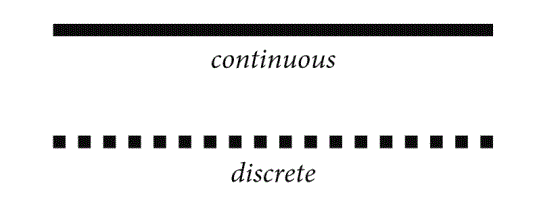
In his Achilles Paradox, Achilles races to catch a slower runner—for example, a tortoise that is crawling in a straight line away from him. The tortoise has a head start, so if Achilles hopes to overtake it, he must run at least to the place where the tortoise presently is, reasons Zeno, but by the time he arrives there, it will have crawled to a new place, so then Achilles must run at least to this new place, and so forth. According to Zeno’s reasoning, Achilles will never catch the tortoise. Whether Zeno and Parmenides themselves denied motion is very controversial, but subsequent scholars over the centuries assumed this, so it has been the majority position. One minority position is that they were not denying motion, but only showing that their opponents were committed to this.

We cannot escape the Achilles paradox by jumping up from our seat and chasing down a tortoise, nor by saying Zeno’s opponents should have constructed a new argument in which Achilles takes better aim and runs toward a place ahead of the tortoise. Because Zeno was correct in saying Achilles needs to run at least to all those places where the tortoise once was, what is required is a better analysis of Zeno’s own argument.

This article explains his ten known paradoxes and considers the treatments that have been offered. In the Achilles Paradox, Zeno assumed distances and durations are infinitely divisible in the sense of having an actual infinity of parts, and he assumed there are too many of these parts for the runner to complete. Aristotle‘s treatment says Zeno should have assumed instead that there are only a potential infinity of places to run to, so that at any time the hypothetical division into parts produces only a finite number of parts, and the runner has time to complete all these parts. Aristotle’s treatment was generally accepted until the late 19th century. The current standard treatment, the so-called “Standard Solution,” implies Achilles’s path contains an actual infinity of places and parts, but Zeno was mistaken to assume this is too many. This treatment employs the mathematical apparatus of calculus which has proved its indispensability for the development of modern science.  The article ends by exploring newer treatments of the paradoxes—and related paradoxes such as Thomson’s Lamp Paradox—that were developed since the 1950s.

Table of Contents

  1. Zeno of Elea
    1. His Life
    2. His Book
    3. His Goals
    4. His Method
  2. The Standard Solution to the Paradoxes
  3. The Ten Paradoxes
    1. Paradoxes of Motion
      1. The Achilles
      2. The Dichotomy (The Racetrack)
      3. The Arrow
      4. The Moving Rows (The Stadium)
    2. Paradoxes of Plurality
      1. Alike and Unlike
      2. Limited and Unlimited
      3. Large and Small
      4. Infinite Divisibility
    3. Other Paradoxes
      1. The Grain of Millet
      2. Against Place
  4. Aristotle’s Treatment of the Paradoxes
  5. Other Issues Involving the Paradoxes
    1. Consequences of Accepting the Standard Solution
    2. Criticisms of the Standard Solution
    3. Supertasks and Infinity Machines
    4. Constructivism
    5. Nonstandard Analysis
    6. Smooth Infinitesimal Analysis
  6. The Legacy and Current Significance of the Paradoxes
  7. References and Further Reading

1. Zeno of Elea

a. His Life

Zeno was born in about 490 B.C.E. in the Greek city-state of Elea, now Velia, on the west coast of what is now southern Italy; and he died in about 430 B.C.E. He was a friend and student of Parmenides, who was twenty-five years older and also lived in Elea. He was not a mathematician.

There is little additional, reliable information about Zeno’s life. Plutarch said Zeno visited Athens. Earlier, Plato had remarked (in Parmenides 127b) that Parmenides took Zeno to Athens with him where he encountered Socrates, who was about twenty years younger than Zeno, but today’s scholars consider this encounter to probably have been invented by Plato to improve the story line. Zeno is also reported to have been arrested for taking weapons to rebels opposed to the tyrant who ruled Elea. When asked by the authorities about his accomplices, Zeno said he wished to whisper something privately to the tyrant. But when the tyrant came near, Zeno bit him, and would not let go until he was stabbed. Diogenes Laërtius reported this apocryphal story seven hundred years after Zeno’s death.

b. His Book

According to Plato’s commentary in his Parmenides (127a to 128e), Zeno brought a treatise with him when he visited Athens. It was said to be a book of paradoxes defending the philosophy of Parmenides. Plato (427-347 B.C.E.) and Aristotle may have had access to the book, but Plato did not state any of the arguments, and Aristotle’s presentations of the arguments are very compressed. Many centuries later, the Greek philosophers Proclus (412-485 C.E.) and Simplicius (490-560 C.E.) commented on the book and its arguments. They had access to some of the book, perhaps to all of it, but it has not survived. Proclus is the first person to tell us that the book contained forty arguments. This number is confirmed by the sixth century commentator Elias, who is regarded as an independent source because he does not mention Proclus. Unfortunately, we know of no specific dates for when Zeno composed any of his paradoxes, and we know very little of how Zeno stated his own paradoxes. We do have a direct quotation via Simplicius of the Paradox of Denseness and a partial quotation via Simplicius of the Large and Small Paradox. In total we know of less than two hundred words that can be attributed to Zeno. Our knowledge of these two paradoxes and the other seven discussed in this article comes to us indirectly through paraphrases of them, and comments on them, primarily by his four opponents Aristotle, Plato, Proclus, and Simplicius. The names of the paradoxes were created by later commentators, not by Zeno. A thousand years after Zeno, one comment by Hesychius suggested that there were perhaps three more books by Zeno than the one mentioned by Plato, but scholars do not generally accept this claim because at least three of the book names by Hesychius are believed to be the name for just one book.

c. His Goals

In the early fifth century B.C.E., Parmenides emphasized the distinction between appearance and reality. Reality, he said, is a seamless unity that is unchanging and cannot be destroyed, so appearances of reality are deceptive. Our ordinary observation reports are false; they do not report what is real. This metaphysical theory is the opposite of Heraclitus’ theory. Although we do not know from Zeno himself whether he accepted his own paradoxical arguments, or exactly what point he was making with them, or what the relationship was between Parmenides’ views and Zeno’s, the historically most influential position on all these is Plato‘s. Plato said the paradoxes were designed to provide detailed, supporting arguments for Parmenides’ beliefs by demonstrating that Greek common sense confidence in the reality of motion, change, and ontological plurality (that is, that there exist many things) involve absurdities. Plato’s classical interpretation of Zeno was accepted by Aristotle and by most other commentators throughout the intervening centuries. On Plato’s interpretation, it could reasonably be said that Zeno’s goal was to show that his Dichotomy and Achilles paradoxes demonstrate that any continuous process takes an infinite amount of time, which is paradoxical, while Zeno’s Arrow and Stadium paradoxes demonstrate that the concept of discontinuous change is paradoxical. Because both continuous and discontinuous change are paradoxical, so is any change.

This is Gregory Vlastos’ position regarding Zeno’s goals. Eudemus, a student of Aristotle, offered another interpretation of Zeno’s goals. He suggested that Zeno was challenging both pluralism and Parmenides’ monism, which would imply that Zeno was a nihilist. Paul Tannery in 1885 and Wallace Matson in 2001 offered a third interpretation of Zeno’s goals regarding the paradoxes of motion. Plato and Aristotle did not understand Zeno’s arguments nor his purpose, they say. Zeno was actually challenging the Pythagoreans and their particular brand of pluralism, not Greek common sense. Tannery and Matson suggest Zeno himself did not believe the conclusions of his own paradoxes.

The controversial issue of interpreting Zeno’s true goals and purposes is not pursued further in this article. Instead, Plato’s classical interpretation is assumed because it is the one that was so influential throughout history and because the paradox as classically interpreted still needs to be countered even if Matson and Tannery are correct about Zeno’s own position. The more important goal for the field of philosophy is to understand how to treat the very strongest versions of Zeno’s arguments even if Zeno himself did not present them. This article continues to call Zeno’s arguments “paradoxes” even though they now are considered more to be puzzles of varying difficulty than to be actual paradoxes.

Aristotle believed Zeno’s Paradoxes were trivial and easily resolved, but later philosophers have not agreed on the triviality.

d. His Method

Before Zeno, Greek thinkers favored presenting their philosophical views by writing poetry. Zeno began the grand shift away from poetry toward a prose that contained explicit premises and conclusions. And he employed the method of indirect proof in his paradoxes by temporarily assuming some thesis that he opposed and then attempting to deduce an absurd conclusion or a contradiction, thereby undermining the temporary assumption. This method of indirect proof or reductio ad absurdum probably originated with Greek mathematicians, but Zeno used it more systematically and self-consciously.

2. The Standard Solution to the Paradoxes

Any paradox can be treated by abandoning enough of its crucial assumptions. In examining Zeno’s paradoxes, it is very interesting to consider which assumptions to abandon, and why those. A paradox, as the term is used in this article, is an argument that reaches a contradiction by apparently legitimate steps from apparently reasonable assumptions, while the experts at the time cannot agree on the way out of the paradox, that is, agree on its resolution. It is this latter point about disagreement among the experts that distinguishes a paradox from a mere puzzle in the ordinary sense of that term. Zeno’s paradoxes are now generally considered to be puzzles because of the wide agreement among today’s experts that there is at least one acceptable resolution of the paradoxes, and it applies the tools of calculus.

This resolution is called the Standard Solution. It points out that, although Zeno was correct in saying that at any point or instant before reaching the goal there is always some as yet uncompleted path to cover, this does not imply that the goal is never reached, despite Zeno’s claim that it does. More specifically, the Standard Solution says that for the runners in the Achilles Paradox and the Dichotomy Paradox, the runner’s path is a physical continuum that is completed by running at a positive, finite speed. The details presuppose differential calculus and classical mechanics. The Standard Solution treats speed as the derivative of distance with respect to time. It assumes that physical processes are sets of point-events. It implies that durations, distances and line segments are all linear continua composed of indivisible points, and it uses these ideas to challenge various assumptions made, and inference steps taken, by Zeno. To be very brief and anachronistic, Zeno’s mistake (and Aristotle’s mistake) was to fail to use calculus. More specifically, in the case of the paradoxes of motion such as the Achilles and the Dichotomy, Zeno’s mistake was not his assuming there is a completed infinity of places for the runner to go, which was what Aristotle said was Zeno’s mistake. Instead, Zeno’s and Aristotle’s mistake was in assuming that this is too many places for the runner to go to in a finite time.

This assumption turns on their failure to believe that the sum of infinitely many numbers can be finite. For example, consider your birthday cake. You eat half of it. Then you eat half of what is left. Then half of that, and so on. How much cake have you eaten altogether? Well, if you assume the cake is a continuum so that you can eat half a molecule, and half of that, then a 21st century mathematician or physicist would say you have eaten exactly one cake. Zeno worried that you would have eaten much more than one cake.

A key background assumption of the Standard Solution is that this resolution is not simply employing some concepts that will undermine Zeno’s reasoning—Aristotle’s reasoning does that, too, at least for most of the paradoxes—but that it is employing concepts which have been shown to be appropriate for the development of a coherent and fruitful system of mathematics and physical science. Aristotle’s treatment of the paradoxes does not employ these fruitful concepts of mathematical physics. Aristotle did not believe that the use of mathematics was needed to understand the world. The Standard Solution is much more complicated than Aristotle’s treatment, and no single person can be credited with creating it. Also, the main goal of the field of philosophy is to resolve the paradoxes in the strongest form, not simply their original form.

The Standard Solution allows us to speak of one event happening pi seconds after another, and of one event happening the square root of three seconds after another. In ordinary discourse outside of science we would never need this kind of precision, but it is needed in mathematical physics and its calculus. The need for this precision has led to requiring time to be a linear continuum, very much like a segment of the real number line. By “real numbers” we do not mean actual numbers but rather decimal numbers.

Calculus was invented in the late 1600’s by Newton and Leibniz. Their calculus is a technique for treating continuous motion as being composed of an infinite number of infinitesimal steps. After the acceptance of calculus, most all mathematicians and physicists believed that continuous motion should be modeled by a function which takes real numbers representing time as its argument and which gives real numbers representing spatial position as its value. This position function should be continuous or gap-free. In addition, the position function should be differentiable in order to make sense of speed, which is treated as the rate of change of position. By the early 20th century most mathematicians had come to believe that, to make rigorous sense of motion, mathematics needs a fully developed set theory that rigorously defines the key concepts of real number, continuity and differentiability. Doing this requires a well defined concept of the continuum. Unfortunately Newton and Leibniz did not have a good definition of the continuum, and finding a good one required over two hundred years of work.

The continuum is a very special set; it is the standard model of the real numbers. Intuitively, a continuum is a continuous entity; it is a whole thing that has no gaps. Some examples of a continuum are the path of a runner’s center of mass, the time elapsed during this motion, ocean salinity, and the temperature along a metal rod. Distances and durations are normally considered to be real physical continua whereas treating the ocean salinity and the rod’s temperature as continua is a very useful approximation for many calculations in physics even though we know that at the atomic level the approximation breaks down.

The distinction between “a” continuum and “the” continuum is that “the” continuum is the paradigm of “a” continuum. The continuum is the mathematical line, the line of geometry, which is standardly understood to have the same structure as the real numbers in their natural order. Real numbers and points on the continuum can be put into a one-to-one order-preserving correspondence. There are not enough rational numbers for this correspondence even though the rational numbers are dense, too (in the sense that between any two rational numbers there is another rational number).

For Zeno’s paradoxes, standard analysis assumes that length should be defined in terms of measure, and motion should be defined in terms of the derivative. These definitions are given in terms of the linear continuum. The most important features of any linear continuum are that (a) it is composed of indivisible points, (b) it is an actually infinite set, that is, a transfinite set, and not merely a potentially infinite set that gets bigger over time, (c) it is undivided yet infinitely divisible (that is, it is gap-free), (d) the points are so close together that no point can have a point immediately next to it, (e) between any two points there are other points, (f) the measure (such as length) of a continuum is not a matter of adding up the measures of its points nor adding up the number of its points, (g) any connected part of a continuum is also a continuum, and (h) there are an aleph-one number of points between any two points.

Physical space is not a linear continuum because it is three-dimensional and not linear; but it has one-dimensional subspaces such as paths of runners and orbits of planets; and these are linear continua if we use the path created by only one point on the runner and the orbit created by only one point on the planet. Regarding time, each (point) instant is assigned a real number as its time, and each instant is assigned a duration of zero. The time taken by Achilles to catch the tortoise is a temporal interval, a linear continuum of instants, according to the Standard Solution (but not according to Zeno or Aristotle). The Standard Solution says that the sequence of Achilles’ goals (the goals of reaching the point where the tortoise is) should be abstracted from a pre-existing transfinite set, namely a linear continuum of point places along the tortoise’s path. Aristotle’s treatment does not do this. The next section of this article presents the details of how the concepts of the Standard Solution are used to resolve each of Zeno’s Paradoxes.

Of the ten known paradoxes, The Achilles attracted the most attention over the centuries. Aristotle’s treatment of the paradox involved accusing Zeno of using the concept of an actual or completed infinity instead of the concept of a potential infinity, and accusing Zeno of failing to appreciate that a line cannot be composed of indivisible points. Aristotle’s treatment is described in detail below. It was generally accepted until the 19th century, but slowly lost ground to the Standard Solution. Some historians say Aristotle had no solution but only a verbal quibble. This article takes no side on this dispute and speaks of Aristotle’s “treatment.”

The development of calculus was the most important step in the Standard Solution of Zeno’s paradoxes, so why did it take so long for the Standard Solution to be accepted after Newton and Leibniz developed their calculus? The period lasted about two hundred years. There are four reasons. (1) It took time for calculus and the rest of real analysis to prove its applicability and fruitfulness in physics, especially during the eighteenth century. (2) It took time for the relative shallowness of Aristotle’s treatment of Zeno’s paradoxes to be recognized. (3) It took time for philosophers of science to appreciate that each theoretical concept used in a physical theory need not have its own correlate in our experience. (4) It took time for certain problems in the foundations of mathematics to be resolved, such as finding a better definition of the continuum and avoiding the paradoxes of Cantor’s naive set theory.

Point (2) is discussed in section 4 below.

Point (3) is about the time it took for philosophers of science to reject the demand, favored by Ernst Mach and most Logical Positivists, that each meaningful term in science must have “empirical meaning.” This was the demand that each physical concept be separately definable with observation terms. It was thought that, because our experience is finite, the term “actual infinite” or “completed infinity” could not have empirical meaning, but “potential infinity” could. Today, most philosophers would not restrict meaning to empirical meaning.

Point (1) is about the time it took for classical mechanics to develop to the point where it was accepted as giving correct solutions to problems involving motion. Point (1) was, and still is, challenged in the metaphysical literature on the grounds that the abstract account of continuity in real analysis does not truly describe either time, space or concrete physical reality. This challenge is discussed in later sections.

Point (4) arises because the standard of rigorous proof and rigorous definition of concepts has increased over the years. As a consequence, the difficulties in the foundations of real analysis, which began with George Berkeley’s criticism of inconsistencies in the use of infinitesimals in the calculus (He called infinitesimals the “ghosts of departed quantities” and admonished mathematicians not to believe in ghosts) were not satisfactorily resolved until the early 20th century with the development of Zermelo-Fraenkel set theory. The key idea was to work out the necessary and sufficient conditions for being a continuum. To achieve the goal, the conditions for being a mathematical continuum had to be strictly arithmetical and not dependent on our intuitions about space, time and motion. The idea was to revise or “tweak” the definition until it would not create new paradoxes and would still give useful theorems. When this revision was completed, it could be declared that the set of real numbers is an actual infinity, not a potential infinity, and that not only is any interval of real numbers a linear continuum, but so are the spatial paths, the temporal durations, and the motions that are mentioned in Zeno’s paradoxes. In addition, it was important to clarify how to compute the sum of an infinite series (such as 1/2 + 1/4 + 1/8 + …) without requiring any person to manually add or otherwise perform some action that requires an infinite amount of time. The clarification is to say the infinite series sums to a finite value if the partial sums (of adding the first two terms, then the first three, and so on) get closer and closer to that finite value. Finally, mathematicians needed to define motion in terms of the derivative. This new mathematical system required many new well-defined concepts such as compact set, connected set, continuity, continuous function, convergence-to-a-limit of an infinite sequence, curvature at a point, cut, derivative, dimension, function, integral, limit, measure, reference frame, set, and size of a set. Just as for those new mathematical concepts, rigor was added to the definitions of these physical concepts: place, instant, duration, distance, and instantaneous speed. The relevant revisions were made by Euler in the 18th century and by Bolzano, Cantor, Cauchy, Dedekind, Frege, Hilbert, Lebesgue, Peano, Russell, Weierstrass, and Whitehead, among others, during the 19th and early 20th centuries.

What happened over these centuries to Leibniz’s infinitesimals and Newton’s fluxions? Let’s stick with infinitesimals, since fluxions have the same problems and same resolution. In 1734, Berkeley had properly criticized the use of infinitesimals as being “ghosts of departed quantities” that are used inconsistently in calculus. Earlier, Newton had defined instantaneous speed as the ratio of an infinitesimally small distance and an infinitesimally small duration, and he and Leibniz produced a system of calculating variable speeds that was very fruitful. But nobody in that century or the next could adequately explain what an infinitesimal was. Newton had called them “evanescent divisible quantities,” whatever that meant. Leibniz called them “vanishingly small,” but that was just as vague.

The practical use of infinitesimals was unsystematic. For example, the infinitesimal dx is treated as being equal to zero when it is declared that x + dx = x, but is treated as not being zero when used in the denominator of the fraction [f(x + dx) – f(x)]/dx which is used in the derivative of the function f. In addition, consider the seemingly obvious Archimedean property of pairs of positive numbers: given any two positive numbers A and B, if you add enough copies of A, then you can produce a sum greater than B. This property fails if A is an infinitesimal. Finally, mathematicians gave up on answering Berkeley’s charges (and thus re-defined what we mean by standard analysis) because, in 1821, Cauchy showed how to achieve the same useful theorems of calculus by using the idea of a limit instead of an infinitesimal. Later in the 19th century, Weierstrass resolved some of the inconsistencies in Cauchy’s account and satisfactorily showed how to define continuity in terms of limits (his epsilon-delta method). As J. O. Wisdom points out (1953, p. 23), “At the same time it became clear that [Leibniz’s and] Newton’s theory, with suitable amendments and additions, could be soundly based” provided Leibniz’s infinitesimals and Newton’s fluxions were removed. In an effort to provide this sound basis according to the latest, heightened standard of what counts as “sound,” Peano, Frege, Hilbert, and Russell attempted to properly axiomatize real analysis. Unfortuately, this led in 1901 to Russell’s paradox and the fruitful controversy about how to provide a foundation to all of mathematics. That controversy still exists, but the majority view is that axiomatic Zermelo-Fraenkel set theory with the axiom of choice blocks all the paradoxes, legitimizes Cantor’s theory of transfinite sets, and provides the proper foundation for real analysis and other areas of mathematics, and indirectly resolves Zeno’s paradoxes. This standard real analysis lacks infinitesimals, thanks to Cauchy and Weierstrass. Standard real analysis is the mathematics that the Standard Solution applies to Zeno’s Paradoxes.

In Standard real analysis, the rational numbers are not continuous although they are infinitely numerous and infinitely dense. To come up with a foundation for calculus there had to be a good definition of the continuity of the real numbers. But this required having a good definition of irrational numbers. There wasn’t one before 1872. Dedekind’s definition in 1872 defines the mysterious irrationals in terms of the familiar rationals. The result is a clear and useful definition of real numbers. The usefulness of Dedekind’s definition of real numbers, and the lack of any better definition, convinced many mathematicians to be more open to accepting the real numbers and actually-infinite sets.

Let’s take a short interlude and introduce Dedekind’s key, new idea that he discovered in the 1870s about the reals and their relationship to the rationals. He envisioned how to define a real number to be a cut of the rational numbers, where a cut is a certain ordered pair of actually-infinite sets of rational numbers.

A Dedekind cut (A,B) is defined to be a partition or cutting of the standardly-ordered set of all the rational numbers into a left part A and a right part B. A and B are non-empty, and they partition all the rationals so that the numbers in A are less than all those in B, and also A contains no greatest number. Every real number is a unique Dedekind cut. The cut can be made at a rational number or at an irrational number. Here are examples of each:

Dedekind’s real number 1/2 is ({x : x < 1/2} , {x: x ≥ 1/2}).

Dedekind’s positive real number √2 is ({x : x < 0 or x2 < 2} , {x: x2 ≥ 2}).

The value of ‘x’ must be rational only. For any cut (A,B), if B has a smallest number, then the real number for that cut corresponds to this smallest number, as in the definition of ½ above. Otherwise, the cut defines an irrational number which, loosely speaking, fills the gap between A and B, as in the definition of the square root of 2 above. By defining reals in terms of rationals this way, Dedekind gave a foundation to the reals, and legitimized them by showing they are as acceptable as actually-infinite sets of rationals.

But what exactly is an actually-infinite (or transfinite) set, and does this idea lead to contradictions? This question needs an answer if there is to be a good theory of continuity and of real numbers. In the 1870s, Cantor clarified what an actually-infinite set is and made a convincing case that the concept does not lead to inconsistencies. These accomplishments by Cantor are why he (along with Dedekind and Weierstrass) is said by Russell to have “solved Zeno’s Paradoxes.”

That solution recommends using very different concepts and theories than those used by Zeno. The argument that this is the correct solution was presented by many people, but it was especially influenced by the work of Bertrand Russell (1914, lecture 6) and the more detailed work of Adolf Grünbaum (1967). In brief, the argument for the Standard Solution is that we have solid grounds for believing our best scientific theories, but the theories of mathematics such as calculus and Zermelo-Fraenkel set theory are indispensable to these theories, so we have solid grounds for believing in them, too. The scientific theories require a resolution of Zeno’s paradoxes and the other paradoxes; and the Standard Solution to Zeno’s Paradoxes that uses standard calculus and Zermelo-Fraenkel set theory is indispensable to this resolution or at least is the best resolution, or, if not, then we can be fairly sure there is no better solution, or, if not that either, then we can be confident that the solution is good enough (for our purposes). Aristotle’s treatment, on the other hand, uses concepts that hamper the growth of mathematics and science. Therefore, we should accept the Standard Solution.

In the next section, this solution will be applied to each of Zeno’s ten paradoxes.

To be optimistic, the Standard Solution represents a counterexample to the claim that philosophical problems never get solved. To be less optimistic, the Standard Solution has its drawbacks and its alternatives, and these have generated new and interesting philosophical controversies beginning in the last half of the 20th century, as will be seen in later sections. The primary alternatives contain different treatments of calculus from that developed at the end of the 19th century. Whether this implies that Zeno’s paradoxes have multiple solutions or only one is still an open question.

Did Zeno make mistakes? And was he superficial or profound? These questions are a matter of dispute in the philosophical literature. The majority position is as follows. If we give his paradoxes a sympathetic reconstruction, he correctly demonstrated that some important, classical Greek concepts are logically inconsistent, and he did not make a mistake in doing this, except in the Moving Rows Paradox, the Paradox of Alike and Unlike and the Grain of Millet Paradox, his weakest paradoxes. Zeno did assume that the classical Greek concepts were the correct concepts to use in reasoning about his paradoxes, and now we prefer revised concepts, though it would be unfair to say he blundered for not foreseeing later developments in mathematics and physics.

3. The Ten Paradoxes

Zeno probably created forty paradoxes, of which only the following ten are known. Only the first four have standard names, and the first two have received the most attention. The ten are of uneven quality. Zeno and his ancient interpreters usually stated his paradoxes badly, so it has taken some clever reconstruction over the years to reveal their full force. Below, the paradoxes are reconstructed sympathetically, and then the Standard Solution is applied to them. These reconstructions use just one of several reasonable schemes for presenting the paradoxes, but the present article does not explore the historical research about the variety of interpretive schemes and their relative plausibility.

a. Paradoxes of Motion

i. The Achilles

Achilles, whom we can assume is the fastest runner of antiquity, is racing to catch the tortoise that is slowly crawling away from him. Both are moving along a linear path at constant speeds. In order to catch the tortoise, Achilles will have to reach the place where the tortoise presently is. However, by the time Achilles gets there, the tortoise will have crawled to a new location. Achilles will then have to reach this new location. By the time Achilles reaches that location, the tortoise will have moved on to yet another location, and so on forever. Zeno claims Achilles will never catch the tortoise under the assumption that the tortoise keeps crawling and does not halt. This argument shows, he believes, that anyone who believes Achilles will succeed in catching the tortoise and who believes more generally that motion is physically possible is the victim of illusion. The claim that motion is an illusion had been advanced by Parmenides who was a tutor of Zeno.

The source for all of Zeno’s arguments is the writings of his opponents. The Achilles Paradox is reconstructed from Aristotle (Physics Book VI, Chapter 8, 239b14-16) and some passages from Simplicius in the fifth century C.E. There is no evidence that Zeno used a tortoise rather than a slow human. The tortoise was a later addition by Simplicius. Aristotle spoke simply of “the runner” who competes with Achilles.

It won’t do to react and say the solution to the paradox is that there are biological limitations on how small a step Achilles can take. Achilles’ feet are not obligated to stop and start again at each of the locations described above, so there is no limit to how close one of those locations can be to another. A stronger version of his paradox would ask us to consider the movement of Achilles’ center of mass. It is best to think of Achilles’ change from one location to another as a continuous movement rather than as incremental steps requiring halting and starting again. Zeno is assuming that space and time are infinitely divisible; they are not discrete or atomistic. If they were, this Paradox’s argument would not work.

continuous-discrete

One common complaint with Zeno’s reasoning is that he is setting up a straw man because it is obvious that Achilles cannot catch the tortoise if he continually takes a bad aim toward the place where the tortoise is; he should aim farther ahead. The mistake in this complaint is that even if Achilles took some sort of better aim, it is still true that he is required to go to every one of those locations that are the goals of the so-called “bad aims,” so remarking about a bad aim is not a way to successfully treat Zeno’s argument.

The treatment called the “Standard Solution” to the Achilles Paradox uses calculus and other parts of real analysis to describe the situation. It implies that Zeno is assuming Achilles cannot achieve his goal because

(1) there is too far to run, or

(2) there is not enough time, or

(3) there are too many places to go, or

(4) there is no final step, or

(5) there are too many tasks.

The historical record does not tell us which of these was Zeno’s real assumption, but they are all false assumptions, according to the Standard Solution.

Let’s consider assumption (1). Presumably Zeno would defend that assumption by remarking that there are an infinity of sub-distances involved in Achilles’ run, and the sum of the sub-distances is an actual infinity, which is too much distance even for Achilles. However, the advocate of the Standard Solution will remark, “How does Zeno know what the sum of this infinite series is, since in Zeno’s day the mathematicians could make sense of a sum of a series of terms only if there were a finite number of terms in the series? Maybe he is just guessing that the sum of an infinite number of terms could somehow be well-defined and be infinite.” According to the Standard Solution the sum is finite. Here is a graph using the methods of the Standard Solution showing the activity of Achilles as he chases the tortoise and overtakes it.

graph of Achilles and the TortoiseFor ease of understanding, Zeno and the tortoise are assumed to be point masses or infinitesimal particles, each moving at a constant velocity (that is, a constant speed in one direction). The graph is displaying the fact that Achilles’ path is a linear continuum and so is composed of an actual infinity of points. (An actual infinity is also called a “completed infinity” or “transfinite infinity.” The word “actual” does not mean “real” as opposed to “imaginary.”) Zeno’s failure to assume that Achilles’ path is a linear continuum is a fatal step in his argument, according to the Standard Solution which requires that the reasoner use the concepts of contemporary mathematical physics.

Achilles travels a distance d1 in reaching the point x1 where the tortoise starts, but by the time Achilles reaches x1, the tortoise has moved on to a new point x2. When Achilles reaches x2, having gone an additional distance d2, the tortoise has moved on to point x3, requiring Achilles to cover an additional distance d3, and so forth. This sequence of non-overlapping distances (or intervals or sub-paths) is an actual infinity, but happily the geometric series converges. The sum of its terms d1 + d2 + d3 +… is a finite distance that Achilles can readily complete while moving at a constant speed.

Similar reasoning would apply if Zeno were to have made assumptions (2) or (3) above about there not being enough time for Achilles or there being too many places for him to run. Regarding assumption (4), Zeno’s requirement that there be a final step or final sub-path in Achilles’ run is simply mistaken—according to the Standard Solution. (More will be said about assumption (5) in Section 5c when we discuss supertasks.)

In Zeno’s day, since the mathematicians could make sense only of the sum of a finite number of distances, it was Aristotle’s genius to claim that Achilles covered only a potential infinity of distances, not an actual infinity since the sum of a potential infinity is a finite number at any time; thus Achilles can in that sense achieve an infinity of tasks while covering a finite distance in a finite duration. When Aristotle made this claim and used it to treat Zeno’s paradoxes, there was no better solution to the Achilles Paradox, and a better solution would not be discovered for many more centuries. In Zeno’s day, no person had a clear notion of continous space, nor of the limit of an actually infinite series, nor even of zero.

The Achilles Argument, if strengthened and not left as vague as it was in Zeno’s day, presumes that space and time are continuous or infinitely divisible. So, Zeno’s conclusion might have more cautiously asserted that Achilles cannot catch the tortoise if space and time are infinitely divisible in the sense of actual infinity. Perhaps, as some commentators have speculated, Zeno used or should have used the Achilles Paradox only to attack continuous space, and he used or should have used his other paradoxes such as the “Arrow” and the “The Moving Rows” to attack discrete space.

ii. The Dichotomy (The Racetrack)

As Aristotle realized, the Dichotomy Paradox is just the Achilles Paradox in which Achilles stands still ahead of the tortoise. In his Progressive Dichotomy Paradox, Zeno argued that a runner will never reach the stationary goal line on a straight racetrack. The reason is that the runner must first reach half the distance to the goal, but when there he must still cross half the remaining distance to the goal, but having done that the runner must cover half of the new remainder, and so on. If the goal is one meter away, the runner must cover a distance of 1/2 meter, then 1/4 meter, then 1/8 meter, and so on ad infinitum. The runner cannot reach the final goal, says Zeno. Why not? There are few traces of Zeno’s reasoning here, but for reconstructions that give the strongest reasoning, we may say that the runner will not reach the final goal because there is too far to run, the sum is actually infinite. The Standard Solution argues instead that the sum of this infinite geometric series is one, not infinity.

The problem of the runner reaching the goal can be viewed from a different perspective. According to the Regressive version of the Dichotomy Paradox, the runner cannot even take a first step. Here is why. Any step may be divided conceptually into a first half and a second half. Before taking a full step, the runner must take a 1/2 step, but before that he must take a 1/4 step, but before that a 1/8 step, and so forth ad infinitum, so Achilles will never get going. Like the Achilles Paradox, this paradox also concludes that any motion is impossible.

The Dichotomy paradox, in either its Progressive version or its Regressive version, assumes here for the sake of simplicity and strength of argumentation that the runner’s positions are point places. Actual runners take up some larger volume, but the assumption of point places is not a controversial assumption because Zeno could have reconstructed his paradox by speaking of the point places occupied by, say, the tip of the runner’s nose or the center of his mass, and this assumption makes for a clearer and stronger paradox.

In the Dichotomy Paradox, the runner reaches the points 1/2 and 3/4 and 7/8 and so forth on the way to his goal, but under the influence of Bolzano and Dedekind and Cantor, who developed the first theory of sets, the set of those points is no longer considered to be potentially infinite. It is an actually infinite set of points abstracted from a continuum of points, in which the word “continuum” is used in the late 19th century sense that is at the heart of calculus. And any ancient idea that the sum of the actually infinite series of path lengths or segments 1/2 + 1/4 + 1/8 + … is infinite now has to be rejected in favor of the theory that the sum converges to 1. This is key to solving the Dichotomy Paradox according to the Standard Solution. It is basically the same treatment as that given to the Achilles. The Dichotomy Paradox has been called “The Stadium” by some commentators, but that name is also commonly used for the Paradox of the Moving Rows, so readers need to be on the alert for ambiguity in the literature.

Aristotle, in Physics Z9, said of the Dichotomy that it is possible for a runner to come in contact with a potentially infinite number of things in a finite time provided the time intervals becomes shorter and shorter. Aristotle said Zeno assumed this is impossible, and that is one of his errors in the Dichotomy. However, Aristotle merely asserted this and could give no detailed theory that enables the computation of the finite amount of time. So, Aristotle could not really defend his diagnosis of Zeno’s error. Today the calculus is used to provide the Standard Solution with that detailed theory.

There is another detail of the Dichotomy that needs resolution. How does Zeno’s runner complete the trip if there is no final step or last member of the infinite sequence of steps (intervals and goals)? Don’t trips need last steps? The Standard Solution answers “no” and says the intuitive answer “yes” is one of many intuitions held by Zeno and Aristotle and the average person today that must be rejected when embracing the Standard Solution.

iii. The Arrow

Zeno’s Arrow Paradox takes a different approach to challenging the coherence of our common sense concepts of time and motion. Think of how you would distinguish an arrow that is stationary in space from one that is flying through space, given that you look only at a snapshot (an instantaneous photo) of the two situations. Would there be any difference? No, and since at any instant of any time period the arrow makes no progress, it never makes any progress.

As Aristotle explains, from Zeno’s “assumption that time is composed of moments,” a moving arrow must occupy a space equal to itself during any moment. That is, during any indivisible moment or instant it is at the place where it is. But places do not move. So, if in each moment, the arrow is occupying a space equal to itself, then the arrow is not moving in that moment. The reason it is not moving is that it has no time in which to move; it is simply there at the place. It cannot move during the moment because there is not enough time for any motion, and the moment is indivisible. The same reasoning holds for any other moment during the so-called “flight” of the arrow. So, the arrow is never moving. By a similar argument, Zeno can establish that nothing else moves. The source for Zeno’s argument is Aristotle (Physics, Book VI, chapter 5, 239b5-32).

The Standard Solution to the Arrow Paradox denies Zeno’s assumption that if you occupy a position equal to your length you are not moving, and it denies that there is no such thing as instantaneous motion. The solution appeals instead to the notion of speed from calculus. This theory defines instantaneous motion, that is, motion at an instant, without defining motion during an instant. This new treatment of motion originated with Newton and Leibniz in the sixteenth century, and it employs what is called the “at-at” theory of motion, which says motion is being at different places at different times. Motion is not some feature that reveals itself only within a moment. The modern difference between rest and motion, as opposed to the ancient difference, has to do with what is happening at nearby moments and—contra Zeno—has nothing to do with what is happening during a moment.

Some researchers have speculated that the Arrow Paradox was designed by Zeno to attack discrete time and space rather than continuous time and space. This is not clear, and the Standard Solution works for both. That is, regardless of whether time is continuous and Zeno’s instant has no finite duration, or time is discrete and Zeno’s instant lasts for, say, 10-44 seconds, there is insufficient time for the arrow to move during the instant. Yet regardless of how long the instant lasts, there still can be instantaneous motion, namely motion at that instant provided the object is in a different place at some other instant.

To re-emphasize this crucial point, note that both Zeno and 21st century mathematical physicists agree that the arrow cannot be in motion within or during an instant (an instantaneous time), but the physicists will point out that the arrow can be in motion at an instant in the sense of having a positive speed at that instant (its so-called instantaneous speed), provided the arrow occupies different positions at times before or after that instant so that the instant is part of a period in which the arrow is continuously in motion. If we do not pay attention to what happens at nearby instants, it is impossible to distinguish instantaneous motion from instantaneous rest, but distinguishing the two is the way out of the Arrow Paradox. Zeno would have balked at the idea of motion at an instant, and Aristotle explicitly denied it.

The Arrow Paradox is refuted by the Standard Solution with its new at-at theory of motion, but the paradox seems especially strong to someone who would prefer instead to say that motion is an intrinsic property of an instant, being some propensity or disposition to be elsewhere.

Let’s reconsider the details of the Standard Solution assuming continuous motion rather than discrete motion. In calculus, the speed of an object at an instant (its instantaneous speed) is the time derivative of the object’s position; this means the object’s speed is the limit of its series of average speeds during smaller and smaller intervals of time containing the instant. We make essentially the same point when we say the object’s speed is the limit of its average speed over an interval as the length of the interval tends to zero. The derivative of the arrow’s position x with respect to time t, namely dx/dt, is the arrow’s instantaneous speed, and it has non-zero values at specific places at specific instants during the arrow’s flight, contra Zeno and Aristotle. The speed during an instant or in an instant, which is what Zeno is calling for, would be 0/0 and is undefined. But the speed at an instant is well defined. If we require the use of these modern concepts, then Zeno cannot successfully produce a contradiction as he tries to do by his assuming that in each moment the speed of the arrow is zero—because it is not zero. Therefore, advocates of the Standard Solution conclude that Zeno’s Arrow Paradox has a false, but crucial, assumption and so is unsound.

Independently of Zeno, the Arrow Paradox was discovered by the Chinese dialectician Kung-sun Lung (Gongsun Long, ca. 325–250 B.C.E.). A lingering philosophical question about the arrow paradox is whether there is a way to properly refute Zeno’s argument that motion is impossible without using the apparatus of calculus.

iv. The Moving Rows (The Stadium)

According to Aristotle (Physics, Book VI, chapter 9, 239b33-240a18), Zeno try to create a paradox by considering bodies (that is, physical objects) of equal length aligned along three parallel rows within a stadium. One track contains A bodies (three A bodies are shown below); another contains B bodies; and a third contains C bodies. Each body is the same distance from its neighbors along its track. The A bodies are stationary. The Bs are moving to the right, and the Cs are moving with the same speed to the left. Here are two snapshots of the situation, before and after. They are taken one instant apart.

Diagram of Zeno's Moving Rows

Zeno points out that, in the time between the before-snapshot and the after-snapshot, the leftmost C passes two Bs but only one A, contradicting his (very controversial) assumption that the C should take longer to pass two Bs than one A. The usual way out of this paradox is to reject that controversial assumption.

Aristotle argues that how long it takes to pass a body depends on the speed of the body; for example, if the body is coming towards you, then you can pass it in less time than if it is stationary. Today’s analysts agree with Aristotle’s diagnosis, and historically this paradox of motion has seemed weaker than the previous three. This paradox has been called “The Stadium,” but occasionally so has the Dichotomy Paradox.

Some analysts, for example Tannery (1887), believe Zeno may have had in mind that the paradox was supposed to have assumed that both space and time are discrete (quantized, atomized) as opposed to continuous, and Zeno intended his argument to challenge the coherence of the idea of discrete space and time.

Well, the paradox could be interpreted this way. If so, assume the three objects A, B, and C are adjacent to each other in their tracks, and each A, B and C body are occupying a space that is one atom long. Then, if all motion is occurring at the rate of one atom of space in one atom of time, the leftmost C would pass two atoms of B-space in the time it passed one atom of A-space, which is a contradiction to our assumption about rates. There is another paradoxical consequence. Look at the space occupied by left C object.  During the instant of movement, it passes the middle B object, yet there is no time at which they are adjacent, which is odd.

So, Zeno’s argument can be interpreted as producing a challenge to the idea that space and time are discrete. However, most commentators suspect Zeno himself did not interpret his paradox this way.

b. Paradoxes of Plurality

Zeno’s paradoxes of motion are attacks on the commonly held belief that motion is real, but because motion is a kind of plurality, namely a process along a plurality of places in a plurality of times, they are also attacks on this kind of plurality. Zeno offered more direct attacks on all kinds of plurality. The first is his Paradox of Alike and Unlike.

i. Alike and Unlike

According to Plato in Parmenides 127-9, Zeno argued that the assumption of plurality–the assumption that there are many things–leads to a contradiction. He quotes Zeno as saying: “If things are many, . . . they must be both like and unlike. But that is impossible; unlike things cannot be like, nor like things unlike” (Hamilton and Cairns (1961), 922).

Zeno’s point is this. Consider a plurality of things, such as some people and some mountains. These things have in common the property of being heavy. But if they all have this property in common, then they really are all the same kind of thing, and so are not a plurality. They are a one. By this reasoning, Zeno believes it has been shown that the plurality is one (or the many is not many), which is a contradiction. Therefore, by reductio ad absurdum, there is no plurality, as Parmenides has always claimed.

Plato immediately accuses Zeno of equivocating. A thing can be alike some other thing in one respect while being not alike it in a different respect. Your having a property in common with some other thing does not make you identical with that other thing. Consider again our plurality of people and mountains. People and mountains are all alike in being heavy, but are unlike in intelligence. And they are unlike in being mountains; the mountains are mountains, but the people are not. As Plato says, when Zeno tries to conclude “that the same thing is many and one, we shall [instead] say that what he is proving is that something is many and one [in different respects], not that unity is many or that plurality is one….” [129d] So, there is no contradiction, and the paradox is solved by Plato. This paradox is generally considered to be one of Zeno’s weakest paradoxes, and it is now rarely discussed. [See Rescher (2001), pp. 94-6 for some discussion.]

ii. Limited and Unlimited

This paradox is also called the Paradox of Denseness. Suppose there exist many things rather than, as Parmenides would say, just one thing. Then there will be a definite, fixed number of those many things, and so they will be “limited.” The limit may be a very large number, but it is still a limit. On the other hand, if there are many things, say only two things, then they must be distinct, and to keep them distinct there must be a third thing separating them, Zeno reasons. So, there are three things. But between these, …. In other words, things are dense and there is no definite or fixed number of them, so they will be “unlimited.” This is a contradiction, because the plurality would be both limited and unlimited. Therefore, there are no pluralities; there exists only one thing, not many things. Historians generally agree that this argument was presented in a full quotation from Zeno in the sixth century by Simplicius in his commentary on book 1 of Aristotle’s Physics.

According to the Standard Solution to this paradox, the weakness of Zeno’s argument can be said to lie in the assumption that “to keep them distinct, there must be a third thing separating them.” Zeno would have been correct to say that between any two physical objects that are separated in space, there is a third place between them, because space is dense in the mathematician’s sense of dense, but he is mistaken to claim a place is a third physical object between the two, as he did. There might be no object between the two objects that are in different places.

The term “object” needs to be used very carefully in philosophical discussions. In today’s sense of the term “object,” Aristotle would qualify as being an object, but if he moved from here to there, it would not follow that we now have two Aristotles nor that there is a third object between the two. The place where an object is located is not considered to be an inherent property of an object, but only a relational property. Objects are characterized by their inherent properties. If one object has two relational properties, say the property of being admired by Aristotle and not admired by Plato, we do not say this means the object has been doubled.

iii. Large and Small

Suppose there exist many things rather than, as Parmenides says, just one thing. Then every part of any plurality is both so small as to have no size but also so large as to be infinite, says Zeno. His reasoning for why they have no size has been lost, but many commentators suggest that he’d reason as follows. If there is a plurality, then it must be composed of parts which are not themselves pluralities. Yet things that are not pluralities cannot have a size or else they’d be divisible into parts and thus be pluralities themselves.

Now, why are the parts of pluralities so large as to be infinite? Well, the parts cannot be so small as to have no size since adding such things together would never contribute anything to the whole so far as size is concerned. So, the parts have some non-zero size. If so, then each of these parts will have two spatially distinct sub-parts, one in front of the other. Each of these sub-parts also will have a size. The front part, being a thing, will have its own two spatially distinct sub-parts, one in front of the other; and these two sub-parts will have sizes. Ditto for the back part. And so on without end. A sum of all these sub-parts would be infinite. Therefore, each part of a plurality will be so large as to be infinite.

This sympathetic reconstruction of the argument is based on Simplicius’ On Aristotle’s Physics, where Simplicius quotes Zeno’s own words for part of the paradox, although he does not say what he is quoting from.

There are many errors here in Zeno’s reasoning, according to the Standard Solution. He is mistaken at the beginning when he says, “If there is a plurality, then it must be composed of parts which are not themselves pluralities.” A university is an illustrative counterexample. A university is a plurality of students, but we need not rule out the possibility that a student is a plurality. What’s a whole and what’s a plurality depends on our purposes. When we consider a university to be a plurality of students, we consider the students to be wholes without parts. But for another purpose we might want to say that a student is a plurality of biological cells. Zeno is confused about this notion of relativity, and about part-whole reasoning; and as commentators began to appreciate this they lost interest in Zeno as a player in the great metaphysical debate between pluralism and monism.

A second error occurs in arguing that the each part of a plurality must have a non-zero size. The contemporary notion of measure (developed in the 20th century by Brouwer, Lebesgue, and others) showed how to properly define the measure function so that a line segment has nonzero measure even though (the singleton set of) any point has a zero measure. The measure of the line segment [a, b] is b – a; the measure of a cube with side a is a3. This theory of measure is now properly used by our civilization for length, volume, duration, mass, voltage, brightness, and other continuous magnitudes.

Thanks to Aristotle’s support, Zeno’s Paradoxes of Large and Small and of Infinite Divisibility (to be discussed below) were generally considered to have shown that a continuous magnitude cannot be composed of points. Interest was rekindled in this topic in the 18th century. The physical objects in Newton’s classical mechanics of 1726 were interpreted by R. J. Boscovich in 1763 as being collections of point masses. Each point mass is a movable point carrying a fixed mass. This idealization of continuous bodies as if they were compositions of point particles was very fruitful; it could be used to easily solve otherwise very difficult problems in physics. This success led scientists, mathematicians, and philosophers to recognize that the strength of Zeno’s Paradoxes of Large and Small and of Infinite Divisibility had been overestimated; they did not prevent a continuous magnitude from being composed of points.

iv. Infinite Divisibility

This is the most challenging of all the paradoxes of plurality. Consider the difficulties that arise if we assume that an object theoretically can be divided into a plurality of parts. According to Zeno, there is a reassembly problem. Imagine cutting the object into two non-overlapping parts, then similarly cutting these parts into parts, and so on until the process of repeated division is complete. Assuming the hypothetical division is “exhaustive” or does comes to an end, then at the end we reach what Zeno calls “the elements.” Here there is a problem about reassembly. There are three possibilities. (1) The elements are nothing. In that case the original objects will be a composite of nothing, and so the whole object will be a mere appearance, which is absurd. (2) The elements are something, but they have zero size. So, the original object is composed of elements of zero size. Adding an infinity of zeros yields a zero sum, so the original object had no size, which is absurd. (3) The elements are something, but they do not have zero size. If so, these can be further divided, and the process of division was not complete after all, which contradicts our assumption that the process was already complete. In summary, there were three possibilities, but all three possibilities lead to absurdity. So, objects are not divisible into a plurality of parts.

Simplicius says this argument is due to Zeno even though it is in Aristotle (On Generation and Corruption, 316a15-34, 316b34 and 325a8-12) and is not attributed there to Zeno, which is odd. Aristotle says the argument convinced the atomists to reject infinite divisibility. The argument has been called the Paradox of Parts and Wholes, but it has no traditional name.

The Standard Solution says we first should ask Zeno to be clearer about what he is dividing. Is it concrete or abstract? When dividing a concrete, material stick into its components, we reach ultimate constituents of matter such as quarks and electrons that cannot be further divided. These have a size, a zero size (according to quantum electrodynamics), but it is incorrect to conclude that the whole stick has no size if its constituents have zero size. [Due to the forces involved, point particles have finite “cross sections,” and configurations of those particles, such as atoms, do have finite size.] So, Zeno is wrong here. On the other hand, is Zeno dividing an abstract path or trajectory? Let’s assume he is, since this produces a more challenging paradox. If so, then choice (2) above is the one to think about. It’s the one that talks about addition of zeroes. Let’s assume the object is one-dimensional, like a path. According to the Standard Solution, this “object” that gets divided should be considered to be a continuum with its elements arranged into the order type of the linear continuum, and we should use the contemporary notion of measure to find the size of the object. The size (length, measure) of a point-element is zero, but Zeno is mistaken in saying the total size (length, measure) of all the zero-size elements is zero. The size of the object  is determined instead by the difference in coordinate numbers assigned to the end points of the object. An object extending along a straight line that has one of its end points at one meter from the origin and other end point at three meters from the origin has a size of two meters and not zero meters. So, there is no reassembly problem, and a crucial step in Zeno’s argument breaks down.

c. Other Paradoxes

i. The Grain of Millet

There are two common interpretations of this paradox. According to the first, which is the standard interpretation, when a bushel of millet (or wheat) grains falls out of its container and crashes to the floor, it makes a sound. Since the bushel is composed of individual grains, each individual grain also makes a sound, as should each thousandth part of the grain, and so on to its ultimate parts. But this result contradicts the fact that we actually hear no sound for portions like a thousandth part of a grain, and so we surely would hear no sound for an ultimate part of a grain. Yet, how can the bushel make a sound if none of its ultimate parts make a sound? The original source of this argument is Aristotle Physics, Book VII, chapter 4, 250a19-21). There seems to be appeal to the iterative rule that if a millet or millet part makes a sound, then so should a next smaller part.

We do not have Zeno’s words on what conclusion we are supposed to draw from this. Perhaps he would conclude it is a mistake to suppose that whole bushels of millet have millet parts. This is an attack on plurality.

The Standard Solution to this interpretation of the paradox accuses Zeno of mistakenly assuming that there is no lower bound on the size of something that can make a sound. There is no problem, we now say, with parts having very different properties from the wholes that they constitute. The iterative rule is initially plausible but ultimately not trustworthy, and Zeno is committing both the fallacy of division and the fallacy of composition.

Some analysts interpret Zeno’s paradox a second way, as challenging our trust in our sense of hearing, as follows. When a bushel of millet grains crashes to the floor, it makes a sound. The bushel is composed of individual grains, so they, too, make an audible sound. But if you drop an individual millet grain or a small part of one or an even smaller part, then eventually your hearing detects no sound, even though there is one. Therefore, you cannot trust your sense of hearing.

This reasoning about our not detecting low amplitude sounds is similar to making the mistake of arguing that you cannot trust your thermometer because there are some ranges of temperature that it is not sensitive to. So, on this second interpretation, the paradox is also easy to solve. One reason given in the literature for believing that this second interpretation is not the one that Zeno had in mind is that Aristotle’s criticism given below applies to the first interpretation and not the second, and it is unlikely that Aristotle would have misinterpreted the paradox.

ii. Against Place

Given an object, we may assume that there is a single, correct answer to the question, “What is its place?” Because everything that exists has a place, and because place itself exists, so it also must have a place, and so on forever. That’s too many places, so there is a contradiction. The original source is Aristotle’s Physics (209a23-25 and 210b22-24).

The standard response to Zeno’s Paradox Against Place is to deny that places have places, and to point out that the notion of place should be relative to reference frame. But Zeno’s assumption that places have places was common in ancient Greece at the time, and Zeno is to be praised for showing that it is a faulty assumption.

4. Aristotle’s Treatment of the Paradoxes

Aristotle’s views about Zeno’s paradoxes can be found in his Physics, book 4, chapter 2, and book 6, chapters 2 and 9. Regarding the Dichotomy Paradox, Aristotle is to be applauded for his insight that Achilles has time to reach his goal because during the run ever shorter paths take correspondingly ever shorter times.

Aristotle had several criticisms of Zeno. Regarding the paradoxes of motion, he complained that Zeno should not suppose the runner’s path is dependent on its parts; instead, the path is there first, and the parts are constructed by the analyst. His second complaint was that Zeno should not suppose that lines contain indivisible points. Aristotle’s third and most influential, critical idea involves a complaint about potential infinity. On this point, in remarking about the Achilles Paradox, Aristotle said, “Zeno’s argument makes a false assumption in asserting that it is impossible for a thing to pass over…infinite things in a finite time.” Aristotle believed it is impossible for a thing to pass over an actually infinite number of things in a finite time, but he believed that it is possible for a thing to pass over a potentially infinite number of things in a finite time. Here is how Aristotle expressed the point:

For motion…, although what is continuous contains an infinite number of halves, they are not actual but potential halves. (Physics 263a25-27). …Therefore to the question whether it is possible to pass through an infinite number of units either of time or of distance we must reply that in a sense it is and in a sense it is not. If the units are actual, it is not possible: if they are potential, it is possible. (Physics 263b2-5).

Aristotle denied the existence of the actual infinite both in the physical world and in mathematics, but he accepted potential infinities there. By calling them potential infinities he did not mean they have the potential to become actually infinite; potential infinity is a technical term that suggests a process that has not been completed. The term actual infinite does not imply being actual or real. It implies being complete, with no dependency on some process in time.

A potential infinity is an unlimited iteration of some operation—unlimited in time. Aristotle claimed correctly that if Zeno were not to have used the concept of actual infinity and of indivisible point, then the paradoxes of motion such as the Achilles Paradox (and the Dichotomy Paradox) could not be created.

Here is why doing so is a way out of these paradoxes. Zeno said that to go from the start to the finish line, the runner Achilles must reach the place that is halfway-there, then after arriving at this place he still must reach the place that is half of that remaining distance, and after arriving there he must again reach the new place that is now halfway to the goal, and so on. These are too many places to reach. Zeno made the mistake, according to Aristotle, of supposing that this infinite process needs completing when it really does not need completing and cannot be completed; the finitely long path from start to finish exists undivided for the runner, and it is the mathematician who is demanding the completion of such a process. Without using that concept of a completed infinity there is no paradox. Aristotle is correct about this being a treatment that avoids paradox.

Aristotle and Zeno disagree about the nature of division of a runner’s path. Aristotle’s complaint can be expressed succinctly this way: Zeno was correct to suppose that at any time a runner’s path can be divided anywhere, but incorrect to suppose the path can be divided everywhere at the same time.

Today’s standard treatment of the Achilles paradox disagrees with Aristotle’s way out of the paradox and says Zeno was correct to use the concept of a completed infinity and correct to imply that the runner must go to an actual infinity of places in a finite time and correct to suppose the runner’s path can be divided everywhere at the same time.

From what Aristotle says, one can infer between the lines that he believes there is another reason to reject actual infinities: doing so is the only way out of these paradoxes of motion. Today we know better. There is another way out, namely, the Standard Solution that uses actual infinities, which are analyzable in terms of Cantor’s transfinite sets.

Aristotle’s treatment by disallowing actual infinity while allowing potential infinity was clever, and it satisfied nearly all scholars for 1,500 years, being buttressed during that time by the Church’s doctrine that only God is actually infinite. George Berkeley, Immanuel Kant, Carl Friedrich Gauss, and Henri Poincaré were influential defenders of potential infinity. Leibniz accepted actual infinitesimals, but other mathematicians and physicists in European universities during these centuries were careful to distinguish between actual and potential infinities and to avoid using actual infinities.

Given 1,500 years of opposition to actual infinities, the burden of proof was on anyone advocating them. Bernard Bolzano and Georg Cantor accepted this burden in the 19th century. The key idea is to see a potentially infinite set as a variable quantity that is dependent on being abstracted from a pre-exisiting actually infinite set. Bolzano argued that the natural numbers should be conceived of as a set, a determinate set, not one with a variable number of elements. Cantor argued that any potential infinity must be interpreted as varying over a predefined fixed set of possible values, a set that is actually infinite. He put it this way:

In order for there to be a variable quantity in some mathematical study, the “domain” of its variability must strictly speaking be known beforehand through a definition. However, this domain cannot itself be something variable…. Thus this “domain” is a definite, actually infinite set of values. Thus each potential infinite…presupposes an actual infinite. (Cantor 1887)

From this standpoint, Dedekind’s 1872 axiom of continuity and his definition of real numbers as certain infinite subsets of rational numbers suggested to Cantor and then to many other mathematicians that arbitrarily large sets of rational numbers are most naturally seen to be subsets of an actually infinite set of rational numbers. The same can be said for sets of real numbers. An actually infinite set is what we today call a “transfinite set.” Cantor’s idea is then to treat a potentially infinite set as being a sequence of definite subsets of a transfinite set. Aristotle had said mathematicians need only the concept of a finite straight line that may be produced as far as they wish, or divided as finely as they wish, but Cantor would say that this way of thinking presupposes a completed infinite continuum from which that finite line is abstracted at any particular time.

[When Cantor says the mathematical concept of potential infinity presupposes the mathematical concept of actual infinity, this does not imply that, if future time were to be potentially infinite, then future time also would be actually infinite.]

Dedekind’s primary contribution to our topic was to give the first rigorous definition of infinite set—an actual infinity—showing that the notion is useful and not self-contradictory. Cantor provided the missing ingredient—that the mathematical line can fruitfully be treated as a dense linear ordering of uncountably many points, and he went on to develop set theory and to give the continuum a set-theoretic basis which convinced mathematicians that the concept was rigorously defined.

These ideas now form the basis of modern real analysis. The implication for the Achilles and Dichotomy paradoxes is that, once the rigorous definition of a linear continuum is in place, and once we have Cauchy’s rigorous theory of how to assess the value of an infinite series, then we can point to the successful use of calculus in physical science, especially in the treatment of time and of motion through space, and say that the sequence of intervals or paths described by Zeno is most properly treated as a sequence of subsets of an actually infinite set [that is, Aristotle’s potential infinity of places that Achilles reaches are really a variable subset of an already existing actually infinite set of point places], and we can be confident that Aristotle’s treatment of the paradoxes is inferior to the Standard Solution’s.

Zeno said Achilles cannot achieve his goal in a finite time, but there is no record of the details of how he defended this conclusion. He might have said the reason is (i) that there is no last goal in the sequence of sub-goals, or, perhaps (ii) that it would take too long to achieve all the sub-goals, or perhaps (iii) that covering all the sub-paths is too great a distance to run. Zeno might have offered all these defenses. In attacking justification (ii), Aristotle objects that, if Zeno were to confine his notion of infinity to a potential infinity and were to reject the idea of zero-length sub-paths, then Achilles achieves his goal in a finite time, so this is a way out of the paradox. However, an advocate of the Standard Solution says Achilles achieves his goal by covering an actual infinity of paths in a finite time, and this is the way out of the paradox. (The discussion of whether Achilles can properly be described as completing an actual infinity of tasks rather than goals will be considered in Section 5c.) Aristotle’s treatment of the paradoxes is basically criticized for being inconsistent with current standard real analysis that is based upon Zermelo Fraenkel set theory and its actually infinite sets. To summarize the errors of Zeno and Aristotle in the Achilles Paradox and in the Dichotomy Paradox, they both made the mistake of thinking that if a runner has to cover an actually infinite number of sub-paths to reach his goal, then he will never reach it; calculus shows how Achilles can do this and reach his goal in a finite time, and the fruitfulness of the tools of calculus imply that the Standard Solution is a better treatment than Aristotle’s.

Let’s turn to the other paradoxes. In proposing his treatment of the Paradox of the Large and Small and of the Paradox of Infinite Divisibility, Aristotle said that

…a line cannot be composed of points, the line being continuous and the point indivisible. (Physics, 231a25)

In modern real analysis, a continuum is composed of points, but Aristotle, ever the advocate of common sense reasoning, claimed that a continuum cannot be composed of points. Aristotle believed a line can be composed only of smaller, indefinitely divisible lines and not of points without magnitude. Similarly a distance cannot be composed of point places and a duration cannot be composed of instants. This is one of Aristotle’s key errors, according to advocates of the Standard Solution, because by maintaining this common sense view he created an obstacle to the fruitful development of real analysis. In addition to complaining about points, Aristotelians object to the idea of an actual infinite number of them.

In his analysis of the Arrow Paradox, Aristotle said Zeno mistakenly assumes time is composed of indivisible moments, but “This is false, for time is not composed of indivisible moments any more than any other magnitude is composed of indivisibles.” (Physics, 239b8-9) Zeno needs those instantaneous moments; that way Zeno can say the arrow does not move during the moment. Aristotle recommends not allowing Zeno to appeal to instantaneous moments and restricting Zeno to saying motion be divided only into a potential infinity of intervals. That restriction implies the arrow’s path can be divided only into finitely many intervals at any time. So, at any time, there is a finite interval during which the arrow can exhibit motion by changing location. So the arrow flies, after all. That is, Aristotle declares Zeno’s argument is based on false assumptions without which there is no problem with the arrow’s motion. However, the Standard Solution agrees with Zeno that time can be composed of indivisible moments or instants, and it implies that Aristotle has mis-diagnosed where the error lies in the Arrow Paradox. Advocates of the Standard Solution would add that allowing a duration to be composed of indivisible moments is what is needed for having a fruitful calculus, and Aristotle’s recommendation is an obstacle to the development of calculus.

Aristotle’s treatment of The Paradox of the Moving Rows is basically in agreement with the Standard Solution to that paradox–that Zeno did not appreciate the difference between speed and relative speed.

Regarding the Paradox of the Grain of Millet, Aristotle said that parts need not have all the properties of the whole, and so grains need not make sounds just because bushels of grains do. (Physics, 250a, 22) And if the parts make no sounds, we should not conclude that the whole can make no sound. It would have been helpful for Aristotle to have said more about what are today called the Fallacies of Division and Composition that Zeno is committing. However, Aristotle’s response to the Grain of Millet is brief but accurate by today’s standards.

In conclusion, are there two adequate but different solutions to Zeno’s paradoxes, Aristotle’s Solution and the Standard Solution? No. Aristotle’s treatment does not stand up to criticism in a manner that most scholars deem adequate. The Standard Solution uses contemporary concepts that have proved to be more valuable for solving and resolving so many other problems in mathematics and physics. Replacing Aristotle’s common sense concepts with the new concepts from real analysis and classical mechanics has been a key ingredient in the successful development of mathematics and science, and for this reason the vast majority of scientists, mathematicians, and philosophers reject Aristotle’s treatment. Nevertheless, there is a significant minority in the philosophical community who do not agree, as we shall see in the sections that follow.

See (Wallace2003) for a deeper treatment of Aristotle and how the development of the concept of infinity led to the standard solution to Zeno’s Paradoxes.

5. Other Issues Involving the Paradoxes

a. Consequences of Accepting the Standard Solution

There is a price to pay for accepting the Standard Solution to Zeno’s Paradoxes. The following–once presumably safe–intuitions or assumptions must be rejected:

  1. A continuum is too smooth to be composed of indivisible points.
  2. Runners do not have time to go to an actual infinity of places in a finite time.
  3. The sum of an infinite series of positive terms is always infinite.
  4. For each instant there is a next instant and for each place along a line there is a next place.
  5. A finite distance along a line cannot contain an actually infinite number of points.
  6. The more points there are on a line, the longer the line is.
  7. It is absurd for there to be numbers that are bigger than every integer.
  8. A one-dimensional curve can not fill a two-dimensional area, nor can an infinitely long curve enclose a finite area.
  9. A whole is always greater than any of its parts.

Item (8) was undermined when it was discovered that the continuum implies the existence of fractal curves. However, the loss of intuition (1) has caused the greatest stir because so many philosophers object to a continuum being constructed from points. Aristotle had said, “Nothing continuous can be composed of things having no parts,” (Physics VI.3 234a 7-8). The Austrian philosopher Franz Brentano believed with Aristotle that scientific theories should be literal descriptions of reality, as opposed to today’s more popular view that theories are idealizations or approximations of reality. Continuity is something given in perception, said Brentano, and not in a mathematical construction; therefore, mathematics misrepresents. In a 1905 letter to Husserl, he said, “I regard it as absurd to interpret a continuum as a set of points.”

But the Standard Solution needs to be thought of as a package to be evaluated in terms of all of its costs and benefits. From this perspective the Standard Solution’s point-set analysis of continua has withstood the criticism and demonstrated its value in mathematics and mathematical physics. As a consequence, advocates of the Standard Solution say we must live with rejecting the eight intuitions listed above, and accept the counterintuitive implications such as there being divisible continua, infinite sets of different sizes, and space-filling curves. They agree with the philosopher W. V .O. Quine who demands that we be conservative when revising the system of claims that we believe and who recommends “minimum mutilation.” Advocates of the Standard Solution say no less mutilation will work satisfactorily.

b. Criticisms of the Standard Solution

Balking at having to reject so many of our intuitions, Henri-Louis Bergson, Max Black, Franz Brentano, L. E. J. Brouwer, Solomon Feferman, William James, Charles S. Peirce, James Thomson, Alfred North Whitehead, and Hermann Weyl argued in different ways that the standard mathematical account of continuity does not apply to physical processes, or is improper for describing those processes. Here are their main reasons: (1) the actual infinite cannot be encountered in experience and thus is unreal, (2) human intelligence is not capable of understanding motion, (3) the sequence of tasks that Achilles performs is finite and the illusion that it is infinite is due to mathematicians who confuse their mathematical representations with what is represented, (4) motion is unitary or “smooth” even though its spatial trajectory is infinitely divisible, (5) treating time as being made of instants is to treat time as static rather than as the dynamic aspect of consciousness that it truly is, (6) actual infinities and the contemporary continuum are not indispensable to solving the paradoxes, and (7) the Standard Solution’s implicit assumption of the primacy of the coherence of the sciences is unjustified because what is really primary is coherence with a priori knowledge and common sense.

See Salmon (1970, Introduction) and Feferman (1998) for a discussion of the controversy about the quality of Zeno’s arguments, and an introduction to its vast literature. This controversy is much less actively pursued in today’s mathematical literature, and hardly at all in today’s scientific literature. A minority of philosophers are actively involved in attempting to promote one  of the seven  reasons above and to reject one of the once presumably safe–intuitions or assumptions listed in the previous section.

An important ongoing philosophical issue is whether the paradoxes should be solved by assuming that a line is not composed of points but rather of intervals, and whether use of infinitesimals is essential to a proper understanding of the paradoxes. For an example of how to solve Zeno’s Paradoxes without using the continuum and with retaining Democritus’ intuition that there is a lower limit to the divisibility of space, see  “Atoms of Space” in Carlo Rovelli’s theory of loop quantum gravity (Rovelli 2017, pp. 169-171).

c. Supertasks and Infinity Machines

In Zeno’s Achilles Paradox, Achilles does not cover an infinite distance, but he does cover an infinite number of distances. In doing so, does he need to complete an infinite sequence of tasks or actions? In other words, assuming Achilles does complete the task of reaching the tortoise, does he thereby complete a supertask, a transfinite number of tasks in a finite time?

Bertrand Russell said “yes.” He argued that it is possible to perform a task in one-half minute, then perform another task in the next quarter-minute, and so on, for a full minute. At the end of the minute, an infinite number of tasks would have been performed. In fact, Achilles does this in catching the tortoise, Russell said. In the mid-twentieth century, Hermann Weyl, Max Black, James Thomson, and others objected, and thus began an ongoing controversy about the number of tasks that can be completed in a finite time.

That controversy has sparked a related discussion about whether there could be a machine that can perform an infinite number of tasks in a finite time. A machine that can is called an infinity machine. In 1954, in an effort to undermine Russell’s argument, the philosopher James Thomson described a lamp that is intended to be a typical infinity machine. Let the machine switch the lamp on for a half-minute; then switch it off for a quarter-minute; then on for an eighth-minute; off for a sixteenth-minute; and so on. Would the lamp be lit or dark at the end of minute? Thomson argued that it must be one or the other, but it cannot be either because every period in which it is off is followed by a period in which it is on, and vice versa, so there can be no such lamp, and the specific mistake in the reasoning was to suppose that it is logically possible to perform a supertask. The implication for Zeno’s paradoxes is that Thomson is denying Russell’s description of Achilles’ task as a supertask, as being the completion of an infinite number of sub-tasks in a finite time.

Paul Benacerraf (1962) complains that Thomson’s reasoning is faulty because it fails to notice that the initial description of the lamp determines the state of the lamp at each period in the sequence of switching, but it determines nothing about the state of the lamp at the limit of the sequence, namely at the end of the minute. The lamp could be either on or off at the limit. The limit of the infinite converging sequence is not in the sequence. So, Thomson has not established the logical impossibility of completing this supertask, but only that the setup’s description is not as complete as he had hoped.

Could some other argument establish this impossibility? Benacerraf suggests that an answer depends on what we ordinarily mean by the term “completing a task.” If the meaning does not require that tasks have minimum times for their completion, then maybe Russell is right that some supertasks can be completed, he says; but if a minimum time is always required, then Russell is mistaken because an infinite time would be required. What is needed is a better account of the meaning of the term “task.” Grünbaum objects to Benacerraf’s reliance on ordinary meaning. “We need to heed the commitments of ordinary language,” says Grünbaum, “only to the extent of guarding against being victimized or stultified by them.”

The Thomson Lamp Argument has generated a great literature in philosophy. Here are some of the issues. What is the proper definition of “task”? For example, does it require a minimum amount of time in the physicists’ technical sense of that term? Even if it is physically impossible to flip the switch in Thomson’s lamp because the speed of flipping the toggle switch will exceed the speed of light, suppose physics were different and there were no limit on speed; what then? Is the lamp logically impossible or physically impossible? Is the lamp metaphysically impossible? Was it proper of Thomson to suppose that the question of whether the lamp is lit or dark at the end of the minute must have a determinate answer? Does Thomson’s question have no answer, given the initial description of the situation, or does it have an answer which we are unable to compute? Should we conclude that it makes no sense to divide a finite task into an infinite number of ever shorter sub-tasks? Is there an important difference between completing a countable infinity of tasks and completing an uncountable infinity of tasks? Interesting issues arise when we bring in Einstein’s theory of relativity and consider a bifurcated supertask. This is an infinite sequence of tasks in a finite interval of an external observer’s proper time, but not in the machine’s own proper time. See Earman and Norton (1996) for an introduction to the extensive literature on these topics. Unfortunately, there is no agreement in the philosophical community on most of the questions we’ve just entertained.

d. Constructivism

The spirit of Aristotle’s opposition to actual infinities persists today in the philosophy of mathematics called constructivism. Constructivism is not a precisely defined position, but it implies that acceptable mathematical objects and procedures have to be founded on constructions and not, say, on assuming the object does not exist, then deducing a contradiction from that assumption. Most constructivists believe acceptable constructions must be performable ideally by humans independently of practical limitations of time or money. So they would say potential infinities, recursive functions, mathematical induction, and Cantor’s diagonal argument are constructive, but the following are not: The axiom of choice, the law of excluded middle, the law of double negation, completed infinities, and the classical continuum of the Standard Solution. The implication is that Zeno’s Paradoxes were not solved correctly by using the methods of the Standard Solution. More conservative constructionists, the finitists, would go even further and reject potential infinities because of the human being’s finite computational resources, but this conservative sub-group of constructivists is very much out of favor.

L. E. J. Brouwer’s intuitionism was the leading constructivist theory of the early 20th century. In response to suspicions raised by the discovery of Russell’s Paradox and the introduction into set theory of the controversial non-constructive axiom of choice, Brouwer attempted to place mathematics on what he believed to be a firmer epistemological foundation by arguing that mathematical concepts are admissible only if they can be constructed from, and thus grounded in, an ideal mathematician’s vivid temporal intuitions, which are a priori intuitions of time.

Brouwer’s intuitionistic continuum has the Aristotelian property of unsplitability. What this means is that, unlike the Standard Solution’s set-theoretic composition of the continuum which allows, say, the closed interval of real numbers from zero to one to be split or cut into (that is, be the union of sets of) those numbers in the interval that are less than one-half and those numbers in the interval that are greater than or equal to one-half, the corresponding closed interval of the intuitionistic continuum cannot be split this way into two disjoint sets. This unsplitability or inseparability agrees in spirit with Aristotle’s idea of the continuity of a real continuum, but disagrees in spirit with Aristotle’s idea of not allowing the continuum to be composed of points. [For more on this topic, see Posy (2005) pp. 346-7.]

Although everyone agrees that any legitimate mathematical proof must use only a finite number of steps and be constructive in that sense, the majority of mathematicians in the first half of the twentieth century claimed that constructive mathematics could not produce an adequate theory of the continuum because essential theorems would no longer be theorems, and constructivist principles and procedures are too awkward to use successfully. In 1927, David Hilbert exemplified this attitude when he objected that Brouwer’s restrictions on allowable mathematics—such as rejecting proof by contradiction—were like taking the telescope away from the astronomer.

But thanks in large part to the later development of constructive mathematics by Errett Bishop and Douglas Bridges in the second half of the 20th century, most contemporary philosophers of mathematics believe the question of whether constructivism could be successful in the sense of producing an adequate theory of the continuum is still open [see Wolf (2005) p. 346, and McCarty (2005) p. 382], and to that extent so is the question of whether the Standard Solution to Zeno’s Paradoxes needs to be rejected or perhaps revised to embrace constructivism. Frank Arntzenius (2000), Michael Dummett (2000), and Solomon Feferman (1998) have done important philosophical work to promote the constructivist tradition. Nevertheless, the vast majority of today’s practicing mathematicians routinely use nonconstructive mathematics.

e. Nonstandard Analysis

Although Zeno and Aristotle had the concept of small, they did not have the concept of infinitesimally small, which is the informal concept that was used by Leibniz (and Newton) in the development of calculus. In the 19th century, infinitesimals were eliminated from the standard development of calculus due to the work of Cauchy and Weierstrass on defining a derivative in terms of limits using the epsilon-delta method. But in 1881, C. S. Peirce advocated restoring infinitesimals because of their intuitive appeal. Unfortunately, he was unable to work out the details, as were all mathematicians—until 1960 when Abraham Robinson produced his nonstandard analysis. At this point in time it was no longer reasonable to say that banishing infinitesimals from analysis was an intellectual advance.

What Robinson did was to extend the standard real numbers to include infinitesimals, using this definition: h is infinitesimal if and only if its absolute value is less than 1/n, for every positive standard number n. Robinson went on to create a nonstandard model of analysis using hyperreal numbers. The class of hyperreal numbers contains counterparts of the reals, but in addition it contains infinitely small numbers and infinitely large number and any number that is the sum, or difference, of both a standard real number and an infinitesimal number, such as 3 + h and 3 – 4h2. The reciprocal of an infinitesimal is an infinite hyperreal number, an infinitely large number. These hyperreals obey the usual rules of real numbers except for the Archimedean axiom (For any real number, there is a natural number that is larger). Infinitesimal distances between distinct points are allowed, unlike with standard real analysis. The derivative is defined in terms of the ratio of infinitesimals, in the style of Leibniz, rather than in terms of a limit as in standard real analysis in the style of Weierstrass.

Nonstandard analysis is called “nonstandard” because it was inspired by Thoralf Skolem’s demonstration in 1933 of the existence of models of first-order arithmetic that are not isomorphic to the standard model of arithmetic. What makes them nonstandard is especially that they contain infinitely large (hyper)integers. For nonstandard calculus one needs nonstandard models of real analysis rather than just of arithmetic. An important feature demonstrating the usefulness of nonstandard analysis is that it achieves essentially the same theorems as those in classical calculus. The treatment of Zeno’s paradoxes is interesting from this perspective. See McLaughlin (1994) for how Zeno’s paradoxes may be treated using infinitesimals. McLaughlin believes this approach to the paradoxes is the only successful one, but commentators generally do not agree with that conclusion, and consider it merely to be an alternative solution. See Dainton (2010) pp. 306-9 for some discussion of this.

f. Smooth Infinitesimal Analysis

Abraham Robinson in the 1960s resurrected the infinitesimal as an infinitesimal number, but F. W. Lawvere in the 1970s resurrected the infinitesimal as an infinitesimal magnitude. His work is called “smooth infinitesimal analysis” and is part of “synthetic differential geometry.” In smooth infinitesimal analysis, a curved line is composed of infinitesimal tangent vectors. One significant difference from a nonstandard analysis, such as Robinson’s above, is that all smooth curves are straight over infinitesimal distances, whereas Robinson’s can curve over infinitesimal distances. In smooth infinitesimal analysis, Zeno’s arrow does not have time to change its speed during an infinitesimal interval. Smooth infinitesimal analysis retains the intuition that a continuum should be smoother than the continuum of the Standard Solution. Unlike both standard analysis and nonstandard analysis whose real number systems are set-theoretical entities and are based on classical logic, the real number system of smooth infinitesimal analysis is not a set-theoretic entity but rather an object in a topos of category theory, and its logic is intuitionist (see Harrison, 1996, p. 283). Like Robinson’s nonstandard analysis, Lawvere’s smooth infinitesimal analysis may also be a promising approach to a foundation for real analysis and thus to solving Zeno’s paradoxes, but there is no consensus that Zeno’s Paradoxes need to be solved this way. For more discussion see note 11 in Dainton (2010) pp. 420-1.

6. The Legacy and Current Significance of the Paradoxes

What influence has Zeno had? He had none in the East. In the West there has been continued influence and interest up to today.

Let’s begin with his influence on the ancient Greeks. Before Zeno, philosophers expressed their philosophy in poetry, and he was the first philosopher to use prose. Most importantly he was one of the earliest philosophers to support claims with arguments rather than simply to make claims; this is what distinguished the Greek tradition from that of the Babylonians and Egyptians. This new method of presentation was destined to shape almost all later philosophy, mathematics, and science. Zeno drew new attention to the idea that the way the world appears to us is not how it is in reality. Zeno probably also helped to influence the Greek atomists to accept atoms. Aristotle was influenced by Zeno to use the distinction between actual and potential infinity as a way out of the paradoxes, and careful attention to this distinction has influenced mathematicians ever since. The proofs in Euclid’s Elements, for example, used only potentially infinite procedures. Awareness of Zeno’s paradoxes made Greek and all later Western intellectuals more aware that mistakes can be made when thinking about infinity, continuity, motion, being in a place. This also made them wary of any claim that a continuous magnitude could be made of only discrete parts. ”Zeno’s arguments, in some form, have afforded grounds for almost all theories of space and time and infinity which have been constructed from his time to our own,” said Bertrand Russell in the twentieth century.

There is controversy in 20th and 21st century literature about whether Zeno developed any specific, new mathematical techniques. Most scholars say the conscious use of the method of indirect argumentation arose in both mathematics and Zeno’s philosophy independently of each other. See Hintikka (1978) for a discussion of this controversy about origins. Everyone agrees the method was Greek and not Babylonian, as was the method of proving something by deducing it from explicitly stated assumptions. G. E. L. Owen (Owen 1958, p. 222) argued that Zeno influenced Aristotle’s concept of there being no motion at an instant, which implies there is no instant when a body begins to move, nor an instant when a body changes its speed. Consequently, says Owen, Aristotle’s conception is an obstacle to a Newton-style concept of acceleration, and this hindrance is “Zeno’s major influence on the mathematics of science.” Other commentators consider Owen’s remark to be slightly harsh regarding Zeno because, they ask, if Zeno had not been born, would Aristotle have been likely to develop any other concept of motion?

Zeno’s paradoxes have received some explicit attention from scholars throughout later centuries. Pierre Gassendi in the early 17th century mentioned Zeno’s paradoxes as the reason to claim that the world’s atoms must not be infinitely divisible. Pierre Bayle’s 1696 article on Zeno drew the skeptical conclusion that, for the reasons given by Zeno, the concept of space is contradictory. In the early 19th century, Hegel suggested that Zeno’s paradoxes supported his view that reality is inherently contradictory.

Something moves, not because at one moment it is here and at another there, but because at one and the same moment it is here and not here, because in this “here” it is at once  and it it is not. External sensuous movement is contradiction’s immediate existence (Georg Hegel, Science of Logic).

Zeno’s paradoxes caused mistrust in infinites, and this mistrust has influenced the contemporary movements of constructivism, finitism, and nonstandard analysis. Dialetheism, the acceptance of true contradictions via a paraconsistent formal logic, provides a newer, although unpopular, response to Zeno’s paradoxes, but dialetheism was not created specifically in response to worries about Zeno’s paradoxes. With the introduction in the 20th century of thought experiments about supertasks, interesting philosophical research has been directed towards understanding what it means to complete a task.

Zeno’s paradoxes are often pointed to for a case study in how a philosophical problem has been solved, even though the solution took over two thousand years to materialize.

So, Zeno’s paradoxes have had a wide variety of impacts upon subsequent research. Little research today is involved directly in how to solve the paradoxes themselves, especially in the fields of mathematics and science, although discussion continues in philosophy, primarily on whether a continuous magnitude should be composed of discrete magnitudes, such as whether a line should be composed of points. If there are alternative treatments of Zeno’s paradoxes, then this raises the issue of whether there is a single solution to the paradoxes or several solutions or one best solution. The answer to whether the Standard Solution is the correct solution to Zeno’s paradoxes may also depend on whether the best physics of the future that reconciles the theories of quantum mechanics and general relativity will require us to assume spacetime is composed at its most basic level of points, or, instead, of regions or loops or something else.

From the perspective of the Standard Solution, the most significant lesson learned by researchers who have tried to solve Zeno’s paradoxes is that the way out requires revising many of our old theories and their concepts. We have to be willing to rank the virtues of preserving logical consistency and promoting mathematical and scientific fruitfulness above the virtue of preserving our intuitions. Zeno played a significant role in causing this progressive trend.

7. References and Further Reading

  • Arntzenius, Frank. (2000) “Are there Really Instantaneous Velocities?”, The Monist 83, pp. 187-208.
    • Examines the possibility that a duration does not consist of points, that every part of time has a non-zero size, that real numbers cannot be used as coordinates of times, and that there are no instantaneous velocities at a point.
  • Barnes, J. (1982). The Presocratic Philosophers, Routledge & Kegan Paul: Boston.
    • A well respected survey of the philosophical contributions of the Pre-Socratics.
  • Barrow, John D. (2005). The Infinite Book: A Short Guide to the Boundless, Timeless and Endless, Pantheon Books, New York.
    • A popular book in science and mathematics introducing Zeno’s Paradoxes and other paradoxes regarding infinity.
  • Benacerraf, Paul (1962). “Tasks, Super-Tasks, and the Modern Eleatics,” The Journal of Philosophy, 59, pp. 765-784.
    • An original analysis of Thomson’s Lamp and supertasks.
  • Bergson, Henri (1946). Creative Mind, translated by M. L. Andison. Philosophical Library: New York.
    • Bergson demands the primacy of intuition in place of the objects of mathematical physics.
  • Black, Max (1950-1951). “Achilles and the Tortoise,” Analysis 11, pp. 91-101.
    • A challenge to the Standard Solution to Zeno’s paradoxes. Blacks agrees that Achilles did not need to complete an infinite number of sub-tasks in order to catch the tortoise.
  • Cajori, Florian (1920). “The Purpose of Zeno’s Arguments on Motion,” Isis, vol. 3, no. 1, pp. 7-20.
    • An analysis of the debate regarding the point Zeno is making with his paradoxes of motion.
  • Cantor, Georg (1887). “Über die verschiedenen Ansichten in Bezug auf die actualunendlichen Zahlen.” Bihang till Kongl. Svenska Vetenskaps-Akademien Handlingar , Bd. 11 (1886-7), article 19. P. A. Norstedt & Sôner: Stockholm.
    • A very early description of set theory and its relationship to old ideas about infinity.
  • Chihara, Charles S. (1965). “On the Possibility of Completing an Infinite Process,” Philosophical Review 74, no. 1, p. 74-87.
    • An analysis of what we mean by “task.”
  • Copleston, Frederick, S.J. (1962). “The Dialectic of Zeno,” chapter 7 of A History of Philosophy, Volume I, Greece and Rome, Part I, Image Books: Garden City.
    • Copleston says Zeno’s goal is to challenge the Pythagoreans who denied empty space and accepted pluralism.
  • Dainton, Barry. (2010). Time and Space, Second Edition, McGill-Queens University Press: Ithaca.
    • Chapters 16 and 17 discuss Zeno’s Paradoxes.
  • Dauben, J. (1990). Georg Cantor, Princeton University Press: Princeton.
    • Contains Kronecker’s threat to write an article showing that Cantor’s set theory has “no real significance.” Ludwig Wittgenstein was another vocal opponent of set theory.
  • De Boer, Jesse (1953). “A Critique of Continuity, Infinity, and Allied Concepts in the Natural Philosophy of Bergson and Russell,” in Return to Reason: Essays in Realistic Philosophy, John Wild, ed., Henry Regnery Company: Chicago, pp. 92-124.
    • A philosophical defense of Aristotle’s treatment of Zeno’s paradoxes.
  • Diels, Hermann and W. Kranz (1951). Die Fragmente der Vorsokratiker, sixth ed., Weidmannsche Buchhandlung: Berlin.
    • A standard edition of the pre-Socratic texts.
  • Dummett, Michael (2000). “Is Time a Continuum of Instants?,” Philosophy, 2000, Cambridge University Press: Cambridge, pp. 497-515.
    • Promoting a constructive foundation for mathematics, Dummett’s formalism implies there are no instantaneous instants, so times must have rational values rather than real values. Times have only the values that they can in principle be measured to have; and all measurements produce rational numbers within a margin of error.
  • Earman J. and J. D. Norton (1996). “Infinite Pains: The Trouble with Supertasks,” in Paul Benacerraf: the Philosopher and His Critics, A. Morton and S. Stich (eds.), Blackwell: Cambridge, MA, pp. 231-261.
    • A criticism of Thomson’s interpretation of his infinity machines and the supertasks involved, plus an introduction to the literature on the topic.
  • Feferman, Solomon (1998). In the Light of Logic, Oxford University Press, New York.
    • A discussion of the foundations of mathematics and an argument for semi-constructivism in the tradition of Kronecker and Weyl, that the mathematics used in physical science needs only the lowest level of infinity, the infinity that characterizes the whole numbers. Presupposes considerable knowledge of mathematical logic.
  • Freeman, Kathleen (1948). Ancilla to the Pre-Socratic Philosophers, Harvard University Press: Cambridge, MA. Reprinted in paperback in 1983.
    • One of the best sources in English of primary material on the Pre-Socratics.
  • Grünbaum, Adolf (1967). Modern Science and Zeno’s Paradoxes, Wesleyan University Press: Middletown, Connecticut.
    • A detailed defense of the Standard Solution to the paradoxes.
  • Grünbaum, Adolf (1970). “Modern Science and Zeno’s Paradoxes of Motion,” in (Salmon, 1970), pp. 200-250.
    • An analysis of arguments by Thomson, Chihara, Benacerraf and others regarding the Thomson Lamp and other infinity machines.
  • Hamilton, Edith and Huntington Cairns (1961). The Collected Dialogues of Plato Including the Letters, Princeton University Press: Princeton.
  • Harrison, Craig (1996). “The Three Arrows of Zeno: Cantorian and Non-Cantorian Concepts of the Continuum and of Motion,” Synthese, Volume 107, Number 2, pp. 271-292.
    • Considers smooth infinitesimal analysis as an alternative to the classical Cantorian real analysis of the Standard Solution.
  • Heath, T. L. (1921). A History of Greek Mathematics, Vol. I, Clarendon Press: Oxford. Reprinted 1981.
    • Promotes the minority viewpoint that Zeno had a direct influence on Greek mathematics, for example by eliminating the use of infinitesimals.
  • Hintikka, Jaakko, David Gruender and Evandro Agazzi. Theory Change, Ancient Axiomatics, and Galileo’s Methodology, D. Reidel Publishing Company, Dordrecht.
    • A collection of articles that discuss, among other issues, whether Zeno’s methods influenced the mathematicians of the time or whether the influence went in the other direction. See especially the articles by Karel Berka and Wilbur Knorr.
  • Kirk, G. S., J. E. Raven, and M. Schofield, eds. (1983). The Presocratic Philosophers: A Critical History with a Selection of Texts, Second Edition, Cambridge University Press: Cambridge.
    • A good source in English of primary material on the Pre-Socratics with detailed commentary on the controversies about how to interpret various passages.
  • Maddy, Penelope (1992) “Indispensability and Practice,” Journal of Philosophy 59, pp. 275-289.
    • Explores the implication of arguing that theories of mathematics are indispensable to good science, and that we are justified in believing in the mathematical entities used in those theories.
  • Matson, Wallace I (2001). “Zeno Moves!” Pp. 87-108 in Essays in Ancient Greek Philosophy VI: Before Plato, ed. by Anthony Preus, State University of New York Press: Albany. The author updated this article in his book Uncorrected Papers: Diverse Philosophical Dissents, Humanity Books/Prometheus Books in 2006.
    • Matson supports Tannery’s non-classical and minority interpretation that Zeno’s purpose was to show only that the opponents of Parmenides are committed to absurdly denying motion, and that Zeno himself never denied motion, nor did Parmenides.
  • McCarty, D.C. (2005). “Intuitionism in Mathematics,” in The Oxford Handbook of Philosophy of Mathematics and Logic, edited by Stewart Shapiro, Oxford University Press, Oxford, pp. 356-86.
    • Argues that a declaration of death of the program of founding mathematics on an intuitionistic basis is premature.
  • McLaughlin, William I. (1994). “Resolving Zeno’s Paradoxes,” Scientific American, vol. 271, no. 5, Nov., pp. 84-90.
    • How Zeno’s paradoxes may be explained using a contemporary theory of Leibniz’s infinitesimals.
  • Owen, G.E.L. (1958). “Zeno and the Mathematicians,” Proceedings of the Aristotelian Society, New Series, vol. LVIII, pp. 199-222.
    • Argues that Zeno and Aristotle negatively influenced the development of the Renaissance concept of acceleration that was used so fruitfully in calculus.
  • Posy, Carl. (2005). “Intuitionism and Philosophy,” in The Oxford Handbook of Philosophy of Mathematics and Logic, edited by Stewart Shapiro, Oxford University Press, Oxford, pp. 318-54.
    • Contains a discussion of how the unsplitability of Brouwer’s intuitionistic continuum makes precise Aristotle’s notion that “you can’t cut a continuous medium without some of it clinging to the knife,” on pages 345-7.
  • Proclus (1987). Proclus’ Commentary on Plato’s Parmenides, translated by Glenn R. Morrow and John M. Dillon, Princeton University Press: Princeton.
    • A detailed list of every comment made by Proclus about Zeno is available with discussion starting on p. xxxix of the Introduction by John M. Dillon. Dillon focuses on Proclus’ comments which are not clearly derivable from Plato’s Parmenides, and concludes that Proclus had access to other sources for Zeno’s comments, most probably Zeno’s original book or some derivative of it. William Moerbeke’s overly literal translation in 1285 from Greek to Latin of Proclus’ earlier, but now lost, translation of Plato’s Parmenides is the key to figuring out the original Greek. (see p. xliv)
  • Rescher, Nicholas (2001). Paradoxes: Their Roots, Range, and Resolution, Carus Publishing Company: Chicago.
    • Pages 94-102 apply the Standard Solution to all of Zeno’s paradoxes. Rescher calls the Paradox of Alike and Unlike the “Paradox of Differentiation.”
  • Rovelli, Carlo (2017). Reality is Not What It Seems: The Journey to Quantum Gravity, Riverhead Books: New York.
    • Rovelli’s chapter 6 explains how the theory of loop quantum gravity provides a new solution to Zeno’s Paradoxes that is more in tune with the intuitions of Democritus because it rejects the assumption that a bit of space can always be subdivided.
  • Russell, Bertrand (1914). Our Knowledge of the External World as a Field for Scientific Method in Philosophy, Open Court Publishing Co.: Chicago.
    • Russell champions the use of contemporary real analysis and physics in resolving Zeno’s paradoxes.
  • Salmon, Wesley C., ed. (1970). Zeno’s Paradoxes, The Bobbs-Merrill Company, Inc.: Indianapolis and New York. Reprinted in paperback in 2001.
    • A collection of the most influential articles about Zeno’s Paradoxes from 1911 to 1965. Salmon provides an excellent annotated bibliography of further readings.
  • Szabo, Arpad (1978). The Beginnings of Greek Mathematics, D. Reidel Publishing Co.: Dordrecht.
    • Contains the argument that Parmenides discovered the method of indirect proof by using it against Anaximenes’ cosmogony, although it was better developed in prose by Zeno. Also argues that Greek mathematicians did not originate the idea but learned of it from Parmenides and Zeno. (pp. 244-250). These arguments are challenged in Hntikka (1978).
  • Tannery, Paul (1885). “‘Le Concept Scientifique du continu: Zenon d’Elee et Georg Cantor,” pp. 385-410 of Revue Philosophique de la France et de l’Etranger, vol. 20, Les Presses Universitaires de France: Paris.
    • This mathematician gives the first argument that Zeno’s purpose was not to deny motion but rather to show only that the opponents of Parmenides are committed to denying motion.
  • Tannery, Paul (1887). Pour l’Histoire de la Science Hellène: de Thalès à Empédocle, Alcan: Paris. 2nd ed. 1930.
    • More development of the challenge to the classical interpretation of what Zeno’s purposes were in creating his paradoxes.
  • Thomson, James (1954-1955). “Tasks and Super-Tasks,” Analysis, XV, pp. 1-13.
    • A criticism of supertasks. The Thomson Lamp thought-experiment is used to challenge Russell’s characterization of Achilles as being able to complete an infinite number of tasks in a finite time.
  • Tiles, Mary (1989). The Philosophy of Set Theory: An Introduction to Cantor’s Paradise, Basil Blackwell: Oxford.
    • A philosophically oriented introduction to the foundations of real analysis and its impact on Zeno’s paradoxes.
  • Vlastos, Gregory (1967). “Zeno of Elea,” in The Encyclopedia of Philosophy, Paul Edwards (ed.), The Macmillan Company and The Free Press: New York.
    • A clear, detailed presentation of the paradoxes. Vlastos comments that Aristotle does not consider any other treatment of Zeno’s paradoxes than by recommending replacing Zeno’s actual infinities with potential infinites, so we are entitled to assert that Aristotle probably believed denying actual infinities is the only route to a coherent treatment of infinity. Vlastos also comments that “there is nothing in our sources that states or implies that any development in Greek mathematics (as distinct from philosophical opinions about mathematics) was due to Zeno’s influence.”
  • Vlastos, Gregory (1967). “Zeno of Elea,” in The Encyclopedia of Philosophy, Paul Edwards (ed.), The Macmillan Company and The Free Press: New York.
    • A clear, detailed presentation of the paradoxes. Vlastos comments that Aristotle does not consider any other treatment of Zeno’s paradoxes than by recommending replacing Zeno’s actual infinities with potential infinites, so we are entitled to assert that Aristotle probably believed denying actual infinities is the only route to a coherent treatment of infinity. Vlastos also comments that “there is nothing in our sources that states or implies that any development in Greek mathematics (as distinct from philosophical opinions about mathematics) was due to Zeno’s influence.”
  • Wallace, David Foster. (2003). A Compact History of , W. W. Norton and Company: New York.
    • A clear and sophisticated treatment of how a deeper understanding of infinity led to the solution to Zeno’s Paradoxes. Highly recommended.
  • White, M. J. (1992). The Continuous and the Discrete: Ancient Physical Theories from a Contemporary Perspective, Clarendon Press: Oxford.
    • A presentation of various attempts to defend finitism, neo-Aristotelian potential infinities, and the replacement of the infinite real number field with a finite field.
  • Wisdom, J. O. (1953). “Berkeley’s Criticism of the Infinitesimal,” The British Journal for the Philosophy of Science, Vol. 4, No. 13, pp. 22-25.
    • Wisdom clarifies the issue behind George Berkeley’s criticism (in 1734 in The Analyst) of the use of the infinitesimal (fluxion) by Newton and Leibniz. See also the references there to Wisdom’s other three articles on this topic in the journal Hermathena in 1939, 1941 and 1942.
  • Wolf, Robert S. (2005). A Tour Through Mathematical Logic, The Mathematical Association of America: Washington, DC.
    • Chapter 7 surveys nonstandard analysis, and Chapter 8 surveys constructive mathematics, including the contributions by Errett Bishop and Douglas Bridges.

Author Information

Bradley Dowden
Email: dowden@csus.edu
California State University, Sacramento
U. S. A.

José Ortega y Gasset (1883—1955)

OrtegaIn the roughly 6,000 pages that Spanish philosopher José Ortega y Gasset wrote on the humanities, he covered a wide variety of topics. This captures the kind of thinker he was: one who cannot be strictly categorized to any one school of philosophy. José Ortega y Gasset did not want to constrain himself to any one area of study in his unending dialogue to better understand what was of central importance to him: what it means to be human. He wrote on philosophy, history, literary criticism, sociology, travel writing, the philosophy of life, history, phenomenology, society, politics, the press, and the novel, to name some of the varied topics he explored. He held various identities: he was a philosopher, educator, essayist, theorist, critic, editor, and politician. He did not strive to be a “professional philosopher”; rather, he aimed to be a ‘philosophical essayist.’ While there were many reasons for this, one of central importance was his hope that with shorter texts, he could reach more people. He wanted to have this dialogue not only with influential thinkers from the past, but with his readers as well. Ortega was not only one of the most important philosophers of the twentieth century from continental Europe, but he also had an important impact on Latin American philosophy, most especially in introducing existentialism and perspectivism.

Table of Contents

  1. Biography
  2. Philosophy of Life
    1. The Individual
    2. Society and The Revolt of the Masses
    3. The Mission of the University
  3. Perspectivism
    1. Ideas and Beliefs
  4. Theory of History
  5. Aesthetics
  6. Philosophy
  7. The History of Philosophy
  8. References and Further Reading
    1. Primary Sources
    2. Secondary Sources

1. Biography

José Ortega y Gasset was born in 1883 in Madrid and died there in 1955 after spending many years of his life in various other countries. Throughout his life, Ortega was involved in the newspaper industry. From an early age he was exposed to what it took to run and write for a newspaper, which arguably had an important impact on his writing style. His grandfather was the founder of what was for a time a renowned daily paper, El Imparcial, and for which Ortega wrote his first article in 1904—the same year he received his Doctorate in Philosophy from the Central University of Madrid. His dissertation was titled The Terrors of Year One Thousand, and in it we see an early interest in a topic that he would explore profoundly: the philosophy on history. While he was finishing his dissertation, he also met his wife, Rose Spottorno, with whom he had three children.

Ortega spent time abroad in Germany, France, Argentina, and Portugal. Some of those years were spent in exile, as he was a staunch critic of Spanish politics across the spectrum. Though he wavered at times as to which political philosophy he was most vocal about, he was quite vociferous against both communism and fascism. Thus, it is not always clear what Ortega’s political views were, and he was also at times misappropriated by some important politicians of the time. For example, José Antonio Primo de Rivera, the son of the military dictator Miguel Primo de Rivera and founder of the Falange, the Spanish Fascist party, arguably greatly misappropriated Ortega’s political philosophy to best suit his own needs. For a time, Ortega supported Rivera, but he came to be vehemently opposed to any kind of one-man rule. He was also initially in support of the Falange and their leader, General Francisco Franco, but eventually also became very disillusioned with them. However, during the Spanish Civil War from 1936-1939, he remained quite silent, probably to ultimately express his dissatisfaction with the aims of both sides. Still, given the ambiguities in his writings, they were misappropriated by both ends of the political spectrum in Spain. This confusion can also be seen in comments such as his ‘socialist leanings for the love of aristocracy.’ Ortega retired from politics in 1933, as he was ultimately more interested in bringing about social and cultural change through education. After 1936, the great majority of his writing was of a philosophical nature.

Being too silent on certain issues, such as on the Spanish Civil War and on Hitler and the Nazis, also brought him some controversy. He did have some bouts of depression, which may have coincided at times with this lack of commentary on the Second World War. At times he longed to be in a place that enabled him to experience some sort of neutrality, which is something that drew him to Argentina. From 1936 until his death in 1955, he suffered from poor health and his productivity declined dramatically. Still, his lack of outspoken criticism of Nazism has not been fully explained. War was one of the few central topics of his day that he wrote little on, because he presumably held the position that words cannot compete with weapons in a time of war.

He also had periods in which he leaned toward socialism. But, essentially, none of the traditional or dominant political views of the time would suffice, and ultimately, he promoted his own version of a meritocracy given his dissatisfaction with democracy, capitalism, bolshevism, fascism, and his revulsion of the type of mass-person that had developed during his lifetime. Despite much confusion regarding his political views, they can perhaps be summarized best as the promotion of a cultured minority in which economic and intellectual benefits trickle down to the rest of society. Possibly, the best classification would be that of a selective individual, a meritocratic-based version of liberalism.

In 1905 he began the first of three periods of study in Germany, which was an eight-month stay at the University of Leipzig. In 1907 he returned to Germany with a stipend and began his studies at the University of Berlin. Sixth months later he went to the University of Marburg, and this experience was particularly influential. He was initially quite drawn to the Neo-Kantianism prevalent there from his studies under Hermann Cohen and Paul Natorp. This influence of idealism is quite prevalent in his first book, Meditations on Quixote, which he published at the age of thirty-two (but he would later critique idealism strongly). It was also during this time that he discovered Husserl’s phenomenology and his distinct concept of consciousness, which would have an important impact on his philosophical perspective as both an influence and as a critique.

In 1910 he returned to the University of Madrid as a professor of metaphysics, and in that same year he married his wife, Rosa Spottorno. This new position was interrupted for a third trip to Germany in 1911, which was both an opportunity for a honeymoon and to continue his studies in Marburg. Ortega and Spottorno’s first son, whom they named Miguel Alemán, was born during this last extended period abroad in Germany. Miguel’s second name translates as “German,” which shows Ortega’s great interest in the nation, as it would come to serve as a model state for him in many ways. Ortega was firmly focused on his goal to modernize Spain, which he saw as greatly behind many other European nations.

From 1932 until the beginning of the Spanish Civil War in 1936, he made a shift away from idealism to emphasize an “I” that is inextricably immersed in circumstances. He developed a new focus for his philosophy: that of historical reason, a position greatly influenced by one of his most admired thinkers, Wilhelm Dilthey. His objective was to develop a philosophy that was neither idealist nor realist.

The rise of the Spanish dictator Francisco Franco at the end of the Civil War in 1939 was the main reason for his voluntary exile in Argentina and Portugal until 1945. His return to Spain thereafter was not a peaceful one. He had made political enemies across the spectrum, and, as a result, he struggled to write and teach freely. He decided to continue to travel and lecture elsewhere. During these later years he also received two honorary Doctorates: one from the University of Marburg, and another from the University of Glasgow. Ortega suffered from poor health, especially in the last couple decades of his life, which prevented him from traveling more extensively including for an invitation to teach at Harvard. He did make his first trip to the United States in 1949 when he spoke at a conference in Aspen on Goethe. In 1951 he participated in a conference with Heidegger in Darmstadt. He gave his last lecture in Venice in 1955 before succumbing to stomach and liver cancer.

Ortega was a prolific writer—in total, his works cover about 6,000 pages. Most of these works span from the year 1914, when he published his first book, Meditations on Quixote, to the 1940s, but there were also several important posthumous publications. Ortega cannot be readily classified because he wrote about such a broad range of subjects that included philosophy, history, literary criticism, sociology, and travel writing. He was a philosopher, educator, essayist, theorist, critic, editor, and politician. He wrote on the philosophy of life; human life is central in his thought. Some of the varied topics he explored were the human body, history and its categories, phenomenology, society, politics, the press, and the novel. Always part of a newspaper and magazine family, Ortega was primarily an essayist—for this reason, some label him as being a writer of “philosophical journalism.” One of his main goals was to have a dialogue with his readers.

While he did not claim to adhere to any one philosophical movement, given the important role that history plays in his philosophy, we should certainly not deny the influence of other thinkers. Influences on Ortega include Neo-Kantianism, which he studied in Marburg with Hermann Cohen and Paul Natorp, as well as the phenomenology of Edmund Husserl. Additional crucial influences include Wilhelm Dilthey especially, as well as Gottfried Leibniz, Friedrich Nietzsche, Johann Fichte, Georg Hegel, Franz Brentano, Georg Simmel, Benedetto Croce, R. G. Collingwood, and in his country of Spain, Miguel de Unamuno, Francisco Giner de los Ríos, Joaquín Costa Azorín, Ramiro de Maeztu, and Pío Baroja, to note some key figures.

Ortega himself left a lasting impact on other important Spanish intellectuals, such as Ramón Pérez de Ayala, Eugenio d’Ors, Américo Castro, and Julian Marías. There were several disciples of his, including Eugenio Imaz, José Gaos, Ignacio Ellacuría, Joaquín Xirau, Eduardo Nicol, José Ferrater Mora, María Zambrano, and Antonio Rodríguez Huescar, who also immigrated to the Latin American countries of Mexico, Venezuela, El Salvador, and Argentina, continuing to add to the philosophical landscape abroad.

In Latin America, there were several important thinkers and historical figures directly influenced by Ortega, such as Samuel Ramos and Leopoldo Zea in Mexico, Luis Recasens Siches from Guatemala—and even the Puerto Rican politician Jaime Benítez (1908-2001) wanted his nation to be like an “Orteguian Weimar.”

2. Philosophy of Life

For Ortega, the activity of philosophy is intimately connected to human life, and metaphysics is a central source of study for how human beings address existential concerns. The first and therefore radical reality is the self, living, and all else radiates from this. The task of the philosopher is to study this radical reality. In Ortega’s philosophy, metaphysics is a ‘construction of the world,’ and this construction is done within circumstances. The world is not given to us ready-made; it is an interpretation made within human life. No matter how unrefined or inaccurate our interpretations may be, we must make them. This interpretation is the resolution of the way in which humankind needs to navigate his or her circumstances. This is a problem of absolute insecurity that must be solved. We may not be able to choose all our circumstances, but we are free in our actions, in the choice of possibilities that lie before us—this is what most strikingly makes us different, he says, from animals, plants, or stones. This emphasis on (limited) human freedom and choice is a principal reason why he is often classified as an “existentialist thinker.” Humankind must make his or her world to save themselves and install themselves within it, he argues. And nobody but the sole individual can do this.

Metaphysics consists of individuals working out the radical orientation of their situation, because life is disorientation; life is a problem that needs to be solved. The human individual comes first, as he argues that to understand “what are things,” we need to first understand “what am I.” The radical reality is the life of each individual, which is each individual’s “I” inextricably living within circumstances. This distinction also marks a break with an earlier influence of phenomenology. For Ortega, human reality is not solipsistic, as many critiqued was the case with Husserl’s method (though Husserl did try to respond to this as a misreading of his view). But neither did Ortega fully reject phenomenology, as it continued to resemble his view on how we are our beliefs—a central position elaborated on further ahead.

The individual human life is the fundamental reality in Ortega’s philosophy. There is no absolute reason (or at least that we can know), there is only reason that stems directly from the individual human life. We can never escape our life just like we can never escape our shadow. There is no absolute, objective truth (or at least that we can know), there is just the perspective of the individual human life. This of course raises the critique that it is contradictory to claim that there is no absolute, as that very idea that there are no absolutes is an absolute. However, what Ortega seems to argue is not a denial of the possibility for the existence of objective truths or absolutes, rather just that, at least for the time being, we cannot know anything beyond each of our own perspectives. Moreover, he is not a staunch relativist, as he argues that there is a hierarchy of perspectives. Life, which is always “my life,” what I call my “I,” is a vital activity that also always finds itself in circumstances. We can choose some circumstances, and others we cannot, but we are always ‘an I within circumstances’—hence his central dictum: “I am my self and my circumstance” (Yo soy yo y mi circunstancia). As a very existentialist theme, a pre-determined life is not given to us; what is given is the need to do something and so life is always a ‘having to do something’ within inescapable circumstances. Thus, life is not the self; life is both the self and the circumstance. This is his position of “razón vital,” which is perhaps best translated as “reason from life’s point of view.” Everything we find is found in our individual lives, and the meaning we attach to things depends on what it means in our lives (which here is arguably a more pragmatist rather than existentialist or phenomenological stance). By the mid-1930s, this would be developed further, adding on the importance of narrative reason to better contemplate what it means to be human. This he titled “razón vital e histórica,” or “historical and vital reason.”

Humankind is an entity that makes itself, he argued. Humans are beings that are not-yet-being, as we are constantly engaged in having to navigate through circumstances. He describes this navigation like being lost at sea, or like being shipwrecked, making life a ‘problem that needs to be solved.’ Life is a constant dialogue with our surroundings. Despite this emphasis on individuality, given humankind’s constant place within circumstances, we are also individuals living with others, so to live is to live-with. More specifically, there are two principal ways that we are living-with: in a coetaneous way as a generational group, and in a contemporaneous way in terms of being of the same historical period. Hence Ortega’s dictum: “Humankind has no nature, only history.” “Nature” refers to things, and “history” refers to humankind. Each human being is a biography of time and space; each human being has a personal and generational history. We can understand an individual only through his or her narrative. Life is defined as ‘places and dates’ immersed in systems of beliefs dominant among generations.

Ortega’s metaphysics thus consists of each human being oriented toward the future in radical disorientation; life is a problem that needs to be solved because in every instance we are faced with the need to make choices within certain circumstances. The human radical reality is the need to constantly decide who we are going to be, always within circumstances. Take, for example, an individual “I” in a room; the room is not literally a part of one’s “I,” but “I” am an “I in a room.” The “I in a room” has possibilities of choices of what to do, but in that moment those are limited to that room. He writes: “Let us save ourselves in the world, save ourselves in things” (What is Philosophy?). In every moment we are each confronted with many possibilities of being, and among those various possible selves, we can always find one that is our authentic self, which is one’s vocation. One only truly lives when one’s vocation coincides with their true self. By vocation he is not referring to strictly one’s profession but also to our thoughts, opinions, and convictions. That is why a human life is future-oriented; it is a project, and he often symbolically refers to human beings as an archer trying to hit the bullseye of his or her authentic vocation—if, of course, they are being true to themselves. The human individual is not an “is,” rather they are a becoming and an inheritor of an individual and collective past.

a. The Individual

Ortega argues that to live is to feel lost, yet one who accepts this is already closer to finding their self. An individual’s life is always “my life”; the vital activity of “I” is always within circumstances. We can choose some of those circumstances, but we can never not be in any. In every instant, we must choose what we are going to do, what we are going to be in the next instant, and this decision is not transferable. Life is comprised of two inseparable dimensions, as he describes it. The first is the I and circumstance, and as such, life is a problem. In the second dimension, we realize we must figure out what those circumstances are and try to resolve the problem. The solutions are authentic when the problem is authentic.

Each individual has an important historical element that factors in here because different time periods may have dominant ideas about how to solve problems. History is the investigation, therefore, into human lives to try to reconstruct the drama that is the life of each one of us—he often also uses the metaphor of our swimming as castaways in the world. The vital question historical study needs to inquire into is precisely the things that change a human’s life; it is not about historical variations themselves but rather what brings about that change. So, we need to ask: how, when, and why did life change?

Each individual exists in their own set of circumstances, though some overlap with those in the lives of others, and thus each individual is an effort to realize their individual “I.” Being faced with the constant need to choose means that living brings about a radical insecurity for each individual. An individual is not defined by body and soul, because those are “things”; rather, one is defined by their life. For this reason, he proclaims his famous thesis that ‘humans have no nature, only history.’ Thus, again, this is why history should be the focus in the study of human lives; history is the extended human drama. Human life, as he so often says, is a drama, and thus the individual becomes the “histrion” of their self—“histrion” referring to a “theatrical performer,” the usage of which dates back to the ancient Greeks. In its etymological roots, from the Greek historia, we have in part “narrative,” and from histōr “learned, wise human”—thus, for Ortega, to study and be aware of one’s narrative is the means by which we become learned and wise. As one lacks or ignores this historical knowledge, there is a parallel fall in living authentically, and when this increasingly manifests itself in a group of people, there is a parallel rise of barbarity and primitiveness, he argues. This, as is elaborated further ahead, is precisely what is at work with the revolt of the masses of his time.

For Ortega, the primitive human is overly socialized and lacks individuality. As a very existentialist theme in his philosophy, we live authentically via our individuality. Existentialist philosophers generally share the critique that the focus on the self, on human existence as a lived situation, had been lost in the history of philosophy. On this point Ortega agrees; however, he does not share exactly the critique that, from the birth of modern philosophy, especially from Descartes onward, the increase in a rational and detached focus on the pursuit of objective knowledge was all that detrimental. This is because humanism was also in part a result, because the new science and human reason permitted humankind to recover faith and confidence in itself. Ortega does not deny that there are certain scientific facts that we must live with, but science, he says, “will not save humankind” (Man and Crisis). In other words, scientific studies can lead to scientific facts, but these should not extend beyond science—it is an error of perspective to reach beyond. As is elaborated further ahead, the richest of the different types of perspectives is that which is focused on the individual human life, as this is the radical reality.

We each live with a future-orientation, yet the future is problematic, and this is the paradoxical condition that is human life: in living for the future, all we have is the past to realize that potential. Ortega argues that a prophet is an inverse historian; one narrates to anticipate the future. An individual’s present is the result of all the human past—we must understand human life as such, just as how one cannot understand the last chapter of a novel without having read the content that came before. This makes history supreme, the “superior science,” he argues, in response to the dominance of physics in his time, for understanding the fundamental, radical reality that is the human life. While Ortega believes that Einstein’s discoveries, for example, support his position of perspectivism and how reality can only be understood via perspectives, again his concern is when the sciences reach too far beyond science into the realm of what it means to be a human individual. Moreover, what had been largely forgotten in his time is how we are so fundamentally historical beings. Thus, a lack of historical knowledge results in a dangerous disorientation and is an important symptom of the crisis of his time: the hyper-civilization of savagery and barbarity that he defines as the “revolt or rebellion of the masses.”

b. Society and The Revolt of the Masses

Society, for Ortega, is not fully natural, as its origins are individualist. Society arises out of the memory of a remote past, so it can only be comprehended historically. But it is also the case for Ortega that an individual’s vocation can be realized only within a society. In other words, part of our circumstance is to always be with others in a reciprocal and dynamic relationship—here his views tend more toward an existential phenomenology, as the world we live in is an intersubjective one, as we are each both unique and social selves; we are living in a world of a multitude of unique individuals. Ortega is quite critical of his time period, but he is detailed enough in his critiques to point toward a potential way of resolving them. In fact, Ortega is one of the first writers to detail something resembling the European Union as a possible solution. For example, he writes, “There is now coming for Europeans the time when Europe can convert itself into a national idea” (The Revolt of the Masses). He was quite concerned with the threat of the time for politics to go in either extreme direction to the left or right, resulting from the crisis of the masses.

This served as part of his inspiration for studying in Germany, which he saw in many ways as a model state, right after he finished his Doctorate. Contemplating an ideal future for his country of Spain became of great importance to him at an early age. In 1898, Spain lost its last colonies after losing the Spanish-American War. A group of Spanish intellectuals arose, appropriately called the “Generation of ’98,” to address how to heal the future of their country. A division resulted between those labeled the “Hispanizantes” and the “Europeazantes” (to which Ortega belonged), which looked to “Hispanicizing” or “Europeanizing” Spain, respectively, to looking back to tradition or looking to Europe as a model.

The most famed of his critiques are captured in his best-selling and highly prophetic book The Revolt of the Masses from 1930. One clear way in which he describes the main problem of not only Europe, but really the world over, is to imagine what happens in an elementary school classroom when the teacher leaves, even if just momentarily; the mob of children “breaks loose, kicks up its heels, and goes wild” (The Revolt of the Masses). The mob feels themselves in control of their own destiny, which had been previously aided by the school master, but this does not mean of course that these children suddenly know exactly what to do. The world is acting like these children, and often even worse, as spoiled children who are ignorant of the history behind all that they believe they have a right to, resulting in great disrespect. Without the direction of a select minority, such as the teacher or school master, the world is demoralized. The world is being chaotically taken over by the lowest common denominator: the barbarous mass-human.

This mob he calls “the mass-man.” The mass-man is distinguished from the minority both quantitatively and qualitatively—most important is the latter. While the minority consists of specially qualified individuals, the mass-person is not, and he or she is content with that (there is an influence apparent here from Nietzsche’s distinction between “master” and “slave” moralities, but it is not the same). The mass-man sees him or herself just like everybody else and does not want to change that. The minority makes great demands on themselves because they do not see themselves as superior, yet they are striving to improve themselves, whereas the mass-man does not. Being a minority group requires setting themselves apart from the majority, whereas this is not needed for defining a majority, he argues. So, the distinction here is not about social classes; rather, it refers mostly to mentality. The problem, Ortega argues, is that this is essentially upside-down; the minorities feel mediocre, yet not a part of the mass, and the masses are acting as the superior ones, which is enabling them to replace the minorities. He calls this state a hyper-democracy, and it is for Ortega the great crisis of the time because in the process the masses are crushing that which is different, qualified, and excellent. The result is the sovereignty of the unqualified individual—and this is stronger than ever before in history, though this kind of crisis has happened before.

The masses have a debilitating ignorance of history, which is central to sustaining and advancing a civilization. History is necessary to learn what we need to avoid in the future—“We have a need of history in its entirety, not to fall back into it, but to see if we can escape from it” (The Revolt of the Masses). Civilization is not self-supporting, such as nature is, yet the masses, in their lack of historical consciousness, think this to be the case. It is a rebellion of the masses because they are not accepting their own destiny and, therefore, rebelling against themselves. The result, Ortega fears, is great decay in many areas; there will be a militarization of society, a bureaucratization of life, and a suspension of spontaneous action by the state, for example, which the mass-man believes himself to be. Everyone will be enslaved by the state. He saw this clearly in his nation of Spain, where regional particularism was dominant and demolished select individuality (he develops this theory of his country having become ‘spineless’ in another of his more successful books titled Invertebrate Spain). As is further elaborated ahead, this can also be seen in the art trends of the time, as movements toward greater abstraction were having the effect of minimizing the number of people who could ‘understand it.’ Despite having critiqued the aesthetics of the time, Ortega also thought this could shift the balance from the dominance of the masses and put them ‘back into their appropriate places.’ The arts, then, will help restore the select hierarchy.

c. The Mission of the University

Another part of his answer to this crisis of his times lies in the university: the mission of the university is to teach culture, essentially. By “culture” he was referring to more than just scholarly knowledge; it was about being in society. Universities should aim to teach the “average” person to be a good professional in society. Science, very broadly understood here, has a different mission than the university and not every student should be churned into a “scientist.” This does not mean that science and the university are not connected, it is just to emphasize that not all students are scientists. Ortega recognizes that science is necessary for the progression of society, but it should not be the focus of a university education. For this reason, university professors should be chosen for their teaching skills over their intellectual aptitudes, he argued. Again, students should be groomed to follow the vocation of their authentic self. The self is what one potentially is; life is a project. Therefore, what one needs to know is what helps one realize their personal project (again, this is why ‘vital reason’ is ‘reason from life’s point of view’). Not everybody is aware of what their project is, and it is essential to human life to strive to figure out what that is, and ideally realize it as close to fully as possible—the university can aid in this endeavor. But Ortega was also cognizant of the challenge of this endeavor, as perhaps the ‘right frame of mind, dispositions, moods, or tastes’ cannot be taught.

3. Perspectivism

As humankind is always in the situation of having to respond to a problem, we must know how to deal and live with that problem—and this is precisely the meaning of the Spanish verb “saber,” or “to know” (as in concrete facts): to know what to do with the problems we face. Thus, Ortega’s epistemology can be summarized concisely as follows: the only knowledge possible is that which originates from an individual’s own perspective. Knowledge, he writes, is a “mutual state of assimilation” between a thing and the thinker’s process of thinking. When we confront an object in the world, we are only confronting a fragment of it, and this forces us to try to think about how to complete that object. Therefore, philosophizing is unavoidable in life (for some, at least, he argued), because it is part of this process of trying to complete what is a world of fragments. Further, this forms part of the foundation of his perspectivism: we can never see and thus understand the world from a complete perspective, only our own limited one. Perspective, then, is both a component of reality as well as what we use to organize reality. For example, when we look up at a skyscraper from the street level, we can never see the whole building, only a fragment of it from our limited perspective.

In his book What is Knowledge?, which consists of lectures from 1929-1930, we find some of his initial leanings on idealism (which he would come to increasingly move away from), but even here he is not rejecting realism but rather making it subordinate to idealism. This is because, he argues, the existence of the world can only first be derived from the existence of thought. For the world to exist, thought must exist; existence of the world is secondary to the existence of thought. Idealism, he argues, is the realism of thought. Ultimately, however, Ortega rejects both idealism and realism; neither suffices to explain the radical reality that is the individual human life, the coexistence of selves with things. While science begins with a method, philosophy begins with a problem—and this is what makes philosophy one of the greatest intellectual activities because human life is a problem, and when we become aware of our ‘falling into this absolute abyss of uncertainty,’ we do philosophy. Science may be exact, but it is not sufficient for understanding what it means to be human. Philosophy may be inexact, but it brings us much closer to understanding what it means to be human because it is about contemplating the radical reality that is the life of each one of us. Because humankind constantly confronts problems, this makes philosophy a more natural intellectual task than any science. Thus, “each one knows as much as he [they] has doubted” (What is Knowledge?). Ortega measures “the narrowness or breadth of [their] wit by the scope of [their] capacity to doubt and feel at a loss” (What is Knowledge?).

Therefore, one does not need certainties, argues Ortega; what is needed is a system of certainties that creates security in the face of insecurity. He argues: “the first act of full and incontrovertible knowledge” is the acknowledgement of life as the primordial and radical reality (What is Knowledge?). No one perspective is true nor false (though there may be a pragmatic hierarchy of perspectives); it is affected by time and place. For example, it is not just about a visual field; there are many other fields that can be present and vary by time and place. Time itself can be experienced very differently, such as how Christmas Eve may seem to be the longest night of the year for young children, whereas their birthday party passes much too quickly. A subject informs an object, and vice versa; it is an abstraction to speak of one without the other. “To know,” therefore, is to know what to live with, deal with, abide by, in response to the circumstances we find ourselves in—this is a clear example of the existentialist thinking that can be found in his thought, as he emphasizes that the most important knowledge is the individual self that understands his or her circumstances well enough to know how to live with them, deal with them, and in response form principles to abide by. Science will not suffice to help us in this endeavor. It is only in being clear with our selves that we can better navigate the drama that is the individual human life—again, a very existentialist theme. This does not require being highly educated—as this also runs its own risk of getting lost in scholarship, he urges—and the individual need not look far (though neither does this mean that individuals always make this effort). Part of what makes us human is our imagination; human life then is a work of imagination, as we are the novelists of our selves.

Ortega critiques the philosophy of the mid-nineteenth century until the early twentieth century as being “little more than a theory of knowledge” (What is Philosophy?) that still has not been able to answer the most fundamental question as to what knowledge is, in its complete meaning. He is especially highly critical of positivism. He argues that we must first understand what meaning the verb to know carries within itself before we can consider seriously a theory of knowledge. And just as life is a task, knowing is a task that humans impose on themselves, and it is perhaps an impossible task, but we feel this need to know and impose this task on ourselves because we are aware of our ignorance. This awareness of our ignorance is the focus that an epistemological study should take, Ortega argued.

a. Ideas and Beliefs

An important connection between his metaphysics and his epistemology is his distinction between ideas and beliefs. A “belief,” he argues, is something we maintain without being conscious or aware of it. We do not think about our beliefs; we are inseparably united with them. Only when beliefs start to fail us do we begin to think about them, which leads to them no longer being beliefs, and they become “ideas.” Here we can see an influence of Husserl’s phenomenology in trying to ‘suspend’ habitual beliefs, and Ortega adds, to understand how history is moved by them. We do not question beliefs, because when we do, then they stop being beliefs. In moments of crisis, when we question our beliefs, this means we are thinking about them so instead again they become “ideas.” We look at the world through our ideas, and some of them may become beliefs. The “real world” is a human interpretation, an idea that has established itself as a belief.

When we are left without beliefs, then we are left without a world, and this change then converts into a historical crisis—this is an important connection to his theory on history described further ahead. The human individual is always a coming-from-something and a going-to-something, but in moments of crisis, this duality becomes a conflict. The fifteenth century provides a clear example, as it marked a historical crisis of a coming-from the medieval lifestyle conflicting with a going-to a new ‘modern’ lifestyle. So, in a historical crisis such as this one, there is an antithesis of different modes of the same radical attitude; it is not like the coming-from and going-to of the seasons, like summer into fall. The individual of the fifteenth century was lost, without convictions (especially those stemming from Christianity), and as such, was living without authenticity—just as the individual of his day, he argues. The fifteenth century is a clear example of “the variations in the structure of human life from the drama that is living” (Man and Crisis). There was a crisis then of reason supplanting faith (as was also seen when faith supplanted reason in the shift into the start of the medieval period). In times such as these, as with Ortega’s own, there is a crisis of belief as to ‘who knows best.’

Beliefs are thus connected to their historical context, and as such, historical reason is the best tool for understanding both the ebb and flow of beliefs being shaken up and moments of historical crises. Epochs may be defined by crises of beliefs. Ortega argued that he was living in precisely one of those times, and that it took the form of a “rebellion of the masses.” Beliefs in the form of faith in old enlightenment ideals of confidence in science and progress were failing, and advances in technology were making this harder for people to see, precisely because it puts science to work. Reality is a human reality, so science does not provide us with the reality. Instead, what science provides are some of the problems of reality.    

4. Theory of History

Ortega believed that “philosophy of history” was a misnomer and preferred the term “theory” for his lengthy discussions on history, a topic which has central importance in his thought. He objected to many terms, which adds to the difficulty of classifying him (others include objections to being an ‘existentialist’ and even a ‘philosopher’). Much of Ortega’s theory on history is outlined in Man and People, Man and Crisis, History as a System, An Interpretation of Universal History, and Historical Reason. The use of the term “system” in his philosophical writings on history is at times misleading because what he is referring to is a kind of pattern or trend that can be studied, but it is not a teleological vision on history. History is defined by its systems of beliefs. As outlined in the section on ideas and beliefs, we hold ideas because we consciously think about them, and we are our beliefs because we do not consciously think about them. There are certain beliefs that are fundamental and other secondary beliefs that are derived from those. To study human existence, whether it be of an individual, a society, or a historical age, we must outline what this system of beliefs is, because crises in beliefs, when they are brought to awareness and questioned, are what move history on any level (personal, generational, or societal). This system of beliefs has a hierarchized order that can help us understand our own lives, that of others, today, and of the past—and the more of these comparisons we compile, the more accurate will be the result. Changes in history are due largely to changes in beliefs. Part of this stems from his view that in these moments, some of us also become aware of our inauthentic living brought about by accepting prevailing beliefs without question. The activity of philosophy is part of this questioning.

History is of fundamental importance to all his philosophy. Human beings are historical beings. Knowledge must be considered in its historical context; “what is true is what is true now” (History as a System). This again raises the critique of what we can do without any objective, absolute knowledge (and also places him arguably in the pragmatist camp here). But Ortega responds that while science may not provide insight on the human element, vital historical reason can. He argues that we can best understand the human individual through historical reason, and not through logic or science. One of his most well-known dictums is that “humankind has no nature, only history.” For Ortega, “nature” refers to something that is fixed; for example, a stone can never be anything other than a stone. This is not the case with humankind, as life is “not given to us ready-made”; we do find ourselves suddenly in it, but then “we must make it for ourselves,” as “life is a task,” unique to each individual (History as a System). This “thrownness” in the world is another very existentialist theme (for which some debate exists about the chronology of the development of this philosophy between Ortega and Heidegger, especially considering they personally knew and respected each other). A human being is not a “thing”; rather, a human life is a drama, a happening, because we make ourselves as infinitely plastic beings. “Things” are objects of existence, but they do not live as humans do, and each human does so according to their own personal choices in response to the problems we face in navigating our circumstances. “Before us lie the diverse possibilities of being, but behind us lies what we have been. And what we have been acts negatively on what we can be,” he writes, and again this applies to any level of humanity, whether regarding individuals or states (History as a System). Thus, while we cannot know what someone or some collective entity will be, we can know what someone or some collective entity will not be. Those possibilities of being are challenged by the circumstances we find ourselves in, so, “to comprehend anything human, be it personal or collective, one must tell its history” (History as a System). In a general sense, humans are distinct in our possession of the concept of time; the human awareness of the inevitability of death makes this so.

We cannot speak of “progress” in a positive sense in the variable becoming of a human being, because an a priori affirmation of progress toward the better is an error, as it is something that can only be confirmed a posteriori by historical reason. So, by “progress,” Ortega means simply an “accumulation of being, to store up reality” (History as a System). We have each inherited an accumulation of being, which is what further gives history its systematic quality, as he writes: “History is a system, the system of human experiences linked in a single, inexorable chain. Hence nothing can be truly clear in history until everything is clear” (History as a System). Since the ancient Greek period, history and reason had been largely opposed, and Ortega wants to reverse this—hence his use of the term “historical reason.” He is not referring to something extra-historical, but rather something substantive: the reality of the self that is underlying all, and all that has happened to that self. Nothing should be accepted as mere fact, he argues, as facts are fluid interpretations that are themselves also embedded in a historical context, so we must study how they have come about. Even “nature” is still just humankind’s “transitory interpretation” on the things around us (History as a System). As Nietzsche similarly argued, humankind is differentiated from animals because we have a consciousness of our own history and history in general. But again, the idea here is that the past is not really past; as Ortega argues, if we are to speak of some ‘thing’ it must have a presence; it must be present, so the past is active in the present. History tells us who we are through what we have done—only history can tell us this, not the physical sciences, hence again his call for the importance of “historical reason.” The physical sciences study phenomena that are independent, whereas humans have a consciousness of our historicity that is, therefore, not independent from our being.

Through history we try to comprehend the variations that persists in the human spirit, writes Ortega. These hierarchized variations are produced by a “vital sensitivity,” and those variations that are decisive become so through a generation. The theory of generations is fundamental to understanding Ortega’s philosophy on (not of) history, as he argues that previous philosophies on history had focused too much on either the individual or collective, whereas historical life is a coexistence of the two. For Ortega, a generation is divided into groups of fifteen-year increments. Each generation captures a perspective of universal history and carries with it the perspectives that came prior. For each generation, life has two dimensions: first, what was already lived, and second, spontaneity. History can also be understood like cinematography, and with each generation comes a new scene, but it is a film that has not come to an end. We are all always living within a generation and between generations—this is part of the human condition.

The two generations between the ages of thirty to sixty are of particular influence in the movement of history, as they generally represent the most historical activity, he argues. From the ages of thirty to forty-five we tend to find a stage of gestation, creation, and polemic. In the generational group from ages forty-five to sixty, we tend to find a stage of predominance, power, and authority. The first of these two stages prepares one for the next. But Ortega also posits that all historical actuality is primarily comprised of three “todays,” which we can also think of as the family writ large: child, parent, grandparent. Life is not an ‘is’—it is something we must make; it is a task, and each age is a particular task. This is because historical study is not to be concerned with only individual lives, as every life is submerged in a collective life; this is one circumstance, that we are immersed in a set of collective beliefs that form the “spirit of the time.” This is very peculiar, he argues, because unlike individual beliefs that are personally held, collective beliefs that take the form of the “spirit of the time” are essentially held by the anonymous entity that is “society,” and they have vigor regardless of individual acceptance. From the moment we are born we begin absorbing the beliefs of our time. The realization that we are unavoidably assigned to a certain age group, or spirit of the time, and lifestyle, is a melancholic experience that all ‘sensitive’ (philosophically-minded) individuals eventually have, he posits.

Ortega makes an important distinction between being “coeval” or “coetaneous,” and being “contemporary.” The former refers to being of the same age, and the latter refers to being of the same historical time period. The former is that of one’s generation, which is so critical that he argues those of the same generation but different nations are more similar than those of the same nation but different generations. His methodology for studying history is grounded in projecting the structure of generations onto the past, as it is a generation that produces a crisis in beliefs that then leads to change and new beliefs (discussed above). He also defines a generation as a dynamic compromise between the masses and the individual on which history hinges. Every moment of historical reality is the coexistence of generations. If all contemporaries were coetaneous, history would petrify and innovation would be lost, in part because each generation lives their time differently. Each generation, he writes, represents an essential and untransferable piece of historical time. Moreover, each generation also contains all the previous generations, and as such is a perspective on universal history. We are the summary of the past. History intends to discover what human lives have been like, and by human, he is not referring to body or soul, because individuals are not “things,” we are dramas. Because we are thrown into the world, this drama creates a radical insecurity that makes us feel shipwrecked or headed for shipwreck in life. We form interpretations of the circumstances we find ourselves thrown into and then must constantly make decisions based upon those. But we are not alone, of course; to live is to live together, to coexist. Yet it is precisely that reality of coexistence that makes us feel solitude; hence our attempt to avoid this loneliness through love. Ortega’s theory on history is therefore a combination of existential, phenomenological, and historicist elements.

5. Aesthetics

Ortega’s Phenomenology and Art provides a very phenomenological and existentialist philosophy on art. Art is not a gateway into an inner life, into inwardness. When an image is created of inwardness, it then ceases to be inward because inwardness cannot be an object. Thus, what art reveals is what seems to be inwardness through esthetic pleasure. Art is a kind of language that tells us about the execution of this process, but it does not tell us about things themselves. A key example he gives to understand this is the metaphor, which he considers an elementary esthetic object. A metaphor produces a “felt object,” but it is not, strictly speaking, the objects themselves that it includes. Art, he says, is de-creation because like in the example of a metaphor, it creates a new felt object out of essentially the destruction of other objects. There is a connection to Brentano and Husserl here in this experience that consciousness is of a consciousness of an object (though, it has been noted, Ortega ultimately aims to redirect the reduction of Husserl and against pure consciousness to instead promote consciousness from the point of view of life).

In the example of painting, which he considers “the most hermetic of all the arts” (Phenomenology and Art), he further elaborates on the importance of an artist’s view on the occupation itself, of being an “artist.” The occupation one chooses is a very personal and important one, thus style is greatly impacted by how an artist would answer the question as to what it means “to be a painter” (Phenomenology and Art). Art history is not just about changes in styles; it is also about the meaning of art itself. Most important is why a painter paints rather than how a painter paints, he argues (as another very existentialist position).

Ortega’s philosophy on the art of his time is further developed in his essay The Dehumanization of Art. While the focus of his analysis in this text is the art of his time, his objective is to understand and work through some basic characteristics of art in general. As this was published in 1925, the art movements he often refers to are those tending toward abstraction, such as expressionism and cubism. He was quite critical of Picasso, for example, but this may have also been primarily politically motivated. His ultimate judgment is that the art of his time has been “dehumanized” because it is an expression moving further away from the lived experience as it becomes more “modern.” This new art is “objectifying” things; it is objectifying the subjective, as an expression of an observed reality more remote from the lived human reality. After all, the “abstraction” in this art means precisely this, starting with some object in the real world and abstracting it (as opposed to art that is completely non-representational). Art becomes an unreality. In this we find his phenomenological leaning, calling to go back “to the things themselves” in art. This is arguably also part of the general existentialist call to avoid objectifying human individuals.

Still, this can provide insight into his contemporary historical age, and there is value in that—hence his desire to better understand the art of his time, the art that divides the public into the elite few that understand and appreciate it, and the majority who do not understand nor enjoy it. There is also value in how this may be used to ‘put the masses back into their place,’ because only an elite few understand ‘modern art.’ Perhaps this could serve as a test, Ortega argued, by observing how one views a work of abstract art. We can add to our judgments about a person’s place as part of the minority or mass his or her ability to contemplate this art.

6. Philosophy

History, for Ortega, represented the “inconstant and changing,” whereas philosophy represented the “eternal and invariable”—and he called for the two to be united in his approach to philosophical study. History is human history; it is the reality of humankind. As a critic of his time, he also has much to say about the movements in philosophy of his time and in the history of philosophy. To the question, “what is philosophy?” Ortega answers: “it is a thing which is inevitable” (What is Philosophy?). Philosophy cannot be avoided. It is an activity, and in his many writings on the topic, he wants to take this activity itself and submit it to analysis. Philosophy must be de-read vertically, not read horizontally, he urges. Philosophy is philosophizing, and philosophizing is a way of living. Therefore, the basic problem of philosophy that he wants to submit to analysis is to define that way of living, of being, of “our life.”

Ortega’s call for a rebirth of philosophy and his concern over too much reliance on modern science, especially physics, is one of the many reasons why he is often classified into the category of existentialist philosophers. In fact, for Ortega, a philosopher is really a contradistinction from any kind of scientist in their navigation into the unknown, into problems (like other existentialists, he is also fond of the metaphor for life consisting of navigating a ship headed for shipwreck). Philosophy, he says, is a vertical excursion downward. In his discussions on what philosophy is, he makes several contrasts to science. For example, philosophy begins with the admission that the world may be a problem that cannot be solved, whereas the business of science is precisely about trying to solve problems. But he did not solely critique physics, as it was also something that he believed supported his perspectivism, as seen in the relativism discovered by Albert Einstein—but neither is Ortega a strict relativist. While an individual reality is relative to a time and place, each of those moments is an absolute position. Moreover, not all perspectives are equal; errors are committed, and there are hierarchies of perspectives.

The exclusive subject of philosophy is the fundamental being, which he defines as that which is lacking. Philosophy, he says, is self-contained and can be defined as a “science without suppositions,” which is another inheritance from Husserl’s phenomenology (What is Philosophy?). In fact, he takes issue with the term “philosophy” itself; better, perhaps, is to consider it a theory or a theoretic knowledge, he insists. A theory, he argues, is a web of concepts, and concepts represent ‘the content of the mind that can be put into words.’

7. The History of Philosophy

In his unfinished work, The Origin of Philosophy, Ortega outlines a reading of philosophy similar to that of history; it must be studied in its entirety. Just as one cannot only read the last chapter of a novel to understand it, one must read all the chapters that came before. His main objective with this work then is to recreate the origin of philosophy. In the history of philosophy, we find a lot of inadequate philosophy, he argues, but it is part of our human condition to keep thinking, nonetheless. It is part of our human condition to realize that we have not thought everything out adequately. Hence, perhaps The Origin of Philosophy was meant to be unfinished because it cannot be otherwise. Upon the first read, therefore, the history of philosophy is a history of errors. We need only think of what came after the Presocratics, the first on record to try to formalize some ways of philosophical thinking, who then gave birth to the relativism of the Sophists and the skepticism of the Skeptics, as a few examples of what came after in the form primarily of a critique or a reaction against. By revealing the errors of earlier philosophy, Ortega argues, philosophers then create another philosophy in that process. For Ortega to take this focus precisely when he did, working on this text in the mid-1940s, when logical positivism and contemporary analytic philosophers had come to dominate the Anglo-American philosophical landscape, provides just an example of this as “analytic philosophy.” That term came about in part to separate those philosophers from “continental philosophy” (“continental” primarily being in reference to existentialist-like thinkers, such as Ortega—those on the continent of Europe, not the British Isles).

Error, he argues, seems to be more natural than truth. But he does not believe that philosophy is an absolute error; in errors there must be at least the possibility for some element of truth. It is also the case that sometimes when we read philosophy, the opposite happens: we are initially struck by how it seems to resound the “truth.” What we have next, then, is a judgment about how ‘such and such philosophy’ has merit and another does not. But each philosophy, he argues, contains elements of the others as “necessary steps in a dialectical series” (The Origin of Philosophy). The philosophical past, therefore, is both an accumulation of errors and truths. He says: “our present philosophy is in great part the current resuscitation of all the yesterdays of philosophy” (The Origin of Philosophy). Philosophy is a vertical excursion down, because it is built upon philosophical predecessors, and as such, continues to function in and influence the present. When we think about the past, that brings it into the present; in other words, thinking about the past makes it more than just “in the past.” Again, he shares with Nietzsche this distinction between humankind and animals in how we possess the past and are more than just consequences of it; we are conscious of our past. We are also distinct in how we cannot possess the future, though we strive very hard to—modern science is very focused on this and working to improve our chances at prediction. The first philosopher, Thales, is given that title for being the first on record that we know of to start to think for himself and move away from mythological explanation, as famously demonstrated by how he predicted a solar eclipse using what we would define as a kind of primitive science. In being able to predict more of the future, one can thus ‘eternalize oneself’ more. In this process one has also obtained a greater possession of the past. “The dawn of historical reason,” as he refers to it, will arrive when that possession of the past has reached an unparalleled level of passion, urgency, and comprehension. Just as history broadly moves with crises of beliefs, this applies very explicitly to philosophy (as it is also the best way to contemplate the human lived situation). This also relates to his perspectivism and to the notion of hierarchies that are very much pragmatically founded. For Ortega, examples of particularly moving moments in the history of philosophy come from these great shifts in philosophical beliefs, such as those from the period of ancient Greece and from Descartes especially. For Ortega, the three most crucial belief positions in philosophy to examine via its history are realism, idealism, and skepticism. Ortega’s hope was that this would all, ideally, come closer to a full circle with the next belief position: that of his “razón vital e histórica,” or “historical and vital reason.”

Despite the challenges in understanding the wide breadth of writings of José Ortega y Gasset, perhaps it serves us best to read him in the context of his own methodology of historical and vital reason—as an individual, a man of his times, searching for nuggets of insight among a history of errors.

8. References and Further Reading

a. Primary Sources

  • Ortega’s Obras Completas are available digitally.
  • Ortega y Gasset, José. Obras Completas Vols. I-VI. Spain: Penguin Random House Grupo Editorial, 2017.
  • Ortega y Gasset, José. Obras Completas Vols. VII-X (posthumous works). Spain: Penguin Random House Grupo Editorial, 2017.
  • Ortega y Gasset, José. Meditations on Quixote. New York: W.W. Norton, 1961.
  • Ortega y Gasset, José. The Dehumanization of Art and Other Essays on Art, Culture, and Literature. Princeton: Princeton University Press, 2019.
  • Ortega y Gasset, José. Phenomenology and Art. New York: W.W. Norton, 1975.
  • Ortega y Gasset, José. Historical Reason. New York: W.W. Norton, 1984.
  • Ortega y Gasset, José. Toward a Philosophy of History. Chicago: University of Illinois Press, 2002.
  • Ortega y Gasset, José. History as a System and other Essays Toward a Philosophy of History.  New York: W.W. Norton, 1961.
  • Ortega y Gasset, José. An Interpretation of Universal History.  New York: W.W. Norton, 1973.
  • Ortega y Gasset, José. The Revolt of the Masses. New York: W.W. Norton, 1932.
  • Ortega y Gasset, José. What is Philosophy? New York: W.W. Norton, 1960.
  • Ortega y Gasset, José. The Origin of Philosophy. New York: W.W. Norton, 1967.
  • Ortega y Gasset, José. Man and Crisis. New York: W.W. Norton, 1958.
  • Ortega y Gasset, José. Man and People. New York: W.W. Norton, 1957.
  • Ortega y Gasset, José. Meditations on Hunting. New York: Charles Scribner’s Sons, 1972.
  • Ortega y Gasset, José. Psychological Investigations. New York: W.W. Norton, 1987.
  • Ortega y Gasset, José. Mission of the University. New York: W.W. Norton, 1966.
  • Ortega y Gasset, José. The Modern Theme. New York: W.W. Norton, 1933.
  • Ortega y Gasset, José. On Love: Aspects of a Single Theme. Cleveland: The World Publishing Company, 1957.
  • Ortega y Gasset, José. Some Lessons in Metaphysics. New York: W.W. Norton, 1969.
  • Ortega y Gasset, José. What is Knowledge? New York: Suny Press, 2001.
  • Ortega y Gasset, José. Concord and Liberty. New York: W.W. Norton, 1946.
  • Ortega y Gasset, José. Invertebrate Spain. New York: Howard Fertig, 1921.

b. Secondary Sources

  • Blas González, Pedro. Human Existence as Radical Reality: Ortega y Gasset’s Philosophy of Subjectivity. St. Paul: Paragon House, 2011.
  • Díaz, Janet Winecoff. The Major Theme of Existentialism in the Work of Jose Ortega y Gasset. Chapel Hill, NC: University of North Carolina Press, 1970.
  • Dobson, Andrew. An Introduction to the Politics and Philosophy of José Ortega y Gasset. Cambridge: University Press, 1989.
  • Ferrater Mora, José. José Ortega y Gasset: An Outline of His Philosophy. New Haven, CT: Yale University Press, 1957.
  • Ferrater Mora, José. Three Spanish Philosophers: Unamuno, Ortega, and Ferrater Mora. New York: State University of New York Press, 2003.
  • Graham, John T. A Pragmatist Philosophy of Life in Ortega y Gasset. Columbia: University of Missouri Press, 1994.
  • Graham, John T. The Social Thought of Ortega y Gasset: A Systematic Synthesis in Postmodernism and Interdisciplinarity. Columbia: University of Missouri Press, 2001.
  • Graham, John T. Theory of History in Ortega y Gasset: The Dawn of Historical Reason. Columbia: University of Missouri Press, 1997.
  • Gray, Rockwell. The Imperative of Modernity: An Intellectual Biography of José Ortega y Gasset. Berkeley: University of California Press, 1989.
  • Holmes, Oliver W. José Ortega y Gasset. A Philosophy of Man, Society, and History. Chicago: University of Chicago, 1971.
  • Huéscar, Antonio Rodríguez y Jorge García-Gómez. José Ortega y Gasset’s Metaphysical Innovation: A Critique and Overcoming of Idealism. Albany: State University of New York Press, 1995.
  • McClintock, Robert. Man and His Circumstances: Ortega as Educator. New York: Teachers College Press, 1971.
  • Mermall, Thomas. The Rhetoric of Humanism: Spanish Culture after Ortega y Gasset. New York: Bilingual Press, 1976.
  • Raley, Harold C. José Ortega y Gasset: Philosopher of European Unity. University, Alabama: University of Alabama Press, 1971.
  • Sánchez Villaseñor, José. José Ortega y Gasset, Existentialist: A Critical Study of his Thought and his Sources. Chicago: Henry Regnery, 1949.
  • Silver, Philip W. Ortega as Phenomenologist: The Genesis of Meditations on Quixote, New York: Columbia University Press, 1978.
  • Sobrino, Oswald. Freedom and Circumstance: Philosophy in Ortega y Gasset, Charleston: Logon, 2011.


Author Information

Marnie Binder
Email: marnie.binder@csus.edu
California State University, Sacramento
U. S. A.

Nietzsche’s Ethics

NietzscheThe ethical thought of German philosopher Friedrich Nietzsche (1844–1900) can be divided into two main components. The first is critical: Nietzsche offers a wide-ranging critique of morality as it currently exists. The second is Nietzsche’s positive ethical philosophy, which focuses primarily on what constitutes health, vitality, and flourishing for certain individuals, the so-called “higher types”.

In the critical project, Nietzsche attacks the morality of his day from several different angles. He argues that the metaphysical foundations of morality do not hold up to scrutiny: the concepts of free will, conscious choice, and responsibility that underpin our understanding of morality are all vociferously critiqued, both on theoretical and on practical grounds. Nietzsche also objects to the content of our contemporary moral commitments. He rejects the idea that suffering is inherently bad and should be eradicated, and he denies that selflessness and compassion should be at the core of our moral code. Key components of Nietzsche’s critical project include his investigation of the history of the development of our moral commitments—the method of “genealogy”—as well as an analysis of the underlying psychological forces at work in our moral experiences and feelings. Ultimately, perhaps Nietzsche’s most serious objection to morality as it currently exists is his claim that it cannot help us to avoid the looming threat of nihilism.

In the positive project, Nietzsche offers a vision of what counts as a good and flourishing form of existence for certain people. This positive ethical vision is not open to everyone, but only to the so-called “higher types”—people whose psycho-physical nature makes them capable of coming to possess the traits and abilities that characterize health, vitality, and flourishing on Nietzsche’s account. The flourishing individual, according to Nietzsche, will be one who is autonomous, authentic, able to “create themselves,” and to affirm life. It is through such people, Nietzsche believes, that the threat of nihilism can be averted.

Table of Contents

  1. The Critical Project
    1. The Object of Nietzsche’s Attacks
    2. Rejection of an Otherworldly Basis for Value
    3. Attacks on the Metaphysical Basis of Moral Agency
    4. Attacks on the Content of Morality
    5. Genealogical Critique
    6. Psychological Critique
    7. The Threat of Nihilism
  2. The Positive Project
    1. Higher Types
    2. Autonomy
    3. Authenticity and Self-Creation
    4. Affirmation
  3. References and Further Reading
    1. Primary Texts
    2. Secondary Texts

1. The Critical Project

In 1981, the British philosopher Bernard Williams wrote that “[i]t is certain, even if not everyone has yet come to see it, that Nietzsche was the greatest moral philosopher of the past century. This was, above all, because he saw how totally problematical morality, as understood over many centuries, has become, and how complex a reaction that fact, when fully understood, requires.” As Williams’s remark suggests, the core of Nietzsche’s ethical thought is critical: Nietzsche seeks, in various ways, to undermine, critique, and problematize morality as we currently understand it. As Nietzsche himself puts it, “we need a critique of moral values, the value of these values should itself, for once, be examined­” (On the Genealogy of Morality, Preface, 6). In speaking of “the value of these values”, Nietzsche is making use of two different senses of the notion of value. One is the set of values that is the object of the critique, the thing to be assessed and evaluated. The other is the standard by which we are to assess these values. In attacking moral values, then, Nietzsche is not setting himself against all possible evaluative systems. And as we shall see, Nietzsche does indeed go on to make many substantive evaluative claims of his own, both critical and positive, including many claims that are broadly ethical in nature. Nietzsche thus proposes to undertake what he calls a “revaluation of all values”, with the final product of this project being a new system of evaluations (see part 2., “The positive project”).

a. The Object of Nietzsche’s Attacks

Since Nietzsche’s critical project is not targeted towards all values as such, we should ask what, exactly, Nietzsche is attacking when he attacks “morality”. In fact, Nietzsche’s various attacks have multiple targets, which together form a family of overlapping worldviews, commitments, and practices. The Judeo-Christian moral-religious outlook is one broad target, but Nietzsche is also keen to attack the post-religious secular legacy of this moral code that he sees as dominant in his contemporary culture in Europe. He is concerned with Kantian morality, as well as the utilitarianism that was gaining prominence around Nietzsche’s time, especially in Britain. Aspects of his attacks are levelled against broadly Platonist metaphysical accounts, as well as the Christian inheritance of these accounts, which understand value as grounded in some otherworldly realm that is more real and true than the world we live in. Other parts of the critical project are directed towards certain particular evaluative commitments, such as a commitment to the centrality of pity or compassion (Mitleid), as exemplified in Schopenhauer’s ethics in particular, but which Nietzsche also sees as a point of thematic commonality between many different moral and religious worldviews. Nietzsche even criticizes evaluative systems that he envisages coming to be widely accepted in the future, such as the commitment to ease and comfort at all costs that he imagines the “last human being” endorsing (see section 1. g., “The threat of nihilism”).

Given this diversity, determining exactly what is under attack in Nietzsche’s critical project is best achieved though attention to the detail of the various attacks. In general, this article uses “morality” as a catch-all term to cover the multiple different objects of Nietzsche’s attacks, allowing the precise target of each attack to be clarified through the nature of the attack itself. The reader should note, then, that not all of Nietzsche’s attacks on “morality” will necessarily apply to each of the individual views and commitments that are gathered under this broad heading.

b. Rejection of an Otherworldly Basis for Value

Nietzsche rejects certain metaphysical accounts of the nature of value. These parts of Nietzsche’s position are not directly about the substantive evaluative content of moral worldviews, but rather the metaphysical presuppositions about the grounds of value that certain moral, and especially moral-theological, worldviews involve. In section 230 of Beyond Good and Evil, Nietzsche states that his philosophical work aims to “translate humanity back into nature”, to reject “the lures of the old metaphysical bird catchers who have been piping at him for far too long: ‘You are more! You are higher! You have a different origin!’”. Human beings, according to Nietzsche, are fundamentally a part of nature. This means that he rejects all accounts of morality that are grounded in a conception of human activity as answerable to a supernatural or otherworldly source of value. The idea of morality as grounded in the commands of God is thus rejected, as is the Platonist picture of a realm of ideal forms, including the “Form of the Good,” as the basis for value.

For the most part, Nietzsche does not go out of his way to argue against these sorts of metaphysical pictures of the nature of value. Instead, he tends to assume that his reader is already committed to a broadly naturalistic understanding of the world and the place of the human being within it. Nietzsche’s rejection of theological or Platonist accounts of the basis of value, then, tends to stand as a background assumption of his discussions, rather than as something he attempts to persuade his reader of directly.

The recurring motif of the “death of God” in Nietzsche’s writing is usefully illustrative here. In The Gay Science, Nietzsche describes a “madman” who is laughed at for announcing the death of God in the marketplace (section 125). But the laughter is not because people think that God is not dead but instead alive and well; rather, these people do not believe in God at all. The intellectual elite of Europe in Nietzsche’s day were, for the most part, atheists. Nietzsche’s insistent emphasis on the idea that “God is dead” is thus not intended as a particularly dramatic way of asserting the non-existence of God, and he does not expect the idea that God does not exist to come as a surprise to his reader. Rather, the problem that Nietzsche seeks to draw attention to is that his fellow atheists have failed to understand the cultural and spiritual significance of the widespread loss of belief in God, and thus of the associated metaphysical picture of the human being as created for a higher divine purpose (see section 1. g., “The threat of nihilism”).

Indeed, Nietzsche is often interested in the way in which aspects of these earlier supernatural worldviews, now largely abandoned, have nonetheless left traces within our current belief and evaluative systems—even within the modern naturalistic conception of the world that Nietzsche takes himself to be working within. Nietzsche writes:

New Battles. – After Buddha was dead, they still showed his shadow in a cave for centuries – a tremendous, gruesome shadow. God is dead; but given the way people are, there may still for millennia be caves in which they show his shadow. – And we – we must still defeat his shadow as well! (The Gay Science, 108)

Although Nietzsche clearly sets himself against supernaturalist accounts of value and of the place of the human being in the cosmos, the precise nature of his own naturalism, and the consequences of this naturalism for his own ethical project, is a topic of debate among commentators. This is complicated by the fact that Nietzsche often directs his attacks towards other naturalist accounts, sometimes simply under the heading of “naturalism,” in a way that can seem to suggest that he himself rejects naturalism. (See Leiter (2015), Clark and Dudrick (2012), and Riccardi (2021) for useful discussion of the nature of Nietzsche’s naturalism.)

In general, Nietzsche expects his reader to share his own basic naturalist orientation and rejection of supernatural metaphysics. However, he thinks that most people have failed to properly understand the full consequences of such commitments. The atheists of his day, thinks Nietzsche, have typically failed to understand the cultural impact that a loss of religious faith will have—perhaps because these cultural effects have not yet shown themselves clearly. Nietzsche also thinks that his contemporaries have not always grasped the ways in which an accurate picture of the nature of the human being will force us to revise or abandon many concepts that are key to our current understanding of morality—perhaps most strikingly, concepts of moral agency and responsibility (see the following section). Many of Nietzsche’s fellow naturalists suppose that we can abandon the supernatural trappings that have previously accompanied morality, and otherwise continue on with our evaluative commitments more or less as before. This, Nietzsche thinks, is not so.

c. Attacks on the Metaphysical Basis of Moral Agency

One family of arguments presented by Nietzsche attacks the metaphysical basis of moral agency. Again, the point here is not directly about the substantive evaluative content of particular moral systems, but rather their metaphysical presuppositions, especially those that have been thought to ground the concept of moral responsibility—notions of the freedom of the will, and the role of consciousness in determining human action.

First, Nietzsche attacks the idea of free will. Nietzsche writes:

The causa sui [cause of itself] is the best self-contradiction that has ever been conceived, a type of logical rape and abomination. But humanity’s excessive pride has got itself profoundly and horribly entangled with precisely this piece of nonsense. The longing for “freedom of the will” in the superlative metaphysical sense (which, unfortunately, still rules in the heads of the half-educated), the longing to bear the entire and ultimate responsibility for your actions yourself and to relieve God, world, ancestors, chance, and society of the burden—all this means nothing less than being that very causa sui and, with a courage greater than Münchhausen’s, pulling yourself by the hair from the swamp of nothingness up into existence. (Beyond Good and Evil, 21)

This passage appears to reject the idea of free will primarily on metaphysical grounds: for the will to be free would be for a thing to be causa sui, the cause of itself, and this is impossible. And so, to the extent that a moral worldview depends on the idea that we do have free will in this sense, then the foundations of such a worldview are undermined.

Some scholars, noting Nietzsche’s references to “pride” and “longing”, have suggested that the primary mode of Nietzsche’s attack on the idea of free will is practical rather than metaphysical. The real problem with the idea of free will, they argue, is that a belief in this idea is motivated by psychological weakness, and is thus not conducive to good psychic health and flourishing (see Janaway (2006)).

Others have argued that Nietzsche’s relationship to the traditional metaphysical debate about free will is not so much to deny that we have free will, but rather to deny the very coherence of the concept at work in this debate (see Kirwin (2017)). For Nietzsche goes on to call the notion of free will an “unconcept” or “nonconcept” (Unbegriff), insisting that just as we must let go of this notion, so too must we let go of “the reversal of this unconcept of ‘free will’: I mean the ‘un-free will’”.

This scholarly disagreement about the nature of Nietzsche’s attacks on the concept of free will also impacts how we understand parts of Nietzsche’s positive ethical vision. In particular, the question of whether we should understand that positive ethical vision to include an ideal of ‘freedom’ in some sense is hotly contested (see section 2. b., “Autonomy”).

Alongside these attacks on the notion of free will, Nietzsche also denies that human action is primarily a matter of conscious decision and control on the part of the agents themselves. We experience ourselves as consciously making decisions and acting on the basis of them, but this experience is, thinks Nietzsche, misleading. To begin with, our conscious self-awareness is only one small part of what is going on within the mind: “For the longest time, conscious thought was considered thought itself; only now does the truth dawn on us that by far the greatest part of the mind’s activity proceeds unconscious and unfelt” (The Gay Science, 333). Furthermore, Nietzsche thinks, it is unclear that this conscious part of the mind really plays any sort of role in determining our action, since “[a]ll of life would be possible without, as it were, seeing itself in the mirror and […] the predominant part of our lives actually unfolds without this mirroring” (The Gay Science, 354). Consciousness, says Nietzsche, is “basically superfluous” (ibid). These parts of Nietzsche’s account of human psychology have often been understood as a precursor to Freudian theories of the unconscious, as well as to recent empirical work establishing that our self-understanding of our own minds and activities is often far from accurate (see Leiter (2019)). Some scholars, while acknowledging Nietzsche’s downgrading of consciousness, have nonetheless argued that Nietzsche retains a robust picture of human agency (see Katsafanas (2016), and section 2. b., “Autonomy”).

Nietzsche’s rejection of free will and his denial of the idea that the conscious mind is the real source of action both appear to undermine the possibility of a person’s being morally responsible for their actions, at least as that notion has traditionally been understood. If moral responsibility requires free will in the sense rejected by Nietzsche, then there can be no moral responsibility. Some philosophers have argued that responsibility does not require free will in this sense, but they have generally done so by arguing that it is sufficient for responsibility that a person’s action follow from their intentions in the right sort of way. But Nietzsche’s attacks on the causal role of consciousness in human action seem to cause problems for this sort of approach as well. In undermining these metaphysical ideas about the nature of human action, then, Nietzsche takes himself to have done away with notion of moral responsibility, thus removing a key underpinning of the system of morality.

d. Attacks on the Content of Morality

Nietzsche also raises objections to the normative content of morality—to the things it presents as valuable and disvaluable, and the actions it prescribes and proscribes. One particular focus of his attacks here is the centrality of Mitleid (variously translated as “pity” or “compassion”) to the moral codes he sees in his contemporary society. Nietzsche sometimes refers to Christianity as “the religion of pity,” and asserts that “[i]n the middle of our unhealthy modernity, nothing is less healthy than Christian pity” (The Antichrist, 7). But Nietzsche’s critique of pity is not limited to Christianity; indeed, he suggests that the “morality of pity” is really an outgrowth of Christianity, rather than properly part of Christianity itself:

[…] ‘On n’est bon que par la pitié: il faut donc qu’il y ait quelque pitié dans tous nos sentiments’ [one is only good through pity: so there must be some pity in all of our sentiments]—thus says morality today! […] That men today feel the sympathetic, disinterested, generally useful social actions to be the moral actions – this is perhaps the most general effect and conversion which Christianity has produced in Europe: although it was not its intention nor contained in its teaching. (Daybreak, 132)

Nietzsche connects the morality of pity to utilitarian and socialist movements, to thinkers in France influenced by the French revolution, and to Schopenhauer’s moral philosophy. (Interestingly, Nietzsche notes that Plato and Kant, who are elsewhere the target of his attacks on morality, do not hold pity in high esteem—On the Genealogy of Morality, Preface, 5.)

The morality of pity, thinks Nietzsche, is problematic in various ways. It emphasizes the eradication of suffering as the main moral goal—and yet suffering, thinks Nietzsche, is not inherently bad, and can indeed be an impetus to growth and creativity. (Nietzsche himself suffered from ill health throughout his life, and often seems to connect his own intellectual and creative achievements to these experiences.) Pity, thinks Nietzsche, both arises from and exacerbates a “softness of feeling” (On the Genealogy of Morality, Preface, 6), as opposed to the sort of strong and hardy psychological constitution that he admires. The morality of pity also prioritizes the wellbeing of “the herd” over that of those individuals who have the potential to achieve greatness. Some of Nietzsche’s attacks on the morality of pity take the form of a distinctive sort of psychological critique: what presents itself as a concern for the other person in fact has a darker, hidden, and more self-serving motive (see section 1. f., “Psychological critique”). Finally, Nietzsche believes that making pity central to our evaluative worldview will lead humanity towards nihilism (see section 1. g., “The threat of nihilism”).

The German word that Nietzsche uses is Mitleid, which can be translated as “pity” or as “compassion”. Some scholars have sought to emphasize the difference between these two concepts, and to interpret Nietzsche’s attacks on Mitleid through the lens of this distinction (Von Tevenar (2007)). The proposal is that pity focuses its attention on the suffered condition rather than on the sufferer themselves, creating distance between the sufferer and pitier, and as a result can end up tinged with a sense of superiority and contempt on the part of the pitier. Compassion, by contrast, is understood to involve genuine other-regarding concern and thus to foster closeness between the two parties. When we read Nietzsche’s attacks on Mitleid in light of this distinction, some of his objections seem to apply primarily to pity, thus understood, while others seem to take compassion as their main target (see section 1. f., “Psychological critique” and section 1. g. “The threat of nihilism” for some further discussion).

Nietzsche’s various objections to Mitleid stand at the heart of his attack on the content of morality. But, as he explains, his concerns with this concept eventually lead him to a broader set of questions about morality. Nietzsche says:

This problem of the value of pity and of the morality of pity […] seems at first to be only an isolated phenomenon, a lone question mark; but whoever pauses over the question and learns to ask, will find what I found:—that a vast new panorama opens up for him, a possibility makes him giddy, mistrust, suspicion, and fear of every kind spring up, belief in morality, all morality, wavers. (On the Genealogy of Morality, Preface, 6)

More generally, then, Nietzsche holds that various traits, behaviors, and ideals that morality typically holds in high regard—humility, love of one’s neighbor, selflessness, equality, and so on—are all open for critique, and indeed all are on Nietzsche’s view found wanting. These values are, according to Nietzsche, “ascetic” or “life-denying”—they involve a devaluation of earthly existence, and indeed of those parts of human existence, such as struggle, suffering, hardship, and overcoming, that are capable of giving rise to greatness. It may be true that the more people possess the qualities that morality holds in high esteem, the easier and more pleasant life may be for the majority of people. But whether or not this is really so does not really matter, for Nietzsche is not concerned with how things are for the majority of people. His interest is primarily in those individuals who have the potential for greatness—those “higher types” who are capable of great deeds and profound creative undertakings. And here, Nietzsche thinks, the characteristic values that morality holds in such esteem are not conducive to the health and flourishing of these individuals.

e. Genealogical Critique

One of the most important and influential components of Nietzsche’s critical project is his attempt to offer a ‘genealogy’ of morality, a certain sort of historical account of its various origins and development over time. This account is offered primarily in On the Genealogy of Morality, though other texts develop similar themes, especially Beyond Good and Evil. In the Genealogy, Nietzsche explicitly connects this historical investigation to his critical project:

[W]e need a critique of moral values, the value of these values should itself, for once, be examined­—and so we need to know about the conditions and circumstances under which the values grew up, developed and changed. (On the Genealogy of Morality, Preface, 6)

Scholars have puzzled over this claim. Why do we need to know about the historical origins of morality in order to assess its value here and now? Indeed, it has seemed to many that Nietzsche is here committing the “genetic fallacy”, wrongly inferring an assessment of a thing’s current meaning or value on the basis of its source or origins. But Nietzsche himself appears to be aware of the fallacy in question (see for example The Gay Science 345), and so we have reason to take seriously the project of the Genealogy and to try to understand it as part of Nietzsche’s critical project.

In fact, there are ways in which a thing’s source or origin can rightly affect our current assessment of it. For example, if you learn that the person who gave you a piece of information is untrustworthy, this does not automatically imply that the information is false, but it does undermine your original justification for accepting it, and gives you reason to reconsider your belief in it. It may be that Nietzsche’s genealogical project works in a similar sort of way. In seeking to understand morality as a historical phenomenon, Nietzsche’s approach already unsettles certain aspects of our understanding of morality’s nature and its claim to authority over us. If we had supposed that morality has a timeless or eternal nature (perhaps because it is bestowed by God, or because it is grounded in something like Plato’s Form of the Good—see section 1. b., “Rejection of an otherworldly basis for value”), then coming to understand it as instead a contingent product of human history and development may give us reason to question our commitment to it. Even if morality is not thereby shown to be bad or false, it does seem to be revealed as something that is properly open to questioning and critique.

Furthermore, part of Nietzsche’s point in developing his genealogical account is that certain human phenomena—here, morality, and its associated concepts and psychological trappings—are essentially historical, in the sense that one will not understand the thing itself as it exists here and now, and thus will not be able to give a proper critique, without understanding how it came to be. (Think of what would be needed for a person to properly understand the phenomenon of racial inequality in the present-day United States, for instance.) To fully comprehend the nature of morality, and thus to get it into view as the object of our critique, thinks Nietzsche, we will need to investigate its origins.

In the First Essay of the Genealogy, “‘Good and Evil,’ ‘Good and Bad,’” Nietzsche charts the emergence of two distinct systems of evaluation. The first is the aristocratic “master morality,” which begins from an evaluation of the aristocratic individual himself as “good,” which here indicates something noble, powerful, and strong. Within this moral code, the contrasting evaluation—“bad”—is largely an afterthought, and points to that which is not noble, namely the lowly, plebian, ill-born masses. The opposing evaluative system, “slave morality,” develops in reaction to the subjugation of this lower class under the power of the masters. Led by a vengeful priestly caste (which Nietzsche connects to Judaism), this lower class enacts the “slave revolt in morality,” turning the aristocratic moral code on its head. Within the slave moral code, the primary evaluative term is “evil,” and it is applied to the masters and their characteristic traits of strength and power. The term “good” is then given meaning relative to this primary term, so that “good” now comes to mean meek, mild, and servile—qualities which the slave class possess of necessity, but which they now cast as the products of their own free choice. This evaluative system comes along with the promise that justice will ultimately be meted out in the afterlife: those who suffer and are oppressed on earth will receive their reward in heaven, while the evil masters will face an eternity of punishment in hell. In the resulting struggle between the two evaluative systems, it was the slave morality that eventually won out, and it is this moral code that Nietzsche takes to be dominant in the Europe of his day.

In the Second Essay, “‘Guilt,’ ‘Bad Conscience,’ and Related Matters,” Nietzsche explores the origins of the institution of punishment and of the feelings of guilt and bad conscience. Punishment, Nietzsche thinks, originally emerged from the economic idea of a creditor-debtor relationship. The idea eventually arises that an unpaid debt, or more generally an injury of some kind, can be repaid through pain caused to the debtor. It is from this idea that the institution of punishment comes into being. But punishment is not what gives rise to feelings of bad conscience. Instead, the origins of bad conscience, of the feeling of guilt, arise as a result of violent drives that would normally be directed outwards becoming internalized. When individuals come to live together in communities, certain natural violent tendencies must be reined in, and as a result they are turned inwards towards the self. It is the basic drive to assert power over others, now internalized and directed towards the self, that gives rise to the phenomenon of bad conscience.

In the Third Essay, “What Do Ascetic Ideals Mean?,” Nietzsche explores the multiple significances that ascetic ideals have had, and the purposes they have served, for different groups of people, including artists, philosophers, and priests. The diversity of meanings that Nietzsche finds in ascetic ideals is an important component of the account: one of the characteristic features of genealogy as a method of investigation is the idea that the object under scrutiny (the phenomenon of morality, for instance) will not have a single unified essence, meaning, or origin, but will rather be made up of multiple overlapping ideas which themselves change and shift over time. Nonetheless, ascetic ideals share in common the characteristic of being fundamentally life-denying, and thus, on Nietzsche’s account, not conducive to flourishing health. And although the narrative of the Genealogy so far has connected these ideals to the Judeo-Christian worldview and moral code, in the final part of the book we are told that the most recent evolution of the ascetic ideal comes in the form of science, with its unquestioning commitment to the value of truth. Nietzsche’s critique of morality thus leads even further than we might have expected. It is not only the Judeo-Christian moral code, nor even its later secular iterations that are under attack here. Rather, Nietzsche seeks to call into question something that his investigation has revealed to be an outgrowth of this moral code, namely a commitment to the value of truth at all costs. Even practices like science, then, embody the life-denying ascetic ideal; even the value of truth is to be called into question, evaluated—and found wanting.

In general, Nietzsche expects that when we consider the origins of morality that he presents us with, we will find them rather unsavory. For instance, once we realize that morality’s high valuation of pity, selflessness, and so on came to be out of the weakness, spite, and vengefulness of the subjugated slave class, this new knowledge will, Nietzsche hopes, serve to lessen the grip that these values have on us. Even if morality’s dark origins do not in themselves undermine the value of these ideals, the disquiet or even disgust that we may feel in attending to them can do important work in helping us to overcome our affective attachment to morality. Overcoming this attachment will pave the way for a more clear-eyed evaluation of these ideals as they exist today.

Nonetheless, the question remains just how far this sort of historical account can take us in assessing the value of morality itself. Even if the ideal of loving one’s neighbor, for instance, originally emerged out of a rather less wholesome desire for revenge, this seems not to undermine the value of the ideal itself. So long as loving one’s neighbor now does not involve such a desire for revenge, what, really, has been shown to be wrong with it? Nietzsche sometimes seems to be suggesting, however, that the historical origins of morality are not merely something that happened in the past. Instead, the dark motives that originally gave rise to morality have left their traces within our current psychological make-up, so that even today the ideal of loving one’s neighbor retains these elements of cruelty and revenge. (See section 1. f., “Psychological critique.”)

The Genealogy leaves behind a complex legacy. Scholars still disagree about what, exactly, the method of genealogy really is and what it can achieve. Nonetheless, Nietzsche’s approach has proved remarkably influential, perhaps most notably in relation to Foucault, who sought to offer his own genealogical accounts of various phenomena. The Genealogy also stands in a complex relationship to anti-Semitism. Nietzsche’s writing, including the Genealogy, often include remarks highly critical of anti-Semitism and anti-Semitic movements of his time. Nonetheless, that the book itself deals freely in anti-Semitic tropes and imagery seems undeniable.

f. Psychological Critique

Another distinctive component of Nietzsche’s critical project is his psychological analysis of moral feelings and behavior. Nietzsche frequently attempts to reveal ways in which our self-understanding of supposedly “moral” experiences can be highly inaccurate. Lurking behind seemingly compassionate responses to others, Nietzsche claims, we find a dark underside of self-serving thoughts, and even wanton cruelty. He suggests that feelings of sympathy [Mitgefühl] and compassion [Mitleid, also translated as “pity”] are secretly pleasurable, for we enjoy finding ourselves in a position of power and relative good fortune in relation to others who are suffering. These supposedly selfless, kind, and other-regarding feelings are thus really nothing of the sort.

Nietzsche’s psychological analysis of moral feelings and behaviors echoes the historical analysis he provides in the Genealogy (see section 1. e., “Genealogical critique”). Nietzsche often uses metaphors of “going underground” to represent investigations into the murky historical origins of morality as well as investigations into subconscious parts of the individual or collective psyche. It is not fully clear exactly how the two sorts of investigation are connected for Nietzsche, but he does seem to think that a person’s present psychic constitution can bear the imprint not only of their own personal history but also of historical events, forces, and struggles that affected their ancestors. If this is so, it seems plausible for Nietzsche to suppose that the subconscious motives at work in a person’s psyche could reflect the historical origins that Nietzsche traces for morality more generally, and that an investigation into one could at the same time illuminate the other.

Leaving aside this connection between psychological investigation and genealogy, when it comes to the detail of Nietzsche’s claims about what is really going on in specific instances of seemingly moral feelings, many commentators have found Nietzsche’s psychological assessments to be cuttingly insightful. As Philippa Foot puts it, “Nietzsche, with his devilish eye for hidden malice and self-aggrandizement and for acts of kindness motivated by the wish to still self-doubt, arouses a wry sense of familiarity in most of us”. Nietzsche does seem to have a knack for uncovering hidden motives, and for getting the reader to recognize these less wholesome parts of their own psyche. For instance, describing our responses when someone we admire is suffering, Nietzsche says:

We try to divine what it is that will ease his pain, and we give it to him; if he wants words of consolation, comforting looks, attentions, acts of service, presents—we give them; but above all, if he wants us to suffer at his suffering we give ourselves out to be suffering; in all this, however, we have the enjoyment of active gratitude—which, in short, is benevolent revenge. If he wants and takes nothing whatever from us, we go away chilled and saddened, almost offended […]. From all this is follows that, even in the most favourable case, there is something degrading in suffering and something elevating and productive of superiority in pitying. (Daybreak, 138)

Here, if the reader follows along imaginatively with Nietzsche’s story, they may indeed find themself feeling “chilled and saddened, almost offended” when supposing that the suffering person does not want their help—perhaps they even experience the feeling a split second before they read Nietzsche’s naming of those very feelings. They have been caught in the act, as it were, and made conscious of the secretly self-regarding nature of their supposedly compassionate responses to the suffering of others.

But even supposing that Nietzsche’s observations are correct about a great many real-world instances of purportedly moral phenomena—or even all of them—what sort of objection to morality does this really give us? After all, the problem here does not seem to be with the moral values or ideals themselves. Nietzsche’s objection here does not appear to directly target compassion itself (say) as a moral ideal, but rather the hypocrisy of those who understand themselves and others to be compassionate, but who are in reality anything but. Indeed, in a certain sense, the critique seems to depend on the idea that cruelty and self-serving attitudes are bad, and this evaluation is itself a core component of the morality that Nietzsche is supposed to be attacking.

There are various ways of making sense of Nietzsche’s psychological critique as part of his broader critique of morality. It may be that the uncovering of these hidden motives is merely intended to elicit an initial air of disquiet and an attitude of suspicion towards the whole system of morality—to force us to let go of our comfortable sense that all is well with morality as it currently exists. It seems likely, in addition, that Nietzsche’s main concern is not so much with moral values in the abstract (with the concept of compassion, say), but rather with their concrete historical and psychological reality—and this reality, Nietzsche suggests, is importantly not as it seems. Or perhaps the point is that human nature is always going to be driven by these more malicious feelings, so that a morality that fails to recognize this fact must be grounded in fantasy.

In general, the approach taken in Nietzsche’s psychological analysis of moral behaviour seems to take the form of an internal critique. Nietzsche expects his reader to be moved, on the basis of their current evaluative commitments, by his unmasking project: the hypocrisy of a cruel and self-serving tendency that masquerades as kindness and compassion is likely to strike us as distasteful, unappealing, perhaps disgusting. And thus shaken from our initially uncritical approval of what had presented itself as kindness and compassion, we may find ourselves psychologically more disposed to embark on the deeper ‘revaluation’ project that Nietzsche wants us to undertake. When we do so, Nietzsche hopes to persuade us of the disvalue not only of cruel egoism that presents itself as compassion, but indeed of compassion itself as an ideal. For this ideal, he argues, is fundamentally life-denying, and as a result will lead to nihilism (see the following section). (For more on the precise form of Nietzsche’s objections to Mitleid—pity or compassion—see Von Tevenar (2007).)

g. The Threat of Nihilism

Perhaps Nietzsche’s main objection to our current moral outlook is the likelihood that it will lead to nihilism. Nietzsche says:

Precisely here I saw the great danger to mankind, its most sublime temptation and seduction—temptation to what? to nothingness?—precisely here I saw the beginning of the end, standstill, mankind looking back wearily, turning its will against life, and the onset of the final sickness becoming gently, sadly manifest: I understood the morality of compassion, casting around ever wider to catch even philosophers and make them ill, as the most uncanny symptom of our European culture which has itself become uncanny, as its detour to a new Buddhism? To a new Euro-Buddhism? to—nihilism? (On the Genealogy of Morality, Preface, 5)

The Europe of Nietzsche’s day is entering a post-religious age. What his contemporaries do not realize, Nietzsche thinks, is that following the “death of God,” humanity faces an imminent catastrophic loss of any sense of meaning. Nietzsche’s contemporaries have supposed that one can go on endorsing the basic evaluative worldview of the Judeo-Christian moral code in a secular age, by simply excising the supernatural metaphysical underpinnings and then continuing as before. But this, thinks Nietzsche, is not so. Without these underpinnings, the system as a whole will collapse.

The problem does not seem to be exactly the metaethical worry that the absence of a properly robust metaphysical grounding for one’s values might undermine the project of evaluation as such. After all, Nietzsche himself seems happy to endorse various evaluative judgments, and he does not take these to be grounded in any divine or otherworldly metaphysics. (However, see Reginster (2006) for discussion of nihilism as arising from an assumption that value must be so grounded.) Instead, the problem seems to arise from the specific content of our current moral worldview. In particular, as we have seen, this worldview embodies ascetic and life-denying values—human beings’ earthly, bodily existence is given a negative evaluative valence. In the religious version of these ascetic ideals, however, the supernatural component provided a higher purpose: earthly suffering was given meaning through the promise that it would be repaid in the afterlife. Shorn of this higher purpose, morality is left with no positive sense of meaning, and all that remains is the negative evaluation of suffering and earthly existence. The old Judeo-Christian morality thus evolves into a secular “morality of pity,” aiming only at alleviating suffering and discomfort for “the herd.”

In pursuing this negative goal, the morality of pity seeks at the same time to make people more equal—and thus, thinks Nietzsche, more homogenous and mediocre. In Thus Spoke Zarathustra, Nietzsche gives a striking portrayal of the endpoint of this process:

Behold! I show you the last human being.

‘What is love? What is creation? What is longing? What is a star?’—thus asks the last human being, blinking.

Then the earth has become small, and on it hops the last human being, who makes everything small. His kind is ineradicable, like the flea beetle; the last human being lives longest.

‘We invented happiness’—say the last human beings, blinking.

They abandoned the regions where it was hard to live: for one needs warmth. One still loves one’s neighbor and rubs up against him: for one needs warmth.

[…]

One has one’s little pleasure for the day and one’s little pleasure for the night: but one honors health.

‘We invented happiness’ say the last human beings, and they blink. (Thus Spoke Zarathustra, Zarathustra’s Prologue, 5)

The “last human being” (often translated as “last man”) is taken by scholars to be Nietzsche’s clearest representation of the nihilism that threatens to follow from the death of God. Without any sense of higher meaning, and valuing only the eradication of suffering, humanity will eventually become like this, concerned only with comfort, small pleasures, and an easy life. Nietzsche’s dark portrait of the vacuously blinking “last human being” is supposed to fill the reader with horror—if this is where our current moral system is leading us, it seems that we have good reason to join Nietzsche in his project of an attempted “revaluation of all values”.

2. The Positive Project

As we have seen, Nietzsche’s critical project aims to undermine or unsettle our commitment to our current moral values. These values are fundamentally life-denying, and as such they threaten to bring nihilism in the wake of the death of God. In place of this system of values, then, Nietzsche develops an alternative evaluative worldview.

Drawing on a distinction suggested by Bernard Williams, we might usefully characterize Nietzsche’s positive project as broadly “ethical” rather than “moral,” in that it is concerned more generally with questions about how to live and what counts as a good, flourishing, or healthy form of life for an individual, rather than with more narrowly “moral” questions about right and wrong, how one ought to treat others, what one’s obligations are, or when an action deserves punishment or reward. As a result of this focus on health and flourishing, some scholars have characterized Nietzsche’s positive ethical project as a form of virtue ethics.

a. Higher Types

Nietzsche is not, however, interested in developing a general account of what counts as flourishing or health for the human being as such. Indeed, he rejects the idea that there could be such a general account. For human beings are not, according to Nietzsche, sufficiently similar to one another to warrant any sort of one-size-fits-all ethical code. The primary distinction is between two broad character “types”: the so-called “higher” and “lower” types. Nietzsche’s concern in the positive project is to spell out what counts as flourishing for the higher types, and under what conditions this might be achieved.

The distinction between higher and lower types appears to be a matter of one’s basic and unalterable psycho-physical make-up. While Nietzsche sometimes speaks as though all people can be straightforwardly sorted into one or the other category, at other points things seem more complicated: it may be, for example, that certain higher or lower character traits can end up mixed together in a particular individual. Nietzsche does not limit the concept of “higher types” to any particular ethnic or geographic group. He mentions instances of this type occurring in many different societies and in many different parts of the world. The distinction itself seems, in addition, to be largely ahistorical, such that there always have been and (perhaps) always will be higher types.

However, the detail of what the higher type looks like does vary based on the particular historical context. For example, the infamous “blond beasts” mentioned in the Genealogy are likely examples of higher types, but Nietzsche does not advocate a return (even if such were possible) to this cheerfully unreflective mode of existence. In the wake of the slave revolt in morality, human beings have become more complicated and more intellectual, and this development—though problematically shot through with ascetic ideals—has opened up new and more refined modes of existence to the higher types. As a result, the individuals that Nietzsche points to as his contemporary examples of higher types—Goethe, Emerson, and of course Nietzsche himself—tend to express their greatness through intellectual and artistic endeavors rather than through plundering and bloodlust. (Napoleon stands as an exception, although Nietzsche seems to think of him as a striking, and also somewhat startling, throw-back to an earlier mode of human existence.)

In general, the “higher type” designation seems to indicate a certain sort of potential that an individual possesses to achieve a certain state of being that Nietzsche takes to be valuable—a potential that may or may not end up being realized. The bulk of Nietzsche’s positive project, then, is concerned with spelling out what this state of being looks like, as well as what circumstances lead to its coming to fruition.

b. Autonomy

In recent years, commentators have focused on the notion of autonomy as a central component of Nietzsche’s ideal for the higher types. The autonomous individual, according to Nietzsche, is characterized primarily by self-mastery, which enables him (it appears, on Nietzsche’s account, to be invariably a “him”) to undertake great and difficult tasks—including, as we have seen, great intellectual and artistic endeavors.

This self-mastery, it seems, is primarily a matter of the arrangement of a person’s “drives”—the various and variously conflicting psychic forces that make up his being. What constitutes an ideal arrangement of drives for Nietzsche is not easy to pin down with precision, but some points seem clear. In the autonomous individual, the drives form a robust sort of a unity, with one or more of the most powerful drives co-opting others into their service, so that the individual is not being pulled in multiple different directions by different competing forces but instead forms a coherent whole. Not all forms of unity, however, will do the job. In Twilight of the Idols, Nietzsche offers a psychological portrait of Socrates, describing the “chaos and anarchy of [Socrates’] instincts” along with the “hypertrophy” of one particular drive—that of reason. In Socrates, according to Nietzsche, reason subjugates and tyrannizes over the other wild and unruly appetites, which are seen as dangerous alien forces that must be suppressed at all costs. The tyranny of reason does impose a unity of sorts, but Nietzsche does not seem impressed by the resulting figure of Socrates, whom he labels as “decadent”. The problem with Socrates’ drive formation may be formal—it may be that one drive merely tyrannizing over the others does not give us the right sort of unity; the controlling drive, we might suppose, ought instead to refine, sublimate, and transform the other drives to redirect them towards its purpose, rather than merely aiming to crush or extirpate them. Alternatively, the problem may be substantive: the issue might not be that one drive tyrannizes, but rather which drive is doing the tyrannizing in the case of Socrates. The tyranny of a less ascetic and life-denying drive might leave us with something that Nietzsche would be happy to think of as genuine self-mastery and hence autonomy. (For an interesting discussion of Nietzsche’s account of Socrates’ decadence, including the implicit references made to Plato’s city-soul analogy in the Republic, see Huddleston (2019). For Nietzsche’s drive-based psychology more generally, see Riccardi (2021), and for its relation to Nietzsche’s ideal, see Janaway (2012).)

A point of contention in the literature concerns whether or not the concept of “autonomy” (and related concepts of self-mastery and unity of drive formation) as Nietzsche uses it should be understood as connected to the concept of freedom. There are two related questions on the table here, which ought to be kept separate. The first is whether autonomy itself should be understood as a conception of freedom, so that to be autonomous is to be free in some sense. If so, then it seems that Nietzsche’s positive ethical vision includes freedom as an ideal that can be possessed by certain individuals who are capable of it. The second is whether or to what extent it is up to the individual to bring it about that he becomes autonomous—that is, whether or not the ideal of autonomy is an ideal that a higher type could pursue and achieve through their own agency. Let us consider the two questions in turn.

We have seen already that Nietzsche rejects a certain conception of freedom—the conception of “free will in the superlative metaphysical sense,” as he puts it (see section 1. c., “Attacks on the metaphysical basis of moral agency”). But several scholars have suggested that Nietzsche’s concept of autonomy is intended to offer an alternative picture of freedom, one that is not automatically granted to all as a metaphysical given, but which is rather the possession of the few. Ken Gemes (2009) thus marks a distinction between “deserts free will”—the sort of free will that could ground moral responsibility and thus a concept of desert, and which Nietzsche denies—and “agency free will” or autonomy, which Nietzsche grants certain individuals can come to possess. Several scholars have embraced Gemes’s distinction, and they and others have developed the idea that autonomy as freedom stands as a certain sort of ideal for Nietzsche (see Janaway (2006), May (2009), Richardson (2009), Kirwin (2017)). The thought is roughly that the autonomous individual is “free” because and insofar as he possesses certain sorts of agential abilities: having mastered himself, the autonomous agent is distinctively able to assert his will in the world, to make and honor certain sorts of commitment to himself or to others, to overcome resistance and obstacles to achieve his ends, and so on.

Against this school of thought, other scholars (most notably Brian Leiter) have argued that the picture of the autonomous individual that Nietzsche thinks so highly of does not give us in any meaningful sense a picture of freedom. On this reading, Nietzsche’s overall views on the question of freedom and free will are simple: none of us, not even those self-mastered higher types can be said to be free. Commentators from this camp do not deny that Nietzsche approves of the individual whose drives form a particular robust and powerful unity and who is thus “master of himself” and able to assert his will in the world. Their point is simply that these qualities do not amount to the individual’s being free in any meaningful sense.

One passage in particular has proven to be a point of controversy in the literature. In the Genealogy, Nietzsche introduces a character, the “Sovereign Individual,” who is described as the endpoint of a long historical process. The Sovereign Individual, Nietzsche says, is:

Like only to himself, having freed himself from the morality of custom, an autonomous, supra-moral individual (because ‘autonomous’ and ‘moral’ are mutually exclusive), in short, we find a man with his own, independent, enduring will, whose prerogative it is to promise—and him a proud consciousness quivering in every muscle of what he has finally achieved and incorporated, an actual awareness of power and freedom, a feeling that man in general has reached completion. (On the Genealogy of Morality, II:2)

How should we interpret this passage? There are, broadly speaking, three types of reading open to us. On the first, Nietzsche is sincere in his rather bombastic praise of this character, and his talk of freedom here should be taken seriously: that the Sovereign Individual is described as “autonomous” and as in various respects “free” gives us reason to think that Nietzsche really does hold freedom as a positive ideal for the higher types (see Ridley (2009) for one instance of this sort of reading). On the second type of reading, Nietzsche’s praise is sincere, but his talk of “freedom” is in a certain sense disingenuous: it is an instance of “persuasive definition” (the term comes from Charles Stevenson, writing in a different context), in which Nietzsche seeks to use the word ‘freedom’ in rather a different way to its ordinary usage, while at the same time capitalizing on the emotional attachment he can reasonably expect his readers will have to the term (see Leiter (2011)). On the third type of reading, Nietzsche’s praise of this character is given in a sarcastic tone: after all, the main achievement of this “Sovereign Individual” appears to be that he is able to keep his promises and pay his debts; perhaps what we have here is not a genuinely autonomous Nietzschean ideal (whatever that amounts to), but rather just a self-important member of the petty-bourgeoisie (see Rukgaber (2012), Acampora (2006)). Scholars remain divided on the interpretation of this passage in particular, as well as on the general question of whether the ideal that Nietzsche offers of the self-mastered individual, constituted by a robust unity of drives, should be thought of as an ideal of freedom.

We can in addition consider a second question. Granting that Nietzsche does think highly of such an individual, and that autonomy in this sense represents an ethical ideal for Nietzsche, we can ask whether or not it is an ideal that the higher types can consciously aspire to and work towards. Nietzsche sometimes talks of this ideal state as a sort of “achievement,” and some commentators have as a result presented autonomy as something that one can choose to pursue, and thus can through one’s own efforts bring about (can “achieve” in this sense). But this strongly agential reading of the process of coming to be autonomous faces a problem. For this account seems to suggest that one can freely, in some sense, bring it about that one becomes autonomous. But if Nietzsche has a positive picture of what it is to be free (and thus to act freely) at all, that picture seems to be the picture of autonomy, the state that one is here trying to achieve. It would be a mistake, then, to suppose that one can freely pursue and achieve autonomy, since this would be to import an additional illicit concept of freedom into the picture—the freedom one exercises in freely choosing to become autonomous.

A more plausible account, and one that accords more closely with Nietzsche’s texts, would have the process of coming-to-autonomy to be something that happens in some sense of its own accord, as a result of the interplay of external circumstance (including multi-generational historical processes) and facts about the individual’s inherent nature. Nietzsche often speaks of the growth of such an individual as occurring like the growth of a seed into a plant: the seed does not choose to grow into a mature plant or pursue it as a conscious goal; rather, if conditions are right, and the seed itself is healthy and well-formed, it will indeed grow and flourish. This, then, is how we should understand the process that results in a higher type’s “achieving” the ideal of autonomy. Whether or not that ideal, once achieved, should properly be thought of as a conception of freedom is a separate question. It does not follow from the fact that a condition is not freely pursued and reached that it cannot, once reached, count as a form of freedom.

c. Authenticity and Self-Creation

As the talk of seeds and plants suggests, a key component of Nietzsche’s positive ideal for the higher types involves a process of development into one’s “proper” or “true” or “natural” form. An acorn, given the right conditions, will grow into a particular type of thing—an oak tree—and as such it will have certain distinctive features: it will grow to a certain height, have leaves of a certain shape, and so on. Even when it was a small acorn, this is the form that is proper to it, to which it is in some sense “destined” to grow. “Destined” here does not mean “guaranteed,” for things may go wrong along the way, and the tree may end up stunted, withered, or barren. Nonetheless, if all goes well, the seed will develop into its proper form. Something like this seems to be what Nietzsche has in mind when he speaks of the importance of “becoming what one is.”

One very interesting feature of Nietzsche’s emphasis on this concept is the connection he draws to another concept that seems to be important to his positive ethical vision, namely the idea that one should “create oneself.” Contrasting himself and other higher types from “the many” who are concerned with “moral chatter,” Nietzsche says:

We, however, want to become who we are—human beings who are new, unique, incomparable, who give themselves laws, who create themselves! (The Gay Science, 335)

These two ideas—becoming who one is, and creating oneself, seem on the face of it to stand in some tension with one another. For the notion of becoming who one is implies that one has a particular determinate essential nature, a nature that one will ideally come to fulfil, just as the acorn in the right conditions can grow to reveal its proper and fullest form, that of the oak tree. But the concept of creating oneself, by contrast, seems to conflict with this sort of essence-based destiny. The notions of creation and creativity that Nietzsche invokes here seem to imply that the endpoint of the process is not fixed ahead of time; instead, there seems to be scope for free choice, for different possible outcomes, perhaps even for arbitrariness.

We can bring the two notions into closer alignment by attending to Nietzsche’s own account of artistic creation. Nietzsche rejects the idea that the artist’s approach is one of “laissez-aller”, letting go; instead, he says:

Every artist knows how far removed this feeling of letting go is from his ‘most natural’ state, the free ordering, placing, disposing and shaping in the moment of ‘inspiration’ – he knows how strictly and subtly he obeys thousands of laws at this very moment, laws that defy conceptual formulation precisely because of their hardness and determinateness. (Beyond Good and Evil, 188)

Artistic creation, then, is precisely not about arbitrary choice, but is rather a sort of activity in accordance with necessity. (We can imagine an artist, having been asked why he chose to compose a painting in particular way, replying: “I didn’t choose it—it had to be that way, otherwise the painting wouldn’t have worked!”) And indeed, immediately following the remark about human beings “creating themselves” in The Gay Science, Nietzsche continues:

To that end we must become the best students and discoverers of everything lawful and necessary in the world: we must become physicists in order to become creators in this sense – while hitherto all valuations and ideals have been built on ignorance of physics or in contradiction to it. (The Gay Science, 335)

Nietzsche wants us to understand the process of creation, then, as intimately connected to notions of necessity and law-governed activity. Just as the great artist is not making arbitrary choices but rather responding to their understanding of the unstated (and unstatable) aesthetic laws that govern how things must be done in this particular instance, so too the process of creation through which one creates oneself is not a matter of arbitrary choice but rather of necessity. What marks out an individual’s development as a process of self-creation will thus depend on whether or not the necessity derives from his own inner nature or from external sources. If the value system that an individual embraces (for instance) is merely a result of his being molded by his surrounding society, the worldview of which he accepts unquestioningly, then he will not count as having created himself, for his character has been shaped by forces outside of him and not by his own internal nature. If, on the other hand, an individual’s character emerges as a result of his own inner necessities, then he will count as having created himself. As we have already seen in the previous section, the idea will not be that a person makes a conscious choice to “create himself,” then going on to do so, for whether or not this process will take place is not a matter of conscious choice on the part of the individual. Nonetheless, the individual who creates himself has the principle of his own development, and his own character, within himself—within his inner nature. In this way, Nietzsche’s key concepts of authenticity (being who one is) and self-creation do indeed turn out to be intimately connected.

d. Affirmation

Perhaps the most fundamental part of Nietzsche’s positive ethical vision is his notion of “affirmation”. The flourishing individual, according to Nietzsche, will “say yes” to life—he will embrace and celebrate earthly existence, with all its suffering and hardships. Connected to this notion of affirmation are two other key Nietzschean concepts—amor fati, or love of (one’s) fate, and the notion of “eternal recurrence”:

My formula for human greatness is amor fati: that you do not want anything to be different, not forwards, not backwards, not for all eternity.

The notion of affirmation should be understood by way of contrast with the worldview of the morality that we have seen under attack in the critical part of Nietzsche’s project. Morality, as we have seen, involves a commitment to “life-denying” values: the earthly reality of human existence, and the suffering and pain it involves, is given a fundamentally negative evaluation, so that the only things that have a positive value are the promise of an afterlife in another world (in the religious iteration of the worldview), and the absence of suffering (in the secular version). The life-denying nature of these values is what threatens a descent into nihilism. Nietzsche’s positive ethical vision, by contrast, calls for an embracing of earthly life, including all of its suffering and pain.

The difficulty of Nietzsche’s ethical demand here should not be underestimated. To truly “say yes” to life, to “love one’s fate,” it is not enough simply to tolerate the difficulties and suffering for the sake of the greatness that comes along with them. Instead, one must actively love all aspects and moments of one’s life—to the extent of willing that one’s whole life, even the lowest lows, be repeated through all eternity. This is the notion of “eternal recurrence” or “eternal return”.

Some of Nietzsche’s unpublished remarks present the notion of eternal recurrence as a cosmological thesis to the effect that time is cyclical, so that everything that has happened will continue to repeat eternally. However, the emphasis within the published works is rather on eternal recurrence as a sort of test of affirmation: the point is to consider how one would react if one learnt that one’s life would repeat eternally—and this is the use of the concept that scholars have for the most part focused on. It is generally agreed that Nietzsche was not claiming that everything will in fact recur eternally.

This notion of eternal recurrence shows up in numerous places in the published works. In the Gay Science, Nietzsche says:

What if some day or night a demon were to steal into your loneliest loneliness and say to you: ‘This life as you now live it and have lived it you will have to live once again and innumerable times again; and there will be nothing new in it, but every pain and every joy and every thought and sigh and everything unspeakably small or great in your life must return to you, all in the same succession and sequence—even this spider and this moonlight between the trees, and even this moment and I myself. […]’ Would you not throw yourself down and gnash your teeth and curse the demon who spoke thus? Or have you once experienced a tremendous moment when you would have answered him: ‘You are a god, and never have I heard anything more divine.’ (The Gay Science, 341)

Eternal recurrence is also the central teaching of the prophet-like figure of Zarathustra in Thus Spoke Zarathustra (compare Nietzsche’s own discussion of Zarathustra in Ecce Homo). However, even Zarathustra himself finds it incredibly difficult to achieve the state of sincerely willing the eternal recurrence. Nietzsche seemed to think that this test of affirmation would be very difficult (perhaps impossible) for people, even truly great individuals, to pass. Nonetheless, this is the state of being that would be genuinely and fully opposed to the life-denying values of morality, and to the nihilism that follows in their wake.

3. References and Further Reading

This article draws primarily on Nietzsche’s published work from the 1880s. References to primary texts within the body of the article are to section numbers rather than page numbers.

a. Primary Texts

  • Daybreak.
  • The Gay Science.
  • Thus Spoke Zarathustra.
  • Beyond Good and Evil.
  • On the Genealogy of Morality.
  • Twilight of the Idols.
  • The Antichrist.
  • Ecce Homo.

b. Secondary Texts

  • Acampora, Christa Davis. “On Sovereignty and Overhumanity: Why It Matters How We Read Nietzsche’s Genealogy II:2.” In Christa Davis Acampora (ed.) Nietzsche’s On the Genealogy of Morals: Critical Essays. Lanham, MD: Rowan & Littlefield, pp. 147–162, 2006
  • Clark, Maudmarie and David Dudrick. The Soul of Nietzche’s Beyond Good and Evil. Cambridge: Cambridge University Press, 2012.
  • Foot, Philippa. “Nietzsche’s Immoralism.” In Richard Schacht (ed.) Nietzsche, Genealogy, Morality: Essays on Nietzsche’s On the Genealogy of Morals. Berkeley: University of California Press, 1994.
  • Foot, Philippa. Natural Goodness, Oxford: Oxford University Press, 2001.
  • Gemes, Ken. “Nietzsche on Free Will, Autonomy and the Sovereign Individual”. In Ken Gemes and Simon May (eds.) Nietzsche on Freedom and Autonomy. Oxford, New York: Oxford University Press, pp. 33–50, 2009.
  • Huddleston, Andrew. Nietzsche on the Decadence and Flourishing of Culture. Oxford: Oxford University Press, 2019.
  • Hurka, Thomas. “Nietzsche: Perfectionist.” In Brian Leiter and Neil Sinhababu (eds.), Nietzsche and Morality, Oxford: Oxford University Press, pp. 9–31, 2007.
  • Janaway, Christopher. “Nietzsche on Free Will, Autonomy and the Sovereign Individual.” Aristotelian Society Supplementary Volume 80, pp. 339–357, 2006.
  • Janaway, Christopher. Beyond Selflessness: Reading Nietzsche’s Genealogy. Oxford: Oxford University Press, 2007
  • Janaway, Christopher. “Nietzsche on Morality, Drives, and Human Greatness.” In Christopher Janaway and Simon Robertson (eds.) Nietzsche, Naturalism, and Normativity. Oxford: Oxford University Press, pp. 183–201, 2012.
  • Katsafanas, Paul. The Nietzschean Self:  Moral Psychology, Agency, and the Unconscious. Oxford: Oxford University Press, 2016.
  • Kirwin, Claire. “Pulling Oneself Up by the Hair: Understanding Nietzsche on Freedom.” Inquiry, vol 61, pp. 82-99, 2017.
  • Leiter, Brian. Nietzsche on Morality, Second Edition, Oxford: Routledge, 2015 (First Edition published as Routledge Philosophy Guidebook to Nietzsche on Morality, Routledge, 2002).
  • Leiter, Brian. “Who Is the ‘Sovereign Individual”? Nietzsche on Freedom.” In Simon May (ed.), Nietzsche’s On the Genealogy of Morality: A Critical Guide. Cambridge: Cambridge University Press, pp. 101–119, 2011.
  • Leiter, Brian. Moral Psychology with Nietzsche, Oxford: Oxford University Press, 2019.
  • May, Simon. “Nihilism and the Free Self.” In Ken Gemes and Simon May (eds.) Nietzsche on Freedom and Autonomy. Oxford, New York: Oxford University Press, pp. 89–106, 2009.
  • May, Simon. (ed.) Nietzsche’s On the Genealogy of Morality: A Critical Guide. Cambridge: Cambridge University Press, 2011.
  • Reginster, Bernard. The Affirmation of Life: Nietzsche on Overcoming Nihilism, Cambridge, MA: Harvard University Press, 2006.
  • Riccardi, Mattia. Nietzsche’s Philosophical Psychology, Oxford: Oxford University Press, 2021.
  • Richardson, John. “Nietzsche’s Freedoms.” In Ken Gemes and Simon May (eds.) Nietzsche on Freedom and Autonomy. Oxford, New York: Oxford University Press, pp. 127–150, 2009.
  • Ridley, Aaron. “What the Sovereign Individual Promises.” In Ken Gemes and Simon May (eds.) Nietzsche on Freedom and Autonomy. Oxford, New York: Oxford University Press, pp. 181–196, 2009.
  • Rukgaber, Matthew. “The ‘Sovereign Individual’ and the ‘Ascetic Ideal’: On a Perennial Misreading of the Second Essay of Nietzsche’s On the Genealogy of Morality.” Journal of Nietzsche Studies, Vol. 43 (2), pp. 213–239, 2012.
  • Von Tevenar, Gudrun. “Nietzsche’s Objections to Pity and Compassion.” In Gudrun von Tevenar (ed.) Nietzsche and Ethics. Bern: Peter Land, pp. 263–82, 2007.
  • Williams, Bernard. “Nietzsche on Tragedy, by M. S. Silk and J. P. Stern; Nietzsche: A Critical Life, by Ronald Hayman; Nietzsche, vol. 1, The Will to Power as Art, by Martin Heidegger, translated by David Farrell Krell, London Review of Books (1981).” Reprinted in his Essays and Reviews 1959–2002, Princeton: Princeton University Press, 2014.


Author Information

Claire Kirwin
Email: ck@northwestern.edu
Northwestern University
U. S. A.

Contrary-to-Duty Paradox

A contrary-to-duty obligation is an obligation telling us what ought to be the case if something that is wrong is true. For example: ‘If you have done something bad, you should make amends’. Doing something bad is wrong, but if it is true that you did do something bad, it ought to be the case that you make amends. Here are some other examples: ‘If he is guilty, he should confess’, ‘If you have hurt your friend, you should apologise to her’, ‘If she will not keep her promise to him, she ought to call him’, ‘If the books are not returned by the due date, you must pay a fine’. Alternatively, we might say that a contrary-to-duty obligation is a conditional obligation where the condition (in the obligation) is forbidden, or where the condition is fulfilled only if a primary obligation is violated. In the first example, he should not be guilty; but if he is, he should confess. You should not have hurt your friend; but if you have, you should apologise. She should keep her promise to him; but if she will not, she ought to call him. The books ought to be returned by the due date; but if they are not, you must pay a fine.

Contrary-to-duty obligations are important in our moral and legal thinking. They turn up in discussions concerning guilt, blame, confession, restoration, reparation, punishment, repentance, retributive justice, compensation, apologies, damage control, and so forth. The rationale of a contrary-to-duty obligation is the fact that most of us do neglect our primary duties from time to time and yet it is reasonable to believe that we should make the best of a bad situation, or at least that it matters what we do when this is the case.

We want to find an adequate symbolisation of such obligations in some logical system. However, it has turned out to be difficult to do that. This is shown by the so-called contrary-to-duty (obligation) paradox, sometimes called the contrary-to-duty imperative paradox. The contrary-to-duty paradox arises when we try to formalise certain intuitively consistent sets of ordinary language sentences, sets that include at least one contrary-to-duty obligation sentence, by means of ordinary counterparts available in various monadic deontic logics, such as the so-called Standard Deontic Logic and similar systems. In many of these systems the resulting sets are inconsistent in the sense that it is possible to deduce contradictions from them, or else they violate some other intuitively plausible condition, for example that the members of the sets should be independent of each other. This article discusses this paradox and some solutions that have been suggested in the literature.

Table of Contents

  1. The Contrary-to-Duty Paradox
  2. Solutions to the Paradox
    1. Quick Solutions
    2. Operator Solutions
    3. Connective Solutions
    4. Action or Agent Solutions
    5. Temporal Solutions
  3. References and Further Reading

1. The Contrary-to-Duty Paradox

Roderick Chisholm was one of the first philosophers to address the contrary-to-duty (obligation or imperative) paradox (Chisholm (1963)). Since then, many different versions of this puzzle have been mentioned in the literature (see, for instance, Powers (1967), Åqvist (1967, 2002), Forrester (1984), Prakken and Sergot (1996), Carmo and Jones (2002), and Rönnedal (2012, pp. 61–66) for some examples). Here we discuss a particular version of a contrary-to-duty (obligation) paradox that involves promises; we call this example ‘the promise (contrary-to-duty) paradox’. Most of the things we say about this particular example can be applied to other versions. But we should keep in mind that different contrary-to-duty paradoxes might require different solutions.

Scenario I: The promise (contrary-to-duty) paradox (After Prakken and Sergot (1996))

Consider the following scenario. It is Monday and you promise a friend to meet her on Friday to help her with some task. Suppose, further, that you always meet your friend on Saturdays. In this example the following sentences all seem to be true:

N-CTD

N1. (On Monday it is true that) You ought to keep your promise (and see your friend on Friday).

N2. (On Monday it is true that) It ought to be that if you keep your promise, you do not apologise (when you meet your friend on Saturday).

N3. (On Monday it is true that) If you do not keep your promise (that is, if you do not see your friend on Friday and help her out), you ought to apologise (when you meet her on Saturday).

N4. (On Monday it is true that) You do not keep your promise (on Friday).

Let N-CTD = {N1, N2, N3, N4}. N3 is a contrary-to-duty obligation (or expresses a contrary-to-duty obligation). If the condition is true, the primary obligation that you should keep your promise (expressed by N1) is violated. N-CTD seems to be consistent as it does not seem possible to derive any contradiction from this set. Nevertheless, if we try to formalise N-CTD in so-called Standard Deontic Logic, for instance, we immediately encounter some problems. Standard Deontic Logic is a well-known logical system described in most introductions to deontic logic (for example, Gabbay, Horty, Parent, van der Meyden and van der Torre (eds.) (2013, pp. 36–39)). It is basically a normal modal system of the kind KD (Chellas (1980)). In Åqvist (2002) this system is called OK+. For introductions to deontic logic, see Hilpinen (1971, 1981), Wieringa and Meyer (1993), McNamara (2010), and Gabbay et al. (2013). Consider the following symbolisation:

SDL-CTD

SDL1 Ok

SDL2 O(k → ¬a)

SDL3 ¬k Oa

SDL4 ¬k

O is a sentential operator that takes a sentence as argument and gives a sentence as value. ‘Op’ is read ‘It ought to be (or it should be) the case that (or it is obligatory that) p’. ¬ is standard negation and → standard material implication, well known from ordinary propositional logic. In SDL-CTD, k is a symbolisation of ‘You keep your promise (meet your friend on Friday and help her with her task)’ and a abbreviates ‘You apologise (to your friend for not keeping your promise)’. In this symbolisation SDL1 is supposed to express a primary obligation and SDL3 a contrary-to-duty obligation telling us what ought to be the case if the primary obligation is violated. However, the set SDL-CTD = {SDL1, SDL2, SDL3, SDL4} is not consistent in Standard Deontic Logic. Oa is entailed by SDL1 and SDL2, and from SDL3 and SDL4 we can derive Oa. Hence, we can deduce the following formula from SDL-CTD: Oa Oa (‘It is obligatory that you apologise and it is obligatory that you do not apologise’), which directly contradicts the so-called axiom D, the schema ¬(OAOA). (∧ is the ordinary symbol for conjunction.) ¬(OAOA) is included in Standard Deontic Logic (usually as an axiom). Clearly, this sentence rules out explicit moral dilemmas. Since N-CTD seems to be consistent, while SDL-CTD is inconsistent, something must be wrong with our formalisation, with Standard Deontic Logic or with our intuitions. In a nutshell, this puzzle is the contrary-to-duty (obligation) paradox.

2. Solutions to the Paradox

Many different solutions to the contrary-to-duty paradox have been suggested in the literature. We can try to find some alternative formalisation of N-CTD, we can try to develop some other kind of deontic logic or we can try to show why at least some of our intuitions about N-CTD are wrong. The various solutions can be divided into five categories: quick solutions, operator solutions, connective solutions, action or agent solutions, and temporal solutions, and these categories can be divided into several subcategories. Various answers to the puzzle are often presented as general solutions to all different kinds of contrary-to-duty paradoxes; and if some proposal takes care of all the different kinds, this is a strong reason to accept this solution. Having said that, it might be the case that the same approach cannot be used to solve all kinds of contrary-to-duty paradoxes.

a. Quick Solutions

In this section, we consider some quick responses to the contrary-to-duty paradox. There are at least three types of replies of this kind: (1) We can reject some axiom schemata or rules of inference in Standard Deontic Logic that are necessary to derive our contradiction. (2) We can try to find some alternative formalisation of N-CTD in monadic deontic logic. (3) We can bite the bullet and reject some of the original intuitions that seem to generate the paradox in the first place.

Few people endorse any of these solutions. Still, it is interesting to say a few words about them since they reveal some of the problems with finding an adequate symbolisation of contrary-to-duty obligations. If possible, we want to be able to solve these problems.

One way of avoiding the contrary-to-duty paradox in monomodal deontic systems is to give up the axiom D, ¬(OA OA) (‘It is not the case that it is obligatory that A and obligatory that not-A’). Without this axiom (or something equivalent), it is no longer possible to derive a contradiction from SDL1−SDL4. In the so-called smallest normal deontic system K (Standard Deontic Logic without the axiom D), for instance, SDL-CTD is consistent. Some might think that there are independent reasons for rejecting D since they think there are, or could be, genuine moral dilemmas. Yet, even if this were true (which is debatable), rejecting D does not seem to be a good solution to the contrary-to-duty paradox for several reasons.

Firstly, even if we reject axiom D, it is problematic to assume that a dilemma follows from N-CTD. We can still derive the sentence OaOa from SDL-CTD in every normal deontic system, which says that it is obligatory that you apologise and it is obligatory that you do not apologise. And this proposition does not seem to follow from N-CTD. Ideally, we want our solution to the paradox to be dilemma-free in the sense that it is not possible to derive any dilemma of the form OAOA from our symbolisation of N-CTD.

Secondly, in every so-called normal deontic logic (even without the axiom D), we can derive the conclusion that everything is both obligatory and forbidden if there is at least one moral dilemma. This follows from the fact that FA (‘It is forbidden that A’) is equivalent to OA (‘It is obligatory that not-A’) and the fact that OaOa entails Or for any r in every normal deontic system. This is clearly absurd. N-CTD does not seem to entail that everything is both obligatory and forbidden. Everything else equal, we want our solution to the contrary-to-duty paradox to avoid this consequence.

Thirdly, such a solution still has problems with the so-called pragmatic oddity (see below, this section).

In monomodal deontic logic, for instance Standard Deontic Logic, we can solve the contrary-to-duty paradox by finding some other formalisation of the sentences in N-CTD. Instead of SDL2 we can use kOa and instead of SDL3 we can use O(¬ka). Then we obtain three consistent alternative symbolisations of N-CTD. Nonetheless, these alternatives are not non-redundant (a set of sentences is non-redundant only if no member in the set follows from the rest). O(¬ka) follows from Ok in every so-called normal deontic logic, including Standard Deontic Logic, and kOa follows from ¬k by propositional logic. But, intuitively, N3 does not appear to follow from N1, and N2 does not appear to follow from N4. N-CTD seems to be non-redundant in that it seems to be the case that no member of this set is derivable from the others. Therefore, we want our symbolisation of N-CTD to be non-redundant.

The so-called pragmatic oddity is a problem for many possible solutions to the contrary-to-duty paradox, including our original symbolisation in Standard Deontic Logic, that is, SDL-CTD, the same symbolisation in the smallest normal deontic system K, and the one that uses kOa instead of O(k → ¬a). In every normal deontic logic (with or without the axiom D), it is possible to derive the following sentence from SDL-CTD: O(ka), which says that it is obligatory that you keep your promise and apologise (for not keeping your promise). Several solutions that use bimodal alethic-deontic logic or counterfactual deontic logic (see Section 2c) as well as Castañeda’s solution (see Section 2d), for instance, also have this problem. The sentence O(ka) is not inconsistent, but it is certainly very odd, and it does not appear to follow from N-CTD that you should keep your promise and apologise. Hence, we do not want our formalisation of N-CTD to entail this counterintuitive conclusion or anything similar to it.

One final quick solution is to reject some intuition. The set of sentences N-CTD in natural language certainly seems to be consistent and non-redundant, it seems to be dilemma-free, and it does not seem to entail the pragmatic oddity or the proposition that everything is both obligatory and forbidden. One possible solution to the contrary-to-duty paradox, then, obviously, is to reject some of these intuitions about this set. If it is not consistent and non-redundant, for instance, there is nothing puzzling about the fact that our set of formalised sentences (for example SDL-CTD) lack one or both of these properties. In fact, if this is the case, the symbolisation should be inconsistent and/or redundant.

The problem with this solution is, of course, that our intuitions seem reliable. N-CTD clearly seems to be consistent, non-redundant, and so forth. And we do not appear to have any independent reasons for rejecting these intuitions. It might be the case that sometimes when we use contrary-to-duty talk, we really are inconsistent or non-redundant, for instance. Still, that does not mean that we are always inconsistent or non-redundant. If N-CTD or some other set of this kind is consistent, non-redundant, and so on, we cannot use this kind of solution to solve all contrary-to-duty paradoxes. Furthermore, it seems that we should not reject our intuitions if there is some better way to solve the contrary-to-duty paradox. So, let us turn to the other solutions. (For more information on quick solutions to the contrary-to-duty paradox, see Rönnedal (2012, pp. 67–98).)

b. Operator Solutions

We shall begin by considering the operator solution. The basic idea behind this kind of solution is that the contrary-to-duty paradox, in some sense, involves different kinds of obligations or different kinds of ‘ought-statements’. Solutions of this type have, for example, been discussed by Åqvist (1967), Jones and Pörn (1985), and Carmo and Jones (2002).

In Standard Deontic Logic a formula of the form OAOA is derivable from SDL-CTD; but OAOA is not consistent with the axiom D. If, however, there are different kinds of obligations, symbolised by distinct obligation operators, it may be possible to formalise our contrary-to-duty scenarios so as to avoid a contradiction. Suppose, for example, that there are two obligation operators O1 and O2 that represent ideal and actual obligations, respectively. Then, it is possible that instead of OaOa we may derive the formula O1aO2a from the symbolisation of our scenarios. But O1aO2a is not inconsistent with the axiom D; O1aO2a says that it is ‘ideally-obligatory’ that you do not apologise and it is ‘actually-obligatory’ that you apologise. If we cannot derive any other formula of the form OAOA, it is no longer possible to derive a contradiction from our formalisation. Furthermore, such a solution seems to be dilemma-free, and it does not seem to be possible to derive the conclusion that everything is both obligatory and forbidden from a set of sentences that introduces different kinds of obligations.

An example: Carmo and Jones’s operator solution

Perhaps the most sophisticated version of this kind of solution is presented by Carmo and Jones (2002). Let us now discuss their answer to the contrary-to-duty paradox to illustrate this basic approach. To understand their view, we must first explain some formal symbols. Carmo and Jones use a dyadic, conditional obligation operator O(…/…) to represent conditional obligations. Intuitively, ‘O(B/A)’ says that in any context in which A is a fixed or unalterable fact, it is obligatory that B, if this is possible. They use two kinds of monadic modal operators: and , and □ and ◇. Intuitively, is intended to capture that which—in a particular situation—is actually fixed, or unalterable, given (among other factors) what the agents concerned have decided to do and not to do. So, A says that it is fixed or unalterable that A. is the dual (possibility operator) of . Intuitively, □ is intended to capture that which—in a particular situation—is not only actually fixed, but would still be fixed even if different decisions had been made, by the agents concerned, regarding how they were going to behave. So, □A says that it is necessary, fixed or unalterable that A, no matter what the agents concerned intend to do or not to do. ◇ is the dual (possibility operator) of □. They also introduce two kinds of derived obligation sentences, OaB and OiB, pertaining to actual obligations and ideal obligations, respectively. OaB is read ‘It is actually obligatory that B’ or ‘It actually ought to be the case that B’, and OiB is read ‘It is ideally obligatory that B’ or ‘It ideally ought to be the case that B’. T is (the constant) Verum; it is equivalent to some logically true sentence (such as, it is not the case that p and not-p). In short, we use the following symbols:

O(B/A) In any context in which A is fixed, it is obligatory that B, if this is possible.

OaB It is actually obligatory that B.

OiB It is ideally obligatory that B.

A It is actually possible that A.

A It is potentially possible that A.

A It is not actually possible that not-A.

A It is not potentially possible that not-A.

T Verum

Before we consider Carmo and Jones’s actual solution to the contrary-to-duty paradoxes, let us say a few words about the formal properties of various sentences in their language. For more on the syntax and semantics of Carmo and Jones’s system, see Carmo and Jones (2002). □ (and ◇) is a normal modal operator of kind KT, and (and ) is a normal modal operator of kind KD (Chellas (1980)). □A is stronger than A, and A is stronger than ◇A. There is, according to Carmo and Jones, an intimate conceptual connection between the two notions of derived obligation, on the one hand, and the two notions of necessity/possibility. The system includes (A ↔ B) → (OaAOaB) and □(A ↔ B) → (OiAOiB) for example. The system also contains the following restricted forms of so-called factual detachment: (O(B/A) ∧ ABB) → OaB, and (O(B/A) ∧ □A ∧ ◇B ∧ ◇¬B) → OiB. We can now symbolise N-CTD in the following way:

O-CTD

O1 O(k/T)

O2 O(¬a/k)

O3 O(a/¬k)

O4 ¬k

We use the same propositional letters as in Section 1. Furthermore, we assume that the following ‘facts’ hold: k, ◇(k ∧ ¬a), ◇(ka), ¬aaa. In other words, we assume that you decide not to keep your promise, but that it is potentially possible for you to keep your promise and not apologise and potentially possible for you to keep your promise and apologise, and that you have not in fact apologised, although it is still actually possible that you apologise and actually possible that you do not apologise. From this, we can derive the following sentences in Carmo and Jones’s system: Oi(k ∧ ¬a) and Oaa; that is, ideally it ought to be that you keep your promise (and help your friend) and do not apologise, but it is actually obligatory that you apologise. Furthermore, the obligation to keep your promise is violated and the ideal obligation to keep your promise and not apologise is also violated. Still, we cannot derive any contradiction. From Oi(k ∧ ¬a) we cannot derive any actual obligation not to apologise. Consequently, we can avoid the contrary-to-duty paradox.

Arguments for Carmo and Jones’s operator solution

According to Carmo and Jones, any adequate solution to the contrary-to-duty paradox should satisfy certain requirements. The representation of N-CTD (and similar sets of sentences) should be: (i) consistent, and (ii) non-redundant, in the sense that the formalisations of the members of N-CTD should be logically independent. The solution should be (iii) applicable to (at least apparently) action- and timeless contrary-to-duty examples (see Section 2d and Section 2e for some examples). (iv) The logical structures of the two conditional obligations in N-CTD (and similar sets of sentences) should be analogous. Furthermore, we should have (v) the capacity to derive actual and (vi) ideal obligations (from (the representation of) N-CTD), (vii) the capacity to represent the fact that a violation of an obligation has occurred, and (viii) the capacity to avoid the pragmatic oddity (see Section 2a above for a description of this problem). Finally, (ix) the assignment of logical form to a sentence in a contrary-to-duty scenario should be independent of the assignment of logical form to the other sentences. Carmo and Jones’s solution satisfies all of these requirements. This is a good reason to accept their approach. Nevertheless, there are also some serious problems with the suggested solution. We now consider two puzzles.

Arguments against Carmo and Jones’s operator solution

Even though Carmo and Jones’s operator solution is quite interesting, it has not generated much discussion. In this section, we consider two arguments against their solution that have not been mentioned in the literature.

Argument 1. Carmo and Jones postulate several different unconditional operators. But ‘ought’ (and ‘obligatory’) does not seem to be ambiguous in the sense the solution suggests. The derived ‘ideal’ obligation to keep the promise and not to apologise does not seem to be of another kind than the derived ‘actual’ obligation to apologise. The ‘ideal’ obligation is an ordinary unconditional obligation to keep your promise and not apologise that holds as long as it is still possible for you to keep your promise and not apologise. And the ‘actual’ obligation is an ordinary unconditional obligation that becomes ‘actual’ as soon as it is settled that you will not keep your promise. Both obligations are unconditional and both obligations are action guiding. The ‘ought’ in the sentence ‘You ought to keep your promise and not apologise’ does not have another meaning than the ‘ought’ in the sentence ‘You ought to apologise’. The only difference between the obligations is that they are in force at different times. Or, at least, so it seems. Furthermore, if the conditional obligation sentences N2 and N3 should be symbolised in the same way, if they have the same logical form, as Carmo and Jones seem to think, it also seems reasonable to assume that the derived unconditional obligation sentences should be symbolised by the same kind of operator.

Argument 2. Carmo and Jones speak about two kinds of obligations: actual obligations and ideal obligations. But it is unclear which of these, if either, they think is action guiding. We have the following alternatives:

(i) Both actual and ideal obligations are action guiding.

(ii) Neither actual nor ideal obligations are action guiding.

(iii) Ideal but not actual obligations are action guiding.

(iv) Actual but not ideal obligations are action guiding.

Yet, all of these alternatives are problematic. It seems that (i) cannot be true. For in Carmo and Jones’s system, we can derive Oi(k ∧ ¬a) and Oaa from the symbolisation of N-CTD. Still, there is no possible world in which it is true both that you keep your promise and not apologise and that you apologise. How, then, can both actual and ideal obligations be action guiding? If we assume that neither actual nor ideal obligations are action guiding, we can avoid this problem, but then the value of Carmo and Jones’s solution is seriously limited. We want, in every situation, to know what we (actually) ‘ought to do’ in a sense of ‘ought to do’ that is action guiding. Nevertheless, according to (ii), neither ideal nor actual obligations are action guiding. In this reading of the text, Carmo and Jones’s system cannot give us any guidance; it does not tell us what we ‘ought to do’ in what seems to be the most interesting sense of this expression. True, the solution does say something about ideal and actual obligations, but why should we care about that? So, (ii) does not appear to be defensible. If it is the ideal and not the actual obligations that are supposed to be action guiding, it is unclear what the purpose of speaking about ‘actual’ obligations is. If actual obligations are supposed to have no influence on our behaviour, they seem to be redundant and serve no function. Moreover, if this is true, why should we call obligations of this kind ‘actual’? Hence, (iii) does not appear to be true either. The only reasonable alternative, therefore, seems to be to assume that it is the actual and not the ideal obligations that are action guiding. Yet, this assumption is also problematic, since it has some counterintuitive consequences. If you form the intention not to keep your promise, if you decide not to help your friend, your actual obligation is to apologise, according to Carmo and Jones. You have an ideal obligation to keep your promise and not apologise, but this obligation is not action guiding. So, it is not the case that you ought to keep your promise and not apologise in a sense that is supposed to have any influence on your behaviour. However, intuitively, it seems to be true that you ought to keep your promise and not apologise as long as you still can keep your promise; as long as this is still (potentially) possible, this seems to be your ‘actual’ obligation, the obligation that is action guiding. As long as you can help your friend (and not apologise), you do not seem to have an actual (action-guiding) obligation to apologise. The fact that you have decided not to keep your promise does not take away your (actual, action-guiding) obligation to keep your promise (and not apologise); you can still change your mind. We cannot avoid our obligations just by forming the intention not to fulfil them. This would make it too easy to get rid of one’s obligations. Consequently, it seems that (iv) is not true either. And if this is the case, Carmo and Jones’s solution is in deep trouble, despite its many real virtues.

c. Connective Solutions

We turn now to our second category of solutions to the contrary-to-duty paradox. In Section 1, we interpreted the English construction ‘if, then’ as material implication. But there are many other possible readings of this expression. According to the connective solutions to the contrary-to-duty paradox, ‘if, then’ should be interpreted in some other way, not as a material implication. The category includes at least four subcategories: (1) the modal (or strict implication) solution according to which ‘if, then’ should be interpreted as strict or necessary implication; (2) the counterfactual (or subjunctive) solution according to which ‘if, then’ should be interpreted as some kind of subjunctive or counterfactual conditional; (3) the non-monotonic solution according to which we should use some kind of non-monotonic logic to symbolise the expression ‘if, then’; and (4) the (primitive) dyadic deontic solution according to which we should develop a new kind of dyadic deontic logic with a primitive, two-place sentential operator that can be used to symbolise conditional norms.

According to the first solution, which we call the modal solution, ‘if, then’ should be interpreted as strict, that is, necessary implication, not as material implication. N2 should, for example, be symbolised in the following way: k => Oa (or perhaps as O(k => ¬a)), and N3 in the following way: ¬k => Oa (or perhaps as O(¬k => a)), where => stands for strict implication and the propositional letters are interpreted as in Section 1. A => B is logically equivalent to □(AB) in most modal systems. □ is a sentential operator that takes one sentence as argument and gives one sentence as value. ‘□A’ says that it is necessary that A. The set {Ok, k => Oa, ¬k => Oa, ¬k} is consistent in some alethic deontic systems (systems that combine deontic and modal logic). So, if we use this symbolisation, it might be possible to avoid the contrary-to-duty paradox. A solution of this kind is discussed by Mott (1973), even though Mott seems to prefer the counterfactual solution. For more on this kind of approach and for some problems with it, see Rönnedal (2012, pp. 99–102).

According to the second solution, the counterfactual solution, the expression ‘if, then’ should be interpreted as some kind of counterfactual or subjunctive implication. Mott (1973) and Niles (1997), for example, seem to defend a solution of this kind, while Tomberlin (1981) and Decew (1981), for instance, criticise it. We say more about the counterfactual solution below (in this section).

According to the third solution, the non-monotonic solution, we should use some kind of non-monotonic logic to symbolise the expression ‘if, then’. A solution of this kind has been discussed by Bonevac (1998). Bonevac introduces a new, non-monotonic, defeasible or generic conditional, >, a sentential operator that takes two sentences as arguments and gives one sentence as value. A > B is true in a possible world, w, if and only if B holds in all A-normal worlds relative to w. This conditional does not support ordinary modus ponens, that is, B does not follow from A and A > B. It only satisfies defeasible modus ponens, that B follows non-monotonically from A and A > B in the absence of contrary information. If we symbolise N2 as O(k > ¬a) (or perhaps as k > Oa), and N3 as ¬k > Oa (and N1 and N4 as in SDL-CTD), we can no longer derive a contradiction from this set in Bonevac’s system. Oa follows non-monotonically from Ok and O(k > ¬a), and Oa follows non-monotonically from ¬k and ¬k > Oa. But from {Ok, O(k > ¬a), ¬k > Oa, ¬k} we can only derive Oa non-monotonically. According to Bonevac, so-called factual detachment takes precedence over so-called deontic detachment. Hence, we can avoid the contrary-to-duty paradox.

A potential problem with this kind of solution is that it is not obvious that it can explain the difference between violation and defeat. If you will not see your friend and help her out, the obligation to keep your promise will be violated. It is not the case that this obligation is defeated, overridden or cancelled. The same seems to be true of the derived obligation that you should not apologise. If you do apologise, the derived (unconditional) obligation that you should not apologise is violated. It is not the case that one of the conditional norms in N-CTD defeat or override the other. Nor is it the case that they cancel each other out. Or, at least, so it seems. Ideally, we want our solution to reflect the idea that the primary obligation in a contrary-to-duty paradox has been violated and not defeated. Likewise, we want to be able to express the idea that the derived unconditional obligation not to apologise has been violated if you apologise. However, according to Bonevac, we cannot derive O¬a from {Ok, O(k > ¬a), ¬k > Oa, ¬k}, not even non-monotonically. This approach to the contrary-to-duty paradoxes does not appear to have generated that much discussion. But the non-monotonic paradigm is interesting and Bonevac’s paper provides a fresh view on the paradox.

According to the fourth solution, the (pure) dyadic deontic solution, we should develop a new kind of dyadic deontic logic with a primitive, two-place sentential operator that can be used to symbolise conditional norms. Sometimes O(B/A) is used to symbolise such norms, sometimes O[A]B, and sometimes AOB. Here we use the following construction: O[A]B. ‘O[A]B’ is read ‘It is obligatory (or it ought to be the case) that B given A’. This has been one of the most popular solutions to the contrary-to-duty paradox and it has many attractive features. Nevertheless, we do not say anything more about it in this article, since we discuss a temporal version of the dyadic deontic solution in Section 2e. For more on this kind of approach and for some problems with it, see Åqvist (1984, 1987, 2002) and Rönnedal (2012, pp. 112–118). For more on dyadic deontic logic, see Rescher (1958), von Wright (1964), Danielsson (1968), Hansson (1969), van Fraassen (1972, 1973), Lewis (1974), von Kutschera (1974), Greenspan (1975), Cox (Al-Hibri) (1978), and van der Torre and Tan (1999). Semantic tableau systems for dyadic deontic logic are developed by Rönnedal (2009).

An example: The counterfactual solution

We now consider the counterfactual solution to the contrary-to-duty paradox and some arguments for and against this approach. Mott (1973) and Niles (1997), for example, are sympathetic to this kind of view, while Tomberlin (1981) and Decew (1981), for instance, criticise it. Some of the arguments in this section have previously been discussed in Rönnedal (2012, pp. 102–106). For more on combining counterfactual logic and deontic logic, see the Appendix, Section 7, in Rönnedal (2012), Rönnedal (2016) and Rönnedal (2019); the tableau systems that are used in this section are described in those works.

In a counterfactual deontic system, a system that combines counterfactual logic and deontic logic, we can symbolise the concept of a conditional obligation in at least four interesting ways: (A □→ OB), O(A □→ B), (A □⇒ OB) and O(A □⇒ B). □→ (and □⇒) is a two-place, sentential operator that takes two sentences as arguments and gives one sentence as value. ‘A □→ B’ (and ‘A □⇒ B’) is often read ‘If A were the case, then B would be the case’. (The differences between □→ and □⇒ are unimportant in this context and as such we focus on □→.) So, maybe we can use some of these formulas to symbolise contrary-to-duty obligation sentences and avoid the contrary-to-duty paradox. Let us now consider one possible formalisation of N-CTD that seems to be among the most plausible in counterfactual deontic logic. In the discussion of Argument 2 in this section (see below), we consider two more attempts.

CF-CTD

CF1 Ok

CF2 k □→ Oa

CF3 ¬k □→ Oa

CF4 ¬k

Let CF-CTD = {CF1, CF2, CF3, CF4}. From CF3 and CF4 we can deduce Oa, but it is not possible to derive Oa from CF1 and CF2, at least not in most reasonable counterfactual deontic systems. Hence, we cannot derive a contradiction in this way.

Arguments for the counterfactual solution

This solution to the contrary-to-duty paradox is attractive for many reasons. (1) CF-CTD is consistent, as we already have seen. (2) The set is non-redundant. CF3 does not seem to be derivable from CF1, and CF2 does not seem to be derivable from CF4 in any interesting counterfactual deontic logic. (3) The set is dilemma-free. We cannot derive OaOa from CF-CTD, nor anything else of the form OAOA. (4) We cannot derive the proposition that everything is both obligatory and forbidden from CF-CTD. (5) We can easily express the idea that the primary obligation to keep the promise has been violated in counterfactual deontic logic. This is just the conjunction of CF1 and CF4. (6) All conditional obligations can be symbolised in the same way. CF2 has the same logical form as CF3. (7) We do not have to postulate several different kinds of unconditional obligations. The unconditional obligation to keep the promise is the same kind of obligation as the derived unconditional obligation to apologise. This is a problem for Carmo and Jones’s operator solution (Section 1 above). (8) The counterfactual solution can take care of apparently actionless contrary-to-duty paradoxes. Such paradoxes are a problem for the action or agent solutions (see Section 2d). (9) The counterfactual solution can perhaps take care of apparently timeless contrary-to-duty paradoxes. Such paradoxes are a problem for the temporal solution (see Section 2e). (Whether or not this argument is successful is debatable.) (10) From CF3 and CF4 we can derive the formula Oa, which says that you should apologise, and, intuitively, it seems that this proposition follows from N3 and N4 (at least in some contexts). (11) In counterfactual deontic logic a conditional obligation can be expressed by a combination of a counterfactual conditional and an ordinary (unconditional) obligation. We do not have to introduce any new primitive dyadic deontic operators. According to the dyadic and temporal dyadic deontic solutions (see above in this section and Section 2e below), we need some new primitive dyadic deontic operator to express conditional obligations.

Hence, the counterfactual solution to the contrary-to-duty paradox seems to be among the most plausible so far suggested in the literature. Nonetheless, it also has some serious problems. We now consider four arguments against this solution. For more on some problems, see Decew (1981) and Tomberlin (1981), and for some responses, see Niles (1997).

Arguments against the counterfactual solution

Argument 1. The symbol □→ has often been taken to represent conditional sentences in the subjunctive, not in the indicative form. That is, A □→ B is read ‘If it were the case that A, then it would be the case that B’, not ‘If A is the case, then B is the case’ (or ‘If A, then B’). So, the correct reading of k □→ Oa seems to be ‘If you were to keep your promise, then it would be obligatory that you do not apologise’, and the correct reading of ¬k □→ Oa seems to be ‘If you were not to keep your promise, then it would be obligatory that you apologise’. If this is true, the formal sentences CF2 and CF3 do not correctly reflect the meaning of the English sentences N2 and N3, because the English sentences are not in the subjunctive form.

Here is a possible response to this argument. A □→ B might perhaps be used to symbolize indicative conditionals and not only subjunctive conditionals, and if this is the case, we can avoid this problem. Furthermore, maybe the formulation in natural language is not satisfactory. Maybe the English sentences in N-CTD are more naturally formulated in the subjunctive form. So, ‘It ought to be that if you keep your promise, you do not apologise’ is taken to mean the same thing as ‘If you were to keep your promise, then it would be obligatory that you do not apologise’; and ‘If you do not keep your promise, you ought to apologise’ is taken to say the same thing as ‘If you were not to keep your promise, then it would be obligatory that you apologise’. And if this is the case, the symbolisations might very well be reasonable. To decide whether this is the case or not, it seems that we have to do much more than just look at the surface structure of the relevant sentences. So, this argument—while interesting—does not seem to be conclusive.

Argument 2. In counterfactual deontic logic, N2 can be interpreted in (at least) two ways: k □→ Oa (CF2) or O(k □→ ¬a) (CF2(b)). Faced with the choice between two plausible formalisations of a certain statement, we ought to choose the stronger one. CF2(b) is stronger than CF2. So, N2 should be symbolized by CF2(b) and not by CF2. Furthermore, CF2(b) corresponds better with the surface structure of N2 than CF2; in N2 the expression ‘It ought to be that’ has a wide and not a narrow scope. This means that N-CTD should be symbolized in the following way:

C2F-CTD

CF1 Ok

CF2(b) O(k □→ ¬a)

CF3 ¬k □→ Oa

CF4 ¬k

Let C2F-CTD = {CF1, CF2(b), CF3, CF4}. Yet, in this reading, the paradox is reinstated, for C2F-CTD is inconsistent in most plausible counterfactual deontic systems. (An argument of this kind against a similar contrary-to-duty paradox can be found in Tomberlin (1981).) Let us now prove this. (In the proofs below, we use some semantic tableau systems that are described in the Appendix, Section 7, in Rönnedal (2012); temporal versions of these systems can be found in Rönnedal (2016). All rules that are used in our deductions are explained in these works.) First, we establish a derived rule, rule DR8, which is used in our proofs. This rule is admissible in any counterfactual (deontic) system that contains the tableau rule Tc5.

Derivation of DR8.

(1) A □→ B, i


(2) ¬(A B), i [CUT]          (3) A B, i [CUT]

(4) A, i [2, ¬→]

(5) ¬B, i [2, ¬→]

(6) irAi [4, Tc5]

(7) B, i [1, 6, □→]

(8) * [5, 7]

Now we are in a position to prove that C2F-CTD is inconsistent. To prove that a set of sentences A1, A2, …, An is inconsistent in a tableau system S, we construct an S-tableau which begins with every sentence in this set suffixed in an appropriate way, such as A1, 0, A2, 0, …, An, 0. If this tableau is closed, that is, if every branch in it is closed, the set is inconsistent in S. (‘MP’ stands for the derived tableau rule Modus Ponens.)

(1) Ok, 0

(2) O(k □→ ¬a), 0

(3) ¬k □→ Oa, 0

(4) ¬k, 0

(5) ¬kOa, 0 [3, DR8]

(6) Oa, 0 [4, 5, MP]

(7) 0s1 [T dD]

(8) k, 1 [1, 7, O]

(9) k □→ ¬a, 1 [2, 7, O]

(10) a, 1 [6, 7, O]

(11) k → ¬a, 1 [9, DR8]

(12) ¬a, 1 [8, 11, MP]

(13) * [10, 12]

So, the counterfactual solution is perhaps not so plausible after all. Nevertheless, this argument against this solution is problematic for at least two different reasons.

(i) It is not clear in what sense CF2(b) is ‘stronger’ than CF2. Tomberlin does not explicitly discuss what he means by this expression in this context. Usually one says that a formula A is (logically) stronger than a formula B in a system S if and only if A entails B but B does not entail A in S. In this sense, CF2(b) does not seem to be stronger than CF2 in any interesting counterfactual deontic logic. But perhaps one can understand ‘stronger’ in some other sense in this argument. CF2(b) is perhaps not logically stronger than CF2, but it is a more natural interpretation of N2 than CF2. Recall that N2 says that it ought to be that if you keep your promise, then you do not apologise. This suggests that the correct symbolisation of N2 is O(k □→ ¬a), not k □→ Oa; in other words, the O-operator should have a wide and not a narrow scope.

(ii) Let us grant that O(k □→ ¬a) is stronger than k □→ Oa in the sense that the former is more natural than the latter. Furthermore, it is plausible to assume that if two interpretations of a sentence are reasonable one should choose the stronger or more natural one (as a pragmatic rule and ceteris paribus). Hence, CF2 should be symbolised as O(k □→ ¬a) and not as k □→ Oa. Here is a possible counterargument. Both O(k □→ ¬a) and k □→ Oa are reasonable interpretations of N2. So, ceteris paribus we ought to choose O(k □→ ¬a). But if we choose O(k □→ ¬a) the resulting set C2F-CTD is inconsistent. Thus, in this case, we cannot (or should not) choose O(k □→ ¬a) as a symbolisation of N2. We should instead choose the narrow scope interpretation k □→ Oa. Furthermore, it is not obvious that N2 says something other than the following sentence: ‘If you keep your promise, it ought to be the case that you do not apologise’ (N2b). And here k □→ Oa seems to be a more natural symbolisation. Even if N2 and N2b are not equivalent, N2b might perhaps express our original idea better than N2. Consequently, this argument does not seem to be conclusive. However, it does seem to show that C2F-CTD is not a plausible solution to the contrary-to-duty paradox.

What happens if we try some other formalisation of N3? Can we avoid this problem then? Let us consider one more attempt to symbolize N-CTD in counterfactual deontic logic.

C3F-CTD

CF1 Ok

CF2(b) O(k □→ ¬a)

CF3(b) O(¬k □→ a)

CF4 ¬k

Let C3F-CTD = {CF1, CF2(b), CF3(b), CF4}. In this set N3 is once more represented by a sentence where the O-operator has wide scope. From this set we can derive Oa from CF1 and CF2(b), but not Oa from CF3(b) and CF4. The set is not inconsistent.

Yet, this solution is problematic for another reason. All of the following sentences seem to be true: O(k □→ ¬a), k □→ Oa, ¬k □→ Oa, but O(¬k □→ a) seems false. According to the standard truth-conditions for counterfactuals, A □→ B is true in a possible world w if and only if B is true in every possible world that is as close as (as similar as) possible to w in which A is true; and OA is true in a possible world w if and only if A is true in every possible world that is deontically accessible from w. If we think of the truth-conditions in this way, O(¬k □→ a) is true in w (our world) if and only if ¬k □→ a is true in all ideal worlds (in all possible worlds that are deontically accessible from w), that is, if and only if: in every ideal world w’ deontically accessible from w, a is true in all the worlds that are as close to w’ as possible in which ¬k is true. But in all ideal worlds you keep your promise, and in all ideal worlds, if you keep your promise, you do not apologise. From this it follows that in all ideal worlds you do not apologise. Accordingly, in all ideal worlds you keep your promise and do not apologise. Take an ideal world, say w’. In the closest ¬k world(s) to w’, ¬a seems to be true (since ¬a is true in w’). If this is correct, ¬k and ¬a is true in one of the closest ¬k worlds to w’. So, ¬k □→ a is not true in w’. Hence, O(¬k □→ a) is not true in w (in our world). In conclusion, if this argument is sound, we cannot avoid the contrary-to-duty paradox by using the symbolisation C3F-CTD.

Argument 3. We turn now to the pragmatic oddity. We have mentioned that this is a problem for some quick solutions and for the modal solution. It is also a problem for the counterfactual solution. In every counterfactual deontic system that includes the tableau rule Tc5 (see Rönnedal (2012, p. 160)), and hence the schema (A □→ B) → (AB), the sentence O(ka) is derivable from CF-CTD. This is odd since it does not seem to follow that it ought to be that you keep your promise and apologise (for not keeping your promise) from N-CTD and since it seems that (A □→ B) → (AB) should hold in every reasonable counterfactual logic. The following semantic tableau shows that O(ka) is derivable from CF-CTD (in most counterfactual deontic systems).

(1) Ok, 0

(2) k □→ Oa, 0

(3) ¬k □→ Oa, 0

(4) ¬k, 0

(5) ¬O(ka), 0

(6) P¬(ka), 0 [5, ¬O]

(7) 0s1 [6, P]

(8) ¬(ka), 1 [6, P]

(9) k, 1 [1, 7, O]

(10) ¬k Oa, 0 [3, DR8]


(11) ¬¬k, 0 [10, →]                           (12) Oa, 0 [10, →]

(13) * [4, 11]                                           (14) a, 1 [12, 7, O]


(15) ¬k, 1 [8, ¬∧]            (16) ¬a, 1 [8, ¬∧]

(17) * [9, 15]                         (18) * [14, 16]

Argument 4. According to the counterfactual solution, so-called factual detachment holds unrestrictedly, that is, OB always follows from A and A □→ OB. This view is criticised by Decew (1981). From the proposition that I will not keep my promise and the proposition that if I will not keep my promise I ought to apologise, it does not follow that I ought to apologise. For as long as I still can keep my promise I ought to keep it, and if I keep it, then I should not apologise. According to Decew, it is not enough that a condition is true, it must be ‘unalterable’ or ‘settled’ before we are justified in detaching the unconditional obligation. See also Greenspan (1975). If this is correct, the counterfactual solution cannot, in itself, solve all contrary-to-duty paradoxes.

d. Action or Agent Solutions

Now, let us turn to the action or agent solutions. A common idea behind most of these solutions is that we should make a distinction between what is obligatory, actions or so-called practitions, and the circumstances of obligations. We should combine deontic logic with some kind of action logic or dynamic logic. And when we do this, we can avoid the contrary-to-duty paradox. Three subcategories deserve to be mentioned: (1) Castañeda’s solution, (2) the Stit solution, and (3) the dynamic deontic solution.

Castañeda has developed a unique approach to deontic logic. According to him, any useful deontic calculus must contain two types of sentences even at the purely sentential level. One type is used to symbolise the indicative clauses—that speak about the conditions and not the actions that are considered obligatory—in a conditional obligation, and the other type is used to symbolise the infinitive clauses that speak about the actions that are considered obligatory and not the conditions. Castañeda thinks that the indicative components, but not the infinitive ones, allow a form of (internal) modus ponens. From N3 and N4 we can derive the conclusion that you ought to apologise, but from N1 and N2 we cannot derive the conclusion that you ought not to apologise. Hence, we avoid the contradiction. For more on this approach, see, for instance, Castañeda (1981). For a summary of some arguments against Castañeda’s solution, see Carmo and Jones (2002); see also Powers (1967).

According to the Stit solution, deontic logic should be combined with some kind of Stit (Seeing to it) logic. However, Stit logic is often combined with temporal logic. So, this approach can also be classified as a temporal solution. We say a few more words about this kind of view in Section 2e.

To illustrate this type of solution to the contrary-to-duty paradox, let us now discuss the dynamic deontic solution and some problems with this particular way of solving the puzzle.

An example: The dynamic deontic solution

According to the dynamic deontic proposal, we can solve the contrary-to-duty paradox if we combine deontic logic with dynamic logic. A view of this kind is suggested by Meyer (1988), which includes a dynamic deontic system. We will now consider this solution and some arguments for and against it. Dynamic deontic logic is concerned with what we ought to do rather than with what ought to be, and the sentences in N-CTD should be interpreted as telling us what you ought to do. The solution is criticised by Anglberger (2008).

Dynamic deontic logic introduces some new notions: α stands for some action, the formula [α]A denotes that performance of the action α (necessarily) leads to a state (or states) where A holds, where A is any sentence and [α] is similar to an ordinary necessity-like modal operator (the so-called box). The truth-conditions of [α]A are as follows: [α]A is true in a possible world w if and only if all possible worlds w’ with Rα(w, w’) satisfy A. Rα is an accessibility relation RαW W associated with α, where W is the set of possible worlds or states. Rα(w, w’) says that from w one (can) get into state w’ by performing α. Fα, to be read ‘the action α is forbidden’, can be defined as Fα ↔ [α]V (call this equivalence Def F; ↔ is ordinary material equivalence), where V is a special atomic formula denoting violation, in other words, that some action is forbidden if and only if doing the action leads to a state of violation. Oα, to be read ‘the action α is obligatory’ or ‘it is obligatory to perform the action α’, can now be defined as OαF(-α) (call this equivalence Def O), where ‐α stands for the non-performance of α. Two further formulas should be explained: α ; β stands for ‘the performance of α followed by β’, and α & β stands for ‘the performance of α and β (simultaneously)’.

The first three sentences in N-CTD can now be formalised in the following way in dynamic deontic logic:

DDLF-CTD

DDLF1 Oα

DDLF2 [α]O‐β

DDLF3 [‐α]Oβ

Let DDLF-CTD = {Oα, [α]O‐β, [‐α]Oβ}, where α stands for the act of keeping your promise (and helping your friend) and β for the act of apologising. In dynamic deontic logic, it is not possible to represent (the dynamic version of) N4, which states that the act of keeping your promise is not performed. This should perhaps make one wonder whether the formalisation is adequate (see Argument 1 below in this section). Yet, if we accept this fact, we can see that the representation solves the contrary-to-duty paradox. From DDLF-CTD it is not possible to derive a contradiction. So, in dynamic deontic logic we can solve the contrary-to-duty paradox.

Arguments for the dynamic solution

Meyer’s system is interesting and there seem to be independent reasons to want to combine deontic logic with some kind of action logic or dynamic logic. The symbolisations of the sentences in N-CTD seem intuitively plausible. DDLF-CTD is consistent; the set is dilemma-free and we cannot derive the proposition that everything is both obligatory and forbidden from it. We can assign formal sentences with analogous structures to all conditional obligations in N-CTD. We do not have to postulate several different types of unconditional obligations. Furthermore, from DDLF-CTD it is possible to derive O(α ; ‐β) ∧ [‐α](VOβ), which says that it is obligatory to perform the sequence α (keeping your promise) followed by ‐β (not-apologising), and if α has not been done (that is, if you do not keep your promise), one is in a state of violation and it is obligatory to do β; that is, it is obligatory to apologise. This conclusion is intuitively plausible. Nevertheless, there are also some potential and quite serious problems with this kind of solution.

Arguments against the dynamic solution

We consider four arguments against the dynamic solution to the contrary-to-duty paradox in this section. Versions of the second and the third can be found in Anglberger (2008). However, as far as we know, Argument 1 and Argument 4 have not been discussed in the literature before. According to the first argument, we cannot symbolise all premises in dynamic deontic logic, which is unsatisfactory. If we try to avoid this problem, we run into the pragmatic oddity once again. According to the second argument, the dynamic formalisations of the contrary-to-duty sets are not non-redundant. According to the third, it is provable in Meyer’s system PDeL + ¬O(α & ‐α) that no possible action is forbidden, which is clearly implausible. ‘¬O(α & ‐α)’ says that it is not obligatory to perform α and non-α. According to the fourth argument, there seem to be action- and/or agentless contrary-to-duty paradoxes, which seem impossible to solve in dynamic deontic logic.

Argument 1. We cannot symbolise all sentences in N-CTD in dynamic deontic logic; there is no plausible formalisation of N4. This is quite problematic. If the sentence N4 cannot be represented in dynamic deontic logic, how can we then claim that we have solved the paradox? Meyer suggests adding a predicate DONE that attaches to action names (Meyer (1988)). Then, DONE(α) says that action α has been performed. If we add this predicate, we can symbolise all sentences in N-CTD. Sentence N4 is rendered DONE(-α). Meyer appears to think that (DONE(α)→A) is derivable from [α]A. This seems plausible. Still, if we assume this, we can deduce a dynamic counterpart of the pragmatic oddity from our contrary-to-duty sets. To prove this, we use a lemma, Lemma 1, that is a theorem in dynamic deontic logic. α and β are interpreted as above.

Lemma 1. O(α & β) ↔ (OαOβ) [Theorem 19 in Meyer (1988)]

1. Oα   N1
2. [α]Oβ   N2
3. [-α] N3
4. DONE(-α) N4
5. [-α] : (DONE(-α) → Oβ) Property of DONE
6. DONE(-α) → Oβ 3, 5
7. 4, 6
8.  ∧  1, 7
9. O(α & β) ↔ ( ∧ ) Instance of Lemma 1
10. O(α & β) 8, 9

But the conclusion 10 in this argument says that it is obligatory that you perform the act of keeping your promise and the act of apologising (for not keeping your promise), and this is counterintuitive.

Argument 2. Recall that the first three sentences in N-CTD are symbolized in the following way: DDLF1 Oα, DDLF2 [α]Oβ, and DDLF3 [-α]Oβ. We will show that we can derive DDLF3 from DDLF1. It follows that the formalisation of N-CTD in dynamic deontic logic is not non-redundant. This is our second argument. The rules that are used in the proofs below are mentioned by Meyer (1988).

Lemma 2 FαF(α & β) [Theorem 16 in Meyer (1988)]

Lemma 3 α ; β = α & -(α ; ‐β)

1. α & -(α ; ‐β) = ‐ ‐α & -(α ; ‐β) [Act‐ ‐]
2. ‐ ‐α & -(α ; ‐β) = -(-α ∪ (α ; ‐β))  [Act-∪]
3. -(-α ∪ (α ; ‐β)) = ‐ ‐(α ; β) [Act-;]
4. ‐ ‐(α ; β) = α ; β [Act‐ ‐]
5. α & -(α ; ‐β) = α ; β [1–4]

Lemma 4 FαF(α ; β)

1. FαF(α & β) Lemma 2
2. FαF(α & -(α ; ‐β)) -(α ; ‐β)/β
3. FαF(α ; β) 2, Lemma 3

Lemma 5 Fα → [α]Fβ

1. FαF(α; β) Lemma 4
2. [α]V → [α; β]V 1, Def F
3. [α]V → [α][β]V 2, (;)
4. Fα → [α]Fβ 3, Def F

Oα is equivalent to F‐α and [‐α]Oβ to [‐α]F‐β. F‐α → [‐α]F‐β is an instance of Lemma 5. So, DDLF3 in DDLF-CTD is derivable from DDLF1. Consequently, DDLF-CTD is not non-redundant.

Argument 3. Here is our third argument. This argument shows that if we add Axiom DD (¬O(α & ‐α)) to Meyer’s dynamic deontic logic PDeL, we can derive a sentence that, in effect, says that no possible action is forbidden. Axiom DD seems to be intuitively plausible, as it is a dynamic counterpart of the axiom D in Standard Deontic Logic that rules out moral dilemmas. Hence, this problem is quite serious. In the proof below, T is Verum and ⊥ is Falsum. T is equivalent to an arbitrary logical truth (for example, p or not-p) and ⊥ is equivalent to an arbitrary contradiction (for example, p and not-p). Obviously, T is equivalent to ¬⊥ and ⊥ is equivalent to ¬T. (Let us call these equivalences Def T and Def ⊥.) Furthermore, <α>β is equivalent to ¬[α]¬β (let us call this equivalence Def <>). So, <α> is similar to an ordinary possibility-like modal operator (the so-called diamond). []-nec (or N) is a fundamental rule in Meyer’s system. It says that if B is a theorem (in the system), then [α]B is also a theorem (in the system).

Axiom DD ¬O(α & ‐α) [DD is called NCO in Meyer (1988)]

Lemma 6 [α](AB) ↔ ([α]A ∧ [α]B) [Theorem 3 in Meyer (1988)]

1. Fα → [α]F‐β Lemma 5 ‐β/β
2. Fα → [α]F‐ ‐β Lemma 5 ‐ ‐β/β
3. Fα → [α]Oβ 1, Def O
4. Fα → [α]O‐β 2, Def O
5. Fα → ([α]Oβ ∧ [α]O‐β) 3, 4
6. [α](OβO‐β) ↔ ([α]Oβ ∧ [α]O‐β) Lemma 6 Oβ/A, O‐β/B
7. Fα → [α](OβO‐β) 5, 6, Replacement
8. O(β & ‐β) ↔ (OβO‐β) Lemma 1 β/α, ‐β/β
9. Fα → [α]O(β & ‐β) 7, 8
10. ¬O(β & ‐β) Axiom DD β/α
11. [α]¬O(β & ‐β) 10, []‐nec
12. Fα → ([α]O(β & ‐β) ∧ [α]¬O(β & ‐β)) 9, 11
13. [α](O(β & ‐β) ∧ ¬O(β & ‐β))↔([α]O(β & ‐β) ∧ [α]¬O(β & ‐β)) Lemma 6 O(β & ‐β)/A, ¬O(β & ‐β)/B
14. Fα → [α](O(β & ‐β) ∧ ¬O(β & ‐β)) 12, 13
15. Fα → [α]⊥ 14, Def ⊥
16. (Fα ∧ <α>T) → ([α]⊥ ∧ <α>T) 15
17. <α>T ↔ ¬[α]⊥ Def <>, Def T, ⊥
18. (Fα ∧ <α>T) → ([α]⊥ ∧ ¬[α]⊥) 16, 17
19. ¬(Fα ∧ <α>T) 18

In effect, 19 claims that no possible action is forbidden. As Anglberger points out, Fα → [α]⊥ (line 15) seems implausible, but it can be true. If α is an impossible action, the consequent—and hence the whole sentence—is true. Nonetheless, if α is possible, α cannot be forbidden. <α>T says that α is possible, in the sense that there is a way to execute α that leads to a state in which T holds. Clearly 19 is implausible. Clearly, we want to be able to say that at least some possible action is forbidden. So, adding the intuitively plausible axiom DD to Meyer’s dynamic deontic logic PDeL is highly problematic.

Argument 4. The last argument against the dynamic solution to the contrary-to-duty paradox that we discuss seems to be a problem for most action or agent solutions. At least it is a problem for both the dynamic solution and the solution that uses some kind of Stit logic. Several examples of such (apparently) action- and/or agentless contrary-to-duty paradoxes have been mentioned in the literature, such as in Prakken and Sergot (1996). Here we consider one introduced by Rönnedal (2018).

Scenario II: Contrary-to-duty paradoxes involving (apparently) action- and/or agentless contrary-to-duty obligations (Rönnedal (2018))

Consider the following scenario. At t1, you are about to get into your car and drive somewhere. Then at t1 it ought to be the case that the doors are closed at t2, when you are in your car. If the doors are not closed, then a warning light ought to appear on the car instrument panel (at t3, a point in time as soon as possible after t2). It ought to be that if the doors are closed (at t2), then it is not the case that a warning light appears on the car instrument panel (at t3). Furthermore, the doors are not closed (at t2 when you are in the car). In this example, all of the following sentences seem to be true:

N2-CTD

AN1 (At t1) The doors ought to be closed (at t2).

AN2 (At t1) It ought to be that if the doors are closed (at t2), then it is not the case that a warning light appears on the car instrument panel (at t3).

AN3 (At t1) If the doors are not closed (at t2) then a warning light ought to appear on the car instrument panel (at t3).

AN4 (At t1 it is the case that at t2) The doors are not closed.

N2-CTD is similar to N-CTD. In this set, AN1 expresses a primary obligation (or ought), and AN3 expresses a contrary-to-duty obligation. The condition in AN3 is satisfied only if the primary obligation expressed by AN1 is violated. But AN3 does not seem to tell us anything about what you or someone else ought to do, and it does not seem to involve any particular agent. AN3 appears to be an action- and agentless contrary-to-duty obligation. It tells us something about what ought to be the case if the world is not as it ought to be according to AN1. It does not seem to be possible to find any plausible symbolisations of N2-CTD and similar paradoxes in dynamic deontic logic or any Stit logic.

Can someone who defends this kind of solution avoid this problem? Two strategies come to mind. One could argue that every kind of apparently action- and agentless contrary-to-duty paradox really involves some kind of action and agent when it is analysed properly. One could, for instance, claim that N2-CTD really includes an implicit agent. It is just that the agent is not a human being; the agent is the car or the warning system in the car. When analysed in detail, AN3 should be understood in the following way:

AN3(b) (At t1) If the doors are not closed (at t2) then the car or the warning system in the car ought to see to it that a warning light appears on the car instrument panel (at t3).

According to this response, one can always find some implicit agent and action in every apparently action- and/or agentless contrary-to-duty paradox. If this is the case, the problem might not be decisive for this kind of solution.

According to the second strategy, we simply deny that genuinely action- and/or agentless obligations are meaningful. If, for example, the sentences in N2-CTD are genuinely actionless and agentless, then they are meaningless and we cannot derive a contradiction from them. Hence, the paradox is solved. If, however, we can show that they involve some kind of actions and some kind of agent or agents, we can use the first strategy to solve them.

Whether any of these strategies is successful is, of course, debatable. There certainly seems to be genuinely action- and agentless obligations that are meaningful, and it seems prima facie unlikely that every apparently action- and agentless obligation can be reduced to an obligation that involves an action and an agent. Is it, for example, really plausible to think of the car or the warning system in the car as an acting agent that can have obligations? Does AN3 [(At t1) If the doors are not closed (at t2) then a warning light ought to appear on the car instrument panel (at t3)] say the same thing as AN3(b) [(At t1) If the doors are not closed (at t2) then the car or the warning system in the car ought to see to it that a warning light appears on the car instrument panel (at t3)]?

e. Temporal Solutions

In this section, we consider some temporal solutions to the contrary-to-duty paradox. The temporal approaches can be divided into three subcategories: (1) the pure temporal solution(s), (2) the temporal-action solution(s), and (3) the temporal dyadic deontic solution(s). All of these combine some kind of temporal logic with some kind of deontic logic. According to the temporal-action solutions, we should also add some kind of action logic to the other parts. Some of the first to construct systems that include both deontic and temporal elements were Montague (1968) and Chellas (1969).

According to the pure temporal solutions, we should use systems that combine ordinary so-called monadic deontic logic with some kind of temporal logic (perhaps together with a modal part) when we symbolise our contrary-to-duty obligations. See Rönnedal (2012, pp. 106–112) for more on some pure temporal solutions and on some problems with such approaches.

The idea of combining temporal logic, deontic logic and some kind of action logic has gained traction. A particularly interesting development is the so-called Stit (Seeing to it) paradigm. According to this paradigm, it is important to make a distinction between agentive and non-agentive sentences. A (deontic) Stit system is a system that includes one or several Stit (Seeing to it) operators that can be used to formalise various agentive sentences. The formula ‘[α: stit A]’ (‘[α: dstit A]’), for instance, says ‘agent α sees to it that A’ (‘agent α deliberately sees to it that A’). [α: (d)stit A] can be abbreviated as [α: A]. Some have argued that systems of this kind can be used to solve the contrary-to-duty paradox; see, for instance, Bartha (1993). According to the Stit approach, deontic constructions must take agentive sentences as complements; in a sentence of the form OA, A must be (or be equivalent to) a Stit sentence. A justification for this claim is, according to Bartha, that practical obligations, ‘ought to do’s’, should be connected to a specific action by a specific agent. The construction ‘agent α is obligated to see to it that A’ can now be defined in the following way: O[α: A] ⟺ L(¬[α: A] → S), where L says that ‘It is settled that’ and S says that ‘there is wrongdoing’ or ‘there is violation of the rules’ or something to that effect. Hence, α is obligated to see to it that A if and only if it is settled that if she does not see to it that A, then there is wrongdoing. In a logic of this kind, N-CTD can be symbolised in the following way: {O[α: k], O[α: [α: k] → [α:¬a]], O[α:¬[α: k] → [α: [α: a]]], ¬[α: k]}. And this set is consistent in Bartha’s system. For more on Stit logic and many relevant references, see Horty (2001), and Belnap, Perloff and Xu (2001).

An example: The temporal dyadic deontic solution

Here we consider, as an example of a temporal solution, the temporal dyadic deontic solution. We should perhaps not talk about ‘the’ temporal dyadic deontic solution, since there really are several different versions of this kind of view. However, let us focus on an example presented in Rönnedal (2018). What is common to all approaches of this kind is that they use some logical system that combines dyadic deontic logic with temporal logic to solve the contrary-to-duty paradox. Usually, the various systems also include a modal part with one or several necessity- and possibility-operators. Solutions of this kind are discussed by, for example, Åqvist (2003), van Eck (1982), Loewer and Belzer (1983), and Feldman (1986, 1990) (see also Åqvist and Hoepelman (1981) and Thomason (1981, 1981b)). Castañeda (1977) and Prakken and Sergot (1996) express some doubts about this kind of approach.

We first describe how the contrary-to-duty paradox can be solved in temporal alethic dyadic deontic logic of the kind introduced by Rönnedal (2018). Then, we consider some reasons why this solution is attractive. We end by mentioning a potential problem with this solution. In temporal alethic dyadic deontic logic, N-CTD can be symbolised in the following way:

F-CTD

F1. Rt1O[T]Rt2k

F2. Rt1O[Rt2k]Rt3a

F3. Rt1O[Rt2k]Rt3a

F4. Rt1Rt2k [⇔Rt2k]

where k and a are interpreted as in SDL-CTD. R is a temporal operator; ‘Rt1A’ says that it is realised at time t1 (it is true on t1) that A, and so forth. t1 refers to the moment on Monday when you make your promise, t2 refers to the moment on Friday when you should keep your promise and t3 refers to the moment on Saturday when you should apologise if you do not keep your promise on Friday. O is a dyadic deontic sentential operator of the kind mentioned in Section 2c. ‘O[B]A’ says that it is obligatory that (it ought to be the case that) A given B. In dyadic deontic logic, an unconditional, monadic O-operator can be defined in terms of the dyadic deontic O-operator in the following way: OA =df O[T]A. According to this definition, it is unconditionally obligatory that A if and only if it is obligatory that A given Verum. All other symbols are interpreted as above. Accordingly, F1 is read as ‘It is true on Monday that you ought to keep your promise on Friday’. F2 is read as ‘It is true on Monday that it ought to be the case that you do not apologise on Saturday given that you keep your promise on Friday’. F3 is read as ‘It is true on Monday that it ought to be the case that you apologise on Saturday given that you do not keep your promise on Friday’. F4 is read as ‘It is true on Monday that it is true on Friday that you do not keep your promise’; in other words, ‘It is true on Friday that you do not keep your promise’. This rendering of N-CTD seems to be plausible.

In temporal (alethic) dyadic deontic logic, truth is relativized to world-moment pairs. This means that a sentence can be true in one possible world w at a particular time t even though it is false in some other possible world, say w’, at this time (that is, at t) or false in this world (that is, in w) at another time, say t’. Some (but not all) sentences are temporally settled. A temporally settled sentence satisfies the following condition: if it is true (in a possible world), it is true at every moment of time (in this possible world); and if it is false (in a possible world), it is false at every moment of time (in this possible world). All the sentences F1−F4 are temporally settled; O[T]Rt2k, O[Rt2k]Rt3a and O[Rt2k]Rt3a are examples of sentences that are not, as their truth values may vary from one moment of time to another (in one and the same possible world).

Rt1Rt2k is equivalent to Rt2k. For it is true on Monday that it is true on Friday that you do not keep your promise if and only if it is true on Friday that you do not keep your promise. Hence, from now on we use Rt2k as a symbolisation of N4. Note that it might be true on Monday that you will not keep your promise on Friday (in some possible world) even though this is not a settled fact—in other words, even though it is not historically necessary. In some possible worlds, you will keep your promise on Friday and in some possible worlds you will not. F4 is true at t1 (on Monday) in the possible worlds where you do not keep your promise at t2 (on Friday).

Let F-CTD = {F1, F2, F3, F4}. F-CTD is consistent in most interesting temporal alethic dyadic deontic systems (see Rönnedal (2018) for a rigorous proof of this claim). Hence, we can solve the contrary-to-duty paradox in temporal alethic dyadic deontic logic.

Arguments for the temporal alethic dyadic deontic solution

We now consider some reasons why the temporal alethic dyadic deontic solution to the contrary-to-duty paradox is attractive. We first briefly mention some features; then, we discuss some reasons in more detail. (1) F-CTD is consistent. (2) F-CTD is non-redundant. (3) F-CTD is dilemma-free. (4) It is not possible to derive the proposition that everything is both obligatory and forbidden from F-CTD. (5) F-CTD avoids the so-called pragmatic oddity. (6) The solution in temporal alethic dyadic deontic logic is applicable to (at least apparently) action- and agentless contrary-to-duty examples. (7) We can assign formal sentences with analogous structures to all conditional obligations in N-CTD in temporal alethic dyadic deontic logic. (8) We can express the idea that an obligation has been violated, and (9) we can symbolise higher order contrary-to-duty obligations in temporal alethic dyadic deontic logic. (10) In temporal alethic dyadic deontic logic we can derive ‘ideal’ obligations, and (11) we can derive ‘actual’ obligations (in certain circumstances). (12) We can avoid the so-called dilemma of commitment and detachment in temporal alethic dyadic deontic logic. All of these reasons are discussed in Rönnedal (2018). Now let us say a few more words about some of them.

Reason (I): F-CTD is dilemma-free. The solution in temporal alethic dyadic deontic logic is dilemma-free. The sentence Rt1O[T]Rt3a is derivable from F1 and F2 (in some systems) (see Reason V below) and from F3b and F4 we can deduce the formula Rt2O[T]Rt3a (in some systems under some circumstances) (see Reason VI below). Accordingly, we can derive the following sentence: Rt1O[T]Rt3a Rt2O[T]Rt3a (in certain systems). Rt1O[T]Rt3a says ‘On Monday [when you have not yet broken your promise] it ought to be the case that you do not apologise on Saturday’, and Rt2O[T]Rt3a says ‘On Friday [when you have broken your promise] it ought to be the case that you apologise on Saturday’. Despite this, O[T]Rt3a and O[T]Rt3a are not true at the same time. Neither Rt1O[T]Rt3aRt1O[T]Rt3a nor Rt2O[T]Rt3a Rt2O[T]Rt3a is derivable from F-CTD in any interesting temporal alethic dyadic deontic system. Consequently, this is not a moral dilemma. Since N-CTD seems to be dilemma-free, we want our formalisation of N-CTD to be dilemma-free too; and F-CTD is, as we have seen, dilemma-free. This is one good reason to be attracted to the temporal alethic dyadic deontic solution.

Reason (II): F-CTD avoids the so-called pragmatic oddity. Neither O[T](Rt2k Rt3a), Rt1O[T](Rt2k Rt3a) nor Rt2O[T](Rt2k Rt3a) is derivable from F-CTD in any interesting temporal alethic dyadic deontic system. Hence, we can avoid the pragmatic oddity (see Section 2a above).

Reason (III): The solution in temporal alethic dyadic deontic logic is applicable to (at least apparently) actionless and agentless contrary-to-duty examples. In Section 2d, we considered an example of an (apparently) action- and agentless contrary-to-duty paradox. In temporal alethic dyadic deontic logic, it is easy to find plausible symbolisations of (apparently) action- and agentless contrary-to-duty obligations; the sentences in N2-CTD have the same logical form as the sentences in N-CTD. It follows that contrary-to-duty paradoxes of this kind can be solved in exactly the same way as we solved our original paradox.

Reason (IV): We can assign formal sentences with analogous structures to all conditional obligations in N-CTD in temporal alethic dyadic deontic logic. According to some deontic logicians, a formalisation of N-CTD is adequate only if the formal sentences assigned to N2 and N3 have the same (or analogous) logical form (see Carmo and Jones (2002)). The temporal alethic dyadic deontic solution satisfies this requirement. Not all solutions do that. F2 and F3 have the ‘same’ logical form and they can both be formalised using dyadic obligation.

Reason (V): We can derive ‘ideal’ obligations in temporal alethic dyadic deontic logic. N1 and N2 seem to entail that you ought not to apologise. Ideally you ought to keep your promise, and ideally it ought to be that if you keep your promise, then you do not apologise (for not keeping your promise). Accordingly, ideally you ought not to apologise. We want our formalisation of N-CTD to reflect this intuition. Rt1O[T]Rt3a is deducible from F1 (Rt1O[T]Rt2k) and F2 (Rt1O[Rt2k]Rt3a) in many temporal dyadic deontic systems. The tableau below proves this.

We use two derived rules in our deduction. These are also used in our next semantic tableau (see Reason VI below). According to the first derived rule, DR1, we may add ¬A, wit to any open branch in a tree that includes ¬RtA, witj. This rule is deducible in every system. According to the second derived rule, DR2, we may add O[T](A B), witj to any open branch in a tree that contains O[A]B, witj. DR2 can be derived in every system that includes the rules T Dα0 and T Dα2. (All other special rules that we use in our deductions are described by Rönnedal (2018).)

(1) Rt1O[T]Rt2k, w0t0

(2) Rt1O[Rt2k]Rt3a, w0t0

(3) ¬Rt1O[T]Rt3a, w0t0

(4) ¬O[T]Rt3a, w0t1 [3, DR1]

(5) P[T]¬Rt3a, w0t1 [4, ¬O]

(6) sTw0w1t1 [5, P]

(7) ¬Rt3a, w1t1 [5, P]

(8) ¬¬a, w1t3 [7, DR1]

(9) O[T]Rt2k, w0t1 [1, Rt]

(10) Rt2k, w1t1 [9, 6, O]

(11) k, w1t2 [10, Rt]

(12) O[Rt2k]Rt3a, w0t1 [2, Rt]

(13) O[T](Rt2k Rt3a), w0t1 [12, DR2]

(14) Rt2k Rt3a, w1t1 [13, 6, O]


(15) ¬Rt2k, w1t1 [14, →]                   (16) Rt3a, w1t1 [14, →]

(17) ¬k, w1t2 [15, DR1]                     (18) ¬a, w1t3 [16, Rt]

(19) * [11, 17]                                          (20) * [8, 18]

Informally, Rt1O[T]Rt3a says that it is true at t1, that is, on Monday, that it ought to be the case that you will not apologise on Saturday when you meet your friend. For, ideally, you keep your promise on Friday. Yet, Rt2O[T]Rt3a does not follow from F1 and F2 (see Reason I above). On Friday, when you have broken your promise, and when it is no longer historically possible for you to keep your promise, then it is not obligatory that you do not apologise on Saturday. On Friday, it is obligatory that you apologise when you meet your friend on Saturday (see Reason VI). Nevertheless, it is plausible to claim that it is true on Monday that it ought to be the case that you do not apologise on Saturday. For on Monday it is not a settled fact that you will not keep your promise; on Monday, it is still possible for you to keep your promise, which you ought to do. These conclusions correspond well with our intuitions about Scenario I.

According to the counterfactual solution (see Section 2c) to the contrary-to-duty paradoxes, we cannot derive any ‘ideal’ obligations of this kind. This is a potential problem for this solution.

Reason (VI): We can derive ‘actual’ obligations in temporal alethic dyadic deontic logic (in certain circumstances). N3 and N4 appear to entail that you ought to apologise. Ideally you ought to keep your promise, but if you do not keep your promise, you ought to apologise. As a matter of fact, you do not keep your promise. It follows that you should apologise. We want our symbolisation of N-CTD to reflect this intuition. Therefore, let us assume that the conditional (contrary-to-duty) obligation expressed by N3 is still in force at time t2; in other words, we assume that the following sentence is true:

F3b Rt2O[Rt2k]Rt3a.

Informally, F3b says that it is true at t2 (on Friday) that if you do not keep your promise on Friday, you ought to apologise on Saturday. Rt2O[T]Rt3a is derivable from F4 (Rt2k) and F3b in every tableau system that includes TDα0, TDα2, TDMO (the dyadic must-ought principle) and TBT (backward transfer) (see Rönnedal (2018)). According to Rt2O[T]Rt3α, it is true at t2 (on Friday), when you have broken your promise to your friend, that it ought to be the case that you apologise to your friend on Saturday when you meet her.

Note that Rt1O[T]Rt3a is not deducible from F3 (or F3b or F3 and F3b) and F4 (see Reason I). According to Rt1O[T]Rt3a, it is true at t1, on Monday, that you should apologise to you friend on Saturday when you meet her. However, on Monday it is not yet a settled fact that you will not keep your promise to your friend; on Monday it is still open to you to keep your promise. Accordingly, it is not true on Monday that you should apologise on Saturday. Since it is true on Monday that you ought to keep your promise, and it ought to be that if you keep your promise then you do not apologise, it follows that it is true on Monday that it ought to be the case that you do not apologise on Saturday (see Reason V). These facts correspond well with our intuitions about Scenario I.

The following tableau proves that Rt2O[T]Rt3a is derivable from F3b and F4:

(1) Rt2k, w0t0

(2) Rt2O[Rt2k]Rt3a, w0t0

(3) ¬Rt2O[T]Rt3a, w0t0

(4) ¬O[T]Rt3a, w0t2 [3, DR1]

(5) P[T]¬Rt3a, w0t2 [4, ¬O]

(6) sTw0w1t2 [5, P]

(7) ¬Rt3a, w1t2 [5, P]

(8) ¬a, w1t3 [7, DR1]

(9) rw0w1t2 [6, T DMO]

(10) ¬k, w0t2 [1, Rt]

(11) O[Rt2k]Rt3a, w0t2 [2, Rt]

(12) O[T](Rt2k Rt3a), w0t2 [11, DR2]

(13) Rt2k Rt3a, w1t2 [6, 12, O]


(14) ¬Rt2k, w1t2 [13, →]               (15) Rt3a, w1t2 [13, →]

(16) ¬¬k, w1t2 [14, DR1]                 (17) a, w1t3 [15, Rt]

(18) k, w1t2 [16, ¬¬]                           (19) * [8, 17]

(20) k, w0t2 [9, 18, T BT]

(21) * [10, 20]

F3 and F3b are independent of each other (in most interesting temporal alethic dyadic deontic systems). Hence, one could argue that N3 should be symbolised by a conjunction of F3 and F3b. For we have assumed that the contrary-to-duty obligation to apologise, given that you do not keep your promise, is still in force at t2. It might be interesting to note that this does not affect the main results in this section. {F1, F2, F3, F3b, F4} is, for example, consistent, non-redundant, and so on. So, we can use such an alternative formalisation of N3 instead of F3. Moreover, note that the symbolisation of N2 can be modified in a similar way.

Reason (VII): In temporal alethic dyadic deontic logic we can avoid the so-called dilemma of commitment and detachment. (Factual) Detachment is an inference pattern that allows us to infer or detach an unconditional obligation from a conditional obligation and this conditional obligation’s condition. Thus, if detachment holds for the conditional (contrary-to-duty) obligation that you should apologise if you do not keep your promise (if detachment is possible), and if you in fact do not keep your promise, then we can derive the unconditional obligation that you should apologise.

van Eck (1982, p. 263) describes the so-called dilemma of commitment and detachment in the following way: (1) detachment should be possible, for we cannot take seriously a conditional obligation if it cannot, by way of detachment, lead to an unconditional obligation; and (2) detachment should not be possible, for if detachment is possible, the following kind of situation would be inconsistent—A, it ought to be the case that B given that A; and C, it ought to be the case that not-B given C. Yet, such a situation is not necessarily inconsistent.

In pure dyadic deontic logic, we cannot deduce the unconditional obligation that it is obligatory that A (OA) from the dyadic obligation that it is obligatory that A given B (O[B]A) and B. Still, if this is true, how can we take such conditional obligations seriously? Hence, the dilemma of commitment and detachment is a problem for solutions to the contrary-to-duty paradox in pure dyadic deontic logic. In temporal alethic dyadic deontic logic, we can avoid this dilemma. We cannot always detach an unconditional obligation from a conditional obligation and its condition, but we can detach the unconditional obligation OB from O[A]B and A if A is non-future or historically necessary (in some interesting temporal alethic dyadic deontic systems). This seems to give us exactly the correct answer to the current problem. Detachment holds, but the rule does not hold unrestrictedly. We have seen above that Rt2O[T]Rt3a, but not Rt1O[T]Rt3a, is derivable from Rt2k and Rt2O[Rt2k]Rt3a in certain systems, that is, that we can detach the former sentence, but not the latter. Nevertheless, we cannot conclude that a set of the following kind must be inconsistent: {A, O[A]B, C, O[C]¬B}; this seems to get us exactly what we want.

All of these reasons show that the temporal dyadic deontic solution is very attractive. It avoids many of the problems with other solutions that have been suggested in the literature. However, even though the solution is quite attractive, it is not unproblematic. We will now consider one potential serious problem.

An argument against the temporal solutions

The following argument against the temporal dyadic deontic solution appears to be a problem for every other kind of temporal solution too. There seems to be timeless (or parallel) contrary-to-duty paradoxes. In a timeless (or parallel) contrary-to-duty paradox, all obligations seem, in some sense, to be in force simultaneously, and both the antecedent and consequent in the contrary-to-duty obligation appear to ‘refer’ to the same time (if indeed they refer to any time at all). Such paradoxes cannot be solved in temporal dyadic deontic logic or any other system of this kind. For a critique of temporal solutions to the contrary-to-duty paradoxes, see Castañeda (1977). Several (apparently) timeless (or parallel) contrary-to-duty paradoxes are mentioned by Prakken and Sergot (1996).

Here is one example.

Scenario III: The Dog Warning Sign Scenario (After Prakken and Sergot (1996))

Consider the following set of cottage regulations. It ought to be that there is no dog. It ought to be that if there is no dog, there is no warning sign. If there is a dog, it ought to be that there is a warning sign. Suppose further that there is a dog. Then all of the following sentences seem to be true:

TN-CTD

(TN1) It ought to be that there is no dog.

(TN2) It ought to be that if there is no dog, there is no warning sign.

(TN3) If there is a dog, it ought to be that there is a warning sign.

(TN4) There is a dog.

(TN1) expresses a primary obligation and (TN3) a contrary-to-duty obligation. The condition in (TN3) is fulfilled only if the primary obligation expressed by (TN1) is violated. Let TN-CTD = {TN1, TN2, TN3, TN4}. It seems possible that all of the sentences in TN-CTD could be true; the set does not seem to be inconsistent. Yet, if this is the case, TN-CTD poses a problem for all temporal solutions.

In this example, all obligations appear to be timeless or parallel; they appear to be in force simultaneously, and the antecedent and consequent in the contrary-to-duty obligation (TN3) seem to refer to one and the same time (or perhaps to no particular time at all). So, a natural symbolisation is the following:

FTN-CTD

(FTN1) O[T]¬d

(FTN2) O[¬d]¬w

(FTN3) O[d]w

(FTN4) d

where d stands for ‘There is a dog’ and w for ‘There is a warning sign’ and all other symbols are interpreted as above. Nevertheless, this set is inconsistent in many temporal alethic dyadic deontic systems. We prove this below. But first let us consider some derived rules that we use in our tableau derivation.

Derived rules

DR3 O[A]B => O[T](AB)

DR4 O[A]B, O[A](BC) => O[A]C

DR5 O[T](AB), A => O[T]B, given that A is non-future.

According to DR3, if we have O[A]B, witj on an open branch in a tree we may add O[T](AB), witj to this branch in this tree. The other derived rules are interpreted in a similar way. A is non-future as long as A does not include any operator that refers to the future.

We are now in a position to prove that the set of sentences FTN-CTD = {FTN1, FTN2, FTN3, FTN4} is inconsistent in every temporal dyadic deontic tableau system that includes the rules TDMO, TDα0TDα4, TFT, and TBT (Rönnedal (2018)). Here is the tableau derivation:

(1) O[T]¬d, w0t0

(2) O[¬d]¬w, w0t0

(3) O[d]w, w0t0

(4) d, w0t0

(5) O[T](¬d → ¬w), w0t0 [2, DR3]

(6) O[T](dw), w0t0 [3, DR3]

(7) O[T]¬w, w0t0 [1, 5, DR4]

(8) O[T]w, w0t0 [4, 6, DR5]

(9) T, w0t0 [Global Assumption]

(10) STw0w1t0 [9, TDα3]

(11) ¬w, w1t0 [7, 10, O]

(12) w, w1t0 [8, 10, O]

(13) * [11, 12]

This is counterintuitive, since TN-CTD seems to be consistent. This is an example of a timeless (parallel) contrary-to-duty paradox.

Can we avoid this problem by introducing some temporal operators in our symbolisation of TN-CTD? One natural interpretation of the sentences in this set is as follows: (TN1) (At t1) It ought to be that there is no dog; (TN2) (At t1) It ought to be that if there is no dog (at t1), there is no warning sign (at t1); (TN3) (At t1) If there is a dog, then (at t1) it ought to be that there is a warning sign (at t1); and (TN4) (At t1) There is a dog.

Hence, an alternative symbolisation of the sentence in (TN-CTD) is the following:

F2TN-CTD

(F2TN1) Rt1O[T]Rt1d

(F2TN2) Rt1O[Rt1d]Rt1w

(F2TN3) Rt1O[Rt1d]Rt1w

(F2TN4) Rt1d

Yet, the set F2TN-CTD = {F2TN1, F2TN2, F2TN3, F2TN4} is also inconsistent. The proof is similar to the one above. So, this move does not help. And it does not seem to be the case that we can find any other plausible symbolisation of TN-CTD in temporal alethic dyadic deontic logic that is consistent. (TN2) cannot, for instance, plausibly be interpreted in the following way: (At t1) It ought to be that if there is no dog (at t2), there is no warning sign (at t3), where t1 is before t2 and t2 before t3. And (TN3) cannot plausibly be interpreted in the following way: (At t1) If there is a dog, then (at t2) it ought to be that there is a warning sign (at t3), where t1 is before t2 and t2 before t3.

Hence, (apparently) timeless contrary-to-duty paradoxes pose a real problem for the temporal dyadic deontic solution and other similar temporal solutions.

3. References and Further Reading

  • Anglberger, A. J. J. (2008). Dynamic Deontic Logic and Its Paradoxes. Studia Logica, Vol. 89, No. 3, pp. 427–435.
  • Åqvist, L. (1967). Good Samaritans, Contrary-to-duty Imperatives, and Epistemic Obligations. Noûs 1, pp. 361–379.
  • Åqvist, L. (1984). Deontic Logic. In D. Gabbay and F. Guenthner (eds.) Handbook of Philosophical Logic, Vol. II, D. Reidel, pp. 605–714.
  • Åqvist, L. (1987). Introduction to Deontic Logic and the Theory of Normative Systems. Naples, Bibliopolis.
  • Åqvist, L. (2002). Deontic Logic. In Gabbay and Guenthner (eds.) Handbook of Philosophical Logic, 2nd Edition, Vol. 8, Dordrecht/Boston/London: Kluwer Academic Publishers, pp. 147–264.
  • Åqvist, L. (2003). Conditionality and Branching Time in Deontic Logic: Further Remarks on the Alchourrón and Bulygin (1983) Example. In Segerberg and Sliwinski (eds.) (2003) Logic, law, morality: thirteen essays in practical philosophy in honour of Lennart Åqvist, Uppsala philosophical studies 51, Uppsala: Uppsala University, pp. 13–37.
  • Åqvist, L. and Hoepelman, J. (1981). Some theorems about a ‘tree’ system of deontic tense logic. In R. Hilpinen (ed.) New Studies in Deontic Logic, D. Reidel, Dordrecht, pp. 187–221.
  • Bartha, P. (1993). Conditional obligation, deontic paradoxes, and the logic of agency. Annals of Mathematics and Artificial Intelligence 9, (1993), pp. 1–23.
  • Belnap, N., Perloff, M. and Xu, M. (2001). Facing the Future: Agents and Choices in Our Indeterminist World. Oxford: Oxford University Press.
  • Bonevac, D. (1998). Against Conditional Obligation. Noûs, Vol 32 (Mars), pp. 37–53.
  • Carmo, J. and Jones, A. J. I. (2002). Deontic Logic and Contrary-to-duties. In Gabbay and Guenthner (eds.) (2002) Handbook of Philosophical Logic, vol 8, pp. 265–343.
  • Castañeda, H. -N. (1977). Ought, Time, and the Deontic Paradoxes. The Journal of Philosophy, Vol. 74, No. 12, pp. 775–791.
  • Castañeda, H. -N. (1981). The paradoxes of deontic logic: the simplest solution to all of them in one fell swoop. In R. Hilpinen (ed.) New Studies in Deontic Logic, D. Reidel, Dordrecht, pp. 37–85.
  • Chellas, B. F. (1969). The Logical Form of Imperatives. Stanford: Perry Lane Press.
  • Chellas, B. F. (1980). Modal Logic: An Introduction. Cambridge: Cambridge University Press.
  • Chisholm, R. M. (1963). Contrary-to-duty Imperatives and Deontic Logic. Analysis 24, pp. 33–36.
  • Cox, Azizah Al-Hibri. (1978). Deontic Logic: A Comprehensive Appraisal and a New Proposal. University Press of America.
  • Danielsson, S. (1968). Preference and Obligation: Studies in the Logic of Ethics. Filosofiska föreningen, Uppsala.
  • Decew, J. W. (1981). Conditional Obligations and Counterfactuals. The Journal of Philosophical Logic 10, pp. 55–72.
  • Feldman, F. (1986). Doing The Best We Can: An Essay in Informal Deontic Logic. Dordrecht: D. Reidel Publishing Company.
  • Feldman, F. (1990). A Simpler Solution to the Paradoxes of Deontic Logic. Philosophical Perspectives, vol. 4, pp. 309–341.
  • Fisher, M. (1964). A contradiction in deontic logic?, Analysis, XXV, pp. 12–13.
  • Forrester, J. W. (1984). Gentle Murder, or the Adverbial Samaritan. Journal of Philosophy, Vol. LXXI, No. 4, pp. 193–197.
  • Gabbay, D., Horty, J., Parent, X., van der Meyden, E. & van der Torre, L. (eds.). (2013). Handbook of Deontic Logic and Normative Systems. College Publications.
  • Greenspan. P. S. (1975). Conditional Oughts and Hypothetical Imperatives. The Journal of Philosophy, Vol. 72, No. 10 (May 22), pp. 259–276.
  • Hansson, B. (1969). An Analysis of Some Deontic Logics. Noûs 3, 373-398. Reprinted in Hilpinen, Risto (ed). 1971. Deontic Logic: Introductory and Systematic Readings. Dordrecht: D. Reidel Publishing Company, pp. 121–147.
  • Hilpinen, R. (ed). (1971). Deontic Logic: Introductory and Systematic Readings. Dordrecht: D. Reidel Publishing Company.
  • Hilpinen, R. (ed). (1981). New Studies in Deontic Logic Norms, Actions, and the Foundation of Ethics. Dordrecht: D. Reidel Publishing Company.
  • Horty, J. F. (2001). Agency and Deontic Logic. Oxford: Oxford University Press.
  • Jones, A. and Pörn, I. (1985). Ideality, sub-ideality and deontic logic. Synthese 65, pp. 275–290.
  • Lewis, D. (1974). Semantic analysis for dyadic deontic logic. In S. Stenlund, editor, Logical Theory and Semantical Analysis, pp. 1–14. D. Reidel Publishing Company, Dordrecht, Holland.
  • Loewer, B. and Belzer, M. (1983). Dyadic deontic detachment. Synthese 54, pp. 295–318.
  • McNamara, P. (2010). Deontic Logic. In E. N. Zalta (ed.), The Stanford Encyclopedia of Philosophy.
  • Montague, R. (1968). Pragmatics. In R. Klibansky (ed.) Contemporary Philosophy: Vol. 1: Logic and the Foundations of Mathematics, pp. 102–122, La Nuova Italia Editrice, Firenze, (1968).
  • Mott, P. L. (1973). On Chisholm’s paradox. Journal of Philosophical Logic 2, pp. 197–211.
  • Meyer, J.-J. C. (1988). A Different Approach to Deontic Logic: Deontic Logic Viewed as a Variant of Dynamic Logic. Notre Dame Journal of Formal Logic, Vol. 29, Number 1.
  • Niles, I. (1997). Rescuing the Counterfactual Solution to Chisholm’s Paradox. Philosophia, Vol. 25, pp. 351–371.
  • Powers, L. (1967). Some Deontic Logicians. Noûs 1, pp. 361–400.
  • Prakken, H. and Sergot, M. (1996). Contrary-to-duty obligations. Studia Logica, 57, pp. 91–115.
  • Rescher, N. (1958). An axiom system for deontic logic. Philosophical studies, Vol. 9, pp. 24–30.
  • Rönnedal, D. (2009). Dyadic Deontic Logic and Semantic Tableaux. Logic and Logical Philosophy, Vol. 18, No. 3–4, pp. 221–252.
  • Rönnedal, D. (2012). Extensions of Deontic Logic: An Investigation into some Multi-Modal Systems. Department of Philosophy, Stockholm University.
  • Rönnedal, D. (2016). Counterfactuals in Temporal Alethic-Deontic Logic. South American Journal of Logic. Vol. 2, n. 1, pp. 57–81.
  • Rönnedal, D. (2018). Temporal Alethic Dyadic Deontic Logic and the Contrary-to-Duty Obligation Paradox. Logic and Logical Philosophy. Vol. 27, No 1, pp. 3–52.
  • Rönnedal, D. (2019). Contrary-to-duty paradoxes and counterfactual deontic logic. Philosophia, 47 (4), pp. 1247–1282.
  • Thomason, R. H. (1981). Deontic Logic as Founded on Tense Logic. In R. Hilpinen (ed.) New Studies in Deontic Logic, D. Reidel, Dordrecht, pp. 165–176.
  • Thomason, R. H. (1981b). Deontic Logic and the Role of Freedom in Moral Deliberation. In R. Hilpinen (ed.) New Studies in Deontic Logic, D. Reidel, Dordrecht, pp. 177–186.
  • Tomberlin, J. E. (1981). Contrary-to-duty imperatives and conditional obligations. Noûs 15, pp. 357–375.
  • van Eck, J. (1982). A system of temporally relative modal and deontic predicate logic and its philosophical applications. Logique et Analyse, Vol 25, No 99, pp. 249–290, and No 100, pp. 339–381. Original publication, as dissertation, Groningen, University of Groningen, 1981.
  • van der Torre, L. W. N. and Tan, Y. H. (1999). Contrary-To-Duty Reasoning with Preference-based Dyadic Obligations. Annals of Mathematics and Artificial Intelligence 27, pp. 49–78.
  • Wieringa, R. J. & Meyer, J.-J. Ch. (1993). Applications of Deontic Logic in Computer Science: A Concise Overview. In J.-J. Meyer and R. Wieringa, editors, Deontic Logic in Computer Science: Normative System Specification, pp. 17–40. John Wiley & Sons, Chichester, England.
  • van Fraassen, C. (1972). The Logic of Conditional Obligation. Journal of Philosophical Logic 1, pp. 417–438.
  • van Fraassen, C. (1973). Values and the Heart’s Command. The Journal of Philosophy LXX, pp. 5–19.
  • von Kutschera, F. (1974). Normative Präferenzen und bedingte Gebote. I Lenk, H., & Berkemann J. (eds.). (1974), pp. 137–165.
  • von Wright, G. H. (1964). A new system of deontic logic. Danish yearbook of philosophy, Vol. 1, pp. 173–182.


Author Information

Daniel Rönnedal
Email: daniel.ronnedal@philosophy.su.se
University of Stockholm
Sweden

The Compactness Theorem

The compactness theorem is a fundamental theorem for the model theory of classical propositional and first-order logic. As well as having importance in several areas of mathematics, such as algebra and combinatorics, it also helps to pinpoint the strength of these logics, which are the standard ones used in mathematics and arguably the most important ones in philosophy.

The main focus of this article is the many different proofs of the compactness theorem, applying different Choice-like principles before later calibrating the strength of these and the compactness theorems themselves over Zermelo-Fraenkel set theory ZF. Although the article’s focus is mathematical, much of the discussion keeps an eye on philosophical applications and implications.

We first introduce some standard logics, detailing whether the compactness theorem holds or fails for these. We also broach the neglected question of whether natural language is compact. Besides algebra and combinatorics, the compactness theorem also has implications for topology and foundations of mathematics, via its interaction with the Axiom of Choice. We detail these results as well as those of a philosophical nature, such as apparent ‘paradoxes’ and non-standard models of arithmetic and analysis. We then provide several different proofs of the compactness theorem based on different Choice-like principles.

In later sections, we discuss several variations of compactness in logics that allow for infinite conjunctions / disjunctions or generalised quantifiers, and in higher-order logics. The article concludes with a history of the compactness theorem and its many proofs, starting from those that use syntactic proofs before moving to the semantic proofs model theorists are more accustomed to today.

Click here to read article.

Author Information

A. C. Paseau
Email: alexander.paseau@philosophy.ox.ac.uk
University of Oxford
United Kingdom

and

Robert Leek
Email: r.leek@bham.ac.uk
University of Birmingham
United Kingdom

Perspectivism in Science

Perspectivism, or perspectival realism, has been discussed in philosophy for many centuries, but as a view about science, it is a twenty-first-century topic. Although it has taken many forms and even though there is no agreed definition, perspectivism at its heart uses a visual metaphor to help us understand the scope and character of scientific knowledge. Several interrelated issues are surrounding this one central feature of perspectivism. It is typically an epistemic position, although debates about its scope have touched upon metaphysics as well. Modeling, realism, representation, pluralism, and justification are some of the main issues in the philosophy of science that are connected with perspectivism.

Defenders of this view aspire to develop an account of science that has a kind of realist flavor, but typically without the epistemic inaccessibility often accompanying realism. To do this, perspectivists often try, in various ways, to resist social constructivism (sometimes construed by its opponents as endorsing the social dependence of scientific knowledge). The strategy is to endorse a mind-independent world that our theories track, while at the same time accommodating the historical, experimental, and modeling contexts of scientific knowledge on the other. Perspectival realism, therefore, has a realist element as well as a perspective-dependent element, where perspective-dependence is meant to acknowledge the importance of those contexts. The visual metaphor speaks to both of these elements because the character of a visual experience depends upon contributions from human sense organs as well as the environment (in the form of light rays). We can think of the human contribution that affects scientific knowledge as taking two forms: one associated with a historical study of science and the other associated with variation across the contemporary sciences.

This article explores the different ways that defenders of perspectivism have attempted to make use of the visual metaphor to develop a coherent account of realism while also overcoming criticisms. The article examines the visual metaphor and the general philosophical problems motivating perspectivism. Chief among these motivations is model pluralism. Next, the article details how Ronald Giere—the first philosopher in contemporary times to apply the metaphor to science—motivates a representational version of perspectivism. His account has inspired criticism and alternative applications of the metaphor and hence different ways of conceiving perspectivism. The rest of this article explores those criticisms and how philosophers have attempted to reconceive perspectivism more fruitfully and in some cases without relying so heavily on representation.

Table of Contents

  1. Philosophical Problems Motivating Perspectivism
  2. Philosophical Inspirations
  3. Representational and Other Forms of Perspectivism
    1. Representational Perspectivism
    2. Other Versions of Perspectivism based on Representation
    3. Arguments in Favor of Representational Perspectivism
      1. Two Arguments for Perspectivism
      2. Is Giere’s Perspectivism a Kind of Realism?
    4. Other Forms of Perspectivism
  4. Criticisms of Perspectivism
    1. Perspectivism as Dispositional Realism
    2. Inconsistent Models and Perspectivism as Instrumentalism
    3. Suitability of the Perspective Metaphor
  5. Defenses of Perspectivism
    1. Overcoming the Problem of Inconsistent Models
    2. Perspectivism and Modality
      1. Modality and Inconsistent Models
      2. Perspectival Truth
  6. Ontological Commitments of Perspectivism
  7. Constructive Empiricism and Perspectivism
  8. References and Further Reading

1. Philosophical Problems Motivating Perspectivism

In visual experience, the human contribution involves the visual system. In applying this metaphor to scientific knowledge, there are a few ways to think about how that knowledge is human-based and what it means for there to be a human contribution. There are two ways in which the literature on perspectivism emphasizes human contribution. Massimi writes of these:

(1) Our scientific knowledge is historically situated, that is, it is the inevitable product of the historical period to which those scientific representations, modeling practices, data gathering, and scientific theories belong. [Diachronic]

And/Or

(2) Our scientific knowledge is culturally situated, that is, it is the inevitable product of the prevailing cultural tradition in which those scientific representations, modeling practices, data gathering, and scientific theories were formulated [Synchronic] (Massimi in Saatsi, 2017, page 164).

“Culturally situated” here does not mean Western Science or nationally affiliated (as in British or Indian Science). Rather, it refers to the particular scientific enterprise, such as phylogeny, ecosystem ecology, or classical field theory, though it may refer to other parts of scientific practice or theory at courser or finer resolution. These perspectival elements are meant to be concessions to anti-realism that still allow the perspectivist to retain a form of realism. Exactly what sorts of threats realism should confront via perspectivism depends upon the perspectival account.

Strong forms of realism and of anti-realism both face substantial challenges and at the same time offer different insights about scientific knowledge. By taking a middle ground perspectivism, its defenders hope, one might take on board the best the anti-realist has to offer while also committing to key realist commitments. Those commitments, as Psillos (1999, Introduction) defines them, are these:

(1) Metaphysical. There is a mind- and theory-independent world.

(2) Epistemic. We can have justified true beliefs about the mind-independent world.

(3) Semantic. Our scientific terms (and theories) track this

the mind-independent world through reference.

The most ambitious perspectivist will want to endorse all three of these while at the same time acknowledging that scientific knowledge is human-dependent in some way (which is the concession to anti-realism). To say scientific knowledge is dependent upon humans typically might mean one of two things

(1) Our scientific knowledge is historically situated. This is a diachronic version that takes an interest in how science has and has not changed over time.

(2) Our scientific knowledge is situated within different areas of contemporary science, whether it is within different practices, disciplines, families of models, or in some other unit of science. This is a synchronic version of perspectivism.

The synchronic character of scientific knowledge is often one of the central issues motivating debates about perspectivism. The worry perspectivists are responding to is that model pluralism could put pressure on realism as traditionally conceived. As Rueger notes (2020), the realist wants to say that the success of the best theories of science should lead us to treat those theories as true in a metaphysically and epistemically robust sense: success is our guide to a mind-independent reality. One trouble with this realist motivation is that there are several successful scientific theories, but they do not seem to offer the same description of reality; in fact, many theories and models appear to be contradictory. Unless nature is also contradictory, the realist needs a story about the plurality of successful theories, models, and explanations we see in the sciences. This is the problem of inconsistent models. Perspectival realism aspires to address this problem without retreating too far from that mind-independent position; hence, realism motivates perspectivists who take seriously the pluralism of successful theories or models.

This is not the only reason to be a perspectivist. Thinking about perspectivism diachronically may give some resources for acknowledging the success of past science and the historical path that modern science has taken. The thought here is that scientific knowledge emerges within particular contexts and is always evaluated within them. There is no view from outside of our epistemic contexts that allows us to evaluate knowledge independently of the practices that use it. This is a problem of knowledge generation and knowledge evaluation and is sometimes called the God’s-eye-view problem (2006, page 15). Realists often treat truth as epistemically unavailable (see Psillos (1999, Introduction)). Instead, they argue we must use success as a proxy for justifying our knowledge of a mind-independent world. But the trouble here is that what counts as successful is historically situated and many past theories that once seemed successful have been abandoned. The realist, therefore, needs a story about the connection between truth and success if we are to imagine that we can make claims about a mind-independent world and at the same time understand the success of past science. Perspectivism aspires to tell this story in such a way that is historically sensitive and not just instrumentalist.

Different philosophers take different realist commitments more or less seriously. The first contemporary take on scientific perspectivism, which Ronald Giere defends, is committed to both synchronic and diachronic versions, but he has been criticized for not clearly committing to the realist tenets as they are traditionally construed. Other authors, as we will see, try to have stronger endorsements of these tenets with more traditional realist interpretations. The upshot, if they are successful, is to have an epistemically accessible interpretation of science, that is, a view of scientific knowledge that is modest enough to achieve, but still robust (in some realist sense).

2. Philosophical Inspirations

Although distinct from their philosophical predecessors, some of the views discussed in this article have been influenced by Kant, Kuhn, Feyerabend, Sosa, Nietzsche, American pragmatists, and others. Some of that inspiration is vague and the similarity between a historical figure’s views and contemporary perspectivism may be a similarity only in spirit. Although they do not describe their views as perspectival, several philosophers are particularly important for the groundwork that has made an interest in the middle ground that perspectivists seek an attractive ground. Kuhn (1962), Putnam (1981), and Hacking (2002) are particularly noteworthy for their interests in science, in truth, and in rationality – interests that revolve in various ways around the attempt to transcend the dichotomy between realism and antirealism, or even between objectivity and subjectivity. We can see their influence at work in contemporary perspectivism, though the labels and indeed crucial elements of these various accounts differ. Kant, Sosa, and to an extent Kuhn are implicitly inspirations for Massimi’s views (see 2014[a]; 2015[a]).Though some of the crucial philosophical predecessors do not defend accounts they would call perspectival, there is some contemporary work that attempts to more rigorously interpret those historical figures in perspectival terms. The most explicitly discussed influences are Kuhn and Feyerabend (Giere, 2016; Giere, 2013; Giere, 2009). Ronald Giere argues that the latter develops a form of perspectivism, but with minimal realism. He describes how Feyerabend uses theater and perspective painting to show by analogy that science compares constructions with other constructions, but never with reality directly (2001, pages 103ff). Although this shares with Giere’s perspectivism the idea that scientists build things (models) that they then compare with other things they have built (models of data), Giere thinks Feyerabend strays much further from realism than Giere’s account. Giere has not given an argument for distinguishing his account from Feyerabend’s, however, and admits that he has simply avoided offering a view of truth (2016, pages 137-138). So, although Giere aspires to be a realist, the argument establishing that his account is a realist account is missing. Feyerabend does not have this aspiration; the difference between their accounts may amount to a difference in their vision for science, not the arguments they give in defense of their views.

Giere also likens Kuhn to a perspectival realist. The main differences Giere identifies are (1) that Kuhn tends to think of paradigms in terms of semantics (instead of models, see (2013, page 54) and (2) Kuhn in many places is deeply concerned with truth and metaphysics; scientific revolutions and world change are profoundly connected to metaphysics and yet this is not a topic Giere addresses in much detail.

Pragmatism may also share some crucial similarities to some forms of perspectivism, especially those forms, such as Giere’s or Mitchell’s, that appeal heavily to the aims of scientists. Brown offers a comparison here (2009). He shows that American pragmatists, especially Peirce and Dewey, provide a more detailed account of scientific aims and how those aims feature in and structure scientific inquiry. Perspectivists (he explicitly directs his remarks at Giere’s views) could benefit from an examination of this more detailed and contextualized view of scientific aims.

3. Representational and Other Forms of Perspectivism

The first application of perspectivism to science comes from Giere (2006). His account is based on representation. Mitchell (2020) and Teller (2020) are also interested in defending perspectivist accounts for broadly similar reasons. The next section examines these representation-based accounts before turning to other characterizations of perspectivism. After, there is a section examining the motivation for representation

a. Representational Perspectivism

In his work (2006), Giere argues science should be understood in terms of a hierarchy of models and that modeling works a lot like human vision, hence the perspective metaphor (see pages 60-61 in particular). Models and representation are key features of his account, a kind representational account. His views do not leave much room for elements of science that are not model-based. It is unclear whether this is because he thought these elements were just part of modeling practice or whether he just considered them less important than modeling practice. Giere’s examples and arguments mostly involve contemporary science, so he is most concerned with synchronically understanding perspectivism, but in places, he takes some interest in applying perspectivism to an understanding of the history of science (see for example 2016; 2013).

Giere argues vision, scientific instruments, and scientific models are all representational, selective, constructed, and all give rise to a product that is jointly determined by a human and an environmental element. In the case of human vision, our visual experience is the product of what the world is like and what our visual system is like (Giere, 2006, chapter 1). Similarly, our scientific models are the product of our modeling practices and what the world that we model is like.

His views turn on an analogy between scientific observation and regular, everyday observation because scientific instruments are selective the way vision is (Giere, 2006, chapter 2). These are analogous to scientific theorizing because theorizing also involves selecting specific features of the environment and then building models that represent those specific features (Giere, 2006, chapter 3).

Selectivity is crucial for making this comparison between vision and science. Human vision is sensitive to specific wavelengths of light while other creatures or even machines are sensitive to other specific wavelengths. Depending on what visual apparatus one has, one will experience different pictures or visual images. These images are still images of a real and external world, but their character does not solely depend upon the external world, it also depends upon the visual system we are considering. Similarly, models selectively represent different features of the world, and which features one selects will determine what model to build out of many different possible models. Depending on what sort of model one wants to build, one will make different An especially salient illustration Giere uses is brain imaging (2006, page 49ff). CAT (Computer Assisted Tomography) scans and PET (Positron Emission Tomography) scans are two common methods for scanning the human brain. The CAT scan uses a series of X-ray photographs to provide an image of the brain that tells us some of its structural properties. Technicians can alternatively use a PET scan, which uses gamma rays to detect neural activity in different parts of the brain. The activity can then be graphed in images that give us some of the functional, instead of structural, properties of the brain. These two methods of scanning are sensitive to different stimuli (X-rays and gamma rays), allowing scientists to build different images and conclusions about the brain. Depending upon what one’s interests are, one will choose a particular kind of scanning.

Representation lies at the heart of the perspectival metaphor, explains how models are epistemically valuable, and supplants truth as a basis for assessing scientific knowledge claims. Giere calls this an agent-based account of scientific representation and says “an agent represents features of the world for specific purposes (Giere, 2006; Giere, 2010, pages 60–61).”

The representing that the agent does involves some kind of similarity relation between representation and target (Giere, 2006, pages 63–67). In what way they are similar depends upon the specific purposes that the scientists using the representation have. Any model and any real-world phenomenon may have several similar features, but what makes a particular model represent a particular target is the act of using the model to represent specific features. Similarity comes in degrees and how similar is similar enough is also determined by how scientists use models.

Similarity supplants truth. Rather than claim that a successful model is true, or true of a target, Giere thinks we are only entitled to say that the model is similar (for present purposes) to the target in the relevant respects. He argues for this claim by appealing to scientific practice. For any given model, it will fail to be a perfect fit with the target system and scientists only ever specify certain similarities. Claiming the model is true is a metaphysically more committing claim that goes beyond what scientists do and what science can offer. To make the more metaphysically robust claim, we would need a model that fits the world perfectly in every respect and we have no such model.

b. Other Versions of Perspectivism based on Representation

Teller and Mitchell defend versions of perspectivism and representation features importantly in both of their accounts, just as it did for Giere’s. Teller (2020) argues that traditional forms of realism fail to capture the representational features of scientific terms. Truth, as traditionally conceived, therefore cannot feature in a realist analysis of science. Instead, he argues that we should endorse approximate truth within well-defined contexts and that this can be called perspectivism. Representation features importantly in his account because it is the representational part of science that realism fails to capture and that gives him the argument in favor of partial truth within constrained contexts. Scientific theories and terms do have a connection to the actual world, but that representational relationship is not as rigid as the reference often associated with realism.

The upshot of this account is that we can ascribe truth to scientific claims, but we must specify concerning what a given claim is true. That is, a claim is not true absolutely, but true concerning the aims or intentions of scientists within specific contexts. Truth is approximate because we need to specify what the context is when determining whether a claim is true and even with that specification, the truth is still only true in degrees (2020, pages 58-59). The hope is that this notion of truth allows perspectivism to be a position principally about our representations (and hence it is just epistemic) and not about ontology. Therefore, there is a mind-independent, single world toward which our scientific theories and terms are directed.

Mitchell defends a perspectival account directed at the epistemology of science (2020). Her writings on perspectivism build directly upon her earlier work developing integrative pluralism (1992; 2002; 2003; 2009; 2017). She also argues it is the selectivity of model representation that makes science, especially scientific modeling, perspectival. Despite the emphasis on models and representation, her account is radically unlike Giere’s. She does not conclude that knowledge is situated within perspectives qua models but instead argues that different perspectives (models) can be integrated, and the result of this integration is knowledge of the natural world. Integration is necessary because any model is incomplete and therefore gives us accurate but partial knowledge of the target that it selectively represents.

There are still, however, questions about where and which models can be integrated. Some of the criticisms leveled against Giere’s perspectivism may apply here, especially Morrison’s example of the atomic nucleus models, which she argues show that the inconsistency between some models is quite deep and that the incompatibility cannot readily be accounted for for using the selectivity of representation. It is an open question whether these kinds of examples pose a serious problem for integrative pluralism and associated forms of representation.

c. Arguments in Favor of Representational Perspectivism

Having examined key elements of the representational version of perspectivism, this section examines arguments in favor of this position. The discussion focuses on Giere because his arguments are the most influential and the most closely related views (such as those of Mitchell and Teller) find them persuasive.

There is one main argument in Giere for perspectivism and one minor argument that he uses more implicitly. The main argument, leaning on the visual metaphor, is that modeling practices, and subsequently the knowledge we get from them, are irreducibly selective, partial, and hence perspectival. He makes this argument in two stages: an instrument and then a theory stage.

i. Two Arguments for Perspectivism

In the first stage, Giere presumes that science is based upon observation and that contemporary science relies upon instruments for its observations. Because instruments are responsive to limited stimulus, just as vision is, instruments are perspectival in the same way that vision is perspectival (2006, Chapter 3). There are several key claims here.

(1) Science is built upon observation

(2) Observations in contemporary science requires instruments

(3) Vision is only sensitive to a limited range of stimuli

(4) Any instrument is also only sensitive to a limited range of stimuli

(5) Different detection systems (either instruments or visual systems) offer different “perspectives” on the same object in the virtue of their different sensitivities.

(6) Instruments and observation are perspectival in the same way vision is.

There is little argument in favor of 1, perhaps because it appears to be an innocuous, vague commitment to empiricism. Claim 2 also is unsupported, except that it can perhaps be intuitively seen by considering examples; it seems uncontroversial that much of modern science cannot rely solely on human vision because the subjects are either very small (molecules, atoms, DNA) or very large and distant (galaxies, stars, black holes, and so forth). To observe these things requires instruments. Giere does support claim 3 with an extensive discussion of how vision works (2006, Chapter 2) and claim 4 with case studies, such as the Compton Gamma Ray Observatory, which has a telescope that is only sensitive to gamma rays within a specific energy range (2006, pages 45-48).

In the second stage of the main argument, Giere extends the reasoning about instruments to theories (2006, Chapter 4). He argues that theories are models or sets of models, that scientists use to represent parts of the world. Theories are an extension of vision and instruments because models represent selectively, just as vision and instruments represent selectively.

The more minor argument emerges from considering examples of models that appear to be inconsistent with one another because they appear to ascribe incompatible properties to the same target, but at the same time, two or more such models may be equally valuable in some way, such as the different ways of scanning and modeling the brain. These different types of scans attribute different properties to the brain that seem to be inconsistent, but they are valuable for addressing different kinds of problems and tell us about different aspects of the brain. Other authors give greater credence to this argument.

Giere claims there are upshots to his account (briefly canvassed in (2006, pages 13-15). For one, he can accommodate the constructivist insight that science irreducibly involves a human contribution and that the products of science depend heavily upon this creative and constructive effort. If that is correct, he might be able to do justice to the history of science and the contextual nature of human knowledge, thus avoiding the problem of presupposing a God’s-eye view. Briefly, this problem concerns believing we can transcend human limitations and arrive at infallible and true claims about the world (cf. with objective realism 2006, pages 4 ff.). On the other hand, he thinks he has serious realist commitments that give us a picture of science as a reliable, empirically supported, and authoritative source of knowledge that is safe from serious skepticism. He does not defend those realist commitments explicitly.

ii. Is Giere’s Perspectivism a Kind of Realism?

The answer is not straightforward. Although Giere claims that models do represent the actual, real, mind-independent world, many of his other claims are not compatible with realism. This section explains how Giere’s views fit with the realist commitments to semantics, epistemology, and metaphysics.

The first tenet was metaphysical: there is a mind-independent world. Giere’s views do not conflict with this. Models represent features of this world and what this world is like is independent of modeling practice. So Giere can endorse this one. However, he is not explicit about his metaphysical commitments and if he thought that ontology was perspective relative (or if that relativity is entailed by his other claims), then he could not endorse the metaphysical requirement realists have. He does claim that models are never directly compared with the world, but merely with less abstract models (2006, page 68). Given this epistemic limitation, it is unclear how one could know whether one’s models were models of the real world. It is therefore unclear how Giere could be able to endorse the metaphysical realist tenet, even if it is compatible with his account in principle.

The second tenet, that we can have justified true beliefs about that external world, is less straightforward based on Giere’s writings. On the one hand, models as Giere construes them do represent the world and they allow us to have beliefs about it. So far this seems like a commitment he could endorse.  However, Giere also claims that we should think of the success of our models in terms of similarity, not in terms of truth (2006, pages 64-65). Furthermore, Giere claims that if we do make claims about what is true, those claims are only true within a perspective, perhaps best understood as modeling practice (2006, page 81). These considerations strongly suggest that perspectivists should be committed to a claim being true, or not, relative to scientific practice. If truth depends upon practice, then it depends upon what models scientists build and what purposes they have in building and using models. Truth then appears to depend upon the actions of scientists and their purposes. Put this way, it appears very hard to reconcile Giere’s views with the epistemic commitment realists typically require. See Massimi (2018a, page 349) for the relativity of truth and this interpretation of Giere’s perspectivism.

It is doubtful that Giere wants to endorse the third realist tenet: our best successful scientific terms (or theories or models) track the mind-independent world through reference. This may not be a problem, however, because Giere uses the representation to link our models to the actual world and representation may just be able to do the same work as reference. Like reference, representation allows for a kind of correspondence between the world and our structures (whether they be language structures or model structures). Perhaps unlike reference, there is a lot of flexibility in Giere’s account of representation. A model can be more or less similar, depending upon the scientist’s purposes.  However, the representation does establish a direct link between the world and the model, even if that link lacks the kind of precision that we might associate with reference. Whether this lack of precision prevents Giere from endorsing the last realist tenet may depend upon what account of reference we endorse and what level of precision realists require. Further work would be needed to address these issues. Teller (Teller, 2020) argues that reference also fails to have very high levels of precision, just as models do. Indeed, Giere elsewhere (2016, page 140) hints that linguistic analyses of science, especially those that appeal to reference, are unlikely to work. He suggests such a project may very well be “logically impossible.” If we accept this view of reference, then perspectivists could probably endorse the third realist tenet in a different form, a form that analyzes how our theories track the world in terms of a kind of flexible and contextual correspondence (either representational or reference-based).

Giere’s defense of perspectivism is realist in spirit and is in principle compatible with realist metaphysics, but it is not a full form of realism because of important deviations. Given that Giere claimed to be developing an account that fell somewhere between realism and constructivism, this may be a satisfactory outcome, though much more work would be needed to spell out more specifically where and how Giere’s views depart from or align with, realism.

d. Other Forms of Perspectivism

The term “perspectivism” implies visual media which in turn suggests that representation is going to be important for a perspectival analysis. However, some versions of perspectivism do not take representation to be what makes science distinctly perspectival. Some of these accounts, as we will see, are in part motivated by the difficulties that representational perspectivism faces. Massimi (for example 2012; 2018b) argues it is the modality of the knowledge gained from modeling that makes science perspectival. Chang (2020) argues it is the epistemic aims that provide the perspectival element in science. Danks (2020) also takes epistemic aims to be an important part of what makes science perspectival because aims structure the way scientists exercise their conceptual capacities, which gives rise to alternative conceptual systems. Rueger (2005; 2020) argues perspectivism should be understood more metaphysically, particularly in terms of relational properties. Section 5 will examine these views further after considering criticisms leveled against perspectivism, particularly Giere’s version thereof.

4. Criticisms of Perspectivism

Perspectivism aspires to be a middle-of-the-road account that has realist commitments, but which at the same time accommodates the contextual nature of human knowledge. We saw that there was some ambiguity in Giere’s commitments to realism, but that this may not be a problem given the aim of the project. However, two main criticisms cast doubt on whether perspectivism is a unique position that occupies this middle space. Those criticisms pull in opposite directions. One claims that perspectivism is a form of more traditional realism; the other claims that perspectivism just amounts to instrumentalism.

There is also a third criticism that endorses many of perspectivism’s features but denies that the metaphor of a perspective appropriately captures the relevant features of scientific practice. These criticisms are directed at Giere’s views in particular but might apply to any perspectival account based upon representation. These criticisms do not necessarily apply to other forms of perspectivism, though they might.

a. Perspectivism as Dispositional Realism

One charge against perspectivism is that it collapses into a more traditional form of realism, such as dispositional realism.  Chakravartty argues this case by undermining the support that he sees perspectivism receiving from three arguments: the argument from detection, from inconsistency, and from reference. These are primarily, but not exclusively, synchronic concerns. Some issues, such as reference, Chakravartty examines with a historical, and thus diachronic, lens. As the first step in this project of reducing perspectivism to realism, Chakravartty argues we can interpret the perspectival thesis in one of two ways, which are:

We have knowledge of perspectival facts only because non-perspectival facts are beyond our epistemic grasp.

We have knowledge of perspectival facts only because there are no non-perspectival facts to be known (2010, page 407).

The first interpretation is epistemic. It claims what we can know and what we cannot know. Perspectivism under this reading is simply claiming that we can only know things based on the models we make, everything else is beyond our epistemic ability because models are the only means by which we come to have knowledge. The claim that all facts are perspectival does not indicate knowledge is limited on its own. This is because a knowledge limit implies that there is a candidate for knowledge, but because of human nature (or cognition, scientific methods, what have you), we cannot grasp that candidate for knowledge, that is, there are facts we cannot grasp. This is the first interpretation. The second interpretation, however, indicates that there is nothing beyond that which we can know and that there is, therefore, no constraint on knowledge: we can know all the facts, it just turns out that all facts are perspectival. This second reading offers an ontological claim and is an alternative reading of the perspectival view of science, as Chakravartty interprets it. The perspectivist imagines that one or both theses are supported by three different arguments.

The detection argument is that different instruments or experiments are sensitive to a limited range of stimuli and therefore only capture part of a real-world phenomenon; instruments are limited and partial detectors. Different instruments that are sensitive to different stimuli give different perspectives on the same phenomenon. The human visual system, to return to Giere’s example, is like an instrument and is only sensitive to certain wavelengths of light. Other life forms have different visual systems and are sensitive to different wavelengths of light. This consideration of how instruments work appears to suggest that all we can know, via instrumentation, is perspectival (the epistemic thesis listed above). This consideration may also suggest that because we cannot make claims about things beyond our epistemic capacities, that we have no reason to suppose that there are non-perspectival facts to be known (the ontological thesis listed above). The perspectivist hopes, at least, to find support in the limited detection afforded by instruments.  Chakravartty argues (Chakravartty, 2010, section 2) that these considerations about how instruments work are still entirely compatible with robust realism. The fact that a detector has limited sensitivity does not need to suggest that a phenomenon does not have other causal features. This is why we use a variety of instruments so that we can understand the complexity of phenomena that are not fully captured by any one instrument. The incompleteness of an instrument’s detection does not require any concessions to anti-realism. So Chakravartty attempts to undermine the support perspectivists seek in representation, especially the selectivity and partiality of scientific instruments, experiments, and models.

The second argument the perspectivist appeals to is the inconsistency argument. Different models offer incompatible descriptions of the same target and if two or more such models are successful, realism is threatened (the problem of inconsistent models). The perspectivist can then say that different models offer different perspectives on the target phenomenon. Chakravartty defuses this argument by suggesting that we think of the models as ascribing different relational properties, rather than straightforward intrinsic properties (Chakravartty, 2010, section 3). Different models capture different non-perspectival dispositional properties, but the same phenomenon can have a variety of relational properties and if that is correct, we also have no need to make any concessions to anti-realism. Salt, for example, has the property of dissolving in water. But of course, salt does not always dissolve in water. The water must be in the right state, such as being unsaturated and being at the right temperature. This shows that salt does not have perspectival properties; the fact that salt sometimes dissolves in water and sometimes does not is not a perspectival fact. What this instead shows is that the property in question is more like a disposition whereby salt always has the disposition to dissolve in water, but whether it in fact does so depends upon having the correct context.

The final argument, about reference, is based on considering the history of science. The idea here is that past sciences had different technical terms or used the same technical terms with different meanings compared with contemporary science. Despite these differences, past science was met with success. The perspectival conclusion is that past science offered a different perspective on the world. Chakravartty attributes this view to Kuhn, especially the later Kuhn (Kuhn, 1990; Kuhn, 1977). Although Kuhn was not a perspectivist, Giere has interpreted him in that light (2013). The past two arguments were synchronic, but this is a diachronic form for supporting perspectivism.  Chakravartty interprets this Kuhnian-perspectival hybrid view as committed to the idea that the ontology of the world is causally dependent upon the scientific theories we endorse (2010, page 411). Consequently, whenever theories change, the world literally changes. He finds this view too metaphysically incoherent to take seriously. Whether this is really the right way to interpret Kuhn and Giere is another question (see Hoyningen-Huene (1993) for a thorough examination of Kuhn’s metaphysics). Nevertheless, if one were to take this interpretation of perspectivism seriously, then perspectivism, according to Chakravartty, would be a version of ontological relativity and that would just be a form of anti-realism, not any kind of realism.

These arguments, especially the first two that Chakravartty examines, are brought to bear against a version of perspectivism that appeals to perspectival facts. Such facts do not feature in Giere’s original view and perspectivists may offer a rejoinder here if it turns out that perspectival facts are not a necessary part of perspectivism. Nevertheless, Chakravartty has given several arguments suggesting that a realist, especially a dispositional realist, can accept most of the perspectivist’s claims about the nature of instrumentation and modeling. If his arguments succeed, Chakravartty will have shown that perspectivism is unable to walk the line between realism and anti-realism and instead collapses into a more robust and traditional form of realism, especially dispositional realism.

b. Inconsistent Models and Perspectivism as Instrumentalism

Giere used model pluralism to motivate his version of perspectivism. Model pluralism also proves stimulating for other, epistemic-focused accounts of perspectivism (Rice, Massimi, Mitchell, and others). However, when a plurality of models with the same target conflict with one another, it seems less obvious that model pluralism can be compatible with realism. This is the problem of inconsistent models and it may suggest that perspectivism is just instrumentalism.

Inconsistent models are those that have the same target (represent the same thing), but which ascribe to the target different properties that are incompatible with one another (Chakravartty, 2010; Mitchell, 2009; Weisberg, 2007; Longino, 2013; Morrison, 2015; Weisberg, 2012; Morrison, 2011). So, two models are inconsistent when 1) they have the same target, but 2) describe the target in incompatible ways. If models give us knowledge, inconsistency poses a problem; how can a target have incompatible properties, presuming the various models representing it are successful?

Morrison argues against a perspectival interpretation of inconsistent models (2011). This project is entirely synchronic. She shows, using a case study from nuclear physics, that perspectivism is really a form of instrumentalism. The perspectival account she accuses of instrumentalism is Giere’s and whether her criticisms apply equally to other versions is less clear. Her argument is this: the nucleus of an atom can be modeled in over two dozen different ways, most of which are incompatible with one another. Take the liquid drop model; it treats the nucleus classically, even though the model allows for successful predictions and even though scientists know the nucleus is a quantum, not classical, object (2011, page 350). Perspectivists would claim that each model offers a different perspective on the target. So, from the perspective of the liquid drop model, the nucleus is a classical object whereas from the perspective of, say, the shell model, the nucleus is a quantum object. This amounts to giving each model a realistic interpretation while also denying the possibility of comparing them. However, as Morrison points out, we know the liquid drop model cannot be right and that the nucleus is a quantum object. So the liquid drop model is instrumentally useful but cannot be given a realistic interpretation. It is unclear, according to our current best theories, why a model like the shell model, which correctly treats the nucleus as a quantum object, does not always allow for successful predictions or explanations. This case suggests that at best we can evaluate each model instrumentally, that is, assess a given model’s success based on the successful predictions scientists can use it to make. This further suggests that if we want a realistic understanding of an atomic nucleus, that is, to know its essential properties, then our scientific understanding is deficient and perspectivism does not offer a viable philosophical analysis. Morrison concludes:

In this case, perspectivism is simply a re-branded version of instrumentalism. Given that we assume there is an object called ‘‘the atomic nucleus’’ that has a particular structure and dynamics it becomes difficult to see how to interpret any of these models realistically since each is successful in accounting only for particular kinds of experimental evidence and provides very little in the way of theoretical understanding. In other words, the inference from predictive success to realism is blocked due not only to the extensive underdetermination but also the internal problems that beset each of the individual models (Morrison, 2011, page 350).

Morrison argues here that the connection that realists typically presume exists between truth and success cannot be established for her particular case study because each of the many models of the nucleus cannot be in some sense true because each has substantive problems and only affords some kinds of predictive success. So, any realism, including perspectival realism, is going to fail here.

A perspectivist like Giere might want to say, of these models of the nucleus, that each model offers a different perspective that affords different predictive success. Each model offers true claims about the nucleus, but that truth is only evaluable from within particular models. This interpretation, Morrison thinks, does not work because we think there is a phenomenon, the atomic nucleus, that has definite properties irrespective of any particular model. The various models of it that scientists use ascribe to the nucleus incompatible properties. Therefore, these various models of the nucleus cannot be given a realistic interpretation because they conflict, and conflicting models cannot tell us what the true structure of the nucleus is. How successful this criticism of perspectivism is will depend heavily upon whether one thinks that the nucleus has a definite set of properties, an assumption Giere is unlikely to endorse. It is, therefore, very unlikely that Morrison has really taken on board the central commitments that perspectivism has, namely that there is no such thing as understanding a particular phenomenon independently of some model. Her argument hinges upon this.

Nevertheless, a perspectivist may still need to more thoroughly account for why there is an intuition that phenomena do exist and have definitive properties independently of any given model. This intuition may not seem pressing when we examine different models of the same phenomenon that do not obviously conflict with one another. In such cases, it is easy to make sense of model-dependent knowledge because we might claim, as Giere does, that different models select different properties to represent. This implies that there is a single phenomenon that has a variety of properties and depending upon which we select, we get different models, even though those models have the same target.

However, if the properties associated with the different models do conflict, then the partial selectivity of models does not make as much sense and the perspectivist ought to have an explanation for what is going on in such cases. This is because the models presumably cannot just be selecting a subset of the properties a target has. The selection is impossible because no target can have inconsistent properties. Therefore, a realistic interpretation of the various models that partially represent the same target is impossible when the various models ascribe to the target inconsistent properties. Inconsistent models that are successful, therefore, seem to pose a serious threat to perspectivism, unless one were to reject the notion that a target cannot have inconsistent properties, but this would be difficult to endorse.

Inconsistent models that are successful pose a threat not just to perspectivism, but to realism more generally because most forms of realism seek to infer truth based on success. Inconsistent models seem to show that one can have success without truth and if that is correct, they strike realism at its core.

c. Suitability of the Perspective Metaphor

Chirimuuta criticizes the suitability of the metaphor of the perspective (2016). She argues that philosophers gloss over the fact that the metaphor of a perspective can be interpreted (or used) in three distinct ways, each of which offers different implications for the relationship between scientific knowledge and metaphysics. Those three features of the metaphor are partiality, interestedness, and interaction. Giere uses all three when discussing how scientists use models to represent. A given model is only selectively used to represent parts of the natural world (partiality) (2006, page 35). Which parts of the natural world a model represents is determined in part by the interests of the scientists building and using the model (interestedness) (2006, page 29). Finally, a model is able to represent because it is the product of an interaction with the natural world (interaction) (2006, pages 31-32). These are all logically distinct features of modeling, even though each plays a crucial part in Giere’s account.

Chirimuuta interprets Giere’s model-based account as endorsing all three without clearly distinguishing between them. Therefore, some criticisms of Giere are misapplied because they only target a single understanding of the perspective metaphor. She argues that making these distinctions between the various features of modeling practice would be easier by appealing to a haptic metaphor, that is, by considering touch instead of vision. This metaphor is better, she argues (2016, pages 752 ff.), because our sense of touch more obviously requires the three features listed above than does perception. Particularly important for other criticisms of Giere is the emphasis on interaction. Morrison and Chakravartty’s claims that perspectivism is just instrumentalism or realism presume that perspectivism only involves partiality or interestedness, but not interaction (2016, page 754). If we presumed that scientific modeling provides an objective mirroring or morphism of some kind, then perspectivism would look a lot like realism for some successful cases and it would look a lot like instrumentalism for cases where models do not appear to give us a kind of objective picture. But, Chirimuuta argues, this is not how models work, it is not how vision works, and it is not how touch works. The model is a result of an interaction and the interaction is not a mirroring, but a physical manipulation that changes the world in addition to allowing scientists to achieve given ends. There is a strong parallel with Chang’s active realism (2017b; 2017a) whereby realism is understood in more practical terms.

There are two worries with this proposal. One is that some kinds of modeling practice do not seem to involve the kind of interaction Chirimuuta describes (Cretu, 2020), such as some kinds of astronomy. The other problem, potentially, is that active realism and probably Chirimuuta’s haptic realism require a radical re-conception of what realism entails. How reasonable it is for us to call their views realist, therefore, will depend upon what one thinks a realist account should provide.

5. Defenses of Perspectivism

A representational form of perspectivism is ambitious. Giere, for instance, attempts, based on a theory of representation, to give an epistemic and ontological treatment of science. He hopes that in so doing, we could reject strong forms of objective realism that presupposed a God’s-eye-view as well as relativism. This is a very difficult balance to strike and the main criticisms against his view focus on the instability of walking a path between realism and relativism. The charge, his critics make, is that he might have weak realist commitments that open the door to ontological relativity or instrumentalism. At the same time, if those realist commitments are more robust, then perspectivism looks like a realist position with some interesting methodological commitments, but few new insights. Either way, philosophers would be back to square one with a dichotomy between realism and some form of anti-realism. To make perspectivism more robust, several philosophers have attempted to restrict perspectivism more sharply to the epistemology, and not the metaphysics, of science. The hope is that perspectivism so restricted can avoid the issues Giere faced while remaining true to the original project of mediating between realism and other views.

There are several ways one can attempt to restrict perspectivism to epistemology. One can do so while sharing with Giere a foundation laid in representation or one can develop perspectivism as a view about modal knowledge. These approaches are not without issues.

a. Overcoming the Problem of Inconsistent Models

Rueger (2005) and Massimi have in different ways attempted to use perspectivism to diffuse the threat to realism posed by the problem of inconsistent models. Rueger argues that in cases where different models appear to commit us to multiple and incompatible intrinsic properties to a target system, we should instead understand each model as offering a perspective. Because the properties in question are relativised to a perspective, he thinks we should understand them not as intrinsic properties as Morrison does, but as relational properties. So construed, models that appear inconsistent are not because each model ascribes different relational properties to the same target. This diffuses the problem of inconsistent models because relational properties would not conflict with one another the way intrinsic properties might. Relational properties would not conflict because they would only manifest in certain conditions.

Rueger’s approach is similar in spirit to Chakravaartty’s in that both take different models to ascribe non-intrinsic properties to target systems (in Chakravartty’s case the properties are dispositional properties). Their views can both be realist because it can be a fact of the matter whether a given target system has a property under consideration, regardless of the perspective in question. But the way we study a given property is model relative (and thus, dependent on perspective).

There is an epistemic as well as an ontological feature of this general approach to diffusing the problem of inconsistent models. The epistemic element commits us to the idea that perspectival modeling is required for the examination of properties in the actual world, that is, different properties require different modeling approaches in order for us to study them. The ontological element commits us to consider a specific class of properties as the real, actual properties. That class does not include intrinsic properties, only dispositional properties (Chakravartty) or relational properties (Rueger). The success of these accounts will of course depend upon what kinds of properties there actually are and whether we can know them. There is also a question about whether this kind of realism should be considered perspectival, that is, is there anything distinctly perspectival about this form of realism?

b. Perspectivism and Modality

The criticisms of Giere’s account suggested that a perspectival account that is ontological may not be able to walk the middle path between realism and constructivism or instrumentalism. Focusing perspectivism on the epistemology of science might allow for a middle path without the issues that Giere’s account faced. One way to do this was to build a perspectival account using the selectivity of representation. Such an approach follows Giere not only in emphasizing the representational parts of science; it also uses the same type of vision metaphor. However, there are other ways of developing this metaphor and there are other ways to develop an account of perspectivism that do not have their logical origin in representation. Massimi has developed an account of perspectivism along these lines. Although representation plays a much smaller role, models are still central.

i. Modality and Inconsistent Models

Inconsistent models are a motivation for perspectivism, but also a problem. Massimi deflates the problem they pose and argues for a perspectival interpretation (2018b) that is epistemic, but not based on representation in the way that Mitchell’s and Teller’s accounts do. The deflationary argument is this: critics of perspectivism charge that perspectivism has a weak commitment to realism because upon critical examination, perspectivism yields a version of metaphysical inconsistency if given a strong ontological reading, a version of dispositional realism if given a weaker reading (Chakravartty), or a version of instrumentalism (Morrison). Therefore, perspectivism is not a middle ground between realism and anti-realism. This criticism, Massimi argues, presumes that perspectivism should be understood as a position about representation (2018b, sections 3-4).

Her argument is that although models are about target systems, the aboutness does not stem from a mapping between elements of the model and elements of the target system. This is a key assumption underpinning representational accounts of perspectivism: there is a relation between parts of the model and selected features of the world and that relation is mapping or correspondence of some kind. Instead, the aboutness is associated with the modal knowledge we get from what she calls perspectival models (2018b, section 5).

To deflate the inconsistent modeling argument against perspectivism, it is helpful to understand how Massimi characterizes it. She suggests it is formed with two assumptions. One is the representationalist assumption (scientific models are epistemically valuable because they are used primarily to veridically represent a target system) and the other is the pluralist assumption (there is more than one model that represents the same target system) (2018b, pages 335-336). If we take these models to be veridical (and not just instrumental) then we have a problem for realism because it appears that a collection of models about the same target ascribe conflicting properties. Perspectivism was supposed to help with this issue, but as we saw from Morrison and Chakravartty, if perspectivism maintains the representationalist assumption, one seems forced to go down one of two roads. Either we need to interpret the models instrumentally to avoid inconsistently ascribing properties to a target system, or we need to endorse a very strange ontology whereby one target system can have incompatible properties (or we get dispositional realism). However, we are only forced into this choice if we commit to the representationalist assumption. Massimi argues we should do away with this assumption.

The representationalist assumption can be broken down into two, more specific commitments. One is that a model, in representing a target, offers a mapping that involves a correspondence between elements in the model and elements of the target system. It might be (indeed is likely or must be) the case that only a subset of elements have this mapping. This is consistent with thinking that models, through abstraction and idealization, are partial and selective representations of their targets.

The other commitment is that the target system is a state of affairs. We should understand these states of affairs as the ontological grounds for the success of a given model. According to this Armstrong-inspired picture, models are (approximately) true or false and what makes them true or false are states of affairs. States of affairs are composed of particulars and properties (Armstrong, 1993). Within this framework, a model is (approximately) true if the properties it ascribes to particulars are in fact properties of those particulars in the actual world. The appeal to approximately here is intended to indicate that a model may not ascribe to a particular all of the properties which it has, but if it is approximately true, then it must at least correctly ascribe a subset of those properties.

There are two problems with this picture of modeling, Massimi argues. The first is that the Armstrongian assumptions underlying representationalism are too strict and in being too strict, cannot account for falsehoods (Massimi, 2018b, pages 345–347). The second issue is that mapping is a poor criterion for distinguishing scientific from non-scientific models: too many things could count as scientific models that are just not scientific models (Massimi, 2018b, pages 347–348).

Toward building a positive account of perspectivism (2018b, section 5), Massimi argues we do away with the representationalist commitment: models do not give us knowledge by ascribing essential properties to particulars. Instead, models give us modal knowledge by allowing scientists to ascribe modal properties to particulars. She writes:

I clarify the sui generis representational nature of these perspectival models not as ‘mapping onto’ relevant partial—actual or fictional—states of affairs of the target system but instead as having a modal component. Perspectival models are still representational in that they have a representational content (i.e., they are about X). But their being about X is being about possibilities (2018b, pages 348-349).

This modal account of perspectivism does not do away with representation, but representation should not be understood as mapping, nor should it be understood as allowing for establishing truth via states of affairs. Instead, perspectivism indicates the knowledge we get from modeling is modal knowledge: knowledge about what is possible, impossible, and necessary. This knowledge applies to actual-world systems (hence there is a loose sense in which modal models are representational), but the notion of representation at play here is much weaker than accounts committed to representationalism.

Some open questions remain. What is this weaker notion of representation such that scientists can use models to make modal claims about the actual world? If this representation does not involve mapping states of affairs, what does it involve? We might also wonder what class of models this account covers. If it applies only to models that scientists use to eliminate possible explanations, then the scope is quite narrow. If it applies more generally to models that we might more intuitively think of as representation in the traditional sense (that is, as involving some kind of mapping), how do we characterize modal knowledge in such a way that the result of the analysis matches what scientists appear to be doing with their models? And finally, what kind of realism is perspectival realism?

ii. Perspectival Truth

Giere’s perspectival account took a deflationary stance, even anti-realist, stance toward truth. He argued that claims were true only within a perspective, that is, it makes no sense to ask whether a claim is true simpliciter. Instead, we can only assess the truth of a claim using the resources of specific models or families of models (2006, page 81). As we saw earlier, if one wants to develop a robust conception of perspectivism that has a realist bite, Giere’s account may feel unsatisfactory because it fails to endorse strong metaphysical commitments. Indeed, without metaphysical commitments, perspectivism may stray too close to instrumentalism. Massimi has attempted to develop a more robust conception of perspectival truth that avoids instrumentalist readings.

The main points of this more robust conception of truth within a perspectival account are articulated in “Four Kinds of Perspectival Truth” (Massimi, 2018a). Now the general aim of such an account is to avoid antirealism, especially its constructivist forms, but at the same time avoid reliance on a God’s-eye view for evaluating science, that is, the view that we can make inferences from success to truth as though we could evaluate science from a privileged epistemic position. To achieve this, Massimi defends the idea that scientific knowledge claims can be ontologically grounded while also perspective relative. Overcoming this apparent dichotomy rests on a distinction between the context of use and context of assessment, a distinction originally motivated by MacFarlane (2005) in the context of general epistemology but adapted for problems in the philosophy of science. This view is heavily motivated by the diachronic character of perspectivism but is also relevant for the synchronic character as well. Massimi says:

Each scientific perspective—I suggest—functions then both as a context of use (for its own knowledge claims) and as a context of assessments (for evaluating the ongoing performance-adequacy of knowledge claims of other scientific perspectives). Qua contexts of use, scientific perspectives lay out truth-conditions intended as standards of performance-adequacy for their own scientific knowledge claims. Qua contexts of assessments, scientific perspectives offer standpoints from which knowledge claims of other scientific perspectives can be evaluated. [emphasis in original] (Massimi, 2018a, pages 356-357).

Two crucial concepts in this passage are the context of use and context of assessment. The context of use is straightforward; it is the context in which knowledge claims are developed or used. In using the knowledge claims, scientists are not necessarily evaluating them. Evaluation is the task of the second context (context of assessment), which gives us the means for evaluating scientific claims, both the claims used in the current perspective as well as the claims of past or different perspectives. The evaluation requires standards of performance adequacy, which amount to the truth-conditions for the scientific claims under consideration. It is this element of truth, that is, truth evaluation, that is perspective-relative, but whether a claim is true is not relative to anything. Massimi argues that:==

Knowledge claims in science are perspective-dependent when their truth-conditions (understood as rules for determining truth-values based on features of the context of use) depend on the scientific perspective in which such claims are made. Yet such knowledge claims must also be assessable from the point of view of other (subsequent or rival) scientific perspectives (2018a, page 354).
The idea here is that how we determine the truth of a given knowledge claim is perspective sensitive, that is, the rules we use for determining truth-values are dependent upon the particular modeling practices in which those claims are evaluated. At the same time, whether those claims are actually true does not depend upon the rules, nor indeed any other features, of scientific practice. So the distinction amounts to a difference between how we come to recognize a claim as true and whether that claim is in fact true. The rules we can understand as standards of performance-adequacy (2018a, page 354), which are various. They can include the traditional epistemic values as Kuhn articulated them: values, for example, such as empirical adequacy, consistency, and fruitfulness (1977, chapter 13).

But how are we to establish whether a claim is true and not merely a claim that we have assessed as true? Addressing this issue is the caveat that knowledge claims must be the kinds of claims that can be assessed from other perspectives, mentioned in the quotation above. Now, this might appear to be the thesis that a knowledge claim that is considered true in two or more perspectives is more true than a knowledge claim that is considered true in just one perspective. The problem with this thesis is that it commits us to a view from nowhere and such a perspective-free position is not only impossible according to Massimi’s account, but it is also in general unclear how one could make true evaluations from such a position anyway because we have not specified what standards of assessment we should be using.

Instead, we should understand the standards of performance-adequacy as cross-perspectival and as such, a knowledge claim must satisfy them regardless of the perspective we are using. What counts as an instance of a given standard will vary. For example, what is counted as precise for Newton will not necessarily count as precise in 21st-century high energy physics; how scientists determine what is precise depends upon the experimental tools, theoretical constraints, the questions driving research, and other features of the scientific practice. Despite these deep differences, precision is still a standard that both Newton and contemporary physicists use to evaluate scientific claims.

It is important that these standards are not relative to perspectives. Otherwise, a given perspective would license its own truth and consequently place weak constraints on what claims count as true. Instead, when scientists advance a scientific claim, it is with the hope and expectation that it will satisfy epistemic standards not only as they are currently understood in that particular context, but in future contexts as well.

6. Ontological Commitments of Perspectivism

Most of the authors discussed so far, with the possible exception of Giere, try to keep perspectivism applied only to epistemic elements of science, that is, knowledge claims and how to assess them, but not their truth. By restricting perspectivism in this way, some who defend the position hope that robust metaphysical commitments can be possible, that is, not relative or dependent upon human activity or cognition. We saw this with Massimi’s conception of perspectival truth. This was not the case, however, with Giere, who attempted to recast realism such that the very idea of strong metaphysical commitments is not tenable. His account, in all but name, is not strongly realist, even though he did not endorse antirealism. There is, however, an argument that not only Giere’s account, but perspectivism more generally cannot avoid a form of antirealism: once the door is open to epistemic forms of perspectivism, ontological perspectivism is a possible or perhaps necessary consequence.

Chang argues (Chang, 2020) that perspectivism cannot be only applied to epistemic elements of science but must also include ontology. This pushes the view firmly away from traditional characterizations of realism. He likens a perspective to a conceptual framework and argues that 1) perspectives are typically incommensurable; 2) each perspective offers its own true account of a domain (2020, page 22):

Any phenomenon of nature that we can think or talk about at all is couched in concepts, and we choose from different conceptual frameworks (as C. I. Lewis emphasized), which are liable to be incommensurable with each other. If we take “perspective” to mean a conceptual framework in this sense, then we can see that ontology itself is perspectival.

Chang’s argument here is that the only access we have to the world is via concepts and there is a plurality of conceptual systems for describing the world (multiple perspectives). There is no trans-perspectival method for deciding amongst conceptual systems. The choice of perspective is pragmatic in that it depends upon the interests of the scientists. A consequence of this is that ontological claims can only be made from within a system, and it is only within that system that the claims are true or false. Ontology, therefore, depends upon perspective.

Note, however, that the perspectival metaphor is not, at this point, doing much work. Recall that part of the metaphorical workings involved the idea that our visual experience depends in part upon what the world is like and upon our visual system. Chang is either denying, using the metaphor, that visual experience depends upon what the world is like, or (more charitably) he is denying that we can give an account of what contributes to our visual experience that is independent of that experience. Either way, we cannot clearly distinguish between what the world is contributing to science and what human cognition and activity contributes. Any account of science, even those making use of a visual metaphor, will have to confront metaphysics.

We can also interpret Danks as giving a version of perspectivism that must confront scientific ontology. He argues that our concepts are shaped by the goals of those using them and in being shaped, those concepts structure human perception and language (Danks, 2020). Initially, this seems like an epistemic position that covers human cognition and how that cognition is shaped by goals.

However, it may not be a stable position interpreted epistemically because to remain purely epistemic, one would need a method for demarcating the ontology from the epistemology, but this seems to be impossible if human perception and cognition more generally are shaped in the way Danks suggests. How could we ever be in a position to judge how our concepts and perceptions deviate from reality? For specifically perceptual cases, which are the primary examples that Danks uses, scientists have instruments that can be used to evaluate human perception in specific experimental contexts: there is a tool independent of our perceptions that allows us to make claims about some of our perceptual concepts. The approach is quite specific. Can this strategy be employed more generally to human concepts or even scientific concepts? What would be the instruments we would use to evaluate such concepts?

7. Constructive Empiricism and Perspectivism

Massimi is not the only philosopher to use perspectivism as a way of distancing our understanding of science from strongly representationalist accounts, that is, accounts that treat scientific representations as mirroring, as isomorphisms, mimeses, or some other analysis that involves veridical mapping. Van Fraassen also uses the metaphor of perspective to do this (2008), although his account is directed toward representation in general and is not directly concerned with inconsistent models, realism, and some of the other problems motivating the rest of the perspectival literature.

He argues that instrumentation, as well as theorizing, are a form of representation (2008, see in particular chapters 6 and 7), but not mimetic representation, as he calls it (2008, page 3). Instead, the act of representing situates a measured object or theoretical model in a particular epistemic context. Scientific representations are therefore indexical because they show us what an object is like from within a particular perspective (or epistemic context; he uses these expressions interchangeably in many places).

Van Fraassen continually appeals to the visual as he develops his account of representation, both as a foil as well as an inspiration. He argues that pictorial images can lead us to think that representation is a mimetic relationship. This very persuasive idea received condemnation from Goodman and van Fraassen introduces it as well as Goodman’s critique of it at the very beginning of Scientific Representation (2008, page 13). The alternative, he argues, is that a representation is an artifact that people (such as scientists) use contexts to represent an object as something else (2008, page 21). His views resemble Giere’s in a few respects; van Fraassen appeals to use, context, and agents. There are also crucial differences. Van Fraassen includes the notion of representation as (for example, the representation of the atomic nucleus as a quantum object); his account is also much more detailed and is not so tightly designed to address modeling practice. Indeed, van Fraassen is concerned with representation in general and therefore expects his account to apply not just to science, but also to art, photography, and to other forms of representation.

8. References and Further Reading

  • Armstrong, David M (1993). “A world of states of affairs”. In: Philosophical Perspectives 7, pp. 429–440.
  • Brown, Matthew J (2009). “Models and perspectives on stage: remarks on Giere’s scientific perspectivism”. In: Studies in History and Philosophy of Science Part A 40.2, pp. 213–220.
  • Chakravartty, Anjan (2010). “Perspectivism, inconsistent models, and contrastive explanation”. In: Studies in History and Philosophy of Science Part A 41.4, pp. 405–412.
  • Chang, Hasok (2017a). “Is Pluralism Compatible with Scientific Realism?” In: The Routledge Handbook of Scientific Realism. Ed. by Juha Saatsi. London and New York: Routledge, pp. 176–186.
  • Chang, Hasok (2017b). “pragmatist coherence as the source of truth and reality”. In: Proceedings of the Aristotelian Society 117.2, pp. 103–122. issn: 14679264. doi: 10.1093/arisoc/aox004.
  • Chang, Hasok (2020). “Pragmatism, perspectivism, and the historicity of science”. In: Understanding perspectivism. Taylor and Francis, pp. 10–27.
  • Chirimuuta, Mazviita (2016). “Vision, perspectivism, and haptic realism”. In: Philosophy of Science 83.5, pp. 746–756.
  • Cretu, A (2020). “Perspectival realism”. In: Encyclopedia of Educational Philosophy and Theory. Springer, Singapore.
  • Danks, David (2020). “Safe-and-Substantive Perspectivism”. In: Understanding Perspectivism. New York: Taylor and Francis, pp. 127–140.
  • Feyerabend, Paul (2001). Conquest of abundance: A tale of abstraction versus the richness of being. University of Chicago Press.
  • Giere, Ronald N (2006). Scientific Perspectivism. University of Chicago Press.
  • Giere, Ronald N (2009). “Scientific perspectivism: behind the stage door”. In: Studies in History and Philosophy of Science Part A 40.2, pp. 221–223.
  • Giere, Ronald N (2010). “An agent-based conception of models and scientific representation”. In: Synthese 172.2, p. 269.
  • Giere, Ronald N (2013). “Kuhn as perspectival realist”. In: Topoi 32.1, pp. 53–57.
  • Giere, Ronald N (2016). “Feyerabend’s perspectivism”. In: Studies in History and Philosophy of Science Part A 57, pp. 137–141. issn: 18792510. doi: 10.1016/j.shpsa.2015.11.008.
  • Hacking, Ian (2002). “Historical Ontology”. In: In the Scope of Logic, Methodology and Philosophy of Science: Volume Two of the 11th International Congress of Logic, Methodology and Philosophy of Science, Cracow, August 1999. Ed. by Peter Gärdenfors, Jan Woleński, and Katarzyna Kijania-Placek. Dordrecht: Springer Netherlands, pp. 583–600. isbn: 978-94-017-0475-5. doi: 10.1007/978-94-017-0475-5_13. url: https://doi.org/10.1007/978-94-017-0475-5%7B%5C_%7D13.
  • Hoyningen-Huene, Paul (1993). Reconstructing scientific revolutions: Thomas S. Kuhn’s philosophy of science. University of Chicago Press.
  • Kuhn, Thomas S (1962). The Structure of Scientific Revolutions. Chicago: University of Chicago Press.
  • Kuhn, Thomas S (1977). The essential tension selected studies in scientific tradition and change. Chicago, Ill. ; London: University of Chicago Press. isbn: 022621723x.
  • Kuhn, Thomas S  (1990). “The Road Since Structure”. In: Biennial Meeting of the PH\hilosophy of Science Association 1990, pp. 3–13.
  • Longino, Helen E (2013). Studying human behavior: How scientists investigate aggression and sexuality. University of Chicago Press.
  • MacFarlane, John (2005). “xiv*—making sense of relative truth”. In: Proceedings of the aristotelian society (hardback). Vol. 105. 1. Wiley Online Library, pp. 305–323.
  • Massimi, Michela (2012). “Scientific Perspectivism and its Foes”. In: Philosophica 84, pp. 25–52.
  • Massimi, Michela (2014). “Natural Kinds and Naturalised Kantianism”. In: Nous 48.3, pp. 416–449.
  • Massimi, Michela (2015). “Walking the line: Kuhn between realism and relativism”. In: Kuhn’s Structure of Scientific Revolutions-50 Years On. Ed. by William J. Devlin and Alisa Bokulich. Springer, pp. 135–152.
  • Massimi, Michela (2018a). “Four kinds of perspectival truth”. In: Philosophy and Phenomenological Research 96.2, pp. 342–359.
  • Massimi, Michela (2018b). “Perspectival modeling”. In: Philosophy of Science 85.3, pp. 335–359. issn: 00318248. doi: 10.1086/697745. url: https://www.journals.uchicago.edu/doi/abs/10.1086/697745.
  • Mitchell, Sandra D (1992). “On pluralism and competition in evolutionary explanations”. In: American Zoologist 32.1, pp. 135–144.
  • Mitchell, Sandra D (2002). “Integrative pluralism”. In: Biology and Philosophy 17.1, pp. 55–70.
  • Mitchell, Sandra D (2003). Biological complexity and integrative pluralism. Cambridge University Press.
  • Mitchell, Sandra D (2009). Unsimple truths: Science, complexity, and policy. University of Chicago Press.
  • Mitchell, Sandra D (2020). “Understanding Perspectivism: Scientific Challenges and Methodological Prospects”. In: ed. by Michela Massimi and Casey D McCoy. Taylor and Francis, pp. 178–193.
  • Mitchell, Sandra D and Angela M Gronenborn (2017). “After Fifty Years, Why Are Protein X-ray Crystallographers Still in Business?” In: The British Journal for the Philosophy of Science 68.3, pp. 703–723.
  • Morrison, Margaret (2011). “One phenomenon, many models: Inconsistency and complementarity”. In: Studies In History and Philosophy of Science Part A 42.2, pp. 342–351.
  • Morrison, Margaret (2015). Reconstructing Reality: Models, Mathematics, and Simulations. Oxford University Press.
  • Psillos, Stathis (1999). Scientific realism: How Science Tracks Truth. London and New York: Routledge.
  • Putnam, Hilary (1981). Reason, Truth and History. First. Cambridge: Cambridge University Press. ISBN: 0-521-23035-7.
  • Rueger, Alexander (2005). “Perspectival models and theory unification”. In: The British journal for the philosophy of science 56.3, pp. 579–594.
  • Rueger, Alexander (2020). “Some perspective on perspectivism”. In: Metascience 29.2, pp. 193–196. issn: 1467-9981. doi: 10.1007/s11016-020-00501-7. url: https://doi.org/10.1007/s11016-020-00501-7.
  • Saatsi, Juha (Nov. 2017). The Routledge Handbook of Scientific Realism. Ed. by Juha Saatsi. New York: Routledge, 2017. | Series: Routledge handbooks in philosophy: Routledge. isbn: 9780203712498. doi: 10.4324/9780203712498. url: https://www.taylorfrancis.com/books/9781351362917.
  • Teller, Paul (2020). “What is Perspectivism, and does it count as realism?” In: Understanding perspectivism. Ed. by Michela Massimi and Casey D McCoy. New York: Taylor and Francis, pp. 49–64.
  • van Fraassen, Bas (2008). Scientific Representation. Oxford: Oxford University Press.
  • Weisberg, Michael (2007). “Who is a Modeler?” In: The British journal for the philosophy of science 58.2, pp. 207–233.
  • Weisberg, Michael (2012). Simulation and similarity: Using models to understand the world. Oxford University Press.


Author Information

Franklin Jacoby
Email: frjacoby@fastmail.com
Dartmouth College
U. S. A.

Anti-Natalism

Anti-natalism is the extremely provocative view that it is either always or usually impermissible to procreate. Some find the view so offensive that they do not think it should be discussed. Others think their strongly intuitive disagreement with it is enough in itself to reject all arguments for anti-natalism. In the first twenty years of the twenty-first century, however, a distinct literature emerged that addressed anti-natalism. Sophisticated arguments both in favour of and against anti-natalism have been developed and defended. Philanthropic arguments for anti-natalism, that is, arguments that emphasize liking and trusting human beings (as opposed to misanthropic arguments), focus on the harm done to individuals who are brought into existence. For example, David Benatar’s Asymmetry Argument says that it is wrong to procreate because of an asymmetry between pleasure and pain. The absence of pain is good even if no one experiences that good whereas the absence of pleasure is not bad unless someone is deprived of it. Since everyone who comes into existence will inevitably experience nontrivial harm, it is better that they are not brought into existence since no one would be harmed by their non-existence. Other philanthropic arguments include the idea that individuals cannot consent to their creation, that procreating necessarily involves creating victims, and that procreation involves exploiting babies in order to get fully formed adults. Misanthropic arguments for anti-natalism, on the other hand, appeal to the harm that individuals who are brought into existence will cause. These include the harms that humans inflict upon each other, other animals, and the environment. Finally, it has also been recognized that if we have a duty to relieve extreme poverty when possible, there may be a corresponding duty for both the rich and poor to cease from procreating.

There are numerous ways to expand the debate about anti-natalism. For instance, scholars of religion have had little to say about anti-natalism, but it is unclear that they can completely dismiss certain of these arguments out of hand. Additionally, the debate about anti-natalism has primarily been conducted within the context of Western philosophy. It is an open question how the arguments for anti-natalism would be evaluated by various non-Western ethical theories. Finally, environmental ethics and population ethics have had little to say about anti-natalism, and as such there are many avenues for further exploration.

Table of Contents

  1. Philanthropic Arguments for Anti-Natalism
    1. Benatar’s Asymmetry Argument
    2. Challenges to the Asymmetry Argument
    3. The Deluded Gladness Argument
    4. Challenges to Deluded Gladness
    5. Overall’s Sexism Challenge to Benatar
    6. The Hypothetical Consent Argument
    7. Challenges to Hypothetical Consent
    8. The No Victim Argument
    9. The Exploitation Argument
    10. Negative Utilitarianism
    11. Broader Implications
  2. Additional Objections to Philanthropic Arguments
    1. Procreative Autonomy
    2. Pro-Mortalism
  3. The Misanthropic Argument
    1. Premise 2 of the Misanthropic Argument
      1. Harm to Humans
      2. Harm to Animals
      3. Harm to the Environment
    2. Premise 1 of the Misanthropic Argument
    3. The Presumptive Duty Not to Procreate
  4. Anti-Natalism and Duties to the Poor
  5. Future Directions
    1. Religious Perspectives on Anti-Natalism
    2. Anti-Natalism and Non-Western Ethics
    3. Anti-Natalism and Population Ethics
    4. Human Extinction as the Goal of Anti-Natalism
  6. References and Further Reading

1. Philanthropic Arguments for Anti-Natalism

This section outlines important philanthropic arguments for anti-natalism, which focus on the harm done to individuals who are created. Philanthropic arguments are particularly controversial because they tend to conclude that it is always all-things-considered impermissible to procreate. The specific arguments outlined in this article include the Asymmetry Argument, the Deluded Gladness Argument, the Hypothetical Consent Argument, the No Victim Argument, and the Exploitation Argument. This section concludes by briefly examining the broader implications of philanthropic arguments.

a. Benatar’s Asymmetry Argument

The South African philosopher David Benatar is probably the most influential contemporary proponent of anti-natalism, although later we will see that he has offered a misanthropic argument for anti-natalism, he is best known for defending a strong philanthropic argument which says that it is always impermissible to procreate.

Benatar’s main defense of philanthropic arguments is to be found in his book, Better Never to Have Been: The Harm of Coming into Existence (2006). Since its publication, he has defended the main lines of argument in this book from various critiques and appears not to have wavered from his initial conclusions. Benatar explains that “[t]he central idea of [his] book is that coming into existence is always a serious harm” (2006, 1; emphasis added). He is well aware that the strong evolutionary tendency towards optimism means that many will find such a conclusion repulsive. Finally, while Benatar focuses most of his discussion on human procreation, he is clear from the beginning that his argument applies to all sentient beings because they are capable of experiencing harm (2006, 2).

How does Benatar arrive at such a controversial conclusion? Consider that many people hold that procreation is often permissible because most individuals who come into existence believe that their lives are worth living. In other words, many of us think our lives are worth living despite facing a certain number of obstacles and difficulties throughout our lives. Moreover, a problem about personal identity raised by twentieth-century moral philosopher Derek Parfit complicates matters further. This problem is called the non-identity problem and raises questions about whether it is even possible for an individual with an extremely low quality of life to coherently wish that their life had gone differently (1996). For example, if Sally was born to different parents or in different circumstances, it is doubtful that Sally would really be the same person at all, and not some other different person, Sally*. Benatar argues that all of this is the result of a simple mistake. He suggests that the non-identity problem only arises because people frequently conflate a life worth continuing with a life worth starting. According to Benatar, these are hardly the same. This is because the former judgment is one that a person who already exists makes about themselves, while the latter judgment is one about a potential though non-existent being (Benatar 2006, 19-23). Benatar’s thesis is that no lives are worth starting, even though many lives are worth continuing once they have been started.

One of the main ways that Benatar defends this view is by appealing to important asymmetries between non-existence and existence. For Benatar, “there is a crucial difference between harms (such as pains) and benefits (such as pleasures) which entails that existence has no advantage over, but does have disadvantages relative to, non-existence” (Benatar 2006, 30). Here is a key distinction that Benatar needs to establish the Asymmetry Argument: the absence of pain is good even if no one experiences that good while the absence of pleasure is not bad unless someone is deprived of it. Consider:

(1) the presence of pain is bad,

and that

(2) the presence of pleasure is good (Benatar 2006, 30).

However, Benatar claims that this sort of symmetry does not exist when applied to the absence of pain:

(3) the absence of pain is good, even if that good is not enjoyed by anyone,

whereas

(4) the absence of pleasure is not bad unless there is somebody for whom this absence is a deprivation (Benatar 2006, 30).

One reason for holding the asymmetry between (3) and (4) is that it enjoys great explanatory power. According to Benatar, it explains four different asymmetries better than competing alternatives. The first asymmetry it explains is also probably the most obvious one. This is the asymmetry between the claim that we have a strong duty not to intentionally bring someone into existence who will suffer, but we do not have a corresponding duty to bring happy persons into existence (Benatar 2006, 32). The second asymmetry is between the strangeness of citing the benefit to a potential child as the reason for bringing them into existence versus the coherence of citing the harms to a potential child as the reason for not bringing them into existence (Benatar 2006, 34). The third asymmetry involves our retrospective judgments. While we can regret both bringing an individual into existence and not bringing an individual into existence, it is only possible to regret bringing an individual into existence for the sake of that individual. If that individual had not been brought into existence, they would not exist and hence nothing could be regretted for their sake (Benatar 2006, 34). The fourth asymmetry is between our judgments about distant suffering versus uninhabited regions. We should rightly be sad and regret the former, but we should not be sad or regret that some far away planet (or island in our own world), is uninhabited (Benatar 2006, 35).

Here is a chart Benatar uses to further explain his view (Benatar 2006, 38):

If X exists If X never exists
Presence of pain (Bad) Absence of pain (Good)
Presence of pleasure (Good) Absence of pleasure (Not bad)

Thus, the absence of pain is good even if the best or perhaps only way to achieve it is by the very absence of the person who would otherwise experience it. This asymmetry between harm and pleasure explains why it is wrong to have a child because they will not benefit from that existence, while “it is not strange to cite a potential child’s interests as a basis for avoiding bringing a child into existence” (Benatar 2005, 34). With this asymmetry established, Benatar concludes that coming into existence in our world is always a harm. In sum, “[t]he fact that one enjoys one’s life does not make one’s existence better than non-existence, because if one had not come into existence there would have been nobody to have missed the joy of leading that life and thus the absence of joy would not be bad” (Benatar 2005, 58).

b. Challenges to the Asymmetry Argument

Benatar’s Asymmetry Argument has been challenged in a number of places. Some have suggested that the distinction between a life worth starting and a life worth continuing does not hold up to scrutiny (DeGrazia 2012; Metz 2011, 241). Why think these are two distinct standards? For example, why not hold that a life worth starting just is a life that will be worth continuing? Some have argued that Benatar does not do enough to defend this distinction, which is an important one for the success of his argument. Another objection has been to challenge directly the asymmetries defended by Benatar. While Benatar suggests that an absence of pleasure is not bad unless there is an individual who is deprived of it, perhaps it is better understood as not good (Metz 2011, 242). Likewise, maybe an absence of pain is better understood as not bad (Metz 2011, 242-243). This would modify Benatar’s chart to the following:

If X exists If X never exists
Presence of pain (Bad) Absence of pain (Not Bad)
Presence of pleasure (Good) Absence of pleasure (Not Good)

There are at least two reasons to favour this symmetry to the asymmetry posited by Benatar. First “is the fact of symmetry itself. As many physicists, mathematicians and philosophers of science have pointed out, symmetrical principles and explanations are to be preferred, ceteris paribus, to asymmetrical ones” (Metz 2011, 245). Second, the symmetry may better explain “uncontroversial judgments about the relationship between experiences such as pleasure and pain and their degree of dis/value” (Metz 2011, 245).

Another alternative understanding of the four procreative asymmetries Benatar claims are best explained by the basic asymmetry between pain and pleasure is the idea that the four asymmetries themselves are fundamental. As such they need not rely on a further asymmetry for their explanation (2002, 354-355). For those who disagree, DeGrazia writes that another alternative explanation is that “we have much stronger duties not to harm than to benefit and that this difference makes all the difference when we add the value of reproductive liberty. If so, the asymmetry about procreative duties does not favor the fundamental asymmetry between benefit and harm championed by Benatar” (DeGrazia 2010 322).

Ben Bradley argues that Benatar’s asymmetry fails because “there is a conceptual link between goodness and betterness; but if pleasure were intrinsically good but not better than its absence, there would be no such link” (Bradley 2013, 39; see also Bradley 2010).

Elizabeth Harman claims that Benatar’s Asymmetry Argument “equivocates between impersonal goodness and goodness for a person” (2009, 780). It is true that the presence of pain is bad. It is both personally and impersonally bad. However, the absence of pain is only impersonally good since there is no person who exists to experience its absence (Harman 2009, 780). But for the asymmetry to hold Benatar would have to show that absence of pain is also personally good. All of the various rejoinders to these claims cannot be discussed, but it is noteworthy that Benatar has directly responded to many criticisms of his arguments (for example, Benatar 2013).

c. The Deluded Gladness Argument

Benatar also offers a second argument in support of his anti-natalist conclusion, which can be called the Deluded Gladness Argument. The main thrust of this argument is to show that while typical life assessments are often quite positive, they are almost always mistaken. This serves as a standalone argument for the claim that we should refrain from procreating since all (or almost all) lives are quite bad. It also offers support for the Asymmetry Argument which says that if an individual’s life will contain even the slightest harm, it is impermissible to bring them into existence. This argument aims to show that in the vast majority of cases, the harms contained in human lives are far from slight. Benatar argues that “even the best lives are very bad, and therefore that being brought into existence is always a considerable harm” (2006, 61).

Most people’s own self-assessments of their lives are positive. In other words, most people are glad to have been brought into existence and do not think they were seriously harmed by being brought into existence. The ‘Deluded Gladness Argument’ is Benatar’s reasons for thinking that such self-assessments are almost always the result of delusion. Benatar explains that “[t]here are a number of well-known features of human psychology that can account for the favourable assessment people usually make of their own life’s quality. It is these psychological phenomena rather than the actual quality of a life that explain (the extent of) the positive assessment” (2006, 64). The most important psychological factor is the Pollyanna Principle which says that people are strongly inclined towards optimism in their judgments. People recall positive experiences with greater frequency and reliability than negative experiences. This means that when people look back on the past, they tend to inflate the positive aspects of it while minimizing the negative features. This also affects how people view the future, with a bias towards overestimating how well things will go. Subjective assessments about overall well-being are also consistently over-stated with respect to positive well-being (Benatar 2006, 64-65). Just consider that “most people believe that they are better off than most others or than the average person” (Benatar 2006, 66). People’s own assessments of their health do not correlate with objective assessments of it. The self-assessments of happiness of the poor are (almost) always equivalent to those offered by the rich. Educational and occupational differences tend to make insignificant differences to quality of life assessments too (Benatar 2006, 66-67).

Benatar claims that some of this Pollyannaism can be explained by “adaptation, accommodation, or habituation” (2006, 67). If there is a significant downturn in a person’s life, their well-being will suffer. However, they often readjust their expectations to their worse situation and so eventually their self-assessments do not remain low; they move back towards the original level of well-being (Benatar 66-67). Subjective well-being report changes more accurately than actual levels of well-being. People often also assess their own well-being by making relative comparisons to others. This means that self-assessments are more often comparisons of well-being, instead of assessments of actual well-being (Benatar 2006, 68). Benatar further argues that on three main theories of how well a life is going–hedonistic theories, desire-fulfillment theories, and objective list theories—assessments of how well one’s life is going are almost always too positive. He consistently points out that there is a distinction between the well-being that an individual ascribes to their own life and the actual well-being of that individual’s life. Benatar’s point is that these things do not often align. Once we have a more accurate picture of how bad our lives really are, we should ask whether we would inflict the harms that occur in any ordinary life to a person who already exists. The answer, according to Benatar is clearly ‘no’. (87-88). While it is possible to have a life that avoids most harms, we are not in a good epistemic position to identify whether this will apply to our own offspring. Given that the odds of avoidance are slim to begin with, procreation is akin to a rather nasty game of Russian roulette.

d. Challenges to Deluded Gladness

Regardless of the status of Benatar’s asymmetry thesis, he has also urged that our lives are far worse than the value at which we normally assess them. If it turns out that most lives are actually not worth living, then this is a reason in itself not to procreate. But many have suggested that Benatar is mistaken about this fact. For instance, the fact that so many people are glad for their existence might be evidence in itself that such gladness is not deluded (DeGrazia 2012, 164). Furthermore, any plausible moral theory must be able to account for the fact that most people are glad to be alive and think that their lives are going well (DeGrazia 2012, 158).

Another objection is that it fails to distinguish between higher-order pleasures and minor pains. Being tired or hungry is a harm, but it is outweighed by more valuable goods such as loving relationships. Many of the negative features that Benatar associates with existence can be overridden in this way (Harman 2009, 783).

Alan Gewirth has comprehensively defended the concept of self-fulfillment as key to a meaningful life (1998). Although special relationships like the one between parents and children violate egalitarian norms, having a family does not violate anyone else’s human rights. This forms part of the basis for Gewirth claiming that while “children have not themselves voluntarily participated in setting up the family, their special concern for their parents and siblings is appropriately viewed as derivative, both morally and psychologically, from the parents’ special concern both for one another and for each of their children and, in this way, for the family as a whole” (1998, 143). At least for some people, procreating and the family unit are an important part of self-fulfillment. If Gewirth is right about the value of self-fulfillment, and procreating contributes to self-fulfillment (at least for certain individuals), then these ideas constitute a reason to reject Deluded Gladness. At the very least, Gewirth’s theory of self-fulfilment needs to be considered by Benatar in addition to the hedonistic theories, desire-fulfillment theories, and objective list theories he criticizes for encouraging inaccurate self assessments about quality of life.

There are also important questions about whether the type of self-deception that seems to be required by the Undeluded Gladness Argument is even possible. For example, some theories of deception say that the deceiver knowingly and intentionally deceives another agent. But this makes it difficult to see how self­-deception is even possible. The deceiver would know they are deceiving themselves since deceit is intentional. A problem arises because the notion that many people have simply deluded themselves into thinking their lives are better than they really are could plausibly be thought to be a form of self-deception. And yet on the theory of self-deception just described, we might wonder whether such self-deception is even possible. Connections between arguments for anti-natalism and self-deception are surely worthy of more consideration. As it stands, the literature on anti-natalism in general has not taken into account how different theories of self-deception might affect various arguments.

e. Overall’s Sexism Challenge to Benatar

Christine Overall suggests that Benatar’s arguments, even if true, could have harmful consequences for women. This is thus a moral rather than an epistemic challenge to anti-natalism. First, Overall holds that we do not have a duty to procreate because women have procreative control over their own bodies (Overall 2012, 114). Second, she objects to the idea that there are no costs associated with procreation, especially when one considers the nine-month pregnancy and delivery. Third, she worries that adopting Benatar’s views could actually lead to more female infanticide and violence towards pregnant women. One question here, then, is whether Benatar is sufficiently sensitive to the plight of women and the potential consequences his arguments might have for them. Is anti-natalism ultimately a sexist position?

Benatar responds to Overall by claiming that a right to not reproduce only exists if there is no moral duty to reproduce. This reply closely links rights with duties. He also observes that the costs women incur in procreating are not what is under dispute. The question at stake here is whether it is permissible to procreate, not whether there are costs involved in procreating. Finally, Benatar again reiterates that his arguments have to do with morality, which in this case is distinct from the law. This is why he holds that “contraception and abortion should not be legally mandatory even though contraception and early abortion are morally required” (Benatar 2019, 366). Finally, Benatar suggests that Overall has not provided specific evidence that anti-natalism would harm women. In turning this objection on its head, he claims that anti-natalism might actually be good for women. For if widely adopted, then there might be less of a tendency to view women primarily as child birthers and rearers (Benatar 2019, 366-367). Which of Benatar or Overall is correct about the consequences of anti-natalism for women appears to be an empirical question.

f. The Hypothetical Consent Argument

After Benatar’s work, the Hypothetical Consent Argument is probably the most discussed argument for anti-natalism in the literature. The basic idea of the argument is that procreation imposes unjustified harm on an individual to which they did not consent (Shiffrin 1999; Singh 2012; Harrison 2012). But what makes procreation an unjustified harm? For there are clearly certain cases where harming an unconsenting individual is justified. Consider the following oft-discussed case:

Rescue. A man is trapped in a mangled car that apparently will explode within minutes. You alone can help. It appears that the only way of getting him out of the car will break his arm, but there is no time to discuss the matter. You pull him free, breaking his arm, and get him to safety before the car explodes (DeGrazia 2012, 151).

It is permissible in this case to harm the man in a nontrivial way without his consent because doing so clearly prevents the greater harm of his death. We can say that in such a case you have the man’s hypothetical consent because he would (or rationally ought to) consent to the harm if he could. But now consider a different case that is also frequently discussed:

Gold manna. An eccentric millionaire who lives on an island wants to give some money to inhabitants of a nearby island who are comfortably off but not rich. For various reasons, he cannot communicate with these islanders and has only one way of giving them money: by flying in his jet and dropping heavy gold cubes, each worth $1 million, near passers-by. He knows that doing so imposes a risk of injuring one or more of the islanders, a harm he would prefer to avoid. But the only place where he can drop the cubes is very crowded, making significant (but nonlethal and impermanent) injury highly likely. Figuring that anyone who is injured is nevertheless better off for having gained $1 million, he proceeds. An inhabitant of the island suffers a broken arm in receiving her gold manna (DeGrazia 2012, 151-152).

What makes this eccentric millionaire’s actions impermissible in this case is that the benefit imposed does not involve avoiding a greater harm. This is what ethicists refer to as a pure benefit. So, the idea is that it is impermissible to confer a pure benefit on someone who has not consented to it, while it is permissible to confer a benefit on someone to prevent a nontrivial harm to them. In the Rescue case there is hypothetical consent to the harm, whereas in the Gold manna case there is no such consent.

The anti-natalist urges that procreation is analogous to the Gold manna case, not the Rescue case. Procreation imposes a nontrivial and unconsented harm on the individual who is created for the purposes of bestowing a pure benefit. Those who would procreate, then, do not have the hypothetical consent of the individuals they procreate. Why is this the case? If an individual does not exist, she cannot be harmed nor benefitted. Language is misleading here because when procreation does not occur there is no ‘individual’ who does not exist. There is simply nothing. There is no person in a burning car, no people on the island, and no free-floating soul waiting to be created. Procreation always involves bestowing a pure benefit, something this argument says is impermissible.

g. Challenges to Hypothetical Consent

Connected to the counterclaim that our lives usually go well is the idea that it is actually permissible to sometimes bestow a pure benefit on someone. There are cases where parents are better understood as exposing their child to certain harms rather than imposing such harms on them. Even if the act of procreation is ultimately best understood as imposing harms, it may be justified in light of bestowing a pure benefit on the created individual. Parents often make their children participate in activities where the gain is only a pure benefit; the activity has nothing to do with avoiding a greater harm. Consider parents who encourage excellence in scholarship, music, or athletics (DeGrazia 2012, 156-157). If this is right, then there is also reason to reject the Hypothetical Consent Argument for anti-natalism.

h. The No Victim Argument

Gerald Harrison argues that to coherently posit the existence of moral duties means there must be a possible victim (that can be hurt by the breaking of a duty). In light of this, he suggests that “we have a duty not to create the suffering contained in any prospective life, but we do not have a duty to create the pleasures contained in any prospective life” (2012, 94). It is intuitive to think that we have the following two duties: (1) There is a duty to prevent suffering; and (2) There is a duty to promote pleasure (Harrison 2012, 96). Since there would be no victim if one failed to create happy people, this nicely explains why we do not have a duty to procreate even if we are sure our offspring will have very happy lives. However, this also explains why we have a duty not to create suffering people since if we do so there are clearly victims (that is, the suffering people who were created).

Since all lives contain suffering, there is a duty to never procreate. For in procreating, we always fail to do our duty to prevent suffering because there is an actual victim of suffering. That an individual has an on balance or overall happy life cannot outweigh the duty to not procreate because in failing to procreate there is no victim (Harrison 2012, 97-99).

According to Harrison, the duty not to procreate is therefore underpinned by two prima facie duties. First, we have a duty to prevent harm. Second, we have a “duty not to seriously affect someone else with [their] prior consent” (2012, 100). However, Harrison acknowledges that “[f]ulfilling this duty will mean that no more lives are created and this […] is a bad state of affairs, even if it is not bad for anyone” (2012, 100). The reason we do not have a duty from ensuring that this state of affairs does not obtain is that doing so would involve bringing people into existence who will in fact be harmed by their existence. On the other hand, that no more lives are created does not harm anyone. Harrison further notes that though his position entails the strange claim that a person can be happy for being brought into existence, even though they are harmed by it, there is nothing incoherent in it. For example, someone could place a large bet in our name without our consent. Doing so is wrong even if the bet is won and we ultimately benefit from it (Harrison 2012, 100).

i. The Exploitation Argument

The Exploitation Argument for anti-natalism, offered by Christopher Belshaw, involves the idea that procreation fundamentally involves exploitation (Belshaw 2012). Consider that we have the intuition that we should end the lives of animals who are suffering even if there is some chance that they could be happy in the future (Belshaw 2012, 120). Suppose that there are categorical desires, which involve reasons to ensure our future existence. Further suppose that there are also conditional desires, which, assuming a future, offer reason to think that one state of affairs will obtain over some other one (Belshaw 2012, 121). Belshaw continues to suggest that while a baby is a human animal, it is necessarily not a person in a more robust sense. This is because babies are not psychologically knit together, nor do they have categorical or conditional desires (Belshaw 2012, 124). Likewise, there is no continuity between a baby and the adult it becomes; it is implausible to think these are the same person. For a baby:

[H]as no developed notion of itself, or of time, no desire to live on into the future, no ability to think about the pain and decide to endure it. Further, if we think seriously about a baby’s life we’ll probably agree it experiences pain in more than trivial amounts. Even perfectly healthy babies come into the world screaming, cry a lot, suffer colic and teething pains, keep people awake at night. None of us can remember anything about it (Belshaw 2012, 124).

An important claim of the Exploitation Argument is that such a life is not worth living. Even if only through a baby can a person be brought into existence, this does not compensate the baby for the harm it experiences (Belshaw 2012, 124). This means that we must exploit babies in order for there to be humans. I might be glad that there was a baby who was exploited in order for me to come to exist, but it would still be better for that baby had it never been born. In procreating “we are inevitably free-riding on the several misfortunes of small, helpless and shortlived creatures.” (Belshaw 2012, 126).

j. Negative Utilitarianism

Two well-known consequentialist ethical theories are act-utilitarianism and rule-utilitarianism. The former focuses on evaluating the permissibility of individual actions based on their effects while the latter instead seeks to discover a set of rules which if followed will maximize positive effects. This strategy involves categorizing different types of action. It has been observed that a different type of utilitarianism, negative utilitarianism, entails anti-natalism (for example, Belshaw 2012; Metz 2011). On this moral theory, the only salient aspect of morality is avoiding pain. When assessing whether a particular action is permissible (or what set of rules to follow) we should only ask whether the effects of that action will be painful. Obtaining pleasure (in any sense) simply does not factor into moral reasoning on this view.

Since every life contains at least some pain, it is best to avoid it by simply not starting that life in the first place. According to negative utilitarianism, no amount of pleasure could outweigh even the smallest degree of pain, since pleasure does not count for anything morally. While the connection between negative utilitarianism and anti-natalism has been identified, anti-natalists have hardly been eager to adopt this as an argumentative strategy. Not only is negative utilitarianism a highly controversial moral theory in itself, but it seems to entail pro-mortalism, the view that people should end their lives. This is, after all, seemingly the best way to avoid any future pains. Since many anti-natalists have gone to great lengths to show that the view does not in fact entail pro-mortalism, appealing to negative utilitarianism is largely avoided by proponents of anti-natalism.

k. Broader Implications

It is important to note that there is a difference between offering theoretical arguments for a particular conclusion and enforcing policies which ensure that conclusion is enacted. The philosophical debate about anti-natalism is almost entirely theoretical. Many authors defending anti-natalism seem well aware that there are strong prudential and moral reasons not to force anti-natalist policies on people. Likewise, though they think anti-natalism is true there is a general recognition that it will not be widely adopted in practice.

2. Additional Objections to Philanthropic Arguments

a. Procreative Autonomy

One reason that has been offered to reject anti-natalist conclusions in general is that procreative autonomy is more important (for example, Robertson 1994). Procreative autonomy is important because procreation is often central to an individual’s identity, dignity, and life’s meaning. In other words:

Whether or not to have children, when and by what means to have them, how many to have, and similar choices are extremely important to us. These decisions greatly affect our narrative identity—for example, whether or not we become parents, what sort of family we have—and much of the shape of our lives. Few decisions seem as personal and far-reaching as reproductive decisions. That procreative freedom is very important seems too obvious to require further defense (DeGrazia 2012, 155).

Those who are attracted to this type of response could admit that anti-natalists get at important truths about procreation, but simply maintain that procreative autonomy is more important.

b. Pro-Mortalism

Another objection that sometimes gets levelled against anti-natalism is that it entails pro-mortalism, the view that individuals ought to end their lives. As noted above, this is probably one reason why anti-natalists have avoided tying their views to negative utilitarianism. However, it seems doubtful that any of the main arguments for anti-natalism entail pro-mortalism. With respect to Benatar’s work, he consistently states that even though lives are not worth creating, most are worth continuing. The same can be said of the Hypothetical Consent Argument. Once an individual has received the pure benefit of existence, realizing this fact does not imply they should commit suicide, just as the islander whose arm is broken by the gold manna ought not to end his life. The No Victim Argument neatly avoids this worry because one has a duty to promote one’s own pleasure. Once one comes into existence there is an actual victim if one fails to promote their own pleasures, so there is a duty to promote one’s pleasure. Presumably, for most people and throughout most of their lives, suicide would not fulfill this duty. Finally, the Exploitation Argument also avoids this objection. For on this argument most adult human lives are indeed worth continuing, the problem is rather the exploitation of the babies to get such lives in the first place. Benatar says that even though he holds most lives are going poorly, it does not entail that we should commit suicide. This is because we typically each have interests in continuing to live. Our lives would have to be worse than death, which is extremely bad, in order for suicide to be justified. This will only rarely be the case (Benatar 2013, 148).

3. The Misanthropic Argument

The philanthropic arguments which were discussed in the previous section conclude that because of the harm done to the created individual, it is always all things considered wrong to procreate. This section explains what is known as the misanthropic argument for anti-natalism. Unlike the philanthropic arguments, this argument focuses on the harm caused by the individuals who are created. The conclusion of this argument is slightly weaker, claiming that procreation is almost always impermissible, or only impermissible given the current situation in which procreation occurs.

Though Benatar is best known for offering a philanthropic argument for anti-natalism, he has also developed a distinct misanthropic argument. He also speculates that misanthropic arguments are even more likely to be met with scorn than philanthropic arguments. This is because while the latter are in some sense about protecting individuals, the former focuses on the bad aspects of humanity (Benatar 2015, 35). Whether Benatar is right about this remains an open question as most of the anti-natalist literature tends to focus on the philanthropic arguments.

Here’s Benatar’s basic misanthropic argument for anti-natalism:

(1) We have a (presumptive) duty to desist from bringing into existence new members of species that cause (and will likely continue to cause) vast amounts of pain, suffering and death.

(2) Humans cause vast amounts of pain, suffering and death.

Therefore,

(3) We have a (presumptive) duty to desist from bringing new humans into existence.  (Benatar 2012, 35).

a. Premise 2 of the Misanthropic Argument

Premise 2 is the one in most need of defense. To defend it Benatar appeals to humanity’s generally poor impulses, their destructiveness towards one another, the suffering they cause other animals, and the damage that they do to the environment.

i. Harm to Humans

Regarding humanity’s poor impulse control in general, Benatar is quick to observe that the vast majority of human achievements are not possible for most humans. We therefore should not judge the human species in general based on the performance of exceptional people. In fact, it is now well-document that humans exhibit numerous cognitive biases which cause us to both think and act irrationally (Benatar 2015, 36). Consider that:

For all the thinking that we do we are actually an amazingly stupid species. There is much evidence of this stupidity. It is to be found in those who start smoking cigarettes (despite all that is known about their dangers and their addictive content) and in the excessive consumption of alcohol—especially in those who drive while under its influence. It is to be found in the achievements of the advertising industry, which bear ample testament to the credulity of humanity (Benatar 2015, 36).

These cognitive failings often cause humans to harm each other. We exhibit an extreme tendency toward conformity and following authority, even when doing so leads us to hurt each other (Benatar 2015, 37).

Even if one contends that our intelligence compensates for these moral deficiencies, it is difficult to defend this claim in light of human destructiveness:

Many hundreds of millions have been murdered in mass killings. In the twentieth century, the genocides include those against the Herero in German South-West Africa; the Armenians in Turkey; the Jews, Roma, and Sinti in Germany and Nazi-occupied Europe; the Tutsis in Rwanda; and Bosnian Muslims in the former Yugoslavia. Other twentieth-century mass killings were those perpetrated by Mao Zedong, Joseph Stalin, and Pol Pot and his Khmer Rouge. But these mass killings were by no means the first. Genghis Khan, for example, was responsible for killing 11.1% of all human inhabitants of earth during his reign in the thirteenth century […] The gargantuan numbers should not obscure the gruesome details of the how these deaths inflicted and the sorts of suffering the victims endure on their way to death. Humans kill other humans by hacking, knifing, hanging, bludgeoning, decapitating, shooting, starving, freezing, suffocating, drowning, crushing, gassing, poisoning, and bombing them (Benatar 2015, 39).

Humans also do not just murder each other. They also “rape, assault, flog, maim, brand, kidnap, enslave, torture, and torment other humans” (Benatar 2015, 40). Though these are the worst harms, humans also frequently “lie, steal, cheat, speak hurtfully, break confidences and promises, violate privacy, and act ungratefully, inconsiderately, duplicitously, impatiently, and unfaithfully” (Benatar 2015, 43). Even if justice is sought, it is hardly ever achieved. Many of the most evil leaders in human history ruled for the course of their natural lives, while others had peaceful retirements or were only exiled (Benatar 2015, 43). In sum, “‘Bad guys’ regularly ‘finish first’. They lack the scruples that provide an inner restraint, and the external restraints are either absent or inadequate” (Benatar 2015, 43).

ii. Harm to Animals

The amount of suffering that humans inflict on animals each year is hard to fathom. Given that the vast majority of humans are not vegetarians or vegans, most of them are complicit in this suffering. Consider that “[o]ver 63 billion sheep, pigs, cattle, horses, goats, camels, buffalo, rabbits, chickens, ducks, geese, turkeys, and other such animals are slaughtered every year for human consumption. In addition, approximately 103.6 billion aquatic animals are killed for human consumption and non-food uses” (Benatar 2015, 44). These numbers exclude the hundreds of millions of male chicks killed every year because they cannot produce eggs. It also excludes the millions of dogs and cats that are eaten in Asia every year (Benatar 2015, 44). Each year there are also 5 billion bycatch sea animals, which are those caught in nets, but not wanted. Finally, at least 115 million animals are experimented on each year (Benatar 2015, 45). Furthermore, “[t]he deaths of the overwhelming majority of these animals are painful and stressful” (Benatar 2015, 44). The average meat eater will consume at least 1690 animals in their lifetime (a rather low estimate) which is an extremely large amount of harm (Benatar 2015, 54-55).

iii. Harm to the Environment

Humans are also incredibly destructive to the environment. The human population is growing exponentially and the negative environment effects per person continue to increase too. This is partly due to industrialization and a steady growth in per capita consumption (Benatar 2015, 48). As a result:

The consequences include unprecedented levels of pollution. Filth is spewed in massive quantities into the air, rivers, lakes, and oceans, with obvious effects on those humans and animals who breath the air, live in or near the water, or who get their water from those sources. The carbon dioxide emissions are having a ‘greenhouse effect,’ leading to global warming. As a result, the icecaps are melting, water levels are rising, and climate patterns are changing. The melting icecaps are depriving some animals of their natural habitat. The rising sea levels endanger coastal communities and threaten to engulf small, low-lying island states, such as Nauru, Tuvalu, and the Maldives. Such an outcome would be an obvious harm to its citizens and other inhabitants. The depletion of the ozone layer is exposing earth’s inhabitants to greater levels of ultraviolet light. Humans are encroaching on the wild, leading to animal (and plant) extinctions. The destruction of the rain forests exacerbates the global warming problem by removing the trees that would help counter the increasing levels of carbon dioxide (Benatar 2015, 48).

CO2 emissions per year per person are massive. While they are lower in developing countries, they tend to have much higher birthrates than their wealthier counterparts. As the population increases, adding more humans will invariably harm the environment.

b. Premise 1 of the Misanthropic Argument

Notice that premise 1 of this argument does not claim that we should kill members of a dangerous species or stop that dangerous species from procreating. Instead, it merely says “that one should oneself desist from bringing such beings into existence” (Benatar 2015, 49). For this premise to be true it also does not have to be the case that every single member of the species is dangerous. The likelihood that a new member of the species will cause significant harm is enough to make procreation too dangerous to be justified. Also notice that this premise is silent on the species in question. It would be easily accepted if it were about some non-human species: “Imagine, for example, that some people bred a species of non-human animal that was as destructive (to humans and other animals) as humans actually are. There would be widespread condemnation of those who bred these animals” (Benatar 2015, 49).

c. The Presumptive Duty Not to Procreate

Presumptive duties are defeasible. The duty only holds if there are no good reasons to do otherwise (Benatar 2015, 51). One possible way of avoiding the misanthropic argument is to counter that the good that humans do is pervasive enough to often defeat this presumptive duty. If this is right, then procreation will often be permissible (Benatar 2015, 51). However, in light of the vast harms that humans do, meeting the burden of proof regarding the amount of counteracting good that humans do, is going to be extremely difficult. Remember that the benefits here do not just have to counter the harms to other humans, but the harm done to billions of animals every year, in addition to the environment more generally (Benatar 2015, 52). We would also need a clear understanding of what constitutes good outweighing bad. Does saving two lives outweigh the bad of one violent murder? Benatar is doubtful, claiming the number of lives needing to be saved to outweigh the bad is much higher than two (2015, 52). Likewise, offering benefits to future generations cannot count as part of the good that outweighs the bad because such humans would not exist if the presumptive duty were followed in the first place. Under the current conditions of the world, more new humans add more additional harms than they do any offsetting benefits (Benatar 2015, 54). Finally, a more modest response is the assertion that the presumptive duty not to procreate can occasionally be defeated. Perhaps the children of a particular individual would do enough offsetting good that it would justify creating them (Benatar 2015, 54). While this scenario is certainly possible, it is doubtful that those considering procreating will be in a good position to know this about their future offspring.

4. Anti-Natalism and Duties to the Poor

Thus far, very little has been said about how our duties to the poor are impacted by anti-natalism. However, there are important connections between duties to the poor and procreative ethics. Consider the following scenario: Suppose that you are walking on your way to work in the morning. You find yourself walking by a pond and observe a drowning child. If you stop to help the child, you will probably ruin your nice new clothes and also be late for work. There is no tangible risk of you drowning since the pond is not very deep for an adult. There is also no one else around. If you do not help the child now, then they will almost certainly drown. What should you do? This example is modified from Peter Singer, a famous utilitarian who is well-known for defending the idea that we have rather strong obligations to help the poor, particularly those in developing countries. Singer thinks it is obvious what you should do in this case. You should stop to help the drowning child. The value of the child’s life is worth much more than what it costs for you to help them, namely, your new clothes and having to explain to your boss why you were late. The next step is to draw an analogy between the children in the pond and the less-well off developing nations. In fact, Singer suggests that people in wealthier countries are in the very position of walking past ponds with drowning children everyday. The people we could help are just a bit farther away and we do not see them directly in front of us. But this is not a morally significant difference. So, those of us in wealthier countries need to devote a lot more of our resources to help those in developing countries who are suffering.

Benatar is so far the only one to make connections between Singer’s argument and anti-natalism. Here is his interpretation of Singer’s argument:

Singer’s Poverty Relief argument on our duty to the poor

(1) If we can prevent something bad from happening, without sacrificing anything of comparable moral importance, we ought to do it.

(2) Extreme poverty is bad.

(3) There is some extreme poverty we can prevent without sacrificing anything of comparable moral importance.

Therefore,

(4) We ought to prevent some extreme poverty (Benatar 2020, 416).

This argument nicely avoids disagreement between utilitarians and non-utilitarians because both sides will agree that we should prevent bad things from happening even if there is some disagreement about how to measure bad or just what constitutes a comparable moral sacrifice. Benatar observes that Singer’s argument has clear implications for procreative ethics. We must either accept those implications or give up Singer’s conclusion.

What does Singer’s argument imply about procreative ethics? The first implication has to do with the opportunity costs of having children. His argument “implies that, at least for now, the relatively affluent ought to desist from having children because they could use the resources that would be needed to raise resulting children to prevent extreme poverty” (Benatar 2020, 417). In wealthy countries it costs anywhere from two hundred thousand to three hundred thousand dollars to raise a child from birth to the age of eighteen years old. Having children should be forgone by the wealthy so that they can spend this money on alleviating extreme poverty. It also implies that even adoption may be impermissible for the wealthy if their resources are still more effectively spent elsewhere (Benatar 2020, 418).

Another implication of Singer’s argument has to do with natality costs. It implies that many people should refrain from procreating, especially the poor, because of the bad things that will inevitably happen to those they bring into existence (Benatar 2020, 420). Sacrificing procreation is not of comparable moral importance since no one is harmed by not being brought into existence. So, it is more important that the poor refrain from procreating to prevent their children from experiencing extreme poverty. Benatar suggests that if Singer is right, we might even have a duty to prevent the poor from procreating, though this would be the prevention of a bad thing, not relief from it. Of course, Benatar is well aware that this conclusion is unlikely to be met by many with approval. According to Benatar at least, no one would be harmed if people refrained from procreating for these reasons, and much suffering would be prevented. While these ideas are far from uncontroversial, and likely to even cause offense to some, it is clear that more work needs to be done exploring how our duties to the poor are connected to anti-natalism.

5. Future Directions

This section identifies three potential areas for future research into anti-natalism. The first regards a lack of direct interaction between religious perspectives and arguments for anti-natalism. The second involves the need for more interaction between anti-natalism and non-Western approaches to ethics. The third is about the surprising dearth of engagement with anti-natalism in the philosophical literature on population ethics.

a. Religious Perspectives on Anti-Natalism

Perhaps more than any other group, religious believers cringe when they hear defenses of anti-natalism. In the classical monotheistic tradition, for example, existence is held to be intrinsically good. This has played out in the prizing of the nuclear family. It might seem rather unsurprising, then, that religious thinkers have had little to say about the anti-natalist debate. However, the rejection of anti-natalism out of hand by the religious believer might turn out to be short-lived. First, theists who are committed to the claim that existence is intrinsically good are committed to the further claim that there are literally no lives not worth continuing. Some might find this conclusion difficult to accept. For even if it were to apply to all actual lives, it is easy to think of possible lives that are so awful they are not worth continuing. Second, in holding that existence is intrinsically good, theists are under pressure to explain why they are not obligated to procreate as much as possible. They need to explain this because an obligation to procreate as much as possible is absurd.

If theists can coherently explain why existence is intrinsically good while avoiding the problematic results just mentioned, they may well have an answer to philanthropic arguments for anti-natalism. They can acknowledge that procreation is a weighty moral decision that ought to be taken more seriously than prospective couples often take it. They can even concede that certain cases of procreation probably are impermissible. However, if procreating really is to bring about an individual whose existence is intrinsically valuable, then many instances of procreation will indeed be permissible. Yet this does not necessarily let the theist off the hook when it comes to the misanthropic arguments for anti-natalism. The harm that most human lives will do seems hard to deny. One possibility for the theist is to say that this type of concern reduces to the problem of evil. Therefore, solutions to the problem of evil can be used as resources to show why procreation is permissible even in light of the harm humans do. But there are many questions for such a strategy. It is one thing to say that once humans are brought into existence God allows them to commit a great deal of evil because of the value of morally significant freedom, to name just one theistic response to evil. However, it is another to say that such solutions justify the act of bringing humans into existence who do not already exist.

Another underexplored connection between a theistic perspective and misanthropic arguments for anti-natalism regards humanity’s treatment of the environment. In the Judeo-Christian tradition, for example, the planet is a gift from God to humans. We are supposed to cherish, protect, and look after the environment and the non-human animals that it contains. Clearly, just the opposite has happened. In light of the fact that population increase is directly tied to the climate crises, might those in religious traditions who hold that the planet is a gift be obligated to cease procreating? These and related ideas are at least worthy of exploration by scholars of religion.

b. Anti-Natalism and Non-Western Ethics

The philosophical literature on anti-natalism is dominated by those working in Western philosophy. It is important to briefly consider ways in which debates about procreative ethics could be forwarded by including non-Western ethical perspectives, African philosophy, for example. This literature emerged (professionally) in the 1960s, with the demise of colonization and the rise of literacy rates on the African continent. There are three main branches of African ethics. First, African thinkers distinguish the normative conception of personhood from the metaphysical or biological conceptions of the person (Menkiti 1984). On this understanding of ethics, the most central feature of morality is for individuals to develop their personhood. This is typically done by exercising other-regarding virtues and hence can only be accomplished within the context of community. On this view personhood is a success term such that one could fail to be a person (in the normative sense) (Ikuenobe 2006; Molefe 2019). Second, harmony has been postulated as the most important aspect of morality in indigenous African societies. Harmony is about establishing a balance or equilibrium amongst humans with each other and all else, including the natural world. Disrupting the harmony of the community is one of the worst things an individual can do. That personhood and harmony are both understood within the context of relating to others shows why, in part, community is of supreme importance in the African tradition (Metz forthcoming; Paris 1995; Ramose 1999). Third, vitalist approaches to morality say that everything, both animate and inanimate, are imbued with life force, a kind of imperceptible energy. On this approach, the goal of morality is to increase life force in oneself and others. Procreation is valuable because it creates a being with life force (Magesa 1997).

On African personhood accounts of morality, an individual can only develop and exercise moral virtue in the context of the community, traditionally including not merely present generations but also future ones, often called the ‘not-yet-born’. To deny the importance of the continuance of the community through procreation seems to fly in the face of such an ethic. Likewise, in African relational ethics, harmony amongst individuals is of the upmost important. Again, the continuance of the community through procreation appears vital to the existence of and promotion of harmony in the community. In other words, there can be no personhood or harmony without a community of persons. Given its importance, the community ought to continue via procreation. Finally, on vitality accounts, anti-natalism appears to deny the importance of creating beings with life force. There is thus a rather apparent tension between anti-natalism and African communitarian ethics.

However, consider that, despite initial appearances, it could be argued that misanthropic arguments for anti-natalism are in conflict with African ethics. Furthermore, it is plausible that philanthropic arguments are consistent with at least some line of thought in African ethics. While tensions may remain between the two views, much more exploration of a possible synthesis between anti-natalism, and African ethics is needed. There are least five possible reasons why these two views might be consistent with each other (and in some cases mutually supportive). First, African ethics emphasizes doing no harm to the community. Procreation right now harms many communities, given that creating more people means making valuable resources even more scarce, for example. Second, procreation harms the global community and environment. An important line in African thought is that humans should strive to be in harmony with the natural environment, not just with each other. Until we find ways to greatly reduce our carbon footprints, procreating harms the environment and thereby produces disharmony. Third, even if strong philanthropic versions of anti-natalism which do not rely on better resource distribution or environmental considerations are followed, consider that even if everyone refrained from procreating there would still be a human community for many years (the next 80 or so), right up until the very last person existed. The opportunity to develop one’s personhood and seek harmonious relationships would remain. Fourth, not procreating arguably allows one to better contribute to the common good because one has more available time, energy, money, among other resources available that are not spent on one’s children. Again, this remains so in the African understanding because developing personhood and harmonious relationships are viewed as essential parts of the common good. Fifth, adoption is a viable alternative to satisfying the interests of the community. This raises interesting questions about whether it is creating the child itself, instead of merely rearing one, that is meaningful, morally significant, or otherwise of importance to the African tradition.

c. Anti-Natalism and Population Ethics

Anti-natalism appears to have relatively underappreciated connections to topics in environmental ethics. This is surprising particularly regarding the misanthropic arguments which focus, in part, on the harm that humans do to the environment. Trevor Hedberg (2020) explains that after a long silence beginning the 1980s and 1990s only very recently have theorists begun to explicitly discuss the population problem in connection with the environment. The continued growth of the planet’s population is a fact. It took all of human history until 1804 to reach one billion people. A century ago, the world had approximately 1.8 billion people. However, the current population sits at approximately 7.8 billion people (Hedberg 2020, 3). Hedberg contends that “population is a serious contributor to our environmental problems, we are morally obligated to pursue the swift deceleration of population growth, and there are morally permissible means of achieving this outcome—means that avoid the coercive measures employed in the past” (Hedberg 2020, 3). Indeed, such coercive measures in the past are probably part of the reason that many environmental organizations and governments which claim to care deeply about the climate crisis virtually never mention the population. Yet it does not matter if humans become more efficient and individually have a less bad impact on the environment if such improvements are outpaced by population growth. So far, any improvements in individual impact have been greatly outpaced by population growth. On the very plausible (if not obvious) assumptions that (1) climate change poses a significant and existential threat to the human species; and (2) that population growth contributes to climate change, environmental ethicists need to start contending with misanthropic arguments for anti-natalism. Remember that these arguments leave open the possibility (however small) that humans may not cause so much damage in the future and as such it might not be impermissible to bring more into existence.

d. Human Extinction as the Goal of Anti-Natalism

At the beginning of Better Never to Have Been: The Harm of Coming into Existence, Benatar acknowledges that his work will likely have no (or almost no) impact on people’s procreative choices. He writes:

Given the deep resistance to the views I shall be defending, I have no expectation that this book or its arguments will have any impact on baby-making. Procreation will continue undeterred, causing a vast amount of harm. I have written this book, then, not under the illusion that it will make (much) difference to the number of people there will be but rather from the opinion that what I have to say needs to be said whether or not it is accepted (2006, vii).

But what would happen if everyone accepted Benatar’s arguments and put them into practice? The current generation of humans (that is, everyone alive right now), would be the last generation of humans. Benatar’s recommendation is that the human species should voluntarily opt to go extinct. Yet if this course of action were followed, life would very likely be quite difficult for the last few remaining humans. An anti-natalist policy, then, would actually increase the harm experienced by at least some humans. Deciding if this is worth it may well come down to whether we agree that the suffering that will inevitably occur by continuing to propagate the human species outweighs the harm done to those whose lives would be made quite difficult by being part of the last few remaining humans. Benatar and those who agree with him appear to believe that the harm of continuing to bring more persons into existence drastically outweighs the harm done to the last remaining humans. Anti-natalists are well aware that they are recommending human extinction.

6. References and Further Reading

  • Belshaw, Christopher. 2012. “A New Argument for Anti-Natalism.” South African Journal of Philosophy 31(1): 117-127.
    • Defends the exploitation argument.
  • Benatar, David. 2006. Better Never to Have Been: The Harm of Coming into Existence. Oxford: Oxford University Press.
    • Seminal work containing an extensive defense of the Asymmetry and Deluded Gladness Arguments for anti-natalism.
  • Benatar, David. 2013. “Still Better Never to Have Been: A Reply to (More of) My Critics. Journal of Ethics 17: 121-151.
    • Replies to Bradley, Grazia, Harman, among others.
  • Benatar, David. 2015. “The Misanthropic Argument for Anti-natalism.” In Permissible Progeny?: The Morality of Procreation and Parenting. Sarah Hannon, Samantha Brennan, and Richard Vernon (eds). Oxford: Oxford University Press. pp. 34-59.
    • Defends anti-natalism on the basis of the harm that those who are created will cause.
  • Benatar, David. 2020. “Famine, Affluence, and Procreation: Peter Singer and Anti-Natalism Lite.” Ethical Theory and Moral Practice 23: 415-431.
    • Connects anti-natalism to Peter Singer’s claims about duties to the poor.
  • Bradley, Ben. 2010. “Benatar and the Logic of Betterness.” Journal of ethics & social philosophy.
    • Critical notice on Benatar 2006
  • Bradley, Ben. 2013. “Asymmetries in Benefiting, Harming and Creating.” Journal of Ethics 17:37-49.
    • Discussion of the asymmetries between pain and pleasure.
  • DeGrazia, David. 2010. “Is it wrong to impose the harms of human life? A reply to Benatar. Theoretical Medicine and Bioethics 31: 317-331.
    • Reply to Benatar 2006.
  • DeGrazia, David. 2012. Creation Ethics: Reproduction, Genetics, and Quality of Life. Oxford: Oxford University Press.
    • Chapter 5 critically discusses Benatar 2006.
  • Gewirth, Alan. 1998. Self-Fulfillment. Princeton University Press.
    • Defends a theory of self-fulfillment that includes the goods of family and children.
  • Harman, Elizabeth. 2009. “Critical Study of David Benatar. Better Never To Have Been: The Harm of Coming into Existence (Oxford: Oxford Univeristy Press, 2006).” Nous 43 (4): 776-785.
    • Critical notice on Benatar 2006.
  • Harrison, Gerald. 2012. “Antinatalism, Asymmetry, and an Ethic of Prima Facie Duties.” South African Journal of Philosophy 31 (1): 94-103.
    • Statement of the No Victim Argument.
  • Hedberg, Trevor. 2020. The Environmental Impact of Overpopulation. New York: Routledge.
    • One of the few places to discuss the impact of population on the environment, while also making explicit connections to anti-natalism.
  • Ikuenobe, Polycarp. 2006. Philosophical Perspectives on Communitarianism and Morality in African Traditions. Lexington Books.
    • An in-depth analysis of the African conception of personhood.
  • Magesa, Laruenti. 1997. African Religion: The Moral Traditions of Abundant Life.
    • Claims that life force is the most important feature of African ethics.
  • Menkiti, Ifeanyi. 1984. “Person and Community in African Traditional Thought.” In African Philosophy: An Introduction. 3d ed. Richard A. Wright (eds). Lanham, MD: University Press of America. pp. 171-181.
    • The most influential statement of the African conception of personhood.
  • Metz, Thaddeus. 2011. “Are Lives Worth Creating?” Philosophical Papers 40 (2): 233-255.
    • Critical notice on Benatar 2006.
  • Metz, Thaddeus. forthcoming. A Relational Moral Theory: African Ethics in and beyond the Continent. Oxford: Oxford University Press.
    • Offers a new ethical theory heavily influenced by African conceptions of morality focused on promoting harmony.
  • Molefe, Motsamai. 2019. An African Philosophy of Personhood, Morality, and Politics. Palgrave Macmillan.
    • Applies the African conception of personhood to various issues in political philosophy.
  • Overall, Christine. 2012. Why Have Children? The Ethical Debate. MIT Press.
    • Chapter 6 criticizes Benatar 2006.
  • Parfit, Derek. 1994. Reasons and Persons. Clarendon Press, Oxford.
    • Contains the most influential discussion of the non-identity problem.
  • Paris, Peter J. 1995. The Spirituality of African Peoples: The Search for a Common Moral Discourse. Fortress Press.
    • Emphasizes promoting life force as salient to African ethics
  • Ramose, Mogobe. 1999. African Philosophy through Ubuntu. Mond.
    • An African-based ethic focused on harmony.
  • Robertson, John. 1994. Children of Choice. Princeton University Press.
    • An early defense of procreative freedom.
  • Shiffrin, Seana. 1999. “Wrongful Life, Procreative responsibility, and the Significance of Harm.” Legal Theory 5: 117-148.
    • An influential account focusing on issues of consent and harm in procreation.
  • Singh, Asheel. 2012. “Furthering the Case for Anti-Natalism: Seana Shiffrin and the Limits of Permissible Harm.” South African Journal of Philosophy 31 (1): 104-116.
    • Develops considerations from Shiffrin 1999 into an explicit argument for anti-natalism.


Author Information

Kirk Lougheed
Email: philosophy@kirklougheed.com
LCC International University
Lithuania

and

University of Pretoria
South Africa