History of Utilitarianism

The term “utilitarianism” is most-commonly used to refer to an ethical theory or a family of related ethical theories.  It is taken to be a form of consequentialism, which is the view that the moral status of an action depends on the kinds of consequences the action produces. Stated this way, consequentialism is not committed to any view of what makes certain outcomes desirable. A consequentialist could claim (rather absurdly) that individuals have a moral obligation to cause as much suffering as possible. Similarly, a consequentialist could adopt an ethical egoist position, that individuals are morally required to promote their own interests. Utilitarians have their own position on these matters. They claim it is utility (such as happiness, or well-being), which makes an outcome desirable, they claim that an outcome with greater utility is morally preferable to one with less. Contrary to the ethical egoist, the utilitarian is committed to everyone’s interests being regarded as equally morally important.

These features are fairly uncontroversial among utilitarians, but other features are the subject of considerable dispute. How “utility” should be understood is contested. The favoured ways of understanding utilitarianism have varied significantly since Jeremy Bentham—seen as the “father of utilitarianism”—produced the first systematic treatise of the view. There have also been proponents of views that resemble utilitarianism throughout history, dating back to the ancient world.

This article begins by examining some of the ancient forerunners to utilitarianism, identifying relevant similarities to the position that eventually became known as utilitarianism. It then explores the development what has been called “classical utilitarianism”. Despite the name, “classical utilitarianism” emerged in the 18th and 19th centuries, and it is associated with Jeremy Bentham and John Stuart Mill. Once the main features of the view are explained, some common historical objections and responses are considered. Utilitarianism as the social movement particularly influential in the 19th century is then discussed, followed by a review of some of the modifications of utilitarianism in the 20th century. The article ends with a reflection on the influence of utilitarianism since then.

Table of Contents

  1. Precursors to Utilitarianism in the Ancient World
    1. Mozi
    2. Epicureanism
  2. The Development of Classical Utilitarianism
    1. Hutcheson
    2. Christian Utilitarianism
    3. French Utilitarianism
  3. Classical Utilitarianism
    1. Origin of the Term
    2. Bentham
    3. Features of Classical Utilitarianism
      1. Consequentialism
      2. Hedonism
      3. Aggregation
      4. Optimific (‘Maximising’)
      5. Impartiality
      6. Inclusivity
    4. Early Objections and Mill’s Utilitarianism
      1. Dickens’ Gradgrindian Criticism
      2. The ‘Swine’ Objection and ‘Higher Pleasures’
      3. Demandingness
      4. Decision Procedure
  4. The Utilitarian Movement
  5. Utilitarianism in the Twentieth 20th Century
    1. Hedonism and Welfarism
    2. Anscombe and ‘Consequentialism’
    3. Act versus Rule
    4. Satisficing and Scalar Views
  6. Utilitarianism in the Early 21st Century
  7. References and Further Reading

1. Precursors to Utilitarianism in the Ancient World

While utilitarianism became a refined philosophical theory (and the term “utilitarianism” was first used) in the 18th century, positions which bear strong similarities to utilitarianism have been deployed throughout history. For example, similarities to utilitarianism are sometimes drawn to the teachings of Aristotle, the Buddha and Jesus Christ. In this section, two views from the ancient world are considered. The first is of Mozi, who is sometimes described as the first utilitarian (though this is disputed). The second is Epicurus, whose hedonism was influential on the development of utilitarianism.

a. Mozi

Mozi (c.400s-300s B.C.E)—also known as Mo-Tzu, Mo Di and Mo Ti—led the Mohist school in Chinese philosophy, which, alongside the Confucian school, was one of the two major schools of thought during the Warring States period (403-221 B.C.E.). In this article, some salient similarities between his ethical outlook and utilitarianism will be observed. For a more detailed discussion of Mozi’s philosophy, including how appropriate it is to view him as a utilitarian, see the article devoted to his writings.

Utilitarians are explicit in the importance of impartiality, namely that the well-being of any one individual is no more important than the well-being of anyone else. This is also found in Mozi’s writings. The term jian’ai is often translated as “universal love”, but it is better understood as impartial care or concern. This notion is regarded as the cornerstone of Mohism. The Mohists saw excessive partiality as the central obstacle to good behaviour. The thief steals because they do not sufficiently care for the person they steal from, and rulers instigate wars because they care more for their own good than the people whose countries they invade. Thus, Mozi implored his followers to “replace partiality with impartiality”.

His emphasis on the importance of impartiality bears striking similarities to arguments later made by Bentham and Sidgwick. Mozi’s impartiality is like the utilitarian’s in that it implies inclusivity and equality. Every person’s interests are morally important, and they are equally important.

A second clear similarity between Mohists and utilitarians is the focus on consequences when considering the justifications for actions or practices. Unlike the Confucians, who saw rituals and custom as having moral significance, Mozi would reject this unless they could satisfy some useful purpose. If a custom serves no useful purpose, it should be disposed of. For example, it was customary at the time to spend large quantities of resources on funeral rites, but Mozi criticised this due to these conferring no practical benefit. This scrutiny of the status quo, and willingness to reform practices deemed unbeneficial is something found repeatedly in utilitarians in the 18th century and beyond (see section 4).

A particularly interesting suggestion made by Mozi is that the belief in ghosts and spirts should be encouraged. He claimed that historically, a belief in ghosts who would punish dishonesty or corrupt behaviour had motivated people to act well. Upon seeing scepticism about ghosts in his time, Mozi thought this meant people felt free to act poorly without punishment: “If the ability of ghosts and spirits to reward the worthy and punish the wicked could be firmly established as fact, it would surely bring order to the state and great benefit to the people” (The Mozi, chapter 31).

Mozi approves of the belief in the existence of ghosts, whether or not they actually exist, because of the useful consequences of this belief. This suggestion that utility may count in favour of believing falsehoods is reminiscent of a claim by Henry Sidgwick (1838-1900). Sidgwick was a utilitarian, but he acknowledged that the general public may be happier if they did not believe utilitarianism was true. If that was the case, Sidgwick suggests that the truth of utilitarianism should be kept secret, and some other moral system that makes people happier be taught to society generally. This controversial implication——that it might be morally appropriate to mislead the general public when it is useful——is radical, but it is a reasonable inference from this type of moral view, which Mozi embraced.

A significant difference between Mozi and the utilitarians of the 18th century is the theory of the good he endorsed. Mozi sought to promote a range of goods, specifically order, wealth and a large population. Classical utilitarians, however, regarded happiness or pleasure as the only good. This view was presented shortly after Mozi, in Ancient Greece.

b. Epicureanism

The Epicureans, led by Epicurus (341-271 B.C.E.), were (alongside the Stoics and the Skeptics) one of the three major Hellenistic schools of philosophy. The Epicureans were hedonistic, which means that they saw pleasure as the only thing that was valuable in itself, and pain (or suffering) as the only ultimately bad thing.

This commitment is shared by later utilitarians, and it can be seen in slogans like “the greatest happiness of the greatest number”, which was later used by Frances Hutcheson and popularised by Bentham (though he later disliked it as too imprecise).

Though the Epicureans saw pleasure as the only good, the way they understood pleasure was somewhat different to the way one might imagine pleasure today. They realised that the most intense pleasures, perhaps through eating large amounts of tasty food or having sex, are short-lived. Eating too much will lead to pain further down the line, and appetites for sex dwindle. Even if appetites do not fade, becoming accustomed to intense pleasures may lead to sadness (a mental pain) further down the line if one’s desires cannot be satisfied. Thus, Epicurus endorsed finding pleasure in simple activities that could be reliably maintained for long periods of time. Rather than elaborate feasts and orgies, Epicurus recommended seeking joy in discussion with friends, developing tastes that could easily be satisfied and becoming self-sufficient.

A particular difference between the Epicurean view of pleasure and the view of later hedonists is that Epicurus regards a state of painlessness—being without any physical pains or mental disturbances—as one of pleasure. In particular, Epicurus thought we should aim towards a state of ataraxia, a state of tranquillity or serenity. For this reason, the Epicurean view is similar to a version of utilitarianism sometimes known as negative utilitarianism, which claims that morality requires agents to minimise suffering, as opposed to the emphasis typical utilitarians play on promoting happiness.

Epicurus also differed from utilitarians in terms of the scope of his teachings. His guidance was fairly insular, amounting to something like egoistic hedonism—one that encouraged everyone to promote their own personal pleasure. Epicurus encouraged his followers to find comfort with friends, and make their families and communities happy. This is a stark difference from the attitude of radical reform exhibited by Jeremy Bentham and his followers, who intended to increase the levels of happiness all over the world, rather than merely in the secluded garden that they happened to inhabit.

Epicurean teaching continued long after Epicurus’ death, with Epicurean communities flourishing throughout Greece. However, with the rise of Christianity, the influence of Epicureanism waned. There are several reasons that may explain this. The metaphysical picture of the world painted by Epicureans was one lacking in divine providence, which was seen as impious. Furthermore, the Epicurean attitude towards pleasure was often distorted, and portrayed as degrading and animalistic. This criticism, albeit unfair, would go on to be a typical criticism of utilitarianism (see 3.d.ii). Due to these perceptions, Epicureanism was neglected in the Middle Ages.

By the 15th century, this trend had begun to reverse. The Italian Renaissance philosopher Lorenzo Valla (1407-1457) was influenced by Epicurus and the ancient Epicurean Lucretius (99-55 B.C.E.). Valla defended Epicurean ideas, particularly in his work, On Pleasure, and attempted to reconcile them with Christianity. Thomas More (1478-1535) continued the rehabilitation of hedonism. In Utopia (1516), More describes an idyllic society, where individuals are guided by the quest for pleasure. The Utopian citizens prioritised spiritual pleasures over animalistic ones, which may have made this view more amenable to More’s contemporaries. Later still, the French philosopher Pierre Gassendi (1592-1695) embraced significant portions of Epicurean thinking, including the commitment to ataraxia (tranquillity) as the highest pleasure. The Renaissance revival of Epicureanism paved the way for the development of utilitarianism.

2. The Development of Classical Utilitarianism

In the 17th and early 18th century, philosophical positions that are recognisably utilitarian gained prominence. None of the following labelled themselves as “utilitarians” (the word had not yet been introduced) and whether some should properly be described in this way is a matter of some dispute, but each contain significant utilitarian features and have an important place in the intellectual history.

a. Hutcheson

Francis Hutcheson (1694-1795) was a Scots-Irish philosopher sometimes seen as the first true utilitarian. Geoffrey Scarre (1996) suggests that Hutcheson deserves the title of “father of British utilitarianism” (though Bentham is more typically described in this kind of way). As with many attributions of this sort, this is heavily contested. Colin Heydt, for instance, suggests Hutcheson should not be classified as a utilitarian. Regardless, his contribution to the development of utilitarian thought is undisputed.

Hutcheson was a moral sense theorist. This means he thought that human beings have a special faculty for detecting the moral features of the world. The moral sense gives a person a feeling of pleasure when they observe pleasure in others. Further, the sense approves of actions which are benevolent. Benevolent actions are those that aim towards the general good.

One particular passage that had significant influence on utilitarians can be found in Hutcheson’s Inquiry Concerning the Original of Our Ideas of Virtue or Moral Good (1725):

In the same manner, the moral evil, or vice, is as the degree of misery, and number of sufferers; so that, that action is best, which procures the greatest happiness for the greatest numbers; and that, worst, which, in like manner, occasions, misery.

The phrase, “greatest happiness for the greatest number(s)” became one of the major slogans of utilitarianism. This seems to be the first appearance of the phrase in English (though it was used decades previously by Leibniz). Because of this position, it is easy to see how Hutcheson can be interpreted as a utilitarian.

One important distinction between Hutcheson and utilitarians, however, is that he views the motives of individuals as what is valuable, rather than the state of affairs the action brings about. Whereas utilitarians view happiness itself as good, Hutcheson thinks it is the motives identified by our moral sense (which aim at happiness), which are good.

Hutcheson anticipates something similar to Mill’s higher/lower pleasures distinction (see 3.d.ii). In his posthumously published A System of Moral Philosophy, he says there are “a great variety of pleasures of different and sometimes inconsistent kinds, some of them also higher and more durable than others” (1755). Hutcheson associates dignity and virtuous action with the higher pleasures, and claims that “the exercise of virtue, for some short period, provided it is not succeeded by something vicious, is of incomparably greater value than the most lasting sensual pleasures”. These “higher” pleasures include social and intellectual activities, and are held to trump “lower” pleasures, like food and sex. Hutcheson is aware, however, that pleasures are “generally blended”. Lower pleasures may be accompanied by socialising, moral qualities, or friendship.

This appreciation for the variety and combinations of pleasure adds a rich texture to Hutcheson’s account. However, these intricacies may indicate a further difference between his view and utilitarianism. For the utilitarian, for a certain type of activity to be more valuable than another, this must be explained in terms of pleasure. Hutcheson, however, seems to determine which pleasures are higher and lower based on prior views he harbours about which are noble. He supposes that people who possess “diviner faculties and fuller knowledge” will be able to judge which pleasures are better, and thus which it is better to engage in and promote in others.

Hutcheson is further distinct from utilitarians in that it is unclear whether he is actually trying to provide a theory of right action. He notes that our moral sense can discern which actions are best and worst, but he does not explicitly link this to an account of what it is our duty to do, or what it would be wrong for us not to do. This could be viewed simply as something Hutcheson omitted, but alternatively could be interpreted as a version of scalar utilitarianism (see section 5.d).

b. Christian Utilitarianism

Utilitarianism today is usually seen as a secular doctrine. From Bentham onwards, utilitarians typically attempted to describe their worldview without referring to any theistic commitments. In the 18th century, however, there was a distinct branch of early utilitarians who gave theistic justifications for their position. Participants in this strand are sometime referred to as “Anglican utilitarians”. Richard Cumberland (1631-1718) was an early example of this, and was later followed by John Gay (1699-1745), Soame Jenyns (1704-1787), Joseph Priestley (1733-1804), and William Paley (1743-1805). Paley’s Principles of Moral and Political Philosophy (1785) was the first to bring utilitarianism to a wider audience, and it remained the most discussed example of utilitarianism well into the 19th century.

Cumberland was a natural law theorist, which is to say that moral truths are determined by or can be derived from features of the world, including the nature of human beings. In Cumberland’s view, because human beings find pleasure good and pain bad, they can discern that God wills that they promote pleasure and diminish pain. In A Treatise of the Laws of Nature (1672), he writes: Having duly pondered on these matters to the best of our ability, our minds will be able to bring forth certain general precepts for deciding what sort of human actions may best promote the common good of all beings, and especially of rational beings, in which the proper happiness of each is contained. In such precepts, provided they be true and necessary, is the law of nature contained.

So, armed only with empirical facts about the world, like experiences of pleasure and pain, and our possessing the faculty of reason, Cumberland claimed that it was possible to ascertain that human beings have a God-given duty to promote the general happiness.

While secular versions of utilitarianism came to dominate the tradition, this type of argument for utilitarianism actually has some distinct advantages. Notably, this can provide simple answers to the question “Why be moral?”. Everyone may value their own happiness, so this provides everyone with a reason to act in ways that increase their own happiness. However, there are instances where promoting one’s own personal happiness seem to conflict with the common good. John Gay issued a challenge for secular versions of utilitarianism to explain why an agent in such a position has reason to sacrifice their own happiness to help others: “But how can the Good of Mankind be any Obligation to me, when perhaps in particular Cases, such as laying down my Life, or the like, it is contrary to my Happiness?” (Concerning the Fundamental Principle of Virtue or Morality, 1731).

For the Anglican utilitarian, this question is resolved easily. While it might appear that an individual’s happiness is best promoted by a selfish act contrary to the public good, this is only because rewards of the afterlife have not been taken into account. When someone recognises the infinite rewards for complying with God’s will (or infinite punishments for defying it), they will realise that acting in the interests of the common good (promoting the general happiness) is actually in their best interests. This kind of solution to the problem of moral motivation is not available for secular utilitarians.

Although theistically grounded versions of utilitarianism may stand on firmer ground when it comes to the problem of moral motivation, there are costs too. There are challenges to the existence of an all-powerful creator (see arguments for atheism). Even if those are avoided, the natural law reasoning championed by the Anglican utilitarians might not be persuasive. The inference from what kinds of things people enjoy to a specific divine purpose of human beings (for example, Priestley claims that we can discover that God “made us to be happy”) is one that might be scrutinised. Furthermore, the theistic utilitarian faces a version of the Euthyphro problem: is happiness good because God desires it, or does God desire happiness because it is good?

The Anglican utilitarians foresaw some of the problems that would become serious areas of discussion for later utilitarians. In Priestley, for instance, one can find a discussion of what would later be known as the “demandingness objection” (discussed in section 3.d.iii).

William Paley’s utilitarianism is of historical interest because he discussed several features of the view that have concerned utilitarians and their critics since. For example, he raised the question of whether certain types of action usually deemed to be evil, such as bribery or deceit, might be regarded as morally good if they lead to good consequences:

It may be useful to get possession of a place…or of a seat in parliament, by bribery or false swearing: as by means of them we may serve the public more effectually than in our private station. What then shall we say? Must we admit these actions to be right, which would be to justify assassination, plunder and perjury; or must we give up our principle, that the criterion of right is utility? (The Principles of Moral and Political Philosophy, 1785: 854).

In his answer to this question, Paley suggests a form of what would later be known as rule-utilitarianism (discussed further in section 5.c). He suggests that two types of consequences of an action can be distinguished—the general consequences and the particular consequences. The particular consequence is what follows from a specific action, that is, bribing someone on a given occasion. The general consequence is what follows from acting on that rule, and it is the general consequence Paley views as more important. Paley suggests that, in considering whether bribery to gain a political position is right, one should think about the consequences if everyone accepted a rule where bribery was allowed. Once this is taken into account, Paley argues, it will become apparent that bribery is not useful.

Like Epicurus, Paley is somewhat dismissive of animalistic pleasures, but his explanation for this differs. He makes a distinction between pleasures, which are fleeting, and happiness, which he seems to regard as possessed over longer periods of time:

Happiness does not consist in the pleasures of sense, in whatever profusion or variety they be enjoyed. By the pleasures of sense, I mean, as well the animal gratifications of eating, drinking, and that by which the species is continued, as the more refined pleasures of music, painting, architecture, gardening, splendid shows, theatric exhibitions; and the pleasures, lastly, of active sports, as of hunting, shooting, fishing, etc. (Principles of Moral and Political Philosophy, 35)

He claims these bodily pleasures do not contribute to happiness because they are too fleeting and “by repetition, lose their relish”. Rather, Paley sees happiness as consisting in social activities, the exercise of our faculties, and good health. Paley might then be seen as suggesting that happiness is something one does, rather than something one experiences. He also emphasises the importance of “prudent constitution of the habits” (which bears similarities to Aristotelian ethics). This distinguishes Paley somewhat from the classical utilitarians, who regarded pleasure as a mental state, and happiness consisting in pleasure as well as an absence of pain.

William Paley is also somewhat distinctive due to his conservative values. Unlike Bentham and his followers, who were radical reformers, Paley found the status quo satisfactory. This difference arises for a few different reasons. One explanation for this is that he thought that happiness was relatively evenly distributed around society. He did not think, for instance, that the wealthy were significantly happier than the poor. He argued that this was the case because of his view of happiness—he thought the wealthy and the poor had fairly equal access to social activities, utilising their faculties, and good health.

In his discussions of what acts should be regarded as criminal and what the punishments should be, he does appeal to utility, but also regularly to scripture. As a consequence, Paley’s position on many social issues is one that would now be considered extremely regressive. For example, he favoured financial penalties for women guilty of adultery (but did not suggest the same for men) and argued that we should not pursue leisure activities (like playing cards or frequenting taverns) on the Sabbath. Like many of the later utilitarians, Paley did argue that slavery should be abolished, criticising it as an “odious institution”, but he was in favour of a “gradual” emancipation.

The Anglican utilitarians were extremely influential. Bentham was familiar with their work, citing Joseph Priestley in particular as a major inspiration. Many of the discussions that later became strongly associated with utilitarianism originated here (or were at least brought to a wider audience). An obvious difference between many of the Anglican utilitarians and the later (Benthamite) utilitarians is the conservativism of the former. (One notable exception is perhaps found in Priestley, who celebrated the French Revolution. This reaction was met with such animosity—his chapel was destroyed in a riot—that he emigrated to America.) The Anglican utilitarians were committed to the traditional role of the church and did not endorse anything like the kind of radical reform championed by Bentham and his followers.

c. French Utilitarianism

The development of utilitarianism is strongly associated with Britain. John Plamenatz described the doctrine as “essentially English”. However, a distinctly utilitarian movement also took place in 18th-century France. Of the French utilitarians, Claude Helvétius (1715-1751) and François-Jean de Chastellux (1734-1788) are of particular interest.

While the dominant form utilitarianism in Britain in the 18th century was the Anglican utilitarianism of John Gay (see 2.b), the French utilitarians argued from no divine commitments. Helvétius’ De L’Espirit (1758) was ordered to be burned due to its apparently sacrilegious content. That the French utilitarians were secular has some implications that make it historically noteworthy. As mentioned above (section 2.b), one advantage of the theistically-grounded utilitarianism is that it solves the problem of moral motivation—one should promote the well-being of others because God desires it, and, even if one is fundamentally self-interested, it is in one’s interests to please God (because one’s happiness in the afterlife depends on God’s will). Without the appeal to God, giving an account of why anyone should promote the general happiness, rather than their own, becomes a serious challenge.

Helvétius poses an answer to this challenge. He accepts that the general good is what we should promote, but also, influenced by the Hobbesian or Mandevillian view of human nature, holds that people are generally self-interested. So, people should promote the general good, but human nature will mean that they will promote their individual goods. Helvétius takes this to show that we need to design our laws and policies so that private interest aligns with the general good. If everyone’s actions will be directed towards their own good, as a matter of human nature, “it is only by incorporating personal and general interest, that they can be rendered virtuous.” For this reason, he claims that morality is a frivolous science, “unless blended with policy and legislation”. Colin Heydt identifies this as the key insight that Bentham takes from Helvétius.

Taking this commitment seriously, Helvétius considered what it took to make a human life happy, and what circumstances would be most likely to bring this about. He approached this with a scientific attitude, suggesting “that ethics ought to be treated like all the other sciences. Its methods are those of experimental physics”. But this raises the question of how policy and legislation be designed to make people happy.

Helvétius thought that to be happy, people needed to have their fundamental needs met. In addition to this, they needed to be occupied. Wealthy people may often find themselves bored, but the “man who is occupied is the happy man”. So, the legislator should seek to ensure that citizens’ fundamental needs are met, but also that they are not idle, because he viewed labour as an important component in the happy life. Helvétius treats the suggestion that labour is a negative feature of life with scorn, claiming:

“To regard the necessity of labour as the consequence of an original sin, and a punishment from God, is an absurdity. This necessity is, on the contrary, a favour from heaven” (A Treatise on Man: His Intellectual Faculties and Education, volume 2).

Furthermore, certain desires and dispositions are amenable to an individual’s happiness, so the legislator should encourage citizens to psychologically develop a certain way. For instance, people should be persuaded that they do not need excessive wealth to be happy, and that in fact, luxury does not enhance the happiness of the rich. Because of this, he proposed institutional restrictions on what powers, privileges, and property people could legally acquire. In addition, Helvétius suggested that education should serve to restrict citizens’ beliefs about what they should even want to require, that is, people could be taught (or indoctrinated?) not to want anything that would not be conducive the public good.

As poverty does negatively affect the happiness of the poor, Helvétius defended limited redistribution of wealth. Specifically, one suggestion he offered was to force families that have shrunk in size to relinquish some of their land to families which have grown. Exactly what is the best way to move from a state of misery (which he thought most people were in) to a state of happiness would vary from society to society. So specific suggestions may have limited application. Helvétius urged that this transformation should take place and might involve changing how people think.

In Chastellux’s work, the view that governments should act primarily to promote public happiness is explicit. In his De la Félicité publique (1774), he says: It is an indisputable point, (or at least, there is room to think it, in this philosophical age, an acknowledged truth) that the first object of all governments, should be to render the people happy.

Accepting this, Chastellux asked how this should be done. What is most noteworthy in Chastellux is that he pursued a historical methodology, examining what methods of governments had been most successful in creating a happy populace, so that the more successful efforts might be emulated and developed. From his observations, Chastellux claimed that no society so far had discovered the best way to ensure happiness of its citizens, but he does not find this disheartening. He notes that even if all governments had aimed at the happiness of their citizens, it would “be no matter of astonishment” that they had so far failed, because human civilisation is still in its infancy. He harbours optimism that the technological developments of the future could help improve the quality of life of the poorest in society.

While the historical methodology found in Chastellux may be questionable (Geoffrey Scarre describes it as “fanciful and impressionistic”), it showed a willingness to utilise empirical measures in determining what is most likely to promote the general happiness.

Of the French utilitarians, Helvétius had the greatest influence on later developments in Britain; he was regularly acknowledged by Jeremy Bentham, William Godwin, and John Stuart Mill. The conviction to create good legislation and policies forms the crucial desire of utilitarians in the political realm. In Helvétius, we can also see the optimism of the radical reformer utilitarians, holding to his hope that “wise laws would be able without doubt to bring about the miracle of a universal happiness”.

3. Classical Utilitarianism

While many thinkers were promoting recognisably utilitarian ideas long before him, it is Jeremy Bentham who is credited with providing the first systematic account of utilitarianism in his Introduction to the Principles of Morals and Legislation (1789).

a. Origin of the Term

The word “utilitarianism” is not used in Jeremy Bentham’s Introduction to the Principles of Morals and Legislation (IPML). There he introduces the ‘principle of utility’, that “principle which approves or disapproves of every action whatsoever, according to the tendency it appears to have to augment or diminish the happiness of the party whose interest is in question; or, what is the same thing in other words to promote or to oppose that happiness”. Bentham borrows the term “utility” from David Hume’s Treatise of Human Nature (1739-1740). There, Hume argues that for any character traits viewed as virtues, this can be explained by the propensity of those traits to cause happiness (‘utility’). Bentham later reported that upon reading this, he “felt as if scales had fallen from my eyes”.

The first recorded use of the word “utilitarianism” comes in a letter Bentham wrote in 1781. The term did not catch on immediately. In 1802, in another letter, Bentham was still resisting the label “Benthamite” and encouraging the use of “utilitarian” instead. While Bentham seems to have originated the term, this does not seem to have been common knowledge. John Stuart Mill, in Utilitarianism (1861) notes that he found the term in an 1821 John Galt novel. He was using it as early as 1822, when he formed a society called the ‘Utilitarian Society’, which was a group of young men, who met every two weeks for three and half years. After this, the term entered common parlance.

b. Bentham

As well as providing what became the common name of the view, Jeremy Bentham (1748-1832) is credited with making utilitarianism a systematic ethical view. His utilitarian inclinations were sparked when he read Joseph Priestley’s Essay on Government (1768), and he claims that the “greatest happiness of the greatest number” is the measure of right and wrong in his Fragment on Government (1776). It is in IMPL, however, where the ideas are presented most clearly and explicitly.

In IPML, Bentham defines utility as “that property in any object, whereby it tends to produce benefit, advantage, pleasure, good, or happiness”. In the opening of IPML, Bentham makes clear his view that utility (pleasure and pain) determines the rightness or wrongness of an action. He states:

Nature has placed mankind under the governance of two sovereign masters, pain and pleasure. It is for them alone to point out what we ought to do, as well as determine what we shall do. On the one hand the standard of right and wrong, on the other the chain of causes and effects, are fastened to their throne. They govern us in all we do, in all we say, in all we think: every effort we can make to throw off our subjection, will serve but to demonstrate and confirm it.

As well as emphasising hedonism as the standard of rightness (normative hedonism), Bentham seems here committed to a certain view about our motivation. He not only claims that the rightness or wrongness of an action is determined by pain/pleasure, but also that these notions determine what we will do. Specifically, following Hobbes, Bentham thought that everyone is, as a matter of fact, always motivated by their own happiness, a form of psychological egoism. If we accept the ought-implies-can principle, the idea that we can only be required to act in ways that it is actually possible for us to act, this is a difficult position to reconcile with the claim that we ought to promote the general happiness. If human beings are necessarily always motivated by their own self-interest, imploring them to promote the interests of others seems futile.

Bentham was aware of this sort of objection. One type of response he gives is to claim that we should ensure, where possible, that society is structured so that when individuals act in their own interests, this is conducive to the general happiness. This answer is reminiscent of the strategy deployed by Helvétius (section 2.c). When the incentive and punitive structures in society are structured in this way, self-interested actions benefit the wider community. Second, he suggests that individuals do benefit from living in a community where the general good is promoted. This amounts to a denial that any self-interested actions actually does clash with the general good. This strikes many as implausible, as any actions that would be good for the general good but bad for the individual acting, would disprove it. This move is rendered unnecessary if psychological egoism is abandoned, and given some of the arguments against the view, Bentham’s utilitarianism may be better off without that psychological claim.

One of the ideas Bentham is known for is the “hedonic calculus” or “felicific calculus” (though Bentham never himself used either of these terms). The crux of this is the thought that to determine the value of an action, one can use a kind of moral ledger. On one side of the ledger, the expected good effects of the action and how good they are can be added up. On the other side, the bad effects of the action can be added. The total value of the negative effects can then be subtracted from the value of the positive effects, giving the total value of the action (or policy). This idea was first introduced by Pierre Bayle (1647-1706), though Bentham adds considerable depth to the idea.

In considering how to value a quantity of pleasure (or pain), Bentham observed that we can evaluate it with regards to seven dimensions or elements. These are the pleasure’s:

(1) intensity

(2) duration (how long the pleasure lasts)

(3) certainty/uncertainty (the probability it will occur)

(4) propinquity or remoteness (how soon the pleasure will occur)

(5) fecundity (how likely it is to be followed by further pleasures)

(6) purity (how likely it is to be followed or accompanied by pains)

(7) extent (the number of persons it extends to)

Bentham included a poem in the second edition of IPML, so that people could remember these dimensions:

Intense, long, certain, speedy, fruitful, pure –
Such marks in pleasures and in pains endure.
Such pleasures seek if private be thy end:
If it be public, wide let them extend
Such pains avoid, whichever be thy view:
If pains must come, let them extend to few.

On Bentham’s view, these are all the features we must know of a certain pleasure. Importantly, even a frivolous game, if it turns out to have the same intensity, duration, and so forth, is just as good as intellectual pursuits. He says this explicitly about the game push-pin (a children’s game where players try to hit each other’s pins on a table): “Prejudice apart, the game of push-pin is of equal value with the arts and sciences of music and poetry”. Notably, this view set him apart from those who claimed a difference in kind between types of pleasures, like John Stuart Mill (see section 3.d.ii).

While Bentham does suggest that this kind of happiness arithmetic would be successful in determining what actions are best, he does not suggest that we consider every factor of every possible action in advance of every given action. This would obviously be excessively time consuming, and could result in a failure to act, which would often be bad in terms of utility. Rather, we should use our experience as a guide to what will likely promote utility best.

Though the term “greatest happiness for the greatest number” has become strongly associated with utilitarianism and is used by Bentham in earlier works, he later distanced himself from it, because in it “lurks a source of misconception”. One interpretation of the expression suggests we should ascertain the largest number of people benefited by an action (the greatest number), and benefit those as much as possible, no matter what the effects are on the other remainder. For instance, we could imagine a policy that enslaved 1% of the population for the benefit of the 99%, greatly benefiting that majority, but making the enslaved miserable. A policy like this, which ignores entirely the well-being of some, is certainly not what Bentham intended. He later speaks simply of the “greatest happiness principle”, the requirement to promote the greatest happiness across the whole community.

Bentham was an active reformer. He argued for radical political changes, including arguing for the right to vote for women, significant prison reforms, the abolition of slavery, the elimination of capital punishment, and in favour of sexual freedom. Each of these was argued for on grounds of utility. Bentham gained a number of intellectual followers. One of the most notorious of these was James Mill (1783-1836), who was one of the major figures in 19th century philosophy and economics. Mill’s reputation was international, attracting attention from Karl Marx (1818-1883), and is still seen as one of the most important figures in utilitarianism, but today he is overshadowed by his son, John Stuart. John Stuart Mill (1806-1873) met Bentham when he was two years old, and, under the influences of Bentham and his father, became one of utilitarianism’s fiercest champions. John Stuart Mill’s defence of utilitarianism is still the most widely read today (discussed in more depth in 3.d).

c. Features of Classical Utilitarianism

It is a matter of some dispute what features make a moral theory appropriate for the name utilitarianism. The core features mentioned here are those commonly associated with classical utilitarianism. It is not clear how many of those associated with utilitarianism, even in 19th century Britain, actually accepted classical utilitarianism, that is, who thought the correct moral theory possessed these six features. For instance, though John Stuart Mill is regarded as the man who did most to popularise the view, he rejected elements of this picture, as he explicitly rejected the requirement to maximise utility (see Jacobson 2008 for a discussion of how Mill deviates from this orthodox picture). Regardless of how many actually held it, the view consisting of these claims has become the archetype of utilitarianism. The more a moral view departs from these, the less likely it is to be deemed a version of utilitarianism.

i. Consequentialism

Views are classed as consequentialist if they place particular emphasis on the role of the outcome of actions, rather than features intrinsic to the actions (for example, whether it involves killing, deception, kindness, or sympathy) as forms of deontology do, or what the actions might reveal about the character of the agent performing them (as does virtue ethics).

Classical utilitarianism is uncontroversially consequentialist. Later variations, such as rule-utilitarianism (see section 5c), which regard consequences as having an important role, are less easily categorised. Versions of utilitarianism that do not assess actions solely in terms of the utility they produce are sometimes referred to as indirect forms of utilitarianism.

ii. Hedonism

Following the Epicureans, classical utilitarianism regards pleasure as the only thing that is valuable in itself. Pleasure is the “utility” in classical utilitarianism. On this view, actions are morally better if they result in more pleasure, and worse if they result in less.

Hedonists differ on how they understand pleasure. The Epicureans, for instance, regarded a state of tranquility (ataraxia) as a form of pleasure, and one that should be pursued because it is sustainable. Classical utilitarians typically regard pleasure as a mental state which the individual experiences as positive. Bentham evaluated pleasures across his seven elements, but importantly thought no pleasure was superior in kind to any other. For example, the pleasure from eating fast food is no less valuable than the pleasure one may attain from reading a great novel, though they may differ in terms of sustainability (one might become ill fairly quickly from eating fast food) or propinquity (pleasure from fast food may be quick, whereas it may take some time to come to appreciate a complex prose). This parity of pleasures was something John Stuart Mill disagreed with, leading to a notable difference in their views (see 3.d.ii).

Many contemporary utilitarians, recognising issues with hedonism, have instead adopted welfarism, the weaker claim that the only thing that is intrinsically valuable is well-being, that is, whatever it is that makes a life go well. Well-being could be given a hedonistic analysis, as in classical utilitarianism, but alternatively a preference-satisfaction view (which states that one’s well-being consists in having one’s preferences satisfied) or an objective-list view (which states that lives go well or badly depending on how well they satisfy a set list of criteria) could be adopted.

iii. Aggregation

The utilitarian thinks that everyone’s individual pleasure is good, but they also think it makes sense to evaluate how good an outcome is by adding together all the respective quantities of pleasure (and pain) of the individuals affected. Imagine that we can assign a numerical value to how happy every person is (say 10 is as happy as you could be, zero is neither happy or unhappy, and -10 is as unhappy as you could be). The aggregative claim holds that we can simply add the quantities together for an action to see which is the best.

One of the criticisms sometimes made of utilitarianism is that ignores the separateness of persons. When we decide actions based on aggregated sums of happiness, we no longer think about individuals as individuals. Instead, they are treated more like happiness containers. A related complaint is that determining the best outcome by adding together the happiness scores of every individual can obscure extremes that might be morally relevant. This has implications that many find counterintuitive, such as that this method may judge an outcome where one person undergoes horrific torture to be a good outcome, so long as enough other people are happy.

iv. Optimific (‘Maximising’)

Hedonists believe pleasure is the only good. Aggregation commits utilitarians to the idea that the pleasures and pains of different people can be added to compare the value of outcomes. One could accept these claims without thinking that a moral agent must always do the best. Classical utilitarianism does hold that one is required to perform the best action. In other words, classical utilitarianism is a maximising doctrine (“maximising” is another word introduced into English by Jeremy Bentham).

Maximising views are controversial. One reason for this is that they eliminate the possibility of supererogatory actions, that is, actions that are beyond the call of duty. For example, we might think donating most of your income to charity would be a wonderful and admirable thing to do, but not something that is usually required. The maximiser claims that you must do the best action, and this is the case even if doing so is really difficult, or really costly, for the person acting.

Some of the most persistent criticisms of utilitarianism concern how much it demands. In response, some of the 20th-century revisions of the view sought to abandon this element, for example, satisficing versions and scalar views (5.d).

v. Impartiality

Utilitarians embrace a form of egalitarianism. No individual’s well-being is more important than any other’s. Because of this, utilitarians believe that it is just as important to help distant strangers as it is to help people nearby, including one’s friends or family. As Mill puts it, utilitarianism requires an agent “to be as strictly impartial as a disinterested and benevolent spectator”.

In fact, sometimes impartiality may require a person to help a stranger instead of a loved one. William Godwin (1756-1836) highlighted this in a famous example. He described a scenario where a fire broke out, and a bystander was able to save either Archbishop Fénelon (a famous thinker and author of the time) or a chambermaid. Godwin argued that because of Fénelon’s contributions to humanity, a bystander would be morally required to save him. Moreover, Godwin claimed, one would be required to save Fénelon even if the chambermaid was one’s mother.

This requirement for strict impartiality strikes many as uncomfortable, or even alienating. When challenged, Godwin defended his position, but insisted that scenarios where this kind of sacrifice is required would be rare. In most instances, he thought, people do happen to be more able to bring happiness to themselves or their loved ones, because of greater knowledge or increased proximity. In this way, some partial treatment, like paying more attention to one’s friends or family, can be defended impartially.

vi. Inclusivity

The classical utilitarian accepts the hedonist commitment that happiness is what is valuable. It is a separate question whose happiness should count. Utilitarians answer this with the most inclusive answer possible—everyone’s. Any subject that is capable of pleasure or pain should be taken into consideration.

This has some radical implications. As well as human beings, many animals can also experience pleasure or pain. On this topic, one passage from Bentham is regularly deployed by defenders of animal rights:

It may come one day to be recognized, that the number of legs, the villosity of the skin, or the termination of the os sacrum, are reasons equally insufficient for abandoning a sensitive being to the same fate. What else is it that should trace the insuperable line? Is it the faculty of reason, or perhaps, the faculty for discourse? …the question is not, Can they reason? nor, Can they talk? but, Can they suffer? (IPML, chapter XVII)

Reasoning of this sort extends the domain of morally relevant beings further than many were comfortable with. Bentham was not alone among utilitarians in suggesting that non-human life should be taken into moral consideration. In his Utilitarianism, Mill noted that lives full of happiness and free from pain should be “secured to all mankind; and not to them only, but, so far as the nature of things admits, to the whole sentient creation.” This emphasis on the importance of the well-being of animal life, as well as human life, has persisted into contemporary utilitarian thought.

d. Early Objections and Mill’s Utilitarianism

In the 19th century, knowledge of utilitarianism spread throughout society. This resulted in many criticisms of the view. Some of these were legitimate challenges to the view, which persist in some form today. Others, however, were based upon mistaken impressions.

In 1861, frustrated by what he saw as misunderstandings of the view, John Stuart Mill published a series of articles in Fraser’s Magazine, introducing the theory and addressing some common misconceptions. This was later published as a book, Utilitarianism (1863). Mill was somewhat dismissive of the importance of this work. In letters, he described it as a “little treatise”, and barely mentioned it in his Autobiography (unlike all his other major works). Despite this, it is the most widely consulted defence of utilitarianism.

Here are some of the early criticisms of utilitarianism, and Mill’s responses.

i. Dickens’ Gradgrindian Criticism

In the 19th century, utilitarianism was perceived by some of its detractors as cold, calculating, and unfeeling. In his 1854 novel, Hard Times, Charles Dickens portrays a caricature of a utilitarian in the character of Thomas Gradgrind. Gradgrind, who is described explicitly as a utilitarian, is originally described as follows:

Thomas Gradgrind, sir. A man of realities. A man of facts and calculations. A man who proceeds upon the principle that two and two are four, and nothing over, and who is not to be talked into allowing for anything over. Thomas Gradgrind, sir—peremptorily Thomas—Thomas Gradgrind. With a rule and a pair of scales, and the multiplication table always in his pocket, sir, ready to weigh and measure any parcel of human nature, and tell you exactly what it comes to. It is a mere question of figures, a case of simple arithmetic. You might hope to get some other nonsensical belief into the head of George Gradgrind, or Augustus Gradgrind, or John Gradgrind, or Joseph Gradgrind (all supposititious, non-existent persons), but into the head of Thomas Gradgrind—no, sir!

The reputation of utilitarians for being joyless and overly fixated on precision was so established that John Stuart Mill addressed this misconception in Utilitarianism (1861). Mill complains that the opponents of utilitarianism have been mistaken that the view opposes pleasure, which he describes as an “ignorant blunder”. This view of the position may come, in part, from its name, and the focus on utility, or what is useful or functional—terms seldom associated with happiness.

Despite Mill’s frustrations with this criticism, the colloquial use of the word “utilitarian” continued to have similar connotation long after his death. In an episode of the sitcom Seinfeld, for example, Elaine notes that while the female body is aesthetically appealing, the “The male body is utilitarian — it’s for getting around. It’s like a Jeep” (1997). The implication is that utilitarian objects being functional rather than fun. This association may be unfortunate and unfair, as Mill argues, but it has been a persistent one.

This particular criticism may be unfortunate, but aspects of it—such as the focus on measurement and arithmetic—foreshadow some of the utilitarianism’s later criticisms, like John Rawls’ (1921-2002) suggestion that it cannot appreciate the separateness of persons, or Bernard Williams’ (1923-2003) complaint that the view insists that people regard themselves as merely nodes in a utility calculus.

ii. The ‘Swine’ Objection and ‘Higher Pleasures’

Another criticism that was regularly levelled against utilitarianism was that it is unfit for humans, because the focus on pleasure would not allow for the pursuits of uniquely human goods. This was a criticism also made (unfairly) of the Epicureans. It suggested that the hedonist would endorse a life consisting entirely in eating, sleeping, and having sex, which were devoid of more sophisticated activities like listening to music, playing card games, or enjoying poetry. The allegation suggests that the utilitarian proffers an ethics for swine, which is undignified for human beings. Consequently, the opponent suggests, the view must be rejected.

There are several ways a utilitarian could respond to this. They could make use of the Epicurean strategy, which is to suggest that the animalistic pleasures are just as good, but they are not sustainable. If you try to spend all your time eating delicious food, your appetite will run out, and you may make yourself sick. Pleasures of the mind, however, might be pursued for a longer time. If someone is able to take pleasure in listening to poetry or music, this might also be more readily satisfied. Indulging in pleasures of these sorts does not require scarce resources, and so could be less vulnerable to contingent environmental factors. A bad harvest may ruin one’s ability to enjoy a certain food, but it would not tarnish one’s ability to enjoy a piece of music or think about philosophy. This is the type of response that would satisfy Bentham. He thought that no type of pleasure was intrinsically better than another (that push-pin “is of equal value with the arts and sciences of music and poetry”).

Mill disagreed with Bentham on this matter, claiming instead that “some kinds of pleasure are more desirable and more valuable than others”. On his view, the pleasure gained from appreciating a sophisticated poem or an opera could be better than the pleasure from push-pin, even if both instances had the same duration, were equally intense, and had no additional relevant consequences.

This was a controversial aspect of Mill’s utilitarianism, and many found his justification for this unconvincing. He suggested that someone who had experienced two different kinds of pleasures would be able to discern which was the higher quality. Some people may not be able to appreciate some forms of pleasure, because of ignorance or a lack of intelligence, just as animals are not capable of enjoying a great novel. But, according to Mill, it is generally better to be the intelligent person than the fool, and better to be a human than a pig, even a happy one: “It is better to be a human being dissatisfied than a pig satisfied; better to be Socrates dissatisfied than a fool satisfied. And if the fool, or the pig, is of a different opinion, it is only because they only know their own side of the question” (Mill, Utilitarianism, chapter 2).

Mill’s suggestion, however, invites scrutiny. Many people do opt for “lower” pleasures, rather than “higher” ones, even when capable of enjoying both. One might also wonder whether some mixture of different kinds of pleasures might be preferable to restricting oneself to pleasures more closely associated with the intellect and reasoning (which Mill regards as superior), yet Mill does not consider this, or that different people may simply have different preferences regarding some of these kinds of pleasure, without that indicating any superiority or inferiority. Mill’s proposal raises many questions, so a utilitarian may find that the simpler, Benthamite ‘quantitative hedonism’ is preferable to Mill’s ‘qualitative hedonism’ (see here for further discussion of this distinction).

While this aspect of Mill’s utilitarianism is contentious, a similar type of argument is still utilised to justify the claim that animals have a different moral status (see also the discussion of animals and ethics).

iii. Demandingness

Because of the classical utilitarian commitment to maximisation, utilitarianism is sometimes accused of being excessively demanding. Everyone is required, according to the classical utilitarian, to bring about the most happiness. If an individual can best serve the general utility by living an austere, self-sacrificial life, this is what the utilitarian calculus demands. However, this strikes many as counterintuitive. According to common-sense moral thinking, people can use their time in myriad ways without having morally failed, but the maximiser states that one must always do the very best. Morality then threatens to encroach on every decision.

Mill was aware of this criticism. He identified two particular ways this might be a concern.

First, utilitarianism may be seen to require that moral agents are always thinking about duty, that this must be the motive in every action a person performs. Thinking about morality must be central in all a person’s decisions. This, he claims, is a mistake. Mill argues that the business of ethics is people’s conduct, not whether they act because of a conscious desire to bring about the greatest utility. He provides an example to illustrate this. If a bystander notices someone drowning, what matters is that they save them, whatever their reasons might be:

He who saves a fellow creature from drowning does what is morally right, whether his motive be duty, or the hope of being paid for his trouble: he who betrays the friend that trusts him, is guilty of a crime, even if his object be to serve another friend to whom he is under greater obligations. (Utilitarianism, chapter 2)

Here, Mill makes a distinction between the moral worth of the action and the moral worth of an agent. As far as the action is concerned, the drowning person being rescued is what matters. Whether the person doing the saving is an admirable person might depend on whether they did it for noble reasons (like preventing suffering) or selfish reasons (like the hope of some reward), but utilitarianism is primarily concerned with what actions one should do. In other places, Mill does talk extensively about what makes a virtuous person, and this is strongly connected to his utilitarian commitments.

Second, Mill was aware of the worry that utilitarianism might dominate one’s life. If every action one performs must maximise utility, will this not condemn one to be constantly acting for the sake of others, to the neglect of the things that make one’s own life meaningful? Mill was dismissive of this worry, claiming that “the occasions on which any person (except one in a thousand) has it in his power to do this on an extended scale, in other words, to be a public benefactor, are but exceptional”. Sometimes, one might find oneself in a situation where one could save a drowning stranger, but such scenarios are rare. Most of the time, Mill thought, one individual does not have the ability to affect the happiness of others to any great degree, so they can focus on improving their own situation, or the situations of their friends or families.

In the 19th century, this response may have been more satisfactory, but today it seems wildly implausible. Due to the existence of effective charities, and the ability to send resources around the world instantly, an affluent person can make enormous differences to the lives of people halfway around the world. This could be in terms of providing food to countries experiencing famine, inoculations against debilitating illnesses or simply money to alleviate extreme poverty. In his time, perhaps Mill could not have been confident that small sums of money could prevent considerable suffering, but today’s middle classes have no such excuse.

Because of technological developments, for many people in affluent countries, living maximising happiness may require living a very austere life, while giving most of their resources to the world’s poorest people. This appears implausible to many people, and this intuition forms the basis of one of the major objections to utilitarianism today. Some have responded to this by moving to rule, satisficing, or scalar forms of utilitarianism (see section 5).

iv. Decision Procedure

The utilitarian claims that the right action is that which maximises utility. When an agent acts, they should act in a way that maximises expected utility. But how do they determine this? One way is to consider every possible action one might do, and for each one, think about all the consequences one might expect (with appropriate weightings for how likely each consequence would be), come up with an expected happiness value for each action, and then pick the one with the highest score. However, this sounds like a very time-consuming process. This will often be impossible, as time is limited. Is this a problem for utilitarians? Does it make the view impractical?

Mill was aware of this concern, that “there is not time, previous to action, for calculating and weighing the effects of any line of conduct on the general happiness.” However, Mill thinks this objection obscures relevant information gained throughout human history. As people have acted in all sorts of ways, with varying results, any person today can draw upon humanity’s wealth of knowledge of causes and effects, as well as from their own experiences. This background knowledge provides reasons to think that some actions are likely to be more conducive to happiness than others. Often, Mill thinks, an agent will not need to perform any calculations of utility to determine which actions best promote happiness; it will just be obvious.

Mill ridicules the suggestion that individuals would be completely ignorant of what actions they must do if they were to adopt utilitarianism. There would, of course, be no need to contemplate on each occasion whether theft or murder promote utility—and even if there were, he suggests that this would still not be particularly puzzling. Acknowledging this criticism with some derision, Mill notes that “there is no difficulty in proving any ethical standard whatever to work ill, if we suppose universal idiocy to be conjoined with it”.

However, this kind of objection relates to an interesting question. Should a utilitarian endorse reasoning like a utilitarian? Mill suggests that it is preferable in many occasions to make use of rules that have been previously accepted. But how does one determine whether to use a rule and when to perform a utility calculation? Some of Mill’s remarks about how to use rules have prompted commentators to regard him as a rule-utilitarian (see section 5.c). Utilitarianism also seems to allow for the possibility that no one should believe that utilitarianism is true. If, for instance, it turns out that the world would be a happier place if everyone accepted a Kantian ethical theory, the utilitarian should, by their own lights, favour a world where everyone believes Kant. Henry Sidgwick (1838-1900) took this seriously, and he defended the idea that perhaps only an “enlightened few” should know the truth about morality, and keep it hidden from the masses.

Utilitarians can say that the truth of their view does not depend on what the correct decision procedure is. Whether performing a utility calculus or simply acting on common-sense morality leads to most happiness, they can still say that the right actions are those that lead to happiness being maximised, that is, that utilitarianism is the correct theory. However, given that utilitarians do tend to care about how people should act, and want to change behaviours, the question of how one should decide what to do is pertinent. Exactly what the relationship between utilitarianism and practical reasoning is, or should be, according to utilitarians, is a persisting question.

4. The Utilitarian Movement

Today, utilitarianism is regarded primarily as a moral theory which can be used to determine the obligations of an individual in a situation. This focus on individual morality gives an inaccurate impression of the Utilitarian movement (‘Utilitarianism’ with a capital ‘U’ will be used to indicate the movement, as distinct from the moral theory) in the 18th and 19th century. The Utilitarians were keenly focused on social change. This took the form of revising social policy with the aim of improving the general happiness. Bentham is explicit on the first page of Introduction to the Principles of Morals and Legislation that the principle of utility applies not only to actions of private individuals, but also to “every measure of government”. Helvétius was similarly minded, emphasising the importance of laws that could make people happy, as well as ways to change people, so that they could be made happy more easily.

The Utilitarian project was an ambitious one. Every policy, every law, every custom was open to scrutiny. If it was deemed not conducive to general happiness, the Utilitarians suggested it should be disregarded or replaced. Because they were so willing to disregard customs—even those the general community placed high values on—the Utilitarians were a radical group. This section discusses some of the policies supported by Utilitarians.

A common plea from Utilitarians, deemed radical at the time, was for women’s suffrage. A notable example of this comes from Harriet Taylor (1807-1858). Taylor befriended and later married John Stuart Mill, and she is regarded as a prominent Utilitarian in her own right. She had a significant influence on Mill’s writing (exactly how much influence she had is a matter of dispute, though Mill said in his introduction to On Liberty, “Like all that” he had “written for many years, it belongs as much to her as to” him). In Taylor’s Enfranchisement of Women (1851), she argues that women should have equal political rights to men, including the right to vote and to serve in juries. In fact, Taylor’s arguments call for the equal access to all spheres of public life. In particular, she claimed women should be able to enter all professions, including running for political office.

In the same essay, Taylor condemned slavery. This was another point Utilitarians were largely united on. Bentham also criticised slavery on the grounds that it had negative effects on the general happiness, and when abolition was discussed in parliament, he actively opposed compensating slave-traders for their losses. John Stuart Mill was also vocal on the topic of slavery and the just treatment of former slaves. As a Member of Parliament, Mill chaired the Jamaica Committee, which aimed to prosecute Governor Eyre of Jamaica, who used excessive and deadly force in suppressing an uprising at Morant Bay in 1865. This pitted Mill against many prominent intellectuals, including his contemporary (and sometimes friend) Thomas Carlyle (1795-1881). Mill received assassination threats for his position, which was seen by many as overly sympathetic towards the Black Jamaicans.

Like his wife, John Stuart Mill also campaigned for the rights of women. He thought not only that society would benefit considerably from the liberation of women, but also that there would be an “unspeakable gain in private happiness to the liberated half of the species; the difference to them between a life of subjection to the will of others, and a life of rational freedom”. As well as making the case in his book The Subjection of Women (which drew heavily upon material from his wife’s previous work), Mill spoke passionately in favour of expanding suffrage in Parliament. This cause clearly moved Mill, who was reportedly arrested as a teenager for distributing information about contraception. Henry Sidgwick was also an active campaigner, particularly regarding education reform. He became one of the leading voices advocating for access to higher education for women and was one of the organisers of “Lectures for Ladies” at Cambridge, which, in 1871, led to the formation of Newnham College, an all-women’s college (at the time, women were not allowed to attend the university).

Jeremy Bentham, in the early 1800s, wrote essays defending sexual freedom. He was motivated by the harsh way that society treated homosexuals and thought there could be no utilitarian justification for this. While many members of the public may have been offended by these behaviours, they were not harmful, but the restrictions and punishments faced by the marginalised groups were.

Utilitarians were also vocal in defense of animal welfare. Bentham argued that the feature relevant for whether an entity has moral status is “is not, Can they reason? nor, Can they talk? but, Can they suffer?”. Mill, despite famously arguing that humans can appreciate “higher pleasures” than animals, is insistent that animal welfare is relevant. He thought it obvious that, for a utilitarian, any practice that led to more animal suffering than human pleasure was immoral, thus it seems likely he would have opposed factory farming practices.

Not all of the proposals endorsed by Utilitarians are looked on quite so favourably with a modern eye. While John Stuart Mill argued, from utilitarian principles, for a liberal democratic state, he suggested that those arguments did not apply to “barbarians” who were “unfit for representative government”. Infamously, Mill considered India unsuitable for democracy, and is seen by some as an apologist for the British Empire for defending this kind of view.

Another infamous proposal from the Utilitarians comes from Bentham in the domain of prison reform. Bentham suggested an innovative prison design known as the “panopticon” (1787). This was designed to be humane and efficient. A panopticon prison is circular with cells around the edges, and an inspector’s lodge in the middle, situated so that the guard can view each cell. From the inspection lodge each cell would be visible, but blinds to the inspector’s lodge would prevent the prisoners from seeing whether they were being watched, or even whether a guard was present, at any given time. The mere possibility that they were being watched at any time, Bentham thought, would suffice to ensure good behaviour. He also thought that this would prevent guards from mistreating prisoners, as that too would be widely visible. The panopticon was later popularised and criticised by Michel Foucault in Discipline and Punish. The panopticon is notorious for imposing psychological punishment on inmates. Never knowing whether one is being watched can be psychologically stressful. For better or worse, the panopticon anticipated many developments in surveillance present in early 21st-century society.

In each of these proposals, the Utilitarians insisted that policies, laws, or customs must be justified by their effects. If the effects were positive, they were good and could be maintained. If the effects were negative, they should be dispelled with. This attitude, and the radical political ambition, characterised Utilitarianism as a movement.

5. Utilitarianism in the Twentieth 20th Century

Despite its many detractors, utilitarianism in one form or another continued to hold sway as one of the major moral approaches throughout the 20th century. Philippa Foot (1920-2010) claimed in 1985 that it “tends to haunt” even those who reject the view. That being said, during the 20th century, new criticisms of the view emerged, and previous objections were explored in considerably more depth. This resulted in additional complications to the view, novel defences, and variations on the classical view.

In this section, some of the major 20th-century developments for utilitarianism are discussed. Some advances that may have been described under the heading of “utilitarianism” previously have been omitted, because they veer too far from the core view. For example, G. E. Moore’s “ideal utilitarianism”, despite the name, departs significantly from the central utilitarian commitments, so is not included here (in the early 21st century, this was typically regarded as a non-utilitarian form of consequentialism—see this discussion for further details).

a. Hedonism and Welfarism

The hedonism embraced by classical utilitarianism is controversial. Some of the reasons for this have already been discussed, such as the suggestion that pleasure is all that matters is crude or a doctrine “worthy of swine”. An additional complaint that this offers an impoverished theory of the good suggests that it ignores the values of achievement or authenticity. One example that exemplifies this is the thought experiment of the “experience machine” given by Robert Nozick (1938-2002):

Suppose there were an experience machine that would give you any experience you desired. Superduper neuropsychologists could stimulate your brain so that you would think and feel you were writing a great novel, or making a friend, or reading an interesting book. All the time you would be floating in a tank, with electrodes attached to your brain. Should you plug into this machine for life, pre-programming your life’s experiences? (Nozick, Anarchy, State & Utopia, 1974)

Nozick supposes that many people would be reluctant to plug into the machine. Given that the machine could guarantee more pleasurable experiences than life outside it could, this suggests that people value something other than simply the pleasurable sensations. If some of the things that one would miss out on inside the machine (like forming relationships or changing the world in various ways) are valuable, this suggests that hedonism—the claim that only pleasure matters—is false.

In the 20th century, as a result of rejecting the hedonistic component, several utilitarians modified their view, such that utility could be understood differently. One way to change this is to suggest that the classical view is right that it is important that a person’s life goes well (their well-being), and also that this is the only thing that matters morally, but that it gets something wrong about what makes a person’s life go well. Rather than just a matter of how much pleasure a life contains, we might think well-being is best understood in another way. If a view holds that the well-being of individuals—however this is best understood—is the only moral value, it is welfarist.

One account of well-being regards preferences as especially important, such that a person’s life is made better by their preferences being satisfied. This view, which when joined to utilitarianism is known as preference utilitarianism, is able to evade the problems caused by the experience machine, because some of our preferences are not just to experience certain sensations, but to do things and to have relationships. These preferences would remain unsatisfied in an artificial reality, so the preference utilitarian could regard a person’s life as going less well as a result (even if they do not know it).

However, preference utilitarianism has problems of its own. For instance, some preferences simply do not seem that important. John Rawls (1921-2002) imagines a case of an intellectually gifted person, whose only desire is to count blades of grass. According to preference-satisfaction theories of well-being, if such a person is able to spend all their time grass-counting, their life is as good as it can be. Yet many have the intuition that this life is lacking some important features, like participating in social relationships or enjoying cultural pursuits. If there is some value lacking in the life of the grass-counter, this implies something wrong with the preference-satisfaction account of well-being.

Another objection against preference utilitarianism concerns preferences a person no longer has. If someone has a preference for something to happen, then forgets about it, never to find out whether it occurs, does this actually make their life go better? To take this to an extreme, does a person’s life improve if one of their preferences is satisfied after they die? Utilitarians who are more hedonistically inclined find this implausible. Peter Singer, one of utilitarianism’s most famous defenders, previously endorsed preference utilitarianism, but has since abandoned this in favour of hedonistic utilitarianism.

b. Anscombe and ‘Consequentialism’

G.E.M. Anscombe (1919-2001) was an influential figure in 20th century philosophy. She was not a utilitarian but was responsible for significant changes in how utilitarianism was discussed. In ‘Modern Moral Philosophy’ (1958), Anscombe expressed extremely critical views about the state of moral philosophy. She thought the notion of morality as laws or rules that one must follow made little sense in a secular world; that without a divine law-maker (God), injunctions to or prohibitions against acting some way lacked authority. She was similarly critical of Kant, claiming that the idea that one could legislate for oneself was “absurd”. Among other things, her paper—and Anscombe’s general rejection of the major ethical theories of her day—sparked renewed interest in Aristotelian ethical thinking and the development of virtue ethics.

Anscombe also criticised utilitarianism as a “shallow philosophy” because it suggested that it was always able to give clear-cut answers. She claimed that in ethics borderline cases are ubiquitous. In these cases, there is not an obvious answer, and even if there is a correct answer, it might be something one should be conflicted about.

Anscombe’s criticisms of utilitarians since Sidgwick were particularly scathing. She claimed that they held a view of intention that meant everything that was foreseen was intended—a view she thought was “obviously incorrect”. Anscombe invented the term “consequentialism” as a name for the view she was critical of, distinguishing this from “old-fashioned Utilitarianism”. After Anscombe, “consequentialism” became a broader label than utilitarianism. As well as the classical view outlined above, “consequentialism” allowed for different conceptions of the good. For example, a view that thought that only consequences matter, but held that—as well as happiness or well-being—beauty is intrinsically valuable would be consequentialist, but not utilitarian (this is why G.E. Moore’s “ideal utilitarianism” has not been discussed in this article, as he makes claims of this sort). Today, the term “consequentialism” is used more often by philosophers than “utilitarianism”, though many of those identifying as consequentialists either embrace or sympathise with utilitarianism.

c. Act versus Rule

In the 20th century, a distinction that had been noted previously was scrutinised and given a name. This is the act/rule distinction. Versions of rule-utilitarianism had been given before the 20th century. The rule utilitarian claims that, rather than examining the consequences of any particular action to determine the ethical status of an action, one should consider whether it is compatible with a set of rules that would have good consequences if (roughly) most people accepted them.

The term “rule-utilitarian” was not in popular use until the second half of the 20th century, but the central claim—that the rules one is acting in accordance with determine the moral status of one’s actions—was much older. George Berkeley (1685-1753) is sometimes suggested to have offered the first formulation of rule-utilitarianism. He suggested that we should design rules that aim towards the well-being of humanity, that “The Rule is framed with respect to the Good of Mankind, but our Practice must be always shaped immediately by the Rule”.

Later in the 18th century, William Paley (1743-1804) also suggested something like rule-utilitarianism in response to the problem that his view would seemingly condone horrible behaviours, like lying one’s way to a powerful position, or murder, if the consequences were only good enough. Paley rejected this by claiming that the consequences of the rule should be considered. If one was willing to lie or cheat or steal in order to promote the good, Paley suggested this would licence others to lie, cheat, or steal in other situations. If others did, from this precedent, decide that lying, cheating, and stealing were permissible, this would have bad consequences, particularly when people did these actions for nefarious reasons. Thus, Paley reasoned, these behaviours should be prohibited. Later still, in his Utilitarianism, John Stuart Mill proposed what some have interpreted as a form of rule-utilitarianism, though this is controversial (a discussion on this dispute can be found here).

While principles that can properly be regarded as rule-utilitarian were proposed before, it was in the 20th century that these views received the name “rule-utilitarianism” and were given extensive scrutiny.

Before considering some of the serious objections to rule-utilitarianism, it is worth noting that the view has some apparent advantages over classical act-utilitarianism. Act-utilitarians have a difficulty in making sense of prohibitions resulting from rights. Jeremy Bentham famously described the idea that there might exist moral rights as “nonsense on stilts”, but this is a controversial position. It is often argued that we do have rights, and that these are unconditional and inalienable, such as the right to bodily autonomy. If one person has a right to bodily autonomy, this is understood as requiring that others do not use their body in certain ways, regardless of the consequences. However, basic act-utilitarianism cannot make sense of this. In a famous example, Judith Jarvis Thomson (1929-2020) imagines a surgeon who realises they could save the life of five patients by killing a healthy person who happens to be the right blood type. Assuming they could avoid special negative consequences from the surgeon killing an innocent healthy person (perhaps they can perform the killing so that it looks like an accident to prevent the public panicking about murderous surgeons), an act-utilitarian seems committed to the view that the surgeon should kill the one in order to save the five. The rule-utilitarian, however, has a neat response. They can suggest that a set of rules that gives people rights over their own bodies—rights that preclude surgeons killing them even if they have useful organs—leads to more happiness overall, perhaps because of the feeling of safety or self-respect that this might result in. So the rule-utilitarian can say such a killing was wrong, even if on this particular occasion it would have resulted in the best consequences.

Another potential advantage for rule-utilitarians is that they may have an easier time avoiding giving extremely demanding moral verdicts. For the act-utilitarian, one must always perform the action which has the best consequences, regardless of how burdensome this might be. Given the state of the world today, and how much people in affluent countries could improve the lives of those living in extreme poverty with small sums of money, act-utilitarianism seems to imply that affluent people in developed nations must donate the vast majority of their disposable income to those in extreme poverty. If buying a cup of coffee does not have expected consequences as good as donating the money to the Against Malaria Foundation to spend on mosquito nets, the act-utilitarian claims that buying the cup of coffee is morally wrong (because of the commitment to maximising). Rule-utilitarians can give a different answer. They consider what moral rule would be best for society. One of the reasons act-utilitarianism is so burdensome for a given individual is that the vast majority of people give nothing or very little. However, if every middle-class person in developed nations donated 10% of their income, this might be sufficient to eliminate extreme poverty. So perhaps that would be the rule a rule-utilitarian would endorse.

Despite some advantages, rule-utilitarianism does have many problems of its own. One issue pertains to the strength of the rules. Consider a rule prohibiting lying. This might seem like a good rule for a moral code. However, applying this rule in a case where a would-be murderer asks for the location of a would-be victim would seemingly have disastrous consequences (Kant is often ridiculed for his absolutist stance in this case). One response here would be to suggest that the rules could be more specific. Maybe “do not lie” is too broad, and instead the rule “do not lie, unless it saves a life” is better? But if all rules should be made more and more complicated when this leads to rules with better consequences, this defeats the purpose of the rules. As J. J. C. Smart (1920-2012) pointed out, the view then seems to collapse into a version of act-utilitarianism. In Smart’s words:

 I conclude that in every case if there is a rule R the keeping of which is in general optimific, but such that in a special sort of circumstances the optimific behaviour is to break R, then in these circumstances we should break R…. But if we do come to the conclusion that we should break the rule…what reason remains for keeping the rule?  (Smart, ‘Extreme and Restricted Utilitarianism’, 1956)

On the other hand, one might suggest that the rules stand, and that lying is wrong in this instance. However, this looks like an absurd position for a utilitarian to take, as they claim that what matters is promoting good consequences, yet they will be forced to endorse an action with disastrous consequences. If they suggest rule-following even when the consequences are terrible, this is difficult to reconcile with core consequentialist commitments, and looks like—in Smart’s terms—“superstitious rule worship”. Is it not incoherent to suggest that only the consequences matter, but also that sometimes one should not try to bring about the best consequences? The rule-utilitarian thus seems to face a dilemma. Of the two obvious responses available, one leads to a collapse into act-utilitarianism and the other leads to incoherence.

Richard Brandt (1910-1997) was the first to offer a rigorous defence of rule-utilitarianism. He offers one way of responding to the above criticism. He suggests that the rules should be of a fairly simple sort, like “do not lie”, “do not steal” and so on, but in extreme scenarios, these rules will be suspended. When a murderer arrives at the door asking for the location of one’s friends, this is an extreme example, so ordinary rules can be suspended so that disaster can be averted. A version of this strategy, where the correct set of rules includes an “avoid disaster” rule, is defended by contemporary rule-consequentialist Brad Hooker (Hooker’s own view is not strictly rule-utilitarian because his code includes prioritarian caveat—he thinks there is some moral importance to prioritising the worst-off in society, over and above their benefits to well-being).

A second problem for rule-utilitarians concerns issues relating to partial compliance. If everyone always acted morally decently and followed the rules, this would mean that certain rules would not be required. For instance, there would be no rules needed for dealing with rule-breakers. But it is not realistic to think that everyone will always follow the rules. So, what degree of compliance should a rule-utilitarian cater for when devising their rules? Whatever answer is given to this is likely to look arbitrary. Some rule-utilitarians devise the rules not in terms of compliance, but acceptance or internalisation. Someone may have accepted the rules but, because of weakness of will or a misunderstanding, still break the rules. Formulating the view this way means that the resulting code will incorporate rules for rule-breakers.

A further dispute concerns whether rule-utilitarianism should really be classified as a form of utilitarianism at all. Because the rightness of an action is only connected to consequences indirectly (via whether or not the action accords to a rule and whether the rule relates to the consequences in the right way), it is sometimes argued that this should not count as a version of utilitarianism (or consequentialism) at all.

d. Satisficing and Scalar Views

A common objection to act-utilitarianism is that, by always requiring the best action, it demands too much. In ordinary life, people do not view each other as failing whenever they do something that does not maximise utility. One response to this is to reconstrue utilitarianism without the claim that an agent must always do the best. Two attempts at such a move will be considered here. One replaces the requirement to do the best with a requirement to do at least good enough. This is known as satisficing utilitarianism. A second adjustment removes obligation entirely. This is known as scalar utilitarianism.

Discussions of satisficing were introduced into moral philosophy by Michael Slote, who found maximising versions of utilitarianism unsatisfactory. Satisficing versions of utilitarianism hope to provide more intuitive verdicts. When someone does not give most of their money to an effective charity, which may be the best thing they could do, they might still do something good enough by giving some donation or helping the needy in other ways. According to the satisficing utilitarian, there is a standard which actions can be measured against. A big problem for satisficing views arises when they are challenged to say how this standard is arrived at—how do they figure out what makes an action good enough? Simple answers to the question have major issues. If, for instance, they suggest that everyone should bring about consequences at least 90% as good as they possibly can, this suggests someone can always permissibly do only 90% of the best. But in some cases, doing what brings about 90% of the best outcome looks really bad. For example, if 10 people are drowning, and an observer can decide how many to save without any cost to themselves, picking 9—and allowing one to die needlessly—would be a monstrous decision. Many sophisticated versions of satisficing utilitarianism have been proposed, but none so far has escaped some counterintuitive implications.

The problem of where to set the bar is not one faced by the scalar utilitarians, as they deny that there is a bar. The scalar utilitarian acknowledges that what makes actions better or worse is their effects on peoples’ well-being but shuns the application of “rightness” and “wrongness”. This approach avoids problems of being overly or insufficiently demanding, because it makes no demands. The scalar view avoids deontic categories, like permissible, impermissible, required, and forbidden. Why might such a view seem appealing? For one thing, the categories of right and wrong are typically seen as binary—the act-utilitarian says actions are either right or wrong, a black-and-white matter. If the moral quality of actions is extremely richly textured, this might look unsatisfactory. Furthermore, using the blunt categories of “right” and “wrong”, someone confident that they have acted rightly may become morally complacent. Unless you are doing the very best, there is room for improvement, scope for doing better, which can be obfuscated by viewing acts as merely permissible or impermissible. While some utilitarians have found this model attractive, abandoning “right” and “wrong” is a radical move, and perhaps unhelpful. It might seem very useful, for instance, for some actions to be regarded as forbidden. Similarly, an account of morality which sets the boundaries of permissible action may be much more useful for regulating behaviour than viewing it merely as matters of degrees.

6. Utilitarianism in the Early 21st Century

In moral theory, discussions of utilitarianism have been partly subsumed under discussions of consequentialism. As typically classified, utilitarianism is simply a form of consequentialism, so any problems that a theory faces in virtue of being consequentialist are also faced by utilitarian views. Some consequentialists will also explicitly reject the label of “utilitarianism” because of its commitment to a hedonistic or welfarist account of the good. Brad Hooker, for example, endorses a rule-consequentialism where not only the total quantity of happiness matters (as the utilitarian would suggest), but where the distribution of happiness is also non-instrumentally important. This allows him to claim that a world with slightly less overall happiness, but where the poorest are happier, is all-things-considered better than a world with more total happiness, but where the worst-off are miserable.

While many of the discussions concern consequentialism more broadly, many of the arguments involved in these discussions still resemble those from the 19th century. The major objections levelled against consequentialism in the early 21st century—for example, whether it demands too much, whether it can account for rights or justice, or whether it allows partial treatment in a satisfactory way—target its utilitarian aspects.

The influence of utilitarian thinking and the Utilitarian movement is still observable. One place where Utilitarian thinking is particularly conspicuous is in the Effective Altruism movement. Like the 19th century Utilitarians, Effective Altruists ask what interventions in the world will actually make a difference and promote the behaviours that are the best. Groups such as Giving What We Can urge individuals to pledge a portion of their income to effective charities. What makes a charity effective is determined by rigorous scientific research to ascertain which interventions have the best prospects for improving peoples’ lives. Like the classical utilitarians and their predecessors, they answer the question of “what is good?” by asking “what is useful?”. In this respect, the spirit of utilitarianism lives on.

7. References and Further Reading

  • Ahern, Dennis M. (1976): ‘Is Mo Tzu a Utilitarian?’, Journal of Chinese Philosophy 3 (1976): 185-193.
    • A discussion about whether the utilitarian label is appropriate for Mozi.
  • Anscombe, G. E. M. (1958): ‘Modern Moral Philosophy’, Philosophy, 33(124), 1-19.
    • Influential paper where Anscombe criticises various forms of utilitarianism popular at the time she was writing, and also introduces the word “consequentialism”.
  • Bentham, Jeremy (1776): A Fragment on Government, F. C. Montague (ed.) Oxford: Clarendon Press (1891).
    • One of the first places utilitarian thinking can be seen in Bentham’s writings.
  • Bentham, Jeremy (1787): ‘Panopticon or The Inspection House’, in The Panopticon Writings. Ed. Miran Bozovic (London: Verso, 1995). p. 29-95
    • This is where Bentham proposes his innovative prison model, the “panopticon”. It also includes lengthy discussions of how prisoners should be treated, as well as proposals for hospitals, “mad-houses” and schools.
  • Bentham, Jeremy (1789): An Introduction to the Principles of Morals and Legislation., Oxford: Clarendon Press, 1907.
    • Seen as the first rigorous account of utilitarianism. It begins by describing the principle of utility, and it continues by considering applications of the principle in morality and legal policy.
  • Brandt, R. B. (1959): Ethical Theory, Englewood-Cliffs, NJ: Prentice Hall.
    • This book offers a clear formulation of rule-utilitarianism, and it is one of the earliest resources that refers to the view explicitly as “rule-utilitarianism”.
  • Chastellux, François-Jean de (1774): De la Félicité publique, (“Essay on Public Happiness”), London: Cadell; facsimile reprint New York: Augustus Kelley, 1969.
    • This book is where Chastellux investigates the history of human societies in terms of their successes (and failures) in securing happiness for their citizens.
  • Cumberland, Richard (1672): A Treatise of the Laws of Nature (De Legibus Naturae), selection printed in British Moralists 1650-1800 (1991), D.D. Raphael (ed.), Hackett.
    • Here Cumberland discusses the nature of things, and introduces his natural law view, which leads to some utilitarian-like conclusion.
  • Dabhoiwala, Faramerz (2014): ‘Of Sexual Irregularities by Jeremy Bentham—review’, The Guardian,  https://www.theguardian.com/books/2014/jun/26/sexual-irregularities-morality-jeremy-bentham-review.
    • Article about a recent book discussing Bentham’s position on sexual ethics.
  • De Lazari-Radek, Karazyna and Singer, Peter (2014): The Point of View of the Universe, Oxford University Press.
    • An exposition of Henry Sidgwick’s utilitarianism, considering his view in light of contemporary ethical discussions.
  • Dickens, Charles (1854): Hard Times, Bradbury & Evans.
    • Novel featuring Thomas Gradgrind—a caricature of a utilitarianist.
  • Foot, Philippa (1985): ‘Utilitarianism and the Virtues’, Mind, 94(374), 196-209.
    • Foot—an opponent of utilitarianism—notes how utilitarianism has been extremely persistent. She suggests that one reason for this is that utilitarianism’s opponents have been willing to grant that it makes sense to think of objectively better and worse “states of affairs”, and she scrutinises this assumption.
  • Gay, John (1731): Concerning the Fundamental Principle of Virtue or Morality, selection printed in British Moralists 1650-1800 (1991), D.D. Raphael (ed.), Hackett.
    • This includes Gay’s challenge to secular versions of utilitarianism, to explain moral motivation.
  • Helvétius, Claude (1777): A Treatise on Man, His Intellectual Faculties, and His Education, 2 vols., London: B. Law and G. Robinson.
    • Published after Helvétius’ death, this work includes lengthy discussions of how society may be altered to better promote happiness.
  • Heydt, Colin (2014): ‘Utilitarianism before Bentham’, in The Cambridge Companion to Utilitarianism, pp. 16-37). Cambridge: Cambridge University Press. doi:10.1017/CCO9781139096737.002
    • This paper describes the intellectual development of utilitarianism, drawing attention to the non-utilitarian origins, as well as the distinct religious and secular variations of utilitarianism in Britain, and the French utilitarians.
  • Hooker, Brad (2000): Ideal Code, Real World: A Rule-consequentialist Theory of Morality. Oxford University Press.
    • This book offers a rigorous defence of rule-consequentialism. Hooker’s account is not rule-utilitarian (because he claims that some priority should be given to the worst-off in society), but he offers defences against all the major objections to rule-utilitarianism.
  • Hruschka, Joachim, 1991. “The Greatest Happiness Principle and Other Early German Anticipations of Utilitarian Theory,” Utilitas, 3: 165–77.
    • Hruschka dispels some myths about the origins of the term “greatest happiness for the greatest number”, and he explores the history of the idea in Germany prior to the development of utilitarianism in Britain.
  • Hutcheson, Francis (1725): Inquiry Concerning the Original of Our Ideas of Virtue or Moral Good, treatise II of An Inquiry into the Original of our Ideas of Beauty and Virtue, selection printed in British Moralists 1650-1800 (1991), D.D. Raphael (ed.), Hackett.
    • This work provides a detailed account of Hutcheson’s moral and aesthetic theory.
  • Hutcheson, Francis (1755): A System of Moral Philosophy, three volumes, London.
    • Published after Hutcheson’s death, this book was written specifically for students. It further develops Hutcheson’s moral thinking, and it includes a discussion of different kinds of pleasures.
  • Jacobson, Daniel (2008): ‘Utilitarianism without Consequentialism: The Case of John Stuart Mill’, Philosophical Review, 117(2), 159-191.
    • This article makes a case for distinguishing the view of John Stuart Mill and his contemporaries from consequentialism, as the view is discussed today. This locates “Utilitarianism” within a certain socio-historical context and identifies ways in which it differs in its commitments than the “consequentialism”.
  • MacAskill, William (2015): Doing Good Better: Effective Altruism and How You Can Make a Difference, Random House.
    • An introduction to the Effective Altruism movement, which can be seen as an intellectual descendent of the Utilitarians.
  • Mill, John Stuart (1861): Utilitarianism, originally published in Fraser’s Magazine, now widely available, e.g., https://www.utilitarianism.net/books/utilitarianism-john-stuart-mill/1
    • This is an attempt from John Stuart Mill to demonstrate that utilitarianism is much more appealing than critics at the time implied. This is often seen today as the foundational text for utilitarianism, though Mill did not seem to regard it as highly as some of his other works, like On Liberty and Considerations on Representative Government.
  • Mill, John Stuart (1867): ‘House of Commons Speech’, Hansard. https://hansard.parliament.uk/Commons/1867-05-20/debates/c38e8bdb-704c-4952-9375-e33d7967a5a4/Clauses34ProgressMay17?highlight=%22conceding%20to%22#contribution-b39e743f-6b70-45e4-82c4-8ac642f8fd18
    • A lengthy speech given by Mill as an MP arguing for suffrage for women.
  • Mozi (2010): The Mozi: A Complete Translation, Ian Johnston (trans.), The Chinese University Press.
    • A translated version of Mozi’s work, accompanied by commentary.
  • Nozick, Robert (1974): Anarchy, State & Utopia, New York: Basic Books.
    • In this book, as well as his general account of the requirements of justice, Nozick introduces the example of the “experience machine”, which is often thought to demonstrate a problem for hedonism.
  • O’Keefe, Tim (2009): Epicureanism, Acumen Publishing.
    • O’Keefe discusses the teachings of Epicurus. As well as Epicurean ethics, this includes large discussions of Epicurean thoughts on metaphysics and epistemology.
  • Paley, William (1785): Principles of Moral and Political Philosophy, Boston: Richardson and Lord (1821).
    • Paley’s Principles of Moral and Political Philosophy was the most influential work of utilitarianism for much of the 19th It also includes an early defence of what would be later termed rule-utilitarianism.
  • Priestley, Joseph (1768): Essay on the First Principles of Government, London.
    • In this work, Priestley claims that the greatest happiness for the greatest number is the measure of right and wrong. Bentham says this influenced him significantly.
  • Railton, Peter (1984): ‘Alienation, Consequentialism and the Demands of Morality’, Philosophy & Public Affairs, 13(2), 134-171.
    • Elaborates a complaint relating to utilitarian decision procedure, and how this may lead to alienation. Railton offers a distinction between “objective” and “subjective” versions of consequentialism, endorsing the former.
  • Rawls, John (1971): A Theory of Justice, Cambridge, MA: Harvard University Press.
    • When developing his influential theory of justice, Rawls criticises the inability of classical utilitarianism to properly appreciate the individual nature of persons.
  • Rosen, Frederick (2003): Classical Utilitarianism from Hume to Mill, London: Routledge.
    • This book traces the influence of the idea that utility is the basis of morality and justice, starting from Hume. It includes many of the figures discussed in this article in significantly more depth. It also devotes two chapters to considering the notion of utility as found in the works of Adam Smith.
  • Scarre, Geoffrey (1996): Utilitarianism, London: Routledge.
    • This book provides a wonderful discussion of utilitarianism. The first few chapters of the book were extremely useful in the creation of this article.
  • Schultz, Bart and Varouxakis, Georgios (2005): Utilitarianism and Empire, Oxford: Lexington.
    • This book is a collection of essays that consider the relationship between Utilitarianism—particularly as a social movement—and the British Empire. It explores the criticisms that early Utilitarians, like Jeremy Bentham and John Stuart Mill, were racist, insufficiently critical of slavery, and served as apologists for the British Empire.
  • Slote, Michael (1984): ‘Satisficing Consequentialism’, Proceedings of the Aristotelian Society, 58, 139-163.
    • This article marks the introduction of satisficing views, which remove the feature of maximising from utilitarianism, instead claiming that it is (at least) sometimes permissible to perform actions which do not have the best consequences, but which are good enough.
  • Smart, J. J. C and Williams, Bernard (1973): Utilitarianism: For & Against, Cambridge University Press.
    • A pair of essays for and against utilitarianism. Williams’ part includes his objection that utilitarianism undermines the integrity of moral agents, which has been very influential.
  • Taylor, Harriet (1851): ‘Enfranchisement of Women’, available here: https://www.utilitarianism.net/books/enfranchisement-of-women-harriet-taylor-mill
    • Harriet Taylor’s essay arguing for the legal equality of women.
  • Thomson, Judith Jarvis (1976): ‘Killing, Letting Die and The Trolley Problem’, The Monist, 59(2), 204-217.
    • This paper uses the case of a surgeon who must decide whether to kill one healthy person to save five, which has been used since to show problems utilitarianism has with making sense of rights. It also introduces the term “trolley problem” for a type of case that has become commonplace in moral philosophy.


Author Information

Joe Slater
Email: Joe.Slater@glasgow.ac.uk
University of Glasgow
United Kingdom
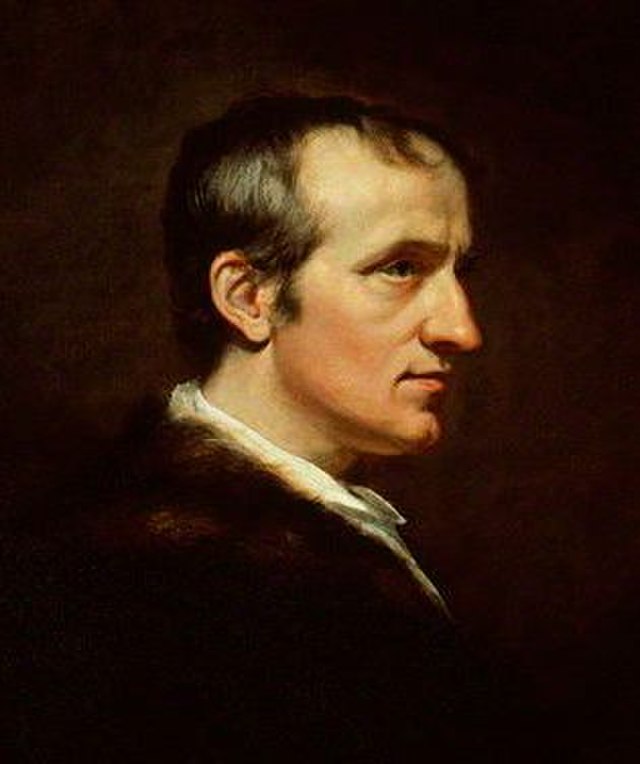
Moral Perception

It is a familiar thought that many of our beliefs are directly justified epistemically by perception. For example, she sees what looks to her to be a cat on the mat, and from this she is justified in saying “There is a cat on the mat.” This article explores the idea that our moral beliefs can be justified empirically in a similar manner. More precisely, it focuses on canonical moral perception (CMP), which restricts perceptual experiences to sensory perceptual experiences, such as vision, touch, taste, smell, and sound. For ease of exposition, this article uses visual perceptual experiences as the sensory modality of choice.

We should be interested in the viability of such a thesis for several reasons. First, if CMP is a plausible epistemology of justification of moral beliefs, then it is uniform with a broader perceptual epistemology and therefore comes with ready-made responses to skeptical challenges to morality. Second, CMP avoids over-intellectualising moral epistemology, and it explains how it is that lay people have justified moral beliefs. Third, CMP, if true, has interesting implications for our methodology of investigating morality. In effect, CMP states that experience comes first, contrary to how some (but not all) rival views characterize moral epistemology as starting from the armchair.

First, the thesis of CMP in presented in detail. The following section considers prima facie arguments in favor of CMP, which are the considerations of epistemic uniformity and the role of experience in moral inquiry. Next, the article discusses prima facie arguments against CMP, which are the problems of counterfactual knowledge, the causal objection, and the ‘looks’ objection. Finally, the article presents arguments for CMP that draw from the philosophy of perception and the philosophy of mind, and it concludes that much of the debate surrounding CMP is continuous with debates in the general philosophy of perception and the philosophy of mind.

Table of Contents

  1. The Central Thesis
  2. The Prima Facie Case for Moral Perception
    1. Moral Perception and Epistemic Uniformity
    2. The Role of Experience in Moral Inquiry
  3. The Prima Facie Case Against Moral Perception
    1. Justification of Counterfactual Moral Beliefs
    2. The Causal Objection
    3. The ‘Looks’ Objection
  4. Arguments from Philosophy of Perception
    1. High-Level Contents in Perception
    2. Phenomenal Contrast Arguments
    3. Phenomenal Contrast and Parity Considerations
    4. Cognitive Penetration
    5. The Mediation Challenge
    6. Moral Perception and Wider Debates in The Philosophy of Perception
  5. Summary: Looking Forward
  6. References and Further Reading

1. The Central Thesis

Suppose upon returning home one evening, someone encounters a stranger harming a senior citizen for entertainment. As they witness this act, they form the belief that what they are witnessing is morally wrong. Assuming that the belief is epistemically justified, it remains a question what the source of justification for this particular moral belief is. One answer is that perceptual states (such as sight and hearing) provide the justification. This thesis is called canonical moral perception:

CMP: Some moral beliefs are non-inferentially justified by sensory perceptual experiences.

To be clear, CMP claims that some moral beliefs are non-inferentially justified by sensory perceptual experiences. This leaves open the possibility of multiple sources for the justification of moral beliefs while showing that there is an interesting debate here regarding the possibility of CMP, since rivals of the view will deny that any moral beliefs are justified in such a way. For purposes of exposition, this article uses vision as the perceptual state of choice, but it should be kept in mind that this is not to convey that vision is the only source of perceptual justification for moral beliefs. Despite the fact that emotions are sometimes spoken of as if they are a kind of perception, this article does not consider emotional perception in any detail. Someone who endorses CMP may be called a ‘perceptualist.’

Fundamentally, the epistemic contribution of perception is to justify belief and play the role of a justificatory regress stopper. Given that justification for some beliefs bottoms out in perceptual experience, and that some moral beliefs are justified but not on the basis of other beliefs, CMP extends perceptual justification to the moral domain. CMP is a foundationalist theory of the justification of moral beliefs and this article treats it as such. Other foundationalist views, such as intuitionists and emotional perceptualists, will have their own ways of handling the regress problem that differs from Canonical Moral Perception. In particular, the perceptualist (at least) holds that what is essential to perception is its representational nature, the phenomenological character of perceptual experience, and its role as a non-inferential source of justification, and will offer a stopper to the regress problems based on those characteristics. Intuitionists and emotional perceptualists may agree that some of those characteristics are essential to their justificatory source as well, but the story for how their regress stoppers work will differ based on how emotions and intuitions differ from perception. For example, emotional perceptualists may say that what is special about emotional perceptual states is that they are valenced, and that this plays a special role in their justificatory story.

Furthermore, this paper assumes on behalf of the perceptualist a phenomenal dogmatist account of foundationalism of the kind espoused by Jim Pryor, where someone is immediately, but defeasibly, justified by their perceptual experience (Pryor 2000). Phenomenal dogmatism is not a very strong foundationalism in that it does not require an infallibly known belief to ground all the remaining knowledge one may possess. Rather, what phenomenal dogmatism grants us is the claim that representational seeming states justify beliefs based on those seeming states in virtue of having those seeming states. Insofar as one may be concerned about challenges to a general foundationalist picture, the perceptualist will follow Pryor in responding to those objections.

Some of the philosophers mentioned in this article will talk about theories of perceptual moral knowledge, and most of what this article says will be compatible with those theories. A perceptually justified moral belief in the absence of defeaters is perceptual moral knowledge, after all.

2. The Prima Facie Case for Moral Perception

a. Moral Perception and Epistemic Uniformity

Considerations of uniformity and economy within epistemology might push one towards adopting CMP over its more traditional rivals, such as intuitionism. CMP entails that the methodology of obtaining justified moral beliefs does not differ in any significant or substantial way from other kinds of justification gained by perceptual experiences. That is, just as one forms the justified belief that there is a cat in the room by seeing that there is in fact a cat in the room, one forms the justified belief that some act is wrong by perceiving the wrongness of the act. This leads us to the considerations of uniformity. If there is no special methodology that differentiates justified moral beliefs from other justified beliefs in different domains, then the need for positing a special source of justification, such as the intellectual seemings of the intuitionist is moot. Another advantage of CMP is that it gives us a foundationalist epistemology, thereby avoiding regress and circularity worries regarding justification. To be clear, the advantages mentioned are shared with some rival accounts of moral epistemology, so these are not unique advantages but rather considerations that keep it a live theory.

b. The Role of Experience in Moral Inquiry

CMP captures the role that experience seems to play in moral inquiry. If we consider how non-philosophers form most of their moral beliefs, it is unlikely that the sole basic source is a priori reasoning. Most people do not sit in an armchair and contemplate runaway trolleys, yet it seems that most individuals have justified basic moral beliefs. When an individual is asked to explain how they know that an action is wrong, a common answer among lay people is that they saw the wrongness of that action. CMP takes this statement at face value, and considering that moral philosophers are not different in kind from the typical human being, we might think that when engaging in a moral thought experiment the philosopher is making use of past moral observations.

If we are persuaded that experience plays a role in answering moral questions, then a natural thought is that particular moral beliefs are among the most epistemically basic; particular moral beliefs form part of our evidential bedrock. They are basic in the sense that, from justified particular moral beliefs we can infer additional justified moral beliefs, but we cannot make an inference in the opposite direction.  For example, one basic justified particular moral belief for the perceptualist may be a very specific claim such as, ‘The instance of a father hugging his child I witnessed yesterday is morally good.’ From this particular experience of goodness, once we return to the armchair and ponder if fathers hugging their children is good, we might inductively infer a more general statement such as ‘It is usually good for fathers to hug their children.’ In short, we draw from experience to reach conclusions about more abstract moral questions. Sarah McGrath, motivates CMP with these considerations in mind (2018, 2019). As McGrath explains:

[A] significant part of our most fundamental evidence for [moral] theorizing consists in singular moral judgments that we know to be true. But I also think that there is a fairly widespread tendency to neglect this fact, and to think that our evidence, or what we ultimately have to go on in our ethical theorizing, consists exclusively of judgments with more general content (2018).

To expand on this: it is a common self-conception of moral philosophers that the methodology of moral inquiry they perform is to consider cases or action types, form judgments about those cases and reach general moral principles (such as ‘It is usually good for fathers to hug their children’, or ‘All things being equal, it is wrong to intentionally cause harm’) that are broadly applicable. That is, judgments about very specific cases will be formed by way of considering the more general principles. As McGrath points out, when considering the morality of an action type, we often draw upon our past experiences of tokens of an action to make moral judgments.  To illustrate this, we can imagine an agent who yesterday saw the goodness of a father hugging a child, and then the next day is presented with a thought experiment that asks the agent to consider a near identical scenario. Presumably, this agent will judge the hugging once again to be good, and this judgment will be based on the past observations they made the day before. Thus, CMP denies that intuitions about general moral beliefs reached in the armchair are always methodologically prior to experience in moral theorizing.

If intuitions about general moral principles are epistemically basic, then making use of particular moral judgements is epistemically mistaken. However, drawing on past observations to reach judgements on thought experiments about fathers hugging their children, or even the trolley problem, is not obviously an epistemic misstep. In fact, we often draw on past observations and experiences to give advice on problems that our friends and family experience. Rather than draw on general principles to advise a friend to end her relationship, we usually appeal to previous relationships we have been through to make such a judgment. These are the common and legitimate ways we form moral beliefs, and CMP is the most natural epistemic explanation of our practice of moral inquiry as we find it.

That said, we may worry about cases where we have background knowledge informing our experience of a situation; it may seem strange that we can have the kind of experientially justified moral beliefs CMP promises while at the same time recognizing that background knowledge changes what we may justifiably believe about what our perceptual experiences. For example, we can imagine the father hugging child, but now know have the background information that the father has a criminal record of incest. There are two ways for the perceptualist to handle cases where there is background knowledge informing the observation in such cases. The first is to stick with the kind of Pryor style phenomenal dogmatism, in which the perceptual seeming of goodness delivers prima facie justification for believing the hugging is morally good, but this is defeated by the additional knowledge of the father’s criminal record. The second option is to lean into the phenomenon of cognitive penetration, and answer that the background knowledge does change the perceptual experience of the father hugging the child from one of goodness to one of badness, since our propositional attitude would contour our perceptual experience on this option. In sum, there are two possible ways for the perceptualist to answer this kind of concern, but adjudicating between the two options canvassed here is beyond the scope of this article.

3. The Prima Facie Case Against Moral Perception

a. Justification of Counterfactual Moral Beliefs

Although CMP provides a theory of justification in actual situations, situations in which you see a morally valenced act, we might wonder what the theory says about justification of moral beliefs gained via thought experiments or reading fiction. Call the kind of justification gained in these instances counterfactual justification. Both Hutton and Wodak challenge CMP to provide an account of how one can have counterfactual moral justification (Hutton 2021; Wodak 2019). The challenge takes the following general form: By hypothesis, CMP explains moral justification in localized, everyday cases. However, we do not receive justification for moral beliefs solely through sensory perception, since we can have counterfactual moral justification. So, CMP is an incomplete explanation of the sources of moral justification. Because CMP cannot capture cases where we receive justification through literature or thought experiments, an epistemological theory that can provide a unified explanation of both counterfactual justification and justification gained in everyday cases is preferable on the grounds of parsimony. The following two paragraphs present particular versions of this challenge.

Hutton asks us to consider a case of someone reading a book depicting the brutalities of slavery, stipulating that they have an emotional response to the scenarios depicted in the book. Here, no perception is present (other than of words on a page), but there is a strong emotional response and plausibly, Hutton claims, the individual reading the book forms the justified moral belief that slavery is wrong. The upshot of Hutton’s argument is that CMP cannot explain what the source of justification in the case of literature is, while emotion is able to both explain the source of justification in moral beliefs formed from reading literature and everyday cases.

Like Hutton, Wodak notes that much of our moral inquiry is a priori, and intuitionism is far better suited to capture instances where our justified moral beliefs come from imagining scenarios. When sitting in the armchair imagining a trolley scenario, when we form the justified moral belief that pulling the lever is the right action, we can ask what justifies the belief, and Wodak states “The intuitionist can explain this very easily: our intuitions can concern actual and hypothetical cases” (Wodak 2019). That is, the intuitionist’s story for justification stays the same between imagined cases and cases we encounter on the street. CMP cannot appeal to perceptual justification because in thought experiments there is no perception of the scenario. Because CMP lacks resources to explain the source of the justification, and intuitionism can explain the source of justification in both thought-experiments and everyday cases, Wodak concludes that intuitionism should be preferred on the grounds of parsimony.

While it is true that CMP by itself is unable to capture counterfactual justification and gives some prima facie considerations against the view, this should not be cause for alarm on the part of the advocate of CMP. Recall that CMP states that some of our moral beliefs are perceptually justified, not that all moral beliefs are justified in such a way. The advocate of CMP has the option to make a disjunctive response to challenges from counterfactual justification such as those made by Wodak and Hutton. This response needs to be done with care; the advocate of CMP should avoid introducing an account of counterfactual justification that suffices to explain actual justification as well. Even though the challenge for a story for counterfactual justification has yet to be fully answered, there are other considerations for adhering to CMP.

b. The Causal Objection

The causal objection argues that we cannot perceive moral properties because we cannot be put in a causal relation with them. That is, one might think that moral properties are causally inert, and for this reason we cannot perceive them. Put in the form of an argument, the causal objection appears as:

    1. To perceive some property, one must be placed in the appropriate causal relation with that property.
    2. One can never be put in the proper causal relation with moral properties.
    3. One cannot perceive moral properties.

McBrayer responds to the causal objection by pointing out that on three of the most popular realist accounts moral properties premise two comes out false (McBrayer 2010). These three proposals are (i) treating moral properties as secondary properties, (ii) treating moral properties as natural properties, and (iii) treating moral properties as non-natural properties.

When moral properties are held to be secondary properties, where secondary properties are properties that under appropriate viewing conditions are perceived as such, premise two fails as demonstrated by an analogy between colors and moral properties. We can imagine looking at a chair under midday light and perceiving it to be brown. What causally contributes to our perceptual experience is not the brownness of the chair (due to the nature of secondary properties), but the other properties of the chair. Nonetheless, perceiving the chair results in knowledge of the chair’s color, so we are still put in an appropriate causal relation with the property of brownness. In the case of moral properties, stipulated to be secondary properties, we will be placed in the same causal relation with them as we are with colors. Under ideal viewing circumstances, we will be placed in a causal relation with the base properties (such as a father hugging a child) and perceive the goodness of that action. In short, if we take moral properties to be secondary properties, the response to the causal objection is a common cause style of explanation.

If one takes a reductionist naturalist account of the moral properties, matters are even simpler. Because moral properties are identical to natural properties, the explanation as to how we are able to be in the proper causal relation with them is the same explanation as to how we are able to be in the proper causal relationship with chairs, cars, and human actions.

Finally, according to McBrayer, non-naturalism about moral properties avoids the causal objection as well. What the proponent of the causal objection wants is a non-accidental connection between our perceptual beliefs and the moral facts, and an account that delivers a non-accidental connection between our perceptual beliefs and the moral facts suffices to defuse the causal objection. This is so even if the connection is not causal, strictly speaking. To see this, first note that we are stipulating the supervenience principle, the moral facts necessarily supervene on the natural facts such that there is no change in the moral without a change in the natural. Assuming that we can see supervening properties, the accidentality is eliminated because whenever we see a supervening property we see its natural property that serves as its base, and the natural property serves as the proper causal relationship that satisfies the causal constraint.

The causal objection is an instance of a general challenge to the perception of high-level properties. In this case, the causal objection is an instance of explanatory superfluity. This challenge is as follows: One might think that we cannot be put in a causal relation with high-level properties, and so we do not perceive them. There is no need to claim that we are in a causal relation with trees when being in a causal relation with the lower-level properties of trees is sufficient for justified tree belief; further causal contact would be an instance of overdetermination. To put the objection in a slightly different way, if our perceptual states are in a causal relation with the property of being a pine tree, then the content of our perceptual experience of a pine tree would be causally overdetermined. There is no reason to think that our perceptual experiences are overdetermined, so our perceptual states are not in a causal relation with the property of being a pine tree. It is not clear how worried the defender of CMP should worry about this objection. Because the causal objection shares strong features with the causal exclusion problem of mind-body interaction which provides a framework for addressing these issues, the objection may not carry much weight (Kim 1993, Yablo 2003).

c. The ‘Looks’ Objection

If perception justifies some moral beliefs, then this is presumably because there is a phenomenological character, a what-it-is-likeness, when perceiving moral properties. The ‘looks objection’ claims that this is not the case: we do not have perceptual justification of moral beliefs because there is no phenomenological character for moral properties (Huemer 2005, Reiland 2021). The argument is commonly structured this way:

    1. A moral belief is perceptually justified if there is some way that a moral property looks.
    2. Moral properties have no look.
    3. No moral beliefs are perceptually justified.

We can deny the ‘looks’ objection by rejecting premises one or two, or arguing that the conclusion does not follow. Because ‘looks’ is ambiguous in the argument, one strategy for denying the objection is to interpret ‘looks’ in various ways and see if the argument remains valid. McBrayer (2010a) tackles the ‘looks’ objection by considering several possible readings of “looks” other than the phenomenal ‘looks’ mentioned above. The upshot of McBrayer’s strategy is that on all interpretations of “look” he considers, the objection is invalid. McBrayer settles on a possible reading of ‘looks’ which is supposed to provide the strongest version of the objection. This is the ‘normally looks’, which is understood as the way something resembles something else. If we substitute ‘normally look’ in premise two, we get:

2′. Moral properties do not normally look like anything.

Even with ‘normally looks’, the objection comes out invalid. This is for the following reasons. When ‘normally looks’ is read as normally looking a way to multiple people, the argument fails as many non-moral properties, assuming they have a normal look, do not appear the same way to multiple people. For example, imagine a group of individuals looking at a car from different viewpoints; there is no single way the car appears to all of them. Yet, if a car has a normal look but can appear different ways to different individuals, then there is no principled reason to think that rightness cannot appear different ways yet have a normal look as well. Understood in this cross-person sense, 2′ comes out false. Similarly, when 2′ is read as the way a thing normally looks to an individual, the objection is still invalid. Even if 2′ is true, it is only true of low-level properties such as colors, since no matter what angle you view red from, it would always look the same. Many high-level properties, such as danger, do not have a way of normally looking to an individual. But, assuming we are perceptually justified in judgments of danger despite its disparate looks, such as a rattlesnake looking dangerous and a loaded gun looking dangerous, premise 1 does not hold. We may still be perceptually justified in a belief about a property even if there is no particular look for that property. Finally, if an opponent argues that there is a complex and ineffable way that high-level properties normally look, then this strategy is open to the defender of moral perception as well, so 2′ again comes out false. On all readings McBrayer considers, the ‘looks’ objection is unsound.

Proponents of the ‘looks objection’ may be unsatisfied with McBrayer’s response, however. The kind of ‘looks’ that is likely intended by opponents of CMP is ‘phenomenal looks’. That is, the what-it-is-likeness of perceiving something, such as what it is like to perceive a car or a cat, is the intended meaning of “looks” in the argument. “Looks” in fact was characterized as the phenomenal kind in the opening paragraph of this section. However, McBrayer omits this reading of ‘looks’, and misses the most plausible and strongest reading of the objection. It remains up to contemporary defenders of CMP to provide an account of what the phenomenological ‘looks’ of moral properties are like. Until an account is provided, the looks objection remains a live challenge.

Whatever this account may be, it will also provide a general strategy for answering a general looks objection in the philosophy of perception. This objection is the same as the looks objection listed above, but with instances of ‘moral’ replaced with ‘high-level property’, and concludes that our high-level property beliefs are not perceptually justified (McGrath 2017). If an account is successful at articulating what the phenomenal looks of a higher-order property is, or motivating the belief that high-level properties have one, then this provides a framework for CMP to use in answering the moral looks objection.

4. Arguments from Philosophy of Perception

While the prima facie arguments provide initial motivation for CMP, the thesis is ultimately about the epistemic deliverances of our sensory faculty. Accordingly, much of the debate about the viability of CMP parallels debates in the general philosophy of perception. In this section, we will see the arguments for and against moral perception drawing from empirical perceptual psychology and general philosophy of perception.

a. High-Level Contents in Perception

A natural move for the moral perceptualist in defense of the claim that we are non-inferentially justified by perception is to argue that we see moral properties. The perceptualist here means to be taken literally, similar to how we see the yellow of a lemon or the shape of a motorcycle. If we do perceive moral properties, then a very straightforward epistemic story can be told. This story the perceptualist aims to explain how perceptual moral justification is the same for perceptual justification of ordinary objects. For example, the explanation for how someone knows there is a car before them is that they see a car and form the corresponding belief that there is a car. The story for justification of moral beliefs here will be that someone sees the wrongness of some action and forms the corresponding belief that the action is wrong (absent defeaters). The perceptualist will typically flesh out this move by assuming an additional epistemic requirement, called the Matching Content Constraint (MCC):

MCC: If your visual experience E gives you immediate justification to believe some external world proposition that P, then it’s a phenomenal content of E that P (Silins 2011).

The MCC states that one is non-inferentially justified only if there is a match in contents between a perceiver’s perceptual state and doxastic state (their belief). The reason perceptual contents matter to CMP is that if perceptual contents include moral properties, then one has a perceptual experience of those moral properties, and if one has an experience of those moral properties then a story for a non-inferential perceptual justification of moral beliefs is in hand, which is no different from our perceptual justification of other objects. On the other hand, if there is a mismatch between our perceptual contents and our moral beliefs, then we may find a non-inferentialist perceptual epistemology such as CMP to be implausible.

Given the MCC, the perceptualist needs it to be the case that perceptual experience includes high-level contents, such as being a car, being a pine tree, or being a cause of some effect. If perceptual experiences do contain high-level contents, then the inclusion of moral contents in perceptual experiences is a natural theoretical next-step, barring a principled reason for exclusion. After all, if we commit to arguing that we perceive causation and carhood, extending the contents of perception to rightness (and wrongness) does not appear to require too large a stretch of the imagination. The extension of perceptual experiences to include moral contents meets the matching content constraint, and it clears the way for arguing for CMP. However, if the contents of our perceptual experiences are restricted to low-level contents, which are colors, shapes, depth, and motion (although what counts a low-level content may vary between theorists), the defense of CMP becomes much trickier.

Holding onto CMP because one accepts a high-level theory of content comes with its own risk. If a thin view of contents turns out to be the correct account of perceptual content, such that what makes up the content of our perceptual states are color arrays, shapes, depth and motion, then CMP appears to lose much of its motivation. It would be theoretically awkward to insist that moral contents show up if content about cars, pine trees, and causation are incapable of doing so. And if moral properties do not appear in the contents of perceptual experience, then a simple story as to how we can have perceptual justification for moral beliefs is lost.

Even if perception does not have high-level contents, or nor moral contents, this does not mean that CMP is a failed theory of moral epistemology. Sarah McGrath , provides a story as to how we can have perceptual beliefs in the absence of high-level contents in perception (2018, 2019). This story is an externalist one; the source of the justification comes from a Bayesian account of the adjustment of priors (the probability that a belief is true) given non-moral observations, rather than any experiential contents of morality itself. Through perceptual training and experience our perceptual system is trained to detect morally relevant stimuli, such as detecting the whimper of pain a dog may voice when kicked. On McGrath’s view, then, one is perceptually justified in a moral belief when the perceptual system reliably tracks the moral facts. The upshot for the defender of CMP is that there is much theorizing to be done about the compatibility between CMP and the thin-content view, and McGrath’s view shows one way to reconcile the two.

b. Phenomenal Contrast Arguments

An argument for thinking that we do perceive moral properties, as well as other high-level properties, is the argument from phenomenal contrast. Susanna Siegel develops a kind of phenomenal contrast argument as a general strategy for arguing that the contents of our perception are far richer than a thin view of contents would allow (2006, 2011, 2017). How a phenomenal contrast argument works is as follows. We are asked to imagine two scenarios, one in which a property is present, and a contrast scenario where the same property is absent. If the intuition about these cases is that the perceptual phenomenology is different for a perceiver in these scenarios, then one can argue that what explains the difference in experience in these cases is the absence of the property, which makes a difference to what is perceptually experienced. The reason an advocate of CMP would want to use this strategy is that if there is a phenomenal contrast between two cases, then there is an explanatory gap that CMP fills; if there is a moral experience in one case but not in a different similar case, CMP can explain the difference by saying that a moral property is perceived one case but not in the other, thus explaining the phenomenal difference.

To better illustrate phenomenal contrast, here is a concrete example from Siegel arguing that causation appears in the contents of perception (2011). Imagine two cases both in which we are placed behind a shade and see two silhouettes of objects. In the control case, we see one silhouette of an object bump into another object, and the second object begins to roll. In the contrast case, whenever one silhouette begins to move towards the other silhouette, the other silhouette begins to move as well, keeping a steady distance from the first silhouette. If we have the intuition that these two cases are phenomenally different for a perceiver, then Siegel argues that the best explanation for this difference is that causation is perceptually represented in the former case and not the latter, whereas competitors deny that causation appears in the content would have to find some alternative, and more complicated, explanation for the contrast.

The phenomenal contrast argument has been wielded to argue for moral contents specifically by Preston Werner (2014). Werner asks us to imagine two different individuals, a neurotypical individual and an emotionally empathetic dysfunctional individual (EEDI), coming across the same morally-valenced scenario. Let this scenario be a father hugging a child. When the neurotypical individual comes upon the scene of the father hugging his child, this individual is likely to be moved and have a variety of physiological and psychological responses (such as feeling the “warm fuzzies”). When the EEDI comes upon the scene of the father hugging his child, however, they will be left completely cold, lacking the physiological and psychological responses the neurotypical individual underwent. This version of the phenomenal contrast argument purports to show that what best accounts for the experiential difference between these two individuals is that the neurotypical individual is able to perceptually represent the moral goodness of the father hugging the child, thus explaining the emotional reaction, whereas the EEDI was left cold because of their inability to perceptually represent moral goodness. If this argument is successful, then we have reason to think that moral properties appear in the contents of experience.

One might object here that Werner is not following the general methodology that Siegel sets out for phenomenal contrast. Werner  defends his case as a phenomenal contrast by arguing that making use of two different scenarios would be too controversial to be fruitful because of the difference between learning to recognise morally valenced situations and having the recognitional disposition to recognise pine trees, and that the two individuals in the scenario are sufficiently similar in that they both have generally functional psychologies, but interestingly different in that the EEDI lacks the ability to properly emotionally respond to situations. Similarly, we might wonder about the use of an EEDI in this phenomenal contrast case. Although the EEDI possesses much of the same cognitive architecture as the neurotypical individual, the EEDI is also different in significant aspects. First, an immediate explanation of the difference might appeal to emotions, rather than perceptual experiences; the EEDI lacks the relevant emotions requisite for moral experiences. Second, the EEDI makes for a poor contrast if they lack the moral concepts needed to recognise moral properties in the first place. Similarly, the use of an EEDI as a contrast may prove problematic due to the exact nature of an EEDI being unclear; claiming that the best explanation between the two individuals’ experiences is due to a representational difference may be premature in the face of numerous and conflicting theories about the pathology of an EEDI. That is, because an EEDI’s perceptual system is identical to that of the neurotypical individual, the EEDI may still perceptually represent moral properties but fail to respond or recognise them for some other reason. If this hypothesis is correct, then the use of an EEDI is illegitimate because it does not capture the purported experiential difference.

c. Phenomenal Contrast and Parity Considerations

Even if CMP gets the right result, this does not rule out that other views can explain the phenomenology as well. For example, Pekka Väyrynen claims that inferentialism provides a better explanation of moral experiences, particularly regarding explanations of different experiences in phenomenal contrast scenarios (2018). To show this, Väyrynen first provides a rival hypothesis to a perceptualist account, which is as follows. When we see a father hugging his child, our experience of moral goodness is a representation that “results from an implicit habitual inference or some other type of transition in thought which can be reliably prompted by the non-moral perceptual inputs jointly with the relevant background moral beliefs” (Väyrynen 2018). This rival hypothesis aims to explain the phenomenological experiences targeted by phenomenal contrast arguments by stating that rather than moral properties appearing in our perceptual contents, what happens when we have a moral experience is that past moral learning, in conjunction with the non-moral perceptual inputs, forms a moral belief downstream from perception.

To see how this might work in a non-moral case, we can consider the following vignette, Fine Wine (Väyrynen 2018):

Greg, an experienced wine maker, reports that when he samples wine he perceives it as having various non-evaluative qualities which form his basis for classifying it as fine or not. Michael, a wine connoisseur, says that he can taste also fineness in wine.

Väyrynen asks if Michael has a perceptual experience of a property, in this case, fineness, that Greg cannot pick up on, and argues that there is no difference in perceptual experience. Granting that Greg and Michael’s experiences of the wine can differ, we need not appeal to Michael being able to perceive the property of fineness in order to explain this difference. What explains the difference in phenomenology, according to Väyrynen, is that Michael’s representations of fineness are “plausibly an upshot of inferences or some other reliable transitions in thought…” (Väyrynen 2018). Väyrynen’s hypothesis aims to reveal the phenomenal contrast argument as lacking the virtue of parsimony. That is, the perceptualist is using more theoretical machinery than needed to explain the difference in phenomenal experiences. The phenomenal contrast argument explains the difference in phenomenology between two individuals by claiming that moral properties appear in the contents of perception. Väyrynen’s rival hypothesis is supposed to be a simpler and more plausible alternative that explains why we may think high-level contents are in perception. First, it explains what appears to be a difference in perceptual experience as a difference in doxastic experience (a difference in beliefs). Second, because the difference is in doxastic experience, Väyrynen’s hypothesis does not commit to high-level contents in perception. Everyone who is party to this debate agrees on the existence of low-level perceptual contents and doxastic experiences, so to endorse high-level contents is to take on board an extra commitment. All things being equal, it is better to explain a phenomenon with fewer theoretical posits. In other words, Väyrynen’s hypothesis gets better explanatory mileage than the perceptualist’s phenomenal contrast argument.

Consider a moral counterpart of fine wine, where Greg and Michael witness a father hugging his child. Greg rarely engages in moral theorizing, but he classifies the action as morally good based on some of the non-moral features he perceives. Michael, on the other hand, is a world class moral philosopher who claims he can see the goodness or badness of actions. The perceptualist will say that the latter individual perceives goodness, but the former individual is perceptually lacking such that they cannot pick up on moral properties. The perceptualist who makes use of phenomenal contrast arguments is committed to saying here that Michael’s perceptual system has been trained to detect moral properties and has moral contents in perceptual experience, whereas Greg has to do extra cognitive work to make a moral judgment. Väyrynen’s rival hypothesis, on the other hand, need not claim we perceptually represent moral properties, but rather can explain the difference in phenomenology by appealing to the implicit inferences one may make in response to non-moral properties to which one has a trained sensitivity. According to Väyrynen’s hypothesis, Michael’s cognitive system is trained to make implicit inferences in response to certain non-moral properties, whereas Greg needs to do a bit more explicit cognitive work to make a moral judgment. What seems like a difference in perceptual experience is explained away as a difference in post-perceptual experience.

Väyrynen’s hypothesis also challenges Werner’s phenomenal contrast argument above, as it has an explanation for the EEDI’s different phenomenological experience. The neurotypical has the moral experience because of implicit inferences being made, but the EEDI fails to have the same experience because the EEDI lacks a sensitivity to the moral properties altogether, failing to draw the inferences the neurotypical is trained to make. In short, the difference in one’s phenomenological experience is explained by this rival hypothesis by differences in belief, rather than in perception.

d. Cognitive Penetration

It is already clear how low-level contents make it into perception, as perceptual scientists are already familiar with the rod and cone cells that make up the retina and process incoming light, as well as how that information is used by the early visual system. Is less clear how high-level contents make their way into perceptual experience. If perception does contain high-level contents, then a mechanism is required to explain how such contents make it into perceptual experience. The mechanism of choice for philosophers of perception and cognitive scientists is cognitive penetration. Cognitive penetration is a psychological hypothesis claiming that at least some of an individual’s perceptual states are shaped by that individual’s propositional attitudes, such as beliefs, desires, and fears. Put another way, cognitive penetration is the claim that perceptual experience is theory-laden.

To understand how cognitive penetration is supposed to work, we should consider another phenomenal contrast case. Imagine that you are working at a nature conservation center, and are unfamiliar with the plant known as Queen Anne’s lace. While working at the conservation center, you are told by your supervisor that plants that look a certain way are Queen Anne’s Lace. After repeated exposure to the plant, that a plant is Queen Anne’s lace becomes visually salient to you. In other words, your perceptual experience of Queen Anne’s lace prior to learning to recognize it is different from the perceptual experience you have of the plant after you have learned to recognize it. Cognitive penetration explains this shift in perceptual experience as your Queen Anne’s lace beliefs shape your perceptual experience, such that the property of ‘being Queen Anne’s lace’ makes it into the content of your perception. In other words, the difference in perceptual experiences is explained by the difference in perceptual contents, which in turn is explained by perceptual experiences being mediated by propositional attitudes. We should take care to separate this from a similar thesis which claims that there is no change in perceptual experience after learning to recognize Queen Anne’s lace, but that the shift in the phenomenology (the what-it-is-likeness) of looking at Queen Anne’s lace is explained by changes in post-perceptual experience, such as having new beliefs about the plant. Cognitive penetration claims that the phenomenological difference is between perceptual experiences, and it is the beliefs about Queen Anne’s lace that changes the perceptual experience.

Cognitive penetration is an attractive option for the perceptualist because it provides a mechanism to explain how moral properties make their way into the contents of perception. Consequently, the perceptualist’s theory for how we see the rightness or wrongness of actions will be identical to the story about Queen Anne’s lace above: an individual learns about morality from their community and forms moral beliefs, which in turn prime the perceptual system to perceive moral properties. One the perceptualist has cognitive penetration, they then have a story for moral properties in the contents of perception, and then the perceptualist delivers an elegant epistemology of moral justification. This epistemology respects the matching content constraint, which states that in order for a belief to be justified by perception, the contents of a belief must match the contents of perception. The perceptualist may then say that we have foundational perceptual justification for our moral beliefs, in the same way that we have foundational perceptual justification for tree beliefs. Just as we see that there is a tree before us, we see that an action is wrong.

e. The Mediation Challenge

The perceptualist’s use of cognitive penetration has led to challenges to the view on the grounds that cognitive penetration, the thesis that propositional attitudes influence perceptual experiences, lead to counterintuitive consequences. One of the most prominent challenges to the possibility of moral perception comes from Faraci , who argues that if cognitive penetration is true, then CMP must be false (Faraci 2015). To motivate the argument that no moral justification is grounded in perception, Faraci defends a principle he calls mediation:

If perceptions of X are grounded in experiences as of Y, then perceptions of X produce perceptual justification only if they are mediated by background knowledge of some relation between X and Y. (Faraci 2015)

What mediation states is that one can only have perceptual justification of some high-level property if the experience of that higher level property is in some way informed by knowledge of its relation to the lower-level properties it is grounded in. To motivate the plausibility of mediation, Faraci appeals to the non-moral example of seeing someone angry. If Norm sees Vera angry, presumably he knows that she is angry because he sees her furrowed brow and scowl, and he knows that a furrowed brow and scowl is the kind of behavior that indicates that someone is angry. In an analogous moral case, someone witnessing a father hugging his child knows that they are seeing a morally good action only if they have the relevant background knowledge, the relevant moral beliefs, connecting parental affection with goodness. If the witness did not possess the moral bridge principle that parental affection was good, then the witness would not know that they had seen a morally good action. The thrust of the argument is that if mediation is plausible in the non-moral case, then it is plausible in the moral case as well. If mediation is plausible in the moral case, then CMP is an implausible account of moral epistemology because it will need to appeal to background moral knowledge not gained in perceptual experience to explain how we see that the father hugging the child is a morally good action.

Faraci considers three possible ways of avoiding appeal to background knowledge for the defender of moral perception. The first option is to claim that the moral bridge principles are themselves known through perceptual experiences. In the case of the child hugging the father, then, we antecedently had a perceptual experience that justified the belief that parental affection is good. The problem with this response is that it leads to a regress, since we would have to have further background knowledge connecting parental affection and goodness (such as parental affection causes pleasure, and pleasure is good), and experientially gained knowledge of each further bridge principle.

The second option is that one could already know some basic moral principles a priori. The problem with this response should be apparent, since if we know some background principles a priori, then this is to concede the argument to Faraci that none of our most basic moral knowledge is known through experience.

Finally, someone could try to argue that one comes to know a moral fact by witnessing an action multiple times and its correlation with its perceived goodness, but the problem with this is that if each individually viewed action is perceived as being good, then we already have background knowledge informing us of the goodness of that act. If so, then we have not properly answered the mediation challenge and shown that CMP is a plausible epistemology of morality.

One way to defend CMP in response to Faraci’s challenge is to follow Preston Werner’s claim that mediation is too strong and offer a reliabilist account of justification that is compatible with a weaker reading of mediation. Werner considers a weak reading and a strong reading of Faraci’s mediation condition (Werner 2018). Werner rejects the strong reading of mediation on the grounds that while it may make Faraci’s argument against the plausibility of moral perception work, it overgeneralises to cases of perception of ordinary objects. Werner points out that the strong reading of mediation requires that we be able to make explicit the background knowledge of perceptual judgements that we make; if we perceive a chair, the strong reading requires that we be able to articulate the ‘chair theory’ that is informing our perceptual experience, otherwise our perceptual judgment that there is a chair is unjustified. Because the vast majority of non-mereologists are not able to make explicit a ‘chair-theory’ informing their perception, the strong reading yields the verdict that the vast majority of us are unjustified in our perceptual judgment of there being a chair.

The weak reading that Werner offers is what he calls “thin-background knowledge”, which he characterizes as “subdoxastic information that can ground reliable transitions from perceptual information about some property Y to perceptual information as of some other property X” (Werner 2018). The upshot is that a pure perceptualist epistemology of morality is compatible with the thin-background knowledge reading of mediation: We do not need to have access to the subdoxastic states that ground our perceptual judgments in order for us to know that our perceptual judgments are justified. Werner’s response to Faraci, in summary, is that a pure perceptualist epistemology is plausible because thin-background knowledge gives us an explanation as to how our perceptual moral judgments are in good epistemic standing.

f. Moral Perception and Wider Debates in The Philosophy of Perception

A broader lesson from the mediation challenge, however, is that many of the issues facing CMP are the same arguments that appear in general debates regarding the epistemology and metaphysics of perception. In the case of Faraci , the argument is a particular instance of a wider concern about cognitive penetration (2015).

What the mediation challenge reflects is a general concern about epistemic dependence and epistemic downgrade in relation to cognitive penetration. In particular, the mediation principle is an instance of the general challenge of epistemic dependence:

A state or process, e, epistemically depends upon another state, d, with respect to content c if state or process e is justified or justification-conferring with respect to c only if (and partly because) d is justified or justification-conferring with respect to c. (Cowan 2014, 674)

The reason one might worry about epistemic dependence in connection with cognitive penetration is that the justification conferring state in instances of cognitive penetration might be the belief states shaping the perceptual experiences, rather than the perceptual experiences doing the justificatory work. If this is true, then a perceptual epistemology of all high-level contents is doubtful, since what does the justificatory work in identifying pine trees will be either training or reflecting on patterns shared between trees, neither of which lend them to a perceptual story.

There is another general worry for cognitive penetration: epistemic downgrade. Assuming cognitive penetration is true, even if one were able to explain away epistemic dependence one might still think that our perceptual justification is held hostage by the beliefs that shape our experiences. For illustration, let us say we have the belief that anyone with a hoodie is carrying a knife. If we see someone wearing a hoodie and they pull a cellphone out, our belief may shape our perceptual state such that our perceptual experience is that of the person in the hoodie pulling a knife. I then believe that the person is pulling a knife. Another example of epistemic downgrade is that of anger:

Before seeing Jack, Jill fears that Jack is angry at her. When she sees him, her fear causes her to have a visual experience in which he looks angry at her. She goes on to believe that he is angry (Siegel 2019, 67).

In both cases there appears to be an epistemic defect: a belief is shaping a perceptual experience, which in turn provides support to the very same belief that shaped that experience. It is an epistemically vicious feedback loop. The worry about epistemic downgrade and high-order contents should be clear. In the case of morality, our background beliefs may be false, which will in turn shape our moral perceptual experiences to be misrepresentative. This appears to provide a defeater for perceptual justification of morality, and it forces the perceptualist to engage in defense of the moral background beliefs which may turn out to be an a priori exercise, defeating the a posteriori character of justified moral beliefs the perceptualist wanted.

One way to avoid these epistemic worries is for the moral perceptualist to endorse some form of epistemic dogmatism, which is to claim that seemings (perceptual or doxastic) provide immediate prima facie, defeasible, justification for belief. The perceptualist who adopts this strategy can argue that the worry of epistemic dependence is misplaced because although the presence of high-level content is causally dependent on the influence of background beliefs, given their dogmatist theory justification for a belief epistemically depends only on the perceptual experience itself. To see this, consider the following analogy: If one is wearing sunglasses, the perceptual experience one has will depend on those sunglasses they are wearing, but one’s perceptual beliefs are not justified by the sunglasses, but rather by the perceptual experience itself (Pryor 2000). For concerns about epistemic downgrade, the perceptualist may give a similar response, which is to state that one is defeasibly justified in a perceptual belief until one is made aware of a defeater, which in this case is the vicious feedback loop. To be clear, no moral perceptualist has made use of this response in print, as most opt for a kind of externalist account of perceptual justification. We should keep in mind that the dogmatist response is made in debates in general perceptual epistemology, and because debates about the epistemic effects of cognitive penetration in moral perception are instances of the general debate, the dogmatist strategy is available should the moral perceptualist wish to use it.

Apart from the epistemic difficulties cognitive penetration incurs, because cognitive penetration is a thesis about the structure of human cognitive architecture it must withstand scrutiny from cognitive science and empirical psychology. A central assumption of the cognitive science and psychology of perception is that the perceptual system is modular, or informationally encapsulated. However, cognitive penetration assumes the opposite because it claims that beliefs influence perceptual experience. Because cognitive penetration holds that the perceptual system is non-modular and receives input from the cognitive system, it falls upon advocates of the hypothesis to show that there is empirical support for the thesis. The problem is that most empirical tests purporting to demonstrate effects of cognitive penetration are questionable. The results have been debunked as either being explainable by other psychological effects such as attention effects, or they have been dismissed on the grounds of poor methodology and difficult to replicate (Firestone and Scholl 2016). Furthermore, in the case of perceptual learning, cognitive penetration predicts changes in the neurophysiology of the cognitive system rather than in the perceptual system, as it would be new beliefs that explain learning to recognize an object. Research in perceptual neurophysiology shows the opposite: perceptual learning is accompanied by changes in the neurophysiology of the perceptual system (Connolly 2019). The viability of CMP, insofar as it depends on cognitive penetration for high-level contents, is subject not only to epistemic pressures, but also to empirical fortune.

5. Summary: Looking Forward

For moral epistemologists, a foundationalist epistemology that provides responses to skeptical challenges is highly desirable. While a variety of theories of moral epistemology do provide foundations, CMP provides an epistemology that grounds our justification in our perceptual faculty that we are all familiar with and provides a unified story for all perceptual justification.

The overall takeaway is that the arguments that are made by both defenders and challengers to CMP are instances of general issues in the philosophy of perception. The lesson to be drawn here for CMP is that the way forward is to pay close attention to the general philosophy of perception literature. Because the literature of CMP itself remains in very early development, paying attention to the general issues will prevent the advocate of CMP from falling into mistakes made in the general literature, as well as open potential pathways for developing CMP in interesting and novel ways.

6. References and Further Reading

  • Audi, Robert. 2013. Moral Perception. Princeton University Press.
    • A book length defense of CMP. A good example of the kind of epistemic ecumenicism a perceptualist may adopt.
  • Bergqvist, Anna, and Robert Cowan (eds.). 2018. Evaluative Perception. Oxford: Oxford University Press.
    • Collection of essays on the plausibility of CMP and emotional perception.
  • Church, Jennifer. 2013. “Moral Perception.” Possibilities of Perception (pp. 187-224). Oxford: Oxford University Press.
    • Presents a Kantian take on moral perception.
  • Crow, Daniel. 2016. “The Mystery of Moral Perception.” Journal Of Moral Philosophy 13, 187-210.
    • Challenges moral perception with a reliability challenge.
  • Connolly, Kevin. 2019. Perceptual Learning: The Flexibility of the Senses. Oxford: Oxford University Press.
    • Discusses the findings of the neuroscience and psychology of perception in relation to theses in the philosophy of mind. Chapter 2 argues against cognitive penetration.
  • Cowan, Robert. 2014. “Cognitive Penetrability and Ethical Perception.” Review of Philosophy and Psychology 6, 665-682.
    • Discusses the epistemic challenges posed to moral perception by cognitive penetration. Focuses on epistemic dependence.
  • Cowan, Robert. 2015. “Perceptual Intuitionism.” Philosophy and Phenomenological Research 90, 164-193.
    • Defends the emotional perception of morality.
  • Cowan, Robert. 2016. “Epistemic perceptualism and neo-sentimentalist objections.” Canadian Journal of Philosophy 46, 59-81.
    • Defends the emotional perception of morality.
  • Faraci, David. 2015. “A hard look at moral perception.” Philosophical Studies 172, 2055-2072.
  • Faraci, David. 2019. “Moral Perception and the Reliability Challenge.” Journal of Moral Philosophy 16, 63-73.
    • Responds to Werner 2018. Argues that moral perception has a reliability challenge.
  • Firestone, Chaz, and Brian J. Scholl. 2016a. “Cognition Does Not Affect Perception: Evaluating the Evidence for ‘Top-down’ Effects.” Behavioral and Brain Sciences 39.
    • Challenges studies that purport to demonstrate the effects of cognitive penetration.
  • Firestone, Chaz, and Brian J. Scholl. 2016b. “‘Moral Perception’ Reflects Neither Morality Nor Perception.” Trends in Cognitive Sciences 20, 75-76.
    • Response to Gantman and Van Bavel 2015.
  • Fodor, Jerry. 1983. The Modularity of Mind. Cambridge, Massachusetts: MIT Press.
    • Argues for the informational encapsulation of the perceptual system.
  • Gantman, Ana P. and Jay J.Van Bavel. 2014. “The moral pop-out effect: Enhanced perceptual awareness of morally relevant stimuli.” Cognition, 132, 22-29.
    • Argues that findings in perceptual psychology support moral perception.
  • Gantman, Ana P. and Jay J. Van Bavel. 2015. “Moral Perception.” Trends in Cognitive Sciences 19, 631-633.
  • Hutton, James. 2022. “Moral Experience: Perception or Emotion?” Ethics 132, 570-597.
  • Huemer, Michael. 2005. Ethical Intuitionism. New York: Palgrave MacMillan.
    • Section 4.4.1 presents the ‘looks’ objection.
  • Kim, Jaegwon. 1993. Supervenience and Mind: Selected Philosophical Essays. Cambridge: Cambridge University Press.
    • A collection of essays discussing the causal exclusion problem.
  • McBrayer, Justin P. 2010a. “A limited defense of moral perception.” Philosophical Studies 149, 305–320.
  • McBrayer, Justin P. 2010b. “Moral perception and the causal objection.” Ratio 23, 291-307.
  • McGrath, Matthew. 2017. “Knowing what things look like.” Philosophical Review 126, 1-41.
    • Presents a general version of the ‘looks’ objection.
  • McGrath, Sarah. 2004. “Moral Knowledge by Perception.” Philosophical Perspectives 18, 209-228.
    • An early formulation of CMP, discusses the epistemic motivations for the view.
  • McGrath, Sarah. 2018. “Moral Perception and its Rivals.” In Anna Bergqvist and Robert Cowan (eds.), Evaluative Perception (pp. 161-182). Oxford: Oxford University Press.
  • McGrath, Sarah. 2019. Moral Knowledge. Oxford: Oxford University Press.
    • Chapter 4 is a presentation of CMP that does not require high-level contents. Chapter 1 is a criticism of some views on the methodology of moral inquiry.
  • Pylyshyn, Zenon. 1999. “Is Vision Continuous with Cognition? The Case for Cognitive Impenetrability of Visual Perception.” Behavioral and Brain Sciences 22, 341-365.
  • Pryor, James. 2000. “The Skeptic and the Dogmatist.” Noûs 34, 517-549.
    • Early presentation of phenomenal dogmatism. Responds to epistemic concerns about the theory-ladenness of perception.
  • Reiland, Indrek. 2021. “On experiencing moral properties.” Synthese 198, 315-325.
    • Presents a version of the ‘looks’ objection.
  • Siegel, Susanna. 2006. “Which properties are represented in perception.” In Gendler, Tamar S. & John Hawthorne (eds.), Perceptual Experience (pp. 481-503). Oxford: Oxford University Press.
    • Argues that perceptual experience includes high-level contents.
  • Siegel, Susanna. 2011. The Contents of Visual Experience. Oxford: Oxford University Press.
    • Book length defense of high-level contents in perceptual experience.
  • Siegel, Susanna. 2012. “Cognitive Penetrability and Perceptual Justification.” Noûs 46.
    • Discusses the issue of epistemic downgrade.
  • Siegel, Susanna. 2019. The Rationality Of Perception. Oxford: Oxford University Press.
    • Chapter 4 is a discussion of epistemic downgrade and responds to criticisms of the problem.
  • Siegel, Susanna & Byrne, Alex. 2016. “Rich or thin?” In Bence Nanay (ed.), Current Controversies in Philosophy of Perception (pp. 59-80). New York: Routledge-Taylor & Francis.
    • Byrne and Siegel debate whether or not there are high-level perceptual contents.
  • Väyrynen, Pekka. 2018. “Doubts about Moral Perception.”  In Anna Bergqvist and Robert Cowan (eds.), Evaluative Perception (pp. 109-128). Oxford: Oxford University Press.
  • Werner, Preston J. 2016. “Moral Perception and the Contents of Experience.” Journal of Moral Philosophy 13, 294-317.
  • Werner, Preston J. 2017. “A Posteriori Ethical Intuitionism and the Problem of Cognitive Penetrability.” European Journal of Philosophy 25, 1791-1809.
    • Argues that synchronic cognitive penetration is a problem for CMP, but diachronic cognitive penetration is epistemically harmless.
  • Werner, Preston J. 2018. “Moral Perception without (Prior) Moral Knowledge.” Journal of Moral Philosophy 15, 164-181.
    • Response to Faraci 2015.
  • Werner, Preston J. 2018. “An epistemic argument for liberalism about perceptual content.” Philosophical Psychology 32, 143-159.
    • Defends the claim that there are high-level contents in perception by arguing that it best explains some findings in perceptual psychology, such as facial recognition.
  • Werner, Preston J. 2020. “Which Moral Properties Are Eligible for Perceptual Awareness?” Journal of Moral Philosophy 17, 290-319.
    • Discusses which moral properties we can perceive, concludes that we perceive at least pro-tanto evaluative properties.
  • Wodak, Daniel. 2019. “Moral perception, inference, and intuition.” Philosophical Studies 176, 1495-1512.
  • Yablo, Stephen. 2005. “Wide Causation” In Stephen Yablo (ed.), Thoughts: Papers on Mind, Meaning, and Modality. Oxford: Oxford University Press.
    • Presents a solution to the causal exclusion problem. Argues that mental states are causally efficacious in a ‘wide’ sense in that they would still be explanatorily valuable even if the ‘thin’ causes, the physical states, were different.


Author Information

Erich Jones
Email: Jones.7269@buckeyemail.osu.edu
The Ohio State University
U. S. A.

William Godwin (1756–1836)

Following the publication of An Enquiry Concerning Political Justice in 1793 and his most successful novel, Caleb Williams, in 1794, William Godwin was briefly celebrated as the most influential English thinker of the age. At the time of his marriage to the writer Mary Wollstonecraft in 1797, the achievements and influence of both writers, as well as their personal happiness together, seemed likely to extend into the new century. It was not to be. The war with revolutionary France and the rise of a new spirit of patriotic fervour turned opinion against reformers, and it targeted Godwin. Following her death in September 1797, a few days after the birth of a daughter, Mary, Godwin published a candid memoir of Wollstonecraft that ignited a propaganda campaign against them both and which became increasingly strident. He published a third edition of Political Justice and a second major novel, St. Leon, but the tide was clearly turning. And while he continued writing into old age, he never again achieved the success, nor the financial security, he had enjoyed in the 1790s. Today he is most often referenced as the husband of Mary Wollstonecraft, as the father of Mary Wollstonecraft Shelley (the author of Frankenstein and The Last Man), and as the founding father of philosophical anarchism. He also deserves to be remembered as a significant philosopher of education.

In An Enquiry Concerning Political Justice, Godwin argues that individuals have the power to free themselves from the intellectual and social restrictions imposed by government and state institutions.  The argument starts with the very demanding requirement that we assess options impartially and rationally. We should act only according to a conviction that arises from a conscientious assessment of what would contribute most to the general good. Incorporated in the argument are principles of impartiality, utility, duty, benevolence, perfectionism, and, crucially, independent private judgment.

Godwin insists that we are not free, morally or rationally, to make whatever choices we like. He subscribes to a form of necessitarianism, but he also believes that choices are constrained by duty and that one’s duty is always to put the general good first. Duties precede rights; rights are simply claims we make on people who have duties towards us. Ultimately, it is the priority of the principle of independent private judgment that produces Godwin’s approach to education, to law and punishment, to government, and to property. Independent private judgment generates truth, and therefore virtue, benevolence, justice, and happiness. Anything that inhibits it, such as political institutions or modes of government, must be replaced by progressively improved social practices.

When Godwin first started An Enquiry Concerning Political Justice, he intended it to explore how government can best benefit humanity. He and the publisher George Robinson wanted to catch the wave of interest created by the French Revolution itself and by Edmund Burke’s Reflections on the Revolution in France, which so provoked British supporters of the revolution. Robinson agreed to support Godwin financially while he worked, with the understanding that he would send sections of the work as he completed them. This meant that the first chapters were printed before he had fully realised the implications of his arguments. The inconsistencies that resulted were addressed in subsequent editions. His philosophical ideas were further revised and developed in The Enquirer (1797), Thoughts Occasioned by a Perusal of Dr. Parr’s Spital Sermon (1801), Of Population (1820), and Thoughts on Man (1831), and in his novels. He also wrote several works of history and biography, and wrote or edited several texts for children, which were published by the Juvenile Library that he started with his second wife, Mary Jane Clairmont.

Table of Contents

  1. Life
  2. Godwin’s Philosophy: An Enquiry Concerning Political Justice
    1. Summary of Principles
    2. From Private judgment to Political Justice
  3. Educational Implications of Godwin’s philosophy
    1. Progressive Education
    2. Education, Epistemology, and Language.
    3. Education, Volition, and Necessitarianism
    4. Government, the State, and Education
  4. Godwin’s Philosophical Anarchism
    1. Introduction
    2. Punishment
    3. Property
    4. Response to Malthus
  5. Godwin’s Fiction
    1. Caleb Williams (1794)
    2. St. Leon: A Tale of the Sixteenth Century (1799)
  6. Conclusion
  7. References and Further Reading
    1. Works by William Godwin
      1. Early Editions of An Enquiry Concerning Political Justice
      2. Other Editions of An Enquiry Concerning Political Justice
      3. Collected Editions of Godwin’s Works and Correspondence
      4. First Editions of Other Works by Godwin
      5. Online Resources
      6. Other Editions of Selected Works by Godwin
    2. Biographies of Godwin
    3. Social and Historical Background
    4. Other Secondary Sources in Philosophy, Education, Fiction, and Anarchism

1. Life

William Godwin was born in 1756 in Wisbech in Cambridgeshire, England, the seventh of thirteen children. His father was a Dissenting minister; his mother was the daughter of a successful shipowner. Godwin was fond of his lively mother, less so of his strictly Calvinist father. He was a pious and academically precocious boy, readily acquiring a close knowledge of the Old and New Testaments. After three years at a local school, where he read widely, learned some Latin and developed a passion for the classics, he moved at the age of 11 to Norwich to become the only pupil of the Reverend Samuel Newton. Newton was an adherent of Sandemanianism, a particularly strict form of Calvinism. Godwin found him pedantic and unjustly critical. The Calvinist doctrines of original sin and predestination weighed heavily. Calvinism left emotional scars, but it influenced his thinking. This was evidenced, Godwin later stated, in the errors of the first edition of Political Justice: its tendency to stoicism regarding pleasure and pain, and the inattention to feeling and private affections.

After a period as an assistant teacher of writing and arithmetic, Godwin began to develop his own ideas about education and to take an interest in contemporary politics. When William’s father died in 1772, his mother paid for her clever son to attend the New College, a Dissenting Academy in Hoxton, north of the City of London. By then Godwin had become, somewhat awkwardly, a Tory, a supporter of the aristocratic ruling class. Dissenters generally supported the Whigs, not least because they opposed the Test Acts, which prohibited anyone who was not an Anglican communicant from holding a public office. At Hoxton Godwin received a more comprehensive higher education than he would have received at Oxford or Cambridge universities (from which Dissenters were effectively barred). The pedagogy was liberal, based on free enquiry, and the curriculum was wide-ranging, covering psychology, ethics, politics, theology, philosophy, science, and mathematics. Hoxton introduced Godwin to the rational dissenting creeds, Socinianism and Unitarianism, to which philosophers and political reformers such as Joseph Priestley and Richard Price subscribed.

Godwin seems to have graduated from Hoxton with both his Sandemanianism and Toryism in place. But the speeches of Edmund Burke and Charles James Fox, the leading liberal Whigs, impressed him and his political opinions began to change. After several attempts to become a Dissenting minister, he accepted that congregations simply did not take to him; and his religious views began a journey through deism to atheism. He was influenced by his reading of the French philosophes. He settled in London, aiming to make a living from writing, and had some early encouragement. Having already completed a biography of William Pitt, Earl of Chatham, he now contributed reviews to the English Review and published a collection of sermons. By 1784 he had published three minor novels, all quite favourably reviewed, and a satirical pamphlet entitled The Herald of Literature, a collection of spoof ‘extracts’ from works purporting to be by contemporary writers. He also contemplated a career in education, for in July 1783 he published a prospectus for a small school that he planned to open in Epsom, Surrey.

For the next several years Godwin was able to earn a modest living as a writer, thanks in part to his former teacher at Hoxton, Andrew Kippis, who commissioned him to write on British and Foreign History for the New Annual Register. The work built him a reputation as a competent political commentator and introduced him to a circle of liberal Whig politicians, publishers, actors, artists, and authors. Then, in 1789, events in France raised hopes for radical reform in Great Britain. On November 4 Godwin was present at a sermon delivered by Richard Price which, while primarily celebrating the Glorious Revolution of 1688, anticipated many of the themes of Political Justice: universal justice and benevolence; rationalism; and a war on ignorance, intolerance, persecution, and slavery. The special significance of the sermon is that it roused Edmund Burke to write Reflections on the Revolution in France, which was published in November 1790. Godwin had admired Burke, and he was disappointed by this furious attack on the Revolution and by its support for custom, tradition, and aristocracy.

He was not alone in his disappointment. Thomas Paine’s Rights of Man, and Mary Wollstonecraft’s A Vindication of the Rights of Men were early responses to Burke. Godwin proposed to his publisher, George Robinson, a treatise on political principles, and Robinson agreed to sponsor him while he wrote it. Godwin’s ideas veered over the sixteen months of writing towards the philosophical anarchism for which the work is best known.

Political Justice, as Godwin declared in the preface, was the child of the French Revolution. As he finished writing it in January 1793, the French Republic declared war on the Kingdom of Great Britain. It was not the safest time for an anti-monarchist, anti-aristocracy, anti-government treatise to appear. Prime Minister William Pitt thought the two volumes too expensive to attract a mass readership; otherwise, the Government might have prosecuted Godwin and Robinson for sedition. In fact, the book sold well and immediately boosted Godwin’s fame and reputation. It was enthusiastically reviewed in much of the press and keenly welcomed by radicals and Dissenters. Among his many new admirers were young writers with whom Godwin soon became acquainted: William Wordsworth, Robert Southey, Samuel Taylor Coleridge, and a very youthful William Hazlitt.

In 1794 Godwin wrote two works that were impressive and successful in different ways. The novel Things as They Are: or The Adventures of Caleb Williams stands out as an original exploration of human psychology and the wrongs of society. Cursory Strictures on the Charge delivered by Lord Chief Justice Eyre to the Grand Jury first appeared in the Morning Chronicle newspaper. Pitt’s administration had become increasingly repressive, charging supporters of British reform societies with sedition. On May 12, 1794, Thomas Hardy, the chair of the London Corresponding Society (LCS), was arrested and committed with six others to the Tower of London; then John Thelwall, a radical lecturer, and John Horne Tooke, a leading light in the Society for Constitutional Information (SCI), were arrested.  The charge was High Treason, and the potential penalty was death. Habeas Corpus had been suspended, and the trials did not begin until October. Godwin had attended reform meetings and knew these men. He was especially close to Thomas Holcroft, the novelist and playwright. Godwin argued in Cursory Strictures that there was no evidence that the LCS and SCI were involved in any seditious plots, and he accused Lord Chief Justice Eyre of expanding the definition of treason to include mere criticism of the government. ‘This is the most important crisis in the history of English liberty,’ he concluded. Hardy was called to trial on October 25, and, after twelve days, the jury returned a verdict of not guilty. Subsequently, Horne Tooke and Thelwall were tried and acquitted, and others were dismissed.  Godwin’s article was considered decisive in undermining the charge of sedition. In Hazlitt’s view, Godwin had saved the lives of twelve innocent men (Hazlitt, 2000: 290). The collapse of the Treason Trials caused a surge of hope for reform, but a division between middle-class intellectuals and the leaders of labouring class agitation hastened the decline of British Jacobinism. This did not, however, end the anti-Jacobin propaganda campaign, nor the satirical attacks on Godwin himself.

A series of essays, published as The Enquirer: Reflections on Education, Manners and Literature (1797), developed a position on education equally opposed to Jean-Jacques Rousseau’s progressivism (in Emile) and to traditional education. Other essays modified or developed ideas from Political Justice. One essay, ‘Of English Style’, describes clarity and propriety of style as the ‘transparent envelope’ of thoughts. Another essay, ‘Of Avarice and Profusion’, prompted the Rev. Thomas Malthus to respond with his An Essay on the Principle of Population (1798).

At the lodgings of a mutual friend, the writer Mary Hays, Godwin became reacquainted with a woman he had first met in 1791 at one of the publisher Joseph Johnson’s regular dinners, when he had wanted to converse with Thomas Paine rather than with her. Since then, Mary Wollstonecraft had spent time in revolutionary Paris, fallen in love with an American businessman, Gilbert Imlay, and given birth to a daughter, Fanny. Imlay first left her then sent her on a business mission to Scandinavia. This led to the publication of Letters Written During a Short Residence in Sweden, Norway and Denmark (1796). She had completed A Vindication of the Rights of Woman in 1792, a more substantial work than her earlier A Vindication of the Rights of Men. She had also recently survived a second attempt at suicide. Having previously published Mary: A Fiction in 1788, she was working on a second novel, The Wrongs of Woman: or, Maria. A friendship soon became a courtship. When Mary became pregnant, they chose to get married and to brave the inevitable ridicule, both previously having condemned the institution of marriage (in Godwin’s view it was ‘the worst of monopolies’). They were married on March 29, 1797. They worked apart during daytime, Godwin in a rented room near their apartment in Somers Town, St. Pancras, north of central London, and came together in the evening.

Godwin enjoyed the dramatic change in his life: the unfamiliar affections and the semi-independent domesticity. Their daughter was born on August 30. The birth itself went well but the placenta had broken apart in the womb; a doctor was called to remove it, and an infection took hold. Mary died on September 10. At the end she said of Godwin that he was ‘the kindest, best man in the world’. Heartbroken, he wrote that he could see no prospect of future happiness: ‘I firmly believe that there does not exist her equal in the world. I know from experience we were formed to make each other happy’. He could not bring himself to attend the funeral in the churchyard of St. Pancras Church, where just a few months earlier they had married.

Godwin quickly threw himself into writing a memoir of Wollstonecraft’s life. Within a few weeks he had completed a work for which he was ridiculed at the time, and for which he has been criticised by historians who feel that it delayed the progress of women’s rights. The Memoirs of the Author of a Vindication of the Rights of Woman (1798) is a tender tribute, and a frank attempt to explore his own feelings, but Godwin’s commitment to complete candour meant that he underestimated, or was insensitive to, the likely consequence of revealing ‘disreputable’ details of Mary’s past, not least that Fanny had been born out of wedlock. It was a gift to moralists, humourists, and government propagandists.

Godwin was now a widower with a baby, Mary, and a toddler, Fanny, to care for. With help from a nursemaid and, subsequently, a housekeeper, he settled into the role of affectionate father and patient home educator. However, he retained a daily routine of writing, reading, and conversation. A new novel was to prove almost as successful as Caleb Williams. This was St. Leon: A Tale of the Sixteenth Century. It is the story of an ambitious nobleman disgraced by greed and an addiction to gambling, then alienated from society by the character-corrupting acquisition of alchemical secrets. It is also the story of the tragic loss of an exceptional wife and of domestic happiness: it has been seen as a tribute to Wollstonecraft and as a correction to the neglect of the affections in Political Justice.

The reaction against Godwin continued into the new century, with satirical attacks coming from all sides. It was not until he read a serious attack by his friend Dr. Samuel Parr that he was stung into a whole-hearted defence, engaging also with criticisms by James Mackintosh and Thomas Malthus. Thoughts Occasioned by the Perusal of Dr. Parr’s Spital Sermon was published in 1801. His replies to Mackintosh and Malthus were measured, but his response to Parr was more problematic, making concessions that could be seen as undermining the close connection between truth and justice that is crucial to the argument of Political Justice.

Since Mary Wollstonecraft’s death, Godwin had acquired several new friends, including Charles and Mary Lamb, but he clearly missed the domesticity he had enjoyed so briefly; and he needed a mother for the girls. The story goes that Godwin first encountered his second wife in May 1801, shortly before he started work on the reply to Dr. Parr. He was sitting reading on his balcony when he was hailed from next door: ‘Is it possible that I behold the immortal Godwin?’ Mary Jane Clairmont had two children, Charles and Jane, who were similar in age to Fanny and Mary. Godwin’s friends largely disapproved – they found Mary Jane bad-tempered and artificial – but Godwin married her, and their partnership endured until his death.

Godwin had a moderate success with a Life of Chaucer, failed badly as a dramatist, and completed another novel, Fleetwood, or the New Man of Feeling (1805), but he was not earning enough to provide for his family by his pen alone. He and Mary Jane conceived the idea of starting a children’s bookshop and publishing business. For several years the Juvenile Library supplied stationery and books of all sorts for children and schools, including history books and story collections written or edited by ‘Edward Baldwin’, Godwin’s own name being considered too notorious. Despite some publishing successes, such as Charles and Mary Lamb’s Tales from Shakespeare, the bookshop never really prospered. As he slipped into serious debt, Godwin felt he was slipping also into obscurity. In 1809 he wrote an Essay on Sepulchres: A Proposal for Erecting some Memorial of the Illustrious Dead in All Ages on the Spot where their Remains have been Interred. The Essay was generally well-received, but the proposal was ignored. With the Juvenile Library on the point of collapse, the family needed a benefactor who could bring them financial security.

Percy Bysshe Shelley was just twenty, recently expelled from Oxford University for atheism, and newly married and disinherited, when in January 1812 he wrote a fan letter to a philosopher he had not been sure was still living. His reading of Political Justice at school had ‘opened to my mind fresh & more extensive views’, he wrote. Shelley went off to Ireland to agitate for independence and distribute his pamphlet An Address to the Irish People. Godwin disapproved of the inflammatory tone, but invited Shelley and his wife, Harriet, to London. They eventually arrived in October and Shelley and Godwin thereafter maintained a friendly correspondence. Shelley’s first major poem, Queen Mab, with its Godwinian themes and references, was published at this time. During 1813, as he and Shelley continued to meet, Godwin saw a good deal of a new friend and admirer, Robert Owen, the reforming entrepreneur and philanthropist. Hazlitt commented that Owen’s ideas of Universal Benevolence, the Omnipotence of Truth and the Perfectibility of Human Nature were exactly those of Political Justice. Others thought Owen’s ‘socialism’ was Godwinianism by another name. As Godwin pleaded with friends and admirers for loans and deferrals to help keep the business afloat, the prospect of a major loan from Shelley was thwarted by Sir Timothy Shelley withholding his son’s inheritance when he turned twenty-one.

Godwin’s troubles took a different turn when Mary Godwin, aged sixteen, returned from a stay with friends in Scotland looking healthy and pretty. Harriet Shelley was in Bath with a baby. Shelley dined frequently with the Godwins and took walks with Mary and Jane. Soon he was dedicating an ode to ‘Mary Wollstonecraft Godwin’. On June 26th Mary declared her love as they lay together in St. Pancras Churchyard, beside her mother’s grave, Jane lingering nearby. By July Shelley had informed Harriet that he had only ever loved her as a brother. Godwin was appalled and remonstrated angrily, but early on the morning of July 28 he found a letter on his dressing table: Mary had eloped with Shelley, and they had taken Jane with them.

Godwin’s life over the next eight years, until Shelley’s tragic death in 1822, was far less dramatic or romantic than those of Mary and Shelley, or of Claire (as Jane now called herself). Their travels in Europe, the births and deaths of several children, including Claire’s daughter by Lord Byron, the precocious literary achievements (Shelley’s poems and Mary’s novel Frankenstein) are well known. Meanwhile, in London, Mary Wollstonecraft’s daughter, Fanny, was left unhappily behind. The atmosphere at home was tense and gloomy. Godwin refused to meet Mary and her lover until they were married, although the estrangement did not stop him accepting money from Shelley. A protracted struggle ensued, with neither party appearing to live up to Godwinian standards of candour and disinterestedness. Then, in October 1816, Fanny left the family home, ostensibly to travel to Ireland to visit her aunts (Wollstonecraft’s sisters). In Swansea, she killed herself by taking an overdose of laudanum. She was buried in an unnamed pauper’s grave, Godwin being fearful of further scandal connected with himself and Wollstonecraft. Shortly after this, Harriet Shelley’s body was pulled from the Serpentine in London. Shelley and Mary could now marry, and before long they escaped to Italy, with Claire (Jane) still in tow.

Despite these troubles and the precarious position of the Juvenile Library, Godwin managed to complete another novel, Mandeville, A Tale of the Seventeenth Century in England (1817). He took pride in his daughter’s novel and in his son-in-law’s use of Godwinian ideas in his poems. At the end of 1817, Godwin began his fullest response to Malthus. It took him three years of difficult research to complete Of Population. Meanwhile, his financial difficulties had reached a crisis point. He besieged Shelley in Italy with desperate requests to fulfil his promised commitments, but Shelley had lost patience and refused. The money he had already given, he complained, ‘might as well have been thrown into the sea’. A brief reprieve allowed the Godwins to move, with the Juvenile Library, to better premises. Then came the tragedy of July 8th, 1822. Shelley drowned in rough seas in the Gulf of La Spezia. Mary Shelley returned to England in 1823 to live by her pen. In 1826 she published The Last Man, a work, set in the twenty-first century, in which an English monarch becomes a popular republican leader only to survive a world-wide pandemic as the last man left alive. Godwin’s influence is seen in the ambition and originality of her speculative fiction.

Godwin himself worked for the next five years on a four-volume History of the Commonwealth—the period between the execution in 1649 of Charles I and the restoration in 1660 of Charles II. He describes the liberty that Cromwell and the Parliamentarians represented as a means, not an end in itself; the end is the interests and happiness of the whole: ‘But, unfortunately, men in all ages are the creatures of passions, perpetually prompting them to defy the rein, and break loose from the dictates of sobriety and speculation.’

In 1825, Godwin was finally declared bankrupt, and he and Mary Jane were relieved of the burden of the Juvenile Library. They moved to cheaper accommodation. Godwin had the comfort of good relations with his daughter and grandson. He hoped for an academic position with University College, which Jeremy Bentham had recently helped to establish, but was disappointed. He worked on two further novels, Cloudesley and Deloraine. In 1831 came Thoughts on Man, a collection of essays in which he revisited familiar philosophical topics. In 1834, the last work to appear in his lifetime was published. Lives of the Necromancers is a history of superstition, magic, and credulity, in which Godwin laments that we make ourselves ‘passive and terrified slaves of the creatures of our imagination’. A collection of essays on religion, published posthumously, made similar points but commended a religious sense of awe and wonder in the presence of nature.

The 1832 Reform Bill’s extension of the male franchise pleased Godwin. In 1833, the Whig government awarded him a pension of £200 a year and a residence in New Palace Yard, within the Palace of Westminster parliamentary estate—an odd residence for an anarchist. When the Palace of Westminster was largely destroyed by fire, in October 1834, the new Tory Government renewed his pension, even though he had been responsible for fire safety at Westminster and the upkeep of the fire engine. He spent the last years of his life in relative security with Mary Jane, mourning the deaths of old friends and meeting a new generation of writers. He died at the age of eighty on April 7, 1836. He was buried in St. Pancras Churchyard, in the same grave as Mary Wollstonecraft. When Mary Shelley died in 1851, her son and his wife had Godwin’s and Wollstonecraft’s remains reburied with her in the graveyard of St. Peter’s Church in Bournemouth, on the south coast.

2. Godwin’s Philosophy: An Enquiry Concerning Political Justice

Note: references to An Enquiry Concerning Political Justice (PJ) give the volume number and page number of the two volume 1798 third edition, which is the same as the 1946 University of Toronto Press, ed. F. E. L. Priestley, facsimile edition. This is followed by the book and chapter number of the first edition (for example, PJ II: 497; Bk VIII, vi). Page numbers of other works are those of the first edition.

a. Summary of Principles

The first edition of An Enquiry Concerning Political Justice was published in 1793. A second edition was published in 1796 and a third in 1798. Despite the modifications in the later editions, Godwin considered ‘the spirit and the great outlines of the work remain untouched’ (PJ I, xv; Preface to second edition). Arguably, he was underplaying the significance of the changes. They make clear that pleasure and pain are the only bases on which morality can rest, that feeling, rather than reason or judgment, is what motivates action, and that private affections have a legitimate place in our rational deliberations.

The modifications are incorporated in the ‘Summary of Principles’ (SP) that he added to the start of the third edition (PJ I, xxiii–xxvii). The eight principles are:

(1) ‘The true object of moral and political disquisition, is pleasure or happiness.’ Godwin divides pleasures between those of the senses and those that are ‘probably more exquisite’, such as the pleasures of intellectual feeling, sympathy, and self-approbation. The most desirable and civilized state is that in which we have access to all these diverse sources of pleasure and possess a happiness ‘the most varied and uninterrupted’.

(2) ‘The most desirable condition of the human species, is a state of society.’ Although government was intended to secure us from injustice and violence, in practice it embodies and perpetuates them, inciting passions and producing oppression, despotism, war, and conquest.

(3) ‘The immediate object of government is security.’ But, in practice, the means adopted by government restrict individual independence, limiting self-approbation and our ability to be wise, useful, or happy. Therefore, the best kind of society is one in which there is as little as possible encroachment by government upon individual independence.

(4) ‘The true standard of the conduct of one man to another is justice.’ Justice is universal, it requires us to aim to produce the greatest possible sum of pleasure and happiness and to be impartial.

(5) ‘Duty is the mode of proceeding, which constitutes the best application of the capacity of the individual, to the general advantage.’ Rights are claims which derive from duties; they include claims on the forbearance of others.

(6) ‘The voluntary actions of men are under the direction of their feelings.’  Reason is a controlling and balancing faculty; it does not cause actions but regulates ‘according to the comparative worth it ascribes to different excitements’—therefore, it is the improvement of reason that will produce social improvements.

(7) ‘Reason depends for its clearness and strength upon the cultivation of knowledge.’ As improvement in knowledge is limitless, ‘human inventions, and modes of social existence, are susceptible of perpetual improvement’. Any institution that perpetuates particular modes of thinking or conditions of existence is pernicious.

(8) ‘The pleasures of intellectual feeling, and the pleasures of self-approbation, together with the right cultivation of all our pleasures, are connected with the soundness of understanding.’ Prejudices and falsehoods are incompatible with soundness of understanding, which is connected, rather, with free enquiry and free speech (subject only to the requirements of public security). It is also connected with simplicity of manners and leisure for intellectual self-improvement: consequently, an unequal distribution of property is not compatible with a just society.

b. From Private judgment to Political Justice

Godwin claims there is a reciprocal relationship between the political character of a nation and its people’s experience. He rejects Montesquieu’s suggestion that political character is caused by external contingencies such as the country’s climate. Initially, Godwin seems prepared to argue that good government produces virtuous people. He wants to establish that the political and moral character of a nation is not static; rather, it is capable of progressive change. Subsequently, he makes clear that a society of progressively virtuous people requires progressively less governmental interference. He is contesting Burke’s arguments for tradition and stability, but readers who hoped that Godwin would go on to argue for a rapid, or violent, revolution were to be disappointed. There is even a Burkean strain in his view that sudden change can risk undoing political and social progress by breaking the interdependency between people’s intellectual and emotional worlds and the social and political worlds they inhabit. He wants a gradual march of opinions and ideas. The restlessness he argues for is intellectual, and it is encouraged in individuals by education.

Unlike Thomas Paine and Mary Wollstonecraft in their responses to Burke, Godwin rejects the language of rights. Obligations precede rights and our fundamental obligation is to do what we can to benefit society as a whole. If we do that, we act justly; if we act with a view to benefit only ourselves or those closest to us, we act unjustly. A close family relationship is not a sufficient reason for a moral preference, nor is social rank. Individuals have moral value according to their potential utility. In a fire your duty would be to rescue someone like Archbishop Fénelon, a benefactor to humankind, rather than, say, a member of your own family. (Fénelon’s 1699 didactic novel The Adventures of Telemachus, Son of Ulysses criticised European monarchies and advocated universal brotherhood and human rights; it influenced Rousseau’s philosophy of education.) It seems, then, that it is the consequences of one’s actions that make them right or wrong, that Godwin’s moral philosophy is a form of utilitarianism. However, Mark Philp (1986) argues that Godwin’s position is more accurately characterised as a form of perfectionism: one’s intentions matter and these, crucially, are improvable.

What makes our intentions improvable is our capacity for private judgment. As Godwin has often been unfairly described, both in his own day and more recently, as a cold-hearted rationalist, it is important to clarify what he means by ‘judgment’. It involves a scrupulous process of weighing relevant considerations (beliefs, feelings, pleasures, alternative opinions, potential consequences) in order to reach a reasonable conclusion. In the third edition (SP 6–8), he implies that motivating force is not restricted to feelings (passions, desires), but includes preferences of all kinds. The reason/passion binary is resisted. An existing opinion or intellectual commitment might be described as a feeling, as something which pleases us and earns a place in the deliberative process. In his Reply to Parr, Godwin mentions that the choice of saving Fénelon could be viewed as motivated by the love of the man’s excellence or by an eagerness ‘to achieve and secure the welfare and improvement of millions’ (1801: 41). Furthermore, any kind of feeling that comes to mind thereby becomes ratiocinative or cognitive; the mind could not otherwise include it in the comparing and balancing process. Godwin rejects the reason/passion binary most explicitly in Book VIII of Political Justice, ‘On Property’. The word ‘passion’, he tells us, is mischievous, perpetually shifting its meaning. Intellectual processes that compare and balance preferences and other considerations are perfectible (improvable); the idea that passions cannot be corrected is absurd, he insists. The only alternative position would be that the deliberative process is epiphenomenal, something Godwin could not accept. (For the shifting meaning of ‘passion’ in this period, and its political significance, see Hewitt, 2017.)

Judgments are unavoidably individual in the sense that the combination of relevant considerations in a particular case is bound to be unique, and also in the sense that personal integrity and autonomy are built into the concept of judgment. If we have conscientiously weighed all the relevant considerations, we cannot be blamed for trusting our own judgment over that of others or the dictates of authority. Nothing—no person or institution, certainly not the government—can provide more perfect judgments. Only autonomous acts, Godwin insists, are moral acts, regardless of actual benefit. Individual judgments are fallible, but our capacity for good judgment is perfectible (SP 6). Although autonomous and impartial judgments might not produce an immediate consensus, conversations and a conscientious consideration of different points of view help us to refine our judgment and to converge on moral truths.

In the first edition of Political Justice, it is the mind’s predisposition for truth that motivates our judgments and actions; in later editions, when it is said to be feelings that motivate, justice still requires an exercise of impartiality, a divestment of our own predilections (SP 4). Any judgment that fails the impartiality test would not be virtuous because it would not be conducive to truth. Godwin is not distinguishing knowledge from mere belief by specifying truth and justified belief conditions; rather, he is specifying the conditions of virtuous judgments: they intentionally or consciously aim at truth and impartiality. A preference for the general good is the dominant motivating passion when judgments are good and actions virtuous. The inclusion in the deliberation process of all relevant feelings and preferences arises from the complexity involved in identifying the general good in particular circumstances. Impartiality demands that we consider different options conscientiously; it does not preclude sometimes judging it best to benefit our friends or family.

Is the development of human intellect a means to an end or an end in itself? Is it intrinsically good? Is it the means to achieving the good of humankind or is the good of humankind the development of intellect? If the means and the end are one and the same, then, as Mark Philp (1986) argues, Godwin cannot be counted, straightforwardly at least, a utilitarian, even though the principle of utility plays a major role in delineating moral actions. If actions and practices with the greatest possible utility are those which promote the development of human intellect, universal benevolence and happiness must consist in providing the conditions for intellectual enhancement and the widest possible diffusion of knowledge. The happiest and most just society would be the one that achieved this for all.

When the capacity for private judgment has been enhanced, and improvements in knowledge and understanding have been achieved, individuals will no longer require the various forms of coercion and constraint that government and law impose on them, and which currently inhibit intellectual autonomy (SP 3). In time, Godwin speculates, mind could be so enhanced in its capacities, that it will conquer physical processes such as sleep, even death. At the time he was mocked for such speculations, but their boldness is impressive, and science and medicine have greatly prolonged the average lifespan, farm equipment (as he foretold) really can plough fields without human control, and research continues into the feasibility (and desirability) of immortality.

Anticipating the arguments of John Stuart Mill, Godwin argues that truth is generated by intellectual liberty and the duty to speak candidly and sincerely in robust dialogue with others whose judgments differs from one’s own. Ultimately, a process of mutual individual and societal improvement would evolve, including changes in opinion. Godwin’s anarchistic vision of future society anticipates the removal of the barriers to intellectual equality and justice and the widest possible access to education and to knowledge.

3. Educational Implications of Godwin’s philosophy

a. Progressive Education

Godwin’s interest in progressive education was revealed as early as July 1783 when the Morning Herald published An Account of the Seminary. This was the prospectus for a school—‘For the Instruction of 12 Pupils in the Greek, Latin, French and English Languages’—that he planned to open in Epsom, Surrey. It is unusually philosophical for a school prospectus. It asserts, for example, that when children are born their minds are tabula rasa, blank sheets susceptible to impressions; that by nature we are equal; that freedom can be achieved by changing our modes of thinking; that moral dispositions and character derive from education and from ignorance. The school’s curriculum would focus on languages and history, but the ‘book of nature’ would be preferred to human compositions. The prospectus criticizes Rousseau’s system for its inflexibility and existing schools for failing to accommodate children’s pursuits to their capacities. Small group tuition would be preferred to Rousseauian solitary tutoring. Teachers would not be fearsome: ‘There is not in the world,’ Godwin writes, ‘a truer object of pity than a child terrified at every glance, and watching with anxious uncertainty the caprices of a pedagogue’. Although nothing transpired because too few pupils were recruited, the episode reveals how central education was becoming to Godwin’s political and social thinking. In the Index to the third edition of Political Justice, there are references to topics such as education’s effects on the human mind, arguments for and against a national education system, the danger of education being a producer of fixed opinions and a tool of national government. Discussions of epistemological, psychological, and political questions with implications for education are frequent. What follows aims to synthesize Godwin’s ideas about education and to draw out some implications.

Many of Godwin’s ideas about education are undoubtedly radical, but they are not easily assimilated into the child-centred progressivism that traces its origin back to Rousseau. Godwin, like Wollstonecraft, admired Rousseau’s work, but they both took issue with aspects of the model of education described in Emile, or On Education (1762). Rousseau believed a child’s capacity for rationality should be allowed to grow stage by stage, not be forced. Godwin sees the child as a rational soul from birth. The ability to make and to grasp inferences is essential to children’s nature, and social communication is essential to their flourishing. Children need to develop, and to refine, the communication and reasoning skills that will allow them to participate in conversations, to learn, and to start contributing to society’s progressive improvement. A collision of opinions in discussions refines judgment. This rules out a solitary education of the kind Emile experiences. Whatever intellectual advancement is achieved, diversity of opinion will always be a condition of social progress, and discussion, debate, disagreement (‘conversation’) will remain necessary in education.

Unlike Rousseau, Godwin does not appear to be especially concerned with stages of development, with limits to learning or reading at particular ages. He is not as concerned as Rousseau is about the danger of children being corrupted by what they encounter. We know that his own children read widely and were encouraged to write, to think critically, to be imaginative. They listened and learned from articulate visitors such as Coleridge. Godwin’s interest in children’s reading encouraged him to start the Juvenile Library. One publication was an English dictionary, to which Godwin prefixed A New Guide to the English Tongue. He hoped to inspire children with the inclination to ‘dissect’ their words, to be clear about the primary and secondary ideas they represent. The implication is that the development of linguistic judgment is closely connected with the development of epistemic judgment, with the capacity for conveying truths accurately and persuasively. The kind of interactive dialogue that he believes to be truth-conducive would require mutual trust and respect. There would be little point in discussion, in a collision of ideas, if one could not trust the other participants to exercise the same linguistic and epistemic virtues as oneself. Judgment might be private but education for Godwin is interpersonal.

A point on which Godwin and Rousseau agree is that children are not born in sin, nor do they have a propensity to evil. Godwin is explicit in connecting their development with the intellectual ethos of their early environment, the opinions that have had an impact on them when they were young. Some of these opinions are inevitably false and harmful, especially in societies in which a powerful hierarchy intends children to grow up taking inequalities for granted. As their opinions and thinking develop through early childhood to adulthood, it is important that individuals learn to think independently and critically in order to protect themselves from false and corrupt opinions.

Godwin does not advocate the kind of manipulative tutoring to which Rousseau’s Emile is subjected; nor does he distinguish between the capacities or needs of boys and girls in the way that Rousseau does in his discussion of the education appropriate to Emile’s future wife, Sophie. According to Rousseau, a woman is formed to please a man, to be subjected to him, and therefore requires an education appropriate to that role. Mary Wollstonecraft, in Chapter 3 of A Vindication of the Rights of Woman, had similarly rejected Rousseau’s differentiation. Another difference is that, whereas Rousseau intends education to produce citizens who will contribute to an improved system of government, Godwin intends education to produce individuals with the independence of mind to contribute to a society that requires only minimal governmental or institutional superintendence.

b. Education, Epistemology, and Language.

Underlying Godwin’s educational thinking are important epistemological principles. In acquiring skills of communication, understanding, reasoning, discussion, and judgment, children acquire the virtue of complete sincerity or truthfulness. Learning is understanding, not memorisation. Understanding is the percipience of truth and requires sincere conviction. One cannot be said to have learned or to know or to have understood something, and one’s conduct cannot properly be guided by it, unless one has a sincere conviction of its truth. The connection between reason and conduct is crucial. Correct conduct is accessible to reason, to conscientious judgment. When they are given reasons for acting one way rather than another, children must be open to being convinced. This suggests that pedagogy should emphasise explanation and persuasion rather than monological direct instruction. Moral education is important in regard to conduct, but, as all education prepares individuals to contribute to the general good, all education is moral education.

Godwin gives an interesting analysis of the concept of truth, especially in the second and third editions of Political Justice. Children will need to learn that private judgment cannot guarantee truth. Not only are judgments clearly fallible, but—at least by the third edition—‘truth’ for Godwin does not indicate a transcendental idea, with an existence independent of human minds or propositions. ‘True’ propositions are always tentative, correctable on the basis of further evidence. The probability of a proposition being true can only be assessed by an active process of monitoring available evidence. Although Godwin frequently refers to truth, misleadingly perhaps, as ‘omnipotent’, he can only mean that the concept provides a standard, a degree of probability that precludes reasonable doubt. This suggests that ‘conviction’ is an epistemic judgment that there is sufficient probability to warrant avowal.

The reason why Godwin tends to emphasize truth rather than knowledge may be that we cannot transmit knowledge because we cannot transmit the rational conviction that would turn a reception of a truth into the epistemic achievement of knowing. Each recipient of truths must supply their own conviction via their own private judgment. Godwin insists that we should take no opinions on trust without independent thought and conviction. Judgments need to be refreshed to ensure that what was in the general interest previously still is. When we bind ourselves to the wisdom of our ancestors, to articles of faith or outdated teachings, we are inhibiting individual improvement and the general progress of knowledge. Conviction comes with a duty to bear witness, to pass on the truth clearly and candidly in ‘conversations’. The term ‘conversation’ implies a two-way, open-ended exchange, with at least the possibility of challenge. Integrity would not permit a proposition with an insufficient degree of probability to be conveyed without some indication of its lesser epistemic status, as with conjectures or hearsay. In modern terms, appreciating the difference in the epistemic commitments implicated by different speech acts, such as assertions, confessions, and speculations, would be important to the child’s acquisition of linguistic and epistemic skills or virtues.

c. Education, Volition, and Necessitarianism

 Another aspect of Godwin’s philosophy that makes children’s education in reasoning and discussion important is his account of volition and voluntary choice. If a judgment produced no volition, it could be overruled by hidden or unconscious feelings or desires, and there would be no prospect of developing self-control. Disinterested deliberation would be a delusion and moral education would be powerless. Although Godwin made concessions concerning reason’s role in the motivation of judgments and actions, and in time developed doubts about the potential for improving the human capacity for impartiality, he did not alter the central point that it is thoughts that are present to mind, cognitive states with content, that play a role in motivation. Not all thoughts are inferences. By the time passions or desires, or any kind of preference, become objects of awareness, they are ratiocinative; the intellect is necessarily involved in emotion and desire. This ensures there is a point in developing critical thinking skills, in learning to compare and balance conscientiously whatever preferences and considerations are present to mind.

Godwin admits that some people are more able than others to conquer their appetites and desires; nevertheless, he thinks all humans share a common nature and can, potentially, achieve the same level of self-control, allowing judgment to dominate. This suggests that learning self-control should be an educational priority. Young people are capable of being improved, not by any form of manipulative training, coercion, or indoctrination, but by an education that promotes independence of mind through reflective reading and discussion. He is confident that a society freed from governmental institutions and power interests would strengthen individuals’ resistance to self-love and allow them to identify their own interests with the good of all. It would be through education that they would learn what constitutes the general good and, therefore, what their duties are. Although actions are virtuous that are motivated by a passion for the general good, they still require a foundation in knowledge and understanding.

The accusation that Godwin had too optimistic a view of the human capacity for disinterested rationality and self-control was one made by contemporaries, including Thomas Malthus. In later editions of Political Justice, reason is represented as a capacity for deliberative prudence, a capacity that can be developed and refined even to the extent of exercising control over sexual desire. Malthus doubted that most people would ever be capable of the kind of prudence and self-control that Godwin anticipated. Malthus’s arguments pointed towards a refusal to extend benevolence to the poor and oppressed, Godwin’s pointed towards generosity and equity.

The influence on Godwin’s perfectionism of the rational Dissenters, especially Richard Price and Joseph Priestley, is most apparent in the first edition of Political Justice. He took from them, and also from David Hartley and Jonathan Edwards, the doctrine of philosophical necessity, according to which a person’s life is part of a chain of causes extending through eternity ‘and through the whole period of his existence, in consequence of which it is impossible for him to act in any instance otherwise than he has acted’ (PJ I: 385; Bk IV, vi). Thoughts, and therefore judgments, are not exceptions: they succeed each other according to necessary laws. What stops us from being mere automatons is the fact that experience creates habits of mind which compose our moral and epistemic character, the degree of perfection in our weighing of preferences in pursuit of truth. The more rational, or perfect, our wills have become, the more they subordinate other considerations to truth. But the course of our lives, including our mental deliberations, is influenced by our desires and passions and by external intrusions, including by government, so to become autonomous we need to resist distortions and diversions. Experience and active participation in candid discussion help to develop our judgment and cognitive capacities, and as this process of improvement spreads through society, the need for government intervention and coercion reduces.

In revising this account of perfectionism and necessitarianism for the second and third editions of Political Justice, Godwin attempts to keep it compatible with the more positive role he then allows desire and passion. The language shifts towards a more Humean account of causation, whereby regularity and observed concurrences are all we are entitled to use in explanations and predictions, and patterns of feeling are more completely absorbed into our intellectual character. Godwin’s shift towards empiricism and scepticism is apparent, too, in the way truth loses much of its immutability and teleological attraction. This can be viewed as a reformulation rather than a diminution of reason, at least in so far as the changes do not diminish the importance of rational autonomy. We think and act autonomously, Godwin might say, when our judgments are in accordance with our character—that is, with our individual combination of moral and epistemic virtues and vices, which we maintain or improve by conscientiously monitoring and recalibrating our opinions and preferences. Autonomy requires that we do not escape the trajectory of our character but do try to improve it.

It is important to Godwin that we can make a conceptual distinction between voluntary and involuntary actions. He would not want young people to become fatalistic as a consequence of learning about scientific determinism, and yet he did not believe people should be blamed or made to suffer for their false opinions and bad actions: the complexity in the internal and environmental determinants of character is too great for that. Wordsworth for one accepted the compatibility of these positions. ‘Throw aside your books of chemistry,’ Hazlitt reports him saying to a student, ‘and read Godwin on Necessity’ (Hazlitt, 2000: 280).

d. Government, the State, and Education

For Godwin, progress towards the general good is delineated by progressive improvement in education and the development of private judgment. The general good is sometimes referred to by Godwin in utilitarian terms as ‘happiness’, although he avoids the Benthamite notion of the greatest happiness of the greatest number; and there is no question of pushpin being as good as poetry. A just society is a happy society for all, not just because individual people are contented but because they are contented for a particular reason: they enjoy a society, an egalitarian democracy, that allows them to use their education and intellectual development for the general good, including the good of future generations. A proper appreciation of the aims of education will be sufficient inspiration for children to want to learn; they will not require the extrinsic motivation of rewards and sanctions.

Godwin’s critique of forms of government, in Book V of Political Justice, is linked to their respective merits or demerits in relation to education. The best form of government is the one that ‘least impedes the activity and application of intellectual powers’ (PJ: II: 5; Bk V, i).  A monarchy gives power to someone whose judgment and understanding have not been developed by vulnerability to the vicissitudes of fortune. All individuals need an education that provides not only access to books and conversation but also to experience of the diversity of minds and characters. The pampered, protected education of a prince inculcates epistemic vices such as intellectual arrogance and insouciance. He is likely to be misled by flatterers and be saved from rebellion only by the servility, credulity, and ignorance of the populace. No one person, not even an enlightened and virtuous despot, can match a deliberative assembly for breadth of knowledge and experience. A truly virtuous monarch, even an elected one, would immediately abolish the constitution that brought him to power. Any monarch is in the worst possible position to choose the best people for public office or to take responsibility for errors, and yet his subjects are expected to be guided by him rather than by justice and truth.

Similar arguments apply to aristocracies, to presidential systems, to any constitution that invests power in one person or class, that divides rulers from the people, including by a difference in access to education. Heredity cannot confer virtue or wisdom; only education, leisure and prosperity can explain differences of that kind. In a just society no one would be condemned to stupidity and vice. ‘The dissolution of aristocracy is equally in the interest of the oppressor and the oppressed. The one will be delivered from the listlessness of tyranny, and the other from brutalising operation of servitude’ (PJ II: 99; Bk V, xi).

Godwin recognises that democracy, too, has weaknesses, especially representative democracy. Uneducated people are likely to misjudge characters, be deceived by meretricious attractions or dazzled by eloquence. The solution is not epistocracy but an education for all that allows people to trust their own judgment, to find their own voice. Representative assemblies might play a temporary role, but when the people as a whole are more confident and well-informed, a direct democracy would be more ideal. Secret ballots encourage timidity and inconstancy, so decisions and elections should be decided by an open vote.

The close connection between Godwin’s ideas about education and his philosophical anarchism is clear. Had he been less sceptical about government involvement in education, he might have embraced more immediately implementable education policies. His optimism derives from a belief that the less interference there is by political institutions, the more likely people are to be persuaded by arguments and evidence to prefer virtue to vice, impartial justice to self-love. It is not the “whatever is, is right” optimism of Leibniz, Pope, Bolingbroke, Mandeville, and others; clearly, things can and should be better than they are. Complacency about the status quo benefits only the ruling elites. The state restricts reason by imposing false standards and self-interested values that limit the ordinary person’s sense of his or her potential mental capacities and contribution to society. Godwin’s recognition of a systemic denial of a voice to all but an elite suggests that his notion of political and educational injustice compares with what Miranda Fricker (2007) calls epistemic injustice. Social injustice for Godwin just is epistemic injustice in that social evils derive from ignorance, systemic prejudices, and inequalities of power; and epistemic injustice, ultimately, is educational injustice.

A major benefit of the future anarchistic society will be the reduction in drudgery and toil, and the increase in leisure time. Godwin recognises that the labouring classes especially are deprived of time in which to improve their minds. He welcomes technology such as printing, which helps to spread knowledge and literacy, but abhors such features of industrialisation as factories, the division of labour that makes single purpose machines of men, women, and children, and a commercial system that keeps the masses in poverty and makes a few opulently wealthy. Increased leisure and longevity create time for education and help to build the stock of educated and enlightened thinkers. Social and cultural improvement results from this accretion. Freed from governmental interference, education will benefit from a free press and increased exposure to a diversity of opinion. Godwin expresses ‘the belief that once freed from the bonds of outmoded ideas and educational practices, there was no limit to human abilities, to what men could do and achieve’ (Simon, 1960: 50). It is a mistake, Godwin writes towards the end of Political Justice, to assume that inequality in the distribution of what conduces to the well-being of all, education included, is recognised only by the ‘lower orders’. The beneficiaries of educational inequality, once brought to an appreciation of what constitutes justice, will inevitably initiate change. The diffusion of education will be initiated by an educated elite, but local discussion and reading groups will play a role: the educated and the less educated bearing witness to their own knowledge, passing it on and learning from frank conversation.

Unlike Paine and Wollstonecraft, Godwin does not advocate a planned national or state system of mass education. Neither the state nor the church could be trusted to develop curricula and pedagogical styles that educate children in an unbiased way. He is wary of the possibility of a mass education system levelling down, of reducing children to a “naked and savage equality” that suits the interests of the ruling elite. Nor could we trust state-accredited teachers to be unbiased or to model open-mindedness and explorative discussion. He puts his faith, rather, in the practices of a just community, one in which a moral duty to educate all children is enacted without restraint. Presumably, each community would evolve its own practices and make progressive improvements. The education of its children, and of adults, would find a place within the community’s exploration of how to thrive without government regulation and coercion. Paine wanted governmental involvement in a mass literacy movement, and Wollstonecraft wanted a system of coeducational schools for younger children, but Godwin sees a danger in any proposal that systematizes education.

Godwin’s vision of society does not allow him to specify in any detail a particular curriculum. Again, to do so would come too close to institutionalising education, inhibiting local democratic choice and diversity. He does, however, advocate epistemic practices which have pedagogical implications. Children should be taught to venerate truth, to enquire, to present reasons for belief, to reject as prejudice beliefs unsupported by evidence, to examine objections. ‘Refer them to reading, to conversation, to meditation; but teach them neither creeds nor catechisms, neither moral nor political’ (PJ II: 300; Bk VI, viii). In The Enquirer he writes: ‘It is probable that there is no one thing that it is of eminent importance for a child to learn. The true object of juvenile education, is to provide, against the age of five and twenty, a mind well regulated, active, and prepared to learn’ (1797: 77-78).

In the essay ‘Of Public and Private Education’, Godwin considers the advantages and disadvantages of education by private tutor rather than by public schooling. He concludes by wondering whether there might be a middle way: ‘Perhaps an adventurous and undaunted philosophy would lead to the rejecting them altogether, and pursuing the investigation of a mode totally dissimilar’ (1797: 64). His criticisms of both are reinforced in his novel Mandeville, in which the main character is educated privately by an evangelical minister, and then sent, unhappily, to Winchester College; he experiences both modes as an imposition on his liberty and natural dispositions. Certainly, Godwin’s ideas rule out traditional schools, with set timetables and curricula, with authoritarian teachers, ‘the worst of slaves’, whose only mode of teaching is direct instruction, and deferential pupils who ‘learn their lessons after the manner of parrots’ (1797: 81). The first task of a teacher, Godwin suggests in the essay ‘Of the Communication of Knowledge’, is to provide pupils with an intrinsic motive to learn—that is, with ‘a perception of the value of the thing learned’ (1797: 78). This is easiest if the teacher follows the pupil’s interests and facilitates his or her enquiries. The teacher’s task then is to smooth the pupil’s path, to be a consultant and a participant in discussions and debates, modelling the epistemic and linguistic virtues required for learning with and from each other. The pupil and the ‘preceptor’ will be co-learners and the forerunners of individuals who, in successive generations, will develop increasingly wise and comprehensive views.

In Godwin’s view, there will never be a need for a national system of pay or accreditation, but there will be a need, in the short-term, for leadership by a bourgeois educated elite. It is interesting to compare this view with Coleridge’s idea of a ‘clerisy’, a permanent national intellectual elite, most fully developed by Coleridge in On the Constitution of the Church and State (1830). The term ‘clerisy’ refers to a state-sponsored group of intellectual and learned individuals who would diffuse indispensable knowledge to the nation, whose role would be to humanize, cultivate, and unify. Where Godwin anticipates an erosion of differences of rank and an equitable education for all, Coleridge wants education for the labouring classes to be limited, prudentially, to religion and civility, with a more extensive liberal education for the higher classes. The clerisy is a secular clergy, holding the balance between agricultural and landed interests on the one hand, and mercantile and professional interests on the other. Sages and scholars in the frontline of the physical and moral sciences would serve also as the instructors of a larger group whose role would be to disseminate knowledge and culture to every ‘parish’.  Coleridge discussed the idea with Godwin, but very little in it could appeal to a philosopher who anticipated a withering away of the national state; nor could Godwin have agreed with the idea of a permanent intellectual class accredited and paid by the state, or with the idea of a society that depended for its unity on a permanently maintained intelligentsia. Coleridge’s idea put limits on the learning of the majority and denied them the freedom, and the capacity, to pursue their own enquiries and opinions—as did the national education system that developed in Britain in the nineteenth and twentieth centuries.

Godwin’s educational ideas have had little direct impact. They were not as well-known as those of Rousseau to later progressivist educational theorists and practitioners. He had, perhaps, an over-intellectualised conception of children’s development, and too utopian a vision of the kind of society in which his educational ideas could flourish. Nevertheless, it is interesting that his emphasis on autonomous thinking and critical discussion, on equality and justice in the distribution of knowledge and understanding, and his awareness of how powerful interests and dominant ideologies are insinuated through education, are among the key themes of modern educational discourse. The way in which his ideas about education are completely integral to his anarchist political philosophy is one reason why he deserves attention from philosophers of education, as well as from political theorists.

4. Godwin’s Philosophical Anarchism

a. Introduction

Godwin was the first to argue for anarchism from first principles. The examination of his ideas about education has introduced important aspects of his anarchism, including the preference for local community-based practices, rather than any national systems or institutions. His anarchism is both individualistic and socially oriented. He believes that the development of private judgment enables an improved access to truth, and truth enables progression towards a just society. Monarchical and aristocratic modes of government, together with any form of authority based on social rank or religion, are inconsistent with the development of private judgment. Godwin’s libertarianism in respect of freedom of thought and expression deserves recognition, but his commitment to sincerity and candour, to speech that presumes to assert as true only what is epistemically sound, means that not all speech is epistemically responsible. Nor is all listening responsible: free speech, like persuasive argument, requires a fair-minded and tolerant reception. To prepare individuals and society for the responsible exercise of freedom of thought and expression is a task for education.

Godwin was a philosophical anarchist. He did not specify ways in which like-minded people should organise or build a mass movement. Even in the 1790s, when the enthusiasm for the French Revolution was at its height, he was cautious about precipitating unrest. With regard to the practical politics of his day, he was a liberal Whig, never a revolutionary. But the final two Books of Political Justice take Godwin’s anarchism forward with arguments concerning crime and punishment (Book VII) and property (Book VIII). It is here that some of his most striking ideas are to be found, and where he engages with practical policy issues as well as with philosophical principles.

b. Punishment

Godwin sees punishment as inhumane and cruel. In keeping with his necessitarianism, he cannot accept that criminals make a genuinely free choice to commit a crime: ‘the assassin cannot help the murder he commits any more than the dagger’ (PJ II: 324; Bk VII, i). Human beings are not born into sin, but neither are they born virtuous. Crime is caused environmentally, by social circumstances, by ignorance, inequality, oppression. When the wealthy acknowledge this, they will recognise that if their circumstances and those of the poor were reversed, so, too, would be their crimes. Therefore, Godwin rejects the notions of desert and retributive justice. Only the future benefit that might result from punishment matters, and he finds no evidence that suffering is ever beneficial. Laws, like all prescriptions and prohibitions, condemn the mind to imbecility, alienating it from truth, inviting insincerity when obedience is coerced. Laws, and all the legal and penal apparatus of states, weaken us morally and intellectually by causing us to defer to authority and to ignore our responsibilities.

Godwin considers various potential justifications of punishment. It cannot be justified by the future deterrent effect on the same offender, for a mere suspicion of criminal conduct would justify it. It cannot be justified by its reformative effect, for patient persuasion would be more genuinely effective. It cannot be justified by its deterrent effect on non-offenders, for then the greatest possible suffering would be justified because that would have the greatest deterrent effect. Any argument for proportionality would be absurd because how can that be determined when there are so many variables of motivation, intention, provocation, harm done? Laws and penal sentences are too inflexible to produce justice. Prisons are seminaries of vice, and hard labour, like slavery of any kind, is evil. Only for the purposes of temporary restraint should people ever be deprived of their liberty. A radical alternative to punishment is required.

The development of individuals’ capacities for reason and judgment will be accompanied by a gradual emancipation from law and punishment. The community will apply its new spirit of independence to advance the general good. Simpler, more humane and just practices will emerge. The development of private judgment will enable finer distinctions, and better understanding, to move society towards genuine justice. When people trust themselves and their communities to shoulder responsibility as individuals, they will learn to be ‘as perspicacious in distinguishing, as they are now indiscriminate in confounding, the merit of actions and characters’ (PJ II: 412; Bk VI, viii).

c. Property

Property, Godwin argues, is responsible for oppression, servility, fraud, malice, revenge, fear, selfishness, and suspicion. The abolition—or, at least, transformation—of property will be a key achievement of a just society. If I have a superfluity of loaves and one loaf would save a starving neighbour’s life, to whom does that loaf justly belong? Equity is determined by benefit or utility: ‘Every man has a right to that, the exclusive possession of which being awarded to him, a greater sum of benefit or pleasure will result, than could have arisen from its being otherwise appropriated’ (PJ II:423; Bk VIII, i).

It is not just a question of subsistence, but of all indispensable means of improvement and happiness. It includes the distribution of education, skills, and knowledge. The poor are kept in ignorance while the rich are honoured and rewarded for being acquisitive, dissipated, and indolent. Leisure would be more evenly distributed if the rich man’s superfluities were removed, and this would allow more time for intellectual improvement. Godwin’s response to the objection that a superfluity of property generates excellence—culture, industry, employment, decoration, arts—is that all these would increase if leisure and intellectual cultivation were evenly distributed. Free from oppression and drudgery, people would discover new pleasures and capacities. They will see the benefit of their own exertions to the general good ‘and all will be animated by the example of all’ (PJ II: 488; Bk VIII, iv).

Godwin addresses another objection to his egalitarianism in relation to property: the impossibility of its being rendered permanent: we might see equality as desirable but lack the capacity to sustain it; human nature will always reassert itself. To this Godwin’s response is that equality can be sustained if the members of the community are sufficiently convinced that it is just and that it generates happiness. Only the current ‘infestation of mind’ could see inequality dissolve, happiness increase, and be willing to sacrifice that. In time people will grow less vulnerable to greed, flattery, fame, power, and more attracted to simplicity, frugality, and truth.

But if we choose to receive no more than our just share, why should we impose this restriction on others, why should we impose on their moral independence? Godwin replies that moral error needs to be censured frankly and contested by argument and persuasion, but we should govern ourselves ‘through no medium but that of inclination and conviction’ (PJ II, 497; Bk VIII, vi). If a conflict between the principle of equality and the principle of independent judgment appears, priority should go with the latter. The proper way to respect other people’s independence of mind is to engage them in discussion and seek to persuade them. Conversation remains, for Godwin, the most fertile source of improvement. If people trust their own opinions and resist all challenges to it, they are serving the community because the worst possible state of affairs would be a clockwork uniformity of opinion. This is why education should not seek to cast the minds of children in a particular mould.

In a society built on anarchist principles, property will no longer provide an excuse for the exploitation of other people’s time and labour; but it will still exist to the extent that each person retains items required for their welfare and day-to-day subsistence. They should not be selfish or jealous of them. If two people dispute an item, Godwin writes, let justice, not law, decide between them. All will serve on temporary juries for resolving disputes or agreeing on practices, and all will have the capacity to do so without fear or favour.

d. Response to Malthus

The final objection to his egalitarian strictures on property in Political Justice is the chapter ‘Of the objection to this system from the principle of population’ (Book VIII: vii). The objection raises the possibility that an egalitarian world might become too populous to sustain human life. Godwin argues that if this were to threaten human existence, people would develop the strength of mind to overcome the urge to propagate. Combined with the banishment of disease and increased longevity—even perhaps the achievement of immortality—the nature of the world’s population would change. Long life, extended education, a progressive improvement in concentration, a reduced need for sleep, and other advances, would result in a rapid increase in wisdom and benevolence. People would find ways to keep the world’s population at a sustainable level.

This chapter, together with the essay ‘Of Avarice and Profusion’ (The Enquirer, 1797), contributed to Thomas Malthus’ decision to write An Essay on the Principle of Population, first published in 1798. He argued that Godwin was too optimistic about social progress. They met and discussed the question amicably, and a response was included in Godwin’s Reply to Dr Parr, but his major response, Of Population, was not published until 1820, by which time Malthus’s Essay was into its fifth, greatly expanded, edition. Godwin argues against Malthus’s geometrical ratio for population increase and his arithmetical ratio for the increase in food production, drawing where possible on international census figures. He looks to mechanisation, to the untapped resources of the sea, to an increase in crop cultivation rather than meat production, and to chemistry’s potential for producing new foodstuffs. With regard to sexual passions, he repeats his opinion from Political Justice that men and women are capable of immense powers of restraint, and with regard to the Poor Laws, which Malthus wished to abolish, he argued that they were better for the poor than no support at all. Where Malthus argued for lower wages for the poor, Godwin argued for higher pay, to redistribute wealth and stimulate the economy.

When Malthus read Of Population, he rather sourly called it ‘the poorest and most old-womanish performance to have fallen from a writer of note’. The work shows that Godwin remained positive about the capacity of humankind to overcome misery and to achieve individual and social improvement. He knew that if Malthus was right, hopes for radical social progress, and even short-term relief for the poor and oppressed, were futile.

5. Godwin’s Fiction

a. Caleb Williams (1794)

Godwin wrote three minor novels before he wrote Political Justice. They had some success, but nothing like that of the two novels he completed in the 1790s. Caleb Williams and St. Leon were not only the most successful and intellectually ambitious of his novels but were also the two that relate most closely to his philosophical work of the 1790s. He wrote two more novels that were well received: Fleetwood. or The New Man of Feeling (1805) and Mandeville, a Tale of the Seventeenth Century in England (1817). His final two novels, Cloudsley (1830) and Deloraine (1831), were more romantic and less successful.

Things As They Are; or The Adventures of Caleb Williams is both a study of individual psychology and a continuation, or popularization, of Godwin’s critical analysis of English society in Political Justice. It explores how aristocracy insinuates authority and deference throughout society. One of the two main characters, Falkland, is a wealthy philanthropist whose tragic flaw is a desire to maintain at any cost his reputation as an honourable and benevolent gentleman. The other, Caleb, is his bright, self-educated servant with insatiable curiosity. Caleb admires Falkland, but he begins to suspect that it was his master who murdered the uncouth and boorish neighbouring squire, Barnabas Tyrrel. When the opportunity arises for him to search the contents of a mysterious chest in Falkland’s library, Caleb cannot resist. He is discovered by Falkland and learns the truth from him. Not only was Falkland the murderer, but he had allowed innocent people to die for the crime. He is driven to protect his reputation and honour at any cost. Caleb is chased across the country, and around Europe, by Falkland’s agents. He is resourceful and courageous in eluding them, but Falkland’s power and resources are able to wear him down and bring him to court, where Falkland and Caleb face each other. They are both emotionally, psychologically, and physically exhausted. In different ways, both have been persecuted and corrupted by the other, and yet theirs is almost a love story. The trial establishes the facts as far as they interest the law, but it is not the whole truth: not, from a moral perspective, in terms of true guilt and innocence, and not from a psychological perspective.

Caleb’s adventures during his pursuit across Britain and Europe allow us to see different aspects of human character and psyche, and of the state of society. Caleb recounts his adventures himself, allowing the reader to infer the degree to which he is reliably understanding and confessing his own moral and psychological decline. He espouses principles of sincerity and candour, but his narrative shows the difficulty of being truly honest with oneself. The emotional and mental effects of his persecution are amplified by his growing paranoia.

The novel was recognised as an attack on values and institutions embedded in English society, such as religion, law, prisons, inequality, social class, the abuse of power, and aristocratic notions of honour. One of the more didactic passages occurs when Caleb is visited in prison by Thomas, a fellow servant. Thomas looks at the conditions in which Caleb is kept—shackled and without even straw for a bed—and exclaims, ‘Zounds, I have been choused. They told me what a fine thing it was to be an Englishman, and about liberty and property, and all that there; and I find it is all flam’ (2009: 195). In another episode, Caleb encounters a group of bandits. Their leader, Raymond, justifies their activities to Caleb: ‘We undertake to counteract the partiality and iniquity of public institutions. We, who are thieves without a licence, are at open war with another set of men, who are thieves according to law… we act, not by choice, but only as our wise governors force us to act’ (2009: 209).

It is also a story of communication failure, of mutual distrust and resentment that could have been resolved by conversation. Caleb’s curiosity made him investigate the chest for himself, rather than openly confront Falkland with his suspicions. Both men have failed to exercise their private judgment independently of the values and expectations of their social situation. By the end of the novel, any hope of resolution has evaporated: a frank and rational discussion at the right time could have achieved it. It was, at least in part, the social environment—social inequality—that created their individual characters and the communication barrier.

As well as themes from Political Justice, there are echoes of the persecution and surveillance of British radicals at the time of writing and of the false values, as Godwin saw them, of Burke’s arguments in favour of tradition and aristocracy, of ‘things as they are’. It is not surprising that the novel was especially praised by readers with radical views. In his character sketch of Godwin (in The Spirt of the Age), Hazlitt wrote that ‘no one ever began Caleb Williams that did not read it through: no one that ever read it could possibly forget it, or speak of it after any length of time but with an impression as if the events and feelings had been personal to himself’ (Hazlitt, 2000: 288).

b. St. Leon: A Tale of the Sixteenth Century (1799)

Despite its historical setting, St. Leon is as concerned as Caleb Williams is with the condition of contemporary society and with themes from Political Justice. Gary Kelly (1976) has coupled St. Leon with Caleb Williams as an English Jacobin novel (together with works by Elizabeth Inchbald, Robert Bage, and Thomas Holcroft), and Pamela Clemit (1993) classes them as Rational or Godwinian novels (together with works by Mary Shelley and the American novelist Charles Brockden Brown). They are certainly philosophical novels. St. Leon is also an historical novel in that its setting in sixteenth century Europe is accurately depicted, and it is a Gothic novel in that it contains mystery, horror, arcane secrets, and dark dungeons. B. J. Tysdahl (1981) refers to its ‘recalcitrant Gothicism’. When Lord Byron asked why he did not write another novel, Godwin replied that it would kill him. ‘And what matter,’ Byron replied, ‘we should have another St. Leon’.

The central character and narrator, St. Leon, is as imbued with the values of his own country, class, and period as Falkland. At the start of the novel, he is a young French nobleman in thrall to chivalric values and anxious to create a great reputation as a knight. A high point of his youth is his attendance at the Field of the Cloth of Gold in 1520, when Francis I of France and Henry VIII of England met in awe-inspiring splendour, as if to mark the end of medievalism. A low point is when the French are defeated at the Battle of Pavia. St. Leon’s education had prepared him for a chivalric way of life; its passing leaves him unprepared for a world with more commercial values. His hopes of aristocratic glory are finally destroyed by an addiction to gambling. He loses his wealth and the respect of his son, Charles, and might have lost everything had he been married to a less extraordinary woman. Marguerite sees their financial ruin as a blessing in disguise, and for a period the family enjoys domestic contentment in a humble setting in Switzerland.

This changes when St. Leon encounters a stranger who has selected him to succeed to the possession of arcane knowledge. The alchemical secrets he is gifted—the philosopher’s stone and the elixir of life—restore his wealth and give him immortality. He seizes the opportunity to make amends to his family and to society by becoming the world’s benefactor. But the gift turns out to be a curse. His wife dies, his philanthropic schemes fail, and he becomes an outcast, mistrusted and alienated forever. Generations pass; St. Leon persists but sees himself as a monster undeserving of life. Only by unburdening himself of the alchemical knowledge, as the stranger had done, could he free himself to die. Otherwise, he must live forever a life of deceit and disguise. As the narrator, he cannot provide clues even to the recipients of his narration, in whatever age we might live. We pity him but we cannot entirely trust him. Even as a narrator he is suspected. As in Caleb Williams, the impossibility of candour and truthfulness is shown to be corrupting, and as in Mary Shelley’s Frankenstein, unique knowledge and a unique form of life are shown to bring desolation in the absence of affection, trust, and communication.

We can interpret St. Leon as a renewal of Godwin’s critique of Burke and of the British mixture of tradition and commercialism. We can see in Marguerite a tribute to Mary Wollstonecraft. Is there also, as Gary Kelly suggests (1976: 210), a parallel between the radical philosophers of the late eighteenth century—polymaths like Joseph Priestley and Richard Price, perhaps, or Godwin and Wollstonecraft themselves—and the alchemical adept whose knowledge and intentions society suspects and is unprepared for? Writing St. Leon so shortly after the death of Wollstonecraft, when he is enduring satirical attacks, Godwin must have felt himself in danger of becoming isolated and insufficiently appreciated. We can see the novel as pessimistic, reflecting Godwin’s doubts about the potential for radical change in his lifetime. But Godwin well knew that alchemy paved the way for chemical science, so perhaps the message is more optimistic: what seems like wishful thinking today will lead us to tomorrow’s accepted wisdom.

6. Conclusion

Godwin died on the cusp of the Victorian age, having played a part in the transition from the Enlightenment to Romanticism. His influence persisted as Political Justice reached a new, working-class readership through quotation in Owenite and Chartist pamphlets and a cheap edition published in 1842, and his ideas were discussed at labour movement meetings. His novels influenced Dickens, Poe, Hawthorne, Balzac, and others. According to Marshall (1984: 392), Marx knew of Godwin through Engels, but disagreed with his individualism and about which social class would be the agent of reform. Of the great anarchist thinkers who came after him, Bakunin does not refer to him, Tolstoy does but may not have read him directly; Kropotkin, however, hailed him as the first to define the principles of anarchism.

Godwin’s political philosophy can appear utopian, and his view of the potential for human improvement naively optimistic, but his ideas still have resonance and relevance. As a moral philosopher, he has not received sufficient credit for his version of utilitarian principles, contemporaneous with Bentham’s, a version that anticipates John Stuart Mill’s. He was both intellectually courageous in sticking to his fundamental principles, and conscientious in admitting to errors. Unlike Malthus, he believed the conditions of the poor and oppressed can and should be improved. He is confident that an egalitarian democracy free of government interference will allow individuals to thrive. One of his most important contributions to social and political theory is his analysis of how educational injustice is a primary source of social injustice. The journey to political justice begins and ends with educational justice.

7. References and Further Reading

a. Works by William Godwin

i. Early Editions of An Enquiry Concerning Political Justice

  • 1793. An Enquiry Concerning Political Justice, and Its Influence on General Virtue and Happiness. First edition. 2 vols. London: G.G and J. Robinson.
  • 1796. An Enquiry Concerning Political Justice, and Its Influence on General Virtue and Happiness. Second edition. 2 vols. London: G.G and J. Robinson.
  • 1798. An Enquiry Concerning Political Justice, and Its Influence on General Virtue and Happiness. Third edition. 2 vols. London: G.G and J. Robinson.

ii. Other Editions of An Enquiry Concerning Political Justice

  • 1946. An Enquiry Concerning Political Justice. F. E. L. Priestley (ed). 3 vols. Toronto: University of Toronto Press.
    • This is a facsimile of the third edition. Volume 3 contains variants from the first and second editions.
  • 2013. An Enquiry Concerning Political Justice. Mark Philp (ed). Oxford World Classics. Oxford: Oxford University Press.
    • This is based on the text of 1793 first edition. In addition to an introduction by Mark Philp, it includes a chronology of Godwin’s life and explanatory notes.
  • 2015. Enquiry Concerning Political Justice: And Its Influence On Morals And Happiness. Isaac Kramnick (ed.). London: Penguin.
    • This is based on the text of the 1798 third edition. It includes the Summary of Principles. Introduction and Editor’s Notes by Isaac Kramnick.

iii. Collected Editions of Godwin’s Works and Correspondence

  • 1992. Collected Novels and Memoirs of William Godwin. 8 vols. Mark Philp (ed.). London: Pickering and Chatto Publishers, Ltd.
    • A scholarly series that includes Memoirs of the Author of a Vindication of the Rights of Woman as well as the text of all Godwin’s fiction and some unpublished pieces.
  • 1993. Political and Philosophical Writings of William Godwin, 7 Volumes, Mark Philp (ed.). London, Pickering and Chatto Publishers Ltd.
    • A scholarly edition of Godwin’s principal political and philosophical works, including some previously unpublished pieces. Volume 1 includes a complete bibliography of Godwin’s works and political essays. Volume 2 contains the remaining political essays. Volume 3 contains the text of the first edition of Political Justice; volume 4 contains variants from the second and third editions. Volumes 5 and 6 contain educational and literary works, including The Enquirer essays. Volume 7 includes Godwin’s final (unfinished) work, published posthumously: The Genius of Christianity Unveiled.
  • 2011, 2014. The Letters of William Godwin. Volume 1: 1778–1797, Volume 2: 1798–1805. Pamela Clemit (ed). Oxford: Oxford University Press.
    • A projected six volume series.

iv. First Editions of Other Works by Godwin

  • 1783. An Account of the Seminary That Will Be Opened on Monday the Fourth Day of August at Epsom in Surrey. London: T. Cadell.
  • 1784. The Herald of Literature, as a Review of the Most Considerable Publications That Will Be Made in the Course of the Ensuing Winter. London: J. Murray.
  • 1794a. Cursory Strictures on the Charge Delivered by Lord Chief Justice Eyre to the Grand Jury London: D. I. Eaton.
  • 1794b. Things As They Are; or The Adventures of Caleb Williams. 3 vols. London: B. Crosby.
  • 1797. The Enquirer: Reflections on Education, Manners and Literature. London: GG and J Robinson.
  • 1798. Memoirs of the Author of a Vindication of the Rights of Woman. London: J. Johnson.
  • 1799. St. Leon, A Tale of the Sixteenth Century. 4 vols. London: G.G. and J. Robinson.
  • 1801 Thoughts Occasioned by the Perusal of Dr. Parr’s Spital Sermon, Preached at Christ Church, April I5, 1800: Being a Reply to the Attacks of Dr. Parr, Mr. Mackintosh, the Author of an Essay on Population, and Others. London: GG and J Robinson.
  • 1805. Fleetwood. or The New Man of Feeling. 3 vols. London: R. Phillips.
  • 1817. Mandeville, a Tale of the Seventeenth Century in England. 3 vols. London: Longman, Hurst, Rees, Orme and Brown.
  • 1820. Of Population. An Enquiry Concerning the Power of Increase in the Numbers of Mankind, Being an Answer to Mr. Malthus’s Essay on That Subject. London: Longman, Hurst, Rees, Orme and Brown.
  • 1824. History of the Commonwealth of England from Its Commencement to Its Restoration. 4 vols. London: H. Colburn
  • 1831. Thoughts on Man, His Nature, Productions, and Discoveries. Interspersed with Some Particulars Respecting the Author. London: Effingham Wilson

v. Online Resources

  • 2010. The Diary of William Godwin. Victoria Myers, David O’Shaughnessy, and Mark Philp (eds.). Oxford: Oxford Digital Library. http://godwindiary.bodleian.ox.ac.uk/index2.html.
    • Godwin kept a diary from 1788 to 1836. It is held by the Bodleian Library, University of Oxford as part of the Abinger Collection. Godwin recorded meetings, topics of conversation, his reading and writing in succinct notes.

vi. Other Editions of Selected Works by Godwin

  • 1986. Romantic Rationalist: A William Godwin Reader. Peter Marshall (ed.). London: Freedom Press.
    • Contains selections from Godwin’s works, arranged by theme.
  • 1988. Caleb Williams. Maurice Hindle (ed.). London: Penguin Books.
  • 1994. St. Leon. Pamela Clemit (ed.). Oxford World Classics. Oxford: Oxford University Press.
  • 2005. Godwin on Wollstonecraft: Memoirs of the Author of a Vindication of the Rights of Woman. Richard Holmes (ed). London: Harper Perennial.
  • 2009. Caleb Williams. Pamela Clemit (ed.). Oxford World Classics. Oxford: Oxford University Press
  • 2019. Fleetwood. Classic Reprint. London: Forgotten Books.
  • 2019. Mandeville: A Tale of the Seventeenth Century in England. Miami, Fl: Hard Press Books.

b. Biographies of Godwin

  • Brailsford, H N. 1951. Shelley, Godwin and Their Circle. Second edition. Home University Library of Modern Knowledge. Oxford: Oxford University Press.
  • Brown, Ford K. 1926. The Life of William Godwin. London: J. M. Dent and Sons.
  • Clemit, Pamela (ed). 1999. Godwin. Lives of the Great Romantics III: Godwin, Wollstonecraft and Mary Shelley by their Contemporaries. Volume 1. London: Pickering and Chatto.
  • Goulbourne, Russell, Higgins, David (eds.). 2017. Jean-Jacques Rousseau and British Romanticism: Gender and Selfhood, Politics and Nation. London: Bloomsbury.
  • Hazlitt, William. 2000. ‘William Godwin’ in The Fight and Other Writings. Tom Paulin (ed.). London: Penguin.
  • Locke, Don. 1980. A Fantasy of Reason: The Life and Thought of William Godwin. London: Routledge and Kegan Paul.
    • This is described as a ‘philosophical biography’.
  • Marshall, Peter. 1984. William Godwin. New Haven: Yale University Press.
    • A new edition is entitled William Godwin: Philosopher, Novelist, Revolutionary. PM Press, 2017. The text appears the same. A standard biography.
  • Paul, Charles Kegan, 1876, William Godwin: his Friends and Contemporaries, 2 volumes, London: H.S King.
    • An early and thorough biography, with important manuscript material.
  • St Clair, William. 1989. The Godwins and the Shelleys: The Biography of a Family. London: Faber and Faber.
  • Thomas, Richard Gough. 2019. William Godwin: A Political Life. London: Pluto Press.
  • Woodcock, George. 1946. A Biographical Study. London: Porcupine Press.

c. Social and Historical Background

  • Butler, Marilyn. 1984. Burke, Paine, Godwin and the Revolution Controversy. Cambridge: Cambridge University Press.
  • Grayling, A. C. 2007. Towards the Light: The Story of the Struggles for Liberty and Rights. London: Bloomsbury.
  • Hay, Daisy. 2022. Dinner with Joseph Johnson: Books and Friendship in a Revolutionary Age. London: Chatto and Windus.
    • A study of the regular dinners held by the radical publisher, whose guests included Godwin, Wollstonecraft, Fuseli, Blake, and many other writers, artists, and radicals.
  • Hewitt, Rachel. 2017. A Revolution in Feeling: The Decade that Forged the Modern Mind. London: Granta.
  • Norman Jesse. 2013. Edmund Burke: Philosopher Politician Prophet. London: William Collins.
  • Philp, Mark. 2020. Radical Conduct: Politics, Sociability and Equality in London 1789–1815. Cambridge UK: Cambridge University Press.
    • A study of the radical intellectual culture of the period and of Godwin’s position within it.
  • Simon, Brian. 1960. Studies in the History of Education, 1780 – 1870. London: Lawrence and Wishart.
  • Tomalin, Claire. 1974. The Life and Death of Mary Wollstonecraft. London: Weidenfeld and Nicolson.
  • Uglow, Jenny. 2014. In These Times: Living in Britain Through Napoleon’s Wars 1798 – 1815. London: Faber and Faber.

d. Other Secondary Sources in Philosophy, Education, Fiction, and Anarchism

  • Bottoms, Jane. 2004. ‘“Awakening the Mind”: The Educational Philosophy of William Godwin’. History of Education 33 (3): 267–82.
  • Claeys, Gregory. 1983. ‘The Concept of “Political Justice” in Godwin’s Political Justice.’ Political Theory 11 (4): 565–84.
  • Clark, John P. 1977. The Philosophical Anarchism of William Godwin. Princetown: Princetown University Press.
  • Clemit, Pamela. 1993. The Godwinian Novel. Oxford: Clarendon Press.
  • Crowder, George. 1991. Classical Anarchism: The Political Thought of Godwin, Proudhon, Bakunin and Kropotkin. Oxford: Oxford University Press.
  • Eltzbacher, Paul. 1960. Anarchism: Seven Exponents of the Anarchist Philosophy. London: Freedom Press.
  • Fleisher, David. 1951. William Godwin: A Study of Liberalism. London: Allen and Unwin.
  • Fricker, Miranda. 2007. Epistemic Injustice: Power and the Ethics of Knowing. Oxford: Oxford University Press.
  • Kelly, Gary. 1976. The English Jacobin Novel 1780 – 1805. Oxford: Clarendon Press.
  • Knights, B. 1978. The Idea of the Clerisy in the Nineteenth Century. Cambridge UK: Cambridge University Press.
  • Lamb, Robert. 2006. ‘The Foundations of Godwinian Impartiality’. Utilitas 18 (2): 134–53.
  • Lamb, Robert. 2009. ‘Was William Godwin a Utilitarian?’ Journal of the History of Ideas 70 (1): 119–41.
  • Manniquis, Robert, Myers, Victoria. 2011. Godwinian Moments: From Enlightenment to Romanticism. Toronto: University of Toronto/Clark Library UCLA.
  • Marshall, Peter. 2010. Demanding the Impossible: A History of Anarchism. Oakland, CA: PM Press.
  • Mee, Jon. 2011. ‘The Use of Conversation: William Godwin’s Conversable World and Romantic Sociability’. Studies in Romanticism 50 (4): 567–90.
  • Monro, D.H. 1953. Godwin’s Moral Philosophy. Oxford: Oxford University Press.
  • O’Brien, Eliza, Stark, Helen, Turner, Beatrice (eds.) 2021. New Approaches to William Godwin: Forms, Fears, Futures. London: Palgrave/MacMillan.
  • Philp, Mark. 1986. Godwin’s Political Justice. London: Duckworth.
    • A detailed analysis of Godwin’s major philosophical work.
  • Pollin, Burton R. 1962. Education and Enlightenment in the Works of William Godwin. New York: Las Americas Publishing Company.
    • Still the most thorough study of Godwin’s educational thought.
  • Scrivener, Michael. 1978. ‘Godwin’s Philosophy Re-evaluated’. Journal of the History of Ideas 39: 615–26.
  • Simon, Brian, (ed). 1972. The Radical Tradition in Education in Great Britain. London: Lawrence and Wishart.
  • Singer, Peter, Leslie Cannold, Helga Kuhse. 1995, ‘William Godwin and the Defence of Impartialist Ethics’. Utilitas, 7(1): 67–86.
  • Suissa, Judith. 2010. Anarchism and Education: A Philosophical Perspective. Second. Oakland, CA: PM Press.
  • Tysdahl, B J. 1981. William Godwin as Novelist. London: Athlone Press.
  • Weston, Rowland. 2002. ‘Passion and the “Puritan Temper”: Godwin’s Critique of Enlightened Modernity’. Studies in Romanticism. 41 (3): 445-470.
  • Weston, Rowland. 2013. ‘Radical Enlightenment and Antimodernism: The Apostasy of William Godwin (1756–1836)’. Journal for the Study of Radicalism. 7 (2): 1–30.

Author Information

Graham Nutbrown
Email: gn291@bath.ac.uk
University of Bath
United Kingdom
Noam Chomsky (1928 – )

Noam Chomsky is an American linguist who has had a profound impact on philosophy. Chomsky’s linguistic work has been motivated by the observation that nearly all adult human beings have the ability to effortlessly produce and understand a potentially infinite number of sentences. For instance, it is very likely that before now you have never encountered this very sentence you are reading, yet if you are a native English speaker, you easily understand it. While this ability often goes unnoticed, it is a remarkable fact that every developmentally normal person gains this kind of competence in their first few years, no matter their background or general intellectual ability. Chomsky’s explanation of these facts is that language is an innate and universal human property, a species-wide trait that develops as one matures in much the same manner as the organs of the body. A language is, according to Chomsky, a state obtained by a specific mental computational system that develops naturally and whose exact parameters are set by the linguistic environment that the individual is exposed to as a child. This definition, which is at odds with the common notion of a language as a public system of verbal signals shared by a group of speakers, has important implications for the nature of the mind.

Over decades of active research, Chomsky’s model of the human language faculty—the part of the mind responsible for the acquisition and use of language—has evolved from a complex system of rules for generating sentences to a more computationally elegant system that consists essentially of just constrained recursion (the ability of a function to apply itself repeatedly to its own output). What has remained constant is the view of language as a mental system that is based on a genetic endowment universal to all humans, an outlook that implies that all natural languages, from Latin to Kalaallisut, are variations on a Universal Grammar, differing only in relatively unimportant surface details. Chomsky’s research program has been revolutionary but contentious, and critics include prominent philosophers as well as linguists who argue that Chomsky discounts the diversity displayed by human languages.

Chomsky is also well known as a champion of liberal political causes and as a trenchant critic of United States foreign policy. However, this article focuses on the philosophical implications of his work on language. After a biographical sketch, it discusses Chomsky’s conception of linguistic science, which often departs sharply from other widespread ideas in this field. It then gives a thumbnail summary of the evolution of Chomsky’s research program, especially the points of interest to philosophers. This is followed by a discussion of some of Chomsky’s key ideas on the nature of language, language acquisition, and meaning. Finally, there is a section covering his influence on the philosophy of mind.

Table of Contents

  1. Life
  2. Philosophy of Linguistics
    1. Behaviorism and Linguistics
    2. The Galilean Method
    3. The Nature of the Evidence
    4. Linguistic Structures
  3. The Development of Chomsky’s Linguistic Theory
    1. Logical Constructivism
    2. The Standard Model
    3. The Extended Standard Model
    4. Principles and Parameters
    5. The Minimalist Program
  4. Language and Languages
    1. Universal Grammar
    2. Plato’s Problem and Language Acquisition
    3. I vs. E languages
    4. Meaning and Analyticity
    5. Kripkenstein and Rule Following
  5. Cognitive Science and Philosophy of Mind
  6. References and Further Reading
    1. Primary Sources
    2. Secondary Sources

1. Life

Avram Noam Chomsky was born in Philadelphia in 1928 to Jewish parents who had immigrated from Russia and Ukraine. He manifested an early interest in politics and, from his teenage years, frequented anarchist bookstores and political circles in New York City. Chomsky attended the University of Pennsylvania at the age of 16, but he initially found his studies unstimulating. After meeting the mathematical linguist Zellig Harris through political connections, Chomsky developed an interest in language, taking graduate courses with Harris and, on his advice, studying philosophy with Nelson Goodman. Chomsky’s 1951 undergraduate honors thesis, on Modern Hebrew, would form the basis of his MA thesis, also from the University of Pennsylvania. Although Chomsky would later have intellectual fallings out with both Harris and Goodman, they were major influences on him, particularly in their rigorous approach, informed by mathematics and logic, which would become a prominent feature of his own work.

After earning his MA, Chomsky spent the next four years with the Society of Fellows at Harvard, where he had applied largely because of his interest in the work of W.V.O. Quine, a Harvard professor and major figure in analytic philosophy. This would later prove to be somewhat ironic, as Chomsky’s work developed into the antithesis of Quine’s behaviorist approach to language and mind. In 1955, Chomsky was awarded his doctorate and became an assistant professor at the Massachusetts Institute of Technology, where he would continue to work as an emeritus professor even after his retirement in 2002. Throughout this long tenure at MIT, Chomsky produced an enormous volume of work in linguistics, beginning with the 1957 publication of Syntactic Structures. Although his work initially met with indifference or even hostility, including from his former mentors, it gradually altered the very nature of the field, and Chomsky grew to be widely recognized as one of the most important figures in the history of language science. Since 2017, he has been a laureate professor in the linguistics department at the University of Arizona.

Throughout his career, Chomsky has been at least as prolific in social, economic, and political criticism as in linguistics. Chomsky became publicly outspoken about his political views with the escalation of the Vietnam War, which he always referred to as an “invasion”. He was heavily involved in the anti-war movement, sometimes risking both his professional and personal security, and was arrested several times. He remained politically active and, among many other causes, was a vocal critic of US interventions in Latin America during the 1980s, the reaction to the September 2001 attacks, and the invasion of Iraq. Chomsky has opposed, since his early youth, the capitalist economic model and supported the Occupy movement of the early 2010s. He has also been an unwavering advocate of intellectual freedom and freedom of speech, a position that has at times pitted him against other left-leaning intellectuals and caused him to defend the rights of others who have very different views from his own. Despite the speculations of many biographers, Chomsky has always denied any connection between his work in language and politics, sometimes quipping that someone was allowed to have more than one interest.

In 1947, Chomsky married the linguist Carol Doris Chomsky (nee Schatz), a childhood friend from Philadelphia. They had three children and remained married until her death in 2008. Chomsky remarried Valeria Wasserman, a Brazilian professional translator, in 2014.

2. Philosophy of Linguistics

Chomsky’s approach to linguistic science, indeed his entire vision of what the subject matter of the discipline consists of, is a sharp departure from the attitudes prevalent in the mid-20th century. To simplify, prior to Chomsky, language was studied as a type of communicative behavior, an approach that is still widespread among those who do not accept Chomsky’s ideas. In contrast, his focus is on language as a type of (often unconscious) knowledge. The study of language has, as Chomsky states, three aspects: determining what the system of knowledge a language user has consists of, how that knowledge is acquired, and how that knowledge is used. A number of points in Chomsky’s approach are of interest to the philosophy of linguistics and to the philosophy of science more generally, and some of these points are discussed below.

a. Behaviorism and Linguistics

When Chomsky was first entering academics in the 1950s, the mainstream school of linguistics for several decades had been what is known as structuralism. The structuralist approach, endorsed by Chomsky’s mentor Zellig Harris, among others, concentrated on analyzing corpora, or records of the actual use of a language, either spoken or written. The goal of the analysis was to identify patterns in the data that might be studied to yield, among other things, the grammatical rules of the language in question. Reflecting this focus on language as it is used, structuralists viewed language as a social phenomenon, a communicative tool shared by groups of speakers. Structuralist linguistics might well be described as consisting of the study of what happens between a speaker’s mouth and a listener’s ear; as one well -known structuralist put it, “the linguist deals only with the speech signal” (Bloomfield, 1933: 32). This is in marked contrast to Chomsky and his followers, who concentrate on what is going on in the mind of a speaker and who look there to identify grammatical rules.

Structuralist linguistics was itself symptomatic of behaviorism, a paradigm prominently championed in psychology by B.F. Skinner and in philosophy by W.V.O. Quine and which was dominant in the midcentury. Behaviorism held that science should restrict itself to observable phenomena. In psychology, this meant seeking explanations entirely in terms of external behavior without discussing minds, which are, by their very nature, unobservable. Language was to be studied in terms of subjects’ responses to stimuli and their resulting verbal output. Behaviorist theories were often formed on the basis of laboratory experiments in which animals were conditioned by being given food rewards or tortured with electric shock in order to shape their behavior. It was thought that human behavior could be similarly explained in terms of conditioning that shapes reactions to specific stimuli. This approach perhaps reached its zenith with the publication of Skinner’s Verbal Behavior (1957), which sought to reduce human language to conditioned responses. According to Skinner, speakers are conditioned as children, through training by adults, to respond to stimuli with an appropriate verbal response. For example, a child might realize that if they see a piece of candy (the stimulus) and respond by saying “candy”, they might be rewarded by adults with the desired sweet, reinforcing that particular response. For an adult speaker, the pattern of stimuli and response could be very complex, and what specific aspect of a situation is being responded to might be difficult to ascertain, but the underlying principle was held to be the same.

Chomsky’s scathing 1959 review of Verbal Behavior has actually become far better known than the original book. Although Chomsky conceded to Skinner that the only data available for the study of language consisted of what people say, he denied that meaningful explanations were to be found at that level. He argued that in order to explain a complex behavior, such as language use, exhibited by a complex organism such as a human being, it is necessary to inquire into the internal organization of the organism and how it processes information. In other words, it was necessary to make inferences about the language user’s mind. Elsewhere, Chomsky likened the procedure of studying language to what engineers would do if confronted with a hypothetical “black box”, a mysterious machine whose input and output were available for inspection but whose internal functioning was hidden. Merely detecting patterns in the output would not be accepted as real understanding; instead, that would come from inferring what internal processes might be at work.

Chomsky particularly criticized Skinner’s theory that utterances could be classified as responses to subtle properties of an object or event. The observation that human languages seem to exhibit stimulus-freedom goes back at least to Descartes in the 17th century, and about the same time as Chomsky was reviewing Skinner, the linguist Charles Hockett (later one of Chomsky’s most determined critics) suggested that this is one of the features that distinguish human languages from most examples of animal communication. For instance, a vervet monkey will give a distinct alarm call any time she spots an eagle and at no other times. In contrast, a human being might say anything or nothing in response to any given stimulus. Viewing a paining one might say, “Dutch…clashes with the wallpaper…. Tilted, hanging too low, beautiful, hideous, remember our camping trip last summer? or whatever else might come to our minds when looking at a picture.” (Chomsky, 1959:2). What aspect of an object, event, or environment triggers a particular response rather than another can only be explained in mental terms. The most relevant fact is what the speaker is thinking about, so a true explanation must take internal psychology into account.

Chomsky’s observation concerning speech was part of his more general criticism of the behaviorist approach. Chomsky held that attempts to explain behavior in terms of stimuli and responses “will be in general a vain pursuit. In all but the most elementary cases, what a person does depends in large measure on what he knows, believes, and anticipates” (Chomsky, 2006: xv). This was also meant to apply to the behaviorist and empiricist philosophy exemplified by Quine. Although Quine has remained important in other aspects of analytic philosophy, such as logic and ontology, his behaviorism is largely forgotten. Chomsky is widely regarded as having inaugurated the era of cognitive science as it is practiced today, that is, as a study of the mental.

b. The Galilean Method

Chomsky’s fundamental approach to doing science was and remains different from that of many other linguists, not only in his concentration on mentalistic explanation. One approach to studying any phenomenon, including language, is to amass a large amount of data, look for patterns, and then formulate theories to explain those patterns. This method, which might seem like the obvious approach to doing any type of science, was favored by structuralist linguists, who valued the study of extensive catalogs of actual speech in the world’s languages. The goal of the structuralists was to provide descriptions of a language at various levels, starting with the analysis of pronunciation and eventually building up to a grammar for the language that would be an adequate description of the regularities identifiable in the data.

In contrast, Chomsky’s method is to concentrate not on a comprehensive analysis but rather on certain crucial data, or data that is better explained by his theory than by its rivals. This sort of methodology is often called “Galilean”, since it takes as its model the work of Galileo and Newton. These physicists, judiciously, did not attempt to identify the laws of motion by recording and studying the trajectory of as many moving objects as possible. In the normal course of events, the exact paths traced by objects in motion are the results of the complex interactions of numerous phenomena such as air resistance, surface friction, human interference, and so on. As a result, it is difficult to clearly isolate the phenomena of interest. Instead, the early physicists concentrated on certain key cases, such as the behavior of masses in free fall or even idealized fictions such as objects gliding over frictionless planes, in order to identify the principles that, in turn, could explain the wider data. For similar reasons, Chomsky doubts that the study of actual speech—what he calls performancewill yield theoretically important insights. In a widely cited passage (Chomsky, 1962, 531), he noted that:

Actual discourse consists of interrupted fragments, false starts, lapses, slurring, and other phenomena that can only be understood as distortions of an underlying idealized pattern.

Like the ordinary movements of objects observable in nature, which Galileo largely ignored, actual speech performance is likely to be the product of a mass of interacting factors, such as the social conventions governing the speech exchange, the urgency of the message and the time available, the psychological states of the speakers (excited, panicked, drunk), and so on, of which purely linguistic phenomena will form only a small part. It is the idealized patterns concealed by these effects and the mental system that generates those patterns —the underlying competence possessed by language users —that Chomsky regards as the proper subject of linguistic study. (Although the terms competence and performance have been superseded by the I-Language/E-Language distinction, discussed in 4.c. below, these labels are fairly entrenched and still widely used.)

c. The Nature of the Evidence

Early in his career (1965), Chomsky specified three levels of adequacy that a theory of language should satisfy, and this has remained a feature of his work. The first level is observational, to determine what sentences are grammatically acceptable in a language. The second is descriptive, to provide an account of what the speaker of the language knows, and the third is explanatory, to give an explanation of how such knowledge is acquired. Only the observational level can be attained by studying what speakers actually say, which cannot provide much insight into what they know about language, much less how they came to have that knowledge. A source of information about the second and third levels, perhaps surprisingly, is what speakers do not say, and this has been a focus of Chomsky’s program. This negative data is drawn from the judgments of native speakers about what they feel they can’t say in their language. This is not, of course, in the sense of being unable to produce these strings of words or of being unable, with a little effort, to understand the intended message, but simply a gut feeling that “you can’t say that”. Chomsky himself calls these interpretable but unsayable sentences “perfectly fine thoughts”, while the philosopher Georges Rey gave them the pithier name “WhyNots”. Consider the following examples from Rey 2022 (the “*” symbol is used by linguists to mark a string that is ill-formed in that it violates some principle of grammar):

(1) * Who did John and kiss Mary? (Compared to John, and who kissed Mary? and who-initial questions like Who did John kiss?)

(2) * Who did stories about terrify Mary? (Compared to stories about who terrified Mary?)

Or the following question/answer pairs:

(3) Which cheese did you recommend without tasting it? * I recommended the brie without tasting it. (Compared to… without tasting it.)

(4) Have you any wool? * Yes, I have any wool.

An introductory linguistics textbook provides two further examples (O’Grady et al. 2005):

(5) * I went to movie. (Compared to I went to school.)

(6) *May ate a cookie, and then Johnnie ate some cake, too. (Compared to Mary ate  a cookie, and then Johnnie ate a cookie too/ate a snack too.)

The vast majority of English speakers would balk at these sentences, although they would generally find it difficult to say precisely what the issue is (the textbook challenges the reader to try to explain). Analogous “whynot” sentences exist in every language yet studied.

What Chomsky holds to be significant about this fact is that almost no one, aside from those who are well read in linguistics or philosophy of language, has ever been exposed to (1) –(6) or any sentences like them. Analysis of corpora shows that sentences constructed along these lines virtually never occur, even in the speech of young children. This makes it very difficult to accept the explanation, favored by behaviorists, that we recognize them to be unacceptable as the result of training and conditioning. Since children do not produce utterances like (1) –(6), parents never have a chance to explain what is wrong, to correct them, and to tell them that such sentences are not part of English. Further, since they are almost never spoken by anyone, it is vanishingly unlikely that a parent and child would overhear them so that the parent could point them out as ill-formed. Neither is this knowledge learned through formal instruction in school. Instruction in not saying sentences like (1)–(6) is not a part of any curriculum, and an English speaker who has never attended a day of school is as capable of recognizing the unacceptability of (1)–(6) as any college graduate.

Examples can be multiplied far beyond (1)–(6); there are indefinite numbers of strings of English words (or words of any language) that are comprehensible but unacceptable. If speakers are not trained to recognize them as ill-formed, how do they acquire this knowledge? Chomsky argues that this demonstrates that human beings possess an underlying competence capable of forming and identifying grammatical structures—words, phrases, clauses, and sentences —in a way that operates almost entirely outside of conscious awareness, computing over structural features of language that are not actually pronounced or written down but which are critical to the production and understanding of sentences. This competence and its acquisition are the proper subject matter for linguistic science, as Chomsky defines the field.

d. Linguistic Structures

An important part of Chomsky’s linguistic theory (although it is an idea that predates him by several decades and is also endorsed by some rival theories) is that it postulates structures that lie below the surface of language. The presence of such structures is supported by, among other evidence, considering cases of non-linear dependency between the words in a sentence, that is, cases where a word modifies another word that is some distance away in the linear order of the sentence as it is pronounced. For instance, in the sentence (from Berwick and Chomsky, 2017: 117):

(7) Instinctively, birds who fly swim.

we know that instinctively applies to swim rather than fly, indicating an unspoken connection that bypasses the three intervening words and which the language faculty of our mind somehow detects when parsing the sentence. Chomsky’s hypothesis of a dedicated language faculty —a part of the mind existing for the sole purpose of forming and interpreting linguistic structures, operating in isolation from other mental systems —is supported by the fact that nonlinguistic knowledge does not seem to be relied on to arrive at the correct interpretation of sentences such as (7). Try replacing swim with play chess. Although you know that birds instinctively fly and do not play chess, your language faculty provides the intended meaning without any difficulty. Chomsky’s theory would suggest that this is because that faculty parses the underlying structure of the sentence rather than relying on your knowledge about birds.

According to Chomsky, the dependence of human languages on these structures can also be observed in the way that certain types of sentences are produced from more basic ones. He frequently discusses the formation of questions from declarative sentences. For instance, any English speaker understands that the question form of (8) is (9), and not (10) (Chomsky, 1986: 45):

(8) The man who is here is tall.

(9) Is the man who is here tall?

(10) * Is the man who here is tall?

What rule does a child learning English have to grasp to know this? To a Martian linguist unfamiliar with the way that human languages work, a reasonable initial guess might be to move the fourth word of the sentence to the front, which is obviously incorrect. To see this, change (8) to:

(11) The man who was here yesterday was tall.

A more sophisticated hypothesis might be to move the second auxiliary verb in the sentence, is in the case of (8), to the front. But this is also not correct, as more complicated cases show:

(12) The woman who is in charge of deciding who is hired is ready to see him now.          

(13) * Is the woman who is in charge of deciding who hired is ready to see him now?

In fact, in no human language do transformations from one type of sentence to another require taking the linear order of words into account, although there is no obvious reason why they shouldn’t. A language that works on a principle such as switch the first and second words of a sentence to indicate a question is certainly imaginable and would seem simple to learn, but no language yet cataloged operates in such a way.

The correct rule in the cases of (8) through (13) is that the question is formed by moving the auxiliary verb (is) occurring in the verb phrase of the main clause of the sentence, not the one in the relative clause (a clause modifying a noun, such as who is here). Thus, knowing that (9) is the correct question form of (8) or that (13) is wrong requires sensitivity to the way that the elements of a sentence are grouped together into phrases and clauses. This is something that is not apparent on the surface of either the spoken or written forms of (8) or (12), yet a speaker with no formal instruction grasps it without difficulty. It is the study of these underlying structures and the way that the mind processes them that is the core concern of Chomskyan linguistics, rather than the analysis of the strings of words actually articulated by speakers.

3. The Development of Chomsky’s Linguistic Theory

 Chomsky’s research program, which has grown to involve the work of many other linguists, is closely associated with generative linguistics. This name refers to the project of identifying sets of rules—grammars—that will generate all and only the sentences of a language. Although explicit rules eventually drop out of the picture, replaced by more abstract “principles”, the goal remains to identify a system that can produce the potentially infinite number of sentences of a human language using the resources contained in the minds of a speaker, which are necessarily finite.

Chomsky’s work has implications for the study of language as a whole, but his concentration has been on syntax. This branch of linguistic science is concerned with the grammars that govern the production of sentences that are acceptable in a language and divide them from nonacceptable strings of words, as opposed to semantics, the part of linguistics concerned with the meaning of words and sentences, and pragmatics, which studies the use of language in context.

Although the methodological principles have remained constant from the start, Chomsky’s theory has undergone major changes over the years, and various iterations may seem, at least on a first look, to have little obvious common ground. Critics present this as evidence that the program has been stumbling down one dead end after another, while Chomsky asserts in response that rapid evolution is characteristic of new fields of study and that changes in a program’s guiding theory are evidence of healthy intellectual progress. Five major stages of development might be identified, corresponding to the subsections below. Each stage builds on previous ones, it has been alleged; superseded iterations should not be considered to be false but rather replaced by a more complete explanation.

a. Logical Constructivism

Chomsky’s theory of language began to be codified in the 1950s, first set down in a massive manuscript that was later published as Logical Structure of Linguistic Theory (1975) and then partially in the much shorter and more widely read Syntactic Structures (1957). These books differed significantly from later iterations of Chomsky’s work in that they were more of an attempt to show what an adequate theory of natural language would need to look like than to fully work out such a theory. The focus was on demonstrating how a small set of rules could operate over a finite vocabulary to generate an infinite number of sentences, as opposed to identifying a psychologically realistic account of the processes actually occurring in the mind of a speaker.

Even before Chomsky, since at least the 1930s, the structure of a sentence was thought to consist of a series of phrases, such as noun phrases or verb phrases. In Chomsky’s early theory, two sorts of rules governed the generation of such structures. Basic structures were given by rewrite rules, procedures that indicate the more basic constituents of structural components. For example,

S → NP VP

indicates that a noun phrase, NP, followed directly by a verb phrase, VP, constitute a sentence, S. “NP → N” indicates that a noun may constitute a noun phrase. Eventually, the application of these rewrite rules stops when every constituent of a structure has been replaced by a syntactic element, a lexical word such as Albert or meows. Transformation rules alter those basic structures in various ways to produce structures corresponding to complex sentences. Importantly, certain transformation rules allowed recursion. This is a concept central to computer science and mathematical logic, by which a rule could be applied to its own output an unlimited number of times (for instance, in mathematics, one can start with 0 and apply the recursive function add 1 repeatedly to yield the natural numbers 0,1,2,3, and so forth.). The presence of recursive rules allows the embedding of structures within other structures, such as placing Albert meows under Leisa thinks to get Leisa thinks Albert meows. This could then be placed under Casey says that to produce Casey says that Leisa thinks Albert meows, and so on. Embedding could be done as many times as desired, so that recursive rules could produce sentences of any length and complexity, an important requirement for a theory of natural language. Recursion has not only remained central to subsequent iterations of Chomsky’s work but, more recently, has come to be seen as the defining characteristic of human languages.

Chomsky’s interest in rules that could be represented as operations over symbols reflected influence from philosophers inclined towards formal methods, such as Goodman and Quine. This is a central feature of Chomsky’s work to the present day, even though subsequent developments have also taken psychological realism into account. Some of Chomsky’s most impactful research from his early career (late 50s and early 60s) was the invention of formal language theory, a branch of mathematics dealing with languages consisting of an alphabet of symbols from which strings could be formed in accordance with a formal grammar, a set of specific rules. The Chomsky Hierarchy provides a method of classifying formal languages according to the complexity of the strings that could be generated by the language’s grammar (Chomsky 1956). Chomsky was able to demonstrate that natural human languages could not be produced by the lowest level of grammar on the hierarchy, contrary to many linguistic theories popular at the time. Formal language theory and the Chomsky Hierarchy have continued to have applications both in linguistics and elsewhere, particularly in computer science.

b. The Standard Model

Chomsky’s 1965 landmark work, Aspects of the Theory of Syntax, which devoted much space to philosophical foundations, introduced what later became known as the “Standard Model”. While the theory itself was in many respects an extension of the ideas contained in Syntactic Structures, there was a shift in explanatory goals as Chomsky addressed what he calls “Plato’s Problem”, the mystery of how children can learn something as complex as the grammar of a natural language from the sparse evidence they are presented with. The sentences of a human language are infinite in number, and no child ever hears more than a tiny subset of them, yet they master the grammar that allows them to produce every sentence in their language. (“Plato’s Problem” is an allusion to Plato’s Meno, a discussion of similar puzzles surrounding geometry. Section 4.b provides a fuller discussion of the issue as well as more recent developments in Chomsky’s model of language acquisition.) This led Chomsky, inspired by early modern rationalist philosophers such as Descartes and Leibniz, to postulate innate mechanisms that would guide a child in this process. Every human child was held to be born with a mental system for language acquisition, operating largely subconsciously, preprogrammed to recognize the underlying structure of incoming linguistic signals, identify possible grammars that could generate those structures, and then to select the simplest such grammar. It was never fully worked out how, on this model, possible grammars were to be compared, and this early picture has subsequently been modified, but the idea of language acquisition as relying on innate knowledge remains at the heart of Chomsky’s work.

An important idea introduced in Aspects was the existence of two levels of linguistic structure: deep structure and surface structure. A deep structure contains structural information necessary for interpreting sentence meaning. Transformations on a deep structure —moving, deleting, and adding elements in accordance with the grammar of a language —yield a surface structure that determines the way that the sentence is pronounced. Chomsky explained (in a 1968 lecture) that,

If this approach is correct in general, then a person who knows a specific language has control of a grammar that generates the infinite set of potential deep structures, maps them onto associated surface structures, and determines the semantic and phonetic interpretations of these abstract objects (Chomsky, 2006: 46).

Note that, for Chomsky, the deep structure was a grammatical object that contains structural information related to meaning. This is very different from conceiving of a deep structure as a meaning itself, although a theory to that effect, generative semantics, was developed by some of Chomsky’s colleagues (initiating a debate acrimonious enough to sometimes be referred to as “the linguistic wars”). The names and exact roles of the two levels would evolve over time, and they were finally dropped altogether in the 1990s (although this is not always noticed, a matter that sometimes confuses the discussion of Chomsky’s theories).

Aspects was also notable for the introduction of the competence/performance distinction, or the distinction between the underlying mental systems that give a speaker mastery of her language (competence) and her actual use of the language (performance), which will seldom fully reflect that mastery. Although these terms have technically been superseded by E-language and I-language (see 4.c), they remain useful concepts in understanding Chomsky’s ideas, and the vocabulary is still frequently used.

c. The Extended Standard Model

Throughout the 1970s, a number of technical changes, aimed at simplification and consolidation, were made to the Standard Model set out in Aspects. These gradually led to what became known as the “Extended Standard Model”. The grammars of the Standard Model contained dozens of highly specific transformation rules that successively rearranged elements of a deep structure to produce a surface structure. Eventually, a much simpler and more empirically adequate theory was arrived at by postulating only a single operation that moved any element of a structure to any place in that structure. This operation, move α, was subject to many “constraints” that limited its applications and therefore restrained what could be generated. For instance, under certain conditions, parts of a structure form “islands” that block movement (as when who is blocked from moving from the conjunction in John and who had lunch? to give *Who did John and have lunch?). Importantly, the constraints seemed to be highly consistent across human languages.

Grammars were also simplified by cutting out information that seemed to be specified in the vocabulary of a language. For example, some verbs must be followed by nouns, while others must not. Compare I like coffee and She slept to * I like and * She slept a book. Knowing which of these strings are correct is part of knowing the words like and slept, and it seems that a speaker’s mind contains a sort of lexicon, or dictionary, that encodes this type of information for each word she knows. There is no need for a rule in the grammar to state that some verbs need an object and others do not, which would just be repeating information already in the lexicon. The properties of the lexical items are therefore said to “project” onto the grammar, constraining and shaping the structures available in a language. Projection remains a key aspect of the theory, so that lexicon and grammar are thought to be tightly integrated.

Chomsky has frequently described a language as a mapping from meaning to sound. Around the time of the Extended Standard Model, he introduced a schema whereby grammar forms a bridge between the Phonetic Form, or PF, the form of a sentence that would actually be pronounced, and the Logical Form, or LF, which contained the structural specification of a sentence necessary to determine meaning. To consider an example beloved by introductory logic teachers, Everyone loves someone might mean that each person loves some person (possibly a different person in each case), or it might mean that there is some one person that everyone loves. Although these two sentences have identical PFs, they have different LFs.

Linking the idea of LF and PF to that of deep structure and surface structure (now called D-structure and S-structure, and with somewhat altered roles) gives the “T-model” of language:

D-structure

|

transformations

|

PF –    S-Structure    – LF

As the diagram indicates, the grammar generates the D-structure, which contains the basic structural relations of the sentence. The D-structure undergoes transformations to arrive at the S-structure, which differs from the PF in that it still contains unpronounced “traces” in places previously occupied by an element that was then moved elsewhere. The S-structure is then interpreted two ways: phonetically as the PF and semantically as the LF. The PF is passed from the language system to the cognitive system responsible for producing actual speech. The LF, which is not a meaning itself but contains structural information needed for semantic interpretation, is passed to the cognitive system responsible for semantics. This idea of syntactic structures and transformations over those structures as mediating between meaning and physical expression has been further developed and simplified, but the basic concept remains an important part of Chomsky’s theories

d. Principles and Parameters

In the 1980s, the Extended Standard Model would develop into what is perhaps the best known iteration of Chomskyan linguistics, what was first referred to as “Government and Binding”, after Chomsky’s book Lectures on Government and Binding (1981). Chomsky developed these ideas further in Barriers (1986), and the theory took on the more intuitive name “Principles and Parameters”. The fundamental idea was quite simple. As with previous versions, human beings have in their minds a computational system that generates the syntactic structures linking meanings to sounds. According to Principles and Parameters Theory, all of these systems share certain fixed settings (principles) for their core components, explaining the deep commonalities that Chomsky and his followers see between human languages. Other elements (parameters) are flexible and have values that are set during the language learning process, reflecting the variations observable across different languages. An analogy can be made with an early computer of the sort that was programmed by setting the position of switches on a control panel: the core, unchanging, circuitry of the computer is analogous to principles, the switches to parameters, and the program created by one of the possible arrangements of the switches to a language such as English, Japanese, or St’at’imcets (although this simple picture captures the essence of early Principles and Parameters, the details are a great deal more complicated, especially considering subsequent developments).

Principles are the core aspects of language, including the dependence on underlying structure and lexical projection, features that the theory predicts will be shared by all natural human languages. Parameters are aspects with binary settings that vary from language to language. Among the most widely discussed parameters, which might serve as convenient illustrations, are the Head and Pro-Drop parameters.

A head is the key element that gives a phrase its name, such as the noun in a noun phrase. The rest of the phrase is the complement. It can be observed that in English, the head comes before the complement, as in the noun phrase medicine for cats, where the noun medicine is before the complement for cats; in the verb phrase passed her the tea, the verb passed is first, and in the prepositional phrase in his pocket, the preposition in is first. But consider the following Japanese sentence (Cook and Newsom, 1996: 14):

(14) E wa kabe ni kakatte imasu
[subject marker] picture wall on hanging is

           The picture is hanging on the wall

Notice that the head of the verb phrase, the verb kakatte imasu, is after its complement, kabe ni, and ni (on) is a postposition that occurs after its complement, kabe. English and Japanese thus represent different settings of a parameter, the Head, or Head Directionality, Parameter. Although this and other parameters are set during a child’s development by the language they hear around them, it seems that very little exposure is needed to fix the correct value. It is taken as evidence of this that mistakes with head positioning are vanishingly rare; English speaking children almost never make mistakes like * The picture the wall on is at any point in their development.

The Pro-Drop Parameter explains the fact that certain languages can leave the pronoun subjects of a sentence implied, or up to context. For instance, in Italian, a pro-drop language, the following sentences are permitted (Cook and Newsom, 1996: 55).

(15) Sono il tricheco
be (1st-person-present) the walrus
I am the walrus.


(16) E’ pericoloso sporger- si
be (3rd person present) dangerous lean out- (reflexive)

        It is dangerous to lean out. [a warning posted on trains]

On the other hand, the direct English translations * Am the walrus and * Is dangerous to lean out are ungrammatical, reflecting a different parameter setting, “non-prodrop”, which requires an explicit subject for sentences.

A number of other, often complex, differences beyond whether subjects must be included in all sentences were thought to come from the settings of Pro-Drop and the way it interacts with other parameters. For example, it has been observed that many pro-drop languages allow the normal order of subjects and verbs to be inverted; Cade la note is acceptable in Italian, unlike its direct translation in English, * falls the night. However, this feature is not universal among pro-drop languages, and it was theorized that whether it is present or not depends on the settings of other parameters.

Examples such as these reflect the general theme of Principles and Parameters, in which “rules” of the sort that had been postulated in Chomsky’s previous work are no longer needed. Instead of syntactical rules present in a speaker’s mental language faculty, the particular grammar of a language was hypothesized to be the result of the complex interaction of principles, the setting of parameters, and the projection properties of lexical items. As a relatively simple example, there is no need for an English-speaking child to learn a bundle of related rules such as noun first in a noun phrase, verb first in a verb phrase, and so on, or for a Japanese-speaking child to learn the opposite rules for each type of phrase; all of this is covered by the setting of the Head Parameter. As Chomsky (1995: 388) puts it,

A language is not, then, a system of rules but a set of specifications for parameters in an invariant system of principles of Universal Grammar. Languages have no rules at all in anything like the traditional sense.

This outlook represents an important shift in approach, which is often not fully appreciated by philosophers and other non-specialists. Many scholars assume that Chomsky and his followers still regard languages as particular sets of rules internally represented by speakers, as opposed to principles that are realized without being explicitly represented in the brain.

This outlook led many linguists, especially during the last two decades of the 20th century, to hope that the resemblances and differences between individual languages could be neatly explained by parameter settings. Language learning also seemed much less puzzling, since it was now thought to be a matter, not of learning complex sets of rules and constraints, but rather of setting each parameter, of which there were at one time believed to be about twenty, to the correct value for the local language, a process that has been compared to the children’s game of “twenty questions”. It was even speculated that a table could be established where languages could be arranged by their parameter settings, in analogy to the periodic table on which elements could be placed and their chemical properties predicted by their atomic structures.

Unfortunately, as the program developed, things did not prove so simple. Researchers failed to reach a consensus on what parameters there are, what values they can take, and how they interact, and there seemed to be vastly more of them than initially believed. Additionally, parameters often failed to have the explanatory power they were envisioned as having. For example, as discussed above, it was originally claimed that the Pro-Drop parameter explained a large number of differences between languages with opposite settings for that parameter. However, these predictions were made on the basis of an analysis of several related European languages and were not fully borne out when checked against a wider sample. Many linguists now see the parameters themselves as emerging from the interactions of “microparameters” that explain the differences between closely related dialects of the same language and which are often found in the properties of individual words projecting onto the syntax. There is ongoing debate as to the explanatory value of parameters as they were originally conceived.

During the Principles and Parameters era, Chomsky sharpened the notions of competence and performance into the dichotomy of I-languages and E-languages. The former is a state of the language system in the mind of an individual speaker, while the latter, which corresponds to the common notion of a language, is a publicly shared system such as “English”, “French”, or “Swahili”. Chomsky was sharply critical of the study of E-languages, deriding them as poorly defined entities that play no role in the serious study of linguistics —a controversial attitude, as E-languages are what many linguists regard as precisely the subject matter of their discipline. This remains an important point in his work and will be discussed more fully in 4.d. below.

e. The Minimalist Program

From the beginning, critics have argued that the rule systems Chomsky postulated were too complex to be plausibly grasped by a child learning a language, even if important parts of this knowledge were innate. Initially, the replacement of rules by a limited number of parameters in the Principles and Parameters paradigm seemed to offer a solution, as by this theory, instead of an unwieldy set of rules, the child needed only to grasp the setting of some parameters. But, while it was initially hoped that twenty or so parameters might be identified, the number has increased to the point where, although there is no exact consensus, it is too large to offer much hope of providing a simple explanation of language learning, and microparameters further complicate the picture.

The Minimalist Program was initiated in the mid-1990s partially to respond to such criticisms by continuing the trend towards simplicity that had begun with the Extended Standard Theory, with the goal of the greatest possible degree of elegance and parsimony. The minimalist approach is regarded by advocates not as a full theory of syntax but rather as a program of research working towards such a theory, building on the key features of Principles and Parameters.

In the Minimalist Program, syntactic structures corresponding to sentences are constructed using a single operation, Merge, that combines a head with a complement, for example, merging Albert with will meow to give Albert will meow. Importantly, Merge is recursive, so that it can be applied over and over to give sentences of any length. For instance, the sentence just discussed can be merged with thinks to give thinks Albert will meow and then again with Leisa to form the sentence Leisa thinks Albert will meow. Instead of elements within a structure moving from one place to another, a structure merges with an element already inside of it and then deletes redundant elements; a question can be formed from Albert will meow by first producing will Albert will meow, and finally will Albert meow? In order to prevent the production of ungrammatical strings, Merge must be constrained in various ways. The main constraints are postulated to be lexical, coming from the syntactic features of the words in a language. These features control which elements can be merged together, which cannot, and when merging is obligatory, for instance, to provide an object for a transitive verb.

During the Minimalist Program era, Chomsky has worked on a more specific model for the architecture of the language faculty, which he divides into the Faculty of Language, Broad (FLB) and the Faculty of Language, Narrow (FLN). The FLN is the syntactic computational system that had been the subject of Chomsky’s work from the beginning, now envisioned as using a single operation, that of recursive Merge. The FLB is postulated to include the FLN, but additionally the perceptual-articulatory system that handles the reception and production of physical messages (spoken or signed words and sentences) and the conceptual-intentional system that handles interpreting the meaning of those messages. In a schema similar to a flattened version of the T-model, the FLN forms a bridge between the other systems of the FLB. Incoming messages are given a structural form by the FLN that is passed to the conceptual-intentional system to be interpreted, and the reverse process allows thoughts to be articulated as speech. The different structural levels, D-structure and S-structure, of the T-model are eliminated in favor of maximal simplicity (the upside-down T is now just a flat  ̶ ). The FLN is held to have a single level on which structures are derived through Merge, and two interfaces connected to the other parts of the FLB.

One important implication of this proposed architecture is the special role of recursion. The perceptual-articulatory system and conceptual-intentional system have clear analogs in other species, many of whom can obviously sense and produce signals and, in at least some cases, seem to be able to link meanings to them. Chomsky argues that, in contrast, recursion is uniquely human and that no system of communication among non-human animals allows users to limitlessly combine elements to produce a potential infinity of messages. In many ways, Chomsky is just restating what had been an important part of his theory from the beginning, which is that human language is unique in being productive or capable of expressing an infinity of different meanings, an insight he credits to Descartes. This makes recursion the characteristic aspect of human language that sets it apart from anything else in the natural world, and a central part of what it is to be human.

The status of recursion in Chomsky’s theory has been challenged in various ways, sometimes with the claim that some human language has been observed to be non-recursive (discussed below, in 4.a). That recursion is a uniquely human ability has also been called into question by experiments in which monkeys and corvids were apparently trained in recursive tasks under laboratory conditions. On the other hand, it has also been suggested that if the recursive FLN really does not have any counterpart among non-human species, it is unclear how such a mechanism might have evolved. This last point is only the latest version of a long-running objection that Chomsky’s ideas are difficult to reconcile with the theory of evolution since he postulates uniquely human traits for which, it is argued by critics, there is no plausible evolutionary history. Chomsky counters that it is not unlikely that the FLN appeared as a single mutation, one that would be selected due to the usefulness of recursion for general thought outside of communication. Providing evolutionary details and exploring the  relationship between the language faculty and the physical brain have formed a large part of Chomsky’s most recent work.

The central place of recursion in the Minimalist Program also brought about an interesting change in Chomsky’s thoughts on hypothetical extraterrestrial languages. During the 1980s, he speculated that alien languages would be unlearnable by human beings since they would not share the same principles as human languages. As such, one could be studied as a natural phenomenon in the way that humans study physics or biology, but it would be impossible for researchers to truly learn the language in the way that field linguists master newly encountered human languages. More recently, however, Chomsky hypothesized that since recursion is apparently the core, universal property of human language and any extraterrestrial language will almost certainly be recursive as well, alien languages may not be that different from our own, after all.

4. Language and Languages

As a linguist, Chomsky’s primary concern has always been, of course, language. His study of this phenomenon eventually led him to not only formulate theories that were very much at odds with those held at one time by the majority of linguists and philosophers, but also to have a fundamentally different view about the thing, language, that was being studied and theorized about. Chomsky’s views have been influential, but many of them remain controversial today. This section discusses some of Chomsky’s important ideas that will be of interest to philosophers, especially concerning the nature and acquisition of language, as well as meaning and analyticity, topics that are traditionally the central concerns of philosophy of the language.

a. Universal Grammar

Perhaps the single most salient feature of Chomsky’s theory is the idea of Universal Grammar ( UG). This is the central aspect of language that he argues is shared by all human beings —a part of the organization of the mind. Since it is widely assumed that mental features correspond, at some level, to physical features of the brain, UG is ultimately a biological hypothesis that would be part of the genetic inheritance that all humans are born with.

In terms of Principles and Parameters Theory, UG consists of the principles common to all languages and which will not change as the speaker matures. UG also consists of parameters, but the values of the parameters are not part of UG. Instead, parameters may change from their initial setting as a child grows up, based on the language she hears spoken around her. For instance, an English-speaking child will learn that every sentence must have a subject, setting her Pro-Drop parameter to a certain value, the opposite of the value it would take for a Spanish-speaking child. While the Pro-Drop parameter is a part of UG, this particular setting of the parameter is a part of English and other languages where the subject must be overtly included in the sentence. All of the differences between human languages are then differences in vocabulary and in the settings of parameters, but they are all organized around a common core given by UG.

Chomsky has frequently stated that the important aspects of human languages are set by UG. From a sufficiently detached viewpoint, for instance, that of a hypothetical Martian linguist, there would only be minor regional variations of a single language spoken by all human beings. Further, the variations between languages are predictable from the architecture of UG and can only occur within narrowly constrained limits set by that structure. This was a dramatic departure from the assumption, largely unquestioned until the mid-20th century, that languages can vary virtually without limit and in unpredictable ways. This part of Chomsky’s theory has remained controversial, with some authorities on crosslinguistic work, such as the British psycholinguist Stephen Levinson (2016), arguing that it discounts real and important differences among languages. Other linguists argue the exact contrary: that data from the study of languages worldwide backs Chomsky’s claims. Because the debate ultimately concerns invisible mental features of human beings and how they relate to unpronounced linguistic structures, the interpretation of the evidence is not straightforward, and both sides claim that the available empirical data supports their position.

The theory of UG is an important aspect of Chomsky’s ideas for many reasons, among which is that it clearly sets his theories apart as different from paradigms that had previously been dominant in linguistics. This is because UG is not a theory about behavior or how people use language, but instead about the internal composition of the human mind. Indeed, for Chomsky and others working within the framework of his ideas, language is not something that is spoken, signed, or written but instead exists inside of us. What many people think of as language —externalized acts of communication —are merely products of that internal mental faculty. This in turn has further implications for theories of language acquisition (see 4.b) and how different languages should be identified (4.c).

An important implication of UG is that it makes Chomsky’s theories empirically testable. A common criticism of his work is that because it abstracts away from the study of actual language use to seek underlying idealized patterns, no evidence can ever count against it. Instead, apparent counterexamples can always be dismissed as artifacts of performance rather than the competence that Chomsky was concerned with. If correct, this would be problematic since it is widely agreed that a good scientific theory should be testable in some way. However, this criticism is often based on misunderstandings. A linguist dismissing an apparent failure of the theory as due to performance would need to provide evidence that performance factors really are involved, rather than a problem with the underlying theory of competence. Further, if a language was discovered to be organized around principles that contravened those of UG, then many of the core aspects of Chomsky’s theories would be falsified. Although candidate languages have been proposed, all of them are highly controversial, and none is anything close to universally accepted as falsifying UG.

In order to count as a counterexample to UG, a language must actually breach one of its principles; it is not enough that a principle merely not be displayed. As an example, one of the principles is what is known as structure dependence: when an element of a linguistic structure is moved to derive a different structure, that movement depends on the structure and its organization into phrases. For instance, to arrive at the correct question form of The cat who is on the desk is hungry; it is the is in the main clause, the one before hungry, that is moved to the front of the sentence, not the one in the relative clause (between who and on). However, in some languages, for instance Japanese, elements are not moved to form questions; instead, a question marker (ka) is added at the end of the sentence. This does not make Japanese a counterexample to the UG principle that movement is always structurally dependent. The Japanese simply do not exercise this principle when forming questions, but neither is the principle violated. A counterexample to UG would be a language that moved elements but did so in a way that did not depend on structure, for instance, by always moving the third word to the front or inverting the word order to form a question.

A case that generated a great deal of recent controversy has been the claim that Pirahã, a language with a few hundred speakers in the Brazilian rain forest, lacks recursion (Everett 2005). This has been frequently presented as falsifying UG, since recursion is the most important principle, indeed the identifying feature, of human language, according to the Minimalist Program. This alleged counterexample received widespread and often incautious coverage in the popular press, at times being compared to the discovery of evidence that would disprove the theory of relativity.

This assertion that Pirahã has no recursion has itself been frequently challenged, and the status of this claim is unclear. But there is also a lack of agreement on whether, if true, this claim would invalidate UG or whether it would just be a case similar to the one discussed above, the absence of movement in Japanese when forming questions, where a principle is not being exercised. Proponents of Chomsky’s ideas counter that UG is a theory of mental organization and underlying competence, a competence that may or may not be put fully to use. The fact that the Pirahã are capable of learning Portuguese (the majority language in Brazil) shows that they have the same UG present in their minds as anyone else. Chomsky points out that there are numerous cases of human beings choosing not to exercise some sort of biological capacity that they have. Chomsky’s own example is that although humans are biologically capable of swimming, many would drown if placed in water. It has been suggested by sympathetic scholars that this example is not particularly felicitous, as swimming is not an instinctive behavior for humans, and a better example might be monks who are sworn to celibacy. Debate has continued concerning this case, with some still arguing that if a language without recursion would not be accepted as evidence against UG, it is difficult to imagine what can.

b. Plato’s Problem and Language Acquisition

One of Chomsky’s major goals has always been to explain the way in which human children learn language. Since he sees language as a type of knowledge, it is important to understand how that knowledge is acquired. It seems inexplicable that children acquire something as complex as the grammar and vocabulary of a language, let alone the speed and accuracy with which they do so, at an age when they cannot yet learn how to tie their shoes or do basic arithmetic. The mystery is deepened by the difficulty that adults, who are usually much better learners than small children, have with acquiring a second language.

Chomsky addressed this puzzle in Aspects of the Theory of Syntax (1965), where he called it “Plato’s Problem”. This name is a reference to Plato’s Meno, a dialog in which Socrates guides a young boy, without a formal education, into producing a fairly complex geometric proof, apparently from the child’s own mental resources. Considering the difficult question of where this apparent knowledge of geometry came from, Plato, speaking through Socrates, concludes that it must have been present in the child already, although dormant until the right conditions were presented for it to be awakened. Chomsky would endorse largely the same explanation for language acquisition. He also cites Leibniz and Descartes as holding similar views concerning important areas of knowledge.

Chomsky’s theories regarding language acquisition are largely motivated by what has become known as the “Poverty of the Stimulus Argument,” the observation that the information about their native language that children are exposed to seems inadequate to explain the linguistic knowledge that they arrive at. Children only ever hear a small subset of the sentences that they can produce or understand. Furthermore, the language that they do hear is often “corrupt” in some way, such as the incomplete sentences frequently used in casual exchanges. Yet on this basis, children somehow master the complex grammars of their native languages.

Chomsky pointed out that the Poverty of the Stimulus makes it difficult to maintain that language is learned through the same general-purpose learning mechanisms that allow a human being to learn about other aspects of the world. There are many other factors that he and his followers cite to underline this point. All developmentally normal children worldwide are able to speak their native languages at roughly the same age, despite vast differences in their cultural and material circumstances or the educational levels of their families. Indeed, language learning seems to be independent of the child’s own cognitive abilities, as children with high IQs do not learn the grammar of their language faster, on average, than others. There is a notable lack of explicit instruction; analyses of speech corpora show that adult correction of children’s grammar is rare, and it is usually ineffective when it does occur. Considering these factors together, it seems that the way in which human children acquire language requires an explanation in a way that learning, say, table manners or putting shoes on do not.

The solution to this puzzle is, according to Chomsky, that language is not learned through experience but innate. Children are born with Universal Grammar already in them, so the principles of language are present from birth. What remains is “merely” learning the particularities of the child’s native language. Because language is a part of the human mind, a part that each human being is born with, a child learning her native language is just undergoing the process of shaping that part of her mind into a particular form. In terms of the Principles and Parameters Theory, language learning is setting the value of the parameters. Although subsequent research has shown that things are more complicated than the simple setting of switches, the basic picture remains a part of Chomsky’s theory. The core principles of UG remain unchanged as the child grows, while peripheral elements are more plastic and are shaped by the linguistic environment of the child.

Chomsky has sometimes put the innateness of language in very strong terms and has stated that it is misleading to call language acquisition “language learning”. The language system of the mind is a mental organ, and its development is similar, Chomsky argues, to the growth of bodily organs such as the heart or lungs, an automatic process that is complete at some point in a child’s development. The language system also stabilizes at a certain point, after which changes will be relatively minor, such as the addition of new words to a speaker’s vocabulary. Even many of those who are firm adherents to Chomsky’s theories regard such statements as incautious. It is sometimes pointed out that while the growth of organs does not require having any particular experiences, proper language development requires being exposed to language within a certain critical period in early childhood. This requirement is evidenced by tragic cases of severely neglected children who were denied the needed input and, as a result, never learned to speak with full proficiency.

It has also been pointed out that even the rationalist philosophers whom Chomsky frequently cites did not seem to view innate and learned as mutually exclusive. Leibniz (1704), for instance, stated that arithmetical knowledge is “in us” but still learned, drawn out by demonstration and testing on examples. It has been suggested that some such view is necessary to explain language acquisition. Since humans are not born able to speak in the way that, for example, a horse is able to run within hours of birth, some learning seems to be involved, but those sympathetic to Chomsky regard the Poverty of the Stimulus as ruling out simply acquiring language completely from external sources. According to this view, we are born with language inside of us, but the proper experiences are required to draw that knowledge out and make it available.

The idea of innate language is not universally accepted. The behaviorist theory that language learning is a result of social conditioning, or training, is no longer considered viable. But it is a widely held view that general statistical learning mechanisms, the same mechanisms by which a child learns about other aspects of the world and human society, are responsible for language learning, with only the most general features of language being innate. These sorts of theories tend to have the most traction in schools of linguistic thought that reject the idea of Universal Grammar, maintaining that no deep commonalities hold across human languages. On such a view, there is little about language that can be said to be shared by all humans and therefore innate, so language would have to be acquired by children in the same way as other local customs. Advocates of Chomsky’s views counter that such theories cannot be upheld given the complexity of grammar and the Poverty of the Stimulus, and that the very fact that language acquisition occurs given these considerations is evidence for Universal Grammar. The degree to which language is innate remains a highly contested issue in both philosophy and science.

Although the application of statistical learning mechanisms to machine learning programs, such as OpenAI’s ChatGPT, has proven incredibly successful, Chomsky points out that the architecture of such programs is very different from that of the human mind: “A child’s operating system is completely different from that of a machine learning program” (Chomsky, Roberts, and Watumull, 2023). This difference, Chomskyans maintain, precludes drawing conclusions about the use or acquisition of language by humans on the basis of studying these models.

c. I vs. E languages

Perhaps the way in which Chomsky’s theories differ most sharply from those of other linguists and philosophers is in his understanding of what language is and how a language is to be identified. Almost from the beginning, he has been careful to distinguish speaker performance from underlying linguistic competence, which is the target of his inquiry. During the 1980s, this methodological point would be further developed into the I-language/E-language distinction.

A common concept of what an individual language is, explicitly endorsed by philosophers such as David Lewis (1969), Michael Dummett (1986), and Michael Devitt (2022), is a system of conventions shared between speakers to allow coordination. Therefore, language is a public entity used for communication. It is something like this that most linguists and philosophers of language have in mind when they talk about “English” or “Hindi”. Chomsky calls this concept of language E-language, where the “E” stands for external and extensional. What is meant by “extensional” is somewhat technical and will be discussed later in this subsection. “External” refers to the idea just discussed, where language is a public system that exists externally to any of its speakers. Chomsky points out that such a notion is inherently vague, and it is difficult to point to any criteria of identity that would allow one to draw firm boundaries that could be used to tell one such language apart from another. It has been observed that people living near border areas often cannot be neatly categorized as speaking one language or the other; Germans living near the Dutch border are comprehensible to the nearby Dutch but not to many Germans from the southern part of Germany. Based on the position of the border, we say that they are speaking “German” rather than “Dutch” or some other E-language, but a border is a political entity with negligible linguistic significance. Chomsky (1997: 7) also called attention to what he calls “semi-grammatical sentences,” such as the string of words.

(17) *The child seems sleeping.

Although (17) is clearly ill-formed, most “English” speakers will be able to assign some meaning to it. Given these conflicting facts, there seems to be no answer to whether (17) or similar strings are part of “English”.

Based on considerations like those just mentioned, Chomsky derides E-languages as indistinct entities that are of no interest to linguistic science. The real concept of interest is that of an I-language, where the “I” refers to intensional and internal. “Intensional” is in opposition to “extensional”, and will be discussed in a moment. “Internal” means contained in the mind of some individual human being. Chomsky defines language as a computational system contained in an individual mind, one that produces syntactic structures that are passed to the mental systems responsible for articulation and interpretation. A particular state of such a system, shaped by the linguistic environment it is exposed to, constitutes an I-language. Because all I-languages contain Universal Grammar, they will all resemble each other in their core aspects, and because more peripheral parts of language are set by the input received, the I-language of two members of the same linguistic community will resemble one another more closely. For Chomsky, for whom the study of language is ultimately the study of the mind, it is the I-language that is the proper topic of concern for linguists. When Chomsky speaks of “English” or “Swahili”, this is to be understood as shorthand for a cluster of characteristics that are typically displayed by the I-languages of people in a particular linguistic community.

This rejection of external languages as worthy of study is closely related to another point where Chomsky goes against a widely held belief in the philosophy of language, as he does not accept the common hypothesis that language is primarily a means of communication. The idea of external languages is largely motivated by the widespread theory that language is a means for interpersonal communication, something that evolved so that humans could come together, coordinate to solve problems, and share ideas. Chomsky responds that language serves many uses, including to speak silently to oneself for mental clarity, to aid in memorization, to solve problems, to plan, or to conduct other activities that are entirely internal to the individual, in addition to communication. There is no reason to emphasize one of these purposes over any other. Communication is one purpose of language—an important one, to be sure—but it is not the purpose.

Besides the internal/external dichotomy, there is the intensional/extensional distinction, referring to two different ways that sets might be specified. The extension of a set is what elements are in that set, while the intension is how the set is defined and the members are divided from non-members. For instance, the set {1, 2, 3} has as its extension the numbers 1, 2, and 3. The intension of the same set might be the first three positive integers, or the square roots of 1, 4, and 9, or the first three divisors of 6; indeed, an infinite number of intensions might generate the same set extension.

Applying this concept to languages, a language might be defined extensionally in terms of the sentences of the language or intentionally in terms of the grammar that generates all of those sentences but no others. While Chomsky favors the second approach, he attributes the first to two virtually opposite traditions. Structuralist linguists, who place great value on studying corpora, and other linguists and philosophers who focus on the actual use of language define a language in terms of the sentences attested in corpora and those that fit similar patterns. A very different tradition consists of philosophers of language who are known as “Platonists”, and who are exemplified by Jerrold Katz (1981, 1985) and Scott Soames (1984), former disciples of Chomsky. On this view, every possible language is a mathematical object, a set of possible sentences that really exist in the same abstract sense that sets of numbers do. Some of these sets happen to be the languages that humans speak.

Both of these extensional approaches are rejected by Chomsky, who maintains that language is an aspect of the human mind, so what is of interest is the organization of that part of the mind, the I-language. This is an intensional approach, since a particular I-language will constitute a grammar that will produce a certain set of sentences. Chomsky argues that both extensional approaches, the mathematical and the usage-based, are insufficiently focused on the mental to be of explanatory value. If a language is an abstract mathematical object, a set of sentences, it is unclear how humans are supposed to acquire knowledge of such a thing or to use it. The usage-based approach, as a theory of behavior, is insufficiently explanatory because any real explanation of how language is acquired and used must be in mental terms, which means looking at the organization of the underlying I-language.

While many who study language accept the concept of the I-language and agree with its importance, Chomsky’s complete dismissal of E-languages as worthy of study has not been widely endorsed. E-languages, even if they are ultimately fiction, seem to be a necessary fiction for disciplines such as sociolinguistics or for the historical analysis of how languages have evolved over time. Further, having vague criteria of identity does not automatically disqualify a class of entities from being used in science. For example, the idea of species is open to many of the same criticisms concerning vagueness that Chomsky directs at E-languages, and its status as a real category has been debated, but the concept often plays a useful role in biology.

d. Meaning and Analyticity

It might be said that the main concern of the philosophy of language is the question of meaning. How is it that language corresponds to, and allows us to communicate about, states of affairs in the world or to describe possible states of affairs? A related question is whether there are such things as analytic truths, that is, sentences that are (as they were often traditionally characterized) necessarily true by virtue of meaning alone. It might seem like anyone who understands all the words in:

(18) If Albert is a cat, then Albert is an animal.

knows that it has to be true, just in virtue of knowing what it means. Appeals to such knowledge were frequently the basis for explaining our apparent a priori knowledge of logic and mathematics and for what came to be known as “analytic philosophy” in the 20th century. But the exact nature and scope of this sort of truth and knowledge are surprisingly hard to clarify, and many philosophers, notably Quine (1953) and Fodor (1998), argue that allegedly analytic statements are no different from any other belief that is widely held, such as:

(19) The world is more than a day old.

On this outlook, not only are apparently analytic truths open to revision just like any other belief, but the entire idea of determinate meanings becomes questionable.

As mentioned earlier, Chomsky’s focus has been not on meaning but instead on syntax, the grammatical rules that govern the production of well-formed sentences, considered largely independent of their meanings. Much of the critical data for his program has consisted of unacceptable sentences, the “WhyNots,” such as:

(20) * She’s as likely as he’s to get ill. (Rey 2022)

Sentences like (20), or (1)-(6) in 2.c above, are problematic, not because they have no meaning or have an anomalous meaning in some way, but because of often subtle issues under the surface concerning the syntactic structure of the sentence. Chomsky frequently argued that syntax is independent of meaning, and a theory of language should be able to explain the syntactic data without entering into questions of meaning. This idea, sometimes called “the autonomy of syntax”, is supported by, among other evidence, considering sentences such as:

(21) Colorless green ideas sleep furiously. (Chomsky 1965: 149)

which makes no sense if understood literally but is immediately recognizable as a grammatical sentence in English. Whether syntax is entirely independent of meaning and use has proven somewhat contentious, with some arguing that, on the contrary, questions of grammaticality cannot be separated from pragmatic and semantic issues. However, the distinction fits well with Chomsky’s conception of I-language, an internal computational device that produces syntactic structures that are then passed to other mental systems. These include the conceptual-intentional system responsible for assigning meaning to the structures, a system that interfaces with the language faculty but is not itself part of that faculty, strictly speaking.

Despite his focus on syntax, Chomsky does frequently discuss questions of meaning, at least from 1965 on. Chomsky regards the words (and other lexical items, such as prefixes and suffixes) that a speaker has stored in her lexicon as bundles of semantic, syntactic, and phonetic features, indicating information about meaning, grammatical role, and pronunciation. Some features that Chomsky classifies as syntactic may seem to be more related to meaning, such as being abstract. Folding these features into syntax seemed to be supported by the observation that, for example,

(22) * A very running person passed us.

is anomalous because very requires an abstract complement in such a context (a very interesting person is fine). In Aspects of the Theory of Syntax (1965), he also introduced the notion of “selectional rules” that identify sentences such as:

(23) Golf plays John (1965: 149)

as “deviant”. A particularly interesting example is:

(24) Both of John’s parents are married to aunts of mine. (1965: 77)

In 1965, (24) might have seemed to be analytically false, but in the 21st century, such a sentence may very well be true!

One popular theory of semantics is that the meaning of a sentence consists of its truth conditions, that is, the state of affairs that would make the sentence true. This idea, associated with the philosopher of language Donald Davidson (1967), might be said to be almost an orthodoxy in the study of semantics, and it certainly has an intuitive appeal. To know what The cat is on the mat means is to know that this sentence is true if and only if the cat is indeed on the mat. Starting in the late 1990s, Chomsky would challenge this picture of meaning as an oversimplification of the way that language works.

According to Chomsky’s view, also developed by Paul Pietroski (2005), among others, the sentences of a language do not, themselves, have truth conditions. Instead, sentences are tools that might be used, among other things, to make statements that have truth values relative to  their context of use. Support for this position is drawn from the phenomenon of polysemy, where the same word might be used with different truth-conditional roles within a single sentence, such as in:

(25) The bank was destroyed by the fire and so moved across the street. (Chomsky 2000: 180)

where the word bank is used to refer to both a building and a financial institution. There is also open texture, a phenomenon by which the meaning of a word might be extended in multiple ways, many of which might have once been impossible to foresee (Waismann 1945). An oft-cited example is mother: in modern times, unlike in the past, it is possible that two women, the woman who produces the ovum and the woman who carries the fetus, may both be called  mothers of the child. One might also consider the way that a computer, at one time a human being engaged in performing computations, was easily extended to cover electronic machines that are sometimes said to think, something that was also at one time reserved for humans.

Considering these phenomena, it seems that the traditional idea of words as having fixed “meanings” might be better replaced by the idea of words as “filters or lenses, providing ways of looking at things and thinking about the products of our minds” (Chomsky 2000, 36), or, as Pietroski (2005) puts it, as pointers in conceptual space. A speaker uses the structures made available by her I-language in order to arrange these “pointers” in such a way as to convey information, producing statements that might be assigned truth values given the context. But a speaker is hardly constrained to her I-language, which might be supplemented by resources such as gestures, common knowledge, shared cultural background, or sensibility to the listener’s psychology and ability to fill in gaps. Consider a speaker nodding towards a picture of the Eiffel Tower and saying “been there”; to the right audience, under the right circumstances, this is a perfectly clear statement with a determinate truth value, even though the I-language, which produces structures corresponding to grammatical sentences, has been overridden in the interests of efficiency.

It has been suggested (Rey 2022) that this outlook on meaning offers a solution to the question of whether there are sentences that are analytically true and that are distinct from merely strongly held beliefs. Sentences such as If Albert is a cat, he is an animal may be analytic in the sense that, in the lexicon accessed by the I-language, [animal] is a feature of cat (as argued by Katz 1990). On the other hand, the I-language might be overruled in the face of future evidence, such as discovering that cats are really robots from another planet (as Putnam 1962 imagined). These two apparently opposing facts can be accommodated by the open texture of the word cat, which might come to be used in cases where it does not, at present, apply.

Chomsky, throughout his long career, seems to have frequently vacillated concerning the existence of analytic truths. Early on, as in Aspects (1965), he endorses analyticity, citing sentence 24 and similar examples. At other times, he seems to echo Quine, at one point (1975), stating that the study of meaning cannot be dissociated from systems of belief. More recently (1997) he explicitly allows for analytic truths, arguing that necessary connections occur between the concepts denoted by the lexicons of human languages. For example, “If John persuaded Bill to go to college, then Bill at some point decided or intended to go to college… this is a truth of meaning” (1997: 30). This is to say that it is an analytic truth based on a relation that obtains between the concepts persuade and intend. Ultimately, though, Chomsky regards analyticity as an empirical issue, not one to be settled by considering philosophical intuitions but rather through careful investigation of language acquisition, crosslinguistic comparison, and the relation of language to other cognitive systems, among other evidence. Currently, he holds that allowing for analytic truths based on relations between concepts seems more promising than alternative proposals, but this is an empirical question to be resolved through science.

Finally, mention should be made of the way that Chomsky connects considerations of meaning with “Plato’s Problem”, the question of how small children manage to do something as difficult as learning language. Chomsky notes that the acquisition of vocabulary poses this problem “in a very sharp form” (1997: 29). During the peak periods of language learning, children learn several words a day, often after hearing them a single time. Chomsky accounts for this rapid acquisition in the same way as the acquisition of grammar: what is being learned must already be in the child. The concepts themselves are innate, and what a child is doing is simply learning what sounds people in the local community use to label concepts she already possesses. Chomsky acknowledges that this idea has been criticized. Hilary Putnam (1988), for example, asks how evolution could have possibly had the foresight to equip humans with a concept such as carburetor. Chomsky’s response is simply that this certainly seems surprising, but that “the empirical facts appear to leave open a few other possibilities” (1997: 26). Conceptual relations, like those mentioned above between persuades and intends, or between chase and follow with the intent of staying on one’s path, are, Chomsky asserts, grasped by children on the basis of virtually no evidence. He concludes that this indicates that children approach language learning with an intuitive understanding of important concepts, such as intending, causing something to happen, having a goal, and so on.

Chomsky suggests a parallel to his theory of lexical acquisition in the Nobel Prize-winning work of the immunologist Niels Jerne. The number of antigens (substances that trigger the production of antibodies) in the world is so enormous, including man-made toxins, that it may seem absurd to propose that immune systems would have evolved to have an innate supply of specific antibodies. However, Jerne’s work upheld the theory that an animal could not be stimulated to make an antibody in response to a specific antigen unless it had already produced such an antibody before encountering the antigen. In fact, Jerne’s (1985) Nobel speech was entitled “The Generative Grammar of the Immune System”.

Chomsky’s theories of innate concepts fit with those of some philosophers, such as Jerry Fodor (1975). On the other hand, this approach has been challenged by other philosophers and by linguists such as Stephen Levinson and Nicholas Evans (2009), who argue that the concepts labeled by words in one language very seldom map neatly onto the vocabulary of another. This is sometimes true even of very basic terms, such as the English preposition “in”, which has no exact counterpart in, for example, Korean or Tzeltal, languages that instead have a range of words that more specifically identify the relation between the contained object and the container. This kind of evidence is understood by some linguists to cast doubt on the idea that childhood language acquisition is a matter of acquiring labels for preexisting universal concepts.

e. Kripkenstein and Rule Following

This subsection introduces the “Wittgenstenian Problem”, one of the most famous philosophical objections to Chomsky’s notion of an underlying linguistic competence. Chomsky himself stated that out of the various criticisms his theory had received over the years, “this seems to me to be the most interesting” (1986: 223). Inspired by Ludwig Wittgenstein’s cryptic statement that “no course of action could be determined by a rule, because every course of action could be made out to accord with the rule” (1953: §201), Saul Kripke (1982) developed a line of argument that entailed a deep skepticism about the nature of rule-following activities, including the use of language. Kripke is frequently regarded as having gone beyond what Wittgenstein might have intended, so his argument is often attributed to a composite figure, “Kripke’s Wittgenstein” or “Kripkenstein”. A full treatment of this fascinating, but lengthy and complex, argument is beyond the scope of this article (the interested reader might consult the article “Kripke’s Wittgenstein.” It can be summarized as asserting that, in a case where a person seems to be following a rule, there are no facts about her that determine which rule she is actually following. To take Kripke’s example, if someone seems to be adding numbers in accordance with the normal rules of addition but then gives a deviant answer, say 68 + 57 = 5, there is no way to establish that she was not actually performing an operation called quaddition instead, which is like addition except that it gives an answer of 5 for any equation involving numbers larger than 57. Kripke claims that any evidence, including her own introspection, that she was performing addition and made a bizarre mistake is equally compatible with the hypothesis that she was performing quaddition. Ultimately, he concludes, there is no way to settle such questions, even in theory; there is simply no fact of the matter about what rule is being followed.

The relevance of Kripke’s argument to Chomsky’s linguistic theory is that this directly confronts his notion of language as an internalized system of rules (or, in later iterations, a system of principles and parameters that gives rise to rules that are not themselves represented). According to Chomsky’s theory, a grammatical error is explained as a performance issue, for example, a mistake brought on by inattention or distraction that causes a deviation from the system of rules in the mind of the speaker. According to Kripke, calling this a deviation from those rules, rather than an indication that different rules (or no rules) are being followed, is like trying to decide the question of addition vs. quaddition. Kripke asserted that there is no fact of the matter in the linguistic case, either, any more than in the example of addition and quaddition. Therefore, “it would seem that the use of the ideas of rules and competence in linguistics needs serious reconsideration” (1982: 31).

An essential part of Chomsky’s response to Kripke’s criticism was that the question of what is going on inside a speaker is no different in principle than any other question investigated by the sciences. Given a language user, say Jones, “We then try… to construct a complete theory, the best one we can, of relevant aspects of how Jones is constructed” (1986: 237). Such a theory would involve specifying that Jones incorporates a particular language, consisting of fixed principles and the setting of parameters, and that he follows the rules that would emerge from the interactions of these factors. Any particular theory like this could be proven wrong —Chomsky notes, “This has frequently been the case” —and, therefore, such a theory is an empirically testable one that can be found to be correct or incorrect. That is, given a theory of the speaker’s underlying linguistic competence, whether she is making a mistake or the theory is wrong is “surely as ascertainable as any other fact about a complex system” (Rey 2020: 125). What would be required is an acceptable explanation of why a mistake was made. The issues here are very similar to those surrounding Chomsky’s adaptation of the “Galilean Method” (see 2.b above) and the testability, or lack thereof, of his theories in general (see 4.a).

5. Cognitive Science and Philosophy of Mind

Because Chomsky regards language as a part of the human mind, his work has inevitably overlapped with both cognitive science and philosophy of mind. Although Chomsky has not ventured far into general questions about mental architecture outside of the areas concerned with language, his impact has been enormous, especially concerning methodology. Prior to Chomsky, the dominant paradigm in both philosophy and cognitive science was behaviorism, the idea that only external behavior could be legitimately studied and that the mind was a scientifically dubious entity. In extreme cases, most notably Quine (1960), the mind was regarded as a fiction best dropped from serious philosophy. Chomsky began receiving widespread notice in the 1950s for challenging this orthodoxy, arguing that it was a totally inadequate framework for the study of language (see 2.a, above), and he is widely held to have dramatically altered the scientific landscape by reintroducing the mind as a legitimate object of study.

Chomsky has remained committed throughout his career to the view that the mind is an important target of inquiry. He cautions against what he calls “methodological dualism” (2000: 135), the view that the study of the human mind must somehow proceed differently than the study of other natural phenomena. Although Chomsky says that few contemporary philosophers or scientists would overtly admit to following such a principle, he suggests that in practice it is widespread.

Chomsky postulates that the human mind contains a language faculty, or module, a biological computer that operates largely independently of other mental systems to produce and parse linguistic structures. This theory is supported by the fact that we, as language users, apparently systematically perform highly complex operations, largely subconsciously, in order to derive appropriate structures that can be used to think and communicate our thoughts and to parse incoming structures underlying messages from other language users. These activities point to the presence of a mental computational device that carries them out. This has been interpreted by some as strong evidence for the computational theory of mind, essentially the idea that the entire mind is a biological computer. Chomsky himself cautions against such a conclusion, stating that the extension from the language module to the whole mind is as of yet unwarranted.

In his work over the last two decades, Chomsky has dealt more with questions of how the language faculty relates to the mind more broadly, as well as the physical brain, questions that he had previously not addressed extensively. Most recently, he proposed a scheme by which the language faculty, narrowly defined, or FLN, consists only of a computational device responsible for constructing syntactic structures. This device provides a bridge between the two other systems that constitute the language faculty more broadly, one of which is responsible for providing conceptual interpretations for the structures of the FLN, the other for physical expression and reception. Thus, while, in this view, the actual language faculty plays a narrow role, it is a critical one that allows the communication of concepts. The FLN itself works with a single operation, merge, which combines two elements. This operation is recursive, allowing elements to be merged repeatedly. He suggests that the FLN, which is the only part of the system unique to humans, evolved due to the usefulness of recursion not only for communication but also for planning, navigation, and other types of complex thought. Because the FLN is thought to have no analog among other species, recursion is theorized to be an important characteristic of human thought, which gives it its unique nature.

While the FLN interfaces with other mental systems, passing syntactic structures between them, the system itself is postulated to carry out its operations in isolation. This follows from Chomsky’s view of syntax as largely autonomous from questions of meaning and also from the way that linguistic knowledge seems to be specialized and independent of our general knowledge about the world. For instance, we can recognize a sentence such as:

(26) On later engines, fully floating gudgeon pins are fitted (Cook and Newsom 1998: 83).

as well-formed, despite the fact that most readers will not know what it means. This concept of a specialized language faculty, which has been a constant in Chomsky’s work almost from the start, represents a substantive commitment to the “modularity of mind”, a thesis that the mind consists, at least in part, of specialized and autonomous systems. There is debate among cognitive scientists and in the philosophy of psychology regarding the degree to which this picture is accurate, as opposed to the idea that mental processes result from the interaction of general faculties, such as memory and perception, which are not domain-specific in the way of the hypothesized language faculty.

It should be emphasized that the language faculty Chomsky hypothesizes is mental, not a specific physical organ in the brain, unlike, for example, the hippocampus. Asking where it is in the brain is something like asking where a certain program is in a computer; both emerge from the functioning of many physical processes that may be scattered in different locations throughout the entire physical device. At the same time, although Chomsky’s theory concerns mental systems and their operations, this is intended as a description, at a high level of abstraction, of computational processes instantiated in the physical brain. Opponents of Chomsky’s ideas frequently point out that there has been little progress in actually mapping these mental systems onto the brain. Chomsky acknowledges that “we do not really know how [language] is actually implemented in neural circuitry” (Berwick and Chomsky 2017: 157). However, he also holds that this is entirely unsurprising, given that neuroscience, like linguistics, is as of yet in its infancy as a serious science. Even in much simpler cases, such as insect navigation, where researchers carry out experiments and genetic manipulations that cannot be performed on humans, “we still do not know in detail how that computation is implemented” (2017: 157).

In his most recent publications, Chomsky has worked towards unifying his theories of language and mind with neuroscience and theories of the physical brain. He has at times expressed pessimism about the possibility of fully unifying these fields, which would require explaining linguistic and psychological phenomena completely in terms of physical events and structures in the brain, While he holds that this may be possible at some point in the distant future, it may require a fundamental conceptual shift in neuroscience. He cautions that it is also possible that such a unification may never be completely possible. Chomsky points to Descartes’ discussion of the “creative” nature of human thought and language, which is the observation that in ordinary circumstances the use of these abilities is “innovative without bounds, appropriate to circumstances but not caused by them” (Chomsky 2014: 1), as well as our apparent possession of free will. Chomsky suggests that it is possible that such phenomena may be beyond our inherent cognitive limitations and impossible for us to ever fully understand.

6. References and Further Reading

a. Primary Sources

Chomsky has been a highly prolific author who has written dozens of books explaining and promoting his theories. Although almost all of them are of great interest to anyone interested in language and mind, including philosophers, they vary greatly in the degree to which they are accessible to non-specialists. The following is a short list of some of the relatively non-technical works of philosophical importance:

  • Chomsky, N. 1956. “Three Models for the Description of Language”. IRE Transactions   on Language Theory. 2(3) pages 113 –124.
    • The earliest presentation of the Chomsky Hierarchy.
  • Chomsky, N. 1957. Syntactic Structures. The Hague: Mouton and Company.
  • Chomsky, N. 1959. “A Review of B.F. Skinner’s Verbal Behavior”. Language 35(1): 2658.
  • Chomsky, N. 1965. Aspects of the Theory of Syntax. Cambridge, MA: MIT Press.
    • While many of the exact proposals about syntax are dated, this contains what is still one of the best summaries of Chomsky’s ideas concerning language acquisition and the connections he sees between his program and the work of the early modern rationalist philosophers.
  • Chomsky, N. 1968. “Quine’s Empirical Assumptions”. Synthese, 19 (1/2): 53 –68.
    • A critique of Quine’s philosophical objections.
  • Chomsky, N. 1975. The Logical Structure of Linguistic Theory. Berlin: Springer.
    • The earliest statement of Chomsky’s theory, now somewhat outdated, originally circulated as a typescript in 1956.
  • Chomsky, N. 1981. Lectures on Government and Binding. The Hague: Mouton.
  • Chomsky, N. 1986. Barriers. Boston: The MIT Press.
  • Chomsky, N. 1986. Knowledge of Language: its Nature, Origin and Use. Westport, CN: Praeger.
    • Contains Chomsky’s response to “Kripkenstein”, as well as the first discussion of languages.
  • Chomsky, N. 1988. Language and Problems of Knowledge: The Managua Lectures. Cambridge, MA: MIT Press.
    • A series of lectures for a popular audience that introduces Chomsky’s linguistic work.
  • Chomsky, N. 1995. The Minimalist Program. Boston: MIT Press.
  • Chomsky, N. 1997. “Language and Problems of Knowledge”. Teorema. (16)2: 5 –33.
    • This is probably the best short introduction to Chomsky’s ideas on the nature and acquisition of language, especially the E-language/I-language distinction.
  • Chomsky, N. 2000. New Horizons in the Study of Language and Mind. Cambridge: Cambridge University Press.
    • It is philosophically interesting in that it contains a significant discussion of Chomsky’s views on contemporary trends in the philosophy of language, particularly his rejection of “externalist” theories of meaning.
  • Hauser, M.; Chomsky, N.; Fitch, T. 2002. “The Faculty of Language: What Is It, Who Has It, and How Did It Evolve”. Science. 198: 1569 –1579.
    • A good summary of directions in generative linguistics, including proposals about the structure of the language faculty in terms of FLN/FLB.
  • Chomsky, N. 2006. Language and Mind. Cambridge: Cambridge University Press.
    • Also contains valuable historical context.
  • Chomsky, N. 2014. “Science, Mind and Limits of Understanding”. The Science and Faith Foundation, https://chomsky.info/201401/. The Vatican.
  • Berwick, R. and Chomsky, N. 2016. Why Only Us: Language and Evolution. Boston: MIT Press.
    • It is valuable as a non-technical look at the current state of Chomsky’s theories as well as a discussion of the evolutionary development of language.
  • Keating, B. 2020. “Noam Chomsky: Is it Possible to Communicate with Extraterrestrials”. YouTube. https://www.youtube.com/watch?v=n7mvUw37g-U.
    • Chomsky discusses hypothetical extraterrestrial languages and the possibility of communicating with aliens.
  • Chomsky, N., Roberts, I., and Watumull, J. “Noam Chomsky: The False Promise of ChatGPT”. New York Times. March 8, 2023.
    • For someone interested in exploring Chomsky’s linguistic theories in depth, the following are a few key works tracing their development (along with Aspects, listed above).

b. Secondary Sources

There is a vast secondary literature surrounding Chomsky that seeks to explain, develop, and often criticize his theories. The following is a small sampling of works interesting to non-specialists. After a list of sources that cover Chomsky’s work in general, sources that are relevant to more specific aspects are listed by the section of this article they were referenced in or apply to.

  • General: 
    • Cook, V. and Newsom, M. 1996. Chomsky’s Universal Grammar: An Introduction.  Malden, MA: Blackwell.
      • Very clear introduction to Chomsky’s theories and their importance to linguistic science. The first three chapters are especially valuable to non-specialists.
    • Rey, G. 2020. Representation of Language: Philosophical Issues in a Chomskyan Linguistics. Oxford: Oxford University Press.
      • A useful and thorough overview of the philosophical implications of Chomsky’s theories, particularly regarding the philosophy of science and the philosophy of mind, as well as a summary of the core linguistic theory.
    • Scholz, B., Pelletier, F., Pullum, G., and Nedft, R. 2022. “Philosophy of Linguistics”, The Stanford Encyclopedia of Philosophy, Edward N. Zalta (ed.).
      • This article is an excellent critical comparison of Chomsky’s theories on language and linguistic science with the major rival approaches.
  • Life:
    • Rai, M. 1995. Chomsky’s Politics. London: Verso.
    • Cohen, J., and Rogers, J. 1991. “Knowledge, Morality and Hope: The Social Thought of Noam Chomsky.” New Left Review. I/187: 5–27.
  • Philosophy of Linguistics:
    • Bloomfield, L. 1933. Language. New York: Holt, Rinehart, and Winston.
    • Hockett, C. 1960. “The Origin of Speech”. Scientific American. 203: 88 –111.
    • Quine, W. 1960. Word and Object. Cambridge, MA: MIT University Press.
    • Skinner, B. 1957. Verbal Behavior. New York: Appleton-Century-Crofts.
  • The Development of Chomsky’s Linguistic Theory:
    • Baker, M. 2001. The Atoms of Language. New York: Basic Books
      • Easily readable presentation of Principles and Parameters Theory.
    • Harris, R. 2021. The Linguistics Wars. Oxford: Oxford University Press.
    • Liao, D., et al.  2022. “Recursive Sequence Generation in Crows”. Science Advances. 8(44).
      • Summarizes recent challenges to Chomsky’s claim that recursion is uniquely human.
    • Tomalin, M. 2006. Linguistics and the Formal Sciences: The Origins of Generative Grammar. Cambridge, UK: University of Cambridge Press.
      • Provides as interesting historical background connecting Chomsky’s early work with  contemporary developments in logic and mathematics.
  • Technical:
  • Generative Grammar:
    • Lasnik, H. 1999. Minimalist Analysis. Malden, MA: Blackwell
    • Lasnik, H. 2000. Syntactic Structures Revisited. Cambridge, MA. MIT University Press
    • Lasnik, H. and Uriagereka, J. 1988. A Course in GB Syntax. Cambridge, MA. MIT University Press.
  • Language and Languages:
  • Criticisms of Universal Grammar:
    • Evans, N. and Levinson, S. 2009. “The Myth of Language Universals: Language Diversity and its Importance for Cognitive Science”. Behavioral and Brain Sciences 32(5) pages 429 –492.
    • Levinson, S. 2016. “Language and Mind: Let’s Get the Issues Straight!”. Making Sense of Language (Blum, S., ed.). Oxford: Oxford University Press pages 68 –80.
      • Relevant to the debate over the I-language/E-language distinction:
    • Devitt, M. 2022. Overlooking Conventions: The Trouble with Linguistic Pragmatism. Oxford: Oxford University Press.
    • Dummet, M. 1986. “’A nice derangement of epitaphs: Some comments on Davidson and Hacking”. Truth and Interpretation (Lepore, E. ed.). Oxford: Blackwell.
    • Katz, J. 1981. Language and Other Abstract Objects. Lanham, MD: Rowman and Littlefield.
    • Katz, J. 1985. The Philosophy of Linguistics. Oxford: Oxford University Press.
    • Lewis, D. 1969. Convention: A Philosophical Study. Cambridge, MA: Harvard University Press.
    • Soames, S. 1984. “Linguistics and Psychology”. Linguistics and Philosophy 7: 155 –179.
  • Meaning and Analyticity:
    • Davidson, D. 1967. “Truth and Meaning”. Synthese 17(3): 304 –323.
    • Fodor, J. 1998. Concepts: Where Cognitive Science Went Wrong. Cambridge, MA: MIT   University Press.
    • Katz, J. 1990. The Metaphysics of Meaning. Oxford: Oxford University Press.
    • Pietroski, P. 2005. “Meaning Before Truth”. Contextualism in Philosophy: Knowledge, Meaning and Truth. Oxford: Oxford University Press.
    • Putnam, H. 1962. “It Ain’t Necessarily So.” Journal of Philosophy LIX: 658 –671.
    • Quine, W. 1953. “Two Dogmas of Empiricism”. From a Logical Point of View. Cambridge, MA: Harvard University Press.
    • Rey, G. 2022. “The Analytic/Synthetic Distinction. The Stanford Encyclopedia of Philosophy (Spring 2023 Edition), Edward N. Zalta & Uri Nodelman (eds.).
      • See especially the supplement specifically on Chomsky and analyticity.
    • Waismann, F. 1945. “Verifiability”. Proceedings of the Aristotelian Society 19.
  • Language Acquisition and the Theory of Innate Concepts:
    • Fodor, J. 1975. The Language of Thought. Scranton, PA: Crowell.
    • Jerne, N. “The Generative Grammar of the Immune System”. Science. 229 pages 1057 –1059.
    • Putnam, H. 1988. Representation and Reality. Cambridge, MA: MIT University Press.
  • “Kripkenstein” and Rule-Following:
    • Kripke, S. 1982. Wittgenstein on Rules and Private Language. Cambridge, MA: Harvard University Press.
    • Wittgenstein, L. 1953. Philosophical Investigations (Anscombe, G. translator). Oxford: Blackwell.
  • On Pirahã:
    • Everett, D. 2005. “Cultural Constraints on Grammar and Cognition in Pirahã”. Current Anthropology 46(4): 621–646.
      • The original claim that a language without recursion had been identified, allegedly showing Universal Grammar to be false.
    • Hornstein, N. and Robinson, J. 2016. “100 Ways to Misrepresent Noam Chomsky”. Current Affairs.
      • Representative responses to Everett from those in Chomsky’s camp assert that even if his claims are correct, they would not represent a counterexample to Universal Grammar.
    • McWhorter, J. 2016. “The bonfire of Noam Chomsky: journalist Tom Wolfe targets the  acclaimed linguist”. Vox.
      • Linguist John McWhorter provides a very understandable summary of the issues and assesses the often incautious way that the case has been handled in the popular press.
    • Nevins, A., Pesetsky, D., Rodrigues, C. 2009. “Pirahã Exceptionality: A Reassessment”. Language 85(2): 355 –404.
      • Technical article criticizing Everett’s assessment of Pirahã syntax.
  • Other:
    • Lakoff, G. 1971. “On Generative Semantics”. Semantics (Steinberg, G. and Jacobovits, I. ed.). Cambridge, UK: Cambridge University Press.
      • An important work critical of Chomsky’s “autonomy of syntax”.
    • Cognitive Science and Philosophy of Mind.
    • Rey, G. 1997. Contemporary Philosophy of Mind. Hoboken: Wiley-Blackwell.
      • Covers Chomsky’s contributions in this area, particularly regarding the downfall of behaviorism and the development of the computational theory of mind.


Author Information

Casey A. Enos
Email: cenos@georgiasouthern.edu
Georgia Southern University
U. S. A.

Humean Arguments from Evil against Theism

Arguments from evil are arguments against Theism, which is broadly construed as the view that there is a supremely powerful, knowledgeable, and good creator of the universe. Arguments from evil attempt to show that there is a problem with Theism. Some arguments depend on it being known that Theism is false, but some arguments from evil also try to show that Theism is known to be probably false, or unreasonable, or that there is strong evidence against it. Arguments from evil are part of the project of criticizing religions, and because religions offer comprehensive worldviews, arguments from evil are also part of the project of evaluating which comprehensive worldviews are true or false.

Humean arguments from evil take their argumentative strategy from Philo’s argument from evil in part XI of Hume’s Dialogues Concerning Natural Religion. Philo’s argumentative strategy is distinctive in that it is fundamentally explanatory in nature. Philo takes as his data for explanation the good and evil we know about. He asks which hypothesis about a creator best explains that data. He argues that the good and evil we know about is best explained not by Theism but by some rival hypothesis to Theism. In this way, the good and evil we know about provides a reason for rejecting Theism.

This article surveys Humean arguments from evil. It begins by explaining Philo’s original argument from evil as well as some potential drawbacks of that argument. Then it turns to more fully explaining the distinctive features of Humean arguments from evil in comparison to other arguments from evil. It highlights three features in particular: they appeal to facts about good and evil, they are comparative, and they are abductive. The remainder of the article articulates a modern, prototypical Humean argument inspired by the work of Paul Draper. It explains the idea that the good and evil we know about is better explained by a rival to Theism called the “Hypothesis of Indifference,” roughly, the hypothesis that there is no creator who cares about the world one way or the other. It then shows how to strengthen Humean arguments from evil by providing additional support for the rival hypothesis to Theism. Finally, it examines four prominent objections to Humean arguments.

This article focuses on Humean arguments that try to show that Theism is known to be false, or probably false, or unreasonable to believe. These kinds of Humean arguments are ambitious, as they try to draw an overall conclusion about Theism itself. But there can also be more modest Humean arguments that try to show that some evidence favors a rival to Theism without necessarily drawing any overall conclusions about Theism itself. This article focuses on ambitious Humean arguments rather than these modest Humean arguments mostly because ambitious Humean arguments are the ones contemporary philosophers have focused on. But it is important to keep in mind that Humean arguments from evil—like arguments from evil more generally—come in different shapes and sizes and may have different strengths and weaknesses.

Table of Contents

  1. Philo’s Argument from Evil
  2. Distinctive Features of Humean Arguments
  3. Modern Humean Arguments
  4. Strengthening Humean Arguments
  5. Criticisms of Humean Arguments
    1. Objection 1: Limited Biological Roles
    2. Objection 2: Naturalism and Normativity
    3. Objection 3: God’s Obligations
    4. Objection 4: Skeptical Theism
  6. References and Further Reading

1. Philo’s Argument from Evil

Natural theology is the attempt to provide arguments for the existence of God by only appealing to natural facts—that is, facts that are not (purportedly) revealed or otherwise supernatural. Three of the traditional arguments for the existence of God—the ontological argument, the cosmological argument, and the teleological argument—belong to the project of natural theology. Conversely, natural atheology is the attempt to provide arguments against the existence of God by appealing to natural (non-supernatural, non-revealed) facts as well.

Hume’s Dialogues Concerning Natural Religion is a classic work of natural atheology. In the dialogue, the interlocutors assume that there is a creator (or creators) of the world; they advance arguments about the nature or character of this creator. Most of the dialogue—parts II-VIII—discusses design arguments for the existence of God whereas later parts—parts X-XI—discuss arguments from evil. In the dialogue, Philo offers a variety of critiques of prototypical theistic ideas. (Because it is controversial whether Philo speaks for Hume—and if so, where—this article attributes the reasoning to Philo.)

In section X, the interlocutors discuss what is called a “logical” or “incompatibility” argument from evil. They begin by describing various facts about good and evil they have observed. For instance, many people experience pleasure in life; but oftentimes they also experience great pain; the strong prey upon the weak; people use their imaginations not just for relaxation but to create new fears and anxieties; and so forth. They consider whether those facts are logically inconsistent with the existence of a creator with infinite power, wisdom, and goodness. Ultimately Philo does not think it would be reasonable to infer the existence of such a creator from those facts; but he does concede that they are logically consistent with the existence of such a creator (X:35; XI.4, 12). But Philo’s concession is not his last word on the subject.

In section XI, Philo constructs a different argument from evil. Philo begins by articulating additional claims about good and evil he takes himself to know. Most of these additional claims consist in causes of suffering that seem to be unnecessary—for example, variations in weather cause suffering, yet seem to serve no purpose; pain teaches animals and people how to act, but it seems that pleasure would be just as effective at motivating people to act; and so forth. Given these claims, Philo considers what we can reasonably infer about the creator (or creators) of the universe. He considers four potential hypotheses:

  1. The creator(s) of the universe are supremely good.
  2. The creator(s) of the universe are supremely malicious.
  3. The creator(s) of the universe have some mixture of both goodness and malice.
  4. The creator(s) of the universe have neither goodness nor malice.

In evaluating these hypotheses, Philo uses a Humean principle of reasoning that “like effects have like causes.” In other words, the only kinds of features it is reasonable to infer from an effect to its cause(s) are features that would be similar between the two. (He uses this principle throughout the Dialogue; see also II.7, II.8, II.14, II.17, V.1, VI.1.) Using this principle, he argues that of these hypotheses the fourth is “by far the most probable” (XI.15). He rejects the first and the second because the causes of the universe would be too dissimilar to the universe itself. The world is mixed, containing both good and evil. Thus, one cannot infer that the cause of the world contains no evil—as the first hypothesis suggests—or contains no good—as the second hypothesis suggests. Those causes are too dissimilar. He also rejects the third hypothesis. He assumes that if the universe had some mixture of goodness and malice this would be because some of the creators of the universe would be good and some of the creators of the universe would be malicious. And, he assumes, the universe would then be like a battlefield between them. But the regularity of the world suggests the universe is not a battlefield between dueling creators. Having ruled out the first three hypotheses, the most probable hypothesis must be the fourth. As Philo himself says of this hypothesis, using language that is graphic both now and then (XI.13):

The whole [of the universe] presents nothing but the idea of a blind nature, impregnated by a great vivifying principle, and pouring forth from her lap, without discernment or parental care, her maimed and abortive children.

Philo’s conclusion has both a weak and a strong interpretation. In the strong interpretation, Philo is concluding that we can reasonably believe something about the nature of the creator(s), namely, that they are indifferent. In a weak interpretation, Philo is concluding that of these four hypotheses, the fourth is the most probable—but it may not be sufficiently probable to reasonably believe. Either way, the most reasonable hypothesis is that the creator has neither goodness nor malice.

At first blush, it might not be obvious how Philo’s conclusion provides a reason for rejecting Theism. In fact, it might look like Philo is just concerned to undermine an argument from our knowledge of good and evil to Theism. And, one might point out, undermining an argument for a conclusion is not the same thing as providing a reason for rejecting that conclusion. To see how Philo’s conclusion provides a reason for rejecting Theism, notice two things. First, Philo is not merely claiming something purely negative, like that some argument for Theism fails. Rather, he is also claiming something positive, namely, that the fourth hypothesis—where the creator has neither goodness nor malice—is the most reasonable of the four considered, given our knowledge of good and evil. Second, that hypothesis is inconsistent with Theism, which maintains (at the very least) that God is supremely good. Since the most reasonable thing to believe, given that data, is inconsistent with Theism, then that data provides a reason for rejecting Theism. In this way, Philo is not simply undermining an argument for Theism; he is also providing a reason for rejecting Theism.

Philo’s specific argument has received a mixed reaction both historically and in the early 21st century. From a contemporary perspective, there are at least two drawbacks to Philo’s specific argument. First, Philo and his interlocutors assume that there is a creator (or creators) of the universe. Thus, they only consider hypotheses that imply that there is a creator (or creators) of the universe. But many contemporary naturalists and atheists do not assume that there is any creator at all. From a contemporary perspective, it would be better to consider a wider range of hypotheses, including some that do not imply that there is a creator. Second, when evaluating hypotheses, Philo uses Hume’s principles of reasoning that “like causes have like effects.” But many contemporary philosophers reject such principles. Insofar as Philo’s reasoning assumes Hume’s own principles of reasoning, it will exhibit the various problems philosophers have identified for Hume’s principles of reasoning.

But even if Philo’s specific argument suffers from drawbacks, his argumentative strategy is both distinctive and significant. Thus, one might mount an argument that shares several of the distinctive features of his argumentative strategy without committing oneself to the specific details of Philo’s own argument. Toward the end of the 20th and beginning of the 21st century, Paul Draper did exactly that, constructing arguments against Theism that utilize Philo’s argumentative strategy while relying on a more modern epistemology. It is natural to call these arguments Humean arguments since their strategy originates in a dialogue written by Hume—even if modern defenses of them vary from Hume’s original epistemology. The next section describes in more detail several of the distinctive features of Philo’s argumentative strategy.

2. Distinctive Features of Humean Arguments

First, many arguments from evil focus exclusively on facts about evil. Some arguments focus on our inability to see reasons that would justify God’s permission of those evils (Martin (1978), Rowe (1979)). Other arguments focus on the horrific nature of such evils (Adams (1999)). By contrast, Humean arguments from evil focus on facts about both good and evil. The focus on both good and evil is appropriate and significant.

The focus on good and evil is appropriate because, if God exists, God cares about preventing evil but also bringing about what is good. The focus on good and evil is significant because it provides a richer set of data with which to reason about the existence of God. For it is conceivable that facts about evil provide some evidence against the existence of God, but facts about good provide even stronger evidence for the existence of God, thereby offsetting that evidence. Or, alternatively, it is conceivable that facts about evil provide little to no evidence against the existence of God, but facts about good and evil together provide strong evidence against the existence of God. By focusing on both good and evil, Humean arguments provide a richer set of data to reason about the moral character of a purported creator.

Second, Humean arguments compare Theism to some rival hypothesis that is inconsistent with Theism. Normally, the rival hypothesis is more specific than the denial of Theism. For instance, Philo’s argument considered rival hypotheses to Theism that are fairly specific. And we can distinguish between different Humean arguments on the basis of the different rival hypotheses they use.

There is an important advantage of using a specific rival hypothesis to Theism. The simplest rival to Theism is the denial of Theism. But consider all of the views that are inconsistent with Theism. That set includes various forms of naturalism, but also pantheism, panentheism, non-theistic idealisms, various forms of pagan religions, and perhaps others yet. So, the denial of Theism is logically equivalent to the disjunction of these various theories. But it is not at all obvious what a disjunction of these various theories will predict. By contrast, it is normally more obvious what a more specific, rival hypothesis to Theism predicts. Thus, by focusing on a more specific rival hypothesis to Theism, it is easier to compare Theism to that rival.

Third, Humean arguments are best understood abductively. They compare to what degree a specific rival to Theism better explains, or otherwise predicts, some data. Even Philo’s own argument could be understood abductively: the hypothesis that there is a supremely good creator does not explain the good and evil Philo observes because the creator proposed by that hypothesis is not similar to the good and evil he observes. To be clear, Humean arguments need not claim that the rival actually provides the best explanation of those facts. Rather, their claim is more modest, but with real bite: a rival to theism does a better job of explaining some facts about good and evil.

Some Humean arguments may stop here with a comparison between Theism and a specific rival hypothesis. But many Humean arguments are more ambitious than that: they try to provide a reason for rejecting Theism. This feature of such Humean arguments deserves further clarification. Sometimes abductive reasoning is characterized as “inference to the best explanation.” In a specific inference to the best explanation, one infers that some hypothesis is true because it is part of the best explanation of some data. Such Humean arguments need not be understood as inference to the best explanation in this sense. Though it is not as catchy, some Humean arguments could be understood as “inference away from a worse explanation.” Some body of data gives us reason to reject Theism because some hypothesis other than Theism does a better job of explaining that data and that hypothesis is inconsistent with Theism. Notice that a specific rival to Theism can do a better job of explaining that data even if some other hypothesis does an even better job yet.

Lastly, Humean arguments are evidential arguments from evil, not logical arguments from evil. More specifically, Humean arguments do not claim that some known facts are logically inconsistent with Theism. Rather, they claim that some known facts are strong evidence against Theism. Logical arguments from evil have an important methodological feature. If some known fact is logically inconsistent with Theism, then it does not matter what evidence people muster for Theism—we already know that Theism is false. By contrast, evidential arguments may need to be evidentially shored up. Even if the arguments are successful in providing strong evidence against Theism, it may be that there is also strong evidence in favor of Theism as well. This difference between evidential arguments and logical arguments is relevant in section 4 which indicates how to strengthen Humean arguments.

3. Modern Humean Arguments

 This section explains a modern, prototypical Humean argument. The author who has done the most to develop Humean arguments is Paul Draper. The argument in this section is inspired by Paul Draper’s work without being an interpretation of any specific argument Draper has given. Humean arguments compare Theism to some specific rival to Theism; and different Humean arguments may use different specific rivals to compare to Theism. Consequently, it is important to begin by clarifying what specific rival is used to generate Humean arguments.

This article uses the term Hypothesis of Indifference. The Hypothesis of Indifference is the claim that it is not the case that the nature or condition of life on earth is the result of a creator (or creators) who cares positively or negatively about that life. The Hypothesis of Indifference is a natural hypothesis to focus on for several reasons. First, it is inconsistent with Theism, but is more specific than just the denial of Theism. Second, it does not imply that there is a creator. Third, it is consistent with metaphysical naturalism, the view that there are no supernatural facts. These last two reasons are important to a modern audience—many people believe that there is no creator of the universe, and many philosophers accept metaphysical naturalism.

The central claim of this Humean argument is this: the Hypothesis of Indifference does a much better job predicting the good and evil we know about than Theism does. This article refers to this claim as Central Claim. Central Claim does not claim that the Hypothesis of Indifference perfectly predicts the good and evil we know about. It does not even claim that the Hypothesis of Indifference is the best explanation of the good and evil we know about. Rather, it claims that in comparison to Theism, the Hypothesis of Indifference does a much better job of predicting the good and evil we know about.

The comparison in Central Claim is an antecedent comparison. That is, it compares what the Hypothesis of Indifference and Theism predict about good and evil antecedent of our actual knowledge of that good and evil. We are to set aside, or bracket, our actual knowledge of good and evil and ask to what degree each hypothesis—the Hypothesis of Indifference, Theism—predicts what we know.

This procedure of antecedent comparison is not unique to Humean arguments. It is frequently used in the sciences. A classic example of the same procedure is the retrograde movement of Mars. Using the naked eye, Mars seems to move “backwards” through the sky. Some astronomers argued that the retrograde motion of Mars was better explained by heliocentrism than geocentrism. But in making their arguments, they first set aside what they already knew about the retrograde motion of Mars. Rather, they asked to what degree each hypothesis would predict the retrograde motion of Mars before considering whether Mars exhibits retrograde motion.

There are different strategies one might use to defend Central Claim. One strategy appeals to what is normally called our background knowledge. This is knowledge we already have “in the background.” Such knowledge is frequently relied upon when we are evaluating claims about evidence, prediction, explanation, and the like. For instance, suppose I hear a loud repeating shrieking noise from my kitchen. I will immediately take that as evidence that there is smoke in my kitchen and go to investigate. However, when I take that noise as evidence of smoke in my kitchen, I rely upon a huge range of knowledge that is in the background, such as: loud repeating shrieking noises do not happen at random; that noise is not caused by a person or pet; there is a smoke detector in my kitchen; smoke detectors are designed to emit loud noises in the presence of smoke; and so on. I rely on this background knowledge—implicitly or explicitly—when I take that noise as evidence of smoke in my kitchen. For instance, if I lacked all of that background knowledge, it is very unlikely I would immediately take that noise as evidence of smoke in my kitchen.

One strategy for defending Central Claim relies upon our background knowledge. The basic strategy has four parts. First, one argues that our background knowledge supports certain kinds of predictions about good and evil. Second, one argues that those predictions are, to a certain degree, accurate. Third, one argues that the Hypothesis of Indifference does not interfere with or undermine those predictions. Finally, one argues that Theism interferes with or undermines those predictions, producing more inaccurate predictions. The end result, then, is that the combination of the Hypothesis of Indifference with our background knowledge does a better job of predicting the data of good and evil than the combination of Theism with our background knowledge.

This strategy can be implemented in various ways. One way of implementing it appeals to our background knowledge of the biological role or function of pleasure and pain (Draper (1989)). Specifically, our background knowledge predicts that pleasure and pain will play certain adaptive roles or functions for organisms. And when we consider the pleasure and pain we know about, we find that it frequently plays those kinds of roles. For instance, warm sunlight on the skin is pleasant, but also releases an important vitamin (vitamin D); rotten food normally produces an unpleasant odor; extreme temperatures that are bad for the body are also painful to experience for extended durations; and so forth. So, our background knowledge makes certain predictions about the biological role or function of pleasure and pain, and those predictions are fairly accurate.

The Hypothesis of Indifference does not interfere with, or undermine, those predictions as it does not imply the existence of a creator who has moral reasons for deviating from the biological role of pleasure and pain. By contrast, Theism does interfere with, and undermine, those predictions. For pleasure is a good and pain a bad. Thus, given Theism, one might expect pleasure and pain to play moral or religious roles or functions. The exact nature of those moral or religious roles might be open to debate. But they might include things like the righteous receiving happiness or perhaps good people getting the pleasure they deserve. Similarly, given Theism, one might expect pain to not play certain biological roles if it does not simultaneously play moral or religious roles. For instance, given Theism, one might not expect organisms that are not moral agents to undergo intense physical pain (regardless of whether that pain serves a biological role). In this way, Theism may interfere with the fairly accurate predictions from our background information. Thus, the combination of the Hypothesis of Indifference and our background knowledge does a better job of predicting some of our knowledge of good and evil—namely, the distribution of pleasure and pain—than the combination of Theism and our background knowledge.

A second strategy for defending Central Claim utilizes a thought experiment (compare Hume Dialogue, XI.4, Dougherty and Draper (2013), Morriston (2014)). Imagine two alien creatures who are of roughly human intelligence and skill. One of them accepts Theism, and the other accepts the Hypothesis of Indifference. But neither of them knows anything about the condition of life on earth. They first make predictions about the nature and quality of life on earth, then they learn about the accuracy of their predictions. One might argue that the alien who accepts the Hypothesis of Indifference will do a much better job predicting the good and evil on earth than the alien who accepts Theism. But as it goes for the aliens so it goes for us: the Hypothesis of Indifference does a much better job of predicting the good and evil we know about than Theism does

The alien who accepts Theism might be surprised as it learns about the actual good and evil of life on earth. For the alien’s acceptance of Theism gives it reason to expect a better overall balance of good and evil than we know about. By contrast, the alien who accepts the Hypothesis of Indifference might not be surprised by the good and evil that we know about because the Hypothesis of Indifference does not imply the existence of a creator with a moral reason for influencing the good and evil the earth has. So the alien’s acceptance of the Hypothesis of Indifference does not give it a reason for anticipating any particular distribution of good and evil. Thus, the alien accepting the Hypothesis of Indifference might not be surprised to discover the specific good and evil it does in fact know about.

Recall that Central Claim involves an antecedent comparison—it compares to what degree two hypotheses predict some data antecedent of our actual knowledge of that data. This thought experiment models the idea of an antecedent comparison by having the aliens not actually know the relevant data of good and evil. Their ignorance of the good and evil models our “bracketing” of our own knowledge.

Having considered some defenses of Central Claim, we can now formulate some Humean arguments that use Central Claim as a premise. One Humean argument goes like this:

Central Claim: the Hypothesis of Indifference does a much better job predicting the good and evil we know about than Theism does.

Therefore, the good and evil we know about is evidence favoring the Hypothesis of Indifference over Theism.

This argument is valid. But the inference of this argument is modest on two fronts. First, evidence comes in degrees, from weak evidence to overwhelming evidence. The conclusion of this argument merely states that the good and evil we know about is evidence favoring one hypothesis over another without specifying the strength of that evidence. Second, this conclusion is consistent with a wide range of views about what is reasonable for us to believe. The conclusion is consistent with views like: it is reasonable to believe Theism; it is reasonable to believe the Hypothesis of Indifference; it is not reasonable to believe or disbelieve either. To be sure, this argument still asserts Central Claim; and as we see in section V, a number of authors have objected to Central Claim and arguments for it. But the conclusion drawn from Central Claim is quite modest. Perhaps for these reasons, defenders of Humean arguments from Philo to the present have tended to defend Humean arguments with more ambitious conclusions.

Consider the following simple Humean argument against Theism:

Central Claim: the Hypothesis of Indifference does a much better job predicting the good and evil we know about than Theism does.

Therefore, Theism is probably false.

This argument does not draw a conclusion comparing Theism to some rival. Rather, it draws a conclusion about Theism itself. In this way it is more ambitious than the argument just considered. What makes this Humean argument a simple Humean argument is that it only has one premise—Central Claim. However, this argument is not valid, and there are several reasons for thinking it is not very strong. The next section explains what those reasons are and how to strengthen Humean arguments by adding additional premises to produce a better (and arguably valid) argument.

4. Strengthening Humean Arguments

Suppose that Central Claim is true. Then a rival hypothesis (Hypothesis of Indifference) to a hypothesis (Theism) does a much better job predicting some data (what we know about good and evil). However, that fact on its own might not make it reasonable to believe the rival hypothesis (Hypothesis of Indifference) or disbelieve the relevant hypothesis (Theism). For the rival hypothesis might have other problems such as being ad hoc or not predicting other data (compare Plantinga (1996)).

An analogy will be useful in explaining these points. Suppose I come home to find that one of the glass windows on the back door of my home has been broken. These facts are “data” that I want to explain. One hypothesis is that the kids next door were playing and accidentally broke the glass with a ball (Accident Hypothesis). A rival hypothesis is that a burglar broke into my home by breaking the glass (Burglar Hypothesis). Now the Burglar Hypothesis better predicts the data. If the burglar is going to break into my home, an effective way to do that is to break the glass on the door to thereby unlock the door. By contrast, the Accident Hypothesis does a worse job predicting the data. Even if the kids were playing, the ball might not hit my door. And even if the ball did hit the door, it might not hit the glass with enough force to break it. So, in this case, the rival hypothesis (Burglar Hypothesis) to a hypothesis (Accident Hypothesis) does a much better job predicting some data (the broken glass on my back door). Does it thereby follow that it is reasonable for me to believe the rival hypothesis (Burglar Hypothesis) or it is unreasonable for me to believe the hypothesis (Accident Hypothesis)?

No, or at least, not yet. First, the Burglar Hypothesis is much less simple than the Accident Hypothesis. I already know that there are kids next door who like to play outside. I do not already know that there is a burglar who wants to break into my home. So the Burglar Hypothesis is committed to the existence of more things than I already know about. That makes the Burglar Hypothesis less ontologically simple. Second, the Burglar Hypothesis might not predict as well other data that I know. Suppose, for instance, there is a baseball rolling around inside my home, and nothing has been stolen. The Accident Hypothesis does a much better job predicting this data than the Burglar Hypothesis. So even if the Burglar Hypothesis better predicts some data, on its own, that would not make it reasonable for me to believe The Burglar Hypothesis or make it reasonable to disbelieve the Accident Hypothesis.

Returning to Humean arguments, suppose Central Claim is true so that a rival to Theism, specifically the Hypothesis of Indifference, better predicts the good and evil we know about. It may not yet follow that it is reasonable to believe the Hypothesis of Indifference or disbelieve Theism. For it may be that the rival is much less simple than Theism. Or it may be that the rival to Theism does a much worse job predicting other data that we know about.

To strengthen Humean arguments, additional premises can be added (compare Dougherty and Draper (2013), Perrine and Wykstra (2014), Morriston (2014)). For instance, an additional premise might be Simplicity Claim: the Hypothesis of Indifference is just as simple, if not more so, than Theism. Another premise might be Not-Counterbalanced Claim: there is no body of data we know about that Theism does a much better job predicting than the Hypothesis of Indifference. The strengthened argument looks like this:

Central Claim: the Hypothesis of Indifference does a much better job predicting the good and evil we know about than Theism does.

Simplicity Claim: the Hypothesis of Indifference is just as simple, if not more so, than Theism.

Not-Counterbalanced Claim: there is no body of data we know about that Theism does a much better job predicting than the Hypothesis of Indifference.

Therefore, Theism is false.

This argument is a stronger argument than the simple one-premise argument from the previous section. Arguably, it is valid. (Whether it is valid depends partly on the relationship between issues like simplicity and probability; but see Dougherty and Draper (2013: 69) for an argument that it is valid.)

Premises like Simplicity Claim and Not-Counterbalanced Claim are not always defended in discussion of arguments from evil. But they can be defended by pressing into service other work in the philosophy of religion. For instance, natural theologians try to provide evidence for the existence of God by appealing to facts we know about. Critics argue that such evidence does not support Theism or, perhaps, supports Theism only to a limited degree. These exchanges are relevant to evaluating Not-Counterbalanced Claim. To be sure, Humean arguments compare Theism to some rival. So other work in philosophy of religion might not straightforwardly apply if it does not consider a rival to Theism or considers a different rival than the one used in the relevant Humean argument.

These additional premises strengthened Humean arguments because Humean arguments are not logical or incompatibility arguments. That is, they do not claim that the good and evil we know about is logically inconsistent with Theism. Rather, they are abductive arguments. They claim that what we know about good and evil is evidence against Theism because some rival to Theism better predicts or explains it. But in evaluating how well a hypothesis explains some data, it is oftentimes important to also consider further facts about the hypothesis—such as how simple it is or if it is also known to be false or otherwise problematic.

Lastly, some might think that the relation between simple and strengthened Humean arguments is just a matter of whether we have considered some evidence against Theism or all relevant evidence for or against Theism. But considering some evidence versus all the evidence are just two different tasks, and the first task can be done without consideration of the second. However, the relation between simple and strengthened Humean arguments is a little more complex than that for certain methodological reasons.

Each of the premises of a strengthened Humean argument involves a comparison of Theism with a specific rival to Theism. But the specific choice of the rival might make it easier to defend some of the comparisons while simultaneously making it harder to defend other comparisons. For instance, the Hypothesis of Indifference does not posit any entity that has the ability or desire to influence life on earth. Some defenders of Central Claim might use that feature to argue that the Hypothesis of Indifference has better predictive fit than Theism with regard to the good and evil we know about. But exactly because the Hypothesis of Indifference does not posit any entity that has the ability or desire to influence life on earth, it may have worse predictive fit when it comes to the fine-tuning of the universe, the existence of life at all, the existence of conscious organisms, the existence of moral agents, and other potential evidence. So picking the Hypothesis of Indifference might make it easier to defend some premises of a strengthened Humean argument (perhaps Central Claim) while also making it harder to defend other premises of a strengthened Humean argument (perhaps Not-Counterbalanced Claim).

As such, the relationship between a simple and strengthened Humean argument is more complex. It is not simply a matter of considering one potential pool of evidence and then considering a larger pool of evidence. Rather, the choice of a specific rival to Theism is relevant to an evaluation of both simple and strengthened Humean arguments. Some specific rivals might make it easier to defend a simple Humean argument while also making it harder to defend a strengthened Humean argument (or vice versa). Defenders of Humean arguments have to carefully choose a specific rival that balances simplicity and predictive strength to challenge Theism.

5. Criticisms of Humean Arguments

Like all philosophical arguments, Humean arguments have received their fair share of criticisms. This section describes a handful of criticisms and potential responses to those criticisms. These criticisms are all criticisms of Central Claim (or premises like it). Consequently, these objections could be lodged against simple Humean arguments and strengthened Humen arguments—as well as the “modest” Humean argument mentioned at the end of section III. (For a discussion of historical responses to Hume’s writing on religion, see Pyle (2006: chapter 5).)

a. Objection 1: Limited Biological Roles

Some authors object to the biological role argument for Central Claim (Plantinga (1996), Dougherty and Draper (2013)). Consider the wide range of pleasure and pain we know about. For instance, I get pleasure out of reading a gripping novel, listening to a well-crafted musical album, or tasting the subtle flavors of a well-balanced curry. Likewise, consider the pain of self-sacrifice, the displeasure of a hard workout, or the frustration of seeing a coworker still fail to fill in standardized forms correctly. The objection goes that these pleasures and pains do not seem to serve any biological roles.

Defenders of Humean arguments might respond in two ways. First, they might distinguish between the pleasure and pain of humans and of non-human animals. It might be that the pleasure and pain in non-human animals is much more likely to play a biological role than the pleasure and pain in humans. Thus, overall, pleasure and pain are more likely to play a biological role. Second, they might point out that Central Claim does not imply that the Hypothesis of Indifference does a good job explaining pleasure and pain. Rather, it implies that the Hypothesis of Indifference does a much better job than Theism. Thus, from the mere fact that some pleasures and pains do not seem to serve any biological roles it would not follow that Theism does a better job of predicting pleasure and pain than the Hypothesis of Indifference.

b. Objection 2: Naturalism and Normativity

Humean arguments maintain that what we know about good and evil is better predicted or explained by some rival to Theism than by Theism itself. In a simple understanding, what we know about good and evil includes claims like: it is bad that stray cats starve in the winter. However, some critics argue that the best explanation of the existence of good and evil is Theism itself. That is, they might argue that a purely naturalistic world, devoid of any supernatural reality, does a much worse job predicting the existence of good and evil than a claim like Theism. The argument here is abductive: there might not be any contradiction in claiming that the world is purely naturalistic and that there is good and evil. Nonetheless, a purely naturalistic hypothesis does a much worse job predicting or explaining good and evil than Theism. Thus, these critics argue, premises like Central Claim are false, since Theism does a much better job of explaining the existence of good and evil than naturalistic alternatives to Theism (see Lauinger (2014) for an example of this criticism).

Note that this objection only applies to certain kinds of Humean arguments. Specifically, it only applies to Humean arguments that implicitly or explicitly assume a rival to Theism that is a purely naturalistic hypothesis. However, not all rivals to Theism need be a purely naturalistic hypothesis. For instance, some of the rivals that Philo considered are not purely naturalistic. Nonetheless, many contemporary authors do accept a purely naturalistic worldview and would compare that worldview with a Theistic one.

In response, defenders of Humean arguments might defend metaethical naturalism. According to metaethical naturalism, normative facts, including facts about good and evil, are natural facts. Defenders of Humean arguments might argue that given metaethical naturalism, a purely naturalistic worldview does predict, to a high degree, normative facts. Determining whether this response succeeds, though, would require a foray into complex issues in metaethics.

c. Objection 3: God’s Obligations

Many philosophers and ordinary people assume that if Theism is true, then God has certain obligations to us. For instance, God is obligated to not bring about evil for us for absolutely no reason at all. These obligations might be based in God’s nature or some independent order. Either way, God is required to treat us in certain ways. The idea that if Theism is true, then God has certain obligations to us is a key idea in defending arguments from evil, including Humean arguments from evil. For instance, one of the defenses of Central Claim from above said that Theists might be surprised at the distribution of good and evil we know about. They might be surprised because they expect God to prevent that evil, since God has an obligation to prevent it, and that being all-powerful, God could prevent it. In this way, defenses of Central Claim (and premises like it) may implicitly assume that if Theism is true, then God has certain obligations to us.

However, some philosophers reject the claim that God has certain obligations to us (Adams (2013), Murphy (2017)). In these views, God might have a justifying reason to prevent evils and harms to us; but God does not have requiring reasons of the sort generated by obligations. There are different arguments for these views, and they are normally quite complex. But the arguments normally articulate a conception of God in which God is not a moral agent in the same way an average human person is a moral agent. But if God is not required to prevent evils and harms for us, God is closer to Hume’s “indifferent creator.” Just as an indifferent creator may, if they so desire, improve the lives of humans and animals, so too God may, if God so desires, improve the lives of humans and animals. But neither God nor the indifferent creator must do so.

Defenders of Humean arguments may respond to these arguments by simply criticizing these conceptions of God. Defenders of Humean arguments might argue that those conceptions are false or subtly incoherent. Alternatively, they might argue that those conceptions of God make it more difficult to challenge premises like Not-Counterbalanced Claim. For if God only has justifying reasons for treating us in certain ways, there might be a wide range of potential ways God would allow the world to be. But if there is a wide range of potential ways God would allow the world to be, then Theism does not make very specific predictions about how the world is. In this way, critics of Humean arguments may make it easier to challenge a premise like Central Claim but at the cost of making it harder to challenge a premise like Not-Counterbalanced Claim.

d. Objection 4: Skeptical Theism

Perhaps some of the most persistent critics of Humean arguments are skeptical theists (van Inwagen (1991), Bergmann (2009), Perrine and Wykstra (2014), Perrine (2019)). While there are many forms of skeptical theism, a unifying idea is that even if God were to exist, we should be skeptical of our ability to predict what the universe is like—including what the universe is like regarding good and evil. Skeptical theists develop and apply these ideas to a wide range of arguments against Theism, including Humean arguments.

Skeptical theistic critiques of Humean arguments can be quite complex. Here the critiques are simplified into two parts that form a simple modus tollens structure. The first part is to argue that there are certain claims that we cannot reasonably disbelieve or otherwise reasonably rule out. (In other words, we should be skeptical of their truth.) The second part is to argue that if we are reasonable in believing Central Claim (or something like it), then it is reasonable for us to disbelieve those claims. Since it is not reasonable for us to believe those claims, it follows that we are not reasonable in believing Central Claim (or something like it).

For the first part, consider a claim like this:

Limitation. God is unable to create a world with a better balance of good and evil without sacrificing other morally significant goods.

Skeptical theists argue that it is not reasonable for us to believe that Limitation is false; rather, we should be skeptical of its truth or falsity. One might argue that it is reasonable for us to believe that Limitation is false because it is hard for us to identify the relevant morally significant goods. But skeptical theists argue that this is a poor reason for disbelieving Limitation since God is likely to have created the world with many morally significant goods that are obscure to us. One might argue that it is reasonable for us to believe that Limitation is false because it is easy for us to imagine or conceive of a world in which it is false. But skeptical theists argue that this is a poor reason for disbelieving Limitation because conceivability is an unreliable guide to possibility when it comes to such complex claims like Limitation. In general, skeptical theists argue that our grasp of the goods and evils there are, as well as how they are connected, is too poor for us to reasonably disbelieve something like Limitation. In this way, they are skeptical of our access to all of the reasons God might have that are relevant to the permission of evil.

The second part of the skeptical theist’s critique is that if it is not reasonable for us to believe Limitation is false, then it is not reasonable for us to believe Central Claim is true. This part of the skeptical theist’s critique may seem surprising. Central Claim is a comparison between two hypotheses. Limitation is not comparative. Nonetheless, skeptical theists think they are importantly related. To see how they might relate, an analogy might be useful.

Suppose Keith is a caring doctor. How likely is it that Keith will cut a patient with a scalpel? At first blush, it might seem that it is extremely unlikely. Caring doctors do not cut people with scalpels! But on second thought, it is natural to think that whether Keith will cut a patient with a scalpel depends upon the kinds of reasons Keith has. If Keith has no compelling medical reason to do so, then given that Keith is a caring doctor, it is extremely unlikely Keith will cut a patient with a scalpel. But if Keith does have a compelling reason—he is performing surgery or a biopsy, for instance—then even if Keith is a caring doctor, it is extremely likely he will cut a patient with a scalpel. Now suppose someone claims that Keith will not cut a patient with a scalpel. That person is committed to a further claim: that Keith lacks a compelling medical reason to cut the patient with a scalpel. After all, even a caring doctor will cut a patient with a scalpel if there is a compelling medical reason to do so.

So, reconsider:

Central Claim: the Hypothesis of Indifference does a much better job predicting the good and evil we know about than Theism does.

There are several arguments one can give for Central Claim. But most of them utilize a simple idea: if Theism is true, there is a God who has reason for preventing the suffering and evil we know about, but if the Hypothesis of Indifference is true, there is no creator with such reasons. But, skeptical theists claim, God might have reasons for permitting suffering and evil if by doing so God can achieve other morally significant goods. Thus, to claim that God would prevent the suffering and evil we know about assumes that God could create a world with a better balance of good and evil without sacrificing other morally significant goods. (Compare: to claim that Keith, the kindly doctor, would not cut a patient with a scalpel assumes that Keith lacks a compelling medical reason to cut the patient with a scalpel.) Thus, if it is reasonable for us to believe Central Claim, it must also be reasonable for us to disbelieve:

 Limitation: God is unable to a create a world with a better balance of good and evil without sacrificing other morally significant goods.

After all, God might create a world with this balance of good and evil if it were necessary for other morally significant goods. But at this point, the first part of the skeptical theistic critique is relevant. For the skeptical theist claims that it is not reasonable for us to disbelieve Limitation. To do that, we would have to have a better understanding of the relationship between goods and evils than we do. Since it is not reasonable for us to reject Limitation, it is not reasonable for us to accept Central Claim.

As indicated earlier, the skeptical theist’s critique is quite complex. Nonetheless, some defenders of Humean arguments think that the criticism fails because the reasons skeptical theists give for doubting Central Claim can be offset or cancelled out. The defenders of Humean arguments reason by parity here. Suppose that the skeptical theist is right and that, for all we know, God could not have created a better balance of good and evil without sacrificing other morally significant goods. And suppose that the skeptical theist is right that this gives us a reason for doubting Central Claim. Well, that skepticism cuts both ways. For all we know, God could have created a better balance of good and evil without sacrificing other morally significant goods. By parity, that gives us a reason for accepting Central Claim. Thus, the skepticism of skeptical theism gives us both a reason to doubt Central Claim and a reason for accepting Central Claim. These reasons offset or cancel each other out. But once we set aside these offsetting reasons, we are still left with strong reasons for accepting Central Claim—namely, the reasons given by the arguments of section II. So, the skeptical theist’s critique does not ultimately succeed.

6. References and Further Reading

  • Adams, Marilyn McCord. (1999). Horrendous Evils and the Goodness of God. Cornell University Press.
  • Develops and responds to an argument from evil based on horrendous evils.

  • Adams, Marilyn McCord. (2013). “Ignorance, Instrumentality, Compensation, and the Problem of Evil.” Sophia. 52: 7-26.
  • Argues that God does not have obligations to us to prevent evil.

  • Bergmann, Michael. (2009). “Skeptical Theism and the Problem of Evil.” In Thomas Flint and Michael Rea, eds., The Oxford Handbook of Philosophical Theology. Oxford University Press.
  • A general introduction to skeptical theism that also briefly criticizes Humean arguments.

  • David Hume, Dialogues Concerning Natural Religion, part XI.
  • The original presentation of a Humean argument.

  • Dougherty, Trent and Paul Draper. (2013). “Explanation and the Problem of Evil.” In Justin McBrayer and Daniel Howard-Snyder, eds., The Blackwell Companion to the Problem of Evil. Blackwell Publishing.
  • A debate on Humean arguments.

  • Draper, Paul. (1989). “Pain and Pleasure: An Evidential Problem for Theists.” Nous. 23: 331-350
  • A classic modern presentation of a Humean argument.

  • Draper, Paul. (2013). “The Limitation of Pure Skeptical Theism.” Res Philosophica. 90.1: 97-111.
  • A defense of Humean arguments from skeptical theistic critiques.

  • Draper, Paul. (2017). “Evil and the God of Abraham, Anselm, and Murphy.” Religious Studies. 53: 564-72.
  • A defense of Humean arguments from the criticism that God lacks obligations to us.

  • Lauinger, William. (2014). “The Neutralization of Draper-Style Evidential Arguments from Evil.” Faith and Philosophy. 31.3: 303-324.
  • A critique of Humean arguments that good and evil better fit with Theism than naturalism.

  • Martin, Michael. (1978). “Is Evil Evidence Against the Existence of God?” Mind. 87.347: 429-432.
  • A brief argument that our inability to see God’s reasons for permitting suffering is evidence against Theism.

  • Morriston, Wes. (2014). “Skeptical Demonism: A Failed Response to a Humean Challenge.” In Trent Dougherty and Justin McBrayer, eds., Skeptical Theism. Oxford University Press.
  • A defense of a Humean argument from Skeptical Theism.

  • Murphy, Mark. (2017). God’s Own Ethics. Oxford: Oxford University Press.
  • A criticism of Humean arguments from the claim that God lacks obligations to us.

  • O’Connor, David. (2001). Hume on Religion. Routledge Press, chapter 9.
  • A modern discussion of Philo’s argument from evil that discusses the weak and strong interpretations.

  • Perrine, Timothy and Stephen Wykstra. (2014). “Skeptical Theism, Abductive Atheology, and Theory Versioning.” In Trent Dougherty and Justin McBrayer, eds., Skeptical Theism. Oxford University Press.
  • A skeptical theistic critique of Humean arguments, focusing on the methodology of the arguments.

  • Perrine, Timothy. (2019). “Skeptical Theism and Morriston’s Humean Argument from Evil.” Sophia. 58: 115-135.
  • A skeptical theistic critique of Humean arguments that defends them from the offsetting objection.

  • Pitson, Tony. (2008). “The Miseries of Life: Hume and the Problem of Evil.” Hume Studies. 34.1: 89-114.
  • A historical discussion of Hume’s views on the relation between the problem of evil and natural theology and atheology.

  • Plantinga, Alvin. (1996). “On Being Evidentially Challenged.” In Daniel Howard-Snyder, ed., The Evidential Argument From Evil. Bloomington, IN: Indiana University Press.
  • An argument that Humean arguments need to be strengthened to be cogent.

  • Pyle, Andrew. (2006). Hume’s Dialogue Concerning Natural Religion. Continuum.
  • A modern commentary on Hume’s Dialogue that provides a discussion of its historical place and reception.

  • Van Inwagen, Peter. (1991 [1996]). “The Problem of Evil, the Problem of Air, and the Problem of Silence.” Reprinted in Daniel Howard-Snyder, ed., The Evidential Argument From Evil. Bloomington, IN: Indiana University Press.
  • An earlier skeptical theistic critique of Humean arguments.


Author Information

Timothy Perrine
Email: tp654@scarletmail.rutgers.edu
Rutgers University
U. S. A.

The Metaphysics of Nothing

This article is about nothing. It is not the case that there is no thing that the article is about; nevertheless, the article does indeed explore the absence of referents as well as referring to absence. Nothing is said to have many extraordinary properties, but in predicating anything of nothingness we risk contradicting ourselves. In trying to avoid such misleading descriptions, nothingness could be theorised as ineffable, though that theorisation itself is an attempt to disparage it. Maybe nothingness is dialetheic, or maybe there are no things that are dialetheic, since contradictions are infamous for leading to absurdity. Contradictions and nothingness can explode very quickly into infinity, giving us everything out of nothing. So, perhaps nothing is something after all.

This article considers different metaphysical and logical understandings of nothingness via an analysis of the presence/absence distinction, by considering nothing first as the presence of absence, second as the absence of presence, third as both a presence and an absence, and fourth as neither a presence nor an absence. In short, it analyses nothingness as a noun, a quantifier, a verb, and a place, and it postulates nothingness as a presence, an absence, both, and neither.

Table of Contents

  1. Introduction—Nothing and No-thing
  2. Nothing as Presence of Absence
  3. No-thing as Absence of Presence
    1. Eliminating Negation
    2. Eliminating True Negative Existentials
    3. Eliminating Referring Terms
    4. Eliminating Existentially Loaded Quantification
  4. Beyond the Binary—Both Presence and Absence
    1. Dialectical Becoming
    2. Dialetheic Nothing
  5. Beyond the Binary—Neither Presence nor Absence
    1. The Nothing Noths
    2. Absolute Nothing
  6. Conclusion
  7. References and Further Reading

1. Introduction—Nothing and No-thing

Consider the opening sentence:

“This article is about nothing.”

This has two readings:

(i) This article is about no-thing (in that there is no thing that this article is about).

(ii) This article is about Nothing (in that there is something that this article is about).

The first reading (i) is a quantificational reading about the (lack of) quantity of things that this article is about. ‘Quantificational’ comes from ‘quantifier’, where a quantifier is a quantity term that ranges over entities of a certain kind. In (i), the quantity is none, and the entities that there are none of are things. This reading is referred to throughout the article as ‘no-thing’ (hyphenated, rather than the ambiguous ‘nothing’) to highlight this absence of things. The second reading (ii) is a noun phrase about the identity of the thing that this article is about. This reading is referred to throughout the article as ‘Nothing’ (capitalised, again avoiding the ambiguous ‘nothing’) to highlight the presence of a thing. In going from (i) to (ii), we have made a noun out of a quantity (a process we can call ‘nounification’). We have given a name to the absence, Nothing, giving it a presence. Sometimes this presence is referred to as ‘nothingness’, but that locution is avoided here since usually the ‘-ness’ suffix in other contexts indicates a quality or way of being, rather than a being itself (compare the redness of a thing to red as a thing, for example), and as such ‘nothingness’ is reserved for describing the nothing-y state of the presence Nothing and the absence no-thing.

It is important not to conflate these readings, and they cannot be reduced to one or the other. To demonstrate their distinctness, consider that (i) and (ii) have different truth values, as (ii) is true whilst (i) is false: it is not the case that this article is not about anything (that is, that for any x whatsoever there is no x that this article is about). As such, the article would be very short indeed (or even empty), bereft of a topic and perhaps bereft of meaning. I intend to do better than that. My intentional states are directed towards Nothing, hence the truth of (ii): there is indeed a topic of this article, and that topic—the subject, or even object of it—is Nothing.

There has been much debate over whether it is legitimate to nounify the quantificational reading of no-thing. Those who are sceptical would say that the ambiguous ‘nothing’ is really not ambiguous at all and should only be understood as a (lack of) quantity, rather than a thing itself. They might further argue that it is just a slip of language that confuses us into taking Nothing to be a thing, and that some of the so-called paradoxes of nothingness arise from illegitimate nounification that otherwise dissolve into mere linguistic confusions. The dialogues between characters in Lewis Carroll’s Alice in Wonderland and Through the Looking Glass are often cited as exemplars of such slippage and confusions. For instance [with my own commentary in square brackets]:

“‘I see nobody [that is, no-body as a quantifier] on the road’, said Alice.

‘I only wish I had such eyes’, the King remarked in a fretful tone.

‘To be able to see Nobody! [that is, Nobody as a noun] And at that distance too! Why, it’s as much as I can do to see real people [that is, somebodyness, rather than nobodyness, as states], by this light!’” (1871 p234)

Here, the term under consideration is ‘nobody’, and the same treatment applies to this as ‘nothing’ (in that we can disambiguate ‘nobody’ into the quantificational no-body and nounified Nobody). Alice intended to convey that there were no-bodies (an absence of presence) in quantitative terms. But the King then nounifies the quantifier, moving to a presence of absence, and applauds Alice on her apparent capacity to see Nobody.

Making this shift from things to bodies is helpful because bodies are less abstract than things (presumably you are reading this article using your body, your family members have bodies, animals have bodies, and so you have an intuitive understanding of what a body is). Once we have determined what is going on with no-body and every-body, we can apply it to no-thing and every-thing. So, consider now ‘everybody’. When understood as a quantifier, every-body is taken to mean all the bodies in the relevant domain of quantification (where a domain of quantification can be understood as the selection of entities that our quantifier terms range over). Do all those bodies, together, create the referent of Everybody as a noun? In other words, does Everybody as a noun refer to all the bodies within the quantitative every-body? One of the mistakes made by the likes of the King is to treat the referent of the noun as itself an instance of the type of entity the quantifier term is quantifying over. This is clear with respect to bodies, as Everybody is not the right sort of entity to be a body itself. All those bodies, together, is not itself a body (unless your understanding of what a body is can accommodate for such a conglomerate monster). Likewise, Nobody, when understood alongside its quantifier reading of no-body as a lack of bodies, is not itself a body (as, by definition, it has no bodies). So, the King, who is able to see only ‘real people’, makes a category mistake in taking Nobody to be, presumably, ‘unreal people’. Nobody, like Everybody, are quite simply not the right category of entity to instantiate or exemplify people-hood, bodyness, or be a body themselves.

The lesson we have learnt from considering ‘nobody’ is that nounifying the quantifier (no-body) does not create an entity (Nobody) of the kind that is being quantified over (bodies). So, returning to the more general terms ‘nothing’ and ‘everything’, are they the right kind of entities to be things themselves? Do Nothing and Everything, as nouns, refer to things, the same category of thing that their quantifier readings of no-thing and every-thing quantify over? The level of generality we are working with when talking of things makes it more difficult to diagnose what is going on in these cases (by comparison with Nobody and Everybody, for example).

To help, we can apply the lessons learnt from Alfred Tarski (1944) in so far as when talking of these entities as things we are doing so within a higher order or level of language—a metalanguage—in order to avoid paradox. We can see how this works with the Liar Paradox. Consider the following sentence, call it ‘S’: ‘This sentence is false’. Now consider that S is true and name the following sentence ‘S*’: ‘S is true’. If S (and thereby also S*) is true, then S says of itself that it is false (given that S literally states ‘This sentence is false’, which if true, would say it is false). On the other hand, if S (and thereby also S*) is false, then S turns out to be true (again, given that S literally states ‘This sentence is false’, which if it is false, would be saying something true). Tarski’s trick is to say that S and S* are in different levels of language. By distinguishing the level of language that S is talking in when it says it ‘… is false’, from the level of language that S* is talking in when it says that S ‘is true’, we end up avoiding the contradiction of having S be true and false at the same time within the same level. S is in the first level or order of language—the object language—and when we talk about S we ascend to a higher level or order of language—the metalanguage. As such, the truth and falsity appealed to in S are of the object language, and the truth and falsity appealed to in S* are of the metalanguage.

Applying Tarski’s trick to Nothing, perhaps Nothing cannot be considered a thing at the same level as the things it is not, just as Everything cannot be considered a thing at the same level as all the things it encapsulates. As quantifier terms, no-thing and every-thing quantify over things in the first level or order of the object language. As nouns, Nothing and Everything can only be considered things themselves in the higher level or order of the metalanguage, which speaks about the object language. The ‘things’ (or lack of) quantified over by every-thing and no-thing are of the object language, whereas the type of ‘thing’ that Everything and Nothing are are of the metalanguage. This avoids Nothing being a thing of the same type that there are no-things of.

Finally, then, with such terminology and distinctions in hand, we are now in a position to understand the difference between the presence of an absence (Nothing, noun), and the absence of a presence (no-thing, quantifier). Lumped into these two theoretical categories are the related positions of referring to a non-existing thing and the failure to refer to any thing at all (which whilst there are important variations, there are illuminating similarities that justify their shared treatment). Each of these approaches in turn are explored before describing other ways in which one can derive (and attempt to avoid deriving) the existence of some-thing from no-thing.

2. Nothing as Presence of Absence

When we sing that childhood song, ‘There’s a hole in my bucket, dear Liza’, the lyrics can be interpreted as straightforwardly meaning that there really is, there really exists, a hole in the bucket, and it is to that hole that the lyrics refer. Extrapolating existence in this sort of way from our language is a Quinean (inspired by the work of W. V. O. Quine) criterion for deriving ontological commitments, and specifically Quine argued that we should take to exist what our best scientific theories refer to. Much of our language is about things, and according to the principle of intentionality, so are our thoughts, in that they are directed towards or refer to things. (Of course, not all language and thought point to things: for example, in the lyrics above, the words ‘a’ and ‘in’ do not pick out entities in the way that ‘bucket’ and ‘Liza’ do. The question is whether ‘hole’ and ‘nothing’ function more like nonreferential ‘a’ and ‘in’ or referential ‘bucket’ and ‘Liza’.)

In our perceptual experiences and in our languages and theories we can find many examples of seeming references to nothingness, including to holes, gaps, lacks, losses, absences, silences, voids, vacancies, emptiness, and space. If we take such experiences, thoughts, and language at face value, then nothingness, in its various forms, is a genuine feature of reality. Jean-Paul Sartre is in this camp, and, in Being and Nothingness, he argues that absences can be the objects of judgements. Famously, Sartre described the situation in which he arrived late for his appointment with Pierre at a café, and ‘sees’ the absence of Pierre (because Pierre is who he is expecting to see, and the absence of Pierre frustrates that expectation and creates a presence of that absence—Sartre does not also ‘see’ the absence of me, because he was not expecting to see me). Relatedly, and perhaps more infamously, Alexius Meinong takes non-existent things to have some form of Being, such that they are to be included in our ontology, though Meinongians—those inspired by Meinong—disagree on what things specifically should be taken as non-existent.

So, what things should we take to exist? Consider the Eleatic principle which states that only causes are real. Using this principle, Leucippus noted that voids have causal power, and generalises that nonbeings are causally efficacious, such that they are as equally real as atoms and beings in general. When we sing, on the part of Henry, his complaints to dear Liza that the water is leaking from his bucket, then, the hole is blamed as being the cause of this leakage, and from this we might deduce the hole’s existence (the presence of an absence with causal powers). Similarly, we might interpret Taoists as believing that a wide variety of absences can be causes (for example, by doing no-thing—or as little as possible to minimise disruption to the natural way of the Tao—which is considered the best course of ‘(in)action’), and as such are part of our reality. As James Legge has translated from the Tao Te Ching: “Vacancy, stillness, placidity, tastelessness, quietude, silence, and non-action, this is the level of heaven and earth, and the perfection of the Tao and its characteristics” (1891 p13).

Roy Sorensen (2022) has gone to great lengths to describe the ontological status of various nothings, and his book on ‘Nothing’ (aptly named Nothing) opens with the following interesting case about when the Mona Lisa was stolen from the Louvre in Paris. Apparently, at the time, more Parisians visited the Louvre to ‘see’ the absence than they did the presence of the Mona Lisa, and the ‘wall of shame’ where the Mona Lisa once hung was kept vacant for weeks to accommodate demand. The Parisians regarded this presence of the absence of the Mona Lisa as something that could be photographed, and they aimed to get a good view of this presence of absence for such a photo, otherwise complaining that they could not ‘see’ if their view was obstructed. Applying the Eleatic principle, the principle of intentionality, a criterion for ontological commitment, or other such metaphysical tests to this scenario (as with Sartre’s scenario) may provide a theoretical basis for interpreting the ‘object’ of the Parisians’ hype (and the missing Pierre) as a presence of absence (of presence)—a thing, specifically, a Nothing.

Interpreting Nothing as a presence of absence requires us to understand Nothing as a noun that picks out such a presence of absence. If there is no such presence of this nothingness, and instead such a state is simply describing where something is not, then it is to be understood as an absence of presence via a quantificational reading of there being no-thing that there is. It can be argued that the burden of proof is on the latter position, which denies Nothing as a noun, to argue that there is only absence of a presence rather than a presence of absence. Therefore, in what follows, we pay close attention to this sceptical view to determine whether we can get away with nothingness as an absence, where there is no-thing, rather than there being a presence of Nothing as our language and experience seem to suggest.

3. No-thing as Absence of Presence

Returning to Liza and that leaking bucket, instead of there being a hole in the bucket, we could reinterpret the situation as the bucket having a certain perforated shape. Rather than there being a presence of a hole (where the hole is an absence), we could say that there is an absence of bucket (where the bucket is a presence) at the site of the leaking water. Such a strategy can be used not only to avoid the existence of holes as things themselves, but also to reinterpret other negative states in positive ways. For example, Aristotle, like Leucippus, argues from the Eleatic principle in saying that omissions can be causes, but to avoid the existence of omissions themselves this seeming causation-by-absence must be redescribed within the framework of Being. As such, negative nothings are just placeholders for positive somethings.

We can see a parallel move happen with Augustine who treats Nothing as a linguistic confusion—where others took there to be negative things (presences of an absence), Augustine redescribed those negative things as mere lacks of positive things (absences of a presence). For example, Mani thought ‘evil’ names a substance, but Augustine says ‘evil’ names an absence of goodness just as ‘cold’ names the absence of heat. Saying that evil exists is as misleading as saying cold exists, as absences are mere privations, and privations of presences specifically. Adeodatus and his father argue similarly, where Adeodatus says ‘nihil’ refers to what is not, and in response his father says that to refer to what is not is to simply fail to refer (see Sorensen 2022 p175). This interpretation of language is speculated to have been imported from Arab grammarians and been influenced by Indian languages where negative statements such as ‘Ostriches do not fly’ are understood as metacognitive remarks that warn us not to believe in ostrich flight rather than a description of the non-flight of ostriches (again see Sorensen 2022 p176 and p181).

Bertrand Russell attempted to generalise this interpretation of negative statements by reducing all negative truths to positive truths (1985). For example, he tried to paraphrase ‘the cat is not on the mat’ as ‘there is a state of affairs incompatible with the cat being on the mat’. But of course, this paraphrase still makes use of negation with respect to ‘incompatible’ which simply means ‘not compatible’, and even when he tried to model ‘not p’ as an expression of ‘disbelief that p’, this too requires negation in the form of believing that something is not the case (or not believing that something is the case). This ineliminatibility of the negation and the negative facts we find it in meant that Russell eventually abandoned this project and (in a famous lecture at Harvard) conceded that irreducibly negative facts exist. Dorothy Wrinch (1918) jests at the self-refuting nature of such positions that try to eliminate the negative, by saying that it is “a little unwise to base a theory on such a disputable point as the non-existence of negative facts”. So can we eliminate Nothing in favour of no-thing? Can we try, like Russell’s attempt, to avoid the presence of negative absences like Nothing, and instead only appeal to the absence of positive presences like no-thing? Can we escape commitment to the new thing created by nounifying no-thing into Nothing, can no-thing do all the work that Nothing does? Consider various strategies.

a. Eliminating Negation

Despite Russell’s attempt, it seems we cannot eliminate negative facts from our natural language. But from the point of view of formal languages, like that of logic, negation is in fact dispensable. Take, for example, the pioneering work of Christine Ladd-Franklin. In 1883, her dissertation put forward an entire logical system based on exclusion, where she coined the NAND operator which reads ‘not … and not …’, or ‘neither … nor …’.  This closely resembles the work of Henry Sheffer, who later, in 1913, demonstrated that all of the logical connectives can be defined in terms of the dual of disjunction, which he named NOR (short for NOT OR, ‘neither … nor …’), or the dual of conjunction, which was (confusingly) named NAND (short for NOT AND, ‘either not … or not …’) and has come to be known as the Sheffer stroke. This Sheffer stroke, as well as the earlier Ladd-Franklin’s NAND operator, do away with the need for a symbolic representation of negation. Another example of such a method is in Alonzo Church’s formal language whereby the propositional constant f was stipulated to always be false (1956, §10), and f can then be used to define negation in terms of it as such: ~ A =df  A → f. If we can do away with formal negation, then perhaps this mirrors the possibility of doing away with informal negation, including Nothing.

An issue with using this general method of escaping negative reality regards what is known as ‘true negative existentials’ (for example, ‘Pegasus does not exist’). Using Sheffer’s NAND, this is ‘Pegasus exists NAND Pegasus exists’ which is read ‘either it is not the case that Pegasus exists or it is not the case that Pegasus exists’, which we would want to be true. But since Pegasus does not exist, the NAND sentence will not be true, as each side of the NAND (that is, ‘Pegasus exists’) is false. As we shall see, this is a persistent problem which has motivated many alternatives to the classical logic setup.

Another issue concerns whether the concept of negation has really been translated away in these cases, or whether negation has just become embedded within the formal language elsewhere under the guise of some sort of falsehood, ever present in the interpretation. This questioning of the priority of the concept of negation was put forward by Martin Heidegger, when he asks: “Is there Nothing only because there is ‘not’, i.e. negation? Or is it the other way round? Is there negation and ‘not’ only because there is Nothing?” (1929 p12) Heidegger’s answer is that “‘Nothing’ is prior to ‘not’ and negation” (ibid.), and so whilst ‘not’ and negation may be conceptually eliminable because they are not primitive, ‘Nothing’ cannot be so. Try as we might to rid ourselves of Nothing, we will fail, even if we succeed in ridding our formal language of ‘not’ and negation. We shall now turn to more of these eliminative methods.

b. Eliminating True Negative Existentials

The riddle, or paradox, of non-being describes the problem of true negative existentials, where propositions like ‘Pegasus does not exist’ are true but seem to bring with them some commitment to an entity ‘Pegasus’. As we learn from Plato’s Parmenides, “Non-being is… being something that is not, – if it’s going not to be” (1996 p81). It is thus self-defeating to say that something, like Pegasus, does not exist, and so it is impossible to speak of what there is not (but even this very argument negates itself). What do we do in such a predicament?

In the seminal paper ‘On What There Is’ (1948), Quine described this riddle of non-being as ‘Plato’s Beard’—overgrown, full of non-entities beyond necessity, to be shaved off with Ockham’s Razor. The problem arises because we bring a thing into existence in order to deny its existence. It is as if we are pointing towards something, and accusing what we are pointing at of not being there to be pointed at. This is reflected in the classical logic that Quine endorsed, where both ‘there is’ and ‘there exists’ are expressed by means of the ‘existential quantifier’ (∃), which is, consequently, interpreted as having ontological import. As a result, such formal systems render the statement ‘There is something that does not exist’ false, nonsensical, inexpressible, or contradictory. How can we get around this issue, in order to rescue the truth of negative existentials like ‘Pegasus does not exist’ without formalising it as ‘Pegasus—an existent thing—does not exist’?

This issue closely resembles the paradox of understanding Nothing—in referring to nothingness as if it were something. As Thales argues, thinking about nothing makes it something, so there can only truly be nothing if there is no one to contemplate it (see Frank Close 2009 p5). The very act of contemplation, or the very act of referring, brings something into existence, and turns no-thing into some-thing, which is self-defeating for the purposes of acknowledging an absence or denying existence. In his entry on ‘Nothingness’ in The Oxford Companion to the Mind, Oliver Sacks summarises the difficulty in the following way: “How can one describe nothingness, not-being, nonentity, when there is, literally, nothing to describe?” (1987 p564)

c. Eliminating Referring Terms

Bertrand Russell (1905) provides a way to ‘describe nothingness’ by removing the referent from definite descriptions. Russell analyses true negative existentials such as ‘The present King of France does not exist’ as ‘It is not the case that there is exactly one present King of France and all present Kings of France exist’. By transforming definite descriptions into quantitative terms, we do not end up referring to an entity in order to deny its existence—rather, the lack of an entity that meets the description ensures the truth of the negative existential. Quine (1948) takes this method a step further by rendering all names as disguised descriptions, and thereby analyses ‘Pegasus does not exist’ as more accurately reading ‘The thing that pegasizes does not exist’. Such paraphrasing away of referring devices removes the problem of pointing to an entity when asserting its nonexistence, thereby eliminating the problem of true negative existentials.

However, such methods are not without criticism, with some claiming their resolutions are worse than the problems they were initially trying to resolve. As Karel Lambert argues, they come with their own problems and place “undue weight both on Russell’s controversial theory of descriptions as the correct analysis of definite descriptions and on the validity of Quine’s elimination of grammatically proper names” (1967 p137). Lambert proposes, instead of ridding language of singular terms via these questionable means, one could rid singular terms of their ontological import. She creates a system of ‘free logic’ whereby singular terms like names need not refer in order to be meaningful, and propositions containing such empty terms can indeed be true. Therefore, ‘Pegasus does not exist’ may be meaningful and true even whilst ‘Pegasus’ does not refer, without contradiction or fancy footwork via paraphrasing into definite descriptions and quantificational statements.

Lambert (1963) also insists that such a move to free logic is required in order to prevent getting something from nothing in classical logic, when we derive an existential claim from a corresponding universal claim where the predicate in use is not true of anything in the domain. This happens when we infer according to the rule of ‘Universal Instantiation’ whereby what is true of all things is true of some (or particular) things, for example:

∀x(Fx → Gx)

∃x(Fx & Gx)

If no thing in the domain is F, then theoretically hypothesizing that all Fs are Gs leads to inferring that some Fs are Gs, thereby deriving an x that is F and G from the domain where there was no thing in the domain that was F to start with. Rather than the ad hoc limitation of the validity of such inferences to domains that include (at least) things that are F (or are more generally simply not empty), Lambert instead proposes her system of free logic where there need not be a thing in the domain for statements to be true.

But what about Nothing? Is ‘Nothing’ a referring term? For Rudolf Carnap, asking such a question is “based on the mistake of employing the word ‘nothing’ as a noun, because in ordinary language it is customary to use it in this form in order to construct negative existential statements… [E]ven if it were admissible to use ‘nothing’ as a name or description of an entity, still the existence of this entity would be denied by its very definition” (1959 p70). Many have argued against the first part of Carnap’s argument, to show that there are occurrences of ‘Nothing’ as a noun which cannot be understood in quantificational terms or as the null object without at least some loss of meaning (see, for example, Casati and Fujikawa 2019). Nevertheless, many have agreed with the second part of Carnap’s argument that even as a noun ‘Nothing’ would fail to refer to an existent thing (see, for example, Oliver and Smiley 2013). But if Nothing does not refer to an existent thing, what then is this encyclopaedia article about?

As Maria Reicher (2022) states, “One of the difficulties of this solution, however, is to give an account of what makes such sentences true, i.e., of what their truthmakers are (given the principle that, for every true sentence, there is something in the world that makes it true, i.e., something that is the sentence’s truthmaker).” The truthmaker of my opening sentence ‘This article is about nothing’ might then be that Nothing is what this article is about, even when Nothing is the name for the nounified no-thing. The problematic situation we seem to find ourselves in is this: Without an entity that the statement is about, the statement lacks a truthmaker; but with an entity that the statement is about, the statement becomes self-refuting in denying that very entity’s existence. But there is another option. ‘Nothing’ may not refer to an existent thing, yet this need not entail the lack of a referent altogether, because instead perhaps ‘Nothing’ refers to a non-existent thing, as we shall now explore.

d. Eliminating Existentially Loaded Quantification

Meinong’s ‘Theory of Objects’ (1904) explains how we can speak meaningfully and truthfully about entities that do not exist. Meinongians believe that we can refer to non-existent things, and talk of them truthfully, due to quantifying over them and having them as members in our domains of quantification. When we speak of non-existent things, then, our talk refers to entities in the domain that are non-existent things. So it is not that our language can be true without referring at all (as in free logic), but rather that our language can be true without referring to an existent thing (where instead what is referred to is a non-existent thing, which acts as a truthmaker). This approach grants that flying horses do not exist, but this does not imply that there are no flying horses. According to the Meinongian, there are flying horses, and they (presumably) belong to the class of non-existent things, where Pegasus is one of them. This class of non-existent things might also include the present King of France, Santa Claus, the largest prime number, the square circle, and every/any-thing you could possibly imagine if taken to not exist—maybe even Nothing.

So, for the Meinongian, naïvely put, there are existents and non-existents. Both are types of ‘thing’, and the over-arching name for these things are that they have ‘being’. All existent things have being, but not all being things have existence. And perhaps in such an account, Nothing could have ‘being’ regardless of its non/existence. Since Meinongians quantify over both existent and non-existent things, their quantification over domains containing both such things must be ontologically neutral (namely, by not having existential import), and they can differentiate between the two types of things by employing a predicate for existence which existent things instantiate and non-existent things do not. The neutral universal and particular quantifiers (Λ and Σ) can then be defined using the classical universal and existential quantifiers (∀ and ∃) with the existence predicate (E!) as such:

∀x =df Λx(E!x)

∃x =df Σx(E!x)

‘All existent things are F’ can be written as such:

∀x(Fx) =df Λx(E!x → Fx)

And ‘Some existent things are F’ can be written as such:

∃x(Fx) =df Σx(E!x & Fx)

Using these neutral quantifiers, we can then say, without contradiction, that some things do not exist, as such:

Σx(~E!x)

Despite these definitions, it would be erroneous to describe Meinongianism as “the way of the two quantifiers” (Peter van Inwagen 2003 p138). This is because the ontologically loaded quantifier ∃ can be considered as being restricted to existents, and so is different to Σ only by a matter of degree with respect to what is in the domain, that is, its range. Such a restriction of the domain can be understood as part and parcel of restricting what it is to count as a ‘thing’, where, for Quine, every-(and only)-thing(s) exists.

One need not be a Meinongian to treat the quantifiers as ontologically neutral, however. For example, Czeslaw Lejewski argues that the existentially non-committal ‘particular quantifier’ is “a nearer approximation to ordinary usage” and claims to “not see a contradiction in saying that something does not exist” (1954 p114). Another way to free the quantifiers of their ontological import is to demarcate ontological commitment from quantificational commitment, as in the work of Jody Azzouni (2004). Even the very basic idea of quantificational commitment leading to a commitment to an object in the domain of quantification can be challenged, by taking the quantifiers to be substitutional rather than objectual. In a substitutional interpretation, a quantificational claim is true not because there is an object in the domain that it is true of, but because there is a term in the language that it is true of (for an early pioneer of substitutional quantification, see Ruth Barcan-Marcus 1962).

In contrast to these alternative systems, for Quine (1948), “to be is to be the value of a bound variable”, which simply means to be quantified over by a quantifier, which further simplified means to be in the domain of quantification. An ontology, then, can be read straight from the domain, which contains (only) the existent things, which happens to be all the ‘things’ that there are. As we have seen, this is problematic with respect to understanding nonexistence. But that is not all. Ladd-Franklin (1912 p653), for example, argues that domains are just ‘fields of thought’, and thus the domain of discourse may vary, and it cannot simply be assumed to contain all of (and only) the things that exist in our reality. Even when the field of thought is physics, or whatever our best science may be, the domain of quantification still leaves us none the wiser with respect to what there is in reality. As Mary Hesse argues, “it is precisely what this domain of values is that is often a matter of dispute within physics” (1962 p243). Indeed, she continues, the very act of axiomatizing a theory in order to answer the question ‘what are the values of its variables?’ implies the adoption of a certain interpretation, which in turn is equivalent to the decisions involved in answering the question ‘what are entities?’ Therefore, one cannot informatively answer ‘what is there?’ with ‘the values of the bound variables’. Extrapolating from the domain is thus no guide to reality: it can give us some-thing from no-thing, regardless of whether every-thing includes more than every (existent) thing. And we cannot infer the existence of Nothing from ‘Nothing’.

4. Beyond the Binary—Both Presence and Absence

As we shall now see, the supposed choice between the binary options of understanding ‘nothing’ as Nothing (a noun, presence of absence) or no-thing (a quantifier, absence of presence) can itself be challenged. To get to that point, firstly, we introduce the dialectical process of Becoming which Nothing participates in, and then we introduce dialetheic understandings of the contradictory nature of Nothing.

a. Dialectical Becoming

In G. W. F. Hegel’s dialectics, a particular pattern is followed when it comes to conceptual analysis. To start, a positive concept is introduced as the ‘thesis’. Then, that positive concept is negated to create the ‘antithesis’ which opposes the thesis. The magic happens when the positive concept and the negative concept are unified to create a third concept, the ‘synthesis’ of the thesis and antithesis. When Hegel applied this dialectic of thesis-antithesis-synthesis to the topic we are considering in this article, the resulting pattern is Being-Nothing-Becoming. To start, he took Being as the positive thesis, which he stated is ‘meant’ to be the concept of presence. Negating this thesis of Being, we get what he stated is ‘meant’ to be the concept of absence, namely, Nothing, as the antithesis.

It is important to note that for Hegel the difference between Being and Nothing is only “something merely meant” (1991 remark to §87) in that we do mean to be highlighting different things when we use the term ‘Nothing’ rather than ‘Being’ or vice versa, but in content they are actually the same. What is the content of Being and Nothing, then, that would equate them in this extensional manner? Well, as purely abstract concepts, Being and Nothing are said to have no further determination, in that Being asserts bare presence, and Nothing asserts bare absence. Given that both are bare, and thus undetermined, they have the same (lack of) properties or content. (Compare the situation with the morning star and evening star—these terms were employed to mean different things, but actually they both refer to Venus.)

There is a presence to Nothing in its asserting absence, and there is an absence to Being in its empty presence. As Julie Maybee (2020) has described, “Being’s lack of determination thus leads it to sublate itself and pass into the concept of Nothing”, and this movement goes both ways. In speculating the bidirectional relationship between Being and Nothing, we enter the dialectic moment of synthesis that unifies and combines them into a state of Becoming. To Become is to go from Being to Nothing or from Nothing to Being, as we do when we consider their equally undefined content. But despite their extensional similarity (in what content they pick out), intensionally (their intended definitional meaning) Being and Nothing are different. Any contradiction that may arise from their synthesis can thus be avoided by reference to this difference. But what if such contradictions provide a more accurate understanding of nothingness, to better reflect its paradoxical nature? This is the idea we will now take up.

b. Dialetheic Nothing

Heidegger pointed out that in speaking of Nothing we make it into something and thereby contradict ourselves. Much like in that dialectical moment of synthesis, we posit Nothing as a being—as a thing—even though by our quantificational understanding that is precisely what it is not (see Krell 1977 p98f). Where can we go from here? Does this mean it is impossible to speak of Nothing without instantaneous self-defeat, by turning Nothing into not-no-thing, namely, some-thing? To this, Graham Priest adds, “One cannot, therefore, say anything of nothing. To say anything, whether that it is something or other, or just that it is, or even to refer to it at all, is to treat it as an object, which it is not” (2002 p241, emphasis in original).

Of course, Priest did say something about Nothing, as did Heidegger, and as does this article. It therefore is not impossible to talk of it. Perhaps the lesson to learn is that any talk of it will be false because the very act of doing so turns it into what it is not. This would be a kind of error-theory of Nothing, that whatever theorising is done will be in error, by virtue of postulating an object to be theorised where there is no object. But this will not do once we consider statements that motivate such a theory, like ‘Nothing is not an object’, which the error-theorist would want to be true in order for all (other) statements about Nothing to be false. Can we not even say that we cannot say anything about Nothing, then? Nor say that?

These problems reflect issues of ineffability. To be ineffable is to not be able to be effed, where to be effed is to be described in some way. Start with the idea that Nothing is ineffable, because in trying to describe it (a no-thing) we end up turning it into some-thing (a thing) that it is not. But, to say that Nothing is ineffable is a self-refuting statement, since ‘Nothing is ineffable’ is to say something about Nothing, namely, that it is ineffable. Furthermore, if it is true that Nothing is ineffable, then it is not true that no-thing is ineffable, because Nothing is. So, to repeat, can the (in)effability of nothingness be effed? And what about effing that?

Ludwig Wittgenstein’s Tractatus is also an example of trying to eff the ineffable, via a self-conscious process of ‘showing’ rather than ‘saying’ what cannot be said, or else rendering it all meaningless. Wittgenstein’s work explores (among other things) the limits of our language in relation to the limits of our world, and the messy paths that philosophical reflection on our language can take us down. Applying this to Nothing, it might be that the contradictions that arise from attempts to express nothingness reflect contradictions in its very nature. And maybe when we get caught up in linguistic knots trying to understand Nothing it is because Nothing is knotty (which pleasingly rhymes with not-y). Perhaps then we need not try to find a way out of contradictions that stem from analysing nothingness if those contradictions are true. So, is it true that Nothing is both an object and not an object? Is it true that Nothing is both a thing and no-thing? Whilst this would not be Wittgenstein’s remedy, according to Priest, ‘yes’, we ought to bite this bullet and accept the paradoxical nature of Nothing at face value. To treat such a contradiction as true, one must endorse a dialetheic metaphysics, with a paraconsistent logic to match, where Nothing is a dialetheia.

5. Beyond the Binary—Neither Presence nor Absence

a. The Nothing Noths

As we have seen, when contemplating nothingness, we can quickly go from no-thing to Nothing, which is no longer a ‘nothing’ due to being some-thing. When we turn towards nothingness, it turns away from us by turning itself into something else. This makes nothingness rather active, or rather re-active, in a self-destructive sort of way. As Heidegger put it, “the nothing itself noths or nihilates” (1929 p90).

Carnap was vehemently against such metaphysical musings, claiming that they were meaningless (1959 p65-67). Indeed, Heidegger and the Vienna Circle (of which Carnap was a leading and central figure) were in opposition in many ways, not least with respect to Heidegger’s antisemitism and affiliation with the Nazis in contrast with the Vienna Circle’s large proportion of Jewish and socialist members (see David Edmonds 2020 for the relationship between the political and philosophical disputes).

Somewhat mediating on the logical side of things, Oliver and Smiley (2013) consider ‘the nothing noths’ as “merely a case of verbing a noun” and argue: “If ‘critiques’ is what a critique does, and ‘references’ is what a reference does, ‘nichtet’ is what das Nichts does. The upshot of all this is that ‘das Nichts nichtet’ [‘the nothing noths’] translates as ‘zilch is zilch’ or, in symbols, ‘O=O’. Far from being a metaphysical pseudo-statement, it is a straightforward logical truth” (p611). If verbing a noun is legitimate, what about nouning a quantifier? If ‘Criticisms’ is the name for all criticisms, and ‘References’ is the name for all references, then is not ‘Everything’ the name for every-thing, and likewise ‘Nothing’ the name for no-thing? Such an understanding would make the path to such entities quite trivial, a triviality that ‘straightforward logical truths’ share. But if we have learnt anything about Nothing so far, it is surely that it is a long way (at least 8,000 words away) from being trivial.

Heidegger avoids charges of triviality by clarifying that Nothing is “‘higher’ than or beyond all ‘positivity’ and ‘negativity’” (see Krummel 2017 p256 which cites Beiträge). This resonates with Eastern understandings of true nothingness as irreducible to and outside of binary oppositions, which is prominent in the views of Nishida Kitarō from the Kyoto School. What are they good for? ‘Absolute nothing’ (and more).

b. Absolute Nothing

When Edwin Starr sang that war was good for absolutely nothing (1970), the message being conveyed was that there was no-thing for which war was good. This was emphasised and made salient by the ‘absolutely’. When we are analysing nothingness, we might likewise want to emphasise that what we are analysing is absolutely nothing. But what would that emphasis do? In what way does our conception of nothingness change when we make its absoluteness salient?

For the Kyoto School, this ‘absolute’ means cutting off oppositional understandings, in a bid to go beyond relativity. The way we comprehend reality is very much bound up in such oppositions: life/death, yes/no, true/false, black/white, man/woman, good/bad, acid/alkaline, high/low, left/right, on/off, 0/1, even/odd, this/that, us/them, in/out, hot/cold… and challenging such binaries is an important part of engaging in critical analysis to better grasp the complexities of reality. But these binaries may very well include opposites we have been relying upon in our understanding of nothingness, namely, presence/absence, thing/no-thing, no-thing/Nothing, binary/nonbinary, relative/absolute, and so forth. It seems whatever concept or term or object we hold (like Hegel’s ‘thesis’), we can negate it (like Hegel’s ‘antithesis’), making a set of opposites. What then can be beyond such oppositional dialect? Nothing. (Or is it no-thing?)

Zen Buddhism explains that true nothingness is absolute, not relative—beyond the realm of things. Our earlier attempts at elucidating Nothing and no-thing were very much conceptually related to things, and so to get a truer, more absolute nothingness, we must go beyond no-thing/thing and no-thing/Nothing. Only once detached from all contrasts do we have absolute nothingness.

Nishida says absolute negation (zettai hitei 絶対否定) is beyond the affirmative/negative itself, and so is a rejection of what it colloquially represents: true negation is thereby a negation of negation. This is not the double-negation of classical logic (whereby something being not not true is for that something to be true) and it is not the mealy-mouthed multiple-negation of conversation (whereby not disliking someone does not entail liking them but rather just finding them incredibly annoying, for example). Instead, this negation of negation leaves the realm of relativity behind, it goes beyond (or negates) that which can be negated to enter the absolute realm. No-thing can be absolute without being absolved of any defining opposition that would render it merely relative. And so Nothing can only be absolute when it goes beyond the binaries that attempt to define it in the world of being. This does not place the absolute nothingness in the realm of nonbeing; rather, absolute nothingness transcends the being/nonbeing distinction.

Without anything to define absolute nothingness in relation to, it is quite literally undefined. As such, Nothing cannot be made into a subject or object that could be judged, and so is completely undetermined. It would not make sense, then, to interpret ‘absolute nothing’ as a thing, because that would bring it into the purview of predication. Instead, Nishida (2000 467, 482) speaks of it as a place: “the place of absolute nothing” (zettai mu no basho) or “the place of true nothing” (shin no mu no basho). Within this place is every determination of all beings, and as such is infinitely determined. But this is in contradiction with its status as being completely undetermined, beyond the realm of relative definition. Is absolute nothingness really beyond the realm of relative definition if it is defined in contrast to relativity, namely, as absolute? It seems that we have stumbled upon contradictions and binaries again. (Ask yourself: Can we avoid them? Ought we avoid them?) Like the dialetheic understanding of Nothing, this absolute nothingness is effed as ineffable in terms of what it is and is not. And like the nothing-that-noths, this absolute nothingness is active, but rather than nihilating anything that comes in its path, it creates every-thing.

6. Conclusion

This article has analysed nothingness as a noun, a quantifier, a verb, and a place. It has postulated nothingness as a presence, an absence, both, and neither. Through an exploration of metaphysical and logical theories that crossed the analytic/continental and East/West divides, it started with nothing, got something, and ended up with everything. What other topic could be quite as encompassing? Without further ado, and after much ado about nothing, let us conclude the same way that Priest does in his article ‘Everything and Nothing’ (which hopefully you, the reader, will now be able to disambiguate):

“Everything is interesting; but perhaps nothing is more interesting than nothing” (Gabriel and Priest 2022 p38).

7. References and Further Reading

  • Jody Azzouni (2004) Deflating Existential Consequence: A Case for Nominalism, Oxford University Press.
  • Ruth Barcan-Marcus (1962) ‘Interpreting Quantification’, Inquiry, V: 252–259.
  • Filippo Casati and Naoya Fujikawa (2019) ‘Nothingness, Meinongianism and Inconsistent Mereology’, Synthese, 196.9: 3739–3772.
  • Rudolf Carnap (1959) ‘The Elimination Of Metaphysics Through Logical Analysis of Language’, A. Pap (trans.) in A. J. Ayer (ed.) Logical Positivism, New York: Free Press, 60–81.
  • Lewis Carroll (1871) Through the Looking-Glass and What Alice Found There, in M. Gardner (ed.) The Annotated Alice: The Definitive Edition, Harmondsworth: Penguin, 2000.
  • Alonzo Church (1956) Introduction to Mathematical Logic, Princeton University Press.
  • Frank Close (2009) Nothing: A very short introduction, Oxford University Press.
  • David Edmonds (2020) The Murder of Professor Schlick: The Rise and Fall of the Vienna Circle, Princeton University Press.
  • Suki Finn (2018) ‘The Hole Truth’, Aeon.
  • Suki Finn (2021) ‘Nothing’, Philosophy Bites. https://podcasts.google.com/feed/aHR0cHM6Ly9waGlsb3NvcGh5Yml0ZXMubGlic3luLmNvbS9yc3M.
  • Suki Finn (2023) ‘Nothing To Speak Of’, Think, 22.63: 39–45.
  • Markus Gabriel and Graham Priest (2022) Everything and Nothing, Polity Press.
  • W. F. Hegel (1991) The Encyclopedia Logic: Part 1 of the Encyclopaedia of Philosophical Sciences, F. Geraets, W. A. Suchting, and H. S. Harris (trans.), Indianapolis: Hackett.
  • Martin Heidegger (1929) ‘What is Metaphysics?’, in (1949) Existence and Being, Henry Regenry Co.
  • Mary Hesse (1962) ‘On What There Is in Physics’, British Journal for the Philosophy of Science, 13.51: 234–244.
  • Peter van Inwagen (2003) ‘Existence, Ontological Commitment, and Fictional Entities’, in Michael
  • Loux and Dean Zimmerman (eds.) The Oxford Handbook of Metaphysics, Oxford University Press, 131–157.
  • F. Krell (ed.) (1977) Martin Heidegger: Basic Writings, New York: Harper & Row.
  • John W. M. Krummel (2017) ‘On (the) nothing: Heidegger and Nishida’, Continental Philosophy Review, 51.2: 239–268.
  • Christine Ladd-Franklin (1883) ‘The Algebra of Logic’, in Charles S. Pierce (ed.) Studies in Logic, Boston: Little, Brown & Co.
  • Christine Ladd-Franklin (1912) ‘Implication and Existence in Logic’, The Philosophical Review, 21.6: 641–665.
  • Karel Lambert (1963) ‘Existential Import Revisited’, Notre Dame Journal of Formal Logic, 4.4: 288–292.
  • Karel Lambert (1967) ‘Free Logic and the Concept of Existence’, Notre Dame Journal of Formal Logic 8.1-2: 133–144.
  • James Legge (1891) The Writings of Chuang Tzu, Oxford University Press.
  • Czeslaw Lejewski (1954) ‘Logic and Existence’, British Journal for the Philosophy of Science, 5: 104–19.
  • Julie E. Maybee (2020) ‘Hegel’s Dialectics’, The Stanford Encyclopedia of Philosophy, Edward N. Zalta (ed.), <https://plato.stanford.edu/archives/win2020/entries/hegel-dialectics/>.
  • Alexius Meinong (1904) ‘Über Gegenstandstheorie’, in Alexius Meinong (ed.) Untersuchungen zur Gegenstandstheorie und Psychologie, Leipzig: J. A. Barth.
  • Kitarō Nishida (2000) Nishida Kitarō zenshū [Collected works of Nishida Kitarō], Tokyo: Iwanami.
  • Alex Oliver and Timothy Smiley (2013) ‘Zilch’, Analysis, 73.4: 601–613.
  • Plato (1996) Parmenides, A. K. Whitaker (trans.) Newburyport, MA: Focus Philosophical Library.
  • Graham Priest (2002) Beyond the Limits of Thought, Oxford University Press.
  • W.V.O. Quine (1948) ‘On What There Is’, The Review of Metaphysics, 2.5: 21–38.
  • Maria Reicher (2022) ‘Non-existent Objects’, The Stanford Encyclopedia of Philosophy, Edward N. Zalta and Uri Nodelman (eds.), URL = <https://plato.stanford.edu/archives/win2022/entries/non-existent-objects/>.
  • Bertrand Russell (1905) ‘On Denoting’, Mind, 14: 479–493.
  • Bertrand Russell (1985) The Philosophy of Logical Atomism, La Salle, II: Open Court.
  • Oliver Sacks (1987) ‘Nothingness’, in Richard L. Gregory (ed.) The Oxford Companion to the Mind, Oxford University Press.
  • Jean-Paul Sartre (1956) Being and Nothingness: An Essay on Phenomenological Ontology, Hazel E. Barnes (trans.), New York: Philosophical Library.
  • Henry Sheffer (1913) ‘A Set of Five Independent Postulates for Boolean Algebras, with Applications to Logical Constants’, Transactions of the American Mathematical Society, 14: 481–488.
  • Roy Sorensen (2022) Nothing: A Philosophical History, Oxford: Oxford University Press. Edwin Starr (1970) War, Motown: Gordy Records.
  • Alfred Tarski (1944) ‘The Semantic Conception of Truth’, Philosophy and Phenomenological Research, 4.3: 341–376.
  • Ludwig Wittgenstein (1961) Tractatus Logico-Philosophicus, D. F. Pears and B. F. McGuinness (trans.), New York: Humanities Press.
  • Dorothy Wrinch (1918) ‘Recent Work In Mathematical Logic’, The Monist, 28.4: 620–623.


Author Information

Suki Finn
Email: suki.finn@rhul.ac.uk
Royal Holloway University of London
United Kingdom

Impossible Worlds

Actual facts abound and actual propositions are true because there is a world, the actual world, that the propositions correctly describe. Possibilities abound as well. The actual world reveals what there is, but it is far from clear that it also reveals what there might be. Philosophers have been aware of this limitation and have introduced the notion of a possible world. Finally, impossibilities abound because it turned out that possibilities do not exhaust the modal space as a whole. Beside the actual facts, and facts about the possible, there are facts about what is impossible. In order to explain this, philosophers have introduced the notion of an impossible world.

This article is about impossible worlds. First, there is a presentation of the motivations for postulating impossible worlds as a tool for analysing impossible phenomena. This apparatus seems to deliver great advances in modal logic and semantics, but at the same time it gives rise to metaphysical issues concerning the nature of impossible worlds. Discourse about impossible worlds is explained in Sections 2 and 3. Section 4 provides an overview of the theories in discussion in the academic literature, and Section 5 summarises the drawbacks of those theories. Section 6 takes a closer look at the logical structure of impossible worlds, and Section 7 discusses the connection between impossible worlds and hyperintensionality.

Table of Contents

  1. Introduction
  2. The First Argument for Impossible Worlds
  3. Impossible Worlds and Their Applications
  4. The Metaphysics of Impossible Worlds
  5. Troubles with Impossible Worlds
  6. The Logic of Impossible Worlds
  7. Impossible Worlds and Hyperintensionality
  8. Conclusion
  9. References and Further Readings

1. Introduction

Modal notions are those such as ‘possibility’, ‘necessity’, and ‘impossibility’, whose analysis requires a different account than so-called indicative notions. To compare the two, indicative propositions are about this world, the world that obtains; and all the true indicative propositions describe the world completely. Propositions of the latter kind are about the world as well, although in a different sense. They are about its modal features or, said otherwise, about alternatives to it. Philosophers call them possible worlds.

For a start, it is important to consider the distinction between pre-theoretical and theoretical terms. Pre-theoretical terms are terms we handle before we engage in philosophical theorizing. Theoretical terms, on the other hand, are introduced by philosophers via sets of definitions. Such terms are usually defined via terms that we already understand in advance. The debate about possible worlds can be understood along the similar lines. The word ‘world’ is a theoretical notion that differs from the word as we use it in everyday life. In the latter, the world is everything we live in and interact with. The philosophical ‘world’ represents the world and is one of many such representations. Its uniqueness rests on the correct representation of it. ‘Actual world’, ‘possible world’, as well as ‘impossible world’ are thus theoretical terms.

An example will be helpful here. Consider the following proposition:

(1)  Canberra is the capital of Australia.

Given the constitutional order of Australia, (1) is true because Canberra is the capital of Australia. In contrast, the proposition:

(2)  Melbourne is the capital of Australia

is false, because it is not the case. So (1) and (2) are factual claims, because they describe the constitutional order in Australia. Consider, however, the following proposition:

(3)  Melbourne could be the capital of Australia.

At first sight, (3) also appears to be about our world in some sense, yet it displays structurally different features than (1) and (2). So, why is it so? Some philosophers dismiss this question by rejecting its coherence. Others propose a positive solution by means of other worlds. In the following two sections I provide two arguments for doing so.

2. The First Argument for Impossible Worlds

In his Counterfactuals (1973), David Lewis states the following:

I believe, and so do you, that things could have been different in countless ways. But what does this mean? Ordinary language permits the paraphrase: there are many ways things could have been besides the way they actually are. I believe that things could have been different in countless ways; I believe permissible paraphrases of what I believe; taking the paraphrase at its face value, I therefore believe in the existence of entities that might be called ‘ways things could have been.’ I prefer to call them ‘possible worlds’. (Lewis 1973: 84)

Takashi Yagisawa builds on Lewis’s view as follows:

There are other ways of the world than the way the world actually is. Call them ‘possible worlds.’ That, we recall, was Lewis’ argument. There are other ways of the world than the ways the world could be. Call them ‘impossible worlds’. (Yagisawa 1988: 183)

These two quotes reflect a need for an analysis of modality in terms of worlds. While Lewis postulates possible worlds as the best tool for analysing modal propositions, Yagisawa extends the framework by adding impossible worlds. In other words, while Lewis accepts:

(P) It is possible that P if and only if there is a possible world, w, such that at w, P.

and:

(I) It is impossible that P if and only if there is no possible world, i, such that at i, P.

as definitions of possibility and impossibility.

An alternative analysis of impossibility extends the space of worlds and, in addition to possible worlds, commits to impossible worlds. As a consequence, proponents of impossible worlds formulate a dilemma in the form of modus tollens and modus ponens respectively:

    1. If we endorse arguments for the existence of possible worlds, then, with all needed changes made, we should endorse the same kind of argument for the existence of impossible worlds.
    2. There are arguments that disqualify impossible worlds from being acceptable entities.

Therefore:

There are no possible worlds. (By modus tollens.)

Or:

1*. If we endorse arguments for the existence of possible worlds, then mutatis mutandis, we should endorse the same kind of argument for the existence of impossible worlds.

2*. There are arguments that establish possible worlds as acceptable entities.

Therefore:

There are impossible worlds. (By modus ponens.)

A need for impossible worlds starts from an assumption that if the paraphrase argument justifies belief in worlds as ways things could have been, then the same argument justifies belief in worlds as ways things could not have been. The second reason is the applicability of impossible worlds. I will discuss some applications of impossible worlds in the next section.

3. Impossible Worlds and Their Applications

It is thought of as a platitude that the introduction of theoretical terms ought to be followed by their theoretical utility. Moreover, the usability of theoretical terms should not solve a particular problem only. Instead, their applications should range over various philosophical phenomena and systematically contribute to their explanation.

The theoretical usefulness of possible worlds has been proven in the analysis of de re as well as de dicto modalities (see the article on Frege’s Problem: Referential Opacity, Section 2), as well as in the analysis of counterfactual conditionals, propositional states, intensional entities, or relations between philosophical theories. Given their applicability, possible worlds have turned out to be a useful philosophical approach to longstanding philosophical problems.

To begin with, representing properties and propositions as sets of their instances, possible individuals and possible worlds respectively, offered many advantages in philosophy. In particular, impossible worlds provide a more nuanced explanation of modality in a way that an unadulterated possible world framework does not. Like possible worlds, impossible worlds are ‘localisers’, albeit in the latter case, where impossible things happen. Consider these two statements:

(4)  2 + 2 = 5

and

(5)  Melbourne both is and is not in Australia.

(4), according to a possible worlds semantic treatment, does not hold in any possible world, because possible worlds are worlds at which only possible things happen. Also, there is no possible world at which Melbourne both is and is not in Australia. Given these two data, and assuming the widely accepted, although disputable, view of propositions as sets of possible worlds, (4) and (5) are ontologically one and the same proposition. It is the empty set. However, (4) and (5) are about different subject matters, namely arithmetic and geography. In order not to confuse these two (impossible) subjects, one sort of way out is presented by impossible worlds: there is an impossible world at which (4) is true and (5) is false, and vice versa.

The well-known reductio ad absurdum mode of argument is another, although controversial, reason for taking impossible worlds seriously (for a more detailed exposition of this, see the article on Reductio ad Absurdum). The internal structure of such arguments starts with certain assumptions and then, via logically valid steps, leads to a contradiction. The occurrence of such an assumption shows that, although the conclusion is contradictory, the impossible assumption gives rise to a counterfactual string of mutually interconnected and meaningful premises. Some proponents of impossible worlds insist that unless we take such impossible assumptions seriously, reductio ad absurdum arguments would not play such a crucial role in philosophical reasoning. For the opposite view according to which mathematical practice does not depend on using counterfactuals, see Williamson (Williamson 2007, 2017). For a more substantive discussion of the reductio ad absurdum and impossible worlds, see also Berto& Jago (2019, especially Chapter XII).

Whatever the machinery behind the reductio ad absurdum argument is, there is a strong reason to postulate impossible worlds for the analysis of a sort of counterfactual conditionals, nonetheless. According to the most prevalent theory, a counterfactual is true if and only if there is no possible world w more similar to the actual world than some possible world such that (i) the antecedent and the consequent of the conditional are both true in , and (ii) the antecedent is true but the consequent is not true in w. Clearly, such an account falls short in analysing counterpossible conditionals unless we either deny their possible worlds interpretation (Fine 2012), admit that they are trivially true (Lewis 1973, Williamson 2007), treat the putative triviality by other means (Vetter 2016) or simply accept impossible worlds. To demonstrate the problem, here is a pair of famous examples, originally from (Nolan 1997):

(6) If Hobbes had (secretly) squared the circle, sick children in the mountains of South America at the time would have cared.

(7) If Hobbes had (secretly) squared the circle, sick children in the mountains of South America at the time would not have cared.

Although intuitions are usually controversial within the philosophical room, there is something intriguing about (7). Namely, although its antecedent is impossible, we seem to take (7) to be true. For, in fact, no sick children would have cared if the antecedent had been true, since this would have made no difference to sick children whatsoever. By the same reasoning, (6) is intuitively false; for again, no sick children would have cared if the antecedent had been true. Consequently, the occurrence of these distinct truth values requires a distinctive analysis and impossible worlds analysis is one candidate.

Disagreements in metaphysical disputes display another feature of impossibility. Metaphysicians argue with each other about lots of issues. For instance, they variously disagree about the nature of properties. Suppose that trope theory is the correct theory of properties and so is necessary true (see the article on Universals). Then this means that both the theory of properties as transcendent universals and the theory of properties as immanent universals are both (a) impossible, and (b) distinct. But they are true in the same possible worlds (that is, none), and to distinguish these two views in terms of where they are true requires impossible worlds. Similarly, proponents of modal realism and modal ersatzism disagree about the nature of possible worlds (see the article on Modal Metaphysics). But they both agree that if either of these theories is true, it is true in all possible worlds; necessarily so. By this reasoning, one’s opponent’s claim is necessarily wrong; she defends an impossible hypothesis. For more details on this (and other issues) see Nolan (1997) and (Miller 2017).

Although theories of fiction abound, its analyses in terms of possible worlds dominate. According to such analyses, what happens in a work of fiction happens at a set of possible worlds, full stop. However, the problem is that fiction fairly often hosts impossible events.

For instance, ‘Sylvan’s Box’ (Priest 1997) is a short story about an object which is inconsistent because it is both empty and non-empty. A usual treatment of such stories uses the terminology of worlds which realise what is stated in the story. However, Priest claims, any interpretation of the story in terms of sub-sets of internally consistent sets of possible worlds (see Lewis 1978) misrepresents the story.

Of course, these applications of impossible worlds are not exhaustive and, as we will see in Section 4, impossible worlds have limitations. Let us, however, suppose that the dilemma is irresistible, and that impossible worlds are, at least to some extent, as applicable as possible worlds are. Given so, one must always consider the cost of such commitment. Since the theoretical application of any entity brings with it an ontological burden, an optimal trade-off between application and ontological commitments must be sought. And impossible worlds are an excellent example of such a trade-off. The next section overviews several metaphysical issues about impossible worlds.

4. The Metaphysics of Impossible Worlds

The introduction of theoretical entities requires a view about their metaphysical nature. The introduction of impossible worlds in not an exception and requires an answer to the question of what impossible worlds are, and, additionally, how impossible worlds differ from possible worlds. We can think of the questions as the identification question and the kind question, respectively.

The identification question concerns the nature of impossible worlds. Like proponents of possible worlds, proponents of impossible worlds disagree about the metaphysical nature and divide into several camps. To start with realism about worlds, these views share a common idea that whatever worlds are, these worlds exist. Probably the most prominent version of modal realism is the genuine modal realism.  While modal realism is a thesis according to which possible worlds exist, genuine modal realism claims that possible worlds exist and, moreover, possible worlds exist in the very same way as ‘we and our surroundings’; they are as concrete as we, buildings, animals, and cars are. What is more, every individual exists in one possible world only (for more on transworld identity, see the article on David Lewis). The actual world is a world which has temporal and spatial dimensions and, consequently, every possible world fulfils this requirement. According to modal realism, possible worlds are concrete spatiotemporal entities.

Another version of modal realism with impossible worlds is presented by Kris McDaniel (2004). His strategy is to withdraw Lewis’s commitment to individuals existing in one possible world only. Instead, he allows an individual to exist in many worlds and to thus bear the exists at relation to more than one world. Such so-called modal realism with overlap is genuine realism, because it accepts concrete possible worlds and their inhabitants.

A modified version of modal realism is presented by Yagisawa (2010). Under the name of modal dimensionalism, Yagisawa postulates so-called metaphysical indices. These indices represent the spatial, temporal, and modal dimensions of the world. According to Yagisawa, the world has spatial, temporal, and additionally modal dimensions, in the same way that I have my own spatial, temporal and modal dimensions. Namely, my temporal dimension includes, among other things, me as a child, me nine minutes ago, and me in the future. My spatial dimensions are the space occupied by my hands, head, as well as the rest of my body. My modal dimension includes my possible stages of being a president, a football player and so forth.

A more moderate version of modal realism is modal ersatzism. Like genuine modal realism, modal ersatzism takes possible worlds to be existent entities (see again the article on Modal Metaphysics), yet denies that they have spatiotemporal dimensions. Naturally, such a brand of realism attracts fans of less exotic ontology because possible worlds are considered as already accepted surrogates for otherwise unwelcome philosophical commitments: complete and consistent sets of propositions or sentences, complete and consistent properties, or complete and consistent states of affairs. Usually, these entities are non-concrete in nature and are parts of the actual world (the view is sometimes called actualism). Alternatively, for an excellent overview of various kinds of ersatzism, see (Divers 2002).

Finally, views according to which worlds do not in fact exist, are widespread in literature. Under the name of modal anti-realism, such views reject modal realism for primarily epistemological reasons although neither deny the meaningfulness of modal talk nor the accuracy of its worlds semantics. Although modal anti-realism is not so widespread in the literature, several positive proposals have demonstrated its prospects. For instance, Rosen (1990) proposes a strategy of ‘fictionalising’ the realist’s positions in shape of useful fictions. Although his primary target is genuine modal realism, it is easy to generalise the idea to other versions of modal realism.

The kind question asks whether possible and impossible worlds are of the same metaphysical category or fall under metaphysically distinct categories. The extent to which we identify possible worlds with a certain kind of entity (identification question) and accept impossible worlds for one reason or another, the response to the kind question predetermines our views about the nature of impossible worlds.

A positive response to the kind question is put forward in Priest (1997). As he puts it, anyone who accepts a particular theory of possible worlds, be it concrete entities, abstract entities, or non-existent entities, has no cogent reason to pose an ontological difference between merely possible and impossible worlds (see Priest 1997: 580–581). The idea is expressed by the so-called parity thesis which says that theories of the nature of possible worlds should be applied equally to impossible worlds.

Now, particular versions of modal realism together with the parity thesis lead to specific views of impossible worlds. To begin with genuine modal realism, extended genuine modal realism accepts concrete possible and impossible worlds. These worlds are spatiotemporal entities, and whatever is impossible holds in some concrete impossible world. For the idea of paraphrasing Lewis’s original argument from ways, see Naylor (1986) and Yagisawa (1988).

Modal dimensionalism as well as modal realism with overlap find their impossible alternatives relatively easily. In the former, I simply have impossible stages as well. In the latter, modal realism with overlap allows that an individual can have mutually incompatible properties at two different possible worlds. For example, an individual, a, bears the exists at relation to a world at which a is round, and bears the exists at relation to another world in which a is square, thus representing the situation ‘a is round and square’. Since it is impossible to be both round and square, this is an impossible situation.

A moderate version of modal realism, modal ersatzism combined with parity thesis is, so to speak, in an easier position. Given her metaphysical commitments, be it sets, sentences, propositions, or whatever you have are already assumed to exist, it is only one step further to introduce impossible worlds as their incomplete and inconsistent counterparts without incurring any additional ontological commitments.

Proponents of the negative response to the kind question, on the other hand, deny the parity thesis. Impossible worlds, according to them, are a distinct kind of entity. Interestingly, such a metaphysical stance allows for a ‘recombination’ of philosophically competitive position. For instance, the hybrid genuine modal realism, indicated in Restall (1997), Divers (2002) and further developed in (Berto 2009), posits concrete possible worlds as the best representation of possible phenomena, but abstract impossible worlds as the ‘safest’ representation of impossible phenomena. In other words, what is possible happens in concrete possible worlds as genuine modal realism conceives them, and what is impossible is represented by more moderate ontological commitments.  In particular, possible worlds are concrete and impossible worlds are, according to hybrid genuine modal realism, sets of propositions modelled in accordance with genuine modal realism. Notably, hybrid genuine modal realism is one of many options for the opponents of the Parity thesis. As mentioned earlier, the hybrid approach to modality allows us to interpret possibility/impossibility pair in terms of distinct metaphysical categories and, depending on the category choice, explicates the duality via the identification question (possible tropes/inconsistent sets; maximal properties/impossible fictions, or other alternatives). Given that the variety of versions remains an underdeveloped region of modal metaphysics in the early twenty-first century, it is a challenge for the future to fill in the gaps in the literature.

5. Troubles with Impossible Worlds

Undoubtedly, any introduction of suspicious entities into philosophy comes with problems, and impossible worlds are not an exception. Besides incredulous stares toward them, philosophical arguments against impossible worlds abound.

A general argument against impossible worlds points to the analysis of modality. For, as far as the goal is to provide an account of modal concepts in more graspable notions, the introduction of impossible worlds puts the accuracy of the analysis at stake. Recall the initial impossibility schema (I):

(I) It is impossible that P if and only if there is no possible world, i, such that at i,

An impossible worlds reading substitutes the occurrence of ‘no possible world’ with ‘impossible world’ along the lines of (I*):

(I*) It is impossible that P if and only if there is an impossible world, i, such that at i, P.

(I*) mimics the structure of (P) and proponents of impossible worlds are expected to be tempted to it. However, (I*) is ‘superficially tempting’. For, although (P) and (I*) are both biconditionals it is hard to accept the right-to-left direction of (I*). For instance, although it is impossible that A & ~A, the conjuncts themselves may be contingent and, by (P), be true in some possible world. Such disanalogy between (P) and (I*) makes impossible worlds of not much use in the theory of impossibility in the first place.

Other problems concern particular theories of modality. Starting with extended modal realism, Lewis himself did not the feel the need to dedicate much space to its rejection. There are two reasons. The first reason is that to provide an extensional, non-modal analysis of modality and, at the same time, distinguish possible worlds from impossible worlds without making use of modal notions is a viable project. The second reason is that a restricting modifier, like ‘in a world’, works by limiting domains of implicit and explicit quantification to a certain part of all that there is, and therefore has no effect on the truth-functional connectives (Lewis 1986, 7, fn.3).). By this, Lewis means that insofar as you admit an impossible thing in some impossible world, you thereby admit impossibility into reality. Since this is an unacceptable conclusion, Lewis rejects the extended version of his modal realism via a simple argument:

1. There is a concrete impossible world at which (A & ~A)

2. At w (A & ~A) if and only if at w A & ~(at w A)

3. The right-hand side of (2) is literally a true contradiction

4. The Law of Non-Contradiction is an undisputable logical principle.

C. There are no concrete impossible worlds.

For Lewis, restricting modifiers works by limiting domains of implicit and explicit quantification to a certain part of all there is. Therefore, ‘On the mountain both P and Q’ is equivalent to ‘On the mountain P, and on the mountain Q’; likewise, ‘On the mountain not P’ is equivalent to ‘Not: on the mountain P’. As a result, ‘On the mountain both P and not P’ is equivalent to the overt contradiction ‘On the mountain P, and not: on the mountain P’. In other words, there is no difference between a contradiction within the scope of the modifier and a plain contradiction that has the modifier within it. See (Lewis 1986: 7 fn. 3) for a full exposition of this argument.

Modal dimensionalism is not without problems either. Jago (2013) argues that adding an impossible stage of ‘Martin’s being a philosopher and not a philosopher’ to my modal profile generates undesired consequences, for modal stages are subject to existential quantification in the same way that actual stages are. And since both actual and modal stages exist, they instantiate inconsistencies, full stop. In the opposite direction, see Yagisawa’s response (2015), as well as Vacek (2017).

Modal realism with overlap has its problems too. A simple counterexample to it relies on the (usually) indisputable necessity of identity and the view according to which no two objects share the same properties: Leibniz’s law. The argument goes as follows: it is impossible for Richard Routley not to be Richard Sylvan because this is one and the same person (in 1983 Richard Routley adopted the last name “Sylvan”):

    1. It is impossible that ∼ (Routley = Sylvan)

Therefore, there is an impossible world i where ∼ (Routley = Sylvan). Now, take the property ‘being a logician’. It is impossible for Routley but not Sylvan to be a logician which, by modal realism with overlap’s lights, means that Routley, but not Sylvan, bears the being a logician relation to a world i. Generalising the idea,

    1. for some property P, in i Routley has P, but Sylvan does not.

However, by Leibniz’s law, it follows that ∼ (Routley = Sylvan). And that is absurd.

What about modal ersatzism? Recall that this alternative to (extended) modal realism takes possible worlds to be existent entities of a more modest kind. The move from ersatz possible worlds to impossible worlds, together with the parity thesis, leads to the inheritance of the various problems of ersatz theories. One such problem is the failure of the reductive analysis of modality. As Lewis argues, any ersatzist theory must at some point appeal to primitive modality and thus give up the project of analysing modality in non-modal terms. Another problem is that entities like states of affairs, properties and propositions are intensional in nature and thus do not contribute to a fully extensional analysis. For scepticism about intensional entities, see Quine (1956). For more problems with modal ersatzism, see Lewis (1986: ch. 3).

Modal fictionalism can be a way of avoiding the realist’s problems. For, if ‘according to the possible worlds fiction’ explains possibility, then ‘according to the possible and impossible worlds fiction’ offers a finer-grained analysis with no exotic ontological commitments. But again, such a relatively easy move from possibility to impossibility faces the threat of inheriting the problems of modal fictionalism. One such difficulty is that fictionalism is committed to weird abstract objects, to wit, ‘stories’. Another worry about (extended) modal fictionalism is the story operator itself. For, unless the operator is understood as primitive, it should receive an analysis in more basic terms. And the same applies to the ‘according to the possible and impossible worlds fiction’ operator.

Moreover, even if modal fictionalists provide us with an account of their fiction operator, it will probably face the same importation problem that the modal realist does. The argument goes as follows. First, suppose logic is governed by classical logic. Second, if something is true in fiction, so are any of its classical consequences. Third, given the explosion principle (everything follows from a contradiction), an inconsistent fiction implies that every sentence is true in the fiction. Fourth, take an arbitrary sentence and translate it as ‘according to the fiction, A’. Fifth, ‘according to the fiction, A’ is true (because an inconsistent fiction implies that all sentences are true within it). Sixth, given that A is the actual truth, ‘according to the fiction, A’ implies: actually A. But it seems literally false to say that any arbitrary sentence is actually true. For more details, see Jago (2014).

The hybrid view has its limitations too. One limitation is that the view introduces two ontological categories and is, so to speak, ideologically less parsimonious than theories following the parity thesis. Moreover, as Vander Laan (1997, 600) points out, there does not seem to be any ontological principle which would justify two different ontological categories in one modal language, namely language of possibility and impossibility.

Yet, there are at least two responses available for the hybrid view. First, proponents of the hybrid view might simply claim that if the best theory of modality plays out that way, that is, if the theory which best systematises our intuitions about modality approves such a distinction, the objection is illegitimate. Second, even the ersatzer faces the same objection. The actual world has two different interpretations and, consequently, two different ontological categories. The actual world can be understood either as us and all our (concrete) surroundings, or abstract representation of it.

Undoubtedly, there is much more to be said about the metaphysics of impossible worlds. Since they come in various versions, one might worry whether any systematic account of such entities is available. Be that as it may, the story does not end with metaphysics. Besides semantic applications of impossible worlds and their metaphysical interpretation, there are logical criteria which complicate their story even more. The next section therefore discusses the logical boundaries (if any) of impossible worlds.

6. The Logic of Impossible Worlds

One might wonder how far impossibility goes, because, one might think, impossible worlds have no logical borders. Yet, one view to think of impossible worlds is as so-called ‘logic violators’. According to this definition, impossible worlds are worlds where the laws of a logic fail. I use the indefinite article here because it is an open question what the correct logic is. Suppose we grant classical logic its exclusive status among other logics. Then, impossible worlds are worlds where the laws and principles of classical logic cease to hold, and the proper description of logical behaviour of impossible worlds requires different logic.

We might therefore wonder whether there is a logic which impossible worlds are closed under. One such candidate is paraconsistent logic(s). Such logics are not explosive, which means that it is not the case that from contradictory premises anything follows. Formally, paraconsistent logic denies the principle α, ~α |= β, and its proponents argue that, impossibly, there are worlds at which inconsistent events happen. Given their denial of the explosion principle, paraconsistent logics should be the tool for an accurate and appropriate analysis of such phenomena. For an extensive discussion of paraconsistent logics, see Priest, Beall, and Armour-Garb (2004).

However, some examples show that even paraconsistent logics are not sufficient for describing the plenitude of the impossible. For example, paraconsistent logic usually preserves at least some principles of classical logic (see the article on Paraconsistent Logic) and cannot thus treat the impossibilities of their violations. A solution would be to introduce its weaker alternative which would violate those principles. But even this manoeuvre seems not to be enough because, as Nolan (1997) puts it, there is tension between a need of at least some logical principles on one side and the impossibility of their failure on the other. For, ‘if for any cherished logical principle there are logics available where that principle fails… if there is an impossible situation for every way things cannot be, there will be impossible situations where even the principles of (any) subclassical logics fail (Nolan 1997, 547). In other words, if we think of a weaker logic as validating fewer arguments, we easily end up with logical nihilism (Russell 2018). Another option is to admit a plurality of logics (Beall & Restall 2006) or, controversially, accept the explosion principle and fall into trivialism: every proposition follows (Kabay 2008).

7. Impossible Worlds and Hyperintensionality

Let me finish with the question of the place of impossibility in reality. In other words, the question remains whether impossibility is a matter of reality, or a matter of representing it. In other words, are impossible matters representational or non-representational? While the literature about impossible issues is inclined towards the latter option, some authors have located the failure of necessary equivalence, that is, the failure of substituting extensionally as well as intensionally equivalent terms, within the world.

To be more precise, levels of analysis ascend from the extensional, to the intensional, to the hyperintensional level. Nolan (2014) suggests that a position in a sentence is extensional if expressions with the same extension can be substituted into that position without changing the truth-value of the sentence. An intensional position in a sentence is then characterised as non-extensional,  such that expressions that are necessarily co-extensional are freely substitutable in that position, while preserving its truth value. Finally, a hyperintensional position in a sentence is neither extensional nor intensional, and one can substitute necessary equivalents while failing to preserve the truth-value of the sentence. Apparently, the introduction of impossible worlds moves philosophical analyses into the hyperintensional level, since even when A and B are necessarily equivalent (be this logical, mathematical, or metaphysical necessity), substituting one of them for the other may result in a difference in truth value. But if that is so, and if some hyperintensional phenomena are non-representational, then impossibility is a very part of reality.

There are several cases which both display worldly features and are hyperintensional. For instance, some counterfactual conditionals with impossible antecedents are non-representational (Nolan 2014). Also, Schaffer (2009) contrasts the supervenience relation to the grounding relation, and concludes that there are substantive grounding questions regarding mathematical entities and relations between them. Yet, given the supervenience relation, such questions turn out to be vacuously true. Explanation as a hyperintensional phenomenon might be understood non-representationally as well. Namely, as an asymmetric relation between the explanans and its necessarily equivalent explanandum. Among other things, some dispositions (Jenkins & Nolan 2012), the notion of intrinsicality (Nolan 2014), the notion of essence (Fine 1994) or omissions (Bernstein 2016) might be understood in the same way. Indeed, all these examples are subject to criticism, but the reader might at least feel some pressure to distinguish between ‘merely’ representational and non-representational hyperintensionality. For more details, see Nolan (2014) and Berto & Jago (2019) and, for an alternative approach to hyperintensionality, Duží,  Jespersen,  Kosterec,  and Vacek (2023).

8. Conclusion

Impossible worlds have been with us, at least implicitly, since the introduction of possible worlds. The reason for this is the equivalence of the phrases ‘it is possible’ and ‘it is not impossible’, or ‘it is impossible’ and ‘it is not possible’. The controversies about impossible worlds can also be understood as a sequel to the controversies about possible worlds. In the beginning, possible worlds were hard to understand, and this produced some difficult philosophical debates. It is therefore no surprise that impossible worlds have come to follow the same philosophical path.

9. References and Further Readings

  • Beall, J. & Restall, G. (2006). Logical Pluralism, Oxford: Oxford University Press.
  • A developed account of a position according to which there is more than one (correct) logic.

  • Bernstein, S. (2016). Omission Impossible, Philosophical Studies, 173, pp. 2575–2589.
  • A view according to which omissions with impossible outcomes play an explanatory role.

  • Berto, F. (2008). Modal Meinongianism for Fictional Objects, Metaphysica 9, pp. 205–218.
  • A combination of Meinongian tradition and impossible worlds.

  • Berto, F. (2010). Impossible Worlds and Propositions: Against the Parity Thesis, Philosophical Quarterly 60, pp. 471–486.
  • A version of modal realism which distinguishes distinct impossible propositions, identifies impossible worlds as sets and avoids primitive modality.

  • Berto, F. & Jago, M. (2019). Impossible Worlds, Oxford: Oxford University Press.
  • A detailed overview of theories of impossible worlds.

  • Divers, J. (2002). Possible Worlds, London: Routledge.
  • Duží, M.; Jespersen, B.; Kosterec, M.; Vacek, D. (eds.). (2023).  Transparent Intensional Logic, College Publications.
  • A detailed survey of the foundations of Transparent Intensional Logic.

  • Fine, K. (1994). Essence and Modality: The Second Philosophical Perspectives Lecture, Philosophical Perspectives 8, pp.  1–16.
  • A detailed overview of the possible world ontologies.

  • Fine, K. (2012). Counterfactuals Without Possible Worlds, Journal of Philosophy 109: 221–246.
  • The paper argues that counterfactuals raise a serious difficulty for possible worlds semantics.

  • Jago, M. (2013). Against Yagisawa’s Modal Realism, Analysis 73, pp. 10–17.
  • This paper attacks modal dimensionalism from both possibility and impossibility angles.

  • Jago, M. (2014). The Impossible: An Essay on Hyperintensionality, Oxford: Oxford University Press.
  • A detailed overview of the history, as well as the current state of impossible worlds discourse.

  • Jenkins, C.S. & Daniel N. (2012). Disposition Impossible, Noûs, 46, pp. 732–753.
  • An original account of impossible dispositions.

  • Kabay, P. D. (2008). A Defense of Trivialism, PhD thesis, University of Melbourne.
  • A defence of trivialism, on the basis that there are good reasons for thinking that trivialism is true.

  • Kiourti, I. (2010). Real Impossible Worlds: The Bounds of Possibility, Ph.D. thesis, University of St Andrews.
  • A defence of Lewisian impossible worlds. It provides two alternative extensions of modal realism by adding impossible worlds.

  • Lewis, D. (1973). Counterfactuals, Cambridge, MA: Harvard University Press.
  • One of the first explicit articulations of modal realism and its analysis of counterfactual conditionals.

  • Lewis, D. (1978). Truth in Fiction, American Philosophical Quarterly 15, pp. 37–46.
  • An approach which aims at dispensing with inconsistent fictions via the method of union or the method of intersection. According to Lewis, we can explain away an inconsistent story via maximally consistent fragments of it.

  • Lewis, D. (1986). On the Plurality of Worlds, Oxford: Blackwell.
  • A detailed defence of modal realism, including an overview of arguments against modal ersatzism.

  • McDaniel, K. (2004). Modal Realism with Overlap, Australasian Journal of Philosophy 82, pp. 137–152.
  • An approach according to which the worlds of modal realism overlap, resulting in transworld identity.

  • Miller, K. (2017). A Hyperintensional Account of Metaphysical Equivalence, Philosophical Quarterly 67: 772–793.
  • This paper presents an account of hyperintensional equivalency in terms of impossible worlds.

  • Naylor, M. (1986). A Note on David Lewis’ Realism about Possible Worlds, Analysis 46, pp. 28–29.
  • One of the first modus tollens arguments given in response to modal realism.

  • Nolan, D. (1997). Impossible Worlds: A Modest Approach, Notre Dame Journal of Formal Logic 38, pp. 535–572.
  • Besides giving an original account of counterpossible conditionals, this paper introduces the strangeness of impossibility condition: any possible world is more similar (nearer) to the actual world than any impossible world.

  • Nolan, D. (2014). Hyperintensional Metaphysics, Philosophical Studies 171, pp. 149–160.
  • A defence of modal realism with overlap: the view that objects exist at more than one possible world.

  • Priest, G. (1997). Sylvan’s Box: A Short Story and Ten Morals, Notre Dame Journal of Formal Logic, 38, 573–582
  • A short story which is internally inconsistent, yet perfectly intelligible.

  • Priest, G., Beall, J. C., & Armour-Garb, B. (eds.). (2004), The Law of Non-Contradiction, Oxford: Oxford University Press.
  • A collection of papers dedicated to the defence as well as the rejection of the law of non-contradiction.

  • Russell, G. (2018). Logical Nihilism: Could There Be No Logic?, Philosophical Issues 28: 308–324
  • A proposal according to which there is no logic at all.

  • Schaffer, J. (2009). On What Grounds What, in D, Chalmers, D. Manley, and R. Wasserman (eds.), Metametaphysics: New Essays on the Foundations of Ontology, Oxford: Oxford University Press, pp. 347–383.
  • A defence of the grounding relation as providing a philosophical explanation.

  • Quine, W. V. (1956). Quantifiers and Propositional Attitudes, Journal of Philosophy 53, pp. 177–187.
  • According to Quine, propositional attitude constructions are ambiguous, yet an intensional analysis of them does not work.

  • Restall, G. (1997). Ways Things Can’t Be, Notre Dame Journal of Formal Logic 38: 583–96.
  • In the paper, Restall identifies impossible worlds with sets of possible worlds.

  • Rosen, G. (1990). Modal Fictionalism, Mind 99, pp. 327–354.
  • An initial fictionalist account of modality, ‘parasiting’ on the advantages of modal realism, while avoiding its ontological commitments.

  • Vacek, M. (2017). Extended Modal Dimensionalism, Acta Analytica 32, pp. 13–28.
  • A defence of modal dimensionalism with impossible worlds.

  • Vander Laan, D. (1997). The Ontology of Impossible Worlds, Notre Dame Journal of Formal Logic 38, pp. 597–620.
  • A theory of impossible worlds as maximal inconsistent classes of propositions, as well as a critique of various alternative positions.

  • Vetter, B. (2016). Counterpossibles (not only) for Dispositionalists, Philosophical Studies 173: 2681–2700
  • A proposal according to which the non-vacuity of some counterpossibles does not require impossible worlds.

  • Williamson, T. (2017). Counterpossibles in Semantics and Metaphysics, Argumenta 2: 195–226.
  • A substantial contribution to the semantics of counterpossible conditionals.

  • Yagisawa, T. (1988). Beyond Possible Worlds, Philosophical Studies 53, pp. 175–204.
  • An influential work about the need for impossible worlds, especially with regard to modal realism.

  • Yagisawa, T. (2010). Worlds and Individuals, Possible and Otherwise, Oxford: Oxford University Press.
  • A detailed account of modal dimensionalism and its ontological, semantic and epistemological applications.

  • Yagisawa, T. (2015). Impossibilia and Modally Tensed Predication, Acta Analytica 30, pp. 317–323.
  • The paper provides responses to several arguments against modal dimensionalism.


Author Information

Martin Vacek
Email: martin.vacek@savba.sk
Institute of Philosophy at the Slovak Academy of Sciences
Slovakia

Boethius (480-524)

Boethius was a prolific Roman scholar of the sixth century AD who played an important role in transmitting Greek science and philosophy to the medieval Latin world. His most influential work is The Consolation of Philosophy. Boethius left a deep mark in Christian theology and provided the basis for the development of mathematics, music, logic, and dialectic in medieval Latin schools. He devoted his life to political affairs as the first minister of the Ostrogothic regime of Theodoric in Italy while looking for Greek wisdom in devout translations, commentaries, and treatises.

During the twenty century, his academic modus operandi and his Christian faith have been a matter of renewed discussion. There are many reasons to believe his academic work was not a servile translation of Greek sources

The Contra Eutychen is the most original work by Boethius. It is original in its speculative solution and its methodology of using hypothetical and categorical logic in its analysis of terms, propositions, and arguments. The Consolation of Philosophy is also original, though many authors restrict it to his methodology and the way to dispose of the elements, but not the content, which would represent the Neoplatonic school of Iamblichus, Syrianus, and Proclus. Boethius was primarily inspired by Plato, Aristotle, and Pythagoras. His scientific, mathematical and logical works are not original, as he recognized.

Table of Contents

  1. Life
  2. Time
  3. Writings
    1. Literary Writings 
      1. The Consolation of Philosophy
    2. Theological Treatises
    3. Scientific Treatises
    4. Logical Writings
      1. Translations
      2. Commentaries
      3. Treatises
        1. On the Division
        2. On the Topics
        3. On the Hypothetical Syllogisms
      4. Treatises on Categorical Syllogisms
        1. The De Syllogismo Categorico
        2. The Introductio ad Syllogismos Categoricos
  4. Influence of the Treatises
  5. His Sources
  6. References and Further Reading

1. Life

Anicius Manlius Severinus Boethius (c. 480-524 AD), Boethius, was a prominent member of the gens Anicia, a family with strong presence in the republican and imperial Roman life. From the time of Constantine its members were converted and advocated for the doctrine of the Christian church of Rome. The study of Latin epigraphy (compare Martindale 1980, p. 232) and some biographical details about his childhood delivered by Boethius himself (Consolation of Philosophy ii, 3, 5) allow believing that his father was another Boethius, Narius Manlius Boethius, who was praetorian prefect, then prefect of Italy, and finally consul and patrician in 487 AD (compare Cameron 1981, pp. 181-183). It is not clear if this Boethius is the one who was the prefect of Alexandria in 457 AD, but Courcelle (1970, p. 299, n.1) suggested it so to give more weight to his hypothesis that Boethius could have used his social situation to go to Athens or Alexandria and learn Greek and deepen his study of philosophy and theology. What seems more likely is that Boethius’ grandfather was the same Boethius who was murdered by Valentinian III in 454 AD (compare Martindale 1980, p. 231).

After his father’s death, which occurred when Boethius was a child, he received the protection of Quintus Aurelius Symmachus Memmius, who belonged to a very influential family of the Roman nobility. Later, Boethius married Symmachus’s daughter, Rusticiana, sealing a family alliance that was disturbing to Theodoric, the Ostrogoth king, who was in Italy to impose authority and governance to the collapsed Western Empire by following the request of Flavius Zeno, the Eastern Roman Emperor. The political commitment of Boethius with Rome is attested not only by the public office of magister officiorum, the highest political rank that could be exercised in the reign of Theodoric, but also for the education and cursus honorum of his two sons, Symmachus and Boethius, who became senators (Consolation of Philosophy ii, 3,8; 4,7).

The prestige of Boethius in sixth-century Rome is attested not only by the honors granted him during his youth (some of which were denied to his older fellows, compare Consolation of Philosophy ii, 3), but also by the requests from friends and relatives to write commentaries and treatises to explain some difficult matters. In addition, Cassiodorus (Magnus Aurelius Cassiodorus), well known for founding in 529 AD the monastery of Vivarium, reports a scientific mission entrusted to him by Theodoric in terms of giving a horologium, a clock regulated by a measured flow of water, to the king of the Burgundians, Gundobad (compare. Variae I, 45 and I, 10. Mommsen ed. 1894).

2. Time

Theodoric must have been an ominous character for Romans, perhaps the lesser evil. The difficulties involved in moving from the pure ideal of Rome to Theodoric’s nascent eclectic culture must have been the context in which Boethius lived. By this time the unity of the Western Roman Empire was fragile, and the political power continuously disputed by various Germanic warlords, from Genseric the Vandal king, in 455 AD until Theodoric, the Ostrogoth king, in 526 AD.

It was Theodoric who organized a more stable government and attracted greater political unity among the leaders of the dominant two ethnic groups, the Roman and the Ostrogoth. In 493 Theodoric founded in Ravenna, northern Italy, the political and diplomatic capital of his government after defeating Odoacer there, as planned by the Emperor Flavius Zeno in Constantinople as a punishment for not respecting the authority of the host eastern Empire.

Theodoric brief reign (he died in 526, two years after Boethius) kept the administrative structure of the Roman Empire and sustained a joint government between the two main ethnic and political groups. Theodoric was not an entirely uneducated man (though see Excerpta Valesiana II, 79. Moreau ed. 1968) and would have had familiarity with Greek culture after staying in Constantinople, as hostage at the age of eight; it is known that, whatever his motivation was, he regularly respected the Roman civil institutions (but see the opinion of Anderson 1990, pp. 111-115). Boethius himself gave a panegyric to Theodoric during the ceremony in which Boethius’ two children were elected consuls (Consolation of Philosophy ii, 3, 30).

But the association of the two political powers, the military of Theodoric and the political of Rome, had many reasons to be adverse. By this time, Boethius must have been not only the most influential Roman politician in the Ostrogoth government but also the most distinguished public figure of the Roman class. The personal and political opposition was, after all, deep and irreconcilable. The Arianism of Theodoric and the Catholicism of Boethius clashed in 518, when Justin was appointed Roman emperor of the East. He abolished the Henoticon and embarked on a recovery policy of the Catholic faith of the Council of Chalcedon, and he began a plan to approach to Rome (Matthews 1981, p. 35). The most difficult years came as the elder Theodoric began to be worried about the destiny of his non-Catholic Eastern allies and concerned on his own stability in Italy. Around 524 AD, Boethius was accused of treason by Theodoric himself, without the right to be defended by the Roman Senate, which was also accused of treason (compare also Excerpta Valesiana II, 85-87. Mommsen ed. 1984). He was quickly imprisoned near Pavia, where he remained until being executed.

The detailed circumstances of the accusation have been not entirely clear to posterity, even if Boethius gives a summary of them in his Consolation of Philosophy i, 4. In essence, the charge was treason against the Ostrogoth government by seeking the alliance of Justin in Constantinople. The evidence for this charge includes Boethius’ intention of defending the senate of being involved in protecting the senator Albinus (who was accused of the same charge before), and the exhibition of some letters sent to Justin that contained expressions adverse to Theodoric and his regime. Boethius calls these letters apocryphal (Consolation of Philosophy i, 4). Probably Albinus was not in secret negotiations with the Eastern empire, and Boethius was innocent of wishing to defend the Senate of treason and concealment. However, he was accused and punished for his conspiracy, at the mercy of a violent despotic king who did not establish a proper defense or prove the charge against him. The execution of Boethius came quickly, and the manslaughter of his father-in-law, Symmachus, followed soon as well as the abuse and death of Pope John I. During his imprisonment, Boethius wrote his masterpiece The Consolation of Philosophy, which was not only a work of great influence in the Middle Ages and the Renaissance, but one of the most respected works of human creativity.

3. Writings

Boethius’ writings divide into three kinds: philosophical, theological, and scientific. The scientific writings are divided into mathematical and logical. The relationship between Boethius and his work remains complex. His completed works are traditionally conceived as original. The disorganized and incomplete shape of some of his works, especially his scientific treatises, is explained by his execution and death. However, many twentieth century scholars believe that this classical description only applies to his Theological treatises and partly to the Consolation of Philosophy, for Boethius depends on his sources more than an original work. However, this opinion is somehow a generalization of the situation that surrounded the scientific writings, and the truth is more in the middle.

a. Literary Writings

i. The Consolation of Philosophy

Boethius’ philosophical work is identified with his Consolatio Philosophiae, which combines stylistic refinement through the composition of prose and poetry with philosophical ideas within a conceptual framework based on a Neoplatonic interpretation of Aristotle with some subtle touches of Christian philosophy‑although this has been a matter of discussion. The unexpected visit of Lady Philosophy in his prison allows for a dialogue with a wonderful counterpoint between human opinion and the wisdom of Lady Philosophy, although Boethius says that Lady Philosophy is just the announcer of the light of truth (IV, 1, 5). The themes raised by The Consolation of Philosophy, such as the nature of fortune, human happiness, the existence of God and evil, human freedom and divine providence, became the focus of attention for Christian metaphysics of the Latin Middle Ages.

In Book I, Boethius briefly reviews his political life and the reasons for his accusation and imprisonment, showing that he is fully aware of those who accused him. In Book II, he discusses the nature of fortune and the reasons why no one should trust in it. In Book III he argues‑already in a different sense from what we might expect from the philosophy of Plato and Aristotle‑that true happiness (beatitudo) identifies with divinity itself, whose nature is unique and simple. He identifies the highest good (perfectus bonum) with the father of all things (III, 10, 43), and maintains that it is not possible to possess happiness without first having access to the highest good. The difference between his theory of happiness and that of Aristotle and Plato is that Boethius places God as a sine qua non condition for the possession of happiness, implying that every man must trust in divine wisdom and God’s provident wisdom to be happy. In Book IV, he addresses the issue of the existence of evil in the realm of one who knows and can do everything (IV, 1, 12: in regno scientis omnia potentis omnia). The allusion to the kingdom of God (regnum dei) is highly significant for proving its implicit Christianity mostly because he completes this allusion with the metaphor of the gold and clay vessels that the master of the house disposes since this symbol is found in the Letters of Saint Paul (Timothy 2,20; 2 Corinthians 4,7; and Romans 9, 21), and because it had an enormous Patristic citation. In Book V, Boethius examines one of the most complex problems of post-Aristotelian philosophy: the compatibility of human freedom and divine foreknowledge (divina praescientia). Boethius’ treatment will be of great theoretical value for later philosophy, and the remains of his discussion can be seen in Thomas Aquinas, Valla, and Leibniz (compare Correia (2002a), pp. 175-186).

Neoplatonic influence has been discerned in the Consolation, especially that of Proclus (412-485 AD), and Iamblichus. But this fact is not enough to affirm that Boethius in the Consolation only follows Neoplatonic authors. The issue is whether there is an implicitly Christian philosophy in this work. Furthermore, the absence of the name of Christ and Christian authors has led some scholars to believe that the Consolation is not a work of Christian philosophy, and Boethius’ Christianity was even doubted for this fact (compare Courcelle, 1967, p. 7-8). Added to this is the fact that, if Boethius was a Christian, he would seek consolation in the Christian faith rather than in pagan philosophy. However, it must be considered that the genre of philosophical consolation, in the form of logotherapy, was traditional in Greek philosophy. Crantor of Solos, Epicurus, Cicero, and Seneca had written consolations about the loss of life, exile, and other ills that affect the human spirit. Cicero in his Tusculan Disputations (3.76) even shows that the different philosophical schools were committed to the task of consoling the dejected and recognizes various strategies applied by the different schools as they conceived the place of human beings in the universe. Boethius was surely aware of this tradition (Cicero wrote his consolation for himself) and if we take this assumption for granted, Boethius’ Consolation of Philosophy would fit within the genre of consolation as a universal genre together with the themes of universal human grief (evil, destiny, fortune, unhappiness). At the same time, Boethius would be renovating this literary genre in a Christian literary genre, since Lady Philosophy does not convey Boethius’ spirit towards pagan philosophy in general, but rather to a new philosophy that should be called Christian. We see this not only in the evocations of Saint Paul’s letters and the new theory of happiness but also when, in Book V, Boethius identifies God with the efficient principle (de operante principio) capable of creating from nothing (V, 1, 24-29). Hence, he adapts Aristotle’s definition of chance by incorporating the role of divine providence (providentia) in disposing all things in time and place (locis temporibusque disponit: V, 1, 53-58).

b. Theological Treatises

The Opuscula sacra or Theological treatises are original efforts to resolve some theological controversies of his time, which were absorbed by Christological issues and by the Acacian schism (485-519). Basically, they are anti-heretical writings, where a refined set of Aristotelian concepts and reasoning are put in favor of the Chalcedonian formula on the unity of God and against both Nestorious’ dyophysitism and Eutyches’ monophysitism. Boethius claims to be seeking an explanation on these issues using Aristotle’s logic. This makes him a forerunner of those theologians trusting theological speculations in logic. The following five treatises are now accepted as original: (1) De Trinitate, (2) If the Father and the Son and the Holy Spirit are substantially predicated of divinity, (3) How the substances are good in virtue of their existence without being substantially good, (4) Treatise against Eutyches and Nestorius, and (5) De Fide Catholica. The most original and influential of Boethius’ theological treatises is the Contra Eutychen.

Because of the absence of explicit Christian doctrines in the Consolation of Philosophy, the authenticity of the theological treatises was doubted by some scholars in the early modern era. But Alfred Holder discovered a fragment of Cassiodorus in the manuscript of Reichenau, which later was published by H. Usener (1877), in which the existence of these treatises and their attribution to Boethius is reported. Cassiodorus served as senator with Boethius and succeeded him in the charge of Magister officiorum in Theodoric’s government. Cassiodorus mentions that Boethius wrote “a book on the Trinity, some chapters of dogmatic teaching, and a book against Nestorius” (compare Anecdoton Holderi, p. 4, 12-19. Usener ed. 1877). This discovery confirmed not only the authenticity of Boethius’ theological treatises, but also cleared the doubts over whether Boethius was a Christian or not. The Treatise against Eutyches and Nestorius has been admitted as the most original of Boethius’s theological treatises (Mair, 1981, p. 208). By the year 518 Boethius had translated, commented on, and treated a large part of Aristotle’s Organon (compare De Rijk’s chronology, 1964). Thus, Boethius makes use of Aristotelian logic as an instrument. In Contra Eutychen, he uses all the resources that are relevant to the subject in question: division and definition, hypothetical syllogisms, distinction of ambiguous meanings of terms, detection and resolution of fallacies involved. This is accompanied by the idea that human intelligence can store arguments against or in favor of a certain thesis to possess a copia argumentorum (a copy of arguments; p. 100, 126-130), suggesting that there can be several arguments to demonstrate the same point under discussion, which is a matter reminiscent of Aristotle’s Topics. Thus, Boethius gives a perfect order of exposition, rigorously declared at the beginning of the central discussion of the treatise: 1) Define nature and person, and distinguish these two concepts by means of a specific difference; 2) Know the extreme errors of the positions of Nestorius and Eutyches; 3) Know the middle path of the solution of Catholic faith. Boethius’s solution is the Catholic solution to theological problem of the two natures of Christ. According to his view, Christ is one person and two natures, the divine and the human, which are perfect and united without being confused. He is thus consubstantial with humanity and consubstantial with God.

c. Scientific Treatises

Within the scientific writings, we find mathematical and logical works. Boethius gives us scientific writings on arithmetic, geometry, and music; no work on astronomy has survived, but Cassiodorus (Variae I. 45, 4) attributed to him one on Ptolemy. Similarly, Cassiodorus attributes another on geometry with a translation of Euclid’s Elementa, but what we count as Boethius’ writing on geometry does not correspond to Cassiodorus’ description. His logical works are on demonstrative and inventive logic. A treatise on division (De divisione) has also credited to him (compare Magee 1998). But one on definition (De definitione) has been refuted as original and attributed to Marius Victorinus (Usener, 1877). Boethius devotes to logic three types of writings: translations, commentaries, and treatises.

Boethius uses the term quadrivium (De Institutione Arithmetica I, 1, 28) to refer to arithmetic, geometry, music, and astronomy, which reveals that he might be engaged not only in the development of these sciences, but also in the didactic of them. However, his works on logic do not reveal that this plan might also have covered the other disciplines of the trivium, grammar and rhetoric.

The scientific writings of Boethius occupied an important place in the education of Latin Christendom. The influence that these treatises had in the medieval quadrivium and even into early modern tradition is such that only Newton’s physics, Descartes’ analytical geometry, and Newton’s and Leibniz’s infinitesimal calculus were able to prevail in the Boethian scientific tradition.

It is known that the way Boethius approaches arithmetic and music is speculative and mathematical. Arithmetic is known as the science of numbers and does not necessarily include calculation. And music is a theoretical doctrine of proportion and harmony and has nothing directly to do with making music or musical performance techniques. In De Institutione musica I, 2, 20-23, Boethius makes a distinction of three types of music: cosmic (mundana), human (humana) and instrumental. He distinguishes them according to their universality. The mundana is the most universal, since it corresponds to celestial harmony and the order of stars: some stars rotate lower, others higher, but all form a set with each other. It is followed by human music, which is what we, as humans, experience and reproduce directly within ourselves. It is the song, the melodies that are created by poetry. It is responsible for our own harmony, especially the harmonious conjunction between the sensitive part and the intellectual part of our nature, just as the bass and treble voices articulate in musical consonance. The third is instrumental music, generated by tension of a string or by the breath of air or by percussion.

At the beginning of his De Institutione Musica (I, 10, 3-6), when following Nichomachus of Gerasa, Boethius adopts without criticism not only Pythagoras’ theory of music, but also the supernatural context in which Pythagoras announces the origin of music through a divine revelation given by the symmetric and proportional sounds coming from a blacksmith. The marked tendency of the Pythagorean theory of music impedes Boethius from making a richer report of music by including the more empirical approach by Aristoxenus, who is criticized by Boethius just as the Stoics are in logic.

d. Logical Writings

Boethius has three kinds of works on logic: translations, commentaries, and treatises. Their content revolves mainly around Aristotle’s logical writings: Categories, De Interpretatione, Prior Analytics, Posterior Analytics, Topics and Sophistical Refutations, traditionally called the Organon. But even if Boethius wanted to devote works on each one, he did not complete the task.

i. Translations

As a translator, Boethius has a consummate artistry. His translations are literal and systematic. They do not lack the force of the Greek, and they never spoil the style of Latin. Its literal translation method has been compared to that developed later by William of Moerbeke (who translated some works of Aristotle and other Greek commentators) for their use and study of Thomas Aquinas. Boethius’ translations from Greek are so systematic that scholars often can determine what the Greek term behind the Latin word is. Boethius’ translations are edited in Aristoteles Latinus (1961-1975). Translations on every work by Aristotle’s Organon have been found. In addition to these works, Boethius translated the Isagoge of Porphyry, which is an introduction (Eisagogé is the Greek term for ‘introduction’) to Aristotle’s Categories.

In these translations, Boethius exceeded the art of Marius Victorinus, who had earlier translated into Latin Aristotle’s Categories and De Interpretatione, and Porphyry’s Isagoge. Boethius himself attributed certain errors and confusions in Marius Victorinus and informs us that Vetius Praetextatus’ translation of Aristotle’s Prior Analytics, rather than being a translation of Aristotle’s text, is a paraphrase of the paraphrase made by Themistius on this Aristotelian work (compare Boethius in Int 2, p. 3; Meiser ed. 1877-1880). The translation of Greek works into Latin was common. Apuleius of Madaura, a Latin writer of 2 AD., born and settled in North Africa, had translated the arithmetic of Nicomachus of Gerasa and wrote an abridgement of Aristotelian logic. In general, we can say that Boethius saw very clearly the importance of systematic translations into Latin of Greek philosophy and science as an educational service to the nascent European Latin Christianity.

ii. Commentaries

Even if Boethius planned to comment on the complete Organon, he finished only the following:

    • On Porphyry’s Isagoge (In Porphyry Isagogen, two editions).
    • On Aristotle’s Categories (In Aristotelis Categorias, two editions).
    • On Aristotle’s De Interpretatione (In Aristotelis Peri hermeneias, two editions).
    • On the Topics of Cicero (In Ciceronis Topica, one edition).

Though no commentary on Posterior Analytics, Topics or Sophistical Refutations exist, this does not suggest that Boethius was unaware of them. In his Introductio ad syllogismos categoricos (p. 48, 2), when Boethius deals with singular propositions, he seems to follow some explanations closely related to a commentary on Sophistical Refutations. Even if his plan of performing a double commentary on every work is not original, he explained this modus operandi. The first edition contains everything which is simple to understand, and the second edition focuses on everything which is more subtle and requires deeper, longer explanation.

The influence of these commentaries on medieval education was enormous, as they contain key concepts that became central to both the logica vetus and medieval philosophy. In fact, his comments on Porphyry’s Isagoge contain the so-called problem of universals (Brandt 1906 ed.p. 24, 159), and his comments on De Intepretatione give the linguistic and semantic basis of the long tradition of logical analysis of medieval thinkers until Peter Abelard. Additionally, his comments on Cicero’s Topics were influential in the history of logic and sciences by dividing logic into the demonstrative and the dialectic branches, underlining the distinction between Aristotle’s Analytics and Topics.

Many times, Boethius’ commentaries are given through long explanations, but they contain valuable information on the history of logic as they build upon many doctrines on earlier commentators of Aristotle. The commentary on Aristotle’s logic had a long Greek tradition, and Boethius knew to select those commentators and doctrines that improve Aristotle’s text. In that tradition, the earlier author played an important role over the latter. However, there is important evidence that Boethius is not following any continuous copy of any of the earlier Greek commentators.

iii. Treatises

Boethius not only translated and commented on the works of Aristotle and Porphyry, but he wrote some monographs or logical treatises that are different from his commentaries, for they are not intended to provide the correct interpretation of Aristotle’s text, but to improve the theory itself. If we leave aside the De definitione, five treatises are recognized:

    • On Division (De divisione liber)
    • On Categorical syllogism (De syllogismo categorico)
    • Introduction to categorical syllogisms (Introductio ad syllogismos categoricos)
    • On Topical Differences (De Topicis differentiis)
    • On hypothetical syllogisms (De hypotheticis syllogismis).
1. On the Division

Boethius’ De divisione transmitted the Aristotelian doctrine of division, that is, the doctrine that divides a genus into subordinate species. The aim of division is to define (compare Magee 1998). For example:


In Aristotle’s works there are examples of divisions (for example, Politics 1290b21, De generatione et corruptione 330a1), which proves that Boethius accepted this definition method regardless of the fact that its origin was Platonic. The logical procedure was also appreciated by the first Peripatetics, and the proof is that, as Boethius reports at the beginning of this treatise, Andronicus of Rhodes published a book on the division, because of its considerable interest to Peripatetic philosophy (De divisione 875D; compare also Magee 1998, pp. xxxiv-xliii). Also, the Neoplatonic philosopher Plotinus studied Andronicus’ book and Porphyry adapted its contents for commenting on Plato’s Sophist (De divisione 876D). The species of division that were recounted by Boethius are that any division is either secundum se or secundum accidens. The first has three branches: (i) a genus into species (for example, animal is divided into rational and non-rational); (ii) the whole into its parts (for example, the parts of a house); and (iii) a term into its own meanings (for example, ‘dog’ means quadruped capable of barking, a star in Orion and an aquatic animal). The division secundum accidens is also triple: (i) a subject into its accidents (for example, a man into black, white and an intermediate color); (ii) accidents into a subject (for example, among the things that are seeking, some belong to the soul and some belong to body); finally, (iii) the accidents into accidents (for example, among white things some are liquid some are solid).

It is worth noting that not all the genus-species divisions are dichotomous, as it was with Platonists, because Peripatetic philosophers also accepted that a genus can be divided into three species or more, since the general condition of a division to be correct is that it must never have less than two species and never infinite species (De divisione 877C-D). As it seems, this is one of the differences between Aristotle and the Platonists. In fact, Aristotle criticizes the Platonists’ dependence on dichotomous divisions by arguing that if all divisions were dichotomous, then the number of animal species would be odd or a multiple of two (Aristotle, Parts of Animals I, 3, 643a16-24).

2. On the Topics

Boethius’ idea of logic is complex and in no way reduces only to formal demonstration. When he refers to logic as such (compare In Isagogen 138,4-143,7; De Top Diff 1173C.; and In Ciceronis topica I 2.6-8), he distinguishes between demonstrative and dialectical syllogism and criticizes the Stoics for leaving out the dialectical part of logic and maintaining a narrower idea of it. In fact, Boethius does not reduce logic to demonstration, but he divides logic into two parts: judgement and the discovery of arguments. Since he identifies the former to Analytics and the later to Topics, the division applies to reconcile these two main procedures of logic. Logic is both a demonstration and a justification of reasonable premises, as the syllogism can manage necessary or possible matters.

In Ciceronis Topica Boethius is commenting on Cicero’s Topics. The objective of this work is to adopt Ciceronian forensic cases and explain them within his understanding of Peripatetic tradition of Aristotle’s Topics. Boethius’ notion of topic is based on what seems to be the Theophrastean notion, which is a universal proposition, primitive and indemonstrable, and in and of itself known (Stump, 1988, pp. 210-211). A topic is true if demonstrated through human experience, and its function is to serve as a premise within the argument sought. The topic may be within or outside argumentation. One example in the treatise (1185C) appears to be autobiographic: the question of whether to be ruled by a king is better than by a consul. According to Boethius, one should argue thus: the rule of a king lasts longer than the government maintained by a consul. If we assume that both governments are good, it must be said that a good that lasts longer is better than one that takes less time. Consequently, to be ruled by a king is better than being governed by a consul. This argument clearly shows the topic or precept: goods that last longer are more valuable than those that last a shorter time. Within the argument it works as an indemonstrable proposition. Boethius often calls them a maximal proposition (propositio maxima).

Boethius called dialectic the discipline studying this type of argumentation. The syllogism can be categorical or hypothetical, but it will be dialectic if the matter in its premises is only credible and non-demonstrative. In De Top Diff 1180C, Boethius introduces a general classification of arguments in which demonstrative arguments can be non-evident to human opinion and nevertheless demonstratively true. In fact, our science has innumerable non-evident affirmations that are entirely demonstrable. On the other hand, dialectical arguments are evident to human opinion, but they could lack demonstration.

Boethius devotes the entire Book 5 of this commentary to discussing dialectical hypothetical syllogisms and here, as in his treatise on hypothetical syllogisms, the role of belief (fides) is quite important in defining dialectical arguments in general, as it will be more explained in the following section.

3. On the Hypothetical Syllogisms

The De hypothetico syllogismo (DHS), perhaps originally titled by Boethius De hypotheticis syllogismis, as Brandt (1903, p. 38) has suggested, was published in Venice in 1492 (1st ed.) and 1499 (2nd ed.). This double edition was the basis for the editions of Basel (1546 and 1570) and the subsequent publication of J.P. Migne in Patrologia Latina, vols. 63 and 64 (1st ed., 1847) and (2nd ed. 1860), which appears to be a reprint of the Basel edition. The editions of 1492 and 1499 form the editio princeps, which has been used regularly for the study of this work to the critical revision of the text by Obertello (1969). DHS is the most original and complete treatise of all those written in the antiquity on hypothetical logic that have survived. It was not systematically studied during medieval times, but it had a renaissance in the twentieth century, through the works of Dürr (1951), Maroth (1979), Obertello (1969), and others.

According to the conjecture of Brandt (1903, p. 38), it was written by Boethius between 523 and 510, but De Rijk (1964, p. 159) maintains that it was written between 516 and 522. In DHS Boethius does not follow any Aristotle’s text but rather Peripatetic doctrines. This is because Aristotle wrote nothing about hypothetical syllogisms, although he was aware of the difference between categorical and hypothetical propositions. Thus, De Interpretatione 17a15-16 defines that “A single-statement-making sentence is either one that reveals a single thing or one that is single in virtue of a connective” (Ackrill’s translation, 1963), and later (17a20-22) he adds, “Of these the one is a simple statement, affirming or denying something of something, the other is compounded of simple statements and is a kind of composite sentence” (Ackrill’s translation, 1963). Even if Aristotle promised to explain how categorical and hypothetical syllogisms are related to each other (compare Prior Analytics 45b19-20 and 50a39-b1), he never did.

Aristotle only developed  a syllogistic logic with simple or categorical propositions, that is, propositions saying something of something (e.g., “Virtue is good”). The syllogism with conditional premises (for example, “The man is happy, if he is wise”) was covered by the first associates of Aristotle, Theophrastus and Eudemus (DHS I, 1,3). Boethius’ DHS contains the most complete information about this Peripatetic development. The theory is divided into two parts: disjunctive and connective propositions. A conditional connection is like “If P, then Q”, where P and Q are simple propositions. A disjunctive proposition is instanced as “Either P or Q”. Boethius presents two indemonstrable syllogisms to each part. The first disjunctive syllogism: ‘It is P or it is Q. But, it is not P. Therefore, it is Q.’ And the second: ‘It is P or it is Q. But, it is not Q. Therefore, it is P.’ As to connectives, the first syllogism is “If it is P, then it is Q. But it is P. Then, it is Q”. And the second is “If it is P, then it is Q. But it is not Q. Then, it is not P”.  Boethius accepts that ‘It is P or it is Q’ is equivalent to ‘If it is not P, then it is Q. Accordingly, Boethius leaves implicit the concordance between hypothetical and disjunctive syllogisms:

First disjunctive syll. First hypothetical syll.   Second disjunctive syll. Second hypothetical syll.
It is P or it is Q

It is not P

Therefore, it is Q.

If it is not P, it is Q

It is not P

Therefore, it is Q.

It is P or it is Q

It is not Q

Therefore, it is P.

It is not P, it is Q

It is not Q

Therefore, it is P.

The theory also develops more complex syllogisms and classifies them in modes. For example, DHS II, 11, 7, says correctly that: “The eighth mode is what forms this proposition: “If it is not a, it is not b; and if it is not b, it is not c; but it is c; therefore, it must be a”.

Boethius’ development does not use conjunctions, and this must be an important difference between the Stoic theory and the Peripatetic original development. This fact makes Boethius deny the hypothetical affirmation “If it is P, then it is Q” by attaching the negative particle to the consequent. Thus ‘If it is P, then it is not Q’ (DHS I, 9,7). This is an internal negation, instead of Stoic negation, which is external or propositional, since applies the negative particle to the entire proposition. This explains why he does not consider Stoic axioms based on conjunction in DHS, which he did in his In Ciceronis Topica, V.

The question of whether Boethius is right in believing that the theory comes from Theophrastus and other Peripatetics is still difficult to answer. Speca (2001, p. 71) raises the doubt that we cannot presently be certain of its Peripatetic provenance, because the sources cannot go further back than the end of II century AD, and by then the hypothetical theory was already terminologically conflated with Stoic terminology. He is right, if we look at Boethius’ examples like ‘It is day, then it is light’, and so forth, which are from the Stoic school. On the other hand, Bobzien (2002 and 2002a) has supported the contrary view, and she is inclined to belief in the historical view of Boethius’ account.

The scrupulous view of Speca (2001) is methodologically safe, but it is worth noticing that there are at least three important differences between Boethius’ hypothetical syllogistic logic and Stoic logic. One is negation: Peripatetic hypothetical negation follows the argumentative line of categorical negation; the negative particle must be posed before the most important part of the proposition, and that is the consequent in the case of a conditional proposition. Thus, as said, the negation of “If P, then Q” will be “If P, then  not Q”. Stoic negation poses the negative particle before the entire proposition. And thus, the negation will be “It is not the case that if P, then Q”.

The second difference is that Boethius, in his DHS, distinguishes material and formal conclusions just as he does in his treatises on categorical logic (compare DHS I, iv, 1-2; 3; and I, ii, 1-7; II, ii, 7). In a hypothetical syllogism, to affirm the consequent is fallacious, but if the terms mutually exclude (as if they had an impossible matter) and the third hypothetical mood is given (“If it is not P, it is Q”), there will be a syllogism. Boethius gives the example “If it is not day, it is night. It is night. Therefore, it is not day”. But the conclusion does not obtain if ‘white’ and ‘black’ are correspondingly proposed by P and Q. Thus, a syllogism, either categorical or hypothetical, is logically valid if it does not depend on a specific matter of proposition to be conclusive. On the contrary, material syllogisms, either categorical or hypothetical, are valid under certain matters within a certain form, as they are not logical conclusions, for they are not valid universally or in every propositional matter. Accordingly, Boethius (DHS II, iv, 2) distinguishes between the nature of the relation (natura complexionis) and the nature of the terms (natura terminorum).

The third difference lies in the function Boethius puts on fides, belief (DHS I, 2,4; I, 2,5;  II, 1,2). The role of fides is the crucial core of Boethius’ DHS. According to him, if someone argues through the first indemonstrable, or by any other hypothetical syllogism, he needs to confirm the minor premise, which is a belief. It is not the syllogism as such which is in doubt, but its conclusion, which is conditioned to the truth of the categorical proposition. Boethius’ reason is the originality and primitiveness of categorical syllogisms. He calls categorical syllogisms ‘simple’ and hypothetical syllogisms ‘non-simple’, because the latter resolves into the former (DHS I, 2,4. Non simplices vero dicuntur quoniam ex simplicibus constant, atque in eosdem ultimos resolvuntur). The role of belief in Boethius’ theory of hypothetical syllogisms is also emphasized in his ICT and, if Stump (1988, pp. 210-1) is right, in recognizing the activity of Theophrastus behind Boethius’ theory of Aristotle’s Topics, then Theophrastus and the activity of the first Peripatetics could be well behind DHS.

iv. Treatises on Categorical Syllogisms

The De syllogismo categorico (DSC) and Introductio ad syllogismos categoricos (ISC) ​​are two treatises on categorical syllogisms composed by the young Boethius. Their contents are similar and almost parallel, which have raised various explanations during the early twenty-first century. They have greatly influenced the teaching of logic in medieval Western thought, especially the former which is the only one that contains syllogistic logic.

1. The De Syllogismo Categorico

DSC was written by Boethius early in his life, perhaps around 505 or 506 AD (for the chronology of Boethius works in logic, compare De Rijk 1964). Despite its importance, it did not received a critical edition until the work by Thörnqvist Thomsen (2008a). In the oldest codices (for example, Orleans 267, p. 57), DSC is entitled “Introductio in syllogi cathegoricos”, but this title changed to De syllogismo categorico after the editions by Martianus Rota (Venice, 1543) and Henrichus Loritus Glareanus (Basel, 1546). The edition of Migne (1891) is based on these two editions of the sixteenth century. During the twentieth century, most scholars have corrected this title to De categoricis syllogismis, after Brandt (1903, p. 238, n. 4), argued for using the plural.

The sources of DSC seem to be a certain introduction to categorical syllogistic logic that Porphyry had written to examine and approve the syllogistic theory of Theophrastus, whose principles are inspired by Aristotle’s Prior Analytics. This seems to be suggested from what Boethius says at the end of this work (p. 101, 6-8): “When composing this on the introduction to the categorical syllogism as fully as the brevity of an introductory work would allow, I have followed Aristotle as my principal source and borrowed from Theophrastus and Porphyry occasionally” (Thomsen Thörnqvist transl.). The existence of a similar work by Theophrastus is confirmed by various ancient references; for example, Boethius attributes to him the work “On the affirmation and negation” (in Int 2, 9, 25; Meiser ed.; also Alexander of Aphrodisias in An Pr 367, 15 and so forth), and Alexander of Aphrodisias cites profusely Theophrastus’ own Prior Analytics (in An Pr 123, 19 and 388, 18; Wallies ed. On the works by Theophrastus, see Bochenski 1947 and Sharples 1992, p. 114-123). Moreover, J. Bidez, in the life and works of Porphyry (compare Bidez 1923, p. 198, and Bidez 1964, p. 66*) confirms the existence of a written work entitled “Introduction to categorical syllogisms” written by Porphyry.

DSC is divided into two books. In the first, Boethius reviews the theory of simple propositions, in a way that recalls his commentaries on Aristotle’s De Interpretatione (ed. Meiser 1877-1880). However, DSC exceeds both the commentaries and what Aristotle teaches in his De Interpretatione. In fact, it includes some extra matters: (i) the law of subalternation when reviewing the logical relationships of the Square of oppositions; (ii) a broader explanation on conversion by containing conversion in contraposition (which Aristotle only developed for universal affirmative propositions); (iii) conversion by accident for universal negative propositions (which Aristotle did not include); and (iv) the division of simple propositions.

The second book is a synopsis of the central part of Aristotle’s theory of syllogism (Prior Analytics I, 2-8) plus Theophrastus’ doctrine of indirect syllogistic moods. Theophrastus added five indirect moods to Aristotle’s four moods. Medieval logicians knew these moods through the technical names: Baralipton, Celantes, Dabitis, Fapesmo, and Frisesomorum. Moreover, the second book of DSC (69, 8-72, 11) contains a complete explanation of the definition of syllogism, which recalls Alexander of Aphrodisias’ teaching in his commentary on Aristotle’s Topics. Again, DSC is more technical and elaborated than Aristotle’s Prior Analytics. In addition, Boethius’ explanation on reducing the imperfect moods of the second and third syllogistic figures to the first four modes of the first figure (Barbara, Celarent, Darii and Ferio) suggests a more systematic way than Aristotle’s own explanations.

A careful reading of the logical contents of DSC also makes clear that Boethius (DSC 17, 10) is following a division of categorical propositions to define the three main logical operations of Aristotelian logic: the opposition of propositions (contradiction, contrariety, and subcontrariety); the conversion of propositions (simple, by accident, and by contraposition); and syllogisms, with its figures, syllogistic moods, and the main extensions of first figure. This division is not Boethius’. Already Alexander of Aphrodisias (In An Pr 45,9) gives a complete use of it. There are remnants in Apuleius (PeriH 7, 9-14, p. 183) and Galen (Inst Log, 6,3), and it reappears in Boethius’ time in Ammonius (In An Pr 35.26) and Philoponus (In An Pr 40.31). It is also present in later authors.

Boethius, after commenting on the definitions of the elements of simple propositions (name, verb, indefinite name and verb, and phrase) takes a pair of propositions and divides them into categorical propositions as follows: a pair of simple propositions can or cannot have terms in common. If they do not have any term in common, then they do not have any logical relation. But if they have some terms in common, there is an alternative: either both terms are in common or some term in common. If both terms are in common, they can or cannot have the same order. When they have same order, the theory of Opposition is stated. If both terms change their order, the theory of Conversion is defined. On the other hand, if the pair has only one term in common, the syllogistic theory will appear.

2. The Introductio ad Syllogismos Categoricos

Boethius is the author of DSC and ISC, two treatises on categorical logic. They have a notorious similarity, and they look parallel to some extent. This opens the question of why Boethius wrote two. The first modern explanation proposed a strong dependence between them. Prantl (1855, I, p. 682, n.80) believed that the first book of DSC was an excerpt of ISC. But the presence of syllogistic logic in the second book of DSC and its total absence in ISC is enough to contradict Prantl’s explanation. Brandt (1903, p. 245) was right in refuting him. However, the reason why the treatises are so alike each other had not been found at all. Murari (1905) and McKinlay (1907) have suggested that the second book of DSC (dedicated to syllogistic logic) was originally the second book of ISC, while the first book of DSC was not by Boethius, but it was attached later to the codices in the middle age. According to McKinlay’s later revision of his hypothesis (1938, p. 218), ISC must be identified to Boethius’s Institutio categorica, thought to be lost, and mentioned by Boethius in his treatise On Hypothetical Syllogism (833B).

McKinlay’s hypothesis has lost support due to later works by De Rijk (1964, p. 39) and Magee (1998, p. xvii-xix). In the early twenty-first century, in her critical edition of both treatises, Christina Thomsen Thörnqvist (2008a and 2008b) has given a new explanation. She thinks (2008a, p. xxxix) that ISC is a review of the first book of DSC and that Boethius was intending to give a review of DSC’s two books, but this original plan was not completed (compare Thomsen Thörnqvist), for while Boethius was writing the first book, he realized that he had gone too far in what was supposed to be nothing more than an introduction to Aristotle’s syllogistic logic. In this conjecture she follows Marenbon (2003, p. 49).

In any case, ISC is different from DSC not only because of its absence of syllogistic logic. ISC (15.2) incorporates the notion of strict and non-strict definitions of the elements of the categorical proposition (name, verb, and so on). It incorporates with high interest proofs based on the matters of proposition (29.18). And it has a high consideration of singular propositions by including material that was not in his commentaries (48.2). Additionally, ISC contains a crucial difference: the logic of indefinite propositions. It states their opposition (51.9), their equivalence (62.9), and it develops with more detail conversion by contraposition (69.1).

The divisions of DSC and ISC

ISC cannot be the breviarium Boethius promised to write in his second commentary on Aristotle’s De Interpretatione (in Int 2, p. 251, 8-9). However, Shiel (1958, p. 238) thinks the contrary. The only reason is that ISC contains more than Boethius’ commentaries on De Interpretatione.  The essence of ISC must come from its division.

After developing the linguistic section of Aristotle’s De Interpretatione, both ISC and DSC present their plans through the establishment of a division of a pair of categorical propositions. These divisions contain identical branches, but they also contain important differences. On the one hand, the division of ISC is not as complete as that of DSC, because it does not incorporate the theory of syllogism, but it is more specific than that of DSC by incorporating indefinite terms, on which DSC says nothing. The following description shows how both divisions overlap one another, and what the differences between them are:

On the one hand, if ISC were the first book of DSC, then the indefinite propositions (which only ISC develops) would not take any part of the second book of DSC (which is only on syllogisms). Accordingly, their introduction would be purposeless. On the other hand, if the plan of ISC were a review of DSC’s two books, then Boethius was obliged to develop a theory of syllogisms with indefinite premises, which is unlikely since ISC’s division does not contain syllogistic logic (despite ISC’s being an introduction to syllogistic). But even if one thinks that this could have been so, there are several doubts concerning the logical capacity to do so in Boethius’ sources, even though the issue was not unknown. Boethius indeed recounts (in Int 2, 12-26, p. 316) that Plato and others made ​​conclusive syllogisms with negative premises, which is not allowed by Aristotle in his Prior Analytics (I, 4.41b7-9). According to Boethius, it is possible because Plato in Theaetetus (186e3-4) knew that sometimes a negative categorical proposition can be replaced with the correspondent affirmation with indefinite predicate terms. Boethius (in Int 2, 9, p. 317) cites Alexander of Aphrodisias as one the ancient authors in dealing with syllogisms with indefinite premise, which is certain because Alexander, in his commentary on Aristotle’s Prior Analytics, quotes another syllogism of this sort (in An Pr 397, 5-14). Even Aristotle’s De caelo (269b29-31) has another example. However, this does not seem sufficient to believe that Boethius in his ISC was able to introduce a theory of syllogistic logic with indefinite premises. (To this point, compare I. M. Bochenski (1948), pp. 35-37; and Thomas (1949), pp. 145-160; also, Álvarez & Correia (2012), pp. 297-306. Compare also Correia (2001), pp. 161-174.).

4. Influence of the Treatises

DSC and ISC were taken together and never considered separate. There are no signs that both treatises were studied by the medieval logicians and philosophers before the eleventh century (compare Van de Vyver, 1929, pp. 425-452).

The first text where the influence of their teaching is clear is the twelve century Anonymus Abbreviatio Montana. The other is the Dialectic by Peter Abelard. We know this not only because the name of Boethius is cited as the main source, but also because the division of propositions we have seen above is accepted and maintained by Abelard and the anonymous author of the Abbreviatio.

Later on, the authority of these treatises is more evident. In the fourteenth century, Peter of Spain’s Summulae logicales adopted the indirect moods of the first figure—the doctrine of the matters of proposition (which can be traced in the history of logic as far back as Alexander of Aphrodisias and Apuleius)—and he follows Boethius in the idea that is originally found in Aristotle of reducing the imperfect moods of the second and third syllogistic figures to the first four perfect moods of the first figure.

5. His Sources

The Contra Eutychen is the most original work by Boethius. It is original in its speculative solution and its methodology of using hypothetical and categorical logic in his analysis of terms, propositions, and arguments. The Consolation of Philosophy is also original, though many authors restrict it to his methodology and the way to dispose of the elements, but not the content, which would represent the Neoplatonic school of Iamblichus, Syrianus, and Proclus. As to his inspiring figures, Boethius gives his most respectful words to Plato and Aristotle, but the figure of Pythagoras is also venerated in De Institutione musica (DIM I, 10-20).

As to his scientific writings, his mathematical and logical works are not original, and Boethius recognizes it. When dealing with these scientific matters, Boethius relies on specific Greek sources: in mathematical disciplines, he follows the middle-Platonist Nicomachus of Gerasa (compare Bower, C., 1978, p. 5). However, not everything comes from him (Barbera, A. 1991. pp. 1-3 and 48-49). In his De Institutione musica (IV, 1-2), he follows with some changes (Barbera, ibid., pp. 38-60) to the Sectio Canonis, attributed to Euclides; and, in developing books V, and part of IV, he uses C. Ptolemy’s Harmonicas (compare DIM V, 4, 25; V, 5, 5; V, 8, 13; V, 11, 1; V, 14, 21, V, 18, 24 et al.; also, Redondo Reyes, 2002, p. cxv).

As to Aristotelian logic, he recognizes agreement with the certainty of the Peripatetic doctrines reviewed by the Neoplatonist Porphyry (compare Boethius in Int 2, 24-27, p. 17. Meiser ed., 1877-1880), but it is also true that not everything comes from him, for Boethius also names Syrianus, Proclus’s master.

As to the sources of his logical works, though far from being resolved, there is a basic agreement with refusing the hypothesis proposed by Pierre Courcelle (1969, p. 28) that they are dependent on the work of Ammonius Hermias in Alexandria. This same rebuttal attacks the widespread belief (from Courcelle too) that Boethius studied Greek in Alexandria. Indeed, Courcelle followed Bidez (1923, pp. 189-201), who some years before had shown that Boethius’ logical commentaries (not the treatises) owed almost everything to Porphyry. But Courcelle (1969) made a valuable observation about this: Boethius also refers to Syrianus, the teacher of Proclus, who taught later than Porphyry. Accordingly, Courcelle proposed that the occurrence of post-Porphyrian authors was due to Boethius’ reliance on the school of Ammonius in Alexandria, as Boethius’ logical works were written between 500 and 524, and by this time the school of Athens had fallen into decline after the death of Proclus in 485. On the other hand, Alexandria, where Ammonius taught from this date, had flourished as the center of philological, philosophical, and medical studies. Courcelle showed several parallels in the texts, but these, as he also saw, implied only a common source. However, he proposed that, in a passage of the second commentary on Aristotle’s De Interpretatione (in Int 2, 9, p. 361), the corrupt phrase sicut audivimus docet should be amended as follows: sicut Ammonius docet. Courcelle knew that the absence of the name of Ammonius in Boethius’ writings was the main objection of his hypothesis, but this emendation made it very convincing. He refused, therefore, the emendation that Meiser had done earlier in 1880, in the critical edition of Boethius’s commentaries on De Interpretatione (compare Praefatio, iv). Indeed, before Courcelle, Meiser had proposed emending Eudemus to read: sicut Eudemus docet. Subsequent studies showed that the emendation of Meiser was correct because the doctrine in question was given by Eudemus.

The focus of Courcelle, however, was to place the problem of the sources of Boethius’s logical writings into the correct focus. That is why Shiel (1958, pp. 217-244) offered a new explanation to this status quaestionis: he proposed that Boethius managed all his material, either pre- or post-Porphyrian, from a Greek codex of Aristotle’s Organon, having glosses and marginal notes from which he translated all the comments and explanations. This singular hypothesis has seduced many scholars and has even been generalized as Boethius’ general modus operandi. Shiel’s hypothesis is plausible in some respects when applied to the works on logic, but it seems to have many problems when applied to other kinds of writing. Many scholars have accepted the existence of this manuscript in Boethius’s hands by his verbatim allusions (for example, in Int 2 20-3 p. 250), although not all have accepted Shiel’s conclusions, which remove all originality to Boethius, when presenting him only as a mechanical translator of these Greek glosses. And even though Shiel always referred to Boethius’ works on logic, it is easy to generalize the servile attitude in his scientific material to his other works, but the poems or the philosophical synthesis of the Consolation or the logical analysis of Contra Eutychen have no parallel in earlier sources and are by themselves evidence of a lucid thinker.

According to Shiel (1990), Boethius’s logic comes from a copy of the commentary of Porphyry that was used in the school of Proclus in Athens. This copy was a codex containing Aristotle’s Organon with margins strongly annotated with comments and explanations. Magee has shown the difficulty to accepting the existence of this kind of codex before the ninth century AD (Magee, 1998, Introduction). On the other hand, some scholars find that Shiel’s hypothesis does not accurately apply to all the logical writings of Boethius, as Stump (1974, p. 73-93) has argued in his defense of the comments on the Topics. Moreover, the absence of Proclus’s name in Boethius’ works on logic, even when Proclus made important contribution to logic as in the case of the Canon of Proclus (compare Correia, 2002, pp. 71-84), raises new doubts about the accuracy of the formula given by Shiel.

6. References and Further Reading

  • Ackrill, J.L., 1963. Aristotle’s Categories and De Interpretatione. Translation with notes.  Oxford 1963: Oxford University Press.
  • Alvarez, E. & Correia, M. 2012. “Syllogistic with indefinite terms”. History and Philosophy of Logic, 33, 4, pp. 297-306.
  • Anderson, P. 1990. Transiciones de la antigüedad al feudalismo, Madrid: Siglo XXI.
  • Barbera, A. 1991. The Euclidean division of the Canon. Greek and Latin sources. Lincoln: The University of Nebraska Press, pp. 1-3, y 48-49.
  • Bidez, J. 1923. “Boèce et Porphyre”, en Revue Belge de Philologie et d’Histoire, 2 (1923), pp. 189-201.
  • Bidez, J. 1964. Vie de Porphyre. Le philosophe néoplatonicien, Hildesheim: G. Olms.
  • Bidez, J. 1984. Boethius und Porphyrios, en Boethius, M. Fuhrmann und J. Gruber (eds.). Wege der Forschung, Band 483, Darmstadt, pp. 133-145.
  • Bobzien, S. 2002. “The development of Modus Ponens in Antiquity: from Aristotle to the 2nd century AD. Phronesis vol. 47, 4, pp. 359-394.
  • Bobzien, S. 2002a. “A Greek Parallel to Boethius’ De Hypotheticis Syllogismis”, Mnemosyne 55 (2002a), pp. 285-300.
  • Bochenski, I.M. 1947. La logique de Théophraste, 2nd ed., Fribourg: Libraire de L’Université.
  • Bochenski, I.M. 1948. “On the categorical syllogism”, en Dominican Studies, vol. I, 1, pp. 35-37.
  • Bower, C., 1978. “Boethius and Nicomachus: An essay concerning the sources of De Institutione Musica”, Vivarium, 6, 1, pp. 1-45-
  • Brandt, S. 1903. “Entstehungszeit und zeitliche Folge der Werke von Boethius”, en Philologus, 62, pp. 234-275.
  • Cameron, A. 1981. “Boethius’ father’s name”, en Zeitschrifts für Papyrologie und Epigraph, 44, 1981, pp. 181-183.
  • Chadwick, H. 1981. “Introduction”, en Gibson (1981), pp. 1-12.
  • Correia, M. 2002a. “Libertad humana y presciencia divina en Boecio”, Teología y Vida, XLIII (2002), pp. 175-186
  • Correia, M. 2001. “Boethius on syllogisms with negative premisses”, en Ancient Philosophy 21, pp. 161-174.
  • Correia, M. 2009. “The syllogistic theory of Boethius”, en Ancient Philosophy 29, pp. 391-405.
  • Correia, M. 2002. “El Canon de Proclo y la idea de lógica en Aristóteles”. Méthexis 15, pp. 71-84.
  • Courcelle, P. 1967. La Consolation de Philosophie dans la tradition littéraire. Antécédent et Postérité de Boèce. Etudes Augustiniennes. Paris: Editions du Centre National de la Recherche Scientifique. C.N.R.S.
  • Courcelle, P. 1969. Late Latin Writers and their Sources, Harvard University Press, Cambridge/Massachusetts (see: Les Lettres Grecques en Occident de Macrobe à Cassiodore, 2nd. Ed., París, 1948).
  • De Rijk, L. 1964. On the chronology of Boethius’ works on logic (I and II), en Vivarium, vol. 2, parts 1 & 2, pp. 1-49 and 122-162.
  • Devereux, D. & Pellegrin, P. 1990. Biologie, logique et métaphysique chez Aristote, D. Devereux et P. Pellegrin (eds.). Paris: Editions du Centre National de la Recherche Scientifique. C.N.R.S.
  • Dürr, K. 1951. The propositional logic of Boethius. Amsterdam: North Holland Publishing. (Reprinted in 1980 by Greenwood Press, USA).
  • Friedlein, G. 1867. Anicii Manlii Torquati Severini Boetii De Institutione Arithmetica libri duo. De Institutione Musica libri quinque. Accedit Geometria quae fertur Boetii. G. Friedlein (ed.). Leipzig: Teubner.
  • Fuhrmann, M. & Gruber, J. 1984. Boethius. M. Fuhrmann y J. Gruber (eds.). Wege der Forschung, Band 483, Darmstadt.
  • Gibson, M. 1981. Boethius, his life, thought and influence. Gibson, M. (ed.). Oxford: Blacwell.
  • Isaac, I. 1953. Le Peri Hermeneias en Occident de Boèce à Saint Thomas. Histoire littéraire d’un traité d’Aristote, París.
  • Kaylor, N.H. & Phillips, P.E. 2012. A Companion to Boethius in the Middle Ages. Kaylor, N.H. & Phillips, P.E (eds.). Leiden/Boston : Brill.
  • Kretzmann, N. 1982. “Syncategoremata, exponibilia, sophismata”. The Cambridge History of Later Medieval Philosophy, pp. 211-214. Cambridge: Cambridge University Press.
  • Lloyd, G.E.R. 1990. “Aristotle’s Zoology and his Metaphysics: the status quaestionis. A critical review of some recent theories”, en Devereux & Pellegrin (1990), pp. 8-35.
  • Lukasiewicz, J. 1951. Aristotle’s Syllogistic. Oxford: Oxford University Press.
  • Magee, J. 1998. Anicii Manlii Severini Boethii De divisione liber. Critical edition, translation, prolegomena and commentary. Leiden/Boston/Koln: Brill.
  • Mair, J. 1981. “The text of the Opuscula Sacra”, pp. 206-213. In Gibson, M. (1981).
  • Marenbon, J. 2003. Boethius. Oxford: Oxford University Press.
  • Marenbon, J. 2009. The Cambridge Companion to Boethius. Cambridge: Cambridge University Press.
  • Maroth, M. 1979. “Die hypothetischen Syllogismen”, en Acta Antigua 27 (1979), pp. 407-436.
  • Martindale, J. R. 1980. The prosopography of the Later Roman Empire: A.D. 395-527. Cambridge 1980: Cambridge University Press.
  • Matthews, J., 1981. Boethius. His life, thought and influence, en M. Gibson (ed.), Oxford.
  • McKinlay, A. P. 1907. “Stylistic tests and the chronology of the works of Boethius”, en Harvard Studies in Classical Philology, XVIII, pp. 123-156.
  • McKinlay, A.P. 1938. “The De syllogismis categoricis and Introductio ad syllogismos categoricos of Boethius”, en Classical and Mediaeval Studies in honor of E. K. Rand, pp. 209-219.
  • Meiser, C. 1877-1880. Anicii Manlii Severini Boetii Commentarii in Librum Aristotelis PERI ERMHNEIAS. Prima et secunda editio. C. Meiser (ed.), Leipzig.
  • Migne, J.-P. 1891. De Syllogismo Categorico, en Patrologia Latina, 64, vol. 2, J.-P. Migne (ed.), París.
  • Migne, J.-P. 1981. Introductio ad Syllogismos Categoricos, en Patrologia Latina, 64, vol. 2, J.-P. Migne (ed.), París.
  • Minio Paluello, L. 1972. Opuscula. The Latin Aristotle, Amsterdam: A. Hakkert. Eds.
  • Minio-Paluello, L. 1965. Aristoteles Latinus, II, 1-2, L. Minio-Paluello (ed.), París: Desclée de Brouwer.
  • Mommsen, Th. 1894. Cassiodori Senatoris Variae, Monumenta Germaniae Historica, Auctorum Antiquissimorum Tomus XII, Mommsen, Th. (ed.), Berlin: Weidmann.
  • Moreau, J. & Velkov, V. 1968. Excerpta Valesiana. Moreau, J and Velkov, V. (eds.), Leipzig, Academia Scientiarum Germanica Berolinensis: Teubner.
  • Murari, R. 1905. Dante e Boezio, Contributo allo studio delle fonti Dantesche. Bologna: Nicola Zanichelli.
  • Mynors, R.A.B. 1963. Cassiodori Senatori Institutiones, R.A.B. Mynors (Ed.), Oxford: Clarendon Press.
  • Nuchelmans, G. 1973. Theories of the Proposition, Leiden 1973: North Holland.
  • Obertello, L.A.M. 1969. Severino Boezio De hypotheticis syllogismis. Testo, traduzione e commento. Brescia: Paideia Editrice.
  • Prantl, C., 1855. Geschichte der Logik im Abendlande, Leipzig, 1855-1870: G. Olms.
  • Prior, A.N. 1963. “The Logic of the Negative Terms in Boethius”, en Franciscan Studies, 13, vol. I, pp. 1-6.
  • Prior, A.N. 1962. Formal Logic, Oxford: Clarendon Press.
  • Rand, Stewart & Tester. 1990. Boethius, the Theological tractates and The Consolation of philosophy, Translated by H.F. Stewart, E.K. Rand and S.J. Tester. Cambridge Massachusetts/London, England. The Loeb Classical Library: Harvard University Press.
  • Redondo Reyes, P. 2002. La Harmónica de Claudio Ptolomeo: edición crítica, introducción traducción y comentario. PhD thesis, Murcia, España.
  • Sharples, R. 1992. Theophrastus of Eresus. Sources for his Life, Writings, Thought and Influence, vols. i-iii, W.W. Fortenbaugh, P.M. Huby, R.W. Sharples, D. Gutas (Eds.), together with A.D. Barker, J.J. Keaney, D.C. Mirhady, D. Sedley and M.G. Sollenberger. Leiden: Brill.
  • Shiel, J. 1990. “Boethius’ Commentaries on Aristotle, en Sorabji (1990): pp. 349-372, (también: Medieval and Renaissance Studies 4, 1958, pp. 217-44).
  • Sorabji, R. 1990. Aristotle Transformed. The Ancient Commentators and their Influence. Sorabji, R. (ed.). London: Duckworth.
  • Spade, P.V., 1982. The semantics of terms, en The Cambridge History of Later Medieval Philosophy, Cambridge 1982, pp. 190-1: Cambridge University Press.
  • Speca, A. 2001. Hypothetical syllogistic & Stoic logic. Leiden/Boston/Köln: Brill.
  • Stump, E., 1974. “Boethius’ Works on Topics”, en Vivarium, 12, 2, pp. 77-93.
  • Sullivan, M.W., 1967. Apuleian Logic. The Nature, Sources, and Influence of Apuleius’s Peri Hermeneias, en: Studies in Logic and the Foundations of Mathematics, Amsterdam: North-Holland.
  • Usener, H. 1877. Anecdoton Holderi: ein beitrag zur Geschichte Roms in ostgotischer Zeit. Leipzig: Teubner.
  • Thomas, P. 1908. Apulei Opera quae Supersunt, vol iii, Apulei Platonici Madaurensis De Philosophia Libri, liber PERI ERMHNEIAS, Thomas P. (ed.), pp. 176-194, Leipzig: Teubner.
  • Thomas, I., O.P. 1949. “CS(n): An Extension of CS”, in Dominican Studies, pp. 145-160.
  • Thomsen Thörnqvist, C. 2008a. Anicii Manlii Seuerini Boethii De syllogismo categorico. A critical edition with introduction, translation, notes and indexes. Studia Graeca et Latina Gothoburgensia LXVIII, University of Gothenburg: Acta Universitatis Gothoburgensis.
  • Thomsen Thörnqvist, C. 2008b. Anicii Manlii Severini Boethii Introductio ad syllogismos categoricos. A critical edition with introduction, commentary and indexes. Studia Graeca et Latina Gothoburgensia LXIX, University of Gothenburg: Acta Universitatis Gothoburgensis.
  • Van de Vyver, A., 1929. “Les étapes du développement philosophique du aut Moyen-Age”, Revue Belge de Philologie et d’Histoire, viii (1929), pp. 425-452. Brussels: Société pour Le Progrès des Études Philosophiques et Historiques.
  • Wallies (1883): Alexandri in Aristotelis Analyticorum Priorum Librum I Commentarium, M. Wallies (ed.), in Commentaria in Aristotelem Graeca, vol. 2.1, Berlín: G. Reimerum.


Author Information

Manuel Correia
Email: mcorreia@uc.cl
Pontifical Catholic University of Chile
Chile

Enactivism

The term ‘enaction’ was first introduced in The Embodied Mind, co-authored by Varela, Thompson, and Rosch and published in 1991. That seminal work provides the first original contemporary formulation of enactivism. Its authors define cognition as enaction, which they in turn characterize as the ‘bringing forth’ of domains of significance through organismic activity that has been itself conditioned by a history of interactions between an organism and its environment.

To understand mentality, however complex and sophisticated it may be, it is necessary to appreciate how living beings dynamically interact with their environments. From an enactivist perspective, there is no prospect of understanding minds without reference to such interactions because interactions are taken to lie at the heart of mentality in all of its varied forms.

Since 1991, enactivism has attracted interest and attention from academics and practitioners in many fields, and it is a well-established framework for thinking about and investigating mind and cognition. It has been articulated into several recognizably distinct varieties distinguished by their specific commitments. Some versions of enactivism, such as those put forward by Thompson and Di Paolo and others, focus on expanding and developing the core ideas of the original formulation of enactivism advanced by Varela, Thompson, and Rosch. Other versions of enactivism, such as sensorimotor knowledge enactivism and radical enactivism incorporate other ideas and influences in their articulation of enactivism, sometimes leaving aside and sometimes challenging the core assumptions of the original version of enactivism.

Table of Contents

  1. Core Commitments
  2. Contemporary Varieties of Enactivism
    1. Original Enactivism
      1. Biological Autonomy
      2. Bringing Forth Domains of Significance
      3. Phenomenological Connections
      4. Buddhist Connections
      5. Sense-Making
    2. Sensorimotor Knowledge Enactivism
    3. Radical Enactivism
  3. Forerunners
  4. Debates
  5. Applications and Influence
  6. Conclusion
  7. References and Further Reading

1. Core Commitments

 What unifies different articulations of enactivism is that, at their core, they all look to living systems to understand minds, and they conceive of cognition as embodied activity. In enactivist terms, perceiving, imagining, remembering, and even the most abstract forms of thinking are to be understood, first and foremost, as organismic activities that dynamically unfold across time and space.

Enactivists conceive of the embodied cognitive activity that they take to constitute cognition as fundamentally interactive in at least two ways. First, the manner and style of any given bout of cognitive activity are conditioned by the cognizer’s prior history of engagement with environments and the particularities of the current environment with which they are actively engaged. Second, cognizers shape their environments and are, in turn, shaped by them in a variety of ways across multiple timescales.

A cornerstone commitment of enactivism is that minds arise and take shape through the precarious self-creating, self-sustaining, adaptive activities of living creatures as they regulate themselves by interacting with features of its environment. To take a central case, an organism’s characteristic patterns of sensorimotor interaction are deemed to be shaped by its prior history of active engagement with aspects of their environments. Its past engagements reinforce and tend to perpetuate its sensorimotor habits and tendencies. Yet organisms are not wholly creatures of past habits. Living beings always remain flexibly open to adjusting their repertoires and ways of doing things in new and novel ways. Cognition, which takes the form of patterns of open-ended, flexible, extended spatio-temporal activity, is thus deemed ‘autonomous’ in the sense that it unfolds in ways that are viable for sustaining itself and that are not externally regulated or pre-programmed.

Enactivists regard an organism’s environment as a domain of significance populated with items of relevance, not as a neutral setting that can be adequately characterized in, say, purely physical terms. Importantly, in this regard, organisms are said to ‘enact’ or ‘bring forth’ their ‘worlds’. Organisms not only adapt to and are shaped by their environments; they also dynamically fashion, curate, and adapt to them. Through such activity and exchanges, both organisms and their environments are transformed and, in an important sense, brought into being. Enactivists often explicate the unprescribed bi-directional influence of organisms on their environments and vice versa, poetically, using the metaphor of “laying down a path in walking”.

Another signature enactivist idea is that qualitative, phenomenal aspects of lived experience—what it is like to experience something—are an achievement of organismic activity. To take a central case, perceptual experience arises and takes shape through an organism’s active exploration of aspects of its environment. It is through such engaged efforts and the specific ways they are carried out that organisms experience the world in particular ways. Accordingly, organismic activities of certain kinds are required to achieve phenomenal access to aspects of the world or for things to ‘show up’ or “to be present” phenomenally.

Minds, conceived in enactivist terms, operate in ways that are fundamentally unlike those of mechanisms that are driven entirely by externally sourced programs and algorithms. Enactivism thus sees itself as directly opposing the views of cognition that understand it as essentially computational and representational in nature. In its original formulation, enactivism strongly rejects the idea that minds are in the business of collecting, transforming, and representing information sourced from a pre-given world that is assumed to exist independently of and prior to organisms. Strikingly, to conceive of cognition in line with the original version of enactivism entails holding that when organisms actively engage with aspects of their worlds, they always do so in mentality-constituting ways. Yet, enactivists hold that such cognitive activity neither involves constructing representations of those worlds based on retrieved information nor does it depend on any kind of computational processing. So conceived, enactivism rejects the longstanding idea that the core business of cognition is to represent and compute, and, concomitantly, it rejects the familiar explanatory strategies of orthodox cognitive science.

Enactivism is a significant philosophical enterprise because, at least under standard interpretations, it offers a foundational challenge to cognitivist accounts of mind—those that conceive of mentality in representational and computational terms. Enactivists regard such conceptions of mind, which dominate much mainstream analytic philosophy and cognitive science, not only as resting on a mistaken theoretical foundation but as presenting a tempting picture of mentality that, practically, subverts efforts to develop a healthier and more accurate understanding of ourselves and our place in nature.

2. Contemporary Varieties of Enactivism

There are several, and importantly, different versions of enactivism occupying the contemporary philosophical landscape.

a. Original Enactivism

 The Embodied Mind by Varela, Thompson, and Rosch, published in 1991, is the locus classicus of enactivism. That landmark work is variously described as initially formulating and advancing the most influential statement of enactivism in recent times. It is credited with being “the first and among the most profound” of the many and various enactivist offerings that have followed in its wake (Kabat-Zinn 2016, p. xiii).

Enactivism, as originally formulated, is not a neatly defined or finished theory. It is variously described in the literature as a broad, emerging ‘perspective’, ‘approach’, ‘paradigm’, or ‘framework’ for understanding mind and cognition (see, for instance, Varela, Thompson and Rosch 1991; Baerveldt and Verheggen 2012; Stewart and others 2010; Gallagher 2017). Enactivism is not a finished product; it continues to evolve as new versions of enactivism emerge which adjust, add to, or reject certain core and peripheral commitments of the original version.

Though the original version of enactivism resists definition in terms of a set of central theses, it does have distinctive features. There are three key and recurring themes emphasized in the original statement of enactivism. The first theme is that understanding organismic biological autonomy is the key to understanding minds. Original enactivism assumes that there is deep continuity between life and mind, such that understanding the biological autonomy of organisms sheds direct light on cognition. The second theme is that minds cannot be understood without coming to terms with subjective, lived experience, and consciousness. The third theme is that non-Western traditions, and in particular, Buddhist philosophy and its practices of meditation and mindfulness, should play a significant role in reforming and rethinking the future sciences of the mind, both theoretically and practically.

The original version of enactivism put forward in The Embodied Mind has been successively developed and expanded upon in works, mainly by Thompson, Di Paolo, and their co-authors (principally Thompson 2007, Froese and Di Paolo 2011, McGann and others 2013, Di Paolo and others 2017, Di Paolo and others 2018, Di Paolo 2018, 2021). Some speak of these works, collectively, as constituting and contributing to a variety of autopoietic enactivism (Hutto and Myin 2013, 2017, Ward and others 2017, Stapleton 2022). The label, which now has some purchase was chosen because the original version of enactivism and those that seek directly to expand on it, are united in looking to biological autonomy to understand the fundamentals of mindedness. Crucially, all enactivists of this stripe embrace the notion of autopoiesis —the self-creating and self-sustaining activity of living systems —as a common theoretical starting point, having been inspired by “the work of the biologists Humberto Maturana and Francisco Varela” (Baerveldt and Verheggen 2012, p. 165; see Maturana and Varela, 1980, 1987). Nevertheless, the label autopoietic enactivism is contested (see, for example, Thompson 2018, Netland 2022). It is thought to be misleading because, although these enactivists build upon the work of Varela and Maturana, they have added significant resources, expanding upon and modifying the initial conception of autopoiesis in their efforts to explicate key aspects of biological autonomy, namely, recognizing its teleological character (see, for instance, Thompson 2007, 127; Di Paolo 2009, p. 12; Di Paolo 2018 and others, p. 37). As such, enactivists working on these topics deem autopoiesis, as originally conceived, to be, at most, necessary but insufficient for important world-involving forms of cognition (see Thompson 2007, p. 149-150; see also p. 127). For these reasons, Barandiaran (2017) recommends the label autonomist enactivism instead. However, given these nuances, it may be safer and more accurate to speak of these positions simply as variants of original enactivism.

The primary aim of the original version of enactivism was to address the problem of understanding how lived experience fits into the world, as described by science, including cognitive science. On the face of it, the two appear unreconcilably different from one another. Thompson (2016) puts the apparent dilemma that motivated the first formulation of enactivism in terms of a hard choice: either “accept what science seems to be telling us and deny our experience… or hold fast to our experience and deny science” (p. xix).

The original version of enactivism was born from the aspiration of finding a way for cognitive science to give appropriate attention to lived experience. One of its key assumptions is that “we cannot begin to address… [the gap between science and experience] without relying on some kind of phenomenology, that is, on some kind of descriptive account of our experience in the everyday world” (Thompson 2016, p. xx).

Enactivism rejects mainstream conceptions of mind that strongly demarcate minds from bodies and environments. It holds that such conceptions are not justified and should be rethought. Enactivism aims to eradicate misleading dualisms that continue to dominate analytic philosophy of mind and much cognitive science. It aims to dissolve the mind-body problem by asking us to abandon our attachment to traditional dichotomies and to come to see that minds are not ultimately separate from bodies, environments, or others.

Original enactivism seeks to put the mind-body problem to rest once and for all. It also rejects the traditional input-output processing model of the mind, a model which pays homage, often explicitly, to the idea that minds are furnished by the senses by accepting that the senses supply minds with information about the external world. Original enactivism rejects this familiar characterization of mental activity, denying that minds ever pick up or process information from the environment. Concomitantly, original enactivism rejects the idea that minds are fundamentally information processing systems that manipulate informational content by categorizing, conceptualizing, and schematizing it by means of representational-computational processes. By also pressing us to radically rethink key notions —self, nature, and science – original enactivism aims to usher in “a new kind of cognitive science” (Rosch 2016, p. xxxv). So conceived, enactivism seeks to revolutionize and massively reform the sciences of the mind.

Embracing original enactivism entails rethinking foundational mainstream theoretical assumptions that are prevalent in much analytic philosophy of mind and cognitive science. Importantly, in this vein, original enactivists advocate not only for changes to our theoretical mindset but also for changes in existing practices and approaches we use in the cognitive sciences and cognate domains that study and engage with minds. Thus, the original version of enactivism envisions that future sciences of the mind will recognize and work with “another mode of knowing not based on an observer and observed” (Rosch 2016, p. x). Original enactivism, thus, issues a normative demand to create a space in which those working to understand and expand our lived experience can speak to and understand empirically focused scientists of the mind. In such a setting, there would be a dynamic and interactive ‘circulation’ and cross-fertilization of theory and practice (Thompson 2016, 2017).

This is the sense in which original enactivism seeks to provide “a framework for a far-reaching renewal of cognitive science as a whole” (Stewart, Gapenne, and Di Paolo 2010, p. viii.).

It is an open question just how much of the ambition of original enactivism has been achieved, but it is undeniable that much has changed in the fields of philosophy and the sciences of the mind since its debut. Thompson (2016) summarizes the current state of the art.

The idea that there is a deep continuity in the principles of self-organization from the simplest living things to more complex cognitive beings — an idea central to Varela’s earlier work with neurobiologist Humberto Maturana — is now a mainstay of theoretical biology. Subjective experience and consciousness, once taboo subjects for cognitive science, are now important research topics, especially in cognitive neuroscience. Phenomenology now plays an active role in the philosophy of mind and experimental cognitive science. Meditation and mindfulness practices are increasingly used in clinical contexts and are a growing subject of investigation in behavioral psychology and cognitive neuroscience. And Buddhist philosophy is increasingly recognized as an important interlocutor in contemporary philosophy (p. xix).

Notably, there have been efforts to transform the way the science of intersubjectivity is itself conducted by getting researchers to participate, at once, both as subjects and objects of research. Details of this method, called PRISMA, are set out in De Jaegher and others (2017). Thompson (2017) praises this work for being “clearly animated by the full meaning of enaction as requiring not just a change in how we think but also in how we experience” (p. 43). For a related discussion of how cognitive science practice might change by giving due attention to dynamically evolving experience, see McGann (2022).

i. Biological Autonomy

All living systems —from simple cells to whole organisms, whether the latter are single-celled bacteria or human beings —actively individuate themselves from other aspects of their environments and maintain themselves by engaging in a constant “dynamical exchange of energy and matter that keeps the inside conditions just right for life to perpetuate itself” (Kabat-Zinn 2016, p. xiv). This is all part of the great game of life: staying far enough away from entropy, aka thermodynamic equilibrium, to survive.

Enactivists emphasize the autopoietic character—the self-creating and self-individuating results—of the activity through which living systems adaptively produce and maintain vital boundaries and relationships between themselves and what lies beyond them (Varela and others, 1991; Thompson, 2007). Accordingly, “organisms actively and continuously produce a distinction between themselves and their environment where none existed before they appeared and where none will remain after they are gone” (Di Paolo and others 2018, p. 23).

What determines the boundaries of a given organism? Where does a given organism end and the environment begin? Enactivists seek to answer such questions by pointing to the fact that living systems are organizationally and operationally closed, which is to say that they are “constituted as a network of interdependent processes, where the behavior of the whole emerges from the interaction dynamics of its component parts” (Barandiaran 2017, p. 411, see also Di Paolo and Thompson 2014, Di Paolo and others 2018; Kirchhoff 2018a).

The basic idea of operational closure is that self-defining autopoietic processes can be picked out by the fact that they exist in mutually enabling networks of circular means-end activities, such that “all of the processes that make up the system are enabled by other processes in the system” (Di Paolo and others 2018, p. 25). Operational closure is evident in the self-sustaining autonomous activity of, for example, metabolic networks in living systems. External influences —such as, say, the effects of sunlight being absorbed by chlorophyll —are any influences that are not mutually enabled or produced by processes within such a closed system.

The exact boundaries of a self-producing, self-individuating living system can be flexible. In this regard, Di Paolo and others (2018) cite the capacity of some insects and spiders to breathe underwater for certain periods of time. They manage to do this by trapping air bubbles in the hair on their abdomens. In such cases, these environmental features become part of the self-individuating enabling conditions of the organism’s operationally closed network: “These bubbles function like external gills as the partial pressure of oxygen within the bubble, diminished by respiration, equilibrates with that of the water as the external oxygen flows in” (Di Paolo and others 2018, p. 28, see also Turner 2000).

When we consider concrete cases, it is evident that autopoietic processes of self-production and self-distinction require living systems to continuously adjust to features of their environment. This involves the “selective opening and selective rejection of material flows—in other words, an adaptive regulation of what goes in and what stays out” (Di Paolo and others 2018, p. 40).

Adaptive regulation requires flexibility. It requires simultaneous adjustments at multiple timescales and various levels, where each adjustment must be responsive to particular speeds and rhythms at the scale required to meet specific thresholds. This is why the business of being and staying alive is necessarily complex, forever unfinished, precarious, and restless (Di Paolo and others, 2017; 2018). Though there is room for error, minimally, organisms that survive and propagate must actively avoid engaging in behaviors that are overly maladaptive.

Enactivists hold that such adaptive activity is autonomous. Living systems establish their own unprincipled norms of operation —norms that arise naturally from the activity of staying alive and far from entropy. It is because organisms generate their own norms through their activities that enactivists speak of them as having an immanent teleology (Thompson 2007, Di Paolo and others 2018).

It is claimed that this notion of autonomy is the very core of enactivism (Thompson 2007, Barandiaran 2017, p. 409; Di Paolo and others, 2018, p. 23). It is regarded as a notion that, strictly speaking, goes “beyond autopoiesis” (Di Paolo and others 2018, p. 25).

Enactivists contend that the fact that living systems are autonomous in the precise sense just defined is what distinguishes them from wholly lifeless, heteronomous machines of the sort that are driven only by external, exogenous instructions. A core idea of enactivism is that “the living body is a self-organizing system. To think of living bodies in this way “contrasts with viewing it as a machine that happens to be made of meat rather than silicon” (Rosch 2016, p. xxviii). In line with this understanding, enactivists hold that organismic processes “operate and self-organize historically rather than function” (Di Paolo and others 2018, p. 20). It is precisely because organisms must always be ready to adjust to new possibilities and circumstances that the self-organizing activity of living systems cannot be governed by instructions in a functionally pre-specified manner (see Barandiaran 2017, p. 411).

Enactivists hold that autonomous norm generation is a feature of all modes and styles of cognitive activity and not just as it concerns basic organismic self-production, self-individuation, and self-maintenance. Di Paolo and others (2018), for example, identify two important dimensions of autonomous self-regulation beyond the basic cycles of regulation that sustain living organisms. These additional dimensions they identify are cycles of sensorimotor interactions involved in action, perception, and emotion and cycles of intersubjectivity involved in social engagements with others (Di Paolo and others 2018, p. 22).

ii. Bringing Forth Domains of Significance

Connected with their understanding of biological autonomy, enactivists reject the idea that organisms simply adapt to features of a pre-existing, neutrally characterized physical world. Instead, they hold that organisms are attuned to features of environments or domains that are significant to them —environments that organisms themselves bring into being. It is on this basis that enactivists “conceive of mental life as the ongoing meaningful engagement between precariously constituted embodied agents and the worlds of significance they bring forth in their self-asserting activity” (Di Paolo and others 2018, p. 20). Hence, a central thesis of enactivism is that “cognition is not the grasping of an independent, outside world by a separate mind or self, but instead the bringing forth or enacting of a dependent world of relevance in and through embodied action” (Thompson 2016, p. xviii).

In this view, organisms and environments dynamically co-emerge. The autonomous adaptative activity of organisms “brings forth, in the same stroke, what counts as other, the organism’s world.” (Thompson 2007, p. 153). The pre-existing world, as characterized by physics and chemistry, is not equivalent to an organism’s environment. The latter, which is effectively captured by von Uexküll’s (1957) notion of an Umwelt, is a sub-set of the physio-chemical world that is relevant to the organism in question. This environmental domain of significance or relevance for organisms, which enactivists hold, is brought into being through the activity of organisms themselves.

For example, sucrose only serves as food for a bacterium because it has certain physical and chemical properties. Yet without organisms that use it as a nutrient, sucrose, understood merely as something that exists as part of the physicochemical world, is not food. Hence, that it is food for bacteria depends not only, or even primarily, on the physiochemical properties of sucrose itself but chiefly on the existence and properties of bacteria —properties connected to their metabolic needs and processes that they brought into being. Although, taking the stance of scientists, we can and do speak of aspects of an organism’s environment using the language of physics and chemistry, describing them in organism-neutral terms, it is only if we recognize the significance that such worldly features have for the organism that we are able to pick the right aspects of the world that are relevant or important to it.

On the face of it, to suggest that organisms ‘bring forth’ or ‘enact’ their own environments may appear to be an extravagant thesis. Yet it finds support in the seminal work of biologists, principally Gould and Lewontin (1979), who question accounts of Darwinian adaptationism in two key respects. They reject construing natural selection as an external evolutionary force that separately targets and optimizes individuated organismic traits. They also reject the idea that natural selection fashions organisms to better compete against one another for the resources of the pre-existing physical world (for further details, see Godfrey-Smith 2001). In the place of strong adaptationism, original enactivists propose to understand evolution in terms of natural drift– seeing it as a holistic, “ongoing process of satisfaction that triggers (but does not specify) change in the form of viable trajectories” (see a full summary in Varela and others 1991, pp. 196-197 and also Maturana and Mpodozis 2000).

A major focus of the critique of adaptationism is the rejection of the idea that a living creature’s environment is an external, “preexistent element of nature formed by autonomous forces, as a kind of theatrical stage on which the organisms play out their lives” (Lewontin and Levins 1997, p. 96, Lewontin 2000).

Putting pressure on the idea that organisms simply adapt to a neutrally characterized external world, Lewontin and Levins (1997) observe that not all worldly forces affect every organism equally. In some cases, some forces greatly affect certain organisms, while the same forces matter to other creatures hardly at all. The all-pervasive force of gravity provides a shining example. All middle-sized plants and animals must contend with it. Not only does gravity affect the musculoskeletal, respiratory, and circulatory systems of such organisms, but also affects their single biological cells. Gravity influences cell size and processes such as mechanotransduction —processes by which cells electrochemically respond, at micro-timescales, to mechanical features and forces in the environment. Hence, even on a microlevel, gravity matters for such cognitively important activities as hearing, proprioception, touch, and balance. Due to their size, other organisms, however, must contend with and are shaped in their activities by other forces. For microorganisms, it is Brownian motion, not gravity, that matters most to their lives. It is reported that some microbes can survive the hypergravity of extraterrestrial, cosmic environments, which exert a gravitational force up to 400,000 times greater than that found on Earth (Deguchi and others 2011). This is one reason why bacteria “are ubiquitous, present in nearly every environment from the abyssal zone to the stratosphere at heights up to 60 km, from arctic ice to boiling volcanoes” (Sharma and Curtis 2022, p. 1).

These reminders support the enactivist claim that the relationship between organism and environment is dialectical —that the one cannot exist without the other. Maintaining that organisms and their environments reciprocally codetermine one another, defenders of this view of biological development hold that:

Environments are as much the product of organisms as organisms are of environments. There is no organism without an environment, but there is no environment without an organism. There is a physical world outside of organisms, and that world undergoes certain transformations that are autonomous. Volcanoes erupt, and the earth precesses on its axis of rotation. But the physical world is not an environment; only the circumstances from which environments can be made are (Lewontin and Levins 1997, p. 96).

Moreover, the relationship between organisms and their environments is not static; it coevolves dynamically over time: “As the species evolves in response to natural selection in its current environment, the world that it constructs around itself is actively changed” (Thompson 2007, p. 150). Lewontin and Levins (1997) provide a range of examples of how organisms relate to and actively construct their environments. These include organisms regulating ambient temperatures through the metabolic production of shells of warm, moist air around themselves and plant roots producing humic acids that alter the physiochemical structure of soil to help them absorb nutrients.

Looking to these foundations, Rolla and Figueiredo (2021) further explicate the evolutionary dynamics by which organisms can be said to, literally, bring forth their worlds. Drawing on the notion of niche construction, theirs is an effort to show that “enactivism is compatible with the idea of an independent reality without committing to the claim that organisms have cognitive access to a world composed of properties specified prior to any cognitive activity”. For more on the notion of niche construction, and why it is thought to be needed, see Laland and others (2014), Laland and others (2016), and Werner (2020).

iii. Phenomenological Connections

In line with its overarching aim, original enactivism aims at giving an account of “situated meaningful action that remains connected both to biology and to the hermeneutic and phenomenological studies of experience” (Baerveldt and Verheggen, 2012, p. 165. See also Stapleton and Froese (2016), Netland (2022)).

See also Stapleton and Froese (2016), Netland (2022). It owes a great deal to the European tradition of phenomenology in that its account of virtual milieus and vital norms is inspired by Merleau-Ponty’s The Structure of Behaviour and, especially, his notion of “the lived body” (Kabat-Zinn 2016, p. xiii). Virtual milieus and their properties are not something found ‘objectively’ in the world; rather, they are enacted or brought forth by organisms. Organisms not only enact their environments —in the sense that sucrose might become food for certain creatures —they also enact their qualitative, felt experiences of the world. In this vein, enactivists advance the view that “our perceived world [the world as perceived]…is constituted through complex and delicate patterns of sensorimotor activity” (Varela and others, 1991, p. 164).

By appealing to arguments from biology, enactivists defend the view that organisms and their environments are bound together in ways that make it impossible to characterize one without reference to the other when it comes to understanding mental life. They apply this same thinking when it comes to thinking about qualitative, phenomenally conscious aspects of mind, holding, for example, that “we will not be able to explain colour if we seek to locate it in a world independent of our perceptual capacities” (Varela and others, 1991, p. 164). This is not meant to be a rejection of mind-independent realism in favor of mind-dependent idealism. Defenders of the original version of enactivism offer this proposal explicitly as providing a ‘middle way’ between these familiar options. By their lights, “colours are not ‘out there’ independent of our perceptual and cognitive capacities…[but equally] colors are not ‘in here’ independent of our surrounding biological and cultural world” (p. Varela and others 1991, p. 172).

For enactivists, colors cannot be understood independently of the very particular ways that experiencing beings respond to specific kinds of worldly offerings. Accordingly, it is not possible to think about the nature of colors qua colors without also referencing those ways of interacting with environmental offerings. This claim rests on two assumptions. First, the way colors appear to organisms —the way they experience them —is essential to understanding the nature of colors as such. Second, such experiential properties are inescapably bound up with organismic ways of responding to aspects of their environments.

Importantly, though enactivists deny that colors are objective properties of the world independent of organisms that perceive them, they neither claim nor imply that colors are wholly mind-dependent properties in the sense associated with classical Berkleyian idealism as it is standardly portrayed.

Furthermore, it is precisely because enactivists hold that an organism’s ways of responding to aspects of its environment are not inherently representational, or representationally mediated that “color provides a paradigm of a cognitive domain that is neither pregiven nor represented but rather experiential and enacted” (Varela and others 1991, p. 171). This conclusion is meant to generalize, applying to all phenomenological structures and aspects of what is brought forth by organisms as domains of significance through their autonomous activity.

In this regard, in its original formulation, enactivism drew on “significant resources in the phenomenological tradition for rethinking the mind” (Gallagher 2017, p. 5). Apart from explicitly borrowing from Merleau-Ponty, Varela and others (1991) also aligned their project with other classic thinkers of the phenomenological tradition, such as Husserl and Sartre, to some extent.

For example, although the enactivists wished to steer clear of what Hubert Dreyfus interpreted as Husserl’s representationalist leanings, they acknowledge the prime importance of his efforts to “develop a specific procedure for examining the structure of intentionality, which [for him] was the structure of experience itself” (Varela and others 1991, p. 16). For this reason, and by contrast, they explicitly oppose and criticize the cognitivist conviction that there is “a fundamental distinction between consciousness and intentionality” (p. 56). By their lights, drawing such a distinction creates a mind-mind problem and disunifies our understanding of the cognizing subject.

Nevertheless, despite borrowing in key respects from the Western phenomenological tradition, when formulating their initial statement of enactivism, Varela and others (1991) also criticized that tradition for, allegedly, being overly theoretical in its preoccupations. According to their assessment at the time, phenomenology “had gotten bogged down in abstract, theoretical reflection and had lost touch with its original inspiration to examine lived experience in a rigorous way” (Thompson 2016, p. xx-xxi). This critical take on phenomenology motivated the original enactivists to “turn to the tradition of Buddhist philosophy and mindfulness-awareness medita­tion as a more promising phenomenological partner for cognitive sci­ence” (Thompson 2007, p. 413).

In time, Thompson and Varela too, in their analysis of the specious present and their work with Natalie Depraz, at least, came to revise original enactivism’s negative verdict concerning phenomenology’s limitations. In his later writings, Thompson admits that the authors of The Embodied Mind, wrongly, gave short shrift to phenomenology. For example, by conceding that they had relied too heavily on second-hand sources and had not given careful attention to the primary texts, Thompson makes clear that the original enactivists came to hold, mistakenly, that Husserl sponsored an unwanted brand of representationalism (see Thompson 2007 appendix A, Thompson 2016).

Many contemporary enactivists, including Thompson, openly draw on and seek to renovate ideas from the phenomenological tradition, connecting them directly with current theorizing in the cognitive sciences (Gallagher 2005, Gallagher and Zahavi 2008/2021, Gallagher 2017). As Gallagher notes, for example, there has been new work in this vein on “Husserl’s concept of the ‘I can’ (the idea that I perceive things in my environment in terms of what I can do with them); Heidegger’s concept of the pragmatic ready-to-hand (Zuhanden) attitude (we experience the world primarily in terms of pre-reflective pragmatic, action-oriented use, rather than in reflective intellectual contemplation or scientific observation); and especially Merleau-Ponty’s focus on embodied practice” (Gallagher 2017, p. 5).

iv. Buddhist Connections

 A major source of inspiration for original enactivists comes from Buddhist philosophy and practice. Thompson remarks in an interview that, to his knowledge, The Embodied Mind, “was the first book that related Buddhist philosophy to cognitive science, the scientific study of the mind, and the Western philosophy of mind” (Littlefair 2020).

Speaking on behalf of the authors of The Embodied Mind, Rosch (2016) reports that “We turned to Buddhism because, in our judgment, it provided what both Western psychology and phenomenology lacked, a disciplined and nonmanipulative method of allowing the mind to know itself—a method that we (in retrospect naively) simply called mindfulness” (Rosch 2016, xli). Despite having turned to Buddhist philosophy and psychology due to a mistaken assessment of what Western phenomenology has to offer, original enactivism continues to seek fruitful dialogues between Buddhist and Western traditions of philosophy of mind. Enactivism has helped to promote the recognition that phenomenological investigations need not be limited to work done in the European tradition.

There are potential gains to be had from conducting dialogues across traditions of thought for at least two reasons. Sometimes those working in a different tradition focus on phenomena unnoticed by other traditions. And sometimes those working in a different tradition offer novel observations about phenomena that are already of common interest. Recognizing the potential value of such dialogues, enactivists have a sustained interest in what Asian traditions of thought and practice have to offer when it comes to investigating and describing experience, and “in particular the various Buddhist and Hindu philosophical analyses of the nature of the mind and consciousness, based on contemplative mental training” (Thompson 2007, p. 474).

Inspired by these efforts at cross-fertilization, Varela initially formulated neurophenomenology, which was subsequently taken up by others (Varela 1996, 1999, Thompson 2007). Neurophenomenology was developed as a novel approach to the science of consciousness —one that incorporates empirical studies of mindful, meditative practice with the aim of getting beyond the hard problem of consciousness. Although, as a practical approach to the science of consciousness, neurophenomenology certainly breaks new ground, it has been criticized for failing to adequately address the theoretical roots of the hard problem of consciousness, which are grounded in particular metaphysical commitments (see, for example, Kirchhoff and Hutto 2016 and replies from commentators).

Another enactivist borrowing from Buddhist philosophy, of a more theoretical bent, is the claim that cognition and consciousness are absolutely groundless —that they are ultimately based only on empty co-dependent arising. Thompson (2016) reports that the original working title of The Embodied Mind was Worlds Without Grounds. That initial choice of title, though later changed, shows the centrality of the idea of groundlessness for the book’s authors. As Thompson explains, the notion of groundlessness in Buddhist philosophy is meant to capture the idea “that phenomena lack any inherent and independent being; they are said to be ‘empty’ of ‘own being’” (p. xviii).

The original enactivists saw a connection with the Buddhist notion of groundlessness and their view that cognition only arises through viable organismic activity and histories of interaction that are not predetermined. For them, the idea that cognition is groundless is supported by the conception of evolution as natural drift. Accordingly, they maintain that “our human embodiment and the world that is enacted by our history of coupling reflect only one of many possible evolutionary pathways. We are always constrained by the path we have laid down, but there is no ultimate ground to prescribe the steps that we take” (Varela and others 1991, p. 213). Or, as Thompson (2016) puts it, “Cognition as the enaction of a world means that cognition has no ground or foundation beyond its own history” (p. xviii).

Thompson (2021) has emphasized the apparently far-reaching consequences this view has for mainstream conceptions of science and nature. To take it fully on board is to hold that ultimate reality is ungraspable, that it is beyond conception, or that it is not ‘findable under analysis’. As such, he observes that, on the face of it, the traditional Mahāyāna Buddhist idea of ‘emptiness’ (śūnyatā—the lack of intrinsic reality) appears to be at odds with standard, realist, and objectivist conceptions of scientific naturalism. As such, this raises a deep question of what taking these Buddhist ideas seriously might mean “for scientific thinking and practice” (Thompson 2021, p. 78). Others too have sought to work through the implications of taking enactivist ideas seriously when thinking about an overall philosophy of nature (Hutto and Satne 2015, 2018a, 2018b; Gallagher 2017, 2018b; Meyer and Brancazio 2022). These developments raise the interesting question: To what extent, and at what point, might enactivist revisions to our understanding and practice of science come into direct tension with and begin to undermine attempts to make the notion of autonomous agency credible by “providing a factual, biological justification for it” (Varela 1991 p. 79)?

v. Sense-Making

A foundational, signature idea associated with the original version of enactivism and its direct descendants is that the autonomous agency of living systems and what it entails are a kind of sense-making. The notion of sensemaking made its debut in the title of a presentation that Varela delivered in 1981, and the idea’s first published expression arrived with the publication of that presentation, as follows: “Order is order, relative to somebody or some being who takes such a stance towards it. In the world of the living, order is indeed in­separable from the ways in which living systems make sense, so that they can be said to have a world” (Varela 1984, p. 208; see Thompson 2011 for further discussion of the origins of the idea). The idea that living systems are sense-making systems has proved popular with many enactivists, although interestingly, there is no explicit mention of sense-making in The Embodied Mind.

Sense making is variously characterised in the literature. Sometimes it is characterised austerely, serving simply as another name for the autonomous activity of living systems. In other uses, it picks out, more contentiously, what is claimed to be directly entailed by the autonomous activity of living systems. In the latter uses, different authors attribute a variety of diverse properties to sense making activity in their efforts to demonstrate how phenomenological aspects of mind derive directly from, or are otherwise somehow connected with, the autonomous agency of living systems. Making the case for links between life and mind can be seen, broadly, as a continuation of Varela’s project “to establish a direct entailment from autopoiesis to the emergence of a world of significance” (Di Paolo and others 2018, p. 32).

At its simplest, sense-making is used to denote the autonomous agency of living systems. For example, that is how the notion is used in the following passages:

Living is a process of sense-making, of bringing forth sig­nificance and value. In this way, the environment becomes a place of valence, of attraction and repulsion, approach or escape (Thompson 2007, p. 158).

Sense-making is the capacity of an autonomous system to adaptively regulate its operation and its relation to the environment depending on the virtual consequences for its own viability as a form of life (Di Paolo and others 2018, p. 33).

Such an identification is at play when it is said that “even the simplest organisms regulate their interactions with the world in such a way that they transform the world into a place of salience, meaning, and value —into an environment (Umwelt) in the proper biological sense of the term. This transformation of the world into an environment happens through the organism’s sense-making activity” (Thompson and Stapleton 2009, p. 25). However, Di Paolo and others (2017) go further, claiming that “it is possible to deduce from processes of precarious, material self-individuation the concept of sense-making” (p. 7).

Enactivists add to this basic explication of sense-making, claiming that the autonomous activity of living systems is equivalent to, invariably gives rise to, entails, or is naturally accompanied by a plethora of additional properties: having a perspective, intentionality, interpretation, making sense of the world, care, concern, affect, values, evaluation, and meaning.

Thompson (2007) explains that the self-individuating and identity-forging activity of living systems “establishes logically and operationally the reference point or perspective for sense-making and a do­main of interactions” (p. 148). It is claimed that such autonomous sense-making activity establishes “a perspective from which interactions with the world acquire a normative status” (Di Paolo and others 2018, p. 32). Di Paolo and others (2017) appear to add something more to this explication when they take sense-making to be equivalent to an organism not only having a perspective on things but having “a perspective of meaning on the world invested with interest for the agent itself (p. 7).

Thompson (2007) tells us that according to Varela, sense-making “is none other than intentionality in its minimal and original biological form” (Thompson 2007, p. 148; see Varela 1997a, Thompson 2004). This fits with the account of intentionality provided in The Embodied Mindccording to which “embodied action is always about or directed toward something that is missing… actions of the system are always directed toward situations that have yet to become actual” (Varela and others 1991, p. 205). In their classic statement of this view, the original enactivists held that intentionality “consists primarily in the directedness of action… to what the system takes its possibilities for action to be and to how the resulting situations fulfill or fail to fulfill these possibilities” (Varela and others 1991, p. 205-206).

Talk of sense-making, despite the minimal operational definition provided above, is sometimes used interchangeably and synonymously with the notion that organisms make sense of their environments. This illocution is at the heart of Varela’s initial presentation of the view in Varela (1984), but others retain the language. Thompson (2007) tells us that “an autopoietic system always has to make sense of the world so as to remain viable” (p. 147-8). He also tells us, “Life is thus a self-affirming process that brings forth or enacts its own identity and makes sense of the world from the perspec­tive of that identity.” (Thompson 2007, p. 153). Rolla and Huffermann (2021) describe enactivists as committed to the claim that “organisms make sense of their environments through autopoiesis and sensorimotor autonomy, thereby establishing meaningful environmental encounters” (p. 345).

Enactivists also regard sense-making as the basis for values and evaluations, as these, they claim, appear even in the simplest and most basic forms of life (see, for example, Rosch 2016). This claim connects with the enactivist assumption that all living things have intrinsic purposiveness and an immanent teleology (Thompson 2007, Di Paolo and others 2018, see also Gambarotto and Mossio 2022).

Certain things are adaptative or maladaptive for organisms, and, as such, through their active sense-making, they tend to be attracted to the former and repulsed by the latter (Thompson 2007, p. 154). Accordingly, it is claimed that organisms must evaluate whatever they encounter. For example, a sense-making system “… ‘evaluates’ the environmental situation as nutrient-rich or nutrient-poor” (Di Paolo and others 2018, p. 32). It is claimed that such evaluation is necessary given that the “organism’s ‘concern’… is to keep on going, to continue living” (Di Paolo and others 2018, p. 33). Moreover, it is held that the autonomous sense-making activity of organisms generates norms that “must somehow be accessible (situations must be accordingly discernible) by the organism itself.” (Di Paolo and others 2018, p. 32). So conceived, we are told that “sense-making… lies at the core of every form of action, perception, emotion, and cognition, since in no instance of these is the basic structure of concern or caring ever absent. This is constitutively what distinguishes mental life from other material and relational processes” (Di Paolo and others 2018, p. 33).

Those who have sought to develop the idea of sense-making also maintain that “cognition is behaviour in relation to meaning… that the system itself enacts or brings forth on the basis of its autonomy” (Thompson 2007, p. 126). In this regard, Cappuccio and Froese (2014) speak of an organism’s “active constitution of a meaningful ‘world-environment’ (Umwelt)” (p. 5).

Importantly, Thompson (2007) emphasizes that sense-making activity not only generates its own meaning but also simultaneously responds to it. He tells us that “meaning is generated within the system for the system itself —that is, it is generated and at the same time consumed by the system” (p. 148). This idea comes to the fore when he explicates his account of emotional responding, telling us that “an endogenously generated response… creates and carries the meaning of the stimulus for the animal. This meaning reflects the individual organism’s history, state of expectancy, and environmental context” (Thompson 2007, p. 368). Similarly, in advancing her own account of enactive emotions, Colombetti (2010) also speaks of organismic “meaning generating” activity and describes the non-neural body as a “vehicle of meaning” (2010, p. 146; p. 147).

Di Paolo and his co-authors defend similar views, holding that “the concept of sense-making describes how living organisms relate to their world in terms of meaning” (Di Paolo and others 2017, p. 7); and that an organism’s engagements with features of the environment “are appreciated as meaningful by the organism” (Di Paolo and others 2018, p. 32).

Enactivists who defend these views about sense-making are keen to note that the kind of ‘meaning’ that they assume is brought forth and consumed by organisms is not to be understood in terms of semantic content, nor does it entail the latter. As such, the kind of meaning that they hold organisms bring forth is not in any way connected to or dependent upon mental representations as standardly understood. We are told “if we wish to continue using the term representation, then we need to be aware of what sense this term can have for the enactive approach… “Autonomous systems do not operate on the basis of internal representations; they enact an environment” (Thompson 2007, p. 58 –59). Indeed, in moving away from cognitivist assumptions, a major ambition of this variety of enactivism is to establish that “behavior…expresses meaning-constitution rather than information processing” (Thompson 2007, p. 71).

In sum, a main aspiration of original enactivism is to bring notions such as sense-making to bear to demonstrate how key observations about biological autonomy can ground phenomenological aspects of mindedness such as “concernful affect, caring attitudes, and meaningful engagements that underscore embodied experience” (Di Paolo and others 2018, p. 42). The sense-making interpretation of biological autonomy is meant to justify attributing basic structures of caring, concern, meaning, sense, and value to living systems quite generally (Di Paolo and others 2018, p. 22). Crucially and pivotally, it is claimed of the original version of enactivism that through its understanding of “precarious autonomy, adaptivity, and sense-making, the core aspect of mind is naturalized” (Di Paolo and others 2018, p. 33).

In pursuing its naturalizing ambition, the original version of enactivism faces a particular challenge. Simply put, the weaker —more austere and deflated —its account of sense-making, the more credible it will be for the purpose of explicating the natural origins of minds, but it will be less capable of accounting for all aspects of mindedness. Contrariwise, the stronger —more fulsome and inflated —its account of sense-making, the more capable it will be of accounting for all aspects of mindedness, but the less credible it will be for the purpose of explicating the natural origins of minds.

For example, in their original statement of enactivism, Varela and others (1991) speak of the most primitive organisms enacting domains of ‘significance’ and ‘relevance’. They add that this implies that ‘some kind of interpretation’ is going on. Yet, they are also careful to emphasize that they use their terms advisedly and are at pains to highlight that “this interpretation is a far cry from the kinds of interpretation that depend on experience” (p. 156). More recently, Stapleton (2022) maintains that:

The autopoietic enactivist is, of course, not committed to viewing the bacterium as experiencing the value that things in its environment have for it. Nor, to viewing the bacterium as purposefully regulating its coupling with the environment, where ‘purposeful’ is understood in the terms we normally use it—as implying some kind of reflection on a goal state and striving to achieve that goal state by behaving in a way in which one could have done otherwise (p. 168).

Even if it is accepted that all cognition lies along a continuum, anyone who acknowledges that there are significantly different varieties of cognition that have additional properties not exhibited by the most basic forms must face up to the ‘scaling up’ challenge. As Froese and Di Paolo (2009) ask, “Is it a question of merely adding more complexity, that is, of just having more of the same kind of organizations and mechanisms? Then why is it seemingly impossible to properly address the hallmarks of human cognition with only these basic biological principles?” (p. 441). In this regard, Froese and Di Paolo (2009) admit that even if the notion of sense-making is thought to be appropriate for characterizing the activity of the simplest living creatures, it still “cries out for further specification that can distinguish between different modes of sense-making” (p. 446).

With the scaling up challenge in sight, several enactivists have been working to explicate how certain, seemingly distinctive high-end human forms of sense-making relate to those of the most basic, primitive forms of life (Froese and Di Paolo 2009; De Jaegher and Froese 2009; Froese, Woodward and Ikegami 2013, Kee 2018). Working in this vein, Cuffari and others (2015) and Di Paolo and others (2018) have broken new ground by providing a sense-making account of human language in their efforts to dissolve the scaling-up problem and demonstrate the full scope and power of key ideas from the original version of enactivism.

b. Sensorimotor Knowledge Enactivism

At a first pass, what is sometimes called simply sensorimotor enactivism holds that perceiving and perceptual experience “isn’t something that happens in us, it is something we do” (Noë 2004, p. 216). Accordingly, perceiving and experiencing are “realized in the active life of the skillful animal” (Noë 2004, p. 227). Its main proponent, Alva Noë (2021), tells us:

The core claim of the enactive approach, as I understand it, and as this was developed in Noë, 2004, and also O’Regan and Noë, 2001… [is that] the presence of the world, in thought and experience, is not something that happens to us but rather something that we achieve or enact (p. 958).

This version of enactivism travels under various names in the literature, including the enactive approach (Noë 2004, 2009, 2012, 2016, 2021); sensorimotor theory (O’Regan and Noë 2001; Myin and O’Regan 2002; Myin and Noë 2005; O’Regan 2011); ‘the dynamic sensorimotor approach’ (Hurley and Noë 2003), which also drew on Hurley (1998); and ‘actionism (Noë 2012, 2016). In Noë (2021), the new label sensorimotor knowledge enactivism’ was introduced to underscore the key importance of the idea that perceiving and perceptual experiences are grounded in a special kind of knowledge. Hence, a fuller and more precise explication of the core view of this version of enactivism is that experience of the world comes in the form of an understanding that is achieved through an active exploration of the world, which is mediated by practical knowledge of its relevant sensorimotor contingencies.

The emphasis on sensorimotor understanding and knowledge is what makes this version of enactivism distinctive. Sensorimotor knowledge enactivism holds that in order “to perceive, you must have sensory stimulation that you understand” (Noë 2004, p. 183; see also p. 180, p. 3). In explicating this view, Noë (2012) is thus at pains to highlight “the central role understanding, knowledge, and skill play in opening up the world for experience… the world is blank and flat until we understand it” (Noë 2012, p. 2). Later in the same book, he underscores this crucial point yet again, saying that:

According to the actionist (or enactive) direct realism that I am developing here, there is no perceptual experience of an object that is not dependent on the exercise by the perceiver of a special kind of knowledge. Perceptual awareness of objects, for actionist-direct realism, is an achievement of sensorimotor understanding. (Noë 2012, p. 65).

These claims also echo the original statement of the view, which tells us that “the central idea of our new approach is that vision is a mode of exploration of the world that is mediated by knowledge of what we call sensorimotor contingencies” (O’Regan and Noë 2001, p. 940, see also Noë 2004, p. 228).

Putting this together, Noë (2004) holds that “all perception is intrinsically thoughtful” (2004, p. 3). Accordingly, canonical forms of perceiving and thinking really just lie at different points along the same spectrum: “perception is… a kind of thoughtful exploration of the world, and thought is… a kind of extended perception” (Noë 2012, p. 104 –105). Sensorimotor knowledge enactivism thus asks us to think of the distinction between thought and perception as “a distinction among different styles of access to what there is… thought and experience are different styles of exploring and achieving, or trying to achieve, access to the world” (Noë 2012, p. 104 –105).

The view is motivated by the longstanding observation that we cannot achieve an accurate phenomenology of experience if we only focus on the raw stimulation and perturbation of sensory modalities. A range of considerations support this general position. A proper phenomenology of experience requires an account of what it is to grasp the perceptual presence of objects in the environment. But this cannot be accounted for solely by focusing on raw sensations. The visual experience of, say, seeing a tomato is an experience of a three-dimensional object that takes up space voluminously. This cannot be explained simply by appealing to what is passively ‘given’ to or supplied by the senses. For what is, strictly, provided to the visual system is only, at most, a partial, two-dimensional take of the tomato.

Empirical findings also reveal the need to distinguish between mere sensing and experiencing. It has been shown that it is possible to be sensorially stimulated in normal ways without this resulting in the experience of features or aspects of the surrounding environment in genuinely perceptual ways —in ways that allow subjects to competently engage with worldly offerings or to make genuinely perceptual reports. This is the situation, for example, for those first learning to manipulate sensory substitution devices (O’Regan and Nöe 2001, Nöe 2004, Roberts 2010)

There are longstanding philosophical and empirical reasons for thinking that something must be added to sensory stimulation to a yield full -blown experience of worldly offerings and to enable organisms to engage with them successfully. Something must be added to sensory stimulation to a yield full-blown experience of worldly offerings and enable organisms to engage with them successfully.

A familiar cognitivist answer is that the extra ingredient needed for perceiving comes in the form of inner images or mental representations. Sensorimotor knowledge enactivism rejects these proposals, denying that perceiving depends on mental representations, however rich and detailed. In this regard, sensorimotor knowledge enactivism also sets its face against the core assumption of the popular predictive processing accounts of cognition by holding that

the world does not show up for us “as it does because we project or interpret or confabulate or hypothesize… in something like the way a scientist might posit the existence of an unobserved force” (Noë 2012, p. 5).

Sensorimotor knowledge enactivism, by contrast, holds that perceptual experience proper is grounded in the possession and use of implicit, practical knowledge such that, when such knowledge is deployed properly, it constitutes understanding and allows organisms to make successful contact with the world.

Successfully perceiving the world and enjoying perceptual experiences of it are mediated and made possible by the possession and skillful deployment of a special kind of practical knowledge of sensorimotor contingencies, namely, knowledge of the ways in which stimulation of sense modalities changes, contingent upon aspects of the environment and the organism’s own activities.

Having the sensation of softness consists in being aware that one can exercise certain practical skills with respect to the sponge: one can, for example, press it, and it will yield under the pressure. The experience of the softness of the sponge is characterized by a variety of such possible patterns of interaction with the sponge, and the laws that describe these sensorimotor interactions we call, following MacKay (1962), the laws of sensorimotor contingency (O’Regan and Noë, 2001). (O’Regan and others, 2005, p. 56, emphasis added).

Knowledge of this special sort is meant to account for the expectations that perceivers have concerning how things will appear in the light of possible actions. It amounts to knowing how things will manifest themselves if the environment is perceptually explored in certain ways. At some level, so the theory claims, successful perceivers must have implicit mastery of relevant laws concerning sensorimotor contingencies.

Echoing ideas first set out in the original version of enactivism, sensorimotor knowledge enactivism holds that the phenomenal properties of experience —what-it-is-like properties —are not to be identified with extra ingredients over and above the dynamic, interactive responses of organisms. As such, its advocates hold that “we enact our perceptual experience: we act it out” (Noë 2004, p. 1). In line with the position advanced by other enactivists, Noë (2004) claims that:

Different animals inhabit different perceptual worlds even though they inhabit the same physical world. The sights, sounds, odors, and so on that are available to humans may be unavailable to some creatures, and likewise, there is much we ourselves cannot perceive. We lack the sensorimotor tuning and the understanding to encounter those qualities. The qualities themselves are not subjective in the sense of being sensations. We don’t bring them into existence. But only a very special kind of creature has the biologically capacity, as it were, to enact them (p. 156).

On their face, some of the statements Noë makes about phenomenal properties appear to be of a wholly realist bent. For example, he says, “There is a sense in which we move about in a sea of perspectival properties and are aware of them (usually without thought or notice) whenever we are perceptually conscious. Indeed, to be perceptually conscious is to be aware of them” (Noë 2004, p. 167). Yet, he also appears to endorse a middle way -position that recognizes that the world can be understood as a domain of perceptual activity just as much as it can be understood as a place consisting of or containing the properties and facts that interest us (Noë 2004, p. 167).

It is against that backdrop that Noë holds, “Colours are environmental phenomena, and colour experience depends not only on movement-dependent but also on object-dependent sensorimotor contingencies… colour experience is grounded in the complex tangle of our embodied existence” (Noë 2004, p. 158) In the end, sensorimotor knowledge enactivism offers the following answer to the problem of consciousness: “How the world shows up for us depends not only on our brains and nervous systems but also on our bodies, our skills, our environment, and the way we are placed in and at home in the world” (Noë 2012, pp. 132-3).

Ultimately, “perceptual experience presents the world as being this way or that; to have experience, therefore, one must be able to appreciate how the experience presents things as being” (Noë 2004, p. 180). This is not something that is automatically done for organisms; it is something that they sometimes achieve. Thus, “The world shows up for us thanks to what we can do… We make complicated adjustments to bring the world into focus … We achieve access to the world. We enact it by enabling it to show up for us.… If I don’t have the relevant skills of literacy, for example, the words written on the wall do not show up for me” (Noë 2012, p. 132 –133).

So understood, sensorimotor knowledge enactivism resists standard representational accounts of perception, holding that “perceivings are not about the world; they are episodes of contact with the world” (Noë 2012, p. 64). It sponsors a form of enactive realism according to which the content of perceiving only becomes properly perceptual content that represents how things are when the skillful use of knowledge makes successful contact with the world. There is no guarantee of achieving that outcome. Hence, many attempts at perceiving might be groping, provisional efforts in which we only gain access to how things appear to be and not how they are.

On this view, “perception is an activity of learning about the world by exploring it. In that sense, then, perception is mediated by appearance” (Noë 2004, p. 166). Achieving access to the world via knowledgeable, skillful exploration is to discover the relevant patterns that reveal “how things are from how they appear” (Noë 2012, p. 164). Thus, “hearing, like sight and touch, is a way of learning about the world… Auditory experience, like visual experience, can represent how things are” (Noë 2004, p. 160).

Accordingly, Noë (2004) holds that the perceptual content of experience has a dual character: it presents the world as being a certain way and presents how things are experienced, capturing how things look, or sound, or feel from the vantage point of the perceiver. It is because Noë assumes perceptual content has both of these aspects that he is able to defend the view that perceptual experience is a “way of encountering how things are by making contact with how they appear to be” (Noë 2004, p. 164).

The key equation for how this is possible, according to sensorimotor knowledge enactivism, is as follows: “How [things] (merely) appear to be plus sensorimotor knowledge gives you how things are” (Noë 2004, p. 164). Put otherwise, “for perceptual sensation to constitute experience —that is, for it to have genuine representational content —the perceiver must possess and make use of sensorimotor knowledge” (Noë 2004, p. 17).

Even though knowledge and understanding lie at the heart of sensorimotor knowledge enactivism, Noë (2012) stresses that “your consciousness of… the larger world around you is not an intellectual feat” (Noë 2012, p. 6). He proposes to explain how to square these ideas by offering a putatively de-intellectualized account of knowledge and understanding, advancing a “practical, active, tool-like conception of concepts and the understanding” (Noë 2012, p. 105).

Sensorimotor knowledge enactivism bills itself as rejecting standard representationalism about cognition while also maintaining that perceptual experiences make claims or demands on how things are (Noë 2021). Since, to this extent, sensorimotor knowledge enactivism retains this traditional notion of representational content, at its core, Noë (2021) has come to regard the ‘real task’ for defenders of this view as “to rethink what representation, content, and the other notions are or could be” (p. 961).

It remains to be seen if sensorimotor knowledge enactivism can explicate its peculiar notions of implicit, practical understanding, and representational content in sufficiently novel and deflated ways that can do all the philosophical work asked of them without collapsing into or otherwise relying on standard cognitivist conceptions of such notions. This is the longstanding major challenge faced by this version of enactivism (Block 2005, Hutto 2005).

c. Radical Enactivism

 Radical enactivism, also known as radical enactive cognition or REC, saw its debut in Hutto (2005) and was developed and supported in subsequent publications (Menary 2006, Hutto 2008, 2011a, 2011c, 2013a, 2013c, 2017, 2020, Hutto and Myin 2013, 2017, 2018a, 2018b, 2021). It was originally proposed as a critical adjustment to sensorimotor enactivists conservative tendencies, as set out in O’Regan and Noë (2001), tendencies which were deemed to be at odds with the professed anti-representationalism of the original version of enactivism. Radical enactivism proposes an account of enactive cognition that rejects characterizing or explaining the most basic forms of cognition in terms of mediating knowledge. This is because radical enactivists deem it unlikely that such notions can be non-vacuously explicated or accounted for naturalistically.

Importantly, radical enactivism never sought to advance a wholly original, new type or brand of enactivism. Instead, its goal was always to identify a minimal core set of tenable yet non-trivial enactivist theses and defend them through analysis and argument.

Much of the work of radical enactivists is subtractive —it adds by cutting away, operating on the assumption that often less is more. The adopted approach is explicated in greater detail in Evolving Enactivism, wherein several non-enactivist proposals about cognition are examined in an effort to assess whether they could be modified and allied with radical enactivism. This process, known as RECtification, is one “through which…. target accounts of cognition are radicalized by analysis and argument, rendering them compatible with a Radically Enactive account of Cognition” (Hutto and Myin 2017, p. xviii).

In advancing this cause, Hutto and Myin (2013) restrict radical enactivism’s ambitions to only promoting strong versions of what they call the Embodiment Thesis and the Developmental-Explanatory Thesis.

The Embodiment Thesis conceives of basic cognition in terms of concrete, spatio-temporally extended patterns of dynamic interaction between organisms and their environments. These interactions are assumed to take the form of individuals engaging with aspects of their environments across time, often in complex ways and on multiple scales. Radical enactivists maintain that these dynamic interactions are loopy, not linear. Such sensitive interactions are assumed, constitutively, to involve aspects of the non-neural bodies and environments of organisms. Hence, they hold that cognitive activity is not restricted to what goes on in the brain. In conceiving of cognition in terms of relevant kinds of world-involving organismic activity, radical enactivists characterize it as essentially extensive, not merely extended, in contrast to what Clark and Chalmers (1998) famously argued (see Hutto and Myin 2013; Hutto, Kirchhoff and Myin 2014).

The Developmental-Explanatory Thesis holds that mentality-constituting interactions are grounded in, shaped by, and explained by nothing more than the history of an organism’s previous interactions and features of its current environment. Sentience and sapience emerge, in the main, through repeated processes of organismic engagement with environmental offerings. An organism’s prolonged history of engaged encounters is the basis of its current embodied tendencies, know-how, and skills.

Radical enactivism differs from other versions of enactivism precisely in rejecting their more extravagant claims. It seeks to get by without the assumption that basic cognition involves mediating knowledge and understanding. Similarly, radical enactivism seeks to get by without assuming that basic cognition involves sense-making. It challenges the grounds for thinking that basic forms of cognition have the full array of psychological and phenomenological attributes associated with sense-making by other enactivists. Radical enactivists, for example, resist the idea that basic cognition involves organisms somehow creating, carrying, and consuming meanings.

Additionally, radical enactivists do not assume that intentionality and phenomenality are constitutively or inseparably linked. Its supporters do not endorse the connection principle according to which intentionality and phenomenal consciousness are taken to be intrinsically related (see Searle 1992, Ch. 7; compare Varela and others, 1991, p. 22). Instead, radical enactivists maintain that there can be instances of world-directed cognition that are lacking in phenomenality, even though, in the most common human cases, acts of world-directed cognition possess a distinctive phenomenal character (Hutto 2000, p. 70).

Most pivotally, radical enactivism thoroughly rejects positing representational contents at the level of basic mentality. One of its most signature claims, and one in which it agrees with original enactivism, is that basic forms of mental activity neither involve nor are best explained by the manipulation of contentful representations. Its special contribution has been to advance novel arguments designed to support the idea that organismic activity, conceived of as engaging with features of their environments in specifiable ways, suffices for the most basic kinds of cognition.

To encourage acceptance of this view, radical enactivists articulated the hard problem of content (Hutto 2013c, Hutto and Myin 2013, Hutto and Myin 2018a, 2018b). This hard problem, posed as a challenge to the whole field, rests on the observation that information understood only in terms of covariance does not constitute any kind of content. Hutto and Myin (2013) erect this observation into a principle and use it to reveal the hard choice dilemma that anyone seeking to give a naturalistic account of basic cognition must face. The first option is to rely only on the notion of information-as-covariance in securing the naturalistic credentials of explanatory resourcesthe cost of not having adequate resources to explain the natural origins of the content that basic forms of cognition are assumed to have. The second option is to presuppose an expanded or inflated notion of information, one which can adequately account for the content of basic forms of cognition, at the cost of having to surrender its naturalistic credentials. Either way, so the analysis goes, it is not possible to give a naturalized account of the content of basic forms of cognition.

Providing a straight solution to the hard problem of content requires “explaining how it is possible to get from non-semantic, non-contentful informational foundations to a theory of content using only the resources of a respectable explanatory naturalism” (Hutto 2018, pp. 245).

Hutto and Myin (2013) put existing naturalistic theories of content to the test, assessing their capacity to answer this challenge. As Salis (2022, p.1) describes this work, they offer “an ensemble of reasons” for thinking naturalistic accounts of content will fail.

Radical enactivism wears the moniker ‘radical’ due to its interest in getting to the root of issues concerning cognition and its conviction that not all versions of enactivism have been properly steadfast in their commitment to anti-content, anti-representational views about the character of basic mindedness. For example, when first explicating their conception of the aboutness or intentionality of cognition as embodied action, the original enactivists note that the mainstream assumption is that “in general, intentionality has two sides: first, intentionality includes how the system construes the world to be (specified in terms of the semantic content of intentional states); second, intentionality includes how the world satisfies or fails to satisfy this construal (specified in terms of the conditions of satisfaction of intentional states)” (Varela and others 1991, p. 205). That mainstream notion of intentionality, which is tied to a particular notion of content, is precisely the kind of intentionality that radical enactivism claims does not feature in basic cognition. In providing compelling arguments against the assumption that basic cognition is contentful in that sense, radical enactivism’s primary ambition is to strengthen enactivism by securely radicalizing it.

Several researchers have since argued the hard problem of content has already been solved, or, at least, that it can be answered in principle or otherwise avoided (Miłkowski 2015, Raleigh 2018, Lee 2019, Ramstead and others 2020, Buckner 2021, Piccinini 2022). Yet, see Hutto and Myin (2017, 2018a, 2018b) and Segundo-Ortin and Hutto (2021) for assessments of the potential moves.

On the positive side of the ledger, radical enactivists contend that the kind of mindedness found at the roots of cognition can be fruitfully characterized as a kind of Ur-intentionality. It is a kind of intentionality that lacks the sort of content associated with truth or accuracy conditions (Hutto and Myin 2013, 2017, 2018a, Zahnoun 2020, 2021b, 2021c). Moreover, radical enactivists hold that we can adequately account for Ur-intentionality, naturalistically, using biosemiotics – a modified teleosemantics inspired, in the main, by Millikan (1984) but stripped of its problematic semantic ambitions. This proposed adjustment of Millikan’s theory was originally advanced in Hutto (1999) in the guise of a modest biosemantics that sought to explain forms of intentionality with only nonconceptual content. That version of the position was abandoned and later radicalized to become a content-free biosemiotics (see Hutto 2006, 2008, Ch. 3). The pros and cons of the Ur-intentionality proposal continue to be debated in the literature (Abramova and Villalobos 2015, De Jesus 2016, 2018, Schlicht and Starzak 2019, Legg 2021, Paolucci 2021, Zipoli Caiani 2022, Mann and Pain 2022).

Importantly, radical enactivists only put biosemiotics to the theoretical use of explicating the properties of non-contentful forms of world-involving cognition. Relatedly, they hold that when engaged in acts of basic cognition, organisms are often sensitive to covariant environmental information, even though it is a mere metaphor to say organisms process it. Although organisms are sensitive to relevant indicative, informational relationships, “these relationships were not lying about ready-made to be pressed into service for their purposes” (Hutto 2008, p. 53 –54). When it comes to understanding biological cognition, the existence of the relevant correspondences is not explained by appeals to ahistorical natural laws but by various selectionist forces.

As Thompson (2011b) notes, if radical enactivism’s account of biosemiotics is to find common ground with original enactivism and its direct descendants, it would have to put aside strong adaptationist views of evolution. In fact, although radical enactivism does place great explanatory weight on natural selection, it agrees with original enactivism at least to the extent that it does not hold that biological traits are individually optimized —not selected for —in isolation from one another to make organisms maximally fit to deal with features of a neutral, pre-existing world.

Radical enactivists accept that content-involving cognition exists even though they hold that our basic ways of engaging with the world and others are contentless. In line with this position, they have sought to develop an account of The Natural Origins of Content, a project pursued in several publications by Hutto and Satne (2015, 2017a, 2017b) and Hutto and Myin (2017). In these works, the authors have proposed that capacities for contentful speech and thought emerge with the mastery of distinctive socio-cultural practices —specifically, varieties of discursive practices with their own special norms. These authors also hold that the mastery of such practices introduces kinks into the cognitive mix, such as the capacity for ratio-logical reasoning (see, for example, Rolla 2021). Nevertheless, defenders of radical enactivism maintain that these kinks do not constitute a gap or break in the natural or evolutionary order (see Myin and Van den Herik 2020 for a defense of this position and Moyal-Sharrock 2021b for its critique). Instead, radical enactivists argue that the content-involving practices that enable the development of distinctively kinky cognitive capacities can be best understood as a product of constructed environmental niches (Hutto and Kirchhoff 2015). Rolla and Huffermann (2021) propose that in fleshing out this account, radical enactivism could combine with Di Paolo and others (2018)’s new work on linguistic bodies to understand the cognitive basis of language mastery, characterizing it as a kind of norm-infused and acquired shared know-how.

3. Forerunners

In the opening pages of Sensorimotor Life, its authors describe their contribution to the enactive literature as that of adding a ‘tributary to the flow of ideas’ which found its first expression in Varela, Thompson and Rosch’s The Embodied Mind. Making use of that metaphor, they also astutely note the value of looking “upstream to discover ‘new’ predecessors,” namely precursors to enactivism that can only be identified in retrospect: those which might qualify as “enactivists avant la lettre” (Di Paolo and others 2017, p. 3).

Enactivism clearly has “roots that predate psychology in its modern academic form.”

(Baerveldt and Verheggen 2012, p. 165). For example, in challenging early modern Cartesian conceptions of the mind as a kind of mechanism, it reaches back to a more Aristotelian vision of the mind that emphasizes its biological basis and features shared with all living things. Baerveldt and Verheggen (2012) also see clear links between enactivism and “a particular ‘radical’ tradition in Western Enlightenment thinking that can be traced at least to Spinoza” (p. 165). Gallagher argues that Anaxagoras should be considered the first enactivist based on his claim that human hands are what make humans the most intelligent of animals.

In the domain of biological ecology, there are clear and explicit connections between enactivism and the work of the German biologist Jakob von Uexküll, who introduced the notion of Umwelt, that had great influence in cybernetics and robotics. Resonances with enactivism can also be found in the work of Helmuth Plessner, a German sociologist and philosopher who studied with Husserl and authored Levels of Organic Life and the Human.

Another philosopher, Hans Jonas, who studied with both Heidegger and Husserl, stands out in this regard. As Di Paolo and others (2017) note, “Varela read his work relatively late in his career and was impressed with the resonances with his own thinking” (p. 3). In a collection of his essays, The Phenomenon of Life, very much in the spirit of the original version of enactivism, Jonas defends the view that there exists a deep, existential continuity between life and mind.

Many key enactivist ideas have also been advanced by key figures in the American pragmatist tradition. As Gallagher (2017) observes, many of the ideas of Peirce, Dewey, and Mead can be considered forerunners of enactivism” (p. 5). Gallagher and Lindgren (2015) go a step further, maintaining that the pioneers of enactivism “could have easily drawn on the work of John Dewey and other pragmatists. Indeed, long before Varela and others (1991), Dewey (1896) clearly characterized what has become known as enactivism” (p. 392). See also Gallagher (2014), Gallagher and Miyahara (2012), and Barrett (2019).

In advocating the so-called actional turn, enactivists touch on recurrent themes of central importance in Wittgenstein’s later philosophy, in particular his emphasis on the importance of our animal nature, forms of life, and the fundamental importance of action for understanding mind, knowledge, and language use. Contemporary enactivists characterize the nature of minds and how they fundamentally relate to the world in ways that not only echo but, in many ways, fully concur with the later Wittgenstein’s trademark philosophical remarks on the same topics. Indeed, Moyal-Sharrock (2021a) goes so far as to say that “Wittgenstein is —and should be recognized to be —at the root of the important contemporary philosophical movement called enactivism” (p. 8). The connections between Wittgenstein and enactivism are set out by many other authors (Hutto 2013d, 2015c, Boncompagni 2013, Loughlin 2014, 2021a, 2021b, Heras-Escribano and others 2015. See also Loughlin 2021c, for a discussion of how some of Wittgenstein’s ideas might also challenge enactivist assumptions).

4. Debates

Enactivism bills itself as providing an antidote to accounts of cognition that “take representation as their central notion” (Varela and others 1991, p. 172). Most fundamentally, in proposing that minds, like all living systems, are distinguished from machines by their biological autonomy, it sees itself as opposed to and rejects computational theories and functionalist theories of mind, including extended functionalist theories of mind (Di Paolo and others 2017, Gallagher 2017). Enactivism thus looks to work in robotics in the tradition of Brooks (1991) and dynamical systems theory (Smith and Thelen 1994, Beer 1998, Juarrero 1999) for representation-free and model-free ways of characterising and potentially explaining extensive cognitive activity (Kirchhoff and Meyer 2019, Meyer 2020a, 2020b).

In a series of publications, Villalobos and coauthors offer a sustained critique of enactivism for its commitment to biological autonomy on the grounds that its conception of mind is not sufficiently naturalistic. These critics deem enactivism’s commitment to teleology as the most problematic and seek to develop, in its place, an account of biological cognition built on a more austere interpretation of autopoietic theory (Villalobos 2013, Villalobos and Ward 2015, Abramova and Villalobos 2015, Villalobos and Ward 2016, Villalobos and Silverman 2018, Villalobos 2020, Villalobos and Razeto-Barry 2020, Villalobos and Palacios 2021).

An important topic in this body of work, taken up by Villalobos and Dewhurst (2017), is the proposal that enactivism may be compatible, despite its resistance to the idea, with a computational approach to cognitive mechanisms. This possibility seems plausible to some given the articulation of conceptions of computation that allow for computation without representation (see, for example, Piccinini 2008, 2015, 2020). For a critical response to the suggestion that enactivism is or should want to be compatible with a representation-free computationalism, see Hutto and others (2019) and Hutto and others (2020).

Several authors see great potential in allying enactivism and ecological psychology, a tradition in psychology miniated by James Gibson which places responsiveness to affordances at its center (Gibson 1979). In recent times, this possibility has become more attractive with the articulation of radical embodied cognitive science (Chemero 2009), that seeks to connect Gibsonian ideas with dynamical systems theory, without invoking mental representations.

A joint ecological-enactive approach to cognition has been proposed in the form of the skilled intentionality framework (Rietveld and Kiverstein 2014, Bruineberg and Rietveld 2014, Kiverstein and Rietveld and 2015, 2018, Bruineberg and others 2016, Rietveld, Denys and Van Westen 2018, Bruineberg, Chemero and Rietveld 2019). It seeks to provide an integrated basis for understanding the situated and affective aspects of the embodied mind, emphasizing that organisms must always be sensitive to multiple affordances simultaneously in concrete situations.

The task of ironing out apparent disagreements between enactivsm and ecological psychology to forge a tenable alliance of these two traditions has also been actively pursued by others (see Heras-Escribano 2016, Stapleton 2016, Segundo-Ortin and others 2019, Heras-Escribano 2019, Crippen 2020, Heft 2020, Myin 2020, Ryan and Gallagher 2020, Segundo-Ortin 2020, McGann and others 2020, Heras-Escribano 2021, Jurgens 2021, Rolla and Novaes 2022).

A longstanding sticking point that has impeded a fully-fledged enactivist-ecological psychology alliance is the apparent tension between enactivism’s wholesale rejection of the notion that cognition involves information processing and the tendency of those in the ecological psychology tradition to talk of perception as involving the ‘pickup’ of information ‘about’ environmental affordances (see Varela and others 1991, p. 201-204; Hutto and Myin 2017, p. 86). See also Van Dijk and others (2015). The use of such language can make it appear as if the Gibsonian framework is committed to the view that perceiving is a matter of organisms attuning to the covariant structures of a pre-given world. Notably, Baggs and Chemero (2021) attempt to directly address this obstacle to uniting the two frameworks (see also de Carvalho and Rolla 2020).

There have been attempts to take enactivist ideas seriously by some versions of predictive processing theories of cognition. In several publications, Andy Clark (2013, 2015, 2016) has sought to develop a version of predictive processing accounts of cognition that is informed, to some extent, by the embodied, non-intellectualist, action-orientated vision of mind promoted by enactivists.

Yet most enactivist-friendly advocates of predictive processing accounts of cognition tend to baulk when it comes to giving up the idea that cognition is grounded in models and mental representations. Clark (2015) tells us that he can’t imagine how to get by without such constructs when he rhetorically asks himself, “Why not simply ditch the talk of inner models and internal representations and stay on the true path of enactivist virtue?” (Clark 2015, p. 4; see also Clark 2016, p. 293). Whether a tenable compromise is achievable or whether there is a way around this impasse is a recurring and now prominent theme in the literature on predictive processing (see, for example, Gärtner and Clowes 2017, Constant and others 2021, Venter 2021, Constant and others 2022, Gallagher and others 2022, Gallagher 2022b).

Several philosophers have argued that it is possible to develop entirely non-representationalist predictive processing accounts of cognition that could be fully compatible with enactivism (Bruineberg and Rietveld 2014; Bruineberg, Kiverstein, and Rietveld 2016; Bruineberg and others, 2018; Bruineberg and Rietveld 2019). This promised union comes in the form of what Venter (2021) has called free energy enactivism. The Free Energy Principle articulated by Friston (2010, 2011) maintains that what unites all self-organizing systems (including non-living systems) is that they work to minimize free energy. Many have sought to build similar bridges between enactivism and free energy theorizing (Kirchhoff 2015, Kirchhoff and Froese 2017, Kirchhoff and Robertson 2018, Kirchhoff 2018a, 2018b,

Kirchhoff and others 2018, Robertson and Kirchhoff 2019, Ramstead and others 2020a, Hesp and others 2019). However, Di Paolo, Thompson, and Beer (2022) identify what they take to be fundamental differences between the enactive approach and the free energy framework that appear to make such a union unlikely, if not impossible.

5. Applications and Influence

Enactivism’s novel framework for conceiving of minds and our place in nature has proved fertile and fecund. Enactivism serves as an attractive philosophical platform from which many researchers and practitioners are inspired to launch fresh investigations into a great variety of topics—investigations that have potentially deep and wide-ranging implications for theory and practice.

In the domain of philosophy of psychology, beyond breaking new ground in our thinking about the phenomenality and intentionality of perception and perceptual experience, enactivism has generated many fresh lines of research. Enactivists have contributed to new thinking about: the nature of habits and their intelligence (for example, Di Paolo and others 2017; Ramírez-Vizcaya and Froese 2019; Zarco and Egbert 2019; Hutto and Robertson 2020); emotions and, especially, the distinction in the affective sciences between basic and non-basic emotions ( for example, Colombetti and Thompson 2008; Hutto 2012; Colombetti 2014; Hutto, Robertson, and Kirchhoff 2018); pretense (Rucińska 2016, 2019; Weichold and Rucińska 2021, 2022); imagination (for example, Thompson 2007; Medina 2013; Hutto 2015a; Roelofs 2018; Facchin 2021); memory (for example, Hutto and Peeters 2018; Michaelian and Sant’Anna 2021); mathematical cognition (for example, Zahidi and Myin 2016; Gallagher 2017, 2019; Hutto 2019; Zahidi 2021); social cognition – and, in particular, advanced the proposal that the most basic forms of intersubjectivity take the form of direct, engaged interactions between agents, where this is variously understood in terms of unprincipled embodied engagements scaffolded by narrative practices (Hutto 2006, Gallagher and Hutto 2008 – see also Paolucci 2020, Hutto and Jurgens 2019), interaction theory (Gallagher 2005, 2017, 2020a), and participatory sense-making (De Jaegher and Di Paolo 2007; De Jaegher 2009).

In addition to stimulating new thinking about mind and cognition, enactive ideas have also influenced research on topics in many other domains, including: AI and technological development (Froese and Ziemke 2009; Froese and others 2012; Ihde and Malafouris 2019; Sato and McKinney 2022; Rolla and others 2022); art, music, and aesthetics (Noë 2015; Schiavio and De Jaegher 2017; Fingerhut 2018, Murphy 2019; Gallagher 2021; Høffding and Schiavio 2021); cognitive archaeology (Garofoli 2015, 2018, 2019; Garofoli and Iliopoulos 2018); cross-cultural philosophy (McKinney 2020, Janz 2022, Lai 2022); education and pedagogical design (Hutto and others 2015; Gallagher and Lindgren 2015; Abrahamson and others 2016; Hutto and Abrahamson 2022); epistemology (Vörös 2016; Venturinha 2016; Rolla 2018; De Jaegher 2021; Moyal-Sharrock 2021); ethics and values (Varela 1999a; Colombetti and Torrance 2009; Di Paolo and De Jeagher 2022); expertise and skilled performance (Hutto and Sánchez-García 2015; Miyahara and Segundo-Ortin 2022; Robertson and Hutto 2023); mental health, psychopathology, and psychiatry (Fuchs 2018; de Haan 2020; Jurgens and others 2020; Maiese 2022b, 2022c, 2022d); rationality (Rolla 2021).

6. Conclusion

There can be no doubt that enactivism is making waves in today’s philosophy, cognitive science, and beyond the boundaries of the academy. Although only newly born, enactivism has established itself as a force to be reckoned with in our thinking about mind, cognition, the world around us, and many other related topics. What remains to be seen is whether, and to what extent, different versions of enactivism will continue to develop productively, whether they will unite or diverge, whether they will find new partners, and, most crucially, whether enactivist ideas will continue to be actively taken up and widely influential. For now, this much is certain: The enactivist game is very much afoot.

7. References and Further Reading

  • Abrahamson, D., Shayan, S., Bakker, A., and Van der Schaaf, M. 2016. Eye-tracking Piaget: Capturing the Emergence of Attentional Anchors in the Coordination of Proportional Motor Action. Human Development, 58(4-5), 218–244.
  • Abramova, K. and Villalobos, M. 2015. The Apparent Ur-Intentionality of Living Beings and the Game of Content. Philosophia, 43(3), 651-668.
  • Baerveldt, C. and Verheggen, T. 2012. Enactivism. The Oxford Handbook of Culture and Psychology. Valsiner, J. (ed). Oxford. Oxford University Press. pp. 165–190.
  • Baggs, E. and Chemero, A. 2021. Radical Embodiment in Two Directions. Synthese, 198:S9, 2175–2190.
  • Barandiaran, X. E. 2017. Autonomy and Enactivism: Towards a Theory of Sensorimotor Autonomous Agency. Topoi, 36(3), 409–430.
  • Barandiaran, X. and Di Paolo, E. 2014. A Genealogical Map of the Concept of Habit. Frontiers in Human Neuroscience.
  • Barrett, L. 2019. Enactivism, Pragmatism … Behaviorism? Philosophical Studies. 176(3), 807–818.
  • Beer R. 1998. Framing the Debate between Computational and Dynamical Approaches to Cognitive Science. Behavioral and Brain Sciences, 21(5), 630-630.
  • Boncompagni, A. 2020. Enactivism and Normativity: The case of Aesthetic Gestures. JOLMA – The Journal for the Philosophy of Language, Mind, and the Arts, 2(1):177-194.
  • Boncompagni, A. 2013. Enactivism and the ‘Explanatory Trap’: A Wittgensteinian Perspective. Methode – Analytic Perspectives, 2, 27-49.
  • Brooks R. 1991. Intelligence without Representation. Artificial Intelligence. 47: 139-159.
  • Bruineberg, J., Chemero, A., and Rietveld, E. 2019. General Ecological Information supports Engagement with Affordances for ‘Higher’ Cognition. Synthese, 196(12), 5231–5251.
  • Bruineberg, J., Kiverstein, J., and Rietveld, E. 2016. The Anticipating Brain is Not a Scientist: The Free-Energy Principle from an Ecological-Enactive Perspective. Synthese, 195(6), 2417-2444.
  • Bruineberg, J., and Rietveld, E. 2014. Self-organisation, Free Energy Minimization, and Optimal Grip on a Field of Affordances. Frontiers in Human Neuroscience 8(599), 1-14. doi.org/10.3389/fnhum.2014.00599.
  • Buckner, C. 2021. A Forward-Looking Theory of Content. Ergo. 8:37. 367-401.
  • Burnett, M. and Gallagher, S. 2020. 4E Cognition and the Spectrum of Aesthetic Experience. JOLMA – The Journal for the Philosophy of Language, Mind, and the Arts. 1: 2. 157–176.
  • Candiotto, L. 2022. Loving the Earth by Loving a Place: A Situated Approach to the Love of Nature, Constructivist Foundations, 17(3), 179–189.
  • Cappuccio M. and Froese, T. 2014. Introduction. In Cappuccio, M and Froese, T. (eds.), Enactive Cognition at the Edge of Sense-Making: Making Sense of Nonsense. Basingstoke: Palgrave Macmillan. pp. 1-33
  • Chemero A. 2009. Radical Embodied Cognitive Science. Cambridge, MA: MIT Press.
  • Clark, A. 2015. Predicting Peace: The End of the Representation Wars: Reply to Madary. In Open MIND: 7(R), ed. T. Metzinger and J. M. Windt. MIND Group. doi: 10.15502/9783958570979.
  • Clark, A. 2016. Surfing Uncertainty: Prediction, Action, and the Embodied Mind. New York: Oxford University Press.
  • Colombetti, G. 2014. The Feeling Body: Affective Science Meets the Enactive Mind. Cambridge, MA, MIT Press.
  • Colombetti, G. 2010. Enaction, Sense-Making and Emotion. In Stewart J, Gapenne O, and Paolo, E.D. (eds.). Enaction: Toward a New Paradigm for Cognitive Science, Cambridge MA: MIT Press, 145-164.
  • Colombetti, G. and Torrance, S. 2009. Emotion and Ethics: An Inter-(En)active Approach. Phenomenology and the Cognitive Sciences, 8 (4): 505-526.
  • Colombetti, G. and Thompson, E. 2008. The Feeling Body: Towards an Enactive Approach to Emotion. In W. F. Overton, U. Müller and J. L. Newman (eds.), Developmental Perspectives on Embodiment and Consciousness. Erlbaum. pp. 45-68.
  • Constant, A., Clark, A and Friston, K. 2021. Representation Wars: Enacting an Armistice Through Active Inference. Frontiers in Psychology.
  • Constant, C., Clark, A., Kirchhoff, M, and Friston, K. 2022. Extended Active Inference: Constructing Predictive Cognition Beyond Skulls. Mind and Language, 37(3), 373-394.
  • Crippen, M. 2020. Enactive Pragmatism and Ecological Psychology. Frontiers in Psychology, 11. 203–204.
  • Cuffari, E.C., Di Paolo, E.A., and De Jaegher, H. 2015. From Participatory Sense-Making to Language: There and Back Again. Phenomenology and the Cognitive Sciences, 14 (4), 1089-1125.
  • de Carvalho, E., and Rolla, G. 2020. An Enactive‐Ecological Approach to Information and Uncertainty. Frontiers in Psychology, 11, 1–11.
  • de Haan, S. 2020. Enactive Psychiatry. Cambridge, UK: Cambridge University Press.
  • De Jaegher, H. 2021. Loving and Knowing: Reflections for an Engaged Epistemology. Phenomenology and the Cognitive Sciences 20, 847–870.
  • De Jaegher, H. 2015. How We Affect Each Other: Michel Henry’s’ Pathos-With’ and the Enactive Approach to Intersubjectivity. Journal of Consciousness Studies 22 (1-2), 112-132.
  • De Jaegher, H. 2013. Embodiment and Sense-Making in Autism. Frontiers in Integrative Neuroscience, 7, 15. doi:10.3389/fnint.2013.00015
  • De Jeagher, H. 2009. Social Understanding through Direct Perception? Yes, by Interacting. Consciousness and Cognition. 18 (2), 535-542.
  • De Jaegher, H. and Di Paolo, E.A. 2008. Making Sense in Participation: An Enactive Approach to Social Cognition. In Morganti, F. and others (eds.). Enacting Intersubjectivity. IOS Press.
  • De Jeagher, H. and Di Paolo, E. 2007. Participatory Sense-Making: An Enactive Approach to Social Cognition. Phenomenology and the Cognitive Sciences 6(4): 485-507
  • De Jaegher, H, Di Paolo, E.A, and Gallagher, S. 2010. Can Social Interaction Constitute Social Cognition? Trends in Cognitive Sciences, 14 (10), 441-447.
  • De Jaegher, H., and Froese, T. 2009. On the Role of Social Interaction in Individual Agency. Adaptive Behavior, 17(5), 444‐460.
  • De Jaegher, H., Pieper, B., Clénin, D., and Fuchs, T. 2017. Grasping Intersubjectivity: An Invitation to Embody Social Interaction Research. Phenomenology and the Cognitive Sciences, 16(3), 491–523.
  • De Jesus, P. 2018. Thinking through Enactive Agency: Sense‐Making, Bio‐semiosis and the Ontologies of Organismic Worlds. Phenomenology and the Cognitive Sciences, 17(5), 861–887.
  • De Jesus P. 2016. From Enactive Phenomenology to Biosemiotic Enactivism. Adaptive Behavior. 24(2):130-146.
  • Degenaar, J., and O’Regan, J. K. 2017. Sensorimotor Theory and Enactivism. Topoi, 36, 393–407.
  • Deguchi, S., Shimoshige, H., Tsudome, M. Mukai, S., Corkery, R.W., S, and Horikoshi, K. 2011. Microbial growth at hyperaccelerations up to 403,627 × g. PNAS. 108:19. 7997-8002
  • Dewey, J. 1922. Human Nature and Conduct: An Introduction to Social Psychology, 1st edn. New York: Holt.
  • Di Paolo, E. A. 2021. Enactive Becoming. Phenomenology and the Cognitive Sciences, 20, 783–809.
  • Di Paolo, E. A. 2018. The Enactive Conception of Life. In A. Newen, De L. Bruin, and S. Gallagher (eds.). The Oxford Handbook of 4E Cognition (pp. 71–94). Oxford: Oxford University Press.
  • Di Paolo, E. A. 2009. Extended Life. Topoi, 28(9).
  • Di Paolo, E. A. 2005. Autopoiesis, Adaptivity, Teleology, Agency. Phenomenology and the Cognitive Sciences, 4, 429–452.
  • Di Paolo, E., Buhrmann, T., and Barandiaran, X. E. 2017. Sensorimotor Life. Oxford: Oxford University Press.
  • Di Paolo, E. A., Cuffari, E. C., and De Jaegher, H. 2018. Linguistic Bodies. The Continuity Between Life and Language. Cambridge, MA: MIT Press.
  • Di Paolo, E.A. and De Jaegher, H. 2022. Enactive Ethics: Difference Becoming Participation. Topoi. 41, 241–256.
  • Di Paolo, E.A. and De Jaegher, H. 2012. The Interactive Brain Hypothesis. Frontiers in Human Neuroscience.
  • Di Paolo, E.A., Rohde, M. and De Jaegher, H. 2010. Horizons for the Enactive Mind: Values, Social Interaction, and Play. In Stewart, J., Gapenne, O., and Di Paolo, E.A. (eds). Enaction: Toward a New Paradigm for Cognitive Science. Cambridge, MA: MIT Press.
  • Di Paolo, E. A. and Thompson, E. 2014. The Enactive Approach. In L. Shapiro (Ed.), The Routledge Handbook of Embodied Cognition (pp. 68–78). London: Routledge.
  • Di Paolo, E., Thompson, E. and Beer, R. 2022. Laying Down a Forking Path: Tensions between Enaction and the Free Energy Principle. Philosophy and the Mind Sciences. 3.
  • Facchin, M. 2021. Is Radically Enactive Imagination Really Contentless? Phenomenology and the Cognitive Sciences. 21. 1089–1105.
  • Fingerhut, J. 2018. Enactive Aesthetics and Neuroaesthetics. Phenomenology and Mind, 14, 80–97.
  • Froese, T. and Di Paolo, E.A. 2011. The Enactive Approach: Theoretical Sketches from Cell to Society. Pragmatics and Cognition, 19 (1), 1-36.
  • Froese, T., and Di Paolo, E.A. 2009. Sociality and the Life‐Mind Continuity Thesis. Phenomenology and the Cognitive Sciences, 8(4), 439-463.
  • Froese, T, McGann, M, Bigge, W, Spiers, A, and Seth, A.K. 2012. The Enactive Torch: A New Tool for the Science of Perception. IEEE Trans Haptics. 5(4):365-75
  • Froese, T., Woodward, A. and Ikegami, T. 2013. Turing Instabilities in Biology, Culture, and Consciousness? On the Enactive Origins of Symbolic Material Culture. Adaptive Behavior, 21 (3), 199-214.
  • Froese, T., and Ziemke, T. 2009. Enactive Artificial Intelligence: Investigating the Systemic Organization of Life and Mind. Artificial Intelligence, 173(3–4), 466–500.
  • Fuchs, T. 2018. Ecology of the Brain: The Phenomenology and Biology of the Embodied Mind. New York: Oxford University Press.
  • Gallagher, S. 2022b. Surprise! Why Enactivism and Predictive Processing are Parting Ways: The Case of Improvisation. Possibility Studies and Society.
  • Gallagher, S. 2021. Performance/Art: The Venetian Lectures. Milan: Mimesis International Edizioni.
  • Gallagher, S. 2020a. Action and Interaction. Oxford: Oxford University Press.
  • Gallagher, S. 2020b. Enactivism, Causality, and Therapy. Philosophy, Psychiatry, and Psychology, 27 (1), 27-28.
  • Gallagher, S. 2018a. Educating the Right Stuff: Lessons in Enactivist Learning. Educational Theory. 68 (6): 625-641.
  • Gallagher, S. 2018b. Rethinking Nature: Phenomenology and a Non-Reductionist Cognitive Science. Australasian Philosophical Review. 2 (2): 125-137
  • Gallagher, S. 2017. Enactivist Interventions: Rethinking the Mind. Oxford: Oxford University Press.
  • Gallagher, S. 2014. Pragmatic Interventions into Enactive and Extended Conceptions of Cognition. Philosophical Issues, 24 (1), 110-126.
  • Gallagher, S. 2005. How the Body Shapes the Mind. New York: Oxford University Press.
  • Gallagher, S. and Bower, M. 2014. Making Enactivism Even More Embodied. Avant, 5 (2), 232-247.
  • Gallagher, S. and Hutto, D. 2008. Understanding Others through Primary Interaction and Narrative Practice. In Zlatev, J., Racine, T., Sinha, C. and Itkonen, E. (eds). The Shared Mind: Perspectives on Intersubjectivity. John Benjamins. 17-38.
  • Gallagher, S., Hutto, D. and Hipólito, I. 2022. Predictive Processing and Some Disillusions about Illusions. Review of Philosophy and Psychology. 13, 999–1017.
  • Gallagher, S. and Lindgren, R. 2015. Enactive Metaphors: Learning through Full-Body Engagement. Educational Psychological Review. 27: 391–404.
  • Gallagher, S. and Miyahara, K. 2012. Neo-Pragmatism and Enactive Intentionality. In: Schulkin, J. (eds) Action, Perception and the Brain. New Directions in Philosophy and Cognitive Science. Palgrave Macmillan, London.
  • Garofoli, D. 2019. Embodied Cognition and the Archaeology of Mind: A Radical Reassessment. In Marie Prentiss, A. M. (ed). Handbook of Evolutionary Research in Archaeology. Springer. 379-405.
  • Garofoli, D. 2018. RECkoning with Representational Apriorism in Evolutionary Cognitive Archaeology. Phenomenology and the Cognitive Sciences.17, 973–995.
  • Garofoli, G. 2015. A Radical Embodied Approach to Lower Palaeolithic Spear-making. The Journal of Mind and Behavior. 1-25.
  • Garofoli, D and Iliopoulos, A. 2018. Replacing Epiphenomenalism: A Pluralistic Enactive Take on the Metaplasticity of Early Body Ornamentation. Philosophy and Technology, 32, 215–242.
  • Gärtner, K. and Clowes, R. 2017. Enactivism, Radical Enactivism and Predictive Processing: What is Radical in Cognitive Science? Kairos. Journal of Philosophy and Science, 18(1). 54-83.
  • Gibson, J.J. 1979. The Ecological Approach to Visual Perception. Boston: Houghton Mifflin.
  • Godfrey‐Smith, P. 2001. Three Kinds of Adaptationism. In Hecht Orzack, S. H. (ed). Adaptationism and Optimality (pp. 335–357). Cambridge: Cambridge University Press.
  • Gould, S. J., and Lewontin, R.C. 1979. The Spandrels of San Marco and the Panglossian Paradigm: A Critique of the Adaptationist Programme. Proceedings of the Royal Society of London—Biological Sciences, 205(1161), 581–598.
  • Heft, H. 2020. Ecological Psychology and Enaction Theory: Divergent Groundings. Frontiers in Psychology.
  • Heras-Escribano, M. 2021. Pragmatism, Enactivism, and Ecological Psychology: Towards a Unified Approach to Post-Cognitivism. Synthese, 198 (1), 337-363.
  • Heras-Escribano, M. 2019. The Philosophy of Affordances. Basingstoke: Palgrave Macmillan.
  • Heras-Escribano, M. 2016. Embracing the Environment: Ecological Answers for Enactive Problems. Constructivist Foundations, 11 (2), 309-312.
  • Heras-Escribano, M, Noble, J., and De Pinedo, M. 2015. Enactivism, Action and Normativity: a Wittgensteinian Analysis. Adaptive Behavior, 23 (1), 20-33.
  • Hesp, C., Ramstead, M., Constant, A., Badcock, P., Kirchhoff, M., Friston, K. 2019. A Multi-scale View of the Emergent Complexity of Life: A Free-Energy Proposal. In: Georgiev, G., Smart, J., Flores Martinez, C., Price, M. (eds) Evolution, Development and Complexity. Springer Proceedings in Complexity. Springer, Cham.
  • Hipólito, I, Hutto, D.D., and Chown, N. 2020. Understanding Autistic Individuals: Cognitive Diversity not Theoretical Deficit. In Rosqvist, H., Chown, N., and Stenning, A. (eds). Neurodiversity Studies: A New Critical Paradigm, 193-209.
  • Høffding, S. and Schiavio. A. 2021. Exploratory Expertise and the Dual Intentionality of Music-Making. Phenomenology and the Cognitive Sciences, 20 (5): 811-829.
  • Hurley, S. L. 1998. Consciousness in Action. Cambridge, MA: Harvard University Press.
  • Hurley, S. and Noë, A. 2003. Neural Plasticity and Consciousness. Biology and Philosophy 18, 131–168.
  • Hutto, D. D. 2020. From Radical Enactivism to Folk Philosophy. The Philosophers’ Magazine. 88. 75-82.
  • Hutto, D.D. 2019. Re-doing the Math: Making Enactivism Add Up. Philosophical Studies. 176. 827–837.
  • Hutto, D.D. 2018. Getting into Predictive Processing’s Great Guessing Game: Bootstrap Heaven or Hell? Synthese, 195, 2445–2458.
  • Hutto, D.D. 2017. REC: Revolution Effected by Clarification. Topoi. 36:3. 377–391
  • Hutto, D.D. 2015a. Overly Enactive Imagination? Radically Re-imagining Imagining. The Southern Journal of Philosophy. 53. 68–89.
  • Hutto, D.D. 2015b. Contentless Perceiving: The Very Idea. In Wittgenstein and Perception. O’Sullivan, M. and Campbell, M. (eds). London: Routledge. 64-84.
  • Hutto, D.D. 2013a. Radically Enactive Cognition in our Grasp. In The Hand – An Organ of the Mind. Radman, Z. (ed). Cambridge, MA: MIT Press. 227-258.
  • Hutto, D.D. 2013b. Enactivism from a Wittgensteinian Point of View. American Philosophical Quarterly. 50(3). 281-302.
  • Hutto, D.D. 2013c. Psychology Unified: From Folk Psychology to Radical Enactivism. Review of General Psychology. 17(2). 174-178.
  • Hutto, D.D. 2012. Truly Enactive Emotion. Emotion Review. 4:1. 176-181.
  • Hutto, D.D. 2011a. Philosophy of Mind’s New Lease on Life: Autopoietic Enactivism meets Teleosemiotics. Journal of Consciousness Studies. 18:5-6. 44-64.
  • Hutto, D.D. 2011c. Enactivism: Why be Radical? In Sehen und Handeln. Bredekamp, H. and Krois, J. M. (eds). Berlin: Akademie Verlag. 21-44
  • Hutto, D.D. 2008. Folk Psychological Narratives: The Socio-Cultural Basis of Understanding Reasons. Cambridge, MA: The MIT Press.
  • Hutto, D.D. 2006. Unprincipled Engagement: Emotional Experience, Expression and Response. In Menary, R. (ed.), Radical Enactivism: Intentionality, Phenomenology and Narrative: Focus on the Philosophy of Daniel D. Hutto. Amsterdam: Jon Benjamins.
  • Hutto, D.D. 2005. Knowing What? Radical versus Conservative Enactivism. Phenomenology and the Cognitive Sciences. 4(4). 389-405.
  • Hutto, D.D. 2000. Beyond Physicalism. Philadelphia/Amsterdam: John Benjamins.
  • Hutto, D.D. 1999. The Presence of Mind. Philadelphia/Amsterdam: John Benjamins.
  • Hutto, D.D. and Abrahamson, D. 2022. Embodied, Enactive Education: Conservative versus Radical Approaches. In Movement Matters: How Embodied Cognition Informs Teaching and Learning. Macrine and Fugate (eds). Cambridge, MA: MIT Press.
  • Hutto, D., Gallagher, S., Ilundáin-Agurruza, J., and Hipólito, I. 2020. Culture in Mind – An Enactivist Account: Not Cognitive Penetration but Cultural Permeation. In Kirmayer, L. J., S. Kitayama, S., Worthman, C.M., Lemelson, R. and Cummings, C.A. (Eds.), Culture, Mind, and Brain: Emerging Concepts, Models, Applications. New York, NY: Cambridge University Press. pp. 163–187.
  • Hutto, D.D. and Jurgens, A. 2019. Exploring Enactive Empathy: Actively Responding to and Understanding Others. In Matravers, D. and Waldow, A. (eds). Philosophical Perspectives on Empathy: Theoretical Approaches and Emerging Challenges. London: Routledge. pp. 111-128.
  • Hutto, D.D. and Kirchhoff, M. 2015. Looking Beyond the Brain: Social Neuroscience meets Narrative Practice. Cognitive Systems Research, 34, 5-17.
  • Hutto, D.D., Kirchhoff, M.D., and Abrahamson, D. 2015. The Enactive Roots of STEM: Rethinking Educational Design in Mathematics. Educational Psychology Review, 27(3), 371-389.
  • Hutto, D.D., Kirchhoff, M. and Myin, E. 2014. Extensive Enactivism: Why Keep it All In? Frontiers in Human Neuroscience. doi: 10.3389/fnhum.2014.00706.
  • Hutto, D.D. and Myin, E. 2021. Re-affirming Experience, Presence, and the World: Setting the RECord Straight in Reply to Noë. Phenomenology and the Cognitive Sciences. 20, vol. 5, no. 20, pp. 971-989
  • Hutto, D.D. and Myin, E. 2018a. Much Ado about Nothing? Why Going Non-semantic is Not Merely Semantics. Philosophical Explorations. 21(2). 187–203.
  • Hutto, D.D. and Myin, E. 2018b. Going Radical. In The Oxford Handbook of 4E Cognition. Newen, A. Gallagher, S. and de Bruin, L. (eds). Oxford: Oxford University Press. pp. 95-116.
  • Hutto, D.D. and Myin, E. 2017. Evolving Enactivism: Basic Minds meet Content. Cambridge, MA: The MIT Press.
  • Hutto, D.D. and Myin, E. 2013. Radicalizing Enactivism: Basic Minds without Content. Cambridge, MA: The MIT Press.
  • Hutto, D. D., Myin, E., Peeters, A, and Zahnoun, F. 2019. The Cognitive Basis of Computation: Putting Computation In its Place. In Colombo, M. and Sprevak, M. (eds). The Routledge Handbook of The Computational Mind. London: Routledge. 272-282.
  • Hutto, D.D. and Peeters, A. 2018. The Roots of Remembering. Extensively Enactive RECollection. In New Directions in the Philosophy of Memory. Michaelian, K. Debus, D. Perrin, D. (eds). London: Routledge. pp. 97-118.
  • Hutto, D.D. and Robertson, I. 2020. Clarifying the Character of Habits: Understanding What and How They Explain. In Habits: Pragmatist Approaches from Cognitive Science, Neuroscience, and Social Theory. Caruana, F. and Testa, I. (eds). Cambridge: Cambridge University Press. pp. 204-222.
  • Hutto, D.D., Robertson, I and Kirchhoff, M. 2018. A New, Better BET: Rescuing and Revising Basic Emotion Theory. Frontiers in Psychology, 9, 1217.
  • Hutto, D.D., Röhricht, F., Geuter, U., and S. Gallagher. 2014. Embodied Cognition and Body Psychotherapy: The Construction of New Therapeutic Environments. Sensoria: A Journal of Mind, Brain and Culture. 10(1).
  • Hutto, D.D. and Sánchez-García, R. 2015. Choking RECtified: Enactive Expertise Beyond Dreyfus. Phenomenology and the Cognitive Sciences. 14:2. 309-331.
  • Hutto, D.D., and Satne, G. 2018a. Naturalism in the Goldilock’s Zone: Wittgenstein’s Delicate Balancing Act. In Raleigh, T. and Cahill, K. (eds). Wittgenstein and Naturalism. London: Routledge. 56-76.
  • Hutto, D.D. and Satne, G. 2018b. Wittgenstein’s Inspiring View of Nature: On Connecting Philosophy and Science Aright. Philosophical Investigations. 41:2. 141-160.
  • Hutto, D.D., and Satne, G. 2017a. Continuity Scepticism in Doubt: A Radically Enactive Take. In Embodiment, Enaction, and Culture. Durt, C, Fuchs, T and Tewes, C (eds). Cambridge, MA. MIT Press. 107-126.
  • Hutto, D.D. and Satne, G. 2017b. Davidson Demystified: Radical Interpretation meets Radical Enactivism. Argumenta. 3:1. 127-144.
  • Hutto. D.D. and Satne, G. 2015. The Natural Origins of Content. Philosophia. 43. 521–536.
  • Ihde, D., and Malafouris, L. 2019. Homo Faber Revisited: Postphenomenology and Material Engagement Theory. Philosophy and Technology, 32(2), 195–214.
  • Janz, B. 2022. African Philosophy and Enactivist Cognition: The Space of Thought. Imprint Bloomsbury Academic.
  • Jonas, H. 1966. The Phenomenon of Life. Evanston: Northwestern University Press
  • Juarrero, A. 1999. Dynamics in Action: Intentional Behavior as a Complex System. Cambridge: The MIT Press.
  • Jurgens, A., Chown, N, Stenning, A. and Bertilsdotter-Rosqvist, H. 2020. Neurodiversity in a Neurotypical World: An Enactive Framework for Investigating Autism and Social Institutions. In Rosqvist, H., Chown, N., and Stenning, A. (eds). Neurodiversity Studies: A New Critical Paradigm, 73-88.
  • Jurgens, A. 2021. Re-conceptualizing the Role of Stimuli: An Enactive, Ecological Explanation of Spontaneous-Response Tasks. Phenomenology and the Cognitive Sciences, 20 (5), 915-934.
  • Kabat-Zinn, J. 2016. Foreword to the Revised Edition. In Varela, F. J., Thompson, E., and Rosch, E. The Embodied Mind: Cognitive Science and Human Experience. Revised Edition (6th ed.). Cambridge, MA: MIT Press.
  • Kee, H. 2018. Phenomenology and Naturalism in Autopoietic and Radical Enactivism: Exploring Sense-Making and Continuity from the Top Down. Synthese. pp. 2323–2343.
  • Kirchhoff, M. 2018a. Autopoiesis, Free Energy, and the Life–Mind Continuity Thesis, Synthese, 195 (6), 2519-2540.
  • Kirchhoff, M. 2018b. The Body in Action: Predictive Processing and the Embodiment Thesis. The Oxford Handbook of 4E Cognition. Oxford: Oxford University Press. pp. 243-260.
  • Kirchhoff, M. 2015. Species of Realization and the Free Energy Principle. Australasian Journal of Philosophy. 93 (4), 706-723.
  • Kirchhoff, M and Froese, T. 2017. Where There is Life, There is Mind: In Support of a Strong Life-Mind Continuity Thesis. Entropy, 19 (4), 169.
  • Kirchhoff, M. and Hutto, D.D. 2016. Never Mind the Gap: Neurophenomenology, Radical Enactivism and the Hard Problem of Consciousness. Constructivist Foundations. 11 (2): 302–30.
  • Kirchhoff, M and Meyer, R. 2019. Breaking Explanatory Boundaries: Flexible Borders and Plastic Minds. Phenomenology and the Cognitive Sciences, 18 (1), 185-204.
  • Kirchhoff, M., Parr, T., Palacios, E, Friston, K, and Kiverstein, J. 2018. The Markov Blankets of Life: Autonomy, Active Inference and the Free Energy Principle. Journal of The Royal Society Interface, 15 (138), 2017-0792.
  • Kirchhoff, M. D., and Robertson, I. 2018. Enactivism and Predictive Processing: A Non‐Representational View. Philosophical Explorations, 21(2), 264–281.
  • Kiverstein, J. D., and Rietveld, E. 2018. Reconceiving Representation‐Hungry Cognition: An Ecological‐Enactive Proposal. Adaptive Behavior, 26(4), 147–163.
  • Kiverstein, J. and Rietveld, E. 2015. The Primacy of Skilled Intentionality: On Hutto and Satne’s The Natural Origins of Content. Philosophia, 43 (3). 701–721.
  • Lai, K.L. 2022. Models of Knowledge in the Zhuangzi: Knowing with Chisels and Sticks. In Lai, K.L. (ed). Knowers and Knowledge in East-West Philosophy: Epistemology Extended. Basingstoke: Palgrave Macmillan 319-344.
  • Laland, K. N., Matthews, B., and Feldman, M.W. 2016. An Introduction to Niche Construction Theory. Evolutionary Ecology, 30(2), 191–202.
  • Laland, K., Uller, T., Feldman, M., Sterelny, K., Müller, G., Moczek, A., Jablonka, E., and Odling‐Smee, J. 2014. Does Evolutionary Theory Need a Rethink? Yes, Urgently. Nature, 514, 161–164.
  • Langland-Hassan, P. 2021. Why Pretense Poses a Problem for 4E Cognition (and how to Move Forward). Phenomenology and the Cognitive Sciences. 21. 1003 – 1021.
  • Langland-Hassan, P. 2022. Secret Charades: Reply to Hutto. Phenomenology and the Cognitive Sciences. 21. 1183 – 1187.
  • Lee, J. 2019. Structural Representation and the Two Problems of Content. Mind and Language. 34: 5. 606-626.
  • Legg, C. 2021. Discursive Habits: A Representationalist Re-Reading of Teleosemiotics. Synthese, 199(5), 14751-14768.
  • Lewontin, R. 2000. The Triple Helix: Gene. Cambridge, MA: Harvard University Press.
  • Lewontin, R. and Levins, R. 1997. Organism and Environment. Capitalism Nature Socialism. 8: 2. 95-98.
  • Littlefair, S. 2020. Why Evan Thompson isn’t a Buddhist. Lion’s Roar: Buddhist Wisdom for Our Time. https://www.lionsroar.com/evan-thompson-not-buddhist/
  • Loughlin, V. 2014. Radical Enactivism, Wittgenstein and the Cognitive Gap. Adaptive Behavior. 22 (5): 350-359.
  • Loughlin, V. 2021a. 4E Cognitive Science and Wittgenstein. Basingstoke: Palgrave Macmillan
  • Loughlin, V. 2021b. Why Enactivists Should Care about Wittgenstein. Philosophia 49(11–12).
  • Loughlin, V. 2021c. Wittgenstein’s Challenge to Enactivism. Synthese, 198 (Suppl 1), 391–404.
  • Maiese, M. 2022a. Autonomy, Enactivism, and Mental Disorder: A Philosophical Account. London: Routledge.
  • Maiese, M. 2022b. White Supremacy as an Affective Milieu. Topoi, 41 (5): 905-915.
  • Maiese, M. 2022c. Mindshaping, Enactivism, and Ideological Oppression. Topoi, 41 (2): 341-354.
  • Maiese, M. 2022d. Neoliberalism and Mental Health Education. Journal of Philosophy of Education. 56 (1): 67-77.
  • Malafouris, L. 2013. How Things Shape the Mind: A Theory of Material Engagement. Cambridge, MA: MIT Press.
  • Mann, S. and Pain, R. 2022. Teleosemantics and the Hard Problem of Content, Philosophical Psychology, 35:1, 22-46.
  • Maturana, H. R., and Varela, F. J. 1980. Autopoiesis and Cognition: The Realization of the Living. Boston: D. Reidel.
  • Maturana, H., and Varela, F. 1987. The Tree of Knowledge: The Biological Roots of Human Understanding. New Science Library/Shambhala Publications.
  • Maturana, H., and Mpodozis, J. 2000. The Origin of Species by Means of Natural Drift. Revista Chilena De Historia Natural, 73(2), 261–310.
  • McGann M. 2022. Connecting with the Subject of our Science: Course-of-Experience Research Supports Valid Theory Building in Cognitive Science. Adaptive Behavior. doi:10.1177/10597123221094360).
  • McGann M. 2021. Enactive and Ecological Dynamics Approaches: Complementarity and Differences for Interventions in Physical Education Lessons. Physical Education and Sport Pedagogy, 27(3):1-14.
  • McGann, M. 2007. Enactive Theorists Do it on Purpose: Toward An Enactive Account of Goals and Goal-directedness. Phenomenology and the Cognitive Sciences, 6, 463–483.
  • McGann, M, De Jaegher, H. and Di Paolo, E.A. 2013. Enaction and Psychology. Review of General Psychology, 17 (2), 203-209.
  • McGann, M. Di Paolo, E.A., Heras-Escribano, M. and Chemero, A. 2020. Enaction and Ecological Psychology: Convergences and Complementarities. Frontiers in Psychology. 11:1982.
  • McKinney, J. 2020. Ecological-Enactivism Through the Lens of Japanese Philosophy. Frontiers Psychology. 11.
  • Medina, J. 2013. An Enactivist Approach to the Imagination: Embodied Enactments and ‘Fictional Emotions’. American Philosophical Quarterly 50.3: 317–335.
  • Merleau-Ponty, M. 1963. The Structure of Behavior. Pittsburgh: Duquesne University Press .
  • Meyer, R. 2020a. The Nonmechanistic Option: Defending Dynamical Explanations. The British Journal for the Philosophy of Science. 71 (3):959-985
  • Meyer, R. 2020b. Dynamical Causes. Biology and Philosophy, 35 (5), 1-21.
  • Meyer, R and Brancazio, N. 2022. Putting Down the Revolt: Enactivism as a Philosophy of Nature.
  • Michaelian, K. and Sant’Anna, A. 2021. Memory without Content? Radical Enactivism and (Post)causal theories of Memory. Synthese, 198 (Suppl 1), 307–335.
  • Miłkowski, M. 2015. The Hard Problem of Content: Solved (Long Ago). Studies in Logic, 41(1): 73-88.
  • Miyahara, K and Segundo-Ortin, M. 2022. Situated Self-Awareness in Expert Performance: A Situated Normativity account of Riken no Ken, Synthese. 200, 192. https://doi.org/10.1007/s11229-022-03688-w
  • Moyal-Sharrock, 2016. The Animal in Epistemology: Wittgenstein’s Enactivist Solution to the Problem of Regress. International Journal for the Study of Skepticism. 6 (2-3): 97-119
  • Moyal-Sharrock, 2021a. Certainty In Action: Wittgenstein on Language, Mind and Epistemology. London: Bloomsbury.
  • Moyal-Sharrock, D. 2021b. From Deed to Word: Gapless and Kink-free Enactivism. Synthese, 198 (Suppl 1), 405–425.
  • Murphy, M. 2019. Enacting Lecoq: Movement in Theatre, Cognition, and Life. Basingstoke: Palgrave Macmillan.
  • Myin. E. 2020. On the Importance of Correctly Locating Content: Why and How REC Can Afford Affordance Perception. Synthese, 198 (Suppl 1):25-39.
  • Myin, E., and O’Regan, K. J. 2002. Perceptual Consciousness, Access to Modality, and Skill Theories: A Way to Naturalize Phenomenology? Journal of Consciousness Studies, 9, 27–46
  • Myin, E and Van den Herik, J.C. 2020. A Twofold Tale of One Mind: Revisiting REC’s Multi-Storey Story. Synthese,198 (12): 12175-12193.
  • Netland, T. 2022. The lived, living, and behavioral sense of perception. Phenomenology and the Cognitive Sciences, https://doi.org/10.1007/s11097-022-09858-y
  • Noë, A. 2021. The Enactive Approach: A Briefer Statement, with Some Remarks on ‘Radical Enactivism’. Phenomenology and the Cognitive Sciences, 20, 957–970
  • Noë, A. 2015. Strange Tools: Art and Human Nature. New York: Hill and Wang
  • Noë, A. 2012. Varieties of Presence. Cambridge, MA: Harvard University Press.
  • Noë, A. 2009. Out of Our Heads: Why You Are not Your Brain and Other Lessons from the Biology of Consciousness. New York: Hill and Wang.
  • Noë, A. 2004. Action in Perception. Cambridge, MA: MIT Press.
  • Øberg, G. K., Normann, B. and S Gallagher. 2015. Embodied-Enactive Clinical Reasoning in Physical Therapy. Physiotherapy Theory and Practice, 31 (4), 244-252.
  • O’Regan, J. K. 2011. Why Red Doesn’t Sound Like a Bell: Understanding the Feel of Consciousness. Oxford: Oxford University Press.
  • O’Regan, J. K., and Noë, A. 2001. A Sensorimotor Account of Vision and Visual Consciousness. Behavioral and Brain Sciences, 24, 883–917.
  • O’Regan, J. K., Myin, E., and Noë, A. 2005. Skill, Corporality and Alerting Capacity in an Account of Sensory Consciousness. Progress in Brain Research, 150, 55–68.
  • Paolucci, C. 2021. Cognitive Semiotics. Integrating Signs, Minds, Meaning and Cognition, Cham Switzerland: Springer.
  • Paolucci, C. 2020. A Radical Enactivist Approach to Social Cognition. In: Pennisi, A., Falzone, A. (eds). The Extended Theory of Cognitive Creativity. Perspectives in Pragmatics, Philosophy and Psychology. Cham: Springer.
  • Piccinini, G. 2022. Situated Neural Representations: Solving the Problems of Content. Frontiers in Neurorobotics. 14 April 2022, Volume 16.
  • Piccinini, G. 2020. Neurocognitive Mechanisms: Explaining Biological Cognition. New York: Oxford University Press.
  • Piccinini, G. 2015. Physical Computation: A Mechanistic Account. New York: Oxford University Press.
  • Piccinini. G. 2008. Computation without Representation. Philosophical Studies. 137 (2), 205-241.
  • Raleigh, T. 2018. Tolerant Enactivist Cognitive Science, Philosophical Explorations, 21:2, 226-244.
  • Ramírez-Vizcaya, S., and Froese, T. 2019. The Enactive Approach to Habits: New Concepts for the Cognitive Science of Bad Habits and Addiction. Frontiers in psychology, 10, 301.
  • Ramstead, MJD, Kirchhoff, M, and Friston, K. 2020a. A Tale of Two Densities: Active Inference is Enactive Inference. Adaptive Behavior. 28(4):225-239.
  • Ramstead, MJD, Friston, K, Hipolito, I. 2020b. Is the Free-Energy Principle a Formal Theory of Semantics? From Variational Density Dynamics to Neural and Phenotypic Representations. Entropy, 22(8), 889.
  • Reid, D. 2014. The Coherence of Enactivism and Mathematics Education Research: A Case Study. AVANT. 5:2. 137-172.
  • Rietveld, E., Denys, D. and Van Westen, M. 2018. Ecological-Enactive Cognition as Engaging with a Field of Relevant Affordances: The Skilled Intentionality Framework (SIF). In A. Newen, L. L. de Bruin and S. Gallagher (Eds.). Oxford Handbook of 4E Cognition. Oxford: Oxford University Press, 41-70.
  • Rietveld, E. and Kiverstein, J. 2014. A Rich Landscape of Affordances. Ecological Psychology, 26(4), 325-352.
  • Robertson, I. and Hutto, D. D. 2023. Against Intellectualism about Skill. Synthese201(4), 143.
  • Robertson, I. and Kirchhoff, M. D. (2019). Anticipatory Action: Active Inference in Embodied Cognitive Activity. Journal of Consciousness Studies, 27(3-4), 38-68.
  • Roelofs, L. 2018. Why Imagining Requires Content: A Reply to A Reply to an Objection to Radical Enactive Cognition. Thought: A Journal of Philosophy. 7 (4):246-254.
  • Rolla, G. 2021. Reconceiving Rationality: Situating Rationality into Radically Enactive Cognition. Synthese, 198(Suppl 1), pp. 571–590.
  • Rolla, G. 2018. Radical Enactivism and Self-Knowledge. Kriterion,141, pp. 732-743
  • Rolla, G. and Figueiredo, N. 2021. Bringing Forth a World, Literally. Phenomenology and the Cognitive Sciences.
  • Rolla, G. and Huffermann, J. 2021. Converging Enactivisms: Radical Enactivism meets Linguistic Bodies. Adaptive Behavior. 30(4). 345-359.
  • Rolla, G., and Novaes, F. 2022. Ecological-Enactive Scientific Cognition: Modeling and Material Engagement. Phenomenology and the Cognitive Sciences, 21, pp. 625–643.
  • Rolla, G., Vasconcelos, G., and Figueiredo, N. 2022. Virtual Reality, Embodiment, and Allusion: An Ecological-Enactive Approach. Philosophy and Technology. 35: 95.
  • Rosch, E. 2016. Introduction to the Revised Edition. In The Embodied Mind: Cognitive Science and Human Experience. Revised Edition (6th ed.). Cambridge, MA: MIT Press.
  • Rucińska, Z. 2019. Social and Enactive Perspectives on Pretending. Avant. 10:3. 1-27.
  • Rucińska, Z. 2016. What Guides Pretence? Towards the Interactive and the Narrative Approaches. Phenomenology and the Cognitive Sciences. 15: 117–133.
  • Ryan Jr, K.J. and S. Gallagher. 2020. Between Ecological Psychology and Enactivism: Is There Resonance? Frontiers in Psychology, 11, 1147.
  • Salis, P. 2022. The Given and the Hard problem of Content. Phenomenology and the Cognitive Sciences.
  • Sato, M. and McKinney, J. 2022. The Enactive and Interactive Dimensions of AI: Ingenuity and Imagination Through the Lens of Art and Music. Artificial Life. 28 (3): 310–321.
  • Schiavio, A. and De Jaegher, H. 2017. Participatory Sense-Making in Joint Musical Practice. Lesaffre, M. Maes, P-J, Marc Leman, M. (eds). The Routledge Companion to Embodied Music Interaction. London: Routledge, 31-39.
  • Schlicht, T. and Starzak, T. 2019. Prospects of Enactivist Approaches to Intentionality and Cognition. Synthese, 198 (Suppl 1): 89-113.
  • Searle, J. 1992. The Rediscovery of the Mind. Cambridge: The MIT Press.
  • Segundo-Ortin, M. 2020. Agency From a Radical Embodied Standpoint: An Ecological-Enactive Proposal. Frontiers in Psychology.
  • Segundo-Ortin, M, Heras-Escribano, M, and Raja, V. 2019. Ecological Psychology is Radical Enough. A Reply to Radical Enactivists. Philosophical Psychology, 32 (7), 1001-102340.
  • Segundo-Ortin, M and Hutto, D.D. 2021. Similarity-based Cognition: Radical Enactivism meets Cognitive Neuroscience. Synthese, 198 (1), 198, 5–23.
  • Seifert, L, Davids, K, Hauw, D and McGann, M. 2020. Editorial: Radical Embodied Cognitive Science of Human Behavior: Skill Acquisition, Expertise and Talent Development. Frontiers in Psychology 11.
  • Sharma, G. and Curtis, P.D. 2022. The Impacts of Microgravity on Bacterial Metabolism. Life (Basel). 12(6): 774.
  • Smith, L.B., and, E.Thelen. 1994. A Dynamic Systems Approach to the Development of Cognition and Action. Cambridge, MA: MIT Press.
  • Stapleton, M. 2022. Enacting Environments: From Umwelts to Institutions. In Lai, K.L. (ed). Knowers and Knowledge in East-West Philosophy: Epistemology Extended. Basingstoke: Palgrave Macmillan. 159-190.
  • Stapleton, M. and Froese, T. 2016. The Enactive Philosophy of Embodiment: From biological Foundations of Agency to the Phenomenology of Subjectivity. In M. García-Valdecasas, J. I. Murillo, and N. F. Barrett (Eds.), Biology and Subjectivity: Philosophical Contributions to non-Reductive Neuroscience. (pp. 113–129). Cham: Springer.
  • Stewart, O. Gapenne, and E. A. Di Paolo (Eds.). 2010. Enaction: Toward a New Paradigm for Cognitive Science (pp. 183–218). Cambridge: The MIT Press.
  • Thompson, E. 2021. Buddhist Philosophy and Scientific Naturalism. Sophia, 1-16.
  • Thompson, E. 2018. Review: Evolving Enactivism: Basic Minds Meet Content. Notre Dame Philosophical Reviews. http://ndpr.nd.edu/reviews/ evolving-enactivism-basic-minds-meet-content/
  • Thompson, E. 2017. Enaction without Hagiography. Constructivist Foundations, 13(1), 41–44.
  • Thompson, E. 2016. Introduction to the Revised Edition. In Varela, F. J., Thompson, E., and Rosch, E. The Embodied Mind: Cognitive Science and Human Experience. Revised Edition (6th ed.). Cambridge, MA: MIT Press.
  • Thompson, E. 2011a. Living Ways of Sense-Making, Philosophy Today: SPEP Supplement. 114-123.
  • Thompson, E. 2011b. Précis of Mind in Life. Journal of Consciousness Studies.18. 10-22.
  • Thompson, E. 2011c. Reply to Commentaries. Journal of Consciousness Studies.18. 176-223.
  • Thompson, E. 2007. Mind in Life: Biology, Phenomenology, and the Sciences of Mind. Cambridge, MA: Harvard University Press.
  • Thompson, E. 2005. Sensorimotor Subjectivity and the Enactive Approach to Experience. Phenomenology and the Cognitive Sciences, 4: 407-427.
  • Thompson, E. and Stapleton, M. 2009. Making Sense of Sense-Making: Reflections on Enactive and Extended Mind Theories. Topoi, 28: 23-30.
  • Turner, J. S. 2000. The Extended Organism: The Physiology of Animal-Built Structures. Cambridge, MA: Harvard University Press.
  • Van Dijk, L, Withagen, R.G. Bongers, R.M. 2015. Information without Content: A Gibsonian Reply to Enactivists’ Worries. Cognition, 134. pp. 210-214.
  • Varela, F. J. 1999a. Ethical Know-How: Action, Wisdom, and Cognition. Stanford, CA: Stanford University Press.
  • Varela, F.J. 1999b. The Specious Present: A Neurophenomenology of Time Consciousness. In J. Petitot, F. J. Varela, and B. R. M. Pachoud (Eds.), Naturalizing Phenomenology (pp. 266–314). Stanford: Stanford University Press
  • Varela, F. J. 1996. Neurophenomenology: A methodological remedy for the hard problem. Journal of Consciousness Studies, 4, 330–349
  • Varela F. J. 1991. Organism: A Meshwork of Selfless Selves. In: Tauber A. I. (ed.), Organism and the Origins of Self. Dordrecht: Kluwer, 79–107.
  • Varela, F.J. 1984. Living Ways of Sense-Making: A Middle Path for Neuroscience. In: P. Livingstone (Ed.), Order and Disorder: Proceedings of the Stanford International Symposium, Anma Libri, Stanford, pp.208-224.
  • Varela, F. J. 1979. Principles of Biological Autonomy. New York: Elsevier.
  • Varela, F. J., Thompson, E., and Rosch, E. 1991. The Embodied Mind: Cognitive Science and Human Experience. Cambridge: MIT Press.
  • Venter, E. 2021. Toward an Embodied, Embedded Predictive Processing Account. Frontiers in Psychology. doi: 10.3389/fpsyg.2021.543076
  • Venturinha, N. 2016. Moral Epistemology, Interpersonal Indeterminacy and Enactivism. In Gálvez, J.P. (ed). Action, Decision-Making and Forms of Life. Berlin, Boston: De Gruyter, pp. 109-120.
  • Villalobos, M. 2020. Living Beings as Autopoietic Bodies. Adaptive Behavior, 28 (1), 51-58.
  • Villalobos, M. 2013. Enactive Cognitive Science: Revisionism or Revolution? Adaptive Behavior, 21 (3), 159-167.
  • Villalobos, M., and Dewhurst, J. 2017. Why Post‐cognitivism Does Not (Necessarily) Entail Anti‐Computationalism. Adaptive Behavior, 25(3), 117–128.
  • Villalobos, M. and Palacios, S. 2021. Autopoietic Theory, Enactivism, and Their Incommensurable Marks of the Cognitive. Synthese, 198 (Suppl 1), 71–87.
  • Villalobos, M. and Razeto-Barry, P. 2020. Are Living Beings Extended Autopoietic Systems? An Embodied Reply. Adaptive Behavior, 28 (1), 3-13.
  • Villalobos, M. and Silverman, D. 2018. Extended Functionalism, Radical Enactivism, and the Autopoietic Theory of Cognition: Prospects for a Full Revolution in Cognitive Science. Phenomenology and the Cognitive Sciences, 17 (4), 719-739.
  • Villalobos, M., and Ward, D. 2016. Lived Experience and Cognitive Science: Reappraising Enactivism’s Jonasian Turn. Constructivist Foundations, 11, 204–233
  • Villalobos, M. and Ward, D. 2015. Living Systems: Autopoiesis, Autonomy and Enaction. Philosophy and Technology, 28 (2), 225-239.
  • Vörös, S., Froese, T., and Riegler, A. 2016. Epistemological Odyssey: Introduction to Special Issue on the Diversity of Enactivism and Neurophenomenology. Constructivist Foundations, 11(2), 189–203.
  • Ward, D., Silverman, D., and Villalobos, M. 2017. Introduction: The Varieties of Enactivism. Topoi, 36(3), 365–375.
  • Weichold, M. and Rucińska, Z. 2021. Pretense as Alternative Sense-making: A Praxeological Enactivist Account. Phenomenology and the Cognitive Sciences. 21. 1131–1156.
  • Weichold, M. and Rucińska, Z. 2022 Praxeological Enactivism vs. Radical Enactivism: Reply to Hutto. Phenomenology and the Cognitive Sciences. 21. 1177-1182.
  • Werner, K. 2020. Enactment and Construction of the Cognitive Niche: Toward an Ontology of the Mind‐World Connection. Synthese, 197(3), 1313–1341.
  • Zahidi, K. 2021. Radicalizing Numerical Cognition. Synthese, 198 (Suppl 1): S529–S545.
  • Zahidi, K., and Myin, E. 2016. Radically Enactive Numerical Cognition. In G. Etzelmüller and C. Tewes (Eds.), Embodiment in Evolution and Culture (pp. 57–72). Tübingen, Germany: Mohr Siebeck.
  • Zahnoun F. 2021a. The Socio-Normative Nature of Representation. Adaptive Behavior. 29(4): 417-429.
  • Zahnoun, F. 2021b. Some Inaccuracies about Accuracy Conditions. Phenomenology and the Cognitive Sciences.
  • Zahnoun, F. 2021c. On Representation Hungry Cognition (and Why We Should Stop Feeding It). Synthese, 198 (Suppl 1), 267–284.
  • Zahnoun, F. 2020. Truth or Accuracy? Theoria 86 (5):643-650.
  • Zarco M., Egbert M. D. 2019. Different Forms of Random Motor Activity Scaffold the Formation of Different Habits in a Simulated Robot. In Fellermann H., Bacardit J., Goni-Moreno A., Fuchslin M. (Eds.) The 2019 Conference on Artificial Life. No. 31, 582-589
  • Zipoli Caiani, S. 2022. Intelligence Involves Intensionality: An Explanatory Issue for Radical Enactivism (Again). Synthese. 200: 132.


Author Information

Daniel D. Hutto
Email: ddhutto@uow.edu.au
University of Wollongong
Australia

The Compactness Theorem

[latexpage]
The compactness theorem is a fundamental theorem for the model theory of classical propositional and first-order logic. As well as having importance in several areas of mathematics, such as algebra and combinatorics, it also helps to pinpoint the strength of these logics, which are the standard ones used in mathematics and arguably the most important ones in philosophy.

The main focus of this article is the many different proofs of the compactness theorem, applying different Choice-like principles before later calibrating the strength of these and the compactness theorems themselves over Zermelo-Fraenkel set theory ZF. Although the article’s focus is mathematical, much of the discussion keeps an eye on philosophical applications and implications.

We first introduce some standard logics, detailing whether the compactness theorem holds or fails for these. We also broach the neglected question of whether natural language is compact. Besides algebra and combinatorics, the compactness theorem also has implications for topology and foundations of mathematics, via its interaction with the Axiom of Choice. We detail these results as well as those of a philosophical nature, such as apparent ‘paradoxes’ and non-standard models of arithmetic and analysis. We then provide several different proofs of the compactness theorem based on different Choice-like principles.

In later sections, we discuss several variations of compactness in logics that allow for infinite conjunctions / disjunctions or generalised quantifiers, and in higher-order logics. The article concludes with a history of the compactness theorem and its many proofs, starting from those that use syntactic proofs before moving to the semantic proofs model theorists are more accustomed to today.

Contents

  1. Introduction
  2. Compactness: Common Logics and Natural Language
  3. Implications of Compactness
  4. Some Non-topological Proofs
  5. Connection to Topology
  6. Extensions and Generalisations
  7. Relative Strength
  8. History of the Compactness Theorem
  9. References and Further Reading

1. Introduction

A logic consists of a language, grammar, semantics, and consequence relation \(\vDash\). If \(\Gamma\) is a set of sentences of this logic and \(\delta\) one of its sentences, \(\Gamma \vDash \delta\) means that any model of \(\Gamma\) is a model of \(\delta\). (A model of \(\Gamma\) is a model of all sentences in \(\Gamma\).) Informally, a logic is called compact if it is determined by its behaviour on finite sets of sentences; there may be infinitely many sentences in the language, but we can always reduce our considerations to finitely many in any given situation.
More formally, a logic is compact just when:

  • If every finite subset \(\Gamma^\text{fin}\) of \(\Gamma\) is satisfiable then \(\Gamma\) is also satisfiable.
  • If \(\Gamma\) is an unsatisfiable set of sentences then so is \(\Gamma^\text{fin}\) for some finite subset \(\Gamma^\text{fin}\) of \(\Gamma\).

Some authors take the compactness of a logic to be its satisfaction of these statements’ biconditional versions. We have chosen to omit the reverse implication from the definition as it easily follows from the meaning of \(\Gamma \vDash \delta\). These two characterisations of compactness are equivalent, since the second statement is effectively the contrapositive of the first. In a logic containing a classical negation connective (by which we mean for each sentence \(\delta\) there is a sentence \(\neg \delta\) such that \(\mathfrak{M} \vDash \neg \delta\) if and only if \(\mathfrak{M} \nvDash \delta\) ), both statements are equivalent to:

  • If \(\Gamma \vDash \delta\) then \(\Gamma^\text{fin} \vDash \delta\) for some finite subset \(\Gamma^\text{fin}\) of \(\Gamma\).

This equivalence follows from

$$
\Gamma \vDash \delta \text{ if and only if } \Gamma \cup \{\neg \delta\} \text{ is unsatisfiable.}
$$
The compactness theorem is said to hold for a logic precisely when the logic is compact.

Alongside its close cousin, the completeness theorem for first-order logic, the compactness theorem for first-order logic is one of the most important theorems in contemporary logic.
In this entry, we give a few examples of compact and incompact logics and briefly discuss whether natural languages such as English are compact (Section 2). We then mention some mathematical and philosophical implications of the compactness of first-order logic (Section 3). Following that, we give some non-topological proofs of the compactness of propositional and first-order logic (Section 4), followed by a topological proof of the propositional case, which gives the compactness theorem its name (Section 5). We continue with a sketch of some generalisations of the usual notion of compactness (Section 6), a calibration of the strength of the compactness theorems relative to the \(\textsf{ZF}\) axioms (Section 7), and end with some notes on the history of the compactness theorems (Section 8). Our discussion concerns the logics philosophers are most familiar with.

2. Compactness: Common Logics and Natural Language

a. Common Logics

Propositional logic is usually taken to consist of a set of sentential atoms \(\{p_1, \ldots, p_n\), \(\ldots \}\) and some truth-functionally complete set of Boolean connectives, for instance \(\{\neg, \vee, \wedge\}\). If we denote by \(\textsf{PL}_\kappa\) a propositional logic with \(\kappa\) sentential atoms, \(\textsf{PL}_\omega\) is a propositional logic with a countable infinity of atoms. (\(\kappa\) will usually be taken to be an infinite cardinal in what follows.) Any propositional logic \(\textsf{PL}_\kappa\) is compact, whatever its set of truth-functional connectives may be. Notice that when \(\kappa = n\) is finite, the compactness of any \(\textsf{PL}_n\) is a trivial consequence of the fact that any sentence is logically equivalent to a sentence drawn from a fixed set of size no greater than \(2^{2^n}\). (This set is of size exactly \(2^{2^n}\) just when the set of connectives is truth-functionally complete.)

First-order logic with standard semantics is also compact. This fact is of tremendous importance for logic and its applications, since first-order logic remains the canonical logic to this day, the widespread interest in higher, supplementary and alternative logics notwithstanding. By `first-order logic’, we understand throughout first-order logic with identity. First-order logic without identity is of course also compact, since it is a sublogic of first-order logic with identity.

By second-order logic we mean second-order logic with standard or full semantics, in which second-order \(n\)-place predicate variables range over all the \(n\)-tuples from the domain of interpretation (and similarly for functional variables). In contrast to first-order logic, second-order logic is not compact. To see this, let \(\exists_{\geq n}\) be a sentence of first-order logic satisfied in all and only models with domain of size \(\geq n$; \(\exists_{\geq_1}\) may thus be taken as \(\exists x(x = x)\), \(\exists_{\geq_2}\) as \(\exists x \exists y\neg (x = y)\), and so on. Since first-order logic is a sublogic of second-order logic, \(\exists_{\geq n}\) is a sentence of second-order logic too. Consider next the sentence

$$\exists R (R \textnormal{ is functional } \wedge R \textnormal{ is injective } \wedge \neg R \textnormal{ is surjective})$$

where \(R\) is a binary predicate variable, `\(R\) is functional’ abbreviates \(\forall x \exists ! y Rxy\), `\(R\) is injective’ abbreviates \(\forall x \forall y \forall z ((Rxz \wedge Ryz) \to x = y)\) and `\(R\) is surjective’ abbreviates \(\forall y \exists x Rxy\). Any interpretation of this sentence states that the domain is Dedekind-infinite. The following second-order argument is then valid:

$$
\exists_{\geq 1} \\
$$
$$
\exists_{\geq 2} \\
$$
$$
\vdots \\
$$
$$
\exists_{\geq n} \\
$$
$$
\vdots \\
$$
$$
\rule{11cm}{0.7pt} \\
$$
$$
\exists R (R \text{ is functional } \wedge R \text{ is injective } \wedge \neg R \text{ is surjective})
$$

However, no finite subset of the premisses entails the conclusion. For let the finite subset be \(\{\exists_{\geq i_1}, \exists_{\geq i_2}, \dots, \exists_{\geq i_k}\}\) and take \(m \geq \max \{i_1, i_2, \dots, i_k\}\). Then there is a model of size \(m\) in which the \(k\) premisses \(\exists_{\geq i_1}, \exists_{\geq i_2}, \dots, \exists_{\geq i_k}\) are true but the argument’s conclusion is false. Hence second-order logic is not compact.

The compactness theorem also typically, but not invariably, fails for infinitary logics. Any logic which allows infinite disjunctions, for example, is incompact, since the set of sentences \(\{c \neq c_i: i \in \omega \} \cup \{\bigvee_{i \in \omega} c = c_i\}\) is \(\emph{finitely-satisfiable}\) (every finite subset is satisfiable) but unsatisfiable. We return to infinitary logics and to generalisations of the notion of compactness in Section 6.

b. Natural Language

Natural languages are languages such as English, Mandarin, French, and Arabic. Formal languages in contrast are logical languages such as those of propositional, first-order and second-order logic. Although of great mathematical and philosophical importance, the latter are not `natural’ in the intended sense because they are not anyone’s native language and are only ever `spoken’, if at all, in limited contexts.

Is natural language, say English, compact? We must first clarify what the question means. Assume there is such a thing as the relation of logical consequence in natural language. For example, consider these two natural-language arguments:

$$
\text{Hypatia is a woman.}
$$
$$
\text{All women are mortal.}
$$
$$
\rule{4cm}{0.7pt}
$$
$$
\text{Hypatia is mortal.}
$$


$$
\text{Hypatia is mortal.}
$$
$$
\text{All women are mortal.}
$$
$$
\rule{4cm}{0.7pt}
$$
$$
\text{Hypatia is a woman.}
$$

The first argument is logically valid, whereas the second argument is invalid.
These two examples, of a logically valid English argument and a logically invalid one respectively, help us home in on the notion we are interested in, namely English’s logical validity, but they do not, of course, provide definitions of it. Next, let’s say that a natural language is compact just when, for any logically valid argument in this language, there is a logically valid argument whose conclusion remains the same, yet the premiss set is a finite subset of the original argument’s premiss set. This definition is the analogue of our last definition of compactness above for a formal language: if \(\Gamma \vDash \delta\) then \(\Gamma^\text{fin} \vDash \delta\) for some finite subset \(\Gamma^\text{fin}\) of \(\Gamma\). An equivalent definition could be given based on the other definition of compactness for a formal language.

The overwhelming majority of linguists, philosophers, and other theorists of language take natural language to consist of infinitely many sentences. The idea is that since such sentences are of finite, but arbitrary, length, there must be infinitely many of them. The set of these sentences may be specified by a set of recursive procedures, which generate sentences of arbitrary length. For example, all the following are sentences of English:

$$
\text{My grandfather was tall;}
$$
$$
\text{My great-grandfather was tall;}
$$
$$
\text{My great-great-grandfather was tall;}
$$

Now as a matter of empirical fact, there is some finite number \(N\) such that I do not have a great\(^{N}\)-grandfather (which \(N\) is the least such may be vague). That does not affect the point at issue, which is that these infinitely many sentences are bona fide sentences of English.

Consider now an English argument roughly analogous to the following English analogue of the second-order-logic argument presented earlier:

$$\textnormal{There is at least one planet.}$$
$$\textnormal{There are at least two planets.}$$
$$\vdots$$
$$\textnormal{There are at least } n \textnormal{ planets.}$$
$$\vdots$$
$$\rule{7cm}{0.7pt}$$
$$\textnormal{There are infinitely many planets.}$$

This argument appears to be valid. Clearly, no finite subset of the premiss set entails the conclusion. If this is right, the English consequence relation is incompact. The moral carries over to any natural language into which the argument is translatable.

Resistance to the argument for the incompactness of English may take several forms. One line of resistance, for instance, would query whether any natural language has a single consequence relation. According to this objection, there are only various consequence relations that arise from looking at, say, English through a particular theoretical lens; none is the correct one. Logical pluralists would all take this view, as would some other philosophers of logic: Beall and Restall (2006) and Shapiro (2014) defend different versions of logical pluralism. The objection, then, is that the argument for the incompactness of English given above assumes that there is a determinate notion: the English consequence relation.

This objection, and others, must be addressed before we can conclude that English is incompact. Here we do not take sides but flag the issue as an important one. For more discussion, see Paseau and Griffiths (2021), and Griffiths and Paseau (2022, chap. 5).

3. Implications of Compactness

This section draws some implications of the compactness of first-order logic. The sample below is a small selection from a list that could fill volumes.Our choices are mostly guided by their philosophical implications, although there are a few examples of primarily mathematical interest. From this point on, we assume some knowledge of elementary model theory (Chang and Keisler 1990; Hodges 1997).

  1. Any compact logic extending first-order logic cannot express the notions of finitude or infinitude (of a model). Suppose towards a contradiction that \(\phi_F\) is satisfied by all and only finite models. Then \(\{\phi_F\} \cup \{\exists_{\geq n}: n \in \omega\}\) is unsatisfiable, and hence by compactness it must have an unsatisfiable finite subset, which must be a subset of \(\{\phi_F\} \cup \{\exists_{\geq i_1}, \ldots, \exists_{\geq i_k}\}\) for some \(\i_1 < \ldots < i_k\). But any finite model with domain of size \(\geq i_k\) satisfies (any subset of) \(\{\phi_F\} \cup \{\exists_{\geq i_1}, \ldots, \exists_{\geq i_k}\}\), thereby contradicting our hypothesis. And if there were a sentence \(\phi_I\) satisfied by all and only infinite models then \(\neg \phi_I\) would be satisfied by all and only finite models, a hypothesis we have just refuted.This application of the compactness theorem is entirely typical. Schematically, one shows by contradiction that the class of models with some \(\omega\)-property (expressible by the conjunction of an infinite set \(S\) of first-order sentences) is not definable by a single sentence \(\phi\). In these arguments, \(\neg \phi\) together with any finite subset of \(S\) is satisfiable, but \(\{\neg \phi\} \cup S\) is not, contradicting compactness.

    Informally speaking, in these applications the \(\omega\)-property is the conjunction of the \(n\)-properties ; in our example, the \(n\)-property was having size at least \(n\) and the \(\omega\)-property was having infinite size.However, it is possible that (depending on the language) there is a sentence which implies that any of these models must be infinite. As an example, take the first-order language with a single unary function symbol, and take the sentence
    $$
    \phi \df := \forall x \forall y (f(x) = f(y) \to x = y) \wedge \exists x \forall y \neg (f(y) = x).
    $$
    The models of this sentence are sets endowed with an injective, but non-surjective function. By the pigeonhole-principle, each such model must be infinite. Since this sentence cannot express infinitude, there must be an infinite model not satisfying \(\phi\). An example is the domain of natural numbers, over which \(f\) is interpreted as the identity function on the natural numbers.As a further illustration of this technique, compactness implies that the class of torsion-free abelian groups is not finitely-axiomatisable in first-order logic. (A group is torsion-free if the identity is the only element with finite order. The prototypical example of a torsion-free abelian group is (\(\mathbb{Z}, +)\).) For if it were, by the single sentence \(\phi\) say, then the set
    $$
    \text{[abelian group axioms]} \cup \{\neg \phi\} \cup \{\forall x \ne 0 (\underbrace{x + \cdots + x}_{n \text{ times}} \ne 0) : n = 1, 2, \dots\}
    $$
    would be finitely-satisfiable (for finite sets where the sums are bounded by \(n\) in the sentences from the rightmost set, take the integers under addition modulo \(p\) for some prime \(p > n\) ). But the set itself is unsatisfiable, since
    $$
    \set{\text{[abelian group axioms]}} \cup \{\forall x \ne 0 (\underbrace{x + \cdots + x}_{n \text{ times}} \ne 0) : n = 1, 2, \dots\}
    $$
    is satisfied by all and only torsion-free abelian groups. This contradicts compactness. Note that here the \(\omega\)-property is that all non-identity elements of the model have infinite order, and the \(n\)-property that all non-identity elements have order \(\neq n\) (all these properties incorporate the abelian group axioms too).As a still further illustration, the same type of argument shows that the class of algebraically-closed fields is also not finitely-axiomatisable. The relevant \(\omega\)-property is that the field is algebraically-closed, and the relevant \(n\)-property is
    $$
    \forall y_1 \forall y_2 \ldots \forall y_n \exists x(x^n + y_1 \cdot x^{n-1} + \cdots + y_{n-1} \cdot x + y_n = 0)
    $$
    This style of argument is easily applied to many other domains.

  2. Suppose \(\Sigma_1\) and \(\Sigma_2\) are two sets of sentences of a compact logic (in which conjunction and negation are definable) with the property that every model satisfies either \(\Sigma_1\) or \(\Sigma_2\) but not both. Then there is a sentence \(\sigma\) such that \(\Sigma_1\) is logically equivalent to \(\sigma\) (meaning that \(\{\sigma\}\) and \(\Sigma_1\) have the same models) and \(\Sigma_2\) is logically equivalent to \(\neg \sigma\) (Chang and Keisler 1990, p. 12, cor. 1.2.15).
  3. The compactness theorem may be used to show that any first-order theory of arithmetic \(T_{AR}\) satisfied by the standard model has a non-standard model. (By the standard model of arithmetic, for the theory \(T_{AR}\) in question, we mean the structure of natural numbers with the standard interpretation of the non-logical symbols in the language of \(T_{AR}$; the constant \(\overline{0}\) denotes 0, the two-place symbol + denotes addition, \(\cdot\) denotes multiplication, and so forth. A nonstandard model can have `infinite’ elements: objects greater than those denoted by the terms \(\overline{n}\) for all \(n\). As an ordered set, a nonstandard model looks like \(\mathbb{N}\) followed by blocks of \(\mathbb{Z}\), which themselves form a dense linear order without endpoints.) Assuming that each numeral \(\overline{n}\) is definable in \(T_{AR}\), consider$$
    T_{AR}^+ = T_{AR} \cup \{c \neq \overline{n}:n \in \omega \}
    $$where \(c\) is any constant not in the language of \(T_{AR}\). Any finite subset of \(T_{AR}^+\) is satisfied by the standard model, because we may interpret \(c\) as a number distinct from those \(n\) where \(c \ne \overline{n}\) occurs in the given finite subset. Hence by compactness, \(T_{AR}^+\) has a model \(\mathfrak{M}\). The reduct of \(\mathfrak{M}\) to the language of \(T_{AR}\) is non-standard since it contains an element \(c^{\mathfrak{M}}\) (the denotation of \(c\) in \(\mathfrak{M}$\) not identical to any natural number.Supplementing the argument just given with an appeal to the downward Löwenheim-Skolem Theorem (Chang and Keisler 1990, p. 66, cor. 2.1.4; Hodges 1997, p. 72, cor. 3.1.4) shows that any such first-order theory of arithmetic \(T_{AR}\) is not even \(\aleph_0\)-categorical, since it has a countably infinite non-standard model. (For an infinite cardinal \(\kappa\), a theory is \(\kappa\)-categorical if it has exactly one model, up to isomorphism, of cardinality \(\kappa\).) Observe that a theory may be complete even if it is not \(\aleph_0\)-categorical. To see this, run the previous argument supplemented by an application of the downward Löwenheim-Skolem Theorem for a complete theory of arithmetic \(T_{AR}\). More generally, a theory may fail to be \(\lambda\)-categorical for every infinite cardinal \(\lambda\) and still be complete—in other words the converse of the Łoś-Vaught test (Chang and Keisler 1990, p. 139, prop. 3.1.7) fails.The same general idea can be used to demonstrate the existence of non-standard models of real analysis. Let \(T_{AN}\) be a first-order theory of analysis satisfied by the standard model (the ordered field of real numbers). As above, consider \(T_{AN}^+ = T_{AN} \cup \{\overline{0} < c < \overline{n}^{-1} : n = 1,2, \ldots\}\) where \(c\) is any constant not in \(T_{AN}$’s language. Any finite subset of \(T_{AN}^+\) is satisfied by the standard model, because we may interpret \(c\) as a positive real number smaller than \(\frac{1}{n}\), where \(n\) is the largest number for which the sentence \(\overline{0} < c < \overline{n}^{-1}\) is in the given finite subset. Hence by compactness, \(T_{AN}^+\) has a model \(\mathfrak{M}\). The reduct of \(\mathfrak{M}\) to the language of \(T_{AN}\) is non-standard since it contains an element \(c^{\mathfrak{M}}\) not identical to any real number. Indeed, this element must be a positive infinitesimal, meaning that it is a number greater than \(\overline{0}^{\mathfrak{M}}\) but smaller than every \(\(\overline{n}^{-1})^{\mathfrak{M}}\). As well as infinitesimals, our non-standard model also contains infinite elements, since the the model satisfies \(\forall x \neq 0 \exists y(x \cdot y = 1)\) and thus any non-zero element has an inverse. From these foundations, a consistent theory of the calculus that revives to a degree the use of infinitesimals in early modern mathematics may be constructed, called non-standard analysis: see Goldblatt (1998) or the original Robinson (1966). Furthermore, since \(\mathbb{R}\) and \(\mathfrak{M}\) have the same theory, any sentence in the language of \(T_{AN}\) that can be proven from \(T_{AN}^+\) will hold in \(\mathfrak{M}\) and thus automatically holds in \(\mathbb{R}\). This is the transfer principle of non-standard analysis.

    Since second-order logic is incompact, the arguments just given fail for second-order theories of arithmetic and analysis. Indeed, there are categorical second-order axiomatisations of arithmetic (for example, Peano Arithmetic with second-order induction (Shapiro 1991, p. 82, thm. 4.8)) and real analysis (for example, the axioms for a complete ordered field (p. 84, thm. 4.10)). For more on second-order theories, consult (chap. 3–6).

  4. Assuming the downward Löwenheim-Skolem Theorem, another corollary of the compactness of first-order logic is the upward Löwenheim-Skolem Theorem (Chang and Keisler 1990, p. 67, cor. 2.1.6; Hodges 1997, p. 127,cor. 5.1.4). This upward version of the theorem states that if a first-order language \(\mathcal{L}\) has cardinality \(\leq \lambda\) and \(\mathfrak{M}\) is an infinite model with domain of cardinality \(\leq \lambda\) then \(\mathfrak{M}\) has an elementary extension of cardinality \(\lambda\). For the proof, we consider the set of sentences consisting of the elementary diagram (the set \(\{\phi \in \mathcal{L}(\mathfrak{M}) : \mathfrak{M} \vDash \phi\}\), where \(\mathcal{L}(\mathfrak{M})\) is the extension of \(\mathcal{L}\) obtained by adding constant symbols \(c_m\) for each \(m\) in the domain of \(\mathfrak{M}\), and the interpretation of \(c_m\) in \(\mathfrak{M}\) is simply \(m\) together with the sentences \(c_\alpha \ne c_\beta\) for all distinct \(\alpha, \beta \in \lambda\), where the \(c_{\alpha}\) are new constants.This set is finitely-satisfiable (because the infinite model \(\mathfrak{M}\) satisfies any finite subset), and hence by compactness it is satisfiable. Say that it is satisfied by a model \(\mathfrak{N}\), which must be of size \(\geq \lambda\) as it satisfies \(\{c_{\alpha} \neq c_{\beta}: \alpha, \beta \in \lambda \textnormal{ s.t. } \alpha \neq \beta\}\). Since \(\mathfrak{N}\) also satisfies the elementary diagram of \(\mathfrak{M}\), an elementary embedding of \(\mathfrak{M}\) into \(\mathfrak{N}\) exists, and thus there is an elementary extension \(\mathfrak{O}\) of \(\mathfrak{M}\) with domain of size \(\geq \lambda\) (\(\mathfrak{O}\) is an isomorph of \(\mathfrak{N}\) whose domain includes that of \(\mathfrak{M}\) ). To find an elementary extension of \(\mathfrak{M}\) of size exactly \(\lambda\), now apply the downward Löwenheim-Skolem Theorem to \(\mathfrak{O}\).The upward Löwenheim-Skolem Theorem may be applied to show not only that theories of arithmetic and analysis satisfied by their respective standard models have non-standard models, but also that they have non-standard models of every infinite cardinality. More generally, any first-order theory in a countable language satisfied by an infinite model has models of every cardinality. Applying this to \(\textsf{ZF}\) or \(\textsf{ZFC}\), we obtain Skolem’s paradox: if there exists a model of set theory, then there exists a countably-infinite model, which will nonetheless model the existence of uncountable sets (Skolem 1922, 295–96).The upward and downward Löwenheim-Skolem Theorems and the so-called Skolem paradox have generated much philosophical debate. The most famous philosophical use of these results is found in Putnam (1980). Wielding the theorems, Putnam argued that our mathematical-scientific theories do not admit a determinate intepretation. In particular, he claimed that set theory augmented with any theoretical principles from science and scientific data we care to add admits a countable model. This argument has given rise to an extensive literature. The responses to Putnam’s argument, and to other versions, include technical discussion of exactly what Putnam’s argument requires mathematically speaking, as well as philosophical commentary.
  5. The compactness theorem may be used to prove the Order-Extension Principle (also known as Szpilrajn’s Extension Theorem): any partial order may be extended to a linear order. A partial order (\(A, <\)) consists of a domain \(A\) with an irreflexive and transitive relation \(<\). A linear order is a partial order satisfying the additional linearity axiom \(\forall x \forall y(x < y \vee x = y \vee y < x)\). A linear order (\(A, <_*\)) extends the partial order (\(A, <\)) just when for all \(\a_1, a_2\) in \(A\), if \(\a_1 < a_2\) then \(\a_1 <_* a_2\); in other words, the identity map from (\(A, <\)) into (\(A, <_*\)) is a homomorphism. The notions of partial and linear order are first-order definable in the language consisting of a single two-place non-logical predicate, which is what permits the application of the compactness theorem.Unusually for applications of the compactness theorem, this result is of potential importance outside mathematics, logic, and philosophy. A standard assumption in economics is that a subject’s preferences over goods are linearly ordered. Empirically, however, we find that people’s preferences tend at best to be partially ordered: I may prefer going out for a Japanese meal rather than an Italian meal, but I may have no preference between going to the cinema and going out for a Japanese meal. In light of the Order-Extension Principle, one might try to argue that preferences being linearly ordered is a justifiable idealisation of the empirical data. See Szpilrajn (1930) for the first proof of this theorem and Richter (1966) for an early economic application, as well as Gonczarowski, Kominers, and Shorrer
    (2019) for more applications of the compactness theorem in economics.How does one prove the Order-Extension Principle? A relatively straight-forward proof by induction on the size of the domain shows that every partial order with a finite domain can be extended to a linear order. We may then use the compactness theorem to prove that every partial order can be extended to a linear order, whatever the size of the domain, be it finite or infinite. Given a partial order (\(A, <\)), let \(\Sigma_A\) be a set of sentences consisting of the (Robinson) diagram of (\(A, <\)) (the diagram of an \(\mathcal{L}\)-structure \(\mathfrak{A}\) is the set of literals—atomic sentences or negations of atomic sentences—in the language \(\mathcal{L}’ = \mathcal{L} \cup\) {\(\set{c_a : a \in A}\)}, where \(c_a\) are new constant symbols, satisfied in the expansion \(\mathfrak{A}’\) of \(\mathfrak{A}\) where we interpret \(c_a^{\mathfrak{A}’} \df := a\) for each \(a \in A\).), together with the axioms \(c_a < c_b \vee c_b < c_a\) for all distinct \(a\), \(b \in A\).
    Since every partial order with a finite domain can be extended to a linear order, it follows that any finite subset of \(\Sigma_A\) is satisfiable. By compactness, \(\Sigma_A\) is therefore satisfiable. If \(\mathfrak{M}\) is a model of \(\Sigma_A\) then (\(A, <\)) embeds into the \(\mathcal{L}_<\)-reduct of \(\mathfrak{M}\), which we call (\(B, <_B\)), via \(f: (A, <\) to (\(B, <_B\)) say. The required linear order extending (\(A, <\)) is the inverse under \(f\) of the restriction of the order \(<_B\) to \(f(A)\), that is \(a_1 <_* a_2\) if and only if \(f(a_1) <_B f(a_2)\).Note in passing that the Order-Extension Principle implies that every set \(A\) can be linearly ordered: simply consider a linear order that extends the empty partial order on \(A\).

The compactness theorem for first-order logic has a great many other applications to model theory—as Keisler (1965, 113) puts it, “the most useful theorem in model theory is probably the compactness theorem”—as well as to set theory, other parts of logic, combinatorics, algebra, algebraic geometry; see Hodges (1997), especially chapter 5, for more.

4. Some Non-topological Proofs

In this section, we give three styles proofs of the compactness of propositional and first-order logic that do not draw on topology. These three proofs illustrate some important techniques, and could be broadly classified as deductive, syntactic, and semantic methods of proof.

a. Deductive: Proofs via Soundness and Completeness

We recall the definitions of soundness and completeness for a logic \(\mathcal{L}\) equipped with semantic consequence relation \(\vDash\) and deductive consequence relation \(\vdash\). The logic is complete iff for any set of well-formed formulas \(\Gamma\) and any well-formed formula \(\delta\), if \(\Gamma \vDash \delta\) then \(\Gamma \vdash \delta\); and it is sound iff the converse obtains: if \(\Gamma \vdash \delta\) then \(\Gamma \vDash \delta\).

If a logic has a sound and complete proof procedure, it is compact. A simple argument demonstrates this:

(1) \(\Gamma \vDash \delta\) Assumption

(2) \(\Gamma \vdash \delta\) From (1) by Completeness

(3) \(\Gamma^\text{fin} \vdash \delta\) From (2) by the finiteness of proofs

(4) \(\Gamma^\text{fin} \vDash \delta\) From (3) by Soundness

Here \(\Gamma^\text{fin}\) is some finite subset of \(\Gamma\). Anything deserving of the name of `proof procedure’ usually satisfies a host of syntactic requirements. Given soundness and completeness the only such requirement needed for the validity of the inference above is that the step from (2) to (3) be valid, namely that proofs draw only on finitely many premisses. The argument just given therefore applies to any logic which has a sound and complete proof procedure in this liberal sense.

Thus, no incompact logic can be completable by a sound proof procedure; second-order logic in particular cannot.

The proof of compactness via completeness is in an important respect unsatisfactory because it is based on properties incidental to the semantic property of interest. The proof derives compactness, a semantic property, from a property of the logic relating its syntax to its semantics. Thus Keisler (1965, 113): “unlike the completeness theorem, the compactness theorem does not involve the notion of a formal deduction, and so it is desirable to prove it directly without using that notion”. Indeed, from the perspective of a model theorist who sees talk of syntax as a heuristic for the study of certain relations between structures that happen to have syntactic correlates, proving compactness via completeness is tantamount to heresy (Poizat 2000, 53).

b. Syntactic: Henkin-Style Proofs

This proof is modelled on Henkin’s (1949b) proof of the completeness theorem for first-order logic, with its deductive core replaced by a semantic one. We begin with a relatively concrete argument for the simplest case of \(\textsf{PL}_\omega\) before passing to more abstract versions. Unlike the usual versions of the proof, our argument does not assume any particular set of truth-functional connectives, only that the set of sentences is countably-infinite (and thus the set of connectives is countable); the argument is usually simpler (but less general) when a particular set of connectives has been specified.

Let \(\{s_i: i \in \omega\}\) be an enumeration of the set of sentences of \(\textsf{PL}_\omega\). Given a finitely-satisfiable set \(\Gamma\), define a denumerable sequence of sets \(\Gamma_n\) as follows:
\begin{gather*}
\Gamma_0 = \Gamma, \\
\Gamma_{n+1} =
\begin{cases}
\Gamma_{n} \cup \{s_n \} & \text{if } \Gamma_{n} \cup \{s_n \} \textnormal{ is finitely-satisfiable}, \\
\Gamma_{n} & \textnormal{ otherwise},
\end{cases} \\
\Gamma_\omega = \bigcup_{n \in \omega} \Gamma_n.
\end{gather*}
By definition, \(\Gamma_{n}\) is finitely-satisfiable for all \(n\), hence \(\Gamma_\omega\) is finitely-satisfiable since any finite subset of \(\Gamma_\omega\) must be drawn from some \(\Gamma_n\).

From \(\Gamma_{\omega}\), define the valuation \(v\) by letting \(v(p) = 1\) if and only if \(p \in \Gamma_{\omega}\), where \(p\) is a sentence letter. We now prove that \(v\) is a valuation in which all the sentences in \(\Gamma_{\omega}\) (not just the sentence letters) are true. Suppose towards a contradiction that \(v(\phi) = 0\) for some \(\phi \in \Gamma_\omega\). Without loss of generality (renumbering sentence letters if necessary), let \(p_1, \ldots, p_k\) be all the sentence letters in \(\phi\) with truth-value 1 under \(v\) and \(p_{k+1},\ldots, p_n\) all the sentence letters in \(\phi\) with truth-value 0 under \(v\) (one of these sets may be empty, in which case the argument to follow is easily modified). By the definition of \(v\), none of \(p_{k+1},\ldots, p_n\) is in \(\Gamma_\omega\) so for each of these, let \(\Delta_i\) be a finite subset of \(\Gamma_\omega\) such that \(\Delta_i \cup \{p_i\}\) is unsatisfiable (\(k+1 \leq i \leq n\)); some such \(\Delta_i\) must exist given that \(p_i\) was omitted in the construction of \(\Gamma_\omega\). Now consider the set
$$
S := \df \{p_1, \ldots, p_k, \phi\} \cup \left( \bigcup_{i = k + 1}^n \Delta_i \right).
$$
Any valuation in which all the elements of \(\bigcup_{i = k + 1}^n \Delta_i\) are true is one in which each of \(p_{k+1}, \ldots, p_n\) is false, since \(\Delta_i \cup \{p_i\}\) is unsatisfiable, and so any valuation in which \(p_1, \dots, p_k\) and all elements of \(\bigcup_{i = k + 1}^n \Delta_i\) are true is one in which the sentence letters \(p_{k+1}, \ldots, p_n\) have truth-value 0. It follows that any such valuation is one in which \(\phi\) is false, since \(\phi\) contains no sentence letters other than \(p_1, \ldots, p_k, p_{k+1}, \ldots, p_n\) and \(v(\phi) = 0\). Hence \(S\) is unsatisfiable, contradicting the fact that this set is a finite subset of \(\Gamma_\omega\). Having proved by reductio that any sentence in \(\Gamma_{\omega}\) is true under \(v\), it follows that \(\Gamma\), which is a subset of \(\Gamma_\omega\), is satisfiable. It is obvious from its construction that \(\Gamma_\omega\) is a maximal finitely-satisfiable set, meaning that it is finitely-satisfiable and none of its proper extensions are finitely-satisfiable.

A more abstract version of the argument just presented runs as follows. Suppose \(\Gamma\) is finitely-satisfiable. Order by inclusion the set \(F_\Gamma\) of finitely-satisfiable sets of sentences of the language containing \(\Gamma\). \(F_\Gamma\) is non-empty, since it contains at least \(\Gamma\). Any chain in \(F_\Gamma\) has an upper bound, obtained by taking the union of the elements in the chain: this union contains \(\Gamma\) as a subset since all the members of the chain do, and it is finitely-satisfiable since any of its finite subsets must come from some element of the chain, which by hypothesis is finitely-satisfiable. Zorn’s Lemma, provable in \(\textsf{ZFC}\), states precisely that every partial order with the property that every chain has an upper bound has a maximal element. Since the conditions of Zorn’s Lemma are satisfied, we deduce from it that \(F_\Gamma\) has a maximal element, that is to say, a maximal finitely-satisfiable set extending \(\Gamma\). We then reason as in the previous paragraph to show that all the elements of \(\Gamma\) are true under the valuation \(v\) defined on sentence letters by \(v(p) = 1\) if and only if \(p\) is a member of this maximal finitely-satisfiable set. Nowhere did we rely on the fact that the sentence letters are denumerably many, or on any assumption about the set of connectives. So this more general argument shows that \(\textsf{PL}_\kappa\) is compact for any cardinal \(\kappa\) whatsoever.

The abstract argument just given invoked Zorn’s Lemma, well known to be equivalent to the Axiom of Choice in \(\textsf{ZF}\). Is this use of a \(\textsf{ZF}\)-equivalent of Choice necessary? No. A weaker principle than Zorn’s Lemma, namely the Ultrafilter Lemma, will do. (Section 7 has more on the relative strengths in \(\textsf{ZF}\) of the Ultrafilter Lemma and Zorn’s Lemma. Consult Moore (1982) for more on the Axiom of Choice and its foundational significance.) To explain what the Ultrafilter Lemma is, we must first define the notion of a filter on a Boolean algebra. We denote the bottom, top, join, meet and complement in a Boolean algebra (with which we assume basic familiarity, see Givant and Halmos (2009) for an introduction) by the symbols \(0, 1, \vee, \wedge, \neg \); the derived strong and weak inequality symbols have their customary meanings (\(x \leq y\) means that \(x \wedge y = x\) and so on). A filter on a Boolean algebra \(B\) is then a subset \(\mathcal{F}\) of \(B\) such that:

  1. 1 \(\in \mathcal{F}\); \(0 \notin \mathcal{F}\);
  2. \(\forall x,y \in \mathcal{F}, x \wedge y \in \mathcal{F}\);
  3. \(\forall x,y \in B, \textnormal{if } x \leq y \textnormal{ and } x \in \mathcal{F} \textsf{ then } y \in \mathcal{F}\).

An ultrafilter \(\mathcal{F}\) is a maximal filter on \(B\), or alternatively a filter on \(B\) that contains exactly one of \(b\) or \(\neg b\) for each \(b \in B\). The Ultrafilter Lemma, sometimes called the `Ultrafilter Theorem’ or `Ultrafilter Principle’, states that any filter on a Boolean algebra may be extended to an ultrafilter.

Armed with the notion of an ultrafilter, we may now modify the abstract proof of \(\textsf{PL}_\kappa\)’s compactness to rely not on Zorn’s Lemma but on the \(\textsf{ZF}\)-weaker Ultrafilter Lemma instead. (Henceforth we assume that the set of propositional connectives is truth-functionally complete.) Consider the Boolean algebra \(B\) whose domain is the set of equivalence classes of sentences of \(\textsf{PL}_\kappa\) under logical equivalence, 0 and 1 being the equivalence class of a contradiction and tautology respectively, \(\vee\), \(\wedge\) and \(\neg\) respectively denoting disjunction, conjunction and negation on the equivalence class representatives (easy check: this is well-defined); such a Boolean algebra is usually called a Lindenbaum algebra. To simplify notation, we denote the equivalence class of \(\phi\) by \(\phi\) itself; observe that the equivalence of \(\psi \leq \phi\) and \(\psi \vDash \phi\) follows from the fact that \(\phi \wedge \psi \) and \(\psi\) are logically equivalent if and only if \(\psi \vDash \phi\).

Given a finitely-satisfiable set \(\Gamma\), form the set \(\Gamma^+\) consisting of all the sentences entailed by some finite subset of \(\Gamma\), that is,
$$
\Gamma^+ = \{\phi: \exists \Gamma^\text{fin} \subseteq \Gamma \text{ finite s.t.~} \Gamma^\text{fin} \vDash \phi \}.
$$
Clearly, \(\Gamma\) is a subset of \(\Gamma^+\), and \(\Gamma^+\) also has the following three properties:

  1. \(1 \in \Gamma^+\) but \(0 \notin \Gamma^+\) (since \(\Gamma\) is finitely-satisfiable);
  2. \(\forall x,y \in \Gamma^+, x \wedge y \in \Gamma^+\);
  3. \(\forall x,y \in B, \textnormal{if } x \leq y \textnormal{ and } x \in \Gamma^+ \textnormal { then } y \in \Gamma^+\).

In other words, \(\Gamma^+\) is a filter on the Boolean algebra of sentences of \(\textsf{PL}_\kappa\). It is the smallest filter containing \(\Gamma\), that is to say, \(\Gamma\) is a filter-base for \(\Gamma^+\). By the Ultrafilter Lemma, \(\Gamma^+\) may be extended to an ultrafilter. The alternative definition of an ultrafilter shows that this ultrafilter is a maximal finitely-satisfiable set of sentences containing \(\Gamma\). The rest of the proof proceeds as above. We have thus proved the compactness of \(\textsf{PL}_\kappa\) using the Ultrafilter Lemma rather than Zorn’s Lemma.

The compactness of first-order logic may be demonstrated by a similar argument. We give two versions of the argument: the first and slightly more direct version uses the Axiom of Choice; the second uses only the weaker Ultrafilter Lemma. For the first version, let \(\kappa\) be the size of \(\text{WFF}(\mathcal{L}) \times \text{Var}(\mathcal{L})\) where \(\mathcal{L}\) is the first-order language in which each of the sentences in our given finitely-satisfiable set \(\Gamma\) is expressed, \(\text{WFF}(\mathcal{L})\) is the set of formulas of \(\mathcal{L}\), and \(\text{Var}(\mathcal{L})\) is \(\mathcal{L}\)’s set of variables. Add a distinct set of constants of size \(\kappa\) to the language (usually known as nullary Skolem functions ), disjoint from \(\mathcal{L}\) and to be used as a source of witnesses. Then \(\mathcal{L}^+\) also has size \(\kappa\) (since \(\kappa^{< \aleph_0} = \kappa\) for infinite \(\kappa\) ), and so we can well-order both the set of formulas \(\mathcal{L}^+\) and the set of new constant symbols in order-type \(\kappa\). We now augment the set \(\Gamma\) recursively by exploiting the well-ordering of \(\mathcal{L}^+\) and the well-ordering of the set of new constants (each well-ordering being of type \(\kappa\) ). Let \(\Gamma_0 = \Gamma\) and \(\Gamma_\lambda = \bigcup_{\alpha < \lambda} \Gamma_\alpha\) for \(\lambda\) a limit. For the successor case, let
$$
\Gamma_{\alpha + 1} := \df \Gamma_\alpha \cup \{\exists x \phi \to \phi[c\backslash x]\},
$$
where \(\phi[c\backslash x]\) denotes \(\phi\) with \(c\) substituted for any free occurrences of \(x\) in \(\phi\), if \(\exists x \phi\) is the \(\alpha^{th}\) formula in the ordering of \(\text{WFF}(\mathcal{L}^+)\) and \(c\) is the first constant in the ordering of the set of constants not to appear in any element of \(\Gamma_\alpha\) nor in \(\phi\); otherwise (if the \(\alpha^{th}\) formula is not existential) let \(\Gamma_{\alpha + 1} \df := \Gamma_\alpha\). Finally, let \(\Gamma_\kappa \df := \bigcup_{\alpha < \kappa} \Gamma_\alpha\) and define \(\Gamma^+\) as the set of sentences entailed by any finite subset of \(\Gamma_\kappa\), that is,
$$
\Gamma^+ \df := \{\phi \in \mathcal{L}^+: \exists \Gamma^\text{fin} \subseteq \Gamma_\kappa \text{ finite s.t.~} \Gamma^\text{fin} \vDash \phi \}.
$$
An identical argument to the one in the propositional case now shows that \(\Gamma^+\) is a filter on the Boolean algebra of the first-order \(\mathcal{L}^+\)-sentences quotiented by logical equivalence. The only difference lies in the verification that \(0 \notin \Gamma^+\), in other words, that \(\Gamma^+\) is finitely-satisfiable. For if
$$
\{\gamma_1, \ldots, \gamma_n, \exists x_{i_1} \phi_{j_1} \to \phi_{j_1}[c_{k_1}\backslash x_{i_1}], \ldots, \exists x_{i_m} \phi_{j_m} \to \phi_{j_m}[c_{k_m}\backslash x_{i_m}]\}
$$
were unsatisfiable, with \(\gamma_1, \ldots, \gamma_n \in \Gamma\) and \(c_{k_m}\) is the greatest constant subject to their well-order (\(m\) and \(n\) here are natural numbers, and the \(i, j\) and \(k\)-indices are ordinals smaller than \(\kappa\) ), then
\[\
\{\gamma_1, \ldots, \gamma_n\} \cup \{\exists x_{i_l} \phi_{j_l}} \to \phi_{j_l}[c_{k_l} \backslash x_{i_l}] : l=1, \dots, m – 1\} \vDash \exists x_{i_{m}} \phi_{j_{m}} \wedge \neg \phi_{j_{m}}[c_{k_{m}}\backslash x_{i_{m}}].
\]
But if the premisses
$$
\gamma_1, \ldots, \gamma_n, \exists x_{i_1} \phi_{j_1} \to \phi_{j_1}[c_{k_1}\backslash x_{i_1}], \ldots, \exists x_{i_{m-1}} \phi_{j_{m-1}} \to \phi_{j_{m-1}}[c_{k_{m-1}}\backslash x_{i_{m-1}}]
$$
are jointly satisfiable then they cannot entail both \(\exists x_{i_{m}} \phi_{j_{m}}\) and \(\neg \phi_{j_{m}}[c_{k_{m}} \setminus x_{i_{m}}]\). The reason is that if there is a model in which this premiss set and \(\exists x_{i_{m}} \phi_{j_{m}}\) are satisfied, then there is a model in which the interpretation of \(c_{k_m}\) may be chosen to witness the truth of \(\exists x_{i_{m}} \phi_{j_{m}}\), since \(c_{k_{m}}\) does not appear in any other sentence than \(\phi_{j_{m}}[c_{k_{m}}\backslash x_{i_{m}}]\).

Having verified that \(\Gamma^+\) is a filter, we invoke the Ultrafilter Lemma as before to extend \(\Gamma^+\) to an ultrafilter \(\Gamma^{++}\). Note that \(\Gamma^{++}\) contains \(\Gamma_\kappa\) and hence is witness-complete—every existential statement is satisfied by some constant. To show that \(\Gamma^{++}\) (and hence \(\Gamma\)) is satisfiable, we construct a term model \(\mathcal{T}\) . The term model’s domain consists of the closed terms of \(\mathcal{L}^+\), quotiented by the relation of appearing in an identity statement of \(\Gamma^{++}\), that is to say \(\tau_1 \sim \tau_2\) if and only if \(\tau_1 = \tau_2 \in \Gamma^{++}\). The interpretation \(a^{\mathcal{T}}\) of the constant \(a\) is \(a\)’s equivalence class, [\(a\)]; the interpretation \(f^{\mathcal{T}}\) of the function symbol \(f\) applied to \([\tau_1], \ldots, [\tau_n]\) is \(\[f(\tau_1, \ldots, \tau_n)]\); and for any \(n\)-place relation symbol \(R\) and closed terms \(\tau_1, \ldots, \tau_n\), \(R([\tau_1], \ldots, [\tau_n])\) holds in the model if and only if \(R(\tau_1, \ldots, \tau_n)\) is an element of \(\Gamma^{++}\). A routine argument shows that this interpretation is well-defined and that the term model \(\mathcal{T}\) is a model of \(\Gamma^{++}\). It is an instructive exercise to determine where exactly the arguments just given break down in the case of second-order logic: see Paseau (2010a, 75–76) for details.

To see how to avoid the use of the Axiom of Choice, we show that turning \(\Gamma\) into a Skolem set (a set containing a witness for every existential statement) does not in fact require the Well-Ordering Principle. In this alternative argument for the compactness of first-order logic, we construct a set \(\{c_{\langle \phi, x \rangle}: \phi \in \mathcal{L}, x \in \text{Var}(\mathcal{L})\}\) of constants disjoint from the set of constants of \(\mathcal{L}\), one for each ordered pair in \(\text{WFF}(\mathcal{L}) \times \text{Var}(\mathcal{L})\). (If we were to formalise this argument in our set-theoretic metatheory, say \(\textsf{ZF}\), we may for instance code each constant \(c_{\langle \phi, x \rangle}\) as \(\langle \phi, x, \text{WFF}(\mathcal{L}) \times \text{Var}(\mathcal{L})\rangle\). The point is that no Choice principles are required for this recursive definition.) Then add Skolem sentences \(\{\exists x \phi \to \phi[c_{\langle \phi, x \rangle} \backslash x]\}\) for every such ordered pair \(\langle \phi, x \rangle\). This gives us a new set of sentences \(\Gamma_1 \supset \Gamma_0 = \Gamma\) in a language \(\mathcal{L}_1 \supset \mathcal{L}_0 = \mathcal{L}\). Iterate this process \(\omega\)-times, constructing a chain of sets of sentences \(\Gamma_0 \subset \Gamma_1 \subset \cdots \subset \Gamma_n \subset \cdots\), and a corresponding chain of languages \(\mathcal{L}_0 \subset \mathcal{L}_1 \subset \cdots \subset \mathcal{L}_n \subset \cdots\). By an inductive argument, each \(\Gamma_n\) is readily seen to be finitely-satisfiable (there is no need to assume the well-ordering of \(\mathcal{L}_{n+1} \setminus \mathcal{L}_n\) at this point), hence so is \(\bigcup_{n \in \omega} \Gamma_n\). Finally, define \(\Gamma^+\) as the filter generated by \(\Gamma_\omega\). The rest of the argument, which defines a term model from the ultrafilter extending the filter \(\Gamma^+\) proceeds as above. The version of the argument sketched in this paragraph invoked the Ultrafilter Lemma and at no point did it use the Axiom of Choice.

The set \(\Gamma^{++}\) is an example of a Hintikka set, which is a set of first-order sentences \(T\) that satisfies the following axioms. (For brevity, we use take \(\neg, \wedge, \forall\) as primitive symbols in our first-order logic.)

  • For every atomic sentence \(\phi\), if \(\phi \in T\) then \(\neg \phi \notin T\),
  • For every closed term \(t\), \(t = t \in T\),
  • If \(\phi(x)\) is an atomic formula with a single free variable \(x\), and \(s, t\) are closed terms such that \(\phi(s), s = t \in T\), then \(\phi(t) \in T\),
  • If \(\phi\) is a sentence and \(\neg \neg \phi \in T\), then \(\phi \in T\),
  • If \(\Phi\) is a finite set of sentences, then
    • \(\bigwedge \Phi \in T\) implies \(\Phi \subseteq T\),
    • \(\neg \bigwedge \Phi \in T\) implies \(\neg \phi \in T\) for some \(\phi \in \Phi\),
  • If \(\phi(x)\) is a formula with a single free variable \(x\), then
  • \(\forall x \phi(x) \in T\) implies \(\phi(t) \in T\) for every closed term \(t\),
  • \(\neg \forall x \phi(x) \in T\) implies \(\neg \phi(t) \in T\) for some closed term \(t\).

Given a Hintikka set \(T\), we can construct a term model (using the same definition given above) that satisfies \(T\) (Hodges 1997, 40–42).

c. Semantic: Ultraproduct Proofs

In this subsection, we prove the compactness theorem for first-order logic from Łoś’ Theorem.
We recall the definition of an ultraproduct and state the theorem. For a proof, see Chang and Keisler (1990, p. 217, thm. 4.1.9) or Hodges (1997, p. 241–242, thm. 8.5.3).

Let \((\mathfrak{A}_i)_{i \in I}\) be a collection of first-order structures of the same signature, indexed by \(I\), and \(U\) an ultrafilter over this indexing set \(I\). In this context, the Boolean algebra is \(\mathcal{P}(I)\) with the subset ordering \(\subset\), so a filter \(F \subset \mathcal{P}(I)\) is a set of subsets of \(I\) which does not contain the empty set and which is closed under finite intersection and upward containment. Denote the domain of each \(\mathfrak{A}_i\) by \(A_i\). When \(U\) is an ultrafilter over \(I\), defining \(a \sim_U b\) by \(\{i \in I: a(i) = b(i)\} \in U\) yields an equivalence relation over the product
$$
\prod_{i \in I} A_i = \Bigg\{f : I \to \bigcup_{i \in I} A_i \mid \forall i \in I, f(i) \in A_i\Bigg\}.
$$
(We tend to view elements of the product as generalised sequences \((x_i)_{i \in I}\).) The characteristic function \(\mu_U\) of \(U\) is a finitely-additive full measure on \(I\) and thus intuitively the elements of \(U\) are `large subsets of \(I\)’: two functions in \(\prod_{i \in I} A_i\) are identified by this relation precisely when they agree `\(U\)-almost-everywhere’. We define a new structure \(\mathfrak{B} = \prod_{i \in I} \mathfrak{A}_i / U\) as follows:

  • Domain of \(\mathfrak{B} = \prod_{i \in I} A_i\) quotiented by \(\sim_U\); \([a]\) denotes the equivalence class of \(a\);
  • \(c^\mathfrak{B} = [(\cdots, c^{\mathfrak{A}_i}, \cdots)]\);
  • \(f^{\mathfrak{B}}([a_1], \cdots, [a_k]) = [(\cdots, f^{\mathfrak{A}_i}(a_1(i), \cdots, , a_k(i)), \cdots)]\);
  • \(R^{\mathfrak{B}}([a_1], \cdots, [a_k])\) if and only if \(\{i \in I: \mathfrak{A}_i \vDash R(a_1(i), \cdots, a_k(i))\} \in U\).

for any \(k\)-place function and relation symbols \(f\) and \(R\) and any constant \(c\) of the first-order language in question. As may be checked, the fact that \(U\) is a filter means that the definitions just given do not depend on the choice of representatives from \(\prod_{i \in I} A_i\). For \(\phi\) atomic we have by definition:
$$
\mathfrak{B} \vDash \phi(a_1, \cdots, a_n) \text{ if and only if } \{i \in I: \mathfrak{A}_i \vDash \phi(a_1(i), \cdots, a_n(i))\} \in U.
$$
Łoś’ theorem, which is proved by induction on the complexity of \(\phi\), extends this to all \(\phi\):

for all \(\phi\), \(\mathfrak{B} \vDash \phi(a_1, \cdots, a_n)\) if and only if \(\{i \in I: \mathfrak{A}_i \vDash \phi(a_1(i), \cdots, a_n(i))\} \in U\).

The induction step for the universal / existential quantifier step does require some Choice. In fact, the Ultrafilter Lemma together with Łoś’ theorem imply the full Axiom of Choice (Howard 1975).

To prove the compactness theorem for first-order logic from Łoś’ Theorem, let \(\Sigma\) be a finitely-satisfiable set of first-order sentences. Let \(I\) be the set of finite subsets of \(\Sigma\) and suppose we are given for each \(i \in I\) a model \(\mathfrak{A}_i\) for the sentences in \(i\). For \(i \in I\) let
\begin{gather*}
J_i \df := \{j \in I: i \subset j\}, \\
F \df := \{J \subset I: J_i \subset J \textnormal{ for some } i \in I\}.
\end{gather*}

The collection of \(J_i\) is closed under finite intersection because \(J_{i_1} \cap J_{i_2} = J_{i_1 \cup i_2}\), hence \(F\) is also closed under finite intersection; by definition, \(F\) is closed under upward containment, and clearly \(F\) does not contain the empty set. Thus \(F\) satisfies the conditions for being a filter and may therefore be extended to an ultrafilter \(U\). Now for any \(\sigma \in \Sigma\), we have \(\{\sigma\} \in I\) and \(J_{\{\sigma\}} \subset \{i \in I: \mathfrak{A}_i \vDash \sigma \}\), from which it follows that \(\{i \in I: \mathfrak{A}_i \vDash \sigma \} \in U\). By Łoś’ theorem, \(\mathfrak{B} \vDash \sigma\). This is true for every \(\sigma \in \Sigma\), so \(\mathfrak{B} \vDash \Sigma\), in other words if \(\Sigma\) is satisfiable. Intuitively, the model \(\mathfrak{B}\) was designed so as to agree with \(\mathfrak{A}_i\) on the `large subset’ \(J_i\) of \(I\) and in particular to agree with \(\mathfrak{A}_i\) on the truth-value of each element of \(i\); as this is true for all \(i\), \(\mathfrak{B}\) satisfies \(\Sigma\). This completes the ultraproduct proof of the compactness of first-order logic.

For particular applications, we may not need the full strength of the Axiom of Choice to apply then ultraproduct method. For example, suppose we wish to use the ultraproduct method to construct a non-standard model of arithmetic (see Section 2c) with language \(\mathcal{L}\) and standard model \(\mathfrak{A}\) with domain \(\omega\). We extend the language to \(\mathcal{L}’\) by introducing a new constant symbol \(c\) and for each \(n \in \omega\), let \(\mathfrak{A}_n\) be the \(\mathcal{L}’\)-expansion of \(\mathfrak{A}\) given by interpreting \(c^{\mathfrak{A}_n} \df := n\). Let \(F\) be the filter of cofinite subsets of \(\omega\) and let \(U\) be an ultrafilter that extends \(F\). Then the particular instance of Łoś’ Theorem can be proven for \((\mathfrak{A}_n)_{n \in \omega}\) and \(U\), utilising the well-foundedness of \(\omega\) in place of the Axiom of Choice. Thus \(\mathfrak{B} = \prod_{n \in \omega} \mathfrak{A}_n / U\) satisfies the same \(\mathcal{L}\)-sentences as \(\mathfrak{A}\), and for all \(m \in \omega\),

$$
\{n \in \omega : \mathfrak{A}_n \vDash c \ne \underbrace{1 + \dots + 1\}}_{m \text{ times}}} = \omega \setminus \{m\} \in F \subseteq U,
$$
so by Łoś’ Theorem it follows that \(\mathfrak{B} \vDash c \ne \underbrace{1 + \dots + 1}_{m \text{ times}}\). Therefore \(\mathfrak{B}\) is a non-standard model of arithmetic.

5. Connection to Topology

Tarski (1952) article gives the compactness theorem its name (see theorems 13 and 17), observing its similarity with the finite-intersection-property definition of compactness in topologies.
Here we will demonstrate the topological connection in two stages. First, we show that the compactness theorem for a propositional logic is equivalent to the claim that its associated valuation space is compact. (Recall that an open cover of a topological space \(X\) is a collection \(\mathcal{C}\) of open subsets of \(X\) whose union is \(X\), and that a space \(X\) is compact if every open cover has a finite subcover—a finite subset that is also a cover. Equivalently, every collection of closed subsets with the finite-intersection property—every finite subset has non-empty intersection—has non-empty intersection. Intuitively, you cannot `escape’ a compact space; every collection of points will accumulate somewhere.) Second, we show that this space is indeed compact. We assume some basic knowledge of topology (Sutherland 2009; Willard 1970).

In this section, we spell out this reasoning for the case of propositional logic. We start with an argument that demonstrates the compactness of any \(\textsf{PL}_\kappa\), initially assuming for the sake of simplicity that the version of \(\textsf{PL}_\kappa\) in question is equipped with a truth-functional set of connectives.

Let \(V_{\kappa}\) be the set of all valuations of \(\textsf{PL}_\kappa\). For each sentence \(\phi\) of \(\textsf{PL}_\kappa\) define \(U(\phi) = \{v \in V_{\kappa}: v(\phi) = 1\}\), the set of valuations in which \(\phi\) is true. Since \(U(\phi_1) \cap U(\phi_2) = \{v \in V_{\kappa}: v(\phi_1) = 1\} \cap \{v \in V_{\kappa}: v(\phi_2) = 1\} = U(\phi_1 \wedge \phi_2)\), the sets \(U(\phi)\) form a basis for a topology on \(V_{\kappa}\); call this basis \(\mathcal{B}\). (A basis \(\mathcal{B}\) for a topology \(\tau\) is a collection of open sets with the property that \(U \in \tau\) if and only if \(U = \bigcup \mathcal{C}\) for some \(\mathcal{C} \subset \mathcal{B}\). Given a collection \(\mathcal{B}\) of subsets of \(X\), if its union is \(X\) and for all \(B_1, B_2 \in \mathcal{B}\), \(B_1 \cap B_2 = \bigcup \mathcal{C}\) for some \(\mathcal{C} \subset \mathcal{B}\), then there exists a unique topology on \(X\) with basis \(\mathcal{B}\) (Willard 1970, p. 38, thm. 5.3).) The topological space we shall be interested in has domain \(V_{\kappa}\) and topology generated by the basis \(\mathcal{B} = \{U(\phi): \phi \textnormal{ is a sentence of } \textsf{PL}_\kappa \}\); with this topology, \(V_\kappa\) is the dual space of the Boolean algebra of sentences of \(\textsf{PL}_\kappa\). Thus properties of this space are determined only by the logical properties of valuations.

Now consider any set of sentences \(\Sigma\) of \(\textsf{PL}_\kappa\). \(\Sigma\) is unsatisfiable if and only if any valuation assigns truth-value 0 to at least one of its members, or equivalently any valuation assigns truth-value 1 to at least one sentence \(\neg s\) such that \(s \in \Sigma\). It follows that \(\Sigma\) is unsatisfiable if and only if each valuation is in some open set of the form \(U(\neg s)\) where \(s \in \Sigma\), or equivalently that \(\{U(\neg s): s \in \Sigma\}\) is an open cover of the topological space \(V_{\kappa}\). The compactness of \(\textsf{PL}_\kappa\) is therefore equivalent to the following claim:

if \(\{U(\neg s): s \in \Sigma\}\) is an open cover of \(V_{\kappa}\) then there is a finite subset
\(\Sigma^\text{fin}\) of \(\Sigma\) such that \(\{U(\neg s): s \in \Sigma^\text{fin}\}\) is an open cover of \(V_{\kappa}\).

Thus \(\textsf{PL}_\kappa\) is compact if and only if \(V_\kappa\) is compact. (Note that any open set is the union of some basis sets and that any basis set \(U(\phi)\) is identical to \(U(\neg s)\) for \(s = \neg \phi\). Also, a space is compact if every open cover drawn from a fixed basis has a finite subcover.) It suffices, then, to show that \(V_\kappa\) is compact in the usual topological sense.

The last claim is immediate from the fact that \(V_\kappa\) is homeomorphic to \(\{0,1\}^\kappa = \{f : \kappa \to \{0, 1\}\}\) with the (Tychonoff) product topology, when \(\{0,1\}\) is given the discrete topology \(\{\emptyset, \{0\}, \{1\}, \{0,1\}\}\). Recall that the product topology on the product \(\prod_{i \in I}X_i\) of a family of topological spaces (\(X_i, \tau_i\)) indexed by \(I\) takes as its basic open sets \(\prod_{i \in I}O_i\), where \(O_i \in \tau_i\), and \(O_i = X_i\) for all but finitely elements \(i\) in \(I\). (For a finite collection (\(X_1, \tau_1\)), \(\dots\), (\(X_n, \tau_n)\), the product topology on \(X_1 \times \dots \times X_n\) has basis {\(\set{U_1 \times \dots \times U_n : \forall i , U_i \in \tau_i}\)}. In general, the product topology is determined by the following universal property: for any space \(Y\) and function \(f : Y \to \prod_{i \in I} X_i\), \(f\) is continuous if and only if \(\pi_i \circ f\) is continuous for all \(i \in I\), where \(\pi_i : \prod_{j \in I} X_j \to X_i\) is the projection map onto the \(i\)-th coordinate. If we remove the restriction that all-but-finitely-many \(O_i\)’s are equal to \(X_i\), we obtain the box product topology. This coincides with the product topology for finite indexes, but varies drastically for infinite products.) Since \(\{0,1\}^\kappa\) with the product topology is homeomorphic to the \(V_\kappa\) (if the sentence letters in \(\textsf{PL}_\kappa\) are \(p_\alpha\) for \(\alpha \in \kappa\), then \(f(v)(\alpha) \df := v(p_\alpha)\) defines a homeomorphism \(f : V_\kappa \to \{0, 1\}^\kappa\)) the latter is compact if and only if the former is. Now \(\{0,1\}\) with the discrete topology is compact because finite spaces are trivially compact. Tychonoff’s Theorem, a ZF-equivalent of the Axiom of Choice, states that the product of compact spaces is compact. Putting the pieces together, it follows that \(\{0,1\}^\kappa\) with the product topology is compact. This proves the compactness of \(\textsf{PL}_\kappa\).

We do not in fact need the full power of Tychonoff’s Theorem. The weaker principle that the product of compact Hausdorff spaces is compact will do, because \(\{0,1\}\) with the discrete topology is Hausdorff (any two of its elements—0 and 1—are contained in disjoint open sets \(\{0\}\) and \(\{1\}\) ). This weaker version of Tychonoff’s Theorem is in fact equivalent to the compactness theorem for propositional logic (and first-order logic), as discussed in Section 7.

The topological proof of \(\textsf{PL}_\kappa\)’s compactness just given assumed that \(\textsf{PL}_\kappa\)’s set of connectives is truth-functionally complete. Without this assumption, there is no guarantee that the set \(\mathcal{B}\) is a basis for the product topology; for example, if a propositional logic cannot define negation, no element of \(\mathcal{B}\) may correspond to the open set consisting of all elements of \(\{0,1\}^\kappa\) with first coordinate 0, and if it cannot define conjunction then \(\mathcal{B}\) will not be closed under intersection and thus cannot be a basis. The compactness of a propositional logic with \(\kappa\) sentence letters but without a truth-functional set of connectives is of course immediate from the fact that it is a sublogic of a truth-functionally complete propositional logic with the same \(\kappa\) sentence letters. The topological way of seeing this is to endow the space \(V_\kappa\) with the topology which has \(\mathcal{B}\) as a subbase and denote it by \(Y\).
(A subbase for a topological space (\(X, \tau\)) is a collection of open sets \(\mathcal{S} \subset \tau\) such that \(\mathcal{B} \df := \{X\} \cup \{\bigcap \mathcal{F} : \mathcal{F} \subset \mathcal{S} \text{ finite}\}\) is a basis for (\(X, \tau\)).Given an arbitrary collection \(\mathcal{S}\) of subsets of a set \(X\), there is a unique topology \(\tau\) on \(X\) which has \(\mathcal{S}\) as a subbase. (Willard 1970, p. 39, thm. 5.6).) This topology is coarser than the dual space topology on \(V_\kappa\): every open set in \(Y\) is open in the dual space topology. In general, if the topology \(\tau\) on some set \(X\) is coarser than the topology \(\tau^*\) on \(X\) and (\(X, \tau^*\)) is compact, then so is \(\(X, \tau\)). Intuitively, there are fewer means of `escaping’ (via the finite-intersection property) in \(\tau\) than in \(\tau^*\), so if \(\tau^*\) is compact then there are no such routes in \(\tau\). It follows that the topological space \(Y\) is compact, and thus any propositional logic is compact, whether or not its set of connectives is truth-functionally complete.

A `bare hands’ argument that avoids anything as strong as either the general Tychonoff Theorem or its compact Hausdorff version above may also be given for the compactness of \(V_\omega\). We present this argument, since \(\textsf{PL}_\omega\) is the most common propositional logic.

Suppose that some open cover \(\mathcal{C}\) of the space \(A = \{0,1\}^\omega\) with the product topology lacks a finite subcover. We reduce this supposition to absurdity by constructing an element \(a\) of \(A\) with the following property: the set of all elements of \(A\) extending an arbitrary finite initial segment of \(a\) cannot be covered by any finite subset of \(\mathcal{C}\) . If \(f\) is a finite sequence of 0’s and 1’s, define \(A_f\) as the set of elements of \(A\) extending \(f\). Let \(a_0 = \langle 0 \rangle\) if \(A_{\langle 0 \rangle}\) does not admit a finite subcover from \(\mathcal{C}\), and \(a_0 = \langle 1 \rangle\) otherwise. More generally, if \(a_m\) has been defined, let \(a_{m+1} = a_m\)\(\frown\)\(\langle 0 \rangle\) if \(A_{a_m\frown\langle 0 \rangle}\) does not admit a finite subcover from \(C\), and \(a_{m+1} = a_m\)\(\frown\)\(\langle 1 \rangle \) otherwise. Since by the assumption to be reduced to absurdity \(A = A_{\emptyset}\) does not admit a finite subcover from \(\mathcal{C}\), an easy inductive argument shows that \(A_{a_m}\) does not admit a finite subcover from \(\mathcal{C}\) either, for any \(m\). Letting \(a\) be the element of \(A\) whose restriction to \(m\) is \(a_m\) (more formally, \(a = \bigcup_{m \in \omega} a_m\) ), it follows from the fact that \(\mathcal{C}\) is an open cover of \(A\) that \(a\) is an element of some basis set \(B \subset O\), where \(O\) is an open set in \(\mathcal{C}\). From \(a \in B\) and the definition of the product topology, it further follows that for some \(m\), \(A_{a_m} \subset B\), so that \(A_{a_m}\) does in fact admit a finite subcover from \(\mathcal{C}\), namely the open set \(O \in \mathcal{C}\) which contains \(B\) as a subset. This contradicts our supposition and shows that \(A = \{0,1\}^\omega\) with the product topology is compact.

The argument just given, which constructs an infinite branch through a binary branching tree, did not require any version of Choice. The reason is that at each stage in the construction of \(a\) we used the ordering on \(\{0, 1\}\) to extend \(a_m\) by 0 if possible and 1 if not. An alternative argument for the compactness of \(\{0,1\}^\omega\) uses the fact that a countable product \(\prod_{n \in \omega}(X_n, d_n)\) of bounded (by 1) metric spaces (\(X_i, d_i\)), is metrisable via the metric
$$
d_{\omega}(x, y) = \sum_{n \in \omega} \frac {d_n(x_n, y_n)}{2^n}.
$$
To say that \(\prod_{n \in \omega}(X_n, d_n)\) is metrisable in this way is to say that the metric \(d_{\omega}\) induces the product topology on \(\prod_{n \in \omega}(X_n, d_n)\). The rest of the argument turns on showing that the metric space \(\rule{0mm}{4mm}(\{0,1\}^\omega, d_\omega)\) is compact, by exploiting the space’s metric properties. This argument cannot be generalised to show that \(\textsf{PL}_\kappa\)’s valuation space is compact for any \(\kappa \geq \omega_1\): the uncountable product of metric spaces, each having at least two points, is not metrisable, as no point has a countable neighbourhood base.

Moving to arbitrary logics \(\mathcal{L}\), we construct the space \(X_{\mathcal{L}}\) of theories \(\text{Th}(\mathfrak{M})\) of \(\mathcal{L}\)-structures \(\mathfrak{M}\), topologised by the subbasic open sets \(U_\phi \df := \{T \in X_{\mathcal{L}} : \phi \notin T\}\) for each formula \(\phi\) in \(\mathcal{L}\). The compactness of \(\mathcal{L}\) is then easily seen to be equivalent to the compactness of \(X_{\mathcal{L}}\) with this topology (see Figure 1). In the case of propositional logic, \(X_{\textsf{PL}_\kappa} \cong V_\kappa\). (Note that unlike for bases, the implication that compactness of a space follows from every open cover drawn from a fixed subbase} has a finite subcover requires the Axiom of Choice. This is the Alexander subbase theorem (Willard 1970, p. 129, problem 17S).) However, the argument for first-order logic is more complicated than that for propositional logic and not as elementary as exhibiting a simple homeomorphism.


Figure 1: The connection between compactness of logics and its space of theories.

6. Extensions and Generalisations

The discussion of the compactness theorem in the most common logics, our concern here, could now ramify in several directions. There are two main dimensions of variation when considering a proof of compactness for a logic: we could vary the notion of compactness, or we could vary the logic. As an example of the latter, we might consider, for example, modal logics (\(\textsf{K}, \textsf{T}, \textsf{S4}, \textsf{S5}\)); infinitary logics \(\mathcal{L}_{\kappa \lambda}\) (\(\mathcal{L}_{\kappa \lambda}\) being the extension of first-order logic which allows for conjunctions and disjunctions of length less than \(\kappa\) and existential and universal quantifications of length less than \(\lambda\). Usually \(\kappa \geq \lambda\): we use \(\infty\) to represent no bound on the connectives / quantifiers respectively.); other extensions of first-order logic, such as logics with cardinality quantifiers.

A rough rule of thumb is that infinitary logics are not compact. In particular, as demonstrated in Section 2 with the example of \(\{c \neq c_i: i \in \omega \} \cup \{\bigvee_{i \in \omega} c = c_i\}\), \(\mathcal{L}_{\kappa \lambda}\) is not compact whenever \(\kappa > \omega\). In contrast, logics extending first-order logic with generalised quantifiers tend to be compact, but not if they contain cardinality quantifiers. Roughly speaking, the quantifiers \(Q_{\aleph_{\kappa}}\), \(Q_{>\aleph_{\kappa}}\), \(Q_{<\aleph_{\kappa}}\), \(Q_{\geq;\aleph_{\kappa}}\), and \(Q_{\leq;\aleph_{\kappa}}\) are interpretable as ‘there are exactly \(\aleph_{\kappa}\) ‘, ‘there are more than \(\aleph_{\kappa}\) ‘, ‘there are fewer than \(\aleph_{\kappa}\) ‘, ‘there are at least \(\aleph_{\kappa}\) ‘, and ‘there are no more than \(\aleph_{\kappa}\) ‘. Consider the set

$$
\left\{\neg Q_{\geq \aleph_{\kappa}} x(x=x)\right\} \cup\left\{c_{\alpha} \neq c_{\beta}: \alpha, \beta \in \kappa \text { s.t. } \alpha \neq \beta\right\}
$$

in an infinitary logic containing \(Q_{\aleph_{\kappa}}\); this set is finitely-satisfiable but unsatisfiable. (The arguments involving the other cardinality quantifiers are similar.) However, such logics tend to satisfy weaker notions of compactness. In particular, the logic that extends first-order logic with the quantifier \(Q_{>\aleph_{0}}\), interpreted as ‘there are uncountably many’, is countably-compact: that is, a countable set of sentences is satisfiable if and only if it is finitely-satisfiable (Keisler 1970).

As an aside, it is worth observing that not all logics with higher-order (second-order or above) quantifiers are incompact. Second-order logic with non-standard (Henkin) semantics is compact (Enderton 2001, chap. 4), as is existential second-order logic, whose sentences are of the form \(\exists S_1 \dots \exists S_n \phi\), where \(S_1, \dots, S_n\) are second-order functions / relations, and \(\phi\) is a first-order sentence in a language with symbols for \(S_1, \dots, S_n\). (Via embeddings, this logic is equivalent to many first-order logics extended with extra quantifiers and game-theoretic semantics, such as Henkin’s quantifier, Hintikka-Sandu’s independence-friendly logic, and Väänänen’s dependence logic. However, these logics do not have a classical negation and the alternative form of compactness given in the introduction of this article is false: see section 2a of this article. For further details on these logics, consult Väänänen (2007) and Mann, Sandu, and Sevenster (2011)). As another example, consider what has been called pure second-order logic with identity, that is, second-order logic with neither functional nor first-order variables but with both second-order and first-order identity (as well as predicate variables and quantifiers). Pure second-order logic may be thought of as the complement of first-order logic relative to second-order logic in the following sense: first-order logic has object but not predicate quantifiers, pure second-order logic has predicate but not object quantifiers, and second-order logic combines the two. In other words, second-order logic merges first-order and pure second-order logic. As Paseau (2010b) shows, pure second-order logic with identity is compact; Denyer (1992) gives an argument that applies to pure second-order logic without identity. The moral is that the incompactness of second-order logic is not owed solely to the presence of second-order quantifiers, but to the combination of both first- and second-order quantifiers. Lindström’s Theorem tells us that any regular logical system weakly extending first-order logic satisfying both the downward Löwenheim-Skolem property (if a sentence is satisfiable, it is satisfiable in an at most countable model) and the compactness theorem is in fact identical to first-order logic itself (Lindström 1969, p. 8, thm. 2).

The other natural dimension of generalisation is the notion of compactness. A fairly obvious generalisation is:
$$
\begin{quote}
a logic is (\(\kappa\), \(\lambda\))-compact, where \(\kappa\) is an infinite cardinal or \(\infty\) and \(\lambda\) is an infinite cardinal \(\leq \kappa\), just when: whenever \(\Gamma\) is an unsatisfiable set of sentences of cardinality \(\leq \kappa\) there is an unsatisfiable \(\Gamma^{\lambda} \subset \Gamma\) of cardinality \(< \lambda\). (By convention \(\kappa < \infty\) for every cardinal \(\kappa\).)
\end{quote}
$$

The ordinary notion of compactness is (\(\infty, \aleph_0)\)-compactness: whenever \(\Gamma\) is any unsatisfiable set of sentences (of any cardinality) there is an unsatisfiable \(\Gamma^{\aleph_0} \subset \Gamma\) of cardinality \(< \aleph_0\), in other words of finite cardinality. A special case arises when \(\kappa = \lambda^+\) and the logic is \(\mathcal{L}_{\lambda \lambda}\). If this logic satisfies (\(\lambda,\lambda)\)-compactness, that is, if whenever \(\Gamma\) is an unsatisfiable set of sentences of cardinality \(\leq \lambda\) then \(\Gamma\) has an unsatisfiable subset of cardinality \(< \lambda\), we say that it satisfies the Weak Compactness Theorem. One can show that for infinite cardinals, having the tree property is equivalent to satisfying the Weak Compactness Theorem, and either imply the weak inaccessibility of the cardinal. Cardinals satisfying the Weak Compactness Theorem are exactly those satisfying the combinatorial partition property \(\kappa \to (\kappa)^2\), and indeed the latter is the usual definition of a weakly-compact cardinal. For the definitions of the tree property and the partition property, and more on weakly-compact cardinals, consult chapters 9 and 17 of Jech (2003).

Another generalisation of the notion of compactness is strong compactness. An uncountable cardinal \(\kappa\) is strongly-compact if for any set \(S\), any \(\kappa\)-complete filter on \(S\) can be extended to a \(\kappa\)-complete ultrafilter on \(S\). (A filter \(\mathcal{F}\) on a set is \(\kappa\)-complete if \(\bigcap \mathcal{A} \in \mathcal{F}\) for every \(\mathcal{A} \subset \mathcal{F}\) with \(|\mathcal{A}| < \kappa\).) One may then show that \(\kappa\) is strongly-compact if and only if the logic \(\mathcal{L}_{\kappa \omega}\) (or \(\mathcal{L}_{\kappa \kappa}\) ) has the property of (\(\infty, \kappa)\)-compactness, that is, if \(\Gamma\) is an unsatisfiable set of sentences then it has an unsatisfiable subset of cardinality \(< \kappa\). (p. 366, lemma 20.2).

Both weakly- and strongly-compact cardinals are large cardinal properties. (A sentence \(\phi(\kappa)\) is a large cardinal property if it satisfies the following: \(\textsf{ZFC} \cup \{\neg \exists \kappa \phi(\kappa)\}\) is equiconsistent with \(\textsf{ZFC}\), \(\textsf{ZFC} \vdash \forall \kappa (\phi(\kappa) \to \kappa \text{ is a cardinal})\), and the consistency strength of \(\textsf{ZFC} \cup \{\exists \kappa \phi(\kappa)\}\) is strictly larger than \(\textsf{ZFC}\), by which we mean the consistency of the former implies that of the latter, but there is no finitistic argument for the reverse implication, for example, if \(\textsf{ZFC} \cup \{\exists \kappa \phi(\kappa)\}\) implies the arithmetised consistency of \(\textsf{ZFC}\), by Gödel’s second incompleteness theorem.) Another large cardinal property is the extendible cardinal property, which is defined in terms of elementary embeddings of levels in the von Neumann cumulative hierarchy. However, it was later discovered that extendibility of a cardinal \(\kappa\) is equivalent to (\(\infty, \kappa)\)-compactness of \(\mathcal{L}_{\kappa \omega}^2\), or the (\(\infty, \kappa)\)-compactness of \(\mathcal{L}_{\kappa \kappa}^n\) for each positive integer \(n\) (Kanamori 2009, p. 315, thm. 23.4). \(\mathcal{L}_{\kappa \lambda}^n\) is the \(n\)th-order extension of \(\mathcal{L}_{\kappa \lambda}\).

Generalising the argument in Section 5 above, it is easily shown that a logic \(\mathcal{L}\) is (\(\kappa, \lambda)\)-compact precisely when every subbasic open cover \(\{U_\phi : \phi \in \Gamma\}\) of \(X_{\mathcal{L}}\), where \(\Gamma\) is a set of \(\mathcal{L}\)-sentences of cardinality at most \(\kappa\), has a subcover of cardinality less than \(\lambda\). This is weaker than stating that \(X_{\mathcal{L}}\) is (\(\kappa, \lambda)\)-compact, meaning every cover of cardinality at most \(\kappa\) has a subcover of cardinality less than \(\lambda\). For example, if \(\mathcal{L}\) is the extension of first-order logic with the quantifier \(Q_{> \aleph_0}\), then \(\mathcal{L}\) is (\(\aleph_0, \aleph_0)\)-compact, but \(X_{\mathcal{L}}\) is not (\(\aleph_0, \aleph_0)\)-compact. See Ebbinghaus (1985, sec. 5.1), Makowsky (1985, sec. 1.1), Mannila (1983), and Stephenson (1984) for more on (\(\kappa, \lambda)\)-compact logics and spaces.

These remarks do no more than gesture at an extensive literature generalising the notion of compactness and connecting it to topics of set-theoretic interest. We would be remiss if we did not at least mention in passing the Barwise compactness theorem, which is as an important theorem in generalised recursion theory (Keisler and Knight 2004). The interested reader is invited to explore the references contained within this section.

7. Relative Strength

As we saw, the compactness theorem for both propositional and first-order logic may be proven in \(\textsf{ZFC}\); but as also indicated, all that is required for its proof, in the case of both propositional and first-order logic, is the Ultrafilter Lemma, which is in fact weaker than Choice relative to \(\textsf{ZF}\). Indeed, the Ultrafilter Lemma turns out to be equivalent to the compactness theorem in \(\textsf{ZF}\). By the capitalised name `Compactness Theorem’ we hereafter understand the compactness theorem for both propositional and first-order logic, since these are of equivalent strength relative to \(\textsf{ZF}\). The relative strength of these and related principles has been well-studied; in this section we report several of these results.

a. ZF-Equivalents

Tychonoff’s Theorem states that every product of compact spaces (with the product topology) is compact. In proving compactness earlier, we only required Tychonoff’s Theorem in the case when the product consisted of Hausdorff spaces. This weakened version is in fact equivalent to the Compactness Theorem. Some other equivalents are:

  • The Boolean Prime Ideal Theorem: every Boolean algebra has a prime ideal.
  • The Ultrafilter Lemma: every filter on a Boolean algebra can be extended to an ultrafilter.
  • Stone’s Representation Theorem: every Boolean algebra is isomorphic to a field of sets.
  • Alexander subbase theorem: if \(X\) is a topological space with a subbase \(\mathcal{S}\) and every open cover \(\mathcal{U} \subseteq \mathcal{S}\) has a finite subcover, then \(X\) is compact (Rubin and Scott 1954).
  • For every graph \(G\), if every finite subgraph of \(G\) is 3-colourable then \(G\) is also 3-colourable (Cowen 1990).
  • If \(\Sigma\) is a set of propositional sentences consisting of a disjunction of at most three literals and every finite subset is satisfiable, then \(\Sigma\) is also satisfiable (Cowen 1990).

The equivalences of the first three statements with the Compactness Theorem can be found in Jech (1973, chap. 2). For more information, consult Howard and Rubin (1998, form 14).

b. Principles Strictly ZF-Stronger Than the Compactness Theorem

It is known that the full Tychonoff Theorem is equivalent to the Axiom of Choice in \(\textsf{ZF}\) (Kunen 2011, 72). To show that the Compactness Theorem does not imply Choice, we will briefly sketch the construction of a model where Choice fails but the Compactness Theorem holds. Suppose we are working in \(\mathsf{ZFA} + \mathsf{AC}\) with a countably infinite set of atoms \(A\) (objects which do not contain any elements and are different from the empty set); \(\mathsf{ZFA}\) is a variant of \(\textsf{ZF}\) with atoms (Jech 1973, sec. 4.1). We can develop all of our standard theory in this system, with some minor modifications (for example, the Axiom of Extensionality states that two sets are equal if they have the same elements). Let \(\lhd\) be a dense linear ordering on \(A\) without endpoints. Every permutation \(\pi\) of \(A\) has an extension \(\tilde{\pi}\) to the entire universe, define recursively by \(\tilde{\pi}(X) := \{\tilde{\pi}(x) : x \in X\}\) for each set \(x\). Let \(G\) be the group of order-preserving permutations of \(A\) and for every set \(x\) define \(fix(x) \df :=\) { \(\pi \in G : \forall y \in x, \tilde{\pi}(y) = y \)} and \(sym(x) \df := \{ \pi \in G : \tilde{\pi}(x) = x\)}. We shall say that an object \(x\) is symmetric if there is a finite set of atoms \(E\) such that \(fix(E) \subset sym(x)\). Denote the class of hereditarily symmetric objects by \(M\).

If \(V\) denotes the standard cumulative hierarchy in this theory, then it is easily seen that \(V \subset M\). We may also show that \(\mathsf{ZFA}\) holds in \(M\). As the Axiom of Choice holds in \(V\), a set \(X \in M\) is well-orderable, according to \(M\), precisely when there is a symmetric function mapping \(X\) to some set in \(V\). This turns out to be the case precisely when there is a finite set of atoms \(E\) such that \(fix(E) \subset fix(X)\). Since for every finite set of atoms \(E\), there is a non-identity order-preserving permutation of \(A\) fixing \(E\), it follows that \(A\) is not well-orderable according to \(M\). However, the Compactness Theorem still holds in \(M\).

Although we worked in a theory with atoms, it is possible to translate this model to a model without atoms where Choice fails but the Compactness Theorem holds. The interested reader should consult (Jech 1973, pp. 44–54, chap. 4) for details of this proof. It now follows that, working in \(\textsf{ZF}\), Tychonoff’s Theorem is not implied from the Compactness Theorem.

Here are some more examples of theorems equivalent to Choice (a principle we restate for the sake of completeness), and thus unprovable from the Compactness Theorem:

  • Axiom of Choice: every family of non-empty sets has a choice function.
  • Axiom of Multiple Choice: every collection of non-empty sets has a multiple choice function—a function that picks out a non-empty, finite subset from each set in the collection (Chapter 9).
  • Well-Ordering Principle: every set can be well-ordered (Kunen 2011, 68).
  • Zorn’s Lemma: every partial order in which every chain has an upper bound has a maximal element (68).
  • Every vector space has a basis (Blass 1984).
  • Every non-empty set can be endowed with a group operation (Hajnal and Kertész 1972).

See Howard and Rubin (1998, form 1) for more statements equivalent to the Axiom of Choice.

c. Principles Strictly ZF-Weaker Than the Compactness Theorem

The following is a small selection of Choice-like principles that are weaker than the Compactness Theorem. See Jech (1973) for the construction of models satisfying one of these statements but not the Compactness Theorem.

  • Order-Extension Principle, and consequently the statement that every set can be linearly-ordered.
  • Hahn-Banach theorem: If \(p\) is a sublinear functional on a set \(X\) and \(\phi\) is a linear functional defined on a subspace \(V \leq X\) such that \(\phi(v) \leq p(v)\) for all \(v \in V\), then there exists a linear extension \(\psi\) of \(\phi\) to all of \(X\) such that \(\psi(x) \leq p(x)\) for all \(x \in X\). In fact, the Hahn-Banach theorem is equivalent to the existence of a finitely-additive probability measure on every Boolean algebra (28). It is easily seen that a prime ideal gives rise to a finitely-additive, \(\set{0, 1}\)-valued probability measure on every Boolean algebra, and thus the Hahn-Banach theorem follows from the Boolean Prime Ideal Theorem.
  • Every infinite set has a non-principal ultrafilter.

8. History of the Compactness Theorem

The first proof of a compactness theorem was published by Gödel:

Theorem X. For a denumerably infinite system of formulas to be satisfiable it is necessary and sufficient that every finite subsystem be satisfiable. (Gödel 1930, 118–19)

The formulas of the logic, called restricted (functional) calculus (103n3) or first-order predicate logic (Mal’cev 1936, 1), are those from first-order logic that do not contain any function, constant, nor equality symbols, but do contain propositional variables; these variables can only be interpreted as 1 (true) or 0 (false) in any model. Thus, this system extends that of propositional logic \(\mathsf{PL}_\omega\).

The central idea behind Gödel’s proof is to create an equivalent sequence (\(\phi_n)\) of satisfiable formulas, where each \(\phi_{n+1}\) is a conjunction, with one of the conjuncts being \(\phi_n\), for each \(n\).
The models for each \(\phi_n\) (in the language restricted to only those non-logical symbols that occur in \(\phi_n\)) form a finitely-branching tree of height \(\omega\), ordered by extension, which by König’s lemma must contain a branch. (Whilst König’s lemma in general requires some Choice to prove, if the tree is countable then it can be proven in \(\textsf{ZF}\). A finitely-branching tree of height \(\omega\) is a countable union of finite sets, which is not necessarily countable in \(\mathsf{ZF}\), even if the finite sets are pairs (Pincus 1974, 224).) The interpretations along this branch are consistent and form a model of the whole sequence (\(\phi_n)\), which in turn models the original sequence. We have not included this approach to the compactness theorem in this entry—for details, see Paseau (2010a, 84).

This result also proves the corresponding result for first-order logic with a countable infinity of symbols. Indeed, Gödel does extend his result to allow for equality symbols (Gödel 1930, p. 117, thm. VIII). To allow for constant and function symbols, we introduce new predicate symbols \(R_c\) and \(R_f\) of arity 1 and \(n+1\) for each constant symbol \(c\) and \(n\)-ary function symbol \(f\), and make the following substitutions:

  • For a constant symbol \(c\) occuring in a sentence \(\phi\), replace each occurrence of \(c\) with a variable \(y\) that does not occur in \(\phi\) to obtain the formula. If \(\widehat{\phi}\) denotes this new sentence, we then replace \(\phi\) with \(\exists y (\widehat{\phi} \wedge R_c(y))\).
  • For an \(n\)-ary function symbol \(f\) in a sentence \(\phi\), replace each occurrence of
    $$
    R(\sigma_1, \dots, \sigma_{k-1}, f(\tau_1, \dots, \tau_n), \sigma_{k+1}, \dots, \sigma_m)
    $$
    with
    $$
    \exists y (R(\sigma_1, \dots, \sigma_{k-1}, y, \sigma_{k+1}, \dots, \sigma_m) \wedge R_f(\tau_1, \dots, \tau_n, y)),
    $$
    where \(R\) is an \(m\)-ary predicate symbol, \(\sigma_1, \dots, \sigma_{k-1}, \sigma_{k+1}, \dots, \sigma_m\), \(\tau_1\), \(\dots, \tau_n\) are terms and \(y\) is a variable that does not occur in \(\phi\). Viewing equality as a binary predicate, we can perform the same procedure on subformulas of this form.

Repeating this procedure until there are no occurrences of constant nor function symbols, we obtain a new set of sentences \(\widehat{\Gamma}\). Appending to this set sentences of the form \(\exists ! z R_c(z)\) for each constant symbol \(c\) and \(\forall x_1, \dots, x_n\) \(\exists ! z R_f(x_1, \dots, x_n, z)\) for each \(n\)-ary function symbol \(f\), we find that the satisfiability of this new set is equivalent to the satisfiability of \(\Gamma\), thus extending Gödel’s result to encompass languages with constant and function symbols.

Note that Gödel’s result is only applicable to the countable versions of propositional and first-order logic. In Gödel’s (1932) short paper, he proves the compactness theorem for propositional logic for arbitrary languages. Given a deductively-closed, consistent set \(\Gamma\) of propositional formulas and a well-order on the set of propositional formulas, Gödel defines by transfinite recursion:

  • \(\Gamma_0 \df := \Gamma\),
  • for all ordinals \(\alpha\), if there is a formula \(\phi\) such that neither \(\phi\) nor \(\neg \phi\) belong to \(\Gamma_\alpha\), let \(\phi_\alpha\) be the least such \(\phi\) and define
    $$
    \Gamma_{\alpha + 1} \df := \{\psi : (\phi_\alpha \to \psi) \in \Gamma_\alpha\}.
    $$
    Otherwise, define \(\Gamma_{\alpha + 1} \df := \Gamma_\alpha\).
  • for all limit ordinals \(\lambda\), \(\Gamma_\lambda \df := \bigcup_{\alpha < \lambda} \Gamma_\alpha\).

For an ordinal \(\alpha\) where \(\Gamma_{\alpha + 1} = \Gamma_\alpha\), it follows that the valuation \(v\) defined as follows satisfies every formula in \(\Gamma$: for all propositional letters \(p\),
$$
v(p) = 1 \iff p \in \Gamma_\alpha.
$$
Independently, Mal’cev (1936, thm. 1) also proved the compactness theorem for propositional logic, again using the full strength of the Axiom of Choice. His proof relies on transfinite induction, letting \(\kappa\) be an uncountable cardinal and assuming that the compactness theorem holds for sets of propositional sentences with cardinality strictly less than \(\kappa\). Let \(\Gamma\) be a finitely-satisfiable set of sentences with cardinality \(\kappa\) and well-ordered in this order type. At each non-limit stage \(\alpha\), he substitutes the \(\alpha\)th sentence \(\phi_\alpha\) for a conjunction of literals. Supposing this has been done up to, but not including, stage \(\alpha < \kappa\), so we have a set \(\Gamma_\alpha = \rule{0mm}{4.5mm}\{\widehat{\phi}_\beta : \beta < \alpha\} \cup \{\phi_\beta : \alpha \leq \beta < \kappa\}\). The \(\alpha\)th substitution is made according to the following rule: as the initial segments of \(\Gamma_\alpha\) are satisfiable, we have a collection of \(\kappa\)-many models. One of the truth-value assignments to the variables that occur in \(\phi_\alpha\) must coincide with \(\kappa\)-many of the assignments for these models. Replace \(\phi_\alpha\) with \(\widehat{\phi}_\alpha\), which is the conjunction of the letters in \(\phi_\alpha\) that are assigned true, together with the negation of the letters that are assigned false. By construction, the final set \(\Gamma_\kappa = \{\widehat{\phi}_\alpha : \alpha < \kappa\}\) is satisfiable, and any satisfying model is also a model of the original \(\Gamma\).

Mal’cev claimed to have extended this result to first-order logic in the same paper. However, his terminology is slightly ambiguous. What seems to be at issue is the claim that every sentence is `equivalent’ to a \(\forall \exists\)-sentence; one of the form \(\forall x_1 \dots \forall x_m \exists y_1 \dots \exists y_n \phi\), where \(\phi\) is an atomic formula. This is patently false: for instance, the arithmetical hierarchy does not collapse, so there exists a sentence that is not equivalent to a \(\Pi_2\)-sentence, even over Peano Arithmetic. However, by `equivalent’ Mal’cev appears to mean equisatisfiable:
$$
\begin{quote}
as is well known, every formula of FOPL can be replaced with an equivalent formula in the Skolem normal form for satisfiability. (4)
\end{quote}
$$

This is also noted in a review of Mal’cev’s later articles (Henkin and Mostowski 1959, 57). Under this interpretation, the statement is true. Skolem’s normal form for satisfiability can be found in (Skolem 1920):

Theorem 1. If \(U\) is an arbitrary first-order proposition, there exists a first-order proposition \(U’\) in normal form with the property that \(U\) is satisfiable in a given domain whenever \(U’\) is, and conversely. (255)

Note that the languages of \(U\) and \(U’\) are not in general the same. This result readily extends to sets of sentences and is a well-known tool in model theory. (Nowadays, Skolemisation of a theory usually refers to the introduction of function symbols directly in order to prove, amongst other things, the downward Löwenheim-Skolem (Skolem 1920, 257–59). As we do not require this theorem, the predicate approach has the added advantage of not requiring Choice.)

The first explicit, publshed proofs of a compactness theorem from completeness were given independently by Henkin (1948, 1949b, 1950) and Robinson (1949, 1951). The logics considered in these dissertations are first-order logic / theory of simple types for Henkin, and restricted functional calculus for Robinson. However, the proof relies only upon the finitary nature of the deductive system and completeness of the logic. (The completeness theorem for propositional logic is independently proven by Bernays (1918, sec. 3)—see Zach (1999, 340–48) for a discussion on authorship—and Post (1921, 169). For the restricted functional calculus, it was first asked, for an empty set of premisses, in Hilbert and Ackermann (1928, 68). It was proven in the form of the model existence theorem—for countable sets in Gödel (1929, 96–101) and for arbitrary sets, using the Axiom of Choice, in Henkin (1949b, p. 164, cor. 2) and Robinson (1951, chap. 3). As noted above, this easily extends to completeness of first order logic.)

The compactness theorem finally receives its name in Tarski (1952) in two forms. The second form (p. 467, thm. 17) is the form we are familiar with. By \(\mathbf{AC}\), Tarski denotes the collection of arithmetical classes, which are classes of the form
$$
\mathcal{C L} (\phi) \df := \{\mathfrak{M} : \mathfrak{M} \models \phi\}
$$

where \(\phi\) is a formula over a fixed first-order language \(\mathcal{L}\), and the \(\mathfrak{M}\) range over \(\mathcal{L}\)-structures. In his terminology, the compactness theorem is the statement that if \(\Gamma\) is a collection of \(\mathcal{L}\)-formulas and \(\bigcap \{\mathcal{CL}(\phi) : \phi \in \Gamma\} = \emptyset\) (which means \(\Gamma\) is unsatisfiable) then there exists a finite set \(\Delta \subset \Gamma\) such that \(\bigcap \{\mathcal{CL}(\phi) : \phi \in \Delta\} = \emptyset\) (which means \(\Gamma\) is not finitely-satisfiable). The first form (p. 466, thm. 13) is a generalisation that applies to types (Chang and Keisler 1990, 78–79; Hodges 1997, 130–31).

Whilst Tarski does not provide a topological argument for these theorems, relying upon completeness instead, he does draw some connection between a topological space based on \(\mathbf{AC}\) and first-order logic. By defining a closure operator and then quotienting by equivalence of models, he obtains a space homeomorphic to the one constructed at the end of section 5 of this article. (There are some foundational issues at play here, since each equivalence class is a proper class, as are the open sets. Tarski takes only a set of models as opposed to the whole class. We avoided this issue in our construction by considering the space of theories. As the class of theories is a set, by taking enough representatives—using, for example, the Axiom of Collection—we find that Tarski’s space will be homeomorphic to our construction in section 5.) As he observes, the resulting space is a Stone space, noting that compactness of the space follows from the compactness of the logic. (Tarski uses the term bicompact for what we call compact. Compact used to refer to the countable compactness property (Willard 1970, 304).)

The ultraproduct proof is given in Frayne, Morel, and Scott (1962, p. 216, thm. 2.10), which is based on Łoś’ Theorem (p. 213, lemma 2.1)—see Łoś (1971, 105, “(2.6)”) for the original statement (without proof). The argument is similar to the one given in Section 4c. Frayne, Morel, and Scott (1962, 195) acknowledge that Alfred Tarski suggested the use of ultraproducts, which had several applications in the literature already, in proving the compactness theorem. David Gale gave a topological proof of the compactness theorem for propositional logic (as credited by Henkin (1949a, 48n4)), whilst Beth (1951) gives a topological proof of the completeness theorem before deriving compactness as a corollary. A direct topological proof is given by Frayne, Morel, and Scott (1962, p. 225, ex. 2), using a combination of ultraproducts and Stone spaces.

More details on this history can be found in Dawson (1993) and the references therein.

9. References and Further Reading

  • Barwise, J., and Solomon Feferman, eds. 1985. Model-Theoretic Logics. Perspectives in Mathematical Logic. New York: Springer.
    • A book on the model-theory of many logics that extend first-order logic.
  • Beall, J. C., and Greg Restall. 2006. Logical Pluralism. Oxford: Clarendon Press.
    • The book that started the contemporary debate on whether there is one correct foundational logic (logical monism) or more than one (logical pluralism). The authors defend logical pluralism.
  • Bernays, Paul. 1918. “Beiträge zur axiomatischen Behandlung des Logik-Kalküls.” In Ewald and Sieg 2013, 231–68.
    • Bernays’ habilitiation thesis, in which he proves the completeness theorem for propositional logic, amongst other results related to the chosen propositional calculus.
  • Beth, E. W. 1951. “A Topological Proof of the Theorem of Löwenheim-Skolem-Gödel.” Indagationes Mathematicae (Proceedings) 54:436–44. https://doi.org/10.1016/S1385-7258(51)50062-8.
    • Beth presents a proof of the Löwenheim-Skolem-Gödel theorem: a set of first-order sentences Γ has a countable model if and only if Γ is consistent.
  • Blass, Andreas. 1984. “Existence of Bases Implies the Axiom of Choice.” In Axiomatic Set Theory, edited by James E. Baumgartner, Donald A. Martin, and Saharon Shelah, 31–33. Contemporary Mathematics 31. Providence, RI: American Mathematical Society.
    • Blass proves that if every vector space has a basis, then the Axiom of Choice holds, via the Axiom of Multiple Choice.
  • Chang, C. C., and H. Jerome Keisler. 1990. Model Theory. 3rd ed. Studies in Logic and the Foundations of Mathematics 73. Amsterdam: North-Holland.
    • A classic model theory text.
  • Cowen, Robert H. 1990. “Two Hypergraph Theorems Equivalent to BPI.” Notre Dame Journal of Formal Logic 31 (2): 232–40. https://doi.org/ 10.1305/ndjfl/1093635418.
    • Cowen proves that the Boolean Prime Ideal theorem (and thus the Compactness Theorem) is equivalent to the Compactness Theorem restricted to propositional formulas formed from a disjunct of at most 3 literals, and is also equivalent to the statement “a graph G is 3-colourable if every finite subgraph is 3-colourable”.
  • Dawson, John W., Jr. 1993. “The Compactness of First-Order Logic: From Gödel to Lindström.” History and Philosophy of Logic 14 (1): 15–37. https://doi.org/10.1080/01445349308837208.
    • Another article detailing the development and history of the compactness theorems.
  • Denyer, Nicholas. 1992. “Pure Second-Order Logic.” Notre Dame Journal of Formal Logic 33 (2): 220–24. https://doi.org/10.1305/ndjfl/1093636099.
    • Denyer proves that pure second-order logic (where formulas only have predicate variables) without identity is compact, whilst the corresponding logic with only functional variables is not.
  • Ebbinghaus, H.-D. 1985. “Extended Logics: The General Framework.” In Barwise and Feferman 1985, chap. 2.
    • Ebbinghaus presents a general framework for logics extending first-order logic and discusses various model-theoretic properties of these logics, in particular compactness and variations thereof.
  • Enderton, Herbert B. 2001. A Mathematical Introduction to Logic. 2nd ed. San Diego: Harcourt/Academic Press.
    • An introductory textbook on propositional, first-order, and second-order logic, as well as Gödel’s incompleteness theorems.
  • Ewald, William, and Wilfried Sieg, eds. 2013. David Hilbert’s Lectures on the Foundations of Arithmetic and Logic: 1917–1933. Vol. 3 of David Hilbert’s Lectures on the Foundations of Mathematics and Physics: 1891–1933. Heidelberg: Springer.
    • A collection of Hilbert’s works in the foundations of mathematics, with additional commentary and historical background, as well as a reproduction of Bernays’ habilitation thesis.
  • Feferman, Solomon, John W. Dawson Jr., Stephen C. Kleene, Gregory H. Moore, Robert M. Solovay, and Jean van Heijenoort, eds. 1986. Publications 1929–1936. Vol. 1 of Kurt Gödel Collected Works. Oxford: Oxford University Press.
    • A collection of many of Gödel’s important works, including his famous results on completeness, incompleteness, and compactness.
  • Frayne, T., A. C. Morel, and Dana S. Scott. 1962. “Reduced Direct Products.” Fundamenta Mathematicae 51:195–228. https://doi.org/10.4064/fm-51-3-195-228.
    • This paper presents several results on properties reduced products and ultraproducts.
  • Givant, Steven, and Paul Halmos. 2009. Introduction to Boolean Algebras. Undergraduate Texts in Mathematics. New York: Springer.
    • An introductory textbook on algebraic, order-theoretic, and topological aspects of Boolean algebras.
  • Gödel, Kurt. 1929. “Über die Vollständigkeit des Logikkalküls.” Translated by Stefan Bauer-Mengelberg and Jean van Heijenoort. In Feferman, Dawson, Kleene, Moore, Solovay, and Van Heijenoort 1986, 60–101.
    • Gödel’s doctoral dissertation, in which he proves the completeness of the restricted functional calculus.
  • Gödel, Kurt. 1930. “Die Vollständigkeit der Axiome des logischen Funktionenkalküls.” Translated by Stefan Bauer-Mengelberg. In Feferman, Dawson, Kleene, Moore, Solovay, and Van Heijenoort 1986, 102–23.
    • Based on his 1929 doctoral dissertation, Gödel proves the compactness (for countable sets of sentences) of restricted functional calculus from the completeness theorem.
  • Gödel, Kurt. 1932. “Eine Eigenshaft der Realisierungen des Aussagenkalküls.” Translated by John W. Dawson Jr. In Feferman, Dawson, Kleene, Moore, Solovay, and Van Heijenoort 1986, 238–41.
    • Gödel presents his proof of the compactness theorem in general for propositional logic.
  • Goldblatt, Robert. 1998. Lectures on the Hyperreals: An Introduction to Nonstandard Analysis. Graduate Texts in Mathematics 188. New York: Springer.
    • A graduate-level textbook on the subject of non-standard analysis, including the foundational and model-theoretic justification for its methods.
  • Gonczarowski, Yannai A., Scott Duke Kominers, and Ran I. Shorrer. 2019. “To Infinity and Beyond: Scaling Economic Theories via Logical Compactness.” Harvard Business School Entrepreneurial Management Working Paper, no. 19–127, revised November 9, 2020. https://doi.org/10. 2139/ssrn.3409828.
    • This substantial working paper demonstrates several applications of the compactness theorem in economics.
  • Griffiths, O., and A. C. Paseau. 2022. One True Logic. Oxford: Oxford University Press.
    • The authors argue that there is one correct foundational logic, and that it is highly infinitary.
  • Hajnal, A., and A. Kertész. 1972. “Some New Algebraic Equivalents of the Axiom of Choice.” Publicationes Mathematicae Debrecen 19:339–40.
    • The equivalence, under ZF, of the Axiom of Choice with the existence of groups structures (or other algebraic structures) on any set is proven in this short article.
  • Henkin, Leon A. 1948. “The Completeness of Formal Systems.” PhD diss., Princeton University.
    • Henkin’s doctoral dissertation which contains his proof of the completeness and compactness theorems for first-order functional calculus and the simple theory of types, as well as applications of the compactness theorem to algebra among other results. These results were published in Henkin (1949b, 1950).
  • Henkin, Leon A. 1949a. “Fragments of the Propositional Calculus.” Journal of Symbolic Logic 14:42–48. https://doi.org/10.2307/2268976.
    • Henkin demonstrates how to obtain complete axiomatisations for fragments of propositional logic.
  • Henkin, Leon A. 1949b. “The Completeness of the First-Order Functional Calculus.” Journal of Symbolic Logic 14:159–66. https://doi.org/10. 2307/2267044.
    • This article contains Henkin’s proof of the completeness and compactness theorems of first-order functional calculus, based on his doctoral dissertation.
  • Henkin, Leon A. 1950. “Completeness in the Theory of Types.” Journal of Symbolic Logic 15:81–91. https://doi.org/10.2307/2266967.
    • This article contains Henkin proves the completeness theorem for the theory of simple types, based on his doctoral dissertation.
  • Henkin, Leon A., and Andrzej Mostowski. 1959. Review of Anatoliĭ Ivanovič Mal’cev. 1941. “Ob odnom obščém métodé polučéniá lokal’nyh téorém téorii grupp.” Ivanovskij Gosudarstvénnyj Pédagogičéskij Institut, Učényé zapiski, Fiziko-matématičéskié nauki 1 (1): 3–9 and “O prédstavléniáh modéléj.” 1956 by Anatoliĭ Ivanovič Mal’cev. Doklady Akadémii Nauk SSSR 108:27–29. Journal of Symbolic Logic 24 (1): 55–57. https://doi. org/10.2307/2964581.
    • Henkin and Mostowski’s review of two of Mal’cev’s important papers on applications of the compactness theorems in algebra. English translations of these article are found in Mal’cev (1971, 15–26).
  • Hilbert, D., and W. Ackermann. 1928. “Grundzüge der theoretischen Logik.” In Ewald and Sieg 2013, 809–915.
    • A collection of Hilbert’s works in the foundations of mathematics, with additional commentary and historical background, as well as a reproduction of Bernays’ habilitation thesis.
  • Hodges, Wilfrid. 1997. A Shorter Model Theory. Cambridge: Cambridge University Press.
    • A comprehensive textbook on model theory.
  • Howard, Paul E. 1975. “Łoś’ Theorem and the Boolean Prime Ideal Theo- rem Imply the Axiom of Choice.” Proceedings of the American Mathematical Society 49:426–28. https://doi.org/10.2307/2040659.
    • In this paper, Howard proves the title statement and discusses the possibility of assumption of the Boolean Prime Ideal Theorem.
  • Howard, Paul E., and Jean E. Rubin. 1998. Consequences of the Axiom of Choice. Mathematical Surveys and Monographs 59. Providence, RI: American Mathematical Society.
    • A comprehensive source of the myriad Choice principles that occur throughout mathematics, organised by equivalence as well as topic. It also includes descriptions of the many models of set theory that demonstrate non-provable implications between the different forms of Choice.
  • Jech, Thomas J. 1973. The Axiom of Choice. Studies in Logic and the Foundations of Mathematics 75. Amsterdam: North-Holland.
    • A textbook on the Axiom of Choice and other Choice-like principles, which covers the standard permutation models used for proving the independence of one statement from another.
  • Jech, Thomas J. 2003. Set Theory. 3rd ed. Springer Monographs in Mathematics. Berlin: Springer.
    • A graduate-level textbook on axiomatic set theory, covering infinitary combinatorics, large cardinals, inner models, and forcing.
  • Kanamori, Akihiro. 2009. The Higher Infinite: Large Cardinals in Set Theory from Their Beginnings. 2nd ed. Springer Monographs in Mathematics. Berlin: Springer.
    • A graduate-level textbook on the large cardinal heirarchy.
  • Keisler, H. Jerome. 1965. “A Survey of Ultraproducts.” In Logic, Methodology and Philosophy of Science II: Procedings of the 1964 International Congress, edited by Yehoshua Bar-Hillel, 112–26. Studies in Logic and the Foundations of Mathematics. Amsterdam: North-Holland.
    • A survey on the use of ultraproducts in mathematics, including its relationship with the compactness theorem for first-order logic via Łoś’ theorem.
  • Keisler, H. Jerome. 1970. “Logic with the Quantifier ‘There Exist Uncountably Many’.” Annals of Pure and Applied Logic 1:1–93. https://doi.org/ 10.1016/S0003-4843(70)80005-5.
    • An extensive paper on the model-theoretic properties of logics that include the quantifier ‘there exist uncountably many’.
  • Keisler, H. Jerome, and Julia F. Knight. 2004. “Barwise: Infinitary Logic and Admissible sets.” The Bulletin of Symbolic Logic 10 (1): 4–36. https: //doi.org/10.2178/bsl/1080330272.
    • A survey of the Barwise compactness theorem of infinitary logic.
  • Kunen, Kenneth. 2011. Set Theory. Studies in Logic 34. London: College Publications.
    • A textbook on axiomatic set theory, covering infinitary combinatorics and forcing.
  • Lindström, Per. 1969. “On Extensions of Elementary Logic.” Theoria 35:1– 11. https://doi.org/10.1111/j.1755-2567.1969.tb00356.x.
    • Lindström proves his famous theorem characterising first-order logic via the (countable) compactness and Löwenheim-Skolem theorems.
  • Łoś, Jerzy. 1971. “Quelques remarques, théorèmes et problèmes sur les classes définissables d’algèbres.” In Mathematical Interpretation of Formal Systems, 2nd ed., 16:98–113. Studies in Logic and the Foundations of Mathematics. Amsterdam: North-Holland.
    • In this article (originally published in 1955), Łoś states without proof the theorem which bears his name.
  • Makowsky, J. A. 1985. “Compactness, Embeddings and Definability.” In Barwise and Feferman 1985, chap. 18.
    • Makowsky presents results on several model-theoretic properties of abstract logics, including generalised compactness properties.
  • Mal’cev, Anatoliĭ Ivanovič. 1936. “Investigations in the realm of mathematical logic.” In Mal’cev 1971, 1–14.
    • In this article, Mal’cev proves the compactness theorems for propositional and first-order logic.
  • Mal’cev, Anatoliĭ Ivanovič. 1971. The Metamathematics of Algebraic Systems: Collected papers: 1936–1967. Edited and translated by Benjamin Franklin Wells III. Amsterdam: North-Holland.
    • Translations of most of Mal’cev’s works on algebraic applications of mathematical logic.
  • Mann, Allen L., Gabriel Sandu, and Merlijn Sevenster. 2011. Independence-Friendly Logic: A Game-Theoretic Approach. London Mathematical Society Lecture Note Series 386. Cambridge: Cambridge University Press.
    • This monograph provides an introduction to independence-friendly logic, a logic with game-theoretic semantics.
  • Mannila, Heikki. 1983. “A Topological Characterization of (λ, µ)-Compactness.” Annals of Pure and Applied Logic 25 (3): 301–5. https://doi.org/10.1016/0168-0072(83)90022-2.
    • Mannila gives a model-theoretic characterisation of the (λ, µ)-compactness of the model space of a logic.
  • Moore, Gregory H. 1982. Zermelo’s Axiom of Choice: Its Origins, Development, and Influence. Studies in the History of Mathematics and Physical Sciences 8. New York: Springer-Verlag.
    • A comprehensive book detailing the history of Zermelo’s explication of the Axiom of Choice and the consequent controversy surrounding it in the early twentieth century.
  • Paseau, A. C. 2010a. “Proofs of the Compactness Theorem.” History and Philosophy of Logic 31 (1): 73–98. https://doi.org/10.1080/014453409 03495340. Corrected in “Proofs of the Compactness Theorem.” History and Philosophy of Logic 32, no. 4 (2011): 407. https://doi.org/https://doi.org/10.1080/01445340.2011.618261.
    • This article examines different proofs of the compactness theorem, including some of the ones included in the present article, and draws some philosophical conclusions.
  • Paseau, A. C. 2010b. “Pure Second-Order Logic with Second-Order Identity.” Notre Dame Journal of Formal Logic 51 (3): 351–60. https://doi. org/10.1215/00294527-2010-021.
    • Pure second-order logic is second-order logic without first-order or functional variables. In the context of second-order logic, it is therefore, in a sense, the complement of first-order logic. The article states and proves some metalogical results for this logic.
  • Paseau, A. C., and Owen Griffiths. 2021. “Is English Consequence Compact?” Thought: A Journal of Philosophy 10 (3): 188–98. https://doi. org/10.1002/tht3.492.
    • A detailed investigation of the validity of the ‘planets’ argument discussed in section 2b of the present article.
  • Pincus, David. 1974. “The Strength of the Hahn-Banach Theorem.” In Victoria Symposium on Nonstandard Analysis: University of Victoria 1972, edited by Albert Hurd and Peter Loeb, 203–48. Lecture Notes in Mathematics 369. Berlin: Springer-Verlag.
    • Pincus shows the consistency (relative to ZF) of the Hahn-Banach theorem holding whilst the Boolean Prime Ideal Theorem failing.
  • Poizat, Bruno. 2000. A Course in Model Theory. Translated by Moses Klein. Universitext. An Introduction to Contemporary Mathematical Logic. New York: Springer.
    • A graduate-level textbook on model theory.
  • Post, Emil L. 1921. “Introduction to a General Theory of Elementary Propositions.” American Journal of Mathematics 43 (3): 163–85. https://doi. org/10.2307/2370324.
    • Based on his doctoral dissertation, Post proves the completeness theorem for propositional calculus, as well as some results on many-valued logics.
  • Putnam, Hilary. 1980. “Models and Reality.” Journal of Symbolic Logic 45 (3): 464–82. https://doi.org/10.2307/2273415.
    • In this article, Putnam sets out the argument mentioned in section 3 of the present article.
  • Richter, Marcel K. 1966. “Revealed Preference Theory.” Econometrica 34 (3): 635–45. https://doi.org/10.2307/1909773.
    • Richter characterises the representability and rationality of consumers, where the latter proof uses the Order-Extension Principle.
  • Robinson, Abraham. 1949. “On the Metamathematics of Algebraic Systems.” PhD diss., Birkbeck College, University of London.
    • Robinson’s doctoral dissertation, which includes his proof of the completeness and compactness theorems for first-order functional calculus. These results were later published in Robinson (1951).
  • Robinson, Abraham. 1951. On the Metamathematics of Algebra. Studies in Logic and the Foundations of Mathematics 4. Amsterdam: North-Holland.
    • A monograph largely based on Robinson’s doctoral dissertation.
  • Robinson, Abraham. 1966. Non-Standard Analysis. Studies in Logic and the Foundations of Mathematics 42. Amsterdam: North-Holland.
    • A foundational text in non-standard analysis, providing a rigorous justification of its methods.
  • Rubin, Herman, and Dana S. Scott. 1954. Some Topological Theorems Equivalent to the Boolean Prime Ideal Theorem. Presented at 503rd meeting of the American Mathematical Society, May 1, 1954. Abstract in W. Green. “The May Meeting in Yosemite.” Bulletin of the American Mathematical Society 60 (1954): 386–99. https://doi.org/10.1090/ S0002-9904-1954-09827-0.
    • At this talk, several topological theorems are proven to be equivalent to the Boolean Prime Ideal Theorem.
  • Shapiro, Stewart. 1991. Foundations without Foundationalism: A Case for Second-Order Logic. Oxford Logic Guides 17. Oxford: Clarendon Press.
    • A detailed and extensive account of second-order logic, taking in its historical, mathematical and philosophical aspects.
  • Shapiro, Stewart. 2014. Varieties of Logic. Oxford: Oxford University Press. https://doi.org/10.1093/acprof:oso/9780199696529.001.0001.
    • The author defends a more radical form of logical pluralism (the thesis that there is more than one correct foundational logic) than that of Beall and Restall (2006).
  • Skolem, Thoralf. 1920. “Logico-Combinatorial Investigations in the Satisfiability or Provability of Mathematical Propositions: A Simplified Proof of a Theorem by L. Löwenheim and Generalizations of the Theorem.” Translated by Stefan Bauer-Mengelberg. In From Frege to Gödel: A Source Book in Mathematical Logic, 1879–1931, edited by Jean van Heijenoort, 254–63. Cambridge, MA: Harverd University Press.
    • A translated extract from Skolem’s 1920 paper, in which he presents his normal form for formulas in first-order logic as well as presenting a fully-correct proof of the downward Löwenheim-Skolem theorem for countable sets of sentences, which uses his Axiom of Choice.
  • Skolem, Thoralf. 1922. “Some Remarks on Axiomatized Set Theory.” Translated by Stefan Bauer-Mengelberg, 290–301.
    • A translated transcript of Skolem’s address at the Fifth Congress of Scandinavian Address held in Helsinki 4th–7th July 1920, in which he discusses several foundational aspects of set theory, and in particular demonstrates his ‘paradox’.
  • Stephenson, R. M., Jr. 1984. “Initially κ-Compact and Related Spaces.” In Handbook of Set-Theoretic Topology, edited by Kenneth Kunen and Jerry E. Vaughan, 603–32. Amsterdam: North-Holland.
    • This article presents a survey of results on (κ, λ)-compactness of topological spaces.
  • Sutherland, Wilson A. 2009. Introduction to Metric and Topological Spaces. 2nd ed. Oxford: Oxford University Press.
    • An introductory textbook to topology. Chapter 13 on compactness is particularly relevant to this article.
  • Szpilrajn, Edward. 1930. “Sur l’extension de l’ordre partiel.” Fundamenta Mathematicae 16:386–89. https://doi.org/10.4064/fm-16-1-386-389.
    • In this short paper, Szpilrajn (also known as Marczewski) proves his Order Extension Principle.
  • Tarski, Alfred. 1952. “Some Notions and Methods on the Borderline of Algebra and Metamathematics.” In Proceedings of the International Congress of Mathematicians: Cambridge, Massachussetts, U.S.A., August 30–September 6, 1950, 1:705–20. Providence, RI: American Mathematical Society.
    • Tarski presents several results in the language of arithmetical classes (the classes of structures that satisfy a particular first-order sentence). Theorem 13 gives the compactness theorem its name.
  • Väänänen, Jouko. 2007. Dependence Logic: A New Approach to Independence Friendly Logic. 70. Cambridge: Cambridge University Press.
    • A monograph on dependence logic, and other logics with game-theoretic semantics.
  • Willard, Stephen. 1970. General Topology. Reading, MA: Addison-Wesley.
    • An introductory textbook on topology. Chapter 6 on compactness is particularly relevant to this article.
  • Zach, Richard. 1999. “Completeness Before Post: Bernays, Hilbert, and the Development of Propositional Logic.” Bulletin of Symbolic Logic 5 (3): 331–66. https://doi.org/10.2307/421184.
    • A historical article on Bernays and Hilbert’s role in development of mathematical logic, particularly focused on propositional logic.


Author Information

A. C. Paseau
Email: alexander.paseau@philosophy.ox.ac.uk
University of Oxford
United Kingdom

and

Robert Leek
Email: r.leek@bham.ac.uk
University of Birmingham
United Kingdom

Hunhu/Ubuntu in the Traditional Thought of Southern Africa

The term Ubuntu/Botho/Hunhu is a Zulu/Xhosa/Ndebele/Sesotho/Shona word referring to the moral attribute of a person, who is known in the Bantu languages as Munhu (Among the Shona of Zimbabwe), Umuntu (Among the Ndebele of Zimbabwe and the Zulu/Xhosa of South Africa) and Muthu (Among the Tswana of Botswana) and Omundu (Among the Herero of Namibia) to name just a few of the Bantu tribal groupings. Though the term has a wider linguistic rendering in almost all the Bantu languages of Southern Africa, it has gained a lot of philosophical attention in Zimbabwe and South Africa, especially in the early twenty-first century for the simple reason that both Zimbabwe and South Africa needed home-grown philosophies to move forward following political disturbances that had been caused by the liberation war and apartheid respectively. Philosophically, the term Ubuntu emphasises the importance of a group or community and it finds its clear expression in the Nguni/Ndebele phrase: umuntu ngumuntu ngabantu which when translated to Shona means munhu munhu muvanhu (a person is a person through other persons).  This article critically reflects on hunhu/ubuntu as a traditional and/or indigenous philosophy by focussing particularly on its distinctive features, its components and how it is deployed in the public sphere.

Table of Contents

  1. Introduction
  2. About the Sources
  3. Hunhu/Ubuntu and Ethno-Philosophy
    1. The Deployment of Hunhu/Ubuntu in the Public Sphere
  4. The Distinctive Qualities/Features of Hunhu/Ubuntu
  5. The Components of Hunhu/Ubuntu
    1. Hunhu/Ubuntu Metaphysics
    2. Hunhu/Ubuntu Ethics
    3. Hunhu/Ubuntu Epistemology
  6. Conclusion
  7. References and Further Reading

1. Introduction

The subject of Hunhu/Ubuntu has generated considerable debate within the public and private intellectual discussions, especially in South Africa and Zimbabwe where the major focus has been on whether or not Hunhu/Ubuntu can compete with other philosophical world views as well as whether or not Hunhu/Ubuntu can solve the socio-political challenges facing the two countries.  Hunhu/ubuntu is also a key theme in African philosophy as it places an imperative on the importance of group or communal existence as opposed to the West’s emphasis on individualism and individual human rights. Thus, Hunhu/Ubuntu, as an aspect of African philosophy, prides in the idea that the benefits and burdens of the community must be shared in such a way that no one is prejudiced but that everything is done to put the interests of the community ahead of the interests of the individual. To this end, the traditional philosophical meaning of the term Ubuntu/Botho/Hunhu is sought and its importance in the academy is highlighted and explained. The article also looks at how the concept is deployed in the public sphere. It provides an elaborate analysis of the qualities/features of Hunhu/Ubuntu as exemplified by John S Pobee’s expression Cognatus ergo sum, which means I am related by blood therefore I exist. Finally, the article outlines and thoroughly explains the components cognate to Hunhu/Ubuntu as an aspect of ethno-philosophy, namely: Hunhu/Ubuntu Metaphysics, Hunhu/Ubuntu Ethics and Hunhu/Ubuntu Epistemology.

2. About the Sources

Many scholars have written about Ubuntu and it is only fair to limit our discussion to those scholars who have had an interest in the philosophical meaning of the term in Southern African Thought. In this category, we have first generation scholars of Ubuntu such as Mogobe Bernard Ramose (1999; 2014), who is credited for his definition of Ubuntu as humaneness, Stanlake Samkange and Tommie Marie Samkange (1980) who link Hunhu/Ubuntu with the idea of humanism and Desmond Tutu (1999) who sees Ubuntu as a conflict resolution philosophy. These three are regarded as first-generation scholars of Ubuntu because historically, they are among the first black philosophers hailing from Africa to write about Hunhu/Ubuntu as a philosophy. They also started writing as early as the 1980s and early 1990s and they regarded Ubuntu inspired by the traditional southern African thought as a human quality or as an attribute of the soul.

We also have second generation scholars of Ubuntu such as Michael Onyebuchi Eze (2010), who is credited for his critical historicisation of the term Ubuntu,  Michael Battle (2009) who is credited for some deep insights on the linguistic meaning of the term Ubuntu as well as his famous claim that Ubuntu is a gift to the Western world; Fainos Mangena (2012a and 2012b) who is credited for defining Hunhu/Ubuntu and extracting from it the idea of the Common Moral Position (CMP) and Thaddeus Metz (2007) whose search for a basic principle that would define African ethics has attracted a lot of academic attention; Christian BN Gade (2011; 2012 and 2013) who has taken the discourse of Hunhu/Ubuntu to another level by looking at the historical development of discourses on Ubuntu as well as the meaning of Ubuntu among South Africans of African Descent (SAADs).  Finally, we have Martin H Prozesky who has outlined some of the distinctive qualities/features of Hunhu/Ubuntu philosophy that are important for this article.

3. Hunhu/Ubuntu and Ethno-Philosophy

In order to define Ubuntu and show its nexus with ethno-philosophy, it is important that we first define ethno-philosophy. To this end, Zeverin Emagalit defines ethno-philosophy as a system of thought that deals with the collective worldviews of diverse African people as a unified form of knowledge based on myths, folk wisdom and the proverbs of the people. From the above definition, we can pick two important points:  The first point is ethno-philosophy as a “system of thought” and the second point is “the collective world views of diverse African people” and that they are a unified form of knowledge.  This means that the diversity that characterise African people, in terms of geographical location, history and ethnicity, does not take away the fact that Africans have “a unified form of knowledge” that is based on group identity or community.  Now, this is what qualifies Ubuntu as an important aspect of ethno-philosophy.

This section defines Ubuntu as well as tracing its historical roots in Southern African cultures. To begin with, the term Ubuntu comes from a group of sub-Saharan languages known as Bantu (Battle, 2009: 2). It is a term used to describe the quality or essence of being a person amongst many sub-Saharan tribes of the Bantu language family (Onyebuchi Eze, 2008: 107). While Battle does not make reference to the Shona equivalence of Ubuntu and recognises the words Ubuntu and Bantu by the common root of –ntu (human); Ramose uses the Zulu/isiNdebele word Ubuntu concurrently with its Shona equivalent – hunhu to denote the idea of existence. For Ramose, Hu– is ontological, while –nhu is epistemological and so is Ubu– and –ntu (Ramose 1999: 50).  Having lived in Africa and Zimbabwe, Ramose is able to know with some degree of certainty the ontological and epistemological status of the words hunhu and ubuntu.  It sometimes takes an insider to be able to correctly discern the meanings of such words.

Hunhu/ubuntu also says something about the character and conduct of a person (Samkange and Samkange 1980: 38). What this translates to is that hunhu/ubuntu is not only an ontological and epistemological concept; it is also an ethical concept. For Battle, Ubuntu is the interdependence of persons for the exercise, development and fulfilment of their potential to be both individuals and community. Desmond Tutu captures this aptly when he uses the Xhosa proverb, ungamntu ngabanye abantu whose Shona equivalence is munhu unoitwa munhu nevamwe vanhu (a person is made a person by other persons). Generally, this proverb, for Battle, means that each individual’s humanity is ideally expressed in relationship with others. This view was earlier expressed by Onyebuchi Eze (2008: 107) who put it thus:

More critical…is the understanding of a person as located in a community where being a person is to be in a dialogical relationship in this community. A person’s humanity is dependent on the appreciation, preservation and affirmation of other person’s humanity. To be a person is to recognize therefore that my subjectivity is in part constituted by other persons with whom I share the social world.

In regard to the proverbial character of Ubuntu, Ramose also remarks that, “Ubuntu is also consistent with the practices of African peoples as expressed in the proverbs and aphorisms of certain Nguni languages, specifically Zulu and Sotho” (Ramose quoted in van Niekerk 2013).

In his definition of ubuntu, Metz (2007: 323) follows Tutu and Ramose when he equates Ubuntu to the idea of humanness and to the maxim a person is a person through other persons. This maxim, for Metz, “has descriptive senses to the effect that one’s identity as a human being causally and even metaphysically depends on a community.” With this submission, Metz, agrees with Ramose, Samkange and Samkange and Gade that ubuntu is about the group/community more than it is about the self.

It may be important, at this juncture, to briefly consider the historical roots of the term Ubuntu in order to buttress the foregoing. To begin with, in his attempt to trace the history of the idea of Ubuntu, Michael Onyebuchi Eze (2010: 90) remarks thus when it comes to the idea of Ubuntu, “history adopts a new posture…where it is no longer a narrative of the past only but of the moment, the present and the future.” Other than asking a series of questions relating to “history as a narrative of the moment, present and future,” he does not adequately explain why this is so. Instead, he goes further to explain the view of “history as a narrative of the past.” As a narrative of the past, Onyebuchi Eze observes thus:

Ubuntu is projected to us in a rather hegemonic format; by way of an appeal to a unanimous past through which we may begin to understand the socio-cultural imaginary of the “African” people before the violence of colonialism; an imagination that must be rehabilitated in that percussive sense for its actual appeal for the contemporary African society (2010:93).

Onyebuchi Eze seems to be suggesting that there is too much romanticisation of the past when it comes to the conceptualisation and use of the term Ubuntu. He seems to question the idea of the unanimous character of Ubuntu before “the violence of colonialism” reducing this idea to some kind of imagination that should have no place in contemporary African society. We are compelled to agree with him to that extent. Thus, unlike many scholars of Ubuntu who have tended to gloss over the limitations of Ubuntu, Onyebuchi Eze is no doubt looking at the history of this concept with a critical eye. One of the key arguments he presents which is worthy of our attention in this article is that of the status of the individual and that of the community in the definition and conceptualisation of Ubuntu.

While many Ubuntu writers have tended to glorify community over and above the individual, Onyebuchi Eze (2008: 106) is of the view that, “the individual and the community are not radically opposed in the sense of priority but engaged in contemporaneous formation.” Thus, while we agree with Onyebuchi Eze that both the individual and the community put together define Ubuntu, we maintain that their relationship is not that of equals but that the individual is submerged within the community and the interests and aspirations of the community matter more than those of the individual. This, however, should not be interpreted to mean that the individual plays an ancillary role in the definition of Ubuntu.  Below, we outline and explain the qualities/features of hunhu/ubuntu as an aspect of ethno-philosophy.

4. The Deployment of Hunhu/Ubuntu in the Public Sphere

Hunhu/Ubuntu has dominated the public discourse especially in Zimbabwe and South Africa where it has been used to deal with both political and social differences. In Zimbabwe, for instance, hunhu/ubuntu has been used to bring together the Zimbabwe African National Union Patriotic Front (ZANU PF) and Patriotic Front Zimbabwe African People’s Union (PF ZAPU) after political tensions that led to the Midlands and Matabeleland disturbances of the early 1980s which saw about 20000 people killed by the North Korea trained Fifth Brigade. The 1987 Unity accord was done in the spirit of Ubuntu where people had to put aside their political differences and advance the cause of the nation.

The Global Political Agreement of 2008 which led to the signing of the Government of National Unity (GNU) also saw hunhu/ubuntu being deployed to deal with the political differences between ZANU PF and the Movement for Democratic Change (MDC) formations as a result of the violent elections of June 2008. This violence had sown the seeds of fear to the generality of the Zimbabwean population and so it took hunhu/ubuntu to remove the fear and demonstrate the spirit of “I am because we are, since we are therefore I am.” The point is that the two political parties needed each other in the interest of the development of the nation of Zimbabwe.

In South Africa, Desmond Tutu, who was the Chairperson of the Truth and Reconciliation Commission (TRC) which was formed to investigate and deal with the apartheid atrocities in the 1990s demonstrated in his final report that it took Ubuntu for people to confess, forgive and forget. In his book: No Future without Forgiveness, published in 1999, Tutu writes, “the single main ingredient that made the achievements of the TRC possible was a uniquely African ingredient – Ubuntu.” Tutu maintains that, what constrained so many to choose to forgive rather than to demand retribution, to be magnanimous and ready to forgive rather than to wreak revenge was Ubuntu (Tutu quoted in Richardson, 2008: 67). As Onyebuchi Eze (2011: 12) would put it, “the TRC used Ubuntu as an ideology to achieve political ends.”  As an ideology Ubuntu has been used as a panacea to the socio-political problems affecting the continent of Africa, especially the Southern part of the continent. This means that Ubuntu as a traditional thought has not been restricted to the academy alone but has also found its place in the public sphere where it has been utilised to solve political conflicts and thereby bring about socio-political harmony.  To underscore the importance of Ubuntu not only as an intellectual and public good, Gabriel Setiloane (quoted in Vicencio, 2009: 115) remarks thus, “Ubuntu is a piece of home grown African wisdom that the world would do well to make its own.” This suggests the southern African roots of ubuntu as a traditional thought.

5. The Distinctive Qualities/Features of Hunhu/Ubuntu

 While Martin H Prozesky (2003: 5-6) has identified the ten qualities that are characteristic of hunhu/ubuntu, it is important to note that, although this article will only utilise Prozesky’s ten qualities, the philosophy of hunhu/ubuntu has more than ten qualities or characteristics. Our justification of using Prozesky’s ten qualities is that they aptly capture the essence of Ubuntu as an aspect of ethno-philosophy. This article begins by outlining Prozesky’s ten qualities before attempting to explain only four of them, namely humaneness, gentleness, hospitality and generosity. Prozesky’s ten qualities are as follows:

    1. Humaneness
    2. Gentleness
    3. Hospitality
    4. Empathy or taking trouble for others
    5. Deep Kindness
    6. Friendliness
    7. Generosity
    8. Vulnerability
    9. Toughness
    10. Compassion

Hunhu/ubuntu as an important aspect of ethno-philosophy is an embodiment of these qualities. While Ramose uses humaneness to define hunhu/ubuntu, Samkange and Samkange use humanism to define and characterise the same. The impression one gets is that the former is similar to the latter. But this is further from the truth. Thus, with regard to the dissimilarity between humaneness and humanism, Gade (2011: 308) observes:

I have located three texts from the 1970s in which Ubuntu is identified as ‘African humanism.’ The texts do not explain what African humanism is, so it is possible that their authors understood African humanism as something different from a human quality.

Granted that this is may be the case, the question then is: What is the difference between humaneness and humanism, and African humaneness and African humanism as aspects of hunhu/ubuntu philosophy? While humaneness may refer to the essence of being human including the character traits that define it (Dolamo, 2013: 2); humanism, on the other hand, is an ideology, an outlook or a thought system in which human interests and needs are given more value than the interests and needs of other beings (cf. Flexner, 1988: 645).Taken together, humaneness and humanism become definitive aspects of hunhu/ubuntu only if the pre-fix ‘African’ is added to them to have African humaneness and African humanism respectively. African humaneness would, then, entail that the qualities of selflessness and commitment to one’s group or community are more important than the selfish celebration of individual achievements and dispositions.

African humanism, on the other hand; would, then, refer to an ideology or outlook or thought system that values peaceful co-existence and the valorisation of community.  In other words, it is a philosophy that sees human needs, interests and dignity as of fundamental importance and concern (Gyekye 1997: 158).  Gyekye maintains that African humanism “is quite different from the Western classical notion of humanism which places a premium on acquired individual skills and favours a social and political system that encourages individual freedom and civil rights” (1997: 158).

Thus, among the Shona people of Zimbabwe, the expression munhu munhu muvanhu, which in isiNdebele and Zulu language translates to umuntu ngumuntu ngabantu, both of which have the English translation of “a person is a person through other persons,” best explain the idea of African humanism (cf. Mangena 2012a; Mangena 2012b; Shutte 2008; Tutu 1999).

In regard to the definition and characterisation of African humanism, Onyebuchi Eze (2011:12) adds his voice to the definition of African humanism when he observes that:

As a public discourse, Ubuntu/botho has gained recognition as a peculiar form of African humanism, encapsulated in the following Bantu aphorisms, like Motho ke motho ka batho babang; Umuntu ngumuntu ngabantu (a person is a person through other people). In other words, a human being achieves humanity through his or her relations with other human beings.

Whether one prefers humaneness or humanism, the bottom line is that the two are definitive aspects of the philosophy of hunhu/ubuntu which places the communal interests ahead of the individual interests. Of course, this is a position which Onyebuchi Eze would not buy given that in his view, the community cannot be prioritised over the individual as:

The relation with ‘other’ is one of subjective equality, where the mutual recognition of our different but equal humanity opens the door to unconditional tolerance and a deep appreciation of the ‘other’ as an embedded gift that enriches one’s humanity (2011: 12).

Some believe that what distinguishes an African of black extraction from a Westerner is the view that the former is a communal being while the latter prides in the idea of selfhood or individualism. To these people the moment we take the individual and the community as subjective equals [as Onyebuchi Eze does] we end up failing to draw the line between what is African from what is fundamentally Western.  Having defined humaneness, this article will now define and characterise the quality of gentleness as understood through hunhu/ubuntu. Gentleness encompasses softness of heart and being able to sacrifice one’s time for others. Thus, being gentle means being tender-hearted and having the ability to spend time attending to other people’s problems. Gentleness is a quality of the tradition thought of hunhu/ubuntu in that it resonates with John S Mbiti’s dictum: “I am because we are, since we are therefore I am” (1969: 215). The point is that with gentleness, one’s humanity is inseparably bound to that of others. Eric K Yamamoto (1997: 52) puts it differently in reference to the altruistic character of Ubuntu philosophy when he remarks thus:

Ubuntu is the idea that no one can be healthy when the community is sick. Ubuntu says I am human only because you are human. If I undermine your humanity, I dehumanise myself.

Both the definition of gentleness provided above and Mbiti’s dictum are equivalent to Yamamoto’s understanding of gentleness in that they both emphasise on otherness rather than the self. The attribute of hospitality also defines hunhu/ubuntu philosophy. Hospitality generally means being able to take care of your visitors in such a way that they feel comfortable to have you as their host and the relationship is not commercial.  However, the Western definition of hospitality is such that the host goes out of his or her way to provide for the needs of his guests in return for some payment. This, however, should not be interpreted to mean that the Westerner is not hospitable outside of commerce. No doubt, they can also be hospitable but it is the magnitude of hospitality that differs.

In the case of the Shona/Ndebele communities in Africa where hospitality is given for free as when one provides accommodation and food to a stranger at his or her home, the magnitude is high. Coming to the idea of hospitality in Africa, it is important to note that in traditional Shona/Ndebele society when a person had travelled a long journey looking for some relative, they would get tired before reaching their relative’s home and along the way; it was common for them to be accommodated for a day or two before they get to their relative’s home. During their short stay, they would be provided with food, accommodation and warm clothes (if they happened to travel during the winter season).

Among the Korekore-Nyombwe people of Northern Zimbabwe, strangers would be given water to drink before asking for directions or before they ask for accommodation in transit. The thinking was that the stranger would have travelled a very long distance and was probably tired and thirsty and so there was need to give them water to quench their thirst. Besides, water (in Africa) symbolises life and welfare and so by giving strangers water they were saying that life needed to be sustained and that as Africans, we are “our brothers’ keepers.” Thus, hunhu/ubuntu hospitality derives its impetus from this understanding that the life and welfare of strangers is as important as our own lives and welfare.

Now, this is different from the idea of home and hospitality in Western Cosmopolitans where a home is a place of privacy. Most homes in the West have durawalls or high fences to maximise the privacy of the owner and so a stranger cannot just walk in and be accommodated. This is quite understandable because in Western societies, the individual is conceived of as the centre of human existence and so there is need to respect his or her rights to privacy.  In the West, the idea of a stranger walking into a private space is called trespassing and one can be prosecuted for this act. And yet in African traditional thought, in general, and in the Shona/Ndebele society, in particular, the idea of trespassing does not exist in that way.

In fact, in pre-colonial Shona/Ndebele society, however, the community was at the centre of human existence and that is why the pre-colonial Shona/Ndebele people would easily accommodate strangers or visitors without asking many questions. However, due to the colonisation of Africa, some Africans have adopted the Western style of individual privacy, but this is contrary to hunhu/ubuntu hospitality which is still being practiced in most Shona/Ndebele rural communities today. The point is that philosophies of hospitality, identity and belonging are more clearly played out on the home front than in the public sphere.

The last attribute to be discussed in this section, is generosity. Generally, generosity refers to freedom or liberality in giving (Flexner 1988: 550). The attribute of generosity in Southern African thought is best expressed proverbially. In Shona culture, for instance, there are proverbs that explain the generosity of the Shona people or vanhu. Some of these include: Muenzi haapedzi dura (A visitor does not finish food), Chipavhurire uchakodzwa(The one who gives too much will also receive too much), Chawawana idya nehama mutogwa unokangamwa (Share whatever you get with your relatives because strangers are very forgetful) and Ukama igasva hunazadziswa nekudya (Relations cannot be complete without sharing food).

These proverbs not only demonstrate that Bantu people are generous people, but the proverbs also say something about the hunhu/ubuntu strand that runs through the traditional thought of almost all the Bantu cultures of Southern Africa whereby everything is done to promote the interests of the group or community. The proverbs show that the Bantu people are selfless people as summarised by the Nguni proverb which we referred to earlier, which says: Umuntu ngumuntu ngabantu (a person is a person through other persons) or as they put it in Shona: Munhu munhu muvanhu. Without the attribute of generosity, it may be difficult to express one’s selflessness.

6. The Components of Hunhu/Ubuntu

This section outlines the components of hunhu/ubuntu traditional philosophy showing how these are different from the branches of Western philosophy. These components will be outlined as hunhu/ubuntu metaphysics, hunhu/ubuntu ethics as well as hunhu/ubuntu epistemology. The objective is to show that while Western philosophy is persona-centric and is summarised by Descartes’ famous phrase, Cogito ergo sum which when translated to English means “I think therefore I am”; hunhu/ubuntu traditional philosophy, on the other hand, is communo-centric and is summarised by Pobee’s famous dictum, Cognatus ergo sum which when translated to English means, “I am related by blood, therefore, I exist.” In much simpler terms, while Western philosophy emphasises the self and selfhood through the promotion of individual rights and freedoms, hunhu/ubuntu traditional thought emphasises on the importance of the group or community through the promotion of group or communal interests.

a. Hunhu/Ubuntu Metaphysics

Before defining and characterising hunhu/ubuntu metaphysics, it is important to begin by defining the term Metaphysics itself. For lack of a better word in African cultures, the article will define metaphysics from the standpoint of Western philosophy. The article will then show that this definition, though, it will give us a head-start; can only partially be applied to non- Western cultures. To begin with, in the history of Western philosophy, Metaphysics is by far regarded as the most ancient branch of philosophy and it was originally called first philosophy (Steward and Blocker 1987: 95).  The term Metaphysics is only but an accident of history as it is thought to have resulted from an editor’s mistake as “he was sorting out Aristotle’s works in order to give them titles, several decades after Aristotle had died. It is thought that the editor came across a batch of Aristotle’s writings that followed The Physics and he called them Metaphysics, meaning After Physics” (1987: 96).

Metaphysics then is a branch of philosophy that deals with the nature of reality. It asks questions such as: What is reality? Is reality material, physical or an idea?  As one tries to answer these questions, a world is opened to him or her that enables him or her to identify, name and describe the kinds of beings that exist in the universe. Thus, two words define being, namely: ontology and predication. While pre-Socratics such as Thales, Anaximander, Anaximenes, Heraclitus and Parmenides and others defined being in terms of appearance and reality as well as change and permanence; Classical philosophers such as Socrates/Plato and Aristotle defined change in terms of form and matter.

While form was more real Socrates/Plato and existed in a different realm than that of matter, Aristotle argued that both form and matter together formed substance which was reality. Although the idea of being has always been defined in individual terms in the history of Western philosophy; it was given its definitive character by French Philosopher, Rene Descartes, who defined it in terms of what he called Cogito ergo sum which when translated to English means, “I think therefore I am.” Thus, the individual character of Western philosophy was firmly established with the popularisation of Descartes’ Cogito. A question can be asked: Does this understanding of metaphysics also apply to non-Western cultures? The answer is yes and no. Yes in the sense that in non-Western cultures being is also explained in terms of appearance and reality as well as change and permanence and no in the sense that non-Western philosophies, especially the hunhu/ubuntu traditional philosophy of Southern Africa has a communal character, not an individual character. Having said this, so what is hunhu/ubuntu metaphysics?

Hunhu/ubuntu metaphysics is a component of hunhu/ubuntu traditional philosophy that deals with the nature of being as understood by people from Southern Africa. As we have already intimated, in Southern African traditional thought, being is understood in the communal, physical and spiritual sense. Thus, a human being is always in communion with other human beings as well as with the spiritual world. Sekou Toure (1959) calls this “the communion of persons” whereby being is a function of the “us” or “we” as opposed to the “I” as found in “the autonomy of the individuals” that is celebrated in the West and is especially more revealing in Descartes’ Cogito.  Pobee (1979) defines the African being in terms of what he calls Cognatus ergo sum which means “I am related by blood, therefore, I exist.” What this suggests is that in Southern Africa, just like in the rest of Sub-Saharan Africa, the idea of being is relational.

Coming to the communion of human beings with the spiritual world, it is important to remark that the idea of being has its full expression through participation. Just as, Socrates/Plato’s matter partakes in the immutable forms, being in the Shona/Ndebele society depends solely on its relationship with the spiritual world which is populated by ancestral spirits, avenging spirits, alien spirits and the greatest spiritual being called Musikavanhu/Nyadenga/unkulunkulu (The God of Creation). The greatest being works with his lieutenants, ancestors and other spirits to protect the interests of the lesser beings, vanhu/abantu. In return, vanhu/abantu enact rituals of appeasement so that it does not become a one-way kind of interaction. It is, however, important to note that while Socratic/Platonic Metaphysics is dualistic in character; hunhu/ubuntu Metaphysics is onto-triadic or tripartite in character. It involves the Supreme Being (God), other lesser spirits (ancestral/alien and avenging) and human beings.

b. Hunhu/Ubuntu Ethics

Hunhu/ubuntu ethics refer to the idea of hunhu/ubuntu moral terms and phrases such as tsika dzakanaka kana kuti dzakaipa (good or bad behaviour), kuzvibata kana kuti kusazvibata (self-control or reckless behaviour), kukudza vakuru (respecting or disrespecting elders) and kuteerera vabereki (being obedient or disobedient to one’s immediate parents and the other elders of the community) among others. In Shona society they say: Mwana anorerwa nemusha kana kuti nedunhu (It takes a clan, village or community to raise a child). Having defined hunhu/ubuntu ethics, it is important to distinguish them from hunhu/ubuntu morality which relates to the principles or rules that guide and regulate the behaviour of vanhu or abantu (human beings in the Shona/Ndebele sense of the word) within Bantu societies.

What distinguishes hunhu/ubuntu ethics from Western ethics is that the former are both upward-looking/transcendental and lateral, while the latter are only lateral. This section will briefly distinguish between an upward-looking/transcendental kind of hunhu/ubuntu ethic from a lateral kind of hunhu/ubuntu ethic. By upward-looking/transcendental is meant that hunhu/ubuntu ethics are not only confined to the interaction between humans, they also involve spiritual beings such as Mwari/Musikavanhu/Unkulunkulu (Creator God), Midzimu (ancestors) and Mashavi (Alien spirits). Thus, hunhu/ubuntu ethics are spiritual, dialogical and consensual (cf. Nafukho 2006). By dialogical and consensual is meant that the principles that guide and regulate the behaviour of vanhu/abantu are products of the dialogue between spiritual beings and human beings and the consensus that they reach.  By lateral is meant that these principles or rules are crafted solely to guide human interactions.

As Mangena (2012: 11) would put it, hunhu/ubuntu ethics proceed through what is called the Common Moral Position (CMP). The CMP is not a position established by one person as is the case with Plato’s justice theory, Aristotle’s eudaimonism, Kant’s deontology or Bentham’s hedonism (2012: 11). With the CMP, the community is the source, author and custodian of moral standards and personhood is defined in terms of conformity to these established moral standards whose objective is to have a person who is communo-centric than one who is individualistic. In Shona/Ndebele society, for instance, respect for elders is one of the ways in which personhood can be expressed with the goal being to uphold communal values. It is within this context that respect for elders is a non-negotiable matter since these are the custodians of these values and fountains of moral wisdom.

Thus, one is born and bred in a society that values respect for the elderly and he or she has to conform. One important point to note is that the process of attaining the CMP is dialogical and spiritual in the sense that elders set moral standards in consultation with the spirit world which, as intimated earlier is made up of Mwari/Musikavanhu/Unkulunkulu (Creator God) and Midzimu (ancestors), and these moral standards are upheld by society (2012: 12).  These moral standards, which make up the CMP, are not forced on society as the elders (who represent society), Midzimu (who convey the message to Mwari) and Mwari (who gives a nod of approval) ensure that the standards are there to protect the interest of the community at large.

Communities are allowed to exercise their free will but remain responsible for the choices they make as well as their actions. For instance, if a community chooses to ignore the warnings of the spirit world regarding an impending danger such as a calamity resulting from failure by that community to enact an important ritual that will protect members of that community from say, flooding or famine; then the community will face the consequences.

c. Hunhu/Ubuntu Epistemology

What is epistemology? In the Western sense of the word, epistemology deals with the meaning, source and nature of knowledge. Western philosophers differ when it comes to the sources of knowledge with some arguing that reason is the source of knowledge while others view experience or the use of the senses as the gateway to knowledge. This article will not delve much into these arguments since they have found an audience, instead it focuses on hunhu/ubuntu epistemology. However, one cannot define and characterise hunhu/ubuntu traditional epistemology without first defining and demarcating the province of African epistemology as opposed to Western epistemology.

According to Michael Battle (2009: 135), “African epistemology begins with community and moves to individuality.” Thus, the idea of knowledge in Africa resides in the community and not in the individuals that make up the community. Inherent in the powerful wisdom of Africa is the ontological need of the individual to know self and community (2009: 135) and discourses on hunhu/ubuntu traditional epistemology stems from this wisdom. As Mogobe Ramose (1999) puts it, “the African tree of knowledge stems from ubuntu philosophy. Thus, ubuntu is a well spring that flows within African notions of existence and epistemology in which the two constitute a wholeness and oneness.” Just like, hunhu/ubuntu ontology, hunhu/ubuntu epistemology is experiential.

In Shona society, for instance, the idea of knowledge is expressed through listening to elders telling stories of their experiences as youths and how such experiences can be relevant to the lives of the youths of today. Sometimes, they use proverbs to express their epistemology. The proverb: Rega zvipore akabva mukutsva(Experience is the best teacher) is a case in point. One comes to know that promiscuity is bad when he or she was once involved in it and got a Sexually Transmitted Infection (STI) and other bad consequences. No doubt, this person will be able to tell others that promiscuity is bad because of his or her experiences. The point is that hunhu/ubuntu epistemology is a function of experience. In Shona, they also say: Takabva noko kumhunga hakuna ipwa (We passed through the millet field and we know that there are no sweet reeds there). The point is that one gets to know that there are no sweet reeds in a millet field because he or she passed through the millet field. One has to use the senses to discern knowledge.

7. Conclusion

In this article, the traditional philosophy of hunhu/ubuntu was defined and characterised with a view to show that Africa has a traditional philosophy and ethic which are distinctively communal and spiritual. This philosophy was also discussed with reference to how it has been deployed in the public sphere in both Zimbabwe and South Africa. The key distinctive qualities/features of this traditional philosophy were clearly spelt out as humaneness, gentleness, hospitality and generosity. This philosophy was also discussed within the context of its three main components, namely; hunhu/ubuntu metaphysics, hunhu/ubuntu ethics and hunhu/ubuntu epistemology. In the final analysis, it was explained that hunhu/ubuntu metaphysics, hunhu/ubuntu ethics and hunhu/ubuntu epistemology formed the aspects of what is known today as traditional southern African thought.

8. References and Further Reading

  • Appiah, K.A. 1992. In My Father’s House: Africa in the Philosophy of Culture. New York: Oxford University Press.
    • A thorough treatise of the idea of Africa in the philosophy of culture
  • Battle, M. 2009. Ubuntu: I in You and You in Me. New York: Seasbury Publishing
    • A discussion of Ubuntu and how this idea has benefitted the Western world.
  • Dolamo, R. 2013.  “Botho/Ubuntu: The Heart of African Ethics.” Scriptura, 112 (1), pp.1-10
    • A thorough treatise on the notion of Ubuntu and its origin in Africa
  • Eze, M.O. 2011.  “I am Because You Are.” The UNESCO Courier, pp. 10-13
      • A Philosophical analysis of the idea of ubuntu
  • Eze, M.O. 2010. Intellectual History in Contemporary South Africa.  New York: Palgrave Macmillan
    • A detailed outline of the definition and characterization of intellectual history in Contemporary Africa
  • Eze, M.O. 2008. “What is African Communitarianism? Against Consensus as a regulative ideal.” South African Journal of Philosophy. 27 (4), pp. 106-119
    • A philosophical discussion of the notions of community and individuality in African thought
  • Flexner, S et al. 1988. The Random House Dictionary. New York: Random House.
    • One of the best dictionaries used by academics
  • Gade, C.B.N. 2011. “The Historical Development of the Written Discourses on Ubuntu.” South African Journal of Philosophy, 30(3), pp. 303-330
    • A philosophical discussion of the historical development of the Ubuntu discourse in Southern Africa
  • Gade, C.B.N. 2012. “What is Ubuntu? Different Interpretations among South Africans of African Descent.” South African Journal of Philosophy, 31 (3), pp.484-503
    • A Case-study on how South Africans of African descent interpret ubuntu
  • Gade, C.B.N. 2013. “Restorative Justice and the South African Truth and Reconciliation Process.”  African Journal of Philosophy, 32(1), pp.  10-35
    • A philosophical discussion of the origins of the idea of Restorative Justice
  • Gyekye, K. 1997. Tradition and Modernity: Reflections on the African Experience. New York: Oxford University Press
    • A philosophical rendition of the concepts of tradition and modernity in Africa
  • Hurka, T. 1993. Perfectionism. New York: Oxford University Press
    • A discussion on the notion of perfectionism
  • Makinde, M.A. 1988. African philosophy, Culture and Traditional Medicine. Athens: Africa Series number 53.
    • A thorough treatise on culture and philosophy in African thought
  • Mangena, F. 2012a. On Ubuntu and Retributive Justice in Korekore-Nyombwe Culture: Emerging Ethical Perspectives. Harare: Best Practices Books
    • A philosophical discussion of the place of Ubuntu and culture in the death penalty debate
  • Mangena, F. 2012b. “Towards a Hunhu/Ubuntu Dialogical Moral Theory.” Phronimon: Journal of the South African Society for Greek Philosophy and the Humanities, 13 (2), pp. 1-17
    • A philosophical discussion of the problems of applying Western ethical models in non-Western cultures
  • Mangena, F.2014. “In Defense of Ethno-philosophy: A Brief Response Kanu’s Eclecticism.” Filosofia Theoretica: A Journal of Philosophy, Culture and Religions, 3 (1), pp.96-107
    • A reflection on the importance of ethno-philosophy in the African philosophy debate
  • Mangena, F. 2015. “Ethno-philosophy as Rational: A Reply to Two Famous Critics.” Thought and Practice: A Journal of the Philosophical Association of Kenya, 6 (2), pp. 24-38
    • A reaction to the Universalists regarding the place of ethno-philosophy in African thought
  • Mbiti, J.S. 1969. African Religions and Philosophy. London: Heinemann
    • A discussion of community in African philosophy
  • Metz, T. 2007. “Towards an African Moral Theory.” The Journal of Political Philosophy, 15(3), pp. 321-341
    • A philosophical outline of what Thaddeus Metz perceive as African ethics
  • Nafukho. F.M. 2006.  “Ubuntu Worldview: A Traditional African View of Adult Learning in the Workplace.” Advances in Developing Human Resources, 8(3), pp.408-415
    • A thorough treatise on the three pillars of ubuntu
  • Pobee, J.S. 1979. Towards an African Theology. Nashville: Abingdon Press.
    • A theological discussion of the notions of community and individuality in African thought
  • Prozesky, M.H. 2003. Frontiers of Conscience: Exploring Ethics in a New Millennium. Cascades: Equinym Publishing
    • An outline of Ubuntu’s ten qualities
  • Ramose, M.B. 1999. African Philosophy through Ubuntu. Harare: Mond Books.
    • A thorough discussion on the nature and character of ubuntu
  • Ramose, M.B. 2007. “But Hans Kelsen was not born in Africa: A reply to Metz.” South African Journal of Philosophy, 26(4), pp. 347-355
    • Ramose’s response to Thaddeus Metz’s claim that African ethics lack a basic norm
  • Ramose, M.B. 2014b.  “Ubuntu: Affirming Right and Seeking Remedies in South Africa.” In: L Praeg and S Magadla (Eds.). Ubuntu: Curating the Archive (pp. 121-1346). Scottsville: University of KwaZulu Natal Press
    • A discussion of Ubuntu as affirming right and wrong in South Africa
  • Samkange, S and Samkange, T.M. 1980. Hunhuism or Ubuntuism: A Zimbabwean Indigenous Political Philosophy. Salisbury: Graham Publishing
    • A philosophical handbook on notions of Hunhu/Ubuntu in Zimbabwe
  • Steward, D and Blocker H.G. 1987. Fundamentals of Philosophy. New York: Macmillan Publishing Company
    • A discussion of key topics in Western philosophy
  • Shutte, A. 2008. “African Ethics in a Globalizing World.” In: R Nicolson (Ed.).Persons in Community: African Ethics in a Global Culture (pp. 15-34). Scottsville: University of KwaZulu Natal Press
    • A philosophical discussion of African ethics and its place in the globe
  • Taylor, D.F.P. 2013. “Defining Ubuntu for Business Ethics: A Deontological Approach.” South African Journal of Philosophy, 33(3), pp.331-345
    • An attempt to apply Ubuntu in the field of Business in Africa
  • Toure, S. 1959. “The Political Leader considered as the Representative of Culture.” http://www.blackpast.org/1959-sekou-toure-political-leader-considered-representative-culture
    • A discussion of the link between leadership, politics and culture in Africa
  • Tutu, D. 1999. No Future without Forgiveness. New York: Doubleday
    • A philosophical discussion of the findings of the Truth and Reconciliation Commission in South Africa
  • van Niekerk, J. (2013). “Ubuntu and Moral Value.” Johannesburg (PhD Dissertation submitted to the Department of Philosophy, University of Witwatersrand)
    • A philosophical rendition of the discourse of ubuntu and moral value.
  • Yamamoto, E.K. 1997. “Race Apologies.” Journal of Gender, Race and Justice, Vol. 1, pp. 47-88
    • A critical reflection on the nexus of Ubuntu, race, gender and justice
  • Vicencio, C.V.  2009. Walk with Us and Listen: Political Reconciliation in Africa. Cape Town: University of Cape Town Press
    • A philosophical discussion of political reconciliation in Africa.
  • Richardson, N. R. 2006. “Reflections on Reconciliation and Ubuntu.” In: R Nicolson (Ed.). Persons in Community: African Ethics in a Global Culture. Scottsville: University of KwaZulu Natal Press
    • A discussion on reconciliation in light of the Truth and Reconciliation Commission in South Africa.


Author Information

Fainos Mangena
Email: fainosmangena@gmail.com
University of Zimbabwe
Zimbabwe

History of African Philosophy

This article traces the history of systematic African philosophy from the early 1920s to date. In Plato’s Theaetetus, Socrates suggests that philosophy begins with wonder. Aristotle agreed. However, recent research shows that wonder may have different subsets. If that is the case, which specific subset of wonder inspired the beginning of the systematic African philosophy? In the history of Western philosophy, there is the one called thaumazein interpreted as ‘awe’ and the other called miraculum interpreted as ‘curiosity’. History shows that these two subsets manifest in the African place as well, even during the pre-systematic era. However, there is now an idea appearing in recent African philosophy literature called ọnụma interpreted as ‘frustration,’ which is regarded as the subset of wonder that jump-started the systematic African philosophy. In the 1920s, a host of Africans who went to study in the West were just returning. They had experienced terrible racism and discrimination while in the West. They were referred to as descendants of slaves, as people from the slave colony, as sub-humans, and so on. On return to their native lands, they met the same maltreatment by the colonial officials. ‘Frustrated’ by colonialism and racialism as well as the legacies of slavery, they were jolted onto the path of philosophy—African philosophy—by what can be called ọnụma.

These ugly episodes of slavery, colonialism and racialism not only shaped the world’s perception of Africa; they also instigated a form of intellectual revolt from the African intelligentsias. The frustration with the colonial order eventually led to angry questions and reactions out of which African philosophy emerged, first in the form of nationalisms, and then in the form of ideological theorizations. But the frustration was borne out of colonial caricature of Africa as culturally naïve, intellectually docile and rationally inept. This caricature was created by European scholars such as Kant, Hegel and, much later, Levy-Bruhl to name just a few. It was the reaction to this caricature that led some African scholars returning from the West into the type of philosophizing one can describe as systematic beginning with the identity of the African people, their place in history, and their contributions to civilization. To dethrone the colonially-built episteme became a ready attraction for African scholars’ vexed frustrations. Thus began the history of systematic African philosophy with the likes of JB Danquah, Meinrad Hebga, George James, SK. Akesson, Aime Cesaire, Leopold Senghor, Kwame Nkrumah, Julius Nyerere, George James, William Abraham, John Mbiti and others such as Placid Tempels, and Janheinz Jahn to name a few.

Table of Contents

  1. Introduction
  2. Criteria of African Philosophy
  3. Methods of African Philosophy
    1. The Communitarian Method
    2. The Complementarity Method
    3. The Conversational Method
  4. Schools of African Philosophy
    1. Ethnophilosophy School
    2. Nationalist/Ideological School
    3. Philosophic Sagacity
    4. Hermeneutical School
    5. Literary School
    6. Professional School
    7. Conversational School
  5. The Movements in African Philosophy
    1. Excavationism
    2. Afro-Constructionism/Afro-Deconstructionism
    3. Critical Reconstructionism/Afro-Eclecticism
    4. Conversationalism
  6. Epochs in African Philosophy
    1. Pre-systematic Epoch
    2. Systematic Epoch
  7. Periods of African Philosophy
    1. Early Period
    2. Middle Period
    3. Later Period
    4. New Era
  8. Conclusion
  9. References and Further Reading

1. Introduction

African philosophy as a systematic study has a very short history. This history is also a very dense one since actors sought to do in a few decades what would have been better done in many centuries. As a result, they also did in later years what ought to have been done earlier and vice versa, thus making the early and the middle periods overlap considerably. The reason for this overtime endeavor is not far-fetched. Soon after colonialism, actors realized that Africa had been sucked into the global matrix unprepared. During colonial times, the identity of the African was European; his thought system, standard and even his perception of reality were structured by the colonial shadow which stood towering behind him. It was easy for the African to position himself within these Western cultural appurtenances even though they had no real connection with his being.

The vanity of this presupposition and the emptiness of colonial assurances manifested soon after the towering colonial shadow vanished. Now, in the global matrix, it became shameful for the African to continue to identify himself within the European colonialist milieu. For one, he had just rejected colonialism, and for another, the deposed European colonialist made it clear that the identity of the African was no longer covered and insured by the European medium. So, actors realized suddenly that they had been disillusioned and had suffered severe self-deceit under colonial temper. The question which trailed every African was, “Who are you?” Of course, the answers from European perspective were savage, primitive, less than human, etc. It was the urgent, sudden need to contradict these European positions that led some post-colonial Africans in search of African identity. So, to discover or rediscover African identity in order to initiate a non-colonial or original history for Africa in the global matrix and start a course of viable economic, political and social progress that is entirely African became one of the focal points of African philosophy. Here, the likes of Cesaire, Nkrumah and Leon Damas began articulating the negritude movement.

While JB Danquah (1928, 1944) and SK Akesson (1965) rationally investigated topics in African politics, law and metaphysics, George James (1954) reconstructed African philosophical history, Meinrad Hebga (1958) probed topics in African logic. These three represent some of the early African philosophers. Placid Tempels (1959), the European missionary, also elected to help and, in his controversial book, Bantu Philosophy, sought to create Africa’s own philosophy as proof that Africa has its own peculiar identity and thought system. However, it was George James, who attempted a much more ambitious project in his work, Stolen Legacy. In this work, there were strong suggestions not only that Africa had philosophy but that the so-called Western philosophy, the very bastion of European identity, was stolen from Africa. This claim was intended to make the proud European colonialists feel indebted to the humiliated Africans, but it was unsuccessful. That Greek philosophy had roots in Egypt does not imply, as some claim, that Egyptians were high-melanated nor that high-melanated Africans created Egyptian philosophy. The use of the term “Africans” in this work is in keeping with George James’ demarcation that precludes the low-melanated people of North Africa and refers to the high-melanated people of southern Sahara.

Besides the two above, other Africans contributed ideas. Aime Cesaire, John Mbiti, Odera Oruka, Julius Nyerere, Leopold Senghor, Nnamdi Azikiwe, Kwame Nkrumah, Obafemi Awolowo, Alexis Kegame, Uzodinma Nwala, Emmanuel Edeh, Innocent Onyewuenyi, and Henry Olela, to name just a few, opened the doors of ideas. A few of the works produced sought to prove and establish the philosophical basis of African, unique identity in the history of humankind, while others sought to chart a course of Africa’s true identity through unique political and economic ideologies. It can be stated that much of these endeavors fall under the early period.

For its concerns, the middle period of African philosophy is characterized by the Great Debate. Those who seek to clarify and justify the position held in the early period and those who seek to criticize and deny the viability of such a position entangled themselves in a great debate. Some of the actors on this front include, C. S. Momoh, Robin Horton, Henri Maurier, Lacinay Keita, Peter Bodunrin, Kwasi Wiredu, Kwame Gyekye, Richard Wright, Barry Halen, Joseph Omoregbe, C. B. Okolo, Theophilus Okere, Paulin Hountondji, Gordon Hunnings, Odera Oruka and Sophie Oluwole to name a few.

The middle period eventually gave way to the later period, which has as its focus, the construction of an African episteme. Two camps rivaled each other, namely; the Critical Reconstructionists who are the evolved Universalists/Deconstructionists, and the Eclectics who are the evolved Traditionalists/Excavators. The former seek to build an African episteme untainted by ethnophilosophy; whereas, the latter seek to do the same by a delicate fusion of relevant ideals of the two camps. In the end, Critical Reconstructionism ran into a brick wall when it became clear that whatever it produced cannot truly be called African philosophy if it is all Western without African marks. The mere claim that it would be African philosophy simply because it was produced by Africans (Hountondji 1996 and Oruka 1975) would collapse like a house of cards under any argument. For this great failure, the influence of Critical Reconstructionism in the later period was whittled down, and it was later absorbed by its rival—Eclecticism.

The works of the Eclectics heralded the emergence of the New Era in African philosophy. The focus becomes the Conversational philosophizing, in which the production of philosophically rigorous and original African episteme better than what the Eclectics produced occupied the center stage.

Overall, the sum of what historians of African philosophy have done can be presented in the following two broad categorizations to wit; Pre-systematic epoch  and the Systematic epoch. The former refers to Africa’s philosophical culture, thoughts of the anonymous African thinkers and may include the problems of Egyptian and Ethiopian legacies. The latter refers to the periods marking the return of Africa’s first eleven, Western-trained philosophers from the 1920’s to date. This latter category could further be delineated into four periods:

    1. Early period 1920s – 1960s
    2. Middle period 1960s – 1980s
    3. Later period 1980s – 1990s
    4. New (Contemporary) period since 1990s

Note, of course, that this does not commit us to saying that, before the early period, people in Africa never philosophized—they did.  But one fact that must not be denied is that much of their thoughts were not documented in writing; most of those that may have been documented in writing are either lost or destroyed, and, as such, scholars cannot attest to their systematicity or sources. In other words, what this periodization shows is that African philosophy as a system first began in the late 1920s. There are, of course, documented writings in ancient Egypt, medieval Ethiopia, etc. The historian Cheikh Anta Diop (1974) has gazetted some of the ideas. Some of the popularly cited include St Augustine, born in present-day Algeria, but who being a Catholic Priest of the Roman Church, was trained in western-style philosophy education, and is counted amongst the medieval philosophers. Wilhelm Anton Amo, who was born in Ghana, West Africa, was sold into slavery as a little boy, and later educated in western-style philosophy in Germany where he also practised. Zera Yacob and Walda Heywat, both Ethiopian philosophers with Arabic and European educational influences. The question is, are the ideas produced by these people indubitably worthy of the name ‘African philosophies’? Their authors may be Africans by birth, but how independent are their views from foreign influences? We observe from these questions that the best that can be expected is a heated controversy. It would be uncharitable to say to the European historian of philosophy that St Augustine or Amo was not one of their own. Similarly, it may be uncharitable to say to the African historian that Amo or Yacob was not an African. But, does being an African translate to being an African philosopher?  If we set sentiments aside, it would be less difficult to see that all there is in those questions is a controversy. Even if there were any substance beyond controversy, were those isolated and disconnected views (most of which were sociological, religious, ethnological and anthropological) from Egypt, Rome, Germany and Ethiopia adequate to form a coherent corpus of African philosophy? The conversationalists, a contemporary African philosophical movement, have provided us with a via-media out of this controversy. Rather than discard this body of knowledge as non-African philosophies or uncritically accept them as African philosophy as the likes of Obi Ogejiofor and  Anke Graness, the conversationalists urge that they be discussed as part of the pre-systematic epoch that also include those Innocent Asouzu (2004) describes as the “Anonymous Traditional African Philosophers”. These are the ancient African philosophers whose names were forgotten through the passage of time, and whose ideas were transmitted through orality.

Because there are credible objections among African philosophers with regards to the inclusion of it in the historical chart of African philosophy, the Egyptian question (the idea that the creators of ancient Egyptian civilization were high-melanated Africans from the south of the Sahara) will be included as part of the controversies in the pre-systematic epoch. The main objection is that even if the philosophers of stolen legacy were able to prove a connection between Greece and Egypt, they could not prove in concrete terms that Egyptians who created the philosophy stolen by the Greeks were high-melanated Africans or that high-melanated Africans were Egyptians. It is understandable the frustration and desperation that motivated such ambitious effort in the ugly colonial era which was captured above, but any reasonable person, judging by the responses of time and events in the last few decades knew it was high time Africans abandoned that unproven legacy and let go of that, now helpless propaganda. If, however, some would want to retain it as part of African philosophy, it would carefully fall within the  pre-systematic era.

In this essay, the discussion will focus on the history of systematic African philosophy touching prominently on the criteria, schools, movements and periods in African philosophy. As much as the philosophers of a given era may disagree, they are inevitably united by the problem of their epoch. That is to say, it is orthodoxy that each epoch is defined by a common focus or problem. Therefore, the approach of the study of the history of philosophy can be done either through personality periscope or through the periods, but whichever approach one chooses, he unavoidably runs into the person who had chosen the other. This is a sign of unity of focus. Thus philosophers are those who seek to solve the problem of their time. In this presentation, the study of the history of African philosophy will be approached from the perspectives of criteria, periods, schools, and movements. The personalities will be discussed within these purviews.

2. Criteria of African Philosophy

To start with, more than three decades of debate on the status of philosophy ended with the affirmation that African philosophy exists. But what is it that makes a philosophy African? Answers to this question polarized actors into two main groups, namely the Traditionalists and Universalists. Whereas the Traditionalists aver that the studies of the philosophical elements in world-view of the people constitute African philosophy, the Universalists insist that it has to be a body of analytic and critical reflections of individual African philosophers. Further probing of the issue was done during the debate by the end of which the question of what makes a philosophy “African” produced two contrasting criteria. First, as a racial criterion; a philosophy would be African if it is produced by Africans. This is the view held by people like Paulin Hountondji, Odera Oruka (in part), and early Peter Bodunrin, derived from the two constituting terms—“African” and “philosophy”. African philosophy following this criterion is the philosophy done by Africans. This has been criticized as inadequate, incorrect and exclusivist. Second, as a tradition criterion; a philosophy is “African” if it designates a non-racial-bound philosophy tradition where the predicate “African” is treated as a solidarity term of no racial import and where the approach derives inspiration from African cultural background or system of thought. It does not matter whether the issues addressed are African or that the philosophy is done by an African insofar as it has universal applicability and emerged from the purview of African system of thought. African philosophy would then be that rigorous discourse of African issues or any issues whatsoever from the critical eye of African system of thought. Actors like Odera Oruka (in part), Meinrad Hebga, C. S. Momoh, Udo Etuk, Joseph Omoregbe, the later Peter Bodunrin, Jonathan Chimakonam can be grouped here. This criterion has also been criticized as courting uncritical elements of the past when it makes reference to the controversial idea of African logic tradition. Further discussion on this is well beyond the scope of this essay. What is, however, common in the two criteria is that African philosophy is a critical discourse on issues that may or may not affect Africa by African philosophers—the purview of this discourse remains unsettled. Recently, the issue of language has come to the fore as crucial in the determination of the Africanness of a philosophy. Inspired by the works of Euphrase Kezilahabi (1985), Ngugi wa Thiong’o (1986), AGA Bello (1987), Francis Ogunmodede (1998), to name just a few, the ‘language challenge’ is now taken as an important element in the affirmation of African philosophy. Advocates ask, should authentic African philosophy be done in African languages or in a foreign language with wider reach? Godfrey Tangwa (2017), Chukwueloka Uduagwu (2022) and Enyimba Maduka (2022) are some contemporary Africans who investigate this question. Alena Rettova (2007) represents non-African philosophers who engage the question.

3. Methods of African Philosophy

a. The Communitarian Method

This method speaks to the idea of mutuality, together or harmony, the type found in the classic expression of ubuntu: “a person is a person through other persons” or that, which is credited to John Mbiti, “ I am because we are, since we are, therefore I am”. Those who employ this method wish to demonstrate the idea of mutual interdependence of variables or the relational analysis of variables. You find this most prominent in the works of researchers working in the areas of ubuntu, personhood and communalism. Some of the scholars who employ this method include; Ifeanyi Menkiti, Mogobe Ramose, Kwame Gyekye, Thaddeus Metz, Fainos Mangena, Leonhard Praeg, Bernard Matolino, Michael Eze, Olajumoke Akiode, Rianna Oelofsen, and so forth.

b. The Complementarity Method

This method was propounded by Innocent Asouzu, and it emphasizes the idea of missing link. In it, no variable is useless. The system of reality is like a network in which each variable has an important role to play i.e. it complements and is, in return, complemented because no variable is self-sufficient. Each variable is then seen as a ‘missing link’ of reality to other variables. Here, method is viewed as a disposition or a bridge-building mechanism. As a disposition, it says a lot about the orientation of the philosopher who employs it. The method of complementary reflection seeks to bring together seemingly opposed variables into a functional unity. Other scholars whose works have followed this method include Mesembe Edet, Ada Agada, Jonathan Chimakonam and a host of others.

c. The Conversational Method

This is a formal procedure for assessing the relationships of opposed variables in which thoughts are shuffled through disjunctive and conjunctive modes to constantly recreate fresh thesis and anti-thesis each time at a higher level of discourse without the expectation of the synthesis. The three principal features of this method are relationality, the idea that variables necessarily interrelate; contextuality, the idea that the relationship of variables is informed and shaped by contexts; complementarity, the idea that seemingly opposed variables can complement rather than contradict. It is an encounter between philosophers of rival schools of thought and between different philosophical traditions or cultures in which one party called nwa-nsa (the defender or proponent) holds a position and another party called nwa-nju (the doubter or opponent) doubts or questions the veracity and viability of the position. On the whole, this method points to the idea of relationships among interdependent, interrelated and interconnected realities existing in a network whose peculiar truth conditions can more accurately and broadly be determined within specific contexts. This method was first proposed by Jonathan Chimakonam and endorsed by the  Conversational School of Philosophy. Other scholars who now employ this method include, Victor Nweke, Mesembe Edet, Fainos Mangena, Enyimba Maduka, Ada Agada, Pius Mosima, L. Uchenna Ogbonnaya, Aribiah Attoe, Leyla Tavernaro-Haidarian, Amara Chimakonam, Chukwueloka Uduagwu, Patrick Ben, and a host of others.

4. Schools of African Philosophy

a. Ethnophilosophy School

This is the foremost school in systematic African philosophy which equated African philosophy with culture-bound systems of thought. For this, their enterprise was scornfully described as substandard hence the term “ethnophilosophy.” Thoughts of the members of the Excavationism movement like Tempels Placid and Alexis Kagame properly belong here, and their high point was in the early period of African philosophy.

b. Nationalist/Ideological School

The concern of this school was nationalist philosophical jingoism to combat colonialism and to create political philosophy and ideology for Africa from the indigenous traditional system as a project of decolonization. Thoughts of members of the Excavationism movement like Kwame Nkrumah, Leopold Sedar Senghor and Julius Nyerere in the early period can be brought under this school.

c. Philosophic Sagacity

There is also the philosophic sagacity school, whose main focus is to show that standard philosophical discourse existed and still exists in traditional Africa and can only be discovered through sage conversations. The chief proponent of this school was the brilliant Kenyan philosopher Odera Oruka who took time to emphasize that Marcel Gruaile’s similar programme is less sophisticated than his.  Other adherents of this school include Gail Presbey, Anke Graness and the Cameroonian philosopher Pius Mosima. But since Oruka’s approach thrives on the method of oral interview of presumed sages whose authenticity can easily be challenged be, what was produced may well distance itself from the sages and becomes the fruits of the interviewing philosopher. So, the sage connection and the tradition became questionable. Their enterprise falls within the movement of Critical Reconstructionism of the later period.

d. Hermeneutical School

Another prominent school is the hermeneutical school. Its focus is that the best approach to studying African philosophy is through interpretations of oral traditions and emerging philosophical texts. Theophilus Okere, Okonda Okolo, Tsenay Serequeberhan and Ademola Fayemi Kazeem are some of the major proponents and members of this school. The confusion, however, is that they reject ethnophilosophy whereas the oral tradition and most of the texts available for interpretation are ethnophilosophical in nature. The works of Okere and Okolo feasted on ethno-philosophy. This school exemplifies the movement called Afro-constructionism of the middle period.

e. Literary School

The literary school’s main concern is to make a philosophical presentation of African cultural values through literary/fictional ways. Proponents like Chinua Achebe, Okot P’Bitek, Ngugi wa Thiong’o, Wole Soyinka to name a few have been outstanding. Yet critics have found it convenient to identify their discourse with ethnophilosophy from literary angle thereby denigrating it as sub-standard. Their enterprise remarks the movement of Afro-constructionism of the middle period.

f. Professional School

 Perhaps the most controversial is the one variously described as professional, universalist or modernist school. It contends that all the other schools are engaged in one form of ethnophilosophy or the other, that standard African philosophy is critical, individual discourse and that what qualifies as African philosophy must have universal merit and thrive on the method of critical analysis and individual discursive enterprise. It is not about talking, it is about doing. Some staunch unrepentant members of this school include Kwasi Wiredu, Paulin Hountondji, Peter Bodunrin, Richard Wright, Henri Maurier to name a few. They demolished all that has been built in African philosophy and built nothing as an alternative episteme. This school champions the movement of Afro-deconstructionism and the abortive Critical Reconstructionism of the middle and later periods, respectively.

Perhaps, one of the deeper criticisms that can be leveled against the position of the professional school comes from C. S. Momoh’s scornful description of the school as African logical neo-positivism. They agitate that (1) there is nothing as yet in African traditional philosophy that qualifies as philosophy and (2) that critical analysis should be the focus of African philosophy; so, what then is there to be critically analyzed? Professional school adherents are said to forget in their overt copying of European philosophy that analysis is a recent development in European philosophy which attained maturation in the 19th century after over 2000 years of historical evolution thereby requiring some downsizing. Would they also grant that philosophy in Europe before 19th century was not philosophy? The aim of this essay is not to offer criticisms of the schools but to present historical journey of philosophy in the African tradition. It is in opposition to and the need to fill the lacuna in the enterprise of the professional school that the new school called the conversational school has emerged in African philosophy.

g. Conversational School

 This new school thrives on fulfilling the yearning of the professional/modernist school to have a robust individual discourse as well as fulfilling the conviction of the traditionalists that a thorough-going African philosophy has to be erected on the foundation of African thought systems. They make the most of the criterion that presents African philosophy as a critical tradition that prioritizes engagements between philosophers and cultures, and projects individual discourses from the methodological lenses and thought system of Africa that features the principles of relationality, contextuality and complementarity. The school has an ideological structure consisting of four aspects: their working assumption that relationship and context are crucial to understanding reality; their main problem called border lines or the presentation of reality as binary opposites; their challenge, which is to trace the root cause of border lines; and their two main questions, which are: does difference amount to inferiority and are opposites irreconcilable? Those whose writings fit into this school include Pantaleon Iroegbu, Innocent Asouzu, Chris Ijiomah, Godfrey Ozumba, Andrew Uduigwomen, Bruce Janz, Jennifer Vest, Jonathan Chimakonam, Fainos Mangena, Victor Nweke, Paul Dottin, Aribiah Attoe, Leyla Tavernaro-Haidarian, Maduka Enyimba, L. Uchenna Ogbonnaya, Isaiah Negedu, Christiana Idika, Ada Agada, Amara Chimakonam, Patrick Ben, Emmanuel Ofuasia, Umezurike Ezugwu, to name a few. Their projects promote partly the movements of Afro-eclecticism and fully the conversationalism of the later and the new periods, respectively.

5. The Movements in African Philosophy

There are four main movements that can be identified in the history of African philosophy, they include: Excavationism, Afro-constructionism / Afro-deconstructionism, Critical Reconstructionism / Afro-Eclecticism and Conversationalism.

a. Excavationism

 The Excavators are all those who sought to erect the edifice of African philosophy by systematizing the African cultural world-views. Some of them aimed at retrieving and reconstructing presumably lost African identity from the raw materials of African culture, while others sought to develop compatible political ideologies for Africa from the native political systems of African peoples. Members of this movement have all been grouped under the schools known as ethnophilosophy and nationalist/ideological schools, and they thrived in the early period of African philosophy. Their concern was to build and demonstrate unique African identity in various forms. A few of them include JB Danquah, SK Akesson, Placid Tempels, Julius Nyerere, John Mbiti, Alexis Kagame, Leopold Senghor, Kwame Nkrumah and Aime Cesaire, and so on.

b. Afro-Constructionism/Afro-Deconstructionism

The Afro-deconstructionists, sometimes called the Modernists or the Universalists are those who sought to demote such edifice erected by the Excavators on the ground that their raw materials are substandard cultural paraphernalia. They are opposed to the idea of unique African identity or culture-bound philosophy and prefer a philosophy that will integrate African identity with the identity of all other races. They never built this philosophy. Some members of this movement include Paulin Hountondji, Kwasi Wiredu, Peter Bodunrin, Macien Towa, Fabien Ebousi Boulaga, Richard Wright and Henri Maurier, and partly Kwame Appiah. Their opponents are the Afro-constructionists, sometimes called the Traditionalists or Particularists who sought to add rigor and promote the works of the Excavators as true African philosophy. Some prominent actors in this movement include Ifeanyi Menkiti, Innocent Onyewuenyi, Henry Olela, Lansana Keita, C. S. Momoh, Joseph Omoregbe, Janheinz Jahn, Sophie Oluwole and, in some ways, Kwame Gyekye. Members of this twin-movement have variously been grouped under ethnophilosophy, philosophic sagacity, professional, hermeneutical and literary schools and they thrived in the middle period of African philosophy. This is also known as the period of the Great Debate.

c. Critical Reconstructionism/Afro-Eclecticism

 A few Afro-deconstructionists of the middle period evolved into Critical Reconstructionists hoping to reconstruct from scratch, the edifice of authentic African philosophy that would be critical, individualistic and universal. They hold that the edifice of ethnophilosophy, which they had demolished in the middle period, contained no critical rigor. Some of the members of this movement include, Kwasi Wiredu, Olusegun Oladipo, Kwame Appiah, V. Y. Mudimbe, D. A. Masolo, Odera Oruka and, in some ways, Barry Hallen and J. O. Sodipo. Their opponents are the Afro-Eclectics who evolved from Afro-constructionism of the middle period. Unable to sustain their advocacy and the structure of ethnophilosophy they had constructed, they stepped down a little bit to say, “Maybe we can combine meaningfully, some of the non-conflicting concerns of the Traditionalists and the Modernists.” They say (1) that African traditional philosophy is not rigorous enough as claimed by the Modernists is a fact (2) that the deconstructionist program of the Modernists did not offer and is incapable of offering an alternative episteme is also a fact (3) maybe the rigor of the Modernists can be applied on the usable and relevant elements produced by the Traditionalists to produce the much elusive, authentic African philosophy. African philosophy for this movement therefore becomes a product of synthesis resulting from the application of tools of critical reasoning on the relevant traditions of African life-world.  A. F. Uduigwomen, Kwame  Gyekye, Ifeanyi Menkiti, Kwame Appiah, Godwin Sogolo and Jay van Hook are some of the members of this movement. This movement played a vital reconciliatory role, the importance of which was not fully realized in African philosophy. Most importantly, they found a way out and laid the foundation for the emergence of Conversationalism. Members of this twin-movement thrived in the later period of African philosophy.

d. Conversationalism

The Conversationalists are those who seek to create an enduring corpus in African philosophy by engaging elements of tradition and individual thinkers in critical conversations. They emphasize originality, creativity, innovation, peer-criticism and cross-pollination of ideas in prescribing and evaluating their ideas. They hold that new episteme in African philosophy can only be created by individual African philosophers who make use of the “usable past” and the depth of individual originality in finding solutions to contemporary demands. They do not lay emphasis on analysis alone but also on critical rigor and what is now called arumaristics—a creative reshuffling of thesis and anti-thesis that spins out new concepts and thoughts. Further, their methodological ambience features principles such as relationality, contextuality and complementarity. Members of this movement thrive in this contemporary period, and their school can be called the conversational school. Some of the philosophers that have demonstrated this trait include Pantaleon Iroegbu, Innocent Asouzu, Chris Ijomah, Godfrey Ozumba, Andrew Uduigwomen,  Bruce Janz, Jonathan Chimakonam, Fainos Mangena, Jennifer Lisa Vest, L. Uchenna Ogbonnaya, Maduka Enyimba, Leyla Tervanaro-Haidarian, Aribiah Attoe, and so forth.

6. Epochs in African Philosophy

Various historians of African philosophy have delineated the historiography of African philosophy differently. Most, like Obenga, Abanuka, Okoro, Oguejiofor, Graness, Fayemi, etc., have merely adapted the Western periodization model of ancient, medieval, modern and contemporary. But there is a strong objection to this model. Africa, for example, did not experience the medieval age as Europe did. The intellectual history of the ancient period of Europe shares little in common with ancient Africa. The same goes for the modern period. In other words, the names ancient, medieval and modern refer to actual historical periods in Europe with specific features in their intellectual heritage, which share very little in common with those exact dates in Africa. It, thus, makes no historical, let alone philosophical sense, to adopt such a model for African philosophy. Here, we have a classic case of what Innocent Asouzu calls “copycat philosophy”, which must be rejected. The conversationalists, therefore, propose a different model, one that actually reflects the true state of things. In this model, there are two broad categorizations to wit; Pre-systematic epoch and the Systematic epoch. The latter is further divided into four periods, early, middle, later and the contemporary periods.

a. Pre-systematic Epoch

This refers to the era from the time of the first homo sapiens to the 1900s. African philosophers studied here are those Innocent Asouzu describes as the “Anonymous Traditional African Philosophers”, whose names have been lost in history. They may also include the ancient Egyptians, Ethiopians and Africans who thrived in Europe in that era. The controversies surrounding the nativity of the philosophies of St Augustine, Anton Amo, the Egyptian question, etc., may also be included.

b. Systematic Epoch

This refers to the era from the 1920s to date when systematicity that involves academic training, writing, publishing, engagements, etc., inspired by African conditions and geared towards addressing those conditions, became central to philosophical practice in Africa, South of the Sahara. This latter epoch could further be delineated into four periods: early, middle, later and the contemporary periods.

7. Periods of African Philosophy

a. Early Period

The early period of African philosophy was an era of the movement called cultural/ideological excavation aimed at retrieving and reconstructing African identity. The schools that emerged and thrived in this period were ethnophilosophy and ideological/nationalist schools. Hegel wrote that the Sub-Saharan Africans had no high cultures and made no contributions to world history and “civilization” (1975: 190). Lucien Levy Bruhl also suggested that they were “pre-logical” (1947: 17). The summary of these two positions, which represent the colonial mindset, is that Africans have no dignified identity like their European counterpart. This could be deciphered in the British colonial system that sought to erode the native thought system in the constitution of social systems in their colonies and also in the French policy of assimilation. Assimilation is a concept credited to the French philosopher Chris Talbot (1837), that rests on the idea of expanding French culture to the colonies outside of France in the 19th and 20th centuries. According to Betts (2005: 8), the natives of these colonies were considered French citizens as long as the “French culture” and customs were adopted to replace the indigenous system. The purpose of the theory of assimilation, for Michael Lambert, therefore, was to turn African natives into French men by educating them in the French language and culture (1993: 239-262).

During colonial times, the British, for example, educated their colonies in the British language and culture, strictly undermining the native languages and cultures. The products of this new social system were then given the impression that they were British, though second class, the king was their king, and the empire was also theirs. Suddenly, however, colonialism ended, and they found, to their chagrin, that they were treated as slave countries in the new post-colonial order. Their native identity had been destroyed, and their fake British identity had also been taken from them; what was left was amorphous and corrupt. It was in the heat of this confusion and frustration that the African philosophers sought to retrieve and recreate the original African identity lost in the event of colonization. Ruch and Anyanwu, therefore, ask, “What is this debate about African identity concerned with and what led to it? In other words, why should Africans search for their identity?” Their response to the questions is as follows:

The simple answer to these questions is this: Africans of the first half of this (20th century) century have begun to search for their identity, because they had, rightly or wrongly, the feeling that they had lost it or that they were being deprived of it. The three main factors which led to this feeling were: slavery, colonialism and racialism. (1981: 184-85)

Racialism, as Ruch and Anyanwu believed, may have sparked it off and slavery may have dealt the heaviest blow, but it was colonialism that entrenched it. Ironically, it was the same colonialism at its stylistic conclusion that opened the eyes of the Africans by stirring the hornet’s nest. An African can never be British or French, even with the colonially imposed language and culture. With this shock, the post-colonial African philosophers of the early period set out in search of Africa’s lost identity.

James, in 1954 published his monumental work Stolen Legacy. In it, he attempted to prove that the Egyptians were the true authors of Western philosophy; that Pythagoras, Socrates, Plato and Aristotle plagiarized the Egyptians; that the authorship of the individual doctrines of Greek philosophers is mere speculation perpetuated chiefly by Aristotle and executed by his school; and that the African continent gave the world its civilization, knowledge, arts and sciences, religion and philosophy, a fact that is destined to produce a change in the mentality both of the European and African peoples. In G. M. James’ words:

In this way, the Greeks stole the legacy of the African continent and called it their own. And as has already been pointed out, the result of this dishonesty had been the creation of an enormous world opinion; that the African continent has made no contribution to civilization, because her people are backward and low in intelligence and culture…This erroneous opinion about the Black people has seriously injured them through the centuries up to modern times in which it appears to have reached a climax in the history of human relations. (1954: 54)

These robust intellectual positions supported by evidential and well-thought-out arguments quickly heralded a shift in the intellectual culture of the world. However, there was one problem George James could not fix; he could not prove that the people of North Africa (Egyptians) who were the true authors of ancient art, sciences, religion and philosophy were high-melanated Africans, as can be seen in his hopeful but inconsistent conclusions:

This is going to mean a tremendous change in world opinion, and attitude, for all people and races who accept the new philosophy of African redemption, i.e. the truth that the Greeks were not the authors of Greek philosophy; but the people of North Africa; would change their opinion from one of disrespect to one of respect for the black people throughout the world and treat them accordingly. (1954: 153)

It is inconsistent how the achievements of North Africans (Egyptians) can redeem the black Africans. This is also the problem with Henri Olela’s article “The African Foundations of Greek Philosophy”.

However, in Onyewuenyi’s The African Origin of Greek Philosophy, an ambitious attempt emerges to fill this lacuna in the argument for a new philosophy of African redemption. In the first part of chapter two, he reduced Greek philosophy to Egyptian philosophy, and in the second part, he attempted to further reduce the Egyptians of the time to high-melanated Africans. There are, however, two holes he could not fill. First, Egypt is the world’s oldest standing country which also tells its own story by themselves in different forms. At no point did they or other historians describe them as wholly high-melanated people. Second, if the Egyptians were at a time wholly high-melanated, why are they now wholly low-melanated? For the failure of this group of scholars to prove that high-melanated Africans were the authors of Egyptian philosophy, one must abandon the Egyptian legacy or discuss it as one of the precursor arguments to systematic African philosophy until more evidence emerges.

There are other scholars of the early period who tried more reliable ways to assert African identity by establishing native African philosophical heritage. Some examples include JB Danquah, who produced a text in the Akan Doctrine of God (1944), Meinrad Hebga (1958), who wrote “Logic in Africa”, and SK Akesson, who published “The Akan Concept of Soul” (1965). Another is Tempels, who authored Bantu Philosophy (1959). They all proved that rationality was an important feature of the traditional African culture. By systematizing Bantu philosophical ideas, Tempels confronted the racist orientation of the West, which depicted Africa as a continent of semi-humans. In fact, Tempels showed latent similarities in the spiritual inclinations of the Europeans and their African counterpart. In the opening passage of his work he observed that the European who has taken to atheism quickly returns to a Christian viewpoint when suffering or pain threatens his survival. In much the same way, he says the Christian Bantu returns to the ways of his ancestors when confronted by suffering and death. So, spiritual orientation or thinking is not found only in Africa.

In his attempt to explain the Bantu understanding of being, Tempels admits that this might not be the same as the understanding of the European. Instead, he argues that the Bantu construction is as much rational as that of the European. In his words:

So, the criteriology of the Bantu rests upon external evidence, upon the authority and dominating life force of the ancestors. It rests at the same time upon the internal evidence of experience of nature and of living phenomena, observed from their point of view. No doubt, anyone can show the error of their reasoning; but it must none the less be admitted that their notions are based on reason, that their criteriology and their wisdom belong to rational knowledge. (1959: 51)

Tempels obviously believes that the Bantu, like the rest of the African peoples, possess rationality, which undergird their philosophical enterprise. The error in their reasoning is only obvious in the light of European logic. But Tempels was mistaken in his supposition that the Bantu system is erroneous. The Bantu categories only differ from those of the Europeans in terms of logic, which is why a first-time European on-looker would misinterpret them to be irrational or spiritual. Hebga demonstrates this and suggests the development of African logic. Thus, the racist assumptions that Africans are less intelligent, which Tempels rejected with one hand, was smuggled in with another. For this, and his other errors such as, his depiction of Bantu ontology with vital force, his arrogant claim that the Bantu could not write his philosophy, requiring the intervention of the European, some African philosophers like Paulin Hountondji and Innocent Asouzu to name just a few, criticized Tempels. Asouzu, for one, describes what he calls the “Tempelsian Damage” in African philosophy to refer to the undue and erroneous influence, which the Bantu Philosophy has had on contemporary Africans. For example,  Tempels makes a case for Africa’s true identity, which, for him, could be found in African religion within which African philosophy (ontology) is subsumed. In his words, “being is force, force is being”. This went on to influence the next generation of African philosophers like the Rwandise,  Alexis Kagame. Kagame’s work The Bantu-Rwandan Philosophy (1956), which offers similar arguments, thus further strengthening the claims made by Tempels, especially from an African’s perspective. The major criticism against their industry remains the association of their thoughts with ethnophilosophy, where ethnophilosophy is a derogatory term. A much more studded criticism is offered recently by Innocent Asouzu in his work Ibuanyidanda: New Complementary Ontology (2007). His criticism was not directed at the validity of the thoughts they expressed or whether Africa could boast of a rational enterprise such as philosophy but at the logical foundation of their thoughts. Asouzu seems to quarrel with Tempels for allowing his native Aristotelian orientation to influence his construction of African philosophy and lambasts Kagame for following suit instead of correcting Tempels’ mistake. The principle of bivalence evident in the Western thought system was at the background of their construction.

Another important philosopher in this period is John Mbiti. His work African Religions and Philosophy (1969) avidly educated those who doubted Africans’ possession of their own identities before the arrival of the European by excavating and demonstrating the rationality in the religious and philosophical enterprises in African cultures. He boldly declared: “We shall use the singular, ‘philosophy’ to refer to the philosophical understanding of African peoples concerning different issues of life” (1969: 2). His presentation of time in African thought shows off the pattern of excavation in his African philosophy. Although his studies focus primarily on the Kikamba and Gikuyu tribes of Africa, he observes that there are similarities in many African cultures just as Tempels did earlier.  He subsumes African philosophy in African religion on the assumption that African peoples do not know how to exist without religion. This idea is also shared by William Abraham in his book The Mind of Africa as well as Tempels’ Bantu Philosophy. African philosophy, from Mbiti’s treatment, could be likened to Tempels’ vital force, of which African religion is its outer cloak. The obvious focus of this book is on African views about God, political thought, afterlife, culture or world-view and creation, the philosophical aspects lie within these religious over-coats. Thus, Mbiti establishes that the true, and lost, identity of the African could be found within his religion. Another important observation Mbiti made was that this identity is communal and not individualistic. Hence, he states, “I am because we are and since we are therefore I am” (1969: 108). Therefore, the African has to re-enter his religion to find his philosophy and the community to find his identity. But just like Kagame, Mbiti was unduly and erroneously influenced both by Tempels and the Judeo-Christian religion in accepting the vital force theory and in cloaking the African God with the attributes of the Judeo-Christian God.

This is a view shared by William Abraham. He shares Tempels’ and Mbiti’s views that the high-melanated African peoples have many similarities in their culture, though his studies focus on the culture and political thought of the Akan of present-day Ghana. Another important aspect of Abraham’s work is that he subsumed African philosophical thought in African culture taking, as Barry Hallen described, “an essentialist interpretation of African culture” (2002: 15). Thus for Abraham, like Tempels and Mbiti, the lost African identity could be found in the seabed of African indigenous culture in which religion features prominently.

On the other hand, there were those who sought to retrieve and establish, once again, Africa’s lost identity through economic and political ways. Some names discussed here include Kwame Nkrumah, Leopold Senghor and Julius Nyerere. These actors felt that the African could never be truly decolonized unless he found his own system of living and social organization. One cannot be African living like the European. The question that guided their study, therefore, became, “What system of economic and social engineering will suit us and project our true identity?” Nkrumah advocates African socialism, which, according to Barry Hallen, is an original, social, political and philosophical theory of African origin and orientation. This system is forged from the traditional, communal structure of African society, a view strongly projected by Mbiti. Like Amilcar Cabral, and Julius Nyerere, Nkrumah suggests that a return to African cultural system with its astute moral values, communal ownership of land and a humanitarian social and political engineering holds the key to Africa rediscovering her lost identity. Systematizing this process will yield what he calls the African brand of socialism. In most of his books, he projects the idea that Africa’s lost identity is to be found in African native culture, within which is African philosophical thought and identity shaped by communal orientation. Some of his works include, Neo-colonialism: The Last Stage of Imperialism (1965), I Speak of Freedom: A Statement of African Ideology (1961), Africa Must Unite (1970), and Consciencism (1965).

Leopold Sedar Senghor of Senegal charted a course similar to that of Nkrumah. In his works Negritude et Humanisme (1964) and Negritude and the Germans (1967), Senghor traced Africa’s philosophy of social engineering down to African culture, which he said is communal and laden with brotherly emotion. This is different from the European system, which he says is individualistic, having been marshaled purely by reason. He opposed the French colonial principle of assimilation aimed at turning Africans into Frenchmen by eroding and replacing African culture with French culture. African culture and languages are the bastions of African identity, and it is in this culture that he found the pedestal for constructing a political ideology that would project African identity. Senghor is in agreement with Nkrumah, Mbiti, Abraham and Tempels in many ways, especially with regards to the basis for Africa’s true identity.

Julius Nyerere of Tanzania is another philosopher of note in the early period of African philosophy. In his books Uhuru na Ujamaa: Freedom and Socialism (1964) and Ujamaa: The Basis of African Socialism (1968), he sought to retrieve and establish African true identity through economic and political ways. For him, Africans cannot regain their identity unless they are first free, and freedom (Uhuru) transcends independence. Cultural imperialism has to be overcome. And what is the best way to achieve this if not by developing a socio-political and economic ideology from the petals of African native culture, and traditional values of togetherness and brotherliness? Hence, Nyerere proposes Ujamaa, meaning familyhood—the “being-with” philosophy or the “we” instead of the “I—spirit” (Okoro 2004: 96). In the words of Barry Hallen, “Nyerere argued that there was a form of life and system of values indigenous to the culture of pre-colonial Africa, Tanzania in particular, that was distinctive if not unique and that had survived the onslaughts of colonialism sufficiently intact to be regenerated as the basis for an African polity” (2002: 74). Thus for Nyerere, the basis of African identity is the African culture, which is communal rather than individualistic. Nyerere was in agreement with other actors of this period on the path to full recovery of Africa’s lost identity. Some of the philosophers of this era not treated here include Aime Cesaire, Nnamdi Azikiwe, Obafemi Awolowo, Amilcar Cabral, and the two foreigners, Janheinz Jahn and Marcel Griaule.

b. Middle Period

The middle period of African philosophy was also an era of the twin-movement called Afro-constructionism and afro-deconstructionism, otherwise called the Great Debate, when two rival schools—Traditionalists and Universalists clashed. While the Traditionalists sought to construct an African identity based on excavated African cultural elements, the Universalists sought to demolish such architectonic structure by associating it with ethnophilosophy. The schools that thrived in this era include Philosophic Sagacity, Professional/Modernist/Universalist, hermeneutical and Literary schools.

An important factor of the early period was that the thoughts on Africa’s true identity generated arguments that fostered the emergence of the Middle Period of African philosophy. These arguments result from questions that could be summarized as follows: (1) Is it proper to take for granted the sweeping assertion that all of Africa’s cultures share a few basic elements in common? It was this assumption that had necessitated the favorite phrase in the early period, “African philosophy,” rather than “African philosophies”. (2) Does Africa or African culture contain a philosophy in the strict sense of the term? (3) Can African philosophy emerge from the womb of African religion, world-view and culture? Answers and objections to answers soon took the shape of a debate, characterizing the middle period as the era of the Great Debate in African philosophy.

This debate was between members of Africa’s new crop of intellectual radicals. On the one hand, were the demoters and, on the other were the promoters of African philosophy established by the league of early-period intellectuals. The former sought to criticize this new philosophy of redemption, gave it the derogatory tag “ethnophilosophy” and consequently denigrated the African identity that was founded on it, as savage and primitive identity. At the other end, the promoters sought to clarify and defend this philosophy and justify the African identity that was rooted in it as true and original.

For clarity, the assessment of the debate era will begin from the middle instead of the beginning. In 1978 Odera Oruka a Kenyan philosopher presented a paper at the William Amo Symposium held in Accra, Ghana on the topic “Four Trends in Current African Philosophy” in which he identified or grouped voices on African philosophy into four schools, namely ethnophilosophy, philosophic sagacity, nationalistic-ideological school and professional philosophy. In 1990 he wrote another work, Sage Philosophy: Indigenous Thinkers and the Modern Debate on African Philosophy in which he further added two schools to bring the number to six schools in African philosophy. Those two additions are the hermeneutic and the artistic/literary schools.

Those who uphold philosophy in African culture are the ethnophilosophers, and they include the actors treated as members of the early period of African philosophy and their followers or supporters in the Middle Period. Some would include C. S. Momoh, Joseph Omoregbe, Lansana Keita, Olusegun Oladipo, Gordon Hunnings, Kwame Gyekye, M. A. Makinde, Emmanuel Edeh, Uzodinma Nwala, K. C. Anyanwu and later E. A. Ruch, to name a few. The philosophic sagacity school, to which Oruka belongs, also accommodates C. S. Momoh, C. B. Nze, J. I. Omoregbe, C. B. Okolo and T. F. Mason. The nationalist-ideological school consists of those who sought to develop indigenous socio-political and economic ideologies for Africa. Prominent members include Julius Nyerere, Leopold Senghor, Kwame Nkrumah, Amilcar Cabral, Nnamdi Azikiwe and Obafemi Awolowo. The professional philosophy school insists that African philosophy must be done with professional philosophical methods such as analysis, critical reflection and logical argumentation, as it is in Western philosophy. Members of this school include: Paulin Hountondji, Henri Maurier, Richard Wright, Peter Bodunrin, Kwasi Wiredu, early E. A. Ruch, R. Horton, and later C. B. Okolo. The hermeneutic school recommends interpretation as a method of doing African philosophy. A few of its members include Theophilus Okere, Okonda Okolo, Tsenay Serequeberhan, Godwin Sogolo and partly J. Sodipo and B. Hallen. The Artistic/Literary school philosophically discusses the core of African norms in literary works, and includes Chinua Achebe, Okot P’Bitek, Ngugi wa Thiong’o, Wole Soyinka, Elechi Amadi and F. C. Ogbalu.

Also, in 1989, C. S. Momoh in his The Substance of African Philosophy outlined five schools, namely African logical neo-positivism, the colonial/missionary school of thought, the Egyptological school, the ideological school and the purist school. The article was titled “Nature, Issues and Substance of African Philosophy” and was reproduced in Jim Unah’s Metaphysics, Phenomenology and African Philosophy (1996).

In comparing Momoh’s delineations with Oruka’s, it can be said that the purist school encompasses Oruka’s ethnophilosophy, artistic/literary school and philosophic sagacity; The African logical neo-positivism encompasses  professional philosophy and the hermeneutical schools; and the ideological and colonial/missionary schools correspond to Oruka’s nationalistic-ideological school. The Egyptological school, therefore, remains outstanding. Momoh sees it as a school that sees African philosophy as synonymous with Egyptian philosophy or, at least, as originating from it. Also, Egyptian philosophy as a product of African philosophy is expressed in the writings of George James, I. C. Onyewuenyi and Henry Olela.

Welding all these divisions together are the perspectives of Peter Bodunrin and Kwasi Wiredu. In the introduction to his 1985 edited volume Philosophy in Africa: Trends and Perspectives, Bodunrin created two broad schools for all the subdivisions in both Oruka and Momoh, namely the Traditionalist and Modernist schools. While the former includes Africa’s rich culture and past, the latter excludes them from the mainstream of African philosophy. Kwasi Wiredu also made this type of division, specifically Traditional and Modernist, in his paper “On Defining African Philosophy” in C. S. Momoh’s (1989) edited volume. Also, A. F. Uduigwomen created two broad schools, namely the Universalists and the Particularists, in his “Philosophy and the Place of African Philosophy” (1995). These can be equated to Bodunrin’s Modernist and Traditionalist schools, respectively. The significance of his contribution to the Great Debate rests on the new school he evolved from the compromise of the Universalist and the Particularist schools (1995/2009: 2-7). As Uduigwomen defines it, the Eclectic school accommodates discourses pertaining to African experiences, culture and world-view as parts of African philosophy. Those discourses must be critical, argumentative and rational. In other words, the so-called ethnophilosophy can comply with the analytic and argumentative standards that people like Bodunrin, Hountondji, and Wiredu insist upon. Some later African philosophers revived Uduigwomen’s Eclectic school as a much more decisive approach to African philosophy (Kanu 2013: 275-87). It is the era dominated by Eclecticism and meta-philosophy that is tagged the ‘Later period’ in the history of African philosophy. For perspicuity, therefore, the debate from these two broad schools shall be addressed as the perspectives of the Traditionalist or Particularist and the Modernist or Universalist.

The reader must now have understood the perspectives on which the individual philosophers of the middle period debated. Hence, when Richard Wright published his critical essay “Investigating African Philosophy” and Henri Maurier published his “Do we have an African Philosophy?” denying the existence of African philosophy at least, as yet, the reader understands why Lansana Keita’s “The African Philosophical Tradition”, C. S. Momoh’s African Philosophy … does it exist?” or J. I. Omoregbe’s “African Philosophy: Yesterday and Today” are offered as critical responses. When Wright arrived at the conclusion that the problems surrounding the study of African philosophy were so great that others were effectively prevented from any worthwhile work until their resolution, Henri Maurier responded  to the question, “Do we have an African Philosophy?” with “No! Not Yet!” (1984: 25). One would understand why Lansana Keita took it up to provide concrete evidence that Africa had and still has a philosophical tradition. In his words:

It is the purpose of this paper to present evidence that a sufficiently firm literate philosophical tradition has existed in Africa since ancient times, and that this tradition is of sufficient intellectual sophistication to warrant serious analysis…it is rather…an attempt to offer a defensible idea of African philosophy. (1984: 58)

Keita went on in that paper to excavate intellectual resources to prove his case, but it was J. I. Omoregbe who tackled the demoters on every front. Of particular interest are his critical commentaries on the position of Kwasi Wiredu and others who share Wiredu’s opinion that what is called African philosophy is not philosophy, but community thought at best. Omoregbe alludes that the logic and method of African philosophy need not be the same as those of Western philosophy, which the demoters cling to.  In his words:

It is not necessary to employ Aristotelian or the Russellian logic in this reflective activity before one can be deemed to be philosophizing. It is not necessary to carry out this reflective activity in the same way that the Western thinkers did. Ability to reason logically and coherently is an integral part of man’s rationality. The power of logical thinking is identical with the power of rationality. It is therefore false to say that people cannot think logically or reason coherently unless they employ Aristotle’s or Russell’s form of logic or even the Western-type argumentation. (1998: 4-5)

Omoregbe was addressing the position of most members of the Modernist school who believed that African philosophy must follow the pattern of Western philosophy if it were to exist. As he cautions:

Some people, trained in Western philosophy and its method, assert that there is no philosophy and no philosophizing outside the Western type of philosophy or the Western method of philosophizing (which they call “scientific” or “technical”. (1998: 5)

Philosophers like E. A. Ruch in some of his earlier writings, Peter Bodunrin, C. B. Okolo, and Robin Horton were direct recipients of Omoregbe’s criticism. Robin Horton’s “African Traditional Thought and Western Science” is a two-part essay that sought, in the long run, to expose the rational ineptitude in African thought. On the question of logic in African philosophy, Robin Horton’s “Traditional Thought and the emerging African Philosophy Department: A Comment on the Current Debate” first stirred the hornet’s nest and was ably challenged by Godorn Hunnings’ “Logic, Language and Culture”, as well as by Omoregbe’s “African Philosophy: Yesterday and Today”. Earlier, Meinrad Hebga’s “Logic in Africa” had made insightful ground-clearing on the matter. Recently, C.S. Momoh’s “The Logic Question in African Philosophy” and Udo Etuk’s “The Possibility of an African Logic” as well as Jonathan C. Okeke’s “Why can’t there be an African Logic” made impressions. However, this logic question is gathering new momentum in African philosophical discourse. Recently, Jonathan O Chimakonam (2020), has put together a new edited collection that compiled some of the seminal essays in the logic question debate.

On the philosophical angle, Kwasi Wiredu’s “How not to Compare African Traditional Thought with Western Thought” responded to the lopsided earlier effort of Robin Horton but ended up making its own criticisms of the status of African philosophy, which, for Wiredu, is yet to attain maturation. In his words, “[M]any traditional African institutions and cultural practices, such as the ones just mentioned, are based on superstition. By ‘superstition’ I mean a rationally unsupported belief in entities of any sort (1976: 4-8 and 1995: 194).” In his Philosophy and an African Culture, Wiredu was more pungent. He caricatured much of the discourse on African philosophy as community thought or folk thought unqualified to be called philosophy. For him, there had to be a practised distinction between “African philosophy as folk thought preserved in oral traditions and African philosophy as critical, individual reflection, using modern logical and conceptual techniques” (1980: 14). Olusegun Oladipo supports this in his Philosophy and the African Experience. As he puts it:

But this kind of attitude is mistaken. In Africa, we are engaged in the task of the improvement of “the condition of men”. There can be no successful execution of this task without a reasonable knowledge of, and control over, nature. But essential to the quest for knowledge of, and control over, nature are “logical, mathematical and analytical procedures” which are products of modern intellectual practices. The glorification of the “unanalytical cast of mind” which a conception of African philosophy as African folk thought encourages, would not avail us the opportunity of taking advantage of the theoretical and practical benefits offered by these intellectual procedures. It thus can only succeed in making the task of improving the condition of man in Africa a daunting one. (1996: 15)

Oladipo also shares similar thoughts in his The Idea of African Philosophy. African philosophy, for some of the Modernists, is practised in a debased sense. This position is considered opinionated by the Traditionalists. Later E. A. Ruch and K. C. Anyanwu in their African Philosophy: An Introduction to the Main Philosophical Trends in Contemporary Africa attempt to excavate the philosophical elements in folklore and myth. C. S. Momoh’s “The Mythological Question in African Philosophy” and K. C. Anyanwu’s “Philosophical Significance of Myth and Symbol in Dogon World-View” further reinforced the position of the Traditionalists. (cf. Momoh 1989 and Anyanwu 1989).

However, it took Paulin Hountondji in his African Philosophy: Myth and Reality to drive a long nail in the coffin. African philosophy, for him, must be done in the same frame as Western philosophy, including its principles, methodologies and all. K. C. Anyanwu again admitted that Western philosophy is one of the challenges facing African philosophy but that only calls for systematization of African philosophy not its decimation. He made these arguments in his paper “The Problem of Method in African philosophy”.

Other arguments set Greek standards for authentic African philosophy as can be found in Odera Oruka’s “The Fundamental Principles in the Question of ‘African Philosophy’ (I)” and Hountondji’s “African Wisdom and Modern Philosophy.” They readily met with Lansana Keita’s “African Philosophical Systems: A Rational Reconstruction”, J. Kinyongo’s “Philosophy in Africa: An Existence” and even P. K. Roy’s “African Theory of Knowledge”. For every step the Modernists took, the Traditionalists replied with two, a response that lingered till the early 1990’s when a certain phase of disillusionment began to set in to quell the debate. Actors on both fronts had only then begun to reach a new consciousness, realizing that a new step had to be taken beyond the debate. Even Kwasi Wiredu who had earlier justified the debate by his insistence that “without argument and clarification, there is strictly no philosophy” (1980: 47), had to admit that it was time to do something else. For him, African philosophers had to go beyond talking about African philosophy and get down to actually doing it.

It was with this sort of new orientation, which emerged from the disillusionment of the protracted debate that the later period of African philosophy was born in the 1980’s. As it is said in the Igbo proverb, “The music makers almost unanimously were changing the rhythm and the dancers had to change their dance steps.”  One of the high points of the disillusionment was the emergence of the Eclectic school in the next period called ‘the Later Period’ of African philosophy.

c. Later Period

This period of African philosophy heralds the emergence of movements that can be called Critical Reconstructionism and Afro-Eclecticism. For the Deconstructionists of the middle period, the focus shifted from deconstruction to reconstruction of African episteme in a universally integrated way; whereas, for the eclectics, finding a reconcilable middle path between traditional African philosophy and modern African philosophy should be paramount. Thus they advocate a shift from entrenched ethnophilosophy and universal hue to the reconstruction of African episteme if somewhat different from the imposed Westernism and the uncritical ethnophilosophy. So, both the Critical Reconstructionists and the Eclectics advocate one form of reconstruction or the other. The former desire a new episteme untainted by ethnophilosophy, while the latter sue for reconciled central and relevant ideals.

Not knowing how to proceed to this sort of task was a telling problem for all advocates of critical reconstruction in African philosophy, such as V. Y. Mudimbe, Ebousi Boulaga, Olusegun Oladipo, Franz Crahey, Jay van Hook, Godwin Sogolo, and Marcien Towa to name a few. At the dawn of the era, these African legionnaires pointed out, in different terms, that reconstructing African episteme was imperative. But more urgent was the need to first analyse the haggard philosophical structure patched into existence with the cement of perverse dialogues. It appeared inexorable to these scholars and others of the time that none of these could be successful outside the shadow of Westernism. For whatever one writes, if it is effectively free from ethnophilosophy, then it is either contained in Western discourse or, at the very least proceeds from its logic. If it is already contained in Western narrative or proceeds from its logic, what then makes it African? This became something of a dead-end for this illustrious group, which struggled against evolutions in their positions.

Intuitively, almost every analyst knows that discussing what has been discussed in Western philosophy or taking the cue from Western philosophy does not absolutely negate or vitiate what is produced as African philosophy. But how is this to be effectively justified? This appears to be the Achilles heel of the Critical Reconstructionists of the later period in African philosophy. The massive failure of these Critical Reconstructionists to go beyond the lines of recommendation and actually engage in reconstruction delayed their emergence as a school of thought in African philosophy. The diversionary trend which occurred at this point ensured that the later period, which began with the two rival camps of Critical Reconstructionists and Eclectics, ended with only the Eclectics left standing. Thus dying in its embryo, Critical Reconstructionism became absorbed in Eclecticism.

The campaign for Afro-reconstructionism had first emerged in the late 1980s in the writings of Peter Bodunrin, Kwasi Wiredu, V. Y. Mudimbe, Lucius Outlaw, and much later, in Godwin Sogolo, Olusegun Oladipo, and Jay van Hook, even though principals like Marcien Towa and Franz Crahey had hinted at it much earlier. The insights of the latter two never rang bells beyond the ear-shot of identity reconstruction, which was the echo of their time. Wiredu’s cry for conceptual decolonization and Hountondji’s call for the abandonment of the ship of ethnophilosophy were in the spirit of Afro-reconstructionism of the episteme. None of the Afro-reconstructionists except for Wiredu was able to truly chart a course for reconstruction. His was linguistic, even though the significance of his campaign was never truly appreciated. His 1998 work “Toward Decolonizing African Philosophy and Religion,” was a clearer recapitulation of his works of preceding years.

Beyond this modest line, no other reconstructionist crusader of the time actually went beyond deconstruction and problem identification. Almost spontaneously, Afro-reconstructionism evolved into Afro-eclecticism in the early 1990s when the emerging Critical Reconstructionism ran into a brick wall of inactivity. The argument seems to say, ‘If it is not philosophically permissible to employ alternative logic different from the one in the West or methods, perhaps we can make do with the merger of the approaches we have identified in African philosophy following the deconstructions.’ These approaches are the various schools of thought from ethnophilosophy, philosophic sagacity, ideological school, universal, literary to hermeneutic schools, which were deconstructed into two broad approaches, namely: The traditionalist school and the modernist school, also called the particularist and the universalist schools.

Eclectics, therefore, are those who think that the effective integration or complementation of the African native system and the Western system could produce a viable synthesis that is first African and then modern. Andrew Uduigwomen, the Nigerian philosopher, could be regarded as the founder of this school in African philosophy. In his 1995 work “Philosophy and the Place of African Philosophy,” he gave official birth to Afro-eclecticism. Identifying the Traditionalist and Modernist schools as the Particularist and Universalist schools, he created the eclectic school by carefully unifying their goals from the ruins of the deconstructed past.

Uduigwomen states that the eclectic school holds that an intellectual romance between the Universalist conception and the Particularist conception will give rise to an authentic African philosophy. The Universalist approach will provide the necessary analytic and conceptual framework for the Particularist school. Since, according to Uduigwomen, this framework cannot thrive in a vacuum, the Particularist approach will, in turn, supply the raw materials or indigenous data needed by the Universalist approach. From the submission of Uduigwomen above, one easily detects that eclecticism for him entails employing Western methods in analyzing African cultural paraphernalia.

However, Afro-Eclecticism is not without problems. The first problem, though is that he did not supply the yardstick for determining what is to be admitted and what must be left out of the corpus of African tradition. Everything cannot meet the standard of genuine philosophy, nor should the philosophical selection be arbitrary. Hountondji, a chronic critic of traditional efforts, once called Tempels’ Bantu philosophy a sham. For him, it was not African or Bantu philosophy but Tempels’ philosophy with African paraphernalia. This could be extended to the vision of Afro-eclecticism. On the contrary, it could be argued that if Hountondji agrees that the synthesis contains as little as African paraphernalia, then it is something new and, in this respect, can claim the tag of African philosophy. However, it leaves to be proven how philosophical that little African paraphernalia is.

Other notable eclectics include Batholomew Abanuka, Udobata Onunwa, C. C. Ekwealor and much later Chris Ijiomah. Abanuka posits in his 1994 work that a veritable way to do authentic African philosophy would be to recognize the unity of individual things and, by extension, theories in ontology, epistemology or ethics. There is a basic identity among these because they are connected and can be unified. Following C. S. Momoh (1985: 12), Abanuka went on in A History of African Philosophy to argue that synthesis should be the ultimate approach to doing African Philosophy. This position is shared by Onunwa on a micro level. He says that realities in African world-view are inter-connected and inter-dependent (1991: 66-71). Ekwealor and Ijiomah also believe in synthesis, noting that these realities are broadly dualistic, being physical and spiritual (cf. Ekwalor 1990: 30 and Ijiomah 2005: 76 and 84). So, it would be an anomaly to think of African philosophy as chiefly an exercise in analysis rather than synthesis. The ultimate methodological approach to African philosophy, therefore, has to reflect a unity of methods above all else.

Eclecticism survived in the contemporary period of African philosophy in conversational forms. Godfrey Ozumba and Jonathan Chimakonam on Njikoka philosophy, E. G. Ekwuru and later Innocent Egwutuorah on Afrizealotism, and even Innocent Asouzu on Ibuanyidanda ontology are all in a small way, various forms of eclectic thinking. However, these theories are grouped in the New Era specifically for the time of their emergence and the robust conversational structure they have.

The purest development of eclectic thinking in the later period could be found in Pantaleon Iroegbu’s Uwa Ontology. He posits uwa (worlds) as an abstract generic concept with fifteen connotations and six zones. Everything is uwa, in uwa and can be known through uwa. For him, while the fifteen connotations are the different senses and aspects which uwa concept carries in African thought, the six zones are the spatio-temporal locations of the worlds in terms of their inhabitants. He adds that these six zones are dualistic and comprise the earthly and the spiritual. They are also dynamic and mutually related. Thus, Iroegbu suggests that the approach to authentic African philosophy could consist of the conglomeration of uwa. This demonstrates a veritable eclectic method in African philosophy.

One of the major hindrances of eclecticism of the later period is that it leads straight to applied philosophy. Following this approach in this period almost makes it impossible for second readers to do original and abstract philosophizing for its own sake. Eclectic theories and methods confine one to their internal dynamics believing that for a work to be regarded as authentic African philosophy, it must follow the rules of Eclecticism. The wider implication is that while creativity might blossom, innovation and originality are stifled. Because of pertinent problems such as these, further evolutions in African philosophy became inevitable. The Kenyan philosopher Odera Oruka had magnified the thoughts concerning individual rather than group philosophizing, thoughts that had been variously expressed earlier by Peter Bodunrin, Paulin Hountondji and Kwasi Wiredu, who further admonished African philosophers to stop talking and start doing African philosophy. And V. Y. Mudimbe, in his The Invention of Africa…, suggested the development of an African conversational philosophy, and the reinvention of Africa by its philosophers, to undermine the Africa that Europe invented. The content of Lewis Gordon’s essay “African Philosophy’s search for Identity: Existential consideration of a recent effort”, and the works of Outlaw and Sogolo suggest a craving for a new line of development for African philosophy—a new approach which is to be critical, engaging and universal while still being African. This in particular, is the spirit of the conversational thinking, which was beginning to grip African philosophers in late 1990s when Gordon wrote his paper. Influences from these thoughts by the turn of the millennium year crystallized into a new mode of thinking, which then metamorphosed into conversational philosophy. The New Era in African philosophy was thus heralded. The focus of this New Era and the orientation became the conversational philosophy.

d. New Era

This period of African philosophy began in the late 1990s and took shape by the turn of the millennium years. The orientation of this period is conversational philosophy, so, conversationalism is the movement that thrives in this period. The University of Calabar has emerged as the international headquarters of this new movement hosting various workshops, colloquia and conferences in African philosophy under the auspices of a revolutionary forum called The Conversational/Calabar School of Philosophy. This forum can fairly be described as revolutionary for the radical way they turned the fortunes of African philosophy around. When different schools and actors were still groping about, the new school provided a completely new and authentically African approach to doing philosophy. Hinged on the triple principles of relationality (that variables necessarily interrelate), contextuality (that the relationships of variables occur in contexts) and complementarity (that seemingly opposed variables can complement rather than merely contradict), they formulated new methodologies (complementary reflection and conversational method) and developed original systems to inaugurate a new era in the history of African philosophy.

The Calabar School begins its philosophical inquiry with the assumptions that a) relationships are central to understanding the nature of reality, b) each of these relationships must be contextualized and studied as such. They also identify border lines as the main problem of the 21st century. By border lines, they mean the divisive line we draw between realities in order to establish them as binary opposites. These lines lead to all marginal problems such as racism, sexism, classisim, creedoism, etc. To address these problems, they raise two questions: does difference amount to inferiority? And, are opposites irreconcilable? In the Calabar School of Philosophy, some prominent theories have emerged to respond to the border lines problems and the two questions that trail it. Some theoretic contributions of the Calabar School include, uwa ontology (Pantaleon Iroegbu), ibuanyidanda (complementary philosophy) (Innocent Asouzu), harmonious monism (Chris Ijiomah), Njikoka philosophy (Godfrey Ozumba), conceptual mandelanism (Mesembe Edet), and conversational thinking (Jonathan Chimakonam), consolation philosophy (Ada Agada), predeterministic historicity (Aribiah Attoe), personhood-based theory of right action (Amara Chimakonam), etc. All these theories speak to the method of conversational philosophy.  Conversational philosophy is defined by the focus on studying relationships existing between variables and active engagement between individual African philosophers in the creation of critical narratives therefrom, through engaging the elements of tradition or straightforwardly by producing new thoughts or by engaging other individual thinkers. It thrives on incessant questioning geared toward the production of new concepts, opening up new vistas and sustaining the conversation.

Some of the African philosophers whose works follow this trajectory ironically have emerged in the Western world, notably in America. The American philosopher Jennifer Lisa Vest is one of them. Another one is Bruce Janz. These two, to name a few, suggest that the highest purification of African philosophy is to be realized in conversational-styled philosophizing. However, it was the Nigerian philosopher Innocent Asouzu who went beyond the earlier botched attempt of Leopold Senghor and transcended the foundations of Pantaleon Iroegbu and CS Momoh to erect a new model of African philosophy that is conversational. The New Era, therefore, is the beginning of conversational philosophy.

Iroegbu in his Metaphysics: The Kpim of Philosophy inaugurated the reconstructive and conversational approach in African philosophy. He studied the relationships between the zones and connotations of uwa. From the preceding, he engaged previous writers in a critical conversation out of which he produced his own thought, (Uwa ontology) bearing the stamp of African tradition and thought systems but remarkably different in approach and method of ethnophilosophy. Franz Fanon has highlighted the importance of sourcing African philosophical paraphernalia from African indigenous culture. This is corroborated in a way by Lucius Outlaw in his African Philosophy: Deconstructive and Reconstructive Challenges. In it, Outlaw advocates the deconstruction of European-invented Africa to be replaced by a reconstruction to be done by conscientious Africans free from the grip of colonial mentality (1996: 11). Whereas the Wiredu’s crusade sought to deconstruct the invented Africa, actors in the New Era of African philosophy seek to reconstruct through conversational approach.

Iroegbu and Momoh inaugurated this drive but it was Asouzu who has made the most of it. His theory of Ibuanyidanda ontology or complementary reflection maintains that “to be” simply means to be in a mutual, complementary relationship (2007: 251-55). Every being, therefore, is a variable with the capacity to join a mutual interaction. In this capacity, every being alone is seen as a missing link and serving a missing link of reality in the network of realities. One immediately suspects the apparent contradiction that might arise from the fusion of two opposed variables when considered logically. But the logic of this theory is not the two-valued classical logic but the three-valued system of logic developed in Africa (cf. Asouzu 2004, 2013; Ijiomah 2006, 2014, 2020; Chimakonam 2012, 2013 and 2014a, 2017, 2018, 2019, 2020). In this, the two standard values are sub-contraries rather than contradictories thereby facilitating effective complementation of variables. The possibility of the two standard values merging to form the third value in the complementary mode is what makes Ezumezu logic, one of the systems developed in the Calabar school, a powerful tool of thought.

A good number of African philosophers are tuning their works into the pattern of conversational style. Elsewhere in Africa, Michael Eze, Fainos Mangena, Bernard Matolino, Motsamai Molefe, Anthony Oyowe, Thaddeus Metz and Leonhard Praeg are doing this when they engage with the idea of ubuntu ethics and ontology, except that they come short of studying relationships. Like all these scholars, the champions of the new conversational orientation are building the new edifice by reconstructing the deconstructed domain of thought in the later period of African philosophy. The central approach is conversation, as a relational methodology. By studying relationships and engaging other African philosophers, entities or traditions in creative struggle, they hope to reconstruct the deconstructed edifice of African philosophy. Hence, the New Era of African philosophy is safe from the retrogressive, perverse dialogues, which characterized the early and middle periods.

Also, with the critical deconstruction that occurred in the latter part of the middle period and the attendant eclecticism that emerged in the later period, the stage was set for the formidable reconstructions and conversational encounters that marked the arrival of the New Era of African philosophy.

8. Conclusion

The development of African philosophy through the periods yields two vital conceptions for African philosophy, namely that African philosophy is a critical engagement of tradition and individual thinkers on the one hand, and on the other hand, it is also a critical construction of futurity. When individual African philosophers engage tradition critically in order to ascertain its logical coherency and universal validity, they are doing African philosophy. And when they employ the tools of African logic in doing this, they are doing African philosophy. On the second conception, when African philosophers study relationships and engage in critical conversations with one another and in the construction of new thoughts in matters that concern Africa but which are nonetheless universal and projected from African native thought systems, they are doing African philosophy. So, the authentic African philosophy is not just a future project; it can also continue from the past.

On the whole, this essay discussed the journey of African philosophy from the beginning and focused on the criteria, schools and movements in African philosophical tradition. The historical account of the periods in African philosophy began with the early period through to the middle, the later and finally, the new period. These periods of African philosophy were covered, taking particular interest in the robust, individual contributions. Some questions still trail the development of African philosophy, many of which include, “Must African philosophy be tailored to the pattern of Western philosophy, even in less definitive issues? If African philosophy is found to be different in approach from Western philosophy, — so what? Are logical issues likely to play any major roles in the structure and future of African philosophy? What is the future direction of African philosophy? Is the problem of the language of African philosophy pregnant? Would conversations in contemporary African philosophy totally eschew perverse dialogue? What shall be the rules of engagement in African philosophy?” These questions are likely to shape the next lines of thought in African philosophy.

9. References and Further Reading

  • Abanuka, Batholomew. A History of African Philosophy. Enugu: Snaap Press, 2011.
    • An epochal discussion of African philosophy.
  • Abraham, William. The Mind of Africa. Chicago: University of Chicago Press, 1962.
    • A philosophical discussion of culture, African thought and colonial times.
  • Achebe, Chinua. Morning yet on Creation Day. London: Heinemann, 1975.
    • A philosophical treatment of African tradition and colonial burden.
  • Anyanwu, K. C. “Philosophical Significance of Myth and Symbol in Dogon World-view”. C. S. Momoh ed. The Substance of African Philosophy. Auchi: APP Publications, 1989.
    • A discussion of the philosophical elements in an African culture.
  • Akesson, Sam. K. “The Akan Concept of Soul”. African Affairs: The Journal of the Royal African Society, 64(257), 280-291.
    • A discourse on African metaphysics and philosophy of religion.
  • Akiode, Olajumoke. “African philosophy, its questions, the place and the role of women and its disconnect with its world”. African Philosophy and the Epistemic Marginalization of Women; edited by Jonathan O. Chimakonam and Louise du Toit. Routledge, 2018.
    • A critical and Afro-feminist discussion of the communalist orientation in African philosophy.
  • Aristotle. Metaphysica, Translated into English under the editorship of W. D. Ross, M.A., Hon. LL.D (Edin.) Oxford. Vol. VIII, Second Edition, OXFORD at the Clarendon Press 1926. Online Edition. 982b.
    • A translation of Aristotle’s treatise on metaphysics.
  • Asouzu Innocent. I. Ibuanyidanda: New Complementary Ontology Beyond World-Immanentism, Ethnocentric Reduction and Impositions. Litverlag, Münster, Zurich, New Brunswick, London, 2007.
    • An African perspectival treatment of metaphysics or the theory of complementarity of beings.
  • Asouzu, Innocent. I. The Method and Principles of Complementary, Calabar University Press, 2004.
    • A formulation of the method and theory of Complementary Reflection.
  • Asouzu, Innocent. I. 2013. Ibuanyidanda (Complementary Reflection) and Some Basic Philosophical Problems in Africa Today. Sense Experience, “ihe mkpuchi anya” and the Super-maxim. Litverlag, Münster, Zurich, Vienna, 2013.
    • A further discussion on the theory, method and logic of complementary Reflection.
  • Attoe, Aribiah David. “Examining the Method and Praxis of Conversationalism,” in Chimakonam Jonathan O., E Etieyibo, and I Odimegwu (eds). Essays on Contemporary Issues in African Philosophy. Cham: Springer, 2022.
    • An broad examination of the method of conversational thinking.
  • Babalola, Yai. “Theory and Practice in African Philosophy: The Poverty of Speculative Philosophy. A Review of the Work of P. Hountondji, M. Towa, et al.” Second Order, 2. 2. 1977.
    • A Critical review of Hountondji and Towa.
  • Bello, A. G. A. Philosophy and African Language. Quest: Philosophical Discussions. An International African journal of Philosophy, Vol 1, No 1, Pp5-12, 1987.
    • A critical engagement on the subject of language of philosophy.
  • Betts, Raymond. Assimilation and Association in French Colonial Territory 1890 to 1915. (First ed. 1961), Reprinted. Nebraska: University of Nebraska Press, 2005
    • A discourse on French colonial policies.
  • Bodunrin, Peter. “The Question of African Philosophy”. Richard Wright (ed) African Philosophy: An Introduction 3rd ed. Lanham: UPA, 1984.
    • A discourse on the nature and universal conception of African philosophy.
  • Cesaire Aime. Return to My Native Land. London: Penguin Books, 1969.
    • A presentation of colonial impact on the mind of the colonized.
  • Chimakonam, Jonathan. O. “On the System of Conversational Thinking: An Overview”, Arụmarụka: Journal of Conversational Thinking, 1(1), 2021, pp1-45.
    • A detail discussion of the main components of Conversational Thinking.
  • Chimakonam Jonathan O. Ed. Logic and African Philosophy: Seminal Essays in African Systems of Thought. Delaware: Vernon Press, 2020.
    • A collection of selected seminal papers on the African logic debate.
  • Chimakonam, Jonathan O. Ezumezu A System of Logic for African Philosophy and Studies. Cham. Springer Nature, 2019.
    • A theoretic formulation of the system of Ezumezu logic.
  • Chimakonam, Jonathan, O. The ‘Demise’ of Philosophical Universalism and the Rise of Conversational Thinking in Contemporary African Philosophy. Method, Substance, and the Future of African Philosophy, ed. Etieyibo Edwin. 135-160. Cham. Springer Nature, 2018.
    • A critique of philosophical universalism.
  • Chimakonam Jonathan O. “Conversationalism as an Emerging Method of Thinking in and Beyond African Philosophy,” Acta Academica, 2017a. pp11-33, Vol 2.
    • A methodological presentation of Conversational thinking.
  • Chimakonam Jonathan O. “What is Conversational Philosophy? A Prescription of a New Theory and Method of Philosophising in and Beyond African Philosophy,” Phronimon, 2017b. pp115-130, Vol 18.
    • An intercultural formulation of the Conversational method.
  • Chimakonam, Jonathan, O. The Criteria Question in African Philosophy: Escape from the Horns of Jingoism and Afrocentrism. Atuolu Omalu: Some Unanswered Questions in Contemporary African Philosophy, ed. Jonathan O. Chimakonam. Pp101-123. University Press of America: Lanham, 2015a.
    • A discussion of the Criteria of African philosophy.
  • Chimakonam, Jonathan, O. Addressing Uduma’s Africanness of a Philosophy Question and Shifting the Paradigm from Metaphilosophy to Conversational Philosophy. Filosofia Theoretica: Journal of African Philosophy, Culture and Religions, Vol 4. No 1. 2015b, 33-50.
    • An engagement with Uduma on his Africanness of philosophy question from a conversational viewpoint.
  • Chimakonam, Jonathan, O. Conversational Philosophy as a New School of Thought in African Philosophy: A Conversation with Bruce Janz on the Concept of Philosophical Space. Confluence: Online Journal of World Philosophies. 9-40, 2015c.
    • A rejoinder to Bruce Janz on the concept of philosophical space.
  • Chimakonam Jonathan O. “Transforming the African philosophical place through conversations: An inquiry into the Global Expansion of Thought (GET)”, in South African Journal of Philosophy, Vol. 34, No. 4. 2015d, 462-479.
    • A formulation of some basic principles of conversational thinking.
  • Chimakonam, O. Jonathan. “Ezumezu: A Variant of Three-valued Logic—Insights and Controversies”. Paper presented at the Annual Conference of the Philosophical Society of Southern Africa. Free State University, Bloemfontein, South Africa. Jan. 20-22, 2014.
    • An articulation of the structure of Ezumezu/African logic tradition.
  • Chimakonam, O. Jonathan. “Principles of Indigenous African Logic: Toward Africa’s Development and Restoration of African Identity” Paper presented at the 19th Annual Conference of International Society for African Philosophy and Studies [ISAPS], ‘50 Years of OAU/AU: Revisiting the Questions of African Unity, Identity and Development’. Department of Philosophy, Nnamdi Azikiwe University, Awka. 27th – 29th May, 2013.
    • A presentation of the principles of Ezumezu/African logic tradition.
  • Chimakonam, O. Jonathan. “Integrative Humanism: Extensions and Clarifications”. Integrative Humanism Journal. 3.1, 2013.
    • Further discussions on the theory of integrative humanism.
  • Chimakonam Jonathan O. and Uti Ojah Egbai. “The Value of Conversational Thinking in Building a Decent World: The Perspective of Postcolonial Sub-Saharan Africa”, in Dialogue and Universalism, Vol XXVI No 4. 105-117, 2016.
  • Danquah, J.B. Gold Coast : Akan laws and customs and the Akim Abuakwa constitution. London: G. Routledge & Sons, 1928.
    • A discourse on African philosophy of law.
  • Danquah, J.B. The Akan doctrine of God: a fragment of Gold Coast ethics and religion. London: Cass, 1944.
    • A discourse on African metaphysics, ethics and philosophy of religion.
  • Diop, Cheikh Anta. The African Origin of Civilization: Myth or Reality. Mercer Cook Transl. New York: Lawrence Hill & Company, 1974.
  • Du Bois, W. E. B. The Souls of Black Folk. (1903). New York: Bantam Classic edition, 1989.
    • A discourse on race and cultural imperialism.
  • Edeh, Emmanuel. Igbo Metaphysics. Chicago: Loyola University Press, 1985.
    • An Igbo-African discourse on the nature being.
  • Egbai, Uti Ojah & Jonathan O. Chimakonam. Why Conversational Thinking Could be an Alternative Method for Intercultural Philosophy, Journal of Intercultural Studies, 40:2, 2019. 172-189.
    • A discussion of conversational thinking as a method of intercultural philosophy.
  • Enyimba, Maduka. “On how to do African Philosophy in African Language: Some Objections and Extensions. Philosophy Today, 66. 1, 2022. Pp. 25-37.
    • A discussion on how to do African philosophy using an African language.
  • Ekwealor, C. “The Igbo World-View: A General Survey”. The Humanities and All of Us. Emeka Oguegbu (ed) Onitsha: Watchword, 1990.
    • A philosophical presentation of Igbo life-world.
  • Etuk, Udo. “The Possibility of African logic”. The Third Way in African Philosophy, Olusegun Oladipo (ed). Ibadan: Hope Publications, 2002.
    • A discussion of the nature and possibility of African logic.
  • Fayemi, Ademola K. “African Philosophy in Search of Historiography”. Nokoko: Journal of Institute of African Studies. 6. 2017. 297-316.
    • A historiographical discussion of African philosophy.
  • Frantz, Fanon. The Wretched of the Earth. London: The Chaucer Press, 1965.
    • A critical discourse on race and colonialism.
  • Graness, Anke. “Writing the History of Philosophy in Africa: Where to Begin?”. Journal of African Cultural Studies. 28. 2. 2015. 132-146.
    • A Eurocentric historicization of African philosophy.
  • Graness, A., & Kresse, K. eds., Sagacious Reasoning: H. Odera Oruka in memoriam, Frankfurt: Peter Lang, 1997.
    • A collection of articles on Oruka’s Sage philosophy.
  • Graiule, Marcel. Conversations with Ogotemmêli, London: Oxford University Press for the International African Institute, 1965.
    • An interlocutory presentation of African philosophy.
  • Gyekye, Kwame. An Essay in African Philosophical Thought: The Akan Conceptual Scheme. Cambridge: Cambridge University Press, 1987.
    • A discussion of philosophy from an African cultural view point.
  • Hallen, Barry. A Short History of African Philosophy. Bloomington: Indiana University Press, 2002.
    • A presentation of the history of African philosophy from thematic and personality perspectives.
  • Hallen, B. and J. O. Sodipo. Knowledge, Belief and Witchcraft: Analytic Experiments in African Philosophy. Palo Alto, CA: Stanford University Press, 1997.
    • An analytic discourse of the universal nature of themes and terms in African philosophy.
  • Hebga, Meinrad. “Logic in Africa”. Philosophy Today, Vol.11 No.4/4 (1958).
    • A discourse on the structure of African logical tradition.
  • Hegel, Georg. Lectures on the Philosophy of World History. Cambridge: Cambridge University Press, reprint 1975.
    • Hegel’s discussion of his philosophy of world history.
  • Horton, Robin. “African Traditional Religion and Western Science” in Africa 37: 1 and 2, 1967.
    • A comparison of African and Western thought.
  • Horton, Robin. “Traditional Thought and the Emerging African Philosophy Department: A Comment on the Current Debate” in Second Order: An African Journal of Philosophy vol. III No. 1, 1977.
    • A logical critique of the idea of African philosophy.
  • Hountondji, Paulin. African Philosophy: Myth and Reality. Second Revised ed. Bloomington, Indiana: University Press, 1996.
    • A critique of ethnophilosophy and an affirmation of African philosophy as a universal discourse.
  • Hunnings, Gordon. “Logic, Language and Culture”. Second Order: An African Journal of Philosophy, Vol.4, No.1. (1975).
    • A critique of classical logic and its laws in African thought and a suggestion of African logical tradition.
  • Ijiomah, Chris. “An Excavation of a Logic in African World-view”. African Journal of Religion, Culture and Society. 1. 1. (August, 2006): pp.29-35.
    • An extrapolation on a possible African logic tradition.
  • Iroegbu, Pantaleon. Metaphysics: The Kpim of Philosophy. Owerri: International Universities Press, 1995.
    • A conversational presentation of theory of being in African philosophy.
  • Jacques, Tomaz. “Philosophy in Black: African Philosophy as a Negritude”. Discursos Postcoloniales Entorno Africa. CIEA7, No. 17, 7th Congress of African Studies.
    • A critique of the rigor of African philosophy as a discipline.
  • James, George. Stolen Legacy: Greek Philosophy is Stolen Egyptian Philosophy. New York: Philosophical Library, 1954.
    • A philosophical discourse on race, culture, imperialism and colonial deceit.
  • Jahn, Janheinz. Muntu: An Outline of Neo-African Culture. New York: Grove Press, 1961.
    • A presentation of a new African culture as a synthesis and as philosophical relevant and rational.
  • Jewsiewicki, Bogumil. “African Historical Studies: Academic Knowledge as ‘usable past’ and Radical Scholarship”. The African Studies Review. Vol. 32. No. 3, December, 1989.
    • A discourse on the value of African tradition to modern scholarship.
  • Kanu, Ikechukwu. ‘Trends in African Philosophy: A Case for Eclectism.’ Filosofia Theoretica: A Journal of African Philosophy, Culture and Religion, 2(1), 2013. pp. 275-287.
    • A survey of the trends in African philosophy with a focus on Eclectism.
  • Keita, Lansana. “The African Philosophical Tradition”. Wright, Richard A., ed. African Philosophy: An Introduction. 3rd ed. Lanham, Md.: University Press of America, 1984.
    • An examination of African philosophical heritage.
  • Keita, Lansana. “Contemporary African Philosophy: The Search for a Method”. Tsanay Serequeberhan (ed) African Philosophy: The Essential Readings. New York: Paragon House, 1991.
    • An analysis of methodological issues in and basis of African philosophy.
  • Kezilahabi, Euphrase. African Philosophy and the Problem of Literary Interpretation. Unpublished Ph.D Dissertation. University of Wisconsin, Madison, 1985.
    • A doctoral dissertation on the problem of literary interpretation in African philosophy.
  • Lambert, Michael. “From Citizenship to Négritude: Making a Difference in Elite Ideologies of Colonized Francophone West Africa”. Comparative Studies in Society and History, Vol. 35, No. 2. (Apr., 1993), pp. 239–262.
    • A discourse on the problems of colonial policies in Francophone West Africa.
  • Lewis Gordon. “African Philosophy’s Search for Identity: Existential Considerations of a recent Effort”. The CLR James Journal, Winter 1997, pp. 98-117.
    • A survey of the identity crisis of African philosophical tradition.
  • Leo Apostel. African Philosophy. Belgium: Scientific Publishers, 1981.
    • An Afrocentrist presentation of African philosophy.
  • Levy-Bruhl, Lucien. Primitive Mentality. Paris: University of France Press, 1947.
    • A Eurocentrist presentation of non-European world.
  • Makinde, M.A. Philosophy in Africa. The Substance of African philosophy. C.S. Momoh. Ed. Auchi: African Philosophy Projects’ Publications. 2000.
    • A discourse on the practise and relevance of philosophy in Africa.
  • Mangena, Fainos. “The Fallacy of Exclusion and the Promise of Conversational Philosophy in Africa”, in Chimakonam Jonathan O., E Etieyibo, and I Odimegwu (eds). Essays on Contemporary Issues in African Philosophy. Cham: Springer, 2022.
    • A discourse on the significance of conversational thinking.
  • Masolo, D. A. African Philosophy in Search of Identity. Bloomington: Indiana University Press, 1994.
    • An individual-based presentation of the history of African philosophy.
  • Maurier, Henri. “Do We have an African Philosophy?”. Wright, Richard A., ed. 1984. African Philosophy: An Introduction. 3rd ed. Lanham, Md.: University Press of America, 1984.
    • A critique of Ethnophilosophy as authentic African philosophy.
  • Mbiti, John. African Religions and Philosophy. London: Heinemann,1969.
    • A discourse on African philosophical culture.
  • Momoh, Campbell. “Canons of African Philosophy”. Paper presented at the 6th Congress of the Nigerian Philosophical Association. University of Ife, July 31- August 3, 1985.
    • A presentation of the major schools of thought in African philosophy.
  • Momoh, Campbell .ed. The Substance of African Philosophy. Auchi: APP Publications, 1989.
    • A collection of essays on different issues in African philosophy.
  • Momoh, Campbell. “The Logic Question in African Philosophy”. C. S. Momoh ed. The Substance of African Philosophy. Auchi: APP Publications, 1989.
    • A defense of the thesis of a possible African logic tradition.
  • Mosima, P. M. Philosophic Sagacity and Intercultural Philosophy: Beyond Henry Odera Oruka, Leiden/Tilburg: African Studies Collection 62/Tilburg University, 2016.
  • Mudimbe, V. Y. The Invention of Africa: Gnosis, Philosophy and the Order of Knowledge (African Systems of Thought). Bloomington: Indiana University Press, 1988.
    • A discourse on culture, race, Eurocentrism and modern Africa as an invention of Western scholarship.
  • Nkrumah, Kwame. I Speak of Freedom: A Statement of African Ideology. London: Mercury Books, 1961.
    • A discourse on political ideology for Africa.
  • Nkrumah, Kwame. Towards Colonial Freedom. London: Heinemann. (First published in 1945), 1962.
    • A discussion of colonialism and its negative impact on Africa.
  • Nwala, Uzodinma. Igbo Philosophy. London: Lantern Books, 1985.
    • An Afrocentrist presentation of Igbo-African philosophical culture.
  • Nyerere, Julius. Freedom and Unity. Dares Salaam: Oxford University Press, 1986.
    • A discussion of a postcolonial Africa that should thrive on freedom and unity.
  • Nyerere, Julius. Freedom and Socialism. Dares Salaam: Oxford University Press, 1986.
    • A discourse on the fundamental traits of African socialism.
  • Nyerere, Julius. Ujamaa—Essays on Socialism. Dar-es-Salaam, Tanzania: Oxford University Press, 1986.
    • A collection of essays detailing the characteristics of African brand of socialism.
  • Obenga, Theophile. “Egypt: Ancient History of African Philosophy”. A Companion to African Philosophy. Ed. Kwasi Wiredu. Malden: Blackwell Publishing, 2004.
    • An Afrocentrist historicization of African philosophy.
  • Oelofsen, Rianna. “Women and ubuntu: Does ubuntu condone the subordination of women?” African Philosophy and the Epistemic Marginalization of Women; edited by Jonathan O. Chimakonam and Louise du Toit. Routledge, 2018.
    • A feminist discourse on ubuntu.
  • Ogbalu, F.C. Ilu Igbo: The Book of Igbo Proverbs. Onitsha: University Publishing Company, 1965.
    • A philosophical presentation of Igbo-African proverbs.
  • Ogbonnaya, L. Uchenna. “How Conversational Philosophy Profits from the Particularist and the Universalist Agenda”, in Chimakonam Jonathan O., E Etieyibo, and I Odimegwu (eds). Essays on Contemporary Issues in African Philosophy. Cham: Springer, 2023.
    • A conversational perspective on particularism and universalism.
  • Oguejiofor, J. Obi. “African Philosophy: The State of its Historiography”. Diogenes. 59. 3-4, 2014. 139-148.
    • A Euro-historical adaptation of African philosophy.
  • Ogunmodede, Francis. 1998. ‘African philosophy in African language.’ West African Journal of Philosophical Studies, Vol 1. Pp3-26.
    • A discourse on doing African philosophy in African languages.
  • Okeke, J. Chimakonam. “Why Can’t There be an African logic?”. Journal of Integrative Humanism. 1. 2. (2011). 141-152.
    • A defense of a possible African logic tradition and a critique of critics.
  • Okere, Theophilus. “The Relation between Culture and Philosophy,” in Uche 2 1976.
    • A discourse on the differences and similarities between culture and philosophy.
  • Okere, Theophilus. African Philosophy: A Historico-Hermeneutical Investigation of the Conditions of Its Possibility. Lanham, Md.: University Press of America, 1983.
    • A hermeneutical discourse on the basis of African philosophy.
  • Okolo, Chukwudum B. Problems of African Philosophy. Enugu: Cecta Nigeria Press, 1990.
    • An x-ray of the major hindrances facing African philosophy as a discipline.
  • Okoro, C. M. African Philosophy: Question and Debate, A Historical Study. Enugu: Paqon Press, 2004.
    • A historical presentation of the great debate in African philosophy.
  • Oladipo, Olusegun. (ed) The Third Way in African Philosophy. Ibadan: Hope, 2002.
    • A collection of essays on the topical issues in African philosophy of the time.
  • Oladipo, Olusegun. Core Issues in African Philosophy. Ibadan: Hope Publications, 2006.
    • A discussion of central issues of African philosophy.
  • Olela, Henry. “The African Foundations of Greek Philosophy”. Wright, Richard A., ed. African Philosophy: An Introduction. 3rd ed. Lanham, Md.: University Press of America, 1984.
    • An Afrocentrist presentation of African philosophy as the source of Greek philosophy.
  • Oluwole, Sophie. Philosophy and Oral Tradition. Lagos: Ark Publications, 1999.
    • A cultural excavationist programme in African philosophy.
  • Omoregbe, Joseph. “African Philosophy: Yesterday and Today”. African Philosophy: An Anthology. Emmanuel Eze (ed.), Massachusetts: Blackwell, 1998.
    • A survey of major issues in the debate and a critique of the Universalist school.
  • Onunwa, Udobata. “Humanism: The Bedrock of African Traditional Religion and Culture”. Religious Humanism. Vol. XXV, No. 2, Spring 1991, Pp 66 – 71.
    • A presentation of Humanism as the basis for African religion and culture.
  • Onyewuenyi, Innocent. African Origin of Greek Philosophy: An Exercise in Afrocentrism. Enugu: SNAAP Press, 1993.
    • An Afrocentrist presentation of philosophy as a child of African thought.
  • Oruka, H. Odera. “The Fundamental Principles in the Question of ‘African Philosophy,’ I.” Second Order 4, no. 1: 44–55, 1975.
    • A discussion of the main issues in the debate on African philosophy.
  • Oruka, H. Odera.“Four Trends in African Philosophy.” In Philosophy in the Present Situation of Africa, edited by Alwin Diemer. Weisbaden, Germany: Franz Steiner Erlagh. (First published in 1978), 1981; Ed.
    • A breakdown of the major schools of thought in the debate on African philosophy.
  • Oruka, H. Odera. Sage Philosophy: Indigenous Thinkers and the Modern Debate on African Philosophy. Leiden: E. J. Brill. 1990.
    • A survey of the journey so far in African philosophy and the identification of two additional schools of thought.
  • Osuagwu, I. Maduakonam. African Historical Reconsideration: A Methodological Option for African Studies, the North African Case of the Ancient History of Philosophy; Amamihe Lecture 1. Owerri: Amamihe, 1999.
    • A Euro-historical adaptation of African philosophy.
  • Outlaw, Lucius. “African ‘Philosophy’? Deconstructive and Reconstructive Challenges.” In his On Race and Philosophy. New York and London: Routledge. 1996.
    • A presentation of African philosophy as a tool for cultural renaissance.
  • Plato. Theætetus,155d, p.37.
    • Contains Plato’s theory of knowledge.
  • Presbey, G.M. “Who Counts as a Sage?, Problems in the future implementation of Sage Philosophy,” in: Quest- Philosophical Discussions: An International African Journal of Philosophy/ Revue Africaine Internationale de Philosophie, Vol.XI, No.1, 1997. 2:52-66.
  • Rettova, Alena. Afrophone Philosophies: Reality and Challenge. Zdenek Susa Stredokluky, 2007.
    • A Eurocentric discussion on Afrophone philosophies.
  • Ruch, E. A. and Anyawnu, K. C. African Philosophy: An Introduction to the Main Philosophical Trends in Contemporary Africa. Rome: Catholic Book Agency, 1981.
    • A discussion on racialism, slavery, colonialism and their influence on the emergence of African philosophy, in addition to current issues in the discipline.
  • Sogolo, Godwin. Foundations of African Philosophy. Ibadan: Ibadan University Press, 1993.
    • A discussion of the logical, epistemological and metaphysical grounds for African philosophy project.
  • Sogolo, Godwin. 1990. Options in African philosophy. Philosophy. 65. 251: 39-52.
    • A critical and eclectic proposal in African philosophy.
  • Tangwa, Godfrey. ‘Revisiting the Language Question in African Philosophy’. The Palgrave Handbook of African Philosophy. Eds. Adesinya Afolayan and Toyin Falola. Pp 129-140. New York: Springer Nature, 2017.
    • A discourse on the language problem in African philosophy.
  • Tavernaro-Haidarian, Leyla. “Deliberative Epistemology: Towards an Ubuntu-based Epistemology that Accounts for a Prior Knowledge and Objective Truth,” South African Journal of Philosophy. 37(2), 229-242, 2018.
    • A conversational perspective on ubuntu-based epistemology.
  • Temples, Placide. Bantu philosophy. Paris: Presence Africaine.
    • A theorization on Bantu philosophy.
  • Towa, Marcien. “Conditions for the Affirmation of a Modern African Philosophical Thought”. Tsanay Serequeberhan (ed) African Philosophy: The Essential Readings. New York: Paragon House, 1991.
    • A presentation of important factors required for the emergence of African philosophy as a discipline.
  • Uduagwu, Chukwueloka. “Doing Philosophy in the African Place: A Perspective on the Language Challenge”. Jonathan Chimakonam et al (eds), Essays on Contemporary Issues in African Philosophy. Cham, Springer, 2023.
    • A discourse on the language problem in African philosophy.
  • Uduigwomen, F. Andrew. “Philosophy and the Place of African Philosophy”. A. F. Uduigwomen ed. From Footmarks to Landmarks on African Philosophy. 1995, 2nd Ed. 1995/2009. Lagos: O. O. P. 2009.
    • A collection of essays on different issues in African philosophy.
  • Uduma Orji. “Can there be an African Logic” in A. F. Uduigwomen(ed.) From Footmarks to Landmarks on African Philosophy Lagos: O. O. P. Ltd, 2009.
    • A critique of a culture-bound logic in African thought.
  • Uduma Orji. “Between Universalism and Cultural Identity: Revisiting the Motivation for an African Logic”. A Paper delivered at an International Conference of the Council for Research in Values and Philosophy Washington D.C., USA at University of Cape Coast, Cape Coast Ghana 3–5 February, 2010.
    • A critique of a culture-bound logic in African thought and a presentation of logic as universal.
  • Van Hook, Jay M. “African Philosophy and the Universalist Thesis”. Metaphilosophy. 28. 4: 385-396, 1997.
    • A critique of the universalist thesis in African philosophy.
  • Van Hook, Jay M. The Universalist Thesis Revisited: What Direction for African Philosophy in the New Millennium? In Thought and Practice in African Philosophy, ed. G. Presbey, D. Smith, P. Abuya and O. Nyarwath, 87-93. Nairobi: Konrad Adenauer Stiftung, 2002.
    • A further critique of the universalist thesis in African philosophy.
  • Vest, J. L. 2009. ‘Perverse and necessary dialogues in African philosophy’, in: Thought and practice: a journal of the philosophical association of Kenya. New series, Vol.1 No.2, December, pp. 1-23.
    • An discussion of the proper direction and focus of African philosophy in the new Age.
  • Wamba-ia Wamba, E. “Philosophy in Africa: Challenges of the African Philosopher,” in African Philosophy: The Essential Readings. New York: Paragon House, 1991.
    • A discussions of the technical problems of African philosophy as a discipline.
  • wa Thiong’o, Ngugi. Decolonizing the Mind: The Politics of Language in African Literature. London: J. Curry and Portsmouth, N. H: Heinemann, 1986.
    • A discourse on Eurocentrism, Africa’s decolonization and cultural imperialism.
  • Winch, Peter. “Understanding a Primitive Society”. American Philosophical Quarterly. No. 1, 1964.
    • A discussion and a defense of the rationality of primitive people.
  • Wiredu, Kwasi. Philosophy and an African Culture. Cambridge and New York: Cambridge University Press, 1980.
    • A discussion of the philosophical elements in an African culture and a call for a universalizable episteme for African philosophy.
  • Wiredu, Kwasi. “How Not to Compare African Thought with Western Thought.”Ch’Indaba no. 2 ( July–December): 1976. 4–8. Reprinted in African Philosophy: An Introduction, edited by R. Wright. Washington, D.C.: University Press of America, 1977; and in African Philosophy: Selected Readings, edited by Albert G. Mosley. Englewood Cliffs, N.J.: Prentice Hall, 1995.
    • A critique of Robin Horton’s comparison of African and Western thought.
  • Wiredu, Kwasi.“Our Problem of Knowledge: Brief Reflections on Knowledge and Development in Africa”. African Philosophy as Cultural Inquiry. Ivan Karp and D. A. Masolo (ed). Bloomington, Indiana: Indiana University Press, 2000.
    • A discussion on the role of knowledge in the development of Africa.
  • Wiredu, Kwasi. Cultural Universals and Particulars: An African Perspective. Bloomington: Indiana University Press, 1996.
    • A collection of essays on sundry philosophical issues pertaining to comparative and cross-cultural philosophy.
  • Wiredu, Kwasi. Conceptual Decolonization in African Philosophy. Ed. Olusegun Oladipo. Ibadan: Hope Publications, 1995.
    • A discussion of the importance and relevance of the theory of conceptual decolonization in African philosophy.
  • Wiredu, Kwasi. “On Defining African Philosophy”. C. S. Momoh ed. The Substance of African Philosophy. Auchi: APP Publications, 1989.
    • A discourse on the parameters of the discipline of African philosophy.
  • Wright, Richard A., ed. “Investigating African Philosophy”. African Philosophy: An Introduction. 3rd ed. Lanham, Md.: University Press of America, 1984.
    • A critique of the existence of African philosophy as a discipline.


Author Information

Jonathan O. Chimakonam
Email: jchimakonam@unical.edu.ng
University of Calabar
Nigeria

Spinoza: Free Will and Freedom

SpinozaBaruch Spinoza (1632-1677) was a Dutch Jewish rationalist philosopher who is most famous for his Ethics and Theological-Political Treatise. Although influenced by Stoicism, Maimonides, Machiavelli, Descartes, and Hobbes, among others, he developed distinct and innovative positions on a number of issues in metaphysics, epistemology, ethics, politics, biblical hermeneutics, and theology. He is also known as a pivotal figure in the development of Enlightenment thinking. Some of his most notorious claims and most radical views surround issues concerning determinism and free will. Spinoza was an adamant determinist, and he denied the existence of free will. This led to much controversy concerning his philosophy in subsequent centuries. He was, in fact, one of the first modern philosophers to both defend determinism and deny free will. Nevertheless, his philosophy champions freedom, both ethically and politically. It provides an ethics without free will but one that leads to freedom, virtue, and happiness. Prima facie, such an ethical project might seem paradoxical, but Spinoza distinguished between free will, which is an illusion, and freedom, which can be achieved. A thorough familiarity with Spinoza’s views on determinism, free will, freedom, and moral responsibility resolves this apparent paradox of an ethics without free will.

Table of Contents

  1. Spinoza’s Determinism
  2. Spinoza on Free Will
  3. Spinoza on Human Freedom
  4. The Free Man and the Way to Freedom
  5. Spinoza on Moral Responsibility
  6. References and Further Reading
    1. Primary Sources
    2. Secondary Sources

1. Spinoza’s Determinism

 Contrary to many of his predecessors and contemporaries, Spinoza is an adamant and notorious determinist. For him, nature is thoroughly determined. While there are many different varieties of determinism, Spinoza is committed to causal determinism, or what is sometimes called nomological determinism. Some commentators argue that Spinoza is also a necessitarian or that he holds that the actual world is the only one possible (see IP33); (for an overview, see Garrett 1991). In any case, as a causal determinist, Spinoza certainly argues that events are determined by previous events or causes (which are further determined by previous past events or causes, and so on) following the laws of nature. Spinoza clearly expresses that all events are determined by previous causes:

Every singular thing, or anything which is finite and has a determinate existence, can neither exist nor be determined to produce an effect unless it is determined to exist and produce an effect by another cause, which is also finite and has a determinate existence; and again, this cause can neither exist nor be determined to produce an effect unless it is determined to exist and produce an effect by another, which is also finite and has a determinate existence, and so on, to infinity. (IP28)

Here, Spinoza is arguing for an infinite chain of finite causes for any given effect, or, as he puts it, any singular thing which exists. Spinoza demonstrates the above proposition in his (in)famous geometrical method, which requires starting with definitions and axioms, demonstrating propositions from them, and building upon previous demonstrations. His commitment to causal determinism is already displayed in Axiom 3 of Part I: “From a given determinate cause, the effect follows necessarily; and conversely, if there is no determinate cause, it is impossible for an effect to follow.” Surprisingly, Spinoza uses only this axiom to demonstrate the previous proposition, IP27 “a thing which has been determined by God to produce an effect cannot render itself undetermined.” His demonstrations refer to Axiom 3: “This proposition is evident from A3.” So, it is clear that Spinoza thinks that every effect has a cause, but why he holds this view is not yet clear.

To understand why Spinoza is committed to causal determinism, requires an examination of his larger philosophical commitments. First, Spinoza is a rationalist, and as a rationalist, he holds that everything is, in principle, explainable or intelligible. This is to say that everything that exists and everything that occurs have a reason to be or to happen, and that this reason can be known and understood. This is known as the principle of sufficient reason, after Leibniz’s formulation. Secondly, Spinoza is committed to naturalism, at least a kind of naturalism that argues that there are no explanations or causes outside of nature. This is to say, there are no super-natural causes, and all events can be explained naturally with respect to nature and its laws. Spinoza’s rationalism and naturalism are in evidence when he argues for the necessary existence of the one infinite substance (IP11), God or Nature (Deus sive Natura), which is the immanent (IP18) and efficient cause (IP25) of all things.

The existence of everything cannot be a brute fact for Spinoza, nor does it make sense to him to postpone the reason for existence by referring to a personal God as the creator of all. Rather, he argues that the one substance (“God” or “Nature” in Spinoza’s terminology, but in the following just “God” with the caveat that Nature is implied) is the cause of itself and necessarily exists. “God, or a substance consisting of infinite attributes, each of which expresses eternal and infinite essence, necessarily exists” (IP11). In his alternate demonstration for this proposition, he explicitly uses the principle of sufficient reason: “for each thing there must be assigned a cause, or reason, both for its existence and for its nonexistence” (417). The one substance, or God, is the cause of itself, or, as he defines it “that whose essence involves existence, or that whose nature cannot be conceived except as existing” (ID1).

This necessary existence of God entails the necessity by which every individual thing is determined. This is because Spinoza is committed to substance monism, or the position that there is only one substance. This is markedly different from his rationalist predecessor, Descartes, who, though also arguing that only God is properly speaking an independent substance (Principles I, 51), held that there were indefinitely many substances of two kinds: bodies, or res extensa, and thoughts, or res cogitantes (Principles I, 52). Spinoza, though, defines God as one substance consisting of infinite attributes. An attribute is “what the intellect perceives of a substance as constituting its essence” (ID4). By “infinite” here, Spinoza refers primarily to a totality rather than a numerical infinity, so that the one substance has all possible attributes. Spinoza goes on to indicate that the human intellect knows two attributes, namely extension and thought (IIA5). Besides the one substance and its attributes, Spinoza’s ontology includes what he calls modes. Modes are defined as “affections of a substance or that which is in another thing through which it is also conceived” (ID5). Furthermore, Spinoza distinguishes between infinite modes (IP23) and finite modes, the latter generally taken to be all the singular finite things, such as apples, books, or dogs, as well as ideas of these things, thus also the human body and its mind.

There is much scholarly controversy about the question of how substance, attributes, and infinite and finite modes all relate to each other. Of particular contention is the relation between the finite modes and the one infinite substance. A more traditional interpretation of Spinoza’s substance monism takes finite modes to be parts of God, such that they are properties which inhere in the one substance, with the implication of some variety of pantheism, or the doctrine that everything is God. Edwin Curley, however, influentially argues that finite modes should be taken merely as causally and logically dependent on the one infinite substance, that is, God, which itself is causally independent, following Spinoza’s argument of substance as cause of itself or involving necessary existence (IP1-IP11). According to this interpretation, God is identified with its attributes (extension and thought) as the most general structural features of the universe with infinite modes, following necessarily from the attributes and expressing the necessary general laws of nature (for instance, Spinoza identifies the immediate infinite mode of the attribute of extension with motion and rest in Letter 64, 439). On this causal-nomological interpretation of substance, God is the cause of all things but should only be identified with the most general features of the universe rather than with everything existing, for instance the finite modes (Curley 1969, esp. 44-81).

There is, however, resistance to this causal interpretation of the relation between substance and finite modes (see Bennett 1984, 92-110; 1991; Nadler 2008). Jonathan Bennet argues against Curley’s interpretation—returning to the more traditional relation of modes as properties that inhere in a substance—by taking Spinoza’s proposition IP15 more literally: “Whatever is, is in God, and nothing can be, or be conceived without God.” Bennett identifies the finite modes as ways in which the attributes are expressed adjectively (that is, this region of extension is muddy), keeping closer to Spinoza’s use of “mode” as “affections of God’s attributes… by which God’s attributes are expressed in a specific and determinate way” (IP25C). But as Curley points out, Bennett’s interpretation has some difficulty explaining the precise relation of finite modes to infinite modes and attributes, the latter having an immediate causal relation to God (Curley 1991, 49). Leaving aside the larger interpretive controversies, the issue here is that God and its attributes, being infinite and eternal, cannot be the direct or proximate cause of finite modes, though God is the cause of everything, including finite modes. Spinoza writes “From the necessity of the divine nature there must follow infinitely many things in infinitely many modes (that is, everything that can fall under an infinite intellect)” (IP16). For this reason, Spinoza’s argument for determinism seems to recognize an infinite chain of finite causes and a finite chain of infinite causes. The former has already been referred to when Spinoza argues in IP28 that any particular finite thing is determined to exist or produce an effect by another finite cause “and so on, ad infinitum.” Indeed, in his demonstration, Spinoza states that God, being infinite and eternal, could not be the proximate cause of finite things. Further, in the Scholium to this proposition, Spinoza explains that God is the proximate cause of only those things produced immediately by him, which in turn are infinite and eternal (eternal here indicating necessity as in IP10S, 416). That is, Spinoza does indeed argue that that which follows from the absolute nature of any of God’s attributes must be likewise infinite and eternal in IP21-P23.

Some commentators interpret God as being the proximate cause (through its attributes) of the infinite modes, which are understood as part of the finite chain of infinite causes associated with the most basic laws of nature. While Spinoza does not write directly of the “laws of nature” in this discussion in the Ethics, he does so in the Theological Political Treatise (TTP) in his discussion of miracles. Here Spinoza argues that nothing happens outside of the universal laws of nature, which for him are the same as God’s will and decree. Spinoza writes “But since nothing is necessarily true except by the divine decree alone, it follows quite clearly that the universal laws of nature are nothing but decrees of God, which follow from the necessity and perfection of the divine nature” (TTP VI.9). He goes on to argue that if a miracle were conceived as an occurrence contrary to the universal laws of nature, it would be contradictory in itself and mean that God was acting contrary to his own nature. From this passage, it is clear that Spinoza equates what follows from God’s nature with the universal laws of nature, which are eternal and immutable. For this reason, God’s attributes and the infinite modes are often identified with the most general feature of the universe, expressing the laws of nature.

We tend to use “laws of nature” when referring to physical laws. Spinoza, however, holds that God can be understood under the attribute of extension or the attribute of thought, that is, God is both extended (IIP2) and thinking (IIP1). For this reason, laws of nature exist not only in the attribute of extension but also in that of thought. Bodies and ideas both follow the laws of nature. Bodies are finite modes of extension, while ideas are finite modes of thought. Accordingly, he argues that “the order and connection of ideas are the same as the order and connection of things” (IIP7). This is Spinoza’s famous “parallelism,” though he never uses this term. While there is much controversy concerning how to interpret this identity, Spinoza indicates that the extended thing and the thinking thing are one and the same thing expressed under two different attributes or conceived from two different perspectives (IIP7S). For this reason, a body, or an extended mode, and its correlating idea, or a thinking mode, are one and the same thing conceived from different perspectives, namely through the attributes of extension or thought.

This claim has two significant consequences. First, when Spinoza indicates that each singular finite thing is determined to exist and to produce an effect by another singular finite thing ad infinitum, this applies to ideas as well as bodies. For this reason, just as bodies and their motion or rest are the cause of other bodies and their motion or rest—in accordance with universal laws of nature, namely the laws of physics—ideas are the cause of other ideas (IIP9) in accordance with universal laws of nature, presumably psychological laws. Second, being one and the same thing, bodies and ideas do not interact causally. That is to say, the order and connection of ideas are one and the same as the order and connection of bodies, but ideas cannot bring about the motion or rest of bodies, nor can bodies bring about the thinking of ideas. Spinoza writes “The body cannot determine the mind to thinking, and the mind cannot determine the body to motion, to rest, or to anything else if there is anything else” (IIIP2). It is clear, then, that both bodies and ideas are causally determined within their respective attributes and that there is no interaction between them. This will have a significant consequence for Spinoza’s understandings of free will versus freedom.

Spinoza’s most challenging consequence from these positions is his blunt denial of contingency in IP29, where he states: “In nature there is nothing contingent, but all things have been determined from the necessity of the divine nature to exist and produce an effect in a certain way.” To recall, finite modes of the one infinite substance (in the case of the attributes of extension or thought, bodies and ideas) are determined to exist by a finite cause (that is, another body or idea), which is further determined to exist by another cause, and so on to infinity. Furthermore, though the connection between singular things and God (conceived as the one eternal, infinite substance) is complex, ultimately, God is the cause of everything that exists, and everything is determined according to the universal and necessary laws of nature expressed by the infinite modes and the other fundamental features of the attributes of God, as mentioned above. In other words, for Spinoza, every event is necessitated by previous causes and the laws of nature.

2. Spinoza on Free Will

Because he is a determinist, Spinoza denies the existence of free will. This would make him, in contemporary discussions of free will, an incompatibilist as well as a determinist. In contemporary discussions of free will, the major concern centers mostly on the question of whether free will and thereby moral responsibility are compatible with determinism. There are two dominant solutions to this problem. Incompatibilism claims that free will and/or moral responsibility are incompatible with determinism because the latter prohibits free choice and thus accountability. Some incompatibilists, namely libertarians, even claim that—because human beings do have free will and we hold each other accountable for our actions—the world is not thoroughly determined. Other incompatibilists argue that if the world is determined, then free will is not compatible, but may be agnostic about whether the world is determined. The opposite camp of compatibilism claims that free will and/or moral responsibility are compatible with determinism, though they can also be agnostic about whether the world is determined.

Spinoza’s position cannot easily be sorted into this scheme because he distinguishes between free will (libera voluntas) and freedom (libertas). It is very clear that he denies free will because of his determinism: “In the mind there is no absolute, or free, will, but the mind is determined to will this or that by a cause which is also determined by another, and this again by another, and so to infinity” (IIP48). It is also, however, a consequence of Spinoza’s conception of the will. In the Scholium to IIP48, Spinoza explains that by “will” he means “a faculty of affirming or denying and not desire” (IIP48S, 484). That is to say, Spinoza, here, wants to emphasize will as a cognitive power rather than a conative one. In this respect, he seems to be following Descartes, who also understands the will as a faculty of affirming and denying, which, coupled with the understanding, produces judgements. However, Spinoza quickly qualifies against Descartes that the will is not, in fact, a faculty at all, but a universal notion abstracted from singular volitions: “we have demonstrated that these faculties are universal notions which are distinguished from the singulars from which we form them” (IIP48S, 484). Spinoza is here referring to his earlier explanation in the Ethics of the origin of “those notions called universals, like man, horse, dog, and the like” (IIP40S, 477). For Spinoza, these universal notions are imaginary or fictions that are formed “because so many images are formed at one time in the human body that they surpass the power of imagining.” The resulting universal notion combines what all of the singulars agree on and ignores distinctions.

Spinoza is making two bold and related claims here. First, there is no real faculty of will, that is a faculty of affirming and denying. Rather, the will is a created fiction, a universal that adds to the illusion of free will. Second, the will is simply constituted by the individual volitions—our affirmations and denials—and these volitions are simply the very ideas themselves. For this reason, Spinoza claims that the will is the same as the intellect (or mind) (IIP49C). Therefore, it is not an ability to choose this or that as in the traditional understanding, and certainly not an ability to choose between alternative courses of action arbitrarily. It is not even an ability to affirm or deny, as Descartes claimed. Descartes, in explaining error in judgment, distinguishes the intellect from the will. Thus, with his claim that the will is the same as the intellect, Spinoza is directly criticizing the Cartesian view of free will. We will return to this criticism after examining Spinoza’s view of the human mind.

For Spinoza, the human mind is the idea of an actually existing singular thing (IIP11), namely the body (IIP13). So, for instance, my mind is the idea of my body. As mentioned above, Spinoza holds that the order and connection of ideas are the same as the order and connection of things (IIIP7) insofar as God is understood through both the attribute of extension and the attribute of thought. This entails that for every body, there is an idea that has that body as its object, and this idea is one and the same as that body, although conceived under a different attribute. On the other hand, Spinoza also characterizes the human mind as a part of the infinite intellect of God (IIP11C) understood as the totality of ideas. For this reason, Spinoza explains that when the human mind perceives something, God has this idea “not insofar as he is infinite, but insofar as he is explained through the nature of the human mind, or insofar as he constitutes the essence of the human mind,” that is, as an affection or finite mode of the attribute of thought.

While Spinoza says the mind is the idea of the body, he also recognizes that the human body is considered an individual composed of multiple other bodies that form an individual body by the preservation of the ratio of motion and rest (II Physical Interlude, P1 and L5). Accordingly, every body that composes the individual’s body also has a correlative idea. Therefore, the mind is made up of a multitude of ideas just as the body is made up of a multitude of bodies (IIP15). Furthermore, when the human body interacts with the other bodies external to it, or has what Spinoza calls affections, ideas of these affections (the affections caused by external bodies in the individual human body) become part of the mind and the mind regards the external body as present (IIP16 and IIP17). These ideas of the affections, however, involve both the nature of the human body and that of the external body. Spinoza calls these “affections of the human body whose ideas present external bodies as present to us” images. He continues that “when the mind regards bodies in this way, we shall say that it imagines” (IIP17S, 465). Note here that Spinoza avers that images are the affections of the body caused by other bodies, and although they do not always “reproduce the figures of things”, he calls having the ideas of these affections of the body imagining.

As we can see, for Spinoza, the mind is a composite idea that is composed of ideas of the body and ideas of the body’s affections, which involve both the human body and the external body (and ideas of these ideas as well (IIP20)). Without these ideas of the affections of our body “the human mind does not know the human body, nor does it know that it exists, except through ideas of the affections by which the body is affected” (IIP19). At the same time, Spinoza explains that whenever the human mind perceives something, God has the idea of this thing together with the human mind (IIP11C); but God has the idea which constitutes the human mind only “insofar as he is considered to be affected by the idea of another singular thing” (IIP19D). That is, on the one hand, as explained in IP28, finite singular things come into existence or produce an effect by other finite singular things, on the other hand though, to the extent that all things are modes of the one substance, each effect is at the same time caused by God. Though most of our knowledge of the body and the external world comes from ideas of fections, Spinoza claims that these ideas of the body and its affections are for the most part inadequate, that is, incomplete, partial, or mutilated, and therefore not clear and distinct. Spinoza writes “Insofar as he [God] also has the idea of another thing together with the human mind, we say that the human mind perceives the thing only partially, or inadequately” (IIP11C).

Spinoza argues that for the most part we only have inadequate knowledge (cognitio) of the state of our body, of external bodies that affect our body, and of our own mind (as ideas of ideas of our body) (IIP26C, IIP27, and IIP28). Our knowledge concerning our body and its affections and the external bodies affecting our body and our own mind is, therefore, limited in its distinctness. While it is not always entirely clear what Spinoza means by inadequate knowledge or an inadequate idea, he defines an adequate idea as “an idea which, insofar as it is considered in itself, without relation to an object, has all the denomination of a true idea” (IID4). Avoiding the epistemic problems of a correspondence theory of truth, Spinoza argues we can form adequate ideas insofar as “every idea which in us is absolute, or adequate and perfect, is true” (IIP34). An inadequate idea is an incomplete, partial, or mutilated idea, and Spinoza argues that “falsity consists in the privation of knowledge which inadequate, or mutilate and confused, ideas involve” (IIP35).

Returning to Spinoza’s claim that the will is the same as the intellect, the mind is just constituted by all the individual ideas. To say that the will is the same as the intellect means that, for Spinoza, the will as the sum of individual volitions is just the sum of these individual ideas which compose the mind. What Spinoza has in mind is that our ideas, which constitute our mind, already involve affirmations and negations. There is no special faculty needed. To give a simple example, while sitting in a café, I see my friend walk in, order a coffee, and sit down. Perceiving all this is to say that my mind has ideas of the affections of my body caused by external bodies (which is also to say that there is in God the idea of my mind together with the ideas of other things). All these ideas are inadequate, incomplete, or partial. Because I perceive my friend, the idea of the affection of my body affirms that she is present in the café, drinking coffee, sitting over yonder. I am not choosing to affirm these ideas, according to Spinoza, but the very ideas already involve affirmations. As I am distracted by other concerns, such as reading a book, these ideas continue to involve the affirmation of her being present in the café, regardless of whether that fact is true or not. If I look up and see her again, this new idea reaffirms her presence. But if I look up and she has gone, the new idea negates the previous idea.

Spinoza seems to hold that ideas involve beliefs. This is what Spinoza means when he says that the ideas themselves involve affirmations and negations. Rather than the will choosing to assent or deny things, the will is only the individual volitions that are in fact the individual ideas, which always already involve affirmation and/or negation. To be sure, even knowledge as simple as my friend’s presence will involve a complex of indefinite affirmations and negations, everything from the general laws of nature to mundane facts about daily life. A consequence of ideas as involving affirmation and negation is that error does not result from affirming judgments that are false but rather is a consequence of inadequate knowledge (IIP49SI, 485). Unfortunately, most of our ideas are inadequate. In the above example, it can easily be the case that I continue to have the idea of my friend’s presence when she is no longer in the café, because I will have this idea as long as no other idea negates it (IIP17C).

For Spinoza, therefore, the will is not free and is the same as the intellect. He is aware that this is a strange teaching, explicitly pointing out that most people do not recognize its truth. The reason for this failure to recognize the doctrine that the will is not free can, however, be understood both as an epistemic and a global confusion. Epistemically, most people do not understand that an idea involves an affirmation or negation, but they believe the will is free to affirm or deny ideas. According to Spinoza, “because many people either completely confuse these three – ideas, images, and words – or do not distinguish them accurately, or carefully enough, they have been completely ignorant of this doctrine concerning the will” (IIP49SII, 485-86). First, some people confuse ideas with images “which are formed in us from encounters with bodies.” Images, for Spinoza, are physical and extended, and are, therefore, not ideas. But these people take the ideas to be formed by the direct relation between the mind and body. This has two results: a) ideas of things of which no image can be formed are taken to be “only fictions which we feign from free choice of the will”. In other words, some ideas are not understood as ideas (which involve affirmation and negation) caused by other ideas but as choices of the free will; b) these people “look on ideas, therefore, as mute pictures on a panel,” which do not involve affirmation or negation but are affirmed and denied by the will. Second, some people confuse words with ideas or with the affirmation involved in the ideas. Here they confuse affirmations and negations with willfully affirming or denying in words. Spinoza points out that they cannot affirm or deny something contrary to what the very idea in the mind affirms or negates. They can only affirm or deny in words what is contrary to an idea. In the above example, I can deny in words that my friend is in the café, but these words will not be a negation of the idea which I had while perceiving her as being in the café. For Spinoza, images and words are both extended things and not ideas. This confusion, however, has hindered people from realizing that ideas in themselves already involve affirmations and negations.

Spinoza further explains these confusions and defends his view against possible objections. It is here that Spinoza launches his attack on the Cartesian defense of free will and its involvement in error. Before turning to these possible objections and Spinoza’s replies, a brief overview of Descartes’ view of the will is helpful. In Meditations 4, Descartes explains error through the different scopes of the intellect and the will. The former is limited since we only have limited knowledge, that is, clear and distinct ideas, while our will possibly extends to everything in application, and is thus infinite. Descartes writes, “This is because the will simply consists in our ability to do or not do something (that is, to affirm or deny, to pursue or avoid), or rather, it consists simply in the fact that when the intellect puts something forward for affirmation or denial, for pursuit or avoidance, our inclinations are such that we do not feel we are determined by any external force” (57). Descartes continues, however, that freedom of the will does not consist in indifference. The more the will is inclined toward the truth and goodness of what the intellect presents to it, the freer it is. Descartes’ remedy against error is the suspension of judgment whenever the intellect cannot perceive the truth or goodness clearly and distinctly. Descartes, therefore, understands the will as a faculty of choice, which can affirm or deny freely to make judgments upon ideas presented by the intellect. Though the will is freer when it is based on clear and distinct ideas, it still has an absolute power of free choice in its ability to affirm or deny.

Turning to the possible objections to Spinoza’s view of the will brought up in II49S, the first common objection concerns the alleged different scope of the intellect and the will. Spinoza disagrees that the “faculty of the will” has a greater scope than the “faculty of perception”. Spinoza argues that this only seems to be the case because: 1) if the intellect is taken to only involve clear and distinct ideas, then it will necessarily be more limited; and 2) the “faculty of the will” is itself a universal notion “by which we explain all the singular volitions, that is, it is what is common to them all” (488). Under this view of the will, the power of assenting seems infinite because it employs a universal idea of affirmation that seems applicable to everything. Nevertheless, this view of the will is a fiction. Against the second common objection, that we know from experience that we can suspend judgment, Spinoza denies that we have the power to do so. What actually happens when we seem to hold back our judgment is nothing but an awareness that we lack adequate ideas. Therefore, suspension of judgment is nothing more than perception and not an act of free volition. Spinoza provides examples to illustrate his argument, among them that of a child who imagines a winged horse. The child will not doubt the existence of the winged horse, like an adult who has ideas that exclude the existence of winged horses, until he learns the inadequacy of such an idea. Spinoza is careful to note that perceptions themselves are not deceptive. But they do already involve affirmation independently of their adequacy. For this reason, if nothing negates the affirmation of a perception, the perceiver necessarily affirms the existence of what is perceived.

The third objection is that, since it seems that it is equally possible to affirm something which is true as to affirm something which is false, the affirmation cannot spring from knowledge but from the will. Therefore, the will must be distinct from the intellect. In reply to this, Spinoza reminds us that the will is something universal, which is ascribed to all ideas because all ideas affirm something. As soon as we turn to particular cases, the affirmation involved in the ideas is different. Moreover, Spinoza “denies absolutely” that we need the same power of thinking to affirm something as true which is true as we would need in the case of affirming something as true which is false. An adequate or true idea is perfect and has more reality than an inadequate idea, and therefore the affirmation involved in an adequate idea is different from that of an inadequate idea. Finally, the fourth objection refers to the famous Buridan’s ass, who is caught equidistantly from two piles of feed. A human in such an equilibrium, if it had no free will, would necessarily die. Spinoza, rather humorously, responds, “I say that I grant entirely that a man placed in such an equilibrium (namely, who perceives nothing but thirst and hunger and such food and drink as are equally distant from him) will perish of hunger and thirst. If they ask me whether such a man should be thought an ass rather than a man, I say that I do not know – just as I also do not know how highly we should esteem one who hangs himself, or children, fools, and madmen, and so on” (II49S, 490).

Besides answering the common objections to his identification of the will with the intellect, Spinoza also provides an explanation for the necessary origin of our illusionary belief that the will is free (see Melamed 2017). Spinoza alludes to this illusion a number of times. In the Ethics, it first occurs in the Appendix to Part 1 when he argues against natural teleology. He writes that,

All men are born ignorant of the causes of things, and that they all want to seek their own advantage and are conscious of this appetite. From these it follows, first, that men think themselves free, because they are conscious of their volitions and their appetites, and do not even think in their dreams, of the causes by which they are disposed to wanting and willing because they are ignorant of those causes. (440)

That is, because human beings are 1) ignorant of the causes of their volitions but 2) conscious of their desires, they necessarily believe themselves to be free. Hence, free will is an illusion born of ignorance. In a correspondence with Shuller, Spinoza provides a vivid image of the illusion of free will, writing that a stone, when put into motion, if it could judge, would believe itself free to move, though it is determined by external forces. This is exactly the same for human beings’ belief in free will. Spinoza even writes that “because this prejudice is innate in all men, they are not so easily freed from it” (Letter 58, 428).

Spinoza has another extensive discussion of free will as a result of ignorance in the scholium of IIIP2 in the Ethics. The proposition states “I body cannot determine the mind to thinking, and the mind cannot determine the body to motion, to rest, or anything else (if there is anything else)” (IIIP2). Spinoza’s parallelism holds that the mind and the body are one and the same thing conceived through different attributes, so there is no intra—attribute causality. The order and connection of ideas are the same as the order and connection of bodies, but it is not possible to explain the movement of bodies in terms of the attribute of thought, nor is it possible to explain the thinking of ideas through the attribute of extension. Spinoza is well aware that this will be unacceptable to most people who believe their will is free and that it is the mind which causes the body to move: They are so firmly persuaded that the body now moves, now is at rest, solely from the mind’s command, and that it does a great many things which depend only on the mind’s will and its art of thinking” (IIIP2S, 494-95).

Against this prejudice, Spinoza defends his position by pointing out 1) that human beings are so far quite ignorant of the mechanics of the human body and its workings (for instance, the brain) and 2) that human beings cannot explain how the mind can interact with the body. He further elucidates these points by responding to two objections taken from experience.

But they will say [i] that – whether or not they know by what means the mind moves the body – they still know by experience that unless the human mind were capable of thinking, the body would be inactive. And then [ii], they know by experience, that it is in the mind’s power alone both to speak and to be silent, and to do many other things, which they therefore believe to depend on the mind’s decision. (495)

In response to the first objection, Spinoza argues that while it is true that the body cannot move if the mind is not thinking, the contrary, that the mind cannot think if the body is inactive, is equally true, for they are, after all, one and the same thing conceived through different attributes. Against the great disbelief, though, that “the causes of buildings, of painting, and of things of this kind, which are made only of human skill, should be able to be deduced from the laws of Nature alone, insofar as it is considered corporeal” (496), Spinoza responds by reaffirming that humans are not yet aware of what the human body can do according to its own laws. He gives an interesting example of sleepwalkers doing all kinds of actions, none of which they recall when they are awake.

Concerning the second objection that humans apparently speak (a physical action) from the free power of the mind being an indication that the mind controls the body, Spinoza states that humans have just as much control over their words as over their appetites. He points out that they can hold their tongue only in cases of a weak inclination to speak, just as they can resist indulgence in a weak inclination to certain pleasures. But when it comes to stronger inclinations, humans often suffer from akrasia, or weakness of will. Again, they believe themselves to be free when, in fact, they are driven by causes they do not know. He points to:

[The infant believing] he freely wants the milk; the angry child that he wants vengeance; and the timid, flight. So, the drunk believes it is from a free decision of the mind that he speaks the things he later, when sober, wishes he had not said. So, the madman, the chatterbox, the child, and great many people of this kind believe they speak from a free decision of the mind, when really they cannot contain their impulse to speak. (496)

Here again, Spinoza argues that humans believe themselves free because they are conscious of their own desires but ignorant of the causes of them. Discussing the will with the body, he then states that, as bodies and minds are identical, decisions of the mind are the same as appetites and determinations of the body, understood under different attributes.

Finally, Spinoza points out that humans could not even speak unless they recollected words, though recollecting or forgetting itself is not at will, that is, by the free power of the mind. So it must be that the power of the mind consists only in deciding to speak or not to speak. However, Spinoza counters that often humans dream they are speaking and in their dreams believe that they do this freely, but they are not in fact speaking. In general, when humans are dreaming, they believe they are freely making many decisions, but in fact they are doing nothing. Spinoza asks pointedly:

So, I should very much like to know whether there are in the mind two kinds of decisions – those belonging to our fantasies and those that are free? And if we do not want to go that far in our madness, it must be granted that this decision of the mind, which is believed to be free, is not distinguished from the imagination itself, or the memory, nor is it anything beyond that affirmation which is the idea, insofar as it is an idea, necessarily involves. And so the decisions of the mind arise by the same necessity as the idea of things which actually exist. Those, therefore, who believe that they speak or are silent or do anything from a free decision of the mind, dream with open eyes. (497)

One final point concerning the illusion of free will: Spinoza uses belief in free will as one of his examples of error in IIP35S. IIP35 states that “falsity consists in the privation of knowledge which inadequate, or mutilated and confused ideas, involve.” In the Scholium, he reiterates the now familiar cause of the belief in free will, namely, that humans are conscious of their volitions but ignorant of the causes which determine their volitions. However, Spinoza here is not just claiming that we have an inadequate knowledge of the causes of our volitions leading us to err in thinking the will is free. He makes the stronger claim that because our knowledge of the will is inadequate, we cannot help but imagine that our will is free, that is, we cannot help but experience our will as free in some way, even if we know that it is not.

This can be seen from the second example of error that he uses. When looking at the sun, we imagine that it is rather close. But, Spinoza argues, the problem is not just the error of thinking of a much smaller distance than it is. The problem is that we imagine (that is, we have an idea of the affectation of our body affected by the sun) or experience the sun as being two hundred feet away regardless of whether we adequately know the true distance. Even knowing the sun’s true distance from our body, we will always experience it as being about two hundred feet away. Similarly, even if we adequately understand that our will is not free but that each of our volitions is determined, we will still experience it as free. The reason for this is explained in IIP48S, where Spinoza argues that the will, understood as an absolute faculty, is a “complete fiction or metaphysical being, or universal” which we form, however, necessarily. As mentioned above, universals are formed when—the body overloaded with images through affections—the power of imagining is surpassed, and a notion formed by focusing on similarities and ignoring a great many of the differences between its ideas. Spinoza’s point here in emphasizing the inevitability of error due to the prevalence of imagination and the limited scope of our reason is that humans cannot escape the illusion of free will.

3. Spinoza on Human Freedom

While Spinoza denies that the will is free, he does consider human freedom (libertas humana) as possible. Given the caveat just described, this freedom must be understood as limited. For Spinoza, freedom is the end of human striving. He often equates freedom with virtue, happiness, and blessedness (beatitudo), the more familiar end of human activity (for an overview, see Youpa 2010). Spinoza does not understand freedom as a capacity for choice, that is, as liberum arbitrium (free choice), but rather as consisting in acting as opposed to being acted upon. For Spinoza, freedom is ultimately constituted by activity. In Part I of the Ethics, Spinoza defines, “that thing is called free which exists from the necessity of its nature alone, and is determined to act by itself alone. But a thing is called necessary, or rather compelled, which is determined by another thing to exist and produce an effect in a certain and determinant manner” (ID7). According to this definition, only God, properly speaking, is absolutely free, because only God exists from the necessity of his nature and is determined to act from his nature alone (IP17 and IP17C2). Nevertheless, Spinoza argues that freedom is possible for human beings insofar as they act: “I say we act when something happens, in us or outside of us, of which we are the adequate cause, that is, (by D1), when something in us or outside of us follows from our nature, which can be clearly and distinctly understood through it alone” (IIID2). IIID1 gives the definition of adequate cause: “I call that cause adequate whose effect can be clearly and distinctly perceived through it.” From these definitions, we can see that if human freedom is constituted by activity, then freedom will be constituted by having clear and distinct ideas or adequate knowledge.

Above, it was seen that for Spinoza, will and intellect are one and the same. The will is nothing but singular volitions, which are ideas. These ideas already involve affirmation and negation (commonly ascribed to the faculty of will). In Part II, when arguing against the Cartesian view of the will, Spinoza emphasizes the will as a supposed “faculty of affirming and denying” in order to dispel the universal notion of a free will. In Part III, in his discussion of affects, he provides a fuller description of the will and the affective nature of ideas, providing the tools for his discussion of human freedom. By “affect,” Spinoza understands “the affections of the body by which the body’s power of acting is increased or diminished, aided and restrained, and at the same time, the ideas of these affections” (IIID3). Accordingly, he concludes that “if we can be the adequate cause of any of these affections, I understand by the affect an action; otherwise, a passion.” There is thus a close connection between activity and adequate ideas, as well as between passions and inadequate ideas (IIIP3).

Since most of our knowledge involves ideas of affections of the body, which are inadequate ideas, human beings undergo many things, and the mind suffers many passions until the human body is ultimately destroyed. Nevertheless, Spinoza argues that “each thing, as far as it can by its own power, strives to persevere in its own being” (IIIP6)”. This is Spinoza’s famous conatus principle, by which each individual strives to preserve its being or maintain what might be called homeostasis. In fact, Spinoza argues that the conatus, or striving, is the very essence of each thing (IIIP7). Furthermore, this striving is the primary affect, appetite, or desire. The conatus, or striving, when related solely to the mind, is understood as the will. When the conatus is conceived as related to both mind and body, Spinoza calls it appetite, and when humans are conscious of their appetite, he calls it desire (IIIP9S). Hence, Spinoza defines “desire is man’s very essence, insofar as it is conceived to be determined, from any given affection of it, to do something” (Def. Aff. I).

The conatus is central to Spinoza’s entire moral psychology, from which he derives his theory of affects, his theory of freedom, and his ethical and political theories. In arguing that any human individual is fundamentally striving (conatus) to persevere in being, Spinoza follows Hobbes’ moral psychology. In the Leviathan, Hobbes introduces his concept of conatus in its English version: “the small beginnings of motion within the body of man, before they appear in walking, speaking, and other visible action, are commonly called endeavor [conatus]. This endeavor, when it is toward something which causes it, is called appetite or desire” (Leviathan VI.1-2). Such desire or voluntary motion does not spring from a free will, Hobbes argues, but has its origins from the motion of external bodies imparting their motion to the human body, producing sensation. That is, Hobbes already equates the conatus with the will. Also, Hobbes already derives a taxonomy of passions from the conatus, albeit one that is far less sophisticated and complex than Spinoza’s taxonomy. Furthermore, Hobbes holds that the entire life of human beings consists of an endless desire for power, by which he understands “the present means to attain some future apparent good” (Leviathan X.1). This desire for power ends only with the eventual death of an individual (Leviathan IX.2). For Hobbes, humans are, for the most part, led by their passions, as, for instance, in the construction of a commonwealth from the state of nature, in which they are led by the fear of death and hope for a better life (Leviathan XIII.14). Though, of course, reason provides the means by which the construction of the state is possible. While there are many parallels between Hobbes’ and Spinoza’s psychology, Hobbes understands the conatus entirely as physical, explained by a materialistic mechanical philosophy. In contrast, for Spinoza, the conatus is both physical and psychological, according to his parallelism. Notwithstanding his focus on an ethic, his account of the affects often emphasizes psychological explanations.

From desire, that is, the conscious appetite of striving, Spinoza derives two other primary affects, namely joy and sadness. Spinoza describes joy as the passage or transition of the mind from a lesser to a greater perfection or reality, and sadness as the opposite, the passage of the mind from a greater to a lesser perfection or reality (IIIP11S). The affect of joy as related to both mind and body, he calls “pleasure or cheerfulness,” that of sadness “pain or melancholy.” IIIP3 underlines Spinoza’s parallelism with respect to his theory of affects: “the idea of anything that increases or diminishes, aids or restrains, our body’s power of acting, increases or diminishes our power of thinking” (IIIP11). In these essential basic definitions, Spinoza employs the concept of perfection or reality (equated in IID6). What he means by this can be grasped rather intuitively. The more perfection or reality an individual has, the more power it has to persevere in being, or the more the individual is capable of acting and thinking. When this power increases through a transition to greater perfection, the individual experiences joy. But if it decreases to lesser perfection, it experiences sadness.

Spinoza holds that from these three main affects all others, in principle, can be deduced or explained. However, the variety of affects is dependent not only on the individual but also on all the external circumstances under which they strive. Still, Spinoza provides explanations of the major human affects and their origin from other affects. The first affects he deduces from joy and sadness are love and hate. Whatever an individual imagines increases their power and causes joy, they love; and what decreases their power and causes sadness, they hate: “Love is nothing but joy and the accompanying idea of an external cause, and hate is nothing but sadness with the accompanying idea of an external cause” (IIIP13S). Accordingly, human beings strive to imagine those things (that is, have ideas of the affections of their body caused by those things) that increase their power of acting and thinking (IIIP12), causing joy, while avoiding imagining things that decrease their power of acting and thinking, causing sadness. Like Hobbes, Spinoza holds that human beings strive to increase their power, Spinoza, though, understands this specifically as a power to act and indeed to think.

Furthermore, because “the human body can be affected in many ways in which its power of acting is increased or diminished, and also in others which render its power of acting neither greater nor less” (III Post.I), there are many things which become the accidental cause of joy or sadness. In other words, it can happen that an individual loves or hates something not according to what actually causes joy (or an increase in power) or sadness (or a decrease in power), but rather something that appears to bring joy or sadness. This is possible because human beings are usually affected by two or more things at once, one or more of which may increase or decrease their power or causes joy or sadness, while others have no effect. Moreover, an individual, remembering experiences of joy or sadness accidently related to certain external causes, can come to love and hate many things by association (IIIP14). Indeed, Spinoza holds that there are as many kinds of joy, sadness, and desire as there are objects that can affect us (IIIP56), noting the well—known excessive desires of gluttony, drunkenness, lust, greed, and ambition.

Spinoza ultimately develops a rich taxonomy of passions and their mixtures, including the more common anger, envy, hope, fear, and pride, but also gratitude, benevolence, remorse, and wonder, to name a few. Not only does he define these passions, but he also gives an account of their logic, which is paramount for understanding the origin of these passions, and thereby ultimately overcoming them. True to his promise in the preface to the third part, Spinoza treats the affects “just as if they were a question of lines, planes, and bodies” (492). Initially and broadly, Spinoza discusses those affects that are passions because we experience them when we are acted upon. Human beings are passive in their striving to persevere in their being due to their inadequate ideas about themselves, their needs, as well as external things. Therefore, their striving to imagine what increases their power and avoiding what decreases their power fails, leading to a variety of affects of sadness. In contrast to traditional complaints about the weakness of humans with respect to their affects, however, Spinoza argues that “apart from the joy and desire which are passions, there are other affects of joy and desire which are related to us insofar as we act” (IIIP58) and that all such affects related to humans insofar as they act are ones of joy or desire and not sadness. Of course, this makes sense, as sadness is the transition from greater to lesser perfection and a decrease in the power of acting or thinking.

Spinoza’s theory of affects provides the foundation for his theory of human freedom, because ultimately freedom involves maximizing acting and minimizing being acted upon, that is, having active affects and not suffering passions. Recall that for Spinoza only God is absolutely free, because only God is independent as a self—caused substance and acts according to the necessity of his own nature, and because Spinoza defines a free thing as “existing from the necessity of its nature alone, and is determined to act by itself alone.” Human beings cannot be absolutely free. But insofar as they act, they are the adequate cause of their actions. This is to say that the action “follows from their nature, which can be clearly and distinctly understood through it alone” (IIID2). Therefore, when human beings act, they are free. This is opposed to being acted upon, or having passions, in which humans are only the inadequate or partial cause and are not acting according to their nature alone but are determined by something outside of themselves (see Kisner 2021). Therefore, the more human beings act, the freer they are; the more they suffer from passions, the less they are free.

Thus, Spinoza understands freedom in terms of activity as opposed to passivity, acting as opposed to being acted upon, or being the adequate cause of something as opposed to the inadequate cause of something: “I call that cause adequate whose effect can be clearly and distinctly perceived through it. But I call it partial or inadequate if its effect cannot be understood through it alone” (IIID1). From the perspective of the attribute of thought, being the adequate cause of an action is a function of having adequate ideas or true knowledge. He writes, “Our mind does certain things, [acts] and undergoes other things, namely, insofar as it has adequate ideas, it necessarily does certain things, and insofar as it has inadequate ideas, it necessarily undergoes other things” (IIIP1). Spinoza’s reasoning here is that when the mind has an adequate idea, this idea is adequate in God insofar as God constitutes the mind through the adequate idea. Thus, the mind is the adequate cause of the effect because the effect can be understood through the mind alone (by the adequate idea) and not something outside of the mind. But in the case of inadequate ideas, the mind is not the adequate cause of something, and thus the inadequate idea is, in God, the composite of the idea of the human mind together with the idea of something else. For this reason, the effect cannot be understood as being caused by the mind alone. Thus, it is the inadequate or partial cause. While this is Spinoza’s explanation of how being an adequate cause involves having adequate knowledge, there is some controversy among scholars about the status of humans having adequate ideas and true knowledge.

In Part II of the Ethics in IIP40S2, Spinoza differentiates three kinds of knowledge, which he calls imagination, reason, and intuitive knowledge. The first kind, imagination, mentioned above, has its sources in bodies affecting the human body and the ideas of these affections, or perception and sensation. It also includes associations with these things by signs or language. This kind of knowledge is entirely inadequate or incomplete, and Spinoza often writes that it has “no order for the intellect” or follows from the “common order of Nature,” that is, it is random and based on association. Passions, or passive affects, fall in the realm of imagination because imaginations are quite literally the result of the body being acted upon by other things, or, what is the same, ideas of these affections. The other two kinds of knowledge are adequate. Reason is knowledge that is derived from the knowledge of the common properties of all things, what Spinoza calls “common notions”. His thinking here is that there are certain properties shared by all things and that, being in the part and the whole, these properties can only be conceived adequately (IIP38 and IIP39). The ideas of these common properties cannot be but adequate in God when God is thinking the idea that constitutes the human mind and the idea which constitutes other things together in perception. Also, those ideas that are deduced from adequate ideas are also adequate (P40). The common notions, therefore, are the foundation of reasoning.

Some commentators, however, have pointed out that it seems impossible for humans to have adequate ideas. Michael Della Rocca, for instance, argues that having an adequate idea seems to involve knowledge of the entire causal history of a particular thing, which is not possible (Della Rocca 2001, 183, n. 29). This is because of Spinoza’s axiom that “the knowledge of an effect depends on and involves the knowledge of its cause” (IA4), and, as we have seen, finite singular things are determined to exist and produce an effect by another finite singular thing, and so on ad infinitum. Thus, adequate knowledge of anything would require adequate knowledge of all the finite causes in the infinite series. Eugene Marshall obviates this problem by arguing that it is possible to have adequate knowledge of the infinite modes (Marshall 2011, 31-36), which some commentators take, for Spinoza, to be the concern of the common notions (Curley 1988, 45fn; Bennett 1984, 107). Indeed, Spinoza argues that humans have adequate knowledge of God’s eternal and infinite essence (IIP45-P47), which would include knowledge of the attributes and infinite modes. Intuitive knowledge is also adequate, though it is less clear what specifically it entails. Spinoza defines it as “a kind of knowing [that] proceeds from an adequate idea of the formal essence of certain attributes of God to the adequate knowledge of the formal essence of things” (IIP40S2, 478). Here, Spinoza does indicate knowledge of the essence of singular things returning to the above problem, though Marshall, for instance, points out that Spinoza does not indicate the essence of finite modes existing in duration (existing in time), which would require knowledge of the causal history of a finite mode. Rather, he suggests that Spinoza here speaks of the idea of the essence of things as sub specie aeternitatis, or things considered existing in the eternal attributes of God (Marshall 2011, 41-50). Furthermore, rational knowledge and intuitive knowledge are both related (Spinoza argues that rational knowledge encourages intuitive knowledge) but also distinct (VP28).

Rational knowledge and intuitive knowledge, because they involve adequate ideas, are necessary for human freedom. Again, this is because human freedom is constituted by activity, and humans act when they are the adequate cause of something that follows from their nature (IIID2). Moreover, humans can be the adequate cause, in part, when the mind acts or has adequate ideas (IIIPI). This is how Spinoza explains the possibility of human freedom metaphysically. However, human freedom, which Spinoza equates with virtue and blessedness, is the end of human striving, that is, the ongoing project of human existence. The essence of a human being, the conatus, is the striving to persevere in being and consequently to increase the power of acting and thinking, and this increase brings about the affect of joy. This increase in the power of acting and thinking can occur passively— the passion of joy—when human beings strive from inadequate ideas, or it can occur actively when human beings strive from adequate ideas, or from reason and intuitive knowledge. The more human beings strive for adequate ideas or act rationally in accordance with their own nature, the freer they are and the greater is their power of acting and thinking and the consequent joy. Therefore, reason and intuitive knowledge are paramount for freedom, virtue, and blessedness (VP36S) (see Soyarslan 2021).

For Spinoza, human freedom is very different from free will as ordinarily understood. It is not a faculty or ability apart from the intellect. Rather, it is a striving for a specific way of life defined by activity, reason, and knowledge instead of passivity and ignorance. Determinism is not opposed to this view of freedom, as freedom is understood as acting according to one’s own nature and not being compelled by external forces, especially passions. In this respect, it has many similarities to the view of freedom held by Hobbes and that of the Stoa in different respects. For Hobbes, being a materialist, freedom only applies properly to bodies and concerns the absence of external impediments to the motion of a body. Likewise, calling a human free indicates he is free “in those things which by his own strength and wit he is able to do is not hindered to do what he has a will to” (Leviathan XXI.1-2). However, Spinoza’s view of freedom differs substantially from Hobbes in that he has a more extensive view of what it means to be impeded by external forces, recognizing that the order of ideas and bodies are one and the same. For the Stoa, generally speaking, freedom consists in living a rational life according to nature. If one lives according to nature, which is rational, one can be free despite the fact that nature is determined because one conforms the desires to the order of nature through virtue. A famous illustration of such an understanding of freedom is given by a dog led by a cart. If the dog willingly follows the cart that is pulling it, it acts freely; if it resists the motion of the cart, being pulled along nonetheless, it lacks freedom (Long 1987, 386). For Spinoza, freedom does not conflict with determinism either, as long as human beings are active and not passive. Likewise, the greatest impediment to freedom are the passions, which can so overcome the power of an individual that they are in bondage or a slave. Spinoza famously writes “Man’s lack of power to moderate and restrain the affects I call bondage. For the man who is subject to affects is under the control, not of himself, but of fortune, in whose power he so greatly is that often, though he sees the better for himself, he is still forced to follow the worse” (IV Preface, 543). In these lines, Spinoza presents not only the problem that the passions present to human thriving but also situates this problem within the context of the classic enigma of akrasia, or weakness of will.

In the first 18 propositions of Part IV of the Ethics, entitled “Of Human Bondage, or the Power of the Affects,” Spinoza aims to explain “the causes of man’s lack of power and inconstancy, and why men do not observe the precepts of reason” (IVP18S, 555). First, he sets up the general condition that human beings, being a part of nature, are necessarily acted upon by other things (IVP2). Their power in striving to persevere in being is limited and surpassed by the power of other things in nature (IVP3). Therefore, it is impossible for them to be completely free or act only in accordance with their own nature (IVP4). Accordingly, Spinoza admits, “from this it follows that man is necessarily always subject to passions, that he follows and obeys the common order of Nature, and accommodates himself to it as much as the nature of things requires” (IVP4C). This, of course, is the reason that human freedom is always limited and requires constant striving. Human beings are constantly beset by passions, but what is worse is that the power of a passion is defined by the power of external causes in relation to an individual’s power (IVP5). This is to say, human beings can be overwhelmed by the power of external causes in such a way that “the force of any passion or affect can surpass the other actions, or powers of a man, so that the affect stubbornly clings to the man” (IVP6). This can be easily understood from the universal human experiences of grief and loss, envy and ambition, great love and hatred, as well as from any form of addiction and excessive desire for pleasures. Such passions, and even lesser ones, are hard to regulate and can interrupt our striving for a good life or even completing the simple tasks of daily life.

In IVP7, Spinoza touches on the main issue in akrasia, writing that “an affect cannot be restrained or taken away except by an affect opposite to and stronger than the affect to be restrained”. Here we can see why merely knowing what is good or best does not restrain an affect, and humans often see the better course of action but pursue the worse. The issue here is that Spinoza thinks that a true or adequate idea does not restrain a passion unless it is also an affect that increases the individual’s power of action (IVP 14). Furthermore, an affect’s power is compounded by its temporal and modal relationship to the individual. For instance, temporally, an affect whose cause is imagined to be present is stronger than if it were not (IVP9), if it is imagined to be present imminently rather than far in the future, or if it was present in the recent past rather than in distant memory (IVP10). Likewise, modally, an affect toward something humans view as necessary is more intense than if they view it as possible or contingent (IVP11).

Because the power of affects is temporally and modally affected and because an affect can be restrained by an opposite and more powerful affect, it often is the case that a desire that does come from true knowledge or adequate ideas is still overcome by passions (IVP 15). This can be easily seen in a desire for some future good, which is overcome by the longing for pleasures of the moment (IVP16), as is so often the case. However, “a desire that arises from joy is stronger, all things being equal, than one which arises from sadness” (IVP18). That joy is more powerful than sadness is prima facie a good thing, except that in order to overcome the passions and achieve the good life, true knowledge of good and evil in the affects is necessary. Spinoza’s conception of the good life, or what he calls blessedness, is in essence overcoming this domination of the passions and providing the tools for living a life of the mind, which is the life of freedom (see James 2009). Thus, Spinoza provides guidance for how such a good life can be achieved in Books IV and V of the Ethics, namely in the ideal exemplar of the free man and the so-called remedies of the passion.

4. The Free Man and the Way to Freedom

In the preface to Part IV of the Ethics, Spinoza introduces the idea of the model of human nature, or the “free man”. The free man is understood as an exemplar to which humans can look to decide whether an action is good or evil (there is some controversy over the status of the free man, for instance, see Kisner 2011, 162-78; Nadler 2015; Homan 2015). Spinoza is often interpreted as a moral anti-realist because of some of his claims about moral values. For instance, he writes “We neither strive for, nor will, neither want, nor desire anything because we judge it to be good; on the contrary, we judge it to be good because we strive for it, will it, want it, and desire it” (IIIP9S). And by “good here I understand every kind of joy, and whatever leads to it, and especially what satisfies any kind of longing, whatever that may be. And by evil, every kind of sadness, and especially what frustrates longing” (IIIP39S, 516). However, as anything can be the accidental cause of joy or sadness (IIIP15), it would seem that good and evil, or some goods and evils, are relative to the individual, as is the case for Hobbes. Moreover, Spinoza indicates that in nature there is nothing good or evil in itself. He writes “As far as good and evil are concerned, they also indicate nothing positive in things, considered in themselves, nor are they anything other than modes of thinking or notions we form because we compare things to one another” (IV Preface, 545) (for an overview of Spinoza’s meta-ethics, see Marshall 2017).

Nevertheless, in Part IV of the Ethics, Spinoza redefines good and evil. Good is now understood as what is certainly known to be useful to us, and evil as what is certainly known to prevent the attainment of some good (IVD1 and IVD2). What does Spinoza mean here by “useful”? What is useful to a human individual is what will allow them to persevere in being and increase their power of acting and thinking, especially according to their own nature, or “what will really lead a man to greater perfection” (IVP18S, 555). This new definition of good as what is really useful is distinguished from mere joy or pleasure, which, insofar as it prevents us from attaining some other good, can be an evil. For Spinoza, the most useful thing for humans is virtue (IVP18S), by which they can attain greater perfection, or greater power of acting and thinking. In order to understand what is really useful and good, Spinoza proposed the idea of the free man “as a model of human nature which we may look to”. For this reason, he also defines good relative to this model, writing, “I shall understand by good, what we certainly know is a means by which we may approach nearer and nearer to the model of human nature we set before ourselves” (IV Preface, 545).

With this model of human nature in mind, Spinoza then goes on to give an analysis of what is good and evil in the affects. Generally speaking, all passions that involve sadness, that is, affects that decrease the perfection or reality of an individual and consequently the ability of the mind to think and the body to act are evil (IVP41). For instance, hate towards other humans is never good (IVP45) and all species of such hate such as envy, disdain, and anger, are evil (IVP45C2). Also, any affects that are mixed with sadness, such as pity (IVP50), or are vacillations of the mind, like hope and fear (IVP47), are not good in themselves. In contrast, all affects that are joyful, that is, which increase the reality or perfection of an individual and consequently the ability of the mind to think and the body to act, are directly good. Spinoza qualifies, however, since the net increase and decrease in power of the individual has to be taken as a whole, with its particular conditions, and over time. For instance, the passion of joy and pleasure might be excessive (IVP43) or relate to only one part of an individual (IVP60), and the power of passions, being defined by the power of external causes, can easily overcome our power of acting and thinking as a whole and, thus, lead to greater sadness. Likewise, some sadness and pain might be good to the extent that they  prevent a greater sadness or pain by restraining excessive desires (IVP43). It can easily be seen that love, which is a species of joy, if excessive, can be evil. Spinoza writes:

Sickness of the mind and misfortunes take their origin, especially, from too much love towards a thing which is liable to many variations and which we can never fully possess. For no one is disturbed or anxious concerning anything unless he loves it, nor do wrongs, suspicions, and enmities arise except from love for a thing which no one can really fully possess. (VP20S, 606)

Here again, it can be seen that, though joy in itself is directly good, it is often problematic as a passion and sometimes leads to sadness. Nevertheless, there is an interesting asymmetry here. While human beings’ passivity often leads them to the experiences of passions that are a variety of sadness, there are certain passions of joy that can, all things being equal, increase the power of an individual. This asymmetry allows for how human beings can increase their power of thinking and acting before they can act on adequate ideas. Therefore, it is important to note that joyful passions qua passions can be good and increase activity, despite being passions, and insofar as it increases our power of acting, it adds to freedom (see Goldenbaum 2004; Kisner 2011, 168-69). In this respect, the view toward the passions developed by Spinoza, undoubtedly influenced by Stoicism, differs from the general Stoic view. For the Stoa, virtue is living according to reason. The goal of the Stoic sage is to reach ataraxia, a state of mental tranquility, through apatheia, a state in which one is not affected by passions (pathai), which by definition are bad. By contrast, Spinoza explicitly understands passions of joy, all things being equal, as good.

Moreover, Spinoza also emphasizes that there are many things external to the human individual that are useful and therefore good, including all the things that preserve the body (IVP 39) and allow it to optimally interact with the world (IVP 40): “It is the part of a wise man, I say, to refresh and restore himself in moderation with pleasant food and drink, with scents, with the beauty of green plants, with decorations, music, sport, the theater, and other things of this kind, which anyone can use without injury to another” (IVP 45S, 572). Most significant in the category of external goods are other human beings. While other humans can be one of the greatest sources of conflict and turmoil insofar as they are subject to passions (IVP32-34), Spinoza also thinks that “there is no singular thing in Nature which is more useful to man than a man who lives according to the guidance of reason” (IVP35C). For this reason, Spinoza recognizes, similar to Aristotle, that good political organization and friendship are foundational to the good life – freedom, virtue, and blessedness (IVP73, for instance).

Leaving aside the many things in nature that are useful and good for human freedom, despite being external to the individual, what is ultimately constitutive of human freedom is active affects or what is the same, rational activity, that is, striving to persevere in being through the guidance of reason and understanding. Actions are affects which are related to the mind because it understands them, and all such affects are joyful (IIIP59). Nor can desires arising from reason ever be excessive (IVP61). Thus, active joy and desire are always good. Spinoza equates the human striving to persevere in being through the guidance of reason with virtue, which he understands as power, following Machiavelli’s virtu. Albeit for Spinoza, this power is acting from reason and understanding. It can be seen that the conatus is intimately related to virtue, and it is indeed the foundation of virtue. Spinoza writes “The striving to preserve oneself is the first and only foundation of virtue” (IVP22C). When we strive to persevere in being, we seek our own advantage, pursuing what is useful (and therefore good) (IVP19) for increasing our power of acting and thinking. The more we pursue our own true advantage, the more virtue we have (IVP20).

Initially, this apparent egoism may seem like an odd foundation for virtue. However, virtue is the human power to persevere in being, and Spinoza qualifies: “A man cannot be said absolutely to act from virtue insofar as he is determined to do something because he has inadequate ideas, but only insofar as he is determined because he understands” (IVP23). So, virtue, properly speaking, is seeking one’s advantage according to knowledge and striving to persevere in being through the guidance of reason (IVP34). Furthermore, Spinoza argues that what we desire from reason is understanding (IVP26), and the only things that we know to be certainly good or evil are those things which lead us to understanding or prevent it (IVP27). Virtue, therefore, is a rational activity, or active affect, by which we strive to persevere in our being, increasing our power of acting and thinking, through the guidance of reason. Spinoza calls this virtue specifically fortitudo, or “strength of character”. He further divides the strength of character into animositas, or “tenacity” and generositas, or “nobility”. Tenacity is the desire to preserve one’s being through the dictates of reason alone. Nobility, likewise, is the desire to aid others and join them in friendship through the dictates of reason alone (IIIP59S). These two general virtues are both defined as a “desire to strive” to live according to the dictates of reason or to live a rational life of understanding and pursuing what is really to the advantage of the individual.

Though Spinoza does not give a systematic taxonomy of the two sets of virtues, certain specific virtues (and vices) can be found throughout the Ethics (for more, see Kisner 2011, 197-214). Neither does he give an exhaustive list of the “dictates of reason,” though many of these too can be gleaned from the text (see LeBuffe 2010, 177-179). For instance, when he states “He who lives according to the guidance of reason strives, as far as he can, to repay the other’s hate, anger, and disdain towards him with love and nobility” (IVP 46). However, since there is nothing good or evil in nature in itself, the exemplar of the free man is used to consider, in any particular case, what is good and evil from the perspective of the life of freedom and blessedness or happiness. Similar to Aristotle’s phronimos, who is the model of phronesis for discerning virtue in practice, Spinoza’s “free man” can be interpreted as an exemplar to whom an individual can look in order to discern what is truly useful for persevering in being, and what is detrimental to leading a good life defined by rational activity and freedom. In IVP67-IVP73, the so-called “free man propositions”, Spinoza provides an outline of some dictates of reason derived from the exemplar of the free man. Striving to emulate the free man, an individual should not fear death (IVP67), use virtue to avoid danger (IVP68), avoid the favors of the ignorant (IVP70), be grateful (IVP71), always be honest (IVP72), and live a life in community rather than in solitude (IVP73). Ultimately, the exemplar of the free man is meant to provide a model for living a free life, avoiding negative passions by striving to live according to the dictates of reason. However, Spinoza is well aware, as some commentators have pointed out, that the state of the free man, as one who acts entirely from the dictates of reason, may not be entirely attainable for human individuals. In paragraph XXXII of the Appendix to Part IV, he writes “But human power is very limited and infinitely surpassed by the power of external causes. So we do not have the absolute power to adapt things outside us to our use. Nevertheless, we shall bear calmly those things which happen to us contrary to what the principles of our advantage demand, if we are conscious that we have done our duty, that the power we have could not have extended itself to the point where we could have avoided those things, and that we are a part of the whole of nature, whose order we follow.”

In the final part of the Ethics, Spinoza proposes certain remedies to the passions, which he understands as the tools available to reason to overcome them, “the means, or way, leading to freedom.” In general, Spinoza thinks that the more an individual’s mind is made up of adequate ideas, the more active and free the individual is, and the less they will be subject to passions. For this reason, the remedies against the passions focus on activity and understanding. Spinoza outlines five general remedies for the passions:

I. In the knowledge itself of the affects;

II. In the fact that it [the mind] separates the affects from the thought of an external cause, which we imagine confusedly;

III. In the time by which the affection related to things we understand surpasses those related to things we conceive confusedly or in a mutilated way;

IV. In the multiplicity of causes by which affections related to common properties or to God are encouraged;

V. Finally, in the order by which the mind can order its affects and connect them to one another. (VP20S, 605)

The suggested techniques rely on Spinoza’s parallelism, stated in IIP7, that the order of ideas is the same as the order of things. For this reason, Spinoza argues that “in just the same way as thoughts and ideas of things are ordered and connected in the mind, so the affections of the body, images of things are ordered and connected in the body” (IVP1). Therefore, all the techniques suggested by Spinoza involve ordering the ideas according to adequate knowledge, through reason and intuitive knowledge. In this way, the individual becomes more active, and therefore freer, in being a necessary part of nature.

Spinoza’s first and foundational remedy involves an individual fully understanding their affects to obtain self-knowledge. Passive affects, or passions, are, after all, based on inadequate knowledge. Spinoza’s suggestion here is to move from inadequate knowledge to adequate knowledge by attempting to fully understand a passion, that is, to understand its cause. This is possible because, just as the mind is the idea of the body and has ideas of the affections of the body, it can also think ideas of ideas of the mind (IIP20). These ideas are connected to the mind in the same way as the mind is connected to the body (IIP21). Understanding a passion, then, is thinking about the ideas of the ideas of the affections of the body. Attempting to understand a passion has two main effects. First, by the very thinking about their passion, the individual is already more active. Second, by fully understanding their affect, an individual can change it from a passion to an action because “an affect which is a passion ceases to be a passion as soon as we form a clear and distinct idea of it” (VP3).

Spinoza’s argument for the possibility of this relies on the fact that all ideas of the affections of the body can involve some ideas that we can form adequately, that is, there are common properties of all things—the common notions or reason (VP4). So, by understanding affects, thinking ideas of the ideas of the affections of the body, particularly thinking of the causes of the affections of the body, we can form adequate ideas (that follow from our nature) and strive to transform passions into active affects. Spinoza does qualify that we can form some adequate ideas of the affections of the body, underlining that such understanding of passions is limited, but he also writes that “each of us has—in part, at least, if not absolutely—the power to understand himself and his affects, and consequently, the power to bring it about that he is less acted on by them” (VP4S, 598). Since “the appetite by which a man is said to act, and that by which he is said to be acted on are one and the same” (VP4S, 598) anything an individual does from a desire, which is a passion, can also be done from a rational affect.

Interconnected with the first remedy, Spinoza’s second remedy recommends the separation of the affect from the idea of the external cause. VP2 reads “If we separate emotions, or affects, from the thought of an external cause and join them to other thoughts, then the love, or hate, towards the external cause is destroyed, as are the vacillations of the mind arising from these affects.” For Spinoza, love or hate are joy or sadness with an accompanying idea of the external cause. He, here, is indicating that by separating the affect from the thought of an external cause that we understand inadequately, and by understanding the affect as mentioned above by forming some adequate ideas about the affect, we destroy the love and hate of the external cause. As mentioned earlier, anything can be the accidental cause of joy and sorrow (IIIP15), and therefore of love and hate. Furthermore, the strength of an affect is defined by the power of the external cause in relation to our own power (IVP5). Separating the passion from the external cause allows for understanding the affect in relation to the ideas of the mind alone. It might be difficult to grasp what Spinoza means by separating the affect from the external cause in the abstract, but consider the example of the jealous lover. Spinoza defines jealousy as “a vacillation of the mind born of love and hatred together, accompanied by the idea of another who is envied” (IIIP35S). The external causes accompanying the joy and sadness are the beloved and the (imagined) new lover who is envied. By separating the affect from the idea of the external cause, Spinoza is suggesting that a jealous lover could come to terms with the jealousy and form some clear and distinct ideas about it, that is, form some adequate ideas that reduce the power of the passion. Spinoza’s third remedy involves the fact that “affects aroused by reason are, if we take account of time, more powerful than those related to singular things we regard as absent” (VP7). Simply put, “time heals all wounds,” but Spinoza gives an account of why this is. Whereas passions are inadequate ideas that diminish with the absence of the external cause (we have other ideas that exclude the imagining of the external object), an affect related to reason involves the common properties of things “which we always regard as present” (VP7D). Therefore, over time, rational affects are more powerful than passions. This mechanism of this remedy is readily seen in a variety of passions, from heartbreak to addiction.

Spinoza’s fourth and fifth remedies are more concerned with preventing the mind from being adversely affected by passions than with overcoming a specific passion which already exists. The fourth remedy involves relating an affect to a multitude of causes, because “if an affect is related to more and different causes, which the mind considers together with the affect itself, it is less harmful, we are less acted on by it, and we are affected less toward each cause than is the case with another equally great affect, which is related only to one cause or to fewer causes” (VP9). This is the case because, when considering that affect, the mind is engaged in thinking a multitude of different ideas, that is, its power of thinking is increased, and it is more free. Again, this remedy is, in large part, related to the first foundational one. In understanding our affects, we form some adequate ideas and understand the cause of the affect, in part, from these ideas. Insofar as these adequate ideas are common notions concerning the common properties of things, we relate the affects to many things that can engage the mind. Spinoza ultimately claims that “the mind can bring it about that all the body’s affections, or images of things, are related to the idea of God” (VP14), for the mind has an adequate idea of the essence of God (IIP47). Because these affections are related to adequate ideas and follow from our own nature, they are effects of joy accompanied by the idea of God. In other words, all affections of the body can encourage an intellectual love of God. For Spinoza, “he who understands himself and his affects clearly and distinctly loves God, and does so the more, the more he understands himself and his affects” (VP15). This is a large part of how Spinoza conceives of the joyful life of reason and understanding that he calls blessedness.

Finally, the fifth remedy involves the fact that, as Spinoza argues, “so long as we are not torn by affects contrary to our nature, we have the power of ordering and connecting the affection of the body according to the order of the intellect” (VP10). What this amounts to is that the mind will be less affected by negative passions the more adequate ideas it has and will order its ideas according to reason instead of the common order of nature. Spinoza’s suggestion is to “conceive of right principles of living, or sure maxims of life,” which we can constantly look at when confronted by common occurrences and emotional disturbances of life. For instance, Spinoza gives the example of how to avoid being suddenly overwhelmed by hatred by preparing oneself by meditating “frequently on the common wrongs of men, and how they may be warded off best by nobility” (VP10S). This provides the practical mechanism by which we can use the virtues of tenacity and nobility to live a free life (see Steinberg 2014). All the remedies Spinoza mentions allow an individual to be rationally responsive to their environment rather than just being led by their emotions, and insofar as they are led by reason and adequate knowledge, they are free.

5. Spinoza on Moral Responsibility

The discussion about free will and freedom is often concerned with moral responsibility because free will is generally considered a necessary condition for moral responsibility. Moral responsibility is taken to be the condition under which an individual can be praised and blamed, rewarded and punished for their actions. Spinoza’s view on responsibility is complex and little commented upon. And he indeed avers that praise and blame are only a result of the illusion of free will: “Because they think themselves free, those notions have arisen: praise and blame, sin and merit” (I Appendix, 444). Though Spinoza does not speak directly of moral responsibility, he does not completely disavow the idea of responsibility because of his denial of free will. In a series of correspondences with Oldenburg, he makes clear that he does think that individuals are responsible for their actions despite lacking free will, though his sense of responsibility is untraditional. Oldenburg asks Spinoza to explain some passages in the Theological Political Treatise that seem, by equating God with Nature, to imply the elimination of divine providence, free will, and thereby moral responsibility. Spinoza indeed denies the traditional view of divine providence as one of free choice by God. For Spinoza, absolute freedom is acting from the necessity of one’s nature (ID7), and God is free in precisely the fact that everything follows from the necessity of the divine nature. But God does not arbitrarily choose to create the cosmos, as is traditionally argued.

In Letter 74, Oldenburg writes “I shall say what most distresses them. You seem to build on a fatal necessity of all things and actions. But, once that has been asserted and granted, they say the sinews of all laws, of all virtue and religion, are cut, and all rewards and punishments are useless. They think that whatever compels or implies necessity excuses. Therefore, they think no one will be inexcusable in the sight of God” (469). Oldenburg points out the classical argument against determinism, namely that it makes reward and punishment futile and pointless because if human beings have no free will, then they seem to have no control over their lives, and if they have no control over their lives, then there is no justification for punishment or reward. All actions become excusable if they are outside the control of individuals. However, in his response to Oldenburg, Spinoza maintains the significance of reward and punishment even within a deterministic framework. He states,

This inevitable necessity of things does not destroy either divine or human laws. For whether or not the moral teachings themselves receive the form of law or legislation from God himself, they are still divine and salutary. The good which follows from virtue and the love of God will be just as desirable whether we receive it from God as a judge or as something emanating from the necessity of the divine nature. Nor will the bad things which follow from evil actions and affects be any less to be feared because they follow from them necessarily. Finally, whether we do what we do necessarily or contingently, we are still led by hope and fear. (Letter 75, 471)

Spinoza has two points here. The first is that all reward and punishment are natural consequences of actions. Even if everything is determined, actions have good and evil consequences, and these are the natural results of actions. Determinism does not eliminate reward and punishment because there are determined consequences, that are part of the natural order. Traditional views on responsibility are tied to free will, but in this passage, Spinoza is indicating that reward and punishment are justified by the power or right of nature. The second point is that these consequences can regulate human behavior because human beings are led by the hope for some good and the fear of some evil. Determinism does not destroy the law but rather gives it a framework for being effective. Spinoza here seems to be advocating something like a consequentialist theory of responsibility. What matters is that the reward and punishment can act as a deterrent to bad behavior or motivation for desired behavior. Traditional views on responsibility are tied to free will, but in this passage, Spinoza is indicating that reward and punishment are still justified from a social and political standpoint (see Kluz 2015).

To understand Spinoza’s points better, we have to examine his view of law. Spinoza thinks that law is either dependent on natural necessity, that is, laws of nature, or human will. However, because human beings are a part of nature, human law will also be a part of natural law. Moreover, he also thinks that the term “law” is generally more applied to human experience. He writes, “Commonly nothing is understood by law but a command which men can either carry out or neglect—since law confines human power under certain limits, beyond which that power extends, and does not command anything beyond human powers.” For this reason, Spinoza qualifies, “Law seems to need to be defined more particularly: that it is a principle of living man prescribes to himself or to others for some end” (TTP IV.5). Spinoza further divides law into human and divine law. By “human law,” Spinoza specifically means “a principle of living which serves only to protect life and the republic” (TTP IV.9), or what we might call “political” or “civil” law. By “divine law,” he specifically means, that which aims only at the supreme good, that is, the true knowledge and love of God” (TTP IV.9), or what we might call “religious” and “moral” law. The different ends of the law are what distinguish human law from divine law. The first concerns providing security and stability in social life; the second concerns providing happiness and blessedness, which are defined by virtue and freedom. For this reason, “divine law” in Spinoza’s sense concerns what leads to the supreme good for human beings, that is, the rule of conduct that allows humans to achieve freedom, virtue, and happiness. This law Spinoza propounds as moral precepts in the Ethics mentioned above. These laws follow from human nature, that is, they describe what is, in fact, good for human individuals in their striving to persevere in their being, based upon rational knowledge of human beings and nature in general, with the free man as the exemplar toward which they strive.

However, it is not the case that all individuals can access and follow the “divine law” through reason alone, and, therefore, traditionally, divine law took the form of divine commandments ensconced within a system of reward and punishment (while still including, more or less, what Spinoza indicates by ‘divine law”). For Spinoza, what is true in Holy Scripture and “divine law” can also be gained by adequate knowledge because “divine law” is a rule of conduct men lay down for themselves that “aims only at the supreme good, that is, the true knowledge and love of God.” (TTP IV.9). That is to say, “divine law” follows from human nature, which is a part of Nature, but while the free man follows these moral precepts because he rationally knows what is, in fact, advantageous for him, other individuals follow moral precepts because they are led by their passions, namely the hope for some good or the fear of some evil, that is, reward and punishment. Though reward and punishment are, ultimately, the same for the free man and other individuals, the free man is led by reason while other individuals are led by imagination, or inadequate ideas or passions. Likewise, human law, that is, political law, uses a system of reward and punishment to regulate human behavior through hope and fear. Human law provides security and stability for the state in which human individuals co-exist and punishes those who transgress the laws. Moreover, just as in the case of “divine law”, the free man follows human law because he rationally knows his advantage, while other individuals are more led by their passions. Returning to Spinoza’s response, determinism does not do away with law, moral or political, because the utility of the law, that is, the great advantages that following the law provides for the individual and the community and the disadvantages that result from transgressing the law, are retained whether or not human beings have free will. Ultimately, for Spinoza, moral precepts and the law are ensconced in a system of reward and punishment that is necessary for regulating human behavior even without free will.

6. References and Further Reading

All translations are from The Collected Works of Spinoza, Vol. I and II, ed. and trans. Edwin Curley.

a. Primary Sources

  • Descartes, Rene. The Philosophical Writings of Descartes, Vol. I and II, trans. John Cottingham et al. (Cambridge: Cambridge University Press, 1985).
  • Hobbes, Thomas. The Leviathan with Selected Variants from the Latin Edition of 1668, ed. Edwin Curley. Indianapolis: Hackett Publishing Company, 1994).
  • Long, A. A., and D. N. Sedley, trans., The Hellenistic Philosophers, Vol. 1: Translations of the Principal Sources, with Philosophical Commentary. (Cambridge: Cambridge University Press, 1987).
  • Spinoza, Baruch. The Collected Works of Spinoza, Vol. I and II, ed. and trans. by Edwin Curley. (Princeton University Press, 1985).

b. Secondary Sources

  • Bennett, Jonathan. A Study of Spinoza’s Ethics. (Indianapolis: Hackett, 1984).
  • Bennett, Jonathan. “Spinoza’s Monism: A Reply to Curley”, in God and Nature: Spinoza’s Metaphysics, ed. Yirmiyahu Yovel. (Leiden: E.J. Brill, 1991), 53-59.
  • Curley, Edwin. Spinoza’s Metaphysics: An Essay in Interpretation. (Cambridge: Harvard University Press, 1969).
  • Curely, Edwin. Behind the Geometrical Method. (Princeton: Princeton University Press, 1985).
  • Curley, Edwin. “On Bennett’s Interpretation of Spinoza’s Monism”, in God and Nature: Spinoza’s Metaphysics, ed. Yirmiyahu Yovel. (Leiden: E.J. Brill, 1991), 35-52.
  • De Dijn, Herman. Spinoza: The Way to Wisdom. (West Lafayette, IN: Purdue University Press, 1996).
  • Della Rocca, Michael. Representation and the Mind-Body Problem in Spinoza. (Oxford: Oxford University Press, 1996).
  • Gatens, Moira. “Spinoza, Law and Responsibility”, in Spinoza: Critical Assessments of Leading Philosophers Vol.III, ed. by Genevieve Lloyd. (London: Routledge, 2001), 225-242.
  • Garrett, Don. “Spinoza’s Necessitarianism”, in God and Nature: Spinoza’s Metaphysics, ed. Yirmiyahu Yovel. (Leiden: E.J. Brill, 1991), 197-218.
  • Goldenbaum, Ursula. “The Affects as a Condition of Human Freedom in Spinoza’s Ethics”, in Spinoza on Reason and the “Free Man”, edited by Yirmiyahu Yovel. (New York: Little Room Press, 2004), 149-65.
  • Goldenbaum, Ursula, and Christopher Kluz, eds. Doing without Free Will: Spinoza and Contemporary Moral Problems. (New York: Lexington, 2015).
  • Hübner, KarolinaSpinoza on Being Human and Human Perfection”, in Essays on Spinoza’s Ethical Theory, eds. Mathew Kisner and Andrew Youpa. (Oxford: Oxford University Press, 2014), 124-142.
  • Homan, Matthew. “Rehumanizing Spinoza’s Free Man”, in Doing without Free Will: Spinoza and Contemporary Moral Problems, eds. Ursula Goldenbaum and Christopher Kluz (New York: Lexington, 2015), 75-96.
  • James, Susan. “Freedom, Slavery, and the Passions”, in The Cambridge Companion to Spinoza’s Ethics, ed. by Olli Koistinen. (Cambridge: Cambridge University Press, 2009), 223-41.
  • Kisner, Mathew. Spinoza on Human Freedom: Reason, Autonomy and the Good Life. (Cambridge: Cambridge University Press, 2011).
  • Kisner, Mathew, and Andrew Youpa eds. Essays on Spinoza’s Ethical Theory. (Oxford: Oxford University Press, 2014).
  • Kisner, Matthew. “Spinoza’s Activities: Freedom without Independence”, in Freedom, Action, and Motivation in Spinoza’s “Ethics”, ed. Noa Naaman-Zauderer. (London: Routledge, 2021), 37-61.
  • Kluz, Christopher. “Moral Responsibility without Free Will: Spinoza’s Social Approach”, in Doing without Free Will: Spinoza and Contemporary Moral Problems, eds. Ursula Goldenbaum and Christopher Kluz (New York: Lexington, 2015), 1-26.
  • LeBuffe, Michael. From Bondage to Freedom: Spinoza on Human Excellence. (Oxford: Oxford University Press, 2010).
  • Marshal, Colin. “Moral Realism in Spinoza’s Ethics”, in Cambridge Critical Guide to Spinoza’s Ethics, ed. Yitzhak Melamed. (Cambridge: Cambridge University Press, 2017), 248-265,
  • Marshal, Eugene. The Spiritual Automaton: Spinoza’s Science of the Mind. (Oxford: Oxford University Press, 2014).
  • Melamed, Yitzhak. “The Causes of our Belief in Free Will: Spinoza on Necessary, “Innate,” yet False Cognition”, in Cambridge Critical Guide to Spinoza’s Ethics, ed. Yitzhak Melamed. (Cambridge: Cambridge University Press, 2017)
  • Naaman-Zauderer, Nao ed. Freedom, Action, and Motivation in Spinoza’s “Ethics”. (London: Routledge, 2021).
  • Nadler, Steven. “Whatever is, is in God: substance and things in Spinoza’s metaphysics”, in Interpreting Spinoza: Critical Essays, ed. Charles Huenemann. (Cambridge: Cambridge University Press, 2008), 53-70.
  • Nadler, Steven. “On Spinoza’s Free Man”, Journal of the American Philosophical Association, Volume 1, Issue 1, Spring 2015, 103-120.
  • Rutherford, Donald. “Deciding What to Do: The Relation of Affect and Reason in Spinoza’s Ethics”, in Freedom, Action, and Motivation in Spinoza’s “Ethics”, ed. Noa Naaman-Zauderer. (London: Routledge, 2021), 133-151.
  • Soyarslan, Sanem. “From Ordinary Life to Blessedness: The Power of Intuitive Knowledge in Spinoza’s Ethics”, in Essays on Spinoza’s Ethical Theory eds. Mathew Kisner and Andrew Youpa. (Oxford: Oxford University Press, 2014), 236-257.
  • Steinberg, Justin. “Following a Recta Ratio Vivendi: The Practical Utility of Spinoza’s Dictates of Reason”, in Essays on Spinoza’s Ethical Theory, eds. Mathew Kisner and Andrew Youpa. (Oxford: Oxford University Press, 2014), 178-196.
  • Youpa, Andrew. “Spinoza’s Theory of the Good”, in The Cambridge Companion to Spinoza’s Ethics, ed. Olli Koistinen. (Cambridge: Cambridge University Press, 2010), pp. 242 – 257.
  • Youpa, Andrew. The Ethics of Joy: Spinoza on the Empowered Life. (Oxford: Oxford University Press, 2019).
  • Yovel, Yirmiyahu, ed. Spinoza on Reason and the “Free Man”. (New York: Little Room Press, 2004).

Author Information

Christopher Kluz
Email: christopherkluz@cuhk.edu.cn
The Chinese University of Hong Kong, Shenzhen
China

Leibniz: Modal Metaphysics

LeibnizGottfried Wilhelm Leibniz (1646-1716) served as the natural end of the rationalist tradition on the European continent, which included Descartes, Spinoza, and Malebranche. His philosophy was one of the major influences on Kant. Although Leibniz had many philosophical and intellectual interests, he was arguably most concerned with reconciling the freedom required for moral responsibility and the determinism that seemed to be entailed by the new sciences being developed at the time. In fact, in several important writings, including the Theodicy, Leibniz refers to “the free and the necessary and their production as it relates to the origin of evil” as one of the “famous labyrinths where our reason very often goes astray.”

To address this labyrinth, Leibniz developed one of the most sophisticated accounts of compatibilism in the early modern period. Compatibilism is the view that freedom and determinism are compatible and not mutually exclusive. Free actions are fully determined, and yet not necessary—they could have been otherwise, were God to have created another possible world instead. According to Leibniz, free actions, whether they be for God or humans, are those that are intelligent, spontaneous, and contingent. He developed a framework of possible worlds that is most helpful in understanding the third and most complex criterion, contingency.

Leibniz’s theory of possible worlds went on to influence some of the standard ways in which modal metaphysics is analyzed in contemporary Anglo-American analytic philosophy. The theory of possible worlds that he developed and utilized in his philosophy was extremely nuanced and had implications for many different areas of his thought, including, but not limited to, his metaphysics, epistemology, jurisprudence, and philosophy of religion. Although Leibniz’s Metaphysics is treated in a separate article, this article is primarily concerned with Leibniz’s modal metaphysics, that is, with his understanding of the modal notions of necessity, contingency, and possibility, and their relation to human and divine freedom. For more specific details on Leibniz’s logic and possible worlds semantics, especially as it relates to the New Essays Concerning Human Understanding and to the Theodicy, please refer to “Leibniz’s Logic.”

Table of Contents

  1. The Threat of Necessitarianism
  2. Strategies for Contingency
    1. Compossibility
    2. Infinite Analysis
    3. God’s Choice and Metaphysical and Moral Necessity
    4. Absolute and Hypothetical Necessity
  3. Complete Individual Concepts
  4. The Containment Theory of Truth and Essentialism
    1. Superessentialism
    2. Moderate Essentialism
    3. Superintrinsicalness
  5. Leibnizian Optimism and the “Best” Possible World
  6. Compatibilist Freedom
    1. Human Freedom
    2. Divine Freedom
  7. References and Further Reading
    1. Primary Sources
    2. Secondary Sources

1. The Threat of Necessitarianism

Necessitarianism is the view according to which everything that is possible is actual, or, to put this in the language of possible worlds, there is only one possible world and it is the actual world. Not only is everything determined, but it is also metaphysically impossible anything could be otherwise. In the seventeenth century, Baruch Spinoza was the paradigmatic necessitarian. According to Spinoza, insofar as everything follows from the nature of God with conceptual necessity, things could not possibly be other than they are. For Spinoza, necessitarianism had ethical implications—given that it is only possible for the universe to unfold in one way, we ought to learn to accept the way that the world is so that we can live happily. Happiness, Spinoza thought, is partly and importantly understood to be the rational acceptance of the fully determined nature of existence.

Spinoza’s necessitarianism follows directly from his conception of God and his commitment to the principle of sufficient reason, the thesis that there is a cause or reason why everything is the way it is rather than otherwise. In rejecting the anthropomorphic conception of God, he held instead that God is identical with Nature and that all things are, in some sense, in God. While Leibniz rejected the pantheistic/panentheistic understanding of God that Spinoza held, Leibniz’s view of God nevertheless compelled him to necessitarianism, at least in his early years. This article later reconsiders whether Leibniz’s mature views also commit him to necessitarianism. Consider the following letter that he wrote to Magnus Wedderkopf in 1671. Leibniz writes:

Since God is the most perfect mind, however, it is impossible for him not to be affected by the most perfect harmony, and thus to be necessitated to the best by the very ideality of things…Hence it follows that whatever has happened, is happening, or will happen is best and therefore necessary, but…with a necessity that takes nothing away from freedom because it takes nothing away from the will and the use of reason (A. II. I, 117; L 146).

In this early correspondence, Leibniz reasons that since God’s nature is essentially good, he must, by necessity, only do that which is best. It is impossible for God to do less than the best. After his meeting with Spinoza in 1676, Leibniz’s views related to modality began to shift and became much more nuanced. He went on to develop several strategies for addressing contingency to reject this early necessitarian position. In his mature metaphysics, Leibniz maintained that God acts for the best, but rejected that God acts for the best by necessity. How did he attempt to reconcile these positions though?

2. Strategies for Contingency

a. Compossibility

Leibniz’s first and arguably most important strategy for maintaining contingency is to argue that worlds are not possible with respect to God’s will; rather, worlds are intrinsically possible or impossible. If they were possible only with respect to God’s will, the argument from the letter to Wedderkopf would still be applicable—since God is committed to the best by his own essential nature, there is only one possible world, the actual world which is best. Instead, Leibniz maintains that worlds by their very nature are either possible or impossible. He writes in a piece dated from 1680 to1682 called On Freedom and Possibility:

Rather, we must say that God wills the best through his nature. “Therefore,” you will say “he wills by necessity.” I will say, with St. Augustine, that such necessity is blessed. “But surely it follows that from this that things exist by necessity.” How so? Since the nonexistence of what God wills to exist implies a contradiction? I deny that this proposition is absolutely true, for otherwise that which God does not will would not be possible. For things remain possible, even if God does not choose them. Indeed, even if God does not will something to exist, it is possible for it to exist, since, by its nature, it could exist if God were to will it to exist. “But God cannot will it to exist.” I concede this, yet, such a thing remains possible in its nature, even if it is not possible with respect to the divine will, since we have defined as in its nature possible anything that, in itself, implies no contradiction, even though its coexistence with God can in some way be said to imply a contradiction (Grua 289; AG 20-21).

According to Leibniz, worlds are possible just in case they are compossible. Possibility is a property of an object when its properties are logically consistent. For example, winged horses are possible because there is nothing self-contradictory about a horse with wings. But a winged wingless horse would be internally incoherent. By contrast, compossibility is a feature of sets of things, like worlds, rather than individual things. So, when Leibniz insists that worlds are possible by their own nature, he means that the things in that world do not conflict with one another. For example, there is nothing self-contradictory about an unstoppable force or an immovable object. But those objects could not exist in the same world together because their natures would be inconsistent with one another—they rule each other out. So, while there is a possible world with an unstoppable force and a possible world with an immovable object, there is no possible world with both an unstoppable force and an immovable object.

Although Leibniz often analyzes compossibility as a logical relation holding between the created essences of any given world, he sometimes treats it as a relation between the created essences and the laws of nature which God has decreed in each world. He writes in his correspondence to Arnauld:

I think there is an infinity of possible ways in which to create the world, according to the different designs which God could form, and that each possible world depends on certain principal designs or purposes of God which are distinctive of it, that is, certain primary free decrees (conceived sub ratione possibilitatis) or certain laws of the general order of this possible universe with which they are in accord and whose concept they determine, as they do also the concepts of all the individual substances which must enter into this same universe (G. II, 51; L 333).

Passages like this suggest that even logically inconsistent sets of objects like the unstoppable force and the immovable object could exist in a world together, so long as there is one set of laws governing them.

Although there are several different ways to analyze Leibniz’s notion of compossibility, there is good reason to think that he believed that preserving the intrinsic nature of the possibility of worlds was crucial to salvaging contingency. At one point he even suggests that contingency would be destroyed without such an account. He writes to Arnauld:

I agree there is no other reality in pure possibles than the reality they have in the divine understanding…For when speaking of possibilities, I am satisfied that we can form true propositions about them. For example, even if there were no perfect square in the world, we would still see that it does not imply a contradiction. And if we wished absolutely to reject pure possibles, contingency would be destroyed; for, if nothing were possible except what God actually created, then what God created would be necessary, in the case he resolved to create anything (G. II, 45; AG 75).

Importantly, the possibility of worlds is outside the scope of God’s will. God does not determine what is possible, any more than he determines mathematical, logical, or moral truths.

b. Infinite Analysis

Another strategy for understanding necessity and contingency is through Leibniz’s theory of infinite analysis. According to Leibniz, necessity and contingency are not defined in terms of possible worlds in the way that is common in contemporary metaphysics. According to the standard understanding in contemporary metaphysics, a proposition is possible just in case it is true in some possible world, and a proposition is necessary just in case it is true in every possible world. But for Leibniz, a proposition is necessary if and only if it can be reduced to an identity statement in a finite number of steps. Propositions are contingent just in case it would take an infinite number of steps to reduce the statement to an identity statement. He writes in a piece from 1686 called On Contingency:

Necessary truths are those that can be demonstrated through an analysis of terms, so that in the end they become identities, just as in algebra an equation expressing an identity ultimately results from the substitution of values. That is, necessary truths depend upon the principle of contradiction. Contingent truths cannot be reduced to the principle of contradiction; otherwise everything would be necessary and nothing would be possible other than that which actually attains existence (Grua 303; AG 28).

To see how the theory of infinite analysis works, recall that Leibniz holds that every truth is an analytic truth. Every true proposition is one where the concept of the predicate is contained in the concept of the subject. One way that to understand this reduction is to ask, “Why is this proposition true?” Since every truth is an analytic truth, every truth is like, “A bachelor is an unmarried male.” So why is it true that a bachelor is an unmarried male? It is true because it is bound up in the essence of the concept of unmarried male that he is identical with a bachelor. A bachelor just is an unmarried male.

How would the theory of infinite analysis work for explaining contingency though? Consider the following propositions:

    1. 1+1=2
    2. Judas is the betrayer of Christ.

The first proposition is a simple mathematical truth that almost everyone in the 17th and 18th centuries would consider to be a necessary truth. For Leibniz, it is a necessary truth because can be reduced to an identity statement in a finite number of steps; that is, we could move from 1+1=2 to 1+1=1+1 in a straightforward manner. We could make a similar move for other mathematical and logical truths that are even more straightforward. The law of identity, that “A is identical to A,” for example, is another example that would take a finite number of steps to reduce to an identity.

The second proposition is an example of a contingent truth because the reduction would take an infinite number of steps to reach an identity statement. To understand how this analysis occurs, consider why it is true that Judas is the betrayer of Christ. This analysis would require reasons for Judas’s nature and his existence. Judas exists because God understood in his infinite wisdom that the best possible world would be one where Judas betrays Christ and Christ suffers. And why is Judas part of the best possible world? The only way to answer that question would be for God to compare the actual world with the infinite plurality of other possible worlds—an analysis that would take an infinite number of steps, even for God. Put simply, the sufficient reason for Judas’s contingent existence is that it is deemed to be best by God.

Importantly, Leibniz holds that not even God could complete the infinite analysis discursively; instead, God completes the analysis intuitively, in one feat of the mind. He writes in On Contingency:

For in necessary propositions, when the analysis is continued indefinitely, it arrives at an equation that is an identity; that is what it is to demonstrate a truth with geometrical rigor. But in contingent propositions one continues the analysis to infinity through reasons for reasons, so that one never has a complete demonstration, though there is always, underneath, a reason for the truth, but the reason is understood completely only by God, who alone traverses the infinite series in one stroke of the mind (Grua 303; AG 28).

c. God’s Choice and Metaphysical and Moral Necessity

Another strategy for salvaging contingency is not at the level of worlds, nor in God’s will, but at the level of God’s wisdom; that is, in the choice to actualize certain substances instead of others. Leibniz holds that we must take the reality of God’s choice seriously. As he writes in the Theodicy, “The nature of things, if taken as without intelligence and without choice, has in it nothing sufficiently determinant” (G. VI, 322; H 350).

Even if the plurality of worlds remain possible in themselves as the first strategy holds, or propositions are contingent because of the infinite analysis theory as the second strategy holds, God’s choice still plays an important role in the causal and explanatory chain of events leading to the actualization of a world. In this way, Leibniz’s modal metaphysics stands again in stark contrast to Spinoza. For Spinoza, the world just is God, and in some sense, all things are in God. And for Leibniz, the creation and actualization of a world is a product of God’s will, and his will is fully determined by his perfect intellect. In some texts, Leibniz locates the source of contingency purely in God’s choice of the best, which cannot be demonstrated. And since the choice of the best cannot be demonstrated, God’s choice is contingent. He writes in On Contingency:

Assuming that the proposition “the proposition that has the greater reason for existing [that is, being true] exists [that is, is true] is necessary, we must see whether it then follows that the proposition that has the greater reason for existing [that is, being true] is necessary. But it is justifiable to deny the consequence. For, if by definition a necessary proposition is one whose truth can be demonstrated with geometrical rigor, then indeed it could be the case that this proposition is demonstrable: “every truth and only a truth has greater reason,” or this: “God always acts with the highest wisdom.” But from this one cannot demonstrate the proposition “contingent proposition A has greater reason [for being true] or “contingent proposition A is in conformity with divine wisdom.” And therefore it does not follow that contingent proposition A is necessary. So, although one can concede that it is necessary for God to choose the best, or that the best is necessary, it does not follow that what is chosen is necessary, since there is no demonstration that it is the best” (Grua 305; AG 30).

Related to God’s choice is the distinction between moral and metaphysical necessity. Moral necessity is used by Leibniz in several different writings, beginning with his earliest jurisprudential writings up to and including his Theodicy. In the 17th century, moral necessity was very often understood in terms of the legal use of “obligation,” a term which Leibniz also applied to God. He writes in the Nova Methodus from 1667:

Morality, that is, the justice or injustice of an act, derives however from the quality of the acting person in relation to the action springing from previous actions, which is described as moral quality. But just as the real quality is twofold in relation to action: the power of acting (potential agendi), and the necessity of acting (necessitas agendi); so also the moral power is called right (jus), the moral necessity is called obligation (obligatio) (A. VI. i. 301).

Leibniz echoes this sentiment into the 1690’s in other jurisprudential writings. In the Codex Juris from 1693, Leibniz insists that “Right is a kind of moral power, and obligation is a moral necessity” (G. III. 386; L 421). In short, Leibniz remarkably held consistent throughout his career that “right” and “obligation” are moral qualities that provide the capacity to do what is just.

Importantly, right and obligation are not just related notions—they have force on each other. As Leibniz writes in the Nova Methodus, “The causes of right in one person are a kind of loss of right in another and it concerns the process of acquiring an obligation. Conversely, the ways of losing an obligation are causes of recovering a right, and can be defined as liberation” (A. VI. vi, 305-306). That a right imposes an obligation cannot be overstated. It is precisely for this reason that we can undergo the theodicean project in the first place. We have proper standing to ask for an explanation for God’s permission of suffering because we have a right to the explanation. And we have a right to the explanation because God is morally necessitated or obligated to create. For a point of comparison, contrast this with God’s response to Job when he demands an explanation for his own suffering. God responds, “Who has a claim against me that I must pay? Everything under heaven belongs to me” (Job 41:11). God does not provide an explanation for Job’s suffering because Job does not have proper standing to request such an explanation.

Leibniz contrasts moral necessity with metaphysical necessity. In the Theodicy, he describes “metaphysical necessity, which leaves no place for any choice, presenting only one possible object, and moral necessity, which obliges the wisest to choose the best” (G. VI, 333; H 367). This distinction becomes important for Leibniz because it allows him to say that God’s choice to create the best of all possible worlds is morally necessary, but not metaphysically necessary. God is morally bound to create the best world due to his divine nature, but since there are other worlds which are possible in themselves, his choice is not metaphysically necessary. Leibniz writes again in the Theodicy, “God chose between different courses all possible: thus, metaphysically speaking, he could have chosen or done what was not the best; but he could not morally speaking have done so” (G. VI, 256; H 271).

Some commentators insist that the dichotomy between metaphysical and moral necessity is illusory. Either it is necessary that God must create the best of all possible worlds, or it is not necessary that God must create the best of all possible worlds. Nevertheless, Leibniz took moral necessity to do both logical and theological work. Only with moral necessity could he preserve both the goodness and wisdom of God. If moral necessity is vacuous, then Leibniz would seem to be committed to necessitarianism.

d. Absolute and Hypothetical Necessity

One final strategy for understanding contingency is to make use of a well-known distinction between absolute and hypothetical necessity. This strategy was most fully utilized in Leibniz’s correspondence with Arnauld in the mid 1680’s. Arnauld was deeply concerned with the implications for freedom because of the theory of complete individual concepts. Since Leibniz held that every individual contains within itself complete truths about the universe, past, present, and future, it seems that there can be no room for freedom. If it is included in Judas’s concept from the moment the universe was created that he would ultimately betray Christ, then it seems as if it was necessary that he do so; Judas could not have done otherwise. Leibniz’s response draws on the distinction between absolute and hypothetical necessity. Consider the following propositions:

    1. Necessarily, Caesar crosses the Rubicon.
    2. Necessarily, if Caesar exists, then he crosses the Rubicon.

Leibniz would deny the first proposition, but readily accept the second proposition. He denies the first because it is not a necessary truth that Caesar crosses the Rubicon. The first proposition is not comparable to other necessary truths like those of mathematics and logic which reduce to identity statements and are not self-contradictory. The second proposition is contingent; although it is bound up in Caesar’s essence that he crosses the Rubicon, it does not follow that he necessarily does so. It is only necessary that Caesar crosses the Rubicon on the hypothesis that Caesar exists. And, of course, Caesar might not have existed at all. God might have actualized a world without Caesar because those worlds are compossible, that is, possible in themselves. This is what Leibniz means when he claims that contingent truths are certain, but not necessary. To use a simple analogy, once God pushes over the first domino, it is certain that the chain of dominoes will fall, but God might have pushed over a completely different set of dominos instead. Once a series is actualized, the laws of the series govern it with certainty. And yet the series is not metaphysically necessary since there are other series that God could have actualized instead were it not for his divine benevolence. Leibnitz writes in the Discourse on Metaphysics from 1686:

And it is true that we are maintaining that everything that must happen to a person is already contained virtually in his nature or notion, just as the properties of a circle are contained in its definition; thus the difficulty still remains. To address it firmly, I assert that connection or following is of two kinds. The one whose contrary implies a contradiction is absolutely necessary; this deduction occurs in eternal truths, for example, the truths of geometry. The other is necessary only ex hypothesi and, so to speak, accidentally, but it is contingent in itself, since its contrary does not imply a contradiction. And this connection is based not purely on ideas of God’s simple understanding, but on his free decrees and on the sequence of the universe (A. VI. iv, 1546-1547; AG 45).

Absolute necessity, then, applies to necessary truths that are outside the scope of God’s free decrees, and hypothetical necessity applies to contingent truths that are within the scope of God’s free decrees.

3. Complete Individual Concepts

According to Leibniz, one of the basic features of a substance is that every substance has a “complete individual concept” (CIC, hereafter). The CIC is an exhaustive account of every single property of each substance. He writes in the Discourse on Metaphysics, “the nature of an individual substance or of a complete being is to have a notion so complete that it is sufficient to contain and to allow us to deduce from it all the predicates of the subject to which this notion is attributed” (A. Vi. iv, 1540; AG 41). From this logical conception of substance, Leibniz argues that properties included in the CIC are those of the past, present, and future. The CIC informs what is sometimes referred to as Leibniz’s doctrine of marks and traces. He illustrates this thesis using the example of Alexander the Great in the Discourse, writing:

Thus, when we consider carefully the connection of things, we can say that from all time in Alexander’s soul there are vestiges of everything that has happened to him and marks of everything that will happen to him and even traces of everything that happens in the universe, even though God alone could recognize them all (A. VI. iv, 1541; AG 41).

According to Leibniz, then, in analyzing any single substance, God would be able to understand every other substance in the universe, since every substance is conceptually connected to every other substance. For example, in analyzing the concept of Jesus, God would also be able to understand the concept of Judas. Because it is part of Jesus’s CIC that he was betrayed by Judas, it is also part of Judas’s CIC that he will betray Jesus. Every truth about the universe could be deduced this way as well. If a pebble were to fall off a cliff on Neptune in the year 2050, that would also be included in Jesus’s CIC too. To use one image of which Leibniz is quite fond, every drop in the ocean is connected to every other drop in the ocean, even though the ripples from those drops could only be understood by God. He writes in the Theodicy:

For it must be known that all things are connected in each one of the possible worlds: the universe, whatever it may be, is all of one piece, like an ocean: the least movement extends its effect there to any distance whatsoever, even though this effect become less perceptible in proportion to the distance. Therein God has ordered all things beforehand once for all, having foreseen prayers, good and bad actions, and all the rest; and each thing as an idea has contributed, before its existence, to the resolution that has been made upon the existence of all things; so that nothing can be changed in the universe (any more than in a number) save its essence or, if you will, save its numerical individuality. Thus, if the smallest evil that comes to pass in the world were missing in it, it would no longer be this world; which nothing omitted and all allowance made, was found the best by the Creator who chose it (G. VI. 107-108; H 128).

In addition to describing substances as possessing a CIC, Leibniz also refers to the essential features of a substance as perception and appetition. These features are explained in more detail in an article on Leibniz’s Philosophy of Mind. In short though, Leibniz held that every single representation of each substance is already contained within itself from the moment it is created, such that the change from one representation to another is brought about by its own conatus. The conatus, or internal striving, is what Leibniz refers to as the appetitions of a substance. Leibniz writes in the late Principles of Nature and Grace:

A monad, in itself, at a moment, can be distinguished from another only by its internal qualities and actions, which can be nothing but its perceptions (that is, the representation of the composite, or what is external, in the simple) and its appetitions (that is, its tendencies to go from one perception to another) which are the principles of change (G. VI. 598; AG 207).

Because every perception of the entire universe is contained within each substance, the entire history of the world is already fully determined. This is the case not just for the actual world after the act of creation, but it is true for every possible world. In fact, the fully determined nature of every possible world is what allows God in his infinite wisdom to actualize the best world. God can assess the value of every world precisely because the entire causal history, past, present, and future is already set.

4. The Containment Theory of Truth and Essentialism

The main article on Leibniz describes his epistemological account in more general terms, but Leibniz’s theory of truth has implications for freedom, so some brief comments bear mentioning. According to Leibniz, propositions are true not if they correspond to the world, but instead based on the relationship between the subject and the predicate. The “predicate in notion principle” (PIN, hereafter), as he describes to Arnauld, is the view according to which “In every true affirmative proposition, whether necessary or contingent, universal or particular, the notion of the predicate is in some way included in that of the subject. Praedicatum inest subjecto; otherwise I do not know what truth is” (G. II, 56; L 337). For example, “Judas is the betrayer of Christ” is true not because there is a Judas who betrays Christ in the actual world, but because the predicate “betrayer of Christ” is contained in the concept of the subject, Judas. Judas’s essence, his thisness, or haecceity, to use the medieval terminology, is partly defined by his betrayal of Christ.

The PIN theory of truth poses significant problems for freedom though. After all, if it is part of Judas’s essence that he is the betrayer of Christ, then it seems that Judas must betray Christ. And if Judas must betray Christ, then it seems that he cannot do otherwise. And if he cannot do otherwise, then Judas cannot be morally responsible for his actions. Judas cannot be blameworthy for the betrayal of Christ for doing something that was part of his very essence. And yet, despite this difficulty, Leibniz maintained a compatibilist theory of freedom, where Judas’s actions were certain, but not necessary.

Since Leibniz holds that every essence can be represented by God as having a complete concept and that every proposition is analytically true, he maintains that every property is essential to a substance’s being. Leibniz, therefore, straightforwardly adopts an essentialist position. Essentialism is the metaphysical view according to which some properties of a thing are essential to it, such that if it were to lose that property, the thing would cease to exist. Leibniz’s essentialism has been a contested issue in the secondary literature during the first few decades of the twenty-first century. The next section of this article highlights three of the more dominant and interesting interpretations of Leibniz’s essentialism in his mature philosophy: superessentialism, moderate essentialism, and superintrinsicalness.

a. Superessentialism

The most straightforward way of interpreting Leibniz’s mature ontology is that he agrees with the thesis of superessentialism. According to superessentialism, every property is essential to an individual substance’s CIC such that if the substance were to lack any property at all, then the substance would not exist. Leibniz often explains his superessentialist position in the context of explaining God’s actions. For example, in one passage he writes, “You will object that it is possible for you to ask why God did not give you more strength than he has. I answer: if he had done that, you would not exist, for he would have produced not you but another creature” (Grua 327).

In his correspondence with Arnauld, Leibniz makes use of the notion of “possible Adams” to explain what looks very much like superessentialism. In describing another possible Adam, Leibniz stresses to Arnauld the importance of taking every property to be part of a substance, or else we would only have an indeterminate notion, not a complete and perfect representation of him. This fully determinate notion is the way in which God conceives of Adam when evaluating which set of individuals to create when a world is actualized. Leibniz describes this perfect representation to Arnauld, “For by the individual concept of Adam I mean, to be sure, a perfect representation of a particular Adam who has particular individual conditions and who is thereby distinguished from an infinite number of other possible persons who are very similar but yet different from him…” (G. II, 20; LA. 15). The most natural way to interpret this passage is along the superessentialist reading such that if there were a property that were not essential to Adam, then we would have a “vague Adam.” Leibniz even says as much to Arnauld. He writes:

We must not conceive of a vague Adam, that is, a person to whom certain attributes of Adam belong, when we are concerned with determining whether all human events follow from positing his existence; rather we must attribute to him a notion so complete that everything that can be attributed to him can be deduced from it (G. II, 42; ag 73.).

The notion of “vague Adams” is further described in a famous passage from the Theodicy. Leibniz describes the existence of other counterparts of Sextus in other possible worlds, that, though complete concepts in their own way, are nevertheless different from the CIC of Sextus in the actual world. Leibniz writes:

I will show you some, wherein shall be found, not absolutely the same Sextus as you have seen (that is not possible, he carries with him always that which he shall be) but several Sextuses resembling him, possessing all that you know imperceptibly, nor in consequence all that shall yet happen to him. You will find in one world a very happy and noble Sextus, in another a Sextus content with a mediocre state, a Sextus, indeed, of every kind and endless diversity of forms (G. VI, 363; H 371).

These passages describing other possible Adams and other possible Sextuses suggest that Leibniz was committed to the very strong thesis of superessentialism. Because every property is essential to an individual’s being, every substance is world-bound; that is, each substance only exists in its own world. If any property of an individual were different, then the individual would cease to exist, but there are also an infinite number of other individuals that vary in different degrees, which occupy different worlds. For example, a Judas who was more loyal and did not ultimately betray Christ would not be the Judas of the actual world. Importantly, one small change would also ripple across and affect every other substance in the universe as well. After all, a loyal Judas who does not betray Christ would also mean that Christ was not betrayed, so it would affect his complete concept and essence as well. Put simply, on the superessentialist interpretation of Leibniz’s metaphysics, due to the complete interconnectedness of all things, if any single property of an individual in the world were different than it is, then every substance in the world would be different as well.

The most important worry that Arnauld had about Leibniz’s philosophy was the way in which essentialism threatens freedom. Arnauld thought that human freedom must entail the ability to do otherwise. In the language of possible worlds, this means that an individual is free if they do otherwise in another possible world. Of course, such a view requires the very same individual to exist in another possible world. According to Arnauld, Judas was free in his betrayal of Christ because there is another possible world where Judas does not betray Christ. Freedom requires the actual ability to do otherwise. But Arnauld worried that according to Leibniz’s superessentialism, since it really was not Judas in another possible world that did not betray Christ but instead a counterpart, an individual very similar in another possible world, then we cannot really say that Judas’s action was truly free. Leibniz anticipates this sort of objection in the Discourse, writing, “But someone will say, why is it that this man will assuredly commit this sin? The reply is easy: otherwise it would not be this man” (A. VI. iv, 1576; AG 61). Leibniz, like most classical compatibilists, argues that the actual ability to do otherwise is not a necessary condition for freedom. All that is required is the hypothetical ability to do otherwise. A compatibilist like Leibniz would insist that Judas’s action is nevertheless free even though he cannot do otherwise. If Judas’s past or the laws of nature were different, then he might not betray Christ. Framing freedom in these hypothetical terms is what allows Leibniz to say that the world is certain, but not necessary.

Leibniz’s motivation for superessentialism is driven partly by theodicean concerns. The basic issue in the classical problem of evil is the apparent incompatibility between a perfectly loving, powerful, and wise God on the one hand with cases of suffering on the other. Why would God permit Jesus to suffer? Leibniz’s answer here as it relates to superessentialism is twofold. First, while Jesus’s suffering is indeed tragic, Leibniz contends that it is better for Jesus to exist and suffer than not to exist at all. Second, because of the complete interconnectedness of all things, without Jesus’s suffering, the entire history of the world would be different. Jesus’s suffering is very much part of the calculus when God is discerning which world is the best. And importantly, God is not choosing that Jesus suffers, but only chose a world in which Jesus suffers. He writes in the Primary Truths from 1689:

Properly speaking, he did not decide that Peter sin or that Judas be damned, but only that Peter who would sin with certainty, though not with necessity, but freely, and Judas who would suffer damnation would attain existence rather than other possible things; that is, he decreed that the possible notion become actual (A. VI. iv, 1646; AG 32).

b. Moderate Essentialism

Despite the evidence to interpret Leibniz as a superessentialist, there is also textual support that superessentialism is simply too strong of a thesis. One reason to adopt a weaker version of essentialism is to be logically consistent with transworld identity, the thesis that individuals can exist across possible worlds. Some commentators like Cover and O’Leary-Hawthorne argue for the weaker essentialist position on the grounds that superessentialism cannot utilize the scholastic difference between essential and accidental properties of which Leibniz sometimes makes use. According to moderate essentialism, Leibniz holds that properties that can be attributed to the species are essential in one way and principles attributed to individuals are essential in a different way.

The weaker thesis of moderate essentialism is the view that only monadic properties are essential to an individual substance, and relational or extrinsic properties should be reducible to monadic properties. The result of this view is that an individual is not “world-bound”; that is, a counterpart of that individual might exist in another possible world, and the essential properties of that individual are what designate it across possible worlds. What follows then is that Jesus, for example, could be said to be free for giving himself up in the Garden of Gethsemane because in another possible world, a counterpart of Jesus did not give himself up. Problematically though, Leibniz explicitly mentions in one of the letters to Arnauld that the laws of nature are indeed a part of an individual’s CIC. Leibniz writes to Arnauld, “As there exist an infinite number of possible worlds, there exists also an infinite number of laws, some peculiar to one world, some to another, and each possible individual contains in the concept of him the laws of his world” (G. II, 40; LA 43).

To reconcile the passages where Leibniz suggests that individuals are world-bound, some commentators argue that it is logically consistent to hold that only the perception or expression of the other substance must exist, but not the substance itself. And since monads are “windowless,” that is, causally isolated, the other substance need not exist at all. In his late correspondence with Des Bosses, Leibniz suggests this very thing, namely, that God could create one monad without the rest of the monads in that world. Leibniz writes:

My reply is easy and has already been given. He can do it absolutely; he cannot do it hypothetically, because he has decreed that all things should function most wisely and harmoniously. There would be no deception of rational creatures, however, even if everything outside of them did not correspond exactly to their experiences, or indeed if nothing did, just as if there were only one mind… (G. II, 496; L 611).

The letter to Des Bosses is compelling for moderate essentialism, but it does not entail it. In fact, conceiving of God’s ability to create only one monad in the actual world with only the expressions of every other substance is perfectly consistent with the superessentialist interpretation. The substances need not actually exist in order to support the claim that every property of a CIC is necessary for that substance. Put differently, if it were part of Peter’s CIC that he denied Christ three times, it need not follow that Christ actually existed for this property to hold, so long as the perceptions of Christ follow from the stores of Peter’s substance.

c. Superintrinsicalness

One final variation of essentialism which we might attribute to Leibniz is called superintrinsicalness. This thesis, defended primarily by Sleigh, states that every individual substance has all its properties intrinsically. This view is distinct from moderate essentialism in a very important way. According to superintrinsicalness, both monadic and extrinsic properties are essential to an individual’s CIC. But, contrary to the superessentialist thesis, the properties that compose an individual’s CIC could be different; that is, some components of a substance’s CIC are necessary, and some are contingent. Leibniz writes in the Discourse:

For it will be found that the demonstration of this predicate of Caesar is not as absolute as those of numbers or of geometry, but that it supposes the sequence of things that God has freely chosen, a sequence based on God’s first free decree always to do what is most perfect and on God’s decree with respect to human nature, following out of the first decree, that man will always do (although freely) that which appears to be best. But every truth based on these kinds of decrees is contingent, even though it is certain; for these decrees do not change the possibility of things, and, as I have already said, even though it is certain that God always chooses the best, this does not prevent something less perfect from being and remaining possible in itself, even though it will not happen, since it is not its impossibility but its imperfection which causes it to be rejected. And nothing is necessary whose contrary is possible (A. VI. iv, 1548; AG 46).

One of the consequences of this view is that a substance’s CIC is contingent on the will of God. For example, on this view, it is a logical possibility that Adam could have had a completely different set of properties altogether. And since a substance could have a completely different CIC and relational properties are part of that CIC, then superintrinsicalness would deny that substances are world-bound. Since Leibniz denies world-bound individuals on this interpretation, he would not need any sort of counterpart theory that comes along with the superessentialist reading. After all, Leibniz’s depiction of counterparts states that there are individuals in other possible worlds that, though they are very similar, are numerically distinct from each other. But on the superintrinsicalness thesis, it may be the case that an individual in another possible world is identical to an individual in the actual world.

There is some textual evidence supporting superintrinsicalness as well. Leibniz writes to Arnauld, “Thus, all human events could not fail to occur as in fact they did occur, once the choice of Adam is assumed; but not so much because of the individual concept of Adam, although this concept includes them, but because of God’s plans, which also enter into the individual concept of Adam” (G. II, 51; LA 57). And yet, if a substance could have had a different CIC, then the notion of a haecceity becomes meaningless. The haecceity serves to individuate substances across possible worlds. If the haecceity could be different than it is, then the concept loses its purpose. We could not pick out the Caesar of this world and another possible world, if the thing that makes Caesar can change.

==And yet, if Leibniz accepted superintrinsicalness, then he would have had an easy response to Arnauld’s worry that the complete concept doctrine diminishes the possibility of freedom. Leibniz could have just responded to Arnauld that Judas freely betrayed Christ because, in another possible world, he did not betray Christ; although his haecceity in the actual world determined that he would betray Christ, the haecceity in another possible world may be different such that he did not betray Christ. But this is not the response that Leibniz gives. Instead, he draws on some of the strategies for contingency in defending a compatibilist view of freedom that were discussed earlier.

5. Leibnizian Optimism and the “Best” Possible World

To paraphrase Ivan in The Brothers Karamazov, “The crust of the earth is soaked by the tears of the suffering.” Events like the Thirty Years War deeply affected Leibniz. His theodicean project was an attempt at an explanation and justification for God’s permission of such suffering. Why would a perfectly wise, powerful, and good God permit suffering? And even if we were to grant that God must permit suffering to allow for greater goods such as compassion and empathy, why must there be so much of it? Would the world not have been better with less suffering? The crux of Leibniz’s philosophical optimism was that creating this world was the best that God could do—it was metaphysically impossible for the world to be better than it is. And so, God is absolved of responsibility for not creating something better. But how could Leibniz maintain a position in such contrast to our intuitions that the world could be better with less suffering?

Arguably the most famous part of Leibniz’s philosophy is his solution to the problem of evil. The problem of evil is the most significant objection to classical theism, and it is one that Leibniz developed an entire system of possible worlds to address. He argues that God freely created the best of all possible worlds from amongst an infinite plurality of alternatives. Voltaire mocked such optimism in his Candide, suggesting in a best-case scenario that, if this is really the best world that God could create, then God certainly is not worth much reverence and in a worst-case scenario, it implies that God does not exist at all. But what exactly did Leibniz mean by the “best” possible world? And was Voltaire’s criticism warranted? Leibniz has several responses to the problem of evil which draw on his complex theory of possible worlds.

First, the basis for Voltaire’s misinterpretation is grounded upon the false assumption that the actual world is morally best. Instead, Leibniz contends that the world is metaphysically best. But how are these “moral” and “metaphysical” qualifications related to one another? After all, Leibniz sometimes remarks like he does in the Discourse that “God is the monarch of the most perfect republic, composed of all minds, and the happiness of this city of God is his principal purpose” (A. VI. iv, 1586; AG 67). And yet at other times, like in the Theodicy, he contends that “The happiness of rational creatures is one of the aims God has in view; but it is not his whole aim, nor even his ultimate aim” (G. VI, 169-170; H 189). It seems then that Leibniz is, at least on the face of it, unsure how much God is concerned with the happiness of creation. Happiness is a “principal” purpose of God, and yet not an “ultimate aim.”

One way to reconcile these apparently disparate positions is to be clearer about what Leibniz means by happiness. Leibniz often reminds the reader that the actual world is not the best because it guarantees every substance has the most pleasurable existence. Rather, he holds, like he does in the Confessio, that “Happiness is the state of mind most agreeable to it, and nothing is agreeable to a mind outside of harmony” (A. VI. iii, 116; CP 29). Put differently, the best of all possible worlds is metaphysically best because it is the world where rational minds can contemplate the harmonious nature of creation. Leibniz goes into more detail in The Principles of Nature and Grace, writing:

It follows from the supreme perfection of God that in producing the universe he chose the best possible plan, containing the greatest variety together with the greatest order; the best arranged situation, place and time; the greatest effect produced by the simplest means; the most power, the most knowledge, the most happiness and goodness in created things of which the universe admitted (G. VI, 603).

In short, Leibniz holds that while there is concern with the happiness of minds during the act of creation, the kind of happiness that God wishes to guarantee is not physical pleasure or the absence of physical pain, but instead the rational recognition that the actual world is the most harmonious.

Second, Leibniz contends that “best” does not mean “perfect” or even “very good.” While it is true that we oftentimes have no idea why bad things sometimes happen to good people and why good things sometimes happen to bad people, what we can be sure of is that God, as an ens perfectissimum, a most perfect being, chose this world because it was the best. And it is the best because it contains the most variety and plurality of substances governed by the fewest laws of nature. He writes in the Discourse:

One can say, in whatever manner God might have created the world, it would always have been regular and in accordance with a certain general order. But God has chosen the most perfect world, that is, the one which is at the same time the simplest in hypotheses and richest in phenomena (A. VI. Iv, 1538; AG 39).

Even if we were to grant that Leibniz means something particular by “best,” how should we understand the criteria that the “best” world is the one that is richest in phenomena and governed by the simplest laws?

It is critical that Leibniz has more than one criterion for the best possible world. If there were only one criterion, like the concern for the happiness of creatures, for example, then there is a problem of maximization. For whatever world God created, he could have created another world with more happiness. And since God could always create a better world, then he could never act for the best, for there is no best. But since there is a world, either this is not the best of all possible worlds, or there is no maximally perfect being. Malebranche (and Aquinas) held that there was no best world, and Leibniz wished to distance himself from their views. He writes in the Discourse, “They [the moderns like Malebranche] imagine that nothing is so perfect that there is not something more perfect—this is an error” (A. VI. iv, 1534; AG 37).

Rather than maximizing one feature of a world, which would be impossible, Leibniz reasons that God must optimize the competing criteria of richness of phenomena, simplicity of laws, and abundance of creatures. He writes in the Discourse:

As for the simplicity of the ways of God, this holds properly with respect to his means, as opposed to the variety, richness, and abundance, which holds with respect to his ends or effects. And the one must be in balance with the other, as are the costs of a building and the size and beauty one demands of it (A. VI. iv, 1537; AG 39).

God, like an architect with unlimited resources, must nevertheless weigh competing variables to optimize the best creation.

Even if we grant the claim that there God considers competing variables in creating the best world, we might still wonder why those variables are those of concern. Although it is unclear why Leibniz chose variety, richness, and abundance as the criteria, he points to simplicity as a possible overarching principle. Unfortunately, simplicity alone will not do, for it would be simpler to have only one substance rather than an abundance of substances. It seems then that simplicity in conjunction with a world that is worthy of the majesty of God are the underlying criteria for the best of all possible worlds.

The notion of simplicity is critical for Leibniz’s theodicean account. In fact, simplicity is the key concept that sets Leibniz’s account of God’s justice directly in line with his contemporary, Nicolas Malebranche. Leibniz remarks at one point that Malebranche’s theodicean account reduces in most substantial ways to his own. He writes in the Theodicy, “One may, indeed, reduce these two conditions, simplicity and productivity, to a single advantage, which is to produce as much perfection as is possible: thus Father Malebranche’s system in this point amounts to the same as mine” (G. VI, 241; H 257). The similarities of their accounts are readily apparent. Consider Malebranche’s remark that “God, discovering in the infinite treasures of his wisdom an infinity of possible worlds…, determines himself to create that world…that ought to be the most perfect, with respect to the simplicity of the ways necessary to its production or to its conservation” (OCM. V, 28).

Third, Leibniz appeals to intellectual humility and insists that our intuition that this is not the best possible world is simply mistaken. If we had God’s wisdom, then we would understand that this is the best possible world. Part of the appeal to intellectual humility is also the recognition that God evaluates the value of each world in its totality. In just the same way that it would be unfair to judge the quality of a film by looking at a single frame of the reel, Leibniz reasons that it is also unfair to judge the quality of the world by any singular instance of suffering. And given our relatively small existence in the enormous history of the universe, even long periods of suffering should be judged with proper context. World wars, global pandemics, natural disasters, famine, genocide, slavery, and total climate catastrophe are immense tragedies to be sure, but they mean relatively little in the context of the history of the universe.

The recognition that these cases of suffering mean little should not be interpreted to imply that they mean nothing. A perfectly benevolent God cares about the suffering of every part of creation, and yet, God must also weigh that suffering against the happiness and flourishing of the entirety of the universe, past, present, and future. And moreover, Leibniz reasons that every bit of suffering will ultimately lead to a greater good that redeems or justifies the suffering. To use the language in the contemporary literature in philosophy of religion, there is no “gratuitous evil.” Every case of evil ultimately helps improve the value of the entire universe. In a mature piece called the Dialogue on Human Freedom and the Origin of Evil, Leibniz writes:

I believe that God did create things in ultimate perfection, though it does not seem so to us considering the parts of the universe. It’s a bit like what happens in music and painting, for shadows and dissonances truly enhance the other parts, and the wise author of such works derives such a great benefit for the total perfection of the work from these particular imperfections that it is much better to make a place for them than to attempt to do without them. Thus, we must believe that God would not have allowed sin nor would he have created things he knows will sin, if he could derive from them a good incomparably greater than the resulting evil (Grua 365-366; AG 115).

6. Compatibilist Freedom

a. Human Freedom

Leibniz was deeply concerned with the way in which to properly understand freedom. In one sense, though, his hands were tied; given his fundamental commitment to the principle of sufficient reason as one of the “great principles of human reason” (G. VI, 602), Leibniz was straightforwardly compelled to determinism. Since the principle of sufficient reason rules out causes which are isolated from the causal series, one of the paradigmatic signs of thoroughgoing Libertarian accounts of free will, the most that Leibniz could hope for was a kind of compatibilist account of freedom. And indeed, Leibniz, like most of his other contemporaries, openly embraced the view that freedom and determinism were compatible.

According to the account of freedom developed in his Theodicy, free actions are those that satisfy three individually necessary and jointly sufficient conditions—they must be intelligent, spontaneous, and contingent. He writes in the Theodicy:

I have shown that freedom according to the definition required in the schools of theology, consists in intelligence, which involves a clear knowledge of the object of deliberation, in spontaneity, whereby we determine, and in contingency, that is, in the exclusion of logical or metaphysical necessity (G. VI, 288; H 288).

Leibniz derives the intelligence and spontaneity conditions from Aristotle, but adds contingency as a separate requirement. For an action to be free, Leibniz contends that the agent must have “distinct knowledge of the object of deliberation” (G. VI, 288; H 288), meaning that the agent must have knowledge of their action and also of alternative courses of action. For an action to be spontaneous, the agent’s actions must derive from an internal source and not be externally caused. There is a sense in which every action is spontaneous in that each substance is causally isolated and windowless from every other substance. And finally, actions must be contingent; that is, they must exclude logical or metaphysical necessity.

b. Divine Freedom

It was not just human freedom, though, that Leibniz treated as intelligent, spontaneous, and contingent. In fact, one of the most remarkably consistent parts of Leibniz’s thought, going back to his jurisprudential writings in the 1660’s all the way through to his mature views on metaphysics and philosophical theology, is that the gap between humans and God is a difference of degree and not type. There is nothing substantively different between humans and God. It is for precisely this reason that he insists in his natural law theory that we can discern the nature of justice and try to implement it in worldly affairs. Justice for humans ought to mirror the justice of God.

The implication for this theological view is that God is free in the same way that humans are free; God is perfectly free because his actions are also intelligent, spontaneous, and contingent. Since God is omniscient, he has perfect perceptions of the entire universe, past, present, and future. Since God determines his own actions without any external coercion, he is perfectly spontaneous. And since there is an infinite plurality of worlds, possible in themselves, which God could choose, his actions are contingent. Leibniz reasons that since God meets each of these conditions in the highest sense, God is perfectly free. And even though God is invariably led toward the Good, this in no way is an infringement on his freedom. He writes in the Theodicy:

…It is true freedom, and the most perfect, to be able to make the best use of one’s free will, and always to exercise this power, without being turned aside either by outward force or by inward passions, whereof the one enslaves our bodies and the other our souls. There is nothing less servile and more befitting the highest degree of freedom than to be always led towards the good, and always by one’s own inclination, without any constraint and without any displeasure. And to object that God therefore had need of external things is only a sophism (G. VI. 385; H 386).

Even with this mature account of freedom in place, Leibniz may still have the very same problem that he was concerned about prior to his meeting with Spinoza in 1676. If God’s nature requires him to do only the best, and assuming that there is only one uniquely best world, then it follows that the only possible world is the actual world. God’s essential nature and the fact of a uniquely best world entails that God must create the best. And so, we may end up back in the necessitarian position after all, albeit in a somewhat different way than Spinoza. Although Leibniz endorses the anthropomorphic conception of God that Spinoza denies, both philosophers hold that God’s nature necessitates, in some way, that there is only one possible world, the actual world. Ultimately, it is up to us to decide whether the strategies for contingency and the account of human and divine freedom that Leibniz develops over the course of his long and illustrious career are successful enough to avoid the necessitarian threat of which he was so concerned.

7. References and Further Reading

a. Primary Sources

  • [A] Sämtliche Schriften und Briefe. Ed. Deutsche Akademie der Wissenschaften. Darmstadt, Leipzig, Berlin: Akademie Verlag, 1923. Cited by series, volume, page.
  • [AG] Philosophical Essays. Translated and edited by Roger Ariew and Dan Garber. Indianapolis: Hackett, 1989.
  • [CP] Confessio Philosophi: Papers Concerning the Problem of Evil, 1671–1678. Translated and edited by Robert C. Sleigh, Jr. New Haven, CT: Yale University Press, 2005.
  • [G] Die Philosophischen Schriften von Gottfried Wilhelm Leibniz. Edited by C.I. Gerhardt. Berlin: Weidmann, 1875-1890. Reprint, Hildescheim: Georg Olms, 1978. Cited by volume, page.
  • [Grua] Textes inédits d’après de la bibliothèque provincial de Hanovre. Edited by Gaston Grua. Paris: Presses Universitaires, 1948. Reprint, New York and London: Garland Publishing, 1985.
  • [H] Theodicy: Essays on the Goodness of God, the Freedom on Man and the Origin of Evil. Translated by E.M. Huggard. La Salle, Il: Open Court, 1985.
  • [L] Philosophical Papers and Letters. Edited and translated by Leroy E. Loemker.
  • 2nd Edition. Dordrect: D. Reidel, 1969.
  • [LA] The Leibniz-Arnauld Correspondence. Edited by H.T. Mason. Manchester: Manchester University Press, 1967.
  • [OCM] Œuvres complètes de Malebranche (20 volumes). Edited by A. Robinet. Paris: J. Vrin, 1958–84.

b. Secondary Sources

  • Adams, Robert Merrihew. Leibniz: Determinist, Theist, Idealist. New York: Oxford University Press, 1994.
  • Bennett, Jonathan. Learning from Six Philosophers Vol. 1. New York: Oxford University Press, 2001.
  • Blumenfeld, David. “Is the Best Possible World Possible?” Philosophical Review 84, No. 2, April 1975.
  • Blumenfeld, David. “Perfection and Happiness in the Best Possible World.” In Cambridge Companion to Leibniz. Edited by Nicholas Jolley. Cambridge: Cambridge University Press, 1994.
  • Broad, C.D. Leibniz: An Introduction. Cambridge: Cambridge University Press, 1975.
  • Brown, Gregory and Yual Chiek. Leibniz on Compossibility and Possible Worlds. Cham, Switzerland: Springer, 2016.
  • Brown, Gregory. “Compossibility, Harmony, and Perfection in Leibniz.” The Philosophical Review 96, No. 2, April 1987.
  • Cover, J.A. and John O’Leary-Hawthorne. Substance and Individuation in Leibniz. Cambridge:
  • Cambridge University Press, 1999.
  • Curley, Edwin. “Root of Contingency.” In Leibniz: A Collection of Critical Essays. Edited by Harry Frankfurt. New York: Doubleday, 1974.
  • D’Agostino, Fred. “Leibniz on Compossibility and Relational Predicates.” The Philosophical Quarterly 26, No. 103, April 1976.
  • Hacking, Ian. “A Leibnizian Theory of Truth.” In Leibniz: Critical and Interpretative Essays, edited by
  • Michael Hooker. Minneapolis: University of Minnesota Press, 1982.
  • Horn, Charles Joshua. “Leibniz and Impossible Ideas in the Divine Intellect” In Internationaler Leibniz-Kongress X Vorträge IV, Edited by Wenchao Li. Hannover: Olms, 2016.
  • Horn, Charles Joshua. “Leibniz and the Labyrinth of Divine Freedom.” In The Labyrinths of Leibniz’s Philosophy. Edited by Aleksandra Horowska. Peter Lang Verlag, 2022.
  • Koistinen, Olli, and Arto Repo. “Compossibility and Being in the Same World in Leibniz’s Metaphysic.” Studia Leibnitiana 31, 2021.
  • Look, Brandon. “Leibniz and the Shelf of Essence.” The Leibniz Review 15, 2005.
  • Maher, Patrick. “Leibniz on Contingency.” Studia Leibnitiana 12, 1980.
  • Mates, Benson. “Individuals and Modality in the Philosophy of Leibniz.” Studia Leibnitiana 4, 1972.
  • Mates, Benson. “Leibniz on Possible Worlds.” Leibniz: A Collection of Critical Essays, edited by Harry Frankfurt, 335-365. Notre Dame: University of Notre Dame Press, 1976.
  • Mates, Benson. The Philosophy of Leibniz: Metaphysics and Language. New York: Oxford University Press, 1986.
  • McDonough, Jeffrey. “Freedom and Contingency.” The Oxford Handbook of Leibniz. New York: Oxford University Press, 2018.
  • McDonough, Jeffrey. “The Puzzle of Compossibility: The Packing Strategy.” Philosophical Review.119, No. 2, 2010.
  • Merlo, Giovanni. “Complexity, Existence, and Infinite Analysis.” Leibniz Review 22, 2012.
  • Messina, James and Donald Rutherford. “Leibniz on Compossibility.” Philosophy Compass 4, No. 6,
  • 2009.
  • Mondadori, Fabrizio. “Leibniz and the Doctrine of Inter-World Identity.” Studia Leibnitiana 7, 1975.
  • Mondadori, Fabrizio. “Reference, Essentialism, and Modality in Leibniz’s Metaphysics.” Studia Leibnitiana 5, 1973.
  • Rescher, Nicholas. Leibniz: An Introduction to His Philosophy. Totowa, New Jersey: Rowman and
  • Littlefield, 1979.
  • Rescher, Nicholas. Leibniz’s Metaphysics of Nature. Dordrecht, 1981.
  • Rescher, Nicholas. The Philosophy of Leibniz. Englewood Cliffs, NJ: Prentice Hall, 1967.
  • Rowe, William. Can God Be Free? New York: Oxford University Press, 2006.
  • Russell, Bertrand. A Critical Exposition on the Philosophy of Leibniz, 2nd ed. London: George Allen and Unwin, 1937. Reprint London: Routledge, 1997.
  • Rutherford, Donald. Leibniz and the Rational Order of Nature. Cambridge: Cambridge University Press, 1995.
  • Rutherford, Donald. “The Actual World.” The Oxford Handbook of Leibniz. New York: Oxford University Press, 2018.
  • Sleigh, Robert C., Jr. Leibniz and Arnauld: A Commentary on Their Correspondence. New Haven: Yale University Press, 1990.
  • Wilson, Margaret D. “Compossibility and Law.” In Causation in Early Modern Philosophy: Cartesianism, Occasionalism, and Pre-Established Harmony. Edited by Steven Nadler. University Park, Pennsylvania: Pennsylvania State University Press, 1993.
  • Wilson, Margaret D. “Possible Gods.” Review of Metaphysics 32, 1978/79.


Author Information

Charles Joshua Horn
Email: jhorn@uwsp.edu
University of Wisconsin Stevens Point
U. S. A.

Faith: Contemporary Perspectives

Faith is a trusting commitment to someone or something. Faith helps us meet our goals, keeps our relationships secure, and enables us to retain our commitments over time. Faith is thus a central part of a flourishing life.

This article is about the philosophy of faith. There are many philosophical questions about faith, such as: What is faith? What are its main components or features? What are the different kinds of faith? What is the relationship between faith and other similar states, such as belief, trust, knowledge, desire, doubt, and hope? Can faith be epistemically rational? Practically rational? Morally permissible?

This article addresses these questions. It is divided into three main parts. The first is about the nature of faith. This includes different kinds of faith and various features of faith. The second discusses the way that faith relates to other states. For example, what is the difference between faith and hope? Can someone have faith that something is true even if they do not believe it is true? The third discusses three ways we might evaluate faith: epistemically, practically, and morally. While faith is not always rational or permissible, this section covers when and how it can be. The idea of faith as a virtue is also discussed.

This article focuses on contemporary work on faith, largely since the twentieth century. Historical accounts of faith are also significant and influential; for an overview of those, see the article “Faith: Historical Perspectives.”

Table of Contents

  1. The Nature of Faith
    1. Types of Faith
      1. Attitude-Focused vs. Act-Focused
      2. Faith-That vs. Faith-In
      3. Religious vs. Non-Religious
      4. Important vs. Mundane
    2. Features of Faith
      1. Trust
      2. Risk
      3. Resilience
      4. Going Beyond the Evidence
  2. Faith and Other States
    1. Faith and Belief
      1. Faith as a Belief
      2. Faith as Belief-like
      3. Faith as Totally Different from Belief
    2. Faith and Doubt
    3. Faith and Desire
    4. Faith and Hope
    5. Faith and Acceptance
  3. Evaluating Faith
    1. Faith’s Epistemic Rationality
      1. Faith and Evidence
      2. Faith and Knowledge
    2. Faith’s Practical Rationality
    3. Faith and Morality/Virtue
  4. Conclusion
  5. References and Further Reading

1. The Nature of Faith

As we saw above, faith is a trusting commitment to someone or something. While this definition is a good start, it leaves many questions unanswered. This section is on the nature of faith and is divided into two subsections. The first covers distinctions among different kinds of faith and the second explores features of faith.

a. Types of Faith

This subsection outlines distinctions among different kinds of faith. It focuses on four distinctions: attitude-focused faith vs. act-focused faith, faith-that vs. faith-in, religious vs. non-religious faith, and important vs. mundane faith.

i. Attitude-Focused vs. Act-Focused

One of the most important distinctions is faith as an attitude compared to faith as an action. Faith, understood as an attitude, is similar to attitudes like beliefs or desires. In the same way that you might believe that God exists, you might have faith that God exists. Both are attitudes (things in your head), rather than actions (things you do). Call this attitude-focused faith.

Attitude-focused faith is thought to involve at least two components (Audi 2011: 79). The first is a belief-like, or cognitive, component. This could simply be a belief. While some contend that faith always involves belief, others argue that faith can involve something weaker, but still belief-like: some confidence that the object of faith is true, thinking it is likely to be true, supported by the evidence, or the most likely of the options under consideration. Either way, attitude-focused faith involves something belief-like. For example, if you have faith that your friend will win their upcoming basketball game, you will think there is at least a decent chance they win. It does not make sense to have faith that your friend’s team will win if you are convinced that they are going to get crushed. Later, this article returns to questions about the exact connection between faith and belief, but it is relatively uncontroversial that attitude-focused faith involves a belief-like component.

The second component of attitude-focused faith is a desire-like, or conative, component. Attitude-focused faith involves a desire for, or a positive evaluation of, its object. Returning to our example, if you have faith that your friend will win their upcoming game, then you want them to win the game. You do not have faith that they will win if you are cheering for the other team or if you want them to lose. This example illustrates why plausibly, attitude-focused faith involves desire; this article returns to this later as well.

A second kind of faith is not in your head, but an action. This kind of faith is similar to taking a “leap of faith”—an act of trust in someone or something. For example, if your friend promises to pick you up at the airport, waiting for them rather than calling a taxi demonstrates faith that they will pick you up. Walking across a rickety bridge demonstrates faith that the bridge will hold you. Doing a trust fall demonstrates faith that someone will catch you. Call this type of faith an act of faith, or action-focused faith.

On some views, such as Kvanvig’s (2013), faith is a disposition. In the same way that glass is disposed to shatter (even if it never actually shatters), on dispositional views of faith, having faith is a matter of being disposed to do certain things (even if the faithful never actually do them). The view that faith is a disposition could be either attitude-focused or action-focused. Faith might be a disposition to act in certain ways, maybe ways that demonstrate trust or involve risk. This type of faith would be action-focused (see Kvanvig 2013). Faith might instead be a disposition to have certain attitudes: like to believe, be confident in, and/or desire certain propositions to be true. This type of faith would be attitude-focused (see Byerly 2012).

What is the relationship between attitude-focused faith and action-focused faith? They are distinct states, but does one always lead to the other? One might think that, in the same way that beliefs and desires cause actions (for example, your belief that there is food in the fridge and your desire for food leads you to open the fridge), attitude-focused faith will cause (or dispose you toward) action-focused faith, as attitude-focused faith is made up of belief- and desire-like states (see Jackson 2021). On the other hand, we may not always act on our beliefs and our desires. So one question is: could you have attitude-focused faith without action-focused faith?

A related question is whether you could have action-focused faith without attitude-focused faith. Could you take a leap of faith without having the belief- and desire-like components of attitude-focused faith? Speak (2007: 232) provides an example that suggests that you could take a leap of faith without a corresponding belief. Suppose Thomas was raised in circumstances that instilled a deep distrust of the police. Thomas finds himself in an unsafe situation and a police officer is attempting to save him; Thomas needs to jump from a dangerous spot so the officer can catch him. While the officer has provided Thomas with evidence that he is reliable, Thomas cannot shake the belief instilled from his upbringing that the police are not trustworthy. Nonetheless, Thomas jumps. Intuitively, Thomas put his faith in the officer, even without believing that the officer is trustworthy.

Generally, you can act on something, even rationally, if you have a lot to gain if it is true, even if you do not believe that it is true. Whether this counts as action-focused faith without attitude-focused faith, however, will depend on the relationship between faith and belief, a question addressed in a later section.

ii. Faith-That vs. Faith-In

A second distinction is between faith-that and faith-in. Faith-that is faith that a certain proposition is true. Propositions are true or false statements, expressed by declarative sentences. So 1+1=2, all apples are red, and God exists are all propositions. In the case of faith, you might have faith that a bridge will hold you, faith that your friend will pick you up from the airport, or faith that God exists. Faith-that is similar to other propositional attitudes, like belief and knowledge. This suggests that attitude-focused faith is a species of faith-that, since the attitudes closely associated with faith, like belief and hope, are propositional attitudes.

There’s also faith-in. Faith-in is not faith toward propositions, but faith toward persons or ideals. For example, you might have faith in yourself, faith in democracy, faith in your spouse, faith in a political party, or faith in recycling.

Some instances of faith can be expressed as both faith-that and faith-in. For example, theistic faith might be described as faith-that God exists or faith-in God. You might also have faith-that your spouse is a good person or faith-in your spouse. There are questions about the relationship between faith-that and faith-in. For example, is one more fundamental? Do all instances of faith-that reduce to faith-in, or vice versa? Or are they somewhat independent? Is there a significant difference between faith-in X, and faith-that a proposition about X is true?

iii. Religious vs. Non-Religious

A third distinction is between religious faith and secular faith. The paradigm example of religious faith is faith in God or gods, but religious faith can also include: faith that certain religious doctrines are true, faith in the testimony of a religious leader, faith in a Scripture or holy book, or faith in the church or in a religious group. In fact, according to one view that may be popular in certain religious circles, “faith” is simply belief in religious propositions (see Swindal 2021).

However, faith is not merely religious—there are ample examples of non-religious faith. This includes the faith that humans have in each other, faith in secular goals or ideals, and faith in ourselves. It is a mistake to think that faith is entirely a religious thing or reserved only for the religious. Faith is a trusting commitment—and this can involve many kinds of commitments. This includes religious commitment, but also includes interpersonal commitments like friendship or marriage, intrapersonal commitments we have to ourselves or our goals, and non-personal commitments we have to ideals or values.

One reason this distinction is important is that some projects have good reason to focus on one or the other. For example, on some religious traditions, like the Christian tradition, faith is a condition for salvation. But presumably, not any kind of faith will do—religious faith is required. One project in Christian philosophical theology provides an analysis of the religious faith that is closely connected to salvation (see Bates 2017). Projects like these have good reason to set secular faith aside. Others may have a special interest in secular faith and thus set religious faith aside.

This article considers both religious and non-religious faith. While they are different in key ways, they both involve trusting commitments, and many contemporary accounts of faith apply to both.

iv. Important vs. Mundane

A final distinction is between important faith and mundane faith. Important faith involves people, ideals, or values that are central to your life goals, projects, and commitments. Examples of important faith include religious faith, faith in your spouse, or faith in your political or ethical values. In most cases, important faith is essential to your life commitments and often marks values or people that you build your life around.

But not all faith is so important. You might have faith that your office chair will hold you, faith that your picnic will not be rained out, or faith that your spouse’s favorite football team will win their game this weekend. These are examples of mundane faith. While mundane faith still plausibly involves some kind of trusting commitment, this commitment is less important and more easily given up. You may have a weak commitment to your office chair. But—given it is not a family heirloom—if the chair started falling apart, you would quickly get rid of it and buy a new one. So important faith is associated with your central, life-shaping commitments, and mundane faith is associated with casual commitments that are more easily given up.

One might distinguish between objectively important faith—faith held to objectively valuable objects—and subjectively important faith—faith held to objects that are important to a particular individual but may or may not be objectively valuable. For example, some critics of religion might argue that while religious faith might be subjectively important to some, it is nonetheless not objectively important.

While this article focuses mostly on important faith, some of what is discussed also applies to mundane faith, but it may apply to a lesser degree. For example, if faith involves a desire, then the desires associated with mundane faith may be weaker. Now, consider features of faith.

b. Features of Faith

This subsection discusses four key features of faith: trust, risk, resilience, and going beyond the evidence. These four features are often associated with faith. They are not necessarily synonymous with faith, and not all accounts of faith give all four a starring role. Nonetheless, they play a role in understanding faith and its effects. Along the way, this article considers specific accounts that closely associate faith with each feature.

i. Trust

The first feature of faith is trust. As we have noted, faith is a trusting commitment. Trust involves reliance on another person. This can include, for example, believing what they say, depending on them, or being willing to take risks that hinge on them coming through for you. Faith and trust are closely connected, and some even use faith and trust as synonymous (Bishop 2016).

The close association with faith and trust lends itself nicely to a certain view of faith: faith is believing another’s testimony. Testimony is another’s reporting that something is true. Accounts that connect faith and testimony are historically significant, tracing back to Augustine, Locke, and Aquinas. Recent accounts of faith as believing another’s testimony include Anscombe (2008) and Zagzebski (2012). Anscombe, for example, says to have faith that p is to believe someone that p. Religious faith might be believing God’s testimony or the testimony of religious leaders. Interpersonal faith might be believing the testimony of your friends or family.

Plausibly, trust is a key feature—likely the key feature—of interpersonal faith. Faith in others involves trusting another person: this includes faith in God or gods, but also faith in other people and faith in ourselves. It is plausible that even propositional faith can be understood in terms of trust. For example, propositional faith that your friend will pick you up from the airport involves trusting your friend. Even in mundane cases propositional faith could be understood as trust: if you have faith it will be sunny tomorrow, you trust it will be sunny tomorrow.

ii. Risk

Faith is also closely related to risk. William James (1896/2011) discusses a hiker who gets lost. She finally finds her way back to civilization, but as she is walking, she encounters a deep and wide crevice on the only path home. Suppose that, to survive, she must jump this crevice, and it is not obvious that she can make the jump. She estimates that she has about a 50/50 chance. She has two choices: she can give up and likely die in the wilderness. Or she can take a (literal) leap of faith and do her best to make it across the crevice. This decision to jump involves a risk: she might fail to make it to the other side and fall to her death.

Risk involves making a decision in a situation where some bad outcome is possible but uncertain. Jumping a wide crevice involves the possible bad outcome of falling in. Gambling involves the possible bad outcome of losing money. Buying a stock involves the bad outcome of its value tanking.

If faith is connected to risk, this suggests two things about faith. First, faith is associated with a degree of uncertainty. For example, if one has faith that something is true, then one is uncertain regarding its truth or falsity. Second, faith is exercised in cases where there is a potentially bad outcome. The outcome might involve the object of faith’s being false, unreliable, or negative in some other way. For example, if you have faith that someone will pick you up at the airport, there is the possibility that they do not show up. If you have faith in a potential business partner, there is the possibility that they end up being dishonest or difficult to work with.

These examples illustrate the connection between risk and action-focused faith. When we act in faith, there is usually some degree of uncertainty involved and a potentially bad outcome. If you have action-focused faith your spouse will pick you up you wait for them and do not call a taxi, you risk waiting at the airport for a long time and maybe even missing an important appointment if your spouse does not show. If you have action-focused faith someone is a good business partner you dedicate time, money, and energy into your shared business, and you risk wasting all those resources if they are dishonest or impossible to work with. Or you might have action-focused faith that God exists and dedicate your life to God, which risks wasting your life if God does not exist.

Attitude-focused faith may also involve risk: some kind of mental risk. William James (1896/2011) discusses our two epistemic goals: believe truth and avoid error. We want to have true beliefs, but if that is all we cared about, we should believe everything. We want to avoid false beliefs, but if that is all we cared about, we should believe nothing. Much of the ethics of belief is about balancing these two goals, and this balance can involve a degree of mental risk. For example, suppose you have some evidence that God exists, but your evidence is not decisive, and you also recognize that there are some good arguments that God does not exist. While it is safer to withhold judgment on whether God exists, you also could miss out on a true belief. Instead, you might take a “mental” risk, and go ahead and believe that God exists. While you are not certain that God exists, and believing risks getting it wrong, you also face a bad outcome if you withhold judgment: missing out on a true belief. By believing that God exists in the face of indecisive evidence, you take a “mental” or “attitude” risk. James argues that this kind of mental risk can be rational (“lawful”) when “reason does not decide”—our evidence does not make it obvious that the statement believed is true or false—and we face a “forced choice”—we have to commit either way.

The view that faith involves an attitude-risk closely resembles John Bishop’s account of faith, which is inspired by insights from James. Bishop (2007) argues that faith is a “doxastic venture” (doxastic meaning belief-like). Bishop’s view is that faith involves believing beyond the evidence. Bishop argues that certain propositions (including what he calls “framework principles”) are evidentially undecidable, meaning our evidence cannot determine whether the claim is true or false. In these cases, you can form beliefs for non-evidential reasons—for example, beliefs can be caused by desires, emotions, affections, and so forth. This non-evidential believing enables you to believe beyond the evidence (see also Ali 2013).

iii. Resilience

A third feature of faith is resilience. Faith’s resilience stems from the connection between faith and commitment. Consider some examples. If you have faith that my team will win their upcoming game, you have some kind of commitment to my team. If you have faith that God exists, this involves a religious commitment. You might commit to finishing a degree, picking up a new instrument, a marriage, or a religion. These commitments can be difficult to keep—you get discouraged, doubt yourself or others, your desires and passions fade, and/or you get counterevidence that makes you wonder if you should have committed in the first place. Faith’s resilience helps you overcome these obstacles and keep your commitments.

Lara Buchak’s (2012) risky commitment view of faith brings risk and commitment together. On Buchak’s view, faith involves stopping one’s search for evidence and making a commitment. Once this commitment is made, you will maintain that commitment, even in the face of new counterevidence. For example, suppose you are considering making a religious commitment. For Buchak, religious faith involves stopping your search for evidence regarding whether God exists and taking action: making the commitment. Of course, this does not mean that you can no longer consider the evidence or have to stop reading philosophy of religion, but you are not looking for new evidence to decide whether to make (or keep) the commitment. Once you’ve made this religious commitment, you will continue in that commitment even if you receive evidence against the existence of God—at least, to a degree.

The literature on grit is also relevant to faith’s resilience. Grit, a phenomenon discussed by both philosophers and psychologists, is the ability to persevere to achieve long-term, difficult goals (Morton and Paul 2019). It takes grit to train for a marathon, survive a serious illness, or remain married for decades. Matheson (2018) argues that faith is gritty, and this helps explain how faith can be both rational and voluntary. Malcolm and Scott (2021) argue that faith’s grit helps the faithful be resilient to a variety of challenges. Along similar lines, Jackson (2021) argues that the belief- and desire-like components of faith explain how faith can help us keep our long-term commitments, in light of both epistemic and affective obstacles.

iv. Going Beyond the Evidence

A final feature of faith is that it goes beyond the evidence. This component is related to faith’s resilience. Faith helps you maintain your commitments because it goes beyond the evidence. You might receive counterevidence that makes you question whether you should have committed in the first place. For example, you might commit to a certain major, but a few months in, realize the required classes are quite difficult and demanding. You might wonder whether you are cut out for that field of study. Or you might have a religious commitment, but then encounter evidence that an all-good, all-loving God does not exist—such as the world’s serious and terrible evils. In either case, faith helps you continue in your commitment in light of this counterevidence. And if the evidence is misleading—so you are cut out for the major, or God does exist—then this is a very good thing.

The idea that faith goes beyond the evidence raises questions about rationality. How can faith go beyond the evidence but still be rational? Is it not irrational to disrespect or ignore evidence? This article returns to this question later, but for now, note that there is a difference between going beyond the evidence and going against the evidence. Going beyond the evidence might look like believing or acting when the evidence is decent but imperfect. Bishop’s account, for example, is a way that faith might “venture” beyond the evidence (2007). However, this does not mean faith goes against the evidence, requiring you to believe something that you have overwhelming evidence is false.

Some do argue that faith goes against the evidence. They fall into two main camps. The first camp thinks that faith goes against the evidence, and this is a bad thing; faith is harmful, and we should avoid having faith at all costs. The New Atheists, such as Richard Dawkins and Sam Harris, have a view like this (but see Jackson 2020). The second camp thinks that faith goes against the evidence but that is actually a good thing. This view is known as fideism. Kierkegaard argued for fideism, and he thought that faith is valuable because it is absurd: “The Absurd, or to act by virtue of the absurd, is to act upon faith” (Journals, 1849). Nonetheless, Kierkegaard thought having faith is one of the highest ideals to which one can aspire. This article returns to the idea that faith “goes beyond the evidence” in Section 3.

2. Faith and Other States

This section is about the relationship between faith and related attitudes, states, or actions: belief, doubt, desire, hope, and acceptance. Unlike the features just discussed, these states are normally not part of the definition or essence of faith. Nonetheless, these states are closely associated with faith. Appreciating the ways that faith is similar to, but also different than, these states provides a deeper understanding of the nature of faith.

a. Faith and Belief

When it comes to attitudes associated with faith, many first think of belief. Believing something is taking it to be the case or regarding it as true. Beliefs are a propositional attitude: an attitude taken toward a statement that is either true or false.

What is the relationship between faith and belief? Since belief is propositional, it is also natural to focus on propositional faith; so what is the relationship between belief that p and faith that p? More specifically: does belief that p entail faith that p? And: does faith that p entail belief that p? The answer to the first question is no; belief does not entail propositional faith. This is because propositional faith involves a desire-like or affective component; belief does not. You might believe that there is a global pandemic or believe that your picnic was rained out. However, you do not have faith that those things are true, because you do not desire them to be true.

The second question—whether propositional faith entails belief—is significantly more controversial. Does faith that p entail belief that p? Answers to this question divide into three main views. Those who say yes normally argue that faith is a kind of belief. The no camp divides into two groups. The first group argues that faith does not have to involve belief, but it involves something belief-like. A final group argues that faith is something totally different from belief. This article considers each view in turn. (See Buchak 2017 for a very helpful, more detailed taxonomy of various views of faith and belief.)

i. Faith as a Belief

On some views, faith is a belief. Call these “doxastic” views of faith. We have discussed two doxastic views already. The first is the view that faith is simply belief in a religious proposition; it was noted that, if intended as a general theory of faith, this seems narrow, as one can have non-religious faith. (But it may be more promising as an account of religious faith.) The second view is Anscombe’s (2008) and Zagzebski’s (2012) view that faith is a belief based on testimony, discussed in the previous section on trust. A third view traces back to Augustine and Calvin, and is more recently defended by Plantinga (2000). On this view, faith is a belief that is formed through a special mental faculty known as the sensus divintatus, or the “sense of the divine.” For example, you might watch a beautiful sunset and form the belief that there is a Creator; you might be in danger and instinctively cry out to God for help. (Although Plantinga also is sympathetic to views that connect faith and testimony; see Plantinga 2000: ch. 9.)

Note two things about doxastic views. First, most doxastic views add other conditions in addition to belief. For instance, as we have discussed, it is widely accepted that faith has an affective, desire-like component. So on one doxastic view, faith involves a belief that p and a desire for p. You could also add other conditions: for example, faith is associated with dispositions to act in certain ways, take certain risks, or trust certain people. What unites doxastic views is that faith is a kind of belief; faith is belief-plus.

Second, the view that faith entails belief does not require you to accept that faith is a belief. You could have a view on which faith is not a belief, but every time you have faith that a statement is true, you also believe it—faith and belief “march in step” (analogy: just because every animal with a heart also has a kidney does not mean hearts are kidneys). So, another view in the family of doxastic views, is that faith is not a belief, but always goes along with belief.

ii. Faith as Belief-like

Some resist the idea that faith entails belief. Daniel Howard-Snyder (2013) provides several arguments against doxastic views of faith. Howard-Snyder argues that if one can have faith without belief, this makes sense of the idea that faith is compatible with doubt. Doubting might cause you to give up a belief, but Howard-Snyder argues that you can maintain your faith even in the face of serious doubts. Second, other belief-like attitudes can play belief’s role: for example, you could think p is likely, be confident in p, think p is more likely than not, and so forth. If you do not flat-out believe that God exists, but are confident enough that God exists, Howard-Snyder argues that you can still have faith that God exists. A final argument that you can have faith without belief involves real-life examples of faith without belief. Consider the case of Mother Theresa. Mother Theresa went through a “dark night of the soul” in her later life. During this dark time, in her journals, she confessed that her doubts were so serious that at times, she did not believe that God existed. Nonetheless, she maintained her commitment and dedication to God. Many would not merely say she had faith; Mother Theresa was a paradigm example of a person of faith. This again supports the idea that you can have faith without belief. In general, proponents of non-doxastic views do not want to exclude those who experience severe, belief-prohibiting doubts from having religious faith. In fact, one of the functions of faith is to help you keep your commitments in the face of such doubts.

Howard-Snyder’s positive view is that faith is “weakly doxastic.” Faith does not require belief but requires a belief-like attitude, such as confidence, thinking likely, and so forth. He adds other conditions as well; in addition to a belief-like attitude, he thinks that faith that p requires a positive view of p, a positive desire-like attitude toward p, and resilience to new counterevidence against the truth of p.

In response to Howard-Snyder, Malcolm and Scott (2017) defend that faith entails belief. While they agree with Howard-Snyder that faith is compatible with doubt, they point out that belief is also compatible with doubt. It is not uncommon or odd to say things like “I believe my meeting is at 3 pm, but I’m not sure,” or “I believe that God exists, but I have some doubts about it.” Malcolm and Scott go on to argue that faith without belief, especially religious faith without belief, is a form of religious fictionalism. Fictionalists speak about and act on something for pragmatic reasons, but they do not believe the claims that they are acting on and speaking about. For example, you might go to church, pray, or recite a creed, but you do not believe that God exists or what the creed says—you merely do those things for practical reasons. Malcolm and Scott argue that there is something suspicious about this, and there is reason to think that fictionalists do not have genuine faith. They conclude that faith entails belief, and more specifically, religious faith requires the belief that God exists.

This debate is not be settled here, but note that there are various responses that the defender of the weakly-doxastic view of faith could provide. Concerning the point about doubt, a proponent of weak doxasticism might argue that faith is compatible with more doubt than belief. Even if belief is compatible with some doubt—as it seems fine to say, “I believe p but there’s a chance I’m wrong”—it seems like faith is compatible with even more doubt—more counterevidence or lower probabilities. On fictionalism, Howard-Snyder (2018) responds that religious fictionalism is a problem only if the fictionalist actively believes that the claims they are acting on are false. However, if they are in doubt but moderately confident, or think the claims are likely, even if they do not believe the claims, it is more plausible that fictionalists can have faith. You might also respond by appealing to some of the distinctions discussed above: for example, perhaps religious faith entails belief, but non-religious faith does not.

iii. Faith as Totally Different from Belief

A third view pulls faith even further away from belief. On this view, faith does not entail belief, nor does faith entail something belief-like, but instead, faith is totally different from belief. This view is often known as the pragmatist view of faith.

This article returns to these views later, but here is a summary. Some authors argue that faith only involves accepting, or acting as if, something is true (Swinburne 1981; Alston 1996). Others argue that faith is a disposition to act in service of an ideal (Dewey 1934; Kvanvig 2013), or that faith involves pursuing a relationship with God (Buckareff 2005). Some even argue that faith is incompatible with belief; for example, Pojman (1986) argues that faith is profound hope, and Schellenberg (2005) argues that faith is imaginative assent. Both argue that one cannot have faith that p if they believe that p.

Pragmatist views depart drastically from both doxastic and weakly doxastic accounts of faith. Faith does not even resemble belief, but is something totally unlike belief, and more closely related to action, commitment, or a disposition to act.

There are two ways to view the debate between doxastic, weakly doxastic, and pragmatic views of faith. One possibility is that there is a single thing, “faith,” and there are various views about what exactly faith amounts to: is faith a belief, similar to a belief, or not at all like belief? Another possibility, however, is that there are actually different kinds of faith. Plausibly, both doxastic and weakly doxastic views are describing attitude-focused faith, and pragmatic views of faith are describing action-focused faith. This second possibility does not mean there are not any interesting debates regarding faith. It still leaves open whether attitude-focused faith requires belief, or merely something belief-like, and if the latter, what those belief-like attitudes can be, and how weak they can be. It also leaves open which view of action-focused faith is correct. However, you may not have to choose between pragmatist views on the one hand, and doxastic or weakly doxastic views on the other; each view may simply be describing a different strand of faith.

b. Faith and Doubt

One might initially think that faith and doubt are opposed to each other. That is, those with faith will never doubt, or if they do doubt, their faith is weak. However, if you agree with the points made in the previous section—Howard-Snyder’s argument that faith is compatible with doubt; and Malcolm and Scott’s point that belief is also compatible with doubt—there is reason to reject the view that faith and doubt are completely opposed to each other.

Howard-Snyder (2013: 359) distinguishes between two ways of doubting. First, you might simply doubt p. Howard-Snyder says that this involves an inclination to disbelieve p. If you doubt that it will rain tomorrow, you will tend to disbelieve that it will rain tomorrow. This type of doubt—doubting p—might be in tension with, or even inconsistent with faith. Even those who deny that faith entails belief nonetheless think that faith is not consistent with disbelief; you cannot have faith that p if you think p is false (but see Whitaker 2019 and Lebens 2021).

However, not all doubt is closely associated with disbelief. You might instead be in doubt about p, or have some doubts about p. Moon (2018) argues that this type of doubt involves (roughly) thinking you might be wrong. In these cases, you are pulled in two directions—maybe you believe something, but then receive some counterevidence. Moon argues that this second kind of doubt is compatible with belief (2018: 1831), and Howard-Snyder argues that it is compatible with faith. Howard-Snyder says, “Being in doubt is no impediment to faith. Doubt is not faith’s enemy; rather, the enemies of faith are misevaluation, indifference or hostility, and faintheartedness” (2013: 370).

Thus, there is good reason to think that having doubts is consistent with faith. Those that deny that faith entails belief might argue that faith is compatible with more doubts than belief. What is more, faith may be a tool that helps us maintain our commitments in light of doubts. For example, Jackson (2019) argues that evidence can move our confidence levels around, but it does not always change our beliefs. For example, suppose John is happily engaged and will be married soon, and based on the sincerity and commitment of him and his spouse, he has faith that they will not get divorced. Then, he learns that half of all marriages end in divorce. Learning this should lower his confidence that they will remain committed, causing him to have doubts that his marriage will last. However, this counterevidence does not mean he should give up his faith or the commitment. His faith in himself and his spouse can help him maintain the commitment, even in light of the counterevidence and resulting doubts.

c. Faith and Desire

Recall that attitude-focused faith involves a desire for, or a positive evaluation of, the object of faith. If you have faith that your friend will win her upcoming race, then you want her to win; it does not make sense to claim to have faith she will win if you hope she will lose. Similarly, you would not have faith that your best friend has cancer, or that your father will continue smoking. A large majority of the authors writing on the philosophy of faith maintain that faith involves a positive evaluation of its object (Audi 2011: 67; Howard-Snyder 2013: 362–3). Even action-focused faith may involve desire. While it is more closely identified with actions, rather than attitudes, it could still involve or be associated with desires or pro-attitudes.

Malcolm and Scott (2021) challenge the orthodox view that faith entails desire or positivity. They argue that, while faith might often involve desire, the connection is not seamless. For example, you might have faith that the devil exists or faith that hell is populated—not because you want these to be true, but because these doctrines are a part of your religious commitment. You might find these doctrines confusing and difficult to swallow, and even hope that they are false, but you trust that God has a plan or reason to allow these to be true. Malcolm and Scott argue that faith in such cases does not involve positivity toward its object—and in fact, it may involve negativity.

Furthermore, crises of faith can involve the loss of desire for the object of faith. There has been much talk about how faith that p can be resilient in light of counterevidence: evidence that p is false. But what about evidence that p would be a bad thing? One might question their religious commitment, say, not because they doubt God’s existence, but because they doubt that God’s existence would be a good thing, or that God is worth committing to (see Jackson 2021). Malcolm and Scott argue that if one can maintain faith through a crisis of faith, this provides another reason to think that faith may not always involve positivity.

Note that more attention has been paid to the specifics of faith’s belief-like component than faith’s desire-like component. Many authors mention the positivity of faith, motivate it with a few examples, and then move on to other topics. But many similar questions that arise regarding faith and belief could also be raised regarding faith and desire. For example: does faith that p entail a desire for p? What if someone has something weaker than a desire, such as a second-order desire (a desire to desire p)? Or some desire for p, but also some desire for not-p? Could these people have faith? Can other attitudes play the role of desire in faith, such as a belief that p is good?

If you are willing to weaken the relationship between faith and desire, you could agree with Malcolm and Scott that the idea that faith entails desire is too strong, but nonetheless accept that a version of the positivity view is correct. Similar to a weakly doxastic account of faith, you could have a weakly positive account of faith and desire: faith’s desire-like condition could include things like second-order desires, conflicting desires, pro-attitudes, or beliefs about the good. In a crisis of faith, the faithful may have second-order desires or some weaker desire-like attitude. The prospect of weakly positive accounts of faith should be further explored. And in general, more attention should be paid to the relationship between faith and desire. In the religious case, this connection is related to the axiology of theism, the question of whether we should want God to exist (see The Axiology of Theism).

d. Faith and Hope

Faith and hope are often considered alongside each other, and for good reason. Like faith, hope also has a desire-like component and a belief-like component. The desire-like component in both attitudes is similar—whether you have faith that your friend will win their game or hope that they will win their game, you want them to win the game.

However, hope’s belief-like component is arguably weaker than faith’s. Hope that a statement is true merely requires thinking that statement is possibly true; it can be extremely unlikely. Even if there is a 95% chance of rain tomorrow, you can still hope your picnic will not be rained out. Hope’s belief-like component could be one of two things: a belief that p is possible, or a non-zero credence in p. (Credence is a measure of subjective probability—the confidence you have in the truth of some proposition. Credences are measured on a scale from 0 to 1, where 0 represents certainty that a proposition is false, and 1 represents certainty that it is true.) So if you hope that p, you cannot believe p is impossible or have a credence of 0 in p (certainty that p is false). At the same time, it seems odd to hope for things in which you are certain. You do not hope that 1+1=2 or hope that you exist, even if you desire those to be true. Then, as Martin (2013: 69) notes, hope that p may be consistent with any credence in p between, but excluding, 1 and 0.

Thus, on the standard view of hope, hope consists of two things: a desire for p to be true and a belief that p is possible (or non-zero credence). (See Milona 2019 for a recent defense of the standard view. Some argue that hope has additional components; for details of recent accounts of hope, see Rioux 2021.) Contrast this with faith. Unlike hope, faith that a statement is true is not compatible with thinking the statement is extremely unlikely or almost definitely false. If there is a 95% chance of rain tomorrow, you should not—and most would not—have faith that it will be sunny tomorrow. The chance of rain is just too high. But this does not preclude hoping that it will be sunny. Thus, you can hope that something is true when it is so unlikely that you cannot have faith.

This carves out a unique role for hope. Sometimes, after you make a commitment, you get lots of counterevidence challenging your basis for that commitment—counterevidence so strong that you must give up your faith. However, simply because you have to give up your faith does not mean you have to give up hope. You might hope your missing sibling is alive, even in light of evidence that they are dead, or hope that you will survive a concentration camp, or hope that you can endure a risky treatment for a serious illness. And resorting to hope does not always mean you should give up your commitment. Hope can, in general, underlie our commitments when we do not have enough evidence to have faith (see Jackson 2021).

While faith and hope are distinct in certain ways, Pojman (1986) argues that faith is a certain type of hope: profound hope. Pojman is not interested in casual hope—like hope your distant cousin will get the job he applied for—but is focused on the hope that is deep and central to our life projects. In addition to the two components of hope discussed above, profound hope also involves a disposition to act on p, an especially strong desire for p to be true, and a willingness to take great risks to bring p about. Pojman’s view draws on a connection between attitude-focused faith and action-focused faith, as Pojman’s account gives a central role to risky action. Those convinced by the idea that faith requires a bit more evidence than hope may also want to add a condition to Pojman’s view: the belief-like component of faith-as-hope must be sufficiently strong, as faith might require more than merely taking something to be possible.

e. Faith and Acceptance

Accepting that p is acting as if p. When you accept a proposition, you treat it as true in your practical reasoning, and when you make decisions, act as if p were true. According to Jonathan Cohen (1992: 4), when one accepts a proposition, one “includes that proposition… among one’s premises for deciding what to do or think in a particular context.” Often, we accept what we believe and believe what we accept. You believe coffee will wake you up, so you drink it when you are tired in the morning. You believe your car is parked north of campus, so you walk that way when you leave the office.

Sometimes, however, you act as if something is true even though you do not believe it. Say you are a judge in a court case, and the evidence is enough to legally establish that a particular suspect did it “beyond a reasonable doubt.” Suppose, though, you have other evidence that they are innocent, but it is personal, such that it cannot legally be used in a court of law. You may not be justified in believing they are guilty, but for legal reasons, you must accept that they are guilty and issue the “guilty” verdict. In other cases, you believe something, but do not act as it if is true. Suppose you are visiting a frozen lake with your young children, and they want to go play on the ice. You may rationally believe the ice is thick and safe, but refuse to let your children play, accepting that the ice will break, because of how bad it would be if they fell in.

Several authors have argued that faith and acceptance are closely connected. Alston (1996) argues that acceptance, rather than belief, is one of the primary components of faith. That is, those with faith may or may not believe the propositions of faith, but they act as if they are true. A similar view is Swinburne’s pragmatist faith. On Swinburne’s (1981) view, faith is acting on the assumption that p. Like Alston, Swinburne also maintains that faith does not require belief. Schellenberg’s (2005) view also gives acceptance a prominent place in faith. On Schellenberg’s view, faith is imaginative assent. If you have faith that p, you deliberately imagine p to be true, and, guided by this imaginative picture, you act on the truth of p. So Schellenberg’s picture of faith is imaginative assent plus acceptance. While these authors argue that acceptance is necessary for faith, most do not think it is sufficient; the faithful fulfill other conditions, including a pro-attitude towards the object of faith.

A final view is that faith involves a kind of allegiance. Allegiance is an action-oriented submission to a person or ideal. Dewey (1934) and Kvanvig (2013) defend the allegiance view of faith, on which the faithful are more characterized by their actions than their attitudes. The faithful are marked by their loyalty and committed action to the object of faith; in many cases, this could look like accepting certain propositions of faith, even if one does not believe them. Bates (2017) also proposes a model of Christian faith as allegiance, but for Bates, faith requires both a kind of intellectual assent (something belief-like) and allegiance, or enacted loyalty and obedience to God.

Whether these views that give acceptance or action a central role in faith are weakly doxastic or pragmatic depends on one’s view of acceptance: is acceptance a belief-like state or an action-like state? Since acceptance is acting as if something is true, and you can accept a proposition even if you think it is quite unlikely, in my opinion, these views are better characterized as pragmatic. However, some acceptance views, like Bates’, that involve both acceptance and something belief-like, may be doxastic or weakly doxastic.

3. Evaluating Faith

Thus far, this article has focused on the nature of faith. Section 1 covered types of faith and features of faith. Section 2 covered the way faith compares and contrasts with other related attitudes and actions. This final section is about evaluating faith. This section discusses three modes of evaluation: epistemic, practical, and moral.

Note that, like other attitudes and actions, faith is sometimes rational and sometimes irrational, sometimes permissible and sometimes impermissible. In the same way that beliefs can be rational or irrational, faith can be rational or irrational. Not all faith should be evaluated in the same way. The rationality of faith depends on several factors, including the nature of faith and the object of faith. Drawing on some of the above accounts of the nature of faith, this article discusses various answers to the question of why and when faith could be rational, and why and when faith could be irrational.

a. Faith’s Epistemic Rationality

Our first question is whether faith can be epistemically rational, and if so, when and how. Epistemic rationality is rationality that is aimed at getting at the truth and avoiding error, and it is associated with justified belief and knowledge. An epistemically rational belief has characteristics like being based on evidence, being reliably formed, being a candidate for knowledge, and being the result of a dependable process of inquiry. Paradigm examples of beliefs that are not epistemically rational ones are based on wishful thinking, hasty generalizations, or emotional attachment.

Epistemic rationality is normally applied to attitudes, like beliefs, so faith’s epistemic rationality primarily concerns faith as a mental state. This article also focuses on propositional faith, and it divides the discussion of faith’s epistemic rationality into two parts: evidence and knowledge.

i. Faith and Evidence

Before discussing faith, it might help to discuss the relationship between evidence and epistemic rationality. It is widely thought that epistemically rational people follow the evidence. While the exact relationship between evidence and epistemic rationality is controversial, many endorse what is called evidentialism, the view that you are epistemically rational if and only if you proportion your beliefs to the evidence.

We have seen that faith is resilient: it helps us keep our commitments in the face of counterevidence. Given faith’s resilience, it is natural to think that faith goes beyond the evidence (or involves a disposition to go beyond the evidence). But would not having faith then violate evidentialism? Can faith both be perfectly proportioned to the evidence, but also go beyond the evidence? Answers to these questions fall into three main camps, taking different perspectives on faith, evidence, and evidentialism.

The first camp, mentioned previously, maintains that faith violates evidentialism because it goes beyond the evidence; but evidentialism is a requirement of rationality; thus, faith is irrational. Fideists and the New Atheists may represent such a view. However, you might think that the idea that all faith is always irrational is too strong, and that, instead, faith is more like belief: sometimes rational and sometimes irrational. Those that think faith can be rational fall into two camps.

The first camp holds that rational faith does not violate evidentialism and that there are ways to capture faith’s resilience that respect evidentialism. For example, consider Anscombe’s and Zagzebski’s view that faith is believing another’s testimony. On this view, faith is based on evidence, and rational faith is proportioned to the evidence: testimonial evidence. Of course, this assumes that testimony is evidence, but this is highly plausible: much of our geographical, scientific, and even everyday beliefs are based on testimony. Most of our scientific beliefs are not based on experiments we did ourselves—they are based on results reported by scientists. We trust their testimony. We believe geographical facts about the shape of the globe and things about other countries even though we have never traveled there ourselves—again, based on testimony. We ask people for directions on the street and believe our family and friends when they report things to us. Testimony is an extremely important source of evidence, and without it, we would be in the dark about a lot of things.

In what sense does faith go beyond the evidence, on this view? Well, sometimes, we have only testimony to go on. We may not have the time or ability to verify what someone tells us without outside sources, and we may be torn about whether to trust someone. In choosing to take someone’s word for something, we go beyond the evidence. At the very least, we go beyond certain kinds of evidence, in that we do not require outside verifying evidence. One worry for this view, however, is that faith is straightforwardly based on evidence, and thus it cannot sufficiently explain faith’s resilience, or how faith goes beyond the evidence.

A second view on which rational faith goes beyond the evidence without violating evidentialism draws on a view in epistemology known as epistemic permissivism: the view that sometimes, the evidence allows for multiple different rational attitudes toward a proposition. In permissive cases, where your evidence does not point you one way or another, there is an evidential tie between two attitudes. You can then choose to hold the faithful attitude, consistent with, but not required by, your evidence. This does not violate evidentialism, as the faithful attitude is permitted by, and in that sense fits, your evidence. At the same time, faith goes beyond the evidence in the sense that the faithful attitude is not strictly required by your evidence.

Consider two concrete examples. First, suppose your brother is accused of a serious crime. Suppose that there are several good, competing explanations of what happened. It might be rational for you to withhold belief, or even believe your brother is guilty, but you could instead choose the explanation of the evidence that supports your brother’s innocence. This demonstrates faith that your brother is innocent without violating the evidence, since believing that he is innocent is a rational response to the data.

Or suppose you are trying to decide whether God exists. The evidence for (a)theism is complicated and difficult to assess, and there are good arguments on both sides. Suppose, because the evidence is complicated in this way, you could be rational as a theist (who believes God exists), atheist (who believes God does not exist), or agnostic (who is undecided on whether God exists). Say you go out on a limb and decide to have faith that God exists. You are going beyond the evidence, but you are also not irrational, since your evidence rationally permits you to be a theist. Again, this is a case where rational faith respects evidentialism, but also goes beyond the evidence. (Note that, depending on how evidentialism is defined, this response may better fit under the third view, discussed next. Some strong versions of evidentialism are inconsistent with permissivism, and on some versions of the permissivist theory of faith, non-evidential factors can break evidential ties, so things besides evidence affect rational belief.) Attempts to reconcile faith’s resilience with evidentialism include, for example, Jackson (2019) and Dormandy (2021).

The third and final camp holds the view that faith, in going beyond the evidence, violates evidentialism, but this does not mean that faith is irrational. (James 1896/2011 and Bishop 2007 may well be characterized as proponents of this view, as they explicitly reject Clifford’s evidentialism). For example, you might maintain that evidentialism applies to belief, but not faith. After all, it is natural to think that faith goes beyond the evidence in a way that belief does not. To maintain evidentialism about belief, proponents of this view would need to say that rational faith is inconsistent with belief. Then, faith might be subject to different, non-evidentialist norms, but could still be rational and go beyond the evidence.

A second family of views that rejects evidentialism but maintains faith’s rationality are externalist views. Externalists maintain that epistemic justification depends on factors that are external to the person—for example, your belief that there is a cup on the desk can be rational if it is formed by a reliable perceptual process, whether or not you have evidence that there is a cup. Plantinga in particular is an externalist who thinks epistemic justification (or “warrant”) is a matter of functioning properly. Plantinga (2000) argues that religious beliefs can be properly basic: rational even if not based on an argument. Plantinga’s view involves the sensus divinitatus: a sense of the divine, that, when functioning properly, causes people to form beliefs about God (for example, “There is a Creator”; “God exists”; “God can help me”) especially in particular circumstances (for example, in nature, when in need of help, and so forth). These beliefs can be rational, even if not based on argument, and may be rational without any evidence at all.

That said, the view that religious belief can be properly basic does not, by itself, conflict with evidentialism. If a religious belief is based on experiential evidence, but not arguments, it can still be rational according to an evidentialist. Externalist views that deny evidentialism make a stronger claim: that religious belief can be rational without argument or evidence (see Plantinga 2000: 178).

Externalist views—at least ones that reject evidentialism—may be able to explain how rational faith goes beyond the evidence; evidence is not required for faith (or belief) to be epistemically rational. Even so, most externalist views include a no-defeater condition: if you get evidence that a belief is false (a defeater), that can affect, or even preclude, your epistemic justification. For example, you might form a warranted belief in God based on the sensus divinitatus but then begin to question why a loving, powerful God would allow the world’s seriously and seemingly pointless evils; this counterevidence could remove the warrant for your belief in God. Generally, externalist views may need a story about how faith can be resilient in the face of counterevidence to fully capture the idea that faith goes beyond the evidence.

We have seen three views about the relationship between faith, evidence, and evidentialism. On the first view, evidentialism is true, and faith does not respect evidentialism, so faith is irrational. On the second, evidentialism is true, and rational faith goes beyond the evidence in a way that respects evidentialism. On the final view, evidentialism is false, so faith does not have to be based on evidence; this makes space for rational faith to go beyond the evidence. Now, we turn to a second topic concerning the epistemology of faith: faith and knowledge.

ii. Faith and Knowledge

Epistemology is the study of knowledge. Epistemologists mostly focus on propositional knowledge: knowledge that a proposition is true. For example, you might know that 1+1=2 or that it is cold today. Knowledge involves at least three components: justification, truth, and belief. If you know that it is cold today, you believe that it is cold today, it is indeed cold today, and your belief that it is cold today is epistemically justified. (While these three components are necessary for knowledge, many think they are not sufficient, due to Gettier’s (1963) famous counterexamples to the justified true belief account of knowledge.) Note that knowledge is a high epistemic ideal. When a belief amounts to knowledge, it is not merely justified, but it is also true. Many epistemologists also think that knowledge requires a high degree of justification, for example, quite good evidence.

There are three main views about the relationship between faith and knowledge. The first is that propositional faith is a kind of knowledge. Plantinga’s view lends itself to a view of faith along these lines, as Plantinga’s story about proper function is ultimately an account of knowledge. Plantinga’s view is inspired by Calvin’s, who defines faith as a “firm and certain” knowledge of God (Institutes III, ii, 7:551). If Plantinga is right that (undefeated) theistic beliefs, formed reliably by properly functioning faculties in the right conditions, amount to knowledge, then Plantinga’s view might be rightfully characterized as one on which faith is (closely tied to) knowledge. Relatedly, Aquinas discusses a kind of faith that resembles knowledge, but is ultimately “midway between knowledge and opinion” (Summa Theologica 2a2ae 1:2).

On a second view, propositional faith is not a kind of knowledge, but can amount to knowledge in certain circumstances. For example, one might hold that faith may be consistent with less evidence or justification than is required for knowledge, or that faith does not require belief. Thus, one could have faith that p—even rationally—even if one does not know that p. Keep in mind that knowledge is a high epistemic bar, so meeting this bar for knowledge may not be required for faith to be rational—faith that p might be rational even if, for example, p is false, so p is not known. However, faith that p may amount to knowledge when it meets the conditions for knowledge: p is justifiedly believed, true, and not Gettiered.

On a final view, faith that p is inconsistent with knowing p. For example, Howard-Snyder (2013: 370) suggests that for faith, one’s evidence is often “sub-optimal.” Along similar lines, Alston (1996: 12) notes that “[F]aith-that has at least a strong suggestion of a weak epistemic position vis-a-vis the proposition in question.” Since knowledge sets a high epistemic bar (the proposition in question must enjoy a high degree of justification, be true, and so forth), faith may play a role when your epistemic position is too poor to know. And if you know p, faith that p is not needed. This fits well with Kant’s famous remarks: “I have… found it necessary to deny knowledge, in order to make room for faith” (Preface to the Second Edition of the Critique of Pure Reason, 1787/1933: 29). On this third view, then, if you have faith that p, you do not know p, and if you know p, faith that p is unnecessary.

As noted, many epistemologists focus on knowledge-that: knowing that a proposition is true. However, there are other kinds of knowledge: knowledge-how, or knowing how to perform some action, such as riding a bike, and knowledge-who, or knowing someone personally. There has been some interesting work on non-propositional knowledge and faith: see Sliwa (2018) for knowledge-how, and Benton (2018) for knowledge-who. Note that non-propositional knowledge might better fit with non-propositional faith, such as faith-in. This raises several interesting questions, such as: does faith in God require interpersonal knowledge of God? And how does this relate to the belief that God exists? The relationship between non-propositional knowledge and faith merits further exploration.

b. Faith’s Practical Rationality

A second question is whether faith can be practically rational, and if so, when and how. Practical rationality, unlike epistemic rationality, is associated with what is good for you: what fulfills your desires and leads to your flourishing. Examples of practically rational actions include brushing your teeth, saving for retirement, pursuing your dream job, and other things conducive to meeting your goals and improving your life (although see Ballard 2017 for an argument that faith’s practical and epistemic rationality are importantly connected).

Practical rationality is normally applied to actions. Thus, it makes the most sense to evaluate action-focused faith for practical rationality. In particular, acceptance, or acting as if a proposition is true, is often associated with action-focused faith. Thus, this article focuses on what makes accepting a proposition of faith practically rational, and whether leaps of faith can be practically rational but go beyond the evidence.

Elizabeth Jackson’s (2021) view of faith focuses on how acceptance-based faith can be practically rational in light of counterevidence. Jackson notes that, on two major theories of rational action (the belief-desire view and the decision-theory view), rational action is caused by two things: beliefs and desires. If it is rational for you to go to the fridge, this is because you want food (a desire) and you believe there is food in the fridge (a belief). But you can believe and desire things to a stronger or lesser degree; you might rationally act on something because you have a strong desire for it, even though you consider it unlikely. Suppose your brother goes missing. He has been missing for a long time, and there is a lot of evidence he is dead, but you think there is some chance he might be alive. Because it would be so good if he was alive and you found him, you have action-focused faith that he is alive: you put up missing posters, spend lots of time searching for him, and so forth. The goodness of finding him again makes this rational, despite your counterevidence. Or consider another example: you might rationally accept that God exists, by practicing a religion, participating in prayer and liturgy, and joining a spiritual community, even if you have strong evidence against theism. This is because you have a lot of gain if you accept that God exists and God does exist, and not much to lose if God does not exist.

Arguably, then, it is even easier for practically rational faith to go beyond the evidence than it is for epistemically rational faith. Taking an act of faith might be practically rational even if one has little evidence for the proposition they are accepting. Practically rational action depends on both your evidence and also what is at stake, and it can be rational to act as if something is true even if your evidence points the other way. In this, practically rational faith can be resilient in light of counterevidence: what you lose in evidence can be made up for in desire.

Of course, this does not mean that faith is always practically rational. Both your beliefs/evidence and your desires/what is good for you can render faith practically irrational. For example, if you became certain your brother was dead (perhaps his body was found), then acting as if your brother is still alive would be practically irrational. Similarly, faith could be practically irrational if its object is not good for your flourishing: for example, faith that you will get back together with an abusive partner.

However, since it can be rational to accept that something is true even if you have overwhelming evidence that it is false, practically rational acts of faith go beyond (and even against) the evidence. For other related decision-theoretic accounts of how practically rational faith can go beyond the evidence, see Buchak (2012) and McKaughan (2013).

c. Faith and Morality/Virtue

The third and final way to evaluate faith is from a moral perspective. There is a family of questions regarding the ethics of faith: whether and when is faith morally permissible? Is faith ever morally obligatory? Is it appropriate to regard faith as a virtue? Can faith be immoral?

We normally ask what actions, rather than what mental states, are obligatory/permissible/wrong. While virtues are not themselves actions, they are (or lead to) dispositions to act. In either case, it makes sense to morally evaluate action-focused faith. (Although, some argue for doxastic wronging, that is, beliefs can morally wrong others. If they can, this suggests beliefs—and perhaps other mental states—can be morally evaluated. This may open up space to morally evaluate attitude-focused faith as well.)

As with the epistemic and practical case, it would be wrong to think that all cases of faith fit into one moral category. Faith is not always moral: faith in an evil cause or evil person can be immoral. But faith is not always immoral, and may sometimes be morally good: faith in one’s close friends or family members, or faith in causes like world peace or ending world hunger seem morally permissible, if not even morally obligatory.

One of the most widely discussed topics on the ethics of faith is faith as a virtue (see Aquinas, Summa Theologiae II-II, q. 1-16). Faith is often taken to be both a virtue in general, but also a theological virtue (in the Christian tradition, along with hope and charity). For reasons just discussed, the idea that faith is a virtue by definition seems incorrect. Faith is not always morally good—it is possible to have faith in morally bad people or cases, and to have faith with morally bad effects. (This is why the discussion of faith as a virtue belongs in this section, rather than in previous sections on the nature of faith.)

This raises the question: Can faith satisfy the conditions for virtue? According to Aristotle, a virtue is a positive character trait that is demonstrated consistently, across situations and across time. Virtues are acquired freely and deliberately and bring benefits to both the virtuous person and to their community. For example, if you have the virtue of honesty, you will be honest in various situations and also over time; you will have acquired honesty freely and deliberately (not by accident), and your honesty will bring benefits both to yourself and those in your community. Thus, assuming this orthodox Aristotelian definition of virtue, when faith is a virtue, it is a stable character trait, acquired freely and deliberately, that brings benefits to both the faithful person and their community.

There have been several discussions of the virtue of faith in the literature. Anne Jeffrey (2017-a) argues that there is a tension between common assumptions about faith and Aristotelian virtue ethics. Specifically, some have argued that part of faith’s function depends on a limitation or an imperfection in the faithful person (for example, keeping us steadfast and committed in light of doubts or misguided affections). However, according to the Aristotelian view, virtues are traits held by fully virtuous people who have perfect practical knowledge and always choose the virtuous action. Taken together, these two views create a challenge for the idea that faith is a virtue, as faith seems to require imperfections or limitations incompatible with virtue. While this tension could be resolved by challenging the idea that faith’s role necessarily involves a limitation, Jeffrey instead argues that we should re-conceive Aristotelian virtue ethics and embrace the idea that even people with limitations can possess and exercise virtues. In another paper, Jeffrey (2017-b) argues that we can secure the practical rationality and moral permissibility of religious faith—which seems necessary if faith is a virtue—by appealing to the idea that faith is accompanied by another virtue, hope.

There is a second reason to think that the theological virtues—faith, hope, and charity—may not perfectly fit into the Aristotelian mold. While Aristotelian virtues are freely acquired by habituation, some thinkers suggest that theological virtues are infused immediately by God, rather than acquired over time (Aquinas, Summa Theologiae II-II, q. 6). While some may conclude from this that faith, along with the other theological virtues, are not true virtues, this may further support Jeffrey’s suggestion that Aristotle’s criteria for virtue may need to be altered or reconceived. Or perhaps there are two kinds of virtues: Aristotelian acquired virtues and theological infused virtues, each with their own characteristics.

A final topic that has been explored is the question of how virtuous faith interacts with other virtues. The relationship between faith and humility is widely discussed. Several authors have noted that prima facie, faith seems to be in tension with humility: faith involves taking various risks (both epistemic and action-focused risks), but in some cases, those risks may be a sign of overconfidence, which can be in tension with exhibiting humility (intellectual or otherwise). In response to this, both Kvanvig (2018) and Malcolm (2021) argue that faith and humility are two virtues that balance each other out. Kvanvig argues that humility is a matter of where your attention is directed (say, not at yourself), and this appropriately directed attention can guide faithful action. Malcolm argues that religious faith can be understood as a kind of trust in God—specifically, a reliance on God’s testimony, which, when virtuous, exhibits a kind of intellectual humility.

4. Conclusion

Faith is a trusting commitment to someone or something. There are at least four distinctions among kinds of faith: attitude-focused faith vs. act-focused faith, faith-that vs. faith-in, religious vs. non-religious faith, and important vs. mundane faith (Section 1.a). Trust, risk, resilience, and going beyond the evidence are all closely associated with faith (Section 1.b). Considering faith’s relationship to attitudes, states, or actions—belief, doubt, desire, hope, and acceptance—sheds further light on the nature of faith (Section 2). There are three main ways we might evaluate faith: epistemically, practically, and morally. While faith is not always epistemically rational, practically rational, or morally permissible, we have seen reason to think that faith can be positively evaluated in many cases (Section 3).

5. References and Further Reading

  • Ali, Zain. (2013). Faith, Philosophy, and the Reflective Muslim. London, UK: Palgrave Macmillan.
  • Alston, William. (1996). “Belief, Acceptance, and Religious Faith.” In J. Jordan and D. Howard-Snyder (eds.), Faith, Freedom, and Rationality pp. 3–27. Lanham, MD: Rowman and Littlefield.
  • Anscombe, G. E. M. (2008). “Faith.” In M. Geach and L. Gormally (eds.), Faith in a Hard Ground. Exeter: Imprint Academic, 11–19.
  • Audi, Robert. (2011). Rationality and Religious Commitment. New York: Oxford University Press.
  • Ballard, Brian. (2017). “The Rationality of Faith and the Benefits of Religion.” International Journal for the Philosophy of Religion 81: 213–227.
  • Bates, Matthew. (2017). Salvation by Allegiance Alone. Grand Rapids: Baker Academic.
  • Benton, Matthew. (2018). “God and Interpersonal Knowledge.” Res Philosophica 95(3): 421–447.
  • Bishop, John. (2007). Believing by Faith: An Essay in the Epistemology and Ethics of Religious Belief. Oxford: OUP.
  • Bishop, John. (2016). “Faith.” Stanford Encyclopedia of Philosophy. Edward N. Zalta (ed.) https://plato.stanford.edu/entries/faith/
  • Buchak, Lara. (2012). “Can it Be Rational to Have Faith?” In Jake Chandler & Victoria Harrison (eds.), Probability in the Philosophy of Religion, pp. 225–247. Oxford: Oxford University Press.
  • Buchak, Lara. (2017). “Reason and Faith.” In The Oxford Handbook of the Epistemology of Theology (edited by William J. Abraham and Frederick D. Aquino), pp. 46–63. Oxford: OUP.
  • Buckareff, Andrei A. (2005). “Can Faith Be a Doxastic Venture?” Religious Studies 41: 435– 45.
  • Byerly, T. R. (2012). “Faith as an Epistemic Disposition.” European Journal for Philosophy of Religion, 4(1): 109–128.
  • Cohen, Jonathan. (1992). An Essay on Belief and Acceptance. New York: Clarendon Press.
  • Dewey, John (1934). A Common Faith. New Haven, CT: Yale University Press.
  • Dormandy, Katherine. (2021). “True Faith: Against Doxastic Partiality about Faith (in God and Religious Communities) and in Defense of Evidentialism.” Australasian Philosophical Review 5(1): 4–28
  • Gettier, Edmund. (1963). “Is Justified True Belief Knowledge?” Analysis 23(6): 121–123.
  • Howard-Snyder, Daniel. (2013). “Propositional Faith: What it is and What it is Not.” American Philosophical Quarterly 50(4): 357–372.
  • Howard-Snyder, Daniel. (2018). “Can Fictionalists Have Faith? It All Depends.” Religious Studies 55: 1–22.
  • Jackson, Elizabeth. (2019). “Belief, Credence, and Faith.” Religious Studies 55(2): 153–168.
  • Jackson, Elizabeth. (2020). “The Nature and Rationality of Faith.” A New Theist Response to the New Atheists (Joshua Rasmussen and Kevin Vallier, eds.), pp. 77–92. New York: Routledge.
  • Jackson, Elizabeth. (2021). “Belief, Faith, and Hope: On the Rationality of Long-Term Commitment.” Mind. 130(517): 35–57.
  • Jeffrey, Anne. (2017-a). “How Aristotelians Can Make Faith a Virtue.” Ethical Theory and Moral Practice 20(2): 393–409.
  • Jeffrey, Anne. (2017-b). “Does Hope Morally Vindicate Faith?” International Journal for Philosophy of Religion 81(1-2): 193–211.
  • James, William. (1896/2011). “The Will to Believe.” In J. Shook (ed.) The Essential William James, pp. 157–178. New York: Prometheus Books.
  • Kvanvig, Jonathan. (2018). Faith and Humility. Oxford: OUP.
  • Kvanvig, Jonathan. (2013). “Affective Theism and People of Faith.” Midwest Studies in Philosophy 37: 109–28.
  • Lebens, S. (2021). “Will I Get a Job? Contextualism, Belief, and Faith.” Synthese 199(3-4): 5769–5790.
  • Malcolm, Finlay. (2021). “Testimony, Faith, and Humility.” Religious Studies 57(3): 466–483.
  • Malcolm, Finlay and Michael Scott. (2017). “Faith, Belief, and Fictionalism.” Pacific Philosophical Quarterly 98(1): 257–274.
  • Malcolm, Finlay and Michael Scott. (2021). “True Grit and the Positivity of Faith.” European Journal of Analytic Philosophy 17(1): 5–32.
  • Martin, Adrienne M. (2013). How We Hope: A Moral Psychology. Princeton: Princeton University Press.
  • Matheson, Jonathan. (2018). “Gritty Faith.” American Catholic Philosophical Quarterly 92(3): 499–513.
  • McKaughan, Daniel. (2013). “Authentic Faith and Acknowledged Risk: Dissolving the Problem of Faith and Reason.” Religious Studies 49: 101–124.
  • Milona, Michael. (2019). “Finding Hope.” The Canadian Journal of Philosophy 49(5): 710­–729.
  • Moon, Andrew. (2018). “The Nature of Doubt and a New Puzzle about Belief, Doubt, and Confidence.” Synthese 195(4): 1827–1848.
  • Paul, Sarah K., and Jennifer M. Morton. (2019). “Grit.” Ethics 129: 175–203.
  • Plantinga, Alvin (2000). Warranted Christian Belief. New York: Oxford University Press.
  • Pojman, Louis. (1986). “Faith Without Belief?” Faith and Philosophy 3(2): 157-176.
  • Rettler, Brad. (2018). “Analysis of Faith.” Philosophy Compass 13(9): 1–10.
  • Rioux, Catherine. (2021). “Hope: Conceptual and Normative Issues.” Philosophy Compass 16(3): 1–11.
  • Schellenberg, J.L. (2005). Prolegomena to a Philosophy of Religion. Ithaca: Cornell University Press.
  • Sliwa, Paulina. (2018). “Know-How and Acts of Faith.” In Matthew A. Benton, John Hawthorne & Dani Rabinowitz (eds.), Knowledge, Belief, and God: New Insights in Religious Epistemology. Oxford: Oxford University Press. pp. 246-263.
  • Speak, Daniel. (2007). “Salvation Without Belief.” Religious Studies 43(2): 229–236.
  • Swinburne, Richard. (1981). “The Nature of Faith’. In R. Swinburne, Faith and Rea­son, pp. 104–24. Oxford: Clarendon Press.
  • Swindal, James. (2021). “Faith: Historical Perspectives.” Internet Encyclopedia of Philosophy. https://iep.utm.edu/faith-re/
  • Whitaker, Robert K. (2019). “Faith and Disbelief.” International Journal for Philosophy of Religion 85: 149–172.
  • Zagzebski, Linda Trinkaus (2012). “Religious Authority.” In L. T. Zagzebski, Epistemic Authority: A Theory of Trust, Authority, and Autonomy in Belief. Oxford: Oxford University Press, 181–203.


Author Information

Elizabeth Jackson
Email: lizjackson111@ryerson.ca
Toronto Metropolitan University
Canada

The Infinite

Working with the infinite is tricky business. Zeno’s paradoxes first alerted Western philosophers to this in 450 B.C.E. when he argued that a fast runner such as Achilles has an infinite number of places to reach during the pursuit of a slower runner. Since then, there has been a struggle to understand how to use the notion of infinity in a coherent manner. This article concerns the significant and controversial role that the concepts of infinity and the infinite play in the disciplines of philosophy, physical science, and mathematics.

Philosophers want to know whether there is more than one coherent concept of infinity; which entities and properties are infinitely large, infinitely small, infinitely divisible, and infinitely numerous; and what arguments can justify answers one way or the other.

Here are some examples of these four different ways to claim to be infinite. The density of matter at the center of a black hole is infinitely large. An electron is infinitely small. An hour is infinitely divisible. The integers are infinitely numerous. These four claims are ordered from most to least controversial, although all four have been challenged in the philosophical literature.

This article also explores a variety of other questions about the infinite. Is the infinite something indefinite and incomplete, or is it complete and definite? What did Thomas Aquinas mean when he said God is infinitely powerful? Was Gauss, who was one of the greatest mathematicians of all time, correct when he made the controversial remark that scientific theories involve infinities merely as idealizations and merely in order to make for easy applications of those theories, when in fact all physically real entities are finite? How did the invention of set theory change the meaning of the term “infinite”? What did Cantor mean when he said some infinities are smaller than others? Quine said the first three sizes of Cantor’s infinities are the only ones we have reason to believe in. Mathematical Platonists disagree with Quine. Who is correct? We shall see that there are deep connections among all these questions.

Table of Contents

  1. What “Infinity” Means
    1. Actual, Potential, and Transcendental Infinity
    2. The Rise of the Technical Terms
  2. Infinity and the Mind
  3. Infinity in Metaphysics
  4. Infinity in Physical Science
    1. Infinitely Small and Infinitely Divisible
    2. Singularities
    3. Idealization and Approximation
    4. Infinity in Cosmology
  5. Infinity in Mathematics
    1. Infinite Sums
    2. Infinitesimals and Hyperreals
    3. Mathematical Existence
    4. Zermelo-Fraenkel Set Theory
    5. The Axiom of Choice and the Continuum Hypothesis
  6. Infinity in Deductive Logic
    1. Finite and Infinite Axiomatizability
    2. Infinitely Long Formulas
    3. Infinitely Long Proofs
    4. Infinitely Many Truth Values
    5. Infinite Models
    6. Infinity and Truth
  7. Conclusion
  8. References and Further Reading

1. What “Infinity” Means

The term “the infinite” refers to whatever it is that the word “infinity” correctly applies to. For example, the infinite integers exist just in case there is an infinity of integers. We also speak of infinite quantities, but what does it mean to say a quantity is infinite? In 1851, Bernard Bolzano argued in The Paradoxes of the Infinite that, if a quantity is to be infinite, then the measure of that quantity also must be infinite. Bolzano’s point is that we need a clear concept of infinite number in order to have a clear concept of infinite quantity. This idea of Bolzano’s has led to a new way of speaking about infinity, as we shall see.

The term “infinite” can be used for many purposes. The logician Alfred Tarski used it for dramatic purposes when he spoke about trying to contact his wife in Nazi-occupied Poland in the early 1940s. He complained, “We have been sending each other an infinite number of letters. They all disappear somewhere on the way. As far as I know, my wife has received only one letter” (Feferman 2004, p. 137). Although the meaning of a term is intimately tied to its use, we can tell only a very little about the meaning of the term from Tarski’s use of it to exaggerate for dramatic effect.

Looking back over the last 2,500 years of use of the term “infinite,” three distinct senses stand out: actually infinite, potentially infinite, and transcendentally infinite. These will be discussed in more detail below, but briefly, the concept of potential infinity treats infinity as an unbounded or non-terminating process developing over time. By contrast, the concept of actual infinity treats the infinite as timeless and complete. Transcendental infinity is the least precise of the three concepts and is more commonly used in discussions of metaphysics and theology to suggest transcendence of human understanding or human capability.

To give some examples, the set of integers is actually infinite, and so is the number of locations (points of space) between London and Moscow. The maximum length of grammatical sentences in English is potentially infinite, and so is the total amount of memory in a Turing machine, an ideal computer. An omnipotent being’s power is transcendentally infinite.

For purposes of doing mathematics and science, the actual infinite has turned out to be the most useful of the three concepts. Using the idea proposed by Bolzano that was mentioned above, the concept of the actual infinite was precisely defined in 1888 when Richard Dedekind redefined the term “infinity” for use in set theory and Georg Cantor made the infinite, in the sense of infinite set, an object of mathematical study. Before this turning point, the philosophical community generally believed Aristotle’s concept of potential infinity should be the concept used in mathematics and science. After Cantor, many ontologists began to agree with the mathematician David Hilbert, who said in 1926: “From the paradise that Cantor created for us no-one shall be able to expel us.”

a. Actual, Potential, and Transcendental Infinity

The Ancient Greeks conceived of the infinite as formless, characterless, indefinite, indeterminate, chaotic, and unintelligible. The term had negative connotations and was especially vague, having no clear criteria for distinguishing the finite from the infinite. In his treatment of Zeno’s paradoxes about infinite divisibility, Aristotle (384-322 B.C.E.) made a positive step toward clarification by distinguishing two different concepts of infinity, potential infinity, and actual infinity. The latter is also called complete infinity and completed infinity. The actual infinite is not a process in time; it is an infinity that exists wholly at one time. By contrast, Aristotle spoke of the potentially infinite as a never-ending process over time, but which is finite at any specific time.

The word “potential” is being used in a technical sense. A potential swimmer can learn to become an actual swimmer, but a potential infinity cannot become an actual infinity. Aristotle argued that all the problems arising from reasoning with infinity are really problems of improperly applying the incoherent concept of actual infinity instead of properly applying the coherent concept of potential infinity. (See Aristotle’s Physics, Book III, for his account of infinity.)

For its day, this was a successful way to treat some of Zeno’s paradoxes because, if Zeno had confined himself to using only potential infinity, he would not have been able to develop his paradoxical argument. Here is why. Zeno said that to go from the start to the finish, the runner must reach the place that is halfway-there, then after arriving at this place he still must reach the place that is half of that remaining distance, and after arriving there he again must reach the new place that is now halfway to the goal, and so on. These are too many places to reach because there is no end to these places since for any one there is another. Zeno made the mistake, according to Aristotle, of supposing that this infinite process needs completing when it really does not; the finitely long path from start to finish exists undivided for the runner, and it is Zeno the mathematician who is demanding the completion of such a process. Without that concept of a completed infinite process there is no paradox.

Although today’s standard treatment of the Achilles paradox disagrees with Aristotle and says Zeno was correct to use the concept of a completed infinity and to imply the runner must go to an actual infinity of places in a finite time, Aristotle had so many other intellectual successes that his ideas about infinity dominated the Western world for the next two thousand years.

Even though Aristotle promoted the belief that “the idea of the actual infinite−of that whose infinitude presents itself all at once−was close to a contradiction in terms…,” (Moore 2001, 40) during those two thousand years, some distinguished persons did not treat it as a contradiction in terms. Archimedes, Duns Scotus, William of Ockham, Gregory of Rimini, and Leibniz made use of it. Archimedes used it, but had doubts about its legitimacy. Leibniz used it but had doubts about whether it was needed.

Here is an example of how Gregory of Rimini argued in the fourteenth century for the coherence of the concept of actual infinity:

If God can endlessly add a cubic foot to a stone—which He can—then He can create an infinitely big stone. For He need only add one cubic foot at some time, another [cubic foot] half an hour later, another a quarter of an hour later than that, and so on ad infinitum. He would then have before Him an infinite stone at the end of the hour. (Moore 2001, 53)

Leibniz envisioned the world as being an actual infinity of mind-like monads, and in (Leibniz 1702) he freely used the concept of being infinitesimally small in his development of the calculus in mathematics.

The term “infinity” that is used in contemporary mathematics and science is based on a technical development of this earlier, informal concept of actual infinity. This technical concept was not created until late in the 19th century.

b. The Rise of the Technical Terms

In the centuries after the decline of ancient Greece, the word “infinite” slowly changed its meaning in Medieval Europe. Theologians promoted the idea that God is infinite because He is limitless, and this at least caused the word “infinity” to lose its negative connotations. Eventually, during the Medieval Period, the word had come to mean endless, unlimited, and immeasurable–but not necessarily chaotic. The question of its intelligibility and conceivability by humans was disputed.

The term “actual infinity” is now very different. There are actual infinities in the technical, post-1880s sense, which are neither endless, unlimited, nor immeasurable. A line segment one meter long is a good example. It is not endless because it is finitely long, and it is not a process because it is timeless. It is not unlimited because it is limited by both zero and one, its bounds. It is not immeasurable because its length measure is one meter. Nevertheless, the one-meter line is infinite in the technical sense because it has an actual infinity of sub-segments, and it has an actual infinity of distinct points. So, there definitely has been a conceptual revolution.

This can be very shocking to those people who are first introduced to the technical term “actual infinity.” It seems not to be the kind of infinity they are thinking about. The crux of the problem is that these people really are using a different concept of infinity. The sense of infinity in ordinary discourse these days is either the Aristotelian one of potential infinity or the medieval one that requires infinity to be endless, immeasurable, and perhaps to have connotations of perfection or inconceivability. This article uses the name transcendental infinity for the medieval concept although there is no generally accepted name for the concept. A transcendental infinity transcends human limits and detailed knowledge; it might be incapable of being described by a precise theory. It might also be a cluster of concepts rather than a single one.

Those people who are surprised when first introduced to the technical term “actual infinity” are probably thinking of either potential infinity or transcendental infinity, and that is why, in any discussion of infinity, some philosophers will say that an appeal to the technical term “actual infinity” is changing the subject. Another reason why there is opposition to actual infinities is that they have so many counter-intuitive properties. For example, consider a continuous line that has an actual infinity of points. A single point on this line has no next point, which is counter-intuitive. Also counter-intuitive is the fact that mathematicians have shown how a one-dimensional continuous curve can fill a two-dimensional area. Equally counterintuitive is the fact that some actually infinite numbers are smaller than other actually infinite numbers. Looked at more optimistically, though, most other philosophers will say the rise of this technical term is yet another example of how the discovery of a new concept has propelled civilization forward.

Resistance to the claim that there are actual infinities has had two other sources beside that of being counter-intuitive. One is the belief that actual infinities cannot be experienced. The other is the belief that use of the concept of actual infinity leads to paradoxes, such as Zeno’s. In order to solve Zeno’s Paradoxes, the standard solution makes use of calculus. The birth of the new technical definition of actual infinity is intimately tied to the development of calculus and thus to properly defining the mathematician’s real line, the linear continuum. The set of real numbers in their standard order was given the name “the continuum” or “the linear continuum” because it was believed that the real numbers fill up the entire number line continuously without leaving gaps. The integers have gaps, and so do the fractions.

Briefly, the argument for actual infinities is that science needs calculus; calculus needs the continuum; the continuum needs a very careful definition; and the best definition requires there to be actual infinities (not merely potential infinities) in the continuum.

Defining the continuum involves defining real numbers because the linear continuum is the intended model of the theory of real numbers just as the plane is the intended model of the theory of ordinary two-dimensional geometry. It was eventually realized by mathematicians that giving a careful definition to the continuum and to real numbers requires formulating their definitions within set theory. As part of that formulation, mathematicians found a good way to define a rational number in the language of set theory; then they defined a real number to be a certain pair of actually infinite sets of rational numbers. The continuum’s eventual definition required it to be an actually infinite collection whose elements are themselves infinite sets. The details are too complex to be presented here, but the curious reader can check any textbook in classical real analysis. The intuitive picture is that any interval or segment of the continuum is a continuum, and any continuum is a very special infinite set of points that are packed so closely together that there are no gaps. A continuum is perfectly smooth. This smoothness is reflected in there being a very great many real numbers between any two real numbers (technically a nondenumerable infinity between them).

Calculus is the area of mathematics that is more applicable to science than any other area. It can be thought of as a technique for treating a continual change or continuous change as an actually infinite number of infinitesimal changes. When calculus is applied to physical properties capable of change such as spatial location, ocean salinity, or an electrical circuit’s voltage, these properties are represented with continuous variables that have real numbers for their values. These values are specific real numbers, not ranges of real numbers and not just rational numbers. Achilles’ location along the path to his goal is such a property.

It took many centuries to rigorously develop the calculus. A very significant step in this direction occurred in 1888 when Richard Dedekind re-defined the term “infinity” and when Georg Cantor used that definition to create the first set theory, a theory that eventually was developed to the point where it could be used for embedding all classical mathematical theories. See the example in the Zeno’s Paradoxes article of how Dedekind used set theory and his new idea of “cuts” to define the real numbers in terms of infinite sets of rational numbers. In this way, additional rigor was given to the concepts of mathematics, and it encouraged more mathematicians to accept the notion of actually infinite sets. What this embedding requires is first defining the terms of any mathematical theory in the language of set theory, then translating the axioms and theorems of the mathematical theory into sentences of set theory, and then showing that these theorems follow logically from the axioms. (The axioms of any theory, such as set theory, are the special sentences of the theory that can always be assumed during the process of deducing the other theorems of the theory.)

The new technical treatment of infinity that originated with Dedekind in 1888 and was adopted by Cantor in his new set theory provided a definition of “infinite set” rather than simply “infinite.” Dedekind says an infinite set is a set that is not finite. The notion of a finite set can be defined in various ways. We might define it numerically as a set having n members, where n is some non-negative integer. Surprisingly, Dedekind found an essentially equivalent definition of finite set (assuming the axiom of choice, which will be discussed later) that does not require mentioning numbers:

A (Dedekind) finite set is a set for which there exists no one-to-one correspondence between it and one of its proper subsets.

By placing the finger-tips of your left hand on the corresponding fingertips of your right hand, you establish a one-to-one correspondence between the set of fingers of each hand; and in that way, you establish that there is the same number of fingers on each of your hands, without your needing to count the fingers. More generally, there is a one-to-one correspondence between two sets when each member of one set can be paired off with a unique member of the other set, so that neither set has an unpaired member.

Here is a one-to-one correspondence between the natural numbers and its proper subset of even numbers, demonstrating that the natural numbers are infinite:

1 2 3 4
2 4 6 8

Informally expressed, any infinite set can be matched up to a part of itself; so the whole is equivalent to a part. This is a surprising definition because, before this definition was adopted, the idea that actually infinite wholes are equinumerous with some of their parts was taken as clear evidence that the concept of actual infinity is inherently paradoxical. For a systematic presentation of the many alternative ways to successfully define “infinite set” non-numerically, see (Tarski 1924).

Dedekind’s new definition of “infinite” is defining an actually infinite set, not a potentially infinite set because Dedekind appealed to no continuing operation over time. The concept of a potentially infinite set is then given a new technical definition by saying a potentially infinite set is a growing, finite subset of an actually infinite set. Cantor expressed the point this way:

In order for there to be a variable quantity in some mathematical study, the “domain” of its variability must strictly speaking be known beforehand through a definition. However, this domain cannot itself be something variable…. Thus this “domain” is a definite, actually infinite set of values. Thus each potential infinite…presupposes an actual infinite (Cantor 1887).

The new idea is that the potentially infinite set presupposes an actually infinite one. If this is correct, then Aristotle’s two notions of the potential infinite and actual infinite have been redefined and clarified.

Two sets are the same if any member of one is a member of the other, and vice versa. Order of the members is irrelevant to the identity of the set, and to the size of the set. Two sets are the same size if there exists a one-to-one correspondence between them. This definition of same size was recommended by both Cantor and Frege. Cantor defined “finite” by saying a set is finite if there is a one-to-one correspondence with the set {1, 2, 3, …, n} for some positive integer n; and he said a set is infinite if it is not finite.

Cardinal numbers are measures of the sizes of sets. There are many definitions of what a cardinal number is, but what is essential for cardinal numbers is that two sets have the same cardinal just in case there is a one-to-one correspondence between them. Set A has a smaller cardinal number than a set B (and so set A has fewer members than B) provided there is a one-to-one correspondence between A and a subset of B, but B is not the same size as A. In this sense, the set of even integers does not have fewer members than the set of all integers, although intuitively you might think it does.

How big is infinity? This question does not make sense for either potential infinity or transcendental infinity, but it does for actual infinity. Finite cardinal numbers such as 0, 1, 2, and 3 are measures of the sizes of finite sets, and transfinite cardinal numbers are measures of the sizes of actually infinite sets. The transfinite cardinals are aleph-null, aleph-one, aleph-two, and so on; we represent them with the numerals ℵ0, ℵ1, ℵ2, …. The smallest infinite size is ℵ0 which is the size of the set of natural numbers, and it is said to be countably infinite (or denumerably infinite or enumerably infinite). The other alephs are measures of the uncountable infinities. However, calling a set of size ℵ0 “countably infinite” is somewhat misleading since no process of counting is involved. Nobody would have the time to count from 0 to ℵ0.

The set of even integers, the set of natural numbers and the set of rational numbers all can be shown to have the same size, but surprisingly they all are smaller than the set of real numbers. The set of points in the continuum and in any interval of the continuum turns out to be larger than ℵ0, although how much larger is still an open problem, called “the continuum problem.” A popular but controversial suggestion is that a continuum is of size ℵ1. This is the size of the set of all subsets of the natural numbers.

When creating set theory, mathematicians did not begin with the belief that there would be so many points between any two points in the continuum nor with the belief that for any infinite cardinal there is a larger cardinal. These were surprising consequences discovered by Cantor. To many philosophers, this surprise is evidence that what is going on is not invention but rather is discovery about mind-independent reality.

The intellectual community has always been wary of actually infinite sets. Before the discovery of how to embed calculus within set theory (a process that is also called giving calculus a basis in set theory), it could have been more easily argued that science does not need actual infinities. The burden of proof has now shifted, and the default position is that actual infinities are indispensable in mathematics and science, and anyone who wants to do without them must show that removing them does not do too much damage and has additional benefits.

There are no known successful attempts to reconstruct the theories of mathematical physics without basing them on mathematical objects such as numbers and sets, but for one attempt to do so using second-order logic, see (Field 1980).

Here is why some mathematicians believe the set-theoretic basis is so important:

Just as chemistry was unified and simplified when it was realized that every chemical compound is made of atoms, mathematics was dramatically unified when it was realized that every object of mathematics can be taken to be the same kind of thing [namely, a set]. There are now other ways than set theory to unify mathematics, but before set theory there was no such unifying concept. Indeed, in the Renaissance, mathematicians hesitated to add x2 to x3, since the one was an area and the other a volume. Since the advent of set theory, one can correctly say that all mathematicians are exploring the same mental universe. (Rucker 1982, p. 64)

But the significance of this basis can be exaggerated. The existence of the basis does not imply that mathematics is set theory.

Paradoxes soon were revealed within set theory—by Cantor himself and then others—so the quest for a more rigorous definition of the mathematical continuum continued. Cantor’s own paradox surfaced in 1895 when he asked whether the set of all cardinal numbers has a cardinal number. Cantor showed that, if it does, then it doesn’t. Surely the set of all sets would have the greatest cardinal number, but Cantor showed that for any cardinal number there is a greater cardinal number.  [For more details about this and the other paradoxes, see (Suppes 1960).] The most famous paradox of set theory is Russell’s Paradox of 1901. He showed that the set of all sets that are not members of themselves is both a member of itself and not a member of itself. Russell wrote that the paradox “put an end to the logical honeymoon that I had been enjoying.”

These and other paradoxes were eventually resolved satisfactorily by finding revised axioms of set theory that permit the existence of enough well-behaved sets so that set theory is not crippled [that is, made incapable of providing a basis for mathematical theories] and yet the axioms do not permit the existence of too many sets, the ill-behaved sets such as Cantor’s set of all cardinals and Russell’s set of all sets that are not members of themselves. Finally, by the mid-20th century, it had become clear that, despite the existence of competing set theories, Zermelo-Fraenkel’s set theory (ZF) was the best way or the least radical way to revise set theory in order to avoid all the known paradoxes and problems while at the same time preserving enough of our intuitive ideas about sets that it deserved to be called a set theory, and at this time most mathematicians would have agreed that the continuum had been given a proper basis in ZF. See (Kleene 1967, pp. 189-191) for comments on this agreement about ZF’s success and for a list of the ZF axioms and for a detailed explanation of why each axiom deserves to be an axiom.

Because of this success, and because it was clear enough that the concept of infinity used in ZF does not lead to contradictions, and because it seemed so evident how to use the concept in other areas of mathematics and science where the term “infinity” was being used, the definition of the concept of “infinite set” within ZF was claimed by many philosophers to be the paradigm example of how to provide a precise and fruitful definition of a philosophically significant concept. Much less attention was then paid to critics who had complained that we can never use the word “infinity” coherently because infinity is ineffable or inherently paradoxical.

Nevertheless, there was, and still is, serious philosophical opposition to actually infinite sets and to ZF’s treatment of the continuum, and this has spawned the programs of constructivism, intuitionism, finitism, and ultrafinitism, all of whose advocates have philosophical objections to actual infinities. Even though there is much to be said in favor of replacing a murky concept with a clearer, technical concept, there is always the worry that the replacement is a change of subject that has not really solved the problems it was designed for. More discussion of the role of infinity in mathematics and science continues in later sections of this article.

2. Infinity and the Mind

Can humans grasp the concept of the infinite? This seems to be a profound question. Ever since Zeno, intellectuals have realized that careless reasoning about infinity can lead to paradox and perhaps “defeat” the human mind.

Some critics of infinity argue not just that paradox can occur but that paradox is essential to, or inherent in, the use of the concept of infinity, so the infinite is beyond the grasp of the human mind. However, this criticism applies more properly to some forms of transcendental infinity rather than to either actual infinity or potential infinity. This is a consequence of the development of set theory as we shall see in a later section.

A second reason to believe humans cannot grasp infinity is that the concept must contain an infinite number of sub-concepts, which is too many for our finite minds. A counter to this reason is to defend the psychological claim that if a person succeeds in thinking about infinity, it does not follow that the person needs to have an actually infinite number of ideas in mind at one time.

A third reason to believe the concept of infinity is beyond human understanding is that to have the concept one must have some accurate mental picture of infinity. Thomas Hobbes, who believed that all thinking is based on imagination, might remark that nobody could picture an infinite number of grains of sand at once. However, most contemporary philosophers of psychology believe our mental pictures are not essential to our having a concept. Regarding the concept of dog, you might have a picture of a brown dog in your mind, and I might have a picture of a black dog in mine, but I can still understand you perfectly well when you say dogs frequently chase cats.

The main issue here is whether we can coherently think about infinity to the extent of being said to have the concept. Here is a simple argument that we can: If we understand negation and have the concept of finite, then the concept of infinite is merely the concept of not-finite. A second argument says the apparent consistency of set theory indicates that infinity in the technical sense of actual infinity is well within our grasp. And since potential infinity is definable in terms of actual infinity, it, too, is within our grasp.

Assuming that infinity is within our grasp, what is it that we are grasping? Philosophers disagree on the answer. In 1883, the father of set theory, Georg Cantor, created a formal theory of infinite sets as a way of clarifying the infinite. This was a significant advance, but the notion of set can be puzzling. If you understand that a pencil is on my desk, must you implicitly understand that a set containing a pencil is on my desk? Plus a set containing that set? And another set containing the set containing the set with the pencil, and so forth to infinity?

In regard to mentally grasping an infinite set or any other set, Cantor said:

A set is a Many which allows itself to be thought of as a One.

Notice the dependence of a set upon thought. Cantor eventually clarified what he meant and was clear that he did not want set existence to depend on mental capability. What he really believed is that a set is a collection of well-defined and distinct objects that exist independently of being thought of, but that might be thought of by a powerful enough mind.

3. Infinity in Metaphysics

There is a concept which corrupts and upsets all others. I refer not to Evil, whose limited realm is that of ethics; I refer to the infinite. —Jorge Luis Borges.

Shakespeare declared, “The will is infinite.” Is he correct or just exaggerating? Critics of Shakespeare might argue that the will is basically a product of different brain states. Because a person’s brain contains approximately 1027 atoms, these have only a finite number of configurations or states, and so, regardless of whether we interpret Shakespeare’s remark as implying that the will is unbounded (is potentially infinite) or the will produces an infinite number of brain states (is actually infinite), the will is not infinite. But perhaps Shakespeare was speaking metaphorically and did not intend to be taken literally, or perhaps he meant to use some version of transcendental infinity that makes infinity be somehow beyond human comprehension.

Contemporary Continental philosophers often speak that way. Emmanuel Levinas says the infinite is another name for the Other, for the existence of other conscious beings besides ourselves whom we are ethically responsible for. We “face the infinite” in the sense of facing a practically incomprehensible and unlimited number of possibilities upon encountering another conscious being. (See Levinas 1961.) If we ask what sense of “infinite” is being used by Levinas, it may be yet another concept of infinity, or it may be some kind of transcendental infinity. Another interpretation is that he is exaggerating about the number of possibilities and should say instead that there are too many possibilities to be faced when we encounter another conscious being and that the possibilities are not readily predictable because other conscious beings make free choices, the causes of which often are not known even to the person making the choice.

Leibniz was one of the few persons in earlier centuries who believed in actually infinite sets, but he did not believe in infinite numbers. Cantor did. Referring to his own discovery of the transfinite cardinals ℵ0, ℵ1, ℵ2, …. and their properties, Cantor claimed his work was revealing God’s existence and that these mathematical objects were in the mind of God. He claimed God gave humans the concept of the infinite so that they could reflect on His perfection. Influential German neo-Thomists such as Constantin Gutberlet agreed with Cantor. Some Jesuit math instructors claim that by taking a calculus course and set theory course and understanding infinity, students are becoming closer to God. Their critics complain that these mystical ideas about infinity and God are too speculative.

When metaphysicians speak of infinity they use all three concepts: potential infinity, actual infinity, and transcendental infinity. But when they speak about God being infinite, they are usually interested in implying that God is beyond human understanding or that there is a lack of a limit on particular properties of God, such as God’s goodness and knowledge and power.

The connection between infinity and God exists in nearly all of the world’s religions. It is prominent in Hindu, Muslim, Jewish, and Christian literature. For example, in chapter 11 of the Bhagavad Gita of Hindu scripture, Krishna says, “O Lord of the universe, I see You everywhere with infinite form….”

Plato did not envision God (the Demi-urge) as infinite because he viewed God as perfect, and he believed anything perfect must be limited and thus not infinite because the infinite was defined as an unlimited, unbounded, indefinite, unintelligible chaos.

But the meaning of the term “infinite” slowly began to change. Over six hundred years later, the Neo-Platonist philosopher Plotinus was one of the first important Greek philosophers to equate God with the infinite−although he did not do so explicitly. He said instead that any idea abstracted from our finite experience is not applicable to God. He probably believed that if God were finite in some aspect, then there could be something beyond God and therefore God wouldn’t be “the One.” Plotinus was influential in helping remove the negative connotations that had accompanied the concept of the infinite. One difficulty here, though, is that it is unclear whether metaphysicians have discovered that God is identical with the transcendentally infinite or whether they are simply defining “God” to be that way. A more severe criticism is that perhaps they are just defining “infinite” (in the transcendental sense) as whatever God is.

Augustine, who merged Platonic philosophy with the Christian religion, spoke of God “whose understanding is infinite” for “what are we mean wretches that dare presume to limit His knowledge?” Augustine wrote that the reason God can understand the infinite is that “…every infinity is, in a way we cannot express, made finite to God….” [City of God, Book XII, ch. 18] This is an interesting perspective. Medieval philosophers debated whether God could understand infinite concepts other than Himself, not because God had limited understanding, but because there was no such thing as infinity anywhere except in God.

The medieval philosopher Thomas Aquinas, too, said God has infinite knowledge. He definitely did not mean potentially infinite knowledge. The technical definition of actual infinity might be useful here. If God is infinitely knowledgeable, this can be understood perhaps as meaning that God knows the truth values of all declarative sentences and that the set of these sentences is actually infinite.

Aquinas argued in his Summa Theologia that, although God created everything, nothing created by God can be actually infinite. His main reason was that anything created can be counted, yet if an infinity were created, then the count would be infinite, but no infinite numbers exist to do the counting (as Aristotle had also said). In his day this was a better argument than today because Cantor created (or discovered) infinite numbers in the late 19th century.

René Descartes believed God was actually infinite, and he remarked that the concept of actual infinity is so awesome that no human could have created it or deduced it from other concepts, so any idea of infinity that humans have must have come from God directly. Thus God exists. Descartes is using the concept of infinity to produce a new ontological argument for God’s existence.

David Hume, and many other philosophers, raised the problem that if God has infinite power then there need not be evil in the world, and if God has infinite goodness, then there should not be any evil in the world. This problem is often referred to as “The Problem of Evil” and has been a long-standing point of contention for theologians.

Spinoza and Hegel envisioned God, or the Absolute, pantheistically. If they are correct, then to call God infinite, is to call the world itself infinite. Hegel denigrated Aristotle’s advocacy of potential infinity and claimed the world is actually infinite. Traditional Christian, Muslim, and Jewish metaphysicians do not accept the pantheistic notion that God is at one with the world. Instead, they say God transcends the world. Since God is outside space and time, the space and time that he created may or may not be infinite, depending on God’s choice, but surely everything else he created is finite, they say.

The multiverse theories of cosmology in the early 21st century allow there to be an uncountable infinity of universes within a background space whose volume is actually infinite. The universe created by our Big Bang is just one of these many universes. Christian theologians often balk at the notion of God choosing to create this multiverse because the theory’s implication that, although there are so many universes radically different from ours, there also are an actually infinite number of ones just like ours. This implies there is an infinite number of indistinguishable copies of Jesus, each of whom has been crucified on the cross. This removal of the uniqueness of Jesus is apparently a removal of his dignity. Augustine had this worry about uniqueness when considering infinite universes, and he responded that “Christ died once for sinners….”

There are many other entities and properties that some metaphysician or other has claimed are infinite: places, possibilities, propositions, properties, particulars, partial orderings, pi’s decimal expansion, predicates, proofs, Plato’s forms, principles, power sets, probabilities, positions, and possible worlds. That is just for the letter p. Some of these are considered to be abstract objects, objects outside of space and time, and others are considered to be concrete objects, objects within, or part of, space and time.

For helpful surveys of the history of infinity in theology and metaphysics, see (Owen 1967) and (Moore 2001).

4. Infinity in Physical Science

From a metaphysical perspective, the theories of mathematical physics seem to be ontologically committed to objects and their properties. If any of those objects or properties are infinite, then physics is committed to there being infinity within the physical world.

Here are four suggested examples where infinity occurs within physical science. (1) Standard cosmology based on Einstein’s general theory of relativity implies the density of the mass at the center of a spherical black hole is infinitely large (even though the black hole’s total mass is finite). (2) The Standard Model of particle physics implies the size of an electron is infinitely small. (3) General relativity implies that every path in space is infinitely divisible. (4) Classical quantum theory implies the values of the kinetic energy of an accelerating, free electron are infinitely numerous. These four kinds of infinities—infinite large, infinitely small, infinitely divisible, and infinitely numerous—are implied by theory and argumentation, and are not something that could be measured directly.

Objecting to taking scientific theories at face value, the 18th-century British empiricists George Berkeley and David Hume denied the physical reality of even potential infinities on the empiricist grounds that such infinities are not detectable by our sense organs. Most philosophers of the 21st century would say that Berkeley’s and Hume’s empirical standards are too rigid because they are based on the mistaken assumption that our knowledge of reality must be a complex built up from simple impressions gained from our sense organs.

But in the spirit of Berkeley’s and Hume’s empiricism, instrumentalists also challenge any claim that science tells us the truth about physical infinities. The instrumentalists say that all theories of science are merely effective “instruments” designed for explanatory and predictive success. A scientific theory’s claims are neither true nor false. By analogy, a shovel is an effective instrument for digging, but a shovel is neither true nor false. The instrumentalist would say our theories of mathematical physics imply only that reality looks “as if” there are physical infinities. Some realists on this issue respond that to declare it to be merely a useful mathematical fiction that there are physical infinities is just as misleading as to say it is mere fiction that moving planets actually have inertia or petunias actually contain electrons. We have no other tool than theory-building for accessing the existing features of reality that are not directly perceptible. If our best theories—those that have been well tested and are empirically successful and make novel predictions—use theoretical terms that refer to infinities, then infinities must be accepted. See (Leplin 2000) for more details about anti-realist arguments, such as those of instrumentalism and constructive empiricism.

Some other philosophers are more agnostic and say we just do not know whether the universe can or does contain physical infinities.

a. Infinitely Small and Infinitely Divisible

Consider the size of electrons and quarks, the two main components of atoms. All scientific experiments so far have been consistent with electrons and quarks having no internal structure (components), as our best scientific theories imply, so the “simple conclusion” is that electrons are infinitely small, or infinitesimal, and zero-dimensional. Is this “simple conclusion” too simple? Some physicists speculate that there are no physical particles this small and that, in each subsequent century, physicists will discover that all the particles of the previous century have a finite size due to some inner structure. However, most physicists withhold judgment on this point about the future of physics.

A second reason to question whether the “simple conclusion” is too simple is that electrons, quarks, and all other elementary particles behave in a quantum mechanical way. They have a wave nature as well as a particle nature, and they have these simultaneously. When probing an electron’s particle nature it is found to have no limit to how small it can be, but when probing the electron’s wave nature, the electron is found to be spread out through all of space, although it is more probably in some places than others. Also, quantum theory is about groups of objects, not a single object. The theory does not imply a definite result for a single observation but only for averages over many observations, so this is why quantum theory introduces inescapable randomness or unpredictability into claims about single objects and single experimental results. The more accurate theory of quantum electrodynamics (QED) that incorporates special relativity and improves on classical quantum theory for the smallest regions, also implies electrons are infinitesimal particles when viewed as particles, while they are wavelike or spread out when viewed as waves. When considering the electron’s particle nature, QED’s prediction of zero volume has been experimentally verified down to the limits of measurement technology. The measurement process is limited by the fact that light or other electromagnetic radiation must be used to locate the electron, and this light cannot be used to determine the position of the electron more accurately than the distance between the wave crests of the light wave used to bombard the electron. So, all this is why the “simple conclusion” mentioned at the beginning of this paragraph may be too simple. For more discussion, see the chapter “The Uncertainty Principle” in (Hawking 2001) or (Greene 1999, pp. 121-2).

If a scientific theory implies space is a continuum, with the structure of a mathematical continuum, then if that theory is taken at face value, space is infinitely divisible and composed of infinitely small entities, the so-called points of space. But should it be taken at face value? The mathematician David Hilbert declared in 1925, “A homogeneous continuum which admits of the sort of divisibility needed to realize the infinitely small is nowhere to be found in reality. The infinite divisibility of a continuum is an operation which exists only in thought.” Hilbert said actual, completed infinities are real in mathematics, but not in physics. Many physicists agree with Hilbert. Many other physicists and philosophers argue that, although Hilbert is correct that ordinary entities such as strawberries and cream are not continuous, he is ultimately incorrect, for the following reasons.

First, the Standard Model of particles and forces is one of the best tested and most successful theories in all the history of physics. So are the theories of relativity and quantum mechanics. All these theories imply or assume that, using Cantor’s technical sense of actual infinity, there are infinitely many infinitesimal instants in any non-zero duration, and there are infinitely many point places along any spatial path. In short, contra Hilbert, time is a continuum, and space is a continuum.

The second challenge to Hilbert’s position is that quantum theory, in agreement with relativity theory, implies that for any possible kinetic energy of a free electron there is half that energy−insofar as an electron can be said to have a value of energy independent of being measured to have it. Although the energy of an electron bound within an atom is quantized, the energy of an unbound or free electron is not. If it accelerates in its reference frame from zero to nearly the speed of light, its energy changes and takes on all intermediate real-numbered values from its rest energy to its total energy. But mass is just a form of energy, as Einstein showed in his famous equation E = mc2, so in this sense mass is a continuum as well as energy.

How about non-classical quantum mechanics, the proposed theories of quantum gravity that are designed to remove the disagreements between quantum mechanics and relativity theory? Do these non-classical theories quantize all these continua we’ve been talking about? If so, Hilbert was correct after all. One such theory, the theory of loop quantum gravity, implies space consists of discrete units called loops. But string theory, which is the more popular of the theories of quantum gravity in the early 21st century, does not imply space is discontinuous. [See (Greene 2004) for more details.] Speaking about this question of continuity, the theoretical physicist Brian Greene says that, although string theory is developed against a background of continuous spacetime, his own insight is that

[T]he increasingly intense quantum jitters that arise on decreasing scales suggest that the notion of being able to divide distances or durations into ever smaller units likely comes to an end at around the Planck length (10-33centimeters) and Planck time (10-43 seconds). …There is something lurking in the microdepths−something that might be called the bare-bones substrate of spacetime−the entity to which the familiar notion of spacetime alludes. We expect that this ur-ingredient, this most elemental spacetime stuff, does not allow dissection into ever smaller pieces because of the violent fluctuations that would ultimately be encountered…. [If] familiar spacetime is but a large-scale manifestation of some more fundamental entity, what is that entity and what are its essential properties? As of today, no one knows. (Greene 2004, pp. 473, 474, 477)

Disagreeing, the theoretical physicist Roger Penrose speaks about both loop quantum gravity and string theory and says:

…in the early days of quantum mechanics, there was a great hope, not realized by future developments, that quantum theory was leading physics to a picture of the world in which there is actually discreteness at the tiniest levels. In the successful theories of our present day, as things have turned out, we take spacetime as a continuum even when quantum concepts are involved, and ideas that involve small-scale spacetime discreteness must be regarded as ‘unconventional.’ The continuum still features in an essential way even in those theories which attempt to apply the ideas of quantum mechanics to the very structure of space and time…. Thus it appears, for the time being at least, that we need to take the use of the infinite seriously, particularly in its role in the mathematical description of the physical continuum. (Penrose 2005, 363)

b. Singularities

There is a good reason why scientists fear the infinite more than mathematicians do. Scientists have to worry that someday we will have a dangerous encounter with a singularity, with something that is, say, infinitely hot or infinitely dense. For example, we might encounter a singularity by being sucked into a black hole. According to Schwarzschild’s solution to the equations of general relativity, a simple, non-rotating black hole is infinitely dense at its center. Nevertheless, these good reasons for singularities are not generally accepted by physicists because singularities are not allowed by quantum mechanics, and physicists trust quantum theory on this topic more than relativity theory.

Some philosophers will ask: Is it not proper to appeal to our best physical theories in order to learn what is physically possible? Usually, but not in this case, say many scientists, including Albert Einstein. He believed that, if a theory implies that some physical properties might have or, worse yet, do have actually infinite values (the so-called singularities), then this is a sure sign of error in the theory. It is an error primarily because the theory will be unable to predict the behavior of the infinite entity, and so the theory will fail. For example, consider a second, popular candidate for a physical singularity, the universe at the start of the Big Bang. If the Big Bang were considered to be an actual singularity, then knowledge of the state of the universe at the Big Bang could not be used to predict events after the Big Bang. This failure to imply the character of later states of the universe is what Einstein’s collaborator Peter Bergmann meant when he said, “A theory that involves singularities…carries within itself the seeds of its own destruction.” The majority of physicists probably would agree with Einstein and Bergmann about this, but the critics of these scientists say their belief that we need to remove singularities everywhere is merely a hope that has been turned into a metaphysical assumption.

Relativity theory allows singularities, but quantum theory does not; it allows only arbitrary large, finite values of properties such as temperature and mass-energy density. So which theory, relativity theory or quantum theory, should we trust to tell us whether the center of a black hole is or isn’t a singularity? The best answer is, “Neither, because we should get our answer from a theory of quantum gravity.” A principal attraction of string theory, a leading proposal for a theory of quantum gravity to replace both relativity theory and quantum theory, is that it eliminates the many singularities that appear in previously accepted physical theories such as relativity theory. In string theory, the electrons and quarks are not point particles but are small, finite loops of fundamental string. That finiteness in the loop is what eliminates the singularities.

Unfortunately, string theory has its own problems with infinity. It implies an infinity of kinds of particles. If a particle is a string, then the energy of the particle should be the energy of its vibrating string. Strings have an infinite number of possible vibrational patterns each corresponding to a particle that should exist if we take the theory literally. One response that string theorists make to this problem about too many particles is that perhaps the infinity of particles did exist at the time of the Big Bang but now they have all disintegrated into a shower of simpler particles and so do not exist today. Another response favored by string theorists is that perhaps there never were an infinity of particles nor a Big Bang singularity in the first place. Instead, the Big Bang was a Big Bounce or quick expansion from a pre-existing, shrinking universe whose size stopped shrinking when it got below the critical Planck length of about 10-35 meters and instead began expanding explosively.

c. Idealization and Approximation

Scientific theories use idealization and approximation; they are “lies that help us to see the truth,” to use a phrase from the painter Pablo Picasso (who was speaking about art, not science). In our scientific theories, there are ideal gases, perfectly elliptical orbits, and economic consumers motivated only by profit. Everybody knows these are not intended to be real objects. Yet, it is clear that idealizations and approximations are actually needed in science in order to promote genuine explanation of many phenomena. We need to reduce the noise of the details in order to see what is important. In short, approximations and idealizations can be explanatory. But what about approximations and idealizations that involve the infinite?

Although the terms “idealization” and “approximation” are often used interchangeably, John Norton (Norton 2012) recommends paying more attention to their difference by saying that, when there is some aspect of the world, some target system, that we are trying to understand scientifically, approximations should be considered to be inexact descriptions of the target system whereas idealizations should be considered to be new systems or parts of new systems that also are approximations to the target system but that contain reference to some novel object or property. For example, elliptical orbits are approximations to actual orbits of planets, but ideal gases are idealizations because they contain novel objects such as point-sized gas particles that are part of a new system that is useful for approximating the target system of actual gases.

Philosophers of science disagree about whether all appeals to infinity can be known a priori to be mere idealizations or approximations. Our theory of the solar system justifies our belief that the Earth is orbited by a moon, not just an approximate moon. The speed of light in a vacuum really is constant, not just approximately constant. Why then should it be assumed, as it often is, that all appeals to infinity in scientific theory are approximations or idealizations? Must the infinity be an artifact of the model rather than a feature of actual physical reality?  Philosophers of science disagree on this issue. See (Mundy, 1990, p. 290).

There is an argument for believing some appeals to infinity definitely are neither approximations nor idealizations. The argument presupposes a realist rather than an antirealist understanding of science, and it begins with a description of the opponents’ position. Carl Friedrich Gauss (1777-1855) was one of the greatest mathematicians of all time. He said scientific theories involve infinities merely as approximations or idealizations and merely in order to make for easy applications of those theories, when in fact all real entities are finite. At the time, nearly everyone would have agreed with Gauss. Roger Penrose argues against Gauss’ position:

Nevertheless, as tried and tested physical theory stands today—as it has for the past 24 centuries—real numbers still form a fundamental ingredient of our understanding of the physical world. (Penrose 2005, 62)

Penrose’s point is that this appeal to real numbers implies there are actual infinities. Gauss’s position could be buttressed if there were useful alternatives to our physical theories that do not use infinities. There actually are alternative mathematical theories of analysis that do not use real numbers and do not use infinite sets and do not require the line to be dense. See (Ahmavaara 1965) for an example. The alternative theories of analysis require enormous but finite numbers. Penrose complains, “To my mind, a physical theory which depends fundamentally upon some absurdly enormous…number would be a far more complicated (and improbable) theory than one that is able to depend upon a simple notion of infinity” (Penrose 2005, 359). David Deutsch agrees. But couldn’t there be an alternative version of analysis that uses finite numbers but smaller, ones. To this, Deutsch says, “Versions of number theory that confined themselves to ‘small natural numbers’ would have to be so full of arbitrary qualifiers, workarounds and unanswered questions, that they would be very bad explanations until they were generalized to the case that makes sense without such ad-hoc restrictions: the infinite case.” (Deutsch 2011, pp. 118-9) And surely a successful explanation is the surest route to understanding reality.

In opposition to this position of Penrose and Deutsch, and in support of Gauss’ position, the physicist Erwin Schrödinger remarks, “The idea of a continuous range, so familiar to mathematicians in our days, is something quite exorbitant, an enormous extrapolation of what is accessible to us.” Emphasizing this point about being “accessible to us,” some metaphysicians attack the applicability of the mathematical continuum to physical reality on the grounds that a continuous human perception over time is not mathematically continuous. Wesley Salmon responds to this complaint from Schrödinger:

…The perceptual continuum and perceived becoming [that is, the evidence from our sense organs that the world changes from time to time] exhibit a structure radically different from that of the mathematical continuum. Experience does seem, as James and Whitehead emphasize, to have an atomistic character. If physical change could be understood only in terms of the structure of the perceptual continuum, then the mathematical continuum would be incapable of providing an adequate description of physical processes. In particular, if we set the epistemological requirement that physical continuity must be constructed from physical points which are explicitly definable in terms of observables, then it will be impossible to endow the physical continuum with the properties of the mathematical continuum. In our discussion…, we shall see, however, that no such rigid requirement needs to be imposed. (Salmon 1970, 20)

Salmon continues by making the point that calculus provides better explanations of physical change than explanations which accept the “rigid requirement” of understanding physical change in terms of the structure of the perceptual continuum, so he recommends that we apply Ockham’s Razor, eliminate that rigid requirement. and embrace actual infinities. But the issue is not settled.

d. Infinity in Cosmology

Let’s review some of the history regarding the volume of spacetime. Aristotle said the past is infinite because for any past time we can imagine an earlier time. It is difficult to make sense of his belief since he means the past is potentially infinite. After all, the past has an end, namely the present, so its infinity has been completed and therefore is not a potential infinity. This problem with Aristotle’s reasoning was first raised in the 13th century by Richard Rufus of Cornwall. It was not given the attention it deserved because of the assumption for so many centuries that Aristotle could not have been wrong about time, especially since his position was consistent with Christian, Jewish, and Muslim theology which implies the physical world became coherent or well-formed only a finite time ago (even if past time itself is potentially infinite). However, Aquinas argued against Aristotle’s view that the past is infinite; Aquinas’ grounds were that Holy Scripture implies God created the world (and thus time itself) a finite time ago and that Aristotle was wrong to put so much trust in what we can imagine.

Unlike time, Aristotle claimed space is finite. He said the volume of physical space is finite because it is enclosed within a finite, spherical shell of visible, fixed stars with the Earth at its center. On this topic of space not being infinite, Aristotle’s influence was authoritative to most scholars for the next eighteen hundred years.

The debate about whether the volume of space is infinite was rekindled in Renaissance Europe. The English astronomer and defender of Copernicus, Thomas Digges (1546–1595) was the first scientist to reject the ancient idea of an outer spherical shell and to declare that physical space is actually infinite in volume and filled with stars. The physicist Isaac Newton (1642–1727) at first believed the universe’s material is confined to only a finite region while it is surrounded by infinite empty space, but in 1691 he realized that if there were a finite number of stars in a finite region, then gravity would require all the stars to fall in together at some central point. To avoid this result, he later speculated that the universe contains an infinite number of stars in an infinite volume. We now know that Newton’s speculation about the stability of an infinity of stars in an infinite universe is incorrect. There would still be clumping so long as the universe did not expand. (Hawking 2001, p. 9)

Immanuel Kant (1724–1804) declared that space and time are both potentially infinite in extent because this is imposed by our own minds. Space and time are not features of “things in themselves” but are an aspect of the very form of any possible human experience, he said. We can know a priori even more about space than about time, he believed; and he declared that the geometry of space must be Euclidean. Kant’s approach to space and time as something knowable a priori went out of fashion in the early 20th century. It was undermined in large part by the discovery of non-Euclidean geometries in the 19th century, then by Beltrami’s and Klein’s proofs that these geometries are as logically consistent as Euclidean geometry, and finally by Einstein’s successful application to physical space of non-Euclidean geometry within his general theory of relativity.

Assuming space is all the places that have been created since the Big Bang, then the volume of space is definitely finite at present, though it is huge and growing ever larger over time. Assuming this expansion will never stop, it follows that the volume of spacetime is potentially infinite but not actually infinite. For more discussion of the issue of the volume of spacetime, see (Greene 2011).

Einstein’s theory of relativity implies that all physical objects must travel at less than light speed (in a vacuum). Nevertheless, by exploiting the principle of time dilation and length contraction in his special theory of relativity, the time limits on human exploration of the universe can be removed. Assuming you can travel safely at any high speed under light speed, then as your spaceship approaches light speed, judged by an Earth clock your trip’s distance and travel time become infinitesimally short. In principle, you have time on your own clock to cross the Milky Way galaxy, a trip that takes light itself 100,000 years as measured on an Earth clock.

5. Infinity in Mathematics

The previous sections of this article have introduced the concepts of actual infinity and potential infinity and explored the development of calculus and set theory, but this section probes deeper into the role of infinity in mathematics. Mathematicians always have been aware of the special difficulty in dealing with the concept of infinity in a coherent manner. Intuitively, it seems reasonable that if we have two infinities of things, then we still have an infinity of them. So, we might represent this intuition mathematically by the equation 2 ∞ = 1 ∞. Dividing both sides by ∞ will prove that 2 = 1, which is a good sign we were not using infinity in a coherent manner.

In recommending how to use the concept of infinity coherently, Bertrand Russell said pejoratively:

The whole difficulty of the subject lies in the necessity of thinking in an unfamiliar way, and in realising that many properties which we have thought inherent in number are in fact peculiar to finite numbers. If this is remembered, the positive theory of infinity…will not be found so difficult as it is to those who cling obstinately to the prejudices instilled by the arithmetic which is learnt in childhood (Salmon 1970, 58).

That positive theory of infinity that Russell is talking about is set theory, and the new arithmetic is the result of Cantor’s generalizing the notions of order and of size of sets into the infinite, that is, to the infinite ordinals and infinite cardinals. These numbers are also called transfinite ordinals and transfinite cardinals. The following sections briefly explore set theory and the role of infinity within mathematics. The main idea, though, is that the basic theories of mathematical physics are properly expressed using the differential calculus with real-number variables, and these concepts are well-defined in terms of set theory which, in turn, requires using actual infinities or transfinite infinities of various kinds.

a. Infinite Sums

In the 17th century, when Newton and Leibniz invented calculus, they wondered what the value is of this so-called “infinite sum”:

1/1 + 1/2 + 1/4 + 1/8 + ….

They believed the sum is 2. Knowing about the dangers of talking about infinity, most later mathematicians hoped to find a technique to avoid using the phrase “infinite sum.” Cauchy and Weierstrass eventually provided this technique two centuries later. They removed any mention of “infinite sum” by using the formal idea of a limit. Informally, the Cauchy-Weierstrass idea is that instead of overtly saying the infinite sum x1 + x2 + x3 + … is some number S, as Newton and Leibniz were saying, one should say that the sequence converges to S just in case the numerical difference between S and any partial sum is as small as one desires, provided that the final term of that partial sum occurs sufficiently far out in the sequence of partial sums. More formally it is expressed this way:

If an infinite series of real numbers is x1 + x2 + x3 + …, and if the infinite sequence of its partial sums is s1s2s3, …, then the series converges to S if and only if for every positive number ε there exists an integer n such that, for all integers k > n,  |sk – S| < ε.

This technique of talking about limits was due to Cauchy in 1821 and Weierstrass in the period from 1850 to 1871. The two drawbacks to this technique are that (1) it is unintuitive and more complicated than Newton and Leibniz’s intuitive approach that did mention infinite sums, and (2) it is not needed because infinite sums were eventually legitimized by being given a set-theoretic foundation.

b. Infinitesimals and Hyperreals

There has been considerable controversy throughout history about how to understand infinitesimal objects and infinitesimal changes in the properties of objects. Intuitively, an infinitesimal object is as small as you please but not quite nothing. Infinitesimal objects and infinitesimal methods were first used by Archimedes in ancient Greece, but he did not mention them in any publication intended for the public because he did not consider his use of them to be rigorous. Infinitesimals became better known when Leibniz used them in his differential and integral calculus. The differential calculus can be considered to be a technique for treating continuous motion as being composed of an infinite number of infinitesimal steps. The calculus’ use of infinitesimals led to the so-called “golden age of nothing” in which infinitesimals were used freely in mathematics and science. During this period, Leibniz, Euler, and the Bernoullis applied the concept. Euler applied it cavalierly (although his intuition was so good that he rarely if ever made mistakes), but Leibniz and the Bernoullis were concerned with the general question of when we could, and when we could not, consider an infinitesimal to be zero. They were aware of apparent problems with these practices in large part because they had been exposed by George Berkeley in 1734.

Berkeley attacked the concept of infinitesimal as being ill-defined and incoherent because there were no definite rules for when the infinitesimal should be and should not be considered to be zero. Berkeley, like Leibniz, was thinking of infinitesimals as objects with a constant value–as genuinely infinitesimally small magnitudes–whereas Newton thought of them as variables that could arbitrarily approach zero. Either way, there were coherence problems. The scientists and results-oriented mathematicians of the golden age of nothing had no good answer to the coherence problem. As standards of rigorous reasoning increased over the centuries, mathematicians became more worried about infinitesimals. They were delighted when Cauchy in 1821 and Weierstrass in the period from 1850 to 1875 developed a way to use calculus without infinitesimals.

Here is how Cauchy and Weierstrass eliminated infinitesimals with their concept of limit. Suppose we have a function f,  and we are interested in the Cartesian graph of the curve y = f(x) at some point a along the x-axis. What is the rate of change of  f at a? This is the slope of the tangent line at a, and it is called the derivative f ‘ at a. This derivative was defined by Leibniz to be

infinity-equation1

where h is an infinitesimal. Because of suspicions about infinitesimals and dividing by zero, Cauchy and Weierstrass suggested replacing Leibniz’s definition of the derivative with

equation

That is,  f'(a) is the limit, as x approaches a, of the above ratio. The limit idea was rigorously defined using Cauchy’s well-known epsilon and delta method. Soon after the Cauchy-Weierstrass definition of derivative was formulated, mathematicians stopped using infinitesimals.

The scientists did not follow the lead of the mathematicians. Despite the lack of a coherent theory of infinitesimals, scientists continued to reason with infinitesimals because infinitesimal methods were so much more intuitively appealing than the mathematicians’ epsilon-delta methods. Although students in calculus classes in the early 21st century are still taught the unintuitive epsilon-delta methods, Abraham Robinson (Robinson 1966) created a rigorous alternative to standard Weierstrassian analysis by using the methods of model theory to define infinitesimals.

Here is Robinson’s idea. Think of the rational numbers in their natural order as being gappy with real numbers filling the gaps between them. Then think of the real numbers as being gappy with hyperreals filling the gaps between them. There is a cloud or region of hyperreals surrounding each real number (that is, surrounding each real number described nonstandardly). To develop these ideas more rigorously, Robinson used this simple definition of an infinitesimal:

h is infinitesimal if and only if 0 < |h| < 1/n, for every positive integer n.

|h| is the absolute value of h.

Robinson did not actually define an infinitesimal as a number on the real line. The infinitesimals were defined on a new number line, the hyperreal line, that contains within it the structure of the standard real numbers from classical analysis. In this sense, the hyperreal line is the extension of the reals to the hyperreals. The development of analysis via infinitesimals creates a nonstandard analysis with a hyperreal line and a set of hyperreal numbers that include real numbers. In this nonstandard analysis, 78+2h is a hyperreal that is infinitesimally close to the real number 78. Sums and products of infinitesimals are infinitesimal.

Because of the rigor of the extension, all the arguments for and against Cantor’s infinities apply equally to the infinitesimals. Sentences about the standardly-described reals are true if and only if they are true in this extension to the hyperreals. Nonstandard analysis allows proofs of all the classical theorems of standard analysis, but it very often provides shorter, more direct, and more elegant proofs than those that were originally proved by using standard analysis with epsilons and deltas. Objections by practicing mathematicians to infinitesimals subsided after this was appreciated. With a good definition of “infinitesimal” they could then use it to explain related concepts such as in the sentence, “That curve approaches infinitesimally close to that line.” See (Wolf 2005, chapter 7) for more about infinitesimals and hyperreals.

c. Mathematical Existence

Mathematics is apparently about mathematical objects, so it is apparently about infinitely large objects, infinitely small objects, and infinitely many objects. Mathematicians often remark that there are infinite-dimensional spaces, the continuum, continuous functions, an infinity of functions, and this or that infinite structure. Despite these remarks, philosophers wish to know whether these infinities really exist. The philosophical literature is filled with arguments pro and con and with fine points about senses of existence.

When axiomatizing geometry, Euclid said that between any two points one could choose to construct a line. Opposed to Euclid’s constructivist stance, many modern axiomatizers take a realist philosophical stance by declaring simply that there exists a line between any two points, so the line pre-exists any construction process. In mathematics, the constructivist will recognize the existence of a mathematical object only if there is at present an algorithm (that is, a step by step “mechanical” procedure operating on symbols that is finitely describable, that requires no ingenuity and that uses only finitely many steps) for constructing or finding such an object. Assertions require proofs. The constructivist believes that to justifiably assert the negation of a sentence S is to prove that the assumption of S leads to a contradiction. So, legitimate mathematical objects must be shown to be constructible in principle by some mental activity and cannot be assumed to pre-exist any such construction process nor to exist simply because their non-existence would be contradictory. A constructivist, unlike a realist, is a kind of conceptualist, one who believes that an unknowable mathematical object is impossible. Most constructivists complain that, although potential infinities can be constructed, actual infinities cannot be.

There are many different schools of constructivism. The first systematic one, and perhaps the most well-known version and most radical version, is due to L.E.J. Brouwer. He is not a finitist, but his intuitionist school demands that all legitimate mathematics be constructible from a basis of mental processes that he called “intuitions.” These intuitions might be more accurately called “clear mental procedures.” If there were no minds capable of having these intuitions, then there would be no mathematical objects just as there would be no songs without ideas in the minds of composers. Numbers are human creations according to constructivists. The number pi is intuitionistically legitimate because we have an algorithm for computing all its decimal digits, but the following number g is not legitimate. It is the number whose nth digit is either 0 or 1, and it is 1 if and only if there are n consecutive 7s in the decimal expansion of pi. No person yet knows how to construct the decimal digits of g. Brouwer argued that the actually infinite set of natural numbers cannot be constructed (using intuitions) and so does not exist. The best we can do is to have a rule for adding more members to a set. So, his concept of an acceptable infinity is closer to that of potential infinity than actual infinity. Hermann Weyl emphasizes the merely potential character of these infinities:

Brouwer made it clear, as I think beyond any doubt, that there is no evidence supporting the belief in the existential character of the totality of all natural numbers…. The sequence of numbers which grows beyond any stage already reached by passing to the next number, is a manifold of possibilities open towards infinity; it remains forever in the status of creation, but is not a closed realm of things existing in themselves (Weyl is quoted in (Kleene 1967, p. 195)).

It is not legitimate for platonic realists, said Brouwer, to bring all the sets into existence at once by declaring they are whatever objects satisfy all the axioms of set theory. Brouwer believed realists accept too many sets because they are too willing to accept sets merely by playing coherently with the finite symbols for them when sets instead should be tied to our experience. For Brouwer, this experience is our experience of time. He believed we should arrive at our concept of the infinite by noticing that our experience of a duration can be divided into parts and then these parts can be further divided, and so. This infinity is a potential infinity, not an actual infinity. For the intuitionist, there is no determinate, mind-independent mathematical reality that provides the facts to make mathematical sentences true or false. This metaphysical position is reflected in the principles of logic that are acceptable to an intuitionist. For the intuitionist, the sentence “For all x, x has property F” is true only if we have already proved constructively that each x has property F. And it is false only if we have proved that some x does not have property F. Otherwise, it is neither true nor false. The intuitionist does not accept the principle of excluded middle, namely, for any sentence S, either S or the negation of S. Outraged by this intuitionist position, David Hilbert famously responded by saying, “To take the law of the excluded middle away from the mathematician would be like denying the astronomer the telescope or the boxer the use of his fists.” (Quoted from Kleene 1967, p. 197.) For a presentation of intuitionism with philosophical emphasis, see (Posy 2005) and (Dummett 1977).

Finitists, even those who are not constructivists, also argue that the actually infinite set of natural numbers does not exist. They say there is a finite rule for generating each numeral from the previous one, but the rule does not produce an actual infinity of either numerals or numbers. The ultrafinitist considers the classical finitist to be too liberal because finite numbers such as 2100 and 21000 can never be accessed by a human mind in a reasonable amount of time. Only the numerals or symbols for those smaller numbers can be coherently manipulated. One challenge to ultrafinitists is that they should explain where the cutoff point is between numbers that can be accessed and numbers that cannot be. Ultrafinitsts have risen to this challenge. The mathematician Harvey Friedman says:

I raised just this objection [about a cutoff] with the (extreme) ultrafinitist Yessenin-Volpin during a lecture of his. He asked me to be more specific. I then proceeded to start with 21 and asked him whether this is “real” or something to that effect. He virtually immediately said yes. Then I asked about 22, and he again said yes, but with a perceptible delay. Then 23, and yes, but with more delay. This continued for a couple of more times, till it was obvious how he was handling this objection. Sure, he was prepared to always answer yes, but he was going to take 2100 times as long to answer yes to 2100 than he would to answering 21. There is no way that I could get very far with this (Elwes 2010, 317).

This battle among competing philosophies of mathematics is not explored in-depth in this article, but this section does offer a few more points about mathematical existence.

Hilbert argued that “If the arbitrarily given axioms do not contradict one another, then they are true and the things defined by the axioms exist.” But (Chihara 2008, 141) points out that Hilbert seems to be confusing truth with truth in a model. If a set of axioms is consistent, and so is its corresponding axiomatic theory, then the theory defines a class of models, and each axiom is true in any such model, but it does not follow that the axioms are really true. To give a crude, nonmathematical example, consider this set of two axioms {All horses are blue, all cows are green.}. The formal theory using these axioms is consistent and has a model, but it does not follow that either axiom is really true.

Quine objected to Hilbert’s criterion for existence as being too liberal. Quine’s argument for infinity in mathematics begins by noting that our fundamental scientific theories are our best tools for helping us understand reality and doing ontology. Mathematical theories that imply the existence of some actually infinite sets are indispensable to all these scientific theories, and their referring to these infinities cannot be paraphrased away. All this success is a good reason to believe in some actual infinite sets and to say the sentences of both the mathematical theories and the scientific theories are true or approximately true since their success would otherwise be a miracle. But, he continues, it is no miracle. See (Quine 1960 chapter 7).

Quine believed that infinite sets exist only if they are indispensable in successful applications of mathematics to science; but he believed science so far needs only the first three alephs: ℵ0 for the integers, ℵ1 for the set of point places in space, and ℵ2 for the number of possible lines in space (including lines that are not continuous). The rest of Cantor’s heaven of transfinite numbers is unreal, Quine said, and the mathematics of the extra transfinite numbers is merely “recreational mathematics.” But Quine showed intellectual flexibility by saying that if he were to be convinced more transfinite sets were needed in science, then he would change his mind about which alephs are real.

To summarize Quine’s position, his indispensability argument treats mathematical entities on a par with all other theoretical entities in science and says mathematical statements can be (approximately) true. Quine points out that reference to mathematical entities is vital to science, and there is no way of separating out the evidence for the mathematics from the evidence for the science. This famous indispensability argument has been attacked in many ways. Critics charge, “Quite aside from the intrinsic logical defects of set theory as a deductive theory, this is disturbing because sets are so very different from physical objects as ordinarily conceived, and because the axioms of set theory are so very far removed from any kind of empirical support or empirical testability…. Not even set theory itself can tell us how the existence of a set (e.g. a power set) is empirically manifested” (Mundy 1990, pp. 289-90). See (Parsons 1980) for more details about Quine’s and other philosophers’ arguments about the existence of mathematical objects.

d. Zermelo-Fraenkel Set Theory

Cantor initially thought of a set as being a collection of objects that can be counted, but this notion eventually gave way to a set being a collection that has a clear membership condition. Over several decades, Cantor’s naive set theory evolved into ZF, Zermelo-Fraenkel set theory, and ZF was accepted by most mid-20th century mathematicians as the correct tool to use for deciding which mathematical objects exist. The acceptance was based on three reasons. (1) ZF is precise and rigorous. (2) ZF is useful for defining or representing other mathematical concepts and methods. Mathematics can be modeled in set theory; it can be given a basis in set theory. (3) No inconsistency has been uncovered despite heavy usage.

Notice that one of the three reasons is not that set theory provides a foundation for mathematics in the sense of justifying the doing of mathematics or in the sense of showing its sentences are certain or necessary. Instead, set theory provides a basis for theories only in the sense that it helps to organize them, to reveal their interrelationships, and to provide a means to precisely define their concepts. The first program for providing this basis began in the late 19th century. Peano had given an axiomatization of the natural numbers. It can be expressed in set theory using standard devices for treating natural numbers and relations and functions and so forth as being sets. (For example, zero is the empty set, and a relation is a set of ordered pairs.) Then came the arithmetization of analysis which involved using set theory to construct from the natural numbers all the negative numbers and the fractions and real numbers and complex numbers. Along with this, the principles of these numbers became sentences of set theory. In this way, the assumptions used in informal reasoning in arithmetic are explicitly stated in the formalism, and proofs in informal arithmetic can be rewritten as formal proofs so that no creativity is required for checking the correctness of the proofs. Once a mathematical theory is given a set theoretic basis in this manner, it follows that if we have any philosophical concerns about the higher level mathematical theory, those concerns will also be concerns about the lower level set theory in the basis.

In addition to Dedekind’s definition, there are other acceptable definitions of “infinite set” and “finite set” using set theory. One popular one is to define a finite set as a set onto which a one-to-one function maps the set of all natural numbers that are less than some natural number n. That finite set contains n elements. An infinite set is then defined as one that is not finite. Dedekind, himself, used another definition; he defined an infinite set also as one that is not finite, but defined a finite set as any set in which there exists no one-to-one mapping of the set into a proper subset of itself. The philosopher C. S. Peirce suggested essentially the same approach as Dedekind at approximately the same time, but he received little notice from the professional community. For more discussion of the details, see (Wilder 1965, p. 66f) and (Suppes 1960, p. 99n).

Set theory implies quite a bit about infinity. First, infinity in ZF has some very unsurprising features. If a set A is infinite and is the same size as set B, then B also is infinite. If A is infinite and is a subset of B, then B also is infinite. Using the axiom of choice, it follows that a set is infinite just in case for every natural number n, there is some subset whose size is n.

ZF’s axiom of infinity declares that there is at least one infinite set, a so-called inductive set containing zero and the successor of each of its members—such as {0, 1, 2, 3, …}. The power set axiom (which says every set has a power set, namely a set of all its subsets) then generates many more infinite sets of larger cardinality, a surprising result that Cantor first discovered in 1874.

In ZF, there is no set with maximum cardinality, nor a set of all sets, nor an infinitely descending sequence of sets x0, x1, x2, … in which x1 is in x0, and x2 is in x1, and so forth. There is, however, an infinitely ascending sequence of sets x0, x1, x2, … in which x0 is in x1, and x1 is in x2, and so forth. In ZF, a set exists if it is implied by the axioms; there is no requirement that there be some property P such that the set is the extension of P. That is, there is no requirement that the set be defined as {x | P(x)} for some property P. One especially important feature of ZF is that for any condition or property, there is only one set of objects having that property, but it cannot be assumed that for any property, there is a set of all those objects that have that property. For example, it cannot be assumed that, for the property of being a set, there is a set of all objects having that property.

In ZF, all sets are pure. A set is pure if it is empty or its members are sets, and its members’ members are sets, and so forth. In informal set theory, a set can contain cows and electrons and other non-sets.

In the early years of set theory, the terms “set” and “class” and “collection” were used interchangeably, but in von Neumann–Bernays–Gödel set theory (NBG or VBG) a set is defined to be a class that is an element of some other class. NBG is designed to have proper classes, classes that are not sets, even though they can have members which are sets. The intuitive idea is that a proper class is a collection that is too big to be a set. There can be a proper class of all sets, but neither a set of all sets nor a class of all classes. A nice feature of NBG is that a sentence in the language of ZFC is provable in NBG only if it is provable in ZFC.

Are philosophers justified in saying there is more to know about sets than is contained within ZF set theory? If V is the collection or class of all sets, do mathematicians have any access to V independently of the axioms? This is an open question that arose concerning the axiom of choice and the continuum hypothesis.

e. The Axiom of Choice and the Continuum Hypothesis

Consider whether to believe in the axiom of choice. The axiom of choice is the assertion that, given any collection of non-empty and non-overlapping sets, there exists a ‘choice set’ which is composed of one element chosen from each set in the collection. However, the axiom does not say how to do the choosing. For some sets, there might not be a precise rule of choice. If the collection is infinite and its sets are not well-ordered in any way that has been specified, then there is, in general, no way to define the choice set. The axiom is implicitly used throughout the field of mathematics, and several important theorems cannot be proved without it. Mathematical Platonists tend to like the axiom, but those who want explicit definitions or constructions for sets do not like it. Nor do others who note that mathematics’ most unintuitive theorem, the Banach-Tarski Theorem, requires the axiom of choice. The dispute can get quite intense with advocates of the axiom of choice saying that their opponents are throwing out invaluable mathematics, while these opponents consider themselves to be removing tainted mathematics. See (Wagon 1985) for more on the Banach-Tarski Theorem; see (Wolf 2005, pp. 226-8) for more discussion of which theorems require the axiom.

A set is always smaller than its power set. How much bigger is the power set? Cantor’s controversial continuum hypothesis says that the cardinality of the power set of ℵ0 is ℵ1, the next larger cardinal number, and not some higher cardinal. The generalized continuum hypothesis is more general; it says that, given an infinite set of any cardinality, the cardinality of its power set is the next larger cardinal and not some even higher cardinal. Cantor believed the continuum hypothesis, but he was frustrated that he could not prove it. The philosophical issue is whether we should alter the axioms to enable the hypotheses to be proved.

If ZF is formalized as a first-order theory of deductive logic, then both Cantor’s generalized continuum hypothesis and the axiom of choice are consistent with Zermelo Frankel set theory but cannot be proved or disproved from them, assuming that ZF is not inconsistent. In this sense, both the continuum hypothesis and the axiom of choice are independent of ZF. Gödel in 1940 and Cohen in 1964 contributed to the proof of this independence result.

So, how do we decide whether to believe the axiom of choice and continuum hypothesis, and how do we decide whether to add them to the principles of ZF or any other set theory? Most mathematicians do believe the axiom of choice is true, but there is more uncertainty about the continuum hypothesis. The independence does not rule out our someday finding a convincing argument that the hypothesis is true or a convincing argument that it is false, but the argument will need more premises than just the principles of ZF. At this point, the philosophers of mathematics divide into two camps. The realists, who think there is a unique universe of sets to be discovered, believe that if ZF does not fix the truth values of the continuum hypothesis and the axiom of choice, then this is a defect within ZF and we need to explore our intuitions about infinity in order to uncover a missing axiom or two for ZF that will settle the truth values. These persons prefer to think that there is a single system of mathematics to which set theory is providing a foundation, but they would prefer not simply to add the continuum hypothesis itself as an axiom because the hope is to make the axioms “readily believable,” yet it is not clear enough that the axiom itself is readily believable. The second camp of philosophers of mathematics disagree and say the concept of infinite set is so vague that we simply do not have any intuitions that will or should settle the truth values. According to this second camp, there are set theories with and without axioms that fix the truth values of the axiom of choice and the continuum hypothesis, and set theory should no more be a unique theory of sets than Euclidean geometry should be the unique theory of geometry.

Believing that ZFC’s infinities are merely the above-surface part of the great iceberg of infinite sets, many set theorists are actively exploring new axioms that imply the existence of sets that could not be proved to exist within ZFC. So far there is no agreement among researchers about the acceptability of any of the new axioms. See (Wolf 2005, pp. 226-8) and (Rucker 1982, pp. 252-3) for more discussion of the search for these new axioms.

6. Infinity in Deductive Logic

The infinite appears in many interesting ways in formal deductive logic, and this section presents an introduction to a few of those ways. Among all the various kinds of formal deductive logics, first-order logic (the usual predicate logic) stands out as especially important, in part because of the accuracy and detail with which it can mirror mathematical deductions. First-order logic also stands out because it is the strongest logic that has proofs for every one of its infinitely numerous logically true sentences, and that is compact in the sense that if an infinite set of its sentences is inconsistent, then so is some finite subset. But first-order logic has expressive limitations:

[M]any central concepts—such as finitude, countability, minimal closure, wellfoundedness, and well-order, cannot be captured in a first-order language. The Lowenheim-Skolem theorems entail that no infinite structure can be characterized up to isomorphism in a first-order language. …The aforementioned mathematical notions that lack first-order characterizations all have adequate characterizations in second-order languages.
Stewart Shapiro, Handbook of Philosophical Logic, p. 131.

Let’s be clearer about just what first-order logic is. To answer this and other questions, it is helpful to introduce some technical terminology. Here is a chart of what is ahead:

First-order language First-order theory First-order formal system First-order logic
Definition Formal language with quantifiers over objects but not over sets of objects. A set of sentences expressed in a first-order language. First-order theory plus its method for building proofs. First-order language with its method for building proofs.

A first-order theory is a set of sentences expressed in a first-order language (which will be defined below). A first-order formal system is a first-order theory plus its deductive structure (method of building proofs). Intuitively and informally, any formal system is a system of symbols that are manipulated by the logician in game-like fashion for the purpose of more deeply understanding the properties of the structure that is represented by the formal system. The symbols denote elements or features of the structure the formal system is being used to represent.

The term “first-order logic” is ambiguous. It can mean a first-order language with its deductive structure, or a first-order language with its semantics, or the academic discipline that studies first-order languages and theories.

Classical first-order logic is classical predicate logic with its core of classical propositional logic. This logic is distinguished by its satisfying certain classically-accepted assumptions: that it has only two truth values (some non-classical logics have an infinite number of truth-values), every sentence (that is, proposition) gets exactly one of the two truth values; no sentence can contain an infinite number of symbols; a valid deduction cannot be made from true sentences to a false one; deductions cannot be infinitely long; the domain of an interpretation cannot be empty but can have any infinite cardinality; an individual constant (name) must name something in the domain; and so forth.

A formal language specifies the language’s vocabulary symbols and its syntax, primarily what counts as being a term or name and what are its well-formed formulas (wffs). A first-order language is a formal language whose symbols are the quantifiers (for example, ∃), connectives (↔), individual constants (a), individual variables (x), predicates or relations (R), and perhaps functions (f) and equality (=). It has a denumerable list of variables. (A set is denumerable or countably infinite if it has size ℵ0.) A first-order language has a countably finite or countably infinite number of predicate symbols and function symbols, but not a zero number of both. First-order languages differ from each other only in their predicate symbols or function symbols or constants symbols or in having or not having the equality symbol. See (Wolf 2005, p. 23) for more details. There are denumerably many terms, formulas, and sentences. Also, because there are uncountably many real numbers, a theory of real numbers in a first-order language does not have enough names for all the real numbers.

To carry out proofs or deductions in a first-order language, the language needs to be given a deductive structure. There are several different ways to do this (via axioms, natural deduction, sequent calculus), but the ways are all independent of which first-order language is being used, and they all require specifying rules such as modus ponens for how to deduce wffs from finitely many previous wffs in the deduction.

To give some semantics or meaning to its symbols, the first-order language needs a definition of valuation and of truth in a valuation and of validity of an argument. In a propositional logic, the valuation assigns to each sentence letter its own single truth value; in predicate logic each term is given its own denotation (its extension), and each predicate is given a set of objects (its extension) in the domain that satisfy the predicate. The valuation rules then determine the truth values of all the wffs. The valuation’s domain is a set containing all the objects that the terms might denote and that the variables range over. The domain may be of any finite or transfinite size, but the variables can range only over objects in this domain, not over sets of those objects.

Tarski, who was influential in giving an appropriate, rigorous definition to first-order language, was always bothered by the tension between his nominalist view of language as the product of human activity, which is finite, and his view that intellectual progress in logic and mathematics requires treating a formal language as having infinite features such as an infinity of sentences. This article does not explore how this tension can be eased, or whether it should be.

Because a first-order language cannot successfully express sentences that generalize over sets (or properties or classes or relations) of the objects in the domain, it cannot, for example, adequately express Leibniz’s Law that, “If objects a and b are identical, then they have the same properties.” A second-order language can do this. A language is second-order if in addition to quantifiers on variables that range over objects in the domain it also has quantifiers (such as the universal quantifier ∀P) on a second kind of variable P that ranges over properties (or classes or relations) of these objects. Here is one way to express Leibniz’s Law in second-order logic:

(a = b) –> ∀P(Pa ↔ Pb)

P is called a predicate variable or property variable. Every valid deduction in first-order logic is also valid in second-order logic. A language is third-order if it has quantifiers on variables that range over properties of properties of objects (or over sets of sets of objects), and so forth. A language is called higher-order if its order is second-order or higher.

The definition of first-order theory given earlier in this section was that it is any set of wffs in a first-order language. A more ordinary definition adds that it is closed under deduction. This additional requirement implies that every deductive consequence of some sentences of the theory also is in the theory. Since the consequences are countably infinite, all ordinary first-order theories are countably infinite.

If the language is not explicitly mentioned for a first-order theory, then it is generally assumed that the language is the smallest first-order language that contains all the sentences of the theory. Valuations of the language in which all the sentences of the theory are true are said to be models of the theory.

If the theory is axiomatized, then in addition to the logical axioms there are proper axioms (also called non-logical axioms); these axioms are specific to the theory (and so usually do not hold in other first-order theories). For example, Peano’s axioms when expressed in a first-order language are proper axioms for the formal theory of arithmetic, but they are not logical axioms or logical truths. See (Wolf, 2005, pp. 32-3) for specific proper axioms of Peano Arithmetic and for proofs of some of its important theorems.

Besides the above problem about Leibniz’s Law, there is a related problem about infinity that occurs when Peano Arithmetic is expressed as a first-order theory. Gödel’s First Incompleteness Theorem proves that there are some bizarre truths which are independent of first-order Peano Arithmetic (PA), and so cannot be deduced within PA. None of these truths so far are known to lie in mainstream mathematics. But they might. And there is another reason to worry about the limitations of PA. Because the set of sentences of PA is only countable, whereas there are uncountably many sets of numbers in informal arithmetic, it might be that PA is inadequate for expressing and proving some important theorems about sets of numbers. See (Wolf 2005, pp. 33-4, 225).

It seems that all the important theorems of arithmetic and the rest of mathematics can be expressed and proved in another first-order theory, Zermelo-Fraenkel set theory with the axiom of choice (ZFC). Unlike first-order Peano Arithmetic, ZFC needs only a very simple first-order language that surprisingly has no undefined predicate symbol, equality symbol, relation symbol, or function symbol, other than a single two-place binary relation symbol intended to represent set membership. The domain is intended to be composed only of sets but since mathematical objects can be defined to be sets, the domain contains these mathematical objects.

a. Finite and Infinite Axiomatizability

In the process of axiomatizing a theory, any sentence of the theory can be called an axiom. When axiomatizing a theory, there is no problem with having an infinite number of axioms so long as the set of axioms is decidable, that is, so long as there is a finitely long computation or mechanical procedure for deciding, for any sentence, whether it is an axiom.

Logicians are curious as to which formal theories can be finitely axiomatized in a given formal system and which can only be infinitely axiomatized. Group theory is finitely axiomatizable in classical first-order logic, but Peano Arithmetic and ZFC are not. Peano Arithmetic is not finitely axiomatizable because it requires an axiom scheme for induction. An axiom scheme is a countably infinite number of axioms of similar form, and an axiom scheme for induction would be an infinite number of axioms of the following form (expressed here informally): “If property P of natural numbers holds for zero, and also holds for n+1 whenever it holds for natural number n, then P holds for all natural numbers.” There needs to be a separate axiom for every property P, but there is a countably infinite number of these properties expressible in a first-order language of elementary arithmetic.

Assuming ZF is consistent, ZFC is not finitely axiomatizable in first-order logic, as Richard Montague discovered. Nevertheless, ZFC is a subset of von Neumann–Bernays–Gödel set theory (NBG), and the latter is finitely axiomatizable, as Paul Bernays discovered. The first-order theory of Euclidean geometry is not finitely axiomatizable, and the second-order logic used in (Field 1980) to reconstruct mathematical physics without quantifying over numbers also is not finitely axiomatizable. See (Mendelson 1997) for more discussion of finite axiomatizability.

b. Infinitely Long Formulas

An infinitary logic is a logic that makes one of classical logic’s necessarily finite features be infinite. In the languages of classical first-order logic, every formula is required to be only finitely long, but an infinitary logic might relax this. The original, intuitive idea behind requiring finitely long sentences in classical logic was that logic should reflect the finitude of the human mind. But with increasing opposition to psychologism in logic, that is, to making logic somehow dependent on human psychology, researchers began to ignore the finitude restrictions. Löwenheim in about 1915 was perhaps the pioneer here. In 1957, Alfred Tarski and Dana Scott explored permitting the operations of conjunction and disjunction to link infinitely many formulas into an infinitely long formula. Tarski also suggested allowing formulas to have a sequence of quantifiers of any transfinite length. William Hanf proved in 1964 that, unlike classical logics, these infinitary logics fail to be compact. See (Barwise 1975) for more discussion of these developments.

c. Infinitely Long Proofs

Classical formal logic requires any proof to contain a finite number of steps. In the mid-20th century with the disappearance of psychologism in logic, researchers began to investigate logics with infinitely long proofs as an aid to simplifying consistency proofs. See (Barwise 1975).

d. Infinitely Many Truth Values

One reason for permitting an infinite number of truth-values is to represent the idea that truth is a matter of degree. The intuitive idea is that, say, depending on the temperature, the truth of “This cup of coffee is warm” might be definitely true, less true, even less true, and so forth.

One of the simplest infinite-valued semantics uses a continuum of truth values. Its valuations assign to each basic sentence (a formal sentence that contains no connectives or quantifiers) a truth value that is a specific number in the closed interval of real numbers from 0 to 1. The truth-value of the vague sentence “This water is warm” is understood to be definitely true if it has the truth value 1 and definitely false if it has the truth value 0. To a sentence P having main connectives, the valuation assigns to the negation ~P the truth value of one minus the truth value assigned to P. It assigns to the conjunction P & Q the minimum of the truth values of P and of Q. It assigns to the disjunction P v Q the maximum of the truth values of P and of Q, and so forth.

One advantage of using an infinite-valued semantics is that by permitting modus ponens to produce a conclusion that is slightly less true than either premise, we can create a solution to the paradox of the heap, the sorites paradox. One disadvantage is that there is no well-motivated choice for the specific real number that is the truth value of a vague statement. What is the truth value appropriate to “This water is warm” when the temperature is 100 degrees Fahrenheit and you are interested in cooking pasta in it? Is the truth value 0.635? This latter problem of assigning truth values to specific sentences without being arbitrary has led to the development of fuzzy logics in place of the simpler infinite-valued semantics we have been considering. Lofti Zadeh suggested that instead of vague sentences having any of a continuum of precise truth values we should make the continuum of truth values themselves imprecise. His suggestion was to assign a sentence a truth value that is a fuzzy set of numerical values, a set for which membership is a matter of degree. For more details, see (Nolt 1997, pp. 420-7).

e. Infinite Models

A countable language is a language with countably many symbols. The Löwenhim Skolem Theorem says:

If a first-order theory in a countable language has an infinite model, then it has a countably infinite model.

This is a surprising result about infinity. Would you want your theory of real numbers to have a countable model? Strictly speaking, it is a puzzle and not a paradox because the property of being countably infinite is a property it has when viewed from outside the object language not within it. The theorem does not imply that first-order theories of real numbers must have no more real numbers than there are natural numbers.

The Löwenhim-Skolem Theorem can be extended to say that if a theory in a countable language has a model of some infinite size, then it also has models of any infinite size. This is a limitation on first-order theories; they do not permit having a categorical theory of an infinite structure. A formal theory is said to be categorical if any two models satisfying the theory are isomorphic. The two models are isomorphic if they have the same structure, and they can’t be isomorphic if they have different sizes. So, if you create a first-order theory intended to describe a single infinite structure of a certain size, the theory will end up having, for any infinite size, a model of that size. This frustrates the hopes of anyone who would like to have a first-order theory of arithmetic that has models only of size ℵ0, and to have a first-order theory of real numbers that has models only of size 20. See (Enderton 1972, pp. 142-3) for more discussion of this limitation.

Because of this limitation, many logicians have turned to second-order logics. There are second-order categorical theories for the natural numbers and for the real numbers. Unfortunately, there is no sound and complete deductive structure for any second-order logic having a decidable set of axioms. This is a major negative feature of second-order logics.

To illustrate one more surprise regarding infinity in formal logic, notice that the quantifiers are defined in terms of their domain, the domain of discourse. In a first-order set theory, the expression ∃xPx says there exists some set x in the infinite domain of all the sets such that x has property P. Unfortunately, in ZF there is no set of all sets to serve as this domain. So, it is oddly unclear what the expression ∃xPx means when we intend to use it to speak about sets.

f. Infinity and Truth

According to Alfred Tarski’s Undefinability Theorem, in an arbitrary first-order language, a global truth predicate is not definable. A global truth predicate is a predicate that is satisfied by all and only the names (via, say, Gödel numbering) of all the true sentences of the formal language. According to Tarski, since no single language has a global truth predicate, the best approach to expressing truth formally within the language is to expand the language into an infinite hierarchy of languages, with each higher language (the metalanguage) containing a truth predicate that can apply to all and only the true sentences of languages lower in the hierarchy. This process is iterated into the transfinite to obtain Tarski’s hierarchy of metalanguages. Some philosophers have suggested that this infinite hierarchy is implicit within natural languages such as English, but other philosophers, including Tarski himself, believe an informal language does not contain within it a formal language.

To better handle the concept of truth formally, Saul Kripke rejects the infinite hierarchy of metalanguages in favor of an infinite hierarchy of interpretations (that is, valuations) of a single language, such as a first-order predicate calculus with enough apparatus to discuss its own syntax. This language’s intended truth predicate T is the only basic (atomic) predicate that is ever partially-interpreted at any stage of the hierarchy. At the first step in the hierarchy, all predicates but the single one-place predicate T(x) are interpreted. T(x) is completely uninterpreted at this level. As we go up the hierarchy, the interpretation of the other basic predicates are unchanged, but T is satisfied by the names of sentences that were true at lower levels. For example, at the second level, T is satisfied by the name of the sentence ∀x(Fx v ~Fx). At each step in the hierarchy, more sentences get truth values, but any sentence that has a truth value at one level has that same truth value at all higher levels. T almost becomes a global truth predicate when the inductive interpretation-building reaches the first so-called fixed point level. At this countably infinite level, although T is a truth predicate for all those sentences having one of the two classical truth values, the predicate is not quite satisfied by the names of every true sentence because it is not satisfied by the names of some of the true sentences containing T. At this fixed point level, the Liar sentence (of the Liar Paradox) is still neither true nor false. For this reason, the Liar sentence is said to fall into a “truth gap” in Kripke’s theory of truth. See (Kripke, 1975).

(Yablo 1993) produced a semantic paradox somewhat like the Liar Paradox.  It is commonly called the Yablo Paradox. Yablo claimed there is no way to coherently assign a truth value to any of the sentences in the countably infinite sequence of sentences of the form, “None of the subsequent sentences are true.” Ask yourself whether the first sentence in the sequence could be true. Notice that no sentence overtly refers to itself. There is controversy in the literature about whether the paradox actually contains a hidden appeal to self-reference, and there has been some investigation of the parallel paradox in which “true” is replaced by “provable.” See (Beall 2001).

7. Conclusion

There are many aspects of the infinite that this article does not cover. Here are some of them: an upper limit on the amount of information in the universe, renormalization in quantum field theory, supertasks and infinity machines, categorematic and syncategorematic uses of the word “infinity,” mereology, ordinal and cardinal arithmetic in ZF, the various non-ZF set theories, non-standard solutions to Zeno’s Paradoxes, Cantor’s arguments for the Absolute, Kant’s views on the infinite, quantifiers that assert the existence of uncountably many objects, and the detailed arguments for and against constructivism, intuitionism, and finitism. For more discussion of these latter three programs, see (Maddy 1992).

8. References and Further Reading

  • Ahmavaara, Y. (1965). “The Structure of Space and the Formalism of Relativistic Quantum Theory,” Journal of Mathematical Physics, 6, 87-93.
    • Uses finite arithmetic in mathematical physics, and argues that this is the correct arithmetic for science.
  • Barrow, John D. (2005). The Infinite Book: A Short Guide to the Boundless, Timeless and Endless. Pantheon Books, New York.
    • An informal and easy-to-understand survey of the infinite in philosophy, theology, science, and mathematics. Says which Western philosopher throughout the centuries said what about infinity.
  • Barwise, Jon. (1975) “Infinitary Logics,” in Modern Logic: A Survey, E. Agazzi (ed.), Reidel, Dordrecht, pp. 93-112.
    • An introduction to infinitary logics that emphasizes historical development.
  • Beall, J.C. (2001). “Is Yablo’s Paradox Non-Circular?” Analysis 61, no. 3, pp. 176-87.
    • Discusses the controversy over whether the Yablo Paradox is or isn’t indirectly circular.
  • Cantor, Georg. (1887). “Über die verschiedenen Ansichten in Bezug auf die actualunendlichen Zahlen.” Bihang till Kongl. Svenska Vetenskaps-Akademien Handlingar , Bd. 11 (1886-7), article 19. P. A. Norstedt & Sôner: Stockholm.
    • A very early description of set theory and its relationship to old ideas about infinity.
  • Chihara, Charles. (1973). Ontology and the Vicious-Circle Principle. Ithaca: Cornell University Press.
    • Pages 63-65 give Chihara’s reasons for why the Gödel-Cohen independence results are evidence against mathematical Platonism.
  • Chihara, Charles. (2008). “The Existence of Mathematical Objects,” in Proof & Other Dilemmas: Mathematics and Philosophy, Bonnie Gold & Roger A. Simons, eds., The Mathematical Association of America.
    • In chapter 7, Chihara provides a fine survey of the ontological issues in mathematics.
  • Deutsch, David. (2011). The Beginning of Infinity: Explanations that Transform the World. Penguin Books, New York City.
    • Emphasizes the importance of successful explanation in understanding the world, and provides new ideas on the nature and evolution of our knowledge.
  • Descartes, René. (1641). Meditations on First Philosophy.
    • The third meditation says, “But these properties [of God] are so great and excellent, that the more attentively I consider them the less I feel persuaded that the idea I have of them owes its origin to myself alone. And thus it is absolutely necessary to conclude, from all that I have before said, that God exists….”
  • Dummett, Michael. (1977). Elements of Intuitionism. Oxford University Press, Oxford.
    • A philosophically rich presentation of intuitionism in logic and mathematics.
  • Elwes, Richard. (2010). Mathematics 1001: Absolutely Everything That Matters About Mathematics in 1001 Bite-Sized Explanations, Firefly Books, Richmond Hill, Ontario.
    • Contains the quoted debate between Harvey Friedman and a leading ultrafinitist.
  • Enderton, Herbert B. (1972). A Mathematical Introduction to Logic. Academic Press: New York.
    • An introduction to deductive logic that presupposes the mathematical sophistication of an advanced undergraduate mathematics major. The corollary proved on p. 142 says that if a theory in a countable language has a model of some infinite size, then it also has models of any infinite size.
  • Feferman, Anita Burdman, and Solomon. (2004) Alfred Tarski: Life and Logic, Cambridge University Press, New York.
    • A biography of Alfred Tarski, the 20th century Polish and American logician.
  • Field, Hartry. (1980). Science Without Numbers: A Defense of Nominalism. Princeton: Princeton University Press.
    • Field’s program is to oppose the Quine-Putnam Indispensability argument which apparently implies that mathematical physics requires the existence of mathematical objects such as numbers and sets. Field tries to reformulate scientific theories so, when they are formalized in second-order logic, their quantifiers do not range over abstract mathematical entities. Field’s theory uses quantifiers that range over spacetime points. However, because it uses a second-order logic, the theory is also committed to quantifiers that range over sets of spacetime points, and sets are normally considered to be mathematical objects.
  • Gödel, Kurt. (1947/1983). “What is Cantor’s Continuum Problem?” American Mathematical Monthly 54, 515-525. Revised and reprinted in Philosophy of Mathematics: Selected Readings, Paul Benacerraf and Hilary Putnam (eds.), Prentice-Hall, Inc. Englewood Cliffs, 1964.
    • Gödel argues that the failure of ZF to provide a truth value for Cantor’s continuum hypothesis implies a failure of ZF to correctly describe the Platonic world of sets.
  • Greene, Brian. (2004). The Fabric of Reality. Random House, Inc., New York.
    • Promotes the virtues of string theory.
  • Greene, Brian (1999). The Elegant Universe. Vintage Books, New York.
    • The quantum field theory called quantum electrodynamics (QED) is discussed on pp. 121-2.
  • Greene, Brian. (2011). The Hidden Reality: Parallel Universes and the Deep Laws of the Cosmos. Vintage Books, New York.
    • A popular survey of cosmology with an emphasis on string theory.
  • Hawking, Stephen. (2001). The Illustrated A Brief History of Time: Updated and Expanded Edition. Bantam Dell. New York.
    • Chapter 4 of Brief History contains an elementary and non-mathematical introduction to quantum mechanics and Heisenberg’s uncertainty principle.
  • Hilbert, David. (1925). “On the Infinite,” in Philosophy of Mathematics: Selected Readings, Paul Benacerraf and Hilary Putnam (eds.), Prentice-Hall, Inc. Englewood Cliffs, 1964. 134-151.
    • Hilbert promotes what is now called the Hilbert Program for solving the problem of the infinite by requiring a finite basis for all acceptable assertions about the infinite.
  • Kleene, (1967). Mathematical Logic. John Wiley & Sons: New York.
    • An advanced textbook in mathematical logic.
  • Kripke, Saul. (1975). “Outline of a Theory of Truth,” Journal of Philosophy 72, pp. 690–716.
    • Describes how to create a truth predicate within a formal language that avoids assigning a truth value to the Liar Sentence.
  • Leibniz, Gottfried. (1702). “Letter to Varignon, with a note on the ‘Justification of the Infinitesimal Calculus by that of Ordinary Algebra,'” pp. 542-6. In Leibniz Philosophical Papers and Letters. translated by Leroy E. Loemkr (ed.). D. Reidel Publishing Company, Dordrecht, 1969.
    • Leibniz defends the actual infinite in calculus.
  • Levinas, Emmanuel. (1961). Totalité et Infini. The Hague: Martinus Nijhoff.
    • In Totality and Infinity, the Continental philosopher Levinas describes infinity in terms of the possibilities a person confronts upon encountering other conscious beings.
  • Maddy, Penelope. (1992). Realism in Mathematics. Oxford: Oxford University Press.
    • A discussion of the varieties of realism in mathematics and the defenses that have been, and could be, offered for them. The book is an extended argument for realism about mathematical objects. She offers a set-theoretic monism in which all physical objects are sets.
  • Maor, E. (1991). To Infinity and Beyond: A Cultural History of the Infinite. Princeton: Princeton University Press.
    • A survey of many of the issues discussed in this encyclopedia article.
  • Mendelson, Elliolt. (1997). An Introduction to Mathematical Logic, 4th ed. London: Chapman & Hall.
    • Pp. 225–86 discuss NBG set theory.
  • Mill, John Stuart. (1843). A System of Logic: Ratiocinative and Inductive. Reprinted in J. M. Robson, ed., Collected Works, volumes 7 and 8. Toronto: University of Toronto Press, 1973.
    • Mill argues for empiricism and against accepting the references of theoretical terms in scientific theories if the terms can be justified only by the explanatory success of those theories.
  • Moore, A. W. (2001). The Infinite. Second edition, Routledge, New York.
    • A popular survey of the infinite in metaphysics, mathematics, and science.
  • Mundy, Brent. (1990). “Mathematical Physics and Elementary Logic,” Proceedings of the Biennial Meeting of the Philosophy of Science Association. Vol. 1990, Volume 1. Contributed Papers (1990), pp. 289-301.
    • Discusses the relationships among set theory, logic and physics.
  • Nolt, John. Logics. (1997). Wadsworth Publishing Company, Belmont, California.
    • An undergraduate logic textbook containing in later chapters a brief introduction to non-standard logics such as those with infinite-valued semantics.
  • Norton, John. (2012). “Approximation and Idealization: Why the Difference Matters,” Philosophy of Science, 79, pp. 207-232.
    • Recommends being careful about the distinction between approximation and idealization in science.
  • Owen, H. P. (1967). “Infinity in Theology and Metaphysics.” In Paul Edwards (Ed.) The Encyclopedia of Philosophy, volume 4, pp. 190-3.
    • This survey of the topic is still reliable.
  • Parsons, Charles. (1980). “Quine on the Philosophy of Mathematics.” In L. Hahn and P. Schilpp (Eds.) The Philosophy of W. V. Quine, pp. 396-403. La Salle IL: Open Court.
    • Argues against Quine’s position that whether a mathematical entity exists depends on the indispensability of the mathematical term denoting that entity in a true scientific theory.
  • Penrose, Roger. (2005). The Road to Reality: A Complete Guide to the Laws of the Universe. New York: Alfred A. Knopf. Originally published in London, Great Britain in 2004.
    • A fascinating book about the relationship between mathematics and physics. Many of its chapters assume sophistication in advanced mathematics.
  • Posy, Carl. (2005). “Intuitionism and Philosophy.” In Stewart Shapiro. Ed. (2005). The Oxford Handbook of Philosophy of Mathematics and Logic. Oxford: Oxford University Press.
    • The history of the intuitionism of Brouwer, Heyting and Dummett. Pages 330-1 explains how Brouwer uses choice sequences to develop “even the infinity needed to produce a continuum” non-empirically.
  • Quine, W. V. (1960). Word and Object. Cambridge: MIT Press.
    • Chapter 7 introduces Quine’s viewpoint that set-theoretic objects exist because they are needed on the basis of our best scientific theories.
  • Quine, W. V. (1986). The Philosophy of W. V. Quine. Editors: Lewis Edwin Hahn and Paul Arthur Schilpp, Open Court, LaSalle, Illinois.
    • Contains the quotation saying infinite sets exist only insofar as they are needed for scientific theory.
  • Robinson, Abraham. (1966). Non-Standard Analysis. Princeton Univ. Press, Princeton.
    • Robinson’s original theory of the infinitesimal and its use in real analysis to replace the Cauchy-Weierstrass methods that use epsilons and deltas.
  • Rucker, Rudy. (1982). Infinity and the Mind: The Science and Philosophy of the Infinite. Birkhäuser: Boston.
    • A survey of set theory with much speculation about its metaphysical implications.
  • Russell, Bertrand. (1914). Our Knowledge of the External World as a Field for Scientific Method in Philosophy. Open Court Publishing Co.: Chicago.
    • Russell champions the use of contemporary real analysis and physics in resolving Zeno’s paradoxes. Chapter 6 is “The Problem of Infinity Considered Historically,” and that chapter is reproduced in (Salmon, 1970).
  • Salmon, Wesley, ed. (1970). Zeno’s Paradoxes. The Bobbs-Merrill Company, Inc., Indianapolis.
    • A collection of the important articles on Zeno’s Paradoxes plus a helpful and easy-to-read preface providing an overview of the issues.
  • Shapiro, Stewart. (2001). “Systems between First-Order and Second-Order Logics,” in D. M. Gabbay and F. Guenthner (eds.), Handbook of Philosophical Logic, 2nd Edition, Volume I, Kluwer Academic Publishers, pp. 131-187.
    • Surveys first-order logics, second-order logics, and systems between them.
  • Smullyan, Raymond. (1967). “Continuum Problem,” in Paul Edwards (ed.), The Encyclopedia of Philosophy, Macmillan Publishing Co. & The Free Press: New York.
    • Discusses the variety of philosophical reactions to the discovery of the independence of the continuum hypotheses from ZF set theory.
  • Suppes, Patrick. (1960). Axiomatic Set Theory. D. Van Nostrand Company, Inc.: Princeton.
    • An undergraduate-level introduction to set theory.
  • Tarski, Alfred. (1924). “Sur les Ensembles Finis,” Fundamenta Mathematicae, Vol. 6, pp. 45-95.
    • Surveys and evaluates alternative definitions of finitude and infinitude proposed by Zermelo, Russell, Sierpinski, Kuratowski, Tarski, and others.
  • Wagon, Stan. (1985). The Banach-Tarski Paradox. Cambridge University Press: Cambridge.
    • The unintuitive Banach-Tarski Theorem says a solid sphere can be decomposed into a finite number of parts and then reassembled into two solid spheres of the same radius as the original sphere. Unfortunately, you cannot double your sphere of solid gold this way.
  • Wilder, Raymond L. (1965) Introduction to the Foundations of Mathematics, 2nd ed., John Wiley & Sons, Inc.: New York.
    • An undergraduate-level introduction to the foundation of mathematics.
  • Wolf, Robert S. (2005). A Tour through Mathematical Logic. The Mathematical Association of America: Washington, D.C.
    • Chapters 2 and 6 describe set theory and its historical development. Both the history of the infinitesimal and the development of Robinson’s nonstandard model of analysis are described clearly on pages 280-316.
  • Yablo, Stephen. (1993). “Paradox without Self-Reference.” Analysis 53: 251-52.
    • Yablo presents a Liar-like paradox involving an infinite sequence of sentences that, the author claims, is “not in any way circular,” unlike with the traditional Liar Paradox.

Author Information

Bradley Dowden
Email: dowden@csus.edu
California State University Sacramento
U. S. A.

Copyediting Guidelines

It is not the responsibility of a copy editor to turn a poorly written article into a well written article, but only to ensure clarity, revise obvious errors, and enforce the Encyclopedia’s specific style guidelines. Be a minimalist, and do not correct all instances of inelegance.

Table of Contents

  1. Overview
  2. Existing Articles
  3. Depth or Extent of Copyediting
  4. Avoid Awkward Phrases
  5. Style Preferences
    1. Author Guidelines
    2. Opening Summary
    3. Table of Contents
    4. Article Title
    5. Headings and Sub-Headings
    6. Author Information
    7. American vs. British English
    8. References and Further Reading
    9. Hyperlinks (Links, Web Address, URLs)
    10. Footnotes and Endnotes
    11. Acknowledgments and Thank Yous
    12. Latin Abbreviations
    13. Self Reference
    14. Pejorative Terms
    15. Italics
    16. Dates
    17. Initials
    18. Using “Now” and “Recent”
    19. Quotations
    20. Punctuation
      1. Quotation Marks
      2. Dashes and Hyphens
      3. Colons and Semicolons
      4. Contractions
      5. Future Tense
      6. Non-English Words
    21. Lists
  6. Last Step: Checkoff List

1. Overview

Here is an overview of the copyediting process from the volunteer’s viewpoint. The General Editor (probably Brad Dowden) will send you an original article that has been approved by the professional referees. Normally this will be a Microsoft Word file. Your goal is to produce a copyedited version with a new filename and send it back in under four weeks. There is normally no need to defend your changes.

When you are ready to begin copyediting, open the copy you have made of your article in Microsoft Word and click on Review | Track Changes | All Markup. Turn off right justification.  Then revise (that is, mark up) the document to improve it. Normally you do not need to defend your changes; but if you want feedback on your change, use the  Insert | Comment feature of Word. Save your work frequently.

Do one last review of your changes by choosing Review | Tracking | Final | No Markup (without accepting the changes) so you can see for yourself how the article will look if all your changes were to be accepted. That last step often helps to reveal new imperfections that you will need to fix. Do not accept your own changes else they will be made but the evidence that they were made will be deleted. Now look at the article and see if there are new errors in red that should be made.

After your marked-up article is received by the General Editor, it will then be read and approved, perhaps with a revision or two, and sent on to a formatter to produce a formatted version that is temporarily posted within the Encyclopedia. The General Editor will acknowledge receipt of your work, but if you do not get an acknowledgement within a week, send a query.

You will receive another notification when the article is posted. This notification will normally be a cc of an email sent to the area editor indicating that he or she can pass along the good news to the author that the article is posted.

Your identity is never revealed to the author.

When you are available to copyedit another article, let the General Editor know.

2. Existing Articles

For articles that already have been published, but for some reason were not properly copyedited, the General Editor will advise you on the proper procedure for copyediting. Normally this involves using an HTML editor rather than a word processor.

3. Depth or Extent of Copyediting

Unfortunately, academic referees normally confine their remarks to accuracy of the author’s claims and not to grammar, clarity or elegance, so you are our line of defense on those issues.

When you do notice oibvious grammar errors and semantic errors, go ahead and fix them on your new copy of the article.

Here is one example. The author writes:

Certainty is the key criterion here, as for al-Ghazalī there can be no room for doubt in a genuine item of knowledge (for an in depth analysis of al-Ghazālī’s conception of absolute certainty see Hadisi 2022).

The sentence above has about nine errors. You might rewrite it as:

Certainty is the key criterion here. As for al-Ghazālī, there can be no room for doubt in a genuine item of knowledge. (For an in-depth analysis of al-Ghazālī’s conception of absolute certainty, see (Hadisi 2022).)

Changes should be made on your own new copy of the article. Do not bother to add any side comments describing and defending what you did. If you missed some of them, do no worry because they are very minor errors.

Here is the list of rules that all good copy editors must follow:

1. Be more or less specific.
2. Use not bad grammars.
3. Proofread carefully to see if you any words out.
4. Don’t use no double negatives.
5. Avoid tumbling off the cliff of triteness into the dark abyss of overused metaphors.
6. Take care that your verb and your subject is in agreement.
7. No sentence fragments.
8. Placing a comma between subject and predicate, is not correct.
9. Who needs rhetorical questions?
10. Use the apostrophe in it’s proper place.
11. Avoid colloquial stuff, like totally.
12. Avoid those run-on sentences you know the ones they stop and then start again they must be separated with semicolons.
13. The passive voice should be used infrequently.
14. And don’t start sentences with a conjunction.
15. Excessive use of exclamation points can be disastrous!!!!
16. Exaggeration is a million times worse than understatement.
17. Stamp out and eliminate redundancy because, if you reread your work, you will find on rereading that a great deal of repetition can be avoided by rereading and editing, so reread your work and improve it by editing out the repetition you noticed during the rereading.
18. Tis incumbent upon one to employ the vernacular and eschew archaisms.
19. It’s not O.K. to use ampersands & abbreviations.
20. Parenthetical remarks (however relevant) are usually (but not always) an obstacle for readers (and make it harder on readers even if you’re being careful) who have the task of understanding your work (article, passage, document, and so forth) as they read.

This funny list is not original with the IEP.

4. Avoid Awkward Phrases

Confusing and ambiguous or otherwise awkward phrases should be rewritten for clarity. If you notice that rewriting is needed but are unsure how to rewrite it yourself, then indicate this issue in a side comment in your Word document.

Example:

Noting these after-affects, one has to wonder how human experience can be anything but an ineffectual, spectatorial undergoing.

The last two words are confusing. They can be rewritten this way:

…spectator process.

Maybe you also noticed that the term after-affects is misspelled; it should be after-effects.

5. Style Preferences

a. Author Guidelines

Become familiar with the author guidelines so that you have a good sense of what we expect from our authors. You are the enforcer of those guidelines. The IEP prefers the Chicago Manual of Style for its documentation style, but if your author has already written it in APA (American Philosophical Association) style or MLA (Modern Language Association) style or some other coherent style, then you can use that style. And if the author has written the article in New Zealand English or some other non-American English, then do not convert it into American English.

b. Opening Summary

All articles must begin with a 200 to 500 word summary. If it is absent, or not within this number range, then add a comment. The summary must not be mentioned in the table of contents nor contain its own heading.

It is OK for the summary to be broken into paragraphs.

Quotations used in the summary should not be given detailed citations; just say who said it. In this sense, the IEP is more like other encyclopedias or Scientific American Magazine than like philosophy journal articles. For example, edit as follows:

Some versions of enactivism – such as those put forward by Thompson (2005, 2007, 2011a, 2011b, 2016) and Di Paolo and others (Di Paolo 2005, Di Paolo et al. 2017, 2018) focus on expanding and developing core ideas of original formulation of enactivism advanced by Varela, Thompson and Rosch. Other versions of enactivism, such as sensorimotor knowledge enactivism (O’Regan & Noë, 2001, Myin & O’Regan 2002, Noë 2004, 2009, 2012; Degenaar & O’Regan 2017, Noë 2021) and radical enactivism (Hutto 2005, Menary 2006, Hutto & Myin 2013, 2017, 2021), incorporate other ideas and influences in their articulation of enactivism, sometimes leaving aside and sometimes challenging core assumptions of the original version of enactivism.

The IEP style is to refer to one of its own articles not as an entry but as an article.

If the author uses the future tense to talk about what is coming in later paragraphs, change it to the present tense. For example, the summary should state that section 3 covers Einstein’s position rather than will cover Einstein’s position.

c. Table of Contents

The opening summary must be followed by a table of contents that indicates the section headings and sub-headings of the article. If this is not the case in the article you are copyediting, go ahead and create the table of contents yourself. Follow the author guidelines, and allow no more depth of sub-headings than those shown in the author guidelines.

Make sure the headings in the table of contents match the headings within the article. One of the most common errors made by authors is to begin their article with a table of contents after their opening summary, then to change the heading of some section during composition of the article and then to forget to go back and also revise the table of contents.

The table of contents can either be flat (for example in the IEP article Solipsism and the Problem of Other Minds) or hierarchical (indented), with main sections and then sub-sections within them (for example in Aztec Philosophy). In either case, the table of contents must use the following structure and labeling convention:

1. Heading
a. Subheading
b. Subheading
i. Subsubheading
ii. Subsubheading
iii. Subsubheading
c. Subheading
2. Heading
a. Subheading
b. Subheading
3. References and Further Reading

d. Article Title

Capitalize an IEP article title as if the title were the name of a book. Here is a helpful, free program that capitalizes for you: https://www.prospercircle.org/tools/title-capitalization, although sometimes it does make a mistake. The program capitalizes all the important words (adjectives, adverbs, nouns, verbs) but not prepositions (to, below) and articles (a, the) and conjunctions (or, and). Capitalize the first word even if it is a preposition, and capitalize words that immediately follows a hyphen. Italicize appropriately. Here are three examples:

To Him and Then to Her
Space-Time in Kant’s Prolegomena
Non-Locative Theories of Persistence

For articles on an individual philosopher, the article title must contain the philosopher’s first and last name, birth date, and death date. If the philosopher has died, include the death date. If the philosopher is still alive, leave the death date blank. If both the birth date and the death date are guesses, then use two circas as in: Anaxarchus (c.380–c.320 B.C.E.), or use question marks as in: Anaxarchus (380?–320? B.C.E.). Check that an en dash (–), not a hyphen (-),  nor an em dash (—) is used between the two dates. Blank spaces around the en dash should be removed.

In both the article title and the body of the article, check that periods are used in B.C.E. and C.E. without blank spaces. C.E. is only allowed if the year’s number is less than 500. Circa, the Latin word for about, must be abbreviated as c. rather than ca. or CA. There should be no blank space between c. and the date in either a title or in the body of the article. For example, in a title say Anaxagoras (c.500—428 B.C.E.) rather than Anaxagoras (c. 500—428 B.C.E.).  

The word century should be abbreviated as cn.  and not c. and be separated from the date number with a blank space, for example Alexander Polyhistor (1st cn. B.C.E.). Outside of article titles, the full word century is fine to use also.

If a philosopher is known under two names, then insert the second spelling in parentheses as follows: Zhuangzi (Chuang-Tzu, 369—298 B.C.E.). Do not allow Zhuangzi (Chuang-Tzu) 369—298 B.C.E.

e. Headings and Sub-Headings

Make sure section headings and sub-headings in the article match those in the table of contents. Use your own judgment to fix a disagreement.

Capitalize headings and sub-headings as if they are titles of books. See Article Title for more on this. All article titles, headings and sub-headings must be in caps and smalls. Many authors will use full caps; this mistake must be fixed by the copy editor. The phrase “non-religious faith” can occur in the body of the article, but when it occurs in a heading, capitalize the “r.”

f. Author Information

Remove all titles from the author’s name such as Dr. or Professor. Delete the department name and the university’s street address and city. Do not abbreviate country names except for U. S. A. Note the blank spaces within the abbreviation.

For example, change:

Sir Michael Dummett, professor
email: dummett@csus.edu
Dept. of Philosophy
College of Arts & Sciences
Université de Genève
2010 La Mer Avenue
Geneva, Switzerland

to:

Michael Dummett
Email: dummett@csus.edu
University of Geneva
Switzerland

Use the English translation of university names.

g. American vs. British English

The IEP prefers American English, but other dialects such as British, South African, Australian, and Indian are acceptable. Just be consistent throughout the article.

British spelling examples: Aristotelean, favourite, defence, sceptic, behaviour, realisation, travelling.

American spelling examples: Aristotelian, favorite, defense, skeptic, behavior, realization, traveling.

h. References

Citations within the body of the article can use either of these two styles, with or without pages numbers, so long as the author is consistent throughout the article:

…as Alston argued (Alston 2009).

…as Alston argued (2009).

Page numbers are optional.

The last main section of every IEP article (and thus, every table of contents) must be titled “References and Further Reading.” Authors often will use the terms  Sources, Bibliography, References, Readings, or Notes, but change these to References and Further Reading. In the section on References and Further Reading, alphabetize all the references by author’s last name. Do not number the list.

The IEP recommends that authors use the MLA style of references and in-line citations; however, the IEP does not enforce this recommendation and allows almost any style that is coherent in the References and Further Reading section.

References and Further Reading sections in IEP articles can have sub-headings such as Original Sources, More Advanced Studies, and so forth.

When there are more than two entries for the same author, repeat the author’s name in subsequent entries. The MLA and many authors use a long dash in place of the author’s name when it occurs a second time; replace all these dashes with the author’s name.

If a citation contains an item with a list of multiple authors, change any occurrence of “&” in the list to “and.”

Do not permit authors to cite a forthcoming article; highlight this with a comment in your Word version of the article, and the General Editor will decide what to do about it.

i. Hyperlinks (Links, Web Address, URLs)

Hyperlinks, links, web addresses, and URLs are the same thing. Hyperlinks to other articles within the Encyclopedia are always encouraged. Some authors are overly eager to include hyperlinks and will ask for a hyperlink for every occurrence of the term, but you must check to see that there is normally only one link per term, usually upon the term’s first occurrence in the body of the article. An exception would be when two links go to the same place but for different reasons, as when a link occurs to explain what the technical word field means, and then later there is a link to the same place to tell the reader that this is where to look for a discussion of the controversy about the relationship between spacetime and its fields,

We have a strict policy about linking to articles outside of the IEP. We use hyperlinks only for stable resources. The Stanford Encyclopedia of Philosophy and a professional society’s collection of Wittgenstein’s original correspondence are two examples of sites with stable URLs, but a link to an article on someone’s personal Webpage would not be stable because it would be too likely to become broken over the next fifty years.

All these unstable URLs must be removed. If you are unsure whether the author used an unstable URL, indicate this issue in a comment in your Word document.

For URLs, do not let authors add a date accessed.

j. Footnotes and Endnotes

Articles must not contain footnotes or endnotes. If you notice that an IEP article contains them, and you haven’t been told explicitly to include them, indicate this issue in a comment in your Word document.

k. Acknowledgments and Thank Yous

The copy editor must remove all the acknowledgments and thank yous. If one is found, include a comment in your Word document so the General Editor can notify the author and the area editor that it was removed.

l. Latin Abbreviations

Replace Latin abbreviations. Here are the replacements:

cf.  |  compare
e.g.  |  for example (or for instance)
et. al.  |  and others
etc.  |  and so forth
i.e.  |  that is
infra | see below
fl. | flourished
NB  |  note
pace | with all due respect to
per se | intrinsically (or as such)
viz.  |  namely

Most of these Latin abbreviations were created by the secretary of the Roman statesman Cicero.
Exceptions: It is OK to use a priori, circa, vice versa, vs, ibid. and op. cit.

m. Self Reference

Revise these sorts of unnecessary self-referential terms by using the phrasing that follows in brackets:

Consider my opening sentence [Consider the opening sentence}.

This concludes what I take to be the major influences on Mitchell’s thought. [This concludes the major influences on Mitchell’s thought.]

My book about him says… [Jones (2005) says…]

I believe Passmore’s description is right. [Passmore’s description is generally accepted.]

We will show in the next section… [The next section shows…]

n. Pejorative Terms

Do not permit your authors to use pejorative phrases.

Examples: which certain irrational philosophers still believethe idealist curse.

Personal attacks and snide remarks must be removed.

o. Italics

Use italics or quotation marks for emphasis, never boldface or underlining.

Use italics to name something, unless using quotation marks would be clearer. Here is an example using italics: Philosophers have named them entities, things, and objects. Here is an example where quotation marks are clearer. Replace:

For any sentence S, if S is true, then S.

with

For any sentence S, if “S” is true, then S.

p. Dates

For a date range, such as 62–113 C.E., use an en dash everywhere (within an article title and within the body of the article and within its table of contents).

Also, the IEP is multicultural, so we do not want to place all events on a Christian timeline that uses AD and BC. Therefore, change B.C. and BC and BCE to B.C.E. (which means Before the Common Era). Do not use blank spaces within B.C.E., but do insert a blank space between the year and the B.C.E. For example, change Pliny (62–113C.E.) to Pliny (62–113 C.E.). Note: the IEP does not normally use C.E. for any date after 500 C.E.

If you encounter c. or circa in birth/death dates, change these to ca. and use no space between it and the number.

Regarding the word century in birth/death dates, authors may use fourth century, fourth cn, 4th century, and 4th cn provided the article’s style is consistent.

Regarding approximate dates, our style is to use either, for example, Ramanuja (ca.1017–ca.1137) or Ramanuja (1017?-1137?). Within article titles the hyphen should be replaced by an em dash.

For disputed dates within a definite range, do not use circa, ca, or question marks, but instead use this style: Ramanuja (1017/21–1137). If only a death date is known, then use Ramanuja (d. 1137) with a blank space after the period.

q. Initials

You can use either J.M.E. McTaggart or J. M. E. McTaggart, but the key is to be consistent throughout the article. If referring to a person by using only their initials, then use no spaces and no periods, as in FDR.

r. Using “Now” and “Recent”

Do not allow these temporal terms: now, currently, at present, recent, recently, presently, a few years ago, now, to date, as of this writing, does not yet exist. For example, if your author writes, “Recently this topic has become attractive to philosophers of biology …,” you might change this to, “In the first two decades of the twenty-first century, this topic became attractive to philosophers of biology.” If your author says, “As of this writing, Venus is believed to be hot” change to “As of 2024, Venus is believed to be hot” because the IEP articles do not have publication dates and we want the claim to remain true when it is read 85 years from now.

Always retain the above temporal terms within direct quotations.

s. Quotations

IEP articles use two types of quotation formatting. For long ones, indent into a block of text and do not surround it with quotation marks. For short ones, use quotation marks within the text.

Long Quotations: Quotations longer than three lines must be introduced with a colon in the previous text, and formatted as a block of text that is indented. Capitalize the first letter of the quotation even if it is not capitalized in the original source. Longer quotations can use multiple paragraphs. Do not enclose the block itself within quotation marks.

Short Quotations: Quotations of three or fewer lines should be inserted inline. In these cases, the quotations should be enclosed within quotation marks. When using a signal phrase to introduce a quotation, do not add a comma at the end of the signal. For example, say:

Andrew Mclaughlin suggests “Go there.”

not

Andrew Mclaughlin suggests, “Go there.”

Unlike in journal articles, full citations for quotations are not required in IEP articles. Only the author’s name is required.

For an inline quotation it is better to cite at the end of the sentence, not the end of the quoted sentence. So, say:

When he said “I know that I have hands, but I might be a handless brain in a vat,” the remark appears to be inconsistent (Smith 2022).

and not

When he said “I might be a handless brain in a vat,” (Smith 2022) the remark appears to be inconsistent.

The indention of non-quotations of  any length is fine; it is a tool for emphasizing something.

The ending period or other punctuation mark goes after the citation in indented quotations. So, Number 1 is correct;  not 2, below:

1. Popper concludes that, although Marxism had originally been a scientific theory:

It broke the methodological rule that we must accept falsification, and it immunized itself against the most blatant refutations of its predictions. Can it be described as non-science—as a metaphysical dream married to a cruel reality (1974, 985)?

vs.

2. Popper concludes that, although Marxism had originally been a scientific theory:

It broke the methodological rule that we must accept falsification, and it immunized itself against the most blatant refutations of its predictions. Can it be described as non-science—as a metaphysical dream married to a cruel reality? (1974, 985)

t. Punctuation

i. Quotation Marks

The American style uses double quotation marks. The British style uses single quotation marks. The same goes for scare quotes.

ii. Dashes and Hyphens

Replace a double hyphen (- -) and an en dash (–).

iii. Colons and Semicolons

For quotations, place the colon and semicolon outside the quotation:

Correct: Kant wrote, “There is no fact of the matter here”; Kripke disagreed with him.

Incorrect: Kant wrote, “There is no fact of the matter here;” Kripke disagreed with him.

Listed items may be made inline or, instead, indented as new paragraphs. List short items with commas, and list long items with semicolons either inline or indented. Both cases must be introduced with a colon. Here are two examples:

Traditionally the arguments for God’s existence have fallen into several families: arguments, miracles, and prudential justifications.

A person is justified in believing that X does not exist if:

(a) all the available evidence used to support the view that X exists is shown to be inadequate;

(b) X is the sort of entity that, if X exists, then there is a presumption that would be evidence adequate to support the view that X exists;

(c) this presumption has not been defeated although serious efforts have been made to do so.

iv. Contractions

Contractions not within quotations must be unpacked. For example, change don’t to do not.

v. Future Tense

Sentences referring to what is included in the article must use the present tense rather than the future tense.

Correct: Both act and rule utilitarianism are discussed in the next section.

Incorrect: Both act and rule utilitarianism will be discussed in the next section.

vi. Non-English Words

Italicize non-English words.

These movements are designed to channel the flow of qi (energy).

In subsequent uses of the term, drop the associated English meaning that was in parenthesis.

u. Lists

Authors are allowed to choose their own way of producing lists. They might use Roman numerals, numbers, letters, or whatever. However, always add a left parenthesis if they use only a right one. That is, change:

1)
2)

to

(1)
(2)

Indent lists one standard tab.

6. Last Step: Checkoff List

Most (but not all) of the recommendations described above have been converted into the following task list.

    1. Work on a Copy. Keep the original version that was sent to you, and do your work on a copy which you give a slightly different name.
    2. Save Changes. Turn on Review | Track Changes | All Markup. Save your work early and often.
    3. Opening Summary. Check that the article has an opening summary; that its length is in the range of 200-500 words; and that it is not mentioned in the table of contents. Make a Word comment if there is an error here, or fix things yourself.
    4. Table of Contents. Ensure that the text in the table of contents matches the corresponding heading text in the body of the article. If there is a mismatch, and it is not obvious how to fix it, then describe the problem in a comment.
    5. Hyperlinks. Check that all hyperlinks point to the correct location and that the hyperlink is not repeated later in the article.
    6. Contractions. Search for and unpack contractions that are not part of an externally sourced quotation. Rather than searching for every apostrophe, it is usually easier to perform individual searches for: ‘t, ‘d, ’s, ‘re, ‘ve, ‘ll.
    7. Quotation Marks. Ensure that the style of quotation marks is consistent throughout the article.
    8. Emphasis. Use italics for emphasis and not quotation marks or boldface.
    9. Final Heading. Ensure that the article ends with References and Further Reading. It is more important that this section’s style be internally consistent than that it conform to one of the famous styles such as the one in The Chicago Manual of Style.
    10. Periods and Blanks. Check for missing periods and double periods at the ends of sentences. Also search for double blanks.
    11. Dates. With any date range such as “101 B.C.E.-88 B.C.E”, check that an em dash (—) is used in the article’s title and section sub-titles, but a hyphen is used instead within the body of the article.

Grammar guidelines for other issues are available at:
www.getitwriteonline.com/.

Pseudoscience and the Demarcation Problem

The demarcation problem in philosophy of science refers to the question of how to meaningfully and reliably separate science from pseudoscience. Both the terms “science” and “pseudoscience” are notoriously difficult to define precisely, except in terms of family resemblance. The demarcation problem has a long history, tracing back at the least to a speech given by Socrates in Plato’s Charmides, as well as to Cicero’s critique of Stoic ideas on divination. Karl Popper was the most influential modern philosopher to write on demarcation, proposing his criterion of falsifiability to sharply distinguish science from pseudoscience. Most contemporary practitioners, however, agree that Popper’s suggestion does not work. In fact, Larry Laudan suggested that the demarcation problem is insoluble and that philosophers would be better off focusing their efforts on something else. This led to a series of responses to Laudan and new proposals on how to move forward, collected in a landmark edited volume on the philosophy of pseudoscience. After the publication of this volume, the field saw a renaissance characterized by a number of innovative approaches. Two such approaches are particularly highlighted in this article: treating pseudoscience and pseudophilosophy as BS, that is, “bullshit” in Harry Frankfurt’s sense of the term, and applying virtue epistemology to the demarcation problem. This article also looks at the grassroots movement often referred to as scientific skepticism and to its philosophical bases.

Table of Contents

  1. An Ancient Problem with a Long History
  2. The Demise of Demarcation: The Laudan Paper
  3. The Return of Demarcation: The University of Chicago Press Volume
  4. The Renaissance of the Demarcation Problem
  5. Pseudoscience as BS
  6. Virtue Epistemology and Demarcation
  7. The Scientific Skepticism Movement
  8. References and Further Readings

1. An Ancient Problem with a Long History

In the Charmides (West and West translation, 1986), Plato has Socrates tackle what contemporary philosophers of science refer to as the demarcation problem, the separation between science and pseudoscience. In that dialogue, Socrates is referring to a specific but very practical demarcation issue: how to tell the difference between medicine and quackery. Here is the most relevant excerpt:

SOCRATES: Let us consider the matter in this way. If the wise man or any other man wants to distinguish the true physician from the false, how will he proceed? . . . He who would inquire into the nature of medicine must test it in health and disease, which are the sphere of medicine, and not in what is extraneous and is not its sphere?

CRITIAS: True.

SOCRATES: And he who wishes to make a fair test of the physician as a physician will test him in what relates to these?

CRITIAS: He will.

SOCRATES: He will consider whether what he says is true, and whether what he does is right, in relation to health and disease?

CRITIAS: He will.

SOCRATES: But can anyone pursue the inquiry into either, unless he has a knowledge of medicine?

CRITIAS: He cannot.

SOCRATES: No one at all, it would seem, except the physician can have this knowledge—and therefore not the wise man. He would have to be a physician as well as a wise man.

CRITIAS: Very true. (170e-171c)

The conclusion at which Socrates arrives, therefore, is that the wise person would have to develop expertise in medicine, as that is the only way to distinguish an actual doctor from a quack. Setting aside that such a solution is not practical for most people in most settings, the underlying question remains: how do we decide whom to pick as our instructor? What if we mistake a school of quackery for a medical one? Do quacks not also claim to be experts? Is this not a hopelessly circular conundrum?

A few centuries later, the Roman orator, statesman, and philosopher Marcus Tullius Cicero published a comprehensive attack on the notion of divination, essentially treating it as what we would today call a pseudoscience, and anticipating a number of arguments that have been developed by philosophers of science in modern times. As Fernandez-Beanato (2020a) points out, Cicero uses the Latin word “scientia” to refer to a broader set of disciplines than the English “science.” His meaning is closer to the German word “Wissenschaft,” which means that his treatment of demarcation potentially extends to what we would today call the humanities, such as history and philosophy.

Being a member of the New Academy, and therefore a moderate epistemic skeptic, Cicero writes: “As I fear to hastily give my assent to something false or insufficiently substantiated, it seems that I should make a careful comparison of arguments […]. For to hasten to give assent to something erroneous is shameful in all things” (De Divinatione, I.7 / Falconer translation, 2014). He thus frames the debate on unsubstantiated claims, and divination in particular, as a moral one.

Fernandez-Beanato identifies five modern criteria that often come up in discussions of demarcation and that are either explicitly or implicitly advocated by Cicero: internal logical consistency of whatever notion is under scrutiny; degree of empirical confirmation of the predictions made by a given hypothesis; degree of specificity of the proposed mechanisms underlying a certain phenomenon; degree of arbitrariness in the application of an idea; and degree of selectivity of the data presented by the practitioners of a particular approach. Divination fails, according to Cicero, because it is logically inconsistent, it lacks empirical confirmation, its practitioners have not proposed a suitable mechanism, said practitioners apply the notion arbitrarily, and they are highly selective in what they consider to be successes of their practice.

Jumping ahead to more recent times, arguably the first modern instance of a scientific investigation into allegedly pseudoscientific claims is the case of the famous Royal Commissions on Animal Magnetism appointed by King Louis XVI in 1784. One of them, the so-called Society Commission, was composed of five physicians from the Royal Society of Medicine; the other, the so-called Franklin Commission, comprised four physicians from the Paris Faculty of Medicine, as well as Benjamin Franklin. The goal of both commissions was to investigate claims of “mesmerism,” or animal magnetism, being made by Franz Mesmer and some of his students (Salas and Salas 1996; Armando and Belhoste 2018).

Mesmer was a medical doctor who began his career with a questionable study entitled “A Physico-Medical Dissertation on the Influence of the Planets.” Later, he developed a theory according to which all living organisms are permeated by a vital force that can, with particular techniques, be harnessed for therapeutic purposes. While mesmerism became popular and influential for decades between the end of the 18th century and the full span of the 19th century, it is now considered a pseudoscience, in large part because of the failure to empirically replicate its claims and because vitalism in general has been abandoned as a theoretical notion in the biological sciences. Interestingly, though, Mesmer clearly thought he was doing good science within a physicalist paradigm and distanced himself from the more obviously supernatural practices of some of his contemporaries, such as the exorcist Johann Joseph Gassner.

For the purposes of this article, we need to stress the importance of the Franklin Commission in particular, since it represented arguably the first attempt in history to carry out controlled experiments. These were largely designed by Antoine Lavoisier, complete with a double-blind protocol in which both subjects and investigators did not know which treatment they were dealing with at any particular time, the allegedly genuine one or a sham control. As Stephen Jay Gould (1989) put it:

The report of the Royal Commission of 1784 is a masterpiece of the genre, an enduring testimony to the power and beauty of reason. … The Report is a key document in the history of human reason. It should be rescued from its current obscurity, translated into all languages, and reprinted by organizations dedicated to the unmasking of quackery and the defense of rational thought.

Not surprisingly, neither Commission found any evidence supporting Mesmer’s claims. The Franklin report was printed in 20,000 copies and widely circulated in France and abroad, but this did not stop mesmerism from becoming widespread, with hundreds of books published on the subject in the period 1766-1925.

Arriving now to modern times, the philosopher who started the discussion on demarcation is Karl Popper (1959), who thought he had formulated a neat solution: falsifiability (Shea no date). He reckoned that—contra popular understanding—science does not make progress by proving its theories correct, since it is far too easy to selectively accumulate data that are favorable to one’s pre-established views. Rather, for Popper, science progresses by eliminating one bad theory after another, because once a notion has been proven to be false, it will stay that way. He concluded that what distinguishes science from pseudoscience is the (potential) falsifiability of scientific hypotheses, and the inability of pseudoscientific notions to be subjected to the falsifiability test.

For instance, Einstein’s theory of general relativity survived a crucial test in 1919, when one of its most extraordinary predictions—that light is bent by the presence of gravitational masses—was spectacularly confirmed during a total eclipse of the sun (Kennefick 2019). This did not prove that the theory is true, but it showed that it was falsifiable and, therefore, good science. Moreover, Einstein’s prediction was unusual and very specific, and hence very risky for the theory. This, for Popper, is a good feature of a scientific theory, as it is too easy to survive attempts at falsification when predictions based on the theory are mundane or common to multiple theories.

In contrast with the example of the 1919 eclipse, Popper thought that Freudian and Adlerian psychoanalysis, as well as Marxist theories of history, are unfalsifiable in principle; they are so vague that no empirical test could ever show them to be incorrect, if they are incorrect. The point is subtle but crucial. Popper did not argue that those theories are, in fact, wrong, only that one could not possibly know if they were, and they should not, therefore, be classed as good science.

Popper became interested in demarcation because he wanted to free science from a serious issue raised by David Hume (1748), the so-called problem of induction. Scientific reasoning is based on induction, a process by which we generalize from a set of observed events to all observable events. For instance, we “know” that the sun will rise again tomorrow because we have observed the sun rising countless times in the past. More importantly, we attribute causation to phenomena on the basis of inductive reasoning: since event X is always followed by event Y, we infer that X causes Y.

The problem as identified by Hume is twofold. First, unlike deduction (as used in logic and mathematics), induction does not guarantee a given conclusion, it only makes that conclusion probable as a function of the available empirical evidence. Second, there is no way to logically justify the inference of a causal connection. The human mind does so automatically, says Hume, as a leap of imagination.

Popper was not satisfied with the notion that science is, ultimately, based on a logically unsubstantiated step. He reckoned that if we were able to reframe scientific progress in terms of deductive, not inductive logic, Hume’s problem would be circumvented. Hence falsificationism, which is, essentially, an application of modus tollens (Hausman et al. 2021) to scientific hypotheses:

If P, then Q
Not Q
Therefore, not P

For instance, if General Relativity is true then we should observe a certain deviation of light coming from the stars when their rays pass near the sun (during a total eclipse or under similarly favorable circumstances). We do observe the predicted deviation. Therefore, we have (currently) no reason to reject General Relativity. However, had the observations carried out during the 1919 eclipse not aligned with the prediction then there would have been sufficient reason, according to Popper, to reject General Relativity based on the above syllogism.

Science, on this view, does not make progress one induction, or confirmation, after the other, but one discarded theory after the other. And as a bonus, thought Popper, this looks like a neat criterion to demarcate science from pseudoscience.

In fact, it is a bit too neat, unfortunately. Plenty of philosophers after Popper (for example, Laudan 1983) have pointed out that a number of pseudoscientific notions are eminently falsifiable and have been shown to be false—astrology, for instance (Carlson 1985). Conversely, some notions that are even currently considered to be scientific, are also—at least temporarily—unfalsifiable (for example, string theory in physics: Hossenfelder 2018).

A related issue with falsificationism is presented by the so-called Duhem-Quine theses (Curd and Cover 2012), two allied propositions about the nature of knowledge, scientific or otherwise, advanced independently by physicist Pierre Duhem and philosopher Willard Van Orman Quine.

Duhem pointed out that when scientists think they are testing a given hypothesis, as in the case of the 1919 eclipse test of General Relativity, they are, in reality, testing a broad set of propositions constituted by the central hypothesis plus a number of ancillary assumptions. For instance, while the attention of astronomers in 1919 was on Einstein’s theory and its implications for the laws of optics, they also simultaneously “tested” the reliability of their telescopes and camera, among a number of more or less implicit additional hypotheses. Had something gone wrong, their likely first instinct, rightly, would have been to check that their equipment was functioning properly before taking the bold step of declaring General Relativity dead.

Quine, later on, articulated a broader account of human knowledge conceived as a web of beliefs. Part of this account is the notion that scientific theories are always underdetermined by the empirical evidence (Bonk 2008), meaning that different theories will be compatible with the same evidence at any given point in time. Indeed, for Quine it is not just that we test specific theories and their ancillary hypotheses. We literally test the entire web of human understanding. Certainly, if a test does not yield the predicted results we will first look at localized assumptions. But occasionally we may be forced to revise our notions at larger scales, up to and including mathematics and logic themselves.

The history of science does present good examples of how the Duhem-Quine theses undermine falsificationism. The twin tales of the spectacular discovery of a new planet and the equally spectacular failure to discover an additional one during the 19th century are classic examples.

Astronomers had uncovered anomalies in the orbit of Uranus, at that time the outermost known planet in the solar system. These anomalies did not appear, at first, to be explainable by standard Newtonian mechanics, and yet nobody thought even for a moment to reject that theory on the basis of the newly available empirical evidence. Instead, mathematician Urbain Le Verrier postulated that the anomalies were the result of the gravitational interference of an as yet unknown planet, situated outside of Uranus’ orbit. The new planet, Neptune, was in fact discovered on the night of 23-24 September 1846, thanks to the precise calculations of Le Verrier (Grosser 1962).

The situation repeated itself shortly thereafter, this time with anomalies discovered in the orbit of the innermost planet of our system, Mercury. Again, Le Verrier hypothesized the existence of a hitherto undiscovered planet, which he named Vulcan. But Vulcan never materialized. Eventually astronomers really did have to jettison Newtonian mechanics and deploy the more sophisticated tools provided by General Relativity, which accounted for the distortion of Mercury’s orbit in terms of gravitational effects originating with the Sun (Baum and Sheehan 1997).

What prompted astronomers to react so differently to two seemingly identical situations? Popper would have recognized the two similar hypotheses put forth by Le Verrier as being ad hoc and yet somewhat justified given the alternative, the rejection of Newtonian mechanics. But falsificationism has no tools capable of explaining why it is that sometimes ad hoc hypotheses are acceptable and at other times they are not. Nor, therefore, is it in a position to provide us with sure guidance in cases like those faced by Le Verrier and colleagues. This failure, together with wider criticism of Popper’s philosophy of science by the likes of Thomas Kuhn (1962), Imre Lakatos (1978), and Paul Feyerabend (1975) paved the way for a crisis of sorts for the whole project of demarcation in philosophy of science.

2. The Demise of Demarcation: The Laudan Paper

A landmark paper in the philosophy of demarcation was published by Larry Laudan in 1983. Provocatively entitled “The Demise of the Demarcation Problem,” it sought to dispatch the whole field of inquiry in one fell swoop. As the next section shows, the outcome was quite the opposite, as a number of philosophers responded to Laudan and reinvigorated the whole debate on demarcation. Nevertheless, it is instructive to look at Laudan’s paper and to some of his motivations to write it.

Laudan was disturbed by the events that transpired during one of the classic legal cases concerning pseudoscience, specifically the teaching of so-called creation science in American classrooms. The case, McLean v. Arkansas Board of Education, was debated in 1982. Some of the fundamental questions that the presiding judge, William R. Overton, asked expert witnesses to address were whether Darwinian evolution is a science, whether creationism is also a science, and what criteria are typically used by the pertinent epistemic communities (that is, scientists and philosophers) to arrive at such assessments (LaFollette 1983).

One of the key witnesses on the evolution side was philosopher Michael Ruse, who presented Overton with a number of demarcation criteria, one of which was Popper’s falsificationism. According to Ruse’s testimony, creationism is not a science because, among other reasons, its claims cannot be falsified. In a famous and very public exchange with Ruse, Laudan (1988) objected to the use of falsificationism during the trial, on the grounds that Ruse must have known that that particular criterion had by then been rejected, or at least seriously questioned, by the majority of philosophers of science.

It was this episode that prompted Laudan to publish his landmark paper aimed at getting rid of the entire demarcation debate once and for all. One argument advanced by Laudan is that philosophers have been unable to agree on demarcation criteria since Aristotle and that it is therefore time to give up this particular quixotic quest. This is a rather questionable conclusion. Arguably, philosophy does not make progress by resolving debates, but by discovering and exploring alternative positions in the conceptual spaces defined by a particular philosophical question (Pigliucci 2017). Seen this way, falsificationism and modern debates on demarcation are a standard example of progress in philosophy of science, and there is no reason to abandon a fruitful line of inquiry so long as it keeps being fruitful.

Laudan then argues that the advent of fallibilism in epistemology (Feldman 1981) during the nineteenth century spelled the end of the demarcation problem, as epistemologists now recognize no meaningful distinction between opinion and knowledge. Setting aside that the notion of fallibilism far predates the 19th century and goes back at the least to the New Academy of ancient Greece, it may be the case, as Laudan maintains, that many modern epistemologists do not endorse the notion of an absolute and universal truth, but such notion is not needed for any serious project of science-pseudoscience demarcation. All one needs is that some “opinions” are far better established, by way of argument and evidence, than others and that scientific opinions tend to be dramatically better established than pseudoscientific ones.

It is certainly true, as Laudan maintains, that modern philosophers of science see science as a set of methods and procedures, not as a particular body of knowledge. But the two are tightly linked: the process of science yields reliable (if tentative) knowledge of the world. Conversely, the processes of pseudoscience, such as they are, do not yield any knowledge of the world. The distinction between science as a body of knowledge and science as a set of methods and procedures, therefore, does nothing to undermine the need for demarcation.

After a by now de rigueur criticism of the failure of positivism, Laudan attempts to undermine Popper’s falsificationism. But even Laudan himself seems to realize that the limits of falsificationism do not deal a death blow to the notion that there are recognizable sciences and pseudosciences: “One might respond to such criticisms [of falsificationism] by saying that scientific status is a matter of degree rather than kind” (Laudan 1983, 121). Indeed, that seems to be the currently dominant position of philosophers who are active in the area of demarcation.

The rest of Laudan’s critique boils down to the argument that no demarcation criterion proposed so far can provide a set of necessary and sufficient conditions to define an activity as scientific, and that the “epistemic heterogeneity of the activities and beliefs customarily regarded as scientific” (1983, 124) means that demarcation is a futile quest. This article now briefly examines each of these two claims.

Ever since Wittgenstein (1958), philosophers have recognized that any sufficiently complex concept will not likely be definable in terms of a small number of necessary and jointly sufficient conditions. That approach may work in basic math, geometry, and logic (for example, definitions of triangles and other geometric figures), but not for anything as complex as “science” or “pseudoscience.” This implies that single-criterion attempts like Popper’s are indeed to finally be set aside, but it does not imply that multi-criterial or “fuzzy” approaches will not be useful. Again, rather than a failure, this shift should be regarded as evidence of progress in this particular philosophical debate.

Regarding Laudan’s second claim from above, that science is a fundamentally heterogeneous activity, this may or may not be the case, the jury is still very much out. Some philosophers of science have indeed suggested that there is a fundamental disunity to the sciences (Dupré 1993), but this is far from being a consensus position. Even if true, a heterogeneity of “science” does not preclude thinking of the sciences as a family resemblance set, perhaps with distinctly identifiable sub-sets, similar to the Wittgensteinian description of “games” and their subdivision into fuzzy sets including board games, ball games, and so forth. Indeed, some of the authors discussed later in this article have made this very same proposal regarding pseudoscience: there may be no fundamental unity grouping, say, astrology, creationism, and anti-vaccination conspiracy theories, but they nevertheless share enough Wittgensteinian threads to make it useful for us to talk of all three as examples of broadly defined pseudosciences.

3. The Return of Demarcation: The University of Chicago Press Volume

Laudan’s 1983 paper had the desired effect of convincing a number of philosophers of science that it was not worth engaging with demarcation issues. Yet, in the meantime pseudoscience kept being a noticeable social phenomenon, one that was having increasingly pernicious effects, for instance in the case of HIV, vaccine, and climate change denialism (Smith and Novella, 2007; Navin 2013; Brulle 2020). It was probably inevitable, therefore, that philosophers of science who felt that their discipline ought to make positive contributions to society would, sooner or later, go back to the problem of demarcation.

The turning point was an edited volume entitled The Philosophy of Pseudoscience: Reconsidering the Demarcation Problem, published in 2013 by the University of Chicago Press (Pigliucci and Boudry 2013). The editors and contributors consciously and explicitly set out to respond to Laudan and to begin the work necessary to make progress (in something like the sense highlighted above) on the issue.

The first five chapters of The Philosophy of Pseudoscience take the form of various responses to Laudan, several of which hinge on the rejection of the strict requirement for a small set of necessary and jointly sufficient conditions to define science or pseudoscience. Contemporary philosophers of science, it seems, have no trouble with inherently fuzzy concepts. As for Laudan’s contention that the term “pseudoscience” does only negative, potentially inflammatory work, this is true and yet no different from, say, the use of “unethical” in moral philosophy, which few if any have thought of challenging.

The contributors to The Philosophy of Pseudoscience also readily admit that science is best considered as a family of related activities, with no fundamental essence to define it. Indeed, the same goes for pseudoscience as, for instance, vaccine denialism is very different from astrology, and both differ markedly from creationism. Nevertheless, there are common threads in both cases, and the existence of such threads justifies, in part, philosophical interest in demarcation. The same authors argue that we should focus on the borderline cases, precisely because there it is not easy to neatly separate activities into scientific and pseudoscientific. There is no controversy, for instance, in classifying fundamental physics and evolutionary biology as sciences, and there is no serious doubt that astrology and homeopathy are pseudosciences. But what are we to make of some research into the paranormal carried out by academic psychologists (Jeffers 2007)? Or of the epistemically questionable claims often, but not always, made by evolutionary psychologists (Kaplan 2006)?

The 2013 volume sought a consciously multidisciplinary approach to demarcation. Contributors include philosophers of science, but also sociologists, historians, and professional skeptics (meaning people who directly work on the examination of extraordinary claims). The group saw two fundamental reasons to continue scholarship on demarcation. On the one hand, science has acquired a high social status and commands large amounts of resources in modern society. This means that we ought to examine and understand its nature in order to make sound decisions about just how much trust to put into scientific institutions and proceedings, as well as how much money to pump into the social structure that is modern science. On the other hand, as noted above, pseudoscience is not a harmless pastime. It has negative effects on both individuals and societies. This means that an understanding of its nature, and of how it differs from science, has very practical consequences.

The Philosophy of Pseudoscience also tackles issues of history and sociology of the field. It contains a comprehensive history of the demarcation problem followed by a historical analysis of pseudoscience, which tracks down the coinage and currency of the term and explains its shifting meaning in tandem with the emerging historical identity of science. A contribution by a sociologist then provides an analysis of paranormalism as a “deviant discipline” violating the consensus of established science, and one chapter draws attention to the characteristic social organization of pseudosciences as a means of highlighting the corresponding sociological dimension of the scientific endeavor.

The volume explores the borderlands between science and pseudoscience, for instance by deploying the idea of causal asymmetries in evidential reasoning to differentiate between what are sometime referred to as “hard” and “soft” sciences, arguing that misconceptions about this difference explain the higher incidence of pseudoscience and anti-science connected to the non-experimental sciences. One contribution looks at the demographics of pseudoscientific belief and examines how the demarcation problem is treated in legal cases. One chapter recounts the story of how at one time the pre-Darwinian concept of evolution was treated as pseudoscience in the same guise as mesmerism, before eventually becoming the professional science we are familiar with, thus challenging a conception of demarcation in terms of timeless and purely formal principles.

A discussion focusing on science and the supernatural includes the provocative suggestion that, contrary to recent philosophical trends, the appeal to the supernatural should not be ruled out from science on methodological grounds, as it is often done, but rather because the very notion of supernatural intervention suffers from fatal flaws. Meanwhile, David Hume is enlisted to help navigate the treacherous territory between science and religious pseudoscience and to assess the epistemic credentials of supernaturalism.

The Philosophy of Pseudoscience includes an analysis of the tactics deployed by “true believers” in pseudoscience, beginning with a discussion of the ethics of argumentation about pseudoscience, followed by the suggestion that alternative medicine can be evaluated scientifically despite the immunizing strategies deployed by some of its most vocal supporters. One entry summarizes misgivings about Freudian psychoanalysis, arguing that we should move beyond assessments of the testability and other logical properties of a theory, shifting our attention instead to the spurious claims of validation and other recurrent misdemeanors on the part of pseudoscientists. It also includes a description of the different strategies used by climate change “skeptics” and other denialists, outlining the links between new and “traditional” pseudosciences.

The volume includes a section examining the complex cognitive roots of pseudoscience. Some of the contributors ask whether we actually evolved to be irrational, describing a number of heuristics that are rational in domains ecologically relevant to ancient Homo sapiens, but that lead us astray in modern contexts. One of the chapters explores the non-cognitive functions of super-empirical beliefs, analyzing the different attitudes of science and pseudoscience toward intuition. An additional entry distinguishes between two mindsets about science and explores the cognitive styles relating to authority and tradition in both science and pseudoscience. This is followed by an essay proposing that belief in pseudoscience may be partly explained by theories about the ethics of belief. There is also a chapter on pseudo-hermeneutics and the illusion of understanding, drawing inspiration from the cognitive psychology and philosophy of intentional thinking.

A simple search of online databases of philosophical peer reviewed papers clearly shows that the 2013 volume has succeeded in countering Laudan’s 1983 paper, yielding a flourishing of new entries in the demarcation literature in particular, and in the newly established subfield of the philosophy of pseudoscience more generally. This article now turns to a brief survey of some of the prominent themes that have so far characterized this Renaissance of the field of demarcation.

4. The Renaissance of the Demarcation Problem

After the publication of The Philosophy of Pseudoscience collection, an increasing number of papers has been published on the demarcation problem and related issues in philosophy of science and epistemology. It is not possible to discuss all the major contributions in detail, so what follows is intended as a representative set of highlights and a brief guide to the primary literature.

Sven Ove Hansson (2017) proposed that science denialism, often considered a different issue from pseudoscience, is actually one form of the latter, the other form being what he terms pseudotheory promotion. Hansson examines in detail three case studies: relativity theory denialism, evolution denialism, and climate change denialism. The analysis is couched in terms of three criteria for the identification of pseudoscientific statements, previously laid out by Hansson (2013). A statement is pseudoscientific if it satisfies the following:

  1. It pertains to an issue within the domains of science in the broad sense (the criterion of scientific domain).
  2. It suffers from such a severe lack of reliability that it cannot at all be trusted (the criterion of unreliability).
  3. It is part of a doctrine whose major proponents try to create the impression that it represents the most reliable knowledge on its subject matter (the criterion of deviant doctrine).

On these bases, Hansson concludes that, for example, “The misrepresentations of history presented by Holocaust deniers and other pseudo-historians are very similar in nature to the misrepresentations of natural science promoted by creationists and homeopaths” (2017, 40). In general, Hansson proposes that there is a continuum between science denialism at one end (for example, regarding climate change, the holocaust, the general theory of relativity, etc.) and pseudotheory promotion at the other end (for example, astrology, homeopathy, iridology). He identifies four epistemological characteristics that account for the failure of science denialism to provide genuine knowledge:

  • Cherry picking. One example is Conservapedia’s entry listing alleged counterexamples to the general theory of relativity. Never mind that, of course, an even cursory inspection of such “anomalies” turns up only mistakes or misunderstandings.
  • Neglect of refuting information. Again concerning general relativity denialism, the proponents of the idea point to a theory advanced by the Swiss physicist Georges-Louis Le Sage that gravitational forces result from pressure exerted on physical bodies by a large number of small invisible particles. That idea might have been reasonably entertained when it was proposed, in the 18th century, but not after the devastating criticism it received in the 19th century—let alone the 21st.
  • Fabrication of fake controversies. Perhaps the most obvious example here is the “teach both theories” mantra so often repeated by creationists, which was adopted by Ronald Reagan during his 1980 presidential campaign. The fact is, there is no controversy about evolution within the pertinent epistemic community.
  • Deviant criteria of assent. For instance, in the 1920s and ‘30s, special relativity was accused of not being sufficiently transpicuous, and its opponents went so far as to attempt to create a new “German physics” that would not use difficult mathematics and would, therefore, be accessible by everyone. Both Einstein and Planck ridiculed the whole notion that science ought to be transpicuous in the first place. The point is that part of the denialist’s strategy is to ask for impossible standards in science and then use the fact that such demands are not met (because they cannot be) as “evidence” against a given scientific notion. This is known as the unobtainable perfection fallacy (Gauch, 2012).

Hansson lists ten sociological characteristics of denialism: that the focal theory (say, evolution) threatens the denialist’s worldview (for instance, a fundamentalist understanding of Christianity); complaints that the focal theory is too difficult to understand; a lack of expertise among denialists; a strong predominance of men among the denialists (that is, lack of diversity); an inability to publish in peer-reviewed journals; a tendency to embrace conspiracy theories; appeals directly to the public; the pretense of having support among scientists; a pattern of attacks against legitimate scientists; and strong political overtones.

Dawes (2018) acknowledges, with Laudan (1983), that there is a general consensus that no single criterion (or even small set of necessary and jointly sufficient criteria) is capable of discerning science from pseudoscience. However, he correctly maintains that this does not imply that there is no multifactorial account of demarcation, situating different kinds of science and pseudoscience along a continuum. One such criterion is that science is a social process, which entails that a theory is considered scientific because it is part of a research tradition that is pursued by the scientific community.

Dawes is careful in rejecting the sort of social constructionism endorsed by some sociologists of science (Bloor 1976) on the grounds that the sociological component is just one of the criteria that separate science from pseudoscience. Two additional criteria have been studied by philosophers of science for a long time: the evidential and the structural. The first refers to the connection between a given scientific theory and the empirical evidence that provides epistemic warrant for that theory. The second is concerned with the internal structure and coherence of a scientific theory.

Science, according to Dawes, is a cluster concept grouping a set of related, yet somewhat differentiated, kinds of activities. In this sense, his paper reinforces an increasingly widespread understanding of science in the philosophical community (see also Dupré 1993; Pigliucci 2013). Pseudoscience, then, is also a cluster concept, similarly grouping a number of related, yet varied, activities that attempt to mimic science but do so within the confines of an epistemically inert community.

The question, therefore, becomes, in part, one of distinguishing scientific from pseudoscientific communities, especially when the latter closely mimic the first ones. Take, for instance, homeopathy. While it is clearly a pseudoscience, the relevant community is made of self-professed “experts” who even publish a “peer-reviewed” journal, Homeopathy, put out by a major academic publisher, Elsevier. Here, Dawes builds on an account of scientific communities advanced by Robert Merton (1973). According to Merton, scientific communities are characterized by four norms, all of which are lacking in pseudoscientific communities: universalism, the notion that class, gender, ethnicity, and so forth are (ideally, at least) treated as irrelevant in the context of scientific discussions; communality, in the sense that the results of scientific inquiry belong (again, ideally) to everyone; disinterestedness, not because individual scientists are unbiased, but because community-level mechanisms counter individual biases; and organized skepticism, whereby no idea is exempt from critical scrutiny.

In the end, Dawes’s suggestion is that “We will have a pro tanto reason to regard a theory as pseudoscientific when it has been either refused admission to, or excluded from, a scientific research tradition that addresses the relevant problems” (2018, 293). Crucially, however, what is or is not recognized as a viable research tradition by the scientific community changes over time, so that the demarcation between science and pseudoscience is itself liable to shift as time passes.

One author who departs significantly from what otherwise seems to be an emerging consensus on demarcation is Angelo Fasce (2019). He rejects the notion that there is any meaningful continuum between science and pseudoscience, or that either concept can fruitfully be understood in terms of family resemblance, going so far as accusing some of his colleagues of “still engag[ing] in time-consuming, unproductive discussions on already discarded demarcation criteria, such as falsifiability” (2019, 155).

Fasce’s criticism hinges, in part, on the notion that gradualist criteria may create problems in policy decision making: just how much does one activity have to be close to the pseudoscientific end of the spectrum in order for, say, a granting agency to raise issues? The answer is that there is no sharp demarcation because there cannot be, regardless of how much we would wish otherwise. In many cases, said granting agency should have no trouble classifying good science (for example, fundamental physics or evolutionary biology) as well as obvious pseudoscience (for example, astrology or homeopathy). But there will be some borderline cases (for instance, parapsychology? SETI?) where one will just have to exercise one’s best judgment based on what is known at the moment and deal with the possibility that one might make a mistake.

Fasce also argues that “Contradictory conceptions and decisions can be consistently and justifiably derived from [a given demarcation criterion]—i.e. mutually contradictory propositions could be legitimately derived from the same criterion because that criterion allows, or is based on, ‘subjective’ assessment” (2019, 159). Again, this is probably true, but it is also likely an inevitable feature of the nature of the problem, not a reflection of the failure of philosophers to adequately tackle it.

Fasce (2019, 62) states that there is no historical case of a pseudoscience turning into a legitimate science, which he takes as evidence that there is no meaningful continuum between the two classes of activities. But this does not take into account the case of pre-Darwinian evolutionary theories mentioned earlier, nor the many instances of the reverse transition, in which an activity initially considered scientific has, in fact, gradually turned into a pseudoscience, including alchemy (although its relationship with chemistry is actually historically complicated), astrology, phrenology, and, more recently, cold fusion—with the caveat that whether the latter notion ever reached scientific status is still being debated by historians and philosophers of science. These occurrences would seem to point to the existence of a continuum between the two categories of science and pseudoscience.

One interesting objection raised by Fasce is that philosophers who favor a cluster concept approach do not seem to be bothered by the fact that such a Wittgensteinian take has led some authors, like Richard Rorty, all the way down the path of radical relativism, a position that many philosophers of science reject. Then again, Fasce himself acknowledges that “Perhaps the authors who seek to carry out the demarcation of pseudoscience by means of family resemblance definitions do not follow Wittgenstein in all his philosophical commitments” (2019, 64).

Because of his dissatisfaction with gradualist interpretations of the science-pseudoscience landscape, Fasce (2019, 67) proposes what he calls a “metacriterion” to aid in the demarcation project. This is actually a set of four criteria, two of which he labels “procedural requirements” and two “criterion requirements.” The latter two are mandatory for demarcation, while the first two are not necessary, although they provide conditions of plausibility. The procedural requirements are: (i) that demarcation criteria should entail a minimum number of philosophical commitments; and (ii) that demarcation criteria should explain current consensus about what counts as science or pseudoscience. The criterion requirements are: (iii) that mimicry of science is a necessary condition for something to count as pseudoscience; and (iv) that all items of demarcation criteria be discriminant with respect to science.

Fasce (2018) has used his metacriterion to develop a demarcation criterion according to which pseudoscience: (1) refers to entities and/or processes outside the domain of science; (2) makes use of a deficient methodology; (3) is not supported by evidence; and (4) is presented as scientific knowledge. This turns out to be similar to a previous proposal by Hansson (2009). Fasce and Picó (2019) have also developed a scale of pseudoscientific belief based on the work discussed above.

Another author pushing a multicriterial approach to demarcation is Damian Fernandez‐Beanato (2020b), whom this article already mentioned when discussing Cicero’s early debunking of divination. He provides a useful summary of previous mono-criterial proposals, as well as of two multicriterial ones advanced by Hempel (1951) and Kuhn (1962). The failure of these attempts is what in part led to the above-mentioned rejection of the entire demarcation project by Laudan (1983).

Fernandez‐Beanato suggests improvements on a multicriterial approach originally put forth by Mahner (2007), consisting of a broad list of accepted characteristics or properties of science. The project, however, runs into significant difficulties for a number of reasons. First, like Fasce (2019), Fernandez-Beanato wishes for more precision than is likely possible, in his case aiming at a quantitative “cut value” on a multicriterial scale that would make it possible to distinguish science from non-science or pseudoscience in a way that is compatible with classical logic. It is hard to imagine how such quantitative estimates of “scientificity” may be obtained and operationalized. Second, the approach assumes a unity of science that is at odds with the above-mentioned emerging consensus in philosophy of science that “science” (and, similarly, “pseudoscience”) actually picks a family of related activities, not a single epistemic practice. Third, Fernandez-Beanato rejects Hansson’s (and other authors’) notion that any demarcation criterion is, by necessity, temporally limited because what constitutes science or pseudoscience changes with our understanding of phenomena. But it seems hard to justify Fernandez-Beanato’s assumption that “Science … is currently, in general, mature enough for properties related to method to be included into a general and timeless definition of science” (Fernandez-Beanato 2020b, 384).

Kåre Letrud (2019), like Fasce (2019), seeks to improve on Hansson’s (2009) approach to demarcation, but from a very different perspective. He points out that Hansson’s original answer to the demarcation problem focuses on pseudoscientific statements, not disciplines. The problem with this, according to Letrud, is that Hansson’s approach does not take into sufficient account the sociological aspect of the science-pseudoscience divide. Moreover, following Hansson—again according to Letrud—one would get trapped into a never-ending debunking of individual (as distinct from systemic) pseudoscientific claims. Here Letrud invokes the “Bullshit Asymmetry Principle,” also known as “Brandolini’s Law” (named after the Italian programmer Alberto Brandolini, to which it is attributed): “The amount of energy needed to refute BS is an order of magnitude bigger than to produce it.” Going pseudoscientific statement by pseudoscientific statement, then, is a losing proposition.

Letrud notes that Hansson (2009) adopts a broad definition of “science,” along the lines of the German Wissenschaft, which includes the social sciences and the humanities. While Fasce (2019) thinks this is problematically too broad, Letrud (2019) points out that a broader view of science implies a broader view of pseudoscience, which allows Hansson to include in the latter not just standard examples like astrology and homeopathy, but also Holocaust denialism, Bible “codes,” and so forth.

According to Letrud, however, Hansson’s original proposal does not do a good job differentiating between bad science and pseudoscience, which is important because we do not want to equate the two. Letrud suggests that bad science is characterized by discrete episodes of epistemic failure, which can occur even within established sciences. Pseudoscience, by contrast, features systemic epistemic failure. Bad science can even give rise to what Letrud calls “scientific myth propagation,” as in the case of the long-discredited notion that there are such things as learning styles in pedagogy. It can take time, even decades, to correct examples of bad science, but that does not ipso facto make them instances of pseudoscience.

Letrud applies Lakatos’s (1978) distinction of core vs. auxiliary statements for research programs  to core vs. auxiliary statements typical of pseudosciences like astrology or homeopathy, thus bridging the gap between Hansson’s focus on individual statements and Letrud’s preferred focus on disciplines. For instance: “One can be an astrologist while believing that Virgos are loud, outgoing people (apparently, they are not). But one cannot hold that the positions of the stars and the character and behavior of people are unrelated” (Letrud 2019, 8). The first statement is auxiliary, the second, core.

To take homeopathy as an example, a skeptic could decide to spend an inordinate amount of time (according to Brandolini’s Law) debunking individual statements made by homeopaths. Or, more efficiently, the skeptic could target the two core principles of the discipline, namely potentization theory (that is, the notion that more diluted solutions are more effective) and the hypothesis that water holds a “memory” of substances once present in it. Letrud’s approach, then, retains the power of Hansson’s, but zeros in on the more foundational weakness of pseudoscience—its core claims—while at the same time satisfactorily separating pseudoscience from regular bad science. The debate, however, is not over, as more recently Hansson (2020) has replied to Letrud emphasizing that pseudosciences are doctrines, and that the reason they are so pernicious is precisely their doctrinal resistance to correction.

5. Pseudoscience as BS

One of the most intriguing papers on demarcation to appear in the course of what this article calls the Renaissance of scholarship on the issue of pseudoscience is entitled “Bullshit, Pseudoscience and Pseudophilosophy,” authored by Victor Moberger (2020). Moberger has found a neat (and somewhat provocative) way to describe the profound similarity between pseudoscience and pseudophilosophy: in a technical philosophical sense, it is all BS.

Moberger takes his inspiration from the famous essay by Harry Frankfurt (2005), On Bullshit. As Frankfurt puts it: “One of the most salient features of our culture is that there is so much bullshit.” (2005, 1) Crucially, Frankfurt goes on to differentiate the BSer from the liar:

It is impossible for someone to lie unless he thinks he knows the truth. … A person who lies is thereby responding to the truth, and he is to that extent respectful of it. When an honest man speaks, he says only what he believes to be true; and for the liar, it is correspondingly indispensable that he consider his statements to be false. For the bullshitter, however, all these bets are off: he is neither on the side of the true nor on the side of the false. His eye is not on the facts at all, as the eyes of the honest man and of the liar are. … He does not care whether the things he says describe reality correctly. (2005, 55-56)

So, while both the honest person and the liar are concerned with the truth—though in opposite manners—the BSer is defined by his lack of concern for it. This lack of concern is of the culpable variety, so that it can be distinguished from other activities that involve not telling the truth, like acting. This means two important things: (i) BS is a normative concept, meaning that it is about how one ought to behave or not to behave; and (ii) the specific type of culpability that can be attributed to the BSer is epistemic culpability. As Moberger puts it, “the bullshitter is assumed to be capable of responding to reasons and argument, but fails to do so” (2020, 598) because he does not care enough.

Moberger does not make the connection in his paper, but since he focuses on BSing as an activity carried out by particular agents, and not as a body of statements that may be true or false, his treatment falls squarely into the realm of virtue epistemology (see below). We can all arrive at the wrong conclusion on a specific subject matter, or unwittingly defend incorrect notions. And indeed, to some extent we may all, more or less, be culpable of some degree of epistemic misconduct, because few if any people are the epistemological equivalent of sages, ideally virtuous individuals. But the BSer is pathologically epistemically culpable. He incurs epistemic vices and he does not care about it, so long as he gets whatever he wants out of the deal, be that to be “right” in a discussion, or to further his favorite a priori ideological position no matter what.

Accordingly, the charge of BSing—in the technical sense—has to be substantiated by serious philosophical analysis. The term cannot simply be thrown out there as an insult or an easy dismissal. For instance, when Kant famously disagreed with Hume on the role of reason (primary for Kant, subordinate to emotions for Hume) he could not just have labelled Hume’s position as BS and move on, because Hume had articulated cogent arguments in defense of his take on the subject.

On the basis of Frankfurt’s notion of BSing, Moberger carries out a general analysis of pseudoscience and even pseudophilosophy. He uses the term pseudoscience to refer to well-known examples of epistemic malpractice, like astrology, creationism, homeopathy, ufology, and so on. According to Moberger, the term pseudophilosophy, by contrast, picks out two distinct classes of behaviors. The first is what he refers to as “a seemingly profound type of academic discourse that is pursued primarily within the humanities and social sciences” (2020, 600), which he calls obscurantist pseudophilosophy. The second, a “less familiar kind of pseudophilosophy is usually found in popular scientific contexts, where writers, typically with a background in the natural sciences, tend to wander into philosophical territory without realizing it, and again without awareness of relevant distinctions and arguments” (2020, 601). He calls this scientistic (Boudry and Pigliucci 2017) pseudophilosophy.

The bottom line is that pseudoscience is BS with scientific pretensions, while pseudophilosophy is BS with philosophical pretensions. What pseudoscience and pseudophilosophy have in common, then, is BS. While both pseudoscience and pseudophilosophy suffer from a lack of epistemic conscientiousness, this lack manifests itself differently, according to Moberger. In the case of pseudoscience, we tend to see a number of classical logical fallacies and other reasoning errors at play. In the case of pseudophilosophy, instead, we see “equivocation due to conceptual impressionism, whereby plausible but trivial propositions lend apparent credibility to interesting but implausible ones.”

Moberger’s analysis provides a unified explanatory framework for otherwise seemingly disparate phenomena, such as pseudoscience and pseudophilosophy. And it does so in terms of a single, more fundamental, epistemic problem: BSing. He then proceeds by fleshing out the concept—for instance, differentiating pseudoscience from scientific fraud—and by responding to a range of possible objections to his thesis, for example that the demarcation of concepts like pseudoscience, pseudophilosophy, and even BS is vague and imprecise. It is so by nature, Moberger responds, adopting the already encountered Wittgensteinian view that complex concepts are inherently fuzzy.

Importantly, Moberger reiterates a point made by other authors before, and yet very much worth reiterating: any demarcation in terms of content between science and pseudoscience (or philosophy and pseudophilosophy), cannot be timeless. Alchemy was once a science, but it is now a pseudoscience. What is timeless is the activity underlying both pseudoscience and pseudophilosophy: BSing.

There are several consequences of Moberger’s analysis. First, that it is a mistake to focus exclusively, sometimes obsessively, on the specific claims made by proponents of pseudoscience as so many skeptics do. That is because sometimes even pseudoscientific practitioners get things right, and because there simply are too many such claims to be successfully challenged (again, Brandolini’s Law). The focus should instead be on pseudoscientific practitioners’ epistemic malpractice: content vs. activity.

Second, what is bad about pseudoscience and pseudophilosophy is not that they are unscientific, because plenty of human activities are not scientific and yet are not objectionable (literature, for instance). Science is not the ultimate arbiter of what has or does not have value. While this point is hardly controversial, it is worth reiterating, considering that a number of prominent science popularizers have engaged in this mistake.

Third, pseudoscience does not lack empirical content. Astrology, for one, has plenty of it. But that content does not stand up to critical scrutiny. Astrology is a pseudoscience because its practitioners do not seem to be bothered by the fact that their statements about the world do not appear to be true.

One thing that is missing from Moberger’s paper, perhaps, is a warning that even practitioners of legitimate science and philosophy may be guilty of gross epistemic malpractice when they criticize their pseudo counterparts. Too often so-called skeptics reject unusual or unorthodox claims a priori, without critical analysis or investigation, for example in the notorious case of the so-called Campeche UFOs (Pigliucci, 2018, 97-98). From a virtue epistemological perspective, it comes down to the character of the agents. We all need to push ourselves to do the right thing, which includes mounting criticisms of others only when we have done our due diligence to actually understand what is going on. Therefore, a small digression into how virtue epistemology is relevant to the demarcation problem now seems to be in order.

6. Virtue Epistemology and Demarcation

Just like there are different ways to approach virtue ethics (for example, Aristotle, the Stoics), so there are different ways to approach virtue epistemology. What these various approaches have in common is the assumption that epistemology is a normative (that is, not merely descriptive) discipline, and that intellectual agents (and their communities) are the sources of epistemic evaluation.

The assumption of normativity very much sets virtue epistemology as a field at odds with W.V.O. Quine’s famous suggestion that epistemology should become a branch of psychology (see Naturalistic Epistemology): that is, a descriptive, not prescriptive discipline. That said, however, virtue epistemologists are sensitive to input from the empirical sciences, first and foremost psychology, as any sensible philosophical position ought to be.

A virtue epistemological approach—just like its counterpart in ethics—shifts the focus away from a “point of view from nowhere” and onto specific individuals (and their communities), who are treated as epistemic agents. In virtue ethics, the actions of a given agent are explained in terms of the moral virtues (or vices) of that agent, like courage or cowardice. Analogously, in virtue epistemology the judgments of a given agent are explained in terms of the epistemic virtues of that agent, such as conscientiousness, or gullibility.

Just like virtue ethics has its roots in ancient Greece and Rome, so too can virtue epistemologists claim a long philosophical pedigree, including but not limited to Plato, Aristotle, the Stoics, Thomas Aquinas, Descartes, Hume, and Bertrand Russell.

But what exactly is a virtue, in this context? Again, the analogy with ethics is illuminating. In virtue ethics, a virtue is a character trait that makes the agent an excellent, meaning ethical, human being. Similarly, in virtue epistemology a virtue is a character trait that makes the agent an excellent cognizer. Here is a partial list of epistemological virtues and vices to keep handy:

Epistemic virtues Epistemic vices
Attentiveness Close-mindedness
Benevolence (that is, principle of charity) Dishonesty
Conscentiousness Dogmatism
Creativity Gullibility
Curiosity Naïveté
Discernment Obtuseness
Honesty Self-deception
Humility Superficiality
Objectivity Wishful thinking
Parsimony
Studiousness
Understanding
Warrant
Wisdom

Linda Zagzebski (1996) has proposed a unified account of epistemic and moral virtues that would cast the entire science-pseudoscience debate in more than just epistemic terms. The idea is to explicitly bring to epistemology the same inverse approach that virtue ethics brings to moral philosophy: analyzing right actions (or right beliefs) in terms of virtuous character, instead of the other way around.

For Zagzebski, intellectual virtues are actually to be thought of as a subset of moral virtues, which would make epistemology a branch of ethics. The notion is certainly intriguing: consider a standard moral virtue, like courage. It is typically understood as being rooted in the agent’s motivation to do good despite the risk of personal danger. Analogously, the virtuous epistemic agent is motivated by wanting to acquire knowledge, in pursuit of which goal she cultivates the appropriate virtues, like open-mindedness.

In the real world, sometimes virtues come in conflict with each other, for instance in cases where the intellectually bold course of action is also not the most humble, thus pitting courage and humility against each other. The virtuous moral or epistemic agent navigates a complex moral or epistemic problem by adopting an all-things-considered approach with as much wisdom as she can muster. Knowledge itself is then recast as a state of belief generated by acts of intellectual virtue.

Reconnecting all of this more explicitly with the issue of science-pseudoscience demarcation, it should now be clearer why Moberger’s focus on BS is essentially based on a virtue ethical framework. The BSer is obviously not acting virtuously from an epistemic perspective, and indeed, if Zagzebski is right, also from a moral perspective. This is particularly obvious in the cases of pseudoscientific claims made by, among others, anti-vaxxers and climate change denialists. It is not just the case that these people are not being epistemically conscientious. They are also acting unethically because their ideological stances are likely to hurt others.

A virtue epistemological approach to the demarcation problem is explicitly adopted in a paper by Sindhuja Bhakthavatsalam and Weimin Sun (2021), who both provide a general outline of how virtue epistemology may be helpful concerning science-pseudoscience demarcation. The authors also explore in detail the specific example of the Chinese practice of Feng Shui, a type of pseudoscience employed in some parts of the world to direct architects to build in ways that maximize positive “qi” energy.

Bhakthavatsalam and Sun argue that discussions of demarcation do not aim solely at separating the usually epistemically reliable products of science from the typically epistemically unreliable ones that come out of pseudoscience. What we want is also to teach people, particularly the general public, to improve their epistemic judgments so that they do not fall prey to pseudoscientific claims. That is precisely where virtue epistemology comes in.

Bhakthavatsalam and Sun build on work by Anthony Derksen (1993) who arrived at what he called an epistemic-social-psychological profile of a pseudoscientist, which in turn led him to a list of epistemic “sins” that pseudoscientists regularly engage in: lack of reliable evidence for their claims; arbitrary “immunization” from empirically based criticism (Boudry and Braeckman 2011); assigning outsized significance to coincidences; adopting magical thinking; contending to have special insight into the truth; tendency to produce all-encompassing theories; and uncritical pretension in the claims put forth.

Conversely, one can arrive at a virtue epistemological understanding of science and other truth-conducive epistemic activities. As Bhakthavatsalam and Sun (2021, 6) remind us: “Virtue epistemologists contend that knowledge is non‐accidentally true belief. Specifically, it consists in belief of truth stemming from epistemic virtues rather than by luck. This idea is captured well by Wayne Riggs (2009): knowledge is an ‘achievement for which the knower deserves credit.’”

Bhakthavatsalam and Sun discuss two distinct yet, in their mind, complementary (especially with regard to demarcation) approaches to virtue ethics: virtue reliabilism and virtue responsibilism. Briefly, virtue reliabilism (Sosa 1980, 2011) considers epistemic virtues to be stable behavioral dispositions, or competences, of epistemic agents. In the case of science, for instance, such virtues might include basic logical thinking skills, the ability to properly collect data, the ability to properly analyze data, and even the practical know-how necessary to use laboratory or field equipment. Clearly, these are precisely the sort of competences that are not found among practitioners of pseudoscience. But why not? This is where the other approach to virtue epistemology, virtue responsibilism, comes into play.

Responsibilism is about identifying and practicing epistemic virtues, as well as identifying and staying away from epistemic vices. The virtues and vices in question are along the lines of those listed in the table above. Of course, we all (including scientists and philosophers) engage in occasionally vicious, or simply sloppy, epistemological practices. But what distinguishes pseudoscientists is that they systematically tend toward the vicious end of the epistemic spectrum, while what characterizes the scientific community is a tendency to hone epistemic virtues, both by way of expressly designed training and by peer pressure internal to the community. Part of the advantage of thinking in terms of epistemic vices and virtues is that one then puts the responsibility squarely on the shoulders of the epistemic agent, who becomes praiseworthy or blameworthy, as the case may be.

Moreover, a virtue epistemological approach immediately provides at least a first-level explanation for why the scientific community is conducive to the truth while the pseudoscientific one is not. In the latter case, comments Cassam:

The fact that this is how [the pseudoscientist] goes about his business is a reflection of his intellectual character. He ignores critical evidence because he is grossly negligent, he relies on untrustworthy sources because he is gullible, he jumps to conclusions because he is lazy and careless. He is neither a responsible nor an effective inquirer, and it is the influence of his intellectual character traits which is responsible for this. (2016, 165)

In the end, Bhakthavatsalam and Sun arrive, by way of their virtue epistemological approach, to the same conclusion that we have seen other authors reach: both science and pseudoscience are Wittgensteinian-type cluster concepts. But virtue epistemology provides more than just a different point of view on demarcation. First, it identifies specific behavioral tendencies (virtues and vices) the cultivation (or elimination) of which yield epistemically reliable outcomes. Second, it shifts the responsibility to the agents as well as to the communal practices within which such agents operate. Third, it makes it possible to understand cases of bad science as being the result of scientists who have not sufficiently cultivated or sufficiently regarded their virtues, which in turn explains why we find the occasional legitimate scientist who endorses pseudoscientific notions.

How do we put all this into practice, involving philosophers and scientists in the sort of educational efforts that may help curb the problem of pseudoscience? Bhakthavatsalam and Sun articulate a call for action at both the personal and the systemic levels. At the personal level, we can virtuously engage with both purveyors of pseudoscience and, likely more effectively, with quasi-neutral bystanders who may be attracted to, but have not yet bought into, pseudoscientific notions. At the systemic level, we need to create the sort of educational and social environment that is conducive to the cultivation of epistemic virtues and the eradication of epistemic vices.

Bhakthavatsalam and Sun are aware of the perils of engaging defenders of pseudoscience directly, especially from the point of view of virtue epistemology. It is far too tempting to label them as “vicious,” lacking in critical thinking, gullible, and so forth and be done with it. But basic psychology tells us that this sort of direct character attack is not only unlikely to work, but near guaranteed to backfire. Bhakthavatsalam and Sun claim that we can “charge without blame” since our goal is “amelioration rather than blame” (2021, 15). But it is difficult to imagine how someone could be charged with the epistemic vice of dogmatism and not take that personally.

Far more promising are two different avenues: the systemic one, briefly discussed by Bhakthavatsalam and Sun, and the personal not in the sense of blaming others, but rather in the sense of modeling virtuous behavior ourselves.

In terms of systemic approaches, Bhakthavatsalam and Sun are correct that we need to reform both social and educational structures so that we reduce the chances of generating epistemically vicious agents and maximize the chances of producing epistemically virtuous ones. School reforms certainly come to mind, but also regulation of epistemically toxic environments like social media.

As for modeling good behavior, we can take a hint from the ancient Stoics, who focused not on blaming others, but on ethical self-improvement:

If a man is mistaken, instruct him kindly and show him his error. But if you are not able, blame yourself, or not even yourself. (Marcus Aurelius, Meditations, X.4)

A good starting point may be offered by the following checklist, which—in agreement with the notion that good epistemology begins with ourselves—is aimed at our own potential vices. The next time you engage someone, in person or especially on social media, ask yourself the following questions:

  • Did I carefully consider the other person’s arguments without dismissing them out of hand?
  • Did I interpret what they said in a charitable way before mounting a response?
  • Did I seriously entertain the possibility that I may be wrong? Or am I too blinded by my own preconceptions?
  • Am I an expert on this matter? If not, did I consult experts, or did I just conjure my own unfounded opinion?
  • Did I check the reliability of my sources, or just google whatever was convenient to throw at my interlocutor?
  • After having done my research, do I actually know what I’m talking about, or am I simply repeating someone else’s opinion?

After all, as Aristotle said: “Piety requires us to honor truth above our friends” (Nicomachean Ethics, book I), though some scholars suggested that this was a rather unvirtuous comment aimed at his former mentor, Plato.

7. The Scientific Skepticism Movement

One of the interesting characteristics of the debate about science-pseudoscience demarcation is that it is an obvious example where philosophy of science and epistemology become directly useful in terms of public welfare. This, in other words, is not just an exercise in armchair philosophizing; it has the potential to affect lives and make society better. This is why we need to take a brief look at what is sometimes referred to as the skeptic movement—people and organizations who have devoted time and energy to debunking and fighting pseudoscience. Such efforts could benefit from a more sophisticated philosophical grounding, and in turn philosophers interested in demarcation would find their work to be immediately practically useful if they participated in organized skepticism.

That said, it was in fact a philosopher, Paul Kurtz, who played a major role in the development of the skeptical movement in the United States. Kurtz, together with Marcello Truzzi, founded the Committee for the Scientific Investigation of Claims of the Paranormal (CSICOP), in Amherst, New York in 1976. The organization changed its name to the Committee for Skeptical Inquiry (CSI) in November 2006 and has long been publishing the premier world magazine on scientific skepticism, Skeptical Inquirer. These groups, however, were preceded by a long history of skeptic organizations outside the US. The oldest skeptic organization on record is the Dutch Vereniging tegen de Kwakzalverij (VtdK), established in 1881. This was followed by the Belgian Comité Para in 1949, started in response to a large predatory industry of psychics exploiting the grief of people who had lost relatives during World War II.

In the United States, Michael Shermer, founder and editor of Skeptic Magazine, traced the origin of anti-pseudoscience skepticism to the publication of Martin Gardner’s Fads and Fallacies in the Name of Science in 1952. The French Association for Scientific Information (AFIS) was founded in 1968, and a series of groups got started worldwide between 1980 and 1990, including Australian Skeptics, Stichting Skepsis in the Netherlands, and CICAP in Italy. In 1996, the magician James Randi founded the James Randi Educational Foundation, which established a one-million-dollar prize to be given to anyone who could reproduce a paranormal phenomenon under controlled conditions. The prize was never claimed.

After the fall of the Berlin Wall, a series of groups began operating in Russia and its former satellites in response to yet another wave of pseudoscientific claims. This led to skeptic organizations in the Czech Republic, Hungary, and Poland, among others. The European Skeptic Congress was founded in 1989, and a number of World Skeptic Congresses have been held in the United States, Australia, and Europe.

Kurtz (1992) characterized scientific skepticism in the following manner: “Briefly stated, a skeptic is one who is willing to question any claim to truth, asking for clarity in definition, consistency in logic, and adequacy of evidence.” This differentiates scientific skepticism from ancient Pyrrhonian Skepticism, which famously made no claim to any opinion at all, but it makes it the intellectual descendant of the Skepticism of the New Academy as embodied especially by Carneades and Cicero (Machuca and Reed 2018).

One of the most famous slogans of scientific skepticism “Extraordinary claims require extraordinary evidence” was first introduced by Truzzi. It can easily be seen as a modernized version of David Hume’s (1748, Section X: Of Miracles; Part I. 87.) dictum that a wise person proportions his beliefs to the evidence and has been interpreted as an example of Bayesian thinking (McGrayne 2011).

According to another major, early exponent of scientific skepticism, astronomer Carl Sagan: “The question is not whether we like the conclusion that emerges out of a train of reasoning, but whether the conclusion follows from the premises or starting point and whether that premise is true” (1995).

Modern scientific skeptics take full advantage of the new electronic tools of communication. Two examples in particular are the Skeptics’ Guide to the Universe podcast published by Steve Novella and collaborators, which regularly reaches a large audience and features interviews with scientists, philosophers, and skeptic activists; and the “Guerrilla Skepticism” initiative coordinated by Susan Gerbic, which is devoted to the systematic improvement of skeptic-related content on Wikipedia.

Despite having deep philosophical roots, and despite that some of its major exponents have been philosophers, scientific skepticism has an unfortunate tendency to find itself far more comfortable with science than with philosophy. Indeed, some major skeptics, such as author Sam Harris and scientific popularizers Richard Dawkins and Neil deGrasse Tyson, have been openly contemptuous of philosophy, thus giving the movement a bit of a scientistic bent. This is somewhat balanced by the interest in scientific skepticism of a number of philosophers (for instance, Maarten Boudry, Lee McIntyre) as well as by scientists who recognize the relevance of philosophy (for instance, Carl Sagan, Steve Novella).

Given the intertwining of not just scientific skepticism and philosophy of science, but also of social and natural science, the theoretical and practical study of the science-pseudoscience demarcation problem should be regarded as an extremely fruitful area of interdisciplinary endeavor—an endeavor in which philosophers can make significant contributions that go well beyond relatively narrow academic interests and actually have an impact on people’s quality of life and understanding of the world.

8. References and Further Readings

  • Armando, D. and Belhoste, B. (2018) Mesmerism Between the End of the Old Regime and the Revolution: Social Dynamics and Political Issues. Annales historiques de la Révolution française 391(1):3-26
  • Baum, R. and Sheehan, W. (1997) In Search of Planet Vulcan: The Ghost in Newton’s Clockwork Universe. Plenum.
  • Bhakthavatsalam, S. and Sun, W. (2021) A Virtue Epistemological Approach to the Demarcation Problem: Implications for Teaching About Feng Shui in Science Education. Science & Education 30:1421-1452. https://doi.org/10.1007/s11191-021-00256-5.
  • Bloor, D. (1976) Knowledge and Social Imagery. Routledge & Kegan Paul.
  • Bonk, T. (2008) Underdetermination: An Essay on Evidence and the Limits of Natural Knowledge. Springer.
  • Boudry, M. and Braeckman, J. (2011) Immunizing Strategies and Epistemic Defense Mechanisms. Philosophia 39(1):145-161.
  • Boudry, M. and Pigliucci, M. (2017) Science Unlimited? The Challenges of Scientism. University of Chicago Press.
  • Brulle, R.J. (2020) Denialism: Organized Opposition to Climate Change Action in the United States, in: D.M. Konisky (ed.) Handbook of U.S. Environmental Policy, Edward Elgar, chapter 24.
  • Carlson, S. (1985) A Double-Blind Test of Astrology. Nature 318:419-25.
  • Cassam, Q. (2016) Vice Epistemology. The Monist 99(2):159-180.
  • Cicero (2014) On Divination, in: Cicero—Complete Works, translated by W.A. Falconer, Delphi.
  • Curd, M. and Cover, J.A. (eds.) (2012) The Duhem-Quine Thesis and Underdetermination, in: Philosophy of Science: The Central Issues. Norton, pp. 225-333.
  • Dawes, G.W. (2018) Identifying Pseudoscience: A Social Process Criterion. Journal of General Philosophy of Science 49:283-298.
  • Derksen, A.A. (1993) The Seven Sins of Demarcation. Journal for General Philosophy of Science 24:17-42.
  • Dupré, J. (1993) The Disorder of Things: Metaphysical Foundations of the Disunity of Science. Harvard University Press.
  • Fasce, A. (2018) What Do We Mean When We Speak of Pseudoscience? The Development of a Demarcation Criterion Based on the Analysis of Twenty-One Previous Attempts. Disputatio 6(7):459-488.
  • Fasce, A. (2019) Are Pseudosciences Like Seagulls? A Discriminant Metacriterion Facilitates the Solution of the Demarcation Problem. International Studies in the Philosophy of Science 32(3-4):155-175.
  • Fasce, A. and Picó, A. (2019) Conceptual Foundations and Aalidation of the Pseudoscientific Belief Scale. Applied Cognitive Psychology 33(4):617-628.
  • Feldman, R. (1981) Fallibilism and Knowing that One Knows, The Philosophical Review 90:266-282.
  • Fernandez-Beanato, D. (2020a) Cicero’s Demarcation of Science: A Report of Shared Criteria. Studies in History and Philosophy of Science Part A 83:97-102.
  • Fernandez-Beanato, D. (2020b) The Multicriterial Approach to the Problem of Demarcation. Journal for General Philosophy of Science 51:375-390.
  • Feyerabend, P. (1975) Against Method: Outline of an Anarchistic Theory of Knowledge. New Left Books.
  • Frankfurt, H. (2005) On Bullshit. Princeton University Press.
  • Gardner, M. (1952) Fads and Fallacies in the Name of Science. Dover.
  • Gauch, H.G. (2012) Scientific Method in Brief. Cambridge University Press.
  • Gould, S.J. (1989) The Chain of Reason vs. The Chain of Thumbs, Natural History, 89(7):16.
  • Grosser, M. (1962) The Discovery of Neptune. Harvard University Press.
  • Hansson, S.O. (2009) Cutting the Gordian Knot of Demarcation. International Studies in the Philosophy of Science 23(3):237-243.
  • Hansson, S.O. (2013) Defining Pseudoscience—and Science, in: M. Pigliucci and M. Boudry (eds.), The Philosophy of Pseudoscience. University of Chicago University Press, pp. 61-77.
  • Hansson, S.O. (2017) Science Denial as a Form of Pseudoscience. Studies in History and Philosophy of Science 63:39-47.
  • Hansson, S.O. (2020) Disciplines, Doctrines, and Deviant Science. International Studies in the Philosophy of Science 33(1):43-52.
  • Hausman, A., Boardman, F., and Kahane, H. (2021) Logic and Philosophy: A Modern Introduction. Hackett.
  • Hempel, C.G. (1951) The Concept of Cognitive Significance: A Reconsideration. Proceedings of the American Academy of Arts and Sciences 80:61–77.
  • Hossenfelder, S. (2018) Lost in Math: How Beauty Leads Physics Astray. Basic Books.
  • Hume, D. (1748) An Enquiry Concerning Human Understanding, online at https://davidhume.org/texts/e/.
  • Jeffers, S. (2007) PEAR Lab Closes, Ending Decades of Psychic Research. Skeptical Inquirer 31(3), online at https://skepticalinquirer.org/2007/05/pear-lab-closes-ending-decades-of-psychic-research/.
  • Kaplan, J.M. (2006) More Misuses of Evolutionary Psychology. Metascience 15(1):177-181.
  • Kennefick, D. (2019) No Shadow of a Doubt: The 1919 Eclipse That Confirmed Einsteins Theory of Relativity. Princeton University Press.
  • Kuhn, T. (1962) The Structure of Scientific Revolutions. University of Chicago Press.
  • Kurtz, P. (1992) The New Skepticism. Prometheus.
  • LaFollette, M. (1983) Creationism, Science and the Law. MIT Press.
  • Lakatos, I. (1978) The Methodology of Scientific Research Programmes. Cambridge University Press.
  • Laudan, L. (1983) The Demise of the Demarcation Problem, in: R.S. Cohen and L. Laudan (eds.), Physics, Philosophy and Psychoanalysis. D. Reidel, pp. 111–127.
  • Laudan, L. (1988) Science at the Bar—Causes for Concern. In M. Ruse (ed.), But Is It Science? Prometheus.
  • Letrud, K. (2019) The Gordian Knot of Demarcation: Tying Up Some Loose Ends. International Studies in the Philosophy of Science 32(1):3-11.
  • Machuca, D.E. and Reed, B. (2018) Skepticism: From Antiquity to the Present. Bloomsbury Academic.
  • Mahner, M. (2007) Demarcating Science from Non-Science, in: T. Kuipers (ed.), Handbook of the Philosophy of Science: General Philosophy of Science—Focal Issues. Elsevier, pp. 515-575.
  • McGrayne, S.B. (2011) The Theory That Would Not Die: How Bayes’ Rule Cracked the Enigma Code, Hunted Down Russian Submarines, and Emerged Triumphant from Two Centuries of Controversy. Yale University Press.
  • Merton, R.K. (1973) The Normative Structure of Science, in: N.W. Storer (ed.), The Sociology of Science: Theoretical and Empirical Investigations. University of Chicago Press, pp. 267-278.
  • Moberger, V. (2020) Bullshit, Pseudoscience and Pseudophilosophy. Theoria 86(5):595-611.
  • Navin, M. (2013) Competing Epistemic Spaces. How Social Epistemology Helps Explain and Evaluate Vaccine Denialism. Social Theory and Practice 39(2):241-264.
  • Pigliucci, M. (2013) The Demarcation Problem: A (Belated) Response to Laudan, in: M. Pigliucci and M. Boudry (eds.), The Philosophy of Pseudoscience. University of Chicago Press, pp. 9-28.
  • Pigliucci, M. (2017) Philosophy as the Evocation of Conceptual Landscapes, in: R. Blackford and D. Broderick (eds.), Philosophy’s Future: The Problem of Philosophical Progress. John Wiley & Sons, pp. 75-90.
  • Pigliucci, M. (2018) Nonsense on Stilts, 2nd edition. University of Chicago Press, pp. 97-98.
  • Pigliucci, M. and Boudry, M. (eds.) (2013) The Philosophy of Pseudoscience: Reconsidering the Demarcation Problem. University of Chicago Press.
  • Plato (1986) Charmides. Translated by T.G. West and G.S. West, Hackett Classics.
  • Popper, K. (1959) The Logic of Scientific Discovery. Hutchinson.
  • Riggs, W. (2009) Two Problems of Easy Credit. Synthese 169(1):201-216.
  • Sagan, C. (1995) The Demon Haunted World. Ballantine.
  • Salas D. and Salas, D. (translators) (1996) The First Scientific Investigation of the Paranormal Ever Conducted, Commissioned by King Louis XVI. Designed, conducted, & written by Benjamin Franklin, Antoine Lavoisier, & Others. Skeptic (Fall), pp.68-83.
  • Shea, B. (no date) Karl Popper: Philosophy of Science. Internet Encyclopedia of Philosophy. https://iep.utm.edu/pop-sci/
  • Smith, T.C. and Novella, S.P. (2007) HIV Denial in the Internet Era. PLOS Medicine, https://doi.org/10.1371/journal.pmed.0040256.
  • Sosa, E. (1980) The Raft and the Pyramid: Coherence versus Foundations in the Theory of Knowledge. Midwest Studies in Philosophy 5(1):3-26.
  • Sosa, E. (2011) Knowing Full Well. Princeton University Press.
  • Wittgenstein, L. (1958) Philosophical Investigations. Blackwell.
  • Zagzebski, L.T. (1996) Virtues of the Mind: An Inquiry into the Nature of Virtue and the Ethical Foundations of Knowledge. Cambridge University Press.


Author Information

Massimo Pigliucci
Email: mpigliucci@ccny.cuny.edu
The City College of New York
U. S. A.

Substance

The term “substance” has two main uses in philosophy. Both originate in what is arguably the most influential work of philosophy ever written, Aristotle’s Categories. In its first sense, “substance” refers to those things that are object-like, rather that property-like. For example, an elephant is a substance in this sense, whereas the height or colour of the elephant is not. In its second sense, “substance” refers to the fundamental building blocks of reality. An elephant might count as a substance in this sense. However, this depends on whether we accept the kind of metaphysical theory that treats biological organisms as fundamental. Alternatively, we might judge that the properties of the elephant, or the physical particles that compose it, or entities of some other kind better qualify as substances in this second sense. Since the seventeenth century, a third use of “substance” has gained currency. According to this third use, a substance is something that underlies the properties of an ordinary object and that must be combined with these properties for the object to exist. To avoid confusion, philosophers often substitute the word “substratum” for “substance” when it is used in this third sense. The elephant’s substratum is what remains when you set aside its shape, size, colour, and all its other properties. These philosophical uses of “substance” differ from the everyday use of “substance” as a synonym for “stuff” or “material”. This is not a case of philosophers putting an ordinary word to eccentric use. Rather, “substance” entered modern languages as a philosophical term, and it is the everyday use that has drifted from the philosophical uses.

Table of Contents

  1. Substance in Classical Greek Philosophy
    1. Substance in Aristotle
    2. Substance in Hellenistic and Roman Philosophy
  2. Substance in Classical Indian Philosophy
    1. Nyaya-Vaisheshika and Jain Substances
    2. Upanishadic Substrata
    3. Buddhist Objections to Substance
  3. Substance in Medieval Arabic and Islamic Philosophy
    1. Al-Farabi
    2. Avicebron (Solomon ibn Gabirol)
  4. Substance in Medieval Scholastic Philosophy
    1. Thomas Aquinas
    2. Duns Scotus
  5. Substance in Early Modern Philosophy
    1. Descartes
    2. Spinoza
    3. Leibniz
    4. British Empiricism
  6. Substance in Twentieth-Century and Early-Twenty-First-Century Philosophy
    1. Criteria for Being a Substance
    2. The Structure of Substances
    3. Substance and the Mind-Body Problem
  7. References and Further Reading

1. Substance in Classical Greek Philosophy

The idea of substance enters philosophy at the start of Aristotle’s collected works, in the Categories 1a. It is further developed by Aristotle in other works, especially the Physics and the Metaphysics. Aristotle’s concept of substance was quickly taken up by other philosophers in the Aristotelian and Platonic schools. By late antiquity, the Categories, along with an introduction by Porphyry, was the first text standardly taught to philosophy students throughout the Roman world, a tradition that persisted in one form or another for more than a thousand years. As a result, Aristotle’s concept of substance can be found in works by philosophers across a tremendous range of times and places. Uptake of Aristotle’s concept of substance in Hellenistic and Roman philosophy was typically uncritical, however, and it is necessary to look to other traditions for influential challenges to and/or revisions of the Aristotelian concept.

a. Substance in Aristotle

The Categories centres on two ways of dividing up the kinds of things that exist (or, on some interpretations, the kinds of words or concepts for things that exist). Aristotle starts with a simple four-fold division. He then introduces a more complicated ten-fold division. Both give pride of place to the category of substances.

Aristotle draws the four-fold division in terms of two relations: that of existing in a subject in the way that the colour grey is in an elephant, and that of being said of a subject in the way that “animal” or “four-footed” is said of an elephant. Commentators often refer to these relations as inherence and predication, respectively.

Some things, Aristotle says, exist in a subject, and some are said of a subject. Some both exist in and are said of a subject. But members of a fourth group, substances, neither exist in nor are said of a subject:

A substance—that which is called a substance most strictly, primarily, and most of all—is that which is neither said of a subject nor in a subject, e.g. the individual man or the individual horse. (Categories, 2a11)

In other words, substances are those things that are neither inherent in, nor predicated of, anything else. A problem for understanding what this means is that Aristotle does not define the said of (predication) and in (inherence) relations. Aristotle (Categories, 2b5–6) does make it clear, however, that whatever is said of or in a subject, in the sense he has in mind, depends for its existence on that subject. The colour grey and the genus animal, for example, can exist only as the colour or genus of some subject—such as an elephant. Substances, according to Aristotle, do not depend on other things for their existence in this way: the elephant need not belong to some further thing in order to exist in the way that the colour grey and the genus animal (arguably) must. In this respect, Aristotle’s distinction between substances and non-substances approximates the everyday distinction between objects and properties.

Scholars tend to agree that Aristotle treats the things that are said of a subject as universals and other things as particulars. If so, Aristotle’s substances are particulars: unlike the genus animal, an individual elephant cannot have multiple instances. Scholars also tend to agree that Aristotle treats the things that exist in a subject as accidental and the other things as non-accidental. If so, substances are non-accidental. However, the term “accidental” usually signifies the relationship between a property and its bearer. For example, the colour grey is an accident of the elephant because it is not part of its essence, whereas the genus animal is not an accident of the elephant but is part of its essence. The claim that an object-like thing, such as a man, a horse, or an elephant, is non-accidental therefore seems trivially true.

Unlike the four-fold division, Aristotle’s ten-fold division does not arise out of the systematic combination of two or more characteristics such as being said of or existing in a subject. It is presented simply as a list consisting of substance, quantity, qualification, relative, where, when, being-in-a-position, having, doing, and being-affected. Scholars have long debated on whether Aristotle had a system for arriving at this list of categories or whether he “merely picked them up as they occurred to him” as Kant suggests (Critique of Pure Reason, Pt.2, Div.1, I.1, §3, 10).

Despite our ignorance about how he arrived at it, Aristotle’s ten-fold division helps clarify his concept of substance by providing a range of contrast cases: substances are not quantities, qualifications, relatives and so on, all of which depend on substances for their existence.

Having introduced the ten-fold division, Aristotle also highlights some characteristics that make substances stand out (Categories, 3b–8b): a substance is individual and numerically one, has no contrary (nothing stands to an elephant as knowledge stands to ignorance or justice to injustice), does not admit of more or less (no substance is more or less a substance than another substance, no elephant is more or less an elephant than another elephant), is not said in relation to anything else (one can know what an elephant is without knowing anything else to which it stands in some relation), and is able to receive contraries (an elephant can be hot at one time, cold at another). Aristotle emphasises that whereas substances share some of these characteristics with some non-substances, the ability to receive contraries while being numerically one is unique to substances (Categories, 4a10–13).

The core idea of a substance in the Categories applies to those object-like particulars that, uniquely, do not depend for their existence on some subject in which they must exist or of which they must be said, and that are capable of receiving contraries when they undergo change. That, at any rate, is how the Categories characterises those things that are “most strictly, primarily, and most of all” called “substances”. One complication must be noted. Aristotle adds that:

The species in which the things primarily called substances are, are called secondary substances, as also are the genera of these species. For example, the individual man belongs in a species, man, and animal is a genus of the species; so these—both man and animal—are called secondary substances. (Categories, 2a13)

Strictly, then, the Categories characterises two kinds of substances: primary substances, which have the characteristics we have looked at, and secondary substances, which are the species and genera to which primary substances belong. However, Aristotle’s decision to call the species and genera to which primary substances belong “secondary substances” is not typically adopted by later thinkers. When people talk about substances in philosophy, they almost always have in mind a sense of the term derived from Aristotle’s discussion of primary substances. Except where otherwise specified, the same is true of this article.

In singling out object-like particulars such as elephants as those things that are “most strictly, primarily and most of all” called “substance”, Aristotle implies that the term “substance” is no mere label, but that it signifies a special status. A clue as to what Aristotle has in mind here can be found in his choice of terminology. The Greek term translated “substance” is ousia, an abstract noun derived from the participle ousa of the Greek verb eimi, meaning—and cognate with—I am. Unlike the English “substance”, ousia carries no connotation of standing under or holding up. Rather, ousia suggests something close to what we mean by the word “being” when we use it as a noun. Presumably, therefore, Aristotle regards substances as those things that are most strictly and primarily counted as beings, as things that exist.

Aristotle sometimes refers to substances as hypokeimena, a term that does carry the connotation of standing under (or rather, lying under), and that is often translated with the term “subject”. Early translators of Aristotle into Latin frequently used a Latin rendering of hypokeimenon—namely, substantia—to translate both terms. This is how we have ended up with the English term “substance”. It is possible that this has contributed to some of the confusions that have emerged in later discussions, which have placed too much weight on the connotations of the English term (see section 5.c).

Aristotle also discusses the concept of substance in a number of other works. If these have not had the same degree of influence as the Categories, their impact has nonetheless been considerable, especially on scholastic Aristotelianism. Moreover, these works add much to what Aristotle says about substance in the Categories, in some places even seeming to contradict it.

The most important development of Aristotle’s concept of substance outside the Categories is his analysis of material substances into matter (hyle) and form (morphe)—an analysis that has come to be known as hylomorphism (though only since the late nineteenth century). This analysis is developed in the Physics, a text dedicated to things that undergo change, and which, unsurprisingly therefore, also has to do with substances. Given the distinctions drawn in the Categories, one might expect Aristotle’s account of change to simply say that change occurs when a substance gains or loses one of the things that is said of or that exists in it—before its bath, the elephant is hot and grey, but afterwards, it is cool and mud-coloured. However, Aristotle also has the task of accounting for substantial change. That is, the coming to be or ceasing to exist of a substance. An old tradition in Greek philosophy, beginning with Parmenides, suggests that substantial change should be impossible, since it involves something coming from nothing or vanishing into nothing. In the Physics, Aristotle addresses this issue by analysing material substances into the matter they are made of and the form that organises that matter. This allows him to explain substantial change. For example, when a vase comes into existence, the pre-existing clay acquires the form of a vase, and when it is destroyed, the clay loses the form of a vase. Neither process involves something coming from or vanishing into nothing. Likewise, when an elephant comes into existence, pre-existing matter acquires the form of an elephant. When an elephant ceases to exist, the matter loses the form of an elephant, becoming (mere) flesh and bones.

Aristotle returns to the topic of substance at length in the Metaphysics. Here, much to the confusion of readers, Aristotle raises the question of what is most properly called a “substance” afresh and considers three options: the matter of which something is made, the form that organises that matter, or the compound of matter and form. Contrary to what was said in the Categories and the Physics, Aristotle seems to say that the term “substance” applies most properly not to a compound of matter and form such as an elephant or a vase, but to the form that makes that compound the kind of thing it is. (The form that makes a hylomorphic compound the kind of thing it is, such as the form of an elephant or the form of a vase, is referred to as a substantial form, to distinguish it from accidental forms such as size or colour). Scholars do not agree on how to reconcile this position with that of Aristotle’s other works. In any case, it should be noted that it is Aristotle’s identification of substances with object-like particulars such as elephants and vases that has guided most of later discussions of substance.

One explanation for Aristotle’s claim in the Metaphysics that it is the substantial form that most merits the title of “substance” concerns material change. In the Categories, Aristotle emphasises that substances are distinguished by their ability to survive through change. Living things, such as elephants, however, do not just change with respect to accidental forms such as temperature and colour. They also change with respect to the matter they are made of. As a result, it seems that if the elephant remains the same elephant over time, this must be in virtue of its having the same substantial form.

In the Metaphysics, Aristotle rejects the thesis that the term “substance” applies to matter. In discussing this thesis, he anticipates a usage that becomes popular from the seventeenth century onwards. On this usage, “substance” does not refer to object-like particulars such as elephants or vases; rather, it refers to an underlying thing that must be combined with properties to yield an object-like particular. This underlying thing is typically conceived as having no properties in itself, but as standing under or supporting the properties with which it must be combined. The application of the term “substance” to this underlying thing is confusing, and the common practice of favouring the word “substratum” in this context is followed here. The idea of a substratum that must be combined with properties to yield a substance in the ordinary sense is close to Aristotle’s idea of matter that must be combined with form. It is closer still to the concept of prime matter, which is traditionally (albeit controversially) attributed to Aristotle and which, unlike flesh or clay, is conceived as having no properties in its own right, except perhaps spatial extension. Though the concept of a substratum is not same as the concept of substance in its original sense, it also plays an extremely important role in the history of philosophy, and one that has antecedents earlier than Aristotle in the Presocratics and in classical Indian philosophy, a topic discussed in section 2.b.

b. Substance in Hellenistic and Roman Philosophy

As noted in the previous section, in the Categories, Aristotle distinguishes two kinds of non-substance: those that exist in a subject and those that are said of a subject. He goes on to divide these further, into the ten categories from which the work takes its name: quantity, qualification, relative, where, when, being-in-a-position, having, doing, being-affected, and secondary substance (which we can count as non-substances for the reasons explained in section 1.a).

Although an enormous number of subsequent thinkers adopt the basic distinction between substances and non-substances, many omit the distinction between predication and inherence. That is, between non-substances that are said of a subject and non-substances that exist in a subject. Moreover, many compact the list of non-substances. For example, the late Neoplatonist Simplicius (480–560 C.E.) records that the second head of the Academy after Plato, Xenocrates (395/96–313/14 B.C.E.), as well as the eleventh head of the Peripatetic school, Andronicus of Rhodes (ca.60 B.C.E.), reduced Aristotle’s ten categories to two: things that exist in themselves, meaning substances, and things that exist in relation to something else, meaning non-substances.

In adopting the language of things that exist in themselves and those that exist in relation to something else, philosophers such as Xenocrates and Andronicus of Rhodes appear to have been recasting Aristotle’s distinction between substances and non-substances in a terminology that approximates that of Plato’s Sophist (255c). It can therefore be argued that the distinction between substances and non-substances that later thinkers inherit from Aristotle also has a line of descent from Plato, even if Plato devotes much less attention to the distinction.

The definition of substances as things that exist in themselves (kath’ auta or per se) is commonplace in the history of philosophy after Aristotle. The expression is, however, regrettably imprecise, both in the original Greek and in the various translations that have followed. For it is not clear what the preposition “in” is supposed to signify here. Clearly, it does not signify containment, as when water exists in a vase or a brick in a wall. It is plausible that the widespread currency of this vague phrase is responsible for the failure of the most influential philosophers from antiquity onwards to state explicit necessary and sufficient conditions for substancehood.

The simplification of the category of non-substances and the introduction of the Platonic in itself terminology are the main philosophical innovations respecting the concept of substance in Hellenistic and Roman philosophy. The concept would also be given a historic theological application when the Nicene Creed (ca.325 C.E.) defined the Father and Son of the Holy Trinity as consubstantial (homoousion) or of one substance. As a result, the philosophical concept of substance would play a central role in the Arian controversy that shaped early Christian theology.

Although Hellenistic and Roman discussions of substance tend to be uncritical, an exception can be found in the Pyrrhonist tradition. Sextus Empiricus records a Pyrrhonist argument against the distinction between substance and non-substance, which says, in effect, that:

  1. If things that exist in themselves do not differ from things that exist in relation to something else, then they too exist in relation to something else.
  2. If things that exist in themselves do differ from things that exist in relation to something else, then they too exist in relation to something else (for to differ from something is to stand in relation to it).
  3. Therefore, the idea of something that exists in itself is incoherent (see McEvilley 2002, 469).

While arguing against the existence of substances is not a central preoccupation of Pyrrhonist philosophy, it is a central concern of the remarkably similar Buddhist Madhyamaka tradition, and there is a possibility of influence in one direction or the other.

2. Substance in Classical Indian Philosophy

The concept of substance in Western philosophy derives from Aristotle via the ancient and medieval philosophical traditions of Europe, the Middle East and North Africa. Either the same or a similar concept is central to the Indian Vaisheshika and Jain schools, to the Nyaya school with which Vaisheshika merged and, as an object of criticism, to various Buddhist schools. This appears to have been the first time that the concept of substance was subjected to sustained philosophical criticism, anticipating and possibly influencing the well-known criticisms of the idea of substance advanced by early modern Western thinkers.

a. Nyaya-Vaisheshika and Jain Substances

There exist six orthodox schools of Indian philosophy (those that acknowledge the authority of the Vedas—the principal Hindu scriptures) and four major unorthodox schools. The orthodox schools include Vaisheshika and Nyaya which appear to have begun as separate traditions, but which merged some time before the eleventh century. The founding text of the Vaisheshika school, the Vaisheshikasutra is attributed to a philosopher named Kaṇāda and was composed sometime between the fifth and the second century B.C.E. Like Aristotle’s Categories, the focus of the Vaisheshikasutra is on how we should divide up the kinds of things that exist. The Vaisheshikasutra presents a three-fold division into substance (dravya), quality (guna), and motion (karman). The substances are divided, in turn, into nine kinds. These are the five elements—earth, water, fire, air, and aether—with the addition of time, space, soul, and mind.

The early Vaisheshika commentators, Praśastapāda (ca.6th century) and Candrānanda (ca.8th century) expand the Vaisheshikasutra’s three-category division into what has become a canonical list of six categories. The additional categories are universal (samanya), particularity (vishesha), and inherence (samavaya), concepts which are also mentioned in the Vaisheshikasutra, but which are not, in that text, given the same prominence as substance, quality and motion (excepting one passage of a late edition which is of questionable authenticity).

The Sanskrit term translated as “substance”, dravya, comes from drú meaning wood or tree and has therefore a parallel etymology to Aristotle’s term for matter, hyle, which means wood in non-philosophical contexts. Nonetheless, it is widely recognised that the meaning of dravya is close to the meaning of Aristotle’s ousia: like Aristotle’s ousiai, dravyas are contrasted with quality and motion, they are distinguished by their ability to undergo change and by the fact that other things depend on them for their existence. McEvilley (2002, 526–7) lists further parallels.

At the same time, there exist important differences between the Vaisheshika approach to substance and that of Aristotle. One difference concerns the paradigmatic examples. Aristotle’s favourite examples of substances are individual objects, and it is not clear that he would count the five classical elements, soul, or mind, as substances. (Aristotle’s statements on these themes are ambiguous and interpretations differ.) Moreover, Aristotle would not class space or time as substances. This, however, need not be taken to show that the Vaisheshika and Aristotelian concepts of substance are themselves fundamentally different. For philosophers who inherit Aristotle’s concept of substance often disagree with Aristotle about its extension in respects similar to Vaisheshika philosophers.

A second difference between the Vaisheshika approach to substance and Aristotle’s is that according to Vaisheshika philosophers, composite substances (anityadravya, that is noneternal substances), though they genuinely exist, do not persist through change. An individual atom of earth or water exists forever, but as soon as you remove a part of a tree, you have a new tree (Halbfass 1992, 96). A possible explanation for both differences between Vaisheshika and Aristotelian substances is that the former are not understood as compounds of matter and form but play rather a role somewhere between that of Aristotelian substances and Aristotelian matter.

Something closer to Aristotle’s position on this point is found in Jain discussions of substance, which appear to be indebted to the Vaisheshika notion, but which combine it with the idea of a vertical universal (urdhvatasmanya). The vertical universal plays a similar role to Aristotle’s substantial form, in that it accompanies an individual substance through nonessential modifications and can therefore account for its identity through material change.

The earliest parts of the Vaisheshikasutra are believed to have been authored between the fifth and second centuries B.C.E., with most parts being in place by the second century C.E. (Moise and Thite 2022, 46). This interval included a period of intense cultural exchange between Greece and India, beginning in the final quarter of the fourth century B.C.E. In view of the close parallels between the philosophy of Aristotle and that of the proponents of Vaisheshika, and of the interaction between the two cultures going on at this time, Thomas McEvilley (2002, 535) states that “it is possible to imagine stimulus diffusion channels” whereby elements of Vaisheshika’s thought “could reflect Greek, and specifically Peripatetic, influence”, including Aristotelian ideas about substance. However, it is also possible that the Vaisheshika and Aristotelian concepts of substance developed independently, despite their similarity.

b. Upanishadic Substrata

The paradigmatic examples of substances identified by Vaisheshika thinkers, like those identified by Aristotelians, are ordinary propertied things such as earth, water, humans and horses. Section 1.a noted that since the seventeenth century, the term “substance” has acquired another usage, according to which “substance” does not applies to ordinary propertied things, but to a putative underlying entity that is supposed to lack properties in itself but to combine with properties to yield substances of the ordinary sort. The underlying entity is often referred to as a substratum to distinguish it from substances in the traditional sense of the term. Although the application of the term “substance” to substrata only became well-established in the twentieth century, the idea that substances can be analysed into properties and an underlying substratum is very old and merits attention here.

As already mentioned, the idea of a substratum is exemplified by the idea of prime matter traditionally attributed to Aristotle. An earlier precursor of this idea is the Presocratic Anaximander, according to whom the apeiron underlies everything that exists. Apeiron is usually translated “infinite”; however, in this context, a more illuminating (albeit etymologically parallel) translation would be “unlimited” or “indefinite”. Anaximander’s apeiron is a thing conceived of in abstraction from any characteristics that limit or define its nature: it is a propertyless substratum. It is reasonable, moreover, to attribute essentially the same idea to Anaximander’s teacher, Thales. For although Thales identified the thing underlying all reality as water, and not as the apeiron, once it is recognised that “water” here is used as a label for something that need not possess any of the distinctive properties of water, the two ideas turn out to be more or less the same.

Thales was the first of the Presocratics and, therefore, the earliest Western philosopher to whom the idea of a substratum can be attributed. Thomas McEvilley (2002) argues that it is possible to trace the idea of a substratum still further back to the Indian tradition. First, McEvilley proposes that Thales’ claim that everything is water resembles a claim advanced by Sanaktumara in the Chandogya Upanishad (ca.8th–6th century B.C.E.), which may well predate Thales. Moreover, just as we can recognise an approximation of the idea of a propertyless substratum in Thales’ claim, the same goes for Sanaktumara’s. McEvilley adds that even closer parallels can be found between Anaximander’s idea of the apeiron and numerous Upanishadic descriptions of brahman as that which underlies all beings, descriptions which, in this case, certainly appear much earlier.

The idea of substance in the sense of an underlying substratum can, therefore, be traced back as far as the Upanishads, and it is possible that the Upanishads influenced the Presocratic notion and, in turn, Aristotle. For there was significant Greek-Indian interchange in the Presocratic period, mediated by the Persian empire, and there is persuasive evidence that Presocratic thinkers had some knowledge of Upanishadic texts or of some unknown source that influenced both (McEvilley 2002, 28–44).

c. Buddhist Objections to Substance

The earliest sustained critiques of the notion of substance appear in Buddhist philosophy, beginning with objections to the idea of a substantial soul or atman. Early objections to the idea of a substantial soul are extended to substances in general by Nagarjuna, the founder of the Madhyamaka school, in around the second or third century C.E. As a result, discussions about substances would end up being central to the philosophical traditions across Eurasia in the succeeding centuries.

The earliest Buddhist philosophical texts are the discourses attributed to the Buddha himself and to his immediate disciples, collected in the Sutra Piṭaka. These are followed by the more technical and systematic Abhidharma writings collected in the Abhidhamma Piṭaka. The Sutra Piṭaka and the Abhidhamma Piṭaka are two of the three components of the Buddhist canon, the third being the collection of texts about monastic living known as the Vinaya Piṭaka. (The precise content of these collections differs in different Buddhist traditions, the Abhidhamma Piṭaka especially.)

The Sutra Piṭaka and the Abhidhamma Piṭaka both contain texts arguing against the idea of a substantial soul. According to the authors of these texts, the term atman is applied by convention to what is in fact a mere collection of mental and physical events. The Samyutta Nikaya, a subdivision of the Sutra Piṭaka, attributes a classic expression of this view to the Buddhist nun, Vaijira. Bhikku Bodhi (2000, 230) translates the relevant passage as follows:

Why now do you assume ‘a being’?
Mara, is that your speculative view?
This is a heap of sheer formations:
Here no being is found.

Just as, with an assemblage of parts,
The word ‘chariot’ is used,
So, when the aggregates exist,
There is the convention ‘a being’.

Although they oppose the idea of a substantial self, the texts collected in the Sutra Piṭaka and the Abhidhamma Piṭaka do not argue against the existence of substances generally. Indeed, Abhidharma philosophers analysed experiential reality into elements referred to as dharmas, which are often described in terms suggesting that they are substances (all the more so in later, noncanonical texts in the Abhidharma tradition).

The Madhyamaka school arose in response to Abhidharma philosophy as well as non-Buddhist schools such as Nyaya-Vaisheshika. In contrast to earlier Buddhist thought, its central preoccupation is the rejection of substances generally.

Madhyamaka means middle way. The school takes this name from its principal doctrine, which aims to establish a middle way between two opposing metaphysical views: realism (broadly the view that some things are ultimately real) and nihilism (the view that ultimately, nothing exists). Nagarjuna expresses the third alternative as the view that everything is characterised by emptiness (sunyata), which he explicates as the absence of svabhava. While svabhava has various interconnected meanings in Nagarjuna’s thought, it is mainly used to express the idea of substance understood as “any object that exists objectively, the existence and qualities of which are independent of other objects, human concepts, or interests” (Westerhoff 2009, 199).

Westerhoff (2009, 200–212) summarises several arguments against substance that can be attributed to Nagarjuna. These include an argument that substances could not stand in causal relations, an argument that substance could not undergo change, and an argument that there exists no satisfactory account of the relation between a substance and its properties. The first two appear to rule out substances only on the assumption that substances, if they exist at all, must stand in causal relations and undergo change, something that most, but not all, proponents of substances would hold. Regarding the self or soul, Nagarjuna joins with other Buddhist schools in arguing that what we habitually think of as a substantial self is in fact a collection of causally interconnected psychological and physical events.

The principal targets of Nagarjuna’s attacks on the concept of substance are Abhidharma and Nyaya-Vaisheshika philosophies. A central preoccupation of the Nyaya school is to respond to Buddhist arguments, including those against substance. It is possible that a secondary target is the concept of substance in Greek philosophy. As noted above, there is some evidence of influence between the Greek and Indian philosophical traditions in one or both directions. Greeks in India took a significant interest in Buddhism, with Greek converts contributing to Buddhist culture. The best known of these, Menander, a second century B.C.E. king of Bactria, is one of the two principal interlocutors in the Milindasutra, a Buddhist philosophical dialogue that includes a famous presentation of Vaijira’s chariot analogy.

There also exist striking parallels between the arguments of the Pyrrhonists, as recorded by Sextus Empiricus in around 200 C.E. and the Madhyamaka school founded by Nagarjuna at about the same time (McEvilley 2002; Neale 2014). Diogenes Laertius records that Pyrrho himself visited India with Alexander the Great’s army, spending time in Taxila, which would become a centre of Buddhist philosophy. Roman historians record flourishing trade between the Roman empire and India. There was, therefore, considerable opportunity for philosophical interchange during the period in question. Nonetheless, arguing against the idea of substance does not seem to have been such a predominant preoccupation for the Pyrrhonists as it was for the Madhyamaka philosophers.

3. Substance in Medieval Arabic and Islamic Philosophy

Late antiquity and the Middle Ages saw a decline in the influence of Greco-Roman culture in and beyond Europe, hastened by the rise of Islam. Nonetheless, the tradition of beginning philosophical education with Aristotle’s logical works, starting with the Categories, retained an enormous influence in Middle Eastern intellectual culture. (Aristotle’s work was read not only in Greek but also in Syriac and Arabic translations from the sixth and ninth centuries respectively). The translation of Greek philosophical works into Arabic was accompanied by a renaissance in Aristotelian philosophy beginning with al-Kindi in the ninth century. Inevitably, this included discussions of the concept of substance, which is present throughout the philosophy of this period. Special attention is due to al-Farabi for an early detailed treatment of the topic and to Avicebron (Solomon ibn Gabirol) for his influential defence of the thesis that all substances must be material. Honourable mention is also due to Avicenna’s (Ibn Sina) floating-man argument, which is widely seen as anticipating Descartes’ (in)famous disembodiment argument for the thesis that the mind is an immaterial substance.

a. Al-Farabi

The resurgence of Aristotelian philosophy in the Arabic and Islamic world is usually traced back to al-Kindi. Al-Kindi’s works on logic (the subject area to which the Categories is traditionally assigned) have however been lost, and with them any treatment of substance they might have contained. Thérèse-Anne Druart (1987) identifies al-Farabi’s discussion of djawhar, in his Book of Letters, as the first serious Arabic study of substance. There, al-Farabi distinguishes between the literal use of djawhar (meaning gem or ore), metaphorical uses to refer to something valuable or to the material of which something is constituted, and three philosophical uses as a term for substance or essence.

The first two philosophical uses of djawhar identified by al-Farabi approximate Aristotle’s primary and secondary substances. That is, in the first philosophical usage, djawhar refers to a particular that is not said of and does not exist in a subject. For example, an elephant. In the second philosophical usage, it refers to the essence of a substance in the first sense. For example, the species elephant. Al-Farabi adds a third use of djawhar, in which it refers to the essence of a non-substance. For example, to colour, the essence of the non-substance grey.

Al-Farabi says that the other categories depend on those of first and second substances and that this makes the categories of first and second substances more perfect than the others. He reviews alternative candidates for the status of djawhar put forward by unnamed philosophers. These include universals, indivisible atoms, spatial dimensions, mathematical points, and matter. The idea appears to be that these could turn out to be superior candidates for substances because they are more perfect. However, with one exception, al-Farabi does not discover anything more perfect than primary and secondary substances.

The exception is as follows. Al-Farabi claims that it can be proved that there exists a being that is neither in nor predicated of a subject and that is not a subject for anything else either. This being, al-Farabi claims, is more worthy of the term djawhar than the object-like primary substances, insofar as it is still more perfect. Although al-Farabi indicates that it would be reasonable to extend the philosophical usage of djawhar in this way, he does not propose to break with the established use in this way. Insofar as “more perfect” means “more fundamental”, we see here the tension mentioned at the beginning of this article between the use of the term “substance” for object-like things and its use for whatever is most fundamental.

b. Avicebron (Solomon ibn Gabirol)

Avicebron was an eleventh century Iberian Jewish Neoplatonist. In addition to a large corpus of poetry, he wrote a philosophical dialogue, known by its Latin name, Fons Vitae (Fountain of Life), which would have a great influence on Christian scholastic philosophy in the twelfth and thirteenth centuries.

Avicebron’s principal contribution to the topic of substance is his presentation of the position known as universal hylomorphism. As explained in section 1, Aristotle defends hylomorphism, the view that material substances are composed of matter (hyle) and form (morphe). However, Aristotle does not extend this claim to all substances. He leaves room for the view that there exist many substances, including human intellects, that are immaterial. By late antiquity, a standard interpretation of Aristotle emerged, according to which such immaterial substances do in fact exist. By contrast, in the Fons Vitae, Avicebron defends the thesis that all substances, with the only exception of God, are composed of matter and form.

There is a sense in which Avicebron’s universal hylomorphism is a kind of materialism: he holds that created reality consists solely of material substances. It is however important not to be misled by this fact. For although they argue that all substances, barring God, are composed of matter and form, Avicebron and other universal hylomorphists draw a distinction between the ordinary matter that composes corporeal substances and the spiritual matter that composes spiritual substances. Spiritual matter plays the same role as ordinary matter in that it combines with a form to yield a substance. However, the resulting substances do not have the characteristics traditionally associated with material entities. They are not visible objects that take up space. Hence, universal hylomorphism would not satisfy traditional materialists such as Epicurus or Hobbes, who defend their position on the basis that everything that exists must take up space.

Scholars do not agree on what the case for universal hylomorphism is supposed to be. Paul Vincent Spade (2008) suggests that it results from two assumptions: that only God is metaphysically simple in all respects, and that anything that is not metaphysically simple in all respects is a composite of matter and form. However, Avicebron does not explicitly defend this argument, and it is not obvious why something could not qualify as non-simple in virtue of being complex in some way other than involving matter and form.

4. Substance in Medieval Scholastic Philosophy

In the early sixth century, Boethius set out to translate the works of Plato and Aristotle into Latin. This project was cut short when he was executed by Theodoric the Great, but Boethius still did manage to translate Aristotle’s Categories and De Interpretatione. A century later, Isadore of Seville summarised Aristotle’s account of substance in the Categories in his Etymologiae, perhaps the most influential book of the Middle Ages, after the Bible. As a result, the concept of substance introduced in Aristotle’s Categories remained familiar to philosophers after the fall of the Western Roman Empire. Nonetheless, prior to the twelfth century, philosophy in the Latin West consisted principally in elaborating on traditional views, inherited from the Church Fathers and other familiar authorities. It is only in the twelfth century that philosophers made novel contributions to the topic of substance, influenced by Arabic-Islamic philosophy and by the recovery of ancient works by Aristotle and others. The most important are those of Thomas Aquinas and John Duns Scotus.

a. Thomas Aquinas

All the leading philosophers of this period adopted a version of Aristotle’s concept of substance. Many, and in particular those in the Franciscan order, such as Bonaventure, followed Avicebron in accepting universal hylomorphism. Aquinas’s main contribution to the topic of substance is his opposition to Avicebron’s position.

Aquinas endorses Aristotle’s definition of a substance as something that neither is said of, nor exists in, a subject, and he follows Aristotle in analysing material substances as composites of matter and form. However, Aquinas recognised a problem about how to square these views with his belief that some substances, including human souls, are immaterial.

Aquinas was committed to the view that, unlike God, created substances are characterised by potentiality. For example, before its bath, the elephant is actually hot but potentially cool. Aquinas takes the view that in material substances, it is matter that contributes potentiality. For matter is capable of receiving different forms. Since immaterial substances lack matter, it seems to follow that they also lack potentiality. Aquinas is happy to accept this conclusion respecting God whom he regards as pure act. He is however not willing to say the same of other immaterial substances, such as angels and human souls, which he takes to be characterised by potentiality no less than material substances.

One solution would be to adopt the universal hylomorphism of Avicebron, but Aquinas rejects this position on the basis that the potentiality of matter, as usually understood, consists ultimately in its ability to move through space. If so, it seems that matter can only belong to spatial, and hence corporeal, beings (Questiones Disputate de Anima, 24.1.49.142–164).

Instead, Aquinas argues that although immaterial substances are not composed of matter and form, they are composed of essence and existence. In immaterial substances, it is their essence that contributes potentiality. This account of immaterial substances presupposes that existence and essence are distinct, an idea that had been anticipated by Avicenna as a corollary of his proof of God’s existence. Aquinas defends the distinction between existence and essence in De Ente et Essentia, though scholars disagree about how exactly the argument should be understood (see Gavin Kerr’s article on Aquinas’s Metaphysics).

Aquinas recognises that one might be inclined to refer to incorporeal potentiality as matter simply on the basis that it takes on, in spiritual substances, the role that matter plays in corporeal substances. However, he takes the view that this use of the term “matter” would be equivocal and potentially misleading.

A related, but more specific, contribution by Aquinas concerns the issue of how a human soul, if it is the form of a hylomorphic compound, can nonetheless be an immaterial substance in its own right, capable of existing without the body after its death. Aquinas compares the propensity of the soul to be embodied to the propensity of lighter objects to rise, observing that in both cases, the propensity can be obstructed while the object remains in existence. For more on this issue, see Christopher Brown’s article on Thomas Aquinas.

b. Duns Scotus

Like Aquinas, Scotus adopts the Categories’ account of substance. In contrast to earlier Franciscans, he agrees with Aquinas’s rejection of universal hylomorphism. Indeed, Scotus goes even further, claiming not only that form can exist without matter, but also that prime matter can exist without form. As a result, Scotus is committed to the view that matter has a kind of formless actuality, something that, in Aquinas’s system, looks like a contradiction.

Although he drops the doctrine of universal hylomorphism, Scotus maintained, against Aquinas, a second thesis concerning substances associated with Franciscan philosophers and often paired with universal hylomorphism: the view that a single substance can have multiple substantial forms (Ordinatio, 4).

According to Aquinas, a substance has only one substantial form. For example, the substantial form of an elephant is the species elephant. The parts of the elephant, such as its organs, do not have their own substantial forms. Because substantial forms are responsible for the identity of substances over time, this view has the counterintuitive consequence that when, for example, an organ transplant takes place, the organ acquired by the recipient is not the one that was possessed by the donor.

According to Scotus, by contrast, one substance can have multiple substantial forms. For example, the parts of the elephant, such as its organs, may each have their own substantial form. This allows followers of Scotus to take the intuitive view that when an organ transplant takes place, the organ acquired by the recipient is one and the same as the organ that the donor possessed, and not a new entity that has come into existence after the donor’s death. (Aristotle seems to endorse the position of Scotus in the Categories, and that of Aquinas in the Metaphysics.)

Scotus is also known for introducing the idea that every substance has a haecceity (thisness), that is, a property that makes it the particular thing that it is. In this, he echoes the earlier Vaisheshika idea of a vishesha (usually translated “particularity”) which plays approximately the same role (Kaipayil 2008, 79).

5. Substance in Early Modern Philosophy

Prior to the early modern period, Western philosophers tend to adopt both Aristotle’s definition of substance in the Categories and his analysis of material substances into matter and form. In the early modern period, this practice begins to change, with many philosophers offering new characterisations of substance, or rejecting the notion of substance entirely. The most influential contribution from this period is Descartes’ independence definition of substance. Although many earlier philosophers have been interpreted as saying that substances are things that have independent existence, Descartes appears to be the first prominent thinker to say this explicitly. Descartes’ influence, respecting this and other topics, was reinforced by Antoine Arnauld and Pierre Nicole’s Port-Royal Logic, which, towards the end of the seventeenth century, took the place of Aristotle’s Categories as the leading introduction to philosophy. Important contributions to the idea of substance in this period are also made by Spinoza, Leibniz, Locke and Hume, all of whom are known for resisting some aspect of Descartes’ account of substance.

a. Descartes

Substance is one of the central concepts of Descartes’ philosophy, and he returns to it on multiple occasions. In the second set of Objections and Replies to the Meditations on First Philosophy, Descartes advances a definition of substance that resembles Aristotle’s definition of substance in the Categories. This is not surprising given that Descartes underwent formal training in Aristotelian philosophy at the Royal College of La Flèche, France. In a number of other locations, however, Descartes offers what has been called the independence definition of substance. According to the independence definition, a substance is anything that could exist by itself or, equivalently, anything that does not depend on anything else for its existence (Oeuvres, vol. 7, 44, 226; vol. 3, 429; vol. 8a, 24).

Scholars disagree about how exactly we should understand Descartes’ independence definition. Some have argued that Descartes’ view is that substances must be causally independent, in the sense that they do not require anything else to cause them to exist. Another and maybe more popular view is that, for Descartes, substances are modally independent, meaning that the existence of a substance does not necessitate the existence of any other entity. This interpretation itself has several variants (see Weir 2021, 281–7).

In addition to offering a new definition of substance, Descartes draws a distinction between a strict and a more permissive sense of the term. A substance in the strict sense satisfies the independence definition without qualification. Descartes claims that there is only one such substance: God. For everything else depends on God for its existence. Descartes adds, however, that we can count as created substances those things that depend only on God for their existence. Descartes claims that finite minds and bodies qualify as created substances in this sense, whereas their properties (attributes, qualities and modes in his terminology) do not.

It is possible to view Descartes’ independence definition of substance as a disambiguation of Aristotle’s definition of substance in the Categories. Aristotle says that substances do not depend, for their existence, on any other being of which they must be predicated or in which they must inhere. He does not however say explicitly whether substances depend in some other way on other things for their existence. Descartes clarifies that they do not. This is consistent with, and may even be implied by, what Aristotle says in the Categories.

In another respect, Descartes’ understanding of substance departs dramatically from the Aristotelian orthodoxy of his day. For example, while Descartes accepts Aristotle’s claim that in the case of a living human, the soul serves as the form of body, he exhibits little or no sympathy for hylomorphism beyond this. Rather than analysing material substances into matter and form like Aristotle, or substances in general into potency and act like Aquinas, Descartes proposes that every substance has, as its principal attribute, one of two properties—namely, extension or thought—and that all accidental properties of substances are modes of their principal attribute. For example, being elephant-shaped is a mode of extension, and seeing sunlight glimmer on a lake is a mode of thought. In contrast to the scholastic theory of real accidents, Descartes holds that these modes are only conceptually distinct from, and cannot exist without, the substances to which they belong.

One consequence is that Descartes appears to accept what has come to be known as the bundle view of substances: the thesis that, in his words, “the attributes all taken together are the same as the substance” (Conversation with Burman, 7). To put it another way, once we have the principal attribute of the elephant—extension—and all of the accidental attributes, such as its size, shape, texture and so on, we have everything that this substance comprises. These attributes do not need to be combined with a propertyless substratum. (The bundle view, in the relevant sense, contrasts with the substratum view, according to which a substance is composed of properties and a substratum. Sometimes, the term “bundle view” is used in a stronger sense, to imply that the properties that make up a substance could exist separately, but Descartes does not endorse the bundle view in this stronger sense.)

A further consequence is that Descartes could not accept the standard transubstantiation account of the eucharist, which depended on the theory of real accidents, and was obliged to offer a competing account.

In the late seventeenth century, two followers of Descartes, Antoine Arnauld and Pierre Nicole, set out to author a modern introduction to logic that could serve in place of the texts of Aristotle’s Organon, including the Categories. (The word “logic” is used here in a traditional sense that is significantly broader than the sense that philosophers of the beginning of the twenty-first century would attribute to it, including much of what these philosophers would recognize as metaphysics.) The result was La logique ou l’art de penser, better known as the Port-Royal Logic, a work that had an enormous influence on the next two centuries of philosophy. The Port-Royal Logic offers the following definition of substance:

I call whatever is conceived as subsisting by itself and as the subject of everything conceived about it, a thing. It is otherwise called a substance. […] This will be made clearer by some examples. When I think of a body, my idea of it represents a thing or a substance, because I consider it as a thing subsisting by itself and needing no other subject to exist. (30–21)

This definition combines Aristotle’s idea that a substance is the subject of other categories and Descartes claim that a substance does not need other things to exist. It is interesting to note here a shift in focus from what substances are to how they are conceived or considered. This reflects the general shift in focus from metaphysics to epistemology that characterised philosophy after Descartes.

b. Spinoza

Influential philosophers writing after Descartes tend to use Descartes’ views as a starting point, criticising or accepting them as they deem reasonable. Hence, a number of responses to Descartes’ account of substance appear in the early modern period.

In the only book published under his name in his lifetime, the 1663 Principles of Cartesian Philosophy, Spinoza endorses both Descartes’ definition of substance in the Second Replies (which is essentially Aristotle’s definition in the Categories) and the independence definition introduced in the Principles of Philosophy and elsewhere. Spinoza also endorses Descartes’ distinction between created and uncreated substances, his rejection of substantial forms and real accidents, and his division of substances into extended substances and thinking substances.

In the Ethics, published posthumously in 1677, Spinoza develops his own approach to these issues. Spinoza opens the Ethics by stating that “by substance I understand what is in itself and is conceived through itself”. Shortly after this, in the first of his axioms, he adds that “Whatever is, is either in itself or in another”. Spinoza’s contrast between substance, understood as those things that are in themselves, and non-substances, understood as those things that are in another, reflects the distinction introduced by Plato in the Sophist and taken up by countless later thinkers from antiquity onwards. As in the Port-Royal Logic, Spinoza’s initial definition of substance in terms of how it is conceived reflects the preoccupation of early modern philosophy with epistemology.

Spinoza clarifies the claim that a substance is conceived through itself by saying that it means that “the conception of which does not require for its formation the conception of anything else”. This might mean that something is a substance if and only if it is possible to conceive of its existing by itself. If so, then Spinoza’s definition might be interpreted as an epistemological rewriting of Descartes’ independence definition.

Spinoza purports to show, on the basis of various definitions and axioms, that there can only be one substance, and that this substance is to be identified with God. What Descartes calls created substances are really modes of God. This conclusion is sometimes represented as a radical departure from Descartes. This is misleading, however. For Descartes also holds that only God qualifies as a substance in the strict sense of the word “substance”. To this extent, Spinoza is no more monistic than Descartes.

Spinoza’s Ethics does however depart from Descartes in (i) not making use of a category of created substances, and (ii) emphasizing that those things that Descartes would class as created substances are modes of God. Despite this, Spinoza’s theory is not obviously incompatible with the existence of created substances in Descartes’ sense of the term, even if he does not make use of the category himself. It is plausibly a consequence of Descartes’ position that created substances are, strictly speaking, modes of God, even if Descartes does not state this explicitly.

c. Leibniz

In his Critical Thoughts on Descartes’ Principles of Philosophy, Leibniz raises the following objection to Descartes’ definition of created substances as things that depend only on God for their existence:

I do not know whether the definition of substance as that which needs for its existence only the concurrence of God fits any created substance known to us. […] For not only do we need other substances; we need our own accidents even much more. (389)

Leibniz does not explicitly explain here why substances should need other substances, setting aside God, for their existence. Still, his claim that substances need their own accidents is an early example of an objection that has had a significant degree of influence in the literature of the twentieth and twenty-first centuries on substance. According to this objection, nothing could satisfy Descartes’ independence definition of substance because every candidate substance (an elephant or a soul, for example) depends for its existence on its own properties. This objection is further discussed in section 6.

In the Discourse of Metaphysics, Leibniz does provide a reason for thinking that created substances need other substances to exist. There, he begins by accepting something close to Aristotle’s definition of substance in the Categories: a substance is something of which other things are predicated, but which is not itself predicated of anything else. However, Leibniz claims that this characterisation is insufficient, and sets out a novel theory of substance, according to which the haecceity of a substance includes everything true of it (see section 4.b for the notion of haecceity). Accordingly, Leibniz holds that from a perfect grasp of the concept of a particular substance, one could derive all other truths.

It is not obvious how Leibniz arrives at this unusual conception of substance, but it is clear that if the haecceity of one substance includes everything that is true of it, this will include the relationships in which it stands to every other substance. Hence, on Leibniz’s view, every substance turns out to necessitate, and so to depend modally on, every other for its existence, a conclusion that contrasts starkly with Descartes’ position.

Leibniz’s view illustrates the fact that it is possible to accept Aristotle’s definition of substance in the Categories while rejecting Descartes’ independence definition. Leibniz clearly agrees with Aristotle that a substance does not have to be said of or to exist in something in the way that properties do. However, he holds that substances depend for their existence on other things in a way that contradicts Descartes’ independence definition.

Leibniz’s enormous corpus makes a number of other distinctive claims about substances. The most important of these are the characterisation of substances as unities and as things that act, both of which can be found in his New Essays on Human Understanding. These ideas have precursors as far back as Aristotle, but they receive special emphasis in Leibniz’s work.

d. British Empiricism

Section 1 mentions that since the seventeenth century, a new usage of the term “substance” becomes prevalent, on which it does not refer to an object-like thing, such as an elephant, but to an underlying substratum that must be combined with properties to yield an object-like thing. On this usage, an elephant is a combination of properties such as its shape, size and colour, and the underlying substance in which these properties inhere. The substance in this sense is often described as having no properties in itself, and therefore resembles Aristotelian prime matter more than the objects that serve as examples of substances in earlier traditions.

This new usage of “substance” is standardly traced back to Locke’s Essay Concerning Human Understanding, where he states that:

Substance [is] nothing, but the supposed, but unknown support of those qualities, we find existing, which we imagine cannot subsist, sine re substante, without something to support them, we call that support substantia; which, according to the true import of the word, is in plain English, standing under, or upholding. (II.23.2)

This and similar statements in Locke’s Essay initiated a longstanding tradition in which British empiricists, including Berkeley, Hume, and Russell, took for granted that the term “substance” typically refers to a propertyless substratum and criticised the concept on that basis.

Scholars debate on whether Locke actually intended to identify substances with propertyless substrata. There exist two main interpretations. On the traditional interpretation, associated with Leibniz and defended by Jonathan Bennett (1987), Locke uses the word “substance” to refer to a propertyless substratum that we posit to explain what supports the collections of properties that we observe, although Locke is sceptical of the value of this idea, since it stands for something whose nature we are entirely ignorant of. (Those who believe that Locke intended to identify substances with propertyless substrata disagree regarding the further issue of whether Locke reluctantly accepts or ultimately rejects such entities.)

The alternative interpretation, defended by Michael Ayers (1977), agrees that Locke identifies substance with an unknown substratum that underlies the collections of properties we observe. However, on this view, Locke does not regard the substratum as having no properties in itself. Rather, he holds that these properties are unknown to us, belonging as they do to the imperceptible microstructure of their bearer. This microstructure is posited to explain why a given cluster of properties should regularly appear together. On this reading, Locke’s substrata play a similar role to Aristotle’s secondary substances or Jain vertical universals in that they are the essences that explain the perceptible properties of objects. The principal advantage of this interpretation is that it explains how Locke can endorse the idea of a substratum while recognising the (apparent) incoherence of the idea of something having no properties in itself. The principal disadvantages of this interpretation include the meagre textual evidence in its favour and its difficulty accounting for Locke’s disparaging comments about the idea of a substratum.

Forrai (2010) suggests that the two interpretations of Locke’s approach to substances can be reconciled if we suppose that Locke takes our actual idea of substance to be that of a propertyless substratum while holding that we only think of that substratum as propertyless because we are ignorant of its nature, which is in fact that of an invisible microstructure.

In the passages traditionally interpreted as discussing the idea of a propertyless substratum, Locke refers to it as the “idea of substance in general”. In other passages, Locke discusses our ideas of “particular sorts of substances”. Locke’s particular sorts of substances resemble the things referred to as substances in earlier traditions. His examples include humans, horses, gold, and water. These, Locke claims, are in fact just collections of simple ideas that regularly appear together:

We come to have the Ideas of particular sorts of Substances, by collecting such Combinations of simple Ideas, as are by Experience and Observation of Men’s Senses taken notice of to exist together, and are therefore supposed to flow from the particular internal Constitution, or unknown Essence of that Substance. (Essay, II.23.3)

The idea of an elephant, on this view, is really just a collection comprising the ideas of a certain colour, a certain shape, and so on. Locke seems to take the view that the distinctions we draw between different sorts of substances are somewhat arbitrary and conventional. That is, the word “elephant” may not refer to what the philosophers of the twentieth and twenty-first centuries would consider a natural kind. Hence, substances in the traditional sense turn out to be subject-dependent in the sense that the identification of some collection of ideas as a substance is not an objective, mind-independent fact, but depends on arbitrary choices and conventions.

Locke’s comments about substance, particularly those traditionally regarded as identifying substances with propertyless substrata, had a great influence on Berkeley and Hume, both of whom followed Locke in treating substances as substrata and in criticising the notion on this basis, while granting the existence of substances in the deflationary sense of subject-dependent collections of ideas.

Berkeley’s position is distinctive in that he affirms an asymmetry between perceptible substances, such as elephants and vases, and spiritual substances, such as human and divine minds. Berkeley agrees with Locke that our ideas of perceptible substances are really just collections of ideas and that we are tempted to posit a substratum in which these ideas exist. Unlike Locke, Berkeley explicitly says that in the case of perceptible objects at least, we should posit no such thing:

If substance be taken in the vulgar sense for a combination of qualities such as extension, solidity, weight, and the like […] this we cannot be accused of taking away; but if it be taken in the philosophic sense for the support of accidents or quantities without the mind, then I acknowledge that we take it away. (Principles, 1.37)

Berkeley’s rejection of substrata in the case of material objects is not necessarily due to his rejection ofthe idea of substrata in general, however. It may be that Berkeley rejects substrata for material substances only, and does so solely on the basis that, according to his idealist metaphysics, those properties that make up perceptible objects really inhere in the minds of the perceivers.

Whether or not Berkeley thinks that spiritual substances involve propertyless substrata is hard to judge and it is not clear that Berkeley maintains a consistent view on this issue. On the one hand, Berkeley’s published criticisms of the idea of a substratum tend to focus exclusively on material objects, suggesting that he is not opposed to the existence of a substratum in the case of minds. On the other hand, several passages in Berkeley’s notebooks assert that there is nothing more to minds than the perceptions they undergo, suggesting that Berkeley rejects the idea of substrata in the case of minds as well (see in particular his Notebooks, 577 and 580). The task of interpreting Berkeley on this point is complicated by the fact that the relevant passages are marked with a “+”, which some but not all scholars interpret as indicating Berkeley’s dissatisfaction with them.

Hume’s Treatise of Human Nature echoes Locke’s claim that we have no idea of what a substance is and that we have only a confused idea of what a substance does. Although Hume does not explicitly state that these criticisms are intended to apply to the idea of substances as propertyless substrata, commentators tend to agree that this is his intention (see for example Baxter 2015). Hume seems to agree with Locke (as traditionally interpreted) that we introduce the idea of a propertyless substratum in order to make sense of the unity that we habitually attribute to what are in fact mere collections of properties that regularly appear together. Hume holds that we can have no idea of this substratum because any such idea would have to come from some sensory or affective impression while, in fact, ideas derived from sensory and affective impressions are always of accidents—that is, of properties.

Hume grants that we do have a clear idea of substances understood as Descartes defines them, that is, as things that can exist by themselves. However, Hume asserts that this definition applies to anything that we can think of, and hence, that to call something a substance in this sense is not to distinguish it from anything else.

Hume further argues that we can make no sense of the idea of the inherence relation that is supposed to exist between properties and the substances to which they belong. For the inherence relation is taken to be the relation that holds between an accident and something without which it could not exist (as per Aristotle’s description of inherence in the Categories, for example). According to Hume, however, nothing stands in any such relation to anything else. For he makes it an axiom that anything that we can distinguish in thought can exist separately in reality. It follows that not only do we have no idea of a substratum, but no such thing can exist, either in the case of perceptible objects or in the case of minds. For a substratum is supposed to be that in which properties inhere. It is natural to see Hume’s arguments on this topic as the culmination of Locke’s more circumspect criticisms of substrata.

It follows from Hume’s arguments that the entities that earlier philosophers regarded as substances, such as elephants and vases, are in fact just collections of ideas, each member of which could exist by itself. Hume emphasises that, as a consequence, the mind really consists in successive collections of ideas. Hence, Hume adopts a bundle view of the mind and other putative substances not only in the moderate sense that he denies that minds involve a propertyless substratum, but in the extreme sense that he holds that they are really swarms of independent entities.

There exists a close resemblance between Hume’s rejection of the existence of complex substances and his emphasis on the nonexistence of a substantial mind in particular, and the criticisms of substance advanced by Buddhist philosophers and described in section 2. It is possible that Hume was influenced by Buddhist thought on this and other topics during his stay at the Jesuit College of La Flèche, France, in 1735–37, through the Jesuit missionary Charles François Dolu (Gopnik 2009).

Although not himself a British empiricist (though see Stephen Priest’s (2007, 262 fn. 40) protest on this point), Kant developed an approach to substance in the tradition of Locke, Berkeley and Hume, with a characteristically Kantian twist. Kant endorses a traditional account of substance, according to which substances are subjects of predication and are distinguished by their capacity to persist through change. However, Kant adds that the category of substance is something that the understanding imposes upon experience, rather than something derived from our knowledge of things in themselves. For Kant, the category of substance is, therefore, a necessary feature of experience, and to that extent, it has a kind of objectivity. Kant nonetheless agrees with Locke, Berkeley (respecting material substances) and Hume that substances are subject-dependent. (See Messina (2021) for a complication concerning whether we might nonetheless be warranted in applying this category to things in themselves.)

While earlier thinkers beginning with Aristotle asserted that substances can persist through change, Kant goes further, claiming that substances exist permanently and that their doing so is a necessary condition for the unity of time. It seems to follow that for Kant, composites such as elephants or vases cannot be substances, since they come into and go out of existence. Given that Kant also rejects the existence of indivisible atoms in his discussion of the second antinomy, the only remaining candidate for a material substance in Kant appears to be matter taken as a whole. For an influential exposition, see Strawson (1997).

6. Substance in Twentieth-Century and Early-Twenty-First-Century Philosophy

The concept of substance lost its central place in philosophy after the early modern period, partly as a result of the criticisms of the British empiricists. However, philosophers of the twentieth and early twenty-first centuries have shown a revival of interest in the idea, with several philosophers arguing that we need to accept the concept of substance to account for the difference between object-like and property-like things, or to account for which entities are fundamental, or to address a range of neighbouring metaphysical issues. Discussions have centred on two main themes: the criteria for being a substance, and the structure of substances. O’Conaill (2022) provides a detailed overview of both. Moreover, in the late twentieth century, the concept of substance has gained an important role in philosophy of mind, where it has been used to mark the difference between two kinds of mind-body dualism: substance dualism and property dualism.

a. Criteria for Being a Substance

As noted at the beginning of this article, the term “substance” has two main uses in philosophy. Some philosophers use this word to pick out those things that are object-like in contrast to things that are property-like (or, for some philosophers, event-like or stuff-like). Others use it to pick out those things that are fundamental, in contrast to things that are non-fundamental. Both uses derive from Aristotle’s Categories, which posits that the object-like things are the fundamental things. For some thinkers, however, object-like-ness and fundamentality come apart. When philosophers attempt to give precise criteria for being a substance, they tend to have one of two targets in mind. Some have in mind the task of stating what exactly makes something object-like, while others have in mind the task of stating what exactly makes something fundamental. Koslicki (2018, 164–7) describes the two approaches in detail. Naturally, this makes a difference to which criteria for being a substance seem reasonable, and occasionally this has resulted in philosophers talking past one another. Nonetheless, the hypothesis that the object-like things are the fundamental things is either sufficiently attractive, or sufficiently embedded in philosophical discourse, that there exists considerable overlap between the two approaches.

The most prominent criterion for being a substance in the philosophy of the beginning of the twenty-first century is independence. Many philosophers defend, and even more take as a starting point, the idea that what makes something a substance is the fact that it does not depend on other things. Philosophers differ, however, on what kind of independence is relevant here, and some have argued that independence criteria are unsatisfactory and that some other criterion for being a substance is needed.

The most common independence criteria for being a substance characterise substances in terms of modal (or metaphysical) independence. One thing a is modally independent of another thing b if and only if a could exist in the absence of b. The idea that substances are modally independent is attractive for two reasons. First, it seems that properties, such as shape, size or colour, could not exist without something they belong to—something they are the shape, size or colour of. In other words, property-like things seem to be modally dependent entities. By contrast, object-like things, such as elephants or vases, do not seem to depend on other things in this way. An elephant need not be the elephant of some elephant-having being. Therefore, one could argue for the claim that object-like things differ from property-like things by saying that the former are not modally dependent on other entities, while the latter are. Secondly, modally independent entities are arguably more fundamental than modally dependent entities. For example, it is tempting to say that modally independent entities are the basic elements that make up reality, whereas modally dependent entities are derivative aspects or ways of being that are abstracted from the modally independent entities.

Though attractive, the idea that substances are modally independent faces some objections. The most influential objection says that nothing is modally independent because nothing can exist without its own parts and/or properties (see Weir (2021, 287–291) for several examples). For example, an elephant might not have to be the elephant of some further, elephant-having being, but an elephant must have a size and shape, and countless material parts. An elephant cannot exist without a size, a shape and material parts, and so there is a sense in which an elephant is not modally independent of these things.

Several responses have been suggested. First, one might respond by drawing a distinction between different kinds of modal dependence (see, for example, Lowe 1998, 141; Koslicki 2018, 142–44). For instance, we might say that a is rigidly dependent on b if and only if a cannot exist without b, whereas a is generically dependent on entities of kind F if and only if a cannot exist without some entity of kind F. This allows us to distinguish between something that is weakly modally independent, in that there is no entity upon which it is rigidly dependent, and something that is strongly modally independent, in that there is no kind of entity on which it is generically dependent. It might then be argued that substances need only be weakly modally independent. Hence, the fact that an elephant cannot exist without having properties and parts of certain kinds will not disqualify it as a substance, so long as there is no particular, individual part or property that it must have. It is acceptable, for example, that an elephant must have countless carbon atoms as parts, so long as it can do without any given carbon atom (which, presumably, it can).

The problem with this response is that many putative examples of substances seem to have necessary parts or properties upon which they rigidly depend. For example, it is plausible that King Dutagamuna’s renowned elephant, Kandula, could have existed without some of his properties, such that of exhibiting heroism at the siege of Vijitanagara. It is however not plausible that Kandula could have existed without some of its properties, such as that of being the unique member of the singleton set {Kandula}. This, however, does not seem like the kind of fact that should undermine Kandula’s claim to be a substance. Likewise, it is plausible that a given H2O molecule could not exist without the particular hydrogen atom it contains, and yet most philosophers would hesitate to conclude on this basis that an H2O molecule is not a substance.

A second kind of response to the dependence of substances on their properties and parts replaces modal independence with some other variety. One strategy of this kind appeals to the idea of a non-modal essence (see Fine 1994, 1995). Proponents of non-modal essences claim that things have essences that are narrower—that is, include less—than their necessary parts and properties. For example, it can be argued that although Kandula necessarily belongs to the set {Kandula}, this is not part of Kandula’s essence. After all, it is plausible that one could grasp what it is for Kandula to exist without ever thinking about the fact that Kandula belongs to the set {Kandula}. The fact that Kandula belongs to {Kandula} seems more like a side-effect of Kandula’s nature than a part of his nature. If we accept that things have non-modal essences, then it will be possible to propose that something is a substance if and only if it does not essentially depend on other entities—that is, if and only if no other entity is part of its non-modal essence.

The proposal that substances are essentially independent, in the sense specified, promises to get around the concern that Kandula fails to qualify as a substance because Kandula necessarily belongs to the set {Kandula}. However, other problems remain. For it is plausible that some entities of the sort that intuitively count as substances have some particular properties or parts essentially, and not merely necessarily. It is plausible, for example, that the particular hydrogen atom in a given H2O molecule is not only necessary to it but is also a part of its non-modal essence: a part of what it is for this H2O molecule to exist rather than some other H2O molecule is that it should contain this particular hydrogen atom. Yet, it is not obvious that this should disqualify the H2O molecule’s claim to be a substance.

Other responses that replace modal independence with some other variety include E. J. Lowe’s (1998; 2005) identity-independence and Benjamin Schneider’s (2006) conceptual-independence criteria for substance. Like the essential-independence criterion, these get around at least some of the problems facing the simple modal independence criterion.

A more complex strategy is taken up by Joshua Hoffman & Gary Rosenkrantz (1997). Hoffman and Rosenkrantz introduce a hierarchy of categories with entity at level A, abstract and concrete at level B, and so on. After a lengthy discussion, they formulate the following definition:

x is a substance = df. x instantiates a level C category, C1, such that: (i) C1 could have a single instance throughout an interval of time, and (ii) C1’s instantiation does not entail the instantiation of another level C category which could have a single instance throughout an interval of time, and (iii) it is impossible for C1 to have an instance which has as a part an entity which instantiates another level C category, other than Concrete Proper Part, and other than Abstract Proper Part. (65)

For a full understanding of their approach, it is necessary to refer to Hoffman and Rosenkrantz’s text. However, the definition quoted is enough to illustrate how their strategy addresses the dependence of substances on their properties and parts. In short, Hoffman and Rosenkrantz retain a criterion of independence but qualify that criterion in two ways. First, on their definition, it is only necessary that some substances should satisfy the independence criterion. Substances that do not satisfy the criterion count as substances in virtue of being, in some other respect, the same kinds of entities as those that do. Secondly, even those substances that satisfy the independence criterion need only to be able to exist without a carefully specified class of entities, namely those belonging to a “level C category which could have a single instance throughout an interval of time”.

Hoffman and Rosenkrantz’s definition of substance is carefully tailored to avoid the objection that substances do depend on their properties and parts, as well as a number of other objections. A drawback is that they leave it unclear what it is that unifies the category of substances, given that they only require that some substances should satisfy their qualified independence criterion.

Perhaps the simplest response to the dependence of substances on their properties and parts maintains that while a substance must be independent of all other entities, “other entities” should be taken to refer to things that are not included in the substance. This approach is proposed by Michael Gorman (2006, 151) and defended at length by Weir (2021). According to this response, while it is true that an elephant cannot exist without a shape, a size and countless material parts, this does not mean that the elephant cannot exist by itself or without anything else in the sense required for it to be a substance. For the elephant’s shape, size, and material parts are included in it. By contrast, the reason why property-like things, such as the shape of the elephant, do not count as substances is that they are incapable of existing without something that is not included in them. The shape of the elephant, for example, can only exist by being the shape of something that includes more than just the shape. Weir (2021, 296) suggests that the fact that the elephant includes the shape and not vice versa can be seen from the fact that it is possible to start with the whole elephant and subtract elements such as its colour, weight and so on, until one is left with just the shape, whereas it is not possible to start with just the shape and, by subtracting elements, arrive at the whole elephant.

Several other objections to independence criteria deserve mention. First, if there exist necessary beings, such as numbers or God, then trivially, no candidate substance will be able to exist without them. Secondly, if particulars necessarily instantiate abstract universals (if, for example, an elephant necessarily instantiates universals, such as grey, concretum, or animal), then no candidate substance will be able to exist without abstract universals. Thirdly, if space and time are something over and above their occupants (as they are on substantivalist theories of space and time), then no spatial or temporal substance will be able to exist without these. Some of the strategies for dealing with the dependence of substances on their properties and parts can be transferred to these issues. Other strategies have also been proposed. There exists no consensus on whether one or more independence criteria can satisfactorily be defended against such objections.

Those who reject that some independence criterion is necessary for being a substance, or who hold that an independence criterion needs to be supplemented, have proposed alternative criteria. Two popular options have been subjecthood and unity.

In the Categories, Aristotle introduces substances as those things that are subjects of predication and inherence and are neither predicated of nor inherent in anything else. Since he characterises predication and inherence as dependence relations, many readers have inferred that substances are to be distinguished by their independence. However, philosophers who are hesitant about relying on independence criteria often focus on the initial claim that substances are subjects of predication and inherence that are not predicated of, nor inherent in, other things; or, as it is often put, substances are property bearers that are not themselves properties (see, for example, Heil 2012, 12–17).

One difficulty for the subjecthood or property-bearer criterion for being a substance is that it is vulnerable to the objection that the distinctions we draw between properties and subjects of properties are arbitrary. For example, instead of saying that there is an elephant in the room, we might say that the room is elephant-ish. If we do so, it will no longer be true that elephants are subjects of predication that are not predicated of other things. A proponent of the independence criterion is in a position to assert that our ordinary linguistic practices reflect a deeper metaphysical fact: the reason why we do not say that the room is elephant-ish is that the elephant does not depend for its existence on the room in the way that properties depend on their bearers. Those who rely on the subjecthood criterion by itself cannot reply in this way.

Since Leibniz, many philosophers have proposed that substances are distinguished, either partly or solely, by their high degree of unity. In its extreme form, the criterion of unity says that substances must be simples in the sense that they have no detachable parts. Heil (2012, 21) argues that the simplicity criterion follows from the assumption that substances are property-bearers. For according to Heil, no composite can genuinely bear a property. Schaffer (2010) argues for the simplicity of substances on the basis of parsimony. He proposes that duplicating all the simple entities and their relations to one another would be sufficient to duplicate the entire cosmos, and that if this is so, then there is no good reason to posit further entities beyond the simple entities. Schaffer also argues that the fundamental entities that we posit should be “freely recombinable”, in the sense that the intrinsic properties of one such entity do not constrain the intrinsic properties of another, and that this will only be so if the fundamental entities are simples.

It is widely agreed that even if substances need not be simples, they must nonetheless satisfy some criterion of unity that prevents mere groups or aggregates from counting as substances. (Schneider (2006) and Weir (2021) are liberal about counting aggregates as substances, however.) For example, Kathrin Koslicki (2018) defends a neo-Aristotelian view that, rather than employing an independence criterion as many Aristotelians do, accords to hylomorphic compounds the status of being substances on the basis of their exhibiting a special kind of unity. On Koslicki’s account of the relevant kind of unity, a structured whole is unified to the extent that its parts interact in such a way as to allow it to manifest team-work-requiring capacities, such as the way in which the eye interacts with the brain and other parts of an organism gives it a capacity for visual perception.

b. The Structure of Substances

A second theme that has regained prominence in the twentieth century and the first two decades of the twenty-first century concerns the structure of substances. Increasing attention has been given to the question of whether substances should be regarded as comprising two components: properties and a substratum. At the same time, many philosophers have revived elements of Aristotle’s analysis of material substances into form and matter. (Hylomorphism can be thought of as one particularly important version of the analysis into properties and substratum, or as a distinct but somewhat similar position.)

As noted in section 5.d, Locke (perhaps inadvertently) popularised the idea that the word “substance” refers to a propertyless substratum and that we should be sceptical about the coherence or use of the idea of substances so understood. This idea persisted into the twentieth century in the works of thinkers such as Bertrand Russell (1945, 211) and J. L. Mackie (1976, 77) and is partly responsible for a widespread hostility to substances in this period. Justin Broackes (2006) reviews this development and attempts to rescue the traditional idea of substance from its association with a propertyless substratum.

At the same time, a number of thinkers have come to the defence of the idea that substances can be analysed into properties and substratum. As a result, by the dawn of the twenty-first century, it has become commonplace to speak of two main views about the structure of substances: the bundle view and the substratum view. (As explained in section 5, the bundle view here is simply the view that a substance consists of properties with no substratum. It need not entail the more extreme claim that the properties of a substance can exist separately.)

A prominent argument for the substratum view says that something resembling a propertyless substratum is needed to contribute particularity to a substance. On the standard version of this view, universal properties must be instantiated in a bare particular. An early defence of bare particulars is advanced by Gustav Bergman (1947), and the view is then developed in works by, for example, David Armstrong (1978, 1997), Theodore Sider (2006) and Andrew Bailey (2012). In this context, Armstrong draws a contrast between what he terms a thick particular which is “a thing taken along with all its properties” and a thin particular which is “a thing taken in abstraction from all its properties”. These correspond to the traditional idea of a substance and to that of a substratum of the bare-particular variety, respectively.

Although the idea of a bare particular can be seen as a version of Locke’s idea of a propertyless substratum, bare particulars are not typically introduced to play the role that Locke assigns to substrata—that of supporting properties. Rather, for Bergman and others, the principal role of the bare particular is to account for the particularity of a substance whose other components, its properties, are all universals (things that can exist in multiple places at once). In this respect, the bare particular resembles the Vaisheshika vishesha and the Scotist haecceity.

A different line of argument for positing a substratum, advanced by C. B. Martin (1980), says that without a substratum to bind them together, we should expect the properties of an object to be capable of existing separately, like its parts, something that most philosophers believe that properties cannot do. Unlike the emphasis on the role of particularising, this line of argument may have some attraction for those who hold that properties are particulars rather than universals. One objection to Martin’s argument says that the properties in a bundle might depend on one another without depending on some further substratum (Denkel 1992).

While much of the discussion concerning the structure of substances has focused on the choice between the bundle view and the substratum view, some philosophers have also shown a revival of interest in Aristotle’s analysis of material substance into form and matter, including the prominent role he gives to substantial forms in determining the kinds to which substances belong.

The latter idea is given new life in Peter Geach (1962) and David Wiggins’ (2001) defence of the sortal-dependence of identity. A sortal is a term or concept that classifies an entity as belonging to a certain kind and that hence provides, like Aristotle’s substantial forms, an answer to the question “what is x?”. The claim that identity is sortal-dependent amounts to the claim that if some entity a at an earlier time is identical to an entity b at a later time, then there must be some sortal F such that a and b are the same F—the same elephant for example, or the same molecule. As a result, the conditions under which a and b count as identical will depend on what sortal F is: the criteria for being the same elephant have to do with the kind of things elephants are; the criteria for being the same molecule have to do with the kind of things molecules are. Geach goes further than Wiggins in arguing that identity is not just sortal-dependent but also sortal-relative, so that a might be the same F as b but not the same G as b. Wiggins argues that the sortal-relativity of identity must be rejected, given Leibniz’s law of the indiscernibility of identicals.

The claim that identity is sortal-dependent implies that there is a degree of objectivity to the kinds under which we sort entities. It contrasts with the Lockean claims that the kinds that we employ are arbitrary and, as Leszek Kołakowski expresses it, that:

Nothing prevents us from dissecting surrounding material into fragments constructed in a manner completely different from what we are used to. Thus, speaking more simply, we could build a world where there would be no such objects as “horse”, “leaf”, “star”, and others allegedly devised by nature. Instead, there might be, for example, such objects as “half a horse and a piece of river”, “my ear and the moon”, and other similar products of a surrealist imagination. (1968, 47–8)

Insofar as Geach and Wiggins’ sortals play the role of Aristotle’s substantial forms, their claims about sortal-dependence can be seen as reviving elements of Aristotle’s hylomorphism in spirit if not in letter. Numerous works go further, in explicitly defending the analysis of material substances into matter and form. Examples include Johnston (2006), Jaworski (2011, 2012), Rea (2011), Koslicki (2018) and many others.

Early-twenty-first-century hylomorphists vary widely on the nature they attribute to forms, especially with respect to whether forms should be regarded as universals or particulars. Most, however, regard the form as the source of an object’s structure, unity, activity, and the kind to which it belongs. Motivations for reviving hylomorphic structure include its (putative) ability to differentiate between those composites that really exist and those that are mere aggregates, to account for change, and to make sense of the relationship between properties, their bearers, and resemblances between numerically distinct bearers (see, for example, Koslicki 2018, § 1.5). For these hylomorphists, as for Aristotle, the matter that the form organises need not be in itself propertyless, and thus, although hylomorphism can be viewed as one version of the substratum theory of substances, it can avoid the objection that the idea of an entity that is in itself propertyless is incoherent.

Critics of this sort of hylomorphism, such as Howard Robinson (2021), have questioned whether it can do this work while remaining consistent with the thesis that all events can be accounted for by physical forces (that is, the completeness of physics thesis). Robinson argues that if physics is complete, then forms cannot play any explanatory role.

c. Substance and the Mind-Body Problem

Philosophical work on the idea of substance typically arises as part of the project of describing reality in general. Yet, a more specific source of interest in substances has arisen in the context of philosophy of mind, where the distinction between substances and properties is used to distinguish between two kinds of dualism: substance dualism and property dualism.

The terms “substance dualism” and “property dualism” were hardly used before the 1970s (Michel et al. 2011). They appear to have gained prominence as a result of a desire among philosophers arguing for a revival of mind-body dualism to distinguish their position from the traditional forms of dualism endorsed by philosophers such as Plato and Descartes. Traditional dualists affirm that the mind is a nonphysical substance, something object-like that can exist separately from the body. By contrast, many twentieth-century and early-twenty-first-century proponents of dualism, beginning with Frank Jackson (1982), limit themselves to the claim that the mind involves nonphysical properties.

One advantage of positing nonphysical properties only is that this has allowed proponents of property dualism to represent their position as one that departs only slightly from popular physicalist theories and to distance themselves from the unfashionable idea that a person exists or might exist as a disembodied mind. At the same time, however, several philosophers have questioned whether it makes sense to posit nonphysical properties only, without nonphysical substances (for example, Searle 2002; Zimmerman 2010; Schneider 2012, Weir 2023). Several works, such as those collected in Loose et al. (2018), argue that substance dualism may have advantages over property dualism.

These discussions are complicated by the fact that at the beginning of the third decade of the twenty-first century, there still exists no consensus on how to define the notion of substance, and on what the distinction between substances and properties consists in. Hence, it is not always obvious what property-dualists take themselves to reject when they eschew nonphysical substances.

7. References and Further Reading

  • Aristotle. Categories and De Interpretatione. Edited and translated by J. L. Ackrill (1963). Oxford: Clarendon.
    • Contains Aristotle’s classic introduction of the concept of substance.
  • Aristotle. Aristotle’s Metaphysics. Edited and translated by W. D. Ross (1924). Oxford: Oxford University Press.
    • Develops and revises Aristotle’s account of the nature of substances.
  • Aristotle. Physics. Edited and translated by C. D. C. Reeve (2018). Indianapolis, IN: Hackett.
    • Explains change by analysing material substances into matter and form.
  • Armstrong, David. (1978). Universals and Scientific Realism. Cambridge: Cambridge University Press.
    • Contains a classic discussion of the bundle theory and the substratum theory.
  • Armstrong, David. (1997). A World of States of Affairs. Cambridge: Cambridge University Press.
    • Contains an influential discussion of thin (that is, bare) particulars.
  • Arnauld, Antoine and Pierre Nicole. (1662). Logic or the Art of Thinking. Edited and translated by J. V. Buroker (1996). Cambridge: Cambridge University Press.
    • A highly influential Cartesian substitute for Aristotle’s logical works, covering the concept of substance.
  • Aquinas, Thomas. De Ente et Essentia. Leonine Commission (Ed.), 1976. Rome: Vatican Polyglot Press.
    • Distinguishes essence from existence.
  • Aquinas, Thomas. Questiones Disputate de Anima. Leonine Commission (Ed.), 1996. Rome: Vatican Polyglot Press.
    • Rejects universal hylomorphism.
  • Ayers, M. R. (1977). The Ideas of Power and Substance in Locke’s Philosophy (revised edition of a 1975 paper). In I. C. Tipton (Ed.), Locke on Human Understanding (pp. 77–104). Oxford: Oxford University Press.
    • Defends an influential interpretation of Locke on substances.
  • Bailey, A. M. (2012). No Bare Particulars. Philosophical Studies, 158, 31–41.
    • Rejects bare particulars.
  • Barney, S. A., W. J. Lewis, J. J. Beach and Oliver Berghoff. (2006). Introduction. In S. A. Barney, W. J. Lewis, J. J. Beach and O. Berghoff (Eds. & Trans). The Etymologies of Isadore of Seville (pp. 1-2). Cambridge: Cambridge University Press.
    • Introduces Isadore of Seville’s Etymologies.
  • Baxter, Donald. (2015). Hume on Substance: A Critique of Locke. In P. Lodge & T. Stoneham (Eds.), Locke and Leibniz on Substance (pp. 45–62). New York, NY: Routledge.
    • An exposition of Hume on substance.
  • Bennett, Jonathan. (1987). Substratum. History of Philosophy Quarterly, 4(2), 197–215.
    • Defends the traditional interpretation of Locke on substance.
  • Bergman, Gustav. (1947). Russell on Particulars. The Philosophical Review, 56(1), 59–72.
    • Defends bare particulars against Russell.
  • Berkeley, George. The Works of George Berkeley, Bishop of Cloyne. A. A. Luce and T. E. Jessop (Eds.), 1948–1957. London: Thomas Nelson and Sons.
  • Bhikku Bodhi (Trans.). (2000). The Connected Discourses of the Buddha: A New Translation of the Samyutta Nikaya. Somerville, MA: Wisdom Publications.
    • Contains the version of the chariot argument against substance attributed to the ancient Buddhist nun, Vaijira.
  • Broackes, Justin. (2006). Substance. Proceedings of the Aristotelian Society, 106, 133–68.
    • Traces the historical confusion between substance and substratum and defends the former concept.
  • Descartes, René. The Philosophical Writings of Descartes (3 vols.). Edited and translated by J. Cottingham, R. Stoothoff, D. Murdoch, and A. Kenny (1984–1991). Cambridge: Cambridge University Press.
    • Contains Descartes’ influential claims about substance, including his independence definition.
  • Descartes, René. Conversation with Burman. Translated by J. Bennett (2017).  https://earlymoderntexts.com/assets/pdfs/descartes1648.pdf
    • Contains Descartes’ identification of the substance with its attributes.
  • Denkel, Arda. (1992). Substance Without Substratum. Philosophy and Phenomenological Research, 52(3), 705–711.
    • Argues that we can retain the concept of substance while rejecting that of a substratum.
  • Druart, Thérèse-Anne. (1987). Substance in Arabic Philosophy: Al-Farabi’s Discussion. Proceedings of the American Catholic Philosophical Association, 61, 88–97.
    • An exposition of al-Farabi on substance.
  • Fine, Kit. (1994). Essence and Modality. Philosophical Perspectives, 8, 1–16.
    • Defends the idea of non-modal essences.
  • Fine, Kit. (1995). Ontological Dependence. Proceedings of the Aristotelian Society, 95, 269–90.
    • Defends the idea of essential dependence.
  • Forrai, Gabor. (2010). Locke on Substance in General. Locke Studies, 10, 27–59.
    • Attempts to synthesise Bennett’s traditional and Ayers’ novel interpretations of Locke on substance.
  • Geach, Peter. (1962). Reference and Generality. Ithaca: Cornell University Press.
    • Defends the sortal-dependence and sortal-relativity of identity.
  • Gopnik, Alison. (2009). Could David Hume Have Known about Buddhism? Charles François Dolu, the Royal College of La Flèche, and the Global Jesuit Intellectual Network. Hume Studies, 35(1-2), 5–28.
    • Argues that Hume’s criticism of the idea of a substantial self may have been influenced by Buddhist philosophy.
  • Gorman, Michael. (2006). Independence and Substance. International Philosophical Quarterly, 46, 147–159.
    • Defends a definition of substances as things that do not inhere in anything.
  • Halbfass, Wilhelm. (1992). On Being and What There Is: Classical Vaisesika and the History of Indian Ontology. New York: SUNY Press.
    • Contains a very useful introduction to the concept of substance in classical Indian philosophy.
  • Hoffman, Joshua and Gary Rosenkrantz. (1996). Substance: Its Nature and Existence. London: Routledge.
    • A sustained examination and defence of a novel characterisation of substance.
  • Hume, David. A Treatise of Human Nature. Edited by D. F. Norton and M. J. Norton (2007).  Oxford: Clarendon Press.
    • Contains Hume’s influential objections to the idea of substance.
  • Isidore of Seville. Etymologies. Edited and translated by S. A. Barney, W. J. Lewis, J. A. Beach and O. Berghoff (2006). Cambridge: Cambridge University Press.
    • Played an important role in transmitting Aristotle’s characterisation of substance to medieval philosophers in the Latin West.
  • Jackson, Frank. (1982). Epiphenomenal Qualia. Philosophical Quarterly, 32(127), 127–36.
    • A classic defence of property-dualism.
  • Kaipayil, Joseph. (2008). An Essay on Ontology. Kochi: Karunikan.
    • Contains a discussion of the idea of substance in both Western and Indian philosophy.
  • Kant, Immanuel. (1787). Critique of Pure Reason. Edited and translated by N. K. Smith (2nd ed., 2007). Basingstoke: Palgrave Macmillan.
    • Contains Kant’s approach to the idea of substance and his comments on Aristotle’s Categories.
  • Kołakowski, Leszek. (1968). Towards a Marxist Humanism. New York: Grove Press.
    • Claims, contra Geach and Wiggins, that the kinds we divide the world into are arbitrary.
  • Koslicki, Katherine. (2018). Form, Matter and Substance. Oxford: Oxford University Press.
    • Defends a unity criterion that attributes substancehood to hylomorphic compounds.
  • Leibniz, G. W. Critical Thoughts on the General Part of the Principles of Descartes. In L. Loemker (Ed. & Trans.), Gottfried Leibniz: Philosophical Papers and Letters (2nd ed., 1989). Alphen aan den Rijn: Kluwer.
    • Contains a criticism of Descartes’ independence definition of substance.
  • Leibniz, G. W. Discourse on Metaphysics. Edited and translated by G. Rodriguez-Pereyra (2020). Oxford University Press.
    • Presents Leibniz’s idiosyncratic conception of substance.
  • Locke, John. An Essay Concerning Human Understanding. Edited by P. H. Nidditch (1975). Oxford: Oxford University Press.
    • Contains Locke’s critical discussion of substance and substratum.
  • Loose, Jonathan, Angus Menuge, and J. P. Moreland (Eds.). (2018). The Blackwell Companion to Substance Dualism. Oxford: Blackwell.
    • Collects works bearing on substance dualism.
  • Lowe, E. J. (1998). The Possibility of Metaphysics: Substance, Identity and Time. Oxford: Clarendon Press.
    • Discusses substance and defends Lowe’s identity-independence criterion.
  • Lowe, E. J. (2005). The Four-Category Ontology: A Metaphysical Foundation for Natural Science. Oxford: Clarendon Press.
    • Further develops Lowe’s account of substance.
  • Martin, C. B. (2006). Substance Substantiated. Australasian Journal of Philosophy, 58(1), 3–10.
    • Argues that we should posit a substratum to explain why the properties of a substance cannot exist separately.
  • McEvilley, Thomas. (2002). The Shape of Ancient Thought: Comparative Studies in Greek and Indian Philosophies. London: Simon & Schuster.
    • Compares ancient Greek and classical Indian philosophy on many issues including the nature of substances.
  • Messina, James. (2021). The Content of Kant’s Pure Category of Substance and its Use on Phenomena and Noumena. Philosophers’ Imprint, 21(29), 1-22.
    • An exposition of Kant on substance.
  • Michel, Jean-Baptiste, et al. (2011). Quantitative Analysis of Culture Using Millions of Digitized Books. Science, 331(6014), 176–182.
    • Records development of Google’s Ngram which provides data on the appearance of the terms “substance dualism” and “property dualism”.
  • Moise, Ionut and G. U. Thite. (2022). Vaiśeṣikasūtra: A Translation. London: Routledge.
    • The founding text of the Vaisheshika school.
  • Neale, Matthew. (2014). Madhyamaka and Pyrrhonism: Doctrinal, Linguistic and Historical Parallels and Interactions Between Madhyama Buddhism and Hellenic Pyrrhonism. Ph.D. Thesis, University of Oxford.
    • Discusses the relationship between Madhyamaka and Pyrrhonism.
  • O’Conaill, Donnchadh. (2022). Substance. Cambridge: Cambridge University Press.
    • A detailed overview of philosophical work on substance.
  • Plato. Sophist. Edited and translated by N. White (1993). Indianapolis, IN: Hackett.
    • Contains Plato’s distinction between things that exist in themselves and those that exist in relation to something else.
  • Priest, Stephen. (2007). The British Empiricists (2nd ed.). London: Routledge.
    • An exposition of the ideas of the British Empiricists on topics including that of substance.
  • Rea, Michael. (2011). Hylomorphism Reconditioned. Philosophical Perspectives, 25(1), 341–58.
    • Defends a version of hylomorphism.
  • Robinson, Howard. (2021). Aristotelian Dualism, Good; Aristotelian Hylomorphism, Bad. In P. Gregoric and J. L. Fink (Eds.), Encounters with Aristotelian Philosophy of Mind (pp. 283-306). London: Routledge.
    • Criticises hylomorphism.
  • Russell, Bertrand. (1945). History of Western Philosophy. London: George Allen and Unwin.
    • Rejects the idea of substances understood as substrata.
  • Schneider, Benjamin. (2006). A Certain Kind of Trinity: Dependence, Substance, Explanation. Philosophical Studies, 129, 393–419.
    • Defends a conceptual-independence criterion for substancehood.
  • Schneider, Susan. (2012). Why Property Dualists Must Reject Substance Physicalism. Philosophical Studies, 157, 61–76.
    • Argues that mind-body dualists must be substance dualists.
  • Scotus, John Duns. Opera Omnia. Edited by C. Balic et al. (1950-2013). Rome: Vatican Polyglot Press.
    • Contains Scotus’s influential discussions of substance.
  • Searle, John. (2002). Why I am Not a Property Dualist. Journal of Consciousness Studies, 9(12), 57–64.
    • Argues that mind-body dualists must be substance dualists.
  • Sider, Ted. (2006). Bare Particulars. Philosophical Perspectives, 20, 387–97.
    • Defends substrata understood as bare particulars.
  • Solomon ibn Gabirol. The Fount of Life (Fons Vitae). Translated by J. Laumakis (2014). Milwaukee, WI: Marquette University Press.
    • Presents Avicebron’s (Solomon ibn Gabirol’s) universal hylomorphism.
  • Spade, P. V. (2008). Binarium Famosissimum. In E. N. Zalta (Ed.), The Stanford Encyclopedia of Philosophy (Fall 2008 Edition). <https://plato.stanford.edu/archives/fall2008/entries/binarium/>
    • Discusses the medieval case for universal hylomorphism.
  • Spinoza, Baruch. Principles of Cartesian Philosophy. Edited and translated by H. E. Wedeck (2014). New York: Open Road Integrated Media.
    • Contains Spinoza’s presentation of Descartes’ account of substance.
  • Spinoza, Baruch. Ethics: Proved in Geometrical Order. Edited by M. J. Kisner and translated by M. Silverthorne and M. J. Kisner (2018). Cambridge: Cambridge University Press.
    • Contains Spinoza’s account of substance and argument for substance monism.
  • Strawson, P. F. (1997). Kant on Substance. In P. F. Strawson, Entity and Identity and Other Essays (pp. 268–79). Oxford: Oxford University Press.
    • An exposition of Kant on substance.
  • Weir, R. S. (2021). Bring Back Substances!. The Review of Metaphysics, 75(2), 265–308.
    • Defends the idea of substances as things that can exist by themselves.
  • Weir, R. S. (2023). The Mind-Body Problem and Metaphysics: An Argument from Consciousness to Mental Substance. London: Routledge.
    • Argues that those who posit nonphysical properties to solve the mind-body problem must also posit nonphysical substances.
  • Westerhoff, Jan. (2009). Nagarjuna’s Madhymaka: A Philosophical Introduction. Oxford University Press.
    • An introduction to Nagarjuna’s philosophy.
  • Wiggins, David. (2001). Sameness and Substance Renewed. Cambridge: Cambridge University Press.
    • Defends the sortal-dependence of identity, but rejects the sortal-relativity of identity.
  • Zimmerman, Dean. (2010). From Property Dualism to Substance Dualism. Aristotelian Society Supplementary Volume, 84(1), 119–150.
    • Argues that mind-body dualists must be substance dualists.


Author Information

Ralph Weir
Email: rweir@lincoln.ac.uk
University of Lincoln
United Kingdom

Arthur Schopenhauer: Logic and Dialectic

CamusFor Arthur Schopenhauer (1788-1860), logic as a discipline belongs to the human faculty of reason, more precisely to the faculty of language. This discipline of logic breaks down into two areas. Logic or analytics is one side of the coin; dialectic or the art of persuasion is the other. The former investigates rule-oriented and monological language. The latter investigates result-oriented language and persuasive language.

Analytics or logic, in the proper sense, is a science that emerged from the self-observation of reason and the abstraction of all content. It deals with formal truth and investigates rule-governed thinking. The uniqueness of Schopenhauer’s logic emerges from its reference to intuition, which leads him to use numerous geometric forms in logic that are understood today as logic diagrams, combined with his aim of achieving the highest possible degree of naturalness, so that logic resembles mathematical proofs and, especially, the intentions of everyday thinking.

It follows from both logic and dialectic that Schopenhauer did not actively work to develop a logical calculus because axiomatisation contradicts natural thinking and also mathematics in that the foundations of mathematics should rely upon intuition rather than upon the rigor that algebraic characters are supposed to possess. However, the visualization of logic through diagrams and of geometry through figures is not intended to be empirical; rather, it is about the imaginability of logical or mathematical forms. Schopenhauer is guided primarily by Aristotle with regard to naturalness, by Euler with regard to intuition, and by Kant with regard to the structure of logic.

Schopenhauer called dialectic ‘eristics’, and the ‘art of persuasion’ and the ‘art of being right’. It has a practical dimension. Dialectic examines the forms of dialogue, especially arguments, in which speakers frequently violate logical and ethical rules in order to achieve their goal of argumentation. In pursuing this, Schopenhauer starts from the premise that reason is neutral and can, therefore, be used as a basis for valid reasoning, although it can also be misused. In the case of abuse, speakers instrumentalize reason in order to appear right and prevail against one or more opponents. Even if some texts on dialectic contain normative formulations, Schopenhauer’s goal is not to motivate invalid reasoning, but to protect against it. As such, scientific dialectic is not an ironic or sarcastic discipline, but a protective tool in the service of Enlightenment philosophy.

Schopenhauer’s dialectic is far better known than his analytics, although in direct comparison it makes up the smaller part of his writings on logic in general. For this reason, and because most texts on dialectic build on analytics, the following article is not structured around the two sub-disciplines, but around Schopenhauer’s very different texts on logic in general. First, logic is positioned as a discipline within the philosophical system. Then, the Berlin Lectures, his main text on analytics and dialectic, is introduced and followed, in chronological order, by his shorter texts on analytics and dialectic. The final section outlines research topics.

Table of Contents

  1. Logic and System
    1. Schopenhauer’s Philosophical System
    2. Normativism or Descriptivism
    3. Logic within the System
    4. Schopenhauer’s Treatises on Logic and Dialectics
  2. Schopenhauer’s Logica Maior (the Berlin Lectures)
    1. Doctrine of Concepts and Philosophy of Language
      1. Translation, Use-Theory, and Contextuality
      2. Abstraction, Concretion, and Graphs
    2. Doctrine of Judgments
      1. Relational Diagrams
      2. Stoic Logic and Oppositional Geometry
      3. Conversion and Metalogic
      4. Analytic-Synthetic Distinction and the Metaphor of the Concept
    3. Doctrine of Inferences
      1. Foundations of Logic
      2. Logical Aristotelianism and Stoicism
      3. Naturalness in Logic
    4. Further Topics of Analytic
      1. Schopenhauer’s History of Logic
      2. Logic and Mathematics
      3. Hermeneutics
    5. Dialectic or Art of Persuasion
  3. Schopenhauer’s Logica Minor
    1. Fourfold Root
    2. World as Will and Representation I (Chapter 9)
    3. Eristic Dialectics
    4. World as Will and Representation II (Chapters 9 and 10)
    5. Parerga and Paralipomena II
  4. Research Topics
  5. References and Further Readings
    1. Schopenhauer’s Works
    2. Other Works

1. Logic and System

a. Schopenhauer’s Philosophical System

Schopenhauer’s main work is The World as Will and Representation (W I). This work represents the foundation and overview of his entire philosophical system (and also includes a minor treatise on logic). It was first published in 1819 and was accepted as a habilitation thesis at the University of Berlin shortly thereafter. W I was also the basis for the revised and elaborated version—the Berlin Lectures (BL), written in the early 1820s. It also appeared in a slightly revised version in a second and third edition (1844, 1859) accompanied by a second volume (W II) that functioned as a supplement or commentary. However, none of these later editions were as rich in content as the revision in the BL. All other writings—On the Fourfold Root of the Principle of Sufficient Reason (1813 as a dissertation, 1847), On the Will in Nature (1836, 1854), The Two Fundamental Problems of Ethics (1841, 1860), and Parerga and Paralipomena (1851)—can also be regarded as supplements to the W I or the BL.

Schopenhauer’s claim, made in the W I (and also the BL), follows (early) modern and especially Kantian system criteria. He claimed that philosophy aims to depict, in one single system, the interrelationships between all the components that need to be examined. In Kant’s succession, a good or perfect system is determined by the criterion of whether the system can describe all components of nature and mind without leaving any gaps or whether all categories, principles, and topics have been listed in order to describe all components of nature and mind. This claim to completeness becomes clear in Schopenhauer’s system, more precisely, in W I or BL, each of which is divided into four books. The first book deals mainly with those topics that would, in contemporary philosophy, be assigned to epistemology, philosophy of mind, philosophy of science, and philosophy of language. The second book is usually understood as covering metaphysics and the philosophy of nature. The third book presents his aesthetics and the fourth book practical philosophy, including topics such as ethics, theory of action, philosophy of law, political philosophy, social philosophy, philosophy of religion, and so forth.

b. Normativism or Descriptivism

Schopenhauer’s system, as described above (Sect. 1.a), has not been uniformly interpreted in its 200-year history of reception, a factor that has also played a significant role in the reception of his logic. The differences between the individual schools of interpretation have become increasingly obvious since the 1990s and are a significant subject of discussion in research (Schubbe and Lemanski 2019). Generally speaking, one can differentiate between two extreme schools of interpretation (although not every contemporary study on Schopenhauer can be explicitly and unambiguously assigned to one of the following positions):

  1. Normativists understand Schopenhauer’s system as the expression of one single thought that is marked by irrationality, pessimism, obscurantism, and denial of life. The starting point of Schopenhauer’s system is Kant’s epistemology, which provides the foundation for traversing the various subject areas of the system (metaphysics, aesthetics, ethics). However, all topics presented in the system are only introductions (“Vorschulen”) to the philosophy of religion, which Schopenhauer proclaims is the goal of his philosophy, that is, salvation through knowledge (“Erlösung durch Erkenntnis”). Normativists are above all influenced by various philosophical schools or periods of philosophy such as late idealism (Spätidealismus), the pessimism controversy, Lebensphilosophie, and Existentialism.
  2. Descriptivists understand Schopenhauer’s philosophy as a logically ordered representation of all components of the world in one single system, without one side being valued more than the other. Depending on the subject, Schopenhauer’s view alternates between rationalism and irrationalism, between optimism and pessimism, between affirmation and denial of life, and so forth. Thus, there is no intended priority for a particular component of the system (although, particularly in later years, Schopenhauer’s statements became more and more emphatic). This school is particularly influenced by those researchers who have studied Schopenhauer’s intense relationship with empiricism, logic, hermeneutics, and neo-Kantianism.

c. Logic within the System

The structure of logic is determined by three sub-disciplines: the doctrines of concepts, judgments, and inferences. However, the main focus of Schopenhauerian logic is not the doctrine of inferences in the sense of logical reasoning and proving but rather in the sense that his logic corresponds with his philosophy of mathematics. According to Schopenhauer, logical reasoning in particular is overrated as people rarely put forward invalid inferences, although they often put forward false judgments. However, the intentional use of fallacies is an exception to this that is therefore studied by dialectics.

The evaluation of Schopenhauer’s logic depends strongly on the school of interpretation. Normativists have either ignored Schopenhauer’s logic or identified it with (eristic) dialectic, which in turn has been reduced to a normative “Art of Being Right” or “of Winning an Argument” (see below, Sect. 2.e, 3.c). A relevant contribution to Schopenhauer’s analytics from the school of normativists is, therefore, not known, although there were definitely intriguing approaches to dialectics. As normativism was the more dominant school of interpretation until late in the 20th century, it shaped the public image of Schopenhauer as an enemy of logical and mathematical reasoning, and so forth.

Descriptivists emphasize logic as both the medium of the system and the subject of a particular topic within the W I-BL system. The first book of W I-BL deals with representation and is divided into two sections (Janaway 2014): 1. Cognition (W I §§3–7, BL chap. 1, 2), 2. Reason (W I §§8–16, BL 3–5). Cognition refers to the intuitive and concrete, reason to the discursive and abstract representation. In the paragraphs on cognition, Schopenhauer examines the intuitive representation and its conditions, that is, space, time, and causality, while reason is built on cognition and is, therefore, the ‘representation of representation’. Schopenhauer examines three faculties of reason, which form the three sections of these paragraphs: 1. language, 2. knowledge, and 3. practical reason. Language, in turn, is then broken down into three parts: general philosophy of language, logic, and dialectics. (Schopenhauer defines rhetoric as, primarily, the speech of one person to many, and he rarely dealt with it in any substantial detail.) Following the traditional structure, Schopenhauer then divides logic into sections on concepts, judgments, and inferences. Logic thus fulfills a double role in Schopenhauer’s system: it is a topic within the entire system and it is the focus through which the system is organized and communicated. Fig. 1 shows this classification using W I as an example.
Figure 1: The first part of Schopenhauer’s system focusing on logic

However, this excellent role of logic only becomes obvious when Schopenhauer presents the aim of his philosophy. The task of his system is “a complete recapitulation, a reflection, as it were, of the world, in abstract concepts”, whereby the discursive system becomes a finite “collection [Summe] of very universal judgments” (W I, 109, BL, 551). As in Schopenhauer’s system, logic alone clarifies what concepts and judgments are: it is a very important component for understanding his entire philosophy. Schopenhauer, however, vehemently resists an axiomatic approach because in logic, mathematics and, above all, philosophy, nothing can be assumed as certain; rather, every judgment may represent a problem. Philosophy itself must be such that it is allowed to be skeptical about tautologies or laws (such as the laws of thought). This distinguishes it from other sciences. Logic and language cannot, therefore, be the foundation of science and philosophy, but are instead their means and instrument (see below, Sect. 2.c.i).

Through this understanding of the role of logic within the system, the difference between the two schools of interpretation can now also be determined: Normativists deny the excellent role attributed to logic as they regard the linguistic-logical representation as a mere introduction (“Vorschule”) to philosophical salvation at the end of the fourth book of W I or BL. This state of salvation is no longer to be described using concepts and judgments. In contrast, descriptivists stress that Schopenhauer’s entire system aims to describe the world and man’s attitude to the world with the help of logic and language. This also applies to the philosophy of religion and the treatises on salvation at the end of W I and BL. As emphasized by Wittgensteinians in particular, Schopenhauer also shows, ultimately, what can still be logically expressed and what can no longer be grasped by language (Glock 1999, 439ff.).

d. Schopenhauer’s Treatises on Logic and Dialectics

Schopenhauer’s whole oeuvre is thought to contain a total of six longer texts on logic. In chronological order, this includes the following seven texts:

(1) In the summer semester of 1811, Schopenhauer attended Gottlob Ernst (“Aenesidemus”) Schulze’s lectures on logic and wrote several notes on Schulze’s textbook (d’Alfonso 2018). As these comments do not represent work by Schopenhauer himself, they are not discussed in this article. The same applies to Schopenhauer’s comments on other books on logic, such as those of Johann Gebhard Ehrenreich Maass, Johann Christoph Hoffbauer, Ernst Platner, Johann Gottfried Kiesewetter, Salomon Maimon et al. (Heinemann 2020), as well as his shorter manuscript notes published in the Manuscript Remains. (Schopenhauer made several references to his manuscripts in BL.)

(2) Schopenhauer’s first discussion of logic occurred in his dissertation of 1813 which presented a purely discursive reflection on some components of logic (concepts, truth, and so on). In particular, his reflections on the laws of thought were emphasized.

(3) For the first time in 1819, in § 9 of W I, Schopenhauer distinguished between analytics and dialectics in more detail. In the section on analytics, he specified a doctrine of concepts with the help of a few logic diagrams. However, he wrote in § 9 that this doctrine had already been fairly well explained in several textbooks and that it was, therefore, not necessary to load the memory of the ‘normal reader’ with these rules. In the section on dialectic, he sketches a large argument map for the first time. § 9 was only lightly revised in later editions; however, his last notes in preparation for a fourth edition indicate that he had planned a few more interesting changes and additions.

(4) During the 1820s, Schopenhauer took the W I system as a basis, supplemented the missing information from his previously published writings, and developed a system that eliminated some of the shortcomings and ambiguities of W I. The system within these manuscripts then served as a source for his lectures in Berlin in the early 1820s, that is, the BL. In the first book of the BL, there is a treatise on logic the size of a textbook.

(5) Eristic Dialectics is the title of a longer manuscript that Schopenhauer worked on in the late 1820s and early 1830s. This manuscript is one of Schopenhauer’s best-known texts, although it is unfinished. It takes many earlier approaches further, but the context to analytics (and to logic diagrams) is missing in this small fragment on dialectics. With the end of his university career in the early 1830s, Schopenhauer’s intensive engagement with logic came to an end.

(6) It was not until 1844, in W II, that Schopenhauer supplemented the doctrine of concepts given in W I with a 20-page doctrine of judgment and inference. This, however, is no longer compatible with the earlier logic treatises written before 1830, as Schopenhauer repeatedly suggests new diagrammatic logics, which he does not illustrate. Given these changes, the published texts on logic look inconsistent.

(7) In 1851, Schopenhauer once again published a short treatise entitled “Logic and Dialectics” in the second volume of Parerga and Paralipomena. This treatise, however, only deals with some topics from the philosophy of logic in aphoristic style and, otherwise, focuses more strongly on dialectic. Few new insights are found here.

Since the rediscovery of the Berlin Lectures by descriptivists, a distinction has been made—in the sense of scholastic subdivision—between Logica Maior (Great Logic) and Logica Minor (Small Logic): Treatises (2), (3), (4), (5) and (6) belong to the Logica Minor and are discussed briefly in Section 3. (For more information see Lemanski 2021b, chap. 1.) The only known treatise on logic written by Schopenhauer that deserves to be called a Logica Maior is a manuscript from the Berlin Lectures written in the 1820s. This book-length text is the most profitable reading of all the texts mentioned. Thus, it is discussed in more detail in Section 2.

2. Schopenhauer’s Logica Maior (the Berlin Lectures)

Until the early 21st century, due to the dominance of the normativists in Schopenhauer scholarship, the BL were considered just a didactic version of W I and were, therefore, almost completely ignored by researchers until intensive research on Schopenhauer’s logic began in the middle of the 2010s. These lectures are not only interesting from a historical perspective, they also propose a lot of innovations and topics that are still worth discussing today, especially in the area of diagrammatic reasoning and logic diagrams. As Albert Menne, former head of the working group ‘Mathematical Logic’ at the Ruhr-Universität in Bochum stated: “Schopenhauer has an excellent command of the rules of formal logic (much better than Kant, for example). In the manuscript of his Berlin Lectures, syllogistics, in particular, is thoroughly analyzed and explained using striking examples” (Menne 2002, 201–2).

The BL are a revised and extended version of W I made for the students and guests who attended his lectures in Berlin. The belief that such an elaboration only has minor value is, however, not reasonable. Moreover, the extent, the content, and also the above-mentioned distinction between the exoteric-popular-philosophical and the esoteric-academic part of Schopenhauer’s work suggest a different evaluation. In W I, Schopenhauer deals only casually with difficult academic topics such as logic or philosophy of law; at the beginning of the BL, however, he states that these topics are the most important topics to teach prospective academics. Indeed, he repeatedly pointed out that he will also focus on logic in the title of his announcement for the Berlin Lectures. Thus, the lecture given in the winter semester of 1821-22 is titled “Dianologie und Logik” (BL, XII; Regehly 2018). Therefore, suspicion arises that research has hitherto ignored Schopenhauer’s most important textual version of his philosophical system, as the Berlin Lectures contain his complete system including some of the parts missing from W I, which are very important for the academic interpretation of the system such as logic and philosophy of law.

The first edition of the BL was published by Franz Mockrauer in 1913, reprinted by Volker Spierling in 1986, and a new edition was published in four volumes between 2017 and 2022 by Daniel Schubbe, Daniel Elon, and Judith Werntgen-Schmidt. An English translation is not available. The manuscript of the BL is deposited in the Staatsbibliothek zu Berlin Preussischer Kulturbesitz and can be viewed online at http://sammlungen.ub.uni-frankfurt.de/schopenhauer/content/titleinfo/7187127.

The Logica Maior is found in chapter III of the Berlin Lectures (book I). Here, Schopenhauer begins with (a) a treatise on the philosophy of language that announces essential elements of the subsequent theory of concepts. Then, (b) based on the diagrammatic representation of concepts, he develops a doctrine of judgment. (c) The majority of the work then deals with inferences, in which syllogistic, Stoic logic (propositional logic), modal logic, and the foundation and naturalness of logic are discussed. Together with (d) the appendix, these are the topics that belong to analytics or logic in the proper sense. (e) Finally, he addresses several topics related to dialectics.

a. Doctrine of Concepts and Philosophy of Language

This section mainly deals with BL, 234–260. Schopenhauer begins his discussion of logic with a treatise on language, which is foundational to the subsequent treatise. Several aspects of this part of the Logica Maior have been investigated and discussed to date—namely (i.) translation, use-theory, and contextuality as well as (ii.) abstraction, concretion, and graphs—which are outlined in the following subsections.

i. Translation, Use-Theory, and Contextuality

Schopenhauer distinguishes between words and concepts: he considers words to be signs for concepts, and concepts abstract representations that rest on other concepts or concrete representations (of something, that is, intuition). In order to make this difference explicit, Schopenhauer reflects on translation, as learning a foreign language and translating are the only ways to rationally understand how individuals learn abstract representations and how concepts develop and change over many generations within a particular language community.

In his translation theory, Schopenhauer defines three possible situations:

(1) The concept of the source language corresponds exactly to the concept of the target language (1:1 relation).

(2) The concept of the source language does not correspond to any concept of the target language (1:0 relation).

(3) The concept of the source language corresponds only partially to one or more concepts of the target language 1:(nx)/n relation, where n is a natural number and x < n).

For Schopenhauer, the last relation is the most interesting one: it occurs frequently, causes many difficulties in the process of translation or language learning, and is the relation with which one can understand how best to learn words or the meaning of words. Remarkably, Schopenhauer developed three theories, arguments, or topics regarding the 1:(nx)/relation that have become important in modern logic, linguistics, and analytical philosophy, namely (a) spatial logic diagrams, (b) use-theory of meaning, and (c) the context principle. (a)–(c) are combined in a passage of text on the 1:(nx)/translation:

[T]ake the word honestum: its sphere is never hit concentrically by that of the word which any German word designates, such as Tugendhaft, Ehrenvoll, anständig, ehrbar, geziemend [that is, virtuousness, honorable, decent, appropriate, glorious and others]. They do not all hit concentrically: but as shown below:


That is why one learns not the true value of the words of a foreign language with the help of a lexicon, but only ex usu [by using], by reading in old languages and by speaking, staying in the country, by new languages: namely it is only from the various contexts in which the word is found that one abstracts its true meaning, finds the concept that the word designates. [31, 245f.]

To what extent the penultimate sentence corresponds to what is called the ‘use theory of meaning’, the last sentence of the quote to the so-called ‘context principle’, and to what extent these sentences are consistent with the corresponding theories of 20th-century philosophy of language is highly controversial. Lemanski (2016; 2017, 2021b) and Dobrzański (2017; 2020) see similarities with the formulations of, for example, Gottlob Frege and Ludwig Wittgenstein. However, Schroeder (2012) and Schumann (2020) reject the idea of this similarity, and Weimer (1995; 2018) sees only a representationalist theory of language in Schopenhauer. Dümig (2020) contradicts a use theory and a context principle for quite different reasons, placing Schopenhauer closer to mentalism and cognitivism, while Koßler (2020) argues for the co-existence of various theories of language in Schopenhauer’s oeuvre.

ii. Abstraction, Concretion, and Graphs

With (b) and (c) Schopenhauer not only comes close to the modern philosophy of ordinary language, but he may also be the first philosopher in history to have used (a) logic diagrams to represent semantics or ontologies of concepts (independent of their function in judgments). In his philosophy of language, he also uses logic diagrams to sketch the processes of conceptual abstraction. Schopenhauer intends to describe processes of abstraction that are initially based on concrete representation, that is, the intuition of a concrete object, from which increasingly abstract concepts have formed over several generations within a linguistic community.

Figure 2 (SBB-IIIA, NL Schopenhauer, Fasz. 24, 112r = BL, 257)

For example, Fig. 2 shows the ‘spheres’ of the words ‘grün’ (‘green’),  ‘Baum’ (‘tree’), and  ‘blüthetragend’ (‘flower-bearing’) using three circles. The diagram represents all combinations of subclasses by intersecting the spheres of the concepts that are to be analyzed, more specifically,

There is a recognizable relationship with Venn diagrams here, as Schopenhauer uses the combination of the so-called ‘three-circle diagram’, a primary diagram in Venn’s sense. Schopenhauer distinguishes between an objective and a conceptual abstraction, as the following example illustrates: (1) GTF denotes a concept created by the objective abstraction from an object of intuitive representation, that is, a concretum. The object this was abstracted from belongs to the set of objects that is a tree that bears flowers and is green. All further steps of abstraction are conceptual abstractions or so-called ‘abstracta’. In the course of generations, language users have recognized that there are also (2) representations that can only be described with GF, but not with T, more precisely,

(for example, a common daisy). In the next step (3), the concept F was excluded so that the abstract representation of G was formed, that is,

(for example, bryophytes). Finally, (4) a purely negative concept was formed, whose property is not G nor T nor F, more specifically,

This region lies outside the conceptual sphere and, therefore, does not designate an abstractum or a concept anymore: it is merely a word without a definite meaning, such as ‘the absolute’, ‘substance’, and so forth (compare Xhignesse 2020).

Fig. 3: Interpretation of Fig. 1

In addition to the three-circle diagram (Fig. 2) and the eight classes, the interpretation in Fig. 3 includes a graph illustrating the four steps mentioned above: (1) corresponds to ν1, (2) is the abstraction e1 from ν1 to ν2, (3) is the abstraction e2 from v2 to v3 and (4) e3 is the abstraction from v3 to v4. In this example, the graph can be interpreted as directed with ν1 as the source vertex and v4 as the sink vertex. However, Schopenhauer also uses these diagrams in the opposite direction, that is, not only for abstraction but also for concretion. In both directions, the vertices in the graph represent concepts, whereas the edges represent abstraction or concretion. On account of the concretion, Schopenhauer has also been associated with reism, concretism theory, and reification of the Lwów-Warsaw School (compare Dobrzański 2017; Lemanski and Dobrzański 2020).

b. Doctrine of Judgments

This section mainly focuses on BL, 260–293. Even though Schopenhauer had already used logic diagrams in his doctrine of concepts (see above, Sect. 2.a), he explicitly introduced them in his doctrine of judgment, making reference to Euler and others. Nevertheless, in some cases Schopenhauer’s logic diagrams are fundamentally different from Euler diagrams, so in the following, the first subsection defines the expression (i) ‘Schopenhauer diagrams’ or ‘relational diagrams’. Then subsection (ii) outlines how Schopenhauer applies these diagrams to Stoic logic and how they relate to oppositional geometry. Finally, subsection (iii) discusses Schopenhauer’s theory of conversion, his use of the term metalogic, and subsection (iv) discusses his diagrammatic interpretation of the analytic-synthetic distinction.

i. Relational Diagrams

The essential feature of Schopenhauer’s Logica Maior is that, for the most part, it is based on a diagrammatic representation. Schopenhauer learned the function and application of logic diagrams, at the latest, in Gottlob Ernst Schulze’s lectures. This is known because, although Schulze did not publish any diagrams in his textbook, Schopenhauer drew Euler diagrams and made references to Leonhard Euler in his notes on Schulze’s lectures (d’Alfonso 2018). Thus, as early as 1819, Schopenhauer published a logic of concepts based on circle diagrams in W I, § 9 (see below, Sect. 3.b) that he worked through in the Logica Maior of the Berlin Lectures (BL, 272 et seqq.).

‘Diagrammatic representation’ and ‘logic diagrams’ are modern expressions for what Schopenhauer called ‘visual representation’ or ‘schemata’. Schopenhauer’s basic insight is that the relations of concepts in judgments are analogous to the circular lines in Euclidean space. One, therefore, only has to go through all possible circular relations and examine them according to their analogy to concept relations in order to obtain the basic forms of judgment on which all further logic is built. With critical reference to Kant, Schopenhauer calls his diagrammatic doctrine of judgment a ‘guide of schemata’ (Leitfaden der Schemata). As the following diagrams are intended to represent the basic relations of all judgments, they can also be called ‘relation diagrams’ (RD) as per Fig. 4.

Fig. 4.1 (RD1)

All R is all C.
All C is all R.


Fig. 4.2 (RD2)

All B is A.
Some A is B.
Nothing that is not A is B.
If B then A


Fig. 4.3 (RD3)

No A is S.
No S is A.
Everything that is S is not A.
Everything that is A is not S.


Fig. 4.4 (RD4)

All A is C.
All S is C.
Nothing that is not C is A.
Nothing that is not C is S.


Fig. 4.5 (RD 5)

Some R is F.
Some F is R.
Some S is not F.
Some F is not R


Fig. 4.6 (RD6)

All B is either o or i.

All six RDs form the basis on which to build all logic, that is, both Aristotelian and Stoic logic. Schopenhauer states that geometric forms were first used by Euler, Johann Heinrich Lambert, and Gottfried Ploucquet to represent the four categorical propositions of Aristotelian syllogistics: All x are y (RD2), Some x are y (RD5), No x are y (RD3) and Some x are not y (RD5). These three diagrams, together with RD1, result in the relations that Joseph D. Gergonne described almost simultaneously in his famous treatise of 1817 (Moktefi 2020). RD4 may have been inspired by Kant and Karl Christian Friedrich Krause, although there are clear differences in interpretation here. However, Fig. 3.6 is probably Schopenhauer’s own invention even though there were many precursors to these RDs prior to and during the early modern period that Schopenhauer did not know about. On account of the various influences, it might be better to speak of ‘Schopenhauer diagrams’ or ‘relational diagrams’ rather than of ‘Euler diagrams’ or ‘Gergonne relations’ and so forth.

Schopenhauer shows how each RD can express more than just one aspect of information. This ambiguity can be evaluated in different ways. In contemporary formal approaches, the ambiguity of logic diagrams is often considered a deficiency. In contrast, Schopenhauer considers this ambiguity more an advantage than a deficiency as only a few circles in one diagram can represent a multitude of complex linguistic expressions. In this way, Schopenhauer can be seen as a precursor of contemporary theories about the so-called ‘observational advantages’ of diagrams. As meaning only arises through use and context (see above) and as axioms can never be the starting point of scientific knowledge (see above), the ambiguity of logic diagrams is no problem for Schopenhauer. For him, a formal system of logic is unnecessary. He wanted to analyze the ordinary and natural language with the help of diagrams.

ii. Stoic Logic and Oppositional Geometry

Nowadays, it is known that the relation diagrams described above can be transformed, under the definition of an arbitrary Boolean algebra, into diagrams showing the relations contrariety, contradiction, subcontrariety, and subalternation. The best-known of these diagrams, which are now gathered under the heading of ‘oppositional geometry’, is the square of opposition. Although no square of opposition has yet been found in Schopenhauer’s manuscripts, he did associate some of his RDs with the above-mentioned relations and in doing so also referred to “illustrations” (BL, 280, 287) that are no longer preserved in the manuscripts.

Schopenhauer went beyond Aristotelian logic with RD2 and RD6 and also attempted to represent Stoic logic with them, which in turn can be understood as a precursor of propositional logic (BL, 278–286). RD2 expresses hypothetical judgments (if …, then …), RD6 disjunctive judgments (either … or …). In particular, researchers have studied the RD6 diagrams, also called ‘partition diagrams’, more intensively. For Schopenhauer, the RDs for Stoic logic are similar to syllogistic diagrams. However, quantification does not initially play a major role here, as the diagrams are primarily intended to express transitivity (hypothetical judgments) or difference (disjunction). Only in his second step does Schopenhauer add quantification to the diagrams again (BL, 287 et seqq.). In this context, Schopenhauer treats the theory of oppositions on several pages (BL, 284–289); however, he merely indicates that the diagrammatic representation of oppositions would have to be further elaborated.

The basic RD6 in Fig. 3.6 shows a simple contradiction between the concepts  and . However, as the RDs given above are only basic diagrams, they can be extended according to their construction principles. Thus, there is also a kind of compositional approach in Schopenhauer’s work. For example, one can imagine that a circle, such as that given in RD6, is not separated by one line but two, making each compartment a part of the circle and excluding all others. An example of this can be seen in Fig. 5, alongside its corresponding opposition diagram, a so-called ‘strong JSB hexagon’ (Demey, Lemanski 2021).

Figure 5: Partition diagram and Logical Hexagon (Aggregatzustand = state of matter, fester = solid, flüßiger = liquid, elastischer = elastic)

An example of a more complex Eulerian diagram of exclusive disjunctions used by Schopenhauer is illustrated in Fig. 6, which depicts Animalia, Vertebrata, Mammals, Birds, Reptiles, Pisces, Mollusca, ArtiCulata, and RaDiata. These terms are included as species in genera and are mutually exclusive. While the transformation into the form of oppositional geometry is found in Lemanski and Demey (2021), Fig. 6 expresses Schopenhauer’s judgments such as:@

If something is A, it is either V or I.

If something is V, it is either M or B or R or P.

If something is A, but not V, it is either M or C or D.

Fig. 6: Schopenhauer’s Animalia-Diagram

Schopenhauer here notes that the transition between the logic of concepts, judgments, and inferences is fluid. The partition diagrams only show concepts or classes, but judgments can be read through their relation to each other, that is, in a combination of RD2 and RD3. However, as the relation of three concepts to each other can already be understood as inference, the class logic is already, in most cases, a logic of inferences. For example, the last judgment mentioned above could also be understood as enthymemic inference (BL 281):

Something is A and not V. (If V then M or C or D.) Thus, it is either M or C or D.

Schopenhauer’s partition diagrams have been adopted and applied in mathematics, especially by Adolph Diesterweg (compare Lemanski 2022b).

iii. Conversion and Metalogic

In his doctrine of judgments, Schopenhauer still covers all forms of conversion and laws of thought, in which he partly uses RDs, but partly also an equality notation (=) inspired by 18th-century Wolffians. The notation for the conversio simpliciter given in Fig. 4.5 is a convenient example of the doctrine of conversion:

universal negative: No A = B. No B = A.

particular affirmative: Some A = B. Some B = A.  (BL, 293).

Following this example, Schopenhauer demonstrates all the rules of the traditional doctrine of conversion. The equality notation is astonishing as it comes close to a form of algebraic logic that is developed later by Drobisch and others (Heinemann 2020).

Furthermore, the first three laws of thought (BL, 262 et seqq.) correspond to the algebraic logic of the late 19th century, namely the:

(A) law of identity: A = A,

(B) law of contradiction: A = -A = 0,

(C) law of excluded middle: A aut = b, aut = non b.

(D) law of sufficient reason: divided into (1) the ground of becoming (Werdegrund), (2) the ground of cognition (Erkenntnisgrund), (3) the ground of being, and (4) the ground of action (Handlungsgrund).

Only the second class of the law of sufficient reason relates to logic. This ground of cognition (Erkenntnisgrund) is then divided into four further parts, which, together, form a complex truth theory. Schopenhauer distinguishes between (1) logical truth, (2) empirical truth, (3) metaphysical truth, and (4) metalogical truth. The last form is of particular interest (Béziau 2020). Metalogical truth is a reflection on the four classes of the principle of sufficient reason mentioned above. A judgment can be true if the content it expresses is in harmony with one or more of the listed laws of thought. Although some parts of modern logic have broken with these basic laws, Schopenhauer is the first logician to describe the discipline entitled “metalogy” in a similar way to Nicolai A. Vasiliev, Jan Łukasiewicz, and Alfred Tarski.

iv. Analytic-Synthetic Distinction and the Metaphor of the Concept

Another peculiarity of Schopenhauer’s doctrine of judgments is the portrayal of analytic and synthetic judgments. In Kant research, the definition of analytic and synthetic judgments has been regarded as problematic and highly worthy of discussion since Willard Van Orman Quine’s time—at the latest. This is particularly because Kant, as Quine and some of his predecessors have emphasized, used the unclear metaphors of “containment,” that is, “enthalten” (Critique of Pure Reason, Intr. IV) and “actually thinking in something,” that is “in etw. gedacht werden” (Prolegomena, §2b) to define what analytic and synthetic judgments are. In the section of the Berlin Lectures on cognition, Schopenhauer introduces the distinction between analytic and synthetic judgments as follows:

A distinction is made in judgment, more precisely, in the proposition, subject, and predicate, that is, between what something is said about, and what is said about it. Both concepts. Then the copula. Now the proposition is either mere subdivision (analysis) or addition (synthesis); which depends on whether the predicate was already thought of in the subject of the proposition, or is to be added only in consequence of the proposition. In the first case, the judgment is analytic, in the second synthetic.

All definitions are analytic judgments:

For example,

gold is yellow: analytic
gold is heavy: analytic
gold is ductile: analytic
gold is a chemically simple substance: synthetic (BL, 123)

Here, Schopenhauer initially adheres strictly to the expression of ‘actually thinking through something’ (‘mitdenken’ that is, analytically) or ‘adding something’ (‘hinzudenken’ that is, synthetically). However, he explains in detail that the distinction between the two forms of judgment is relative as it often depends on the knowledge and experience of the person making the judgment. An expert will, for example, classify many judgments from his field of knowledge as analytic, while other people would consider them to be synthetic. This is because the expert knows more about the characteristics of a subject than someone who has never learned about these things. In this respect, Schopenhauer is an advocate of ontological relativism. However, in the sense of transcendental philosophy, he suggests that every area of knowledge must have analytic judgments that are also a priori. For example, according to Kant, judgments such as “All bodies are extended” are analytic.

Even more interesting than these explanations taken from the doctrine of cognition (BL, 122–127) is the fact that Schopenhauer takes up the theory of analytic and synthetic judgments again in the Logica Maior (BL, 270 et seqq.). Here, Schopenhauer explains what the expression of ‘actually thinking through something’ (‘mitdenken’), which he borrowed from Kant, means. ‘Actually thinking in something’ can be translated with the metaphor of ‘containment’, and these expressions are linguistic representations of logic diagrams or RDs. To understand this more precisely, one must once again refer to Schopenhauer’s doctrine of concept (BL, 257 et seqq.). For Schopenhauer, there is no such thing as a ‘concept of the concept’. Rather, the concept itself is a metaphor that refers to containment. According to Schopenhauer, this is already evident in the etymology of the expression ‘concept’, which illustrates that something is being contained: horizein (Greek), concipere (Latin), begreifen (German). Concepts conceive of something linguistically, just as a hand grasps a stone. For this reason, the concept itself is not a concept, but a metaphor, and RDs are the only adequate means for representing the metaphor of the concept (Lemanski 2021b, chap. 2.2).

If one says that the concept ‘gold’ includes the concept ‘yellow’, one can also say that ‘gold’ is contained in ‘yellow’ (BL, 270 et seqq.). Both expressions are transfers from concrete representation into abstract representation, that is, from intuition into language. To explain this intuitive representation, one must use an RD2 (Fig. 3.2) such as is given in Fig. 7 (BL, 270):

c. Doctrine of Inferences

This section mainly deals with BL, 293–356. As one can see from the page references, the doctrine of inferences is the longest section of the Logica Maior in the Berlin Lectures. Herein, Schopenhauer (i) presents an original thesis for the foundation of logic and (ii) develops an archaic Aristotelian system of inferences, (iii) whose validity he sees as confirmed by the criterion of naturalness. In all three areas, logic diagrams or RDs—this time following mainly Euler’s intention—play a central role.

i. Foundations of Logic

Similar to the Cartesianists, Schopenhauer claims that logical reasoning is innate in man by nature. Thus, the only purpose academic logic has is to make explicit what everyone implicitly masters. In this respect, the proof of inferential validity can only be a secondary topic in logic. In other words, logic is not primarily a doctrine of inference, but primarily a doctrine of judgment. Schopenhauer sums this up by saying that nobody is able to draw invalid inferences for himself by himself and intend to think correctly, without realizing it (BL, 344). For him, such seriously produced invalid inferences are a great rarity (in ‘monological thinking’), but false judgments are very common. Furthermore, learning logic does not secure against false judgments.

Schopenhauer, therefore, does not consider proving inferences to be the main task of logic; rather, logic should help one formulate judgments and correctly grasp conceptual relations. However, when it comes to proof, intuition plays an important role. Schopenhauer takes up an old skeptical argument in his doctrine of judgments and inference that problematizes the foundations of logic: (1) Conclusions arrived at by deduction are only explicative, not ampliative, and (2) deductions cannot be justified by deductions. Thus, no science can be thoroughly provable, no more than a building can hover in the air, he says (BL, 527).

Schopenhauer demonstrates this problem by referring to traditional proof theories. In syllogistics, for example, non-perfect inferences are reduced to perfect ones, more precisely, the so-called modus Barbara and the modus Celarent. Yet, why are the modes Barbara and Celarent considered perfect? Aristotle, for example, justifies this with the dictum de omni et nullo, while both Kantians and skeptics, such as Schopenhauer’s logic teacher Schulze, justify the perfection of Barbara and Celarent as well as the validity of the dictum de omni et nullo with the principle nota notae est nota rei ipsisus. However, Schopenhauer goes one step further and explains that all discursive principles fail as the foundations of science because an abstract representation (such as a principle, axiom, or grounding) cannot be the foundation for one of the faculties of abstract representation (logic, for example). If one, nevertheless, wants to claim such a foundation, one inevitably runs into a regressive, a dogmatic, or a circular argument (BL, 272).

For this reason, Schopenhauer withdraws a step in the foundation of logic and offers a new solution that he repeats later as the foundation of geometry: Abstract representations are grounded on concrete representations, as abstract representations are themselves “representations of representations” (see above, Sect. 2.a.ii). The concrete representation is a posteriori or a priori intuition and both forms can be represented by RDs or logic diagrams. The abstract representation of logic is thus justified by the concrete representation of intuition, and the structures of intuition correspond to the structures of logic. For Schopenhauer, this argument can be proven directly using spatial logic diagrams (see above, Sect. 2.b.ii).

The validity of an inference can, thus, be shown in concreto, while most abstract proofs illustrated using algebraic notations are not convincing. As Schopenhauer demonstrates in his chapters on mathematics, abstract-discursive proofs are not false or useless for certain purposes, but they cannot achieve what philosophers, logicians, and mathematicians aim to achieve when they ask about the foundations of rational thinking (compare Lemanski 2021b, chap. 2.3). This argument can also be understood as part of Schopenhauer’s reism or concretism (see above, Sect. 2.a.ii).

ii. Logical Aristotelianism and Stoicism

As described above, Schopenhauer’s focus is not on proving the validity of inferences, but on the question of which logical systems are simpler, more efficient, and, above all, more natural. Although he always uses medieval mnemonics, he explains that the scholastic system attributes only a name-giving, not a proof-giving, function to inferences. On the one hand, he is arguing against Galen and many representatives of Arabic logic when he claims that the fourth figure in syllogistics has no original function. On the other hand, he is also of the opinion that Kant overstepped the mark by criticizing all figures except the first one. The result of this detailed critique, which he carried out on all 19 valid modes and for all syllogistic figures, is proof of the validity of the archaic Aristotelian Organon. Therefore, Schopenhauer claims that Aristotle is right when he establishes three figures in syllogistics and that he is also right when it comes to establishing all general and special rules. The only innovation that Schopenhauer accepts in this respect is that logic diagrams show the abstract rules and differences between the three figures concretely and intuitively.

According to Schopenhauer, a syllogistic inference is the realization of the relationship between two concepts formerly understood through the relationship of a third concept to each of them (BL, 296). Following the traditional doctrine, Schopenhauer divides the three terms into mAjor, mInor, and mEdius. He presents the 19 valid syllogisms as follows (BL, 304–321):

1st Figure

Barbara

All  E are A, all I is E, thus all I is A.

Celarent

No E is A, all I is E, thus no I is A.

Darii

All E is A, some I is E, thus some I is A.

Ferio

No E is A, some I is E, thus some I is not A.

2nd Figure

Cesare

No A is E, all I is E, thus no I is A.

Camestres

All A is E, no I is E, thus no I is A.

Festino

No A is E, some I is E, thus some I is not A.

Baroco

All A is E, some I is not E, thus some I is not A.

3rd Figure

Darapti

All E is A, all E is I, thus some I is A.

Felapton

No E is A, all E is I, thus some I is not A.

Disamis

Some E is A, all E is I, thus some I is A.

Datisi

All E is A, some E is I, thus some I is A.

Bocardo

Some E is not A, all E is I, thus some I is not A.

Ferison

No E is A, some E is I, thus some I is not A.


4th Figure ≈ 1st Figure

Fesapo

No A is E, all E is  I, thus some I is not A.

Dimatis

Some A is E, all E is I, thus some I is A.

Calemes

All A is E, no E is I, thus no I is A.

Bamalip

All A is E,  all E is I, thus some I is A.

Fresison

No A is E, some E is I, thus some I is not A.

Remarkably, Schopenhauer transfers the method of dotted lines from Lambert’s line diagrams to his Euler-inspired RD3 (Moktefi 2020). These dotted lines, as in the case of Bocardo, are used to indicate the ambiguity of a judgment. Nevertheless, whether Schopenhauer applies this method consistently is a controversial issue (compare BL, 563 and what follows.).

In addition to Aristotelian syllogistics, Schopenhauer also discusses Stoic logic (BL 333–339). However, Schopenhauer does not use diagrams in this discussion. He justifies this decision by saying that, here, one is dealing with already finished judgments rather than with concepts. Yet, this seems strange as, at this point in the text, Schopenhauer had already used diagrams in his discussion of the doctrine of judgment, which also represented inferences of Stoic logic. However, as the method was not yet well developed, it can be assumed that Schopenhauer failed to represent the entire Stoic logic with the help of RDs. Instead, in the chapter on Stoic logic, one finds characterization of the modus ponendo ponens and the modus tollendo tollens (hypothetical inferences), as well as the modus ponendo tollens and the modus tollendo ponens (disjunctive inferences). In addition, he also focused more intensively on dilemmas.

iii. Naturalness in Logic

One of the main topics in the doctrine of inferences is the naturalness of logic. For Schopenhauer, there are artificial logics, such as the mnemonics of scholastic logic or the mathematical demand for axiomatics, but there are also natural logics in certain degrees. Schopenhauer agrees with Kant that the first figure of Aristotelian syllogistics is the most natural one, “in that every thought can take its form” (BL, 302). Thus, the first figure is the “simplest and most essential rational operation” (ibid.) and most people unconsciously use one of the modes of the first figure for logical reasoning every day. In contrast to Kant, however, Schopenhauer does not conclude that all other figures are superfluous. For in order to make it clear that one wants to express a certain thought, one rightly falls back on the second and third figures.

To determine the naturalness of the first three figures, Schopenhauer examines the function of the inferences in everyday reasoning and, thus, asks what thought they express. Similar to Lambert, Schopenhauer states that we use the first figure to identify characteristics or decisions. We use the second figure if we want to make a difference explicit (BL, 309), while the third figure is used to express or prove a paradox, anomaly, or exception. Schopenhauer gives each of the three figures its own name according to the thought operation expressed with the figure: the first figure is the “Handhabe” (manipulator), the second the “Scheidewand” (septum), and the third the “Anzeiger” (indicator) (BL, 316). As it is natural for humans to make such thought operations explicit, the first three figures are also part of a natural logic. Schopenhauer also explains that each of these three figures has its own enthymemic form and that the function of the medius differs with each figure (BL, 329).

However, Schopenhauer argues intently against the fourth figure, which was introduced by Galen and then made public by Arabic logicians. It has no original function and is only the reversal of the first figure, that is to say, it does not indicate a decision itself, only evidence of a decision. Moreover, the fourth figure does not correspond to the natural grammatical structure through which people usually express their daily life. It is more natural when speakers put the narrower term in the place of the subject and the broader one in the place of the predicate. Although a reversal is possible, which allows the reversal from the first to the fourth figure, this reversal is unnatural. For example, it is more natural to say “No Bashire is a Christian” than to say “No Christian is a Bashire” (BL, 322).

In the chapter on Stoic logic, the intense discussion of naturalness is lost, yet Schopenhauer points out here and elsewhere that there are certain forms of propositional logic that appear natural in the sciences and everyday language. Mathematicians, for example, tend to use the modus tollendo ponens in proof techniques, even though this technique is prone to error, as the tertium non datur does not apply universally (BL, 337, 512f.). As a result of such theses, Schopenhauer is often associated with intuitionism and the systems of natural deductions (compare Schueler et al. 2020; Koetsier 2005; Belle 2021).

d. Further Topics of Analytic

In addition to the areas mentioned thus far, the BL offer many other topics and arguments that should be of interest to many, not only researchers of the history and philosophy of logic. The major topics include, for example, a treatise on the Aristotelian rules, reasons, and principles of logic (BL, 323–331), a treatise on sorites (BL, 331–333), a treatise on modal logic (BL, 339–340), a further chapter on enthymemes (BL, 341–343), and a chapter on sophisms and false inferences (BL, 343–356).

In the following sections, Schopenhauer’s views on (i) the history and development of logic, (ii) the parallels between logic and mathematics, and the focus on (iii) hermeneutics are discussed. As the chapter on sophisms and so forth is also used in dialectics, it is presented in Sect. 2.e.

i. Schopenhauer’s History of Logic

A history of logic in the narrower sense cannot be found in Schopenhauer’s treatise on logic in general (BL, 356 and what follows). However, Schopenhauer discusses the origin and development of Aristotelian logic in a longer passage on the question raised by logical algebra in the mid-18th century—and then prominently denied by Kant: Has there been any progress in logic since Aristotle?

Naturally, as an Aristotelian and Kantian, Schopenhauer answers this question in the negative but admits that there have been “additions and improvements” to logic. Schopenhauer argues that Aristotle wrote the first “scientific logic”, but admits that there were earlier logical systems and claims that Aristotle united the attempts of his precursors into one scientific system. Schopenhauer also suggests that there may have been an early exchange between Indian and Greek logic.

The additions and improvements to Aristotelian logic concern a total of five points (Pluder 2020), some of which have already been mentioned above: (1) The discussion of the laws of thought; (2) the scholastic mnemonic technique; (3) the propositional logic; (4) Schopenhauer’s own treatise on the relation between intuition and concept; and (5) the fourth figure, introduced by Galen. Schopenhauer considers some of these additions to be improvements (1, 3, 4) and considers others to be deteriorations (2 and especially 5). It seems strange that Schopenhauer does not refer to the use of spatial logic diagrams once again (BL, 270).

ii. Logic and Mathematics

Another extensive chapter of the BL, which is closely related to logic, discusses mathematics. This is no surprise, as Schopenhauer spent a semester studying mathematics with Bernhard Friedrich Thibaut in Göttingen and systematically worked through the textbooks by Franz Ferdinand Schweins, among others (Lemanski 2022b). As already discussed above, one advantage of the BL is that Schopenhauer took W I as a basis, expanded parts of it considerably, and incorporated into it some essential topics from his supplementary works. Thus, before the treatise on mathematics, one finds a detailed presentation of the four roots of sufficient reason, which Schopenhauer covered in his dissertation.

Schopenhauer’s representation of mathematics concentrates primarily on geometry. His main thesis is that abstract-algebraic proofs are possible in geometry but, like logic, they lead to a circulus vitiosus, a dogma, or an infinite regress by proving their foundation (see above, Sect. 2.c.i). Therefore, as in logic, Schopenhauer argues that abstract proofs should be dispensed with and that concrete-intuitive diagrams and figures should be regarded as the ultimate justification of proofs instead. Thus, he argues that feeling (Gefühl) is an important element, even possibly the basis, of proofs for geometry and logic (Follessa 2020). However, this feeling remains intersubjectively verifiable with the help of logic diagrams and geometric figures.

Schopenhauer discusses the main thesis of the text, in particular, in connection with the Euclidean system in which one finds both kinds of justification: discursive-abstract proofs, constructed with the help of axioms, postulates, and so forth, and concrete-intuitive proofs, constructed with the help of figures and diagrams. Similar to some historians of mathematics in the 20th century and some analytic philosophers in the 21st century, Schopenhauer believed that Euclid was seduced by rationalists into establishing an axiomatic-discursive system of geometry, although the validity of the propositions and problems was sufficiently justified by the possibility of concrete-intuitive representation (Béziau 1993).

Schopenhauer goes so far as to attribute Euclid’s axiomatic system to dialectic and persuasion. With his axiomatic system, Euclid could only show that something is like that (knowing-that), while the visual system can also show why something is like that (knowing-why). Schopenhauer demonstrates this in the BL with reference to Euclid’s Elements I 6, I 16, I 47, and VI 31. He develops his own picture proof for Pythagoras’s theorem (Bevan 2020), though he then corrects it over the years (Costanzo 2020). Given the probative power of the figures in geometry, there are clear parallels to the function of Schopenhauer diagrams in logic. Schopenhauer can, therefore, be regarded as an early representative of “diagrammatic proofs” and “visual reasoning” in mathematics.

Schopenhauer’s mathematics has been evaluated very differently in its two-hundred-year history of reception (Segala 2020, Lemanski 2021b, chap. 2.3). While Schopenhauer’s philosophy of geometry was received very positively until the middle of the 19th century, the Weierstrass School marks the beginning of a long period in which Schopenhauer’s approach was labeled a naive form of philosophy of mathematics. It was only with the advent of the so-called ‘proof without words’ movement and the rise of the so-called spatial or visual turn in the 1990s that Schopenhauer became interesting within the philosophy of mathematics once again (Costanzo 2020, Bevan 2020, Lemanski 2022b).

iii. Hermeneutics

The exploration and analysis of hermeneutics in Schopenhauer’s work are also closely related to logic. This has been the subject of intense and controversial discussion in Schopenhauer research. Overall, two positions can be identified: (1) Several researchers regard either Schopenhauer’s entire philosophy or some important parts of it as ‘hermeneutics. (2) Some researchers, however, deny that Schopenhauer can be called a hermeneuticist at all.

(1) The form of hermeneutics that researchers see in Schopenhauer, however, diverges widely. For example, various researchers speak of “world hermeneutics”, “hermeneutics of existence”, “hermeneutics of factuality”, “positivist hermeneutics”, “hermeneutics of thought”, or “hermeneutics of knowledge” (Schubbe 2010, 2018, 2020; Shapshay 2020). What all these positions have in common is that they regard the activity of interpretation and deciphering as a central activity in Schopenhauer’s philosophy.

(2) Other researchers argue, however, that Schopenhauer should not be ascribed to the hermeneutic position, while some even go as far as arguing that he is an “anti-hermeneutic”. The arguments of these researchers can be summarized as follows: (A1) Schopenhauer does not refer to authors of his time who are, today, called hermeneuticists. (A2) However, the term ‘hermeneutics’ does not actually fit philosophers of the early 19th century at all, as it was not fully developed until the 20th century. (A3) Schopenhauer is not received by modern hermeneutics.

Representatives of position (1) consider the arguments outlined in (2) to be insufficiently substantiated (ibid). From a logical point of view, argument (A2) should be met with skepticism, as the term ‘hermeneutics’ can be traced back to the second book of the Organon of Aristotle at least. Schopenhauer takes up the theory of judgment contained in the Organon again in his Logica Maior (see above, Sect. 2.b) and, in addition, explains that judgment plays a central role not only in logic but also in his entire philosophy: Every insight is expressed in true judgments, namely, in conceptual relations that have a sufficient reason. Yet, guaranteeing the truth of judgments is more difficult than forming valid inferences from them (BL, 200, 360ff).

e. Dialectic or Art of Persuasion

In addition to the analytics discussed thus far, there is also a very important chapter on (eristic) dialectics or persuasion in the BL which can be seen as an addition to § 9 of W I and as a precursor of the famous fragment entitled Eristic Dialectics. The core chapter is BL 363–366, but the chapters on paralogisms, fallacies, and sophisms, as well as some of the preliminary remarks, also relate to dialectics (BL, 343–363), as does quite a bit of the information on analytics, such as the RDs. As seen in Kant, for Schopenhauer, analytic is the doctrine of being and truth, whereas dialectic is the doctrine of appearance and illusion. In analytic, a solitary thinker reflects on the valid relations between concepts or judgments; in dialectic, a proponent aims to persuade an opponent of something that is possible.

According to Schopenhauer, the information presented in the chapter on paralogisms, fallacies, and sophisms belongs to both analytics and dialectics. In the former, their invalidity is examined; in the latter, their deliberate use in disputation is examined. Schopenhauer presents six paralogisms such as homonomy and amphiboly, seven fallacies such as ignoratio elenchi and petitio principii, and seven sophisms such as cornutus and crocodilinus. In total, 20 invalid argument types are described, with examples of each and partly subdivided into subtypes.

In the core chapter on dialectics or the art of persuasion, Schopenhauer tries to reduce these invalid arguments to a single technique (Lemanski 2023). His main aim is, thus, a reductionist approach that does not even consider the linguistic subtleties of the dishonest argument but reveals the essence of the deliberate fallacy. To this end, he draws on the RDs from analytics and explains that any invalid argument that is intentionally made is based on a confusion of spheres or RDs.

In an argument, one succumbs to a disingenuous opponent when one does not consider the RDs thoroughly but only superficially. Then one may admit that two terms in a judgment indicate a community without noticing that this community is only a partial one. Instead of the actual RD5 relation between two spheres, one is led, for example, by inattention or more covertly by paralogisms, fallacies, and sophisms, to acknowledge an RD1 or, more often, an RD2. According to Schopenhauer, dialectics is based on this confusion, as almost all concepts share a partial semantic neighborhood with another concept. Thus, it can happen that one concedes more and more small-step judgments to the opponent and then suddenly arrives at a larger judgment, a conclusion, that one would not have originally accepted at all.

Schopenhauer gives several examples of this procedure from science and everyday life and also simulates this confusion of spheres by constructing fictional discussions about ethical arguments between philosophers. In doing so, Schopenhauer uses RDs several times to demonstrate which is the valid (analytic) and which is the feigned (dialectical) relation of the spheres. Then, he goes one step further. In order to demonstrate that one can start from a concept and argue just as convincingly for or against it, Schopenhauer designs large argument maps to indicate possible courses of conversation (Lemanski 2021b, Bhattarcharjee et al. 2022).

Fig. 8 shows the sphere of the concept of good (“Gut”) on the left, the sphere of the concept of bad (“Uebel”) on the right, and the concept of country life (“Landleben”) in the middle. Starting with the term in the middle, namely, ‘country life’, the diagram reflects the partial relationship of this term with the adjacent spheres. When one chooses an adjacent sphere, for example, the adjacent circle ‘natural’ (“naturgemäß”), together, these two spheres form the small-step judgment: ‘Country life is natural’. This predicate can then be combined with another adjacent sphere to form a new judgment. Moving through the circles in this way, if one at some point arrives at ‘good’, for example, and the disputant has conceded all the small-step judgments en route, one can draw the overall conclusion that ‘country life is good’. However, as one can just as effectively argue for ‘country life is bad’ via other spheres, the argument map is a visualization of dialectical relations.

Schopenhauer also used such diagrams in the dialectic of W I, § 9, for example, the more famous “diagram of good and evil”, which has been interpreted as one of the first logic diagrams for -terms (Moktefi and Lemanski 2018), as a precursor of a diagrammatic fuzzy-logic (Tarrazo 2004), and as an argument map in which the RD5s are used as graphs (Bhattarcharjee et al. 2022). If one relates the dialectic of the BL to the other texts on dialectics, it can be said that this dialectic serves as a bridge between the short diagrammatic dialectic of the W I and the well-known fragment entitled Eristic Dialectics, in which the paralogisms, in particular, were elaborated.

Figure 8


3. Schopenhauer’s Logica Minor

Schopenhauer’s Berlin Lectures must be considered a Logica Maior due to the enormous size and complexity of their original subjects (especially in comparison to many other 19th-century writings). Nevertheless, one can also locate and collect a Logica Minor in Schopenhauer’s other writings. In the following, the most important treatises on analytic and dialectic from the other works of Schopenhauer are briefly presented. Even though the BL and the other writings have some literal similarities, the BL should remain the primary reference when assessing the various topics in the other writings.

a. Fourfold Root

The first edition of Schopenhauer’s dissertation, the Fourfold Root of the Principle of Sufficient Reason, was published in 1813 and a revised and extended edition was published in 1847. The second edition contains numerous additions that are not always regarded as improvements or helpful supplements. In the 1813 version of chapter 5, logic is addressed through the principle of sufficient reason of knowing. Schopenhauer follows a typical compositional approach in which inferences are considered compositions of judgments and judgments as compositions of concepts. The treatise in this chapter, however, is primarily concerned with the doctrine of concepts.

Although Schopenhauer points out that concepts have a sphere, there are no logic diagrams to illustrate this metaphor in the work. Schopenhauer deals mainly with the utility of concepts, the relationship between concept and intuition, and the doctrine of truth. The philosophy of mathematics and its relation to logic are discussed in chapters 3 and 8.

The discussion of the doctrine of truth is especially close to the text of the BL as Schopenhauer already distinguishes between logical, empirical, metaphysical, and metalogical truth. Although the expression “metalogica” is much older, this book uses the term ‘metalogic’ in the modern sense for the first time (Béziau 2020).

Furthermore, it can be argued that Schopenhauer presented the first complete treatise on the principle of sufficient reason in this book. While the other principles popularized by Leibniz and Wolff have found their way into today’s classical logic, that is, the principles of non-contradiction, identity, and the excluded middle, the principle of sufficient reason was considered non-formalizable and, therefore, not a basic principle of logic in the early 20th century. Newton da Costa, on the other hand, proposed a formalization that has made Schopenhauer’s laws of thought worthy of discussion again (Béziau 1992).

b. World as Will and Representation I (Chapter 9)

Chapter 9 (that is, § 9) of the W I takes up the terminology of Fourfold Root again and extends several elements of it. Schopenhauer first develops a brief philosophy of language to clarify the relationship between intuition and concept. He then introduces analytic by explaining the metaphors used in the doctrine of concepts, that is, higher-lower (buildings of concepts) and wider-narrower (spheres of concepts). Schopenhauer keeps to the metaphor of the sphere and explains that Euler, Lambert, and Ploucquet had already represented this metaphor with the help of diagrams. He draws some of the diagrams discussed above in Sect. 2.a— RD3 is missing—and explains that these are the fundament for the entire doctrine of judgments and inferences. Here, too, Schopenhauer represents a merely compositional position: judgments are connections of concepts while inferences are composed of judgments. However, in § 9, there is no concrete doctrine of judgment or inference. The principles of logic are also listed briefly in only one sentence.

Although W I makes the descriptive claim to represent all elements of the world, the logic presented here must be considered highly imperfect and incomplete. Schopenhauer explains that everyone, by nature, masters logical operations; thus, it is reserved for academic teaching alone to present logic explicitly and in detail, and this is what is done in the BL for an academic audience.

In the further course of § 9, Schopenhauer also discusses dialectics, which contains an argument map similar to the one illustrated above (see above, Sect. 2.e) but also lists some artifices (“Kunstgriffe”) known from later writings including the BL and Eristic Dialectic (ibid.). The philosophy of mathematics and its relation to logic are discussed in § 15 of the W I.

c. Eristic Dialectics

Of all the texts on Schopenhauer’s logic listed here, the manuscript produced in the early 1830s that he entitled Eristic Dialectic is the best known. It is usually presented separately from all other texts in editions that bear ambiguous titles such as The Art of (Always) Being Right or The Art of Winning an Argument. Schopenhauer himself titled the manuscript Eristic Dialectic. The term ‘eristics’ comes from the Greek ‘erizein’ and means ‘contest, quarrel’ and is personified in Greek mythology by the goddess Eris. Although Schopenhauer also uses the above ambiguous expressions in the text (for example, 668, 675), these are primarily understood as translations of the Greek expression ‘eristiké téchne’.

Regardless of the context, the ambiguous titles suggest that Schopenhauer is here recommending that his readers use obscure techniques in order to assert themselves against other speakers. Even though there are text fragments that partially convey this normative impression, Schopenhauer’s goal is, however, of a preventive nature: He seeks to give the reader a means to recognize and call out invalid but deliberately presented arguments and, thus, be able to defend themself (VI, 676). Therefore, Schopenhauer is not encouraging people to violate the ethical rules of good argumentation (Lemanski 2022a); rather, he is offering an antidote to such violations (Chichi 2002, 165, 170, Hordecki 2018). However, this fragment is often interpreted normatively, and in the late 20th and early 21st centuries, it was often instrumentalized in training courses for salesmen, managers, lawyers, politicians, and so forth, as a guide to successful argumentation.

The manuscript consists of two main parts. In the first, Schopenhauer describes the relationship between analytics and dialectics (VI, 666), defines dialectics several times (2002, 165), and outlines its history with particular reference to Aristotle (VI, 670–675). The second main part is divided into two subsections. The first subsection describes the “basis of all dialectics” and gives two basic modes (VI, 677 f.). The second subsection (VI, 678–695) is followed by 38 artifices (“Kunstgriffe”), which are explained clearly with examples. These artifices, which Schopenhauer also called ‘stratagems’, can be divided into preerotematic (art gr. 1–6), erotematic (7–18), and posterotematic (19–38) stratagems (compare Chichi 2002, 177).

The manuscript is unfinished and, therefore, the fragment is also referred to by Schopenhauer as a “first attempt” (VI, 676f.). According to modern research, both main parts are revisions of the Berlin Lectures, designed for independent publication: the first main part being an extension of BL 356–363, the second main part a revised version of BL 343–356. It can be assumed that Schopenhauer either wanted to add another chapter on the reduction of all stratagems to diagrams (as given in BL 363–366) or that he intended to dispense with the diagrams, as they would have presupposed knowledge of analytics. In any case, it can be assumed that Schopenhauer would have edited the fragment further before publishing it, as the manuscripts are not at the same standard as Schopenhauer’s printed works.

Despite the misuse of the fragment described above, researchers in several areas, for example in the fields of law, politics, pedagogy, ludics and artificial intelligence, are using the fragment productively (for example, Fouqueré et al. 2012, Lübbig 2020, Marciniak 2020, Hordecki 2021).

d. World as Will and Representation II (Chapters 9 and 10)

In the very first edition of W II in 1844, Schopenhauer extended the incomplete explanations of logic given in W I with his doctrines of judgment (chapter 9) and inference (chapter 10). He adopts some text passages and results of the BL, but only briefly hints at many of these topics, theses, and arguments. In comparison to the BL, chapters 9 and 10 of W II also appear to be an unsatisfactory approach to logic.

In his discussion of the doctrine of judgment, Schopenhauer pays particular attention to the function of the copula in addition to giving further explanations of the forms of judgments. In the doctrine of inference, he continues to advocate for Aristotelianism and argues against both Galen’s fourth figure and Kant’s reduction to the first figure. Furthermore, the text suggests an explanation for why Schopenhauer presents such an abbreviated representation of logic here. Schopenhauer explains in chapter 10 that RDs are a suitable technique to prove syllogisms although they are not appropriate for use in propositional logic. It seems as if Schopenhauer is going against some of the arguments of his former doctrine of diagrammatic reasoning (presented, for example, in Sect. 2.b.ii). Nevertheless, he presents this critique or skepticism almost reluctantly as an addition to W I. Although he does include some RDs, which mainly represent syllogistic inferences, in chapters 9 and 10, he also hints at a more advanced diagrammatic system based on “bars” and “hooks” several times.

However, these text passages, which point to a new diagrammatic system, remain only hints whose meaning cannot yet be grasped. Based on these dark text passages, Kewe (1907) has tried to reconstruct an alternative logic system that is supposed to resemble the structure of a voltaic column as Schopenhauer himself hinted at such a comparison at the end of chapter 10 of W II. However, Kewe’s proposal is a logically trivial, if diagrammatically very complex, interpretation that almost only highlights the disadvantages in comparison to the system of RDs.

It is more obvious that Schopenhauer thinks of these passages as a diagrammatic technique that was published in Karl Christian Friedrich Krause’s Abriss des Systemes der Logik in the late 1820s. This interpretation of W II is more plausible as Schopenhauer was in personal contact with Krause for a longer time (Göcke 2020). However, future research must clarify whether this thesis is tenable. To date, unfortunately, no note from among the manuscripts remains has been identified that may illustrate the technique described in W II, chapter 10.

e. Parerga and Paralipomena II

Parerga and Paralipomena II, chapter 2 contains a treatise on “Logic and Dialectic”. Although this chapter was written in the 1850s, it is the worst treatise Schopenhauer published on logic. In just a few paragraphs, he attempts to cover topics such as truth, analytic and synthetic judgments, and proofs. The remaining paragraphs are extracts from or paraphrases of the manuscript on Eristic Dialectics or the BL. One can see from these passages that there was a clear break in Schopenhauer’s writings around the 1830s and that his late work tended to omit rational topics. Schopenhauer also explained that he was no longer interested in working on the fragment on Eristic Dialectics, as the subject showed him the wickedness of human beings and he no longer wanted to concern himself with it.

4. Research Topics

Research into Schopenhauer’s philosophy of language, logic, and mathematics is still in its infancy because, for far too long, normativists concentrated on other topics in Schopenhauer’s theory of representation, including his epistemology and, especially, his idealism. The importance of the second part of the theory of representation, namely, the theory of reason (language, knowledge, practical action), has been almost completely ignored. However, as language and logic are the media that give expression to Schopenhauer’s entire system, it can be said that one of the most important methodological and content-related parts of the system of Schopenhauer’s complete oeuvre has, historically, been largely overlooked.

The following is a rough overview of research to be done on Schopenhauer’s logic. It is shown that these writings still offer interesting topics and theses. In particular, Schopenhauer’s use of logic diagrams is likely to meet with much interest in the course of intensive research into diagrammatic and visual reasoning. Nevertheless, many special problems and general questions remain unsolved. The most important general questions concern the following points:

  1. Do we have all of Schopenhauer’s writings on logic, or are there manuscripts that have not yet been identified? In particular, the fact that Schopenhauer uses diagrams that are not discussed in the text and discusses diagrams that are not illustrated in the text suggests that Schopenhauer knew more about logic diagrams than can be gleaned from his known books and manuscripts.
  2. How great is the influence of Schopenhauer’s logic on modern logic (especially the Vienna Circle, the school of Münster, the Lwów-Warsaw school, intuitionism, metalogic, and so forth)? Schopenhauer’s Berlin Lectures were first fully published in 1913, a period that saw the intensive reception of Schopenhauer’s teachings on logic in those schools. For example, numerous researchers have been discussing Schopenhauer’s influence on Wittgenstein for decades (compare Glock 1999). One can observe an influence on modern logic in the works of Moritz Schlick, Béla Juhos, Edith Matzun, and L. E. J. Brouwer. However, this relationship has, thus far, been consistently ignored in research.
  3. What is Schopenhauer’s relationship to the pioneering logicians of his time (for example, Krause, Jakob Friedrich Fries, Carl Friedrich Bachmann, and so forth)? Previous sections have indicated that Schopenhauer’s logic may have been close to that of Krause. Bachmann, another remarkable logician of the early 19th century, was also in contact with Schopenhauer. The fact that Schopenhauer was personally influenced by Schulze’s logic is well documented. In addition, Schopenhauer knew various logic systems from the 18th and 19th centuries; however, many studies are needed to clarify these relationships.
  4. To what extent does Schopenhauer’s logic differ from the systems of his contemporaries? Many of Schopenhauer’s innovations and additions to logic have already been recognized. Yet, the question remains, to what extent does Schopenhauer’s approach to visual reasoning correspond to the Zeitgeist? At first glance, it seems obvious, for example, that Schopenhauer strongly contradicted the Leibnizian and Hegelian schools, the Hegelian schools especially, by separating logic and metaphysics from each other and emphasizing instead the kinship of logic and intuition.
  5. To what extent can Schopenhauer’s ideas about logic and logic diagrams be applied to contemporary fields of research? Schopenhauer did not design ‘a logic’ that would meet today’s standards of logic without comment, but rather a stimulating philosophy of logic and ideas about visual reasoning. Schopenhauer questioned many principles that are often widely accepted today. Moreover, he offers many diagrammatic and graphical ideas that could be developed in many modern directions. Schopenhauer’s approaches, which were interpreted as contributions to fuzzy logic, -term logic, natural logic, metalogic, ludics, graph theory and so forth also require further intensive research.
  6. How can Schopenhauer’s system of (for example, W I) be reconstructed using logic? This question is motivated by the fact that some logical techniques have already been successfully applied to Schopenhauer’s system. For example, Matsuda (2016) has offered a precise interpretation of Schopenhauer’s world as a cellular automaton based on the so-called Rule 30 ( ) elaborated by Stephen Wolfram. In Schopenhauer’s system, logic thus has a double function: As part of the world, the discipline called logic must be analyzed as any other part of the system. However, as an instrument or organon of expression and reason, it is itself the medium through which the world and everything in it are described. This raises the question of what an interpretation of Schopenhauer’s philosophical system using his logic diagrams would look like.

5. References and Further Readings

a. Schopenhauer’s Works

  • Schopenhauer, A.: Philosophische Vorlesungen, Vol. I. Ed. by F. Mockrauer. (= Sämtliche Werke. Ed. by P. Deussen, Vol. 9). München (1913). Cited as BL.
  • Schopenhauer, A.: The World as Will and Representation: Vol. I. Transl. by J. Norman, A. Welchman, C. Janaway. Cambridge (2014). Cited as W I.
  • Schopenhauer, A.: The World as Will and Representation: Vol. II. Transl. by J. Norman, A. Welchman, C. Janaway. Cambridge (2015). Cited as W II.
  • Schopenhauer, A.: Parerga and Paralipomena. Vol I. Translated by S. Roehr, C. Janaway. Cambridge (2014).
  • Schopenhauer, A.: Parerga and Paralipomena. Vol II. Translated by S. Roehr, C. Janaway. Cambridge (2014).
  • Schopenhauer, A.: Manuscript Remains: Early Manuscripts 1804–1818. Ed. by Arthur Hübscher; translated by E. F. J. Payne Oxford et. al. (1988).
  • Schopenhauer, A.: Manuscript Remains: Critical Debates (1809–1818). Ed. by Arthur Hübscher; translated by E. F. J. Payne Oxford et. al. (1989).
  • Schopenhauer, A.: Manuscript Remains: Berlin Manuscripts (1818–1830). Ed. by Arthur Hübscher; translated by E. F. J. Payne Oxford et. al. (1988).
  • Schopenhauer, A.: Manuscript Remains: The Manuscript Books of 1830–1852 and Last Manuscripts. Ed. by Arthur Hübscher; translated by E. F. J. Payne Oxford et. al. (1990).

b. Other Works

  • Baron, M. E. (1969) A Note on the Historical Development of Logic Diagrams: Leibniz, Euler and Venn. In Mathematical Gazette 53 (384), 113–125.
  • Bevan, M. (2020) Schopenhauer on Diagrammatic Proof. In Lemanski, J. (ed.) Language, Logic, and Mathematics in Schopenhauer. Birkhäuser, Cham, 305–315.
  • Belle, van, M. (2021) Schopenbrouwer: De rehabilitatie van een miskend genie. Postbellum, Tilburg.
  • Béziau, J.-Y. (2020) Metalogic, Schopenhauer and Universal Logic. In Lemanski, J. (ed.) Language, Logic, and Mathematics in Schopenhauer. Birkhäuser, Cham, 207–257.
  • Béziau, J.-Y. (1993) La critique Schopenhauerienne de l’usage de la logique en mathématiques. O que nos faz pensar 7, 81–88.
  • Béziau, J.-Y. (1992) O Princípio de Razão Suficiente e a lógica segundo Arthur Schopenhauer. In Évora, F. R. R. (Hg.): Século XIX. O Nascimento da Ciência Contemporânea. Campinas, 35–39.
  • Bhattarchajee, R., Lemanski, J. (2022) Combing Graphs and Eulerian Diagrams in Eristic. In : Diagrams. In: Giardino, V., Linker, S., Burns, R., Bellucci, F., Boucheix, JM., Viana, P. (eds) Diagrammatic Representation and Inference. Diagrams 2022. Lecture Notes in Computer Science, vol 13462. Springer, Cham, 97–113.
  • Birnbacher, D. : Schopenhauer und die Tradition der Sprachkritik. Schopenhauer-Jahrbuch 99 (2018), 37–56.
  • Chichi, G. M. (2002) Die Schopenhauersche Eristik. Ein Blick auf ihr Aristotelisches Erbe. In Schopenhauer-Jahrbuch 83, 163–183.
  • Coumet, E. (1977) Sur l’histoire des diagrammes logiques : figures géométriques. In Mathématiques et Sciences Humaines 60, 31–62.
  • Costanzo, J. (2020) Schopenhauer on Intuition and Proof in Mathematics. In Lemanski, J. (ed.) Language, Logic and Mathematics in Schopenhauer. Birkhäuser, Cham, 287–305.
  • Costanzo, Jason M. (2008) The Euclidean Mousetrap. Schopenhauer’s Criticism of the Synthetic Method in Geometry. In Journal of Idealistic Studies 38, 209–220.
  • D’Alfonso, M. V. (2018) Arthur Schopenhauer, Anmerkungen zu G. E. Schulzes Vorlesungen zur Logik (Göttingen 1811). In I Castelli di Yale Online 6(1), 191–246.
  • Demey, L. (2020) From Euler Diagrams in Schopenhauer to Aristotelian Diagrams in Logical Geometry. In Lemanski, J. (ed.) Language, Logic, and Mathematics in Schopenhauer. Birkhäuser, Cham, 181–207.
  • Dobrzański, M. (2017) Begriff und Methode bei Arthur Schopenhauer. Königshausen & Neumann, Würzburg.
  • Dobrzański, M. (2020) Problems in Reconstructing Schopenhauer’s Theory of Meaning. With Reference to his Influence on Wittgenstein. In Lemanski, J. (ed.) Language, Logic, and Mathematics in Schopenhauer. Birkhäuser, Cham, 25–57.
  • Dobrzański, M., Lemanski, J. (2020) Schopenhauer Diagrams for Conceptual Analysis. In: Pietarinen, A.-V. et al: Diagrammatic Representation and Inference. 11th International Conference, Diagrams 2020, Tallinn, Estonia, August 24–28, 2020, Proceedings. Springer, Cham, 281–288.
  • Dümig, S. (2016) Lebendiges Wort? Schopenhauers und Goethes Anschauungen von Sprache im Vergleich. In: D. Schubbe & S.R. Fauth (Hg.): Schopenhauer und Goethe. Biographische und philosophische Perspektiven. Meiner, Hamburg, 150–183
  • Dümig, S. (2020) The World as Will and I-Language. Schopenhauer’s Philosophy as Precursor of Cognitive Sciences. In Lemanski, J. (ed.) Language, Logic, and Mathematics in Schopenhauer. Birkhäuser, Cham, 85–95.
  • Fischer, K.: Schopenhauers Leben, Werke und Lehre. 3rd ed. Winters, Heidelberg 1908.
  • Follesa, L. (2020) From Necessary Truths to Feelings: The Foundations of Mathematics in Leibniz and Schopenhauer. In Lemanski, J. (ed.) Language, Logic, and Mathematics in Schopenhauer. Birkhäuser, Cham, 315–326.
  • Fouqueré, C., Quatrini, M. (2012). Ludics and Natural Language: First Approaches. In: Béchet, D., Dikovsky, A. (eds.) Logical Aspects of Computational Linguistics. LACL 2012. Lecture Notes in Computer Science, vol 7351. Springer, Berlin, Heidelberg, 21–44.
  • Glock, H. -J. (1999) Schopenhauer and Wittgenstein Language as Representation and Will. In: In Christopher Janaway (ed.), The Cambridge Companion to Schopenhauer. Cambridge Univ. Press, Cambridge, 422–458.
  • Göcke, B. P. (2020) Karl Christian Friedrich Krause’s Influence on Schopenhauer’s Philosophy. In Wicks, R. L. (ed.) The Oxford Handbook of Schopenhauer. Oxford Univ. Press, New York.
  • Heinemann, A. -S. (2020) Schopenhauer and the Equational Form of Predication. In Lemanski, J. (ed.) Language, Logic, and Mathematics in Schopenhauer. Birkhäuser, Cham, 165–181.
  • Hordecki, B. (2018). The strategic dimension of the eristic dialectic in the context of the general theory of confrontational acts and situations. In: Przegląd Strategiczny 11, 19–26.
  • Hordecki, B. (2021) “Dialektyka erystyczna jako sztuka unikania rozmówców nieadekwatnych”, Res Rhetorica 8(2), 18–129.
  • Jacquette, D. (2012) Schopenhauer’s Philosophy of Logic and Mathematics. In Vandenabeele, B. (ed.) A Companion to Schopenhauer. Wiley-Blackwell, Chichester, 43–59.
  • Janaway, C. (2014) Schopenhauer on Cognition. O. Hallich & M. Koßler (ed.): Arthur Schopenhauer: Die Welt als Wille und Vorstellung. Akademie, Berlin, 35–50.
  • Kewe, A. (1907) Schopenhauer als Logiker. Bach, Bonn.
  • Koetsier, Teun (2005) Arthur Schopenhauer and L. E. J. Brouwer. A Comparison. In: L. Bergmans & T. Koetsier (ed.): Mathematics and the Divine. A Historical Study. Elsevier, Amsterdam, 571–595.
  • Koßler, M. (2020) Language as an “Indispensable Tool and Organ” of Reason. Intuition, Concept and Word in Schopenhauer. In Lemanski, J. (ed.) Language, Logic, and Mathematics in Schopenhauer. Birkhäuser, Cham, 15–25.
  • Lemanski, J. (2016) Schopenhauers Gebrauchstheorie der Bedeutung und das Kontextprinzip. Eine Parallele zu Wittgensteins Philosophischen Untersuchungen. In: Schopenhauer-Jahrbuch 97, 171–197.
  • Lemanski, J. (2017) ショーペンハウアーにおける意味の使用理論と文脈原理 : ヴィトゲンシュタイン ショーペンハウアー研究 = Schopenhauer-Studies 22, 150–190.
  • Lemanski, J. (2021) World and Logic. College Publications, London.
  • Lemanski, J. (2022a) Discourse Ethics and Eristic. In: Polish Journal of Aesthetics 62, 151–162.
  • Lemanski, J. (2022b) Schopenhauers Logikdiagramme in den Mathematiklehrbüchern Adolph Diesterwegs. In. Siegener Beiträge zur Geschichte und Philosophie der Mathematik 16 (2022), 97–127.
  • Lemanski, J. (2023) Logic Diagrams as Argument Maps in Eristic Dialectics. In: Argumentation, 1–21.
  • Lemanski J. and Dobrzanski, M. (2020) Reism, Concretism, and Schopenhauer Diagrams. In: Studia Humana 9, 104–119.
  • Lübbig Thomas (2020), Rhetorik für Plädoyer und forensischen Streit. Mit Schopenhauer im Gerichtssaal. Beck, München.
  • Matsuda, K. (2016) Spinoza’s Redundancy and Schopenhauer’s Concision. An Attempt to Compare Their Metaphysical Systems Using Diagrams. Schopenhauer-Jahrbuch 97, 117–131.
  • Marciniak, A. (2020) Wprowadzenie do erystyki dla pedagogów – Logos. Popraw-ność materialna argumentu, In: Studia z Teorii Wychowania 11:4, 59–85.
  • Menne, A. (2003) Arthur Schopenhauer. In: Hoerster, N. (ed.) Klassiker des philosophischen Denkens. Vol. 2. 7th ed. DTV, München, 194–230.
  • Moktefi, A. and Lemanski, J. (2018) Making Sense of Schopenhauer’s Diagram of Good and Evil. In: Chapman, P. et al. (eds.) Diagrammatic Representation and Inference. 10th international Conference, Diagrams 2018, Edinburgh, UK, June 18–22, 2018. Proceedings. Springer, Berlin et al., 721–724.
  • Moktefi, A. (2020) Schopenhauer’s Eulerian Diagrams. In Lemanski, J. (ed.) Language, Logic, and Mathematics in Schopenhauer. Birkhäuser, Cham, 111–129.
  • Pedroso, M. P. O. M. (2016) Conhecimento enquanto Afirmação da Vontade de Vida. Um Estudo Acerca da Dialética Erística de Arthur Schopenhauer. Universidade de Brasília, Brasília 2016.
  • Pluder, V. (2020) Schopenhauer’s Logic in its Historical Context. In Lemanski, J. (ed.) Language, Logic, and Mathematics in Schopenhauer. Birkhäuser, Basel, 129–143.
  • Regehly, T. (2018) Die Berliner Vorlesungen: Schopenhauer als Dozent. In Schubbe, D., Koßler, M. (ed.) Schopenhauer-Handbuch: Leben – Werk – Wirkung. 2nd ed. Metzler, Stuttgart, 169–179.
  • Saaty, T. L. (2014) The Three Laws of Thought, Plus One: The Law of Comparisons. Axioms 3:1, 46–49.
  • Salviano, J. (2004) O Novíssimo Organon: Lógica e Dialética em Schopenhauer. In: J. C. Salles (Ed.). Schopenhauer e o Idealismo Alemão. Salvador 99–113.
  • Schroeder, S. (2012) Schopenhauer’s Influence on Wittgenstein. In: Vandenabeele, B. (ed.) A Companion to Schopenhauer. Wiley-Blackwell, Chichester et al., 367–385.
  • Schubbe, D. (2010) Philosophie des Zwischen. Hermeneutik und Aporetik bei Schopenhauer. Königshausen & Neumann, Würzburg.
  • Schubbe, D. (2018) Philosophie de l’entre-deux. Herméneutique et aporétique chez Schopenhauer. Transl. by Marie-José Pernin. Presses Universitaires Nancy, Nancy.
  • Schubbe, D. and Lemanski, J. (2019) Problems and Interpretations of Schopenhauer’s World as Will and Representation. In: Voluntas – Revista Internacional de Filosofia 10(1), 199–210.
  • Schubbe, D. (2020) Schopenhauer als Hermeneutiker? Eine Replik auf Thomas Regehlys Kritik einer hermeneutischen Lesart Schopenhauers. In: Schopenhauer-Jahrbuch, 100, 139–147.
  • Schüler, H. M. & Lemanski, J. (2020) Arthur Schopenhauer on Naturalness in Logic. In Lemanski, J. (ed.) Language, Logic, and Mathematics in Schopenhauer. Birkhäuser, Cham, 145–165.
  • Schulze, G. E. (1810) Grundsätze der Allgemeinen Logik. 2nd ed. Vandenhoeck und Ruprecht, Göttingen.
  • Schumann, G. (2020) A Comment on Lemanski’s “Concept Diagrams and the Context Principle”. In Lemanski, J. (ed.) Language, Logic, and Mathematics in Schopenhauer. Birkhäuser, Cham, 73–85.
  • Segala, M. (2020) Schopenhauer and the Mathematical Intuition as the Foundation of Geometry. In Lemanski, J. (ed.) Language, Logic, and Mathematics in Schopenhauer. Birkhäuser, Birkhäuser, Cham, 261–287.
  • Shapshay, S. (2020) The Enduring Kantian Presence in Schopenhauer’s Philosophy. In: R. L. Wicks (ed.) The Oxford Handbook of Schopenhauer. Oxford Univ. Press, Oxford, 110–126.
  • Tarrazo, M. (2004) Schopenhauer’s Prolegomenon to Fuzziness. In: Fuzzy Optimization and Decision Making 3, 227–254.
  • Weimer, W. (1995) Ist eine Deutung der Welt als Wille und Vorstellung heute noch möglich? Schopenhauer nach der Sprachanalytischen Philosophie. In: Schopenhauer-Jahrbuch 76, 11–53.
  • Weimer, W.: (2018) Analytische Philosophie. In Schubbe, D., Koßler, M. (eds.) Schopenhauer-Handbuch. Leben – Werk – Wirkung. 2nd ed. Metzler, Stuttgart, 347–352.
  • Xhignesse, M. -A. (2020) Schopenhauer’s Perceptive Invective. In Lemanski, J. (ed.) Language, Logic, and Mathematics in Schopenhauer. Birkhäuser, Cham, 95–107.


Author Information

Jens Lemanski
Email: jenslemanski@gmail.com
University of Münster
Germany

The Value of Art

Philosophical discourse concerning the value of art is a discourse concerning what makes an artwork valuable qua its being an artwork. Whereas the concern of the critic is what makes the artwork a good artwork, the question for the aesthetician is why it is a good artwork. When we refer to a work’s value qua art, we mean those elements of it that contribute to or detract from that work’s value considered as an artwork. In this way, we aim to exclude those things that are valuable or useful about an artwork, such as a sculpture’s being a good doorstop, but that are not relevant for assessment in artistic terms. Philosophers of art, then, attempt to justify for the critic the categories or determinants with which they can make an appropriate and successful appraisal of an artwork.

What persons consider to be valuable about artworks has often tracked what they take artworks to be. In the humble beginnings of the artwork, artworks were taken to be accurate representations of the world or to be a beautiful, skillful creation that may also have served religious or political functions. Towards the eighteenth century, in light of Baumgarten’s introduction of the term aesthetics, alongside Hume’s and Kant’s treatises, the artwork’s definition and value moved toward the domains of aesthetic experience and judgments of beauty. Autonomy became desired, and political or moral commentary was supposedly inimical to value qua art. Contemporary art has pushed back against these boundaries—with social, ethical, political messages and criticism being drawn back into our artistic assessments.

Different artworks manifest different kinds of composite values. The philosopher of art’s task is to examine which values can appropriately be considered determinants of artistic value and, subsequently, what the value of art might be beyond these determinants. There is substantial disagreement about which, and how, determinants affect artistic value. Consequently, there is a vast catalogue of positions to which aestheticians subscribe, and the terminology can make it difficult to know who is talking about what. To provide some clarity to the reader in navigating this terminology and discourse, the end of this article includes an alphabetized summary of those positions. The various positions are cashed out in reference to mainly visual art, with some treatment of literature. Although some positions are easily transferred to other forms of art, some are not.

Table of Contents

  1. The Nature of Artistic Value
    1. Aesthetic Value and Artistic Value
      1. Aesthetic Value
      2. The Relationship
    2. The Definition and Value of Art
  2. The (Im-)Moral Value of Art
    1. The Moral Value of Art
    2. The Immoral Value of Art
    3. The Directness Issue
  3. The Cognitive Value of Art
  4. The Political Value of Art
    1. Epistemic Progress
    2. The Pragmatic View
  5. Summary of Available Positions and Accounts
  6. References and Further Reading

1. The Nature of Artistic Value

From the outset it should be clear that, when discussing the value of art in philosophical terms, we are not talking about the money one is willing to exchange for purchase of an artwork. In fact, this points to a rather peculiar feature about the value of art insofar as it is not a kind of quantifiable value as is, say, monetary value. If a dealer were to ask what the value of an artwork is, we could give them a particular (albeit negotiable) sum, a quantity, something we can pick out. Philosophically, it does not look like the value of art operates in the same way. Rather, artistic value just appears to be how good or bad something is as art. So, for the dealer, Da Vinci’s Salvator Mundi (1500) might be more valuable than Manet’s Spring (1881) simply because it has attracted more money at auction. In the way we’re using artistic value, however, Spring could be a better artwork than Salvator Mundi for a variety of reasons, thus having greater artistic value. Of course, there may be (quite significant) correlation between monetary and artistic value – at least, one would hope there is.

Recent work by Louise Hanson (2013, 2017) on the nature of artistic value is informative here. To capture that artistic value is not the same kind of value that other values, such as monetary, moral, or aesthetic values are, Hanson presents the analogy relating to the university category mistake. Consider your friend is giving you a tour of the University of Liverpool, showing you the sports centre, the philosophy department, the various libraries, introduces you to faculty and students, the pro-vice chancellors, and so on. Eventually, she finishes the tour and you ask, “OK, all those things are great, but where is the university?” In this case, you’re making a category mistake; there is nothing over, above, or beyond, the composite entities that your friend has shown you that constitutes the university (see Ryle, 1949/2009, p. 6 on category mistakes). The same thing is happening with artistic value, Hanson thinks. Artistic value is just a term we use to talk about something’s goodness or badness as art, and it is something comprised of (a number of) different determinant kinds of value, such as aesthetic, moral, cognitive, and political value.

In this way, artistic value is attributive goodness. It is just how good or bad something is in the category of artworks or, as philosophers like to say, qua art. Accordingly, in order for something to have artistic value, it must be an artwork; something that is not in the category of artworks cannot have artistic value if artistic value is the value (goodness) something has as art. Artistic value, then, is something all and only artworks have to the extent that they are good or bad artworks. Moreover, the assessment of artistic value constrains itself to the domain of artistic relevance: something might be good, but it does not necessarily follow that it is a good artwork. Conversely, something might be a good artwork, but not good simpliciter. That is, Nabokov’s Lolita might be a good artwork, it has high artistic value, but it is not good simpliciter. It might also make for a good coffee mug coaster, and so is good as coffee-mug-coaster, but this does not have bearing on its goodness as art. The reasons for assessing something as having high artistic value must be relevant to the category ‘artworks’, and so not all things valuable about an artwork are things that contribute to its artistic value.

a. Aesthetic Value and Artistic Value

i. Aesthetic Value

Given art’s intimate tie to the aesthetic, a good place to start the inquiry into the value of art appears to be aesthetic value. We are concerned in this subsection with the nature of aesthetic value and what it is as a kind of value, whereas in 1.a.ii we will examine the contentious question concerning the relationship between aesthetic and artistic value, such as whether these are one and the same value. In terms of the value of art, that question is the most important for our purposes. However, in order to answer it, we need to get a hold on what aesthetic value actually is. So, what is aesthetic value? Many agree that this question actually involves two subsidiary questions: first, what makes aesthetic value aesthetic and, second, what makes aesthetic value a value? The former has been referred to as the demarcation or aesthetic question, the latter as the normative question, terminology that originates in Lopes (2018; see specifically pp. 41-43 for the proposing of the questions, and pp. 43-50 for a brief discussion of them) and adopted by subsequent work in philosophical aesthetics (e.g., Shelley, 2019 and Van der Berg, 2019 both provide assessments in terms of these questions). To be specific, the aesthetic question asks us why some merits are distinctively aesthetic merits instead of some other kind of merit, whilst the normative question asks what makes that value reason-giving: how does it “lend weight to what an agent aesthetically should do?” (Lopes, 2018, p. 42).

One possible, and popular, answer is that aesthetic value is co-extensive with, or has its roots within, the aesthetic experience, a certain kind of pleasure derived from experiencing an aesthetic phenomenon. This is known as aesthetic hedonism. As Van der Berg suggests, the theory enjoys “a generous share of intuitive plausibility” (2019, p. 1). Given that we are likely to pursue pleasurable things, aesthetic hedonism provides a plausible answer to the normative question because we do value seeking out pleasurable experiences. What makes the pleasure aesthetic, however, is murkier territory. The aesthetic hedonist needs to provide an account of what makes the pleasure found in aesthetic experiences a distinctively aesthetic pleasure, rather than just pleasure we might find, say, when we finish writing our last graduate school paper.

What makes an aesthetic experience an aesthetic experience can be answered through two main routes: it’s either the content of the experience, or the way something is experienced. Carroll (2015) refers to the former as content approaches, himself endorsing such an approach, and the latter as valuing approaches. The content approach suggests that what the experience is directed towards, the “one or a combination of features” that are aesthetic features, makes the experience aesthetic (Carroll, 2015, p. 172). As Carroll suggests, the view is relatively straightforward, and so obtains the benefit of parsimony. All experiences have content and so, insofar as it is an experience, an aesthetic experience has content. The best explanation for an aesthetic experience’s being an aesthetic experience should derive, therefore, from its content, that is, aesthetic properties. The view also aligns with our intuitions. What we find valuable about aesthetic phenomena is how they look, their aesthetic properties as gestalts of formal and perceptible properties. These are the content of, and give rise to, the kind of experience we have in response to them. Aesthetic value, then, becomes wrapped up with the aesthetic experience which, in turn, is wrapped up with the formal, perceptual properties of the work; aesthetic properties. Couching the value in terms of aesthetic properties carries the advantage of explaining the aesthetic value of non-artistic, but nonetheless aesthetic, phenomena such as nature and mathematical or scientific formulae. We often refer to sunsets and landscapes as beautiful or dull. Likewise, we might attribute an attractive symmetry to a certain equation, or an enchanting simplicity to the proof of an otherwise complex theorem. As the content theory answers the aesthetic question by pointing to the experience’s content – aesthetic properties – scientific and mathematical formulae with aesthetic properties can invite aesthetic experiences.

One relatively significant objection to this, however, is that Carroll maintains a narrow approach to the concept of the aesthetic. That is, he bases aesthetic properties on formal, perceptible properties that give rise to the content of the work. Goldman criticizes this and instead endorses a broad notion of the aesthetic to include moral, political, and cognitive concerns. If our aesthetic experiences take on regard to these sorts of features, and their pleasurable nature is affected as such, then it looks like Carroll’s view is too narrow. Indeed, this kind of objection is leveled against those that think aesthetic value and artistic value are one and the same thing as we shall see later. It looks like we value art for more than just formal and perceptible properties; we say artworks can teach us, that they can provide moral commentary, and so on. That being said, if one does not commit to aesthetic value and artistic value’s identity, then that aesthetic experiences are characterized by their content as formal and perceptible properties looks convincing when one remembers we have aesthetic experiences of not just artworks, but also everyday phenomena including nature. Aesthetic value, therefore, needn’t include moral and cognitive concerns if it is also ascribed to things that are not artworks.

Valuing approaches, by contrast, vary in what they are committed to, but broadly-speaking suggest that aesthetic experiences have a particular character (that doesn’t necessarily rely on their content). This character is distinct from any other experience we might have, and so is unique to the aesthetic (thus answering the aesthetic question). They might be, for example, experiences ‘for their own sake’, or those that are emotionally rewarding on their own, without recourse to further utility, gain, or ends. The main task here is to account for how we get to an experience valued for its own sake, without necessarily referencing content, and in a way that can distinguish aesthetic pleasure from other, perhaps lesser, pleasures.

We can take a historical turn here: in his third Critique, Kant (1987) introduces the notion of disinterestedness to carve out the distinctive character of aesthetic experiences and judgements of beauty. Disinterestedness refers to the abstraction of ‘concepts’ in our judgement and experience of beautiful things. That is, when we view things aesthetically, we remove all constraints regarding what the thing is, how it is supposed to function, whether it makes any moral, political, or social claims, our own personal emotional states, and so on. A judgement of aesthetic value must also demarcate itself from ‘mere agreeableness’, which is perhaps the kind of aforementioned pleasure we have in submitting our final graduate school paper. Kant thinks this unique pleasure arises from our state of disinterestedness leading to the ‘free play’ of the imagination and understanding (see Kant, 1987, §1-§22; in contemporary aesthetics, the notion of disinterestedness has had greater uptake than the claim of ‘free play’). Something’s aesthetic value, on this account, is tied to the value of the experience we have of it without any instrumental, utilitarian, moral, or overall ‘conceptual’ concerns.

The notion of disinterestedness has sparked a lively scholarship, not least because it appears to give rise to a contradiction in Kant’s own Critique. After suggesting that judgements of beauty (perhaps, judgements of aesthetic value in contemporary terms) employ no concepts, therefore subscribing to disinterestedness, he also suggests that a species of beautiful judgements, termed dependent beauty, are in fact made with reference to concepts (see Kant, 1987, pp. §16). Additional scholarship has attempted to refine or recalibrate the notion of disinterestedness, specifically with regard to what the aesthetic attitude entails. For example, Stolnitz (1960, 1978) suggests that the aesthetic attitude, which allows us to make perceptual contact with something in order to retrieve an aesthetic experience, is encompassed by disinterested and sympathetic attention to the object for its own sake. Bullough (1912), likewise, invokes a kind of distancing to access the aesthetic experience: over-distance and you’ll be too removed to gain the pleasure, under-distance and you’ll be too involved. The aesthetic question is answered thus: what makes aesthetic value aesthetic is that it is derived from a pleasurable experience of something to which we have adopted the aesthetic attitude.

On these kinds of views, then, aesthetic value is co-extensive with the pleasurable, aesthetic experience gained from perceiving an artwork (or other phenomenon), in virtue of some particular mode of attending. However, the notion of the aesthetic attitude has received substantial criticism in general (Dickie, 1964, is the canonical instigator of such criticism). For example, it is questionable whether we really do alter our attention to things in a special way, that goes beyond merely paying attention or not paying attention, in order to gather an aesthetic experience (Dickie, 1964). At least, it’s not something we’re aware of: I don’t enter an art gallery and, prior to looking at any artworks, undergo some attentional ritual that is regarded as “adopting the aesthetic attitude”. Additionally, aesthetic attitude theory appears to render most anything a source of an aesthetic experience: if it’s down to me what I attend to in this peculiar way, then it’s down to me what can be the source of an aesthetic experience. If this is the case, and aesthetic value is proportionate to the quality of the aesthetic experience, then aesthetic value doesn’t appear all that unique; anything could give us an aesthetic experience. Moreover, the particularized views, and those derivative, of Stolnitz (1960, 1978) and Bullough (1912) have been subject to much discourse. For example, some think that Stolnitz’s (1960) notion of sympathetic disinterested attention is paradoxical. Being sympathetic to the object requires we have some idea of what the thing is and what it’s for, but disinterestedness defies this.

Most aestheticians are keen to carve out the aforementioned distinctions between a ‘broad’ and ‘narrow’ concept of the aesthetic. The narrow view limits the aesthetic to the detection of aesthetic properties: formal features of the work with some relationship to the perceptible properties (see, for example, Carroll, 2012). For example, the vivacity and vibrancy of Kandinsky’s Swinging (1925) are aesthetic properties arising from the formal and perceptible, perhaps ‘lower-level’, properties, which in turn invite an aesthetic experience, perhaps one of ‘movement’. The broad view captures within the aesthetic, say, moral features (see, for example, Gaut, 2007 and Goldman, 2013) as they arise from this form. For the formalist, or narrow aestheticist, aesthetic value refers to either aesthetic properties in themselves, or is a relational value referring to the experience we have of them. For the broad theorist, as moral, political, or cognitive content is brought about through, and directly impacts our response to the form of the work, they can interact and shape aesthetic value. In Goldman’s terms, cognitive and affective work, such as inference, theme detection, moral insight, and so on, are as much a part of the aesthetic experience as is the detection of aesthetic properties. Artworks “engage us on all levels” (Goldman, 2013, p. 331) and, in turn, their aesthetic value is affected as such.

In terms of the value of art, or artistic value, if we equate aesthetic value with artistic value, artistic value is going to be grounded in, too, the aesthetic, formal features of the work which is shaped by one’s narrow or broad view. If we’re not going to equate the two, then we can say that aesthetic value is one of many determinants of artistic value, bringing in other determinants such as cognitive value and moral value. These views come in nuanced forms, as we’ll now see.

ii. The Relationship

For some aestheticians, the issue with coming to an adequate and appropriate account of the nature of artistic value and aesthetic value is derivative of the core issue of defining the very concepts aesthetic and artistic (in section 1.b, we’ll look at the relationship between the definition of art and the nature of artistic value). The thought is that if we construct an appropriate definition of, and relationship between, art and the aesthetic, all issues in aesthetics will slowly become enlightened.

The most succinct, yet still rigorous, assessment and discussion of the relationship between aesthetic and artistic value was brought about through an interlocution between a paper by Lopes (2011) and subsequent response from Hanson (2013). Lopes has attempted to show that any kind of non-aesthetic artistic value is a myth, whilst Hanson has attempted to show that a non-aesthetic, distinctively artistic value, is a reality (which paves the way for her later account of artistic value, which we saw earlier in section 1). Lopes thinks we only have two options: to embrace the trivial theory, or equate artistic value with aesthetic value. The trivial theory suggests that artworks can have many different values, but none are characteristically artistic. For example, an artwork might grant us some moral wisdom, which is something valuable about it. Other things, though, also grant us moral wisdom, so granting moral wisdom isn’t a characteristically artistic value, that is, a value of an artwork qua artwork. The trivial theory, therefore, is uninformative and doesn’t really tell us anything about the value of art. Lopes arrives at these two options after ploughing through definitions of artistic value that, so he thinks, fail to adequately grant a particular value’s being an artistic value. Thus, the conclusion reached is that something is a value of art if and only if it is an aesthetic value of that thing within the kind of art form, genre, or other art kind.

As Hanson identifies, it is difficult to place Lopes’ position and what it exactly amounts to, but broadly there are three kinds of positions one might take to get rid of (non-aesthetic) artistic value: error theory, eliminativism, and aestheticism. On the surface these might appear to be the same position, but there are subtle differences between the three, hence the confusion in Lopes’ positioning. An error theory would claim that we are mistaken to talk about artistic value as there is no such thing as artistic value: “it appeals to a concept that does not exist” (Hanson, 2013, p. 494). Aestheticism – as Hanson is using the term – is a claim about aesthetic value and artistic value’s identity, as well as a denial of pluralism about artistic value. Pluralism would allow for many values to be contributory towards artistic, and aesthetic in this case, value, for example, moral and cognitive value might interact with aesthetic value. The aestheticist, however, thinks aesthetic value and artistic value are the same, and that only aesthetic value is a determinant of artistic value. The use of aesthetic value, in this discussion, pertains only to formal, perceptible properties, rather than a broad construal that draws in cognitive and affective components as identified in section 1.a.i. The value of an artwork, then, is comprised by its aesthetic value and its aesthetic value only for the aestheticist. For the eliminativist, an identity relation is also placed between aesthetic value and artistic value as we are talking about the same thing. Talk of artistic value is redundant as it is just aesthetic value, rather than, as for the error theorist, talk of a non-existent concept. So, for the eliminativist, we have the concept of artistic value, but it’s the same thing as aesthetic value. This position is endorsed by Berys Gaut (2007): aesthetic value is comprised by a pluralism of many different values, and artistic value is aesthetic value. The denial of pluralism, therefore, sets the aestheticist (only the formal matters for aesthetic value) and the eliminativist (only aesthetic value matters for artistic value, but other values may impact, or be drawn out through, form, i.e., aesthetic value) apart. That being said, an eliminativist need not be committed to pluralism.

We have seen reasons for thinking our talk of artistic value is conceptually and/or metaphysically mistaken just insofar as artistic value is not a kind of value in the same way all these determinant values are. Artistic value is something had by all and only artworks as a measure of how good (or bad) they are and, as such, “is just a handy linguistic construction that allows one to talk about the degree to which something is good art in a less cumbersome way than would otherwise be available” (Hanson, 2013, p. 500). In this way, artistic value is not the same kind of value as, but is indeed dependent upon, other kinds of value. With this reasoning in place, one can reject any position that places an identity claim between artistic value and aesthetic value because they are not kinds of value in the same way, and so cannot be identical. That being said, positions that acknowledge artistic value and aesthetic value’s distinct nature can claim that aesthetic value is the sole determinant of artistic value. So, for example, aestheticists might say that, yes, artistic value and aesthetic value are distinct values both in kind and nature, artistic value has determinants, and the only determinant of artistic value is aesthetic value.

Yet the task for the aestheticist (denying pluralism), arguing that aesthetic value is the sole determinant of artistic value, is rather difficult. Despite our intuitive inclinations towards the formal and the beautiful being significant determinants of artistic value, few would be inclined to suggest that art cannot provide moral, political, or social criticism, bestow knowledge upon us or clarify truths we already hold. Hence, in order to maintain their line, the aestheticist would either need to argue that (i) these other values interact with aesthetic value and, derivatively, affect artistic value (a form of eliminativism), or (ii) these other values are not values of art qua art. Route (i) is endorsed by those, such as Gaut, who see an intimate tie between aesthetic and other forms of value. Consider, for example, our labelling moral behavior beautiful and immoral behavior ugly. Known as the moral beauty view (see section 2.a for this view in greater detail), this looks like a good candidate for the interaction of aesthetic and other forms of value. The issue is that we can speak of the aesthetic value of lots of things, but those things need not be art, and often are not art, which puts pressure on the identity claim. It is mysterious to claim aesthetic value is value qua art whilst attributing aesthetic value to things that are not artworks.

One might then suggest that avenue (ii) stands a better chance at survival. We might argue that Guernica has exceptional aesthetic value, Picasso’s use of geometric forms is dramatic and imposing. We might also suggest that Guernica’s intent, the condemnation of the bombing of Guernica, is a merit of the work. However, we can consider these values separately: Guernica has high artistic value owing to its formalism, and it is a valuable thing owing to its ethico-political commentary, but the latter of these does not contribute to its value qua art. It might be valuable as art owing to its formal qualities, and valuable as a piece of ethico-political commentary, but we should not consider the latter in our assessment of its artistic value (this view, known as moderate autonomism, is explored in section 2). That is, an artwork can have many different valuable features, but the only one that determines its artistic value, its value qua art, is its aesthetic value.

Yet this just doesn’t appear to be how we view artworks. Instead, form and content work together to bear the value of the work qua art. Although content, like Guernica’s ethico-political criticism of war, is wrapped up with, and brought about through, the form of the work, it is not just that form that we value about the artwork as an artwork. We value Guernica qua art in part due to this political criticism which is drawn out through its jarring and unsettling composition, accentuating and confirming the critical attitude Picasso takes. Yet such an attitude and criticism is over and above simply the work’s being jarring and unsettling. More is needed beyond the form to access the content. If this political commentary, then, is something we find valuable about Guernica as an artwork (the denunciation of war, particularly the bombing of Guernica), and it is detachable from its aesthetic value (as jarring and unsettling), then our safest bet appears to be opting for Hanson’s line: artistic value is how good or bad something is as art, it is something had by all and only artworks, and it has a range of different determinant values one of which is, perhaps to a substantial but not wholly encompassing extent, its aesthetic value. In order to reach a full and proper understanding of the value of art, then, we need to explore these determinants and, importantly, how they interact. In sections two to five, we’ll look at some of the main values philosophers of art have thought to contribute to, or detract from, the value of an artwork.

Another issue for the aestheticist is the value we repeatedly attach to works that are deliberately anti-aesthetic. The predominant example here is conceptual art. Conceptual artworks do not bestow upon us aesthetic experiences, nor do they have any properties we would appropriately be willing to call aesthetic properties. Despite their anti-aesthetic nature, we willingly and consistently attribute to these works artistic value. If they lack any significant aesthetic value, as Stecker (2019) writes, but simultaneously possess rather substantial artistic value, then it doesn’t look like we can place an identity claim between aesthetic and artistic value, and to do so may be foolish. How can something with low aesthetic value have high artistic value if these two values are identical? In order to meet this objection, the aestheticist might wish to appeal to artistic-aesthetic holism or dependency. That is, anti-aesthetic artworks are valuable in a way that depends upon the concept of the aesthetic: it is only in virtue of the value placed on the aesthetic that anti-aesthetic art derives its reactionary value. This, however, places a burden on the aestheticist’s shoulders in trying to show how absence of something (aesthetic) gives rise to that something’s value (aesthetic value).

These perceptually indiscernible artworks might pose a different issue for the aestheticist albeit one that is closely related. The problem of conceptual art for the aestheticist is explaining how purportedly non-aesthetic art can have artistic value if artistic value is aesthetic value, and aesthetic value depends on aesthetic properties and/or experience. As Stecker (2019) identifies, the problem of indiscernible works is this: aesthetic value and artistic value cannot be one and the same thing if two perceptually indiscernible entities can have differing artistic value. Duchamp’s Fountain might be indiscernible from a ‘regular’ urinal. If aesthetic value is realized through perceptible features, then the regular urinal and Fountain have the same aesthetic value. However, it is highly unlikely that anyone would be willing to admit that Fountain and the regular urinal have precisely the same artistic value. Hence, we should be of the view that artistic value is something other than, but perhaps may indeed include, aesthetic value. To be clear, the two distinct issues are this: (1) how does the aestheticist account for the aesthetic value of non-aesthetic or deliberately anti-aesthetic art and thus, given the identity claim, their artistic value? (2) How does the aestheticist account for two indiscernible things having (presumably) identical aesthetic value—based on formal features—but distinct artistic value?  

It should be noted that some do hold that artworks can bear non-perceptual aesthetic properties. Shelley (2003) constructs such a case, arguing that it is a route scarcely travelled by aestheticists in the face of conceptual art. Instead, aestheticists tend to deny that conceptual artworks are art (an alternative is to deny that all artworks have aesthetic properties, but this is not a good move for the aestheticist!). Shelley expands aesthetic properties from the usual list – “grace, elegance, and beauty” – to include “daring, impudence, and wit” (2003, p. 373). This he does by drawing on a Sibley-inspired notion of aesthetic properties as striking us, rather than being inferred, and recognizing that it is false to say that properties that strike us rely on perceptible properties. As he writes, “ordinary urinals do not strike us with daring or wit, but Fountain, which for practical purposes is perceptually indistinguishable from them, does” (Shelley, 2003, p. 373). See Carroll (2004) for the same conclusion reached via alternative argument.

Consider, then, a different case against the aestheticist: forgeries and fakes. It is not to our surprise that our valuing of something changes upon our discovery that it is a forgery, and it is often, presumably, the case that this value change is a diminishment. The (in-)famous case of van Meegren creating fake Vermeers is commonplace in the literature. Upon discovering that these ‘Vermeers’ were actually fakes produced by van Meegren, their value suffered. Despite this, the aesthetic properties, or the aesthetic experience had, presumably stays the same owing to the change not being at the level of the formal, perceptual properties of the work. Instead, it’s something else that changes; perhaps our valuing of it as, now, not an original, authentic work. Aestheticists might appeal to a change in the moral value or assessment of the work, but the best explanation for this kind of phenomenon appears to be that the aesthetic value, co-extensive with aesthetic experience or properties, remains the same, whereas the artistic value, which can include considerations such as originality, importance for art history, authenticity, and so on, changes. Indeed, it is precisely these problematic scenarios that lead Kulka (2005) to endorse what he terms aesthetic dualism: a divorce between aesthetic value and artistic value, where aesthetic value is gathered from the intrinsic properties of the work, and artistic value includes aesthetic value but also makes reference to extrinsic information such as originality and art-historical importance.

Notwithstanding, the conceptual and empirical dependency of the artistic upon the aesthetic is a popular view. Frank Sibley (1959; and, 2001 for a collected volume of his papers) proposed a priority of the aesthetic over the artistic: all that is artistic depends upon the concept of the aesthetic. Therefore, Sibley does indeed endorse the claim that anti-aesthetic art, by its very nature, depends on the concept of the aesthetic in order to retrieve its value as art. Andy Hamilton (2006), too, endorses a link of conceptual necessity between the aesthetic and the artistic. What he calls the reciprocity thesis is a conceptual holism between artistic and aesthetic; we cannot understand, or have the concept arise, of the artistic without the aesthetic. His case is that it is unfathomable to conceive of a settling community that views a sunset and does not at the same time decorate their homes with ornaments and fanciful designs.

As we can see, many aestheticians appear to support with good reason the idea that aesthetic value and artistic value are not identical. However, we should not assume that the case is too one-sided and that proponents of the aesthetic-artistic value distinction do not have any burdens to meet. For example, in the remainder of this article we’ll look at some values philosophers of art take to be values of art, but the question is: how do we know these are values of artworks qua their being artworks, rather than values artworks have just adventitiously? How do we support the idea, for example, that an artwork’s teaching us something is a value of that work qua art, but an artwork’s covering up a crack in the wall is not a value of that work qua art? This is the main contention of Lopes’ argument against non-aesthetic artistic value: there is no non-trivial way of declaring that a value is an artistic value, that is, a value qua art.

b. The Definition and Value of Art

Before engaging such questions, we should examine the relationship between the definition of art and the value of art. As stated in the introduction, what we have taken artworks to be and what we value about them have been considered somewhat simultaneous. Rather than historically trace the definition of art and its correspondence with art’s value, we will focus here on some issues arising from the relationship between defining art and the value of art, in keeping with the article’s scope and purpose. First, a theory of art that picks out artworks based on what we deem to be valuable about them is called a value definition. It is more likely than not that this definition will also be a functional theory/definition of art, according to Davies’ (1990, 1991) delineation of functional and procedural theories of art. A functional theory defines artworks in terms of what they do, whereas a procedural theory defines artworks in terms of how they are brought about. Aesthetic theories, for example, are functional theories. The institutional theory, on the contrary, is a procedural theory. It is presumably not the case that we value artworks because they are those things picked out as candidates for appreciation by the art world (the institutional theory), but it might be the case that we value artworks because they are sources of aesthetic experiences (a version of the aesthetic theory).

Consequently, functional theories are often taken to have an advantage over procedural theories in terms of explanatory power. They tell us what an artwork is, alongside telling us why art matters to us. Indeed, it is often, then, a criticism of procedural theories that they do not go on to show us why and how we care about artworks. Although procedural theories might have a greater time encompassing more artworks under their definition (the institutional theory is praised for its extensional adequacy), they fail to meet an important desideratum of theories of art. One must be cautious, however, in approaching both the definition and value of art along the same track. If one takes what is valuable about an artwork to be the sole determinant of artistic value and that artworks are those things that have this value, then one runs into a conceptual conundrum. Such definitions perform, for Hanson (2017), definition-evaluation parallelism. These theories are unable to accommodate the existence of bad art.

Hanson cites the theories of Bell and Collingwood as falling into this trap. For Bell, artworks have significant form, and this is the determinant of their artistic value. For Collingwood, art is expressive, and their expression is the determinant of their artistic value. The puzzle, however, is this: if artworks are valuable only because of their significant form, and are artworks because of their significant form, then all artworks are valuable. Something that doesn’t have significant form cannot be artistically valuable, nor can it be deemed art. As such, the existence of bad art becomes a contradiction, given that all artworks, insofar as they are artworks, possess the valuable feature. The same can be said of Collingwood’s expressive theory, substituting expression for significant form in this example. What it would take for an artwork to be bad, i.e., lacking the valuable thing about art, would also remove its artistic status. Hence, there can be no bad art.

Not all value definitions fall into the trap of definition-evaluation parallelism. It is possible, for example, to argue that all artworks have some value x, but this value is not the sole determinant of the value of art. Instead, a multitude of values constitute the value of art, it’s just that x is also what makes artworks, artworks. If they follow this trajectory, theories of art are able to meet the desideratum of being able to at once explain what artworks are and why we value them. As Hanson points out, it has been a mistake by previous aestheticians to think of the issue of bad art as “a knock-down objection to value definitions” (2017, p. 424). Instead, it’s a burden only for those value definitions that at the same time invoke definition-evaluation parallelism.

In addition, it is not the case that one needs to pick the explanatory side they deem more praiseworthy in cases of defining art procedurally or functionally, for one can commit to, as Abell (2012) does, a hybrid theory of art. A hybrid theory of art would be one that is both functional and procedural at the same time. The motivation for a hybrid (procedural and functional) theory is that it can potentially take on the extensional power of a procedural theory (encompassing within the category of artworks the right kind of thing) as well as the explanatory power of a functional theory (letting us know how and why we care about art).

2. The (Im-)Moral Value of Art

The previous discussions setup, and invite, consideration of what other forms of value we consider to be contributory to, or detracting from, the value of an artwork qua art. Throughout the following considerations, the reader should consider whether the position and its commitments make claims about two different concerns: whether the value in question impacts the value of the work as a work of art, or whether we can assess the artwork in terms of that value, but the value doesn’t impact the value of a work of art as a work of art. The nature of such an interaction is cashed out with great intricacy in the numerous positions espoused in considerations of the (im-)moral value of art, and so it is to this value that we now turn as a good starting point.

a. The Moral Value of Art

The interaction between moral and aesthetic and/or artistic value has received extensive treatment in the literature and with extensive treatment comes an extensive list of positions one might adopt. Another entry of the IEP also considers these positions: Ethical Criticism of Art.  Nonetheless, the interaction is a considerable source of tension in philosophical aesthetics, and so I shall highlight and assess the key positions here. Roughly, the main positions are as follows. Radical Autonomists think that moral assessments of artworks are inappropriate in their entirety, that is, one should not engage in moral debate about, through, or from artworks. Moderate Autonomists think that artworks can be assessed in terms of their moral character and/or criticism, but this does not bear weight upon their value qua art, that is, their artistic value. Moralists think that a work’s moral value is a determinant of its artistic value. Radical Moralists think that the moral assessment of an artwork is the sole determinant of its artistic value. Ethicists think that, necessarily, a moral defect in a work is an aesthetic defect, and a moral merit is an aesthetic merit. Immoralists think that moral defects, or immoral properties, can be valuable for an artwork qua art, they can contribute positively to artistic value.

It should be clear from this brief exposition that the varying terminology renders the debate rather murky. Some, such as Gaut, are arguing about moral value’s encroachment on aesthetic value, whereas others are making claims in particular about artistic value. Todd (2007), for example, identifies that a significant part of the tension of ethical interaction is sourced from conflating aesthetic and artistic value. In addition, in different literature we see talk of moral value, moral properties, the morality of the artist, moral defects, aesthetic merits, artistic merits, and so on. In fact, it has been pointed out that the debate regarding immoralism (the claim that moral defects can be aesthetic/artistic merits) is marred precisely owing to the lack of consensus and terminological mud that is flown throughout the debate: no one has declared precisely what a moral defect is, and upon whom or what it falls (McGregor, 2014). A moral defect might be in the audience if they take up a flawed perspective, or it might be in the work’s suggestion that that response be taken up, or it might be in the display of immoral acts, and so on. In keeping with the focus of this article, I will consider the debate in terms of artistic value, where someone who thinks aesthetic value and artistic value are one and the same thing will be claiming that there is an interaction between (im-)moral properties and aesthetic value (as artistic value). That is, we will keep in line with the general agreement that what is at stake is the effect of (im-)moral properties on the value of artworks qua artwork. I will refer to moral and immoral aspects of the work in terms of properties and defects/merits.

Let’s start with the autonomist’s claim. Two strands of autonomism are prominent: radical and moderate. The former suggests that any and all moral assessment of an artwork is completely irrelevant to the artistic domain. It is a conceptual fallacy to suggest that morality and aesthetics interact in any substantive way. The artwork is a pure, formal phenomenon that exists in a realm divorced from concerns such as morality and politics. Clearly, however, this view has become outdated. It may have been convincing in the heydays of movements such as art for art’s sake, however, art has historically and, even more so in contemporary forms, been wrapped up with moral and political commentary, serving to criticize specific events, movements, and agendas. The latter strand, moderate autonomism, might find itself more palatable. This is the claim that the moral properties of a work have no interaction with its artistic value, but artworks can still be assessed in light of morality. On this view, then, Riefenstahl’s Triumph of the Will is good art, it is aesthetically and artistically valuable. However, in contrast to the radical autonomist, we may wish to assess the artwork in terms of a moral system, in which case Triumph of the Will is (very) flawed, but this does not have weight on our assessment of the film-documentary as art. The only thing that is relevant to the artistic value of Triumph of the Will is its aesthetic value, and on this view it is a good artwork.

There are two significant attractions to this view. Firstly, as mentioned in preceding sections, the idea that the aesthetic qualities of artworks are those things for which we value artworks is intuitively appealing; we praise artworks for their beauty, their form, and their use of this form to wrap up their content. Fundamentally, the autonomist says, we value artworks for how they look, and this is the ‘common-sense’ view of how and why we value art. Secondly, the claims that moral merits and defects do not impede upon artistic value is supported by the common-denominator argument, first proposed by Carroll. If a value is a value qua art, then it must feature as a relevant value for assessment in the consideration of all artworks. However, there are a multitude of artworks for which moral assessment is inappropriate and/or irrelevant. Abstract works, for example, in their majority do not lay claim to moral criticism or commentary, and so assessing them as artworks in terms of such value is inappropriate. Moral assessment, then, is not a common denominator amongst all artworks and so is not appropriate for assessment of an artwork qua art.

However, there are two interrelated and concerning issues for the autonomist. Firstly, the view may be problematic in the light of the fact that artworks are valued for many reasons beyond their form and aesthetic qualities. Indeed, take the earlier examples of genres of art that proceed from an anti-aesthetic standpoint. Secondly, and more importantly, it is standard practice in art criticism to produce an assessment of (some) artworks in terms of their moral and immoral claims, and this seems indubitably relevant for their assessment as artworks, or, qua art. Producing a critical review of Lolita as a work of artistic literature, for example, that made no reference to the immorality of Humbert Humbert and the relevance of this for its value as an artwork (rather than just its nature as an artwork) would be simply to have missed the plot of Lolita. Similarly, Guernica may be an exceptional, revolutionary use of form, but its assessment as an artwork just intuitively must involve its commentary on civil war and its repercussions for civilians. Likewise, it seems to be relevant to its assessment as art that Triumph of the Will was a propagandistic film endorsing the abhorrent, accentuated narrative of the Nazi party.

The moralist, who thinks an interaction exists between moral value and artistic value, is likely to use these latter examples as motivations for their own view. In these cases, it looks like the very form of the work is in some sense determined by the moral attitudes and values explored. As such, the moralist will claim that “moral presuppositions [can] play a structural role in the design of many artworks” (Carroll, 1996, p. 233). Hence, if we’re going to value artworks for their form and content, and in some cases this is dependent upon the moral claims, views, or theories employed in the work, then we need to accept that the moral value of a work is going to affect its value as an artwork.

Moralists are divided on whether their rule about moral properties (that moral merits can be aesthetic merits) is one of necessity; that is, that moral merits are always going to lead to aesthetic merits. For example, moderate moralism suggests that sometimes, but not always, moral properties can impinge upon, or contribute to, artistic value (see, for example, Carroll, 1996). In contrast, the ethicist necessitates the relationship between moral merits and aesthetic merits. For the ethicist, each and every instance of a moral merit in a work of art is an aesthetic merit. This position was made prominent by Gaut (2007), who as we saw also thinks that aesthetic value and artistic value are one and the same value. As such, a proper and appropriate formulation of ethicism would be the following: moral merits are in every case aesthetic merits, and as such moral merits always contribute to the value of an artwork as art. A caveat here is that the moral merits are core features of the artwork, rather than extraneous elements coinciding with the work. For example, the moral actions of Forrest in Forrest Gump may be aesthetically relevant, but moral claims made by the film studio in the DVD leaflet are not.

Clearly, this is a very strong claim and so requires significant motivation. Gaut bases the endorsement of ethicism upon three arguments: the merited response, moral beauty, and a cognitivist argument, the first and second I explore here. A dominant version of the merited response argument runs as follows: artworks prescribe responses in their spectators/perceivers/readers derivative of their content, and their aesthetic success is determined by, at least in part, such a response to the work being merited. One way a response might be unmerited, at least in part, is if such a response is unethical. As the unethical response is the cause of a response being unmerited, and an artwork’s success depends upon the response being merited, ethical defects are aesthetic defects and ethical merits are aesthetic merits (Gaut, 2007; Sauchelli, 2012). In sum, there is a direct correlation between a response being merited and the moral prescriptions such a response holds. The second argument, the moral beauty view, identifies that “moral virtues are beautiful, and moral vices are ugly” (Gaut, 2007, p. 115). From here, we can suggest that if a work has moral virtues—it has “ethically good attitudes”—then it has a kind of beauty. Beauty is, of course, canonically and paradigmatically an aesthetic value. Therefore, moral value contributes to aesthetic value. The argument, as Gaut suggests himself, is straightforward. To assess it requires an evaluation of the link between moral character and beauty which falls beyond the scope of this article. Readers should note Gaut provides a powerful case for the relation: see Gaut (2007, chapter six).

b. The Immoral Value of Art

There is something intuitively appealing about the claim that moral merits in artworks can be artistic merits and, as such, contribute to the value of art. The same, however, cannot be said of moral defects as meritorious contributions to the value of art. It seems odd to think that an artwork could be better in part, or wholly, because of the immoral properties it possesses. Immoralism, generally, is the position in aesthetics that holds that moral defects in a work of art can be artistic merits. Despite the instinctive resistance to such a claim, we need not look far afield to find examples of artworks that might fit this sort of bill. Consider, for example, Nabokov’s Lolita, Harvey’s Myra, and Todd Phillips’ Joker. The value of these works seems to be sourced from, or tied to, their inclusion of immoral properties, acts, or events. The issue is that we do not value immoral properties in general, or simpliciter, so why do they sometimes contribute to value qua art?

The cognitive immoralist (Kieran, 2003) suggests that we value immoral properties in artworks because they invite a cognitive and epistemic gain. That is, immoral properties are artistically virtuous insofar as they allow us to access, gain an understanding of, cement, or cultivate our moral understanding. Lolita’s immoral properties are valuable because they provide further scaffolding to our understanding of the immorality of pedophilia. By accessing the perspective of the pedophile, we garner a more complete understanding of why the actions are wrong. In this way, it has been argued that we have an epistemic duty to seek out these artworks for the resultant moral-cognitive gain, for the more comprehensive understanding of goodness and badness. Just as, so Kieran argues, the subordination of another can help us understand why a bully bullies, that is, to gain pleasure from the subordination of others, so too can artworks offer us the perspectives of perpetrators that can improve our understanding. Importantly, however, this epistemic duty does not extend to the real world. It is the imaginative experience that indirectly and informatively entertains immorality through the suspension of our natural beliefs and attitudes.

The robust immoralist, by contrast, focuses on the aesthetic and artistic achievements upheld by the ability of a work to gather our appreciation of immoral characters (Eaton, 2012). Termed rough-heroes, these characters take on immoral adventures or acts in films, novels, TV shows, and so on, but for some reason we empathize with them, we like them, we might even fancy them. For example, we might sympathize with a character that is at the same time a murderer. For the robust immoralist, it is a formidable artistic achievement to place us into this juxtaposed attitude and, hence, morally defective works can be artistically valuable just insofar as they excel within this artistic technique (Eaton, 2012).

The immoralist falls into a similar issue to the moralist, however, insofar as they need to show that it is the immoral qualities qua immoral qualities that contribute to the artistic value (Paris, 2019; this paper represents a considerable attack on immoralism). For example, some have argued that there is a two-step relation between immoral qualities and artistic value. Against the cognitive immoralist, they argue that it is the cognitive value that contributes to the artistic value, rather than the immoral qualities themselves. Similarly, we might argue that it is the aesthetic achievement of the robust immoralist, and hence aesthetic value, that contributes to the artistic value, rather than the immoral qualities themselves. Hence, immoral qualities qua immoral qualities do not contribute to artistic value. Moreover, on this criticism, we could suggest that replacing the immoral qualities with qualities (perhaps moral qualities) that give rise to the same sort of aesthetic value and/or cognitive value will produce the same influence upon artistic value and so, again, it is not immoral qualities qua immoral qualities. An intriguing consequence of this kind of criticism of immoralism is that it penetrates the veracity of theories that argue moral properties contribute to artistic value. The artistic value is not located in the moral qualities qua moral qualities (since, presumably, they are replaceable with some properties that gather the same cognitive or aesthetic gain, too).

Relatedly, some have argued that it is only insofar as these immoral qualities are accompanied by aesthetic and or cognitive gain that then masks or covers up the immoral qualities that they are deemed artistically valuable (Paris, 2019). That something else – retribution of the character, epistemic gain, aesthetic success – derives from these immoral properties suggests that they would not be valuable on their own. Since they require covering or masking in terms of aesthetic or epistemic success, they are actually shown to be detrimental to artistic value. That is, without the masking or covering up of the immoral qualities, we wouldn’t actually find the work artistically valuable. It is as though, says the critic of immoralism, the immoral qualities require covering up or redemption in order to succeed in the artistic domain. This puts them a far cry away from being valuable as art qua themselves.

Lastly, and this is a particular criticism of cognitive immoralism, it is hard to find works for which the status of the properties is genuinely immoral. If the reason we find immoral properties valuable is because of the ensuing cognitive, epistemic, moral cultivation — for example, Lolita helps us to verify and scaffold our understanding of pedophilia as immoral — then, upon calculation, the properties might not turn out to be immoral. That is, the subsequent moral cultivation outweighs the immorality of the fictional wrongs, and so the properties of the artwork are not, all things considered, immoral. The benefits outweigh the costs. If the artwork does not exhibit immoral properties, then there are no immoral properties in the first place out of which we can argue artistic value arises.

c. The Directness Issue

What the discussions of moralism and immoralism show is that for a property, quality, or value to legitimately be considered a determinant of artistic value, it must affect the value of the work qua art. In several different instances outlined, it doesn’t look like the moral and/or immoral property/value is affecting the work’s value qua art, but is instead determining some other value that we take to be valuable qua art. For example, some properties (moral or immoral) affect aesthetic value, which transitions to affect artistic value. It is, therefore, aesthetic value, not moral value, that influences artistic value. Or, some properties of artworks look to teach us things or cultivate our understanding, therefore there is a particular cognitive value about them, which has an effect on the artistic value.

The trouble that arises from this kind of thinking is which values are we willing to take as fully and finally valuable qua art and not just because they determine some other value? Perhaps this can be cast as a significant motivator for aestheticism, and indeed Lopes’ claim of the myth of non-aesthetic artistic value. Aesthetic value appears to be the only value on which there is universal consensus regarding its status as an artistic value. For moral/immoral interaction, it almost looks as if the burden always falls on the interactionist (who thinks that moral and aesthetic/artistic value interact) rather than the autonomist (who thinks they do not), in some unfair way.

Such a concern has been legitimated by Hanson (2019), who suggests that two dogmas have been pervasively present in the interaction debate: two conditions that an interactionist must meet, but that together are incompatible. Let’s refer to these as the directness problem and the qua problem. Roughly, the directness problem highlights that those engaging in the interaction debate have implicitly assumed that the only way an interactionist can show that moral/immoral properties bear on the value of art is if they influence some other value, that subsequently influences artistic value. Hence, if the interactionist shows that moral properties gather cognitive value, which bring about artistic value, then they have proposed an indirect strategy. A direct strategy would be, say, the cognitive case, where cognitive value directly bears on artistic value. The second condition that the interactionist must meet is that it must show that it is the (im-)moral properties qua (im-)moral properties that bear the value of art (the qua problem). That is, not some other, intermediary value. Clearly, however, it is logically impossible to propose that something can affect something qua itself indirectly. That is, one cannot conjure an interactionist theory that suggest moral properties are indirectly contributory to artistic value whilst at the same time maintaining that it is the moral properties qua moral properties that contribute to artistic value. One cannot, then, conjure an interactionist theory that meets these simultaneous requirements, or dogmas.

What, then, is the resolution? In order to not beg the question against the interactionist, aestheticians need to refrain from implicitly advancing both the directness and qua problem simultaneously, and instead only level one or neither. In her proposal, Hanson suggests we should take direct strategies seriously, with the caveat that this does not necessitate endorsing the qua constraint. Taking direct strategies seriously is legitimated because, well, we allow direct strategies in other cases. Consider aesthetic value, or cognitive value, or the value of originality, influence on subsequent art, and so on. All these values take on the stance of directly influencing artistic value, so why not moral value? Indeed, as Hanson suggests, we need to admit that at least some values are directly impactful on artistic value lest we enter an infinite regress. That is, if some value only contributes to artistic value via some other value, then does the latter contribute to artistic value directly? If not, then another value needs to be affected, which subsequently affects artistic value, to which the same question can be posed, and so on ad infinitum. Clearly, there must be a break in this chain somewhere such that some value(s) is (are) contributory, directly, to artistic value. As Hanson suggests, we should begin to take direct strategies more seriously, and the prospects look a lot “rosier” when we begin to do so.

3. The Cognitive Value of Art

Cognitive immoralism rests decisively on the claim that artistic value can be upheld, indeed augmented, by the cognitive value of an artwork. That is, the claim that artworks can be valuable insofar as they engender some form of cognitive gain. Indeed, a familiar endorsement of art is that it has something to teach us. These claims would be endorsed by a cognitivist about the arts: art can teach us, and it is aesthetically or artistically valuable in doing so. When discussing the cognitive value of art, it is crucial to get at what exactly the claim of “teaching us” amounts to: what is being taught and how are we being taught this? Rather usefully, Gibson (2008) has delineated the claims of different strands of artistic cognitivism. Gibson suggests that the cognitivist could argue for artworks granting us three kinds of knowledge: (i) propositional knowledge, (ii) experiential knowledge, or (iii) improvement/clarification. Other options are available for the cognitivist, such as a general increase in cognitive capacities, as we saw with cognitive immoralism. Another significant position is that art can train our empathic understanding. We’ll focus on Gibson’s assessment of cognitivism due to its informativity, before moving to Currie’s more recent analyses of cognitivism and, specifically, the enhancement of empathy.

The cognitivist endorsing (i) would suggest that artworks can give us knowledge that, such as x is y, or tomatoes are red. Artworks, for example, might serve as something akin to philosophical thought experiments, from which we can extrapolate some new truth. This strand of thought might argue that Guernica grants us propositional knowledge that civil wars affect citizens as much as infantry, and so are morally bankrupt, as seen through the bombing of Guernica. By endorsing (ii), the cognitivist is claiming that we can access “a region of human experience that would otherwise remain unknown” (Gibson, 2008, p. 583). For example, one might claim that Guernica offers us some form of access to what civilians experienced during the bombing of Guernica. In endorsing (iii), the cognitivist – Gibson labels this the neo-cognitivist position – would claim that artworks don’t teach us anything new, nor do they grant us access to otherwise inaccessible scenarios, but instead that they confirm, clarify, or accentuate knowledge we already hold. For example, we all know that war has consequences for citizens, that bombings are bad, and Guernica can shed light on, or improve our knowledge of, these facts.

There are four kinds of issue that cognitivists must overcome, with some addressing these different strands in a more targeted fashion. Gibson refers to these as the problem of unclaimed truths, missing tools of inquiry, the problem of fiction, and the nature of artistic creativity. The problem of unclaimed truths suggests that the truths found in artworks are borrowed from reality rather than revelatory of it. On this criticism, Guernica can’t grant us knowledge about the bombing of Guernica because, simply, the bombing of Guernica needed to take place in order for the artwork to borrow from such a reality. The missing tools of inquiry objection suggests that, in contrast to other cognitive pursuits, artworks don’t show us how to reach the knowledge, nor do they justify their truths, they merely show them. Picasso’s Guernica, then, can say that bombing in civil wars can lead to civilian deaths which is an immoral circumstance, but it cannot tell us why. The problem of fiction argues that the truths artworks disclose, if they do at all, are truths of the fictional world of the artwork, rather than truths that come into contact with reality. Hence, Guernica can show us that bombing cities in civil wars is wrong in the fictional world of the painting, rather than in our world of reality; the leap from fiction to reality is too large a leap to make. Relatedly, the nature of artistic creativity objection argues that artists create artefacts that are meant for “moment[s] of emancipation from reality” (Gibson, 2008, p. 578), and so praising the artistic discipline requires distancing ourselves from reality. Artworks, then, should not be valued for their cognitive gain because it is precisely the purpose of art to detach us from reality, rather than impart knowledge about it.

This final criticism can be launched against nearly all strands of cognitivism: if artworks should not be valued for the engendered cognitive gain, and artistic value is the value of something qua art, then cognitive value is not an artistic value. The problems of unclaimed truths and fiction penetrate the propositional and experiential knowledge accounts of artistic cognitivism. If the propositional or experiential knowledge qualifies the fictional world and can’t be transferred to reality, then that’s not a very valuable circumstance. Likewise, if this proposition or experience is something borrowed from reality, then again there’s no real teaching going on, for the knowledge needs to be in place in the first place for the artwork to borrow. Moreover, the fictionality objection hits the experiential account particularly hard: to put it simply, nothing is as good as the real thing. Gibson gives the example of a fictional tale about love; going to a library and reading it is not going to give the same experiential access as, should I be so lucky, finding love in reality!

The idea that artworks can give us propositional knowledge has been met with equal criticism. Consider our claim that, in order for something to contribute to artistic value, it must be valuable qua the artwork, that is, it must be something about or in the artwork that is valuable. Against the cognitivist endorsing the propositional knowledge view, one might suggest that the cognitive gain is made subsequent to engagement with the artwork. Just as with philosophical thought experiments, the knowledge isn’t held within the fiction, it is derivative of the cognitive efforts of the beholder. Guernica, considered as a thought experiment, doesn’t give us the knowledge qua itself as an artwork, but rather we extrapolate the moral propositions subsequent to our engagement. That is, Guernica doesn’t say “the killing of innocent civilians is bad”, but instead gives us a pictorial representation of the bombing of Guernica via which we subsequently undergo some cognitive work to get at this claim. Hence, the cognitive gain is not found within the artwork itself, and so cannot be a value qua art.

It looks like the strongest weapon in the cognitivist arsenal is what Gibson calls neo-cognitivism: the view that artworks clarify, accentuate, enhance, or improve knowledge that we already hold. The cognitive value of art, then, is not its offering of discrete propositional knowledge, but its amplificatory role in our cognitive lives. It offers, for example, a new way of getting at some truth. This is the kind of view many aestheticians hold. Diffey (1995) offers a view he calls moderate anti-cognitivism, based on a middle point between Stolnitz’s (1992) claim that there are no distinctive artistic truths and the cognitivist claim that new knowledge is gained through art. Diffey thinks, instead, that artworks can serve as ways of getting at a new contemplation of states of affairs. Thomson-Jones (2005), likewise suggests that artworks can grant us access to new ways of looking at some circumstances and/or states of affairs, particularly in the ethical and/or political domain. Indeed, Gibson, whose paper has been the substantial informant of this section, concurs that neo-cognitivism is the most promising way forward for the cognitivist.

In recent work, Currie (2020) has penetrated the claims of the cognitivist in a variety of forms, from the thought-experiment theorist, to the empathy cultivator, to those that think we can gain propositional knowledge, particularly in the context of literary fiction. Currie suggests a move away from knowledge acquisition in cognitivism to the more “guarded” term “learning” (2020, p. 217), arguing that the thought experiments contained within philosophical and scientific discourse offer an epistemic gain with which literary fiction cannot gain parity. He also casts significant doubt on the reliability of truths extracted from fiction, such as doubts of the expertise of authors, evidence of the disconnection between creativity and understanding, and the little support there is for “the practices and institutions of fiction” being bearers of truths (Currie, 2020, p. 198). Ultimately, Currie’s conclusion suggests that “essential features of literary fiction – narrative complexity and the centrality of literary style – seriously detract from any substantial or epistemically rewarding parallel” (Lamarque, 2021), and hence that pursuit of the claim that “’fiction teaches us stuff’ needs to be abandoned” (Currie, 2020, p. 218). Notwithstanding, Currie is sure to emphasize that he does not think that literary fiction cannot grant us knowledge tout court. Rather, the point is that learning can take place through fiction, but often this is marred with an increase in “ignorance, error, or blunted sensibility” (Currie, 2020, p. 216). Where learning does successfully take place, Currie does suggest that such cognitive gain is contributory to literary value.

With regard to empathic understanding and its improvement via literary fiction, Currie notes that empathy for fictional characters should not be taken in similar light to that of empathy in ‘reality’. When empathizing with fictional characters, the success of such empathy is dependent upon our getting it right as the narrative tells of the characters (Currie, 2020, p. 201). A further distinction that should be drawn, Currie suggests, is that between on the one hand an increase in empathy, and on the other an increase in the capacity for this empathy to be used discriminatively and in a positive way (Currie, 2020, p. 204). Drawing on empirical literature, Currie argues the evidence of gain in positive empathic discriminatory capacities is lacking and so we should not be overly optimistic (Currie, 2020, pp. 207-209). Again, though, he does not exclude the possibility of positive gain being made in empathy as a result of fiction. Some may improve, some may not; some may grant a positive effect, some negative. One work could produce empathic gain for some individual, loss for another (Currie, 2020, p. 215-6). Currie’s agenda regarding empathy cultivation through literature, therefore, is to warn against an over-optimism, as it was in his above cases about more classical cognitivist claims.

4. The Political Value of Art

a. Epistemic Progress

In light of the continued skepticism about what the cognitivist can and cannot claim, the views that art can give us experiential and/or propositional knowledge have decreased in popularity. However, in the context of contributions to political-epistemic progress, Simoniti (2021) has claimed that some art not only gives us propositional knowledge of the same standard as objective means (such as textbooks) of getting at epistemic progress, but that art sometimes has an advantage over these other forms. Put simply, Simoniti thinks that artworks can target political discourse and engender similar kinds of knowledge as do textbooks or news articles, without invoking special or peculiar art-specific knowledge – a now relatively unpopular view – alongside being able to plug a gap that objective discourse leaves open.

This is because objective discourse must deal with generalizations: people, events, political parties, and so on, are categorized and essentialized such that a view about the general commands the scope of the whole group. Through art, we come into contact with particularized, individual narratives and characters, following their stories or depictions. Consequently, artworks point out that sometimes the ‘ideal spectator’, abstracted away and taking an encompassing view of states of affairs, events, and groups, is not always the most beneficial standpoint. By allowing us to focus on individuals, artworks can become genuine contributions to epistemic progress through reducing over-confidence in our positions, recalibrating our critical capacities, and facilitating a neutral position (Simoniti, 2021, p. 569-570).

Indeed, the view that artworks can serve as pieces of political criticism or commentary is not an unpopular view. Guernica, to which we have repeatedly referred, contains political content in its denunciation of war. Rivera’s Man at the Crossroads (1934) had political motivations in its content, commissioning, and subsequent destruction. Banksy, the enigmatic graffiti street artist is renowned for the political undertones of their art. Guerilla Girls’ critical works on the Met Museum, repetitively showing the injustice of female artists’ entry into the Met other than nude depictions, are raw forms of political commentary. The core question for philosophers looking at the value of art is whether political value is a genuine determinant of artistic value.

Most aestheticians would be willing to say that art can serve as political commentary or criticism, but not that this represents a specific value in and of itself. Rather, in similar fashion to Simoniti, it looks like the aesthetician would claim that this kind of value is cognitive value. That is, artworks contribute to our knowledge and understanding of politically meritorious and demeritorious states of affairs, raising our consciousness and awareness about them, and hopefully recalibrating our attitudes so as to realize the most sociopolitically beneficial states of affairs possible. This engenders, then, the assessment above regarding the interaction between cognitive value and artistic value, including whether art can genuinely bestow knowledge upon us. Alternatively, we might consider some political aspects of artworks to have effect upon their moral value, or indeed both the cognitive and moral value of the work.

One crucial import into this debate is the nature of aesthetic and/or artistic autonomy, which might be helpfully viewed as a recasting of the interaction debates considered above. This debate has encroached with particular force upon the political power of art. The idea concerns whether art can and whether it should provide criticism or commentary on political states of affairs. Although there is scholarship on the matter, we are not concerned here with political autonomy in terms of the restraint of the state from censoring or interfering with the production and dissemination of particular artworks. Rather, we are concerned with political autonomy in terms of whether art should be viewed politically. For example, if one is a formalist (or a radical autonomist as described above), one is going to suggest that art should not be assessed in terms of its political content. If one thinks that artistic value can be determined to some extent by cognitive and moral factors, then one is likely to allow political criticism and commentary to feature in the assessment of the value of an artwork.

Yet the debate regarding the political autonomy of art can become one that is much more entrenched. In this form, the debate concerns not whether artworks should be assessed in terms of their political content, but whether artists can or should involve political criticism or comment in the first place. The idea here is that the domain of art is supposed to be a realm of detachment from reality, not rendered ‘impure’ by external factors. Artworks are a source of disinterested pleasure, a way of escaping everyday life and the perils and anxieties we draw from it, appreciated solely for their form and the experiences that arise thereof. According to this kind of autonomist, artworks should not involve themselves with, and therefore feature, any political content. The task of art is to creatively detach from reality and serving political ends will only diminish that endeavor (for an edited collection on aesthetic and artistic autonomy, see Hulatt, 2013).

For some, such as W. E. B. Du Bois, the artwork and the political are inextricable: “all Art is propaganda and ever must be, despite the wailing of the purists” (Du Bois, 1926, 29). For Du Bois, art – especially at the time of his writing during the Harlem Renaissance – should be used for “furthering the cause of racial equality for African Americans” (Horton, 2013, p. 307), rather than being constructed to “pander to white audiences for the purposes of publication” (Horton, 2013, p. 308). The artist and their work cannot be severed from the ethical, political, and social environment within which they produce and operate, and the proposal of a detachment of the aesthetic and political is inimical to the cementing of extant progress in racial equality and rights (Horton, 2013). Art, then, should not be an autonomous avenue wherein politics is avoided and instead should be used as a political device.

b. The Pragmatic View

Some artworks make an explicit and direct contribution to political progress and the rectification of social issues and problems. These works are taken to be generally captured by the terms socially engaged art and relational aesthetics. Relational aesthetics (see Bourriaud, 2002, for the seminal work that introduces this term) tends to refer to those works that do not take on traditional artistic qualities, devices, practices, mediums, or techniques, but instead take as their form the interpersonal relations that they affect. For example, Rirkrit Tiravanija has conducted a series of relational works in different galleries and exhibitions, constructing makeshift kitchens that serve Thai food to visitors and staff alike, fostering dialogue between them and establishing (or furthering) social bonds. Socially engaged works are executed in ways very similar to social work by engendering direct socially facilitative effects. This might include Oda Projesi’s workshops and picnics for children in the community, Women on Waves, the Dorchester Housing Projects, or the works of 2015 Turner Prize winning collective Assemble. In each instance, the artist(s) make a direct contribution to the resolution or easing of some social issue. In this way, their goals are pragmatic, rooted in tangible, actualized progress, rather than beautiful or formal as we often take artworks to be.

These works are (i) accepted as works of art, and (ii) have value therein. As such, they have artistic value. Simoniti suggests that they “worryingly disregard the confines of the artworld” (2018, p. 72) by lacking the employment of traditional artistic and aesthetic form or values. In fact, it is precisely in their nature that they deviate from, as we have seen, traditional forms of artistic production and merit. As a consequence, Simoniti introduces an account of artistic value that can capture the social-work-esque achievements of these works and capture these achievements as valuable qua art. Called the pragmatic account of artistic value, it is used to explain only the value of these works, and states that value v, possessed by an artwork, is an artistic value if v is the positive political, cognitive, or ethical impact of the work (Simoniti, 2018, p. 76). That is, the value of these works, as artworks, is found in the positive, pragmatic contribution they make to sociopolitical progress. It should be qualified that Simoniti does not think the pragmatic view should be extended to all forms of art when assessing their value. Instead, it is the sensible option to take with regard to the artistic value of specific forms of art, such as socially engaged art or relational art. Other forms of art, of course, can have their artistic value assessed in terms of the positions we have already explored.

There are some concerns one might wish to raise with these pragmatic works. Firstly, one might question whether we should be referring to these as artworks. If they make no attempt at semblance of traditional artistic forms or value, then why call them artworks? Indeed, if they operate closer to the sphere of social work than art, and indeed have no traditionally artistic qualities, we might want to call them social-works rather than art-works. The relevance here for our task – concerning artistic value – is that if artistic value is something’s value qua or as art, then it needs to be art to have it! Simoniti appeals to the institutional and historicist theories of art to meet this objection. A related concern regards the nature of artistic value as a comparative notion; it is just how good or bad an artwork is. If socially engaged works have a specific account of artistic value that applies to them, then it doesn’t look like we can provide a legitimate comparison of them to more traditional artistic forms. Moreover, as this particular domain of value assessment perhaps aligns with social work more so than art, we might argue that the comparison should take place between socially engaged works and, well, social work, rather than artworks. If this is the case, then we might wonder if the value assessment is actually about the works qua art, or some other domain, that is, social work.

Finally, one might suggest that extant accounts of artistic value may indeed capture the artistic value of these works. Consider, for example, the moral beauty view of Gaut that we saw earlier. If we can observe an interaction between ethically meritorious character and action and aesthetic value, suggesting that the former are beautiful, then this could be used to apply to the ethically meritorious character and action of these relational works. Likewise, the functional beauty view, endorsed in particular by Parsons and Carlson (2008), suggests that aesthetic value can be attributed on the basis of something’s appearance corresponding to its intended function. For example, a flat tyre is aesthetically displeasing because it appears as inhibiting the function of a car (Bueno, 2009, p. 47). Perhaps, we might claim, socially engaged works appear in a way that corresponds to their intended function. These two brief parses might suggest that the introduction of a specialized notion of artistic value may not be needed.

5. Summary of Available Positions and Accounts

There is a wealth of available views regarding artistic value, its determinants, its relationship to the value of art, its relationship to aesthetic value, whether and how determinants can affect it, and so on. Here, I want to provide a brief outline of the views discussed and available positions/accounts. The purpose is to provide a brief, working statement about the views at hand. This is especially useful as sometimes multiple different views can adopt the same heading term. This set is by no means exhaustive, may be incomplete, and will be updated as is seen fit.

Aestheticism – aesthetic value and artistic value are one and the same value, and only aesthetic value matters for determining artistic value (things like cognitive value, moral value, political value, don’t matter for an assessment qua art).

Anti-cognitivism – there is no such thing as a distinctively artistic truth, or a truth that only art can teach us (see Stolnitz, 1992).

Cognitivism – artworks have something to grant to us in terms of knowledge. This might be new propositional knowledge, experiential knowledge, specifically artistic knowledge, or the artwork may clarify or strengthen already-held truths.

Cognitive Immoralism – moral defects in an artwork can be artistically valuable insofar as they provide some cognitive value (for example, cultivation of our moral understanding).

Definition-Evaluation Parallelism – what makes an artwork an artwork is x, x is a value of art, and the value of art is determined by one sole value, x. Not all value definitions of art conform to definition-evaluation parallelism.

Eliminativism – aesthetic value and artistic value are one and the same thing, and as such talk of artistic value is redundant (things like cognitive value, moral value, and political value might matter for the eliminativist, if they commit to a broad notion of aesthetic value).

Error-theory about artistic value – aesthetic value is what we mean by value qua art, there is no such thing as artistic value. We are in error when we talk about it.

Ethicism – moral merits are always aesthetic merits, and moral defects are always aesthetic defects.

Immoralism – moral defects in an artwork can be aesthetic/artistic merits.

Interactionist – (about moral value) someone who thinks that the moral value of an artwork interacts with that artwork’s aesthetic/artistic value.

Moderate Autonomism – aesthetic value is all that matters for artistic value, but artworks might be assessed with reference to the moral domain. However, the latter has no bearing on the artistic value of the work (its value qua art)

Moderate Moralism – in some cases, a work of art is susceptible to treatment in the moral domain, and this can affect its artistic value (its value qua art).

Neo-cognitivism – artworks can be cognitively valuable, and their artistic value augmented as a result, insofar as they can serve to clarify or improve knowledge we already possess.

Pluralism about artistic value – there are many determinants of artistic value, such as aesthetic value, cognitive value, moral value, and political value.

Pragmatic View of Artistic Value – artistic value, explicitly and solely for the set of socially engaged artworks, is the positive cognitive, ethical, or political effect they entail. This view should not be used to apply to other kinds of art, such as painting, sculpture, music, and so on (see Simoniti, 2018).

Radical Autonomism – aesthetic value is all that matters for artistic value, and any assessment of morality with regard to an artwork is inappropriate even if one does not think it bears weight on artistic value.

Radical Moralism – the artistic value of a work of art is determined by, or reducible to, its moral value.

Robust Immoralism – moral defects in an artwork give rise to artistic value insofar as a work achieves aesthetic success through aesthetic properties that arise because of them. For example, fictional murder may be valuable insofar as it invites excitement, vivacity, or mystery.

The Trivial Theory (of artistic value) – artworks have lots of different determinant values, none of which are specific to, or characteristic of, art.

Value Definitions of Art – what makes an artwork an artwork is x, and x is also a (or the) value of art. If x is the sole determinant of the value of art, then the value definition is an instance of definition-evaluation parallelism.

6. References and Further Reading

  • Abell, C. (2012) ‘Art: What it Is and Why it Matters’. Philosophy and Phenomenological Research. Vol. 85 (3) pp. 671-691
  • Bourriaud, N. (2009) Relational Aesthetics. Dijon: Les Presses du réel
  • Bueno, O. (2002) ‘Functional Beauty: Some Applications, Some Worries’. Philosophical Books. Vol. 50 (1) pp. 47-54
  • Bullough, E. (1912) ‘“Psychical Distance” as a Factor in Art and an Aesthetic Principle’. British Journal of Psychology. Vol. 5 (2), pp. 87-118
  • Carroll, N. (1996) ‘Moderate Moralism’. British Journal of Aesthetics. Vol. 36 (3), pp. 223-238
  • Carroll, N. (2004) ‘Non-Perceptual Aesthetic Properties: Comments for James Shelley’. British Journal of Aesthetics. Vol. 44 (4) pp. 413-423
  • Carroll, N. (2012) ‘Recent Approaches to Aesthetic Experience’. The Journal of Aesthetics and Art Criticism. Vol. 70 (2) pp. 165-177
  • Carroll, N. (2015) ‘Defending the Content Approach to Aesthetic Experience’. Metaphilosophy. Vol. 46 (2) pp. 171-188
  • Currie, G. (2020) Imagining and Knowing. Oxford: Oxford University Press
  • Davies, S. (1990) ‘Functional and Procedural Definitions of Art’. Journal of Aesthetic Education. Vol. 24 (2) pp. 99-106
  • Davies, S. (1991) Definitions of Art. London: Cornell University Press
  • Dickie, G. (1964) ‘The Myth of the Aesthetic Attitude’. American Philosophical Quarterly. Vol. 1 (1) pp. 56-65
  • Diffey, (1995) ‘What can we learn from art?’. Australasian Journal of Philosophy. Vol. 73 (2) pp. 204-211
  • Du Bois, W. E. B. (1926) ‘Criteria of Negro Art’. The Crisis. Vol. 32 pp. 290-297
  • Eaton, A. W. (2012) ‘Robust Immoralism’. The Journal of Aesthetics and Art Criticism. Vol. 70 (3) pp. 281-292
  • Gaut, B.(2007) Art, Emotion, Ethics. Oxford: Oxford University Press
  • Gisbon, J (2008) ‘Cognitivism and the Arts’. Philosophy Compass. Vol. 3 (4) pp. 573-589
  • Goldman, A. (2013) ‘The Broad View of Aesthetic Experience’. The Journal of Aesthetics and Art Criticism. Vol. 71 (4) pp. 323-333
  • Hamilton, A. (2006) ‘Indeterminacy and reciprocity: contrasts and connections between natural and artistic beauty’. Journal of Visual Art Practice. Vol. 5 (3) pp. 183-193
  • Hanson, L. (2013) ‘The Reality of (Non-Aesthetic) Artistic Value’. The Philosophical Quarterly. Vol. 63 (252) pp. 492-508
  • Hanson, L. (2017) ‘Artistic Value is Attributive Goodness’. The Journal of Aestheitcs and Art Criticism. Vol. 75 (4) pp. 415-427
  • Hanson, L. (2019) ‘Two Dogmas of the Artistic-Ethical Interaction Debate’. Canadian Journal of Philosophy. Vol. 50 (2) pp. 209-222
  • Horton, R. (2013) ‘Criteria of Negro Art’. The Literature of Propaganda. Vol. 1 pp. 307-309
  • Hulatt, O. eds. (2013) Aesthetic and Artistic Autonomy. New York: Bloomsbury Academic
  • Kant, I. (1987) Critique of Judgement translated by Werner Pluhar. Cambridge: Hackett Publishing Company.
  • Kieran, M. (2003) ‘Forbidden Knowledge: The Challenge of Immoralism’ in Bermudez, L., Gardner, S. eds. (2003) Art and Morality London: Routledge
  • Kulka, T. (2005) ‘Forgeries and Art Evaluation: An Argument for Dualism in Aesthetics’. The Journal of Aesthetic Education. Vol. 39 (3) pp. 58-70
  • Lopes, D. (2013) ‘The Myth of (Non-Aesthetic) Artistic Value’. The Philosophical Quarterly. Vol. 61 (244) pp. 518-536
  • Lopes, D. (2018) Being for Beauty. Oxford: Oxford University Press
  • Matravers, D. (2014) Introducing Philosophy of Art: in Eight Case Studies London: Routledge
  • McGregor, R. (2014) ‘A Critique of the Value Interaction Debate’. British Journal of Aesthetics. Vol. 54 (4) pp. 449-466
  • Parsons, G., Carlson, A. (2008) Functional Beauty. Oxford: Oxford University Press
  • Ryle, G. (1949/2009) The Concept of Mind: 60th Anniversary Edition Oxford: Routledge
  • Sauchelli, A. (2012) ‘Ethicism and Immoral Cognitivism: Gaut versus Kieran on Art and Morality’. The Journal of Aesthetic Education. Vol. 46 (3) pp. 107-118
  • Shelley, J. (2003) ‘The Problem of Non-Perceptual Art’. British Journal of Aesthetics. Vol. 43 (4) pp. 363-378
  • Shelley, J. (2019) ‘The Default Theory of Aesthetic Value’. British Journal of Aesthetics. Vol. 59 (1) pp. 1-12
  • Sibley, F. (1959) ‘Aesthetic Concepts’. Philosophical Review. Vol. 68 (4) pp. 421-450
  • Sibley, F. (2001) Approach to Aesthetics. Oxford: Oxford University Press
  • Simoniti, V. (2018) ‘Assessing Socially Engaged Art’. The Journal of Aesthetics and Art Criticism. Vol. 76 (1) pp. 71-82
  • Simoniti, V. (2021) ‘Art as Political Discourse’. British Journal of Aesthetics. Vol. 61 (4) pp. 559-574
  • Stecker, R. (2019) Intersections of Value: Art, Nature, and the Everyday. Oxford: Oxford University Press
  • Stolnitz, J. (1960) Aesthetics and Philosophy of Art Criticism. Boston: Houghton Miffin
  • Stolnitz, J. (1978) ‘”The Aesthetic Attitude” in the Rise of Modern Aesthetics’. The Journal of Aesthetics and Art Criticism. Vol. 36 (4) pp. 409-422
  • Stolnitz, J. (1992) ‘On the Cognitive Triviality of Art’. British Journal of Aesthetics. Vol. 32 (3) pp. 191-200
  • Thomson-Jones, K. (2005) ‘Inseparable Insight: Reconciling Cognitivism and Formalism in Aesthetics’. The Journal of Aesthetics and Art Criticism. Vol. 63 (4) pp. 375-384
  • Van der Berg, S. (2019) ‘Aesthetic hedonism and its critics’. Philosophy Compass. Vol. 15 (1) e12645


Author Information

Harry Drummond
Email: harry.drummond@liverpool.ac.uk
University of Liverpool
United Kingdom